April 2 – Celebrating Hans Christian Andersen’s Birthday and International Children’s Book Day

About the Holiday

Since 1967, April 2—Hans Christian Andersen’s birthday—has served as the date for International Children’s Book Day. The International Board on Books for Young People (IBBY), a non-profit organization founded in Zurich, sponsors the day to promote a love of reading and call attention to children’s books. National Sections of IBBY around the world alternate in hosting the event. The host for 2026 is Cyprus, and this year’s theme is “plant stories and the world will bloom.” Each year a prominent author and illustrator from the sponsoring country prepare materials for the event. This year’s poster was designed by Sandra Elephteriou. Elena Perikleous wrote this year’s message, and Giorgos Hatzipieris wrote this year’s official song, “The Little Gardener.” To learn more about the initiative and download digital materials, visit the IBBY website

Thank you to Levine Querido and Barbara Fisch at Blue Slip Media for sending me this book for review!

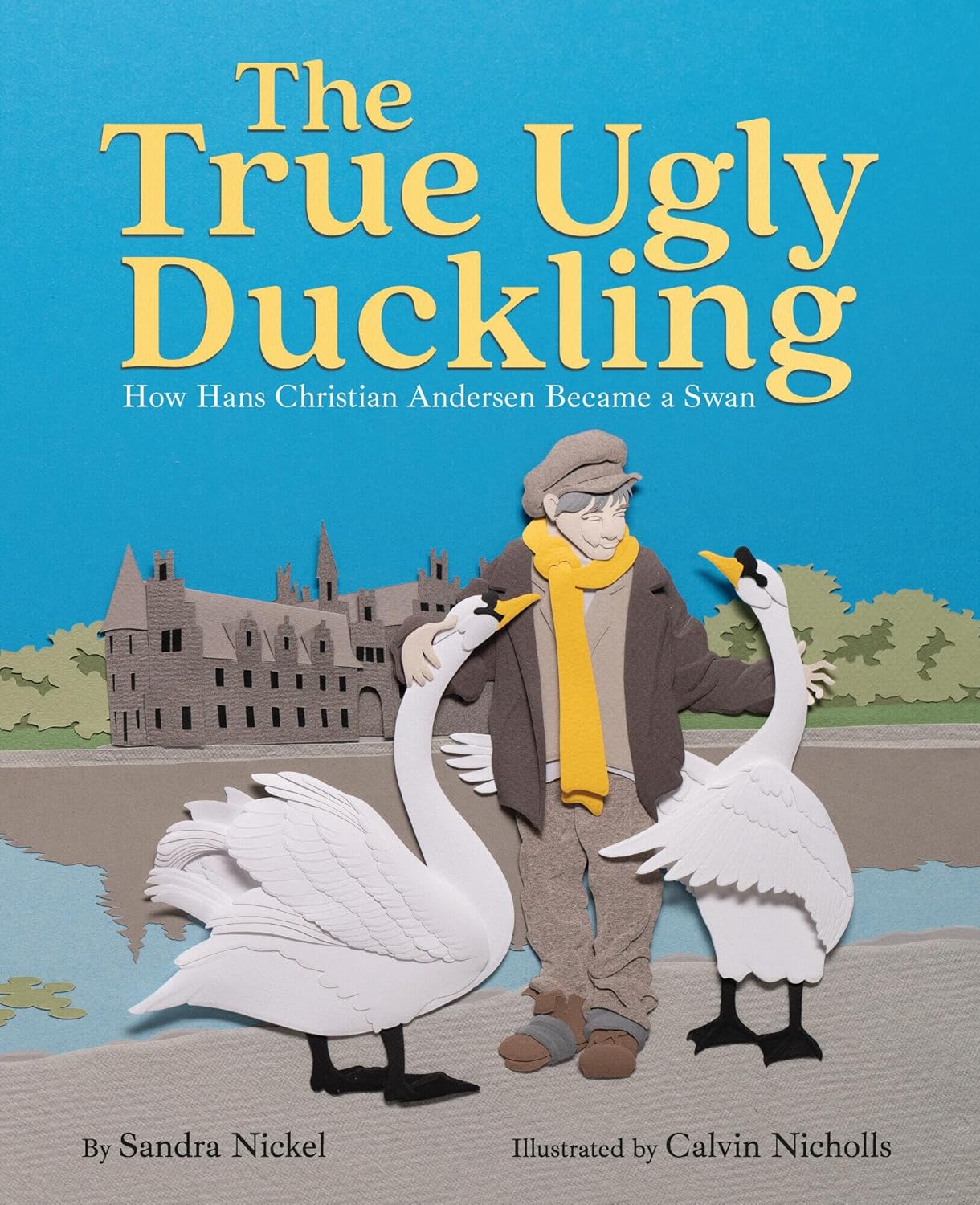
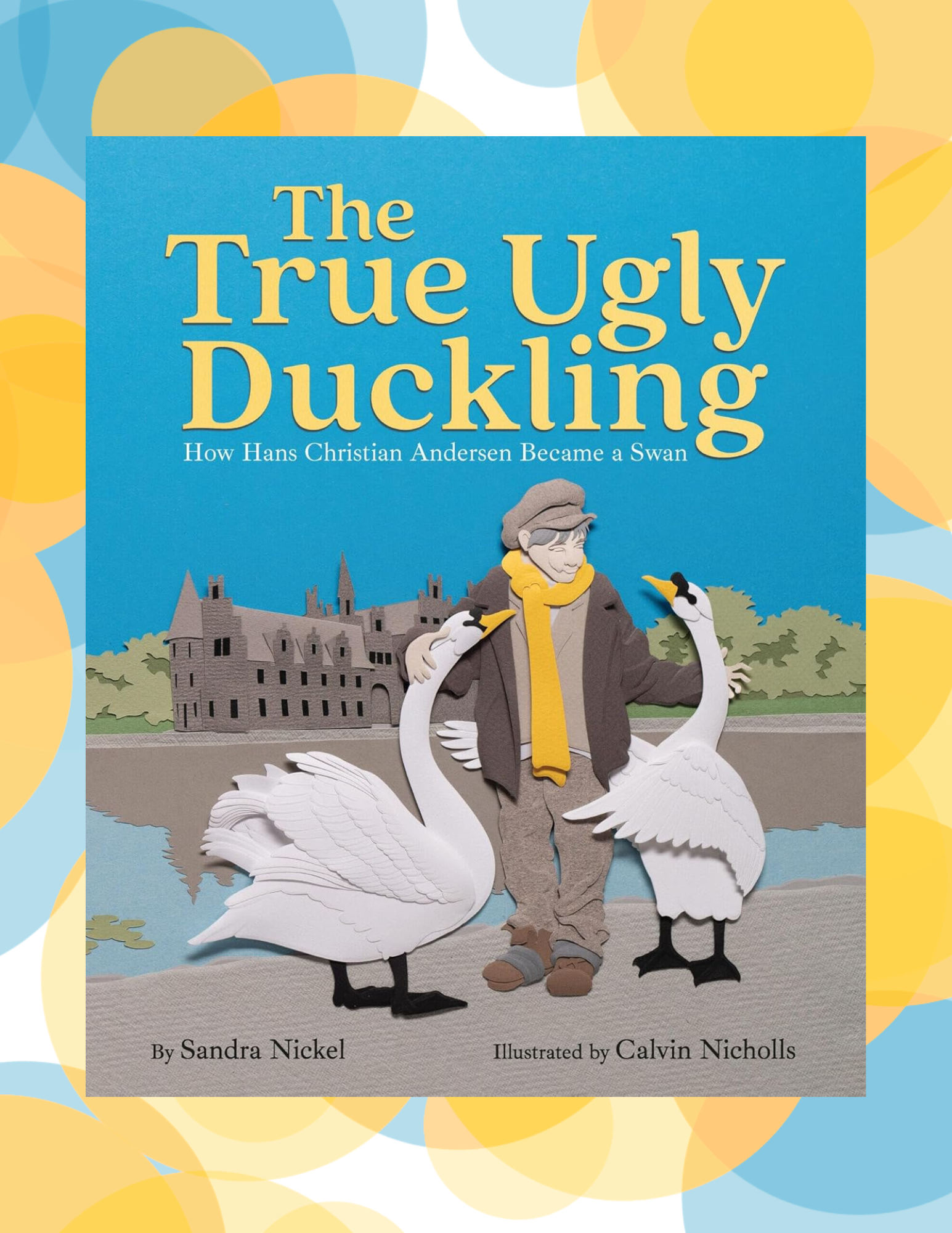
The True Ugly Duckling: How Hans Christian Andersen Became a Swan

Written by Sandra Nickel | Illustrated by Calvin Nicholls


“There once was a poor shoemaker’s son, who was tall and skinny. His nose was two times as long as everyone else’s and his heart two times as tender.” Thus begins not a fairy tale, but Sandra Nickel’s real life story of Hans Christian Anderson.

While most children spent their days working at the factory or going to school, Hans cut out costumes for his toys and invented stories that he performed for whomever would watch. Some neighbors gave him a few coins, but the factory workers and other children bullied and teased him. Hans “soothed his wounded heart by cutting out shapes from cloth.” At fourteen, knowing there was more for him in the world, Hans sailed alone for Copenhagen. There, he tried to find a place to express his talents, but each attempt ended in disappointment. Soon all his money was gone.
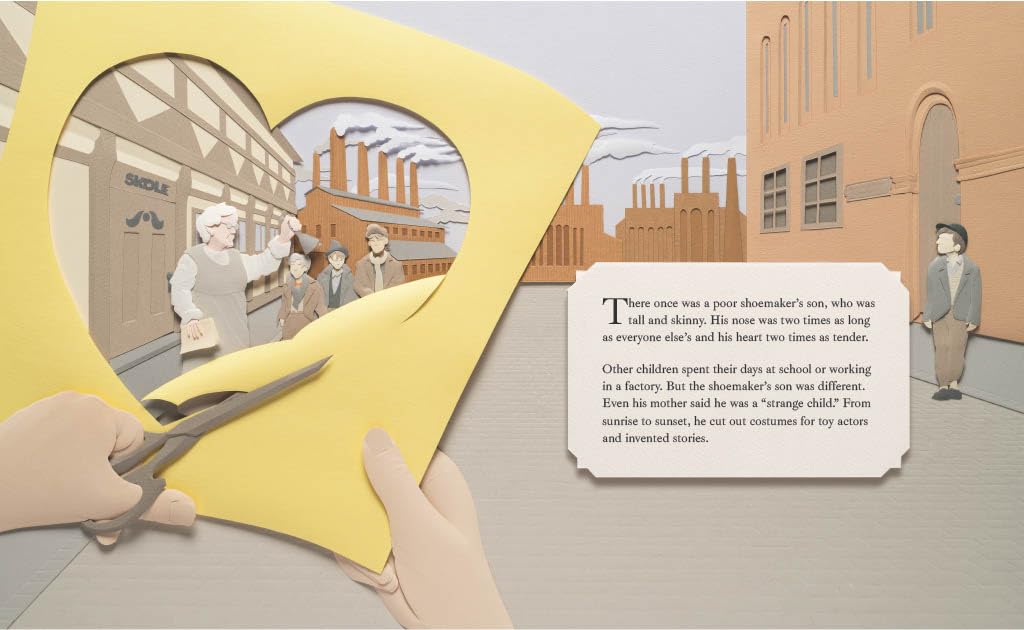
Illustration copyright © 2026 by Calvin Nicholls. Text copyright © 2026 by Sandra Nickel. Courtesy of Levine Querido.

When he sent a play to the Royal Theater, one director rejected it brutally, but another found a “few jewels” in it and arranged for him to go to school. At 17 Hans was taking classes for the first time. The other students laughed at him, and the headmaster dashed his dreams of becoming a storyteller, forbidding him to write. For six years Hans obeyed. “To comfort his heart, the boy cut out shapes from paper.”

Then one day when a girl asked him why her flowers had faded, Hans—now a young man—answered her by telling a story while cutting a scene in paper of hearts, dancers, flowers, and castles with working doors. The girl loved the story so much that Hans wrote it down and had it printed into a book. “The children of Copenhagen adored every word.” 
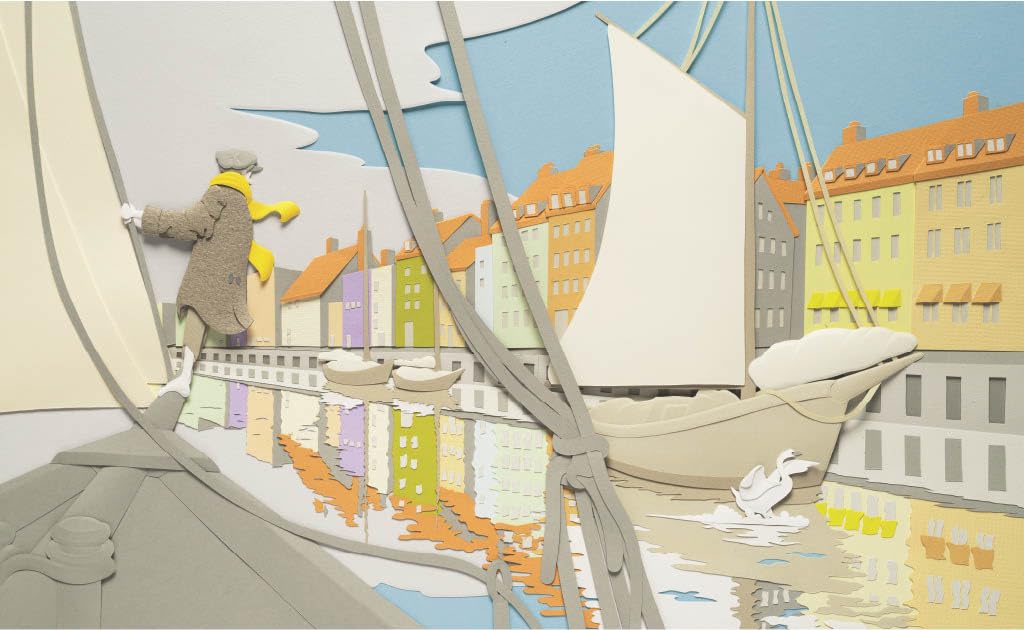
Illustration copyright © 2026 by Calvin Nicholls. Text copyright © 2026 by Sandra Nickel. Courtesy of Levine Querido.

Soon, Hans was telling and publishing more and more stories. Adults began reading them, and even Copenhagen royalty invited him to their castles for dinners and afterward to entertain the other guests by weaving “magic with his words and scissors.”

Back matter includes an Author’s Note recounting that experts now believe Hans Christian Andersen was likely on the autism spectrum and may also have had Marfan syndrome. She also discusses her choice to follow the story arc of The Ugly Duckling to depict Andersen’s life.
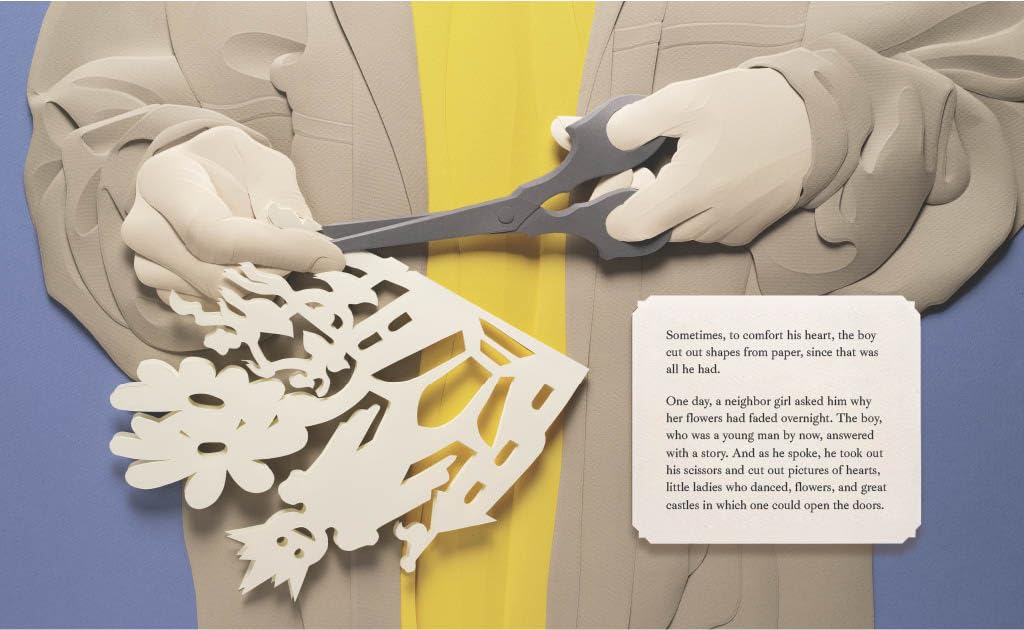
Illustration copyright © 2026 by Calvin Nicholls. Text copyright © 2026 by Sandra Nickel. Courtesy of Levine Querido.

Sandra Nickel’s mesmerizing and sensitive portrait of Hans Christian Andersen highlights his seemingly limitless creativity, imagination, and courage as he stays true to himself despite the treatment and rejections he endured. Her lyrical and moving biography is not only an inspiring tribute to this unique storyteller and artist, but a buoy for children struggling themselves and a reminder for all to embrace each person as a whole, recognizing and encouraging their talents, dreams, and contributions. Although his enduring popularity is already known to readers, her account of his ultimate triumph still has the power to astonish and prompt cheers.

Visually arresting, Calvin Nicholls’ extraordinary paper sculpture illustrations pop with action and emotion, immersing readers in the sights and sounds of Andersen’s factory hometown, his experiences in Copenhagen, and the joy of his long-dreamed-for success. The realism of Nicholls’ low-relief sculptures, assembled from various weight and textured papers then photographed, is astounding. Nicholls’ color scheme mirrors the theme of the “Ugly Duckling,” portraying Andersen in muted grays and browns until his full transformation when he dazzles Copenhagen royalty in a white tuxedo.

The True Ugly Duckling: How Hans Christian Andersen Became a Swan belongs in every classroom, school, and library collection to edify and inspire and would be an inspirational addition to home bookshelves, especially to pair with readings of his stories.

Ages 4 – 8

Levine Querido, 2026 | ISBN 978-1646146093

Hans Christian Andersen’s Birthday Activity

Easy Origami Swan


Kids can have fun on Hans Christian Andersen’s Birthday and International Children’s Book Day by making this easy origami swan to celebrate their unique personalities and talents! All you need is origami paper or you can cut your own 6-inch by 6-inch paper or any size square.
You can purchase The True Ugly Duckling: How Hans Christian Andersen Became a Swan from these booksellers

Amazon | Barnes & Noble | Bookshop

Picture Book Review

February 17 – Random Acts of Kindness Day

About the Holiday

It’s Random Acts of Kindness Day! Coming mid-way through Random Acts of Kindness Week, today’s holiday offers the perfect time to begin or reconfirm your commitment to doing nice things for those around you. Simple gestures of kindness—like sharing a smile, giving a compliment, or helping out when you see someone struggling—make anyone feel better and create a bond that brings a community closer. To keep the good feelings flowing throughout the year, look for opportunities to help out and share books that encourage kindness, such as today’s book!

Thank you to Orchard Books/Scholastic for sharing a copy of Hop Helps Out with me!

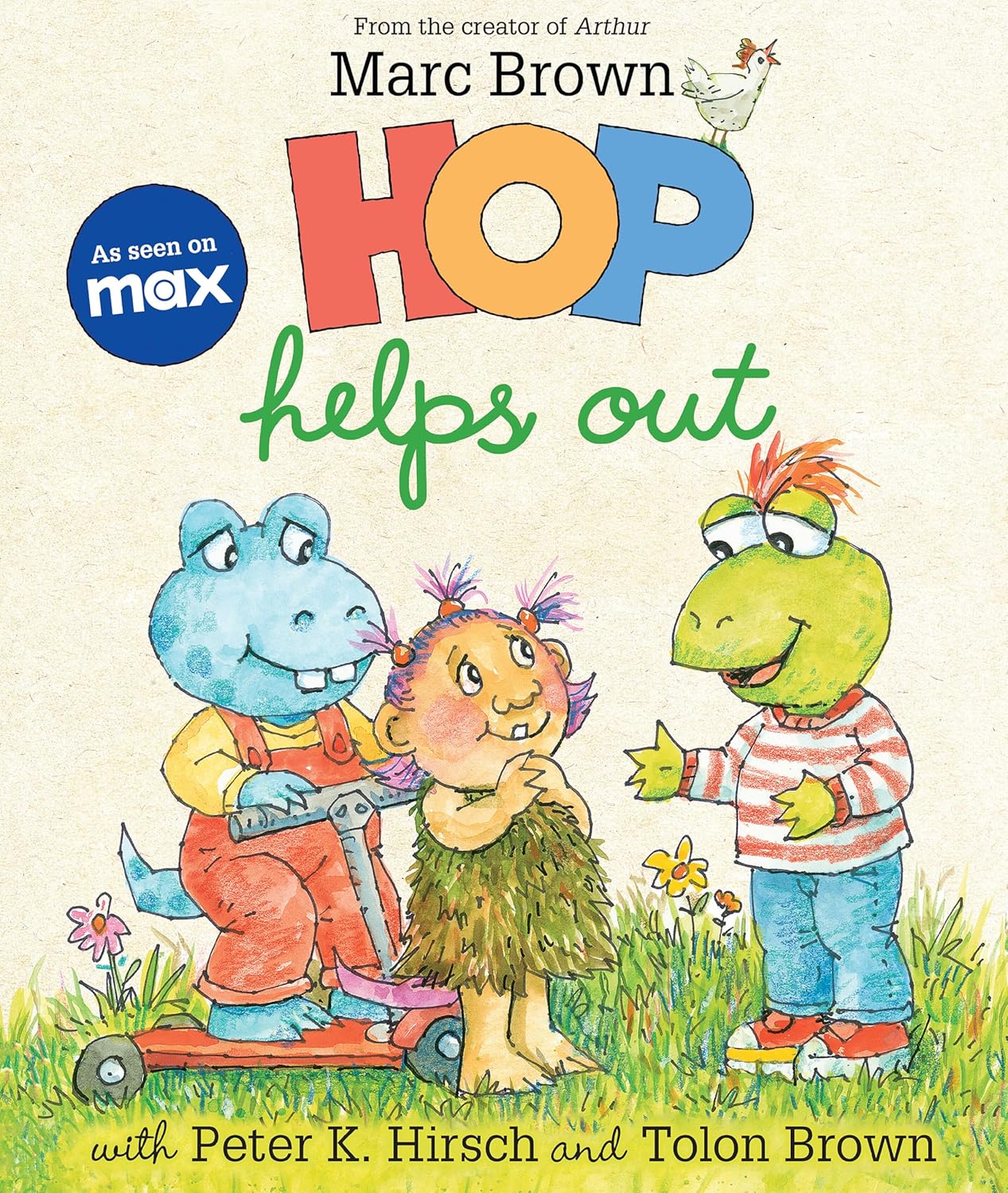
Hop Helps Out

By Marc Brown, Tolon Brown and Peter Hirsch


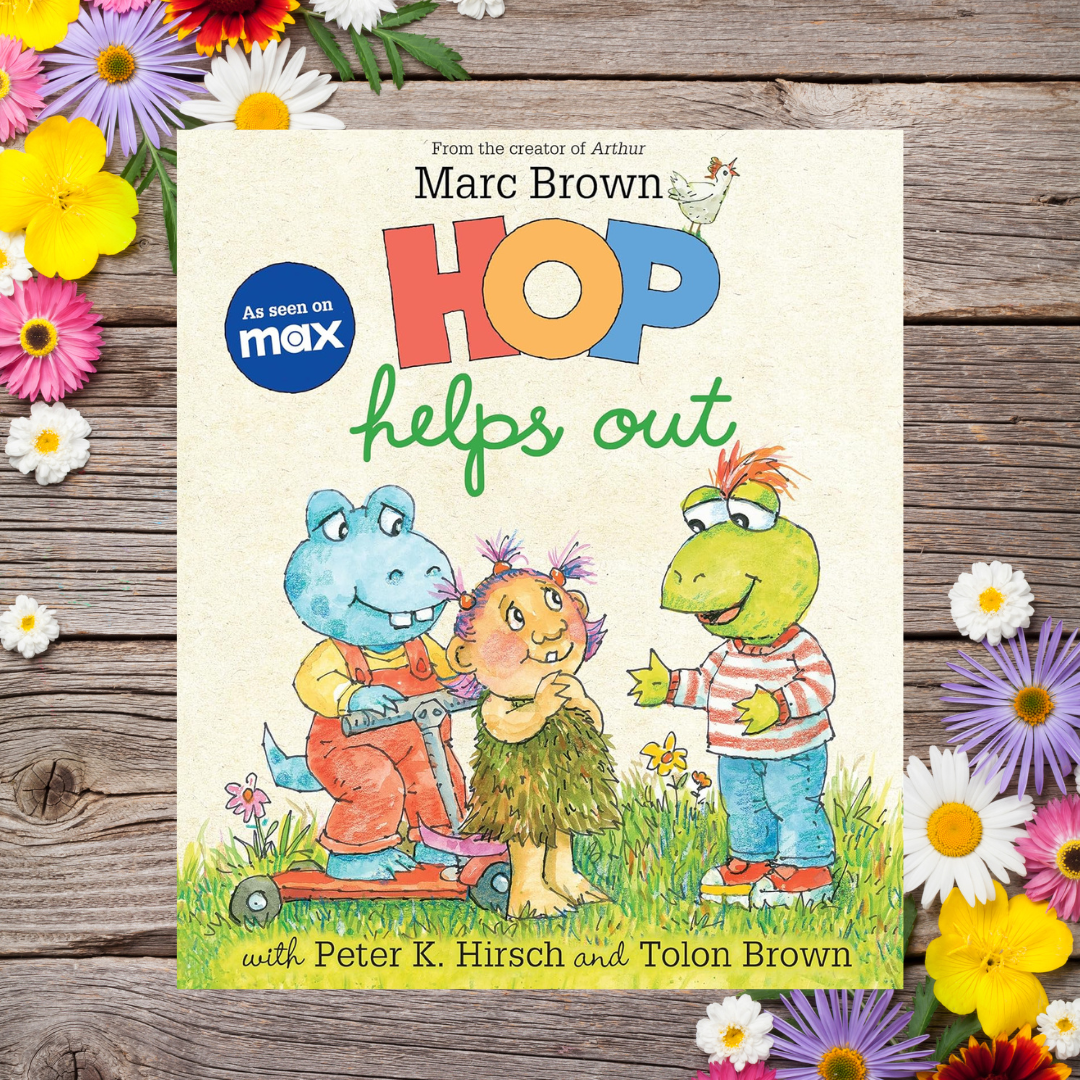
One morning as Hop and Benny are out exploring their town of Fair Village, they come across a troll named Helga, who’s crying because she’s too afraid to venture out into the world on her own. Hop immediately takes her by the hand and invites her to come adventuring with him and Benny. Hop and Benny are eager to show their new friend Helga some of their favorite places.

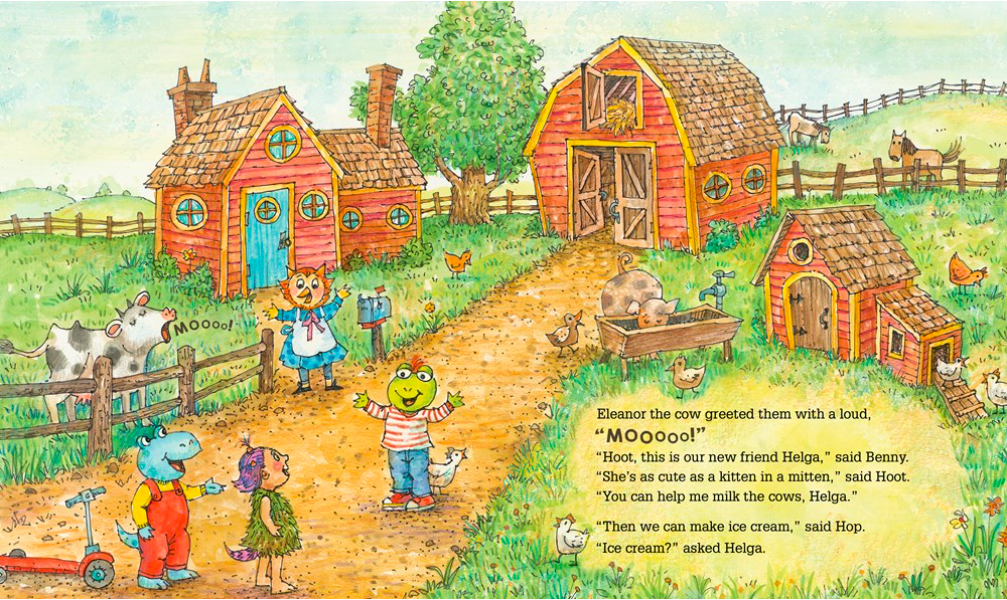
First, they visit a meadow, lush with clover, daisies, lupines, daffodils, and wildflowers in a rainbow of colors. Then Benny wants to show Helga the small mobile home he lives in. His yard, strewn with toys and games and sporting a garden, delights Helga, and when they go inside she is treated to a mug of hot chocolate and a story. Next, they take Helga to their friend Hoot’s farm. ‘”She’s as cute as a kitten in a mitten,'” Hoot declares. “‘You can help me milk the cows, Helga,'” Hoot says. Afterward, they’re all treated to homemade ice cream, dress up play, and a ride in Hoot’s talking car, Jinx.

Illustration © 2025, Marc Brown; text © 2025, Marc Brown, Tolon Brown, Peter Hirsch. Courtesy of Orchard Books/Scholastic.

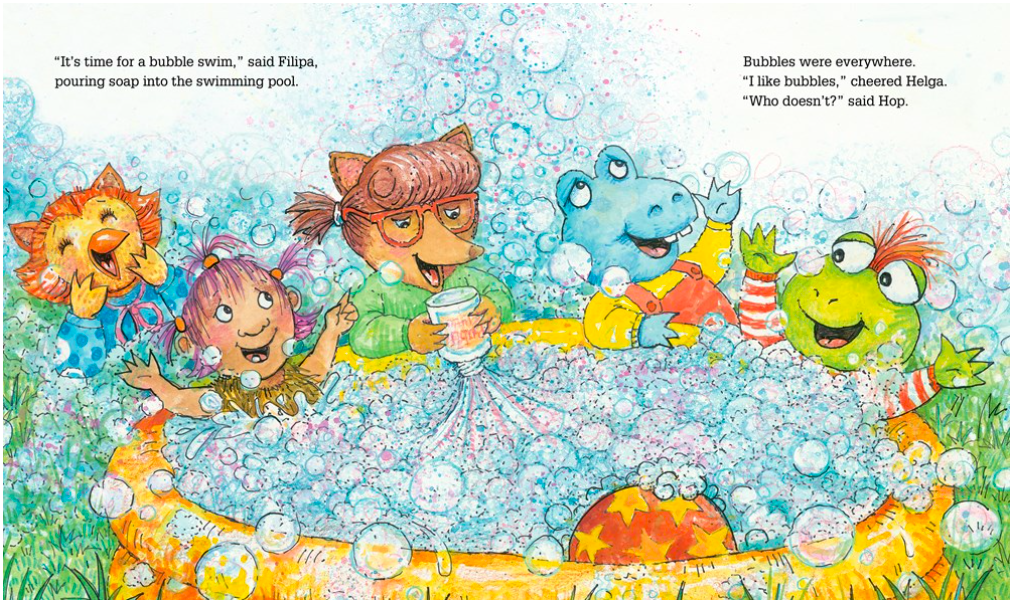
Jinx takes the merry group to see another friend, Filipa. Filipa is just filling the swimming pool underneath her treehouse when they arrive. Helga can’t believe her eyes. There are so many fun things to do here; even a swing! Even though Benny warns Helga not to swing too high, she falls off. But when Hop hurries over, Helga giggles and reveals that trolls “‘can bounce.'” In Filipa’s art studio, Helga gets to try out being creative—with herself as the canvas. Not to worry, though! Filipa fills her pool with bubbles for an impromptu (and colorful) bubble bath. “‘I like bubbles,’ cheered Helga.” “‘Who doesn’t?'” Hop agrees.

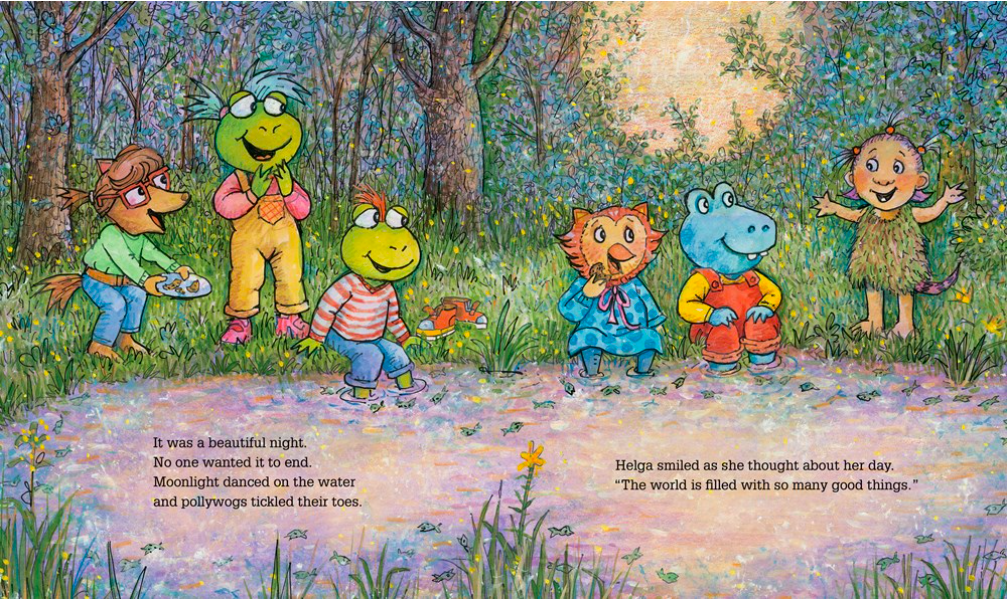
Next on the tour is Hop’s Lily Pad Diner, where Hop’s sister, Penny, plays the piano while the others dance. All this activity and excitement is making Helga tired and ready to go home. When they arrive, Helga treats her new friends to a Moon Snack of sassafras twigs and fungus chips. No one wants this fun day to end. Especially Helga, who is happy to be part of the group and to have discovered so much. “‘The world is filled with so many good things.'” she exclaims.

Illustration © 2025, Marc Brown; text © 2025, Marc Brown, Tolon Brown, Peter Hirsch. Courtesy of Orchard Books/Scholastic.

The story is followed by a detailed map of Fair Village with many homes, restaurants, farms, parks, and other landmarks for kids to explore. In an afterword, Marc Brown explains how the world of Hop—a new animated series streaming on MAX—started out as a doodle of a frog with one leg shorter than the other then joined by a host of other characters. Brown, with the help of his son Tolon (a producer on the Arthur series) and Peter Hirsch (the head writer for Arthur), expanded on this inclusive universe for a younger audience.

Brown shares, “It was important to me that Hop’s world introduced characters that were reflective of our communities and friends and inclusive of children who had been underrepresented in the media. In Fair Village, disabilities never define who you are or what you can achieve. Our goal is to create a safe, inviting world that challenges kids to appreciate others who are not like them and to act with understanding and kindness.”

Illustration © 2025, Marc Brown; text © 2025, Marc Brown, Tolon Brown, Peter Hirsch. Courtesy of Orchard Books/Scholastic.

Enthusiasm, kindness, and acceptance radiate from the pages, as Hop and Benny take charge of showing Helga around Fair Village—a name that reflects both the beauty of the town as well as how its residents treat each other—and introducing her to things she’s never seen before. Young readers will find pleasure in sharing so many of these favorites too, such as hot chocolate, bubble baths, ice cream, and playing dress up, with this crew of fast friends. Gentle humor is sprinkled throughout, and the simply stated, heartfelt ending invites readers to look around at their own family, friends, home, and community and find the “many good things” there.

Marc Brown’s illustrations are infused with color and offer children a multitude of familiar things to see and identify. The full-bleed spreads immerse readers in the community of Fair Village and the individual homes of the characters. Detail-oriented children will love lingering over the map to find each of the character’s homes as well as fun additions, such as the crooked house, the haunted castle, and the appropriately shaped Pie Shop, Pizza Palace, and Pet Hospital. As this book and the series are inclusive of children underrepresented in media, Brown depicts Hop’s anisomelia (having one leg shorter than the other) in his two different shoes—one of which has an extra, yellow layer to its sole. Helga is coded as having agoraphobia.

A tie-in to the new MAX series HOP, Hop Helps Out introduces children to some of the characters and the vast Fair Village community in a joyful and empathetic way. The story can stand alone as well, encouraging discussions about meeting new people, being open to new experiences, visiting unfamiliar places, and showing kindness to others. 

Ages 4 – 8

Orchard Books/Scholastic, 2025 | ISBN 978-1339035680

About the Creators

Marc Brown is the beloved creator of the bestselling Arthur Adventure book series and creative producer of PBS’s Peabody and Emmy award-winning television series Arthur, now the longest-running children’s animated show in history. He also has illustrated many other books for children, including the New York Times bestseller Wild About Books, as well as The Little Shop of Monsters and Mary McScary, both written by R.L. Stine. For more information, visit marcbrownstudios.com.

Peter Hirsch is the co-creator and head writer of the MAX series, HOP. Before then he was the head writer of the PBS series Arthur for over 20 years. He has won 7 Emmys and a Peabody award, and lives in New York City with his wife, playwright Cusi Cram, and their two overweight cats.

Tolon Brown is an Emmy award-wining producer of culturally significant shows such as Arthur on PBS, and co-creator of the animated series HOP on MAX. Long ago he discovered a fondness for complaining about “good coffee” and people who can’t change a flat tire, which inspired him to split his time between Brooklyn and Baldwin County, Alabama in order to pursue both. Somehow he managed to raise two amazing daughters, yet remains open to the possibility that was purely accidental.

You can purchase Hop Helps Out at these booksellers

Amazon | Barnes & Noble | Bookshop (to support your local independent bookstore)

Picture Book Review
November 3 – It’s Picture Book Month

celebrate-picture-books-picture-book-review-a-head-full-of-birds-cover

About the Holiday

November is all about picture books thanks to Picture Book Month founder author and storyteller Dianne de Las Casas and co-founders author/illustrators Katie Davis, Elizabeth O. Dulemba, Wendy Martin, and author Tara Lazar. This month-long international literacy initiative celebrates print picture books and all that they offer to young (and even older) readers. With gorgeous artwork and compelling stories, picture books open the world to children in surprising ways as they entertain, explain, excite, and help children learn empathy and understanding.

I’d like to thank Eerdman’s Books for Young Readers for sending me a copy of A Head Full of Birds for review consideration. All opinions on the book are my own.

A Head Full of Birds

Written by Alexandra Garibal | Illustrated by Sibylle Delacroix | Translated from the French by Vineet Lal


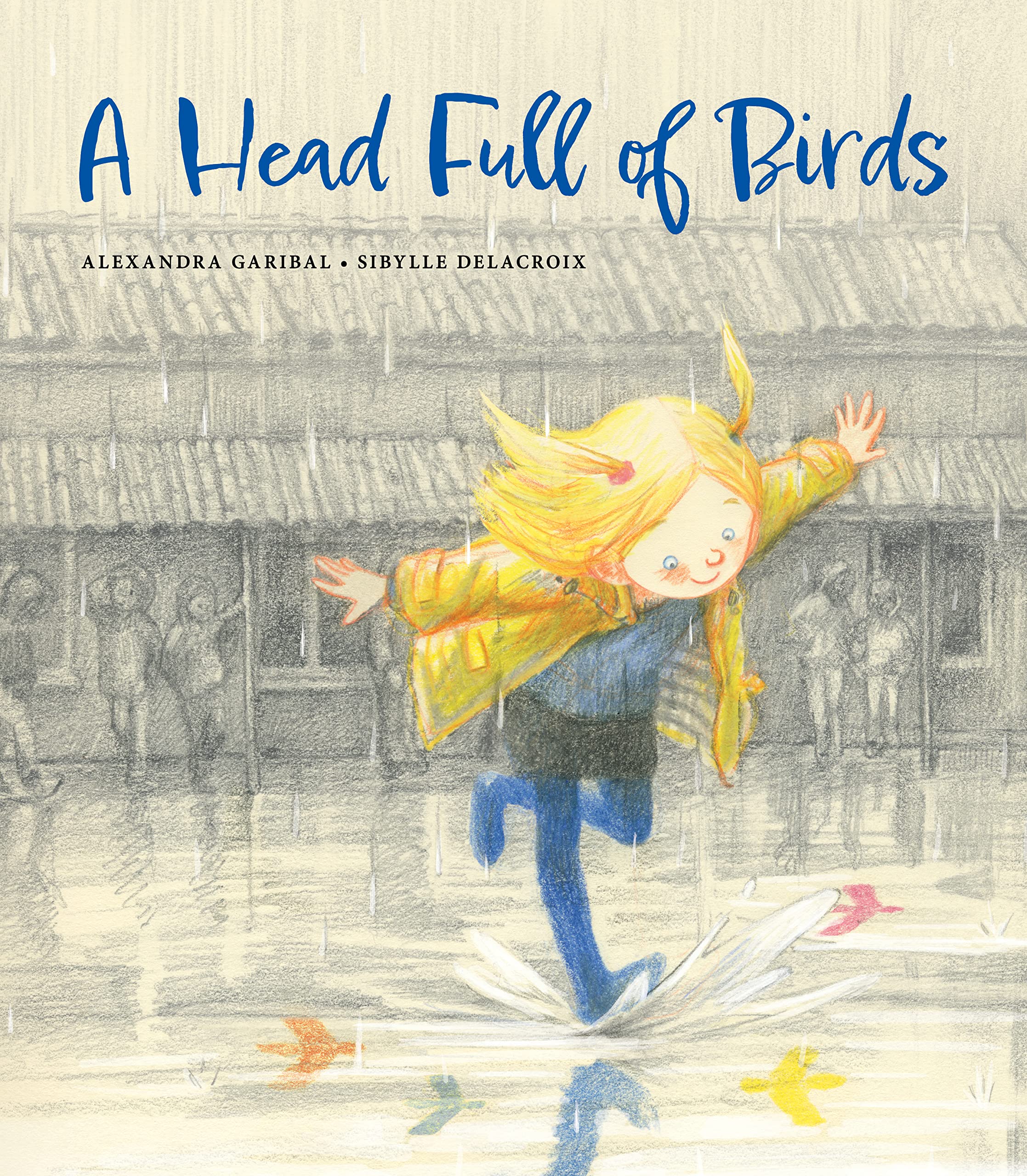
Nanette is a little girl with “a head full of birds.” She mixed strange foods together, can spend hours looking at an empty spider’s web and “rocks back and forth, to and fro, fluttering her fingers like butterflies.” The kids at school taunt her, calling her “stupid” and treating her meanly. But Nanette doesn’t pay attention to them. One boy in her class, Noah, joins in. But one day while tossing paper airplanes during class, the teacher catches him and makes him sit up front.

celebrate-picture-books-picture-book-review-a-head-full-of-birds-butterflies

Image copyright Sibylle Delacroix, 2022, text copyright Alexandra Garibal, 2022. Courtesy of Eerdmans Books for Young Readers.

This means sharing a table with Nanette, which makes him angry. While pulling out his chair, “he pushes her out of irritation,” which causes her pencil to slide across her drawing of a bird. Nanette is disappointed, whispering “Oh. He won’t fly anymore.” Noah finds this ridiculous and tells her that drawings of birds can’t fly, but Nanette already knows. “‘The drawing doesn’t fly, the bird does,'” she answers.

That day after school, Noah watches as Nanette sets colorful little origami boats to sail down the rain-washed curb. He thinks it looks “so pretty.” The next day, it’s still raining, and during recess Noah sees Nanette standing in the middle of the school yard without her boots catching raindrops. His friends are calling him stupid, but he grabs her shoes and rushes out to bring her back in. But Nanette is happy. She takes her boots and fills them with water running off the roof. They both hide a boot in their coats and run back inside for class.

celebrate-picture-books-picture-book-review-a-head-full-of-birds-boats-on-curb

Image copyright Sibylle Delacroix, 2022, text copyright Alexandra Garibal, 2022. Courtesy of Eerdmans Books for Young Readers.

On the stairs, someone bumps into Noah, spilling his boot. Noah is angry that their plan is ruined, but Nanette tells him it’s okay, that one is enough. She passes him a tiny origami boat, and he drops it into her boot. “The boat twists and twirls, dancing merrily across the water. And it’s so pretty.” Now Noah and Nanette are friends, and “together, they look after the birds that nest in their heads.”

celebrate-picture-books-picture-book-review-a-head-full-of-birds-boot

Image copyright Sibylle Delacroix, 2022, text copyright Alexandra Garibal, 2022. Courtesy of Eerdmans Books for Young Readers.

While quietly straightforward, Alexandra Garibal’s story affects poignancy on multiple levels. Readers are first introduced to Nanette, a girl with neurodiversity who is happy in her observations and interactions with the world while also self-confident enough to ignore the comments of her classmates. Readers see Noah participating in the ridicule, but when he is moved to sit next to Nanette, readers begin to understand that it is he who needs to see the world differently, not Nanette. Children may feel that Noah already embodies this empathy as it doesn’t take long before he appreciates the beauty Nanette brings to their world. 

While he at first feels he must protect her, running out with her boots and aiming to take her back inside from the rain, he again learns that her actions have meaning, and when the boot he’s carrying spills on the way back to class, he now feels the same disappointment of a project ruined that Nanette felt with her bird drawing. With Nanette and Noah’s conspiratorial goofing off in class (and, bravely, in the front row!), Garibal brings the story full circle while infusing it with growth and joy for both characters as they go forward as friends.

celebrate-picture-books-picture-book-review-a-head-full-of-birds-filling-boot

Image copyright Sibylle Delacroix, 2022, text copyright Alexandra Garibal, 2022. Courtesy of Eerdmans Books for Young Readers.

Sibylle Delacroix’s lovely colored-pencil illustrations reveal Nanette as a shining light in the world and in her classroom. She is first shown gazing upward as if the sun is on her face, next with colorful butterflies, and then at school in a bright yellow raincoat, while the background is drawn in gray and the other kids in a single shade of red, all except Noah, who has brown hair and blue glasses, signifying to readers that perhaps he is a bit different as well. 

The two children’s growing friendship takes place against a gray-scale background, putting the focus on both their separation from their environment as well as their similarity to each other. Other visual clues in clothing and other elements also point to Nanette and Noah’s similarity, which can invite kids to find and talk about them. A particularly moving spread comes as the two children watch the little boat float in the boot, their two smiling faces reflected in the water. Turning the page, readers see the imagination Nanette and Noah share as they ride in an origami boat pointing out paper bird above.

This beautiful friendship story speaks not only to the acceptance and understanding of neurodiversity but of all the creative and different ways in which people see the world. A Head Full of Birds will fill your heart and resonate long after the story is over. The book invites multiple re-readings and will generate much thought and discussion. It is a must for all home, classroom, school, and public libraries.

Ages 4 – 8

Eerdmans Books for Young Readers, 2022 | ISBN 978-0802855961

About the Author

Alexandra Garibal is a French children’s author and editor. She has written over sixty picture books, novels, and magazine articles, and her titles have been translated for Chinese and Spanish readers. A Head Full of Birds is Alexandra’s English-language debut. Follow her on Instagram @alexandragaribal.

About the Illustrator

Sibylle Delacroix is the illustrator of Tears, Prickly Jenny, Grains of Sand, and Blanche Hates the Night (all Owlkids). She graduated from the ERG Saint-Luc School of Graphic Research in Brussels and worked for many years as a graphic designer before becoming a full-time illustrator. Sibylle lives in France. Follow Sibylle on Instagram @sibylledelacroix.

About the Translator

Vineet Lal is a literary translator of books from French to English, including A Perfect Spot (Eerdmans) and The Secret Life of Writers (Weidenfeld & Nicholson). He studied French at Princeton University and the University of Edinburgh. Vineet lives in Scotland. Follow him on Twitter @vineet_uk.

celebrate-picture-books-picture-book-review-a-head-full-of-birds-cover

You can find A Head Full of Birds at these booksellers

Amazon | Barnes & Noble | Books-a-Million

To support your local independent bookstore, order from

Bookshop | IndieBound

Picture Book Review
June 1 – Global Day of Parents

celebrate-picture-books-picture-book-review-hair-twins-cover

About the Holiday

In 2012, the United Nations General Assembly instituted Global Day of Parents to honor and support parents and their importance to the health, welfare, education, and nurturing of their children. This past year, especially, has seen parents stepping up to help their children with school work, protect them from illness, soothe their fears, and help them adjust to necessary changes. Today’s holiday provides an opportunity to appreciate all parents for their “selfless commitment to children and their lifelong sacrifice towards nurturing this relationship.” To learn more about the holiday, visit the United Nations website.

Hair Twins

Written by Raakhee Mirchandani | Illustrated by Holly Hatam


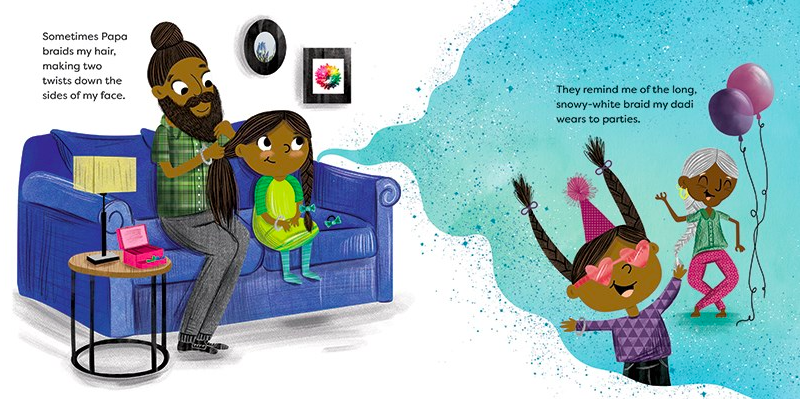
A Sikh father and his young daughter have a favorite routine every morning. Before school and work, Papa combs out his daughter’s long hair and brushes it “like he does his own, splitting it down the middle, like a river separating two enchanted forests.” Papa then smooths the tangles with coconut oil. Next, he styles it, sometimes making two braids that remind her of the braid her dadi, her grandmother, “wears to parties.”

celebrate-picture-books-picture-book-review-hair-twins-braid

Image copyright Holly Hatam, 2021, text copyright Raakhee Mirchandani, 2021. Courtesy of Little, Brown Books for Young Readers.

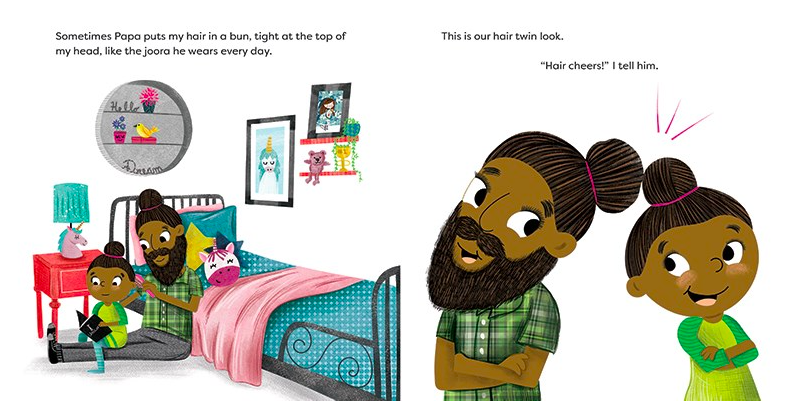
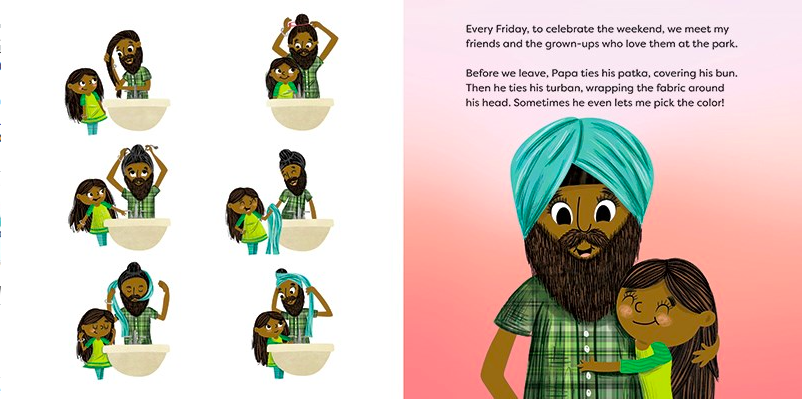
As her father combs out his own long hair, his daughter helps out by handing him a rubber band and a brush for his beard. Sometimes the little girl wears her hair in a bun at the top of her head, just “like the joora” her father wears every day.” She calls this their “twin look.” Back at home after school, the girl shakes out her hair as they dance together, and before they go to the park to meet friends, her father covers his bun with his patka and ties his turban around his head.

celebrate-picture-books-picture-book-review-hair-twins-bun

Image copyright Holly Hatam, 2021, text copyright Raakhee Mirchandani, 2021. Courtesy of Little, Brown Books for Young Readers.

Today, Papa styles the girl’s hair into one long braid. She imagines it’s a “unicorn tail” and she’s ready to run like unicorns with her friends and “the grown-ups who love them” when they get to the park. Each week the group pretends to be something new but no matter if they wear “braids [or] buns, Mohawks [or] mullets, spiked [or] shaved,” they all play together. As they run, the girl smells coconut and, without looking, knows her father is behind her and feels comfort in her “hair twin.”

An Author’s Note reveals the personal origins of the story.

celebrate-picture-books-picture-book-review-hair-twins-turbin

Image copyright Holly Hatam, 2021, text copyright Raakhee Mirchandani, 2021. Courtesy of Little, Brown Books for Young Readers.

Raakhee Mirchandani’s lyrical story celebrates family, love, and joy in shared and passed-down traditions. The little girl’s strong bond with her father is sweetly revealed as he styles her hair in braids or a bun and then winds his own long hair into a joora, covers it with a patka, and then wraps his turban for the day’s activities. The girl’s straightforward explanations about her and her father’s hair leads into the fun they have together, and story’s first-person point of view creates a personal bond with readers as well as her enthusiasm shines through on every page. 

Holly Hatam’s bright and cheerful illustrations are expressive and creative, beautifully playing on Mirchandani’s metaphors. The father and daughter relationship is the highlight of the book, and Hatam let’s readers in on their moments of laughing, dancing, and playing together. Hatam’s neighborhood and park scenes embrace diversity while also extending the idea of family connections through parent-and-child pairs who, like the girl and her father wear similar hairstyles.

A unique and poignant story about Sikh families and traditions, Hair Twins enchants as a universal story full of the love of family relationships and traditions for all children. The book is a highly recommended addition to school and public library collections.

Ages 4 – 8

Little Brown Books for Young Readers, 2021 | ISBN 978-0316495301

Discover more about Raakhee Mirchandani and her books on her website.

To learn more about Holly Hatam, her books, and her art, visit her website.

Global Day of Parents Activity

celebrate-picture-books-picture-book-review-hair-twins-activity

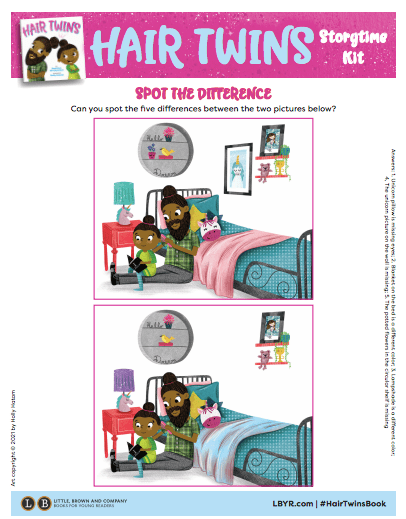
Hair Twins Activity Kit


You can download a coloring page, a Storytime Kit with puzzles and games, and a collection of Father’s Day cards from Little, Brown Books for Young Readers here.

celebrate-picture-books-picture-book-review-hair-twins-cover

You can find Hair Twins at these booksellers

Amazon | Barnes & Noble | Books-a-Million

To support your local independent bookstore, order from

Bookshop | IndieBound

Picture Book Review
March 2 – Read Across America Day

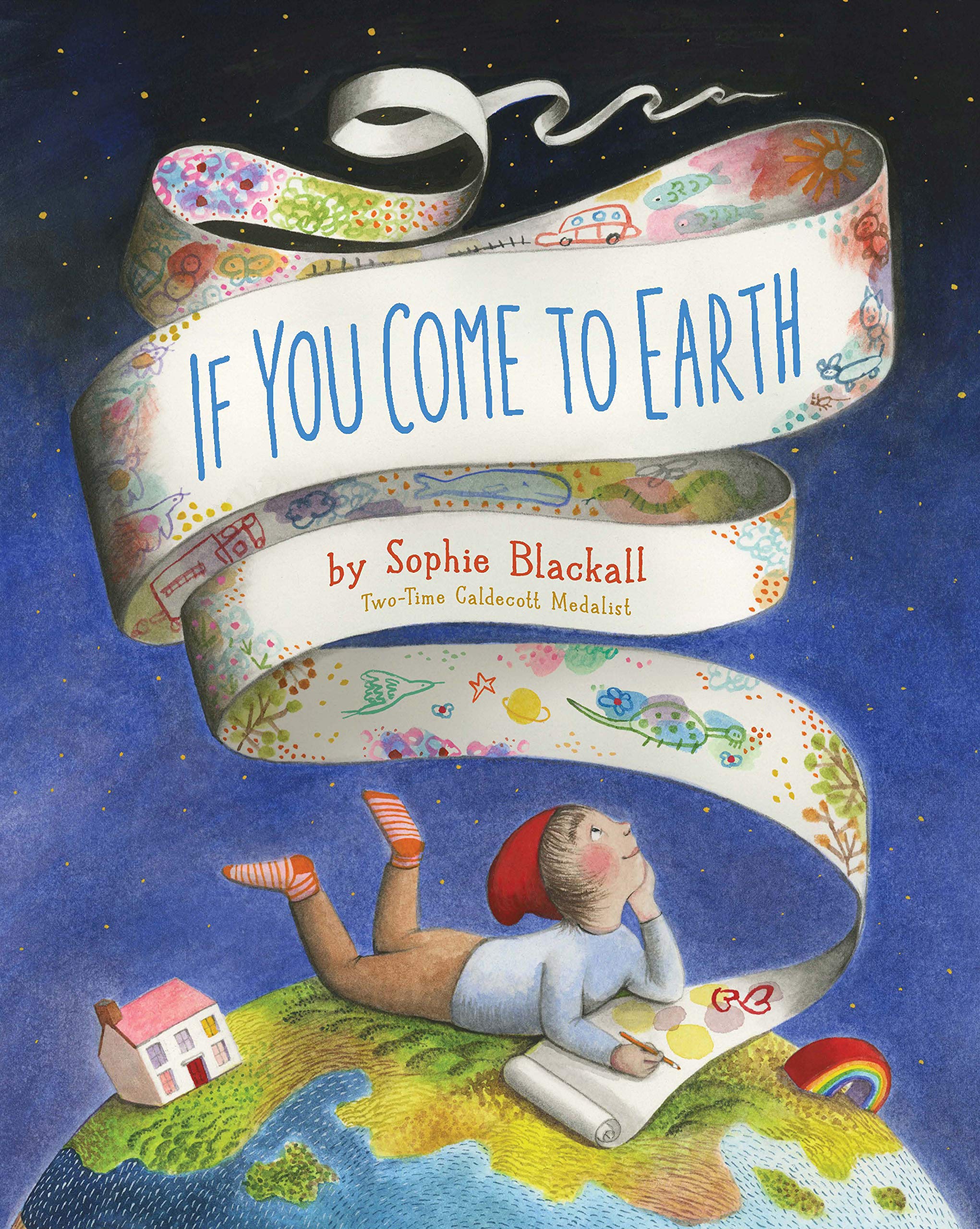
celebrate-picture-books-picture-book-review-if-you-come-to-earth-cover

About the Holiday

Today’s holiday, established by the National Education Association in 1997, encourages children all across the country to celebrate reading and all of its joys and benefits. The NEA strives to create a nation of diverse readers and to provide teaching resources that promote diversity and inclusion. In NEA’s digital Read Across America calendar, the theme for March is “Cultivate Compassion.” This year teachers and parents can connect with authors, discover ideas for virtually celebrating Read Across America, and find lots of resources for a full year of reading. A love of reading is one of life’s greatest pleasures and a powerful force for future success. Celebrate today by reading with a child or on your own. There are fabulous worlds and stories waiting to be discovered. Just take a look into today’s book1 For more information on Read Across America, visit the NEA website.

If You Come to Earth

By Sophie Blackall


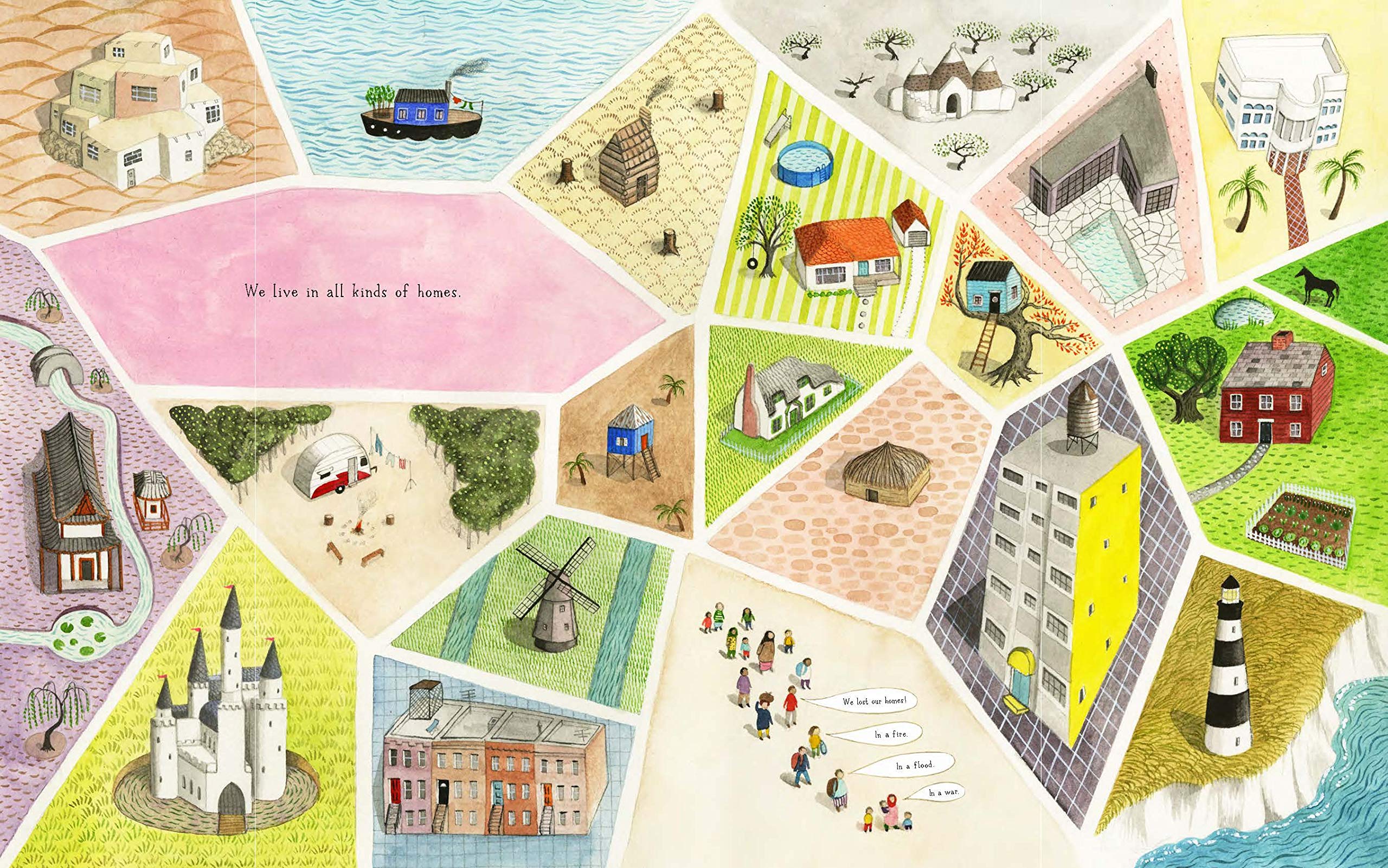
In Sophie Blackall’s beautifully—and often whimsically—illustrated If You Come to Earth, a child named Quinn who wears a red elfin hat writes a letter about Earth to any visitor from Outer Space who may venture to our planet. Quinn starts out with a map of sorts to guide the visitor through the cosmos to our “greeny-blue” home and, closer still, to the cities, towns, and villages where we congregate. A patchwork image shows the visitor the variety of houses people live in—from huts to trailers, castles to houseboats, cabins to treehouses to a familiar lighthouse. One space is also dedicated to those who have lost their homes “in a fire. In a flood. In a war.”

celebrate-picture-books-picture-book-review-if-you-come-to-earth-homes

Copyright Sophie Blackall, 2020, courtesy of Chronicle Books.

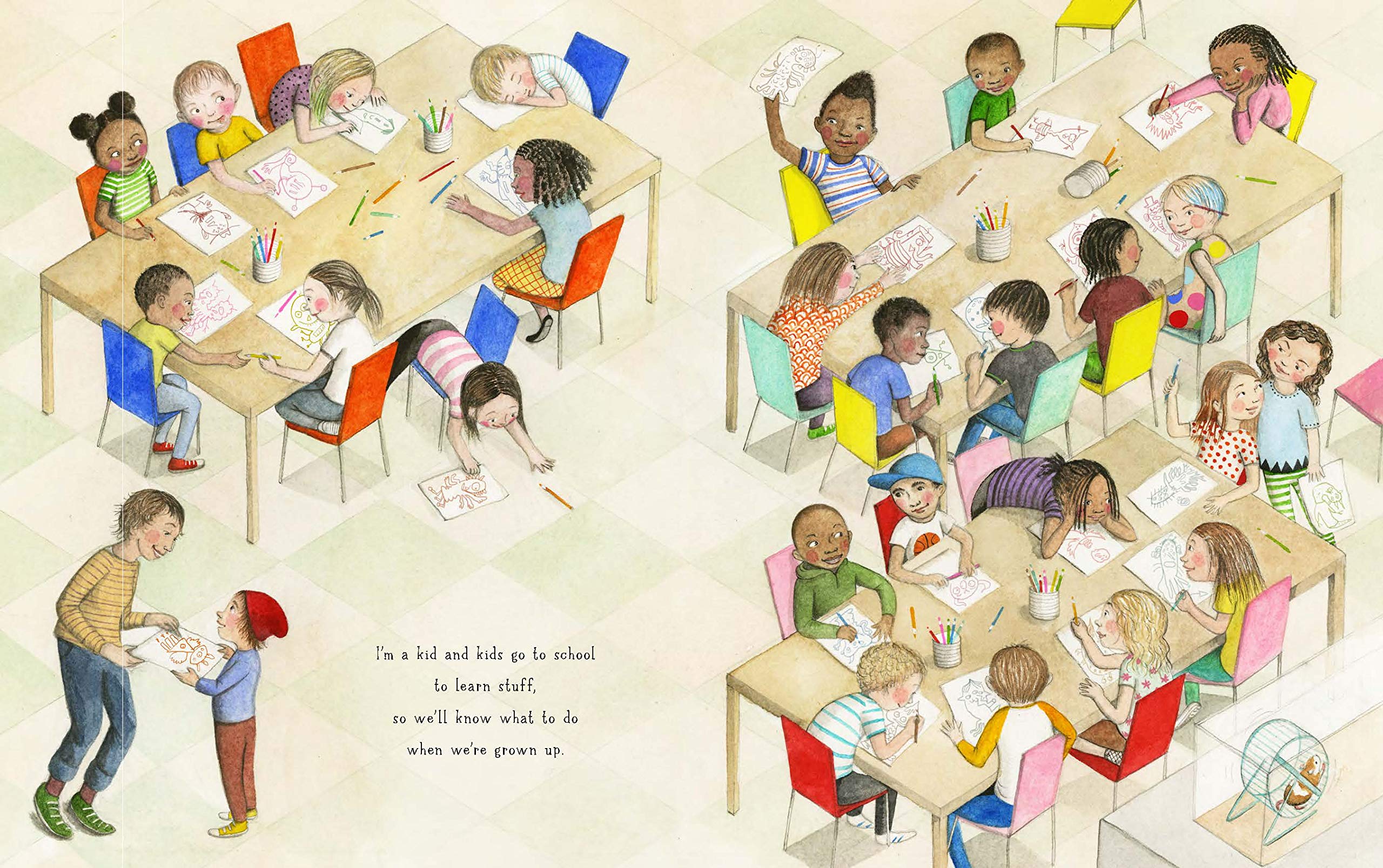
Turn the page to a sunny-day picnic and Quinn reveals that in those homes live “all kinds of families.” Sometimes people are quiet, but Quinn tells the visitor, “inside our heads, we are usually thinking. You can’t see our thoughts, but sometimes we show our feelings on our faces.” What kinds of feelings? Blackall’s portraits show sadness and glee, confusion and surprise, frustration and calm. The child mentions clothing, weather, and transportation. “I’m a kid,” Quinn says, “and kids go to school to learn stuff, so we’ll know what to do when we’re grown up.” Quinn’s class is seen drawing space aliens while they talk together and share colored pencils. One boy is making a face and another is sleeping on his blank piece of paper.

celebrate-picture-books-picture-book-review-if-you-come-to-earth-school

Copyright Sophie Blackall, 2020, courtesy of Chronicle Books.

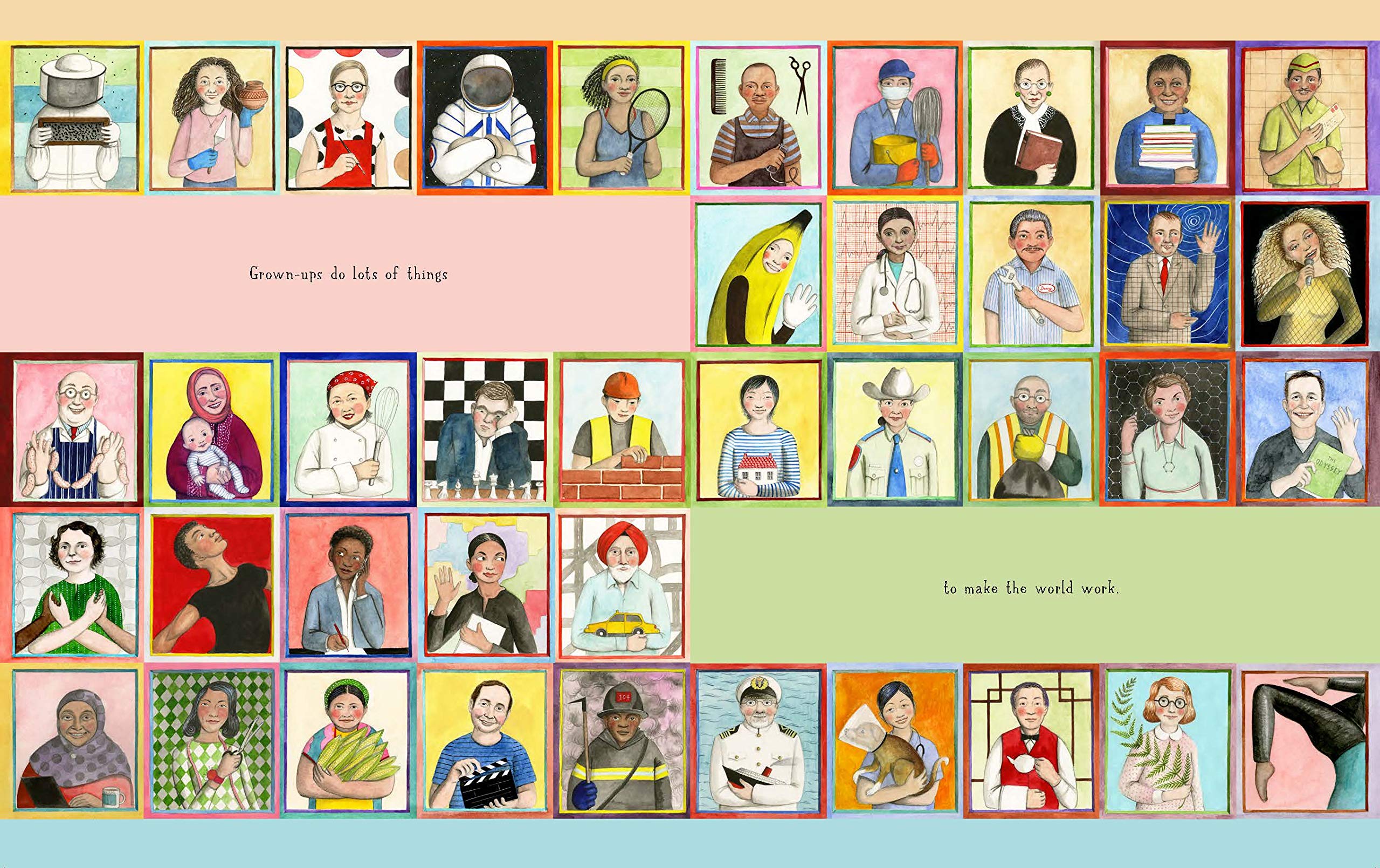
What will these kids grow up to be? Forty snapshots of adults—including a beekeeper, potter, astronaut, tennis player, barber, chef, dancer, chess player, construction worker, veterinarian, doctor, singer, and scientist—will give the visitor an idea of the vast array of jobs people do “to make the world work.” There are ideas for leisure time too. And as a large group sits around table laden with all kinds of food, Quinn says that we “eat when we are hungry” and that “some of us have more food than others,” but that “we all need food and water to survive.”

From this introduction, the visitor learns about the ocean, which appears empty but “actually it’s full.” A stunning montage of sea creatures depicts what the child means. Likewise, the land hosts animals, which bound, creep, and lope across the pages, and the sky is home to birds of all colors and sizes.

celebrate-picture-books-picture-book-review-if-you-come-to-earth-jobs

Copyright Sophie Blackall, 2020, courtesy of Chronicle Books.

Quinn talks about the music in the world, made by animals and people, about deaf people who talk with their hands, and about blind people who read with their hands and includes images of the sign language and braille alphabets. He tells about things created by nature and those made by people; things that are big and things that are small and even things that are invisible but make a big impact. One of these is germs, which “can make you sick” just like “eating a woolly milkcap toadstool or breathing in smoke or getting spat on by a slow loris.”

Quinn reveals different ways people interact and how they grow up from babies to older people. He admits that “there are lots of things we don’t know…. But right this minute, we are here together on this beautiful planet.” Quinn ends his letter with some questions for the possible visitor from Outer Space and an invitation to stay in his room if, indeed, they come to Earth.

celebrate-picture-books-picture-book-review-if-you-come-to-earth-jobs

Copyright Sophie Blackall, 2020, courtesy of Chronicle Books.

Every page of Sophie Blackall’s mesmerizing and welcoming look at life on our planet invites readers to explore her detailed illustrations and imagine what their own additions would be to each topic. Blackall’s straightforward text is sprinkled with humor and poignancy and each line opens up a world of possibilities and the gifts of our rich diversity, both natural and human. The subjects Blackall chooses flow from each other like a long strand of yarn teased from a sweater with an intricate design and are sure to lead to fun, fascinating, and thoughtful discussions. Blackall’s ending will inspire as much as it makes you smile.

Accompanying Blackall’s text are her exquisite illustrations that are fresh and fun and, in many cases, will take your breath away. Both kids and adults will want to spend time carefully studying and talking about each page, as there is so much to see, so many connections to make, and so many secrets tucked away in each of them. Readers will notice allusions to other books and will want to point out all of the things that are “just like me!” Pages dedicated to transportation, birds, animals, sea creatures, and jobs will enthrall kids with these particular interests. Artists, collectors, and philosophers will also find pages to excite them too.

A book kids and adults will want to dip into again and again as well as an excellent read to spark writing workshops, nature studies, and social studies classes for schools and homeschoolers, If You Come to Earth is a must for home, classroom, and public library collections.

Ages 5 – 8 and up

Chronicle Books, 2020 | ISBN 978-1452137797

To learn more about Sophie Blackall, her books, and her art, visit her website.

celebrate-picture-books-picture-book-review-if-you-come-to-earth-cover

You can find If You Come to Earth at these booksellers

Amazon | Barnes & Noble | Books-a-Million

To support your local independent bookstore, order from

Bookshop | IndieBound

Picture Book Review
February 10 – It’s Plant the Seeds of Greatness Month

celebrate-picture-books-picture-book-review-a-girl's-bill-of-rights-cover

About the Holiday

Ideas and dreams lead to accomplishments and accomplishments can lead to greatness! And when does this all begin? In childhood as kids develop knowledge, skills, and confidence. Plant the Seeds of Greatness Month was established to help people remove barriers to their success and make changes to better their lives. To celebrate with your kids, talk to them about what they would like to achieve and what kind of support they need to make their dreams come true. Today’s book can help girls understand that they should always celebrate their talents and emotions and never feel second-best or accept impediments to their success. So, get started this month on planting – and nurturing – all the seeds of your greatness in your family or classroom.  


A Girl’s Bill of Rights

Written by Amy B. Mucha | Illustrated by Addy Rivera Sonda


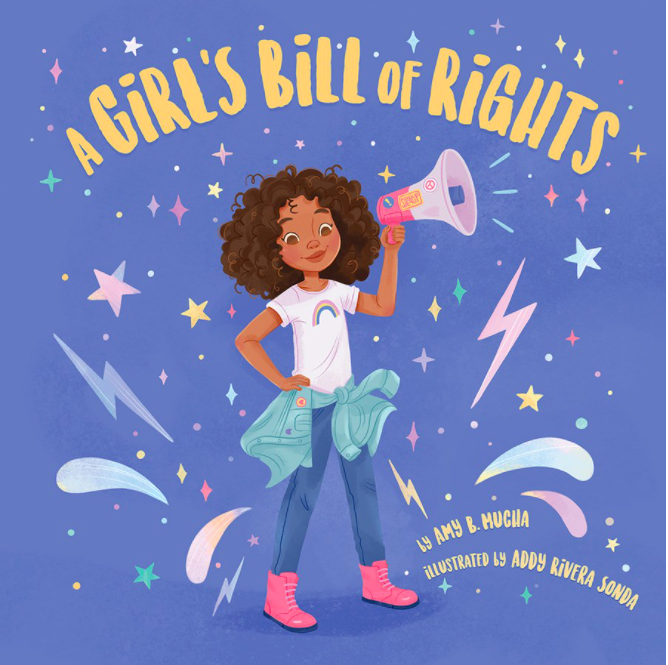
In her super book that affirms a girl’s right to her own likes, dislikes, and feelings, Amy B. Mucha presents her story in the first person, allowing readers to internalize the affirming text and identify with her examples. The book opens with a Black girl talking about her skateboard and skateboarding for show and tell. The narrator states, I have the right to like what I like and love what I love.” In the front row of desks, Addy Rivera Sonda includes three more girls, including one who uses a wheelchair, ready to talk about their favorites: pets, soccer, and dance.

celebrate-picture-books-picture-book-review-a-girl's-bill-of-rights-dancing

Image copyright Addy Rivera Sonda, 2021, text copyright Amy B Mucha. Courtesy of Beaming Books.

As the girl’s vote for class president, readers are told that they have the right to think for themselves, make their own choices, and for their “Yes” to mean yes and their “No” to mean no. And if they feel disappointed or frustrated or happy, they can show their feelings without being chastised or made to feel it’s not appropriate.

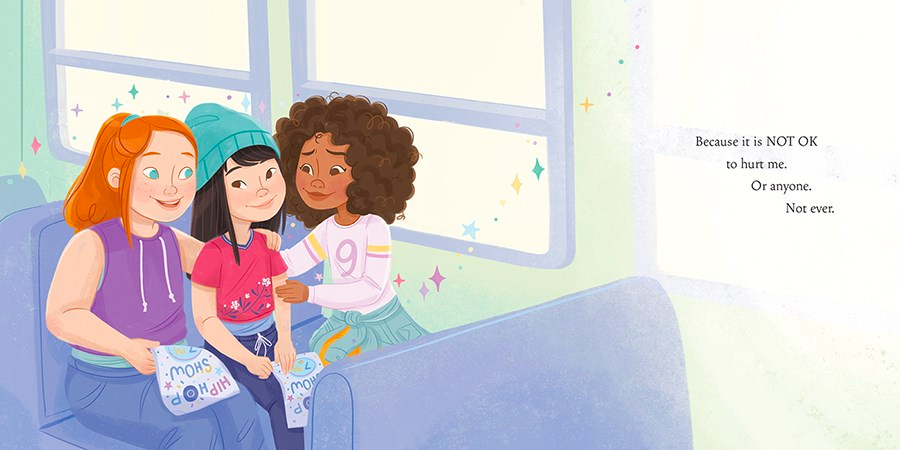
Girls are reminded that it’s okay to make mistakes, and that when it comes to making friends, they can choose their own as well as how they express their affection. Girl’s also learn that “if someone is hurting or disrespecting me, I have the right to say ‘STOP!’ and even the right to SCREAM it!’ Because it is NOT OK to hurt me. Or anyone. Not ever.” And every girl is reassured that she has the right to decide who she is now and what she will choose to do in the future; she’s reassured that she has the right to be herself.

celebrate-picture-books-picture-book-review-a-girl's-bill-of-rights-bus

Image copyright Addy Rivera Sonda, 2021, text copyright Amy B Mucha. Courtesy of Beaming Books.

In her straightforward , empowering text, Amy B. Mucha shows girls just how valuable they are. Through the examples I highlighted and many other common issues on which girls are criticized, ignored, or second guess themselves, Mucha delivers a strong message that their opinions, feelings, and preferences are valuable and should be heard. Periodic rhymes give the text a lyricism that flows easily from page to page. The number and range of rights that Mucha presents gives children and adults many opportunities to discuss these important and commonly faced experiences as well as their immediate and long-term effects on girls.

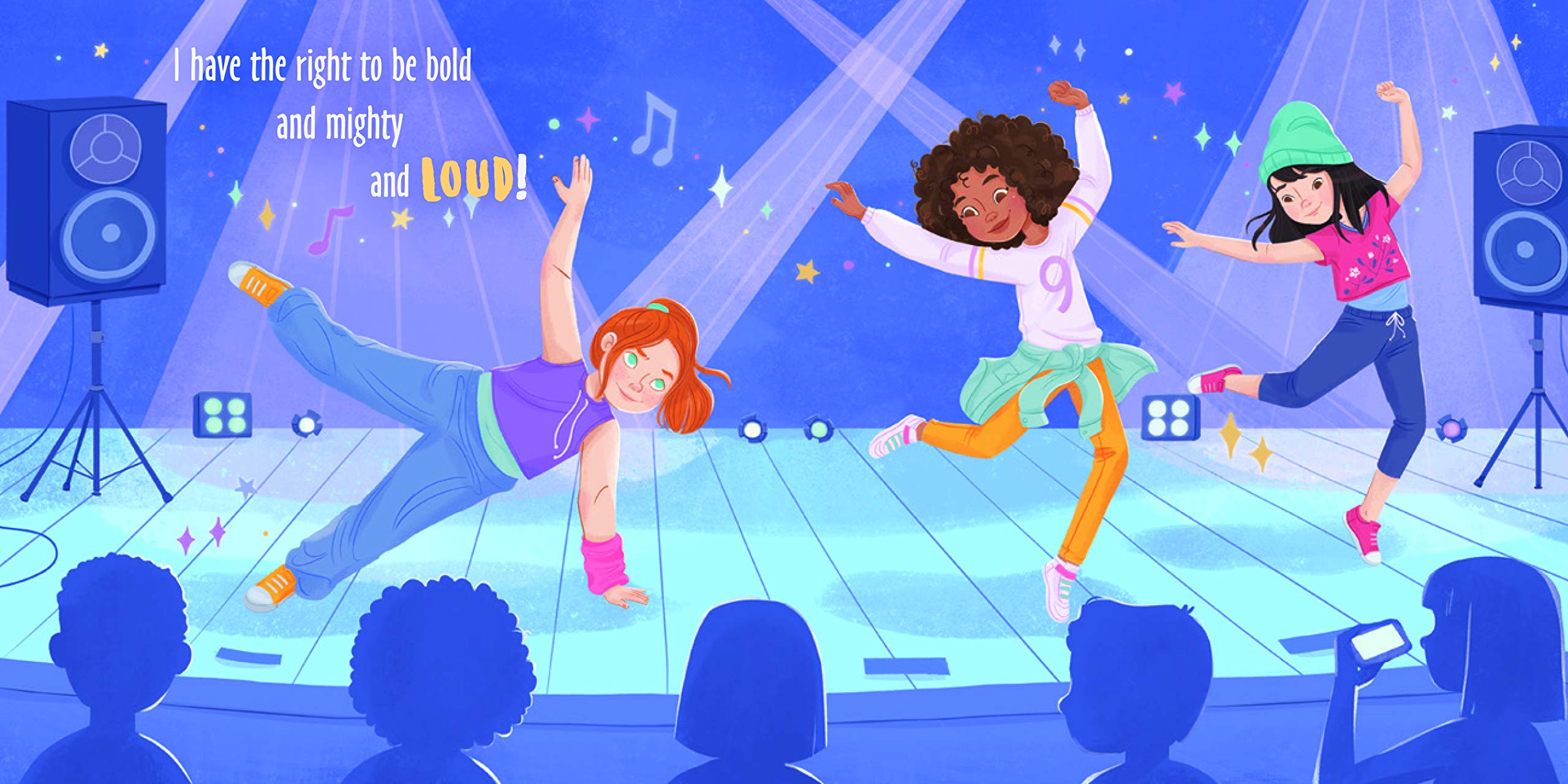
In her vibrant and expressive illustrations populated with a group of diverse girls, Addy Rivera Sonda shares clear images of girls doing what they love, adopting a look that reflects their personality, making choices, expressing their emotions, sticking up for themselves, and being proud of their accomplishments. From school to the soccer field to the stage to a party, Sonda presents uplifting examples of how this close-knit group supports each other. For girls, these images will resonate deep in their hearts. Boys reading or listening to the book—and this is a book every boy should know—will see how and why girls express a variety of emotions as well as behaviors on the part of others that are destructive to a girl’s self-esteem and autonomy. The final illustration showing all six girls happy to live as their true selves is a poignant and heartening vision for children to take away from this book.

A dynamic read to empower and celebrate girls, A Girl’s Bill of Rights is highly recommended for home, classroom, and public libraries.

Ages 4 – 8

Beaming Books, 2021 | ISBN 978-1506464527

Discover more about Amy B. Mucha and her books on her website.

You can connect with Addy Rivera Sonda on Instagram.

Plant the Seeds of Greatness Month Activity

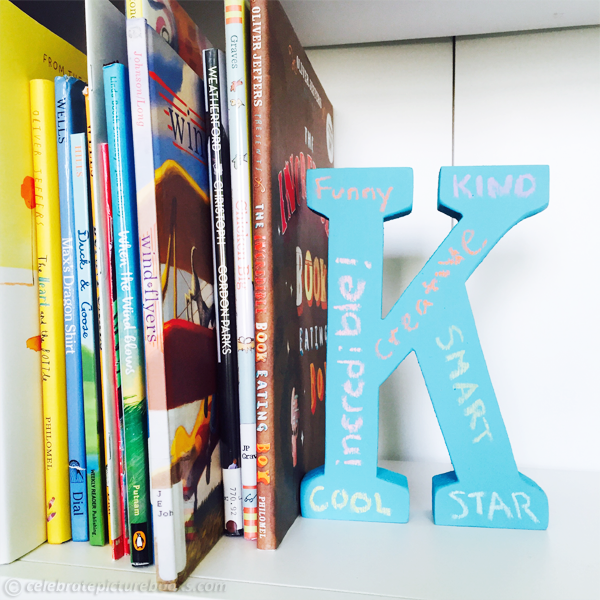
celebrate-picture-books-picture-book-review-initial-bookend

I Love Me! Initial Bookend


You can show your pride in your name (or play with changing it) with this easy craft that will keep all your books tidy on their shelf! This makes a great gift too!

Supplies

  • Sturdy wooden letter blocks in the child’s first and last initials. Or, if the child would like to try on a new name or nickname, the first letter of their new name.
  • Chalkboard or acrylic paint
  • Colored chalk
  • Paint brush

Directions

  1. Paint the letters, let dry
  2. With the chalk write words that describe you or names of your heroines and/or heroes
  3. Display your bookends

celebrate-picture-books-picture-book-review-a-girl's-bill-of-rights-cover

You can find A Girl’s Bill of Rights at these booksellers

Amazon | Barnes & Noble | Books-a-Million

To support your local independent bookstore, order from

Bookshop | IndieBound

Picture Book Review

October 28 – It’s Eat Better, Eat Together Month

celebrate-picture-books-picture-book-review-let's-eat-mealtime-around-the-world-cover

About the Holiday

National Eat Better, Eat Together Month encourages families to gather for at least one meal a day. When families gather for a meal, they tend to make more balanced food choices. Uninterrupted time together also allows each member of the family share stories about their day and lets everyone laugh, commiserate, and build strong bonds. Spending more time together this year provides families the opportunity to get everyone involved in everything from choosing recipes and shopping to preparing and cooking the food to cleaning up. According to the Academy of Nutrition and Dietetics he benefits of eating together are wide ranging and can include better grades, better health, and fewer behavioral problems. To celebrate this holiday, make your own plans for family meals and discover how families from around the world enjoy their meals with today’s book!

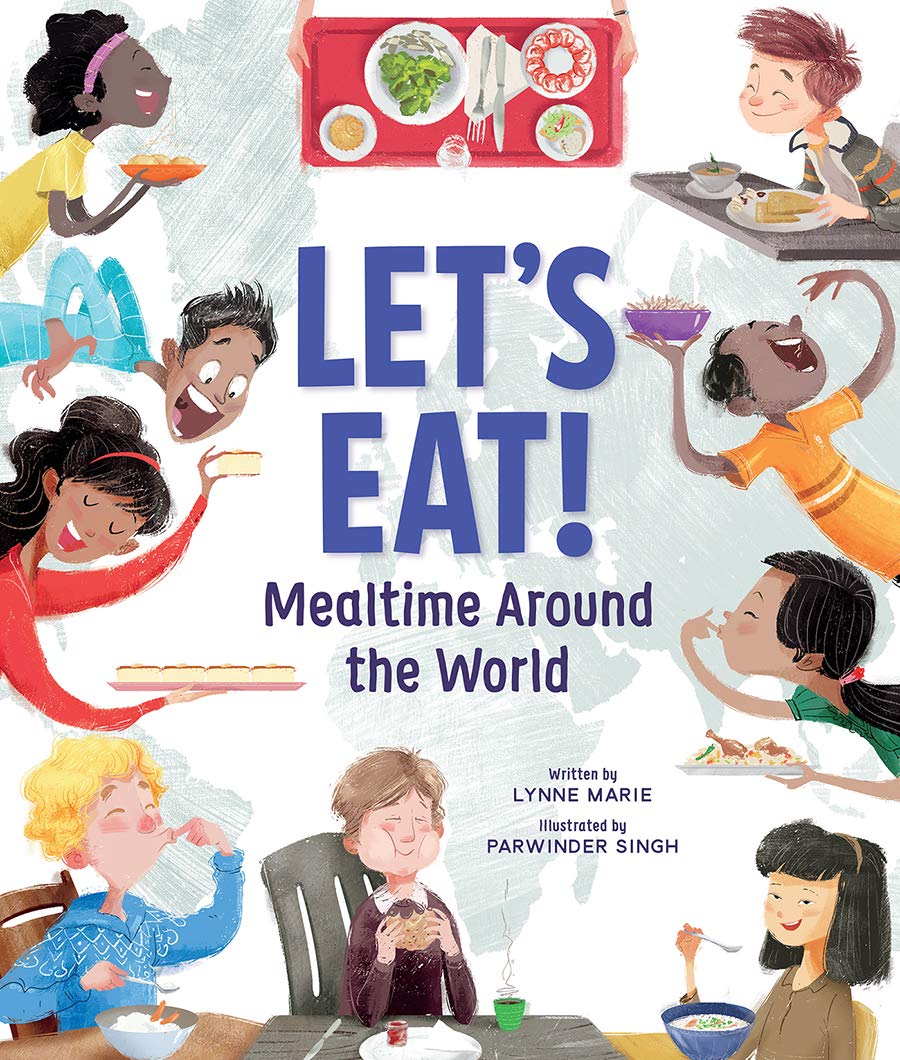
Let’s Eat! Mealtime Around the World

Written by Lynne Marie | Illustrated by Parwinder Singh


If you’re raising a culinary conscious and curious kid satisfies that gnawing hunger for more information on world cuisine. Visiting families around the globe at breakfast, lunch, and dinner time, Lynne Marie offers up tidbits about what kids eat plus other interesting food facts. The first stop is China, where Yu Yan is enjoying a bowl of congee—or rice porridge—before heading out to school. This morning, the congee includes squid that her father has caught. Yu Yan “slurps loudly to show how much she likes it.”

celebrate-picture-books-picture-book-review-let's-eat-mealtime-around-the-world-peru

Image copyright Parwinder Singh, 2019, text copyright Lynne Marie, 2019. Courtesy of Beaming Books.

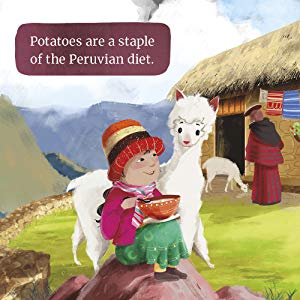
High in the mountains of Peru, Luz is bundled up in the early morning air as she gets ready to help out with her grandfather’s llamas. First, she warms up with chuño cola—a soup made from freeze-dried potatoes. For Luz, breakfast usually consists of leftovers from dinner the night before. Hospitality is so important to people in the Philippines that one of the most common greetings is “‘Kumain ka na?’ meaning ‘Have you eaten yet?’” If not, you may be invited to join in a breakfast of spamsilog—a dish of fried SPAM, fried eggs, and garlic rice.

celebrate-picture-books-picture-book-review-let's-eat-mealtime-around-the-world-philippines

Image copyright Parwinder Singh, 2019, text copyright Lynne Marie, 2019. Courtesy of Beaming Books.

In Jamaica, Zhade and her mother make savory pastries filled with spicy ground beef. These can be eaten on their own or wrapped in coco bread—a soft, sweet bread—to make sandwiches. For Camille, living in France, lunch is a four-course meal served at school. Today, Camille and her friends are having “a cucumber and tomato salad, then a main course of roast beef with cooked broccoli. Next, a small plate of cheese, finished with apple tart for dessert.” It must not be Wednesday, though. In France, there’s no school on Wednesday afternoons. “Instead, many attend on Saturday mornings.”

It’s dinnertime for Priya, who lives in India. She and her family are at their favorite restaurant, where Priya has ordered Tandoori chicken. “Tandoori chicken is marinated in yogurt and spices then roasted in a tandoor, a round clay oven.” After dinner, she and her family go home to watch cricket on TV.

celebrate-picture-books-picture-book-review-let's-eat-mealtime-around-the-world-jamaica

Image copyright Parwinder Singh, 2019, text copyright Lynne Marie, 2019. Courtesy of Beaming Books.

For many families in Sweden, Thursday dinners follow a tradition that goes back to the fifteenth century. Tonight, Hugo is having “pea soup and pancakes with lingonberry jam. Perfect for keeping warm on a cold winter night.” Lingonberry jam isn’t just for pancakes. It can be used in a variety of sweet and savory dishes.

At last! It’s time for dessert! In Egypt, Mandisa and her brother are enjoying basbousa—a coconut cake. They especially like it with a topping of rose-blossom or orange-blossom syrup that makes it taste extra sweet. In Nigeria, Chetachi can’t wait to dig into the bowl of tropical fruit sprinkled with coconut. It looks like his sister would like some too! All over the world, people sit down to meals with foods they love. Learning more about these dishes and trying them is a great way to feel a sense of community with other kids.

celebrate-picture-books-picture-book-review-let's-eat-mealtime-around-the-world-egypt

Image copyright Parwinder Singh, 2019, text copyright Lynne Marie, 2019. Courtesy of Beaming Books.

In her conversational tour around the world, Lynne Marie invites readers to sit down with their peers and enjoy a variety of meals and snacks while also learning a little about the history, culture, environment, and animals of each area. A question prompting readers to think about their own connection to food accompanies each two-page spread and offers an opportunity for classroom or home discussion and exploration.

Parwinder Singh populates his illustrations with enthusiastic kids dipping into soups, dishing up a plateful around the family dining table, helping out in the kitchen, and licking their fingers to enjoy every drop of a delicious treat. Singh’s colorful backdrops give kids a glimpse into the homes that nourish each child and the landscape that often influences the ingredients that make up their favorite foods.

Sure to spark children’s interest in tasting foods from around the world and learning more about the cultures of the thirteen countries represented here, Let’s Eat! Mealtime around the World makes for a deletable lead-in for social studies and geography lessons, events highlighting international foods, and multicultural explorations at home.

Ages 4 – 8

Beaming Books, 2019 | ISBN 978-1506451947

Discover more about Lynne Marie and her books on her website.

You can view a portfolio of artwork by Parwinder Singh on ArtStation.

Eat Better, Eat Together Month Activity

celebrate-picture-books-picture-book-review-pancake-game-four (2)

Pancake Flip-Out Game


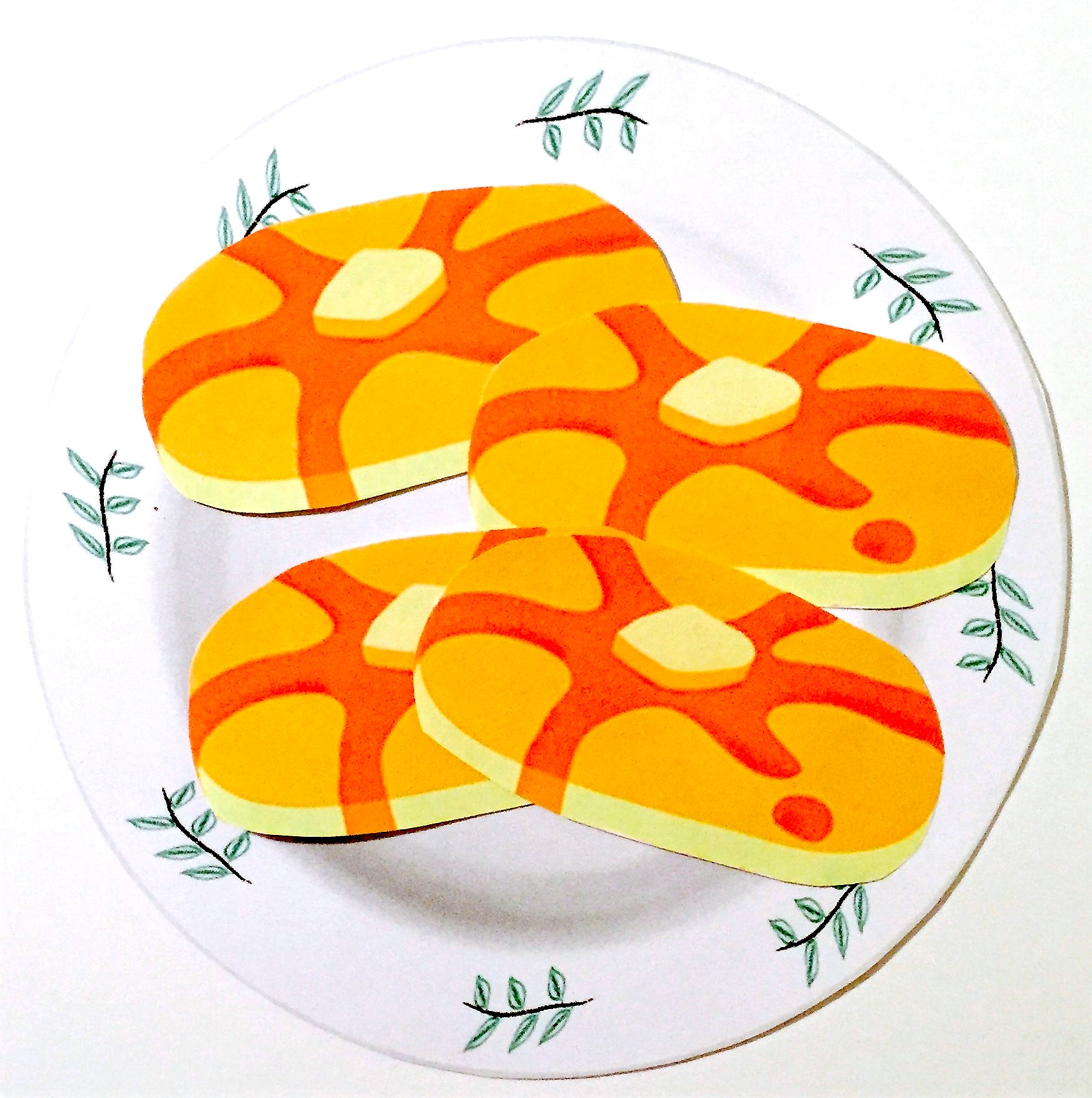
A favorite family breakfast is pancakes! If you can’t get enough of pancakes at breakfast (or that other treat: breakfast for dinner), you can play this Pancake Flip-Out Game to fill your plate.

Supplies

You can play this game several ways:

  1. Print and cut out the pancakes and plate (or use your own paper plate or other dish) and glue them to the heavy paper, poster board, or foam sheet
  2. Place the plate on the floor
  3. Draw 3 concentric circles around the plate about 12 inches apart.  For younger children make the circles closer together.
  4. Give each player the same number of pancakes and choose someone to go first
  5. Each player takes turns tossing or flipping their pancakes, trying to get them onto the plate
  6. When a player has used all of their pancakes add up their score:
  • Hitting the target can earn you 20 points
  • Getting your pancake in the first circle around the plate earns you 15 point
  • Hitting the second circle is worth 10 points
  • Pancakes landing in the third circle are worth 5 points

Rotate through the players as many times as you like and add up the points at the end. The player with the most points wins!

Try this Option:

Instead of tossing the pancakes with your hands, try flipping them with a spatula!

Or: Make up your own rules—and have fun!

celebrate-picture-books-picture-book-review-let's-eat-mealtime-around-the-world-cover

You can find Let’s Eat! Mealtime Around the World at these booksellers

Amazon | Barnes & Noble | Books-a-Million

To support your local independent bookstore, order from

Bookshop | IndieBound

Picture Book Review