March 3 – World Wildlife Day

celebrate-picture-books-picture-book-review-galapagos-girl-cover

About the Holiday

In December of 2013 the United Nations General Assembly proclaimed March 3rd as World Wildlife Day to promote awareness of our environment and the dangers to it. Every year a different theme is chosen to spotlight an area of the world, a particular species, or a group of activists. This year’s theme is “life below water for people and planet” and focuses on marine species, the importance of marine wildlife, and the issues affecting the health and survival of the ocean and ocean creatures. The day also celebrates successful conservation and sustainability initiatives. To learn more about the day, special events, and how you and your kids can get involved today and throughout the year, visit the World Wildlife Day website.

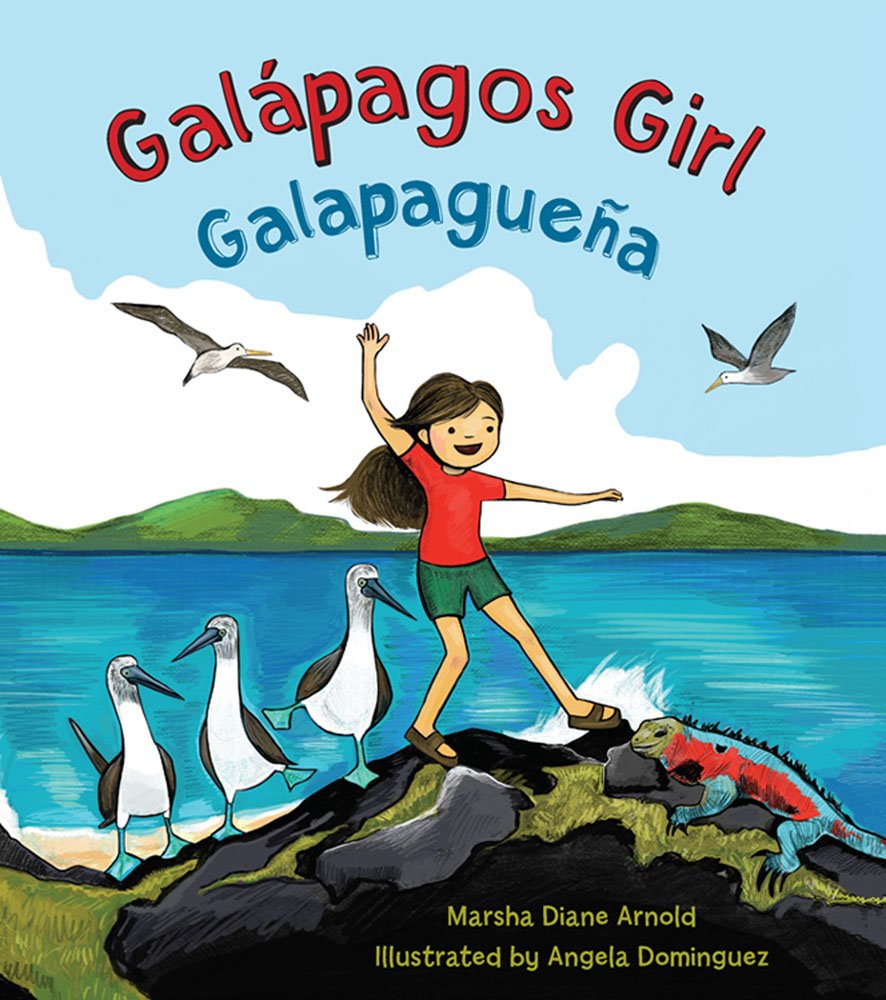
Galápagos Girl / Galapagueña

Written by Marsha Diane Arnold | Illustrated by Angela Dominguez | Translated by Adriana Dominguez


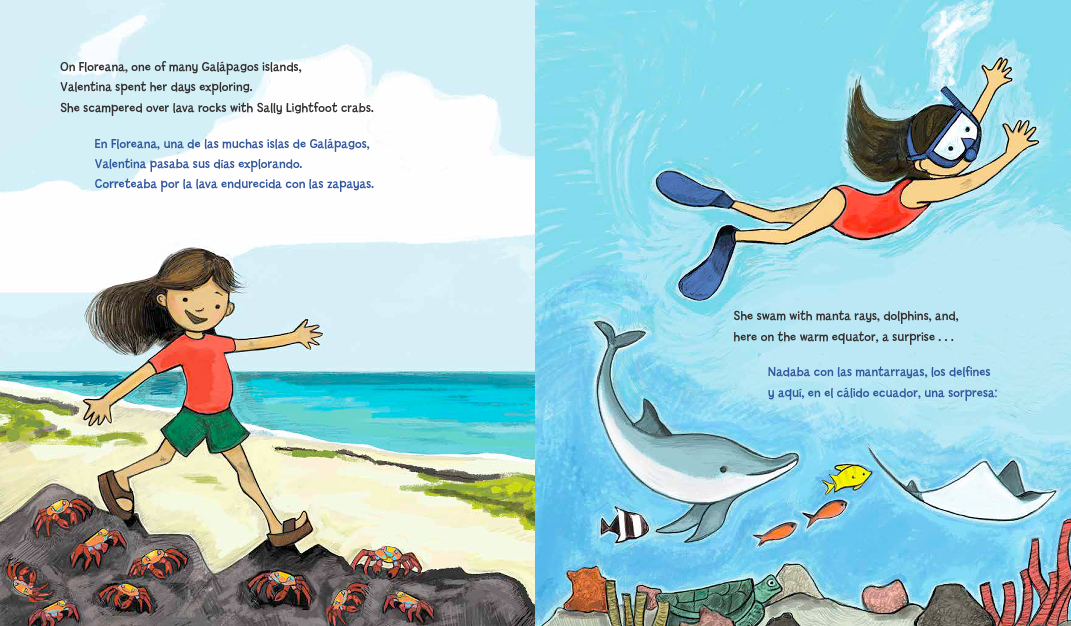
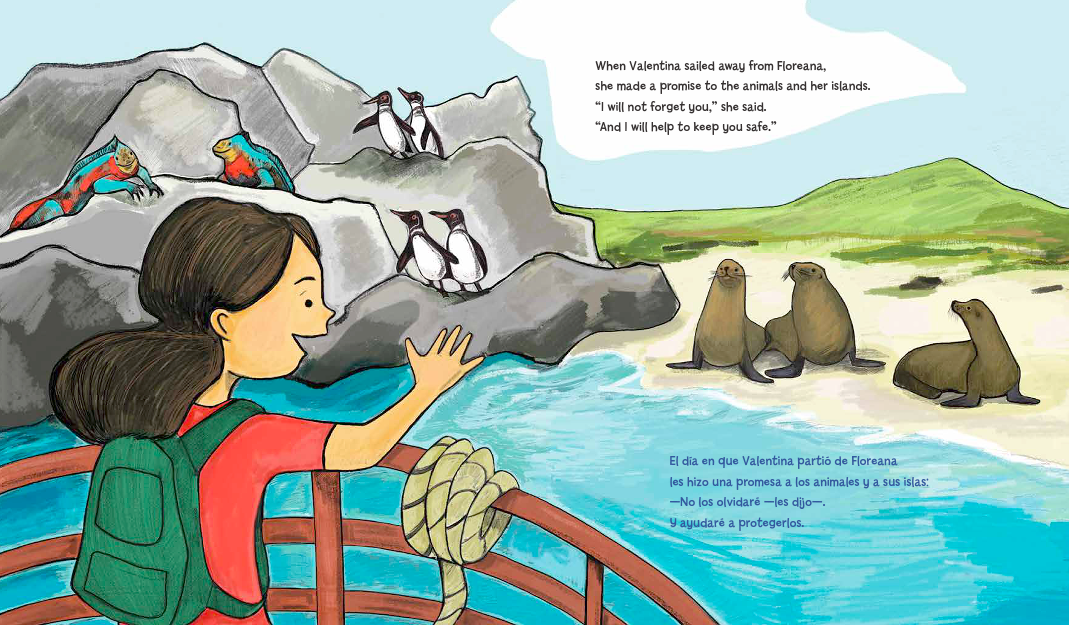
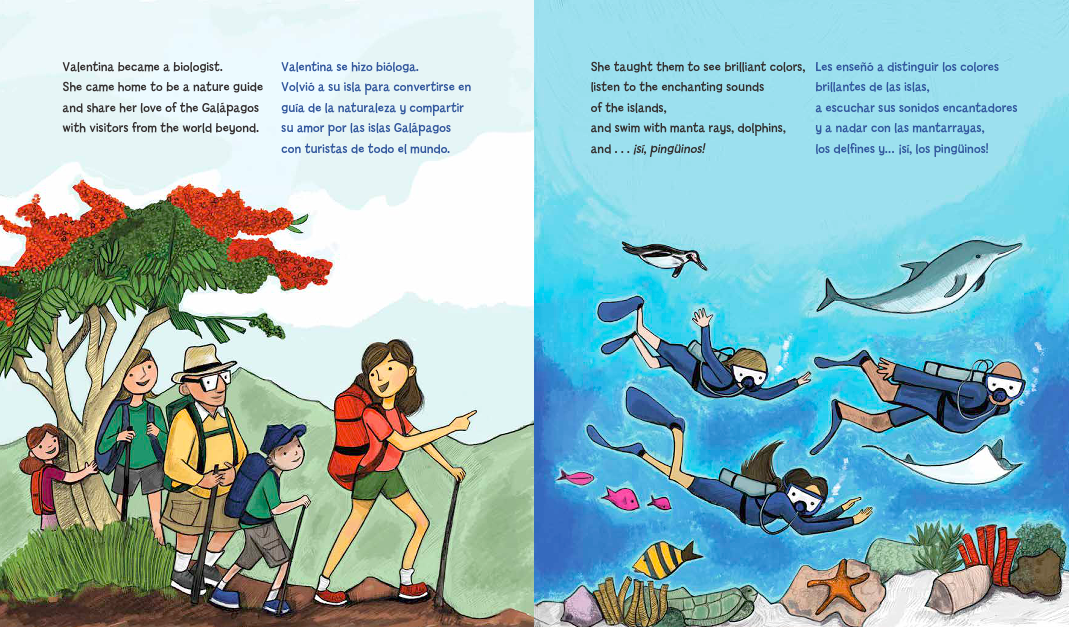
On the day when baby Valentina joined Mamá, Papá, and eleven brothers and sisters, even the sea lions, blue-footed boobies, and iguanas seemed to welcome her to the “island formed by fire.” Valentina loved growing up on the Galápagos Island of Floreana. She explored the lava rocks, where Sally Lightfoot crabs scuttled back and forth. She swam with dolphins and manta rays, and even played with penguins.

celebrate-picture-books-picture-book-review-Galápagos-Girl-crabscelebrate-picture-books-picture-book-review-Galápagos-Girl-crabs

Image copyright Angela Dominguez, 2018, text copyright Marsha Diane Arnold, 2018. Courtesy of Lee & Low Books.

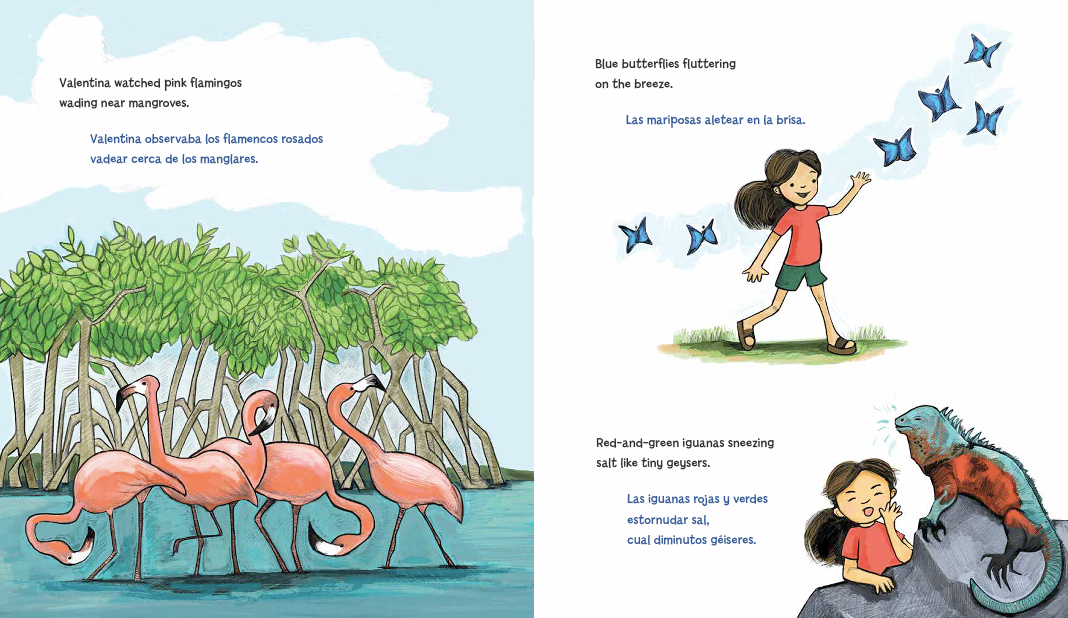
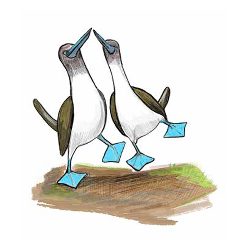
“Valentina watched pink flamingoes wading near mangroves. Blue butterflies fluttering on the breeze. Red-and-green iguanas sneezing salt like tiny geysers.” The crashing waves, albatross, and finches created a symphony as Valentina stopped to rest on a grassy cliff overlooking the ocean. The lava lizards, blue-footed boobies, and twirling sea lions provided young Valentina with a variety of dance partners.

celebrate-picture-books-picture-book-review-Galápagos-Girl-iguana

Image copyright Angela Dominguez, 2018, text copyright Marsha Diane Arnold, 2018. Courtesy of Lee & Low Books.

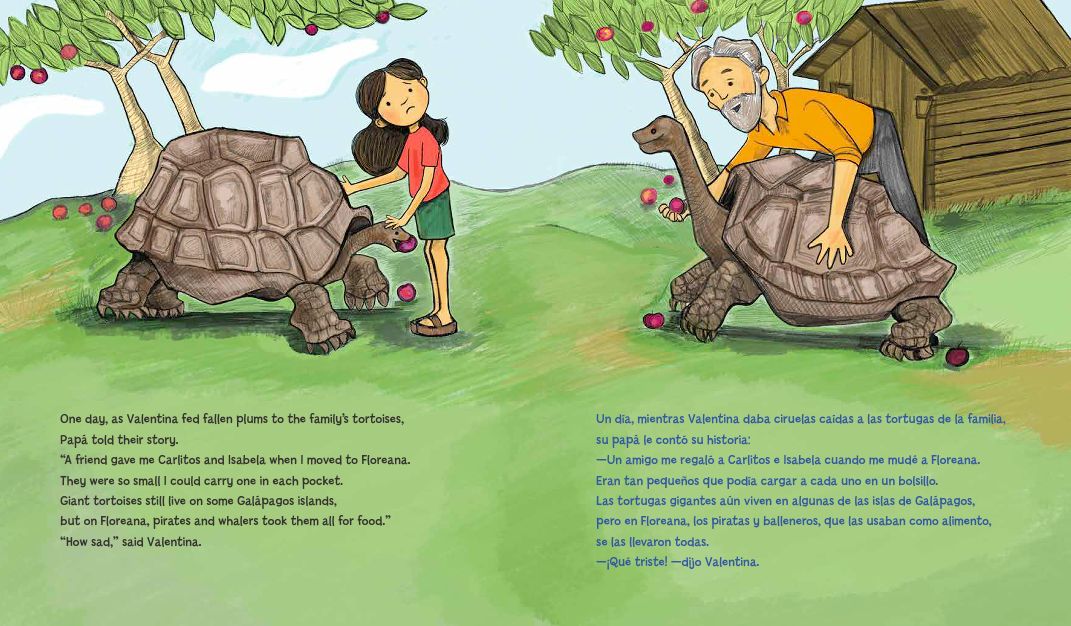
At home, Valentina’s family shared their home with two giant tortoises—Carlitos and Isabella. One day Papá told Valentina their story as they fed the tortoises plums that had fallen from their backyard trees. Papá had gotten Carlitos and Isabella from a friend when he first moved to Floreana. Although it was nearly impossible to imagine now that the tortoises were grown, at the time they were so small that they fit into Papá’s pockets.

celebrate-picture-books-picture-book-review-Galápagos-Girl-tortoises

Image copyright Angela Dominguez, 2018, text copyright Marsha Diane Arnold, 2018. Courtesy of Lee & Low Books.

There was also a sad note to Papá’s story. He said that while giant tortoises still lived on other Galápagos islands, pirates and whalers had wiped out the population on Floreana. Papá went on to tell Valentina that many Galápagos animals were in danger. They were “threatened by other animals that don’t belong here. Threatened by people who don’t understand how to care for our islands.” Valentina promised that she would always protect them.

When she was older, Valentina left the island to go to school. She didn’t want to leave her beautiful home, but Mamá told her that she was “ready to learn about the world beyond.” And Papá reminded her that “like our islands, you have a heart full of fire.” On school vacations, Valentina always came back to study the wildlife on the Galápagos islands. She had not forgotten her promise to keep them safe.

celebrate-picture-books-picture-book-review-Galápagos-Girl-going-to-school

Image copyright Angela Dominguez, 2018, text copyright Marsha Diane Arnold, 2018. Courtesy of Lee & Low Books.

After she graduated with a degree in biology, Valentina returned to the islands as a nature guide to teach visitors about the beauty and uniqueness of the Galápagos. Some visitors were even lucky enough to meet Carlitos and Isabella when the plums dropped from the trees and the two old tortoises returned from exploring Floreana to eat them. Because of Valentina’s commitment to the Galápagos, her visitors also made a promise to always remember and protect them.

Extensive backmatter includes an Author’s Note about Valentina Cruz, the tortoises Carlitos and Isabella, and the history of tortoises on Floreana. There is also information on the Galápagos as well as fun facts about all of the animals in the story. A bibliography of sources invites readers to learn more.

Each two-page spread presents the text in English and translated into Spanish by Adriana Dominguez.

celebrate-picture-books-picture-book-review-Galápagos-Girl-guiding-visitors

Image copyright Angela Dominguez, 2018, text copyright Marsha Diane Arnold, 2018. Courtesy of Lee & Low Books.

Marsha Diane Arnold’s lyrical and buoyant passages sing with the carefree joy Valentina felt as a girl exploring her beloved Galápagos and which brought her back home as a biologist to protect them. After seeing Valentina playing and swimming with the native animals and feeding Carlitos and Isabella, readers will also feel Valentina’s sadness at the dangers they face and want to make a positive difference to the environment and the world around them. Arnold’s dialogue-rich storytelling highlights the personal nature of the subject and will draw children into Valentina’s world.celebrate-picture-books-picture-book-review-Galápagos-Girl-blue-footed-booby

Saturated with glorious color, each of Angela Dominguez’s illustrations is a celebration of the splendor of the Galápagos. Playful sea lions, high-stepping blue-footed boobies, scampering crabs, and even a sneezing iguana will captivate young readers and inspire them to learn more about these creatures and the islands. Images of Valentina camping out to study the animals during school breaks will excite environmentally conscious kids, and pictures of Carlitos and Isabella happily munching on plums will generate smiles and “awwws.”

Galápagos Girl / Galapagueña will excite kids to learn more not only about the Galápagos region but about their own local environment, and the call to action will spark an enthusiasm for protecting the earth’s animals. The book would make an inspiring addition to home bookshelves and an excellent way to begin classroom discussions on environmental issues and science lessons. The engaging Spanish translation will delight Spanish-speaking and bilingual families.

Ages 4 – 8

Lee & Low Books, 2018 | ISBN 978-0892394135

Discover more about Marsha Diane Arnold and her books on her website.

Read an interview with Marsha Diane Arnold here.

To learn more about Angela Dominguez, her books, and her art, visit her website.

World Wildlife Day Activity

celebrate-picture-books-picture-book-review-animals-of-the-galapagos-match-up-puzzle

Animals of the Galápagos Match Up Puzzle


There are so many fascinating animals that live in the Galápagos! Can you match the picture of each animal to its description in this printable Animals of the Galápagos Match Up Puzzle? You can find and download the activity sheet from the Lee & Low Books website:

Animals of the Galápagos Match Up Puzzle

celebrate-picture-books-picture-book-review-galapagos-girl-cover

You can find Galápagos Girl / Galapagueña at these booksellers

Amazon | Barnes & Noble | Books-a-Million | IndieBound

Picture Book Review


February 21 – World Anthropology Day

celebrate-picture-books-picture-book-review-this-is-how-we-do-it-cover-2

About the Holiday

World Anthropology Day was established as a day when anthropologists around the globe can celebrate and share their discipline with students and others interested in the world around us. What is anthropology? The short answer would be: the study of what makes us human. And what does this entail? That answer is much longer and includes the things people do, what we eat, what we wear, the way we communicate, and even such subjects as economics, health, education, law, and genetics. It studies the past but also looks to the future. The field of Anthropology and one of its subsets archaeology are endlessly fascinating. To learn more about Anthropology and careers in the field, find podcasts, and learn about resources, visit the American Archaeological Association Website

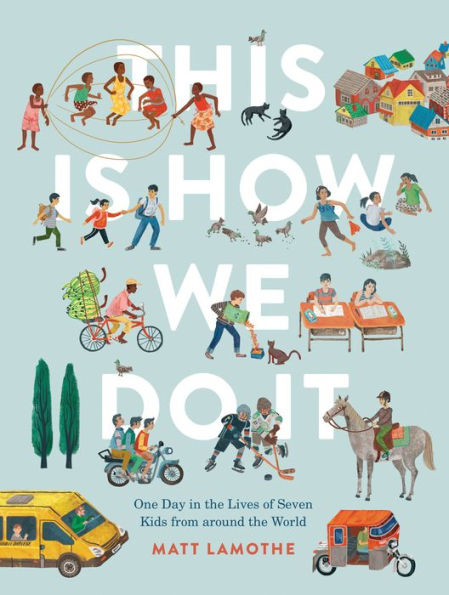
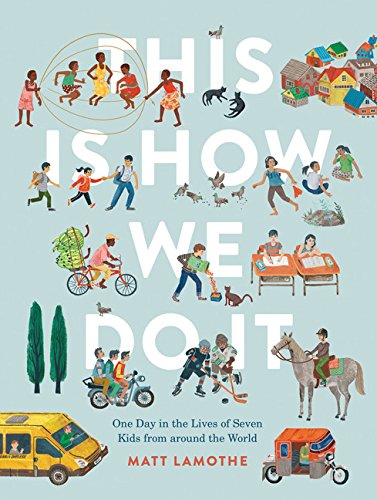
This Is How We Do It: One Day in the Lives of Seven Kids from around the World

By Matt Lamothe


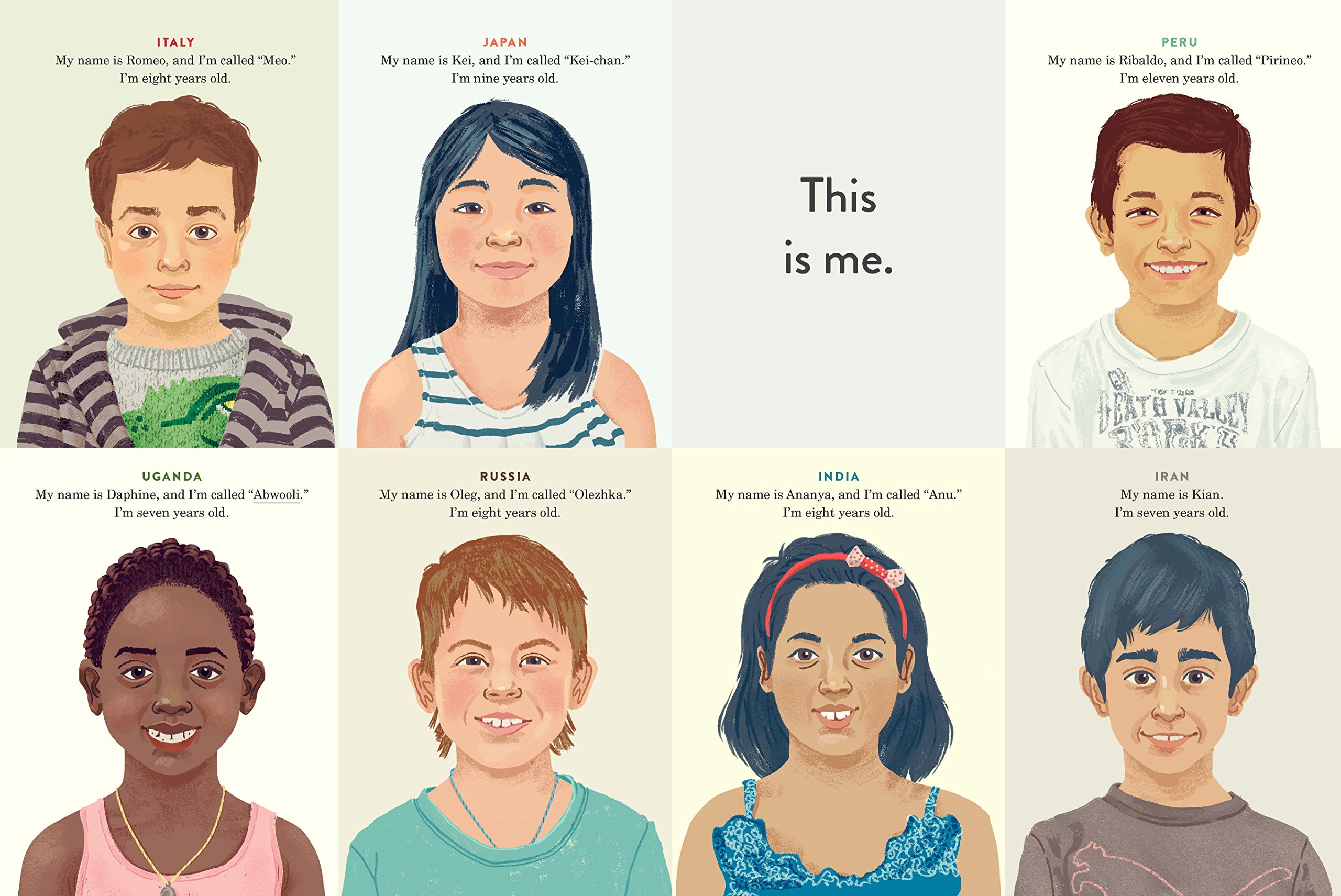
Opening the book, readers are introduced to the seven children they will learn more about. From Codrignano, Italy comes eight-year-old Romeo who lives in a house with a vineyard in the back. Nine-year-old Kei is from Japan, and she lives in a house in Tokyo. Daphine is seven and lives in Uganda in a “house made of wood and mud in the village of Kanyawara. Eight-year-old Oleg lives in an apartment in Uchaly, Russia, “a mining town near the Ural mountains.” From Los Naranjos, Peru comes Ribaldo, who’s eleven and lives in a house his father built. Ananaya is eight and lives in an apartment in Haridwar, India, which is near the Ganges River. And from Gorgan, Iran comes Kian, who’s seven and who also lives in an apartment.

celebrate-picture-books-picture-book-review-this-is-how-we-do-it-kids

Copyright Matt Lamothe, 2017, courtesy of Chronicle Books.

Each child lives with their mom and dad and various siblings. The largest family is Ribaldo’s; he has two younger brothers and a younger sister who still live at home. He also has four older siblings who don’t live at home anymore. When they go to school, four of the children wear uniforms and three choose their own outfits. Breakfast may be different for each child—with foods such as cheese, fried rice, plantains, eggs, bread and fish on the menus—but every morning starts out delicious.

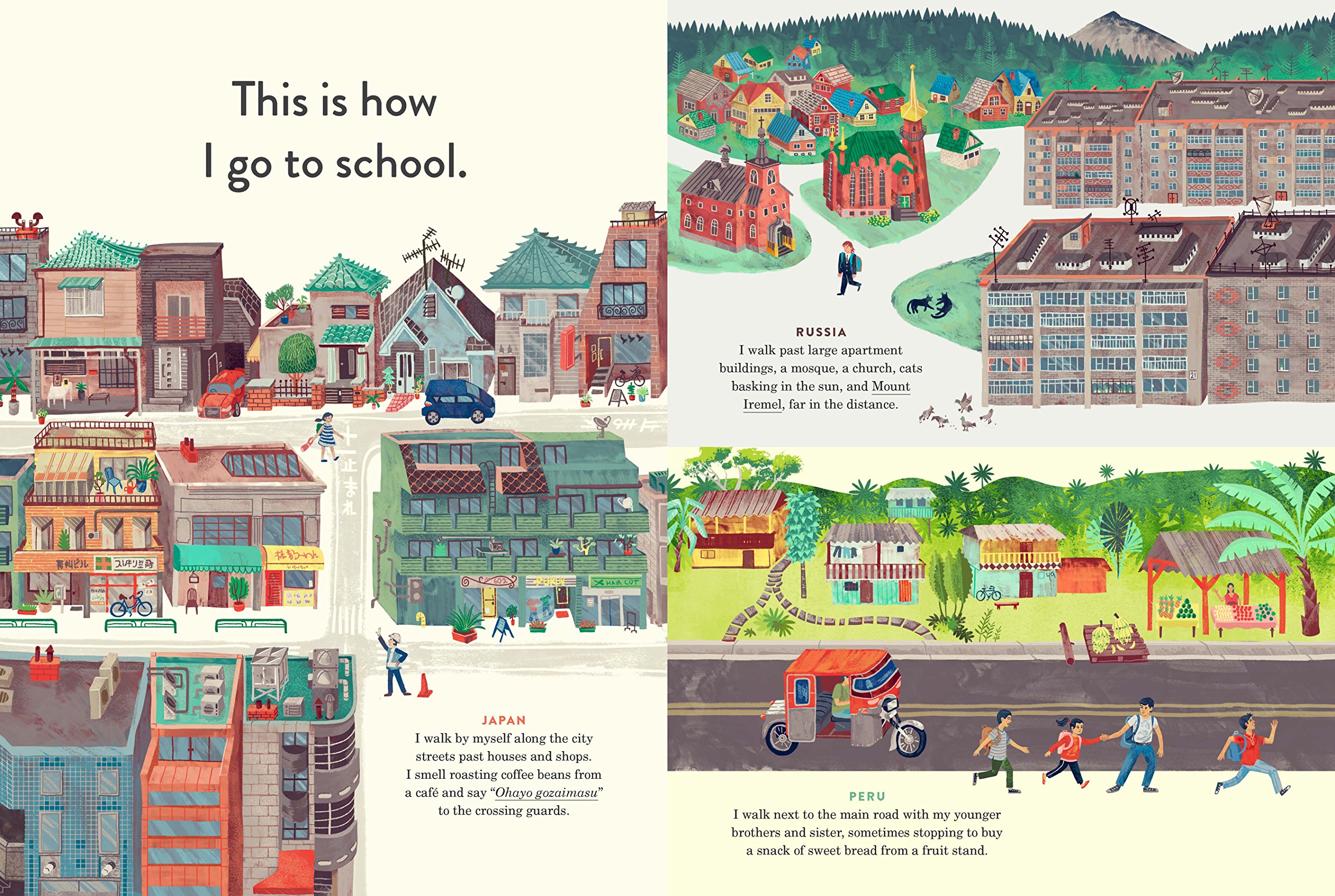
After breakfast, it’s time to go to school. Kei walks along neighborhood streets in Tokyo, while Ribaldo and his sister and brothers walk along the main road, “sometimes stopping to buy a snack of sweet bread from a fruit stand.” Kian rides with his mother or father through the city, and Ananaya is driven to school through busy streets “past hotels, shops, and cows that freely roam the roads.” Romeo takes a school bus, and Daphine must walk a half-hour on a path that meanders past “groves of eucalyptus and banana trees.”

celebrate-picture-books-picture-book-review-this-is-how-we-do-it-breakfast

Copyright Matt Lamothe, 2017, courtesy of Chronicle Books.

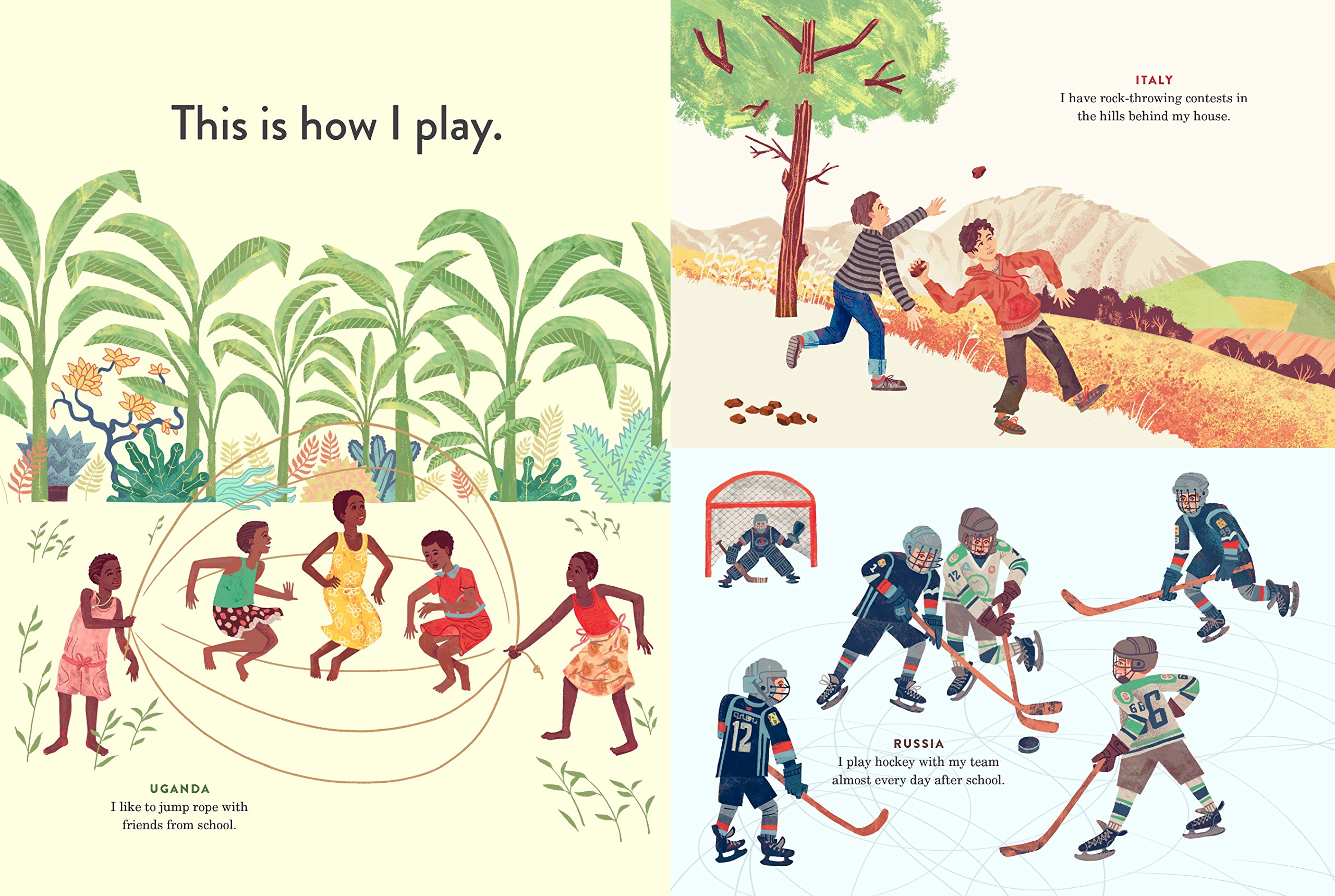
Each child enjoys learning different subjects with their friends. Ribaldo’s school in Peru is small, so the fifth and sixth graders study together in the same room, and in Russia Oleg has the same teacher and classmates from first through fourth grades. There’s time for lunch and then, after school, it’s time to play. Daphine likes to jump rope, Romeo and his friends have stone-throwing contests, and Ananaya plays “Rumaal Chor or ‘Hanky Thief’” in the part with her friends. Kei gets together with her friends at the neighborhood playground and plays “Koori Oni, or ‘Freeze Tag.’” Oleg is on a hockey team and practices almost every day.

celebrate-picture-books-picture-book-review-this-is-how-we-do-it-going-to-school

Copyright Matt Lamothe, 2017, courtesy of Chronicle Books.

Each child also helps around the house doing chores, tending the garden, feeding pets, and other jobs. Dinner is eaten with siblings and parents. Some families eat around 6:00 or 7:00, while others don’t eat until 9:00 or 10:00. After dinner, the kids engage in various activities: Oleg plays chess with his dad, Ananaya plays the board game Carrom with her sister, Kei reads mysteries with her mom, and Romeo and his dad build model cars. Then it’s time to go to sleep in their own comfortable bed underneath the same night sky.

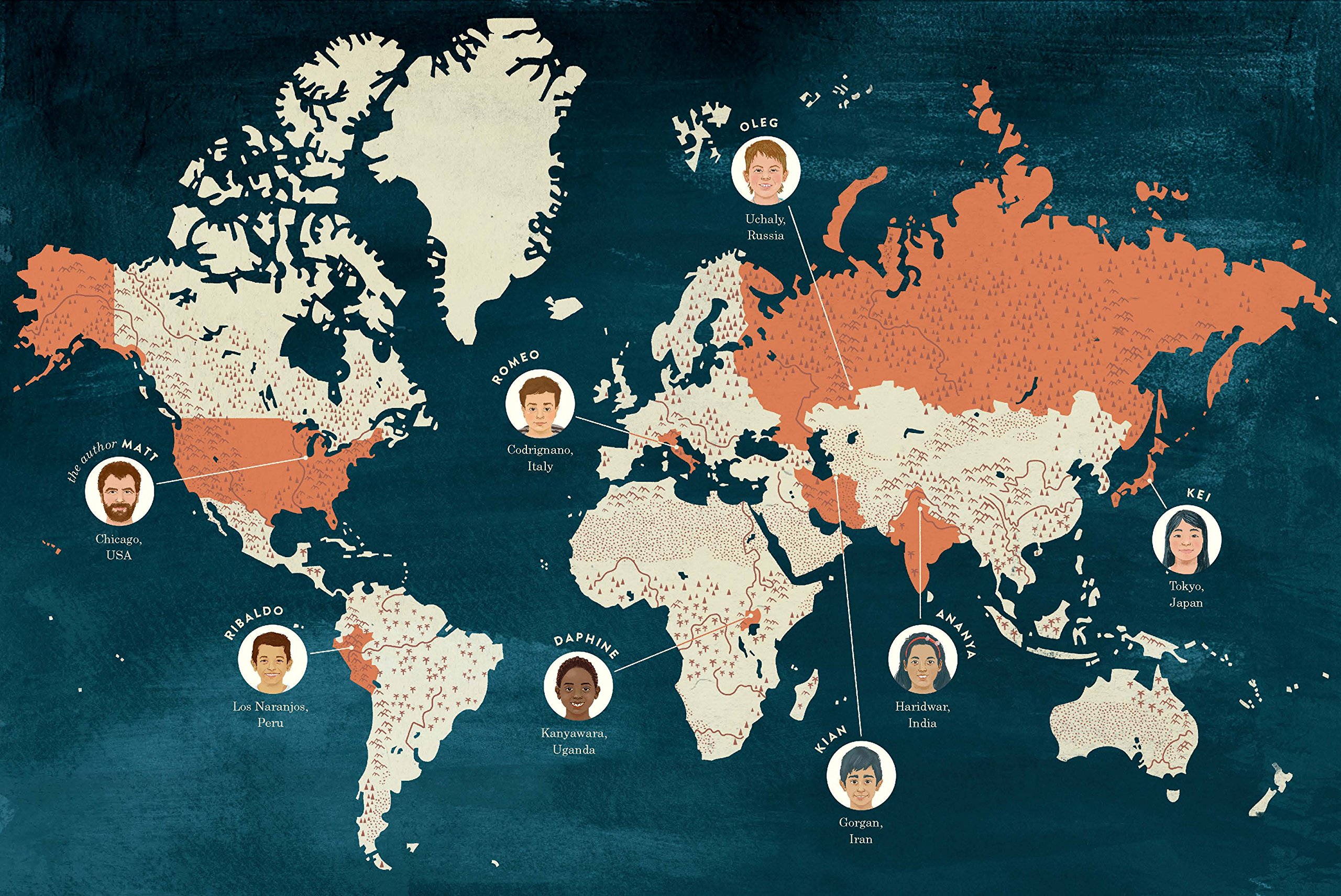
Back matter includes photographs of the families that Matt Lamothe followed in writing this book as well as a glossary of words found throughout the text. The endpapers contain a world map that shows where each child lives. Author’s notes provide insight into the text and his own experiences in researching the book.

celebrate-picture-books-picture-book-review-this-is-how-we-do-it-play

Copyright Matt Lamothe, 2017, courtesy of Chronicle Books.

Matt Lamothe’s fascinating look at the lives of seven children from diverse countries of the world will captivate young readers. The snapshots of the children’s lives from breakfast to bedtime spotlight the subjects that kids are most interested in as they wonder what other children eat, what they wear, how they get to school and what they study, how they play, and what their bedtime routines are. In his straightforward text, Lamothe shows that children around the world are more similar than different with traditions that the readers themselves may share.

celebrate-picture-books-picture-book-review-this-is-how-we-do-it-map

Copyright Matt Lamothe, 2017, courtesy of Chronicle Books.

Lamothe’s colorful illustrations clearly depict food and clothing, neighborhoods and landscapes, classrooms and playtime, families and homes. Children will want to linger over the pages to take in all the details. His portrayals of kids in action at school, at home, and at play will have readers excitedly pointing out, “I do that!” “We eat that!” and wanting to try some of the things that are new as well.

A thought-provoking book to spark stimulating conversations among kids about their world, This Is the Way We Do It is a book to dip into again and again at home and in the classroom.

Ages 5 – 12

Chronicle Books, 2017 | ISBN 978-1452150185

To learn more about Matt Lamothe, his books, and his art, visit his website.

World Anthropology Day Activity

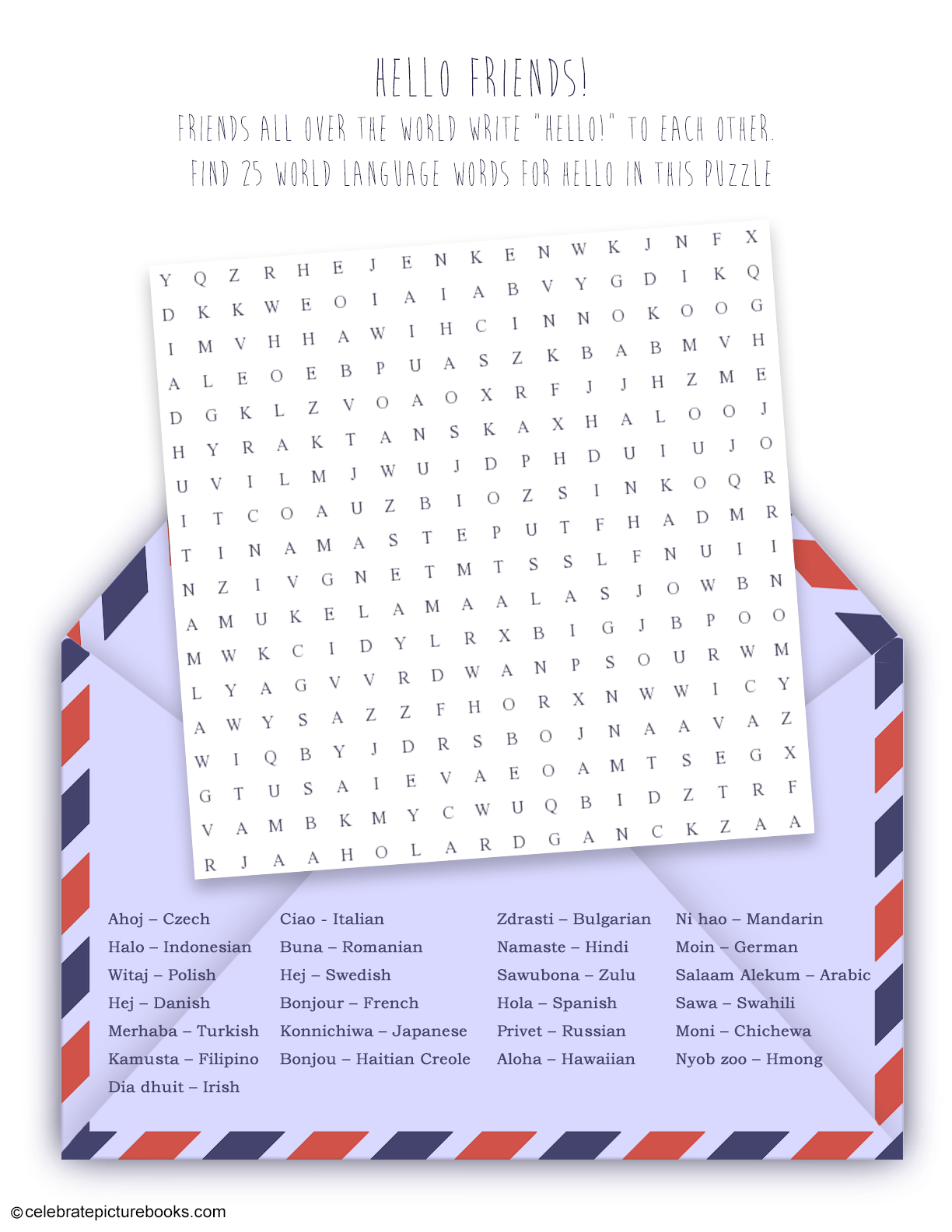
Hello, Friends! Word Search Puzzle


Saying “hello” to our friends and those we meet is something people do all around the world. Find the word for “Friend” in twenty-five languages in this printable puzzle.

Hello, Friends! Word Search Puzzle | Hello, Friends! Word Search Solution

celebrate-picture-books-picture-book-review-this-is-how-we-do-it-cover

You can find This Is How We Do It: One Day in the Lives of Seven Kids from Around the World at these booksellers

Amazon | Barnes & Noble | Books-a-Million | IndieBound

Picture Books


February 17 – Random Acts of Kindness Day

celebrate-picture-books-picture-book-review-be-kind-cover

About the Holiday

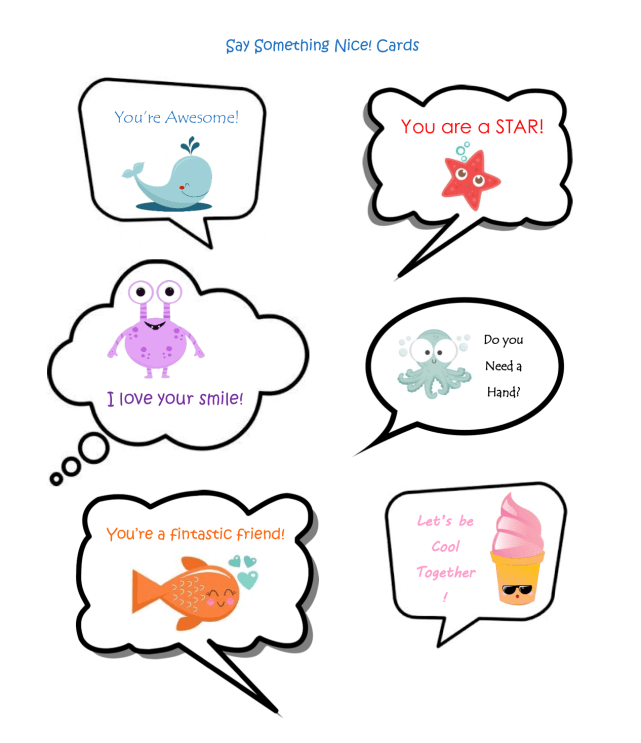
It’s Random Acts of Kindness Day and the beginning of Random Acts of Kindness Week. Today offers a terrific time to begin or reconfirm your commitment to doing nice things for those around you. When you become a RAKtivist (Random Acts of Kindness Activist), you can change people’s lives. Simple gestures of kindness make anyone feel better and create a bond that bring a community closer. If you see someone having a bad day, give them a smile. Is someone struggling with a box, a bag, or keeping their stuff in their locker? Give them a hand. Does someone always eat lunch alone? Offer to sit with them and have a conversation. You’re also encouraged to give others a card to brighten their day. You’ll find some to print out at the end of this post!

There are as many ways to be a RAKtivist as there are people on the planet. You can  learn more about this uplifting holiday and find free resources—including downloadable teachers’ lesson plans for K-8 grades, posters, a calendar full of ideas on how to incorporate kindness into your life, kindness quotes, and more—on the Random Acts of Kindness Website!

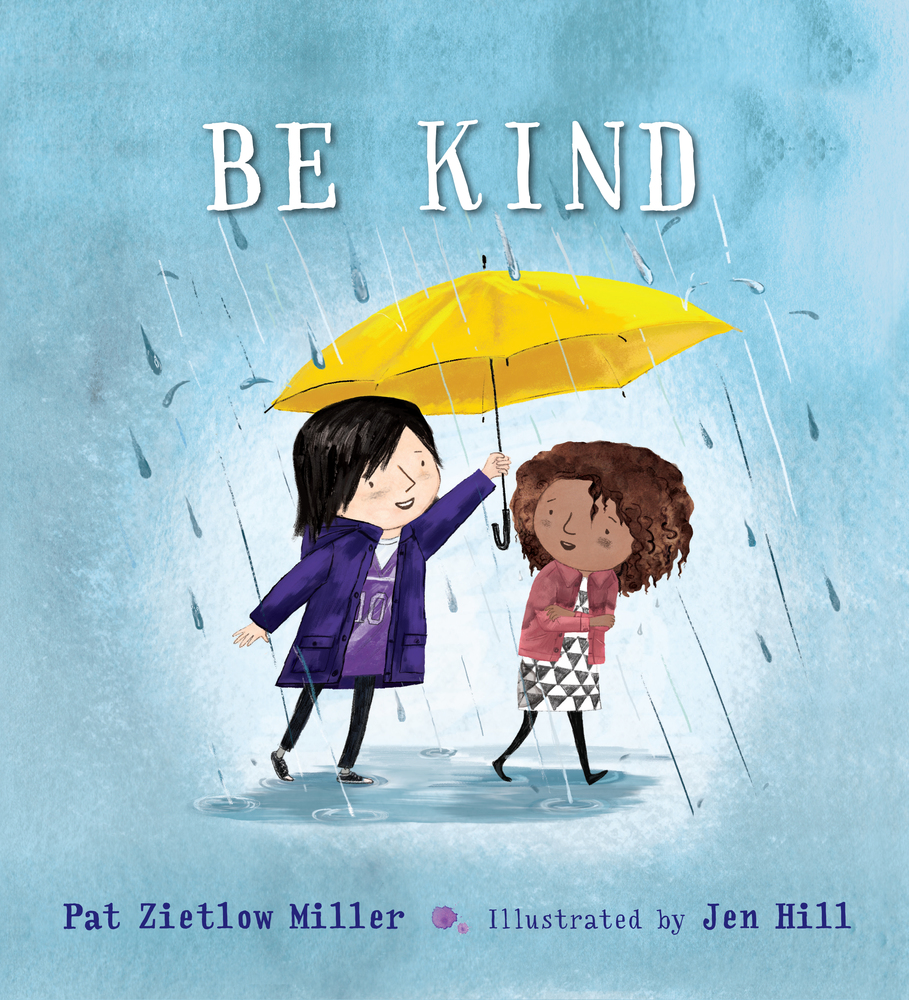
Be Kind

Written by Pat Zietlow Miller | Illustrated by Jen Hill

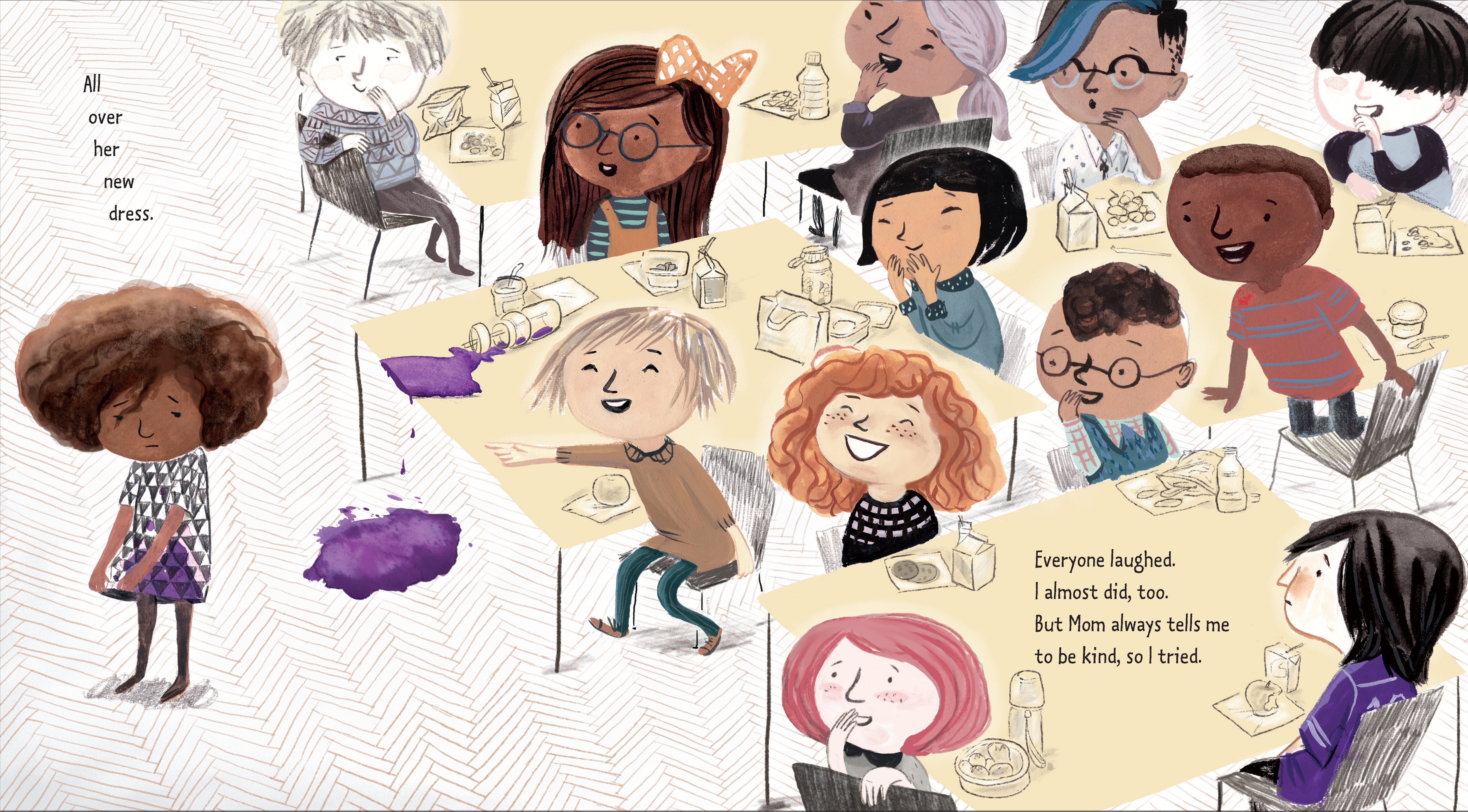
At school during snack time when Tanisha spilled grape juice on her new dress, the class burst out laughing. One student remembered that their mom always taught them to be kind and tried to make Tanisha feel better by saying, “Purple is my favorite color.” The student thought Tanisha would smile, but she just ran away. All during art class, Tanisha’s classmate thought about what they should have done instead, wondering, “What does it mean to be kind anyway?”

celebrate-picture-books-picture-book-review-be-kind-spilled-juice

Image copyright Jen Hill, 2018, text copyright Pat Zietlow Miller, 2018. Courtesy of us.macmillan.com.

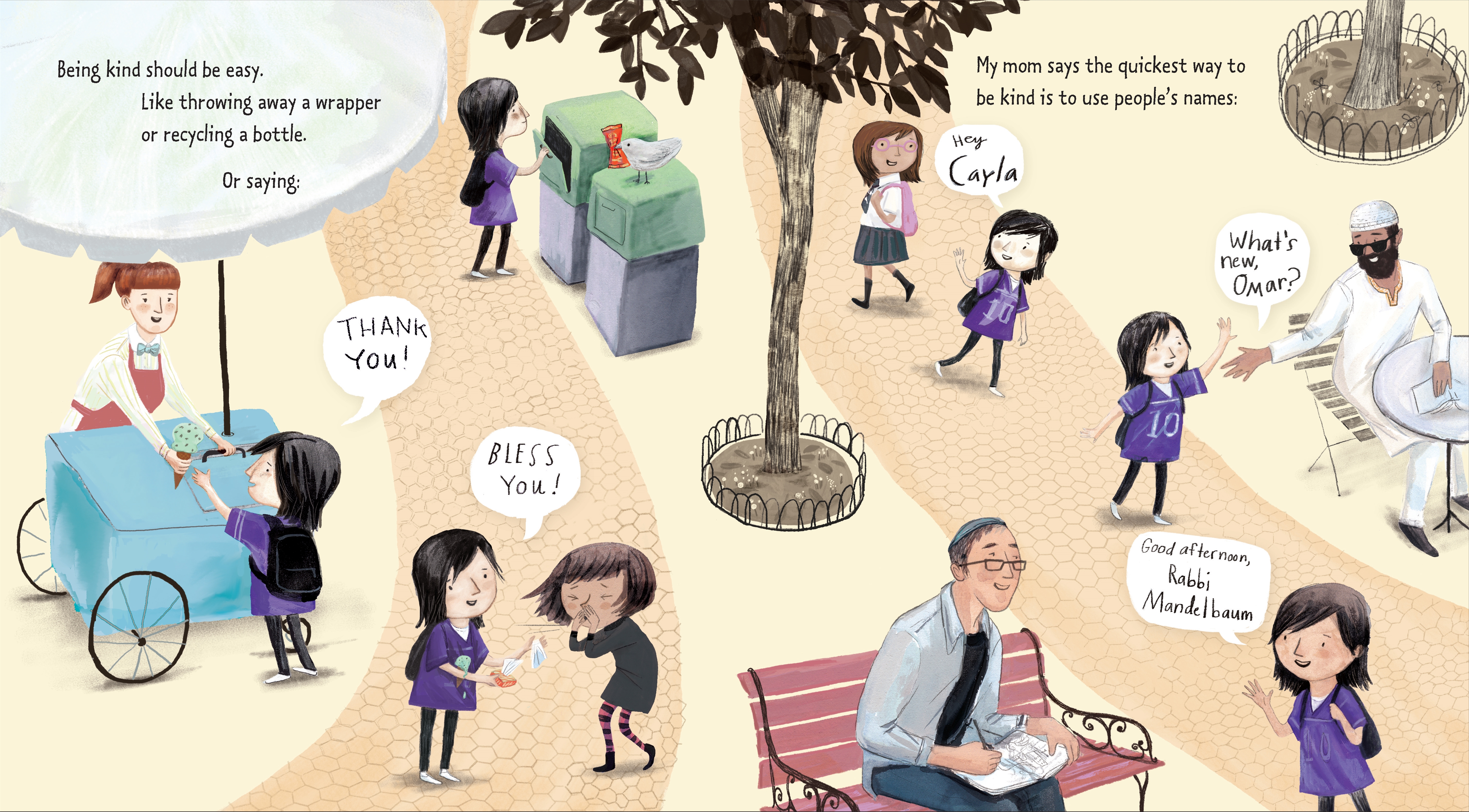
They think, “Maybe it’s giving.” Like baking treats for someone who lives alone, or giving away old clothes to someone who can use them. Helping out might also show kindness. For instance, “putting dirty dishes in the sink” or taking care of a pet. Paying attention to others could be another way to show you care. Like noticing someone’s new shoes, offering to be the new girl’s partner in class, or even just listening to someone’s stories—even if you’ve heard them before. Sometimes being kind is easy, but there are other times when it can be challenging or even scary—“like sticking up for someone when other kids aren’t kind.”

celebrate-picture-books-picture-book-review-be-kind-in-the-neighborhood

Image copyright Jen Hill, 2018, text copyright Pat Zietlow Miller, 2018. Courtesy of us.macmillan.com.

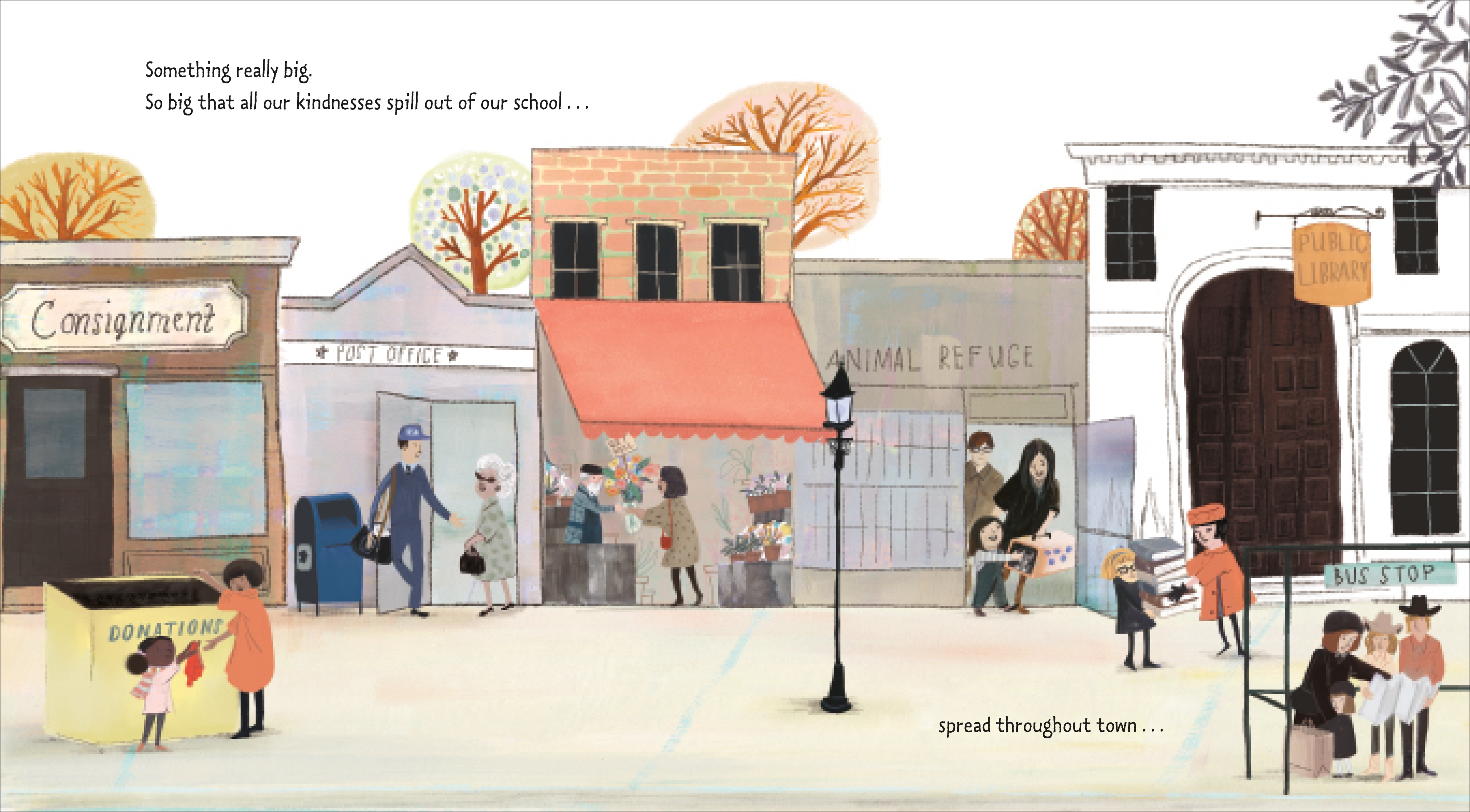
The child decides that maybe all they can do for Tanisha is to sit near her and paint her a picture of purple and green—of pretty violets. They hope that small acts like these will join with other people’s and that they will expand, fanning out from school into the community, across the country, around the world, and back. “So we can be kind. Again. And again. And again.”

celebrate-picture-books-picture-book-review-be-kind-around-town

Image copyright Jen Hill, 2018, text copyright Pat Zietlow Miller, 2018. Courtesy of us.macmillan.com.

Miller’s tender prose is perfect for planting the seeds of kindness and opening discussions about what it means to be caring and compassionate. With more and more children speaking up and creating change, Miller’s gentle and affirming story shows readers that it’s often the little things that count the most. Some of the examples she gives are acts that many children may do already, confirming their innate sensitivity, while others may spark new ideas and expand readers’ definition of kindness.

Jen Hill’s soft-hued illustrations beautifully depict the emotional tug at the heart that Tanisha’s spilled grape juice sets in motion for the protagonist and young readers. As one caring child wonders what kindness really is, Hill clearly portrays diverse children helping out at home, at school, and in their community locally and—as the kindness spreads—around the world. Hill draws the caring student with gender neutral clothing and hair, allowing all children to relate to the story’s main character. 

Be Kind is a lovely perceptive and sensitive book that would be an asset to any home or classroom library.

Ages 3 – 6

Roaring Brook Press, 2018 | ISBN 978-1626723214

Discover more about Pat Zietlow Miller and her books on her website.

To learn more about Jen Hill, her books, and her art, visit her website.

World Kindness Week Activity

celebrate-picture-books-picture-book-review-say-something-nice-cards

Say Something Nice! Cards

Do you want to give someone a nice surprise? Print out these cards and give one to a friend, to someone you’d like to know, or to anyone who looks like they need a pick-me-up! If you’d like to make your own cards, print out the blank template and write and/or draw your own message! You can also print these on adhesive paper and make your own stickers.

Say Something Nice! Cards | Say Something Nice! Cards Blank Template

celebrate-picture-books-picture-book-review-be-kind-cover

You can find Be Kind at these booksellers

Amazon | Barnes & Noble | Books-a-Million

To support your local independent bookstore, order from

Bookshop | IndieBound

Picture book review

December 31 – Universal Hour of Peace Day

celebrate-picture-books-picture-book-review-peace-is-an-offering-cover

About the Holiday

The idea of Barbara Condron, the Hour of Peace encourages people worldwide to live conflict free for the hour between 11:30 p.m. December 31 and 12:30 January 1 and enter the new year in a spirit of love and hope. The holiday was first celebrated on October 24, 1995 to coincide with the 50th anniversary of the United Nations and the autumnal equinox. In 1996 the holiday was moved to January 1st and took place at noon GMT. It now spans the transition from the outgoing year to the new year.

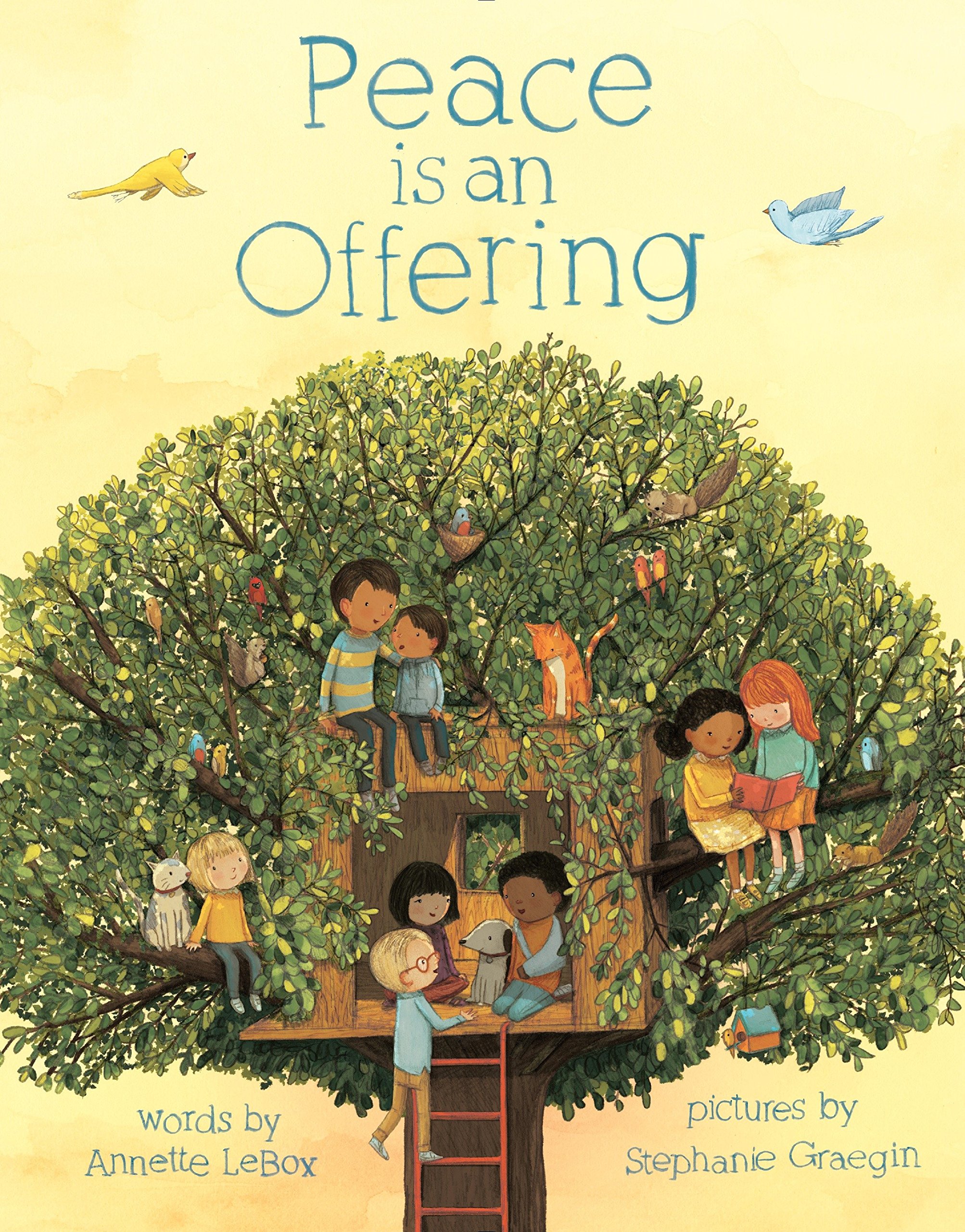
Peace is an Offering

Written by Annette LeBox | Illustrated by Stephanie Graegin


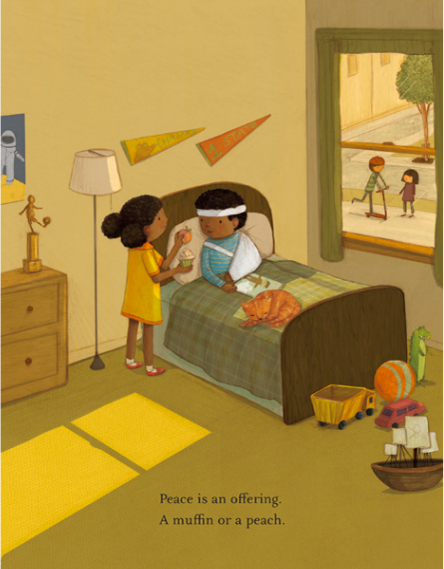
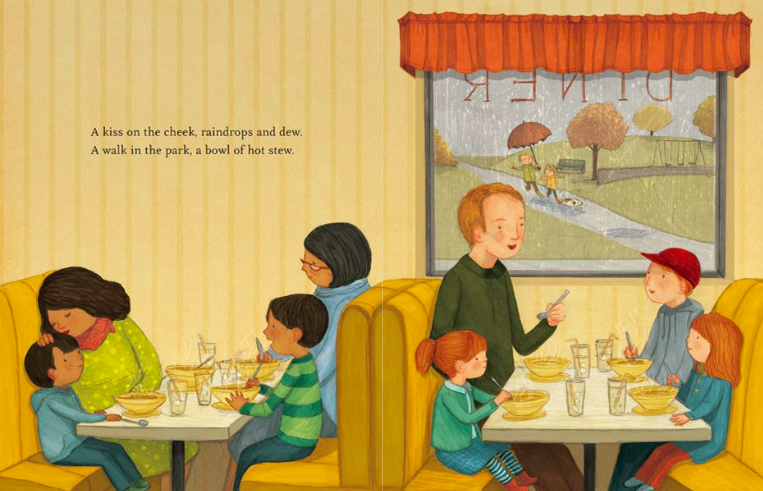
Peace comes in many forms, as simple as “an offering” of “a muffin or a peach. / A birthday invitation. / A trip to the beach.” Peace is being thankful for the wonders of nature, a parent’s love, the coolness of rain or morning dew, even a steaming “bowl of hot stew.”

celebrate-picture-books-picture-book-review-peace-is-an-offering-broken-arm

Image copyright Stephanie Graegin, 2015, text copyright Annette LeBox. Courtesy of Dial Books for Young Readers.

Peace is those times when we are together, in a hug, with sweet words, or cuddling to hear a story. Peace comes in reassurance to the questions that might worry: “Will you wait when I’m slow? / Will you calm by fears? / Will you sing to the sun / to dry my tears?”

celebrate-picture-books-picture-book-review-peace-is-an-offering-stew

Image copyright Stephanie Graegin, 2015, text copyright Annette LeBox. Courtesy of Dial Books for Young Readers.

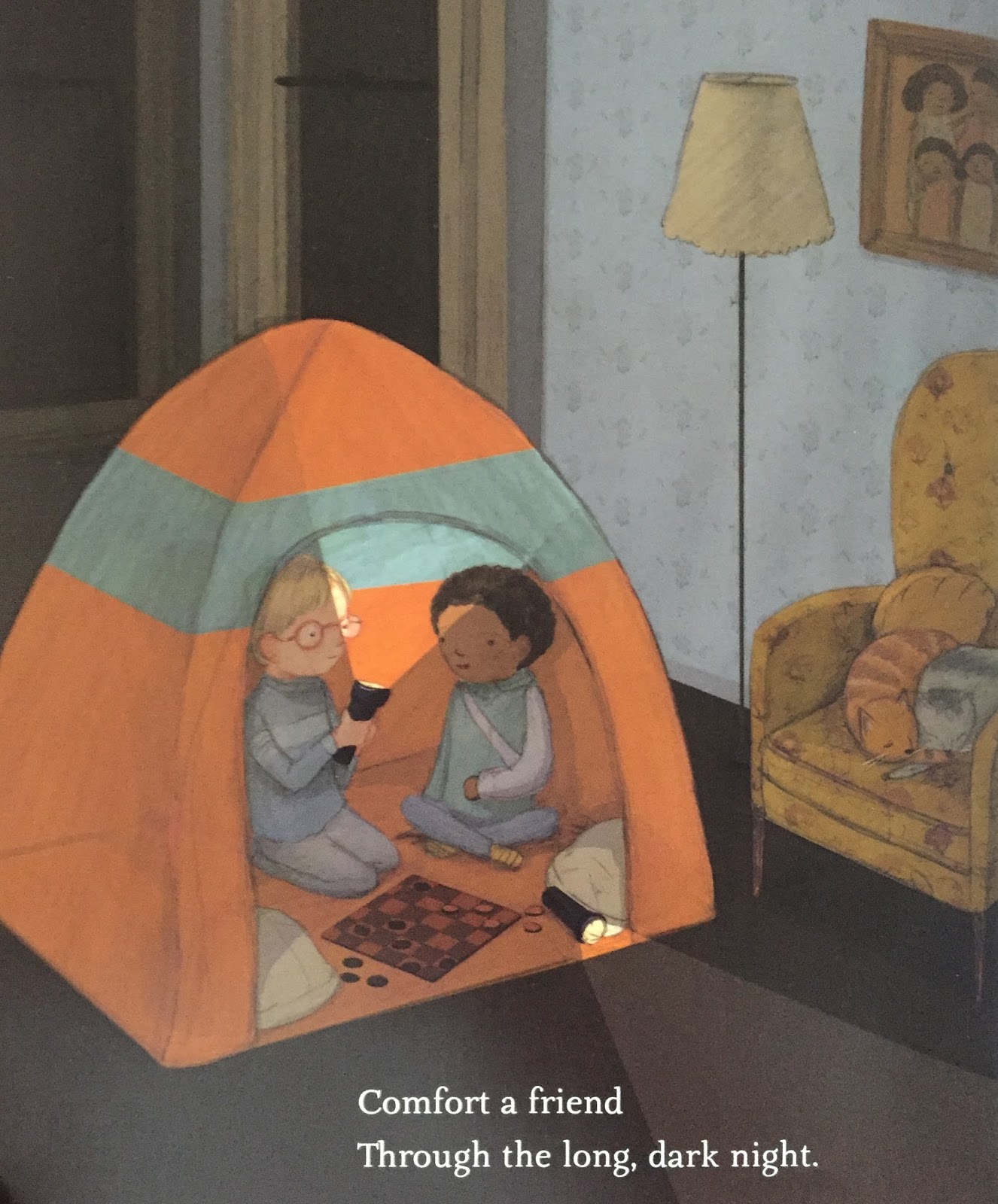
Where is peace found? In so many places! In a picture or a “belly laugh.” And even when tragedy strikes or “in your darkest hour,” peace can be found, for “peace is a joining, not a pulling apart. It’s the courage to bear a wounded heart.” Peace is finding safety and a “freedom from fear.” It’s found when you “offer a cookie…comfort a friend…sing a quiet song.” When you’re open to catching “a falling star” then peace will “walk beside you / wherever you are.”

celebrate-picture-books-picture-book-review-peace-is-an-offering-under-tree

Image copyright Stephanie Graegin, 2015, text copyright Annette LeBox. Courtesy of Dial Books for Young Readers.

Annette LeBox builds beautiful phrase upon beautiful phrase until midway through her inspiring story when she takes readers gently by the heart and shows them the way forward through any event that disrupts inner peace. LeBox reveals that capturing or recapturing those simple joys that make up a fulfilling life—and more importantly offering that kindness, help, and inclusion to others—brings hope, healing, and happiness not only to others but to yourself as well.

celebrate-picture-books-picture-book-review-peace-is-an-offering-tent

Image copyright Stephanie Graegin, 2015, text copyright Annette LeBox. Courtesy of Dial Books for Young Readers.

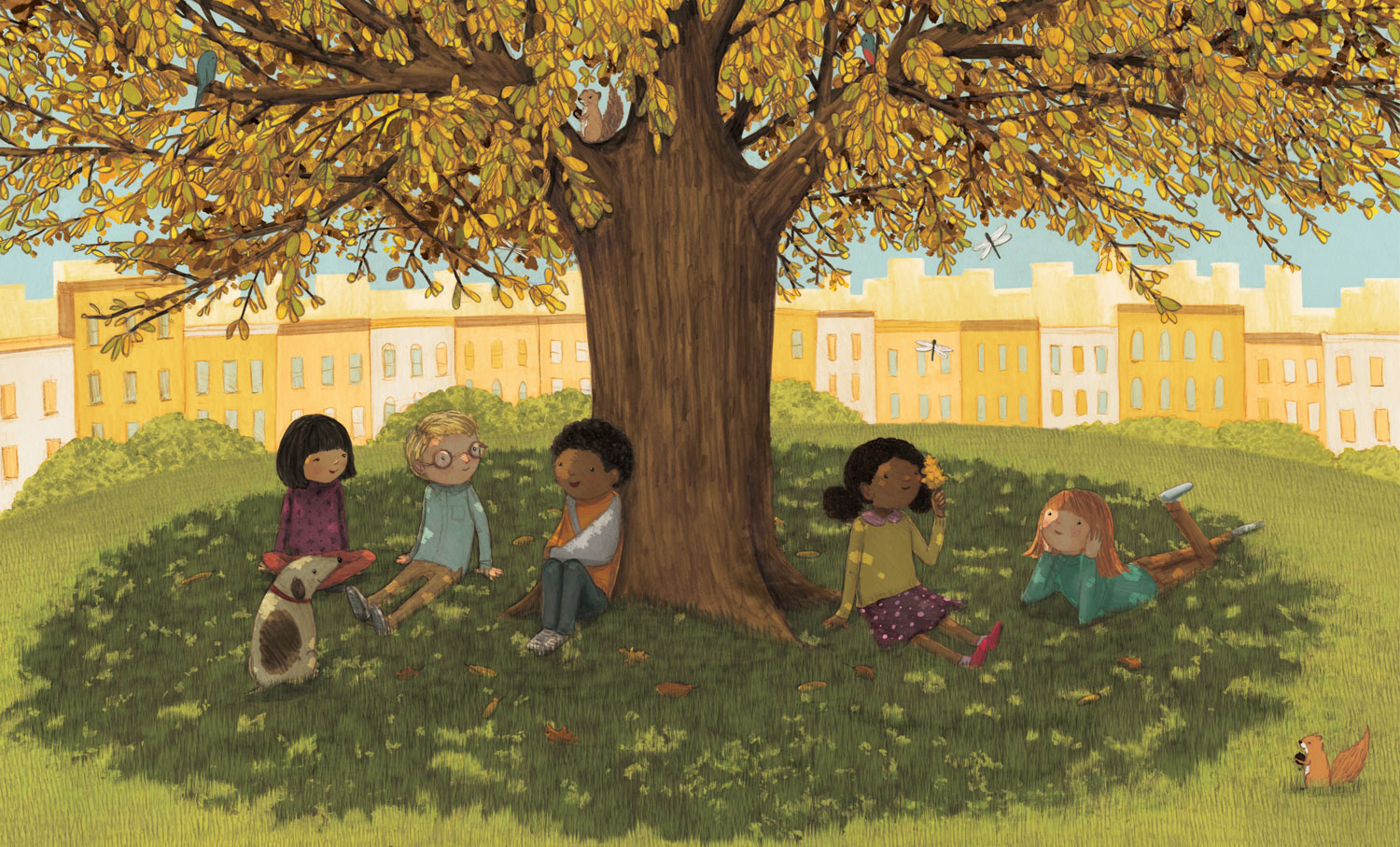
Stephanie Graegin excels in pairing text with quietly powerful images of togetherness and the tranquility such closeness brings. As diverse groups of friends, siblings, and families go about their day at school, eat out, navigate puddles and long walks, and enjoy time playing and laughing with each other, readers will be moved by Graegin’s tender details and will enjoy following and pointing out the characters who return from page to page. Images of loss (a mother hugs her two children close as they sit on a park bench overlooking a cityscape and little boy gazes at a picture of his dog) offer poignant opportunities for adult and kids to discuss life changes and events in the news that affect us all. Illustrations of uplifting ideas and gestures that children can use to express their vision of kindness and peace will inspire young readers.

A stirring and heartfelt look at the ways children and adults can share peace, comfort, and encouragement, Peace is an Offering is superb book to add to home, school, and public libraries.

Ages 3 – 8

Dial Books for Young Readers, 2015 | ISBN 978-0803740914

Discover more about Annette LeBox and her books on her website.

To learn more about Stephanie Graegin, her books, and her art on her website.

Universal Hour of Power Day Activity

celebrate-picture-books-picture-book-review-Peace-Coloring-Page-balloons

Soaring with Peace Coloring Page


A peaceful feeling inside can make your spirits soar like balloons in the air. Decorate the balloons in this printable page in your favorite colors (maybe even add a bit of glitter!) and hang it where seeing it will make you happy.

Soaring with Peace Coloring Page

celebrate-picture-books-picture-book-review-peace-is-an-offering-cover

You can find Peace is an Offering at these booksellers

Amazon | Barnes & Noble | Books-a-Million | IndieBound

Picture Book Review
December 19 – Look for an Evergreen Day

celebrate-picture-books-picture-book-review-pick-a-pine-tree-cover

About the Holiday

Today’s holiday gives people an opportunity to learn about and appreciate the variety of evergreen trees that grow locally and around the world. During the winter these giants stand out against snowy landscapes with their deep-green needles that retain their color all year around and always offer the hope of spring. For those who celebrate Christmas, the evergreen is a highlight of the celebration. Decorated with lights and sparkly ornaments, the tree is where family and friends gather to exchange gifts and share time together. Look for an Evergreen Day was created by the National Arborist Association to encourage people to enjoy the beauty of these special trees.

Pick a Pine Tree

Written by Patricia Toht | Illustrated by Jarvis


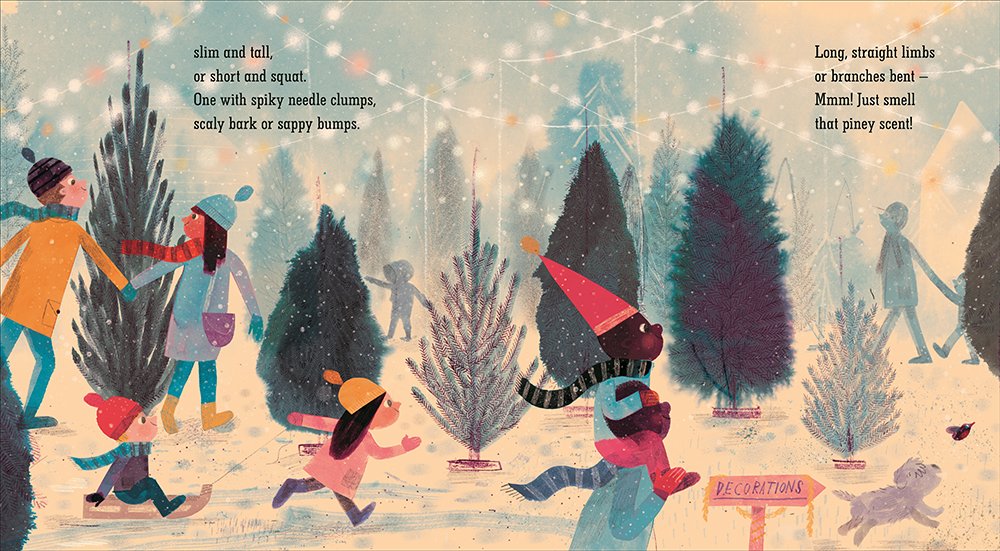
A family of four and their dog head out to “pick a pine tree / from the lot,” but what kind do they want—“slim and tall or short and squat?” After looking them all over, they choose a nice big one and tie it to the roof of their car for the trip home. At home they clear a place for the tree to stand, give it a drink, and then “find the trimmings / stored within / bulging boxes, rusty tins, / paper bags, a wooden case. / Bring them to that / special place, / there, beside your tree.”

celebrate-picture-books-picture-book-review-pick-a-pine-tree-trees

Image copyright Jarvis, 2017, text copyright Patricia Toht, 2017. Courtesy of Candlewick Press.

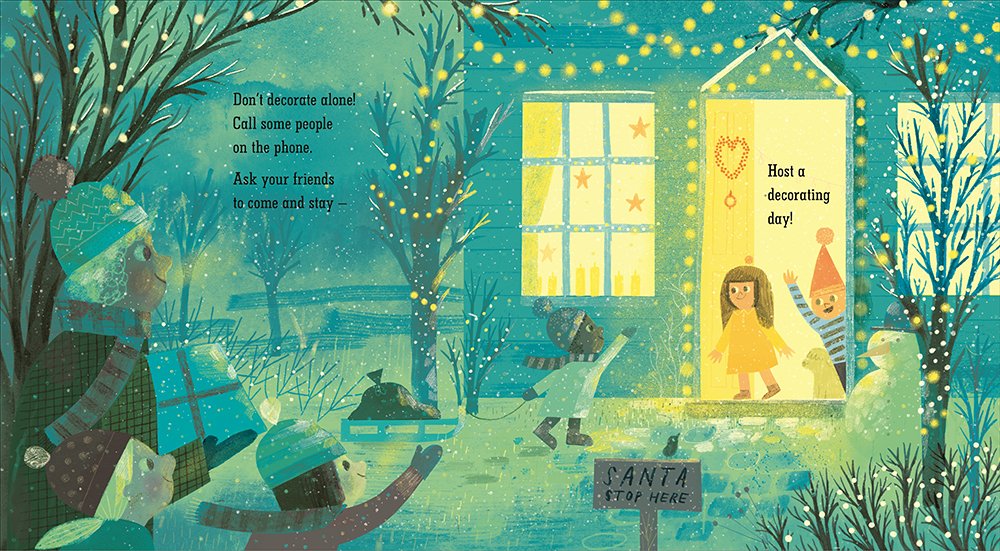
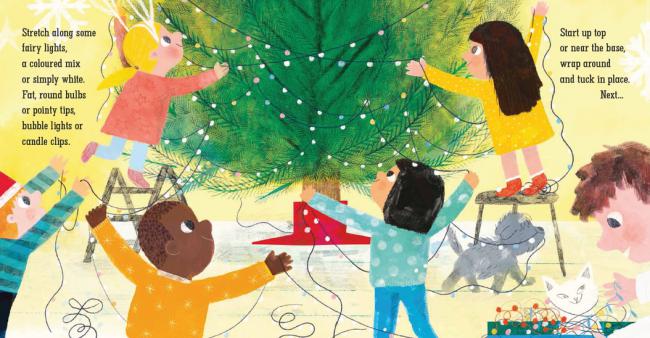
But they don’t start decorating yet. They call their friends to come and help. With the house full of cheer, the kids string the lights, wrapping them around the branches. Next come the ornaments—“Jolly Santas, / Dancing elves. / Wooden reindeer. / Jingle bells. / Lacy snowflakes. / Paper dolls. / Candy canes and / bright glass balls.” With hooks and string the bright ornaments are hung on the tree.

celebrate-picture-books-picture-book-review-pick-a-pine-tree-friends

Image copyright Jarvis, 2017, text copyright Patricia Toht, 2017. Courtesy of Candlewick Press.

Finally, garlands are “strung / from bough to bough,” and tinsel is draped in “silver drips.” On the top a star shines bright and down below a tiny village springs up, complete with “a train that chugs around a track.” At last it’s finished and the lights are lit. “Look! It’s not a pine tree / anymore. / It’s a… / Christmas tree!” As everyone gathers to singing around the Christmas tree, Merry wishes are bestowed on “one and all.”

celebrate-picture-books-picture-book-review-pick-a-pine-tree-lights

Image copyright Jarvis, 2017, text copyright Patricia Toht, 2017. Courtesy of Candlewick Press.

Patricia Toht’s lively rhymes engage kids in one of the holiday season’s most fun activities—picking out and decorating the Christmas tree. Her step-by-step verses brim with the growing excitement of the day and encourage sharing the celebration with family and friends. As they read, kids will be caught up in the fun and memories of this favorite tradition.

Vivid, action-packed mixed-media illustrations in a rich color palette by Jarvis take readers to the Christmas tree lot with its rows and rows of different trees to choose from and back to the family’s cozy home—where a dog and cat are happy to help out. As friends and neighbors drop by for the decorating party, kids will love recounting their own experiences hanging the lights and pointing out ornaments that may look like their own. The fully decorated tree glows in a two-page vertical spread that will wow little readers.

A sweet family story full of smiles, eager anticipation, and a love of Christmas, Pick a Pine Tree is a magical read to add to holiday story times.

Ages 3 – 7

Candlewick Press, 2017 | ISBN 978-0763695712

Discover more about Patricia Toht and her books on her website.

To learn more about Jarvis, his books, and his art, visit his website.

Look for an Evergreen Day Activity

celebrate-picture-books-picture-book-review-Find-the-Perfect-Pine-Tree-maze

Find the Perfect Pine Tree! Maze


Can you help the kids sled their way to find the evergreen tree in this printable maze?

Find the Perfect Pine Tree! Maze | Find the Perfect Pine Tree! Maze Solution

celebrate-picture-books-picture-book-review-pick-a-pine-tree-cover

You can find Pick a Pine Tree at these booksellers

Amazon | Barnes & Noble | Books-a-Million | IndieBound

Picture Book Review


December 12 – National Ding-a-Ling Day

celebrate-picture-books-picture-book-review-the-lonely-phone-booth-cover

About the Holiday

Since 1972, when Franky Hyle founded the Ding-a-Ling Club, people have celebrated Ding-a-Ling Day by calling up loved ones, friends, and others who they’ve lost touch with to say hi and catch up. These days sending an text or email may be more the thing, but there’s still nothing like hearing a familiar voice excited to reconnect. To celebrate today’s holiday, take a few minutes to call that person you think about sometimes and wonder….

The Lonely Phone Booth

Written by Peter Ackerman | Illustrated by Max Dalton


Once there was a corner phone booth in New York City that everyone used: “A businessman always running late for meetings…. A construction foreman who needed cement…. A zookeeper who lost his elephant…. A ballerina who wanted to know if she got the part in Swan Lake…. Even a secret agent who needed to change his disguise.” Sometimes a long line of people waiting to use the phone snaked down the sidewalk, and every week, the phone booth was visited by maintenance workers who kept it shiny clean. The phone booth was happy.

celebrate-picture-books-picture-book-review-the-lonely-phone-book-corner

Image copyright Max Dalton, 2010, courtesy of maxdalton.com.

But one day the phone booth noticed the business man walk right past it while talking on a small, shiny object. The same thing happened with others who always paid a visit to the phone booth. Finally, on Friday, the ballerina popped in, but she was only getting out of the rain while she talked on her small, shiny object. “The phone booth was flabbergasted.” When it found out that the shiny object was a cell phone, “the Phone Booth was devastated.” It worried that no one would need it anymore. And it was right.

celebrate-picture-books-picture-book-review-the-lonely-phone-book-people

Image copyright Max Dalton, 2010, courtesy of maxdalton.com.

Soon, the maintenance workers stopped coming and the Phone Book began to look shabby, with a cracked window, peeling paint, and a dusty interior. “Even the secret agent changed his disguise in the run-down hotel next door.” The Phone Booth saw other phone booths being taken down and driven away from their posts, and it knew that its turn would come soon too.

Then one day a storm knocked out the power and no one’s cell phones worked. People had no way to let friends and family know they were okay. The construction foreman noticed the old phone booth and wondered if it still worked. A girl scout put in her coins and discovered that it did! A long line formed outside the phone booth as everyone waited to make their calls. “The ballerina called to see if she got the part in Swan Lake. She didn’t. But she did get a part in the Nutcracker.” And the zookeeper let the zoo know that he found the elephant and the West African Dik-Dik in a poker game in the city.

celebrate-picture-books-picture-book-review-the-lonely-phone-booth-line

Image copyright Max Dalton, 2010, courtesy of maxdalton.com.

When the electricity was restored, the Phone Booth was hailed as a hero. It was given a new window and cleaned inside and out. The mayor even put up a plaque. Just then, though, city workers came to take the Phone Booth to the dump. The Phone Booth was afraid. But “the people of the neighborhood spoke up.” They wanted the Phone Booth to stay. “‘What if there’s another storm?’ asked the ballerina. ‘It’s been here forever,’ said the girl scout. ‘It’s been here forever,’ said the construction foreman.”

celebrate-picture-books-picture-book-review-the-lonely-phone-book-cleaning

Image copyright Max Dalton, 2010, courtesy of maxdalton.com.

Just then the phone in the Phone Booth rang. It was the mayor’s grandmother. She told the mayor that the Phone Booth was a national treasure. The mayor told the city workers that the Phone Booth was staying right where it was. The people of the neighborhood cheered, hugged the Phone Booth, danced around it, and had a party.”

And even now, if you go to West End Avenue and 100th Street, you will find the Phone Booth. Step inside and make a call—”and neither you nor the Phone Booth will be lonely anymore.”

celebrate-picture-books-picture-book-review-the-lonely-phone-book-city

Image copyright Max Dalton, 2010, courtesy of maxdalton.com.

Peter Ackerman’s humorous love letter to the phone booths—and one particular Phone Booth—that once dotted corners, lobbies, shopping areas, and transportation offices in every city may be a revelation to kids, but the personalities who use the phone are familiar and funny, making The Lonely Phone Booth a timeless story. With realistic dialogue and running jokes and appearances by the neighborhood characters, the story flows along like a good connection to its tender ending that gives a nostalgic nod to remembering and embracing history.

In his bright, retro illustrations, Max Dalton infuses the story with the sights, sounds, and flavor of New York. Squared-off four-door sedans, a square-jawed businessman, a rounded construction worker, a triangular clown, and a host of diverse neighborhood personalities harken back to a time when cellphone tech was new. Kids who have never seen a phone booth may well wonder if they’re missing out on a bit of old-fashioned fun.

Ages 4 – 7

David R. Godine, 2010 | ISBN 978-1567924145

To learn more about Max Dalton, his books, and his art, visit his website.

National Ding-a-Ling Day Activity

celebrate-picture-books-picture-book-review-telephone-tie-up-puzzle

Telephone Tie-Up Puzzle


These kids want to use a telephone. Can you follow the tangled wires to find a phone for each child in this Telephone Tie-Up Puzzle?

celebrate-picture-books-picture-book-review-the-lonely-phone-booth-cover

You can find The Lonely Phone Booth at these booksellers

Amazon | Barnes & Noble | Books-a-Million | IndieBound

Picture Book Review
December 10 – Nobel Prize Day

celebrate-picture-books-picture-book-the-house-that-jane-built-cover

About the Holiday

When Alfred Nobel’s will was read after his death on December 10, 1896, his heirs were taken by surprise. Nobel had signed a new will the year before, leaving most of his wealth to create prizes recognizing those who had done their best to benefit mankind in the fields of physics, chemistry,  medicine, literature, and peace. Opposition to this will on the part of the family and those Nobel had chosen to award the prize delayed Nobel’s wishes until 1901. Today, the awards include a prize for economics and are announced in early October. The awards are presented on December 10 in Stockholm, Sweden, except for the Nobel Peace Prize, which is awarded in Oslo, Norway.

Jane Addams Day falls on the same date to commemorate her achievement in being the first American woman to win the Nobel Peace Prize in 1931 for her work to bring about social change, equality, and peace. Each year the Jane Addams Peace Association presents awards to outstanding children’s books that promote peace and justice. To learn more about Jane Addams and the Jane Addams Peace Association, visit janeaddamspeace.org.

The House that Jane Built: A Story about Jane Addams

Written by Tanya Lee Stone | Illustrated by Kathryn Brown


On a busy street stands a very special house where anyone is welcome and some find a home. In 1889 Jane Addams, a wealthy young woman, bought an elegant house in one of Chicago’s poorest neighborhoods. Why? At just six years old on a trip with her father, Jane “noticed that not everyone lived like her family did.” Right then she vowed that when she grew older, she would live in a poor community and “find a way to fix the world.”

celebrate-picture-books-picture-book-the-house-that-jane-built-trip-with-father

Image copyright Kathryn Brown, 2015, text copyright Tanya Lee Stone. Courtesy of us.macmillan.com.

Jane was brave and strong. Sometimes she and her stepbrother George would “sneak away at night to explore in nearby caves.” Jane was also smart and “read and read her father’s book collection,” which also served as the town library. Unlike most women at the time, Jane went to college. She attended Rockford Female Seminary and “graduated at the top of her class.”

celebrate-picture-books-picture-book-the-house-that-jane-built-exploring-with-George

Image copyright Kathryn Brown, 2015, text copyright Tanya Lee Stone. Courtesy of us.macmillan.com.

After graduation, she didn’t know what she wanted to do, and when her father died that same summer, “Jane felt lost.” Two years later some friends invited her to travel to Europe with them. Although they went to the opera, museums, and many beautiful places, it was an experience in London that stuck with her. There she saw many “people in ragged clothes with outstretched hands, begging a cart vendor to buy his rotten fruits and vegetables that hadn’t sold at the market.” 

celebrate-picture-books-picture-book-the-house-that-jane-built-London-settlement-house

Image copyright Kathryn Brown, 2015. Courtesy of us.macmillan.com.

When Jane returned home, the question of how she could help nagged at her. She returned to London to learn about Toynbee Hall, where poor and wealthy people lived together and learned from each other. Here, skills, such as cooking, were taught to provide people with the education to find jobs. Toynbee Hall was called a settlement house, because the rich people who worked there lived there as well.

celebrate-picture-books-picture-book-the-house-that-jane-built-Chicago-neighborhood

Image copyright Kathryn Brown, 2015, text copyright Tanya Lee Stone. Courtesy of us.macmillan.com.

Jane now knew what she wanted to do. In 1889 Chicago was a diverse city with a large immigrant population. Many didn’t speak English, which made it hard for them to find jobs. “Large families were crammed into ramshackle houses with no running water.” Garbage lay in the street, and tough kids ran wild with nothing else to do.

Jane found a large house in the middle of one of these areas that had once belonged to Charles J. Hull and upon his death had been given to his cousin, Helen Culver.  When Helen discovered what Jane wanted to do, she donated the house for free. Jane left the house unlocked, letting people know that they could come there whenever they needed. In time, people did find their way to Hull House when they were hungry or out of work. Jane also had her own way of dealing with unruly children or those who didn’t understand her generosity. Once when a man broke into Hull House twice because he had no job and no money, Jane gave him a job.

celebrate-picture-books-picture-book-the-house-that-jane-built-feeding-hungry

Image copyright Kathryn Brown, 2015, text copyright Tanya Lee Stone. Courtesy of us.macmillan.com.

Jane helped the neighborhood in other ways too. She built a public bath so that people could stay clean and avoid illness. She convinced “public officials to build more public baths.” Because children had nowhere to play, Jane convinced a neighbor to give her his unused lot near Hull House. She tore down the buildings and built Chicago’s first playground. For kids whose parents worked long hours, she started a morning kindergarten and after school clubs. She also began offering evening classes for children who worked during the day.

celebrate-picture-books-picture-book-the-house-that-jane-built-kindergarten

Image copyright Kathryn Brown, 2015. Courtesy of us.macmillan.com.

Jane had help with her endeavors. Her friend “Ellen Gates Starr was her partner from the start.” Many other people also helped. They moved into Hull House and “taught literature, art, English, math, science, and cooking.” Hull House continued to grow, and by 1907 Jane oversaw thirteen buildings, including “a gymnasium, coffee house, theater, music school, community kitchen, and an art gallery.”

By the early 1920’s more than 9,000 people visited Hull House every week. Jane’s work “changed a bad neighborhood into a great and strong community.” Today, you can still see Jane Addams’ commitment to others in the community centers that bring people together in nearly every city and town.

An Author’s Note with more information on Jane Addams follows the text.

celebrate-picture-books-picture-book-the-house-that-jane-built-playground

Image copyright Kathryn Brown, 2015, text copyright Tanya Lee Stone. Courtesy of us.macmillan.com.

Tanya Lee Stone brings the story of Jane Addams’ work in Chicago to children in a compelling biography that gives readers a fully developed portrait of this most amazing woman. Stone’s active and evocative language puts children in the Hull House neighborhood, allowing them to get a feeling for and understanding of the issues of the time. Stone’s excellent examples of how Jane Addams responded to a variety of problems facing her community and even Hull House itself, demonstrate how generosity, empathy, and kindness can make positive changes in people’s lives. Depictions of Jane’s early compassion and commitment give children a sense that they too can make a difference in areas that are important to them.

celebrate-picture-books-picture-book-the-house-that-jane-built-front-door

Image copyright Kathryn Brown, 2015. Courtesy of us.macmillan.com.

Kathryn Brown’s riveting illustrations capture Jane’s early moments of concern for others, bravery, and study that informed her adult life; times of decision and cooperation that led to the establishment of Hull House; scenes of poverty, upheaval, and need that touched Jane’s heart; and images of her successes in Chicago that inspired others around the country. Brown’s softly hued watercolors are beautifully infused with realistic period details and honest emotion that provide readers with a strong foundation for understanding and appreciating the life of Jane Addams.

The House that Jane Built: A Story about Jane Addams is an inspiring choice for children with a philanthropic heart and to open discussions on how one person can make a difference. The book would be a welcome addition to home and classroom libraries.

Ages 6 – 10

Henry Holt and Co. Books for Young Readers, 2015 | ISBN 978-0805090499

To learn more about Tanya Lee Stone and her books, visit her website.

You can view a gallery of illustration work by Kathryn Brown on her website
Nobel Prize Day Activity

celebrate-picture-books-picture-book-jane-addams-coloring-page

Jane Addams Coloring Page Poster


Jane Addams is an inspiration to all! Print this Jane Addams Coloring Page and hang it in your room or locker to inspire you to make a difference and be a positive influence in your community!

celebrate-picture-books-picture-book-the-house-that-jane-built-cover

You can find The House that Jane Built: A Story about Jane Addams at these booksellers

Amazon | Barnes & Noble | Books-a-Million | IndieBound

Picture Book Review