April 30 – It’s Jazz Appreciation Month

celebrate-picture-books-picture-book-review-birth-of-the-cool-cover

About the Holiday

Jazz Appreciation Month got its start at the Smithsonian National Museum of American History in 2001. The aim was to celebrate and educate people on the history of and continuing love for jazz. The holiday encourages people of all ages to become familiar with jazz music and the musicians of the past who created this original sound and those today who keep innovating jazz for new audiences. This year’s theme is “jazz beyond borders” and looks at the “dynamic ways jazz can unite people across the culture and geography.” In connection with this initiative, the Smithsonian Masterworks Orchestra will travel to cities in North America, Europe, and Asia as a way to use music to open dialogue about “diversity, identity, diplomacy, and innovation.” To celebrate jazz not only this month but anytime, attend a concert, listen to recordings, and read up on your favorite musicians or a new one. And don’t forget to share your love of jazz with your kids! A great place to start is with today’s book!

Birth of the Cool: How Jazz Great Miles Davis Found His Sound

Written by Kathleen Cornell Berman | Illustrated by Keith Henry Brown


As a child, Miles Davis listens to the radio before school, clapping and swaying along to “Louis Armstrong’s soaring trumpet” and “Duke Ellington’s sensational big band.” The “swinging sounds of jazz / swirl together like / colors on a pinwheel.” When he’s older, Miles watches the riverboats on the Mississippi as they bring musicians from New Orleans to play in the East St. Louis clubs. At night he listens as “melodies drift down the street. / Some croon country, / some cry the blues. / Sassy saxophones wail / through the night.”

During the summer, Miles visits his grandfather’s farm in Arkansas. Here, he hears the music of horses’ hooves. On his walks through town, he listens to the sounds of guitars and singing, and at church he learns the notes of “soulful singing.” For his thirteenth birthday, Miles receives a trumpet. He takes lessons and practices again and again.

While he’s still in high school, Miles begins being paid to play at dance halls. His confidence grows and he begins to develop his own sound. A new form of jazz is attracting attention—Bebop: “far-out harmonies / with fast, flipping beats / that hop and bop.” He goes to clubsto listen to Charlie “Bird” Parker and Dizzy Gillespie play. He’s “blown away / by the energy of the music.”

Then one night, one of the band members doesn’t show up, and Miles—who always has his trumpet with him—is asked to fill the spot. In awe and a little intimidated in the presence of his idols, Miles’ playing “doesn’t shine.” But he knows that “jazz / is all he wants to play.” Miles moves to New York to go to school at Juilliard, but, really, to learn from Bird, Dizzy, and all of his idols. In the morning he goes to class, practicing between classes. At night he plays clubs throughout the city.

Soon, he leaves Juilliard to concentrate on playing and learning from the greats. His father advises him: “Don’t be like the mockingbird / that copies others. / Be your own man. / Be your own sound.” When Dizzy leaves Bird’s band, Miles takes his place. But he plays differently than Dizzy. “Some listeners put him down— / they want Dizzy’s rippling trumpet.” The criticism make Miles lose confidence and want to quit. But Bird encourages him.

With practice and patience, he discovers his own sound, holding and savoring perfect notes “just for the beauty of it.” He forms his own group with talented musicians who want to create new sounds. The nine musicians play “slowly and mysteriously…. Cool— / relaxed, / with a lighter, / lyrical feel.” Mile’s solos enchant audiences.

But the endless work takes its toll. He begins to lose gigs; his health declines. Miles doesn’t give up. “He climbs out / of his dark days / by playing his horn again.” Then in 1955 he takes the stage at the Newport Jazz Festival and begins to play. “…His mystical voice hangs / like a cloud, / leaving space / for each listener’s / imagination to wander.” The crowd cheers and applauds. Miles is back with his unmistakable sound and new ideas for the future of the music he loves.

Notes about Miles Davis from Wynton Marsalis, Kathleen Cornell Berman, and Keith Henry Brown as well as a selected discography and bibliography follow the text.

Kathleen Cornell Berman’s lyrical passages reveal a boy, a teenager, and a man who embodied music, listening to and absorbing the various sounds around him and incorporating them into his own, unique sound. Her evocative vocabulary (swirl, rollicking, croon, rumbling, far-out, rippling, blizzard of notes, itching to play) and phrasing that blends short staccato lines with longer sentences echoes the rhythm of jazz and will keep readers riveted to the story. Berman emphasizes the listening, practice, and experimentation that informed Miles Davis’s original sound, showing children that innovation is built on hard work, dedication, and even history. Her inclusion of Davis’s setbacks also demonstrates that perseverance is part of the success of any endeavor.

Keith Henry Brown’s gorgeous, detailed pen-and-ink and watercolor illustrations take readers from Miles Davis’s living room, where he listens to the radio as images of Louis Armstrong and Duke Ellington swirl through his imagination, to an overlook on the Mississippi River and its paddlewheel steam ships to the clubs and jam sessions of New York and finally, to the Newport Jazz Festival. Brown’s color palette of cool blues, greens, purples, and browns, punctuated with Davis’s ever-present gleaming brass trumpet, brings Davis’s country and city experiences to life while mirroring the tone and feel of his unique sound. Quotes from Miles Davis are sprinkled throughout the story and set apart with type that looks handwritten, giving his words a personal touch.

Sure to inspire readers to learn more about Miles Davis and listen to his music, Birth of the Cool: How Jazz Great Miles Davis Found His Sound would be an excellent accompaniment to school music programs, an inspiring book for biography lovers and young musicians of all types, and a beautiful addition to home, school, and public library collections.

Ages 8 – 12

Page Street Kids, 2019 | ISBN 978-1624146909

Discover more about Kathleen Cornell Berman and her books on her website.

To learn more about Keith Henry Brown, his books, and his art, visit his website.

Meet Kathleen Cornell Berman

celebrate-picture-books-picture-book-review-kathleen-cornell-berman-headshot

In your author’s bio you say that you fell in love with Mile’s Davis’ music when you were 10 years old. Was there a particular spark that made you love his music?

As a kid I loved all kinds of music. When I first heard Miles’ trumpet sound, I fell in love. His trumpet sound was different. It wasn’t flashy, it was slow, haunting and very beautiful. I longed to hear it again.

Can you take readers on your journey of writing Birth of the Cool and having it published? What kind of research did you do? What was the most surprising thing you learned about Miles Davis?

I was thrilled when I got the email from Charlotte Wenger from Page Street. It’s beyond exciting when you find someone who loves your story as much as you do. And Charlotte was a dream editor to work with.

I read Miles’ autobiography and many other books about him, as well as journal and magazine articles. I listened to countless interviews and researched players in his band. And I listened to his music a lot. He went through many changes in his musical career. I realized I had to keep my focus on his early career. 

I was surprised to learn he had slave ancestors who played music in the main house on a plantation. It was interesting to discover that Miles loved rural life (from his visits to his relatives’ farms). When he first moved to NYC, he visited the stables and asked to ride their horses. He had fond memories of riding them on his grandfather’s farm.

Keith Henry Brown’s pen-and-ink and watercolor illustrations are gorgeous and full of expression. Can you talk about your reaction to seeing the illustrations for the first time. Do you have a favorite spread?  
celebrate-picture-books-picture-book-review-kathleen-cornell-berman-and-keith-henry-brown

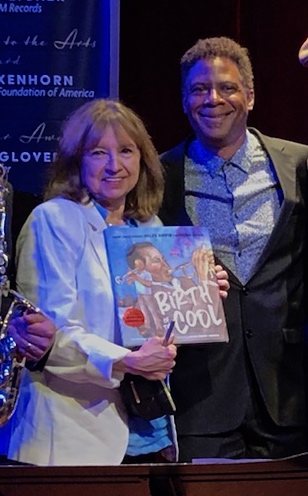
Kathleen Cornell Berman and Keith Henry Brown at the book launch for Birth of the Cool and the Jazz Gallery in New York City.

My first reaction to Keith’s illustrations was like an “out of the body” experience. To see my words come to life was a wonderful feeling. His art illuminated Miles’ journey in a jazz inspired way. I was very happy when he accepted the job. I already knew he was a jazz fan, so he was a good choice.

Keith’s goal was to create drawings that weren’t too tight or realistic. He wanted to create a loose, abstract feeling. I think Keith achieved that beautifully. Kudos to his courage in creating illustrations in watercolor, a very unpredictable medium. It’s difficult for me to pick a favorite illustration, I really love them all.

Your inspirational biography highlights the ups—and downs—of Miles Davis’ early career. What message would you like readers to take away from the story?

Miles is a great example of how hard work pays off. Some kids today think it’s easy to play an instrument. For some it might be, but inventing your own sound, is extremely difficult. It takes perseverance and dedication to create your own voice on the instrument. That goes for anything you attempt, whether you become an architect, a visual artist, writer, or a singer. Unfortunately, many jobs don’t allow individuality, but finding something, anything that you’re good at can boost happiness.

I hope this story inspires kids to reach for the stars, to find their own voice, and never give up. I also hope kids will take time to listen to jazz; it’s America’s classical music. Listening to music has so many benefits, intellectually as well as emotionally.

I saw on your website that you like to collect words. Can you tell me five of your favorites and what you love about them? Do you remember where they first caught your eye—or ear?

I’m usually attracted to words that tickle the tongue and have a unique sound, like mesmerizing, prickly, crumpled, nuzzle, etc. There are so many. I love alliteration. When words are paired with another, they sing and make the text come alive. I usually have my wordbook at my side as I read any kind of book. I also use my phone memo to jot words as I hear them in daily life.  

Besides writing, you paint, and create assemblages from found objects. Your sculptures are gorgeous and fun and have so much personality! Which came first—writing or art? When creating an assemblage, do you start with one object or do you see how several of the materials you have can fit together?

Thank you very much. Creating found art sculptures is like therapy. I’ve always been into creating something out of ordinary things. The art and writing coincided with a strong desire to break out of the box of being a teacher.

I collect a lot of wood as well as words. When I find a piece that inspires me, I visualize what it might become and I begin the search for a complimentary piece. It’s kind of like doing puzzles.

Is there a similarity for you in constructing a sculpture and creating text for a picture book?

Yes, there is. I look for a seed of an idea that touches my senses or emotions. And in art I choose a piece of wood that inspires me visually. Then it all comes down to layering and adding details that make the story or art shine in a new way. Finally, adding the “just right” color or details can be compared to the continual revisions to discover perfect words that fit my story.

Birth of the Cool is your debut picture book. What are you looking forward to most as a picture book author?

Reading the book to children and getting them to reflect about their feelings. And, of course, introducing them to jazz.

I love writing picture book biographies. I also enjoy writing books that will amuse kids, as well challenge their thoughts about nature.

What’s up next for you?

I have a new picture book bio about another musician that I just started submitting. And I’ve started research on another interesting, relatively unknown musician that had a big impact on many.                                  

What is your favorite holiday?

My favorite holiday is Thanksgiving. I love the traditions and the history. Holidays are so important in bringing busy families together. As a former teacher,             Thanksgiving gave me the opportunity to discuss the importance of the Native American people. They taught us so much. At the Thanksgiving table, we as a family celebrate the Native American contributions to our country. I wish more people did the same.

You can connect with Kathleen Cornell Berman on

Her website | Facebook | Instagram | Twitter

Jazz Appreciation Month Activity
celebrate-picture-books-picture-book-review-jazz-trumpet-word-search-puzzle

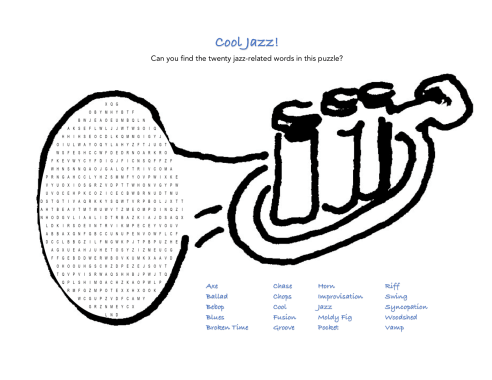
Cool Jazz! Word Search Puzzle


Jazz has a sound and vocabulary all it’s own! Can you find the twenty jazz-related words in this printable puzzle? Then have fun coloring it!

Cool Jazz! Word Search Puzzle | Cool Jazz! Word Search Solution

celebrate-picture-books-picture-book-review-birth-of-the-cool-cover

You can find Birth of the Cool: How Jazz Great Miles Davis Found His Sound at these booksellers

Amazon | Barnes & Noble | Books-a-Million | IndieBound

Picture Book Review


April 26 – It’s National Park Week and Arbor Day

celebrate-picture-books-picture-book-review-if-I-were-a-park-ranger-cover

About the Holidays

This week the country celebrates National Park Week, a collaboration between the National Park Service and the National Park Foundation, the official charity of America’s national parks, to honor our national treasures. During the week, people are encouraged to visit their local parks or take a trip to a new park and enjoy all it has to offer. Each day of the week has a special theme. Today’s is Friendship Friday and it commemorates all the organizations and groups who work to protect the parks. To discover national parks near you and discover their stories as well as to learn more about the week and how to help out all year round, visit the National Park Foundation website and the National Park Service website.

Today is also Arbor Day, a national celebration of trees that began as a campaign by J. Morton Sterling and his wife after they moved from Michigan to Nebraska in 1854. Morton advocated for the planting of trees not only for their beauty but as windbreaks for crops on the state’s flat farmland, to keep soil from washing away, as building materials, and for shade. In 1872, Morton proposed a tree-planting day to take place on April 10. On that day nearly one million trees were planted in Nebraska. The idea was made official in 1874, and soon, other states joined in. In 1882 schools began taking part. Today, most states celebrate Arbor Day either today or on a day more suited for their growing season. To learn about events in your area, find activities to download, and more, visit the Arbor Day Foundation website.

I received a copy of If I Were a Park Ranger from Albert Whitman and Company for review consideration. All opinions are my own. 

If I Were a Park Ranger

Written by Catherine Stier | Illustrated by Patrick Corrigan

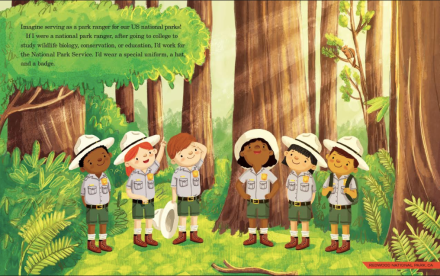
If you love trees, animals, and all the beauty of nature, you may think about being a park ranger in one of the United States national parks. How would you get there? By studying “wildlife biology, conservation, or education” in college. Historian William Stegner called national parks “America’s ‘best idea.’” Being a park ranger means you’d be part of a proud history of people who have cared for the “country’s most beautiful, historic, and unique areas.”

celebrate-picture-books-picture-book-review-if-I-were-a-park-ranger-redwood-national-park

Image copyright Patrick Corrigan, 2019, text copyright Catherine Stier, 2019. Courtesy of Albert Whitman & Company.

Who are some of these people? Stephen Mather and Horace Albright were the first directors of the National Park Service, Captain Charles Young was “the first African American superintendent of a national park,” and Gerard Baker “brought Native American heritage and perspectives to the parks.” There are also writers, like Marjory Stoneman Douglas ,and artists, like John Muir and Ansel Adams, who shared the grandeur of the parks.

Park rangers work in some of the most exciting places in the country—in caves, deserts, and mountains and near volcanos or the sea shore. And that’s just the beginning! Ships, homes, battlefields, and monuments are also part of the National Park System. As a park ranger, you would protect the animals, plants, and buildings, you might work with scientists, or archaeologists, and you would help visitors gain new perspectives. How would you do that?

You’d “be a great storyteller.” As part of your job, you’d “learn about the natural history, the human history, and the legends” of you park so you “could share those tales…” and maybe “a few spooky campfire stories too.” You’d also learn all about the animals and landmarks of your park so you could provide interesting tours.

celebrate-picture-books-picture-book-review-if-I-were-a-park-ranger-redwood-national-mesa-verde

Image copyright Patrick Corrigan, 2019, text copyright Catherine Stier, 2019. Courtesy of Albert Whitman & Company.

Rangers are always on the lookout for fires, bad weather, or visitors who require help and alert emergency services when they’re needed. But rangers don’t spend all of their time outdoors. Sometimes they spend time inside using “computers to design exhibits, make maps, write articles, and keep track of endangered animal populations” or keep the park’s website updated. Park rangers are also invited to talk to students in schools and for organizations.

If you were a park ranger, you would make a big impact. Your park would be “cleaner and safer,” the “animals living there would be stronger and healthier,” and visitors might “experience something astonishing…a moment that could happen nowhere else in the world. A moment they’d remember forever” all because of you!

An Author’s Note reveals other riches of the National Park System, including STEM research, creative programs, artifacts and primary source materials, and more as well as a discussion on the education and various roles of rangers and a link where kids can find out about becoming a junior ranger at many parks.

celebrate-picture-books-picture-book-review-if-I-were-a-park-ranger-redwood-national-cave

Image copyright Patrick Corrigan, 2019, text copyright Catherine Stier, 2019. Courtesy of Albert Whitman & Company.

Catherine Stier’s inspiring look at the role of a ranger in the National Park Service takes readers from shore to shore and shows them the exciting and diverse jobs that are part of a ranger’s day. Stier’s use of the first-person point of view empowers readers to see themselves as a ranger protecting the treasures of the park and sharing them with visitors. Her straightforward storytelling is full of details readers will love about the duties of a park ranger and the parks themselves. Her stirring ending swells the heart. It’s certain to plant the seed of interest in jobs within the National Park Service as well as in planning a vacation trip to one of these beautiful areas.

celebrate-picture-books-picture-book-review-if-i-were-a-park-ranger-portraits

Image copyright Patrick Corrigan, 2019, text copyright Catherine Stier, 2019. Courtesy of Albert Whitman & Company.

Through vibrant snapshots and two-page spreads, Patrick Corrigan transports readers to twenty-five national parks, including Redwood National Park, California; Hawai’i Volcanoes National Park; Petroglyph National Monument, New Mexico; Acadia National Park, Maine; and Great Smoky Mountains National Park. To immerse young readers in the story, the rangers are depicted as diverse children helping visitors, giving talks, protecting animals, translating petroglyphs, giving tours, calling firefighters, and even brushing dirt from an unearthed animal skull. In one image a ranger gives a flashlight tour of Mammoth Cave National Park to a girl who uses a wheelchair, and in another a ranger uses sign language to describe the beauty of her park. Children will want to linger over the pages to take in all the details and will be moved to learn more about each park.

Sure to spark expressions of “ooh,” “ahh,” and “I’d like to do that!,” If I Were a Park Ranger makes an inspiring addition to classroom geography and nature lessons and would be a terrific addition to home libraries for kids who love nature and travel and would like to explore future possibilities.

Ages 5 – 9

Albert Whitman and Company, 2019 | ISBN 978-0807535455

Discover more about Catherine Stier and her books on her website.

To learn more about Patrick Corrigan, his books, and his art, visit his website.

National Park Week Activity

celebrate-picture-books-picture-book-review-if-I-were-a-park-ranger-mesa-verde-coloring-page

Majestic Parks Coloring Pages

You may not be able to visit all of these parks, but you can still enjoy their beauty with these printable coloring pages!

Mesa Verde National Park | Gates of the Arctic National Park | Hawaii Volcanoes National Park | Biscayne National Park

celebrate-picture-books-picture-book-review-if-I-were-a-park-ranger-cover

You can find If I Were a Park Ranger at these booksellers

Amazon | Barnes & Noble | Books-a-Million | IndieBound

Picture Book Review

March 27 – It’s National Reading Month

celebrate-picture-books-picture-book-review-follow-me-down-to-nicodemus-town-cover

About the Holiday

National Reading Month is winding down, but that doesn’t mean you need to slow down on your reading! I hope you’ve enjoyed lots of new and old favorites this month and are inspired to keep discovering new books every day – like today’s book!

Follow Me Down to Nicodemus Town: Based on the History of the African American Pioneer Settlement

Written by A. LaFaye | Illustrated by Nicole Tadgell


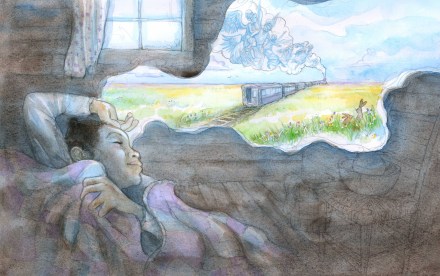
In Dede Patton’s dreams she could see the wide-open prairie where she and her family could build a better life. To pay off their sharecropping debt, “Dede’s mama sewed dresses so fine, they practically got up and danced.” Her father made furniture after a long day in the fields, and Dede shined shoes at the train station on a box she had made herself. Even though they worked “from sun-climb to sun-slide,” they knew it would take years to make enough money if ever.

celebrate-picture-books-picture-book-review-follow-me-down-to-nicodemus-town-dreaming

Image copyright Nicole Tadgell, 2019, text copyright A. LaFaye, 2019. Courtesy of Albert Whitman & Company.

Then one day Dede noticed a sign “offering land for colored folks in Kansas.” In Kansas they could own a farm in a few years. A new town, Nicodemus, was going to be built only a short ways away. Learning about this opportunity Dede’s family worked harder than ever and their money grew. One day, Dede found that one of her customers had dropped his wallet. She ran after the train and handed it up to him through the window.

Soon after Dede received a letter from the man with ten dollars inside. This, along with the money Dede’s mama and papa had made, was enough to pay off their debt. “Dede’s shoe shine money would buy the seeds for planting.” They took the train to Kansas and then traveled to Nicodemus with other new settlers. Along the bank of the Solomon River, they dug a house they could call their own. Dede and Papa staked off their land. With winter coming, they made plans for the years ahead.

celebrate-picture-books-picture-book-review-follow-me-down-to-nicodemus-town-dreamingcelebrate-picture-books-picture-book-review-follow-me-down-to-nicodemus-town-notice

Image copyright Nicole Tadgell, 2019, text copyright A. LaFaye, 2019. Courtesy of Albert Whitman & Company.

For supper, Dede hunted prairie dogs with her slingshot until they grew scarce. Looking for food, Dede and her papa went far out into the fields and met Shanka Sabe, a member of the Children of the Middle Waters tribe. “The white folks call them the Osage, but they say they’re the Ni-U-Kan-Ska.” He had noticed that the smoke coming from the Patton’s chimney had grown wispy and thought their food was growing thin too. He was bringing them rabbits.

When Spring came, Dede and Papa sowed seeds, and she and Mama began a garden. Spring also brought more people to Nicodemus. On Sundays, the Pattons rode into town, and Mama got orders for dresses from the other women. Once when Dede took the mail into town, she Mr. Zachary say his hotel was full. She mustered her courage and asked if any of his customers would like their shoes shined. From then she had “a job shining shoes at the St. Francis Hotel” that she went to after a day of helping Papa on the farm and Mama with the sewing.

celebrate-picture-books-picture-book-review-follow-me-down-to-nicodemus-town-dreamingcelebrate-picture-books-picture-book-review-follow-me-down-to-nicodemus-town-train

Image copyright Nicole Tadgell, 2019, text copyright A. LaFaye, 2019. Courtesy of Albert Whitman & Company.

In a few years the Patton’s farm was thriving and “they could prove their land claim.” Dede paid for the deed with her own shoe shine money. She made a frame for it from prairie grass, and the deed hung prominently in their home. On Sunday they held a party, and all the folks of Nicodemus as well as Shanka Sabe and his family turned out to enjoy the festivities and Mama’s pies. And that night they celebrated having a “home where they could tell stories, use the stars to guide them, and make plans for the things to come.”

An Author’s Note explaining more about the founding of Nicodemus, the Exodusters who settled the land in Kansas and other Midwestern states, and information on Nicodemus today follows the text.

celebrate-picture-books-picture-book-review-follow-me-down-to-nicodemus-town-kansas-home

Image copyright Nicole Tadgell, 2019, text copyright A. LaFaye, 2019. Courtesy of Albert Whitman & Company.

A. LaFaye tells this fact-based story of resilience, hope, and freedom with charm and heart, following a girl and her family from the constraints of a sharecropper’s life to owning a home and farm of their own. Descriptions of the close-knit Patton family shine as LaFaye demonstrates the importance of each member’s contributions. Children will be especially fascinated by Dede’s role in helping secure the family’s future. LaFaye captures the dreams and community spirit of this important, yet little-known history of the African-American and Midwest experience through lyrical storytelling peppered with period words and phrases.

Through Nicole Tadgell’s softly washed illustrations of Dede and her family, readers see the hard work and perseverance that Dede, Mama, and Papa put into every day as they work to make money to pay off their debt. When they dance and cheer at receiving the last ten dollars they need to make the move, their joy radiates to readers. Details and dreamy pastel images of the vast, empty prairie, the nascent town, and the Patton’s home transports readers to the 1870s.

An excellent story about a transformative period in American history, Follow Me Down to Nicodemus Town is an enriching choice for home, classroom, and public library collections.

Ages 5 – 8

Albert Whitman & Company, 2019 | ISBN 978-0807525357

Discover more about A. LaFaye and her books on her website.

To learn more about Nicole Tadgell, her books, and her art, visit her website.

National Reading Month Activity

celebrate-picture-books-picture-book-review-kansas-western-meadowlark-coloring-page

Kansas State Bird Coloring Page


Enjoy the beauty of the Kansas prairie as you color this printable page of the Western Meadowlark, the state bird of Kansas, which was selected by children in 1925.

Kansas State Bird Coloring Page

celebrate-picture-books-picture-book-review-follow-me-down-to-nicodemus-town-cover

You can find Follow Me Down to Nicodemus Town at these booksellers

Amazon | Barnes & Noble | Books-a-Million | IndieBound

Picture Book Review


March 25 – It’s National Reading Month and Interview with Illustrator Scott Brundage

celebrate-picture-books-picture-book-review-the-first-men-who-went-to-the-moon-cover

About the Holiday

No matter whether you live in a house or an apartment, in a city, in a small town, or on a farm, you can travel anywhere through books. The magic of reading lies in its ability to transport readers through history, into emotional landscapes, and to far-away places – even into outer space as today’s book shows!

Sleeping Bear Press sent me a copy of The First Men Who Went to the Moon to check out. All opinions are my own. I’m excited to be teaming with Sleeping Bear Press in a giveaway of the book. See details below.

The First Men Who Went to the Moon

Written by Rhonda Gowler Greene | Illustrated by Scott Brundage


As Apollo 11 Commander Neil Armstrong, Command Module Pilot Michael Collins, and Lunar Module Pilot Edwin “Buzz” Aldrin enter the spacecraft, they wear excited smiles and wave. “These are the first men who went to the Moon.” Panning back to where the enthralled crowd watches from across the water, watch as a rocket roars skyward, trailing flames. “This is the spacecraft, Apollo 11, that lifted off and soared through the heavens / and carried the first men who went to the Moon.”

celebrate-picture-books-picture-book-review-the-first-men-who-went-to-the-moon-astronauts

Image copyright Scott Brundage, 2019, text copyright Rhonda Gowler Greene, 2019. Courtesy of Sleeping Bear Press.

The astronauts get a view of Earth as they reach for the blackness of space. The Lunar Module Eagle touches down on the surface of the Moon in “…the Sea of Tranquility / where the astronauts made history….” First Neil Armstrong and then Buzz Aldrin descended onto the Moon carrying an American flag. “This is their mark, a ‘leap for mankind.’ / And this is the flag they left behind / there in the Sea of Tranquility.”

In a spectacular show of human achievement, the Command Module Columbia returned in a “…splashdown that brought them home, / safe and sound from a vast unknown, / where they made their mark, a ‘leap for mankind.’” With ticker tape parades attended by thousands of people, the astronauts were celebrated in New York City and Chicago.

celebrate-picture-books-picture-book-review-the-first-men-who-went-to-the-moon-launch

Image copyright Scott Brundage, 2019, text copyright Rhonda Gowler Greene, 2019. Courtesy of Sleeping Bear Press.

In addition to Rhonda Gowler Green’s poem, many of the double-spread illustration contain facts about the mission, features of the Moon, the astronauts’ work, and splashdown.

Back matter includes information on where the Eagle and Columbia are now; more facts about the mission, the astronauts, and the equipment; resources; and a list of other books for young readers.

celebrate-picture-books-picture-book-review-the-first-men-who-went-to-the-moon-moon

Image copyright Scott Brundage, 2019, text copyright Rhonda Gowler Greene, 2019. Courtesy of Sleeping Bear Press.

Mirroring the circular mission that took the astronauts to the Moon and back, Rhonda Gowler Greene’s lyrical verses build on each other, overlapping to create depth in her storytelling and awe in the scientific achievement of NASA in 1969. As the poem reverses, readers engage in the feeling of pride and relief that Americans and people all around the world experienced as they watched Columbia splash down safely into the Pacific Ocean. Greene peppers the story with beautiful images take readers from “swirls of clouds” to a  “desolate land” to “the dust of lunar ground” and helps them recapture the mystery and amazement of those days 50 years ago.

Scott Brundage’s illustrations are remarkable for their detail and ability to transport readers to the heart of the Apollo 11 mission. Today’s children, familiar with satellite images and feeds from space and who have grown up with the International Space Station, cannot fully appreciate with what wonder and trepidation the world watched the mission on television. Choosing a variety of perspectives, Brundage allows kids to watch the rocket launch from the pad in Florida, look out of the spacecraft’s window as the astronauts leave Earth behind, see the Eagle light up the Moon’s surface as it lands, and view Neil Armstrong take that first step onto the Moon. Space lovers will want to linger over every two-page spread to take in all of the minute details as well as the inspiration that space stirs in the dreams of many.

A lyrical and gorgeous tribute to the Apollo 11 mission for its 50th anniversary, The First Men Who Went to the Moon would make a lovely addition to home, classroom, and public library collections for science and space lovers, STEM lessons, and story time.

Ages 6 – 9

Sleeping Bear Press, 2019 | ISBN 978-1585364121

Discover more about Rhonda Gowler Greene and her books on her website.

To learn more about Scott Brundage, his books, his art, and more, visit his website.

You can download and print a fun The First Men Who Went to the Moon Activity Sheet!

Meet Illustrator Scott Brundage

celebrate-picture-books-picture-book-review-scott-brundage-head-shot

Scott Brundage’s work has been featured in the New York Times, the Wall Street Journal, Scientific American, the Washington Post, and many others. He is the illustrator of A is for Astronaut: Blasting Through the Alphabet. He lives in New York City.

Today I’m happy to be talking with Scott Brundage about capturing the beauty and mystery of space, his talent for humor, and the surprising start to his art career.

The First Men Who Went to the Moon, written by Rhonda Gowler Greene, celebrates the 50th anniversary of the Apollo 11 moon landing. Your illustrations are astounding for their perspective and sense of action that captures the thrill and wonderment of the time. Can you talk about the research you did, how you approached creating these images, and your process?

Well thank you for those generous words about my work. I’m happy people have responded to the illustrations so positively. 

When researching this book, I was lucky enough to have A is for Astronaut fresh in my mind. The Apollo 11 mission is a bit more specific than A is for Astronaut, being a specific time and year, but I’d already learned a lot about how to find good NASA references. 

I faced the same challenge as last time: since NASA’s photography is public domain and already gorgeous, what could I bring to this book that hasn’t been seen already? I couldn’t riff as much as last time, but I could at least try to capture what it might have been like to be in the Apollo 11 crew’s shoes (space boots?). Some illustrations  also were simply trying to capture the emotion that Rhonda Gowler Greene was expressing with her words. The moon is beautiful, but distant, cold and still. I wanted to show all of that if I could.

Which illustration in the book is your favorite and why?

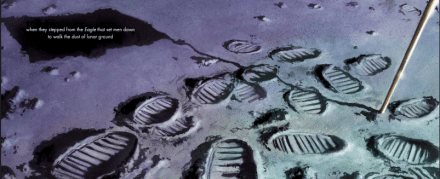
I think the spread on pages 22-23 is my favorite, the one depicting all the footprints in the shadow of the planted flag. I like when I can get away with not quite showing the subject of a painting, but the audience knows what they’re seeing. And without getting too

artsy, I thought it was a good metaphor for the book itself. We went to the moon, left our mark, and came back. The footprints are still there on the cold surface in the shadow of our flag.

celebrate-picture-books-picture-book-review-the-first-men-who-went-to-the-moon-moon-foot-prints

Image copyright Scott Brundage, 2019, text copyright Rhonda Gower Greene, 2019. Courtesy of Sleeping Bear Press.

What were your favorite books as a child and whose art or illustration work did you admire growing up?

I had to ask my mom for this answer. I don’t remember having a favorite, all I could think of are cool picture books I appreciate now as an adult. Turns out, according to my mom, I much preferred to just look through our encyclopedia and then report dinosaur facts to whoever would listen. 

How did you get into illustrating children’s books and what do you enjoy most about the work?

I got into picture books relatively organically, having touched on almost every other type of illustration market first. I started out doing small illustrations for magazines and newspapers. That slowly led me to book covers and middle grade chapter books that had a lot of interior black and white illustration. Along the way, I would help a couple independent authors with their self-published picture books. After a while, I just had a stack of children’s picture book illustrations in my portfolio. So when my agent asked if I was interested in doing a picture book with a real publisher, I was more than ready to jump in. 

Picture books are great because you can really chew on a subject or set of characters way longer than you can for a book cover or spot illustration. I know way more about how space suits work, I’m familiar with a weird number of features on the International Space Station, and know exactly what color suits the Apollo 11 crew were wearing in their ticker tape parade. It’s really fun to get that deep for a book. 

Is it true you got your start professionally by designing a bicycle helmet? How did that come about? What was your design?

This is true. My first paying gig was a Bell Helmet’s kid’s helmet design. My art school instructor, the great children’s book illustrator Brian Biggs, had a contact with the designer at Bell Helmets and set up a contest among his students to submit designs for a possible helmet. They’d pick the winner and see if it could get produced. I send in two designs, one of happy robots on an alien landscape, another of cute little lizards attacking a city. Somehow both designs won the contest  The timing, however, was a little unfortunate for the lizards attacking the city since it was just after 9/11, but the robots ended up adorning the heads of dozens of kids nationwide.

I was fortunate enough to review A is for Astronaut: Blasting through the Alphabet—your picture book with author and former astronaut Clayton Anderson. I was blown away by the stunning details—including spacecraft, the NASA control room, and space itself—on every page. What kinds of choices did you make in creating the illustrations to make the information come alive for kids? 

A is for Astronaut was a blast to work on. I had a bit of freedom in interpreting each chapter, so a lot of it was figuring out I could make an image portray the idea of each letter clearly. For the more straightforward words like galaxy or blastoff, showing how it is to be a kid experiencing those awe-inspiring event/sights for the first time. And, when possible, if I could find a way to blend two words/ideas into a single spread, that was even more fun. 

Your editorial illustrations have appeared in magazines, newspapers, and other publications, and you’re now working as an animator for the Showtime series Our Cartoon President. Do you have a natural knack for humor and infusing it into your art or how did that develop? 

When I was in school, I was really into dark scary artwork and literature. Loved creepy drawings and painting, reading horror stories, listening to dark music. I tried my hand at doing some moody paintings in oil about serious subjects. But, my personality is that of a very silly man. And if you looked at my sketchbooks at the same time, it was all goofy drawings to make myself and others laugh. Eventually I realized I should just lean into what came naturally, and that was the funnier whimsical stuff. I’m definitely much more suited to making a weird face, taking a photo of myself, then applying that face to a character than I am at trying to scare someone.

What’s up next for you?

I’m just starting up a new picture book about a guy and his dog. No astronauts this time around.  

And I’m also working on the second season of Our Cartoon President. 

Thanks, Scott! It’s been so great chatting with you! I wish you all the best with The First Men Who Went to the Moon and all of your work!

You can connect with Scott Brundage on

His website | Twitter | Instagram

The First Men Who Went to the Moon Giveaway

I’m excited to be teaming with Sleeping Bear Press in a giveaway of

  • One (1) copy of The First Men Who Went to the Moon written by Rhonda Gower Greene | illustrated by Scott Brundage

To enter Follow me @CelebratePicBks on Twitter and Retweet a giveaway tweet.

This giveaway is open from March 25 through March 31 and ends at 8:00 p.m. EST.

Prizing provided by Sleeping Bear Press.

Giveaway open to U.S. addresses only. | No Giveaway Accounts. 

National Reading Month Activity

celebrate-picture-books-picture-book-review-rocket-to-the-moon-maze-puzzle

Rocket to the Moon! Maze


Help the rocket find its way through space and land on the moon in this printable puzzle!

Rocket to the Moon! Puzzle | Rocket to the Moon! Solution

celebrate-picture-books-picture-book-review-the-first-men-who-went-to-the-moon-cover

You can find The First Men Who Went to the Moon at these booksellers

Amazon | Barnes & Noble | Books-a-Million | IndieBound | Sleeping Bear Books

Picture Book Review


March 14 – It’s National Women’s History Month

celebrate-picture-books-picture-book-review-hedy-lamarr's-double-life-cover

About the Holiday

National Woman’s History Month was established by the United States Congress in 1987 to recognize and celebrate the achievements of American women in the past and today. This year’s theme is “Balance for Better,” which encourages true gender equity in the workplace, in government, and at home. Only when all people are heard and treated equally will communities thrive. There’s no better time than now to get involved to ensure that all have the same rights and standing in all areas of their lives.

I received a copy of Hedy Lamarr’s Double Life for review consideration. All opinions are my own. I’m excited to be partnering with Sterling in a giveaway of the book. See details below.

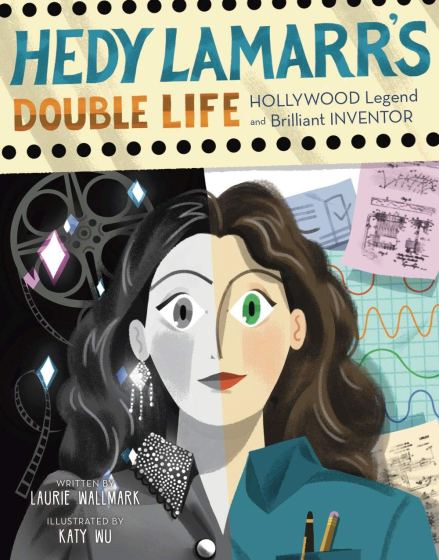
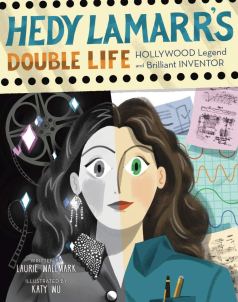
Hedy Lamarr’s Double Life: Hollywood Legend and Brilliant Inventor

Written by Laurie Wallmark | Illustrated by Katy Wu


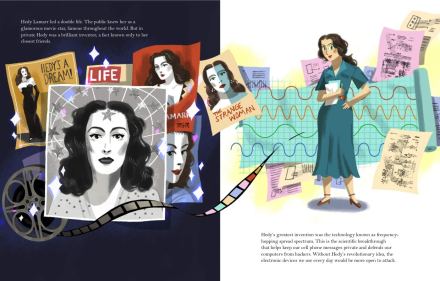
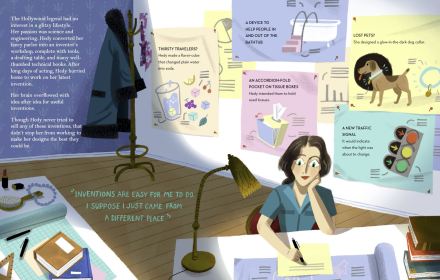
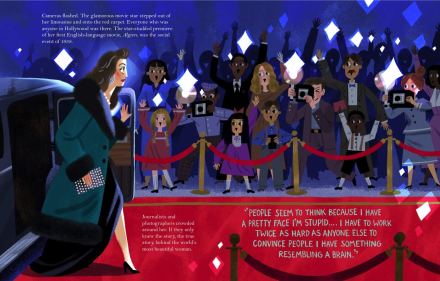
In 1938 people were lining up to see Hedy Lamarr in her first English-language movie Algiers. Hedy was the talk of Hollywood, and journalists and photographers captured her every move—almost. What movie-goers and the press didn’t know was that Hedy Lamarr was also a brilliant inventor. Instead of attending fancy celebrity parties, after a long day on the set, “Hedy hurried home to work on her latest invention. Her brain overflowed with idea after idea for useful inventions.” While she never tried to sell her ideas—like the collar to help find lost pets or the “flavor cube that changed plain water into soda”—she designed and redesigned them to perfection.

celebrate-picture-books-picture-book-review-hedy-lamarr's-double-life-magazines

Image copyright Katy Wu, 2019, text copyright Laurie Wallmark, 2019. Courtesy of Sterling Children’s Books.

But how did Hedy get her start? She was born in Austria and as a child took apart mechanical objects just to see how they worked. Hedy’s father also loved science, and he encouraged his daughter to hold onto her dreams. In addition to science, Hedy loved movies and would use her dolls to reenact the scenes she saw.

When she got older, Hedy got a job as a script girl and then worked as an extra in a movie. She loved acting and once said, “‘I acted all the time…. I was a little living copybook. I wrote people down on me.’” While playing the lead in a stage play, the Hollywood producer Louis B. Mayer saw her and offered her movie contract. Hedy moved to America. It only took her six months to land a starring role in Algiers. After that she starred in many movies with some of the most famous actors and actresses. 

By now, the world was at war. One day, Hedy met George Antheil, a former weapons inspector who now composed music. Hedy remembered a “discussion she had overheard back in Europe about a problem with the guidance system for torpedoes. The guidance system couldn’t prevent the enemy from jamming the weapon’s radio signals” and sending it off course. She learned from George Antheil that the US Navy had the same problem.

They decided to team up to see if they could figure out a solution. Hedy was also an accomplished pianist, and she and George often played musical games on the piano. Once, while they played the same song in different octaves, Hedy had a brainstorm for building “a secure torpedo guidance system.” At the time, torpedo guidance systems only worked if the ship launching a torpedo and the torpedo were on the same frequency.

celebrate-picture-books-picture-book-review-hedy-lamarr's-double-life-home

Image copyright Katy Wu, 2019, text copyright Laurie Wallmark, 2019. Courtesy of Sterling Children’s Books.

Hedy thought that if the ship and the torpedo could switch between a series of different frequencies, the enemy would be foiled. “Hedy called her discovery ‘the hopping of frequencies.” Working together, she and George devised a way to implement Hedy’s idea. When they presented their idea to the National Inventors Council, they were told the “idea had ‘great potential value.’”

There were still some issues to overcome to make the system automated, but Hedy and George answered those too. They applied for a patent, and a year later on August 11, 1942 it was granted. When they gave the idea to the United States Navy, “Hedy was proud her frequency-hopping idea might help America win the war.” But embroiled in the middle of the conflict, the Navy didn’t have “the time or money to implement a new system….”

Hedy, who still wanted to help America defeat the Nazis, was undaunted. She helped raise 25 million dollars by selling war bonds and volunteered at the Hollywood Canteen, where servicemen soon to be deployed gathered. Hedy went on to make more than twenty movies and continued to work on her inventions.

In the 1980s, the US Navy declassified Hedy’s frequency-hopping technology, meaning anyone could use it. Because the patent had long-ago expired, no one needed to give Hedy and George credit for the idea. “Companies raced to include frequency hopping in their own devices.” In 1997, Hedy and George were finally recognized when they “received the Pioneer Award from the Electronic Frontier Foundation for their significant contribution to computers.”

A timeline of Hedy Lamarr’s life, a description of how Hedy and George’s frequency-hopping technology worked, additional resources for further reading, and a list of Hedy’s movies follow the text.

celebrate-picture-books-picture-book-review-hedy-lamarr's-double-life-red-carpet

Image copyright Katy Wu, 2019, text copyright Laurie Wallmark, 2019. Courtesy of Sterling Children’s Books.

Laurie Wallmark knows how to weave a riveting tale that draws readers in to the lives of fascinating and scientifically minded women throughout history. Her detailed biography of Hedy Lamarr will wow kids with the twists and turns of how a vital feature of the electronics they use every day came to be. A history not only of this famous woman but of the times and policies that denied Hedy Lamarr the recognition and profits she deserved, the story is sure to spark plenty of discussion. The inclusion of a few of Hedy’s ingenious ideas as well as quotes on acting, inventing, and her views on life give children a glimpse into the mind of this unique woman.

Katy Wu takes readers back to the 1940s with her stylish illustrations reminiscent of magazine images of the time that depict both Hedy’s glamourous and inventive sides. Even as Hedy steps out of a limo to the glare of flashbulbs, acts under stage lights, and watches movies thrown by a projector’s beam, she’s dreaming of going home to work on her inventions in the light of a desk lamp. When the story turns to Hedy’s frequency-hopping idea, Wu clearly portrays the problems with the torpedo guidance system and the way single-frequency and multiple-frequency communications work. The way player pianos were controlled and how Hedy and George Antheil used this idea is also well portrayed. The final images of people using Hedy’s technology today lets kids fully understand the impact that Hedy Lamarr has had on their lives.

An important story about an extraordinary woman, Hedy Lamarr’s Double Life: Hollywood Legend and Brilliant Inventor will inspire children to follow and accomplish all of their dreams. The book will spur creative thought across subject matter and would be a motivational addition to home, classroom, and public libraries.

Ages 5 and up

Sterling Children’s Books, 2019 | ISBN 978-1454926917

Discover more about Laurie Wallmark and her books on her website.

To learn more about Katy Wu, and view a gallery of her book and art, visit her tumblr.

Hedy Lamarr’s Double Life Giveaway

I’m excited to partner with Sterling Children’s Books in a Twitter giveaway of:

  • One (1) copy of Hedy Lamarr’s Double Life: Hollywood Legend and Brilliant Inventor written by Laurie Wallmark | illustrated by Katy Wu

This giveaway is open from March 14 through March 20 and ends at 8:00 p.m. EST.

A winner will be chosen on March 21.

Prizing provided by Sterling Children’s Books

Giveaway open to U.S. addresses only. | No Giveaway Accounts 

National Women’s History Month Activity

celebrate-picture-books-picture-book-review-women-in-stem-coloring-book

Women in STEM Coloring Book


Discover five women who broke barriers  and made important contributions to the science, technology, engineering, and math fields in this printable  Women in STEM Coloring Book created by the United States Department of Energy.

celebrate-picture-books-picture-book-review-hedy-lamarr's-double-life-cover

You can find Hedy Lamarr’s Double Life: Hollywood Legend and Brilliant Inventor at these booksellers

Amazon | Barnes & Noble | Books-a-Million | IndieBound

Picture Book Review

March 8 – International Women’s Day

celebrate-picture-books-picture-book-review-born-to-ride-cover

About the Holiday

Instituted in 1911 and celebrated in Austria, Denmark, Germany, and Switzerland, International Women’s Day was recognized by the United Nations in 1975. In 1996, honoring the holiday under a united theme was established and this tradition has been followed ever since. During the 100th anniversary of International Woman’s Day in 2011, President Barak Obama proclaimed March to be National Women’s Month. Both International Women’s Day and National Women’s Month recognize the accomplishments and contributions of women throughout history and today. This year’s theme is Balance for Better and raises awareness of the need for gender equity across the spectrum of education, business, government, media coverage, rights, wealth, and more. The outreach and influence of International Women’s Day continues throughout the year. To learn more and get involved, visit the International Women’s Day website.

Abrams Books for Young Readers sent me a copy of Born to Ride to check out. All opinions are my own. 

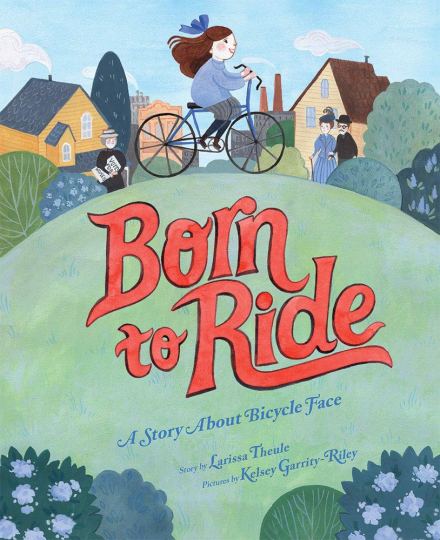
Born to Ride: A Story about Bicycle Face

Written by Larissa Theule | Illustrated by Kelsey Garrity-Riley


Open the cover of this remarkable picture book to a two-page illustration and you might notice something unusual—for our time. What is it? Read on and see…

As Louisa Belinda Bellflower gazed out her window at a man riding a bicycle in Rochester, New York, in 1896, she wished that she could ride one too. But girls and women weren’t allowed to ride bicycles, just as they weren’t allowed to vote or wear pants. Louisa’s brother, Joe, had a brand-new bike, and “riding it looked like a whole lot of fun.”

celebrate-picture-books-picture-book-review-born-to-ride-falling

Image copyright Kelsey Garrity-Riley, 2019, text copyright Larissa Theule, 2019. Courtesy of Abrams Books for Young People.

One day, Louisa took off her frilly skirt and put on her brother’s pants and asked him to teach her how to ride. There were, however, a couple of concerns. One was what would their mother say? Another was the horrible medical condition, bicycle face. Everyone knew about it, and Doctor Brown was strict on this matter. He said, “‘girls aren’t strong enough to balance, that your eyes will bulge, and your jaw will close up from the strain of trying—maybe FOREVER.’”

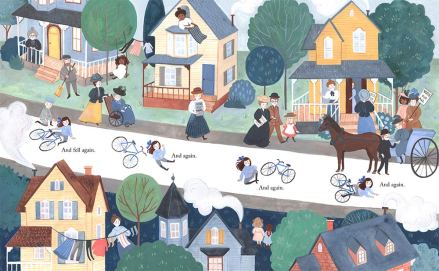
Louisa considered this fate, but Joe didn’t have any of these symptoms. Even though she was a little nervous, she tried it anyway. Louisa fell again and again, but when Joe asked her if she wanted to quit, she continued. She began peddling again and soon had the knack for it. “With some alarm, she felt her eyes bulge, and her mouth widen—into a gigantic, joyous smile.”

celebrate-picture-books-picture-book-review-born-to-ride-tea

Image copyright Kelsey Garrity-Riley, 2019, text copyright Larissa Theule, 2019. Courtesy of Abrams Books for Young People.

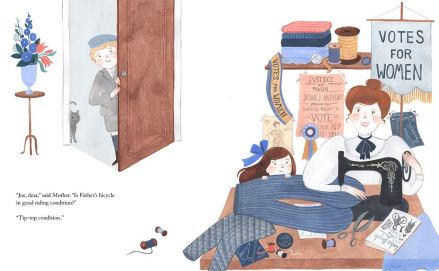
She rode back and forth down the path and when she got home, her mother said, “‘those pants look quite practical, Louisa Belinda,’” And Louisa turned a somersault just to show her she was right. Then Louisa’s mother asked Joe if Father’s bike was in good shape. Joe said it was, and their mother set about converting her skirt into a pair of pants. When they were finished, Louisa and her mother wheeled the bikes out side-by-side and took off. “‘Mother,’” Louisa said, “‘what will your bicycle face be, I wonder!’”

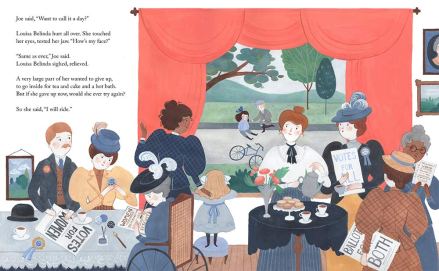
You only need to turn the page to see. Louisa’s mother is smiling and that original two-page spread has been transformed with lots of women and girls riding the roads that lead to the Votes for Women rally in the town green.

An extensive Author’s Note follows the text and explains the origin of “bicycle face” and other such imagined bicycle-related maladies as well as the opposition to women’s riding bicycles. Also included is a discussion on the women’s suffrage movement.

celebrate-picture-books-picture-book-review-born-to-ride-sewing

Image copyright Kelsey Garrity-Riley, 2019, text copyright Larissa Theule, 2019. Courtesy of Abrams Books for Young People.

Both children and adult readers will be astounded at Larissa Theule’s eye-opening story that reveals just one of the many obstacles women have had to overcome in their quest for equal rights. Theule’s story, told through the eyes of a girl with pluck and self-confidence, is well targeted to her young audience with an engaging undercurrent of humor at the nonsensical reasoning behind the ban on women’s bicycle riding and even the constricting clothing of the time for girls and boys. As Louisa falls again and again while learning to ride, Theule infuses her story with the idea that perseverance wins out—a concept she not only applies to learning a new skill, but to the parallel story of women’s suffrage that runs throughout the illustrations.

Kelsey Garrity-Riley’s charming illustrations evoke the late 1800s, giving kids a view of history with Victorian-style houses; skirts, bloomers, and pinafores for girls and short-pant suits for boys; and an old-fashioned sewing machine. Adding depth and context to the story, Garrity-Riley follows Louisa and Joe’s mother as she paints “Votes for Women” and “Ballots for Both” signs and later hosts a women’s suffrage tea attended by white and dark-skinned women, a woman in a wheelchair, and one progressive man. Garrity-Riley cleverly combines images of Louisa’s indomitable spirit with these depictions of protest to reinforce the theme and lesson of the story.

To  jumpstart discussions about equal rights for all, Born to Ride: A Story about Bicycle Face is a unique and fascinating addition to home, school, and public libraries.

Ages 4 – 8

Abrams Books for Young Readers, 2019 | ISBN 978-1419734120

Discover more about Larissa Theule and her books on her website.

To learn more about Kelsey Garrity-Riley, her books, and her art, visit her website.

International Women’s Day Activity

celebrate-picture-books-picture-book-review-bicycle-maze 2

Ride with Me! Maze


Two girls want to ride bikes together. Can you help them find each other in this printable maze?

Ride with Me! Puzzle | Ride with Me! Puzzle Solution

celebrate-picture-books-picture-book-review-born-to-ride-cover

You can find Born to Ride: A Story about Bicycle Face at these booksellers

Amazon | Barnes & Noble | Books-a-Million | IndieBound

Picture Book Review

February 3 – National Women Physicians Day

Who Says Women Can't Be Doctors by Tanya Lee Stone and Marjorie Priceman picture book review
About the Holiday

Today, we celebrate the birthday of Elizabeth Blackwell, who in 1849 became the first woman to earn a medical degree in the United States. Her courage in the face of much opposition paved the way for other women to pursue careers in the medical field. National Women Physicians Day also honors the achievements and contributions of all women physicians around the world. 

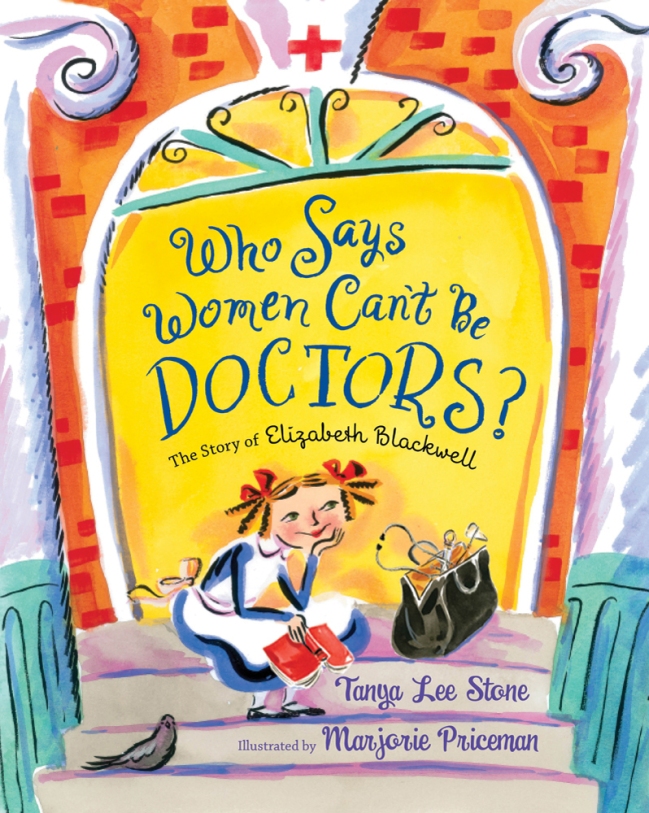
Who Says Women Can’t be Doctors? The Story of Elizabeth Blackwell

Written by Tanya Lee Stone | Illustrated by Marjorie Priceman


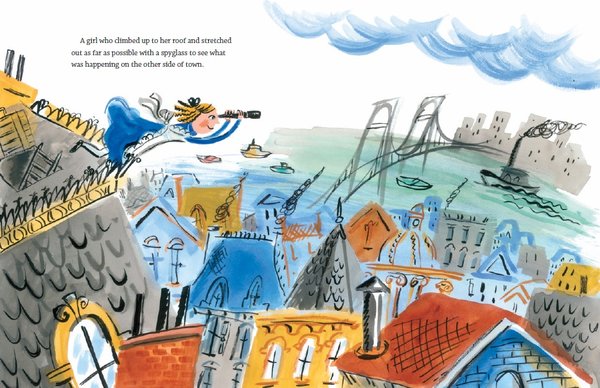
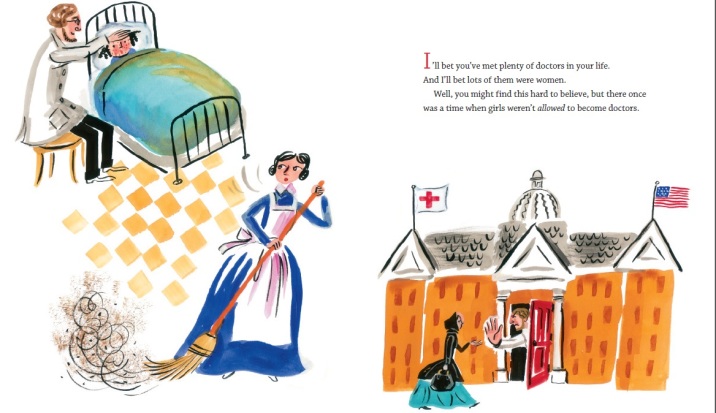
Once upon a time there were no women doctors. Women weren’t even allowed to be doctors. Sounds like a fairy tale, doesn’t it? But it was the truth. Then Elizabeth Blackwell, came along. Elizabeth was not like other girls of the 1830s. She loved to explore and take on challenges. She could lift her brother over her head, and to toughen herself up she slept on the hard wood floor. To get a better look at the world she once climbed to the roof of her house and leaned waaaaay out with a spyglass. What did she see? Maybe she saw her future. But it wasn’t what she imagined at the time. Blood made her queasy, dissection was disgusting, and being sick just made her want to hide from all the fussing.

celebrate-picture-books-picture-book-review-who-says-women-can't-be-doctors-elizabeth-brave

Image copyright Marjorie Priceman, 2013, text copyright Tanya Lee Stone, 2013. Courtesy of Henry Holt and Company.

A comment by a sick friend, however, puts a bee in Elizabeth’s bonnet. Mary Donaldson tells Elizabeth that she would much rather have been examined by a woman than her male doctor, and then says, “You should be a doctor, Elizabeth.” What a crazy notion, right? Well… Elizabeth can’t stop thinking about it. She asks around. Some people think it’s a good idea, but impossible; others simply think it’s impossible. They believe women aren’t strong enough or smart enough and they laugh at her. By this time, though, Elizabeth is determined.

celebrate-picture-books-picture-book-review-who-says-women-can't-be-doctors-no-women-doctors

Image copyright Marjorie Priceman, 2013, text copyright Tanya Lee Stone, 2013. Courtesy of Henry Holt and Company.

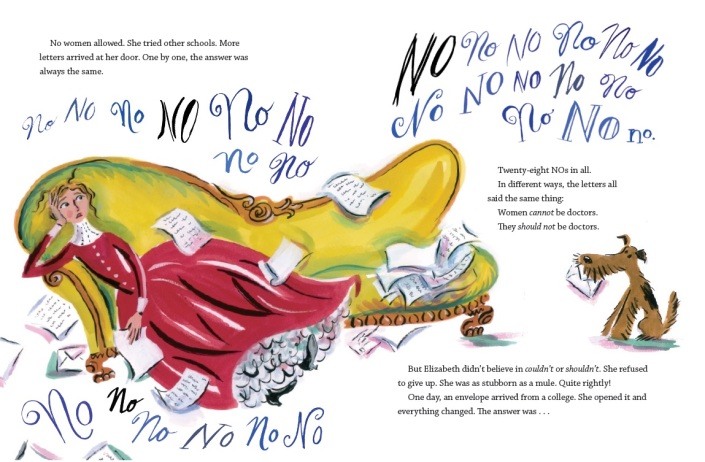
She applies to 28 medical schools, and they all say, “No.” But one day a “Yes” arrives in the mail. Elizabeth packs her bags. As she nears the school, Elizabeth sees that the townspeople have all come out to see her. They aren’t there to welcome their new medical student, though; they just want to whisper and point and stare. Surely, Elizabeth thinks, her classmates will be happy to see her. 

celebrate-picture-books-picture-book-review-who-says-women-can't-be-doctors-everyone-says-no

Image copyright Marjorie Priceman, 2013, text copyright Tanya Lee Stone, 2013. Courtesy of Henry Holt and Company.

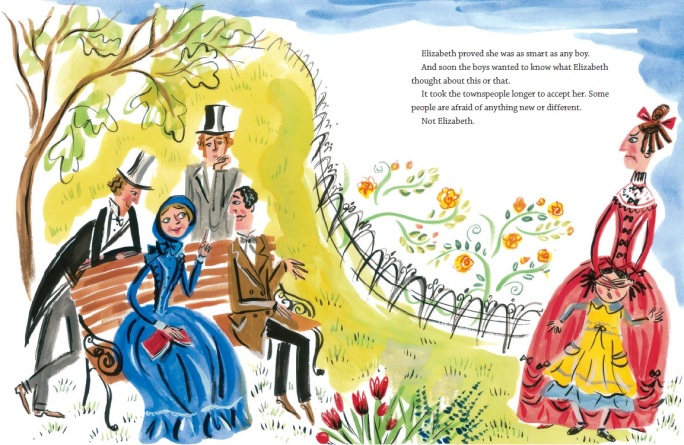
But she receives the same reception on the college campus. In fact, she learns that the only reason she was accepted was because the men voted to let her in as a joke! Elizabeth knows how to handle it. She studies hard and gives her opinions, and soon she wins the respect of her fellow students—even if the townspeople still don’t accept her.

On January 23, 1849 Elizabeth Blackwell graduates from medical school with the highest grades in the class. She has become the first woman doctor in America! Many people hope that she will be the last. But as we know…she was Not!

celebrate-picture-books-picture-book-review-who-says-women-can't-be-doctors-elizabeth-does-well-in-school

Image copyright Marjorie Priceman, 2013, text copyright Tanya Lee Stone, 2013. Courtesy of Henry Holt and Company.

Tanya Lee Stone magnificently imbues this short biography of Elizabeth Blackwell with enough mystery, conflict, and history for even the youngest readers to understand the type of girl and woman Elizabeth was as well as the challenges she faced. Stone has deftly included details of Blackwell’s life that  make her instantly recognizable and relatable to children. This biography is not only historical nonfiction, but a universal story for all generations. Blackwell may have started out as a reluctant dreamer, but once she dared to believe she accomplished more than she or anyone could have imagined. It is what we want for all our children.

Marjorie Priceman’s illustrations that swirl with words, are angled on the page, and float in white space are as topsy-turvy as the world Elizabeth Blackwell created with her courage and life’s work. Blackwell’s boldness is echoed in the rich colors and strong lines of Priceman’s gouache and India-ink paintings, and the emotions she stirred in others—from derision to horror to admiration—are cleverly and exceptionally drawn in a minimal style on the characters’ faces.

Ages 5 – 9

Henry Holt and Company, 2013 | ISBN 978-0805090482 (Hardcover) | ISNB 978-1250183392 (Paperback)

Learn more about Tanya Lee Stone and her work—both fiction and nonfiction—for children and teens on her website!

You can connect with Marjorie Priceman on Facebook!

National Women Physicians Day Activity

CPB - Doctors Clothespins

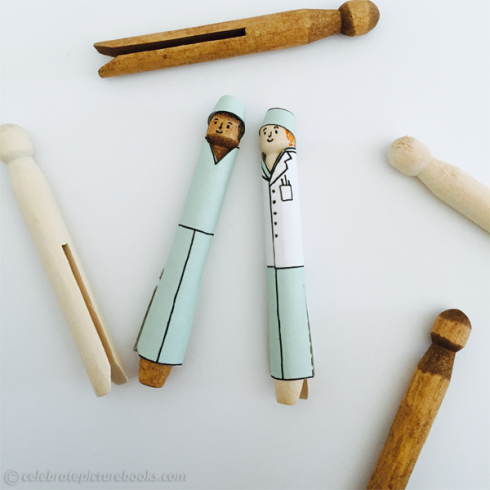
Doctor Clothespin Figures


Elizabeth Blackwell believed in herself and became the doctor she wanted to be. With this craft you can make a doctor figure or color your own clothes to make your figure any profession you are dreaming of!

Supplies

CPB - Doctors Clothespins on box

Directions

  1. Draw a face and hair on the clothespin
  2. Cut out the outfit you want your doctor to wear (color pants on your clothespin if you choose the lab coat)
  3. Wrap the coat or scrubs around the clothespin. The slit in the clothespin should be on the side.
  4. Tape the clothes together
  5. Wrap the cap around the head and tape it
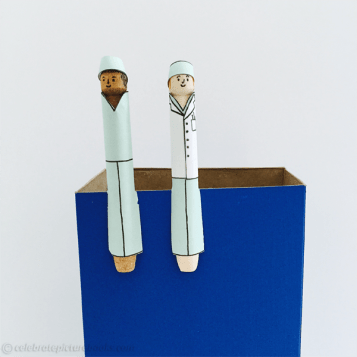
  6. If you’d like to display your clothespin doctor on a wire, string, or the edge of a box or other container, cut along the dotted lines of the clothes template

Who Says Women Can't Be Doctors by Tanya Lee Stone and Marjorie Priceman picture book review
You can find Who Says Women Can’t be Doctors? at these booksellers

Amazon | Barnes & Noble | Books-a-Million | IndieBound

Picture Book Review