May 6 – Children’s Book Week

About the Holiday

Founded in 1919, Children’s Book Week is the longest-running literacy initiative in the United States. The 2025 theme is An Ocean of Stories, which celebrates “the vast, collective ocean populated by the stories we read, share, and tell.” The holiday attracts participation from authors, illustrators, publishers, librarians, teachers, and booksellers in schools, libraries, bookstores, and communities across the country. To learn more about the holiday and download bookmarks and posters, activities in English and Spanish, coloring pages in 15 different languages, and much more, visit Every Child a Reader. You can even sign up to continue to get fantastic ideas for connecting with books and reading all year around!

Thank you to Scholastic for sharing a copy of Ballet Brown with me!

Review by Dorothy Levine

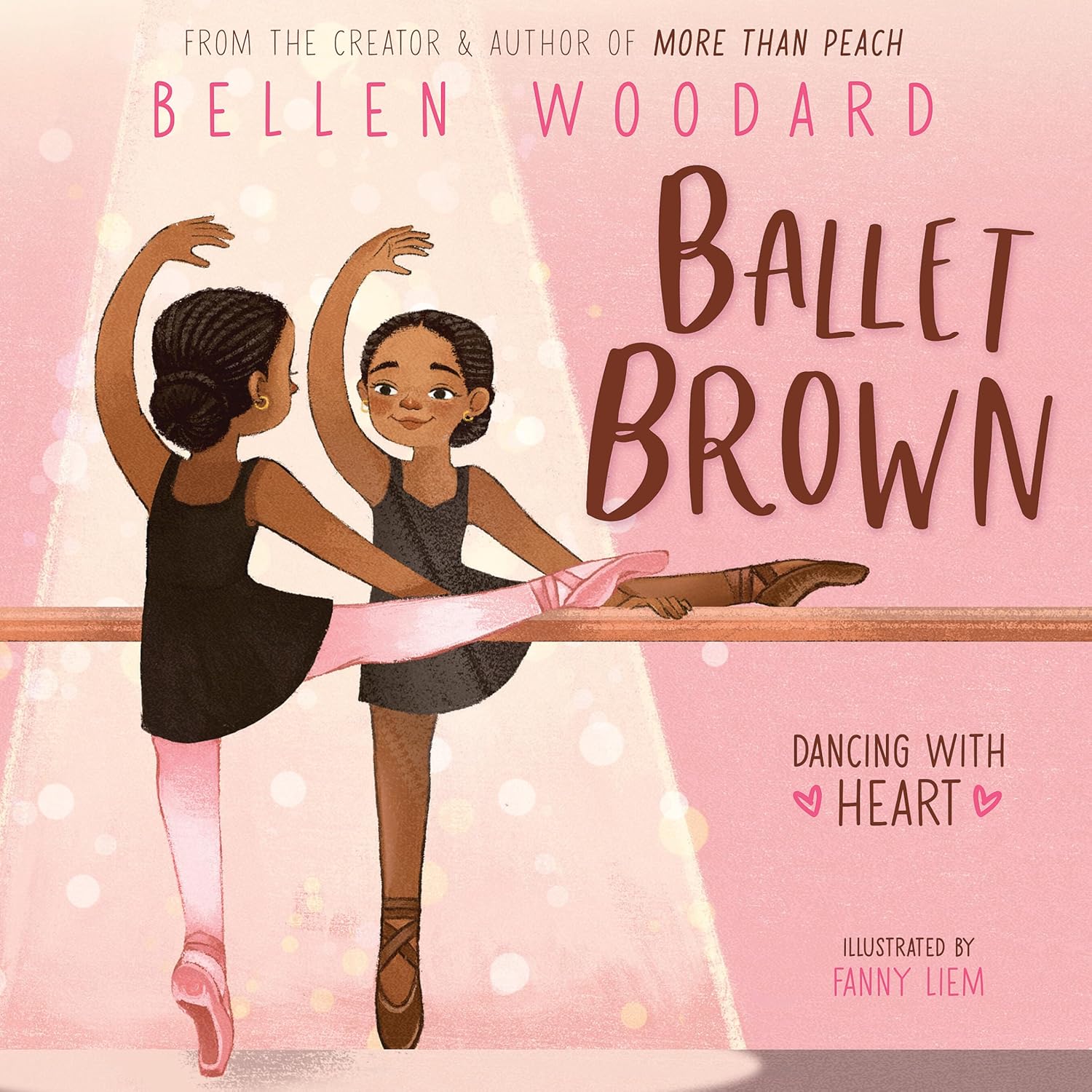
Ballet Brown

Written by Bellen Woodard | Illustrated by Fanny Liem


To Bellen, “dance is a conversation with the world,”—one she has been in love with since she was two years old. As a young ballet dancer, Bellen’s world was full of color. From brightly colored tutus to rainbow tights, Bellen fit in with the menagerie of outfits the ballerinas wore.

But as Bellen grew older, and dance became more serious, “the rainbow vanished. Pink became the priority. Pink leotard. Pink tights. Pink ballet shoes.” Bellen followed suit, narrowing her wardrobe and pinning back her afro to fit the dress code. But while dancing in class, she gazed in the mirror and reflected: “it looked like my legs didn’t belong with me.” Her legs, in the pink tights, didn’t match her natural skin tone. Delving deeper, Bellen read books about the history of ballet. She discovered that “’ballet pink’ was chosen to be an extension of the ballerina, to appear as beautiful skin gliding across the stage.”

“This tradition needs an upgrade,” Bellen declared. Her mother agreed, and together they shopped for new dance clothing. Bellen showed up at the studio the next day, adorned in her new ballet brown attire—brown tights and brown shoes. Her studio, however, wasn’t ready to make the leap. “‘Pink is tradition,’ the owner said. / ‘Traditions should grow just like we do,’” Bellen replied.

But as time twirled past and the studio stayed the same, Bellen realized they were just not willing to grow into new traditions with her. She knew it was time for a change. “And that’s when I learned sometimes the most powerful thing you can do is walk away.”

When Bellen and her mother walked into a new studio, they knew immediately this would be the right fit. Even the air felt different: “vibrant, warm, and welcoming.” At this new studio, Bellen’s ballet brown inspired other dancers to bring back the rainbow to ballet and show their true colors. Bellen says, “I had finally found a place that would join hands and duet with me. A place where self-expression, like the coolest crayons, colored the room.”

Bellen Woodard’s autobiographical story concludes with a brief overview of her activism and founding of the More than Peach Project, plus a further explanation of ballet brown versus ballet pink. Back matter also includes a conversation with studio owners, tips for dyeing pointe shoes, and heart-felt advice for young dancers and families.

A one-of-a-kind story about a one-of-a-kind dancer and writer. At just fourteen years old, Bellen Woodard has crafted a beautiful story of her journey to stretch the ballet standards and make room for inclusion. Ballet Brown showcases themes of resistance and persistence—that sticking up for yourself can make a difference, not only for you but for others too. In expanding the possibilities for ballet wear, Woodard opened the door for others to do the same. Through this lyrical story, more and more young dancers will feel inspired to do the same—to dance in their own style, however makes them feel seen.

Fanny Liem colors the elegant ballet scenes with rich shades of brown and pink. Liem cleverly plays with mirror reflections, showing “Ballet Pink Bellen” imagining her reflection in brown, and, later, her legs looking wobbly in pink, to show how she felt disconnected from their pale look. When Bellen describes her new studio as having a welcoming air, this is reflected in warmer yellow background tones, whereas her old studio is drawn in stark white. Fanny Liem animates the story with ballerinas of all backgrounds dancing across the pages—further driving the point that dancers shine in all different races, genders, and styles.

Ages 5 – 7

Scholastic, Inc., 2025 | ISBN 978-1546134077


Fanny Liem was born and raised in Indonesia. She’s loved drawing since she was a child. Her passion for storytelling and illustration started the first time she grabbed picture books, which were gifted to her by her uncle. When she is not drawing, she enjoys watching movies and listening to country music. You’ll find her on Instagram at wenfancy.

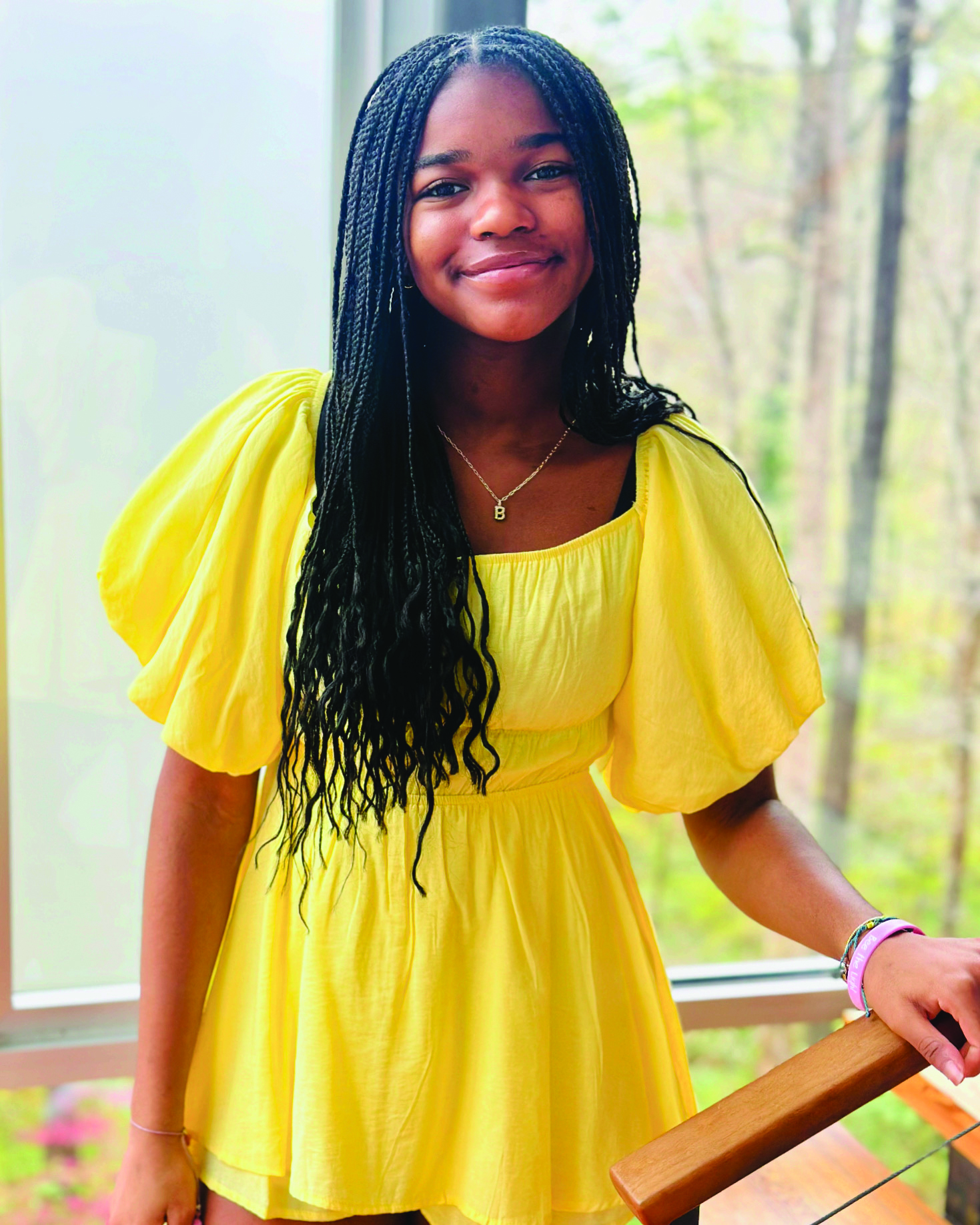
Meet Bellen Woodard

Photo © Tosha Woodard

Bellen Woodard is the young scholar, beloved trailblazer, and CEO of Bellen’s More than Peach Project. As the world’s first Crayon Activist, pioneer of “skin-color” crayons, and founder of the crayon/school supply brand for a new generation, Bellen has transformed an entire industry with a first-of-its-kind, innovative and inclusive project and brand that have become a global movement. She’s received many notable awards and has been featured by Scholastic, TIME, Nickelodeon, and many others. Now entering high school, Bellen embodies self-expression and discovery. She also enjoys world travel, dance, and spending time with family, friends, and her two dogs. And she’s just getting started! Visit Bellen’s More than Peach Project website to learn more.

Hi Bellen, I’m excited to be talking with you today about Ballet Brown and your More than Peach Project. 

In addition to being an author, you launched More than Peach, a global initiative, company, and brand, at just eight years old. Can you tell us about that?

I started Bellen’s More than Peach Project —“More than Peach”—only after successfully changing the language and perception around the “skin-color” crayon in my own school class and community. I wanted to bring that change for the benefit of every single kid around the world. I also had an amazing teacher, friends, and classmates and I loved school (I still do . . .), so I first imagined More than Peach and More than Peach crayons to “let kids be kids and give them their best options” and to celebrate youth leadership and many beautiful colors.

How did you come to write this book? And why did you pick to share this story in a children’s book format as opposed to other mediums?

Well, I’ve been dancing since I was two, and with the support of my parents and lots of advocacy along the way, it’s been a very rewarding dance journey overall. I also began wearing brown in ballet (ballet slippers and tights) almost from the very start and benefited from that in much the same way as another dancer does wearing pink. So, I wanted to be able to share my story and the advocacy in a picture book to connect with all kids and share tools too. I know that having a visual representation can be so important. Most of all, I want young dancers and their families to have built-in support from the dance community and to know that it’s okay to advocate for what’s essential. I also want Ballet Brown to be a conversation with dance studios and spaces that invite young dancers in.

Can you tell us more about the term “ballet brown”?

I coined the term “ballet brown” really to fill a void and capture more of the beauty of ballet and in dance as a whole. We commonly refer to “ballet pink” and not just in dance—so it really surprised me that we had yet to succinctly name and qualify “ballet brown.”  So, to create parity between the two partners, I began using the term “ballet brown” in my own language and saw firsthand how it helped to grow perceptions/a mindset in those around me. I wanted to share that with the whole world. My call to action is simply to apply ballet brown in much the same way as ballet pink to ensure each dancer gets what they need. And it goes way beyond brown tights and shoes. I think taking that step helps expand the world of dance in the most amazing, positive ways.

Can you tell me more about the process of getting this book published?

I was already in touch with Scholastic after being interviewed around More than Peach, and of course I already knew and loved their books. The Scholastic Book Fairs were also one of my favorite times during the school year!  When interviewed, we talked about all of the things I was up to at the time and writing a book was one. So, when they offered to become my publisher, it was a huge honor and a no-brainer.

What was the most unexpected or surprising part of writing and publishing a children’s book?

I think one of the most surprising things has been seeing my first book published in other world languages (English, Spanish, and French) and being able to literally see it change the world . . . one crayon at a time! Early on, I was also surprised at how long the process takes from start to finish.  For example, I began writing MORE THAN PEACH, my first children’s book, in early 2020 once Covid hit because suddenly I had way more time on my hands. (It was published in July 2022.) It’s also been at least 2 years since I began writing Ballet Brown so to see it finally arrive feels surreal! I also never expected to see my books in so many places across the globe, including classrooms, libraries, and museums—even the Library of Congress!

What was your favorite part? I think I have two favorite parts: One is having the creative license to share my story, and the other is being able to collaborate with such a great team throughout the entire process.

What advice would you give to young writers or dancers hoping to follow in your footsteps?

I would say to trust yourself and know that you are the absolute best person to tell and celebrate the story inside of you.

Do you have any new creative projects in the works that you’d like to share about?

There’s a bunch going on! I’ve been very excited about the growth of More than Peach and would have never dreamed I would see my crayons on shelves at Target and other places and my books everywhere! Also, I have such worthwhile partnerships with educators that are growing, which means a lot because my dad’s an educator too, and teachers have always been some of my favorite people! I have also been writing my next book which I’m very excited about and hope to share more about that soon!

Thanks so much for sharing so much about your inspiring work! I’m sure readers can’t wait to see your next book! 

Children’s Book Week Activity
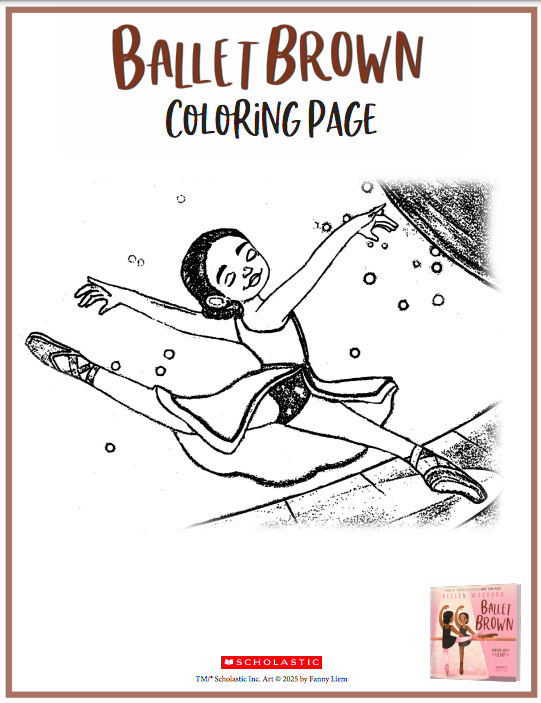
Ballet Brown Activity Pages


Be inspired to stand up for something you believe should be changed with these Ballet Brown Activity Pages!
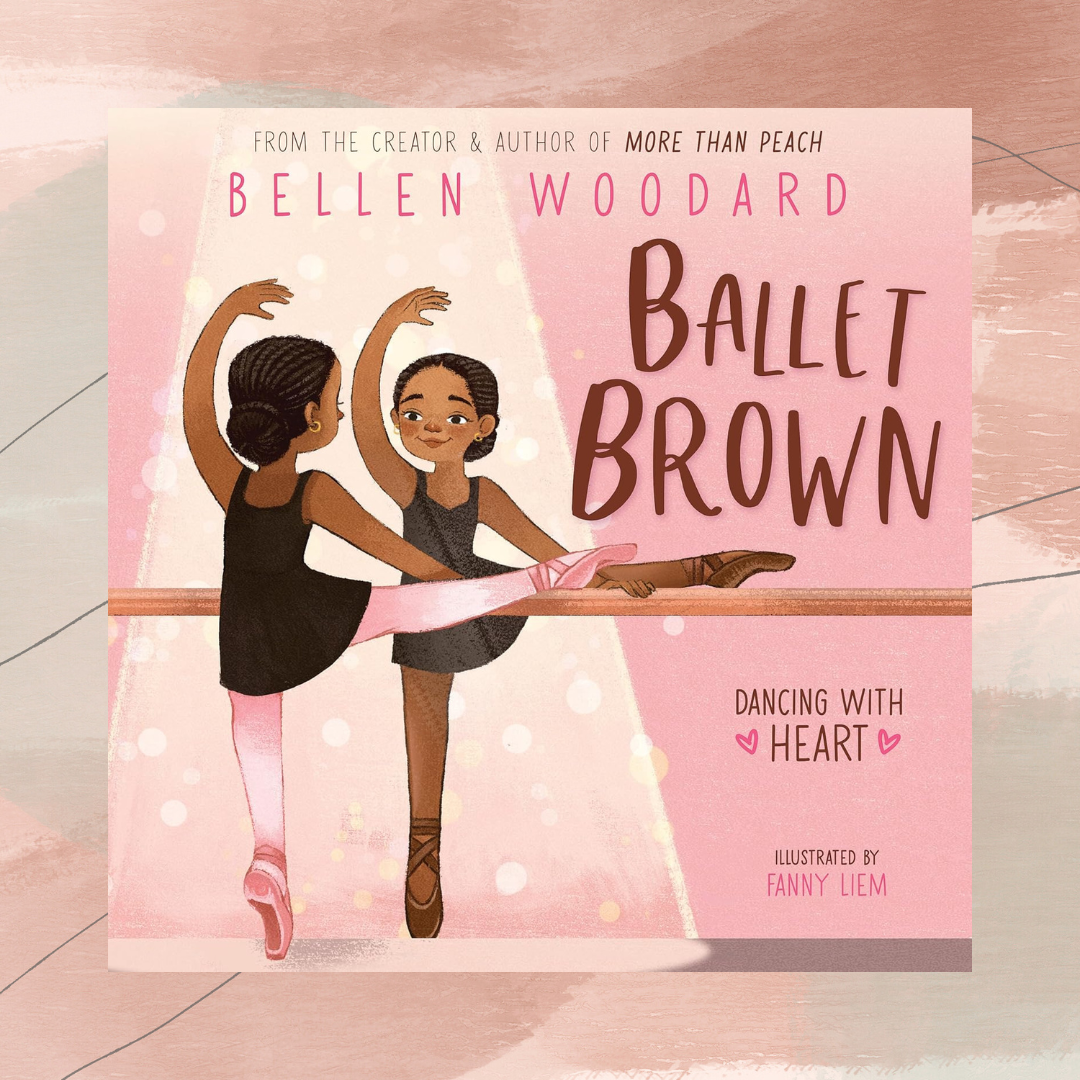
You can purchase Ballet Brown from these booksellers

Amazon | Barnes & Noble | Bookshop

Picture Book Review

March 14 – It’s Expanding Girls’ Horizons in Science and Engineering Month

About the Holiday

Expanding Girls’ Horizons in Science and Engineering Month was established in 2020 by the Expanding Your Horizons (EYH) Network. Founded in 1974 as a series of conferences aimed at promoting STEM careers to middle and high school girls, EYH provides hands-on activities, mentoring, and contact with role models as well as information about science and engineering fields.

Women still make up only 28% of the science and engineering workforce. With this month-long observance, the EYH Network hopes to make a significant impact on girls’ perceptions and career choices, encouraging them to explore and embrace STEM subjects​.

Thank you to Heyday and Barbara Fisch at Blue Slip Media for sharing a copy of I Love Salmon and Lampreys: A Native Story of Resilience with me!

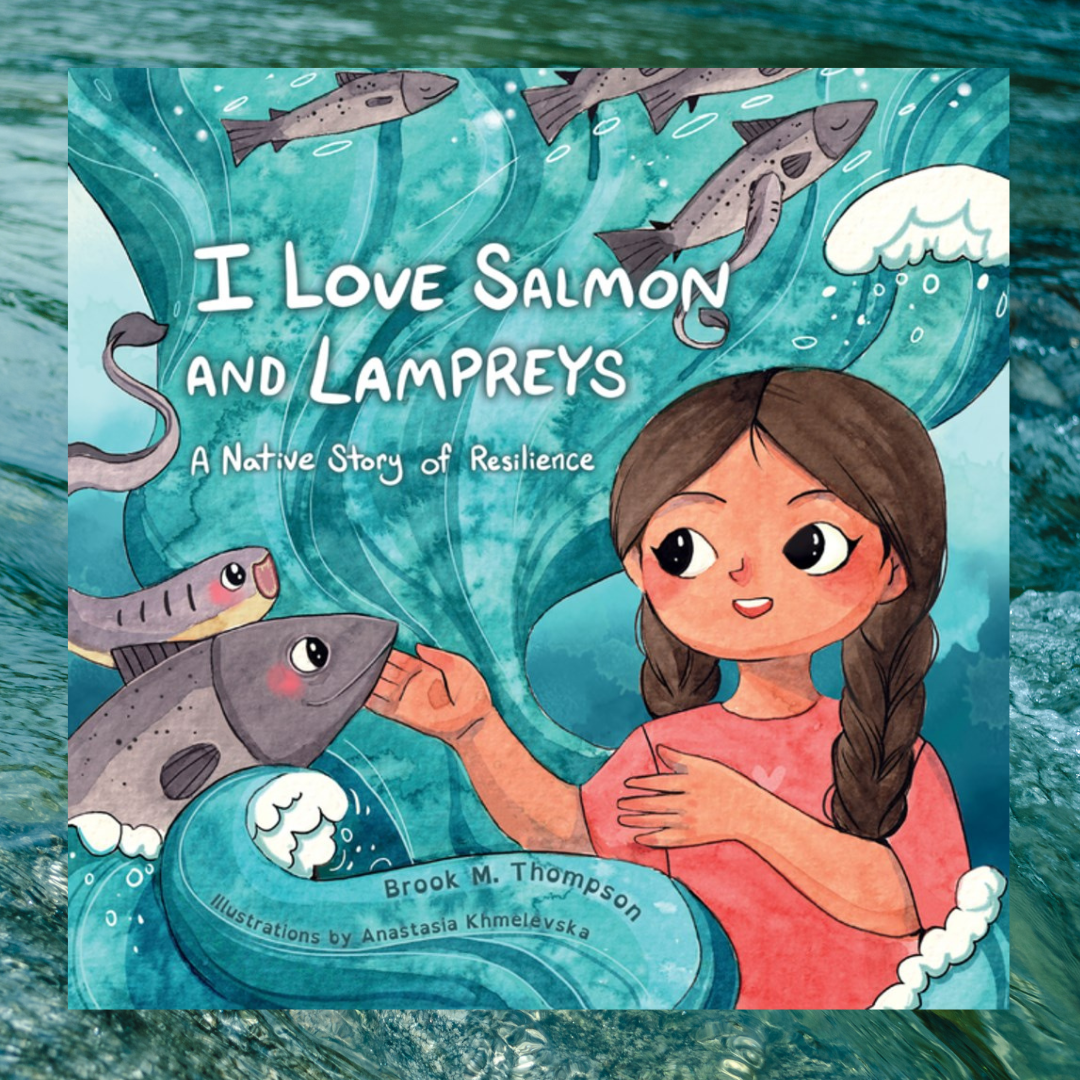
I Love Salmon and Lampreys: A Native Story of Resilience

Written by Brook M. Thompson | Illustrated by Anastasia Khmelevska


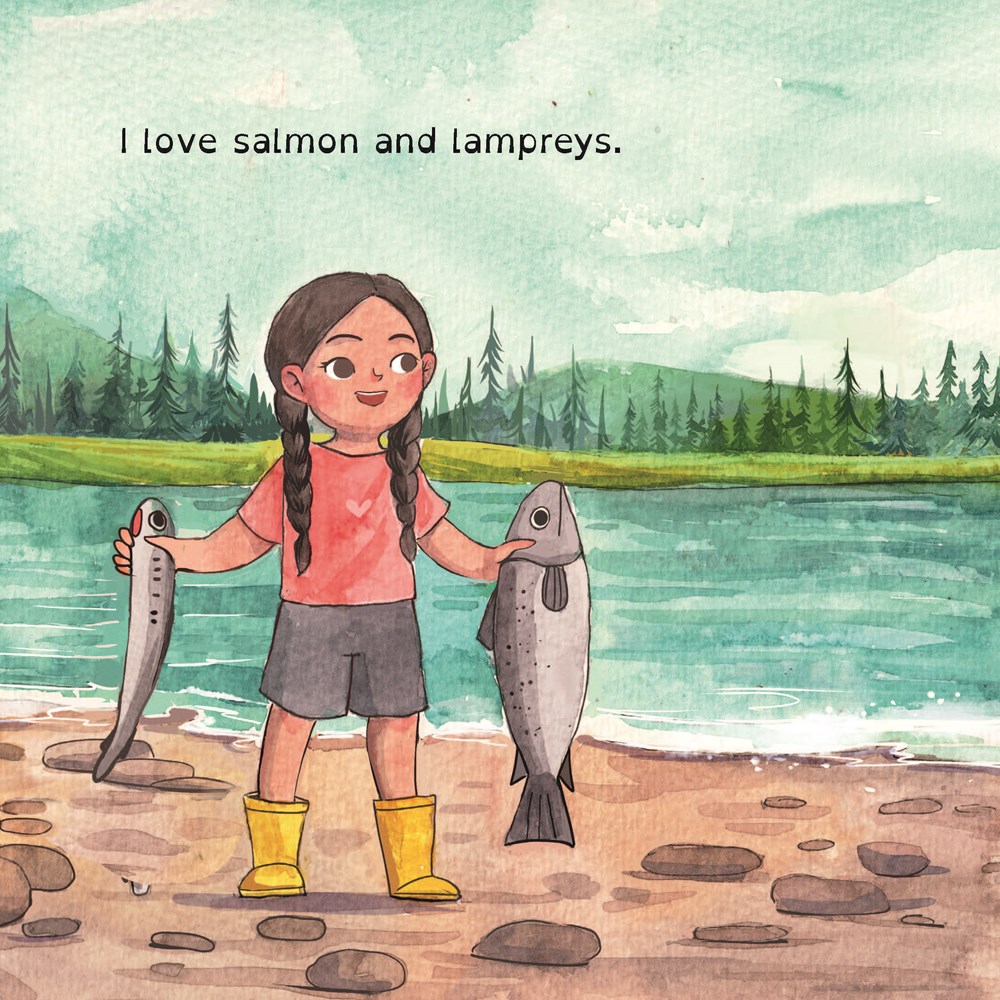
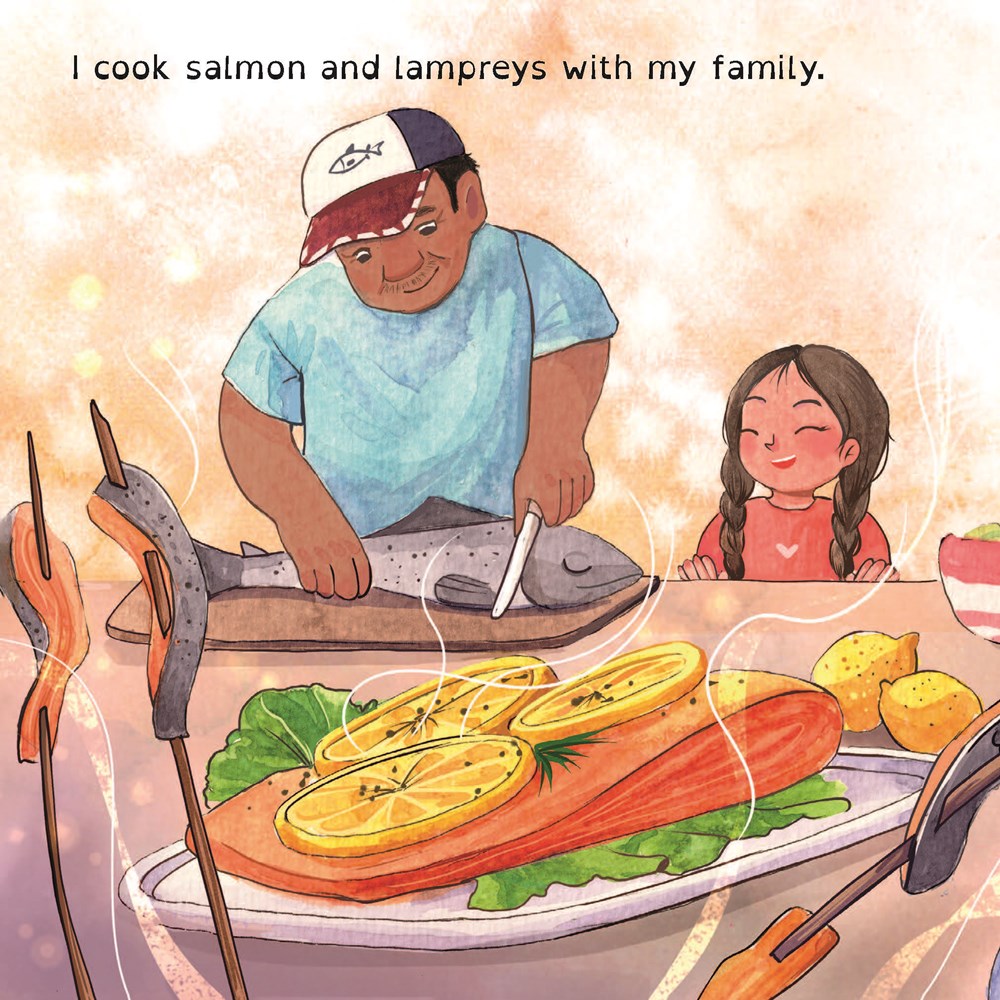
In her powerful autobiographical story, Brook Thompson, a member of the Yurok and Karuk Tribes, warmly invites readers to join her on her journey from childhood to the present day to experience her intense love for her tribes’ traditions and the fish that sustain them. Readers are first taken out on Brook’s family’s fishing boat, where her father and her grandfather tell stories of their own childhoods as they check the nets in their designated fishing spots along the Klamath River in Northern California. Then it’s back home to learn how Brook helps cook the fish (lampreys in the winter and salmon the rest of the year) in a wide variety of delicious ways.

Illustration © 2025 by Anastasia Khmelevska, text © 2025 by Brook M. Thompson. Courtesy of Heyday.

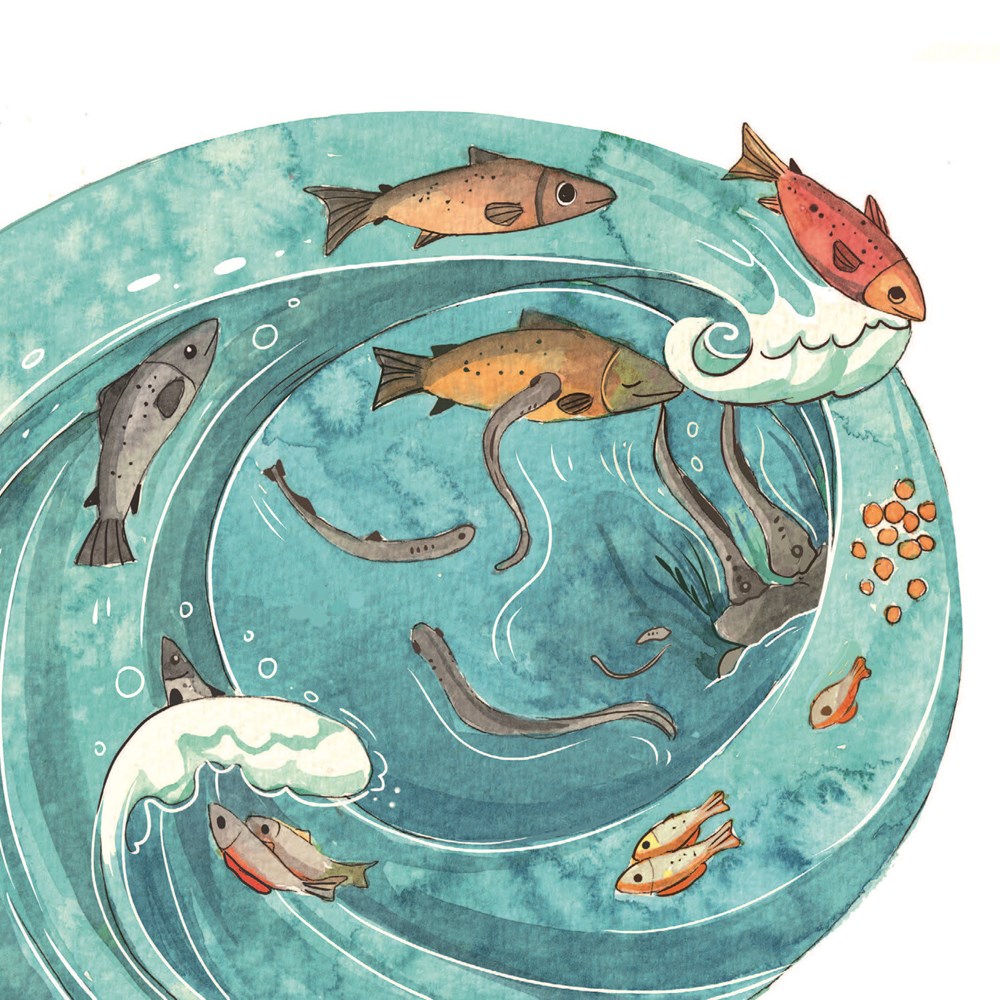
Salmon and lampreys are more than just food to Brook, however. They are creatures of the earth to be admired and honored. She tells readers about their life and spawning cycles, how they predate the dinosaurs, and even about their fascinating symbiotic relationship. For Brook, this love she feels is shared. She says, “I feel loved by salmon because years ago my ancestors took care of the salmon for their future family” and reveals that the fish in the river now “are the great-great-great-great-great-great-grandkids of the salmon who had a relationship with my great-grandparents.”

Illustration © 2025 by Anastasia Khmelevska, text © 2025 by Brook M. Thompson. Courtesy of Heyday.

In 2002, when Brook was still young, over 60,000 salmon perished from a parasite which spread when the water level of the river became too low and the temperature too hot due to the six dams erected on the river. She explains how dams “block the salmon’s way home” and how the warming water promotes the growth of toxic green algae, which affects the fishes’ breathing and spreads disease. 

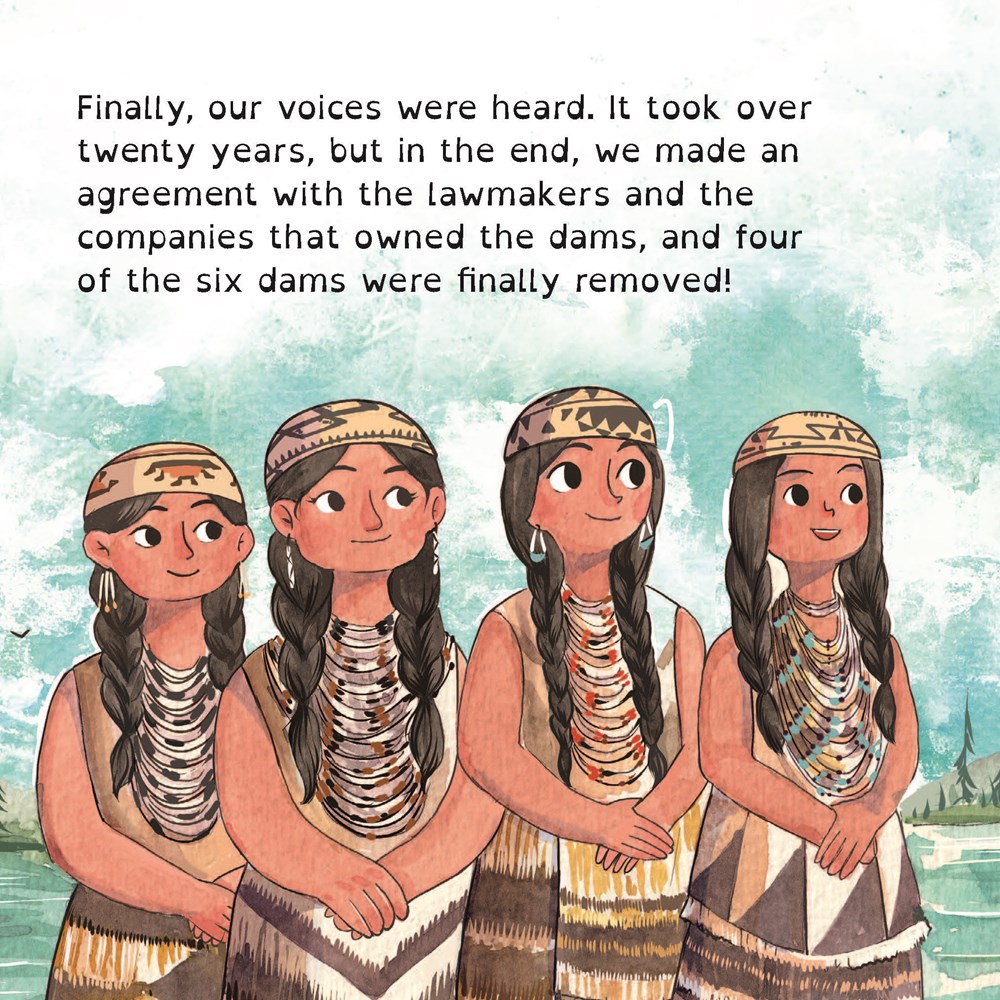
Brook joined protests by the tribal people and others, while scientists did research and local politicians lobbied for change. More than 20 years later agreements with the politicians and the companies that owned the dams were signed, and four of the six dams along the Klamath River were removed.

Illustration © 2025 by Anastasia Khmelevska, text © 2025 by Brook M. Thompson. Courtesy of Heyday.

As she grew into adulthood and inspired by her experiences, Brook set her eyes on higher education. She “went to college to learn about dams and about how to protect salmon in the future.” She became an engineer and a scientist who studies the interconnectedness of  “water, nature, people, animals, and buildings” and returned home to the Klamath River, where she continues the legacy of her ancestors in caring for the salmon, lampreys, and the environment.

Back matter includes Fun Facts about lampreys and salmon; photographs of Brook with salmon and at Iron Gate Dam, which was removed in 2024; a map of the Klamath River Watershed area; a note about the inspiration behind the book as well as the book’s font, OpenDyslexic, which makes it easier for those with dyslexia, like Brook, to read; and notes about the author and illustrator.

Illustration © 2025 by Anastasia Khmelevska, text © 2025 by Brook M. Thompson. Courtesy of Heyday.

Brook Thompson, in her compelling autobiographical story, will captivate children and touch their hearts. Thompson’s eloquent and straightforward storytelling immediately immerses readers in the Native relationship with nature and will inspire both young and adult readers to think deeply about how the earth sustains us and how we can show our appreciation in return. The theme of environmental justice and how citizens can and do make a difference is made personal through Thompson’s clear explanations of how the dams affected the salmon population and the long-term steps people took to reverse their damage. Thompson’s dedication—even from childhood—to her tribes, family, and future generations will impress readers. Children will also develop an understanding of how issues of interest to them now can inform their future endeavors.

Anastasia Khmelevska’s vibrant earth tone illustrations endear Brook to children through her evident passion for family, fishing, and the salmon and lampreys that have been a constant in her tribes’ lives. Her pacing and realistic depictions of people and events help children clearly understand the importance of each element of Thompson’s story from how the cyclical lives of salmon and lampreys are demonstrated in a swirling wave to the stunning landscapes highlight of the Pacific Northwest. These images make her depiction of the salmon die-off all the more impactful. Her final portrait of Brook Thompson coming home after earning her university degrees links her life to the salmon she loves so well. 

The combination of Native culture and environmental awareness makes I Love Salmon and Lampreys: A Native Story of Resilience a must addition to school and public libraries. The book offers extensive value and research opportunities for science and social studies classes. For families who care about the environment, sustainability, activism, and the future of our planet, I Love Salmon and Lampreys would be a much-loved choice.

Ages 4 – 8

Heyday, 2025 | ISBN 978-1597146685

About the Author

Brook M. Thompson is a part of the Yurok and Karuk Tribes. She is a neurodivergent and Two-Spirit author with dyslexia. She has a BS in civil engineering from Portland State University and an MS in environmental engineering from Stanford University, and she will soon have a PhD in environmental studies from University of California, Santa Cruz, where she studies water, politics, restoration, and salmon. You can find out more about her at brookmthompson.com.

About the Illustrator

Anastasia Khmelevska is an illustrator based in Lviv, Ukraine. She has illustrated several children’s books, including My Invisible Zoo, Marella the Mermaid, and Anything Helps. Follow her on Instagram @cute_miuu.

Expanding Girls’ Horizons in Science and Engineering Month Activities

Illustration © 2025 by Anastasia Khmelevska, text © 2025 by Brook M. Thompson. Courtesy of Heyday.

I Love Salmon and Lampreys Activity Pages

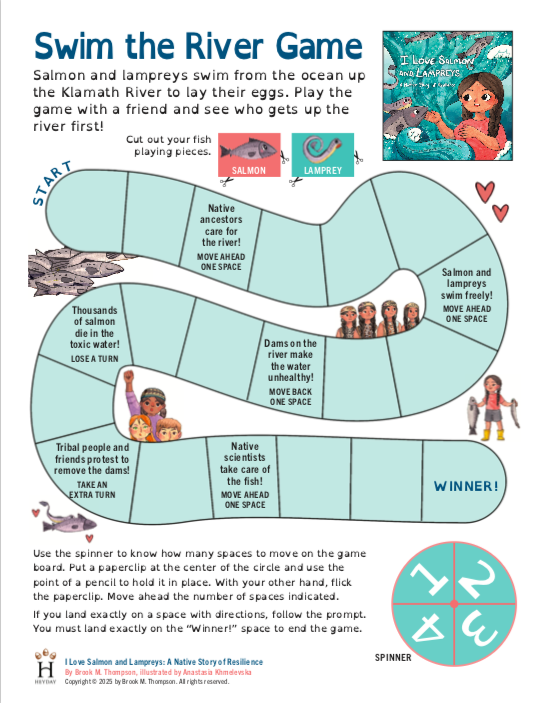
Play a printable board game, write about your dreams for the future, and learn fun facts about salmon and lampreys with these three I Love Salmon and Lampreys Activity Pages!

Chinook and Coho Salmon Coloring Pages

Coho and Chinook Salmon are vital to the Pacific Northwest. You can learn more about California salmon at caltrout.org. Enjoy these coloring pages of coho and chinook salmon. Colored images are included for your reference.

Chinook Salmon Coloring Page | Colored Image of Chinook Salmon

Coho Salmon Coloring Page | Colored Image of Coho Salmon

You can purchase I Love Salmon and Lampreys: A Native Story of Resilience at these bookstores

Amazon | Barnes & Noble | Bookshop

Picture Book Review

March 22 – It’s Women’s History Month

celebrate-picture-books-picture-book-review-cactus-queen-cover

About the Holiday

National Women’s History Month is all about celebrating women who broke barriers with their intelligence, creativity, courage, persistence, and unwavering confidence in their abilities. In every discipline, women have brought and continue to bring new perspectives, experiences, and talents to make contributions toward a better world. The theme for Women’s History Month 2024 celebrates “’Women Who Advocate for Equity, Diversity and Inclusion.’ This theme recognizes women who understand the need to eliminate bias and discrimination from individuals’ lives and institutions.”

Today’s book celebrates a visionary woman who made it her life’s work to protect a unique ecosystem, educate people on the importance of the environment and conservation, and provide the US with one of its most stunning national parks. 

I’d like to thank Calkins Creek/Astra Books for sharing a copy of Cactus Queen” Minerva Hoyt Establishes Joshua Tree National Park with me for review consideration. All opinions on the book are mt own.

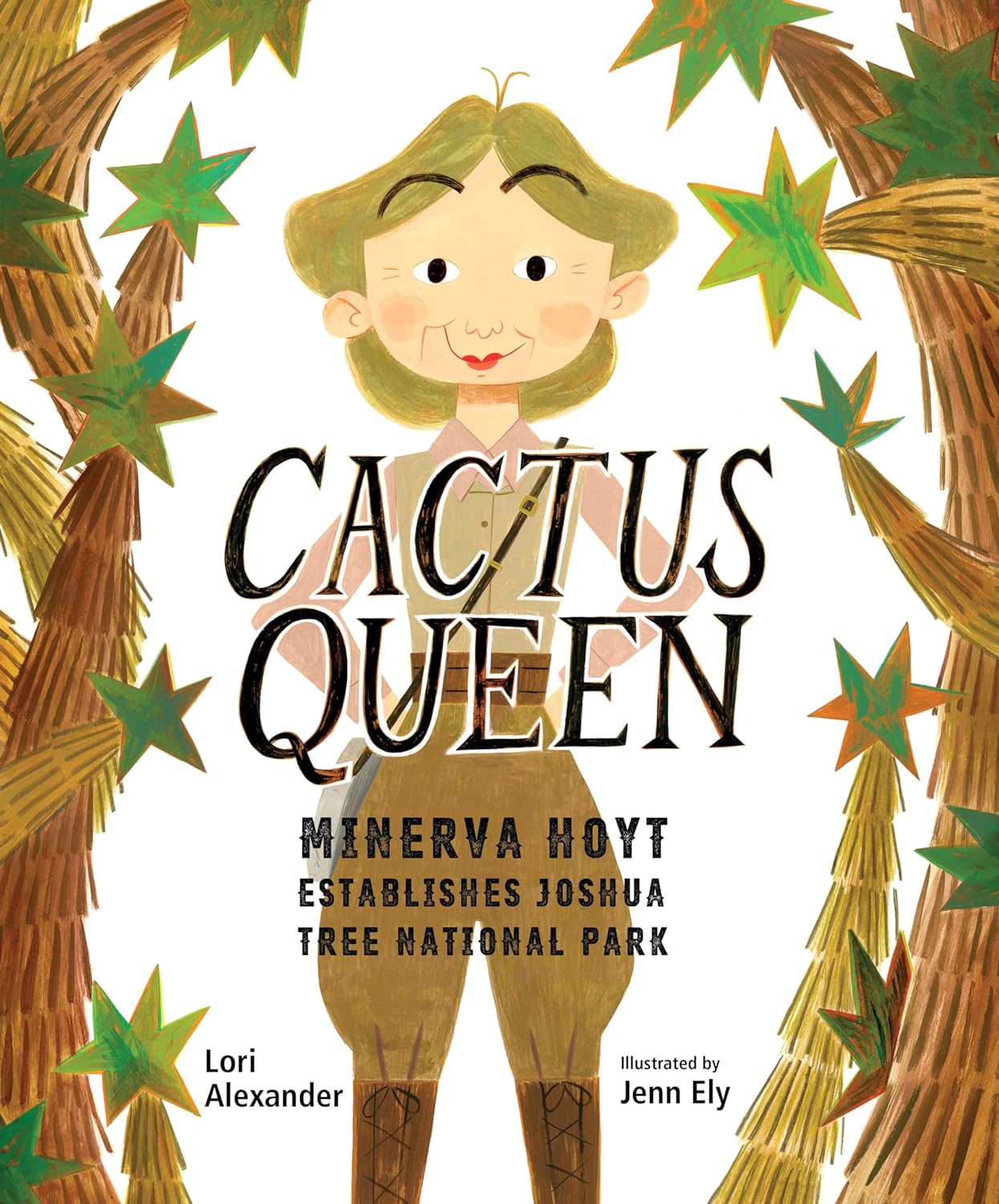
Cactus Queen: Minerva Hoyt Establishes Joshua Tree National Park

Written by Lori Alexander | Illustrated by Jenn Ely


Even as a child, Minerva loved the outdoors, was eager to share her thoughts and opinions, and enjoyed “long chats with friends.” When she grew up she married Dr. Albert Hoyt. In 1897 Minerva and her husband moved from Mississippi to Pasadena, California, close to Los Angeles. To meet new friends, Minerva hosted a backyard party, complete with games, food, and, of course, long chats.

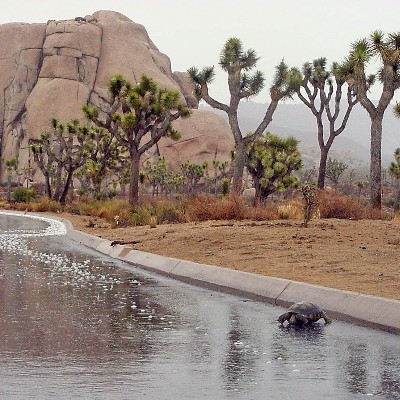
Settled into her new city, Minerva took to making trips to the Mojave Desert. She was awed by the Joshua trees, which grew nowhere else but here. After the death of her husband in 1918, Minerva spent more time in the desert, even camping out while “the wind whistled through the Joshua trees,” and “bright constellations swirled overhead.”

celebrate-picture-books-picture-book-review-cactus-queen-garden-party

Illustration copyright Jenn Ely, 2024, text copyright Lori Alexander, 2024. Courtesy of Calkins Creek, Astra Books for Young Readers.

As Los Angeles grew and grew, with more buildings, more cars, and more noise, people began to visit the desert frequently. They didn’t just visit, though, they wanted to take it home. People dug up the “… fuzzy cholla, spiky yucca, and barrel cacti to keep in their backyards.” They even dug up Joshua trees and carted them away. Many of these desert plants didn’t survive their new city surroundings. The Joshua trees were also cut down for construction materials, and motorists lost in the desert set them afire to communicate with other drivers.

By the late 1920s little remained of Minerva’s beloved desert. She wanted to save it . . . but how? Suddenly, “Minerva had a wild idea.” She would show the rest of the country just how special the desert was. With help from garden clubs, artists, taxidermists, and friends, she gathered samples of desert flora and fauna and took them east—by train.

celebrate-picture-books-picture-book-review-cactus-queen-camping

Illustration copyright Jenn Ely, 2024, text copyright Lori Alexander, 2024. Courtesy of Calkins Creek, Astra Books for Young Readers.

At the 1928 International Flower Show in New York City, Minerva erected a display of the desert. Crowds were thrilled to discover this “strange landscape,” and reporters took pictures for magazines and newspapers. Minerva won a gold medal for her exhibit, The Spirit of the Desert. Minerva also won awards in Boston and London for exhibits there. But more important than these accolades was that people were really listening to her and beginning to love the desert. When she donated her exhibits to museums, more people became interested in the desert.

By 1933, Minerva was ready to move on to the next stage in her plan. She wanted 1,000,000 acres of the desert to be declared a national park, protected by federal laws. Minerva garnered an audience with President Franklin D. Roosevelt and brought photographs to show him. She convinced the President—now it was up to Roger W. Toll, superintendent of Yellowstone National Park, to inspect Minerva’s desert and agree.

celebrate-picture-books-picture-book-review-cactus-queen-museum-exhibit

Illustration copyright Jenn Ely, 2024. Courtesy of Calkins Creek, Astra Books for Young Readers.

As Roger Toll stood in the middle of the desert on a rainswept day, he asked, “where are the lush trees, the waterfalls, and lakes?” When he later filed his report, he rejected the desert for National Park status. Minerva was disappointed but did not give up. She began a letter-writing campaign, convincing “scientists, teachers, politicians, and friends” to write to the National Park Service. Letters poured in—enough to convince the Service to send out a new inspector.

This time Assistant Director Harold C. Bryant, who lived in California, was sent. “He knew all about desert plants and animals.” When he arrived, Minerva and more than one hundred supporters greeted him. After touring the desert for three days, Bryant announced his decision: Yes! “Minerva’s desert was worth saving.”

celebrate-picture-books-picture-book-review-cactus-queen-park

Illustration copyright Jenn Ely, 2024, text copyright Lori Alexander, 2024. Courtesy of Calkins Creek, Astra Books for Young Readers.

Extensive backmatter, accompanied by photographs, offers more biographical information about Minerva, points about wildlife in Joshua Tree National Park, facts about other national parks in the United States, tips for how young people can help the environment through easy-to-implement actions, and a bibliography. In Lori Alexander’s Author’s Note, she relates the dangers and destruction that the fragile environment of Joshua Tree National Park and the surrounding desert continues to suffer from “vandalism, urban development, and the effects of climate change,” a report that demonstrates the need for continued education and care taking of our natural resources.

In Cactus Queen, Lori Alexander has created a compelling biography of a remarkable woman as well as a call to action for readers to stand up for the environmental or other causes that are important to them. Alexander highlights Minerva Hoyt’s love of the desert, her dedication, and her unflagging determination to overcome setbacks. Hoyt’s creativity, pragmatism, and lifelong focus serves as an inspirational roadmap for accomplishing goals for children, teens, and even the adults who read with them.

The first thing readers may notice upon opening Cactus Queen is Jenn Ely’s beautiful color palette that mirrors the unique hues of the desert. Her stunning images of the desert and Minerva’s ingenious ways of rallying the country and the President to her cause transport children from Hoyt’s earliest days through her long-fought success. Ely’s charming illustrations reveal not only the special plants and creatures of the Mojave Desert but Minerva’s distress at its destruction and her tenacity to enact change to protect it. 

Both a fascinating biography of Minerva Hoyt and an in-depth look at the multifaceted workings of conservation efforts, Cactus Queen: Minerva Hoyt Establishes Joshua Tree National Park will inspire readers to advocate for causes that are important to them. For educators the book would make an excellent addition to science and language arts curriculum. Cactus Queen would also be an engaging accompaniment to museum visits or field trips for families and teachers.

Cactus Queen is a top pick for classrooms, public and school libraries, museum shops, and families.

Ages 7 – 10

Calkins Creek, 2024 | ISBN 978-1662680212

About the Author

Lori Alexander is the award-winning author of several children’s books, including All in a Drop: How Antony van Leeuwenhoek Discovered an Invisible World, which won a Robert F. Sibert Honor, and A Sporting Chance: How Ludwig Guttmann Created the Paralympic Games, an NCSS Notable Book. Her work has received several starred reviews from KirkusSchool Library Journal, and Horn Book Magazine, has made the NSTA Outstanding Science Trade Book list, and has been selected by the Junior Library Guild. Visit Lori Alexander at lorialexanderbooks.com.

About the Illustrator

Jenn Ely is an artist and animator, who has worked on the movies The Boxtrolls and Guillermo Del Toro’s Pinocchio. In her recent foray into children’s books, she illustrated The Gardener of Alcatraz and If You Were a Kid Building a Pyramid. Visit Jenn Ely at jennely.com.

Women’s History Month Activity

celebrate-picture-books-picture-book-review-joshua-tree-national-park-wildlife

Become a Joshua Tree National Park Junior Ranger

How would you like to become a Joshua Tree National Park Junior Ranger? You can your badge with this online program full of fun and educational activities for all ages! You can learn how to draw a Joshua Tree, create your own constellation, learn all about desert tortoises, create your own rock formation, learn about adaptable plants and design your own, and more.

To earn your badge kids ages 5 – 7 are asked to complete 2 activities; kids ages 8 – 10 are asked to complete 3 activities; and kids ages 10 and above are asked to complete 4 or more. After finishing projects, you just need to send images of your work to receive your badge in the mail!

Simply visit the official Joshua Tree National Park website and learn more about their Junior Ranger program! Learn more about the park and view lots of pictures and videos here.

Joshua Tree National Park Coloring Page

celebrate-picture-books-picure-book-review-joshua-tree-national-park-coloring-page

Enjoy this activity page by filling it with all the colors of the desert.

Joshua Tree National Park Coloring Page

celebrate-picture-books-picture-book-review-cactus-queen-cover

Order from Bookshop to support your local independent bookstore.

You can also find Cactus Queen: Minerva Hoyt Establishes Joshua Tree National Park at these booksellers

Amazon | Barnes & Noble | Books-a-Million

Picture Book Review

February 1 – World Read Aloud Day

celebrate-picture-books-picture-book-review-love-is-loud-cover

About the Holiday

Now in its 14th year World Read Aloud Day, founded by global non-profit LitWorld, encourages adults to read aloud to children not only today but every day. Reading aloud to children from birth is one of the best ways to promote language development, improve literacy, and enjoy bonding time together. Millions of people celebrate today’s holiday all across the United States and in more than one hundred countries around the world. Special events are held in schools, libraries, bookstores, homes, and communities, and authors and illustrators hold readings and visit classrooms in person and virtually. To learn more about World Read Aloud Day, visit LitWorld and check out their Activity Hub to find live events, virtual read alouds, downloadable bookmarks, posters, games, and more!

I would like to thank Simon & Schuster and Barbara Fisch at Blue Slip Media for sharing a copy of Love Is Loud with me for review consideration. All opinions on the book are my own.

Love Is Loud: How Diane Nash Led the Civil Rights Movement

Written by Sandra Neil Wallace | Illustrated by Bryan Collier


Raised on Chicago’s South Side, Diane Nash is sheltered by her parents from the segregation of the South that they had grown up in. During the Second World War, Diane is taken care of by her grandmother while her father joins the army and her mother takes a job. Her Grandmother Bolton is from Tennessee and showers her with love. “You are ‘more precious than all the diamonds in the world,'” she told Diane, and growing “up in the rhythm and glow of her love” Diane knew “it must be true.”

celebrate-picture-books-picture-book-review-love-is-loud-baby

Image copyright Bryan Collier, 2023, text copyright Sandra Neil Wallace, 2023. Courtesy of Simon & Schuster/Paula Wiseman Books.

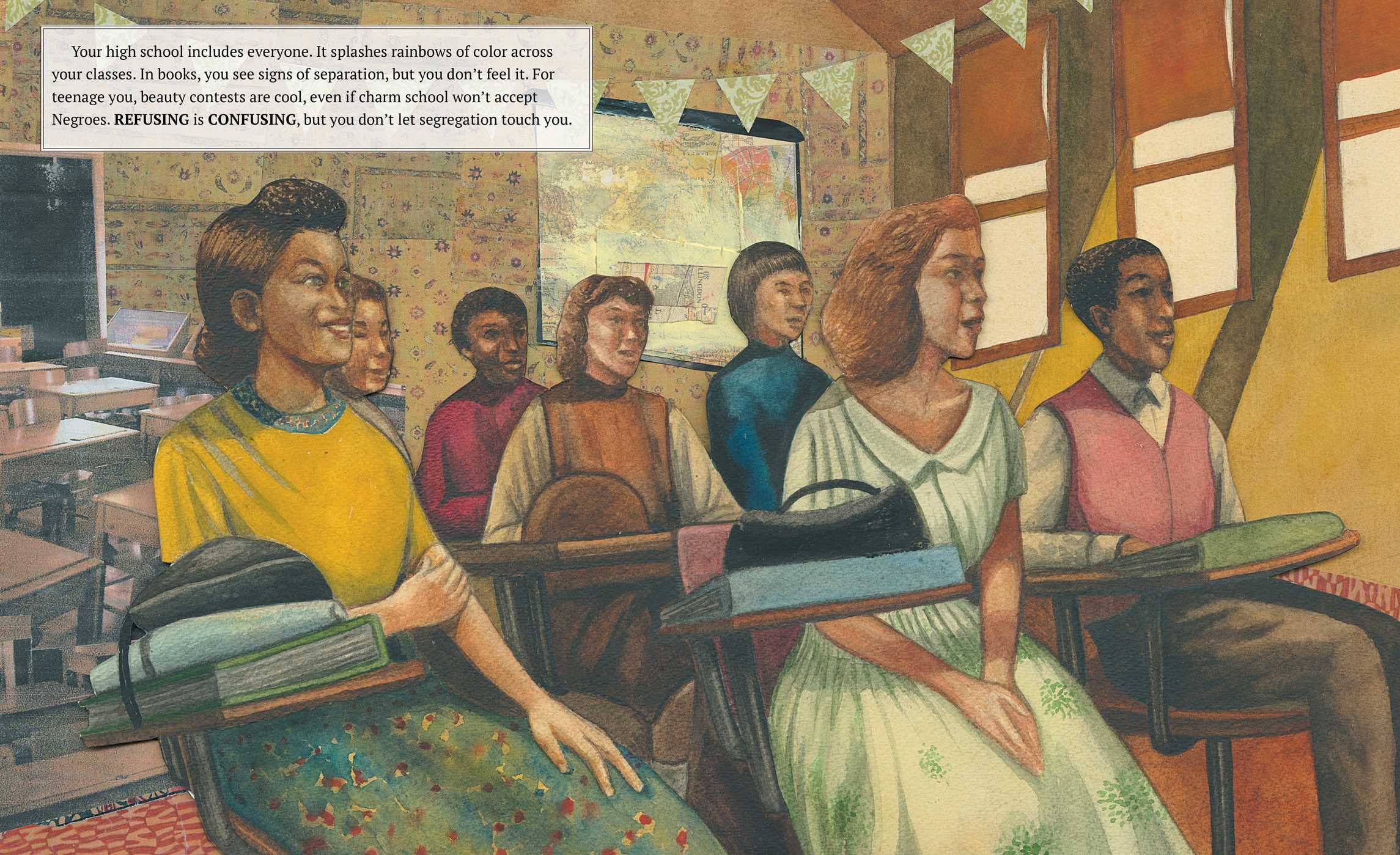
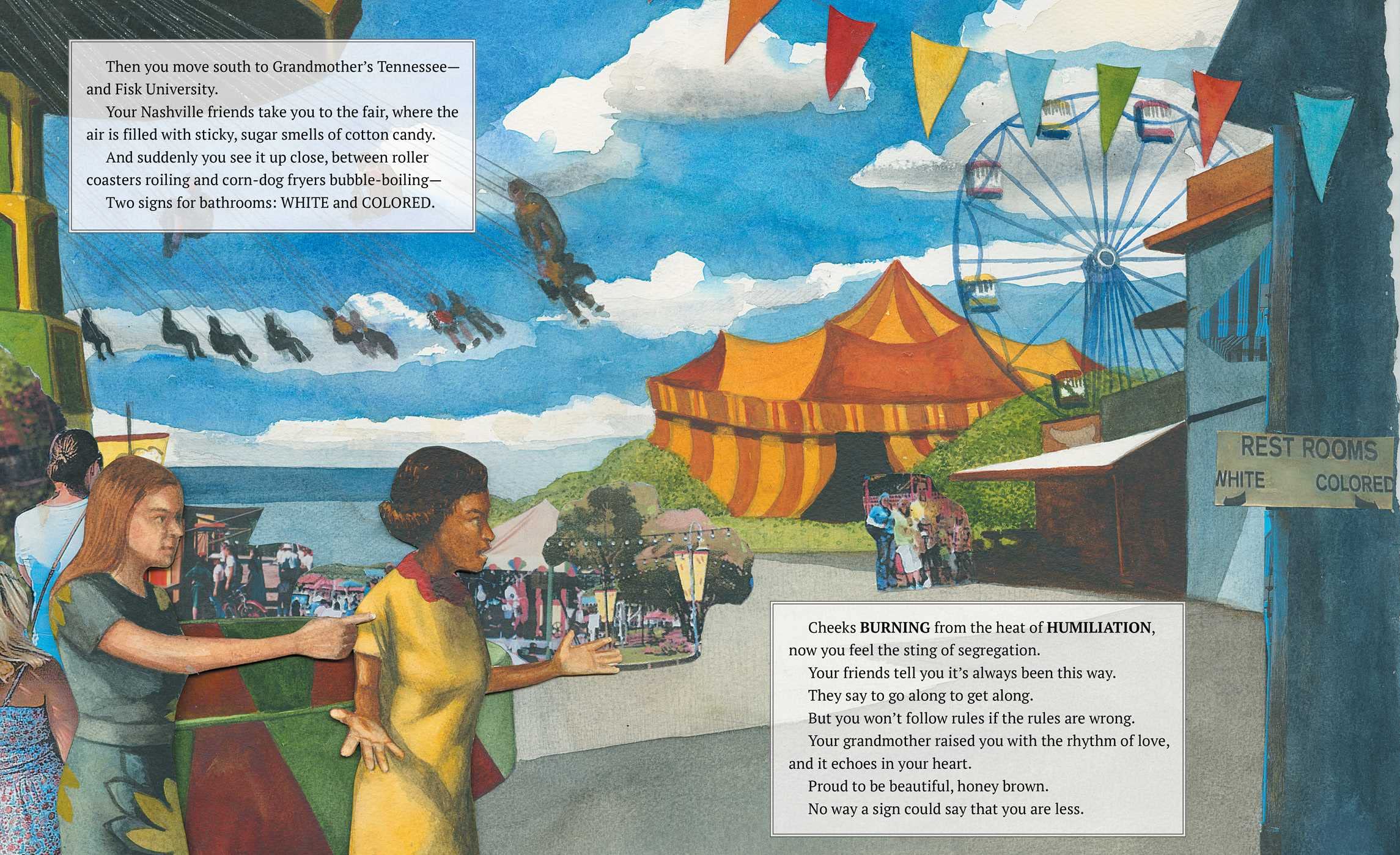
In high school kids of all colors learn together. Diane reads about segregation in textbooks, but it didn’t really touch her. Then she moves to Tennessee to attend Fisk University. Here, when her friends take her to a fair, Diane is confronted with the “sting of segregation” when she sees there are two restrooms: one labeled WHITE and the other COLORED. Her friends have grown up in this system; they tell her “to go along to get along,” but Diane “won’t follow rules if the rules are wrong.” The rhythms of her grandmother’s love and her pride in being “beautiful, honey brown” will not allow her to feel less than others.

In Nashville, Diane experiences the full indignation of segregation that demands separate water fountains and schools, back-of-the-bus seating, and—the worst for Diane—no eating at the lunch counter. She doesn’t want to be arrested for eating at a lunch counter, but neither does she want to let it go. Before each day of college classes, Diane and other students “pray and learn about change in a peaceful way.” They practice calmly sitting and ordering at a lunch counter, knowing that people may be rude, may push them off their stool, may throw sugar in their hair.

celebrate-picture-books-picture-book-review-love-is-loud-school

Image copyright Bryan Collier, 2023, text copyright Sandra Neil Wallace, 2023. Courtesy of Simon & Schuster/Paula Wiseman Books.

In February of 1960, Diane, now at twenty-one years old, leads a group of students to a lunch counter in Nashville. Their presence shocks the cooks and waitress, who drops plate after plate from her shaking hands. “Inside [Diane shakes] too. Hands sweating, never forgetting the danger, the fear of being arrested for ordering a sandwich.” Bravely, despite coffee burns and thrown sugar, Diane and the students hold sit ins at lunch counters across the city. And when Diane is arrested, there are hundreds of others to fill her seat.

After a bombing in April Diane, “quietly walking, without any talking… silently leads six-thousand marching feet to the beat of love” to meet the mayor, who at first says there is nothing he can do. Looking him in the eye, Diane asks him questions he cannot deny, and he admits that prejudice and segregation are wrong—even at the lunch counter. “At that moment, love scores. It soars as six thousand loving hands roar with applause.” And in May—Diane has just turned twenty-two—Nashville’s lunch counters are fully integrated. Martin Luther King Jr. congratulates her on her peaceful victory as she moves on to change the rules of bus travel with Freedom Rides, to uphold the “law of the land [that] says everyone is free to sit or stand together in a bus traveling across America.”

celebrate-picture-books-picture-book-review-love-is-loud-fair

Image copyright Bryan Collier, 2023, text copyright Sandra Neil Wallace, 2023. Courtesy of Simon & Schuster/Paula Wiseman Books.

While the movement makes progress, even attracting the attention of the president, a Mississippi judge charges Diane “with putting Freedom Riders on a bus.” Before her trial, Diane, pregnant with her first child, writes a letter heard around the world that said “‘I believe that if I go to jail now, … it may help hasten that day when my child and all children will be free.'” Her case rivets the world as she chooses to go to jail instead of paying bail. 

After she is released, Diane turns her attention to the issue of voting rights and the state of Alabama, where four young girls are killed in a bombing in a Birmingham church and “where Black people are denied the right to vote.” Following Diane’s example, thousands of adults and children choose jail over bail in protest of the injustice until the Civil Rights Act is signed by President Johnson in 1964 and a year after that when he “signs the 1965 Voting Rights Act to legally end racial discrimination that prevented Black people from voting.” But Diane Nash doesn’t stop there. She takes her message of peace and peaceful change across the country for fifty years, teaching young people “how love creates change.”

Image copyright Bryan Collier, 2023, text copyright Sandra Neil Wallace, 2023. Courtesy of Simon & Schuster/Paula Wiseman Books.

Image copyright Bryan Collier, 2023, text copyright Sandra Neil Wallace, 2023. Courtesy of Simon & Schuster/Paula Wiseman Books.

Extensive back matter includes an Author’s Note and an Illustrator’s Note about the work of Diane Nash; a detailed timeline from her birth to 2022, when she was awarded the Presidential Medal of Freedom; a list of video interviews with Diane Nash, four other books for young readers; sources for quotes found in the story; and a selected bibliography. A photograph of Nash and three other students integrating a lunch counter in Nashville and another of Nash leading demonstrators to meet the mayor of Nashville are also included.

celebrate-picture-books-picture-book-review-love-is-loud-love

Image copyright Bryan Collier, 2023, text copyright Sandra Neil Wallace, 2023. Courtesy of Simon & Schuster/Paula Wiseman Books.

Compelling and moving, Sandra Neil Wallace’s lyrical storytelling about the life and work of Diane Nash rivets readers to this young woman’s courage, confidence, and conviction to overturn the injustice of segregation and inequality for Blacks. Punctuated with often-rhyming phrases, and sharp, short sentences Wallace’s text flows with a rhythm of urgency that perfectly conveys not only Nash’s resolve, but the stakes for the peaceful demonstrators and the atmosphere of the times.

Written in the third person, the story directly addresses Nash, but the repeated “you” also builds a chorus that reverberates in each reader’s heart, telling them that they are brave, that they are strong, and that they too can change the world with love. This format poignantly culminates on the last page. Here, Wallace changes the dynamic with a subtle turn of phrase that now directly embraces each reader, letting them know that Diane Nash worked for freedom “because she loved you even before you were born” and reminding them that “Love is fierce. Love is strong. Love is loud!”

Bryan Collier’s rich watercolor-and-collage illustrations draw readers in with their realistic depictions of Diane Nash as a baby and young girl cherished by her family, as a high school and university student, at the fair that changed the trajectory of her life,  leading peaceful demonstrations at lunch counters and across the South, and crossing the country to bring her message to young people. Nash’s self-assurance, courage, and determination are evocatively expressed, and a full-page portrait of Diane looking out at the reader mirrors Wallace’s invitation for them to look into her eyes and see her love there.

Scraps of photographs are sprinkled here and there among the pages, providing a spark of recognition of the time and places depicted. But it is the cut paper elements that make certain images of people and objects jump off the page, working powerfully with Wallace’s text to make readers feel that they too are at the fair, at the lunch counter, joining the throng of marchers. Each page is a masterpiece of history and story that invites study, thoughtful contemplation, and action.

Absorbing, eloquent, and impactful, Love Is Loud: How Diane Nash Led the Civil Rights Movement is biography at its best: a moving tribute Diane Nash set amid a far-reaching immersion in the time period. Love Is Loud belongs in every home, classroom, school, and public library collection to teach children about the contributions of Diane Nash as well as to remind them that vigilance and the work for freedom is an ever-ongoing pursuit.

Ages 4 – 8 

Simon & Schuster | Paula Wiseman Books, 2022 | ISBN 978-1534451032

About the Author

Sandra Neil Wallace writes about people who break barriers and change the world. She is the author of several award-winning books for children, including Between the Lines: How Ernie Barnes Went from the Football Field to the Art Gallery, illustrated by Bryan Collier, which received the Orbis Pictus Book Award and was an ALA Notable Book. A former ESPN reporter and the first woman to host an NHL broadcast, she is the recipient of the Outstanding Women of New Hampshire Award and creates change as cofounder of The Daily Good, a nonprofit bringing twenty thousand free, culturally diverse foods to college students each year through its Global Foods Pantries. Visit Sandra at SandraNeilWallace.com.

About the Illustrator

Bryan Collier is a beloved illustrator known for his unique style combining watercolor and detailed collage. He is a four-time Caldecott Honor recipient for Trombone ShortyDave the PotterMartin’s Big Words, and Rosa. His books have won many other awards as well, including six Coretta Scott King Illustrator Awards. His recent books include By and By, ThurgoodThe Five O’Clock Band, and Between the Lines. He lives in New York with his family. Visit him at BryanCollier.com.

Watch the Book Trailer for Love Is Loud!

World Read Aloud Day Activities 

2022 Presidential Medal of Freedom Ceremony


Watch as Diane Nash is awarded the Presidential Medal of Freedom in this White House video from July 7, 2022. You can find President Joe Biden’s remarks about Diane Nash at the 5:50 mark, and see her receive her medal at the 41:29 mark.

celebrate-picture-books-picture-book-review-love-is-loud-curriculum-guide-cover

Love Is Loud Curriculum Guide


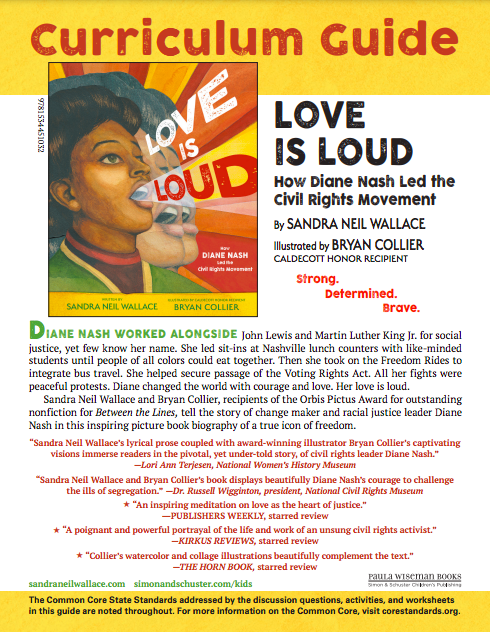
Teachers, educators, and homeschoolers can download an in-depth, 6-page Curriculum Guide for Love Is Loud full of a variety of ways for students to connect with the book and history from Sandra Neil Wallace’s website here.

celebrate-picture-books-picture-book-review-love-is-loud-cover

You can find Love Is Loud: How Diane Nash Led the Civil Rights Movement at these booksellers

Amazon | Barnes & Noble | Books-a-Million

To support your local independent bookstore, order from

Bookshop | IndieBound

Picture Book Review
November 8 – Young Readers Day

celebrate-picture-books-picture-book-review-count-on-us-cover

About the Holiday

Falling each year on the first Tuesday in November, Young Readers Day highlights all of the benefits that babies, kids, tweens, and teenagers reap by reading and being read to. The holiday celebrates parents, teachers, and other caregivers who make sure that children are connected with books that capture their minds and hearts and lead to a lifetime love of reading. People are also encouraged to stop by their local bookstore and let their kids pick out a new book to enjoy.  Today is also National STEM/STEAM Day, which aims to get kids exploring the fields of science technology, engineering, art, and math – subjects that are the backbone of discovery and the type of innovation needed to design a better future for us all. Today’s book incorporates both of these holidays! 

Count on Us! Climate Activists from One to a Billion

Written by Gabi Snyder | Illustrated by Sarah Walsh


In her book aimed at inspiring children to discover what they can do to help protect and care for the environment, Gabi Snyder invites them to count the ways they can help and travel through the alphabet, beginning with “1 Action. One small person taking one small step towards Big changes.” But that one action and one person don’t need to stand alone. Snyder shows kids how a single expression of caring for the environment can influence a growing number of people to engage with conservation in diverse ways.

Counting from one to ten, Snyder demonstrates how small groups of people of varying generations can start to come together to “grow a movement” and come up with “inspiring ideas” while also introducing “5 Environmentalists” who are working around the world “to protect nature from being harmed by human’s waste and pollution” and “8 Healthy Habitats” from mountains to jungles to the ocean, and more.

celebrate-picture-books-picture-book-review-count-on-us-2-bold-banners

Image copyright Sarah Walsh, 2022, text copyright Gabi Snyder, 2022. Courtesy of Barefoot Books.

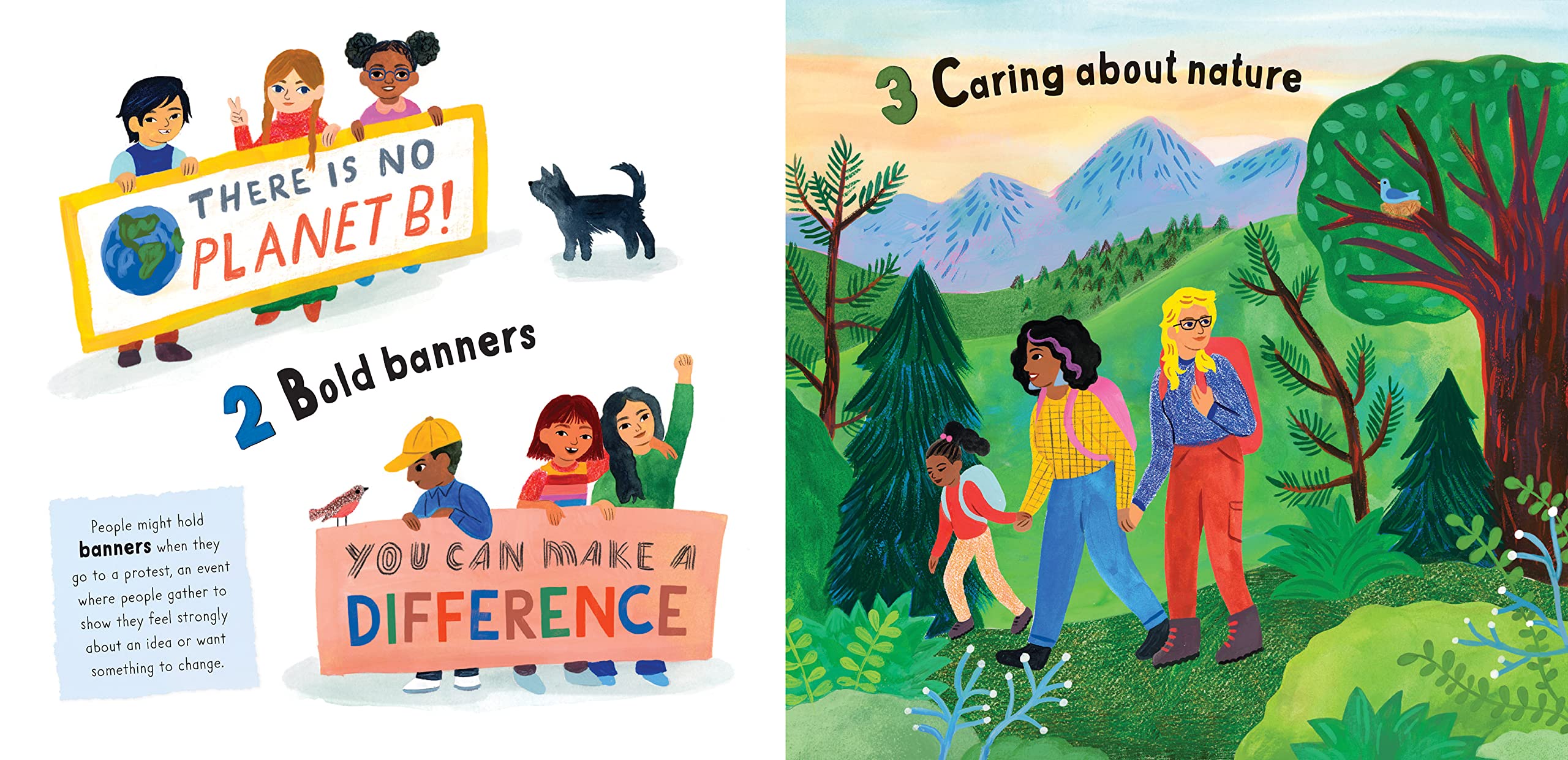
After the number 10 is reached, Snyder begins counting by tens, and readers see how quickly the environmental movement can grow. Now “20 Kids for conservation” are planting gardens, picking up litter, riding bikes, and rescuing animals harmed by pollution, while 30 light bulbs have been replaced by energy-saving LED bulbs. And remember those 20 kids? They’re now part of “40 Mighty Marchers” carrying the banners made at number 2.

The “5 environmentalists” and “8 habitats” have spawned dozens of places and species that are being protected as well as products that can be recycled or repurposed and ways science can help. From 100, the number of those involved explodes exponentially to 1,000… 10,000…100,000… all the way to one billion with all those people doing what they can, described from T through Z, to make the world a cleaner, safer, and healthier place for all.

celebrate-picture-books-picture-book-review-count-on-us-10-joining-generations

Image copyright Sarah Walsh, 2022, text copyright Gabi Snyder, 2022. Courtesy of Barefoot Books.

Four pages of back matter discuss in more depth the definition of Activism and why it’s so important for people to come together to voice their opinions on climate change and protecting our planet. Snyder provides two examples of young activists who are making a difference in different ways that are most meaningful to them. She then invites readers to do some thinking about what issues they care most about.

Snyder also provides short bios of the five environmentalists she introduced earlier in the story. At number 9 Snyder mentions “Inspiring Ideas,” and here she goes into more depth on each one that is pictured on the page. She finishes up by giving kids and adults a week’s worth of thoughtful ideas on how they can make an impact in their own home and community.

celebrate-picture-books-picture-book-review-count-on-us-90-reducing

Image copyright Sarah Walsh, 2022, text copyright Gabi Snyder, 2022. Courtesy of Barefoot Books.

Gabi Snyder’s eye-opening book gives kids an idea of how important individual as well as group actions are in the movement to protect the earth from climate change while empowering them with specific examples of good ideas for combating the dangers our planet faces. Sharing Count On Us! with kids offers teachers, homeschoolers, clubs, and other organizations many opportunities for discussion, research, and the type of activism required to make a difference.

Sarah Walsh’s striking illustrations will capture children’s attention with depictions of friendship, cooperation, and the kind of growing enthusiasm that fuels real change. As the pages become more and more crowded with activists, readers will understand that not only are increasing numbers of people needed, but also more ideas and more helping hands. Adults can use Walsh’s images as jumping off points to get children talking about and/or drawing the various habitats, native plants and animals, and threats to the environment in their area and even devising solutions or inventions to help.

Count on Us! Climate Activism from One to a Billion would be a welcome addition to home, school, and public libraries to inspire and energize environmental involvement and change.

Ages 4 – 9 

Barefoot Books, 2022 | ISBN 978-1646866243

Discover more about Gabi Snyder, her books, and where to   on her website.

To learn more about Sarah Walsh, her books, and her art on her website.

Young Reader’s Day Activity

celebrate-picture-books-picture-book-review-we-love-to-read-maze

We Love to Read! Maze


Help the kids pick up books and find their way through the library in this printable maze.

We Love to Read! Maze Puzzle | We Love to Read! Maze Solution

celebrate-picture-books-picture-book-review-count-on-us-cover

You can find Count on Us! Climate Activists from One to a Billion at these booksellers

Amazon | Barnes & Noble | Books-a-Million

To support you local independent bookstore, order from

Bookshop | IndieBound

Picture Book Review
July 29 – It’s National Ice Cream Month

celebrate-picture-books-picture-book-review-the-sweetest-scoop-cover

About the Holiday

Ice cream has a long and elite history, dating back to Ancient Greece when a rudimentary version of the confection was made of snow, honey, and fruit. It wasn’t until the 16th century, when Catherine de’ Medici introduced the treat again, that a true ice cream was created. One hundred years later, Charles I of England used his royal clout to proclaim ice cream the prerogative of the crown. He paid to keep the recipe secret and forbid the common people from eating it. He and future royals must have known a thing or two about proprietary information, as the first recipes for ice cream were not recorded until the 18th century.

This favorite dessert received its true recognition in 1984 when President Ronald Reagan established July as National Ice Cream Month. Today, indulge in your favorite flavor or sundae!

The Sweetest Scoop: Ben & Jerry’s Ice Cream Revolution

Written by Lisa Robinson | Illustrated by Stacy Innerst


When you think of ice cream, does your mind immediately go to vanilla, chocolate, or strawberry? Or maybe you think a little fancier, like mint chocolate chip or fudge swirl. But there’s a whole other menu to choose from: “What about Wavy Gravy, Truffle Kerfuffle, or Chubby Hubby? What’s the scoop on those wacky flavors?” If you’re sweet on ice-cream, you’ll want to keep reading to find out!

celebrate-picture-books-picture-book-review-the-sweetest-scoop-ice-cream-truck

Image copyright Stacy Innerst, 2022, text copyright Lisa Robinson, 2022. Courtesy of Harry N. Abrams.

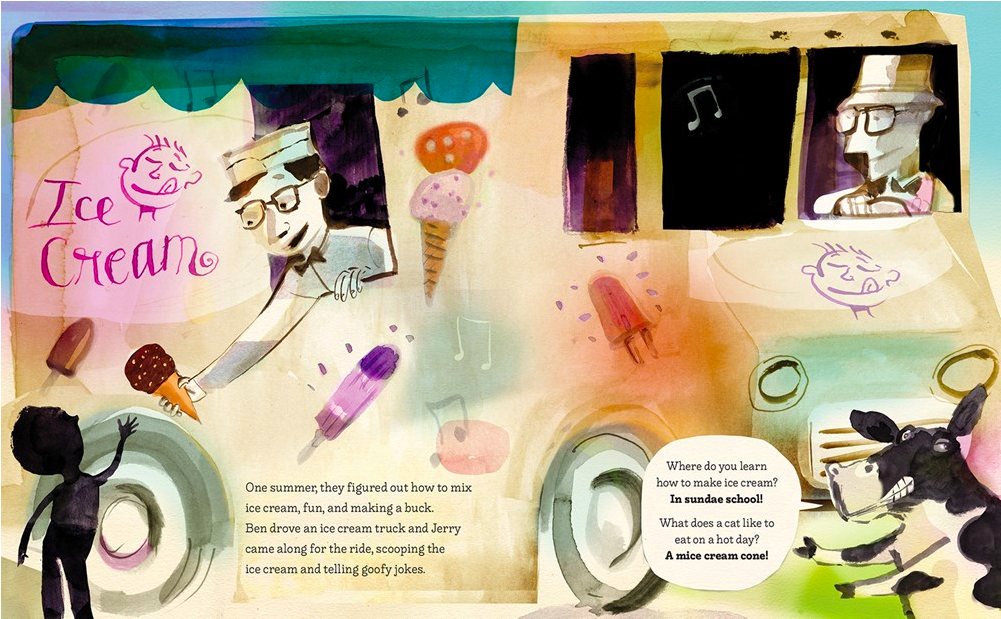
It all started back in 1963 with two friends—Ben Cohen and Jerry Greenfield—who loved to eat. And they especially loved to eat ice cream. When they were in high school, Ben got a job driving an ice cream truck, and Jerry rode along to help scoop and tell “goofy jokes.” When they graduated, Ben and Jerry went off to different colleges and pursuits, but their careers didn’t turn out the way they planned. 

They were both feeling pretty down until they got together and decided to start a business together—a business where they’d be their own bosses and have fun. Since they both loved to eat, they first thought about a bagel delivery business, but it turned out to be too expensive. Then they thought about how much they loved ice cream and discovered that making it was much less expensive than making bagels.

celebrate-picture-books-picture-book-review-the-sweetest-scoop-recipe

Image copyright Stacy Innerst, 2022, text copyright Lisa Robinson, 2022. Courtesy of Harry N. Abrams.

Next, in Vermont, they found the perfect place to open shop and began fixing it up (it needed a lot of work!). But when they got to the plumbing job, Ben and Jerry didn’t have enough money to pay the plumber. That’s when Jerry had a brilliant marketing idea that the plumber jumped on. With the shop (and the plumbing) out of the way, Ben and Jerry began tinkering with their ice cream recipe.

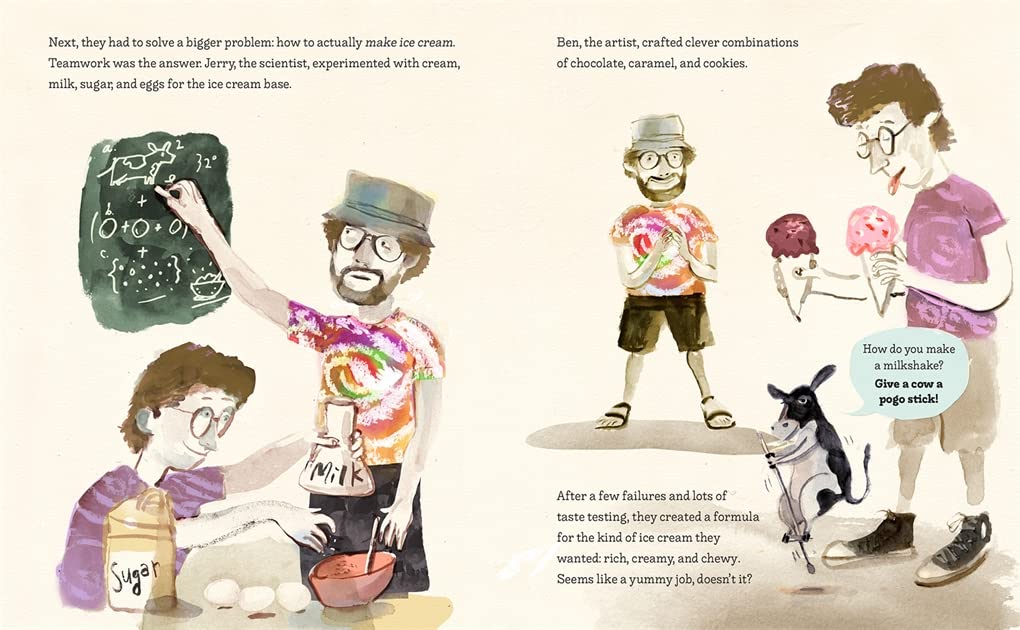
“Teamwork was the answer. Jerry, the scientist, experimented with cream, milk, sugar, and eggs for the ice cream base. Ben, the artist, crafted clever combinations of chocolate, caramel, and cookies.” After a lot of trial and error, they hit upon the perfect combination of “rich, creamy, and chewy.” “Finally, on May 5, 1978, the doors of Ben & Jerry’s Homemade ice cream shop opened. And people came. Lots of people!” 

celebrate-picture-books-picture-book-review-the-sweetest-scoop-shop

Image copyright Stacy Innerst, 2022, text copyright Lisa Robinson, 2022. Courtesy of Harry N. Abrams.

Still, despite their success, there were still obstacles to overcome. One of the biggest was “making their flavors stand out” among all the others. They decided to give their flavors “cool names, like Chunky Monkey, Phish Food, and Dastardly Mash.” They even invited customers to submit ideas. And while most of Ben and Jerry’s flavors were hits, there were some clunkers among the batches. But Ben and Jerry knew how to make even these failures fun with the “Flavor Graveyard” that commemorates “dearly departed flavors” like Vermonty Python, Oh Pear, and Peanut Butter and Jelly.

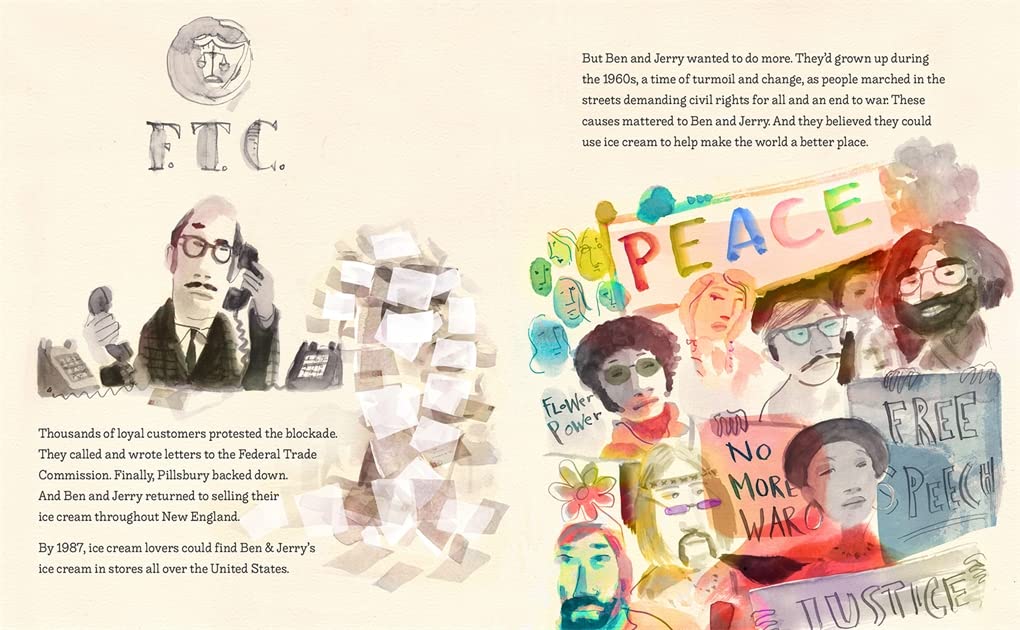
As their ice cream grew in popularity, Ben and Jerry wanted to do more with their product. “They believed they could use ice cream to help make the world a better place.” They began with paying their workers well and moved on to inventing an environmentally safe carton. Their factory sported solar panels and they looked for ways to reduce waste.

celebrate-picture-books-picture-book-review-the-sweetest-scoop-blockade

Image copyright Stacy Innerst, 2022, text copyright Lisa Robinson, 2022. Courtesy of Harry N. Abrams.

To draw attention to world issues, they created special flavors: “Save Our Swirled to promote awareness of climate change; Imagine Whirled Peace to demand an end to war; I Dough, I Dough to support same-sex marriage; and Empower Mint to call attention to the unfairness of the growing gap between rich and poor.” They donated profits to causes they cared about and “formed the Ben & Jerry’s Foundation to support ‘social and environmental justice around the country.'”

So now when you enjoy your favorite flavor of Ben & Jerry’s ice-cream, you’ll know that you’re also contributing to “making the world a better place.”

Back matter includes an Author’s Note, a Timeline, and a list of sources.

celebrate-picture-books-picture-book-review-the-sweetest-scoop-foundations

Image copyright Stacy Innerst, 2022, text copyright Lisa Robinson, 2022. Courtesy of Harry N. Abrams.

Lisa Robinson’s smooth-as-ice cream storytelling relates the facts of Ben Cohen and Jerry Greenfield’s uplifting and inspirational career while infusing her biography with Ben and Jerry’s personalities with a conversational cadence and clever, but not intrusive, puns sprinkled throughout.

Standout aspects of the book include how, as young men, both Ben and Jerry used their disappointments as a springboard to a creative, satisfying, and influential career; how they found strength in their diverse but complimentary talents; and how they relied on their personal compasses to design a business model that is mindful of employees’ needs as well as important social and environmental issues. And Robinson does all this while making her book fun to read aloud and including a comical cow that pops up on several pages to tell kid-pleasing ice cream jokes.

Stacy Innerst’s watercolor and ink illustrations top off Robinson’s story like luscious whipped cream on a six-flavor sundae. Soft, yet vibrant each page spread pops with grape purples, pistachio greens, lemon yellows, and plenty of chocolate waves and swirls. Ben and Jerry are front and center on most pages, coming up with unique ideas to make their ice cream as iconic as Ben’s hat. Young readers will benefit from seeing how these two life-long friends have each other’s backs, whether its “scarfing down pizza” as teens, rising above discouragement after college, or repairing the old gas station that will become their ice cream shop.

Spying the adorable cow on a page holding a mic, riding a pogo stick, fixing an ice cream truck, and even hanging out with a skeleton, kids will eagerly anticipate each new joke. Seen through Innerst’s eyes, Ben and Jerry’s world is one where ideas are colorful clouds and clouds are shaped like ice cream cones. It’s a pretty sweet world we all get to live in.

Inspirational and uplifting, The Sweetest Scoop: Ben & Jerry’s Ice Cream Revolution is an outstanding combination of biography, social activism, and the powers of positivity and creativity. The book would be a stirring and dynamic addition to home bookshelves and is a must for all school and public libraries.

Ages 4 – 8

Harry N. Abrams, 2022 | ISBN 978-1419748035

Discover more about Lisa Robinson and her books on her website.

To learn more about Stacy Innerst, his books, and her art, visit his website.

National Ice Cream Month Activity

celebrate-picture-books-picture-book-review-ice-cream-cone-game

How Many Scoops? Ice Cream Stacking Game


How many flavors do you like on your ice cream cone? If you say “All of them!” then this game’s for you! 

Supplies

Directions

This game can be played with as many scoops as you like. Younger kids may only want to gather three or four scoops before a winner is declared. Older kids may want to earn six or even more scoops before they’re done. 

  1. Print out one ice cream cone and one set of scoop playing pieces for each player. The number of playing pieces you need will depend on how many scoops players determine it will take to win.
  2. Cut out the ice cream cone.
  3. Cut out and color the ice cream scoop playing pieces in your favorite flavors (or make up your own flavors!).
  4. Color the scoops on the die. The scoops on the die must correspond to the colors on the playing pieces. If more than six scoops are needed to win, print and color two die with 12 different colors/flavors. Kids can roll both dice at once or one at a time until all the flavors are gathered.
  5. Tape the playing die together.
  6. Choose a player to go first. That player rolls the die and places the color scoop shown on their cone.
  7. Play continues to the left.
  8. If a player rolls a color/flavor they already have, they lose the turn and play continues with the next player.
  9. Play continues until one person has collected the number of scoop playing pieces decided on to win.

celebrate-picture-books-picture-book-review-the-sweetest-scoop-cover

You can find The Sweetest Scoop at these booksellers

Amazon | Barnes & Noble | Books-a-Million

To support your local independent bookstore, order from

Bookshop | IndieBound

Picture Book Review

January 17 – Martin Luther King, Jr. Day

celebrate-picture-books-picture-book-review-memphis-martin-and-the-mountaintop-cover

About the Holiday

Martin Luther King Jr. Day celebrates the life and legacy of the man who dedicated his life and work to teaching—as Coretta Scott King stated—“the values of courage, truth, justice, compassion, dignity, humility and service” and led a non-violent Civil Rights movement to enact racial equality and justice throughout state and federal law. President Ronald Reagan signed the holiday into law in 1983, setting it on the third Monday of January to coincide with Martin Luther King, Jr.’s birthday on January 15. The holiday was officially observed in all 50 states in 2000. Today, learn more about the life and work of Martin Luther King and how you can help promote justice and equality for all. Consider volunteering in your community where help is needed

I’d like to sincerely thank Alice Faye Duncan for sharing a digital copy of Memphis, Martin, and the Mountaintop for review consideration. All opinions on the book are my own.
Memphis, Martin, and the Mountaintop: The Sanitation Strike of 1968

Written by Alice Faye Duncan | Illustrated by R. Gregory Christie


Informed by the memories of Dr. Almella Starks-Umoja, a teacher who as a child participated in the sanitation strike and told through the eyes of fictional nine-year-old Lorraine, Alice Faye Duncan relates the story of the 1968 sanitation strike in Memphis, Tennessee and the assassination of Dr. Martin Luther King just a day after giving his final sermon “I’ve Been to the Mountaintop” at Mason Temple Church in support of the strike.

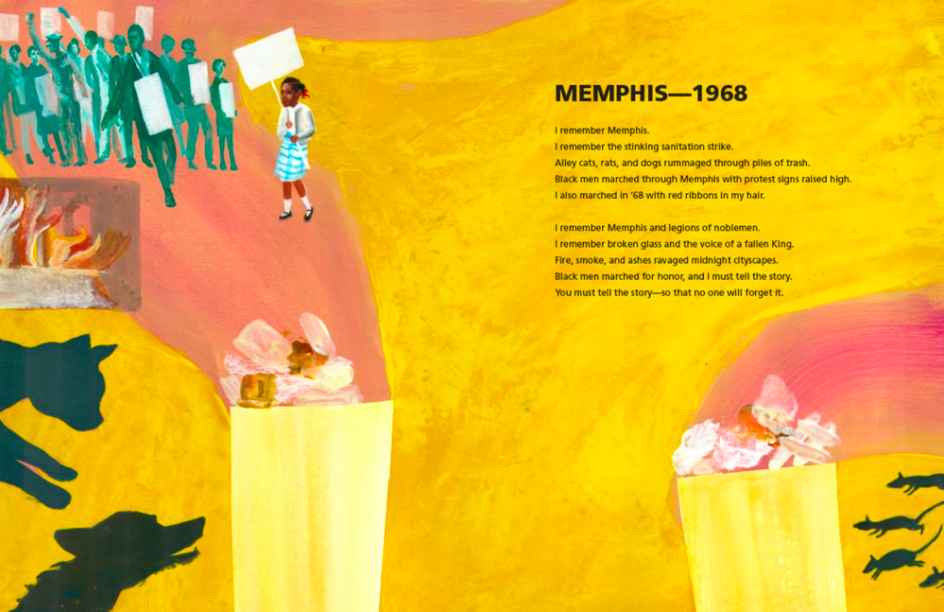
Through thirteen titled vignettes composed of lyrical and powerful language, Duncan reveals the detailed facts and emotions of those days that changed lives, altered the Civil Rights movement, and still resonate today. Duncan begins with “Memphis—1968” in which Lorraine describes a Memphis roiled by “the stinking sanitation strike” when “Black men marched for honor” and she also marched “with red ribbon in [her] hair.” She entreats the reader: “You must tell the story—so that no one will forget it.”

celebrate-picture-books-picture-book-review-memphis-martin-and-the-mountaintop-introduction

Image copyright R. Gregory Christie, 2018, text copyright Alice Faye Duncan, 2018. Courtesy of Calkins Creek.

“Mud Puddles” tells of the moment in January when Lorraine’s father comes home so “distressed and out of breath” that Lorraine’s muddy shoeprints are forgotten by her mama as he tells them about his two fellow sanitation workers and friends—Echol Cole and Robert Walker—who were killed when a truck’s packer blade malfunctioned. “Daddy told Mama, ‘It ain’t right to die like that.’ / Mama shook her head, and I saw a new storm rising up. / I saw it in their eyes.”

In “Marching Orders” Lorraine lays out the ugly conditions sanitation workers like her father toiled under and introduces readers to Mayor Loeb, who refused to increase their wages from $1.70 an hour. She states, “When they could take the abuse no more, 1,300 men deserted their garbage barrels. They organized a labor strike on February 12, 1968. In the morning and afternoon, for sixty-five days, sanitation workers marched fourteen blocks through the streets of downtown Memphis.”

celebrate-picture-books-picture-book-review-memphis-martin-and-the-mountaintop-memphis-1968

Image copyright R. Gregory Christie, 2018, text copyright Alice Faye Duncan, 2018. Courtesy of Calkins Creek.

As the strike continued through the winter, “[crippling] garbage collection with terrific success,” “Winter Blues” depicts the sacrifices Lorraine’s family made, from going without electricity to missing bill payments to skipping treats or getting anything new. But Lorraine also “learned what the grown folks knew. Trouble visits every life. But as strikers marched through sun and rain, help came in many forms.” Two of these were a group of Memphis preachers who helped strikers pay bills and the NAACP.

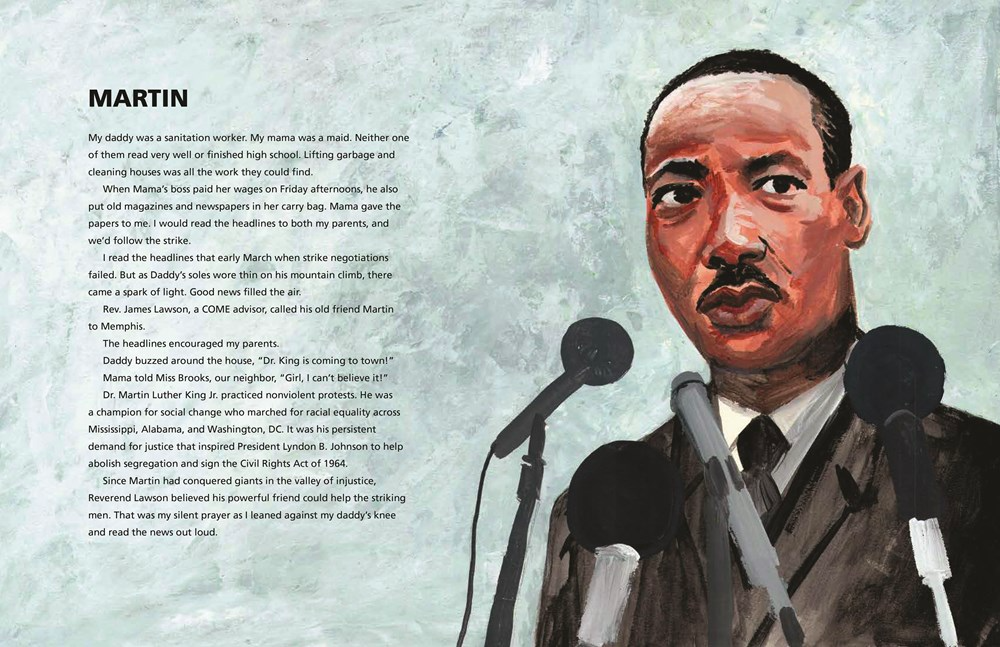
Winter turns to spring with no concessions from Mayor Loeb and no end to the strike in sight. But then in “Martin” Lorraine learns in the newspapers her mama’s boss gave her that Martin Luther King Jr. would be coming to support the striking workers. “Silver Rights” recounts Lorraine’s memories of listening to Dr. King, his voice “loud and stirring” when he said, “‘All labor has dignity.’” He set the date of March 22nd when he would march with the striking workers. Lorraine’s daddy and mama vowed to be there. And as she recalled, “then Mama patted my hand and said, ‘We will take Lorraine. She can march with us.’” A haiku “Omen” reveals the cancellation of the march.

celebrate-picture-books-picture-book-review-memphis-martin-and-the-mountaintop-mud-puddles

Image copyright R. Gregory Christie, 2018, text copyright Alice Faye Duncan, 2018. Courtesy of Calkins Creek.

In “Beale Street,” Lorraine explains more about Dr. King’s dreams and work and his crusade he named “the ‘Poor People’s Campaign.’” The march was rescheduled for March 28, and on that day “Six thousand people—blacks, whites, men, women, and children—gathered in downtown Memphis. / Police stood guard with tear gas, billy clubs, and guns.” When looters shattered storefront windows, the police moved in, spraying tear gas and beating people.” Lorraine became separated from her mother but was swept to safety by her father. Following the riot, the National Guard was called in and a curfew put in place.

In the aftermath of the riot, Dr. King left Memphis, Lorraine tells readers in “Dreamers.” But he had promised to return despite death threats, and on April 3 he flew from his home in Atlanta to Memphis. It was a stormy night, but Lorraine and her family along with many others packed Mason Temple Church to hear Dr. King preach. But when they got there, Dr. King’s friend Ralph Abernathy told the crowd that Dr. King was too sick to appear.

Other people gave speeches about the strike, and Lorraine had fallen asleep in her mother’s arms when “KABOOM! A voice like the evening thunder shook me from my sleep.” In his booming voice, Dr. King “charged men, women, and children to make the world a promised land flowing with freedom and justice” and “encouraged Memphis strikers and strike supporters to march, boycott, and raise their voices for worker rights until victory was won.”

celebrate-picture-books-picture-book-review-memphis-martin-and-the-mountaintop-marching-orders

Image copyright R. Gregory Christie, 2018, text copyright Alice Faye Duncan, 2018. Courtesy of Calkins Creek.

In “Lorraine” the narrator reveals that her name is the same as the Memphis motel where Dr. King lost his life. She recounts his last hour spent with friends and the moment when he steps out onto the balcony and James Earl Ray shot him from a boarding house nearby. In other cities across the country grief-fueled protests broke out, but Memphis was relatively quiet. As Lorraine listened to the radio that night, she wrote a poem “The King is Dead” that her mama hung on the wall of their rented house.

“Black Widow” relates the events of April 8, when Coretta Scott King fulfilled her husband’s promise to march for the Memphis sanitation workers. Along with 40,000 other people—“ministers, labor leaders, political figures, entertainers, and everyday people”—from Memphis and around the country, Lorraine and her parents marched. In “Victory on a Blue Note,” the Memphis Sanitation Strike comes to an end when president Lyndon B. Johnson sent a labor official to negotiate a settlement. The men received a pay increase and promotions based on merit, not race. As Lorraine’s daddy and mama celebrate, Lorraine reveals what she has learned: “So much was won. / So much was lost. / Freedom is never free.”

An inspirational poem for all readers, “Mountaintop” closes the book. Back matter includes an extensive and detailed timeline as well as information on the National Civil Rights Museum at the Lorraine Motel and a list of sources.

celebrate-picture-books-picture-book-review-memphis-martin-and-the-mountaintop-martin-luther-king-jr

Image copyright R. Gregory Christie, 2018, text copyright Alice Faye Duncan, 2018. Courtesy of Calkins Creek.

In Memphis, Martin, and the Mountaintop, Alice Faye Duncan’s use of a nine-year-old narrator makes her book even more powerful for today’s children in telling the story of the Memphis sanitation strike and the world-changing events surrounding it. Duncan intertwines conviction, pride, activism, and heartbreak together in her compelling and lyrical snapshots that reveal the facts and emotions behind this pivotal Civil Rights and economic rights protest for a living wage for all Americans. Children’s hearts will be filled with empathy for Lorraine as she supports her father, accepts the sacrifices her family must make during the strike, joins her mother in marches, and fears for the safety of the strikers and Martin Luther King Jr.

The life and work of Dr. King, his influence, and the hope he embodied as well as his shocking assassination are all encapsulated in Duncan’s concise paragraphs, allowing readers to understand his enduring inspiration to all who fight injustice. By overlaying the text with descriptions of the volatile weather experienced during the winter and spring of 1968, Duncan amplifies the fearful atmosphere of the times in a metaphorical way that will resonate with readers. Lorraine’s growth and insight gleaned from her experiences will stay with readers long after they read the story.

R. Gregory Christie’s dramatic collage-style gouache paintings set off Duncan’s vignettes with bold blocks of color while inviting readers to experience the determination, community, and dignity of the workers fighting for the universal desire for and right to recognition, safety, and a living wage. Christie’s illustrations are all the more evocative for their varied use of perspective, subtle glimpses of hope and support, and moving portraits of Lorraine’s father, strikers, Martin Luther King Jr., and Lorraine herself. The death of Dr. King is depicted in a tiny image of the Lorraine motel balcony on which three men pointing upward, a kneeling figure, and the fallen Dr. King are all portrayed in silhouette. The intense focus the reader puts on this image increases its effect on the heart and mind.

Compelling, moving, and inspirational, Memphis, Martin, and the Mountaintop: The Sanitation Strike of 1968 is a must-read for all children. The book is a first-rate choice for home libraries and belongs in every school and public library.

Ages 7 and up

Calkins Creek, 2018 | ISBN 978-1629797182

Discover more about Alice Faye Duncan and her books on her website.

To learn more about R. Gregory Christie, his books, and his art, visit his website.

Martin Luther King, Jr. Day Activity

celebrate-picture-books-picture-book-review-martin-luther-king-jr-coloring-page

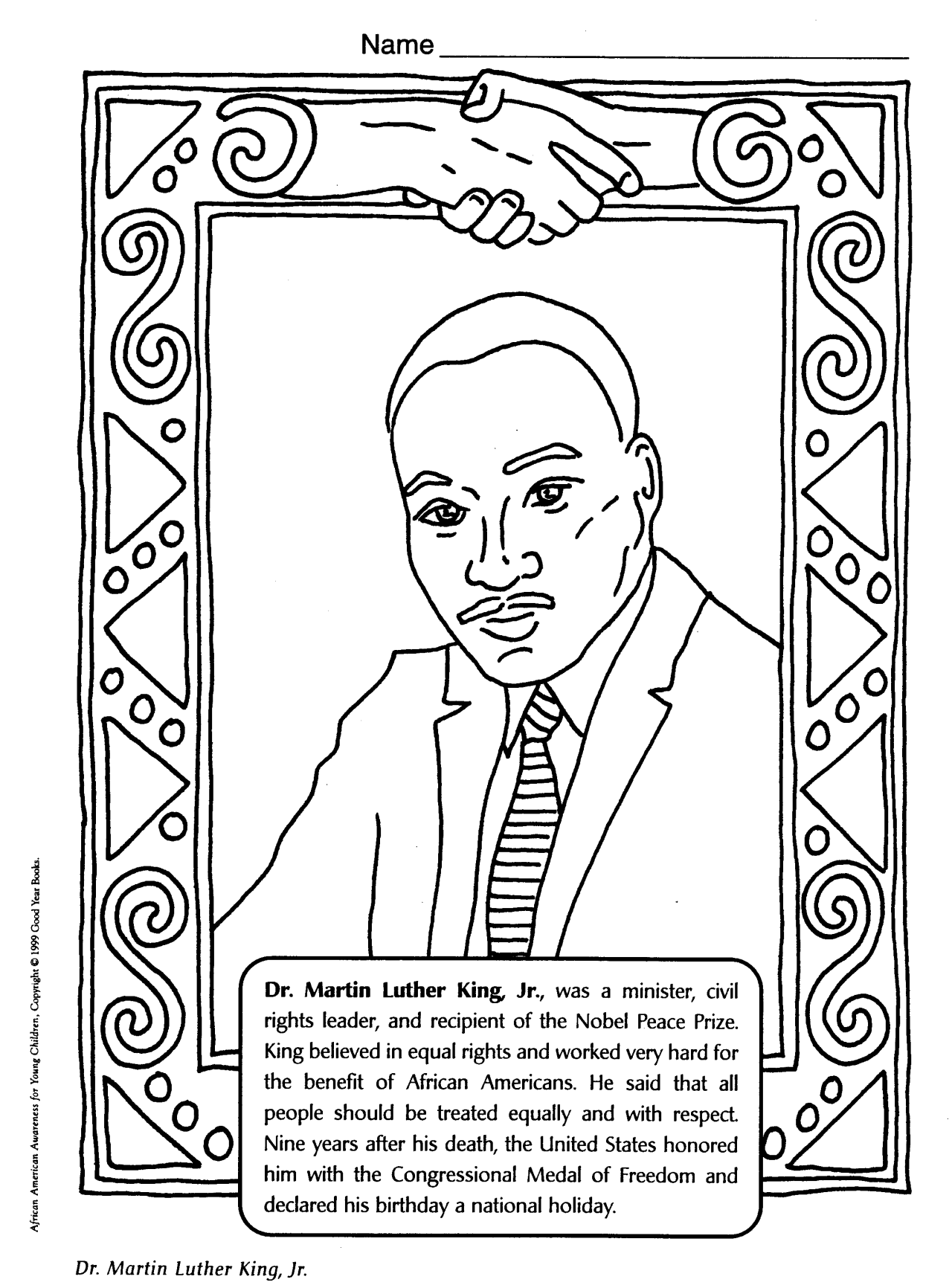
Martin Luther King Jr. Portrait


To inspire your dreams of a better future for all, color this printable page and hang it in your room!

Martin Luther King Jr. Portrait 

celebrate-picture-books-picture-book-review-memphis-martin-and-the-mountaintop-cover

You can find Memphis, Martin, and the Mountaintop: The Sanitation Strike of 1968 at these booksellers

Amazon | Barnes & Noble | Books-a-Million

To support your local independent bookstore, order from

Bookshop | IndieBound

Picture Book Review