National All is Ours Day is a joy-filled holiday that encourages us to pause, look around, and really think about the beauty and abundance in our lives and the world around us. Our family and friends, neighbors, teachers, and colleagues—and who can forget our pets?—add so much richness to every day. Exploring your immediate surroundings or taking a trip to new locales and taking pleasure in the beauty you see can open up new perspectives and gratitude for the gifts we all share in common. Today, celebrate our interconnectedness with others, extend kindness, and embrace the idea that the best experiences in life are shared.
Thank you to Ten Speed Young Readers for sending me a copy of this book to me for review!
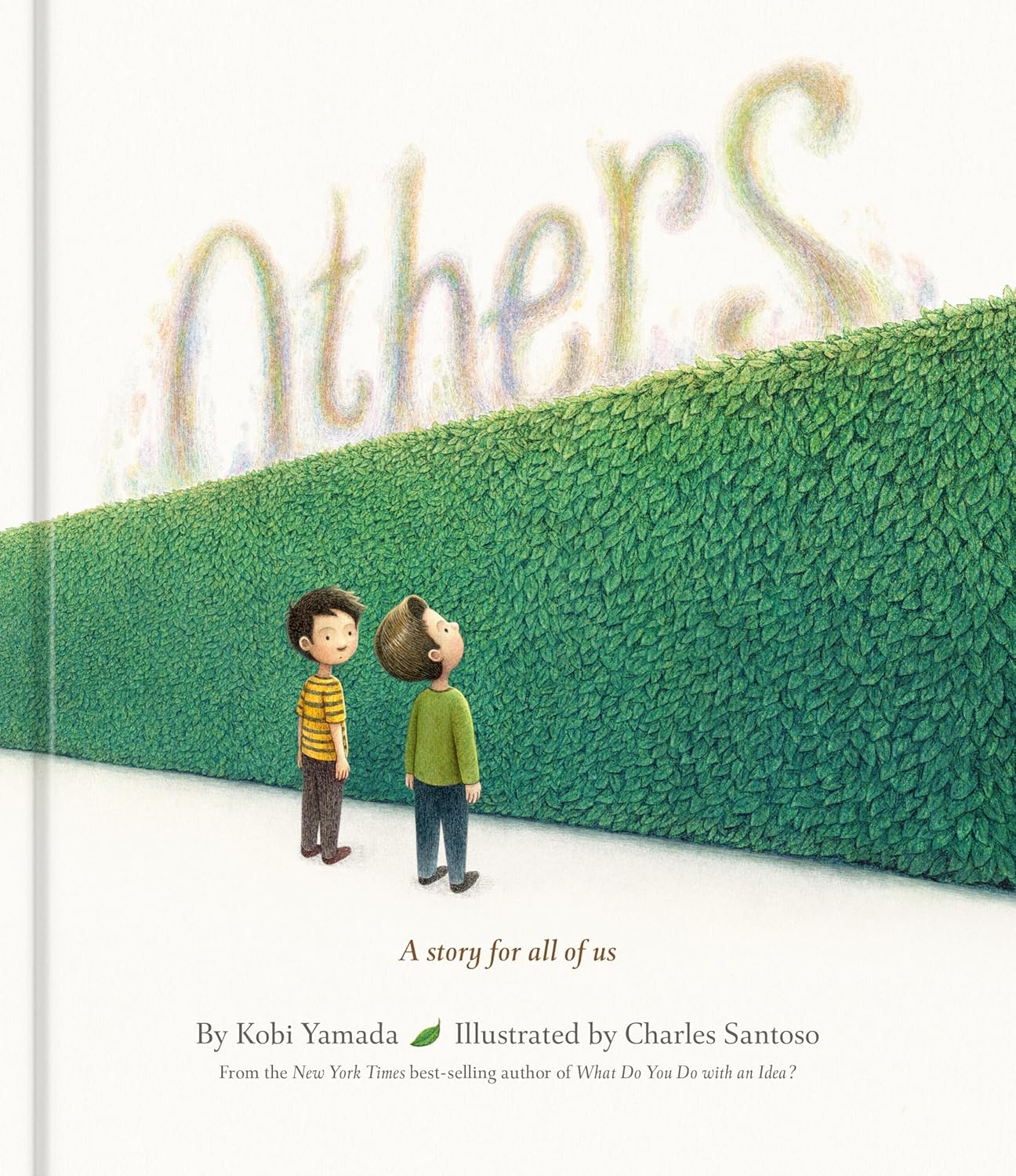
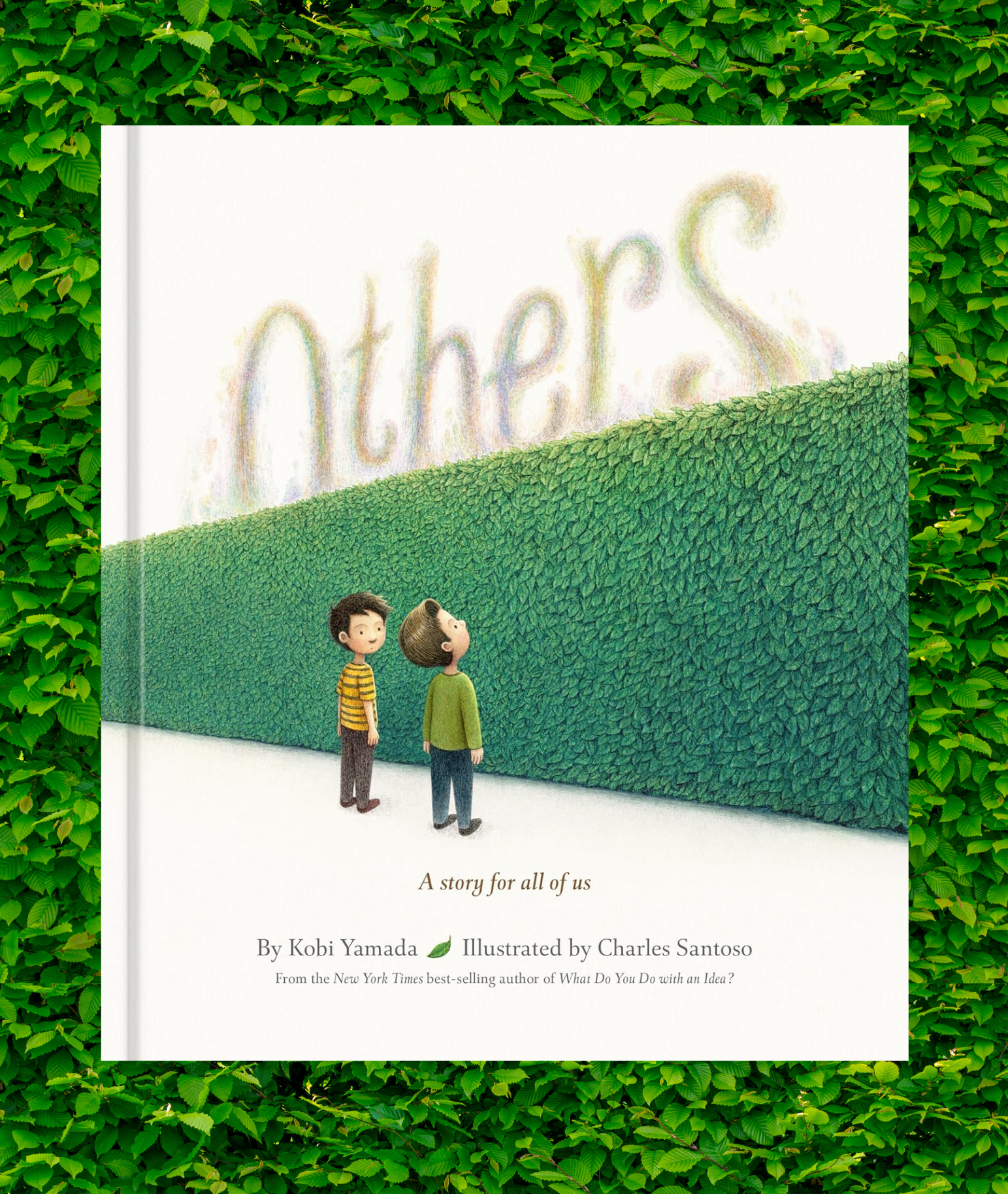
Others: A Story for All of Us
Written by Kobi Yamada | Illustrated by Charles Santoso
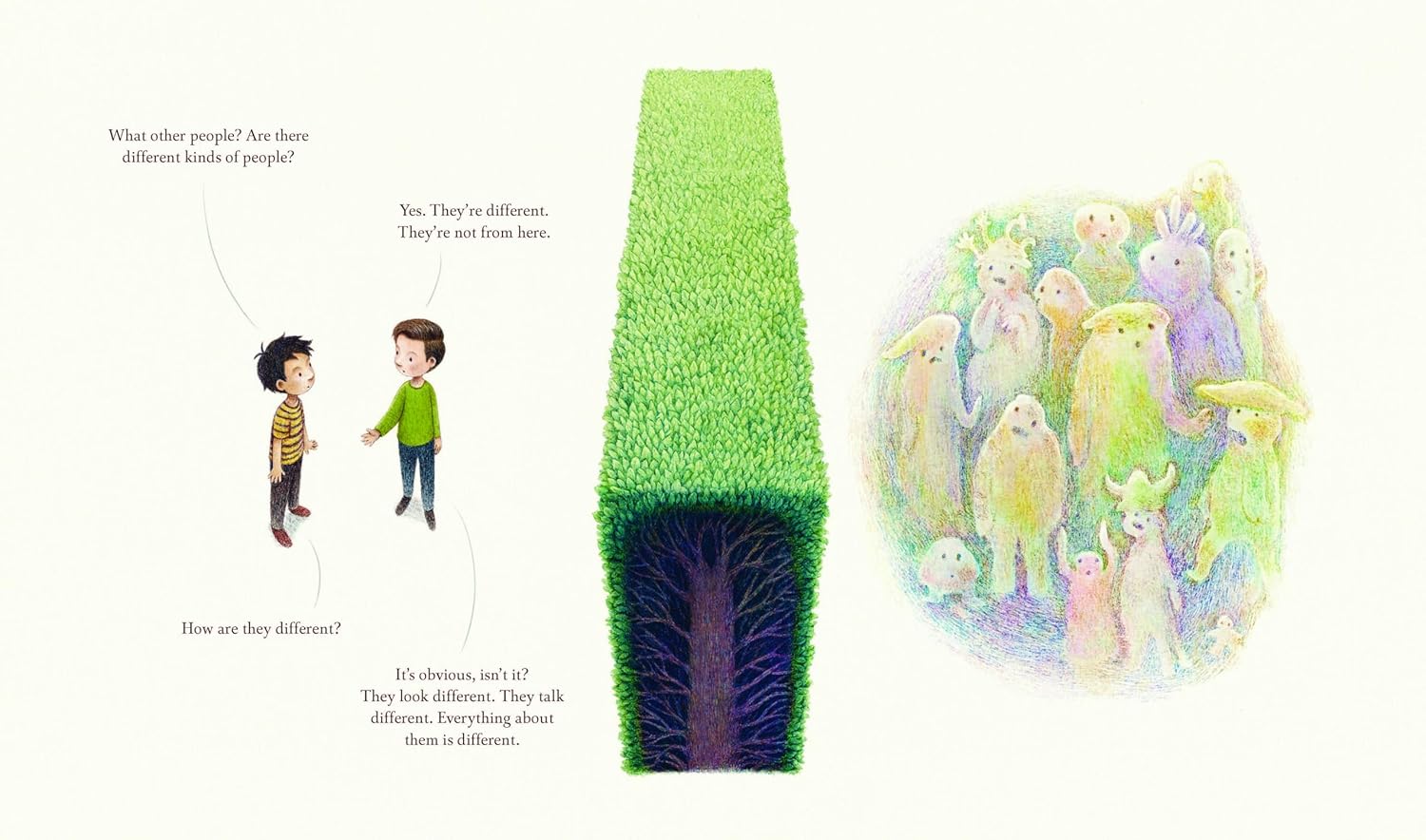
Kobi Yamada’s story starts simply enough. Two boys on one side of a hedge are having a discussion about the people on the other side of the hedge. One boy wonders what “the other people” are thinking about. The second boy is confused and asks, “Are there different kinds of people? How are they different?” His friend thinks it’s obvious: the way they look, talk, everything. The second boy then begins asking some pointed questions about exactly how they are different. “Do they have heads and bodies?” Of course. Do they have wings or tails or maybe “sticky tentacles” or even wheels? The boy thinks these attributes would be helpful, but “No” the first boy answers, the people “are humans.”
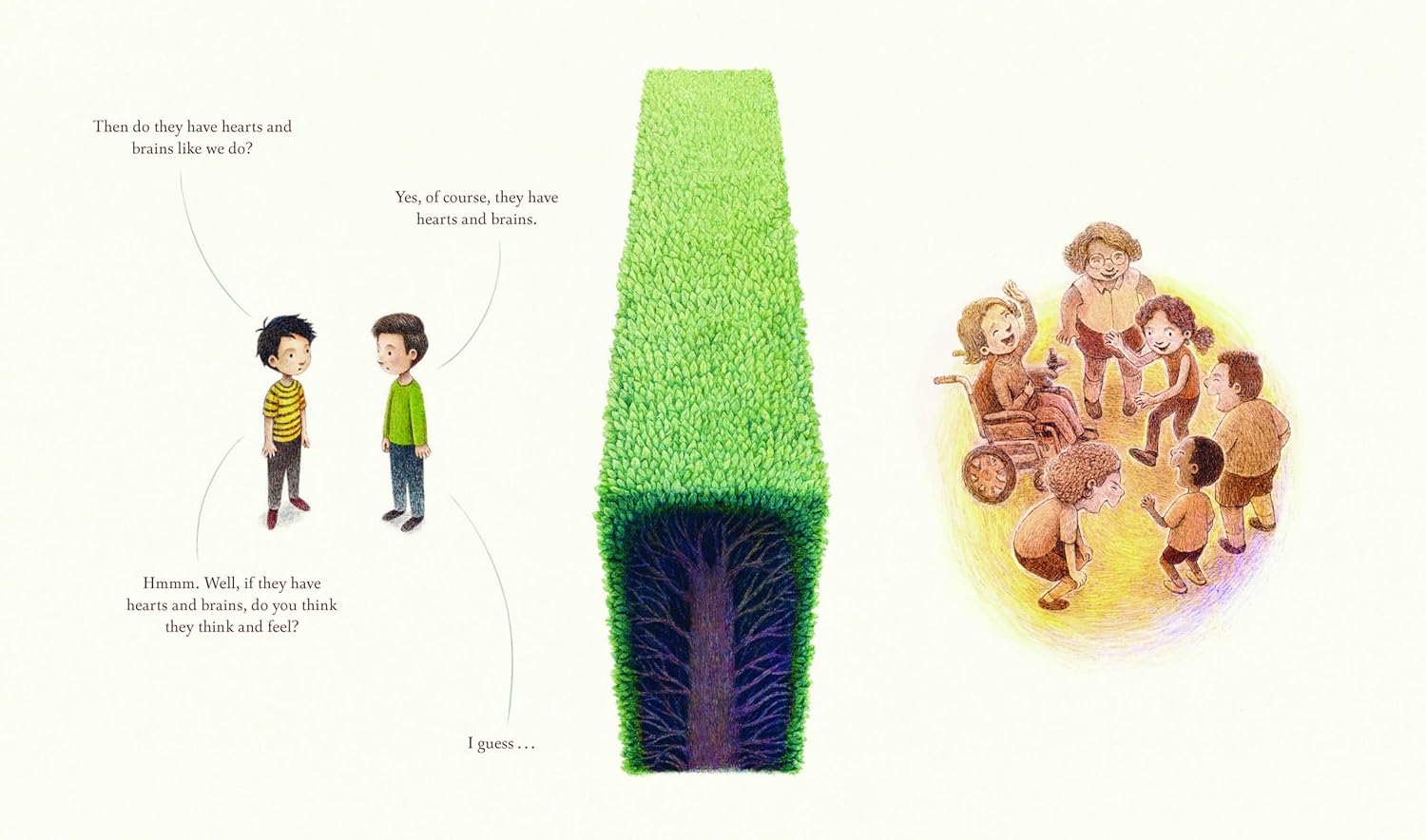
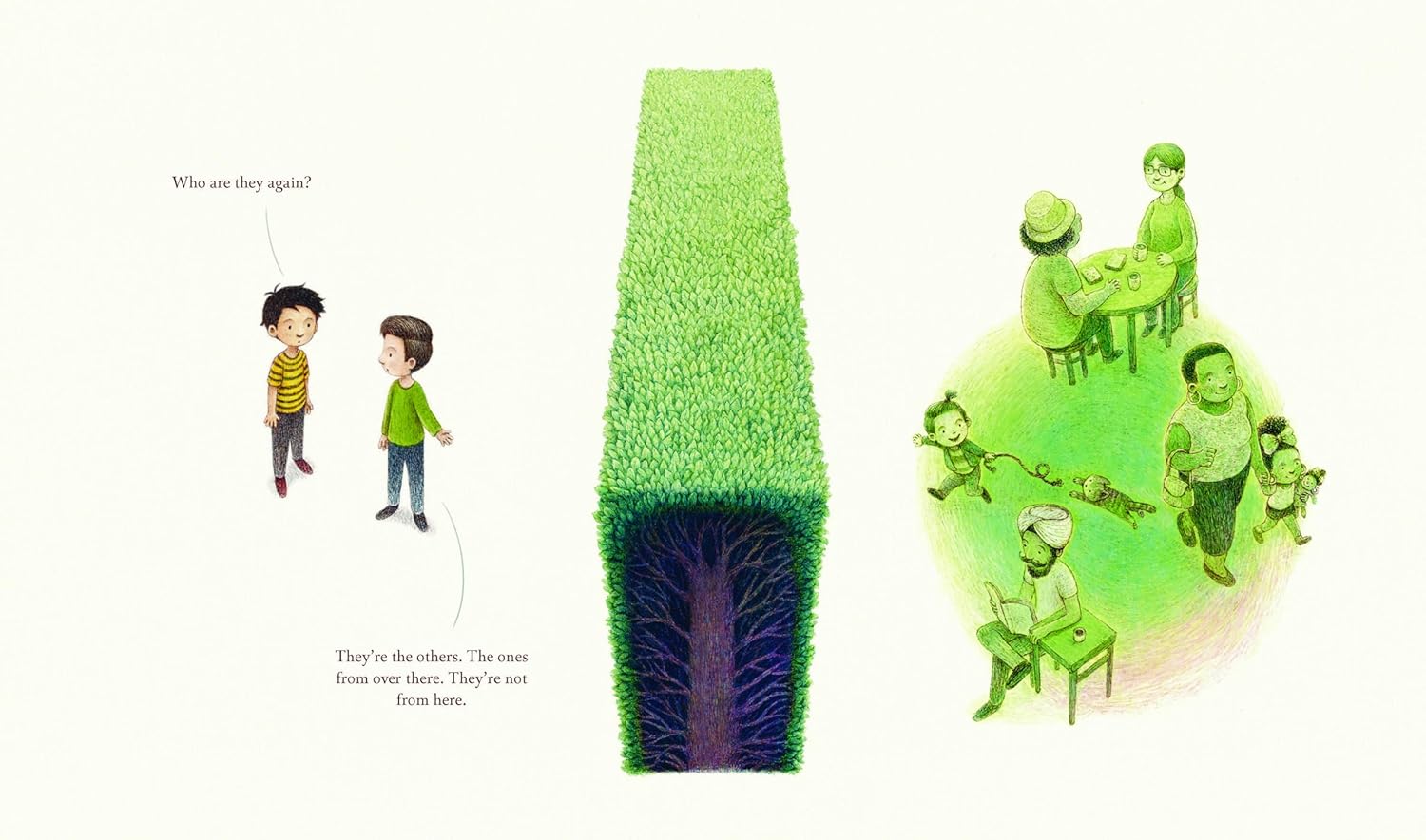
Once that’s established, Yamada’s story takes a deeper dive into the internal lives of these “other people.” The second boy is trying to wrap his head around the issue and inquires if the other people “have hearts and brains.” “Yes, of course,” comes the quick answer. Now the manner of the boy’s questions take a subtle change. He wonders if his friend thinks that these people “think and feel,” get lonely, scared, or hurt feelings. He confesses that he, himself, experiences these emotions. Does his friend think they love their family and do things together? His friend takes time to answer. He says he’s never really considered such things before, but imagines they do. Still, they are from “over there” and “not from here.”
The boys begin to debate the meaning of “here” and “there” as the one with all the questions climbs the hedge and drops into the yard on the other side, where’s he’s offered a glass of lemonade. The two get closer and closer to their respective sides of the hedge—one here, one there; or is it one there, one here? They climb, and when they meet at the top, they agree that wherever they are, they feel like they are “here.”
Turning the page, the boys are unseen, but somewhere within a panoramic view of a city, the ocean, and mountains in the distance. Turn the page again and the image pans out even further, their conversation about there and here, them and us loosed from their mooring to become universal.
Others: A Story for All of Us is a perfect pairing of Kobi Yamada’s powerful text and Charles Santoso’s perceptive and layered illustrations. As the story opens, Santoso sets the scene with nuanced imagery: The hedge spans both pages, but is leafless on the facing end, showing the trunk and branches that give it structure—a reminder of family trees and the tree of mankind. On one side are the two boys—one in a striped shirt, the less open-minded child wearing a green shirt and dark pants that mirror the hedge. Rising from the other side is a blue and green cloud dotted with amorphous bodies that loosely create Earth’s continents.
Yamada then channels the literal-mindedness of children to challenge the idea of otherness. Santoso’s accompanying illustrations will bring giggles but also deep thinking. As the rest of the story plays out, Yamada engages readers’ hearts through the boy’s thought-provoking prompts that poignantly reveal the commonalities that connect us all while Santoso reinforces this message with vignettes of families, friends, children, neighbors and pets all playing, talking, celebrating, and relaxing together.
Others: A Story for All of Us is a book with a light touch but a lasting impact to show us the way forward to a meeting of minds and hearts through understanding, kindness, and acceptance. Others is a must for all library and home collections.
Ages 4 – 8
Ten Speed Young Readers, 2026 | ISBN 978-0593839676
About the Author
Kobi Yamada is the #1 New York Times bestselling author of What Do You Do with an Idea?, Finding Muchness, Because I Had a Teacher,and many other bestselling, award-winning books. In addition to being the creator of inspiring books and products, he is also the president of Compendium. He lives with his family in the Pacific Northwest. Follow him on Instagram.
About the Illustrator
Charles Santoso is the creator of Happy Hippo and has illustrated many books, including Finding Muchness by Kobi Yamada and the New York Times bestseller Odder. He lives in Singapore. Visit him atcharlessantoso.com.
You can purchase Others: A Story for All of Us from these booksellers
Now in its 14th year World Read Aloud Day, founded by global non-profit LitWorld, encourages adults to read aloud to children not only today but every day. Reading aloud to children from birth is one of the best ways to promote language development, improve literacy, and enjoy bonding time together. Millions of people celebrate today’s holiday all across the United States and in more than one hundred countries around the world. Special events are held in schools, libraries, bookstores, homes, and communities, and authors and illustrators hold readings and visit classrooms in person and virtually. To learn more about World Read Aloud Day, visit LitWorld and check out their Activity Hub to find live events, virtual read alouds, downloadable bookmarks, posters, games, and more!
I would like to thank Simon & Schuster and Barbara Fisch at Blue Slip Media for sharing a copy of Love Is Loud with me for review consideration. All opinions on the book are my own.
Love Is Loud: How Diane Nash Led the Civil Rights Movement
Written by Sandra Neil Wallace | Illustrated by Bryan Collier
Raised on Chicago’s South Side, Diane Nash is sheltered by her parents from the segregation of the South that they had grown up in. During the Second World War, Diane is taken care of by her grandmother while her father joins the army and her mother takes a job. Her Grandmother Bolton is from Tennessee and showers her with love. “You are ‘more precious than all the diamonds in the world,'” she told Diane, and growing “up in the rhythm and glow of her love” Diane knew “it must be true.”
Image copyright Bryan Collier, 2023, text copyright Sandra Neil Wallace, 2023. Courtesy of Simon & Schuster/Paula Wiseman Books.
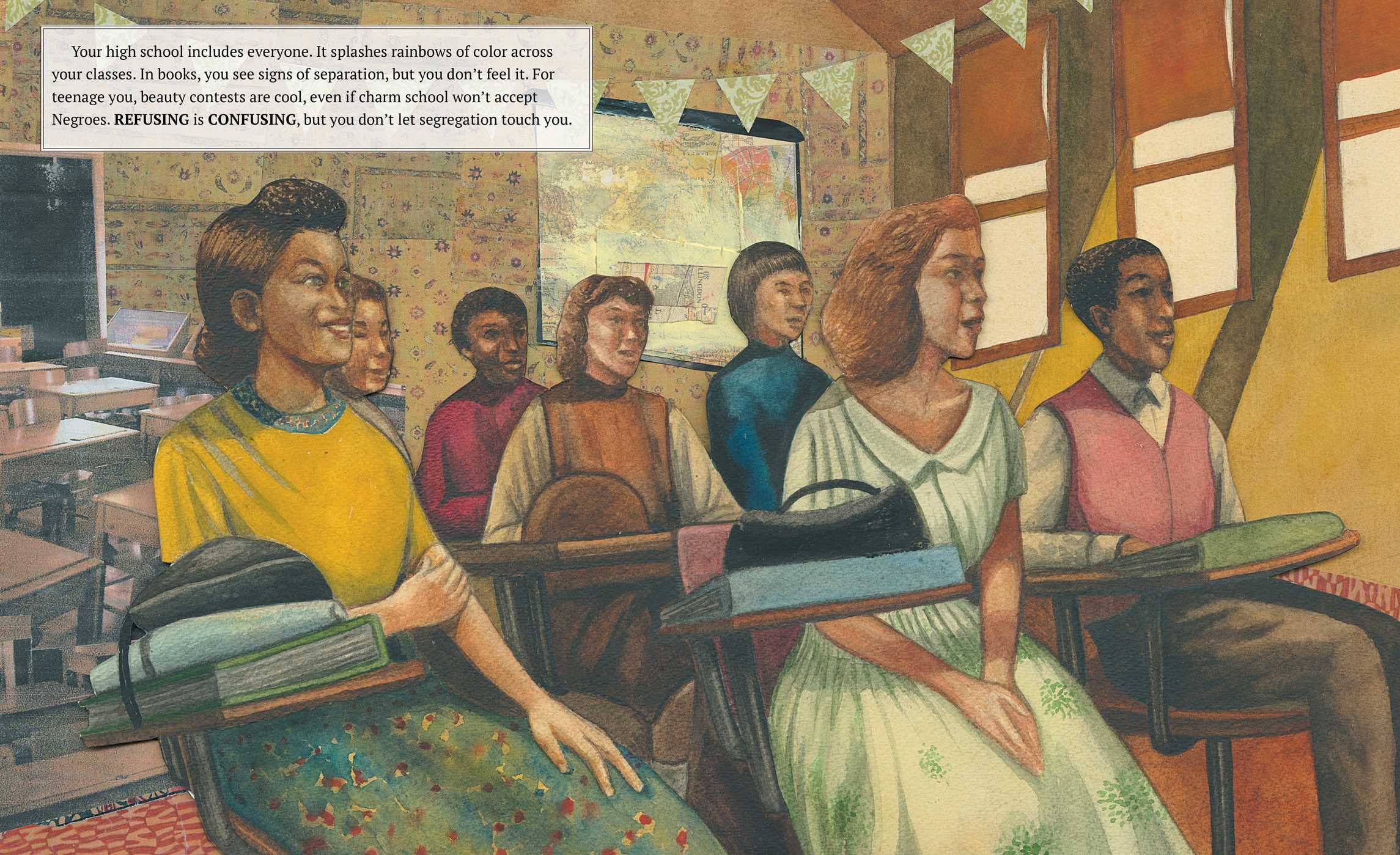
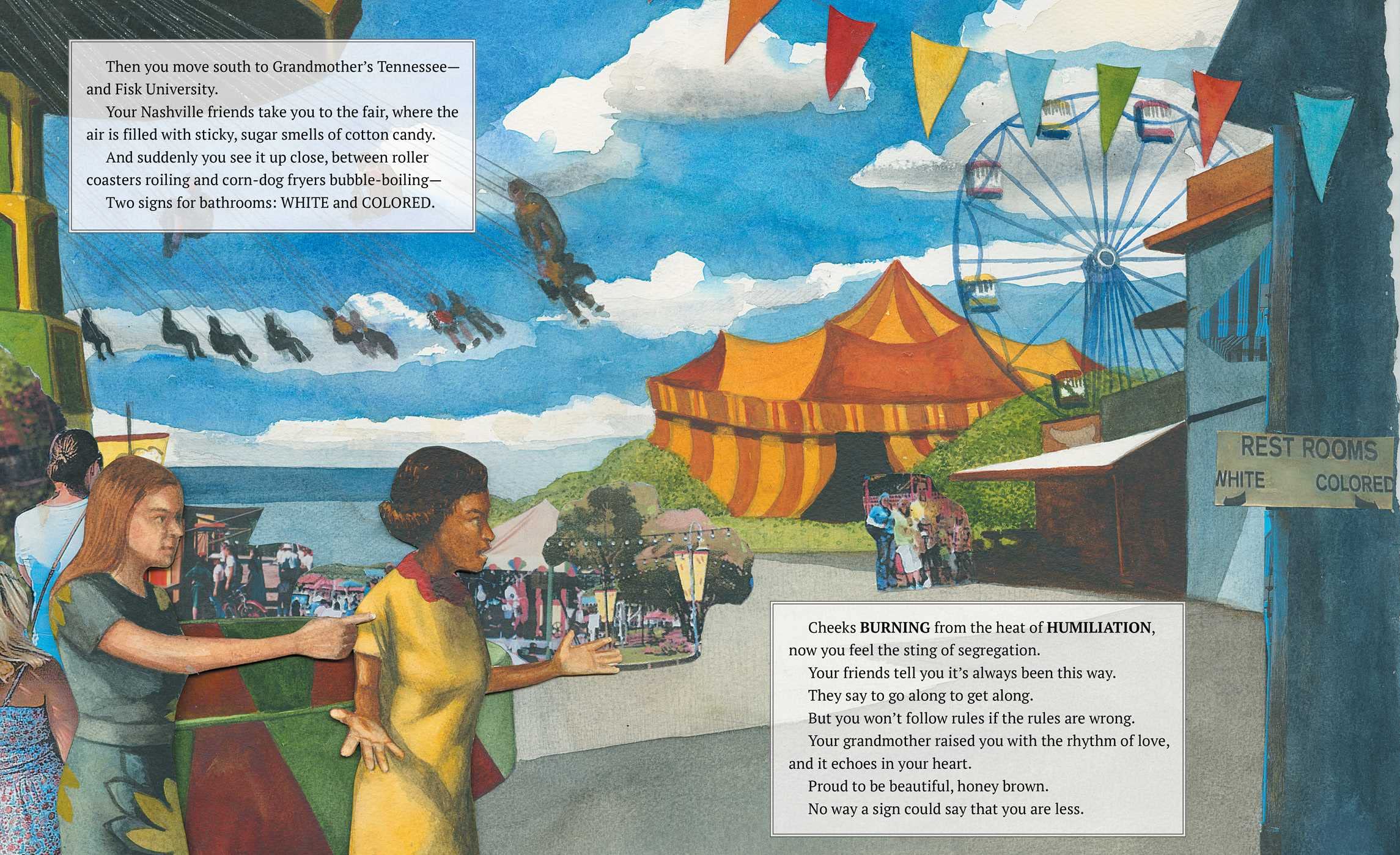
In high school kids of all colors learn together. Diane reads about segregation in textbooks, but it didn’t really touch her. Then she moves to Tennessee to attend Fisk University. Here, when her friends take her to a fair, Diane is confronted with the “sting of segregation” when she sees there are two restrooms: one labeled WHITE and the other COLORED. Her friends have grown up in this system; they tell her “to go along to get along,” but Diane “won’t follow rules if the rules are wrong.” The rhythms of her grandmother’s love and her pride in being “beautiful, honey brown” will not allow her to feel less than others.
In Nashville, Diane experiences the full indignation of segregation that demands separate water fountains and schools, back-of-the-bus seating, and—the worst for Diane—no eating at the lunch counter. She doesn’t want to be arrested for eating at a lunch counter, but neither does she want to let it go. Before each day of college classes, Diane and other students “pray and learn about change in a peaceful way.” They practice calmly sitting and ordering at a lunch counter, knowing that people may be rude, may push them off their stool, may throw sugar in their hair.
Image copyright Bryan Collier, 2023, text copyright Sandra Neil Wallace, 2023. Courtesy of Simon & Schuster/Paula Wiseman Books.
In February of 1960, Diane, now at twenty-one years old, leads a group of students to a lunch counter in Nashville. Their presence shocks the cooks and waitress, who drops plate after plate from her shaking hands. “Inside [Diane shakes] too. Hands sweating, never forgetting the danger, the fear of being arrested for ordering a sandwich.” Bravely, despite coffee burns and thrown sugar, Diane and the students hold sit ins at lunch counters across the city. And when Diane is arrested, there are hundreds of others to fill her seat.
After a bombing in April Diane, “quietly walking, without any talking… silently leads six-thousand marching feet to the beat of love” to meet the mayor, who at first says there is nothing he can do. Looking him in the eye, Diane asks him questions he cannot deny, and he admits that prejudice and segregation are wrong—even at the lunch counter. “At that moment, love scores. It soars as six thousand loving hands roar with applause.” And in May—Diane has just turned twenty-two—Nashville’s lunch counters are fully integrated. Martin Luther King Jr. congratulates her on her peaceful victory as she moves on to change the rules of bus travel with Freedom Rides, to uphold the “law of the land [that] says everyone is free to sit or stand together in a bus traveling across America.”
Image copyright Bryan Collier, 2023, text copyright Sandra Neil Wallace, 2023. Courtesy of Simon & Schuster/Paula Wiseman Books.
While the movement makes progress, even attracting the attention of the president, a Mississippi judge charges Diane “with putting Freedom Riders on a bus.” Before her trial, Diane, pregnant with her first child, writes a letter heard around the world that said “‘I believe that if I go to jail now, … it may help hasten that day when my child and all children will be free.'” Her case rivets the world as she chooses to go to jail instead of paying bail.
After she is released, Diane turns her attention to the issue of voting rights and the state of Alabama, where four young girls are killed in a bombing in a Birmingham church and “where Black people are denied the right to vote.” Following Diane’s example, thousands of adults and children choose jail over bail in protest of the injustice until the Civil Rights Act is signed by President Johnson in 1964 and a year after that when he “signs the 1965 Voting Rights Act to legally end racial discrimination that prevented Black people from voting.” But Diane Nash doesn’t stop there. She takes her message of peace and peaceful change across the country for fifty years, teaching young people “how love creates change.”
Image copyright Bryan Collier, 2023, text copyright Sandra Neil Wallace, 2023. Courtesy of Simon & Schuster/Paula Wiseman Books.
Extensive back matter includes an Author’s Note and an Illustrator’s Note about the work of Diane Nash; a detailed timeline from her birth to 2022, when she was awarded the Presidential Medal of Freedom; a list of video interviews with Diane Nash, four other books for young readers; sources for quotes found in the story; and a selected bibliography. A photograph of Nash and three other students integrating a lunch counter in Nashville and another of Nash leading demonstrators to meet the mayor of Nashville are also included.
Image copyright Bryan Collier, 2023, text copyright Sandra Neil Wallace, 2023. Courtesy of Simon & Schuster/Paula Wiseman Books.
Compelling and moving, Sandra Neil Wallace’s lyrical storytelling about the life and work of Diane Nash rivets readers to this young woman’s courage, confidence, and conviction to overturn the injustice of segregation and inequality for Blacks. Punctuated with often-rhyming phrases, and sharp, short sentences Wallace’s text flows with a rhythm of urgency that perfectly conveys not only Nash’s resolve, but the stakes for the peaceful demonstrators and the atmosphere of the times.
Written in the third person, the story directly addresses Nash, but the repeated “you” also builds a chorus that reverberates in each reader’s heart, telling them that they are brave, that they are strong, and that they too can change the world with love. This format poignantly culminates on the last page. Here, Wallace changes the dynamic with a subtle turn of phrase that now directly embraces each reader, letting them know that Diane Nash worked for freedom “because she loved you even before you were born” and reminding them that “Love is fierce. Love is strong. Love is loud!”
Bryan Collier’s rich watercolor-and-collage illustrations draw readers in with their realistic depictions of Diane Nash as a baby and young girl cherished by her family, as a high school and university student, at the fair that changed the trajectory of her life, leading peaceful demonstrations at lunch counters and across the South, and crossing the country to bring her message to young people. Nash’s self-assurance, courage, and determination are evocatively expressed, and a full-page portrait of Diane looking out at the reader mirrors Wallace’s invitation for them to look into her eyes and see her love there.
Scraps of photographs are sprinkled here and there among the pages, providing a spark of recognition of the time and places depicted. But it is the cut paper elements that make certain images of people and objects jump off the page, working powerfully with Wallace’s text to make readers feel that they too are at the fair, at the lunch counter, joining the throng of marchers. Each page is a masterpiece of history and story that invites study, thoughtful contemplation, and action.
Absorbing, eloquent, and impactful, Love Is Loud: How Diane Nash Led the Civil Rights Movement is biography at its best: a moving tribute Diane Nash set amid a far-reaching immersion in the time period. Love Is Loud belongs in every home, classroom, school, and public library collection to teach children about the contributions of Diane Nash as well as to remind them that vigilance and the work for freedom is an ever-ongoing pursuit.
Ages 4 – 8
Simon & Schuster | Paula Wiseman Books, 2022 | ISBN 978-1534451032
About the Author
Sandra Neil Wallace writes about people who break barriers and change the world. She is the author of several award-winning books for children, including Between the Lines: How Ernie Barnes Went from the Football Field to the Art Gallery, illustrated by Bryan Collier, which received the Orbis Pictus Book Award and was an ALA Notable Book. A former ESPN reporter and the first woman to host an NHL broadcast, she is the recipient of the Outstanding Women of New Hampshire Award and creates change as cofounder of The Daily Good, a nonprofit bringing twenty thousand free, culturally diverse foods to college students each year through its Global Foods Pantries. Visit Sandra at SandraNeilWallace.com.
About the Illustrator
Bryan Collier is a beloved illustrator known for his unique style combining watercolor and detailed collage. He is a four-time Caldecott Honor recipient for Trombone Shorty, Dave the Potter, Martin’s Big Words, andRosa. His books have won many other awards as well, including six Coretta Scott King Illustrator Awards. His recent books include By and By,Thurgood, The Five O’Clock Band, and Between the Lines. He lives in New York with his family. Visit him at BryanCollier.com.
Watch the Book Trailer for Love Is Loud!
World Read Aloud Day Activities
2022 Presidential Medal of Freedom Ceremony
Watch as Diane Nash is awarded the Presidential Medal of Freedom in this White House video from July 7, 2022. You can find President Joe Biden’s remarks about Diane Nash at the 5:50 mark, and see her receive her medal at the 41:29 mark.
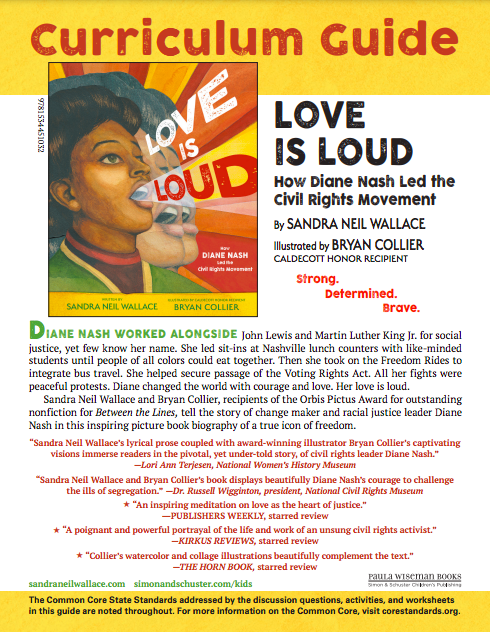
Love Is Loud Curriculum Guide
Teachers, educators, and homeschoolers can download an in-depth, 6-page Curriculum Guide for Love Is Loud full of a variety of ways for students to connect with the book and history from Sandra Neil Wallace’s website here.
You can find Love Is Loud: How Diane Nash Led the Civil Rights Movement at these booksellers