May 4 – It Is (Not) Perfect Book Tour Launch

celebrate-picture-books-picture-book-review-it-is-not-perfect-cover

About the Holiday

A new book in a favorite series is always something for readers to celebrate. Today, I’m thrilled to be launching the book tour for the fifth installment in Anna Kang’s and Christopher Weyant’s beloved You Are (Not) Small series, starring two fuzzy friends who take on life’s lessons with humor and friendship. We’re also beginning Get Caught Reading Month, which promotes the fun of reading for all ages and encourages people to set aside a special time each day to read. To join in the fun, you can take a picture of yourself reading and share it using #GetCaughtReading. Why not get started with today’s book?

I received a copy of It Is (Not) Perfect from Two Lions for review consideration. All opinions are my own. I’m happy to be teaming with Blue Slip Media and Two Lions ina giveaway of the book. See details below.

It Is (Not) Perfect

Written by Anna Kang | Illustrated by Christopher Weyant


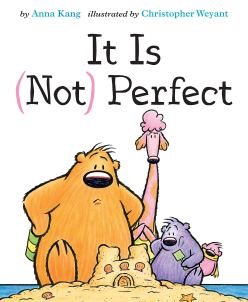
Two fuzzy friends are at the beach, building a sandcastle. It has two bucket-shaped turrets, a trio of shell decorations, and a low wall around it. The orange friend happily declares, “It is perfect!” But his purple companion looks at the castle askance and says, “It is not perfect.” If only it had flags then it would be perfect. But for the orange fuzzy creature, the flags only emphasize how short the castle is.

With a little extra sand patted into a cone on top of each turret, the castle is now perfect. Until…. Two beachgoers passing by think the castle could use some improvement. The blue fuzzy one gives it a good examination and decides the wall “is too small.” Orange fuzzy and purple fuzzy look on with disappointment and distress. They bring in more sand and dig furiously until the blue fuzzy judge finds it to be “perfect!”

But not so fast. Other beachcombers have more suggestions. Lots of suggestions. Purple fuzzy and orange fuzzy go to work. They dig, they sculp, they decorate. And when the flag is finally ploinked down on the tallest tower, everyone shouts in jubilation, “IT IS PERFECT!” Everyone gathers around the castle to take a picture just as… “SPLASH! CLICK!”… the castle is reduced to little more than a mound. But it’s nothing that a little patting, a couple of shells, a seaweed flag, and two delicious rainbow snow cones can’t make “Perfect. Truly.”

The latest book in Anna Kang’s and Christopher Weyant’s best-selling series examines a difficult conundrum: when is a work of art perfect? As the orange and purple fuzzy friends put the finishing touches on their sandcastle, happy in its perfection, niggling doubts come to the fore, causing them to reconsider if their creation couldn’t be just a little more…perfect. When others begin chiming in with their suggestions to make the castle bigger and “better,” these two friends go to work to improve it. While the result is a sensational, award-worthy spectacle, when a wave wipes it out, the two friends are just as happy with their original effort. For kids who may struggle with their inner critic or yielding to others’ opinions, this story humorously encourages them to stay true to their vision.

Anna Kang’s sparse text, conveyed entirely through short sentences of realistic dialogue, is funny and relatable as the crowd grows bigger and each person has their own suggestion for improvement. Readers may want to jump in themselves and talk about how they would build their own sandcastle. Kang’s superb storytelling is paired with Christopher Weyant’s expressive characters to create a fast-paced and entertaining page-turner.

As each iteration of the sandcastle brings smiles and then furrowed brows of doubt to the two fuzzy characters, readers will recognize feelings they may have about things they create or do. Add in the beachgoers, and the issue gets even more muddied. One enormous voice in the crowd will have kids giggling and wanting to hear it again and again. Weyant’s images of the purple and orange fuzzy friends furiously digging and patting, planning and decorating under the watchful eye of the group ramps up the suspense for the final reveal.

The rogue wave is sure to bring cringes and cries of “Oh no!,” but the resulting photo will elicit laughs. As the people disperse after the castle is destroyed, kids will understand that their interest was only fleeting while the orange and purple fuzzy characters’ friendship is forever. The final pages provide a sweet sense of satisfaction. While the final castle was a thing of beauty, it’s momentary perfection is nothing compared to the perfect day the two fuzzy characters spend together.

A delightful book for emergent and beginning readers to enjoy on their own as well as for dramatic read-alouds, It Is (Not) Perfect is a must for home, classroom, and public library collections.

Ages 3 – 7 

Two Lions, 2020 | ISBN 978-1542016629

Anna Kang and Christopher Weyant are the creators of Theodor Seuss Geisel Award winner You Are (Not) Small as well as series titles That’s (Not) Mine, I Am (Not) Scared, and We Are (Not) Friends. They also wrote and illustrated Eraser, Can I Tell You a Secret?, and Will You Help Me Fall Asleep? Christopher’s work can also be seen in The New Yorker, and his cartoons are syndicated worldwide. This husband-and-wife team lives in New Jersey with their two daughters and their rescue dog.

You can connect with Anna Kang on 

Her website | Facebook | Instagram | Twitter

You can connect with Christopher Weyant on

His website | Facebook | Instagram | Twitter

It Is (Not) Perfect Book Tour Activity

celebrate-picture-books-picture-book-review-bringing-the-outside-in-painted-pails-craft

Personalized Painted Pail


A trip to the beach isn’t complete without a pail to make a sandcastle with or to collect shells, seaweed, sea glass, or other things in. But why should all the cool stuff be on the inside? With this craft you can decorate your pail to show your unique personality!

Supplies

  • Plastic or metal pail
  • Craft paint in various colors
  • Crystal Clear Acrylic Coating, for multi-surface use
  • Paint brush

Directions

  1. Paint designs on the pail
  2. When paint is dry spray with acrylic coating to set paint
  3. Let dry

celebrate-picture-books-picture-book-review-it-is-not-perfect-cover

You can find It Is (Not) Perfect at these booksellers. The book will be released on May 12. It is available for preorder.

Amazon | Barnes & Noble | Books-a-Million | IndieBound

Picture Book Review

May 1 – May Day and Interview with Author Denise Brennan-Nelson

celebrate-picture-books-picture-book-review-mae-the-mayfly-cover

About the Holiday

May Day has for centuries celebrated the coming of spring. In ancient calendars May 1 heralded the first day of summer. Often celebrated with flowers and dancing, May Day has ushered in many traditions, such as dancing around a Maypole and May Day baskets, which are cone-shaped baskets filled with flowers. A May Day basket is usually given in secret as the giver hangs it on a friend’s doorknob and then rings the doorbell and runs away. (Which sounds like a perfect way to celebrate the holiday in these days of social distancing.) Whether nature is blooming in full or just starting to bud where you live, May Day offers the promise of brighter days ahead. Today’s book—and its adorable character Mae—shows us how to celebrate that feeling every day.

I received a copy of Mae the Mayfly from Sleeping Bear Press for review consideration. All opinions of the book are my own.

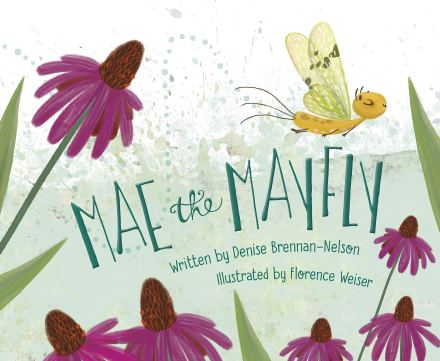
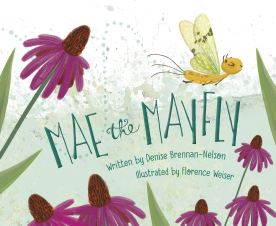
Mae the Mayfly

Written by Denise Brennan-Nelson | Illustrated by Florence Weiser


“Near the bank of the river one warm spring day / a new life began, and her name was Mae.” Before her mama said goodbye, she hugged her daughter and told her that she had her “whole life—a day, perhaps more” to explore her world. As Mae flitted along the river, a large, hungry trout waited for just the right moment to lure her in. It smiled deceitfully and beckoned to her, and, even though her inner voice told her not to, Mae flew down closer to take a look.
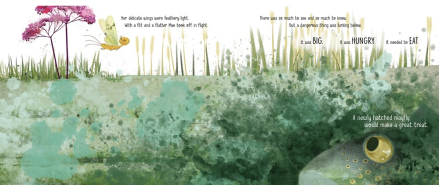
celebrate-picture-books-picture-book-review-mae-the-mayfly-fish

Image by Florence Weiser, 2020, text copyright Denise Brennan-Nelson, 2020. Courtesy of Sleeping Bear Press.

That’s when the trout leapt from the water to snatch Mae from the air. But she darted and dodged and got away. Shaking with fear, Mae found a hole in a hollow tree and flew in. “I’ll stay here forever! I’m not coming out!” she told herself.  But once her heart stopped beating so loud, she heard a happy tweet and peeked out of the tree. She saw a mother robin feeding her chicks and a spider web glittered in the sun. “The mist on the river was a fine, pink cloak. / A bullfrog bellowed his morning croak.” 

Mae remembered what her Mama had said and “launched herself from the dark, hollow place.” She followed the river, where she saw flowers and birds, a deer and a bear and one “stubby toad.” Then, she came to a clearing where she found “a singing, dancing jamboree… a wild mayfly jubilee! / Joining in, Mae danced with glee!”

celebrate-picture-books-picture-book-review-mae-the-mayfly-bird

Image by Florence Weiser, 2020, text copyright Denise Brennan-Nelson, 2020. Courtesy of Sleeping Bear Press.

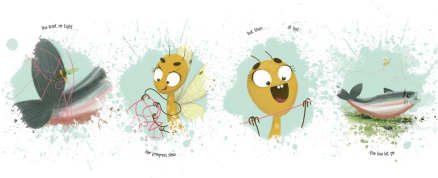
As morning turned to afternoon, Mae was floating on the breeze when she heard a call for help. She went in search of who it was and found Trout lying motionless and barely breathing. Fearful that he might leap at her again, she carefully went closer to inspect. “But Trout was weak, no flip or flail. / Tangled line had caught his tail.” Then Mae noticed something else—his shimmering “rainbow stripes in every hue, silver, pink, and shades of blue.” And in his eyes she saw his fear and realized that she and Trout were alike.

Mae went to work to try to free him. The knot was tight, but Mae worked patiently until the line slipped free and Trout swam away with the current. Mae hoped that he would be okay. Just then she saw a flash as Trout returned and with a flip of his tail said, “Thank you.” As nighttime settled over the river and the moon rose high, Mae settled on a cattail leaf. She listened to the bullfrogs and watched the fireflies glow. “The stars came out early for  sweet, little Mae. / She counted each one… then called it a day.”

Back matter includes a message about mindfulness, an exercise to try and facts about mayflies.
celebrate-picture-books-picture-book-review-mae-the-mayfly-fishing-line

Image by Florence Weiser, 2020, text copyright Denise Brennan-Nelson, 2020. Courtesy of Sleeping Bear Press.

Soaring and uplifting, Denise Brennan-Nelson’s unique story reminds children and adults alike to live each day to the fullest and reveals where the treasures that make life so fulfilling can be found. The short lifespan of a mayfly gives Brennan-Nelson a perfect canvas for compressing the lessons of a lifetime into one day, and her superlative storytelling incorporates parental love, fear, appreciation for our surroundings, courage, selflessness, and friendship. Her language is triumphant, carried breezily on rhyming couplets that are a joy to read aloud. The pitch-perfect ending may bring a tear to the eye but spur readers to find the beauty in every day.

Through Florence Weiser’s lovely textured illustrations, readers can almost feel the breeze ruffling the tall grasses, the spray of river water, and the warmth of the sun as they follow Mae on her adventure. Mae is a cutie with lacy wings and a sweet, expressive face. A powerful image of empathy comes in a close-up, two-page spread in which Mae, looking into Trout’s frightened eye, sees her own reflection. Whereas up to now Mae has been an observer of life, she now becomes an active participant by helping a fellow creature. Working in perfect tandem with Brennan-Nelson’s text, Weiser’s pages take readers on a journey of growth and discovery they’ll take to heart. Calming shades of green dotted with subtle pinks, purples blues, and browns reflect Mae’s mindful approach to life, making this a delightful book to share for quiet story times.

Beautiful and resonant, Mae the Mayfly is highly recommended and would be an often-asked-for addition to home, school, and public library collections.

Ages 5 – 8

Sleeping Bear Press, 2020 | ISBN 978-1534110519

Discover more about Denise Brennan-Nelson and her books on her website.

To learn more about Florence Weiser, her books, and her art, visit her website.

Meet Denise Brennan-Nelson

celebrate-picture-books-picture-book-review-Denise-Brennan-Nelson-headshot

Denise Brennan-Nelson has written a number of books for children, including Tallulah: Mermaid of the Great Lakes, Leopold the Lion, Someday Is Not a Day of the Week, My Momma Likes to Say, Santa’s Secret, and the popular Willow series. As a national speaker, Denise encourages adults and children to tap into their imaginations to create richer, fuller lives. She travels the country, sharing her reading and writing enthusiasm with schoolchildren and teachers. Denise lives in Howell, Michigan with her husband, Bob. She strives to spend each day teaching and learning with a creative spirit. Find out more about Denise at www.denisebrennannelson.com.

Today, I’m really thrilled to be talking with Denise Brennan-Nelson about her inspiring story, her journey in writing it, and how we can all appreciate the life around us. My blog partner Jakki’s sons, Jack and Steve, also loves Mae the Mayfly and had a few questions of their own. 

Jack wonders: What inspired you to write about a mayfly? 

The inspiration to write about a mayfly came when I discovered that they live, on an average, only one day. I started digging and discovered that while mayflies have many interesting qualities, it was their life cycle that reeled me in and set the basis for the story: a mayfly begins as an egg, then hatches into a nymph. It then lives as a nymph for one to three years before emerging from the water as an adult. Once they have molted––the only insect known to molt twice!––they only have about a day to live. ONE DAY? How do you live your entire life in ONE day? Where would you go? What would you do? I had so many questions. And so, the journey began!

Steve would like to know: Where is your favorite place to go and enjoy nature?

Our backyard has many trees and a few paths to meander on. One of those paths leads to a playhouse that my husband built years ago for our children, Rebecca and Rachel. I love to sit on the steps and take it all in––especially the forever-changing trees and the way the light filters through them. It’s quiet and I watch the birds and the chipmunks, squirrels, and occasionally deer show up. It’s far enough away from our house that I can forget about my “to-do” list and relax.

There are also a couple of parks nearby that have trails and lakes and offer a beautiful place to enjoy nature.

Jack and Steve asked if you spent a lot of time at a pond while creating the story.

No, I didn’t spend a lot of time at a pond, but I did a lot of research to help me visualize the setting.

In early drafts, I pictured Mae’s life beginning on a pond but as the story emerged it turned into a river. Unlike a pond, a river “flows.” It seemed to fit with the ebb and flow of Mae’s life.

The river became integral to the story; Mae’s life began there, she experiences a harrowing ordeal with Trout, which causes her to flee the river out of fear, but ultimately, Mae returns “home” to the river and completes her life. (This was in keeping with a mayfly’s lifecycle.)  

Hi Denise! I love your answers to Jack and Steve’s questions! What an amazing character a mayfly makes. You’ve published many, many books for kids. What inspired you to become a children’s writer? What’s the best part about your job?

I had been happily writing for myself – journals and poetry mostly – when inspiration came knocking at my door in the form of a documented study about bumblebees. According to scientists, bumblebees are not “equipped” to fly. Aeronautically, their wings are too small for their bodies. Upon hearing that, I was compelled to write what was in my head and my heart. I wanted to answer the questions I had: What would happen if bumblebees found out about their small wings? Would fear and doubt stop them from doing what they love to do? Once it was written, I felt I had written something that I wanted to share with others. Four years and many rejection letters later, my first book, Buzzy the Bumblebee was published.

The best part about my job is creating something – taking an idea and turning it into something new that entertains and inspires children and adults. I also love the freedom to work when and where I want to, often in my pajamas in the wee hours of the morning.

Mae the Mayfly is a gorgeous, poignant reminder for both kids and adults to look around and appreciate the beauty all around us. Not only the mayfly, but all of the sights that Mae sees are ephemeral parts of nature. How did you choose each of these?

I felt they had to be simple, yet remarkable acts of nature that would draw Mae out from the hollow of a tree. You know that awe-inspiring feeling you get when you discover a bird’s nest or a spider’s web? That was the basis for the sights and sounds Mae encountered.

I also drew from a trip to Yellowstone where the vivid images of rivers, flowers, bear cubs, and other magnificent acts of nature are forever embedded in my mind.

The rhymes of Mae the Mayfly are as light as she is, and your rhythm is as jaunty as a mayfly’s flight. Could you describe your journey in writing this story?

After learning of a mayfly’s short lifespan, the mulling-over period ensued. A lot of thinking and dialogue in my head takes place before taking pen to paper. Often, I share my initial thoughts with family and friends which helps the pieces come together.

I did more research, too. I watched a video showing how some mayfly nymphs resist the pull to come to the surface when it is time to shed their outer covering and expose their wings. After spending years at the bottom of the dark river, why would they resist? I wondered. Why would they want to stay at the bottom of the river when they could break through the surface into the light, and fly––if only for a day?

Ah, fear.

It was starting to come together – I would write about a mayfly and how beautiful and meaningful one day could be, if she can overcome her fears.

Initially, the story was written in prose and then I wrote it in verse. At one point, I even wrote a funny version for my kids about Mae being stubborn and not listening to her mama. That version didn’t end well for Mae, because, well, she didn’t listen to her mama! My kids got a kick out of it.

Before she was Mae, she was Martha. From Martha to Marvin. Then I changed it to May. And then May became Mae.

My first submission was declined. So, I gave it a rest. The idea was there but I needed to start over. I believed in this story with my whole being and I wasn’t giving up. In June 2018, I resubmitted it and in August I learned that Sleeping Bear Press wanted to move forward with it. I signed the contract in September and it was released in March of 2020 amid a pandemic. It wasn’t the launch I envisioned, but the story is about appreciating the simple things and living life to the fullest. It is also about empathy, fear, and gratitude. Perhaps the timing was just right.

Florence Weiser’s illustrations are adorable while truly highlighting the beauty of what Mae sees. Do you have a favorite spread? Why do you love it?

I love the cover and the end sheets, and the illustration of Mama saying good-bye to Mae tugs at my heart. But my favorite is the spread where Mae encounters Trout tangled in fishing line and Mae sees herself – literally and figuratively – in Trout’s eyes. Mae is confronted with a difficult decision between fear, or courage and compassion. This was a pivotal part of the story and Florence did a remarkable job capturing the emotion of both Mae and Trout.

You encourage people to be aware of and open to inspiration and those small moments in life that make them the best version of themselves they can be. How can kids and adults practice this kind of mindfulness while at home during this time of self-isolating and social distancing?

In a robust and enthusiastic voice my dad often proclaims, “This is living!” He says it with such conviction that you might think he won the lottery. On the contrary, he says it to express his delight over life’s simple/small pleasures; a sunset, eating a fresh-picked tomato from the vine, watching the birds, the daffodils sprouting, a delectable meal, a rainstorm . . .

I am by no means an expert on mindfulness, but I have learned a few things that help me enjoy life a little bit more:

  • Be aware/pay attention – the list of things to delight over is endless when we notice what is going on around us
  • Make room for quiet time and stillness every day
  • Focus on one thing at a time and do it with intention and purpose
  • Write down 3-5 things daily that you are grateful for. Do it as a family with a “family journal” or get a notebook for every member and make it a nightly ritual

Lately I’ve been asking people, “What do you like most about the shelter-in-place order that we are being asked to follow?” Over and over, I’ve heard, “It feels good to slow down . . . less hectic . . .” I hope we emerge from this unique experience with the realization that life is not a race, it’s a gift.

What’s up next for you?

My publisher is currently reviewing two stories that I have submitted. Fingers crossed that they accept both of them!

What inspires you each time you start a new story?

When I have an idea that interests me I feel invigorated and purposeful. What can I do with it? Where will it take me? What can I learn from it?

In Bird by Bird, Anne Lamott writes, “If you are writing the clearest, truest words you can find and doing the best you can to understand and communicate, this will shine on paper like its only little lighthouse.”

Each time I begin a story I am hopeful that what I write “will shine on paper like its own little lighthouse.”

Thanks so much, Denise! This has been such a wonderful talk! I wish you all the best with Mae, the Mayfly and can’t wait to see more from you in the future.

You can connect with Denise Brennan-Nelson on 

Her website | Facebook | Twitter

May Day Activity
celebrate-picture-books-picture-book-review-mae-the-mayfly-activity-page

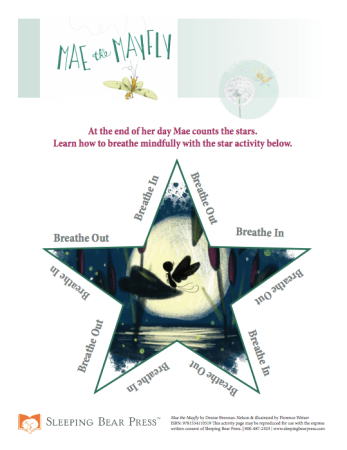
Mae the Mayfly Mindfulness Activity


Like Mae, you can calm your mind and be present in the moment as you enjoy your surroundings. Use this printable activity to get into that peaceful state of mind. Just look at the picture inside the star and follow the breathing directions as you trace each arm. You can download it from the Sleeping Bear Press Website under Teachers Guides here:

Mae the Mayfly Mindfulness Activity
celebrate-picture-books-picture-book-review-mae-the-mayfly-cover

You can find Mae the Mayfly at these booksellers

Amazon | Barnes & Noble | Books-a-Million | IndieBound | Sleeping Bear Press

Picture Book Review

April 30 – International Jazz Day

celebrate-picture-books-picture-book-review-birth-of-the-cool-cover

About the Holiday

International Jazz Day was instituted in November 2011 by the United Nations Educational, Scientific and Cultural Organization (UNESCO) to spotlight jazz and it’s role in uniting people worldwide. The holiday is celebrated by communities, musicians, students, teachers, historians, and especially jazz enthusiasts as a way to learn about jazz, its roots, and its influence. Every year, jazz is recognized for its part in promoting a dialogue among cultures, diversity, freedom, and respect for human rights. 

While the celebration was originally planned to take place in Cape Town, South Africa and in other cities around the world, this year International Jazz Day 2020 will take place online and be hosted by Herbie Hancock. The day’s centerpiece will be a Virtual Global Concert featuring artists from across the globe, streamed live on jazzday.com. The concert will begin at 3:00 p.m. US eastern time. This spectacular musical event is a great opportunity to introduce kids to jazz and to enjoy the masters of the form with jazz lovers around the globe.

Birth of the Cool: How Jazz Great Miles Davis Found His Sound

Written by Kathleen Cornell Berman | Illustrated by Keith Henry Brown

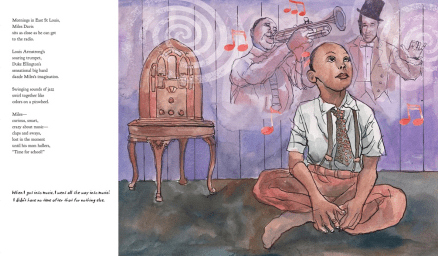
As a child, Miles Davis listens to the radio before school, clapping and swaying along to “Louis Armstrong’s soaring trumpet” and “Duke Ellington’s sensational big band.” The “swinging sounds of jazz / swirl together like / colors on a pinwheel.” When he’s older, Miles watches the riverboats on the Mississippi as they bring musicians from New Orleans to play in the East St. Louis clubs. At night he listens as “melodies drift down the street. / Some croon country, / some cry the blues. / Sassy saxophones wail / through the night.”

celebrate-picture-books-picture-book-review-birth-of-the-cool-growing-up

Image copyright Keith Henry Brown, 2019, text copyright Kathleen Cornell Berman, 2019. Courtesy of Page Street Books.

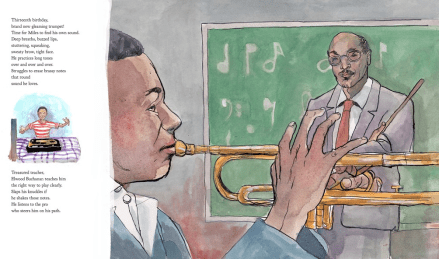
During the summer, Miles visits his grandfather’s farm in Arkansas. Here, he hears the music of horses’ hooves. On his walks through town, he listens to the sounds of guitars and singing, and at church he learns the notes of “soulful singing.” For his thirteenth birthday, Miles receives a trumpet. He takes lessons and practices again and again.

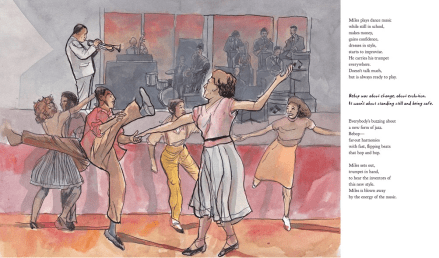
While he’s still in high school, Miles begins being paid to play at dance halls. His confidence grows and he begins to develop his own sound. A new form of jazz is attracting attention—Bebop: “far-out harmonies / with fast, flipping beats / that hop and bop.” He goes to clubs to listen to Charlie “Bird” Parker and Dizzy Gillespie play. He’s “blown away / by the energy of the music.”

celebrate-picture-books-picture-book-review-birth-of-the-cool-thirteen

Image copyright Keith Henry Brown, 2019, text copyright Kathleen Cornell Berman, 2019. Courtesy of Page Street Books.

Then one night, one of the band members doesn’t show up, and Miles—who always has his trumpet with him—is asked to fill the spot. In awe and a little intimidated in the presence of his idols, Miles’s playing “doesn’t shine.” But he knows that “jazz / is all he wants to play.” Miles moves to New York to go to school at Juilliard, but, really, to learn from Bird, Dizzy, and all of his idols. In the morning he goes to class, practicing between classes. At night he plays clubs throughout the city.

Soon, he leaves Juilliard to concentrate on playing and learning from the greats. His father advises him: “Don’t be like the mockingbird / that copies others. / Be your own man. / Be your own sound.” When Dizzy leaves Bird’s band, Miles takes his place. But he plays differently than Dizzy. “Some listeners put him down— / they want Dizzy’s rippling trumpet.” The criticism make Miles lose confidence and want to quit. But Bird encourages him.

celebrate-picture-books-picture-book-review-birth-of-the-cool-new-sound

Image copyright Keith Henry Brown, 2019, text copyright Kathleen Cornell Berman, 2019. Courtesy of Page Street Books.

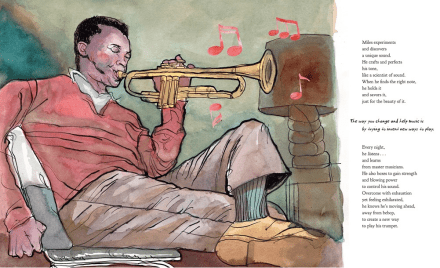
With practice and patience, he discovers his own sound, holding and savoring perfect notes “just for the beauty of it.” He forms his own group with talented musicians who want to create new sounds. The nine musicians play “slowly and mysteriously…. Cool— / relaxed, / with a lighter, / lyrical feel.” Miles’s solos enchant audiences.

But the endless work takes its toll. He begins to lose gigs; his health declines. Miles doesn’t give up. “He climbs out / of his dark days / by playing his horn again.” Then in 1955 he takes the stage at the Newport Jazz Festival and begins to play. “…His mystical voice hangs / like a cloud, / leaving space / for each listener’s / imagination to wander.” The crowd cheers and applauds. Miles is back with his unmistakable sound and new ideas for the future of the music he loves.

Notes about Miles Davis from Wynton Marsalis, Kathleen Cornell Berman, and Keith Henry Brown as well as a selected discography and bibliography follow the text.

celebrate-picture-books-picture-book-review-birth-of-the-cool-dancing

Image copyright Keith Henry Brown, 2019, text copyright Kathleen Cornell Berman, 2019. Courtesy of Page Street Books.

Kathleen Cornell Berman’s lyrical passages reveal a boy, a teenager, and a man who embodied music, listening to and absorbing the various sounds around him and incorporating them into his own unique sound. Her evocative vocabulary (swirl, rollicking, croon, rumbling, far-out, rippling, blizzard of notes, itching to play) and phrasing that blends short staccato lines with longer sentences echoes the rhythm of jazz and will keep readers riveted to the story. Berman emphasizes the listening, practice, and experimentation that informed Miles Davis’s original sound, showing children that innovation is built on hard work, dedication, and even history. Her inclusion of Davis’s setbacks also demonstrates that perseverance is part of the success of any endeavor.

Keith Henry Brown’s gorgeous, detailed pen-and-ink and watercolor illustrations take readers from Miles Davis’s living room, where he listens to the radio as images of Louis Armstrong and Duke Ellington swirl through his imagination to an overlook on the Mississippi River and its paddlewheel steam ships to the clubs and jam sessions of New York and, finally, to the Newport Jazz Festival. Brown’s color palette of cool blues, greens, purples, and browns, punctuated with Davis’s ever-present gleaming brass trumpet, brings Davis’s country and city experiences to life while mirroring the tone and feel of his unique sound. Quotes from Miles Davis are sprinkled throughout the story and set apart with type that looks handwritten, giving his words a personal touch.

Sure to inspire readers to learn more about Miles Davis and listen to his music, Birth of the Cool: How Jazz Great Miles Davis Found His Sound would be an excellent accompaniment to school music programs, an inspiring book for biography lovers and young musicians of all types, and a beautiful addition to home, school, and public library collections.

Ages 8 – 12

Page Street Kids, 2019 | ISBN 978-1624146909

Discover more about Kathleen Cornell Berman and her books on her website.

To learn more about Keith Henry Brown, his books, and his art, visit his website.

Meet Kathleen Cornell Berman

celebrate-picture-books-picture-book-review-kathleen-cornell-berman-headshot

In your author’s bio you say that you fell in love with Miles’s Davis’ music when you were 10 years old. Was there a particular spark that made you love his music?

As a kid I loved all kinds of music. When I first heard Miles’s trumpet sound, I fell in love. His trumpet sound was different. It wasn’t flashy, it was slow, haunting and very beautiful. I longed to hear it again.

Can you take readers on your journey of writing Birth of the Cool and having it published? What kind of research did you do? What was the most surprising thing you learned about Miles Davis?

I was thrilled when I got the email from Charlotte Wenger from Page Street. It’s beyond exciting when you find someone who loves your story as much as you do. And Charlotte was a dream editor to work with.

I read Miles’s autobiography and many other books about him, as well as journal and magazine articles. I listened to countless interviews and researched players in his band. And I listened to his music a lot. He went through many changes in his musical career. I realized I had to keep my focus on his early career. 

I was surprised to learn he had slave ancestors who played music in the main house on a plantation. It was interesting to discover that Miles loved rural life (from his visits to his relatives’ farms). When he first moved to NYC, he visited the stables and asked to ride their horses. He had fond memories of riding them on his grandfather’s farm.

Keith Henry Brown’s pen-and-ink and watercolor illustrations are gorgeous and full of expression. Can you talk about your reaction to seeing the illustrations for the first time. Do you have a favorite spread?  

celebrate-picture-books-picture-book-review-kathleen-cornell-berman-and-keith-henry-brown

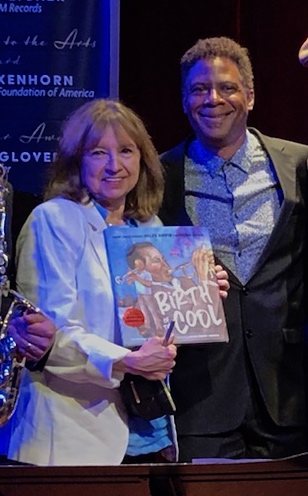
Kathleen Cornell Berman and Keith Henry Brown at the book launch for Birth of the Cool and the Jazz Gallery in New York City.

My first reaction to Keith’s illustrations was like an “out of the body” experience. To see my words come to life was a wonderful feeling. His art illuminated Miles’s journey in a jazz-inspired way. I was very happy when he accepted the job. I already knew he was a jazz fan, so he was a good choice.

Keith’s goal was to create drawings that weren’t too tight or realistic. He wanted to create a loose, abstract feeling. I think Keith achieved that beautifully. Kudos to his courage in creating illustrations in watercolor, a very unpredictable medium. It’s difficult for me to pick a favorite illustration, I really love them all.

Your inspirational biography highlights the ups—and downs—of Miles Davis’s early career. What message would you like readers to take away from the story?

Miles is a great example of how hard work pays off. Some kids today think it’s easy to play an instrument. For some it might be, but inventing your own sound, is extremely difficult. It takes perseverance and dedication to create your own voice on the instrument. That goes for anything you attempt, whether you become an architect, a visual artist, writer, or a singer. Unfortunately, many jobs don’t allow individuality, but finding something—anything—that you’re good at can boost happiness.

I hope this story inspires kids to reach for the stars, to find their own voice, and never give up. I also hope kids will take time to listen to jazz; it’s America’s classical music. Listening to music has so many benefits, intellectually as well as emotionally.

I saw on your website that you like to collect words. Can you tell me five of your favorites and what you love about them? Do you remember where they first caught your eye—or ear?

I’m usually attracted to words that tickle the tongue and have a unique sound, like mesmerizing, prickly, crumpled, nuzzle, etc. There are so many. I love alliteration. When words are paired with another, they sing and make the text come alive. I usually have my wordbook at my side as I read any kind of book. I also use my phone memo to jot words as I hear them in daily life.  

Besides writing, you paint, and create assemblages from found objects. Your sculptures are gorgeous and have so much personality! Which came first—writing or art? When creating an assemblage, do you start with one object or do you see how several of the materials you have can fit together?

Thank you very much. Creating found art sculptures is like therapy. I’ve always been into creating something out of ordinary things. The art and writing coincided with a strong desire to break out of the box of being a teacher.

I collect a lot of wood as well as words. When I find a piece that inspires me, I visualize what it might become and I begin the search for a complimentary piece. It’s kind of like doing puzzles.

Is there a similarity for you in constructing a sculpture and creating text for a picture book?

Yes, there is. I look for a seed of an idea that touches my senses or emotions. And in art I choose a piece of wood that inspires me visually. Then it all comes down to layering and adding details that make the story or art shine in a new way. Finally, adding the “just right” color or details can be compared to the continual revisions to discover perfect words that fit my story.

Birth of the Cool is your debut picture book. What are you looking forward to most as a picture book author?

Reading the book to children and getting them to reflect about their feelings. And, of course, introducing them to jazz.

I love writing picture book biographies. I also enjoy writing books that will amuse kids, as well challenge their thoughts about nature.

What’s up next for you?

I have a new picture book bio about another musician that I just started submitting. And I’ve started research on another interesting, relatively unknown musician that had a big impact on many.                   

What is your favorite holiday?

My favorite holiday is Thanksgiving. I love the traditions and the history. Holidays are so important in bringing busy families together. As a former teacher, Thanksgiving gave me the opportunity to discuss the importance of the Native American people. They taught us so much. At the Thanksgiving table, we as a family celebrate the Native American contributions to our country. I wish more people did the same.

You can connect with Kathleen Cornell Berman on

Her website | Facebook | Instagram | Twitter

Jazz Appreciation Month Activity

celebrate-picture-books-picture-book-review-jazz-trumpet-word-search-puzzle

Cool Jazz! Word Search Puzzle

Jazz has a sound and vocabulary all it’s own! Can you find the twenty jazz-related words in this printable puzzle? Then have fun coloring it!

Cool Jazz! Word Search Puzzle | Cool Jazz! Word Search Solution

celebrate-picture-books-picture-book-review-birth-of-the-cool-cover

You can find Birth of the Cool: How Jazz Great Miles Davis Found His Sound at these booksellers

Amazon | Barnes & Noble | Books-a-Million

To support your local independent bookstore, order from

Bookshop | IndieBound

Picture Book Review
April 29 – It’s National Month of Hope

celebrate-picture-books-picture-book-review-little-mole-finds-hope-cover

About the Holiday

Founded in 1991, National Month of Hope encourages people to bring hope to those in need both emotionally and physically. Reaching out to let a friend know you’re there for them, volunteering to help out in the community or on a personal level, and simply sharing a smile with those around you are all ways to show others you care. These days, staying in touch online and checking up on family and friends spreads happiness and hope for when we can all be together again. 

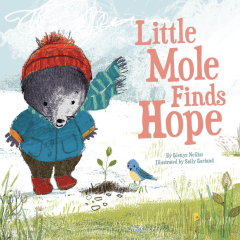
Little Mole Finds Hope

Written by Glenys Nellist | Illustrated by Sally Garland


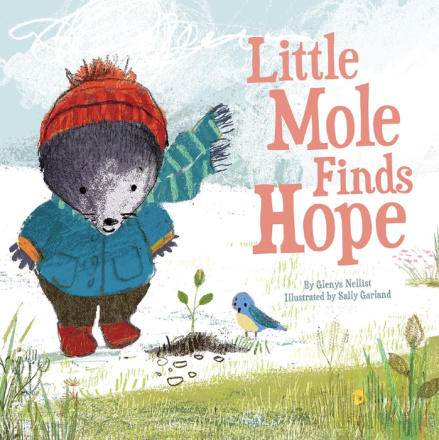
Little Mole felt sad. He didn’t know why he felt bad inside, he just did. His mama told him he needed to find hope. Little Mole wondered where. As she took his paw, Mama said, “‘Sometimes, hope is hiding in the darkness. Sometimes it’s hard to see. But it’s always there.'” Mama led her son out of the tunnel, but on the way she pointed out a “brown, wrinkled” bulb hanging from the ceiling. Little Mole thought it was dead.

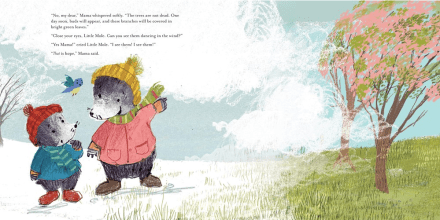
But Mama explained that that bulb would someday soon become a lovely daffodil. She asked her son to picture it swaying with the breeze, and when he said he could see it, she told him “That is hope.'” When they crawled out of the burrow, Little Mole saw trees without leaves. “They stretched out like skeleton bones silhouetted against the sky.” Little Mole thought they were dead. But Mama explained that buds and then leaves would soon appear. She asked Little Mole to imagine it. With excitement he told her he could see it. Again, Mama said, “‘That is hope.'”

celebrate-picture-books-picture-book-review-little-mole-finds-hope-trees

Image copyright Sally Garland, 2020, text copyright Glenys Nellist, 2020. Courtesy of Beaming Books.

Mama and her little one continued on past Mr. Rabbit’s garden, where they saw another example of hope hiding in an unexpected place. When they got home, Little Mole was happy.He said he’d had a wonderful day and understood that “there was always hope, even in the darkest places.” Mama tucked her son into bed with a kiss, and Little Mole fell asleep dreaming of the colorful spring to come.

Back matter includes a Discussion Guide for Caretakers that gives them tools for talking about the story, tips on helping a child who feels sad, and how to share their own experiences and where hope can be found.

Glenys Nellist’s uplifting story could not have come at a better time. With children at home and their normal lives disrupted, many may be feeling sad and unusually stressed. While many things have changed, there are still those aspects of life that remain constant. A parent or caregiver’s love is one; signs of spring and summer are another. Nellist’s honest and straightforward storytelling, acknowledges feelings of sadness and the fact that they are often unattributable to any concrete cause. Mama’s gentle acceptance of her son’s emotions and her actions in showing him signs of renewal will resonate with children familiar with the cycles of winter and spring and give adults models for conversations with their own children. Perfectly paced, Nellist’s book provides opportunities for adults and kids to look for other constants in their lives and to reaffirm their love for one another––now and always.

Sally Garland’s textured illustrations, rendered in warm tones that reveal the coziness of the Mole’s home and vibrant, sunny colors as Little Mole imagines springtime, will delight children and draw them into the meaning of the story. As Mama clearly points out the bulb, the bare trees, and a sleepy chrysalis, children will enjoy guessing what each will become and how they represent hope. Readers will also like finding other symbols of hope and signs of Mama’s and Little Mole’s love throughout the story.

Lovely in every way and highly recommended for talking with children about their feelings, Little Mole Finds Hope is a book kids will enjoy for its storytelling and its heart again and again.

Ages 3 – 6

Beaming Books, 2020 | ISBN 978-1506448749

Discover more about Glenys Nellist and her books on her website.

You can learn more about Sally Garland, her books, and her art here.

Month of Hope Activity

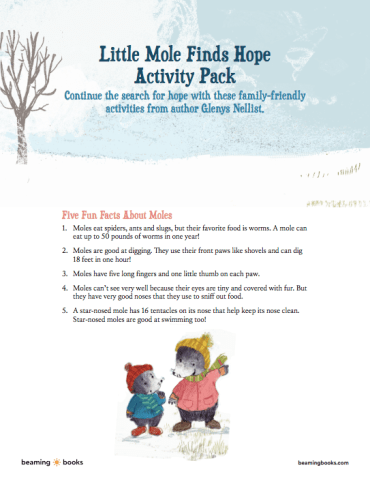
celebrate-picture-books-picture-book-review-little-mole-finds-hope-activity-kit-image

Little Mole Finds Hope Activity Pack


You can find lots of fun in this printable activity pack found on the Beaming Books website.

Little Mole Finds Hope Activity Pack

celebrate-picture-books-picture-book-review-little-mole-finds-hope-cover

You can find Little Mole Finds Hope at these booksellers

Amazon | Barnes & Noble | Books-a-Million | IndieBound


April 28 – National Superhero Day

celebrate-picture-books-picture-book-review-superheroes-don't-babysit-cover

About the Holiday

Today, we celebrate superheroes—both fictional and real—who make the world a better place. While fictional superheroes have uncommon strength, endless courage, and powers that defy nature, it doesn’t take super abilities to make a difference. Especially now, nurses, doctors, first-responders, teachers, and workers at grocery stores, pharmacies, factories, and so many other places are on the front lines of the pandemic response with the commitment and dedication of superheroes. Moms, dads, grandparents, caregivers, and kids all over the world are also stepping up whenever and however they’re needed. Celebrate today by thanking the superheroes in your life.

I received a copy of Superheroes Don’t Babysit for review consideration. All opinions about the book are my own.

By Jakki Licare

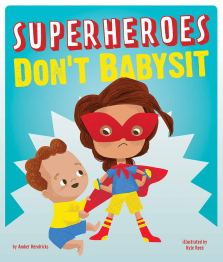
Superheroes Don’t Babysit

Written by Amber Hendricks | Illustrated by Kyle Reed


Has this ever happened to you? “You’ll be saving the city from the evil Emperor Zog when…your dad asks for a favor.” That is what happened to the little girl in this story. All she wanted to do was to play superheroes when she was asked to watch her little brother. Of course, she doesn’t want to because she has important world-saving plans for her day. “Plans that don’t include little brothers.” And who has ever heard of a superhero babysitting anyway?

celebrate-picture-books-picture-book-review-superheroes-don't-babysit-dad-asks

Image copyright Kyle Reed, 2020, text copyright Amber Hendricks, 2020. Courtesy of Beaming Books.

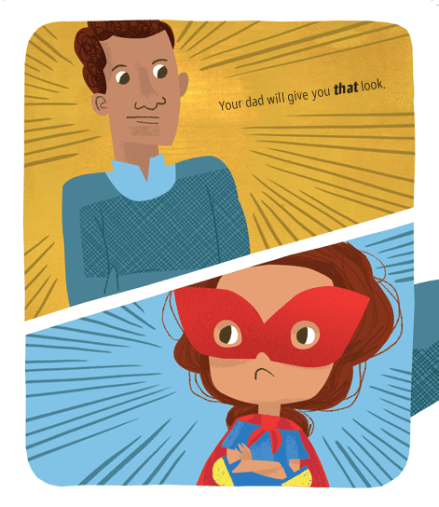
After receiving “the look” from her father, though, she agrees to watch her brother. Of course, immediately after her father leaves, her brother is starving! She consults “the list of Dad-approved snacks (because superheroes follow the rules)” and makes him a healthy “plate of cheese and crackers.”

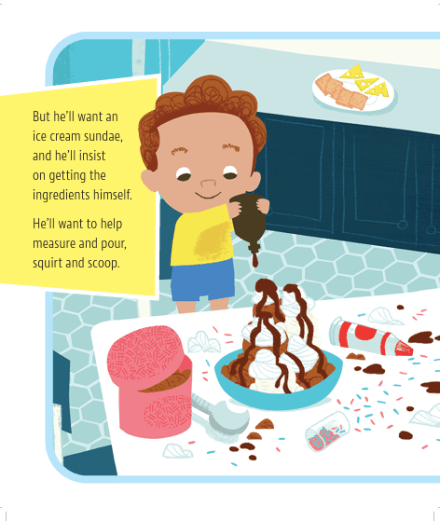
But her brother has already pulled out all the ingredients for an ice cream sundae and is determined to have one. She just knows “he’ll want to measure and pour, squirt and scoop,” and he does. Resigned, the girl helps him and feels proud for assisting a fellow citizen. That is until she sees how messy the kitchen has become! Just before she begins to wipe everything down, she notices something smells awful. She investigates, looking just where you would look, you know: “the normal places—the trash can, the bathroom, your socks—before realizing the smell is coming from” her brother!

celebrate-picture-books-picture-book-review-superheroes-don't-babysit-that-look

Image copyright Kyle Reed, 2020, text copyright Amber Hendricks, 2020. Courtesy of Beaming Books.

She gears herself up for the dangerous battle. Diapers are challenging even for superheroes, but she manages to get one on him (with the help of some extra tape). Her revelry is short-lived, though, because her brother decides to play with her action figures and breaks one! Then he cries and she feels like crying too. She might even feel like yelling “‘I wish you weren’t my brother!’”

celebrate-picture-books-picture-book-review-superheroes-don't-babysit-sundae

Image copyright Kyle Reed, 2020, text copyright Amber Hendricks, 2020. Courtesy of Beaming Books.

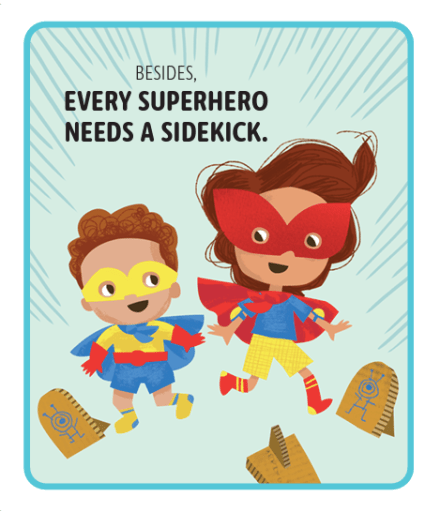
But, instead, she closes her eyes and slowly counts to ten. By the time she gets to ten, her brother apologizes and hugs her. He offers her his favorite teddy bear as a replacement, and “that icky feeling inside” melts away. So when he asks her “to read him his favorite story,” she does—“six times.” He falls asleep and even drools a little on her. It doesn’t bother her, though, because “EVERY SUPERHERO NEEDS A SIDEKICK.”

celebrate-picture-books-picture-book-review-superheroes-don't-babysit-sidekick

Image copyright Kyle Reed, 2020, text copyright Amber Hendricks, 2020. Courtesy of Beaming Books.

Amber Hendrick’s use of the 2nd person point of view gives this story a fresh spin and will pull young readers immediately in. Young readers will relate to the main character’s problems of making messes and having her favorite toy broken. Hendrick’s humor will make readers giggle as they watch the girl outfit herself in safety gear just to change a diaper. The fact that the girl wants to yell and rant at her brother and chooses not to is a wonderful teaching opportunity. Adults can point out how boy’s sister takes a moment and counts to ten before reacting. It’s a terrific lesson for readers of any age.

Kyle Reed’s bright primary-colored illustrations make this a superhero theme that’s out of this world. The paneled frames of the father-daughter face off and the girl’s measured count to ten are a nice nod to comic books. Throughout the story, the sister and brother’s facial expressions clearly show readers their feelings as sibling rivalry gives way to their loving bond. When the two siblings make up, the black-and-white pixelated photos that Reed adds in the background are a nice touch to show the connections of family.

For kids who love superheroes or are superhero siblings themselves, Superheroes Don’t Babysit would be a fun and thoughtful addition to family storytimes.

Ages 4 – 7

Beaming Books, 2020 | ISBN 978-1506458762

Discover more about Amber Hendricks and her books on her website.

To learn more about Kyle Reed and see a portfolio of his work, visit his website.

National Superhero Day Activity

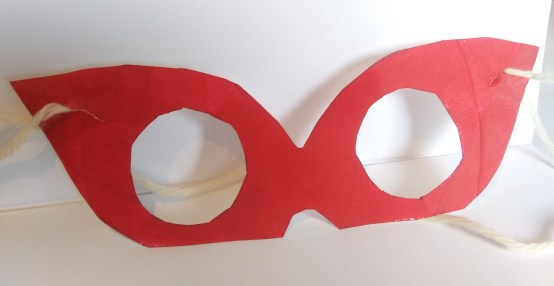
celebrate-picture-books-picture-book-review-superhero-mask-craft

Superhero Mask Craft


You can be a superhero too by making your own SUPERHEROES DON’T BABYSIT mask

Supplies

  • Printable Superhero Mask Template
  • Paper Plate
  • Pencil
  • Scissors
  • Paint or Colored Pencils
  • String or elastic or ribbon

Directions

  1. Print out template.

  2. Cut out template and eye holes.

  3. Trace template onto paper plate. Don’t forget to trace the eye holes too!

  4. Cut out masks and eyeholes.

  5. Cut a slit towards the top left of the mask for string. Then, make another slit on the top right side.  

  6. Paint or Color your mask

  7. Tie string, elastic or ribbon through slits

  8. Go and save the world!

celebrate-picture-books-picture-book-review-superheroes-don't-babysit-cover

You can find Superheroes Don’t Babysit for preorder at these booksellers

Amazon | Barnes & Noble | Books-a-Million | IndieBound

Picture Book Review

April 26 – National Tell a Story Day

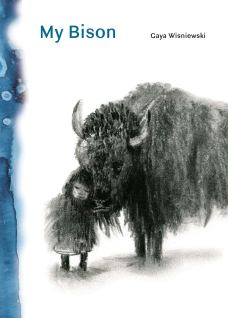
celebrate-picture-books-picture-book-review-my-bison-cover

About the Holiday

Today’s holiday was established to celebrate the art of storytelling. Highlighting the tradition of oral storytelling, the day encourages families to get together and have fun remembering and sharing family tales. Reading together is another wonderful way to discover your own stories and those of others around the world.

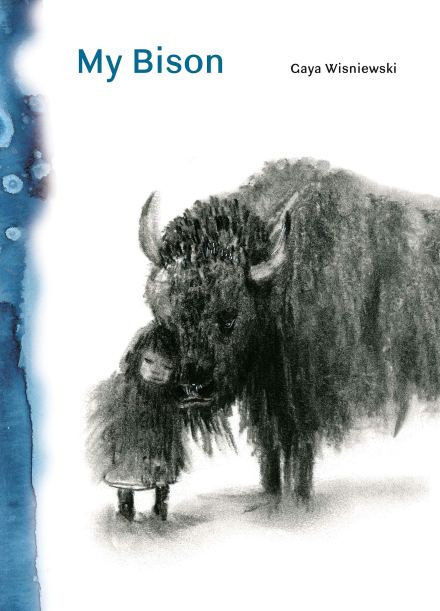
My Bison

By Gaya Wisniewski


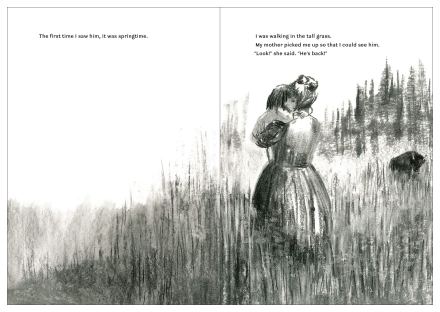
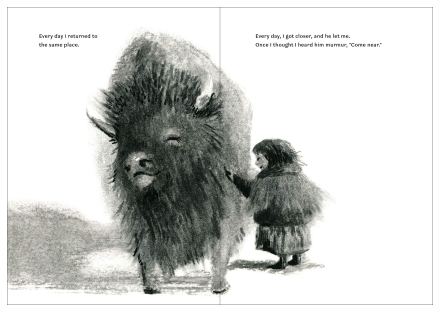
The first time a little girl meets the bison she was walking with her mother through a field of tall grass. “‘Look!’” her mother said. “‘He’s back!’” Every day after that the girl went out into the field to see the bison, coming a little closer each time until she was able to pet him. Once, she even thought she heard him whisper an invitation to come closer.

celebrate-picture-books-picture-book-review-my-bison-first-time

Image copyright Gaya Wisniewski, 2020, courtesy of Princeton Architectural Press.

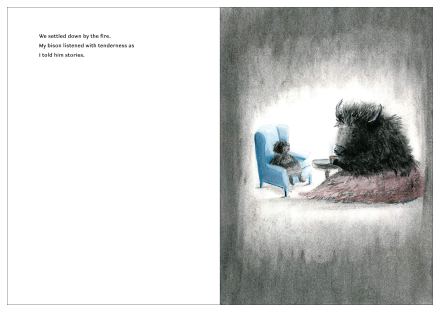
The little girl began to feed him food she’d made herself. Sometimes he didn’t like it, but he always tried it and that made her happy. One day it was time for him to move on with the rest of the herd. The girl walked with him as far as she could. When she said goodbye, the bison gave her a long look and she “knew he’d be back when snow covered the ground again.” The girl was lonely without him, but when winter returned she knew he had too without even seeing him. Now, seated together near the fire, the girl told him stories about the forest and what she’d done over the year while he, silent, “listened with tenderness.” She loved everything about him and loved him with her whole heart.

celebrate-picture-books-picture-book-review-my-bison-come-near

Image copyright Gaya Wisniewski, 2020, courtesy of Princeton Architectural Press.

The girl and the bison grew old together, winter to winter, never feeling the cold of the snow. Once, they talked all night about their mothers. The girl remembering the first time her mother had shown her the bison, how she had comforted her and taught her the lessons of nature. She missed her mother so much, she told him, and imagined he missed his mother too.

celebrate-picture-books-picture-book-review-my-bison-tea

Image copyright Gaya Wisniewski, 2020, courtesy of Princeton Architectural Press.

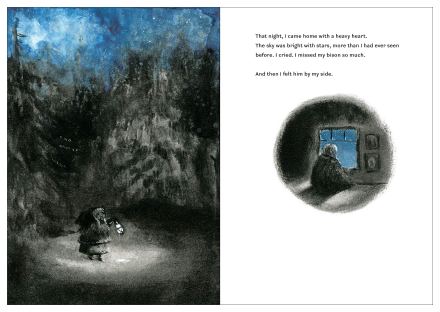
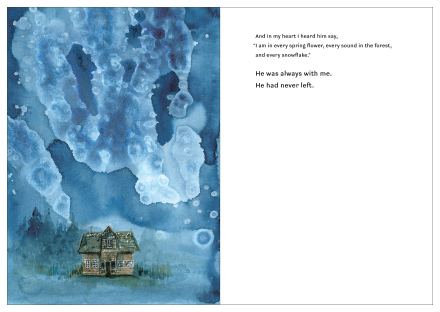
One winter the bison didn’t return and no amount of looking could find him. The girl, now an old woman, went home. She cried with missing him. And then just as in those winters so long ago when she felt his presence without seeing him, she knew he was with her. In her heart she “heard him say, ‘I am in every spring flower, every sound in the forest, and every snowflake.’” And she knew he was with her always.

celebrate-picture-books-picture-book-review-my-bison-night

Image copyright Gaya Wisniewski, 2020, courtesy of Princeton Architectural Press.

Gaya Wisniewski’s stunning and gorgeous story about a friendship between a little girl and a bison is deeply moving, it’s straightforward and metaphorical meanings blending in harmony to settle in a reader’s heart. The girl’s and bison’s relationship is one of mutual respect and trust, and they are in many ways alike. With her shaggy coat and tousled hair, the girl looks like a miniature bison, while the bison is perfectly comfortable sitting at the table near the fire sipping hot chocolate or snoozing in the cozy built-in bed  in the girl’s home. The girl loves the bison the way children love their pets, and the way she takes care of him replicates a mother’s tender affection and attention.

Here the text and images take on deeper meanings as the little girl offers the bison homemade food, holding her long-handled spoon to his mouth the way mothers the world over do for their babies. She walks with him to the edge of the clearing as he leaves in the spring, waving goodbye but with the promise of his return like a mother taking her child to the bus stop, seeing them off to college, or watching them move away.

celebrate-picture-books-picture-book-review-my-bison-sky

Image copyright Gaya Wisniewski, 2020, courtesy of Princeton Architectural Press.

At other times the bison seems to take on the role of the mother. In the endearing illustration of the bison and the girl talking over cups of hot chocolate, the girl relates how the bison would listen to her stories. Later, readers learn that her mother made her hot chocolate when she couldn’t sleep, letting them imagine how the little girl might have told her mother about her day, about the things keeping her awake. The china cup also holds the bison’s memory of cuddling with his mother, their fur smudged and merging with the steam rising from the hot drink. This blending of roles subtly demonstrates the cycles of life and the reciprocal nature of love.

Readers don’t know when the girl lost her mother; but a snapshot of the girl playing Ring around the Rosie with her and her teddy bear, in which only the mother’s arms are visible at the side of the page and the circle of light highlighting this scene is surrounded by darkness, hints at the loss. As the bison and the girl grow old together and there comes the winter when the bison does not return readers discover that any great love is always with them.

Wisniewski’s charcoal and ink illustrations, punctuated with blue create a mystical, dreamlike atmosphere where the forest and the mountains, the girl and the bison reach out to embrace the reader and invite them into this world of a love like no other.

A tender story to share all types of unending love with children, My Bison would be a poignant addition to home, school, and public library collections.

Ages 4 – 7

Princeton Architectural Press, 2020 | ISBN 978-1616898861

To learn more about Gaya Wisniewski, her books, and her art, visit her website.

National Tell a Story Day Activity

celebrate-picture-books-picture-book-review-tell-a-story-maze

Tell a Story Maze


This puzzle may look like a regular maze, but there’s a secret to it! Within this maze is any story you’d like to make up. Why do you go left instead of right? Are you avoiding a zombie or a rain shower? Why do you go up instead of down? Is it because you can you float? What lurks in that dead end you’ve entered? There are as many cool stories as you can imagine right in those little pathways. And when you find your way to The End, you’ll have written a story with this printable puzzle!

Tell a Story Maze | Tell a Story Maze Solution 

celebrate-picture-books-picture-book-review-my-bison-cover

You can find My Bison at these booksellers

Amazon | Barnes & Noble | Books-a-Million | IndieBound

Picture Book Review


April 25 – National Zucchini Bread Day

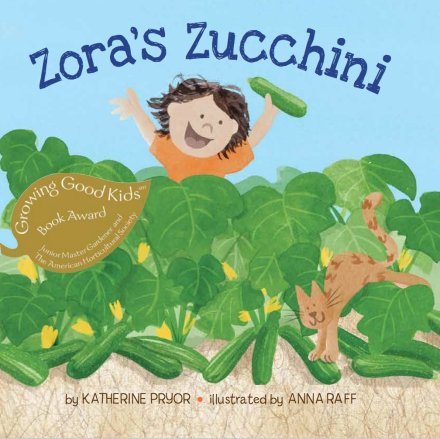
celebrate-picture-books-picture-book-review-zora's-zucchini-cover

About the Holiday

Today’s holiday seems to anticipate the prolific zucchini and yellow squash yields of summer gardens. Of course, they’re delicious too—giving a snap of flavor to side dishes, salads, pastas, and even breads—but, really, how do you keep up with the harvest? Today’s holiday offers a suggestion. And today’s book offers a humorous and creative way to share the bounty. Even if we can’t get together in person right now, we can always enjoy a great book and the scrumptious recipe at the end of this post!

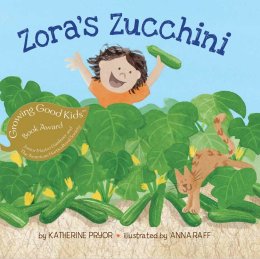
Zora’s Zucchini

Written by Katherine Pryor | Illustrated by Anna Raff


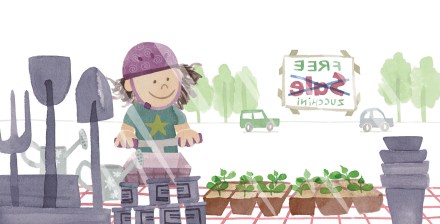
Summer vacation was only three days old, but already Zora was bored. She was tired of riding her bike aimlessly around the neighborhood. But this time when she rode through town, she noticed a Free Zucchini sign in the window of the hardware store. She liked that the plant’s name began with a Z like her name, so she loaded up her basket and went home.

celebrate-picture-books-picture-book-review-zora's-zucchini-window

Copyright Anna Raff, 2015, courtesy of annaraff.com and Readers to Eaters.

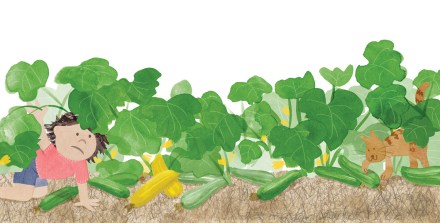
Zora showed her dad her new plants. As she carefully dug in the garden and settled them in, her dad said “‘That’s going to be a lot of zucchini.’” “‘We’ll eat it!’ Zora promised.” All June and July, Zora tended her garden, cheering “every time she saw a yellow-orange zucchini blossom.” When Zora saw her first zucchini, she picked it and ran inside to show her family. Soon, they were enjoying zucchini for breakfast, lunch, and dinner. There was zucchini bread, zucchini soup, and grilled zucchini. “By the first day of August, Zora’s garden was a jungle of prickly, tickly, bushy, blossomy plants,” and each one “was covered in zucchini. There was no way her family could eat it all.”
celebrate-picture-books-picture-book-review-zora's-zucchini-lots-of-zucchini

Copyright Anna Raff, 2015, courtesy of annaraff.com and Readers to Eaters.

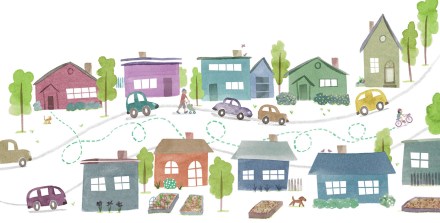
When Zora peeked into her neighbor’s yard, she noticed there was no zucchini in her garden—but plenty of tomatoes. She asked Mrs. Thompson if she’d like to trade. Mrs. Thompson was delighted to swap a bushel of tomatoes for a bushel of zucchini. But Zora’s zucchini kept on coming. “‘This is crazy,’ Zora said.” She filled her bicycle basket and rode through the neighborhood, giving them all away. But the day after that, more zucchini was ripe for picking. Then Zora had an idea and got her family involved. “Her brother painted the signs. Her parents printed the fliers. Zora and her sister posted them all over the neighborhood.”

celebrate-picture-books-picture-book-review-zora's-zucchini-mrs-thompson

Copyright Anna Raff, 2015, courtesy of annaraff.com and Readers to Eaters.

On Saturday, Zora stood next to her homemade stand that sported a sign that read: “Take a Veggie, Leave a Veggie” with an added entreaty that said “Or at least please take some zucchini.” As sun rose in the sky, though, no one had visited her stand. But then Mrs. Rivera came by with a bowl of raspberries, Mr. Peterson brought potatoes, and others traded carrots, green beans, and peppers as well as apricots, plums, and cherries. “Zora traded and traded until all her zucchini was gone.”

But Zora’s Garden Swap stand had done much more than share fruits and vegetables. As she looked around at all of the people laughing, talking, and nibbling, she realized that “her zucchini garden had brought so many people together.” She couldn’t wait for next year’s garden!

Back matter includes a note about gardening and the amount of food from a prolific garden that can go to waste. It also includes ideas for donating, preserving, and sharing excess harvests.

celebrate-picture-books-picture-book-review-zora's-zucchini-garden-swap

Copyright Anna Raff, 2015, courtesy of annaraff.com and Readers to Eaters.

Katherine Pryor’s easy-going storytelling and gentle humor will charm kids with its realistic portrayals of the excitement that every growth spurt, bud, and blossom in a garden creates. As the zucchini keeps coming, Zora’s family’s willingness to keep trying new recipes is heartening, and their help in making her Garden Swap Stand a success shows welcome family unity and support. Zora’s outreach, first to one neighbor, then to individuals throughout her neighborhood, and finally through her stand, encourages creative problem-solving. As Zora realizes that her garden has brought many people together, readers will also embrace the ideas of camaraderie and sharing and see that they too can foster such friendship in their school and community. For today’s food-savvy and socially conscious kids, Pryor’s addressing the issue of food waste and ways to share our bounty with others will appeal to and resonate with children.

celebrate-picture-books-picture-book-review-zora's-zucchini-biking

Copyright Anna Raff, 2015, courtesy of annaraff.com and Readers to Eaters.

Anna Raff’s cheery illustrations sparkle with the enthusiasm of children who go all in on a new interest. Kids will love seeing the zucchini plants grow from tiny seedlings to leafy giants that produce a flood of zucchini. Raff clearly shows Zora’s disbelief in her inexhaustible supply of squash and puzzlement as to what to do with it all, letting readers join in on her ever-growing problem. As Zora tries one solution after another and then hits on an idea, suspense grows, helped along with Raff’s visual clues in the signs and fliers her family makes. When the neighbors come together, smiling and chatting, at Zora’s stand, readers can see what a close-knit community can accomplish.

Sure to inspire a child’s interest in gardening and community sharing, Zora’s Zucchini, an award-winning book, is a fantastic addition to home, classroom, and public library shelves. The book also makes a fun pairing with picnics and visits to farmers markets and food festivals.

Ages 4 – 10

Eaters to Readers, 2015 | ISBN 978-0983661573 (Hardcover) | ISBN 978-0998436616 (Paperback, 2017)

Discover more about Katherine Pryor and her books on her website.

To learn more about Anna Raff, her books, and her art, visit her website.

National Zucchini Bread Day Activity

celebrate-picture-books-picture-book-review-creme-de-la-crumb-cinnamon-swirl-zucchini-bread

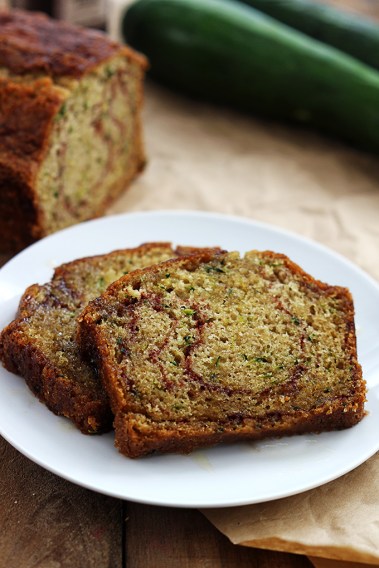
Cinnamon Swirl Zucchini Bread from Creme de la Crumb


If you have zucchini to spare, you’ll love this delicious zucchini bread from Creme de la Crumb that’s sweet and moist and flavored with the homey taste of cinnamon! To find this scrumptious recipe and lots more, visit Creme de la Crumb!

Creme de la Crumb’s Cinnamon Swirl Zucchini Bread

celebrate-picture-books-picture-book-review-zora's-zucchini-cover

You can find Zora’s Zucchini at these booksellers

Amazon | Barnes & Noble | Books-a-Million | IndieBound

Picture Book Review