December 10 – Jane Addams Day

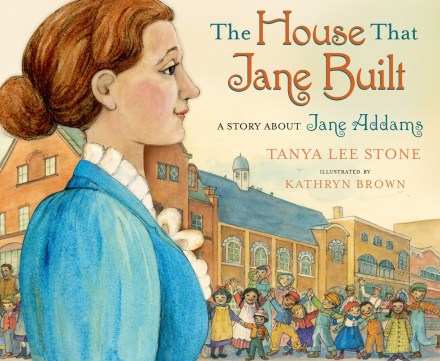
celebrate-picture-books-picture-book-the-house-that-jane-built-cover

About the Holiday

Today’s holiday was established in 2007 and commemorates the day in 1931 when Jane Addams became the first American woman to win the Nobel Peace Prize for her work to bring about social change, equality, and peace. Each year the Jane Addams Peace Association presents awards to outstanding children’s books that promote peace and justice. To learn more about Jane Addams and the Jane Addams Peace Association, visit janeaddamspeace.org.

The House that Jane Built: A Story about Jane Addams

Written by Tanya Lee Stone | Illustrated by Kathryn Brown


On a busy street stands a very special house where anyone is welcome and some find a home. In 1889 Jane Addams, a wealthy young woman, bought an elegant house in one of Chicago’s poorest neighborhoods. Why? At just six years old on a trip with her father, Jane “noticed that not everyone lived like her family did.” Right then she vowed that when she grew older, she would live in a poor community and “find a way to fix the world.”
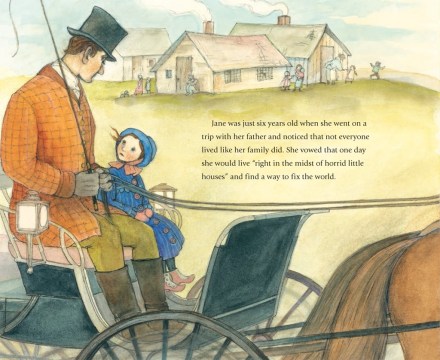
celebrate-picture-books-picture-book-the-house-that-jane-built-trip-with-father

Image copyright Kathryn Brown, 2015, text copyright Tanya Lee Stone. Courtesy of us.macmillan.com.

Jane was brave and strong. Sometimes she and her stepbrother George would “sneak away at night to explore in nearby caves.” Jane was also smart and “read and read her father’s book collection,” which also served as the town library. Unlike most women at the time, Jane went to college. She attended Rockford Female Seminary and “graduated at the top of her class.”
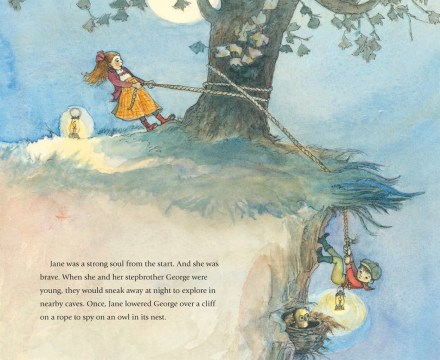
celebrate-picture-books-picture-book-the-house-that-jane-built-exploring-with-George

Image copyright Kathryn Brown, 2015, text copyright Tanya Lee Stone. Courtesy of us.macmillan.com.

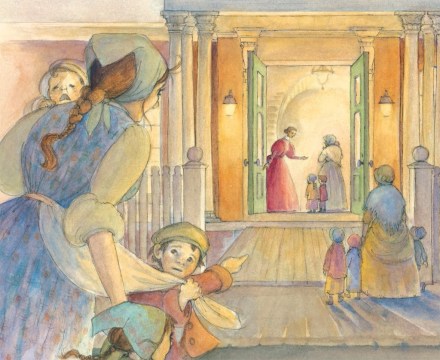
After graduation, she didn’t know what she wanted to do, and when her father died that same summer, “Jane felt lost.” Two years later some friends invited her to travel to Europe with them. Although they went to the opera, museums, and many beautiful places, it was an experience in London that stuck with her. There she saw many “people in ragged clothes with outstretched hands, begging a cart vendor to buy his rotten fruits and vegetables that hadn’t sold at the market.” 

celebrate-picture-books-picture-book-the-house-that-jane-built-London-settlement-house

Image copyright Kathryn Brown, 2015. Courtesy of us.macmillan.com.

When Jane returned home, the question of how she could help nagged at her. She returned to London to learn about Toynbee Hall, where poor and wealthy people lived together and learned from each other. Here, skills, such as cooking, were taught to provide people with the education to find jobs. Toynbee Hall was called a settlement house, because the rich people who worked there lived there as well.
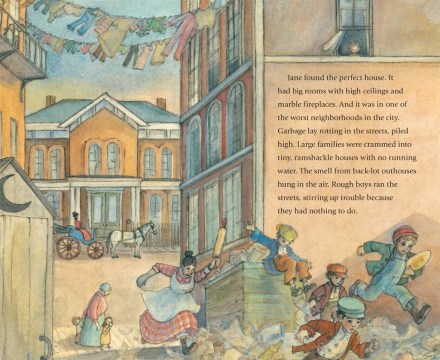
celebrate-picture-books-picture-book-the-house-that-jane-built-Chicago-neighborhood

Image copyright Kathryn Brown, 2015, text copyright Tanya Lee Stone. Courtesy of us.macmillan.com.

Jane now knew what she wanted to do. In 1889 Chicago was a diverse city with a large immigrant population. Many didn’t speak English, which made it hard for them to find jobs. “Large families were crammed into ramshackle houses with no running water.” Garbage lay in the street, and tough kids ran wild with nothing else to do.

Jane found a large house in the middle of one of these areas that had once belonged to Charles J. Hull and upon his death had been given to his cousin, Helen Culver.  When Helen discovered what Jane wanted to do, she donated the house for free. Jane left the house unlocked, letting people know that they could come there whenever they needed. In time, people did find their way to Hull House when they were hungry or out of work. Jane also had her own way of dealing with unruly children or those who didn’t understand her generosity. Once when a man broke into Hull House twice because he had no job and no money, Jane gave him a job.
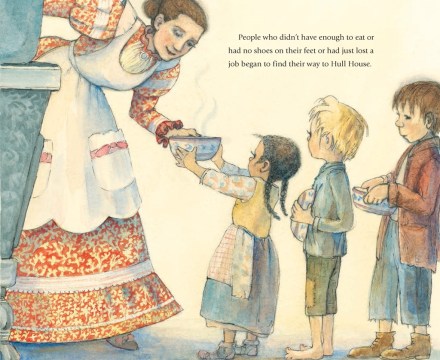
celebrate-picture-books-picture-book-the-house-that-jane-built-feeding-hungry

Image copyright Kathryn Brown, 2015, text copyright Tanya Lee Stone. Courtesy of us.macmillan.com.

Jane helped the neighborhood in other ways too. She built a public bath so that people could stay clean and avoid illness. She convinced “public officials to build more public baths.” Because children had nowhere to play, Jane convinced a neighbor to give her his unused lot near Hull House. She tore down the buildings and built Chicago’s first playground. For kids whose parents worked long hours, she started a morning kindergarten and after school clubs. She also began offering evening classes for children who worked during the day.
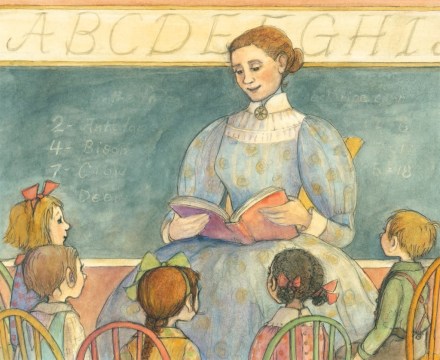
celebrate-picture-books-picture-book-the-house-that-jane-built-kindergarten

Image copyright Kathryn Brown, 2015. Courtesy of us.macmillan.com.

Jane had help with her endeavors. Her friend “Ellen Gates Starr was her partner from the start.” Many other people also helped. They moved into Hull House and “taught literature, art, English, math, science, and cooking.” Hull House continued to grow, and by 1907 Jane oversaw thirteen buildings, including “a gymnasium, coffee house, theater, music school, community kitchen, and an art gallery.”

By the early 1920’s more than 9,000 people visited Hull House every week. Jane’s work “changed a bad neighborhood into a great and strong community.” Today, you can still see Jane Addams’ commitment to others in the community centers that bring people together in nearly every city and town.

An Author’s Note with more information on Jane Addams follows the text.
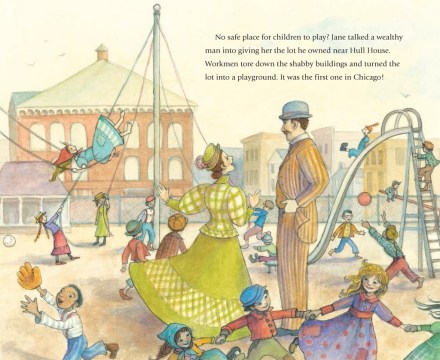
celebrate-picture-books-picture-book-the-house-that-jane-built-playground

Image copyright Kathryn Brown, 2015, text copyright Tanya Lee Stone. Courtesy of us.macmillan.com.

Tanya Lee Stone brings the story of Jane Addams’ work in Chicago to children in a compelling biography that gives readers a fully developed portrait of this most amazing woman. Stone’s active and evocative language puts children in the Hull House neighborhood, allowing them to get a feeling for and understanding of the issues of the time. Stone’s excellent examples of how Jane Addams responded to a variety of problems facing her community and even Hull House itself, demonstrate how generosity, empathy, and kindness can make positive changes in people’s lives. Depictions of Jane’s early compassion and commitment give children a sense that they too can make a difference in areas that are important to them.
celebrate-picture-books-picture-book-the-house-that-jane-built-front-door

Image copyright Kathryn Brown, 2015. Courtesy of us.macmillan.com.

Kathryn Brown’s riveting illustrations capture Jane’s early moments of concern for others, bravery, and study that informed her adult life; times of decision and cooperation that led to the establishment of Hull House; scenes of poverty, upheaval, and need that touched Jane’s heart; and images of her successes in Chicago that inspired others around the country. Brown’s softly hued watercolors are beautifully infused with realistic period details and honest emotion that provide readers with a strong foundation for understanding and appreciating the life of Jane Addams.

The House that Jane Built: A Story about Jane Addams is an inspiring choice for children with a philanthropic heart and to open discussions on how one person can make a difference. The book would be a welcome addition to home and classroom libraries.

Ages 6 – 10

Henry Holt Books for Young Readers, 2015 | ISBN 978-0805090499

To learn more about Tanya Lee Stone and her books, visit her website.

You can view a gallery of illustration work by Kathryn Brown on her website

Jane Addams Day Activity

celebrate-picture-books-picture-book-jane-addams-coloring-page

Jane Addams Coloring Page Poster


Jane Addams is an inspiration to all! Print this Jane Addams Coloring Page and hang it in your room or locker to inspire you to make a difference and be a positive influence in your community!

Picture Book Review

November 22 – Go for a Ride Day

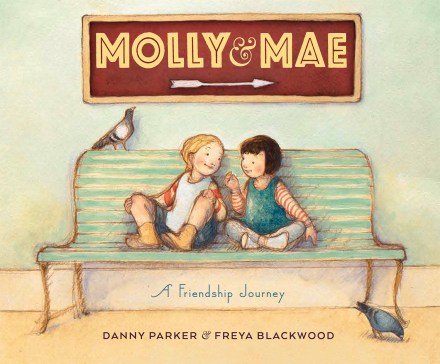
celebrate-picture-books-picture-book-review-molly-and-mae-cover

About the Holiday

Today’s holiday celebrates the joy of going for a ride to explore the unknown, revisit a favorite place, or spend time with friends or family. Whether you choose to go by bike, car, train, or plane, getting away can broaden your horizons and provide a much-needed dose of relaxation. November 22, coming close to the holiday season and commemorating several vehicle-related patents, is the perfect opportunity to go for that ride you’ve been wanting to take. Children, especially, love the excitement of and benefit from the new experience of travel.

Molly & Mae: A Friendship Journey

Written by Danny Parker | Illustrated by Freya Blackwood


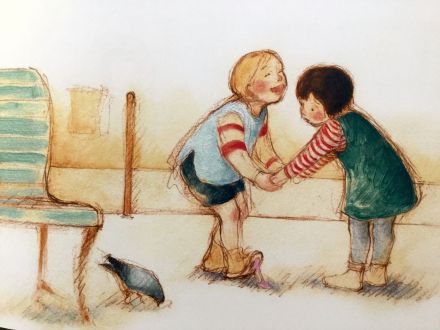
Waiting on the platform at the little train station, “Molly found Mae beneath a bench” then “Mae found Molly in the newspaper shop.” They spent their coins in the bubblegum machine and sat on a bench blowing big pink bubbles. “After that, Molly and Mae were stuck.” To pass the time they took pictures in the photo booth, walked a tightrope line on the floor, twirled like ballerinas, shared sherbet and secrets, and vowed to be friends forever.

celebrate-picture-books-picture-book-review-molly-and-mae-gum-stuck

Image copyright Freya Blackwood, 2017, courtesy of HMH Books for Young Readers.

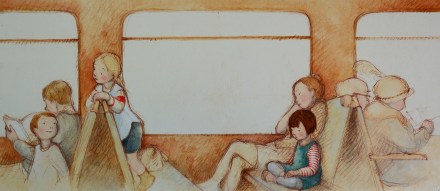
On the train they played with their dolls, got hungry, bounced on the seats and hung from the backs, skipped up the aisle, crawled under the seats, lounged in the seats, and played I Spy. But then Molly and Mae had an argument. Molly thought her younger friend was “silly,” and “Mae was tired of being bossed around.” They sat in silence watching the rain splatter the windows and the gray, misty world pass by.

celebrate-picture-books-picture-book-review-molly-and-mae-after-the-argument

Image copyright Freya Blackwood, 2017, courtesy of HMH Books for Young Readers.

“Drawing on the glass, Molly and Mae missed each other.” Molly glanced at Mae and snuck under the seat and peeked at Mae. “Then she took the words she should have said and started to build a bridge.” Mae apologized and explained too “until the bridge was strong enough to hold them both.” As the train traveled on, the sky cleared and the girls saw hills, lakes, and bridges and zipped through dark tunnels. At night they watched the twinkling stars as the train passed through crossings in small towns until it reached their destination. Molly and Mae packed up their things and jumped onto the platform holding hands. Then they left the station together.

celebrate-picture-books-picture-book-review-Molly-and-Mae-train-car-interior

Image copyright Freya Blackwood, 2017, courtesy of HMH Books for Young Readers.

Danny Parker wonderfully captures the capacity for children to form deeply felt friendships that may only last a day or, under the right circumstances, can last a lifetime. As Molly and Mae bond over their common boredom in waiting for the train, they enjoy common jokes, treats, and games. But as the day wears on, they become short with each other, and their friendship is threatened. Molly’s willingness to apologize, and Mae’s eager reciprocation are welcome examples of how to mend hurt feelings. Parker’s simple, yet lyrical storytelling allows children to read between the lines and fill in their own similar experiences that makes Molly and Mae a beautiful universal story about the journey of life.

celebrate-picture-books-picture-book-review-molly-and-mae-gumball-machine

Image copyright Freya Blackwood, 2017, courtesy of HMH Books for Young Readers.

Freya Blackwood’s lovely illustrations give readers so much to see and talk about as Molly and Mae meet and spend the day together in the station and on the train. Rendered in quiet sepia tones, the images of the train station and the interior of the train cars could depict any trains anywhere in the world. The girls, in their colorful clothing and horsing around with the excitement of the journey and a new-found playmate, are the focal point of each spread. When their argument occurs, the pastel green fields and blue sky out the windows turn grey as rain pours down.

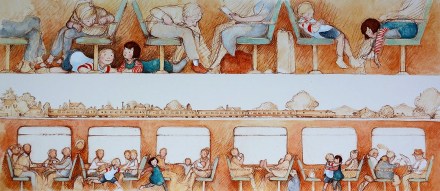
As Molly and Mae find words to rebuild their friendship, the train traverses a stone bridge, and as the girls make up, the sky once again turns sunny. Clever split pages give cut-away views of the train’s interior on top and bottom while the progress of the trip is shown in the middle, and the rectangular shape of the book allows for long two-page spreads that mirror the length of the train and also, perhaps, the long future friendship to come.

Molly and Mae: A Friendship Journey is a gorgeous quiet book for reflective children. With its detailed illustrations, it is also a wonderful book to share before a train trip or to take along on the journey.

Ages 4 – 7

HMH Books for Young Readers, 2017 | ISBN 978-1328715432

Discover more about Danny Parker and his books on his website

To learn more about Freya Blackwood, her art, and her books, visit her website

Go for a Ride Day Activity

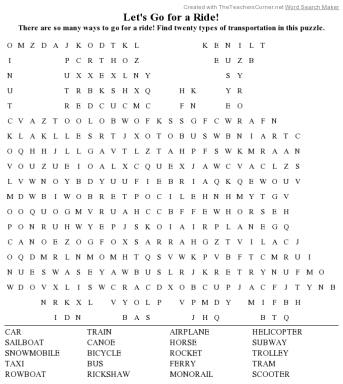
Let's Go for a Ride!-v6Hb1

Let’s Go for a Ride! Word Search Puzzle


There are so many ways to go for a ride! Find the twenty types of transportation in this printable Let’s Go for a Ride! Word Search Puzzle. Here’s the Solution.

Picture Book Review

November 3 – World Jellyfish Day

celebrate-picture-books-picture-book-review-peanut-butter-and-jellyfish-cover-2

About the Holiday

Jellyfish may be some of the most fascinating creatures in the sea, and they are certainly among the most beautiful. Often seen in groups—called swarms, blooms, or smacks—these ancient ocean invertebrates can be transparent, yellow, red, blue, and even effervescent. Jellyfish capture prey and defend themselves by emitting toxins through painful stings. To celebrate today’s holiday, visit a local aquarium or—if you live in a climate where jellyfish are present at this time of year, head to the beach to watch them in their natural habitat.

Peanut Butter and Jellyfish

By Jarrett J. Krosoczka


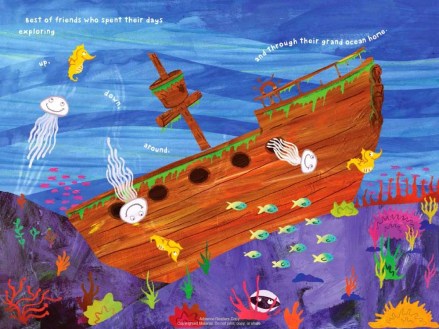
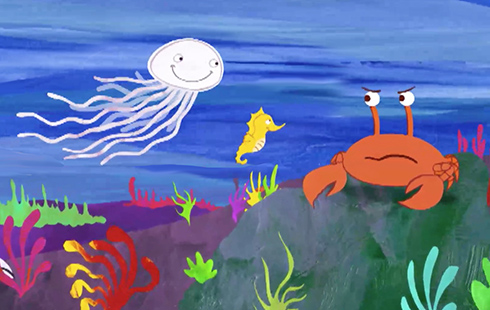
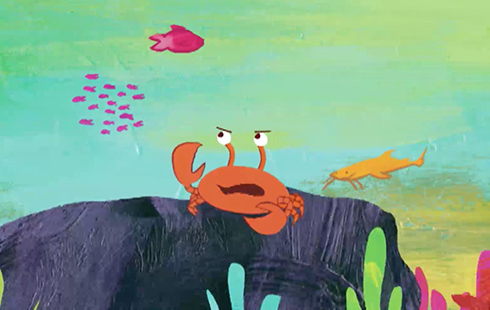
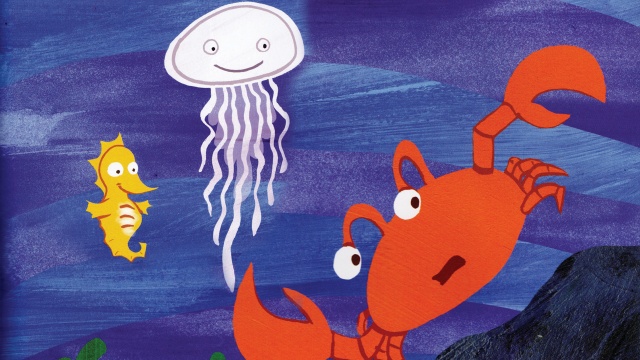
Peanut Butter, a little seahorse, and Jellyfish were best friends who loved to explore the ocean and all its treasures together. Unfortunately, their adventures always seemed to take them past Crabby, “who would taunt as they slipped by, ‘You guys swim like humans.’” Jellyfish and Peanut Butter tried to ignore him, pretending they didn’t hear his hurtful jibes, but “Crabby was relentless. ‘You guys smell like rotten barnacles! Pee-yew!’” He compared them unflatteringly to sea slugs and his grandmother’s “run-walk shoes,” and ended with “what a bunch of bubbleheads!”

celebrate-picture-books-picture-book-review-peanut-butter-and-jellyfish-shipwreck

Copyright Jarrett J. Krosoczka, 2014, courtesy of Knopf Books for Young Readers.

Jellyfish bravely stood up to Crabby, saying, “‘driftwood and sea stones may break our bones, but names will never hurt us.’” Of course, Crabby had a retort to that which involved the fact that Jellyfish was an invertebrate. One day, as Peanut Butter and Jellyfish passed Crabby’s house on their way to the big reef, they steeled themselves for the insults to come. But all they heard was quiet – until the sounds of sobbing reached their ears.

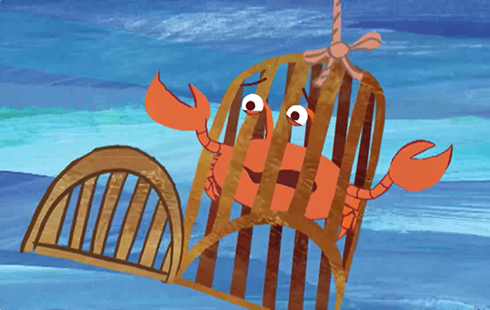
They swam on and found Crabby trapped in a lobster pot that was being pulled to the surface of the water. He called out to them that he was scared. Jellyfish and Peanut Butter looked at each other. Was it their responsibility to help Crabby? Peanut Butter thought that his situation looked pretty serious. And Jellyfish agreed. He even had a plan.

celebrate-picture-books-picture-book-review-peanut-butter-and-jellyfish-crabby

Copyright Jarrett J. Krosoczka, 2014, courtesy of Knopf Books for Young Readers.

The two friends swam up to the lobster trap, and Peanut Butter wrapped his tail around a slat in the door. When he pulled it open, however, Crabby didn’t move. Peanut Butter wanted him to hurry, but Crabby had a confession to make. He couldn’t swim, and he was afraid of heights. Now, Jellyfish had an idea.

He swam to the top of the lobster trap and with all his tentacles working feverishly, he tried to untie the knot in the rope. The trap was coming closer and closer to the fisherman’s boat. Just in the nick of time, the knot loosened, but then Crabby was hurtling to the bottom of the ocean. Peanut Butter and Jellyfish raced to catch it. “They grabbed ahold and lowered it to safety.”

celebrate-picture-books-picture-book-review-peanut-butter-and-jellyfish-taunts

Copyright Jarrett J. Krosoczka, 2014, courtesy of Knopf Books for Young Readers.

Crabby felt weak as he returned to his rock, but he stuttered out a thank you to Jellyfish and Peanut Butter. Then he told them that he was sorry for all the things he had said. “Crabby may have been afraid of heights, but he was brave enough to apologize.” Crabby admitted that he may have felt jealous of all the fun Peanut Butter and Jellyfish had “exploring the open waters.” Jellyfish told Crabby that there was “plenty to explore close to the ocean floor” too. In fact, that’s where “they found their greatest treasure.”

celebrate-picture-books-picture-book-review-peanut-butter-and-jellyfish-lobster-trap

Copyright Jarrett J. Krosoczka, 2014, courtesy of Knopf Books for Young Readers.

Jarrett J. Krosoczka’s seafaring friendship story for little ones uses humor and a generosity of spirit to teach kids a lesson about empathy. Readers may giggle over Crabby’s taunts, but they will also understand the hurt they cause Peanut Butter and Jellyfish. Following this, the kindness showed by Peanut Butter and Jellyfish toward Crabby when he is in trouble then comes as a powerfully surprising message on compassion. Crabby’s willingness to admit his fears, own up to his jealousy, and apologize, as well as the trio’s growing friendship, provides many thought-provoking topics for children to consider.

celebrate-picture-books-picture-book-review-peanut-butter-and-jellyfish-wobbly

Copyright Jarrett J. Krosoczka, 2014, courtesy of Knopf Books for Young Readers.

Krosoczka’s illustrations of the undersea world give readers plenty of details to enjoy while adorable Peanut Butter and Jellyfish take center stage. When their sweet smiles give way to wary looks, kids will know trouble is on its way. Each scene during Crabby’s entrapment and escape provide gentle suspense while demonstrating the story’s themes of understanding and acceptance. As the three explore a chest overflowing with gold in the final spread, readers can debate what the “greatest treasure” is.

Ages 3 – 7

Knopf Books for Young Readers, 2014 | ISBN 978-0375870361

Discover more about Jarrett J. Krosoczka, his books, and his art on his website.

World Jellyfish Day Activity

celebrate-picture-books-picture-book-review--jellyfish-coloring-page

Jellyfish Coloring Page


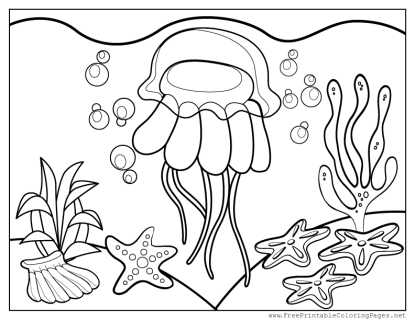
Watching a jellyfish float on the ocean current can be mesmerizing! Grab your colored pencils, markers, or crayons—and maybe some glitter too—and enjoy this printable Jellyfish Coloring Page!

Picture Book Review
October 12 – It’s National Seafood Month

celebrate-pciture-books-picture-book-review-there-might-be-lobsters-cover

About the Holiday

Love seafood? Me too! This month seafood takes center stage as a delicious, healthy, and versatile dietary choice. With so many types of seafood—each with its own distinct flavor—it’s easy to create dishes that satisfy every taste. Seafood has played a part in cuisine around the world since earliest history. Why not explore some recipes from other cultures while you celebrate this month?

There Might Be Lobsters

Written by Carolyn Crimi | Illustrated by Laurel Molk


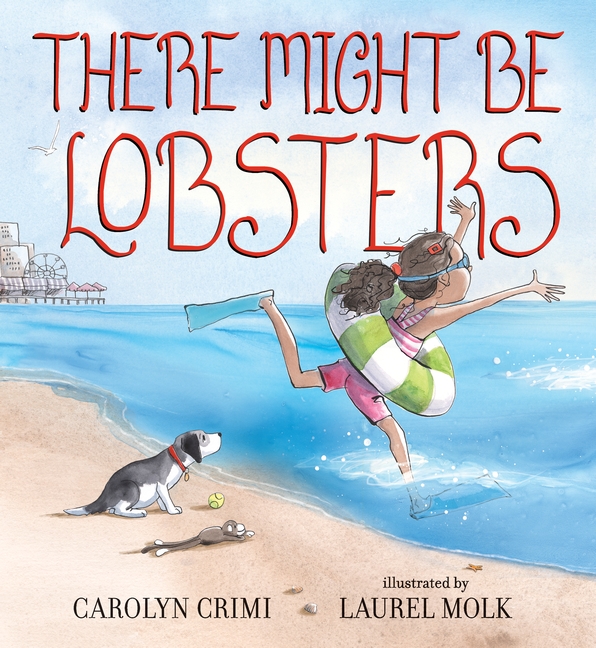
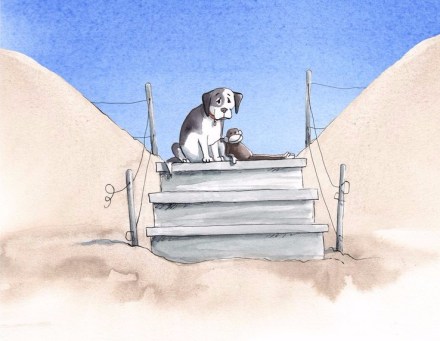
Suki may have liked going to the beach, but there were many things there that scared her. Eleanor encouraged her puppy to come down the stairs and join her on the sand, but Suki sat at the top overwhelmed with doubt. She was such a small dog, “and the stairs were big and sandy, and she hadn’t had lunch yet, and she might get a shell stuck up her nose.” She might even “tumble down on her head…and need stitches, and, besides, there might be lobsters.”

celebrate-picture-books-picture-book-review-there-might-be-lobsters-suki-on-stairs

Image copyright Laurel Molk, 2017, text copyright Carolyn Crimi, 2017. Courtesy of Candlewick Press.

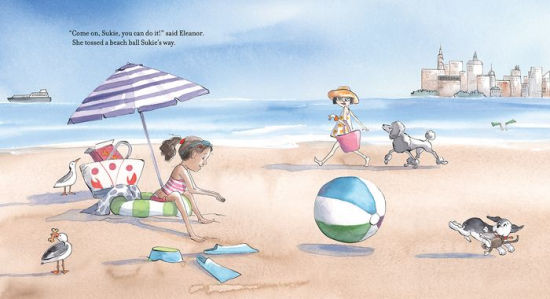
Suki thought she’d sit with her toy monkey Chunka Munka and watch, but Eleanor was there to pick her up and carry her down the steps. Eleanor wanted to play and tossed her beach ball in Suki’s direction. The big ball bounced and rolled toward Suki, and Suki took off. What if the ball “hit her nose,” or “knocked her down?” If that happened she might never get home and might have to “eat seaweed to survive.” Besides, didn’t “beach balls attract lobsters?” Suki grabbed Chunka Munka and ran away.

celebrate-pciture-books-picture-book-review-there-might-be-lobsters-ball

Image copyright Laurel Molk, 2017, text copyright Carolyn Crimi, 2017. Courtesy of Candlewick Press.

Eleanor scooped her dog up again and brought her to the water’s edge. She was sure Suki would enjoy swimming with her. But Suki gazed out at the vast sea and the approaching waves that “might toss her out to the middle of the sea” where she could “float all the way to Tasmania or even Florida.” She could be “swallowed by a whale,” and besides isn’t that where lobsters live? So Suki and Chunka Munka chose to stay on shore.

celebrate-picture-books-picture-book-review-there-might-be-lobsters-eleanor-carrying-suki

Image copyright Laurel Molk, 2017, text copyright Carolyn Crimi, 2017. Courtesy of Candlewick Press.

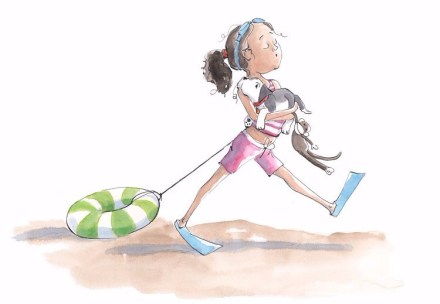
Suddenly, a wave picked up Chunka Munka and the little monkey was washed out to sea. Soon he began to sink. “Suki started to paddle.” She swam past a beach ball, into a wave, and maybe even over a lobster to save Chunka Monka. When they landed once more on dry land, Suki felt brave and proud. Eleanor was proud of her puppy too. She picked up Suki and Chunka Monka “with a ‘yay’ and a ‘hooray’ and swung them gently through the air.” Then Suki sat on the beach, enjoyed the waves, and “watched for lobsters. And they didn’t see one all day.”

celebrate-pciture-books-picture-book-review-there-might-be-lobsters-at-the-beach

Image copyright Laurel Molk, 2017, text copyright Carolyn Crimi, 2017. Courtesy of Candlewick Press.

When fears and doubts have kids in their claws, Carolyn Crimi’s reassuring story of a little dog who does a big deed is just the kind of support they need. It can be easy for scary thoughts to overwhelm reality, but through Suki’s worries and Eleanor’s patient encouragement, Crimi gives readers a chance to empathize with the little puppy while recognizing that some fears are unfounded. Suki’s unselfish act to save her beloved toy may spur children to dip their toe into the waters and become brave themselves.

celebrate-picture-books-picture-book-review-there-might-be-lobsters-eating-ice-cream

Image copyright Laurel Molk, 2017, text copyright Carolyn Crimi, 2017. Courtesy of Candlewick Press.

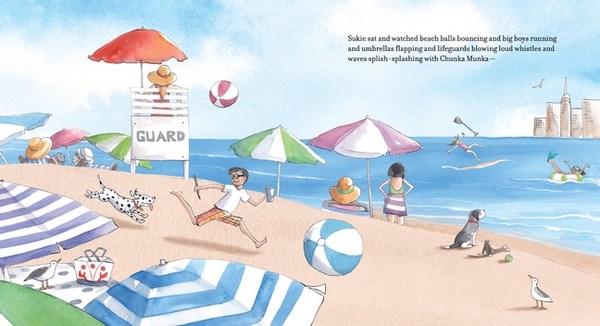
Laurel Molk’s adorable Suki will have readers rooting for her as she sits forlorn and hesitant at the top of the stairs, cowers from the beach ball, and stops short at the water’s edge. When Chunka Monka floats away, Molk immediately shows Suki in the ocean swimming to catch him, demonstrating that the natural instinct to help often overrides fears and leads to self-confidence and growth. Molk’s watercolor and pen-and-ink illustrations are as bright, wide-open, and inviting as the beach itself. Each page offers readers lots to see, giggle over, and talk about while they cheer on Suki—and discover the only lobster on the beach.

Ages 3 – 7

Candlewick, 2017 | ISBN 978-0763675424

To find out more about Carolyn Crimi and her other books, and have a laugh or two (or three), check out her website.

View a gallery of books illustrated by Laurel Molk as well as other artwork, visit her website.

National Seafood Month Activity

What a Catch! (1)

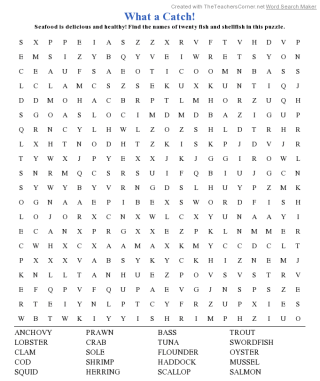
What a Catch! Word Search Puzzle


There are so many types of seafood! Can you find the twenty names of fish and shellfish in this printable What a Catch! Word Search Puzzle? Here’s the Solution.

Picture Book Review
October 2 – World Day of Bullying Prevention

celebrate-picture-books-picture-book-review-come-wtih-me-cover

About the Holiday

Today’s holiday was established to raise awareness of the pervasive and growing societal problem of bullying and to bring people together to change the culture that allows for it to exist. It’s up to every individual to speak out against bullying in all its forms and for kindness and acceptance. For more information on what you can do or how you can find help, visit the STOMP Out Bullying website.

Come With Me

Written by Holly M. McGhee | Illustrated by Pascal Lemaître


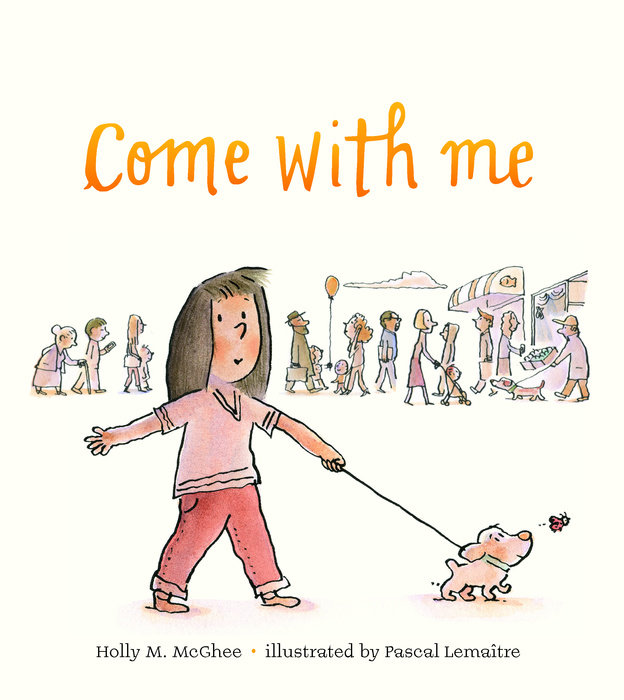
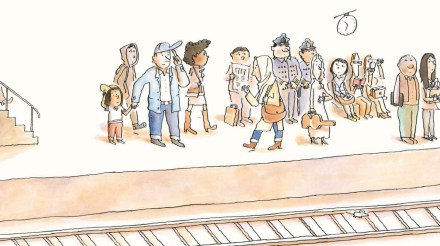
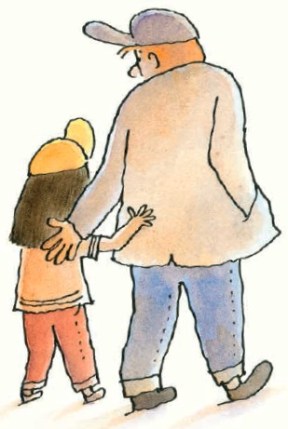
A little girl watches the television news, taking in all the “anger and hatred—people against people.” She was “frightened by everything she heard and saw and felt.” She wanted to make “the world a better place,” and asked her papa what she could do. He told her, “‘Come with me.’” They went outside and down the stairs to the subway platform. There, as they waited for the train, her father tipped his hat to those passing by. Seeing this, the little girl did it too.

celebrate-picture-books-picture-book-review-come-with-me-in-the-subway

Image copyright Pascal Lemaître, 2017, courtesy of G.P. Putnam’s Sons Books for Young Readers.

As they rode the train they were kind to the people around them. The little girl felt brave as she and her papa “won a tiny battle over fear for themselves and for the people of the world.” But the little girl continued to see stories of hatred on the news, so she asked her mother for advice. Her mama said, “Come with me.”

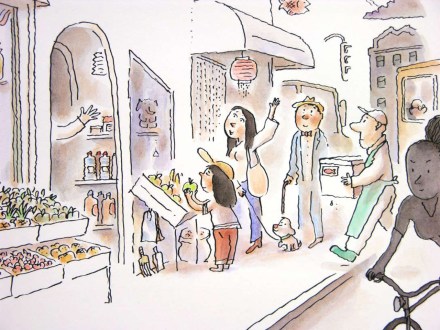
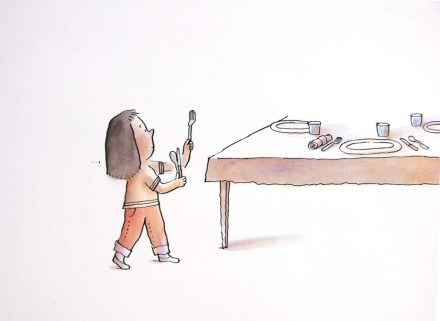
They walked down to the international grocery store on the corner with its bins full of fresh fruit and vegetables. There they met people from all over the world buying food for their meals and products for their homes. The little girl understood that “one person doesn’t represent a family or a race or the people of a land.” At home, while her mother cooked dinner, the little girl set the table as she always did.

celebrate-picture-books-picture-book-review-come-with-me-at-the-market

Image copyright Pascal Lemaître, 2017, courtesy of G.P. Putnam’s Sons Books for Young Readers.

As they ate, the girl scratched her puppy behind the ears and thought about what she had seen and done with her parents. She wanted to do something by herself and asked if she could walk the dog. Her parents looked at each other and decided to let her go to show their child and the world that “they would not live in fear.”

Just as the little girl was leaving her apartment, the boy across the hall opened his door. He wondered where she was going. “‘Come with me,’” she said. The two children were happy to be outside, and they began to understand that if they were “brave, gentle, strong—and kind…to one another and all living things,” the world would be a better place.

celebrate-picture-books-picture-book-review-come-wtih-me-setting-the-table

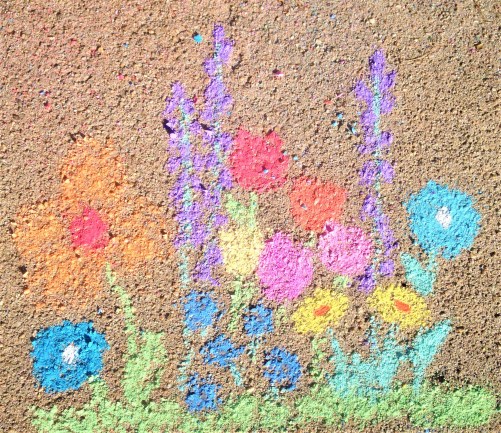
They smiled at a mother and her young son as the little boy pet her dog. Then the boy shared his box of chalk, and the three kids drew pictures on the sidewalk. The single flowers and hearts became a garden as more and more children joined in. From all around, doors opened and children and adults approached. They took a piece of chalk and bent down to add their own flowers to the growing picture.

What you do matters too—even if your part seems small, it makes a difference. Listen! The little girl is calling, “‘Come with me.’”

celebrate-picture-books-picture-book-review-come-with-me-drawing-flowers

Image copyright Pascal Lemaître, 2017, courtesy of G.P. Putnam’s Sons Books for Young Readers.

Amid all the noise and fear that children are exposed to comes Holly McGhee’s quiet and powerful book that shows them that even small gestures have great reach and make a big impact. Like self-seeding gardens, one small act can take root and grow, displacing the weeds of fear, anger, and misunderstanding. McGhee’s honest, lyrical text is refreshing as it demonstrates the role of adults as well as children in changing not only outward behavior but inner feelings as well. Young readers will want to accept the little girl’s invitation to change the world they live in.

celebrate-picture-books-picture-book-review-come-with-me-girl-and-papa

Image copyright Pascal Lemaître, 2017, courtesy of G.P. Putnam’s Sons Books for Young Readers.

Pascal Lemaître’s colorful line drawings on white backgrounds provide a sense of openness and clarity that is the perfect accompaniment to McGhee’s story. Lemaître’s city is vibrant and diverse, and as people go about their business, they smile at one another, happily interact, and are excited to join in the fun of chalk drawing. At home, members of the family watch TV, cook and eat dinner, and take care of their pet, just as families do around the world. Careful observers will note that as the little girl sets the table, she studies the fork—a single utensil made up of many tines that work together. Each of Lemaître’s pages likewise invites readers to take another look at their own homes and neighborhoods to see the goodness there and to work with others to make the world a better place.

Come With Me is a moving story that can comfort and inspire children who have questions and want to help. The book would be a welcome addition to classroom and home libraries.

Ages 5 – 8 and up

G. P. Putnam’s Sons Books for Young Readers, 2017 | ISBN 978-1524739058

Discover the world of Holly M. McGhee and her children’s and middle-grade books on her website

View a portfolio of illustration work for children and adults by Pascal Lemaître on his website.

View a portfolio of illustration work for children and adults on his website.

World Day of Bullying Prevention Activity

celebrate-picture-books-picture-book-review-friendship-chalk-garden

Friendship Chalk Garden


Just like the little girl in today’s book, you can make a positive change in the world through simple acts of kindness and cheer. Drawing a Friendship Chalk Garden is a great way to show your love, compassion, and courage—and to make your home, neighborhood, or school a better place!

Adults and kids, join in making a positive change! Draw a garden—or even just one flower— and post a picture on Twitter using the hashtag #FriendshipChalkGarden. Adults can help children post their pictures.

Here are some ideas:

  • Create your garden by yourself
  • Gather your friends
  • Invite other kids and adults in the area to draw with you
  • Ask your teacher to make it a class—or school—project

Places to Draw

Outside:

  • Find a spot in your driveway
  • Draw on the sidewalk outside your home or school
  • Use the school playground
  • Go to the park

Inside:

  • Use black or white poster board attached to the wall
  • Draw on the school blackboard or white board
  • Make flowers for a classroom or hall bulletin board

Picture Book Review
September 24 – National Punctuation Day

celebrate-picture-books-picture-book-review-exclamation-cover-2

About the Holiday

What’s so great about punctuation? Everything! Using correct punctuation allows you to express exactly what you mean. You’ve seen—and no doubt laughed at—examples of misplaced or misused punctuation: “Let’s eat John” versus “Let’s eat, John” and the random placement of quotation marks when no one’s talking or referencing another source. And while in the grand scheme of things the series comma may not make that much difference, in some cases lawsuits have been won and lost on just this detail. Texting has changed the way punctuation is used—or not. While a smiley face may be a substitute for the exclamation mark or a frowny face an emotive period, in other types of writing, knowing the rules of punctuation is still important. Today, celebrate the way punctuation makes all written communications clearer and more meaningful.

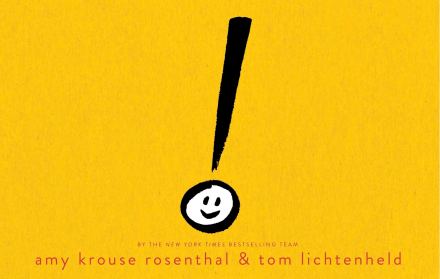
Exclamation Mark

Written by Amy Krouse Rosenthal | Illustrated by Tom Lichtenheld


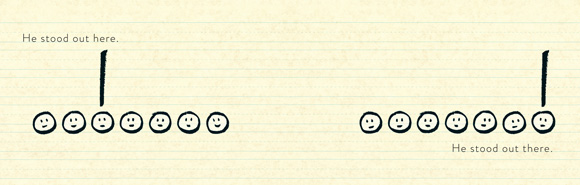
! “stood out from the very beginning.” When he was standing in a row of ……, it didn’t matter if he was in the middle or at the end—he still stuck out. The only time he wasn’t so noticeable was when he laid down to go to sleep. Sometimes he twisted himself into coils and did somersaults to be like the others, but nothing worked. “He just wasn’t like everyone else. Period.” This left him feeling “confused, flummoxed, and deflated.”

celebrate-picture-books-book-review-exclamation-mark-stands-out

Image copyright Tom Lichtenheld, text copyright Amy Krouse Rosenthal. Courtesy of Scholastic Press

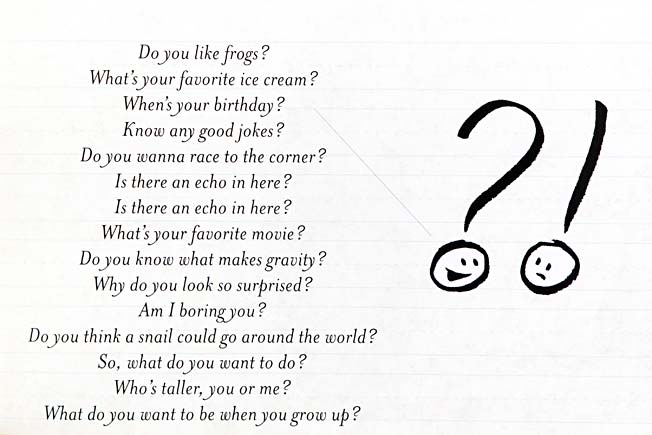
He was just about to run away from all his problems when he met ?. ? rushed right up to him and wanted to know everything. “Who are you?…What’s your favorite color? Do you like frogs?…Do you wanna race to the corner? Is there an echo in here? Is there an echo in here?…Why do you look so surprised?….” The list went on and on.

celebrate-picture-books-book-review-exclamation-mark-lots-of-questions

Image copyright Tom Lichtenheld, text copyright Amy Krouse Rosenthal. Courtesy of Scholastic Press

“STOP!” ! shouted. The sound stunned him. ? smiled and wanted him to do it again. ! didn’t know if he could, so he tried a small “Hi!” “That felt right, so he tried something bigger. Howdy!” And then he said, “Wow!” After that there was no stopping him: “You’re it!…Home run!…Yum!…Look out!…Thanks!…Boo!…Go!”

He rushed off to show everyone what he could do. The …… were delighted and “there was much exclaiming.” Now feeling happy and confident, ! “went off to make his mark.”

celebrate-picture-books-book-review-exclamation-mark-yippee

Image copyright Tom Lichtenheld, text copyright Amy Krouse Rosenthal. Courtesy of Scholastic Press

Amy Krouse Rosenthal’s clever story of an exclamation point searching for self expression is as moving as it is original. Kids will recognize his feelings of sticking out in a crowd and uncertainty of purpose and applaude when ? comes on the scene to befriend !. Readers will giggle knowingly at the barrage of questions, and feel emboldened themselves as ! finds his voice and his own unique contribution.

Tom Lichtenheld’s adorable punctuation marks hanging out on kid-ruled paper demonstrate all the expression and expressions of this well-crafted story. With simple dot eyes and small streak mouths, Lichtenheld animates the various emotions of the periods, exclamation mark, and question mark as they discover !’s special talent with individuality for each. The unbridled exuberance of ?‘s and !’s meeting makes this a terrific book about friendship as well.

! deftly points out “What would we do without exclamation points?” Likewise it asks, “What would we do without each one of us?” The positive message, creatively and humorously presented, makes this book a terrific addition to any child’s library.

Scholastic Press, 2013 | ISBN 978-054543679

You’ll find more about Amy Krouse Rosenthal, her books for children and adults, videos, other projects, and so much more on her website!

Discover a portfolio of books by Tom Lichtenheld as well as fun book-related activities and resources for teachers on his website!

!!!! for this ! book trailer!

National Punctuation Day Activity

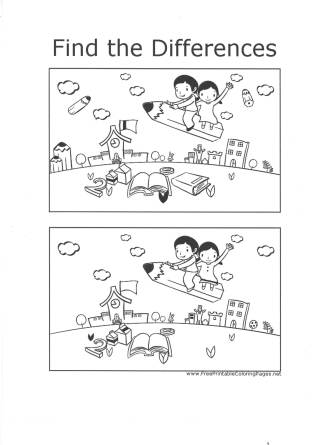
celebrate-picture-books-picture-book-review-pencil-riding-kids-find-the-differencesExcellent Writers Find the Differences Puzzle


These kids love to write and know their punctuation! Can you find the twelve differences in this printable Excellent Writers Find the Differences Puzzle?

Picture Book Review 
September 23 – International Rabbit Day

celebrate-picture-books-picture-book-review-old-lion-and-little-rabbit-cover

About the Holiday

With their little pink noses, long ears, and soft fur, rabbits make your heart melt. Today’s holiday was established to promote the protection and care of rabbits—both domestic and wild. Found in almost all types of environments—with more than one half of their total population living in North America—rabbits need protection from habitat destruction and predators. They are also a popular gift in spring, and families are encouraged to learn all about their needs and behaviors to determine if a rabbit is the best fit for the household. Because of their sweet, innocent nature, bunnies are often featured in children’s books. To celebrate the holiday, read a few of your favorites—including today’s book!

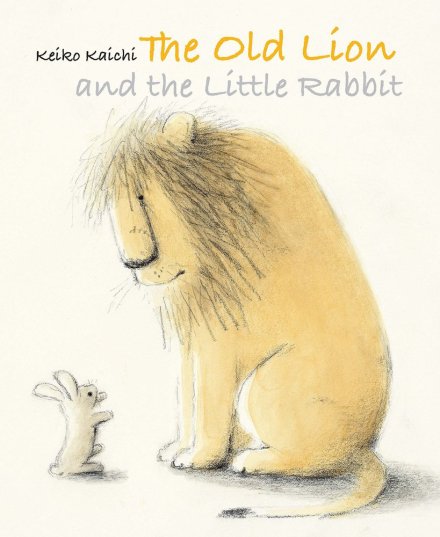
The Old Lion and the Little Rabbit

By Keiko Kaichi


Once King of the Plains, Old Lion had given up his place in the herd to his sons and now lived a quiet life alone. One day while napping, he felt a tickle in his mane and smelled a tantalizing aroma nearby. Old Lion discovered a tiny baby rabbit sleeping peacefully in the soft fur of his mane. “‘Hey,’ Old Lion thought, ‘this little one won’t fill my belly. But if I let him eat enough, he’ll grow up to be big and delicious!’” So Old Lion gathered as much grass as he could and fed the baby rabbit well, all the while feeling hunger growing in his stomach.
celebrate-picture-books-picture-book-review-old-lion-and-little-rabbit-herd

Copyright Keiko Kaichi, 2017, courtesy of minedition.

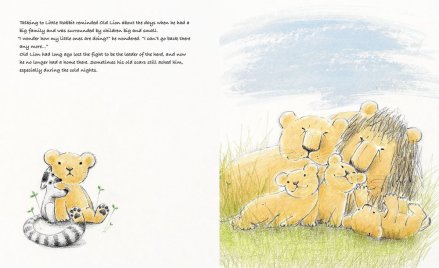
To pass the time between feedings, Old Lion told Little Rabbit about his younger days on the savanna. “Little Rabbit crinkled up his nose with joy when he listened to Old Lion’s stories.” When other animals saw Old Lion and Little Rabbit together, they couldn’t believe it. As Old Lion talked to Little Rabbit, he remembered his big family and the joy of having children around him. He wondered how they were doing. But he knew that he couldn’t go back once he had “lost the fight to be the leader of the herd. Sometimes his old scars still ached him, especially during the cold nights.”

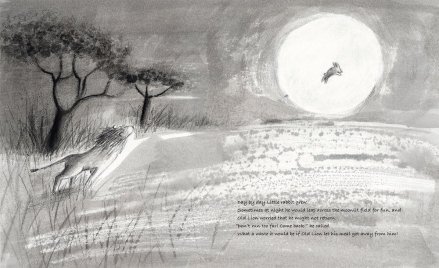
Now that Little Rabbit was growing bigger, he sometimes hopped far into the field, exploring just for fun. Then Old Lion worried that he might not come back, fearful that all his time and hard work would be wasted. He would call after Little Rabbit, reminding him to come back, and Little Rabbit always did.

celebrate-picture-books-picture-book-review-old-lion-and-little-rabbit-hopping-in-moonlight

Copyright Keiko Kaichi, 2017, courtesy of minedition.

They spent their days watching the other animals, Little Rabbit perched on top of the lion’s head in order to see better. As time went by, Old Lion began to wish he could be satisfied with a diet of plants and wondered about the unfamiliar feeling in his heart. “Could it be that he was starting to care about this little creature who trusted him so blindly? Such a thing made no sense. Still, he had to admit that something warm stirred in him when he saw Little Rabbit each morning.”

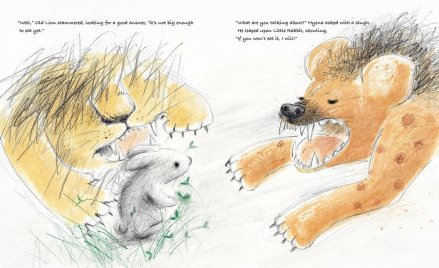
One day as Little Rabbit played among the weeds while Old Lion rested, Hyena came calling. When he saw the little bunny, he immediately asked to share in the delicious meal as he often did. Old Lion was taken off guard and stammered that Little Rabbit was not nearly big enough to make a meal of. Hyena protested and pounced. Old Lion found his former quick reflexes and “with one gulp he snatched up Little Rabbit into his jaws.”

celebrate-picture-books-picture-book-review-old-lion-and-little-rabbit-hyenna

Copyright Keiko Kaichi, 2017, courtesy of minedition.

With a bit of regret but admiration for his old friend, Hyena turned and skulked away. When they were alone, Old Lion opened his mouth wide and let Little Rabbit climb out. He saw that his tiny friend had suffered a cut on his paw and bandaged it carefully. Then he placed Little Rabbit on his head and began to walk in the direction of the wind. “He could no longer deny that he loved Little Rabbit.”

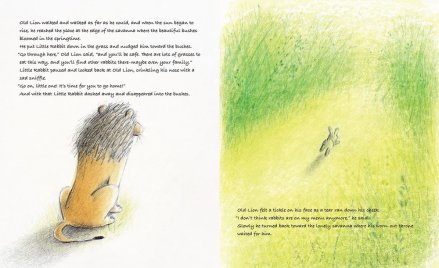
Old Lion walked and walked to the edge of the savanna, where bushes and tall grasses blossomed. He set Little Rabbit down gently and nudged him forward. “You’ll be safe” there, Old Lion told him. “You’ll find other rabbits there—maybe even your family.” Little Rabbit gazed at Old Lion sadly, but the lion reassured him that it was time to go home. Old Lion watched Little Rabbit bound away and “felt a tickle on his face as a tear ran down his cheek.” Then he turned and walked back to where his throne waited.

celebrate-picture-books-picture-book-review-old-lion-and-little-rabbit-letting-rabbit-go

Copyright Keiko Kaichi, 2017, courtesy of minedition.

Keiko Kaichi’s books masterfully tug at readers’ heartstrings with poignant stories populated with adorable characters that immediately inspire love and empathy. In The Old Lion and the Little Rabbit, the lion’s history is revealed naturally and at a pace that makes his transformation believable and all the more emotional. Just as do children within a family, Little Rabbit alters Old Lion’s life simply through trust and dependence. Children will respond to the growing love between Old Lion and Little Rabbit. They will also find the solution to the mystery established at the beginning both surprising and satisfying. Adult readers cannot be faulted for feeling a small lump in their throat when Old Lion unselfishly protects Little Rabbit from Hyena and then takes him to safety.

Kaichi’s acrylic and pencil drawings are both evocative of the golden savanna and filled with tender sentiments. Old Lion may once have been a fierce predator, but he is now a contemplative and caring elder statesman while Little Rabbit is a wee nubbin of cuteness. As he sits next to the much bigger lion, his tiny paw touching Old Lion’s arm, or collects a bouquet of weeds under Old Lion’s watchful gaze, Little Rabbit swells readers hearts.

Superb in every way, The Old Lion and the Little Rabbit would make a wonderful choice for home bookshelves as well as for public and school libraries.

Ages 3 – 7

minedition, 2017 | ISBN 978-9888341245

International Rabbit Day Activity

Adorable Bunnies Coloring Pages


Bunnies are such loveable little creatures that you just can’t help but say “Awwww!” when you see one. Here are two printable Adorable Bunnies Coloring Pages for you to enjoy!

Bunny Coloring Page | Three Bunnies Coloring Page 

Picture Book Review