December 3 – Get Ready for Dōngzhì

About the Holiday

The Dōngzhì Festival, or Winter Solstice is considered to be one of the most important Chinese festivals of the year and is a time for families to get together, worship their ancestors, and enjoy traditional delicacies. Celebrated for over 2,000 years, the festival sees families come together to make and eat tāng yuán, which symbolizes reunion and prosperity. While the celebration of the winter solstice is only one day (this year on December 21), the Dōngzhì Festival lasts 15 days.

This Winter Solstice festival originates from the Chinese concept of yin and yang, an ancient symbol of harmony and balance. In Chinese culture, there is a belief that when the days are short, there is insufficient Yang energy, thus people consume foods that are more yang (warm) in nature to counteract the yin (cold) of winter, such as tāng yuán, as seen in today’s book. To learn more about the holiday, visit mandarianmatrix.org

Thank you to Bloomsbury Children’s Books for sharing a copy of this book with me for review!

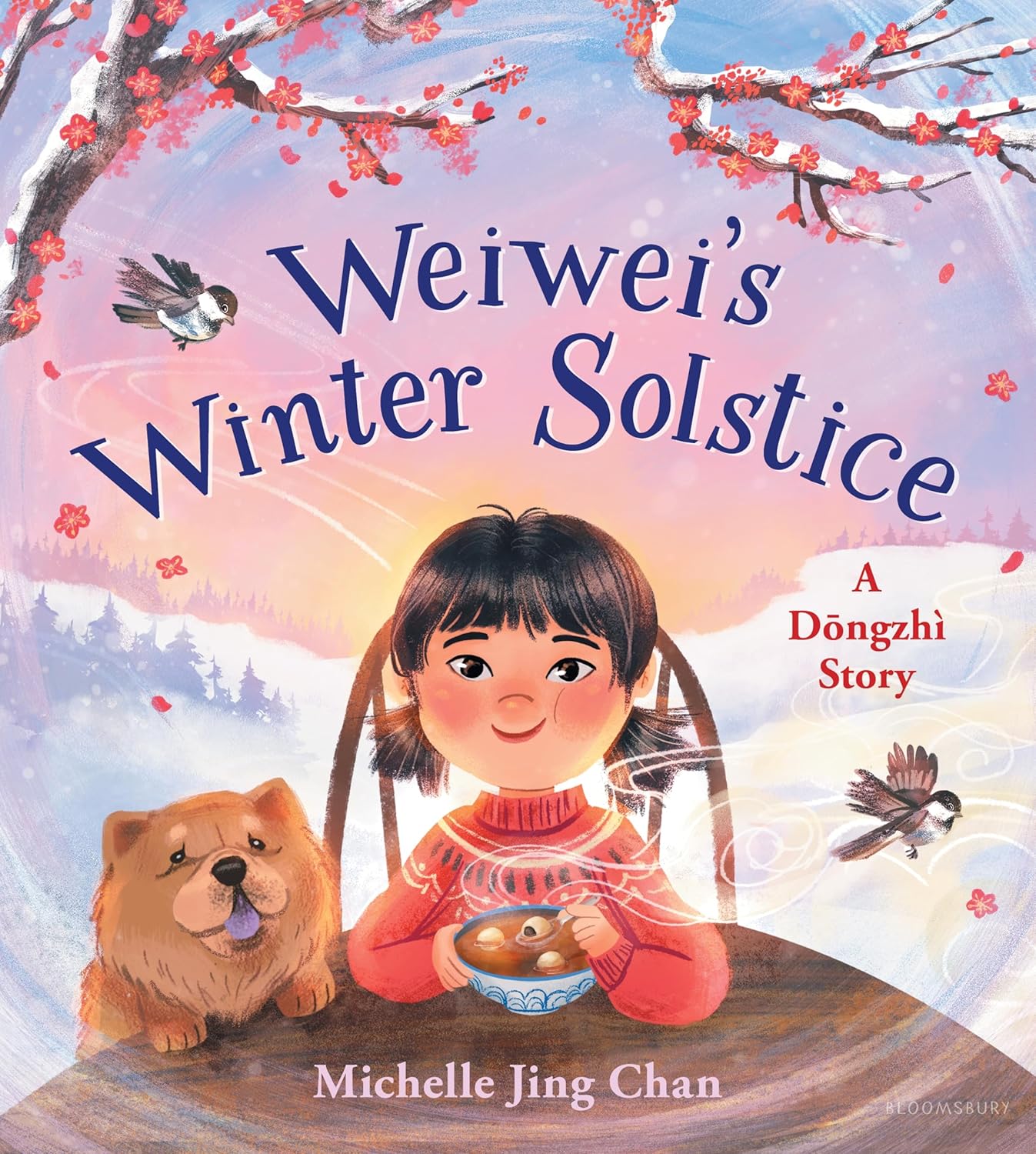
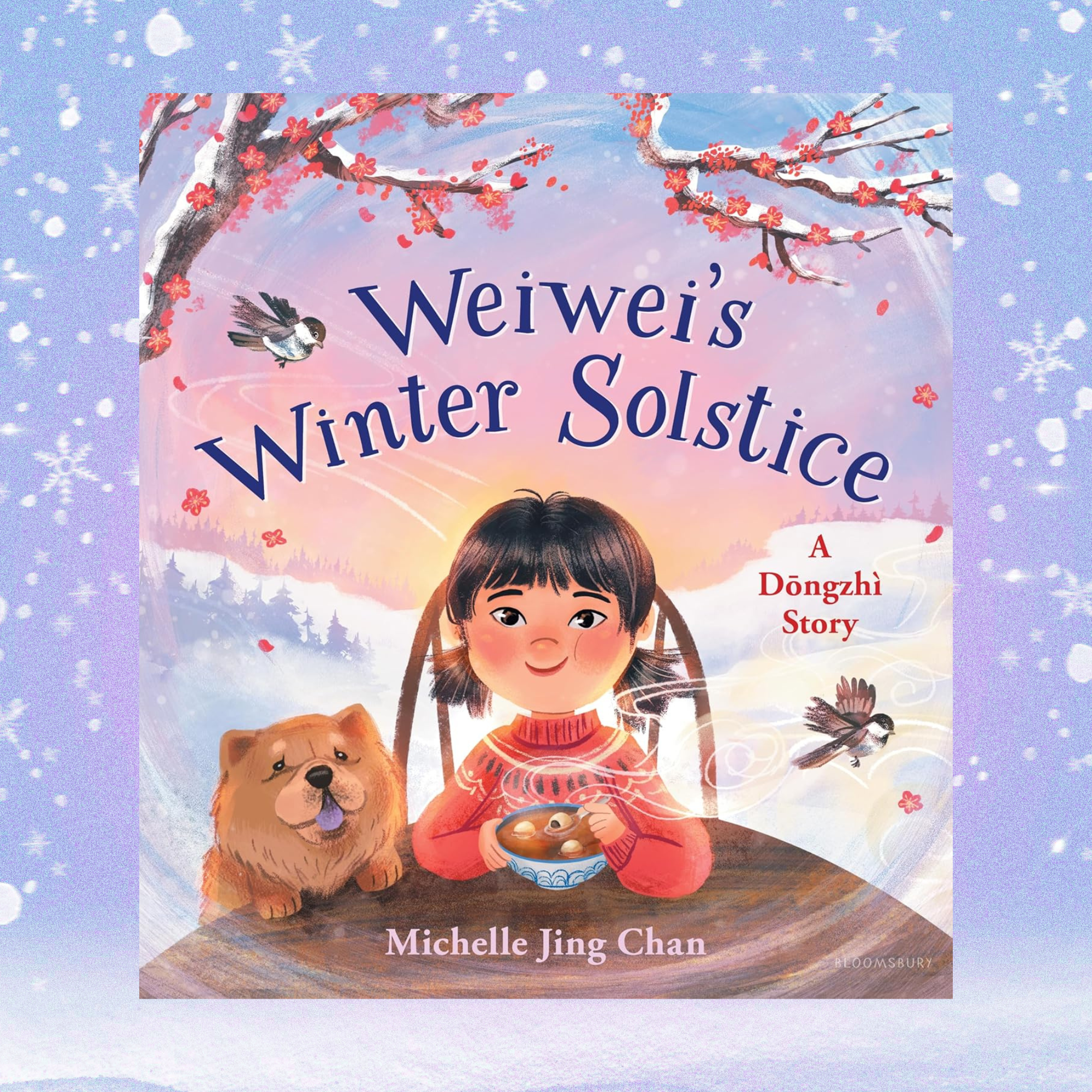
Weiwei’s Winter Solstice: A Dōngzhì Story

By Michelle Jing Chan


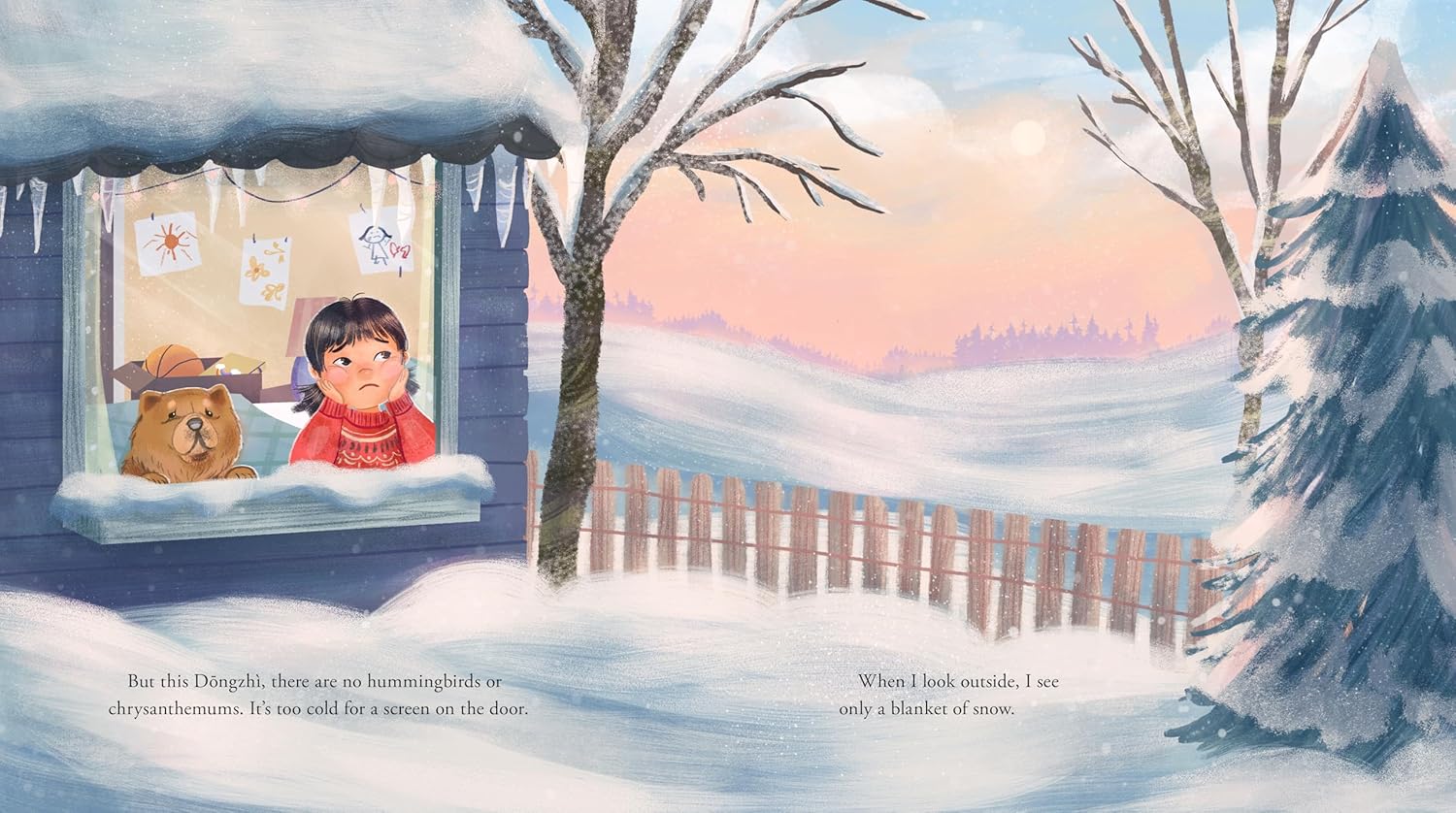
Today is Dōngzhì, the Chinese winter solstice—one of Weiwei’s favorite holidays. But instead of celebrating it by splashing in sprinklers amongst hummingbirds and palm trees at her former home, she’s bundled up in a sweater and blanket as snow covers the ground. For Weiwei Dōngzhì just doesn’t feel the same. Her family—Mama, Baba, her younger brother Didi, and Yeye, her grandfather—are ready for a walk and to play in the snow, but Weiwei can only scowl.

Text and image © 2025 by Michelle Jing Chan. Courtesy of Bloomsbury Children’s Books.

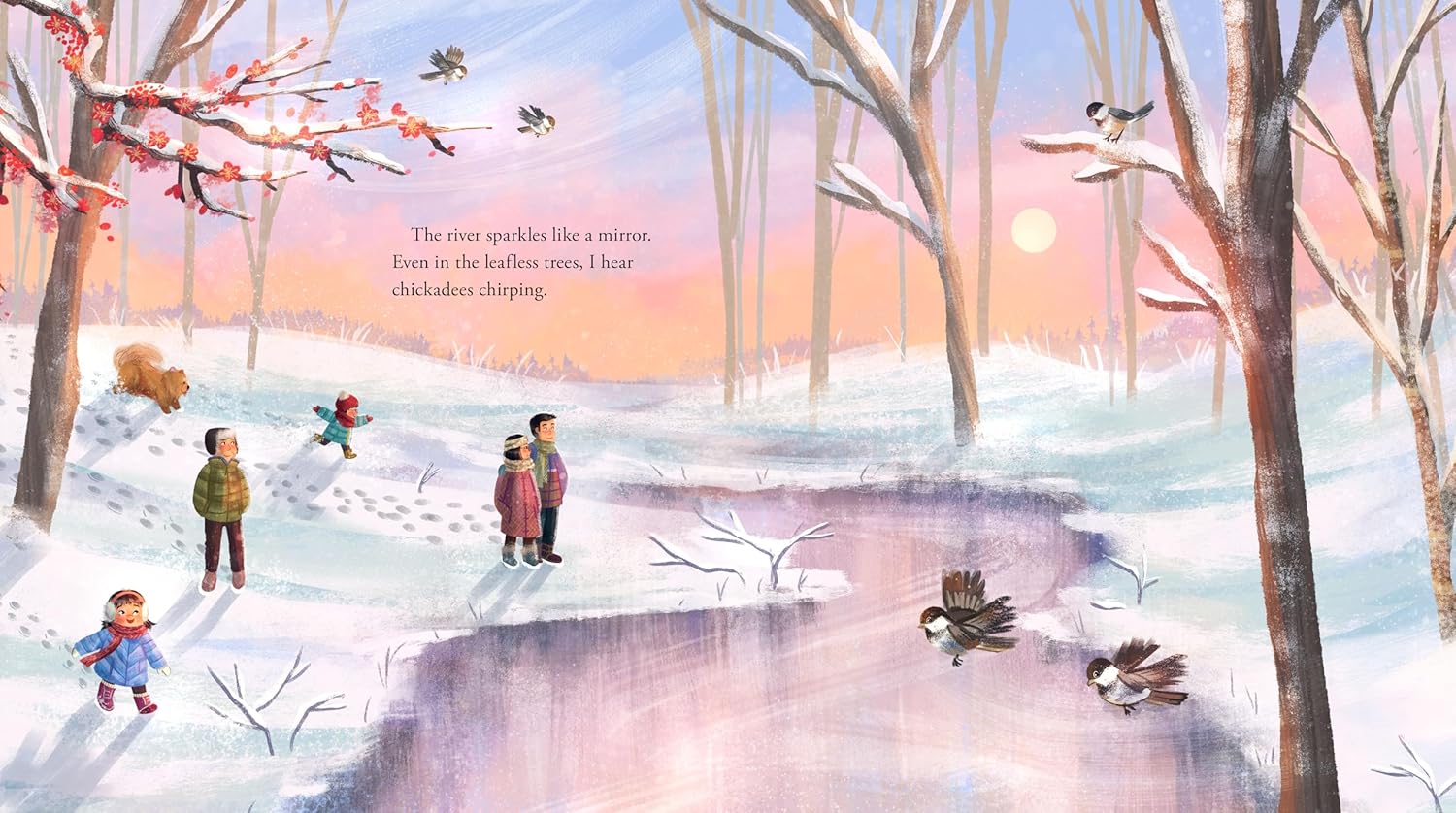
Yet once outside, Weiwei watches her breath cloud in the cold air, catches snowflakes on her tongue, and listens to the snow crunch as they walk. Then, suddenly, Weiwei gasps and points to a tree covered in red flowers. “‘Those are méihuā, plum blossoms!'” Yeye tells her. “. . . No matter how cold and dark it is, they still bloom.'” Weiwei begins to see other signs of life and beauty, but as the sun begins to set, it’s time for the family to go back home. Time for Weiwei’s favorite part of Dōngzhì.

Text and image © 2025 by Michelle Jing Chan. Courtesy of Bloomsbury Children’s Books.

Back home everyone chips in to make tāng yuán. Mama and Didi stir “ground black sesame, sugar, and softened butter into a paste” while Yeye and Weiwei make rice flour dough and Baba makes ginger broth. Then Didi and Weiwei pat the dough into small pancakes, add a bit of black sesame paste, and roll them into balls. The balls simmer in the ginger broth until they float to the top.

Text and image © 2025 by Michelle Jing Chan. Courtesy of Bloomsbury Children’s Books.

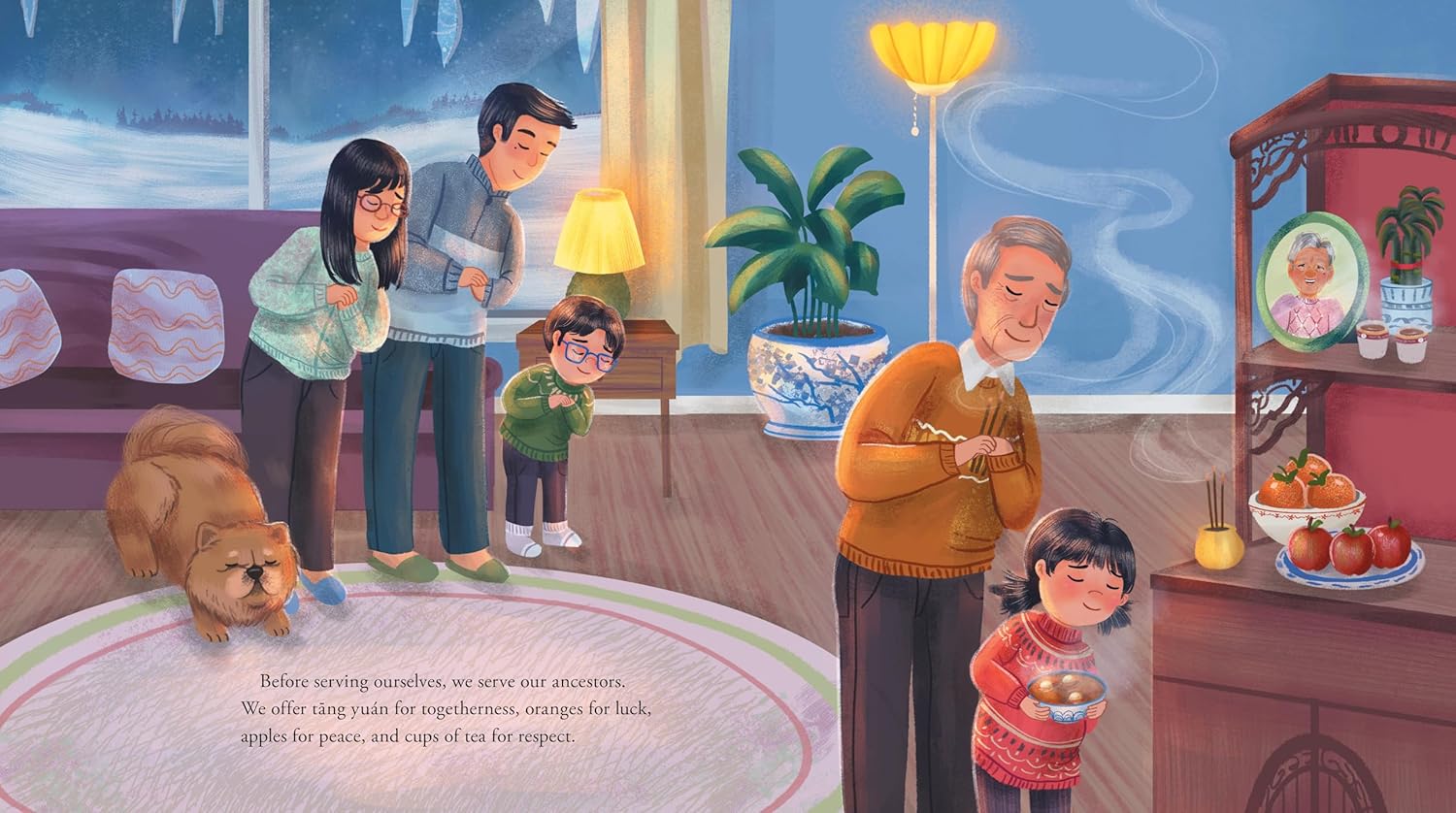
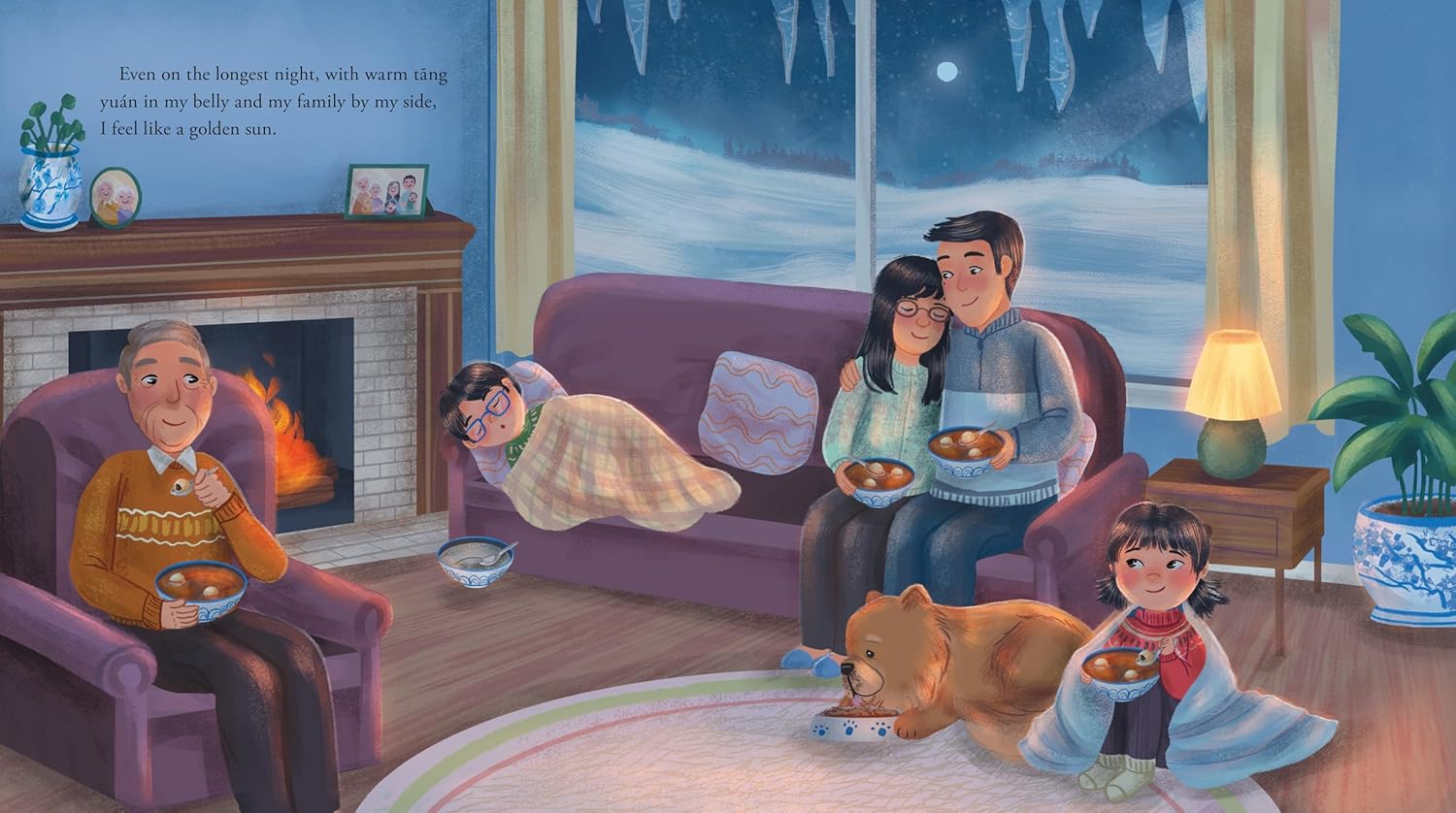
Before Weiwei and her family eat, they serve their ancestors. They “offer tāng yuán for togetherness, oranges for luck, apples for peace, and cups of tea for respect.” Then they eat! To Weiwei, the warm broth feels like a “sip of sunlight,” and Yeye reminds her that warmer days are coming. He tells her he knows it’s hard moving to a new home, “‘but anywhere can feel like home when we celebrate together.'” Weiwei listens to her grandfather and looks around at her cozy home and the people she loves. She knows spring is on its way with new memories to make, and decides that she will “bloom like the méihuā” and savor winter.

An Author’s Note describing the Dōngzhì holiday and how it is celebrated in various Asian countries as well as a recipe for Black Sesame Tāng Yuán follow the story.

Text and image © 2025 by Michelle Jing Chan. Courtesy of Bloomsbury Children’s Books.

Michelle Jing Chan’s warmhearted story of a young girl feeling adrift and disappointed when it comes time to celebrate Dōngzhì in a new home touches on feelings of loss, rediscovery, and the stabilizing comfort of traditions. As Weiwei and her family take a walk through snowy woods instead of the sunny backyard she’s known, she glimpses aspects of familiarity that are further strengthened as she helps prepare and enjoy their customary dish. She recognizes that the Dōngzhì celebration she cherishes as well as her family unit have not changed, allowing her to embrace her new home and look forward to the future.

Chan’s expressive illustrations glow with the togetherness that tāng yuán represents. Even her lovely snowy scenes are lit with peach and gold, as the sun breaks through the winter clouds. Inside, soothing colors highlight the family’s close ties and the comforting flavors of home.

Weiwei’s Winter Solstice: A Dōngzhì Story offers heartening inspiration for readers in the midst of change as well as the comfort of family love and traditions for all. Pair with making the included recipe as a group to create an eventful story time.

Ages 3 – 6

Bloomsbury Children’s Books, 2025 | ISBN 978-1547614844

Michelle Jing Chan is a queer Chinese American illustrator who grew up in Colorado and lives in the Pacific Northwest. Inspired by nature, cultural folklore, and fantasy, Michelle aspires to illustrate diverse, empowering stories her younger self would have loved. When she’s not drawing, she can be found attempting new recipes, reading, or watching spooky TV shows. You can visit her at michellejingchan.com.

Listen to Michelle Jing Chan talk about how her family traditions and a trip to Colorado inspired her to write Weiwei’s Winter Solstice: A Dōngzhì Story below!

You can purchase Weiwei’s Winter Solstice: A Dōngzhì Story from these booksellers

Amazon | Barnes & Noble | Bookshop (Discounted books and support for your local independent bookstore)

Picture Book Review

November 10 – Get Ready for Christmas

About the Holiday

The Christmas season is a time of joy and sharing with friends and family, and if your family includes a pet or pets, you know that they too, of course, are included in the festivities. Special Christmas treats, gifts of new toys, extra hugs, and even silly hats or fancy outfits are all ways we show how much our pets mean to us. Another fun way to celebrate the holidays with your best furry buddy is to include them in story time! Today’s book is a purr-fect choice for laptime with kitties and kiddies. Pups will enjoy it too!

Thank you to Bloomsbury Children’s Books for sending me a copy of this book for review! All opinions on the book are my own.

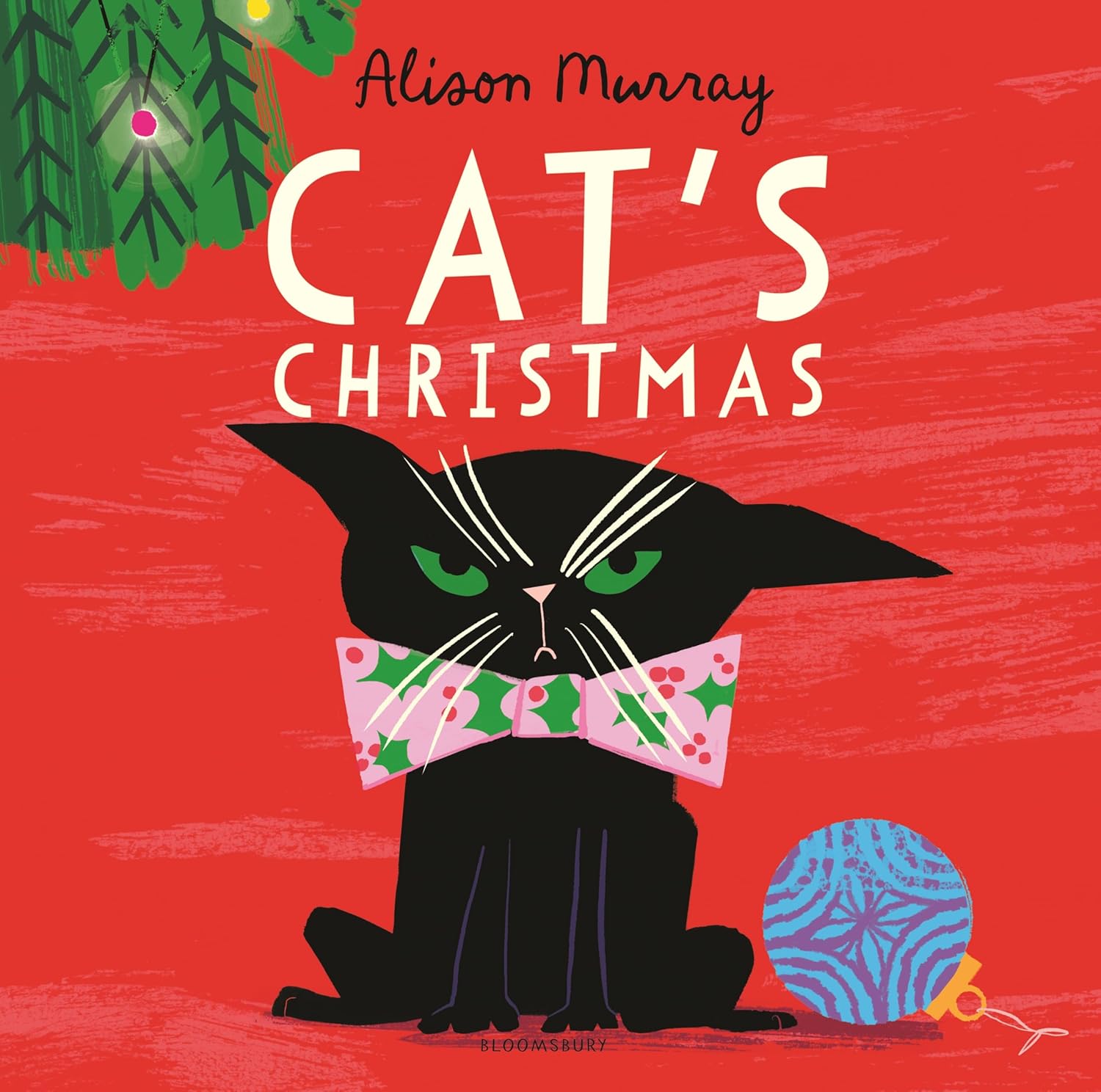
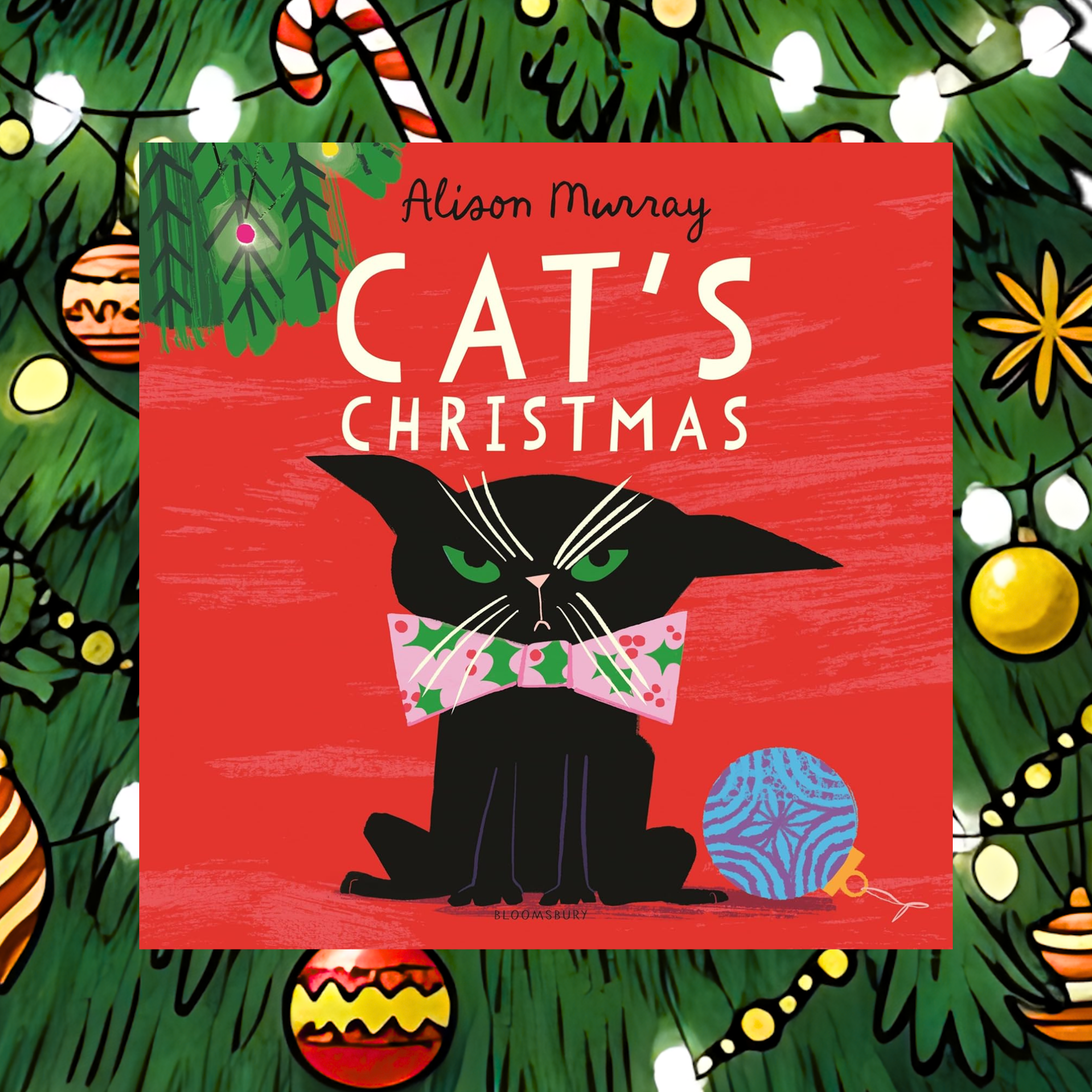
Cat’s Christmas

By Alison Murray


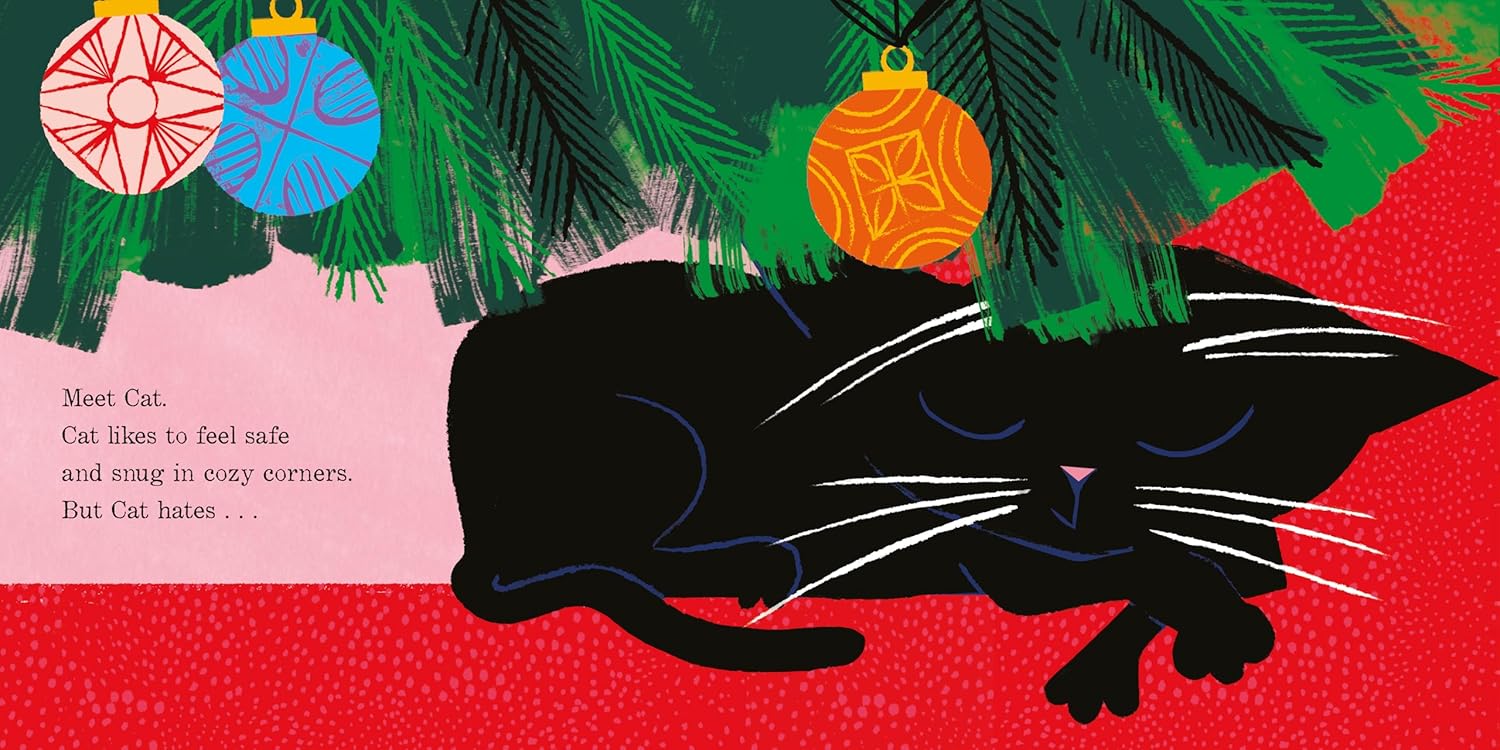
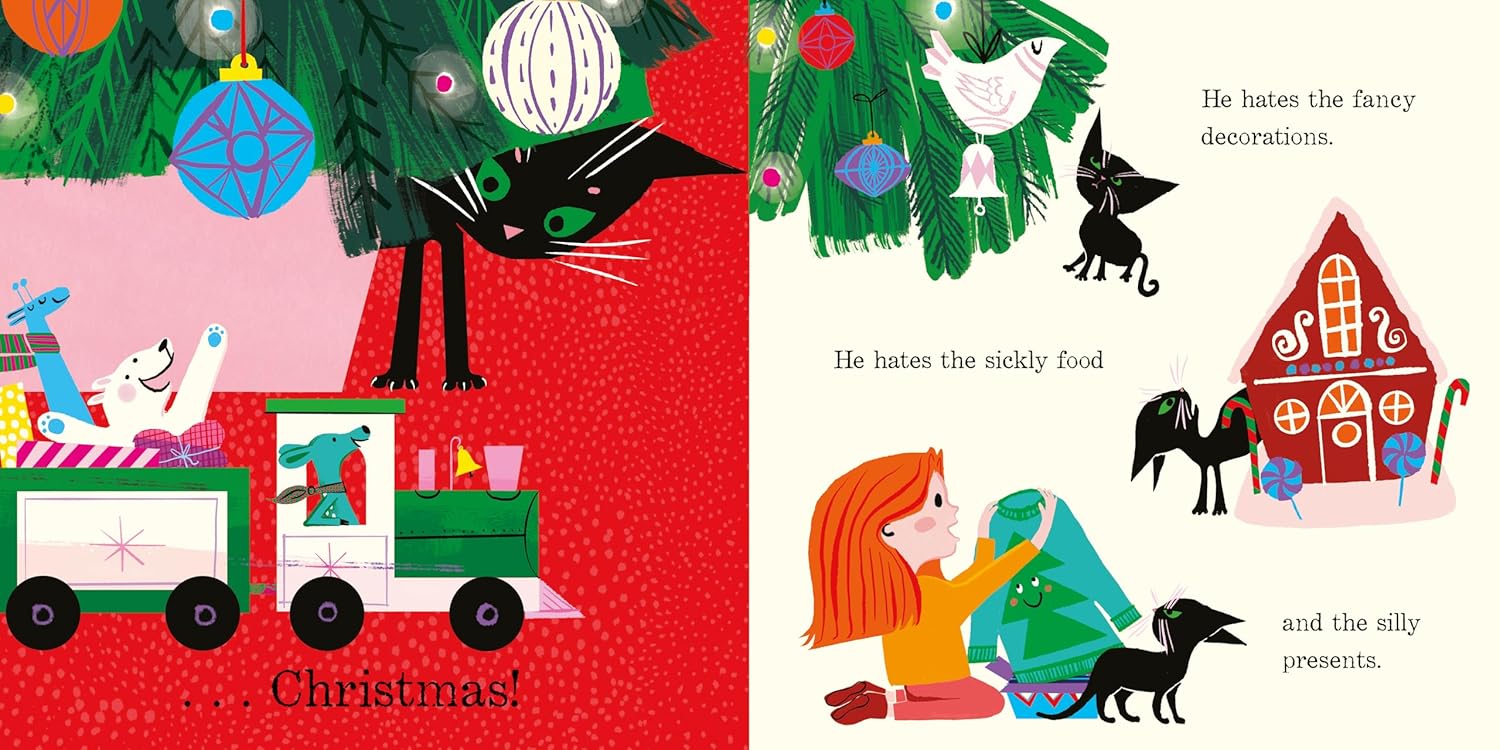
Cat likes many things. He likes feeling snug. He likes his favorite chair. He likes feeling snug in his favorite chair with his favorite person. But Cat has a special feeling for Christmas, and it is—to say the least—not positive. Is there anything Cat does like about the holiday? Well, “he hates the fancy decorations,” the sticky, sugary food, and even the presents. And visitors of a dachshund variety really makes his fur stand on end.

Cat tries to tell his people why he’s so displeased, but his method of communication is just not appreciated. And when the Christmas tree comes crashing down, he’s ordered out. Out Cat goes into the snow. Up on a high branch, “Cat yowls and howls and meow-wow-wows into the quiet night.”

Illustration and text © 2025 by Alison Murray. Courtesy of Bloomsbury Children’s Books.

The cloudy night seems to hear his cries, and briefly the clouds part. “Cat LOVES to see the moon and stars in the clear night sky, and he marvels at the beauty of the world.” But Cat’s wonder is short-lived as rain begins to fall, dripping “from his whiskers into his eyes” and . . . making his “fur stick to his skin” and . . . the branch “slippery under his paws.” Cat is ready to go home.

He passes by all the leftover Christmas trappings and jumps into his favorite chair with his favorite person, who is so happy to see him. She wraps him in a towel and cuddles him then gives him his very own present—which turns out to be—despite the silly bowtie—just perfect.

Illustration and text © 2025 by Alison Murray. Courtesy of Bloomsbury Children’s Books.

Hilarious and heartfelt, Alison Murray’s Cat’s Christmas is a gift to all feline lovers. Through her fast-paced storytelling and expressive illustrations, Murray perfectly captures the inquisitive and opinionated personality of cats as well as their singular style of making themselves seen and heard. Turning the page from all the clatter of Christmas and Cat’s yowling to his glimpse of the beautiful night sky is wondrously stirring as Murray fills the darkness with colorful orbs of shimmering light. As the sudden rainfall sends Cat back inside, readers will be wrapped in the cozy, homey feeling that Christmas brings.

Sure to be opened again and again, Cat’s Christmas is a sweet, funny, and cozy holiday delight for all cat and pet lovers.

Ages Baby – 5

Bloomsbury Children’s Books, 2025 | ISBN 978-1547617593

Alison Murray is a Glasgow based author and illustrator. She studied Textile Design at Glasgow School of Art, and Design for Interactive Media at Middlesex University, London. Her first book Apple Pie ABC was shortlisted for the Scottish Children’s Book Award and in the United States won the 2012 Charlotte Zolotow Honor Book award for outstanding writing in a picture book. Her books have been shortlisted and longlisted for the Bookbug Picture Book Prize, the Scottish Children’s Book Awards, and the UK Literary Association Award. 

You can purchase Cat’s Christmas from these booksellers

Amazon | Barnes & Noble | Bookshop (discounted books and support for your local independent bookstore)

Picture Book Review

September 19 – Friendship Month

About the Holiday

Do you have friends you haven’t seen or talked to in a while? Is there someone new at work or school who could use a friend to show them the ropes or eat lunch with? If so, this month’s holiday gives you the opportunity to reach out and say hi. The holiday was instituted by the Oddfellows (shortened from The Grand United Order of Oddfellows Friendly Society (GUOOFS)), an international fraternity that dates back to 1730s England, with the hope of encouraging people to make friends. Friendship Month is a super time to show kindness to those friends you know and those you don’t—yet!  

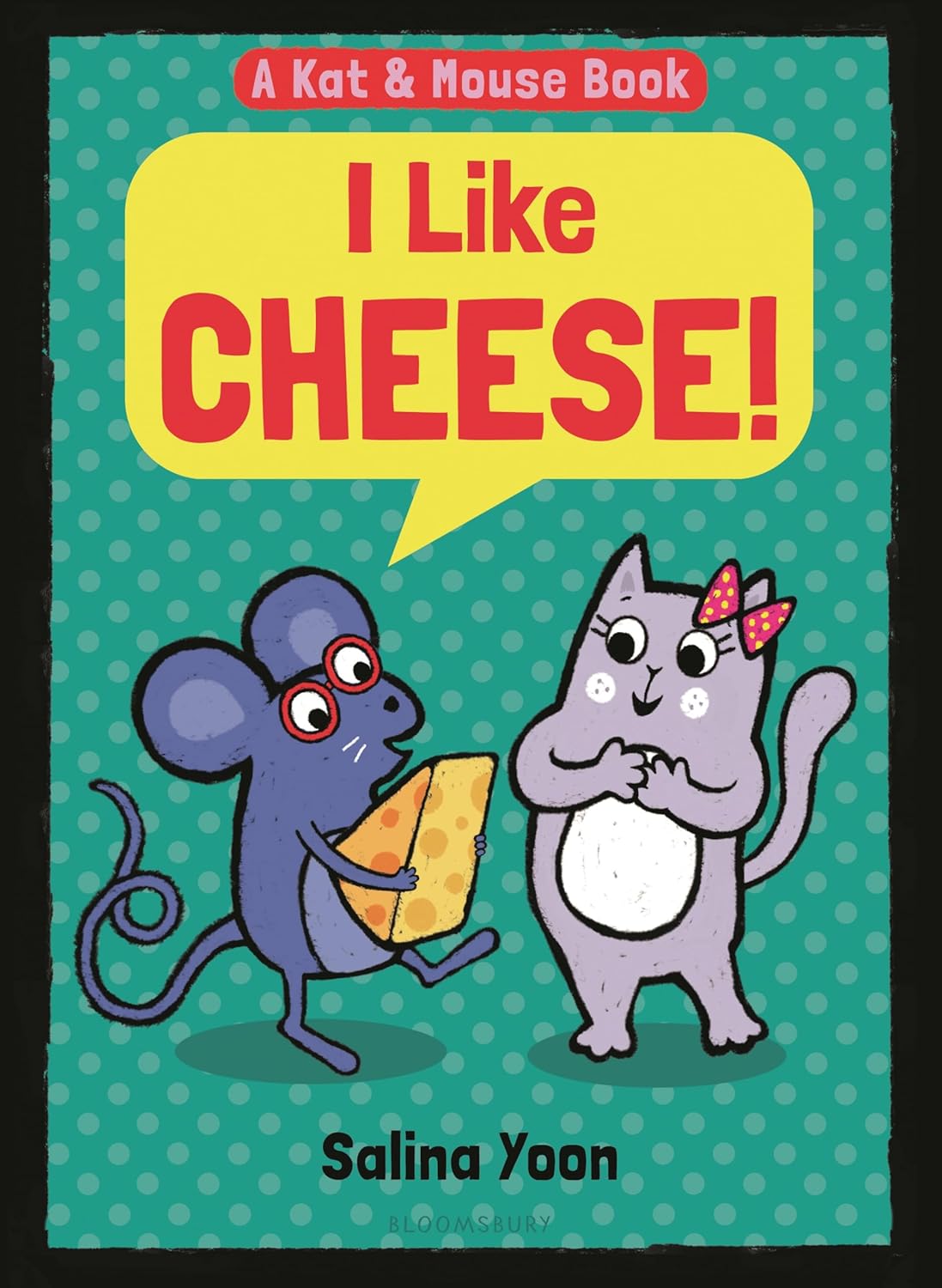
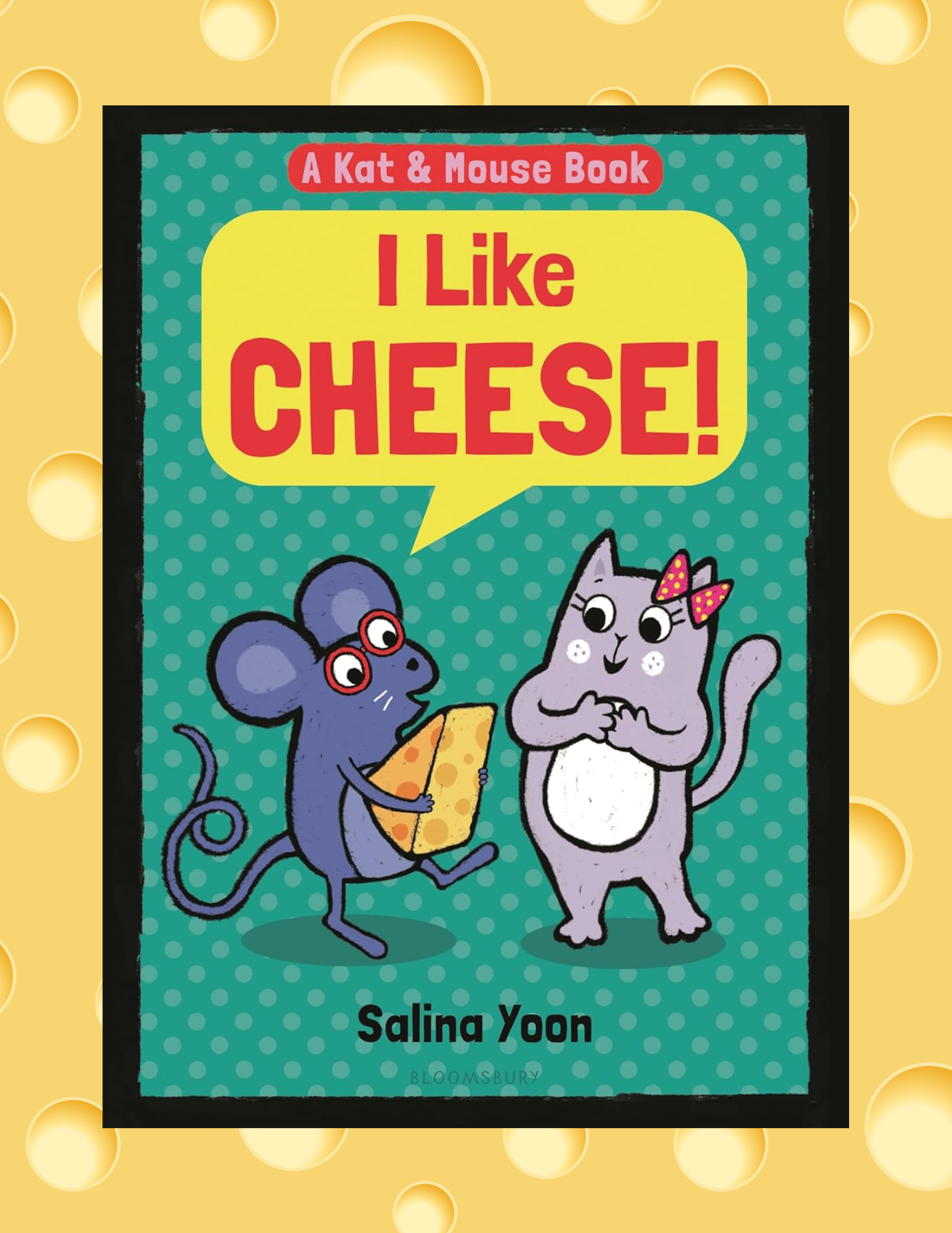
Kat & Mouse: I Like Cheese

By Salina Yoon


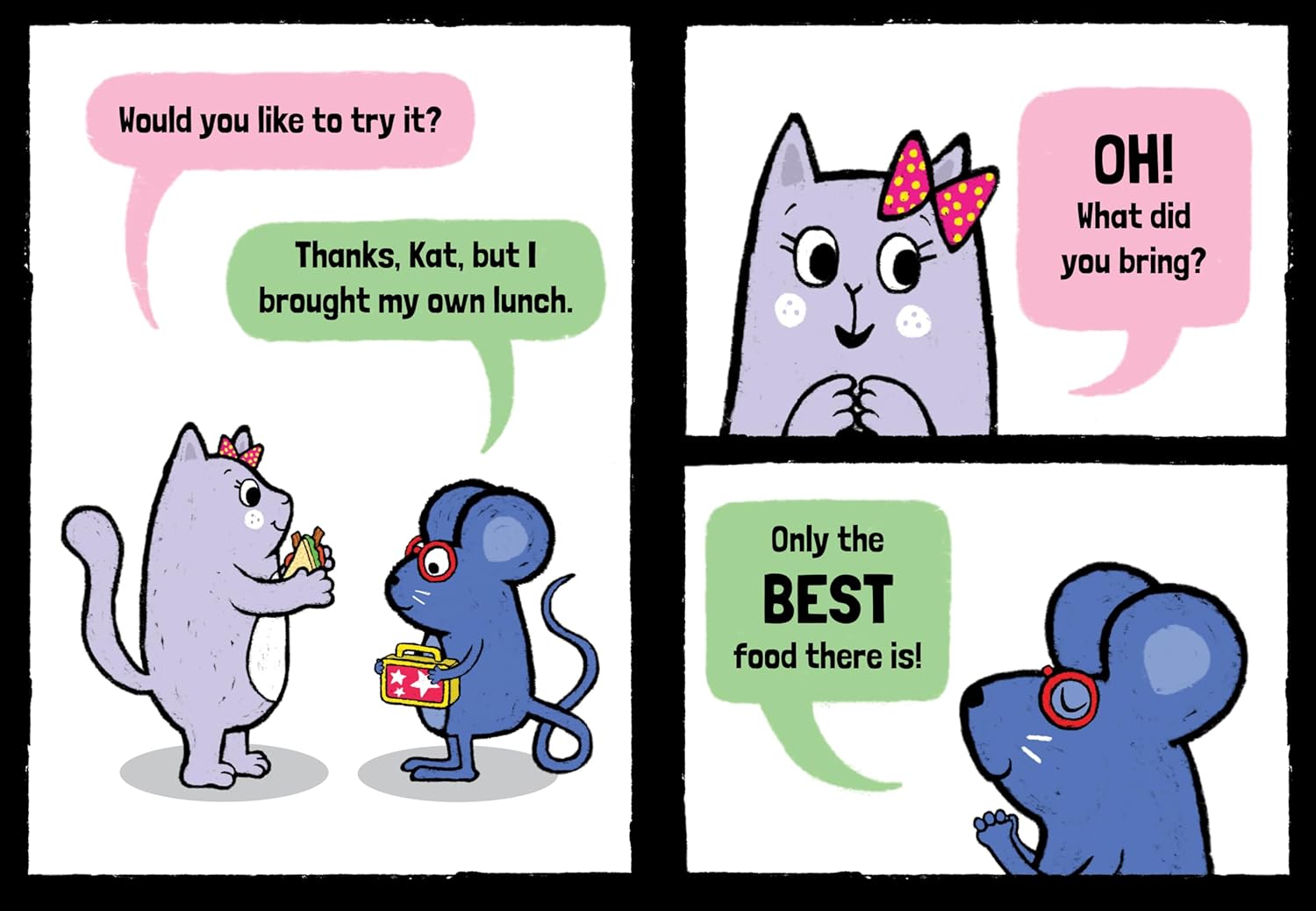
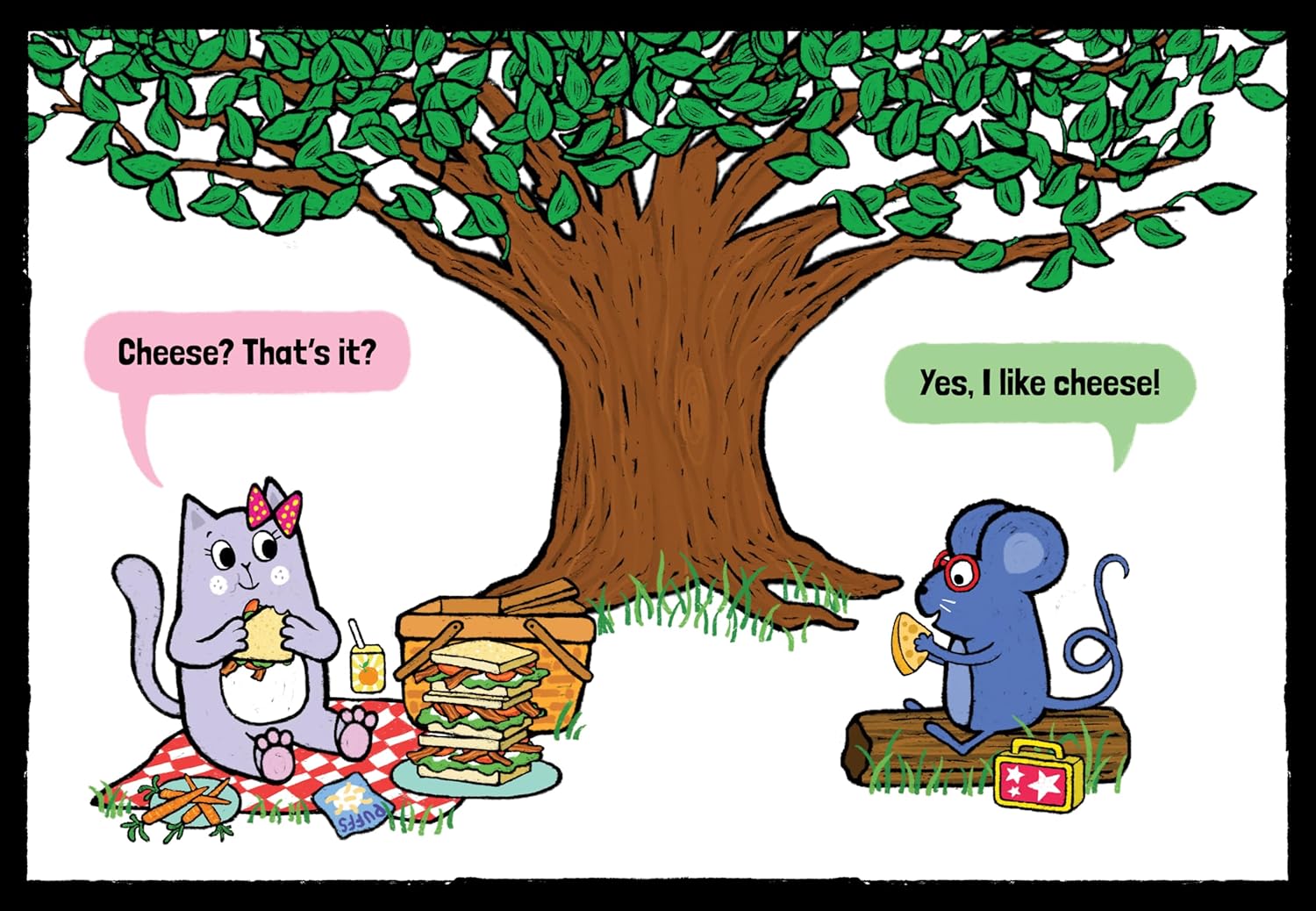
Every day Kat and Mouse meet for lunch. Every day Mouse brings “the BEST food there is: “CHEESE!,” while Kat mixes it up with a new kind of “delicious” or “spectacular” or “MEOW-velous” sandwich that she introduces with dramatic flair. Each day, Kat offers to let Mouse try some of her sandwich, but Mouse always declines, assuring her that he likes cheese. 

Text and illustration © 2025 by Salina Yoon. Courtesy of Bloomsbury Children’s Books.

One day, while lounging in the wading pool Kat has brought along to their noon-time meet-up, she asks Mouse, “Don’t you ever get bored with your lunch?” Mouse reminds her that he likes cheese, and then wonders: “But Kat, do you ever get bored with me?” After all, he reflects, “I always eat the same lunch, packed in my same lunchbox, and sit on the same log.” 

Thinking about it, Kat decides that they “really are different” and suggests they eat separately the next day. With sadness they go their own ways. The next day finds Mouse on his log with a hunk of blue cheese. Kat has chosen to eat a hotdog under an umbrella attached to a rocking horse.

Text and illustration © 2025 by Salina Yoon. Courtesy of Bloomsbury Children’s Books.

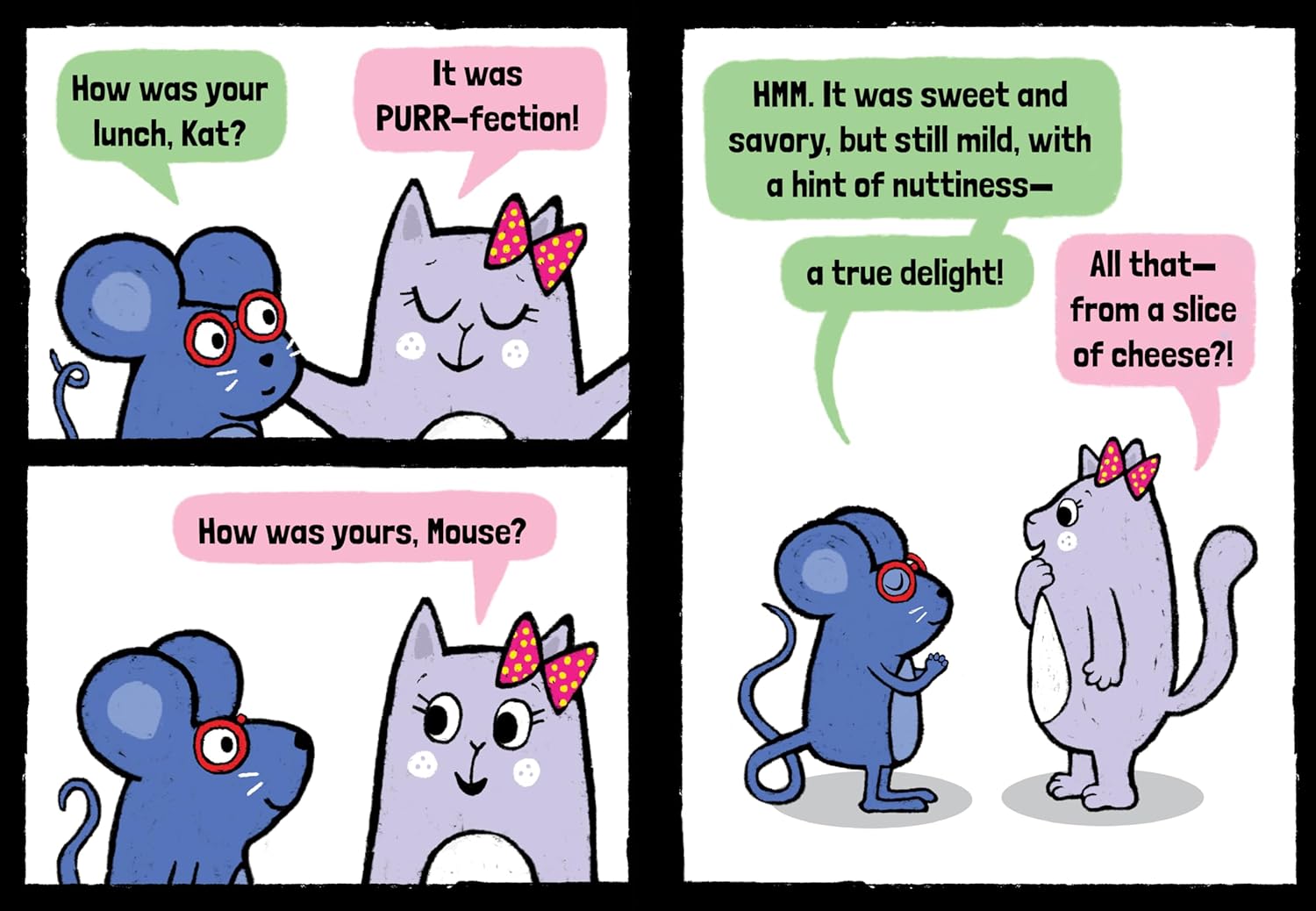
The day after that, Mouse and Kat meet and ask each other how their lunches were. Kat admits that eating lunch alone was “Awful.” Mouse concurs, revealing that his lunch was “gloomy and blue. Even my blue cheese tasted bluer than usual.” Kat regrets recommending the separation, apologizes, and declares that “some things should not change—like our friendship!”

Mouse is happy to resume their usual lunches, but acknowledges that “it’s ok to try new things, too.” Kat perks up. Did Mouse bring a NEW lunch? Indeed he did! In fact, he brought something they will both like. What does he call it? Join them for lunch and find out!

Text and illustration © 2025 by Salina Yoon. Courtesy of Bloomsbury Children’s Books.

Salina Yoon’s latest early reader series introduces kids to a new besties duo that will steal young readers’ hearts. Sweet and funny, Yoon’s story plays out in dialogue, the back and forth indicated through pink speech bubbles for Kat and green bubbles for Mouse. Their straightforward conversations are humorously punctuated by cinematic-worthy full-page spreads that pop with superhero bursts, bright lights, and bold signage.

Repeated words and phrasing (including some of the ingredients to Kat’s sandwiches) flow smoothly and naturally throughout the story, giving emerging and new readers confidence and pleasure in reading independently. Kat and Mouse’s appreciation and love for each other is infectious, and small moments between them hint at the charming personality traits kids have to look forward to in future series titles. 

Kicking off an endearing and enchanting new graphic early reader series, Kat & Mouse: I Like Cheese is sure to be a favorite on any young reader’s bookshelf and enjoy constant circulation at any library. 

Ages 5 – 7 

Bloomsbury Children’s Books, 2025 | ISBN 978-1547612420

About the Author/Illustrator

Salina Yoon is an award-winning author-illustrator of nearly two hundred books for children, including Duck, Duck, Porcupine!, the Penguin series, the Bear and Floppy series, and Be a Friend. She studied art and design at the Art Center College of Design in Pasadena, California, and now lives in San Diego with her family. Visit her at salinayoon.com.

Friendship Day Activity

celebrate-picture-books-picture-book-review-give-me-your-hand-puzzle

Give Me Your Hand! Puzzle

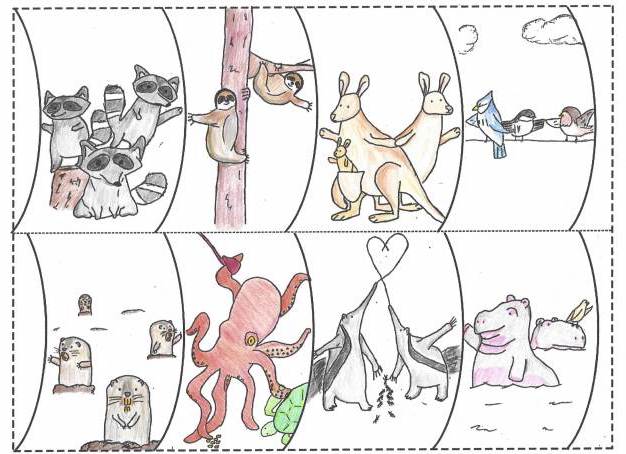
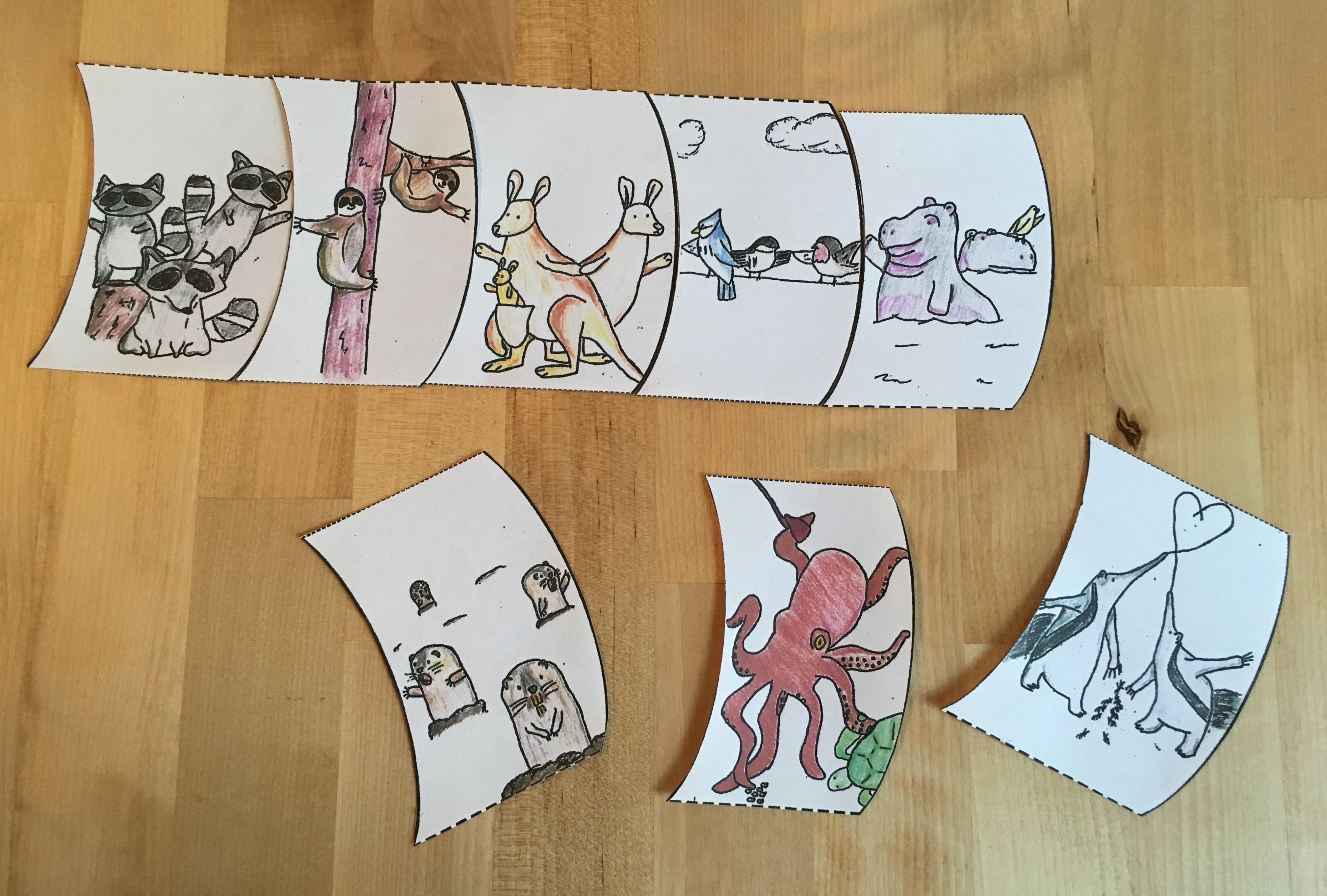
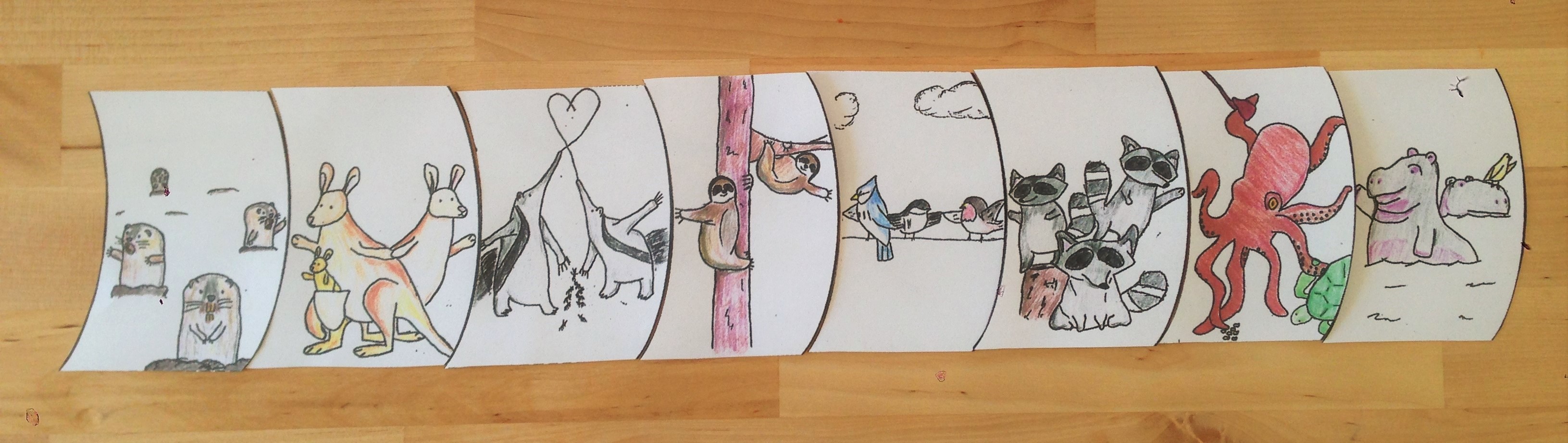
In this Give Me Your Hand! Puzzle, everyone is welcomed with a handshake. Offering friendship to all, the interchangeable pieces can be mixed and matched as the animals become buddies with one another. 

Supplies

celebrate-picture-books-picture-book-review-UN-day-puzzle

Directions

  1. Print the puzzle: to make the puzzle sturdier: Print on heavy stock paper or glue the page to poster board
  2. Color the pictures with colored pencils or crayons
  3. Cut the pieces apart
  4. Switch the pieces around to make many alternate pictures

celebrate-picture-books-picture-book-review-UN-day-puzzle

You can purchase Kat & Mouse: I Like Cheese! from these booksellers

Amazon | Barnes & Noble | Bookshop (discounted books and support for your local independent bookstore.)

Picture Book Review

May 16 – National Share a Story Month

About the Holiday

This month is all about sharing stories! Whether you’re regaling listeners with an anecdote from your life or reading a picture book to kids, sharing stories is one of the best ways to connect with others, pass down experiences, and spark imaginations. The emotions shared while laughing or commiserating together while telling or listening, create bonds that uplift, teach, and lead to unforgettable memories. Today’s book is an effervescent celebration of all the stories that make up a life.

Thanks go to Bloomsbury Children’s Books for sending me a copy of Yay! for review.

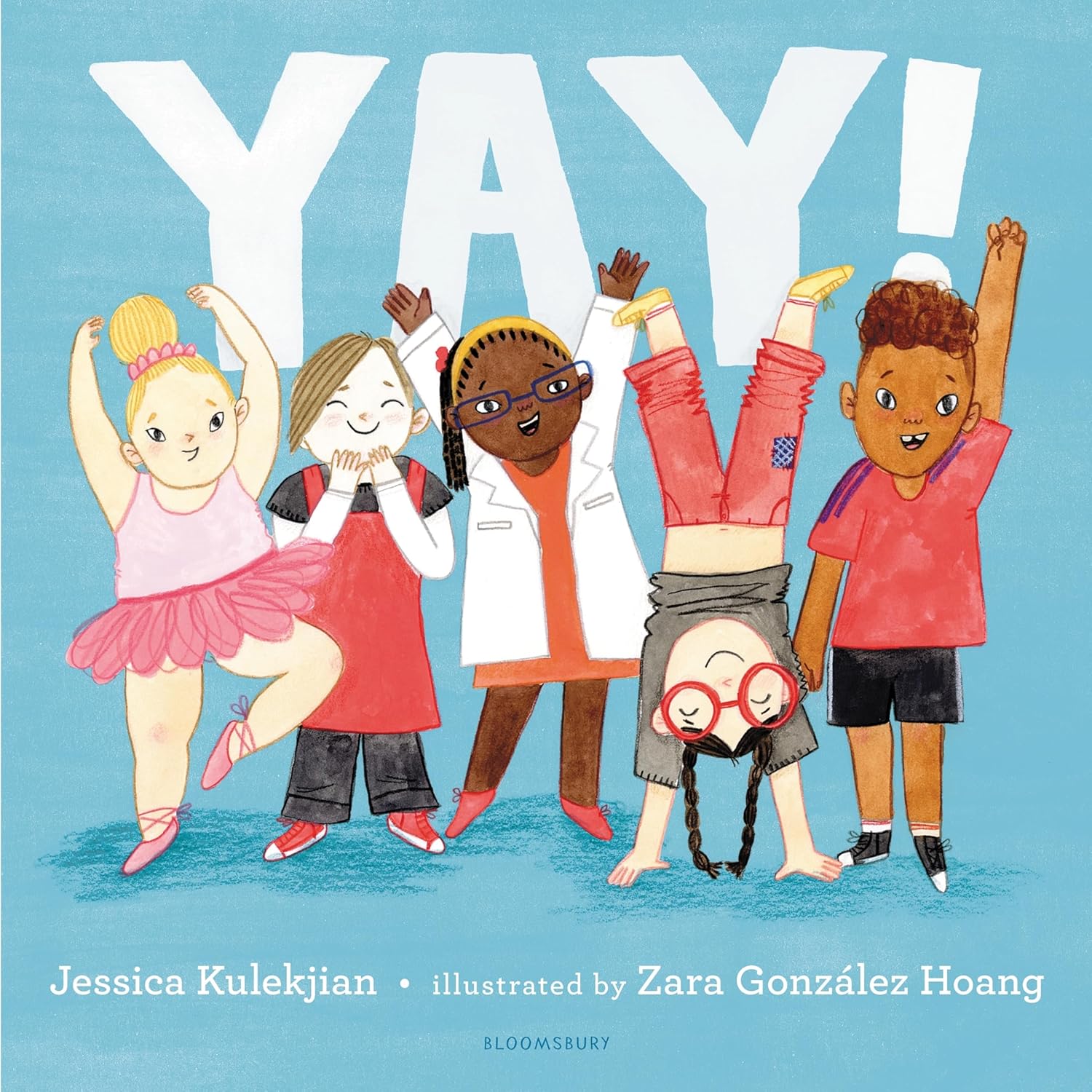
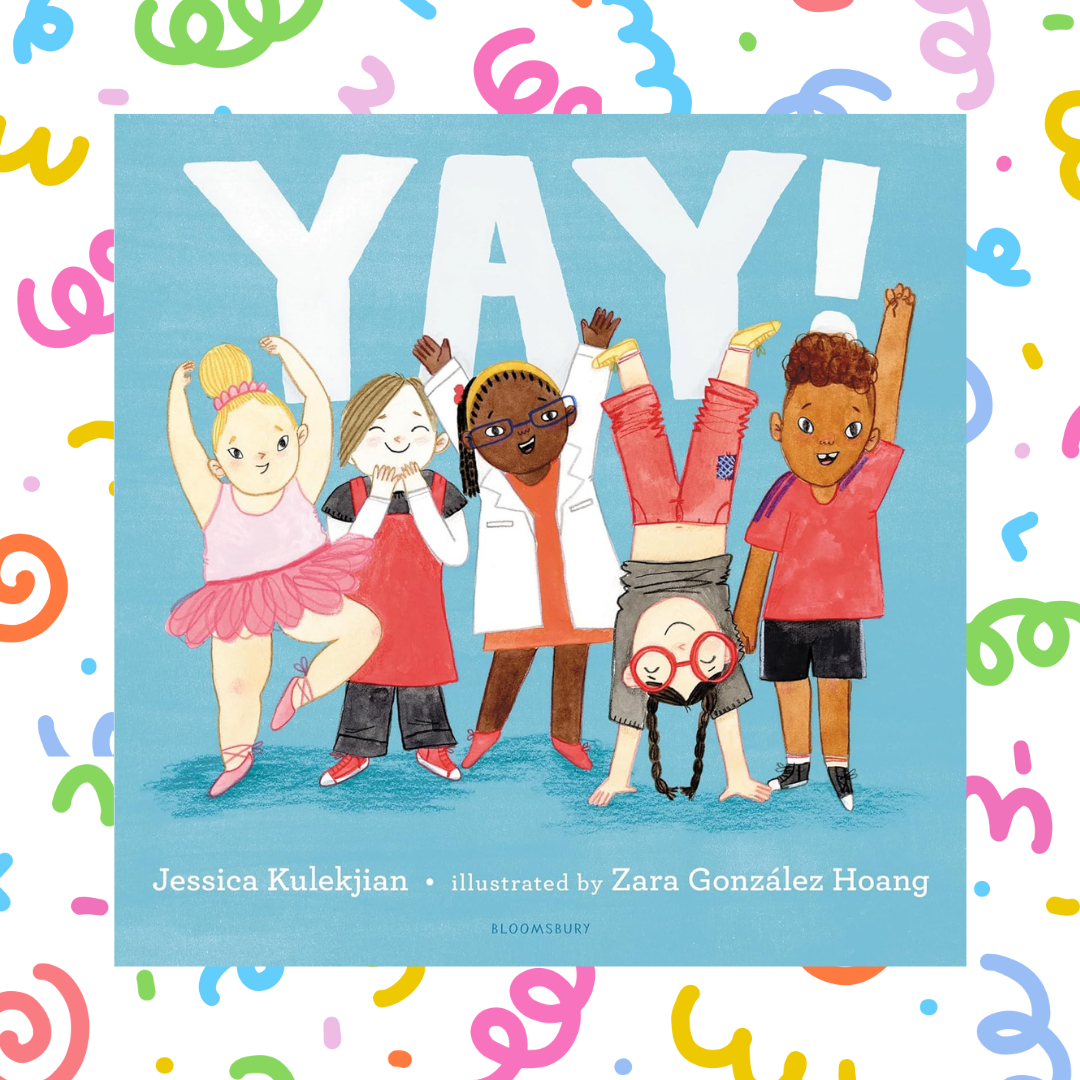
Yay!

Written by Jessica Kulekjian | Illustrated by Zara González Hoang


In childhood there’s so much to celebrate! From a child’s first steps to their first day of school to the first time they perfect a skill they’ve been “practicing again and again, they deserve a “Yay!” “Yays” also buoy kids who continue to strive and overcome even when every step is hard. Of course, no one can win them all, but so what. “Yay anyway!” 

Illustration © 2025 by Zara González Hoang, text © 2025 by Jessica Kulekjian. Courtesy of Bloomsbury Children’s Books.

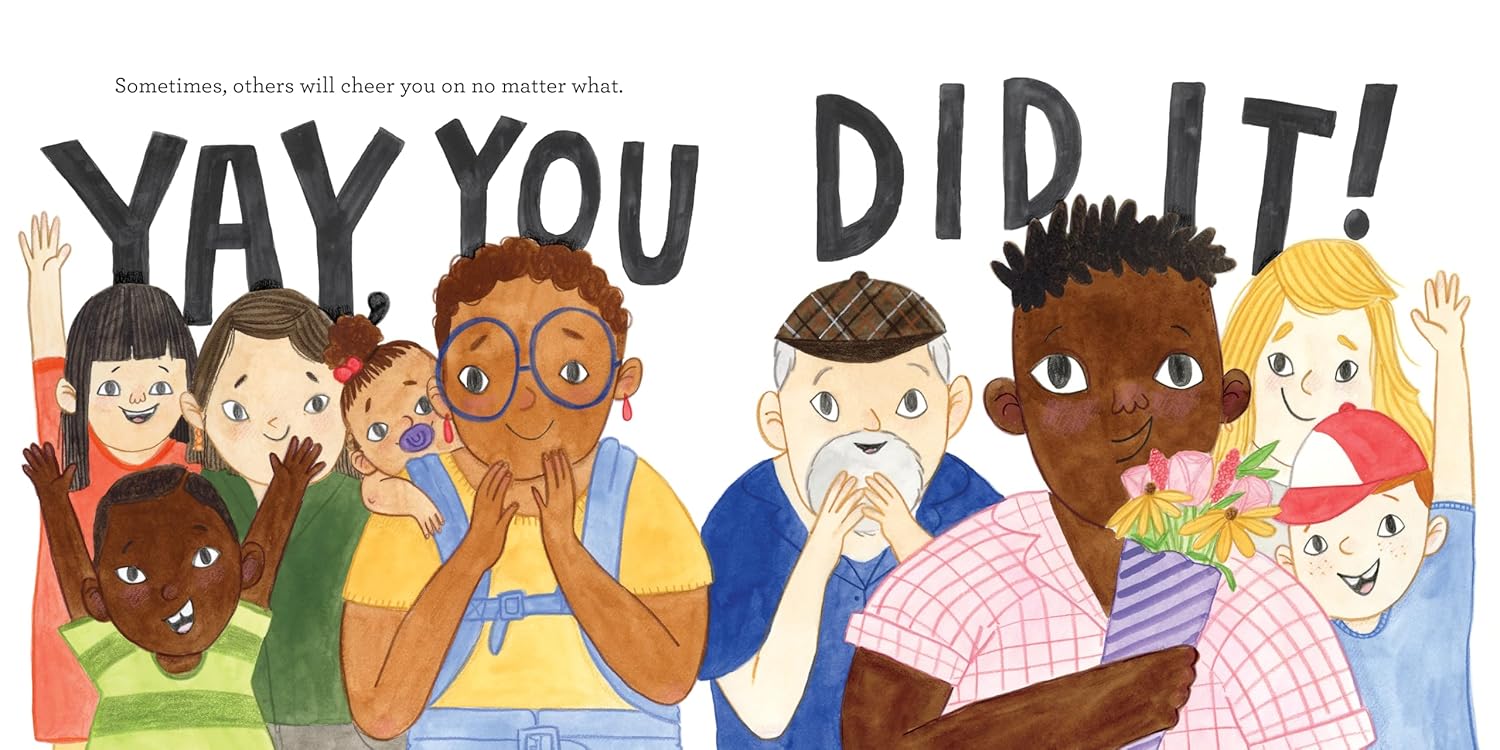
“Sometimes, others will cheer you on no matter what. Yay, You did it! Other times, your voice is the only cheer you hear.” Give yourself a “Yay, Me!” And why all these “Yays?” Because so much is waiting for every child and they have so much in their mind and their heart. So much to be celebrated!

Illustration © 2025 by Zara González Hoang, text © 2025 by Jessica Kulekjian. Courtesy of Bloomsbury Children’s Books.

Jessica Kulekjian’s rousing acknowledgement that all of life’s accomplishments—big, small, and even simply attempted—deserve praise and celebration offers the kind of uplifting encouragement that fosters pride and confidence in children learning to navigate their world as individuals with unique viewpoints and talents. Her flexible text allows adults and children to talk about “firsts” to come, reminisce about achievements in the past, and celebrate, over and over, life’s events, whether they’re easy, hard-earned, funny, or surprising. 

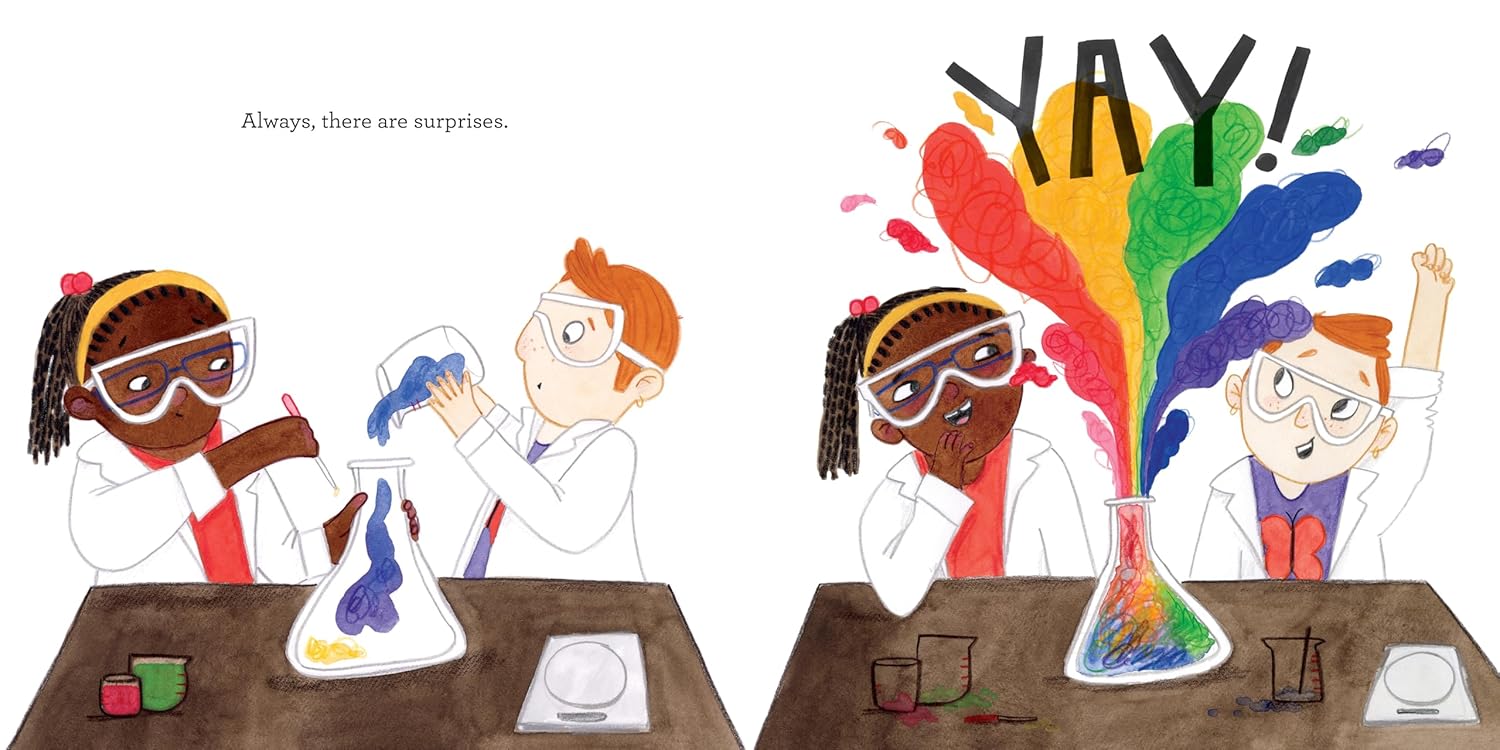
You can almost hear the children in Zara González Hoang’s illustrations cheering for themselves and others as they enter a classroom for the first time, perfect ballet moves, complete an uphill hike using forearm crutches, and win a board game. From a track meet to the playground, from a kitchen to a classroom lab, these joyful kids will inspire your kids to find all the “Yay!”-worthy moments in their day, every day.

Illustration © 2025 by Zara González Hoang, text © 2025 by Jessica Kulekjian. Courtesy of Bloomsbury Children’s Books.

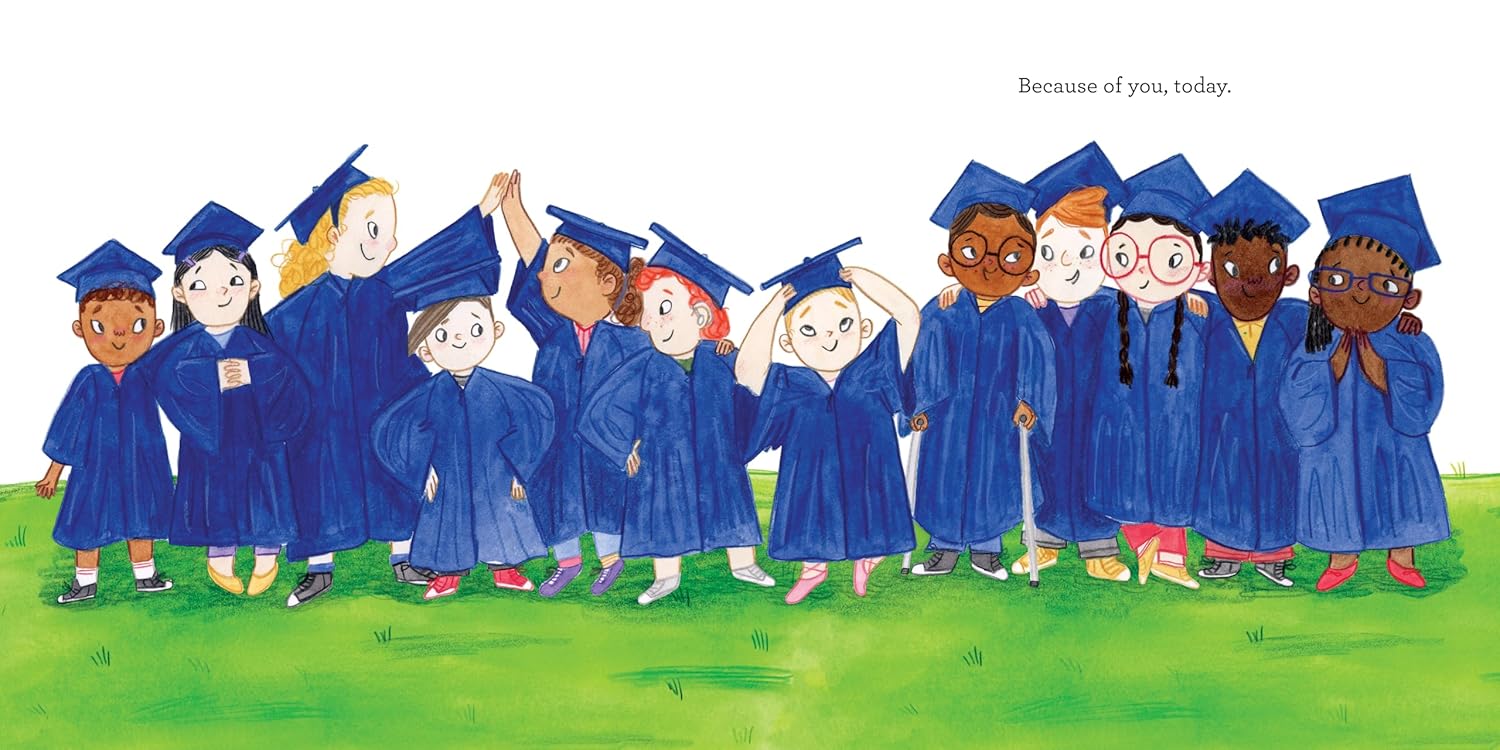
Yay! would be a much-loved and inspirational addition to home, classroom, and library picture book collections. The book would make an especially meaningful gift for the end of the school year to celebrate graduations, recitals, ceremonies, and other occasions. 

Ages 3 – 6

Bloomsbury Children’s Books, 2025 | ISBN 978-1547609215

Jessica Kulekjian first discovered her love for storytelling during a young author’s contest in elementary school. Even though she lost (three times!), she didn’t give up writing. After years of practice, and with lots of encouragement from family, friends, teachers, and other storytellers, Jessica became the author of picture books, including First Notes of Spring and Before We Stood Tall: From Small Seed to Mighty Tree. Jessica has an MA in teaching and works at a public charter school, supporting homeschooling families. She lives with her husband and three kids in Central California. Connect with her at jessicakulekjian.com, on Instagram @jessicakulekjian, and Twitter @jesskulekjian.

Zara González Hoang is a picture book author and illustrator. She grew up in a little bungalow in the frozen tundra of Minnesota. Surrounded by snow she spent her days dreaming, doodling and listening to the colorful stories of her Dad’s life growing up in Puerto Rico while trying to figure out where she fit in as a mixed-race Latina Jew in a sea of Scandinavians. These days, she lives outside of DC in a magical suburban forest with her Mad Man husband, human-shaped demons and curly-coated corgi. She still spends her days dreaming and doodling, but now instead of listening to stories, she’s starting to tell some of her own. Connect with her at zaralikestodraw.com and @zarprey on Instagram and Twitter.

National Share a Story Month Activity

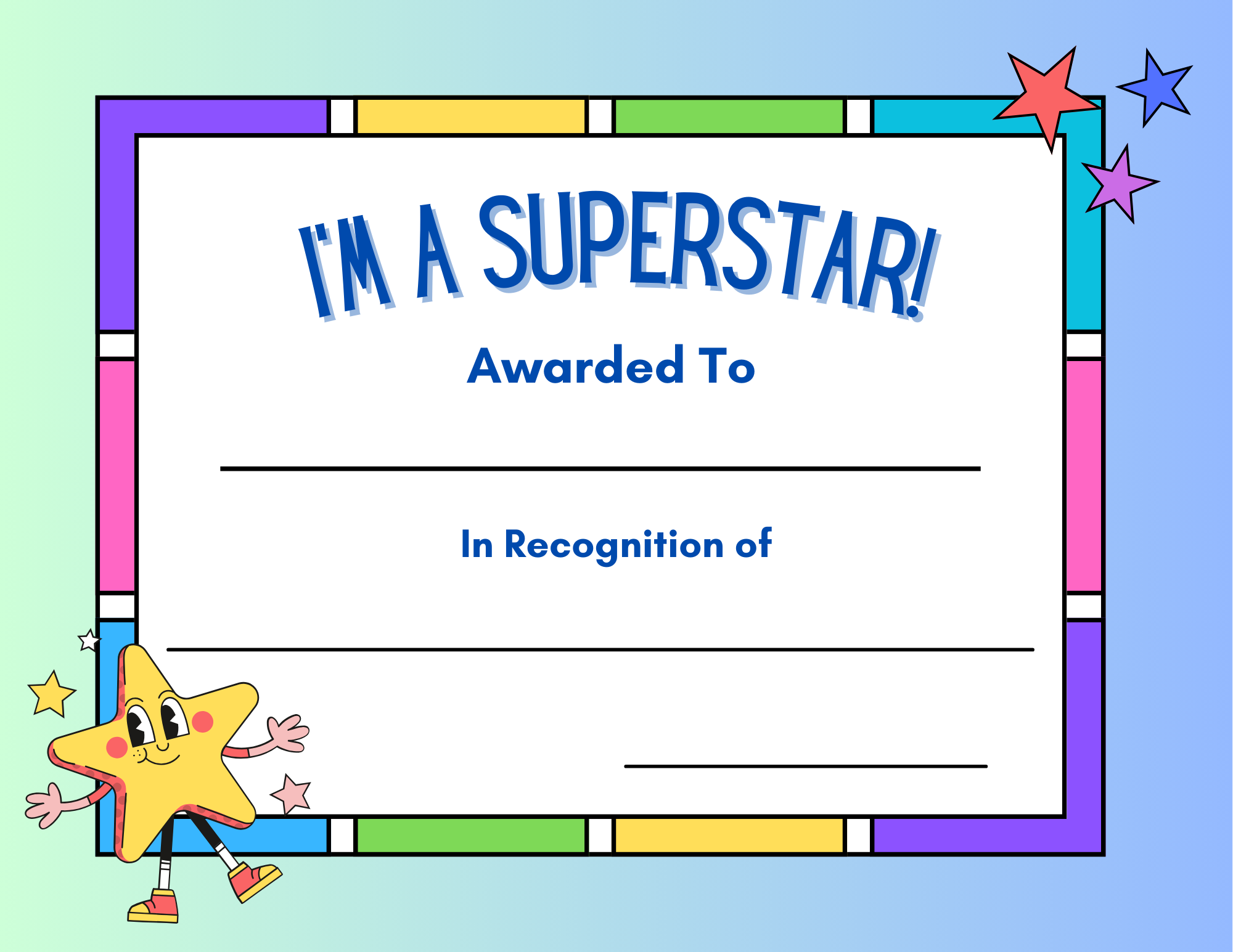
I’m a Superstar! Award Certificate


Kids can celebrate their super accomplishments with this I’m a Superstar! Award Certificate!

You can purchase Yay! from these booksellers

Amazon | Barnes & Noble | Bookshop

Picture Book Review

May 13 – Get Ready for International Museum Day on May 18

About the Holiday

International Museum day was created in 1977 by the International Council of Museums to raise awareness that “museums are an important means of cultural exchange, enrichment of cultures and development of mutual understanding, cooperation and peace among peoples.” The theme for this year is “The Future of Museums in Rapidly Changing Communities.” Museums are not just repositories of the past. They are vital and active members of the communities they serve and as such can be leaders in tackling some of society’s biggest issues. This year’s theme focuses on “how museums can navigate and contribute to a world undergoing profound social, technological, and environmental shifts” and addresses three main points:

  • Support for local economies by creating employment opportunities and offering educational programs 
  • Driving innovation and enhancing accessibility by fostering creativity and embracing technological advancements
  • Contributing to sustainable urban development by acting as cultural hubs that promote inclusion, resilience, and heritage preservation 

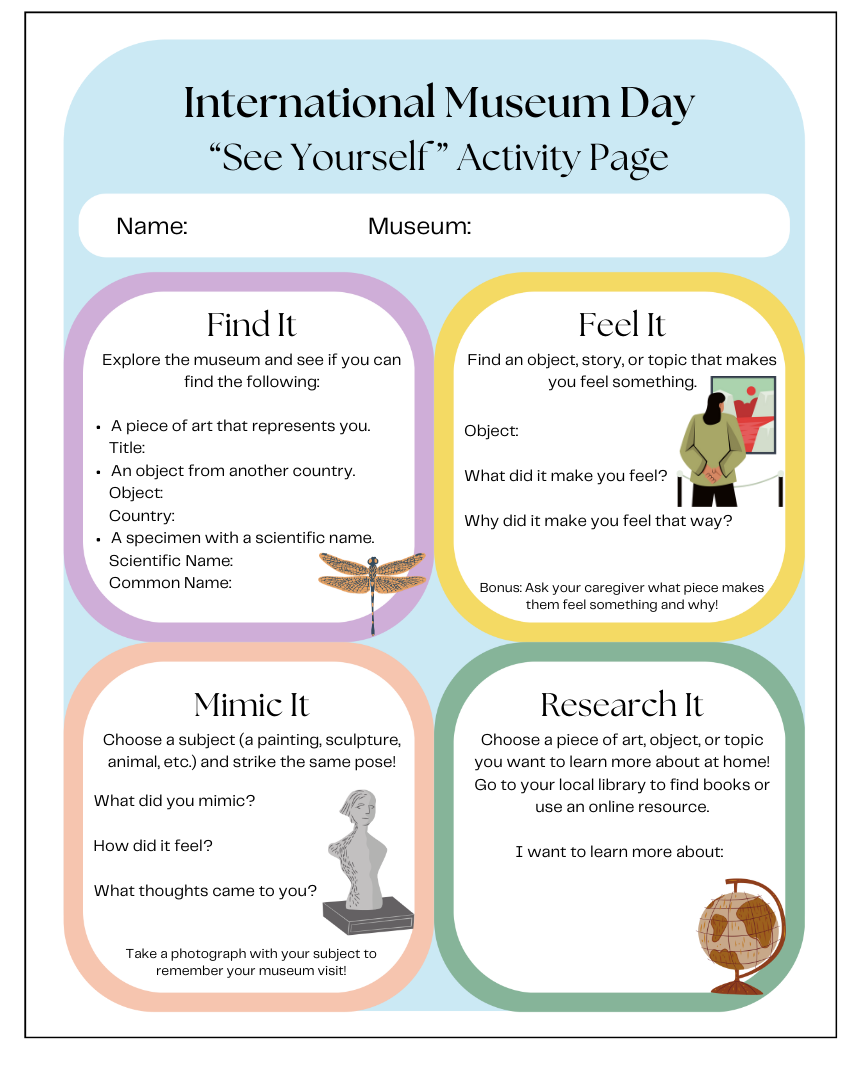
To celebrate International Museum Day, visit a museum near you—and don’t forget to print and take along the activity sheet found below!

Thank you to Bloomsbury Children’s Books for sending me a copy of Sakina and the Uninvited Guests!

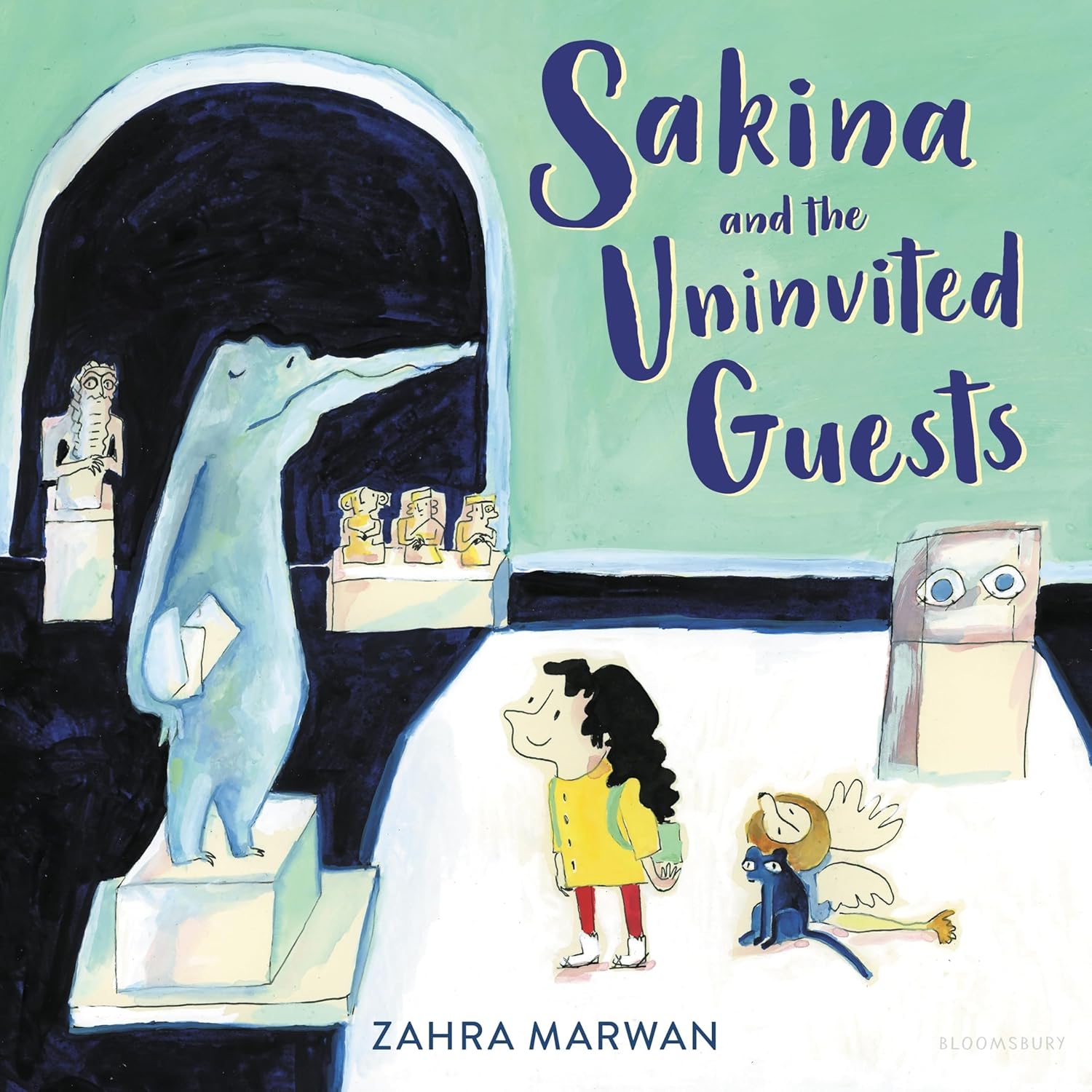
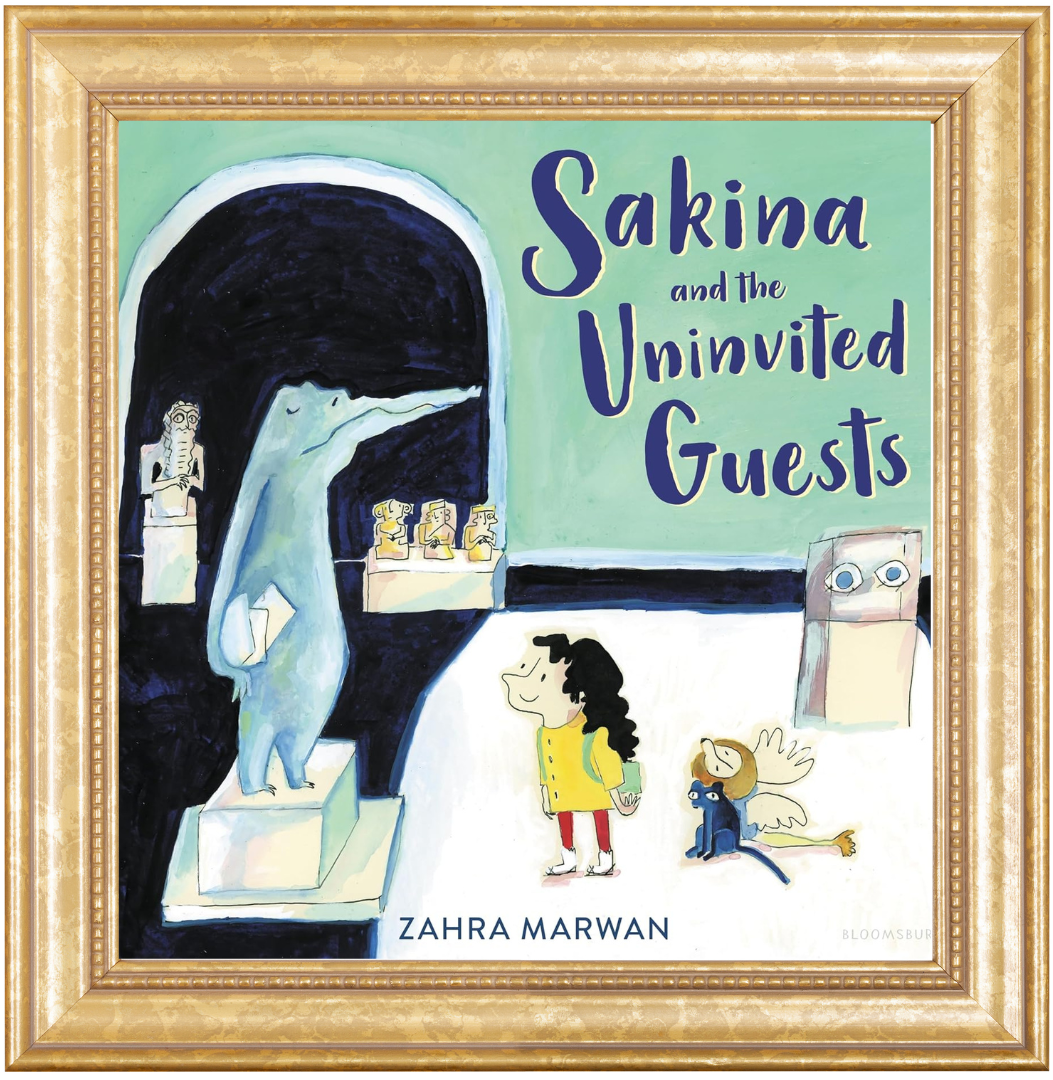
Sakina and the Uninvited Guests

By Zahra Marwan


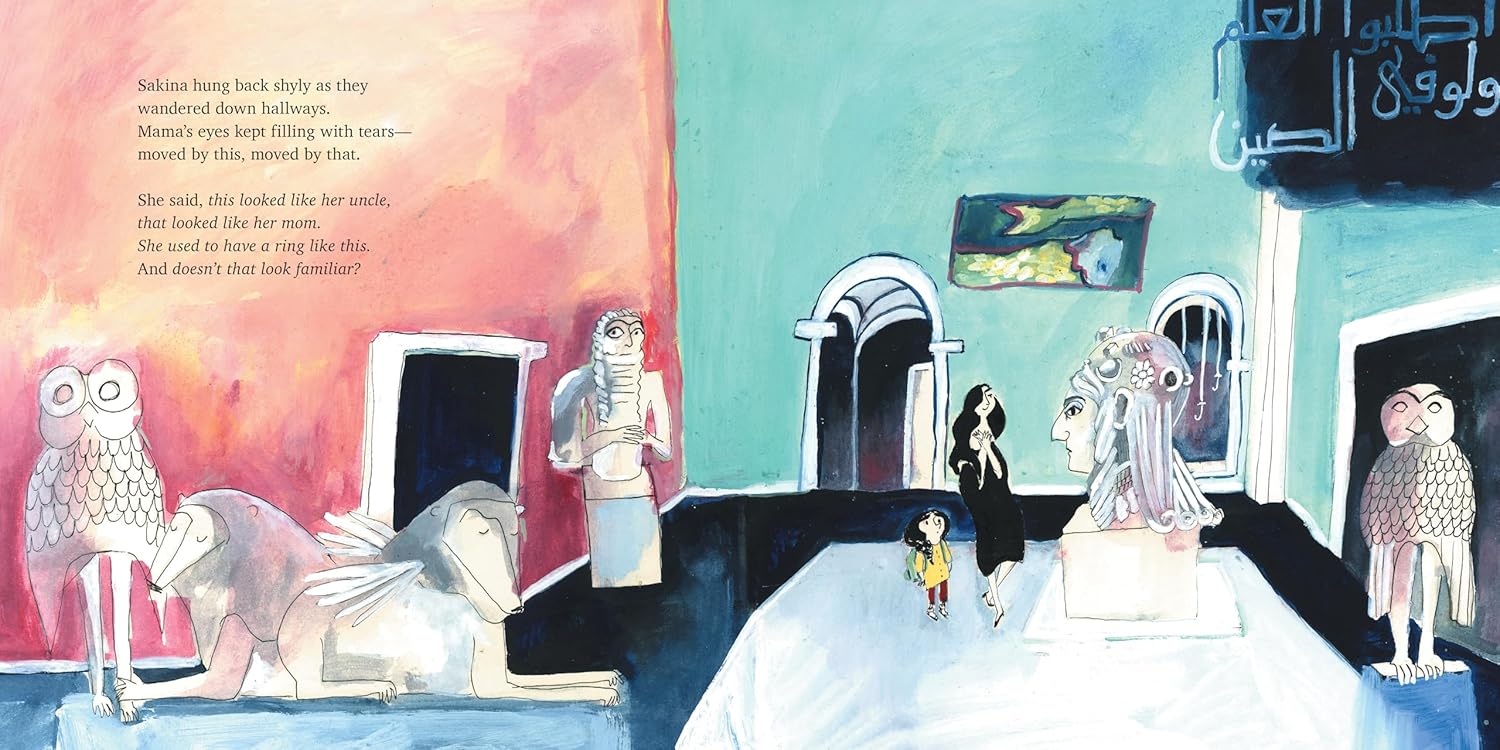
When a sandstorm turns “the city orange—the sun like a tangerine, the waves like clementine peels,” Sakina’s mother drives past the beach, where Sakina had hoped to spend the day, and goes to the museum. Inside, Sakina gazes with boredom at the statues of a crocodile holding papers and a blue jaguar guarding the first laws ever written. She nearly trips over one of the many, many winged lions. She can’t believe there had once been so many flying lions in her city. But as they move from exhibit to exhibit, Sakina sees that her mama’s eyes, keep “filling with tears” as they come upon likenesses of her mom and her uncle, a ring she used to have, and other familiarities. 

Sakina can’t understand her mother’s affection for “. . . all of these old, boring, boring things.” But then Sakina stumbles and another winged lion seems to be watching her. In fact . . . “Did he just . . . wink at her? Sakina was absolutely sure.” Suddenly, it’s time to leave, and while Sakina’s backpack feels heavier, she feels lighter, hopeful she will soon be playing by the sea.

Text and Illustration © 2025 by Zahra Marwan. Courtesy of Bloomsbury Children’s Books.

At home, it’s nap time, and while everyone else sleeps, Sakina cannot. Suddenly, she hears strange noises and follows them to find the crocodile, jaguar, and winking winged lion crawling from her backpack. Sakina is nonplussed and worried the noise will wake the household. Sakina tries to catch them, but they run through the house, toppling furniture and knick-knacks, knocking pictures off the walls.

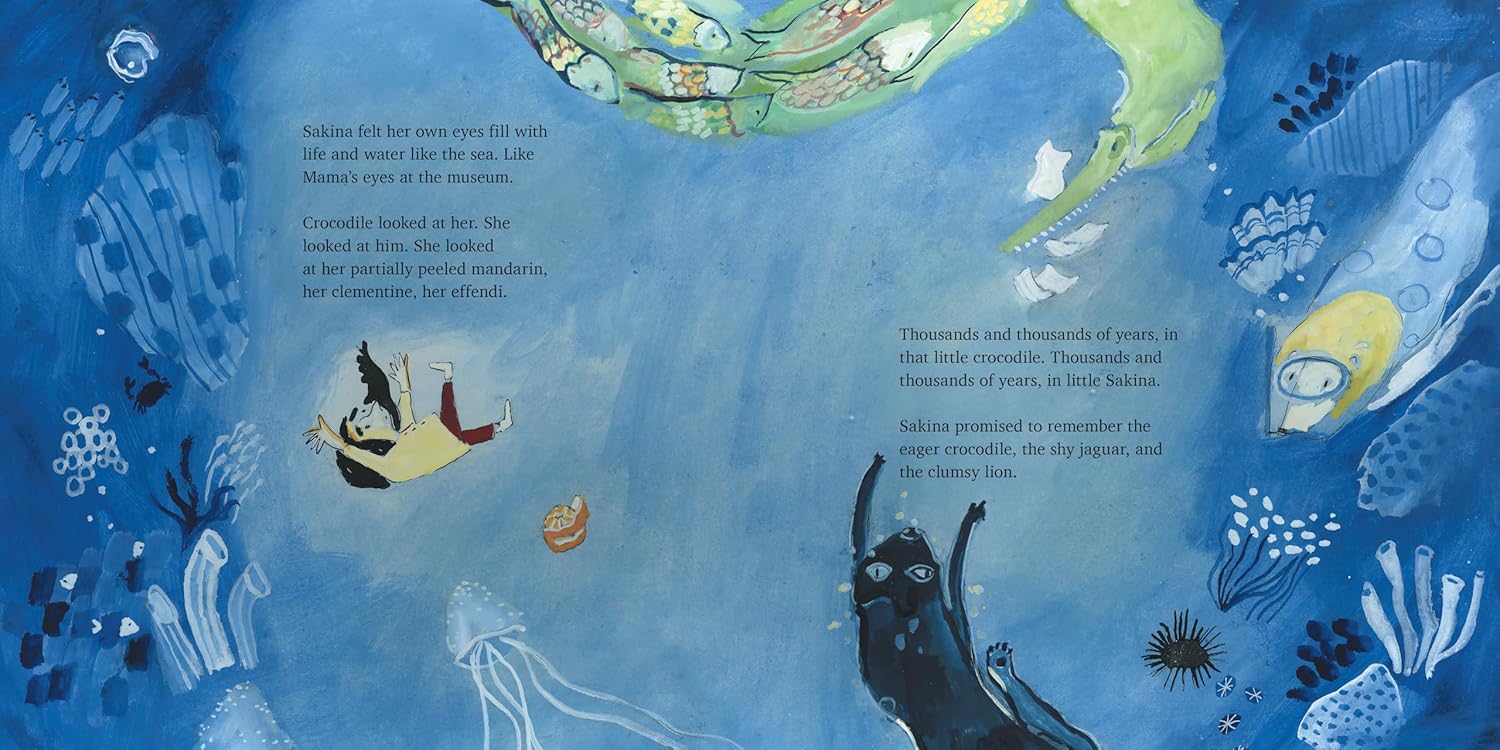
As she picks up a photograph of her grandmother, though, she notices how her eyes “were full of life and water, like the sea. Like the people in the museum.” Sakina then helps the crocodile pick up his scattered papers and realizes they are poems. She reads a line: “‘I hope they will remember me.'” Suddenly, Sakina understands. She feels the “thousands and thousands of years, in that little crocodile. Thousands and thousands of years, in little Sakina.” 

Text and Illustration © 2025 by Zahra Marwan. Courtesy of Bloomsbury Children’s Books.

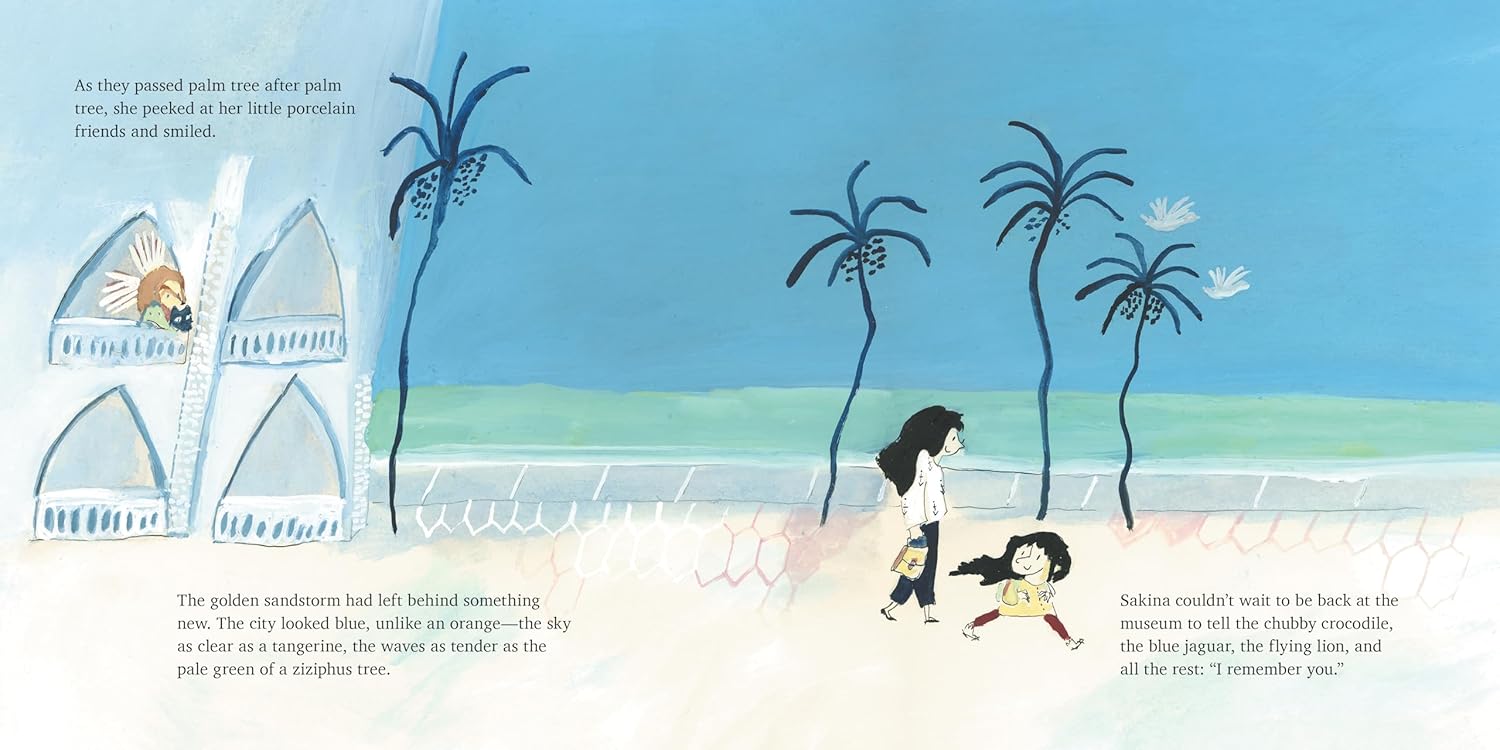
With the lifting of the sandstorm and her promise to remember them, Sakina’s guests depart just as her mother appears with a gift from the museum shop—a set of small familiar porcelain figurines. At last Sakina gets her wish, but as she and Mama walk to the sea, she can’t wait to return to the museum and tell its inhabitants “‘I remember you.'”

Back matter includes an Author’s Note in which Zahra Marwin explains the significance of the crocodile sculpture in her story and how people have had and will always have the same feelings—from the times of ancient history into the future. She also touches on the other sculptures she has depicted here and asks readers to consider what kind of art people were making thousands of years ago in the area where they live now as well as the kind of art their ancestors would have been familiar with. In another note, Marwan discusses several particular parts of the book, including the origins of distinct words and phrases, the value placed on education in the Middle East, and her inclusion of two recreated modern paintings.

Text and Illustration © 2025 by Zahra Marwan. Courtesy of Bloomsbury Children’s Books.

Whimsical and profound, Zahra Marwan’s story of a trip to a museum reaches deep into the heart and invites readers to join the collective memory of their own family as well as that of the world at large. Marwan reminds us that, just as the sea that Sakina longs to visit, museums and even history itself is always alive with the past, the present, and what’s to come.

Children will be charmed by Sakina who, despite her disappointment about not visiting the sea and some boredom, wanders the museum with an open mind and curiosity. Her alertness to her mother’s emotions shows empathy and a close bond. Sakina is also attuned to her mother’s eyes and the eyes of the paintings and sculptures. Children will notice that Marwan has also drawn Sakina with her “mother’s eyes” when the winged lion, crocodile, and jaguar hitch a ride in her backpack and again when they emerge from it at her house, spurring her to a deeper understanding of what she has seen. 

Marwan’s lyrical language, carried on gentle waves of consonance and assonance, beautifully adds texture and imagery to the pages, each of which are washed in gorgeous colors and exquisite recreations of paintings and sculptures that will intrigue readers and spark an interest in visiting museums in their own area.

Infused with depth and enchantment, Sakina and the Uninvited Guests is sure to become a favorite read aloud and a captivating spark for discussions about family heritage at home as well as for classroom genealogical projects. The book is highly recommended for home bookshelves and is a must for all school and library collections.

Ages 4 – 8

Bloomsbury Children’s Books, 2025 | ISBN 978-1547613427

Zahra Marwan grew up in two deserts: one close to the sea in Kuwait, the other close to the mountains in New Mexico. She is a fine artist who exhibits extensively and has won international awards and fellowships, including a New York Times/New York Public Library Best Illustrated Children’s Book, NPR Best Books of 2022, an Ezra Jack Keats Honor for Illustration, a Dilys Evans Founders Award from the Society of Illustrators, and more. She studied the visual arts in France and currently lives in Albuquerque, New Mexico, where she keeps a small studio at the Harwood Art Center. Visit her at zahramarwan.com.

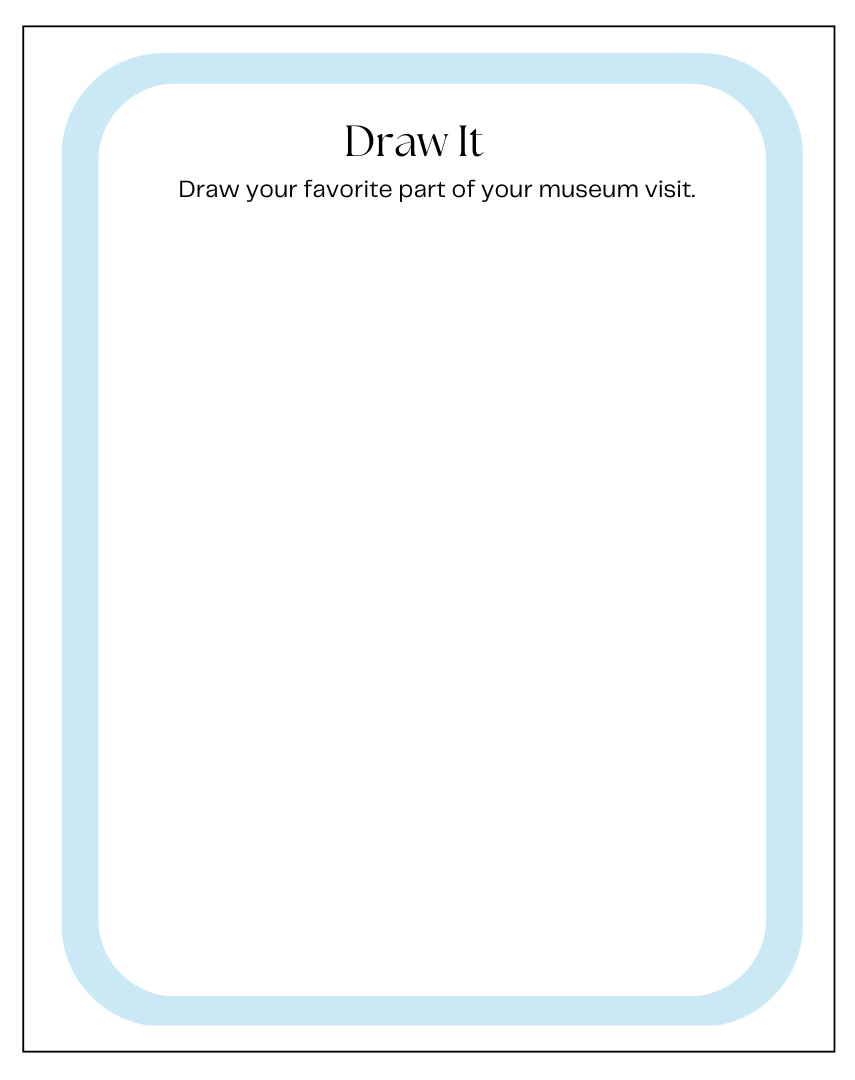
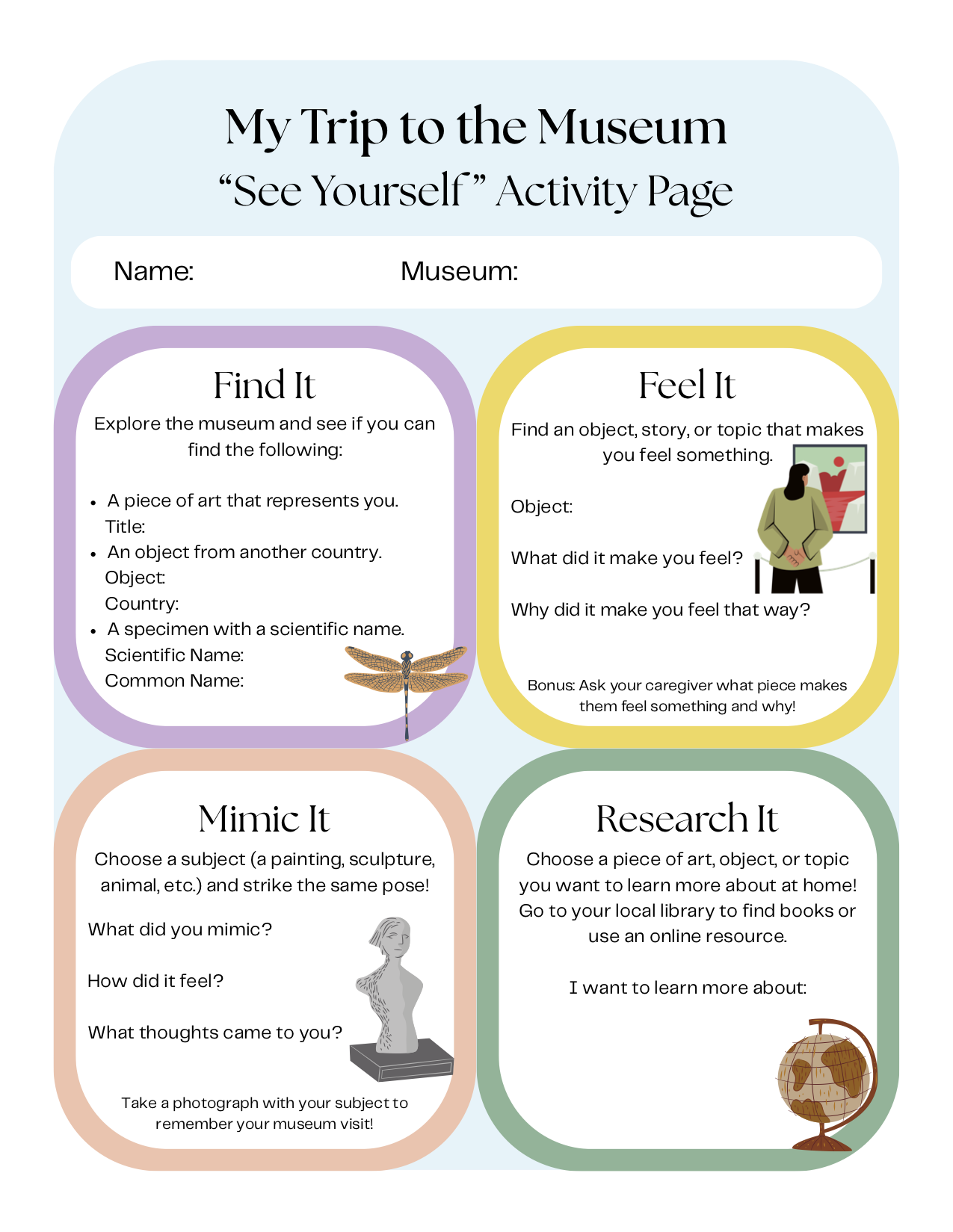
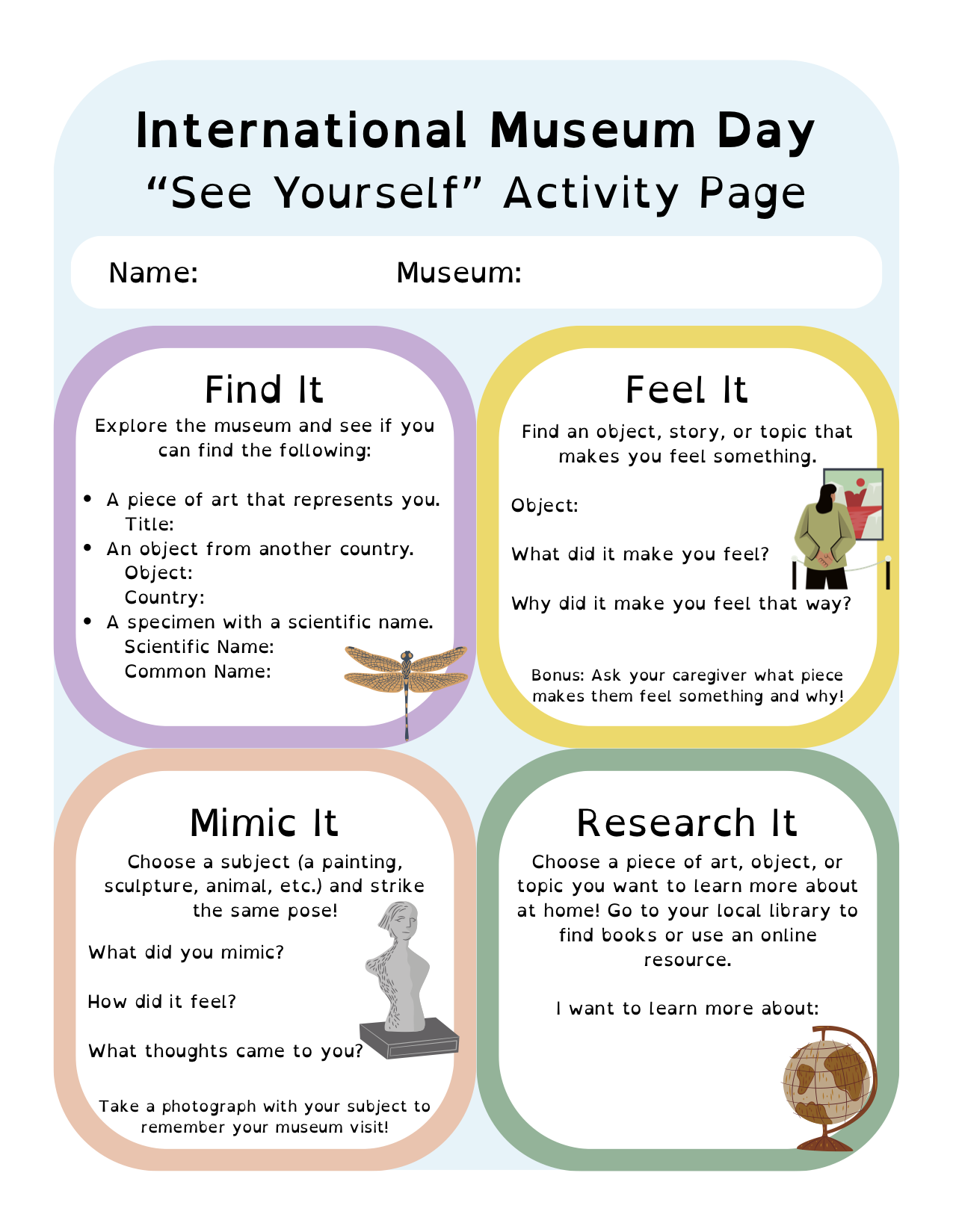
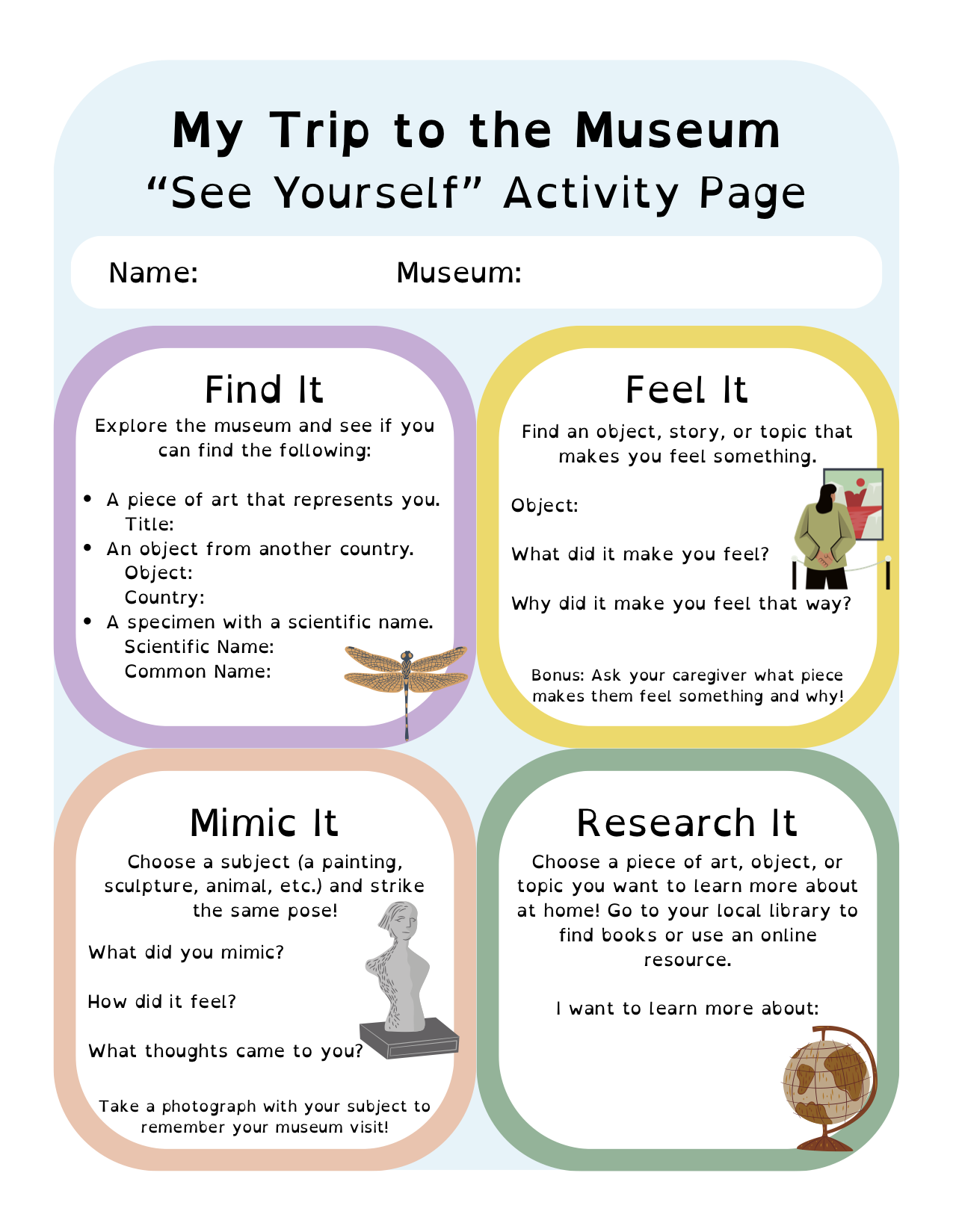
International Museum Day Activity

Museum Visit Activity Sheets


Interact with your museum visit on International Museum Day or any time you go with this activity sheet that gets you thinking, feeling, and remembering your favorite parts of your trip!

International Museum Day Activity Sheet

My Trip to the Museum Activity Sheet

Open Dyslexic Font International Museum Day Activity Sheet

Open Dyslexic Font My Trip to the Museum Activity Sheet 

You can purchase Sakina and the Uninvited Guests from these booksellers

Amazon | Barnes & Noble | Bookshop (discounted books and support for your local independent bookstore)

Picture Book Review

April 16 – National Stress Awareness Month

About the Holiday

Stress Awareness Month has been held every April since 1992, when it was founded by the Health Resource Network. The holiday aims to help people identify the stress factors in their own life as well as to assess how all members of their family are handling various pressures. The goal is for everyone—either individually or together—to look for ways to manage their feelings while adding positive changes to their life. Talking about pressures with kids and doing simple activities with them can often help lessen the load. Sharing today’s book is a wonderful place to start!

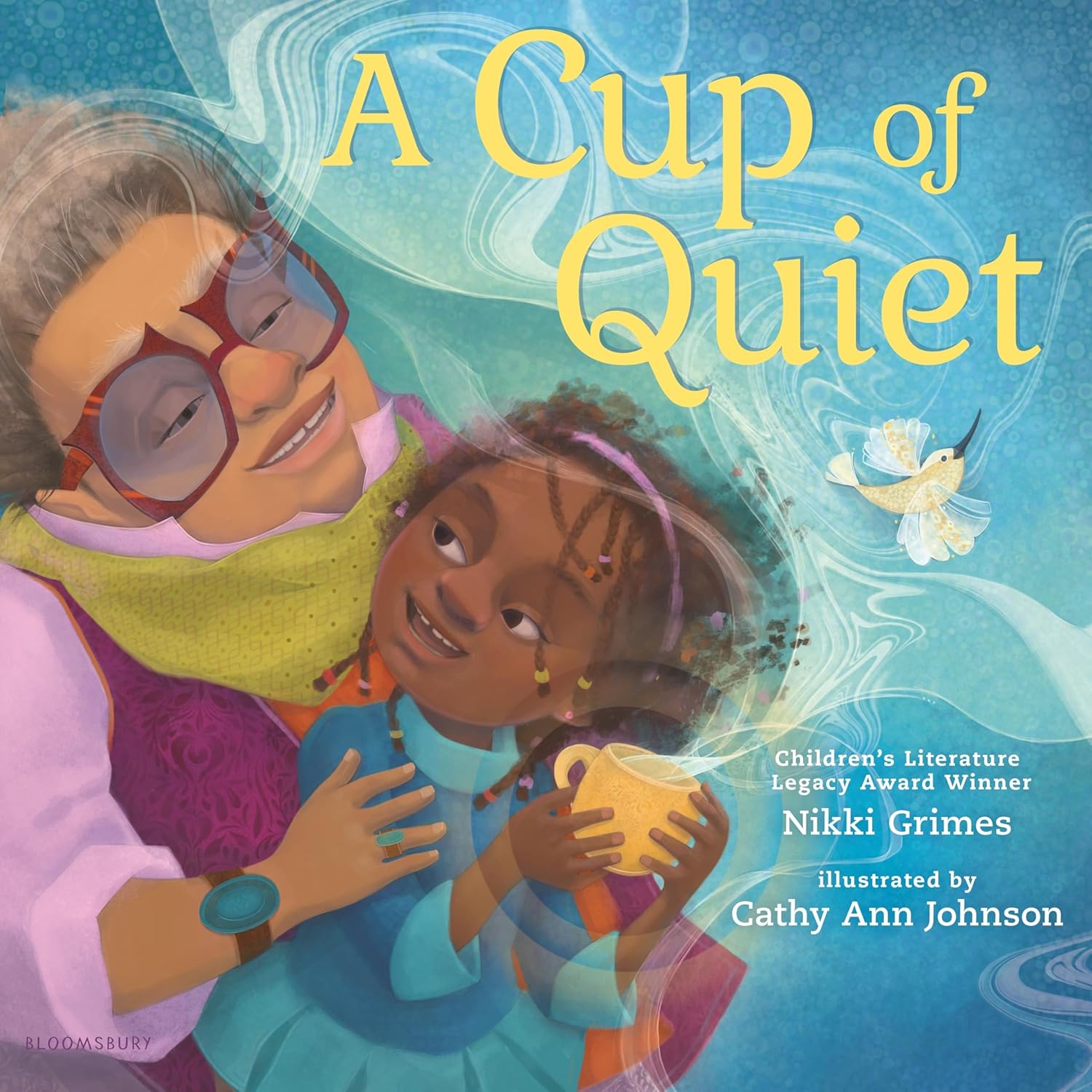
A Cup of Quiet

Written by Nikki Grimes | Illustrated by Cathy Ann Johnson

“You ever hear of smiles?” The young narrator’s talking about the two-week “summer camp” she gets to spend with her grandmother every June. In that breathless excitement of children, she reveals the visits give her and her Grandma time to “stitch sock puppets and put on shows, bake Martian Cake that tastes like banana bread and play tea party in the garden with my dolls.” But today, they’re acting out a story—that is until Grandpa’s hammering and loud music become just too much.
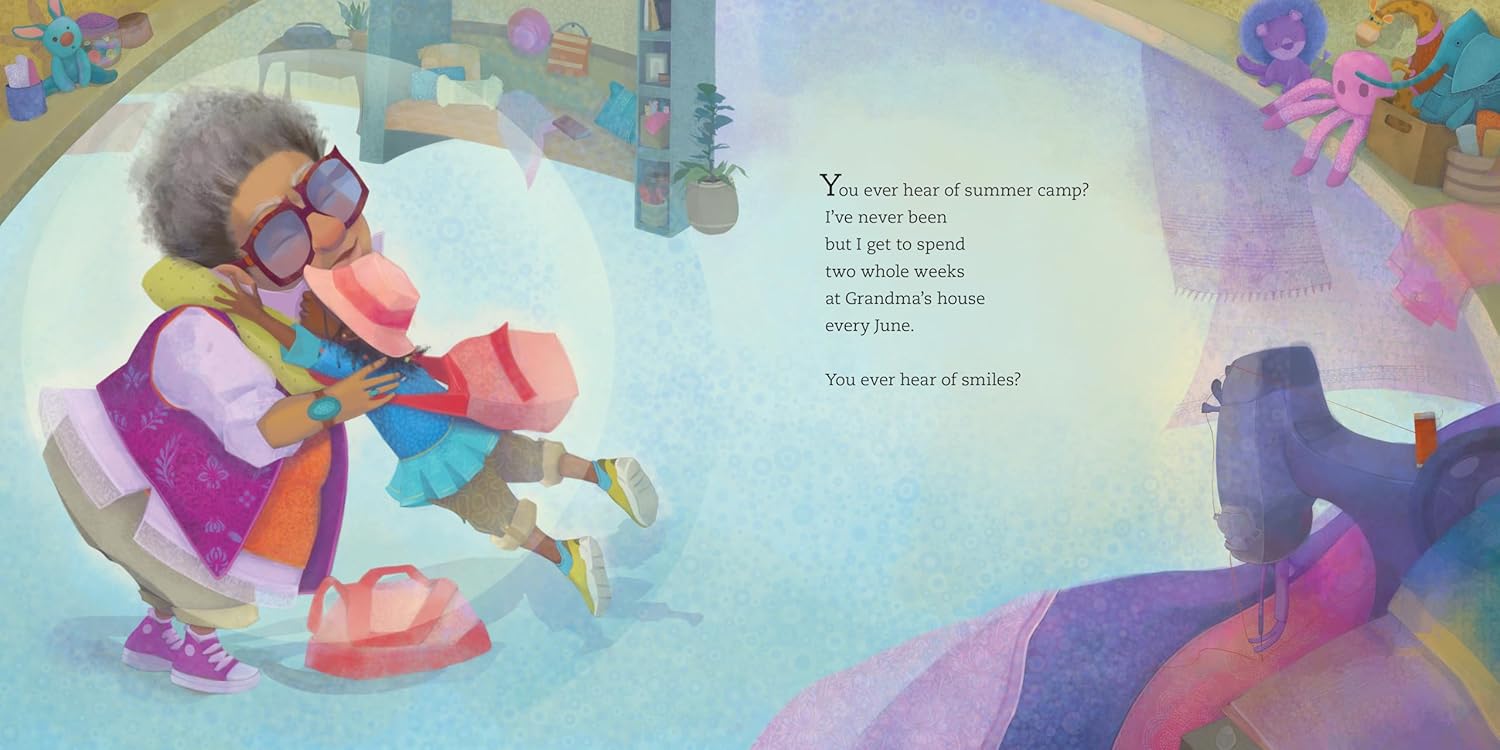
Illustration © 2025 by Cathy Ann Johnson, text © 2025 by Nikki Grimes. Courtesy of Bloomsbury Children’s Books.

Grandma flops into her chair with an “Ugh!” and tells her granddaughter she’s “thirsty for a cup of quiet.” This elicits a giggle and a bit of disbelief, but Grandma’s done with the noise and leads her granddaughter outside to the porch swing. But the city outside their house is just as noisy as Grandpa inside. A trip to the backyard garden is needed. Here, Grandma may be happy, but the narrator is getting fidgety.
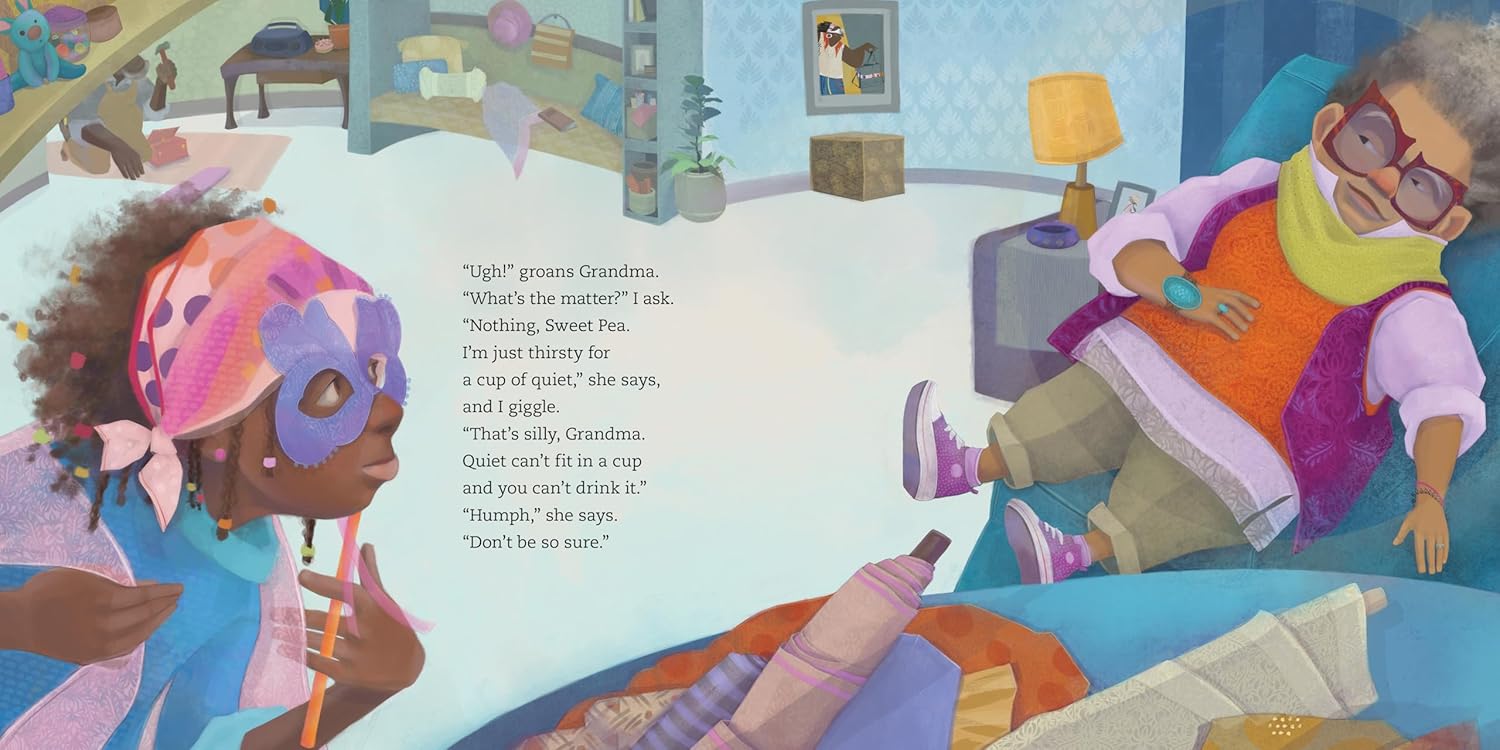
Illustration © 2025 by Cathy Ann Johnson, text © 2025 by Nikki Grimes. Courtesy of Bloomsbury Children’s Books.

Grandma gives her the side-eye and then hands her “an invisible cup” with instructions to “‘walk around the garden and fill this up with any sounds you hear.'” Up for this imaginative challenge, the girl first visits the rose bushes, where a bee is working and “snap[s] up a handful of his buzzing and drop[s] it in the cup.” On the ground below she sees a lizard and “spoon[s] up” the sound of its “scuttling across a dried leaf.” She begins paying more attention to the nature around her and listening harder to fill her cup.
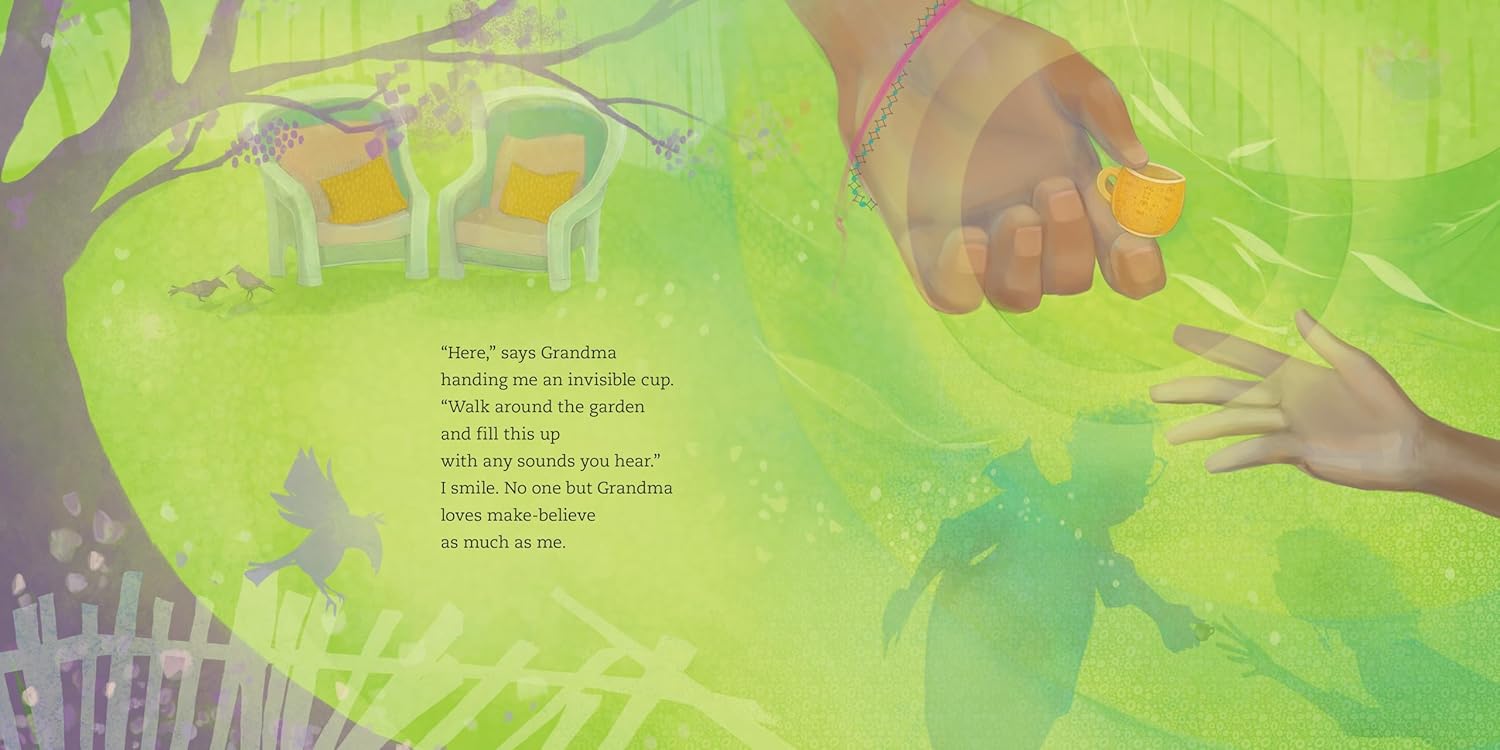
Illustration © 2025 by Cathy Ann Johnson, text © 2025 by Nikki Grimes. Courtesy of Bloomsbury Children’s Books.

A sudden thunderclap precipitates a downpour, but before she runs inside with Grandma, the narrator adds the first pings of raindrops on the roof to her nearly full cup. After drying off and changing, it’s finally time to enjoy a long sip from that make-believe cup. Ahhhh! So “‘refreshing!'” Her granddaughter thinks so too. Still, she has an observation: “‘… your quiet is awfully noisy!'” Grandma smiles and says, “‘I know, but Nature’s noise is peaceful, and I love that.'” Her granddaughter agrees—”You ever hear of perfect?”
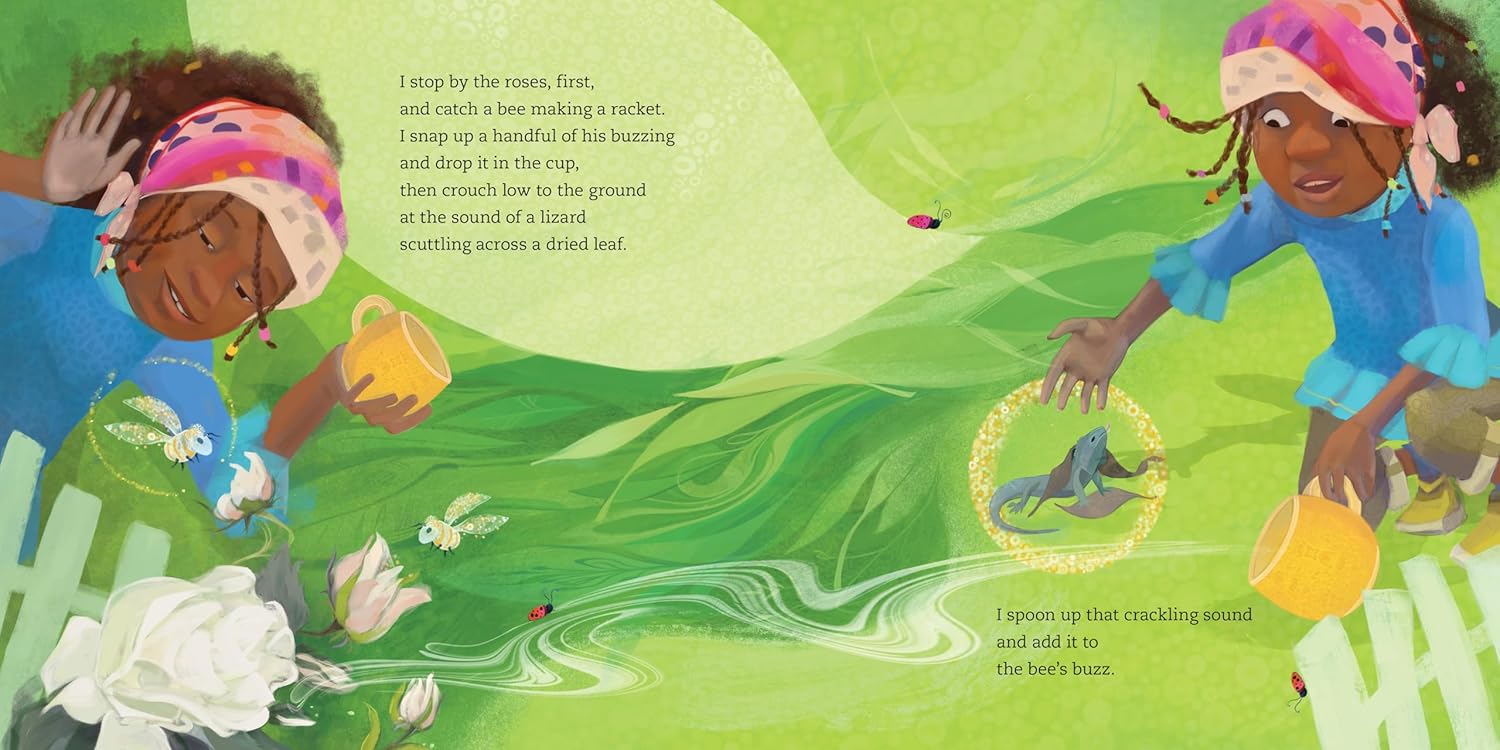
Illustration © 2025 by Cathy Ann Johnson, text © 2025 by Nikki Grimes. Courtesy of Bloomsbury Children’s Books.

Nikki Grimes invites readers to join in with a grandmother and granddaughter for a day of “summer camp” where love abounds. The easy banter between the two and affectionate gestures—such as Grandma’s playful tug on her granddaughter’s braid and the jump-into-her-arms hug the girl gives her grandma—immediately envelope both child and adult readers in this pair’s warm relationship. Grimes’ inventive call to interact with nature and find comfort there will have kids carrying their own imaginary cups to fill and spark other creative games and activities no matter where they live. 

Cathy Ann Johnson’s collage-style, mixed-media illustrations sweep readers into the creative and close-knit atmosphere of Grandma’s house during a week-long visit by her granddaughter. The vibrancy of the pair’s connection is shown through the colorful textures of the fabrics they use for crafting. The allure and importance of nature is likewise emphasized through the vivid greens and swirling motion in the grandmother’s back garden as well as the shimmering beauty of the creatures from which the girl collects sounds. The grandmother and granddaughter’s close bond is evident through their hugs, the way they sit close together (even touching hands while sitting in separate garden chairs), and the care Grandma provides after the rainstorm. The grandmother’s expressions are amusing in their honesty, and the look of wonder in the granddaughter’s eyes is inspirational.

Lyrical, playful, and full of love, A Cup of Quiet is a warm hug of a read aloud that adults and kids will love sharing again and again. The book is a must addition to school library, public library, and home collections.

Ages 3 – 7

Bloomsbury Children’s Books, 2025 | ISBN 978-1547610730

A Talk with Nikki Grimes
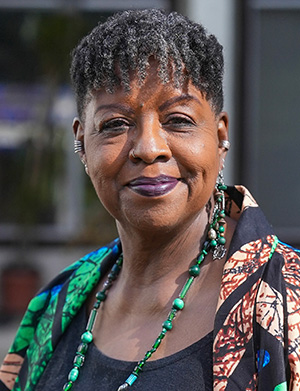
Photo Credit Marchel Hill

New York Times bestselling author Nikki Grimes was inducted into the Black Authors Hall of Fame in 2023. Her honors include the CSK Virginia Hamilton Lifetime Achievement Award, the ALAN Award for significant contributions to young adult literature, the Children’s Literature Legacy Medal, and the NCTE Award for Excellence in Poetry for Children. Author of the Coretta Scott King Award-winner Bronx Masquerade, and five Coretta Scott King Author Honors, she won the Printz Honor and Sibert Honofor her memoir Ordinary Hazards. Her latest titles include Garvey’s Choice:The Graphic Novel, a School Library Journal 2023 Best Book; Lullaby for the King, one of Book Riot’s 25 Best Christmas Books of All Time; and A Walk in the Woods, recipient of 8 starred reviews, and 11 Best Book listings for 2023, including the New York Times, NPR, and Smithsonian Magazine. Ms. Grimes lives in Corona, California. You can visit her at nikkigrimes.com.

Today, I’m honored to be talking with Nikki Grimes about the inspiration behind A Cup of Quiet, how she develops her characters, the joys and challenges of writing for multiple age groups, and much more!

A Cup of Quiet is a perfect book for adults and children to share, not only for outside noise but for times when life gets overwhelming.  Tell us about the inspiration for this story and a little about its journey to publication.

There’s a certain quality of quiet in nature that I’ve always found soothing. I need silence for my work because it allows me to concentrate fully when I write. But nature’s quiet is different. It’s rich with sound, but most of it requires you to pay close attention. To pick up the whir of a hummingbird’s wings, you have to be still, and you have to strain to hear it. The stillness that’s required is soothing, and the sounds you become attuned to are a healing balm. I wanted to write a story that celebrated those sounds, and the beauty of that kind of quiet.

In the early stages of the book, I’d go out to my garden and listen carefully, and I’d make mental notes of all that I heard that day. I’d jot everything down until I had a good list of sounds to play with.

My main character lived in the city and didn’t spend much time out in nature there, though she occasionally went to the park. But every summer, she’d travel out of the city for long visits with her grandmother who had a garden, and whose house was surrounded by trees, and greenery.

The story grew from there, and I knew immediately that I wanted Bloomsbury to publish the book, and I also knew intuitively who I wanted to illustrate—namely Cathy Ann Johnson. This teaming has proven to be perfect, all around.

If I had a cup to fill with quiet today, I’d add my cat’s little sleepy, dreamy purrs, the whoosh of cars passing my house, the rustle of squirrels in the trees, and a drop of water from my bubbling teapot. What would you put in your cup of quiet today?

I would put a bee’s buzz, the wind rustling leaves of a tree, the whir of a hummingbird’s wings—all the sounds I chose for A Cup of Quiet. Those are some of the sounds I listen for, and pay attention to, whenever I immerse myself in nature.

Cathy Ann Johnson’s mixed-media illustrations are a wonder of color, motion, humor, and the love between grandmother and granddaughter. What was your first impression when you saw her illustrations? Do you have a favorite spread?  Why is it a favorite?

First, I was over the moon for the grandmother! She had energy, and spunk, and style. I loved her!  And I loved her colors. Then, as I saw the book’s interiors, I was absolutely thrilled! Cathy Ann’s images, and their movements, were as lyrical as my own words. Our partnership on the page was the proverbial match made in heaven. I would be loath to choose a favorite spread.  Each one has its own magic.

A Cup of Quiet starts out “You ever hear of summer camp?”—a disarming introduction to the child narrator that’s so true to the way kids approach conversation. The dialogue in all of your work sings in this way with the kind of honesty, humor, emotion, and depth that makes your characters seem almost physically with the reader.  I’m curious about your process in developing your characters and stories.

My characters begin with a voice. I’ll hear a scrap of dialogue in my head—nothing extensive, just a few lines. The inspiration might come from the catalog of voices I’ve stored in memory over a lifetime of listening to people around me, or it might be the voice of a particular person in my life whose voice is special or one that has simply stayed with me for a long time. Either way, the voice feels familiar. I’ll jot down that scrap of dialogue as reference, then I’ll begin developing a character sketch and that character’s backstory. I never know how much or little of the backstory I’ll use, but that information guides me as I write. To nail the voice, I have to pay close attention. I climb into the character’s skin and look at the world from his or her perspective and write from that place, attuning myself to that character’s age, birth place, geographical region, quirks, fears—all of it guides me as I make decisions about what that character will say, how they’ll respond to various stimuli that shows up in the plot. If I step wrong, the character will bristle and call me out on it, almost audibly. “Do not put those words in my mouth! I would never say that!” or “I don’t speak like that!” It’s kind of eerie, actually. Characters can be very bossy!

You write books for all ages, from picture books to middle-grade to young adult. Can you talk a bit about the joys and challenges of each? What is one message you want readers in each age category to take away from your books? 

Each age format comes with its own set of limitations, constrictions, and also its own range of possibilities. I love mixing it up. Writing for different age groups keeps me on my toes. The picture book gives you very little room to develop character and plot, while, say, a young adult novel gives you so much unlimited space that you run the risk of overwriting, and of getting lost in the weeds of your plot, or tangled in the layers of your story. Being consistent with your tense or bookending your story in a way that is controlled and satisfying and that feels organic, is much more challenging in the long form of middle grade or YA storytelling.

Language choices are tricky, and different with each age group as well. You walk the line between accessibility and sophistication, between simplicity and complexity. The same variance is true of the emotional components appropriate for each age group as well. For those reasons, I think it’s wise to focus on one genre at a time until you work through the quirks of that genre and figure out a process that works for you. Then, by all means, go on and experiment with the next! It’s tough work, but I like that. For me, easy is boring!

As for your question about messages, I don’t write messages. I write stories. And a well-written story offers a number of ideas a reader might take away. It all depends on the particular reader. We bring ourselves to the page, as readers. Our own experiences, personalities, and what we need at a particular point in time, color what we see, what we notice, and what we ultimately take from a story. Of course, as the creator, I have a certain idea, or theme, I intend to weave into my story—and, by the way, it’s hard to know whether or not I’ve always succeeded—but I don’t worry about whether the reader will pick up on the specific note I had in mind. What matters to me is that, somewhere in the many layers of my story, readers find something valuable with which they resonate. Quite often, the things they find come as a surprise to me, but that’s okay. So long as they walk away with something of value to them, that’s all I can ask for.

While I read through your website, your generosity in sharing so much of your life really stood out.  I’m sure young readers and writers would love to know about when you first began writing and how you were recognized for your talent, having your first public reading when you were 13.  Could you share a little of our writing background with us?  What advice would you give to children and young adults who love to write and want to pursue it?

As I reference in my memoir Ordinary Hazards, and elsewhere, I started writing in earnest when I was six years old, and I did so because I would have burst, otherwise. I was so filled with the emotional and mental poison of anger, and pain, and confusion. I was desperate to get my feelings out, somehow. So, I began to pour those feelings onto a page. That’s how my writing began, but as I reached my teens, the idea of possibly pursuing writing as a career took root. I was encouraged by my father, by my sister, by the friends I dared share my poetry with, and later, by a couple of teachers.  At the same time, though, I also had peers who laughed me off the block for daring to dream of such a thing at all. But I decided early on to surround myself with other young people who nurtured dreams and goals of their own. Everyone else, I cut out of my circle. I refused to absorb the negativity of naysayers.

I encourage young people who have a heart for writing to read voraciously, and to read across genres.  Every genre has something to teach you, and the quality of your writing reflects the quality, variety, and breadth of your reading. So read, read, read.  

Next, write, write, write because writing is a muscle. You have to exercise that muscle if you want to become strong. There is no shortcut to excellence. And if you’re not going to pursue excellence, why even bother? Excellence is what your readers deserve. Remember: the world doesn’t need mediocrity, no matter what field you choose to pursue.

In addition to your many awards over the years, you received the Children’s Literature Legacy Award in 2017 and the Coretta Scott King-Virginia Hamilton Award for Lifetime Achievement Award in 2022. In 2023 you were inducted into the Black Authors Hall of Fame.  What does this recognition mean to you?

Recognition is affirmation, and who doesn’t appreciate that?  But an artist should never be satisfied to sit on their laurels. I use this recognition as fuel to keep pushing forward, to continue to stretch myself as an artist to try genres I’ve never attempted before, to explore forms of poetry I find challenging. Doing so keeps me alive, and grown, and excited about the work I’ve been doing professionally, now, for nearly 50 years. That way, even as I get old, my work never does!

What books of yours can readers look forward to next?

I have a new Dyamonde Daniel chapter book coming out in June.  It’s titled Loser, and it’s about healthy and unhealthy competition, and where to draw the line, especially when you’re competing with your best friend.

I also have a new picture book on the horizon, titled Stronger Than, a collaboration with Choctaw author, Stacy Wells and illustrated by E. B. Lewis, who I’ve worked with before. In this story, a Black Choctaw boy discovers the history of one ancestor who survived the Trail of Tears, and another ancestor who survived the Tulsa Race Massacre. Through their stories, he learns that he comes from stronger stock than he knew, and this knowledge helps him overcome one of his worst fears. I’m excited about both books, for very different reasons.

There are a few more books in production, as well, but it’s too soon to talk about those.

Is there a question I didn’t ask that you wish I had?  What would your answer be?

No. I think I’m about talked-out, for the moment!  This has been fun, though. And I hope you and the young readers in your life enjoy A Cup of Quiet.

Thank you so much, Nikki! It’s been terrific chatting with you! I wish you a wonderful spring and summer of nature’s refreshing quiet.
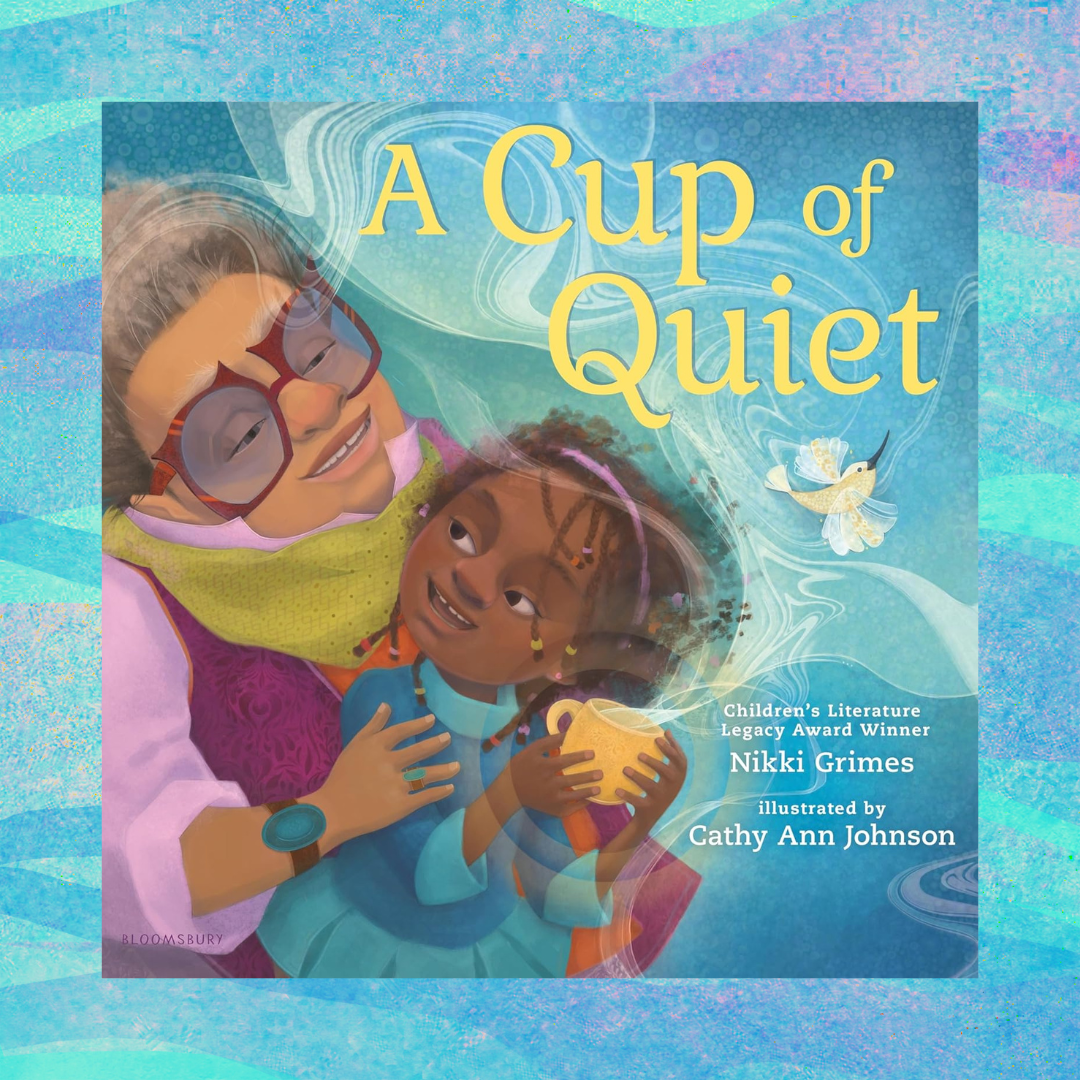
You can purchase A Cup of Quiet from these booksellers

Amazon | Barnes & Noble | Bookshop (discounted books and support for your local independent bookstore)

Picture Book Review

April 10 – National Wildlife Week

About the Holiday

National Wildlife Week, dating back to 1938, is the National Wildlife Federation’s longest-running education program. The celebration was designed to connect budding conservationists of all ages to the awesome wonders of wildlife. Each year, we pick a theme and provide fun educational materials and activities for educators and caregivers to use with kids. This year’s theme is Keep an Eye on the Wild. Conservationists and animal lovers are keeping a lookout for wildlife in the most unexpected places as we learn how we can keep their habitats safe and live in harmony with our incredible wild neighbors. Whether you keep your eyes out for the wildlife living near you with a “critter cam” or by walking around and paying attention to your backyard, neighborhood, and wider area, being aware of the creatures around you can help them survive for generations to come. To learn more about National Wildlife Week and find fun activities aimed at connecting kids with wildlife, visit the National Wildlife Week Kids Page!

Finding Home: Amazing Places Animals Live

Written by Mike Unwin | Illustrated by Jenni Desmond


Finding Home begins: “Our planet is home to a mind-boggling number of different animals: at least 6,500 species of mammal, 10,000 species of reptile, 11,000 species of bird, and literally millions of insects. Every single one has its own home.” Just think of it! As your eye sweeps across any vista; as you walk across your yard, local playground, or favorite park, beach, or mountain trail, an untold number of creatures’ homes are within sight or underfoot. We know their names: Den. Nest. Burrow. Taxi (wait, what?). You’ll see, because in their astounding and gorgeous book, Mike Unwin and Jenni Desmond reveal that there is no such thing as a generic animal home.

Illustration © 2025 by Jenni Desmond, text © 2025 by Mike Unwin. Courtesy of Bloomsbury Children’s Books.

Take “den,” for instance—a polar bear’s snow den. Unwin and Desmond take you right inside this winter home, where a mother polar bear and her two cubs (born here in the cold of January) welcome you. As you squeeze inside, don’t worry about being cold. The polar bear’s “thick fur keeps the temperature 77°F warmer than outside.” 

Next up is “nest.” These are bowls made from twigs, straw, and fluff and, sometimes, found objects like bits of paper or cloth, right? Well, yes—for some birds. But you won’t believe your eyes when you see what appears to be several haystacks lodged within a tree’s branches. This nest, constructed by a whole community of birds smaller than sparrows, can “grow as big as a car, weigh more than a ton, and last 100 years.” Like humans’ apartment buildings, the bird pairs that inhabit this nest look out for each other and help their neighbors. Kids will also be amazed by another type of bird that literally sews leaves together with “plant fiber and spider silk” to create their soft, deep nests.

Illustration © 2025 by Jenni Desmond, text © 2025 by Mike Unwin. Courtesy of Bloomsbury Children’s Books.

And how about “burrows?” Yep, Unwin and Desmond showcase a couple of pretty spectacular burrows too. Take the aardvark’s home. You won’t see an aardvark during the day. While the sun is up, they stay below ground, sleeping and tending to their young. It’s only after sunset that these unusual, ant-eating animals (including two-week-old babies) make an appearance topside. This is when they do what they do best: sniff out anthills and termite mounds, dig them up, and have dinner. It takes a hearty meal to satisfy an aardvark: “One aardvark can eat an amazing 50,000 ants and termites in a single night!”

Now, about that “taxi.” Children will be wowed by two, very different types of animals who prefer moving from one area to another by hitching a ride on another creature, from whom they can get food and other necessities of life while helping their hosts as well. Of course, the variety of animal homes don’t stop at these four. Every page transports readers to a different part of the globe to witness creatures of the air, sea, and land living in the home of their choice.

Unwin ends this fascinating travelogue with a map showing different ways some of the animals in the book tend to the environment, protecting it and keeping it growing for themselves and humans. He also includes a caution, reminding readers that “all these habitats . . . fit together like jigsaw pieces to make up planet Earth. And just like a jigsaw needs all its pieces, a healthy planet needs all its animals and their habitats.” Sadly, humans have not been good stewards of Earth’s bounty. “Today, scientists and conservationists are working hard to put things right.” But everyone is needed to make sure our environment is cared for the way we care for our own families. “Only then will planet Earth truly be home, sweet home.”

Illustration © 2025 by Jenni Desmond, text © 2025 by Mike Unwin. Courtesy of Bloomsbury Children’s Books.

Mike Unwin draws readers in with engaging storytelling that allows kids to easily understand how each animal goes about building their home and why it’s perfect for their lifestyle. Children also learn just as much about the animals as the homes they build, giving them deep and well-rounded knowledge of some of the most unusual birds, fish, mammals, and insects on our planet and how many of them benefit humankind. Unwin’s phrasing, vocabulary and conversational lilt make Finding Home a highly satisfying nonfiction read aloud for younger kids. Independent readers will eagerly dip into the book again and again to meet these intriguing creatures.

With the impact of a museum exhibit, Jenni Desmond’s rich, full-bleed illustrations will take your breath away with their stunning realism and personality. Some animals peek out at the reader, while others busily go about their work oblivious to outside interest. From grassy hillsides to treetop canopies to sunny Africa and the snowy Himalayas, Desmond takes readers on an around the world tour like no other.

Gorgeous, educational, and nature nonfiction at its best, Finding Home: Amazing Places Animals Live is a must for all classroom, school, and public libraries as well as for nature- and animal-loving kids and families.

Ages 5 – 8+

Bloomsbury Children’s Books, 2025 | ISBN 978-1547615100

About the Author

Mike Unwin has written more than 30 books for both adults and children, including the Encyclopedia of Birds and Migration. He is also a regular contributor to publications such as BBC Wildlife and RSPB Nature’s Home. In 2013 Mike was voted UK Travel Writer of the Year by the British Guild of Travel Writers. Follow Mike on Instagram @mikeunwin.wildtravel.

About the Illustrator

Jenni Desmond is the illustrator of more than 20 books, including MigrationThe Wolves of Yellowstone, and The Blue Whale. Her books have been translated into over a dozen languages. In 2016 she was made a Maurice Sendak Fellow and her book The Polar Bear became a New York Times Best Illustrated Children’s Book of the Year. When Jenni is not in her studio, you’ll find her cooking, cycling and looking for adventure. Visit her at jennidesmond.com and follow her on Instagram @jennidesmond.
National Wildlife Week Activity

celebrate-picture-books-picture-book-review-shark-fin-craft

Fintastic Shark Fun


Sharks are awesome creatures and even feature as a home to another animal in today’s book! Follow the directions below and to make your own shark fin. 

Supplies

  • 2 pieces of 8.5 x 11 gray cardstock paper
  • Ribbon
  • Tape
  • Scissors
  • Pencil

fin outline white

celebrate-picture-books-picture-book-review-shark-fin

Directions

  1. Tape the top of the two pieces of paper together
  2. Fold them back together
  3. Measure an inch up from the bottom of the papers (the un-taped side) and trace a straight line across both papers
  4. Trace a shark fin outline onto your paper. The shark outline should stop an inch above the bottom
  5. Cut out the fin on both pieces of paper. If you should cut through the tape, re-tape the tops together
  6. Fold along the lines of both papers so the folds face towards each other.
  7. Tape the folds so the fin becomes a triangle
  8. Cut two slits parallel to the folded lines
  9. Thread ribbon through slits

You can purchase Finding Home: Amazing Places Animals Live from these booksellers

Amazon | Barnes & Noble | Bookshop (discounted books and support for your local independent bookstore)

Picture Book Review