November 5 – Zero Tasking Day

celebrate-picture-books-picture-book-review-lets-do-nothing-cover

About the Holiday

So that time of year has come around again—the time change, but the good one, the one where we gain an extra hour of sleep. But what to do with that extra hour? Should we really spend it sleeping when there are so many other things we can or should do? The people who instituted Zero Tasking Day says “Yes!” Or at least they think we should take it easy and relax. In the spirit of the holiday, why don’t we stretch that one hour into…say…twenty-four? A full day of Zero Tasking soundsszzzzzzzzzzzzz…

Let’s Do Nothing!

By Tony Fucile


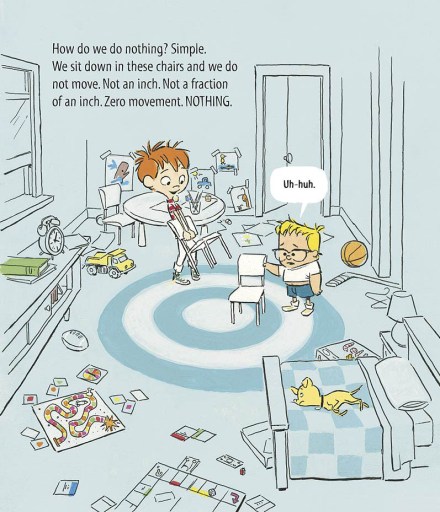
Frankie and Sal have run out of things to do. They’ve already “played every sport invented, painted more pictures in a day than van Gogh did in a lifetime, and baked enough cookies to feed a small country.” They’ve even played all their board games and read all their comic books. All they need is ten seconds of nothing and they’ll be ready to go again.

celebrate-picture-books-picture-book-review-lets-do-nothing-statues

Copyright tony Fucile, 2012, courtesy of Candlewick Press.

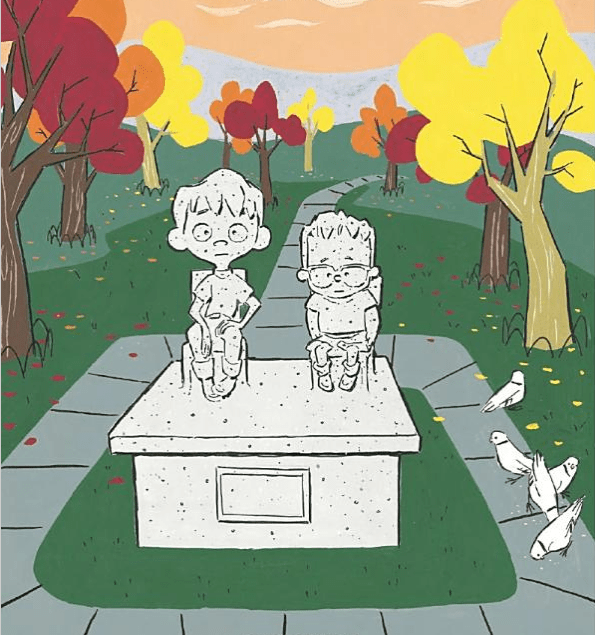
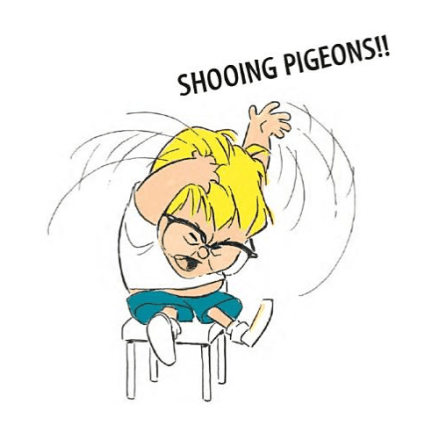
Hey! That’s a great idea! But how do they do it? Simple Sal says. They just sit in their chairs without moving an inch. They can pretend to be statues like the ones in the park. Frankie’s up for it, but it’s not long before he’s covered in pigeons that need vigorous shooing. Shooing is definitely doing something, so Sal decides they’ll be two giant redwood trees in the middle of a grove.

celebrate-picture-books-picture-book-review-let's-do-nothing-in-park

Copyright tony Fucile, 2012, courtesy of Candlewick Press.

Things are going well until a little dog comes along and relieves himself on Frankie’s…um…trumk. Sal wonders where Frankie dreamed that one up. He looks around and spies his little dog curled up on the bed asleep. Well, Sal has an even taller idea. He thinks Frankie would make a great Empire State Building. “No silly pigeons or puny dog could rattle the likes of you, oh majestic one!” Sal states. “Can you do it, sir?” “Yeah!” Frankie exclaims.

celebrate-picture-books-picture-book-review-let's-do-nothing-shooing-pigeons

Copyright tony Fucile, 2012, courtesy of Candlewick Press.

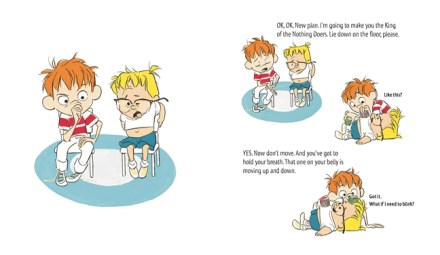
But within seconds Frankie feels the creeping hands and feet of King Kong climbing up his side. “HELP!!!” he wails. If it’s a king Frankie wants, it’s a king he’ll get with Sal’s next plan. Sal makes Frankie lie on the floor and places a block on his tummy and one on his forehead. Frankie is now the king of the nothing doers, and he must keep the blocks still. No moving. No breathing. No blinking. Frankie’s eyes begin to burn.

“Close them,” suggests Sal, but Frankie reminds him that closing his eyes isn’t doing nothing either. Then Sal has a revelation: It’s impossible to do nothing. This changes everything! “You know what we have to do now, don’t ya?” Sal says….“LET’S DO SOMETHING!”

celebrate-picture-books-picture-book-review-lets-do-nothing-king

Copyright tony Fucile, 2012, courtesy of Candlewick Press.

Tony Fucile’s laugh-out-loud romp through an afternoon where even boredom isn’t boring will have kids itching to do nothing with Frankie and Sal. Readers will relate as Frankie’s imagination gets the better of him during his few moments of inactivity. Wise-cracking, garrulous Sal and fidgety, reticent Frankie are perfect foils for this buddy picture book with a universal theme that’s resolved in a most kid-friendly way. Fucile’s cartoon-style illustrations enhance the humor as Frankie is beset by imaginary problems even when sitting still, and Sal patiently thinks up new scenarios.

For exuberant read-aloud story times, adding Let’s Do Nothing! to home or classroom libraries is certainly the thing to do.

Ages 4 – 8

Candlewick Press, 2012 | ISBN 978-0763652692

Let’s watch this Let’s Do Nothing! book trailer!

Zero Tasking Day Activity

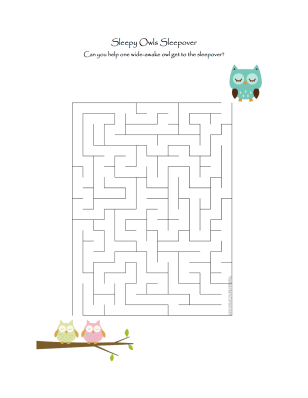
celebrate-picture-books-picture-book-review-sleepy-owls-maze

Sleepy Owls Sleepover Maze


One wide-awake owl wants to join friends as a sleepover. Can you help bring them together in this printable Sleepy Owls Sleepover Maze. Here’s the Solution!

Picture Book Review

November 4 – It’s Historic Bridge Awareness Month

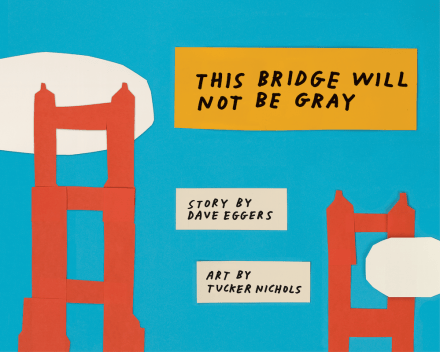
celebrate-picture-books-picture-book-review-this-bridge-will-not-be-gray-cover

About the Holiday

Bridges can do so much more than just take vehicles and people over waterways or highways. Many are beautiful structures that enhance the skyline or environment in which they’re found. Covered bridges, stone bridges, and soaring steel and cable bridges all inspire awe in their own way. Unfortunately, many older bridges are slated for destruction or replacement. To honor this month’s holiday, visit a historic bridge in your area or research famous bridges of the past and present.

This Bridge Will Not Be Gray

Written by Dave Eggers | Illustrated by Tucker Nichols


“In the beginning there was a bridge.” Well, to back up a bit there was a bay that led to the Pacific Ocean. The opening between the two shores that enclosed the bay was called the Golden Gate. “On one side of the Golden Gate was the Presidio, a military base at the top of the city of San Francisco. On the other side there were only hills, green and yellow, rising high above the sea.” Beyond these hills towns dotted the coastline.

People traveled between these shores by boat or by driving way out of their way. Many times people had thought about building a bridge across the bay, but they were afraid it would ruin the beauty of the land. At last it was decided that a bridge should be built. The year was 1928 and Joseph Strauss, an expert on bridges, was hired to design it. What he came up with looked more like the skeleton of a roller coaster, and while it would be strong, it would also be ugly.

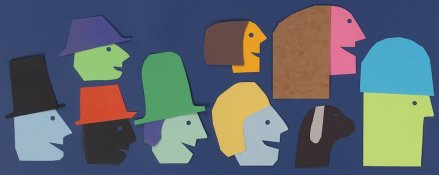
celebrate-picture-books-picture-book-review-this-bridge-will-not-be-gray-people

Image copyright Tucker Nichols, courtesy of mcsweeneys.net

People agreed that for such a beautiful spot, a beautiful bridge was needed. Joseph Strauss then asked for help in developing a plan for the bridge. Leon Moisseiff, known for designing the Manhattan Bridge in New York, came on board. Leon’s idea was for “a suspension bridge, one with swooping lines and tall towers.” The drawings were light and airy and…beautiful. People liked it very much.

“But still the bridge appeared a bit stern in style. So Joseph and Leon asked another person, named Irving Morrow, to help out.” Irving and his wife Gertrude had a different idea about what the bridge could be. With vertical fluting, “art deco flourishes,” pedestrian walkways, and curved lamps lighting the way, “the bridge could be both a bridge and something like art.”

Steelworkers in Maryland, Pennsylvania, and New Jersey built the pieces of the bridge. They were shipped to California by train and by boat. Finally, it was time to construct the bridge. Men had to dive deep into the icy waters of the Pacific Ocean and climb high into the sky while constructing it. It was estimated that it would take 4 years and thousands of workers to finish it.

celebrate-picture-books-picture-book-review-this-bridge-will-not-be-gray-irving-morrow

Image copyright Tucker Nichols, courtesy of mcsweeneys.net

First the tall towers were constructed. The day they were finished was one of “jubilation” and awe as“sometimes the things humans make baffle even the humans who make them. One aspect of the bridge that had not been decided was the color, and many people had opinions on that. “The Navy thought it should be yellow and black so that ships and planes could easily see it.”

“The Army wanted it to look like a candy cane for the same reason the Navy wanted it to look like a tiger with jaundice: so that it would be easily seen by planes and ships.” Most people, though, thought the bridge should be painted black, white, or gray like most other monuments, towers, and buildings. Right now, the bridge was orange—coated with a special anti-rust paint. As Irving Morrow watched the bridge go up, he thought this orange was a beautiful color.

He suggested that the bridge be allowed to stay this color. Others thought he was “nuts.” Never had there been an orange bridge before, “and for a good portion of the human race, because something has not already been, that is a good reason to fear it coming to be.” But the people of San Francisco began to see things Irving’s way. Still, gray seemed to be the safe choice.

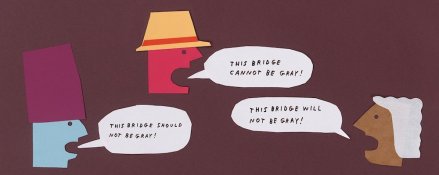
celebrate-picture-books-picture-book-review-this-bridge-will-not-be-gray-people-talking

Image copyright Tucker Nichols, courtesy of mcsweeneys.net

Irving, who was usually a shy and quiet sort, began to get vocal about his color preference as the completion date of the bridge came closer. Other’s began to echo his thoughts and arguments. “This bridge will not be gray!” they said. At last “the powers that be” agreed with Irving. The bridge remained orange: International Orange, in fact.

But because the wind, rain, and sun are harsh on the orange bridge, it needs to be repainted every year. Every day some part of it is being painted by dedicated workers. Is that crazy? Maybe, “But people love to paint it, and people love to look at it. The Golden Gate Bridge, which is orange, is the best-known and best-loved bridge in the world” because it is “bold and courageous and unusual and even strange.”

celebrate-picture-books-picture-book-review-this-bridge-will-not-be-gray-golden-gate-bridge

Image copyright Tucker Nichols, courtesy of mcsweeneys.net

San Francisco resident Dave Eggers has written a loving tribute not only about the very distinctive Golden Gate Bridge but to the equally distinctive, quirky, and even courageous Irving Morrow, other architects, and people of the Bay area who saw and championed art where others may only have seen function. Passages of straightforward narration are joined by rivets of whimsically inserted dialogue, soaring description, and moving insight to construct a lyrical story of vision and inspiration that both kids and adults will find fascinating.  

Tucker Nichols’ paper cut illustrations are as playful and full of imagination as a kindergarten classroom. Using simple shapes and a gorgeous palette Nichols crafts portraits, collages, and landscapes that are movingly effective in depicting the San Francisco Bay area, the rising Golden Gate Bridge, and the personalities involved in this fun history of a beloved monument.

This Bridge Will Not Be Gray is a must for school and public libraries, a wonderfully inspiring addition to children’s bookshelves, and a colorful coffee table book for any home.

Ages 4 – 10 and up

McSweeney’s, 2015 | ISBN 978-1940450476

Click here to learn more about Tucker Nichols and his work.

Historic Bridge Awareness Month Activity

celebrate-picture-books-picture-book-review-golden-gate-bridge-coloring-page

Golden Gate Bridge Coloring Page


Get out your markers, colored pencils, or crayons and color this printable Golden Gate Bridge Coloring Page!

Picture Book Review

November 3 – World Jellyfish Day

celebrate-picture-books-picture-book-review-peanut-butter-and-jellyfish-cover-2

About the Holiday

Jellyfish may be some of the most fascinating creatures in the sea, and they are certainly among the most beautiful. Often seen in groups—called swarms, blooms, or smacks—these ancient ocean invertebrates can be transparent, yellow, red, blue, and even effervescent. Jellyfish capture prey and defend themselves by emitting toxins through painful stings. To celebrate today’s holiday, visit a local aquarium or—if you live in a climate where jellyfish are present at this time of year, head to the beach to watch them in their natural habitat.

Peanut Butter and Jellyfish

By Jarrett J. Krosoczka


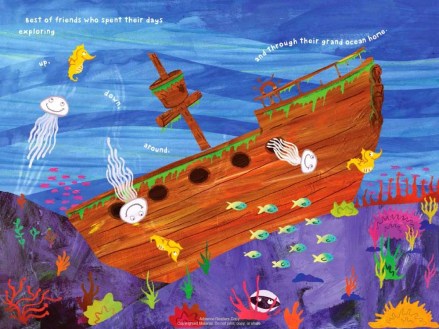
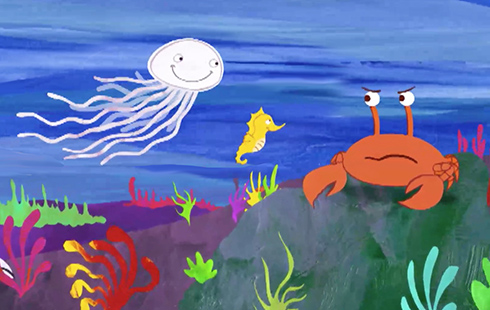
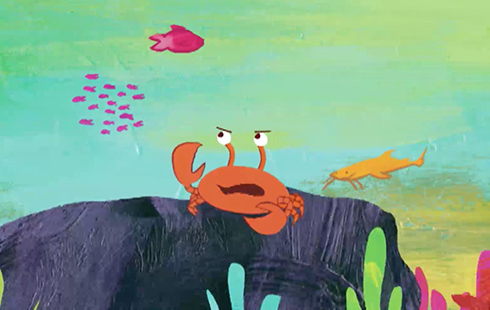
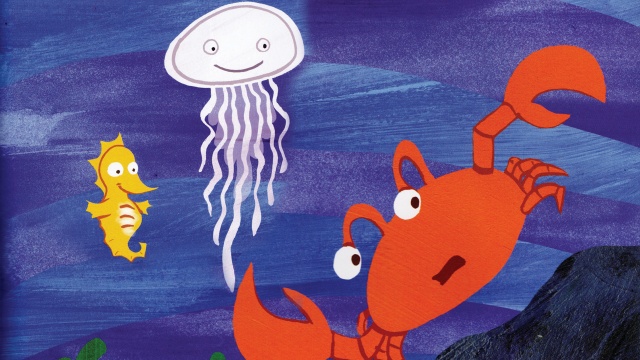
Peanut Butter, a little seahorse, and Jellyfish were best friends who loved to explore the ocean and all its treasures together. Unfortunately, their adventures always seemed to take them past Crabby, “who would taunt as they slipped by, ‘You guys swim like humans.’” Jellyfish and Peanut Butter tried to ignore him, pretending they didn’t hear his hurtful jibes, but “Crabby was relentless. ‘You guys smell like rotten barnacles! Pee-yew!’” He compared them unflatteringly to sea slugs and his grandmother’s “run-walk shoes,” and ended with “what a bunch of bubbleheads!”

celebrate-picture-books-picture-book-review-peanut-butter-and-jellyfish-shipwreck

Copyright Jarrett J. Krosoczka, 2014, courtesy of Knopf Books for Young Readers.

Jellyfish bravely stood up to Crabby, saying, “‘driftwood and sea stones may break our bones, but names will never hurt us.’” Of course, Crabby had a retort to that which involved the fact that Jellyfish was an invertebrate. One day, as Peanut Butter and Jellyfish passed Crabby’s house on their way to the big reef, they steeled themselves for the insults to come. But all they heard was quiet – until the sounds of sobbing reached their ears.

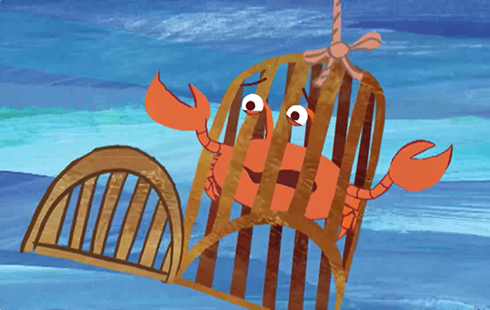
They swam on and found Crabby trapped in a lobster pot that was being pulled to the surface of the water. He called out to them that he was scared. Jellyfish and Peanut Butter looked at each other. Was it their responsibility to help Crabby? Peanut Butter thought that his situation looked pretty serious. And Jellyfish agreed. He even had a plan.

celebrate-picture-books-picture-book-review-peanut-butter-and-jellyfish-crabby

Copyright Jarrett J. Krosoczka, 2014, courtesy of Knopf Books for Young Readers.

The two friends swam up to the lobster trap, and Peanut Butter wrapped his tail around a slat in the door. When he pulled it open, however, Crabby didn’t move. Peanut Butter wanted him to hurry, but Crabby had a confession to make. He couldn’t swim, and he was afraid of heights. Now, Jellyfish had an idea.

He swam to the top of the lobster trap and with all his tentacles working feverishly, he tried to untie the knot in the rope. The trap was coming closer and closer to the fisherman’s boat. Just in the nick of time, the knot loosened, but then Crabby was hurtling to the bottom of the ocean. Peanut Butter and Jellyfish raced to catch it. “They grabbed ahold and lowered it to safety.”

celebrate-picture-books-picture-book-review-peanut-butter-and-jellyfish-taunts

Copyright Jarrett J. Krosoczka, 2014, courtesy of Knopf Books for Young Readers.

Crabby felt weak as he returned to his rock, but he stuttered out a thank you to Jellyfish and Peanut Butter. Then he told them that he was sorry for all the things he had said. “Crabby may have been afraid of heights, but he was brave enough to apologize.” Crabby admitted that he may have felt jealous of all the fun Peanut Butter and Jellyfish had “exploring the open waters.” Jellyfish told Crabby that there was “plenty to explore close to the ocean floor” too. In fact, that’s where “they found their greatest treasure.”

celebrate-picture-books-picture-book-review-peanut-butter-and-jellyfish-lobster-trap

Copyright Jarrett J. Krosoczka, 2014, courtesy of Knopf Books for Young Readers.

Jarrett J. Krosoczka’s seafaring friendship story for little ones uses humor and a generosity of spirit to teach kids a lesson about empathy. Readers may giggle over Crabby’s taunts, but they will also understand the hurt they cause Peanut Butter and Jellyfish. Following this, the kindness showed by Peanut Butter and Jellyfish toward Crabby when he is in trouble then comes as a powerfully surprising message on compassion. Crabby’s willingness to admit his fears, own up to his jealousy, and apologize, as well as the trio’s growing friendship, provides many thought-provoking topics for children to consider.

celebrate-picture-books-picture-book-review-peanut-butter-and-jellyfish-wobbly

Copyright Jarrett J. Krosoczka, 2014, courtesy of Knopf Books for Young Readers.

Krosoczka’s illustrations of the undersea world give readers plenty of details to enjoy while adorable Peanut Butter and Jellyfish take center stage. When their sweet smiles give way to wary looks, kids will know trouble is on its way. Each scene during Crabby’s entrapment and escape provide gentle suspense while demonstrating the story’s themes of understanding and acceptance. As the three explore a chest overflowing with gold in the final spread, readers can debate what the “greatest treasure” is.

Ages 3 – 7

Knopf Books for Young Readers, 2014 | ISBN 978-0375870361

Discover more about Jarrett J. Krosoczka, his books, and his art on his website.

World Jellyfish Day Activity

celebrate-picture-books-picture-book-review--jellyfish-coloring-page

Jellyfish Coloring Page


Watching a jellyfish float on the ocean current can be mesmerizing! Grab your colored pencils, markers, or crayons—and maybe some glitter too—and enjoy this printable Jellyfish Coloring Page!

Picture Book Review

November 2 – It’s National Gratitude Month

celebrate-picture-books-picture-book-review-now-antoinette-portis-cover

About the Holiday

November has been designated as a time for reflecting on our lives and being grateful for our family, friends, opportunities, and the things we have. Often—as today’s book emphasizes—it’s good to look closely at the Now and not worry so much about the future in order to truly appreciate our particular gifts and the positive things in our lives. To celebrate Gratitude Month, take time to count your blessings and thank those who are important in you life.

Now

By Antoinette Portis


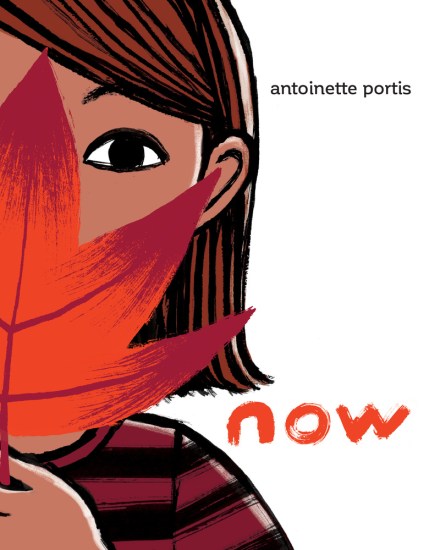
A girl, barefoot and with her arms raised high, runs through a field, feeling the exhilaration of the wind on her face. “This is my favorite breeze,” she says. She finds an apple-red maple leaf, which, at this moment, is her favorite. At the beach, she has dug hole after hole, but her favorite is the one she is making right now.

celebrate-picture-books-picture-book-review-now-antoinette-portis-cloud

Copyright Antoinette Portis, 2017, courtesy of us.macmillan.com.

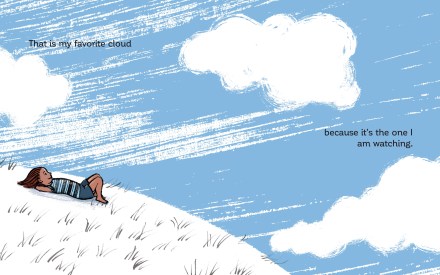
In the mud that has splattered her ankles, she finds a pink, wriggly worm that tickles her palms when she picks it up. As the girl stretches out on a hill to watch the clouds float by, she decides that her favorite is “the one I am watching.” The best rain is one that creates a river in the street for her paper boat—the one that was her favorite until it sailed into the grate

celebrate-picture-books-picture-book-review-now-antoinette-portis-tree

Copyright Antoinette Portis, 2017, courtesy of us.macmillan.com.

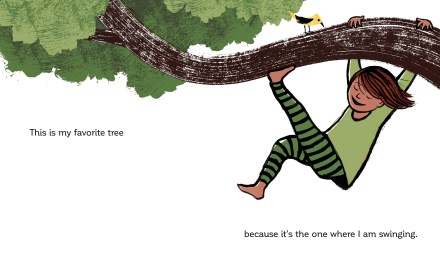
The most marvelous tree has sturdy branches for the girl to swing from, and a delicate, bell-shaped flower produces her “favorite smell.” There are many birds to feed at the park, but the one she likes the best is the one that comes close enough to eat out of her hand. Her favorite song is the one that swells inside her heart and bursts out with joy, and the most delicious gulp and bite are those that quench her thirst and calm her hunger.

Her favorite tooth leaves a gap in her smile “because it’s the one that is missing.” She and her squeezed-tight cat may differ on the best hug, but they probably agree that their favorite moon is the crescent outside the window tonight. But what is her favorite “Now?” It is this moment, because she is having it with you.”

celebrate-picture-books-picture-book-review-now-antoinette-portis-boat

Copyright Antoinette Portis, 2017, courtesy of us.macmillan.com.

Antoinette Portis lends her unique perspective to this uplifting book that encourages kids—and, as readers see in the final image, adults—to live in the moment and become fully conscious of the present object, feeling, experience, or sensation. As the little girl’s favorites build on each other, readers become aware of a growing appreciation for all the small joys that make up a day. The theme of the book is revealed on the first page as the girl welcomes the refreshing breeze. The simply drawn, unencumbered illustrations mirror the simple pleasures that she finds everywhere. But look closer and there is more profound meaning in each.

celebrate-picture-books-picture-book-review-now-antoinette-portis-elephants

Copyright Antoinette Portis, 2017, courtesy of us.macmillan.com.

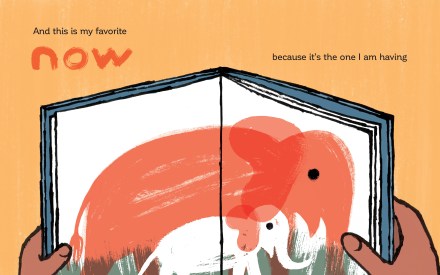
The veins in the maple leaf become the girl’s smile as she holds it to her face; her song radiates from her in a golden sun-shaped swirl; and the girl’s clothing changes through a year’s worth of experiences as it also matches the color of her feeling or activity, allowing her to become one with it. As readers reach the end of Now, they see two hands holding a book open to an image of an elephant and her calf, animals known for their strong family ties. This illustration leads into and strengthens the final page, where the girl and her mother sit reading that book together. The text and picture work in tandem to embrace the reader while letting both children and adults interpret the previous images in their own way.

Now is a beautiful, quiet book that reminds children and adults to slow down and truly enjoy the fleeting moments of life. It is a wonderful book to share and will open discussions of “favorite things” for home, classroom, and library story times.

Ages 3 – 6

Roaring Brook Press, 2017 | ISBN 978-1626721371

To learn more about Antoinette Portis and her books, visit her website.

National Gratitude Month Activity

celebrate-picture-bks-picture-book-review-thanksgiving-worksheets-i-spy-alphabet

Alphabet I Spy Gratitude Game


Things to be thankful for are all around you! What do you see? Find an entire alphabet of favorite things with this printable Alphabet I Spy Gratitude Game Page!

Picture Book Review

November 1 – National Author’s Day & Interview with Author Linda Booth Sweeney

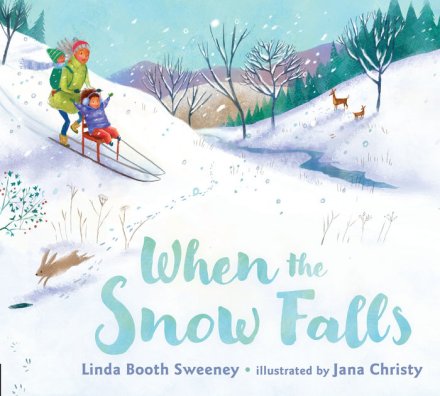
celebrate-picture-books-picture-book-review-when-the-snow-falls-cover

About the Holiday

There may be no better month to celebrate Author’s Day than in November. Not only is it Picture Book Month, but thousands of people set aside their usual routine to take part in NaNoWriMo or National Novel Writing Month, when writers try to complete at least a first draft of a novel in one month. To kick off all of this literary love today, we remember and honor American authors past and present. The holiday was instituted in 1928 by Nellie Verne Burt McPherson, president of the Bement, Illinois Women’s Club. An avid reader, she established Author’s Day to thank writer Irving Bacheller who sent her an autographed story in response to her fan letter. The day was officially recognized in 1949 by the United States Department of Commerce. McPherson’s granddaughter, Sue Cole, has promoted the holiday since her Nellie’s death in 1968 and encourages people to spend a bit of the day writing a note of appreciation to their favorite author.

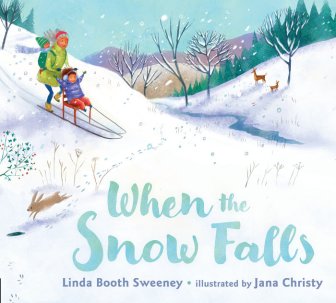
When the Snow Falls

Written by Linda Booth Sweeney | Illustrated by Jana Christy


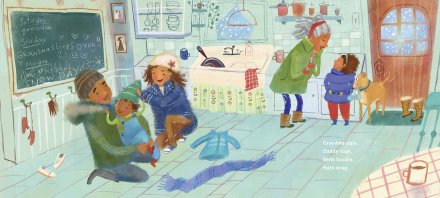
A little curly-haired girl and her younger brother wake up from a sleepover with Grandma to a magical sight. As they gaze out the big picture window in the little girl’s room, they’re dazzled to see “When the snow falls…Frost paints. / Skies gray. / Windows sparkle/ Snow? Yay!” There’s no school today, so Mommy and Daddy and Grandma bundle up and get the kids ready to head outdoors to take care of the farm animals.
celebrate-picture-books-picture-book-review-when-the-snow-falls-kitchen

Image copyright Jana Christy, 2017, text copyright Linda Booth Sweeney, 2017. Courtesy of G. P. Putnam’s Sons for Young Readers.

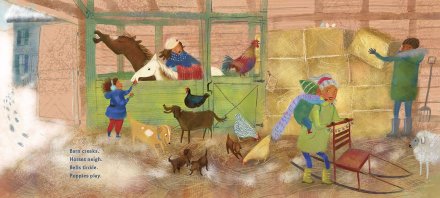
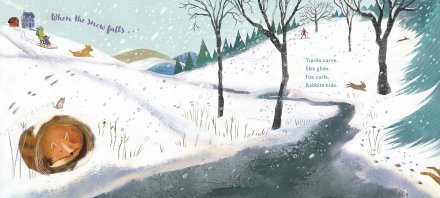
Soft flakes flutter down, piling into deep drifts and providing a little extra after-breakfast treat as “Boot sink. / Lashes flick. / Tongues tickle. / We lick.” In the barn the horses, puppies, and chickens are just as excited about the snowy day. Riding an old chair sled, Grandma and her grandchildren glide down the hill, following tracks left by lively rabbits and now-dozing foxes.

Deep in the forest the three take in the beauty: “Woods hush. / Fields glisten. / Wren sings. / We listen.” On the other side of the woods, people continue their daily routine but at a slower pace as “plows push” and “mountains grow.” Grandma and the kids slide into town, where people are hard at work keeping up with the storm: “Wheels crunch. / Shovels scoop. / Ice cracks! / Awnings droop.”
celebrate-picture-books-picture-book-review-when-the-snow-falls-barn

Image copyright Jana Christy, 2017, text copyright Linda Booth Sweeney, 2017. Courtesy of G. P. Putnam’s Sons for Young Readers.

The trio has reached Grandma and Grandpa’s house. They all grab shovels and help clear the walk. Now it’s Grandpa’s turn to have some fun. He takes his granddaughter by the hand, seats her little brother on a sled, and walk to the park. There, kids are making snowmen, building snow forts, and zipping down hills on their snow saucers. At the bottom of the hill everyone plops into the fluff and make snow angels.

It’s been an exhilarating, adventurous day, but twilight is on the horizon and now “toes tingle. / Lips quiver. / Cheeks glow. / We shiver.” As grandma calls from her front porch, the little girl and Grandpa, carrying his grandson, race toward home amid the swirling snowflakes. Inside, the light, warmth, and cozy comforts of warm soup, popcorn, and a crackling fire await. Later, the two kids enjoy quiet time with Grandma and Grandpa when “Cocoa warms. / Mittens puddle. / Day dawdles. / We cuddle.”
celebrate-picture-books-picture-book-review-when-the-snow-falls-fox

Image copyright Jana Christy, 2017, text copyright Linda Booth Sweeney, 2017. Courtesy of G. P. Putnam’s Sons for Young Readers.

With her brilliantly expressive staccato sentences—each only two words long—Linda Booth Sweeney evokes the sights, sounds, and joy of a care-free, snowy day. Each four-line, rhyming verse abounds with melodic verbs that spark readers’ imaginations and concrete nouns that in many places form delightful alliterative pairs that softly trip off the tongue. Readers will love the story line that takes them from a rustic farmhouse to Grandma and Grandpa’s cozy home through woods, over hills, past the highway, and into downtown all with the help of an old-style sled. Several verses full of snow day fun play out like a long afternoon spent with friends, leading naturally into the slower pace and loving comfort of the night spent with Grandma and Grandpa.
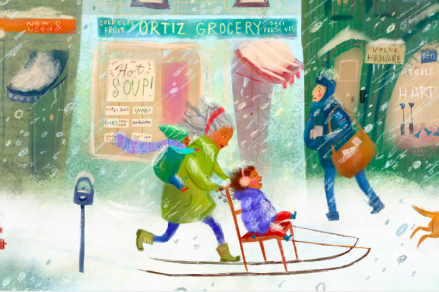
celebrate-picture-books-picture-book-review-when-the-snow-falls-sledding-with-grandma

Image copyright Jana Christy, 2017, text copyright Linda Booth Sweeney, 2017. Courtesy of G. P. Putnam’s Sons for Young Readers.

In glorious two-page spreads, the wind-swept snow swirls, spatters, and blankets the world in downy white fluff. Jana Christy takes children into the family’s large farmhouse kitchen where a blackboard announces Grandma’s Sunday sleepover as well as Monday’s snow day in place of the crossed-out piano lesson. The family steps out into the sparkling countryside where purple mountains form a backdrop for the barn and sheep pen. As Grandma and the kids start their journey, the forest, a quiet enclave of teal and greens, welcomes them. By the time they reach town, cars are stuck in snowdrifts, snow shovels scrape against the sidewalk, and kids are heading to the park.
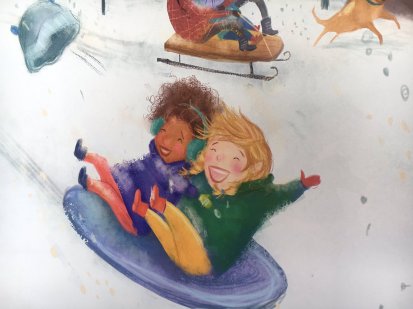
celebrate-picture-books-picture-book-review-when-the-snow-falls-sledding

Image copyright Jana Christy, 2017. Courtesy of G. P. Putnam’s Sons for Young Readers.

The thrill of playing in the snow is palpable as saucers zoom down hills, hats fly off, and hair blows in the wind. The final spreads of Grandma and Grandpa’s tidy home glow with love and laughter as the kids pull off their snow gear, their dog shakes off the snow, and they settle on the couch for cocoa and cuddles. The busy townspeople, happy playmates, and close-knit mixed-race family make When the Snow Falls a cheerful celebration of diversity.

When the Snow Falls is a joyous book to add to winter collections and would be often asked for during home, classroom, and library story times.

Ages 3 – 7

G. P. Putnam’s Sons Books for Young Readers, 2017 | ISBN 978-0399547201

Discover more about Linda Booth Sweeney, her books and her systems work, visit her website.

To learn more about Jana Christy, her art, and her books, visit her website.

National Author’s Day Activity
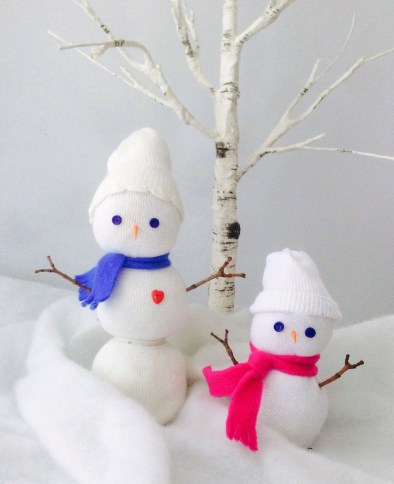
celebrate-picture-books-picture-book-review-sock-snowman-craft

Snow Buddies

Even when there’s no snow, you can make yourself a snow buddy with this fun and easy craft!

Supplies

  • White dress ankle socks
  • Polyester Fiber Fill
  • Tiny buttons
  • Fleece or ribbon, enough for a little scarf
  • Toothpicks
  • Twigs
  • Orange craft paint
  • Cardboard
  • White rubber bands, one or two depending on the size of the snowman
  • Fabric or craft glue
  • Small hair band (optional)

Directions

To Make the Snowman

  1. Cut a circle from the cardboard about 2 inches in diameter for the base
  2. Place the cardboard circle in the bottom of the sock
  3. Fill the sock with fiber fill about ¾ full or to where the ribbed ankle cuff begins. Pack tightly while making a sausage shape. You can make your snowman different shapes with the amount of fill you use.
  4. Stretch out the cuff of the sock and tie it off near the top of the fill either with a loop knot or with the hairband.
  5. Fold the cuff down around the top of the filled sock to make the hat.
  6. Wrap a rubber band around the middle of the sock to make a two-snowball snowman. For a three-snowball snowman, use two rubber bands. Adjust the rubber bands to make the “snowballs” different sizes.

To Make the Scarf

  1. Cut a strip of fleece or ribbon 8 to 10 inches long by ½ inch wide
  2. Tie the fleece or ribbon around the neck of the snowman
  3. To Make the Nose
  4. Dip one end of the toothpick into orange paint, let dry
  5. Cut the toothpick in half
  6. Stick the toothpick into the head or top portion of the snowman

To Make the Arms

  1. Insert small twigs into each side of the body of the snowman
  2. You can also use wire or cardboard to make the arms
  3. Attach two mini-buttons to the face for eyes with the fabric or craft glue
  4. Display your Snow Buddy

Interview with Linda Booth Sweeney
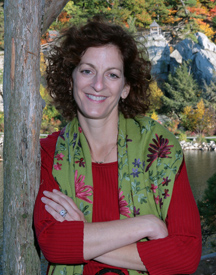
celebrate-picture-books-picture-book-review-linda-booth-sweeney

As the weather turns cooler, I’m happy to talk with Linda Booth Sweeney about the event that inspired her first book for children, a favorite wintertime activity, and how we can learn to see and benefit from systems.

How did you get started writing for children?

It seems like I’ve always been writing though it has taken me a long time to call myself a writer. During our last move, I discovered an old cardboard box from my parents’ attic.  After moving it literally for years, I finally opened it this summer. Inside there must have been 15 diaries and journals. When I looked at the dates, I realized that I started writing in those when I was about twelve and I really haven’t stopped. 
celebrate-picture-books-picture-book-review-when-the-wind-blows

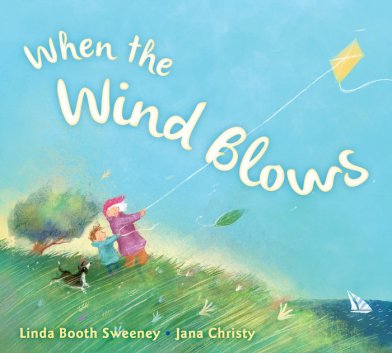
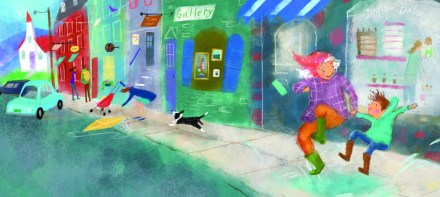
I actually remember the exact day I began writing for children! Jack, my oldest son (now 19), was three. I was pushing him around Cambridge in one of those $20 pop-up strollers. We were a good fifteen minutes from home when a gale force wind blew in. The little canopy on this stroller snapped off and I remember feeling like the stroller lifted up off the ground. This was before cell phones so there was no calling for a ride. I put my head down and ran for home. Well, Jack loved that, and the wind blowing! He was bouncing up and down, pointing to everything he saw: signs rattling, balls rolling, hats flying.
celebrate-picture-books-picture-book-review-when-the-wind-blows-city

Image copyright Jana Christy, 2017, text copyright Linda Booth Sweeney, 2017. Courtesy of G. P. Putnam’s Sons for Young Readers.

During his nap that afternoon, I flopped down at my desk, grateful we made it home in one piece. Jack’s excitement was contagious and his words were swimming around my head so I wrote them down. That was the beginning of my first children’s book, When the Wind Blows.

Using short, two-word phrases, your picture books are so evocative of actions outdoors and indoors as well as internal emotions. Can you describe your writing process?

I was mimicking the voice of a three-year old so the two words. Balls roll. Object and action. Noun and verb. It just made sense. In my other books like the one I’m working on now about the sculptor of the Lincoln Memorial, I am writing for older readers (ages 7-12). My sentences are longer. The book is inspired by big themes like being true to oneself, equality, social justice, and love for country so I find myself writing punchy sentences in the scenes and more lyrically the bridges, or the transitions, between scenes.

Do you remember your favorite picture book when you were a child?

As a little kid, I always loved Dr. Seuss books. My imagination was going full tilt as a kid. Dr. Seuss made me feel like the other worlds I created were not just okay but to be celebrated! As a nine-year-old, I devoured Encyclopedia Brown and anything by James Herriot.

Your first book for children, When the Wind Blows, takes readers on a jaunt through town on a blustery day. When the Snow Falls is a joyful romp through a winter day. What is it about weather that inspires you and your writing?

It’s the immediacy that weather brings. When the rain is pouring down or the snow is falling, that grabs my attention. Of course my attention is also on how to keep my fingers warm or my feet dry. But I can’t think of much else. I love that. I have to be in the moment. My favorite poet, Mary Oliver, captures this idea well in her “Instructions for living a life:
Pay attention.
Be astonished.
Tell about it.”

If you’re outside stomping in puddles or making snow angels, who needs to be on a phone? There’s a lot of research coming out that equates nature to a “vitamin” we all need. Richard Louv, the author of Last Child in the Woods: Saving Our Children from Nature-Deficit Disorder, says it well: “Just as children need good nutrition and adequate sleep, they may very well need contact with nature.” 
celebrate-picture-books-picture-book-review-linda-booth-sweeney

You mentioned in one of your blog posts that When the Snow Falls first took shape during “found time” during the winter of 2015 with its four nearly back-to-back snow storms. Do you have any advice for recognizing and taking advantage of found time not only for writers, but for anyone?

I think the biggest opportunity to enjoy found time comes when we’re willing to put down technology. Sure the photos we can take on our iPhone may be lovely but what if sometimes we are just there, fully present, open and even willing to be a little bored.  Maybe then we can be dazzled by the red Cardinal that lands on the white snowman or the hush that creeps in when no can one drive.

What is your favorite wintertime activity?

I love looking for snow art and especially love seeing it through the eyes of little ones. I’m always amazed by the “art” that forms during snow storms – polka-dotted fields, top hats on fence caps, intricate patterns on round porch tables, delicate animal tracks that look like instructions for some kind of dance move. 

And then of course there is cross country skiing with my family and my crazy friends.

Your other work involves Systems Thinking. Can you describe systems thinking and talk about your systems thinking work with children and schools?

Sure. Like a spider’s web, what happens on one part of the web affects every other part. The same is true of living systems. A pond, our family, our school, a city, the climate—these are all systems. They have two or more parts that interact over time. What’s really interesting is that these different kinds of systems share some similarities, and they can act in surprisingly similar ways. (You can learn more about my systems work here).

How does considering systems thinking and living systems benefit children and their education?

Systems thinking, or “Thinking about systems,” means paying attention to the interrelationships and patterns that surround us. My experience, and that of systems educators around the globe, shows that children are naturally attuned to this. They can read If You Give a Mouse a Cookie by Laura Numeroff and then recognize that same closed loop of cause and effect in their everyday lives.  

A few years back I wrote When a Butterfly SneezesA Guide for Helping Kids Explore Connections in our World as a resource for anyone who wants to help children think about interconnections in our world. Each chapter focuses on a favorite children’s picture book—like If You Give a Mouse a Cookie and The Sneetches by Dr. Seuss—and shows how to use the story to engage children in systems thinking. I just finished updating that book and the new version should be up and ready by next week!

To answer your question about how systems thinking benefits children, learning about systems, and about living systems in particular, can help children to make better decisions and avoid unintended consequences. It can also help them to develop a more compassionate and sustainable sensibility about what is beautiful and what is essential.

I always come back to the Joseph Campbell quote—“People who don’t have a concept of the whole, can do very unfortunate things.…”—and flip it: People—and especially children—who have a concept of the whole can do very fortunate things. If we encourage young people to look for the “whole” and not just focus on the parts, they will be geared toward seeing connections and will not see things in isolation. So much in our culture forces us into compartments. But just as we teach kids not to be victims of advertising, we can teach them to see beyond the obvious, to see the systems all around us.  

What’s up next for you? 

My next children’s book is a richly illustrated biography about Daniel Chester French, the sculptor of the Lincoln Memorial.  I am thrilled to be working with Shawn Fields a representational artist on this book.  The working title of the book is Monument Man, and that subject is very much a part of our public conversation at this point in our history. 

Thanks, Linda! Your books inspire us to look closure and pay attention to the moment, and I wish you all the best with them!
celebrate-picture-books-picture-book-review-when-the-snow-falls-cover

You can connect with Linda Booth Sweeney on:

Her Website | Twitter | Facebook | Linked in

You can find When the Snow Falls with these booksellers:

Amazon | Barnes & Noble | Books-a-Million | IndieBound | Penguin Random House

Picture Book Review

October 31 – Halloween

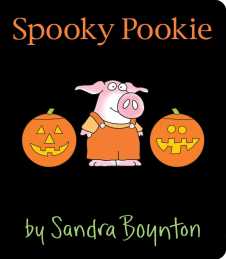
celebrate-picture-books-picture-book-review-spooky-pookie-cover

About the Holiday

With its invitation to dress up, free candy, and spooky fun, Halloween is a favorite holiday of kids and adults—even pets get in on the act! The holiday is thought to have its origins in the ancient Celtic festival of Samhain, during which people lit bonfires and wore costumes to ward off ghosts. Over time the holiday became a community event and has been transformed into the celebration we know today.

Spooky Pookie

By Sandra Boynton

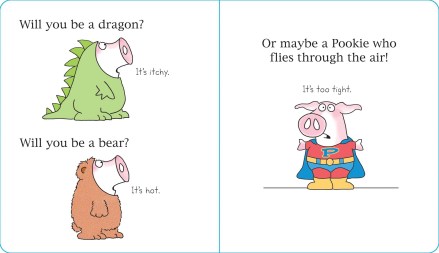
Little Pookie is so excited to learn that tonight is Halloween. Pookie’s mom reveals that they will visit friends in the neighborhood and yell “Trick or Treat!” But first Pookie must choose a costume. She brings out a big blue box that is stuffed full of cool disguises. Little Pook tries on a dragon costume but finds it “too itchy”; the bear costume is “too hot”; and the superhero costume is “too tight.”

celebrate-picture-books-picture-book-review-spooky-pookie-costumes

Copyright Sandra Boynton, 2017, courtesy of simonandschuster.com.

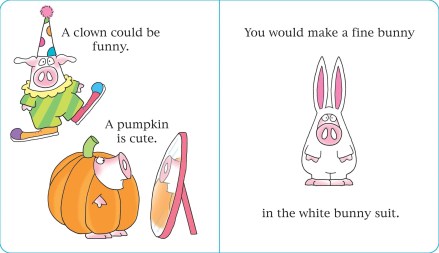
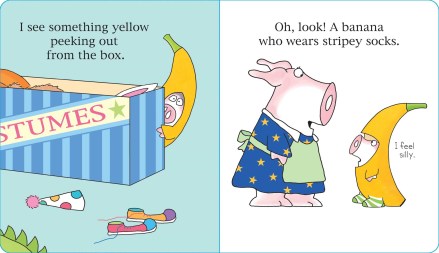
Pookie’s mom has some suggestions: “A clown could be funny, a pumpkin is cute. You would make a fine bunny in the white bunny suit.” Maybe, but Pookie wants to keep looking. How about a banana “who wears stripey socks?” That just feels too silly, Pookie says.

celebrate-picture-books-picture-book-review-spooky-pookie-clown-pumpkin-bunny

Copyright Sandra Boynton, 2017, courtesy of simonandschuster.com.

At the bottom of the box, Mom discovers that “there’s one more to try. It’s a little white ghost. Will THIS be the costume that you like the most?” Pookie is willing to give it a go.  “BOO!” Pookie shouts, and Mom shrieks, “EEK! It’s a Ghost!” But it’s not really. It’s just a “Spooky Pooky.”

celebrate-picture-books-picture-book-review-spooky-pookie-banana

Copyright Sandra Boynton, 2017, courtesy of simonandschuster.com.

Sandra Boynton is always pitch perfect for her young audience, and Spooky Pookie is another adorable addition to her holiday stories for little ones to love.  Infused with just a pinch suspense and plenty of giggles as cute Pookie tries on costume after costume, Spooky Pookie is a little rhyming gem that sets a sweet tone for this trick-or-treat read.

Ages 1 – 5

Simon and Schuster Little Simon Board Book, 2017 | ISBN 978-1481497671

You will find books, music, videos, art, games and a whole, whole lot more by Sandra Boynton on her website!

Halloween Activity

celebrate-picture-books-picture-book-review-Halloween-Owl-Witch-Coloring-Page

Halloween Maze and Coloring Page

Before going trick-or-treating, here are two fun printable Halloween activity sheets to enjoy!

 Pumpkin Patch Maze | Cute Owl Witch Coloring Page

celebrate-picture-books-picture-book-review-spooky-pookie-cover

You can find Spooky Pookie at these booksellers

Amazon | Barnes & Noble | Books-a-Million | Bookshop

Picture Book Review
October 30 – Checklist Day

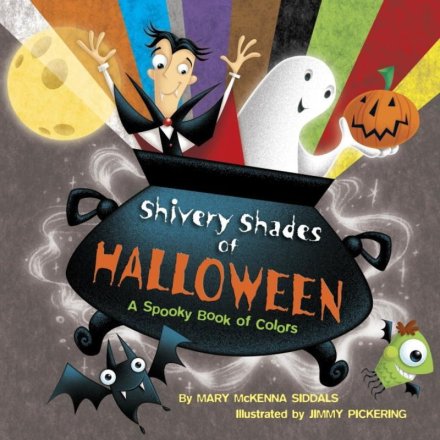
celebrate-picture-books-picture-book-review-shivery-shades-of-Halloween-cover

About the Holiday

The origins of Checklist Day may be found in early aviation history when pilots devised a system to ensure that all procedures and safety measures had been completed before takeoff. With so many dials, buttons, and measurements to attend to, a checklist made it easier to keep track of what had been done. The idea was applicable to almost every endeavor, and people quickly adopted it for all types of business and personal uses. As Halloween approaches, use today’s holiday to make sure you have everything you need to celebrate. Got a costume? Check! Got candy? Check! Got a Jack-O’-Lantern? Check! And make sure you have all the colors of Halloween represented with today’s book!

Shivery Shades of Halloween: A Spooky Book of Colors

Written by Mary McKenna Siddals | Illustrated by Jimmy Pickering


Have you ever thought, “What color is Halloween?” Sure, we all know it’s orange and black—but what about the rest of the color wheel? Tell me—what’s your favorite color? Purple? Let me look through Shivery Shades of Halloween…Yes! Halloween is purple—“Twilight, / Shadows, / Monsters lurking, / Secret potion— / Poof! It’s working! / Dusky-musky, bruisy-oozy, cruelish-ghoulish / Blotch of purple.”

Hey! This is fun! Give me another one! Gray, you say? Hang on…. Yes! Halloween is Gray! “Tombstone, gargoyle, / Dungeon wall, / Rats and rubble, / Haunted hall, / Dusty-fusty, dimly-grimly, shady-fraidy / Shroud of gray.”

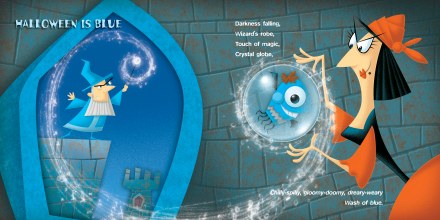
celebrate-picture-books-picture-book-review-shivery-shades-of-halloween-blue

Image copyright Jimmy Pickering, text copyright Mary McKenna Siddals. Courtesy of Random House Books for Young Readers

Okay, now it’s my turn. I’m choosing…Red. Yep! Halloween is also Red: “Tip of fang, / Flash of cape, / Horns and tail, / A gash, a gape, / Bloody-ruddy, burning-churning, blushing-gushing / Stain of red.”

Wild! And that’s just the beginning! There are also spirited, spooky rhymes about brown, yellow, blue, white, green, and, of course, orange and black.

celebrate-picture-books-picture-book-review-shivery-shades-of-halloween-black

Image copyright Jimmy Pickering, text copyright Mary McKenna Siddals. Courtesy of Random House Books for Young Readers

Mary McKenna Siddals brings joy and a love of words—their sounds and their effects—to her verses that transport kids to the throbbing heart of Halloween on the broomsticks of color. In Shivery Shades of Halloween, Siddals presents all the spine-tingling  places, characters, and objects that make this holiday—and any mystery—so much chilling, thrilling fun. With giggles, eewwws, and a few shivers, kids will delight in the original and imaginative phrasing in this clever concept book.

Jimmy Pickering’s vibrant, full-bleed illustrations ooze, flash, and swirl with the colors of Halloween. For Green, a “queasy-peasy” web-eared reptile slurps a “vile brew” from a test tube as an evil scientist looks on and the walls seep with a thick green sludge. Purple zaps and sparks as the reptile is transformed into a smiling goblin with bats’ wings and five legs. This goblin then leads readers from page to page where they meet a tricky ghost, a haunted graveyard, a spell-casting wizard and crystal-ball-reading witch, a floating candlestick in a haunted house, a howling werewolf, a dancing caldron, a clumsy demon, and a trio of trick-or-treaters. Each painting incorporates touches of the other colors introduced, creating eye-catching and suspense-building pages.

Shivery Shades of Halloween is a book that kids will want to hear and you will want to read over and over. For teachers, the book makes a wonderful resource for writing lessons and the power of evocative words not only around Halloween, but at any time of the year. Shivery Shades of Halloween is one concept book that transcends its holiday theme and would be a welcome addition to home bookshelves as well as classroom and other libraries.

Ages 2 – 7

Random House Books for Young Readers, 2014 | ISBN 978-0385369992

Take a peek at Victoria scaring up some fun by reading Shivery Shades of Halloween!

To learn more about Mary McKenna Siddals and her other books, visit her website! You’ll also find lots of activities as well as activity sheets to extend your enjoyment of Shivery Shades of Halloween: A Spooky Book of Colors as well as her other books.

Here’s a link to Shivery Shades of Halloween Activity Sheets.

You can also connect with Mary McKenna Siddals on her Shivery Shades of Halloween Facebook Page, where you’ll find more fun and a whole community of readers.

Discover more about Jimmy Pickering and view a gallery of his illustrations, paintings, sculpture and more on his website. You can also find him on Facebook!

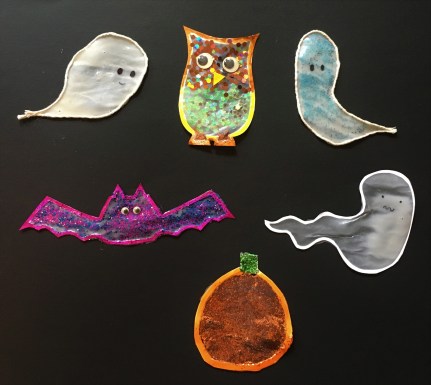
Checklist Day Activitycelebrate-picture-books-picture-book-review-halloween-hanging-figures-black-background

Spooky Halloween Mobile


With glue, glitter, and your imagination you can make your love of Halloween and its ghosts, ghouls, pumpkins, and more colorfully transparent to all!

Supplies

  • Printable Halloween figure templates | Template 1 | Template 2
  • Poster board or other heavy stock paper or cardboard
  • White glue
  • Glitter in a variety of colors
  • Googly eyes (optional)
  • Scissors
  • Wax paper
  • Popsicle or craft sticks
  • Needle
  • White thread (or any color)
  • Fine-tip permanent marker
  • Hot glue gun or regular glue


Directions

  1. Print the Halloween Figures templates
  2. Cut out the figures
  3. Trace the figures onto the poster board
  4. Cut out the figures around the outside edge and also along the inside edge
  5. Lay out the figure templates on the wax paper
  6. Gently pour some white glue into the center of the figure template
  7. Smooth the glue completely to the edges of the figure template, adding glue if needed
  8. Sprinkle glitter on the glue, as much or as little as you’d like

To dry the glue

  1. Let the figures sit overnight OR:
  2. Place the figures on the wax paper in a warm oven. Turn the oven on to 200 – 250 degrees and let it come up to heat. Then turn the oven off and place the figures inside. Check after 15 minutes and check frequently until dry.

After the glue is dry

  1. Add faces to the ghosts with a permanent marker
  2. Add googly eyes with the hot glue or regular glue
  3. If desired, color the edge of the template to match the color of the glitter

To hang figures

  1. Thread a needle with the desired length of thread and gently push the needle through the glue near the top of the figure.
  2. Tie the thread around a chandelier, curtain rod, or any other place you would like to decorate

Picture Book Review