September 17 – It’s Friendship Month

celebrate-picture-books-picture-book-review-two-tough-trucks-cover

About the Holiday

Established by the Oddfellows, an organization dedicated to philanthropy and charity, about ten years ago, Friendship Month encourages people to spend more time with their friends, get in touch with those they haven’t seen or talked to in a while, and especially to reach out to others who are alone or need a friend. As school gets underway, there are plenty of opportunities for kids to meet new people and form friendships – some of which may last a lifetime.

I received a copy of Two Tough Trucks from Scholastic for review consideration. All opinions are my own. I’m excited to be teaming with Scholastic in a giveaway of the book. See details below.

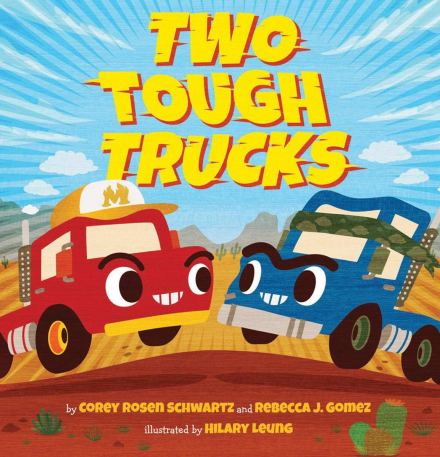
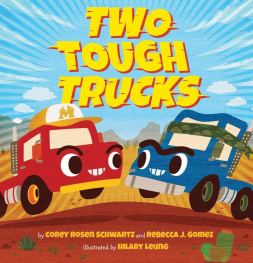
Two Tough Trucks

Written by Corey Rosen Schwartz and Rebecca J. Gomez | Illustrated by Hilary Leung


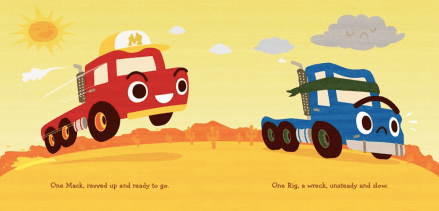
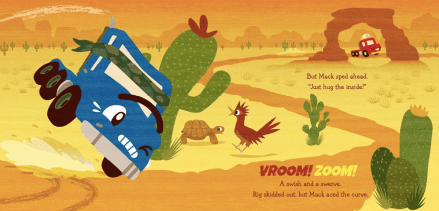
One morning, two trucks are ready “for their first day of class.” But Rig’s “riding the brakes” while Mack’s “hitting the gas.” In their classroom, their teacher Miss Rhodes pairs these two up for a practice run on the track. First up is the circuit, with twists and a hairpin turn. Rig feels shaky, but Mack’s “a speedy red blur.” Mack picks up speed going into the turn and keeps on going, but Rig hits the brakes and skids off the course.
celebrate-picture-books-picture-book-review-two-tough-trucks-meeting

Image copyright Hilary Leung, 2019, text copyright Corey Rosen Schwartz and Rebecca J. Gomez, 2019. Courtesy of Orchard Books.

Next comes learning to downshift while climbing a hill. Mack breezes up as Rig carefully inches along. First to the top, Mack gloats, “‘I knew I was fast.’” And although Rig tried his best he “finished dead last.” Mack thought Rig was just dragging him down. For Rig, Mack just seemed liked a braggart. As he vroomed, Mack fumed and left Rig “in the dust.”
celebrate-picture-books-picture-book-review-two-tough-trucks-sharp-curve

Image copyright Hilary Leung, 2019, text copyright Corey Rosen Schwartz and Rebecca J. Gomez, 2019. Courtesy of Orchard Books.

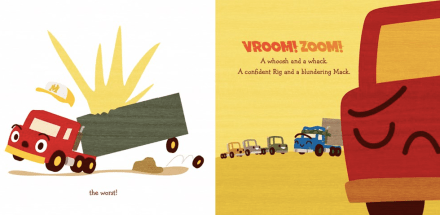
The students moved on to practicing backing up. As they moved around traffic cones,  “they veered and corrected, / they turned and reversed. / Rig had good instincts, but Mack was… the worst.” Rig aced the course, but Mack? He was ready to quit until Rig steered him right. “Vroom! Zoom! / They backtracked and bumped. / A Mack making progress, / a Rig feeling pumped!”

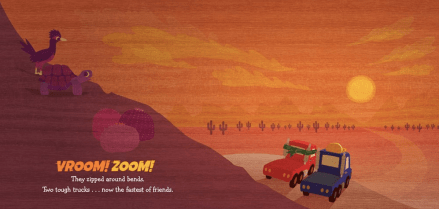
Mack was surprised that Rig had helped him, but for Rig it was just the right thing to do. They headed back to the track and took it by storm. These two trucks were “now the fastest of friends.”
celebrate-picture-books-picture-book-review-two-tough-trucks-blundering-mack

Image copyright Hilary Leung, 2019, text copyright Corey Rosen Schwartz and Rebecca J. Gomez, 2019. Courtesy of Orchard Books.

Like life’s road itself, this original story of two trucks with distinct personalities and different strengths has lots of twists and turns and takes little ones on a multilayered journey of discovery. While Mack is rarin’ to go on his first day of truck school, Rig is more hesitant. When these two are teamed up for the day, Mack’s fast and daring approach to the track seems to be the right one as he nails the sharp curve and is the first to reach the peak of the hill, leaving Rig far behind. These early successes cause him to honk his own horn and complain about Rig.

But then in a clever literal and metaphorical reversal, Rig’s thoughtful restraint makes backing up his forte. In Mack’s reaction to being last, Schwartz and Gomez gently ramp up life lessons about perseverance and losing gracefully. In addition, Rig goes on to demonstrate another winning trait in his generosity to teach Mack the finer points of driving in reverse. Mack’s acceptance of Rig’s kindness shows that the experience has taught him to be humble. Kudos to Miss Rhodes for creating a track that leads to strong bonds and friendship.

A book by Schwartz and Gomez always charms with smart rhyming and jaunty rhythms and Two Tough Trucks is no exception. Ingenious puns, evocative and active vocabulary, and plenty of “vrooms” and “zooms” for kids to chime in on make this book a lively read aloud.
celebrate-picture-books-picture-book-review-two-tough-trucks-sunset

Image copyright Hilary Leung, 2019, text copyright Corey Rosen Schwartz and Rebecca J. Gomez, 2019. Courtesy of Orchard Books.

Hilary Leung’s textured and boldly colored pages will thrill little readers as Mack and Rig take center stage on the dusty, western track. Mack’s confidence shows in his straight, crisp lines and grinning grill while Rig’s wariness takes the form of wobbly tires, bent frame, furrowed brow, and grimacing grill. Fittingly, the Truck School building is shaped like a parking garage, complete with a spiral ramp that takes students to the second and third story. Cacti, roadrunners, and craggy rock formations dot the sun-drenched desert track where Mack, Rig, and the rest of the students strut their stuff.

A joy to read out loud and offering so much repeat readability, Two Tough Trucks is highly recommended for home bookshelves, preschool and kindergarten classrooms, and public libraries.

Ages 3 – 5

Orchard Books, 2019 | ISBN 978-1338236545

Discover more about Corey Rosen Schwartz and her books on her website.

To learn more about Rebecca J. Gomez and her books, visit her website.

To view a portfolio of work by Hilary Leung and learn more about his work, visit her website.

Friendship Month Activity
celebrate-picture-books-picture-book-review-truck-racing-game-wood

Racing for Friendship Game

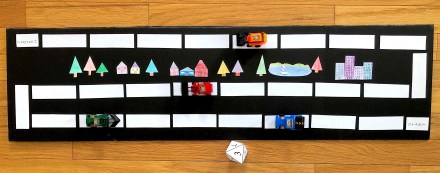
Here’s a racing game that kids will love making and playing with friends or family! With poster board, paper, and chalk or other art supplies, kids can place their track in, a city, the country, the desert, or even in outer space! Then get out your own toy cars and trucks to play with or use the printable truck tokens included below. Use a traditional playing die or the included printable 8-sided playing die. The first player to the finish line wins—or shake it up a bit and make the last person to the line the winner.

Supplies

  • Black poster board, thick poster board, or tri-fold display board. I used a 12-inch by 4-foot section of a tri-fold board in my example. This allows you to fold up the board for easier storing.
  • White paper
  • Chalk, crayons, or colored pencils
  • Glue or tape
  • Scissors
  • Toy trucks or cars
  • Printable Truck Tokens (optional)
  • Printable 8-sided Playing Die

Directions

  1. Cut about 30 4- or 5-inch by 1½-inch strips from the white paper
  2. Have kids lay out a track on the board using the white paper strips (each strip is one space) leaving room in between the rows for scenery
  3. Glue or tape the strips in place
  4. Cut trees, buildings, landmarks, or other scenery from paper and color. Glue or tape to board. Alternately, draw scenery on the board with chalk
  5. Print and assemble 8-sided playing die with tape (optional)
  6. Gather one toy truck or car for each player. Alternately, print and cut out included Truck Tokens. (To make them sturdier, print on heavy paper or glue them to cardboard)
  7. Choose a player to go first
  8. Players take turns rolling the die and moving the appropriate number of spaces
  9. The first (or last) player to the finish line is the winner
celebrate-picture-books-picture-book-review-two-tough-trucks-cover

You can find Two Tough Trucks at these booksellers

Amazon | Barnes & Noble | Books-a-Million | IndieBound

Picture Book Review

September 16 – It’s Read a New Book Month

celebrate-picture-books-picture-book-review-lola-dutch-when-i-grow-up-cover

About the Holiday

Read a New Book Month is a fantastic time to scour your local bookstore and library for books that have recently been published or books that are new to you. Finding a book that you’ve never read before is exciting at any age, and discovering a new book about a favorite topic or in a favorite series is one of life’s greatest pleasures. Today’s book shows how books can spark an interest that can lead to a new hobby or even a future career.

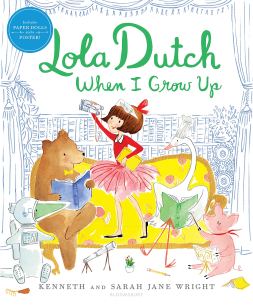
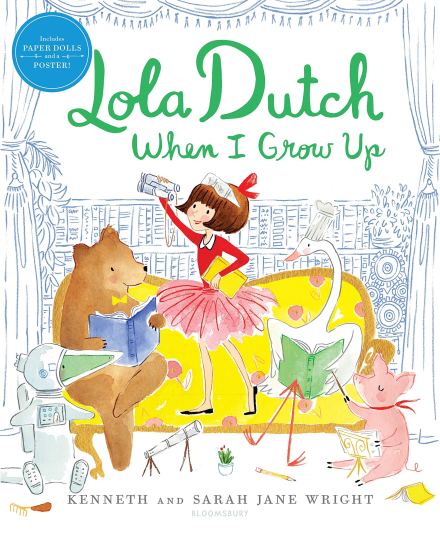
Lola Dutch When I Grow Up

By Kenneth and Sarah Jane Wright


Lola Dutch is a little girl whose mind swirls with all the possible things she could be when she grows up, and she wants to decide right now. Bear thinks it would be nice to talk about it over tea, but Lola’s in a hurry. “‘Quick, to the den!’” she says. Bear’s den is spectacular! It’s lined floor to ceiling with books on all topics, a comfy couch and an armchair beckon, and a fireplace keeps it nice and toasty. Today, Lola spies a book about opera and settles in.

celebrate-picture-books-picture-book-review-lola-dutch-when-i-grow-up-inventor

Image copyright Kenneth and Sarah Wright, 2019, courtesy of Bloomsbury Children’s Books.

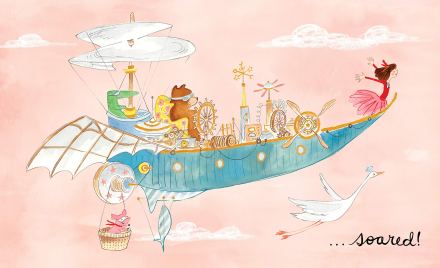
After reading, Lola is convinced the stage is for her. In fact, it’s time to rehearse right now—as in full dress rehearsal. So, “Gator built the set. Pig composed the orchestrations. Crane designed the costumes.” And Bear brought the bouquet of roses for Lola’s final bow. At the end of the performance, Bear thinks Lola slayed it. But looking around at all of the intricate, moving props, Lola has decided that maybe she’d like to be an inventor. “Lola’s imagination soared” as she thought of all the aspects of being an inventor.

But then Lola wonders if perhaps she is “supposed to be something else when [she] grew up.” Suddenly, the fragrant flowers and buzzing bees catches her attention, and she thinks that being a botanist would be awesome. Prepping the soil, planting seeds, and caring for seedlings to “‘make the earth laugh with flowers’” is just what Lola wants to do. As Lola trims a topiary, Bear remarks, “‘Lola Dutch, you’ve grown so much.’”

celebrate-picture-books-picture-book-review-lola-dutch-when-i-grow-up-air-ship

Image copyright Kenneth and Sarah Wright, 2019, courtesy of Bloomsbury Children’s Books.

And yet, Lola’s not finished growing. She ponders whether she should be a judge, an Egyptologist, a pastry chef, a chemist, and a whole host of other professions. The choices are endless, and Lola just can’t make up her mind. Bear has some sage advice. He asks her what she wants to be right then. Lola confides that she’s happy being a kid and learning about the world, and Bear encourages her to be just that. This sounds wonderful to Lola because, as she says, “‘I have a few more things I’d like to be tomorrow.’”

A surprise awaits readers on the the book jacket. On an extended flap at the back of the book are paper dolls of Lola Dutch and Pig as well as Lola’s voluminous opera gown. Turning the jacket to its reverse side, kids find an opulent, full-color stage, complete with airship, a topiary carousel, landmarks from Ancient Egypt, and Bear waiting to watch the performance. A glance at the copyright page reveals the creators in history who influence Lola’s imagination.

celebrate-picture-books-picture-book-review-lola-dutch-when-i-grow-up-botonist

Image copyright Kenneth and Sarah Wright, 2019, courtesy of Bloomsbury Children’s Books.

Welcome to childhood—that time when imagination and reality mesh, allowing kids to be and do anything they can think of. Kenneth and Sarah Jane Wright tap into that energy and enthusiasm as Lola contemplates all the things she could be when she grows up. All she needs to do to find plenty of brilliant career choices is to look around her surroundings. Acting? Check. Inventing? Yep. Botony, cooking, or chemistry? Yes, yes, or yes. But does she have to rush into it? There’s so much more to explore. The Wright’s brisk compilation of professions and the subsets that make them so interesting will entice any child to follow Lola’s example and make their own discoveries. 

Sarah Jane’s vibrant pencil, gouache, and watercolor illustrations shimmer with charm, and exuberance, reflecting that buoyant feeling of confidence and possibility of children interacting with their world. Fans of the first Lola Dutch book will love meeting up with Bear, Pig, Gator, and Crane once more and looking forward to the now—and the future—with such good friends.

Lola Dutch When I Grow Up is an inspiring sequel to Lola Dutch and will be a favorite and often-asked-for addition to home, classroom, and public libraries.

Ages 4 – 8

Bloomsbury Children’s Books, 2019 | ISBN 978-1681195544

To learn more about Kenneth and Sarah Jane Wright, their books, and other ventures, visit their website.

Read a New Book Month Activity

celebrate-picture-books-picture-book-review-briefcase-craft-2

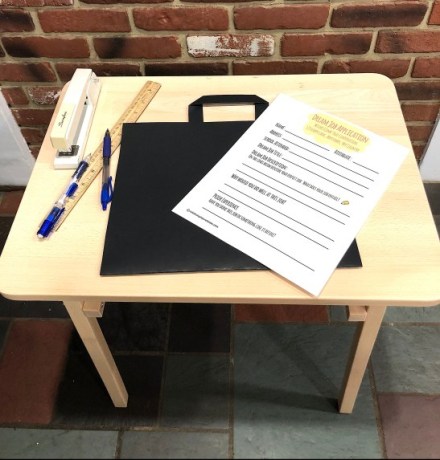
Kids who know just what they’d like to do when they grow up or those who are still exploring the options will enjoy filling out this printable Dream Job Application. After making the easy briefcase, kids will be ready to take the world by storm!

Supplies

Directions

To Make the Body of the Briefcase

  1. Cut a rectangle of poster board in proportion to child’s size. Leave ½ inch on either side of the shorter cut to glue the briefcase together. The longer side should be double the height you’d like the finished briefcase to be. (My example was made from a 12-inch by 20-inch strip.)
  2. Fold the poster board in half
  3. Glue the side edges together

To Make the Handle

  1. Cut a narrow strip of poster board
  2. Fold the right side of the strip toward you and down, pinching it tight; repeat on the left side

Print out the Dream Job Application and fill it in!

celebrate-picture-books-picture-book-review-lola-dutch-when-i-grow-up-cover

You can find Lola Dutch When I Grow Up at these booksellers

Amazon | Barnes & Noble | Books-a-Million | IndieBound

Picture Book Review


September 12 – National Day of Encouragement

celebrate-picture-books-picture-book-review-ruby-finds-a-worry-cover

About the Holiday

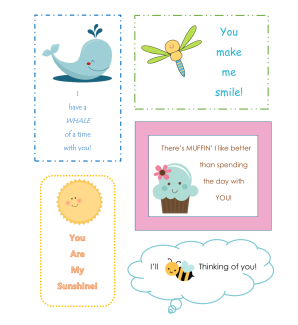
Today’s holiday got its start when a group of high school students attending a leadership conference were asked to devise a solution to what was perceived as a major problem facing young people: a lack of encouragement. Their solution led to the establishment in 2007 of a National Day of Encouragement on which people are prompted to perform deliberate acts of encouragement to cheer and inspire others. The theme for 2019 is “Share a Smile.” To celebrate, smile at those you meet, say a kind word, mail a card, make a call, or send a text to anyone who needs a little more encouragement to complete a goal, deal with a problem, or just to have a good day. You can also print and give out the Encouragement Cards below.

Bloomsbury Children’s Books provided me with a copy of Ruby Finds a Worry for review consideration. All opinions are my own. I’m thrilled to be teaming with Bloomsbury in a giveaway of the book. See details below.

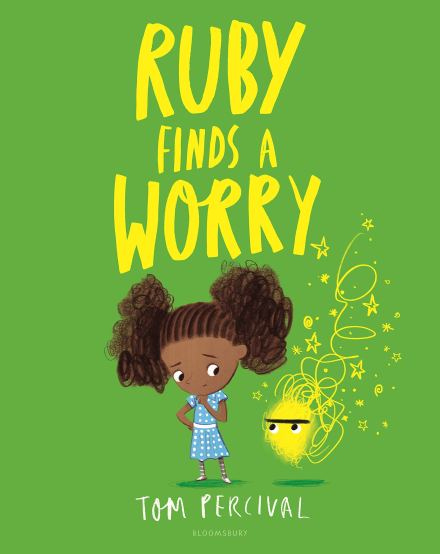
Ruby Finds a Worry

By Tom Percival


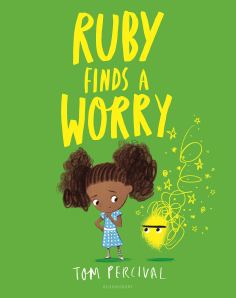
“Ruby loved being Ruby.” She was happy swinging on her swing set and exploring her backyard. But one day, she “discovered a Worry.” It wasn’t too big. At first it was just a little nudge, but then it started to grow…and grow. Then it began following her around—everywhere. It sat opposite her at the breakfast table and hung around while she brushed her teeth. Ruby was sure her teacher and the other kids in her class would see it, but they didn’t, “so Ruby pretended that she couldn’t see it either.”

celebrate-picture-books-picture-book-review-ruby-finds-a-worry-little-worry

Copyright Tom Percival, 2019, courtesy of Bloomsbury Children’s Books.

Ruby kept hoping that it would go away. Then she began to worry that it would never go away. Ruby’s worrying just made the Worry grow even bigger. It was soon so enormous that Ruby felt squeezed for space at home and in the school bus. The Worry filled up all of her thoughts; she couldn’t do the things she loved anymore and “it seemed like she would never feel happy again.”

celebrate-picture-books-picture-book-review-ruby-finds-a-worry-dragon-box

Copyright Tom Percival, 2019, courtesy of Bloomsbury Children’s Books.

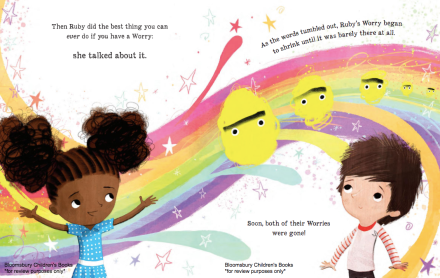
Then one day, Ruby saw a boy sitting glumly on a park bench. She recognized that look—and the Worry floating just behind him. For the first time, Ruby realized that other people had Worries too. She sat next to the boy, and they began to talk. As the boy told her what was troubling him, “his Worry began to shrink.” Then Ruby told the boy about her Worry, and it shrank away too. With both Worries gone, the world seemed brighter, and the boy and Ruby jumped for joy. Ruby “felt like her old self again.”  Ruby still found Worries sometimes, “but now that she knew how to get rid of them, they never hung around for long.”

celebrate-picture-books-picture-book-review-ruby-finds-a-worry-disappearing-worry

Copyright Tom Percival, 2019, courtesy of Bloomsbury Children’s Books.

Tom Percival’s reassuring story is so welcome for children who tend to let their worries crowd out other thoughts and even their happiness. Percival’s straightforward and honest depictions of the stages of worrying—first twinges, growing fears, pretending everything’s okay, and overwhelming anxiety—are both educational and helpful for kids struggling with these feelings. Two stand-out sentences in which Percival directly reveals to readers the worst and best things they can do with a Worry provide excellent guides for dealing with this common emotion.

Working hand-in-hand with the text, Percival’s clear illustrations show Ruby’s progression from a happy, carefree little girl to a child paralyzed by her worries. Ruby’s initial curiosity and courage, shown through full-color spreads, gives way to uncertainty and reticence as her once-happy expression turns sad and the world around her is washed in somber grays. As the Worry keeps up its constant presence, Percival depicts three vignettes—Ruby’s birthday, Ruby riding her bike, and Ruby practicing the piano—that depict activities that can cause worry but also be spoiled by it. Ruby’s discovery that other people also have worries comes with another bit of insight. As Ruby talks to the boy, she reveals that she—perhaps instinctively—knows just what he needs to feel better. Helping kids implement this awareness to advocate for themselves as well is what this book is all about.

A supportive and encouraging book for kids who have a high sensitivity for worrying as well as for those who have periodic doubts, Ruby Finds a Worry should be part of every classroom and public library collection and would be a comforting book to own and share for home libraries too.

Ages 3 – 6

Bloomsbury Children’s Books, 2019 | ISBN 978-1547602377

To learn more about Tom Percival, his books, and his art, visit his website.

Ruby Finds a Worry Giveaway

I’m happy to be partnering with Bloomsbury Children’s Books in a giveaway of:

  • One (1) copy of Ruby Finds a Worry by Tom Percival

To be entered to win Follow me on Twitter @CelebratePicBks and Retweet one of my giveaway tweets.

This giveaway is open from September 12 through September 19 and ends at 8:00 p.m. EST.

A winner will be chosen on September 20.

Giveaways open to US and Canadian addresses only | Prizing provided by Bloomsbury Children’s Books

National Day of Encouragement Activity

celebrate-picture-books-picture-book-review-random-acts-of-encouragement-cards

Random Acts of Encouragement Cards to Share


Today’s a day to spread a little encouragement to friends, neighbors, teachers, and anyone who looks as if they could use some cheering up.

Random Acts of Encouragement Cards 1Random Acts of Encouragement Cards 2

celebrate-picture-books-picture-book-review-ruby-finds-a-worry-cover

You can find Ruby Finds a Worry at these booksellers

Amazon | Barnes & Noble | Books-a-Million | IndieBound

Picture Book Review

September 11 – National Quiet Day

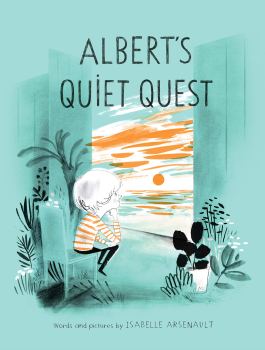
celebrate-picture-books-picture-book-review-albert's-quiet-quest-cover

About the Holiday

We’re surrounded by noise every day. Cars whoosh by on the street, TVs drone on, and voices fill the air in the office and at school. Sometimes it seems as if you don’t hear the constant din, but you do. Quiet Day was established to give people an opportunity to experience the benefits found in silence. Not only did the founders envision a day in which you sought out quiet places, but they suggest that you don’t speak at all for the entire day. Reconnecting with yourself and your thoughts can make you feel more relaxed and give you new perspectives that can stimulate creativity and better communications.

Albert’s Quiet Quest

By Isabelle Arsenault


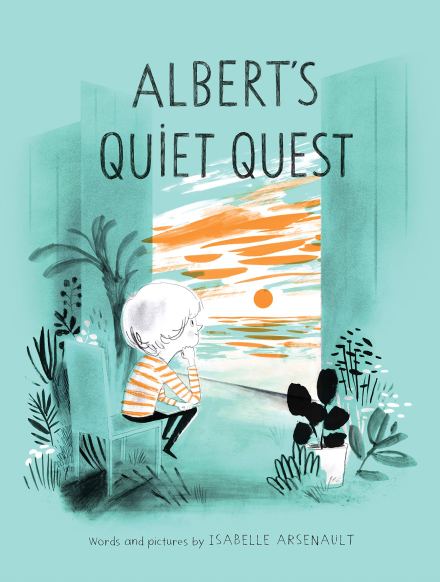
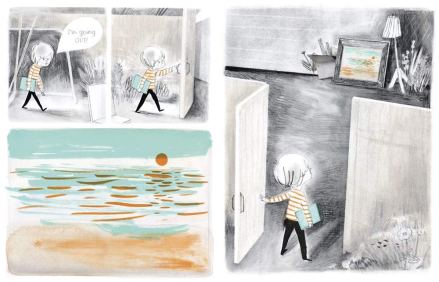
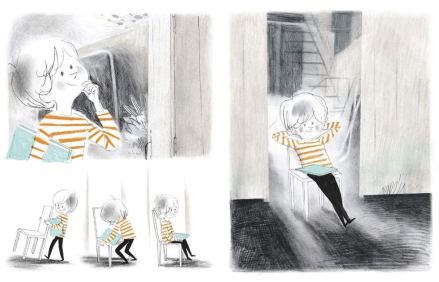
With an “Ugh!” Albert heads out to his backyard to escape all the noise inside. He opens the gate to the alley, and there he sees, tossed away with an old lamp and some other trash, a painting of the setting sun shimmering on a calm ocean. Albert has an idea. He retrieves a chair and sits back, relaxing in front of the painting. In Albert’s imagination the hard, straight back chair becomes a beach lounger and the stony asphalt turns to soft sand.

Soon, two girls enter the alley. They’re repotting a green, leafy plant and ask Albert if he’d like to join them. “No, thanks, I’m reading. I’m fine,” Albert answers. Albert picks up the book on his lap and while he reads, the girl’s flowerpot turns into a beach pail, their coats become summer dresses, and the crown one girls is wearing softens into a wreath of flowers. Instead of potting a flower, they are building a sandcastle.

celebrate-picture-books-picture-book-review-albert's-quiet-quest-going-out

Copyright Isabelle Arsenault, 2019, courtesy of Random House Books for Young Readers.

In a few more minutes Albert’s brother Tom comes out with badminton racquets clutched in his arms. He’s been looking for Albert to play with, but Albert tells him he’s reading. It doesn’t look like he’s reading to Tom since Albert is just sitting in a chair with a book on his lap, but then one of the girls says she’ll play with Tom. The sandcastle grows as one girl pats sand into turrets and stairs while Tom and the other girl bat around an enormous birdie with oversized racquets.

Suddenly, another girl appears, strolling her doll in a green carriage. She wants Albert to watch her doll while she goes back to get her cat. Albert starts to object, but the girl is already gone. When she returns with her cat, she proclaims Albert “so sweet.” But the beach is now quite crowded and the baby doll is crying and crying. The sandcastle has sprouted taller towers and a grand entrance. Albert tries to shut it all out by putting his nose in his book.

celebrate-picture-books-picture-book-review-albert's-quiet-quest-sitting

Copyright Isabelle Arsenault, 2019, courtesy of Random House Books for Young Readers.

Just then a boy from down the block shows up with his radio. The music blares through the alley, calming the baby, inviting dancing, and attracting another child to join in. Albert sits on his beach chair with his head on his fist scowling at the huge boom box, the caterwauling baby, the dancing kids, and that enormous birdie. And you should see the castle! It’s now big enough to stand on.

Then Jimmy comes rolling in on his skateboard. He scares the cat, tips over the potted plant, causes the birdie to “thunk!” into the painting, and in Albert’s imagination causes everything to go kerflooey. Albert slams his book shut, steps onto his chair, and lets loose about how all he wants to do is read. All the kids in the alley stare sadly at him as they gather up their stuff and head back home. Albert climbs down from his chair and sits, a bit forlornly. Then he hears the “KRRRRRR!” of a scraping chair. Tom is back with his own seat and book. Soon, there’s a “Clomp! Clomp,” a “Tap Tap Tap,” a “Zzoooom,” a “tip tap,” and a “TTRRRRR,” and all of the kids are back with their own books.

Albert looks around at all of his friends sitting nearby quietly reading and smiles. He says, “Hey, guys… I’m sorry, I didn’t mean to—.” The kids all turn to him and say, “SHHH! SHHH!” Albert gazes at them and they gaze at Albert. Then they all erupt in laughter and enjoy the last moments of the sunset on the beach.

celebrate-picture-books-picture-book-review-albert's-quiet-quest-beach

Copyright Isabelle Arsenault, 2019, courtesy of Random House Books for Young Readers.

Isabelle Arsenault’s clever story nimbly switches back and forth between Albert’s imagined day at the beach and the reality in the alley, which little-by-little overtakes Albert’s quiet interlude. Each child, intent on their own activity, is not aware of or not bothered by the collective noise, but for Albert the din takes him to the breaking point. When Albert loses his cool, these children—first met in Arsenault’s Colette’s Lost Pet—flee, but not away from Albert. They empathize, and soon return with books of their own to fulfill Albert’s quest for quiet and show true friendship.

Arsenault’s buoyant cartoon-inspired line drawings alternate between the gray-scale background of the alley and the beach scenes rendered in tranquil tones of aqua and orange—the same colors that define Albert and his book. Details like the crying “baby” and the growing badminton set and radio as well as Albert’s meltdown provide opportunities for kids and adults to talk about how noise is perceived by people who thrive in a quieter atmosphere.

A charming mix of imagination, humor, and friendship, Albert’s Quiet Quest would be a delightful addition to home and public library bookshelves and a conversation starter for elementary school classrooms.

Ages 3 – 7

Random House Books for Young Readers, 2019 | ISBN 978-0553536560

To learn more about Isabelle Arsenault, her books, and her art, visit her website.

National Quiet Day Activity

celebrate-picture-books-picture-book-review-kinetic-sand-craft

Make Your Own Sensory Sand


You can have quiet fun with this sensory sand that you can mold or just let slip through your fingers.

Supplies

  • 1 cup sand
  • ½ tablespoon cornstarch
  • 1 teaspoon dish soap
  • Water as needed – about ¾ cup
  • Bin or bowl for mixing dry ingredients
  • Bowl for mixing dish soap and water

Directions

  1. In the bin combine the sand and cornstarch and mix well
  2. In the bowl combine the dish soap and water until the water is bubbly
  3. Slowly add the water mixture to the dry ingredients, mixing and adding water little-by-little until the desired consistency is reached. The grain of the sand will determine how much water is needed.
  4. The sand can be formed with cookie cutters, molds, hands, etc. and is strong enough to stack.

celebrate-picture-books-picture-book-review-albert's-quiet-quest-cover

You can find Albert’s Quiet Quest at these booksellers

Amazon | Barnes & Noble | Books-a-Million | IndieBound

Picture Book Review
 

September 10 – It’s Read a New Book Month

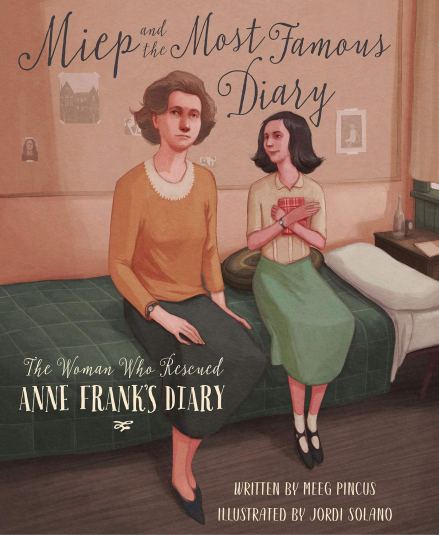
celebrate-picture-books-picture-book-review-miep-and-the-most-famous-diary-cover

About the Holiday

There are so many perfect times to read a book and so many new books to fill those hours. Kids love reading or being read to in school or before going to sleep. And adults they try to snatch a few minutes here and there during lunch or a break or before turning out the light. Whether you read a newly published book, a book that’s new at your local library or bookstore, or a book that’s just new to you, grab your favorite kind of book and start reading!  

Miep and the Most Famous Diary: The Woman Who Rescued Anne Frank’s Diary

Written by Meeg Pincus | Illustrated by Jordi Solano


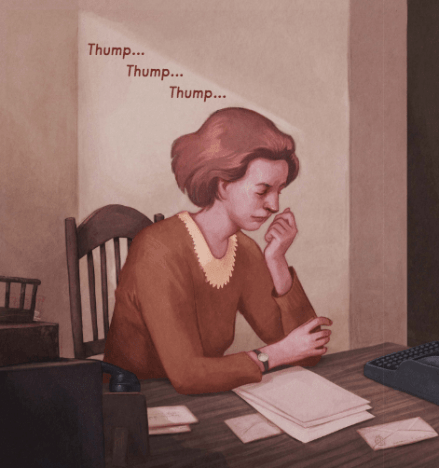
On August 4, 1944, Miep Gies hears the worst sound she’s ever heard: “footsteps on the secret back stairs.” The sound is “worse than the World War II bomber planes…. Worse than the queen’s quivering voice on the radio announcing the invading Nazi army.” The sound means that Nazi officers have come to arrest the Frank family who Miep has been hiding for two years. Miep hears the van carrying her friends roar away. She knows that soon Nazi movers will return to take away all of the Frank’s possessions. She knows too that she could be arrested for keeping anything belonging to her friends, but there is one item she must rescue. “It calls silently from the musty rooms above.”

celebrate-picture-books-picture-book-review-miep-and-the-most-famous-diary-august-4-1944

Image copyright Jordi Solano, 2019, text copyright Meeg Pincus, 2019. Courtesy of Sleeping Bear Press.

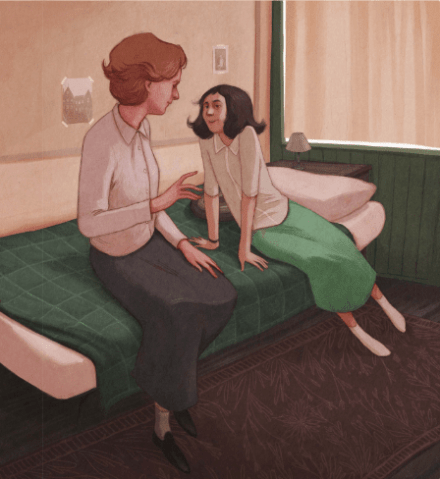
It takes many hours before Miep can bring herself to enter the secret annex. With her husband, Henk, and a coworker, Elli, they enter the rooms. In the bedroom, Miep finds what she is looking for: a red checkered diary that holds the thoughts and hopes of the Franks’ young daughter Anne. Miep “knows Anne dreams of publishing it as a book after the war.” Elli gathers up more of Anne’s writing that lies strewn across the floor, and Miep “grabs…Anne’s delicate combing shawl, strands of her dark hair clinging to its fabric like silky noodles.”

celebrate-picture-books-picture-book-review-miep-and-the-most-famous-diary-officer

Image copyright Jordi Solano, 2019, text copyright Meeg Pincus, 2019. Courtesy of Sleeping Bear Press.

Miep hides Anne’s diary and combing shawl in the drawer of her desk, never reading it. Nine months go by then one day Henk rushes into their apartment with news that the war is over and that the Nazis have surrendered. Miep and Hank wait for their “friends and neighbors to return from the camps,” wondering if the Franks will be among them. One day, Miep sees a familiar figure approaching her door. It’s Mr. Frank. He is alone, his wife having died in the camp. He has no knowledge about Anne and her sister as they were sent to another camp. While Mr. Frank regains his strength with the help of Miep, he sends letter after letter trying to locate his daughters.

At last a letter arrives, but it “contains the worst possible news: Anne and her sister did not survive the war. The air in the office hangs as still and shattered as the day of the capture.” With a broken heart, Miep opens her desk drawer and retrieves “Anne’s diary, papers, and shawl.” As she hands them to Mr. Frank, he gasps. He takes them to his office and reads Anne’s diary. “He savors her tales of growing up in hiding, her bright calls for hope when all seems lost.” He urges Miep to read it too, but she feels that she “will drown in sorrow” if she does.

celebrate-picture-books-picture-book-review-miep-and-the-most-famous-diary-anne's-room

Image copyright Jordi Solano, 2019, text copyright Meeg Pincus, 2019. Courtesy of Sleeping Bear Press.

With the help of a war historian, Mr. Frank has Anne’s diary published. But, still, Miep cannot read it. Years go by before Miep opens the cover of Anne’s book. As she reads Anne’s words, she feels “as if Anne is standing right beside her, chattering away. Within the pages of her diary, Anne expressed her gratitude for the “gift…of writing, of expressing all that is in me” and her desire to “go on living even after my death!” After reading Anne’s words, Miep’s sadness lessens and she realizes that by saving her diary, “her beloved Anne will live on and on.”

An Author’s Note about how this book came to be written as well as more about the life of Miep Gies follows the text.

celebrate-picture-books-picture-book-review-miep-and-the-most-famous-diary-arrest

Image copyright Jordi Solano, 2019, text copyright Meeg Pincus, 2019. Courtesy of Sleeping Bear Press.

Reading Meeg Pincus’s compelling first page, readers can almost hear the stomp of Nazi footsteps on the stairs leading to the secret annex and feel the constriction of Miep Gies’s heart as the Franks are arrested and taken away. Miep’s courage amid her sadness reverberates throughout this true story, tinted with the secrecy of grocery runs, the hurried collection of Anne’s most precious possession, and her ongoing mission to protect her friends. Pincus’s excellent pacing and evocative storytelling, which includes actual quotes from Miep’s writings and is punctuated with emotion will have children holding their breath as they listen or read on their own. Heartbreaking facts are portrayed candidly and with respect for the target age, allowing Anne’s boundless hope to shine through.

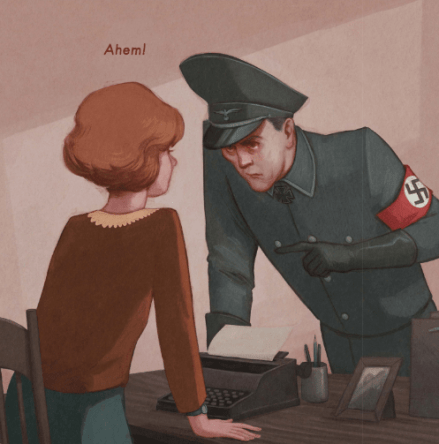
Seeming to take inspiration in color and tone from photographs on the front endpaper of Anne and her father flanked by Miep Gies and other helpers, Jordi Solano washes his illustrations in somber grays and greens, preserving bright spots for Anne’s red diary and her grass-green skirt that connects her to the colorfully clothed children who, on the final page, have come to visit the Anne Frank Museum. Miep’s grief at the arrest of her friends is palpable, and the Nazi officer who threatens her with arrest is depicted with sharp angles and an unrelenting stare. Children see Miep hide Anne’s diary in the back of a drawer and the approaching figure of Mr. Frank coming home from the detention camp. Solano portrays the moment when Mr. Frank, reunited with Anne’s diary and papers, clasps his daughter’s things to his heart. It is a poignant glimpse into this most private experience. As Miep finally reads Anne’s diary, Anne, herself, appears as she was, full of curiosity, joy, and love.

A must to be included in lessons about World War II, the Holocaust, and Anne Frank, Miep and the Most Famous Diary is also a poignant reminder of the crucial role of personal courage as well as the everlasting endurance of hope. The book should be included in all school and public libraries and would make a powerful addition to home libraries as well.

Ages 6 – 9

Sleeping Bear Press, 2019 | ISBN 978-1534110250

Discover more about Meeg Pincus and her books on her website.

To learn more about Jordi Solano, his books, and his art, visit his website.

Read a New Book Month Activity

celebrate-picture-books-picture-book-review-initial-bookends-craft

Initials Bookends


You can display your personality along with your favorite books with this easy craft! This makes a great gift too!

Supplies

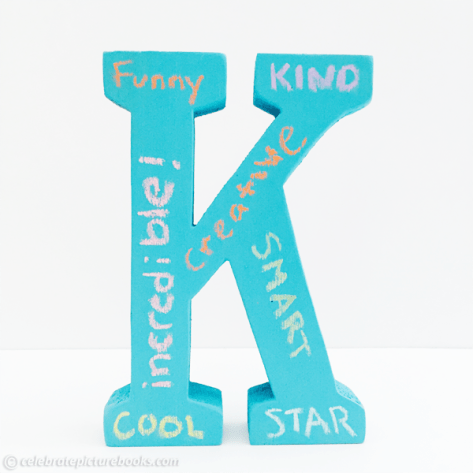
  • Sturdy wooden letter blocks in the child’s first and last initials. Or, if the child would like to try on a new name or nickname, the first letter of their new name.
  • Chalkboard or acrylic paint
  • Colored chalk
  • Paint brush

Directions

  1. Paint the letters, let dry
  2. With the chalk write words that describe you or names of your heroines and/or heroes
  3. Display your bookends

celebrate-picture-books-picture-book-review-miep-and-the-most-famous-diary-cover

You can find Miep and the Most Famous Diary at these booksellers

Amazon | Barnes & Noble | Books-a-Million | IndieBound

Picture Book Review

September 9 – It’s National Hispanic Heritage Month

celebrate-picture-books-picture-book-review-dancing-hands-cover

About the Holiday

Beginning on September 15th  and running through October 15th, National Hispanic Heritage Month celebrates the contributions of those who come from or whose ancestors immigrated from Spain, Mexico, the Caribbean, Central America, and South America. Each year the holiday adopts a particular theme. This year’s theme is Hispanic Americans: A History of Serving Our Nation. From the military, to business and industry to culture, sports, and entertainment Hispanic Americans have made an important and indelible imprint on our country. First observed in 1968 as a week-long holiday, the commemoration was expanded to a month in 1988 under President Ronald Reagan. To celebrate, learn more about Hispanic Americans who have influenced our culture, attend a special event, and enjoy great books by Hispanic authors like today’s book! You can learn more about the holiday at the official Hispanic Heritage Month website.

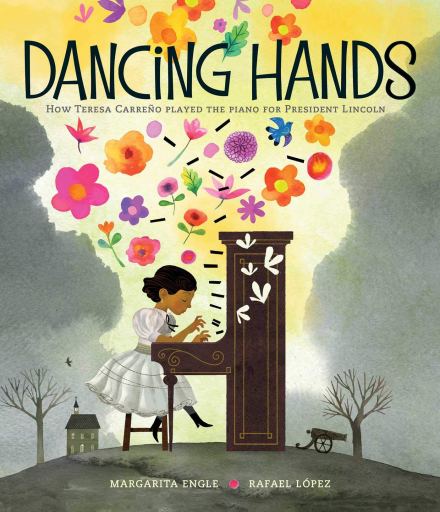
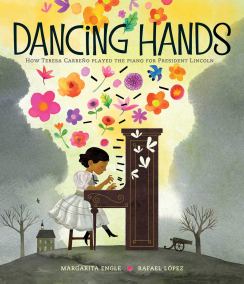
Dancing Hands: How Teresa Carreño Played the Piano for President Lincoln

Written by Margarita Engle | Illustrated by Rafael López


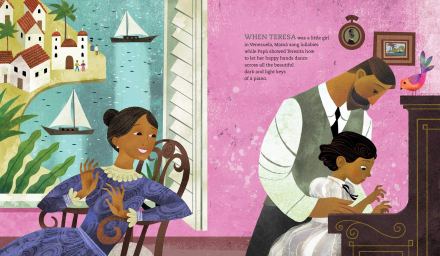
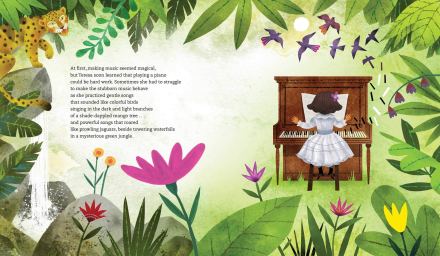
Growing up in Venezuela, Teresa listened to her mother’s lullabies and learned how to play the piano from her father. It wasn’t always easy “to make the stubborn music behave as she practiced gentle songs that sounded like colorful birds…and powerful songs that roared like prowling jaguars, beside towering waterfalls in a mysterious green jungle.” But by the time she was six, she was composing her own songs and at seven, she played in the cathedral.

celebrate-picture-books-picture-book-review-dancing-hands-papa

Image copyright Rafael López, 2019, text copyright Margarita Engle, 2019. Courtesy of Atheneum Books for Young Readers.

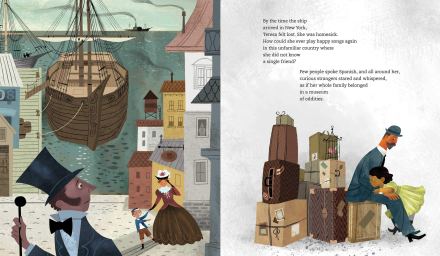
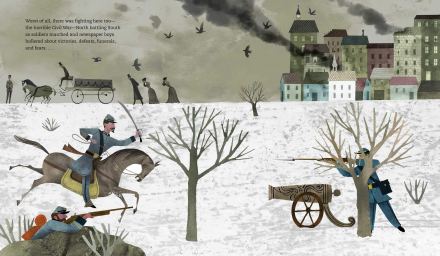
When Teresa was eight, however, her world was rocked by war, and she and her family escaped by ship to America. In New York, she felt lost among all of the strangers, who didn’t speak Spanish and gawked at her and her family as if they “belonged in a museum of oddities.” Even here, they had not escaped conflict as the Civil War waged, pitting the North against the South and family against family.

celebrate-picture-books-picture-book-review-dancing-hands-jungle

Image copyright Rafael López, 2019, text copyright Margarita Engle, 2019. Courtesy of Atheneum Books for Young Readers.

Teresa found refuge in her new piano and began to make friends with musicians who came to her home to listen and play along. Teresa practiced all types of music, “her strong hands accepting the challenge of life’s many dark and light moods.” She became well known as “the Piano Girl” and performed with big orchestras and in theaters. She became so famous that she was even invited to play for President Abraham Lincoln and his family at the White House.

celebrate-picture-books-picture-book-review-dancing-hands-cathedral

Image copyright Rafael López, 2019, text copyright Margarita Engle, 2019. Courtesy of Atheneum Books for Young Readers.

At the time Washington DC was awash in suffering, torn by war and weariness. President Lincoln’s young son had recently become sick and died. How, Teresa wondered, “could music soothe so much trouble?” Holding tightly to Papá’s hand, she entered the White House and was ushered into a room “as red as a storm or a sunrise.” As she sat at the piano, Teresa recalled past challenges and her discover that life was a “mixture of all sorts of feelings, happy and sad.”

celebrate-picture-books-picture-book-review-dancing-hands-ship

Image copyright Rafael López, 2019, text copyright Margarita Engle, 2019. Courtesy of Atheneum Books for Young Readers.

She began to play, but the piano was out of tune, “making her music sound ugly.” She stopped, but then President Lincoln requested she play his “favorite song, ‘Listen to the Mockingbird.’” This was a song Teresa could play on this imperfect piano. “Her fingers leaped across all the dark and light keys, improvising the way mockingbirds do, the melody changing as she went along.” Lincoln closed his eyes and was taken away on the soaring notes.

celebrate-picture-books-picture-book-review-dancing-hands-new-york

Image copyright Rafael López, 2019, text copyright Margarita Engle, 2019. Courtesy of Atheneum Books for Young Readers.

When the song ended, the President rose and applauded. He smiled at Teresa and she smiled back, understanding that “her music had brought comfort to a grieving family, at least for one brief, wonderful evening of dancing hands.” Teresa continued to share her gift with the world, always bringing “beautiful dark and light moments of hope” to her listeners.

A Historical Note about the life of Teresa Carreño follows the text.

celebrate-picture-books-picture-book-review-dancing-hands-war

Image copyright Rafael López, 2019, text copyright Margarita Engle, 2019. Courtesy of Atheneum Books for Young Readers.

Margarita Engle’s soaring biography introduces readers to an astounding woman who, even as a child, had not only a prodigious talent for the piano but a gift for understanding life as well. Engle, the 2017 -2019 national Young People’s Poet Laureate, infuses her story with beautiful lyricism and stirring metaphors that evoke the power of music in Teresa’s heart and hands. On these pages, music becomes a living thing, capable of forming friendships, soothing grief, providing escape, and offering hope. Engle’s focus on the meeting between Teresa Carreño and Abraham Lincoln is significant and offers inspiration to young readers. Like Teresa, who, concerned with playing just right, was presented with an imperfect piano but encouraged by Lincoln’s kindness, they too can learn that with a steady and courageous heart, anyone can use their talents to overcome challenges.

In Rafael López’s crisp, stylish illustrations, Teresa Carreño’s love of music and its emotional power serves as a counter point to the distress of war and anguish of grief. Using vibrant greens, pinks, oranges, and blues, Lopez surrounds Teresa with lush vegetation, dazzling birds, and the security of home. Muted variations of  these colors depict the bleakness of war. A moving image, washed completely in gray except for an approaching vivid bird and a tinge of soft rose dawn shows a mourning Abraham Lincoln alone in his office but soon to be comforted by Teresa’s music.

A beautiful and uplifting biography for kids of all talents, Dancing Hands: How Teresa Carreño Played the Piano for President Lincoln would be an inspiring addition to home, school, and public library bookshelves.

Ages 4 – 8

Atheneum Books for Young Readers, 2019 | ISBN 978-1481487405

Discover more about Margarita Engle, her books, and her poetry on her website.

To learn more about Rafael López, his books, and his art, visit his website.

National Hispanic Heritage Month Activity

CPB - Tortilla chips (2)

Homemade Baked Cinnamon Tortilla Chips


It’s easy to make these yummy tortilla chips at home! Why not invite your friends over and bake up a batch or two to enjoy while playing or reading together?

Ingredients

  • 2 10-inch flour tortillas
  • ¾ teaspoon cinnamon
  • 2 ½ tablespoons sugar
  • Butter

Directions

  1. Preheat oven to 350 degrees
  2. Combine the cinnamon and the sugar in a bowl
  3. Butter the tortillas
  4. Sprinkle the tortillas with the cinnamon sugar mixture
  5. Cut the tortillas into 8 pieces
  6. Place pieces on a baking sheet
  7. Bake in 350-degree oven for 12 – 15 minutes
  8. Chips will become crispier as they cool.

Makes 16 chips

celebrate-picture-books-picture-book-review-dancing-hands-cover

You can find Dancing Hands: How Teresa Carreño Played the Piano for President Lincoln at these booksellers

Amazon | Barnes & Noble | Books-a-Million | IndieBound

Picture Book Review
September 8 – National Grandparents Day

celebrate-picture-books-picture-book-review-love-is-kind-cover

About the Holiday

As a child in the 1920s, Marion McQuade accompanied her grandmother as she visited elderly neighbors, offering friendship and help when needed. This early experience sparked Marion’s lifelong concern for the elderly and especially for grandparents. In 1956, Marion helped institute a tribute to octogenarians. It was just the beginning of her work on behalf of the elderly and her hopes to create a special day commemorating the bond between grandparents and their grandchildren. In 1978, President Jimmy Carter declared the first Sunday after Labor Day to be National Grandparents Day. As Marion envisioned it, the day gives grandparents and grandchildren an opportunity to show their love for one another and for older members of the family to pass down their stories and wisdom to younger generations. 

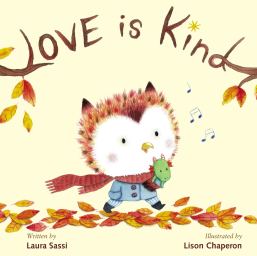
Love is Kind

Written by Laura Sassi | Illustrated by Lison Chaperon


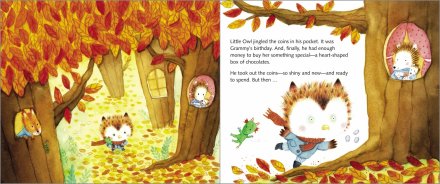
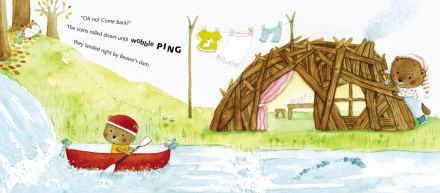
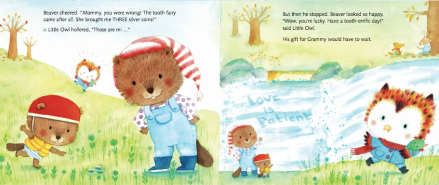
Little Owl had been saving up his coins to buy something special for Grammy’s birthday. He even knew exactly what he wanted to give her—“a heart-shaped box of chocolates.” He took the coins out of his pocket to look at them, but just as he did he tripped over a tree root and his money went flying. One, two, three, they rolled down the hill “until wobble PING” they landed right by Beaver’s dam. Little Owl ran after them. Just as he got close, he heard little Beaver excitedly showing her mommy that the tooth fairy had come after all. Seeing the big smile on Beaver’s face, Little Owl just wished her a “tooth-errific day” and headed back home.

celebrate-picture-books-picture-book-review-love-is-kind-coins

Image copyright Lison Chaperon, 2018, text copyright Laura Sassi, 2018. Courtesy of Zonderkidz.

As luck would have it, though, Little Owl spied a dollar lying among the fallen autumn leaves. He was excited that now he could buy Grammy’s gift, but then he saw the “Missing $1.00” sign on Mrs. Mouse’s house. He picked up the money and rang Mrs. Mouse’s doorbell. Mrs. Mouse was thrilled to see her money again as she and Mr. Mouse needed it to fix up the nursery for the new babies they were expecting. “Little Owl smiled. ‘That’s wonderful news. Congratulations!’” he said.
Little Owl continued on and while cutting through the sunflower field, he ran into Rabbit, who had “THREE heart-shaped boxes of chocolates—” one for Ma, one for Pa, and one Rabbit was going to keep for herself. “Little Owl’s feathers stood on end. You have THREE! That’s not fai…’ Little Owl stopped. Getting angry wouldn’t get Grammy those chocolates.” Instead, he told Rabbit to enjoy her candy, and she hopped happily off. In a moment, though, she was back with a coupon for one free box of chocolates.

celebrate-picture-books-picture-book-review-love-is-kind-beaver

Image copyright Lison Chaperon, 2018, text copyright Laura Sassi, 2018. Courtesy of Zonderkidz.

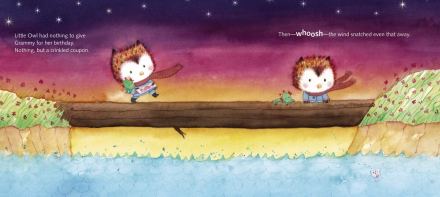
Little Owl skipped all the way to Chipmunk’s Chocolate Shoppe. But when he got there, all of Chipmunk’s chocolates were gone and he was just closing the shop. Once again, Little Owl smiled, gave good wishes, and waved goodbye. Still, little Owl was disappointed. He had nothing to give Grammy.

When he got to Grammy’s house, he tearfully told her about his day. After he was finished, Grammy told him that the love he had shown to Beaver, Mrs. Mouse, Rabbit, and Chipmunk was “‘better than any heart-shaped box of chocolates.’” Little Owl was surprised. Just then he caught his reflection in the window. The white feathers of his face formed a perfect heart. “‘…I guess I gave you a heart-shaped gift after all!’” he said. “‘Me!’” And Grammy thought that was “‘the best gift of all.’”

celebrate-picture-books-picture-book-review-love-is-kind-coupon

Image copyright Lison Chaperon, 2018, text copyright Laura Sassi, 2018. Courtesy of Zonderkidz.

Laura Sassi’s tender intergenerational story delves gently and with an endearing main character into what it means to love. Not only does Sassi reveal the true meaning of love, but she shows young readers how to express it by what they do and say (or don’t say). Through each of Little Owl’s encounters, he demonstrates kindness and empathy as he puts the happiness of others ahead of his own desires. Sassi’s genuine storytelling doesn’t shy away from Little Owl’s honest emotions that touch on ownership, disappointment, anger, and sadness, but in each case Little Owl is guided by his strong internal moral code revealed organically through his thoughts and actions.

As Grammy comforts her young grandson, she reinforces the idea that the best gift someone can give an individual, their community, and the world at large is not stuff but a caring and compassionate heart. Little Owl and little readers need not rely only on the words of the story but come to understand this important lesson through Little Owl’s reflection in the window as well. Lines from the poem “Love is Kind,” found in 1 Corinthians 13, are sprinkled throughout the text: in the river that runs past Beaver’s dam, over Mrs. Mouse’s hearth, in the petals of a sunflower, and elsewhere, reminding readers that these ideals can be found everywhere and encouraging them to look for and contribute to universal kindness.

celebrate-picture-books-picture-book-review-love-is-kind-beaver

Image copyright Lison Chaperon, 2018, text copyright Laura Sassi, 2018. Courtesy of Zonderkidz.

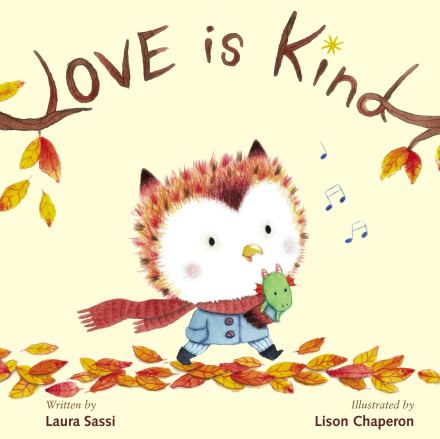
With his soft tufts of autumn-hued feathers and cozy coat and scarf, Little Owl is an adorable friend to follow on a journey. Lison Chaperon’s woodland neighborhood glows with gold and russet leaves, providing a warm backdrop to the snug homes of Little Owl’s neighbors. Children will be enchanted by the Mouse’s tree trunk-and-toadstool house, where a swing set with walnut-shell swings wait in the yard for little mice to play. When Little Owl heads into the sunflower patch, kids will spy a snoozing caterpillar, a bee and a ladybug having a picnic, and a glimpse of the bunny he’s about to bump into.

In Little Owl’s encounters, readers can clearly see what the coins, the dollar bill, and the three boxes of chocolates mean to each respective family. In this way, children discover both sides of each story and can better understand how generosity affects both the giver and the receiver. As Little Owl loses hope of getting a gift for Grammy, the sunny sky turns gray and rainy to reflect his mood, but a rainbow appears when Rabbit pays her good fortune forward by giving Owl a coupon. It’s nighttime when Little Owl reaches Grammy’s, and he’s welcomed by shining lanterns and a starry sky. Inside, Grammy’s just finishing up a delectable cake to share while snuggling in Grammy’s rocking chair.

This lovely, multilayered story is delightful for any story time while also providing many opportunities for adults and children to talk about ideas of love, kindness, empathy, and how one person’s actions and words can make a difference in others’ lives. Love is Kind would be a favorite for grandparents and children to share. Reading it with little ones is also a wonderful way to bring closer grandparents who live far away. The book would make a sweet gift and addition to home, classroom, and public library collections.

Ages 4 – 8 

Zonderkidz, 2018 | ISBN 978-0310754893 (Hardcover) | ISBN 978-0310754848 (Board Book)

Discover more about Laura Sassi and her books on her website

Love is Kind Giveaway

I’m excited to partner with Zonderkidz in a Twitter giveaway of:

One (1) copy of Love is Kind written by Laura Sassi | illustrated by Lison Chaperon

To enter Follow me @CelebratePicBks on Twitter and Retweet a giveaway tweet.

This giveaway is open from September 8 through September 14 and ends at 8:00 p.m. EST.

A winner will be chosen on September 15.

Prizing provided by Zonderkidz

Giveaway open to U.S. addresses only. | No Giveaway Accounts 

National Grandparents Day Activity

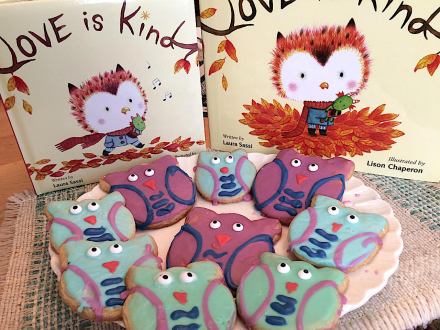
celebrate-picture-books-picture-book-review-love-is-kind-cookies

Little Owl Cookies (and Grand ones too!)  

Made with Love by Laura and her daughter


My 14-year-old daughter loves spending time her grandparents and she thought these LOVE IS KIND owl-themed cookies would be a fun and tasty way to celebrate that special bond between child and grandparent. We hope you enjoy our activity—and after baking and decorating together, we hope you’ll be inspired to spread some love by sharing the cookies with neighbors or friends who perhaps live too far away to be with their grandchildren on Grandparents Day! Enjoy!

Supplies

  • A favorite sugar cookie recipe (or buy pre-mixed cookie dough from the market)
  • Two glasses with different sized rims for cookie cutters (so you can make little and big owls)
  • A bag of confectioners’ sugar, a few splashes of milk, food coloring
  • Several bowls to mix your icing along with a spoon and toothpick for each color
  • Candy eyes (found in baking section at market)

Directions

  1. Roll out the dough, then press circles—both big and small (to represent grandparents and grandchildren) using rims of two different sized glasses. 
  2. Place the dough circles on a cookie sheet. Then, taking little scraps of cookie dough, shape and press triangle-shaped owl tufts atop each circle, as shown.
  3. Bake according to recipe or package directions. Let cool.
  4. Using my sweet daughter’s samples as a model, or following your own owl vision, decide how many colors you will need to decorate your owls. 
  5. For each color, add a generous half cup of confectioners’ sugar and a splash of milk to a small bowl. Add a drop or two of food coloring, or mix two colors to create a new color. Stir gently using a spoon. (The amount of sugar, milk, and color drops you use will depend on how much icing you need.  Also, you will have to play with consistency until you get it just right – not too watery and not too thick.  My daughter apologizes for being so vague, but really mixing it up is part of the fun. Your grandkids will LOVE it!)
  6. To paint the owls, cover the cookie with your base glaze. Add the eyes while the glaze is still wet so they stick in place. Wait for the bottom coat to get a little crusty (so colors don’t bleed) before adding the final details such as beak and feathers.
  7. Finally, arrange a plate of big and little owl cookies for yourselves and another to share (in true LOVE IS KIND fashion)!  Have fun!

celebrate-picture-books-picture-book-review-love-is-kind-cover

You can find Love is Kind at these booksellers

Amazon | Barnes & Noble | Books-a-Million | IndieBound

Picture Book Review