February 11 – National Inventors Day

celebrate-picture-books-picture-book-review-dream-big-little-scientists-cover

About the Holiday

Today’s holiday was established in 1983 and falls on the birthday of Thomas Edison. The day honors all of those thinkers and tinkerers from the past as well as today who, through ingenuity and persistence, design inventions that advance our world. To celebrate, take your kids to a museum or explore more about the creative minds involved in their favorite subjects.

Dream Big, Little Scientists: A Bedtime Book

Written by Michelle Schaub | Illustrated by Alice Potter


So many young scientists are ready for bed; they yawn and sigh and close their eyes. A brown-skinned girl, having stepped from her solar-system rug to sit on her space-themed comforter gazes out her window to see “the sun has tucked itself in bed; the moon is on the rise.” She’s surrounded by reminders of her favorite subject, including posters of Carl Sagan, the phases of the moon, a telescope, and her nighttime reading: Stars and Planets.

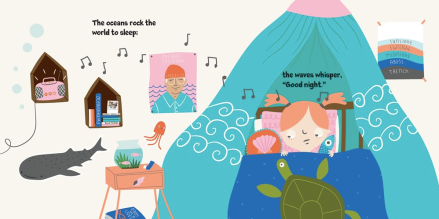
In other places children get ready for bed in rooms that reflect their personalities and love of various sciences too. A future geologist lounges in a room decorated with images of mountains, volcanoes, a poster of Jess Phoenix, and lots and lots of books on rocks. For a child who dreams of being an oceanographer, “the oceans rock the world to sleep; the waves whisper, ‘Good night.’” Jacques Cousteau is the hero here, and two little fish also drift off to sleep in this ocean-themed room.

celebrate-picture-books-picture-book-review-dream-big-little-scientists-kids

Image copyright Alice Potter, 2020, text copyright Michelle Schaub, 2020. Courtesy of Charlesbridge.

Twins are ready to put their heads together to fight climate change. Their bunk beds sport pictures of weather events and posters of Gabriel Fahrenheit and Anders Celsius. “While mossy carpets stretch out wide, tree limbs yawn up high, ” another child, who wears a hearing aid and is inspired by botany, tends to potted seedlings. The pictures of George Washington Carver and Thomas Meehan on the wall show their approval

Snuggled in fuzzy bear footy pajamas, the next child huddles in a blanket tent as other “daytime creatures settle down in den or hole or nest.” Wangari Maathai smiles from her poster on the wall, which is also decorated with a mural of a deer, tiger, and giraffe among greenery, flowers, and mushrooms. A girl who uses a wheelchair finds physics fascinating. Among her mentors are Donna Strickland and Stephen Hawking, and books about the laws of science are her bedtime reading.
celebrate-picture-books-picture-book-review-dream-big-little-scientists-oceans

Image copyright Alice Potter, 2020, text copyright Michelle Schaub, 2020. Courtesy of Charlesbridge.

For a future paleontologist mindful that “slumber’s been a part of life since prehistoric days,” the past sparks her imagination. A microscope, a fossil kit, bones, and dinosaur pictures join a poster of Mary Anning in this room where current projects and future projects fill this busy child’s desk. A doctor in the making relaxes before sleep with yoga, knowing, from the books on medicine, physiology, and health on the bookshelves, of the connection between mind and body.

From slime to the periodic table, the elements of chemistry excite a child who looks to Marie Curie and Alice Ball for inspiration as she experiments with her chemistry kit and ponders the make-up of matter. As these children from “all around the world bed down in different ways,” they are united in their love of science. So, “dream away young scientists, tomorrow you’ll learn more—when you awake and venture out to ask, observe, explore.”

Back matter encourages readers to think like a scientist with short descriptions of all the sciences presented in the story and a link to the Science Kids website. Children are further invited to visit Michelle Schaub’s website to learn about the scientists who appear in each of the posters.

celebrate-picture-books-picture-book-review-dream-big-little-scientists-water

Image copyright Alice Potter, 2020, text copyright Michelle Schaub, 2020. Courtesy of Charlesbridge.

Michelle Schaub’s meditative poem tucks sleepy children into bed as the world outside also quiets and renews itself for another day. Schaub’s smart verses deftly weave together this nightly process with the dreams that spark many children’s daytime passions now and for their futures. Beautiful language and elegant, flowing rhythms bring to life the joys of science and the wonder of our natural world while also touching the heart of every young visionary.

For young readers, turning each page is an invitation to one fun sleepover after another. In her vibrant, cartoon-inspired illustrations, Alice Potter creates rooms that any child would love to call their own. Decorated with comforters, curtains, rugs, and accessories that reflect each child’s chosen science, each bedroom offers plenty of details for children to linger over and explore. One clever detail that readers will love searching for in each child’s room is the photograph of all of these future scientists gathered together. Potter’s depictions of this diverse group of kids is a welcome reflection of our communities and friends.

Dream Big, Little Scientists: A Bedtime Book is an inspiring read for any time of the day and will be asked for often. The book is highly recommended for home, classroom, and public library collections.

Ages 3 – 7 

Charlesbridge, 2020 | ISBN 978-1580899345

Discover more about Michelle Schaub and her books on her website.

To learn more about Alice Potter, her books, and her art, visit her website.

Watch this dreamy Dream Big, Little Scientists book trailer!

National Inventors’ Day Activity

celebrate-picture-books-picture-book-review-dream-big-little-scientists-activity-guide-trading-cards

Big Dreams, Little Scientists Activity Guide


Explore your own love of science with this awesome activity guide! With lots of ideas, suggestions for further study, links, and even trading cards, this guide will have kids observing, doing, and learning with enthusiasm. Cross-curricular activities make this a perfect accompaniment to the book for teachers and homeschoolers. You can download  from Michelle Schaub’s website here:

Big Dreams, Little Scientists Activity Guide

celebrate-picture-books-picture-book-review-dream-big-little-scientists-cover

You can find Dream Big, Little Scientists at these booksellers

Amazon | Barnes & Noble | Books-a-Million | IndieBound

Picture Book Review

February 8 – Opera Day

celebrate-picture-books-picture-book-review-diva-delores-and-the-opera-house-mouse-cover

About the Holiday

Opera has been a favorite art form since its beginnings in Italy in the 1500s. Combining magnificent voices, soaring arias, grand costumes, and dramatic storylines, operas continue to thrill audiences and gain new fans. To celebrate Opera Day today or at a time in the future, enjoy a performance in your area or find one on YouTube and gather your family and friends for an opera party.

I received a copy of Diva Delores and the Opera House Mouse from Sterling Children’s Books for review consideration. All opinions are my own. I’m happy to be partnering with Sterling in a giveaway of the book. See details below.

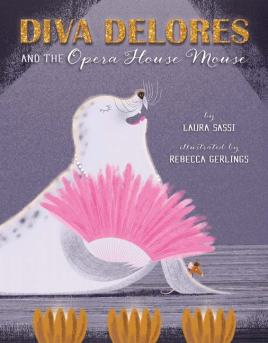
Diva Delores and the Opera House Mouse

Written by Laura Sassi | Illustrated by Rebecca Gerlings


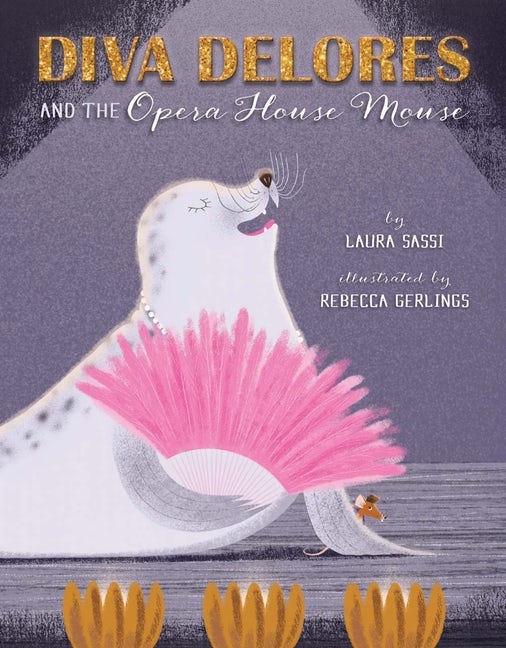
Fernando had many loves in his life—including chocolate, cheese, gumdrops, and popcorn—but what he loved most was “feasting on Mozart, Puccini, and Strauss, / and lending a paw at the Old Opera House.” Delores loved nothing more than being in the spotlight, and now she was getting the chance to leave her place in the chorus to “take center stage and be Diva Delores.” She warmed up in her dressing room with “Me-me-me-me!”

celebrate-picture-books-picture-book-review-diva-delores-and-the-opera-house-mouse-dress

Image copyright Rebecca Gerlings, 2018, text copyright Laura Sassi, 2018. Courtesy of Sterling Children’s Books.

Fernando wanted to give Delores the benefit of all of his years of experience, but she wasn’t having it. A mouse was not a suitable helper for someone as great as she, she thought. At the rehearsal the next day, Delores was a flop, hitting wrong notes, missing her entrance, and the last song? Well…. From the back Fernando called out that he could help. He wrote cues on little cards “and—presto!—Delores knew just what to do.” You’d think Delores would be thankful, but instead she complained that a mouse’s help was just not proper for a diva, and she shooed Fernando away.

celebrate-picture-books-picture-book-review-diva-delores-and-the-opera-house-mouse-fernando

Image copyright Rebecca Gerlings, 2018, text copyright Laura Sassi, 2018. Courtesy of Sterling Children’s Books.

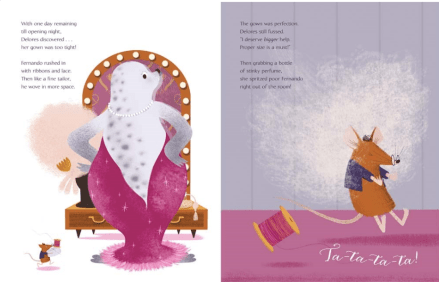
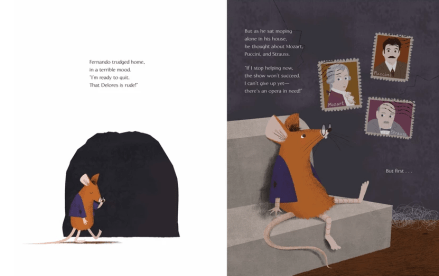
The day before her big performance, Delores found that her dress didn’t fit. Again, Fernando rushed to her rescue, but what thanks did he get? Delores grumbled and fussed. “Then grabbing a bottle / of stinky perfume, / she spritzed poor Fernando / right out of the room!” Fernando went home, wanting to quit. But as he looked at his pictures of Mozart, Puccini, and Strauss, he knew that without him the show would fail and that he couldn’t quit now.

celebrate-picture-books-picture-book-review-diva-delores-and-the-opera-house-mouse-manners

Image copyright Rebecca Gerlings, 2018, text copyright Laura Sassi, 2018. Courtesy of Sterling Children’s Books.

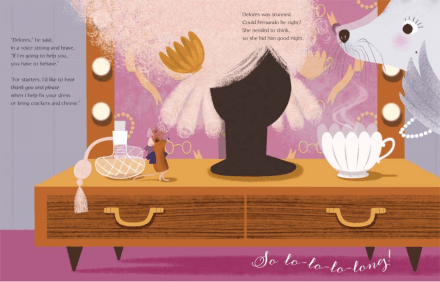
First, he went to Delores and laid down the rules: “For starters, I’d like to hear / thank you and please / when I help fix your dress / or bring crackers and cheese.” Delores was startled and quickly said good night. At home she wondered: had she been rude? The next day, Delores was nervous. She tried calming herself with candy and tea. She even looked for Fernando, but he was nowhere to be found.

celebrate-picture-books-picture-book-review-diva-delores-and-the-opera-house-mouse-wig

Image copyright Rebecca Gerlings, 2018, text copyright Laura Sassi, 2018. Courtesy of Sterling Children’s Books.

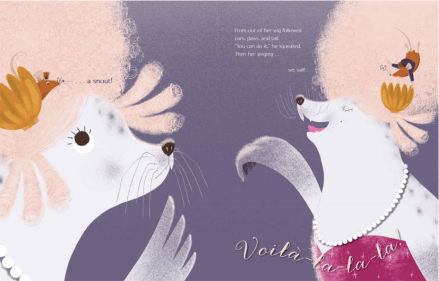
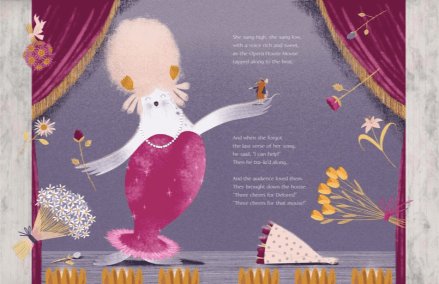
Standing on stage in the glare of the spotlights, “as the orchestra played, / Delores felt faint. / First she swooned… / then she swayed.” When she opened her mouth, no notes, no sound, no song came out. Then inside her wig she saw Fernando, who squeaked “‘You can do it.’” And then Delores did sing “with a voice rich and sweet.” When she forgot some words to her song, Fernando reminded her by tra-la-la-ing along.

The audience loved them. They cheered for Delores; they cheered for Fernando. Later, Delores admitted she could not have done it alone. Then she apologized to Fernando and asked for a fresh start on their friendship. “Of course!” he agreed, and now they bring down the house night after night as “the Opera House team!”

celebrate-picture-books-picture-book-review-diva-delores-and-the-opera-house-mouse-cheering

Image copyright Rebecca Gerlings, 2018, text copyright Laura Sassi, 2018. Courtesy of Sterling Children’s Books.

Laura Sassi’s clever and original story about teamwork and sharing the spotlight hits all the right notes in showing how accepting help can elevate anyone’s performance and lead to a new friendship. After playing second fiddle in the chorus, Delores finally gets her chance to shine, but her vanity exceeds her experience. When a tiny mouse offers help from his deep well of knowledge, Delores takes one look at Fernando’s diminutive size and rejects him and his advice. Through her perfect rhymes and musical rhythm, Sassi engages readers in how to graciously learn from another’s experience and encourages the Fernandos out there to keep trying, even when their initial offerings of assistance are rebuffed.

Rebecca Gerlings lends charm and humorous touches to Sassi’s tale, and the promise of the enticing cotton-candy fluff of a wig, introduced in the first pages and teased throughout the story, is comically and satisfyingly fulfilled in the end as Fernando directs Delores to a winning performance from within. Along the way, readers are treated to an octopus piano player, multiple meltdowns as Delores dispatches Fernando from her orbit, and demonstrations of persistence as the little mouse stands up for himself, good manners, and the honor of his beloved opera. 

A smart, fresh, and fun read aloud, Diva Delores and the Opera House Mouse has multiple applications for discussing friendship, modesty, respect, and collaboration. The book would make a delightful addition to home, school, and public library bookshelves.

Ages 3 and up

Sterling Children’s Books, 2018 | ISBN 978-1454922001

Discover more about Laura Sassi and her books on her website.

To learn more about Rebecca Gerlings, her books, and her art, visit her website.

Diva Delores and the Opera House Mouse Giveaway

I’m excited to partner with Sterling Children’s Books in a giveaway of:

  • One (1) copy of Diva Delores and the Opera House Mouse, written by Laura Sassi | illustrated by Rebecca Gerlings

Here’s how to enter:

  • Follow Celebrate Picture Books
  • Retweet a giveaway tweet
  • Bonus: Reply with your favorite kind of music for extra entry

This giveaway is open from February 10 – February 17 and ends at 8:00 p.m. EST.

A winner will be chosen on February 18. 

Giveaway open to U.S. addresses only. | Prizing provided by Sterling Children’s Books.

Opera Day Activity

celebrate-picture-books-picture-book-review-laura-sassi-with-opera-glasses-craft

Sparkly Opera Glasses by Laura Sassi


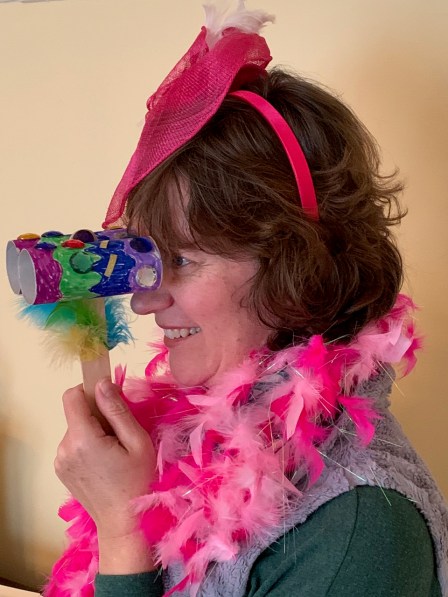
Make a pair of these fancy glasses, then pretend you are at the opera while reading Diva Delores and the Opera House Mouse.

Supplies for each pair of opera glasses

  • Two recycled toilet tissue tubes one large craft stick
  • Markers tacky glue
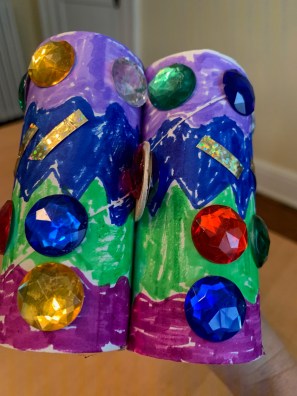
  • Two paper clips assorted fancy embellishments (We used feathers, sparkly gems and snippets of shimmery ribbon, but use whatever you have around the house. Be creative!)

celebrate-picture-books-picture-book-review-laura-sassi's-opera-glasses-craft

Directions

  1. Decorate the tissue tubes using markers.
  2. Glue the tubes side by side, as shown. Be sure to insert the craft stick in between so your opera glasses have a handle. Slip a paper clip at each end over the sealed part for extra  pressure while drying.
  3. Use tacky glue to affix whatever fancy embellishments you choose. The more the better!
  4. When dry, elegantly hold your opera glasses up to your eyes and pretend you are watching Diva Delores and Fernando at the opera!

celebrate-picture-books-picture-book-review-diva-delores-and-the-opera-house-mouse-cover

You can find Diva Delores and the Opera House Mouse at these booksellers

Amazon | Barnes & Noble | Books-a-Million | IndieBound

Picture Book Review
February 7 – National Bubble Gum Day

celebrate-picture-books-picture-book-review-Pop!-the-invention-of-bubble-gum-cover

About the Holiday

In 2006, Ruth Spiro, a children’s author and mother, established National Bubble Gum Day as a way for children to raise funds for their school and the charities it supports while having a little fun in the process. For this one day a year, students can earn permission to chew gum in class by donating 50 cents to the cause. Another fun and educational way to celebrate the day is by reading today’s book that tells the story of Walter Diemer and how he came up with the formula for bubble gum.

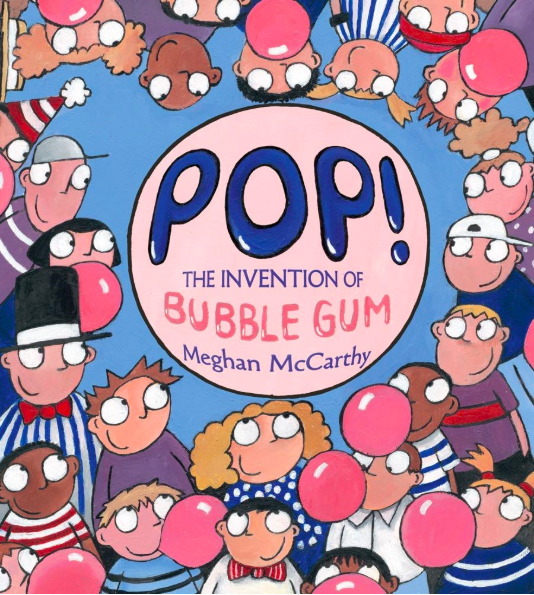
POP! The Invention of Bubble Gum

By Meghan McCarthy

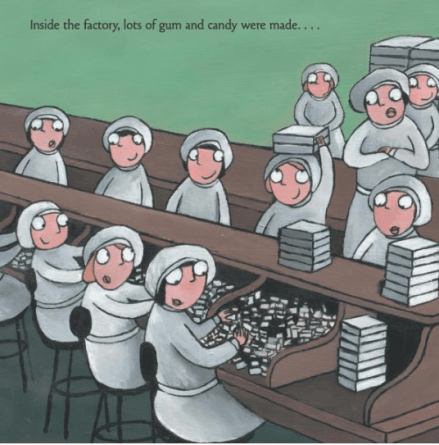
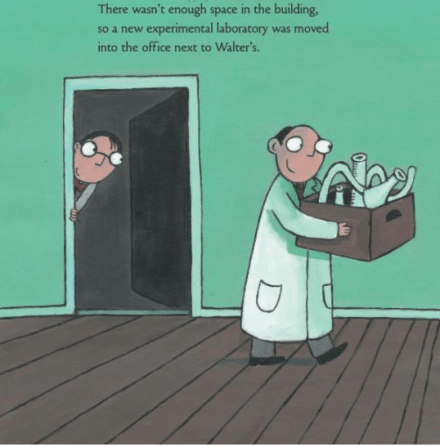
In the 1920s, the Fleer family of Philadelphia was known for their factory where candy and gum were made. In an office upstairs the company’s accountant, Walter Diemer worked on the books and balanced the budgets. “He knew lots about math but not much about gum.” As the company outgrew its laboratory space downstairs, a new, experimental laboratory was set up in a room next to Walter’s office. Walter watched with curiosity as beakers, tubes, pots, and other equipment were moved into the lab.

Soon he learned that “the company was trying to make a new kind of chewing gum.” Chewing gum had been around in various forms for centuries and used for fun and also for medicinal purposes. Gum, the Fleers thought had become kind of boring. “But what if gum chewers could blow bubbles?”

celebrate-picture-books-picture-book-review-Pop!-the-invention-of-bubble-gum-candy

Copyright Meghan McCarthy, 2010, courtesy of Simon and Schuster.

In the experimental laboratory, Walter watched as the scientists tinkered and tested. Not much progress was made. Then one day Walter’s boss asked him to watch one of the experimental batches. Walter became so intrigued that he began experimenting with it himself, adding this and that. Still nothing happened. Finally, Walter’s boss gave up.

Walter, however, kept trying. Months later he had a bubbling concoction. All it needed, Walter thought, was some flavor. He “added a bit of cinnamon, a dash of wintergreen, a drop of vanilla…” and wondered if this could be bubble gum at last. He “put a wad into his mouth and began to chew.” Then “he blew a magnificent bubble!” He gave some to his coworkers, and as Walter remembered it, “‘We were blowing bubbles and prancing all over the place!’”

celebrate-picture-books-picture-book-review-Pop!-the-invention-of-bubble-gum-walter

Copyright Meghan McCarthy, 2010, courtesy of Simon and Schuster.

But the next day when Walter came to work, his batch of bubble gum was as hard as a rock. Walter went back to work on his invention. Months—and some top-secret ingredients—later, Walter had just the consistency he wanted. The gum now needed some color. Pink was the only food coloring he had, so he poured it in.

On the day after Christmas, a batch of the bubble gum was cut into pieces and delivered to a small candy store. The people who came in were given a piece to chew and became “the first people in the world to try a bubble gum that worked.” Walter even “gave lessons on how to blow bubbles.” Soon, truckloads of Walter’s Double Bubble were being delivered to stores, big and small, all over.

celebrate-picture-books-picture-book-review-Pop!-the-invention-of-bubble-gum-lab

Copyright Meghan McCarthy, 2010, courtesy of Simon and Schuster.

Walter went on to become the vice president of the Fleer company. When he retired, Walter spent his time riding his giant tricycle and engaging the neighborhood kids in bubble gum blowing contests. Walter didn’t get rich from his invention, but knowing that he had made kids all over the world happy was enough reward for him.

Extensive back matter includes more information on Walter Diemer, facts about gum, and resources on the quotes found in the story.

celebrate-picture-books-picture-book-review-Pop!-the-invention-of-bubble-gum-pink

Copyright Meghan McCarthy, 2010, courtesy of Simon and Schuster.

Kids who love bubble gum and inventing will find lots of information to chew on as they follow Walter’s journey from accountant to inventor. His stick-to-itivness in the face of defeat and even after the scientists and his boss had given up offers inspiration and a good lesson that sometimes success takes longer than you think. The included bits of history may spur readers to learn more about how gum was used by our ancestors and other cultures, and chemists in the making may want to investigate and compare Walter’s flavor and color ingredients against today’s bubble gum.

Meghan McCarthy’s storytelling is delightfully conversational and sprinkled with quotes from Walter Diemer, creating a personal narrative that will resonate with kids.McCarthy’s cartoon-inspired illustrations match the light-hearted tone of her story, and the laboratory scenes froth and bubble mysteriously as Walter adds and stirs up the secret ingredients that finally succeeded in bringing the world this long-favorite treat.

A charming, quick-paced look at the creation of a best-loved treat, POP! The Invention of Bubble Gum will engage kids in history and inspire them to keep trying even when everyone else has given up. The book would also make an entertaining and accessible lead in to chemistry lessons in the classroom.

Ages 4 – 8

Simon and Schuster, 2010 | ISBN 978-1416979708

To learn more about Meghan McCarthy, her books, and her art, visit her website

National Bubble Gum Day Activity

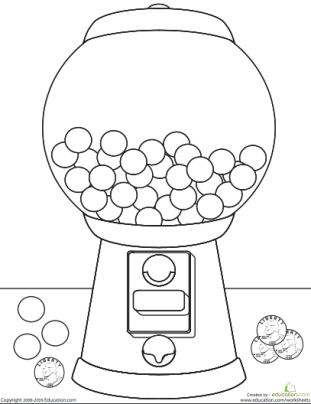
celebrate-picture-books-picture-book-review-gumball-machine-coloring-page

Gumball Machine Coloring Page

Where’s a great place to get some bubble gum? A gumball machine, of course! Have fun adding all of your favorite colors to this printable Gumball Machine Coloring Page.

celebrate-picture-books-picture-book-review-Pop!-the-invention-of-bubble-gum-cover

You can find POP! The Invention of Bubble Gum at these booksellers

Amazon | Barnes & Noble | Books-a-Million | IndieBound

Picture Book Review
February 6 – It’s Children’s Authors and Illustrators Week and Interview with Author Sally Nicholls

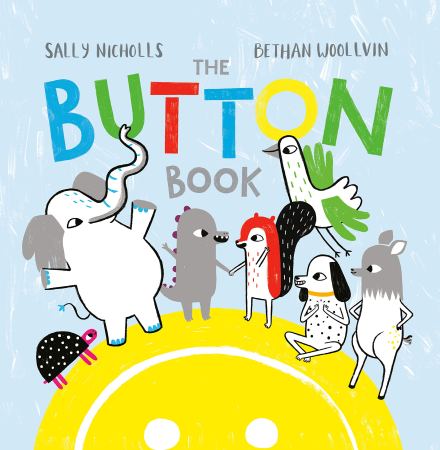
celebrate-picture-books-picture-book-review-the-button-book-cover

About the Holiday

If you’re a fan of children’s authors and illustrators, then this week is one you’ll want to celebrate. All week long, authors and illustrators visit bookstores, schools, and other venues to share their love of children’s literature and get kids and adults excited about reading and writing. Some of these events include storytelling, writing workshops, readings, and presentations. To find out more about the Children’s Authors Network and discover classroom resources to use throughout the year, visit the Children’s Authors Network website.

The Button Book

Written by Sally Nicholls | Illustrated by Bethan Woollvin


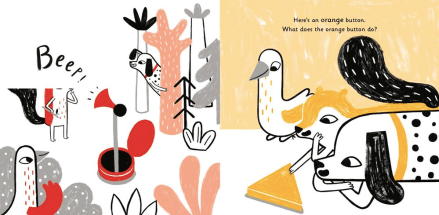
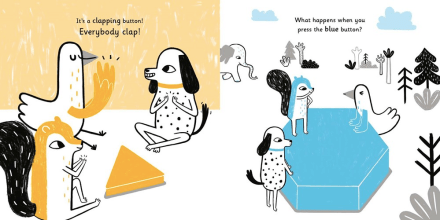
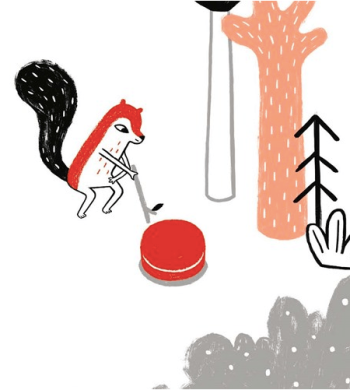
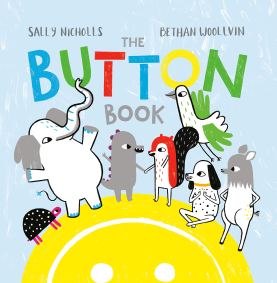
A squirrel comes across a red button on the forest floor. He nudges it with a stick and then gives it a good press just to see what will happen. Ha! The button’s lid opens and a little horn rises on a pole. “Beep!” it says. A dog and a bird appear from behind a tree and a bush to find out what the noise is all about. Now the three of them find an orange button. The squirrel gives it a push. “It’s a clapping button! Everybody clap!”

celebrate-picture-books-picture-book-review-the-button-book-beep

Image copyright Bethan Woollvin, 2020, text copyright Sally Nicholls, 2020. Courtesy of Tundra Books.

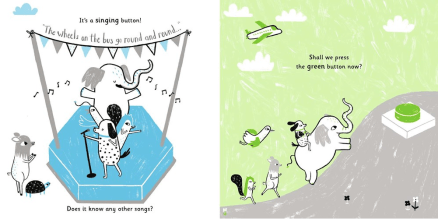
When the dog, the bird, and the squirrel find a blue button in the forest, they wonder how they’ll ever press it. This button is so big all three could stand on it and there would still be room. Luckily, an elephant is passing by. This blue button is “a singing button!” Two more animals wander by to listen to the trio sing. Down the road, the five friends find a green button that makes everyone giggle—well, almost everyone.

celebrate-picture-books-picture-book-review-the-button-book-blue

Image copyright Bethan Woollvin, 2020, text copyright Sally Nicholls, 2020. Courtesy of Tundra Books.

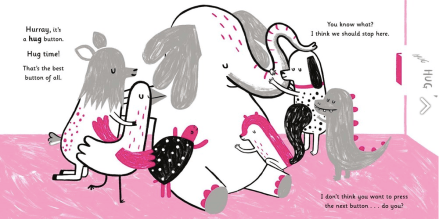
But the yellow button is one everyone likes. “It’s a bouncing button!” Wow! Everyone’s bouncing and tumbling—right off the page. Time to settle down to some cuddles with the pink button. Ahhh. Maybe this would be a good time to stop pressing buttons. Well…there is a purple button right over there. Everyone’s a little unsure—should they press it or not?

celebrate-picture-books-picture-book-review-the-button-book-singing

Image copyright Bethan Woollvin, 2020, text copyright Sally Nicholls, 2020. Courtesy of Tundra Books.

No! Stop! “Ha ha! Hee hee! That tickles! “Please, press the pink button, quick!” Oh no! Not the green button again! “Have you learned any manners yet?” Oh, good. This is more like it––the blue button! Yay! Let’s sing and play some instruments. The red button wants a little attention again too! Hey, look! There’s a new white button on the wall. What does that one do? Wait! It’s dark now. What are we supposed to…. Oh! “Goodnight, everyone.”

celebrate-picture-books-picture-book-review-the-button-book-hugs

Image copyright Bethan Woollvin, 2020, text copyright Sally Nicholls, 2020. Courtesy of Tundra Books.

Sally Nicholls’ fresh take on interactive picture books will have kids in stitches as they beep and clap, sing and dance, jump and hug, and do all the moves while eagerly wanting to see which button they get to press next. Nicholls’ prompts are irresistibly enticing and become funnier and more personal with every page turn. Her cyclical storyline gives readers the chance to revisit their favorite buttons while leading to the surprising, but just-right ending (or is it really the end?). Along with all of this fun, kids are also introduced to various colors, shapes, sizes and spatial relationships. There are plenty of opportunities for kids to count and talk about different types of buttons as well.

celebrate-picture-books-picture-book-review-the-button-book-red

Image copyright Bethan Woollvin, 2020, text copyright Sally Nicholls, 2020. Courtesy of Tundra Books.

Young readers will be enchanted with Bethan Woollvin’s curious, bubbly, talented, fun-loving kids…I mean…characters as they discover button after button on pages that mirror each button’s color. As if by magic, the squirrel, dog, bird, and other friends also change color as they press and respond to every button, inviting readers to follow along. While kids will egg on the animals to press all the other buttons, when they come to the white switch on the wall, children may very well let out a plaintive Noooooo…! But Woollvin has them covered here too. A little exploration of the nighttime bedroom will reward readers with a “Wake Up!” button so they can start all over again.

If you’re looking for a lively read aloud to spark interactive story times that will be asked for again and again, you’ll want to add The Button Book to your home, classroom, or public library collection.

Ages 3 – 7

Tundra Books, 2020 | ISBN 978-0735267152

Discover more about Sally Nicholls and her books on her website.

To learn more about Bethan Woollvin, her books, and her art, visit her website.

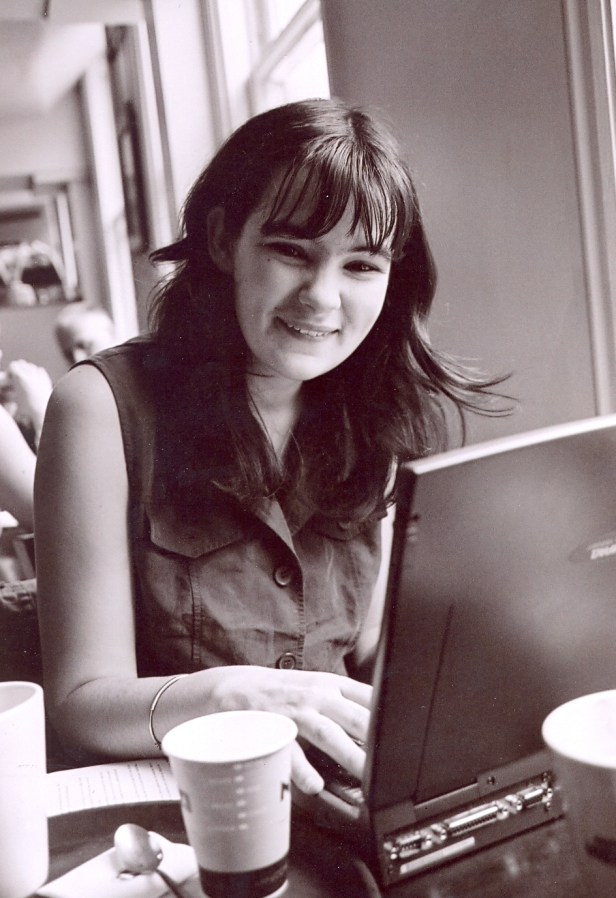
Meet Sally Nicholls

celebrate-picture-books-picture-book-review-sally-nicholls-headshot-black-and-white

I’m thrilled to have this chance to talk to Sally Nicholls today about her adorable and fun picture book, its journey, and what she’s looking forward to in sharing it with readers.

You burst into the book world with your debut middle grade novel Ways to Live Forever, which won the Waterstones Children’s Book Prize and was made into a movie in 2010. Since then you’ve published many more novels, including your latest middle-grade, A Chase in Time. The Button Book is your first picture book. What inspired you to write this story?

Reading to my baby! He loved books, but until he was about eighteen months, he didn’t like any that were just story. He wanted books he could interact with. I used to go to the library and look for anything with a button or a flap or touchy-feely bits. We read a lot of picture books, and I was fascinated by which ones worked and which ones didn’t – why exactly were Fox’s Socks and Where’s Spot? so successful but other books weren’t?

I decided I’d like to have a go at writing one myself. I know paper engineering and fur and so forth is expensive for publishers, and realistically that wasn’t my area of expertise anyway. So I set myself the challenge to write a book a baby would enjoy in the same interactive way, but only using words.

I love how active and funny The Button Book is! Kids are definitely going to be giggling, up on their feet, and playing along. It also has a wonderful cyclical storyline. How did you choose what the buttons do and infuse your story with so much reader interaction?

The Button Book is basically all the things my baby loved the most. If I wanted to make him laugh, I would pretty much just blow raspberries at him or tickle him or get him to clap. So that part was very easy.

The cyclical storyline came from watching programmes like The Teletubbies which really play on repetition. And also having my own baby who liked to say “Again!” Of course, the joy of The Button Book, which I hadn’t really realised until I read it with my second child, is that the child can have as much ‘again’ as they want just by pressing the button.

Bethan Woollvin’s adorable illustrations really invite camaraderie and play. What was your reaction to seeing her illustrations? Do you have a favorite spread and if so, what do you love about it?

I love Bethan’s work. My British publisher asked if I’d like to work with her and it was an instant yes. I’m not a very visual thinker, so I didn’t really have any expectations for how the book would look when it was illustrated. It’s been so exciting to see it take shape.

I think my favourite spread is probably the cover. It looks so colourful and inviting and unusual.

How has the experience of publishing a picture book differed from publishing your novels? Was there any part of the process that surprised you?

How long it took! I was sent finished artwork about eighteen months before the book was published. Printing picture books is so expensive that publishers need to get as many co-editions as possible to reduce the cost. So there’s a very long lead time.

What’s the best part about being an author for children? What are you most looking forward to as you promote The Button Book and share it with readers?

Books matter so much to young children. I’ve seen how much they matter to my family, and one of the most joyful things about The Button Book is how much my second baby loves it. (My eldest likes it too, but he’s a bit old for it now. Also, my baby has no idea that his mum wrote the book, which makes his love even more special.) So that, and also hearing from readers who have been touched by my books in particular ways, perhaps if the storyline resonates with them, or helps them through a difficult time, or just helps them learn to read!

Do you have any anecdote from a book event that you’d like to share?

I took The Button Book in to share with my eldest son’s class, and I got the children to help me make up a story. It was Halloween, so the children said they wanted a story about a vampire who likes flowers. One little boy objected (I think because he wanted his own idea to be picked) which my son took as a misogynistic slight. “Boys can like flowers!” he told him. I felt very proud.

What’s up next for you?

I’m currently finishing off a YA novel about a teen mother whose baby is being raised as her youngest brother. It’s a romance and a family story, and it’s set in a Yorkshire village in Christmas 1919, so there’s a ball, and a young man in an army greatcoat, and lots of chilblains. I don’t know if that’s going to find an American publisher though.

My next picture book is called Who Makes a Forest? It’s an ecological story about the power of small things to come together to make great changes.

What is your favorite holiday? Why is it your favorite?

This sounds weird, but I love the dead days between Christmas and New Year. All the stress of Christmas is over, everyone is off work and school, families are together, and it’s understood that your job is just to snuggle up by the fire and eat leftover turkey and Christmas cake and mince pies.

Thanks, Sally! It’s been wonderful chatting with you! I wish you all the best with The Button Book and all of your books and am looking forward to seeing Who Makes a Forest? when it’s released.

celebrate-picture-books-picture-book-review-the-button-book-cover

You can find The Button Book at these booksellers

Amazon |Barnes & Noble | Books-a-Million | IndieBound

Picture Book Review


February 5 – World Read Aloud Day

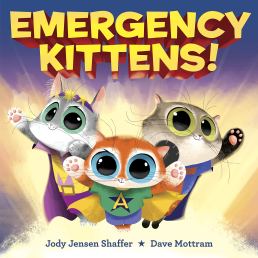
celebrate-picture-books-review-picture-book-review-emergency-kittens-cover

About the Holiday

Sponsored by global non-profit LitWorld and Scholastic, World Read Aloud Day encourages reading aloud to children not only today but every day. Reading aloud to children from birth is one of the best ways to promote language development, improve literacy, and enjoy bonding time together. Millions of people celebrate today’s holiday all across the United States and in more than one hundred countries around the world. Special events are held in schools, libraries, bookstores, homes, and communities, and authors and illustrators hold readings and visit classrooms. To learn more about World Read Aloud Day  and to find stickers, bookmarks, posters, and a reading crown to decorate, visit LitWorld.

Emergency Kittens

Written by Jody Jensen Shaffer | Illustrated by Dave Mottram

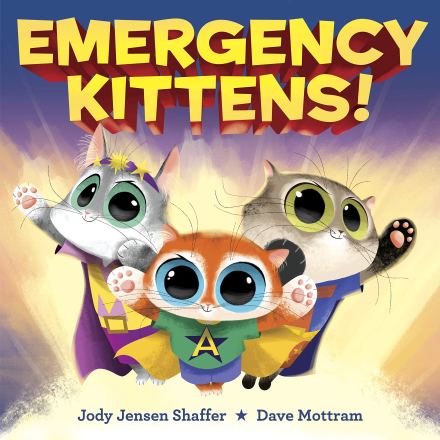
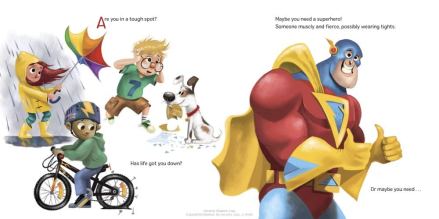
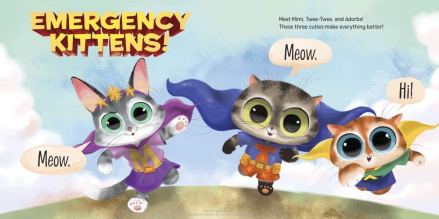
“Are you in a tough spot? Has life got you down?” Perhaps you feel the need to be rescued by a superhero—you know the kind: strong, fast, and with an awesome costume. But maybe there’s an even better option for making your day brighter. What is it? It’s actually three things. Three soft, cuddly, BIG eyed “Emergency Kittens!” “Meet Mimi, Twee-Twee, and Adorbs! These three cuties make everything better!”

celebrate-picture-books-review-picture-book-review-emergency-kittens-superhero

Image copyright Dave Mottram, 2020, text copyright Jody Jensen Shaffer, 2020. Courtesy of Doubleday Books for Young Readers.

From ice-cream disasters to bad hair days to sticky situations, Emergency Kittens save the day. Take Sheldon. One day at the playground “his ball takes a bad bounce” right into the hands of three bullies. Sounds like this calls for some superheroes! And sure enough, they all “show up in a Flash!” with inspirational sayings, big promises, and eve their own hashtag. But while they’re busy lifting bulldozers, leaping tall walls, flying here and there, and getting all tied up in knots, Sheldon’s ball is still being bounced out of reach.

celebrate-picture-books-review-picture-book-review-emergency-kittens-big-eyes

Image copyright Dave Mottram, 2020, text copyright Jody Jensen Shaffer, 2020. Courtesy of Doubleday Books for Young Readers.

Sheldon worries—who can help him? “Mimi, Twee-Twee, and Adorbs know the answer!” They spring into action—paws outstretched, capes flying—and in a bound they’re in the middle of the playground vanquishing those bullies with cuteness antics. But they still have one more play to make…ready? Who could resist those BIG EYES and rumbling Purr? No one! Not even the bullies. While those guys are distracted, Adorbs shoots the ball back to Sheldon. It’s just another day in the life of Emergency Kittens!

celebrate-picture-books-review-picture-book-review-emergency-kittens-hair

Image copyright Dave Mottram, 2020, text copyright Jody Jensen Shaffer, 2020. Courtesy of Doubleday Books for Young Readers.

Kitten lovers (and who isn’t?) rejoice! If you’ve ever gazed into a kitten or cat’s wide eyes and felt their little revving motor of happiness, you know how they can make any bad day seem better. Jody Jensen Shaffer brings that feel good warmth to her funny story that is purr-fectly aww-some. Sprinkling her story with puns and take-offs on superhero lore, Shaffer plays with stereotypes to deliver cuddles galore and a message that might is no match for sweetness and a little unconditional love.

Dave Mottram pulled out all the glimmering, hypnotic adorable stops in giving these Emergency Kittens their show-stopping, bully-melting gaze. Hilarious exaggeration, giggle-inducing rescues, and a set of clueless, self-absorbed superheroes will have kids in stitches from beginning to end. And the double-spread, poster-worthy reveal of the Emergency Kittens using their super power in its full force is sure to elicit plenty of prolonged Awwws and Ooos and exclaimations of “I want one!”

Sure to be a super hit with kids, Emergency Kittens! belongs on every home, school, and public library bookshelf for those times when extra TLC is needed.

Ages 3 – 7

Doubleday Books for Young Readers, 2020 | ISBN 978-1984830081

Discover more about Jody Jensen Shaffer and her books on her website.

To learn more about Dave Mottram, his books, and his art, visit his website.

World Read Aloud Day Activity

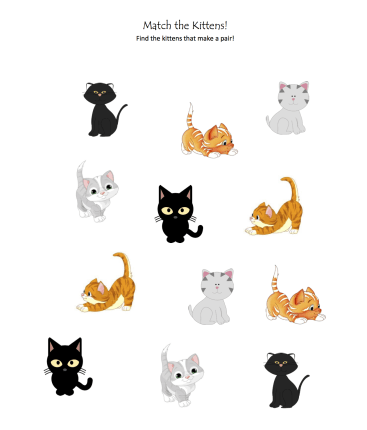
celebrate-picture-books-picture-book-review-match-the-kittens-puzzle

Match the Kittens Puzzle

These kittens all have a twin, but they got mixed up while playing! Can you find the pairs again in this printable Match the Kittens Puzzle?

celebrate-picture-books-review-picture-book-review-emergency-kittens-cover

You can find Emergency Kittens! at these booksellers

Amazon | Barnes & Noble | Books-a-Million | IndieBound

Picture Book Review
February 4 – It’s Children’s Authors and Illustrators Week

celebrate-picture-books-picture-book-review-old-rock-is-not-boring-cover

About the Holiday

Children’s Authors and Illustrators Week was established with the idea of getting authors, illustrators, and children together to share great books, the joys of creating them and the fun of reading. During the week, authors and illustrators hold special events, including storytelling, exciting presentations, and writing workshops in venues around the country. To find out more about the Children’s Authors Network and discover classroom resources to use throughout the year, visit the Children’s Authors Network website.

I received a copy of Old Rock (is not boring) from G. P. Putnam’s Sons for review consideration. All opinions are my own.

Old Rock (is not boring)

By Deb Pilutti


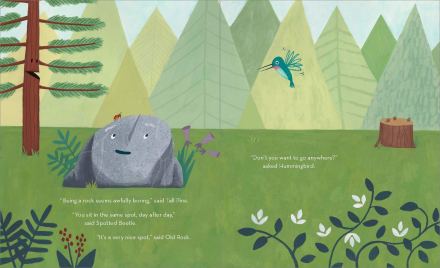
It seemed that Old Rock had been sitting in the same spot forever. Tall Pine and Spotted Beetle thought being a rock must be pretty boring. Hummingbird wondered, “‘Don’t you ever want to go anywhere?’” She knew she would be if she couldn’t fly all over the world and taste exotic nectars. But Old Rock had flown once, and he began to tell his story.

celebrate-picture-books-picture-book-review-old-rock-is-not-boring-hummingbird

Copyright Deb Pilutti, 2020, courtesy of G. P. Putnam’s Sons Books for Young Readers.

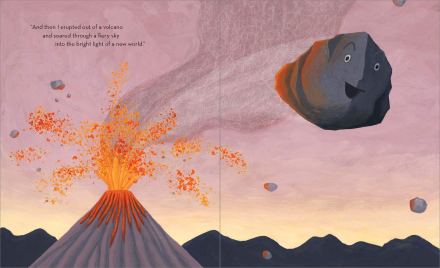
It was during the time when he was surrounded by darkness, but then the volcano erupted and Old Rock “‘soared through a fiery sky into the bright light of a new world.’” Tall Pine, Spotted Beetle, and Hummingbird weren’t very impressed. They still thought Old Rock must be bored. Spotted Beetle told him how much he might see if he climbed to Tall Pine’s very highest branch.

celebrate-picture-books-picture-book-review-old-rock-is-not-boring-volcano

Copyright Deb Pilutti, 2020, courtesy of G. P. Putnam’s Sons Books for Young Readers.

Old Rock countered that he had seen a lot. He’d watched dinosaurs pass by and had even hidden a spinosaurus from a hungry T. rex. He’d traveled in a glacier and been left teetering on a ridge overlooking a vast desert, where he “could see the place where the sky touches the earth.” Spotted Beetle and Hummingbird were intrigued, but Tall Pine dismissed these experiences as “ages ago.” He wanted to know about now. Didn’t Old Rock feel like moving? Tall Pine showed Old Rock how his limbs could dance in the wind.

celebrate-picture-books-picture-book-review-old-rock-is-not-boring-dinosaurs

Copyright Deb Pilutti, 2020, courtesy of G. P. Putnam’s Sons Books for Young Readers.

While Old Rock couldn’t dance, he did recall how he’d turned somersaults off the ridge, landing in a prairie where mastodons grazed near a lake. Tall Pine, Spotted Beetle, and Hummingbird were mesmerized by Old Rock’s story and wanted to know what had happened next. Out of the prairie, sprang a pine forest, Old Rock revealed. And from one of the pine trees a pinecone fell and a seed was released. That seed grew “to be the tall pine who dances in the wind and keeps me company.” Sometimes, he continued, a spotted beetle and a hummingbird meander by. Old Rock was very pleased with his spot, and the others had to agree that it was “very nice” and “not boring at all.”

An illustrated timeline of Old Rock’s life from 18 billion years ago to the present day follows the text.

celebrate-picture-books-picture-book-review-old-rock-is-not-boring-time-line

Copyright Deb Pilutti, 2020, courtesy of G. P. Putnam’s Sons Books for Young Readers.

So much clever thought went into Deb Pilutti’s Old Rock as she reveals to kids what a fascinating and active life the rocks and boulders we see every day have had. Tall Pine, Spotted Beetle, and Hummingbird’s skepticism keeps the suspense building as Old Rock rolls out stories of his various travels and talents. Once he has them hooked, they—like young readers—want to hear more, leading to the just-right ending that sweetly encompasses shared history, happiness with one’s place in life, and friendship. The trio’s questions to Old Rock and their related experiences also engage children to think about issues and opinions from a variety of perspectives.

Pilutti’s mixed-media illustrations are nicely textured to bring out Old Rock’s grainy surface while highlighting nature’s vivid colors. Her vignettes from the dinosaur eras, the ice age (where the skeletons of dinosaurs are also swept up and away in the same glacier as Old Rock), and beyond impress upon readers the long time-frame involved, how the earth has changed, and even the fascinating science of the fossil record.

A multi-layered story, perfect for general story times or as a lead in to science lessons and to promote discussion and research in the classroom, Old Rock (is not boring) would be an original and exciting addition to home, classroom, and public library collections.

Ages 4 – 8

G. P. Putnam’s Sons Books for Young Readers, 2020 | ISBN 978-0525518181

To learn more about Deb Pilutti, her books, and her art, visit her website.

Children’s Authors and Illustrators Week Activity

celebrate-picture-books-picture-book-review-rocks-word-search-puzzle

Rock This Puzzle! Word Search


You can discover a lot about an area by its rocks. Find the twenty rock-related words in this printable puzzle then learn more about them.

Rock This Puzzle! Word Search | Rock This Puzzle! Solution

celebrate-picture-books-picture-book-review-old-rock-is-not-boring-cover

You can find Old Rock (is not boring) at these booksellers

Amazon | Barnes & Noble | Books-a-Million | IndieBound

Picture Book Review
February 3 – It’s Children’s Authors and Illustrators Week

celebrate-picture-books-picture-book-review-what's-up-maloo-cover

About the Holiday

This week was established to raise awareness and promote literacy and the joys and benefits of reading. During the week, children’s authors and illustrators attend special events at schools, bookstores, libraries, and other community centers to share their books and get kids excited about reading. To learn more about how you can instill a lifelong love of learning in your children, visit ChildrensAuthorsNetwork!

I received a copy of What’s Up, Maloo? from Tundra Books for review consideration. All opinions are my own. I’m excited to partner with Tundra in a giveaway of the book. See details below.

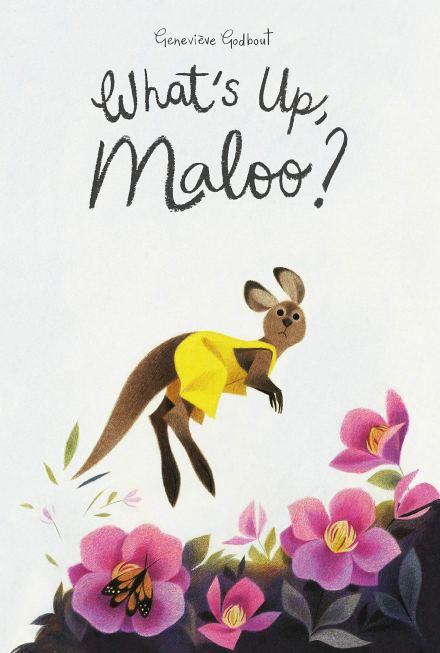
What’s Up, Maloo?

By Geneviève Godbout


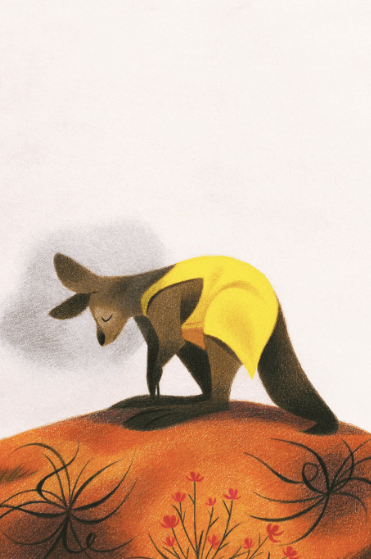
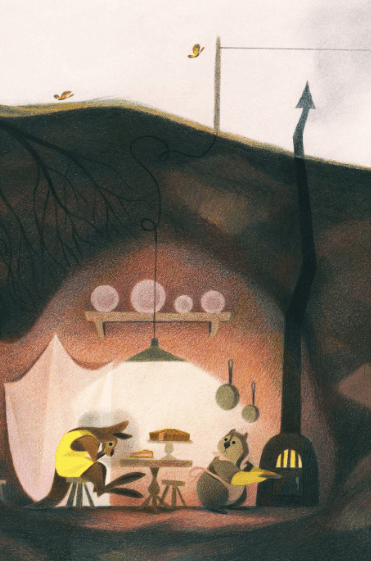
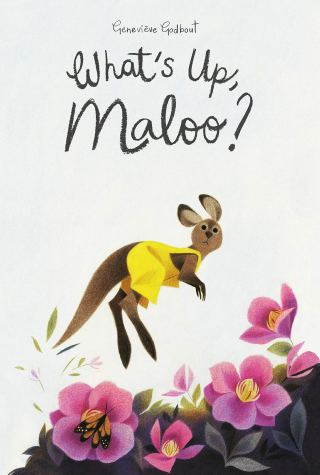
Maloo is a little kangaroo with an especially hoppy spring in his step. But one day he feels grounded. Instead of hop, hop, hopping to see his friend, he takes “One step. Two steps, Three steps.” Wombat immediately notices that something’s amiss and asks, “What’s up, Maloo?” She brings him inside her cozy den and gives him a slice of pie. While she slides another treat into the oven, Maloo sits forlornly at the table, not touching his pie.

celebrate-picture-books-picture-book-review-what's-up-maloo-one-sad

Copyright by Geneviève Godbout, 2020, courtesy of Tundra Books.

They go down to the river—“Four steps. Five steps. Six steps”—where Crocodile sees it too and asks Maloo what’s wrong. Perhaps a swim will cheer Maloo up, but he sits dejectedly atop his ball and floats with the current. The three go to see Koala. They all want to help Maloo feel better. They try giving him a lift with an electric fan, but the wind just knocks Maloo head over heels.

celebrate-picture-books-picture-book-review-what's-up-maloo-den

Copyright by Geneviève Godbout, 2020, courtesy of Tundra Books.

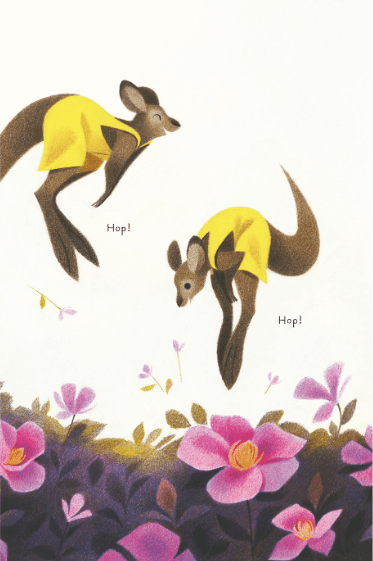
Maloo’s friends stay with him, though––“ten steps…one hundred steps…one thousand steps.” They stretch out a blanket and fling Maloo into the air, giving him encouragement. Can he hop? Maloo falls…but springs up again. “Hop!” He floats down, but this time instead of feeling dejected, he’s looking up. Back into the air he goes. He descends, but something is rising up in him. Maloo jumps with a gigantic “Hop!” He smiles. Koala climbs on Maloo’s back while Wombat and Crocodile balance on pogo sticks, and they all “hop like Maloo!’”

celebrate-picture-books-picture-book-review-what's-up-maloo-one-hop

Copyright by Geneviève Godbout, 2020, courtesy of Tundra Books.

With her powerfully emotional images and spare text, Geneviève Godbout allows readers to identify with Maloo as he experiences a time of sadness and recovers happiness with the help of his friends. In her soft, earth-toned illustrations, Godbout provides many perspectives and good examples for children and adults to discuss. Having lost his hop, Maloo seeks out one friend, who engages another friend and yet another, showing children the reassurance and help available by reaching out and having a supportive network. Maloo’s friends are also sensitive to Maloo’s mood, encouraging readers to pay attention to and acknowledge changes they may see in their friends and family. As readers count Maloo’s steps, they’ll see that sometimes the road back to feeling happy can be long, but that good friends stick with you no matter what or how long it takes. They also learn that asking for help starts with one step.

A moving and accessible resource for parents and caregivers to talk with their children about the ups and downs of life and the emotions of sadness and depression, What’s Up, Maloo? is a valuable addition to home, school, and public library collections.

Ages 3 – 7

Tundra Books, 2020 | ISBN 978-0735266643

To learn more about Geneviève Godbout, her books, and her art, visit her website.

Meet Geneviève Godbout

Born and raised in Quebec, Geneviève Godbout studied traditional animation in Montreal and at the prestigious Gobelins school in Paris. She is the illustrator of a number of books for children, including The Pink Umbrella, When Santa Was a Baby, Kindergarten Luck (Chronicle), and Joseph Fipps (Enchanted Lion). Some of her clients include The Walt Disney Company, Chronicle, HMH, Flammarion, Bayard, Les éditions Milan and La Pastèque. She also works for clothing designers like Nadinoo and Mrs. Pomeranz, creating illustrations and prints for their collections. Connect with Geneviève on her website.

Congratulations on What’s Up, Maloo, your debut picture book as both author and illustrator! Can you talk a little about the journey you’ve taken with this book?

Thank you! I never expected to be an author, but one day I woke up with the feeling I should write my own story about depression. I pictured this little kangaroo that lost his hop and told my French publisher (La Pastèque) about it. The whole creative process was natural, yet I felt incredibly insecure about my own capacities. But once published, we had such a fantastic response that I’m now working on a sequel with the little crocodile! 

What was your inspiration for this story and why this subject is important to you? What do you hope children will take away from your story?

I was inspired by my own experience of depression. I wanted to say that it’s ok to go through tough times and emphasize the importance of being surrounded without judgement. We should feel safe to confess our feelings to a friend. We don’t have to go through this alone. 

Your illustrations of Maloo feeling sad and losing the spring in his step are touching and instantly recognizable for children. How can adults use the book to talk with their children about the strong feelings of sadness and depression from multiple viewpoints, including the sufferer themselves and their friends?

I chose not to mention why Maloo lost his hop so that kids and adults can fill the gap in the text with their own experience. Maloo’s friends are sweet and full of empathy. I pictured this book as a comforter rather than a sad story. 

You’ve brought iconic characters Anne of Green Gables and Mary Poppins to books for the youngest readers. What are the challenges and joys of working with these beloved characters?
It was quite an intimidating challenge. These characters are so loved by readers (and myself!) that everyone has their own expectations of what they should look like. For instance, Mary Poppins is dramatically different in the original books by P.L. Travers from the Disney movie. But when we think about Mary Poppins, most people picture Julie Andrews, not a severe looking lady with very tall feet. With that in mind, I tried to find my own way of drawing both Mary Poppins and Anne Shirley. It was such an exciting opportunity, I reminded myself to have fun during the creative process without anticipating the public response too much. 

From characters’ round, expressive eyes, rosy cheeks, and sweet grins to animated action punctuated with humor to your gorgeous colors, your picture book illustrations are truly distinctive. How did you develop your signature style?

A style is the expression of one’s sensitivity and creativity. Mine evolved throughout the years as I gained experience and technique. And for some reason, I chose the most time-consuming medium: color pencils! I have always loved them. They’re delicate and precise. My background in traditional animation also has a huge part in the way I draw today. Everything is about movement and expressive posing. 

What do you love best about creating books for children?

I love the idea of touching people and offering them a safe bubble where they can smile and relax. There is nothing better than hearing a child or an adult say they love to curl up in bed with one of my books. 

You went to school in Paris, you’ve worked in London, and now you live in Montreal. Could you name one of your favorite places in each city and tell why you love it?

I was lucky to live in such fabulous and inspiring cities. I loved to get lost in Paris and walk by the Thames river near Hammersmith in London. Each time I go back, it feels a bit like home. As for Montreal, I think it’s the best place in terms of quality of life and I love the contrast between the seasons!

What’s up next for you?

I’m working on a couple of exciting projects including a sequel for What’s up, Maloo? and a third book in the Anne series. I’m kind of booked for the next year or so with Harper Collins, Random House, Comme des Géants, and perhaps Houghton Mifflin Harcourt, but I’m not sure what I’m allowed to say at this stage! 

Thanks, Geneviève! It was wonderful chatting with you. I’m really looking forward to seeing the sequel to What’s Up, Maloo? and all of your upcoming books!

celebrate-picture-books-picture-book-review-what's-up-maloo-cover

You can find What’s Up, Maloo? at these booksellers

Amazon | Barnes & Noble | Books-a-Million | IndieBound

Picture Book Review