August 31 – It’s National Inventor’s Month

celebrate-picture-books-picture-book-review-who-invented-this-cover

About the Holiday

Established in 1998 by the United Inventors Association of the USA, the Academy of Applied Science, and Inventors’ Digest magazine, this month-long holiday celebrates the imagination and talent of individuals who dare to think differently and create new products, services, and ways of doing things that make a positive contribution to the world. To join in, enjoy your favorite new inventions, and if you harbor dreams of being an inventor—on a large or small scale—look for opportunities to share your ideas.

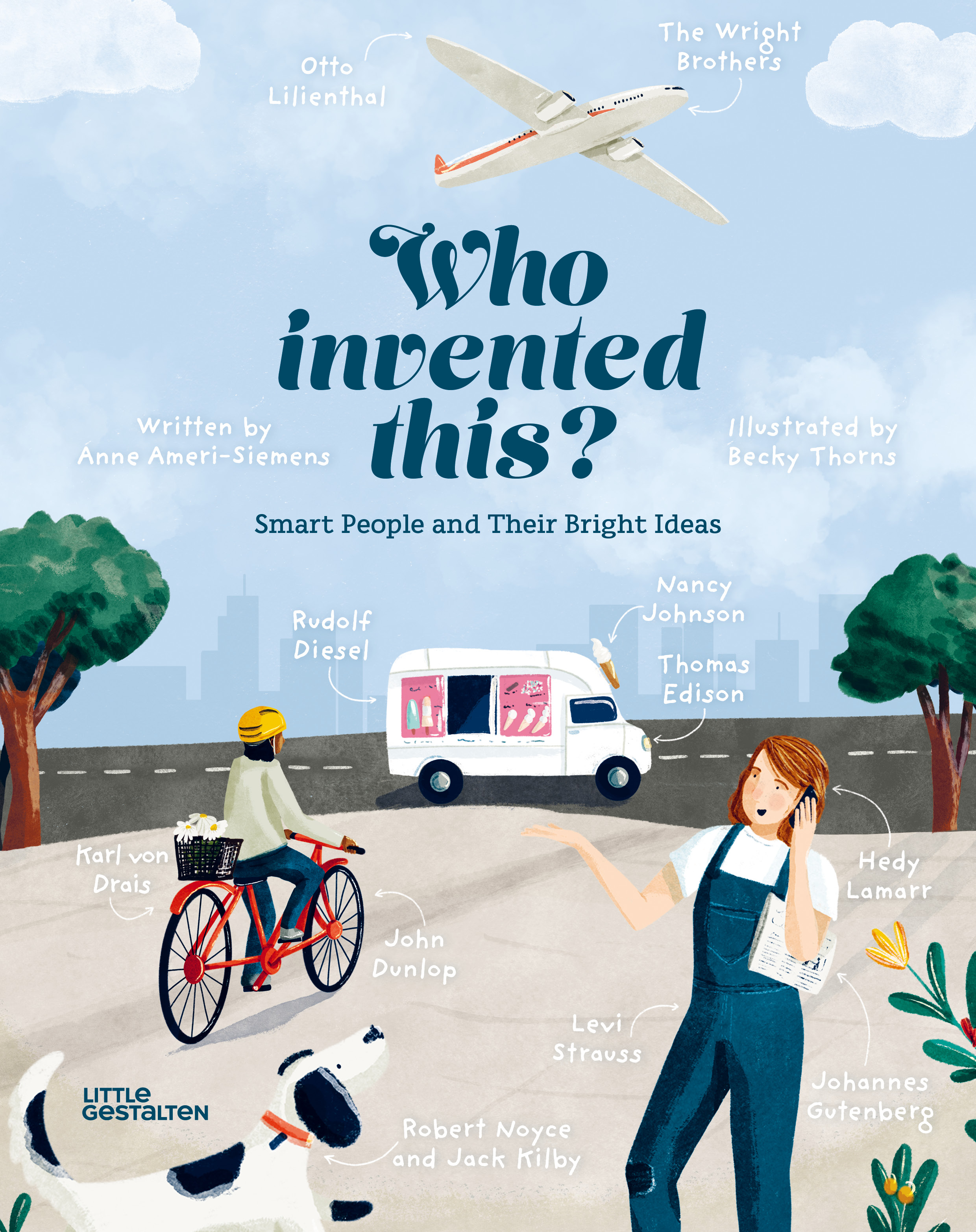
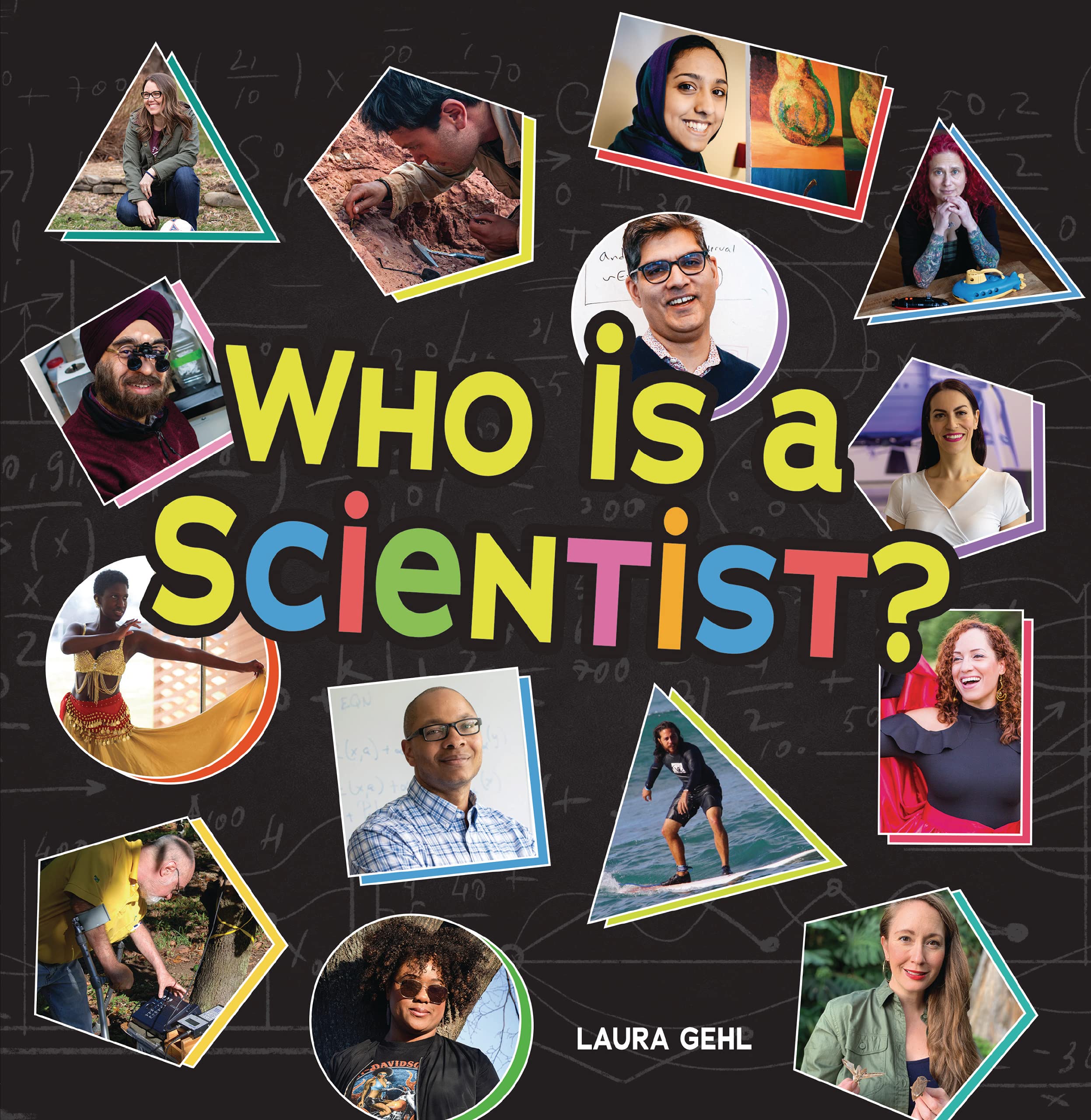
Who Invented This? Smart People and Their Bright Ideas

Written by Anne Ameri-Siemens | Illustrated by Becky Thorns


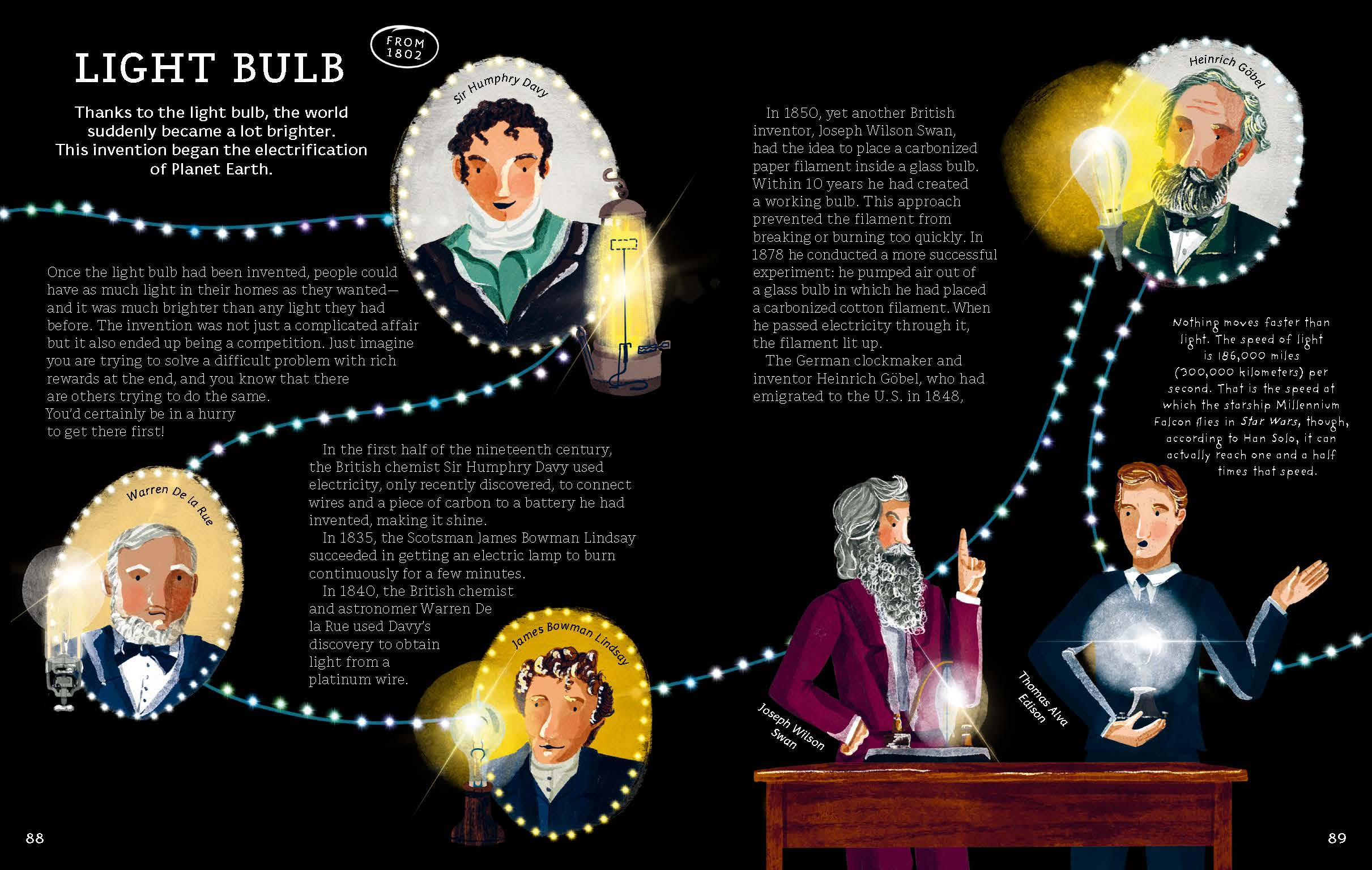
When you jump in the car or turn on a lamp, the idea that these were someone’s inventions (and even the names Henry Ford and Thomas Edison) may flash through your mind. But what about when you slurp up delicious Raman noodles, watch your pet fish through the aquarium glass, or squeeze out the last bit of toothpaste in the tube? In Who Invented This? Anne Ameri-Siemens introduces young readers to the brilliant minds behind some of the things we use every day.

celebrate-picture-books-picture-book-review-who-invented-this-light-bulb

Image copyright Becky Thorns, 2021, text copyright Anne Ameri-Siemans, 2021. Courtesy of Little Gestalten.

Take bicycles, for instance. You’ve probably seen pictures of those old bikes with a huge front wheel and a tiny back wheel. Was this the first bike? Not at all! Ameri-Siemens reveals that the first bicycle—called a “running machine”—had two wheels but didn’t have pedals. Invented by Karl von Drais in 1817, it had a steering bar in the front and was powered by the rider sitting on the seat and “running along the ground.” It may seem comical, but this invention led to more and more improvements until Pierre Michaux designed the first bike with pedals in the 1860s. You can read about all of the advancements in bikes and the other products it inspired too.

celebrate-picture-books-picture-book-review-who-invented-this-frequency-hopping

Image copyright Becky Thorns, 2021, text copyright Anne Ameri-Siemans, 2021. Courtesy of Little Gestalten.

As long as we’re talking about things that transport people here and there, have you ever thought about what drivers did before there were modern traffic lights? While the idea of indicating “stop” and “go” in red and green is universal across the world, the use of yellow for the transition came later from American policeman William Potts. “The first traffic lights in the world were built in London in 1868.” But they weren’t automatic. A policeman standing in the road had to move arms up and down to regulate the flow of traffic. “At night the arms were lit up in red and green.” Readers will find out more about how traffic lights progressed as well as how the timing of stop and go is controlled.

celebrate-picture-books-picture-book-review-who-invented-this-fizz

Image copyright Becky Thorns, 2021, text copyright Anne Ameri-Siemans, 2021. Courtesy of Little Gestalten.

Sometimes inventors get their ideas from nature—this is called bionics—and kids will learn how George de Mestral was ingeniously inspired by those sticky burrs that cling to socks to create a product most of them use all the time. There are other everyday products that are so important that they were invented long, long, long ago. One of these? Toothpaste! While Washington Sheffield invented the first smooth paste in 1850 by adding glycerin to the powder then used—“a mixture of pumice stone, powdered marble, grated oyster shells, ashes, peppermint oil or sage, and some soap power”—and his son realized the toothpaste could be packed in tubes like artists’ paints instead of sold in foil bags, prehistoric humans also brushed their teeth. Kids will be fascinated to learn more about the history of this morning and nighttime routine and even examples from the animal kingdom.

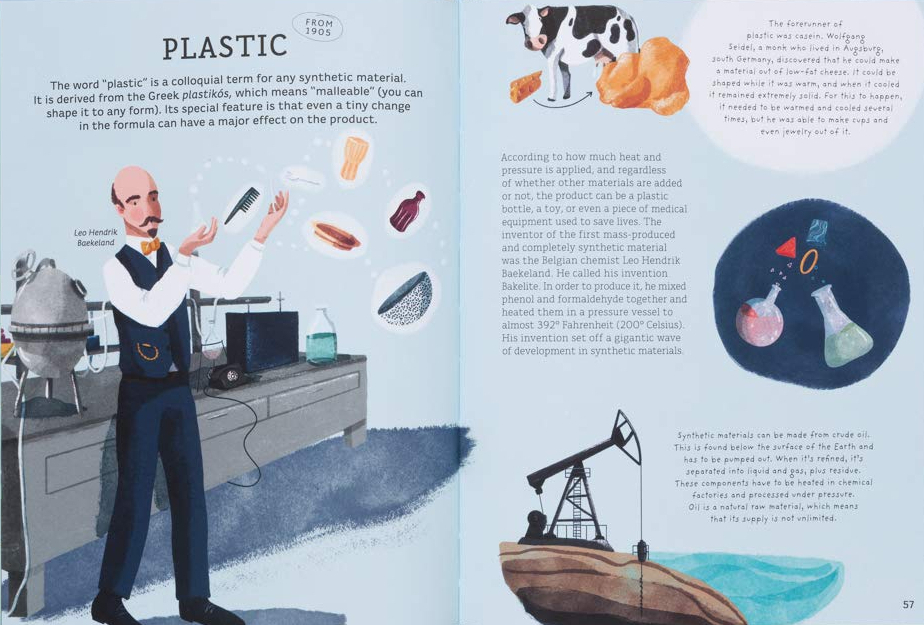
celebrate-picture-books-picture-book-review-who-invented-this-plastic

Image copyright Becky Thorns, 2021, text copyright Anne Ameri-Siemans, 2021. Courtesy of Little Gestalten.

Readers will be excited to learn about these inventions and many more that make up the fabric of our everyday lives and were conceived by talented inventors, scientists, and engineers. Some are the result of teamwork while some are the product of many years spent alone in a laboratory or even simply chance. In all, kids learn about 34 inventions that fall into diverse categories from transportation to communications, clothing to food, music to science and high-tech marvels.

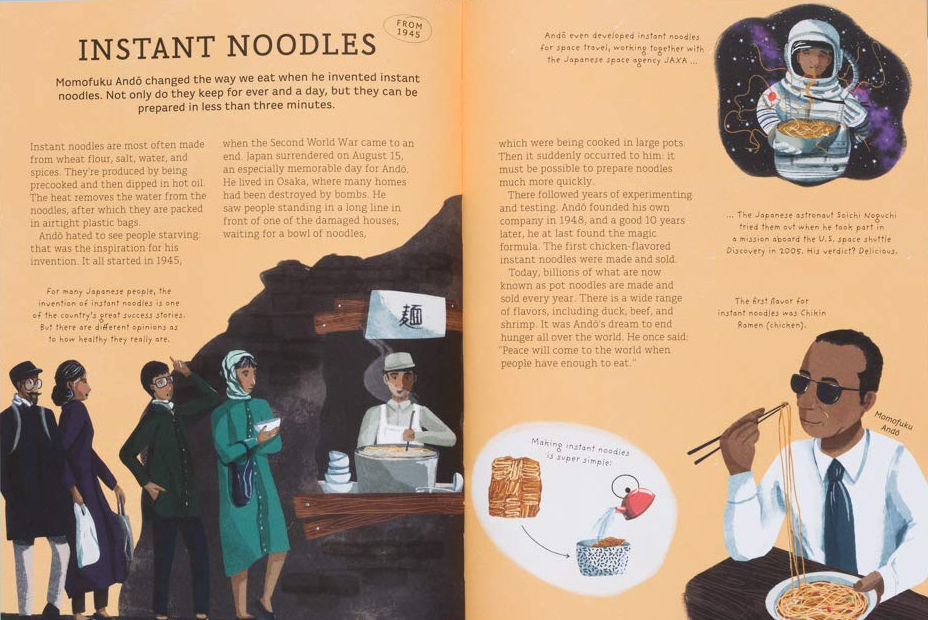
celebrate-picture-books-picture-book-review-who-invented-this-instant-noodles

Image copyright Becky Thorns, 2021, text copyright Anne Ameri-Siemans, 2021. Courtesy of Little Gestalten.

Anne Ameri-Siemens’ conversational and engaging text will captivate readers interested in learning about how the world they know came to be. Ameri-Siemen’s storytelling beautifully balances the scientific and personal details of each invention to deliver compelling profiles. Interesting asides on each page reveal more about the inventions and the people who created them.

Accompanying each subject are Becky Thorns’ eye-catching illustrations that depict not only the invention but its creator or creators as well as how it is used or where it can be found. Thorns also employs clever ways to connect images on a page-spread that reinforcing their purpose and history. Each page spread offers plenty of ideas to spur research projects or extended lessons for classrooms and homeschoolers.

Packed with information on products, ideas, world-changing inventions, and the brilliant minds behind them, Who Invented This? Smart People and Their Bright Ideas will fascinate kids and spark an interest in further research, science, engineering, and technical studies. The book is highly recommended for young inventors, history buffs, and other creative thinkers as well as for classrooms and school and public library collections.

Ages 9 – 12 and up

Little Gestalten, 2021 | ISBN 978-3899551334

To learn more about Becky Thorns, her books, and her art, visit her website.

National Inventor’s Month Activity

celebrate-picture-books-picture-book-review-share-your-bright-idea-activity

Share Your Bright Idea! Page


Do you sometimes have a lightbulb moment when an idea seems just right? Use this printable Share Your Bright Idea! Page to write about or draw your idea!

celebrate-picture-books-picture-book-review-who-invented-this-cover

You can find Who Invented This? Smart People and Their Bright Ideas at these booksellers

Amazon | Barnes & Noble | Books-a-Million

To support your local independent bookstore, order from

Bookshop | IndieBound

Picture Book Review
June 15 – It’s National Shark Week

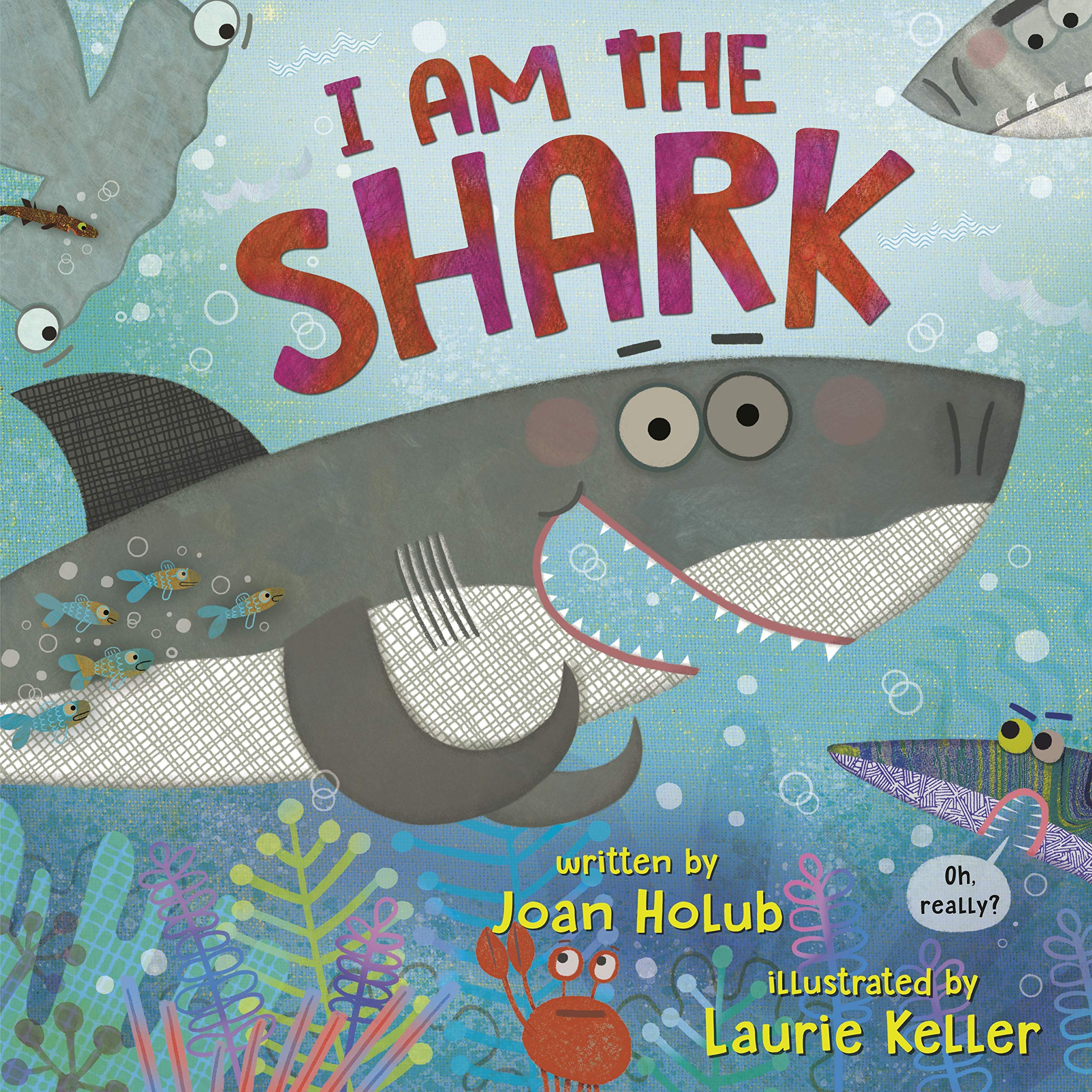
celebrate-picture-books-picture-book-review-i-am-the-shark-cover

About the Holiday

It’s Shark Week – one of the most anticipated holiday’s of the year! Kids and adults are fascinated by these denizens of the deep, and especially the Great White, which sports fearsome teeth and intimidates with their imposing size. But there are many more sharks in the sea – about 500 species! – and they are an important part of the world’s ecosystem. If Shark Week is your favorite week of the summer, you’re no doubt enjoying a full schedule of shark-related shows on the Discovery Channel. To learn more information about sharks, including statistics from this year’s coastal shark survey, a chance to cast your vote for “freakiest shark,” a line-up of top videos, and more, visit the National Oceanic and Atmospheric Administration’s Shark Week page. To celebrate sharks and the wonders of the ocean every day, you’ll want to put today’s book at the top of your reading list.

Thanks to Joan Holub for sharing a copy of I Am the Shark with me for review consideration. All opinions on the book are my own. I’m excited to be teaming with Joan in a giveaway package that kids will love. See details below.

I Am the Shark

Written by Joan Holub | Illustrated by Laurie Keller


Great White Shark is excited to introduce himself, especially since he is “the GREATEST SHARK in this book.” But a voice contradicts Great White. Who begs to differ? It’s Whale Shark, and she loses no time in demonstrating why she is “the greatest shark in this book” due to her enormous size, which can’t be matched anywhere in the undersea world. And if that weren’t enough, she adds this bite: “Compared to me, you are small.”

celebrate-picture-books-picture-book-review-i-am-the-shark-great-white

Image copyright Laurie Keller, 2021, text copyright Joan Holub, 2021. Courtesy of Crown Books for Young Readers.

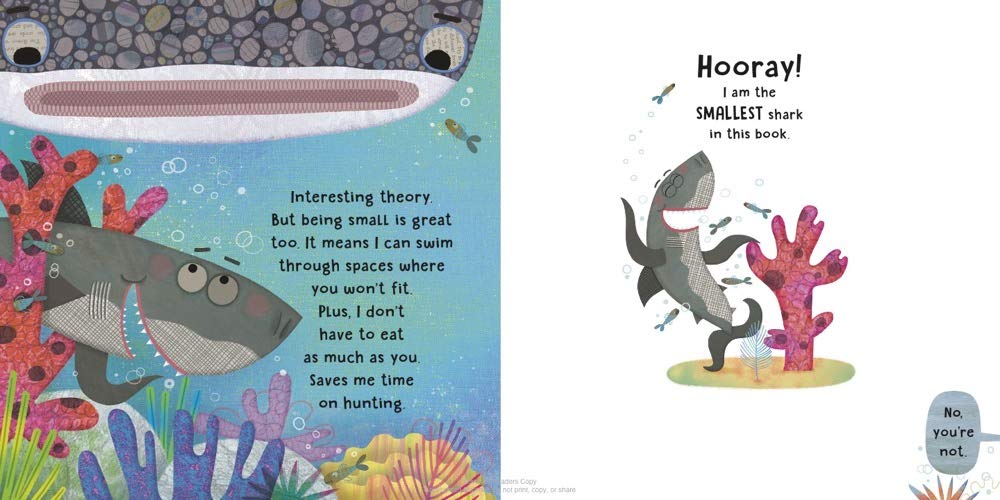
But Great White takes it in stride. If he isn’t the greatest shark, that’s okay because being the smallest has some pretty great perks too. So he’s in the middle of a “smallest shark” victory dance when a voice calls out, “No, you’re not.” It seems there’s a much smaller shark in the sea—Dwarf Lantern Shark, who, besides being the tiniest shark has a rather enlightening ability too. After the long take down from Whale Shark, this time Great White pivots quickly, thinking about how “smart and curious” he is. Could he be “the smartest shark in this book?”

Well, that would be a no. Hammerhead Shark has that one nailed down as well as a unique view of their colorful world. This time, Great White is a little intimidated. “Whoa!” he exclaims. “How can I top that?” But being smart (just not as smart as Hammerhead), Great White has another idea. This one, though, is quashed just like the others in a sneak attack. Turns out Great White isn’t the best hunter, the oldest, or even the “fishiest” shark in this book.

celebrate-picture-books-picture-book-review-i-am-the-shark-whale-shark

Image copyright Laurie Keller, 2021, text copyright Joan Holub, 2021. Courtesy of Crown Books for Young Readers.

Undeterred, Great White decides to do a little research in other books to “figure out the greatest thing about [him]. He learns all about his different body parts and even shares a labeled diagram (on graph paper and everything) with you. And he doesn’t stop there. He’s discovered all sorts of awesome facts about their skeletons, senses, teeth, skin, and other cool tidbits that he lets you know about. Great White could probably go on and on, but suddenly there’s a “snack alert” and all the sharks take off at top speed after their prey. Great White’s fast! He’s in the lead! Great White’s the fast..est… “Crumbs.” Great White’s passed up by a faster shark. Who is that anyway?

By this time Great White is feeling pretty down in the dumps. “Maybe I should change my name to Just-Okay White Shark or Not-So-Great White Shark,” he bemoans. But then Dwarf Lantern Shark swims up to him and enlightens him with some perspective and sage advice: “Just be happy being you.” Great White takes it to heart. In fact, it helps him think of a new, can’t-miss quality that finally gives him a “GREATEST in this book” status.

Backmatter includes more details on the eight sharks introduced in the story as well as books and links about sharks for kids wanting to learn more.

celebrate-picture-books-picture-book-review-i-am-the-shark-smallest

Image copyright Laurie Keller, 2021, text copyright Joan Holub, 2021. Courtesy of Crown Books for Young Readers.

Kids are always fascinated by the superlative—the fastest, the biggest, the smallest, the silliest, the best—and Joan Holub makes superlative use of this fact in her highly entertaining and educational romp. As Great White goes on a rollercoaster of emotions, one moment thinking he’s the best at something while the next moment having his hopes dashed, readers learn eye-opening details about eight sharks, described in engaging ways that will wow kids. Great White’s boundless optimism is infectious while setting up his disappointment for maximum comic effect. Kids will eagerly await the chance to chime in on the “No, you’re not.” asides that are sure to bring plenty of giggles. But this story isn’t all about sharks. Holub masterfully weaves in an important message for kids about self-acceptance, true happiness, and finding their unique qualities and talents.

Laurie Keller uses her prodigious talent for humor in her up-close images (and is there any other way kids would want to see them?) of these competitive sharks. Loaded with attitude, each shark swims onto the pages to demonstrate their “greatest” trait in ways that will stick with kids and have them excited to learn more. Expressive faces and silly antics add personality and laughs to each page spread. Keller’s vivid, textured, and collage-style illustrations are eye-catching, and funny details, such as Tiger Shark’s tattoos, chain bangle, band-aid, and gold tooth, will have kids lingering over the pages. While they’re there, they’ll want to keep a look out for the Dwarf Lantern Shark who finally lets Great White in on a great secret.

Full of facts, action-packed, and loaded with laughs, I Am the Shark is creative non-fiction at its GREATEST. Kids who love learning about sharks, nature, and the ocean or who just love a fantastic read will want to sink their teeth in this charmer. I Am the Shark is a can’t-miss must for homes, classrooms, and public libraries.

Ages 4 – 8

Crown Books for Young Readers, 2021 | ISBN 978-0525645283

celebrate-picture-books-picture-book-review-joan-holub-headshot

Joan Holub has authored and/or illustrated over 150 children’s books, including the Goddess Girls series and the Heroes in Training series (with Suzanne Williams); the New York Times bestselling picture book Mighty Dads, illustrated by James Dean; Little Red Writing, illustrated by Melissa Sweet; and Zero the Hero, illustrated by Tom Lichtenheld. Her board & novelty books include This Little Trailblazer and Fa la la Llama. Joan adores line dancing to the Jaws theme, reading Sharkspeare, and vacationing in Finland.

You can connect with Joan Holub on Her website | Instagram | Twitter

celebrate-picture-books-picture-book-review-laurie-keller-headshotLaurie Keller is the author and illustrator of many books, including The Scrambled States of America, Potato Pants!, Arnie the Doughnut, Do Unto Otters: A Book About Manners, the Adventures of Arnie the Doughnut chapter book series, and We Are Growing!, part of the Elephant & Piggie Like Reading! series and winner of the Theodor Seuss Geisel Award. When Laurie isn’t busy making books, she enjoys playing the banjo, traveling, cross-country skiing, and splashing in Lake Michigan, where as far as she knows, there is not a single shark.

You can connect with Laurie Keller on Her website | Instagram | Twitter

Shark Week Activity

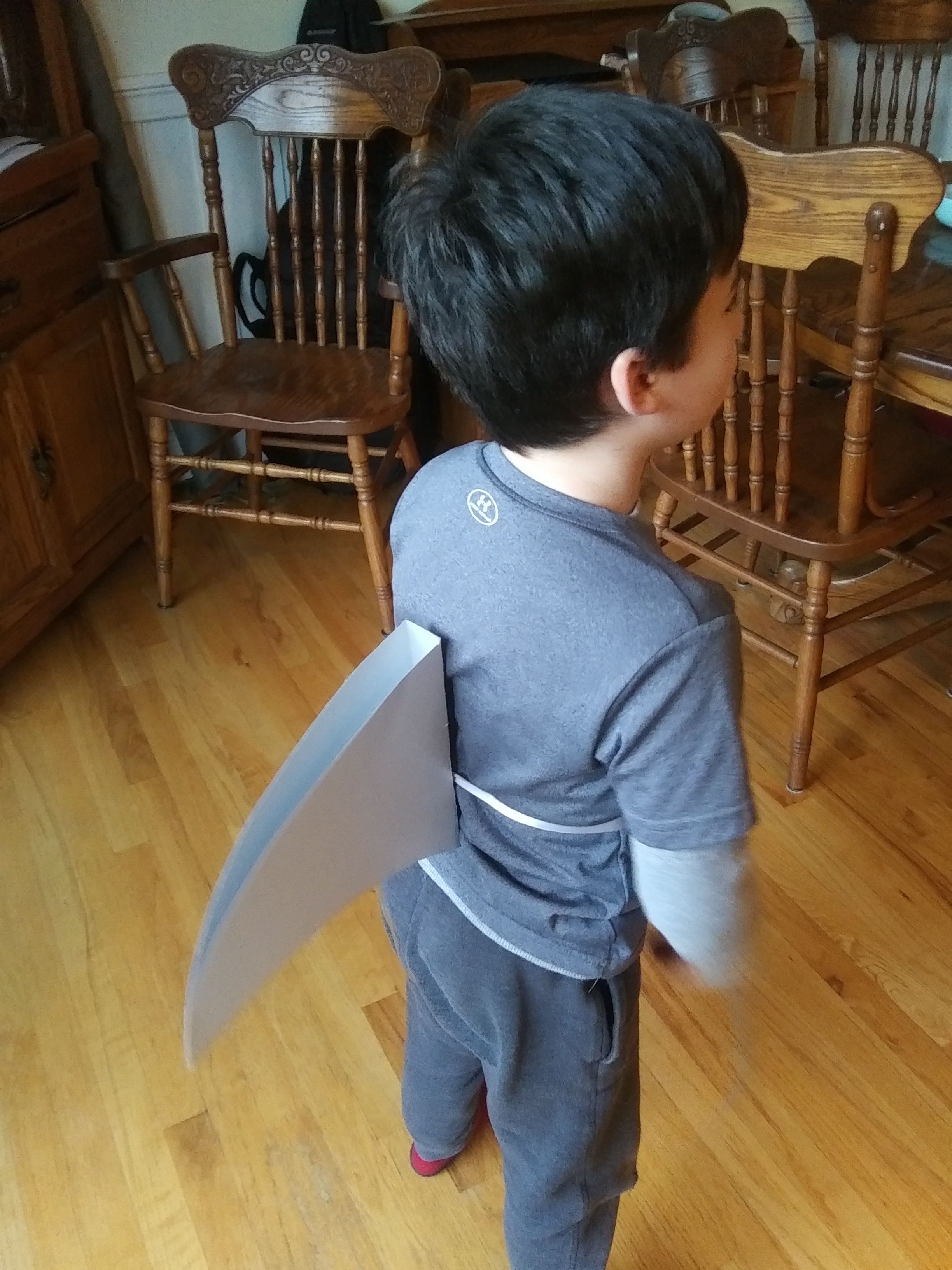
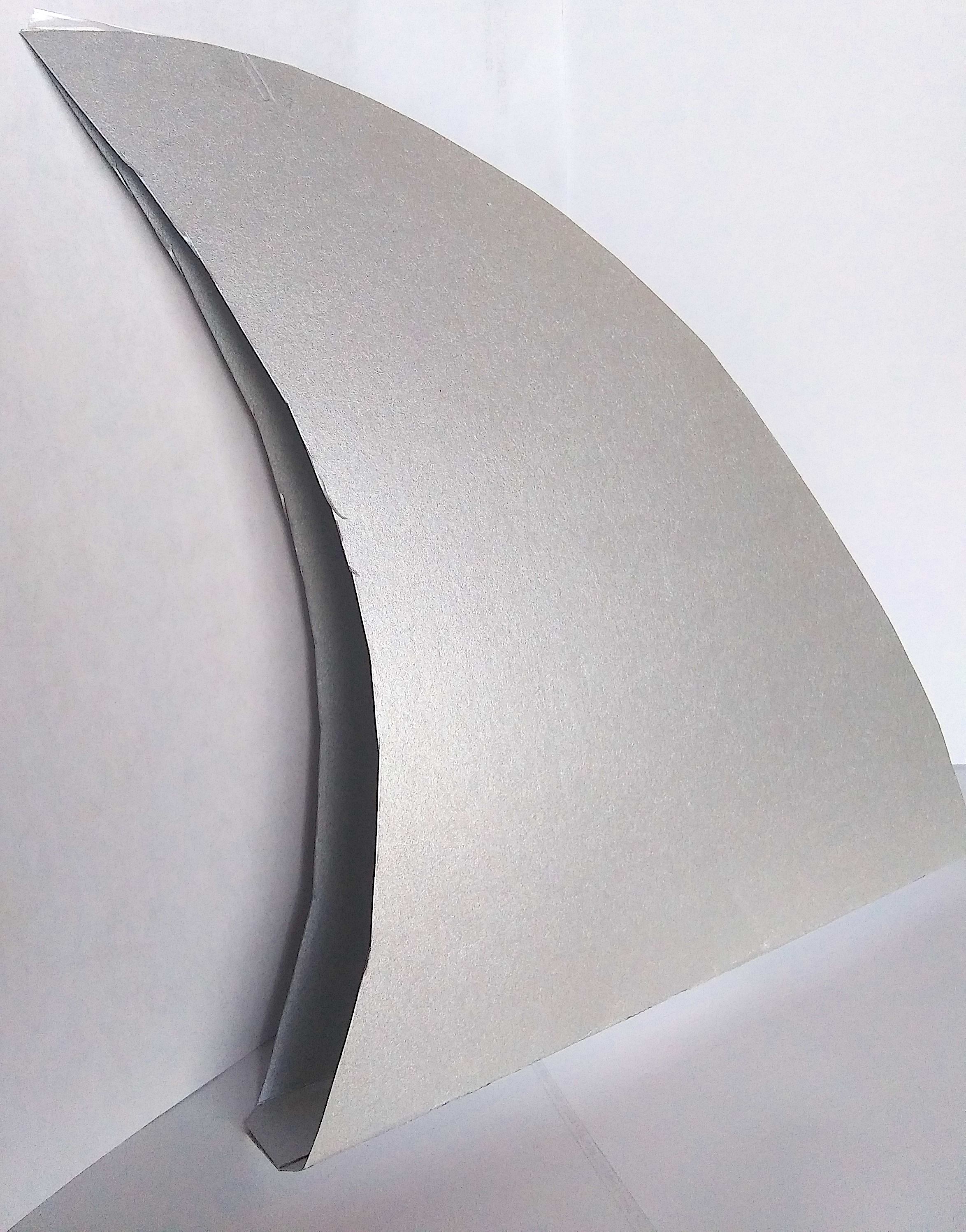
celebrate-picture-books-picture-book-review-shark-fin-craft

Fin-tastic Shark Fun


Your kids can make a splash during Shark Week and all year around with this easy-to-make craft! 

Supplies

  • 2 pieces of 8.5 x 11 gray card stock paper
  • Ribbon
  • Tape
  • Scissors
  • Pencil

fin outline white

celebrate-picture-books-picture-book-review-shark-fin

Directions

  1. Tape the top of the two pieces of paper together
  2. Fold them back together
  3. Measure an inch up from the bottom of the papers (the un-taped side) and trace a straight line across both papers
  4. Trace a shark fin outline onto your paper. The shark outline should stop an inch above the bottom
  5. Cut out the fin on both pieces of paper. If you should cut through the tape, re-tape the tops together
  6. Fold along the lines of both papers so the folds face towards each other.
  7. Tape the folds so the fin becomes a triangle
  8. Cut two slits parallel to the folded lines
  9. Thread ribbon through slits

celebrate-picture-books-picture-book-review-i-am-the-shark-cover

You can find I Am the Shark at these booksellers

Amazon | Barnes & Noble | Books-a-Million

To support your local independent bookstore, order from

Bookshop | IndieBound

Picture Book Review

May 10 – It’s Garden for Wildlife Month

celebrate-picture-books-picture-book-review-a-garden-for-the-birds-cover

About the Holiday

As May’s warm weather and rain creates a perfect environment for growing a garden, today’s month-long holiday, established by the National Wildlife Federation, encourages people to plant a garden that will benefit birds, butterflies, bees, and other insect pollinators. This is easier than it may sound and can be accomplished in a variety of ways and sizes from a single pot or container to a dedicated “meadow” plot. Planting native flowering species makes a positive impact on your local area. To watch a video with five tips to help you garden for wildlife, find plants native to your region, and learn how to have your space recognized as a Certified Wildlife Habitat, visit the National Wildlife Federation website and Garden for Wildlife. Sharing today’s reviewed book is another wonderful way to learn how to make their yards, front gardens, and even whole neighborhoods inviting to wildlife.

A Garden to Save the Birds

Written by Wendy McClure | Illustrated by Beatriz Mayumi


One day while Callum and his sister Emmy were eating breakfast, a bird hit their window. They and their mom rushed outside to check on bird. It was okay and flew away, but that’s when Callum noticed that the window glass reflected the sky, and the birds couldn’t tell the difference. Later, Callum, Emmy, and their mom read about birds and learned lots of things they didn’t know – like how there are fewer birds now and how lights at night affect their migration. 

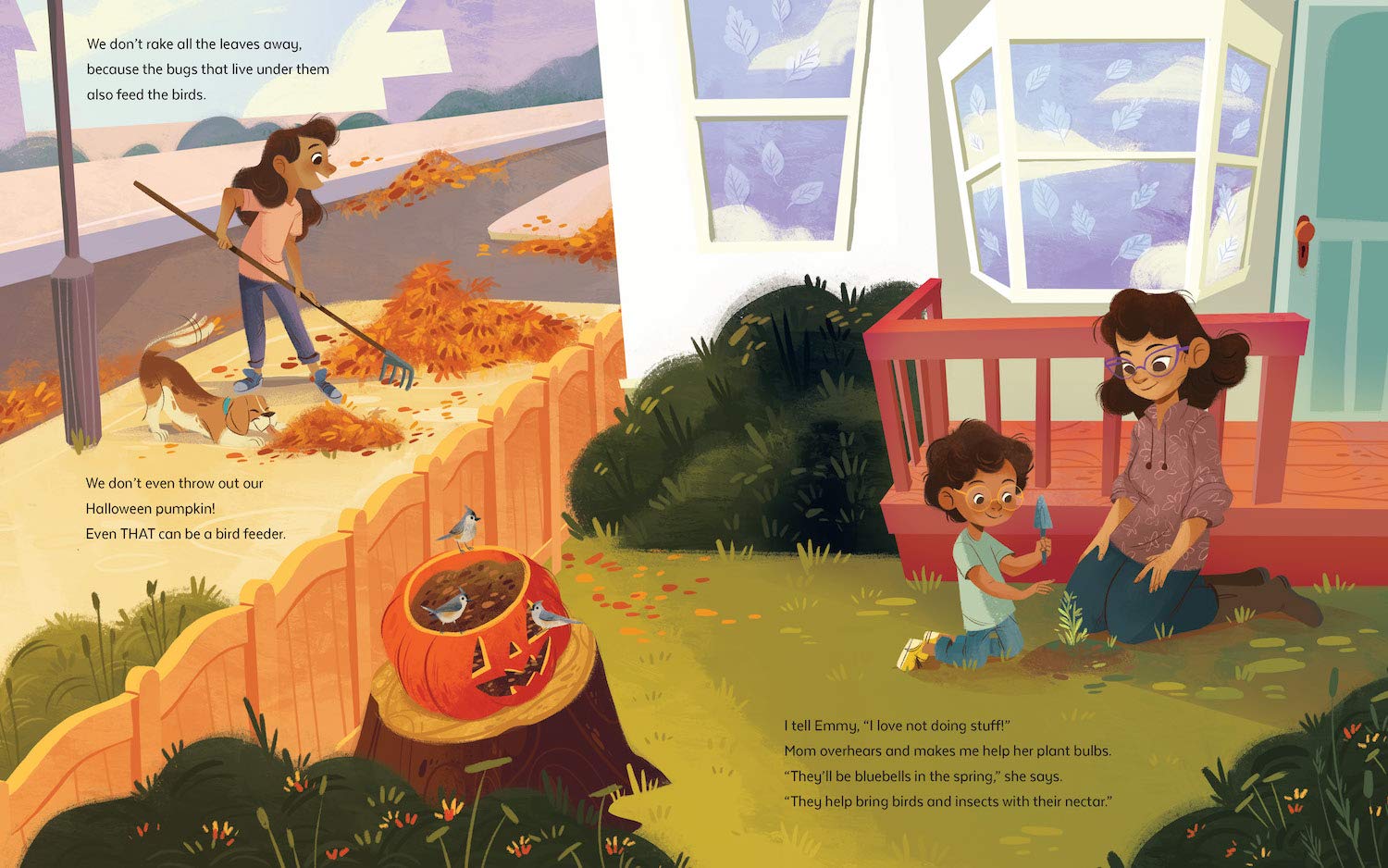
celebrate-picture-books-picture-book-review-a-garden-to-save-the-birds-raking

Image copyright Beatriz Mayumi, 2021, text copyright Wendy McClure. Courtesy of Albert Whitman & Company.

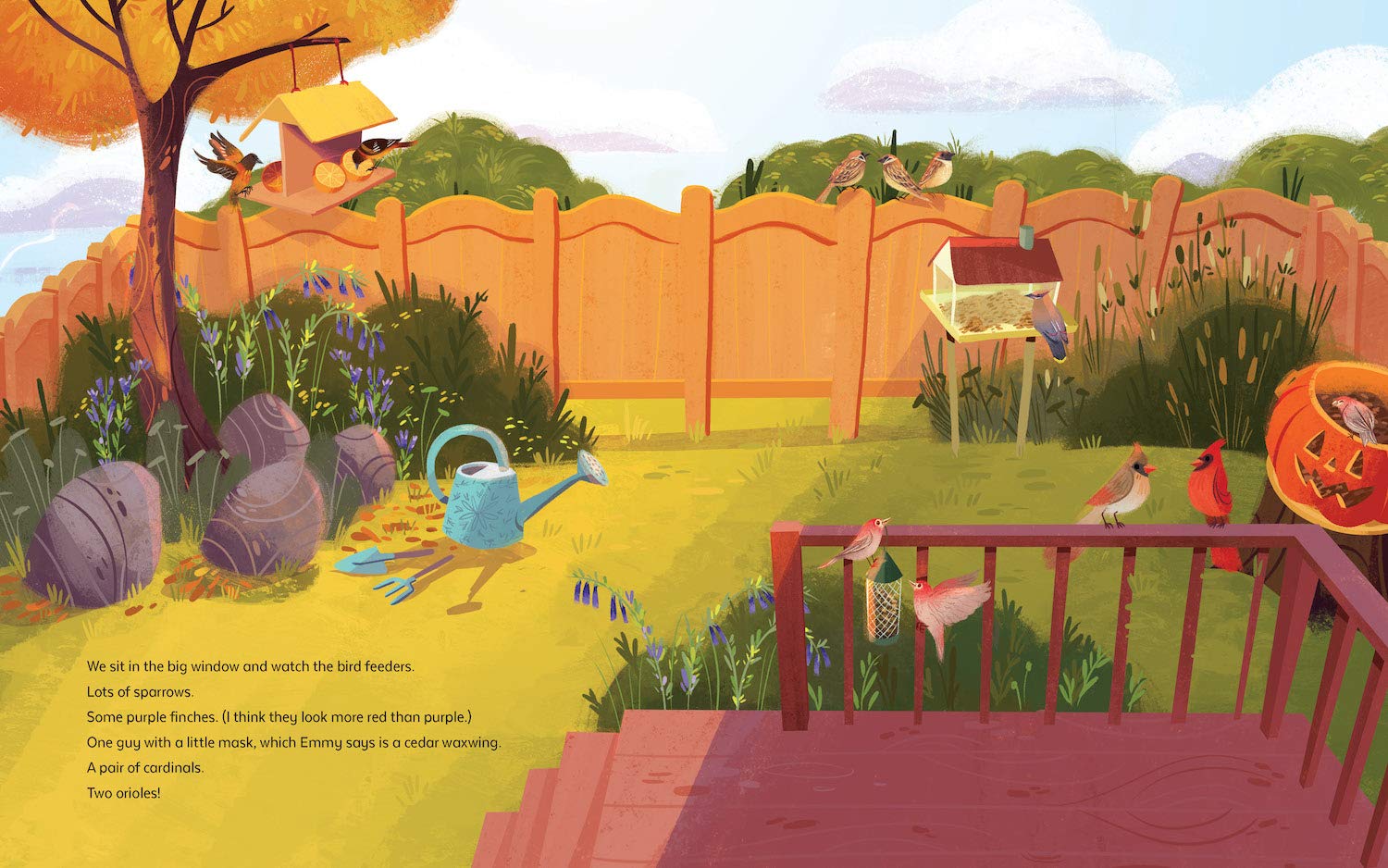
They decide to do things around their house to help the birds. They put out feeders and add decals to the windows. “But some of the things we do to help the birds,” Callum says, “are the things we don’t do.” In the fall, they’re mindful of where birds can find food. Even the Halloween Jack-o-lantern plays a part. And they plant bulbs to prepare for spring. It doesn’t take long before they attract a lot of different kinds of birds.

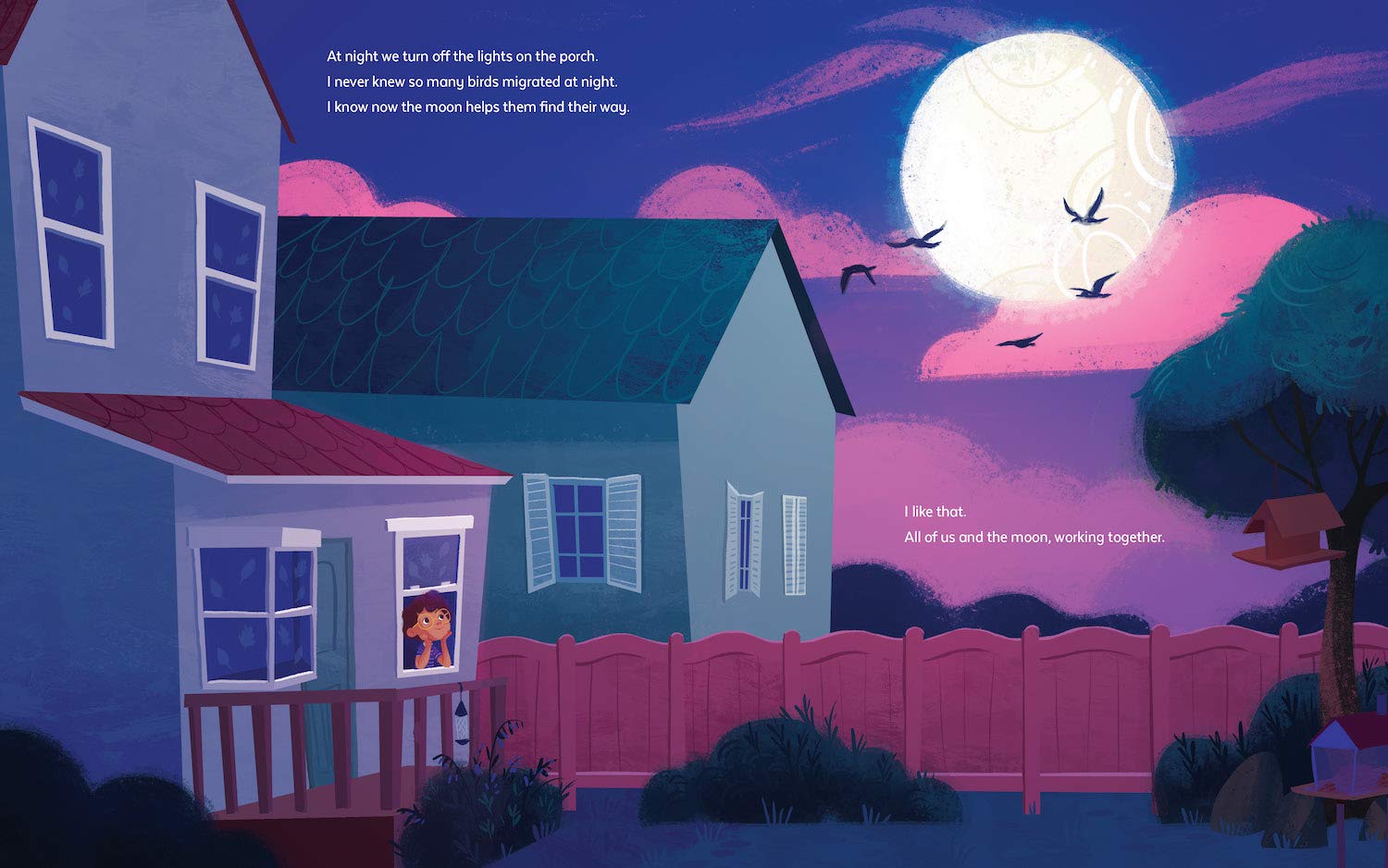
At night they take to turning off the porch lights and lowering the blinds so as not to confuse the birds. Callum looks up at the sky to see dark silhouettes flying by. “I never knew so many birds migrated at night,” he says. “I know now the moon helps them find their way.” He likes that now they and “the moon are working together.”

celebrate-picture-books-picture-book-review-a-garden-to-save-the-birds-feeders

Image copyright Beatriz Mayumi, 2021, text copyright Wendy McClure. Courtesy of Albert Whitman & Company.

During the winter, Callum and Emmy make sure the birds have shelter and fresh water. They also talk to their neighbors about the birds and some of the changes they could make to help them. At first Callum thinks their next door neighbor isn’t interested in helping, but then they notice that he’s turned off his porch light too. It turns out that everyone on the block is making positive changes.

When spring and summer roll around again and all the flowers and grasses are blooming, Callum discovers that they’re not only helping the birds, but that bees, butterflies, and other pollinators are attracted to the neighborhood too. In fact, the neighborhood has made such an impact that it is recognized with a sign as a certified wildlife habitat. Callum is glad that they have all worked together to make their block a welcoming home for birds and other wildlife.

Backmatter includes a discussion on the decreasing bird population, how kids and their families can create welcoming environments around their homes, and online resources for more information.

celebrate-picture-books-picture-book-review-a-garden-to-save-the-birds-night

Image copyright Beatriz Mayumi, 2021, text copyright Wendy McClure. Courtesy of Albert Whitman & Company.

In her charming and educational story, Wendy McClure strikes just the right tone to engage kids in learning about birds and how they can make changes around their homes to attract and help nurture birds and pollinators. Her storytelling is friendly and kid-centric, and readers will be drawn to Callum’s perspective and concern for wildlife and want to get involved in local environmental activism themselves. Adults will also find helpful and interesting tips on simple ways to make a yard or even a small area bird– and pollinator-friendly. 

Beatriz Mayumi’s lovely and detailed illustrations depict the variety of backyard birds that visit inviting landscapes as well as the beauty of garden plantings. She also clearly and realistically portrays the kinds of feeders, water bowls, nesting boxes, and natural vegetation that attract birds year round. In her images, Mayumi also reminds readers about light pollution and where it comes from in a neighborhood setting. Her beautiful illustrations of the gardens created with such care as well as her depictions of Callum and his family and the whole neighborhood working together will inspire readers to get involved in helping to save the birds.

A charming and inspirational story as well as an excellent guide to turning any area into a sanctuary for birds and pollinators, A Garden to Save the Birds is a book that families and classrooms will turn to again and again. It is highly recommended for all kids and for public library collections.

Ages 4 – 8 

Albert Whitman & Company, 2021 | ISBN 978-0807527535

Discover more about Wendy McClure and her books on her website.

To learn more about Beatriz Mayumi, her books, and her art, visit her website.

Garden for Wildlife Activity

celebrate-picture-books-picture-book-review-garden-for-wild-life-playing-cards

Garden for Wildlife Board Game


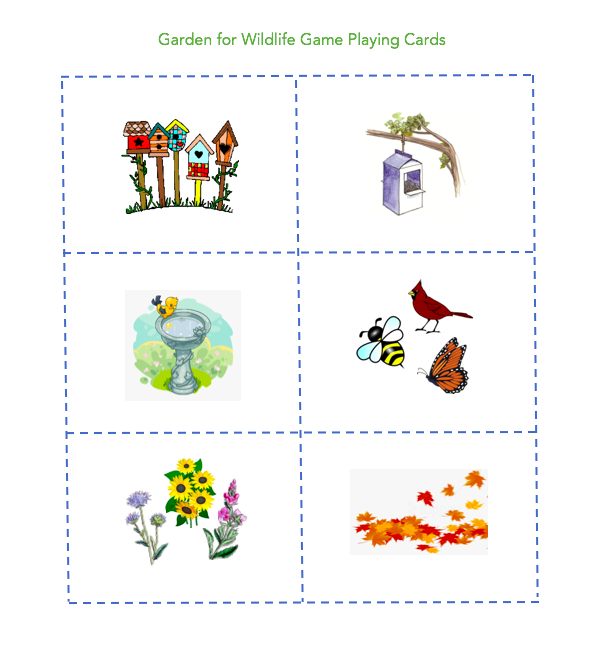
Plant flowers, install a bird feeder and birdbath, build some birdhouses, and leave a layer of leaves then invite the birds, butterflies, and bees to your garden plot to win the game!

Supplies

Directions

  1. Print one set of playing cards and garden plot (if using) for each player
  2. Print playing die
  3. Color garden plot, paper, or paper plate (optional)
  4. Choose someone to go first.
  5. Each player gets one roll of the die per turn.
  6. Roll the die and place the face-up object in your garden plot. If the player rolls the bird, butterfly, and bee before they’ve added all the other elements, play passes to the next player 
  7. Players continue rolling the die and adding objects to their garden plots. After a player collects them all, they must roll the bird, butterfly, and bee to win.  

celebrate-picture-books-picture-book-review-a-garden-for-the-birds-cover

You can find A Garden to Save the Birds at these booksellers

Amazon | Barnes & Noble | Books-a-Million

To support your local independent bookstore, order from

Bookshop | IndieBound

Picture Book Review

April 5 – National Dandelion Day

celebrate-picture-books-picture-book-review-little-dandelion-seeds-the-world-cover

About the Holiday

As warm weather and spring rains begin preparing the ground for grass, flowers, and gardens, there’s another distinctive sprout that appears early – and often. Of course, it’s the dandelion! With its sunny flowers and fly-away seeds, this little plant is part of spring and summer landscapes around the world. The dandelion is far from just a weed, however. In fact, the dandelion is technically an herb and has many health benefits. Dandelion leaves can be used in salads, soups, and teas, and they provide aid with regulating blood sugar, wound healing, gastrointestinal problems, and even vision. Known for its healthy properties since 659 BCE, the dandelion is a staple for many global cultures. To celebrate, check in your favorite grocery store or farmers market for dandelion leaves and try a new recipe! Here are ten delicious-looking dishes from Kitchn!

Thanks to Sleeping Bear Press for sharing a copy of Little Dandelion Seeds the World for review consideration. All opinions on the book are my own.

Little Dandelion Seeds the World

Written by Julia Richardson | Illustrated by Kristen Howdeshell  and Kevin Howdeshell


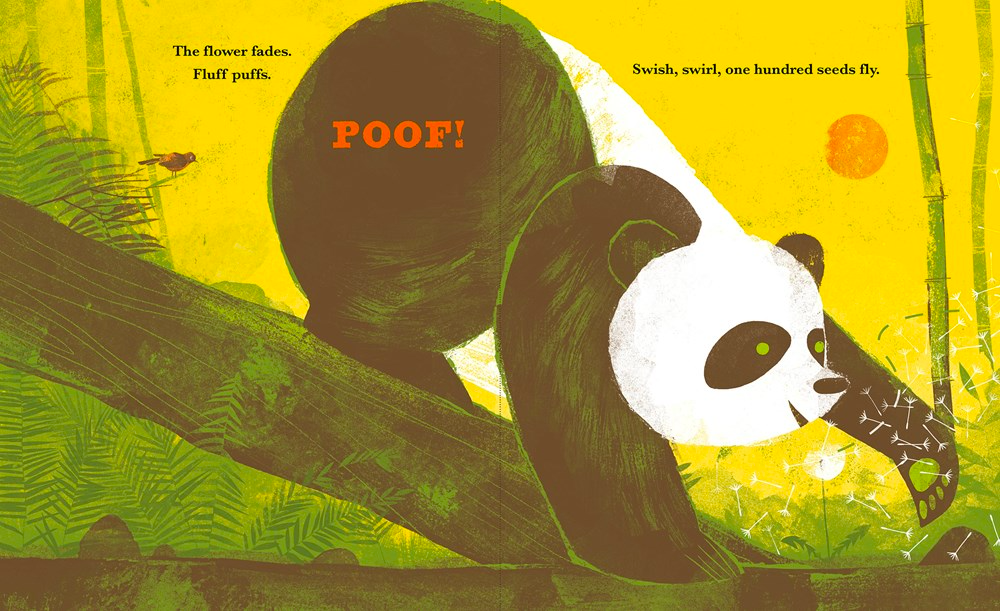
A little girl in a South African city finds a dandelion growing in a crack in the sidewalk. She blows on the fluffy head and “swish, swirl, one hundred seeds fly.” One seed flies to an African plain, where it drops into the grass, roots, and grows. “The flower fades. Fluff puffs. POOF!” and a breeze carries one hundred seeds into the air past an elephant and her baby.

celebrate-picture-books-picture-book-review-little-dandelion-seeds-the-world-panda

Image copyright Kristen Howdeshell and Kevin Howdeshell, 2021, text copyright Julia Richardson. Courtesy of Sleeping Bear Press.

One seed takes a ride on a cheetah’s ear until it is caught by the wind again and finds itself in Asia. Here it roots and grows. When the flower turns to fluff, a curious panda gives it a swat and “swish, swirl, one hundred seeds fly.” One of the seeds gets lifted up in a cyclone and deposited “far, far away…in Australia.”

Here a kangaroo, hopping along, jumps on the plant, now just a fuzzy ball. Seeds take to the air, dancing on the breeze. One seed circles over a sailboat and latches onto the pantleg of a boy standing on the bow. When he disembarks, he takes the seed with him up, up into the hills. The seed jumps off and “a little dandelion blooms in North America.”

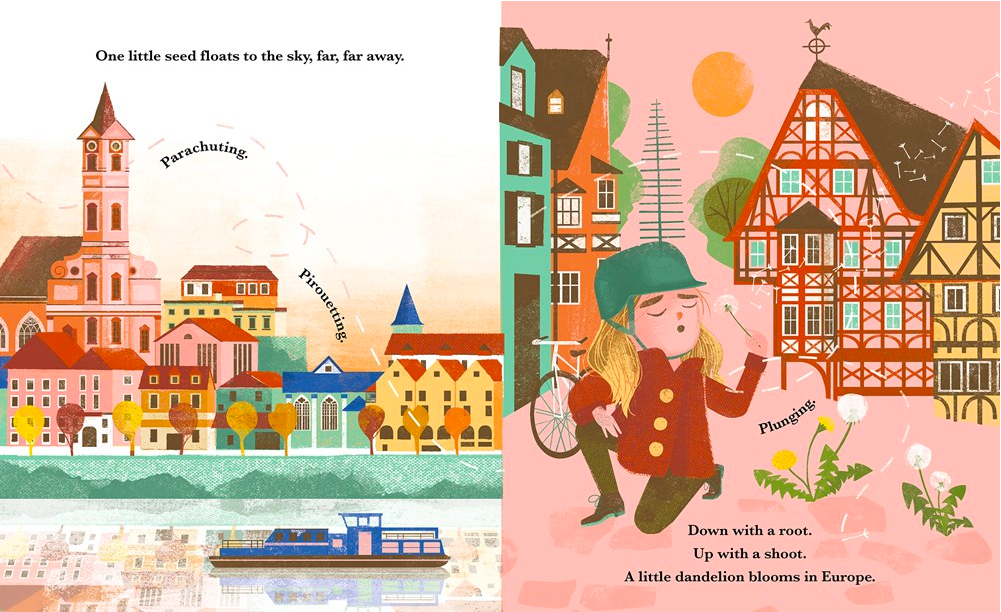
celebrate-picture-books-picture-book-review-little-dandelion-seeds-the-world-europe

Image copyright Kristen Howdeshell and Kevin Howdeshell, 2021, text copyright Julia Richardson. Courtesy of Sleeping Bear Press.

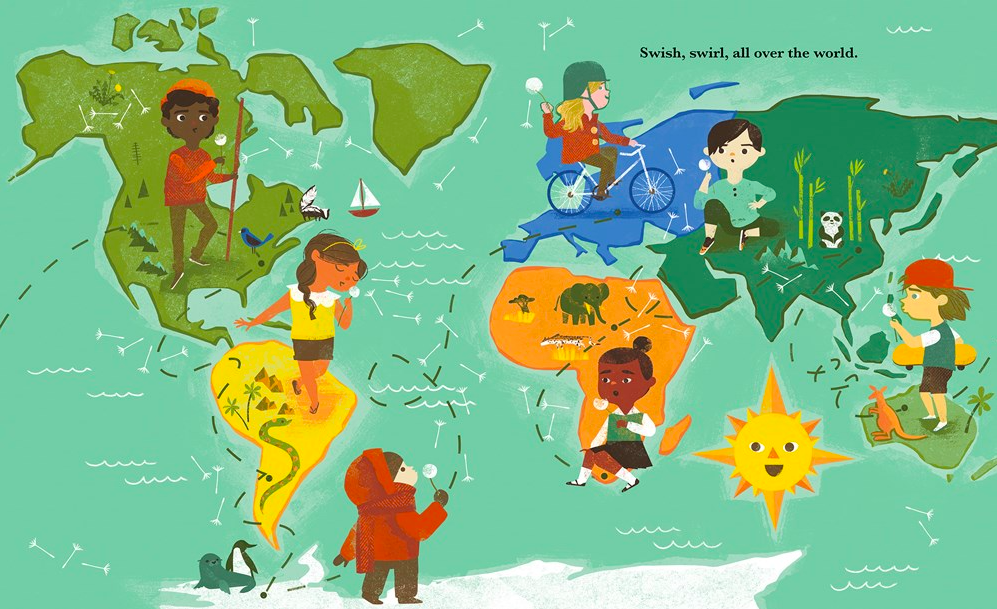
This little plant meets up with a skunk and a bird, and a seed wings its way to South America. Disturbed by a snake slithering by, the puff explodes, sending its seeds every which way. “One little seed slips into the sea, far, far away.” Riding on the current it finds a rock to cling too. “Down with a root. Up with a shoot. A little dandelion blooms in Antarctica.” Another dandelion’s life begins. Finally, with the flick of a seal’s tail, the seeds scatter, one “parachuting. Pirouetting” into Europe, where the familiar, graceful dance continues.

Backmatter includes an illustrated world map that shows the route of the dandelion seeds and approximate landing sites on each continent and an Author’s Note about how dandelions grow and reseed themselves as well as a question to spark discussion.

celebrate-picture-books-picture-book-review-little-dandelion-seeds-the-world-map

Image copyright Kristen Howdeshell and Kevin Howdeshell, 2021, text copyright Julia Richardson. Courtesy of Sleeping Bear Press.

Julia Richardson’s lyrical descriptions and repeated phrases invite kids to follow dandelion seeds as they travel the world. Richardson’s engaging storytelling will keep kids guessing as to where the seeds will travel next while teaching them about the ingenuity and resilience of nature. The global aspect of the story reminds readers that we are all connected through common experiences, the plants and animals with whom we share our planet, and our responsibilities for conservation.

Through Kristen and Kevin Howdeshell’s bold textured illustrations, readers travel the world with tiny dandelion seeds from the sunbaked African savanna, where cheetahs and elephants roam to a verdant bamboo forest, where a panda almost walks off the page to play with the dandelion, to the lush hills of a coastal town and beyond. In each place local children interact with their environment, giving readers a feeling of inclusion too.

An eye-catching and lyrical introduction to nature science that will spark enthusiasm for learning not only about dandelions but about how all plants grow and thrive, Little Dandelion Seeds the World would be a high-interest addition to science, geography, and social studies lessons for classrooms and homeschoolers as well as to public library collections.

Ages 5 – 8 

Sleeping Bear Press, 2021 | ISBN 978-1534110533

Discover more about Julia Richardson and her books on her website.

To learn more about Kristen Howdeshell and Kevin Howdeshell, their books, and their art, visit their website, The Brave Union.

National Dandelion Day Activity

celebrate-picture-books-picture-book-review-little-dandelion-seeds-the-world-coloring-page

Little Dandelion Seeds the World Activity Pages


Grab your crayons and pencils and have fun with this printable coloring page and word search puzzle from Sleeping Bear Press!

Little Dandelion Seeds the World Activity Pages

celebrate-picture-books-picture-book-review-little-dandelion-seeds-the-world-cover

You can find Little Dandelion Seeds the World at these booksellers

Amazon | Barnes & Noble | Books-a-Million

To support your local independent bookstore, order from

Bookshop | IndieBound

Picture Book Review
March 15 – Celebrating the Book Birthday of Let’s Pop Pop Popcorn!

celebrate-picture-books-picture-book-review-let's-pop-pop-popcorn-cover

About the Holiday

Today, I’m excited to be celebrating the Book Birthday of Let’s Pop Pop Popcorn!, a story that makes delicious fun of learning about nature, science, and one fantastic treat! 

Thanks to Sleeping Bear Press for sending me a copy of Let’s Pop Pop Popcorn! for review consideration. All opinions on the book are my own.

Let’s Pop Pop Popcorn!

Written by Cynthia Schumerth | Illustrated by Mary Reaves Uhles


A group of kids plants rows of seeds, which with rain and sun grow unseen until “Surprise! Like magic sprouts appear! / Green and tender, finally here.” The kids help their plants grow by pulling weeds and watching out for pests. The seeds grow and grow until they are taller—much taller—than the children. What are the kids growing? Corn, but not just any corn…. Can you guess?

celebrate-picture-books-picture-book-review-let's-pop-pop-popcorn-sprouts

Image copyright Mary Reaves Uhles, 2021, text copyright Cynthia Schumerth, 2021. Courtesy of Sleeping Bear Press.

When the ears are picked, shucked, and dried, the kernels are ready to be tossed “Plink, plunk, plink” into a pot and heated up. Do you know what kind of corn it is now, or do you need another hint? Okay… “Steam builds around each kernel’s germ, / puffs the starch called endosperm.” A bit of science brings about explosive results then “first one pop! Then pops galore!” You know now! The kids grew their own popcorn! When the pot is overflowing it’s time for “butter, salt, then give a swish. / Lick our fingers—Mmm! Delish!”

celebrate-picture-books-picture-book-review-let's-pop-pop-popcorn-stovetop

Image copyright Mary Reaves Uhles, 2021, text copyright Cynthia Schumerth, 2021. Courtesy of Sleeping Bear Press.

Fascinating backmatter reveals the science behind this favorite treat. Diagrams and photographs let kids see inside a popcorn kernel and view the progression of a kernel as it is heated. They also learn about the two different shapes of popcorn and how they are used. A science activity gives readers the steps for growing their own popcorn from seed to sprout and reveals what transformations take place inside the kernel as the little plant grows. A popcorn art project fills out this STEAM lesson that’s sure to be a favorite.

celebrate-picture-books-picture-book-review-let's-pop-pop-popcorn-party

Image copyright Mary Reaves Uhles, 2021, text copyright Cynthia Schumerth, 2021. Courtesy of Sleeping Bear Press.

There may be no more universally loved snack than popcorn, and Cynthia Schumerth makes learning about the science of growing the plants, preparing the ears for popping, and what happens when the kernels are heated lots of fun. Her bouncy rhyming storytelling will engage kids and get them excited about all the lessons these tiny kernels have to teach. Schumerth’s storytelling builds to its “kaboom” moment, mirroring the suspense popcorn lovers listening for that first Pop. Teachers and homeschoolers will love the resources following the story, which provide for a full lesson appropriate for science, nature, or cross-curricular lessons.

Mary Reaves Uhles’s action-packed illustrations will enthrall kids with their close-up perspectives and relatable details, like the little girl who’s wearing a cat’s ears headband as she digs up the ground for planting. Readers go underground to get a worm’s eye view of the kernels sprouting roots, get down in the dirt to pull weeds, and peek into the pot to make sure there’s going to be enough popcorn for the whole crowd. Images of the kernels pop, pop, popping show the process and will make kids plenty hungry. The final spread of all of the kids enjoying their harvest together is a celebration of popcorn and friendship.

An exuberant story that will spark enthusiasm for science learning and gardening, Let’s Pop Pop Popcorn! will be a quick favorite and is highly recommended for home, classroom, and public libraries.

Ages 5 – 8

Sleeping Bear Press, 2021 | ISBN 978-1534110427

To learn more about Mary Reaves Uhles, her books, and her art, visit her website.

Want to know more about Let’s Pop Pop Popcorn? You can read my interview with Cynthia Schumerth and Mary Reaves Uhles here!

Let’s Pop Pop Popcorn! Book Birthday Activity

celebrate-picture-books-picture-book-review-popcorn-toss-up-puzzle

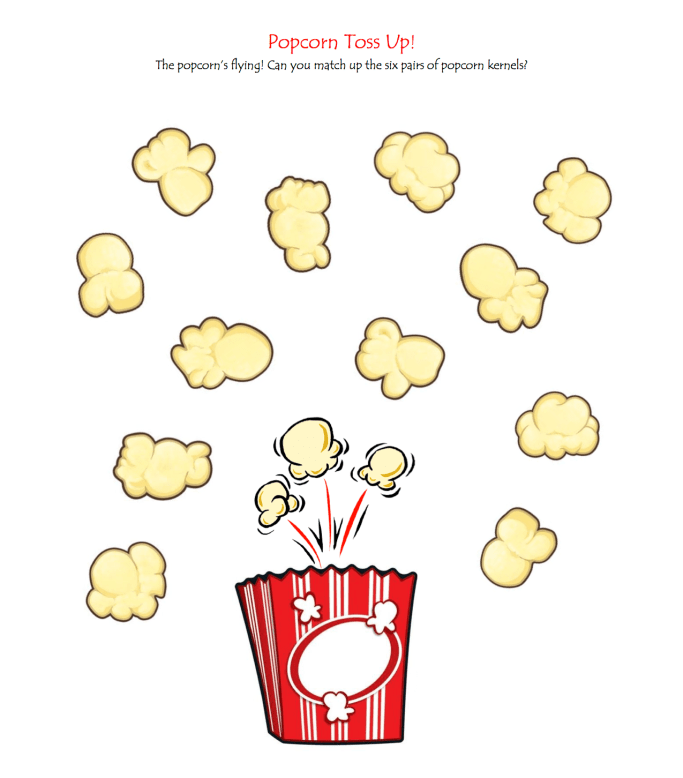
Popcorn Toss Up! Matching Puzzle


The popcorn’s jumpin’! Can you match the six pairs of kernels so you can enjoy a tasty snack in this printable puzzle?

Popcorn Toss Up! Matching Puzzle

You can find Let’s Pop, Pop, Popcorn! at these booksellers

Amazon | Barnes & Noble | Books-a-Million

To support your local independent bookstore, order from

Bookshop | IndieBound

Picture Book Review

February 16 – Innovation Day

celebrate-picture-books-picture-book-review-maxine-and-the-greatest-garden-ever-cover

About the Holiday

Today we celebrate all those people who look at a problem and design a solution, or who just ask, “What if…?” and search for answers. The holiday was established by the Science History Institute in conjunction with the Society of Chemical Industry to help bring attention to those people who were not only producing technology, but were also pushing the envelope on what was possible. Each year, these two organizations coordinate to host Innovation Day. This year, restrictions and life-changing alterations needed to combat COVID-19, have sparked innovations both large and small at home, for business, at schools, and for medical researchers. Creative individuals have kept us entertained, given us hope, and kept things going even in the most difficult of times. To celebrate today, put on your thinking cap, look around you, and do something new, novel, and completely unexpected. Who knows…you may be the next great inventor!

Maxine and the Greatest Garden Ever!

Written by Ruth Spiro | Illustrated by Holly Hatam


Maxine and her goldfish, Milton, were best friends, and Maxine loved thinking up creative scientific or technical ways to keep him fed, safe, and happy. “Maxine liked making things, and she especially liked making things for Milton. ‘If I can dream it, I can build it!’ she said.” Maxine’s other friend Leo also liked making things, but his creations were more arty.

celebrate-picture-books-picture-book-review-maxine-and-the-greatest-garden-ever-seeds

Image copyright Holly Hatam, 2021, text copyright Ruth Spiro, 2021. Courtesy of Dial Books.

One day when Leo was visiting Maxine, they found packets of seeds and decided to build “‘The Greatest Garden Ever!’” Milton hoped the garden would have a pond just for him. Leo and Maxine drew up their plans. “Leo’s was pretty. Maxine’s was practical.” When they planted the seeds, Leo planted them far apart in large beds of soil. Maxine’s seeds were packed close together in pots made from old tires, barrels, toys, and even a chandelier. They both looked askance at the other’s seeds. They did, however, agree on Milton’s pond.

Every day they watered, weeded, and waited. At last, they truly did have “The Greatest Garden Ever!” There were vegetables and flowers, birdfeeders and a gazebo. The wild animals thought the garden was great too. One day, Maxine and Leo came to the garden to find nibbled carrots, radishes, and eggplants; pots were knocked over and little footprints were everywhere. Maxine wanted to make something to keep the animals away. “‘Something that looks nice?’ asked Leo. ‘Something that works.,’” said Maxine.

celebrate-picture-books-picture-book-review-maxine-and-the-greatest-garden-ever-pond

Image copyright Holly Hatam, 2021, text copyright Ruth Spiro, 2021. Courtesy of Dial Books.

They decided to make a scarecrow. While Leo stuffed overalls and made a shirt, Maxine built a mechanical body for the big teddy bear that would wear them. But the animals didn’t think the scarecrow was very scary. While Leo thought the bear had done nothing, Maxine said that it had helped them know what didn’t work. They gathered new supplies and “then while Leo sewed, Maxine wrote some code.” This time the bear had laser eyes, moving parts, loud sounds, a shiny helmet, and a scary black dress. That night, though, the scarecrow was so scary that it made babies cry, dogs howl, and kept neighbors awake.

celebrate-picture-books-picture-book-review-maxine-and-the-greatest-garden-ever-scarecrow

Image copyright Holly Hatam, 2021, text copyright Ruth Spiro, 2021. Courtesy of Dial Books.

Leo blamed Maxine, and Maxine blamed Leo. At home, Maxine and Leo thought about the garden and what they’d said. Maxine wanted “to make things better, and she wanted to start with Leo. Because it takes a long time to grow a garden… but even longer to grow a friend.” When they met the next day, they both apologized. As they cleaned up the garden and shared the last of the lettuce, Maxine had an idea. She and Leo repaired, repainted, and replanted, and when they were finished, they invited their new animals friends to enjoy the garden with them.

celebrate-picture-books-picture-book-review-maxine-and-the-greatest-garden-ever-apology

Image copyright Holly Hatam, 2021, text copyright Ruth Spiro, 2021. Courtesy of Dial Books.

Ruth Spiro’s celebration of creativity, gardening, and friendship will enchant kids and show them that sometimes projects lead to try and try again cooperation before the original vision or a new idea is perfected. Through Maxine’s talent for engineering, coding, and inventing and Leo’s artistic abilities, Spiro shows readers that whatever their skills are, they can contribute to the success of any endeavor. When Maxine and Leo’s frustrations over the garden spill out into their relationship and an argument ensues, Spiro reminds kids that people and enduring friendships are more important than plans, projects, or events and that apologies and understanding keep relationships strong. Her charming narration, realistic dialogue, and periodic rhymes create a story that’s a joy to read aloud.

Holly Hatam’s vivid illustrations will keep kids lingering over the pages to catch all of her puns, Maxine’s inventions, and Leo’s crafts—many of which enterprising kids may want to try to replicate. Cheery Maxine with her red-and-blue streaked hair, bright eyes, and quick imagination is enthusiastic and confident, and Leo, wearing a dragon shirt any kid would love, is equally as confident and passionate about his talents. The garden is a visual treat, from its first planting to its early stages to its full-grown glory. Hatam’s vision for both of Maxine and Leo’s scarecrows is original and gleefully kid-centric. The final image of the shared garden at night is a spectacular celebration for all.

Both fans of Maxine and Milton’s first adventure in Made by Maxine and new readers of this little series will ask to hear Maxine and the Greatest Garden Ever! again and again. A rousing friendship story to engage kids in STEAM-related activities or to jumpstart ideas for those times when they’re are looking for something to do at home, Maxine and the Greatest Garden Ever! Is highly recommended for home, school, and public library collections.

Ages 4 – 8

Dial Books, 2021 | ISBN 978-0399186301

Discover more about Ruth Spiro and her books on her website.

To learn more about Holly Hatam, her books, and her art, visit her website.

Innovation Day Activity

celebrate-picture-books-picture-book-spoon-flowers

Spoon Flowers Craft


It may not be time for gardening, but that doesn’t mean you can’t “grow” some flowers. With a little innovation, you can give anyone a bouquet with this easy craft!

Supplies

  • Colorful plastic spoons
  • Heavy stock paper or construction paper in various colors, including green for leaves
  • Multi-surface glue or hot glue gun

Directions

  1. Cut petals from the heavy stock paper or construction paper
  2. Glue the petals to the bowl of the spoon
  3. Cut leaves from the green paper (optional)
  4. Glue leaves to the handle of the spoon (optional)

celebrate-picture-books-picture-book-review-maxine-and-the-greatest-garden-ever-cover

You can find Maxine and the Greatest Garden Ever! at these booksellers

Amazon | Barnes & Noble | Books-a-Million

To support your local independent bookstore, order from

Bookshop | IndieBound

Picture Book Review
April 14 – National Gardening Day

celebrate-picture-books-picture-book-review-in-the-garden-cover

About the Holiday

For many of us, spring means gardening. Today’s holiday encourages avid gardeners and those new to this rewarding activity to turn over some dirt, plant seeds, and prepare to tend the little sprouts on their way through the season. While this year may pose challenges to regular gardening routines, ordering options, creative solutions

In the Garden

By Emma Giuliani


In her stunningly illustrated interactive guide through the seasons, Emma Giuliani introduces Plum and her little brother, Robin, and invites readers to join them as they tend to their garden and all the plants, animals, and birds that call it home. Plum and Robin begin at winter’s end. “This morning it’s cold. It’s not yet spring, but, in the garden, Plum and her brother Robin see the first catkins appearing on the branches of the willows and hazels. The blossoming mimosa makes the gardeners impatient for spring to come.” As Robin counts the long, drooping catkins, Plum rakes a layer of compost over the ground. On the facing page, children get a close-up view of the fuzzy catkins, can peek inside a bud, burrow underground with earthworms just waking from hibernation, and view a few early bloomers. They also learn about what makes up the earth’s soil and get a recipe for compost.
celebrate-picture-books-picture-book-review-in-the-garden-shed

Copyright Emma Giuliani, 2020, courtesy of Princeton Architectural Press.

With the arrival of spring, Plum is in her little greenhouse, planting vegetable seeds and spritzing the soil with water to keep it moist while Robin repots some plants who have spent the winter in the greenhouse. Outside, Plum aerates the garden bed with a pitchfork, careful of any tiny creatures below. Children can open the door to Plum’s well-stocked shed to see all the tools tidily stored there and lift the flaps to look inside a bulb and help a hyacinth, a daffodil, and a tulip grow.

celebrate-picture-books-picture-book-review-in-the-garden-open-shed

Copyright Emma Giuliani, 2020, courtesy of Princeton Architectural Press.

At last the warm weather of spring has arrived. The cherry trees are blossoming, and Plum and Robin are setting stakes and planting bean seeds. Next, they provide protection for the tender strawberry plants that are beginning to bloom. Young gardeners will enjoy opening a bean seed to learn what’s inside and then following its growing process. The bees are visiting the cherry blossoms, pollinating the flowers and making honey. What does a bee see as it hovers around the flower? Pull down the flap to see for yourself and learn all the parts of a flower. What other plants are flowering now? Open the flap to see!

celebrate-picture-books-picture-book-review-in-the-garden-spring

Copyright Emma Giuliani, 2020, courtesy of Princeton Architectural Press.

Summer begins and “what a joy to be in the garden in June! The gentle breeze, the smell of cut grass, and the tangy taste of strawberries and cherries make the gardeners smile.” While Plum waters the tomato plants, “Robin looks for ripe strawberries under the leaves.” Join him! Robin is also picking cherries before the birds eat them. How do those bright red, round fruits grow? Lift the flap to learn and see how they develop from flower to fruit. Plum is getting help with the aphids on the bean plants from industrious—and hungry—ladybugs. “Dragonfly larvae are transforming into graceful flying insects….Their presence is a sign of a healthy garden.”

celebrate-picture-books-picture-book-review-in-the-garden-open-spring

Copyright Emma Giuliani, 2020, courtesy of Princeton Architectural Press.

It’s high summer and the garden is glorious. Bean pods hang from the vines, and Plum contemplates whether they are ready to pick. She may leave some “husks dry out on the plant before picking them.” Dried completely indoors, they can be stored and eaten during the fall and winter. Take a look inside a pod to see the seven red beans there. Flowers greet you too: an orange marigold with petals like a pinwheel, a brilliant pink and purple fuchsia, and a perky mignon dahlia. Robin took cuttings of these plants and potted them to grow some more. Learn how you can do that with your plants too!

The summer heat is waning and the days are growing shorter. Fall is here. The catkins of early spring have become hazelnuts that are ready to be harvested. Even the squirrel approves! Plum and Robin teach you how to store them—and when to pick the winter squash and keep them for months as well. Can you count the number of seeds inside the winter squash? Plum’s beautiful trellised pear tree is bearing sweet fruit. Yum! But look out—a crafty rabbit is after the last leafy vegetables in the garden. No need for a fence, though. Milk will do the trick of shooing him away.

celebrate-picture-books-picture-book-review-in-the-garden-open-fall

Copyright Emma Giuliani, 2020, courtesy of Princeton Architectural Press.

The air is chilly again and winter is on the horizon. “Plum and Robin have donned their warmest clothes and gone out to collect the dead leaves. Some leaves will feed the compost, others will become mulch to protect plants over the winter. The hedgehogs can use the rest of the leaves in making their homes.” Do you see the pile of crunchy leaves? Lift them gently…shhh! A hedgehog is snoozing underneath. Robin and Plum have built an insect hotel to keep the bugs cozy during the winter and have filled the greenhouse again. For the colorful birds who stay awhile or all winter, Robin and Plum put out a bird feeder and fill it with locally produced seeds.

After putting all of their tools back in the shed, Plum and Robin head indoors to plan next year’s garden and “watch eagerly for the very first signs of spring.”

celebrate-picture-books-picture-book-review-in-the-garden-open-winter

Copyright Emma Giuliani, 2020, courtesy of Princeton Architectural Press.

If your family tends a garden or is thinking of starting one, Emma Guiliani’s superb book is a must. At 16 inches tall, In the Garden provides fascinating facts about plants, insects, and animals; helpful tips on when and how to plant a variety of fruit, vegetables, and flowers, information on natural ways to ward off pests; and how to recognize when fruit and vegetables are ready for picking and how to store them. Through copious flaps, children get inside views of flowers, seeds, buds, and vegetables to learn the names of each part and how they contribute to the growth of the plant. Along the way, young and adult gardeners discover how early gardening can begin, directions on how to create and use compost, when bushes can be planted, information on pollination; and how to winter over the garden for the coming spring.

Giuliani’s crisp, lush illustrations are marvels, combining intricate paper cuts that replicate the shapes of delicate bulbs and buds, flowers and seeds, smooth and serrated leaves, the long bean pod, and even Plum’s garden shed with a window in the door. Her extraordinarily beautiful color palette immerses readers in the garden experience; you can almost smell the rich earth, hear the bees buzzing at the blossoms, and feel the air changing season to season.

A brilliant resource and a joy to peruse, In the Garden is a book that adults and children—both gardeners or nature lovers—will share throughout the seasons and from year to year. The book is most highly recommended for home, school, and public library collections.

Ages 7 – 12

Princeton Architectural Press, 2020 | ISBN 978-1616898939

You can connect with Emma Giuliani on Instagram.

National Gardening Day Activity

celebrate-picture-books-picture-book-review-flower-garden-game

Plant a Flower Garden Game


With this fun game you and your family and friends can grow gardens inside! Roll the dice to see whose garden will fully blossom first!

Supplies

Directions

Object: The object of the game is for each player to fill their garden or garden rows with flowers. Depending on the ages of the players, the game can be adjusted to fill all of the rows, some or all rows, or just one.           

  1. Print one Game Board for each player
  2. Print one or more sets of Flower Playing Cards for each player, depending on how  (for sturdier playing items, print on card stock)
  3. Cut the flowers into their individual playing cards
  4. Print one Flower Playing Die and assemble it (for a sturdier die, print on card stock)
  5. Color the “dirt” on the Garden Plot with the crayon (optional)
  6. Choose a player to go first
  7. The player rolls the die and then “plants” the flower rolled in a row on the game board
  8. Play moves to the person on the right
  9. Players continue rolling the die and “planting” flowers until each of the number of determined rows have been filled with flowers or one row has been filled with all six flowers.
  10. The first person to “grow” all of their flowers wins!

To play a printable Vegetable Garden Board Game, click here.

celebrate-picture-books-picture-book-review-in-the-garden-cover

You can find In the Garden at these booksellers

Amazon | Barnes & Noble | Books-a-Million | IndieBound | Princeton Architectural Press

Picture Book Review