May 15 – National Inventors Month

Today we celebrate the creative minds who devise new products, better ways of performing tasks, faster methods of communication, and all kinds of innovative ways to interact with our world. Established in 1998 by the United Inventors Association of the USA, the Academy of Applied Science, and Inventors’ Digest magazine, this month’s holiday encourages people to embrace their creativity and go that extra step toward producing their invention. If you’re a tinkerer, who knows—your product or service could make the world a better place! Today’s book introduces readers to an innovator in the medical field.

Thank you to Beach Lane Books and Barbara Fisch at Blue Slip Media for sending me a copy of this book for review!

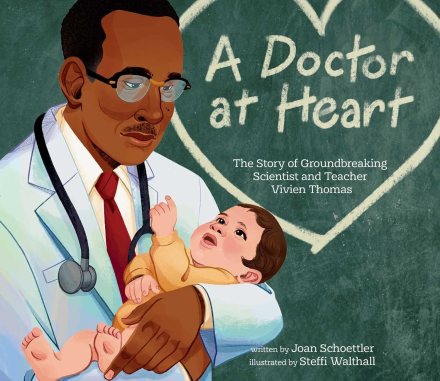
A Doctor at Heart: The Story of Groundbreaking Scientist and Teacher Vivien Thomas

Vivien Thomas had always loved figuring things out. As a teenager he worked in his father’s carpentry shop, always making and guiding pieces to fit together perfectly because “that’s how things were done in his family.” While in high school, Vivien decided to become a doctor. When the financial crash of 1930 wiped out his college savings, Vivien got a job as a lab assistant for Dr. Blalock at the Vanderbilt University School of Medicine. He was a quick learner, and within a month was performing surgery on dogs.
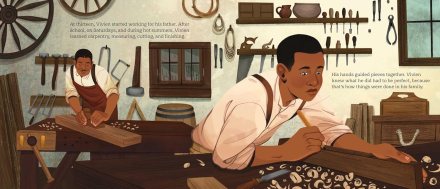
Illustration copyright © 2026 by Steffi Walthall. Text copyright © 2026 by Joan Schoettler. Courtesy of Beach Lane Books.

Even though his job entailed much responsibility, as a Black man he was only paid as much as a hospital custodian. When Vivien considered returning to “his better-paying carpentry job,” Dr. Blalock procured a raise. Dr. Blalock thought so highly of Vivien’s work that he took Vivien with him to a new job at Johns Hopkins Hospital in Baltimore, Maryland.

There, Vivien and Dr. Blalock began working on heart defects in babies that led to “blue baby syndrome,” in which the “babies’ blood lacked oxygen” because their lungs did not work properly. After the two designing a shunt to reroute the blood from the heart to the lungs and Vivien’s extensive experimental surgery on dogs, the new procedure was ready to apply to a child. Vivien designed tiny surgical tools to use on the first patient, a toddler. When it came time to perform the surgery, however, he had to watch from above as only white doctors and nurses were allowed to work on white patients.
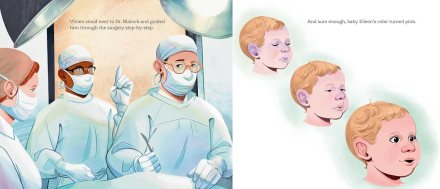
Illustration copyright © 2026 by Steffi Walthall. Text copyright © 2026 by Joan Schoettler. Courtesy of Beach Lane Books.

But Vivien had much more experience performing the surgery than Dr. Blalock, and Dr. Blalock called him down to “guide him step-by-step.” This first open-heart surgery on a child was a success, leading many parents of similar children to come to the hospital for treatment. Some of these children arrived in wheelchairs, some being held by their parents. Following their surgery, these once-sick children thrived.
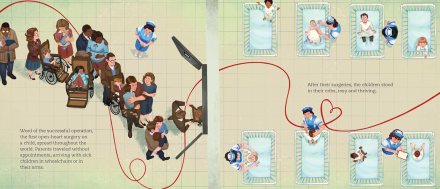
Illustration copyright © 2026 by Steffi Walthall. Text copyright © 2026 by Joan Schoettler. Courtesy of Beach Lane Books.

Vivien taught other surgeons the procedure and went on to teach many medical students who became renowned cardiac surgeons as well as training Black lab technicians, some of whom went on to medical school. At the age of 66, Vivien Thomas was awarded an honorary doctorate and named an instructor of surgery in the School of Medicine.

Back matter includes an Author’s Note that expands on Vivien Thomas’s life and experiences as well as a list of book, video, and internet sources and further reading for children. A photograph of Vivien Thomas as a lab technician in the 1930s and his painted portrait at Johns Hopkins Hospital are also included.
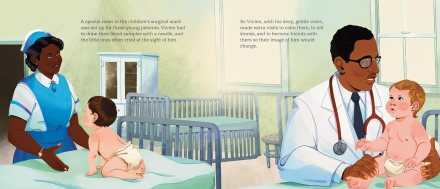
Illustration copyright © 2026 by Steffi Walthall. Text copyright © 2026 by Joan Schoettler. Courtesy of Beach Lane Books.

In her inspiring biography of Vivien Thomas, Joan Schoettler presents a fascinating portrait of this brilliant and precise scientist who, along with his mentor and without formal medical training, pioneered open-heart surgery on children. Schoettler clearly explains medical terms and hospital conditions and reveals Thomas’s gentle and caring nature that made him beloved by patients, hospital staff, and his students. Through eye-opening examples, she helps children understand the times in which Thomas lived, the discrimination that constrained his advancement, and the challenges he overcame. Her book also serves as a reminder that these injustices and the loss of talent, both personal and for society, continue today.

Steffi Walthall’s stirring illustrations follow Vivien Thomas throughout his life from his father’s carpentry workshop to Vanderbilt University, Johns Hopkins Hospital, and the operating room. Her realistic depictions of medical equipment and procedures help children see how “blue baby syndrome” affected children and how the shunt that Thomas and Dr. Blalock devised to reroute blood worked. Children interested in medical science and history will be especially drawn to Walthall’s compelling and educational imagery.

Ages 4 – 8

Beach Lane Books, 2026 | ISBN 978-1481476669

About the Author

Joan Schoettler is a children’s author and professor of children’s literature and storytelling at California State University, Fresno. Her book The Honey Jar won the Gold Medal for Juvenile Books at the 2024 California Book Awards and was a 2024 Bank Street College Best Children’s Book of the Year. Joan lives in central California with her husband. Visit her at JoanSchoettler.com.

About the Illustrator

Steffi Walthall is an illustrator and character designer born and raised in Virginia. She received her BFA in Game Development from the Savannah College of Art & Design (SCAD). Steffi focuses on crafting a diverse range of characters and unique stories and is the illustrator of Joan Schoettler’s A Doctor at Heart, Chris Barton’s Moving Forward, and J.E. Bright’s Wonder Woman: The Way of the Amazons. For more information about Steffi, please visit SteffiWalthallArt.com.

celebrate-picture-books-picture-book-review-sparkle-test-tubes-II

Kids love inventing and experimenting! This activity lets kids use their imagination to create medicines, potions, or specimens to accompany imaginative play. Note: the contents of these test tubes is not for eating or drinking.

Supplies

  • Plastic test tubes with tight-fitting screw cap, available at craft or science supply stores. Having two or three will allow for more experimentation
  • Glitter glue
  • Hot water
  • Fine glitter
  • Chunky glitter
  • Small glass beads (optional)
  • Neon food coloring (optional)
  • Test tube stand (optional)
  • Whisk
  • Mixing bowl
  • Teaspoon

Directions

  1. Fill a test tube 1/3 full of hot water and pour the water into the mixing bowl
  2. Add 1 – 2 teaspoons of glitter glue (the more glitter glue that is added the thicker the liquid will be and the more the objects will be suspended in the liquid. To allow the objects to flow more freely when the test tube is shaken, add less glue
  3. Whisk the water and glitter glue together
  4. Add chunky glitter, glass beads, or try other small objects
  5. Pour into test tube
  6. Add more water to within a ½ – 1 inch of the top to allow for shaking
  7. Experiment with amount of glitter glue, glitter, and colors
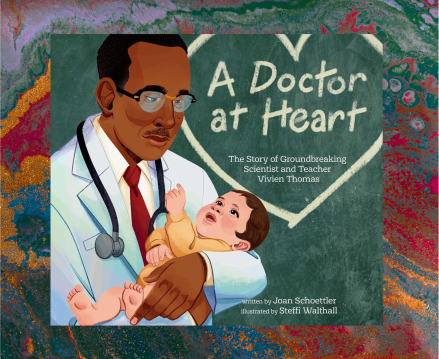
You can purchase A Doctor at Heart: the Story of Groundbreaking Scientist and Teacher Vivien Thomas from these booksellers

Amazon | Barnes & Noble | Bookshop

March 6 – National Women’s History Month

About the Holiday

Women have been inventing, discovering, questioning, challenging, and changing the world just as long as men have—but often without recognition, the ability to take jobs in their fields of expertise, or equal (or even any) pay. Established by the United States Congress in 1987, National Women’s History Month serves to educate people on the amazing women who have blazed trails in the past and those who are continuing that tradition today.

This year’s theme is Leading the Change: Women Shaping a Sustainable Future and encompasses a wide understanding of sustainability, including climate change, economic and financial sustainability, community resilience, healthcare disparities, leadership succession, intergenerational equity, and threats to democratic participation. In all these areas, women are at the forefront of sustainable transformation that will carry us into a supportive future for all. To learn more visit the National Women’s History Alliance website.

Thanks to Beach Lane Books and Barbara Fisch at Blue Slip Media for sending me this book!

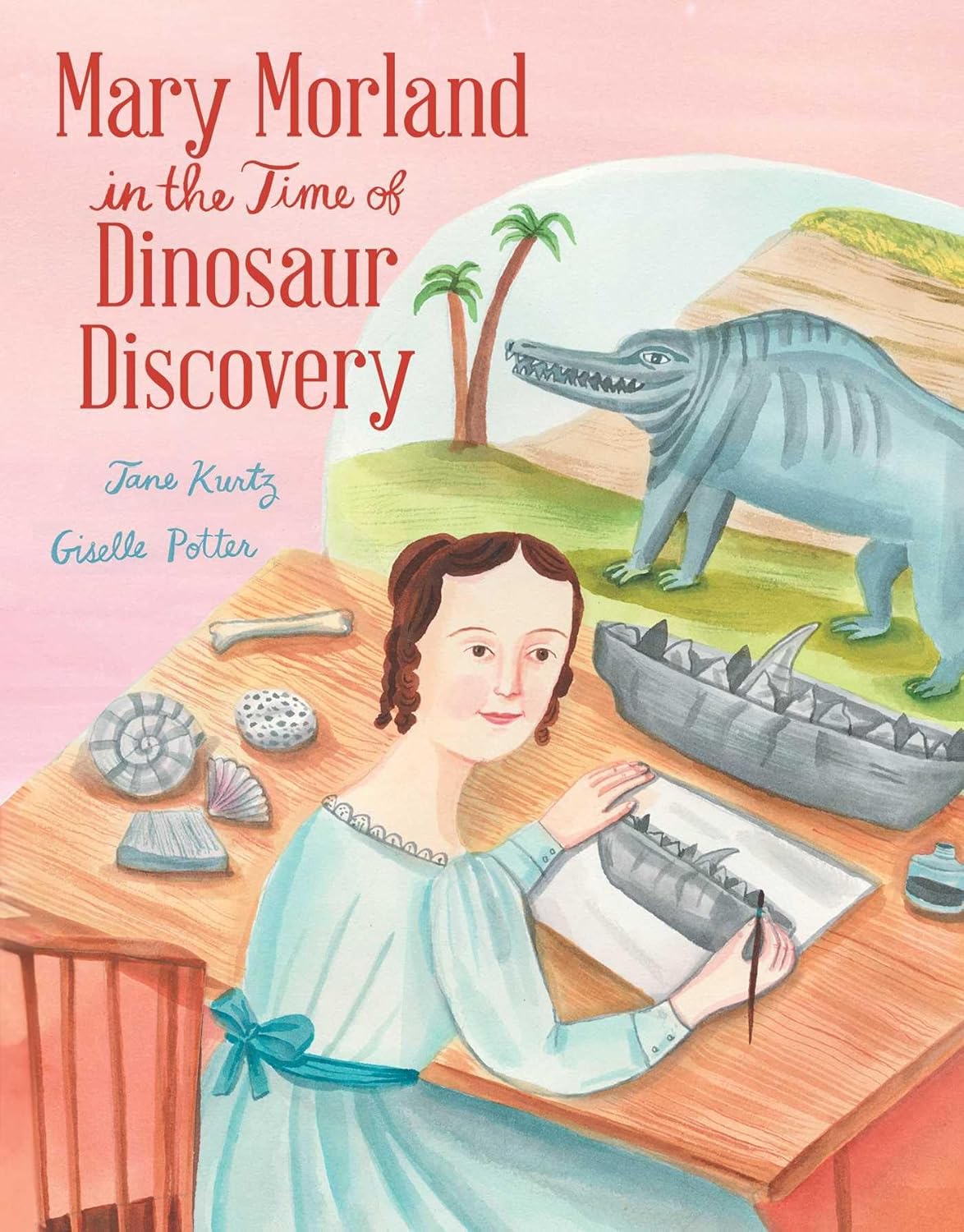
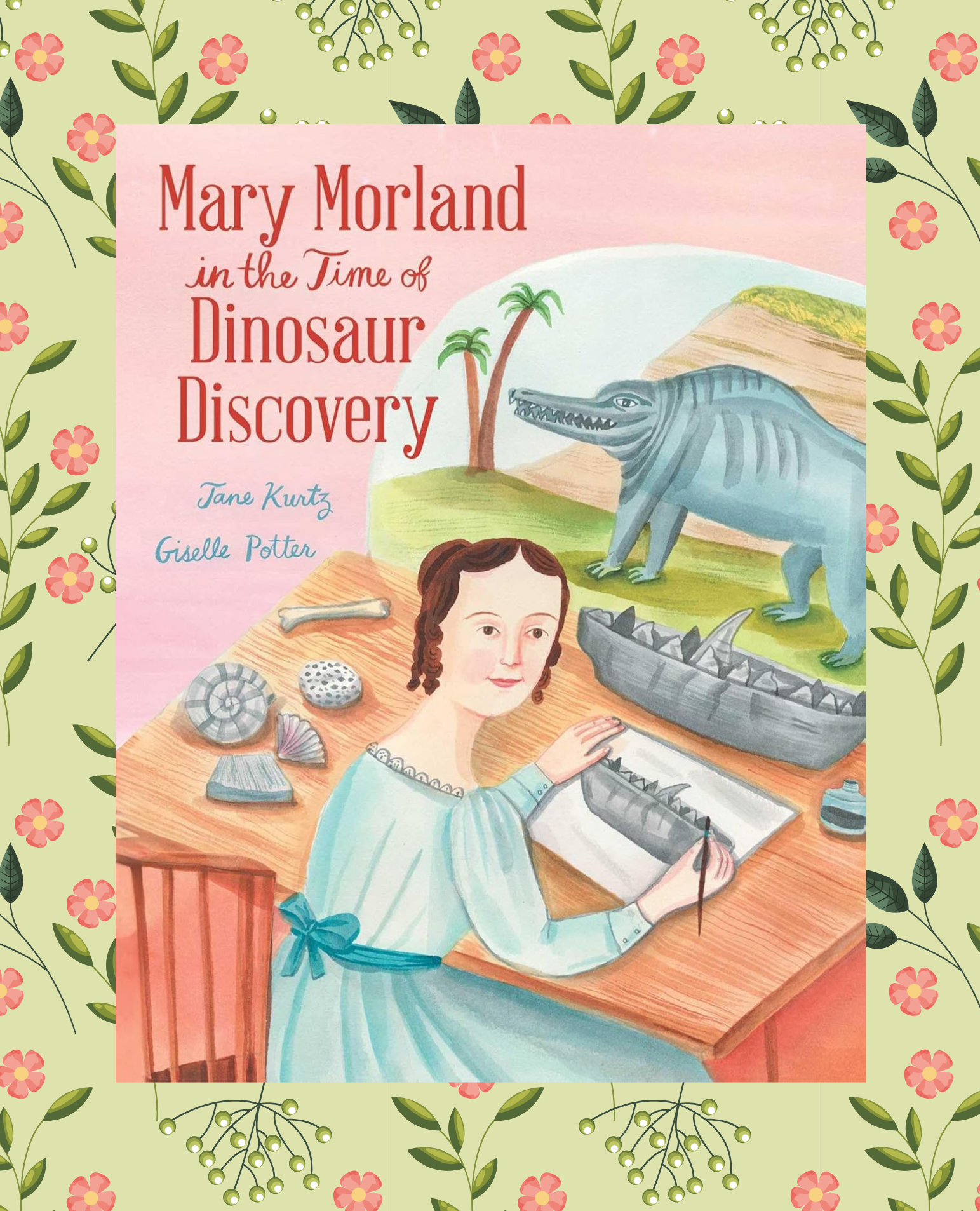
Mary Morland in the Time of Dinosaur Discovery

Written by Jane Kurtz | Illustrated by Giselle Potter


In the early 1800s, when Mary Morland was a child, girls were seen as “dainty, delicate decorations” who embroidered, arranged flowers, and played with dolls. Mary Morland had other ideas. From the first page, Jane Kurtz allies readers with the spirited Mary through cleverly posed questions that contrast the stifling conventions of her time with the freedoms of today: “Did [Mary] perch on her chair like a prim little miss?” Kurtz posits. “Well what would you do if the whole world was waiting outside? Mary tromped around, exploring. Wouldn’t you?”

Illustration © 2026 by Giselle Potter. Text © 2026 by Jane Kurtz. Courtesy of Beach Lane Books.

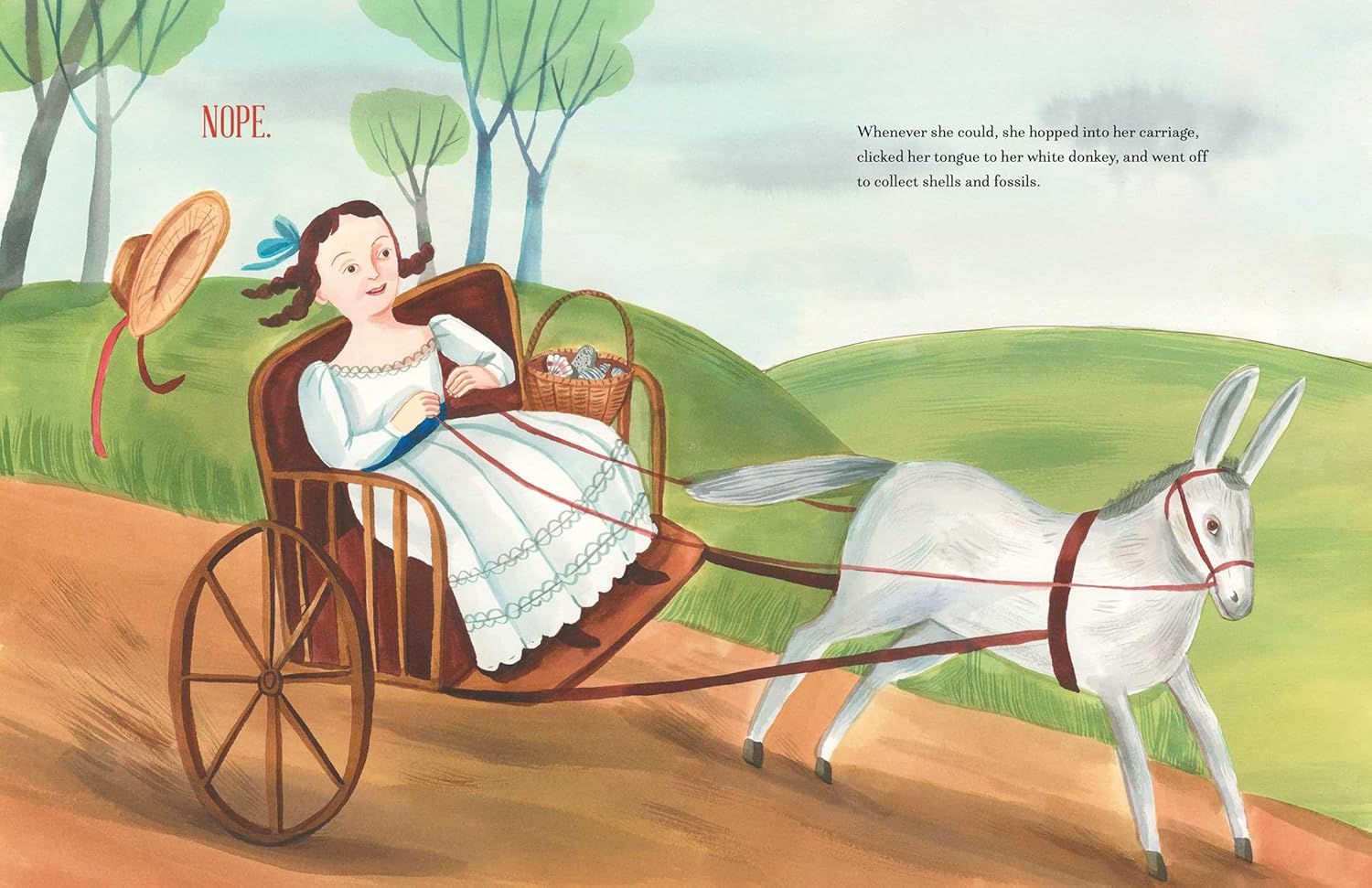
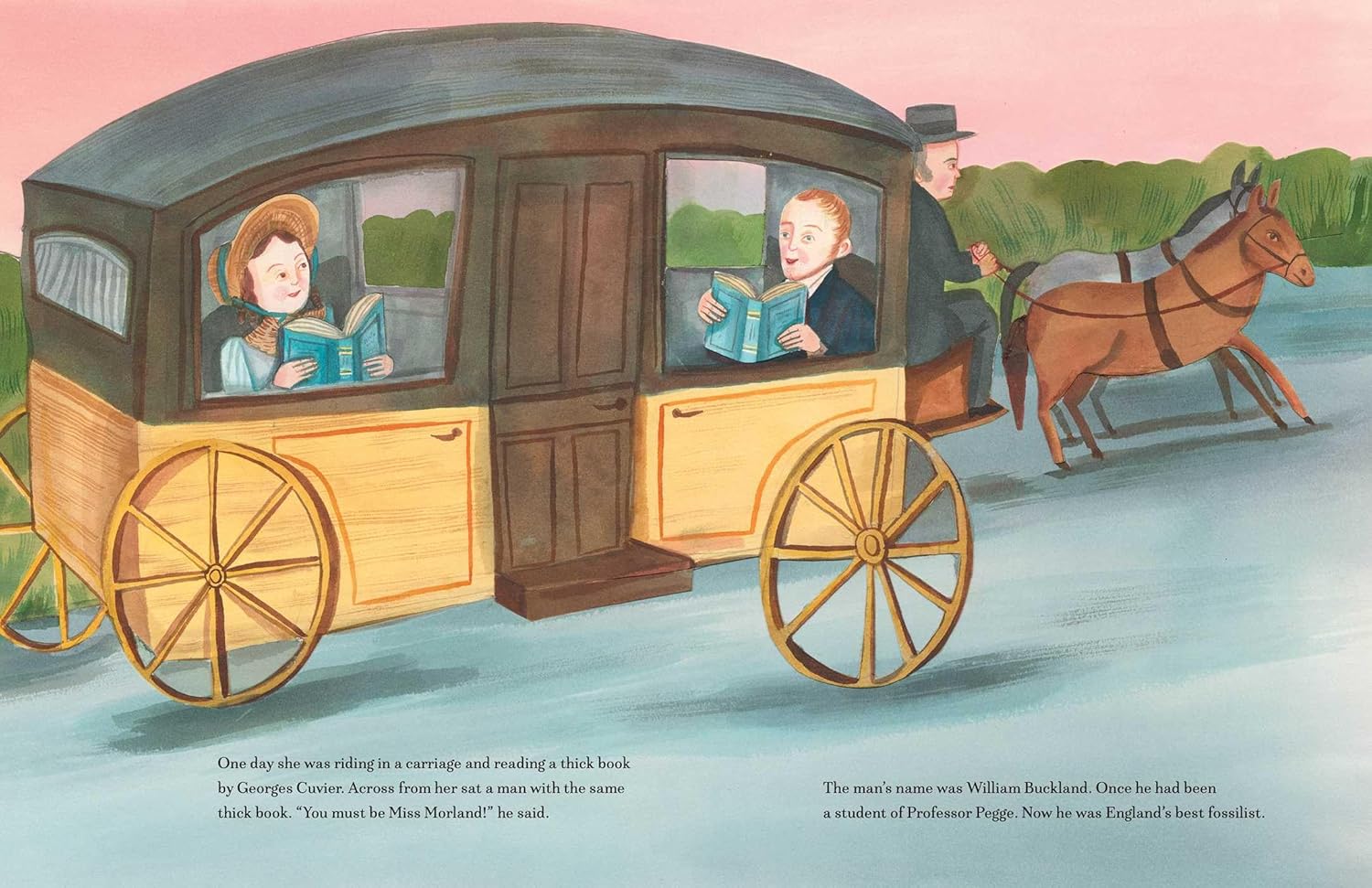
“Of course!” kids will say, and off they go, following Mary as, following the death of her mother, her father sends her to live with family friends who encourage her curiosity and teach her to study nature and fossils. From there readers view her drawings of “everything that fascinated her,” and discover that instead of calling herself a “cork-brain” and spending mannerly afternoons sipping tea in a fancy hat, Mary tooled around in her donkey-pulled carriage to “collect shells and fossils.”

Illustration © 2026 by Giselle Potter. Text © 2026 by Jane Kurtz. Courtesy of Beach Lane Books.

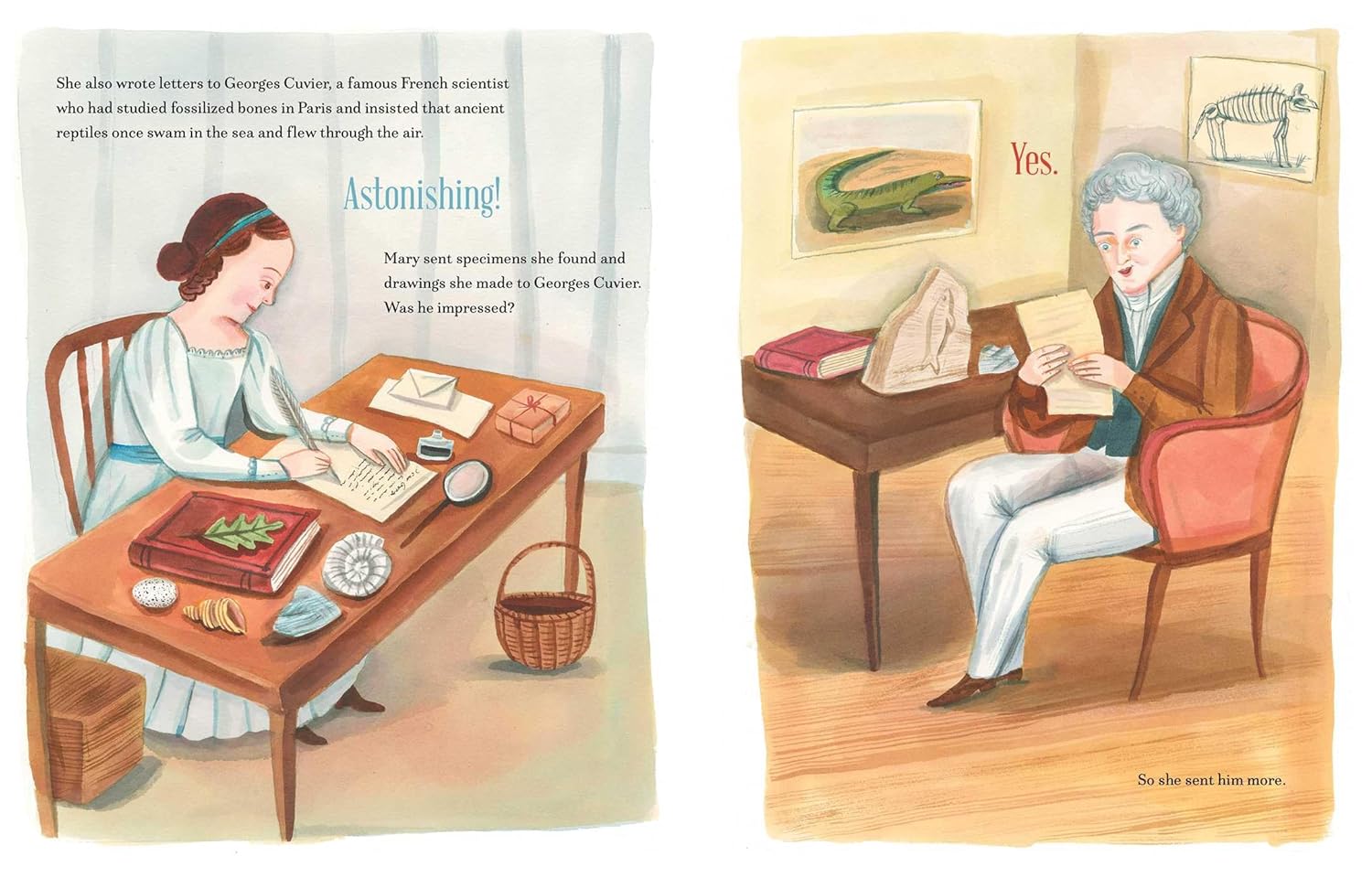
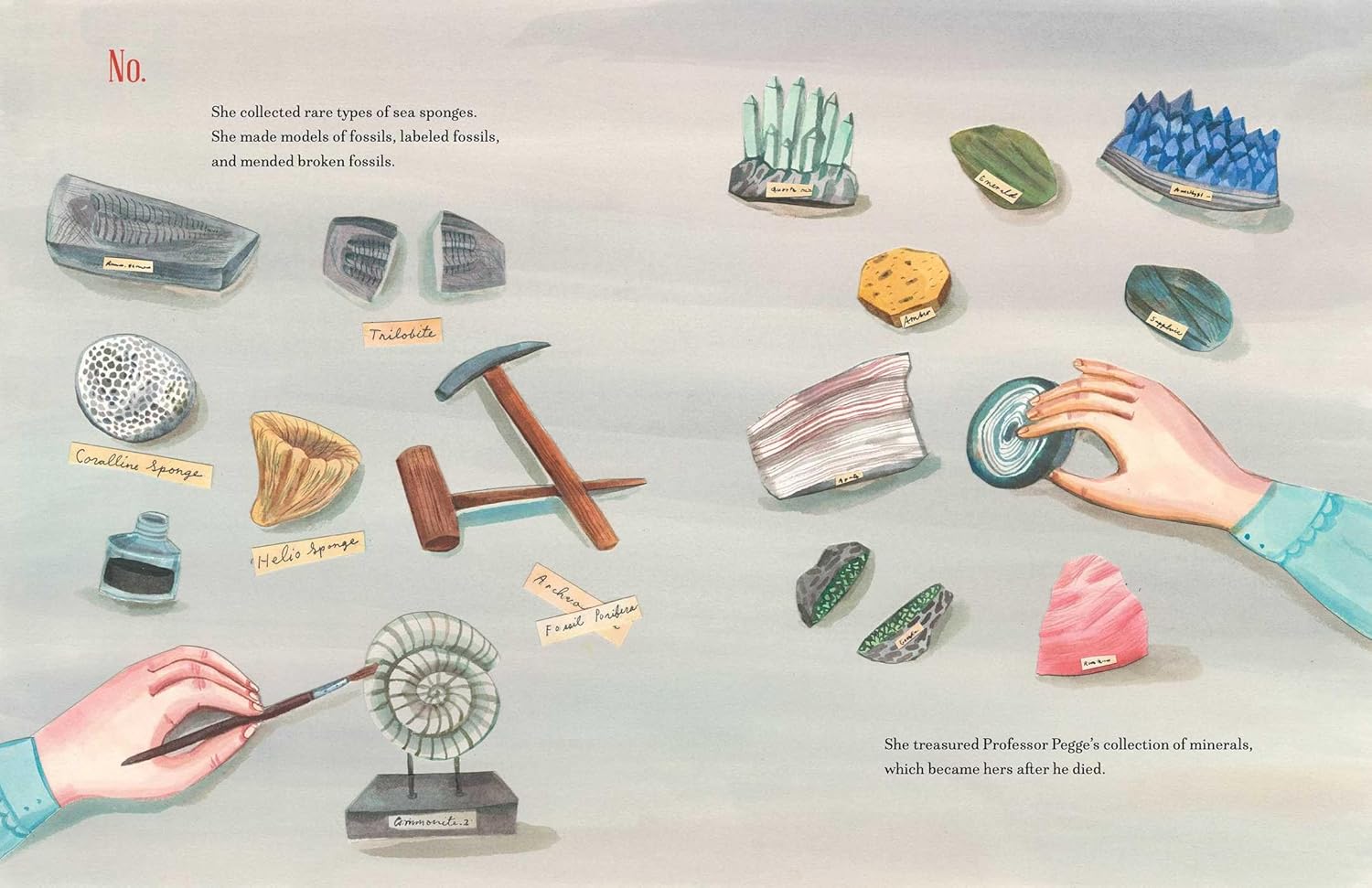
Did teenage Mary keep her discoveries to herself? No! She corresponded with Georges Cuvier, a famous French scientist, impressing him with the drawings and specimens she sent. And instead of trying to find a husband, Mary spent her time with old fossils, labeling and mending them. Then one day, she did meet the man she would marry: William Buckland, England’s best fossilist. In fact, it was he who had theorized that a collection of bones had come from a “giant land reptile,” named it Megalosaurus (before the word dinosaur was even created), and asked Mary to draw them for an important meeting of England’s geologists.

Illustration © 2026 by Giselle Potter. Text © 2026 by Jane Kurtz. Courtesy of Beach Lane Books.

After Mary and William were married, did she give up drawing and studying to keep a tidy house? Not at all! She kept exploring, writing, and drawing. She helped William turn his work into books—with her illustrations—and served as a curator for his collections of fossils. And, oh yes! She raised and taught their nine children and welcomed a menagerie of creatures—including a pony her the kids rode around the dining room—into their home! You might wonder: after all this, “did William say, ‘I am so fortunate that my wife is not a cork-brain?'” or acknowledge her contributions on his papers? Well, this was a time when women could not vote, own property, or go to college. So, what do you think? But that didn’t stop Mary from learning and using her gifts wherever she could throughout her life.

Back matter includes an Author’s Note highlighting other women intrinsic to the discovery and understanding of dinosaurs as well as how scientists came to accept that dinosaurs once existed, further resources for young readers, and a selection of resources.

Illustration © 2026 by Giselle Potter. Text © 2026 by Jane Kurtz. Courtesy of Beach Lane Books.

Jane Kurtz combines pluck, humor, and illuminating cultural mores of the past to weave an absorbing biography of Mary Morland, a brilliant paleontologist, writer, and illustrator with whom children will immediately connect. Mary’s personality and intelligence shine from each page, drawing children not only into her life, but into this incredible time of scientific discovery. Readers will be inspired by Mary’s example of self-confidence to set their own path, buck the norm, and prevail over obstacles on their way to success.

Giselle Potter’s illustrations are always a delight, and here she perfectly captures Mary Morland’s singular affinity for exploration, scientific thought, and illustration. In her folk art, watercolor paintings, Potter recreates the fashions, transportation, and traditions of the 1800s as well as Morland’s and her husband’s work. Readers will envy Mary’s children when they get a glimpse of the rambunctious Buckland home. In several instances, Mary’s and William’s facial expressions eloquently (and comically) reveal their innermost thoughts. 

Biographical storytelling at its best, Mary Morland in the Time of Dinosaur Discovery will captivate children with its verve and beauty. The book is a must for classroom, school, and public libraries and will become a favorite on home bookshelves as well.

Ages 4 – 8

Beach Lane Books, 2026 | ISBN 978-1665955546

Jane Kurtz was born in Portland, Oregon, but spent most of her childhood in Ethiopia. Jane speaks about being an author at schools and conferences and helped start Ethiopia Reads (EthiopiaReads.org), a nonprofit that has opened the first libraries for children in Ethiopia. She is the author of many books for children, including The Bone Wars, illustrated by Alexander Vidal; What Do They Do with All that Poo?, illustrated by Allison Black; Do Kangaroos Wear Seat Belts?, illustrated by Jane Manning; Anna Was Here; Clara the Triumphant Rhinoceros, illustrated by Claire Messer; and the American Girl book Lanie. You can visit her to learn more at janekurtz.com.

Giselle Potter has illustrated many books, including Once Upon a Fairy Tale House by Mary Lyn Ray, Try It! by Mara Rockliff, All by Himself? by Elana K. Arnold, and Kate and the Beanstalk by Mary Pope Osborne, as well as her own Tell Me What to Dream AboutThis Is My Dollhouse, and The Year I Didn’t Go to School, about traveling through Italy with her parents’ puppet troupe when she was eight. She lives in Rosendale, New York, with her husband and two daughters. Visit her at gisellepotter.com.

National Women’s History Month Activity

Women’s History Month Coloring Page


Celebrate Women’s History Month with this coloring page! In the letters write the names of women from history and today that you admire!

Women’s History Month Coloring Page

You can purchase Mary Morland in the Time of Dinosaur Discovery from these booksellers

Amazon | Barnes & Noble | Bookshop

Picture Book Review

November 17 – It’s Inspirational Role Models Month

celebrate-picture-books-picture-book-review-who-is-a-scientist-cover

About the Holiday

In 2005 Detroit native Darlene House, who made her mark in communications jobs held by few minorities or women, created National Inspirational Role Models Month to encourage people, and especially young people, to look for those who inspire them to be the best they can be. By identifying role models within their community, in the world at large, or at some time in history and studying their character, motivations, actions, House believed that people would find the inspiration that leads to success. Darlene House was motivated by her two strong women: the trailblazing journalist and editor Ida B. Wells Barnett and her own maternal grandmother, entrepreneur and motivational speaker Louisiana Hines (who lived to be “a still vibrant” 114). This month, talk with your kids about their role models, the qualities that make them so, and how they may want to emulate their hero. Today’s book offers biographies of scientists who are changing the world to get you started! To learn more about today’s holiday, visit the NIRMM website.

Thanks to Millbrook Press and Barbara Fisch at Blue Slip Media for sharing a copy of Who Is a Scientist? for review consideration. All opinions on the book are my own. I’m excited to be featuring this book again with a giveway sponsored by Millbrook Press and Blue Slip Media. See the details below.

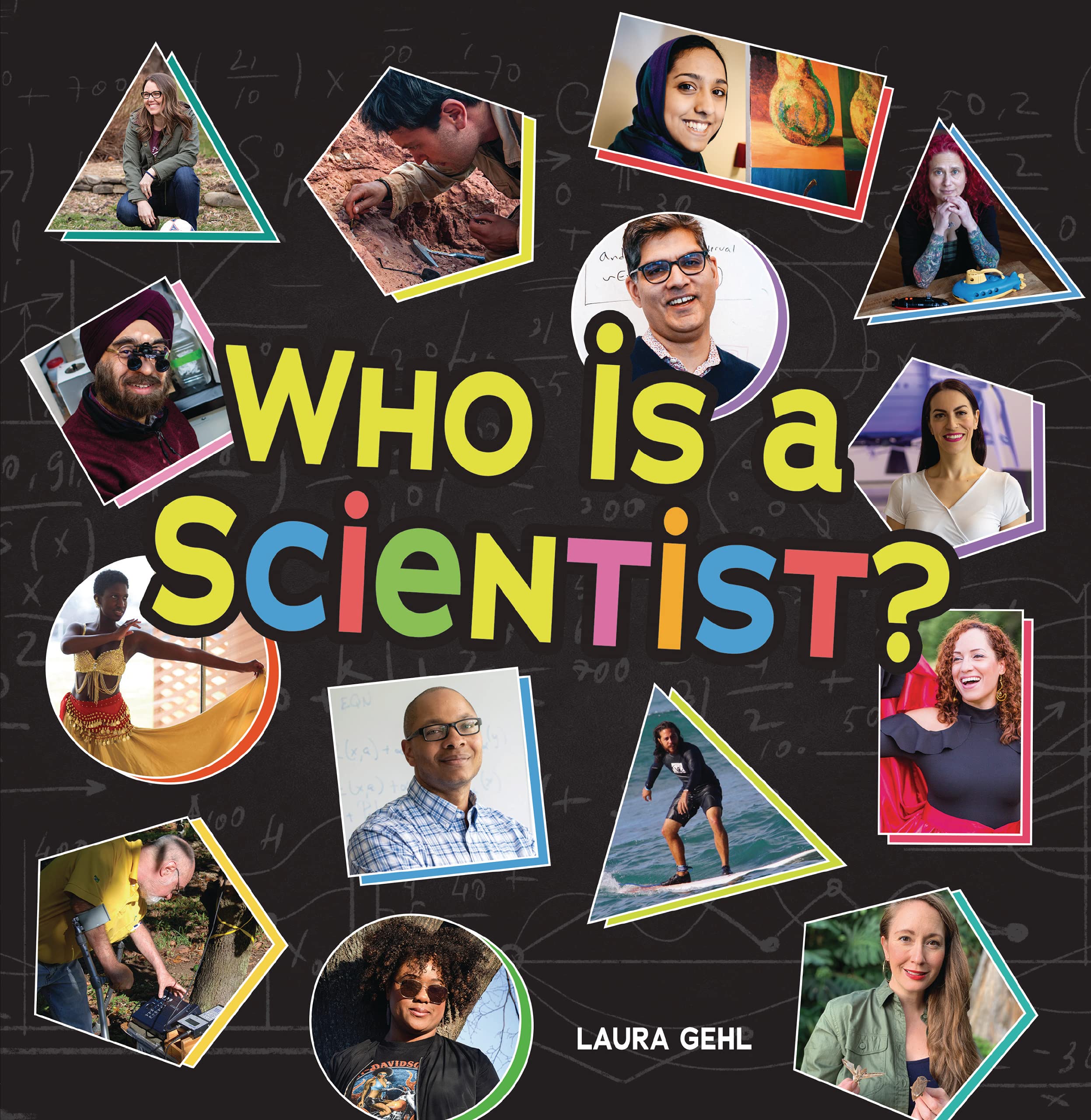
Who Is a Scientist?

By Laura Gehl


Do you love science and think that maybe you’d like to be a scientist when you grow up? But do you also love to dance or surf to paint or bake? Maybe you like to play soccer or ride a motorcycle or you’re considering getting a tattoo like your mom or dad and you think that none of those are things a scientist would do. Maybe you think of scientists as a little bit stuffy with their white coats and endless graphs. Well, think again!

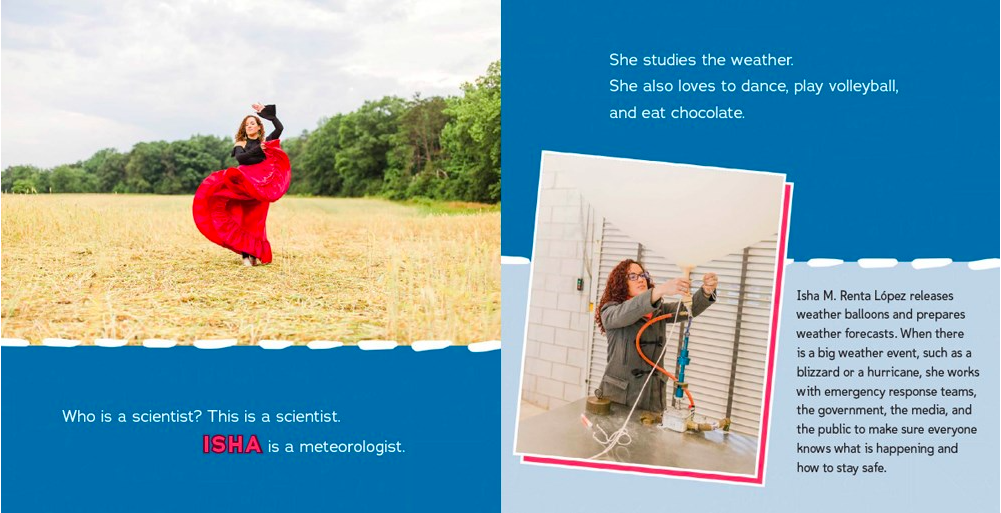
In Who Is a Scientist? Laura Gehl introduces you to fourteen scientists who smash those ideas. And what’s more they’re involved in some pretty fascinating and life-changing sciences and projects that you may never have heard about before but that may inspire you. For example, you’ll meet Isha M. Renata López who works as a meteorologist but “also loves to dance, play volleyball, and eat chocolate.” What’s great about her job? She alerts people to changes in the weather, and when a big storm, blizzard, hurricane, or tornado is coming, she works with emergency crews, the media, and the local government to make sure everyone knows so they can stay safe.

celebrate-picture-books-picture-book-review-who-is-a-scientist-meteorologist

Copyright Laura Gehl, 2021, courtesy of Millbrook Press.

“Jagmeet Kanwal studies bats and zebrafish to help figure out how the human brain makes decisions.” He’s also working to discover “how our brains allow us to hear different types of sounds.” He’s hoping to be able to “help people with depression, Parkinson’s disease, and memory loss.” What else does Jagmeet like to do? He’s also a painter and nature photographer.

If you like math, you may want to become a mathematician like Mark Lewis, who studies operations research during work hours and enjoys playing basketball in his off time. This kind of science “uses math to help business make good decisions” that affect consumer, such as how long people wait in line, how much items cost, and how transportation can move faster.

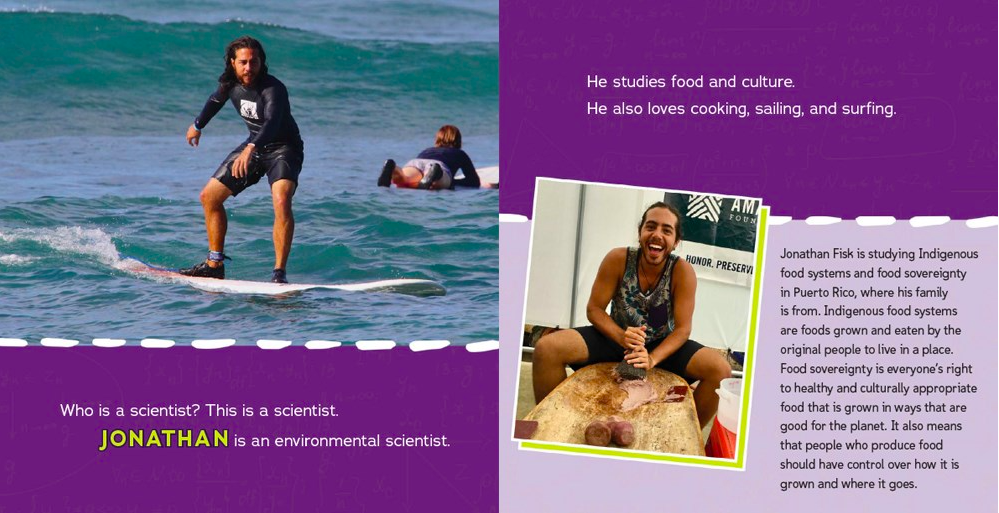
celebrate-picture-books-picture-book-review-who-is-a-scientist-environmental-scientist

Copyright Laura Gehl, 2021, courtesy of Millbrook Press.

Perhaps you’re interested in health and medical research like Tishina Okegbe whose work makes sure that mothers, babies, and children in Africa and Asia “have access to high-quality health-care services. In her free time, Tishina likes “visiting new places, belly dancing, and eating pizza and ice cream.”

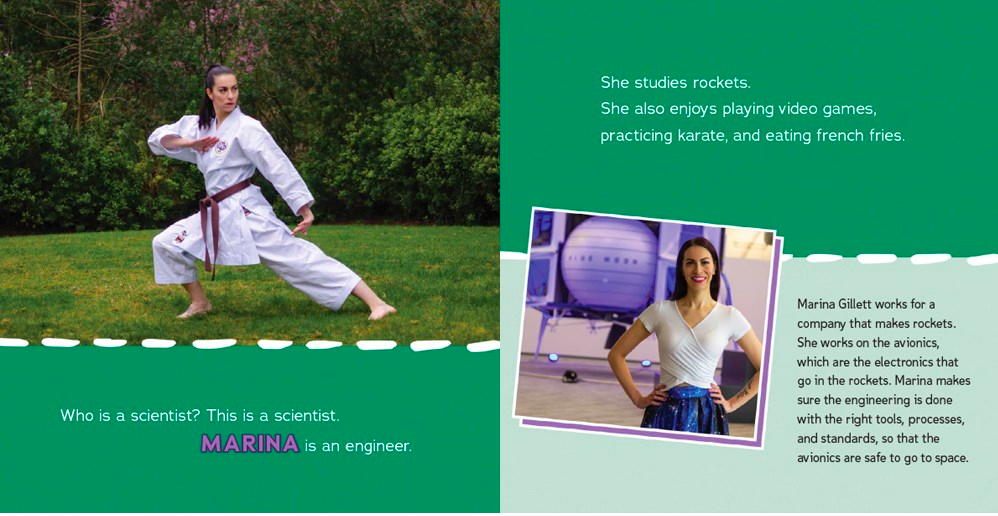
Whether you’re interested in food systems and farming, how the brain works, the environment, space, dinosaurs, or computers, the scientists will inspire you to enjoy all of your passions. In fact, the extracurricular activities you enjoy the most may just lead you to a career you’ll love. The definition of who and what a scientist is broad and exciting as you’ll see when you meet these men and women who are changing the world while being themselves.

Back matter includes a QR code that readers can scan to view a video in which each profiled scientist introduces themselves. There’s also a flow chart that can lead kids to the type of scientist they might want to be or at least research further based on their interests.

celebrate-picture-books-picture-book-review-who-is-a-scientist-environmental-engineer

Copyright Laura Gehl, 2021, courtesy of Millbrook Press.

Laura Gehl’s engaging and inspiring look at a variety of scientists and their disciplines will get all kids excited about the wide range of work going on around them and the people who make it happen. Her profiles of these thinkers, activists, and active members of their communities show kids that they don’t need to be defined only by their career and that scientists—who are needed now more than ever—are a diverse group and welcoming to all. Each profile is accompanied by photographs of the scientist in their lab or other work environment as well as action shots of them enjoying their off time in their favorite pursuits.

A smart, inviting, and educational introduction to the people who are helping to make the world a better place through science and other STEM-related fields, Who Is a Scientist? is sure to inform readers on the wide-range of specialized work that falls under the umbrella of science and spark their interest in learning where they may fit in. The book is highly recommended for home bookshelves and is a must for classroom, school, and public libraries.

Ages 4 – 9

Millbrook Press, 2021 | ISBN 978-1728441085

Meet the scientists in this Who Is a Scientist? Book Trailer!

One Question with Laura Gehl

celebrate-picture-books-picture-book-review-laura-gehl-headshot

Laura Gehl is the author of more than a dozen books for children, including One Big Pair of Underwear, Except When They Don’t, the Peep and Egg series, and the Baby Scientist and Brilliant Baby board books. In addition to being an author, Dr. Gehl has a PhD in neuroscience and is the mother of four children. She lives with her family in Maryland. 

You can connect with Laura on her Website | Facebook | Instagram | Twitter

Hi Laura! I loved reading your book and getting to know some of the scientists working today. I also enjoyed seeing how some of their other interests are reflected in their work while others are great ways to relax and play—definitely something kids can relate to!

I was wondering if or how a previous job (or jobs) has influenced your writing and the kinds of books you write. 

I used to work in a neurobiology lab, and I also used to teach science. Both of those jobs made me want to write books about science and scientists! When I taught science, I realized that very few kids had met a real scientist or had read about any scientists more recent than Albert Einstein or Marie Curie. Flash forward twenty years and my new photo-illustrated picture book Who Is a Scientist? features fourteen real scientists working today in different fields from astronomy to entomology to paleontology. While the book talks about the fascinating work these scientists are doing, it also talks about the other things the scientists love…like dancing, soccer, junk food, watching movies, and playing with their pets. I hope this book helps kids realize that scientists are just like them—curious people with lots of different passions who like to ask and answer interesting questions.

Thanks, Laura! Through your books you’ve found a perfect way to share your love and knowledge of science with kids! I wish you all the best with Who Is a Scientist?!

You can find a Teacher’s Guide to Who Is a Scientist? and her other books on Laura Gehl’s website here.

Who Is a Scientist? Giveaway

I’m happy to be teaming with Millbrook Press and Blue Slip Media in a giveaway of:

  • One (1) copy of Who Is a Scientist? by Laura Gehl 

To enter:

  • Follow Celebrate Picture Books
  • Retweet a giveaway tweet
  • Bonus: Reply with your favorite scientist for extra entry

This giveaway is open from November 17 to November 22 and ends at 8:00 p.m. EST.

A winner will be chosen on November 23. 

Prizing provided by Millbrook Press and Blue Slip Media

Giveaway open to U.S. addresses only. | No Giveaway Accounts 

Inspirational Role Models Month Activity

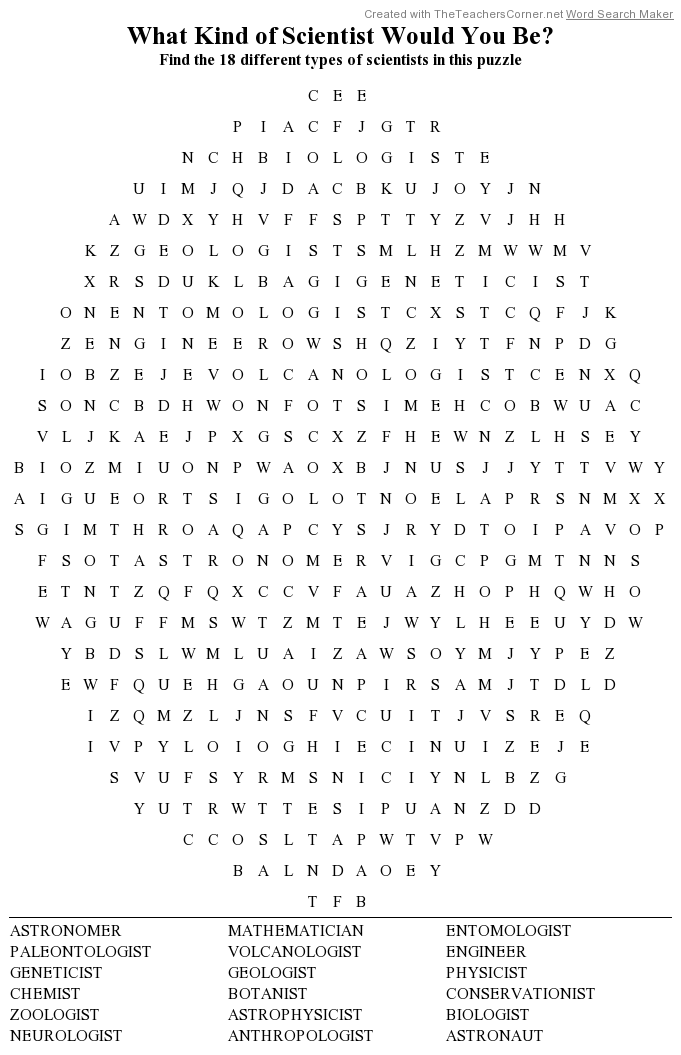
celebrate-picture-books-picture-book-review-scientists-word-search-puzzle

Be a Scientist!


If you’re dreaming of being a scientist, you could grow up to be one of the scientists in this printable word search puzzle. Which would you choose?

What Kind of Scientist Would You Be? Puzzle | What Kind of Scientist Would You Be? Solution

celebrate-picture-books-picture-book-review-who-is-a-scientist-cover

You can find Who Is a Scientist? at these booksellers. Due to shipping delays, preorders are now being taken.

Amazon | Barnes & Noble | Books-a-Million

To support your local independent bookstore, order from

BookshopIndieBound

Picture Book Review