November 15 – I Love to Write Day

celebrate-picture-books-picture-book-review-i-am-a-story-cover

About the Holiday

I Love to Write Day was created by Delaware-based author John Riddle in 2002. He wanted to share his passion for writing with others and encourage them to pick up a pen or sit down at the computer and compose a poem, a short story, a journal entry, or whatever kind of written expression stirs their hearts. It’s fitting that today’s holiday comes in the middle of NaNoWriMo or National Novel Writing Month, when novelists and would-be novelists strive to begin and finish a complete novel (well, at least a first draft) in one month. If you hold ambitions to write, why not start today? As today’s book shows, you’ll be part of a very honored, long-standing tradition!

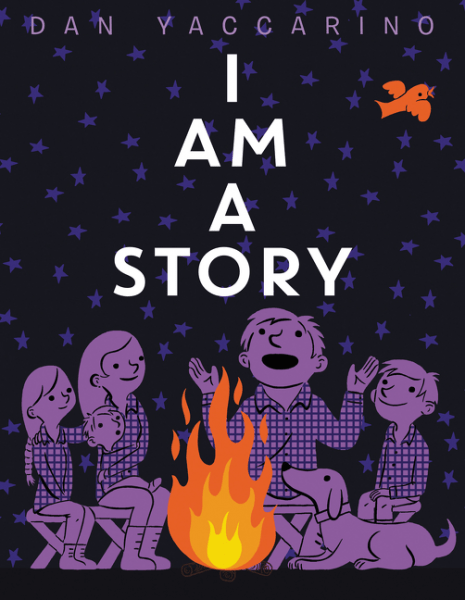
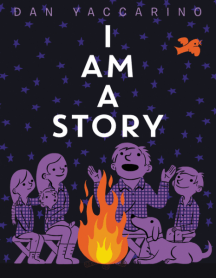
I Am a Story

By Dan Yaccarino


Sometimes it seems that from nothing and out of nowhere a story comes. And yet storytelling also seems to be an inborn trait, passed down from generation to generation and discovered in daydreams, alternate realities, those “what if?” moments. In Dan Yaccarino’s book, a story relates its history, beginning with our oldest ancestors. “I am a story,” the narrator states. “I was told around a campfire. Then painted on cave walls.” The story travels over years and across miles, changing the way it is told but not its impact.

celebrate-picture-books-picture-book-review-i-am-a-story-oral-storytellers

Image copyright Dan Yaccarino, courtesy of harpercollins.com

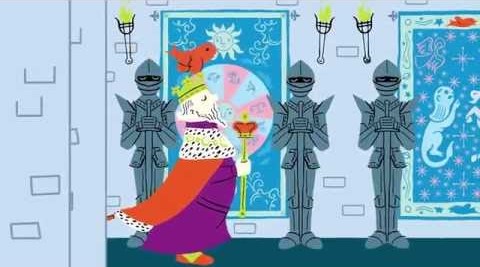
Men inscribed words on papyrus; women used woodblocks, brushes, and ink to bring them to life. Tales were stitched into legend on beautiful tapestries that brightened dank castle walls, and they were transcribed in gilded lettering “into big books to illuminate minds.” Then a man discovered how to print the story so many people could read it, which led to the story being “acted out onstage.”
celebrate-picture-books-picture-book-review-i-am-a-story-tapestry

Image copyright Dan Yaccarino, courtesy of harpercollins.com

Stories were bound into books and families began to collect them, creating “vast private libraries.” Then public libraries opened, and now stories are available for everyone—even in places so remote that the books are brought on donkeys, by camel, or even atop elephants. There are tiny libraries—not much bigger than a birdhouse; vending machines that dispense stories; and old telephone booths that have been transformed with shelves of books.

The story reveals its power to make “people frightened, excited, sad, and happy.” Some have felt and still feel that the story is dangerous, so they have “censored, banned, and burned” it. But the story “did not die.” Millions of people all over the world are inspired by the story every day. “I can go with you everywhere,” the story says, “and will live forever. I am a story.”

celebrate-picture-books-picture-book-review-i-am-a-story-printing-press

Image copyright Dan Yaccarino, courtesy of harpercollins.com

Bibliophiles young and old will love the simply told and expressively illustrated timeline of the story from early oral traditions until today. Between the first page where ancient peoples interpreted the constellations and the last where a family of today tells stories around a campfire under the starry sky, the various forms that stories take are described with vivid, full-bleed pages of people toiling over manuscripts, inventing methods of mass production, and building collections all to ensure that the words continue no matter what changes occur.

Kids will love lingering over the details on each page, and every page could lead to a fun afternoon of discovering more about each stage in the story’s development. For teachers and homeschoolers I Am a Story is a wonderful jumping off book for an English or History unit, and it makes a beautiful addition to any library.

Ages 4 – 8

HarperCollins, 2016 | ISBN 978-0062411068

You know Dan Yaccarino from his TV shows The Backyardigans, Oswald and others as well as his many, many books. You can learn more about him and his work on his website!

Enjoy this I Am a Story book trailer!

I Love to Write Day Activity
celebrate-picture-books-picture-book-review-the-history-of-the-story-bookmark

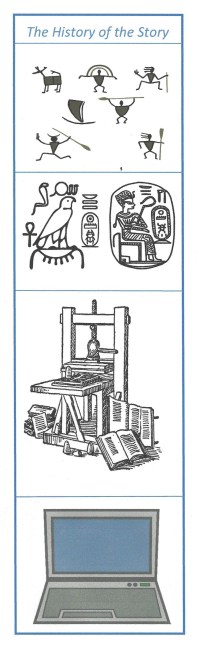
The History of the Story Bookmark


From cave paintings and hieroglyphics to the printing press and the computer, people have ensured that their thoughts were not forgotten. Here’s a printable The History of the Story Bookmark plus a blank one for you to fill in. Use them to mark your favorite stories!
celebrate-picture-books-picture-book-review-i-am-a-story-cover

You can find I Am a Story at these booksellers

Amazon | Barnes & Noble | Books-a-Million | IndieBound

Picture Book Review

Picture Book Review

November 5 – Book Lovers Day

cpb-hug-this-book-cover-1500

About the Holiday

The first Saturday in November is set aside for all book lovers out there who like nothing more than to snuggle into a cozy nook with a favorite book. It’s a great day to discover a new author or to reread a beloved one. With so many kinds of books available—mystery, adventure, humor, biography, non-fiction, novels, and more—you may want to read more than one today! How many can you read?

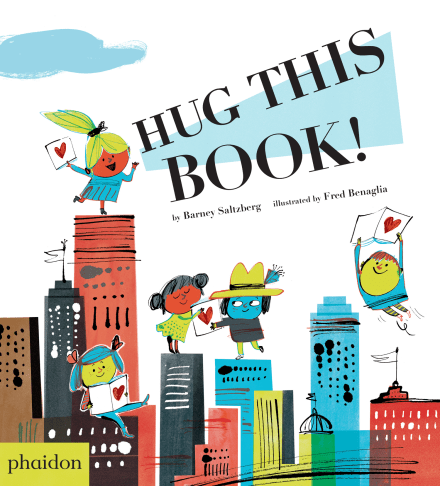
Hug This Book!

Written by Bernie Saltzberg | Illustrated by Fred Benaglia


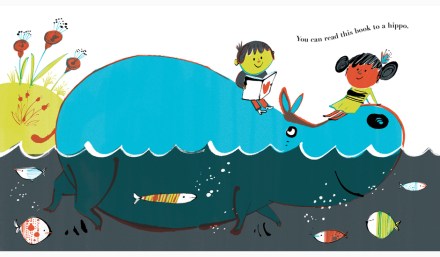
When you grab onto a book and open the cover, you know what to do! But did you know that books themselves may have some ideas on the subject? Today’s reviewed book has plenty of fabulous, page-turning ideas and is happy to share them with you. Its first thought is a pretty big one: “You can read this book to a hippo.” I know!—wouldn’t that be a blast?

celebrate-picture-books-picture-book-review-hug-this-book-hippo

Image copyright Fred Benaglia, text copyright Barney Saltzberg. Courtesy of Phaidon Press

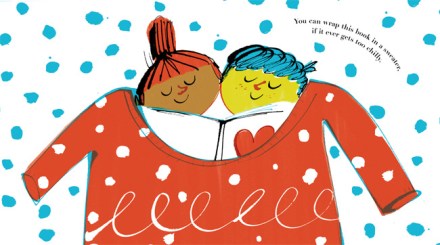
It seems that books watch how readers treat their pets, and they want in: “You can kiss and hug and smell this book. / That might sound sort of silly. / You can wrap this book in a sweater, / if it ever gets too chilly.” That sounds as cozy as enjoying hot chocolate in front of a fire—with this book, of course!

celebrate-picture-books-picture-book-review-hug-this-book-sweater

Image copyright Fred Benaglia, text copyright Barney Saltzberg. Courtesy of Phaidon Press

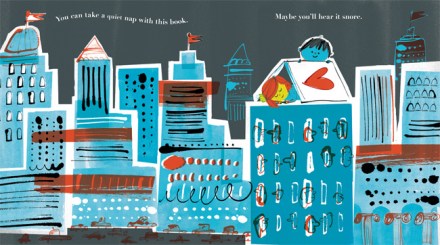
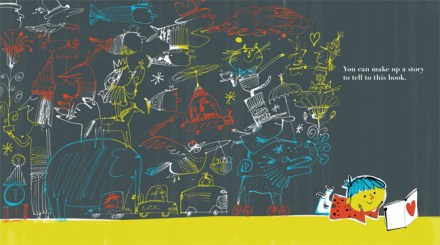
The book continues—“You can make up a story to tell to this book.” Hmmm…I never thought about it. Maybe books don’t like doing all the work all the time. Maybe they’d like to just relax and be entertained. Well, I’m sure you can come up with something fun and fantastic! And just to keep you on your toes, the book offers a few more challenges: “Can you read this book in the mirror? / Or sing the words in this book like a song? / If you sing it to the birdies, maybe they’ll sing along.” After completing those activities maybe it’s time for a nap. Don’t forget to take the book too, but be ready to giggle because… “Maybe you’ll hear it snore.”

celebrate-picture-books-picture-book-review-hug-this-book-snore

And when you wake up all refreshed you can try reading the book while dancing, twirling, leaping, skipping…you can even take it to lunch, “just do not try to feed it.” Then suddenly and all too soon the book comes to the last page. Don’t be sad, though. “Even though this book is over, / it isn’t really the end. / You can start at the beginning / and read it to a friend!”

celebrate-picture-books-picture-book-review-hug-this-book-tell-story

Image copyright Fred Benaglia, text copyright Barney Saltzberg. Courtesy of Phaidon Press

Barney Saltzberg’s love for books is infectious. His witty rhymes bubble with the thrill of reading and playfully challenge kids to take books along no matter where they go or what they do. The cadence of Saltzberg’s lines invite multiple readings—the way the rhythm of movement in hopscotch, jump rope, or dancing is inherent in the fun. Kids will giggle at the examples Saltzberg conjurs up—reading to a hippo, listening to a book snore, feeding a book—and you can bet that they will want to invent some of their own! Get ready to hug this book—and many others. After all isn’t that what best friends do?

Fred Benaglia’s adorable characters swim and paddle, snuggle and swing, play and imagine all the while with their nose in this book. The fanciful coloring and quirky landscapes enhance both the originality and universality of this tribute to book love. Benaglia’s artwork—from the fish nibbling at a child’s toes to the cars zipping through the cities—radiate personality invites creative thinking. Readers will especially want to linger over the two-page spread of a smiling child conjuring up a host of stories to catch every imaginative detail in the chalk drawings. The big red heart on the  cover under the book jacket is a clever touch, connecting Hug This Book! to “this book” in the text.

For all book lovers, Hug This Book! is a fun, funny romp and will be a welcome, often-asked-for addition to a child’s library.

Ages 2 – 7

Phaidon Press, 2016 | ISBN 978-0714872841

You’ll love discovering all the books, music, and videos on Barney Saltzberg‘s website!

Cuteness abounds on Fred Benaglia‘s website, where you’ll find book illustrations and so much more!

Can you hug this Hug This Book! book trailer?

Book Lovers Day Activity

celebrate-picture-books-picture-book-review-book-bag-craft

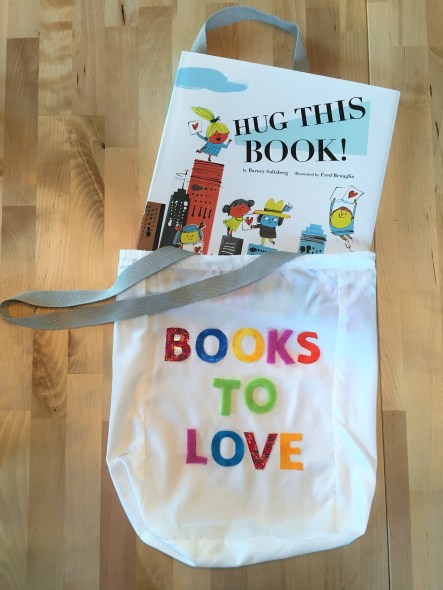
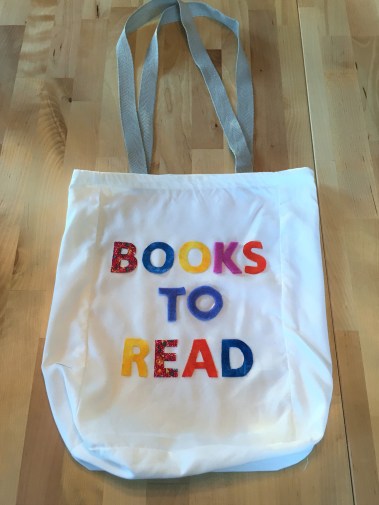
Book Lovers Book Bag


Whether you’re buying new books at your local bookstore or checking some out at your library, carry those treasures home in their own special bag! This kid-sized bag was made from recycled materials!

Supplies

  • Printable Templates: Books to Read Template | Books to Love Template
  • Small cloth bag, available from craft or sewing stores—Recyclable Idea: I used the bag that sheet sets now come in
  • Cloth trim or strong ribbon, available from craft or sewing stores—Recyclable Idea: I used the cloth handles from shopping bags provided from some clothing stores
  • Scraps of different colored and patterned cloth. Or use quilting squares, available at craft and sewing stores
  • Pen or pencil for tracing letters onto cloth
  • Scissors
  • Small sharp scissors (or cuticle scissors) for cutting out the center of the letters
  • Fabric glue
  • Thread (optional)
  • Needle (optional)

celebrate-picture-books-picture-book-review-books-bag-craft

Directions

  1. Print the sayings and cut out the letters
  2. Trace letters onto different kinds of cloth
  3. Cut out cloth letters
  4. Iron cloth bag if necessary
  5. Attach words “Books to Read” to one side of bag with fabric glue
  6. Attach words “Books to Love” to other side of bag with fabric glue
  7. Cut cloth trim or ribbon to desired length to create handles
  8. Glue (or sew) handles onto the inside edge of bag

Picture Book Review
November 4 – Fountain Pen Day

picture-book-review-will's-words

About the Holiday

Today we spend some ink to extol the virtues of the fountain pen. Designed in 1636 (a mere 22 years after William Shakespear wrote his last play), the fountain pen sported two clever improvments over the quill pen. First, it contained a reservoir of ink that made frequent dipping in the inkwell unnecessary. Second, it’s metal nib didn’t require cutting the way a feather did to retain sharpness. While there are now many alternatives to fountain pens, there are those who prefer its smooth elegant lines for writing everything from notes to novels. Fountain pens are also collectable, and craftsmen around the world create beautiful, innovative works of art on these functional canvases.

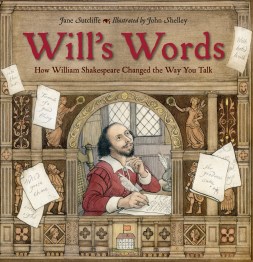
Will’s Words: How William Shakespeare Changed the Way You Talk

Written by Jane Sutcliffe | Illustrated by John Shelley

“In 1606 London was a bustling, jostling, clanging, singing, stinking, head-chopping, pickpocketing wonder of a city.” With that phenomenal sentence Jane Sutcliffe begins this fascinating and ingenious look at the Globe Theatre and the experience of attending a play in William Shakespeare’s time.

In addition to all the qualities of London mentioned above, the town was also a “play-going city.” Every day of the week except Sunday, a play—or maybe even two or three—was performed, and as many as 18,000 people attended plays every week! They just couldn’t get too much of a good thing!*” And everyone loved the plays written by William Shakespeare!

celebrate-picture-books-picture-book-review-will's-words-in-town

Image copyright John Shelley, 2016, text copyright Jane Sutcliffe, 2016. Courtesy of Charlesbridge.

How did a day at the theater begin? Well, at 1:00 a banner was raised from the roof of the playhouse, and men, women, and children streamed through the streets toward the Globe. It cost a penny to get in, but if you paid more you got a chair, and if you paid a little more than that you were seated in the Lord’s Rooms. The Lord’s Rooms were actually for fashionable people who wanted to be seen but didn’t really care what play they were seeing.

All the actors were…well…actors. There were no actresses in those days. Men played women’s parts as well as men’s. And if you think phones and talking are problematic in today’s theaters, you would have been aghast at the audiences back then! They were not well behaved at all!

celebrate-picture-books-picture-book-review-will's-words-back-stage

Image copyright John Shelley, 2016, text copyright Jane Sutcliffe, 2016. Courtesy of Charlesbridge.

There were plays to please all tastes—comedies, tragedies, histories, and romances—all full of complicated plots and plenty of twists and turns. While the stories may have been intricate, the sets were not. But the bare-bones sets were made up for in gorgeous costumes and even some special effects accomplished through trap doors and ceiling holes. Sounds full of amazement, right? Good thing too because these plays could go on for hours, and most people stood through the whole thing, rain or shine!

celebrate-picture-books-picture-book-review-will's-words-cold-blooded

Image copyright John Shelley, 2016, text copyright Jane Sutcliffe, 2016. Courtesy of Charlesbridge.

While William Shakespeare’s plays ended when the last line was spoken, his influence continued. Theatre-goers repeated the lines they’d heard long after they left the Globe. They used Will’s words so much that his new phrases became part of the common language, and we still use them today!

Jane Sutcliffe inserts a tongue-in-cheek apology before the main text, explaining how she wanted to tell the world about the Globe Theatre in her own words, but that William Shakespeare’s words kept getting in the way. Yes, using another writer’s words is a no-no—but if they’re Shakespeare’s words? Words we use every day? Hmmm… Sutcliffe’s lively history of the Globe Theatre and Old London’s theater culture is conversational, humorous, and highly informative.

celebrate-picture-books-picture-book-review-will's-words-new-words

Image copyright John Shelley, 2016, text copyright Jane Sutcliffe, 2016. Courtesy of Charlesbridge.

The left-hand page tells the story of the Globe with phrases and words coined by William Shakespeare sprinkled throughout and set in bold type. On the right-hand page readers learn the meaning of those words and phrases (some have changed a bit since Will’s time) and which play they come from. A final note from Sutcliffe at the end of the book reveals a bit more about the playwright. A timeline of Shakespeare’s life and a bibliography are also included.

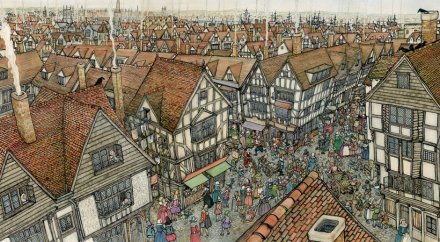
John Shelley’s incredible illustrations of London and the Globe Theatre will take your breath away. The streets teem with vendors, knights, shoppers, kids, Ladies, and Lords. If you look closely at the intricate paintings you’ll also spy the seamier side of Old London—a pickpocket, a criminal in the stocks, a tavern brawl, a cat snatching a free meal, a woman about to empty a chamber pot on her unsuspecting downstairs neighbor’s head, and…could that be a dead rat?— and that’s only on the first page!!

celebrate-picture-books-picture-book-review-will's-words-globe-theater

Image copyright John Shelley, 2016 text copyright Jane Sutcliffe, 2016. Courtesy of Charlesbridge.

Subsequent pages show the waterfront with its sailing vessels, a peek into Shakespeare’s study and a look at the printing press, an aerial view of London, the Globe Theatre with its thatched awning, actors donning wigs and costumes, the audiences enjoying the plays and the fun of a day out. Each illustration is alive with color and movement, texture and design, expressive faces, and all the sights, sounds, and aspects of Old London. Kids will love lingering over each page picking out the funny events going on in the lanes, in the theater seats, and on stage.

So hurry to get your own copy of Will’s Words and enjoy it to your heart’s content! You will definitely get your money’s worth!

*Italicized words and phrases were invented by William Shakespeare

Ages 6 – 10 and up (Anglophiles and Shakespeare lovers will enjoy this book)

Charlesbridge, 2016 | ISBN 978-1580896382 (Hardcover) | ISBN 978-1580896399 (Paperback)

To learn more about Jane Sutfcliffe and her other picture books and books for early and middle grade readers visit her website!

View a portfolio of picture book illustration and other work by John Shelley on his website!

Fountain Pen Day Activity

picture-book-reviews-quill-pen-craft

Write Like Shakespeare

William Shakespeare might have missed out on the new technology of fountain pens, but he sure did a great job with the quills of the day. Try your hand at making a quill pen—you may not be able to write with it, but it sure will look cool on your desk!

Supplies

  • Medium to large size feather with quill, available at craft stores
  • Clay, oven-bake or air-dry, in various colors if desired
  • Wire, beads, paint, and/or markers for decorating     
  • Scissors
  • Baking pan for oven-bake clay

Directions

  1. Roll clay 2 ½ inches to 4 inches long 
  2. Push the quill end of the feather into the clay
  3. Add bits of clay or roll sections of the clay between your fingers to give the clay shape
  4. To make the twisted shape pen, twist the length of clay around itself before adding the feather
  5. Shape the end or cut it with scissors to make the pointed writing nib
  6. If using air-dry clay: Add beads and/or wire and let clay dry around feather
  7. If using oven-bake clay: Add beads and other layers of clay before baking then carefully remove feather. Bake clay according to package directions
  8. Add wire and other decorations after clay has baked and cooled
  9. Reinsert feather into clay

picture-book-review-will's-words

You can find Will’s Words at these booksellers

Amazon | Barnes & Noble | Books-a-Million | IndieBound

October 16 – Dictionary Day

celebrate-picture-books-picture-book-review-w-is-for-webster-cover-image

About the Holiday

Dictionary Day honors Noah Webster, who wrote the first American dictionary. He was born in 1758 to a family that loved learning and knew the importance of a good education. Even as a boy Noah Webster loved words. He went on to become a lawyer, newspaper editor, Connecticut and Massachusetts legislator, and he helped found Amherst College in Massachusetts.

He is most well-known, however, for compiling the first American dictionary that is synonymous with his name and still the most popular dictionary in use. His work, first published in 1828, revolutionized the way language and words were presented and remains always current by every year adding new words that come into common use through new products, fads, and slang.

Wordsmiths the world over celebrate both the amazing accomplishment that is the dictionary, and I would imagine, their own well-thumbed and well-loved copies of this remarkable resource.

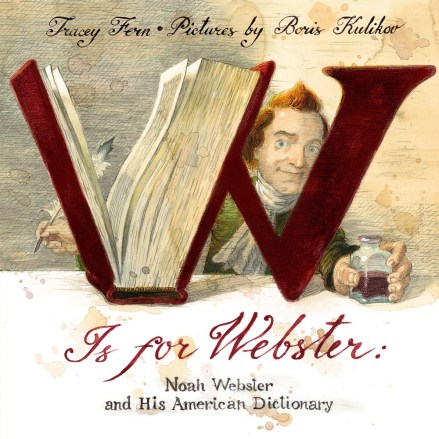
W is for Webster: Noah Webster and His American Dictionary

Witten by Tracey Fern | Illustrated by Boris Kulikov


Noah Webster was always different. Tall and thin with bright red hair, he liked to use big words when he spoke and wanted to do homework instead of goof around in school. Unfortunately for him school was in session for only a few months a year and goofing around seemed to be the major course of study. Of course, Noah didn’t call it “goofing around,” he called it “‘playing roguish tricks.’”

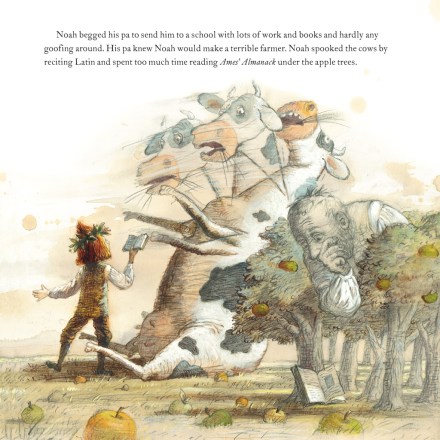
Noah begged to go to a harder school. “His pa knew Noah would make a terrible farmer. Noah spooked the cows by reciting Latin and spent too much time reading Ames’ Almanack under the apple trees.” His pa agreed, and in 1774 at the age of 16 Noah went off to study at nearby Yale College in New Haven, Connecticut. Yale had strict rules. Students had to rise at 5:30 a.m. and study for two hours before class. They were also fined “two shillings for making ‘tumult, noise, hallooing,’ or otherwise goofing around. Noah thought Yale was wonderful.”

celebrate-picture-books-picture-book-review-w-is-for-webster-spooking-horses

Image copyright Boris Kulikov, text copyright Tracey Fern. Courtesy of macmillan.com

Noah hadn’t been at Yale long before the American Revolutionary War broke out. Although Noah signed up to fight, he recognized that he was “‘ill able to bear the fatigues of a soldier,’” which was “Noah’s big way of saying he was a lousy soldier.” He returned to Yale and graduated in 1778, but he left the school with no job and no prospects. Even his pa told him to leave home to find work.

Noah became a teacher, but he found the British textbooks “‘defective and erroneous.’” He believed the students should have American textbooks that better reflected their diverse experiences. With the Revolutionary War at an end and America victorious, Noah wanted to help “hold his new, complicated nation together.” He believed that America needed a language different than the English spoked in Britain. “‘A national language is a national tie,’ Noah insisted to all who would listen, and to many who wouldn’t.”

celebrate-picture-books-picture-book-review-w-is-for-webster-teaching-school

Image copyright Boris Kulikov. Courtesy of macmillan.com

He began the work himself with a speller. Right from the start Noah’s speller was different than the British books. It included everyday words “like scab, grub, and mop.” He also simplified the spelling by taking out unpronounced letters or spelling words phonetically. He also added pictures to every page and presented lists of rhyming words. He also priced his book so almost anyone could afford it. Noah’s speller became a bestseller.

Still, Noah had bigger ideas. He wanted to write a patriotic dictionary with uniquely American words. He took his idea on the road to make money for the venture, lecturing wherever he could. But Noah’s know-it-all tone of delivery, his “prickly personality,” even his “‘porcupine hair’” put people off. And what’s more, they didn’t like the idea of his dictionary. People thought he was a “lunatic” for wanting to replace British words with American ones.

celebrate-picture-books-picture-book-review-w-is-for-webster-working-on-letter-a

Image copyright Boris Kulikov, text copyright Tracey Fern. Courtesy of macmillan.com

In 1806 Noah went ahead and published “A Compendious Dictionary of the English Language. It was a flop, but Noah wasn’t discouraged.” The next year he started working on a bigger dictionary. He copied words out of British dictionaries and added American words and he traced the roots of all the words and wrote definitions, sometimes including quotes from famous people to show differences in meaning. He figured the whole dictionary would take 5 years to finish—eight to ten, tops.

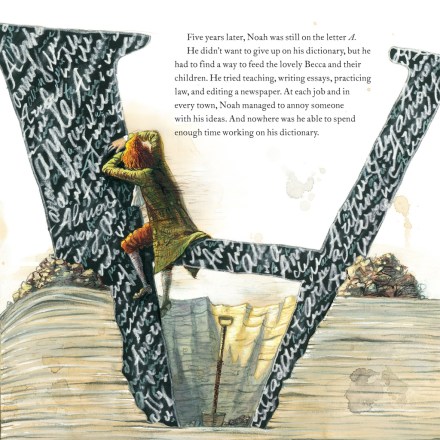
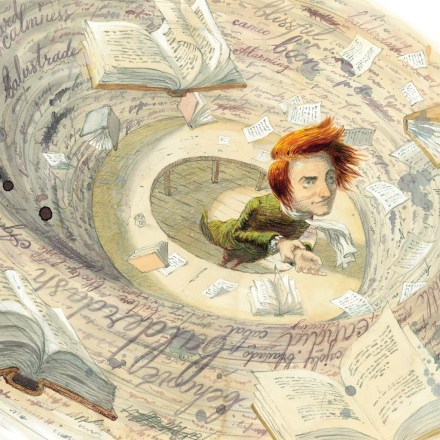
But five years later, Noah was still on the letter A. With no money coming in and a growing family, Noah took a variety of jobs, but he always seemed to rub someone the wrong way, and he lost job after job. He decided to sell his fancy house and bought a farm. Here he was able to gather books, books, and more books around his unusual donut-shaped desk. Standing inside the center of the desk, he spun around and around reading the books and finding words to include in his dictionary.

celebrate-picture-books-picture-book-review-w-is-for-webster-special-desk

Image copyright Boris Kulikov. Courtesy of macmillan.com

By 1822 Noah had exhausted all the books in his study. He took to traveling to other American libraries, moved his family to New Haven to use the Yale library, and in 1824 even sailed to Europe to explore books found in the National Library in Paris and at the University of Cambridge in England.

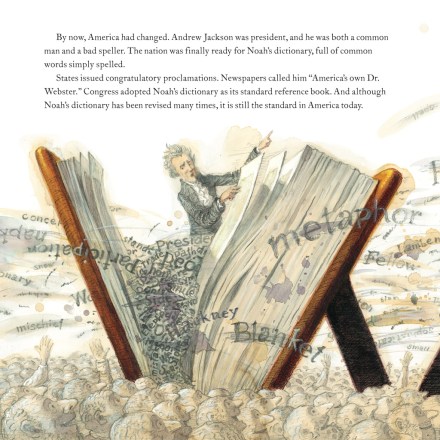
Finally, in 1825 Noah finished his dictionary.  With more than 70,000 words, An American Dictionary of the English Language was the largest English dictionary ever written. “Many people thought it was the best English dictionary ever written.” Why the change of heart? Well, one reason might have been that the President of the United States, Andrew Jackson, “was a common man and a bad speller.” Another might have been that the timing was just right.

celebrate-picture-books-picture-book-review-w-is-for-webster-finished-dictionary

Image copyright Boris Kulikov, text copyright Tracey Fern. Courtesy of macmillan.com

However it came to be, Noah was now lauded as a hero by states and newspapers. Congress even adopted the dictionary as its standard reference book. Noah had not only succeeded in writing an American dictionary, he had “created a new American language for a new American nation.” One that is still beloved today.

An Author’s note as well as a list of resources follow the text.

Webster’s dictionary is intrinsically woven into every American child’s life through language and vocabulary development. Tracey Fern’s captivating story reveals the charm and foibles of its author, a man with just the right temperament and perseverance to tackle and complete such an overwhelming task. Fern’s exceptional storytelling skills and deft turns of phrase allow for a comprehensive review of Webster’s life that is full of exhilaration, empathy, and a good dose of the “big” words Webster loved. Fern builds suspense and tension while offering an insightful look at early American history by including details of the staggering research required and the adverse reactions to Webster and his work.

Boris Kulikov’s expressive illustrations perfectly capture the complex personality of Noah Webster, late-1700s-to-early-1800s American society, and the obstacles Webster faced in writing his dictionary. Fittingly, words, books, or ink blots abound on every page, pouring from the air, sprouting from the ground, stacked like the skyscrapers that would come, and surrounding Noah Webster the way they must have swarmed through his brain. Kulikov infuses humor into his paintings, as when Noah tears at his hair wondering how he will support himself after college, shrugs nonplussed at his students’ shenanigans, and buys himself quiet work time by handing out sweets to his kids. Visual metaphors for the hard, backbreaking and mind bending work also enhance this beautiful biography.

Ages 5 – 10 (adult’s will also enjoy this biography)

Farrar Straus Giroux, 2015 | ISBN 978-0374382407

Visit Tracey Fern’s website to learn more about her and her books!

Discover a gallery of artwork by Boris Kulikov on his website!

Dictionary Day Activity

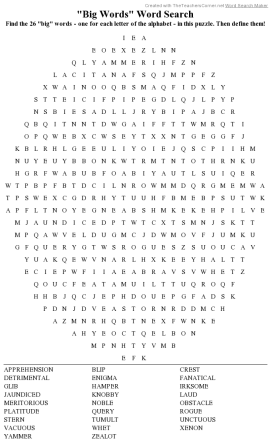
celebrate-picture-books-picture-book-review-big-words-vocabulary-word-search-puzzle

“Big Words” Word Search


Knowing and using a wide range of words allows you to express yourself in exact—and often—fun ways. Find the 26 “big” words—one for each letter of the alphabet—in this printable “Big Words” Word Search puzzle. Here’s the Solution!

Picture Book Review

October 5 – World Teachers Day

celebrate-picture-books-picture-book-review-little-red-writing-cover

About the Holiday

Teachers are amazing! They dedicate their lives to connecting students to the wider world and opening doors to opportunities for a bright future. Today’s holiday celebrates all the work, thought, and planning that teachers put into every day’s lessons as well as the care and concern they have for every one of their students. Wherever you are, thank your teacher or teachers for everything they do to help you write your own story and ultimately your own ticket—like the sharp heroine of today’s book!

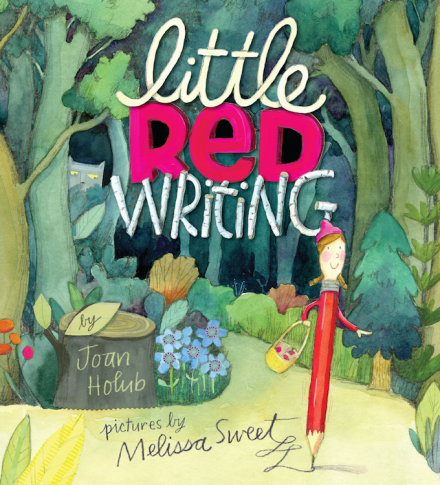
Little Red Writing

Written by Joan Holub | Illustrated by Melissa Sweet

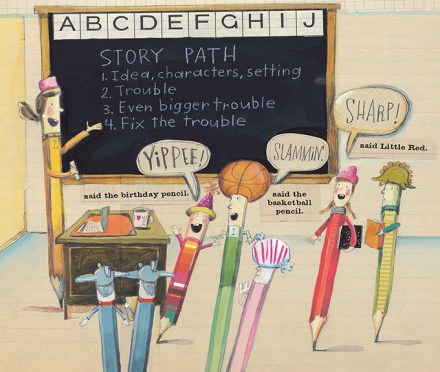
One day in pencil school Ms. 2, the teacher, tells her class that they are going to write a story. Her students are excited, and each one has an idea of what to write. The birthday pencil, wearing a bright pink cone-shaped hat, yells “‘Yippee! I want to write a happy story!’” The state pencil, sporting a map of Pencilvania on its eraser end, wants to tell a nonfiction tale about its state, and the basketball pencil with a small replica basketball topper imagines writing a sports story.

celebrate-picture-books-picture-book-review-little-red-writing-classroom

Image copyright Melissa Sweet, text copyright Joan Holub, courtesy of chroniclebooks.com

Little Red, looking sharp in her shiny scarlet coat of paint chooses to “write a story about bravery because red is the color of courage. But what would a brave pencil do?” she wonders. She decides to go in search of unusual characters that will give her a chance to fight evil and save the day. Ms. 2 gives “Little Red a basket of 15 red words to use in case she ran into trouble” and reminds her that “it’s ok to wander a little, but stick to your basic story path so you don’t get lost.”

Little Red takes her basket full of nouns and sets off. In her notebook she begins to describe her journey. “As she walked along…” she writes and then stops. “Walking is boring,” she decides. To discover some action she heads for the gym, where other pencils are twisting, throwing, catching, swinging, and jumping. Little Red bounces and boogies and cartwheels “right off the page into a deep, dark, descriptive forest.”

celebrate-picture-books-picture-book-review-little-red-writing-descriptive-forest

Image copyright Melissa Sweet, text copyright Joan Holub, courtesy of chroniclebooks.com

The adjectives lay thick on the gnarled, flowery, shadowy path. The towering trees smell piney and their verdant, russet leaves hide squirrelly creatures. The forest is beautiful, but suddenly Little Red feels “bogged down, hindered, lost!” Remembering her basket, she reaches in and pulls out scissors. They help her “cut through all this description and stick to the story path.” Back on the straight and narrower, Little Red encounters a bottle of “conjunction glue” with just the right kinds of words to help her. She gives the bottle a squeeze, but now finds that her sentences go on and on without saying anything important. All seems lost until “Suddenly” arrives.

“Suddenly,” she hears a throaty roar that begins to chase her. Little Red runs without stopping, throwing out any word she can grab from her basket until she can escape to the next page. Here, however, she discovers a “long, tangly tail” and decides to investigate. The tail winds all along the school corridors, passing the cafeteria, the music room, the art room, and the auditorium. It even meanders by the math room and the after school clubs room into the principal’s office.

celebrate-picture-books-picture-book-review-little-red-writing-wolf-3000-chases-little-red

Image copyright Melissa Sweet, text copyright Joan Holub, courtesy of chroniclebooks.com

Little Red knocks on the door. Inside, Principal Granny, her long tail tangled behind her, roars her greetings. Little Red is suspicious, but she continues to explain the growly voice she heard. In fact, she says, “It sounded kind of like yours.” “The betterrr to be hearrrd on the school interrrcom,” the principal states. Little Red also reports the tangly tail, to which the principal answers, “the betterrr to get charrrged up for my school duties when my batteries are rrrunning low. All at once Red notices the principal’s big sharp teeth. “The betterrr to chomp little pencils like you and grrrind them up!”

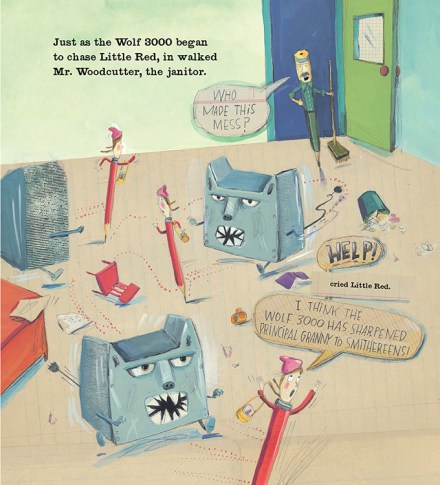
With that Little Red realizes that this isn’t Principal Granny but the “Wolf 3000: the grumpiest, growliest, grindingest pencil sharpener ever made!” The Wolf 3000 begins to chase Little Red around the office, and just when there seems no hope, in walks Mr. Woodcutter, the janitor—who immediately faints. There is only one thing left to do. Little Red grabs her last word and hurls it at the Wolf 3000. “KABLOOEY” goes the dynamite, reducing the Wolf 3000 to a pile of parts.

Principal Granny emerges from the rubble shortened but okay and declares Little Red a hero. Little Red rushes back to her classroom in time to hear the other pencils’ stories and to share her own brave adventure.

celebrate-picture-books-picture-book-review-little-red-writing-dynamite

Image copyright Melissa Sweet, text copyright Joan Holub, courtesy of chroniclebooks.com

Joan Holub’s delightfully clever tribute to writing draws on the Little Red Riding Hood story to get kids excited about using the various parts of speech that make writing so fun and reading so enjoyable. The metaphorical “story path” that Little Red traverses brings her into contact with characters that provide immediate understanding of the concepts. When Little Red squeezes the bottle of conjunction glue, out squirt the words so, but, and, although, yet, and or, which are incorporated into the illustrations on the page. Readers’ familiarity with the original fairy tale increases suspense in this fractured version. The Wolf 3000 electric pencil sharpener makes a perfect nemesis, and the fainting janitor leaves Little Red to sharpen her wits and defeat the beast. Dynamite—at least the word itself—truly is mightier than the sword.

Holub’s nimble talent with puns and wordplay elevates Little Red Writing from simply a book about the subject of grammar and writing to a captivating story kids will love to hear again and again.

Grammar has never looked as enticing as in Melissa Sweet’s vivacious illustrations of adorable Little Red on the story path to prove her bravery. Sweet’s pages, combining pencil drawings, watercolor, and collage, burst with animated typography, scraps of vivid red nouns, and expressive characters in a detailed and fully realized pencil school. Little Red’s final battle with the Wolf 3000 gives full range to Sweet’s rousing visual humor in a highly satisfying climax to the story.

For kids who love reading, writing, and a really good story, Little Red Writing would be a welcome addition to their bookshelves. Teachers will find the story enhances any unit on writing, grammar, and literature.

Ages 5 – 9

Chronicle Books, 2013 | ISBN 978-1452152097

You will find children’s books for all ages as well as fun videos, activities, and teachers’ resources on Joan Holub‘s website!

Discover books, things to make, and lots of fun on Melissa Sweet‘s website!

World Teachers Day Activity

CPB - Pencil Maze

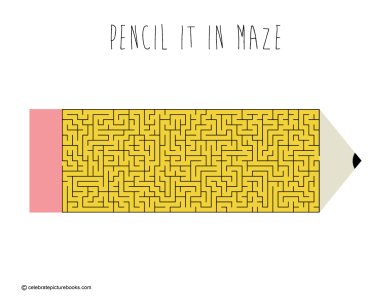
Pencil It In Maze

Writing a story is like completing a maze – you must stay on the right path from the beginning to the end to write a satisfying tale. Find your way through intricacies of this printable Pencil It In Maze

Picture Book Review
September 8 – International Literacy Day

celebrate-picture-books-picture-book-review-the-summer-nick-taught-his-cats-to-read-cover

About the Holiday

In 1966 UNESCO (United Nations Organization for Education, Science and Culture) established International Literacy Day on this date to “actively mobilize the international community to promote literacy as an instrument to empower individuals, communities, and societies.” Marking its 50th anniversary, International Literacy Day is this year celebrating the theme “Reading the Past, Writing the Future” to commemorate five decades of efforts to increase in literacy rates around the world and the progress made. “It also looks to innovative solutions to further boost literacy in the future.” With a focus on innovation, International Literacy Prizes are also awarded to people with outstanding solutions that can drive literacy towards achieving future goals.

The World Literacy Foundation also celebrates today’s holiday with the 2016 campaign “The Sky’s the Limit,” which aims to eliminate the digital divide for students in the developing world.

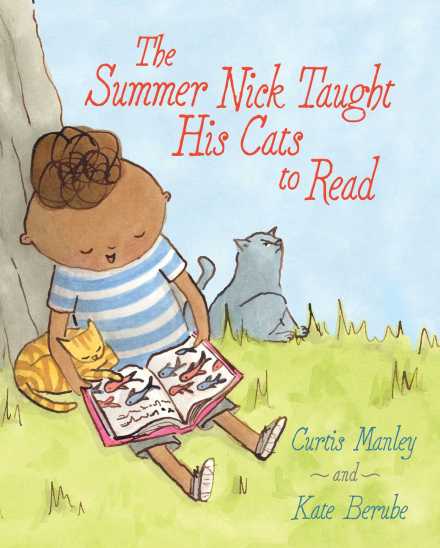
The Summer Nick Taught His Cats to Read

Written by Curtis Manley | Illustrated by Kate Berube


One summer Nick, Verne, and Stevenson did everything together. Nick is a little boy and Verne and Stevenson are two very different cats. Nick and Verne loved to spend time near the water—Stevenson tolerated it. Nick and Verne slept happily in a tent under the stars—Stevenson barely shut his eyes. While Nick rode his bike Verne eagerly sat in the front basket—Stevenson hunkered down in a box on the back. But when Nick sat down to read, both cats had their own ideas of fun—like lying on top of the book—and Nick could hardly read a sentence.

celebrate-picture-books-picture-book-review-the-summer-nick-taught-his-cats-to-read-ball

Image copyright Kate Berube, text copyright Curtis Manley, courtesy of simonandschuster.com

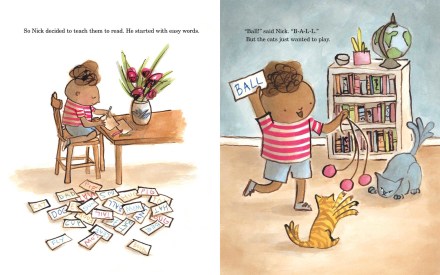
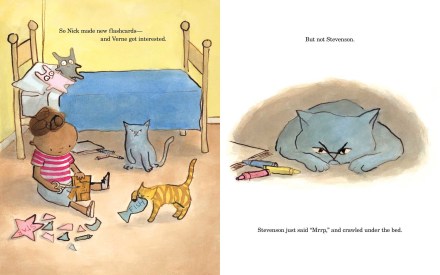
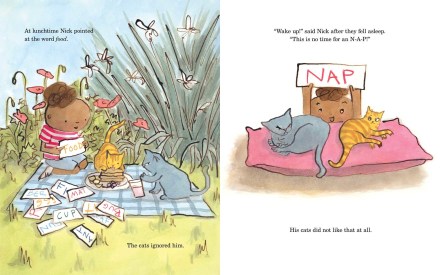
“So Nick decided to teach them how to read. He made flash cards and started with easy words” like “ball,” but Verne and Stevenson just wanted to play with the ball. While the three had a picnic on the lawn, “Nick pointed to the word food. The cats ignored him.” When the cats snoozed Nick woke them with a sign. “‘This is no time for an N-A-P!’” he said. Neither cat responded well, so Nick tried a new tactic. He made word-shaped flash cards. Verne took a nibble of “F-I-S-H,” but Stevenson hid under the bed.

celebrate-picture-books-picture-book-review-the-summer-nick-taught-his-cats-to-read-food-flash-cards

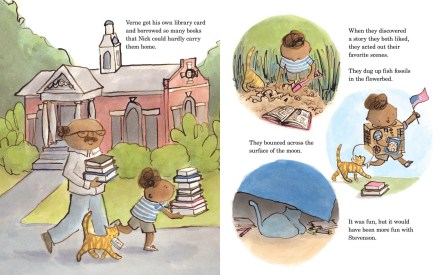
Nick began to see that Verne liked stories about cats and fish. “Verne loved fish. He followed along as Nick read, learning the sounds of the letters.” He even read by himself, discovering new stories, especially 2,000 Leagues Under the Sea. But Stevenson? When Nick spelled words for him, he merely ran under the porch, hissing. By this time Verne was reading so many books that he got his own library card and Nick needed help carrying all of his books home. Nick and Verne had fun acting out their favorite stories, but they missed Stevenson.

One day “Verne discovered a treasure under the bed—a great stack of Stevenson’s pirate drawings. “‘Wow!’” Nick whispered. “‘Stevenson drew a story.’” Nick and Verne put the pages together and began to write words to go with them. When the story was finished, Nick, Verne, and Stevenson “squeezed under the porch, gave Stevenson an eye patch, and read The Tale of One-Eyed Stevenson and the Pirate Gold. Stevenson listened and followed along. He didn’t run away. Or hiss. Not even once.”

celebrate-picture-books-picture-book-review-the-summer-nick-taught-his-cats-to-read-library

Image copyright Kate Berube, text copyright Curtis Manley, courtesy of simonandschuster.com


Suddenly, Stevenson couldn’t get enough of books.  Even before Nick woke up, Stevenson could be found with his nose in Treasure Island or another adventure book, and whenever Nick and Verne played pirates, Stevenson joined in. He helped bring down “scurvy mutineers” and found buried treasure. Now the three readers do everything together. They “hunt for dinosaurs in the lost world behind the garden…race around the yard in eighty seconds…and journey to the center of the basement.” And while they all like to read on their own, they also like it when someone reads to them. “Hmmm…,” Nick thinks, maybe next he could teach his cats to talk. “‘Meow,’ says Stevenson.”

celebrate-picture-books-picture-book-review-the-summer-nick-taught-his-cats-to-read-grumpy-stevenson

Image copyright Kate Berube, text copyright Curtis Manley, courtesy of simonandschuster.com

Curtis Manley’s adorable tribute to reading and learning to read using cats, with their variety of personalities, is inspired. Just as some people respond more to the words while others are attracted by the pictures, Verne and Stevenson have their own relationships with books. The names of the cats and their preferred reading material are also reminders that books are personal, and disinterest in one type of story does not reflect disinterest in all stories. Manley’s text makes for a joyful read-aloud as his language and phrasing is evocative, lyrical, and imaginative.

In perfect accompaniment, Kate Berube brings this creative story to life, illustrating the tender relationship between Nick and his pets as well as emphasizing the humor and distinct personalities inherent in orange striped Verne and smoky gray Stevenson that influence their journeys to literacy. Depictions of the various books Verne and Stevenson are drawn to highlight the literary references in the trio’s further play. Readers will want to stop and peruse the page of library shelves, where such books as “Harry Picaroon and the Swashbuckler’s Stone”, “Harold and the Purple Canon”, “Millions of Rats”, and “Where the Wild Pirates Are” wait to be checked out in the Pirates section.

Kids will eagerly want to adopt The Summer Nick Taught His Cats to Read, and it will snuggle in nicely on children’s bookshelves.

Ages 4 – 8

Simon & Schuster Books for Young Readers, 2016 | ISBN 978-1481435697

Discover “the facts, fictions, poems, and numbers” of Curtis Manley on his website!

View a gallery of Kate Berube‘s art on her website!

International Literacy Day Activity

CPB - Cat Bookmark (2)

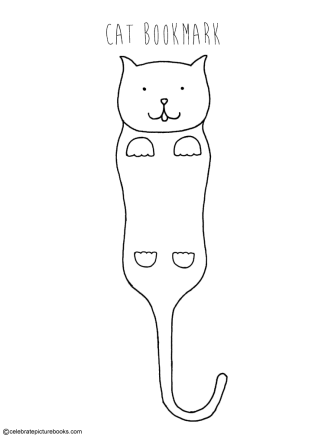
Feline Fine about Reading Bookmark


This want-to-be literary lion feels fine about reading! Let it hold your page while you’re away! Print your Feline Fine about Reading Bookmark and color it!

Picture Book Review
September 7 – Buy a Book Day

celebrate-picture-books-picture-book-review-a-child-of-books-cover

About the Holiday

Established in 2012 Buy a Book Day promotes an appreciation for physical paperback and hardbound books. Whether you’re cracking open a brand new release or gently turning the pages in a well-worn volume, holding an actual book in your hands is an unforgettable connection between you, the author, and another world—real or imaginary. Today, drop into your local bookstore and peruse the shelves—you’ll be sure to find a fascinating book to buy.

A Child of Books

By Oliver Jeffers and Sam Winston


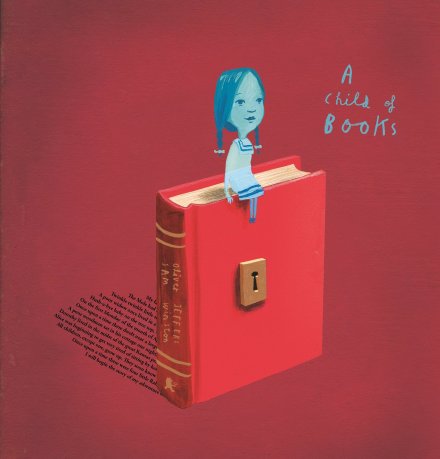
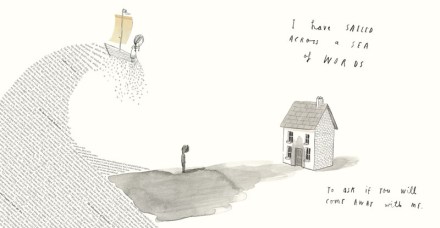
A little girl sits on a log raft with a parchment sail, dangling her feet into the water that swirls around her legs in an eddy made of words that read: “Once upon a time there was a child who loved to read…,” while the rest of the words disperse and float away. In fact, the girl is reading now—a book with a keyhole in the middle. “I am a child of books,” she reveals. “I come from a world of stories.” The wind catches the sail of her raft and the girl is off on an adventure, rising and dipping with the cresting letters that make up waves coming from the deeper sea of straight lines of excerpted text from classics including The Voyages of Doctor Doolittle, Robinson Crusoe, The Swiss Family Robinson, and Kidnapped.

celebrate-picture-books-picture-book-review-a-child-of-books-wave

Image copyrights Oliver Jeffers and Sam Winston, courtesy of oliverjeffers.com

The waves bring her to shore, where riding atop one she towers over a small boy. The girl asks if he will sail away with her. He peers into the window of his house where his father sits reading the newspaper. Headlines announce “Serious Stuff,” “Facts,” “Important Things,” and “Business.” And indeed just a glance at the articles will inform readers that “A group of serious people passed on concerns about a serious document that has been lost by a serious organization….”; that “Scientists have discovered a new fact. In one test, nearly half the subjects proved the fact, it was revealed….”; and that “an important company is to stop producing some important stuff by later this year. It said no one wanted this particular bit of important stuff.” The father’s glasses glint with numbers that rim the frames like tears.

The girl says that “some people have forgotten” where she lives, but that she can lead him on the way. The two follow a path of words from Alice in Wonderland, and the boy watches worriedly as the girl confidently climbs down a hole in the lines. There is more climbing to be done, however, and the girl, in her blue and white sailor dress, holds the boys hand as they traverse mountains made of Peter Pan that reach into the sky. By the time the friends row their dinghy into a dark cave created from the story of Treasure Island and discover a wooden chest, the boy is eager and excited for the journey.

celebrate-picture-books-picture-book-review-a-child-of-books-colorful-book-forest

Image copyrights Oliver Jeffers and Sam Winston, courtesy of oliverjeffers.com

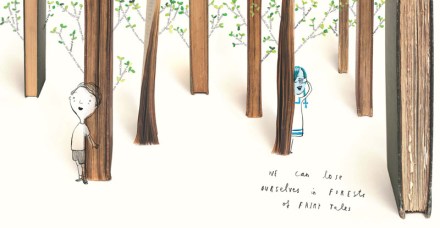
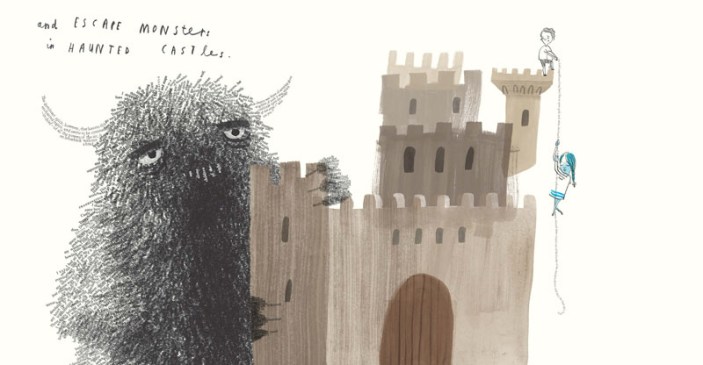
The girl and boy play hide-and-seek among tall trees made of books, where titles and lines of Hansel and Gretel, Little Red-Cap, The Golden Goose, Tom Thumb, and more jut out as leaf-covered branches. They leave the woods and come to a haunted castle that is being attacked by a monster made dark and hairy with the words of Frankenstein and Dracula. This time the boy holds a line of Rapunzel as the girl deftly shimmies to the top of a turret.

Tuckered out, the pair of friends ascend ladders to clouds of lullabies and drift into dreamland where they stand on the moon so they can “shout as loud as we like in space.” But perhaps it is not the moon but, instead, their own imaginary world made of color and characters, palaces and possibilities where stories may end but creativity lives on because “we’re made from stories…” and “our house is a home of invention.”

celebrate-picture-books-picture-book-review-a-child-of-books-colorful-monster

Image copyrights Oliver Jeffers and Sam Winston, courtesy of oliverjeffers.com

If any book invites readers to linger over the intricacies of its pages, A Child of Books is it. A perfect combination of Oliver Jeffers’ homage to the power of storytelling and Sam Winston’s artistry with typography, A Child of Books summons readers of all ages to leave the weariness of the “serious” world and enter the realm of the imagination.

The lilting lines of Oliver Jeffers’ prose poem flow with the stream of consciousness that allows thinkers to journey to nooks and crannies, participate in majestic vistas, and create the unknown of their own fancies. In Sam Winston’s hands sentences and paragraphs describing classic sea voyages swell into waves; lines from other classics crowd in upon each other, solidifying into a hidden inlet or forming a horned creature; and soft yellowed pages return to replicate the trees they once were. In the end a rainbow of characters spin out from a revolving globe, depicting our full color world.

Maps laid out by the storytellers of the past may show us routes to take but as A Child of Books reveals, there is so much white space yet to be discovered. For bibliophiles young and old, A Child of Books makes a beautiful gift and will be a welcome addition to personal library shelves.

Ages 4 and up

Candlewick Press, 2016 | ISBN 978-0763690779

Visit Oliver Jeffers’ website to view his wide-ranging work in picture books, paintings, film, and more. You can follow a paper airplane to fun games based on his picture books in Oliver Jeffers’ World.
To see the unique perspective of Sam Winston, view his books, projects, and archives on his website!
Watch the Child of Books book trailer!


Buy a Book Day Activity

celebrate-picture-books-picture-book-review-i've-got-the-reading-bug-books-to-read-list

I’ve Got the Reading Bug! Books to Buy List


Do you love to read? Do you have a wish list of books you want to read next? Me too! Use this printable I’ve Got the Reading Bug! Books to Buy sheet to keep track of those great book ideas.