January 17 – Kid Inventors’ Day

celebrate-picture-books-picture-book-review-the-girl-who-thought-in-pictures-cover

About the Holiday

Today’s holiday celebrates all those ingenious kids who have improved the world with their inventions. This date was chosen to commemorate another child inventor—Benjamin Franklin—who designed the first swim fins when he was just 12 years old! (Seriously, is there nothing this man didn’t or couldn’t do?). With their supple minds and can-do attitudes, kids have changed the ways things are done in the fields of medicine, technology, communications, and even food—as today’s book shows! To learn more about the day and find lots of resources, including a list of books, contests, tips, and teachers’ guides, visit the K.I.D website.

The Girl Who Thought in Pictures: The Story of Dr. Temple Grandin

Written by Julia Finley Mosca | Illustrated by Daniel Rieley


If you feel different and sometimes discouraged, the story of Temple Grandin may help you see that everyone has a talent and their own place in the world. Temple was born in Boston and “unique from the start, / an unusual girl, / she loved spinning in circles / and watching things twirl.” Loud sounds, big crowds, bright lights, and scratchy clothes disturbed her. And she did not like to get a “big squeezy hug.”
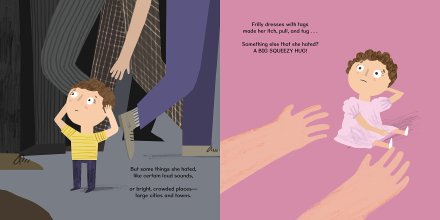
celebrate-picture-books-picture-book-review-the-girl-who-thought-in-pictures-too-loud

Image copyright Daniel Rieley, 2017, text copyright Julia Finley Mosca, 2017. Courtesy of The Innovation Press.

When she became overloaded with stress and frustration, Temple was known to “kick, holler, bang, shrieeeeek! Yet, still, by age three, not one word did she speak.” People told Temple’s parents that she’d never be normal and to send her away, but her mother would not hear of it. With a lot of work, special teachers helped Temple learn to talk. “And that thing with her brain… / it was AUTISM, see? / She was ‘different not less,’ / they all finally agreed.”

celebrate-picture-books-picture-book-review-the-girl-who-thought-in-pictures-doctor

Image copyright Daniel Rieley, 2017, text copyright Julia Finley Mosca, 2017. Courtesy of The Innovation Press.

While Temple was like her peers in many ways, she interacted with words differently. “If something was mentioned, / for instance, a fly, / in her mind, she’d see dozens / of PHOTOS buzz by.” Her different view point made it hard for her at school. The other kids chased her and teased her for the way that she acted and for “…saying things / over and over. / and over… / and over… / AND over.” When she had finally had enough, “she threw a book at a kid / and was kicked out of school!” No one understood Temple and Temple couldn’t understand them.
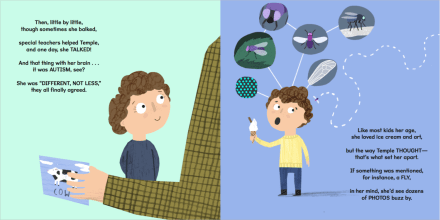
celebrate-picture-books-picture-book-review-the-girl-who-thought-in-pictures-fly

Image copyright Daniel Rieley, 2017, text copyright Julia Finley Mosca, 2017. Courtesy of The Innovation Press.

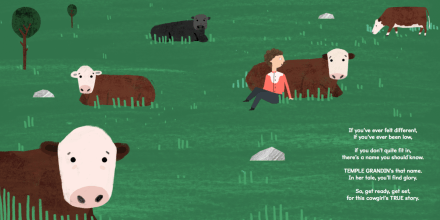
Her mother then sent her to visit her aunt, who lived on a ranch out west. Here, among the animals, Temple felt better. Her favorites were the cows, so silent and sweet. “At a NEW school that fall, / Temple found more support / said a teacher who taught her: / ‘You’ll never fall short.” That teacher was right, and at engineering and science she felt right at home.

Her first invention—made from memory—was “a machine / like she’d seen on some farms, / an INVENTION that hugged her / with boards, and not arms.” In this device she felt snug and calm, just like the cows. As she began to succeed, Temple came to see that her attention to detail was a benefit, and she began to feel special. Then she learned about farms where the cows were not treated kindly and resolved to change that.
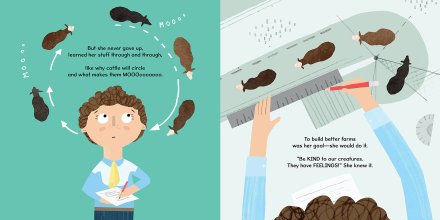
celebrate-picture-books-picture-book-review-the-girl-who-thought-in-pictures-cows

Image copyright Daniel Rieley, 2017, text copyright Julia Finley Mosca, 2017. Courtesy of The Innovation Press.

She went on to college and became an expert on farms, earning three degrees. Telling people about her ideas for farming improvements was sometimes scary because they ignored her and, well…weren’t very sweet. But she didn’t give up. She learned more about cattle, like why they circle and moo. “To build better farms / was her goal—she would do it. / ‘Be KIND to our creatures. / They have FEELINGS!’ She knew it.”

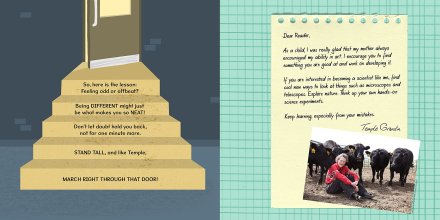
It took time, but people began to see that Temple was right, and farm after farm implemented her ideas. She won awards for this work and other ideas, a movie was made about her life, and she now travels the world telling her story and teaching: “‘Each person is special– / so UNIQUE are our minds. / This world needs YOUR ideas. / It takes brains of ALL kinds!”
celebrate-picture-books-picture-book-review-the-girl-who-thought-in-pictures-letter

Image copyright Daniel Rieley, 2017, text copyright Julia Finley Mosca, 2017. Courtesy of The Innovation Press.

A letter from Temple Grandin to young readers, extensive information about Temple and tidbits from her interview with the author, a timeline of her life, and resources follow the text.

Julia Finley Mosca’s insightful biography of Temple Grandin offers inspiration and encouragement to children at those times when life seems difficult or if they feel misunderstood. Childhood can be filled with moments—both small and large, short or long—when comfort and reassurance are needed. Mosca’s rhyming verses make Temple’s story accessible to a wide age range of readers while providing an inclusive way to show how autism creates a different way of experiencing the world. Temple’s supportive teachers are role models for all educators. Temple Grandin’s fascinating life demonstrates that there is a niche for everyone and that through understanding, perseverance, and acceptance, all children can go far.
celebrate-picture-books-picture-book-review-the-girl-who-thought-in-pictures-cows-in-field

Image copyright Daniel Rieley, 2017, text copyright Julia Finley Mosca, 2017. Courtesy of The Innovation Press.

Daniel Rieley’s cartoon-style illustrations will resonate with readers as Temple takes in everything she sees with wide-open eyes and interprets it in her own way—even before she can speak. The separation between Temple and the other students at her first school is poignantly communicated in a two-page spread in which pointing hands and a lobbed ball of paper appear from the left-hand margin and Temple reads alone on the far side of the right-hand page. Temple’s ability to think in pictures is demonstrated throughout the book with inset images. Readers see some of the farming practices Temple wanted to change, her original drawings, and the resulting equipment now used on farms to improve the conditions of the animals raised there.

The Girl Who Thought in Pictures: The Story of Dr. Temple Grandin is a moving and motivational story for all children and is a must for school and public libraries.

Ages 5 – 10

The Innovation Press, 2017 | ISBN  978-1943147304 (Hardcover) | ISBN 978-1943147618 (Paperback), 2018

Discover more about Julia Finley Mosca and her Amazing Scientists series on the Amazing Scientists website.

Learn more about Daniel Rieley, his books, and his art on his website.

Kid Inventors’ Day Activity

celebrate-picture-books-picture-book-review-kid-inventors-coloring-page

Inventing Is Fun! Coloring Page


If you love to invent as much as these kids do, grab your crayons, markers, or pencils and give their lab a bit more color in this printable Inventing Is Fun! Coloring Page!

celebrate-picture-books-picture-book-review-the-girl-who-thought-in-pictures-cover

You can find The Girl Who Thought in Pictures: The Story of Dr. Temple Grandin at these booksellers

Amazon | Barnes & Noble | Books-a-Million | IndieBound

Picture Book Review

December 31 – Universal Hour of Peace Day

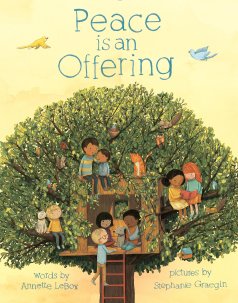
celebrate-picture-books-picture-book-review-peace-is-an-offering-cover

About the Holiday

The idea of Barbara Condron, the Hour of Peace encourages people worldwide to live conflict free for the hour between 11:30 p.m. December 31 and 12:30 January 1 and enter the new year in a spirit of love and hope. The holiday was first celebrated on October 24, 1995 to coincide with the 50th anniversary of the United Nations and the autumnal equinox. In 1996 the holiday was moved to January 1st and took place at noon GMT. It now spans the transition from the outgoing year to the new year.

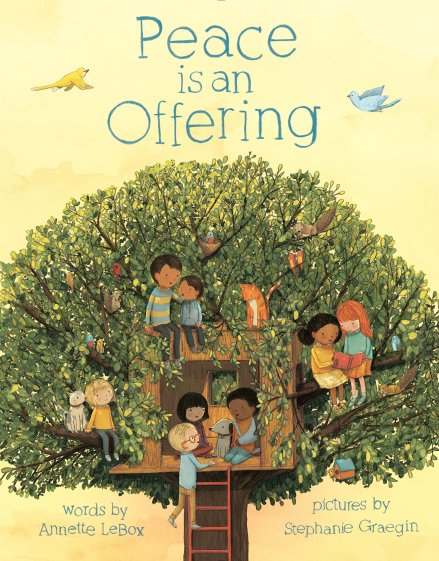
Peace is an Offering

Written by Annette LeBox | Illustrated by Stephanie Graegin


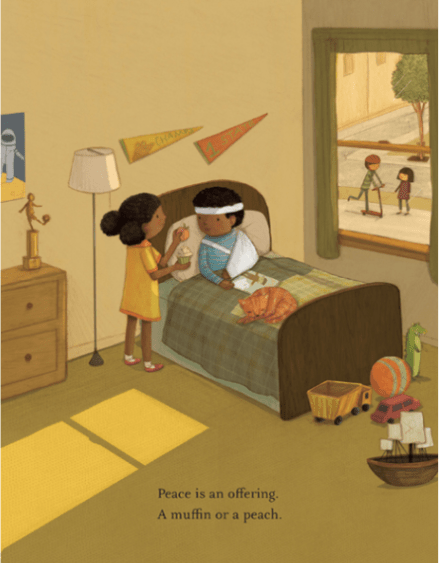
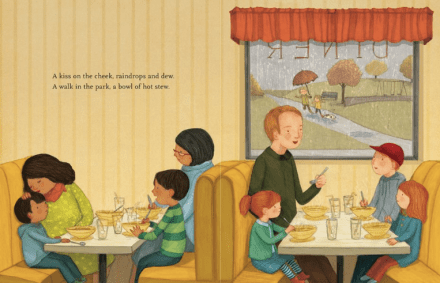
Peace comes in many forms, as simple as “an offering” of “a muffin or a peach. / A birthday invitation. / A trip to the beach.” Peace is being thankful for the wonders of nature, a parent’s love, the coolness of rain or morning dew, even a steaming “bowl of hot stew.”

celebrate-picture-books-picture-book-review-peace-is-an-offering-broken-arm

Image copyright Stephanie Graegin, 2015, text copyright Annette LeBox. Courtesy of Dial Books for Young Readers.

Peace is those times when we are together, in a hug, with sweet words, or cuddling to hear a story. Peace comes in reassurance to the questions that might worry: “Will you wait when I’m slow? / Will you calm by fears? / Will you sing to the sun / to dry my tears?”

celebrate-picture-books-picture-book-review-peace-is-an-offering-stew

Image copyright Stephanie Graegin, 2015, text copyright Annette LeBox. Courtesy of Dial Books for Young Readers.

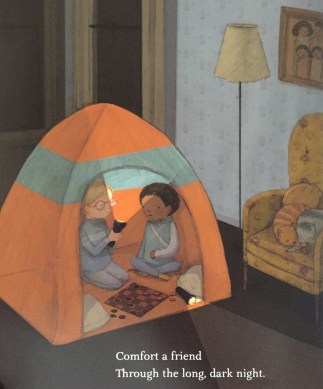
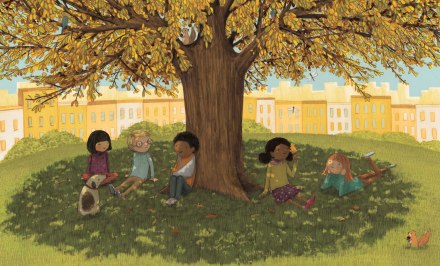
Where is peace found? In so many places! In a picture or a “belly laugh.” And even when tragedy strikes or “in your darkest hour,” peace can be found, for “peace is a joining, not a pulling apart. It’s the courage to bear a wounded heart.” Peace is finding safety and a “freedom from fear.” It’s found when you “offer a cookie…comfort a friend…sing a quiet song.” When you’re open to catching “a falling star” then peace will “walk beside you / wherever you are.”

celebrate-picture-books-picture-book-review-peace-is-an-offering-under-tree

Image copyright Stephanie Graegin, 2015, text copyright Annette LeBox. Courtesy of Dial Books for Young Readers.

Annette LeBox builds beautiful phrase upon beautiful phrase until midway through her inspiring story when she takes readers gently by the heart and shows them the way forward through any event that disrupts inner peace. LeBox reveals that capturing or recapturing those simple joys that make up a fulfilling life—and more importantly offering that kindness, help, and inclusion to others—brings hope, healing, and happiness not only to others but to yourself as well.

celebrate-picture-books-picture-book-review-peace-is-an-offering-tent

Image copyright Stephanie Graegin, 2015, text copyright Annette LeBox. Courtesy of Dial Books for Young Readers.

Stephanie Graegin excels in pairing text with quietly powerful images of togetherness and the tranquility such closeness brings. As diverse groups of friends, siblings, and families go about their day at school, eat out, navigate puddles and long walks, and enjoy time playing and laughing with each other, readers will be moved by Graegin’s tender details and will enjoy following and pointing out the characters who return from page to page. Images of loss (a mother hugs her two children close as they sit on a park bench overlooking a cityscape and little boy gazes at a picture of his dog) offer poignant opportunities for adult and kids to discuss life changes and events in the news that affect us all. Illustrations of uplifting ideas and gestures that children can use to express their vision of kindness and peace will inspire young readers.

A stirring and heartfelt look at the ways children and adults can share peace, comfort, and encouragement, Peace is an Offering is superb book to add to home, school, and public libraries.

Ages 3 – 8

Dial Books for Young Readers, 2015 | ISBN 978-0803740914

Discover more about Annette LeBox and her books on her website.

To learn more about Stephanie Graegin, her books, and her art on her website.

Universal Hour of Power Day Activity

celebrate-picture-books-picture-book-review-Peace-Coloring-Page-balloons

Soaring with Peace Coloring Page


A peaceful feeling inside can make your spirits soar like balloons in the air. Decorate the balloons in this printable page in your favorite colors (maybe even add a bit of glitter!) and hang it where seeing it will make you happy.

Soaring with Peace Coloring Page

celebrate-picture-books-picture-book-review-peace-is-an-offering-cover

You can find Peace is an Offering at these booksellers

Amazon | Barnes & Noble | Books-a-Million | IndieBound

Picture Book Review
December 10 – Nobel Prize Day

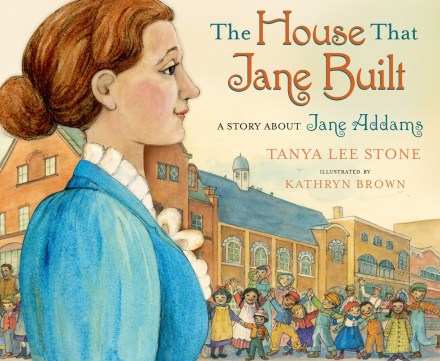
celebrate-picture-books-picture-book-the-house-that-jane-built-cover

About the Holiday

When Alfred Nobel’s will was read after his death on December 10, 1896, his heirs were taken by surprise. Nobel had signed a new will the year before, leaving most of his wealth to create prizes recognizing those who had done their best to benefit mankind in the fields of physics, chemistry,  medicine, literature, and peace. Opposition to this will on the part of the family and those Nobel had chosen to award the prize delayed Nobel’s wishes until 1901. Today, the awards include a prize for economics and are announced in early October. The awards are presented on December 10 in Stockholm, Sweden, except for the Nobel Peace Prize, which is awarded in Oslo, Norway.

Jane Addams Day falls on the same date to commemorate her achievement in being the first American woman to win the Nobel Peace Prize in 1931 for her work to bring about social change, equality, and peace. Each year the Jane Addams Peace Association presents awards to outstanding children’s books that promote peace and justice. To learn more about Jane Addams and the Jane Addams Peace Association, visit janeaddamspeace.org.

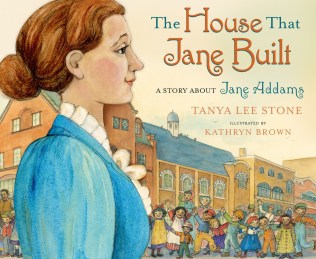
The House that Jane Built: A Story about Jane Addams

Written by Tanya Lee Stone | Illustrated by Kathryn Brown


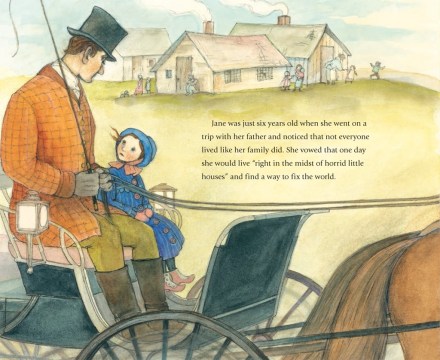
On a busy street stands a very special house where anyone is welcome and some find a home. In 1889 Jane Addams, a wealthy young woman, bought an elegant house in one of Chicago’s poorest neighborhoods. Why? At just six years old on a trip with her father, Jane “noticed that not everyone lived like her family did.” Right then she vowed that when she grew older, she would live in a poor community and “find a way to fix the world.”

celebrate-picture-books-picture-book-the-house-that-jane-built-trip-with-father

Image copyright Kathryn Brown, 2015, text copyright Tanya Lee Stone. Courtesy of us.macmillan.com.

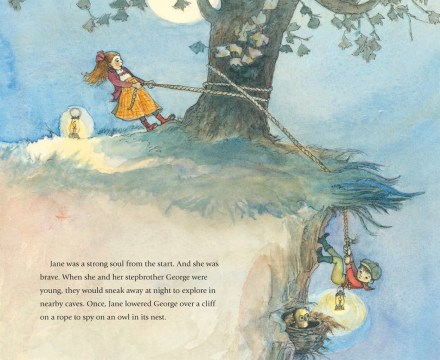
Jane was brave and strong. Sometimes she and her stepbrother George would “sneak away at night to explore in nearby caves.” Jane was also smart and “read and read her father’s book collection,” which also served as the town library. Unlike most women at the time, Jane went to college. She attended Rockford Female Seminary and “graduated at the top of her class.”

celebrate-picture-books-picture-book-the-house-that-jane-built-exploring-with-George

Image copyright Kathryn Brown, 2015, text copyright Tanya Lee Stone. Courtesy of us.macmillan.com.

After graduation, she didn’t know what she wanted to do, and when her father died that same summer, “Jane felt lost.” Two years later some friends invited her to travel to Europe with them. Although they went to the opera, museums, and many beautiful places, it was an experience in London that stuck with her. There she saw many “people in ragged clothes with outstretched hands, begging a cart vendor to buy his rotten fruits and vegetables that hadn’t sold at the market.” 

celebrate-picture-books-picture-book-the-house-that-jane-built-London-settlement-house

Image copyright Kathryn Brown, 2015. Courtesy of us.macmillan.com.

When Jane returned home, the question of how she could help nagged at her. She returned to London to learn about Toynbee Hall, where poor and wealthy people lived together and learned from each other. Here, skills, such as cooking, were taught to provide people with the education to find jobs. Toynbee Hall was called a settlement house, because the rich people who worked there lived there as well.

celebrate-picture-books-picture-book-the-house-that-jane-built-Chicago-neighborhood

Image copyright Kathryn Brown, 2015, text copyright Tanya Lee Stone. Courtesy of us.macmillan.com.

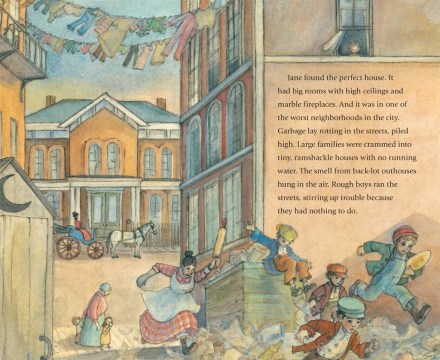
Jane now knew what she wanted to do. In 1889 Chicago was a diverse city with a large immigrant population. Many didn’t speak English, which made it hard for them to find jobs. “Large families were crammed into ramshackle houses with no running water.” Garbage lay in the street, and tough kids ran wild with nothing else to do.

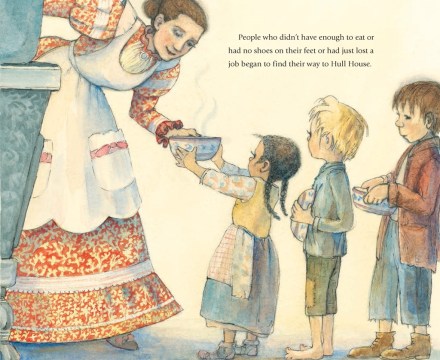
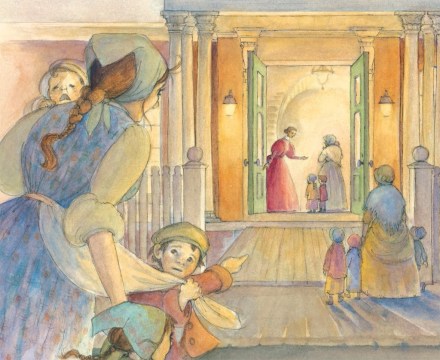
Jane found a large house in the middle of one of these areas that had once belonged to Charles J. Hull and upon his death had been given to his cousin, Helen Culver.  When Helen discovered what Jane wanted to do, she donated the house for free. Jane left the house unlocked, letting people know that they could come there whenever they needed. In time, people did find their way to Hull House when they were hungry or out of work. Jane also had her own way of dealing with unruly children or those who didn’t understand her generosity. Once when a man broke into Hull House twice because he had no job and no money, Jane gave him a job.

celebrate-picture-books-picture-book-the-house-that-jane-built-feeding-hungry

Image copyright Kathryn Brown, 2015, text copyright Tanya Lee Stone. Courtesy of us.macmillan.com.

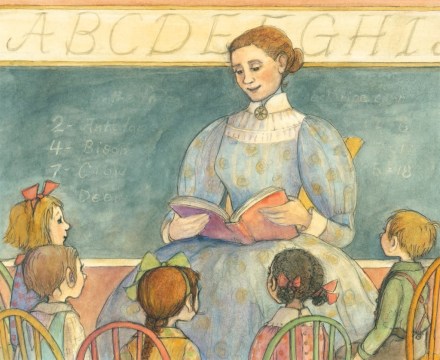
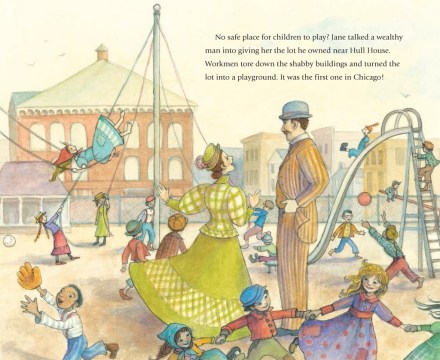
Jane helped the neighborhood in other ways too. She built a public bath so that people could stay clean and avoid illness. She convinced “public officials to build more public baths.” Because children had nowhere to play, Jane convinced a neighbor to give her his unused lot near Hull House. She tore down the buildings and built Chicago’s first playground. For kids whose parents worked long hours, she started a morning kindergarten and after school clubs. She also began offering evening classes for children who worked during the day.

celebrate-picture-books-picture-book-the-house-that-jane-built-kindergarten

Image copyright Kathryn Brown, 2015. Courtesy of us.macmillan.com.

Jane had help with her endeavors. Her friend “Ellen Gates Starr was her partner from the start.” Many other people also helped. They moved into Hull House and “taught literature, art, English, math, science, and cooking.” Hull House continued to grow, and by 1907 Jane oversaw thirteen buildings, including “a gymnasium, coffee house, theater, music school, community kitchen, and an art gallery.”

By the early 1920’s more than 9,000 people visited Hull House every week. Jane’s work “changed a bad neighborhood into a great and strong community.” Today, you can still see Jane Addams’ commitment to others in the community centers that bring people together in nearly every city and town.

An Author’s Note with more information on Jane Addams follows the text.

celebrate-picture-books-picture-book-the-house-that-jane-built-playground

Image copyright Kathryn Brown, 2015, text copyright Tanya Lee Stone. Courtesy of us.macmillan.com.

Tanya Lee Stone brings the story of Jane Addams’ work in Chicago to children in a compelling biography that gives readers a fully developed portrait of this most amazing woman. Stone’s active and evocative language puts children in the Hull House neighborhood, allowing them to get a feeling for and understanding of the issues of the time. Stone’s excellent examples of how Jane Addams responded to a variety of problems facing her community and even Hull House itself, demonstrate how generosity, empathy, and kindness can make positive changes in people’s lives. Depictions of Jane’s early compassion and commitment give children a sense that they too can make a difference in areas that are important to them.

celebrate-picture-books-picture-book-the-house-that-jane-built-front-door

Image copyright Kathryn Brown, 2015. Courtesy of us.macmillan.com.

Kathryn Brown’s riveting illustrations capture Jane’s early moments of concern for others, bravery, and study that informed her adult life; times of decision and cooperation that led to the establishment of Hull House; scenes of poverty, upheaval, and need that touched Jane’s heart; and images of her successes in Chicago that inspired others around the country. Brown’s softly hued watercolors are beautifully infused with realistic period details and honest emotion that provide readers with a strong foundation for understanding and appreciating the life of Jane Addams.

The House that Jane Built: A Story about Jane Addams is an inspiring choice for children with a philanthropic heart and to open discussions on how one person can make a difference. The book would be a welcome addition to home and classroom libraries.

Ages 6 – 10

Henry Holt and Co. Books for Young Readers, 2015 | ISBN 978-0805090499

To learn more about Tanya Lee Stone and her books, visit her website.

You can view a gallery of illustration work by Kathryn Brown on her website

Nobel Prize Day Activity

celebrate-picture-books-picture-book-jane-addams-coloring-page

Jane Addams Coloring Page Poster


Jane Addams is an inspiration to all! Print this Jane Addams Coloring Page and hang it in your room or locker to inspire you to make a difference and be a positive influence in your community!

celebrate-picture-books-picture-book-the-house-that-jane-built-cover

You can find The House that Jane Built: A Story about Jane Addams at these booksellers

Amazon | Barnes & Noble | Books-a-Million | IndieBound

Picture Book Review
November 27 – Day of Giving

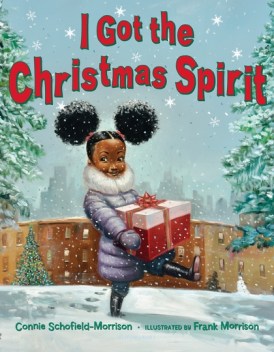
CPB - I Got the Christmas Spirit Cover

About the Holiday

Following the shopping “holidays” of Black Friday and Cyber Monday, the Tuesday after Thanksgiving has been designated as a day to celebrate generosity and giving to others. 92nd Street Y in New York City created the holiday for people to think about charitable giving to those less fortunate not only for one day or one month, but all year round. The spirit of today’s holiday will fill you with cheer every day—just like the little girl in today’s book!

Bloomsbury Children’s Books sent me a copy of I Got the Christmas Spirit to check out. All opinions are my own.

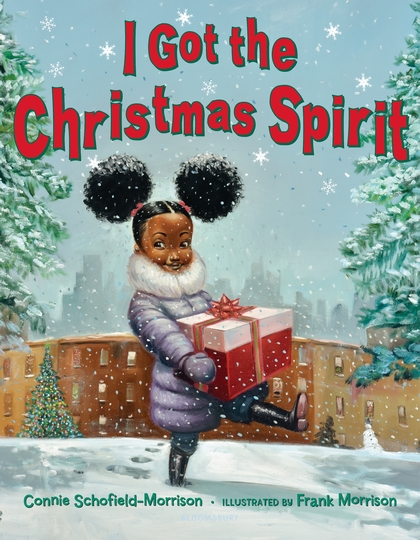
I Got the Christmas Spirit

Written by Connie Schofield-Morrison | Illustrated by Frank Morrison


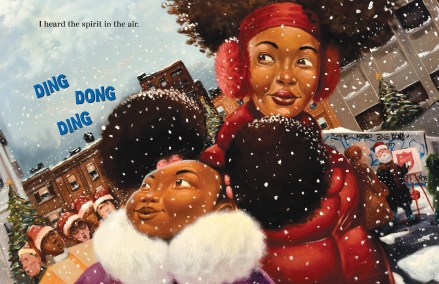
A little girl wakes up with a smile on her face and “the spirit of the season” in her heart. As she and her mother head out into the snowy city, she hears “the spirit in the air” as carolers sing and a corner Santa rings a bell. She’s been saving her money to add to the familiar red pot and happily drops it in the slot. The choir is now singing “Deck the Halls,” and the little girl sings along with all her heart.

celebrate-picture-books-picture-book-review-I-Got-The-Christmas-Spirit-spirit-in-air

Image copyright Frank Morrison, 2018, text copyright Connie Schofield-Morrison, 2018. Courtesy of Bloomsbury Children’s Books.

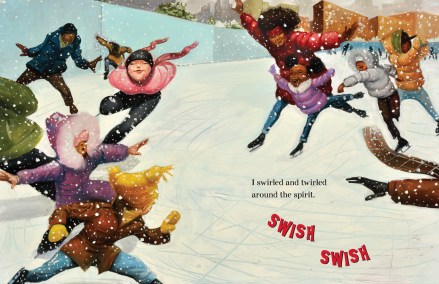
Then it’s time for a yummy roasted treat to warm her up in the shivery air. On the ice-skating rink, the girl and her mom “swirled and twirled around the spirit” with other kids and adults enjoying some frozen fun. Afterward, a tour of the store windows decorated with lights and glitter makes her feel sparkly inside. But when they come upon a mother and her two children huddled against the wind with a “Help Please” sign, the girl says, “I felt the spirit deep down in my soul.”

celebrate-picture-books-picture-book-review-I-Got-The-Christmas-Spirit-skating

Image copyright Frank Morrison, 2018, text copyright Connie Schofield-Morrison, 2018. Courtesy of Bloomsbury Children’s Books.

In a crowded store nearby, the little girl looks wide-eyed at all the toys then whispers to a tired Santa her wish “for the spirit everywhere.” As she, her mom, Santa, and a host of other people leave the store carrying wrapped packages, they feel the spirit spread by the girl’s smile. Outside, the little girl and the other shoppers give the presents to the needy family. The little boy grins from ear to ear as his mom stands by happily and the baby rests in Santa’s arms.

The Christmas spirit is not just a thing or a place or a person, the girl understands, “The spirit is you!” Then the girl gets her own surprise when she spies her dad coming home. She runs to him and he lifts her into a hug. Here is what she wants for Christmas—“Peace for all, good tidings, and cheer—let’s live the spirit every day of the year.”

celebrate-picture-books-picture-book-review-I-Got-The-Christmas-Spirit-coming-home

Image copyright Frank Morrison, 2018, text copyright Connie Schofield-Morrison, 2018. Courtesy of Bloomsbury Children’s Books.

As the sights and sounds of Christmas begin to light up towns, stores, and homes, Connie Schofield-Morrison’s story fills young readers with the joy and deeper meaning of the holiday. Little ones wanting to share their bubbly excitement for Christmas as well as their innate empathy will fall in love with the little girl who eagerly joins in on all of the city’s festivities while also embracing those in need. Her big heart and buoyant spirit will inspire kids to find the spirit of the holiday in everything they do too. Kids are invited to join in reading with exuberant alliterative words like “Ding Dong Ding, that call out to the little girl

Readers can almost hear the bells and singers, feel the soft snow, and smell the roasting nuts as he takes readers on a tour of the city decked out for the holidays. In his gorgeous, realistic paintings, the emotions and actions of the little girl cheer young readers as they see her belting out a Christmas carol, gliding on ice rink, and walking side-by-side with Santa to deliver her surprise gifts to the needy family. Images of the girl dropping money that she has saved into the Salvation Army pot and frowning sadly as she comes upon the destitute woman and her family mirror the compassion many children feel for those less fortunate.

Like its predecessor I Got the Rhythm, I Got the Christmas Spirit is an uplifting and beautiful book to add to any child’s collection—not only at Christmas, but any time of the year. A top choice for public libraries too.

Ages 3 – 7

Bloomsbury Children’s Books, 2018 | ISBN 978-1681195285

To learn more about Frank Morrison and view a gallery of his art, visit his website.

Day of Giving Activity

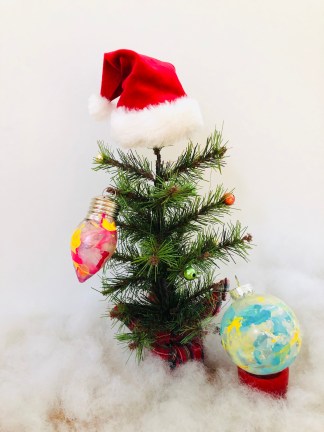
celebrate-picture-books-picture-book-review-christmas-ornaments-craft

Polish-Dipped Ornaments


These plastic ornaments swirled with colorful nail polish make the perfect decorations for your tree. Make some to give to friends too!

Supplies

  • Plastic ornaments, available at craft stores
  • Nail polish in various colors
  • Plastic bowl or container, deep enough to dip the ornament into the water
  • Drying stand – I used a clear, plastic egg carton, or string for hanging ornaments to dry

Directions

Fill the plastic container with warm to hot water

  1. Using two or three colors, gently “paint” the water with the nail polish, using the brush or a toothpick in dots and swirls
  2. Slowly dip the plastic ornament into the water and turn it to pick up the nail polish floating on the top of the water
  3. To dry, place the ornament on a stand or hang with a paper plate, wax paper, or other paper to catch drips

CPB - I Got the Christmas Spirit Cover

You can find I Got the Christmas Spirit at these booksellers

Amazon | Barnes & Noble | Books-a-Million | IndieBound

Picture Book Review
November 13 – World Kindness Day

celebrate-picture-books-picture-book-review-i-walk-with-vanessa-cover

About the Holiday

Instituted in 1998 by the World Kindness Movement, a coalition of nations, World Kindness Day is an international celebration that encourages people around the world to be mindful of others through mutual respect, inclusion, empathy, and gratitude. To celebrate, people are asked to perform acts of kindness—big or small. Events include, the Big Hug, handing out Kindness Cards, and flash mobs showing and promoting kindness. The day spotlights good deeds—both individual and community—and focuses on “the positive power and the common thread of kindness which binds us.” It doesn’t take cost anything to celebrate today with a simple “hi,” a smile, or an offer of help or support to someone in need. Don’t limit your care and concern to just one day, either. Promoters of the holiday hope that kindness becomes infectious, inspiring good relationships every day of the year.

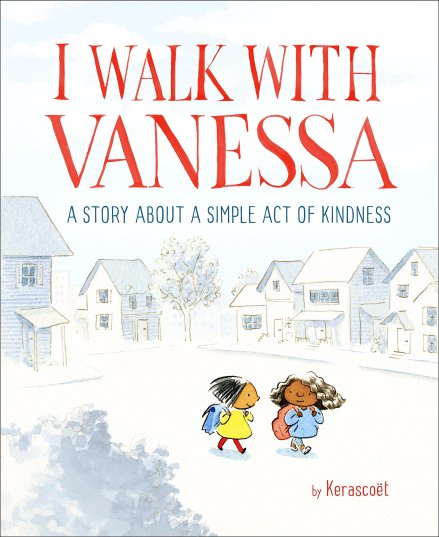
I Walk with Vanessa: A Story about a Simple Act of Kindness

By Kerascoët


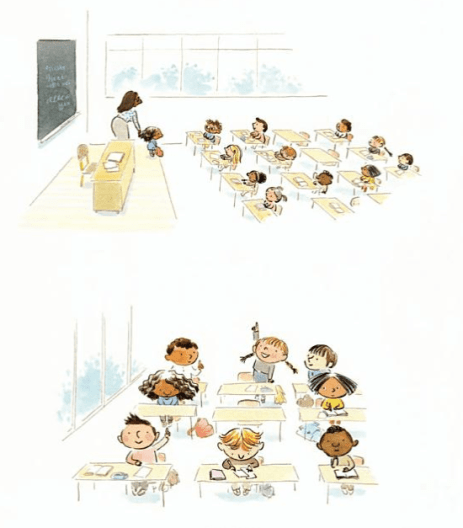
With smiles on their faces a family carries boxes from the moving van into their new home. The next morning the teacher introduces brown-skinned Vanessa to her new class, and she takes a seat in one of the two empty desks—the one separated from a straight-haired girl in a yellow dress by the other empty desk. During the lesson, Vanessa keeps her head down shyly as other kids raise their hands and answer questions. At recess, Vanessa sits alone on the bleachers while her classmates dribble basketballs, shoot baskets, and talk and laugh together.

celebrate-picture-books-picture-book-review-i-walk-with-vanessa-first-day

Copyright Kerascoët, 2018, courtesy of Schwartz & Wade.

When the bell rings the kids pour out of the building, forming pairs and groups to walk home or play. Vanessa starts her route home by herself. At the crosswalk, a blond boy wearing a scowl approaches Vanessa and stops to talk. But he doesn’t offer friendly chit-chat. He sneers and taunts and points at her accusingly. Then with a huff, he turns and goes back the way he came.

The girl in the yellow dress has stopped with her friends by a tree. Instead of watching the squirrel scampering up the trunk, though, she sees and overhears the altercation between the boy and Vanessa. She looks as Vanessa stands a bit shell-shocked and then hurries across the road with tears in her eyes. Vanessa’s classmate is shocked too by what she’s seen. She feels sad and even sadder as Vanessa runs away and into her new home.

celebrate-picture-books-picture-book-review-i-walk-with-vanessa-basketball

Copyright Kerascoët, 2018, courtesy of Schwartz & Wade.

The girl returns to her friends and tells them what happened. They all react with surprise and sadness. All the way home, as her mom and dad cook dinner and her siblings watch TV, at bedtime and late into the night, the girl thinks about Vanessa. Vanessa has a sleepless night too.

In the morning, the girl gets dressed for school and heads to the table for breakfast. It’s while she’s drinking her orange juice that it hits her—what she can do. She grabs her lunch box and races out the door. She approaches a house and knocks on the door. Vanessa opens the door a crack and looks out. The little girl in her yellow dress talks to Vanessa and takes her hand. They walk down the sidewalk as other kids emerge from their own houses. A boy hails them and takes Vanessa’s other hand. Another boy joins the group and then a girl in pigtails. As more kids gather on the way to school, they come running to join Vanessa’s group.

celebrate-picture-books-picture-book-review-i-walk-with-vanessa-after-school

Copyright Kerascoët, 2018, courtesy of Schwartz & Wade.

The boy from the day before looks on with surprise. Soon the small group has become a wave as kids from all classes join in, streaming around the boy and passing him by. His face reddens and he sulks as the wave, led by Vanessa and her new friend enter the school building. In class, Vanessa takes her seat while the straight-haired girl moves to the desk next to her.

Backmatter includes advice for children on what they can do to help someone who is being bullied and helpful vocabulary to use when sharing the book with children.

celebrate-picture-books-picture-book-review-i-walk-with-vanessa-bully

Copyright Kerascoët, 2018, courtesy of Schwartz & Wade.

Kerascoët’s perfectly constructed wordless picture book powerfully demonstrates the feeling of being overlooked and ignored, the emotional toll of being bullied, and how an act of bullying affects even those not directly involved. There is so much right about the details in this book from the empty desk between Vanessa and her soon-to-be friend on her first day of school to the suspense of  what the girl in the yellow dress says to her friends after witnessing the bullying and their reaction to the facial expressions on all of the characters faces.

Kerascoët’s use of color sets the tone as the background illustrations of the classroom and neighborhood is washed in a pale blue, putting the spotlight on the diverse classmates in their colorful clothes. A compelling double-spread center image gives vent to Vanessa and her classmate’s feelings through a stormy night with roiling black clouds and a torrent of rain. The two girls are connected by their lighted widows—the only bright spots in the darkened neighborhood. Turn the page and that glow is shining into the window from the sunny day. The homes are now lemon colored, with Vanessa’s house a standout pink.

celebrate-picture-books-picture-book-review-i-walk-with-vanessa-vanessa-goes-home

Copyright Kerascoët, 2018, courtesy of Schwartz & Wade.

As the little girl talks to Vanessa and holds her hand, you will feel tears spring to your eyes, and the gathering children with their smiles and waves will swell your heart. In the sense of motion caused by the children rushing to join Vanessa’s group, the bully is now the one overlooked, and as the small groups become a crowd all walking in the same direction, the bully—facing the other way and at the bottom of the page—is far outnumbered. As the wave of kids enter school, the bully appears in the bottom corner, red faced and frowning. The possibility the empty desk poses at the beginning of the story is fulfilled when the girl in the yellow dress moves there to sit next to Vanessa.

The wordless quality of this book allows for readers to volunteer what they think is happening and what is being said. It also allows for deep discussions of similar experiences and can lead into an expanded lesson on kindness, empathy, and how to handle bullying.

I Walk with Vanessa is a moving portrait of how a simple act of friendship multiplies and changes lives and is a must for home, classroom, school, and public libraries.

Ages 4 – 8

Schwartz & Wade, 2018 | ISBN 978-1524769550

To learn more about the husband and wife team Kerascoët and their work, visit their website.

National Kindness Day Activity

celebrate-picture-books-picture-book-review-random-acts-of-kindness-cards-feb-2018 -2

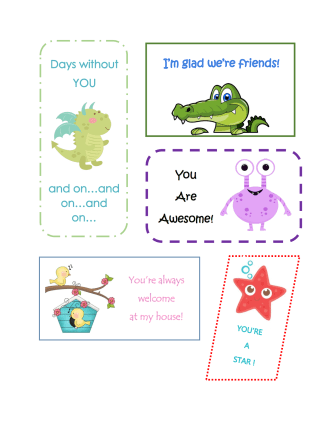
Kindness Cards to Share


On World Kindness Day people are encouraged to give out Kindness Cards to friends, family, and especially those who look as if they need cheering up. Here are some printable cards for you to use!

Kindness Cards to Share

celebrate-picture-books-picture-book-review-i-walk-with-vanessa-cover

You can find I Walk with Vanessa at these booksellers

Amazon | Barnes & Noble | Books-a-Million | IndieBound

Picture Book Review
November 12 – It’s World Kindness Week

celebrate-picture-books-picture-book-review-be-kind-cover

About the Holiday

Today begins a week-long awareness of acts of kindness and how gestures of praise and encouragement of others can make life better for all. These days, when negativity seems all pervasive, take some time to look around and really see the goodness that is being done. Take a vow to join in and help make the world a better place for you and especially for your children. Just a smile, a single nice word or a helpful action can make a tremendous difference. To celebrate this week’s holiday, seek out opportunities to say something nice to your family members, friends, coworkers, and those you meet along the way.

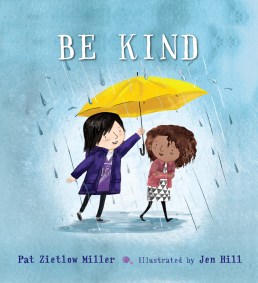
Be Kind

Written by Pat Zietlow Miller | Illustrated by Jen Hill


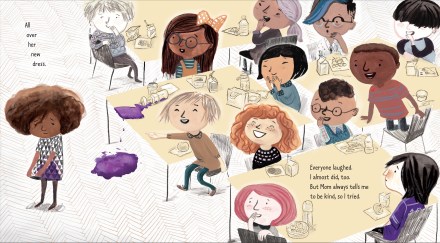
At school during snack time when Tanisha spilled grape juice on her new dress, the class burst out laughing. One student remembered that their mom always taught them to be kind and tried to make Tanisha feel better by saying, “Purple is my favorite color.” The student thought Tanisha would smile, but she just ran away. All during art class, Tanisha’s classmate thought about what they should have done instead, wondering, “What does it mean to be kind anyway?”

celebrate-picture-books-picture-book-review-be-kind-spilled-juice

Image copyright Jen Hill, 2018, text copyright Pat Zietlow Miller, 2018. Courtesy of us.macmillan.com.

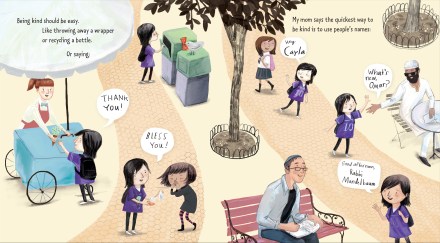
They think, “Maybe it’s giving.” Like baking treats for someone who lives alone, or giving away old clothes to someone who can use them. Helping out might also show kindness. For instance, “putting dirty dishes in the sink” or taking care of a pet. Paying attention to others could be another way to show you care. Like noticing someone’s new shoes, offering to be the new girl’s partner in class, or even just listening to someone’s stories—even if you’ve heard them before. Sometimes being kind is easy, but there are other times when it can be challenging or even scary—“like sticking up for someone when other kids aren’t kind.”

celebrate-picture-books-picture-book-review-be-kind-in-the-neighborhood

Image copyright Jen Hill, 2018, text copyright Pat Zietlow Miller, 2018. Courtesy of us.macmillan.com.

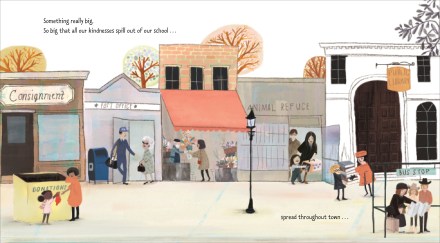
The child decides that maybe all they can do for Tanisha is to sit near her and paint her a picture of purple and green—of pretty violets. They hope that small acts like these will join with other people’s and that they will expand, fanning out from school into the community, across the country, around the world, and back. “So we can be kind. Again. And again. And again.”

celebrate-picture-books-picture-book-review-be-kind-around-town

Image copyright Jen Hill, 2018, text copyright Pat Zietlow Miller, 2018. Courtesy of us.macmillan.com.

Miller’s tender prose is perfect for planting the seeds of kindness and opening discussions about what it means to be caring and compassionate. With more and more children speaking up and creating change, Miller’s gentle and affirming story shows readers that it’s often the little things that count the most. Some of the examples she gives are acts that many children may do already, confirming their innate sensitivity, while others may spark new ideas and expand readers’ definition of kindness.

Jen Hill’s soft-hued illustrations beautifully depict the emotional tug at the heart that Tanisha’s spilled grape juice sets in motion for the protagonist and young readers. As one caring child wonders what kindness really is, Hill clearly portrays diverse children helping out at home, at school, and in their community locally and—as the kindness spreads—around the world. Hill draws the caring student with gender neutral clothing and hair, allowing all children to relate to the story’s main character. 

Be Kind is a lovely perceptive and sensitive book that would be an asset to any home or classroom library.

Ages 3 – 6

Roaring Brook Press, 2018 | ISBN 978-1626723214

Discover more about Pat Zietlow Miller and her books on her website.

To learn more about Jen Hill, her books, and her art, visit her website.

World Kindness Week Activity

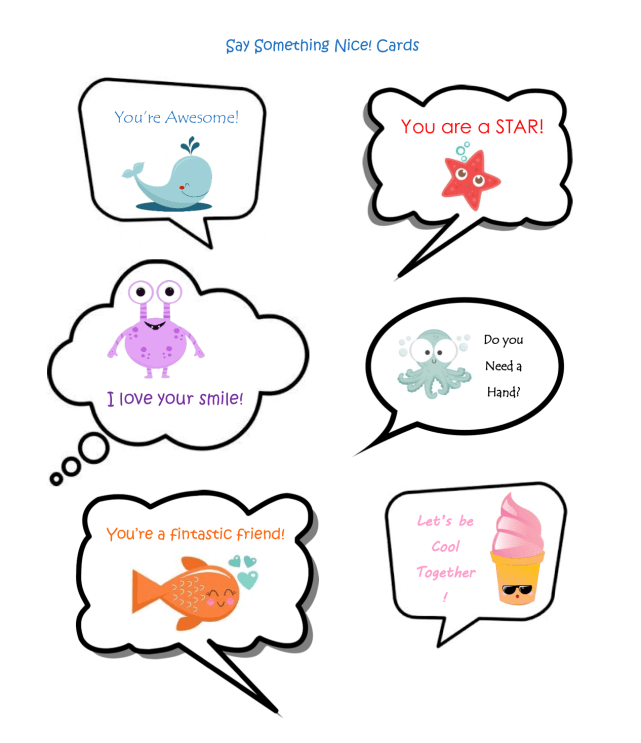
celebrate-picture-books-picture-book-review-say-something-nice-cards

Say Something Nice! Cards


Do you want to give someone a nice surprise? Print out these cards and give one to a friend, to someone you’d like to know, or to anyone who looks like they need a pick-me-up! If you’d like to make your own cards, print out the blank template and write and/or draw your own message! You can also print these on adhesive paper and make your own stickers.

Say Something Nice! Cards | Say Something Nice! Cards Blank Template

celebrate-picture-books-picture-book-review-be-kind-cover

You can find Be Kind at these booksellers

Amazon | Barnes & Noble | Books-a-Million | IndieBound


Picture book review
November 3 – National Jellyfish Day

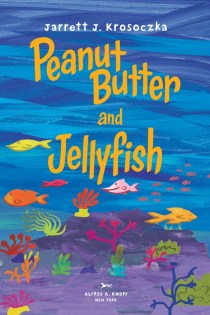
celebrate-picture-books-picture-book-review-peanut-butter-and-jellyfish-cover-2

About the Holiday

Jellyfish may be some of the most fascinating creatures in the sea, and they are certainly among the most beautiful. Often seen in groups—called swarms, blooms, or smacks—these ancient ocean invertebrates can be transparent, yellow, red, blue, and even effervescent. Jellyfish capture prey and defend themselves by emitting toxins through painful stings. To celebrate today’s holiday, visit a local aquarium or—if you live in a climate where jellyfish are present at this time of year, head to the beach to watch them in their natural habitat.

Peanut Butter and Jellyfish

By Jarrett J. Krosoczka


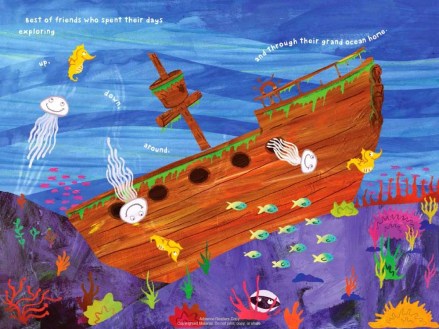
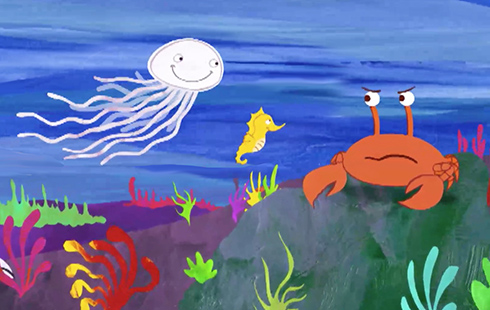
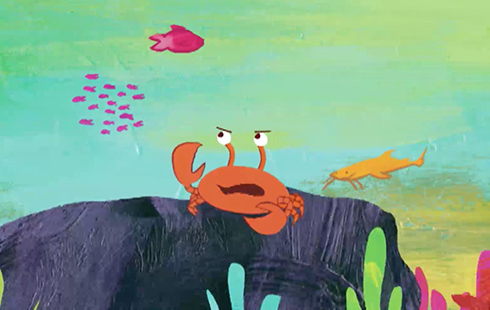
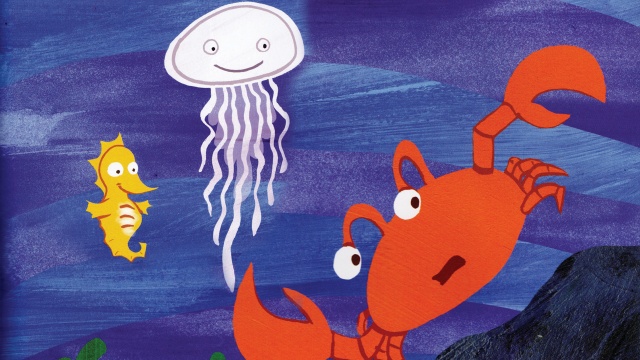
Peanut Butter, a little seahorse, and Jellyfish were best friends who loved to explore the ocean and all its treasures together. Unfortunately, their adventures always seemed to take them past Crabby, “who would taunt as they slipped by, ‘You guys swim like humans.’” Jellyfish and Peanut Butter tried to ignore him, pretending they didn’t hear his hurtful jibes, but “Crabby was relentless. ‘You guys smell like rotten barnacles! Pee-yew!’” He compared them unflatteringly to sea slugs and his grandmother’s “run-walk shoes,” and ended with “what a bunch of bubbleheads!”

celebrate-picture-books-picture-book-review-peanut-butter-and-jellyfish-shipwreck

Copyright Jarrett J. Krosoczka, 2014, courtesy of Knopf Books for Young Readers.

Jellyfish bravely stood up to Crabby, saying, “‘driftwood and sea stones may break our bones, but names will never hurt us.’” Of course, Crabby had a retort to that which involved the fact that Jellyfish was an invertebrate. One day, as Peanut Butter and Jellyfish passed Crabby’s house on their way to the big reef, they steeled themselves for the insults to come. But all they heard was quiet – until the sounds of sobbing reached their ears.

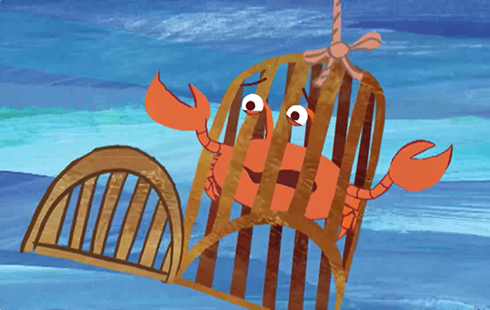
They swam on and found Crabby trapped in a lobster pot that was being pulled to the surface of the water. He called out to them that he was scared. Jellyfish and Peanut Butter looked at each other. Was it their responsibility to help Crabby? Peanut Butter thought that his situation looked pretty serious. And Jellyfish agreed. He even had a plan.

celebrate-picture-books-picture-book-review-peanut-butter-and-jellyfish-crabby

Copyright Jarrett J. Krosoczka, 2014, courtesy of Knopf Books for Young Readers.

The two friends swam up to the lobster trap, and Peanut Butter wrapped his tail around a slat in the door. When he pulled it open, however, Crabby didn’t move. Peanut Butter wanted him to hurry, but Crabby had a confession to make. He couldn’t swim, and he was afraid of heights. Now, Jellyfish had an idea.

He swam to the top of the lobster trap and with all his tentacles working feverishly, he tried to untie the knot in the rope. The trap was coming closer and closer to the fisherman’s boat. Just in the nick of time, the knot loosened, but then Crabby was hurtling to the bottom of the ocean. Peanut Butter and Jellyfish raced to catch it. “They grabbed ahold and lowered it to safety.”

celebrate-picture-books-picture-book-review-peanut-butter-and-jellyfish-taunts

Copyright Jarrett J. Krosoczka, 2014, courtesy of Knopf Books for Young Readers.

Crabby felt weak as he returned to his rock, but he stuttered out a thank you to Jellyfish and Peanut Butter. Then he told them that he was sorry for all the things he had said. “Crabby may have been afraid of heights, but he was brave enough to apologize.” Crabby admitted that he may have felt jealous of all the fun Peanut Butter and Jellyfish had “exploring the open waters.” Jellyfish told Crabby that there was “plenty to explore close to the ocean floor” too. In fact, that’s where “they found their greatest treasure.”

celebrate-picture-books-picture-book-review-peanut-butter-and-jellyfish-lobster-trap

Copyright Jarrett J. Krosoczka, 2014, courtesy of Knopf Books for Young Readers.

Jarrett J. Krosoczka’s seafaring friendship story for little ones uses humor and a generosity of spirit to teach kids a lesson about empathy. Readers may giggle over Crabby’s taunts, but they will also understand the hurt they cause Peanut Butter and Jellyfish. Following this, the kindness showed by Peanut Butter and Jellyfish toward Crabby when he is in trouble then comes as a powerfully surprising message on compassion. Crabby’s willingness to admit his fears, own up to his jealousy, and apologize, as well as the trio’s growing friendship, provides many thought-provoking topics for children to consider.

celebrate-picture-books-picture-book-review-peanut-butter-and-jellyfish-wobbly

Copyright Jarrett J. Krosoczka, 2014, courtesy of Knopf Books for Young Readers.

Krosoczka’s illustrations of the undersea world give readers plenty of details to enjoy while adorable Peanut Butter and Jellyfish take center stage. When their sweet smiles give way to wary looks, kids will know trouble is on its way. Each scene during Crabby’s entrapment and escape provide gentle suspense while demonstrating the story’s themes of understanding and acceptance. As the three explore a chest overflowing with gold in the final spread, readers can debate what the “greatest treasure” is.
Ages 3 – 7

Knopf Books for Young Readers, 2014 | ISBN 978-0375870361

Discover more about Jarrett J. Krosoczka, his books, and his art on his website.

World Jellyfish Day Activity

celebrate-picture-books-picture-book-review--jellyfish-coloring-page

Jellyfish Coloring Page


Watching a jellyfish float on the ocean current can be mesmerizing! Grab your colored pencils, markers, or crayons—and maybe some glitter too—and enjoy this printable Jellyfish Coloring Page!

celebrate-picture-books-picture-book-review-peanut-butter-and-jellyfish-cover-2

You can find Peanut Butter and Jellyfish at these booksellers

Amazon | Barnes & Noble | Books-a-Million | IndieBound

Picture Book Review