May 11 – It’s Get Caught Reading Month

celebrate-picture-books-picture-book-review-the-summer-nick-taught-his-cats-to-read-cover

About the Holiday

When you love to read, you want to share the excitement that books hold. Get Caught Reading Month encourages people to pass along their love of all things written by asking folks to take pictures of themselves reading their favorite book and uploading those images to social media. Movie and TV celebrities, sports figures, authors, illustrators, teachers, mom, dads, grandmas and grandpas, and kids of all ages take part in this favorite annual event. Why don’t you?!

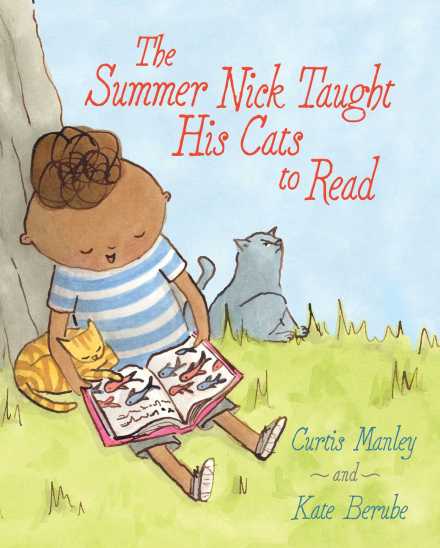
The Summer Nick Taught His Cats to Read

Written by Curtis Manley | Illustrated by Kate Berube


One summer Nick, Verne, and Stevenson did everything together. Nick is a little boy and Verne and Stevenson are two very different cats. Nick and Verne loved to spend time near the water—Stevenson tolerated it. Nick and Verne slept happily in a tent under the stars—Stevenson barely shut his eyes. While Nick rode his bike Verne eagerly sat in the front basket—Stevenson hunkered down in a box on the back. But when Nick sat down to read, both cats had similar ideas of fun—like lying on top of the book—and Nick could hardly read a sentence.
celebrate-picture-books-picture-book-review-the-summer-nick-taught-his-cats-to-read-ball

Image copyright Kate Berube, text copyright Curtis Manley, courtesy of simonandschuster.com

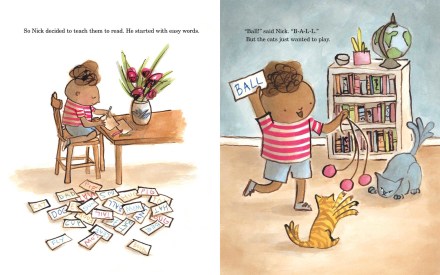
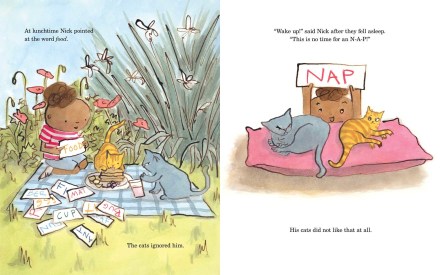
“So Nick decided to teach them how to read. He made flash cards and started with easy words” like “ball,” but Verne and Stevenson just wanted to play with the ball. While the three had a picnic on the lawn, Nick brought out his flashcards and “pointed to the word food. The cats ignored him.” When the cats snoozed Nick woke them with a sign. “‘This is no time for an N-A-P!’” he said. Neither cat responded well, so Nick tried a new tactic. He made word-shaped flash cards. Verne took a nibble of “F-I-S-H,” but Stevenson hid under the bed.
celebrate-picture-books-picture-book-review-the-summer-nick-taught-his-cats-to-read-food-flash-cards

Image copyright Kate Berube, text copyright Curtis Manley, courtesy of simonandschuster.com

Nick began to see that Verne liked stories about cats and fish. “Verne loved fish. He followed along as Nick read, learning the sounds of the letters.” He even read by himself, discovering new stories, especially 2,000 Leagues Under the Sea. But Stevenson? When Nick spelled words for him, he merely ran under the porch, hissing. By this time Verne was reading so many books that he got his own library card and Nick needed help carrying all of his books home. Nick and Verne had fun acting out their favorite stories, but they missed Stevenson.

One day “Verne discovered a treasure under the bed—a great stack of Stevenson’s pirate drawings. “‘Wow!’” Nick whispered. “‘Stevenson drew a story.’” Nick and Verne put the pages together and began to write words to go with them. When the story was finished, Nick, Verne, and Stevenson “squeezed under the porch, gave Stevenson an eye patch, and read The Tale of One-Eyed Stevenson and the Pirate Gold. Stevenson listened and followed along. He didn’t run away. Or hiss. Not even once.”
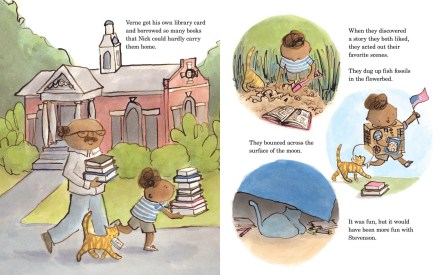
celebrate-picture-books-picture-book-review-the-summer-nick-taught-his-cats-to-read-library

Image copyright Kate Berube, text copyright Curtis Manley, courtesy of simonandschuster.com

Suddenly, Stevenson couldn’t get enough of books.  Even before Nick woke up, Stevenson could be found with his nose in Treasure Island or another adventure book, and whenever Nick and Verne played pirates, Stevenson joined in. He helped bring down “scurvy mutineers” and found buried treasure. Now the three readers do everything together. They “hunt for dinosaurs in the lost world behind the garden…race around the yard in eighty seconds…and journey to the center of the basement.” And while they all like to read on their own, they also like it when someone reads to them. “Hmmm…,” Nick thinks, maybe next he could teach his cats to talk. “‘Meow,’ says Stevenson.”
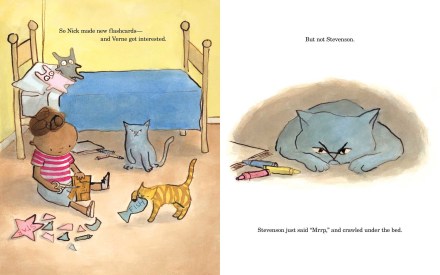
celebrate-picture-books-picture-book-review-the-summer-nick-taught-his-cats-to-read-grumpy-stevenson

Image copyright Kate Berube, text copyright Curtis Manley, courtesy of simonandschuster.com

Curtis Manley’s adorable tribute to reading and learning to read, using cats with very different personalities, is inspired. Just as some people respond more to the words while others are attracted by the pictures, Verne and Stevenson have their own relationships with books. The names of the cats and their preferred reading material are also reminders that books are personal, and disinterest in one type of story does not reflect disinterest in all stories. Manley’s text makes for a joyful read-aloud as his language and phrasing is evocative, lyrical, and imaginative.

In perfect accompaniment, Kate Berube brings this creative story to life, illustrating the tender relationship between Nick and his pets as well as emphasizing the humor and distinct personalities inherent in orange-striped Verne and smoky-gray Stevenson that influence their journeys to literacy. Depictions of the various books Verne and Stevenson are drawn to highlight the literary references in the trio’s further play. Readers will want to stop and peruse the page of library shelves, where such books as “Harry Picaroon and the Swashbuckler’s Stone”, “Harold and the Purple Canon”, “Millions of Rats”, and “Where the Wild Pirates Are” wait to be checked out in the Pirates section.

Kids will eagerly want to adopt The Summer Nick Taught His Cats to Read, and it will snuggle in nicely on children’s bookshelves.

Ages 4 – 8

Simon & Schuster Books for Young Readers, 2016 | ISBN 978-1481435697

Discover “the facts, fictions, poems, and numbers” of Curtis Manley on his website!

View a gallery of Kate Berube‘s art on her website!

Get Caught Reading Month Activity

CPB - Cat Bookmark (2)

Feline Fine about Reading Bookmark


This want-to-be literary lion feels fine about reading! Let it hold your page while you’re away! Print your Feline Fine about Reading Bookmark and color it!

Picture Book Review

May 11 – It’s National Photography Month

celebrate-picture-books-picture-book-review-jazz-day-cover

About the Holiday

We all know what joy photography brings. Whether you’re looking at professional fine art photos in a gallery or your own vacation pics, those film and digital images can make you see the world in a different way or just as you remember it. The oldest surviving photograph of nature dates back to 1827, when it took days for film to develop properly. Of course, today’s smart phones have changed forever the way we take photos, but the fun of capturing a moment in time will never go out of style.

Jazz Day: The Making of a Famous Photograph

Written by Roxane Orgill | Illustrated by Francis Vallejo

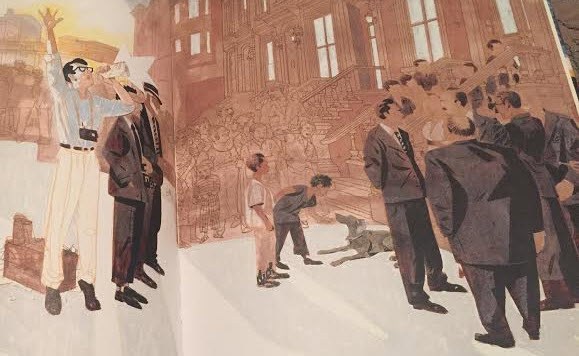
In a marvelously conceived and unique book, Jazz Day: The Making of a Famous Photograph tells the story of how the iconic photograph Harlem, 1958 came together. Through a series of poems, Roxane Orgill reveals the action when fifty-seven jazz musicians posed for Art Kane on an August afternoon in front of an ‘absolutely typical brownstone.’ Over the space of a day, Kane borrowed a camera, blocked off the street, and worked with the musicians who answered the call that went out to the local musicians’ union, recording studios, composers, nightclub owners, and others inviting “all jazz musicians: a photo shoot, no instruments required.”

The day’s beginning is captured in Early: Art Kane, photographer. Art Kane stands in the middle of the deserted street, wondering if his idea to capture The Golden Age of Jazz will become reality: “nobody here yet / it’s only nine / look right / where they come from the train / look left / where they exit a taxi…what if only four come / or five / ‘The Golden Age of Jazz’ / with five guys… / a crazy request / what if nobody shows… / a group from the train / Lester Young cigarette dangling / that funny squashed hat / man with an umbrella rolled tight… / guy in a striped tie / it’s happening.”

celebrate-picture-books-picture-book-review-jazz-day-some-kind-of-formation

Image copyright Francis Vallejo, text copyright Roxanne Orgill. Courtesy of Candlewick Press.

As the musicians begin to arrive, they talk and laugh among themselves, not listening to Art Kane as he tries to organize them into Some Kind of Formation. But Kane isn’t the only one with a camera today. In So Glad: Milt “Fump” Hinton, bassist and amateur photographer, Hinton is awed by the talent around him and “Glad I brought my Leica / And the Canon 35 / My little Keystone eight-millimeter too / Gave it to Mona, my wife / ‘Honey, just aim and press the button’” There’s “Chubby, Oscar, Wilbur…” then “Here come the big dogs / Coleman Monk Dizzy Roy / And the beauteous Marian McP… / They’re all here / For some magazine / Me I’m snapping pictures / Lots and lots of pictures / To remember / Later / Forever / So glad”

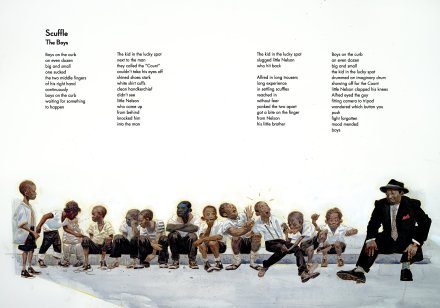
There are boys, too, sitting on the curb, getting into mischief as Hat: Alfred, a boy reveals: “Nice wool felt / Two-inch snap / Brim / Count’s too beat / to give chase / When / Nelson nabs / His bonnet / I’m / On it quick / Down the block / ‘Hand it over, Nelson, before I—’ / Buff the felt / Set the snap / Brim / ‘Your hat, Count Basie.’”

celebrate-picture-books-picture-book-review-jazz-day-scuffle

Image copyright Francis Vallejo, text copyright Roxanne Orgill. Courtesy of Candlewick Press.

Even though The Invitation Said No Instruments, Rex Stewart, cornetist couldn’t help but bring his silver cornet. And once he saw it, Leroy couldn’t help but run up in his short pants and untied shoes to ask “‘Can I try?’ / Lips to mouthpiece / Nothing.” But Rex shows him how it’s done and all heads turn his way. “Leroy again / ‘Can I try?’ / Rex passed the cornet / ‘Make like you’re going to kiss a girl’ / Lips to mouthpiece / Squeak / (Leroy’s too young for girls) / Rex tucked his horn under his arm / The invitation said no instruments.”

Excitement mounts as everyone realizes She’s Here! Maxine Sullivan, singer who “snagged Your Hit Parade at twenty-six / ‘Loch Lomond’ put her on the high road… / got in with a good band / warbling on the radio / chantoosing in the clubs / all that was years ago” before she became a nurse and married and had a daughter. “but she’s here! / come to hang with the cats / reminding all us bass players / and pianists who kept time / on all her records, tours… / reminding us all / how much we miss her.”

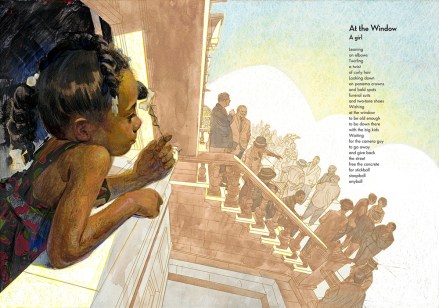
celebrate-picture-books-picture-book-review-jazz-day-at-the-window

Image copyright Francis Vallejo, text copyright Roxanne Orgill. Courtesy of Candlewick Press.

People look out their windows at all the commotion as Eddie Locke strolls up and Thelonious Monk (late as usual) arrives in a taxi. Dizzy Gillespie, Roy Eldridge, J. C. Heard and Gerry Mulligan make an unlikely quartet, and Willie “the Lion” Smith sits on the stoop holding onto his elephant-head cane. Finally, Art Kane calls out Some Kind of Formation, Please! “A plea so desperate / it’s melodic / shuffle / climb the stoop / fan   out   on   the   sidewalk / talk-laugh-roar / smoke-slap-turn / little by little / fifty-seven musicians form an upside-down T / underlined / by twelve boys / just happen to be sitting on the curb… / click / it has to be perfect / for Esquire / Dizzy sticks out his tongue.”

At last the copy of Esquire lands on newsstands, and Alfred pays for a copy with money he’s saved by missing “a month of matinees.” He thinks it was worth it, though, because “…jeez / I’m in a magazine.”

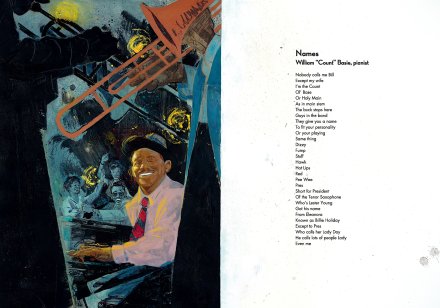
celebrate-picture-books-picture-book-review-jazz-day-names

Image copyright Francis Vallejo, text copyright Roxanne Orgill. Courtesy of Candlewick Press.

A fold-out page of the original photograph lets children and adults see the final product of the photo shoot. Children and adults will also have fun matching the portraits that accompany the poems to their real counterparts. Short biographies of each person in the photograph as well as an Author’s Note, an introduction, and further resources for study add to the comprehensive and loving treatment of its subject that Jazz Day: The Making of a Famous Photograph provides for readers.

Roxane Orgill recreates the syncopation of jazz and the exhilaration of the photo shoot in twenty poems that capture the sights, sounds, conversations, horseplay, and vibe of that special day that forever commemorated the Golden Age of Jazz. The smooth, cool lines of Orgill’s free verse poetry are a joy to read aloud. Full of personality, captivating details, history, and nostalgia, the poems reawaken the past for a new generation.

Working from the actual black-and-white photograph, Francis Vallejo vividly reimagines the scene on 126th Street as well-known and lesser-known jazz musicians came together to represent themselves and their art for Esquire magazine. Vallejo’s acrylic and pastel illustrations bring to life the surprise, camaraderie, and expressions of the men, women, and boys as they mingle, rest, and pass the time until the pose and lighting is right for the shot. As the book opens, readers get a bird’s-eye view of the street and quiet neighborhood, but as the musicians begin arriving the illustrations move in, allowing readers to rub shoulders with the greats of jazz.

For children (and adults) who love photography, jazz, biographies, history, and/or poetry, Jazz Day: The Making of a Famous Photograph is a marvelous choice for home libraries and is highly recommended for school and public libraries.

Ages 8 – 12 and up

Candlewick, 2016 | ISBN 978-1536205633

Learn more about Roxane Orgill and her books on her website!

National Photography Month Activity

celebrate-picture-books-picture-book-review-threads-of-friendship-photo-holder

Spool Photo Holder

With this easy craft you can make a personalized photo holder for your favorite pictures of friends and family!

Supplies

  • Wooden spool with hole through the middle, top to bottom. (A spool without a hole also works if you make a hole in the top with a hammer and nail), 1 ½ -inch or larger, available at craft stores
  • Colorful twine or light-gauge yarn, 3 to 4 yards
  • Alternatively: you can buy a wooden spool of colorful twine at some discount stores
  • 3 pieces of light-gauge wire 12 to 15-inches long
  • Clay or play dough
  • Needle-nose pliers
  • Glue

Directions

  1. Fill hole in spool with clay or play dough, pushing it well in to provide a base for the wire
  2. Wrap the twine or yarn around the spool to desired thickness
  3. Glue down the end of the twine to keep it from unraveling
  4. With the needle-nose pliers, roll down one end of the wire to create a small coil
  5. Repeat with two other lengths of wire
  6. Cut the three wires to different lengths to provide room for all three photographs
  7. Fit the three wires into the center hole on the top of the spool
  8. Push the wires into the clay until they are held securely
  9. Clip photographs into the coils
  10. Display your pictures!

Picture Book Review

May 6 – Join Hands Day

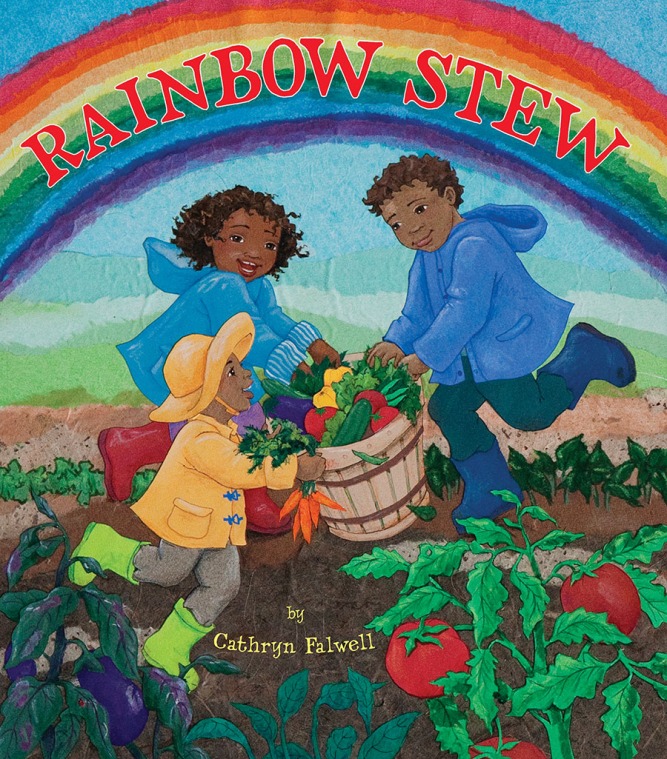
Rainbow Stew by Cathryn Falwell Picture Book Review

About the Holiday

Today’s holiday was instituted to foster better communication between the older and younger generations and to recognize the ways that all people, no matter what their age, can help each other. Many communities use this day to begin a dialogue between their elderly and their youth, getting young people involved in visiting care centers and older adults helping out at schools and other youth programs. Another great way to celebrate is for grandparents and grandkids to spend the day together!

Rainbow Stew

By Cathryn Falwell


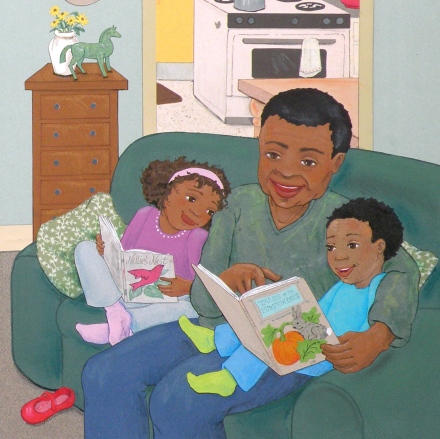
Grandpa’s making pancakes for his three favorite kids—his granddaughter and two grandsons. The kids are excited to be visiting their grandpa where they can play outside all day long. On this particular day, however, rain spatters the windows, and the kids are disappointed: “Whimper, sigh, / cloudy sky, / is it too wet to play? / We don’t want to stay inside / because of rain today.” But their grandpa knows just what to do! “Let’s go and find some colors for my famous Rainbow Stew!” he suggests.

celebrate-picture-books-picture-book-review-rainbow-stew-picking-vegetables

Image copyright Cathryn Falwell, courtesy of rainbowstewbook.com

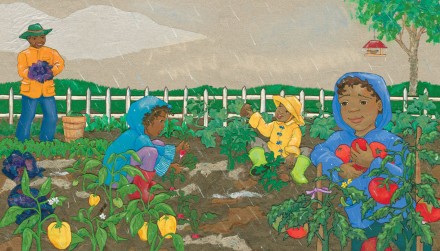
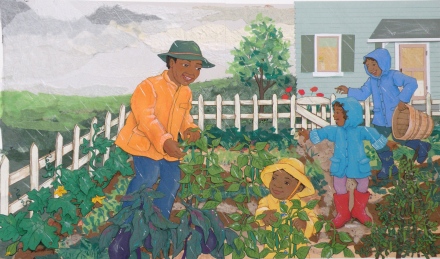
Out to the garden they run in their raincoats and hats. “Splish, splash, / puddle dash, / We bounce right out the door. / We’re off to find some red and green, / some yellow, orange, and more. / Grandpa shows us how to move / Between each garden row. / Lifting up the drippy leaves, /  we see what colors grow.” They collect green spinach, kale, and zucchini; yellow peppers, purple cabbage and eggplant, red radishes and tomatoes; brown potatoes; and orange carrots. After some muddy fun among the plants, the kids go inside, get dried off, and begin to prepare their colorful stew.

celebrate-picture-books-picture-book-review-rainbow-stew-playing-between-the-rows

Image copyright Catherine Falwell, courtesy of rainbowstewbook.com

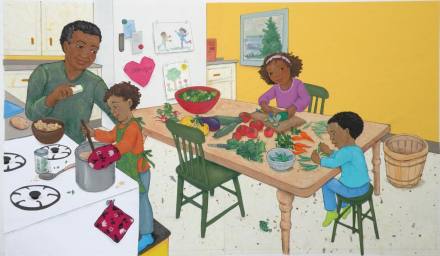
Peel, slice / chop and dice, / colors fill the pot. / Stir in herbs and water / and then wait till it gets hot.” While the pot simmers on the stove, Grandpa and the kids snuggle on the couch with favorite books, reading together until the stew has simmered to perfection. The family then sits down to a homemade, colorful, delicious lunch of Rainbow Stew. 

celebrate-picture-books-picture-book-review-rainbow-stew-playing-cooking-together

Image copyright Cathryn Falwell, courtesy of rainbowstewbook.com

Cathryn Falwell’s Rainbow Stew is a wonderful book to share with young children on many levels, offering opportunities for learning as well as playing. Introducing colors through familiar and delicious vegetables can get kids excited about gardening, cooking, even going to the grocery store. The rhyming verses each begin with an energetic couplet that kids will enjoy repeating or acting out. The bright colors of Grandpa’s house mirror the vividness of the garden vegetables, and young readers may enjoy matching the vegetables to items in the kitchen, living room, and more. 

Children will identify with the disappointment of the three siblings when they learn it’s too wet to spend the day outside as well as their glee at squishing in the mud. The close bond between the kids and their grandfather as they cook and read together is a strong anchor for this story and promotes early literacy.

celebrate-picture-books-picture-book-review-rainbow-stew-reading-together

Image copyright Cathryn Falwell, courtesy of rainbowstewbook.com

A recipe for Rainbow Stew follows the story. Reading Rainbow Stew, preparing the delicious dish, and doing the puzzle below makes for a fun rainy – or sunny – day!

Ages 4 – 7

Lee & Low Books, 2013 | ISBN 978-1600608476

Learn more about Cathryn Falwell and her books and art on her website!

To discover more about Rainbow Stew as well as activities to accompany the book, head over to rainbowstewbook.com!

Join Hands Day Activity

celebrate-picture-books-picture-book-review-UN-day-puzzle

Give Me Your Hand Interchangeable Puzzle


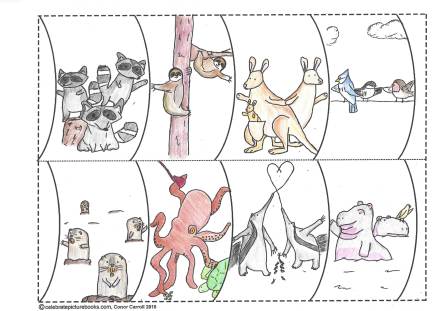
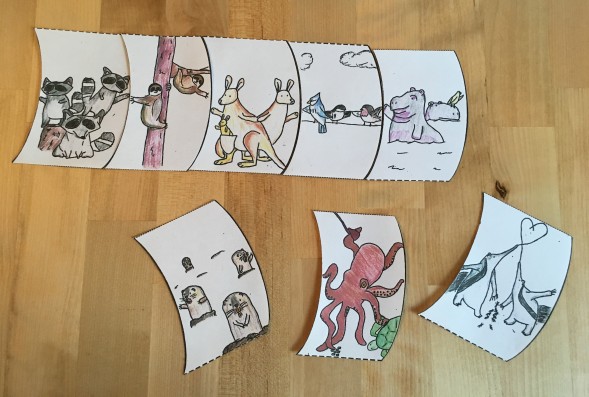
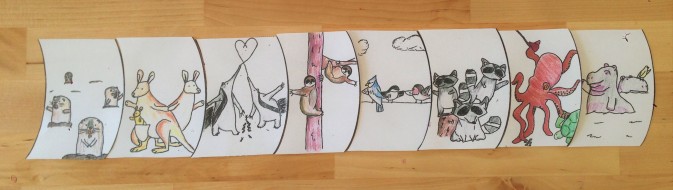
In this printable Give Me Your Hand! Puzzle, everyone is welcomed with a handshake. Offering friendship to all, the interchangeable pieces can be mixed and matched as the animals become buddies with one another. 

Supplies

celebrate-picture-books-picture-book-review-UN-day-puzzle

Copyright Conor Carroll, courtesy of celebratepicturebooks.com

Directions

  1. Print the puzzle: to make the puzzle sturdier: Print on heavy stock paper or glue the page to poster board
  2. Color the pictures with colored pencils or crayons
  3. Cut the pieces apart
  4. Switch the pieces around to make many alternate pictures
celebrate-picture-books-picture-book-review-UN-day-puzzle

Copyright Conor Carroll, courtesy of celebratepicturebooks.com

Picture Book Review

May 4 – Petite and Proud Day

celebrate-picture-books-picture-book-review-the-smallest-girl-in-the-smallest-grade-coverAbout the Holiday

Life’s not about how tall you are but about how big your heart is! Today we celebrate people who are 5’4” and under—the petite! There are many advantages to being on the smaller side—it’s easier to fit into tight spaces; airline, train, and other transportation seats are more comfortable; and we can blend into the crowd more easily when we’re having a bad hair day. All-in-all being petite is pretty perfect!

The Smallest Girl in the Smallest Grade

Written by Justin Roberts | Illustrated by Christian Robinson


Sally McCabe was so small that she was mostly overlooked. “She was the smallest girl in the smallest grade.” The other kids heard her name called every morning along with theirs, and they passed her in the hall on the way to class, but no one knew that “Sally was paying super extra special attention” to what went on around her. For instance, she noticed the kite someone had lost in the tree and had counted twenty-seven keys on the janitor’s ring.  She watched as the leaves turned “green to gold in the fall” and when “Tommy Torino was tripped in the hall.”

celebrate-picture-books-picture-book-review-the-smallest-girl-in-the-smallest-grade-classroom

Image copyright Christian Robinson, text copyright Justin Roberts. Courtesy of G. P. Putnam’s Sons.

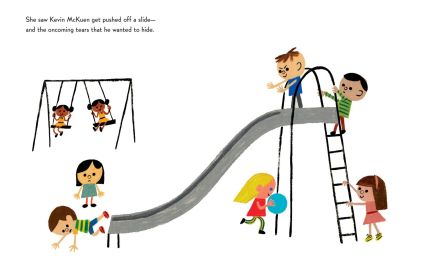
She saw wildflowers turn their face toward the sun and “was there when the stray cats who normally fought / conducted a meeting in the church parking lot.” On the playground she saw Kevin McKuen get shoved down the slide and knew of the “tears that he wanted to hide.” On Parent-Teacher day, too, she watched kids pulled down the hall by parents upset at what they had heard. But during all this, no one happened to see Sally watching or knew what that could mean.

celebrate-picture-books-picture-book-review-the-smallest-girl-in-the-smallest-grade-slide

Image copyright Christian Robinson, text copyright Justin Roberts. Courtesy of G. P. Putnam’s Sons.

Sally understood that these slights, mean words, and cruel actions kept building and building without any stop, and she finally decided that something must change. So one day during lunch she stepped out of line, stuck her hand in the air, and announced very loud, “‘I’m tired of seeing this terrible stuff. / Stop hurting each other! This is enough!’”

Some kids just giggled and ignored what she’d said, but many others joined in with their hands in the air. “Like waves rolling in, one after another— / first Molly rose up, then Michael’s twin brother. / It was Tyrone and Terence, then Amanda and Paul, / who pushed out their chairs and stretched their arms tall.” And they all felt connected “like the janitor’s keys. Fastened together with a heavy steel ring / that held all the secrets to unlock everything.”

celebrate-picture-books-picture-book-review-the-smallest-girl-in-the-smallest-jump-rope

Image copyright Christian Robinson, text copyright Justin Roberts. Courtesy of G. P. Putnam’s Sons.

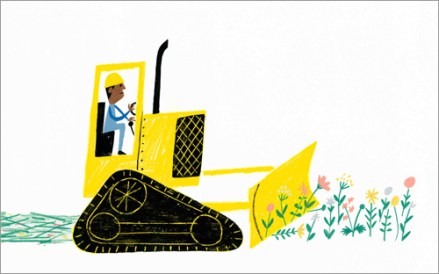
After that day, things went back to normal—but with much welcomed kindness in small doses and places. Spaces were made for strangers to sit, doors held wide open, and many such “moments that get taken for granted—a wildflower appearing that no one had planted.” And so the world changed for this school and this town all because Sally was courageous and kind and paying attention.

Justin Roberts’ rhyming tribute to the empathy and bravery of one little girl who takes notice and makes a difference shows kids and adults that anyone can create change no matter who they are. Readers of all ages will recognize the hurts that Roberts chooses to include, good examples of the small and large acts that cause physical and emotional pain. The infectious rhythm and the inspirations of kindness—from the alley cats’ truce to wildflowers to keys (objects that at once have familiarity and deeper meanings)—give the book resonance far beyond the immediate reading.

celebrate-picture-books-picture-book-review-the-smallest-girl-in-the-smallest-grade-bulldozer

Image copyright Christian Robinson, text copyright Justin Roberts. Courtesy of G. P. Putnam’s Sons.

Christian Robinson’s bright, wide-lens drawings of Sally’s schoolroom, cafeteria, and playground give young readers the same view Sally has, allowing them to also find the examples of arguing, pushing, whispering, and other slights that she reacts to. An illustration of Sally and her classmates sitting at their desks shows exactly how small she is in comparison to the other children; the rest of the pages demonstrate just how big her heart is. Each page offers opportunities for kids and adults to discuss the problems of bullying and options for how they can make a difference.

The Smallest Girl in the Smallest Grade is a wonderful reminder of how important each person is in making the world a happier place and would make an excellent addition to home libraries.

Ages 3 – 7

G. P. Putnam’s Sons, 2014 | ISBN 978-0399257438

Visit Christian Robinson’s website, where books and art are always fun!

Check out all the music, videos, activities, and other stuff by Justin Roberts on his website!

Petite and Proud Day

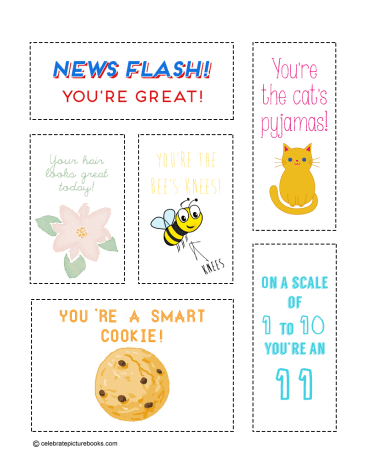
celebrate-picture-books-picture-books-review-kindness-cards

Kindness Cards


Being kind to someone can be as easy as slipping a friendly note into someone’s locker or backpack or leaving a card for a favorite teacher, bus driver, or librarian. If you notice someone who could use a pick-me-up, you could give them one of these cards too! Print out your Kindness Cards and start spreading some good cheer!

Picture Book Review

May 1 – It’s Children’s Book Week

celebrate-picture-books-picture-book-review-short-stories-for-little-monsters-coverAbout the Holiday

Established in 1919, Children’s Book Week is the longest-running national literacy initiative in the country. Running from May 1 – 7 under the theme of One World, Many Stories, this year’s Children’s Book Week offers events nationwide at libraries, bookstores, schools, and other venues. Kids and young readers are also invited to vote in the Children’s and Teen’s Choice Book Awards. To find plenty of downloadable activities, bookmarks, and other fun stuff as well as to discover events in your area, visit Every Child a Reader!

Short Stories for Little Monsters

By Marie-Louise Gay


Open the cover of Short Stories for Little Monsters and you immediately enter the mind of a child with all of its imagination, dreams, fears, questions, and quirky philosophies. Nineteen two-page stories told in comics-style panels populated with rakish kids, pointy-nosed snails, talking trees, and lots and lots of color will have readers giggling from beginning to end.

The first story—When I Close My Eyes—gives a glimpse of the antics to come as a little girl walking with her older brother asks him to “guess what I see when I close my eyes?” Her brother just wants to move on faster and tells her she can’t see anything with her eyes shut. Finally given the “Ok! Ok! Sigh,” the little girl closes her eyes and with a wide grin reveals a bear thinking about a fish, pink polka dot and plaid elephants, kites, eyes, balloons, a stopwatch tree, and flowers to swing from. Her brother’s reaction? “That’s impossible.” Perhaps he’s just too old….

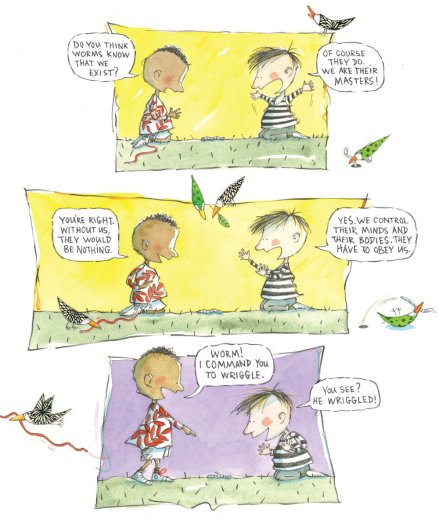
celebrate-picture-books-picture-book-review-short-stories-for-little-monsters-worms

Copyright Marie-Louise Gay, 2017. Courtesy of Groundwood Books

In The Incredible Invisible Boy, a pillowcase encased boy joins a soccer game in progress, moving from position to position while exclaiming “I have superpowers!…I can become invisible!” But the other kids never take notice as they pass the ball over his head, scramble to kick it first, move the ball up field, and finally run off the page, leaving the covered figure to sigh, “The incredible invisible boy strikes again.”

Kids aren’t the only ones who have weird dreams. In Snail Nightmares, thee little shelled guys suffer night terrors too. One dreams of slithering too fast to stop at the end of the panel without hitting its head, another conjurs the embarrassments of losing its pants, and the third has its tail stretched waaaay out by a tricky bird.

Nobody Nose catches a girl tightrope waking on the clothesline, only to be told by a passing boy, “You’re going to fall. You’ll break your nose into a thousand pieces.” He wanders off but not before he instills a deep doubt in her mind: “I wonder what you’ll look like without a nose…or with a new nose?” She then imagines herself gazing in the mirror at her noseless face and trying on a series of fake noses, including a carrot, a pig snout, and an elephant trunk. She finally resorts to covering her head with a cardboard box. The little boy peeks around the last panel to say he likes the carrot nose the best because it goes with her shoes. And indeed it does.

celebrate-picture-books-picture-book-review-short-stories-for-little-monsters-what-do-trees-talk-about

Copyright Marie-Louise Gay, 2017. Courtesy of Groundwood Books

Remember when you could find dangerous adventure anywhere? The two girls in Monster! run shrieking from “a monster from outer space” who drools “poisonous slime,” sports “enormous fangs…and sharp pointy horns,” and is set on devouring the girls alive. As the two cower in safety behind a thick tree trunk, the object of this horror slides by with a sly nod to “snail power.”

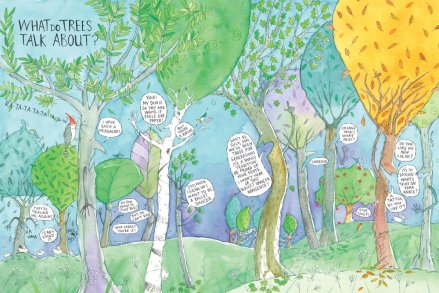
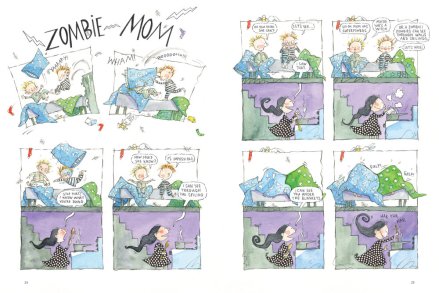
Other stories introduce lowly worms that “rule the world,” a zombie mom who can see through walls and ceilings, the “secret life of snails,” mispronounced words, artistic renderings, and faces ungainly stuck in place during a bad wind.  And as these stories wind down, readers will want to follow the bunny down its rabbit hole to uncover not only The Secret Life of Rabbits, but another world of whimsy, eccentricities, and fantasy that enhances life no matter how old you are.

celebrate-picture-books-picture-book-review-short-stories-for-little-monsters-zombie-mom

Copyright Marie-Louise Gay, 2017. Courtesy of Groundwood Books

Both kids and adults will love Marie-Louise Gay’s funny tribute to childhood. Her vivid pencil-and-watercolor drawings perfectly expose the moments of a day that bring joy, triumph, and, yes, maybe even a touch of consternation to life. Short Stories for Little Monsters would make a delightful gift and a book that would be opened again and again for home libraries.

Ages 5 – 8

Groundwood Books, 2017 | ISBN 978-1554988969

Discover more about Marie-Louise Gay, her books, her art, and her TV show as well as printable materials on her website!

Children’s Book Week Activitycelebrate-picture-books-picture-book-review-book-bag-craft

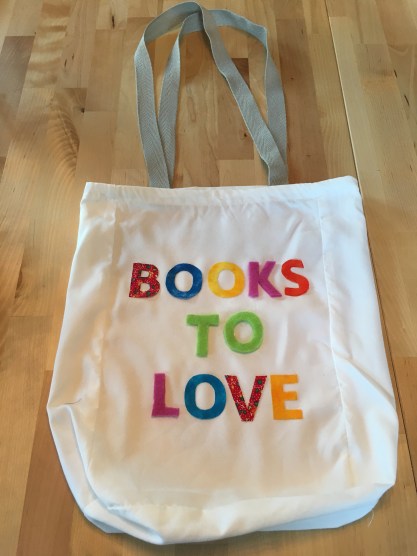
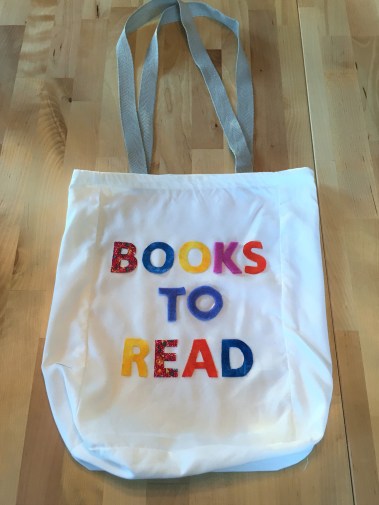
Books to Love, Books to Read Book Bag


This is the perfect week to fill up a bag with books you’d like to read! Here’s an easy craft for making your own unique bag!

Supplies

  • Printable Templates: Books to Read Template | Books to Love Template
  • Small cloth bag, available from craft or sewing stores—Recyclable Idea: I used the bag that sheet sets now come in
  • Cloth trim or strong ribbon, available from craft or sewing stores—Recyclable Idea: I used the cloth handles from shopping bags provided from some clothing stores
  • Scraps of different colored and patterned cloth. Or use quilting squares, available at craft and sewing stores
  • Pen or pencil for tracing letters onto cloth
  • Scissors
  • Small sharp scissors (or cuticle scissors) for cutting out the center of the letters
  • Fabric glue
  • Thread (optional)
  • Needle (optional)

celebrate-picture-books-picture-book-review-books-bag-craft

Directions

  1. Print the sayings and cut out the letters
  2. Trace letters onto different kinds of cloth
  3. Cut out cloth letters
  4. Iron cloth bag if necessary
  5. Attach words “Books to Read” to one side of bag with fabric glue
  6. Attach words “Books to Love” to other side of bag with fabric glue
  7. Cut cloth trim or ribbon to desired length to create handles
  8. Glue (or sew) handles onto the inside edge of bag

Picture Book Review

April 28 – It’s the Week of the Young Child

celebrate-picture-books-picture-book-review-i-want-to-grow-cover

About the Holiday

The Week of the Young Child is an annual initiative hosted by the National Association for the Education of Young Children to celebrate learning, young children, their families, and their teachers. Daily themes focus on ways that children learn. This year those included Music Monday, Tasty Tuesday, Work Together Wednesday, Artsy Thursday, and today—Family Friday, in which people are encouraged to share their family stories. Today’s book also takes a look at a common childhood topic through which kids learn about themselves and others.

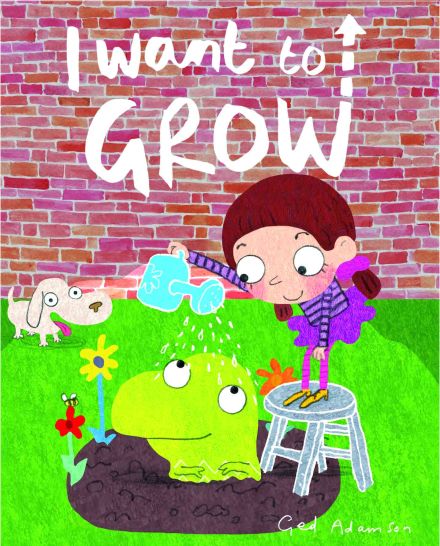
I Want to Grow

By Ged Adamson

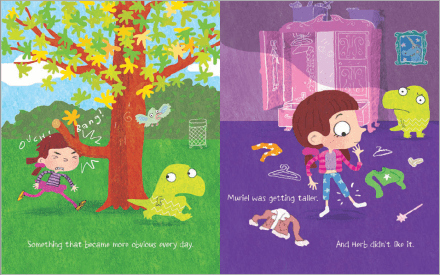
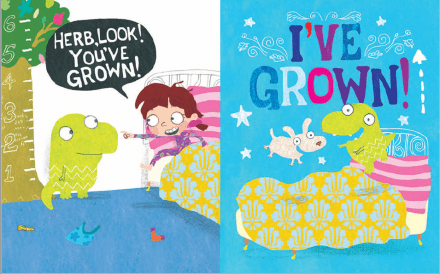
One day while Herb and Muriel were strolling through the neighborhood, Herb noticed something a little different. Every day this disturbing trend continued. The fact was impossible to ignore—“Muriel was getting taller. And Herb didn’t like it.” He didn’t mind that she could now see over the fence or reach things on high shelves, it was just that…well… “he wasn’t getting any taller himself.”

celebrate-picture-books-picture-book-review-i-want-to-grow-muriel-growing

Copyright Ged Adamson, 2017. Courtesy of Boyds Mills Press

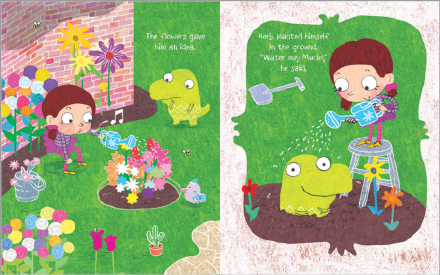
So Herb looked around for a way to rectify the situation. The flowers in Muriel’s garden were reaching for the sky. Perhaps planting himself in the ground would make him grow. But no matter how much Muriel watered him, nothing happened. He shook off the dirt and went to find Muriel. She was in the kitchen working with clay. Herb watched her roll a small piece of clay into a looong piece. That looked promising, so Herb asked for Muriel’s help. “She rolled him back and forth until her arms ached. But he didn’t get any longer. Just dizzy and a little queasy.”

celebrate-picture-books-picture-book-review-i-want-to-grow-garden

Copyright Ged Adamson, 2017. Courtesy of Boyds Mills Press

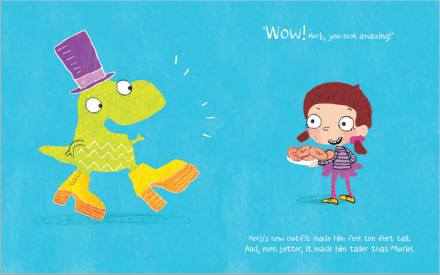
Maybe if he just willed himself to grow, he would, Herb thought. He stressed and strained until he was red in the face, but he remained as short as ever. Muriel knew Herb was having a hard time, so she made him a special treat of tea and doughnuts. When he approached, Muriel immediately recognized a difference. Herb was tall top and bottom. Both Herb and Muriel loved the new look—the high wedge shoes and top hat looked amazing! But standing and walking proved to be perilous.

celebrate-picture-books-picture-book-i-want-to-grow-shoes

Copyright Ged Adamson, 2017. Courtesy of Boyds Mills Press

Herb went to bed feeling a little dejected. In the morning, though, Herb had a pleasant surprise. When he went to wake up Muriel, she noticed something right away. Herb had grown! He was so excited that he “jumped and cheered.” Suddenly, Muriel realized that she had grown too. Herb could see that something was on her mind and asked. It’s “nothing, Herb. Nothing at all,” she said. “Let’s celebrate your new tallness!” And that is just what they did. After that Herb didn’t “worry about catching up with Muriel because he was growing!”

celebrate-picture-books-picture-book-review-i-want-to-grow-cheering

Copyright Ged Adamson, 2017. Courtesy of Boyds Mills Press

Ged Adamson’s wit and whimsy go a long way in assuaging childhood doubts and worries in his funny book. The issue of growth is a common one as siblings, friends, and classmates often compare themselves and watch as those around them grow taller or they themselves begin to outpace the rest. The uncertainty of being different can be troubling and set up unnecessary anxiety.

Adamson’s I Want to Grow offers kids reassurance that nature will take its course while also making them laugh at Herb’s attempts to speed the process. Muriel’s empathy and kindness toward Herb is another wonderful life lesson for readers navigating the quirks and changes of childhood. Adamson’s distinctive illustrations combine vibrant colors, sketched-in details, and sweet, round-eyed characters to enchant kids and boost both the humor and sweetness factor of this heartening story.

I Want to Grow is a great book to share with kids who may be feeling unsure about their height—or any such issue.

Ages 4 – 8

Boyds Mills Press, 2017 | ISBN 978-1629795850

Check out more about Ged Adamson, his books, and his art on his website!

Week of the Young Child Activity

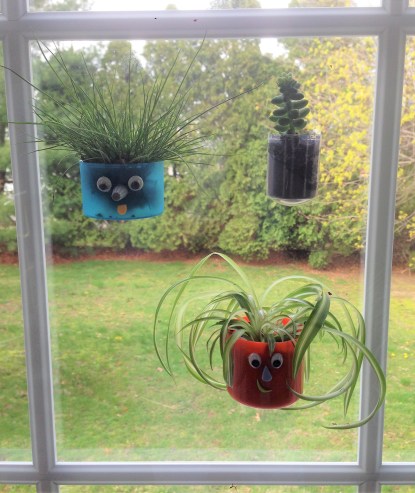
celebrate-picture-books-picure-book-review-window-terrarium-1

Window Pane Terrarium

With this easy craft for spring and summer that combines creativity, recycled materials, a little science, and an opportunity to watch your efforts grow, you can turn a window pane into a little garden.

Supplies

  • Small, light recycled plastic containers with no lip – small cups or colorful tops from shaving cream or other such cans
  • Googly eyes, foam, paint or other materials to decorate the container
  • Soil
  • Seeds or small plants (small succulents, air plants, spider plants, and grass work well)
  • Adhesive Velcro mounting strips in an appropriate weight category
  • Spoon

Directions

  1. Clean and dry containers
  2. Decorate containers with eyes and foam to make faces, or in any way you wish
  3. Fill container with soil
  4. Add seeds or plants
  5. Attach Velcro strips to back of container
  6. Attach firmly to window pane

Alternately: line up containers on a window sill for a colorful indoor garden

Picture Book Review

April 27 – National Tell a Story Day

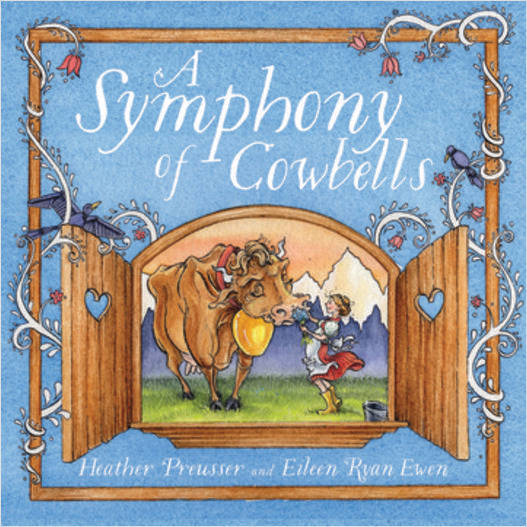
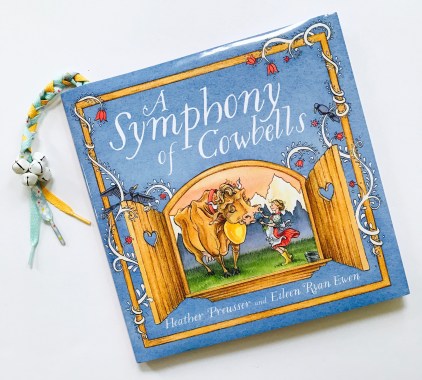
celebrate-picture-books-picture-book-review-a-symphony-of-cowbells-cover

About the Holiday

Today’s holiday was established to celebrate the art of storytelling. Highlighting the tradition of oral storytelling, the day encourages families to get together and have fun remembering and sharing family tales. Reading together is another wonderful way to discover your own stories and those of others around the world.

A Symphony of Cowbells

Written by Heather Preusser | Illustrated by Eileen Ryan Ewen


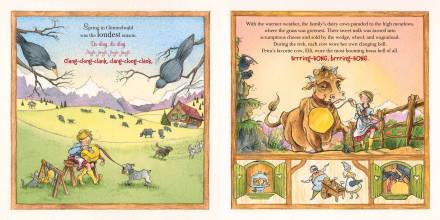
With the dawning of spring, Gimmelwald came alive with the “Da-ding, da-ding. Jingle-jangle, jingle-jangle. Clang-clong-clank, clang-clong-clank” of bells as the cows were led to the sweet, green grass in the high meadows. The cows’ milk would become “scrumptious cheese…sold by the wedge, wheel, and wagonload.” As Petra walked with her family’s herd, she led her favorite cow, Elfi, who “wore the most booming brass bell of all.”

celebrate-picture-books-picture-book-review-a-symphony-of-cowbells-no-bell

Image copyright Eileen Ryan Ewen, text copyright Heather Preusser. Courtesy of Sleeping Bear Press.

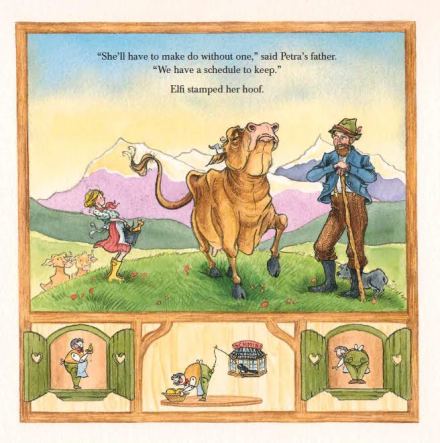
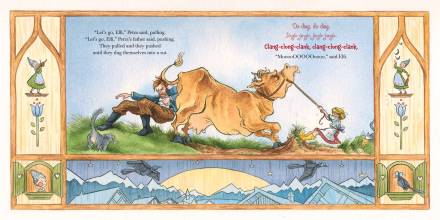
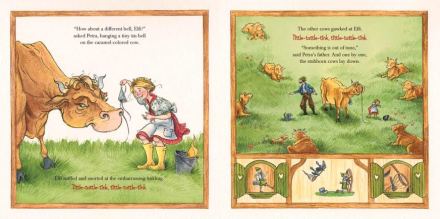
But one day Elfi’s bell was missing. Petra’s father told her they had a schedule to keep and that Elfi would have to go without her bell, but Elfi wouldn’t hear of it. She stomped her hoof and stood her ground. No amount of pushing, pulling or prodding could move Elfi from her spot. Petra ran and retrieved a tiny tin bell to hang around Elfi’s neck, but Elfi only “sniffed and snorted at the embarrassing tinkling. Tittle-tattle-tink, tittle-tattle, tink.”

celebrate-picture-books-picture-book-review-a-symphony-of-cowbells-stubborn-elfi

Image copyright Eileen Ryan Ewen, text copyright Heather Preusser. Courtesy of Sleeping Bear Press.

Without Elfi to lead them, Petra’s other cows lay down in the meadow and refused to move as well. “‘No milk? No cheese? What’ll we do?’ Petra gulped.” She begged Elfi to get up, but Elfi simply gazed at Petra with “eyes wide as milk saucers.” Petra knew she had to find Elfi’s bell. She searched the house, looked in the barn, and combed the field, but didn’t find the bell. The sun went down, and “the stubborn cows remained rooted among the bellflowers.”

celebrate-picture-books-picture-book-review-a-symphony-of-cowbells-tiny-bell

Image copyright Eileen Ryan Ewen, text copyright Heather Preusser. Courtesy of Sleeping Bear Press.

In the morning, Petra spied a crow with something shiny in its beak. She ran after it and discovered the bird’s huge nest high on a cliff. She was much too small to reach it, so she called her father, her mother, and a couple of neighbors. They piled on top of one another, and as Petra teetered on her mother’s shoulders, she reached into the nest and pulled out…Mr. Schmid’s pocket watch, Miss Baumann’s reading glasses, Farmer Felber’s wrench, Mother’s bracelet, Father’s keys, and…Elfi’s brass bell!

Petra skipped all the way to where Elfi and the other cows were keeping their protest, the brass bell announcing “Brrring-BONG, brrring-BONG. Brrring-BONG, brrring-BONG” all the way. When Elfi saw her bell, she danced with joy. Petra placed the bell over Elfi’s head and kissed her velvety nose. The other cows took notice. “On cue, they stood and moseyed up the mountainside….The symphony of cowbells was harmonious again—and LOUD. It was springtime in Gimmelwald after all.”

celebrate-picture-books-picture-book-review-a-symphony-of-cowbells-clanging-bells

Image copyright Eileen Ryan Ewen, text copyright Heather Preusser. Courtesy of Sleeping Bear Press.

Heather Preusser’s enchanting Swiss tale of tenderhearted but stubborn Elfi will delight readers with its musical mystery and gentle humor. Kids will love hearing and reading along with the melodic verses of jingling cowbells sprinkled throughout the text. Preusser’s lyrical phrasing is as fresh as the mountain air and will transport children to the beautiful Swiss countryside.

A Symphony of Cowbells is a perfect example of text and illustrations working together to present the story and add layered details that elevate the reading experience. Eileen Ryan Ewen’s gorgeously detailed and charming paintings take readers to the heart of Gimmelwald, with its glorious mountain backdrop, quaint village architecture, and cozy homes decorated with Alpen cuckoo clocks, dainty curtains, and window boxes overflowing with flowers.

Along the way Ewen frames a consecutive story along the bottom of most pages. Through these panels, eagle-eyed readers will notice a curious happenstance occurring in Gimmelwald which just may explain a few things…. It’s not until the end, however, that kids discover the answer to the story’s mystery.

A Symphony of Cowbells is a captivating and humorous look at country life with a little science sprinkled in. Readers may be enticed to do a little more research into the animal behaviors that influenced the story. The book would make a lovely addition to any child’s home library.

Ages 5 – 8

Sleeping Bear Press, 2017 | ISBN 978-1585369683

To learn more about Heather Preusser and her book as well as see a video about the real Gimmelwald, visit her website!

Discover more about Eileen Ryan Ewen and view a portfolio of her illustration work on her website!

National Tell a Story Day Activity

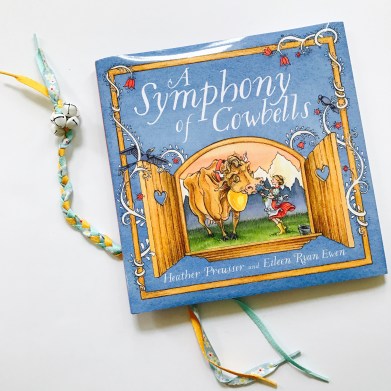
celebrate-picture-books-picture-book-review-bell-bookmark-a-symphony-of-cowbells

Ring a Bell for Reading Bookmark


It’s easy to make a stylish bookmark that can ring out your love of reading while marking your page!

Supplies

  • 3 shoelaces or ribbon of different designs
  • Small “sleigh” bells or other bellscelebrate-picture-books-picture-book-review-bell-bookmark-a-symphony-of-cowbells

Directions

  1. Hold three shoelaces together and knot them together at the top
  2. Braid the shoelaces together as long as you want your bookmark to be
  3. At the end, string three or more bells onto the ends of the shoelaces and knot the shoelaces together to hold the braid closed.
  4. Alternately, you can knot the braid at the end and tie a group of bells to the end.
  5. The end with the bells becomes the top of the bookmark.

Picture Book Review