January 2 – Motivation and Inspiration Day

celebrate-picture-books-picture-book-review-radiant-child-cover

About the Holiday

While Motivation and Inspiration Day was instituted in reaction to the 9/11 attacks, the holiday’s influence and meaning has grown and now includes world-wide participation. Falling on the second day of the year, it encourages us to reflect on our lives—where we are and where we want to go. Take some time to consider what motivates and inspires you and follow those inner and external voices to help you achieve your dreams.

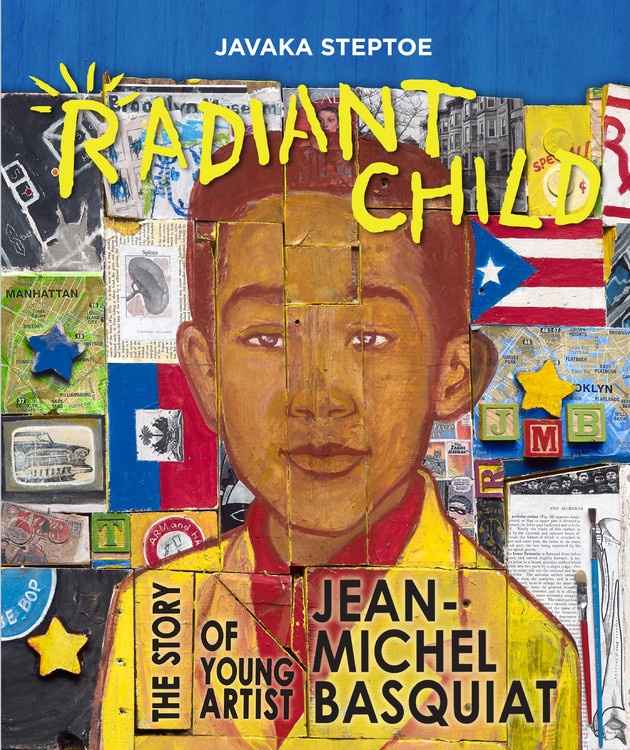
Radiant Child: The Story of Young Artist Jean-Michel Basquiat

By Javaka Steptoe


“Somewhere in Brooklyn, between hearts that thump, double Dutch, and hopscotch / and salty mouths that slurp sweet ice, a little boy dreams of being a famous artist.” All day Jean-Michel sits surrounded by colored pencils and “a storm of papers” and draws. As he sleeps his dreams swirl with images. When he wakes he adds to his drawings, scribbling away. What he creates is “sloppy, ugly, and sometimes weird, but somehow still beautiful.”
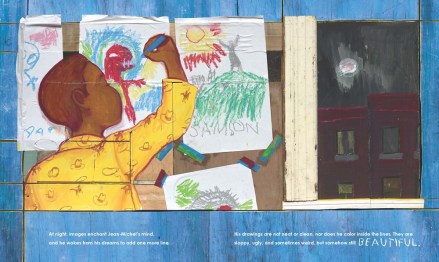
celebrate-picture-books-picture-book-review-radiant-child-beautiful-art

Image and text copyright Javaka Steptoe, courtesy of Little, Brown Books for Young People

Jean-Michel’s talent comes from his Puerto Rican mother, who has a natural sense of style and design and who always makes time to draw with her son, lying on the floor next to him. She takes Jean-Michel to art museums and theaters and reads poetry to him, but she also shows him the art of the city—its sounds, sights, style, and “patchwork” colors. Jean-Michel loves to visit the museum and read about the artwork and the artists. From these stories he “learns what it means to be a famous artist.”

When Jean-Michel is seriously injured in a car accident, his world seems scary and confusing. He mother gives him an anatomy book, which he memorizes. It erases his fears and becomes influential in his work. After returning home his life changes when his mother suffers a breakdown and can no longer live at home. “He tries drawing the terrible out of his blues, but things are not the same.” Jean-Michel visits his mother when he can, “always bringing his artwork to show, telling her that one day it will be in a museum, ‘when I am a famous artist.’”
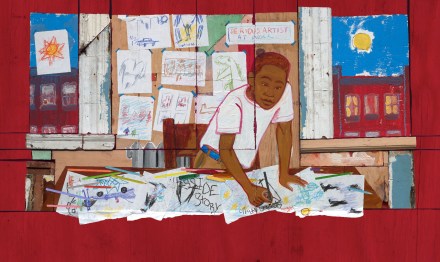
celebrate-picture-books-picture-book-review-radiant-child-drawing

Image and text copyright Javaka Steptoe, courtesy of Little, Brown Books for Young People

As a teenager, Jean-Michel follows his dream, moving from Brooklyn to New York City. There he stays with friends, painting, creating collages, and writing poems on paper strewn about him. At night he paints on city walls, trash cans, and other urban canvases. His art, signed ‘Samoo,’ attracts attention. People wonder, “‘Who is Samoo?’”

Soon his art can be found in art galleries and hanging in the homes of the people who buy his work. Jean-Michel continues to create, listening to “a sound track that is all his own.” Through talent, inspiration, and his mother’s loving influence, Jean-Michel Basquiat conquered the art world, becoming a king among artists, and fulfilling his desire to be a famous artist.

An extensive Author’s Note about Jean-Michel Basquait’s life, including his struggles with addiction and his death in 1988, the motifs and symbolism in his work that now is displayed in museums around the world and sells for millions of dollars, and a personal comment on the impact Basquait’s art had on the author follow the text.
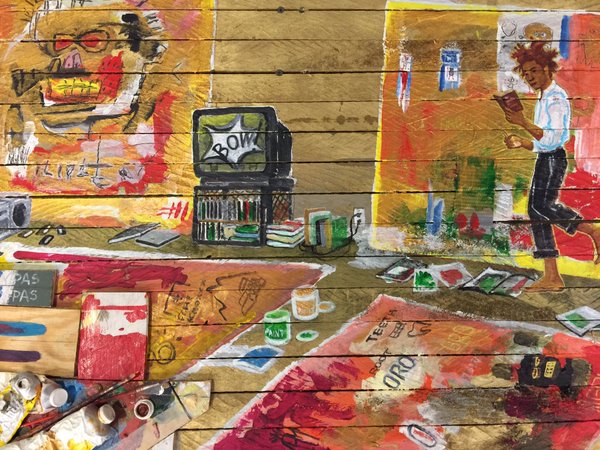
celebrate-picture-books-picture-book-review-radiant-child-studio

Image and text copyright Javaka Steptoe, courtesy of Little, Brown Books for Young People

Javaka Steptoe’s compelling biography of this complex, brilliant artist who people called “radiant, wild, a genius child” beautifully brings to life the inspirations and motivations that fueled his unique and intense talent. Steptoe delivers the story in staccato and flowing sentences, using consonance, assonance, repetition, the rhythms of a poet. Taking the reader from Jean-Michel’s childhood to adulthood to show how maintaining his focused determination, self-confidence, and persistence over many years led to his ultimately becoming a famous artist demonstrates that success is not a matter of luck, but of belief in oneself despite obstacles. Steptoe sensitively addresses the serious injury Basquiat suffered, his mother’s mental illness and Basquiat’s continued love for her, and his unsettled teenage years to complete this far-reaching life story.
celebrate-picture-books-picture-book-review-radiant-child-boxing-image

Image and text copyright Javaka Steptoe, courtesy of Little, Brown Books for Young People

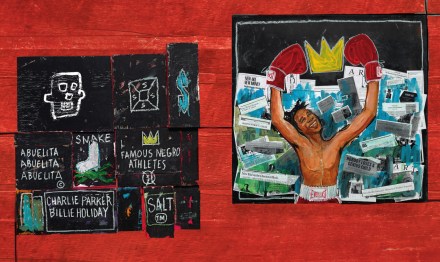
Steptoe’s mixed-media paintings were created on found wood from neighborhoods across New York City. While Steptoe does not reproduce any of Basquiat’s work, he states that readers will find “original pieces that were inspired by him and my interpretations of his paintings and designs.” As befitting his subject, Steptoe offers pages that burst with vibrant color and intricate details and beat with the pulse of the city, the people, the dreams, and the imagination that Basquiat transcribed onto paper, walls, and canvas. Part collage, part fine art, Steptoe’s illustrations will fascinate children and entice them to linger to take in all the emotion and meaning in each. The final spread, a crowd scene made up of photographs, sets Basquiat in the midst of people whom he and his art continue to inspire.

Radiant Child: The Story of Young Artist Jean-Michel Basquiat offers children an inspirational model of creativity, compassion, and confidence no matter where their talents lie. The book is an excellent choice for school, public, and home libraries.

Ages 6 – 10

Little, Brown Books for Young Readers, 2016 | ISBN 978-0316213882

Learn more about Javaka Steptoe, his books, art exhibitions, and life on his website!

Motivation and Inspiration Day Activity
celebrate-picture-books-picture-book-review-motivation-and-inspiration-day-craft

Found-Item Crafts


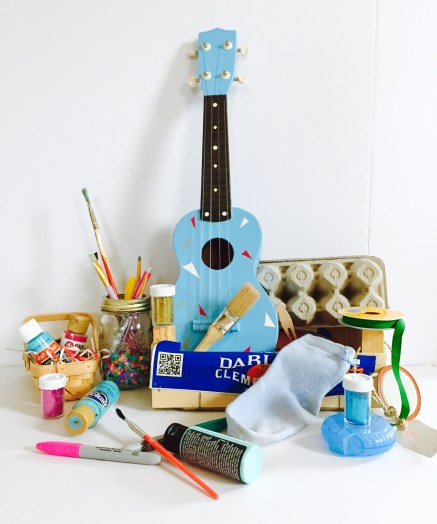
Each person finds motivation and inspiration in different things, places, and people. Today, try to create something new from the materials around you. Boxes, bottles, wire, magazines, cloth, wood, sponges—almost anything—can be transformed with some imagination. With those old socks, corks, flower pots, candle stubs, bits of ribbon, clementine crate, paint, glitter, beads, and more, you can make something useful, a decoration for your room, or even a gift for a friend!

Picture Book Review

November 2 – Look for Circles Day

celebrate-picture-books-picture-book-review-squares-and-other-shapes-with-josef-albers-cover

About the Holiday

Today is one of those days that gets you really observing the world in a new way. As you go about your day at the office, at school, at shops, or just while driving here and there, be aware of all the different circles you see. Sure, there are the obvious ones—the tires on your car, the signals on a stoplight, the lid of your water bottle or coffee cup…but how about all the less-seen circles? Knots on trees, a lemon slice, the center of a flower, the ripple of a raindrop or pebble dropped in a puddle… Whether you look for circles through the eye of geometry or they eye of art, be fully aware of the shapes around you!

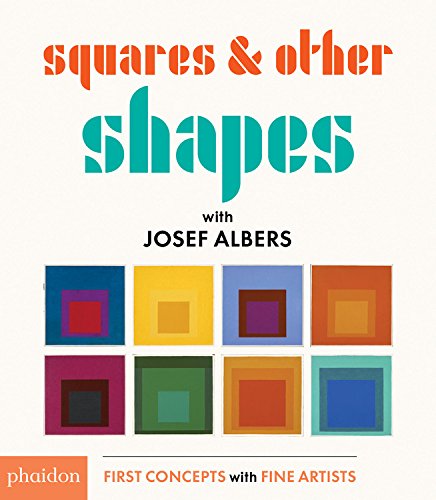
Squares & Other Shapes: with Josef Albers (First Concepts with Fine Artists)

Paintings by Josef Albers


Opening Squares & Other Shapes, readers encounter a vibrant magenta square nesting in an autumn maple leaf-hued square which floats in a square of clear, winter-sky blue. On the next page two orange squares beckon you to follow into the glowing, yellow center square. Could it be a doorway or window leading somewhere?

In another painting, a bold yellow rectangle and an equally bold blue rectangle host guests: “two little rectangles lying down for a nap.” But the calm is shattered on the next page as stacks of red and blue rectangles shake and tumble: “Watch Out! It’s raining rectangles!”

celebrate-picture-books-picture-book-review-squares-and-other-shapes-with-josef-albers-circle-circle-stop

Image courtesy of phaidon.com

Now circles want a turn, and they want to have fun! In a large black rectangle a white circle and a red circle play stoplight: “Circle, Circle, Stop!” while on the next page blue, black and spirally circles jump and frolic—“Bounce, Circles, Bounce!” Turn the page—can you count all of the little circles in the rectangle or all of the baby circles in the rectangle on the right-hand page? Some of the babies are leaping away—or are they just joining the group? What do you think?

celebrate-picture-books-picture-book-review-squares-and-other-shapes-with-josef-albers-hey-circles

Image courtesy of phaidon.com

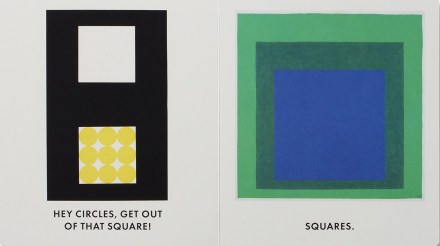
Next the black rectangle is back, but this time with two white squares inside. Wait a minute—how did those little yellow circles get into the bottom square? “Hey circles, get out of that square!” Of course triangles don’t want to be left out. Dusky triangles in many sizes connected tip to tip enjoy their light, white background, but on the next page they’re left in shadow—“Hey triangles, who turned out the lights?”

celebrate-picture-books-picture-book-review-squares-and-other-shapes-with-josef-albers-sharp-triangles

Image courtesy of phaidon.com

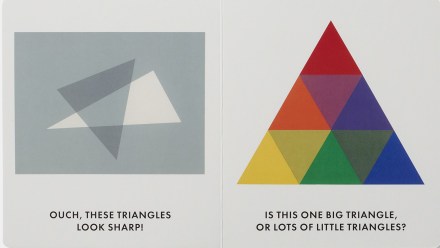
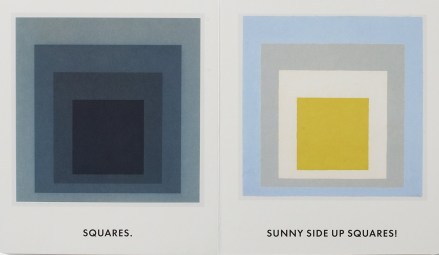
Be careful turning the page to look at the two intersecting triangles: “Ouch, these triangles look sharp!” Maybe it’s better to move on to the big, vivid triangle on the right. Oooh, so many colors! Nine, in fact! Hmmm… “Is this one big triangle, or lots of little triangles?” These paintings are getting more complex! Now there are “blue squares in pink squares, pink squares in blue squares; rectangles in rectangles, circles in circles, and more triangles in triangles. But here’s a different painting: the rectangles are perfect rectangles, but the squares are a little off, and what kinds of shapes do those curved lines make?—“Funny shapes in funny shapes!” And the last painting? Back to squares. Red, purple, and blue squares. “Beautiful squares.”

Following the paintings, the last page provides a captivating biography about Josef Albers’ life and work aimed at the book’s young audience.

celebrate-picture-books-picture-book-review-squares-and-other-shapes-with-josef-albers-sunny-side-up-squares

Image courtesy of phaidon.com

Imagine being able to own a stunning collection of famous paintings by a world-renowned artist and educator to teach your child about shapes, color, and art. With Squares & Other Shapes by Josef Albers you can! The second in the First Concepts with Fine Artists series, Squares & Other Shapes presents readers with more than 30 painting by Josef Albers, one of the most influential artists of the 20th century. Most well-known for his Homage to the Square paintings, Albers worked with color and shapes to challenge perceptions and promote creative thinking.

Shapes are one of the earliest concepts introduced to babies and young children. Even the youngest readers will be riveted by the beautifully reproduced paintings in this large board book that present squares, circles, rectangles, and trianges in clear but creative ways. The easily understood labels, repetition, and recognizable patterns offer key strategies that are known to build strong reading and comprehension skills. Kids will love the humorous text that brings the paintings to life, helping them to also see that art is not static, but active and open to interpretation by each viewer.

Squares & Other Shapes with Josef Albers is a wonderfully conceived concept book that can grow with children as it offers readers enjoyment and education on so many levels. The book would be an often-sought-out addition to home and library bookshelves and also makes a perfect present for baby showers and other gift-giving holidays.

Ages birth – 5 (and up)

Phaidon Press, 2016 | ISBN 978-0714872568

Look for Circles Day Activity

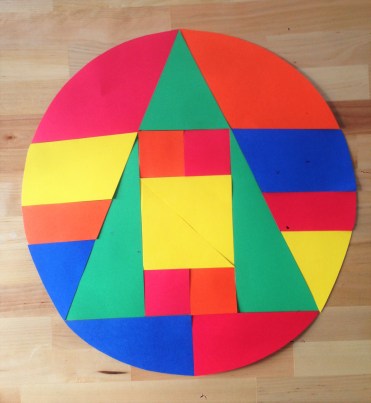
celebrate-picture-books-picture-book-review-circle-puzzle

Circle of Shapes Puzzle


Build a circle from different shapes with this puzzle that grows as you add pieces! You can also use these shapes to create your own art!

Supplies

Directions

  1. Print the shape templates
  2. Cut out the shapes
  3. Trace shapes onto different colored paper
  4. Cut out the colorful shapes
  5. Build the puzzle from the central square to the edges of the circle (It may be easier to keep the puzzle in place by sticking the pieces down with a little tape applied to the back of the pieces)

You can also use the shapes to create your own art!

Picture Book Review
 

November 1 – Dia de los Muertos (Day of the Dead)

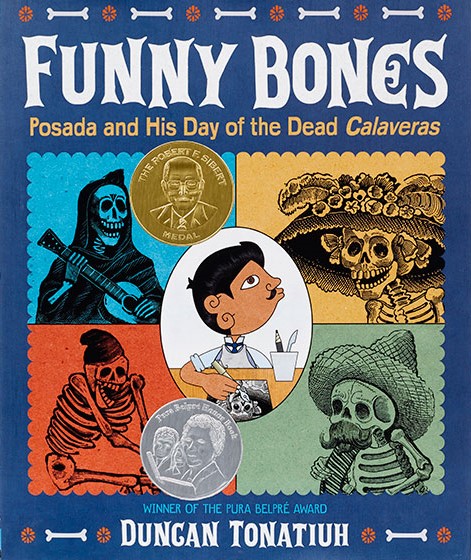
celebrate-picture-books-picture-book-review-funny-bones-posada-and-his-day-of-the-dead-calaveras-cover

About the Holiday

Originating in Mexico, but celebrated throughout Latin America, Dia de los Muertos commemorates the lives of deceased loved ones with music, food, parties, and activities the person enjoyed in life. Dia de los Muertos revolves around the belief that death is just a natural part of the life cycle, and the dead are awakened from their eternal rest to once more join their community for this special day.

Funny Bones: Posada and His Day of the Dead Calaveras

By Duncan Tonatiuh


José Guadalupe Posada was born in 1852 in the Mexican city of Aguascalientes. His older brother, a teacher, taught Lupe how to read and write, and seeing how well he drew, helped him enroll in art classes. When Lupe was 18, he went to work in a print shop where he learned lithography and engraving. During working hours Lupe created labels, invitations, flyers, and other documents.

celebrate-picture-books-picture-book-review-funny-bones-posada-and-his-day-of-the-dead-calaveras-introduction

Copyright Duncan Tonatiuh, courtesy of abramsbooks.com

After work, he gathered with other artists and talked about the government. They didn’t like how their government officials ran things. Lupe’s boss, Don Trinidad Pedroza, at the print shop also published a newspaper, and he invited Lupe to create editorial drawings to be included in the paper. Lupe’s drawings were humorous, but also highlighted the officials’ bad traits. After the elections some of these politicians remained in power and were angry with Lupe and his boss. Lupe and Don Trinidad decided to move to the city of León.

In León Lupe opened his own print shop, he got married, and had a son. He became well known not only for his printing work but also for book and pamphlet illustrations. People began to call him Don Lupe as a sign of respect. “But in 1888 a terrible flood destroyed a large part of the city, including Don Lupe’s shop.” He and his family moved to Mexico City, where in time he was able to open another print shop.

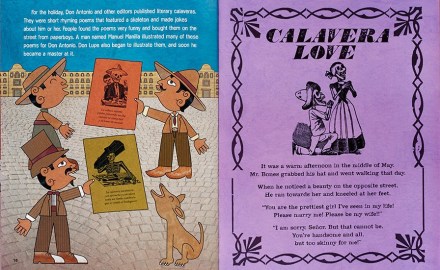
celebrate-picture-books-picture-book-review-funny-bones-posada-and-his-day-of-the-dead-calaveras-calavera-love

Copyright Duncan Tonatiuh, courtesy of abramsbooks.com

He worked with Antonio Vanegas, a writer, who published his stories on large sheets of paper called ‘broadsides.’ “The tales were about a wide range of topics, including scary creatures, fires, miracles, violent crimes, heroes, bandits, cockfights, and bullfights.” Don Lupe drew illustrations for many of these stories. Even people who couldn’t read began buying the broadsides because they were fascinated by Don Lupe’s art.

Every November first and second, during the Dia de Muertos celebrations venders sold special “pan de muerto (bread), cempasúchil (marigold flowers), alfeñiques (sugar skulls), and papel picado (paper cutouts). People bought these and other items to decorate the ofrendas (offerings) they made for their loved ones who had died.” Don Antonio and other editors published “literary Calaveras, which were “short rhyming poems that featured a skeleton and made jokes about him or her. People thought they were very funny. Soon Don Lupe began drawing illustrations for these poems.

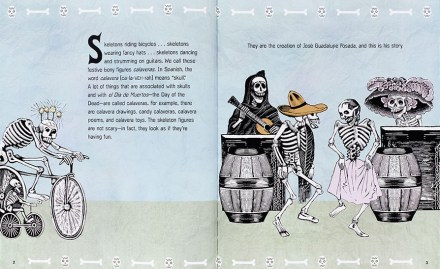
celebrate-picture-books-picture-book-review-funny-bones-posada-and-his-day-of-the-dead-calaveras-fancy-hat

Copyright Duncan Tonatiuh, courtesy of abramsbooks.com

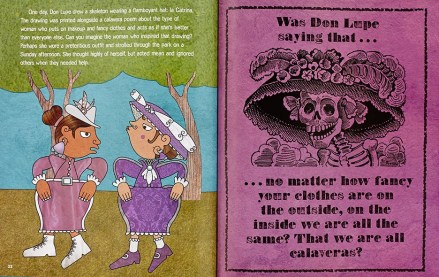
Over time Don Lupe began using the technique of etching, and his illustrations grew more complex. In his calaveras drawings Don Lupe interpreted and commented on what he saw not only on Dia de Muertos, but every day. For example, he watched families gather at loved ones’ graves with food, stories, and music then “drew skeletons dancing and partying. Was he saying that…El Dia de Muertos is not only a celebration of death but also a celebration of life? A day when the dead become alive?”

In another drawing a skeleton wears a large hat covered with lace, feathers, and flowers. This illustration accompanied a poem about a woman who wore expensive clothes and thought she was better than others and ignored them when they needed help. “Was Don Lupe saying that…no matter how fancy your clothes are on the outside, on the inside we are all the same? That we are all calaveras?

Don Lupe also commented on the ever increasing hustle and bustle of society, the Mexican Revolution of 1910, revolutionary leaders and government officials, and just common people and events. Perhaps the main idea Don Lupe was trying to communicate was that “calaveras are all around us. That we are all calaveras, whether we are rich or poor, famous or not.”

celebrate-picture-books-picture-book-review-funny-bones-posada-and-his-day-of-the-dead-calaveras-today

Copyright Duncan Tonatiuh, courtesy of abramsbooks.com

While many people loved and looked forward to Don Lupe’s artwork, they did not know the artist who drew them. It wasn’t until many years after his death in 1913 that “historians and artists such as Jean Charlot and Diego Rivera began to wonder who had drawn such wonderful images.” Today, we know Don Lupe by his last name—Posada—which is how he signed his work, and he and his work is still beloved around the world.

An extensive Author’s Note about El Dia de Muertos and Posada’s influence on other artists. A glossary, bibliography, art credits, and places where Posada’s work is displayed follow the text.

celebrate-picture-books-picture-book-review-funny-bones-posada-and-his-day-of-the-dead-calaveras-etching

Copyright Duncan Tonatiuh, courtesy of abramsbooks.com

In Funny Bones Posada and His Day of the Dead Calaveras, Duncan Tonatiuh accomplishes many things. First, his book is a fascinating look at the life of the man who entertained and enlightened the world with his distinctive talent and ideas. Tonatiuh’s straightforward storytelling reveals the personal and historical events that influenced Posada from childhood through adulthood, clearly explaining and highlighting each concept for his young audience. Second, Tonatiuh provides readers with brief primers on the printing processes of lithography, engraving, and etching with step-by-step descriptions of these interesting art forms.

Third, his own vibrant and expressive stylized illustrations both contrast with and complement the depictions of Posada’s life and his calaveras drawings. On nearly every two-page spread readers experience this biography through Tonatiuh’s portrayals of Don Lupe, the townspeople, and others as well as through Posada’s actual broadsides and editorial drawings. The juxtapositions allow children to fully appreciate the meaning and humor behind these famous drawings that are still so popular and resonant today.

Ages 6 – 10

Harry N. Abrams, 2015 | ISBN 978-1419716478

View a gallery of Duncan Tonatiuh‘s artwork for children and adults on his website!

Dia de los Muertas (Day of the Dead) Activity

celebrate-picture-books-picture-book-review-day-of-dead-coloring-page

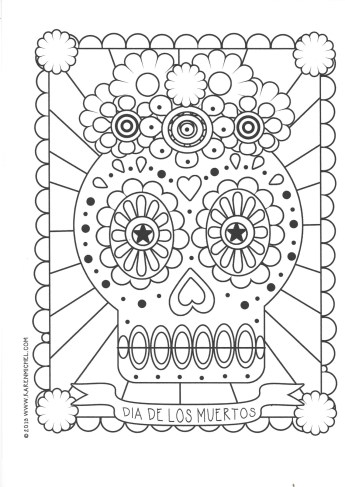
Calaveras Coloring Page


With their intricate designs and vibrant hues, calaveras are a joy to color. Grab your entire set of markers, pencils, or crayons and design a masterpiece with this printable Calaveras Coloring Page.

Picture Book Review
October 25 – International Artist Day

celebrate-picture-books-picture-book-review-the-noisy-paint-box

About the Holiday

Instituted in 2004 by Chris MacClure, a Canadian artist who specializes in Romantic Realism, National Artist Day celebrates the various forms of art, the artist, and the unique vision each one brings to their work and the world. Whether you like classic or abstract styles, watercolors or oils, sculpture or installations, why not take some time today to visit an art museum or gallery—or page through a collection of prints or a biography like today’s book!

The Noisy Paint Box: The Colors and Sounds of Kandinsky’s Abstract Art

Written by Barb Rosenstock | Illustrated by Mary GrandPré


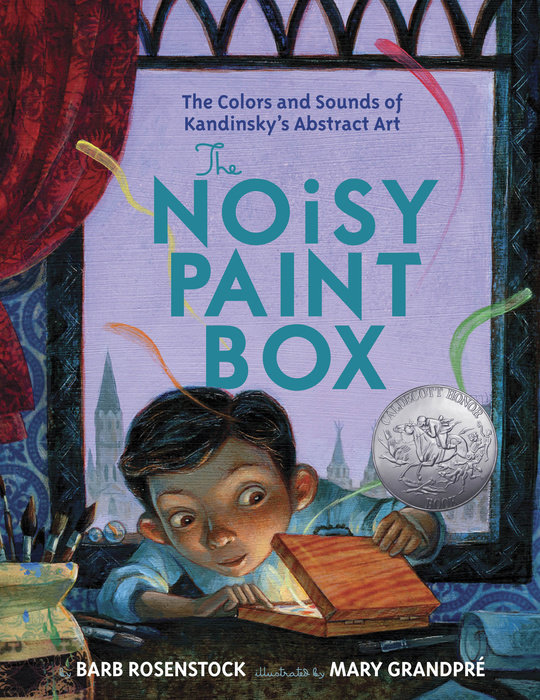
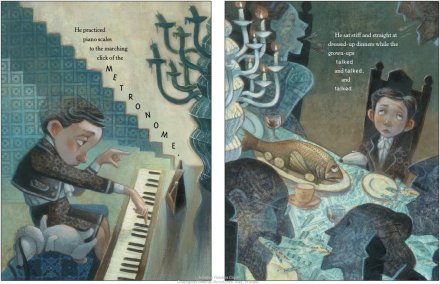
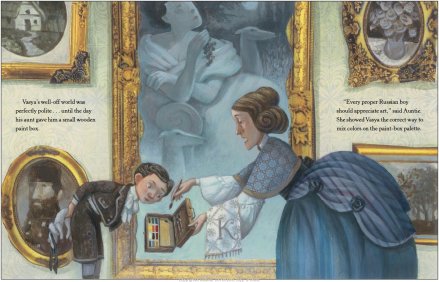
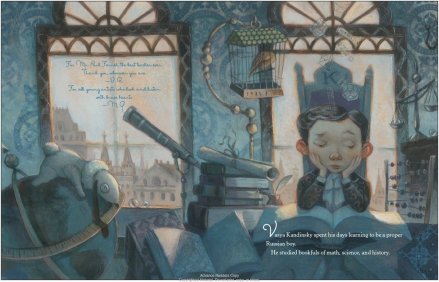
As a Russian child Vasya Kandinsky spends his days absorbed in learning math, science, and history. He takes piano lessons and attends formal dinners where the adults drone on and on. His life is polite, stiff, and colorless until the day his aunt gives him a small wooden paint box. “Every proper Russian boy should appreciate art,” Vasya’s aunt tells him while explaining how to mix colors.

celebrate-picture-books-picture-book-review-the-noisy-paintbox-piano-lessons

Image copyright Mary Grandpré, text copyright Barb Rosenstock. Courtesy of randomhouse.com

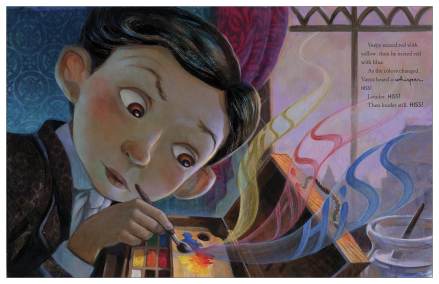
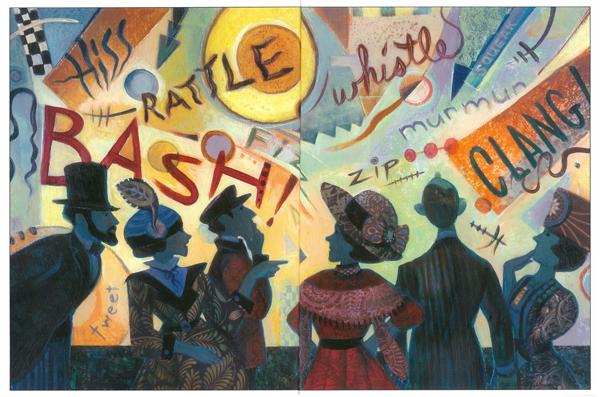
Vasya takes up the brush and combines red with yellow then red with blue. As the colors change to orange and purple, Vasya hears a whisper that grows into a noisy hiss. “‘What is that sound?’” he asks, but no one else hears anything. “The swirling colors trilled like an orchestra tuning up for a magical symphony,” and “Vasya painted the sound of the colors.” A lemon yellow “clinked like the highest notes on the keyboard; a navy blue “vibrated deeply like the lowest cello strings.” Crimsons “blared” and greens “burbled.”

celebrate-picture-books-picture-book-review-the-noisy-paintbox-colors-kandinsky-gets-his-first-paints

Image copyright Mary Grandpré, text copyright Barb Rosenstock. Courtesy of randomhouse.com

Vasya runs downstairs to show his family what he has created. His mother, father, and Auntie look at the canvas with its swoops, shapes, and angles. “What is it supposed to be?” they ask, and send him off to art school to learn how “to draw houses and flowers—just like everyone else.” Vasya finishes school and becomes a lawyer. He leaves his paint box untouched and lives the way he is expected, but the sounds of the colors are always with him.

One evening as he listens to an opera, the music surrounds him with color—“stomping lines of vermilion and coral; caroling triangles in pistachio and garnet; thundering arches of aqua and ebony…” Vasya can hear the colors and see the music. He knows then what he must do. He quits his job teaching law and moves to Germany to be a painter. He surrounds himself with artists and takes classes with famous teachers, and yet people still look at his canvases and asked, “What is it supposed to be?”

celebrate-picture-books-picture-book-review-the-noisy-paintbox-colors-have-sounds

Image copyright Mary Grandpré, text copyright Barb Rosenstock. Courtesy of randomhouse.com

Once again he paints what is expected. His teachers love his houses and flowers, but Vasya does not. His friends understand. They too want to expand the meaning of art. They agree with Vasya when he says, “‘Art should make you feel.’” In his studio Vasya continues to paint the sounds he hears, to give music color and color sound. Bravely, he invites the public to view his paintings, which are named after musical terms—Composition, Accompaniment, Fugue, and more.

This is a new kind of art—abstract art—and it takes a long time before people understand. They look and still ask, “What is it supposed to be?” “It is my art,” Kandinsky replies “How does it make you feel?” 

celebrate-picture-books-picture-book-review-the-noisy-paintbox-colors-kandinsky-at-a-concert

Image copyright Mary Grandpré, courtesy of randomhouse.com

An author’s note telling more about Kandinsky’s life and synesthesia, a genetic condition in which one sense triggers another, follows the story.

In the spirit of full disclosure, Kandinsky is one of my favorite artists, so I was excited to read this biography—I was not disappointed! With so many great artists, their work speaks for itself, but viewers wonder: How did it come about? What influenced the artist? Barb Rosenstock, with lyrical language and beautifully chosen descriptions, reveals the emotions and passion that fueled Kandinsky’s art from his earliest ages: as he walks through Moscow he can’t ignore “the canary-colored mailbox whistling as he rode to work. The scarlet sunset haze ringing above the ancient Kremlin walls.” Rosenstock’s inclusion of the conflicts and opposition Kandinsky faced and overcame will inspire children to listen to their inner voice and makes readers and lovers of his abstract art glad he never gave up.

Mary GrandPré’s unique style brilliantly depicts Kandinsky’s singular vision, allowing readers to experience the way he wielded his paint brush like a conductor’s baton. Vasya’s early life is painted in muted blues and grays, and the boredom on his face as he studies his schoolwork is obvious. Kids will appreciate his one-finger plinking at the piano and the rolled-eyed drowsiness of the formal dinner. Once Vasya is introduced to the paint box, however, GrandPré’s illustrations become vibrant, with swirling colors overlaid with the musical notes that Kandinsky associated with them. His uninhibited painting is gloriously shown as the young boy’s shirt comes untucked and the colors burst from the canvas upon his first painting.

celebrate-picture-books-picture-book-review-kandinsky-studying

Image copyright Mary Grandpré, text copyright Barb Rosenstock. Courtesy of randomhouse.com

As the adults look at his work, the room is again swathed in somber colors. The text revealing that Vasya attended regular art classes to learn to draw houses and flowers is set above a single wilting flower in a vase. The personal tug-of-war Kandinsky experienced even into adulthood is wonderfully rendered: Colors flow into his ears at the opera; he studies his own landscape and still life paintings with misgiving in a hazy studio, and the joy and freedom of his abstract art is demonstrated with wild abandon while a dove escapes its cage. The final image of a child sitting in front of a Kandinsky painting reinforces the idea that his art lives for all and for all time.

Ages 4 – 9

Alfred Knopf, Random House Children’s Books, 2014 | ISBN 978-0307978486

International Artists Day Activity

celebrate-picture-books-picture-book-review-i-love-art-word-search

I Love Art! Word Search 


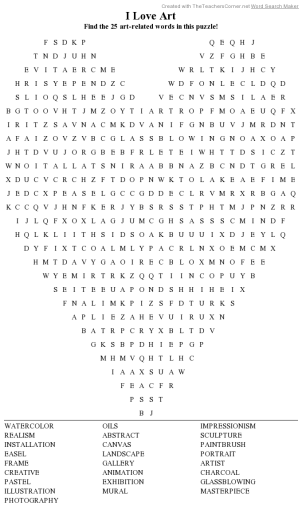
There are twenty-five art-related words for everyone to love in this printable I Love Art! word search puzzle! Here’s the Solution!

Picture Book Review
October 15 -Bridge Day

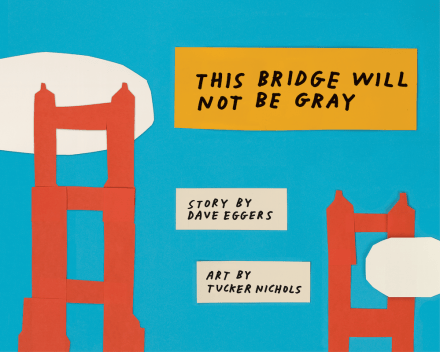
celebrate-picture-books-picture-book-review-this-bridge-will-not-be-gray-cover

About the Holiday

Today’s holiday hosts the largest formalized jumping event in the world and celebrates BASE jumpers, those intrepid souls who test their mettle against the highest points, including buildings, antennas, cliffs, and bridges. Recognized since 1980 Bridge Day is a world-wide event, and while it may not officially be about the bridges, it brings attention to these beautiful architectural marvels while extreme sports aficionados and their fans gather on spans across the globe to have fun.

This Bridge Will Not Be Gray

Written by Dave Eggers | Illustrated by Tucker Nichols


“In the beginning there was a bridge.” Well, to back up a bit there was a bay that led to the Pacific Ocean. The opening between the two shores that enclosed the bay was called the Golden Gate. “On one side of the Golden Gate was the Presidio, a military base at the top of the city of San Francisco. On the other side there were only hills, green and yellow, rising high above the sea.” Beyond these hills towns dotted the coastline.

People traveled between these shores by boat or by driving way out of their way. Many times people had thought about building a bridge across the bay, but they were afraid it would ruin the beauty of the land. At last it was decided that a bridge should be built. The year was 1928 and Joseph Strauss, an expert on bridges, was hired to design it. What he came up with looked more like the skeleton of a roller coaster, and while it would be strong, it would also be ugly.

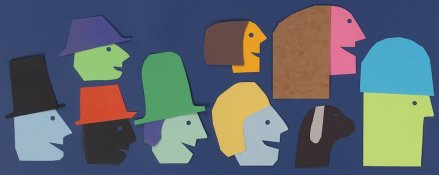
celebrate-picture-books-picture-book-review-this-bridge-will-not-be-gray-people

Image copyright Tucker Nichols, courtesy of mcsweeneys.net

People agreed that for such a beautiful spot, a beautiful bridge was needed. Joseph Strauss then asked for help in developing a plan for the bridge. Leon Moisseiff, known for designing the Manhattan Bridge in New York, came on board. Leon’s idea was for “a suspension bridge, one with swooping lines and tall towers.” The drawings were light and airy and…beautiful. People liked it very much.

“But still the bridge appeared a bit stern in style. So Joseph and Leon asked another person, named Irving Morrow, to help out.” Irving and his wife Gertrude had a different idea about what the bridge could be. With vertical fluting, “art deco flourishes,” pedestrian walkways, and curved lamps lighting the way, “the bridge could be both a bridge and something like art.”

Steelworkers in Maryland, Pennsylvania, and New Jersey built the pieces of the bridge. They were shipped to California by train and by boat. Finally, it was time to construct the bridge. Men had to dive deep into the icy waters of the Pacific Ocean and climb high into the sky while constructing it. It was estimated that it would take 4 years and thousands of workers to finish it.

celebrate-picture-books-picture-book-review-this-bridge-will-not-be-gray-irving-morrow

Image copyright Tucker Nichols, courtesy of mcsweeneys.net

First the tall towers were constructed. The day they were finished was one of “jubilation” and awe as“sometimes the things humans make baffle even the humans who make them. One aspect of the bridge that had not been decided was the color, and many people had opinions on that. “The Navy thought it should be yellow and black so that ships and planes could easily see it.”

“The Army wanted it to look like a candy cane for the same reason the Navy wanted it to look like a tiger with jaundice: so that it would be easily seen by planes and ships.” Most people, though, thought the bridge should be painted black, white, or gray like most other monuments, towers, and buildings. Right now, the bridge was orange—coated with a special anti-rust paint. As Irving Morrow watched the bridge go up, he thought this orange was a beautiful color.

He suggested that the bridge be allowed to stay this color. Others thought he was “nuts.” Never had there been an orange bridge before, “and for a good portion of the human race, because something has not already been, that is a good reason to fear it coming to be.” But the people of San Francisco began to see things Irving’s way. Still, gray seemed to be the safe choice.

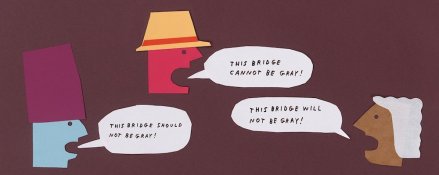
celebrate-picture-books-picture-book-review-this-bridge-will-not-be-gray-people-talking

Image copyright Tucker Nichols, courtesy of mcsweeneys.net

Irving, who was usually a shy and quiet sort, began to get vocal about his color preference as the completion date of the bridge came closer. Other’s began to echo his thoughts and arguments. “This bridge will not be gray!” they said. At last “the powers that be” agreed with Irving. The bridge remained orange: International Orange, in fact.

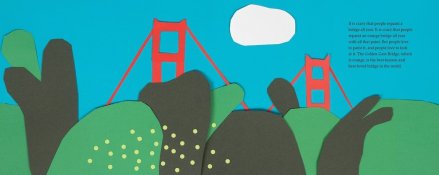
But because the wind, rain, and sun are harsh on the orange bridge, it needs to be repainted every year. Every day some part of it is being painted by dedicated workers. Is that crazy? Maybe, “But people love to paint it, and people love to look at it. The Golden Gate Bridge, which is orange, is the best-known and best-loved bridge in the world” because it is “bold and courageous and unusual and even strange.”

celebrate-picture-books-picture-book-review-this-bridge-will-not-be-gray-golden-gate-bridge

Image copyright Tucker Nichols, courtesy of mcsweeneys.net

San Francisco resident Dave Eggers has written a loving tribute not only about the very distinctive Golden Gate Bridge but to the equally distinctive, quirky, and even courageous Irving Morrow, other architects, and people of the Bay area who saw and championed art where others may only have seen function. Passages of straightforward narration are joined by rivets of whimsically inserted dialogue, soaring description, and moving insight to construct a lyrical story of vision and inspiration that both kids and adults will find fascinating.  

Tucker Nichols’ paper cut illustrations are as playful and full of imagination as a kindergarten classroom. Using simple shapes and a gorgeous palette Nichols crafts portraits, collages, and landscapes that are movingly effective in depicting the San Francisco Bay area, the rising Golden Gate Bridge, and the personalities involved in this fun history of a beloved monument.

This Bridge Will Not Be Gray is a must for school and public libraries, a wonderfully inspiring addition to children’s bookshelves, and a colorful coffee table book for any home.

Ages 4 – 10 and up

McSweeney’s, 2015 | ISBN 978-1940450476

Click here to learn more about Tucker Nichols and his work.

Bridge Day Activity

celebrate-picture-books-picture-book-review-golden-gate-bridge-coloring-page

Golden Gate Bridge Coloring Page


Get out your markers, colored pencils, or crayons and color this printable Golden Gate Bridge Coloring Page!

Picture Book Review
October 3 – World Architecture Day

celebrate-picture-books-picture-book-review-roberto-the-insect-architect-cover

About the Holiday

Originally observed on July 1, World Architecture Day was moved to the first Monday in October to coincide with the United Nations World Habitat Day. Today we take time to consider the importance of architecture in our lives and the impact architects have in making our cities, towns, homes, and other buildings comfortable and functional. A focus on sustainability gives architects new challenges and goals for a brighter future. To celebrate today take a walk around your town or city and study the buildings and how they fit into the vision for your area or research a famous building – there are so many to choose from!

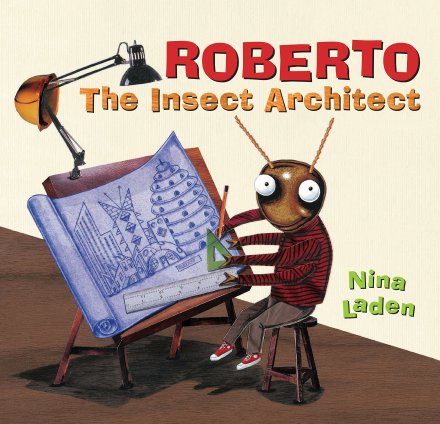
Roberto the Insect Architect

By Nina Laden


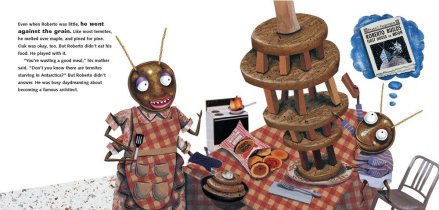
Even as a little bugger Roberto the termite “went against the grain.” While he liked the usual meal fare of oak, maple, and pine, Roberto would be more likely to play with his food than eat it, building tall towers on his plate. The other termites didn’t understand and laughed at him. Roberto knew that if he wanted to build the life he wanted, he would have to leave town.

celebrate-picture-books-picture-book-review-roberto-the-insect-architect-roberto-plays-with-his-food

Image and text copyright Nina Laden, courtesy of Chronicle Books

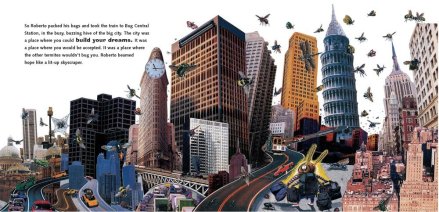
Roberto moved to the city, dreaming of using his talents and being accepted, “but hope didn’t come cheap in the big city. Neither did a place to live. Roberto had no choice but to rent a room in a flea-bag hotel run by a nervous tick.” The next day he hit the pavement looking for a job. He talked to Hank Floyd Mite, who was only interested in what buildings Roberto had already designed. Fleas Van Der Rohe dismissed Roberto, saying “‘There are no termites in my houses’” and Antonia Gaudi rudely “blurted out, ‘Don’t bug me!’”

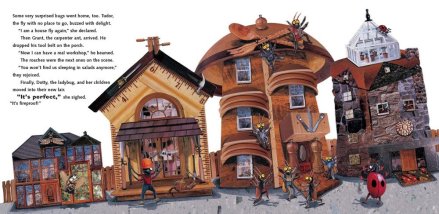
As Roberto dejectedly headed home, he was swarmed by other bugs with bigger problems than his: a fly had no home, a carpenter ant was trying in vain to fix his ramshackle shed, roaches were fleeing a diner, and “a frantic ladybug flew into his arms crying, ‘My house is on fire and my children are gone!’” Roberto wanted to help them all, “but what could one termite do? ‘A lot of damage,’ Fleas Van Der Rohe had told him.”

celebrate-picture-books-picture-book-review-roberto-the-insect-architect-the-big-city

Image and text copyright Nina Laden, courtesy of Chronicle Books

Roberto vowed to show Fleas and all the others what he could do. He drew up blue prints for a one-of-a-kind neighborhood then went in search for the perfect location. When he found a block of abandoned buildings, Roberto got to work. He built day and night and “transformed the block of junk into a street of extraordinary homes, each one unique and a work of art.” Roberto anonymously sent the keys to the homes to the insects he had met earlier.

Each home perfectly matched the need of its owner. Soon the city was abuzz with the news of these amazing homes, and everyone from Barbara Waterbugs to Steve Shieldbug wanted to tell the architect’s story—but who was it? Bounty-hunting butterflies, paper wasps, and bold weevils went in search of the builder’s identity. Finally, “a click beetle got the shot.” The next morning Roberto was all over the news. He became a celebrity with job offers, book offers, offers of love, and parties galore. A statue in his honor was even placed in the city park.

With all the acclaim he had attracted, Roberto established his own company. He became more than a famous architect, he became a role model for other aspiring little mites. Now when they “play with their food,” their parents encourage them: “‘Be creative!’ Maybe someday you’ll grow up to be just like Roberto.’”

celebrate-picture-books-picture-book-review-roberto-the-insect-architect-homes-for-other-insects

Employing a perfect swarm of insect puns, plays on words, and riffs on insect habits, Nina Laden swats it out of the park in her laugh-out-loud termite-out-of-woodwork story. The straight narration of Roberto’s quest for architectural greatness is tinged with the tones of noir private-eye novels, and his encounters with “famous” architects and insects in need give Laden the perfect palette for her visual and literary humor.

Laden’s mixed-media illustrations are layered with allusions to classic art, the world’s great cities, and products from the past. It all adds up to a stunning visual feast, whether you have two eyes or eight. Kids will love discovering all the hidden jokes on each page, and adults will appreciate the nods toward celebrities as well as the fads of their childhood.

Newly published in paperback, Roberto the Insect Architect offers a fresh take on the idea that you should follow your dreams and your heart. The book would make a fun addition to a child’s library and could jumpstart a study of architecture and its designers as well as an entomology unit in school classrooms.

Ages 5 – 9

Chronicle Books, 2016 | ISBN 978-1452156460

To view a gallery full of books by Nina Laden, visit her website!

World Architecture Day Activity

celebrate-picture-books-picture-book-review-world-architecture-day-word-scramble

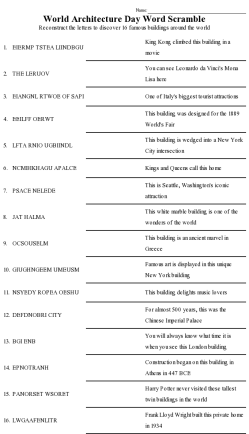
World Monuments Word Scramble


Use the clues to unscramble the names of 16 world-famous buildings and landmarks in this printable World Monuments Word Scramble Puzzle! Here’s the Solution!

Picture Book Review
September 9 – It’s National Courtesy Month

celebrate-picture-books-picture-book-review-the-black-and-white-factory-cover

About the Holiday

September has been designated as National Courtesy Month to remind us that good manners and watching out for others, goes a long way toward making the world a more cooperative and happy place. Sometimes common courtesy is as black and white as directly following the rules…but sometimes…well, I’ll let you decide…

The Black and White Factory

Written by Eric Telchin | Illustrated by Diego Funck


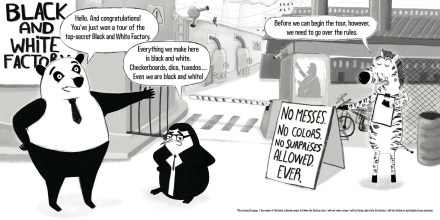
You are one lucky reader! You have won a tour of the Black and White Factory where the employees are hard at work making products like checkerboards, dice, tuxedos…you know the stuff. Even the bosses—a panda and a penguin—are in black and white. Before you start your tour, you’re met by a zebra foreman who goes over the rules of the factory. And they are these:

“No Messes, No Colors, No Surprises Allowed.” When? “Ever.”

As you proceed inside your first stop is the billiard ball machine—8 balls only, of course! It doesn’t take you long to be ushered into the “top-secret Experiment Room,” where innovative products are being developed. You may be the first ever to see “trick dominoes that are impossible to knock over” and new black-and-white-paint in either checkerboard or polka-dot. Another prototype displayed on a wall chart is “never-melting vanilla ice cream.” Also prominently displayed are the factory’s rules: “No Messes, No Colors, No Surprises Allowed. Ever.”

celebrate-picture-books-picture-book-review-the-black-and-white-factory-outside-factory

Image copyright Diego Funck, text copyright Eric Telchin, courtesy of simonandschuster.com

Moving on you push the button leading to the Animal Room. Housed here are white Dalmatians, dairy cows, and skunks who are being sprayed with their distinctive black marks. An elevator takes you to the Bar Code Room. While waiting for your car, you are exhorted to remember the rules: “No Messes, No Colors, No Surprises Allowed. Ever.” The Bar Code Room is “the cleanest, most perfect, most black and white room in the whole factory. Every bar code in the world is make right here.” Even the one for the book you’re reading! Turn it over and see!

celebrate-picture-books-picture-book-review-the-black-and-white-factory-factory-floor

Image copyright Diego Funck, text copyright Eric Telchin, courtesy of simonandschuster.com

“Wait!” Wait!! Turn the book back! A stripe of yellow has seeped into the factory! “Someone didn’t follow the rules. Someone brought an outside mess into the Black and White Factory.” The bosses need your help! Can you “use your fingers to wipe the color off the bar code?” Oh, no, no, no! That just made it worse—now it’s smudged yellow and orange! “Quick! Do something! Rub the colors with your sleeve. Or your elbow. Something.”

We interrupt this review to remind you of the RULES: “No Messes, No Colors, No Surprises Allowed. Ever.” Right, then, back to our dilemma. Now the colors are dripping! It’s such a mess! Suddenly, the zebra has an idea. He asks you to “hold the book upright and tilt it so the color drips down the bottom of the page.” Okay—phew!—great job!
Oh, no!! More colors are creeping in! “Swirl the book so the colors fly off the page,” the penguin orders. You are one strong swirler—the zebra, penguin, and panda are all topsy-turvy, and now the factory looks like an abstract painting! This definitely is not good. “What a mess! The Black and White Factory is ruined.” But the panda may have an idea. Everyone, “back to the top-secret Experiment Room.” There the panda, zebra, and penguin, splattered in paint, stand in front of the “Air-powered comprehensive cleaning contraption.” They just need your help in getting it started. Can you blow into the nozzle? Harder? Come on, put some oomph into it! All right!

celebrate-picture-books-picture-book-review-the-black-and-white-factory-bar-code-room

Image copyright Diego Funck, text copyright Eric Telchin, courtesy of simonandschuster.com

The machine’s at 100% power! The machine shakes and whirrs with a color overload. It explodes with a rainbow of colors that covers everything in the factory. The panda, zebra, and penguin stand in the midst of it. “Everything is so…different,” says the panda. “It’s…colorful…,” adds the penguin. “And wonderful!” concludes the zebra. There’s just one problem…The RULES: “No Messes, No Colors, No Surprises Allowed. Ever.” Hmmmm….

How about: “No Messes, No Colors, No Surprises Allowed. ForEver.”

Yes! Much better! So “that concludes the Best. Tour. Ever!” Off you go—just don’t forget the rules: “Messes, Colors, Surprises Allowed. Forever.”

Eric Telchin’s The Black and White Factory will have kids tipping, tilting, swinging, and even reading this fun and funny interactive picture book. Directly addressing the reader, the three staid and rule-abiding managers of a very focused factory, play straight-man to the child’s laugh inducing and unintentional “mistakes” that lead to a brighter future. With the pacing of a favorite theme-park ride, the story has a suspenseful “Oh, no! What’s going to happen?” feeling as readers progress from page to page until the first tinge of yellow precipitates the humorous chaos to come.

Diego Funck’s sly illustrations riff on the black-and-white theme, as he designed a clever product line in line with “the rules.” Kids will want to linger over the pages to catch all the jokes and visual puns. The reactions of the three employees of The Black and White Factory will make readers laugh too as they endeavor to hang on to their beloved rules in the midst of their changing world. The bold colors of the transformed factory are as refreshing as the sun after a dark, rainy day.

The theme that creativity and expression come from making messes and allowing surprises to happen is a welcome idea and one that leads to innovation and personal freedom. The Black and White Factory is sure to be asked for again and again!

Ages 4 – 7

little bee books, 2016 | ISBN 978-1499802771

Learn more about Eric Telchin on his websites – erictelchin.com and boyseeshearts.com

To view a portfolio of Diego Funck’s artwork, visit his website!
National Courtesy Month Activity

celebrate-picture-books-picture-book-review-black-and-color-crayon-craft-boat

Let Your Colors Shine Through! Craft


With this easy-to-make craft you can show your colors and your creativity!
Supplies

  • Heavy stock paper
  • Crayons, a variety of colors and black

celebrate-picture-books-picture-book-review-black-and-color-crayon-craft-colors

celebrate-picture-books-picture-book-review-black-and-color-crayon-craft-black-crayon

Directions

  1. Color the paper with blocks, stripes, or splotches of color
  2. Cover the colored paper entirely with the black crayon
  3. Scrape a design in the black crayon, exposing the colors beneath

Picture Book Review