October 3 – World Architecture Day

celebrate-picture-books-picture-book-review-roberto-the-insect-architect-cover

About the Holiday

Originally observed on July 1, World Architecture Day was moved to the first Monday in October to coincide with the United Nations World Habitat Day. Today we take time to consider the importance of architecture in our lives and the impact architects have in making our cities, towns, homes, and other buildings comfortable and functional. A focus on sustainability gives architects new challenges and goals for a brighter future. To celebrate today take a walk around your town or city and study the buildings and how they fit into the vision for your area or research a famous building – there are so many to choose from!

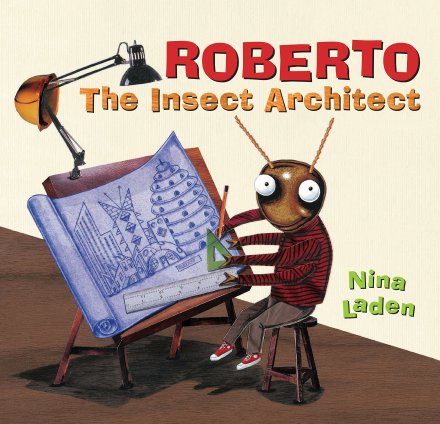
Roberto the Insect Architect

By Nina Laden


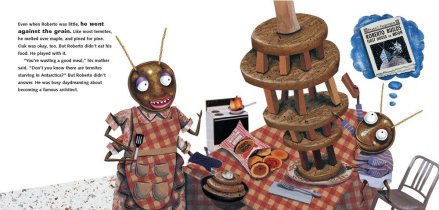
Even as a little bugger Roberto the termite “went against the grain.” While he liked the usual meal fare of oak, maple, and pine, Roberto would be more likely to play with his food than eat it, building tall towers on his plate. The other termites didn’t understand and laughed at him. Roberto knew that if he wanted to build the life he wanted, he would have to leave town.

celebrate-picture-books-picture-book-review-roberto-the-insect-architect-roberto-plays-with-his-food

Image and text copyright Nina Laden, courtesy of Chronicle Books

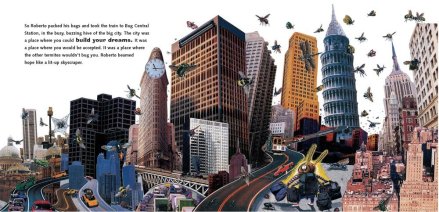
Roberto moved to the city, dreaming of using his talents and being accepted, “but hope didn’t come cheap in the big city. Neither did a place to live. Roberto had no choice but to rent a room in a flea-bag hotel run by a nervous tick.” The next day he hit the pavement looking for a job. He talked to Hank Floyd Mite, who was only interested in what buildings Roberto had already designed. Fleas Van Der Rohe dismissed Roberto, saying “‘There are no termites in my houses’” and Antonia Gaudi rudely “blurted out, ‘Don’t bug me!’”

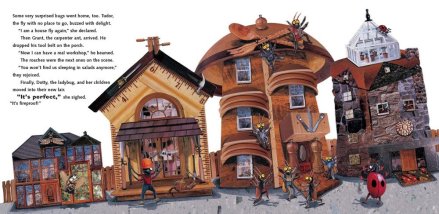
As Roberto dejectedly headed home, he was swarmed by other bugs with bigger problems than his: a fly had no home, a carpenter ant was trying in vain to fix his ramshackle shed, roaches were fleeing a diner, and “a frantic ladybug flew into his arms crying, ‘My house is on fire and my children are gone!’” Roberto wanted to help them all, “but what could one termite do? ‘A lot of damage,’ Fleas Van Der Rohe had told him.”

celebrate-picture-books-picture-book-review-roberto-the-insect-architect-the-big-city

Image and text copyright Nina Laden, courtesy of Chronicle Books

Roberto vowed to show Fleas and all the others what he could do. He drew up blue prints for a one-of-a-kind neighborhood then went in search for the perfect location. When he found a block of abandoned buildings, Roberto got to work. He built day and night and “transformed the block of junk into a street of extraordinary homes, each one unique and a work of art.” Roberto anonymously sent the keys to the homes to the insects he had met earlier.

Each home perfectly matched the need of its owner. Soon the city was abuzz with the news of these amazing homes, and everyone from Barbara Waterbugs to Steve Shieldbug wanted to tell the architect’s story—but who was it? Bounty-hunting butterflies, paper wasps, and bold weevils went in search of the builder’s identity. Finally, “a click beetle got the shot.” The next morning Roberto was all over the news. He became a celebrity with job offers, book offers, offers of love, and parties galore. A statue in his honor was even placed in the city park.

With all the acclaim he had attracted, Roberto established his own company. He became more than a famous architect, he became a role model for other aspiring little mites. Now when they “play with their food,” their parents encourage them: “‘Be creative!’ Maybe someday you’ll grow up to be just like Roberto.’”

celebrate-picture-books-picture-book-review-roberto-the-insect-architect-homes-for-other-insects

Employing a perfect swarm of insect puns, plays on words, and riffs on insect habits, Nina Laden swats it out of the park in her laugh-out-loud termite-out-of-woodwork story. The straight narration of Roberto’s quest for architectural greatness is tinged with the tones of noir private-eye novels, and his encounters with “famous” architects and insects in need give Laden the perfect palette for her visual and literary humor.

Laden’s mixed-media illustrations are layered with allusions to classic art, the world’s great cities, and products from the past. It all adds up to a stunning visual feast, whether you have two eyes or eight. Kids will love discovering all the hidden jokes on each page, and adults will appreciate the nods toward celebrities as well as the fads of their childhood.

Newly published in paperback, Roberto the Insect Architect offers a fresh take on the idea that you should follow your dreams and your heart. The book would make a fun addition to a child’s library and could jumpstart a study of architecture and its designers as well as an entomology unit in school classrooms.

Ages 5 – 9

Chronicle Books, 2016 | ISBN 978-1452156460

To view a gallery full of books by Nina Laden, visit her website!

World Architecture Day Activity

celebrate-picture-books-picture-book-review-world-architecture-day-word-scramble

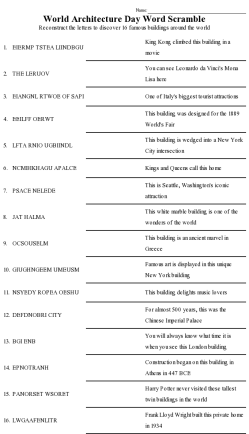
World Monuments Word Scramble


Use the clues to unscramble the names of 16 world-famous buildings and landmarks in this printable World Monuments Word Scramble Puzzle! Here’s the Solution!

Picture Book Review

September 9 – It’s National Courtesy Month

celebrate-picture-books-picture-book-review-the-black-and-white-factory-cover

About the Holiday

September has been designated as National Courtesy Month to remind us that good manners and watching out for others, goes a long way toward making the world a more cooperative and happy place. Sometimes common courtesy is as black and white as directly following the rules…but sometimes…well, I’ll let you decide…

The Black and White Factory

Written by Eric Telchin | Illustrated by Diego Funck


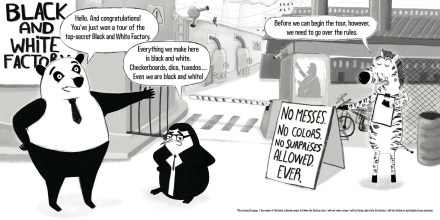
You are one lucky reader! You have won a tour of the Black and White Factory where the employees are hard at work making products like checkerboards, dice, tuxedos…you know the stuff. Even the bosses—a panda and a penguin—are in black and white. Before you start your tour, you’re met by a zebra foreman who goes over the rules of the factory. And they are these:

“No Messes, No Colors, No Surprises Allowed.” When? “Ever.”

As you proceed inside your first stop is the billiard ball machine—8 balls only, of course! It doesn’t take you long to be ushered into the “top-secret Experiment Room,” where innovative products are being developed. You may be the first ever to see “trick dominoes that are impossible to knock over” and new black-and-white-paint in either checkerboard or polka-dot. Another prototype displayed on a wall chart is “never-melting vanilla ice cream.” Also prominently displayed are the factory’s rules: “No Messes, No Colors, No Surprises Allowed. Ever.”

celebrate-picture-books-picture-book-review-the-black-and-white-factory-outside-factory

Image copyright Diego Funck, text copyright Eric Telchin, courtesy of simonandschuster.com

Moving on you push the button leading to the Animal Room. Housed here are white Dalmatians, dairy cows, and skunks who are being sprayed with their distinctive black marks. An elevator takes you to the Bar Code Room. While waiting for your car, you are exhorted to remember the rules: “No Messes, No Colors, No Surprises Allowed. Ever.” The Bar Code Room is “the cleanest, most perfect, most black and white room in the whole factory. Every bar code in the world is make right here.” Even the one for the book you’re reading! Turn it over and see!

celebrate-picture-books-picture-book-review-the-black-and-white-factory-factory-floor

Image copyright Diego Funck, text copyright Eric Telchin, courtesy of simonandschuster.com

“Wait!” Wait!! Turn the book back! A stripe of yellow has seeped into the factory! “Someone didn’t follow the rules. Someone brought an outside mess into the Black and White Factory.” The bosses need your help! Can you “use your fingers to wipe the color off the bar code?” Oh, no, no, no! That just made it worse—now it’s smudged yellow and orange! “Quick! Do something! Rub the colors with your sleeve. Or your elbow. Something.”

We interrupt this review to remind you of the RULES: “No Messes, No Colors, No Surprises Allowed. Ever.” Right, then, back to our dilemma. Now the colors are dripping! It’s such a mess! Suddenly, the zebra has an idea. He asks you to “hold the book upright and tilt it so the color drips down the bottom of the page.” Okay—phew!—great job!

Oh, no!! More colors are creeping in! “Swirl the book so the colors fly off the page,” the penguin orders. You are one strong swirler—the zebra, penguin, and panda are all topsy-turvy, and now the factory looks like an abstract painting! This definitely is not good. “What a mess! The Black and White Factory is ruined.” But the panda may have an idea. Everyone, “back to the top-secret Experiment Room.” There the panda, zebra, and penguin, splattered in paint, stand in front of the “Air-powered comprehensive cleaning contraption.” They just need your help in getting it started. Can you blow into the nozzle? Harder? Come on, put some oomph into it! All right!

celebrate-picture-books-picture-book-review-the-black-and-white-factory-bar-code-room

Image copyright Diego Funck, text copyright Eric Telchin, courtesy of simonandschuster.com

The machine’s at 100% power! The machine shakes and whirrs with a color overload. It explodes with a rainbow of colors that covers everything in the factory. The panda, zebra, and penguin stand in the midst of it. “Everything is so…different,” says the panda. “It’s…colorful…,” adds the penguin. “And wonderful!” concludes the zebra. There’s just one problem…The RULES: “No Messes, No Colors, No Surprises Allowed. Ever.” Hmmmm….

How about: “No Messes, No Colors, No Surprises Allowed. ForEver.”

Yes! Much better! So “that concludes the Best. Tour. Ever!” Off you go—just don’t forget the rules: “Messes, Colors, Surprises Allowed. Forever.”

Eric Telchin’s The Black and White Factory will have kids tipping, tilting, swinging, and even reading this fun and funny interactive picture book. Directly addressing the reader, the three staid and rule-abiding managers of a very focused factory, play straight-man to the child’s laugh inducing and unintentional “mistakes” that lead to a brighter future. With the pacing of a favorite theme-park ride, the story has a suspenseful “Oh, no! What’s going to happen?” feeling as readers progress from page to page until the first tinge of yellow precipitates the humorous chaos to come.

Diego Funck’s sly illustrations riff on the black-and-white theme, as he designed a clever product line in line with “the rules.” Kids will want to linger over the pages to catch all the jokes and visual puns. The reactions of the three employees of The Black and White Factory will make readers laugh too as they endeavor to hang on to their beloved rules in the midst of their changing world. The bold colors of the transformed factory are as refreshing as the sun after a dark, rainy day.

The theme that creativity and expression come from making messes and allowing surprises to happen is a welcome idea and one that leads to innovation and personal freedom. The Black and White Factory is sure to be asked for again and again!

Ages 4 – 7

little bee books, 2016 | ISBN 978-1499802771

Learn more about Eric Telchin on his websites – erictelchin.com and boyseeshearts.com

To view a portfolio of Diego Funck’s artwork, visit his website!

National Courtesy Month Activity

celebrate-picture-books-picture-book-review-black-and-color-crayon-craft-boat

Let Your Colors Shine Through! Craft


With this easy-to-make craft you can show your colors and your creativity!

Supplies

  • Heavy stock paper
  • Crayons, a variety of colors and black

celebrate-picture-books-picture-book-review-black-and-color-crayon-craft-colors

celebrate-picture-books-picture-book-review-black-and-color-crayon-craft-black-crayon

Directions

  1. Color the paper with blocks, stripes, or splotches of color
  2. Cover the colored paper entirely with the black crayon
  3. Scrape a design in the black crayon, exposing the colors beneath

Picture Book Review
July 22 – National Hammock Day

celebrate-picture-books-picture-book-review-firefly-july-cover

About the Holiday

Holidays don’t get more leisurely than this one! Perhaps invented by the Ancient Greeks, perhaps created by people in South America according to Christopher Columbus’s journals, hammocks are the epitome of relaxation. What better time is there to kick back and lounge than during the hot, hazy days of July? So enjoy—and read a book, like today’s collection of poetry!

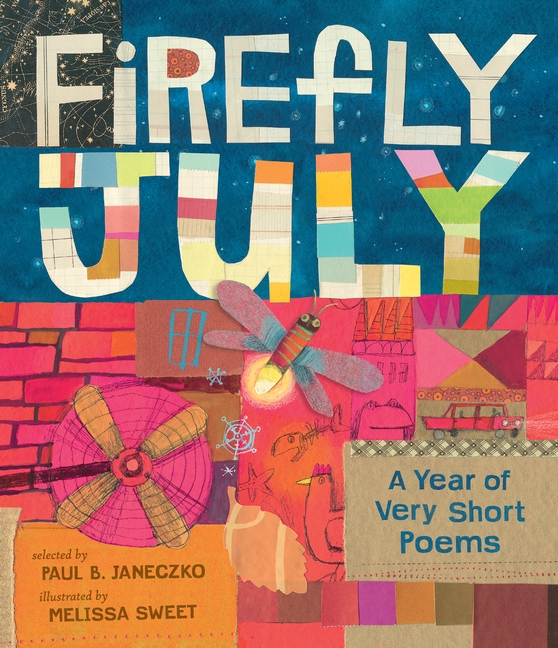
Firefly July: A Year of Very Short Poems

Selected by Paul B. Janeczko | Illustrated by Melissa Sweet


Firefly July is perfect for lazy summer days when light, but still meaningful reading enjoyed in a hammock or under a shady tree is relaxation at its best. Paul B. Janeczko has collected 36 short (none are over eight lines long) poems from some of the best poets of today and yesterday. Haiku, free form, and rhyming verses illuminate the seasons of the year and encapsulate unforgettable sights, sounds, and feelings.

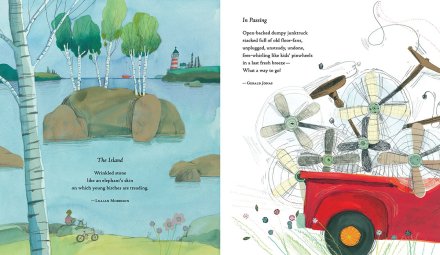
A girl’s spring’s respite spent gazing into the bay from shore is depicted in Lillian Morrison’s The Island:

“Wrinkled stone / like an elephant’s skin / on which young birches are treading.”

celebrate-picture-books-picture-book-review-firefly-july-interior-art

Image copyright Melissa Sweet, courtesy of amazon.com

A nighttime train trip provides mystery and ongoing changes in Carl Sandburg’s Window:

“Night from a railroad car window / Is a great, dark, soft thing / Broken across with slashes of light.”

Joyce Sidman’s A Happy Meeting likens a summer rain to romance and life:

“Rain meets dust: / soft, cinnamon kisses. / Quick noisy courtship, / then marriage: mud.”

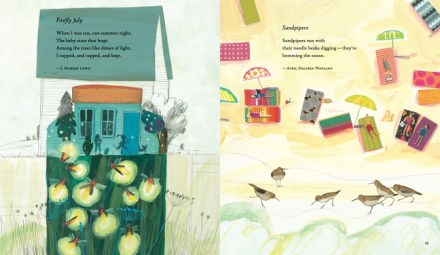
At the seashore, beach birds are industrious in April Halprin Wayland’s Sandpipers:

“Sandpipers run with / their needle beaks digging—they’re / hemming the ocean.”

celebrate-picture-books-picture-book-review-firefly-july-interior-art

Image copyright Melissa Sweet, courtesy of amazon.com

Jim Harrison and Ted Kooser ask such a beguiling question for autumn:

“What is it the wind has lost / that she keeps looking for / under each leaf?”

And the rising giants of city life inspired Susan Nichols Pulsifer in Tall City:

“Here houses rise so straight and tall / That I am not surprised at all / To see them simply walk away / Into the clouds—this misty day.”

Along the way readers will encounter a pickup truck loaded with old rotary fans and another rusting in a field; fog that decorates and creeps; animals and insects that share our space; our past, our present, and our future. And when it’s time to close the book, Jim Harrison and Ted Kooser reveal:

“A welcome mat of moonlight / on the floor. Wipe your feet / before getting into bed.”

celebrate-picture-books-picture-book-review-firefly-july-interior-art

image copyright Melissa Sweet, courtesy of melissasweet.net

I can only wish I’d been able to visit Melissa Sweet’s studio while she created the illustrations for this book! Each painting is as unique in style, beauty, and emotional effect as the poems they interpret. Her renditions of each poem help readers—especially children unfamiliar with metaphor and abstract imaging—to fully understand and appreciate each poem while also leaving room for personal reflection.

The first thing that strikes a reader when opening Firefly July is the gorgeous juxtaposition and mixture of vibrant color. Her illustrations take readers on a journey from an aqua farm house with a patchwork garden to a serene elephantine rock island to the deep turquoise ocean traversed by ships while the full moon beams down upon them. Readers ride crowded subways, gaze out moving train windows, and visit cities bright in daylight and glowing at night. They frolic through fields of delicate grasses and vibrant flowers, quietly walk snowy paths, and take their place among the stars.

Firefly July is as stunning as any coffee table book and is a must for a young reader’s—or any poetry lover’s—library.

Ages 4 and up

Candlewick Press, 2014 | ISBN 978-0763648428

Take a look at more books and artwork by Melissa Sweet on her website!

National Hammock Day Activity

celebrate-picture-books-picture-book-review-hammock-coloring-page

Lazy Days Coloring Page


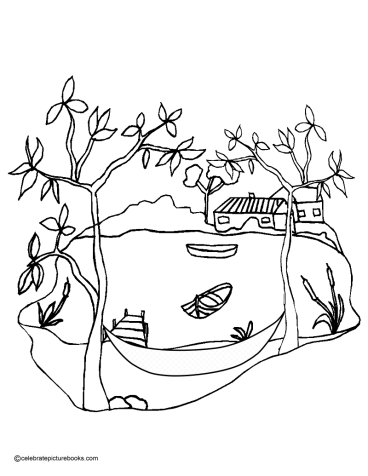
Coloring can be so relaxing—perfect for a day dedicated to kicking back! Color this printable Lazy Days Coloring Page and dream of lounging beside the lake, with the gentle breeze gently rocking the hammock, while you drift off to sleee….zzzz…..

June 13 – Sewing Machine Day

celebrate-picture-books-picture-book-review-sewing-school-2

About the Holiday

Patented in 1790 by Thomas Saint, the sewing machine revolutionized the textile industry. No longer did clothes and other fabric items need to be made by hand. The sewing machine made this job faster and less tedious. Long a favorite hobby for clothes makers and crafters of all types and ages, sewing is creative and fun! If you like to sew celebrate today by making something new or sharing your talent with a beginner. If you’ve never sewn, consider trying it—needle crafts, either by hand or using a sewing machine can become a life-long enjoyable activity!

Sewing School 2: Lessons in Machine Sewing

By Amie Petronis Plumley & Andria Lisle | Photography by Justin Fox Burks


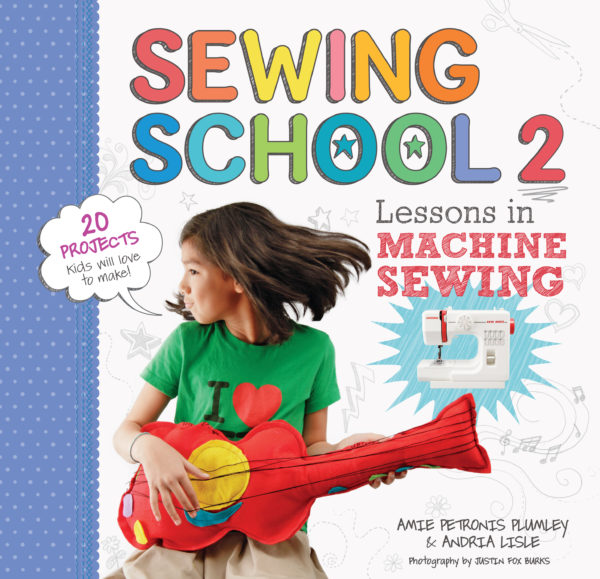
Sewing and crafting are popular hobbies shared between friends and family. Skills that were once passed down from generation to generation are being rediscovered by kids and adults alike through widely available craft and sewing chain stores and books like the Sewing School series. In this second edition, kids are taught everything they need to know to feel comfortable at a sewing machine and create awesome projects they can really use.

Divided into five sections, Sewing School 2 is easy to navigate and builds on skills presented in previous chapters. The first section “Getting Started” provides 13 lessons that cover choosing a sewing machine, the elements of a well-stocked sewing kit, learning about different fabrics, how to do basic stitches and techniques, and laying out and cutting patterns.

With clear photographs on every page, kids will easily be able to understand the concepts being described. “Anatomy of a Sewing Machine” points out each part of a machine, from the spool spindle to the take-up lever, presser foot, stitch selector, and more. The most common stitches are depicted here too—straight, reverse, stay, and reinforcement stitches share the page with short discussions of what a bodkin and pinking shears are for.

Budding sewers will learn about the right and wrong sides of fabrics, how to sew “right” sides together and turn the project inside out, and the way to stuff a pillow and finish the opening. One chapter is devoted to starting off right as well as tips on guiding the material through the machine.

After kids have been introduced to the basics, it’s time to try out those new skills! Four sections containing five projects each let kids make items for all the important aspects of their lives. “In My Room” shows them how to make a pillow with a space for secret messages, a welcome sign, a pocket organizer, a sleepy teddy bear, and a striped blanket. The “Let’s Go” section is perfect for kids on the run. Projects include a coin holder, a handy pouch for carrying extras, and a safe place for their electronic gadgets.

The projects in “Time to Play” prove that sewing results in plenty of fun! Things like stuffed guitars, microphones, backpacks, game boards, and decorative hangings are just a stitch away. Finally it’s time to take sewing outside with a section titled “The Great Outdoors.” Kids will wonder how they ever got along without their snack pouch, belt with pocket, water bottle carrier, scarf, and portable tree stump—huh? You’ll just have to get the book and see!

Each project comes with a one-to-three star difficulty rating, a list of all materials needed, a list of the skills used, how to personalize each project, and tips for adult helpers.

The final pages help kids out when things just don’t go as planned, how to do hand-sewn work, and tips for adults who are working with a group.

Amie Petronis Plumley and Andria Lisle have created a wonderful resource for anyone wanting to get in on the fun of sewing. The easy-to-understand directions and conversational tone of the book will put kids at ease, and Justin Fox Burks’ photographs of children using the concepts and happily displaying their work will make beginners excited to start sewing. Burks’ up-close photos of the parts of the sewing machine as well as each technique make Sewing School 2: Lessons in Machine Sewing a leader in its field.

Ages 7 and up

Storey Publishing, 2013 | ISBN 978-1612120492

Sewing School Takeaway Project

celebrate-picture-books-picture-book-review-sewing-school-t-shirt-project

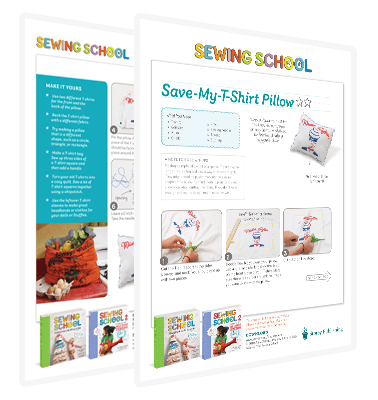
Save-My-T-Shirt Pillow


Sometimes it’s so hard to give away a favorite t-shirt! With this project from Sewing School you don’t have to! Use your hand-stitching skills to create a pillow that will make your room even more awesome! Click here for the Save-My-T-Shirt Pillow directions.

Sewing Machine Day Activity

celebrate-picture-books-picture-book-review-sewing-word-search

So You Like to Sew Word Search


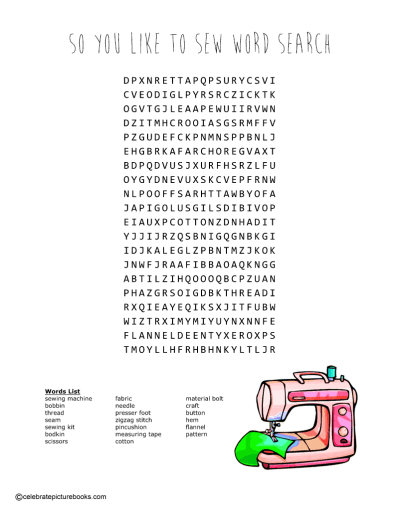
Sewing has a vocabulary all its own! Find the words related to this fun hobby in this So You Like to Sew Word Search puzzle! And here’s the Solution!

June 8 – National Best Friends Day

celebrate-picture-books-picture-book-review-painting-pepette

About the Holiday

What would we do without our best friends? They’re the ones we go on adventures with, laugh with, commiserate with, even cry with. And no matter what, we know they’ll always be there for us. Best friends can be people we’ve known all our lives or ones we’ve just met; they can live far away or in our own home. Best friends don’t even have to be people—beloved pets or favorite toys are sometimes just what we need. Today is the perfect time to celebrate your best buddy. Get together with them, call, or text. Relive some favorite memories or make some new ones!

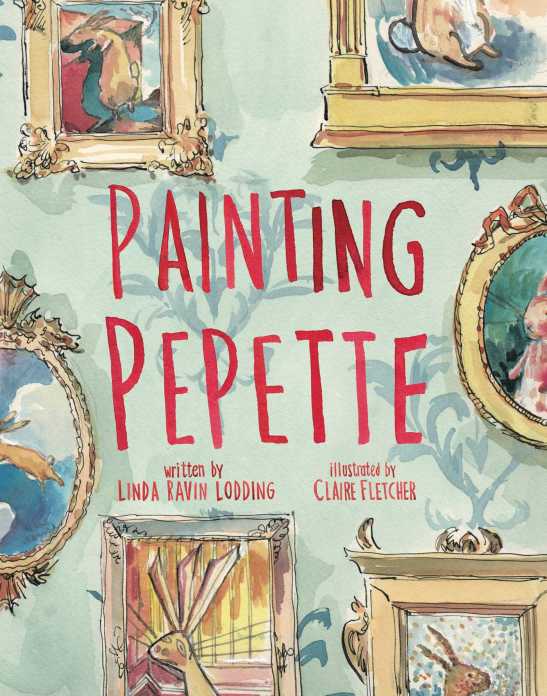
Painting Pepette

Written by Linda Ravin Lodding | Illustrated by Claire Fletcher


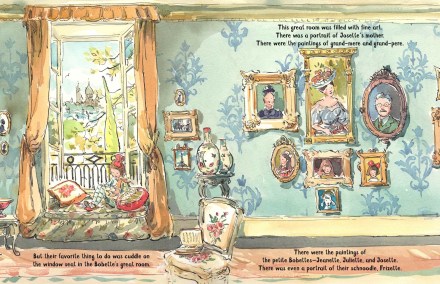
If you peek in the great room window of the grand yellow house at #9 Rue Laffette in Paris, you will most likely see cuddled on the comfortable seat Josette Bobette and her beloved stuffed rabbit Pepette. It’s their favorite place. Looking past them you will see that the great room is filled with fine art. On the walls hang portraits of the family—Josette’s mother is there as well as grand-mère and grand-père, the three Bobette sisters, and even their schnoodle Frizette.

celebrate-picture-books-picture-book-review-painting-pepette-great-room

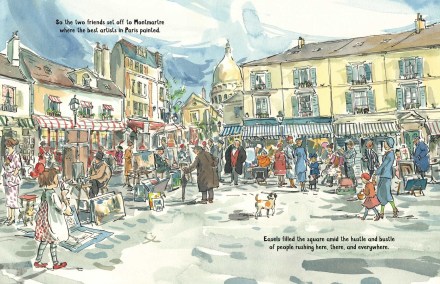
“One day Josette noticed something strange. There was no portrait of Pepette!” Josette determines to find an artist to paint a special portrait of her best friend. The pair heads out to Montmartre, where the all the best artists set up their easels to paint and sell their work. It doesn’t take long for a man in a striped shirt to stop them.

“‘Those ears!’” he cries. “‘Never have I seen such majestic ears. I must paint this rabbit’s portrait!’” Pepette blushes at such an effusive compliment, and Josette exclaims, “‘Magnifique!’” It appears Josette has found just the artist to create Pepette’s portrait. The painter waves his brush with a flourish, declares his painting a “masterpiece,” and holds it up for inspection. Josette gazes at a Pepette with two noses and three ears. Diplomatically, she proclaims the picture “nice” but not quite Pepette. Her best friend agrees.

Just then a man with a thin, curved handlebar mustache spies the pair. Admiring Pepette’s whiskers, the artist begs to capture “the very essence of her rabbitness!” He immediately sets to work, and in no time a most unusual portrait emerges. Pepette seems to melt from a tall red wall. Josette considers it and her reaction carefully. “‘It’s imaginative,’” she says. “‘But you’ve painted Pepette quite, well, droopy.’” Pepette agrees.

As Josette and Pepette enjoy a Parisian snack on the curb of Montmartre, a rakish young man happens along. He is arrested by Pepette’s nose, which he likens “‘a faint star twinkling in a misty, velvet night.’” Josette has a good feeling about this artist and follows him across the square to his easel. Pepette poses on a red tufted stool as the artist paints a rabbit soaring through the clouds. He proclaims the finished portrait “‘one of my best works’” as he displays it to the crowd. Josette likes the clouds but tells the painter that Pepette is afraid of heights and not fond of flying. Pepette agrees.

By now Pepette is the most sought-after model in Paris, and another artist rushes up, captivated by her beauty. The balding man in a dapper suit and round spectacles peers at Pepette. “‘What a colorful lady—balloon blue, pansy pink, and radish red!’” A little suspicious of his vision, Josette allows him to paint Pepette. “‘Ta da!’” the man exclaims, revealing the magic of his brush. Josette studies the canvas with its vibrant dots, dashes, and splashes. While she admires the colors, she reminds the artist that Pepette isn’t pink.

“‘Ah, yes,’” nods the painter. “‘But through art we can see the world any way we want.’”

celebrate-picture-books-picture-book-review-painting-pepette-montmartre

With the sun setting low in the sky, Josette politely says thank-you and goodbye to the artists. She and Pepette have enjoyed their day, but it’s time to go home. Curled up once more on the window seat, Josette sighs. She had so hoped to have the perfect portrait of Pepette—one that showed her velvety grey listening ears, her heart-shaped nose, and her soft arms that give tight hugs. Suddenly, Josette has an idea! Gathering all her art supplies, she creates the perfect likeness—as special as Pepette herself!

An author’s note on the last page describes the creative atmosphere of 1920s Paris, home to writers, artists, musicians, and fashion designers, that gives a frame to her story. The artists that Josette meets are inspired by Pablo Picasso, Salvador Dalí, Marc Chagall, and Henri Matisse.

In Painting Pepette Linda Ravin Lodding has written a multi-layered story of love, friendship, and unique vision. Through the sweet relationship between Josette and Pepette and with a sprinkling of humorous self-congratulation on the part of the artists, Lodding nudges readers to appreciate that while art can reveal and obscure, reflect and transcend reality, ultimately the success of a piece—complex or simple—lies within the viewer’s heart. Lodding’s lyrical language trips off the tongue and is a joy to read—it’s like following Josette as she skips happily through Paris.

Claire Fletcher’s striking pen and ink illustrations pay delicate homage to cityscapes of a bygone Paris. Adorable Josette in her white pinafore over red-dotted dress, red shoes, and big red bow along with her enchanting rabbit are the perfect tour guides through crowded Montmartre and an introduction of art history. Soft tones of yellow, rose, and green illuminate the apartments and cafes of the square where colorful shoppers and artists mingle. Fletcher’s renderings of Pepette’s various portraits will not only make kids giggle, but entice them to learn more about each artistic style. The final endpapers reveal that the four fine-art portraits now hang in the Muse of Paris, while readers already know that Josette’s perfectly perfect portrait of her well-loved friend has taken its rightful place on the wall in the Bobette great room!

Painting Pepette is a beautiful addition to any child’s bookshelf and a lovely way for teachers to initiate a discussion of art history and get kids excited about artists and different art styles.

Ages 4 – 9

little bee books, 2016 | ISBN 978-1499801361

Follow Josette through Paris as she searches for just the right artist to paint a portrait of her best friend Pepette and comes to a surprising discovery in this beautiful trailer:

Discover more books by author Linda Ravin Lodding on her website.

Illustrator Clair Fletcher invites you to find more of her artwork by visiting her online gallery.

Best Friends Day Activities

celebrate-picture-books-picture-book-review-painting-pepette-activity-guide

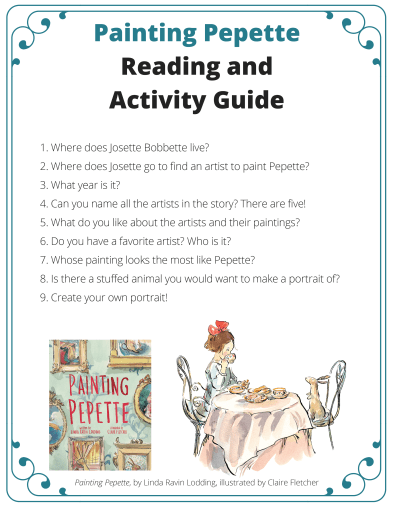
Painting Pepette Reading and Activity Guide


little bee books has created an interactive activity so you can continue exploring Josette’s world and your own artistic talent! Just click here—Painting Pepette Reading and Activity Guide—to start having fun!

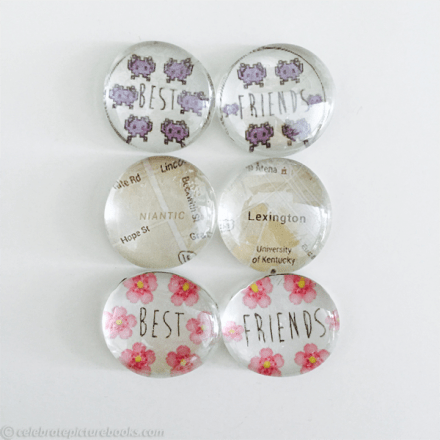
Stuck on You Magnets or Picture Hanger


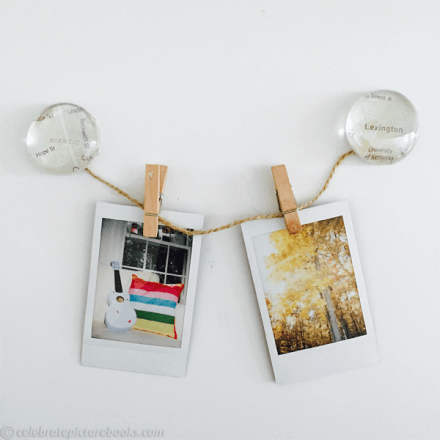
Best friends stick together whether they’re near or far, right? Here’s a fun craft that you and your friends can make to show how magnetic personalities attract each other! If your best friend or friends are far away, why not make them one too? Or make the alternate picture hanger! Be creative—use inside jokes, favorite characters, or shared experiences to make these  crafts personal!

celebrate-picture-books-picture-book-review-friends-magnets-craft

For Magnets

Supplies

  • To get you started, here are two printable Best Friends Templates! Template 1 Template 2
  • Poster board
  • Large, 1 ½-inch clear glass stones (decorative fillers), available in craft stores
  • Markers or colored pencils OR find images online to print out
  • Medium to large flexible magnets, available in craft stores
  • Super glue
  • Toothpicks
  • Scissors

Directions

  • Place the glass stone on the poster board and trace around it
  • Draw your design in the circle on the poster board
  • Cut out the circle
  • With the toothpick, apply glue around the very edge of the design side of the circle
  • Attach the circle to the flat side of the stone, let dry
  • Trim the cardboard circle if needed
  • Attach the magnet to the back of the cardboard with glue

celebrate-picture-books-picture-book-review-friends-picture-hanger-craft

For Map Picture Holder

Supplies

  • Use a mapping program to find a map of your town and your friend’s town
  • Poster board
  • Large, 1 ½-inch clear glass stones (decorative fillers), available in craft stores
  • Twine
  • Super Glue
  • Toothpicks
  • Scissors
  • Heavy duty mounting squares

Directions

  1. Find maps of your and your friend’s towns
  2. Zoom in so the name of your and your friend’s towns are displayed well. You will be using about a 1-inch area around the towns’ names.
  3. Take a screen shot of the maps
  4. Print the maps
  5. Place the glass stone on the map and trace around it
  6. Place the glass stone on the poster board and trace around it
  7. Cut out the circles on the map and poster board
  8. With the toothpick, glue the map to the poster board, let dry
  9. With the toothpick, apply glue around the very edge of the map side of the circle
  10. Attach the circle to the flat side of the glass stone, let dry
  11. Trim the cardboard circle if needed
  12. Repeat with the other map
  13. Attach a length of twine to the back of each glass stone
  14. Attach heavy duty mounting squares to the back of each glass stone
  15. Attach stones to the wall and hang pictures on the twine

June 7 – It’s National Fishing and Boating Week

celebrate-picture-books-picture-book-review-fish-liam-francis-walsh

About the Holiday

National Fishing and Boating Week promotes the fun of getting out on the water and enjoying time in the sun. Whether you glide in a sailboat, zip around in a motorboat, or leisurely row a kayak, dingy, or other craft, the freedom of the open ocean or river is enticing. Fishing is also a wonderful way to spend time together outdoors. To celebrate this week go boating or learn a new skill, grab your fishing pole and cast your line, or do both together!

Fish

By Liam Francis Walsh


A boy with fishing poles and tackle box in hand and faithful dog at his heals pass a runner as they sprint toward a rowboat. The boy takes the oars and is soon off shore. The pair cast their lines overboard, and soon the little boy brings up an F. Another try snags an I. The boy happily aims his line in another direction, but his dog sees danger on the horizon—a rising C. He tries to warn the boy, but when they turn around again, the waters are calm.

This is one successful fishing trip as the boy’s line again grows taut. He pulls up his catch. A Q—not a keeper. He unhooks it and throws it back as his dog pokes at him in alarm. Again, when the boy looks, the water is peaceful. The two fish in contented silence until the boy catches a big one. The beast runs with the boy’s line, even pulling him out of the boat.

The boy holds his breath as he’s pulled into the depths amid swirling schools of H, B, M, O, and V. Not deterred from his quest, the boy swims toward an H, but it slips from his grasp. The boy tumbles and sinks, but eventually grabs the H and zooms to the surface. He cheers! They’ve caught an F, I, S, and H!

His dog points—something’s coming for them! Suddenly, they’re surrounded by a swarm of Bs and the sharp fins of As. The C swells, swamps the small dingy, and the F, I, S, H are lost in it’s wake. The boy stares dejectedly into the water, but his dog taps him on the back. He has a surprise to share. When the boy turns around, his dog reveals that he’s been a successful fisherman too!

With their quarry safely stowed, the boy rows back toward shore. He leaps out and darts through a group of disoriented road racers toward a sign that reads N I. No one it seems knows what to do. The boy offers his string of letters, and with the FINISH marker complete, the racers cross the line in victory!

With a well-barbed hook, Liam Francis Walsh reels in readers with his fabulous, funny fish story. Wordlessly, but with plenty of visual wordplay, Walsh tells the tale of a boy with a great idea and his eagle-eyed companion with emotion, action, and lots of heart. The bold blue, black, white, and red illustrations have an engaging quality—at once loaded with old-fashioned charm and modern sophistication. Fish is a wonderful addition to anyone’s bookshelf or coffee table. This is one catch you don’t want to let get away.

Ages 5 – 9

Roaring Brook Press, 2016 | ISBN 978-1626723337

National Fishing and Boating Week Activity

celebrate-picture-books-picture-book-review-tackle-the-tackle-box-game-cards

Tackle the Tackle Box Game


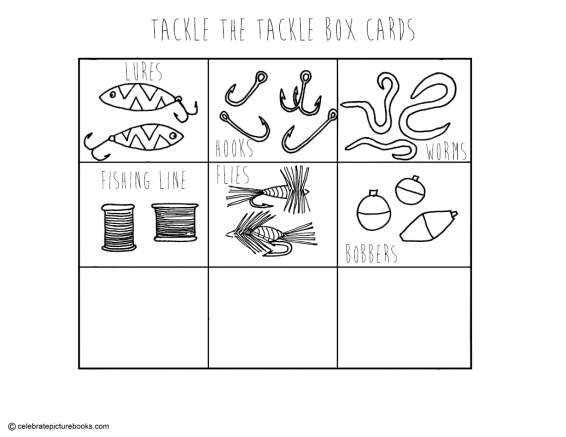
A good fisherman always needs a well-stocked tackle box. Play the Tackle the Tackle Box Game to earn lures, bobbers, hooks and more to fill your box. The first player to complete their set is the winner! for more fun you can color the tackle box items any way you like. There are even three extra cards per set for you to draw your own tackle box items!

Supplies

celebrate-picture-books-picture-book-review-tackle-the-tackle-box-game

Directions

  1. Print one Tackle the Tackle Box Game Board for every player
  2. Print one set of Tackle the Tackle Box Game Cards for every player
  3. Each player can color a set of playing cards
  4. Cut the cards apart
  5. Gather all the cards and set in separate piles
  6. Roll the die to determine who goes first, highest roll goes first
  7. The first player rolls the die, and adds the item that corresponds to the number on the die. The list is below.
  8. Play continues with each player rolling the die and collecting cards
  9. If the player rolls a number for a card that he or she already has, the die passes to the next player
  10. The first player to fix their tackle box is the winner!

Each number of dots on the die corresponds to these cards:

1: Fish Lures

2: Hooks

3: Worms

4: Fishing Line

5: Flies

6: Bobbers

Picture Book Review

Picture Book Review
May 25 – National Photography Month

celebrate-picture-books-picture-book-review-pictures-from-our-vacation

About the Holiday

Established in 1987 by the United States Congress to commemorate the importance of photos to present and future generations, National Photography Month encourages photographers to really look at their subjects and become more intentional about making photos that will be meaningful in the future. Once you’ve taken your pictures, don’t just leave them on your phone, in the cloud, or on your hard drive. Print them and document the place, people, and time of each picture for future generations.

Pictures from Our Vacation

By Lynne Rae Perkins


Just before a family leaves on vacation, a girl and her brother each receive a Polaroid camera and a notebook from their mom so they can document their trip. The first picture the little girl takes is of her feet by mistake. During the two-day trip to the old farm where their dad grew up, the kids play with games from the activity bag and look out the window at the passing landscape. Her second photo taken through the car window reveals “there was not anything to look at out there,” although she does see an orange truck labeled “Yellow” and a motel with a red roof. 

She thinks that if she owned a motel it would be called the Blue Motel, and she begins to imagine in detail the accommodations she would offer. In the Jungle Cottage people would sleep in hammocks and shower under a waterfall. In the Sun Cottage, the bed would glow like the sun but turn off for sleeping. The floor of the Flower Garden Cottage would be real grass, and she thinks up many more.

Her reveries last until the family begins searching for a real motel. They stop at the Shangri-La, which advertises POOL, but as the girl’s photograph shows, “it didn’t have water in it.”

When the family reaches the farm, Dad sees happy memories everywhere. They find an old badminton set with warped racquets (shaped like potato chips, the girl says in her picture’s caption) and begin to play. But one minute into the game the rain comes down. It rains for days and the family spends the time playing cards, reading, and drawing.

After the rain stops, Dad takes the family to a hidden swimming spot. They forge their way through the now-overgrown secret path only to find a KEEP OUT sign and a guard dog.  They backtrack to the car and drive around and around, having trouble finding the lake. They stop at a park, where the girl takes a picture of hills that were built in ancient times to look like a snake from the air and one of a leftover Chinese food container where a squirrel was eating before it ran away.

At last they find the lake and run out to the end of the dock. But a boy warns them of an impending storm. Suddenly, the storm breaks and as the family shelters in the dock gazebo, the girl learns that tomorrow they are attending a memorial service. The next day the old farmhouse fills up with relatives who have traveled there for a memorial service for Great-aunt Charlotte.

At the service family members tell stories about Charlotte’s brave escapades and afterward the whole crew go back to the farmhouse to spend a several days. They eat dinner and tell more stories, and the cousins play. They roll down the hill, climb trees, and explore. That night as the kids sleep upstairs, murmurs of continued conversation float up through the grate. After a few days, the families disperse and only the girl and her brother and parents stay behind, but the memories and feeling of the full house remain.

Finally the girl’s family leaves too, and as they drive home she looks at the pictures she has taken. “‘These don’t remind me much of our vacation,’” she says. She snaps one last picture as they pass a row of huge electrical towers along the highway. When she looks at the photograph, however, the towers don’t look like the giant robots she imagined. She realizes that “it’s hard to take a picture of a story someone tells, or what it feels like when you’re rolling down a hill or falling asleep in a house full of cousins and uncles and aunts. There are a lot of things like that. But those kinds of pictures I can keep in my mind.”

Lynn Rae Perkins’ paean to formative old-fashioned vacations in which extended family members gathered to pass on history and traditions through stories told around the picnic table is a welcome reminder in this digital age that some “pictures” are better stored in one’s memory than on a device. Perkins’ choices of details seen on the two-day road trip, the incessant rain, and the changed landscape that lead to wrong directions are just the kinds of childhood events that often stick in a person’s memory for life. The story is charmingly told from a child’s point of view with realistic dialogue and a tone of heartfelt nostaligia.

Perkins’ realistic drawings of the family are homey and evocative. The kids lounge in the backseat of the car while the little girl conjures up the décor of her Blue Motel; the old house and fields of the family farm are rendered in warm golds and greens with humor and comfort; and you can almost hear the shouts and laughter of the family members gathered on the lawn at the reunion. This is a vacation kids will love to take.

Ages 4 – 8

Greenwillow Books, HarperCollins, 2007 | ISBN 978-0060850975

National Photography Month Activity

celebrate-picture-books-picture-book-review-frame

Fantastic Frame!


Your photographs show your unique personality, why shouldn’t the frame you put them in? Today, you can make a frame that perfectly suits your décor or snapshot!

Supplies

  • Cardboard or bare wood frame, available at craft stores
  • Stickers
  • Buttons
  • Jewels
  • Beads
  • Glue
  • Paint in your favorite color
  • Paint brush

Directions

  1. Paint the frame (optional), let dry
  2. Attach stickers, beads, buttons, or other objects
  3. Fill with your favorite picture