May 24 – Brother’s Day

celebrate-picture-books-picture-book-review-the-day-glo-brothers

About the Holiday

Brothers share a special bond built on mischief, inside jokes, shared experience, and love. If you have a brother—either by blood or friendship—spend some time with him, give him a call, or just text and say, “hi.”

The Day-Glo Brothers: The True Story of Bob and Joe Switzer’s Bright Ideas and Brand-New Colors

Written by Chris Barton | Illustrated by Tony Persiani


Before the Switzer brothers had their bright idea, the world was a much less colorful place. Bob Switzer, born in 1914, loved to work and saved his money for exciting plans. His younger brother Joe loved magic and had an inventive mind. When the family moved to Berkley, California, Joe developed a magic act that included “black art” in which an object that was painted half black and half white seemed to float and disappear in midair.

Joe loved this trick but thought it could be better. Meanwhile Bob planned to become a doctor. But during the summer before he began college, Bob had an accident that ended his plans. Because his injury effected his head, he had to recover in a darkened room. While Bob healed, Joe spent time in the basement with him studying the glow of fluorescence, hoping to use it in his magic show. Together the brothers built an ultraviolet lamp which they tested in their father’s pharmacy. When they shone it on a shelf full of bottles, a container of eyewash glowed yellow.

celebrate-picture-books-picture-book-review-the-day-glo-brothers-inventing

Image copyright Tony Persiani, text copyright Chris Barton. Courtesy of Charlesbridge

The brothers had an idea. They experimented with chemicals that could make paints glow in the dark. In regular light the paint looked normal, but under ultraviolet light it radiated attention-getting colors. That was great for Joe’s magic act, but Bob thought these paints could be used for other things too, such as store-window displays. Selling the paint could help pay for Bob’s medical bills too.

Bob and Joe searched through the university and other labs for other fluorescent materials. They then combined them with other ingredients in their mother’s mixing bowl to create glowing paints and even once—when the mixing bowl was not cleaned well enough—a very colorful cake!

celebrate-picture-books-picture-book-review-the-day-glo-brothers-inventing

Image copyright Tony Persiani, text copyright Chris Barton. Courtesy of Charlesbridge

Joe used these paints to major effect in one of his acts in which a dancing woman “lost her head” as Joe, unseen by the audience in the darkened theater, took off her headdress as she danced away. This trick brought Bob and Joe lots of customers for their original paints. But there was one problem: these colors only shone under ultraviolet light.

One day in 1935, however, one of Bob’s experiments resulted in a surprising innovation—a dye that glowed even in daylight. Bob didn’t know how exactly it had worked, so the brothers continued experimenting. Finally, they discovered the secret when an orange billboard they had created glowed as if it were on fire even in the daytime! The brothers then created reds, yellows, greens, and other colors that could do the same thing.

During World War II these glowing colors were used on fabric panels used to send signals from the ground to airplanes overhead, in lifeboats, on buoys, and on other safety products. After the war the colors continued to influence culture and are still part of our lives today.

celebrate-picture-books-picture-book-review-the-day-glo-brothers-final

Image copyright Tony Persiani, text copyright Chris Barton. Courtesy of Charlesbridge

Older kids with a penchant for science and history will love this biography. Chris Barton goes in-depth to reveal the Switzer brothers’ dreams and motivations that resulted in a most astounding discovery. Barton infuses the story with humor and interesting details that will fascinate curious minds.

Using a retro style, Tony Persiani sets this biography in its time while also giving the story a modern feel. Gray scale tones become dotted with florescent color as the brothers’ experiments bear fruit and give way to eye-popping spreads with the ultimate success of Day-Glo paints and dyes.

Ages 7 – 12

Charlesbridge, 2009 | ISBN 978-1570916731

Brother’s Day Activity

celebrate-picture-books-picture-book-review-day-glo-maze

Day-Glow Maze


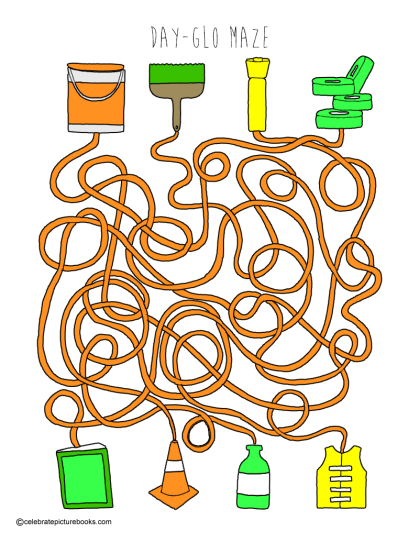
Follow the twisty glowing paths to match the Day-Glo product to the object they color! Print the Day-Glo Maze puzzle here!

Picture Book Review

May 18 – International Museum Day

celebrate-picture-books-picture-book-review-homer-henry-hudson

About the Holiday

International Museum day was created in 1977 by the International Council of Museums to raise awareness that “museums are an important means of cultural exchange, enrichment of cultures and development of mutual understanding, cooperation and peace among peoples.” The theme for this year is Museums and Cultural Landscapes. Both nature and history comprise the cultural landscape that links museums to their surrounding neighborhood, towns, and beyond. As museums become more involved in their communities, they acquire the responsibility to protect, conserve, and interpret the cultural heritage inside and outside their walls. International Museum Day is growing—in 2015 more than 35,000 museums in 145 countries participated. Today visit one of your favorite museums and learn more about your cultural landscape.

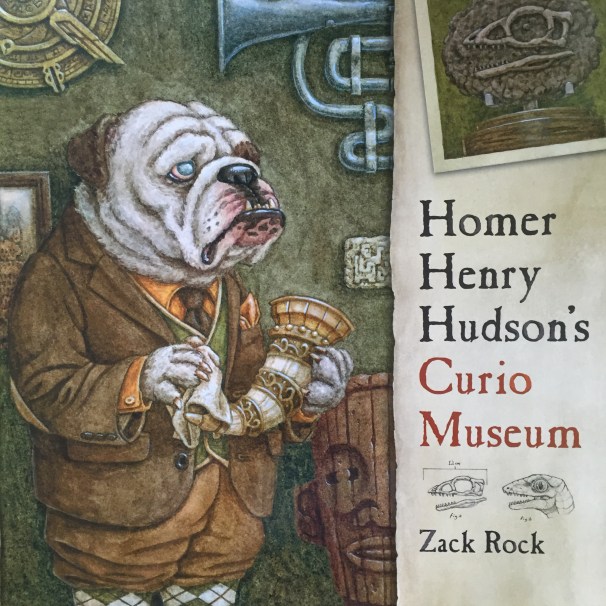
Homer Henry Hudson’s Curio Museum

By Zack Rock


Everything has a story, the narrator tells readers, especially the Homer Henry Hudson Curio Museum, which he says has been described as “a colossal collection of curios, discovered, described, and displayed by that eccentric explorer extraordinaire: Homer Henry Hudson.”

Come in and experience the wonders inside. A dignified bulldog dressed in a dapper tweed suit and leaning on a crooked cane will greet you. His job is to keep the place clean and dusted. Although the museum is stuffed floor to ceiling, he knows the placement of every object, knick-knack, and curiosity. As you explore the museum’s holdings—its portraits, musical instruments, ancient artifacts, taxidermy animals, and other treasures, the caretaker sits silently, hoping you will read the display cards that Homer Henry Hudson has lovingly written out with a description and personal note. He even has his favorite “bits and bobs” that he would like you to see.

One of these is Item #0001, the Conausaurus Skull of a small dinosaur from the late Jurassic Period that HHH found in the soil of his family’s farm. This bony discovery made Homer Henry wonder what else the world held and sparked his love of exploration. Another is Item #0023, a Radial Tide Diviner once used by Calypsonian seers to predict the future based on tidal patterns. It was the discovery of the lost Calypsonian civilization with its valuable artifacts that funded Homer’s further explorations.

Item #3412, a Temple Montepaz Choir Finch with a C sharp trill that chanted to accompany the parrot priest, was a most unusual gift, bestowed on HHH for convincing the Parrot Priest to release a piece of wood stripped from the temple wall. This shard turned out to lead Homer Henry Hudson into his future—for better or worse. With renewed fire, HHH charged toward the promise of riches only to fly his plane into a mammoth stone figurehead, which resulted in injury and his life-long limp.

Item #3415, The Manneken Mort of King Ingmar, is perhaps Homer Henry’s most treasured possession. Composed of fabric bands that represent the stories friends and family tell when someone dies, this Manneken Mort contains hundreds of bands relating the life of King Ingmar. This object HHH acquired for bravery and self-sacrifice when he was younger and still full of enthusiasm for life.

The old bulldog thinks of this curio most. He wonders what his Manneken will look like and whether all the bands of his life been woven. He likes to think his Menneken Mort “would be  hundreds—thousands—of feet tall. It’d tower over the Taj Mahal, shame the Sphinx!” But he knows “few memorable tales are told of rusty old codgers who spent their days…leaning upon fear like a crutch.”

Though blind in one eye and nagged by trepidation, the old bulldog packs his suitcase, dons his hat and throws away his cane. As he walks out the door, past pictures of himself on his early expeditions of discover, he knows he might “meet with catastrophe,” be “swallowed by quicksand,” or “gnawed on by piranhas.” But he also knows “there’s no success without failures,” and he has had many successes.

Homer Henry Hudson boards the cruise liner Phoenix and sets out for adventure once more. After all, he well knows that everything has a story. So if you come by the Homer Henry Hudson Museum today, you will see a sign hanging on the door: The Curio Museum is CLOSED Until Further Notice.

Zack Rock has written a compelling and unique picture book for adventurers of all types and ages. Part motivation and part cautionary tale, this story of the once intrepid explorer turned tremulous caretaker has a mysterious, treasure-around-every-corner quality that will appeal to kids. The life of Homer Henry Hudson is told through the display cards that accompany some of the museum’s curios. As the story develops through the cards’ personal notes, readers learn of the museum’s true owner and the life-altering decision he makes.

Rock’s illustrations in greens and parchment-paper golds and browns have a high “Oh, Cool!” factor, as the odd, ancient, and unusual objects of the museum invite kids to explore every nook and cranny of the pages. The exhibits serve not only to fill the museum, however, they remind us how easily the future can get overshadowed and crowded out by the past.

Ages 6 – 10

Creative Editions, 2014 | ISBN 978-1568462608

International Museum Day Activity

celebrate-picture-books-picture-book-review-cookies

Peanut Butter-M&M Cookies


A good cookie is like a museum—full of interesting flavors, colors, and taste. Here’s a cookie recipe adapted from Cookies & Cups that exhibits all these traits! 

Ingredients

  • 2 cups all purpose flour
  • 1/2 tsp baking soda
  • 1/2 cup butter
  • 1/4 cup peanut butter
  • 1 cup light brown sugar, packed
  • 1/4 cup granulated sugar
  • 1 whole egg
  • 1 egg yolk
  • 1 Tbsp vanilla
  • 1/2 tsp cinnamon
  • 1/4 tsp ground ginger
  • 3/4 cups m&ms
  • 1/4 cup chocolate chips (for extra chocolate)

Instructions

  1. Preheat oven to 325 degrees
  2. Combine butter and peanut butter in microwave safe bowl and melt together for 30 seconds. Remove and stir. Continue in 15-second increments until mixture is melted and smooth.
  3. In a separate large bowl whisk together flour and baking soda. Set aside.
  4. Combine eggs, egg yolks, vanilla, and sugar. Mix on medium until combined and smooth. Turn mixer to low and slowly pour in your butter/peanut butter mixture. Continue stirring until combined.
  5. With mixer still on low, gradually add your flour mixture until just combined. Batter will be thick.
  6. Now add in your candies and stir until they are evenly distributed.
  7. Now form your batter into “golf ball” sized dough balls. You can also use a 3-Tablespoon scooper.
  8. Place on baking sheet about 2 inches apart
  9. Bake for 10 to 12 minutes
  10. Cookies will be puffy, but should be golden around the edges
  11. Let cool on baking sheet for 2 -3 minutes and then transfer to a wire rack to continue cooling.

Cookies & Cups has lots of creative and delicious goodies for special occasions or for just those times when you want to be good to yourself!

Picture Book Review

May 16 -National Biographer’s Day

celebrate-picture-books-picture-book-review-the-noisy-paint-box

About the Holiday

On this day in 1763 James Boswell walked into a London bookshop and met Samuel Johnson—poet, critic, journalist, and writer of the first dictionary. They became friends, and 30 years later Boswell wrote a spirited biography of his companion that fully described Johnson’s feelings, quirks, opinions, and details of his life in a warm, conversational, unstinting way. The Life of Samuel Johnson changed forever the way biographies were written and is still popularly read today. Why not spend some time today with that fascinating biography or one on a favorite personality—or start writing the story of your own life!

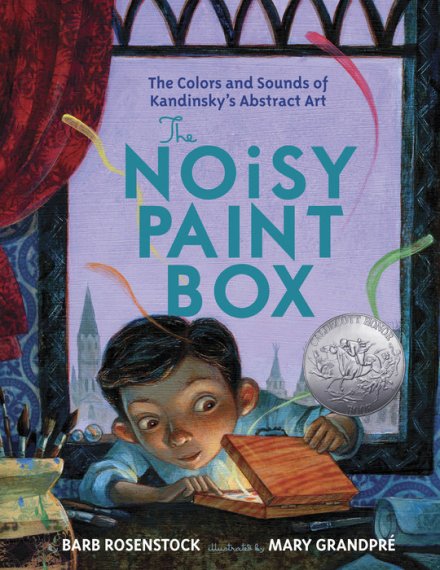
The Noisy Paint Box: The Colors and Sounds of Kandinsky’s Abstract Art

Written by Barb Rosenstock | Illustrated by Mary Grandpré


As a Russian child Vasya Kandinsky spends his days absorbed in learning math, science, and history. He takes piano lessons and attends formal dinners where the adults drone on and on. His life is polite, stiff, and colorless until the day his aunt gives him a small wooden paint box. “Every proper Russian boy should appreciate art,” Vasya’s aunt tells him while explaining how to mix colors.

Vasya takes up the brush and combines red with yellow then red with blue. As the colors change to orange and purple, Vasya hears a whisper that grows into a noisy hiss. “‘What is that sound?’” he asks, but no one else hears anything. “The swirling colors trilled like an orchestra tuning up for a magical symphony,” and “Vasya painted the sound of the colors.” A lemon yellow “clinked like the highest notes on the keyboard; a navy blue “vibrated deeply like the lowest cello strings.” Crimsons “blared” and greens “burbled.”

Vasya runs downstairs to show his family what he has created. His mother, father, and Auntie look at the canvas with its swoops, shapes, and angles. “What is it supposed to be?” they ask, and send him off to art school to learn how “to draw houses and flowers—just like everyone else.” Vasya finishes school and becomes a lawyer. He leaves his paint box untouched and lives the way he is expected, but the sounds of the colors are always with him.

One evening as he listens to an opera, the music surrounds him with color—“stomping lines of vermilion and coral; caroling triangles in pistachio and garnet; thundering arches of aqua and ebony…” Vasya can hear the colors and see the music. He knows then what he must do. He quits his job teaching law and moves to Germany to be a painter. He surrounds himself with artists and takes classes with famous teachers, and yet people still look at his canvases and asked, “What is it supposed to be?”

Once again he paints what is expected. His teachers love his houses and flowers, but Vasya does not. His friends understand. They too want to expand the meaning of art. They agree with Vasya when he says, “‘Art should make you feel.’” In his studio Vasya continues to paint the sounds he hears, to give music color and color sound. Bravely, he invites the public to view his paintings, which are named after musical terms—Composition, Accompaniment, Fugue, and more.

This is a new kind of art—abstract art—and it takes a long time before people understand. They look and still ask, “What is it supposed to be?” “It is my art,” Kandinsky replies “How does it make you feel?” 

An author’s note telling more about Kandinsky’s life and synesthesia, a genetic condition in which one sense triggers another, follows the story.

In the spirit of full disclosure, Kandinsky is one of my favorite artists, so I was excited to read this biography—I was not disappointed! With so many great artists, their work speaks for itself, but viewers wonder, “How did it come about?” “What influenced the artist?” Barb Rosenstock, with lyrical language and beautifully chosen descriptions, reveals the emotions and passion that fueled Kandinsky’s art from his earliest ages: as he walks through Moscow he can’t ignore “the canary-colored mailbox whistling as he rode to work. The scarlet sunset haze ringing above the ancient Kremlin walls.” Rosenstock’s inclusion of the conflicts and opposition Kandinsky faced and overcame will inspire children to listen to their inner voice and makes readers and lovers of his abstract art glad he never gave up.

Mary Grandpré’s unique style brilliantly depicts Kandinsky’s singular vision, allowing readers to experience the way he wielded his paint brush like a conductor’s baton. Vasya’s early life is painted in muted blues and grays, and the boredom on his face as he studies his schoolwork is obvious. Kids will appreciate his one-finger plinking at the piano and the rolled-eyed drowsiness of the formal dinner. Once Vasya is introduced to the paint box, however, Grandpré’s illustrations become vibrant, with swirling colors overlaid with the musical notes that Kandinsky associated with them. His uninhibited painting is gloriously shown as the young boy’s shirt comes untucked and the colors burst from the canvas upon his first painting.

As the adults look at his work, the room is again swathed in somber colors. The text revealing that Vasya attended regular art classes to learn to draw houses and flowers is set above a single wilting flower in a vase. The personal tug-of-war Kandinsky experienced even into adulthood is wonderfully rendered: Colors flow into his ears at the opera; he studies his own landscape and still life paintings with misgiving in a hazy studio, and the joy and freedom of his abstract art is demonstrated with wild abandon while a dove escapes its cage. The final image of a child sitting in front of a Kandinsky painting reinforces the idea that his art lives for all and for all time.

Ages 4 – 9

Alfred Knopf, Random House Children’s Books, 2014 | ISBN 978-0307978486

National Biographer’s Day Activity

celebrate-picture-books-picture-book-review-recipe-box-label

Recipe Box Label and Recipe Cards


People’s stories are written in all different ways: in the objects they surround themselves with, their activities, and the talents they exhibit. Today’s activity will help you tell your stories in the foods you bake! Or try this Recipe Card Writing Idea: Create a very short story and write it on one of the recipe cards! Read it to your family or teacher.

Supplies

celebrate-picture-books-picture-book-review-recipe-cards

Directions

  1. Glue the My Family’s Recipes label to the box you made
  2. Print out the recipe cards. Use them for your favorite dish and prepare for tomorrow’s treat to bake!

Picture Book Review

May 9 – It’s Get Caught Reading Month

celebrate-picture-books-picture-book-review-the-whisper

About the Holiday

Supported by the Association of American Publishers (AAP), Get Caught Reading Month promotes literacy and reminds people of all ages how much fun reading is. Begun in 1999 by former Congresswoman Pat Schroeder, President and CEO of AAP, the initiative brings together publishing industry executives, authors, illustrators, teachers, librarians, politicians, celebrities, and readers to spread the word about the joys of books. To join the celebration, take a picture of yourself or a friend reading, hold a book drive, challenge yourself to a reading goal, and/or read to someone else.
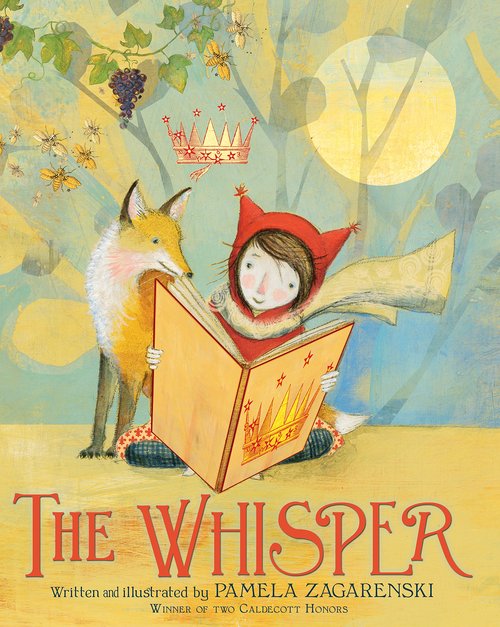
The Whisper

By Pamela Zagarenski


A little girl loves stories and the magical realms they can take her to. One day while waiting for school to be dismissed, she spies a book on a shelf. Her teacher allows her to take it home with her, and the little girl happily runs off with it when the clock strikes 3:00. On the way home, she doesn’t notice that all the letters are escaping from the book or that a wily fox is catching them in a net.

At home she secludes herself in her room, excited to read the mysterious book. She turns the pages, awed by the beautiful pictures. But by the time she has finished, she has tears in her eyes. “Where were the words? Where were the stories?” The girl flips through the book again, but this time she hears a small whisper: “Dear little girl, don’t be disappointed. You can imagine the words. You can imagine the stories.”

The whisper seems so knowing that the girl does at it suggests. She turns to the first page where a blue bear followed by a beekeeper walks under a honeycomb sun toward a brown bear. The girl stares at the picture and thinks of a title: Blue Bear’s Visit. Her story begins: “Blue Bear arrived on the first day of spring. He promised…”

Warming to the idea of creating stories, the girl examines the second picture. She notices the same white rabbit that was in the first picture. In the foreground a “magnificent ox” is listening to a man whispering into its large, soft ear. The Secret, the little girl titles this story, which starts: “Mr. Ox, you must please promise not to tell anyone, but we need your help. Last week…”

With the third picture the words tumble out more easily, forming sentences that give life to the massive white elephant, regal lion, and that rabbit again who are traveling the sea in a long, open boat. The Quest, she calls it. In Tigers Prayer, preparations are being made: tea is brewing, a clown with a pointed hat plays his accordion, a windhorse jumps through hoops, and the rabbit rides a golden ring as a lion hears what Tiger has to say. A Birthday Party comes next, and it seems Pan has planned a very secret party. An owl perches in the crook of a tree asking for the password with a “Hoo, Who?” which is answered quickly because the vanilla cake with raspberry filling and vanilla cream frosting holding 6 candles must be delivered.

The Magical Cloak sees the little girl’s imagination truly take flight as she decides the man in the “elaborate coat” is a wizard or magician whose bubbles come to life once released from the blower. Enormous whales now fill the harbor. They are beautiful, but something must be done….Next, hurry to meet the owl! He is picking up passengers at midnight. But what does the golden key in his beak open? Only the story The Golden Key locked in the little girl’s mind will tell.

Hours go by as the little girl creates tales for each picture in the book. As the night grows late, she sleeps, carried into slumber on dreams woven from the pictures and stories she imagined. When she wakes up, the girl wishes to spend more time with her new friends, but it’s time for school so she gathers up the book and hurries away.

On the path to school she meets a fox who is carrying a bag. “Excuse me, little girl,” says the fox. “I believe I have the words to your book.” The fox then explains how he caught the words as they spilled from the pages the day before. The fox gives her his parcel, but asks for a favor. The girl is happy to oblige and lets the fox stand on her shoulders to reach a bunch of grapes dangling from a nearby vine.

The girl rushes into school and apologizes for being late. She relates the story of the fox and the words and the magical night she has spent making up tales for the pictures in the book. “I have so many stories to tell you,” says the girl to her teacher. “‘I can’t want to hear,’” the teacher replies with a smile.”

Opening a book by Pamela Zagarenski is to fall into an alternate realm of such beauty and imagination that you forget the real world exists.  Her paintings are composed of rich, regal hues swirling with images and designs that overlap and float to create the kind of experience only the deepest, most complex dreams allow. The characters and details follow page to page uniting the pictures and, subtly, the stories the little girl discovers in them: The teapot, once introduced, waits under a tree on the next page and rides the waves of the whale-filled sea in the next. The bees and the rabbit are constant companions on each spread, and the animals will fill the reader with awe.

The little girl’s imagined stories are tantalizing with just the right mix of the mysterious and the tangible to entice readers to add more. The frame of the Aesop Fable The Fox and the Grapes is inspired and could lead to a conversation about how “life is what you make it.”

The Whisper is a book readers will want to linger over and dip into again and again, and would be especially fun on those days when there’s “nothing” to do. It makes a beautiful gift for any occasion.

Ages 4 – 9 (this book would also appeal to adults)

Houghton Mifflin Harcourt, 2015 | ISBN 978-0544416864

Gardening for Wildlife Month Activity

In addition to Get Caught Reading Month, May is Gardening for Wildlife Month. It’s the perfect time to celebrate the joys and colors of spring and enjoy the many plants, flowers, and wildlife nature provides. Whether your garden is small or large, just being planted or already blooming, you can be mindful to make yours wildlife friendly to help and protect the environment.

This week’s crafts and activities will revolve around gardens and plants of all types. I hope you enjoy them!

celebrate-picture-books-picture-book-review-vase

Painted Bottle Vase

Do you often pick up a smoothie or other drink at the grocery store and then just throw away the glass or plastic bottle? Those containers, with their elegant shapes, make beautiful vases with just a little paint!

Supplies

  • Plastic or glass bottle
  • Multi-surface craft paint in your favorite color
  • Paint brush
  • Wax paper

celebrate-picture-books-picture-book-review-vase-top

Directions

  1. Wash and thoroughly dry your bottle.
  2. Pour 3 to 5 tablespoons of craft paint into the bottle
  3. Invert the bottle on the wax paper
  4. Let the paint drip down the sides of the bottle, this may take several hours to overnight
  5. When the paint reaches half-way down the sides of the bottle, you can “help it along” with the paintbrush, filling in any empty spaces
  6. Let the bottle sit, inverted, until the paint dries. This can take one to several days, depending on the atmosphere.
  7. When the paint is dry, use the vase for artificial flowers.

Join me tomorrow to see how to make flowers to go in your vase!

Picture Book Review

April 27 – Tell a Story Day

celebrate-picture-books-picture-book-review-one-day-the-end-cover

About the Holiday

Are you a raconteur? Do you love to weave a tale so intricate and intriguing that your listeners are on the edge of their seats? Or are you the one leaning forward, all ears, feeling the tingling thrill of that story? Either way—this day is for you! So take some time to tell or listen to a story—or even write your own!

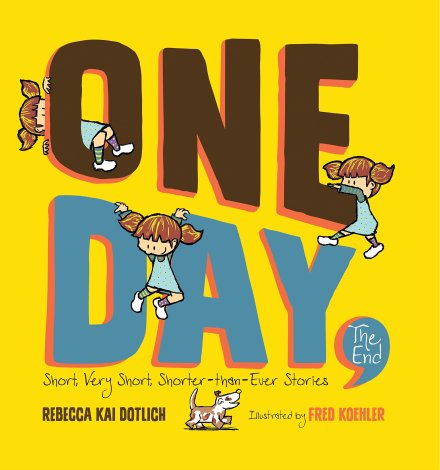
One Day, The End: Short, Very Short, Shorter-than-Ever Stories

Written by Rebecca Kai Dotlich | Illustrated by Fred Koehler


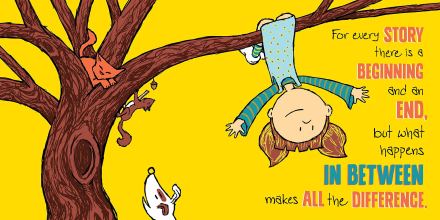
Hey! I have a fantastic story to tell you! Ya gotta minute? Ok! See… “One day I went to school. I came home. The End” What do you mean, “Is that it?” Don’t you get it?  So many things happened—funny, messy, worrisome, happy. It was an amazing day! I didn’t say that? But it’s all right there! Where? In the middle. In the pictures!

celebrate-picture-books-picture-book-review-one-day-the-end-tree

Image copyright Fred Koehler, 2015, text copyright Rebecca Kai Dotlich, 2015. Courtesy of Boyds Mills Press.

On other days the little girl who went to school in the story above becomes a detective to find her lost dog, invents ingenious ways to hide from her brother, and creates something awesome for her mom. She also runs away from home, but of course comes back, and shadows her cat to a surprising discovery. On yet another day she just feels like stomping. And on still another she  relents to a much-needed bath…and shares it with her dog!

And what does she want to do after all these adventures? She wants to write a book…and does!

celebrate-picture-books-picture-book-review-one-day-the-end-school

Image copyright Fred Koehler, 2015, text copyright Rebecca Kai Dotlich, 2015. Courtesy of Boyds Mills Press.

Rebecca Kai Dotlich’s One Day…The End is such an ingenious concept that readers will keep turning the pages just to see what clever idea comes next. Each story consists of a first sentence that introduces a plot and the last line that wraps it up. Sure Dotlich could have fleshed out the characters, detailed the setting, added dialogue, and symbolized a theme, but sometimes pictures are worth a thousand words, and this is where Fred Koehler comes in.

Koehler takes these kid-centric tales and fills in the exploding science experiments, ice-cream trucks, accidental oopsies, distractions, clues, and more that make up each day’s adventure. With humor and an eye for real-kid emotions and actions (the little girl pours glue from the bottle held above her head), Koehler creates a unique plot for each story.

celebrate-picture-books-picture-book-review-one-day-the-end-write

Image copyright Fred Koehler, 2015, text copyright Rebecca Kai Dotlich, 2015. Courtesy of Boyds Mills Press.

In “One day I felt like stomping” the little girl doesn’t stomp for no reason: her cat eats her pizza lunch, she splatters herself with purple paint, and her fishing pole breaks. She just feels like…! The word STOMP grows bigger across the page and even gets stomped on itself as the girl vents her frustration in a puddle, on a pile of leaves, and—almost—on a flower. But seeing the daisy saves her day and she saves the daisy. Haven’t we all been there?

One Day…The End is a joy to share with kids. They’ll love to spend time pointing out the humorous details and depth of story each page holds, and may even like to “tell” the story as they read. This book would be a fantastic jumping off point for kids wanting to write their own stories or for teachers wanting to demonstrate the elements of active, detailed story writing. As Dotlich says on the first page: “For every story there is a beginning and an end, but what happens in between makes all the difference.”

Ages 4 – 8

Boyds Mills Press, 2015 | ISBN 978-1620914519

Discover more about Rebecca Kai Dotlich and her books on her website.

To learn more about Fred Koehler, his books, and his art, visit his website.

Tell a Story Day Activity

celebrate-picture-books-picture-book-review-tell-a-story-maze

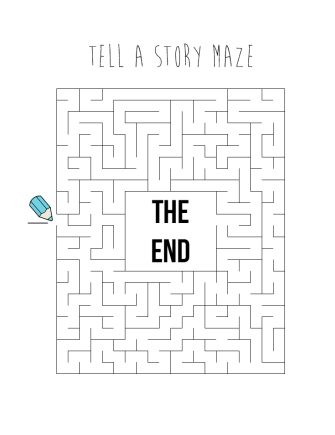
Tell a Story Maze


This puzzle may look like a regular maze, but there’s a secret to it! Within this maze is any story you’d like to make up. Why do you go left instead of right? Are you avoiding a zombie or a rain shower? Why do you go up instead of down? Is it because you can you float? What lurks in that dead end you’ve entered? There are as many cool stories as you can imagine right in those little pathways. And when you find your way to The End, you’ll have written a story with this printable puzzle!

Tell a Story Maze | Tell a Story Maze Solution 

picture book review

April 3 – National Find a Rainbow Day

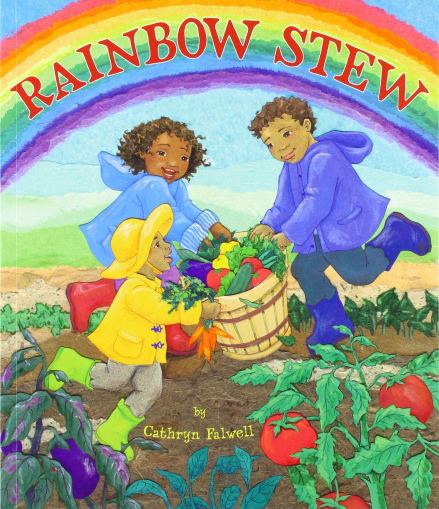
celebrate-picture-books-picture-book-review-rainbow-stew-cover

About the Holiday

It’s not often someone wishes you a rainy day. Today, though, I’m doing just that because you can’t see a rainbow without a little of the wet stuff. This early spring month was chosen for this special day because, as we all know, April showers bring May flowers. Those same April showers lead to beautiful rainbows—even double rainbows sometimes! So, I hope you have a bad (weather) day and good luck finding a rainbow today! By the way—what do May flowers bring? Right! Pilgrims!

Rainbow Stew

By Cathryn Falwell


Grandpa’s making pancakes for his three favorite kids, and his granddaughter and two grandsons are excited to be visiting where they can play outside all day. Through the window the kids see that it’s a rainy day. Does this mean they’ll have to stay inside? Their grandpa knows just what to do! “Let’s go and find some colors for my famous Rainbow Stew!” he says.

celebrate-picture-books-picture-book-review-rainbow-stew-interior-art-picking-vegetables

Image copyright Catherine Falwell, 2013, courtesy of rainbowstewbook.com

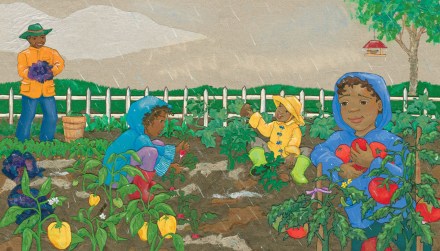
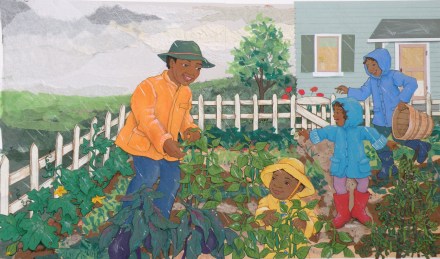
Out to the garden they run in their raincoats and hats. “Splish, splash, / puddle dash, / We bounce right out the door. / We’re off to find some red and green, / some yellow, orange, and more. / Grandpa shows us how to move / Between each garden row. / Lifting up the drippy leaves, /  we see what colors grow.” They collect green spinach, kale, and zucchini; yellow peppers, purple cabbage and eggplant, red radishes and tomatoes; brown potatoes; and orange carrots. After some muddy fun among the plants, the kids go inside, get dried off, and begin to prepare their colorful stew.

celebrate-picture-books-picture-book-review-rainbow-stew-interior-art-in-the-garden

Image copyright Catherine Falwell, 2013, courtesy of rainbowstewbook.com

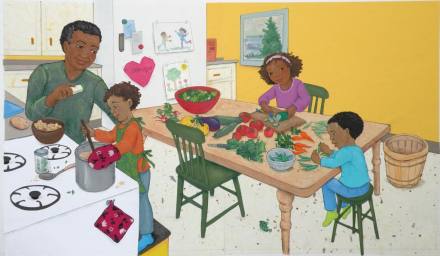
Peel, slice / chop and dice, / colors fill the pot. / Stir in herbs and water / and then wait till it gets hot.” While the pot simmers on the stove, Grandpa and the kids snuggle on the couch with favorite books, reading together until the stew has simmered to perfection. The family then sits down to a homemade, colorful, delicious lunch of Rainbow Stew. 

celebrate-picture-books-picture-book-review-rainbow-stew-interior-art-cooking-together

Image copyright Catherine Falwell, 2013, courtesy of rainbowstewbook.com

Cathryn Falwell’s Rainbow Stew is a wonderful book to share with young children on many levels. The bright colors of Grandpa’s house mirror the vividness of the garden vegetables in his stew, which could be made into a matching game for extra fun. The rhyming verses—each begun with an energetic couplet that would be fun for kids to repeat or act out—draw listeners into the story. Introducing colors through familiar and delicious vegetables can get kids excited about gardening, cooking, even going to the grocery store.

Children will identify with the disappointment of the three siblings when they learn it’s too wet to spend the day outside as well as their glee at squishing in the mud. The close bond between the kids and their grandfather as they cook and read together is a strong anchor for this story.

celebrate-picture-books-picture-book-review-rainbow-stew-interior-reading-together

Image copyright Catherine Falwell, 2013, courtesy of rainbowstewbook.com

A recipe for Rainbow Stew follows the story. Combined with the craft below, the book and recipe could make for a fun rainy-day get-together!

Ages 4 – 7

Lee & Low Books, 2013 | ISBN 978-1600608476 (Hardcover) | ISBN 978-1643790572 (Paperback, 2019)

National Find a Rainbow Day Activity

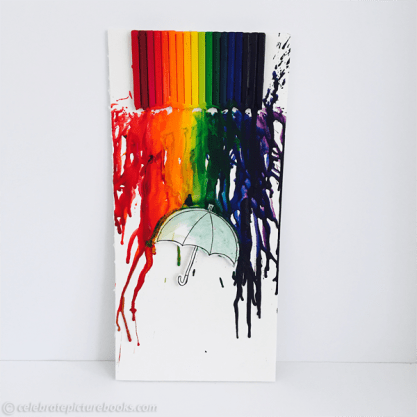
CPB - Rainbow Crayon Art 3

Crayon Rainbow Art


With this cool project you can create an art piece that’s as colorful as a rainbow and as unique as you are! Adult help is needed for children.

Supplies

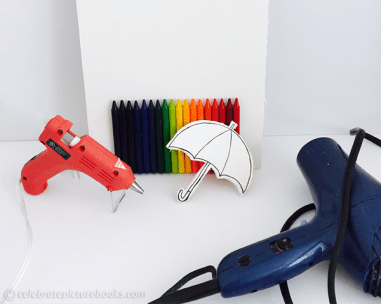
  • Box of 24 crayons
  • White foam board or thick poster board, 8 inches by 17 inches
  • A small piece of corrugated cardboard, about 5 inches by 5 inches (a piece of the foam board can also be used for this step)
  • A small piece of poster board, about 5 inches by 5 inches
  • Scissors
  • X-acto knife (optional)
  • Hot glue gun
  • Hair dryer
  • Old sheets or towels, newspapers, a large box, or a trifold display board

CPB - Rainbow Crayon Art 2

CPB - Rainbow Crayon Art 1 (2)

Directions

  1. Remove the various red, orange, yellow, blue, indigo, and violet hued crayons from the box of crayons
  2. Strip the paper from the crayons by slicing the paper with the x-acto knife, or removing it by hand
  3. Line them up in order at the top of the white foam board
  4. Glue the crayons with their tips facing down to the board with the hot glue gun
  5. Cut an umbrella or other shape of your choice from the poster board
  6. Trace the umbrella or other shape onto the corrugated cardboard or a piece of the foam board and cut out
  7. Glue the poster board shape onto the corrugated cardboard, let dry
  8. Glue the umbrella or other shape to the foam board, about 4 ½ inches below the crayons
  9. Set up a space to melt the crayons. The wax will fly, so protect the floor and walls by placing the art piece in a large box or hanging newspapers, old sheets or towels on the walls and placing newspapers on the floor. A trifold display board and newspapers works well.
  10. Stand the art piece upright with the crayons at the top
  11. With the hot setting of the hair dryer, blow air at the crayons until they start to melt
  12. Move the hair dryer gently back and forth across the line of crayons from a distance of about 6 to 12 inches away. The closer you are to the crayons, the more they will splatter
  13. The crayons will begin to melt and drip downward
  14. You can experiment with aiming the hair dryer straight on or at an angle to mix colors
  15. Wax that drips onto the umbrella or other shape can be chipped off after it dries or wiped off to create a “watercolor” effect on the shape
  16. Once the hair dryer is turned off, the wax cools and dries quickly
  17. Hang or display your art!

April 2 – International Children’s Book Day

Written and Drawn by Henrietta by Liniers

About the Holiday

Each year since 1967 Hans Christian Andersen’s birthday has served as the date for Children’s Book Day. The International Board on Books for Young People, a non-profit organization founded in Zurich, sponsors the day to promote a love of reading. Seventy-five National Sections around the world alternate in hosting the event. The host for 2016 is Brazil, and this year’s theme is “Once Upon a Time.” A prominent author and illustrator from the sponsoring country prepare materials used to raise awareness of books and reading. Luciana Sandroni wrote this year’s message and the poster was designed by Ziraldo.

Children’s Book Day is celebrated with special events in schools and libraries, writing competitions, book awards, and opportunities to meet authors and illustrators. 

Written and Drawn by Henrietta

By Liniers

Henrietta’s mom gives her a new box of colored pencils, which Henrietta says is “as close as you can get to owning a piece of the rainbow.” She sits down to draw her own book and titles it “The Monster with Three Heads and Two Hats.” She begins with an illustration of a little girl, Emily, in bed at night. “I’m scaring myself…,” she thinks. Her thought is played out in her next page which shows Emily asking her stuffed rabbit if it will sleep with her because she’s scared of an unexplained Creak, Creak.

celebrate-picture-books-picture-book-review-written-and-drawn-by-henrietta-three-headed-monster

Copyright Liniers, 2015, courtesy of TOON Books

“Hmm…What’s that noise?” ponders the young writer. Her fears make it to the page—Creeak…Creeak…Thump…Crash…Boom. What are those noises, my favorite? Emily asks, her eyes now wide. The Noises! They’re getting closer!!

Henrietta knows that in a good story something always happens “suddenly,” and so she draws a mysterious hand and a mysterious foot emerging from Emily’s wardrobe. The plot thickens and finally the full terrifying monster with three heads pops out of the wardrobe.

celebrate-picture-books-picture-book-review-written-and-drawn-by-henrietta-in-bed

Copyright Liniers, 2015, courtesy of TOON Books

They acquire names from Henrietta’s imagination—Huey, Dewey, and Louie Bluie. . She is stuck for a bit as to how to go on, then gives Emily a question: What were you doing inside my wardrobe? The monster answers that it is looking for a hat. Emily joins them in their search, entering her wardrobe. She’s aghast to find that it is full of…clothes! (The wardrobe had been made in Narnia, the well-read Henrietta tells her cat, Fellini).

When the monster and Emily wonder which way to go, they meet a direction-giving mouse, and the story takes off—even Henrietta can’t wait to see what happens. She draws a huge pile of hats (she’s learned about “hat-o-logy” from the encyclopedia—the printed version!). The creature’s two heads with hats begs the third head to choose a hat before “the monster” shows up. Emily is terrified again—Another monster? What has Henrietta concocted this time? A monster with one head and three hats! This horrible beast suddenly appears and chases the crew through the wardrobe. Everyone is shouting Aaaaaaaaaaa—even the author.

celebrate-picture-books-picture-book-review-written-and-drawn-by-henrietta-wardrobe

Copyright Liniers, 2015, courtesy of TOON Books

Emily and the first monster lose the tremendous beast, ask the direction-giving mouse how to escape, and burst out of the wardrobe just in time. Henrietta thinks the story should have a happy ending, and before the monster with three heads and now three hats flies out the window, they give Emily a present. What could it be? Henrietta is so curious! It’s a wonderful hat, of course!

The End

“Now,” Henrietta says, “to find a publisher!”

This Toon Book by Liniers is a wonder as it reveals the inner-workings of children’s imaginations and the spontaneous nature of their brilliant creativity. Henrietta’s thought process as she conjures up her story is shown in neat comic-style panels with speech bubbles, while her story is depicted in colorful kid-like drawings and dialogue written in all capital letters. This interplay between the young artist/writer and her work enhances the fun, suspense, and surprise of this story-within-a-story. 

Ages 5 and up

TOON Books, and imprint of RAW Junior, LLC, 2015 | ISBN 978-1935179900

International Children’s Book Day Activity

Create Your Own Book

CPB - Comic Panel

It’s so much fun to let your imagination fly! Use this printable Comic Style Page to create a story as unique as you are!

Picture Book Review