August 29 – It’s American Artist Appreciation Month

celebrate-picture-books-picture-book-review-maya-lin-artist-architect-of-light-and-lines-cover

About the Holiday

This month we celebrate the artists who interpret the unique history, culture, and people of America in ways that bring new meaning and insight to those who interact with it. To celebrate, visit your local art museum or take a trip to another city to view pieces you’ve never seen before. The dynamics of seeing art up close provides new perspectives and appreciation.

Maya Lin: Artist-Architect of Light and Lines

Written by Jeanne Walker Harvey | Illustrated by Dow Phumiruk


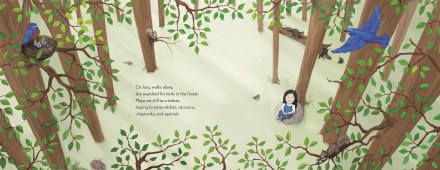
As a child, Maya Lin loved playing and interacting with nature near her home. She and her brother liked to run over what Maya had named “the Lizard’s Back”—a hill behind her house—and into the woods. Sometimes Maya went into the woods alone and “sat as still as a statue, hoping to tame rabbits, raccoons, chipmunks, and squirrels.” She liked to play chess with her brother and build towns from scraps of paper, boxes, books, and other things she found around the house.

celebrate-picture-books-picture-book-review-maya-lin-artist-architect-of-light-and-lines-in-forest

Image copyright Dow Phumiruk, 2017, text copyright Jeanne Walker Harvey, 2017. Courtesy of us.macmillan.com.

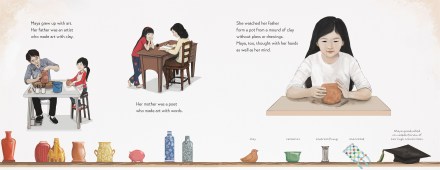
Maya’s “parents had fled China at a time when people were told what to be and how to think.” They did not want the same for their children and always encouraged Maya to be and think what she wanted. Maya grew up surrounded by art. Her father worked with clay, and her mother was a poet. Maya also liked to make things with her hands. The beautiful library where she went to college inspired Maya to become an architect.

To learn about different buildings, Maya traveled all over the world. When she was only a senior in college, “Maya entered a contest to design a memorial to honor soldiers who died during the Vietnam War.” The contest stated two rules: the memorial had to fit in with a park-like setting, and it had to include the 58,000 names of the soldiers who had died in the war. These rules resonated with Maya. She “believed that a name brings back all the memories of a person, more than a photo of a moment in time.”

celebrate-picture-books-picture-book-review-maya-lin-artist-architect-of-light-and-lines-as-young-girl

Image copyright Dow Phumiruk, 2017, text copyright Jeanne Walker Harvey, 2017. Courtesy of us.macmillan.com.

Maya visited the site where the memorial would be built. As she looked at the gently rolling hill, she envisioned a simple cut in the earth that would support a polished wall covered in names. Not only would the wall reflect those who died, but also those who came to visit and the surrounding nature. At school, Maya worked with mashed potatoes and then with clay to help her create the perfect monument. When she had finished her drawings and plans, she wrote an essay to accompany them. She wrote that her monument would be “a place to be experienced by walking down, then up past names that seemed to go on forever.”

celebrate-picture-books-picture-book-review-maya-lin-artist-architect-of-light-and-lines-with-parents

Image copyright Dow Phumiruk, 2017, text copyright Jeanne Walker Harvey, 2017. Courtesy of us.macmillan.com.

More than 1,400 artists and architects—many of them famous—entered the contest. The designs were hung in an airplane hangar anonymously for judging. Finally, the day came for the announcement of the winner. When the judges called out Maya Lin’s name and she came forward, they were surprised to find that she was so young. Maya was excited to have won, but then some people began to object to her design. Some said her “design looked like a bat, a boomerang, a black gash of shame.”

celebrate-picture-books-picture-book-review-maya-lin-artist-architect-of-light-and-lines-library

Image copyright Dow Phumiruk, 2017, text copyright Jeanne Walker Harvey, 2017. Courtesy of us.macmillan.com.

Maya was hurt by these comments, but she defended her design and, finally, it was approved. Maya worked with the architects and engineers who excavated the land and built the wall. As each granite panel was polished, engraved with the soldiers’ names, and set in place, Maya looked on. The memorial opened on Veterans Day in 1982. Thousands of people came to see it and to find the names of loved ones they had lost. As Maya approached the wall, “she searched for the name of the father of a friend. When she touched the name, she cried, just as she knew others would.” Every day since then visitors come to the wall to remember.

Maya Lin has gone on to design many more works of art and architecture that can be seen inside and outside. Each piece has a name and a particular vision. Maya wants people to interact with her art—to touch it; read, walk, or sit near it; or think about it. After each piece is finished, Maya thinks about her next work and how she can inspire the people who will see it.

celebrate-picture-books-picture-book-review-maya-lin-artist-architect-of-light-and-lines-Vietnam-War-Memorial

Image copyright Dow Phumiruk, 2017, text copyright Jeanne Walker Harvey, 2017. Courtesy of us.macmillan.com.

An Author’s Note about Maya Lin and the Vietnam War Memorial follows the text.

Jeanne Walker Harvey has written an inspiring biography of Maya Lin that reveals not only her creativity but the importance of creative freedom for children. Lin’s confidence that led her to enter the contest and then defend her winning design will encourage readers to pursue their dreams. Harvey’s lyrical storytelling reflects Maya Lin’s quiet, introspective nature, the influences that nurtured her creative spirit, and her dedication to inviting others to be part of her art.

Dow Phumiruk’s graceful, soft-hued illustrations allow children to follow Maya Lin as she grows from a girl discovering nature, constructing cardboard cities, and learning the arts from her parents to a young woman who draws inspiration from the world’s buildings and relies on her own sensitivity to guide her. Back-to-back pages of the landscape of Vietnam and the site of the memorial connect the two places for children’s better understanding. Phumiruk’s depictions of the Vietnam War Memorial also give children an excellent view of this moving monument. Her images of Lin’s other architectural work will entice young readers to learn more about her and to explore where each of these pieces can be found.

Ages 4 – 8

Henry Holt & Company Books for Young Readers, 2017 | ISBN 978-1250112491

Discover more about Jeanne Walker Harvey and her books on her website!

Learn more about Dow Phumiruk, her art, and her books on her website!

American Artist Appreciation Month Activity

 celebrate-picture-books-picture-book-review-picture-frame

Fantastic Frame


Every great work of art deserves the perfect frame to display it. With a frame ready to decorate from a craft store and a few materials, you can create a Fantastic Frame for any of your drawings or photos!

Ideas for Decorating

  • Stickers
  • Decorative buttons
  • Small objects
  • Shells
  • Markers, crayons, or paint
  • Stencils
  • Washi Tape

Picture Book Review
August 25 – It’s American Artist Appreciation Month

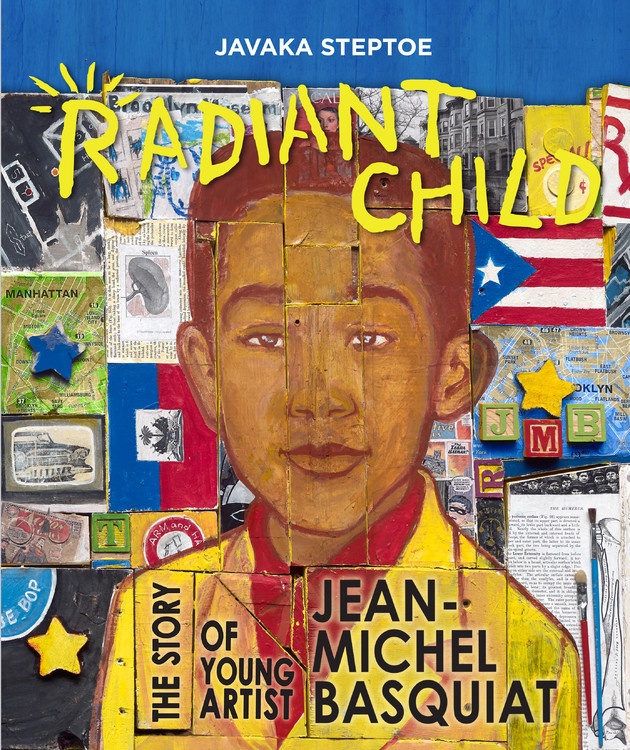
celebrate-picture-books-picture-book-review-radiant-child-cover

About the Holiday

This month we honor the artists of the past and those currently creating work that represents, reflects, and translates the world we live in. There are as many ways of making art as there are artists, so take some time this month to visit an art museum or gallery, to look online or read a book and discover life in a whole new way.

Radiant Child: The Story of Young Artist Jean-Michel Basquiat

By Javaka Steptoe


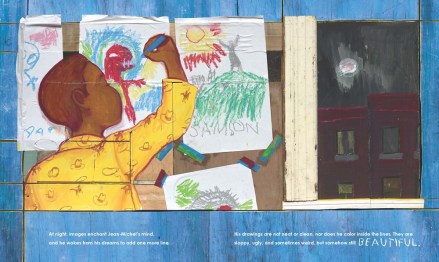
“Somewhere in Brooklyn, between hearts that thump, double Dutch, and hopscotch / and salty mouths that slurp sweet ice, a little boy dreams of being a famous artist.” All day Jean-Michel sits surrounded by colored pencils and “a storm of papers” and draws. As he sleeps his dreams swirl with images. When he wakes he adds to his drawings, scribbling away. What he creates is “sloppy, ugly, and sometimes weird, but somehow still beautiful.”

celebrate-picture-books-picture-book-review-radiant-child-beautiful-art

Image and text copyright Javaka Steptoe, courtesy of Little, Brown Books for Young People

Jean-Michel’s talent comes from his Puerto Rican mother, who has a natural sense of style and design and who always makes time to draw with her son, lying on the floor next to him. She takes Jean-Michel to art museums and theaters and reads poetry to him, but she also shows him the art of the city—its sounds, sights, style, and “patchwork” colors. Jean-Michel loves to visit the museum and read about the artwork and the artists. From these stories he “learns what it means to be a famous artist.”

When Jean-Michel is seriously injured in a car accident, his world seems scary and confusing. His mother gives him an anatomy book, which he memorizes. It erases his fears and becomes influential in his work. After returning home, his life changes when his mother suffers a breakdown and can no longer live at home. “He tries drawing the terrible out of his blues, but things are not the same.” Jean-Michel visits his mother when he can, “always bringing his artwork to show, telling her that one day it will be in a museum, ‘when I am a famous artist.’”

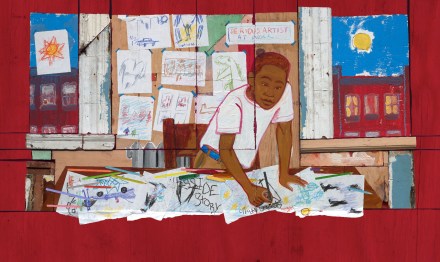
celebrate-picture-books-picture-book-review-radiant-child-drawing

Image and text copyright Javaka Steptoe, courtesy of Little, Brown Books for Young People

As a teenager, Jean-Michel follows his dream, moving from Brooklyn to New York City. There he stays with friends, painting, creating collages, and writing poems on paper strewn about him. At night he paints on city walls, trash cans, and other urban canvases. His art, signed ‘Samoo,’ attracts attention. People wonder: “‘Who is Samoo?’”

Soon his art can be found in art galleries and hanging in the homes of the people who buy his work. Jean-Michel continues to create, listening to “a sound track that is all his own.” Through talent, inspiration, and his mother’s loving influence, Jean-Michel Basquiat conquered the art world, becoming a king among artists, and fulfilling his desire to be a famous artist.

An extensive Author’s Note about Jean-Michel Basquait’s life, including his struggles with addiction and his death in 1988; the motifs and symbolism in his work; and a personal comment on the impact Basquait’s art had on the author, follow the text.

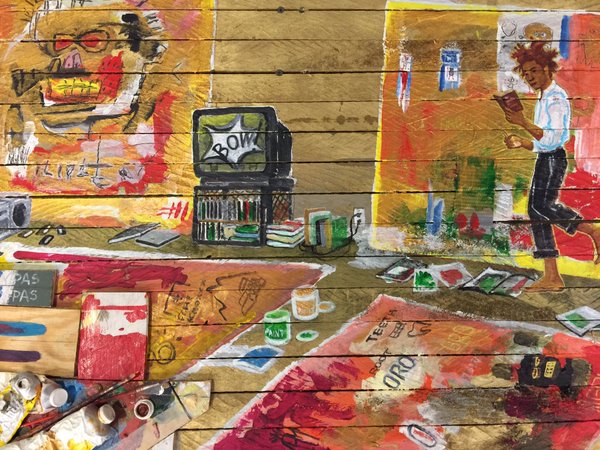
celebrate-picture-books-picture-book-review-radiant-child-studio

Image and text copyright Javaka Steptoe, courtesy of Little, Brown Books for Young People

Javaka Steptoe’s compelling biography of this complex, brilliant artist who people called “radiant, wild, a genius child” beautifully brings to life the inspirations and motivations that fueled his unique and intense talent. Steptoe delivers the story in staccato and flowing sentences, using consonance, assonance, and repetition—the rhythms of a poet. He shows how Basquiat maintained his focused determination, self-confidence, and persistence from childhood into adulthood. This perseverance reveals to readers that success is not a matter of luck, but of belief in oneself despite obstacles. Steptoe sensitively addresses the serious injury Basquiat suffered, his mother’s mental illness and Basquiat’s continued love for her, and his unsettled teenage years to complete this far-reaching life story.

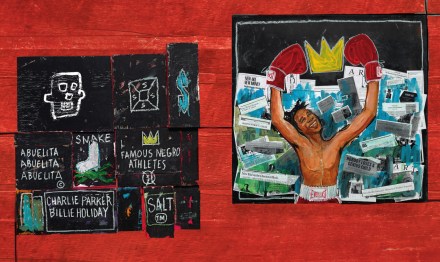
celebrate-picture-books-picture-book-review-radiant-child-boxing-image

Image and text copyright Javaka Steptoe, courtesy of Little, Brown Books for Young People

Steptoe’s mixed-media paintings were created on found wood from neighborhoods across New York City. While Steptoe does not reproduce any of Basquiat’s work, he states that readers will find “original pieces that were inspired by him and my interpretations of his paintings and designs.” As befitting his subject, Steptoe offers pages that burst with vibrant color and intricate details and beat with the pulse of the city, the people, the dreams, and the imagination that Basquiat transcribed onto paper, walls, and canvas. Part collage, part fine art, Steptoe’s illustrations will fascinate children and entice them to linger and take in the emotion and meaning in each. The final spread, a crowd scene made up of photographs, sets Basquiat in the midst of people whom he and his art continue to inspire.

Radiant Child: The Story of Young Artist Jean-Michel Basquiat offers children an inspirational model of creativity, compassion, and confidence no matter where their talents lie. The book is an excellent choice for school, public, and home libraries.

Ages 6 – 10

Little, Brown Books for Young Readers, 2016 | ISBN 978-0316213882

Learn more about Javaka Steptoe, his books, art exhibitions, and life on his website!

American Artist Appreciation Day Activity

celebrate-picture-books-picture-book-review-motivation-and-inspiration-day-craft

Make Art from Found Objects


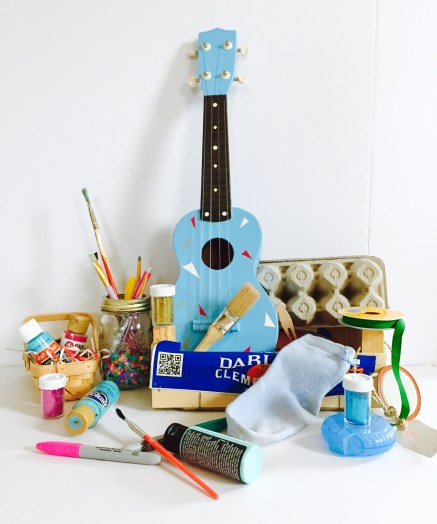
Each person finds inspiration in different things, places, and people. Today, try to create something new from the materials around you. Boxes, bottles, wire, magazines, cloth, wood, sponges—almost anything—can be transformed with some imagination. With those old socks, corks, flower pots, candle stubs, bits of ribbon, clementine crate, paint, glitter, beads, and more, you can make something useful, a decoration for your room, or even a gift for a friend!

Picture Book Review
August 2 – It’s American Artist Appreciation Month

celebrate-picture-books-picture-book-review-seen-art-cover

About the Holiday

Celebrating art is always a great thing! This month we celebrate art created in America. The unique history, landscape, population, and cultural influences of the United States fosters artwork that is distinctively American. This month gives us the opportunity to explore pieces dating back to the founding of our country as well as the paintings, sculpture, crafts, pottery, and other arts being created today. Take the time to visit museums, galleries, arts and craft shows, and theaters to discover old favorites and new inspiration.

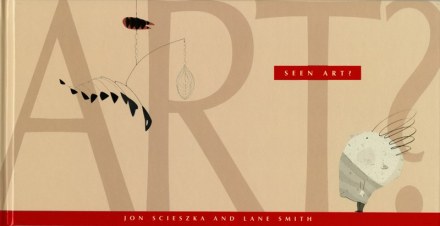
Seen Art?

Written by Jon Scieszka | Illustrated by Lane Smith


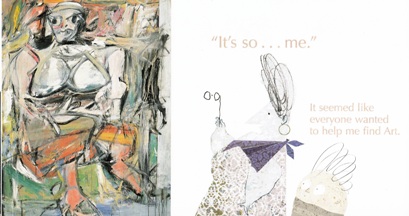
A little boy has arranged to meet his friend Art at the corner of Fifth Avenue and Fifty-third Street in New York City. When he arrives, however, Art isn’t there. The boy asks a woman nearby, “‘Have you seen Art?’” The lady points him in the direction of a beautiful new building further down the street. When he gets there, the boy doesn’t see Art, but he does meet an official-looking gentleman. “‘You seen Art?’” the boy inquires.

celebrate-picture-books-picture-book-review-seen-art-woman

Image copyright Lane Smith, 2005, text copyright Jon Scieszka, 2005. Courtesy of Viking Books for Young Readers.

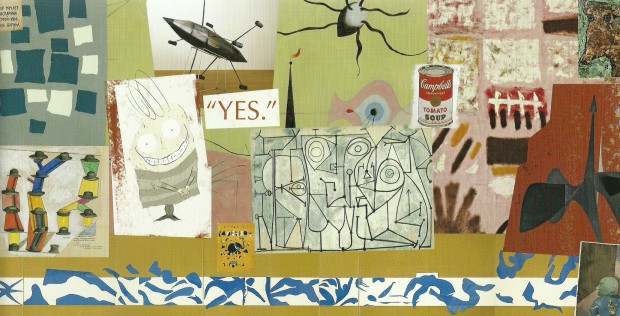
“‘MoMA?” the man asks. The boy thinks, didn’t the lady ask the same thing? Figuring it’s some kind of code word, he answers, “‘Yes.’” Great news! The building is just opening, the man tells him. After giving another woman the code word, the boy is led upstairs. She stops in front of a painting with blue swirls, writhing trees, and a moon glowing over a quiet village. “‘Can’t you just feel the restlessness? The color? The emotion?’” The boy can feel it, but he’s more interested in finding Art.

celebrate-picture-books-picture-book-review-seen-art-collage

Image copyright Lane Smith, 2005, text copyright Jon Scieszka, 2005. Courtesy of Viking Books for Young Readers.

A little man standing nearby seems to know where to go, and he leads the boy through a room filled with more paintings and sculpture. The man stops in front of a painting. “‘Look at that red! Look at that open box of crayons inviting us in. The grandfather clock? It has no hands. Time is suspended.’” The boy sees all this too. But, really, what he wants to know is—“‘is Art here?’”

A little girl across the room knows what he means. She can show him art. She takes him past a fur-covered teacup and spoon to a painting of an eye. But this is no ordinary eye. Instead of blue, brown, or green, this eye is clouds. “‘Your dream can be what is real,’” she explains. They see another painting with a melting clock in which time is messed up too, but it’s still not Art.

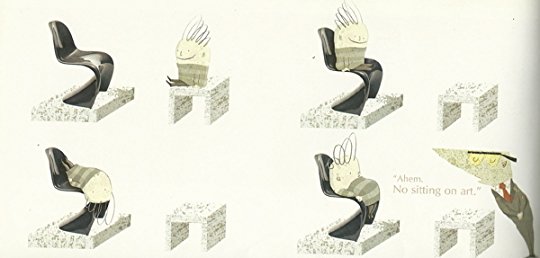
celebrate-picture-books-picture-book-review-seen-art-chair

Image copyright Lane Smith, 2005, text copyright Jon Scieszka, 2005. Courtesy of Viking Books for Young Readers.

Suddenly, a painter hugs the boy for his astute observation. He asks, is art “‘trying to capture dreams? Or is it making images everyone can recognize?’” Next, a lady shows the boy an alarming painting of a woman with whom she identifies, and a baby points out a picture of a brown “‘moo moo’” cow. It seems that in every corner there is another person expounding on a painting in front of them: the shapes, the mystery!, the composition, the color, the atmosphere.

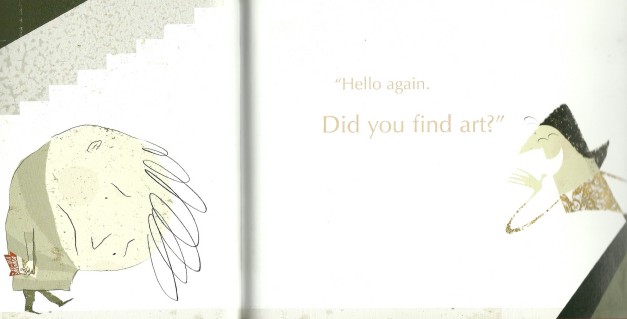
celebrate-picture-books-picture-book-review-seen-art-dejected

Image copyright Lane Smith, 2005, text copyright Jon Scieszka, 2005. Courtesy of Viking Books for Young Readers.

But each time the boy answers, “‘Not exactly the Art I was looking for.’” Perhaps, he is interested in the Bell-47D1 helicopter hanging from the ceiling. Is it art? The boy strides past more pieces; they are puzzling, personal, playful, provocative and powerful. Art is not just paintings, he is told. Finally! They seem to be getting it. He begins to ask one more time about his friend, but he’s shown more photographs, sculpture, objects, and films.

The boy decides he needs to find Art on his own. He discovers a majestic painting as long as two rooms, a slippy-slidey chair, images of soup cans that make him hungry…the café…and sculptures of a family and a goat. Soon itvs time to leave. Back on the sidewalk and feeling dejected, the boy thinks he’ll never find his friend. “‘Hello, again,’” he hears. It’s the lady he met that morning. “‘Did you find art?’” she asks.

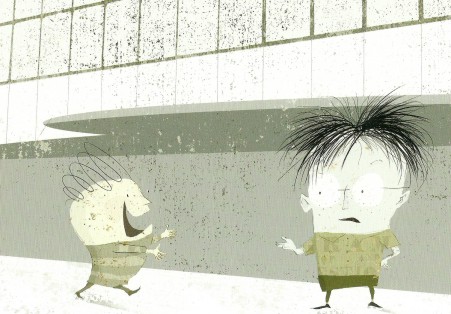
The boy is about to say no, but he remembers everything he has seen. “‘Yes,’” he answers. And when he finds Art waiting for him, the two go through MoMA again.

celebrate-picture-books-picture-book-review-seen-art-friend

Image copyright Lane Smith, 2005, text copyright Jon Scieszka, 2005. Courtesy of Viking Books for Young Readers.

Notes on each piece along with thumbnail images follow the text.

With clever word play, a humorous nod to the juxtaposed ideas “I know what I like/I like what I know,” and a wink at the world of art criticism, Jon Scieszka takes readers on a tour of the art collection at New York’s Museum of Modern Art. The simple misunderstanding of the word Art in the story introduces children to the nature of interpretation and the variety of forms it can take. Through the many people the little boy meets, Scieszka presents a fabulous opportunity for adults and children to talk about opinions and how each person can have their own while accepting those of others. Scieszka’s rich language is as enticing as the art presented and gives kids and adults a vast vocabulary to use in talking about what art—and life—has to offer.

Lane Smith’s simple line-drawn and abstract figures are the perfect tour guides to the reproductions of famous paintings, sculpture, installations, and other art found at MoMA. Printed in full, vibrant color, the artwork dazzles, drawing readers in to stop and explore each image. An excellent survey of classic and modern pieces will delight and fascinate kids.

For art lovers and those just discovering the world of creativity, Seen Art? is an absorbing book that will entice both children and adults to learn more about art. The book would be a fun and engaging addition to school art programs or units as well as for home libraries.

Ages 3 – 8 and up

Viking Books for Young Readers, 2005 |ISBN 978-0670059867

Discover more about about Jon Scieszka, his books, and other fun stuff on his website.

View a gallery of book illustration and other artwork by Lane Smith on his website.

American Artists Appreciation Month Activity

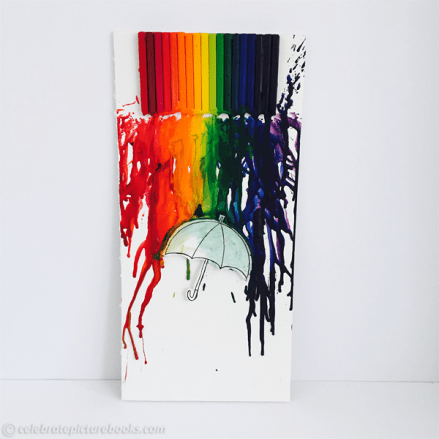
celebrate-picture-books-picture-book-review-rainbow-crayon-craft

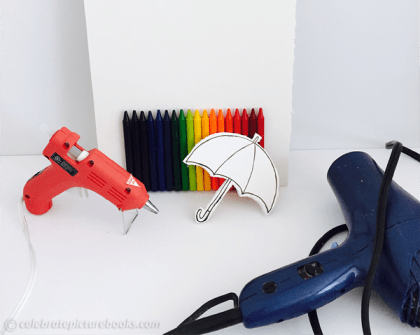
Rainbow Crayon Art


With this cool project you can create an art piece that’s as colorful as a rainbow and as unique as you are! Adult help is needed for children.

Supplies

  • Box of 24 crayons
  • White foam board or thick poster board, 8 inches by 17 inches
  • A small piece of corrugated cardboard, about 5 inches by 5 inches (a piece of the foam board can also be used for this step)
  • A small piece of poster board, about 5 inches by 5 inches
  • Scissors
  • X-acto knife (optional)
  • Hot glue gun
  • Hair dryer
  • Old sheets or towels, newspapers, a large box, or a trifold display board

celebrate-picture-books-picture-book-review-rainbow-crayon-craft

celebrate-picture-books-picture-book-review-rainbow-crayon-craft

Directions

  1. Remove the various red, orange, yellow, blue, indigo, and violet hued crayons from the box of crayons
  2. Strip the paper from the crayons by slicing the paper with the x-acto knife, or removing it by hand
  3. Line them up in order at the top of the white foam board
  4. With the hot glue gun, attach the crayons to the board with their tips facing down 
  5. Cut an umbrella or other shape of your choice from the poster board
  6. Trace the umbrella or other shape onto the corrugated cardboard or a piece of the foam board and cut out
  7. Glue the umbrella or other shape to the foam board, about 4 ½ inches below the crayons, let dry
  8. Set up a space where you can melt the crayons. The wax will fly, so protect the floor and walls by placing the art piece in a large box or by hanging newspapers, old sheets or towels on the walls and placing newspapers on the floor. A trifold display board and newspapers works well.
  9. Stand the art piece upright with the crayons at the top
  10. With the hot setting of the hair dryer, blow air at the crayons until they start to melt
  11. Move the hair dryer gently back and forth across the line of crayons from a distance of about 6 to 12 inches away. The closer you are to the crayons, the more they will splatter.
  12. The crayons will begin to melt and drip downward
  13. You can experiment with aiming the hair dryer straight on or at an angle to mix colors
  14. Wax that drips onto the umbrella or other shape can be chipped off after it dries or wiped off to create a “watercolor” effect on the shape
  15. Once the hair dryer is turned off, the wax cools and dries quickly
  16. Hang or display your art!

Picture Book Review
May 21 – “I Need A Patch for That” Day

celebrate-picture-books-picture-book-review-stitchin'-and-pullin'-a-gee's-bend-quilt-cover

About the Holiday

Celebrated annually on May 21, “I Need a Patch for That” Day gives a little love to patches of all kinds. Have you been out working in your garden patch? Fabulous! Did you just finish all the requirements for a scouting patch? Good job! Waiting on a fix for the latest software kerfuffle? Who isn’t? Are you a pirate keeping one eye ready for the dark? Argghh! Do you need to patch up a misunderstanding? Good luck! Or maybe you’re a quilter like the amazing women in today’s book who create a patch to remember each of life’s important, inspirational, and formative events. 

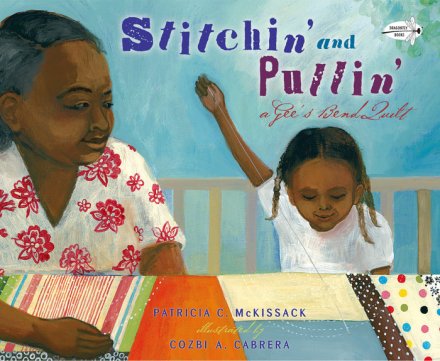
Stitchin’ and Pullin’: A Gee’s Bend Quilt

Written by Patricia C. McKissack | Illustrated by Cozbi A. Cabrera


In this story told through poems, a little girl begins telling readers about her life, starting with a recitation on Gee’s Bend Women: “Gee’s Bend women are / Mothers and Grandmothers / Wives / Sisters and Daughters / Widows.” They are every kind of woman you know, doing every type of work and activity. “Gee’s Bend women are / Talented and Creative / Capable / Makers of artful quilts / Unmatched. / Gee’s Bend women are / Relatives / Neighbors / Friends— / Same as me.”

In Who Would Have Thought, the girl muses on how perceptions change. “For as long as anyone can remember,” she says, the women of Gee’s Bend, Alabama have created quilts that were slept under, sat on, and wrapped around the sick or cold. But now those same quilts are “…hanging on museum walls, / their makers famous….”

When she was just a tot “Baby Girl” reveals in Beneath the Quilting Frame, she played under the quilting frame, listening to her “mama, grandma, and great-gran / as they sewed, talked, sang, and laughed / above my tented playground.” She remembers the “steady fingers  /[that] pieced together colorful scraps of familiar cloth / into something / more lovely / than anything they had been before” as her mother sang her a lullaby.

celebrate-picture-books-picture-book-review-stitchin'-and-pullin'-a-gee's-bend-quilt-puzzling-the-pieces

Image copyright Cozbi A. Cabrera, courtesy of Random House Books for Young Readers

In Something Else, “Baby Girl” is growing too big to play underneath the frame. Her legs are becoming longer and her mind is full of “recipes for eleven kinds of jelly…how to get rid of mold…and the words to a hundred hymns and gospel songs” while she waits for her turn at the frame. At last, her time does come, and in Where to Start?, the girl asks her mama how to begin. Her mother answers, “‘Look for the heart. / When you find the heart, / your work will leap to life… / strong, beautiful, and… / independent.’”

In Remembering, the girl thinks about how her mama has told her that “cloth has a memory.” As she chooses the cloth that will become her quilt she recounts the life and the history in each. 

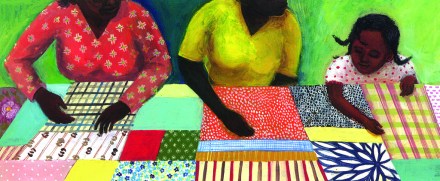
Nothing Wasted sees Grandma pulling apart a red-and-white gingham dress stitch by stitch. Suddenly, the girl knows that this cloth will become the patch that “will be the heart of my quilt.” In Puzzling the Pieces the girl and her grandma stand over the quilting frame fitting the squares together in the perfect way to tell the girl’s story. Her quilt comes together piece by piece to tell the history of Gee’s Bend in The River Island. The brown strips along three sides mirror the muddy waters surrounding her town. The fourth side is a green strip—“a symbol of the fields where my ancestors / worked cotton from can to can’t— / can see in the morning until / can’t see at night.” Lined up next to the green strip are six squares representing the small communities “where families with / the same name / are not kin by blood / but by plantation.”

Being Discovered is portrayed with “a large smoke-gray square”—the color of the Great Depression and the 15 minutes of fame Gee’s Bend garnered when discovered “by sociologists, historians, / educators, and journalists” who came and went, leaving Gee’s Bend “the way it had been / before being discovered.”

celebrate-picture-books-picture-book-review-stitchin'-and-pullin'-a-gee's-bend-quilt-understanding-comes-later

Image copyright Cozbi A. Cabrera, courtesy of Random House Books for Young Readers

In Colors, the girl’s grandma explains the meanings and feelings behind each colored cloth. “Blue cools. / Red is loud and hard to control, / like fire and a gossiping tongue.” Green, orange, yellow, white, pink, and all the others have their own personalities. “Grandma says, / ‘Colors show how you / feel deep down inside.’”

In Dr. King Brings Hope, the little girl adds “a spotless white patch for the hope Dr. Martin Luther King / brought to the Bend” and goes on to tell how her grandma saw Dr. King at Pleasant Grove Baptist Church and what it meant to her. By and By follows the girl as she adds “golden thank-yous, for James Reeb,” a “bright blue piece of velvet for Viola Liuzzo,” and a “big plaid people circle of white, black, brown, yellow, and red for Reverend Dr. King, all “killed for believing in justice.”

In the 1960s, The Sewing Bee tells, Gee’s Bend quilters were once again discovered. Joining the Bee provided buyers for the handmade quilts, but there were stipulations on the types of quilts that could be made and sold. The girl asks her grandma if she was part of the Bee, to which she replies, “‘more money. Less freedom. I chose to stay free.’”

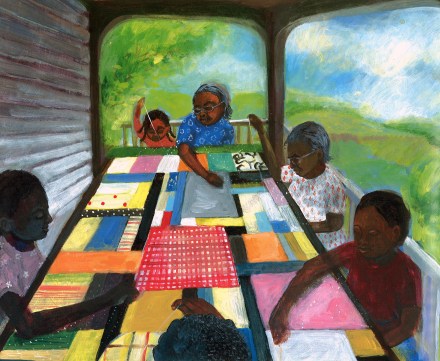
At last all of the patches are laid out and the time comes to stitch the girl’s quilt. Five women stand at the frame “all stitchin’ and pullin.’” They work “in a slow and steady rhythm” relaxing and enjoying being together until the quilt is finished. In Finished, the last stitch is sewn, and the thread bitten and knotted. The girl has hundreds of ideas for future quilts. “Quilts that are about me, / the place where I live, / and the people / who have been here for generations.”

Further poems unite the history of “Baby Girl,” her family, and neighbors, and an Author’s Note about quilting and the women of Gee’s Bend follow the text.

Patricia McKessack’s free verse poems capture the close relationships and camaraderie of the generations of women who join around the quilting frame to share and pass down their art and their heart. McKessack’s conversational verses, connected page after page like the patches of a quilt, reveal the complexity of this handmade art form in the way intimate talks between friends unveil a life. Readers learn not only about the little girl and her own thoughts, but the history and influence of her immediate family, world events, inspirational figures, and deeply held beliefs that make her who she is and ties her to the other Gee’s Bend women.

Cozbi A. Cabrera’s stunning acrylic paintings take readers inside the heart of the Gee’s Bend women, depicting the girl’s home, the table-sized quilting frame where the women collectively work, the plantations, the protests, and the changes that came but did not unravel the convictions, values, and love of the little girl’s family. Readers can almost hear the talking and singing of the Gee’s Bend women as they stitch their quilts, and the comforting, embracing environment is evident on every page. Cabrera’s portraits of the little girl, her mama, and her grandma are particularly moving. For What Changed, Cabrera depicts a yellow school bus appearing on the dirt road from the right hand corner of the page. In the  driver’s side mirror, a dot of a house is reflected, reminding readers that no matter how far these women are from home, Gee’s Bend is always with them.

Children—and adults—will find Stitchin’ and Pullin’: A Gee’s Bend Quilt inspirational and uplifting. This volume of poetry can be read at one sitting or delved into again and again, making it a wonderful choice for home libraries and a must for school and public libraries.

Ages 5 – 12

Dragonfly Books, Random House, 2016 (paperback edition) | ISBN 978-0399549502

View a gallery  of fashion designs, dolls, and other handmade art work by Cozbi A. Cabrera on her website!

“I Need a Patch for That” Day Activity

celebrate-picture-books-picture-book-review-stars-quilt-coloring-page

Design a Quilt Coloring Pages


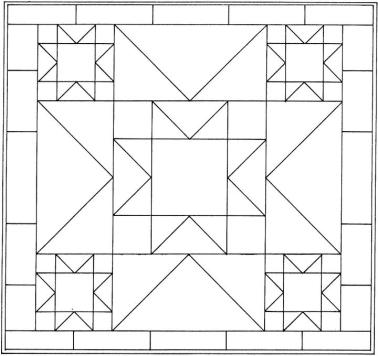
Quilts are so much more than pieces of material sewn together—they’re life stories! Here are two quilt coloring pages for you to design and color. What does each piece mean to you? As you color each section, write a sentence about an event or thought that is important to you.

Quilt Template 1 | Quilt Template 2

Picture Book Review
May 16 – Drawing Day

celebrate-picture-books-picture-book-review-tell-me-a-tattoo-story-cover

About the Holiday

Drawing day was established to remind us that all of the creative thoughts inside us are worthy of being shared. It also brings awareness to and appreciation of the artists and illustrators of all types who translate our world into meaningful images through which we understand people, events, and objects in different ways. Today, indulge your inner artist! Grab a pencil, pen, marker, paints or chalk, some paper or canvas, and create!

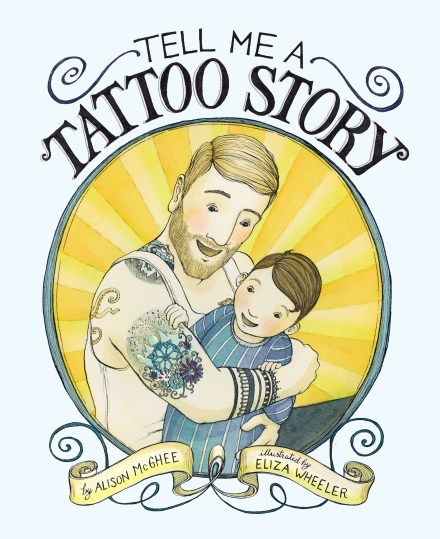
Tell Me a Tattoo Story

Written by Alison McGhee | Illustrated by Eliza Wheeler


A little boy tugs on his dad’s T-shirt, wanting to see his tattoos—again. His dad sits down with his son and patiently goes through them, like the pages of a favorite book. In fact, the tattoo on his shoulder—a dragon flying above mountain peaks—is from the book his mom read to him in childhood. “Did she read it to him over and over and over? She sure did,” he says.

celebrate-picture-books-picture-book-review-tell-me-a-tattoo-story-interior-art-at-home

Image copyright Eliza Wheeler, courtesy of abramsandchronicle.co.uk

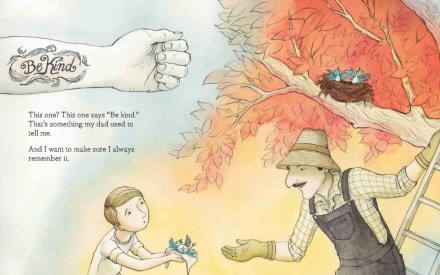
The elaborate design on the dad’s wrist reads “Be Kind,” advice his father used to give him. An intricate depiction of a carnival, complete with a Ferris wheel, fireworks, and flowers reminds him “of the day I met a pretty girl.” His son asks what made the girl so pretty, and his dad responds, “That’s a good question, little man. I’d have to say it was her smile.” In answer to his son’s wondering if he has ever met this girl, Dad looks at his wife and says, “You sure have.”

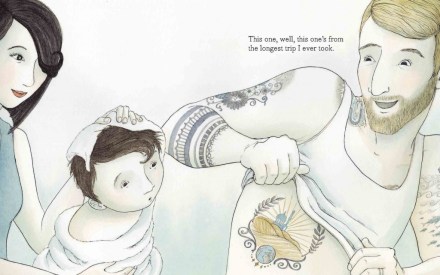
The tattoo picturing a globe and monument that covers the dad’s right side is from “the longest trip I ever took.” He reminisces—“Did I miss home while I was there?”—and confesses, “I sure did.”  The last tattoo the little boy asks about is a small heart festooned with a banner that reads “7● 22 Two Thousand Twelve.” Father and son engage in banter that is most likely familiar to them both, with the boy asking the questions he already knows the answers to but loves to hear again and again: “Those numbers inside it? Just somebody’s birthday, I guess. Whose birthday? / Oh some little man I know, is all. / What do you mean, this one’s your favorite? This dinky little heart?” Then leaning in to learn a secret, the boy rediscovers that the heart tattoo is his dad’s favorite too.

celebrate-picture-books-picture-book-review-tell-me-a-tattoo-story-interior-art-be-kind

Image copyright Eliza Wheeler, courtesy of abramsandchronicle.co.uk

Alison McGhee’s Tell Me a Tattoo Story is such a sweet, original homage to the love between father and son. The use of body art to reveal not only seminal events in the dad’s life but the trajectory of his child’s birth is inspired. The minimal text highlights the deep emotion, giving the boy in the story as well as young readers the information they are really looking for. The soft-spoken dad is such an appealing character—emotionally available, honest, and offering just the right tone of humorous repartee—for today’s family dynamic.

Beautifully rendering McGhee’s text into art, Eliza Wheeler creates a homey atmosphere that emphasizes the theme of the book while creating tattoos that are immediately accessible to children. The dragon tattoo could come from The Hobbit or Harry Potter, kids will recognize the fun and excitement represented by the Ferris wheel, and the little heart is simplicity at its finest. While the pages depicting the dad’s tattoos are minimally hued, the father’s reminiscences burst with color and details—providing an overall feeling of warmth and affection. The image of the dad in his military uniform over the hot, golden sands on “the longest trip he ever took” will bring a tear to your eye.

celebrate-picture-books-picture-book-review-tell-me-a-tattoo-story-interior-art-longest-trip

Image copyright Eliza Wheeler, courtesy of abramsandchronicle.co.uk

The originality of the story and gorgeous illustrations make Tell Me a Tattoo Story a must for children’s bookshelves and will become an often-asked-for read during quiet story times or for bedtime.

Ages Birth – 6

Chronicle Books, 2016 | ISBN 978-1452119373

To discover more books for children and adults by Alison McGhee, visit her website!

View Eliza Wheeler’s portfolio and other books on her website!

National Tattoo Day Activity

celebrate-picture-books-picture-book-review-design-your-own-tattoo-template

Design Your Own Tattoo


Tattoos can be simple or elaborate, but they are always personal. They tell a story, commemorate an event, or reveal an emotion. What would your tattoo look like? Design your own body art on this printable Design Your Own Tattoo Template!

Picture Book Review

March 11 – It’s Youth Art Month

celebrate-picture-books-picture-book-review-opposite-surprise-cover

About the Holiday

Youth Art Month was established in 1961 by the Crayon, Water Color, and Craft Institute in conjunction with the National Art Education Association to emphasize the value of participating in art for all children. Involvement in the visual arts improves problem solving, observation, creativity, and communications skills. The observance continued to grow, later including secondary school students in 1969 and the creation of the Council of Art Education to oversee the month’s events in 1984.

Art shows, special exhibits, school and community events, and fundraisers are all part of the celebration. The highlight of the month is the School Flags Across America…Flying High competition in which students design a flag around a particular state theme. The flags are judged and the winning flag from each state is made into an actual flag and flown with the others in Washington DC. A child’s love of art often begins early as they are exposed to a variety of beautiful images in picture books, such as today’s original concept book.

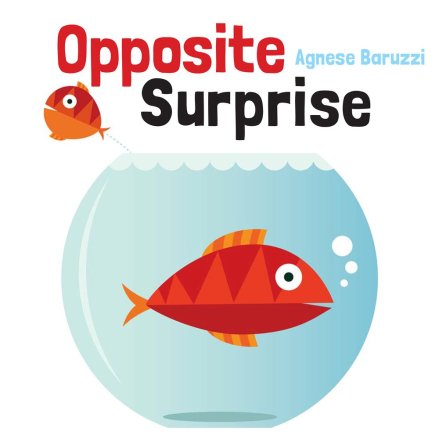
Opposite Surprise

By Agnese Baruzzi


Opposite Surprise poses a series of  questions that invite young children to ponder various opposites while also challenging their perceptions. For instance, is the blue truck on the opposite page small or big? Well, in comparison to what, you might ask. A flip of the half-fold flap answers this question and allows readers to say that the blue truck is small when compared to the big digger behind it.

celebrate-picture-books-picture-book-review-opposite-surprise-small-or-big-

celebrate-picture-books-picture-book-review-opposite-surprise-truck-flap

celebrate-picture-books-picture-book-review-opposite-surprise-small-or-big-open-flap

Image copyright Agnese Baruzzi, courtesy of Minedition

Is there one sheep on the next page or many? It seems that the gray sheep is standing alone, but pulling the flap reveals a whole flock of diverse sheep. Now, how about that fancy, blue box—is it empty or full? Empty you might reply quickly, but perhaps…. With a tug on the page, kids discover that this container is not a box but an aquarium teeming with fish of all sizes! Toot, toot! A little train is chugging along on the next page. Is it short or long? With just an engine and a caboose, the train appears short. In reality, though, there’s plenty of room for passengers in the train’s two long cars.

celebrate-picture-books-picture-book-review-opposite-surprise-short-or-long-train

celebrate-picture-books-picture-book-review-opposite-surprise-short-or-long-open-flap

Image copyright Agnese Baruzzi, courtesy of Minedition

Look at that cute orange caterpillar! Is it straight or curvy? Opening the flap will make kids giggle to see just what a wiggly guy this is! The next one is easy-peasy! Hot or Cold? Anyone can see that the sun is hot, hot, hot! But wait! A gentle pull exposes two delicious (and dripping) ice pops! There’s a little bit for both neatniks and messy-types on the next page as the crisp, clean red shirt suddenly becomes dirty with the flick of the flap.

Turning the page reveals a window. Are the shutters closed or open? It would appear they are closed, shutting out the view. But with a simple pull they open, letting in the sun for the plant and the bird on the windowsill. Now, seriously, must we debate slow or fast when a tiny turtle is the subject of the question? Apparently so, because readers discover that nothing is what it seems when they open the flap to find the turtle transformed into a jet plane soaring through the sky. And finally, readers come to a yellow pencil. Is it thin or wide? Standing straight and tall, it hardly takes up more room than a pinky finger. But with the page stretched out, that thin pencil becomes the sides of a bridge wide enough to span a river.

celebrate-picture-books-picture-book-review-opposite-surprise-hot-or-cold-sun

celebrate-picture-books-picture-book-review-opposite-surprise-hot-or-cold-open-flap

Image copyright Agnese Baruzzi, courtesy of Minedition

Agnese Baruzzi’s unique concept books goes beyond the usual clear-cut definitions of opposites to present a new way of looking at and interacting with the world. Her smart, colorful illustrations invite little readers to answer not only the prompted question, but to explore further. The little blue truck is small, yes, but it is also smaller than the digger. This one page also invites adults to talk about the idea of “in front of” and “behind.” Throughout the book there are opportunities to count, talk about direction and spatial relationships; discuss why the ice-pops are melting; and explore many more topics that are the building blocks for reading, speech, and math literacy.

Opposite Surprise would be a fantastic baby shower or new baby gift; a wonderful take-along for car rides, outings, or wait times; and an excellent addition to toddler’s bookshelves as well as library and classroom collections.

Ages birth – 5

Minedition, 2017 | ISBN 978-9888341375

Youth Art Month Activity

celebrate-picture-books-picture-book-review-drawing-page

Fun Framed Drawing Page


Use this printable Fun Framed Drawing Page to make your own creation, family flag, or story!

Picture Book Review
January 27 – It’s Creativity Month

celebrate-picture-books-picture-book-review-stitchin'-and-pullin'-a-gee's-bend-quilt-cover

About the Holiday

January is a time for reflection and new beginnings. What better time to start thinking creatively and finding your inner artist, scientist, inventor, thinker? Go ahead and do the thing you’ve always wanted to do!

Stitchin’ and Pullin’: A Gee’s Bend Quilt

Written by Patricia C. McKissack | Illustrated by Cozbi A. Cabrera

In this story told through poems, a little girl begins telling of her life, starting with a recitation on Gee’s Bend Women: “Gee’s Bend women are / Mothers and Grandmothers / Wives / Sisters and Daughters / Widows.” They are every kind of woman you know, doing every type of work and activity. “Gee’s Bend women are / Talented and Creative / Capable / Makers of artful quilts / Unmatched. / Gee’s Bend women are / Relatives / Neighbors / Friends— / Same as me.”

In Who Would Have Thought, the girl muses on how perceptions change. “For as long as anyone can remember,” she says, the women of Gee’s Bend, Alabama have created quilts that were slept under, sat on, and wrapped around the sick or cold. But now those same quilts are “…hanging on museum walls, / their makers famous….”

When she was just a tot “Baby Girl” reveals in Beneath the Quilting Frame, she played under the quilting frame, listening to her “mama, grandma, and great-gran / as they sewed, talked, sang, and laughed / above my tented playground.” She remembers the “steady fingers  /[that] pieced together colorful scraps of familiar cloth / into something / more lovely / than anything they had been before” as her mother sang her a lullaby.

celebrate-picture-books-picture-book-review-stitchin'-and-pullin'-a-gee's-bend-quilt-puzzling-the-pieces

Image copyright Cozbi A. Cabrera, courtesy of Random House Books for Young Readers

In Something Else, “Baby Girl” is growing too big to play beneath the frame. Her legs becoming longer and her mind full of “recipes for eleven kinds of jelly…how to get rid of mold…and the words to a hundred hymns and gospel songs” while she waits her turn at the frame. Finally, in Where to Start? her time comes. The girl asks her mama how to begin and she answers, “‘Look for the heart. / When you find the heart, / your work will leap to life… / strong, beautiful, and… / independent.’”

In Remembering, the girl thinks about how her mama has told her that “cloth has a memory.” As she chooses the cloth that will become her quilt she sees the life and the history in each. 

Nothing Wasted sees Grandma pulling apart a red-and-white gingham dress stitch by stitch to become a quilting square that the girl suddenly knows “will be the heart of my quilt.” In Puzzling the Pieces the girl and her grandma stand over the quilting frame fitting the squares together in the perfect way to tell the girl’s story. Her quilt comes together piece by piece to tell the history of Gee’s Bend in The River Island. The brown strips along three sides mirror the muddy waters surrounding her town. The fourth side is a green strip—“a symbol of the fields where my ancestors / worked cotton from can to can’t— / can see in the morning until / can’t see at night.” Lined up next to the green strip are six squares representing the small communities “where families with / the same name / are not kin by blood / but by plantation.”

Being Discovered is portrayed with “a large smoke-gray square”—the color of the Great Depression and the 15 minutes of fame Gee’s Bend garnered when discovered “by sociologists, historians, / educators, and journalists” who came and went, leaving Gee’s Bend “the way it had been / before being discovered.”

celebrate-picture-books-picture-book-review-stitchin'-and-pullin'-a-gee's-bend-quilt-understanding-comes-later

Image copyright Cozbi A. Cabrera, courtesy of Random House Books for Young Readers

In Colors, the girl’s grandma explains the meanings and feelings behind each colored cloth. “Blue cools. / Red is loud and hard to control, / like fire and a gossiping tongue.” Green, orange, yellow, white, pink, and all the others have their own personalities. “Grandma says, / ‘Colors show how you / feel deep down inside.’”

In Pinky, the harrowing facts of the march from Selma to Montgomery, Alabama frame the story of one marcher, Mr. Willie Quill who broke horses for the Alabama State Mounted Patrol and was saved from the Police attacks when one of the horses he’d trained knew his voice. In Dr. King Brings Hope, the little girl adds a “Patch of bright pink / to remember Pinky’s story. / Next to it I sew / a spotless white patch for the hope Dr. Martin Luther King / brought to the Bend” and goes on to tell how her grandma saw Dr. King at Pleasant Grove Baptist Church and what it meant to her.

By and By follows the girl as she adds “golden thank-yous, for James Reeb,” a “bright blue piece of velvet for Viola Liuzzo,” and a “big plaid people circle of white, black, brown, yellow, and red for Reverend Dr. King, all “killed for believing in justice.”

In the 1960s, The Sewing Bee tells, Gee’s Bend quilters were once again discovered. There were buyers for the handmade quilts, but stipulations. The girl asks her grandma if she was part of the Bee, to which she replies, “‘Yes, / more money. Less freedom. I chose to stay free.’”

At last all of the patches are laid out and the time comes to stitch the girl’s quilt. Five women stand at the frame “all stitchin’ and pullin.’” They work “in a slow and steady rhythm” relaxing and enjoying being together until the quilt is finished. In Finished, the last stitch is sewn, and the thread bitten and knotted. The girl has hundreds of ideas for future quilts. “Quilts that are about me, / the place where I live, / and the people / who have been here for generations.”

Further poems unite the history of “Baby Girl,” her family, and neighbors, and an Author’s Note about quilting and the women of Gee’s Bend follow the text.

Patricia McKessack’s free verse poems capture the close relationships and camaraderie of the generations of women who join around the quilting frame to share and pass down their art and their heart. McKessack’s conversational verses, on page after page like the patches of a quilt, reveal the complexity of this handmade art form in the way intimate talks between friends unveil a life. Readers learn not only about the little girl and her own thoughts, but the history and influence of her immediate family, world events, inspirational figures, and deeply held beliefs that make her who she is and ties her to the other Gee’s Bend women.

Cozbi A. Cabrera’s stunning acrylic paintings take readers inside the heart of the Gee’s Bend women, depicting the girl’s home, the table-sized quilting frame where the women collectively work, the plantations, the protests, and the changes that came but did not unravel the convictions, values, and love of the little girl’s family. Readers can almost hear the talking and singing of the Gee’s Bend women as they stitch their quilts, and the comforting, embracing environment is evident on every page. Cabrera’s portraits of the little girl, her mama, and her grandma are particularly moving. For What Changed, Cabrera depicts a yellow school bus appearing on the dirt road from the right hand corner of the page. In the side mirror a dot of a house comes into view, reminding readers that no matter how far these women are from home, Gee’s Bend is always with them.

Children—and adults—will find Stitchin’ and Pullin’: A Gee’s Bend Quilt inspirational and uplifting. This volume of poetry can be read at one sitting and delved into again and again, making it a wonderful choice for home libraries and a must for school, public, and other libraries.

Ages 5 – 12

Dragonfly Books, Random House, 2016 (paperback edition) | ISBN 978-0399549502

View a gallery  of fashion designs, dolls, and other handmade art work by Cozbi A. Cabrera on her website!

Creativity Month Activity

celebrate-picture-books-picture-book-review-stars-quilt-coloring-page

Design a Quilt Coloring Pages

Quilts are so much more than pieces of material sewn together—they’re life stories! Here are two quilt coloring pages for you to design and color. What does each piece mean to you? As you color each section, write a sentence about an event or thought that is important to you.

Quilt Template 1 | Quilt Template 2

Picture Book Review