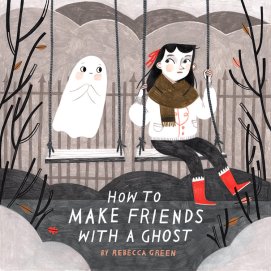
December 2 – Get Ready for Christmas

celebrate-picture-books-picture-book-review-when-santa-was-a-baby-cover

About the Holiday

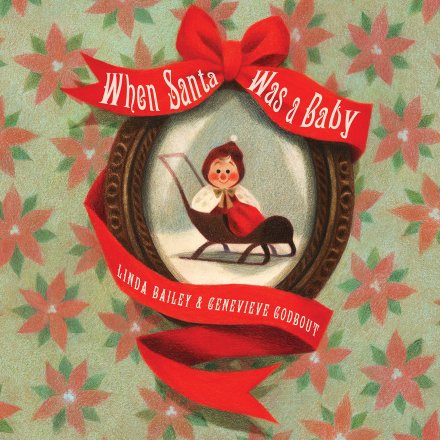
For those who celebrate Christmas, Santa Claus’s visit is eagerly anticipated. Kids and adults alike all know about Santa’s workshop at the North Pole, his stable of magic reindeer, and his nighttime ride, but how did Santa become…well…Santa? You’ll find out in today’s book!

Tundra Books sent me a copy of When Santa was a Baby for review consideration. All opinions are my own.

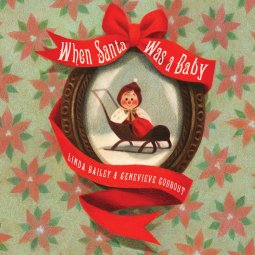
When Santa Was a Baby

Written by Linda Bailey | Illustrated by Geneviève Godbout


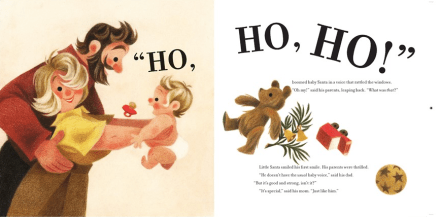
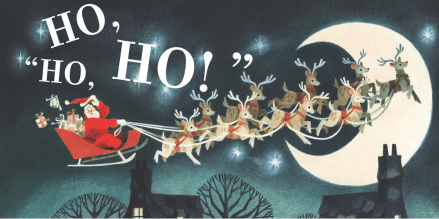
When Santa was a baby his parents loved his merry dimples and his “‘little nose…like a cherry,’” and when they tickled his tiny toes, expecting a gurgle or coo, they heard a booming “‘HO, HO, HO!’” As he grew older and learned his colors, Santa developed a distinct preference for red, so the “‘dandy blue pajamas from Aunt Mable’” went back in the drawer. “‘Maybe he’ll be a firefighter,’” said his mom.

celebrate-picture-books-picture-book-review-when-santa-was-a-baby-laugh

Image copyright Geneviève Godbout, 2015, text copyright Linda Bailey, 2015. Courtesy of Tundra Books.

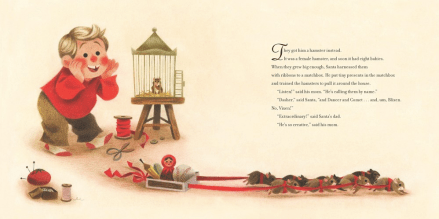
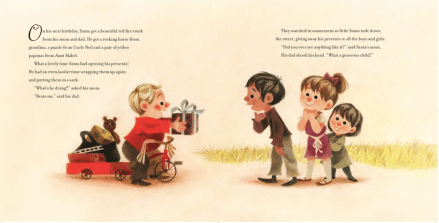
On his birthday, Santa had fun opening a passel of presents, including a toy firetruck from mom and dad, toys from Grandma and Uncle Ned, and “yellow pajamas from Aunt Mable.” But after he’d opened them, he wrapped them up again and gave them away to other children. On his next birthday, Santa asked for a pet that looked like a horse “that had horns and could pull a flying sled.” His parents weren’t sure about all this, so they got Santa a hamster, who soon had eight babies that loved pulling the matchbox full of little toys that Santa hitched them to. Santa’s dad though it was “‘extraordinary,’” and his mom said, “‘He’s so creative!’”

celebrate-picture-books-picture-book-review-when-santa-was-a-baby-hamster

Image copyright Geneviève Godbout, 2015, text copyright Linda Bailey, 2015. Courtesy of Tundra Books.

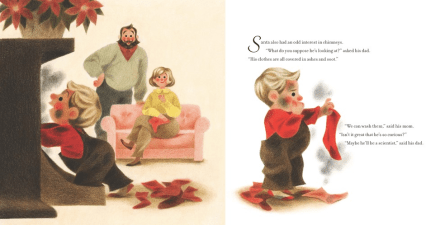
Santa was extraordinary in lots of other ways too. His curiosity for the cold blast from the refrigerator and the sooty chimney led his proud parents to think he might grow up to be a scientist. Santa had a best friend named Eldred, and together they loved to make toys and other things. As a teenager, he “knew his own mind” and even though “he didn’t always fit in with the crowd,” the other kids liked him, and, of course, “his parents thought he was wonderful.”

celebrate-picture-books-picture-book-review-when-santa-was-a-baby-chimney

Image copyright Geneviève Godbout, 2015, text copyright Linda Bailey, 2015. Courtesy of Tundra Books.

Now Santa is all grown up and has “followed his childhood dreams.” He has a crew of elves, led by Eldred, to make toys and he finally has the reindeer he always wanted. On Christmas Eve as he flies around the world, his parents “listen for his sleigh bells. They wave and blow kisses as Santa dips low over their house.” It’s just what they “always thought he’d do.”

Screen Shot 2019-11-28 at 2.22.33 PM

Image copyright Geneviève Godbout, 2015, text copyright Linda Bailey, 2015. Courtesy of Tundra Books.

Linda Bailey’s gentle, humorous tale of Santa Claus’ origins in a little boy who always knew who he was and followed his heart will delight children of all ages. With a sprinkling of descriptions about Santa that echo Clement Clarke Moore’s A Visit from St. Nicholas, Bailey’s storytelling fits nicely into the traditional image of Santa while revealing while answering kids’ questions about his generosity, the elves, his reindeer, and his North Pole home. Adults will appreciate the support Santa’s bemused parents show as their child grows up and their pride in the man their son is. Underlying Bailey’s story about Santa is an uplifting reminder for all kids to embrace who they are and to follow their dreams.

celebrate-picture-books-picture-book-review-when-santa-was-a-baby-gifts

Image copyright Geneviève Godbout, 2015, text copyright Linda Bailey, 2015. Courtesy of Tundra Books.

Geneviève Godbout’s slightly gauzy illustrations rendered in muted browns, greens, and golds punctuated with red bridge the past and the present with rustic details and universal hair and clothing styles, adorable hamster pets, and Christmas traditions. Children will giggle at the booming “Ho, Ho, Ho!” that erupts from baby Santa and the image of him standing naked (except for one red sock) in front of the open refrigerator with a fan blowing and a popsicle waiting on the table. Little readers will be happy to see that young Santa had an elf friend, who was equally comfortable being himself while wearing green and long, pointy-toed socks. Godbout’s images of the grown Santa at the North Pole and flying in his sleigh on Christmas Eve close out the story in a cheery and satisfying way.

Charming from beginning to end, When Santa Was a Baby would be an often-asked-for addition to Christmas story times from year to year and is highly recommended for home and library collections.

Ages Preschool and Up

Tundra Books, 2015 | ISBN 978-1770495562 (Hardcover) | ISBN 978-1101919163 (Board Book)

Discover more about Linda Bailey and her books on her website.

To learn more about Geneviève Godbout, her books, and her art, visit her website.

Get Ready for Christmas Activity

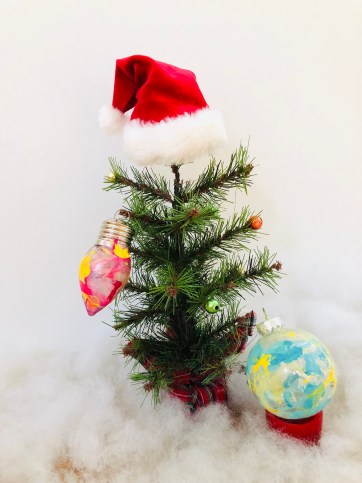
celebrate-picture-books-picture-book-review-christmas-ornaments-craft

Polish-Dipped Ornaments


These plastic ornaments swirled with colorful nail polish make eye-catching decorations for your tree. Make some to give to friends too!

Supplies

  • Plastic ornaments, available at craft stores
  • Nail polish in various colors
  • Plastic bowl or container, deep enough to dip the ornament into the water
  • Drying stand – I used a clear, plastic egg carton, or string for hanging ornaments to dry

Directions

Fill the plastic container with warm to hot water

  1. Using two or three colors, gently “paint” the water with the nail polish, using the brush or a toothpick in dots and swirls
  2. Slowly dip the plastic ornament into the water and turn it to pick up the nail polish floating on the top of the water
  3. To dry, place the ornament on a stand or hang with a paper plate, wax paper, or other paper to catch drips

celebrate-picture-books-picture-book-review-when-santa-was-a-baby-cover

You can find When Santa Was a Baby at these booksellers

Amazon| Barnes & Noble | Books-a-Million | IndieBound

Picture Book Review


November 12 – It’s Dear Santa Letter Week

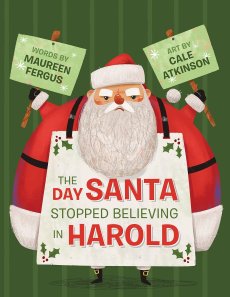
celebrate-picture-books-picture-book-review-the-day-santa-stopped-believing-in-harold-cover

About the Holiday

For kids who celebrate Christmas, writing a letter to Santa Claus is an exciting and hopeful activity. Their lists of things they’d like for themselves and often for family and friends too can include the practical, the impossible, and the poignant. The holiday featured today reminds children that to make sure their letter reaches Santa at the North Pole in time, it’s best to send it this week. Parents who would like for their child to receive a “personalized” letter back from Santa, can visit the USPS website to learn about the program and Santa’s helpers in Anchorage, Alaska.

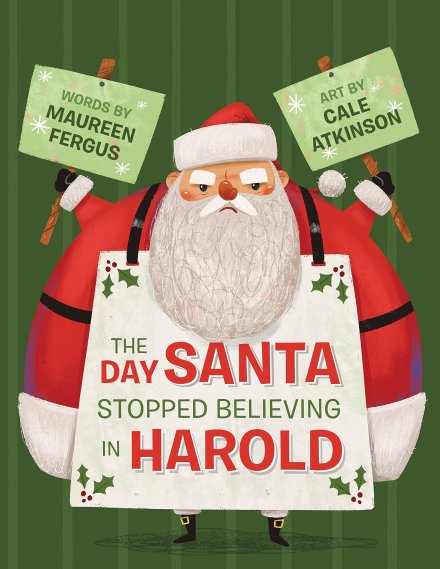
The Day Santa Stopped Believing in Harold

Written by Maureen Fergus | Illustrated by Cale Atkinson


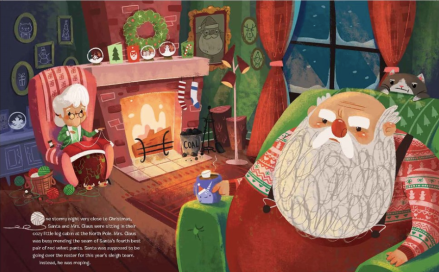
One snowy night close to Christmas, Mrs. Claus was doing the mending while Santa was moping. Even though Mrs. Claus asked Santa what was wrong, he couldn’t bring himself to tell her. Finally, he ventured, “‘Well, you know Harold?’” Mrs. Claus smiled and launched into a detailed description of the little boy, but Santa stopped her mid-sentence and choked out, “‘You don’t need to keep pretending on my account because…because…I don’t believe in Harold anymore.’” Mrs. Claus couldn’t believe her ears.

celebrate-picture-books-picture-book-review-the-day-santa-stopped-believing-in-harold-Santa

Image copyright Cale Atkinson, 2016, text copyright Maureen Fergus, 2016. Courtesy of Tundra Books.

Santa explained that while he still liked “the idea of Harold”—after all he’d always been part of his Christmas—some things just didn’t make sense any more. For instance, Santa thought Harold’s mom wrote his letters, that his dad set out the snack, and that the Harold who’d sat on his lap last year didn’t look like the Harold from past years. For Santa, it all added up to a trick by Harold’s parents. Mrs. Claus thought her husband should accept Harold “as one of the best, most magical parts of Christmas.” But Santa just couldn’t do it.

celebrate-picture-books-picture-book-review-the-day-santa-stopped-believing-in-harold-elf

Image copyright Cale Atkinson, 2016, text copyright Maureen Fergus, 2016. Courtesy of Tundra Books.

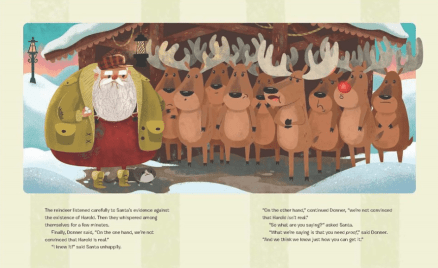
Soon, the elves had heard that Santa didn’t believe in children. Not all children, Santa countered and then added that his friends didn’t believe in Harold either. The elves weren’t convinced. Santa decided to take his case to the reindeer. After he’d laid out the evidence, the reindeer told Santa he needed proof. “‘And we think we know just how you can get it,’” Donner said.

celebrate-picture-books-picture-book-review-the-day-santa-stopped-believing-in-harold-reindeer

Image copyright Cale Atkinson, 2016, text copyright Maureen Fergus, 2016. Courtesy of Tundra Books.

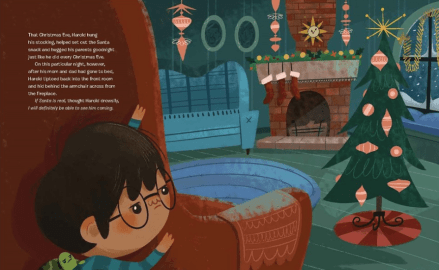
While all this was going on in the North Pole, down south Harold was “telling his parents and his friends and his turtle that he didn’t think Santa was real.” What Harold needed was proof, and he knew just how to get it. That night—Christmas Eve—Harold did all the usual things. But when his parents went to bed, he hid behind the armchair and, with a good view of the fireplace, settled in to wait. Soon, Santa landed on his very last roof—Harold’s house. Santa had a plan. He hid behind the sofa ready to see if Harold really did run downstairs in the morning.

celebrate-picture-books-picture-book-review-the-day-santa-stopped-believing-in-harold-harold

Image copyright Cale Atkinson, 2016, text copyright Maureen Fergus, 2016. Courtesy of Tundra Books.

Before Santa knew it, it was Christmas morning and Harold’s parents were standing by the tree. “‘Too bad we don’t know any little boys who’d like to open some presents from Santa,’” Harold’s mom said to tempt her son out from his spot behind the chair. Santa thought he had his proof. Then, just as Santa realized he’d never put out the presents, Harold stood up and said he didn’t care about the presents; he only wanted to know if Santa was real.

celebrate-picture-books-picture-book-review-the-day-santa-stopped-believing-in-harold-christmas-eve

Image copyright Cale Atkinson, 2016, text copyright Maureen Fergus, 2016. Courtesy of Tundra Books.

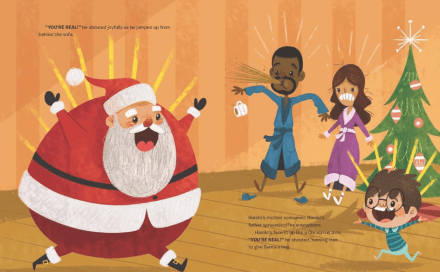
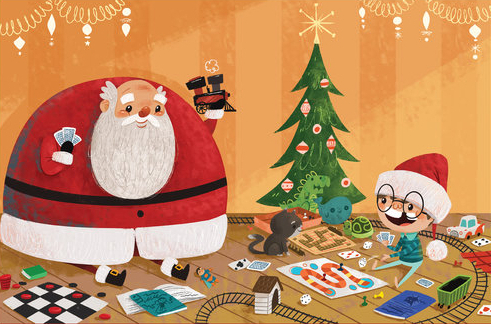
Hearing Harold’s voice, Santa jumped up and shouted “‘You’re real!’” Seeing Santa, Harold shouted “‘You’re real!’” They ran toward each other and hugged. Then they played with the toys Santa had brought until the reindeer reminded Santa it was time to go home. Santa and Harold said their happy goodbyes until next year, and in a moment, Santa was up the chimney and out of sight.

celebrate-picture-books-picture-book-review-the-day-santa-stopped-believing-in-harold-you're-real

Image copyright Cale Atkinson, 2016, text copyright Maureen Fergus, 2016. Courtesy of Tundra Books.

Maureen Fergus’s clever flip on believing in Santa proves that the magic of Christmas doesn’t lie in the presents we get but in that feeling of wonder that lives in hearts young and old. When Santa makes his confession to Mrs. Claus and justifies it to the elves and reindeer, there will be giggles all around as adults and older children appreciate the wry twist and younger “still believers” react to such ridiculous notions. Making inspired and humorous use of the waiting-up-to-see-Santa trope, Fergus creates suspense while setting up the climactic scene and the ingeniously worded line that one moment gives Santa his “proof” and the next dispels both Santa’s and Harold’s doubts. A relatable Santa, an elf with a twinkle of good-natured attitude,” skeptical reindeer, and a lovable child make this holiday reading at its best.

celebrate-picture-books-picture-book-review-the-day-santa-stopped-believing-in-harold-toys

Image copyright Cale Atkinson, 2016, text copyright Maureen Fergus, 2016. Courtesy of Tundra Books.

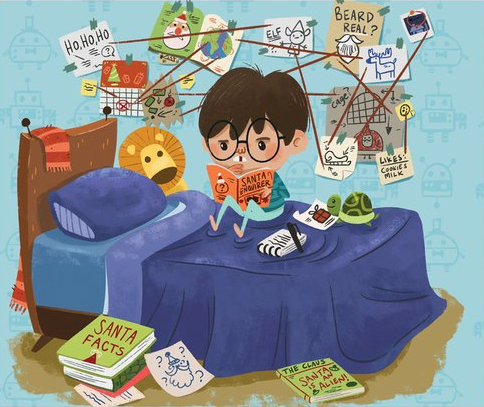
Cale Atkinson’s Santa, as rotund as a Christmas Tree ornament is sympathetic and funny as he gnaws anxiously on a finger before blurting out his worries to Mrs. Claus, argues his points with waving arms, and sulks like a petulant child. These early views make Santa’s glee at the end all the more emotional. While Santa stews, a dubious Harold is shown reading “Santa Enquirer,” and his wall sports the results of his investigation. Retro touches, humorous details, and plenty of red and green add to the holiday fun, while the jolly ending fulfills all dreams.

A fresh Christmas classic kids will ask for over and over, The Day Santa Stopped Believing in Harold is a must for adding to home, school, and public library collections.

Ages 4 – 8

Tundra Books, 2016 | ISBN 978-1770498242

Discover more about Maureen Fergus and her books on her website.

To learn more about Cale Atkinson, his books, and his art, visit his website.

Dear Santa Letter Week Activity

celebrate-picture-books-picture-book-review-dear-santa-letter-page

Santa Letter Template

It’s time to write a letter to Santa! Have fun coloring this printable template then use it for your letter or your Christmas wish list!

Santa Letter Template

celebrate-picture-books-picture-book-review-the-day-santa-stopped-believing-in-harold-cover

You can find The Day Santa Stopped Believing in Harold at these booksellers

Amazon | Barnes & Noble | Books-a-Million | IndieBound

Picture Book Review

November 11 – Veterans Day

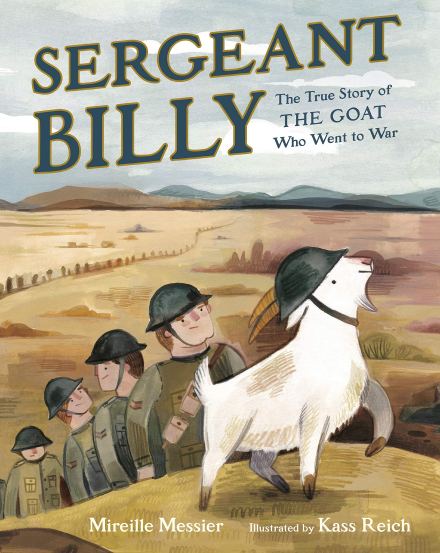
celebrate-picture-books-picture-book-review-sergeant-billy-cover

About the Holiday

Veterans Day is observed each year on this date to honor and thank all members of the military who are currently serving or have served in the United States Armed Forces. The official ceremony begins at 11:00 a.m. with a wreath laying at the Tomb of the Unknowns at Arlington Cemetery and then continues inside the Memorial Amphitheater with a parade of colors by veterans’ organizations and comments by dignitaries. While an official government holiday, some schools remain in session, holding special ceremonies of their own and inviting veterans to relate their experiences.

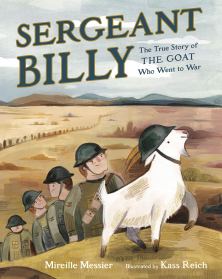
Sergeant Billy: The True Story of the Goat Who Went to War

Written by Mireille Messier | Illustrated by Kass Reich


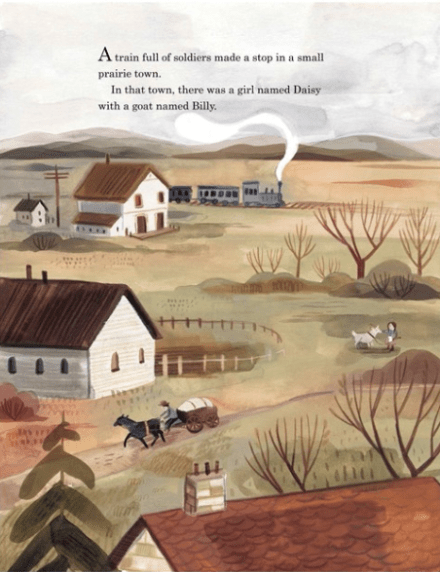
When a train full of soldiers stopped in a small town, they met a girl named Daisy and her goat, Billy. “The soldiers were going to war and they thought Billy would bring them luck.” Although Daisy loved her pet, she said they could take Billy with them if they promised to bring him back. During the bus ride to training camp for the Fifth Battalion, Billy endeared himself to the men with his antics, and they began calling him Private Billy. “And that’s how Billy joined the army.”

celebrate-picture-books-picture-book-review-sergeant-billy-trian

Image copyright Kass Reich, 2019, text copyright Mireille Messier, 2019. Courtesy of Tundra Books.

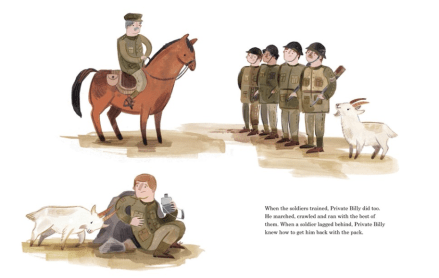
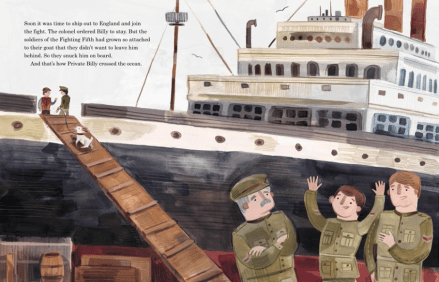
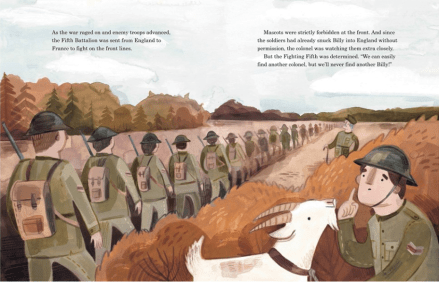
Billy trained with the soldiers and encouraged them with a push when they fell behind. When the soldiers were sent to England, they snuck Billy on board the ship. “And that’s how Private Billy crossed the ocean.” As time went on, the Fifth Battalion was sent to France. “Mascots were strictly forbidden at the front,” but the men hid Billy in an empty orange crate and “that’s how Private Billy went to the front lines.” Billy seemed to be the perfect solider. He didn’t mind the adverse conditions, the “foul food” or “even the rats.”

celebrate-picture-books-picture-book-review-sergeant-billy-horse

Image copyright Kass Reich, 2019, text copyright Mireille Messier, 2019. Courtesy of Tundra Books.

Billy celebrated victories and comforted soldiers during defeats and loneliness. The soldiers even wrote home about their beloved mascot. Even though food rations were short, Billy was happy with socks, napkins, or once even secret documents. For that misdeed, the colonel “placed the goat under arrest. And that’s how Private Billy went to jail for being a spy.” While Billy was locked up, the soldiers became bored, discontented, argumentative, and unhappy. So Billy received a pardon and was returned to the troops.

celebrate-picture-books-picture-book-review-sergeant-billy-ship

Image copyright Kass Reich, 2019, text copyright Mireille Messier, 2019. Courtesy of Tundra Books.

After many brave deeds, such as capturing an enemy guardsman and saving some “soldiers’ lives by head-butting them into a trench seconds before a shell exploded right where they had been standing,” private Billy was promoted to Sergeant Billy. Billy knew he could always count on the soldiers, and the soldiers knew they could always count on Billy. For his “exceptional bravery,” Billy was awarded the Mons Star. The war raged for years, but, finally, peace was declared. The soldiers—and Billy—were ready to return home. They traveled over land and across the ocean and brought Billy back to Daisy, just as they had promised.

An Author’s Note explains more about animal mascots and the way animals were used during WWI. Readers can see photographs of Billy, Daisy, and the soldiers he served with as well.

celebrate-picture-books-picture-book-review-sergeant-billy-fifth-fattlion

Image copyright Kass Reich, 2019, text copyright Mireille Messier, 2019. Courtesy of Tundra Books.

Mireille Messier’s charming storytelling brings to life the extraordinary World War I experience of a goat and the soldiers who loved him. Her easy-to-follow timeline, containing humorous incidents, clever ploys to move Billy from place to place, and harrowing exploits, will capture readers’ attention and hearts. Along the way, children learn about conditions and events of war. Messier’s repeated phrasing “And that’s how Billy…” moves the story forward while contributing to the cumulative effect of Billy’s positive influence on the troops and his role in battle.

Kass Reich’s captivating illustrations immerse readers in the wartime atmosphere while focusing on Billy and his endearing personality. Seeing Billy giving a tired soldier a nudge with his horns, being smuggled from place to place, comforting a soldier, and nibbling on secret documents allows children not only to visualize these events but to understand how important Billy was to the morale of the men, whose emotions are honestly depicted. Images of Billy happily wallowing in mud, playing with rats, and gobbling down anything he finds will have kids giggling while those of Billy saving lives and getting medals will wow them. His safe passage back home to Daisy is a delightful and satisfying ending.

A superbly told story, Sergeant Billy: The True Story of the Goat Who Went to War, is highly recommended. The book would make an excellent addition to home, classroom, and public library collections for general story times and especially those around Veteran’s Day, Memorial Day, and other patriotic holidays.

Ages 4 – 8

Tundra Books, 2019 | ISBN 978-0735264427

Discover more about Mireille Messier and her books on her website.

To learn more about Kass Reich, her books, and her art, visit her website.

Watch the Sergeant Billy book trailer!

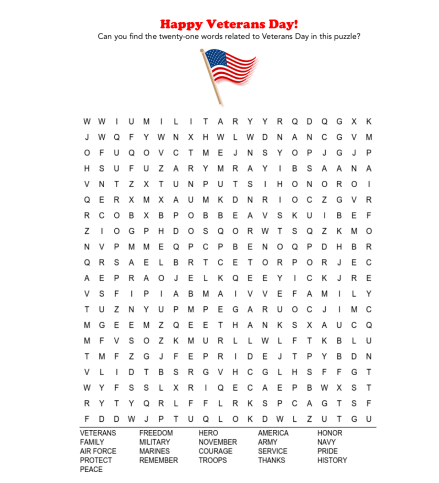
Veterans Day Activity

celebrate-picture-books-picture-book-review-veterans-day-word-search-puzzle

Happy Veterans Day! Word Search Puzzle


Can you find the twenty-one Veterans Day related words in this printable puzzle?

Happy Veterans Day! Word Search Puzzle | Happy Veterans Day! Word Search Solution

celebrate-picture-books-picture-book-review-sergeant-billy-cover

You can find Sergeant Billy: The True Story of the Goat Who Went to War at these booksellers

Amazon | Barnes & Noble | Books-a-Million | IndieBound

Picture Book Review
October 8 – It’s National Book Month

celebrate-picture-books-picture-book-review-king-mouse-cover

About the Holiday

All this month people are reading and celebrating their favorite books—both old and new. It’s also a terrific time to honor independent bookstores that serve their community with carefully chosen titles for all ages of readers. Some indies focus on one genre or age of reader, offering a vast array of familiar and surprising books for customers to explore. Others are known for a particular ambience—mysterious, scholarly, fun! But all give readers a sense of community and a feeling of awe and wonder at all of the stories to discover. This month make a stop into your local bookstore a family event and pick up a new book (or several) for everyone!

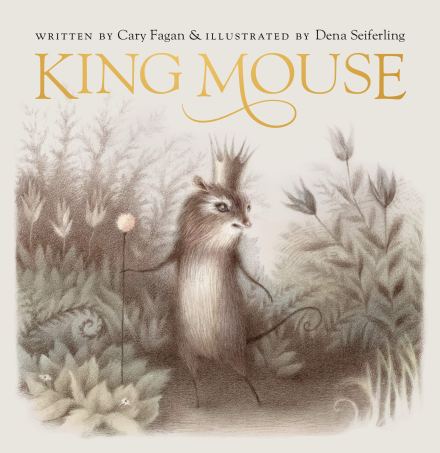
King Mouse

Written by Cary Fagan | Illustrated by Dena Seiferling


In a wordless spread, a child with a tricycle cart full of various shaped crowns wheels through a field, spilling crowns as she goes. Later, a mouse creeps out of his hole in the ground and looks for something to nibble. He finds no food but does spy a small crown “glittering in the grass.” After inspecting it, he places the crown on his head. “It was a perfect fit.” Just then a bear walks up and asks the mouse if he is a king. The mouse replies that he is. The bear bows and cries, “‘Hail to the king!’”

celebrate-picture-books-picture-book-review-king-mouse-finds-crown

Image copyright Dena Seiferling, 2019, text copyright Cary Fagan, 2019. Courtesy of Tundra Books.

Soon a crow lands on a nearby branch. The bear introduces the mouse king. When the crow learns that the mouse is hungry, the crow immediately sets to looking for food to offer him. As the bear and the crow gather food, a tortoise approaches. Thrilled to learn that they “at last” have a king, he joins in. The mouse gobbles up all the seeds the trio brought.

celebrate-picture-books-picture-book-review-king-mouse-crown

Image copyright Dena Seiferling, 2019, text copyright Cary Fagan, 2019. Courtesy of Tundra Books.

After he was full, the mouse announces that he is bored. As the three are deciding what to do, a fox appears. She suggests they perform a play. The mouse is delighted with the drama. He applauds. “‘I haven’t been this amused for ages,’ he said. ‘I like being king.’” Meanwhile, a snake slithering through the woods spies another crown. She puts it on her head.

celebrate-picture-books-picture-book-review-king-mouse-bear

Image copyright Dena Seiferling, 2019, text copyright Cary Fagan, 2019. Courtesy of Tundra Books.

As soon as she does the other animals hail her as their queen. Everyone, that is, except the mouse who isn’t too happy. When the animals bow to the queen, the fox, the tortoise, and the crow each find a crown just their size hiding in the grass and proclaim themselves royalty. The bear searches for a crown for himself but can’t find one. He plods away while the others dance around singing their own praises. The bear finds a tree stump and sits down, dejected about his lack of good luck.

celebrate-picture-books-picture-book-review-king-mouse-crow

Image copyright Dena Seiferling, 2019, text copyright Cary Fagan, 2019. Courtesy of Tundra Books.

Discovering that the bear is no longer with the group, the mouse goes in search of him. When he finds him, the mouse removes his crown and begins picking dandelions. He creates a wreath and gives it to the bear. The two sit quietly together. When the sun begins to set, the mouse hints that he might have a better vantage point “from up there.” The bear obliges and lifts the mouse to his shoulder. “‘I’m not really a king,” the bear sighs. The mouse agrees and then notes the beautiful sunset. Now it’s the bear’s turn to agree, and “they sat for a long time.” Returning through the field, the child, her tricycle cart now empty, spies a pile of five crowns discarded on an old tree stump.

celebrate-picture-books-picture-book-review-king-mouse-seeds

Image copyright Dena Seiferling, 2019, text copyright Cary Fagan, 2019. Courtesy of Tundra Books.

Cary Fagan’s modern fable has much to say and, as the genre often affords, offers much for readers to ponder and talk about. It is a fitting time for this story that, among other themes, questions the nature of leadership. When the mouse finds the first crown, not only does he proclaim himself king but he demands food and entertainment from his sudden subjects, unconcerned with their needs. But, yet, the animals mechanically bow to him and rush to fulfill his whims. When the snake, crow, and tortoise also find crowns, they gleefully decree their own sovereignty, forgetting the bear.

The mouse, however, seems to have learned a lesson. When he finds the bear, he removes his crown and offers one of his own creation to the bear, making him the only “king” independently chosen. Wiser than the others, the bear understands that he does not rule the others, and the mouse too sees that the equality of friendship and the grandeur of nature that is beholden to no one is more majestic than any crown. The introduction of the child in the wordless spreads give kids and adults the opportunity to discuss the possibility that the main story is one of imaginative play. Fagan’s dialogue-rich storytelling spotlights themes of pride, envy, disappointment, friendship, inclusion, and modesty and makes this a perfect tale for a school class, drama troupe, or other group to act out.

Screen Shot 2019-10-07 at 12.16.38 PM

Dena Seiferling’s soft, sepia-toned illustrations give the story a magical, dream-like quality while also anchoring it in the “real world.” Small snapshots that accompany the text on the left-hand pages introduce each animal as they come on the scene while full-page images clearly show the progression of the story and the changing attitudes of the animals. Early on, the mouse is uncertain, nibbling at the unknown object he finds. But once the crown is settled on his head, it takes only three pages for him to be accepting tributes and one more to find him lounging and demanding.

Children will be enchanted by the dramatic scenes of the play the animals put on for the mouse, and the tall crown the snake wears is a cunning stroke of suspense and one-upmanship. The illustration of the bear leaving the group as the others, oblivious to his feelings, parade around provides an opportunity for adults to talk about empathy and inclusion. As the bear and the mouse watch the setting sun together, readers can imagine that a new and more thoughtful day will dawn tomorrow.

A profound and affecting book, King Mouse is a story that will move and inspire children to think about interacting with others. The book would be have multiple applications for home, classroom, and school libraries and is a must for public libraries.

Ages 3 – 8

Tundra Books, 2019 | ISBN 978-0735264045

Discover more about Cary Fagan and his books on her website.

To learn more about Dena Seiferling, her books, and her art, visit her website.

National Book Month Activity

celebrate-picture-books-picture-book-review-book-love-word-search-puzzle

Book Love! Word Search


There are all kinds of books for every reader. Find your favorite along with twenty favorite genres in this printable puzzle.

Book Love! Word Search Puzzle | Book Love! Word Search Solution

celebrate-picture-books-picture-book-review-king-mouse-cover

You can find King Mouse at these booksellers

Amazon | Barnes & Noble | Books-a-Million | IndieBound

Picture Book Review
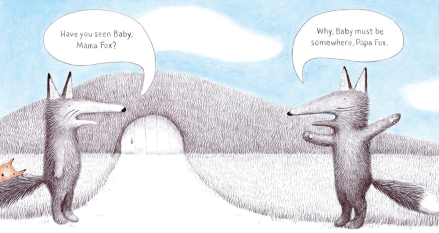
September 28 – National Ghost Hunting Day

celebrate-picture-books-picture-book-review-how-to-make-friends-with-a-ghost-cover

About the Holiday

On the last Saturday in September, The ScareFest in Lexington, Kentucky kicks off a coast-to-coast simultaneous ghost hunt by teams investigating paranormal phenomenon in various venues. They collecting supporting evidence with EMF meters, digital thermometers, handheld and static digital video cameras, audio recorders and computers. The hunt ushers in a month of mysteries, haunted attractions, and other autumn festivals.

How to Make Friends with a Ghost

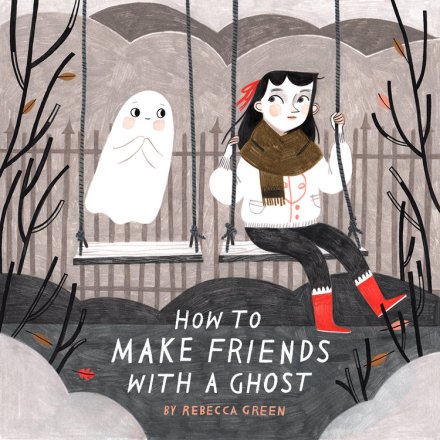
By Rebecca Green


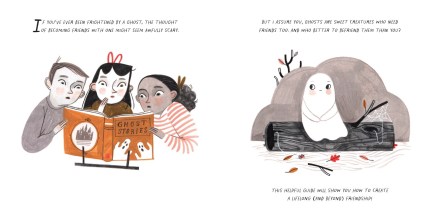
Have you ever thought of ghosts and felt a shiver? Ever been glad you don’t know any ghosts? Well, the little girl narrating this ghostly guide says you should dispel those notions. Ghosts, she assures, “are sweet creatures who need friends too. And who better to befriend them than you?” She even goes on to show potential ghost pals everything they need to know.

celebrate-picture-books-picture-book-review-how-to-make-friends-with-a-ghost-on-log

Copyright Rebecca Green, 2017, courtesy of Tundra Books.

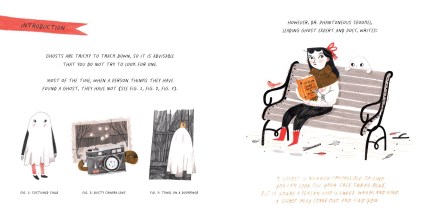
First, you must learn to recognize a ghost when you see one. There are many false sightings, like kids in costumes, impressions made by a “dusty camera lens,” and “a towel on a doorknob.” But the leading expert on such matters, Dr. Phantoneous Spookel reveals that instead of searching for ghosts, it’s best to let them find you. To help you recognize them, the little girl provides an easy-to-follow classification guide that can help.

celebrate-picture-books-picture-book-review-how-to-make-friends-with-a-ghost-false-sightings

Copyright Rebecca Green, 2017, courtesy of Tundra Books.

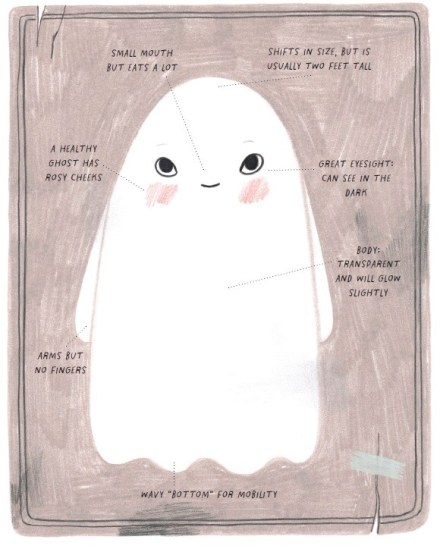
If you’ve been approached by a figure that has rosy cheeks, arms but no fingers, a glowing body, and a “wavy bottom for mobility,” you can be pretty sure you’ve seen a ghost. Here are some dos and don’ts for how to proceed. Your first instinct may be to flee, but “do not run! Ghosts are very sensitive creatures.” Just be friendly and “tell the ghost your name.” Invite the ghost into your home, but “never ever put you hand through a ghost. It can cause a serious tummy ache.”

celebrate-picture-books-picture-book-review-how-to-make-friends-with-a-ghost-classification-guide

Copyright Rebecca Green, 2017, courtesy of Tundra Books.

Ghosts require special care and enjoy snacks like “moldy toast, earwax truffles, pickled boogers, mud tarts, and cinnamon-dusted insects.” For a main course, “Floating Spaghetti and Mudballs hits the spot. Wonder how to keep your ghost friend happily occupied? A walk through the woods in search of “leaves, acorns, and worms” is always nice. Ghosts also love scary stories like the ones found in “Tales of the Living by Mort L. Bings.” And they like to laugh at funny jokes and dance to “creepy music.” Of course, a ghost friend fits right in on Halloween.

celebrate-picture-books-picture-book-review-how-to-make-friends-with-a-ghost-dancing

Copyright Rebecca Green, 2017, courtesy of myblankpaper.com.

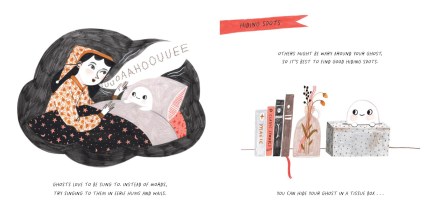
When a ghost gets tired, it’s a perfect time for a long soak in a warm caldron bath. Then off to the dankest corner of the attic for a little snooze and sweet nightmares on some soft moss. If your ghost has trouble falling to sleep, you can sing a lullaby of “eerie hums and wails.” Sometimes your ghost might like to hide when you have company, Good spots include the “tissue box…a sock drawer…or the refrigerator” next to the milk.

Even though ghosts are quick, their soft, white shapelessness can get them into trouble. “Do not let your ghost be used as a tissue!” Getting mixed up with the laundry can cause problems of the soggy or fluffy kind, and ghost should be especially careful in the kitchen, where they can be mistaken for “eggs, whipped cream, sour cream, and marshmallows.”

celebrate-picture-books-picture-book-review-how-to-make-friends-with-a-ghost-tissue-box

Copyright Rebecca Green, 2017, courtesy of Tundra Books.

Perhaps the best part about having a ghost as a friend is that they will be your buddy for life—and even beyond. As you grow up there are certain things you can do to maintain your friendship. When you leave home and find your own place, make sure it’s comfortable and isn’t haunted. “Ghosts do not like competition.” Make time every day to spend with your ghost, and if you start a family, you should know that “your ghost will love mini versions of you too.” When you grow old, your ghost will still be there to help out and make life better. Yes, “the best part about making friends with a ghost is that you’ll have the sweetest friend…forever.”

celebrate-picture-books-picture-book-review-how-to-make-friends-with-a-ghost-say-hi

Copyright Rebecca Green, 2017, courtesy of myblankpaper.com.

Rebecca Green’s spirited tribute to true friendship is sweet and funny and applicable to all pals—ghostly or not. Who wouldn’t like the kind of friendship that lasts forever? Through her ghostly guide, Green reveals that a new friend may be of an unexpected sort and might even be someone who has been invisible to you. Her tips show that embracing a new friend is as easy as saying hi and making them feel important with special treatment, understanding, and sharing favorite activities. Friendships can suffer when two people grow up and grow apart because of distance, work, or family, but Green suggests that with careful attention, a friendship can last forever.

celebrate-picture-books-picture-book-review-how-to-make-friends-with-a-ghost-snacks

Copyright Rebecca Green, 2017, courtesy of myblankpaper.com.

Green’s adorable gouache and colored-pencil illustrations have a timeless feel rendered in soft beiges and grays punctuated with red accents. Green’s clever text is enhanced by images of the false ghost sightings, classification guide, ghost snacks, hiding places and hazards, and the expressive little ghost as it laughs, plays, sleeps, and smiles. As the girl grows older, the ghost takes the lead in activities the two enjoy, leaving readers with a satisfying and comforting feeling.

Readers will giggle and “aww” and fall in love with the little ghost and the idea of such a wonderful friendship. How to Make Friends with a Ghost is rich in charm and sage advice and would make a welcome presence on any child’s or classroom bookshelf.

Ages 4 – 8

Tundra Books, 2017 | ISBN 978-1101919019

Learn more about Rebecca Green and find a gallery of her illustration work on her website.

Don’t be frightened! It’s just the adorable How to Make Friends with a Ghost book trailer!

National Ghost Hunting Day Activity

 celebrate-picture-books-picture-book-review-ghost-coloring-page

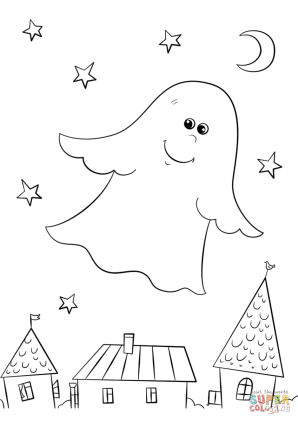
Cute Ghost Coloring Page


If all ghosts were this adorable, who would be afraid of them? Color this printable Cute Ghost Coloring Page then let it hang around your room.

celebrate-picture-books-picture-book-review-how-to-make-friends-with-a-ghost-cover

You can find How to Make Friends with a Ghost at these booksellers

Amazon | Barnes & Noble | Books-a-Million | IndieBound

Picture Book Review


August 30 – National Frankenstein Day

celebrate-picture-books-picture-book-review-mary-who-wrote-frankenstein-cover

About the Holiday

Today’s holiday celebrates the birth of Mary Wollstonecraft Shelley, who in 1818 at the age of 18, penned one of the most influential books of all time. Considered the first modern science fiction novel, Frankenstein; or, The Modern Prometheus incorporates elements of horror, psychology, love, abandonment, and acceptance. These themes and Shelley’s enthralling storytelling created a book that is always current. During this 200th anniversary year of the publishing of classic novel, discover (or rediscover) the spellbinding thrill of reading Frankenstein.

Mary Who Wrote Frankenstein

Written by Linda Bailey | Illustrated by Júlia Sardà


Mary was a dreamer. She liked to spend time alone, thinking and imagining “things that never were.” Mary called these daydreams “‘castles in the air.’” Mary loved to write stories too, but her daydreams were even more thrilling. When Mary wanted to read and dream, she went to the graveyard and sat next to her mother’s grave. Mary’s mother had died when Mary was only 11 days old.

While Mary loved her father, she didn’t like the way he punished her. Mary didn’t like his new wife, either. Mary’s father is friends with many famous people, and he invites them to visit. One night “a writer named Samuel Taylor Coleridge recites a strange, eerie poem—The Rhyme of the Ancient Mariner. Mary loves such poems.” Even though she was supposed to be in bed, she hid and listened, shivering “with fear at the spine-tingling tale of a ship full of ghosts.” Forever after, Mary remembered that night and that poem.

celebrate-picture-books-picture-book-review-mary-who-wrote-frankenstein-town

Image copyright Júlia Sardà, 2018, text copyright Linda Bailey, 2018. Courtesy of Tundra Books.

By the time Mary was fourteen, she was unhappy at home and causing trouble. One night, when she was sixteen, she and her stepsister, Claire, ran away with a “brilliant, young poet” named Percy Bysshe Shelley. They traveled through Europe, one day finding themselves outside a “ruined castle. It’s called Castle Frankenstein. Such an interesting name! Does it stick in Mary’s mind?”

Eighteen months later, the three traveled to Switzerland, where they became friends with Lord Byron—the most famous poet in the world. One night as torrential storms crashed around Lord Byron’s house, he read ghost stories from Fantasmagoriana. After reading, Byron challenged his friends, who also included a doctor named John Polidori, to write a ghost story. Eighteen-year-old Mary, Percy Bysshe Shelley, and John Polidori accepted the challenge. But Mary could not think of a good story idea.

celebrate-picture-books-picture-book-review-mary-who-wrote-frankenstein-friends

Image copyright Júlia Sardà, 2018, text copyright Linda Bailey, 2018. Courtesy of Tundra Books.

Soon, Shelley and Polidori gave up on their ghost stories, but their talk of new scientific experiments excited Mary. “Electricity can make the muscles of a dead frog twitch. Could it bring a dead creature to life? The idea is both thrilling and frightening.” The idea captured Mary, but instead of a frog, she imagined “a hideous monster, made of dead body parts, stretched out—and coming to life!” Mary suddenly realized she had the idea for her ghost story.

It took nine months for Mary to finish her story. When it was published, some people thought it had been written by Percy Bysshe Shelley—they didn’t “believe young Mary could have done it! How could a girl like her come up with such a story?” But she was a writer, assembling bits and pieces, ideas, and scientific changes in her imagination until they turned into the book Frankenstein. In the two-hundred years since the novel was first published, the story has become a classic. It has sparked movies, inspired other writers, and become a favorite all around the world.

An extensive Author’s Note about Mary Shelley, her life, and inspiration as well as Linda Bailey’s thoughts on the story behind Frankenstein follows the text. A full-page portrait of Mary Wollstonecraft Shelley and a list of sources rounds out the informative backmatter.

celebrate-picture-books-picture-book-review-mary-who-wrote-frankenstein-graveyard

Image copyright Júlia Sardà, 2018, text copyright Linda Bailey, 2018. Courtesy of Tundra Books.

With atmospheric and riveting details, Linda Bailey captures the life of Mary Wollstonecraft Shelley and the influences on her imagination that resulted in Frankenstein. Bailey’s use of the present tense is inspired as it reflects the continued currency of the novel while encouraging today’s readers to embrace their “castles in the air.” Facts about Mary’s travels, new scientific discoveries, and favorite books sprinkled throughout the story inform readers on how the imagination combines experiences to create art.

One look at Júlia Sardà’s spellbinding cover tells readers that they are in for an extraordinary reading experience. Muted tones of red, green, gold, blue, and plum cloaked in black create a thrilling backdrop to Bailey’s story. Ghostly winged creatures fly over Lord Byron’s home on a stormy night, smoky monsters emerge from Fantasmagoriana, a frog sits up in its coffin, and the spectre of the monster leans over Mary and sleeps at her feet as she writes her novel. At once spine-tingling and cozy, Júlia Sardà’s illustrations will draw children into this superb story of a ghost story.

Mary Who Wrote Frankenstein is sure to spark the imagination of children who love literature, art, and writing. The book would be a thrilling addition to classroom libraries for literature and writing classes as well as an inspiring favorite on home bookshelves.

Ages 5 – 8

Tundra Books, 2018 | ISBN 978-1770495593

Discover more about Linda Bailey and her books on her website.

To learn more about Júlia Sardà, her books, and her art, visit her website.

Frankenstein Day Activity

celebrate-picture-books-picture-book-review-frankenstein-puzzle

Monstrously Good Puzzle


See if you’re a Frankenstein scholar by filling in this printable puzzle full of words and phrases about the novel!

Monstrously Good Puzzle | Monstrously Good Puzzle Word ListMonstrously Good Puzzle Solution

celebrate-picture-books-picture-book-review-mary-who-wrote-frankenstein-cover

You can find Mary Who Wrote Frankenstein at these booksellers

Amazon | Barnes & Noble | Books-a-Million | IndieBound

Picture Book Review


June 16 – Father’s Day

celebrate-picture-books-picture-book-review-it's-great-being-a-dad

About the Holiday

Today is all about celebrating dads and telling them how much you love them. It’s a great day to think of all the things dads do for their kids and their families and to share a thank-you, a hug, and of course a book! Reading together is one of the best ways for dads and their kids to bond not only today, but every day!

It’s Great Being a Dad

Written by Dan Bar-el | Illustrated by Gina Perry


A lovely pink unicorn with a sparkling rainbow horn clip-clops over a grassy hill, a golden castle and a candy forest in the background. The playful animal believes it’s “great being a unicorn. Who wouldn’t want to be a unicorn?” What makes them so special? Well…as she says, “We’re terrific at prancing and we’re very pretty and, best of all, we have an adorable horn just above our eyebrows.” It’s hard to argue with those reasons!

celebrate-picture-books-picture-book-review-it's-great-being-a-dad

Image copyright Gina Perry, 2017, text copyright Dan Bar-el, 2017. Courtesy of Tundra Books.

But it seems there are some downsides to this whole unicorn thing. Grazing might be at the top of the list. That shiny horn just always seems to get in the way. There’s no way for teeth to touch the ground, and trying to grab a snack off a table just results in the table being stuck on the “adorable horn.”

celebrate-picture-books-picture-book-review-it's-great-being-a-dad

Image copyright Gina Perry, 2017, text copyright Dan Bar-el, 2017. Courtesy of Tundra Books.

How about Bigfoot? What’s it like for him? Let’s ask—here comes Bigfoot now! “It’s great being Bigfoot. I love being Bigfoot. Who wouldn’t want to be Bigfoot?” What’s so great about being…you know…? Well…he’s warm in his furry coat, he’s well camouflaged among the trees, and his super strength “can help unicorns get tables off their heads.” Sounds great! What could go wrong? Hmmm…. It seems those big feet get themselves into some sticky situations—like ending up with a tree trunk lodged around your leg.

celebrate-picture-books-picture-book-review-it's-great-being-a-dad

Image copyright Gina Perry, 2017, text copyright Dan Bar-el, 2017. Courtesy of Tundra Books.

Maybe being a Robot is better. Indeed! In fact, Robot says, “If I had feelings, I would love being a robot.” Pretty compelling stuff there. Robot is very flashy and has lots of memory and has an arm that can convert into a saw just in time to help “unicorns and Bigfoot with their wood problems.” So what’s not to like? Rain can really mess with the mo(tor)-jo.

Poor Loch Ness Monster! She’s not even going to try being positive. It kind of stinks being a monster—especially when you don’t feel like one. But maybe things aren’t all bad. Unicorn, Bigfoot, and Robot hitch a ride on Nessie’s back across the lake to the hospital. There they meet a “fairy queen ballerina doctor” who loves being a fairy queen ballerina doctor. Who wouldn’t?

celebrate-picture-books-picture-book-review-it's-great-being-a-dad

Image copyright Gina Perry, 2017, text copyright Dan Bar-el, 2017. Courtesy of Tundra Books.

This Jill-of-all-trades can prescribe medicine for the sick, “perform a happy dance” for the sad, and wave her magic wand “if you have trouble with your saw arm…or your head horn or your big foot.” Sounds perfect…until a “sneaky flying alligator pirate” swoops in and swipes the magic wand just as the fairy queen ballerina doctor is about the save the day. “Dad!”

Ha! Ha! Here’s a little guy who’s super excited to be a sneaky flying alligator pirate. “I’m sneaky, so you never see me coming. I can fly, so you can never catch me. And… And…that’s enough reasons. So what’s not to like about being a sneaky flying alligator pirate?” Ooof! “Dads, that’s what!”

celebrate-picture-books-picture-book-review-it's-great-being-a-dad

Image copyright Gina Perry, 2017, text copyright Dan Bar-el, 2017. Courtesy of Tundra Books.

But how does Dad feel about being a dad? Let’s see: “It’s great being a dad. I love being a dad.” It does look pretty fun! Dad gets to remove pizza box “tables” from hobby horse unicorns; remove stepped-on drums from a brown-fuzzy-hoodied-and-hiking-booted Bigfoot; fix cardboard-saw arms; give medals to super swimmers; and “return magic wands to… to… ‘Fairy queen ballerina doctors. I told you a million times already.’ Right. What she said.” Plus Dad can help little brothers play nicely.

So you must be wondering… “what’s not to like about being a dad? Sudden makeovers, that’s what.”

celebrate-picture-books-picture-book-review-it's-great-being-a-dad

Image copyright Gina Perry, 2017, text copyright Dan Bar-el, 2017. Courtesy of Tundra Books.

Dan Bar-el’s laugh-out-loud romp through an afternoon of play hits the perfect tone to entertain kids and adults as well. Bar-el’s wry delivery and repetition of the appealing—and not-so—traits of each fantasy character will have readers giggling and eagerly anticipating the next page. The revelation that the characters are kids with big imaginations offers multiple payouts in creativity, personalities, friendship, and family.

Gina Perry’s vibrant, whimsical illustrations riff on all the fantasy clichés to ramp up the humor in this vivacious story. When happily-ever-after turns into happily-never-after for each character, Perry amusingly depicts their dismay, but the next page finds them cheerfully adjusted to their new circumstance and weaving it into a revised storyline. As the story wraps up, readers will enjoy pointing out aspects of the kids’ interests and the parts of the backyard that spurred their imagination in earlier pages. The diverse group of friends is welcome, and good-natured Dad doesn’t really seem to mind his impromptu makeover.

It’s Great Being a Dad is a fantastically fun read-aloud that makes a wonderful gift for dad and would be an often-asked-for addition to home and school bookshelves.

Ages 4 – 8

Tundra Books, 2017 | ISBN 978-1770496057

Discover more about Dan Bar-el and his books on his website!

You find a gallery of illustration work and books by Gina Perry on her website! Click here for a funtastic It’s Great Being a Dad activity kit!

Father’s Day Activity

celebrate-picture-books-picture-book-review-building-blocks-craft

I Love Dad Building Blocks


This craft will stack up to be a favorite with kids! With wooden blocks and a little chalkboard paint, it’s easy for kids to make these unique building blocks that show dad just how they feel about him. They’re also great for gifts, decorating, party favors, or when you just have a little time to play!

Supplies

  • Wooden blocks in various sizes, available from craft stores
  • Chalkboard paint in various colors
  • Paint brush
  • Chalk in various colors

Directions

  1. Paint the wooden blocks with the chalkboard paint, let dry
  2. Write words or draw pictures on the blocks
  3. Have fun!

celebrate-picture-books-picture-book-review-it's-great-being-a-dad

You can find It’s Great Being a Dad at these booksellers

Amazon | Barnes & Noble | Books-a-Million | IndieBoundi

Picture Book Review