January 7 – Old Rock Day

celebrate-picture-books-picture-book-review-old-rock-is-not-boring-cover

About the Holiday

Do you love rocks—the history they tell, their versatility, intricate patterns, and glorious colors? Today’s holiday celebrates these wonders of nature and encourages geologists—both professionals and amateurs—to indulge their passion. You can learn a bit more about the history of the study of rocks, the first use of the term “geology,” and on to more modern times at NationalToday. To celebrate today’s holiday, take a walk in your backyard or neighborhood, pick up a few rocks, and research a little more about them. Then have fun with today’s craft.

Thank you to G. P. Putnam’s Sons for sharing a copy of Old Rock (is not boring) with me for review consideration. All opinions on the book are my own.

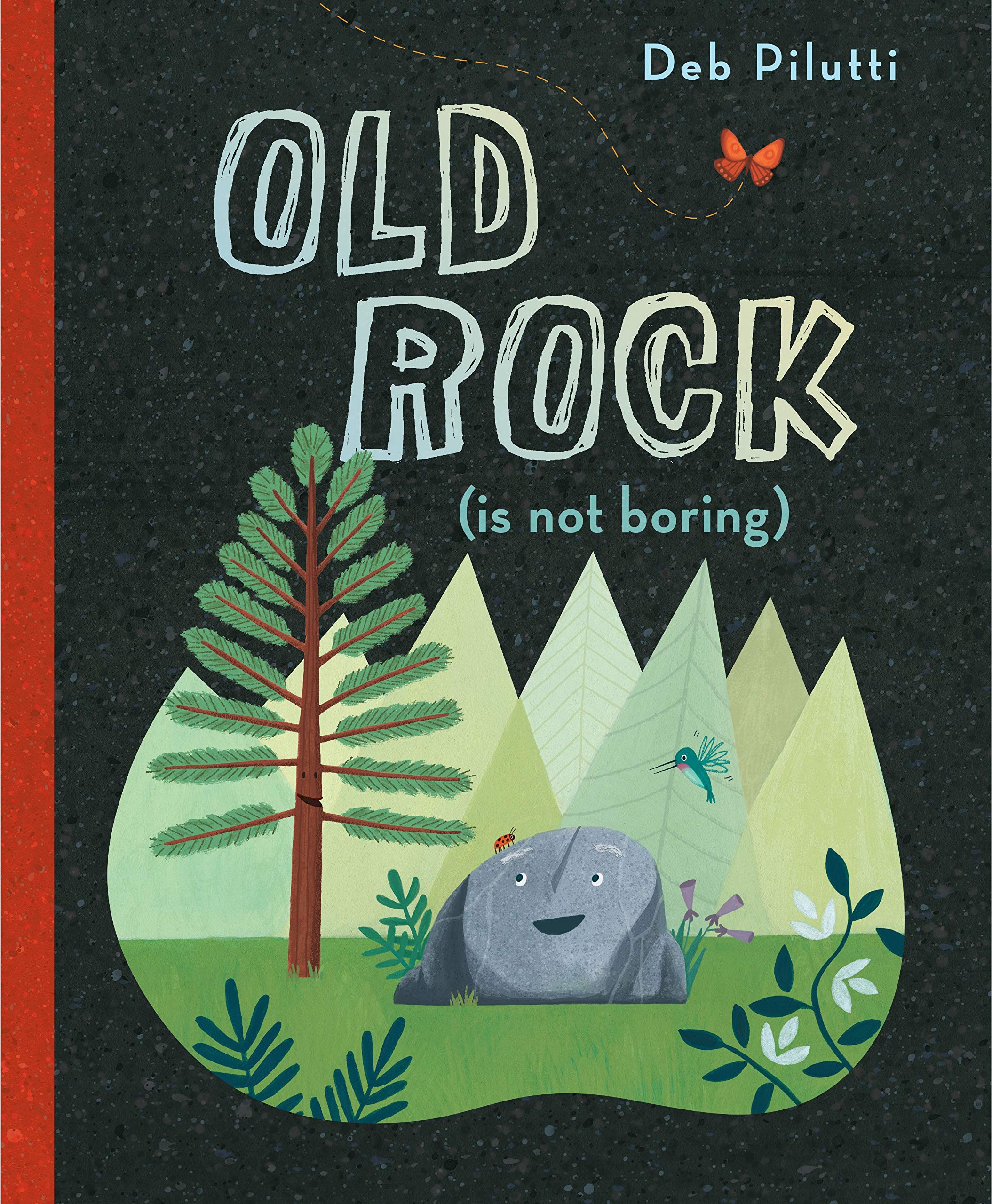
Old Rock (is not boring)

By Deb Pilutti


It seemed that Old Rock had been sitting in the same spot forever. Tall Pine and Spotted Beetle thought being a rock must be pretty boring. Hummingbird wondered, “‘Don’t you ever want to go anywhere?’” She knew she would be if she couldn’t fly all over the world and taste exotic nectars. But Old Rock had flown once, and he began to tell his story.
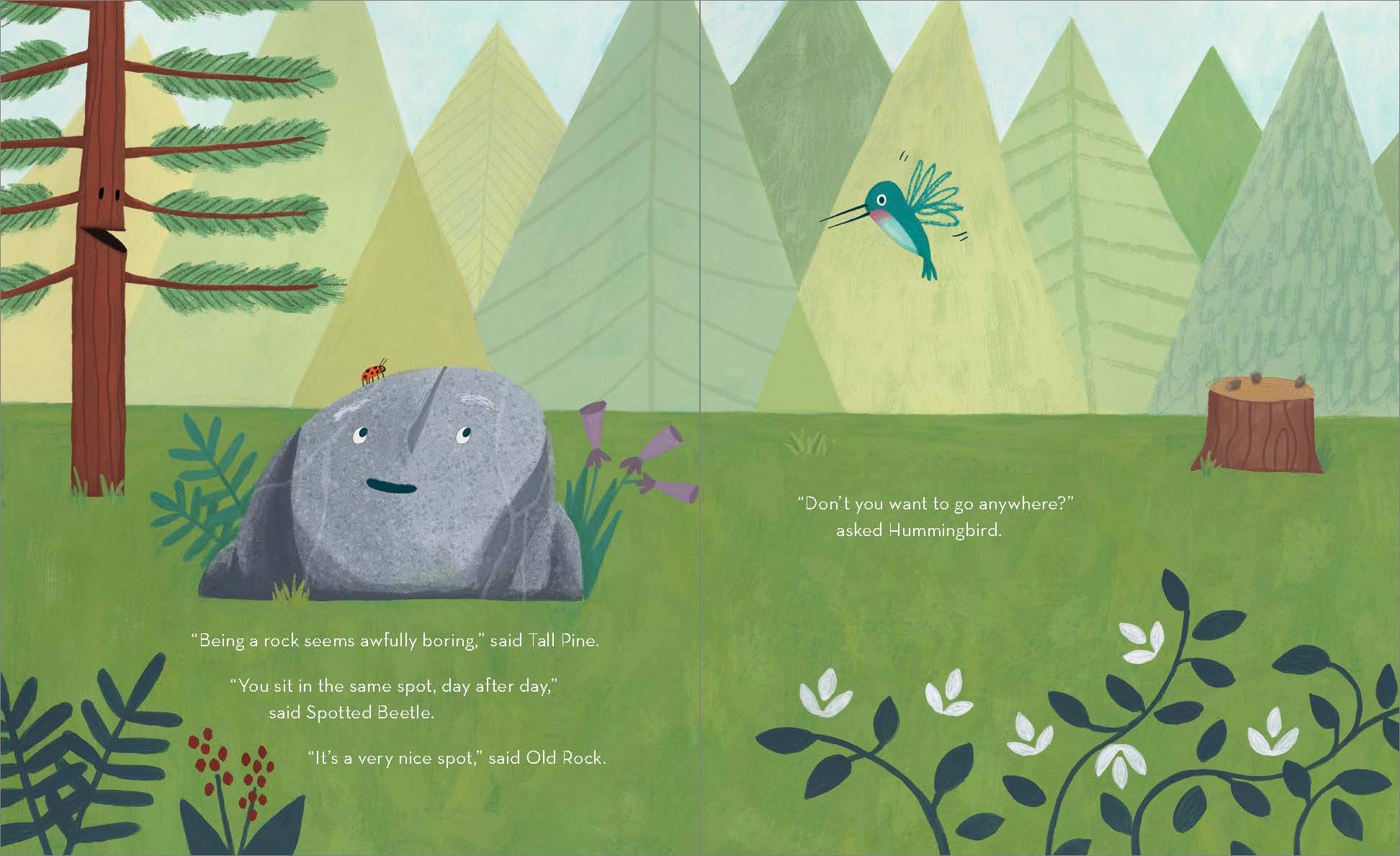
celebrate-picture-books-picture-book-review-old-rock-is-not-boring-hummingbird

Copyright Deb Pilutti, 2020, courtesy of G. P. Putnam’s Sons Books for Young Readers.

It was during the time when he was surrounded by darkness, but then the volcano erupted and Old Rock “‘soared through a fiery sky into the bright light of a new world.’” Tall Pine, Spotted Beetle, and Hummingbird weren’t very impressed. They still thought Old Rock must be bored. Spotted Beetle told him how much he might see if he climbed to Tall Pine’s very highest branch.

celebrate-picture-books-picture-book-review-old-rock-is-not-boring-volcano

Copyright Deb Pilutti, 2020, courtesy of G. P. Putnam’s Sons Books for Young Readers.

Old Rock countered that he had seen a lot. He’d watched dinosaurs pass by and had even hidden a spinosaurus from a hungry T. rex. He’d traveled in a glacier and been left teetering on a ridge overlooking a vast desert, where he “could see the place where the sky touches the earth.” Spotted Beetle and Hummingbird were intrigued, but Tall Pine dismissed these experiences as “ages ago.” He wanted to know about now. Didn’t Old Rock feel like moving? Tall Pine showed Old Rock how his limbs could dance in the wind.
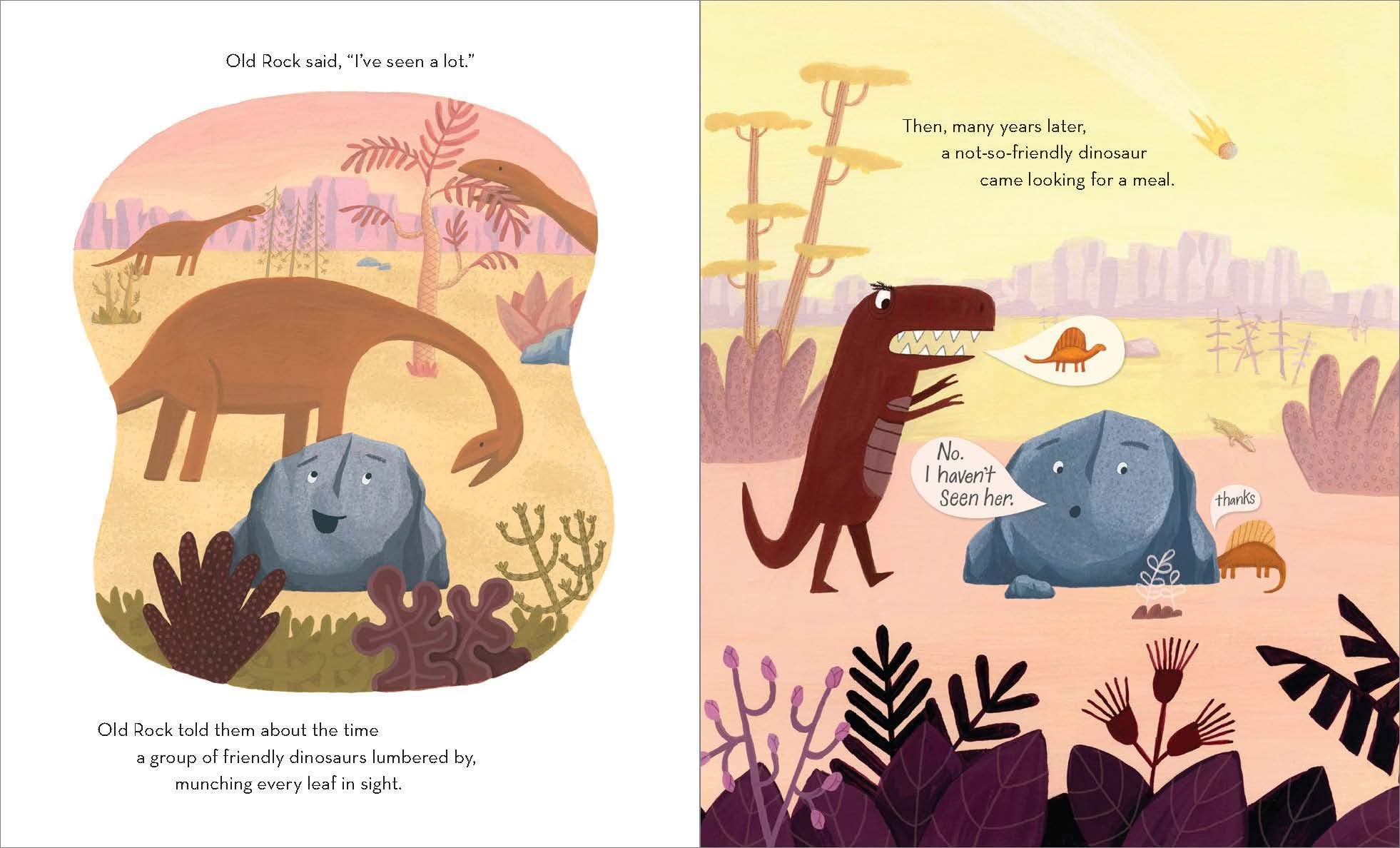
celebrate-picture-books-picture-book-review-old-rock-is-not-boring-dinosaurs

Copyright Deb Pilutti, 2020, courtesy of G. P. Putnam’s Sons Books for Young Readers.

While Old Rock couldn’t dance, he did recall how he’d turned somersaults off the ridge, landing in a prairie where mastodons grazed near a lake. Tall Pine, Spotted Beetle, and Hummingbird were mesmerized by Old Rock’s story and wanted to know what had happened next. Out of the prairie, sprang a pine forest, Old Rock revealed. And from one of the pine trees a pinecone fell and a seed was released. That seed grew “to be the tall pine who dances in the wind and keeps me company.” Sometimes, he continued, a spotted beetle and a hummingbird meander by. Old Rock was very pleased with his spot, and the others had to agree that it was “very nice” and “not boring at all.”

An illustrated timeline of Old Rock’s life from 18 billion years ago to the present day follows the text.
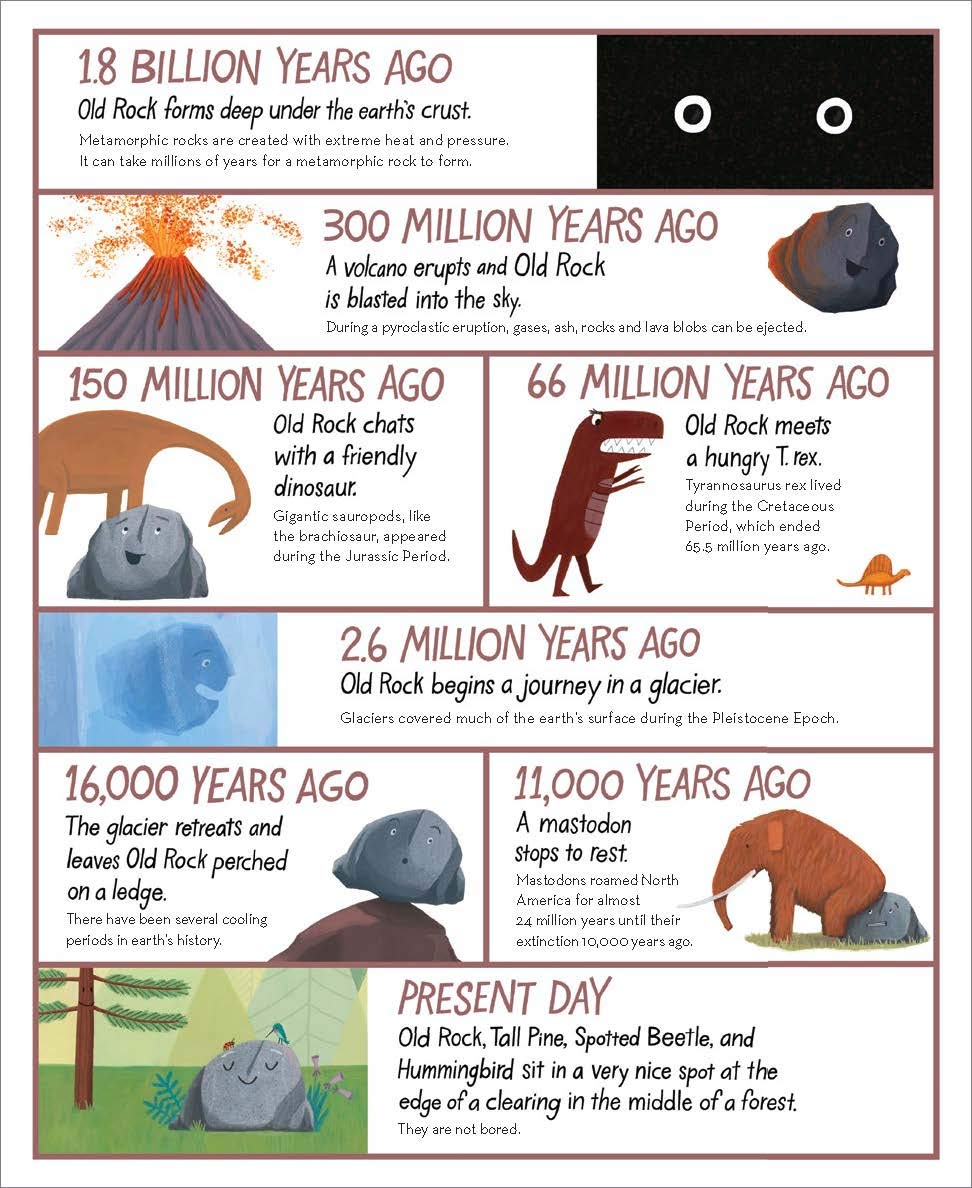
celebrate-picture-books-picture-book-review-old-rock-is-not-boring-time-line

Copyright Deb Pilutti, 2020, courtesy of G. P. Putnam’s Sons Books for Young Readers.

So much clever thought went into Deb Pilutti’s Old Rock as she reveals to kids what a fascinating and active life the rocks and boulders we see every day have had. Tall Pine, Spotted Beetle, and Hummingbird’s skepticism keeps the suspense building as Old Rock rolls out stories of his various travels and talents. Once he has them hooked, they—like young readers—want to hear more, leading to the just-right ending that sweetly encompasses shared history, happiness with one’s place in life, and friendship. The trio’s questions to Old Rock and their related experiences also engage children to think about issues and opinions from a variety of perspectives.

Pilutti’s mixed-media illustrations are nicely textured to bring out Old Rock’s grainy surface while highlighting nature’s vivid colors. Her vignettes from the dinosaur eras, the ice age (where the skeletons of dinosaurs are also swept up and away in the same glacier as Old Rock), and beyond impress upon readers the long time-frame involved, how the earth has changed, and even the fascinating science of the fossil record.

A multi-layered story, perfect for general story times or as a lead in to science lessons and to promote discussion and research in the classroom, Old Rock (is not boring) would be an original and exciting addition to home, classroom, and public library collections.

Ages 4 – 8

G. P. Putnam’s Sons Books for Young Readers, 2020 | ISBN 978-0525518181

To learn more about Deb Pilutti, her books, and her art, visit her website.

Old Rock Day Activity
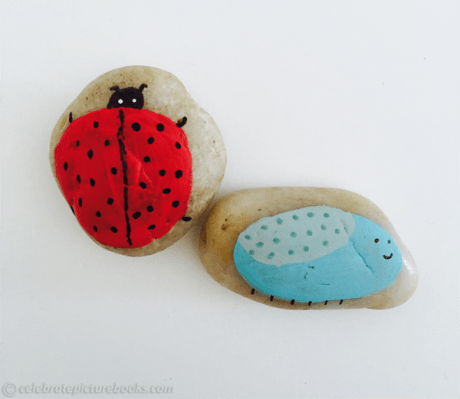
CPB - Nasty Bugs magnet II (2)

Rock This Craft!


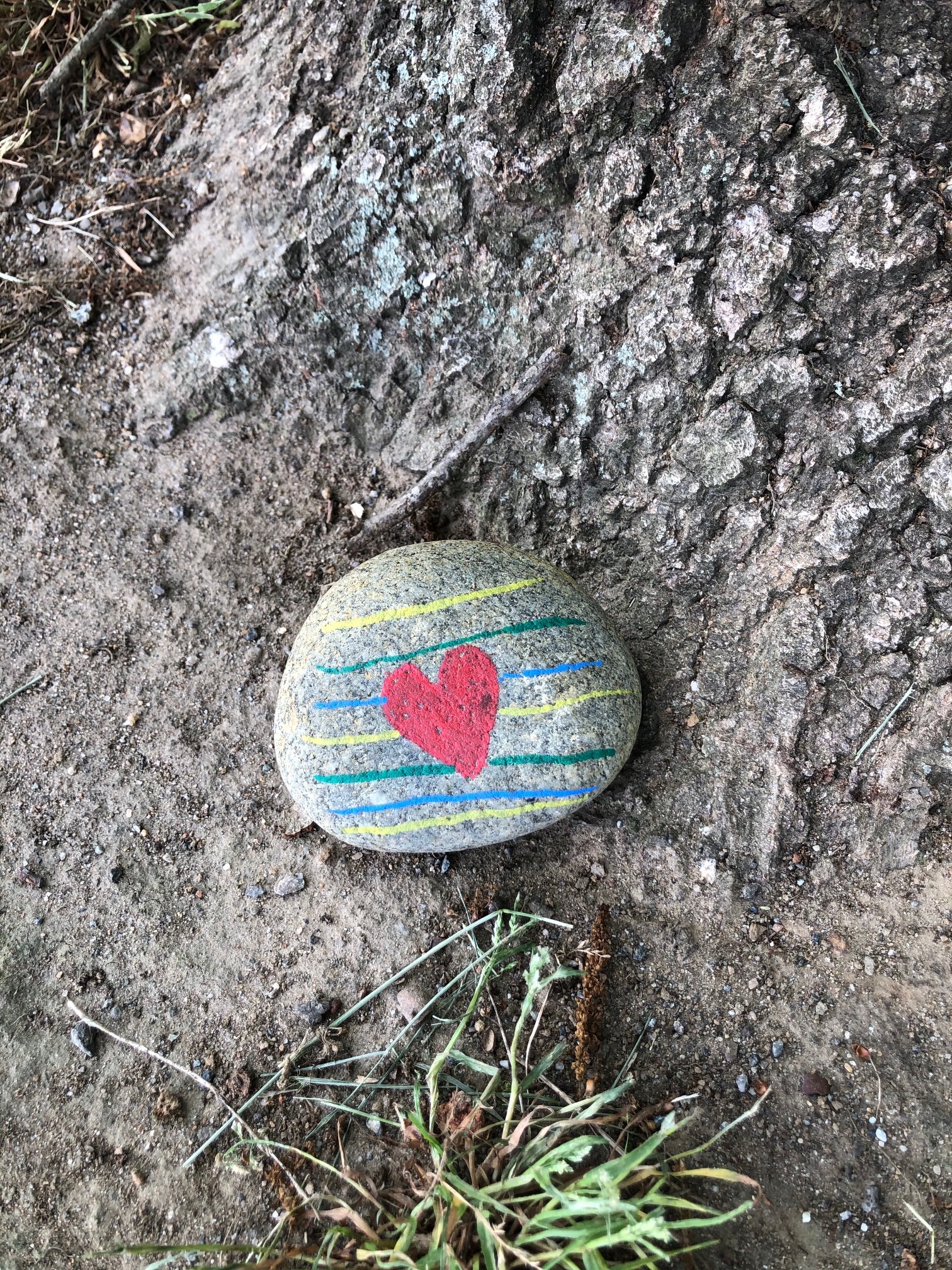
Smooth stones can give you a natural canvas for your creativity! With a little bit of paint, pins or magnets, and some imagination, you can make refrigerator magnets, jewelry, paper weights, and more!

Supplies

  • Smooth stones in various sizes
  • Paint or markers
  • Small magnets, available at craft stores
  • Jewelry pins, available at craft stores
  • Paint brush
  • Strong glue

Directions

To make magnets

  1. Design and paint an image on a light-weight stone
  2. Attach a magnet to the back with strong glue, let dry
  3. Use to hang pictures, notes, or other bits of important stuff on your refrigerator or magnetic board

To make jewelry

  1. Using a smaller, flatter stone, design and paint an image on the stone
  2. Attach a jewelry pin to the back with the strong glue, let dry
  3. Wear your pin proudly

CPB - rock painting craft

To make a paper weight or kindness stone

  1. Using a large stone, design and paint an image on the stone, let dry
  2. Display and use on your desk to keep those papers in place or find a spot around town to leave your rock for someone to find and enjoy

celebrate-picture-books-picture-book-review-old-rock-is-not-boring-cover

You can find Old Rock (is not boring) at these booksellers

Amazon | Barnes & Noble | Books-a-Million

To support your local independent bookstore, order from

BookshopIndieBound

Picture Book Review
 

January 6 – Blog Tour Stop for My Grandma’s Photos

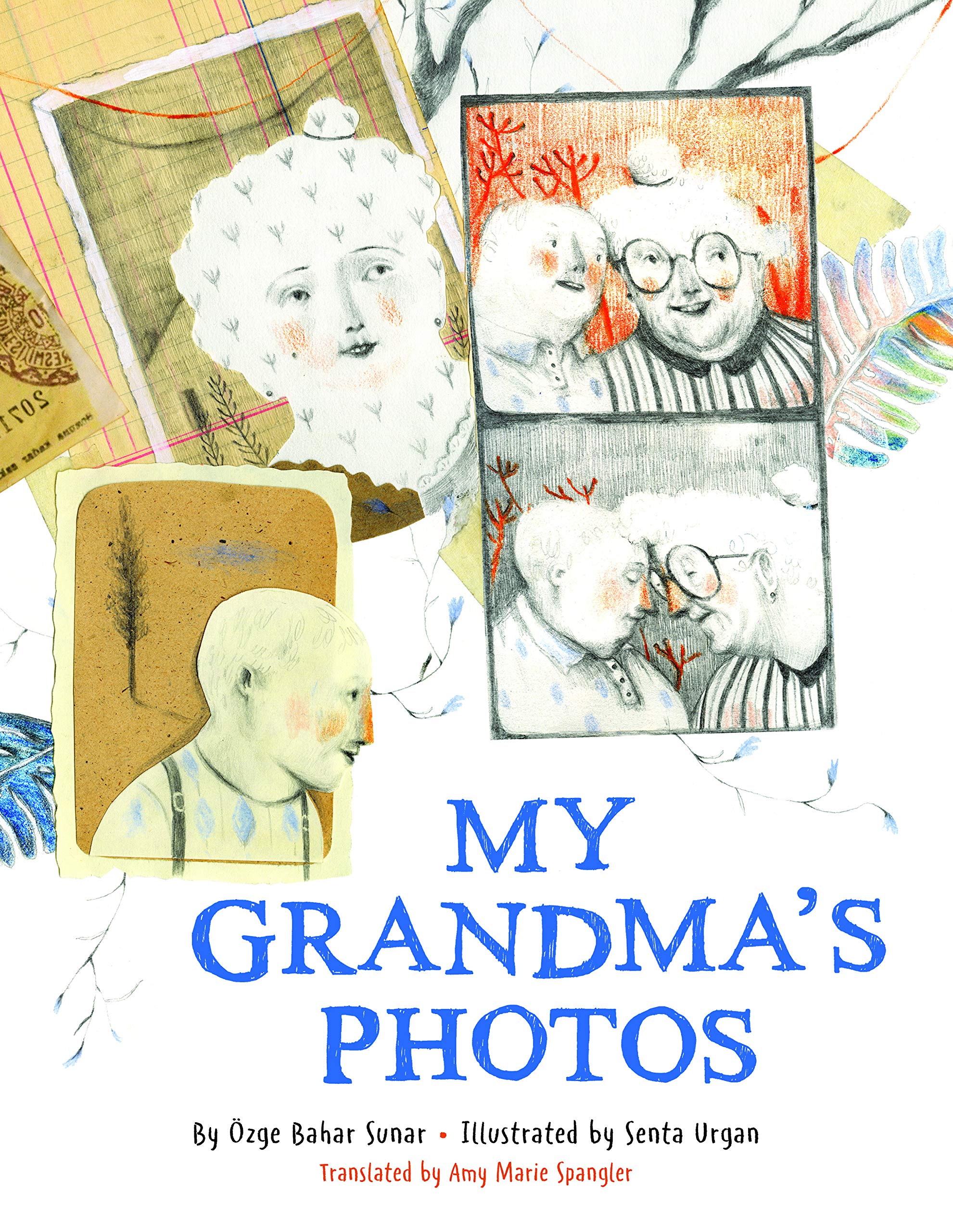
celebrate-picture-books-picture-book-review-my-grandma's-photos-cover

My Grandma’s Photos

Written by Özge Bahar Sunar | Illustrated by Senta Urgan | Translated by Amy Marie Spangler


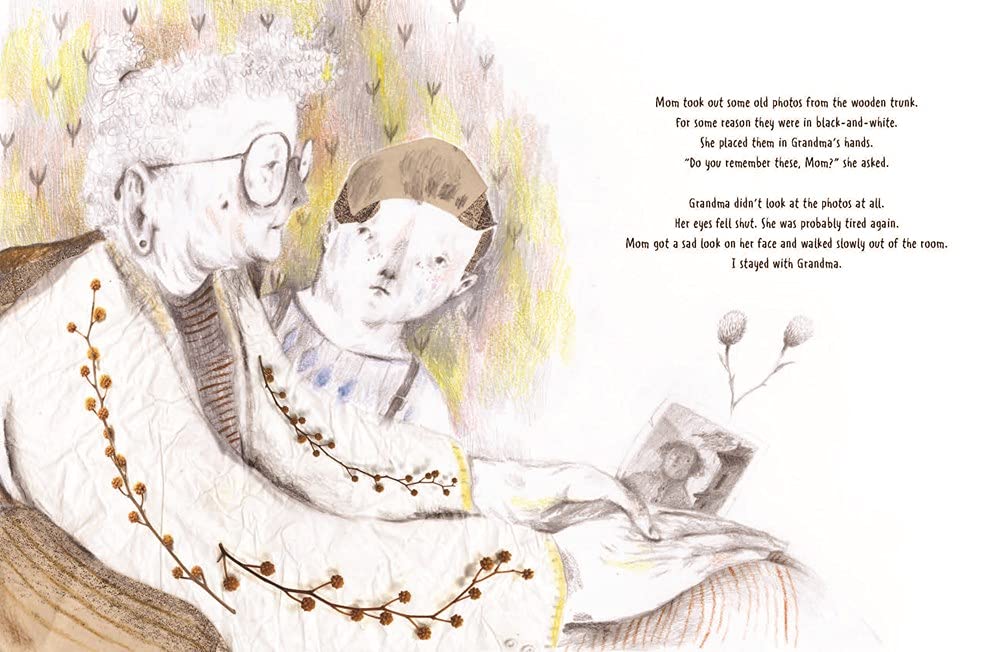
Ali and his mother are visiting his grandmother, who cannot see or hear very well anymore and often does not recognize Ali or his sister. Today, they have brought old black-and-white photographs to share, but Grandma doesn’t look at them, instead falling asleep as she holds them. Overcome with emotion, Ali’s mother leaves the room, but Ali stays. When Grandma awakens, she notices the photos in her hand and asks if they are of one of Ali’s friends.

celebrate-picture-books-picture-book-review-my-grandma's-photos-grandma

Image copyright Senta Urgan, 2022, text copyright Özge Bahar Sunar, 2022; translation Amy Marie Spangler, 2022. Courtesy of Amazon Crossing Kids.

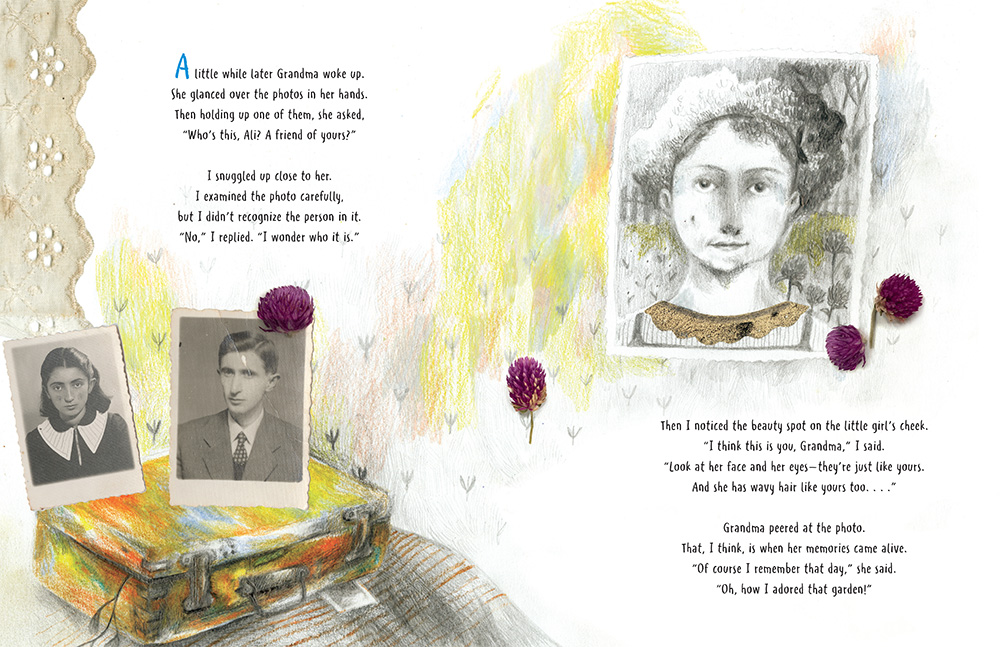
At first Ali doesn’t recognize the person in the picture, but then he notices a beauty mark on the person’s cheek and realizes that it’s a photo of his grandma when she was a young girl. When he tells her, his grandma suddenly remembers the day it was taken and the garden in which it was taken. She begins to look at the other photographs and recognizes a family picnic and her wedding day. Suddenly, Ali’s grandma becomes very animated and invites him to see her world.

“At that moment I felt as if I were being pulled into the photo,” Ali says. “Together with Grandma, I traveled into the past.” Ali sees his grandma as a child his own age, climbing a tree and leaping from branch to branch. When Ali joins her, his grandma whispers to him, ‘”It can’t really be taught with words. You have to find yourself a tree and climb it every day.'”

celebrate-picture-books-picture-book-review-my-grandma's-photos-trunk

Image copyright Senta Urgan, 2022, text copyright Özge Bahar Sunar, 2022; translation Amy Marie Spangler, 2022. Courtesy of Amazon Crossing Kids.

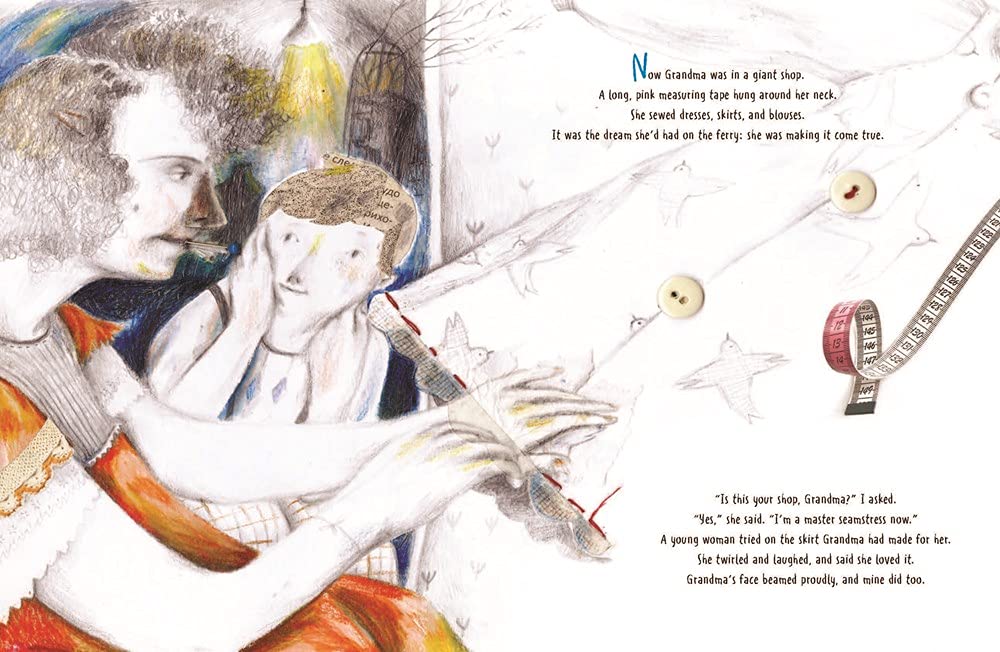
Grandma jumps down and runs into another photo with Ali right behind her. Here, Grandma is a teenager riding a ferry, feeding seagulls, and dreaming of her future. Another photo takes them to the shop where she worked as a master seamstress. “A young woman tried on the skit Grandma had made for her. She twirled and laughed, and said she loved it. Grandma’s face beamed proudly, and mine did too,” Ali says.

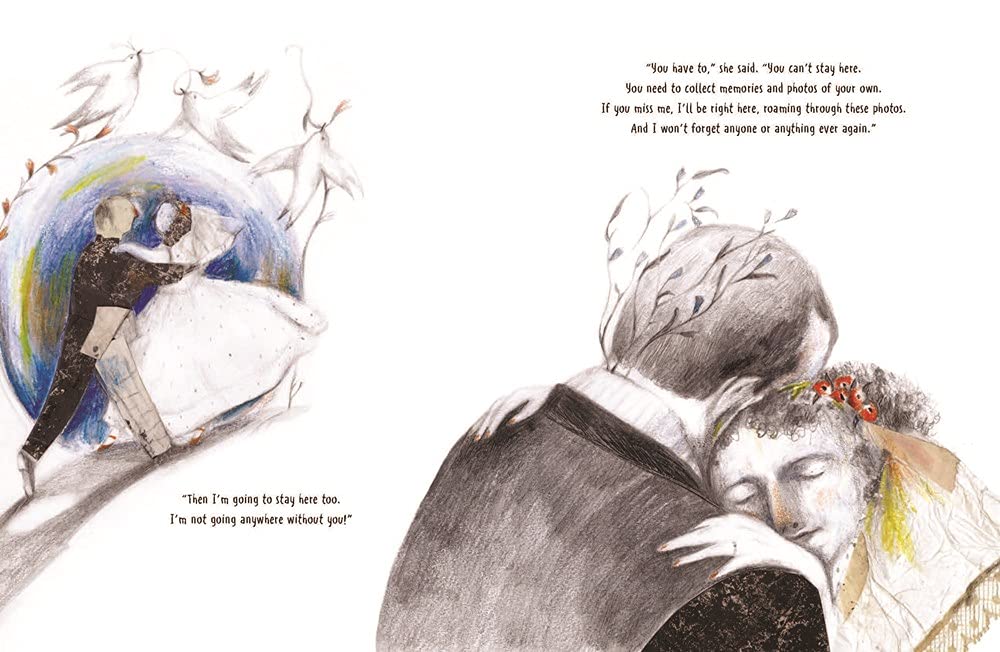
The last photograph takes them to Grandma’s wedding. ‘”Let me show you how much you look like your grandpa,'” Ali’s grandma tells him. Grandma is wearing a “gorgeous wedding gown she’d made herself” and Grandpa looked so handsome as they dance together. At last, Ali’s grandma tells him it’s time for him to go home. When Ali asks if she’s coming too, she replies that she’s happy there. “‘I’m going to dance with y our grandpa a little longer. … Your grandpa and I have been apart for such a long time, you know.'”

celebrate-picture-books-picture-book-review-my-grandma's-photos-seamstress

Image copyright Senta Urgan, 2022, text copyright Özge Bahar Sunar, 2022; translation Amy Marie Spangler, 2022. Courtesy of Amazon Crossing Kids.

Ali protests and says he wants to stay there with her, but Grandma tells him that he must go “‘to collect memories and photos of your own.'” She reminds him that if he misses her, she will always be there in the photos and that she “‘won’t forget anyone or anything ever again.'” Tears spring to Ali’s eyes. He hugs and kisses his grandma one last time. When he opened his eyes, Ali was back in the present. Now his family has hung most of Grandma’s photographs on the walls of Ali’s room. “Whenever I miss her,” he says, “I look at her photos. I’m sure she’s still there, at peace, dancing away….”

Note: While the male pronoun is used on the book’s jacket flap and in this review, the story contains no pronouns associated with Ali and the illustrations depict a child with short hair and wearing overalls.

celebrate-picture-books-picture-book-review-my-grandma's-photos-wedding

Image copyright Senta Urgan, 2022, text copyright Özge Bahar Sunar, 2022; translation Amy Marie Spangler, 2022. Courtesy of Amazon Crossing Kids.

Özge Bahar Sunar’s beautiful tribute to the relationship between grandparents and grandchildren, first published in Turkey, offers an emotional bond between generations as Ali joins his grandma in formative moments during her life and discovers that they share many of the same experiences and dreams. Readers will be captivated by Sunar’s conversational storytelling and empathize with Ali’s gentle acceptance of his grandma’s failing memory.

As Ali’s recognition of his grandmother as a young girl in one of the photos and her recollection of the picnic it portrays leads to a magical trip back in time, readers will likewise become interested in learning more about their own grandparents and other relatives. For Ali and readers, his grandma’s passing takes place in the world of the photographs as Grandma chooses to remain dancing with her husband. Ali’s sweet and comforting hugs and final kiss for his grandmother before returning to the present reassures children that the relationship between grandparents and grandchildren continue endlessly through time.

Senta Urgan’s wispy pastel pencil illustrations, sprinkled with collage fabrics and sewing items, flowers, coins, and other elements as well as photographs of the author’s and illustrator’s families combine to create a moving, dreamlike feel that immerses readers in the story’s enchanting travel through time. As Ali’s grandma tells him that he must go while she stays behind, she is shown in a loving embrace with her husband on their wedding day, reinforcing the idea that for her, death is a comforting coming home to a place where she will be forever young. Flowers, vines, and trees that surround and support the characters create a motif that death is a natural part of life and that one’s love for another nurtures and grows.

A beautiful and tender way to talk about the life and death of a grandparent, family member, or beloved friend, My Grandma’s Photos is highly recommended for home, school, and public libraries.

Ages 5 – 8

Amazon Crossing Kids, 2022 | ISBN 978-1542031158

Özge Bahar Sunar is a former teacher turned children’s author. She has written multiple picture books, including the bestselling The Hedgehog and the Exhibit, illustrated by Ceyhun Şen, which was translated into seven languages. Sunar lives with her two children in Antalya, Turkey, where she loves to think up new stories while hiking in the wild. You can find her on Instagram @ozgebaharsnr.

Senta Urgan is a graduate of Mimar Sinan University, where she studied sculpture. Since 2010 she has been illustrating books for children, including picture books and novels, and also works as a graphic designer. She is the founder of the brand Mala Hermana Handmade, where she exhibits her illustrations and ceramic art. You can connect with her Instagram @toporulkesindekikes.

Amy Marie Spangler is a cofounder of Istanbul-based AnatoliaLit Agency, and a commercial and literary translator with numerous books and short stories to her credit. You can connect with Amy on Twitter @Amy_Spangler.

Thank you to Amazon Crossing Kids and Blue Slip Media for sharing a copy of My Grandma’s Photos with me for review consideration. All opinions on the book are my own.

My Grandma’s Photos Blog Tour Activity

celebrate-picture-books-picture-book-review-threads-of-friendship-photo-holder

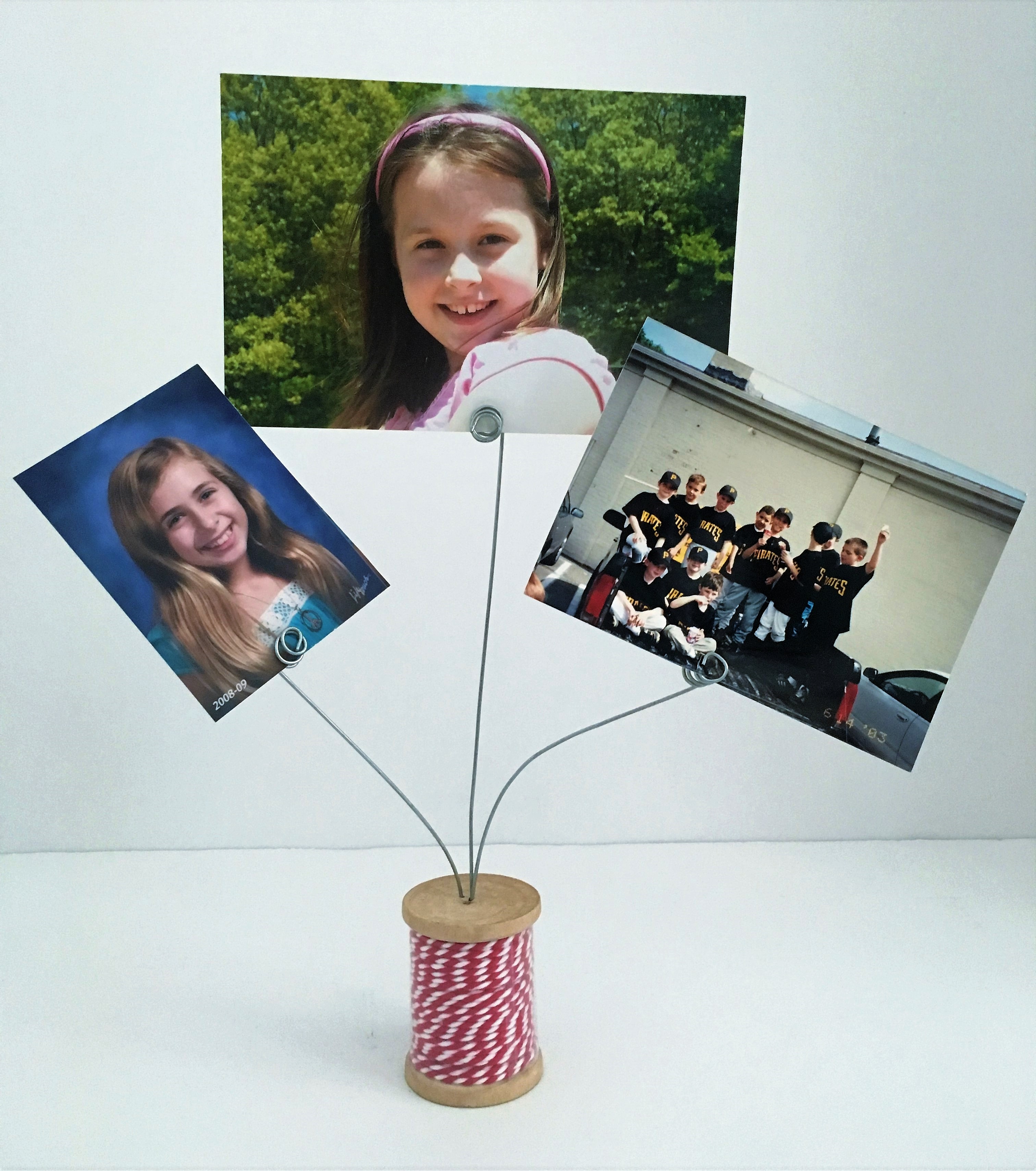
Spool Photo Holder


With this easy craft you can make a personalized photo holder for your favorite pictures of friends and family!

Supplies

  • Wooden spool with hole through the middle, top to bottom. (A spool without a hole also works if you make a hole in the top with a hammer and nail), 1 ½ -inch or larger, available at craft stores
  • Colorful twine or light-gauge yarn, 3 to 4 yards
  • Alternatively: you can buy a wooden spool of colorful twine at some discount stores
  • 3 pieces of light-gauge wire 12 to 15-inches long
  • Clay or play dough
  • Needle-nose pliers
  • Glue

Directions

  1. Fill hole in spool with clay or play dough, pushing it well in to provide a base for the wire
  2. If using your own twine or yarn: wrap the twine or yarn around the spool to desired thickness and glue the end down to keep it from unraveling
  3. With the needle-nose pliers, roll one end of each wire to create a small coil
  4. Cut the three wires to different lengths to provide room for all three photographs
  5. Fit wires into the center hole on the top of the spool and push them into the clay until they are secure
  6. Clip photographs into the coils

celebrate-picture-books-picture-book-review-my-grandma's-photos-cover

You can find My Grandma’s Photos at these booksellers

Amazon | Barnes & Noble | Books-a-Million

To support your local independent bookstore, order from

Bookshop | IndieBound

Picture Book Review
January 5 – National Bird Day

celebrate-picture-books-picture-book-review-birds-explore-their-extraordinary-world-cover

About the Holiday

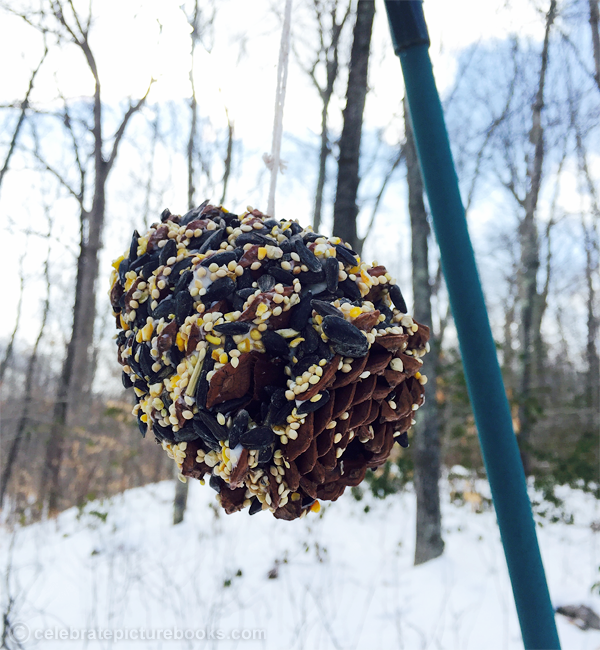
Coming at the end of the annual Christmas Bird Count conducted in conjunction with the Audubon Society, National Bird Day turns the focus on the special behavioral and physical needs of birds and works to ensure that all birds—whether kept as pets or living on farms or in their natural environments—are treated compassionately. The day also raises awareness of the dangers that threaten many species of birds with extinction. To celebrate today’s holiday, take a walk in your area or even just in your backyard and take special note of the birds you see. Now that winter has set in making food scarce for wild birds, consider hanging a bird feeder or making one from a pinecone, peanut butter, and seed as in the activity below. 

Thanks to Bloomsbury Children’s Books for sending me a copy of Birds: Explore their extraordinary world for review consideration. All opinions on the book are my own.

Birds: Explore their extraordinary world

Written by Miranda Krestovnikoff | Illustrated by Angela Harding


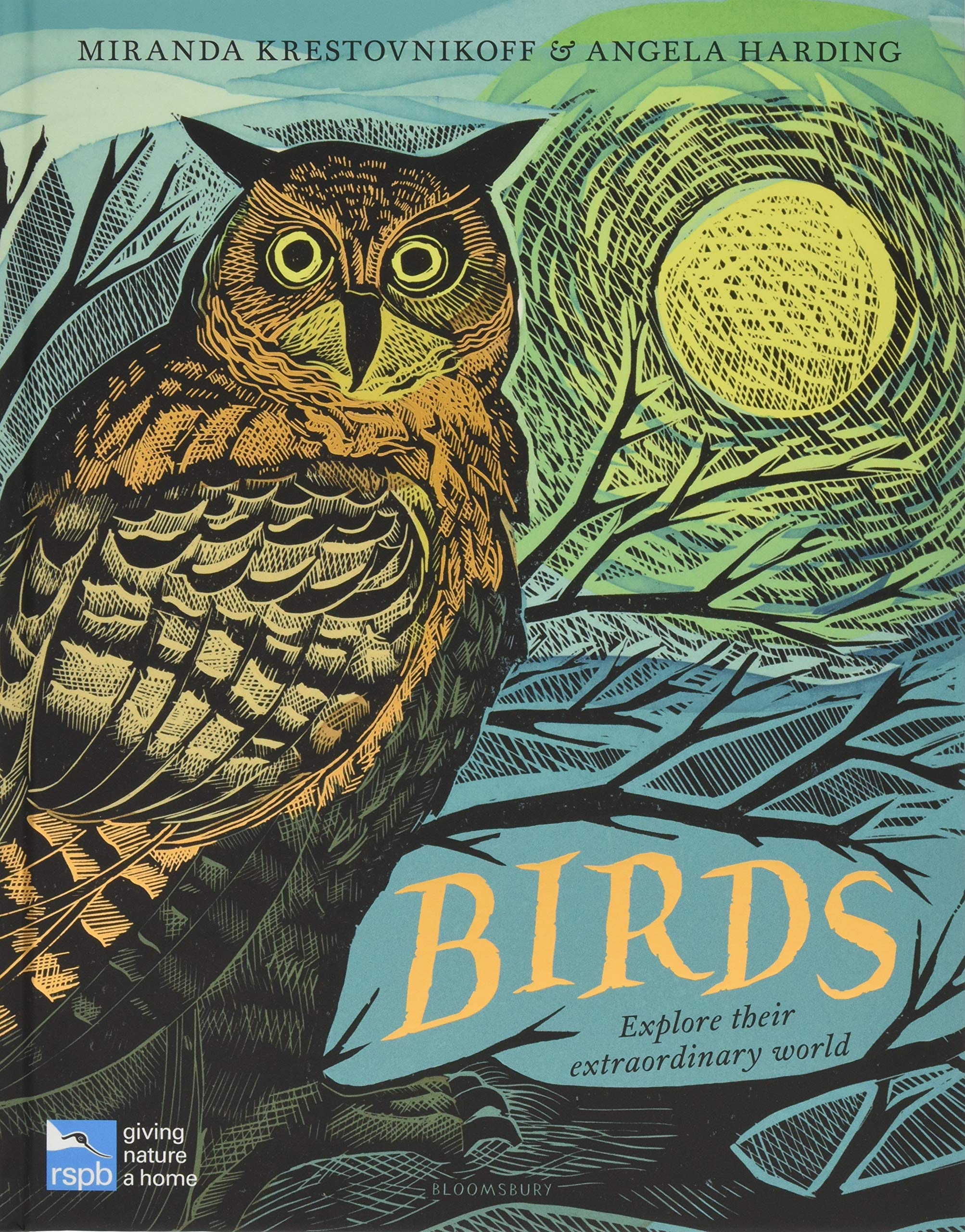
To love birds is to marvel over everything about them from their smooth gliding flight and beautiful songs to their colorful plumage and intricate nests that protect fragile eggs from the elements and predators. With a stunning number of species, birds are found around the world and living in every kind of climate. In Miranda Krestovnikoff and Angela Harding’s eye-catching compendium, readers learn about seven families of birds – birds of prey, seabirds, freshwater birds, flightless birds, tropical birds, tree dwellers, and passerines. 

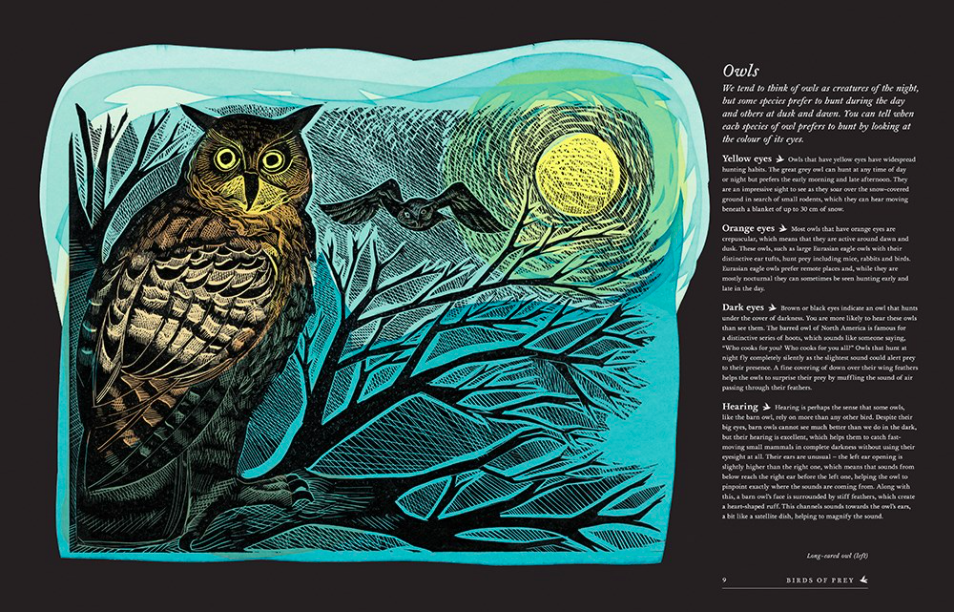
Each chapter opens with general facts on the behavior, anatomical features, and habitat that determine the order in which a bird is categorized. Integrated with this information are descriptions of specific birds within the order. In the section on Birds of Prey, for instance, readers learn about sparrowhawks; fish-eating ospreys; and golden eagles, which can “spot a rodent from over a mile away and a rabbit from nearly double that distance.” Children also learn about extreme birds of prey: the fastest, largest, smallest, tallest, and baldest and how their distinctive feature helps them thrive. Kids also discover how they “can tell when each species of owl prefers to hunt by looking at the color of its eyes.”

celebrate-picture-books-picture-book-review-birds-explore-their-extraordinary-world-owls

Image copyright Angela Harding, 2020, text copyright Miranda Krestovnikoff, 2020. Courtesy of Calkins Creek.

The next chapter takes readers to coastal areas to learn about the seabirds that scour the water from the sky, searching for food and waders, that are found along the water’s edge and “feed on the variety of high-protein invertebrates that lie hidden in the mud.” Children learn about the birds that populate warmer waters, such as blue-footed boobies, terns, and frigatebirds as well as those who survive in colder waters, such as gulls, and kittiwakes. Readers will also find a fascinating description of the gannet and learn how it can safely “dive into the sea at speeds of 60 miles an hour from an impressive height of up to 100 feet” to feed.

From sea birds, readers move on to freshwater birds like ducks, swans, grebes, and Canada geese. Even the bright flamingo is here with its distinctive scoop-shaped beak that is “uniquely designed to be used upside down and helps them to filter out tiny brine shrimps and blue-green algae from the water, which, when digested, give them their pink color.” The flamingo isn’t the only bird with an unusual way to acquire their prey, and kids will discover the clever ways pelicans, herons, and kingfishers (which use “objects such as sticks, feathers, and even discarded popcorn as lures”) find food.

And then there are the “more than 50 bird species across the world [that] stay firmly on the ground (or on water)” or just “choose not to fly very often.” These flightless birds include kiwis, kākāpōs, southern cassowaries, ostriches, and Penguins. Penguins vary in size, from the “little penguin (also known as the fairy or blue penguin)” which comes to shore to nest only at night and stave off predators with their oversized voices, to the emperor penguin. Occasional fliers include great bustards, domestic chickens, and tinamous.

celebrate-picture-books-picture-book-review-birds-explore-their-extraordinary-world-penguin

Image copyright Angela Harding, 2020, text copyright Miranda Krestovnikoff, 2020. Courtesy of Calkins Creek.

When you hear about extravagant birds, you most likely think of tropical birds. “Rainforests are packed with a range of incredible species with dazzling plumage and bizarre courtship displays.” Readers will learn about the appearance and mating rituals of scarlet macaws, Raggiana birds of paradise, and the Andean cock-of-the-rock. A detailed description of the bowerbird and the male bird’s careful and artistic nest (or bower) building is funny, poignant, and even a little bit human. Then readers are treated to some tropical bird extremes: smallest bird, longest bill, and smelliest as well as a poisonous species and one that makes its own musical instrument.

Of course, woodlands are the home of many bird species, and in the chapter on Tree Dwellers, readers learn about acorn woodpeckers and great hornbills that use trees for food and shelter; tawny frogmouths and potoos that use trees for camouflage; and nuthatches, greater honeyguides, and yellow-bellied sapsuckers, which find all the food they need among the bark, leaves, and branches of trees.

celebrate-picture-books-picture-book-review-birds-explore-their-extraordinary-world-chickens

Image copyright Angela Harding, 2020, text copyright Miranda Krestovnikoff, 2020. Courtesy of Calkins Creek.

Next up are passerines, or perching birds, which make up the “largest group of birds, with over half of all known species falling into this category.” Corvids, a group that includes the common raven, crows, magpies, and rooks, are considered to be the most intelligent birds. “These birds have a remarkable ability to solve problems in order to find food, in some cases performing better than young children or chimpanzees!” Readers will be impressed with their tricks and clever use of tools (that even include cars). Children learn about cooperative breeders, which rely on their extended family to help raise the young from year to year. Passerines also include many of the garden birds we find in our backyards and which fill the air with song. Readers discover facts about blue tits, robins, and finches in this section.

The next sections give detailed and interesting information on the features we most associate with birds: their feathers, beaks, eyes, nesting habits, eggs, migration patterns, and birdsong. The book ends with perhaps the most adaptable birds in the world: those that make their homes on glaciers, mountain tops, and in the Arctic snow as well as urban birds, which live among people in crowded cities, nesting on tall cathedrals and skyscrapers and foraging for food in garbage cans and on the street.

celebrate-picture-books-picture-book-review-birds-explore-their-extraordinary-world-woodpeckers

Image copyright Angela Harding, 2020, text copyright Miranda Krestovnikoff, 2020. Courtesy of Calkins Creek.

For young ornithologists, Miranda Krestovnikoff, a wildlife expert, offers a compelling, eye-opening, and accessible introduction to a wide variety of birds, placing them in their natural environments and revealing intriguing facts and tantalizing tidbits that inform and will spark a continued interest in learning more about the world’s feathered creatures. Krestovnikoff’s engaging writing style will captivate readers and keep them turning the pages to discover birds that are both familiar and new to them. The comprehensive nature of the book allows kids in all parts of the world to learn more about their native birds while creating a global connection with these most recognized and widely distributed creatures.

Accompanying Krestovnikoff’s text are Angela Harding’s beautiful linocuts that depict birds in mid-flight, capturing prey on land and water, engaging in mating rituals, and building and protecting their nests and young. Harding’s use of natural colors and exquisitely etched landscapes set off each bird in breathtaking illustrations that invite readers to linger to enjoy their full impact. Each illustration is captioned with the bird’s species.

A gorgeous and educational book that readers of all ages will love dipping into again and again, Birds: Explore their extraordinary world is a must for bird lovers and highly recommended for home, school, and public libraries.

Ages 7 and up

Bloomsbury Children’s Books, 2020 | ISBN 78-1408893913

Discover more about Miranda Krestovnikoff and her books on her website.

To learn more about Angela Harding, her books, and her art on her website.

National Bird Day Activities

celebrate-picture-books-picture-book-review-beautiful-birds-word-search

Beautiful Birds Word Search Puzzle


It’s fun to watch for different kinds of birds when you take a walk or in your own backyard. Can you find the names of twenty types of birds in this printable Beautiful Birds Word Search Puzzle? Here’s the Solution!

cpb-bird-feeder-i

Pinecone Bird Feeder


Pinecone bird feeders are quick to make and great for your backyard fliers. The combination of peanut butter, lard, or vegetable shortening and a quality seed mixture provide birds with the fat and nutrition they need to stay warm and healthy during the winter.

Supplies

  • Pinecones
  • Peanut butter, vegetable shortening, or lard
  • Birdseed
  • String
  • Knife or wooden spreader
  • Spoon

Directions

  1. Tie a long length of string around the middle of the pinecone
  2. Spread the peanut butter, vegetable shortening, or lard on the pinecone
  3. Sprinkle a thick coating of birdseed on the pinecone, pressing it into the covering so it will stick
  4. Tie the pinecone feeder onto a tree branch or other structure
  5. Watch the birds enjoy their meal!

celebrate-picture-books-picture-book-review-birds-explore-their-extraordinary-world-cover

You can find Birds: Explore their extraordinary world at these booksellers

Amazon | Barnes & Noble | Books-a-Million

To support your local independent bookstore, order from

Bookshop | IndieBound

Picture Book Review

January 3 – It’s International Quality of Life Month

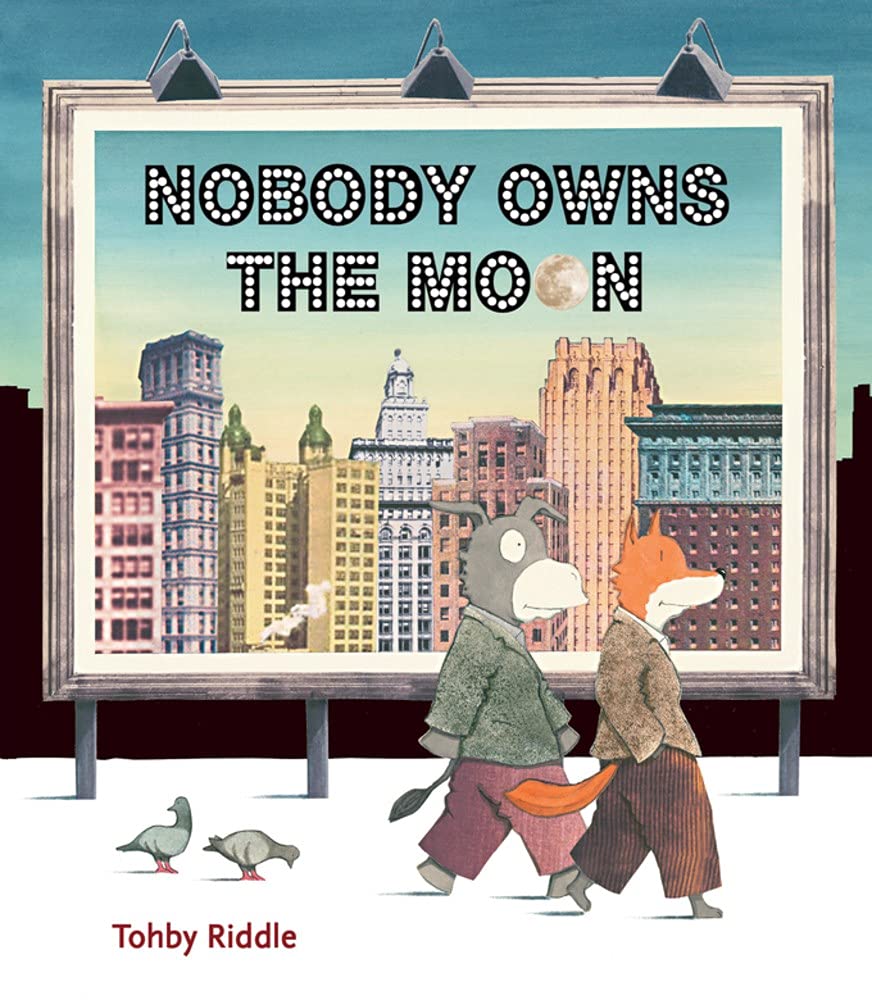
celebrate-picture-books-picture-book-review-nobody-owns-the-moon-cover

About the Holiday

How one achieves their definition of a good quality of life may differ for every person, but in general it encompasses being happy and satisfied with one’s relationships, work, living conditions, and self. Whether you find happiness and quality of life in outdoor or indoor pursuits, with others or alone, at work or at home, this month’s holiday gives you time to get in touch with your inner quiet place and reflect on changes or improvements to bring you more peace and happiness in life.

I’d like to thank Berbay Publishing for sharing a copy of Nobody Owns the Moon with me for review consideration. All opinions on the book are my own.

Special Note: As I have been asked to take on extra shifts as a staff member at my local public library due to personnel shortages, I will be taking a break from posting daily reviews over the next coming months. In between new reviews, I invite you to explore all of the holidays, author and illustrator interviews, activities, and, of course, the wonderful books featured on Celebrate Picture Books.

Nobody Owns the Moon

By Tohby Riddle


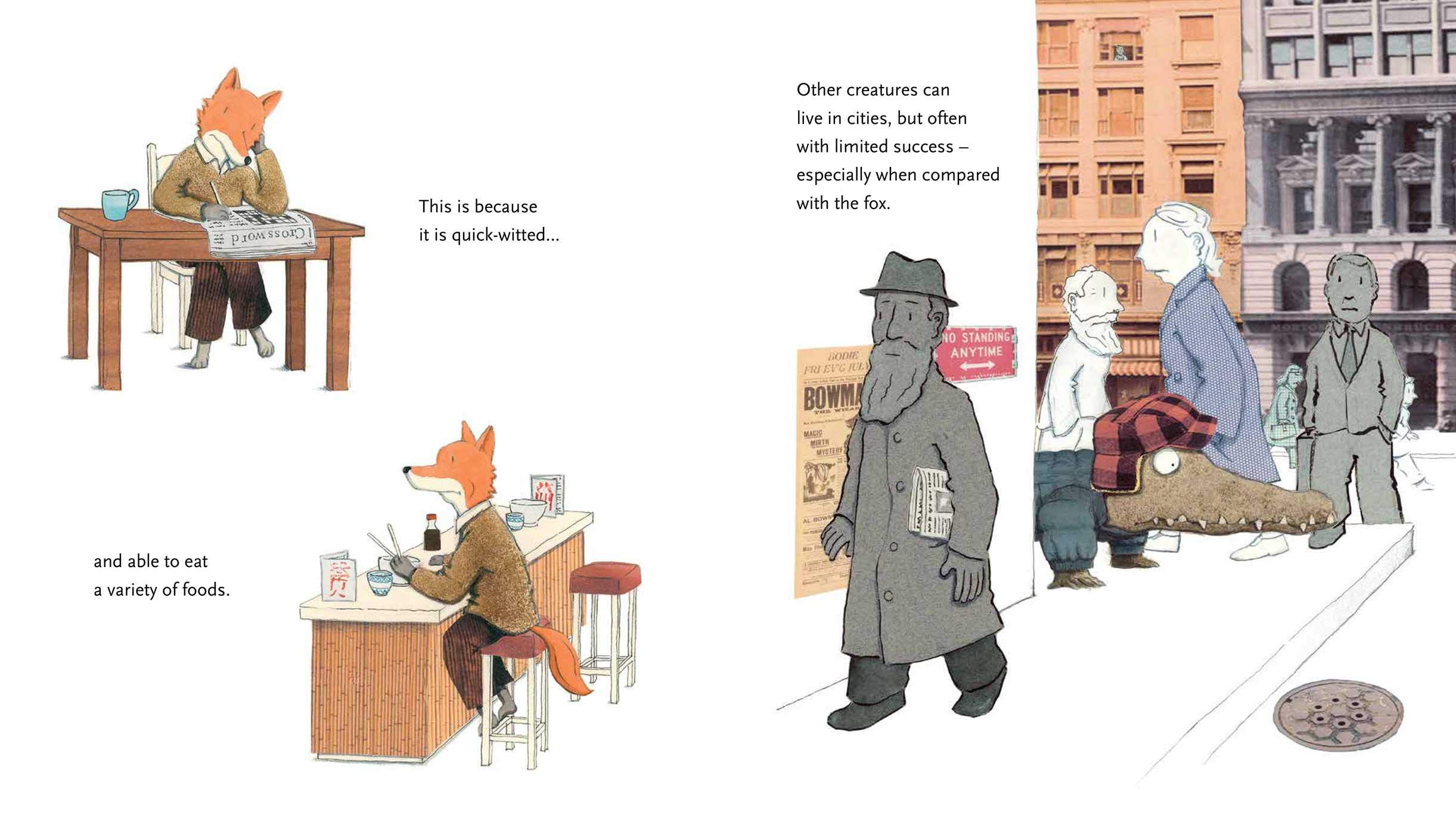
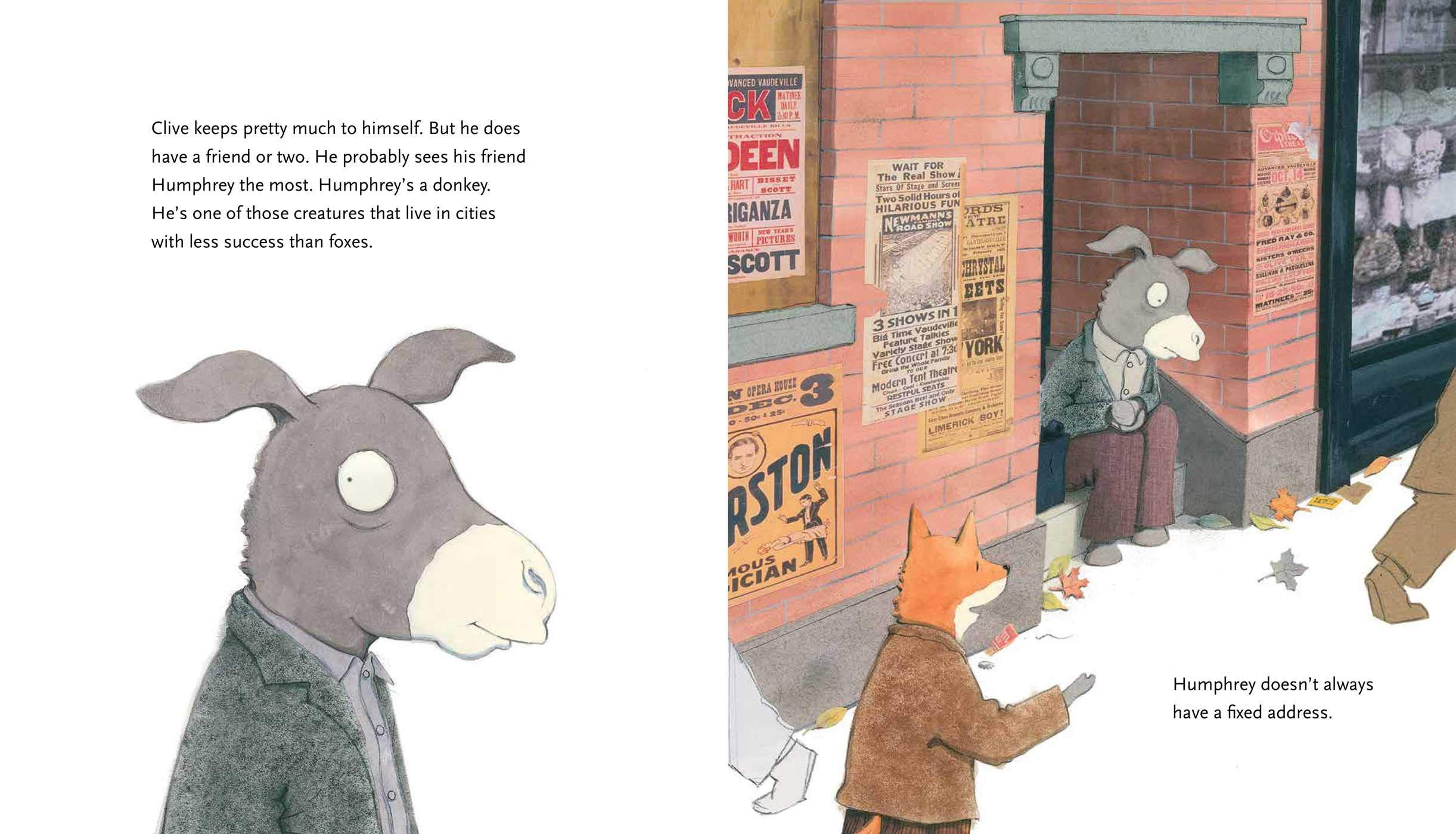
Upon the opening pages readers are treated to an engaging treatise on the success (or not so) of certain animals trying to “make a life for itself in cities.” The fox, we learn, is especially adept because it is “quick-witted and able to eat a variety of foods.” We are then introduced to one such city-dweller, Clive Prendergast – a self-named fox because his real name “can only be pronounced by foxes.”

celebrate-picture-books-picture-book-review-nobody-owns-the-moon-fox

Copyright Tohby Riddle, 2021, courtesy of Berbay Publishing.

Clive lives in a small apartment and works on a factory production line. At night he takes to the streets, visiting food stalls and watching the interesting goings-on. Clive has a few friends, but the one he sees the most is Humphrey, a donkey who is “one of those creatures that live in cities with less success than foxes” and “doesn’t always have a fixed address.” While Humphrey has had jobs, he has trouble keeping them. Right now he’s working as a piano removalist.

One day Clive saw Humphrey sitting on the stone steps of “a statue of a great conqueror.” Clive thought he looked tired and underfed. Then he noticed a blue envelop sticking out of Humphrey’s tote bag. It turned out that Humphrey had found it in the street and planned on eating it, but thinking Clive was also hungry he offered it to him without a second thought. When Clive opened the envelope, he found two tickets to that night’s performance at the theatre. They should go, he said.

celebrate-picture-books-picture-book-review-nobody-owns-the-moon-humphrey

Copyright Tohby Riddle, 2021, courtesy of Berbay Publishing.

“That night Humphrey and Clive attended the premier of Nobody Owns the Moon – the latest play by the city’s most celebrated playwright. Before the show, ticket-holders were treated to hors d’ oeuvres and punch. Then they were shown to their front-row balcony seats. The play was wonderful, full of humor and poignancy. Tears filled Humphrey’s eyes at the show’s “bittersweet ending” and again as they enjoyed a beverage and “large slice of cake in the theatre’s elegant restaurant.”

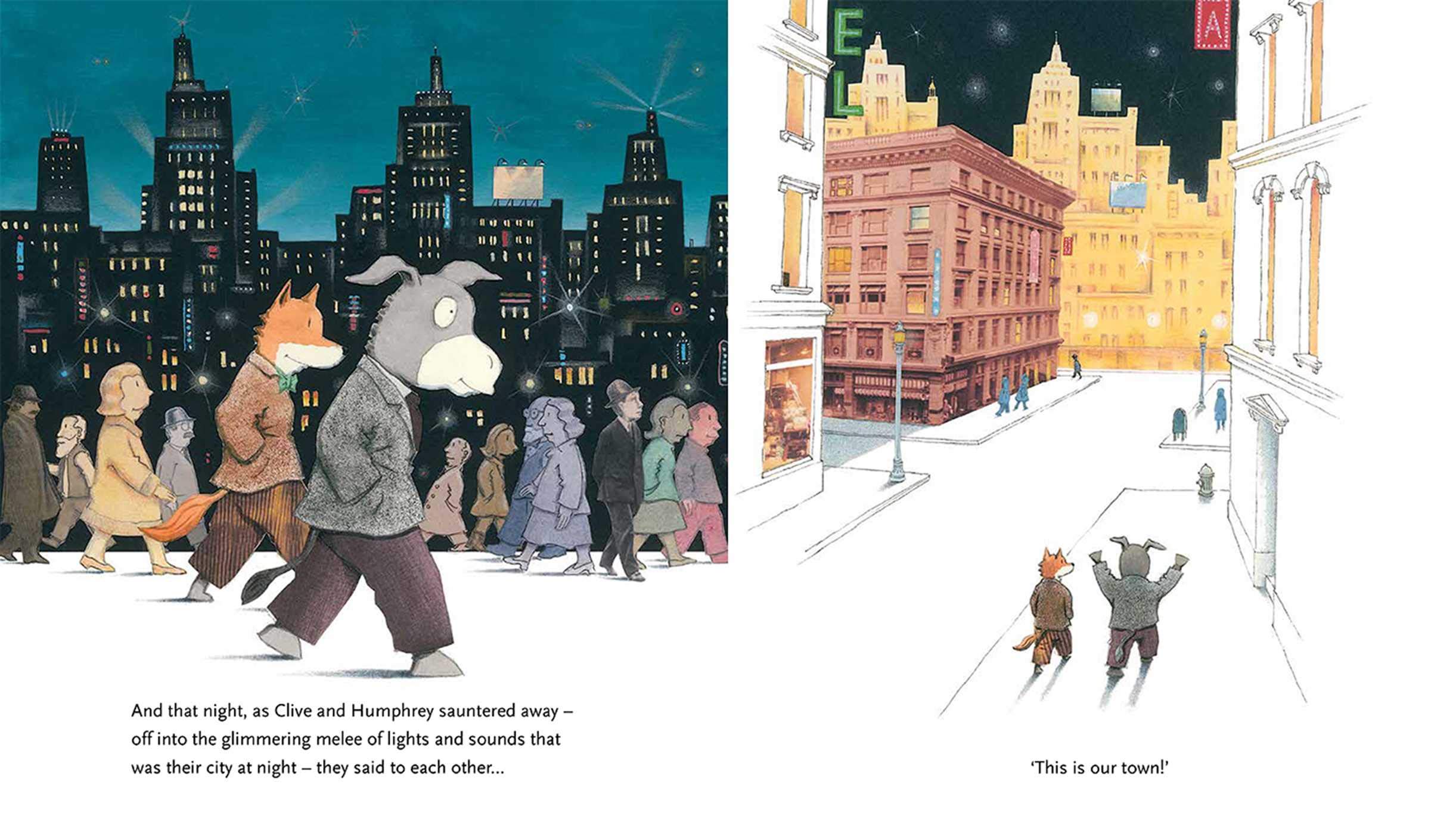
Filled with the wonder of the evening, Clive and Humphrey headed out into the “glimmering melee of lights and sounds that was their city at night. “‘This is our town!'” they exclaimed to each other, and before they went “their separate ways, Humphrey gave Clive a big hug goodnight.”

celebrate-picture-books-picture-book-review-nobody-owns-the-moon-city

Copyright Tohby Riddle, 2021, courtesy of Berbay Publishing.

Immersive and openhearted, Tohby Riddle’s poignant friendship tale is as surprising and inclusive as the invitation Humphrey finds. Opening with lines that could come straight from a nature documentary, the story quickly becomes interwoven with an air of mystery and anticipation as Clive Prendergast and Humphrey are introduced. Riddle’s inclusion of smart details, such as Clive’s fox name being unpronounceable to humans and Humphrey’s job that takes advantage of a donkey’s strong back, adds a verisimilitude that will delight readers. The emotional core of the story comes with Clive’s and Humphrey’s friendship, which is equitable and caring and full of generosity. The discovery and use of the theater invitation ushers in sumptuous scenes of a glittering theater, delicious food, and a life-affirming performance while also touching on the importance of satisfying the body and the soul, however one defines this.

Equally captivating are Riddle’s collage-style illustrations, which incorporate sly humor and thought-provoking perspectives. The book opens with an illustration of Clive Prendergast lounging in a comfortable armchair between Vincent van Gogh’s painting “A Wheatfield, with Cypresses” and a window which frames a view of the city that cleverly mirrors the famous artwork. Clive’s position suggests his comfort in both environments. Humphrey’s difficulties fitting in, on the other hand, are depicted in an Italian restaurant where, distracted for a moment, the plates of spaghetti and meatballs he’s carrying tip precariously over a customer sitting under a photograph of the Leaning Tower of Pisa. Other images that contribute to the depth and atmosphere of this book are theater posters advertising Vaudeville and magic acts, Russian nesting dolls and fresh foods for sale in Clive’s multicultural neighborhood, and the copy of Walt Whitman’s Leaves of Grass next to a view-master in Humphrey’s tote bag.

The city’s human inhabitants are all depicted in flat grays and browns while the animals – pigeons, a crocodile, a dancing bear – are portrayed in textured full color. This dichotomy begins to fade at the theater, where a waiter in formal dress offers Humphrey hors d’ oeuvres, in the balcony row where Clive and Humphrey sit, and in the restaurant after the show, a change that offers opportunities for readers to talk about acceptance and how we look at others. The moving ending is eloquent in it’s simple embrace of individuality and acceptance.

A touching, multi-level story that will enchant and impact readers, Nobody Owns the Moon will become a favorite and is a must for home, classroom, school, and public library collections.

Ages 4 – 8

Berbay Publishing, 2021 | ISBN 978-0994384195

Discover more about Tohby Riddle, his books, and his art on his website.

International Quality of Life Activity

celebrate-picture-books-picture-book-review-smile-cards-craft

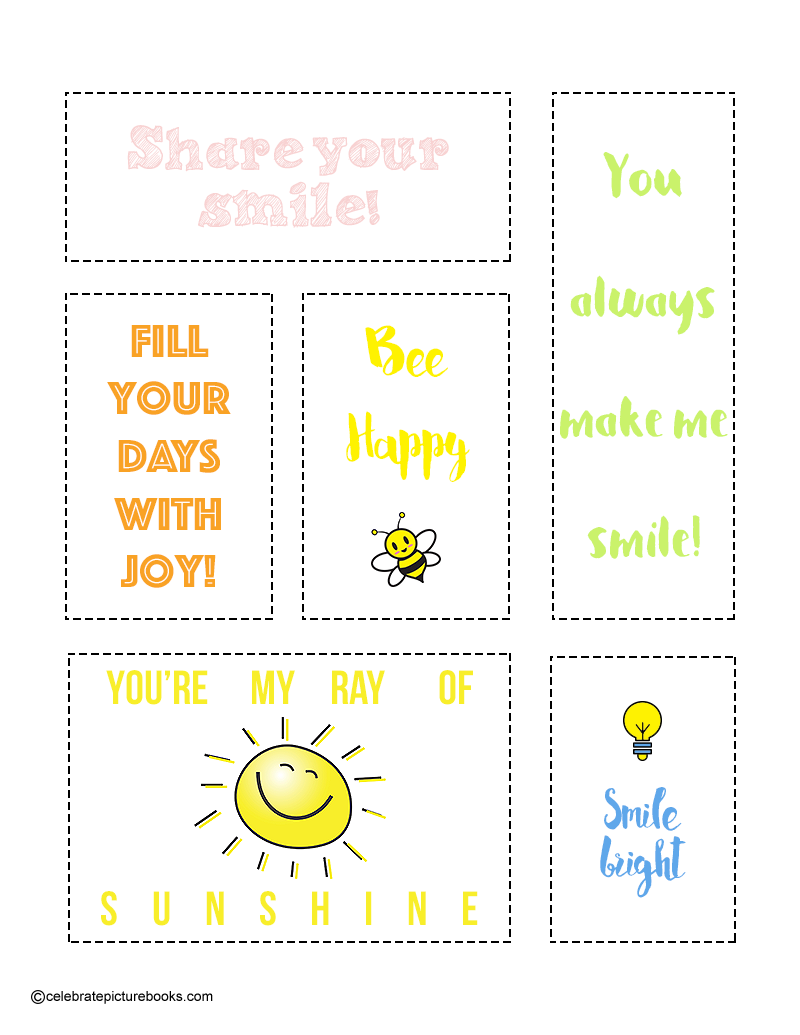
Share a Smile Cards


Life is better when you share smiles with those you know—and those you don’t! Try it! When you’re out today at school or other places, give someone a smile. You can be sure that you will have made their day and your day better! These cards are another way you can share a smile. Why not slip one into your dad’s pocket or your mom’s purse, put one in your friend’s backpack, or sneak one onto your teacher’s desk? You can even leave one somewhere for a stranger to find! Have fun sharing your smiles, and see how much better you and the others around you feel!

Click here to print your Share a Smile Cards.

celebrate-picture-books-picture-book-review-nobody-owns-the-moon-cover

You can find Nobody Owns the Moon at these booksellers

Amazon | Barnes & Noble | Books-a-Million

To support your local independent bookstore, order from

Bookshop | IndieBound

Picture Book Review

December 28 – Endangered Species Act Day

celebrate-picture-books-picture-book-review-a-voice-for-the-everglades-cover

About the Holiday

The Endangered Species Act was signed into law in by President Richard Nixon on this date in 1973.  The primary law in the United States for protecting imperiled species, the Act protects critically imperiled species from extinction as a result of the consequences of economic growth and development undeterred by concern for conservation. The US Supreme Court called it “the most comprehensive legislation for the preservation of endangered species enacted by any nation”. The purposes of the Endangered Species Act are to prevent extinction and to recover species to the point where the law’s protections are not needed, therefore protecting diverse species as well as the ecosystems in which they live or depend on. Today’s book reveals the story of a National Park that provides a unique refuge for many rare and endangered species. To celebrate the holiday, learn more about how the Endangered Species Act affects your state.

Thanks go to Albert Whitman & Company for sharing a copy of A Voice for the Everglades: Marjory Stoneman Douglas with me for review consideration. All opinions on the book are my own.

A Voice for the Everglades: Marjory Stoneman Douglas (Part of the She Made History Series)

Written by Vicki Conrad | Illustrated by Ibon Adarne and Rachel Yew


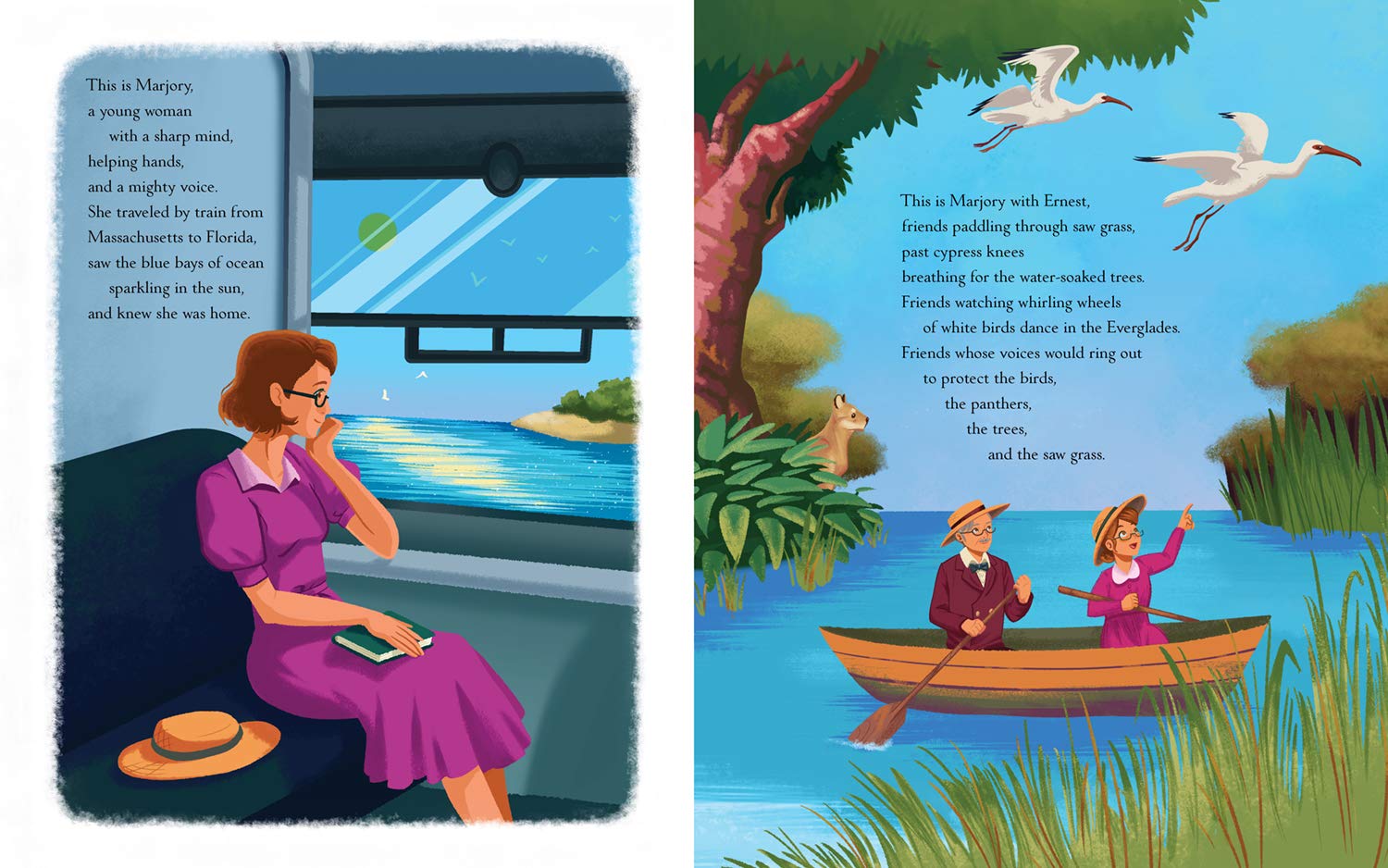
“Long ago a trickle of water / spilled from a lake / and formed a tiny stream.” The stream spread until it covered almost half of the state of Florida, creating a shallow lake that moved like a slowly running river – “a river bursting with wildlife, / whispering to the world / to listen, to notice, to discover its wonders.” Mangroves and cypress trees grow from the water, the soil fed by the cycles of growing and dying sawgrass. The water, trees, and grass attract a “rainbow of birds” that wade in the shallows, hunting for food. “These are the Everglades. / The wildest, richest, and most diverse ecosystem in all the world – / every plant and animal needing another to survive.”

celebrate-picture-books-picture-book-review-a-voice-for-the-everglades-stream

Image copyright Ibon Adarne and Rachel Yew, 2021, text copyright Vicki Conrad. Courtesy of Albert Whitman & Company.

But leaders and developers wanted to drain the water to create land to build on, land they could sell, land with which they could make money. They pumped the water out and built dams and drains to make farmland, but the farmland turned dry and burned easily. The animals and birds fled. The ecosystem was “desperate for a voice to protect them.”

When Marjory traveled from Massachusetts to Florida and saw the beautiful scenery, she knew immediately that this was her new home. She made a friend, Ernest, and together they spent time paddling a boat through the Everglades, “watching whirling wheels of white birds dance” and spying panthers, alligators, turtles, manatees, and more of the animals that lived there. Where other people saw a swamp, Marjory and Ernest saw “treasure.”

Marjory and Ernest wanted to do something to preserve the Everglades. They studied the map and the formation of the Everglades. Marjory called it “a river of grass.” Ernest wrote a bill for the United States Congress to consider, and “Marjory wrote a poem, / hopeful it would move Congress.” Although lawmakers did tour the Everglades and see its miraculous sights, the bill did not pass.

celebrate-picture-books-picture-book-review-a-voice-for-the-everglades-train

Image copyright Ibon Adarne and Rachel Yew, 2021, text copyright Vicki Conrad. Courtesy of Albert Whitman & Company.

Marjory decided to write a book about the area she loved, and in 1947 The Everglades: River of Grass was published. Her book helped people see the marvels that lived within the Everglades: “the manatee munching seagrass / protecting her calf from harm”; “the red-bellied turtle, / laying eggs in the abandoned alligator nest, / dry and protected from water.”; the only place in the world where an alligator and a crocodile live together.”

At last people began to take notice – and care. Their voices joined with Marjory’s and Ernest’s and Everglades National Park was established that same year. “Yet only one-fourth of the Everglades was protected.” Marjory understood that “all the ecosystems needed one another.” When plans to build the world’s largest airport on land that was part of the Everglades, Marjory, now eighty years old, established the Friends of the Everglades, and their three-thousand voices convinced President Richard Nixon to stop the building.

Marjory continued to fight for the Everglades, giving speeches and putting hecklers in their place. When she was ninety-nine years old, Marjory could be found chipping away at a concrete drain to restore the land to its former waterway. At 105 years old, Marjory was awarded the Presidential Medal of Freedom. Adults and children sent her letters thanking her for saving the Everglades, but Marjory knew there would always be more work to be done to protect this unique ecosystem.

Back matter includes an extensive, illustrated discussion of the Everglades ecosystem, the nine different habitats that make it such a unique area, and many of the plants, animals, birds, and fish that call it home. More on the life of Marjory Stoneman Douglas and her legacy as well as how readers can help the Everglades are also included.

celebrate-picture-books-picture-book-review-a-voice-for-the-everglades-national-park

Image copyright Ibon Adarne and Rachel Yew, 2021, text copyright Vicki Conrad. Courtesy of Albert Whitman & Company.

A compelling biography of a woman with vision and grit who took on a nearly impossible task and saved one of the world’s unique environmental treasures, A Voice for the Everglades: Marjory Stoneman Douglas will inspire young environmentalists and would serve as a captivating resource to begin studies about ecosystems, conservation, endangered and rare species, and many other topics revolving around nature science. Marjory Stoneman Douglas, whose perseverance, dedication, and voice still resonate today, continues to be a role model for children and adults alike.

Through Vicki Conrad’s lyrical text and light incorporation of a “This is the House that Jack Built” cadence readers see how people’s actions build on and affect each other – whether detrimentally (as the building plans; pumps, dams, and drains; and disappearing wildlife do) or beneficially (as Marjory’s and Ernest’s appeals to Congress, Marjory’s writings, and her continued advocacy do) and understand that once voice can make a difference. Conrad does an excellent job of portraying the beauty and uniqueness of the Everglades and giving kids a view of the many wonders to be found there.

In their vivid illustrations, Ibon Adarne and Rachel Yew depict the rich colors of the diverse flora and fauna found in the nine cohesive habitats, from the vibrant pink roseate spoonbills to the purple passion flowers to the elusive crocodiles and the breathtaking, fiery sunsets that blanket them all. Adarne and Yew also allow children to navigate the meandering waterways that weave through the mangroves and sawgrass in their slow, steady, and life-giving pace. The breadth of wildlife within the pages offer many opportunities for further learning and research at home and at school.

An enticing and educational look at one of the world’s most valued natural treasures – whose story and resources continues to influence nature studies and advocacy today – A Voice for the Everglades: Marjory Stoneman Douglas is a book that every school and public library will want to add to its collection and would be an inspiring inclusion for home bookshelves for nature lovers and homeschoolers.

Ages 4 – 8

Albert Whitman & Company, 2021 | ISBN 978-0807584965

Discover more about Vicki Conrad and her books on her website.

You can connect with Ibon Adarne on Twitter.

You can connect with Rachel Yew on Twitter.

Endangered Species Act Day Activity

celebrate-picture-books-picture-book-review-everglades-national-park-coloring-page

Everglades National Park Coloring Page


Travel to the Everglades and see the diverse wildlife that lives there with this printable coloring page!

Everglades National Park Coloring Page 

celebrate-picture-books-picture-book-review-a-voice-for-the-everglades-cover

You can find A Voice for the Everglades: Marjory Stoneman Douglas at these booksellers

Amazon | Barnes & Noble | Books-a-Million

To support our local independent bookstore, order from 

Bookshop | IndieBound

Picture Book Review

December 27 – Make Cut Out Snowflakes Day

celebrate-picture-books-picture-book-review-croc-and-turtle-snow-fun-cover

About the Holiday

Making paper snowflakes is a fun wintertime activity that brings the outdoors in on snowy days or clear ones. This craft originates in the art of origami—a variation called kirigami. While both origami and kirigami involve folding paper, kirigami entails unfolding the paper and making cuts in desired places to create an effect. Cut-out snowflakes combine the two as the cuts are made while the paper is still folded. Today, get out some paper and scissors and make your own snowflakes to hang!

Thanks to Bloomsbury for sending me a copy of Croc & Turtle: Snow Fun! for review consideration. All opinions on the book are my own. 

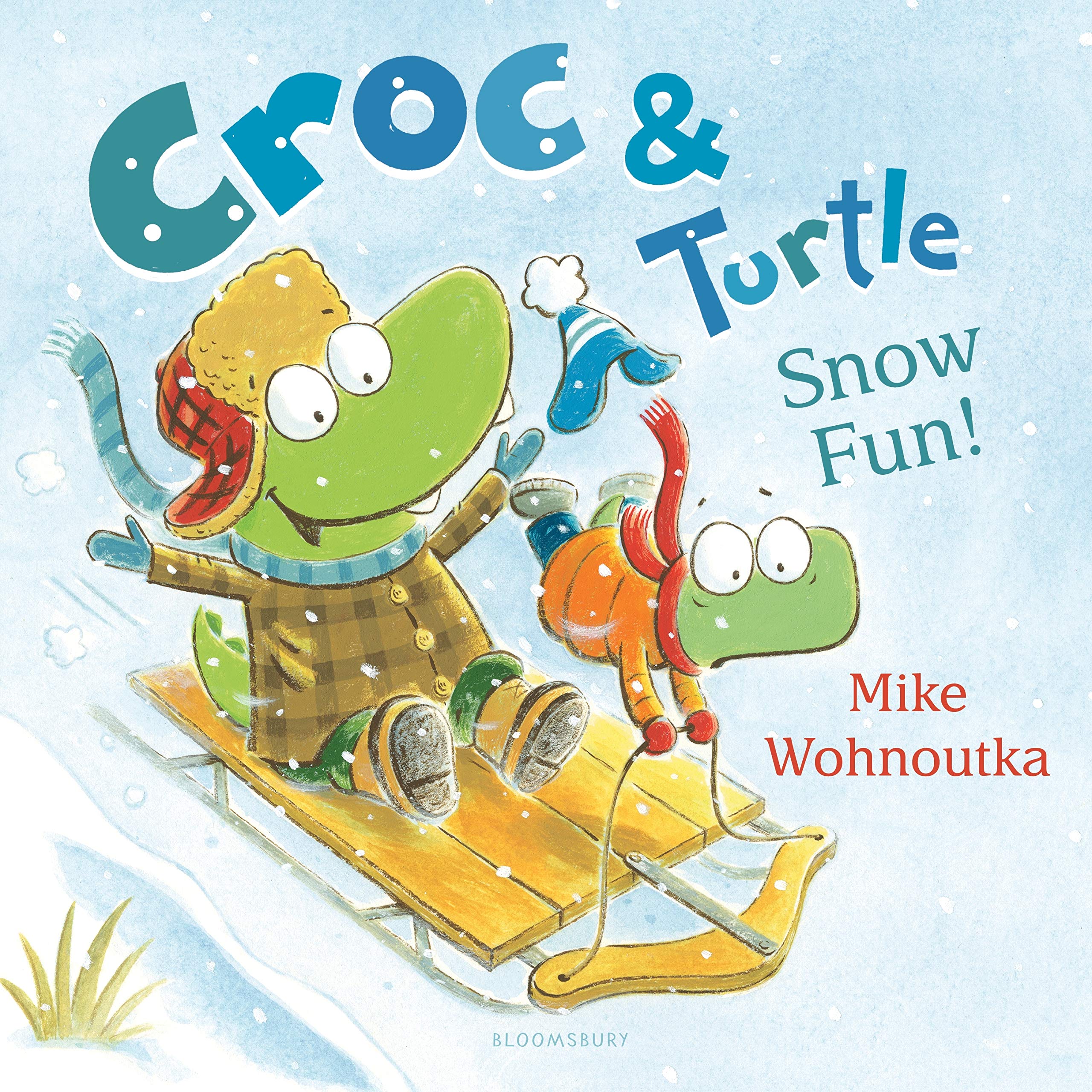
Croc & Turtle: Snow Fun!

By Mike Wohnoutka


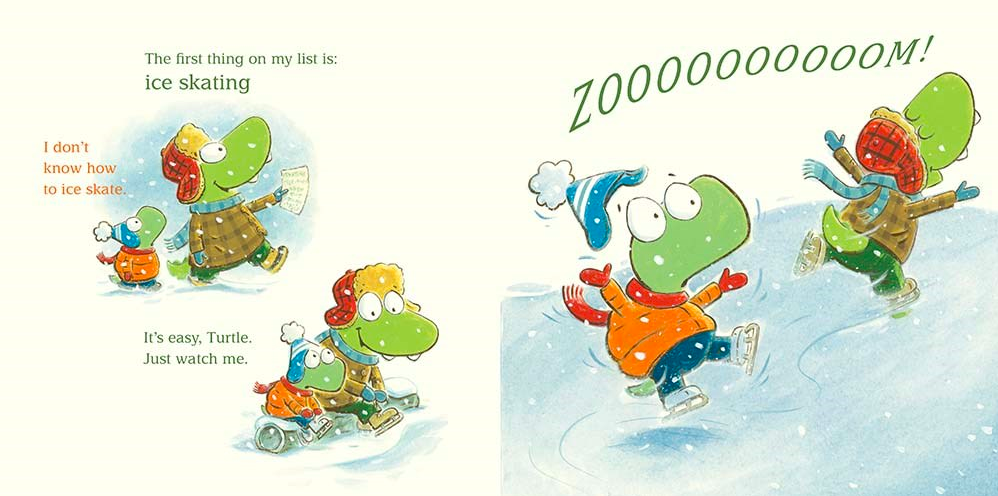
The snow is falling and Croc runs to Turtle’s house with a list of fun things to do. Turtle comes to the door with another list. They’re both a little surprised to find such opposite activities on each other’s lists, but Turtle thinks it will be fun to “do everything on both lists.” First, they head out to the pond to ice skate. But Turtle doesn’t know how. Croc says to just follow along, but in all of Croc’s zooming, whooshing, and twirling, Turtle is left dizzy and flat out on the ice. Croc thinks being outside is the best, but Turtle’s ready to go inside.

celebrate-picture-books-picture-book-review-croc-and-turtle-snow-fun-paper-skating

Copyright Mike Wohnoutka, 2019, courtesy of Bloomsbury Children’s Books.

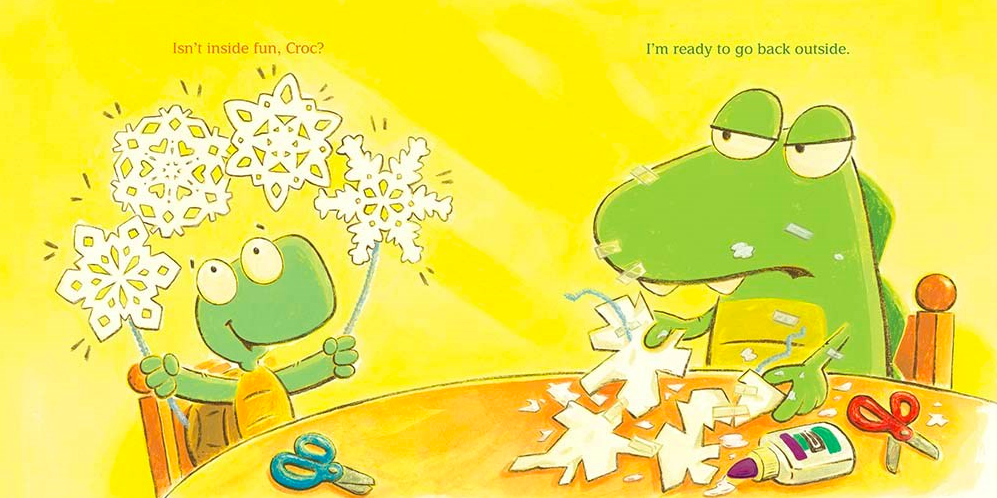
Inside, Turtle has all the craft supplies to make paper snowflakes. Croc says, “I’m not very good at paper snowflakes.” Turtle, snipping away energetically, says, “Just watch me.” Turtle unfolds the paper and displays an intricate four-snowflake arch, while Croc’s four angled blocks of paper, taped and glued together, lie in front of him.

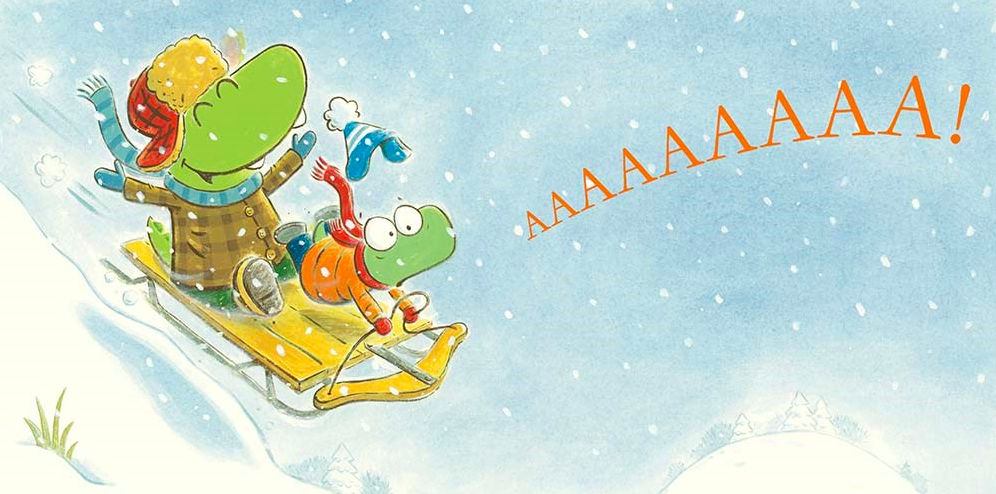
Outside again, Croc’s happy to go sledding, but Turtle’s feet are freezing. Uncertainly, Turtle sits in front of Croc. The screaming starts as the sled bumps and jumps down the hill. Buried up to their necks in snow, Croc is exhilarated, but for Turtle “it’s time to go back inside.” In the house, Turtle begins spreading the 1,000 pieces of a jigsaw puzzle on the floor in front of a roaring fire as Croc flops nearby in utter boredom.

celebrate-picture-books-picture-book-review-croc-and-turtle-snow-fun-paper-snowflakes

Copyright Mike Wohnoutka, 2019, courtesy of Bloomsbury Children’s Books.

He wants to go back out, but Turtle finds it “too cold and too dangerous.” In a huff, Croc stomps outside. Turtle fumes and stays inside. But Croc finds that throwing snowballs and skiing without Turtle is no fun, and Turtle misses Croc while coloring and playing cards. Then there’s a knock at the door. It’s Croc with an apology. Turtle apologizes too.  Croc ponders: how can they “be inside and outside and together?” Then Turtle whispers an idea into Croc’s ear.

celebrate-picture-books-picture-book-review-croc-and-turtle-snow-fun-sledding

Copyright Mike Wohnoutka, 2019, courtesy of Bloomsbury Children’s Books.

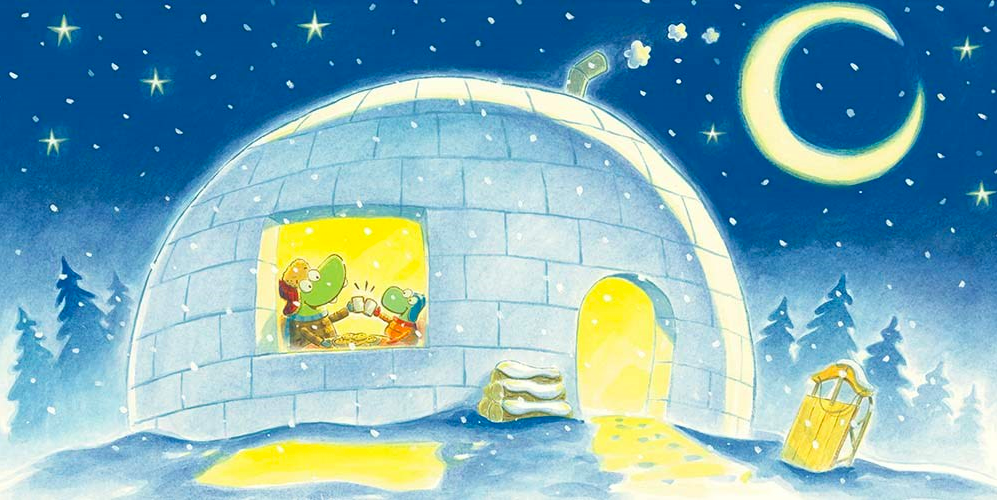
Inside, Turtle gets out the recipe book, eggs, flour, and other ingredients. Outside, Croc pats and shapes snow into blocks. Soon, Turtle has a tray full of cookies and hot chocolate, and Croc is pulling a sled loaded with Turtle’s table, chairs, and slippers to… their warm, cozy igloo so they can be “outside…and inside…and together.”

celebrate-picture-books-picture-book-review-croc-and-turtle-snow-fun-igloo

Copyright Mike Wohnoutka, 2019, courtesy of Bloomsbury Children’s Books.

Mike Wohnoutka’s best friends Croc and Turtle are back in a cold-weather adventure that will warm readers’ hearts. Their enthusiasm to play together sparkles in their bright smiles and cheery greetings, they even overcome the initial momentary shock that Croc prefers outside, while Turtle is a homebody. As the two try to enjoy each other’s activities, though, their different personalities cause a rift. Little ones needn’t worry about these two besties, however.  It only takes a few minutes for each to realize winter is no fun without the other.

In a tender lesson, Wohnoutka shows Croc and Turtle apologizing for their role in the tiff and then quickly moving on to working together to come up with a solution. The result of their creative problem solving will delight kids and is a clever activity that can be adapted for play at home. Wohnoutka’s inside and outside pursuits for Croc and Turtle are well chosen and will resonate with readers even as they giggle at the outcomes.

Just as in Wohnoutka’s first tale—Croc and Turtle! The Bestest Friends Ever!—these bright green friends with their expressive eyes will charm readers. Wohnoutka’s vivid imagery always puts the spotlight on Croc and Turtle, allowing the youngest readers to easily connect the text with the action, while older readers soak up all the humor and emotion in this enchanting story. Inside, Turtle’s home glows with warmth, while outside, you can almost feel the crisp, frosty air and the snowflakes drifting down. The final image brings both of these welcome winter delights together.

Whether you’re already fans of Croc and Turtle or meeting them for the first time, Croc & Turtle: Snow Fun! is a sweet addition to home bookshelves. The book will also be a favorite in preschool and kindergarten classrooms and in public library collections.

Ages 3 – 6

Bloomsbury Children’s Books, 2019 | ISBN 978-1681196374

Discover more about Mike Wohnoutka, his books, and his art, on his website.

World Snow Day Activity

celebrate-picture-books-picture-book-review-sock-snowman-craft

Snow Buddies


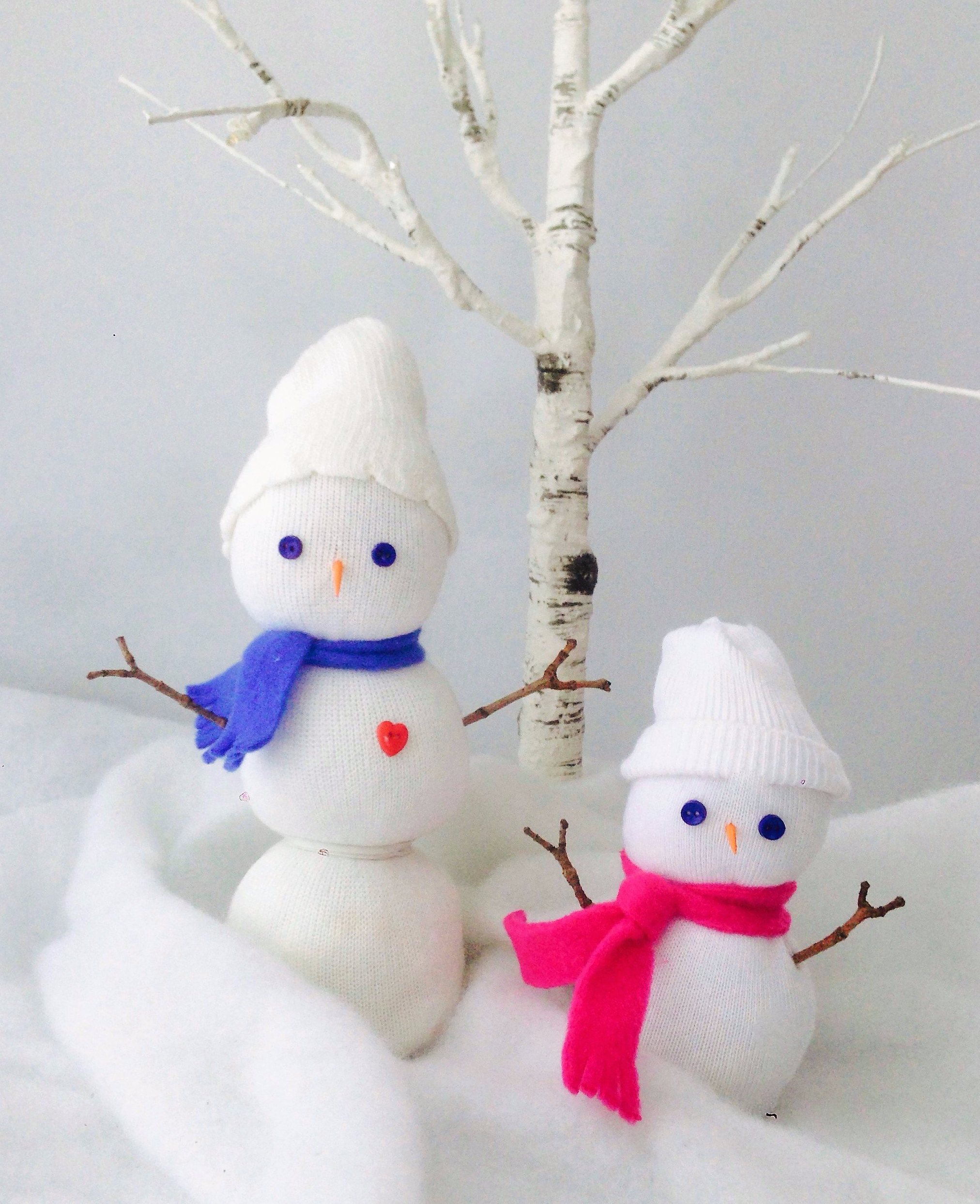
This is a great craft for kids to share with a friend. Grab a pair of socks and have fun making these snow buddies! 

Supplies

  • White dress ankle socks
  • Polyester Fiber Fill
  • Tiny buttons
  • Fleece or ribbon, enough for a little scarf
  • Toothpicks
  • Twigs
  • Orange craft paint
  • Cardboard
  • White rubber bands, one or two depending on the size of the snowman
  • Fabric or craft glue
  • Small hair band (optional)

Directions

To Make the Snowman

  1. Cut a circle from the cardboard about 2 inches in diameter for the base
  2. Place the cardboard circle in the bottom of the sock
  3. Fill the sock with fiber fill about ¾ full or to where the ribbed ankle cuff begins. Pack tightly while making a sausage shape. You can make your snowman different shapes with the amount of fill you use.
  4. Stretch out the cuff of the sock and tie it off near the top of the fill either with a loop knot or with the hairband.
  5. Fold the cuff down around the top of the filled sock to make the hat.
  6. Wrap a rubber band around the middle of the sock to make a two-snowball snowman. For a three-snowball snowman, use two rubber bands. Adjust the rubber bands to make the “snowballs” different sizes.

To Make the Scarf

  1. Cut a strip of fleece or ribbon 8 to 10 inches long by ½ inch wide
  2. Tie the fleece or ribbon around the neck of the snowman
  3. To Make the Nose
  4. Dip one end of the toothpick into orange paint, let dry
  5. Cut the toothpick in half
  6. Stick the toothpick into the head or top portion of the snowman

To Make the Arms

  1. Insert small twigs into each side of the body of the snowman
  2. You can also use wire or cardboard to make the arms
  3. Attach two mini-buttons to the face for eyes with the fabric or craft glue
  4. Display your Snow Buddy

celebrate-picture-books-picture-book-review-croc-and-turtle-snow-fun-cover

You can find Croc & Turtle: Snow Fun! at these booksellers

Amazon | Barnes & Noble | Books-a-Million

To support your local independent bookstore, order from

Bookshop | IndieBound

Picture Book Review 
December 24 – Christmas Eve

celebrate-picture-books-picture-book-review-the-gifts-of-the-animals-cover

About the Holiday

While Christmas Eve traditions vary around the world, children and adults everywhere look forward to this special night of giving with its wonder and magic. Today’s book tells the story of the first Christmas with gentle beauty. I also talk with author Carole Gerber about her inspiration and her own family traditions. 

Thanks go to Familius for sharing a copy of The Gifts of the Animals with me for review consideration. All opinions are my own. 

The Gifts of the Animals: A Christmas Tale

Written by Carole Gerber | Illustrated by Yumi Shimokawara


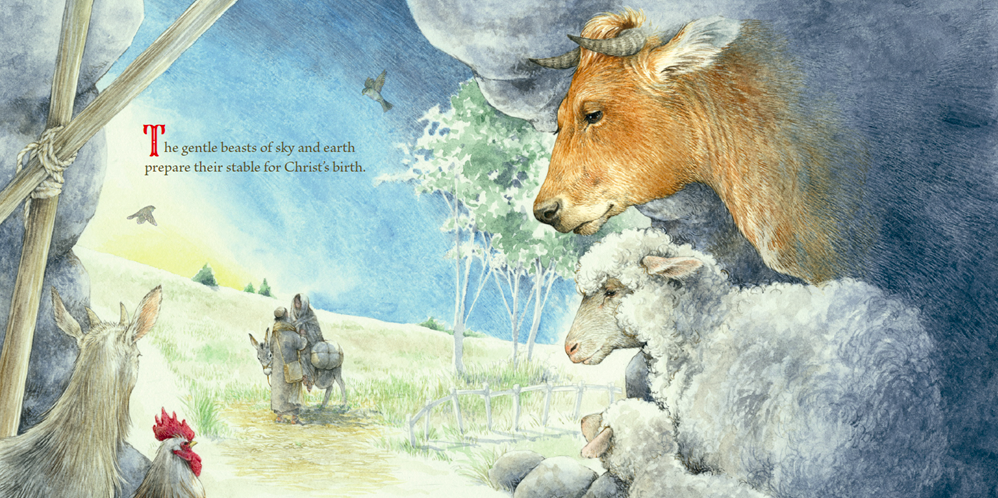
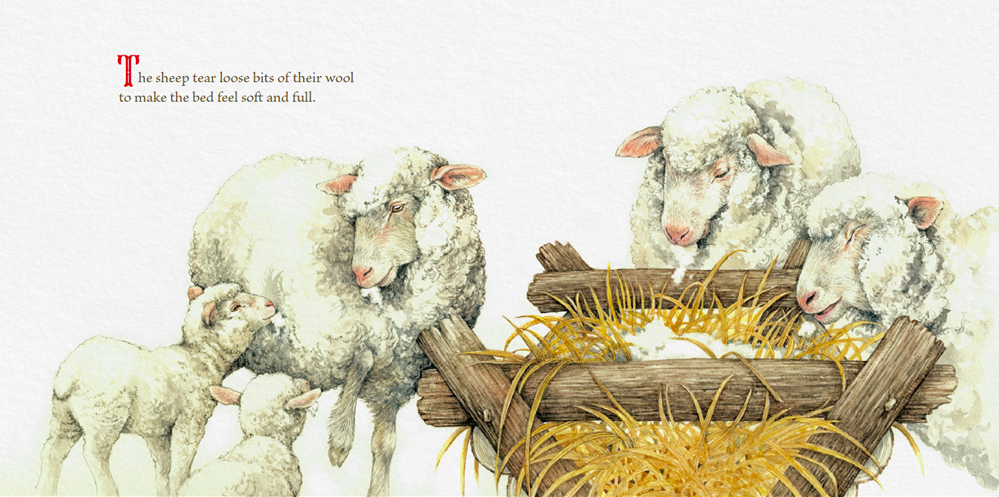
After the animals in a Bethlehem stable watch Joseph help Mary dismount from their donkey’s back, they go to work to prepare a place for the soon-to-be-born baby Jesus to sleep. “The ox that stands in the drafty shed / drops straw into a manger bed.” The sheep and lambs add bits of wool to make the bed “feel soft and full.”

celebrate-picture-books-picture-book-review-the-gifts-of-the-animals-mary-and-joseph

Image Yumi Shimokawara, 2019, text copyright Carole Gerber, 2019. Courtesy of Familius.

Using downy feathers from the sparrows, chickens, and little chicks, the mice make a plump pillow for Jesus’ head. The cow finds a blanket, and with the help of the ox they lay it over the manger. “Then in this place, humble and warm, Christ, the Prince of Peace, is born.” Mary wraps Him in swaddling clothes then Joseph lays Him in the manger to sleep.

celebrate-picture-books-picture-book-review-the-gifts-of-the-animals-sheep

Image Yumi Shimokawara, 2019, text copyright Carole Gerber, 2019. Courtesy of Familius.

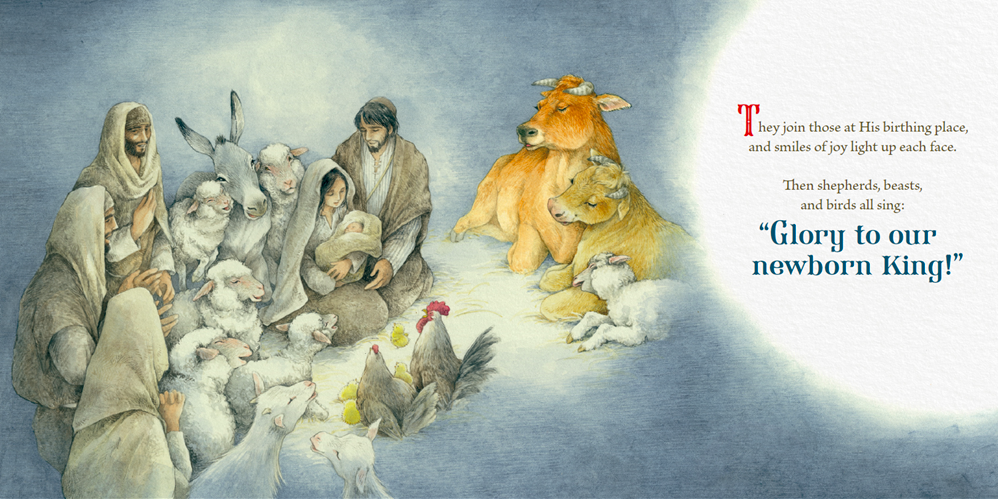
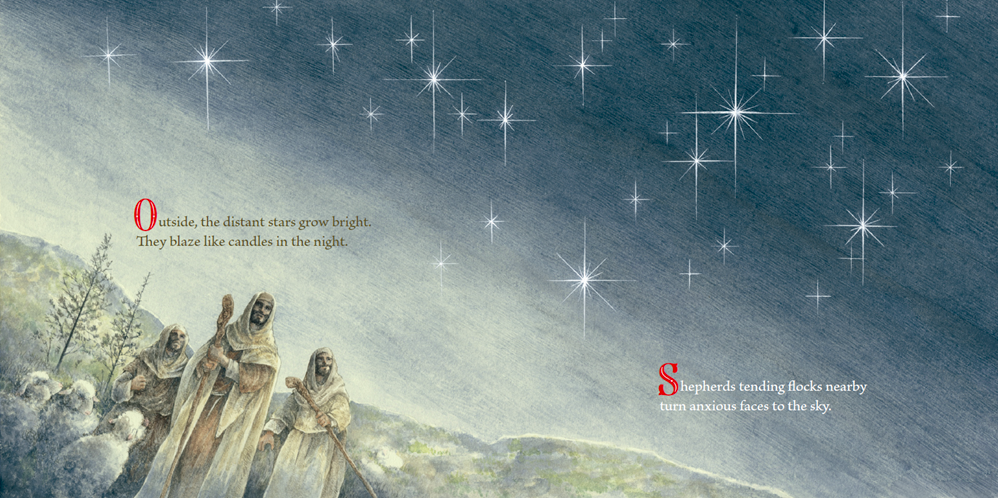
On a distant hillside, shepherds are startled by the brightening stars but listen to the angel who tells them of Jesus’ birth. Then the sky fills with a choir of angels singing “‘Peace on earth. Good will toward men. / Go now, shepherds, worship him.’” The shepherds hurry to Bethlehem to join in the joy of Mary, Joseph, and the gentle animals and to sing “‘Glory to our newborn king!’”

A condensed version of the Christmas story from the King James version of the book of Luke, chapter 2 follows the story.

celebrate-picture-books-picture-book-review-the-gifts-of-the-animals-shepherds

Image Yumi Shimokawara, 2019, text copyright Carole Gerber, 2019. Courtesy of Familius.

The wonder of that first Christmas night glows in Carole Gerber’s beautiful story that follows the animals in the stable as they make a warm and soft bed for Jesus to sleep in. Young readers will be mesmerized by the gentle generosity of the ox, cow, sheep, birds, and mice as they all work together to provide for the baby to come. As the shepherds are visited by the angels and go to worship Jesus, Gerber uses the lyrical language and flowing cadence of the King James version of the biblical story to create a tender and glorious read aloud for the whole family. 

Yumi Shimokawara’s gorgeous, soft-hued illustrations are breathtaking in their detail and inspiration. Pride, fellowship, and diligence shine on the animals’ faces as they create a manger bed worthy of the baby Jesus. Realistic and traditional images of the stone stable, the shepherds and their flock blend poignantly with the depiction of the singing angels that could come from any diverse modern choir. The final illustration in which the animals and the shepherds gather around Mary, Joseph, and baby Jesus in adoration reveals the promise and hope of the true meaning of Christmas.

Sure to become a favorite Christmas story to share year after year, The Gifts of the Animals would be a beloved addition to home bookshelves and a beautiful inclusion for library collections.

Ages 3 – 8

Familius, 2019 | ISBN 978-1641701594

Discover more about Carole Gerber and her books on her website.

You can find more books from Familius that joyfully reflect the habits of happy families, including reading, talking, laughing, eating, working, loving, healing, learning, and playing together as well as the Familius blog The Habit Hub here.

A Chat with Carole Gerber

IMG_1919-001(3)

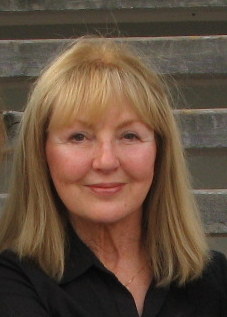
Poet and author Carole Gerber has written sixteen picture books, three chapter books, and more than one hundred elementary science and reading texts for major publishers. Her picture book, A Band of Babies, was named a 2017 Best Book for Children by Amazon editors. She holds a BS in English education and an MA in journalism from Ohio State, and has taught middle school and high school English as well as college news writing and factual writing at OSU.

Hi Carole! I’m excited to be sharing Christmas Eve with you and your Christmas classic. I’m sure readers would love to know what inspired you to write The Gifts of the Animals.

In my random travels around the Internet, I came across a site called “The Hymns and Carols of Christmas.” One post contained the words to a song called “The Friendly Beasts.” The notes said “This song originally hails from a 12th century Latin song,” which was later known in England as “The Animal Carol.” It began: “Jesus our brother kind and good/was humbly born in a stable rude/and the friendly beasts around him stood/Jesus our brother, kind and good.” Here’s one more verse: “I,” said the cow all white and red / “I gave Him my manger for His bed;/I gave him my hay to pillow his head.”/ “I,” said the cow all white and red.

The song also mentions a dove cooing Jesus to sleep, the sheep giving him a blanket. It ends: “Thus every beast by some good spell/in the stable dark was glad to tell/of the gift he gave Emmanuel/The gift he gave Emmanuel.” What I wrote sounds nothing like the original, but it gave me the idea that sparked my story. I then developed my story into a 32-page picture book by including Mary and Joseph, other animals with useful gifts, the angels announcing the birth, and the arrival of the shepherds.

“The Animal Carol” sounds lovely. Do you know if it’s still performed?

After the book went to press, I found that the Mormon Tabernacle Choir had performed the exact words of the original song. There’s a YouTube video that lasts about six minutes. I had no idea that it was famous! A man named Brian Stokes Mitchell was the main singer. He and the choir actually tweet and baa, making some of the animal sounds.  

Such a feeling of peace and love flows through your book. How do you go about choosing words and phrasing and even the poetic form to create that mood?

I wrote and revised it many times, of course. But I never felt frustrated and truly did feel peaceful and loving as I wrote. The art director, David Miles, was great to work with. We brainstormed about other animals that would live in a stable and might contribute to preparing the manger. I came up with mice to carry the feathers from the birds perched on the rafters. Nothing appropriate rhymes with “manger” so I came up with “ox” to rhyme with “manger box.” A sweet result of involving more animals (besides getting enough pages to fill the book) was that they all worked cooperatively.

The Gifts of the Animals is absolutely gorgeous, from the glowing gold-embossed cover to the images of the gentle animals that are happily helping to the jubilant angels that mirror a modern choir. Can you tell me about Yumi Shimokawara and how she was chosen to illustrate your book?

David Miles met her at the Bologna Book Fair in 2017, and was absolutely blown away by her talent. She lives in Japan and had won many awards, including the grand prize at her art school. Yumi had written and illustrated several books published in Japan. My favorite title is Potsu, posu, potsu daijobu, which translates in English to Plip-plop, Plip-plop, Plip-plop, Are You All Right? The title makes me smile. Yumi is not fluent in English so she worked with a Japanese friend who helped her translate David’s emails containing art directions. She did the cover first and it is beautiful. But she had given the baby blond hair and pale skin. My comment was, “We can’t have Jesus looking Swedish!” David replied, “No worries. I will fix this with Photoshop.” He darkened the baby’s hair and skin a bit and directed Yumi as she worked on the interior pages, to make all the people more authentically Middle Eastern.

Each spread is so beautiful on its own, but do you have a favorite? What makes that illustration special to you?

I love how happy and expressive the animals are, especially in the last spread when the people and animals are gathered around the Holy Family. Jesus is not the only baby in that picture. Yumi put baby chicks in that spread, too, which makes it even more touching. I also smile at the inside cover page, which has at the bottom an adorable illustration of a small choir of mice and birds. One little mouse is clasping his paws as he sings his heart out.

celebrate-picture-books-picture-book-review-the-gifts-of-the-animals-gathered-around

Image Yumi Shimokawara, 2019, text copyright Carole Gerber, 2019. Courtesy of Familius.

At the end of your story you include a condensed version of Chapter 2 from the Biblical book of Luke in the King James Version. How did you choose which version of the story to include?

I earned a King James Bible when I was about eight years old as a reward for attending Sunday School for 10 Sundays straight. Ever since, I have loved the grandeur of the language in the King James Bible. Compare the words between the King James and The New International Version.
“And she brought forth her firstborn son, and wrapped him in swaddling clothes, and laid him in a manger because there was no room for them in the inn.”

The New International Version of the Bible states:
“and she gave birth to her firstborn, a son. She wrapped him in cloths and placed him in a manger, because there was no guest room available for them.”

No guest room available? It sounds like what a desk clerk in a motel would say. Bah!

What is one of your favorite family Christmas traditions?

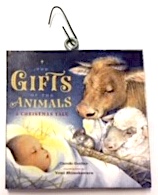
Every time I get a new book published, my husband makes a Christmas tree ornament of the cover. This started years ago when my daughter Jess was in middle school. She secretly used my husband’s power tools – EEEK! – to cut to size a small piece of plywood on which she glued a small photocopied cover of one of my first published books. She put a doll house size clothes hanger on the back to attach it to the tree. After that, every Christmas, the last things we put on our tree are the miniature covers of my books.

celebrate-picture-books-picture-book-review-Carole-Gerber-ornament

What a sweet and supportive tradition! It’s such a nice idea to adapt with photos or drawings for any family wanting to celebrate achievements from the past year. Thanks so much for this chat, Carole! I wish you all the best with The Gifts of the Animals and a very Merry Christmas with your family.

Christmas Eve Activity

celebrate-picture-books-picture-book-review-christmas-word-search-puzzle-with-graphics

Tell the Good News! Word Search Puzzle


Find the sixteen words about the first Christmas in this printable puzzle.

Tell the Good News! Word Search Puzzle | Tell the Good News! Word Search Solution

celebrate-picture-books-picture-book-review-the-gifts-of-the-animals-cover

You can find The Gifts of the Animals: A Christmas Tale at these booksellers

Amazon | Barnes & Noble | Books-a-Million

To support your local independent bookstore, order from

Bookshop | IndieBound

Picture Book Review