January 5 – National Bird Day

celebrate-picture-books-picture-book-review-trevor-cover

About the Holiday

Today’s holiday celebrates all our feathered friends from the birds in our backyards to the chickens and turkeys that provide us with food to the penguins of Antarctica. They include wild birds and those in captivity, either as pets or in zoos or other aviaries. National Bird Day was established to promote an awareness of issues concerning the safety, health, and protection of the world’s birds. To celebrate put out birdseed and suet for winter birds or learn a little more about the birds in your area.

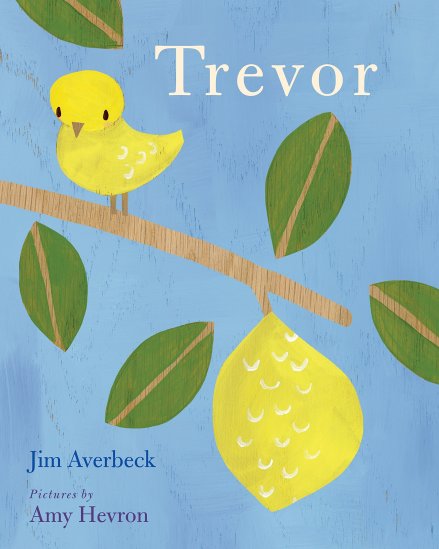
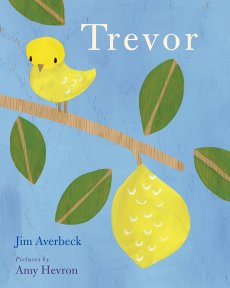
Trevor

Written by Jim Averbeck | Illustrated by Amy Hevron


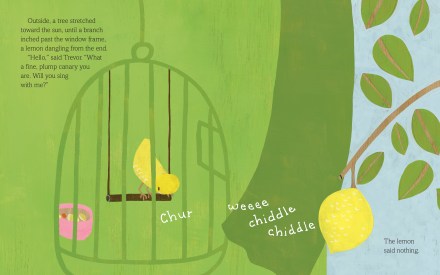
“Trevor stretched his wings the width of his safe, boring cage.” Even though he knew the door would open easily, he never ventured out because everything he needed was right within reach. Today, instead of being tempted to eat his one remaining striped seed—his favorite kind—he sang a lonesome song. Outside his window, Trevor suddenly saw a lemon bump his windowsill. He took it for a fellow canary and asked it to join in singing with him. “The lemon said nothing.”
celebrate-picture-books-picture-book-review-trevor-lemon

Image copyright Amy Hevron, 2018, text copyright Jim Averbeck, 2018. Courtesy of us.macmillan.com.

Thinking that the canary was shy, Trevor picked up his cherished seed, opened the cage door, and flew outside. He placed the seed near the lemon, but the lemon stayed quiet. It didn’t take the hint that Trevor liked gifts too, either. Trevor jumped up and down on the branch, trying to get some reaction, but he only caused the seed to fall to the ground and the lemon to drop and be caught on a branch below.

Trevor was angry at the lemon and turned his back on it. He “saw the vast, frightening world stretched out before him. He felt very lonely.” Trevor looked back at the lemon and made a bargain. If the lemon was sorry for being rude, he said, it should say nothing. The lemon obliged, and Trevor forgave it. Trevor built a nest for himself and the lemon, and the two spent a cozy summer together. Below, the striped seed began to grow.
celebrate-picture-books-picture-book-review-trevor-new-singing

Image copyright Amy Hevron, 2018, text copyright Jim Averbeck, 2018. Courtesy of us.macmillan.com.

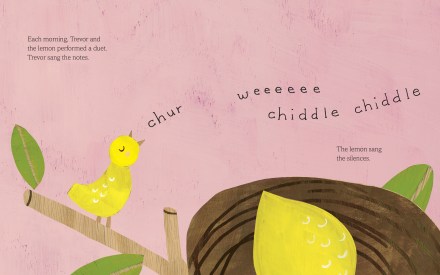
Every morning they sang together. “Trevor sang the notes. The lemon sang the silences.” Trevor was happy snuggling with the lemon and decided he was never leaving the nest. One day, a storm blew up. It shook the branch and then, in a strong gust of wind, the lemon flew out of the nest. On its way down, it hit the sunflower and knocked out its seeds. The lemon soon rolled out of sight.
celebrate-picture-books-picture-book-review-trevor-seeds

Image copyright Amy Hevron, 2018, text copyright Jim Averbeck, 2018. Courtesy of us.macmillan.com.

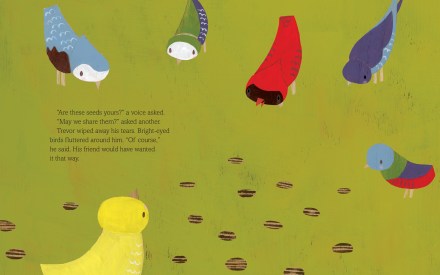
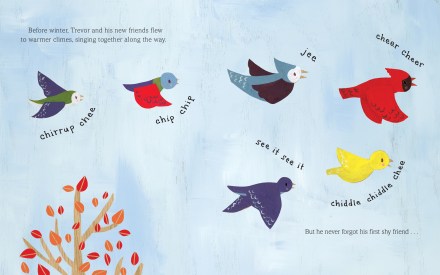
Trevor flew into the storm to look for his friend, but he couldn’t find the lemon anywhere. “Trevor cowered among the scattered seeds and wept.” Suddenly, though, a group of colorful birds appeared, wondering if the seeds were Trevor’s and whether  he would share them. He agreed, knowing that the lemon “would have wanted it that way.” In the fall, Trevor and his new friends flew south to spend the winter there. They sang together on their journey. Trevor was happy, “but he never forgot his first shy friend…who gave him everything, and asked for nothing.”
celebrate-picture-books-picture-book-review-trevor-new-friends

Image copyright Amy Hevron, 2018, text copyright Jim Averbeck, 2018. Courtesy of us.macmillan.com.

Jim Averbeck’s gentle nudge for children who are hesitant to venture out of their comfort zone tenderly shows how taking a chance and sharing one’s talents or favorite things can lead to positive and rewarding experiences and new friendships. Through Trevor’s friendship with the silent lemon, Averbeck highlights Trevor’s natural kindness, a quality that leads him to find his inner strength and sociability. Cleverly weaving together the ideas of “leaving the nest” and “sowing seeds of friendship,” Averbeck creates a moving storyline that will hearten quieter children and inspire them to reach out in ways that are comfortable and meaningful to them.

Amy Hevron endears little Trevor to readers with her soft acrylics-on-wood illustrations full of sweet hugs and selfless acts that bring this adorable bird his first, best friend. The close-up focus of these images serves to also emphasize Trevor’s loneliness and trepidation when he later turns away from the lemon and overlooks a vast forest. The appearance of a diverse group of birds attracted by Trevor’s seeds will cheer readers, especially as Trevor joins them on their flight south. The last page offers a just-right surprise that gives kids and adults another opportunity to talk about the nature of friendship.

A tribute to formative friendships and self-discovery, Trevor makes an uplifting addition to home, classroom, and public library collections.

Ages 4 – 8

Roaring Brook Press, 2018 | ISBN 978-1250148285

Discover more about Jim Averbeck and his books on his website.

To learn more about Amy Hevron, her books, and her art, visit her website.

National Bird Day Activity
celebrate-picture-books-picture-book-review-lemon-birds

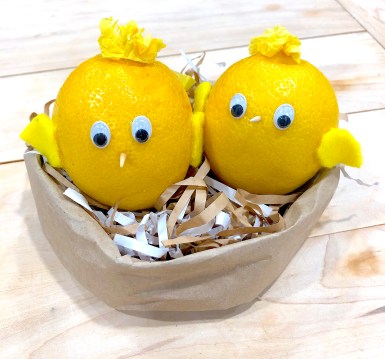
Cheery Canary Centerpiece


Brighten up your winter table with this cute birdy centerpiece! Kids will have fun making their own birds and nest with a couple of lemons and a few easy-to-find supplies.

Supplies

  • Lemons (one for each bird)
  • Googly eyes
  • Toothpicks
  • Yellow tissue paper
  • Yellow felt, fleece, or paper
  • Brown paper sandwich bag
  • Parchment paper or other light paper
  • Strong glue
  • Tape
  • Directions

To Make the Bird

  1. Insert the toothpick into the lemon to make the beak
  2. Glue on the eyes 
  3. Cut a length of tissue paper about 2 inches by 4 inches
  4. Fold the paper in narrow widths accordion style
  5. Pinch one end together and fan out the paper to make the tail
  6. Flatten the pinched end and glue it to the lower back of the lemon
  7. Crumple a bit of tissue paper and glue to the top of the lemon
  8. Cut small wings from the felt, fleece, or paper
  9. Glue the wings to the sides of the lemon

To Make the Nest

  1. Cut the bag open along one side and along the bottom
  2. Roll up the bag and form it into a circle, taping the ends together. (To make a larger nest tape two bags together)
  3. To make the nesting material, cut narrow strips from the parchment or light paper
  4. Fill the ring with the nesting material

Set the bird or birds in the nest

Enjoy!
celebrate-picture-books-picture-book-review-trevor-cover

You can find Trevor at these booksellers

Amazon | Barnes & Noble | Books-a-Million | IndieBound

Picture Book Review


December 31 – Universal Hour of Peace Day

celebrate-picture-books-picture-book-review-peace-is-an-offering-cover

About the Holiday

The idea of Barbara Condron, the Hour of Peace encourages people worldwide to live conflict free for the hour between 11:30 p.m. December 31 and 12:30 January 1 and enter the new year in a spirit of love and hope. The holiday was first celebrated on October 24, 1995 to coincide with the 50th anniversary of the United Nations and the autumnal equinox. In 1996 the holiday was moved to January 1st and took place at noon GMT. It now spans the transition from the outgoing year to the new year.

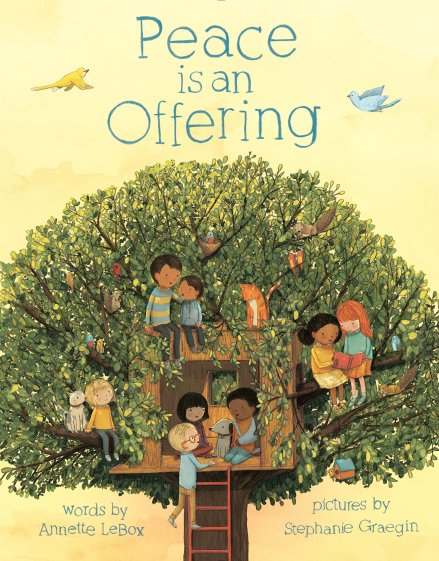
Peace is an Offering

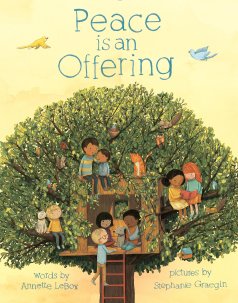
Written by Annette LeBox | Illustrated by Stephanie Graegin


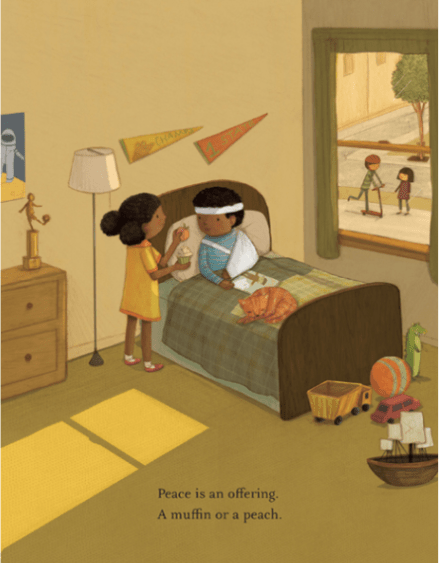
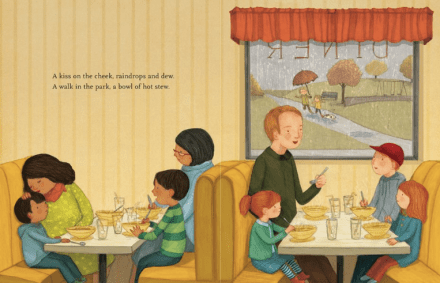
Peace comes in many forms, as simple as “an offering” of “a muffin or a peach. / A birthday invitation. / A trip to the beach.” Peace is being thankful for the wonders of nature, a parent’s love, the coolness of rain or morning dew, even a steaming “bowl of hot stew.”

celebrate-picture-books-picture-book-review-peace-is-an-offering-broken-arm

Image copyright Stephanie Graegin, 2015, text copyright Annette LeBox. Courtesy of Dial Books for Young Readers.

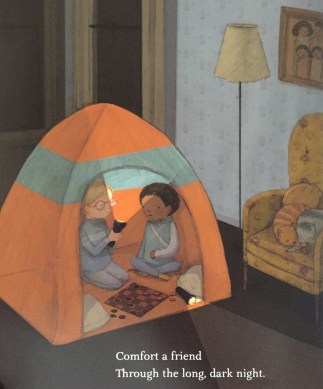
Peace is those times when we are together, in a hug, with sweet words, or cuddling to hear a story. Peace comes in reassurance to the questions that might worry: “Will you wait when I’m slow? / Will you calm by fears? / Will you sing to the sun / to dry my tears?”

celebrate-picture-books-picture-book-review-peace-is-an-offering-stew

Image copyright Stephanie Graegin, 2015, text copyright Annette LeBox. Courtesy of Dial Books for Young Readers.

Where is peace found? In so many places! In a picture or a “belly laugh.” And even when tragedy strikes or “in your darkest hour,” peace can be found, for “peace is a joining, not a pulling apart. It’s the courage to bear a wounded heart.” Peace is finding safety and a “freedom from fear.” It’s found when you “offer a cookie…comfort a friend…sing a quiet song.” When you’re open to catching “a falling star” then peace will “walk beside you / wherever you are.”

celebrate-picture-books-picture-book-review-peace-is-an-offering-under-tree

Image copyright Stephanie Graegin, 2015, text copyright Annette LeBox. Courtesy of Dial Books for Young Readers.

Annette LeBox builds beautiful phrase upon beautiful phrase until midway through her inspiring story when she takes readers gently by the heart and shows them the way forward through any event that disrupts inner peace. LeBox reveals that capturing or recapturing those simple joys that make up a fulfilling life—and more importantly offering that kindness, help, and inclusion to others—brings hope, healing, and happiness not only to others but to yourself as well.

celebrate-picture-books-picture-book-review-peace-is-an-offering-tent

Image copyright Stephanie Graegin, 2015, text copyright Annette LeBox. Courtesy of Dial Books for Young Readers.

Stephanie Graegin excels in pairing text with quietly powerful images of togetherness and the tranquility such closeness brings. As diverse groups of friends, siblings, and families go about their day at school, eat out, navigate puddles and long walks, and enjoy time playing and laughing with each other, readers will be moved by Graegin’s tender details and will enjoy following and pointing out the characters who return from page to page. Images of loss (a mother hugs her two children close as they sit on a park bench overlooking a cityscape and little boy gazes at a picture of his dog) offer poignant opportunities for adult and kids to discuss life changes and events in the news that affect us all. Illustrations of uplifting ideas and gestures that children can use to express their vision of kindness and peace will inspire young readers.

A stirring and heartfelt look at the ways children and adults can share peace, comfort, and encouragement, Peace is an Offering is superb book to add to home, school, and public libraries.

Ages 3 – 8

Dial Books for Young Readers, 2015 | ISBN 978-0803740914

Discover more about Annette LeBox and her books on her website.

To learn more about Stephanie Graegin, her books, and her art on her website.

Universal Hour of Power Day Activity

celebrate-picture-books-picture-book-review-Peace-Coloring-Page-balloons

Soaring with Peace Coloring Page


A peaceful feeling inside can make your spirits soar like balloons in the air. Decorate the balloons in this printable page in your favorite colors (maybe even add a bit of glitter!) and hang it where seeing it will make you happy.

Soaring with Peace Coloring Page

celebrate-picture-books-picture-book-review-peace-is-an-offering-cover

You can find Peace is an Offering at these booksellers

Amazon | Barnes & Noble | Books-a-Million | IndieBound

Picture Book Review
December 10 – Nobel Prize Day

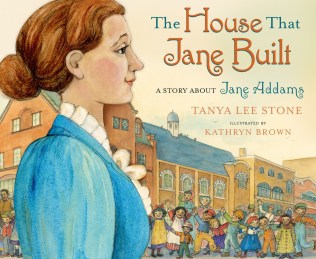
celebrate-picture-books-picture-book-the-house-that-jane-built-cover

About the Holiday

When Alfred Nobel’s will was read after his death on December 10, 1896, his heirs were taken by surprise. Nobel had signed a new will the year before, leaving most of his wealth to create prizes recognizing those who had done their best to benefit mankind in the fields of physics, chemistry,  medicine, literature, and peace. Opposition to this will on the part of the family and those Nobel had chosen to award the prize delayed Nobel’s wishes until 1901. Today, the awards include a prize for economics and are announced in early October. The awards are presented on December 10 in Stockholm, Sweden, except for the Nobel Peace Prize, which is awarded in Oslo, Norway.

Jane Addams Day falls on the same date to commemorate her achievement in being the first American woman to win the Nobel Peace Prize in 1931 for her work to bring about social change, equality, and peace. Each year the Jane Addams Peace Association presents awards to outstanding children’s books that promote peace and justice. To learn more about Jane Addams and the Jane Addams Peace Association, visit janeaddamspeace.org.

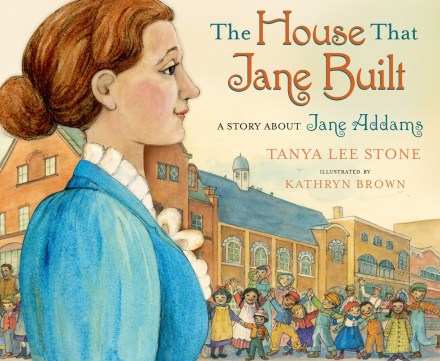
The House that Jane Built: A Story about Jane Addams

Written by Tanya Lee Stone | Illustrated by Kathryn Brown


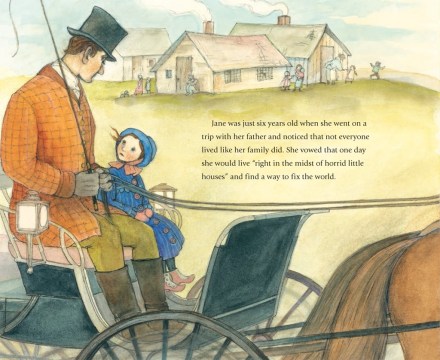
On a busy street stands a very special house where anyone is welcome and some find a home. In 1889 Jane Addams, a wealthy young woman, bought an elegant house in one of Chicago’s poorest neighborhoods. Why? At just six years old on a trip with her father, Jane “noticed that not everyone lived like her family did.” Right then she vowed that when she grew older, she would live in a poor community and “find a way to fix the world.”

celebrate-picture-books-picture-book-the-house-that-jane-built-trip-with-father

Image copyright Kathryn Brown, 2015, text copyright Tanya Lee Stone. Courtesy of us.macmillan.com.

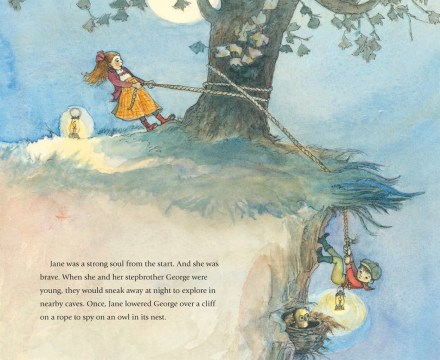
Jane was brave and strong. Sometimes she and her stepbrother George would “sneak away at night to explore in nearby caves.” Jane was also smart and “read and read her father’s book collection,” which also served as the town library. Unlike most women at the time, Jane went to college. She attended Rockford Female Seminary and “graduated at the top of her class.”

celebrate-picture-books-picture-book-the-house-that-jane-built-exploring-with-George

Image copyright Kathryn Brown, 2015, text copyright Tanya Lee Stone. Courtesy of us.macmillan.com.

After graduation, she didn’t know what she wanted to do, and when her father died that same summer, “Jane felt lost.” Two years later some friends invited her to travel to Europe with them. Although they went to the opera, museums, and many beautiful places, it was an experience in London that stuck with her. There she saw many “people in ragged clothes with outstretched hands, begging a cart vendor to buy his rotten fruits and vegetables that hadn’t sold at the market.” 

celebrate-picture-books-picture-book-the-house-that-jane-built-London-settlement-house

Image copyright Kathryn Brown, 2015. Courtesy of us.macmillan.com.

When Jane returned home, the question of how she could help nagged at her. She returned to London to learn about Toynbee Hall, where poor and wealthy people lived together and learned from each other. Here, skills, such as cooking, were taught to provide people with the education to find jobs. Toynbee Hall was called a settlement house, because the rich people who worked there lived there as well.

celebrate-picture-books-picture-book-the-house-that-jane-built-Chicago-neighborhood

Image copyright Kathryn Brown, 2015, text copyright Tanya Lee Stone. Courtesy of us.macmillan.com.

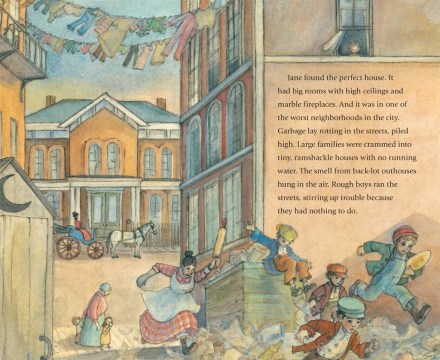
Jane now knew what she wanted to do. In 1889 Chicago was a diverse city with a large immigrant population. Many didn’t speak English, which made it hard for them to find jobs. “Large families were crammed into ramshackle houses with no running water.” Garbage lay in the street, and tough kids ran wild with nothing else to do.

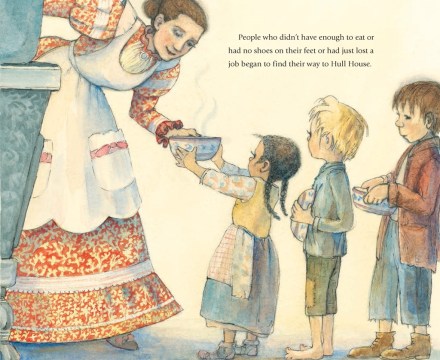
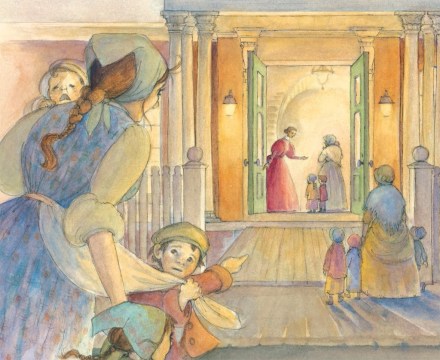
Jane found a large house in the middle of one of these areas that had once belonged to Charles J. Hull and upon his death had been given to his cousin, Helen Culver.  When Helen discovered what Jane wanted to do, she donated the house for free. Jane left the house unlocked, letting people know that they could come there whenever they needed. In time, people did find their way to Hull House when they were hungry or out of work. Jane also had her own way of dealing with unruly children or those who didn’t understand her generosity. Once when a man broke into Hull House twice because he had no job and no money, Jane gave him a job.

celebrate-picture-books-picture-book-the-house-that-jane-built-feeding-hungry

Image copyright Kathryn Brown, 2015, text copyright Tanya Lee Stone. Courtesy of us.macmillan.com.

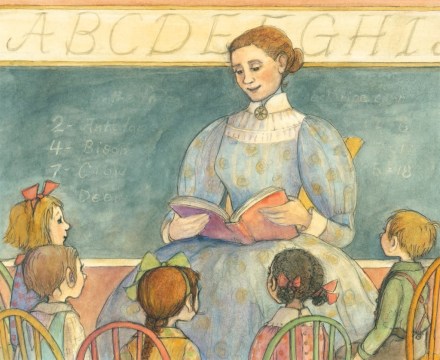
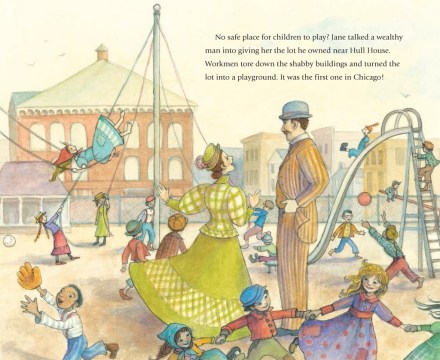
Jane helped the neighborhood in other ways too. She built a public bath so that people could stay clean and avoid illness. She convinced “public officials to build more public baths.” Because children had nowhere to play, Jane convinced a neighbor to give her his unused lot near Hull House. She tore down the buildings and built Chicago’s first playground. For kids whose parents worked long hours, she started a morning kindergarten and after school clubs. She also began offering evening classes for children who worked during the day.

celebrate-picture-books-picture-book-the-house-that-jane-built-kindergarten

Image copyright Kathryn Brown, 2015. Courtesy of us.macmillan.com.

Jane had help with her endeavors. Her friend “Ellen Gates Starr was her partner from the start.” Many other people also helped. They moved into Hull House and “taught literature, art, English, math, science, and cooking.” Hull House continued to grow, and by 1907 Jane oversaw thirteen buildings, including “a gymnasium, coffee house, theater, music school, community kitchen, and an art gallery.”

By the early 1920’s more than 9,000 people visited Hull House every week. Jane’s work “changed a bad neighborhood into a great and strong community.” Today, you can still see Jane Addams’ commitment to others in the community centers that bring people together in nearly every city and town.

An Author’s Note with more information on Jane Addams follows the text.

celebrate-picture-books-picture-book-the-house-that-jane-built-playground

Image copyright Kathryn Brown, 2015, text copyright Tanya Lee Stone. Courtesy of us.macmillan.com.

Tanya Lee Stone brings the story of Jane Addams’ work in Chicago to children in a compelling biography that gives readers a fully developed portrait of this most amazing woman. Stone’s active and evocative language puts children in the Hull House neighborhood, allowing them to get a feeling for and understanding of the issues of the time. Stone’s excellent examples of how Jane Addams responded to a variety of problems facing her community and even Hull House itself, demonstrate how generosity, empathy, and kindness can make positive changes in people’s lives. Depictions of Jane’s early compassion and commitment give children a sense that they too can make a difference in areas that are important to them.

celebrate-picture-books-picture-book-the-house-that-jane-built-front-door

Image copyright Kathryn Brown, 2015. Courtesy of us.macmillan.com.

Kathryn Brown’s riveting illustrations capture Jane’s early moments of concern for others, bravery, and study that informed her adult life; times of decision and cooperation that led to the establishment of Hull House; scenes of poverty, upheaval, and need that touched Jane’s heart; and images of her successes in Chicago that inspired others around the country. Brown’s softly hued watercolors are beautifully infused with realistic period details and honest emotion that provide readers with a strong foundation for understanding and appreciating the life of Jane Addams.

The House that Jane Built: A Story about Jane Addams is an inspiring choice for children with a philanthropic heart and to open discussions on how one person can make a difference. The book would be a welcome addition to home and classroom libraries.

Ages 6 – 10

Henry Holt and Co. Books for Young Readers, 2015 | ISBN 978-0805090499

To learn more about Tanya Lee Stone and her books, visit her website.

You can view a gallery of illustration work by Kathryn Brown on her website

Nobel Prize Day Activity

celebrate-picture-books-picture-book-jane-addams-coloring-page

Jane Addams Coloring Page Poster


Jane Addams is an inspiration to all! Print this Jane Addams Coloring Page and hang it in your room or locker to inspire you to make a difference and be a positive influence in your community!

celebrate-picture-books-picture-book-the-house-that-jane-built-cover

You can find The House that Jane Built: A Story about Jane Addams at these booksellers

Amazon | Barnes & Noble | Books-a-Million | IndieBound

Picture Book Review
December 9 – National Llama Day

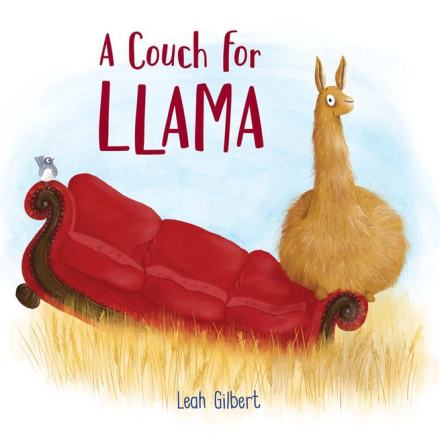
celebrate-picture-books-picture-book-review-a-couch-for-llama-cover

About the Holiday

Today we celebrate the llama, that South American long-necked animal in the camel family that has long served as a pack animal and provides both wool and meat. Because of its personality and high placement on the cuteness scale, the llama has enjoyed a spurt of popularity lately, appearing in artwork, decorating all types of clothing from t-shirts to Toms shoes, splashed across sheets and comforters, and even fashioned into salt and pepper shakers and cookie jars. To celebrate today, visit a zoo, petting zoo, or llama farm and read a llama-inspired book – like today’s!

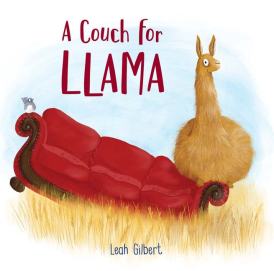
A Couch for Llama

By Leah Gilbert


The Lagos had a couch they loved. They loved it for “…snuggling and reading, card playing, fort building, and hiding and seeking!” But now their beloved couch needed replacing. So the three little Lagos and their parents piled into the car and drove off down the winding road past a farm and fields and a lone llama to find another.

celebrate-picture-books-picture-book-review-a-couch-for-llama-jumping

Copyright Leah Gilbert, 2018, courtesy of leah-gilbert.com.

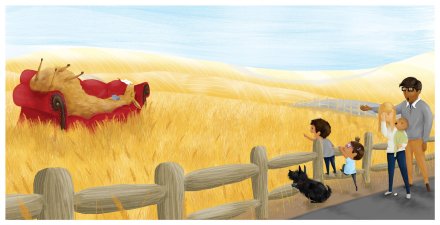
At the furniture store, they tried a brown couch that was too big, an old-fashioned sofa that was too small, and finally a red couch that was just right. They tied it to the roof of their car and headed back home. But just as they were passing that lone llama again, the ties came undone, and the couch flew off into the field of golden wheat.

Llama was surprised. He gave it a sniff and “brayed ‘Hello!’ to the couch. But the couch didn’t say anything.” Llama tried giving it a few sheaves of wheat, but the couch did not seem hungry. So Llama took a big bite out of the couch instead. He found “it tasted worse than a dry, dusty tumbleweed.” Worse, the couch was very boring. Llama wanted it out of his field, but it wouldn’t move.

celebrate-picture-books-picture-book-review-a-couch-for-llama-napping

Copyright Leah Gilbert, 2018, courtesy of leah-gilbert.com.

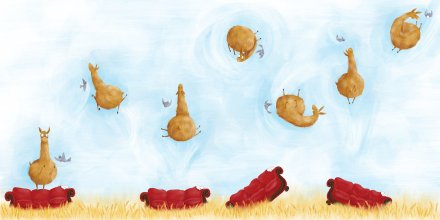
At the same time that the Lagos realized the couch was gone, Llama realized the couch made a very good trampoline. He “bouncey-bouncey-bounced, whirled and twirled, bumped and jumped.” Finally, Llama came to rest on the soft cushions and discovered that he “completely loved the couch.” Llama was taking a nap on the couch when the Lagos found it.

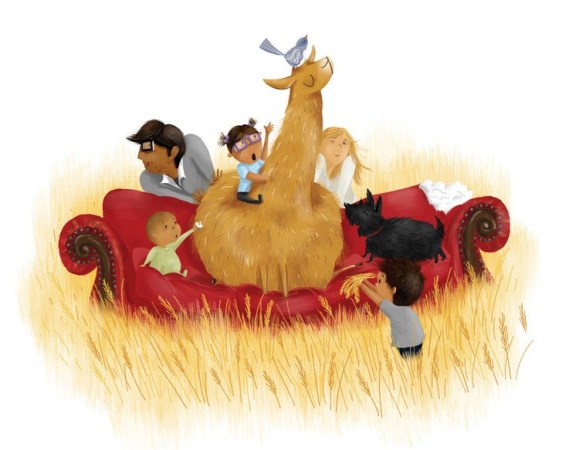
Llama didn’t want to give up the couch, but the Lagos strapped it once more to the roof of their car and drove away with a promise that they’d come back. And they did—with their old “couch just for llama!” Now, the Lagos are happy and Llama is “the happiest of all.”

celebrate-picture-books-picture-book-review-a-couch-for-llama-won't-move

Copyright Leah Gilbert, 2018, courtesy of leah-gilbert.com.

Leah Gilbert knows there may be no more beloved piece of furniture than the family sofa, and she’s turned what can be a sad event—the replacement of this almost-family member—into a humorous and joyful story of paying it forward in a most unusual way. Gilbert’s lively illustrations show the playful parents partaking in games and chases with their kids and loyal dog all centered on and around the couch until it’s rumpled and worn.

When the llama first makes his appearance, readers will be just as curious about him as he is about the passing car and later about the red couch that suddenly appears in his field. Llama’s expressions as he tries to interact with this interloper are hilarious, and kids will laugh (and probably do some bouncing of their own) when Llama discovers the thrill of jumping on the couch. The Lago’s solution to their dilemma is endearing and proves that there’s always plenty of life left in any old sofa. Readers will also enjoy following the geese as they fly this way and that and make a funny front-of-the-page appearance.

For silly story times and also for when a change in the house carries a tug at the heart, A Couch for Llama will be a much-asked-for addition to home, school, and public libraries.

Ages 3 and up

Sterling Children’s Books, 2018 | ISBN 978-1454925118

Discover more about Leah Gilbert, her books, and her art on her website.

Come have a seat for this A Couch for Llama book trailer!

National Llama Day Activity

celebrate-picture-books-picture-book-review-llama-coloring-page

Lovable Llama Coloring Page


Grab your crayons or pencils and give the lovable llama in this printable page a colorful personality!

Lovable Llama Coloring Page

celebrate-picture-books-picture-book-review-a-couch-for-llama-cover

You can find A Couch for Llama at these booksellers

Amazon | Barnes & Noble | Books-a-Million | IndieBound

Picture Book Review
December 8 – Gingerbread Decorating Day

celebrate-picture-books-picture-book-review-the-gingerbread-man-loose-at-christmas-cover

About the Holiday

Originating in the Middle East the art of gingerbread making made its way to Europe in the 10th century. It was quickly embraced for its delicious combination of spices as well as for its soothing medicinal qualities. It was during the 13th century that gingerbread began to be decorated and displayed. The gingerbread man we know today was first introduced in 1875 in a story published in St. Nicholas magazine. To celebrate, mix up a batch of gingerbread cookies and get out the icing and sprinkles!

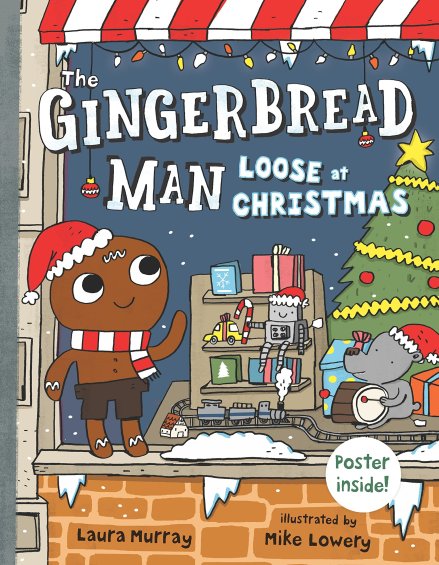
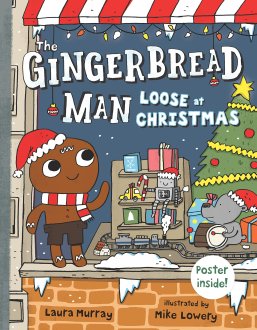
The Gingerbread Man Loose at Christmas

Written by Laura Murray | Illustrated by Mike Lowery


One wintry morning, the Gingerbread Man heard the teacher calling. It was time to wake up and start a very special day. All the kids listened as the teacher told them, “It’s the season of giving, / and we can give, too! / Our gifts could be things / that we make, say, or do.” Individually, paired up, or in groups, the kids went to work on their gifts. Some made cards, some baked cookies, and one trio practiced singing a holiday song.

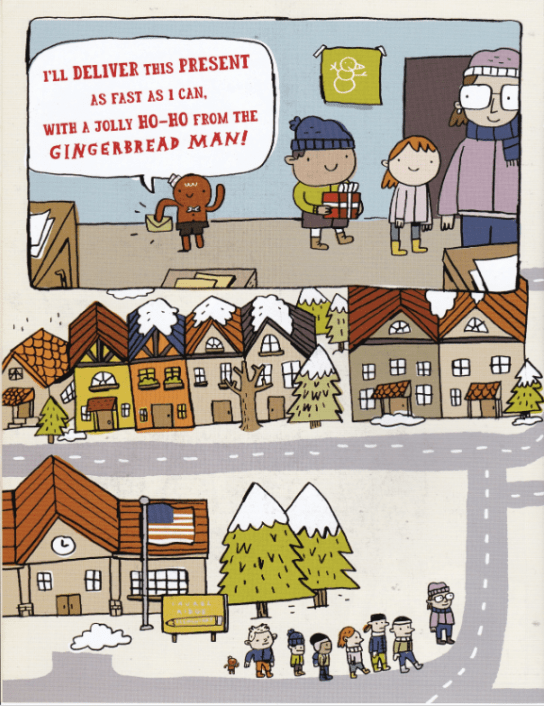
The Gingerbread Man wanted to join in too. He thought hard about what he would make and then went to work. As the kids headed out the door of their classroom and into town, the little cookie excitedly said, “I’ll deliver this present / as fast as I can. / With a jolly Ho-Ho from the / Gingerbread Man!” All through town the kids delivered their gifts. A few children sang a song to a police woman, the garbage men got a plate of cookies, and a special card went to the librarian. The kids also visited the dentist, the grocer, and the vet.

celebrate-picture-books-picture-book-review-the-gingerbread-man-loose-at-christmas-into-town

Image copyright Mike Lowery, 2015, text copyright Laura Murray, 2015. Courtesy of lauramurraybooks.com.

When an icy wind blew up and it started to snow, the teacher gathered all the kids and hurried back to school. But the Gingerbread Man hadn’t delivered his gift yet. He yelled for the class to stop, but they didn’t hear him. He decided to deliver it himself and dashed past the barber, the bookseller, the doctor, the florist, and the bank teller giving them all a happy wave on the way. The snowy sidewalks took their toll on the Gingerbread Man, though, and by the time he found the bake shop, his “feet were all mushy and crumbled.”

Inside, the warm, delicious-smelling shop, the Gingerbread Man held up his card. “I’ve come to say thanks / for your sweet recipe. / without it, / my class would’ve / never made me.” The baker was so touched that she gave the Gingerbread Man a kiss and then noticed his feet. She knew just what he needed. She sat him on the side of a bowl and let him dip his feet into the dark chocolate icing. When she took him out, he was wearing boots! He smiled and told the baker, “I’ll run in my boots, / as fast as I can. / Thank you so much, from the / Gingerbread Man!”

He dashed back to school just in time to join the class in presenting a last, surprise gift—a poem they had all written just for their teacher: “You are a gift / that we get every day. / You help us to learn / in our own special way.” They told her she was “funny and kind,” encouraging, and “clever,” and when they were finished with their special thank-you, their teacher gave them all “a warmhearted hug and a very big grin.”

The book also includes a poster of fun activities to extend the fun.

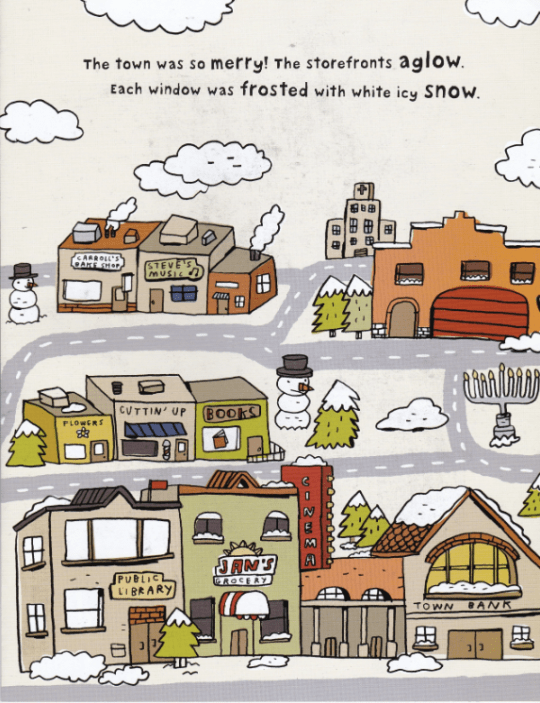
celebrate-picture-books-picture-book-review-the-gingerbread-man-loose-at-christmas-town

Image copyright Mike Lowery, 2015, text copyright Laura Murray, 2015. Courtesy of lauramurraybooks.com.

Fans of Laura Murray’s sweet Gingerbread Man series will be delighted with this holiday treat. With jaunty, pitch-perfect rhymes and a message about the joys of giving thanks for and to all the members of a community, Murray’s story resonates long past the holiday season. Murray’s adorable cookie creation will make kids smile with his plucky attitude as he “hobbles” on mushy legs through the slushy streets to deliver his gift and giddy enthusiasm on succeeding in surprising the teacher. The story offers a wonderful opportunity to talk with kids about truly valuable gifts and ways they can show their love for others.

As cute as ever, Mike Lowery’s Gingerbread Man is a pint-sized dynamo spreading happiness and thoughtfulness wherever he dashes. Kids will love following the class as they fan out into town delivering baked treats, songs, and cards to the adults who make their lives better. Smiles and hugs abound, making this one of the merriest Merry Christmas books around. Little ones will love pointing out the tiny Gingerbread Man on the pages, talking about familiar shops and businesses in the town, and giggling over humorous details like the bat hanging from the vet’s examining table.

A thoroughly charming way to celebrate Christmas and sure to spark random acts of giving in young readers, The Gingerbread Man Loose at Christmas will be a favorite on home bookshelves for years to come.

Ages 3 – 7

G. P. Putnam’s Sons, 2015 | ISBN 978-0399168666

Discover more about Laura Murray and her books on her website and find lots of Gingerbread Man-related activities too!

To learn more about Mike Lowery, his books, and his art, visit his website.

Gingerbread Decorating Day Activity

celebrate-picture-books-picture-book-review-gingerbread-man-dashing-home-maze

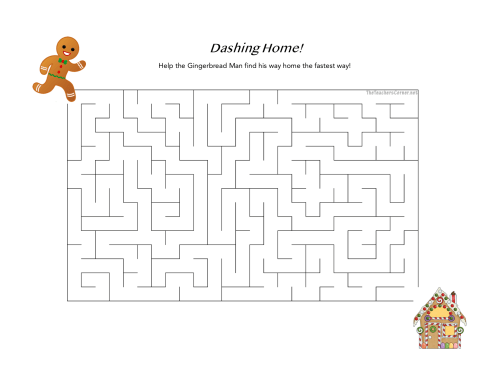
Dashing Home! Maze


Help the Gingerbread Man find his way home the fastest way in this printable puzzle!

Dashing Home! Maze | Dashing Home! Maze Solution

celebrate-picture-books-picture-book-review-the-gingerbread-man-loose-at-christmas-cover

You can find The Gingerbread Man Loose at Christmas at these booksellers

Amazon | Barnes & Noble | Books-a-Million | IndieBound

Picture Book Review
December 6 – Mitten Tree Day

celebrate-picture-books-picture-book-review-the-mitten-tree-cover

About the Holiday

The feel of a cozy mitten on freezing fingers is one of the luxuries of wintertime. But where did mittens come from? You might be surprised to discover that the word “mitten” comes from the French word mitaine, which was an old nickname for a cat, because early mittens were typically made of animal fur. The earliest mittens, dating to around 1000 AD, were used as sheaths for gloves, adding extra protection for cold hands. Today, I’m pleased to review the book in which Mitten Tree Day is said to have its origins! Originally published in 1997, the story has endured and continues to spark programs in schools, libraries, and communities around the country.

The Mitten Tree

Written by Candace Christiansen | Illustrated by Elaine Greenstein


In a small house at the end of a lane Sarah lives all alone. Her own children have grown and moved away, but as she watches the kids gather at the blue spruce tree to wait for the school bus she remembers all the years that she walked her son and daughter to this same spot. As she makes her way down the lane to her mailbox, she wishes the children will wave and smile, but they never seem to notice her. Still, it makes Sarah smile to see them.

celebrate-picture-books-picture-book-review-the-mitten-tree-sarah

Image copyright Elaine Greenstein, 2009, courtesy of Fulcrum Publishing.

One winter morning Sarah notices all the kids throwing snowballs and making snowmen—all except one little boy dressed all in blue who lacks the mittens needed to join his friends. All day Sarah worries about the boy with no mittens. As the sun goes down Sarah digs “through the basket of yarn scraps she had saved for many years.” She finds her needles and four shades of blue wool. Then Sarah begins to knit.

With the rising sun Sarah hurries to the bus stop and hangs the new blue mittens on the spruce tree. Then she hides behind a hedge to watch. The little boy in blue is the first to arrive at the bus stop. When he sees the mittens hanging there, he tries them on and finds that they fit perfectly. With a big smile he makes “a perfect snowball” and throws “it high into the winter sky.” Soon Sarah sees a little girl with mismatched mittens. That night she finds the perfect color of wool and knits a pair to match the girl’s red coat.

celebrate-picture-books-picture-book-review-the-mitten-tree-blue-sprce

Image copyright Elaine Greenstein, 2009, text copyright Candace Christiansen, 2009. Courtesy of Fulcrum Publishing.

Every morning Sarah watches the children, looking for any who have no mittens. During the day her needles are busy making gifts for these children. The next morning before anyone else is up she rushes to the spruce tree and adorns it with the mittens she has knitted. The children have warmed to the “game,” and each day search “under every branch and bough for another pair of mittens.” Once or twice Sarah thinks the boy with her blue mittens sees her, but his eyes don’t linger.

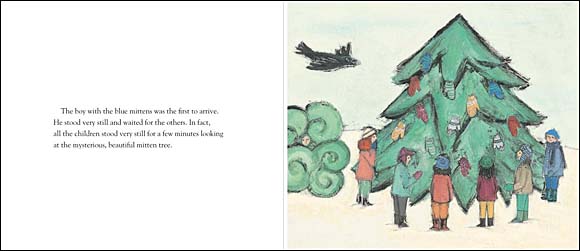
On the day before the school’s winter break Sarah fills her knitting basket with the latest mittens she’s knit. She heads out the door and down the lane. When she reaches the blue spruce, she hangs “mittens on every branch.” When the children arrive, they stand “very still for a few minutes looking at the mysterious, beautiful mitten tree.” As they board the bus, each child is wearing a new pair of mittens. Sarah sees them appear one by one in the bus windows, but none see Sarah.

celebrate-picture-books-picture-book-review-the-mitten-tree-basket

Image copyright Elaine Greenstein, 2009, text copyright Candace Christiansen, 2009. Courtesy of Fulcrum Publishing.

Sarah goes home feeling happy and with her heart as full as it was “when the sounds of her own children had filled her house.” But what awaits Sarah? As she climbs the stairs to her porch, she notices a “basket woven with thick brown vines and decorated with a large white bow.” She’s surprised to see that it is filled to the brim with balls of colorful yarn. Even today Sarah knits new mittens for all the children in town, and “every time her basket is empty, a new full one appears.” Sarah doesn’t know who brings the basket, just as the children don’t know who supplies the mittens. “But someone must….”

Screen Shot 2018-12-05 at 5.01.00 PM

Candace Christiansen’s heartwarming story of kindness given and reciprocated will inspire kids to see that anyone can make a difference in the lives of others by using their talents to fill a need. This gentle, quiet tale offers suspense that will pique readers’ curiosity from page to page, and the mystery surrounding the never-empty basket of wool provides a satisfying and moving ending that also reassures kids that deeds of thoughtfulness and compassion are noticed. The grandmotherly Sarah and familiar school bus stop setting and winter activities will resonate with readers.

Elaine Greenstein’s softly colored, folk-style illustrations give the story a cozy feeling—perfect for cold-weather reading, The variety of intricately knitted mittens, with their hearts, stripes, snowflakes and cables, are charming, and the enchanting image of the blue spruce decorated with mittens makes it easy to see how The Mitten Tree continues to inspire so many acts of kindness and charity.

Ages 3 – 7

Fulcrum Publishing, 2009 (paperback) | ISBN 978-1555917333

Mitten Tree Day Activity

celebrate-picture-books-picture-book-review-mitten-match

Mitten Match & Coloring Page


Mittens often get lost or mismatched in the fun of winter activities. Find the pairs in this printable Mitten Match & Coloring Page and then decorate them!

celebrate-picture-books-picture-book-review-the-mitten-tree-cover

You can find The Mitten Tree at these booksellers

Amazon | Barnes & Noble | Books-a-Million | IndieBound

Celebrate Picture Books

December 5 – International Ninja Day

celebrate-picture-books-picture-book-review-the-secrets-of-ninja-school-cover

About the Holiday

International Ninja Day may have started out as an marketing idea by Ninja Burger in 2003, but the day has grown to embrace all manner of Ninja fun. If you love the stealthy cunning of these masters of martial arts warfare, then today’s for you! To celebrate, watch a favorite ninja movie or TV show, put a bit of charity into the day and perform an act of kindness while remaining “invisible,” or share a great book about ninjas with your kids. Here’s a terrific one to enjoy all year round!

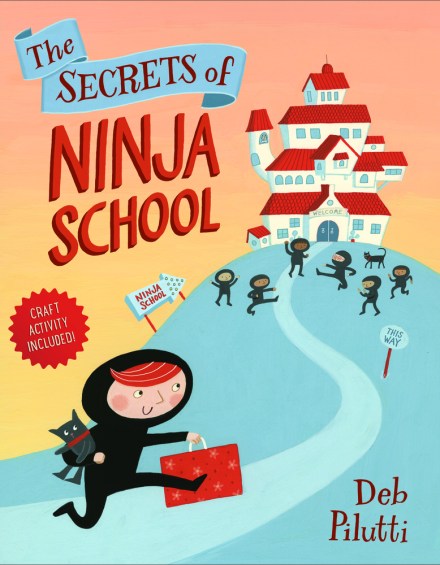
The Secrets of Ninja School

By Deb Pilutti


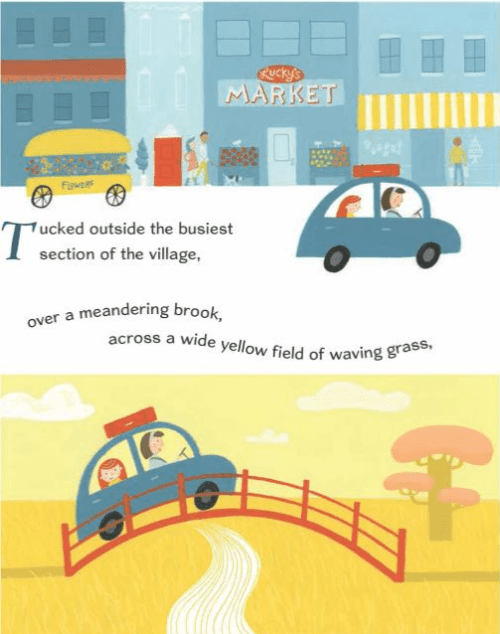
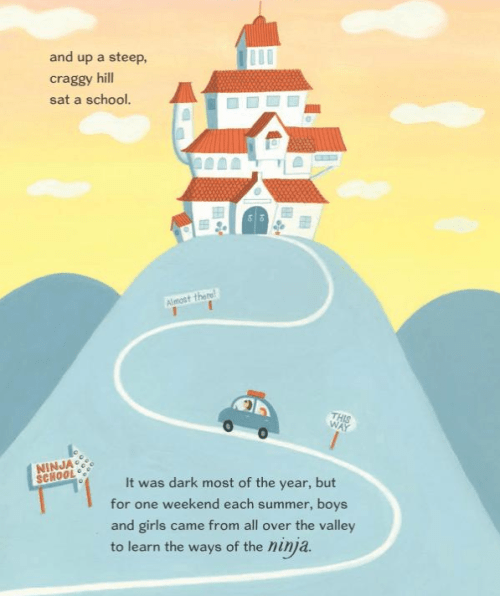
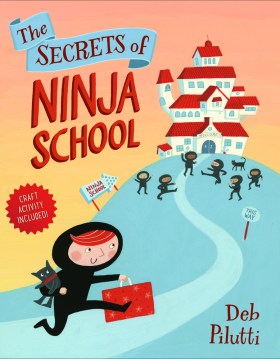
Ruby, a little red-haired girl, is excited to be attending Master Willow’s School for Ninjas. The school, located in a huge house on the outskirts of town, is open only one weekend each summer. Master Willow called his students “‘saplings,’” and each child attended his school eager to learn how to appear invisible, jump skillfully, show patience, and be brave. “But most of all, they came to Master Willow’s School for Ninjas to discover their very own secret skill.”

celebrate-picture-books-picture-book-review-the-secrets-of-ninja-school-driving-from-town

Copyright Deb Pilutti, 2018, courtesy of Macmillan Publishers.

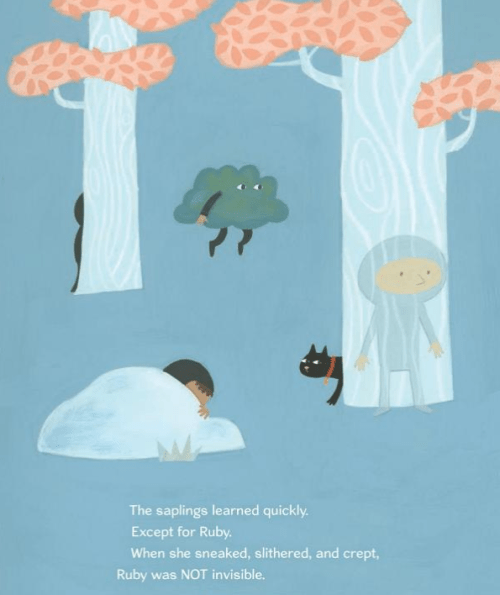
While the other saplings learned quickly, Ruby could not get the hang of sneaking invisibly, jumping with skill, being patient, or feeling brave. Most disappointing, Ruby could not discover her own secret skill. She went to see Master Willow, who told her that through practice she would improve and find her skill. Ruby did practice and did improve, but her special skill still eluded her.

celebrate-picture-books-picture-book-review-the-secrets-of-ninja-school-driving-to-school

Copyright Deb Pilutti, 2018, courtesy of Macmillan Publishers.

At bedtime, Ruby felt homesick. The other kids told her that saplings did not miss home, but, still, she told them how her father read stories to her when she couldn’t sleep, how her mother lit a nightlight and kissed her nose when she was afraid of the dark, and that her grandmother would bring out her craft box and “they would spend hours making the most magnificent creations” when she was worried.

celebrate-picture-books-picture-book-review-the-secrets-of-ninja-school-invisible

Copyright Deb Pilutti, 2018, courtesy of Macmillan Publishers.

Not a sound broke the silence. But then Ruby heard “a sniff and a gasp and a wail. Before she knew it all the other saplings were crying.” Ruby knew just what to do. She “sneaked down the hallway” invisibly, jumped over the cat with skill, and “snipped and stitched and stuffed” patiently. She even bravely explained why she was out of bed when Master Willow caught her.

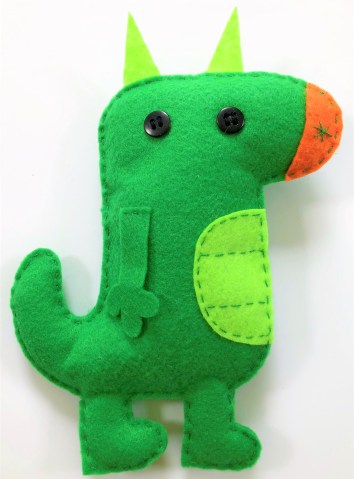
Back in the dormitory, Ruby turned on a lamp, “gave each of the saplings a stuffed dragon and told them stories of bravery and daring.” Master Willow watched and listened with a smile on his face. When Ruby handed him a stuffed dragon too, he told her that her skills were no longer a secret. “‘You are a wonderful storyteller, a fine dragon maker, and a very good friend.’” Ruby was happy, but she “kept practicing, because being brave isn’t always easy. Even for a ninja.”

celebrate-picture-books-picture-book-review-the-secrets-of-ninja-school-ruby-not-invisible

Copyright Deb Pilutti, 2018, courtesy of Macmillan Publishers.

Deb Pilutti’s uplifting story takes an honest look, through a fun Ninja lens, at the worries some children have when they compare their skills and talents to others and even against their own expectations. While Ruby struggles to pick up Ninja skills, readers will see that Ruby has other talents, such as perseverance, creativity, and the courage to ask for help. Ruby may feel—like all kids do at times—that she’s different from the others, but she discovers that emotions are universal, allowing her to appreciate and share her gifts for empathy, kindness, and friendship.

celebrate-picture-books-picture-book-review-the-secrets-of-ninja-school-master-willow

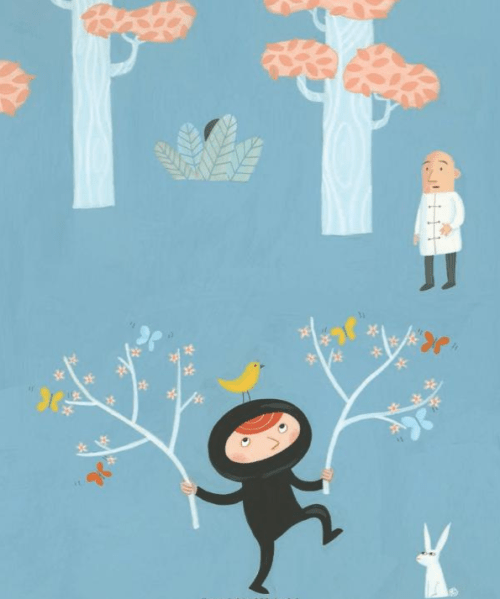
Pilutti’s bright illustrations will endear Ruby to readers as she excitedly goes off the ninja school, keeps practicing despite some mishaps, and sees dragons in clouds and shadows. Images of the saplings jumping, throwing, and meditating will delight little home ninjas-in-training, and the fully stocked Ninja Craft Area where Ruby creates her stuffed dragons will cheer young crafters.

You can make Ruby’s Dragon Softie too!

celebrate-picture-books-picture-book-review-the-secrets-of-ninja-school-dragon-softie

Clear instructions and patterns for an adorable dragon that kids can make at home are included at the end of the story.

Ages 4 – 8

Christy Ottaviano Books, Henry Holt and Company, 2018 | ISBN 978-1627796491

To learn more about Deb Pilutti, her books, and her art and to find fun book-related activities, visit her website.

International Ninja Day Activity

celebrate-picture-books-picture-book-review-stealthy-ninja-maze

Stealthy Ninja Maze


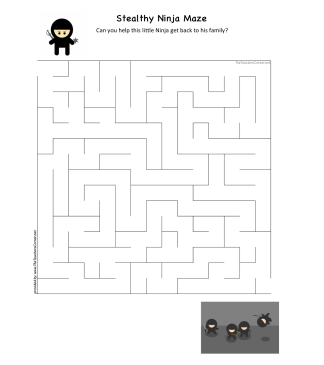
One little Ninja has gotten separated from her group. Can you help her find her way back in this printable maze?

Stealthy Ninja Maze | Stealthy Ninja Maze Solution

celebrate-picture-books-picture-book-review-the-secrets-of-ninja-school-cover

You can find The Secrets of Ninja School at these Booksellers

Amazon | Barnes and Noble | Books-a-Million | IndieBound | Macmillan | Powell’s