Friendship Month was established by the Oddfellows (shortened from The Grand United Order of Oddfellows Friendly Society (GUOOFS)), an international fraternity that dates back to 1730s England with the hope of encouraging people to make friends. Now dedicated to philanthropy and charity, the Oddfellows still promote Friendship Month each September to urge people to spend more time with their friends, get in touch with those they haven’t seen or talked to in a while, and, especially, to reach out to others who are alone or need a friend. As school gets underway, there are plenty of opportunities for kids to meet new people and form friendships – some of which may last a lifetime.
I’d like to thank Carolrhoda Books and Blue Slip Media for sharing a copy of Big Bear and Little Fish with me for review consideration. All opinions on the book are my own.
Big Bear and Little Fish
Written by Sandra Nickel | Illustrated by Il Sung Na
At the fair, Bear approached the basketball game booth, where the grand prize was a huge teddy bear. It was almost as big as Bear, herself. But Bear took away the consolation prize: a goldfish. “It was small. It was very small. It was so small it lived in a bowl.” Bear peered into the bowl, but when Fish woke up and said “‘Hello, Bear. Is this my new home?'”, Bear only nodded, afraid her big voice would scare little Fish.
Image copyright Il Sung Na, 2022, text copyright Sandra Nickel, 2022. Courtesy of Carolrhoda Books.
When lunchtime came, Bear made herself a sandwich with syrup that was as gold as she was. Bear didn’t know what to feed Fish, who was orange and probably liked “carrot muffins … or tangerines and pumpkins.” After lunch, Bear always measured herself. Today, she was over nine feet big! Bear didn’t know how she could measure Fish, so she left home for her regular afternoon walk, wishing – and not for the first time – that Fish was a teddy bear.”
While walking, Bear contemplated how inconvenient Fish might find the outdoors. Things could fall into her bowl and get caught in her tail. If she had a teddy bear Bear thought again, she wouldn’t have to worry about such things as tails. Bear began to regret ever bring Fish home from the fair. When Bear got home again, Fish greeted her with a “‘Hello” and a comment on how much she liked their porch.
Image copyright Il Sung Na, 2022, text copyright Sandra Nickel, 2022. Courtesy of Carolrhoda Books.
In response, Bear gave Fish the bad news that she couldn’t stay. When Fish asked why, Bear laid out her reasons: Fish was orange and ate orange foods; Fish had a tail that made it impossible for her to go on walks with Bear; and finally that Fish was too small. Fish was undaunted. She pointed out that Bear was orange too, and when Bear inspected her belly, she agreed that it “was an orangey sort of gold” kind of “like a carrot muffin.” Fish then added that Bear had a tail, and when Bear looked over her shoulder, she saw a tiny tuft. As to the assertion that she is “small,” Fish was surprised.
Image copyright Il Sung Na, 2022, text copyright Sandra Nickel, 2022. Courtesy of Carolrhoda Books.
“Am I?” she asked then welcomed being measured. She stretched herself out, and Bear measured her: three inches long. Fish was happy with this result; she wasn’t so small after all. “‘I am not one inch. I am not two inches. I am three inches,'” she said proudly. Still, Bear couldn’t get over the idea that Fish was so tiny she had to live in a bowl.
But Fish was philosophical. “‘Don’t you live in a bowl too?'” she asked. Bear had never thought of it that way before, and as she looked around at the big, blue sky, she suddenly felt small too. Fish reassured her and offered another perspective on physical size compared to how big one could feel inside. Bear considered this and then decided she’d like to take another walk – this time accompanied by Fish. And so they set off in search of a very big carrot muffin.
Image copyright Il Sung Na, 2022, text copyright Sandra Nickel, 2022. Courtesy of Carolrhoda Books.
In her seemingly odd “fellows” friendship story, Sandra Nickel presents a multi-layered look at what it means to be a true friend. She cleverly offers readers a variety of lenses for them to engage in perspective, from the character’s viewpoints to their own. Bear, alone at home and on her walks, focuses only on herself. At the fair, she wants to win a teddy bear that is a twin to herself but for which she would not need to be responsible in any real sense.
Fish, however, immediately wants to interact with Bear. She talks to him and asks questions. At first, it may seem that Bear will simply ignore Fish, but the idea of her has begun to make Bear think and even worry (here, Nickel creates a complex mix of emotions that invites discussion). Equally thought-provoking are Fish’s counter arguments when Bear tells her she can’t stay. While promoting how similar they are, Fish prompts Bear to reevaluate her view of herself and the world she lives in. Once Bear realizes that she, too, can be considered small and that the full measure of a person (or Fish or Bear) is found inside oneself, she embraces Fish – responsibilities, friendship, muffins, and all.
Il Sung Na plays with perspective and color to subtly guide readers through the stages of this endearing friendship. As Bear walks home from the fair, dejectedly carrying Fish in her bowl, the hilly landscape is washed in shades of blue and the twiggy, leafy, mushroomy vegetation replicates an ocean bottom. This evocative effect continues throughout the book, prompting kids to find other similarities between Bear and Fish and their environments. Readers will also enjoy pointing out examples and comparisons of big and small.
An endearing and thought-provoking story that boosts self-confidence while promoting friendship, empathy, and new perspectives, Big Bear and Little Fish will become a quick favorite on home bookshelves, a go-to book for classrooms, and a must for school and public library collections.
Ages 4 – 8
Carolrhoda Books, 2022 | ISBN 978-1728417172
Discover more about Sandra Nickel and her books on her website.
To learn more about Il Sung Na, her books, and her art on her website.
Dive in to this book trailer for Big Bear and Little Fish!
Friendship Month Activity
Measuring Stick Craft
Bear and Fish loved getting measured. If you’re looking for a unique way to measure how big you are, here’s a craft for you! This nature-inspired measuring stick can keep track of your big and small growth spurts whenever you sprout up. You can even add leaves to record thoughts, favorite things, and other ideas as you age!
Supplies
50-inch wooden stake, available at craft stores
Dark and light green foam sheets or 45 – 50 small wooden leaves, available at craft stores
Green paint, light and dark
Black marker
Paint brush
Strong glue
Flower pot
Oasis or clay
Ruler
Pencil
Directions
Paint the wooden stake with the green paint, let dry
With the ruler mark the stake in 1-inch increments along the edge of the stake
How to Make the Leaves
If using wooden leaves, paint half light green and half dark green
If using foam, cut 1 3/4-inch-long tear-drop shaped leaves (half from light green foam, half from dark green foam), 45 – 50 or as needed
Cut two larger leaves, one from each color to decorate the top of the stake
Draw a line down the center of each leaf
For Measuring Growth:Write the inch 1 through 45 or higher on each leaf with the black marker, alternating colors
For Recording Ideas: You can write favorite ideas, hobbies, or hopes on the leaves too and measure your growth that way!
How to Attach the Leaves
Glue the leaves to the stake, attaching the odd-numbered inch leaves to the left side of the stake and the even-numbered leaves to the right side of the stake.
Attach half of the leaf to the stake, letting the tip stick out from the side
Glue the two larger leaves to the top of the stake
How to Store Your Yardstick
Put the oasis or clay in the flower pot
Stick the stake into the flower pot to keep it handy
To get a copy of Big Bear and Little Fish personalized by Sandra Nickel
Visit Watermark Books to request a signed and personalized copy. When ordering, simply note your desired dedication in the Comments section. Sandra will sign on September 24, 2022, so be sure to order in plenty of time.
You can also find Big Bear and Little Fish at these booksellers
Today we celebrate those lowercase letters that make up a predominance of our sentences (and nearly all of our texting). The lowercase letter has a proud history, dating back to the earliest development of script and writing. The terms “lowercase” and “uppercase” come from the era of the printing press, when individual letters were inserted by hand into plates that were then inked and pressed onto paper. The tiles etched with each letter were kept in trays conveniently located for the printer to set them into the plates with capital letters found in the upper case and small letters arranged in the lower case. To learn more about the history of our script was developed, visit My Modern Met. You’ll find rules on using lowercase and uppercase letters at Gammerly. And to discover the fun you can have with the letters of the alphabet, read about today’s book below and meet its creators!
My Pet Feet
Written by Josh Funk | Illustrated by Billy Yong
A little girl wakes up on a glorious morning. The bees are buzzing and the palm tees (no, it’s not a typo, you’ll see…) outside her window are standing tall. First job of the day is to feed her pet ferret, Doodles. She goes to his cage only to find two very long feet and a very sad face looking up at her. “‘What happened to my pet feet?’” she cries. “‘I mean my pet feet. Why can’t I say ‘FEET’?’” She looks all over her room for an answer and then spies something suspicious. Her alphabet banner is missing the ‘R.’ She quickly assesses the situation and realizes that without the letter R, her beloved pet has become simply FEET. Immediately, she decides she must do something and calls her best friend Lucas to help her.
Image copyright Billy Yong, 2022, text copyright Josh Funk, 2022. Courtesy of Simon & Schuster Books for Young Readers.
But when she left the house, she discovered that the missing R wasn’t just affecting Doodles, but the whole town. On the way to find Lucas at his mom’s bake shop, she had to avoid “a bunch of kids on go-cats” and a policewoman on the back of a galloping hose.” Then when she found Lucas, her bestie had turned into a fiend. What was worse is that no one acted like anything was wrong.
Everywhere she went there was pandemonium, strange hybrid creatures, and weird machines. The girl wanted to find out “what happened to the eighteenth symbol of the alphabet. Could someone have taken it? “But who? And why? …I don’t want to have pet feet until the end of time!” Distressed to hear this, Doodles ran away, and even though she chased him “by the old babbling book, down a tail, and into a gassy field, the girl couldn’t find him.
Image copyright Billy Yong, 2022, text copyright Josh Funk, 2022. Courtesy of Simon & Schuster Books for Young Readers.
But then, faintly in the distance, she heard familiar footsteps and followed the sound until she found him at the seashoe …ummm…at the beach, which was not quite the way it used to be. Still, she found Doodles and apologized for hurting his feelings. He gave her a big hug, but then was off again—this time into the sea. The girl dove in too. Could Doodles be leading them to the answer for the missing R’s? Could life eally etun to nomal … ummm … Could life actually go back to the usual? To find out, jump in and paddle along! You don’t want to miss the supising esolution … I mean the astounding ending!
Image copyright Billy Yong, 2022, text copyright Josh Funk, 2022. Courtesy of Simon & Schuster Books for Young Readers.
In My Pet Feet, Josh Funk has carefully crafted a grammatical mystery that will keep readers (both kids and adults) marveling over the cleverness of each word transformation and how they add to the richness of the story. As the little girl races to restore Doodles to his normal cuddly state, readers become totally immersed in the laugh-out-loud, fantastical R-less world even as they empathize with her dilemma. The pitch-perfect ending comes as a real surprise, one that is sure to please readers of all ages.
Perfectly matched to Funk’s comedic talents is new picture book bright light Billy Yong, who brings a fresh, vibrant, and hilarious sense of humor to this story. Readers will want to linger over every page as Yong infuses each spread with a wealth of astoundingly clever details in depicting not only the R-less words provided in the story but in creating a whole town and outlying regions in which every element is flawless. Yong’s illustrations set up an irresistible game of search-and-find for all the visual puns, and the before and after images of the town make for an engaging find-the-differences puzzle.
A joy from beginning to end, My Pet Feet charms on many levels. The book is laugh-out-loud fun for the whole family as well as a way to engage kids in lessons on the alphabet, sound recognition, spelling, and grammar for teachers. Both avid and reluctant readers will love the silliness that makes this a must-have addition to all home, classroom, school, and public library collections
Ages 4 – 8
Simon & Schuster Books for Young Readers, 2022 | ISBN 978-1534486003
I’m thrilled to be talking with Josh Funk and Billy Yong today about My Pet Feet. So put up your feet and get ready to learn about the amazing journey this story took from an initial idea to an instant classic!
Meet Josh Funk
Credit Carter Hasegawa
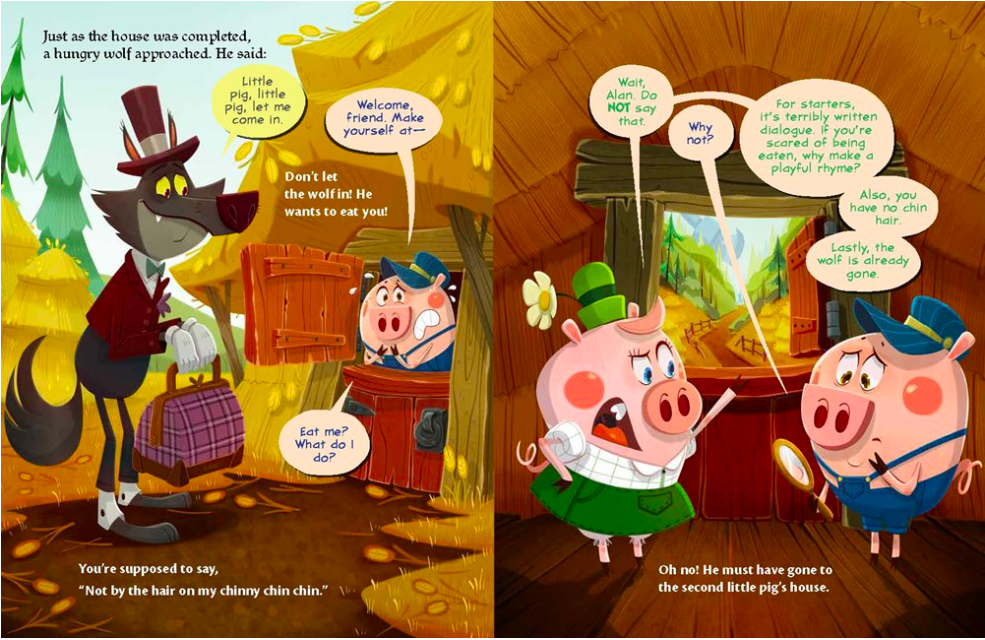
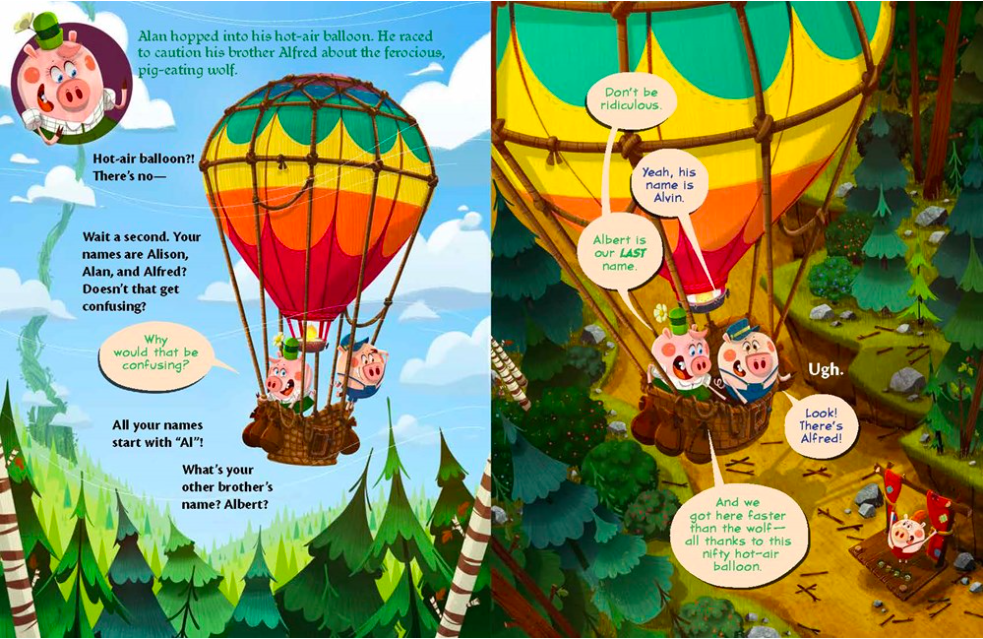
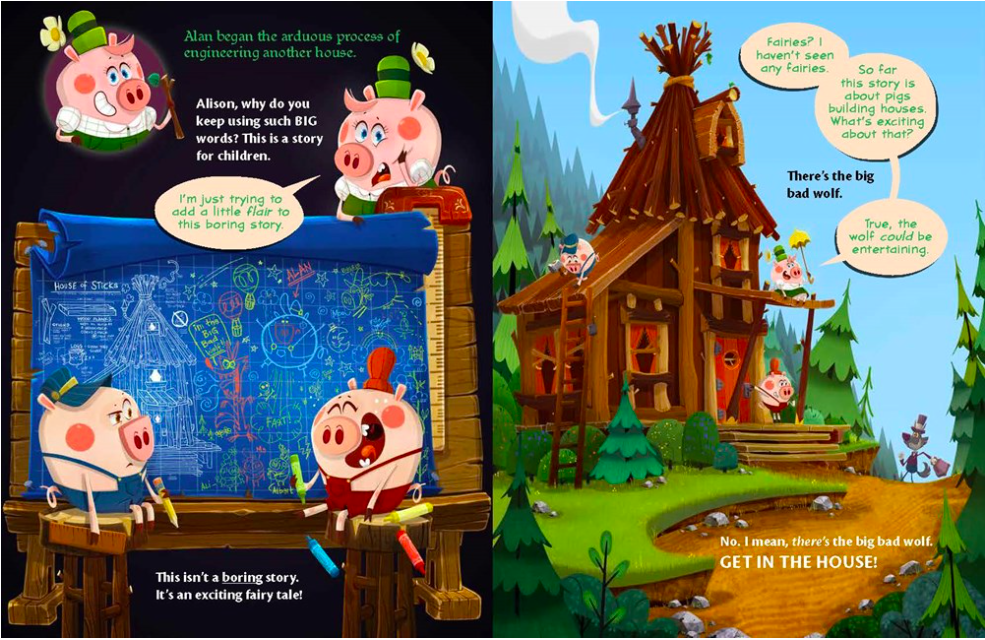
Josh Funk writes silly stories such as the Lady Pancake & Sir French Toast series (including the forthcoming The Great Caper Caper, November 15, 2022); the It’s Not a Fairy Tale series (including the forthcoming It’s Not the Three Little Pigs, October 1, 2022); the How to Code with Pearl and Pascal series (including How to Code a Sandcastle and How to Code a Rollercoaster); the A Story of Patience & Fortitude series in conjuction with the New York Public Library (including Where Is Our Library? and Lost in the Library); Dear Dragon, Albie Newton, Pirasaurs!, A Night at the Bookstore: A Barnsie & Noble Adventure, and Dear Unicorn, coming in the fall of 2023!
Since the fall of 2015, Josh has visited (or virtually visited) over 500 schools, classrooms, and libraries and he is a board member of The Writers’ Loft in Hudson, MA. Josh grew up in New England and studied Computer Science in school. Today, he still lives in New England and when not writing Java code or Python scripts, he drinks Java coffee and writes manuscripts.
Hi Josh! I’m so excited to be a part of your book tour for this comedic tour de force! Thanks for taking time to chat with me about My Pet Feet and how the story came to be!I’m sure readers would love to know a little about how you wrote this story. How much fun was it to find all of the convertible words? How long did your writing process take?
It started with a typo on my phone (or possibly an autocorrect). I meant to write the word ‘friend’ but it came out ‘fiend’ which led me to wonder … what happened to the R? Why would a friend become a fiend? Did other words also lose their R’s? Did ALL words lose their R’s? Why? And what would the world look like if there were no R’s? What silly illustratable shenanigans would occur in a book written without the letter R?
This led me to start searching for words where if you took away an R, it would become another word—especially word pairs that made for funny illustrations. Crows becoming cows. Babbling brooks becoming babbling books. The seashore becoming the seashoe.
But I still also needed a story. I needed a reason, an important reason, that someone needed to investigate the missing R’s … and needed to get them back. And rescuing a pet who had been transformed into something else was the perfect reason.
Once I had the list of words to play with along with the main character’s motivation, everything easily fell into place. JUST KIDDING! I wrote many, many, MANY revisions of this story both before and after it was acquired to get things in the shape they finally ended up in. And truly, nothing really came together until Billy Yong joined the team.
Speaking of Billy, what were your thoughts when you saw his illustrations? Do you have a favorite spread?
As an author of picture books, I think I benefit from not thinking too visually, at least in specifics. By that, I mean, I had no idea what ‘pet feet’ would look like. Would they be human feet (with human toes? Ew.)? Would it be like a rabbit’s foot? Would the foot have a face? I honestly didn’t even bother thinking about these things—I left that for someone else to tackle.
And unsurprisingly, I think Billy’s visual creation of pet feet is amazing! I have no idea how he made ‘pet feet’ look cute. The concept is just so ridiculous, but he managed to pull it off.
As far as favorite spreads and images, I love the spreads with all the visual gags in the background, like the one in town with everyone acting like it’s just a typical day. But the best, without a doubt, is the gassy field. I had no idea Billy was going to illustrate a bunch of butts farting—but I totally approve. Like I said, I don’t think too visually—I just wrote ‘gassy field’ and assumed someone else would take care of it. And there are no buts about it—Billy did.
Meet Billy Yong
Billy Yong is an illustrator and character designer. Since starting out he has drawn storyboards, engaged in visual development, and has even voice acted for animation, games, and children’s books. When he’s not creating his professional doodlings, he can be found in a cafe drawing or painting in his sketchbook, in his studio developing his personal projects, or in the dojo teaching Japanese swordsmanship. Billy currently lives in sunny Singapore.
To learn more about Billy Yong and view a portfolio of his work, visit his website. You can connect with Billy on Instagram and Twitter.
Hi Billy! I’ve been looking forward to chatting with you since the moment I saw my review copy of this book. First, I want to Congratulate you on your debut picture book! Can you talk about your previous work and how you came to illustrate Josh’s story?
Thanks Kathy! It is such a privilege to be debuting through Josh’s hilarious story. Up till then, most of my illustrative works centered around the Young Adults range. Now that I think about it, one of my most enjoyable school projects that brought me into the kid lit scene was TheBoy Who Cried Wolf.
Copyright Billy Yong
When I was first approached about the project, Josh, Kendra and Chloe (editor and art director respectively) said my sense of humor was what got me the role. At that time, I honestly struggled to understand what they meant, but never say no to great opportunities eh?
What were your first impressions when you read Josh’s manuscript?
Dude, I loved it. Probably not a good thing that I first read it just as I was about to turn in for bed (it was 02:32 in the morning since I live in Singapore). I couldn’t sleep for the next two hours because I was drawing scenes in my head haha.
Your illustrations are so ingenious, even including foreshadowing and visual puns that go beyond or riff on the “r-less” words in the text. I’m sure readers would love to learn a little about your process in creating them.
You’re too kind! First off, for anyone wanting to get into illustration, particularly with larger projects like these, understand that the process is more often a back-and-forth than a straight journey. I typically like to doodle on the script when I first read it, it helps to just spill out any ideas onto paper without restraint at the earliest phase.
Some of the earliest ideas featured the town name: Butterfield Shores -> Buttefield Shoes. Me being the adult that I am, figured why not a bronze statue, butt resplendent for all to see, with a sign sticking out his bum, and a shoe on his head, with a little flower growing from it.
Image copyright Billy Yong, 2022
Developments of bums are always a joy.
Another was around miscellaneous things we would encounter.
Image copyright Billy Yong, 2022
Even though they were never used, it helped kick off the vibe of this crazy world our heroes lived in.
Back on the main subjects, I’m usually drawn most towards characters, so that’s usually what I like to start off with after doodling on the script.
Image copyright Billy Yong, 2022
I loved that our main human was pretty nondescript, so that left a lot of room to create a cast of characters. I eventually settled on no.2, since her shapes felt quite a lot like our fe(rr)et, Doodles. Below are some other characters I drew during the development process:
Image copyright Billy Yong, 2022
When it came to laying out the pages however, my usual methods of working digitally lacked the grand overview and the bravery to push past mistakes. Ironic since the digital medium allows me to undo to my heart’s content, but that also means I don’t see my mistakes and move past them.
So, feeling stuck, I whipped out a giant A3 sketchpad with a sharpie and just went ham at it. No distractions, not even music in the background, just drawing at the dining table figuring out the flow and composition for Josh’s story. I think I managed to churn out the entire layout in 2 days because of this, haha.
Image copyright Billy Yong, 2022, text copyright Josh Funk, 2022.
Image copyright Billy Yong, 2022
(Initial doodles of the first couple of pages. When I liked a composition but didn’t like parts of it, I would paste a sticky note on top and just draw over it. It feels a lot more intuitive ideating like this compared to a digital drawing.)
This wouldn’t quite make sense to Josh, Chloe (art director) and Kendra (editor) though, so the next step was tidying up.
Image copyright Billy Yong, 2022, text copyright Josh Funk, 2022.
(I think the most important part about this sketch cleanup phase was not to be too married to the original sketches, so if it doesn’t work on cleanup, then it helps to go back to the sketchpad or just move on and revisit the spread.)
Once layouts were done, it was back to designing the characters. Doodles (or Feet) had the most rounds of back and forth. Ranging from foot-face, to a head on feet, ultimately to feet with a face, every interpretation brought us closer to what you see before you.
Image copyright Billy Yong, 2022
Doodles (Feet State) v.2 was what we settled on in the end.
Was there a spread that was particularly fun to illustrate? What made it so?
Haha, they were all a joy to do, but my favorites would be these three:
Image copyright Billy Yong, 2022, text copyright Josh Funk, 2022.
While the layout changed quite a fair bit from the original sketch, my goal of showcasing the go-cats and the topsy-turvy-ness of it all culminated in a winding road, with a subtle line at the top to lead the eyes back to the cat’s tail, ultimately to rest at the water splashing of the police ho(r)se.
Image copyright Billy Yong, 2022, text copyright Josh Funk, 2022.
While this was less dynamic than the previous one, it was really fun laying out the look and feel of the town. I think the biggest challenge was to make it feel populated without overloading the senses, and allowing the eyes pockets of rest in a spread so full of colors and information. I also sneakily snuck in my friends, who are getting married at the end of 2022, so even though I couldn’t be there, it’s my little wedding present to them.
The @-rats were also a suggestion of my wife (I think). Honestly in the thick of things I’ve confused ideas I’ve received from Josh, Kendra (our editor), Chloe (art director), my wife Rachel and myself. It really has been a team effort to bring this book to life.
Image copyright Billy Yong, 2022, text copyright Josh Funk, 2022.
Again with the swirly composition. (I’m starting to think I have a thing for these…) Also relatively simple, but I’m happy turning the tail into a device for our readers to traverse from left to right. Of course the gassy fields had to be a field of bums farting into the wind.
What do you like best about illustrating children’s books?
I enjoy the freedom of expression. It’s very daunting whenever you start a project like this, because said freedom means you often start on a very blank canvas, with only the story to guide you. You have to give yourself permission to be as wild as your skill and imagination can allow, and avoid listening to the doubts you have with certain decisions you make. When those doubts do manifest, I’ve found it useful to remind myself that this is a team process, and if the author, editor or art director don’t quite approve, they’ll let you know. Until then, go ham.
What’s up next for you?
Haha, I don’t think I’m allowed to say, but perhaps I could hint that it’s about a boy, his friends and a hammer. It’s quite the wild ride, and I hope when it’s released readers will enjoy it. I certainly have. Apart from that, just raising a baby girl with my wife. It’s an exercise in patience and endurance. I cannot wait to start drawing with her and learning from her. Perhaps I will become a better artist from that.
Wow! Thank you for sharing so much about how you brought My Pet Feet to life! Your awesome illustrations and sense of humor are going to keep kids searching for all the visual puns and laughing from beginning to end – and over and over again! I wish you all the best with this book and am really looking forward to seeing more of your work. And, since we’re talking about bringing the story to life, I think we have time for one more image ….
Copyright Billy Yong, 2022
So, Everybody, jump on your Go-Cat and head to your local bookstore to pick up My Pet Feet to celebrate New Book Month in hilarious style!
My Pet Feet Virtual Book Tour Activity
Feet Pet Portraits
Feet don’t have to be just for walking, running, or dancing. As today’s story shows, they can make pretty awesome pets (even when it’s just a mistake). With this craft you can use your own feet to make a pet portrait to decorate your room!
Supplies
1 Sheet of regular printer paper or heavy stock paper for the portrait
1 Sheet of colored heavy stock paper for the frame’s backing
1 Sheet of heavy stock paper in a contrasting color from the backing to make the frame
Crayons or colored pencils
Scissors
Glue or glue dots
Directions
Stand on the white paper with your feet together and trace your feet
Now it’s time to get creative! Turn the paper toes up, toes down, or toes to the side and design your pet.
After you’re finished drawing, color your picture in
Cut your pet out
To Make the Frame and Frame Your Portrait
Measure one inch around each side of one piece of heavy stock paper
Cut out the middle
Use glue or glue dots to adhere the frame to the backing
Use glue or glue dots to adhere your feet pet portrait to the backing of the frame
National Food Bank Day was established by St. Mary’s Food Bank, the world’s first food bank, which was founded by John van Hengel in Phoenix, Arizona in 1967. The idea spread throughout the country, and now St. Mary’s Food Bank distributes 250,000 meals daily with the help of staff, volunteers, and partner agencies, making it one of the largest food banks in the United States. This year, a record number of families (nearly 150,000 in August alone) have sought help. Food banks across the country help millions of men, women, and children who live with food insecurity due to job loss, illness, and other circumstances. Many food banks offer educational opportunities that help people change their situation and begin anew. Often, those who have benefited from the programs return to volunteer and contribute to the very food bank that helped them. To learn more about St. Mary’s Food Bank, visit their website. To find a food pantry in your area to get help for yourself, to donate, or to volunteer, visit the Ample Harvest website.
I’d like to thank Albert Whitman & Company for sharing a copy of Saturday at the Food Bank with me for review consideration. All opinions on the book are my own.
Saturday at the Food Pantry
Written by Diane O’Neill | Illustrated by Brizida Magro
When Molly came to the table for dinner, she saw that they were having chili—again. She and her mom had eaten chili for two weeks straight. But there was “fancy milk too.” Molly smiled as her mom measured sugar and cinnamon into her glass and added milk.” There was only a splash of milk left when Mom put it back into the almost-empty refrigerator.
Tomorrow, Mom said, they’d go shopping. “Molly’s eyes lit up” as she imagined “chicken and spaghetti and ice cream.” But Molly’s mom tempered her expectations, saying that they’d be going to a food pantry. A food pantry, she explained, is “‘a place for people who need food…. Everybody needs help sometimes,’” she added. That night there was no warm milk before Molly went to bed and her stomach growled.
Image copyright Brizida Magro, 2021, text copyright Diane O’Neill. Courtesy of Albert Whitman & Company.
In the morning when Molly and her mom got to the food pantry there was already a line waiting for it to open. Molly had brought paper and crayons and sat down to draw. Then she saw a girl who was in her class at school. She called out a hello, but “Caitlin looked away.” When Molly ran over, Caitlin told her she didn’t want anyone to know that she and her grandmother needed help.
Molly went back to her mom, wondering if there was “something wrong with needing help.” She wanted to go home, but she was also hungry. Molly’s mom suggested she draw a picture, and the woman in front of them asked if she’d draw one for her too. Then everyone in line seemed to want a picture. Molly ran back to Caitlin to ask for help. Caitlin sat down and began to draw too.
Image copyright Brizida Magro, 2021, text copyright Diane O’Neill. Courtesy of Albert Whitman & Company.
When the door opened, Molly and Caitlin each had a picture for the woman who welcomed them in too. Molly noticed that her mom had to sign in before she got a cart and they could begin shopping. They didn’t do that at the grocery store. The shelves at the food pantry were stocked with items she recognized from the store they usually shopped with. She ran over and took a box of sugar cookies off the shelf, but her mom told her “‘They—the people in charge—they’ll want us to take sensible stuff.’” Molly felt embarrassed and couldn’t understand why the cookies were there if they couldn’t take them. She sadly returned them to the shelf. As they went to look for food, Molly thought her mom didn’t want to be seen there, either—just like Caitlin. In a whisper, Molly reminded her that everyone needs help sometimes.
They went through the store taking one can, bag, or box of the food they needed. Then Molly’s mom reached for a box of powdered milk. They could have fancy milk that night. When they got to the checkout desk, Molly and Caitlin found their drawings hanging on the wall. The man at the counter bagged their groceries and then handed Molly’s mom a box of sugar cookies. “‘Saw your little girl looking at these. She can have them, if that’s okay with you, ma’am,’” he said. Molly noticed that her mom looked like she might cry.
Image copyright Brizida Magro, 2021, text copyright Diane O’Neill. Courtesy of Albert Whitman & Company.
As they were walking home, Molly saw Caitlin and her grandmother coming the same way. They were all happy to discover that they were neighbors. Molly’s mom explained that she’d been looking for work since the factory closed, and Caitlin’s grandma said she’d been sick. Caitlin understood, but wished they didn’t have to shop at a food pantry. But then Molly told her that “everybody needs help sometimes” and reminded her that they had helped make the man at the checkout counter feel happy with their drawings. Caitlin hadn’t thought about it that way. She smiled. Then Molly invited her and her grandmother to have lunch with them—with sugar cookies for dessert.
Following the text, a note for parents, teachers, and other caregivers from Kate Maehr, the Executive Director and CEO of the Greater Chicago Food Depository, reveals more information about food insecurity, including recent statistics and a resource where people can find help and more information.
Image copyright Brizida Magro, 2021, text copyright Diane O’Neill. Courtesy of Albert Whitman & Company.
Diane O’Neill’s well-executed story about two families who need the help of a food pantry is a poignant reminder of the many people—perhaps even readers’ classmates—who face food insecurity every day. Through the experiences of Molly and her mother and Caitlin and her grandmother, readers discover what it’s like to go to bed hungry, miss out on treats, and feel ashamed to ask for help. As this is Molly and her mother’s first trip to a food pantry, Molly’s questions and observations well reflect children’s own or reassures those who are familiar with these important resources.
O’Neill’s straightforward storytelling emphasizes the fact that at one time or another everyone needs help and demonstrates simple ways that children make things better through their generosity, optimism, and acceptance. Molly and Caitlin’s budding friendship makes for an uplifting and hopeful ending and may spur readers to recognize need in their midst and extend kindness.
Through her realistic illustrations of two families in need of assistance from a food bank, Brizida Magro helps children see and understand what food insecurity and food pantries look like. At home, Molly and her mom eat small portions of leftover chili and the last full glass of milk. When Molly’s mom puts the carton in the refrigerator, the shelves are nearly empty, and Molly lies awake in bed, too hungry to fall asleep.
The line outside the food pantry is made up of people from all walks of life, and inside the displays of food replicate a grocery store with the exception of signs asking shoppers to take one item only. These images can lead to meaningful discussions on the enormity of the issue. When Molly and Caitlin draw pictures that cheer up everyone in line as well as the food pantry workers, kids will recognize not only different ways of helping but their own role in making the world a kinder place.
Empathy shines on every page of O’Neill’s necessary and welcome story. Saturday at the Food Pantry is timely, heartfelt, enlightening and a must-buy addition to home, classroom, and school and public library collections.
Ages 4 – 7
Albert Whitman & Company, 2021 | ISBN 978-0807572368
Discover more about Diane O’Neill and her work on her website.
The beginning of a new school year is a terrific time to celebrate Read a New Book Month—especially for kids. Whether their reading tastes have broadened, their reading level has changed, or they’ve discovered new and fascinating topics to explore over the summer months, there are new books just waiting for them! The books may be recently published—like today’s book—or just new to your child, there are countless fictional stories and nonfiction books ready to inspire learning, to laugh or cry with, and to share with friends. This month visit your local bookstore and library and stock up on books for your kids and everyone in the family!
The Boy and the Mountain
Written by Mario Bellini | Illustrated by Marianna Coppo
“There once was a boy who always looked at a mountain.” It was the first thing he looked at in the morning and the last thing he said good night to before going to bed. The boy loved to draw, and one day he “decided to draw the mountain.” His first attempt didn’t look anything like the mountain he saw out his window. When he looked closer, he realized “the mountain was covered with trees,” so he added trees.
Image copyright Marianna Coppo, 2022, text copyright Mario Bellini, 2022. Courtesy of Tundra Books.
Still, his picture wasn’t quite right. Next, he noticed the sky and clouds around the mountain and drew those, but his picture “still didn’t look the same as the real thing.” He tried drawing the mountain at different times of day and in different weather, but “he was never happy with what he had drawn.”
One day, the boy decided to get a closer look. He took his dog and headed out. One the way, he met a goat and drew a picture of it in his sketchbook. The goat decided to come along. When a flock of birds flew by, the boy drew those too. One bird left the flock to follow the boy and his dog and the goat. When they stopped at a stream for a drink of water, the boy drew that too.
Image copyright Marianna Coppo, 2022, text copyright Mario Bellini, 2022. Courtesy of Tundra Books.
It was fall, and the ground was covered in leaves. The boy “wanted to draw them all,” but even though he drew many of them, there was no way they would all fit on the page. He continued on up and up into the forest and beyond. Along the way, he picked up other followers, including a frog, a bear, and a beaver. When he had left the trees behind, there was very little to draw “until he looked more closely” and saw a tiny white flower poking up between some rocks. He drew it.
Image copyright Marianna Coppo, 2022, text copyright Mario Bellini, 2022. Courtesy of Tundra Books.
At last he came to the mountain’s peak. He sat down and flipped through his sketchbook, but he still wasn’t satisfied with his drawings. It was then that he became aware of the goat, the bear, the frog, the bird, the beaver, and a snail who had joined him. “‘Ohhh … hello!'” he said. They played until it was time to go home. The bear gave the boy a ride home on his shoulders. Once home, the boy promised that he would see them all again soon. That night before going to sleep, the boy drew the mountain again with his new perspective. This time his drawing was complete—and the boy was completely satisfied with it.
Image copyright Marianna Coppo, 2022, text copyright Mario Bellini, 2022. Courtesy of Tundra Books.
Mario Bellini’s thoughtful and well-paced adventure gently guides readers to consider not only their perspective on big and small topics of life but where and how they fit into the wider world. Just as children observe the world from their vantage points of home, school, and activities, the boy in the story looks at the mountain and tries to make sense of it by drawing it. Then, like kids slowly adding bits of what the world has to offer to their lives, the boy includes trees, clouds, and different times of day to his drawing. But he thinks there must be something more, and, now braver and more knowledgeable, he ventures out to get a better look.
Along the way he sees more of the world and interacts with what he encounters in the way that means the most to him. Some of these experiences turn out well, and others don’t, but he persists. When it appears that he’s finally come to the end of his journey, he sits down (alone, or so he thinks) and ponders his single-subject, disjointed pictures. When he finally notices all of the animals who have joined him on his trek and embraces them as friends, the boy discovers an interconnectedness that has been missing for him all along. At last, with his final drawing, the boy is able to be satisfied with his knowledge, understanding, and place in his world.
Marianna Coppo’s delightful rounded illustrations lend a quiet elegance to the story while allowing readers to view the boy’s drawings for themselves and then join him on his journey to see the mountain up close. Kids will enjoy noticing the animals that begin to populate the boy’s sphere, even while he is unaware that they are following him. The boy’s drawings of the river, the leaf-strewn forest floor, and the hidden mountain peak give kids and adults an opportunity to talk about times when things go wrong, when life seems overcrowded or overwhelming, and when goals seem elusive. Coppo also helps kids see that surprises can be found in the most unlikely of places as well as when you least expect them.
A multi-layered story that invites thought, observation, conversation, and discovery (of both the self and the world), The Boy and the Mountain would be a favorite read for quiet story times or as a prelude to any new experience at home or in school. The book is highly recommended for home bookshelves as well as classroom, school, and public libraries.
While dates for this holiday may vary – some say May while others celebrate in August, National Inventors Month was established in 1998 by the United Inventors Association of the USA, the Academy of Applied Science, and Inventors’ Digest magazine. This month-long holiday recognizes the imagination and talent of individuals who dare to think differently to create new products, services, and ways of doing things that make a positive contribution to the world. Today, I’m sharing a book that highlights those who reach for the sky, dive under the sea, and look for opportunities to better help and connect people through the structures we use and live in. If you harbor dreams of being an inventor—on a large or small scale—look for opportunities to share your ideas!
How Was that Built?
Written by Roma Agrawal | Illustrated by Katie Hickey
They seem to have sprung from the ground, they soar into the clouds, they cross vast waterways—over and under the ripples and waves, and they come in all shapes and sizes. What are they? Buildings! For lovers of architecture, engineering, and just the marvels that people can construct, Roma Agrawal’s compendium of some of the world’s most incredible buildings will leave them enthralled—and much more knowledgeable on how these structures came to be.
In fifteen chapters, Agrawal reveals all the nuts and bolts about how buildings are secured on difficult sites (such as on sinking ground, in the sea, underground, and on ice); constructed to be tall, long, or able to move; and made to serve civic purposes. In addition to detailed explanations of the conditions architects and engineers must take into consideration when designing and constructing a building, bridge, or other structure, Agrawal clearly describes the materials used, how they are made, and why each is chosen for a particular job.
Image copyright Katie Hickey, 2022, text copyright Roma Agrawal, 2022. Courtesy of Bloomsbury Children’s Books.
Rounding out each chapter, Agrawal goes in depth on one world building that demonstrates her topic. For example, In the first chapter she introduces readers to the Metropolitan Cathedral in Mexico City, which was built on top of an old Aztec pyramid in the middle of a filled-in lake. When it began sinking and tilting, engineers in the 1990s devised an intriguing way to save it. If you’re a fan of skyscrapers and wonder just how they’re built, a chapter on The Shard in London, which “is over 1,000 feet tall…and has 11,000 glass panels” (and for which Roma Agrawal worked as an engineer) reveals the secrets of a strong core and the incredible machinery that allows workers to keep going up and up.
Readers who love bridges will find two chapters on these beautiful and intricate structures. One reveals the fascinating story of how the construction of the Brooklyn Bridge overcame many challenges under the direction of Emily Warren, a woman who broke barrios for women in the engineering field. Another describes six different types of bridges as well as where they are used and why.
Readers also learn about concrete and how arches and domes work. They then explore the Pantheon and discover how it has stood for nearly 2,000 years. Other concrete structures from around the world are also discussed. You may not think too much about sewers, but imagine living without them! You’ll get a good (and stinky) idea about the conditions in London hundreds of years ago before Joseph Bazalgette designed and built the first sewer system. How did he do it? Agrawal breaks it down and then talks about today’s modern sewers.
Image copyright Katie Hickey, 2022, text copyright Roma Agrawal, 2022. Courtesy of Bloomsbury Children’s Books.
You’ll also find chapters on dams, tunnels, and buildings with moveable parts—or buildings like the Halley VI research station in Antarctica that can be moved easily in their entirety to avoid snow or ice that may crack beneath them. Then there are the challenges of building under the sea and in outer space. While astronauts now rely on the International Space Station, “some engineers and scientists are studying how to build structures on the Moon! Then researchers could live there for a long time to carry out their experiments and learn more about outer space.” What considerations must engineers take into account and what materials will they use? Agrawal fills readers in. She then closes her book with a look toward the future and talks about new materials and methods of building that may transform our world.
Sprinkled throughout the book are “Try It At Home” prompts for experiments that readers can easily do at home to visually interact with the concepts Agrawal lays out, such as using malted milk balls and raisins to understand “how carbon atoms make steel stronger” and making a pneumatic caisson with just a few household items.
Back matter includes a glossary of terms found in the book and brief biographies of ten influential engineers from the past and present.
Image copyright Katie Hickey, 2022, text copyright Roma Agrawal, 2022. Courtesy of Bloomsbury Children’s Books.
Readers of all ages will be engrossed by Roma Agrawal’s guide through the architecture and engineering that go into housing, moving, connecting, and supporting the world’s population. Every page contains fascinating details and interesting tidbits culled from Agrawal’s extensive experience as an engineer. These go far beyond an introduction to landmark buildings to show readers exactly how each type of building works. Relayed in a simple-to-understand, conversational style, her text is also broken up into short paragraphs that are easily digestible and invite further research, making this a superb resource for schools, homeschooling, and enthusiasts of all things engineering and architectural. Agrawal’s inclusion of structures from the past reveal the ingenuity of our ancestors and how they still influence today’s engineers and architects. Kids who love geography, archaeology, astronomy, and learning about all the intricate workings of the world will be enthralled with this book.
Katie Hickey gives readers an insider’s view of these phenomenal buildings with her stylish and incredibly detailed illustrations. Cityscapes allow children to understand the scale of skyscrapers from around the world and the beauty and breadth of New York City’s Brooklyn Bridge. Hickey whisks readers off to London to see The Shard; to New Zealand to view Te matau ā pohe, a bascule bridge whose shape was inspired by a fish hook; to Japan, where the Sapporo Dome accommodates soccer and baseball games with a moveable field of natural turf; and to Africa to stand on the edge of the Katse Dam and look 600 feet down into its reservoir. Along with this world tour, Hickey helps readers visualize the intricate working parts of certain buildings and bridges with interior views and small insets that demonstrate the physics of each design. Images of various types of cranes, pulleys, and other machinery also reveal the science behind building each structure.
A rich and comprehensive resource on the intricate engineering that goes into designing and building complex structures while also sharing the stories behind them, How Was that Built? will captivate readers of all ages. The book is a must for any STEM, science, art, or archaeology lover and belongs in all school and public library collections.
Ages 6 and up
Bloomsbury Children’s Books, 2022 | ISBN 978-1547609291
Roma Agrawal is a structural engineer who builds big. From footbridges and sculptures, to train stations and skyscrapers – including The Shard – she has left an indelible mark on London’s landscape. She is a tireless promoter of engineering and technical careers to young people, particularly under-represented groups such as women. She has advised policymakers and governments on science education, and has given talks to thousands around the world at universities, schools and organizations, including two for TEDx. Roma has been awarded international awards for her technical prowess and success in promoting the profession, including the prestigious Royal Academy of Engineering’s Rooke Award.
Discover more about Roma Agrawal and her work on her website, and connect with her on Instagram | Twitter. You can read an interview with Roma Agrawal in Publishers Weekly here.
To view a portfolio of work by Katie Hickey, visit Pickled Ink. You can connect with Katie Hickey on Instagram | Twitter
National Inventors Month Activity
Build a Remarkable Recycled Bridge
You don’t need fancy blocks and construction materials to build a bridge! Little ones will be fascinated to put together a bridge made out of items you already have at home or that may even be slated for the recycle bin. Spaghetti boxes make great roadways, and cut-up egg cartons can be used as supports.
Build a Whole Town
Want to give your bridge a town with a river to span – or maybe two towns to connect? Cereal boxes and pasta boxes make great skyscrapers, apartment buildings, fire stations, and more. Need a farm silo? Grab a peanut butter jar, oatmeal container, or aluminum can. Cut a meandering river for your bridge to span from paper or cardboard. You can use them as is or—if your kids are sticklers for a little more detail—add some paint and details! So look around at the raw materials around you, use your imagination, and get creative!
You can find How Was that Built? at these booksellers
There’s nothing like a light and airy cake embellished with fruit, whipped cream, or chocolate to put a fine finishing touch on a summer day, and that’s why the world celebrates the sponge cake today. What makes the sponge cake distinctive is that it is made without yeast or leavening agent, instead relying on whipped egg whites to give it its delectable texture. The recipe dates back to 18th century Italy and a special commission by a wealthy member of the Pallavicini family of Genoa. It is perhaps better known as a treat enjoyed by Victorian Britons with their tea. Today, sponge cake is a favorite everywhere, and it might just taste better when its baked and eaten together with friends—as you’ll see in today’s book!
Sonny Says Sorry!
Written by Caryl Hart | Illustrated by Zachariah OHora
While playing hide and seek in the park, Sonny finds a box wrapped with a bow. Intrigued, he inspects it and finds a tag that reads “For Honey.” Sonny is suddenly overcome by curiosity about what is inside. He smells a delicious aroma just as Boo and Meemo find him. Sonny shows them the box.
Image copyright Zachariah OHora, 2022, text copyright Caryl Hart, 2022. Courtesy of Bloomsbury Children’s Books.
Then, despite Meemo’s protesting “Woof! Woof!”, Sonny opens the box. Meemo tries to remind Sonny and Boo that the box is for Honey, but they “peek inside” anyway. “Inside the box is a huge chocolate cake, covered in juicy, red strawberries!” There are chocolate drops on top too. “Woof!” says Meemo more emphatically as Sonny and Boo eat two strawberries. Then, after looking around, Sonny sneaks a chocolate drop. And Boo takes one too.
Image copyright Zachariah OHora, 2022, text copyright Caryl Hart, 2022. Courtesy of Bloomsbury Children’s Books.
Sonny and Boo’s nibbling expands to gobbling. Just then Honey shows up. “Found you!” she says. But then she finds something else: “. . . Sonny’s chocolaty hands. . . . Boo’s chocolaty face. Then Honey sees the open box . . .” and she “starts to cry.” Now Sonny and Boo feel terrible too. Even though they both try to make it up to Honey in their own way, and “Sonny says Sorry!”, Honey keeps crying. Then Sonny has another idea. Back home, “Sonny, Honey, and Boo bake a new cake . . .” to enjoy “TOGETHER!”
Image copyright Zachariah OHora, 2022, text copyright Caryl Hart, 2022. Courtesy of Bloomsbury Children’s Books.
The sequel to Sonny Says Mine!, Caryl Hart’s Sonny Says Sorry! addresses that itchy curiosity that can often lead kids to break barriers and disappoint and upset their friends and others. In her quickly paced story, Hart lets readers be part of the group as Sonny, Boo, and Meemo gather around Honey’s enticing box and think for themselves whether they would join Sonny and Boo or side with Meemo. As Sonny and Boo’s eating escalates, so does the suspense. When Honey discovers her decimated cake, Hart needs only four words and a stream of tears to show little ones how devastated she feels. Sonny and Boo are similarly affected, and readers will see how decisions like the one Sonny made hurts everyone involved. Sonny’s sincere apology is a good start at making things right. His idea to include everyone in replacing the cake shows true, enduring friendship.
Zachariah OHora’s distinctive and familiar illustrations will endear these four friends to little readers. Blocks of vibrant colors help kids focus on the action and the characters’ expressive faces. When, on the second page, Sonny discovers a box on the picnic blanket next to his hiding place, the tag “For: Honey” is prominently displayed, giving kids and adults a hint of what might be coming up and what’s at stake. When Boo and Meemo arrive, Meemo’s barking and wagging tale provide readers with another opportunity to predict what he will do. As the story progresses, Meemo’s facial expressions become more and more disapproving, a balancing counterpoint to Sonny and Boo’s delight. OHora also does an excellent job of clearly showing Sonny and Boo’s remorse as well as their heartfelt apologies.
Sonny Says Sorry! is a smart and effective way to introduce young readers to the important concept of respecting others’ belongings and feelings as well as of making amends when a mistake is made. Straightforward and accessible language teamed with evocative illustrations create a poignant story that will make an emotional impact with children in the target audience. Sonny Says, Sorry! would be a go-to book on home and classroom bookshelves and is a must for school and public library collections.
Pair Sonny Says Sorry! with Sonny Says Mine!, a story about sharing to talk with your kids or students about these seminal topics of childhood. You can read my review of Sonny Says Mine!here.
Ages 3 – 6
Bloomsbury Children’s Books, 2022 | ISBN 978-1547609031
Discover more about Caryl Hart and her books on her website.
To learn more about Zachariah OHora, his books, and his art, visit his website.
National Sponge Cake Day Activity
Yummy Cake Coloring Pages
Cakes are fun to decorate and delicious to eat! These two coloring pages let you enjoy a bit of both!
Thanks to Abrams Books for Young Readers for sending me a copy of A Case of the Zaps for review consideration. All opinions on the book are my own.
A Case of the Zaps
Written by Alex Boniella and April Lavalle | Illustrated by James Kwan
On Robot-Earth there lived a robot named 3.14159… (“or Pi, for short”). Pi liked doing things most young robots did, like “playing music, walking their dog, and hanging out with their Parental Units and friends. Pi also liked sports, science, camping, and exploring, and their favorite food was DW-40. One day at school, their teacher announced that in a month the class would be going on a field trip to Olde Silicon Valley.
Image copyright James Kwan, 2022, text copyright Alex Boniello and April Lavalle, 2022. Courtesy of Abrams Books for Young Readers.
All of Pi’s classmates were excited about the trip, and “Pi felt their circuit board BUZZ with anticipation.” Pi couldn’t stop thinking about the trip. But along with all the fun things they would do, thoughts about what could go wrong crept into his consciousness. And then, unexpectedly, while walking home from school with their friends, Pi experienced a tingle in their arms and then their “defense mechanisms JOLTED on.” Pi’s friends asked if they were all right.
Image copyright James Kwan, 2022, text copyright Alex Boniello and April Lavalle, 2022. Courtesy of Abrams Books for Young Readers.
Pi wasn’t sure and took off for home, “feeling zaps all around. Feeling afraid for reasons they didn’t quite understand.” The intrusive thoughts kept Pi awake that night, and during the next few days, even though Pi tried to act calm, they felt anything but. Trying not to think about the field trip just made things worse. One night they couldn’t even eat their DW-40, and then… ZAP!
Pi ran to their room and shut the door. Pi’s “Mother-Board and Father-Board followed their robo-kid upstairs. When they asked through the door what was wrong, Pi admitted that they didn’t want to go on the field trip anymore. They they explained that “something feels wrong” and how all their gears and sensors seemed to be in overdrive. Pi confessed “‘I’m scared I might be . . . broken.'”
Image copyright James Kwan, 2022, text copyright Alex Boniello and April Lavalle, 2022. Courtesy of Abrams Books for Young Readers.
Pi was surprised to find that just telling their parents made them feel better. Pi’s Father-Board told them that they had had the zaps when he started his new job and that “‘cousin Cosine Tangent has had them for years.'” Pi was surprised because Cosine Tangent had recently won a major science award. Mother-Board suggested that they visit the doctor the next day.
Doctor Bleep Bloop was very friendly and welcoming. The doctor explained to Pi that the Zaps can happen to anyone and at any time and acknowledged that they can be scary. When Pi asked if there was any cure for the Zaps, Doctor Bleep Bloop was honest and told them “‘There isn’t a simple cure.'” The doctor went on to say, though, that there were ways of managing the Zaps and that they could work together to find strategies to help Pi.
Image copyright James Kwan, 2022, text copyright Alex Boniello and April Lavalle, 2022. Courtesy of Abrams Books for Young Readers.
By the time the field trip to Olde Silicone Valley came around, Pi was ready to go, and they had a lot of fun. Even after the trip, Pi sometimes felt the Zaps. “When that happened, Pi used the tools that Dr. Bleep Bloop had shared with them, and then the Zaps didn’t feel quite so scary.”
Back matter includes an Authors Note explaining how both Alex and April have experienced anxiety in their lives as well as online resources where parents and caregivers can find more information and help from professionals in the areas of anxiety, depression, and other mental health issues.
Image copyright James Kwan, 2022, text copyright Alex Boniello and April Lavalle, 2022. Courtesy of Abrams Books for Young Readers.
Experiencing anxiety can be scary and confusing, and without the language to describe what is happening to them, children can feel isolated and alone. Alex Boniello and April Lavalle’s A Case of the Zaps provides kids and adults with a straightforward way to comfortably talk about anxiety while offering reassurance and a road map to discovering coping strategies that can help. Descriptions of the physical and mental effects of anxiety on Pi give kids direct examples to point to when talking about their own emotions and experiences with their parents, caregivers, or doctors. Pi’s parents’ suggestion to visit the doctor gives adults a starting point on the journey to helping their children.
James Kwan’s vibrant illustrations, incorporating elements of comics and graphic novels, will enchant kids as they learn about Pi’s hobbies, family life, and excitement to visit Olde Silicone Valley. As Pi’s enthusiasm for the field trip turns to trepidation, kids can watch the robot’s expressive face change from happy to worried and fearful. They also see that anxiety causes physical effects, sleeplessness, depleted energy, and the body’s fight-or-flight mechanism to kick in. After the family’s visit with Dr. Bleep Bloop, Kwan’s depictions of calming activities Pi does with their mother-board and father-board, friends, and the doctor show readers that therapy can be found in many places from play to sports to yoga and more.
Honest, accessible, sprinkled with humor, and written in partnership with Child Mind Institute to ensure that the book can serve as a social-emotional tool, A Case of the Zaps is an outstanding book for talking about anxiety with any child. The book is highly recommended for home libraries and a must for classroom, school, and public library collections.
Ages 4 – 8
Abrams Books for Young Readers, 2022 | ISBN 978-1419756726
You can connect with writer, actor, musician, singer, and Tony award-winning producer Alex Boniella on Twitter and Instagram.
Connect with writer, comedian, actor, and Tony award-winning producer April Lavalle on her website and Twitter.