May 19 – National Pizza Party Day

celebrate-picture-books-picture-book-review-lorenzo-the-pizza-loving-lobster-cover

About the Holiday

Pizza, with a multitude of flavor combinations, is a perfect party food for any occasion! Today’s holiday gives you a great reason to invite your friends and family over, order your favorite kinds of pizza, and have some fun! 

Lorenzo the Pizza-Loving Lobster

By Claire Lordon


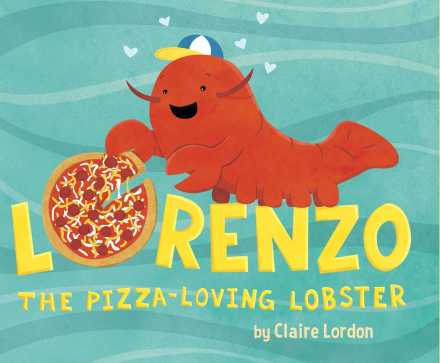
Lorenzo is one adventurous lobster! Not only does he like exploring new places, he loves getting his claws on new foods. One day while at the beach, Lorenzo meets a seagull who has found a tasty slice of pizza to nosh on. “‘What’s that?’” Lorenzo asks, “‘It smells amazing!’” The seagull tells him and invites him to try it. Lorenzo takes a nibble…and then a bigger bite. He loves this pizza thing so much that he eats it all up.
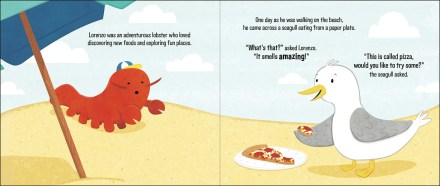
celebrate-picture-books-picture-book-review-lorenzo-the-pizza-loving-lobster-riding-introduced-to-pizza

Image and text copyright Claire Lordon, courtesy of simonandschuster.com

On his way home to tell his friends about his discovery, Lorenzo runs into Kalena, his turtle friend, and tells her all about the triangular food that is “‘crispy and chewy at the same time; salty, tangy, and full of flavor, too!’” Kalena is intrigued and suggests they try to make one themselves. At Lorenzo’s house they begin gathering the ingredients, but when Kalena asks what was in the pizza, Lorenzo can’t remember. Kalena looks in the cupboard and pulls out seaweed cake and kelp paste. “‘Perfect!’” agrees Lorenzo. For the “stringy” part, Kalena suggests eelgrass, which also has the benefit of being extra salty. And the “round things on top”? Sand dollars sound delicious!
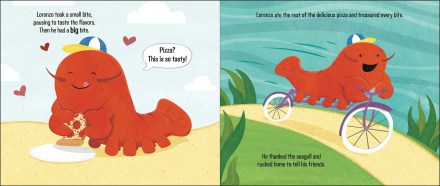
celebrate-picture-books-picture-book-review-lorenzo-the-pizza-loving-lobster-bicycle

Image and text copyright Claire Lorden, courtesy of simonandschuster.com

So the pair bake up their green concoction, and when the timer rings they dig in only to find that it “‘isn’t quite right.’” Not one to give up, Kalena offers a new set of ingredients: “‘kelp dough, squid ink, algae, and coral rings.’” This pizza isn’t right either—in fact, Kalena says, “‘This tastes icky! And the algae is stuck in my teeth!’” Suddenly, Lorenzo has a brainstorm. He remembers that the pizza was made of “‘sponge patties, jellyfish jelly, seaweed noodles, and seashells.’”

Listening to that recipe, Kalena isn’t so sure, but they make it anyway. When this creation comes out of the oven, one small nip convinces Kalena that this one is “‘gross.’” Poor Lorenzo—he so badly wanted to make a delicious pizza with his friend. Kalena leaves Lorenzo’s house with the distinct impression that pizza is terrible. But as she heads up the beach toward home, she smells a delicious aroma. Coming closer she spies a “round food,” and buys one.
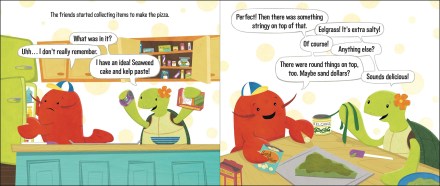
celebrate-picture-books-picture-book-review-lorenzo-the-pizza-loving-lobster-making-pizza

Image and text copyright Claire Lordon, courtesy of simonandschuster.com

With one bite, she’s smitten! This round food is “‘so chewy, and salty, and…wait a minute.’” It dawns on Kalena that this might be the very pizza Lorenzo was talking about. There’s just one thing—why is it a circle? Even though Kalena wants to devour the whole thing, she thinks about how sad Lorenzo was and hurries back to his house with the steaming box. Sure enough, Lorenzo is moping about the afternoon’s debacle.

“‘Hey Lorenzo, look what I found!’” Kalena calls. “‘Holy anchovy!’” Lorenzo exclaims when he tastes it, “‘This is exactly like the pizza I had earlier, but this time it’s big and round!’” They are excited to dig into their treat, but they carefully study the pizza’s ingredients before eating it all up. One pizza just isn’t enough, so Lorenzo and Kalena make another…and another…and another—and share them with all their friends at a huge pizza party.
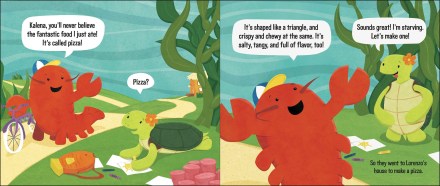
celebrate-picture-books-picture-book-review-lorenzo-the-pizza-loving-lobster-telling-kalena

Image and text copyright Claire Lordon, courtesy of simonandschuster.com

Who knew pizza and the ocean had so much in common—the same salty tang, the same appealing aromas, the same recognizable shapes? Claire Lordon, that’s who! In her funny culinary adventure, Lordon captures the enthusiasm children have to share and replicate a new discovery  but also presents the moments of disappointment when reality and memory don’t match. Kids will “ewww…ohhh…yuck…and yuck it up at the alternative pizza ingredients Lorenzo and Kalena combine in their attempts at a “normal” pizza. These two friends are sweetly supportive of each other through kelp paste and pepperoni and know how to share life’s ups and downs.

Lordon’s adorable sea creatures populate vibrant underwater and beach environments that will be as familiar to kids as their own homes and playgrounds, but with an oceanic twist. Images of the alternate ingredients are clever adaptations of the elements of a normal pizza as Lorenzo remembers the shapes but not the names of the fixings.

Lorenzo, the Pizza-Loving Lobster is a delicious ingredient to add to any child’s bookshelf, and kids will no doubt want to build their own pizzas just like Lorenzo—a crustacean who really knows his crust!

Ages 3 – 8

little bee books, 2016 | ISBN 978-1499802283

Learn more about Claire Lordon and her work on her website!

Cheese Pizza Day Activity

CPB - Pizza Day Toppings

Create Your Pizza Game


Play this fun game to build your pizza ingredient by ingredient before the others! For 2 – 8 players.

Supplies

Directions

Object of the Game: to fill a pizza slice with 5 delicious ingredients

  1. Print a Pizza Crust Game Board and Ingredients Cards
  2. Each player picks a slice on the board to fill
  3. Roll the dice to choose who goes first. Play
  4. The first player rolls the dice and places an ingredient on their slice according to the numbers below
  5. Play passes to the right
  6. The player who fills their slice with all 5 ingredients first, wins

Alternative for older kids: Print a game board for each player. The first player to complete the whole pizza is the winner

Each number on the playing die corresponds to one ingredient or other instruction, as noted below:

1: add sauce (red x)

2: add cheese

3: add green peppers (green squares)

4: add garlic (white half moons)

5: add pepperoni

6: remove one ingredient and pass the playing die to the next player

Picture Book Review

May 18 – International Museum Day

CPB - How the Dinosaur Got to the Museum II

About the Holiday

Created in 1946, the International Council of Museums established International Museum Day in 1977 to institute an annual event highlighting museums as “important means of cultural exchange, enrichment of cultures and development of mutual understanding, cooperation, and peace among peoples.” The day also aims to unify “the creative aspirations and efforts of museums and draw the attention of the world public to their activity.” Each year a theme is chosen to spotlight a relevant issue. This year’s theme is “Museums and contested histories: saying the unspeakable in museums.” Museums around the world will take the opportunity to show how they “display and depict traumatic memories to encourage visitors to think beyond their own individual experiences” and promote peace and reconciliation for the future. To learn more visit the International Council of Museums website!

To celebrate today’s holiday show your support for museums by visiting and/or donating to your favorite museum!

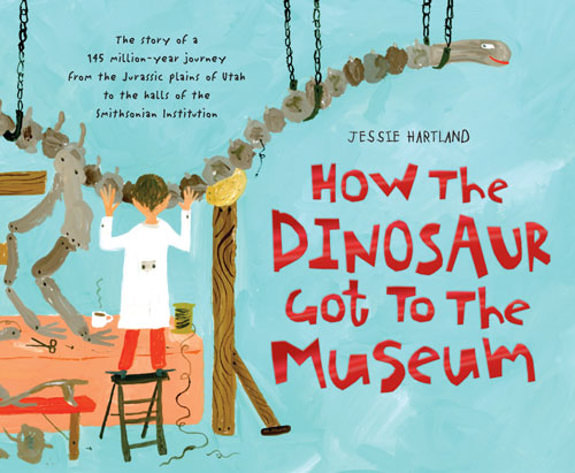
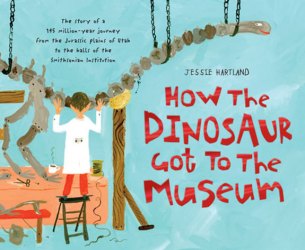
How the Dinosaur Got to the Museum

By Jessie Hartland


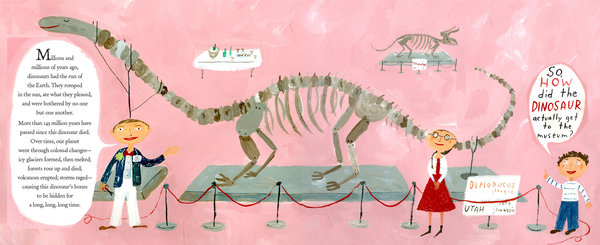
“So…” asks a little boy visiting the Smithsonian Museum of Natural History, “how did the dinosaur get to the museum?” Thus begins the tale—not of the dinosaur’s life, but of its journey from life to the museum exhibit hall.

celebrate-picture-books-picture-book-review-how-the-dinosaur-got-to-the-museum-talking-about-dinosaur

Image and text copyright Jesse Harland, 2011, courtesy of Blue Apple Books.

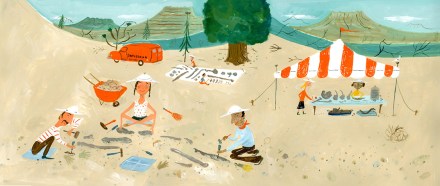
One hundred and forty-five million years ago, the dinosaur roamed the plains of what is now Utah. Overcome by weather and evolutionary events, the dino is buried. It is only much, much later that this prehistoric creature is once again exposed. A Dinosaur Hunter finds one large bone and believes it to be from a Diplodocus Longus. He calls in the Paleontologist who confirms it. A team of Excavators arrives and unearths the rest of the skeleton.

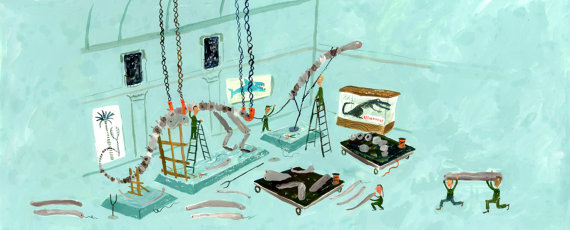
The Movers pack the skeleton that was found by the Dinosaur Hunter, confirmed by the Paleontologist, and dug up by the Excavators. They load it onto a train that transports it to the Smithsonian Museum of Natural History. Here, the bones are cleaned and preserved by the Preparators, who discover that the head and neck are missing!

celebrate-picture-books-picture-book-review-how-the-dinosaur-got-to-the-museum-digging

Image copyright Jesse Harland, 2011, courtesy of Blue Apple Books.

The Curator locates a plaster cast of a Diplodocus head at another museum, and work continues until the whole Diplodocus is assembled. That night while making his rounds in the dark, the Night Watchman trips over the skeleton’s tail and breaks it! In come the Welders to fix it. Finally, the Riggers can lift the dinosaur into the display.

The Exhibits Team creates an educational background for Diplodocus. Then with a final dusting, the Cleaners make the Diplodocus presentable. At long last, the Director invites the public into the museum. He gives a speech and makes a toast then opens the doors to the magnificent exhibit.

celebrate-picture-books-picture-book-review-how-the-dinosaur-got-to-the-museum-exhibit

Image copyright Jesse Harland, 2011, courtesy of Blue Apple Books.

Jessie Hartland’s highly entertaining and educational text will keep kids riveted to the process of creating a museum exhibit even as they giggle at the mishaps. As each page and step in the process build on each other, readers will enjoy reciting along. Hartland’s bold, colorful, folk-style illustrations allow kids to see the lengthy and meticulous journey the dinosaur skeleton makes from burial spot to museum exhibit. Along the way, they view the desert landscape where the skeleton was found, view the tools used to excavate and preserve it, get a tour of the back rooms where the dinosaur bones are reassembled, and are given a front-row look at the finished display. 

For children interested in dinosaurs, museums, history, and a fun story, How the Dinosaur Got to the Museum is a great take-along book for museum trips and a wonderful addition to a young armchair traveler’s library

Ages 5 – 9

Blue Apple Books, New Jersey, 2011 | ISBN 978-1609050900

Learn more about Jesse Hartland, her books, and her artwork on her website!

International Museum Day Activity

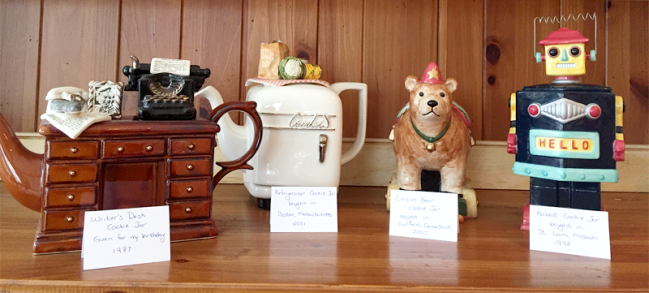
CPB - Cookie Jar Museum (2)

Create a Museum Exhibit


Every item has a story. Maybe there’s a funny anecdote behind that knick-knack on your shelf. Perhaps your favorite serving dish holds sentimental value. How about your child’s best-loved toy or a drawing or craft they’ve made? A fun and educational way for kids to learn family stories and interact with their own history is to create a museum exhibit of objects in your home.

For teachers this can be a fun classroom activity that incorporates writing, art, and speaking as well as categorizing skills. Students can use objects in the classroom or bring items from home to set up museum exhibits. This activity can be done as a whole-class project or by smaller groups, who then present their exhibit to the rest of the class.

Supplies

  • A number of household or classroom items
  • Paper or index cards
  • Markers
  • A table, shelf, or other area for display

Directions

  1. To get started help children gather a number of items from around the house to be the subjects of their exhibit. An exhibit can have a theme, such as Grandma’s China or Travel Souvenirs, or it can contain random items of your child’s choice, such as toys, plants, tools, even the furniture they see and use every day.
  2. Using the paper or cards and markers, children can create labels for their exhibit items. Older children will be able to write the labels themselves; younger children may need adult help.
  3. Spend a little time relating the story behind each object: where it came from, how long you’ve had it, when and how it was used in the past, and include any funny or touching memories attached to the item. Or let your child’s imagination run free, and let them create histories for the objects.
  4. When the labels are finished, arrange the items on a table, shelf, or in a room, and let your child lead family members or classmates on a tour. You can even share the exhibit with family and friends on social media.
  5. If extended family members live in your area, this is a wonderful way for your child to interact with them and learn about their heritage.

CPB - How the Dinosaur Got to the Museum II

You can find How the Dinosaur Got to the Museum at these booksellers

Amazon | Barnes & Noble | IndieBound

May 17 – World Baking Day

celebrate-picture-books-picture-book-review-the-case-of-the-stinky-stench-cover

About the Holiday

This may be the most delicious day of the year! Established to share the enjoyment—and scrumptious results—of homemade breads, cookies, cakes, pies…. (Yum! I’m getting hungry just typing this sentence!) …World Baking Day encourages people to try their hand at mixing up a new or favorite recipe. As this is a worldwide holiday, you may consider baking something from another country or from your heritage. With so many cookbooks and online recipe sites available, it’s easy to find—and make—the perfect treat!

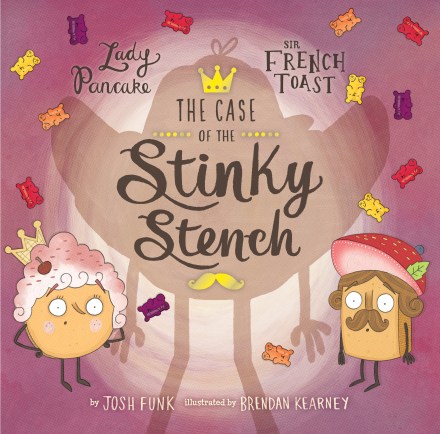
The Case of the Stinky Stench

Written by Josh Funk | Illustrated by Brendan Kearney


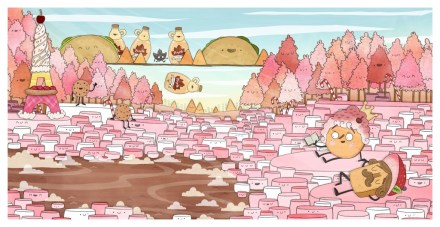
The fridge is full and the denizens happy. Even former rivals Lady Pancake and Sir French Toast are enjoying a sweet vacation together at the Marshmallow Coast. But wait! Who is that strange, half-moon shape rushing “past Trifle Tower” and “across Taco Bridge”? It’s none other than Sir French Toast’s nephew, Inspector Croissant, with a disturbing message. “‘Uncle,’ Croissant said, ‘the fridge is in trouble! / A horrible stench turned a whole shelf to rubble! / I’m the last hope, or the fridge will be lost! / Help me, or else we’ll be cooked, served, and sauced.’”

celebrate-picture-books-picture-book-review-the-case-of-the-stinky-stench-marshmallow-coast

Image copyright Brendan Kearney, text copyright Josh Funk. Courtesy of Sterling Books.

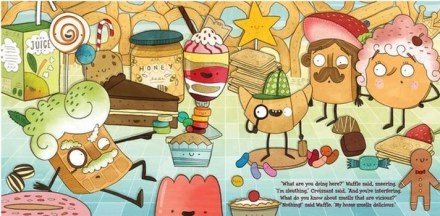
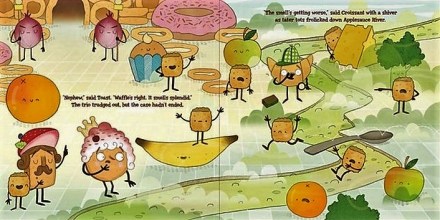
Just as he says this, the facts begin to stink for themselves, and French Toast pledges his help. It’s a do-or-die case for Croissant it seems, as he’s “solved zero cases since getting this job.” Lady Pancake decides the perp is Baron von Waffle and suggests the three pay him a visit. They quietly enter Onion Ring Cave, and Croissant confronts von Waffle. “‘What do you know about smells that are vicious?’ / ‘Nothing!’ said Waffle. ‘My home smells delicious.’” And he’s right; there’s nothing nose-worthy here. Lady Pancake, Sir French Toast and Inspector Croissant leave the cave only to find that the odor has worsened. They follow some tater tots playing nearby to a red curry dish, where an okra divulges an intriguing clue about “a stinky red fish / who lurks at the bottom of Corn Chowder Lake,’” but in his rush to investigate, Croissant trips “by Miss Steak” and goes flying.

celebrate-picture-books-picture-book-review-the-case-of-the-stinky-stench-von-waffle

Image copyright Brendan Kearney, text copyright Josh Funk. Courtesy of Sterling Books.

Back on his feet, the intrepid detective and his side-kicks find a sardine-can boat and row across Corn Chowder Lake until they find the “red herring.” They’re convinced that they’ve “unraveled this stinky affair,” but rowing closer, they catch a tantalizing scent instead of a treacherous one. Lady Pancake is ready to give up, but not Inspector Croissant. He sticks his nose in the air and concludes that the smell hails from Casserole Cliff.

When they get to the cliff, they discover a shriveled up mess. The veggies are soft and the fruit a bit rotten, but Inspector Croissant sees the cause of the trouble—“a moldy old fruitcake from eight months ago!” The three are mulling how to get rid of this putrid pest when the fruitcake shares his story, which is all too familiar. The cake confesses that he came to the fridge as a fresh, yummy treat but was left there uneaten to mold and to reek.

celebrate-picture-books-picture-book-review-the-case-of-the-stinky-stench-tater-tots

Image copyright Brendan Kearney, text copyright Josh Funk. Courtesy of Sterling Books.

The inspector understands a few things about food, and as he leads the sad culprit away from the cliff, he explains, “Everyone knows fruitcakes never go stale.” With careful trimming they clean up the cake. Soon the fruitcake is back to his delectable self and has attracted the attention of softhearted Miss Brie while the other foods welcome him back with good cheer and a party to boot.

With the case solved, kids are invited to join the swingingest party in town. As “Spuddy Holly and the Croquettes,” fill the fridge with music, the residents jiggle, wiggle, and dance with abandon across a two-page spread. A fold-down page presents a map that lets readers follow the action from Taco Bridge to Onion Ring Cave to Casserole Cliff and all the stops in between.

celebrate-picture-books-picture-book-review-the-case-of-the-stinky-stench-onion-cave

Image copyright Brendan Kearney, text copyright Josh Funk. Courtesy of Sterling Books.

Just reading the first line of The Case of the Stinky Stench with its familiar, exuberant rhythm, I caught a smile creeping across my face as I anticipated the story to come. This sequel to Lady Pancake and Sir French Toast is a cool, fresh take on the mystery genre for little detectives in the—dare I say?—baking. The most delicious part of The Lady Pancake and Sir French Toast series is Funk’s freewheeling imagination that comes to fruition in the expanse of that well-stocked refrigerator’s shelves. Clever rhymes, laugh-inducing puns, a whole stew—I mean slew—of fantastic words, and even a red herring await readers. Of course, old nemesis Baron von Waffle makes an appearance, and the introduction of the forgotten fruitcake shows kids that everyone deserves a second chance.

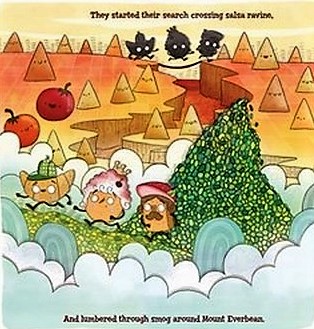
Brendan Kearney recreates the magic of this chef’s-delight of a refrigerator in full, vivid color and with the most adorable foods ever. Pink and white marshmallows, half-moon tacos, muffins, candy, cookies, and gummy bears all wear cute smiles, as they help Inspector Croissant. Even when the odor becomes overwhelming, the bottles, jars, fruit, and veggies sport endearing frowns. Rambunctious tater tots, hot chili peppers, and a steak-and-fries combo, join the fun. Kids will find ingenious details and visual jokes on every page, and will wish their refrigerators were half as exciting as the home of Lady Pancake and French Toast.

Ages 5 – 8

Sterling Children’s Books, 2017 | ISBN 978-1454919605

Discover the world of Josh Funk, his books, and activities for kids on his website!

View a gallery of illustration work and books by Brendan Kearney on his website!

It’s no mystery that you’ll enjoy The Case of the Stinky Stench book trailer!

World Baking Day Activity

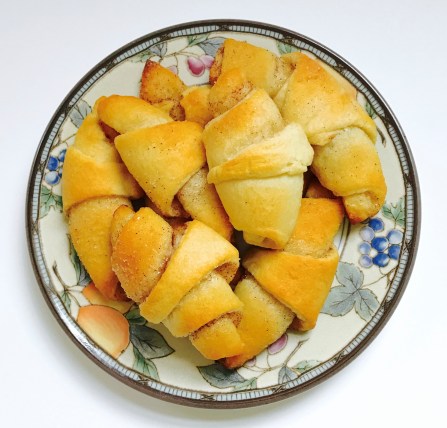
celebrate-picture-books-picture-book-review-cinnamon-croissants

Bite-size Cinnamon Croissants


These mini cinnamon croissants are the perfect accompaniment to cup of tea and a great story! And they’re so easy that kids will love making them as much as they enjoy eating them!

Supplies

  • Tube of refrigerated crescent rolls
  • Sugar
  • Cinnamon
  • Butter
  • Small mixing bowl
  • Rolling pin
  • Knife

Directions

  1. Preheat the oven to 375 degrees, or to the temperature on the package of crescent rolls
  2. Open the tube of crescent rolls and lay them on a cutting board. Do Not separate the rolls
  3. With the rolling pin, roll the dough until it makes one sheet
  4. Measure ¼ cup sugar into the mixing bowl
  5. Add 1 teaspoon cinnamon (or desired amount) to the sugar and stir together until well mixed
  6. Spread a layer of butter over the surface of the dough
  7. Sprinkle the cinnamon sugar across the dough. Use more or less depending on how much cinnamon flavor you like
  8. Cut the dough into triangles about two to three inches wide at the base
  9. Roll the triangles up, starting at the base. Looser rolls make flakier croissants
  10. Place the croissants on a baking sheet and curve them into a crescent shape
  11. Bake the croissants at 375 degrees for about 8 minutes, or until golden on top
  12. Let cool
  13. Enjoy!

Picture Book Review

May 16 – Drawing Day

celebrate-picture-books-picture-book-review-tell-me-a-tattoo-story-cover

About the Holiday

Drawing day was established to remind us that all of the creative thoughts inside us are worthy of being shared. It also brings awareness to and appreciation of the artists and illustrators of all types who translate our world into meaningful images through which we understand people, events, and objects in different ways. Today, indulge your inner artist! Grab a pencil, pen, marker, paints or chalk, some paper or canvas, and create!

Tell Me a Tattoo Story

Written by Alison McGhee | Illustrated by Eliza Wheeler


A little boy tugs on his dad’s T-shirt, wanting to see his tattoos—again. His dad sits down with his son and patiently goes through them, like the pages of a favorite book. In fact, the tattoo on his shoulder—a dragon flying above mountain peaks—is from the book his mom read to him in childhood. “Did she read it to him over and over and over? She sure did,” he says.

celebrate-picture-books-picture-book-review-tell-me-a-tattoo-story-interior-art-at-home

Image copyright Eliza Wheeler, courtesy of abramsandchronicle.co.uk

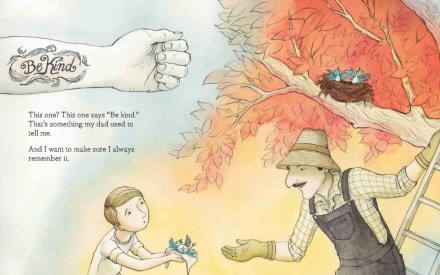
The elaborate design on the dad’s wrist reads “Be Kind,” advice his father used to give him. An intricate depiction of a carnival, complete with a Ferris wheel, fireworks, and flowers reminds him “of the day I met a pretty girl.” His son asks what made the girl so pretty, and his dad responds, “That’s a good question, little man. I’d have to say it was her smile.” In answer to his son’s wondering if he has ever met this girl, Dad looks at his wife and says, “You sure have.”

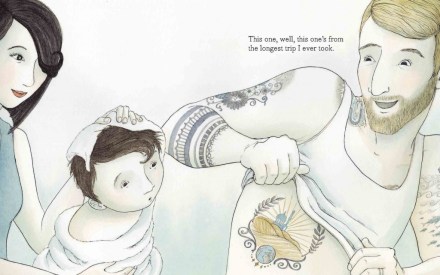
The tattoo picturing a globe and monument that covers the dad’s right side is from “the longest trip I ever took.” He reminisces—“Did I miss home while I was there?”—and confesses, “I sure did.”  The last tattoo the little boy asks about is a small heart festooned with a banner that reads “7● 22 Two Thousand Twelve.” Father and son engage in banter that is most likely familiar to them both, with the boy asking the questions he already knows the answers to but loves to hear again and again: “Those numbers inside it? Just somebody’s birthday, I guess. Whose birthday? / Oh some little man I know, is all. / What do you mean, this one’s your favorite? This dinky little heart?” Then leaning in to learn a secret, the boy rediscovers that the heart tattoo is his dad’s favorite too.

celebrate-picture-books-picture-book-review-tell-me-a-tattoo-story-interior-art-be-kind

Image copyright Eliza Wheeler, courtesy of abramsandchronicle.co.uk

Alison McGhee’s Tell Me a Tattoo Story is such a sweet, original homage to the love between father and son. The use of body art to reveal not only seminal events in the dad’s life but the trajectory of his child’s birth is inspired. The minimal text highlights the deep emotion, giving the boy in the story as well as young readers the information they are really looking for. The soft-spoken dad is such an appealing character—emotionally available, honest, and offering just the right tone of humorous repartee—for today’s family dynamic.

Beautifully rendering McGhee’s text into art, Eliza Wheeler creates a homey atmosphere that emphasizes the theme of the book while creating tattoos that are immediately accessible to children. The dragon tattoo could come from The Hobbit or Harry Potter, kids will recognize the fun and excitement represented by the Ferris wheel, and the little heart is simplicity at its finest. While the pages depicting the dad’s tattoos are minimally hued, the father’s reminiscences burst with color and details—providing an overall feeling of warmth and affection. The image of the dad in his military uniform over the hot, golden sands on “the longest trip he ever took” will bring a tear to your eye.

celebrate-picture-books-picture-book-review-tell-me-a-tattoo-story-interior-art-longest-trip

Image copyright Eliza Wheeler, courtesy of abramsandchronicle.co.uk

The originality of the story and gorgeous illustrations make Tell Me a Tattoo Story a must for children’s bookshelves and will become an often-asked-for read during quiet story times or for bedtime.

Ages Birth – 6

Chronicle Books, 2016 | ISBN 978-1452119373

To discover more books for children and adults by Alison McGhee, visit her website!

View Eliza Wheeler’s portfolio and other books on her website!

National Tattoo Day Activity

celebrate-picture-books-picture-book-review-design-your-own-tattoo-template

Design Your Own Tattoo


Tattoos can be simple or elaborate, but they are always personal. They tell a story, commemorate an event, or reveal an emotion. What would your tattoo look like? Design your own body art on this printable Design Your Own Tattoo Template!

Picture Book Review

May 15 – Straw Hat Day

celebrate-picture-books-picture-book-review-miss-fannie's-hat-cover

About the Holiday

Straw hats are found in nearly every culture in the world and have been used since ancient times. Made from local materials, some are unique to and even iconic of the country in which they’re made. Woven loosely, straw hats can protect a person from the hot sun while also keeping their head cool. In rainy climates, tightly woven hats are good for staying dry. Of course, straw hats are a staple of women’s fashion and can be found in nearly every color and decorated with ribbon, flowers, feathers, beads, and more.

Miss Fannie’s Hat

Written by Jan Karon | Illustrated by Toni Goffe


“Miss Fannie has lots of hats. And each one is her favorite.” Miss Fannie is ninety-nine years old and has a closet full of hats that she has worn on special occasions throughout her life. When she tries on her “red felt with the big feather, she looks in the mirror and says ‘I just love this hat!’” It’s the same with her green velour hat that’s decorated with a fancy pin. She’s not the only one who loves her hats. When she wears them to church, people always tell her, “‘Miss Fannie, I sure do love that hat!’” But Miss Fannie has a favorite among her many hats: the pink straw with silk roses. Everyone else loves this hat too.

celebrate-picture-books-picture-book-review-miss-fannie's-hat-closet (2)

Image copyright Toni Goffe, text copyright Jan Karon. Courtesy of Puffin Books.

Miss Fannie is a tiny woman who now lives with her daughter, Wanda. Wanda takes good care of her mother. She makes her big breakfasts, and even though Miss Fannie always says its “way too much,” she always clears her plate. Every Saturday, Wanda helps her mother wash her hair in the bathroom sink. Miss Fannie is so small that she has to stand on a stool to reach. Afterward, Wanda rolls her mother’s hair in curlers, and on Sunday morning she “combs out her mama’s hair, which is all nice and soft and gray, like the feathers of a dove.”

Then Miss Fannie puts on make-up, dresses in her best clothes, and chooses a hat. Choosing can be difficult because “Miss Fannie has three black hats, two red hats, one green hat, two white hats, two navy hats, three beige hats, one brown hat, and the famous pink straw with roses. Because she never wears the same one twice in a row, some people think she has a whole closet full of hats. Which, of course, she does.”

One Sunday, Miss Fannie’s preacher comes to her with an earnest request. He asks her to donate one of her hats to the auction that will raise money to fix up the church for Easter. Miss Fannie wants to help, but how can she choose among her beautiful hats? When they get home, Miss Wanda helps her mother lay out all of her hats on the bed and dresser. Alone in her room, Miss Fannie looks over all her hats. As she holds each in her hand she remembers her past. “The green velour with the fancy pin was very, very old, and still very beautiful.” She had worn it during the great flood of 1916 when she “crossed the swollen river on a ferry to visit her mother and father. As she stood at the rail…a house had floated by, almost close enough to touch.”

celebrate-picture-books-picture-book-review-miss-fannie's-hat-breakfast

Image copyright Toni Goffe, text copyright Jan Karon. Courtesy of Puffin Books.

Next, she considers the red, wide-brimmed felt. The feather on this hat came from a hawk Miss Fannie had caught trying to nab one of her chickens. Then she picks up the brown velvet hat that “always reminded her of Flower, her grandmother’s cow.” She had begun milking Flower when she was seven years old and had learned to churn butter that was better than any found in a store. “Finally, Miss Fannie came to her most favorite hat of all: the pick straw with silk roses.” She had worn it every Easter for thirty-five years and it never failed to make her feel brand new. It was a tradition everyone else enjoyed too, “just as they looked for the tulips and daffodils to bloom in the spring.”

She puts the pink straw hat on, looks in the mirror, and sighs. “In her heart she did not want to giver her hat away. Not at all.” But as she places it back in its box and ties the ribbon, she discovers “she was very, very excited” about all the things it might be able to do. The old pipe organ needed fixing, there was a crack in the church bell, and the roof really needed to be replaced.

At the auction, when the preacher holds up Miss Fannie’s pink straw hat with the silk roses, “the bidding took off lickety-split.” With the bang of the gavel, the hat goes to a woman in the front row. The check she gives the preacher is “enough to really get things fixed,” Miss Fannie knows. She also knows “that she would not miss her favorite hat one bit.”

celebrate-picture-books-picture-book-review-miss-fannie's-hat-outside

Image copyright Toni Goffe, text copyright Jan Karon. Courtesy of Puffin Books.

On Easter morning Miss Fannie rises and fixes her hair. She looks at her hats—none of which seemed right. As she meets Wanda at the front door in her best dress, her best jewelry, her best gloves, and a white corsage, “Miss Wanda couldn’t believe her eyes. Her mama was going out the door without wearing any hat at all!” When they arrive at the freshly painted church, Miss Fannie and Miss Wanda are surprised and delighted to see pink roses planted everywhere around the building. “‘Oh, Mama!’ said Miss Wanda. ‘It looks just like your pink hat!’”

With tears in her eyes, Miss Fannie learns that they were able to fix the organ and the bell as well as planting all the roses. As the congregation looks on “they didn’t see an old woman at all. What they saw was a young girl with hair as soft as the feathers of a dove.” And now when people pass the church, they don’t see gardens of roses. Instead, they see Miss Fannie’s hat. “And it will always be her favorite.”

Jan Karon’s story of selfless love was a favorite in our house when my daughter was young. Not only is the well-paced narrative full of evocative sensory details, bits of history, and realistic dialogue, it centers around a unique plot involving the types of soul-searching decisions that are hard to make. No matter how many times we read the book, Miss Fannie’s choice to auction her favorite hat to benefit her church seemed to come as a surprise that both inspired and heartened. While the tale is primarily Miss Fannie’s, it is Wanda’s story of benevolence too as Karon affectionately describes the ways in which Wanda lovingly attends to her mother’s physical and emotional needs. Throughout Miss Fannie’s Hat, Karon demonstrates that a life well-lived is one abounding in joyous giving.

Toni Goffe takes readers into Miss Wanda’s home—and Miss Fannie’s memory—with his bright, delicate illustrations that fully satisfy little one’s love of realistic detail. My daughter enjoyed the textured feel to the images, where steam rises from a cup of tea and from the bathroom sink, Miss Wanda brushes out her mother’s soft hair, and the hats—made of velvet, velour, and straw and sporting feathers, flowers, nets, and ribbon—beg to be touched. In fact, with the first page and its tantalizing peek into Miss Fannie’s closet, readers will find themselves riveted to her hats and life story. Vignettes from Miss Fannie’s younger years as well as scenes of her now demonstrate her enduring courage and strength of character.

For kids who like to count, sort, and compare, a one-page illustration and a glorious two-page spread allow them to match the list of hats in the text with the contents of Miss Fannie’s closet. They are also invited to choose their favorite from among Miss Fannie’s hats.

Miss Fannie’s Hats is a wonderful story to share with young readers for its ideas of giving, multigenerational relationships, and friendship.

Ages 3 – 6

Puffin Books, 2001 | ISBN 978-0140568127

Discover more about Jan Karon and her books for children and adults on her website!

View a gallery of artwork by Toni Goffe on his website!

Straw Hat Day Activity

celebrate-picture-books-picture-book-review-hat-matching-game

Hat Matching Game


These hats come in pairs—or maybe even triplets—but somehow they’ve been mixed up! Can you find all the matching sets? Just put on your thinking caps and play this printable game!

Supplies

Directions

  1. Print two or more sets of cards
  2. Cut the hat cards apart
  3. Mix them up and lay them face down on the floor or table
  4. Choosing one card at a time, turn them over to try and find a match
  5. If the cards do not match, replace them face down and try again
  6. Continue play until all the hats have been matched

Picture Book Review

May 14 – Mother’s Day

celebrate-picture-books-picture-book-review-just-me-and-my-mom-cover

About the Holiday

We always love our moms, but on the second Sunday of May we celebrate everything they do for us. On May 9, 1914 President Woodrow Wilson signed a proclamation establishing Mother’s Day as “a public expression of our love and reverence for the mothers of our country.”  First envisioned to honor all mothers instead of primarily your own, the day has become a personal holiday in which families celebrate in their own unique and meaningful way.

Just Me and My Mom

By Mercer Mayer


Little Critter and his pet frog were having a day out with Mom, traveling into the city on the train. Little Critter even got to buy the tickets himself. He’s also learned some manners and tried to help his mom get on the train, “but the steps were too high,” so his mom helped him instead. Soon they were all settled in and waiting for the conductor to punch their tickets. “But when the conductor came by, the tickets were gone. So Mom paid the conductor some more money.”

celebrate-picture-books-picture-book-review-just-me-and-my-mom-train

Copyright Mercer Mayer, courtesy of Random House Books for Young Readers

They disembarked into a very busy city. All the crowds, sounds, and sights were a little overwhelming, but Little Critter was only thinking of his mom. He “held her hand so she wouldn’t be scared.” Their first stop was the Museum of Natural History with its rooms full of dinosaur skeletons and eggs that are so tempting to touch.

In the next room there was a Native American exhibit, complete with mannequins wearing costumes to try on. Little Critter dressed up “just for Mom. But the museum guard didn’t like that.” The guard quickly showed them into another room where the Aquarium was. “There were lots of fish in a big tank of water.” Somehow Little Critter’s frog joined them. During the seal show, Little Critter became part of the program. He didn’t mean to end up on stage, he just wanted “a closer look at the seals.”

The art museum had weird pictures, and lunch at the fancy restaurant ended before it even began when the maître d’ threw them out for having a frog at the table. They “decided to have a hot dog from a stand. That was more fun anyway.” Then came the boring part. “Mom wanted to go to a big store full of dresses and stuff like that. Yuck.” Little Critter even had to be fitted for a new suit. When they passed the toy department, Little Critter found the enormous teddy bear he had “always wanted but Mom said, “‘It’s time to go.’”

celebrate-picture-books-picture-book-review-just-me-and-my-mom-museum

Copyright Mercer Mayer, courtesy of Random House Books for Young Readers

Finally, it was time to head back to the train station. They took a taxi and Little Critter “got to ride in the front seat. The taxi driver drove real fast. That was cool.” At the ticket window Little Critter’s mom had a good idea. She bought the tickets herself because she “didn’t have enough money to buy more tickets if these got lost.” All in all, what would Little Critter say about his day? “We had fun, just me and my mom. I even stayed awake all the way home—well, almost.”

With an eagle eye and perfect pitch, Mercer Mayer reveals the way it is for parents and kids—with plenty of laughs sprinkled in. In Just Me and My Mom, the day may be full of mishaps and shenanigans, but Mayer is always focused on the sweet intentions of Little Critter and the loving relationship between mother and child. Mayer’s city bustles with his well-known animal characters who are colorful in so many ways. Kids will recognize and giggle at Little Critter as he plays ball with the seals, picks up the dinosaur egg, scowls at the tailor, and enjoys a high-speed taxi ride through the city. Adults will appreciate the mortified looks on Mom’s face and also understand her ready smiles.

Ages 3 – 7

Random House Books for Young Readers, 2001 | ISBN 978-0307125842

You can enjoy tons of fun on the Little Critter World-Wide Network, including activities, movies, apps, a sing-a-long, and more!

Mother’s Day Activity

celebrate-picture-books-picture-book-review-mother's-day-card

Happy Mother’s Day Card


Here’s a pretty vase of flowers for you to color for your mom! You can make it even more personal by writing one thing you like best about your mom in the center of the flowers. Get your printable Happy Mother’s Day Card here!

Picture Book Review

May 13 – National Train Day

celebrate-picture-books-picture-book-review-traveling-by-train-cover

About the Holiday

It’s hard not to love the train. With its storied past and iconic whistle, train travel is imprinted in our minds as a fun, efficient way to get from here to there and back again. Today’s holiday was established to commemorate the May, 1869 completion of the transcontinental railroad, a feat that united America as nothing else had done. Suddenly, distances didn’t seem as far, and those seeking a new life out West or wanting to visit family back East had a safe, quick way of spanning the miles.

Traveling By Train: a Want to Know the World Book

Written by Pierre Winters | Illustrated by Tineke Meirink


Sam loves playing with his train set and is excited to be going on a real train ride. At the station, he loves all the hustle and bustle of people getting off and on trains. When his train pulls up, he “quickly gets in and looks for a place to sit. The train is about to depart! Are you coming too?” Train lovers will definitely want to get “aaall aboard” this tour of all things railroad related.

The first stop is a quick look at trains old and new. Kids learn about steam trains and how they worked by burning coal. Next up readers discover diesel trains before moving on to today’s electric and high-speed trains, which are “really fast. They sometimes drive nearly two hundred miles per hour. That’s three times faster than a car on the highway.” Where are these trains? Everywhere! Trains provide transportation all over the world and come in all shapes and sizes. There are trains that carry people, freight trains that “transport goods,” subway trains that move people from place to place in big cities, and even trains that travel through an underwater tunnel between England and France.

celebrate-pictue-books-picture-book-review-traveling-by-train-signal

Image copyright Tineke Meirink, text copyright Pierre Winters. Courtesy of Clavis Publishing

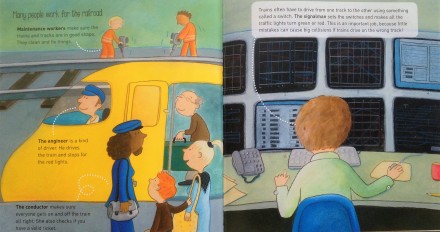
All of these trains require an engineer to drive them; a signaller, who “sets the switches and makes all the traffic lights turn green or red; a conductor who helps passengers get on and off and checks their tickets; and maintenance workers who “make sure the trains and tracks are in good shape.”

But what about the trains themselves? Readers can go inside a carriage where they see the seats, the luggage rack, the doors between cars, the bathroom, and even the roof and undercarriage. Want to ride? Kids learn all about buying a ticket and how important it is to get to the station on time so they don’t miss the train.

Of course, there are many kinds of trains, depending on where they go and what they are used for. Passenger trains that travel long distances requiring a multi-day trip have “bedrooms, restaurants, and little shops. They are like hotels on wheels!” In some countries the trains can get so crowded that people hang off the sides or ride on the roof. In Japan some very modern trains don’t have a driver. “A computer knows exactly when everyone has gotten on and where the station is. Other trains don’t even use wheels anymore. Thanks to very powerful magnets, they float just above the ground!”

celebrate-pictue-books-picture-book-review-traveling-by-train-modern-station

Image copyright Tineke Meirink, text copyright Pierre Winters. Courtesy of Clavis Publishing

Train stations are growing more and more modern. Some are made entirely of glass, and buying tickets and checking on arrivals and departures are all computerized. The biggest trains station in the world is in America, in New York City. It has forty-four platforms and sixty-seven tracks.

Readers will love the double fold-out spread in the center of the book that takes them into the midst of a busy station where trains wait on the tracks, ready to carry passengers on new and thrilling journeys. Following the text, train-related activities continue the fun. They include a poem, step-by-step instructions for drawing a train, directions for making a conductor’s whistle, matching games, and a mini-quiz.

Pierre Winters’ easy-to-understand, yet engaging text invites kids to explore one of the world’s most-used and best-loved methods of travel. Interesting facts presented in a conversational style will entice children to keep chugging through this well-conceived book and will pique their interest in traveling by train themselves.

Tineke Meirink’s bright, colorful illustrations offer readers close-up views of trains, inside and out, as well as the station control center and lively stations full of passengers and those waiting to meet them. Children will want to linger over the double-page spread to catch all the action and details.

For children who love trains or those taking their first trip, Traveling by Train is a wonderful introduction for young adventurers.

Ages 4 and up

Clavis Publishing, 2017 | ISBN 978-1605373409

National Train Day Activity

celebrate-picture-books-all-aboard-train-word-search

All Aboard! Word Search Puzzle


Traveling by train is such fun! Get on board this printable All Aboard! Word Search Puzzle and find the 21 train-related words! Here’s the Solution!

Picture Book Review