August 27 – Just Because Day

celebrate-picture-books-picture-book-review-animals-hide-and-sneak-cover

About the Holiday

With a full calendar of days dedicated to specific topics, causes, holidays, animals, food, places, and emotions, someone thought it would be a good idea to leave one day up to you, and today is it! So if you have a special occasion; a favorite animal; a unique knick-knack; a best-loved book, poem, song, or art piece; or if you just want an excuse to throw a party, celebrate it today!

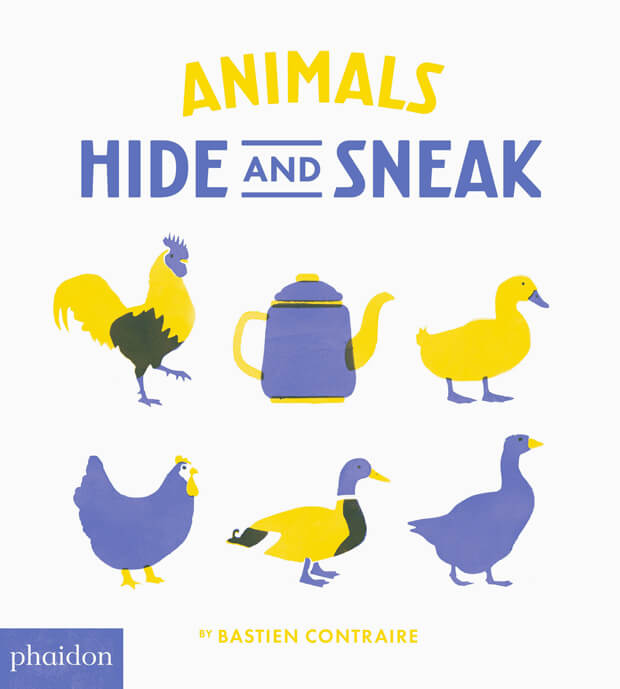
Animals Hide and Sneak

By Bastien Contraire


Just because things are grouped together, it doesn’t mean they’re the same! In his clever discovery books, Bastien Contraire takes advantage of people’s visual flexibility to offer a book full of puzzles that charm and surprise. In his newest book—a board book for little ones—he uses his striking tri-colored imagery to invite readers to really think about what they are seeing.

celebrate-picture-books-picture-book-review-animals-hide-and-sneak-cows

Image copyright Bastien Contraire, 2017, courtesy of Phaidon Press.

Once readers spot the look-alike, they’re enticed to consider the connection between it and the others on the two-page spreads. Opening to the second spread, eight horses of different sizes, mane length, and coloring face off on either side of the split. So, which one is different? Ah! There’s a little rocking horse among them! Children will love talking about what makes it the visitor to the ranch.

celebrate-picture-books-picture-book-review-animals-hide-and-sneak-snakes

Image copyright Bastien Contraire, 2017, courtesy of Phaidon Press.

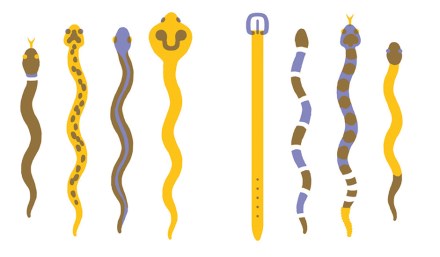
The pretty butterflies, with their yellow, violet, and brown markings and frilled wings almost hide the hibiscus flower in their midst. With its fancy petals and thin, center style it seems to fit right in. But isn’t there more of a connection? Young readers will happily tell you!  Turn the page and—Yikes!—you’ll find eight wiggly snakes all in a row. Wait a minute, though…one of the snakes is kind of stiff, and is that a buckle for a head? Those dots aren’t markings—they’re holes! And it’s not a snake at all—it’s a belt! So what’s the similarity? Kids and adults can take turns on that one.

celebrate-picture-books-picture-book-review-animals-hide-and-sneak-big-movers

Image copyright Bastien Contraire, 2017, courtesy of Phaidon Press.

Here’s one that’s clever and a pun! A bird crane, a construction crane, a flamingo, and a bird crane. So which one is really the odd-one-out? This one will give readers lots to discuss! Next up is a puzzle you can really sink your teeth into—a group of big cats and one walrus! Also included in the pages are heavy movers, farmyard fowl, dogs, barnyard animals, sheep, tropical birds, and some silly monkeys.

The answers to the puzzles are given in the back of the book.

Bastien Contraire’s stylish stencil prints are eye-catching and cheery. The range of images allows young readers to engage with the book in many different ways from categorizing to shape recognition to counting to logical thought and to just plain fun.

Animals Hide and Sneak is an amusing and entertaining book to enjoy at home “just whenever” and to pack along for playground visits, picnics, waiting times, or other outside adventures. 

Ages 1 – 4

Phaidon Press, 2017 | ISBN 978-0714874227

Learn more about Bastien Contraire and his work on his website!

Just Because Day Activity

celebrate-picture-books-picture-book-review-frog-matching-puzzle

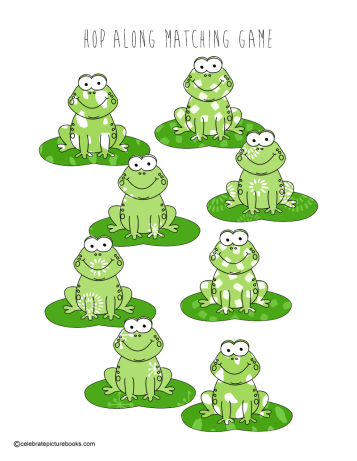
Hop Along Matching Game 


Just because they wanted to, these crazy frogs have gotten mixed up! Can you find the matching pairs in this Hop Along Matching Game?

Picture Book Review

August 26 – Women’s Equality Day

celebrate-picture-books-picture-book-review-i-dissent-cover

About the Holiday

Today’s holiday commemorates the date in 1920 when the 19th Amendment to the Constitution granted women the right to vote. The observance of Women’s Equality Day also calls attention to women’s continuing efforts toward full equality, including equal pay, equal opportunities for education and employment, freedom from discrimination and violence, and equal standing in all communities and situations. Workplaces, libraries, organizations, and public facilities now participate with Women’s Equality Day programs, displays, video showings, or other activities.

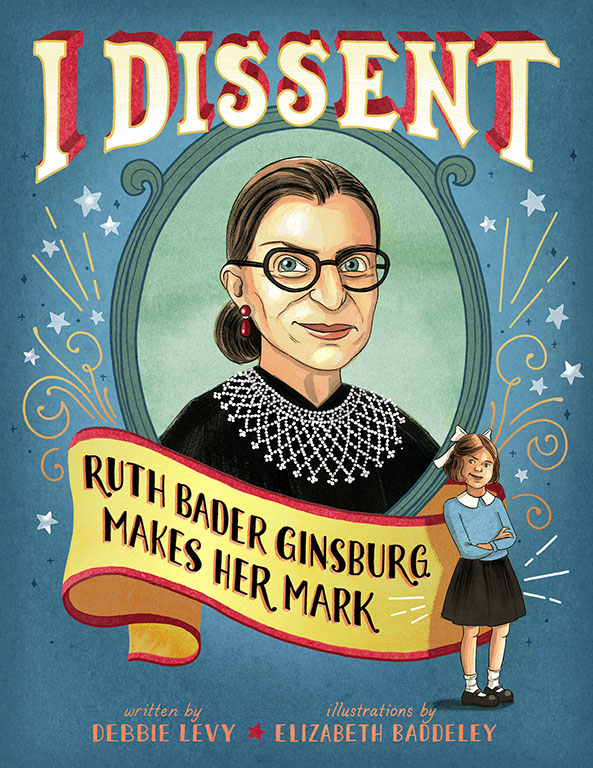
I Dissent: Ruth Bader Ginsburg Makes Her Mark

Written by Debbie Levy | Illustrated by Elizabeth Baddeley


Ruth Bader grew up during the 1940s in Brooklyn, New York’s multicultural neighborhood. It was a time when boys were educated for jobs and bright futures while girls were expected to marry and raise children. Ruth’s mother, Celia Amster Bader, however, “thought girls should also have the chance to make their mark on the world.” She introduced Ruth to books in which she discovered women who used their strength, courage, and intelligence to do big things.
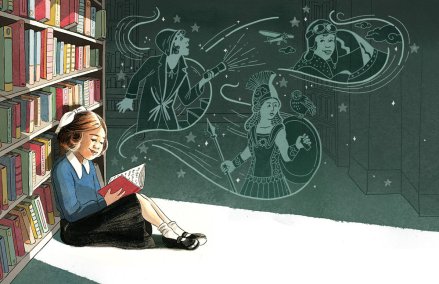
celebrate-picture-books-picture-book-review-i-dissent-in-the-library

Image copyright Elizabeth Baddeley, text copyright Debbie Levy. Courtesy of simonandschuster.com.

Ruth also saw and felt the sting of prejudice while growing up. Her family was Jewish, and at the time “hotels, restaurants, even entire neighborhoods” denied access to Jews, African Americans, Mexicans, and others. Ruth disagreed and never forgot. She was even discriminated against for being left-handed. In school she was instructed to write with her right hand, but her awkward penmanship earned a D. First, she cried; then she protested by only writing with her left hand—“it turned out she had quite nice handwriting!”
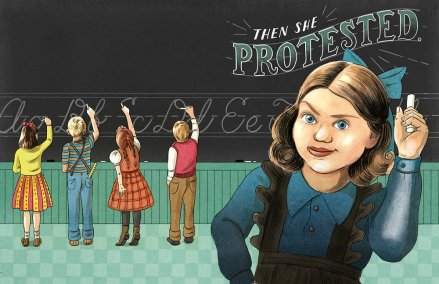
celebrate-picture-books-picture-book-review-i-dissent-in-the-left-handed

Image copyright Elizabeth Baddeley, text copyright Debbie Levy. Courtesy of simonandschuster.com.

During elementary school, Ruth was outstanding in some classes, such as history and English, and did not do so well in others, such as sewing and cooking. Music, especially opera, was another favorite subject—even though she did not have the voice to match her dreams. She excelled in high school and was even chosen as a graduation speaker. But Ruth had been hiding the fact that her mother was very ill. The day before graduation, her mother died. Ruth did not go to her graduation, but she did fulfill her mother’s wish and entered college.

In college Ruth met Marty Ginsberg, and the two fell in love. They both decided to become lawyers to fight prejudice and unfairness in court. People thought this was a great idea for Marty, but disapproved of it for Ruth. “Ruth disapproved right back. So did Marty.” After college they got married, went to law school, and had a baby girl.
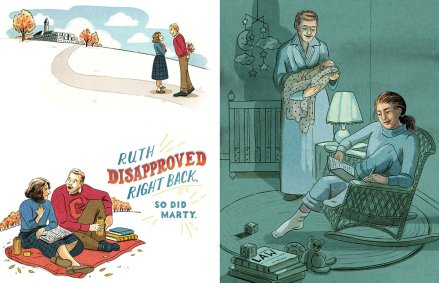
celebrate-picture-books-picture-book-review-i-dissent-college

Image copyright Elizabeth Baddeley, text copyright Debbie Levy. Courtesy of simonandschuster.com.

In law school Ruth was one of nine women in a class of 500. She worked hard and tied with another student as first in the class, but after graduation she couldn’t find a job. Employers objected because she was a woman, a mother, and Jewish. Finally, she found work with a judge. Her excellent work for him translated into jobs at one law school after another, and she became “one of the few female law professors in the whole country.”

All around her Ruth saw other women who were denied jobs or paid less than men. Women also had very little voice in courtrooms or in government. Rulings by the Supreme Court, the highest court in America, had helped maintain this inequality. The Court had stated that women were unfit for many jobs because of their “natural and proper timidity and delicacy.” Besides, the Supreme Court also said, “Woman has always been dependent upon man.”

celebrate-picture-books-picture-book-review-i-dissent-in-the-law-school

Image copyright Elizabeth Baddeley, text copyright Debbie Levy. Courtesy of simonandschuster.com.

“Ruth really, really disagreed with this!” So she began fighting in court for equal rights for women. But equal rights for women also meant equal rights for men: Ruth believed men should be able to stay home with children if they wanted to while women worked. “These were fresh ideas in the 1970s. Ruth did not win every case, but she won enough. With each victory, women and men and girls and boys enjoyed a little more equality.”

At home, Ruth’s own family agreed with her. Marty was a successful lawyer and also an accomplished chef who cooked the family’s meals. Ruth went on to become a well-known and well-respected lawyer. President Jimmy Carter asked her to be a judge in Washington DC. Then President Bill Clinton chose her to fill a vacancy on the Supreme Court. “Ruth agreed.”

celebrate-picture-books-picture-book-review-i-dissent-family-life

Image copyright Elizabeth Baddeley, text copyright Debbie Levy. Courtesy of simonandschuster.com.

“In 1993, Justice Ruth Bader Ginsburg became the first Jewish woman on the nation’s highest court.” When the nine justices decide a case, they listen to both sides and then vote. The winning side then writes an opinion explaining their ruling. When Justice Ginsburg votes with the winning side, she wears a special lace collar over her robe. When she does not agree with the ruling, she says, “I dissent” and writes an opinion explaining why. She has a special collar for dissenting too.

Some of her dissensions were influenced by her early experiences. She dissented when “the court wouldn’t help women or African Americans or immigrants who had been treated unfairly at work. She dissented when the court did not protect voting rights for all citizens. She dissented when the court disagreed with schools that offered African Americans a better chance to go to college.” And once when she dissented, Congress and the president agreed with her and overturned the Supreme Court’s ruling.

celebrate-picture-books-picture-book-review-i-dissent-supreme-court

Image copyright Elizabeth Baddeley, text copyright Debbie Levy. Courtesy of simonandschuster.com.

Justice Ruth Bader Ginsburg is now the oldest member of the Supreme Court. Some people think she should retire, but she disagrees. She still has work to do. Over the years, she has “cleared a path for people to follow in her footsteps—girls in college, women in law school, and everyone who wants to be treated without prejudice….Step by step, she has made a difference…one disagreement after another.”

An extensive Author’s Note about Ruth Bader Ginsburg’s life, notes on Supreme Court Cases, and a selected bibliography follow the text.

Debbie Levy’s outstanding biography allows readers to journey with Ruth Bader Ginsburg as her experiences and beliefs lay the foundation for her life’s work. Well-chosen anecdotes from Ginsburg’s childhood make her accessible to kids and may even inspire them to look toward their own futures. Ginsburg’s trajectory from college student to lawyer to judge and finally to the Supreme Court is balanced and uplifting, emphasizing the positive impact of persistence and self-confidence.

Elizabeth Baddeley’s illustrations go hand-in-hand with Levy’s text to fully illuminate the life of Ruth Bader Ginsburg for children. Ginsburg’s intelligence, sense of humor, courage, and principles are evident as she matures from school girl to Supreme Court Justice. Dynamic typography highlights the theme of dissent and disagreement as a force for positive change. The color, expression, and spirit imbued in each page make I Dissent: Ruth Bader Ginsburg Makes Her Mark an exciting and eye-catching read for all children.

I Dissent: Ruth Bader Ginsburg Makes Her Mark is a superb and recommended book for girls and boys. The book’s focus on a woman who continues to make a difference will inspire children and even adult readers to speak up and act on their convictions.

Ages 5 – 9

Simon & Schuster Books for Young Readers, 2016

To learn more about Debbie Levy and her books for children and young adults, visit her website!

Discover a gallery of illustration by Elizabeth Baddeley on her website!

Women’s Equality Day Activity

celebrate-picture-books-picture-book-review-rosie-the-riveter-coloring-page

Rosie the Riveter Coloring Page


Rosie the Riveter became a symbol of strong women during World War II and continues to be an iconic figure today. Print and color this Rosie the Riveter Page then display it to always remember that women can do anything!

Picture Book Review

August 25 – It’s American Artist Appreciation Month

celebrate-picture-books-picture-book-review-radiant-child-cover

About the Holiday

This month we honor the artists of the past and those currently creating work that represents, reflects, and translates the world we live in. There are as many ways of making art as there are artists, so take some time this month to visit an art museum or gallery, to look online or read a book and discover life in a whole new way.

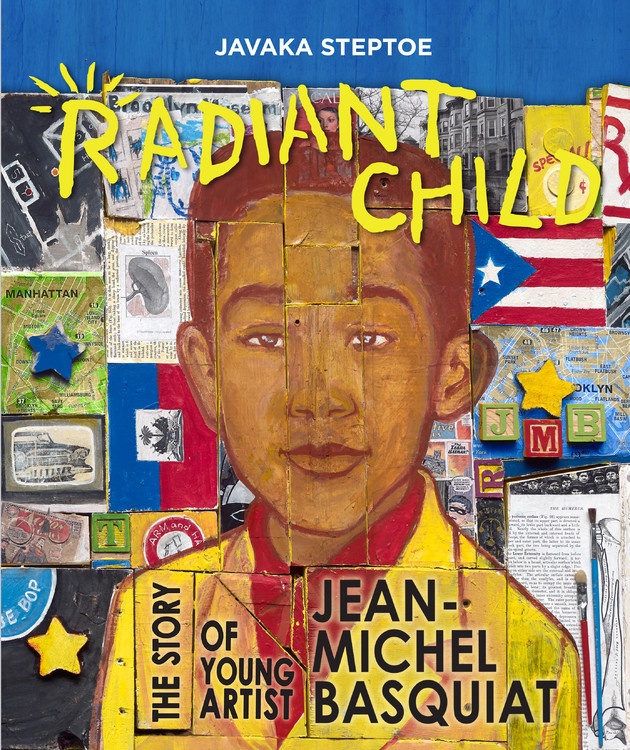
Radiant Child: The Story of Young Artist Jean-Michel Basquiat

By Javaka Steptoe


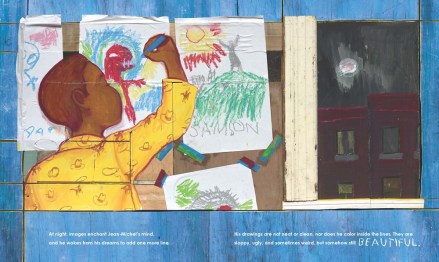
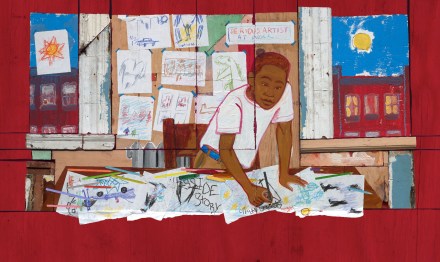
“Somewhere in Brooklyn, between hearts that thump, double Dutch, and hopscotch / and salty mouths that slurp sweet ice, a little boy dreams of being a famous artist.” All day Jean-Michel sits surrounded by colored pencils and “a storm of papers” and draws. As he sleeps his dreams swirl with images. When he wakes he adds to his drawings, scribbling away. What he creates is “sloppy, ugly, and sometimes weird, but somehow still beautiful.”

celebrate-picture-books-picture-book-review-radiant-child-beautiful-art

Image and text copyright Javaka Steptoe, courtesy of Little, Brown Books for Young People

Jean-Michel’s talent comes from his Puerto Rican mother, who has a natural sense of style and design and who always makes time to draw with her son, lying on the floor next to him. She takes Jean-Michel to art museums and theaters and reads poetry to him, but she also shows him the art of the city—its sounds, sights, style, and “patchwork” colors. Jean-Michel loves to visit the museum and read about the artwork and the artists. From these stories he “learns what it means to be a famous artist.”

When Jean-Michel is seriously injured in a car accident, his world seems scary and confusing. His mother gives him an anatomy book, which he memorizes. It erases his fears and becomes influential in his work. After returning home, his life changes when his mother suffers a breakdown and can no longer live at home. “He tries drawing the terrible out of his blues, but things are not the same.” Jean-Michel visits his mother when he can, “always bringing his artwork to show, telling her that one day it will be in a museum, ‘when I am a famous artist.’”

celebrate-picture-books-picture-book-review-radiant-child-drawing

Image and text copyright Javaka Steptoe, courtesy of Little, Brown Books for Young People

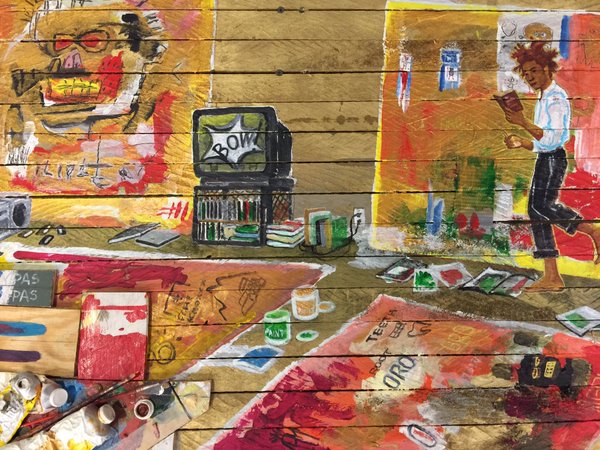
As a teenager, Jean-Michel follows his dream, moving from Brooklyn to New York City. There he stays with friends, painting, creating collages, and writing poems on paper strewn about him. At night he paints on city walls, trash cans, and other urban canvases. His art, signed ‘Samoo,’ attracts attention. People wonder: “‘Who is Samoo?’”

Soon his art can be found in art galleries and hanging in the homes of the people who buy his work. Jean-Michel continues to create, listening to “a sound track that is all his own.” Through talent, inspiration, and his mother’s loving influence, Jean-Michel Basquiat conquered the art world, becoming a king among artists, and fulfilling his desire to be a famous artist.

An extensive Author’s Note about Jean-Michel Basquait’s life, including his struggles with addiction and his death in 1988; the motifs and symbolism in his work; and a personal comment on the impact Basquait’s art had on the author, follow the text.

celebrate-picture-books-picture-book-review-radiant-child-studio

Image and text copyright Javaka Steptoe, courtesy of Little, Brown Books for Young People

Javaka Steptoe’s compelling biography of this complex, brilliant artist who people called “radiant, wild, a genius child” beautifully brings to life the inspirations and motivations that fueled his unique and intense talent. Steptoe delivers the story in staccato and flowing sentences, using consonance, assonance, and repetition—the rhythms of a poet. He shows how Basquiat maintained his focused determination, self-confidence, and persistence from childhood into adulthood. This perseverance reveals to readers that success is not a matter of luck, but of belief in oneself despite obstacles. Steptoe sensitively addresses the serious injury Basquiat suffered, his mother’s mental illness and Basquiat’s continued love for her, and his unsettled teenage years to complete this far-reaching life story.

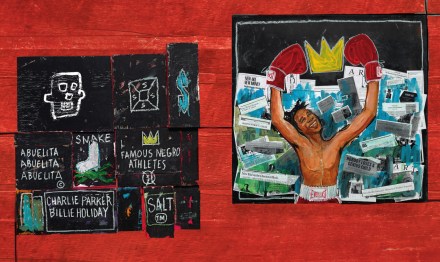
celebrate-picture-books-picture-book-review-radiant-child-boxing-image

Image and text copyright Javaka Steptoe, courtesy of Little, Brown Books for Young People

Steptoe’s mixed-media paintings were created on found wood from neighborhoods across New York City. While Steptoe does not reproduce any of Basquiat’s work, he states that readers will find “original pieces that were inspired by him and my interpretations of his paintings and designs.” As befitting his subject, Steptoe offers pages that burst with vibrant color and intricate details and beat with the pulse of the city, the people, the dreams, and the imagination that Basquiat transcribed onto paper, walls, and canvas. Part collage, part fine art, Steptoe’s illustrations will fascinate children and entice them to linger and take in the emotion and meaning in each. The final spread, a crowd scene made up of photographs, sets Basquiat in the midst of people whom he and his art continue to inspire.

Radiant Child: The Story of Young Artist Jean-Michel Basquiat offers children an inspirational model of creativity, compassion, and confidence no matter where their talents lie. The book is an excellent choice for school, public, and home libraries.

Ages 6 – 10

Little, Brown Books for Young Readers, 2016 | ISBN 978-0316213882

Learn more about Javaka Steptoe, his books, art exhibitions, and life on his website!

American Artist Appreciation Day Activity

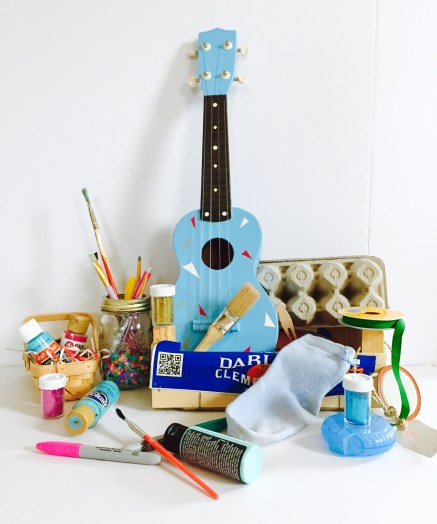
celebrate-picture-books-picture-book-review-motivation-and-inspiration-day-craft

Make Art from Found Objects


Each person finds inspiration in different things, places, and people. Today, try to create something new from the materials around you. Boxes, bottles, wire, magazines, cloth, wood, sponges—almost anything—can be transformed with some imagination. With those old socks, corks, flower pots, candle stubs, bits of ribbon, clementine crate, paint, glitter, beads, and more, you can make something useful, a decoration for your room, or even a gift for a friend!

Picture Book Review
August 24 – It’s National Fishing Month

celebrate-picture-books-picture-book-review-skyfishing-cover

About the Holiday

During National Fishing Month individuals and families are encouraged to try their hand at this fun outdoor sport. Whether you catch and release or eat what you catch, casting your line, seeing the bobber wobble, and feeling that exciting tug on the fishing pole makes for a fun day.

Skyfishing

Written by Gideon Sterer | Illustrated by Poly Bernatene


A young girl’s grandpa sold his cabin on the lake and is coming to live with her and her family. When they pulled in to pick him up, he was ready and waiting with every fishing pole he owned in one hand and his tackle box in the other. But once he saw his granddaughter’s apartment in the middle of the city, he “realized there was nowhere to fish.”

celebrate-picture-books-picture-book-review-skyfishing-grandpa

Image copyright Poly Bernatene, 2017, text copyright Gideon Sterer, 2017. Courtesy of Abrams Books for Young Learners.

All during that fall and winter, the girl tried to engage her grandpa in new activities like building models and playing chess. But nothing was the same as fishing. Then in the spring, the little girl had an idea. She took her grandpa out on the fire escape with their fishing poles, and they cast their lines over the edge. At first nothing happened. But then Grandpa got a bite. He reeled it in… “Grandpa said he’d never seen one before, but there it was…A Flying Litterfish.”

celebrate-picture-books-picture-book-review-skyfishing-fire-escape

Image copyright Poly Bernatene, 2017, text copyright Gideon Sterer, 2017. Courtesy of Abrams Books for Young Learners.

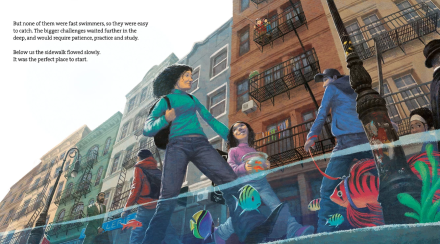
That green plastic bag on the end of the hook was just the beginning. After learning the rules—always return what you catch and “where there’s one fish, you can bet there will be more”—the two caught “Chimefish, and Signfish, Laundry Eels and even a Cold-air-square.” But all of those things were stationary and easy to catch. Down below, however, “the sidewalk flowed slowly”; it was a perfect place to practice trawling.

celebrate-picture-books-picture-book-review-skyfishing-sidewalk

Image copyright Poly Bernatene, 2017, text copyright Gideon Sterer, 2017. Courtesy of Abrams Books for Young Learners.

“Capfish were the first to bite. Then Songfish, Goldfish, and fish “from foreign shores.” As Grandpa and his granddaughter became more proficient, they reeled in “Furry Snappers” on leashes and “Hammerheads” drilling holes. Even a “Grillfish” was on the menu. Next, it was time to try their luck in the ocean of the street where larger and faster fish lived. Here, “Zoomfish, Mailfish, Glowfish, and more Yellow-stripers than [they] could count” waited.

celebrate-picture-books-picture-book-review-skyfishing-road

Image copyright Poly Bernatene, 2017, text copyright Gideon Sterer, 2017. Courtesy of Abrams Books for Young Learners.

There were also mammoth creatures like the “Stretchfish,” Waste-muncher,” and “Constructionfish,” but down below these—in the murky depths—lived the largest fish of all. Grandpa and his granddaughter studied just how to set their line, they lowered it slowly and were not surprised when they felt the tug of the…oh, no!…“Troublefish” with sirens blaring.

Quickly and quietly the two put their fishing poles away for another day. But summer vacation was just beginning, and it was time to join those city fish. “It was time to swim.”

celebrate-picture-books-picture-book-review-skyfishing-subway

Image copyright Poly Bernatene, 2017, text copyright Gideon Sterer, 2017. Courtesy of Abrams Books for Young Learners.

Gideon Sterer’s debut picture book gently and creatively addresses the issue of grandparents transitioning from their own home into another living situation. As an outdoor-loving grandpa comes to live with his family in the city, his caring granddaughter discovers a way for him to continue his beloved pastime while they also form a strong bond. Sterer’s clever idea of dry-land fishing along with his witty names for the fish found in the concrete depths will enchant readers and entice them to devise species of their own. The sweet ending in which both Grandpa and Granddaughter are ready to explore the city and new experiences together is satisfying and uplifting.

celebrate-picture-books-picture-book-review-skyfishing-hobbies

Image copyright Poly Bernatene, 2017, text copyright Gideon Sterer, 2017. Courtesy of Abrams Books for Young Learners.

With perfect pacing and a growing sense of wonder, Poly Bernatene leads children from Grandpa’s sparkling blue lake to his granddaughter’s city apartment to the first glimpse of their fire escape trophy. Children will be charmed by the ingenuity of the plastic-bag fish dangling on the line and, like the little girl in the story, will be hooked on what comes next. As the waters rise and the people and objects down below slowly transition to fish and other humorous sea creatures, readers will love exploring the watery world and learn to look at their own neighborhoods in a whole new way.

Ages 4 – 8

Abrams Books for Young Readers, 2017 | ISBN 978-1419719110

To learn more about Gideon Sterer and his books, visit his website.

Discover a gallery of artwork and books by Poly Bernatene for children, young adults, and adults on his website.

National Fishing Month Activity

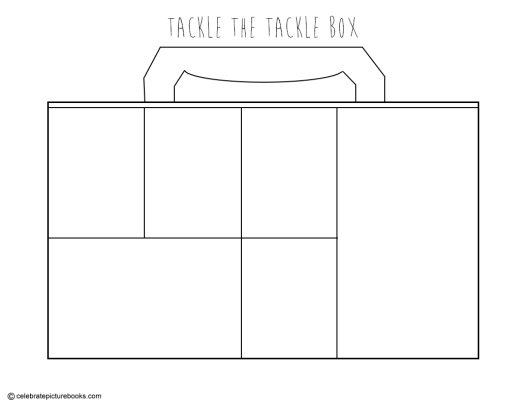
celebrate-picture-books-picture-book-review-tackle-the-tackle-box-game

Tackle the Tackle Box Board Game


A good fisherman always needs a well-stocked tackle box. Play the Tackle the Tackle Box Game to earn lures, bobbers, hooks and more to fill your box. The first player to complete their set is the winner! For more fun, you can color the tackle box items any way you like. There are even three extra cards for you to draw your own tackle box items!

Supplies


celebrate-picture-books-picture-book-review-tackle-the-tackle-box-game-cards

Directions

  1. On card stock, heavy paper, or regular paper, print one Tackle the Tackle Box Game Board for every player
  2. On card stock, heavy paper, or regular paper, print one set of Tackle the Tackle Box Game Cards for every player
  3. Each player can color a set of playing cards
  4. Cut the cards apart
  5. Gather all the cards and set in separate piles
  6. Roll the die to determine who goes first, highest roll goes first
  7. The first player rolls the die, and adds the item that corresponds to the number on the die. The list is below.
  8. Play continues with each player rolling the die and collecting cards
  9. If the player rolls a number for a card that he or she already has, the die passes to the next player
  10. The first player to fix their tackle box is the winner!

Each number of dots on the die corresponds to these cards:

1: FISH LURES

2: HOOKS

3: WORMS

4: FISHING LINE

5: FLIES

6: BOBBERS

Picture Book Review

August 23 – It’s Back to School Month

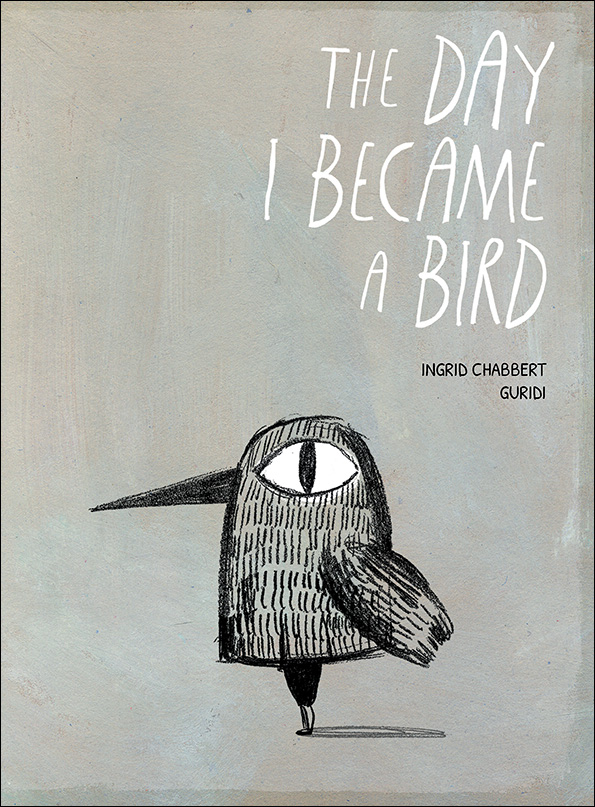
celebrate-picture-books-picture-book-review-the-day-I-became-a-bird-cover

About the Holiday

A lot can happen over the summer.  Going on vacation can give new perspectives; a growth spurt means new clothes and shoes; and a little more maturity can cause unfamiliar feelings. It’s all enough to make a student’s heart race when crossing the classroom threshold on that first day. Sometimes, though, when looking around at all of the known and new faces, that little flutter of the heart can be…love.

The Day I Became a Bird

Written by Ingrid Chabbert | Illustrated by Raúl Nieto Guridi


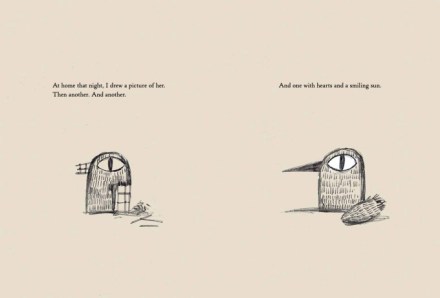
On the first day of school a little boy sees Sylvia and falls instantly in love. At home he draws picture after picture of her. Although the boy only has eyes for Sylvia, she doesn’t see him. Instead, the boy says, “Sylvia is a bird lover. She can’t bear to see them living in cages. She quietly observes them in the wild and gently cares for them when they are injured.”

celebrate-picture-books-picture-book-review-the-day-I-became-a-bird-boy-costume-being-built

Image copyright Raúl Nieto Guridi, 2016, text copyright Ingrid Chabbert, 2016. Courtesy of Kids Can Press

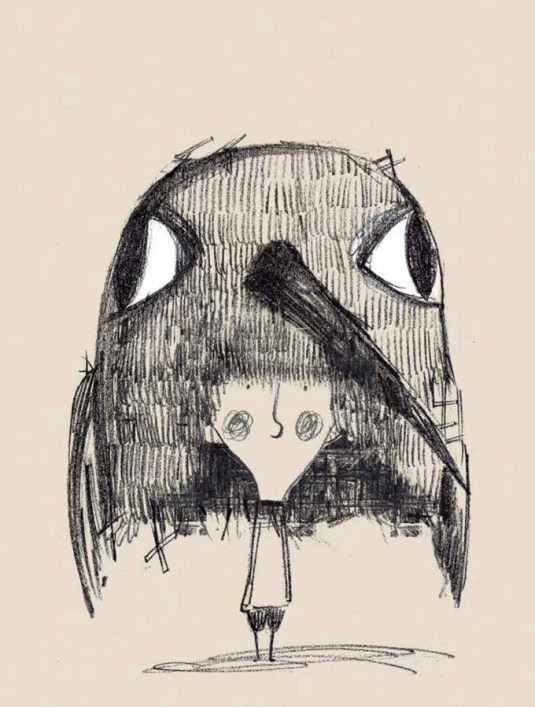
Everything she does and wears is somehow associated with birds. Even “her voice sounds like birdsong.” The boy has lost all interest in his toys, the sports he plays, and all of his old pursuits. He thinks differently about birds now, too. One day he decides “to dress as a bird.” He constructs a costume with glistening feathers “like the ones you see in the forest in summer.” When he puts it on he feels handsome. In the costume he dreams of flying with Sylvia to the top of the Rocky Mountains or a pyramid.

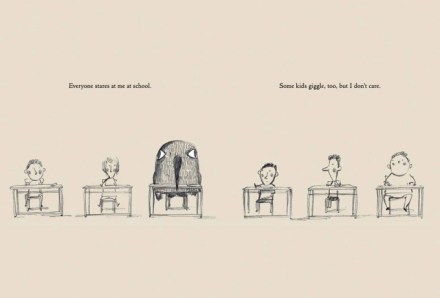
In school he doesn’t care if the other kids stare and giggle. And even though it’s hard to walk, play soccer, and climb trees, he doesn’t want to remove his costume. He is a bird. One afternoon, the boy says, “I come face to face with Sylvia. And finally our eyes meet.” Sylvia approaches and takes off the boy’s costume. “My heart is beating a hundred miles an hour,” he relates. “In the sky, I see a flock of birds take flight.” Sylvia gives him a long hug.

Standing completely still, the boy doesn’t know how to react. He knows he’s not a bird anymore, but still, he feels as if he’s flying.

celebrate-picture-books-picture-book-review-the-day-I-became-a-bird-boy-in-class

Image copyright Raúl Nieto Guridi, 2016, text copyright Ingrid Chabbert, 2016. Courtesy of Kids Can Press

Ingrid Chabbert’s enchanting revelation of first love encompasses in its spare text all the obsessive but ultimately freeing power of this universal emotion. While in the midst of his “normal” life, the boy’s world is suddenly transformed when he spies Sylvia. Leaving his toys behind, he chooses Sylvia’s bird’s eye view. Likewise, when Sylvia sees the narrator, she allows her birds to take wing and considers boys—or at least one boy—in a whole new light. Chabbert’s use of first-person narration reinforces the intimate nature of love and the idea that when love is right, being “captured” is a most liberating experience.

celebrate-picture-books-picture-book-review-the-day-I-became-a-bird-boy-in-costume

Image copyright Raúl Nieto Guridi, 2016, courtesy of Kids Can Press

The themes of Chabbert’s story are so movingly rendered by Raúl Nieto Guridi’s simple, monochromatic line drawings. Although the boy states that “one morning” he decided to dress as a bird, from the first day when the boy falls in love with Sylvia—gazing at her wistfully while her eyes are instead trained at the sky or cast down at her chalk drawings—his costume begins to take shape. As it comes together, its wire skeleton resembles a bird cage, suggesting so many ways in which we may feel trapped by our emotions, our things, even changes in life.

When the boy dons the costume and begins to navigate the world in an unfamiliar way, readers will understand that he is no longer the boy he was, but neither is he a real bird. It is this unique creature that Sylvia responds to when, through holes in the costume where feathers are missing, she sees not the bird, but the boy. So it is that into everyone’s life there come people—or perhaps one particular person—with whom all costumes and cages are discarded, and we soar.

The Day I Became a Bird is a quiet beauty that gets to the core of what it means to give your heart to someone else. It would make a wonderful and touching addition to home libraries.

Ages 4 – 7

Kids Can Press, 2016 | ISBN 978-1771386210

Watch this The Day I Became a Bird book trailer!

Back to School Month Activity

celebrate-picture-books-picture-book-review-studying-together


Let’s Study Together! Coloring Page


Going back to school means getting back with friends! Grab your colored pencils, markers, or crayons and enjoy this Let’s Study Together! Coloring Page!

Picture Book Review

August 22 – Eat a Peach Day

celebrate-picture-books-picture-book-review-each-peach-pear-plum-cover

About the Holiday

Is there anything as delicious as a perfectly ripe peach? Native to China and classified with the almond, the peach is peachy in pies, tarts, fruit salads, and just on its own. To celebrate today pick some peaches from a local farm, farmer’s market, or grocery store and enjoy!

Each Peach Pear Plum

By Janet and Allan Ahlberg


This perennial children’s favorite “I spy” nursery rhyme book is a perfect read any time, but especially during the summer when it can be tucked away in a travel bag or picnic basket and enjoyed on the go. After the first introduction of “Each peach pear plum / I spy Tom Thumb,” in which readers are invited to find Tom who is happily reading high in a peach tree nearly hidden by leaves and fruit, every page offers another double challenge.

Building on the discovery in the preceding page, kids are given a hint as to the current whereabouts of the previous character and are also urged to find another nursery rhyme or literary favorite: “Tom Thumb in the cupboard / I spy Mother Hubbard” followed by “Mother Hubbard down the cellar / I spy Cinderella.”  This structure creates anticipation in even the youngest readers as they begin to recognize the pattern and wonder who is coming next.

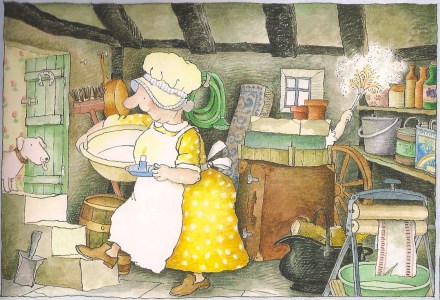
celebrate-picture-books-picture-book-review-each-peach-pear-plum-interior-art-mother-hubbard

Copyright Janet and Allan Ahlberg, 1999, courtesy of Viking Books for Young Readers

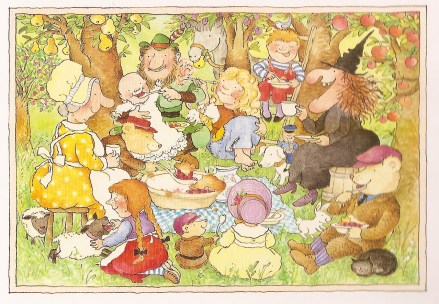
Besides Tom Thumb, Old Mother Hubbard, and Cinderella, the Three Bears, Baby Bunting, Little Bo-Peep, Jack and Jill, the Wicked Witch, Robin Hood, and a deliciously plump Plum Pie are hidden in the book. What makes Each Peach Pear Plum a classic is the Ahlberg’s artistic magic, which is on gorgeous display in every illustration. The vivid, fine-line drawings spare no details in bringing the short text fully to life.

Humor abounds, especially in the depiction of the “hidden” character or characters, whose only appearance is an arm dusting a shelf, faces at a window, feet sticking out of tall grass, a camouflaged archer, and more. And perhaps the clumsy baby bear could use a bit of assistance! Kids will love pointing out the birds and bunnies, dog, cat, and other animals that also follow from page to page.

celebrate-picture-books-picture-book-review-each-peach-pear-plum-interior-art-picnic

Copyright Janet and Allan Ahlberg, 1999, courtesy Viking Books for Young Readers

Each Peach Pear Plum is also a wonderful introduction to the literature alluded to and will entice kids to hear all the stories contained in this forever favorite. Each Peach Pear Plum makes a fantastic gift for new babies or young readers and belongs on every child’s bookshelf.

Ages Birth – 5 

Viking Books for Young Readers, Penguin, 1999 | ISBN 978-0670882786 (Board Book Edition)

Eat a Peach Day Activity

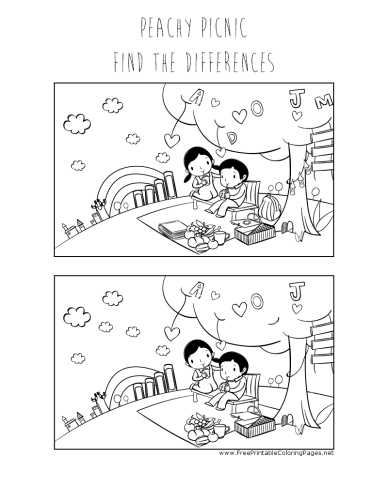
celebrate-picture-books-picture-book-review-picnic-find-the-differences

Peachy Picnic Find the Differences Puzzle


These two friends are enjoying a picnic and took two pictures. Can you spot the 12 differences between the two pictures in this printable Peachy Picnic Find the Differences Puzzle?

August 21 – Poet’s Day

celebrate-picture-books-picture-book-review-a-river-of-words-cover

About the Holiday

Today we celebrate poets—both those who are professionally published and those who compose poetry in their secret hearts. Poets bring clarity and new perspectives to life—like a little pinprick of light in a dark room. Whether you like long, epic poems, short, evocative verse, humorous poetry, or poetry set to music, take the opportunity today to enjoy some poetry—or write a bit of your own.
A River of Words: The Story of William Carlos Williams

Written by Jen Bryant | Illustrated by Melissa Sweet


Willie Williams was just like the other boys in his neighborhood—well, almost. When the other boys went home after a day of playing, Willie took off for the woods and fields behind his house. “As he walked through the high grasses and along the soft dirt paths, Willie watched everything.” He liked to sit next to the Passaic River and listen to the rhythm of the water as it “went slipping and sliding over the smooth rocks, then poured in a torrent over the falls, then quieted again below.”

celebrate-picture-books-picture-book-review-a-river-of-words-high-school

Image copyright Melissa Sweet, 2008, courtesy of Eerdmans Books for Young Readers.

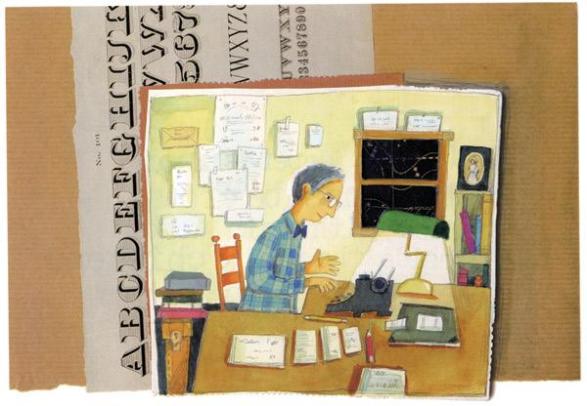
But as Willie grew older, he didn’t have time for these leisurely pursuits. In high school, he was on the track team, attended lots of classes, and had even more homework. His was a rushed and hurried life. Except for in English class. There, when his teacher read poetry, he was taken back to the flow of the river. Each line created pictures in Willie’s mind.

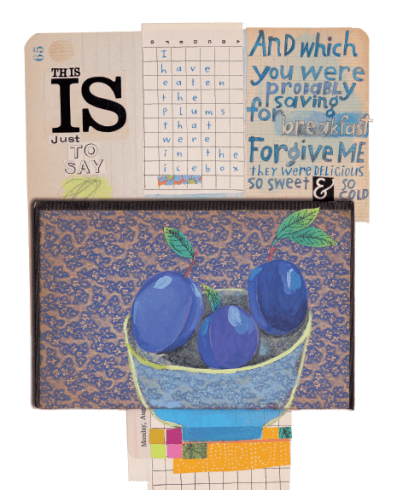
One night, Willie began writing his own poems. He copied the English poets he had learned about in school, using structured beats and rhyming endings. But soon these rules began to frustrate Willie; they didn’t give him the freedom to fully express his thoughts. He wanted to write about what he saw nearby, the things he was familiar with. Things, he said, like “plums, wheelbarrows, and weeds, / fire engines, children, and trees— / things I see when I walk down my street / or look out my window.”

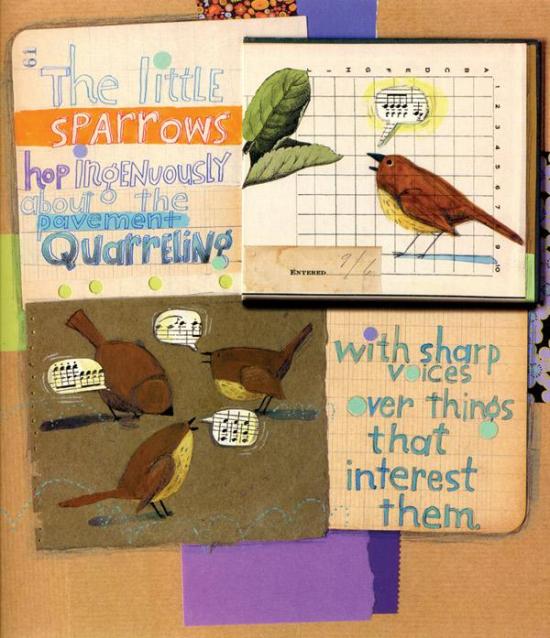
celebrate-picture-books-picture-book-review-a-river-of-words-sparrows

Image copyright Melissa Sweet, 2008, courtesy of Eerdmans Books for Young Readers.

Willie began writing poems the way they came to him, with their own shape and sound. Writing this way made Willie feel free, and he filled notebook after notebook with poems. While Willie wished he could make a living as a poet, writing did not pay much, and he needed to be self-sufficient. Willie’s uncle had been a doctor, and Willie liked the idea of healing people. He wondered, though, if he could be a doctor and still write poetry.

When Willie graduated from high school, he went off to the university to study medicine. There he met the writers Ezra Pound and Hilda Doolittle and the artist Charles Demuth. Spending time with his new friends made his difficult studying easier. After college, Willie returned to his home town of Rutherford and opened his practice. He had so many patients that some people said he was “the busiest man in town.”

celebrate-picture-books-picture-book-review-a-river-of-words-attic-room

Image copyright Melissa Sweet, 2008, courtesy of Eerdmans Books for Young Readers.

No matter how busy he was, however, he found time to write. Sometimes he jotted lines and ideas on his prescription pads. Then, after his long days at work, Willie climbed to his attic room where he studied the notes he’d made and wrote poems late into the night.

A Timeline, Author’s Note, and Illustrators Note about William Carlos Williams follow the text. The endpapers present a selection of Williams’ poetry.

A River of Words is an inspirational book for children who have creative ideas of their own and would make an excellent addition to classroom and home libraries.

From the title through to the end of her lyrical biography, Jen Bryant captures the flow of William Carlos Williams’ creative and scientific life, which was as purposeful and free as the river that inspired him. Young readers and would-be writers will find much encouragement and insight in Bryant’s story, which reveals that talent and day-to-day life not only can co-exist but can enrich each other. By showing how Williams broke free from the structures of the poetry he copied, Bryant also motivates children to find their own voice.

celebrate-picture-books-picture-book-review-a-river-of-words-plums

Image copyright Melissa Sweet, 2008, courtesy of Eerdmans Books for Young Readers.

Melissa Sweet lends her distinctive collage style of illustration to this story, bringing to life the lines of and natural world reflected in Williams’ poetry. The busy-ness and business of Williams’ days are depicted in vibrant images of winding streets, classrooms, offices, and the outside world where he composed his uniquely revealing poems.

Ages 6 and up

Eerdmans Books for Young Readers, 2008 | ISBN 978-0802853028

Learn more about Jen Bryant and her books on her website!

Discover more about Melissa Sweet, her books, and her art on her website!

Poet’s Day Activity

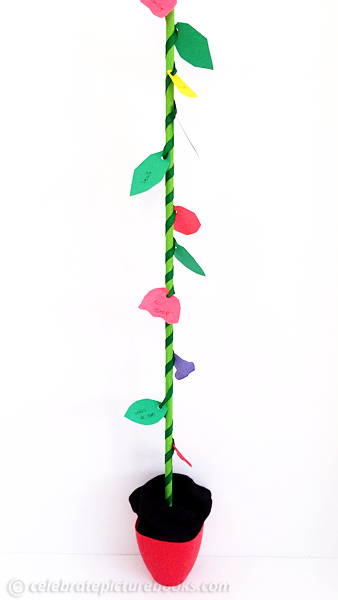
celebrate-picture-books-picture-book-review-grow-a-poem-craft

Grow Your Own Poem


A poem often grows in your imagination like a beautiful plant—starting from the seed of an idea, breaking through your consciousness, and growing and blooming into full form. With this craft you can create a unique poem that is also a piece of art!

Supplies

  • Printable Leaves Template
  • Printable Flower Template
  • Wooden dowel, 36-inch-long, ½-inch diameter, available in craft or hardware stores
  • Green ribbon, 48 inches long
  • Green craft paint
  • Green paper for printing leaves (white paper if children would like to color the leaves)
  • Colored paper for printing flowers (white paper if children would like to color the flowers)
  • Flower pot or box
  • Oasis, clay, or dirt
  • Hole punch
  • Glue
  • Markers or pens for writing words
  • Crayons or colored pencils if children are to color leaves and flowers

Directions

  1. Paint the dowel green, let dry
  2. Print the leaves and flower templates
  3. Cut out the leaves and flowers
  4. Punch a hole in the bottom of the leaves or flowers
  5. Write words, phrases, or full sentences of your poem on the leaf and flower templates
  6. String the leaves and flowers onto the green ribbon (if you want the poem to read from top to bottom string the words onto the ribbon in order from first to last)
  7. Attach the ribbon to the bottom of the pole with glue or tape
  8. Wrap the ribbon around the pole, leaving spaces between the ribbon
  9. Move the leaves and flowers so they stick out from the pole or look the way you want them to.
  10. Put oasis or clay in the flower pot or box
  11. Stick your poem pole in the pot
  12. Display your poem!

Picture Book Review