November 5 – It’s Family Stories Month

celebrate-picture-books-picture-book-review-niki-nakayama-a-chef's-tale-in-13-bites-cover

About the Holiday

Children benefit in many ways from close relationships to grandparents, aunts, uncles, cousins, and other extended family members. This month and next, as family gathers together for special holiday events, it’s a terrific time for adults to share family history and their own stories of growing up with the younger generation. Letting kids know how much they’re loved by everyone in the family helps them develop a sense of belonging, a good self-image, and confidence. Reading together is a perfect way to spend time together and get conversations started. 

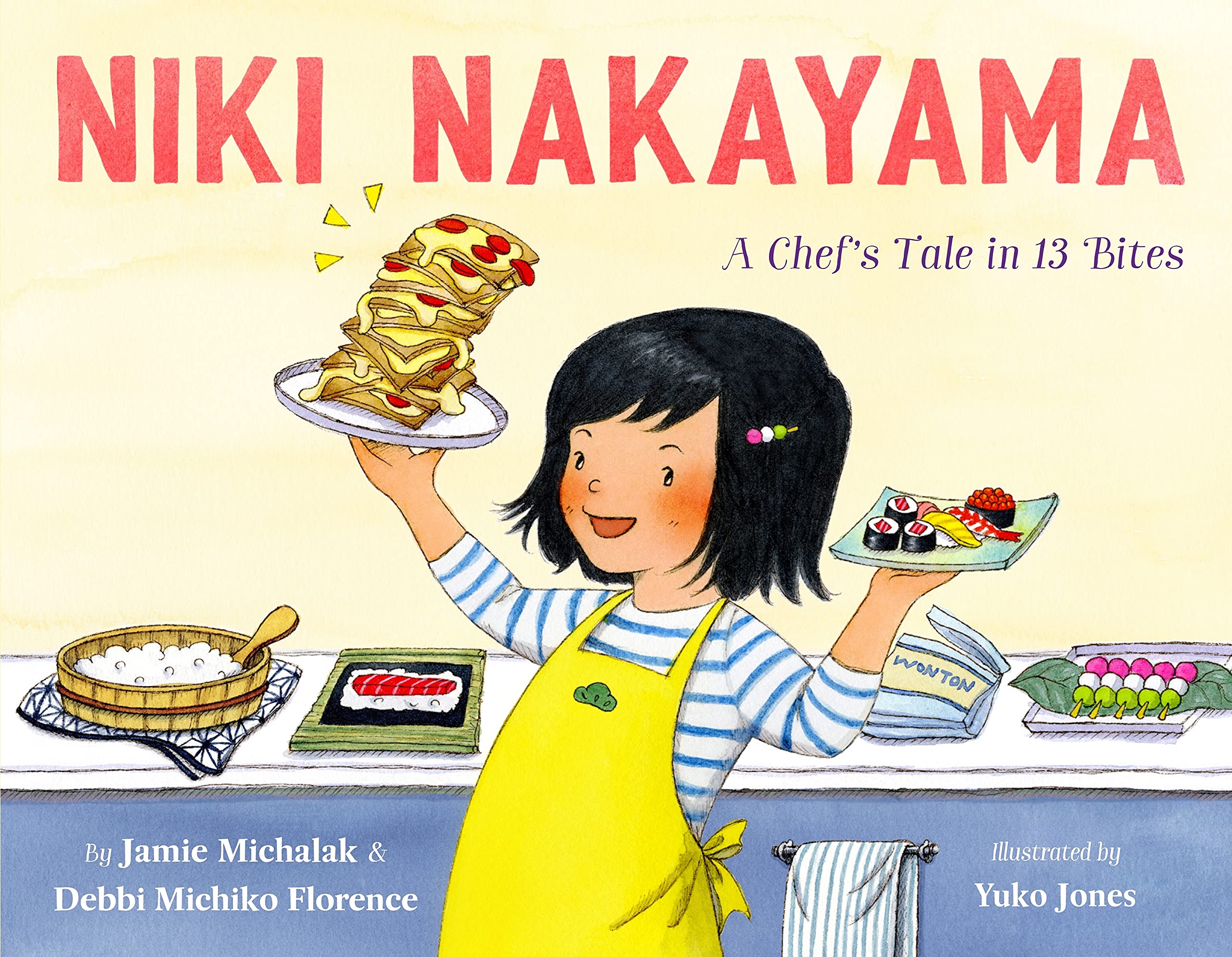
Niki Nakayama: A Chef’s Tale in 13 Bites

Written by Jamie Michalak and Debbi Michiko Florence | Illustrated by Yuko Jones


This true story opens with an invitation to listen as Niki Nakayama talks about her journey to becoming a chef in thirteen bites. “Come. Sit. Taste…” Bite 1: Niki was born in California but her parents were born in Japan. “Outside of Niki’s house was Los Angeles. Inside of her house was Japan.” While the two cultures often felt disparate, in Niki’s family’s kitchen “they became one.” Niki’s mother always put a Japanese twist on American dishes, with soy sauce or rice or teriyaki.

Bite 2: Close to New Year’s Eve, Niki’s grandmother took her to the grocery store to shop for the holiday dinner. Niki was excited. She loved buying all the ingredients for the feast to come: an opportunity to share “a table of love and laughter” in addition to the food. As Niki grew older, she created her own recipes and determined that she would get away from her family’s seafood-selling business and do her own thing.
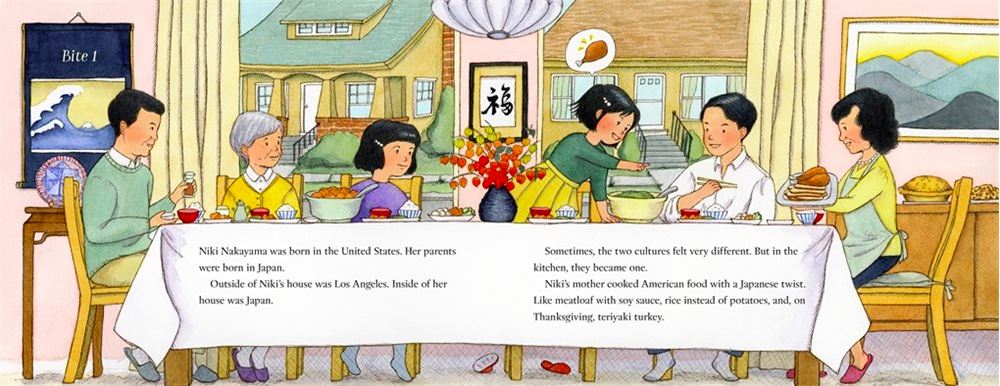
celebrate-picture-books-picture-book-review-niki-nakayama-a-chef's-tale-in-13-bites-family-table

Image copyright Yuko Jones, 2021, text copyright Jamie Michalak and Debbi Michiko Florence, 2021. Courtesy of Farrar Straus Giroux.

Niki’s dreams seemed to get little attention from her parents, who doted on their son and encouraged his success. But Niki new she could be successful too. “Kuyashii! Niki thought. ‘I’ll show them!’” After high school, Niki traveled to Tokyo, Japan, tasting all the delicious food on offer. Later she took the train to where her cousins owned an inn. There she was served a meal comprised of many dishes, each “a work of art” and each with a delicious memory attached or story to tell. “Niki learned this storytelling feast had a name: kaiseki.”

When Niki returned home, she told her mother she wanted to go to school to become a chef. Her mother discouraged her, but Niki went anyway. “She began to see food as art—a carrot as a mountain.” And while her family thought her cooking was just a hobby, Niki thought “Kuyashii! ‘I’ll show them!’” Niki got a job at a sushi restaurant. “Female sushi chefs were rare,” and the head chef didn’t think she could handle the work. “‘You’re just playing chef,’ he joked.” But Niki told him she wasn’t playing.
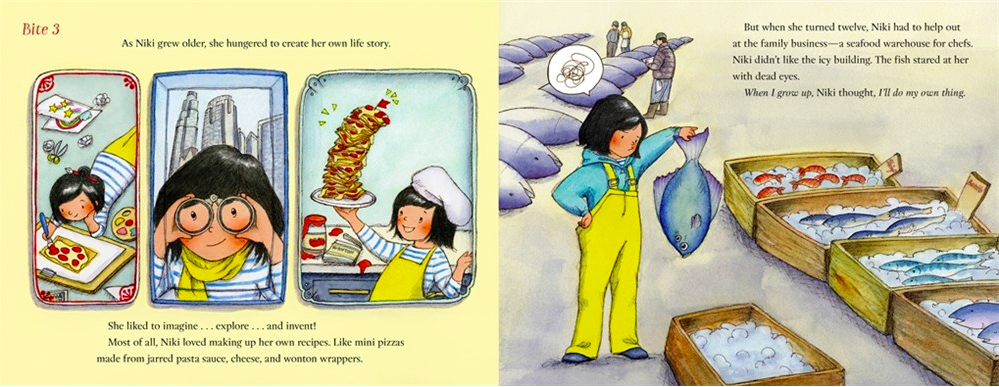
celebrate-picture-books-picture-book-review-niki-nakayama-a-chef's-tale-in-13-bites-fish-market

Image copyright Yuko Jones, 2021, text copyright Jamie Michalak and Debbi Michiko Florence, 2021. Courtesy of Farrar Straus Giroux.

After working there and learning all she could, Niki decided to travel back to her cousins’ inn to study kaiseki. But there was a big obstacle. “As far as she knew, female kaiseki chefs didn’t exist. In Japan recipes and training was only handed down to males. People told Niki her dream was impossible, but she thought she could do it. Niki studied for three years and then returned to Los Angeles to open a sushi restaurant of her own.

Instead of being happy for her, her family was dismissive. At last she convinced them to give her a loan—but it came with the stipulation that “if the restaurant failed, she would have to close it and say goodbye to her dream forever.” Instead of the kaiseki dishes she wanted to serve, her mother thought sushi would be a better choice. Against her own wishes, she agreed. In a year, customers were lining up for her food. But making sushi was not what she really wanted to do.
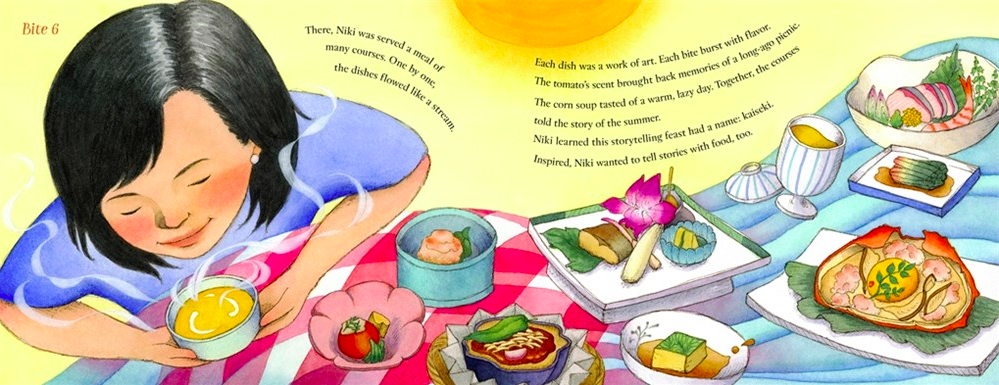
celebrate-picture-books-picture-book-review-niki-nakayama-a-chef's-tale-in-13-bites-bite-6

Image copyright Yuko Jones, 2021, text copyright Jamie Michalak and Debbi Michiko Florence, 2021. Courtesy of Farrar Straus Giroux.

She closed her restaurant and wondered what to do next. Then, after much thought and exploration, she had her answer. She wanted to serve kaiseki that told her story—both Japanese and Californian. “Niki called her new restaurant n/naka. Naka means ‘inside’ in Japanese. Finally, Niki was inside her dream.” Through thirteen courses she told her stories—never serving customers the same meal twice. Now, every night tables are full of love and laughter, and Niki showed everyone that she could be a master chef.

Back matter includes a timeline of Niki Nakayama’s life from her birth in Los Angeles in 1974 to the awarding of two Michelin stars for her restaurant n/naka in 2019; a discussion of the words kuyashii and kaiseki; and a recipe for wonton pizza.
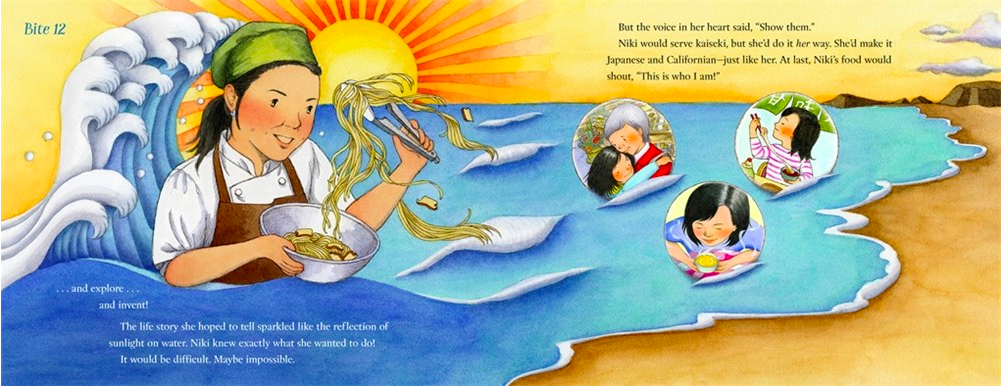
celebrate-picture-books-picture-book-review-niki-nakayama-a-chef's-tale-in-13-bites-kaiseki

Image copyright Yuko Jones, 2021, text copyright Jamie Michalak and Debbi Michiko Florence, 2021. Courtesy of Farrar Straus Giroux.

Jamie Michalak and Debbi Michiko Florence’s biography of Niki Nakayama is an enthralling story of self-confidence, obstacles overcome, and success that will inspire readers to stay true to the voice inside themselves. Telling Nakayama’s story through thirteen bite-sized vignettes that reveal formative moments in her life that informed her journey is a captivating and effective way to show Niki’s growth as a chef as well as to explain the meaning and experience of kaiseki.

Readers will respond to Michalak’s and Florence’s straightforward text and the details of the hurdles placed in her way. One take-away for adult readers is the importance of recognizing, encouraging, and supporting their children’s dreams and talents—an awareness that can lead to ongoing discussions with kids as they grow, learn, and get involved in activities.

Yuko Jones’ lovely illustrations take readers into Niki Nakayama’s home to see her interacting with her family and the foods that so inspired her life’s work. Jones’ images of Japanese delicacies are particularly beautiful, giving kids a strong understanding of the courses served during a kaiseki meal. Niki’s self-assurance in the face of her family’s protests and her male-dominated culinary school class as well as the rarity of female sushi chefs is stirring for all readers. Jones’ final page spreads reveal the gorgeous dishes Niki serves and the inviting atmosphere at her restaurant n/naka.

A captivating and impactful biography of a contemporary chef and role model, Niki Nakayama: A Chef’s Tale in 13 Bites is a must for home, classroom, school, and public library collections to inspire all kids who are contemplating their place in the world now and in the future.

Ages 4 – 10

Farrar, Straus, and Giroux, 2021 | ISBN 978-0374313876

Discover more about Jamie Michalak and her books on her website.

You can learn more about Debbi Michiko Florence and her books on her website.

To learn more about Yuko Jones and see a portfolio of her work, visit her website.

You can learn more about n/naka and view a gallery of Niki Nakayama’s spectacular dishes on the n/naka website.

Family Stories Month Activity
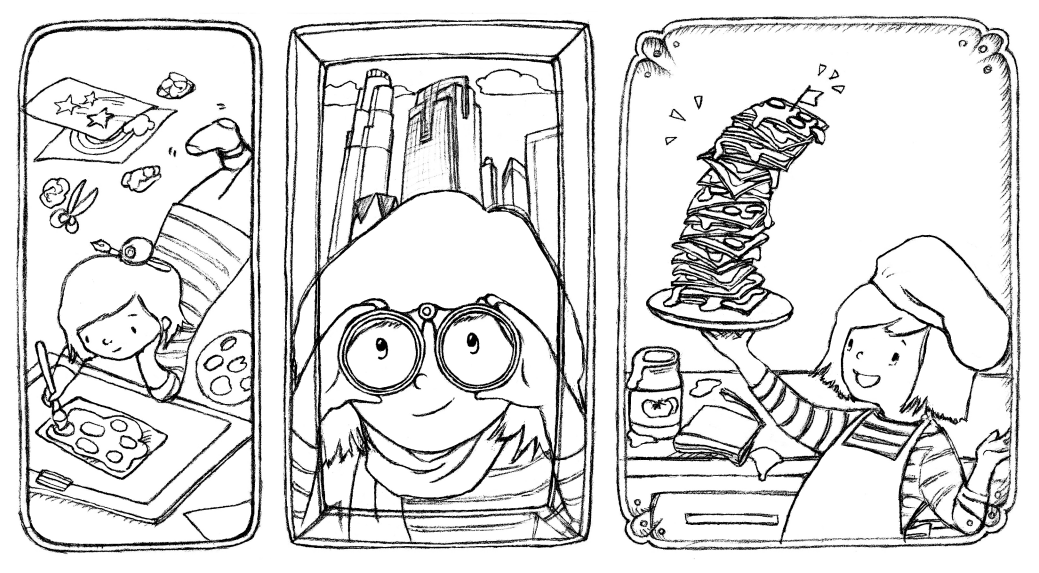
celebrate-picture-books-picture-book-review-niki-nakayama-a-chef's-tale-in-13-bites-coloring-page

Niki Nakayama: A Chef’s Tale in 13 Bites Activity Kit


Educators and families can find an extensive Activity Kit and coloring pages to accompany classroom or homeschool lessons or just for fun on Jamie Michalak’s website and Debbi Michiko Florence’s website.

celebrate-picture-books-picture-book-review-niki-nakayama-a-chef's-tale-in-13-bites-cover

You can find Niki Nakayama: A Chef’s Tale in 13 Bites at these booksellers

Amazon | Barnes & Noble | Books-a-Million

To support your local independent bookstore, order from

Bookshop | IndieBound

Picture Book Review

November 4 – It’s Picture Book Month

About the Holiday

November is all about picture books thanks to Picture Book Month founder author and storyteller Dianne de Las Casas and co-founders author/illustrators Katie Davis, Elizabeth O. Dulemba, Wendy Martin, and author Tara Lazar. This month-long international literacy initiative celebrates print picture books and all that they offer to young (and even older) readers. With gorgeous artwork and compelling stories, picture books open the world to children in surprising ways. They entertain, explain, excite, and help children learn empathy and understanding. If you want to learn more about the holiday and read engaging daily posts about why picture books are important by your favorite authors, illustrators, and others in the children’s publishing industry, visit picturebookmonth.com

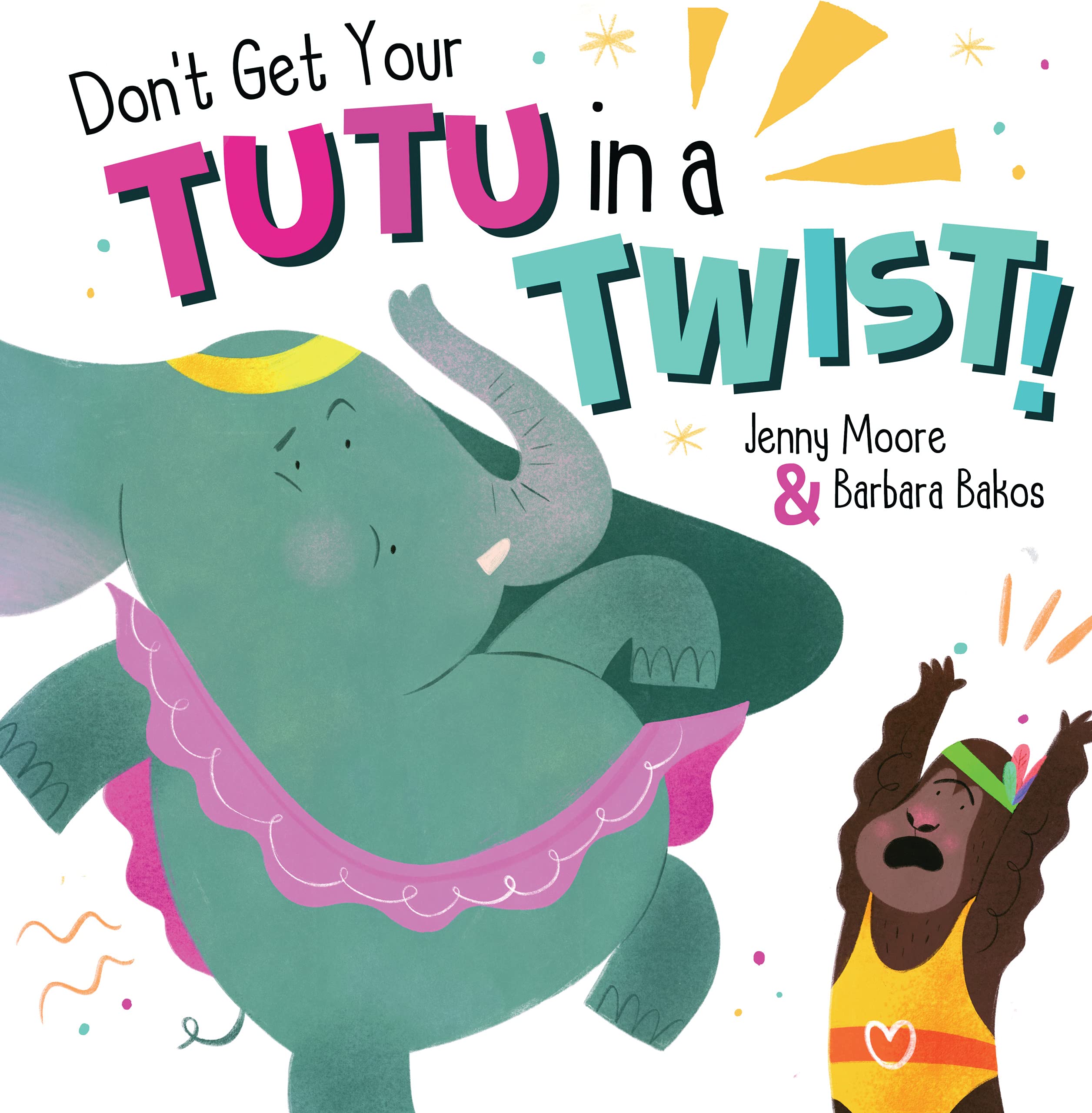
Don’t Get Your Tutu in a Twist

Written by Jenny Moore | Illustrated by Barbara Bakos


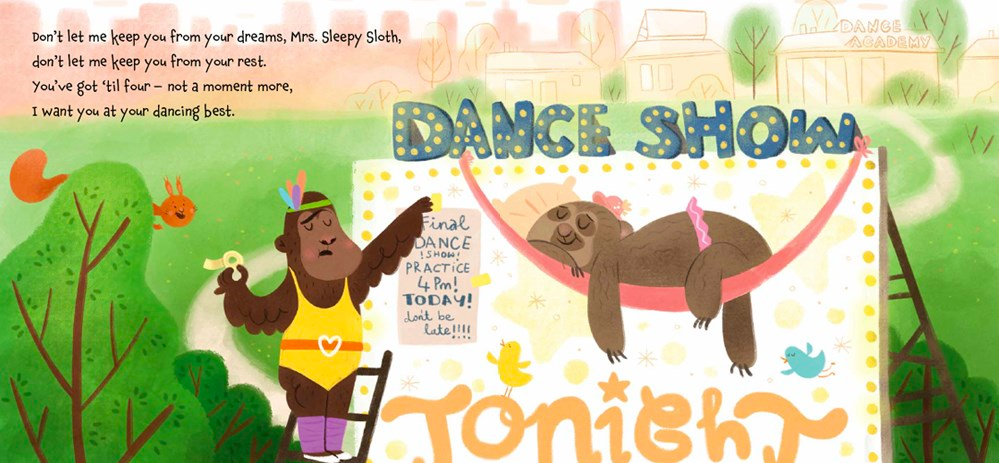
Miss Gorilla is hanging the final practice session reminders for her class’s dance recital that night when she comes upon Mrs. Sloth, snoozing in her hammock hung right on the Dance Show billboard. But Ms. Gorilla doesn’t try to rouse her. Instead, she encourages her to dream and rest, wanting her to be at her “dancing best.”

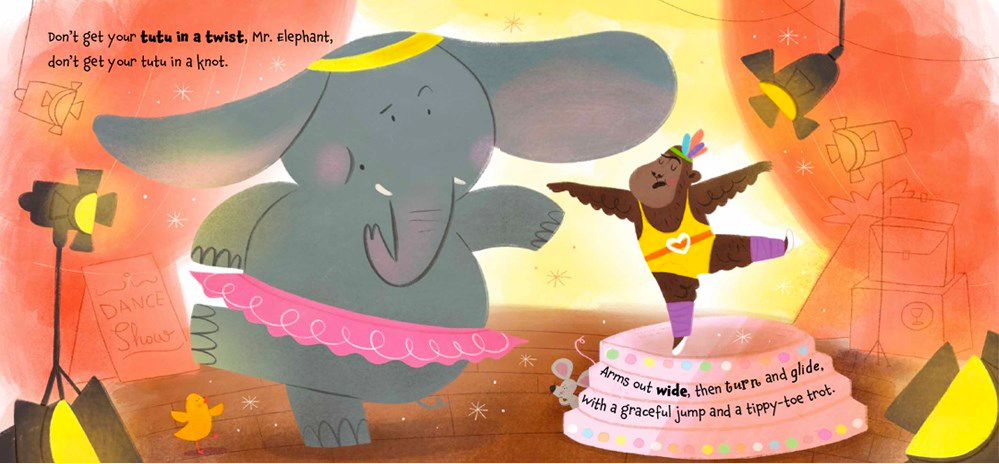
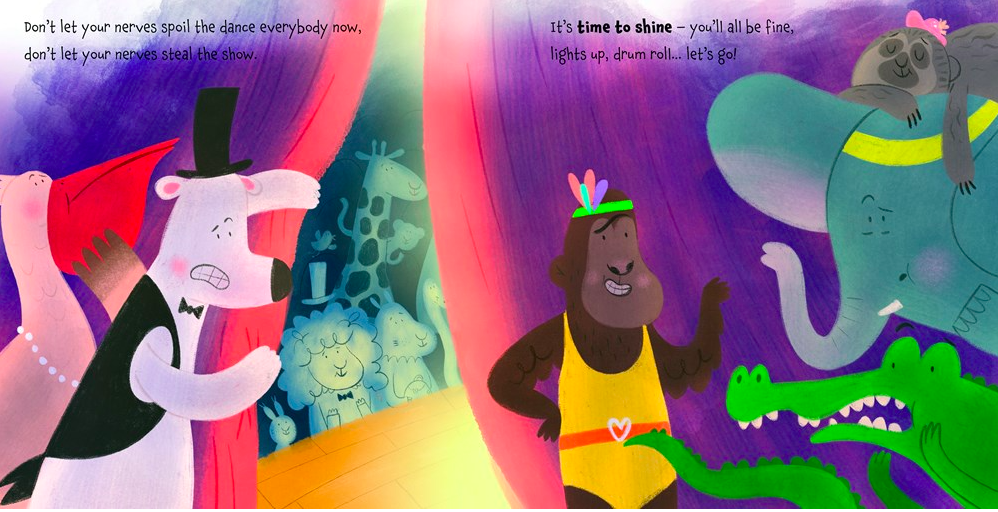
At four o’clock, when the dancers assemble at the theater, Miss Gorilla gives each of them some pointers to make their routines shine. First up is Mr. Elephant who’s having a bit of trouble with the costume and the steps. Miss Gorilla calmly tells him “Don’t get your tutu in a twist, Mr. Elephant, / don’t get your tutu in a knot. / Arms out wide, then turn and glide, / with a graceful jump and a tippy-toe trot.” Next, Mrs. Pelican is all aflutter what with trying to tap and smile, keep her wings up and get her dance right.

Image copyright Barbara Bakos, 2021, text copyright Jenny Moore, 2021. Courtesy of Maverick Arts.

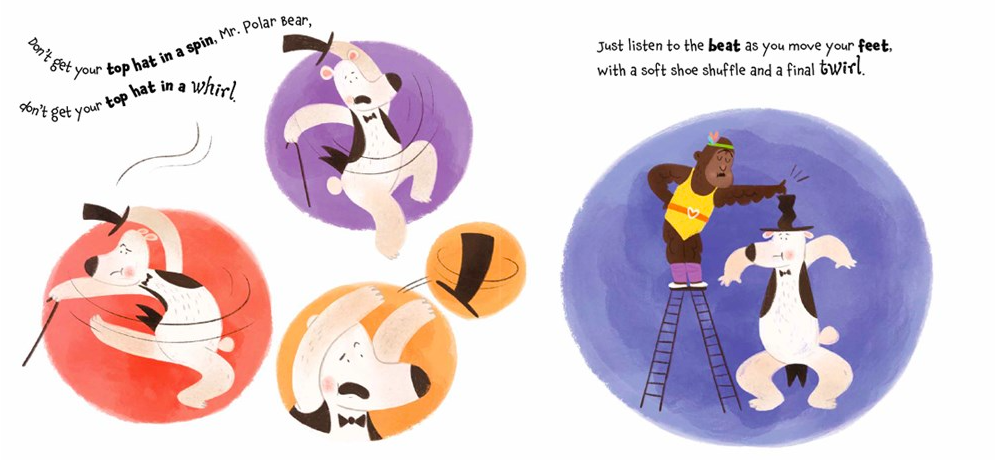
Mr. Polar Bear can’t seem to keep his top hat in place and whirl and twirl at the same time. Miss Gorilla reminds him to “just listen to the beat as you move your feet…” during his soft shoe routine. Miss Gorilla’s glad to see that Mrs. Sloth made it to rehearsal, but now she’s sleeping again! Miss Gorilla gets her tap shoes on her, but that only lasts a moment. Mrs. Sloth keeps sleeping here and sleeping there. She’s even brought the curtain down—but not in a good way; she’s crashed into the stage lights, which lie broken on the floor. Miss Gorilla picks her up and carries her off to find Mr. Crocodile and give him his pep talk. But the minute she’s turned her back, Mr. Crocodile is chewing the curtains and Mrs. Sloth is sleeping in the seats.

Image copyright Barbara Bakos, 2021, text copyright Jenny Moore, 2021. Courtesy of Maverick Arts.

At last it’s time for the big show and the theater is packed. Miss Gorilla encourages her dancers once more—“It’s time to shine –you’ll all be fine, / lights up, drum roll… let’s go!” But the dancers? They don’t look too confident. When Mrs. Pelican goes first her knees knock together and stage fright has her stuck. Next, Mr. Polar Bear takes the stage, but he’s forgotten to listen to the beat, he trips over Mrs. Sloth, who’s dozing on the floor, and knocks Mr. Elephant into the orchestra pit. Mortified, Miss Gorilla, shouts, “Don’t squash the orchestra! No, Mr. Elephant, tippy-toe trot, not splat!” And then what horror does she see? “Don’t eat the audience! No, Mr. Crocodile, / didn’t I mention that?”

Image copyright Barbara Bakos, 2021, text copyright Jenny Moore, 2021. Courtesy of Maverick Arts.

Poor Miss Gorilla admonishes herself. She should have listened to those who told her teaching these students was hopeless. But suddenly she hears… could it be… the sound of applause? She peeks around the curtain to find Mrs. Sloth—her eyes still shut—gracefully gliding with new moves and a “three-toed tip tap groove.” The audience roars for more, and “Mrs. SUPER Sloth” obliges with leaps and twirls, handstands and whirls. But where has she learned all of these steps, Miss Gorilla wonders. Then she realizes and exclaims, Mrs. Sloth “a natural star, it seems… you’ve been dancing in your dreams!”

Image copyright Barbara Bakos, 2021, text copyright Jenny Moore, 2021. Courtesy of Maverick Arts.

Jenny Moore doesn’t tiptoe around the backstage nerves and missteps of a dance recital in her comical story. As Mrs. Gorilla tries to calm the dancer’s jitters and refine their steps, kids will be eager to see how the performance plays out—and, especially, will Mrs. Sloth wake up in time? Moore’s energetic rhymes and rhythms that pulsate with the motivational, slightly frantic beats of teachers or parents trying to get their young charges shipshape for a performance invite dramatic readings that will get kids laughing. Readers will enjoy spotting Mrs. Sloth deeply asleep in various spots at the theater. Encouragement and inspiration to do your best and follow your dreams underlies Moore’s funny story.

Barbara Bakos’s vibrant illustrations of Mr. Elephant, Mrs. Pelican, Mr. Crocodile, Mr. Polar Bear, and Mrs. Sloth are packed with humor as the animals try to rein in their nervousness and put on a good show. Bakos accentuates the mishaps with shocked and worried faces, less-than-graceful steps, and costumes that just don’t stay put. But when it seems that things can’t get any worse, kids will be surprised to see Mrs. Sloth—the most unlikely of prima ballerinas—save the show with her dreamy moves.

A lighthearted and funny book that will reassure dancers and any child taking part in a recital, performance, or presentation as well as entertain kids who just love to laugh, Don’t Get Your Tutu in a Twist is a terrific choice for animated story times at home, school, or public libraries.

Ages 4 – 9

Maverick Arts, 2021 | ISBN 978-1848867802

Discover more about Jenny Moore and her books on her website.

To learn more about Barbara Bakos, her books, and her art, visit her website.

Picture Book Month Activity

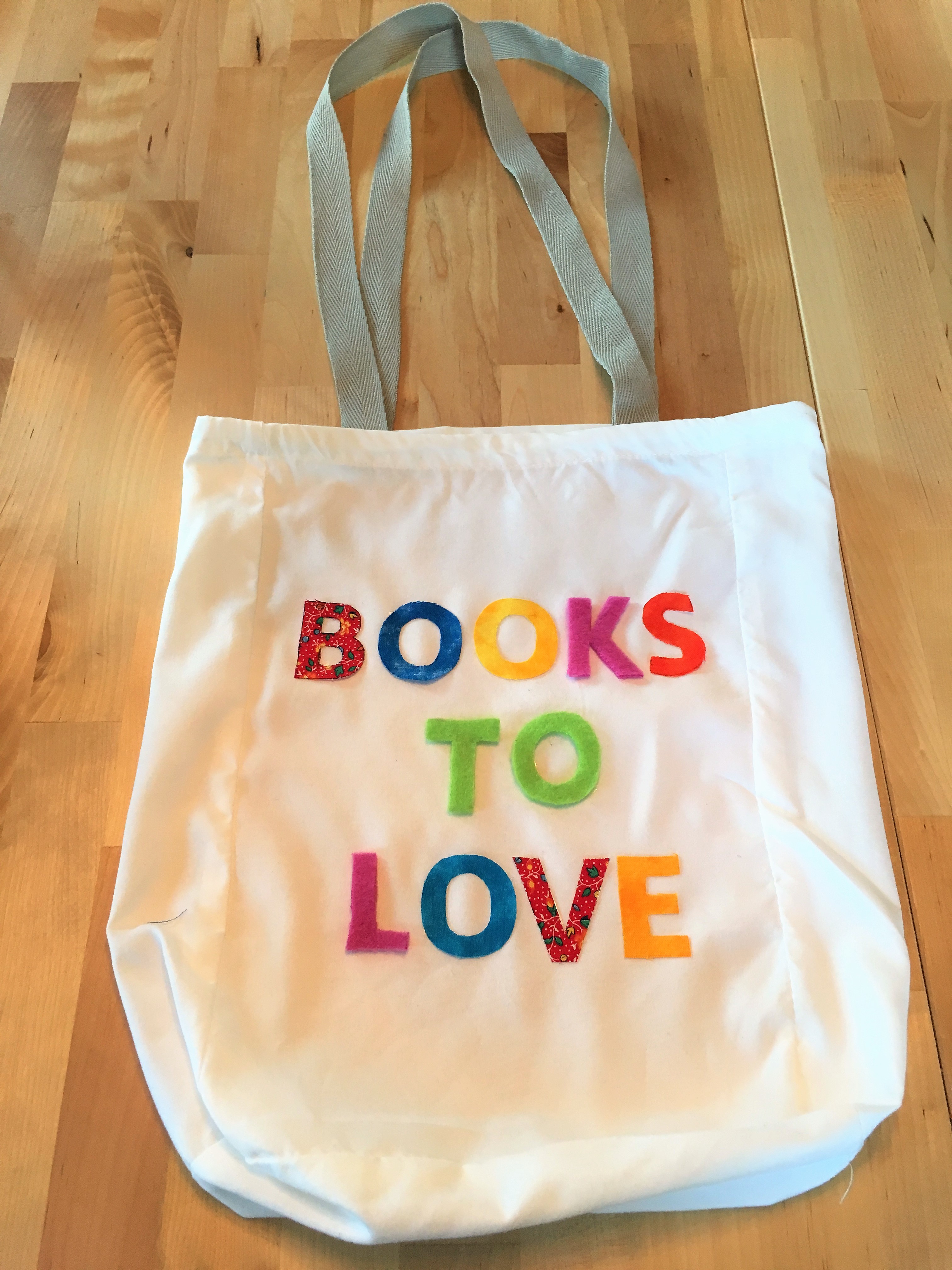
celebrate-picture-books-picture-book-review-books-to-read-bag-empty

Books to Love, Books to Read Book Bag


True book lovers can’t go anywhere without a book (or two or three) to read along the way. With this easy craft you can turn a cloth bag into a kid-size book bag!

Supplies

  • Printable Templates: Books to Read Template | Books to Love Template
  • Small cloth bag, available from craft or sewing stores—Recyclable Idea: I used the bag that sheet sets now come in
  • Cloth trim or strong ribbon, available from craft or sewing stores—Recyclable Idea: I used the cloth handles from shopping bags provided from some clothing stores
  • Scraps of different colored and patterned cloth. Or use quilting squares, available at craft and sewing stores
  • Pen or pencil for tracing letters onto cloth
  • Scissors
  • Small sharp scissors (or cuticle scissors) for cutting out the center of the letters
  • Fabric glue
  • Thread (optional)
  • Needle (optional)

celebrate-picture-books-picture-book-review-books-to-love-bag-empty

Directions

  1. Print the sayings and cut out the letters
  2. Trace letters onto different kinds of cloth
  3. Cut out cloth letters
  4. Iron cloth bag if necessary
  5. Attach words “Books to Read” to one side of bag with fabric glue
  6. Attach words “Books to Love” to other side of bag with fabric glue
  7. Cut cloth trim or ribbon to desired length to create handles
  8. Glue (or sew) handles onto the inside edge of bag

You can find Don’t Get Your Tutu in a Twist at these booksellers

Amazon | Barnes & Noble | Books-a-Million

To support your local independent bookstore, order from

Bookshop | IndieBound

Picture Book Review

November 3 – It’s Family Literacy Month

celebrate-picture-books-picture-book-review-odd-beasts-cover

About the Holiday

National Family Literacy Month was designed to encourage parents and other adults to read together with the children in their life. Studies show that children who are read to are better prepared to read on their own and do better in school. Cuddling together before bedtime or during special story times with favorite books instills a love of reading that can last a lifetime. To celebrate, plan some special reading-related activities: take a trip to a local bookstore and let your child pick a book; if your child is old enough, visit the library to sign up for a library card; and schedule extra reading time, especially with grandparents or other family members who may be visiting for the holidays. A fun and educational board book like today’s book is a perfect way to get little ones enthusiastic about reading as they grow older!

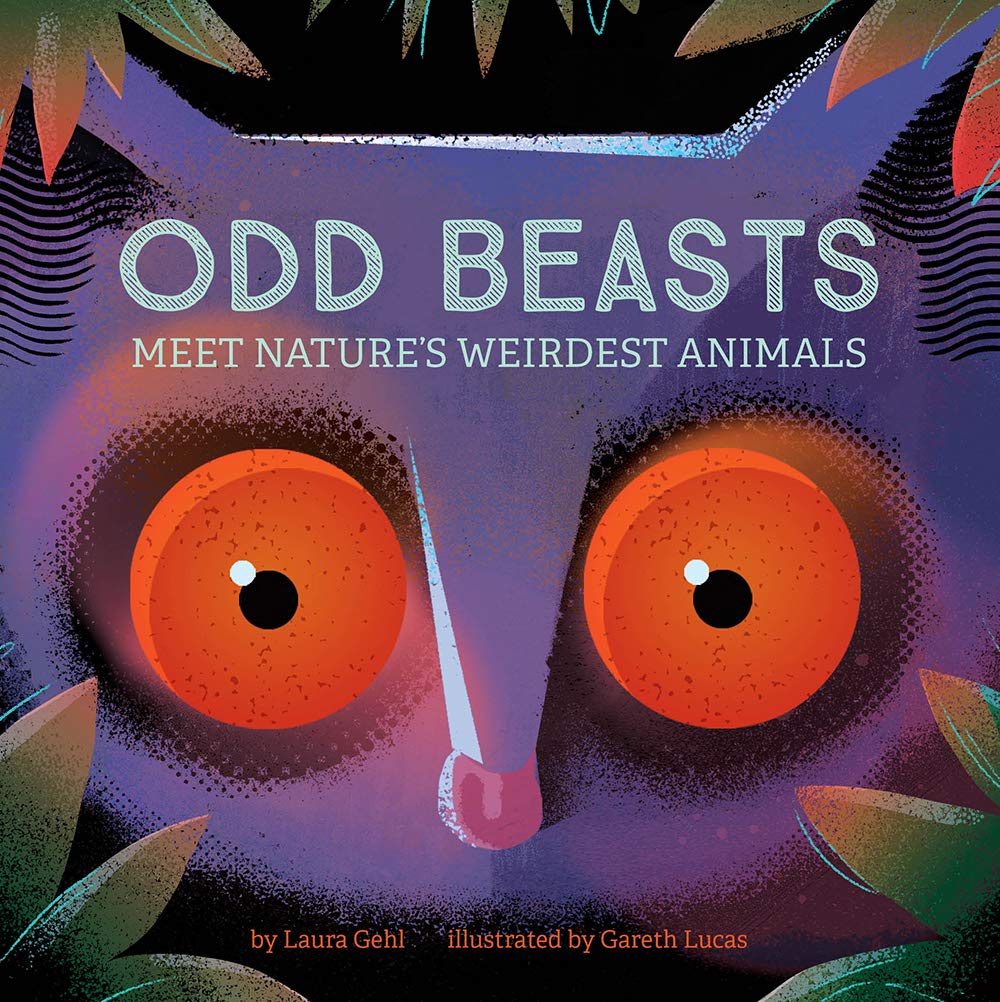
Thank you to Abrams Appleseed and Barbara Fisch at Blue Slip Media for sharing Odd Beasts: Meet Nature’s Weirdest Animals with me for review consideration. All opinions about the book are my own.

Odd Beasts: Meet Nature’s Weirdest Animals

Written by Laura Gehl | Illustrated by Gareth Lucas


From their earliest years, kids are attracted to animals, whether for their fluffy coats, enthusiastic “kisses,” or silly antics. They love visiting the zoo and the aquarium to see – and maybe even touch – animals and sea creatures from around the world. And they’re always excited to meet new animals through the books they read. Through an age-appropriate short, charming poem played out over eight boldly illustrated pages, Laura Gehl does just that, introducing kids to a few of the earth’s most unusual animals. 

celebrate-picture-books-picture-book-review-odd-beasts-sunfish

Image copyright Gareth Lucas, 2021, text copyright Laura Gehl, 2021. Courtesy of Abrams Appleseed.

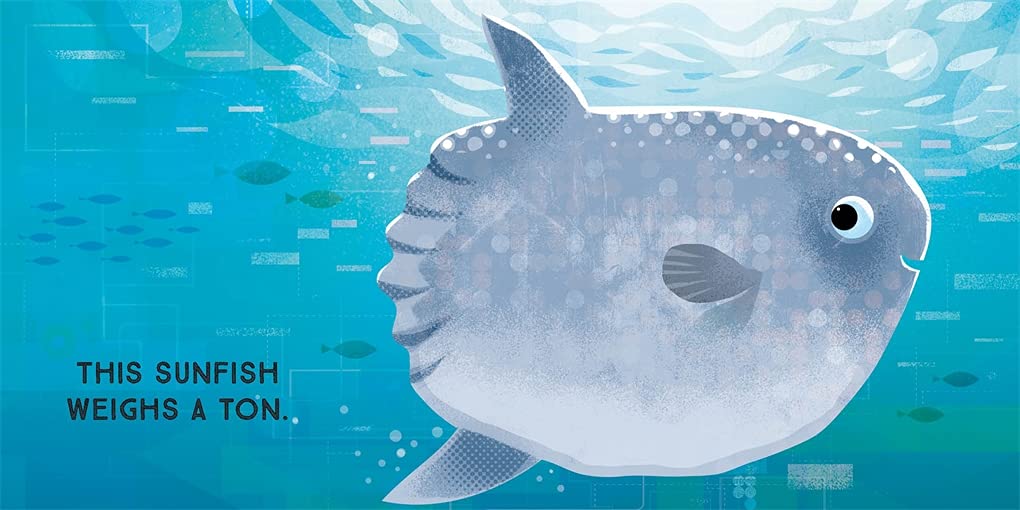
Gehl begins with an animal from Asia and Africa that at first glance might appear like an unlikely combination of an anteater and a fish – the pangolin! Turning the page, readers do meet a fish – and what a fish! “This sunfish weighs a ton.” Another ocean dweller is introduced two pages later: “This angler sees no sun.” Readers will be equally charmed by a turtle whose “neck is long,” and a clever camouflaged insect whose “jumps are strong.”

celebrate-picture-books-picture-book-review-odd-beasts-angler

Image copyright Gareth Lucas, 2021, text copyright Laura Gehl, 2021. Courtesy of Abrams Appleseed.

In addition to these three quirky creatures, kids get to know a glass frog, a long-horned orb-weaver spider, and a bush baby. Then Gehl tickles kids’ funny bone with a surprising perspective about how beauty really is in the eye of the beholder. Following her lyrical pages, Gehl presents readers with a factual paragraph about each critter that reveals more about the trait that makes them so unusual and where they live. These descriptions are accompanied by a full-color photograph of the animal so kids can get a close-up view of nature’s amazing adaptations.

For young nature-lovers in the making, Odd Beasts: Meet Nature’s Weirdest Animals is an engaging way to introduce them to a few creatures from around the world that will whet their appetite for more discovery. The book would be a much-read addition to home, classroom, and school and public library bookshelves.

Ages 2 – 4

Abrams Appleseed, 2021 | ISBN 978-1419742224

Discover more about Laura Gehl and her books on her website.

You can connect with Gareth Lucas on Instagram and Twitter

Family Literacy Day Activity

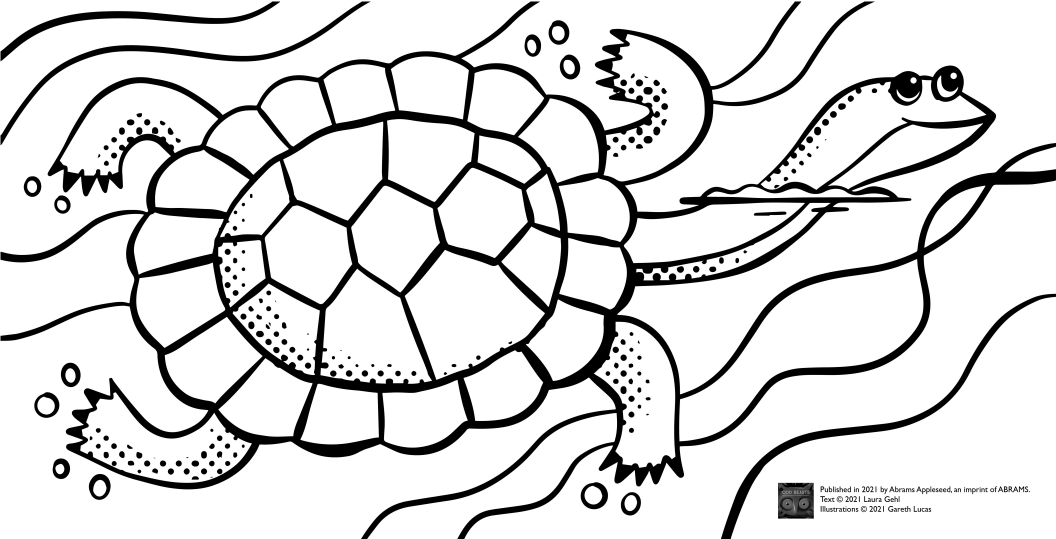
celebrate-picture-books-picture-book-review-odd-beasts-laura-gehl-coloring-pages-turtle

Odd Beasts Coloring Pages


These odd beasts could use some color! Download and print these three coloring sheets from Laura Gehl’s website!

celebrate-picture-books-picture-book-review-odd-beasts-cover

You can find Odd Beasts: Meet Nature’s Weirdest Animals at these booksellers

Amazon | Barnes & Noble | Books-a-Million

To support your local independent bookstore, order from

Bookshop | IndieBound

Picture Book Review
 

November 2 – It’s Historic Bridge Month

celebrate-picture-books-picture-book-review-sonny-rollins-plays-the-bridge-cover

About the Holiday

Bridges can do so much more than just take vehicles and people over waterways or highways. Many are beautiful structures that enhance the skyline or environment in which they’re found. Covered bridges, stone bridges, and soaring steel and cable bridges all have their own stories to tell and inspire awe in their own way. Unfortunately, many older bridges are slated for destruction or replacement. To honor this month’s holiday, visit a historic bridge in your area or research famous bridges of the past and present. On November 6, we also celebrate National Saxophone Day! To get in the swing of this holiday, why not listen to music by Sonny Rollins? You can find his jazz classics on YouTube. To get started, you can listen to The Bridge here.

Thanks go to Nancy Paulsen Books for sharing a copy of Sonny Rollins Plays the Bridge with me for review consideration. All opinions on the book are my own.

Sonny Rollins Plays the Bridge

Written by Gary Golio | Illustrated by James Ransome


“The Bridge / leaps / spreads its wings / joyfully / joining shore to shore”

“Steel towers / standing tall / reaching high / touching / sky” as people – walking and riding bikes – and cars and trucks move above “the River / stretched out below / a shiny / endless / song”

celebrate-picture-books-picture-book-review-sonny-rollins-plays-the-bridge-apartment-building

Image copyright James Ransome, 2021, text copyright Gary Golio, 2021. Courtesy of Nancy Paulsen Books, Penguin.

In another part of New York City, Sonny Rollins, already a jazz great, is trying to find a place to play his saxophone – to become a better musician and a better person. The neighbors in his apartment building complain from their windows as he practices on the fire escape, so he takes to the sidewalks to find a more accommodating spot. He wanders the busy streets until he sees, towering above the tall buildings, the Williamsburg Bridge and wonders…. He listens to “that / small voice / inside / which says / you need to do this

celebrate-picture-books-picture-book-review-sonny-rollins-plays-the-bridge-city

Image copyright James Ransome, 2021, text copyright Gary Golio, 2021. Courtesy of Nancy Paulsen Books, Penguin.

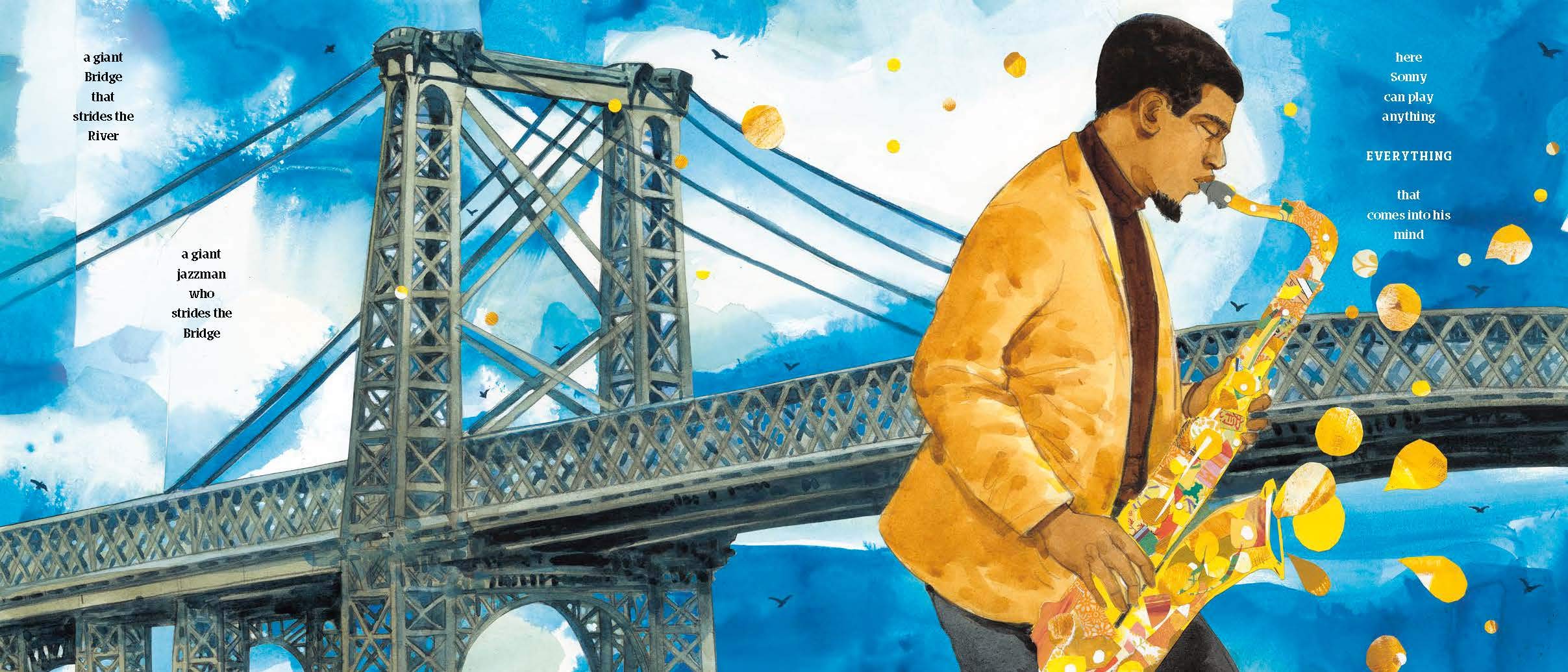
He climbs the stairs to the walkway high above the noisy, busy city and takes his saxophone from its case. Here, alone, Sonny finds the place where he can play as loud as he wants. But he’s not really alone. Around him the “clanking clanging” subway trains lend rhythm to his music, and the “tugboats / blowing bass notes / back / and forth” are answered “note-for-note / with / low moans” from Sonny’s sax while seagulls are “echoing / Sonny’s funny / squeaks / & / squawks.”

Here, this jazz great “can play / anything / EVERYTHING / that comes into his mind.” With his “mind opened wide,” Sonny finds the sound he’s been looking for and “the Bridge / leaps / spreads its wings / just like / Sonny.”

celebrate-picture-books-picture-book-review-sonny-rollins-plays-the-bridge-playing

Image copyright James Ransome, 2021, text copyright Gary Golio, 2021. Courtesy of Nancy Paulsen Books, Penguin.

Back matter includes more about the life and career of Sonny Rollins; a history of the Williamsburg Bridge and The Bridge – a series of songs inspired by his experience, recorded in 1962; and Sonny’s words about how he lives his life and what he thinks is important. Sonny’s website and recommended songs found on YouTube round out these informative pages.

Gary Golio’s story floats on the jazz rhythms of his poetic verses, enveloping readers in the musicality of Sonny Rollins’s life and the sounds of the city. In addition to relaying the facts of this seminal period in Rollin’s career, Golio emphasizes Rollin’s belief in the importance of listening to your own internal voice on the road to self-discovery. Lyrical descriptions of the impromptu “band” that accompanied Rollins on the bridge are both beautifully evocative and inspirational reminders for readers that they too can shine while working with or playing off of others. 

James Ransome’s glorious watercolor and collage paintings give readers a sense of the time period as well as the scale of the bridge as it soars above the high-rise buildings, providing a practice room and stage for Sonny Rollins’ talent. Textured and patterned details along with a variety of perspectives echo Golio’s lyrical verses. Gold accents on each page mirror Rollins’ shiny saxophone and visually represent the notes that rise and float away over the city.

A gorgeous and jazz-infused snapshot of a stirring and influential time in Sonny Rollins’ life,  Sonny Rollins Plays the Bridge will delight any music lover and inspire all readers to search for the best in themselves. The book is highly recommended for home, school, and public library collections.

Ages 4 – 8

Nancy Paulsen Books, Penguin Random House, 2021 | ISBN 978-1984813664

Discover more about Gary Golio and his books on his website.

To learn more about James Ransome, his books, and his art, visit his website.

Historic Bridge Awareness Month Activity

celebrate-picture-books-picture-book-review-spaghetti-box-bridge-craft

Build a Remarkable Recycled Bridge


You don’t need fancy blocks and construction materials to build a bridge! Little ones will be fascinated to put together a bridge made out of items you already have at home or that may even be slated for the recycle bin. Spaghetti boxes make great roadways, and cut-up egg cartons can be used as supports.

Want to build a whole town? Cereal boxes and pasta boxes make skyscrapers, apartment buildings, fire stations, and more. Need a farm silo? Grab a peanut butter jar, oatmeal container, or aluminum can. You can use them as is or—if your kids are sticklers for a little more detail—add some paint and details! So look around, use your imagination, and get creative!

celebrate-picture-books-picture-book-review-sonny-rollins-plays-the-bridge-cover

You can find Sonny Rollins Plays the Bridge at these booksellers

Amazon | Barnes & Noble | Books-a-Million 

To support your local independent bookstore, order from

Bookshop | IndieBound

Picture Book Review

November 1 – National Author’s Day

celebrate-picture-books-picture-book-review-The-ABCs-of-Black-History-cover

About the Holiday

There may be no better month to celebrate Author’s Day than in November. Not only is it Picture Book Month, but thousands of people set aside their usual routine to take part in NaNoWriMo or National Novel Writing Month, when writers try to complete at least a first draft of a novel in one month. The holiday was instituted in 1928 by Nellie Verne Burt McPherson, president of the Bement, Illinois Women’s Club. An avid reader, she established Author’s Day to thank writer Irving Bacheller who sent her an autographed story in response to her fan letter. The day was officially recognized in 1949 by the United States Department of Commerce. McPherson’s granddaughter, Sue Cole, promoted the holiday after Nellie’s death in 1968. To celebrate, people are encouraged to write a note of appreciation to their favorite author.

Thanks go to Workman Publishing and Big Honcho Media for sharing a copy of The ABCs of Black History with me for review consideration. All opinions on the book are my own.

The ABCs of Black History

Written by Rio Cortez | Illustrated by Lauren Semmer


This stunning compendium of lyrical verses defies easy categorization as it bridges the genres of alphabet books, encyclopedias, history books, biographies, and more for young readers. The book opens with words from James Baldwin, in which he says “History is not the past. It is the present. We carry our history with us. We are our history,” and within its pages children discover not only specific events and well-known people, but the emotions, philosophies, and traits that have carried and sustained African Americans.

celebrate-picture-books-picture-book-review-The-ABCs-of-Black-History-banner

Image copyright Lauren Semmer, 2020, text copyright Rio Cortez, 2020. Courtesy of Workman Publishing Company.

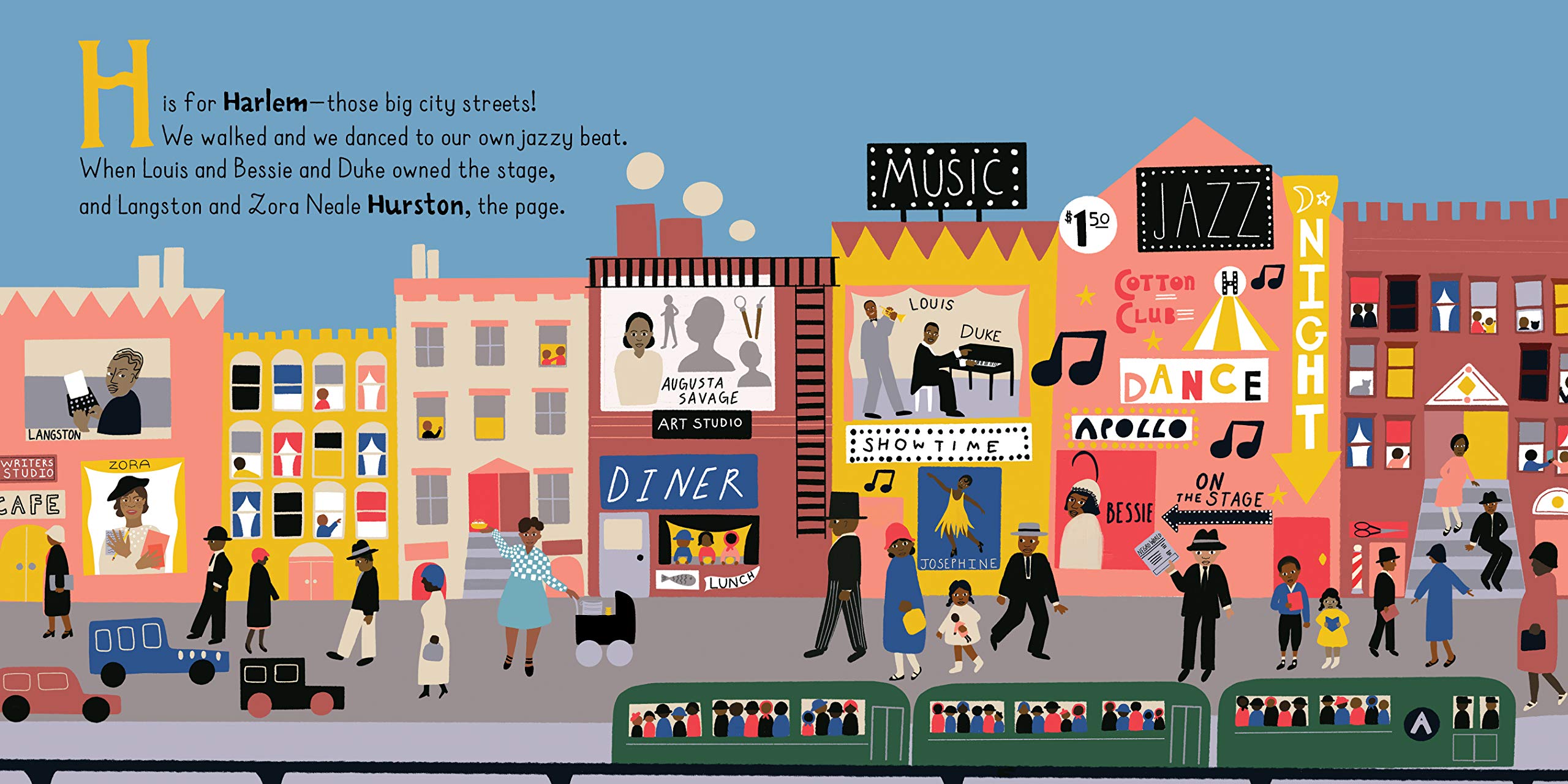
This inspiring alphabetic journey begins with “A is for anthem, a banner of song / that wraps us in hope, lets us know we belong. / We lift up our voices, lift them and sing. / From stages and street corners, let freedom ring.” From there kids come to B, which is for “beautiful…brave…bright…and bold.” It also describes “brotherhood” and “believing in grace.” At E children meet Explorers Matthew Henson and Mae Jemison as well as some of those who fought to make Education open to all, such as Ruby Bridges, Linda Brown, and the Little Rock Nine.

celebrate-picture-books-picture-book-review-The-ABCs-of-Black-History-Explore

Image copyright Lauren Semmer, 2020, text copyright Rio Cortez, 2020. Courtesy of Workman Publishing Company.

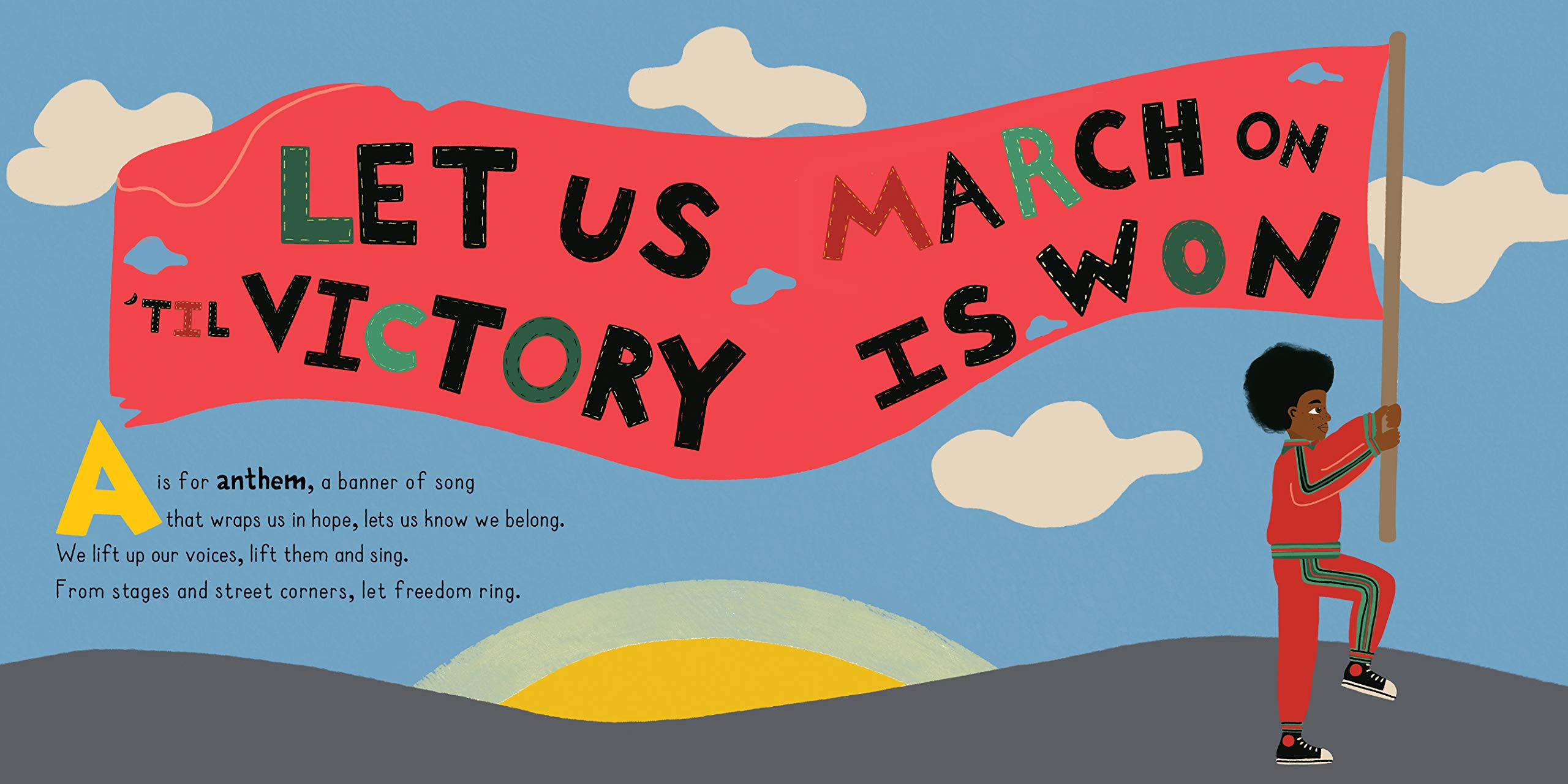
G and the Great Migration follow Black Americans from farmland to cities to “Harlem – those big city streets! / We walked and we danced to our own jazzy beat.” “Imagine, invent, innovative” define letter I, where readers find Alvin Ailey, Jean-Michel Basquiat, Gwendolyn Brooks, Madam C. J. Walker, George Washington Carver, and DJ Kool Herc.

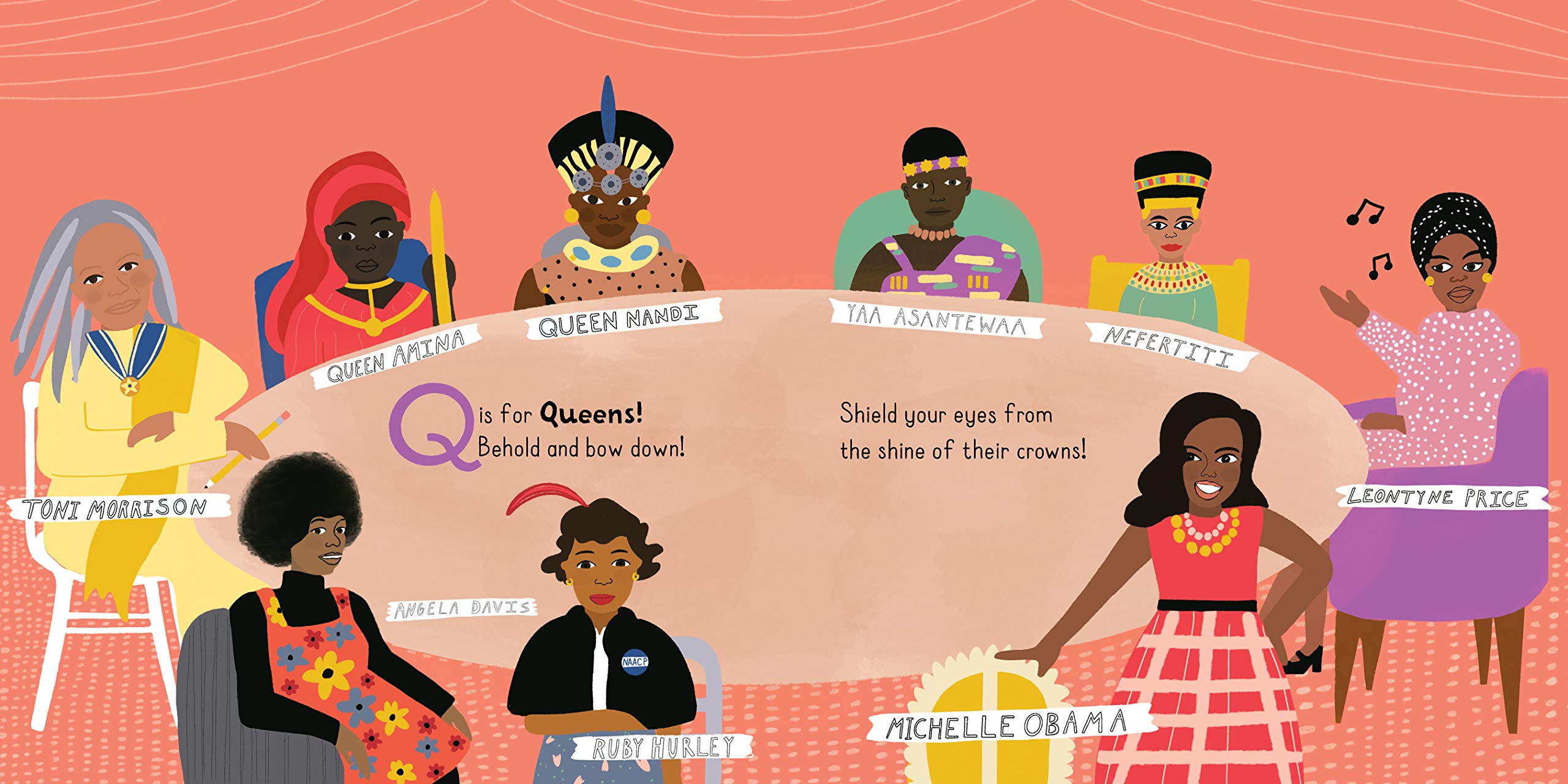
The drive to move forward, to aspire, and succeed is eloquently traced from the past: “M is for march, for lifting our feet, / taking the movement, the cause to the street” to today: “Black lives matter. Every breath, every dream – / Every thought, each idea, each impossible scheme.” From sit-ins to their organizers, from African queens to today’s women leaders, from award-winning athletes to scientists to singers of soul, Black achievement is highlighted across the alphabet.

celebrate-picture-books-picture-book-review-The-ABCs-of-Black-History-Harlem

Image copyright Lauren Semmer, 2020, text copyright Rio Cortez, 2020. Courtesy of Workman Publishing Company.

At U children and adults arrive at poignant verses that should prompt deeper discussions: “U is for United States – this story is tough. / The birth of a nation was deadly for us. / We the people? In the land of the free? / No one who was enslaved would agree.” A second and third verse take in the Civil War and the “unbroken, unshaken, unbound, / like Harriet Tubman, who went underground,” and the battle for freedom and rights that continued after the war’s end. But the pages end on a note of hope, revealing that U is also “for unfinished, this American tale. / With courage and strength, we will prevail!” 

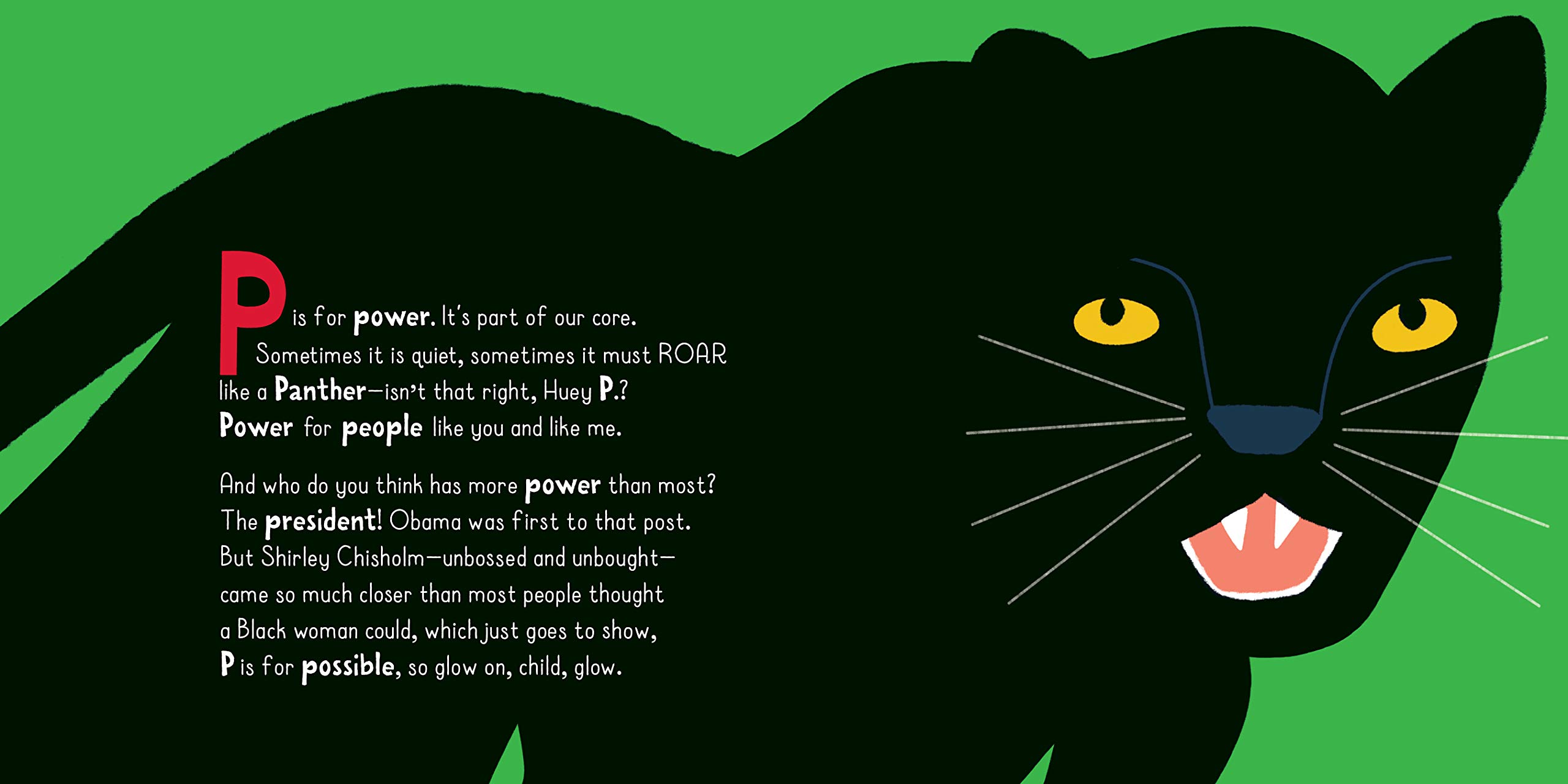
celebrate-picture-books-picture-book-review-The-ABCs-of-Black-History-panther

Image copyright Lauren Semmer, 2020, text copyright Rio Cortez, 2020. Courtesy of Workman Publishing Company.

As this is National Author’s Day, I must mention that “W is for writers whose wisdom and words / bring to life worlds where our voices are heard. / Rappers adn poets and songwriters, too, / all those who spin from our point of view.” And how does this collection of events, holidays, personalities, hopes, and dreams end? At Z for zenith – “The top of that mountain King said we would reach” to which “we march on, / rising, rising, like the sun with the dawn.”

Back matter includes further elucidation of each letter of the alphabet and it’s accompanying concept. These are detailed entries that also lend themselves to further study. Resources also include websites to organizations and museums and suggestions for books and poetry to read.

celebrate-picture-books-picture-book-review-The-ABCs-of-Black-History-queens

Image copyright Lauren Semmer, 2020, text copyright Rio Cortez, 2020. Courtesy of Workman Publishing Company.

Rio Cortez’s poetry soars on optimism, achievement, hope, and a palpable pride in Black history and the future. Musical and conversational, the verses flow off the tongue, creating an exciting and meaningful read-aloud experience for adults and children. The breadth of information that Cortez imparts is stirring, adding up to an impactful look at history and a rousing celebration of Black culture. Every page offers many, many opportunities for further learning, listening, viewing, and research.

Lauren Semmer’s vivid illustrations – opening with an uplifting group shot of young, happy, and hopeful black and brown faces that welcome their young peers – will enthrall readers with their action, energy, and colors. Portraits of famous figures and unsung heroes will inspire children to get involved in their communities and causes they believe in, while reaching for their dreams.

The ABCs of Black History is an exhilarating picture book for family reading times, a superb cross-curricular resource for homeschoolers and classrooms from elementary school to high school, and a must for all school and public library collections.

Ages 5 and up

Workman Publishing Company, 2020 | ISBN 978-1523507498

Discover more about Rio Cortez and her books on her website.

To learn more about Lauren Semmer, her books, and her art, visit her website.

National Author’s Day Activity

celebrate-picture-books-picture-book-review-Black-History-Month-Coloring-Pages-Maya-Angelou

Black Leaders Coloring Pages


Whether you’re interested in law and politics, science, sports, or the arts, you can find a role model in the people in the printable coloring pages below. You’ll find more coloring pages of Black leaders to print at Scribble Fun.

  Maya Angelou  | Louis Armstrong | Dr. Mae Jemison | Garrett Morgan | Barack H. Obama |  Rosa Parks | Jackie Robinson 

celebrate-picture-books-picture-book-review-The-ABCs-of-Black-History-cover

You can find The ABCs of Black History at these booksellers

Amazon | Barnes & Noble | Books-a-Million

To support your local independent bookstore, order from

Bookshop | IndieBound

Picture Book Review
October 30 – Hug a Sheep Day

celebrate-picture-books-picture-book-review-little-ewe-cover

About the Holiday

Hug a Sheep Day was founded by a woman who rescued a sheep named Punkin from the Bluegrass Stockyards in 1992. When Punkin passed away 12 years later, the woman, known as “the Crazy Sheep Lady,” wanted to honor him and encourage people to appreciate the warmth and comfort these animals provide and show how much they love them. She chose Punkin’s birthday as the date of her new holiday, and over the years Hug a Sheep Day has grown to be celebrated around the world with many farms inviting visitors to open farm days and fun events where they can indeed hug a sheep. If you want to take full advantage of today’s celebration, look for a participating farm or petting zoo near you. 

Thanks go to Beaming Books for sharing a copy of Little Ewe with me for review consideration. All opinions about the book are my own. I’m excited to be teaming with Beaming Books in a giveaway of the book. You’ll find the details below.

Little Ewe: The Story of One Lost Sheep

Written by Laura Sassi | Illustrated by Tommy Doyle


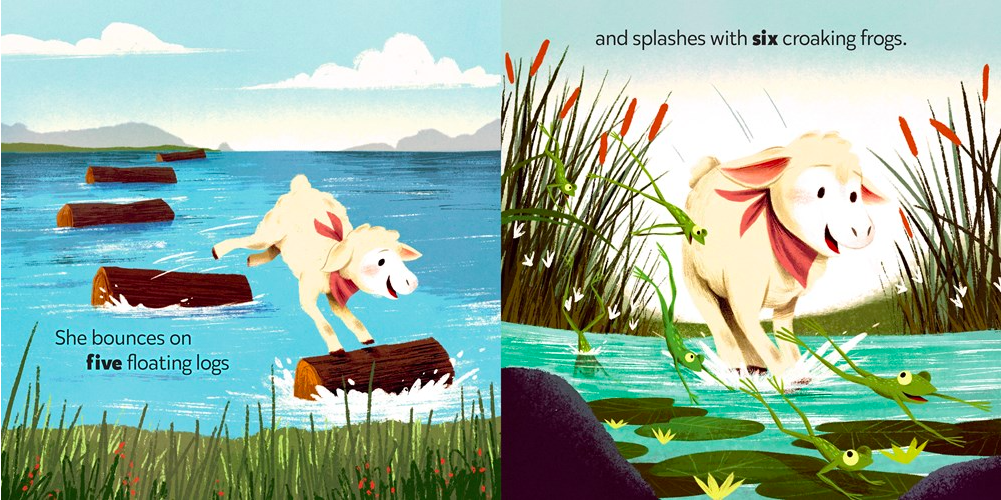
The flock gathers at the fence, where “one shepherd opens up the gate. / ‘It’s time to eat.’ / The sheep can’t wait!” The sheep file out of the pen and up the hill in pairs, but Little Ewe is more interested in exploring than nibbling. She chases three lizards and watches four spiders, and when Shepherd calls for her to come back, she promises to do so “but not until…/ She bounces on five floating logs / and splashes with six croaking frogs.”

celebrate-picture-books-picture-book-review-little-ewe-splashing

Image copyright Tommy Doyle, 2021, text copyright Laura Sassi, 2021. Courtesy of Beaming Books.

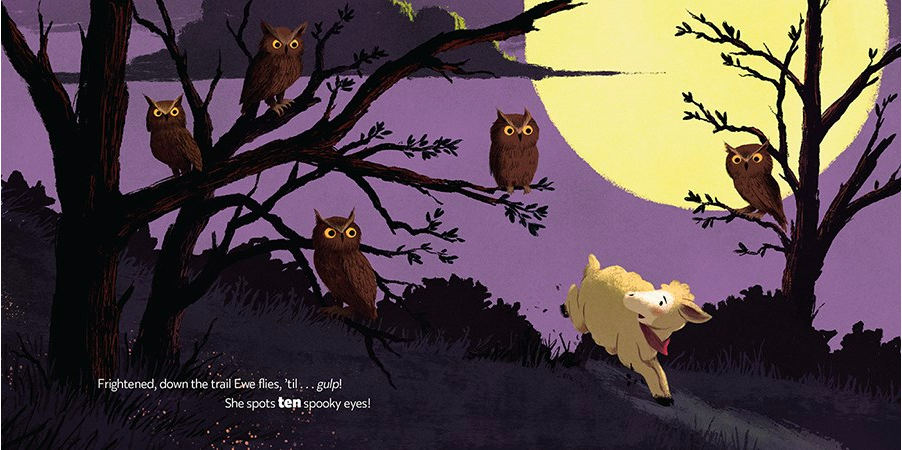
Shepherd whistles for Little Ewe to return to the flock, and she starts on her way but then she spies sparrows dining on figs and decides to join this different flock for a tasty treat. Suddenly, though, as the sun sets, nine badgers discover the figs and take them away from Little Ewe. In the dark, Little Ewe lopes down the path and is frightened by the “ten spooky eyes” of the owls in the trees.

celebrate-picture-books-picture-book-review-little-ewe-owls

Image copyright Tommy Doyle, 2021, text copyright Laura Sassi, 2021. Courtesy of Beaming Books.

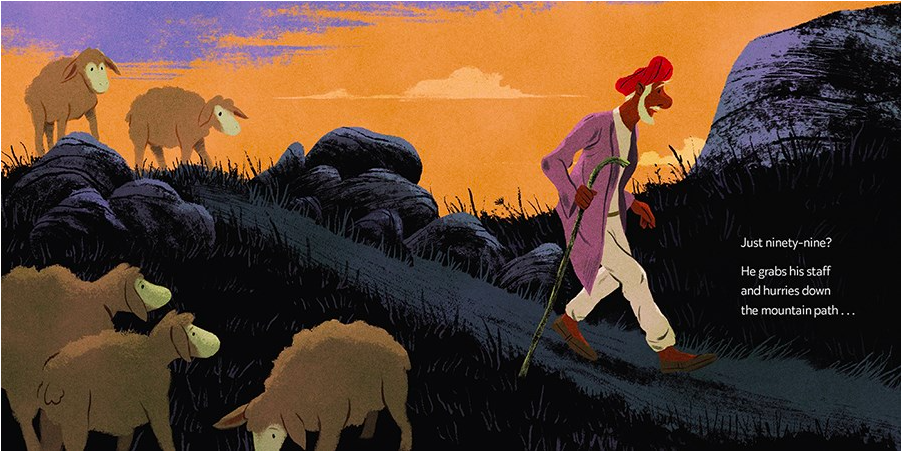
All alone, lost, and hungry, Little Ewe “wishes she’d listened when / Shepherd called her in the glen.” Screeching bats fly overhead, making her cry. At the same time, Shepherd is counting “his flock with love” and realizes one is missing. He jumps up and heads down the mountain path right to where Little Ewe waits, shivering and bleating. He lifts her into his arms and gives her a hug. He takes her home where the sheep “all gather round. / The shepherd’s lamb, / once lost . . . is found!”

celebrate-picture-books-picture-book-review-little-ewe-shepherd

Image copyright Tommy Doyle, 2021, text copyright Laura Sassi, 2021. Courtesy of Beaming Books.

Laura Sassi’s gentle and poignant story combines counting from one to twelve with the reassurance of constant love. Like the little ones reading the story, Little Ewe is curious and adventurous, but as she strays farther away and darkness falls, she longs to be home. Of course, the shepherd won’t leave his lamb behind and, knowing just where to look, he comes to find her. Sassi’s perfect rhymes and jaunty rhythm invite young children to join in counting and reading. The nighttime scenes are not too scary while they offer assurance that when little ones feel frightened, uncertain, or alone, they are still under a watchful eye. Little Ewe can be read as a retelling of the Biblical parable of the Good Shepherd and God’s ever-present love or as a story of the enduring love of a parent or caregiver.

Tommy Doyle’s warm and adorable images will delight little ones as they count from one to twelve with Little Ewe as she explores the meadow, stream, and hillside. Kids will love pointing out these easily discovered images again and again. Doyle’s Shepherd is kind and caring, and the look of love on his face as he cradles rescued Little Ewe will be familiar comfort to young readers. The joy depicted when Little Ewe reunites with her flock shows the happiness of any family when all its members are together.

A sweet and comforting story that young readers will want to hear again and again, Little Ewe: The Story of One Lost Sheep would make a tender addition to any child’s bookshelf as well as for school, church, and public library collections.

Ages 3 – 5

Beaming Books, 2021 | ISBN 978-1506464701

Discover more about Laura Sassi and her books on her website.

To learn more about Tommy Doyle, his books, and his art, visit his website.

Little Ewe: The Story of One Lost Sheep Giveaway

I’m thrilled to be teaming with Beaming Books in a giveaway of

  • One (1) copy of Little Ewe: The Story of One Lost Sheep, written by Laura Sassi and illustrated by Tommy Doyle

To enter:

This giveaway is open from October 30 to November 4 and ends at 8:00 p.m. EST.

A winner will be chosen on November 5. 

Prizing provided by Beaming Books

Giveaway open to U.S. addresses only | No Giveaway Accounts 

Hug a Sheep Day Activity

celebrate-picture-books-picture-book-review-little-ewe-craft-finished

Courtesy of Laura Sassi (laurasassitales.wordpress.com)

Make a Little Lamb Resting Box and Play a Game! 

by Laura Sassi

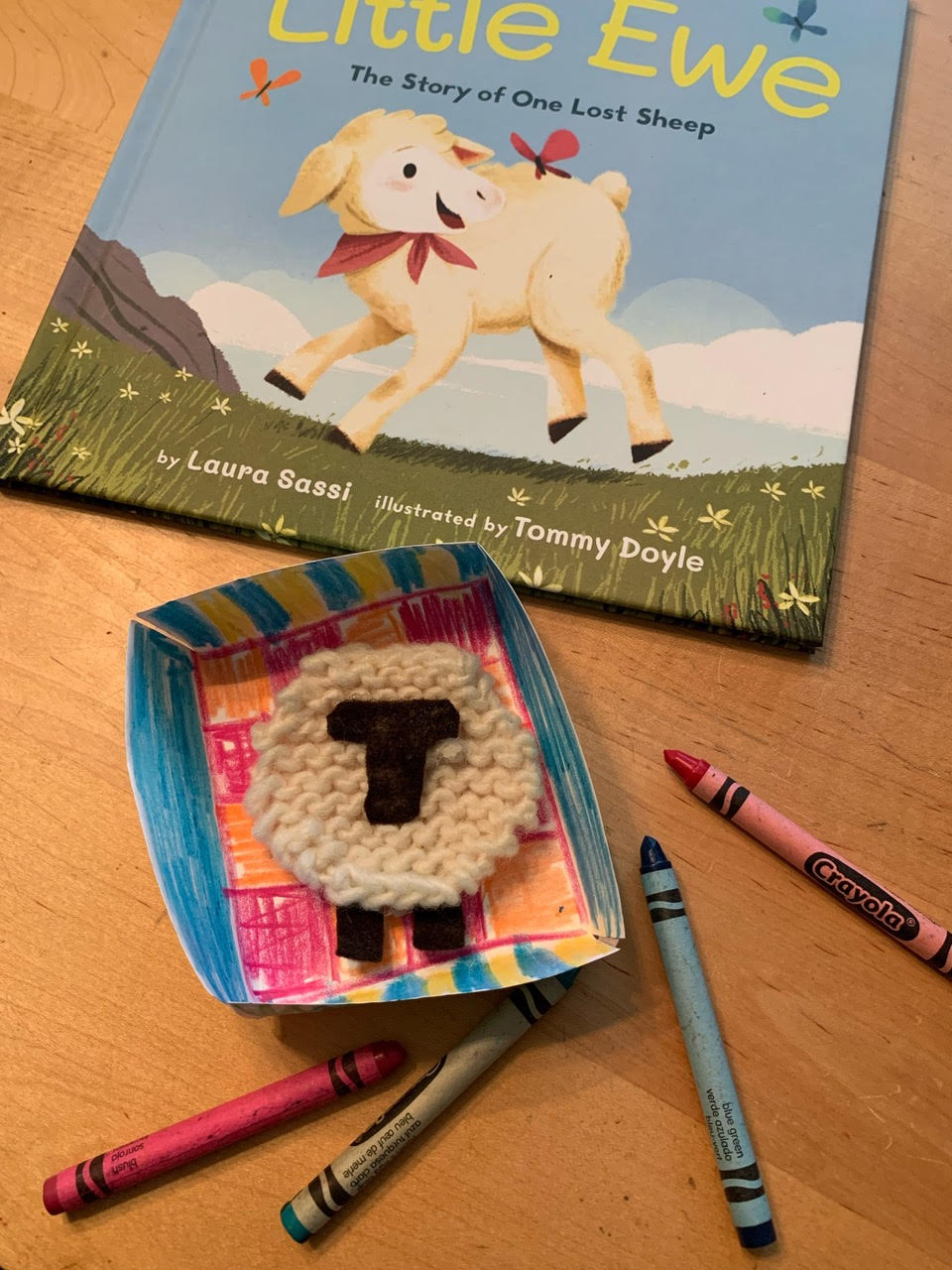
Read Little Ewe, then grab a little lamb toy (or make your own from felt or fleece, by painting a rock, or by knitting one using this Little Ewe Pattern). Then play a game of hide and seek with your little lamb. When you are finished playing, give your little lamb a hug (since it is Hug A Sheep Day!), then let him/her rest in this cozy resting box. 

celebrate-picture-books-picture-book-review-little-ewe-craft-paper

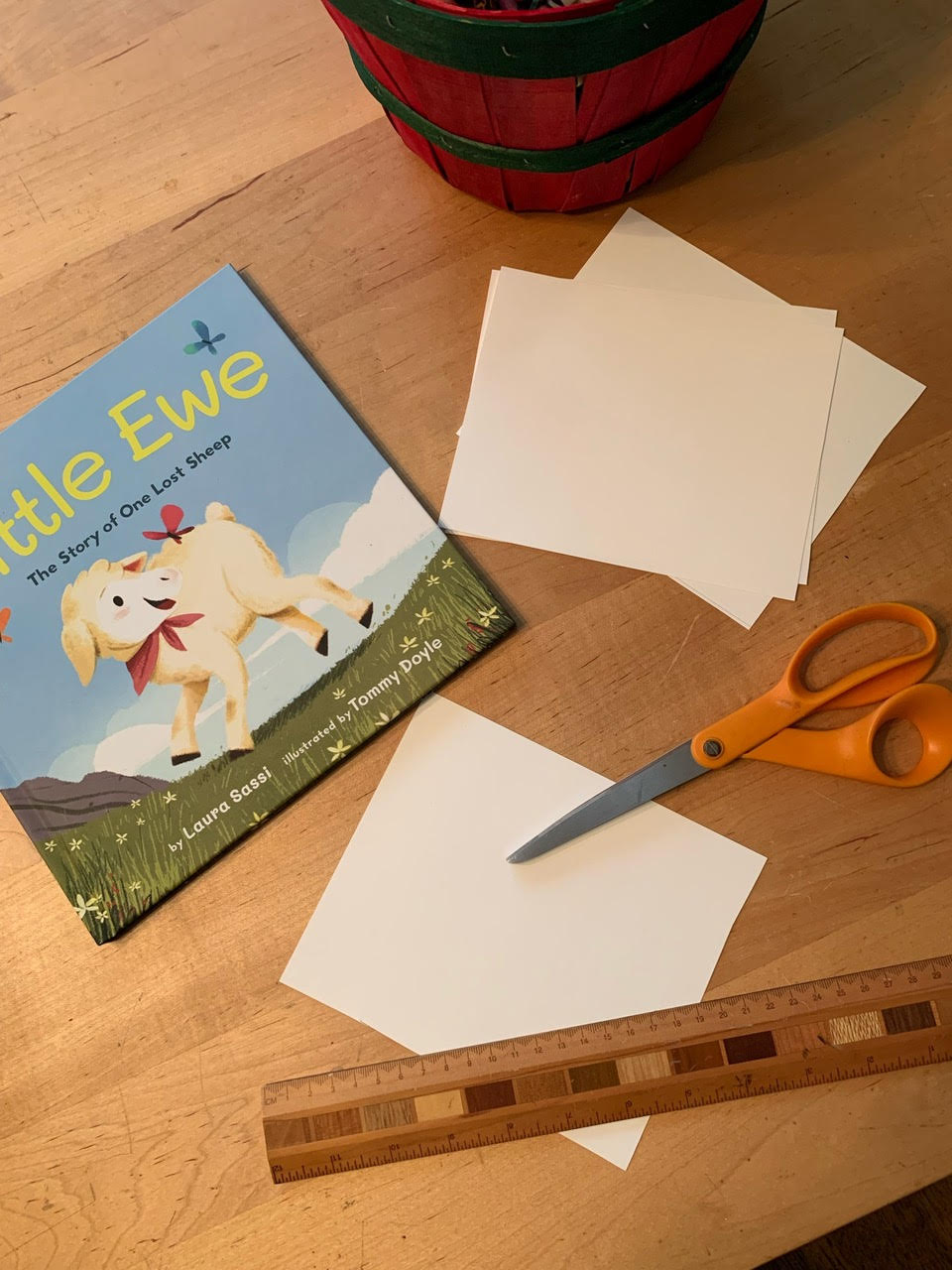
To make a cozy resting box, you will need

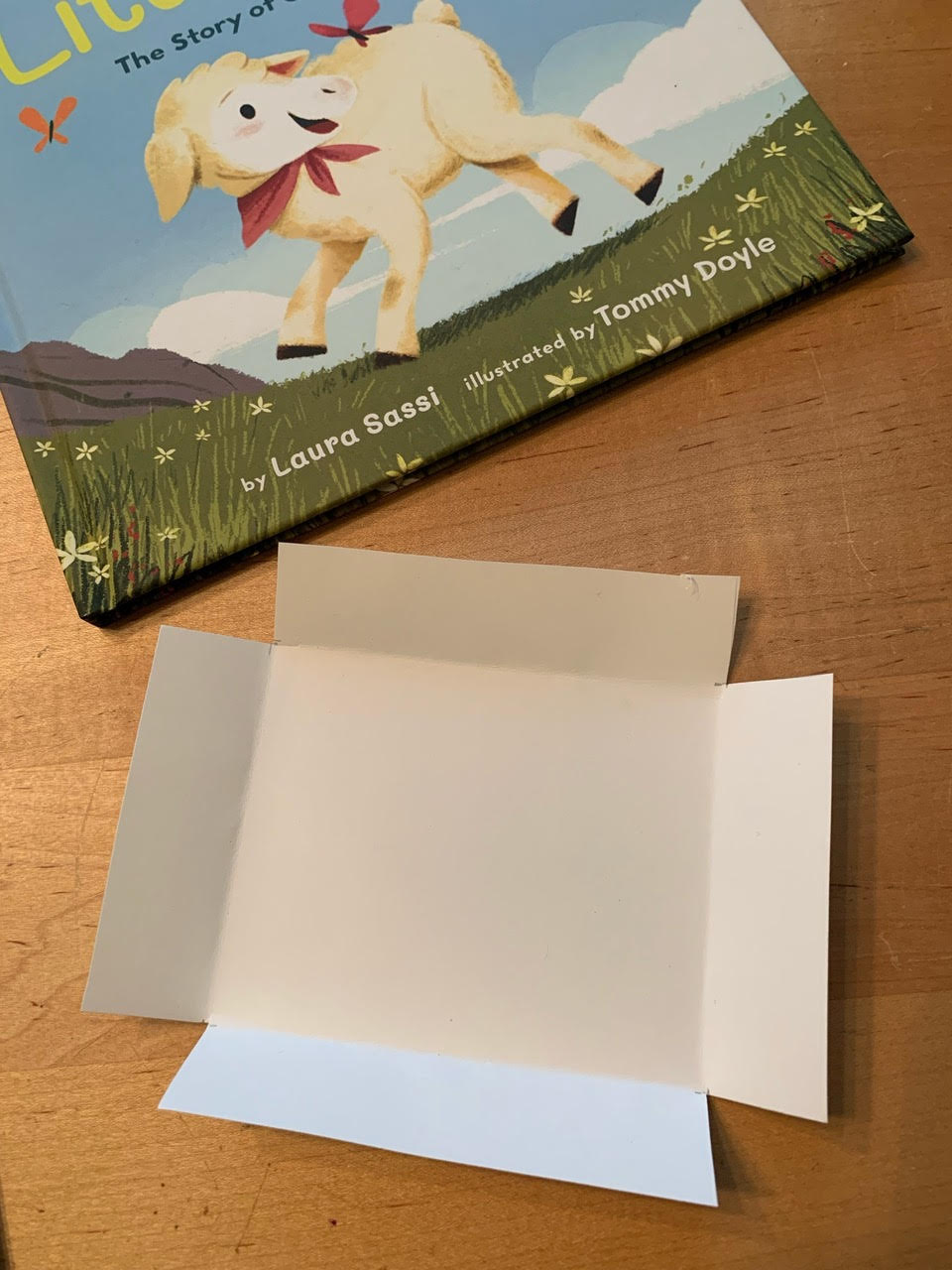
  • a precut piece heavy paper or light card board measuring approximately 5 1/2 inches by 6 1/2 inches with four 1-inch deep notches cut from each corner, as shown.
  • crayons or markers 
  • clear tape

celebrate-picture-books-picture-book-review-little-ewe-craft-paper-folded    celebrate-picture-books-picture-book-review-little-ewe-craft-paper-colored

Directions

  1. Fold the sides of the box so your child can see what the finished shape will be.
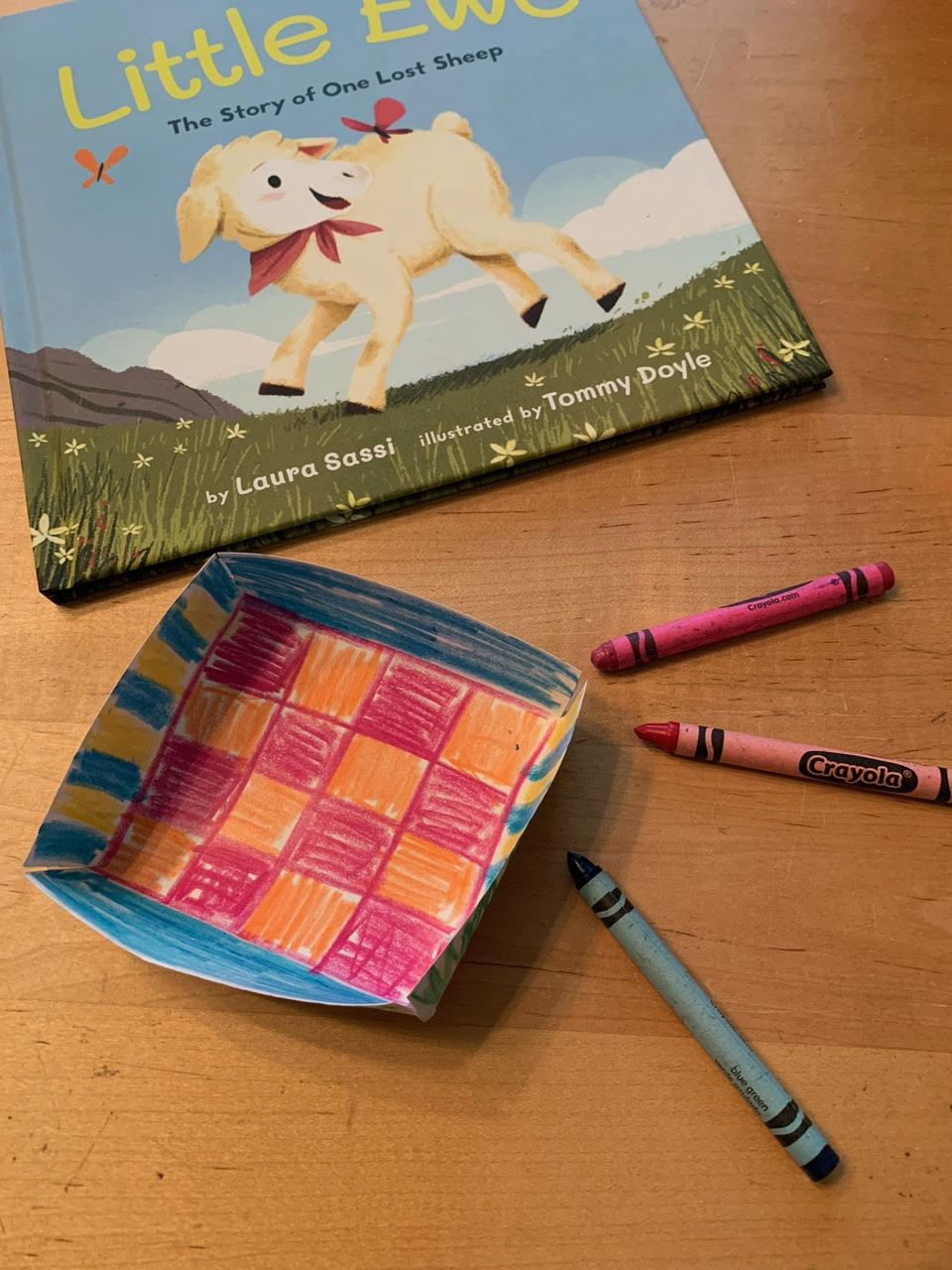
  2. Have your child decorate the inside and outside of the box any way they want. (Ex.: I made my outside look like grass and my inside like a cozy quilt.)
  3. Finish the box by taping the four corners up using clear tape.

To Play

Take turns hiding the little lamb. Play as many rounds of hide-and-seek as desired. After playing, let the lamb take a rest in the cozy resting box you have made. Then read your lamb a sheep-themed story like … Little Ewe!  

celebrate-picture-books-picture-book-review-little-ewe-cover

You can find Little Ewe: The Story of One Lost Sheep at these booksellers

Amazon | Barnes & Noble | Books-a-Million

To support your local independent bookstore, order from

Bookshop | IndieBound

Picture Book Review
October 29 – National Frankenstein Day

celebrate-picture-books-picture-book-review-that-monster-on-the-block-cover

About the Holiday

Today’s holiday celebrates the birth of Mary Wollstonecraft Shelley, who in 1818 at the age of 18, penned one of the most influential books of all time. Considered the first modern science fiction novel, Frankenstein; or, The Modern Prometheus incorporates elements of horror, psychology, love, abandonment, and acceptance. These themes and Shelley’s enthralling storytelling created a book that is always current. In fact, the monster she envisioned continues to inspire writers to create stories of all types from humorous to the truly frightening – or a combination of the two, as you’ll see in today’s book!

That Monster on the Block

Written by Sue Ganz-Schmitt | Illustrated by Luke Flowers


Someone was finally moving into Vampire’s old house. Monster, who lived next door wondered who it might be. He hoped it might be an ogre who would invite him “to swim in his mucky, murky swamp.” Or maybe it would be a “greedy goblin with piles of gold to jump into.” Perhaps it would be a dastardly dragon who would throw greasy barbecues. As Monster practiced how he would say hello to his new neighbor, he watched the movers carrying a trampoline, a unicycle, and lots of trunks.
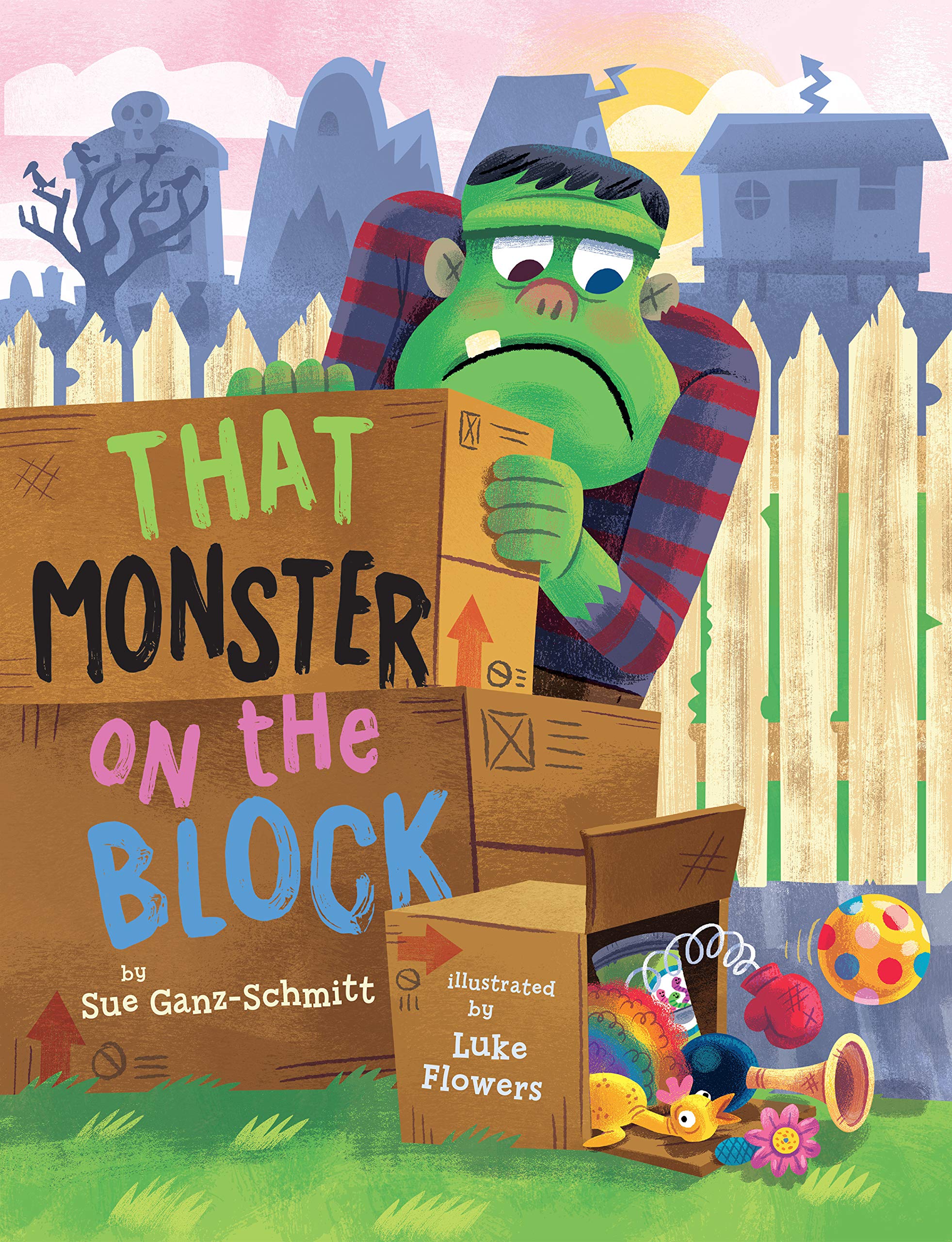
At last his new neighbor emerged. He was wearing “big floppy shoes” and had “wild orange hair” and “a round, red nose. It was…a clown?” Monster couldn’t believe it. He immediately called the neighbors. “‘Unnnnnhhh, unnnnnhhh, unnnnnhhh,’” said Zombie when he heard the news. Mummy shrieked, and Yeti roared. They all agreed that the neighborhood would never be the same again. None of the neighbors welcomed Clown to their block, so he went around to each house to introduce himself. But no one answered the door. Clown left notes and surprises at each house and went back home. When monster found his gift gummy worms, he threw them in the trash. Clown, meanwhile, sat on his porch “and waited. And waited and sat. No one came around.”

But Clown was naturally happy, so he perked up his dreary house, played a happy tune,  and erected a tent. “Monster called a neighborhood meeting. ‘This is out of control!’” he shouted. But Zombie was busy delighting some neighbors with the brain cake Clown had left him, and Mummy was having fun scaring up laughs with the mummy in the box she’d gotten. Yeti was enjoying tricking others into smelling her trick flowers and then spritzing them with water.

celebrate-picture-books-picture-book-review-that-monster-on-the-block-Interior

Image copyright Luke Flowers, 2020, text copyright Sue Ganz-Schmitt, 2020. Courtesy of Two Lions.

No one was listening to Monster, so he decided to do something about the interloper himself. At midnight, he rattled chains and banged on a garbage can lid. But Clown didn’t hear it. He was out doing good deeds to help his new neighbors. In the morning Monster was awakened by circus music. He immediately picked up the phone, but no one answered his calls. “‘It’s time for me to have a word with that bozo!’” he said. He stomped over, but on the way he couldn’t help but find the music catchy, the smell of popcorn enticing, and Clown’s invitation to cartwheeling class at his circus school at least a little intriguing.

Inside the tent, he discovered all of his friends having doing circus tricks. When he learned that Clown was “zero percent creepy” and lots of fun, he decided to him a chance. He enjoyed the day so much that Monster even invited him to tea on Sunday. As Monster poured out the tea and passed around sludgeberry swirl scones, a moving van rolled up the block. Out popped a…well, you’ll have to welcome them yourself, just like all the other neighbors!

Sue Ganz-Schmitt turns somersaults with the usual tropes involving diversity in her story as it honestly portrays truisms about prejudice and how both injustice on one hand and understanding on the other spreads through a community. While Monster’s reaction to immediately alert the neighbors and hold a meeting seems to get a big response, readers will see that by the time the meeting takes place, most of the neighbors welcome the newcomer and the positive changes he’s brought. Ganz-Schmitt’s well-paced and superb storytelling is loaded with personality, puns, and the perfect light touch that will have readers taking her story and lesson into their hearts.

Luke Flowers does wonders with larger-than-life characters, and his depictions of Monster, Clown, and all the neighbors are pitch-perfect. Flowers sets up his visual delights early with the image of Vampire’s old house, which is gray and foreboding with detailing that subtly turns the stone structure into a bat. Later Clown converts these same details into clown faces that will charm kids. Just as in the circus, Clown makes a surprise entrance, one that little readers will guess at with glee. Snapshots of Monster calling up his neighbors appear to show that Mummy, Zombie, and Yeti are on board with his dismay, but Ganz-Schmitt’s monster-sound reactions are cleverly noncommittal. Add in the neighbors’ obvious delight with the gifts Clown leaves (a full-page jack-in-the-box image will bring shrieks of laughter), and readers will happily be in on the vibe at the meeting-turned-party.

Contrasting illustrations of Monster trying to bully Clown into leaving and Clown helping out around the neighborhood give kids and adults opportunities to talk about important issues that arise at school and in the news. While images of Monster having fun at circus school show his changing attitude toward Clown, when his displeasure seems to rise again with the entry of another unexpected neighbor, readers will see that this time he has a different and more welcoming reaction. (Added note: Make sure to inspect each page carefully for added visual humor.)

A clever story that delivers important messages about preconceptions, discrimination and acceptance with humor and respect for the intelligence and awareness of children, That Monster on the Block is a must for home, school, and public library story times all through the year.

Ages 4 – 8

Two Lions, 2020 | ISBN 978-1542005333

Discover more about Sue Ganz-Schmitt and her books and find That Monster on the Block coloring pages on her website.

To learn more about Luke Flowers, his books, and his art on his website.

Scare up some fun with this book trailer!


Frankenstein Friday Activity

celebrate-picture-books-picture-book-review-rock-pumpkin-craft

Rock Jack-O-Lantern


Rocks make perfect jack-o’-lanterns or pumpkins to decorate your home at Halloween or all through the fall! 

Supplies

  • Round, smooth rock ( or rocks in a variety of sizes)
  • Orange craft paint, and other colors for a multi-hued pumpkin patch
  • Black permanent marker or black craft paint
  • Short sturdy twig (one for each rock)
  • Hot glue gun or strong glue
  • Paintbrush

Directions

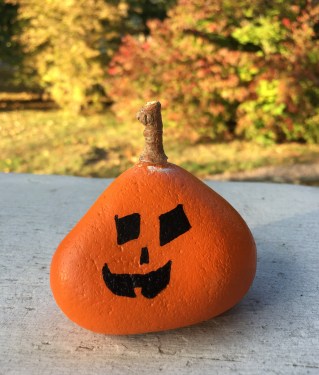
  1. Clean and dry the rock
  2. Paint the rock, let dry
  3. Draw or paint a jack-o’-lantern face on the rock, let dry
  4. Glue the short twig to the top  of the rock pumpkin

celebrate-picture-books-picture-book-review-that-monster-on-the-block-cover

You can find That Monster on the Block at these booksellers

Amazon | Barnes & Noble |Books-a-Million

To support your local independent bookstore, order from

Bookshop | IndieBound

Picture Book Review