July 21 – It’s National Culinary Arts Month

celebrate-picture-books-picture-book-review-kitchen-dance-cover

About the Holiday

Culinary arts from entrees to desserts and everything in between are celebrated during July. Whether you like going out to restaurants or staying in for a home-cooked meal remember to thank the chef for their time and talents!

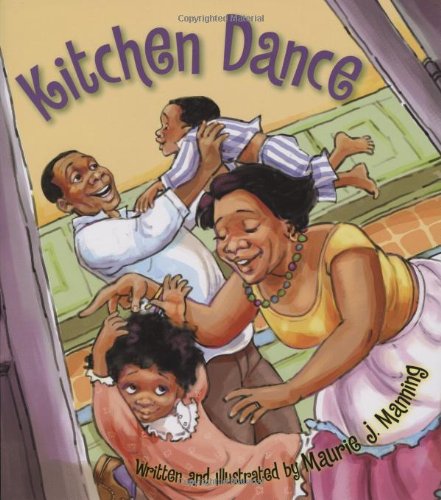
Kitchen Dance

By Maurie J. Manning


A little girl wakens to sounds coming from the kitchen—“Glasses clinking. Water swishing. Forks clattering.” Then more personal sounds—humming, laughing, and “hush!” The girl slips out of her blankets and climbs to the top bunk to wake her brother, Tito. Together they tiptoe downstairs and peek through the kitchen door. “A bright skirt flashes by! Four feet fly!”

With a wooden spoon microphone the kids’ father sings, “Cómo te quiero! Oh, how I love you. Umm, hmm.” Juggling stacked plates in one hand while using the other to dance hand-in-hand, the kids’ parents glide, slide, and twirl around the kitchen floor. Laughing, their mom closes cabinet doors with a bump of her hips as she spins into her husband’s arms “then out again, like a yo-yo on a string.”

celebrate-picture-books-picture-book-review-kitchen-dance-interior-art-dancing

Image copyright Maurie J. Manning

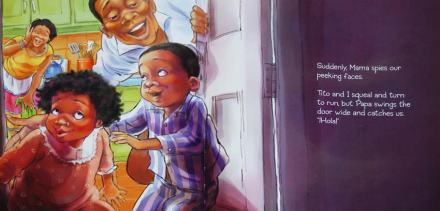
Pots and pans find their storage space with a swirl and a dip while another is dried with the swish of a towel. Around the kitchen the couple dances, “feet tapping, water dripping, sponge wiping, towel snapping.” While singing, “they tango across the room with the leftover tamales.” As they turn toward the door, Mama glimpses her little ones. The kids squeal and start to run, but Papa swings open the door—“Hola!” He pulls Tito into his arms, while Mama catches her tiny daughter.

As the four whirl around the kitchen, Tito and his sister sing into wooden spoons, “Cómo te quiero! Oh, how I love you!” They “twirl around and around in a circle of family.” The dance slows to a gentle swaying as Tito and his sister grow sleepy. Mama and Papa carry their drowsing children upstairs and cover them once more under their cozy blankets. “Cómo te quiero,” Papa whispers. “Besitos, mi’ja,” Mama says “Sweet dreams.”
celebrate-picture-books-picture-book-review-kitchen-dance-interior-art-kids-caught

Image copyright Maurie J. Manning

Maurie J. Manning’s sweet story of a private moment between parents that becomes a celebration of family love offers a fresh, fun, and lively glimpse of the small events that contribute to real connectedness. Telling the story from one of the children’s point of view adds a deeper level of understanding and recognition that of the strong bond between the parents. The repeated phrase, “Cómo te quiero! How I love you!” is reassuring and allows kids to read along with the book’s most important theme.

Manning’s vivacious and vibrant illustrations bring to life the swirling energy of the text. Tito and his sister creep downstairs in a house bathed in shadow only to open the door to flashing yellow, green, purple, and orange brilliance. The scenes of Mama and Papa dancing together, using a wooden spoon as a microphone and pot lids as cymbals as well as twirling hand in hand while balancing stacks of dishes are filled with happiness, and the  picture of the two tangoing with tamales will make kids giggle. Tito and his sister are adorable as they spy on their parents with astonished looks on their faces and then join the dance.

Kitchen Dance is a joy for story time or bedtime, and in these always busy days would be a welcome reminder that carefree moments carry their own special meaning.  Kitchen Dance is a great addition to a child’s bookshelf.

Ages 3 – 8

Clarion Books, 2008 | ISBN 978-0618991105

To learn more about Maurie J. Manning, her books, and her art, check out her website!

Take a look at the Kitchen Dance book trailer!


National Culinary Arts Month Activity
celebrate-picture-books-picture-book-review-wooden-spoon-microphone-craft

Wooden Spoon Microphone


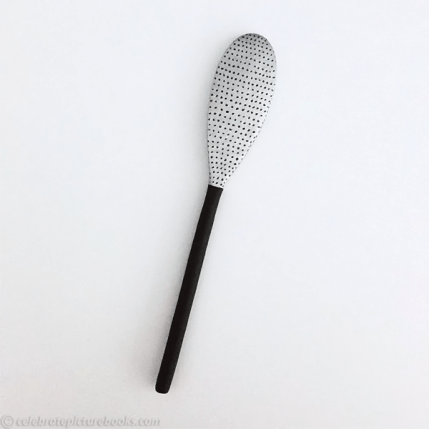
With this easy craft you can turn a wooden cooking spoon into a fun microphone for playtime or in case you ever have to sing for your supper!

Supplies

  • Long-handled wooden spoon
  • Black craft paint
  • Silver craft paint
  • Black permanent marker

Directions

  1. Paint the handle of the spoon black, let dry
  2. Paint the head of the spoon silver, let dry
  3. After the paint is dry, make rows of small dots on the head of the spoon

July 18 – Get Out of the Doghouse Day

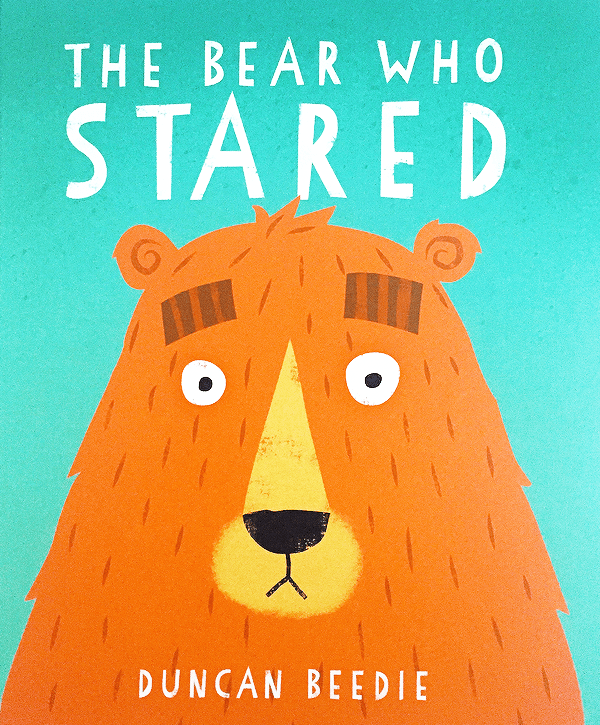
celebrate-picture-books-picture-book-review-the-bear-who-stared-cover

About the Holiday

Being “in the dog house” means that somehow you’ve upset someone, made them mad or in some other way fallen out of favor with them. Maybe you owe them an apology or at least an explanation. Today’s holiday gives people a chance to say “I’m sorry” and patch up any hurt feelings. Like the bear in today’s book, you may find yourself out of the doghouse and on the path to better friendships!

The Bear Who Stared

By Duncan Beedie


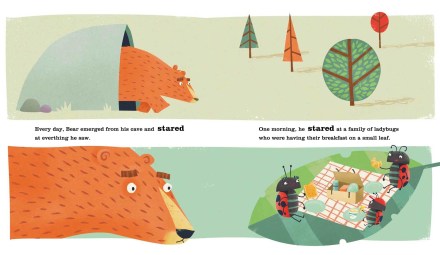
Bear loves to stare…and stare…and stare. One morning he emerges from his den to find a family of ladybugs having a picnic breakfast. He can’t help but gaze at them intently. “‘What are you staring at?’” the daddy ladybug demands before he and his family pack up to find a more private leaf. Bear continues on his way. In a bit he climbs a tree and stares at a bird feeding her chicks. “‘Can I help you?’” the mother bird asks, but Bear remains silent. The chicks don’t like Bear interfering with their meal, so the mother bird angrily tells him to “‘sshhhooooo!’”

celebrate-picture-books-picture-book-review-the-bear-who-stared-interior-art-ladybugs

Image copyright Duncan Beedie, courtesy of simonandschuster.com

At the bottom of the tree Bear spies a badger hole and sticks his head inside. The badger, particularly irritated at Bear’s badgering stare while he is shaving, bites poor bear on the nose. Sore and dejected, Bear wanders through the forest to a large pond. He sits down on a log to ponder his situation. He doesn’t mean to be annoying, he’s “just curious but too shy to say anything.”

A little frog floating on a lily pad in the middle of the pond pipes up, “‘I’ve seen that look before.’” Bear stares at the frog and the frog stares back. “‘Not much fun being stared at, is it?’” he says. Bear confesses that he just doesn’t know what to say to anyone. Just then Bear catches a glimpse of another bear staring back at him from the mossy water of the pond. This bear looks exactly like Bear, except that he is green and wavy. Suddenly, the green bear smiles. “‘You see?’” says the frog. “‘Sometimes a smile is all you need.’” The frog dives off his lily pad into the pond, and the green bear disappears too.

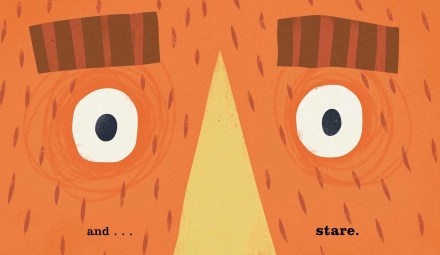
celebrate-picture-books-picture-book-review-the-bear-who-stared-interior-art-staring

Image copyright Duncan Beedie, courtesy of simonandschuster.com

The next day Bear leaves his den and discovers the ladybug family breakfasting again. As soon as they spot Bear, they begin to gather their things. “‘Hello!’” Bear says with a big smile on his face. The ladybugs are surprised and happy. “‘Oh, hello!’” replies the dad, smiling back. With renewed confidence Bear wanders into the forest. He smiles at the birds and smiles at the badger, and they smile at him in return. Bear makes a lot of new friends that day. And there’s even that friend down at the pond who likes to stare as much as he does!

Duncan Beedie highlights the awkward feeling many kids—and even adults—often feel in social situations. Nothing pops immediately to mind to say and yet there’s a desire for connection. As Bear discovers, staring is not the answer—so what is? In The Bear Who Stared Beedie offers a simple, but universal solution through an engaging and humorous story. Bear, sporting a bemused expression that aptly depicts his predicament, is such an endearing character that readers will wish they could give him a hug as he suffers slights from the woodland creatures.

The full-bleed, oversized pages put readers at eye level with bear and his subjects, and the very up-close look into Bear’s staring eyes will make kids laugh. The green, rust, and blue palette on matte paper is bold, but muted, giving the pages an organic, environmental feel that is perfect to carry the story.

The Bear Who Stared is a funny story time read with a heart that kids will ask for again and again.

Ages 4 – 8

little bee books, 2016 | ISBN 978-1499802856

Check out more of Duncan Beedie’s illustration and animation work on his website!

Get Out of the Doghouse Day Activity

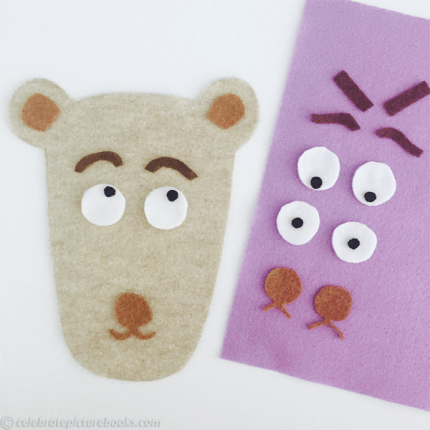
celebrate-picture-books-picture-book-review-bear-craft

Expressive Bear Craft


Sometimes it’s hard to manage or even recognize various emotions that land you in the doghouse. With this easy-to-make felt (or paper) set, you can try out different emotions and talk about them, make up stories to go with each facial expression, or play a fun game. Below, you’ll find a couple of ideas!

Supplies

  • Printable Bear Head Template
  • Printable Eyes and Noses Template
  • Printable Eyebrows Template
  • Light brown felt or fleece, 8 ½ x 11 inch piece
  • Dark brown felt or fleece, 8 ½ x 11 inch piece
  • White felt or fleece, 8 ½ x 11 inch piece
  • Black felt or fleece, for pupils
  • Scissors
  • Glue
  • 1 playing die (optional)

Directions

  1. Print templates
  2. Cut bear head from light felt or fleece
  3. Cut eyes from white felt or fleece
  4. Cut nose and inner ears from dark brown felt or fleece
  5. Cut pupils from black felt or fleece
  6. Glue pupils onto white eyes

Or: Color and play with the paper set

To Play a Game

Roll the die to collect parts of the bear’s face. The first player to create a full face is the winner.

  • Die dots correspond to:
  • 1—one eyebrow
  • 2—second eyebrow
  • 3—one eye
  • 4—second eye
  • 5—nose
  • 6—inner ears

For a Fun Story Time

Give the bear different faces and make up stories of why he looks that way!

Picture Book Review

July 15 – It’s National Ice Cream Month

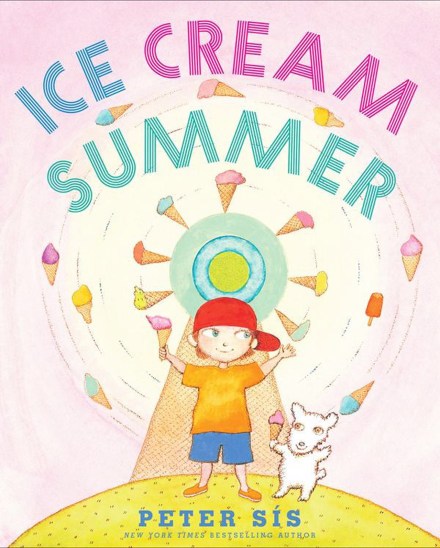
celebrate-picture-books-picture-book-review-ice-cream-summer

About the Holiday

Ice cream has a long and elite history, dating back to Ancient Greece when the confection was made of snow, honey, and fruit. Catherine de’ Medici introduced the treat again in the 16th century. Charles I of England, using his royal clout, proclaimed ice cream to be the prerogative of the crown. He kept the recipe secret and forbid the common people to eat it. The first recorded recipes for ice cream are reported in the 18th century.

This favorite dessert received its true recognition in 1984 when President Ronald Reagan established July as National Ice Cream Month. Today indulge in your favorite flavor or sundae!

Ice Cream Summer

By Peter Sís


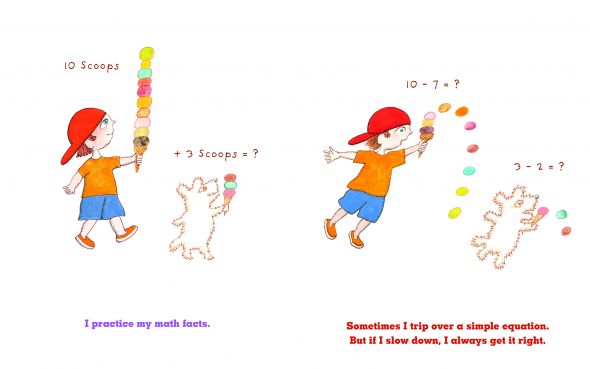
A little boy writes a letter to his grandpa telling him about his summer. “So far it’s been a delicious summer,” he says of his ice cream extravaganza. The boy reports that he’s very busy, but is also paying attention to school work every day. He knows how to read big words like tornado and explosion, and he is even creating his own book. He can solve math problems—even word problems—lickity split on his own and sometimes with his family’s help.

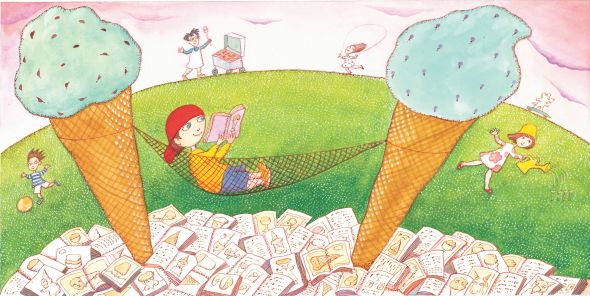
At day camp he and his friends are involved in all sorts of activities, such as sports, cartography, and field trips. The boy tells his grandpa that he’s poring over the encyclopedias he sent, learning about world history from Ancient China to Europe and America. He is discovering fabulous inventions and designing some of his own.

celebrate-picture-books-picture-book-review-ice-cream-summer

Image copyright Peter Sís, courtesy of scholastic.com

He assures his grandpa that he has “been working hard all summer (though I always take a break on sundaes)” and has earned the special trip his grandpa mentioned. As the two meet it’s obvious that Grandpa understands his grandson very well. They both sport ice cream shaped backpacks, and the trip they are embarking on is a hike to the tip of Ice Cream Peak.

Peter Sís’s celebration of ice cream is a perfect mixture of text and art. While the boy’s letter is kid-like bare bones, the ice-cream hued illustrations humorously and cleverly portray the boy’s delicious obsession. His room, with its scoop-shaped window overlooking an ice cream factory, is filled with a bed, bookshelves, desk, and toys that are all familiarly conical. The boy builds his sandcastle, complete with cone turrets, at the edge of multi-colored scoop waves, and the family’s beach umbrella is a wavy sundae top.

celebrate-picture-books-picture-book-review-ice-cream-summer

Image copyright Peter Sís, courtesy of scholastic.com

At day camp all roads lead to flavorful sites where skyscrapers, attractions, and transportation are all seen through a sweet ice-cream cone lens. Even the Statue of Liberty holds aloft a vanilla soft serve cone. The boy’s travels through history encompass fascinating facts about the invention of ice cream, how it spread across Europe and to America as well as innovations of and improvements to this favorite treat.

The final reveal of Ice Cream Peak, with its sprinkles-covered tip will delight ice cream aficionados of all ages. Kids and adults will want to linger over each page to scoop up all the visual pleasures.

Ages 4 – 8

Scholastic Books, 2015 | ISBN 978-0545731614

To view more books by Peter Sís and discover fun title-related activities, visit his website!

National Ice Cream Month Activity

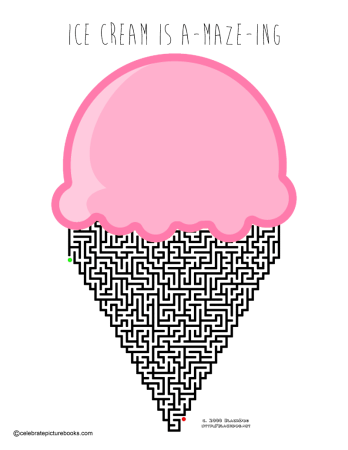
celebrate-picture-books-picture-book-review-ice-cream-maze

Ice Cream is A-maze-ing! Puzzle


Sometimes you’d walk forever and through any kind of obstacle to get your favorite flavor ice cream cone. Have fun following the path through this printable Ice Cream is Amaze-ing Puzzle! 

Picture Book Review

July 14 – Shark Awareness Day

celebrate-picture-books-picture-book-review-nugget-and-fang-coverAbout the Holiday

Today we take a moment to consider the benefits sharks provide to the marine ecosystem. Every year thousands of sharks die and their species threatened due to misconceptions and misuse. As a predator at the top of the food chain, sharks play a crucial role in maintaining balance within the ocean. Protecting this often-misunderstood species is an important goal.

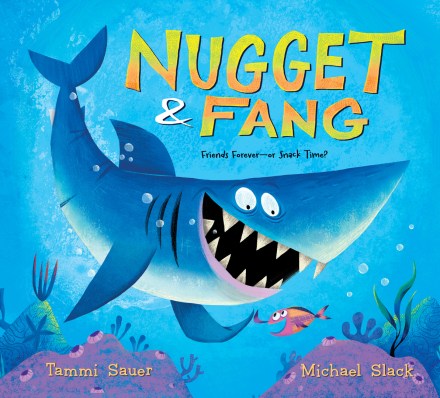
Nugget & Fang: Friends Forever—or Snack Time?

Written by Tammi Sauer | Illustrated by Michael Slack


Deep in the ocean two friends do everything together and life is almost perfect as they swim over ship wrecks, under reefs, and all around. Nugget and Fang are as close as two friend can be—there’s just one thing: Nugget is a minnow while Fang is a shark. Neither of them consider their friendship unusual—until Nugget goes to school. There during Reading, Nugget hears the story of The Three Little Minnows and the Big, Bad Shark. “‘Ha!’” says Nugget. “‘Impossible!’”

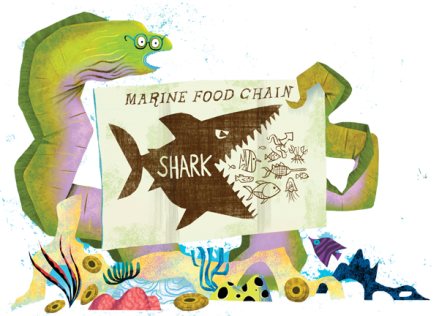
During Math class the students solve a word problem: “What if there were ten minnows and a shark came along and ate four of them? How many minnows are left?” Nugget is scandalized. “‘A shark would never do that!’” he says. But Science period reveals the facts of the Marine Food Chain. Nugget protests that sharks aren’t scary. “‘My best friend is a shark!’” he announces. His classmates are shocked. “Have you lost your gills?” one asks. Another snarks, “Hello—sharks eat minnows!” Nugget can’t believe it.

celebrate-picture-books-picture-book-review-nugget-and-fang

Image copyright Michael Slack, courtesy of hmhbooks.com/nuggetandfang

Back home Nugget gives Fang the bad news. “‘Sounds fishy to me,’” says Fang. Nugget assures him it’s true before swimming far away. “Fang’s heart sank.” He can’t help if he’s “toothy,” he thinks, and he knows he doesn’t mean to be scary. He wants his best friend back. To prove it Fang tries different tactics. On Tuesday he dresses like a mermaid, but Nugget and the other fish see through his disguise. “‘Oh, my algae!’” exclaims Nugget. On Wednesday Fang sends a beautiful sea plant arrangement with a note—“Dear Nugget, I’d love to have you over for dinner.”—which is misinterpreted in the worst possible way. On Thursday Fang pulls out all the stops. He gets a “Nugget” tattoo, sends a special message and gift, and performs an original song and dance, but nothing works.

On Friday Fang is sadly resigned to being alone. While he mopes and cries, he doesn’t see that a fishing net has been lowered to the ocean floor, capturing Nugget and the other minnows. “Help!” shouts Nugget as the net is slowly lifted. Fang wrings his fins, uncertain of what to do. Suddenly, he has an idea. With his big sharp teeth he chomps and chews and tears the net to pieces. Nugget and the minnows swim to safety. They all stare at Fang wide-eyed.

celebrate-picture-books-picture-book-review-nugget-and-fang

Image copyright Michael Slack, courtesy of hmhbooks.com/nuggetandfang

Fang dejectedly begins to swim away. “‘I know, I know,’” he says, “‘I’m toothy. Too scary. Too…shark.’” “Wait!” calls Nugget and uses a little math of his own. “‘There were ten minnows, and a very special shark came along. How many friends are there altogether?’” Now eleven friends live happily deep in the ocean, and everyone—especially Fang—are all smiles.

Tammi Sauer’s tribute to true friendship reveals the danger when “facts” take precedence over what you know in your heart to be true. Her reminder to listen to your inner voice is approached with humor and the honest types of doubts that can niggle and cloud judgement. Throughout the story, her language is accessible and kid-conversational, including puns that will elicit giggles. Sauer’s use of a math word problem to both highlight contrary thinking and provide a solution underscores the influence of education. Nugget & Fang is a wonderful book for kids navigating the school and activities environment while making new—and keeping old—friendships.

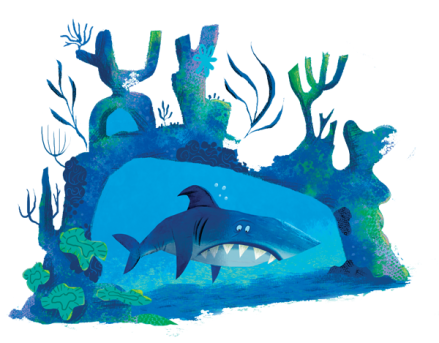
Michael Slack immediately sets kids in the right mindset with his bright, cartoon-inspired illustrations. Tiny, colorful Nugget and bold, blue Fang, his “toothiness” on display through his big grin, make a happy, nonchalant pair. They play together through vibrant green, yellow, and purple reefs unaware of marine stereotypes. When Nugget gets “schooled”, his astounded expressions and those of his classmates, humorously depict their predicament. The ocean environment gives Slack an opportunity for plenty of visual jokes and innovation. The Reading teacher holds a clamshell-shaped book, a piece of shipwrecked board serves as a Math blackboard, and the Science food chain poster is appropriately scary. Kids will laugh at Fang’s attempts at reconciliation, and cheer when he becomes a hero.

Nugget & Fang: Friends Forever—or Snack Time? is sure to be a favorite story time read!

Ages 4 – 9

Houghton Mifflin Harcourt, 2013 | ISBN 978-0544481718

Will everything go swimmingly for Nugget and Fang? Watch the trailer and see!

To learn more about Tammi Sauer and her books, visit her website!

View a gallery of work by Michael Slack on his website!

Visit the Houghton Mifflin Harcourt Nugget & Fang page for more goodies!

Shark Awareness Day Activity

celebrate-picture-books-picture-book-review-shark-coloring-page

Looking Sharp, Sharks! Coloring Page


Sharks are some of the most fascinating creatures in the sea. Have fun decorating this printable Looking Sharp, Sharks! Coloring Page—get creative with textures, colors, and materials!

July 13 – National Culinary Arts Month

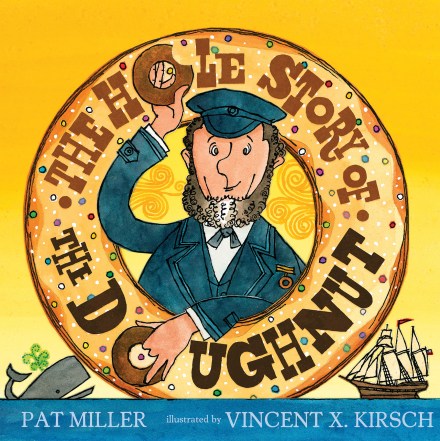
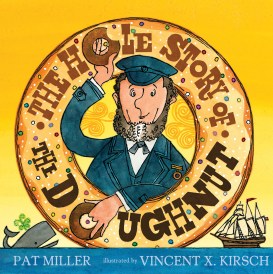
celebrate-picture-books-picture-book-review-the-hole-story-of-the-doughnut-cover

About the Holiday

July is a great month for celebrating culinary arts. With kids home from school it’s fun to spend time together in the kitchen learning new skills and making experimental or favorite recipes. On-the-go meals or vacations can also take you to new and enticing restaurants, where you may try regional cuisine and discover exciting flavors.

The Hole Story of the Doughnut

Written by Pat Miller | Illustrated by Vincent X. Kirsch


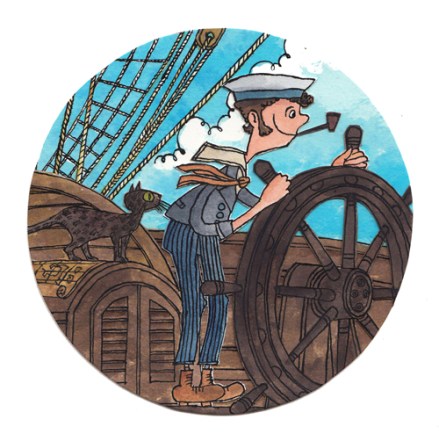
In 1844 at the tender age of 13, Hanson Gregory left the family farm and went to sea as a cabin boy on the schooner Isaac Achorn. He quickly became the cook’s assistant and also learned how to rig the sails and “steer a ship over trackless waves by sun and stars.” By the age of 19 Gregory had become the captain of the schooner Hardscrabble, and within a few more years was racing “his cargo from Maine to California as commander of a clipper, the fastest ship on any ocean.”

celebrate-picture-books-picture-book-review-hole-story-of-the-doughnut

Image copyright Vincent X. Kirsch, courtesy of vincentxkirsch.com

Hanson Gregory may have been one of the best captains to sail the seas—once awarded a medal for heroism for rescuing seven shipwrecked Spanish sailors even though his own ship and crew were endangered. But his greatest achievement was not attained because of his seafaring skills—it was his ingenuity in the galley that people remember.

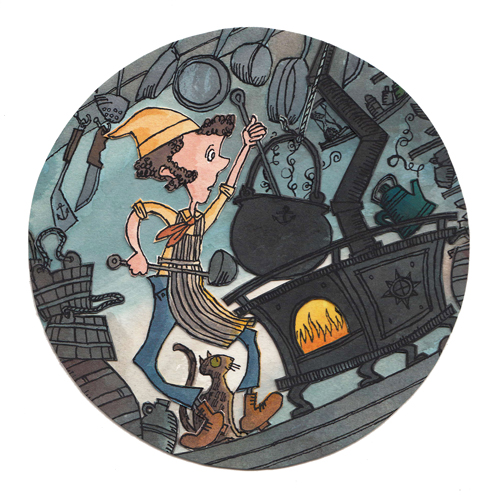
On June 22, 1847 as a 16-year-old cook’s assistant, Hanson was rustling up the crew’s breakfast—coffee and fried cakes, the same as every morning. While the pot of lard bubbled on the stove, Gregory formed balls of sweetened dough and dropped them in. They sizzled and crisped—at least around the edges. The centers were raw, heavy with grease, and they dropped like cannonballs in the stomach. “Sailors called them Sinkers.” But this morning Gregory had an idea. He removed the lid from the pepper can and cut out the center of the balls. “Then he tossed the rings into the bubbling lard.”

celebrate-picture-books-picture-book-review-hole-story-of-the-doughnut

Image copyright Vincent X. Kirsch, courtesy of vincentxkirsch.com

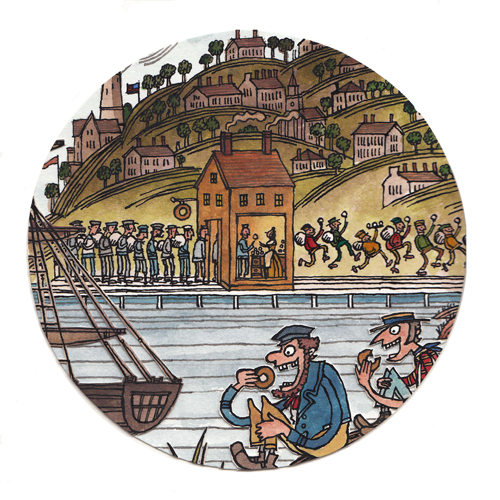
The cook and the sailors took one look at this odd concoction and…ate them up! “The cakes were brown, and sweet, and fully cooked. Sighs of delight rose above the noisy sea. A new breakfast tradition was born.” Gregory told his mom about his invention, and she fried up large batches of these ‘holey cakes’ that were a sensation at a friend’s store and on the docks.

You might think this is a pretty interesting tale in itself, “but sailors like their stories bold” and so they “spun legends worthy of such a delicious treat.” One tale had Captain Gregory inventing the doughnut while he saved his ship from disaster. Another told how Gregory, distraught over the drowning of five sailors pulled to the ocean floor by of their “sinker” breakfast, punched holes in every cake to make them look like life rings and vowed, “‘Never again!’”

Captain Gregory had a sense of humor about his accomplishment. During an interview he once stated that “he had invented ‘the first hole ever seen by mortal eyes.’” Gregory lived to be 89 and is buried “overlooking the sea where stormy weather can be spotted as readily as it once was from the quarterdeck of the Hardscrabble.”

An author’s note expanding on the story of Captain Gregory, the doughnut, doughnut shops, a timeline, and a selected bibliography follow the text.

celebrate-picture-books-picture-book-review-hole-story-of-the-doughnut

Image copyright Vincent X. Kirsch, courtesy of vincentxkirsch.com

Doughnuts have never been so evocative! In Pat Miller’s humorous, informative history of this favorite pastry treat, readers can smell the salt air, feel the ocean swell and roll under their feet, and even ache a little for those poor sailors forced to eat “sinkers.” Seamlessly interwoven into this foodography is a fascinating look at the early days of sail. Miller’s language is immediately stirring: the Ivanhoe bucks and plunges, the sea becomes a monster, and Captain Gregory spears a sinker on the wheel spoke. Kids will marvel at a 13-year-old going off to sea and becoming an inventor at 16.

Vincent X. Kirsch provides just the right touch to this captivating true story with his cartoon-inspired watercolor and cut paper artwork. Ingeniously incorporating Hanson Gregory’s innovation of removing the center of the fried cakes, Kirsch’s illustrations are “cored” to allow for text, while the extracted section appears on the facing page as a glimpse through a porthole. The maritime atmosphere—from ship to shore—of the mid-1800s is beautifully represented in the folk-style sketches, and the humor that is so intrinsic to this story is wonderfully embraced.

The Hole Story of the Doughnut will delight foodies and history buffs alike and would make a fun gift and a delectable addition to personal libraries for all ages.

Ages 5 – 12

Houghton Mifflin Harcourt, 2016 | ISBN 978-0544319615

Vincent X. Kirsch’s website is full of illustrations from his books for children—take a look at his portfolio!

Spend some time with Pat Miller on her website that offers activities, tips, resources and many more books!

Culinary Arts Month Activity

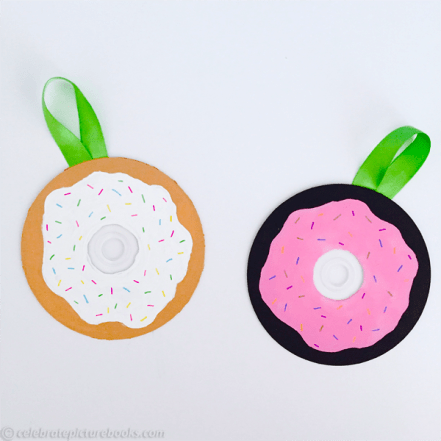
celebrate-picture-books-picture-book-review-cd-doughnut-craft

CD (Compact Doughnuts) Decoration


Are some of  your CDs a little passé? Not if you can turn them into cute décor like this doughnut hanging.

Supplies

  • Unused CDs
  • Craft paint in tan, black, pink, yellow, white (or any colors you want for the doughnut and the icing)
  • Ribbon, any color and length you want
  • Fine-tip markers in bright colors
  • Glue
  • Glue dots (optional)
  • Paint brush

Directions

  1. Paint a wavy edge around the CD, let dry
  2. Paint the center of the CD, leaving the clear circle unpainted
  3. When the icing paint is dry, draw sprinkles on the icing with the markers
  4. With the ribbon make a loop hanger and attach it to the back of the CD with glue or glue dots
  5. Hang your decoration

celebrate-picture-books-picture-book-review-the-hole-story-of-the-doughnut-cover

You can find The Hole Story of the Doughnut at these booksellers

Amazon | Barnes & Noble | Books-a-Million | IndieBound


July 12 – It’s National Blueberry Month

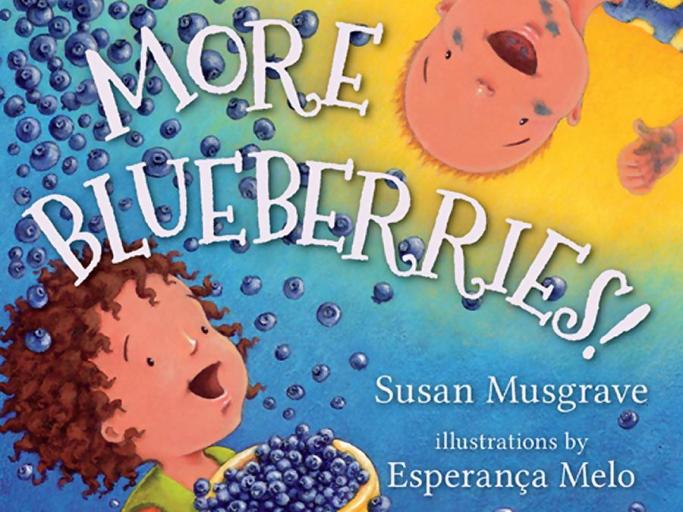
celebrate-picture-books-picture-book-review-more-blueberries-cover About the Holiday

Farmers’ Markets are bursting with fresh produce during the summer months, and that is especially true for blueberries, those little round morsels of sweetness. The United States Department of Agriculture recognized July as National Blueberry Month in 2003, and it’s been delicious eating ever since! Blueberries are the perfect accompaniment to muffins, pancakes, bread, fruit salads, and of course they’re delectable just on their own! So visit a farmers’ market today and pick up a peck.

More Blueberries!

Written by Susan Musgrave | Illustrated by Esperança Melo


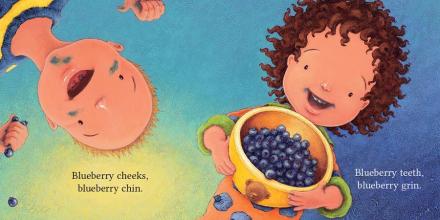
When the blueberries are ripe, the siblings in this adorable picture book live in a blueberry world. The brother and sister are all smiles with their bowl full of berries, and soon they have “Blueberry cheeks, blueberry chin. / Blueberry teeth, blueberry grin. / Blueberry fingers, blueberry nose. / Blueberry lips, blueberry toes.” Oops! After all that yummy, tasty blueberry gobbling, the bowl is empty, eliciting a call for “More Blueberries!”

celebrate-picture-books-picture-book-review-more-blueberries

Image copyright Esperança Melo, courtesy esperancamelo.blogspot.ca

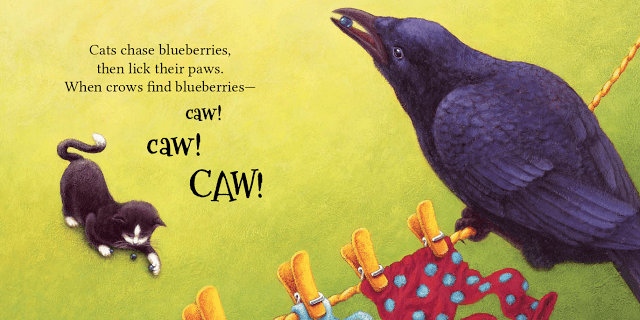
The scrumptious berries find their way into pancakes, muffins, mush, and slush, ice cream, cake—and even cause a bit of an ache. But with a small burp, the cry goes out for MORE BLUEBERRIES! The kids aren’t the only ones who love the season’s fruit—a cat chases them as they roll away, and a cawing crow carries one in its beak like the finest of pearls.

Frogs hop on blueberries with a pop and a splat while teddy bears gulp them down in no time flat. “Meow,” says the cat. “Caw,” says the crow. “Ribbit,” says the frog, and “Grrrrrrr,” says the bear as they all shout for MORE BLUEBERRIES!

But the day is waning and while bath time beckons there’s still more time to turn bathwater blue, sail berries in a tug, wash with blueberry soap and blueberry shampoo. Finally it’s nightime with “Blueberry jammies, / blueberry yawn. / Blueberry bedtime, / blueberries gone.” As the little girl and boy drift off to sleep to dream about blueberries, they snuggle with their teddy bear and froggy toys, leave their crow book until tomorrow, and sleep peacefully under the watchful eye of their cat.

celebrate-picture-books-picture-book-review-more-blueberries-crow-and-cat

Image copyright Esperança Melo, courtesy of esperancamelo.blogspot.ca

Susan Musgrave’s irresistibly catchy rhymes burst with flavor and will make More Blueberries a favorite story time read for young children. The repeated “blueberry” (such a wonderfully alliterative word!) will capture kids’ imagination and give them the pleasure of reading along even at very early ages. Beyond the fun of the blueberry theme, this book makes an entertaining concept book to teach parts of the body, food, and clothing.

Esperança Melo’s endearing illustrations perfectly depict the messy, delicious, enthusiasm small children develop for certain foods or objects. The sister with her curly mass of brown hair and her brother with spiky blond hair are human canvases of blueberry-painted faces, hands, and feet while their infectious grins display stained teeth and tongues. Their household surroundings are appropriately blue, and even their pets and toys get in on the action.

More Blueberries is a book to add to children’s shelves as it will be asked for again and again!

Ages Birth – 4

Orca Book Publishers, 2015 | ISBN 978-1459807075

Visit Esperança Melo’s website to view her illustrations and paintings portfolio!

To learn more about Susan Musgrave’s books for children and adults visit her website!

National Blueberry Day Activity

 celebrate-picture-books-picture-book-review-blueberry-cupcakes

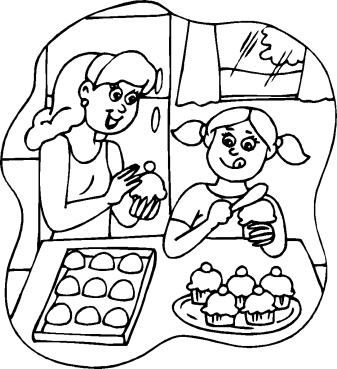
Baking Blueberry Cupcakes Coloring Page


Blueberries make everything better! So get out your blue crayons, pencils, or markers (and some other colors too) and create something berry special with this printable Baking Blueberry Cupcakes coloring page!

July 11 – World Population Day

celebrate-picture-books-picture-book-review-p-is-for-passport

About the Holiday

In 1989 the Governing Council of the United Nations Development Program established this date as a time to focus on urgent population and humanitarian issues. Each year revolves around a different theme. This year the theme is “Investing in teenage girls.” Education, health, and safety issues for girls around the world is an emerging issue that demands serious attention.

P is for Passport: A World Alphabet

Written by Devin Scillian | Illustrated by nationally acclaimed artists


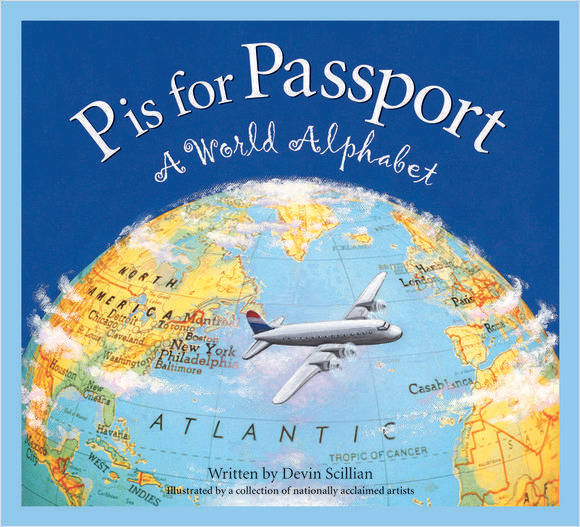
One of the best ways to learn about the world’s diverse population is to travel—either in person or through a great book. P is for Passport is your own personal guide to the myriad people, landmarks, animals, natural resources, modes of transportation, and other things that make up our world. Each letter of the alphabet introduces readers to a concept that begins with that letter (A for animals, B for breads, etc.). A short definition of the place, event, object, or idea is given on one page, and the facing page contains a poem that cleverly and lyrically describes it with examples from around the globe.

celebrate-picture-books-picture-book-review-p-is-for-passport-currency

Image copyright K.L. Darnell, courtesy of Sleeping Bear Press

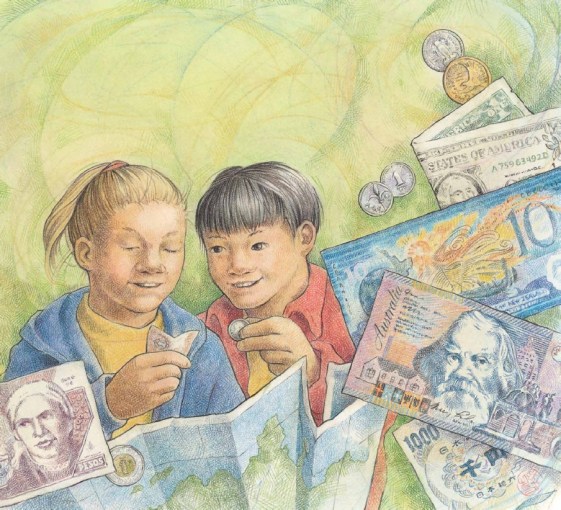
After getting the right Currency with the letter C and filling K’s Knapsack, armchair travelers will traverse the world’s varied terrain. E takes them to the “epic elevation” of “mighty Mount Everest”; for the letter I they will sail to the Emerald Isle of Ireland, the Isles of Greece, and the Isle of Skye as well as to chilly Greenland, warm Tahiti, and green Iceland; J will find them in the densest jungles; of course, “O is for Oceans that “roll and roar and sway”; and D is for deserts:

“We’re in Dakar and it’s dreadfully dry, whipped by the sand in the breeze. / Or it’s a day in Death Valley, dangerously hot at 120 degrees. / A dazzling sun dries out the Gobi, a harsh and punishing land. / The largest on earth is called the Sahara, nine million miles of sand….”

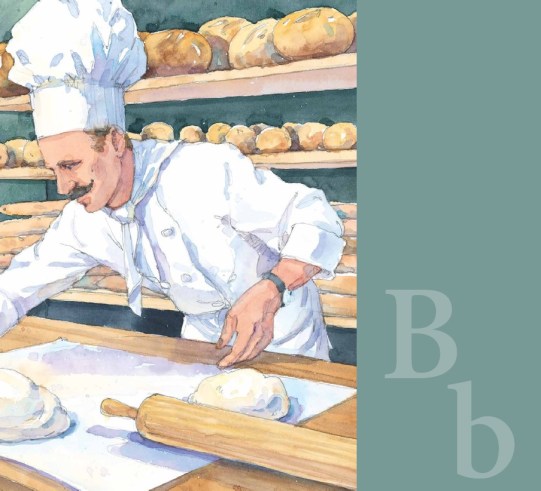
celebrate-picture-books-picture-book-review-p-is-for-passport-bread

Image copyright Gary Palmer, courtesy of Sleeping Bear Press

By now readers will be hungry, so B provides buttery buns, bagels, baguettes, biscuits, and more. Feel like something else? Then flip to G for Grain found in pasta, porridge, dumplings, ramen, couscous, wheat, and rice. While travelers eat they can peruse the languages at L:

“Polish is spoken in Poland. In Japan, it’s Japanese. / In Brazil they don’t speak Brazilian, but rather Portuguese. / L is the list of Languages, so many ways to speak. / Like English and Spanish, Italian and Hebrew, Arabic and Greek. / So pack a handy phrase book and learn a few things to say. / A friendly ‘Bonjour!’ or ‘Buenos dias!’ can go a very long way.”

Q is your Quest “…both large and small, from climbing Kilimanjaro to seeing Niagara Falls.” You’ll cross countries by R—Railway and “…rise right through the Rockies , or across the French Riviera, / or rumble across the Australian outback making your way to Canberra.” Along the way you’ll be entertained by M—Music from mandolins, marimbas, maracas, and many different musicians—and S for Sports, such as soccer, surfing, sailing, skiing, and so many more.

Lastly, T stands for Travel as “you see, each trip a traveler takes is a moment that you spend / getting to know a whole new world. And that world becomes your friend.” And from your travels you’ll remember P, the People:

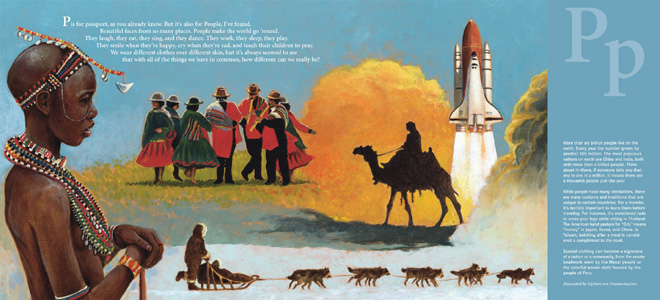
“They laugh, they eat, they sing, and they dance. They work, they sleep, they play. / They smile when they’re happy, cry when they’re sad, and teach their children to pray. / We wear different clothes over different skin, but it’s always seemed to me / that with all of the things we have in common, how different can we really be?”

celebrate-picture-books-picture-book-review-p-is-for-passport-people

Image copyright Gijsbert van Frankenhuyzen

As today’s date also hosts the holiday International Town Criers Day, honoring those early “news reporters,” it’s appropriate that Devin Scillian is our featured author. Besides authoring this and other books, he is a television journalist. His childhood spent living in cities across the globe and his work make him a perfect traveling companion for P is for Passport and its introduction to the marvels of the world around us. Delivering the sights, sounds, aromas, play, and people of foreign lands through fascinating rhymes and facts is a wonderful way to get kids excited about travel and geography.

Twenty-four artists from around the United States and Canada lend their unique talents to depicting each letter. Beautiful two-page spreads burst with color and bold, up-close views of representatives for each letter-inspired text. Brilliant red and blue parrots share space with violet orchids, blue poison dart frogs, a coiled green snake, and a stealthily creeping jaguar in Karen Latham and Rebecca Latham’s painting for the letter J. Susan Guy’s soft watercolor of a frozen landscape cut only by a sleek train and its glowing headlamp transports readers to cold northern regions for the letter N. Volcanoes steam and spout while hot, golden lava burns a path through forestland in Ross Young’s vivid painting for the letter V.

Each illustration is equally compelling. Children and adults will want to linger over each page and will find P is for Passport just the beginning of their world exploration. The book would be a welcome home library addition for geography enthusiasts of all ages.

Ages 7 – 12

Sleeping Bear Press

Hardcover, 2003 ISBN 9781585361571 | ebook, 2013 ISBN 9781627533577

World Population Day Activity

celebrate-picture-books-picture-book-review-train-shaped-word-search

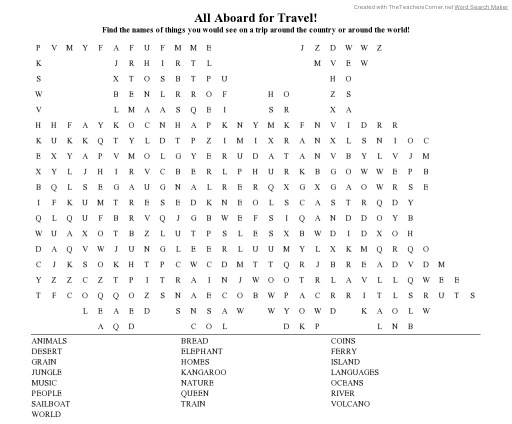
All Aboard for Travel! Word Search


The best way to meet your fellow citizens of the world is to travel! Today’s word search is shaped like a train—one of the best ways to see the countryside. So hop on board and start exploring! Get your printable All Aboard for Travel! puzzle.