February 8 – National Fly a Kite Day

About the Holiday

Today’s holiday celebrates an activity enjoyed the world over—kite flying! If you live in an area where it’s warm and are looking for a fun way to spend the day, why not take the opportunity of today’s holiday and set your sights on the sky? Whether you’re steering a simple diamond or a fancy dragon, watching a kite dip and soar through the sky is an exhilarating experience! If it’s too cold or snow’s piled up high where you live, spend some time today creating a homemade kite in preparation of spring!

Thank you to Bloomsbury Children’s Books for sharing a copy of this book with me for review!

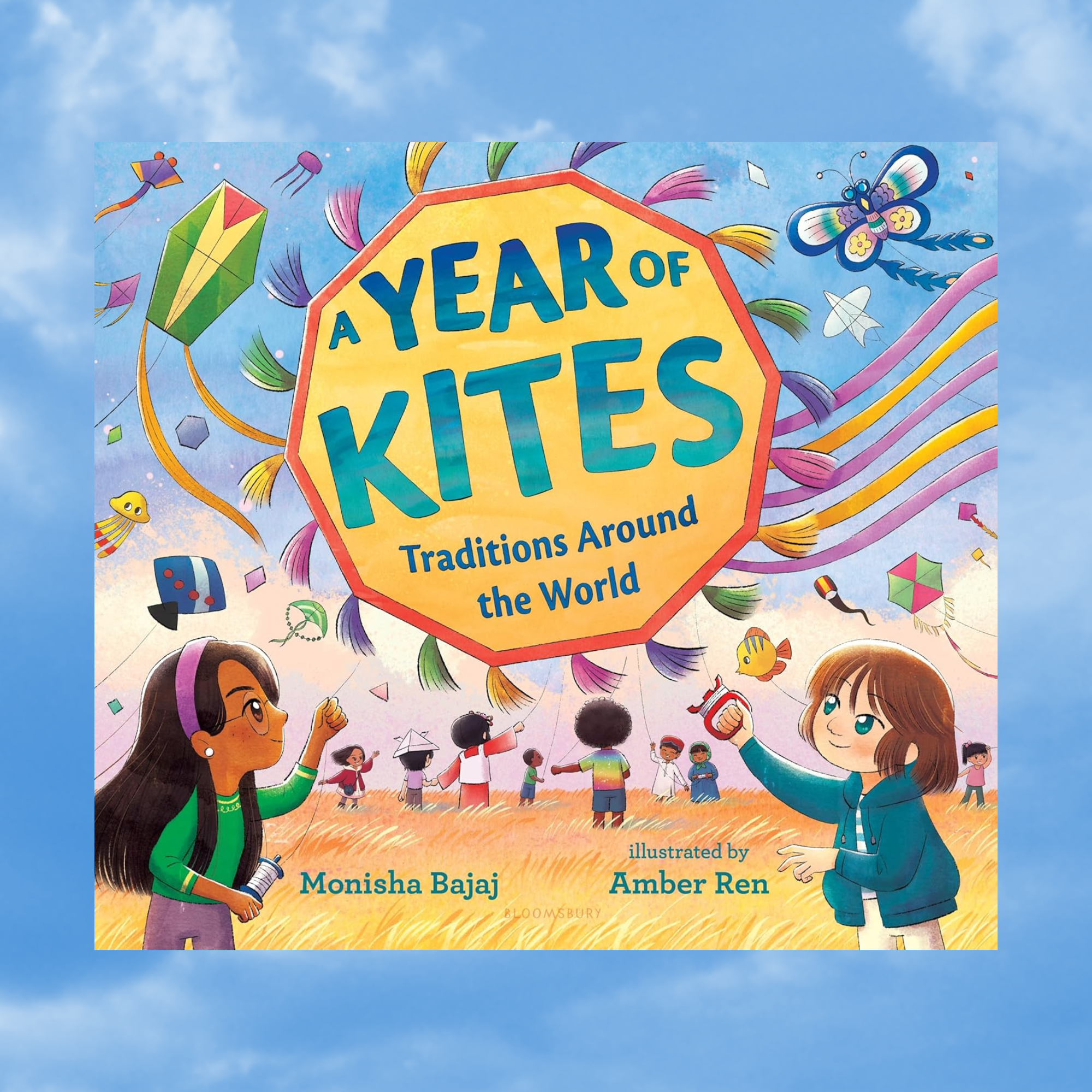
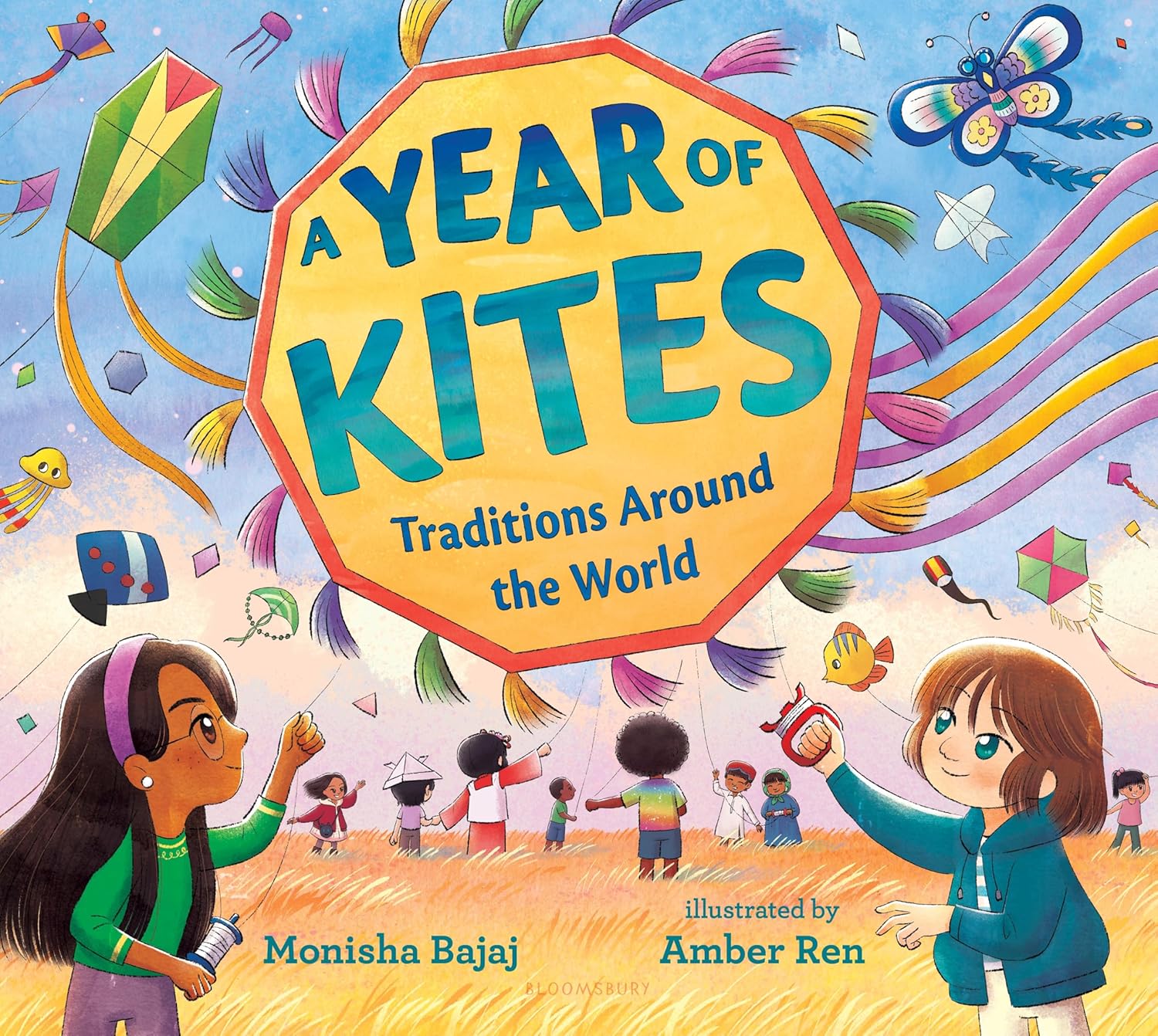
A Year of Kites: Traditions Around the World

Written by Monisha Bajaj | Illustrated by Amber Ren


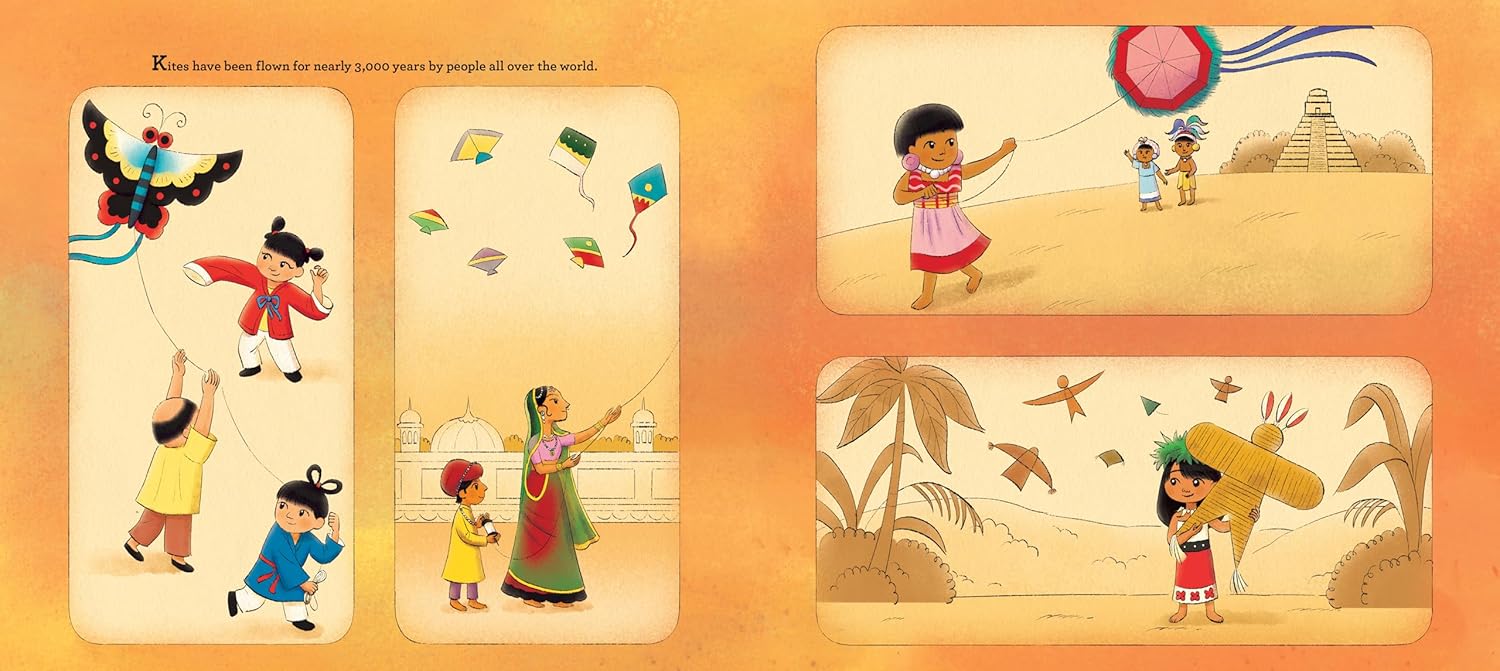
If you and your kids love the freewheeling excitement of holding a kite string in your hands while your kite dips and soars on the wind, you’re not alone! For more than 3,000 years, families from all over the world have taken to parks, beaches, city squares, and rooftops to celebrate special holidays, festivals, and solemn observances by flying kites. 

Illustration © 2026 by Amber Ren. Text © 2026 by Monisha Bajaj. Courtesy of Bloomsbury Children’s Books.

Monisha Bajaj and Amber Ren take readers on a tour of twelve countries, beginning in Gujarat, India, where it’s January and the festival of Uttarayan is underway to commemorate the end of winter. Children and adults launch their patang and compete to have the last kite flying. “Asha uses her “super-sharp kite string to cut down other kites.” Later, kites carrying lanterns will light up the nighttime sky.

Kids then travel to Lahore, Pakistan; Athens, Greece; Mazar-i-Sharif, Afghanistan; and Grenville, Grenada to meet other children celebrating a spiritual holiday or ringing in the new year. Winging their way to Weifang, China, readers find themselves at the yearly International Kite Festival. Here, beautiful “wood, silk, paper, and bamboo kites” fill the sky. From a pagoda high on a hill, “Ming guides a dragon kite, which is a symbol of good fortune,” while “Ai flies a kite shaped like a butterfly, which is a symbol of love.”

Illustration © 2026 by Amber Ren. Text © 2026 by Monisha Bajaj. Courtesy of Bloomsbury Children’s Books.

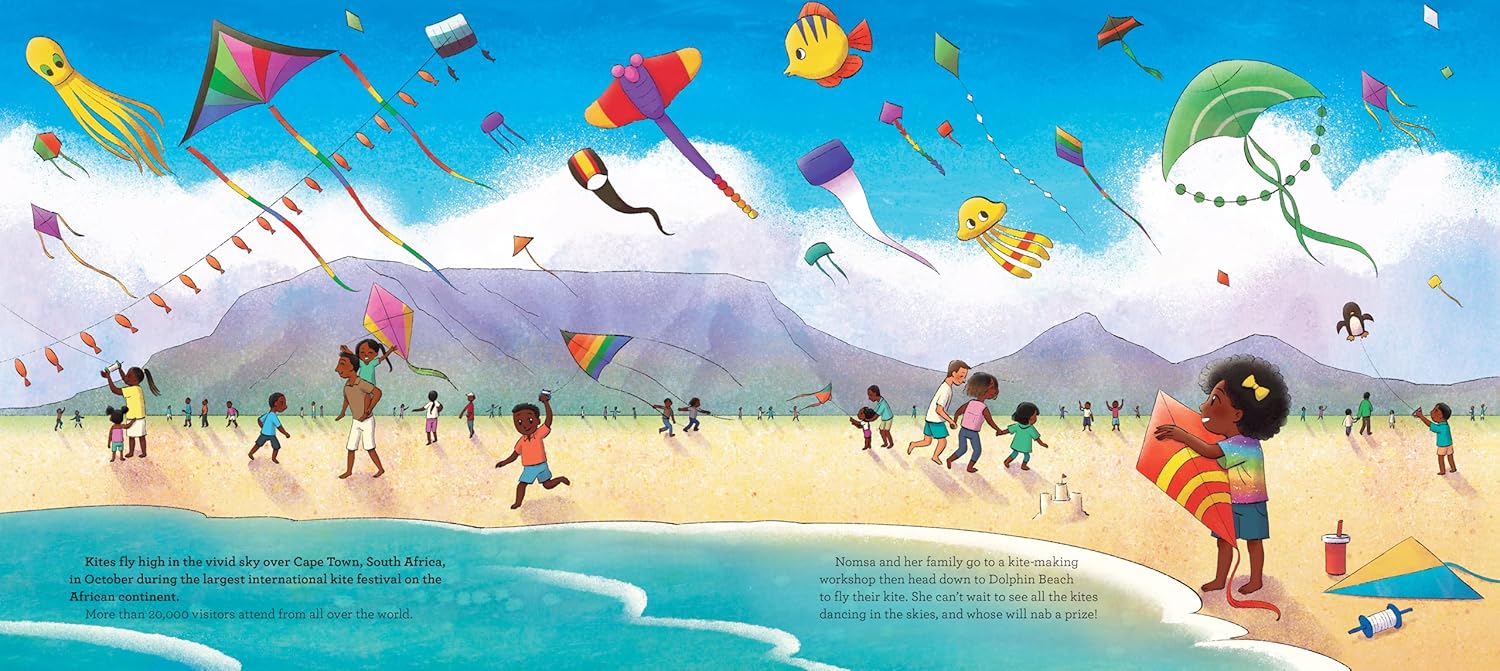
Next, kids visit Tokyo, Japan on May 5 for their annual Children’s Day celebration, during which koinobori, colorful koi-shaped kites, are the stars of the festivities. Now it’s on to Auckland, New Zealand, where “for hundreds of years, Māori people have made kites out of leaves and tree bark” and send them skyward to connect with their ancestors. Off again, readers touch down in Maui, Hawai’i, mingle with a crowd of 20,000 in Cape Town, South Africa, spend the day with Ixchel at the Día de los Muertos festival in Sumpango, Guatemala, and finish up their world tour with Sarai and her dad in Sukhothai, Thailand during the winter monsoon season.

Back matter includes a Glossary of terms found throughout the story and a fascinating Author’s Note that relates many ways kites have been used throughout history for scientific experiments, navigation, fishing, and sports; how trade between regions helped spread the popularity of kites in the 13th century and even earlier; a list of annual kite festivals around the world; and Monisha Bajaj’s own participation in kite traditions while growing up in South Asia. Instructions on how to make a simple kite are also included.

Illustration © 2026 by Amber Ren. Text © 2026 by Monisha Bajaj. Courtesy of Bloomsbury Children’s Books.

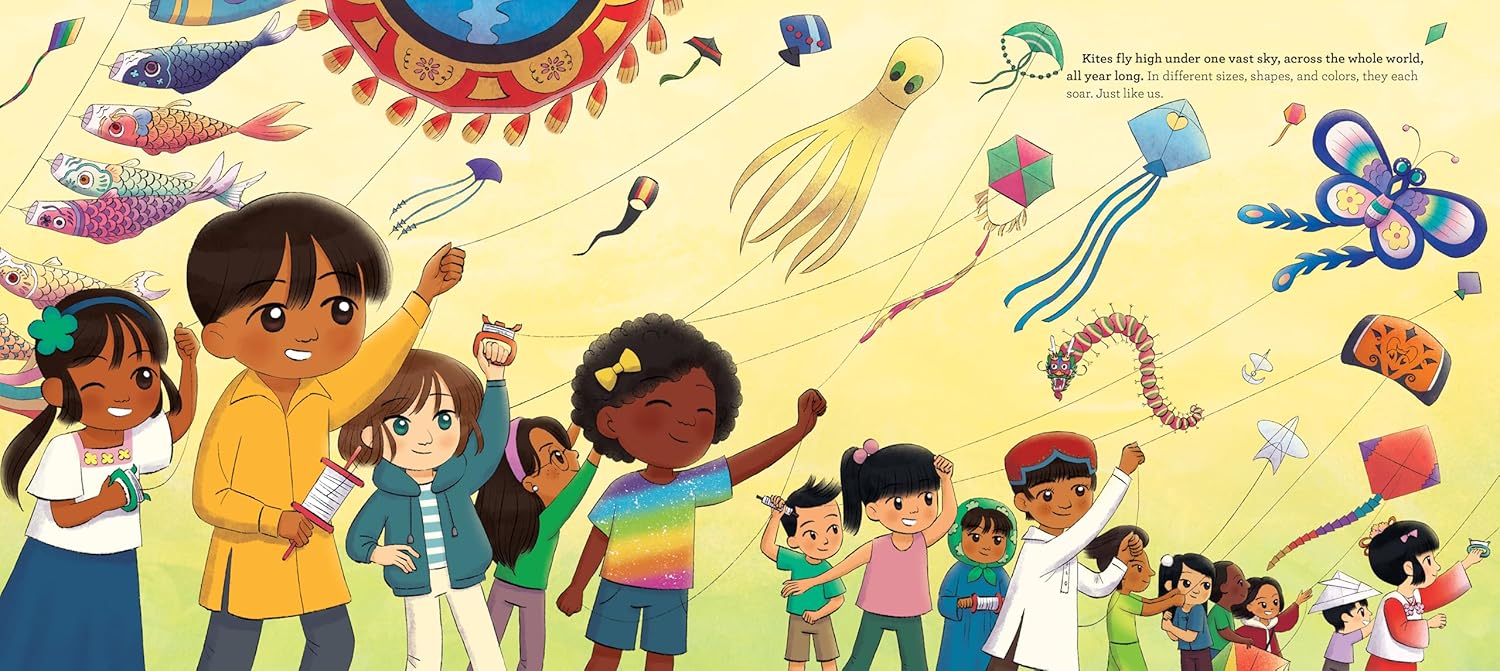
With her engaging “Kites fly high . . .” introduction to each section, Monisha Bajaj invites young readers on a whirlwind world tour to meet other children as they participate in festivals where kites offer fun competition, carry wishes for the future, and connect participants to their ancestors. Bajaj’s sprightly storytelling contains surprises and poignancy as she describes the traditions of kite flying in each country, and each child’s pride and excitement are evident. Bajaj ends with uplifting inspiration for all children striving to soar high each day.

Amber Ren’s vibrant and animated illustrations take readers to twilight rooftops, golden fields, and some of the world’s most famous monuments where, on certain festival days, these eye-catching sites become the backdrop to brilliant kites in the welcoming sky. Happy children, picnicking families, and cheering spectators reflect the celebratory atmosphere. Readers will enjoy spending time to view each kite and cultural details.

A Year of Kites: Traditions Around the World makes a unique and intriguing complement to geography and social studies lessons for educators, a high-interest addition to library collections, and an exciting choice for children interested in world cultures and kite flying.

Ages 4 – 8

Bloomsbury Children’s Books, 2026 | ISBN 978-1547612246

About the Author

Monisha Bajaj is Professor of International and Multicultural Education at the University of San Francisco, USA and Visiting Professor at Nelson Mandela University, South Africa. She is the author of Schooling for Social Change: The Rise and Impact of Human Rights Education in India (Bloomsbury 2012). Visit her at monishabajaj.net.

About the Illustrator

Amber Ren is a New York Times bestselling illustrator and a visual development artist in the animation industry. She earned her BFA in Character Animation at the California Institute of the Arts. Amber’s work is inspired by her love for folk art, nostalgia, inclusion, and her childhood spent in China. She is the illustrator of Because, Looking for a Jumbie, Night Market Rescue, and more. Visit her at amber-ren.com.

National Kite Flying Day Activity

Flying Kites Coloring Pages


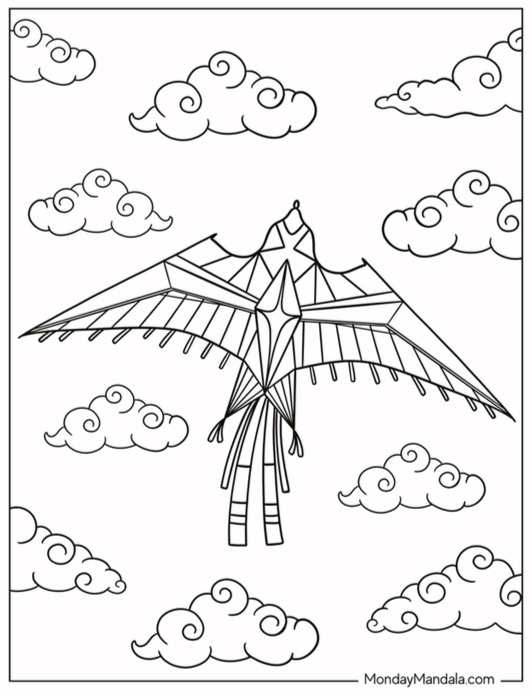
Kids can take to the skies with their crayons, pencils, or markers and make each of these kites their own! You can find these and more kite coloring pages on Monday Mandala!

Dragon Kite | Phoenix Kite | Easy Colorful Kite

You can purchase A Year of Kites: Traditions Around the World from these booksellers

Amazon | Barnes & Noble | Bookshop

Picture Book Review


January 14 – National Soup Month

About the Holiday

On a frigid January day, there’s nothing more satisfying than a steaming-hot bowl of your favorite soup! Or if you live in a southern climate, a cold soup can be so deliciously refreshing. While there are many tasty prepared soups, in honor of today’s holiday, you may want to try cooking a pot your own. Why not check out recipes from your heritage, geographical location, or even inspired by your favorite book? Bon appétit!

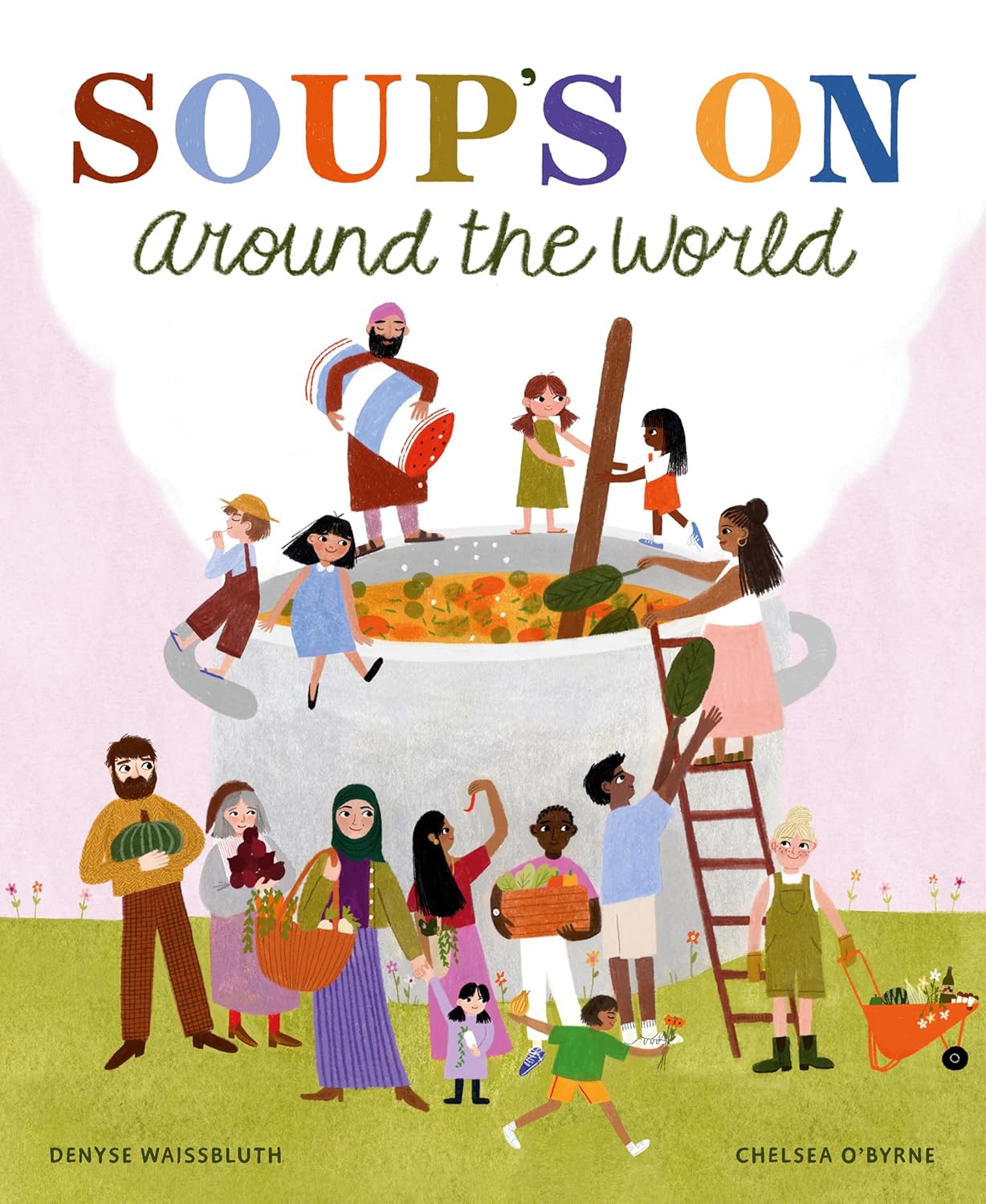
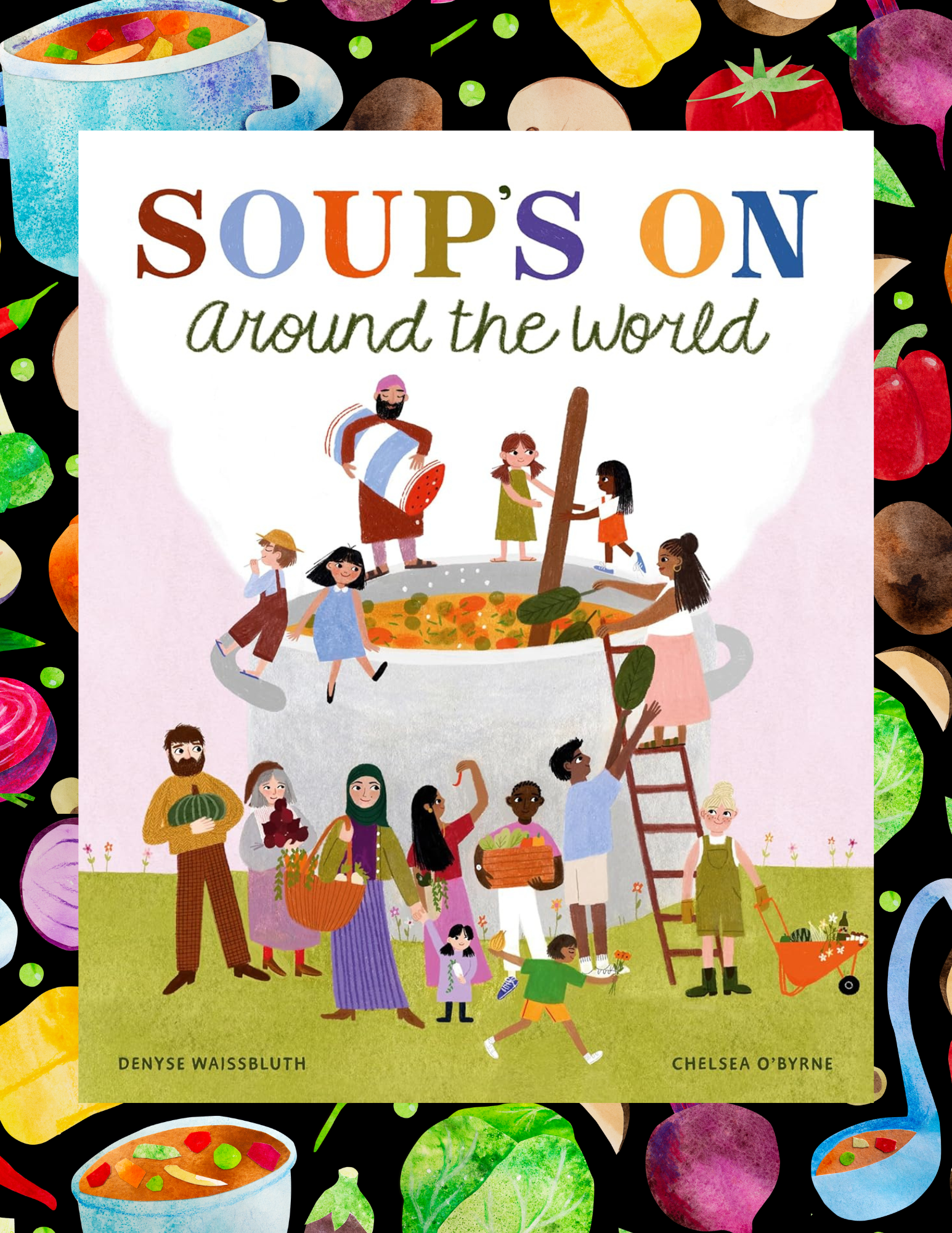
Soup’s On Around the World

Written by Denyse Waissbluth | Illustrated by Chelsea O’Byrne


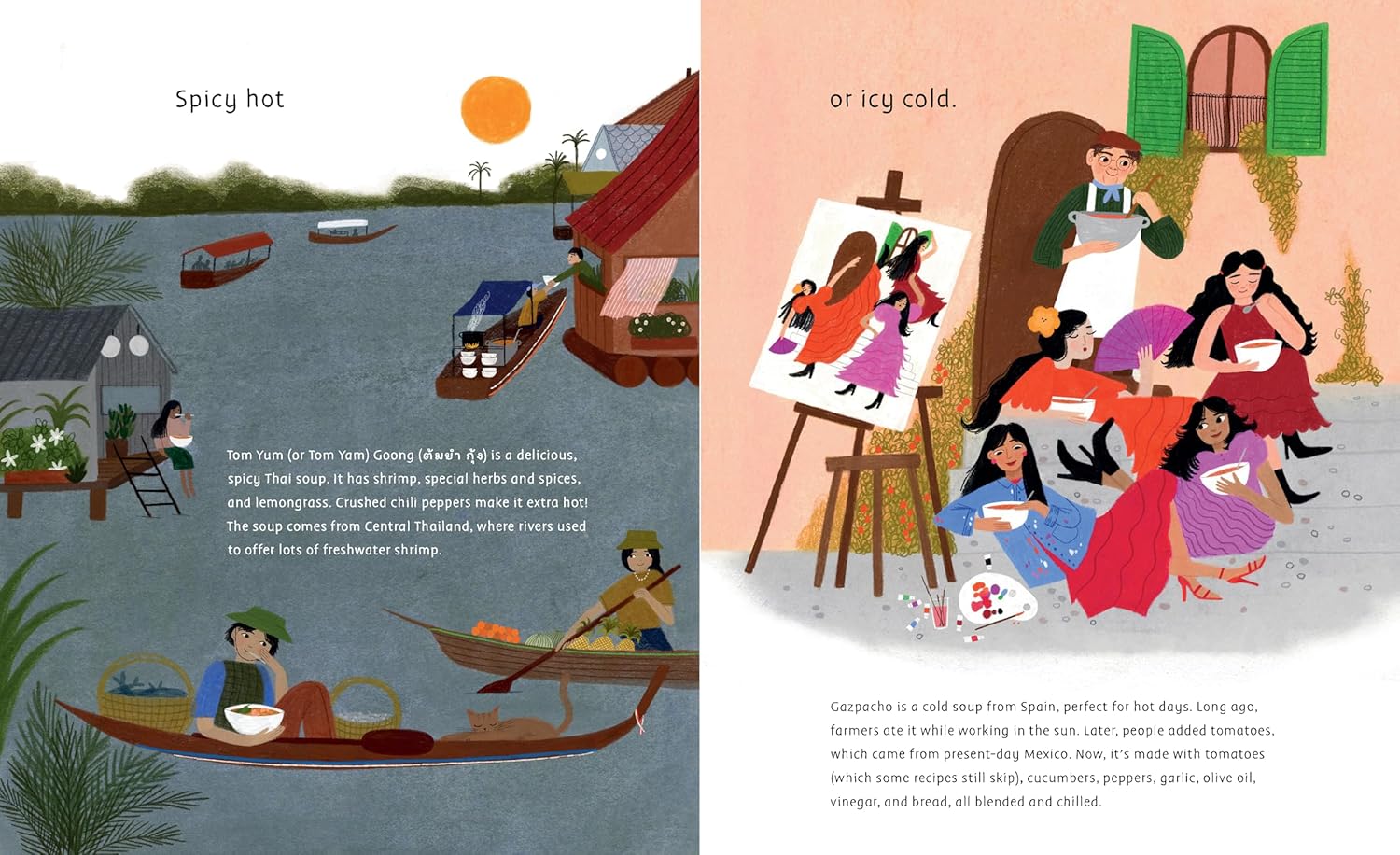
Denyse Waissbluth and Chelsea O’Bryne invite readers to pull up a chair at a communal table where people from around the globe dip their spoons into bowls of delicious, nourishing soup. Traveling first to Thailand, children meet people living and plying their trade on a river. On open porches—feet dangling above the water—in boats, and even from floating restaurants people enjoy spicy tom yum goong (or tom yam goong) made from shrimp, lemongrass, and herbs and spices, including hot pepper flakes.

Illustration © 2025 by Chelsea O’Bryne. Text © 2025 by Denyse Waissbluth. Courtesy of Greystone Kids.

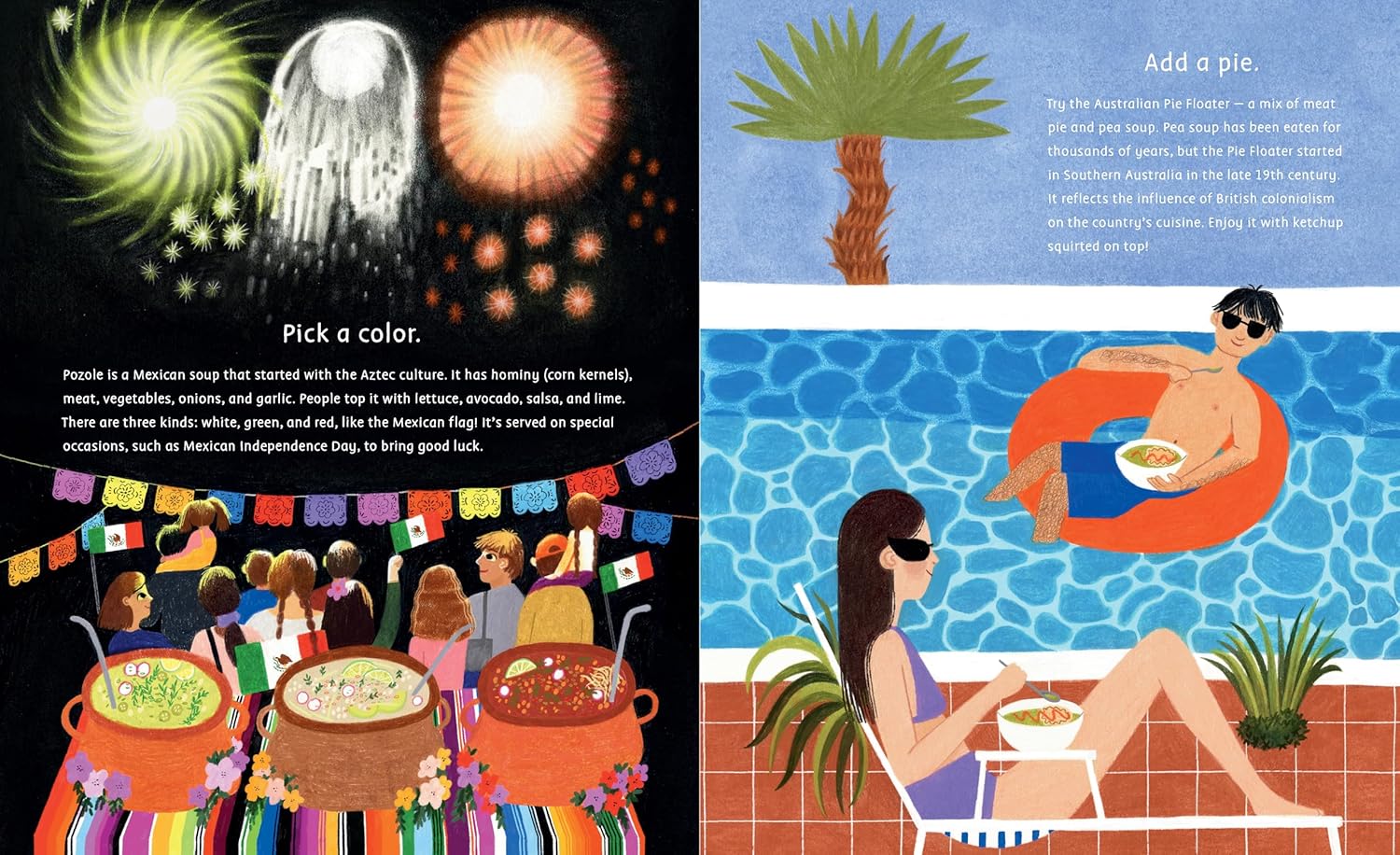
From spicy hot soup, Waissbluth pivots to cold with gazpacho, a cool refreshment of blended veggies, vinegar, olive oil, and bread from Spain once eaten by farmers working the fields, but now enjoyed worldwide. She also takes kids to countries where soup is the star of celebrations. In Haiti soup joumou is served every January first to commemorate the country’s Independence Day. Likewise, Mexican families dine on pozole, a meat and vegetable soup that comes in three types: green, white, and red to represent the Mexican flag to celebrate their Independence Day. In addition, those who observe Ramadan often break their fast after sundown with harira soup, a mix of meat, tomatoes, noodles or rice, and spices.

Illustration © 2025 by Chelsea O’Bryne. Text © 2025 by Denyse Waissbluth. Courtesy of Greystone Kids.

In all, Waissbluth serves up the stories and scrumptious ingredients for 20 delectable soups that we and our global neighbors enjoy for breakfast, lunch, dinner, and even dessert! She also reminds us that soup isn’t strictly for meals, either. We all know the healing balm of chicken soup, and soup-making (and eating) have brought communities together for centuries. Soup really is a universal language!

Back matter includes an author’s note as well as recipes for Denyse’s and Chelsea’s favorite soups.

Illustration © 2025 by Chelsea O’Bryne. Text © 2025 by Denyse Waissbluth. Courtesy of Greystone Kids.

As in her first book in this series, Teatime Around the World, Denyse Waissbluth ferries young readers from country to country to get a taste of a dish that, while universal also bursts with unique flavors that represent diverse cultures; varied, local ingredients; and even history. Her light touch, broad range of countries and cultures, and admiration for the stories or traditions behind each type of soup keep children engaged and will spur them to think more deeply about their own relationship to special traditional family meals. 

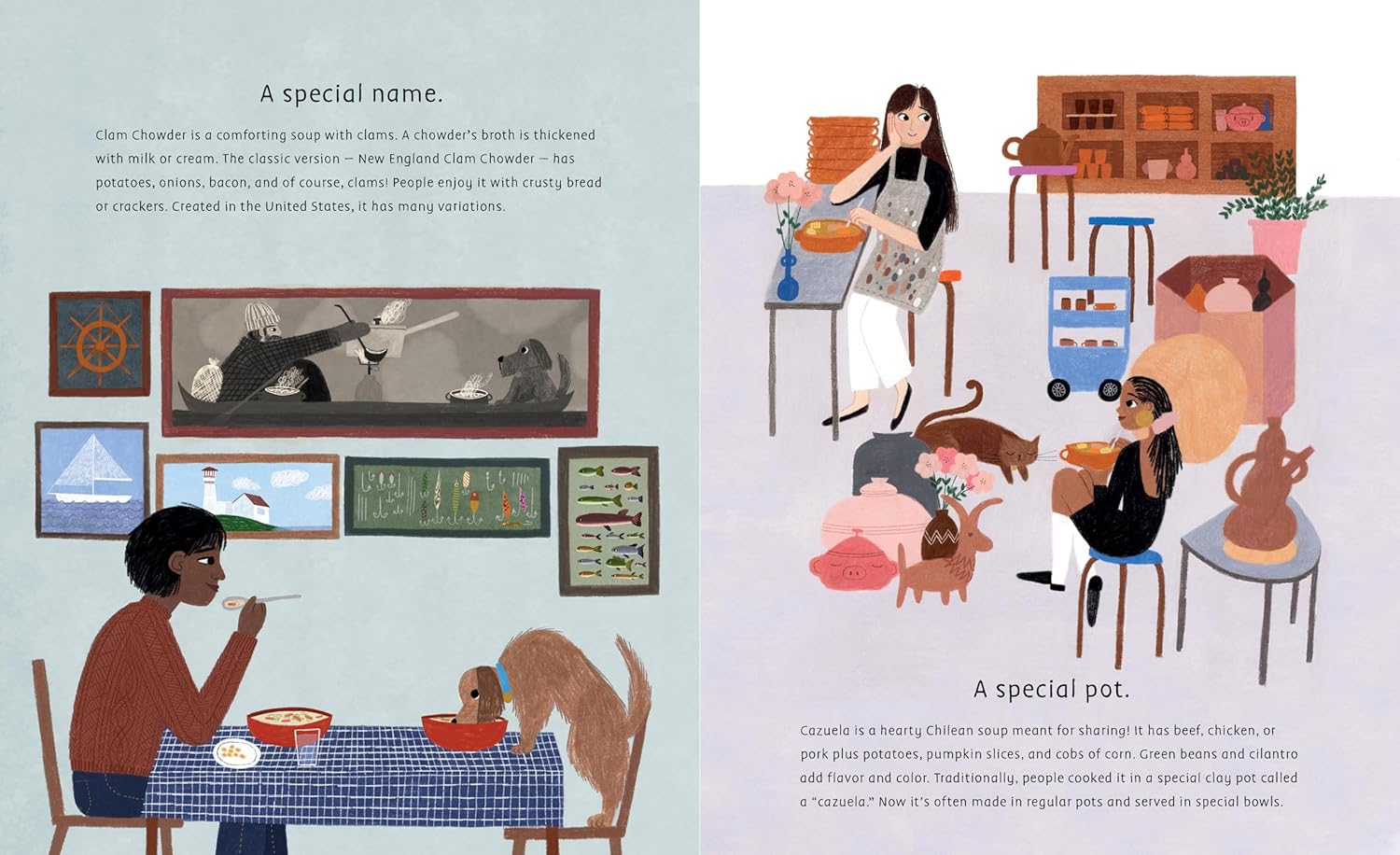
In her vivid illustrations, Chelsea O’Bryne dishes up charming scenes that drop readers into the midst of homes, picnics, celebrations, cafes, and even mountains where they join in with preparations and enjoyment of a wide variety of soups. Her clever illustrations reward thoughtful viewing with their depth, cultural details, and humor. 

A meaningful way to engage young readers in cultural and social studies and of particular interest to children who love to cook and explore different foods and flavors, Soup’s On Around the World is highly recommended for home and library collections.

Ages 4 – 8

Greystone Kids, 2025 | ISBN 978-1778401671

About the Author

Denyse Waissbluth has eaten her way through every Canadian province and territory and more than twenty countries. Her appreciation for how food (like soup!) opens doors to different cultures, and her love of travel has inspired her first two children’s books Teatime Around the World, and now Soup’s On Around the World, both published by Greystone Kids. When she’s not working in the agricultural sector, you can find her exploring new places—both near and far—with her husband and son, enjoying a good book, or sipping a cup of tea. Visit her at denysewaissbluth.com.

About the Illustrator

Chelsea O’Byrne is an artist and teacher living and working in Vancouver, BC. She is the acclaimed illustrator of four books, including Hello, Crow! by Candace Savage (Greystone Kids, 2019), and Teatime Around the World, both published by Greystone Kids (Greystone Kids, 2020). One of Chelsea’s favorite things to eat in her studio is a nice big bowl of home-cooked soup . . . but she is very careful not to spill any on her drawings! You can visit her at chelseaobyrne.ca.

National Soup Month Activity

Soup’s On Around the World Curriculum Guide


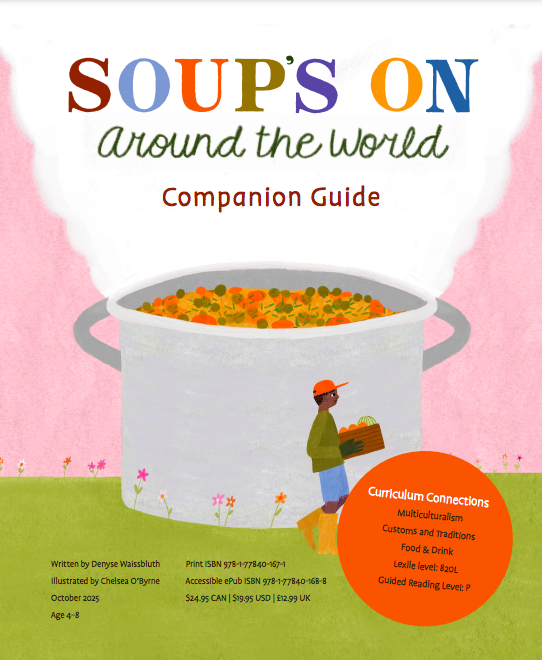
This fun and colorful curriculum guide for Soup’s On Around the World provided by Greystone Books is the perfect way for teachers, parents, and other educators and caregivers to engage kids in interacting with their own favorite kinds of soup as well as the memories and stories this hearty meal inspires!

You can purchase Soup’s On Around the World from these booksellers

Amazon | Barnes & Noble | Bookshop

Picture Book Review
January 1 – Global Family Day

About the Holiday

A desire for world peace is an idea that most people can agree on and that many around the globe are working toward. One way to bring this about on a direct and personal scale is to build and strengthen families and communities. Which brings us to today’s holiday and what Global Family Day is all about. Today’s holiday has its underpinnings in the United Nations General Assembly’s January 1, 2000 launch of the International Decade for the Culture of Peace and Non-Violence for the Children of the World, which revolved around the idea that some day, in the future, there could be a time when there is no more war on the planet. Because the launch was so successful, the United Nations decided to make it an annual event called Global Family Day. Today’s book, which brings families together through 30 international cultural tales contains the seed for more understanding and peace among individuals and communities.

Thank you to Bloomsbury Children’s Books for sharing a copy of this book with me for review!

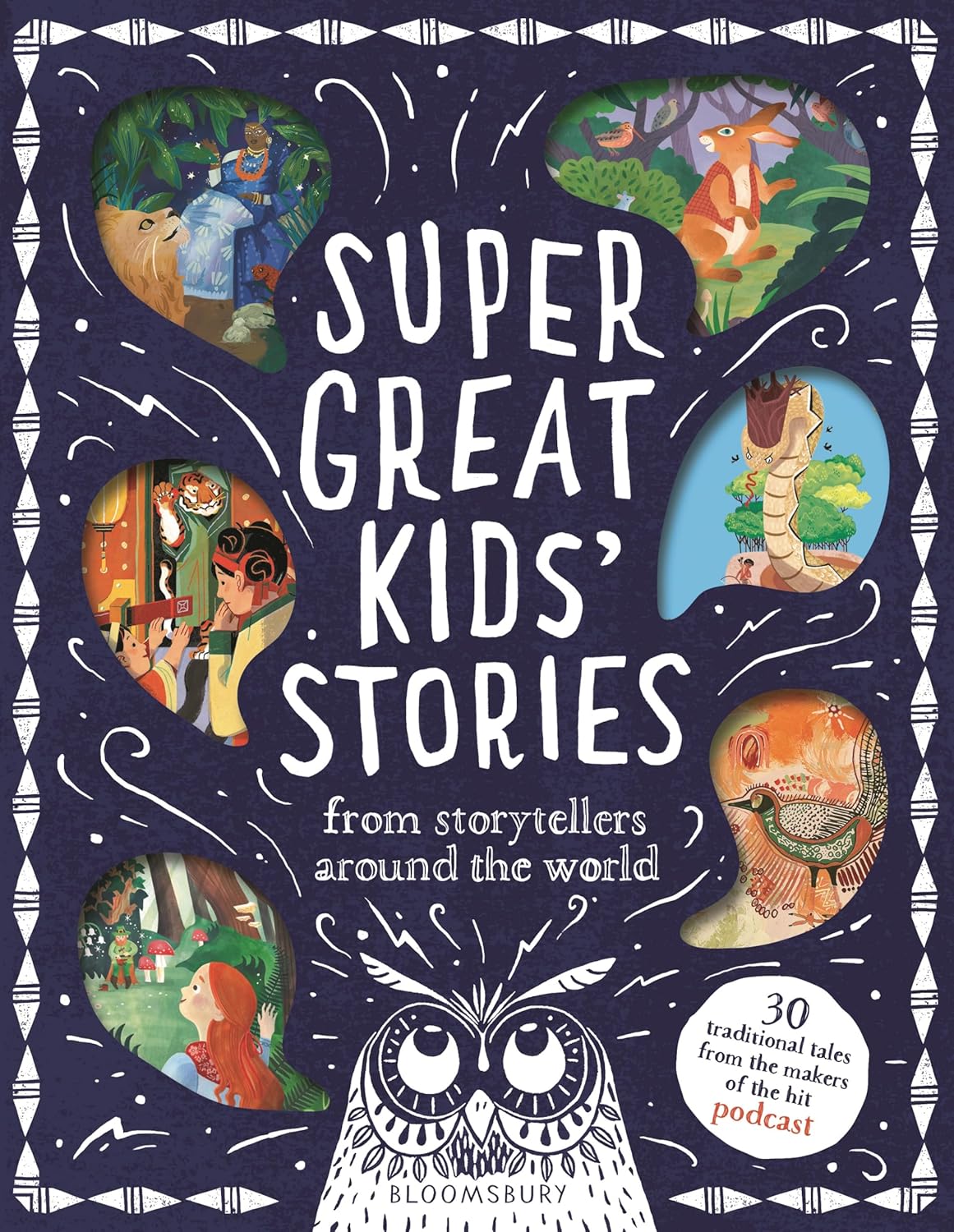
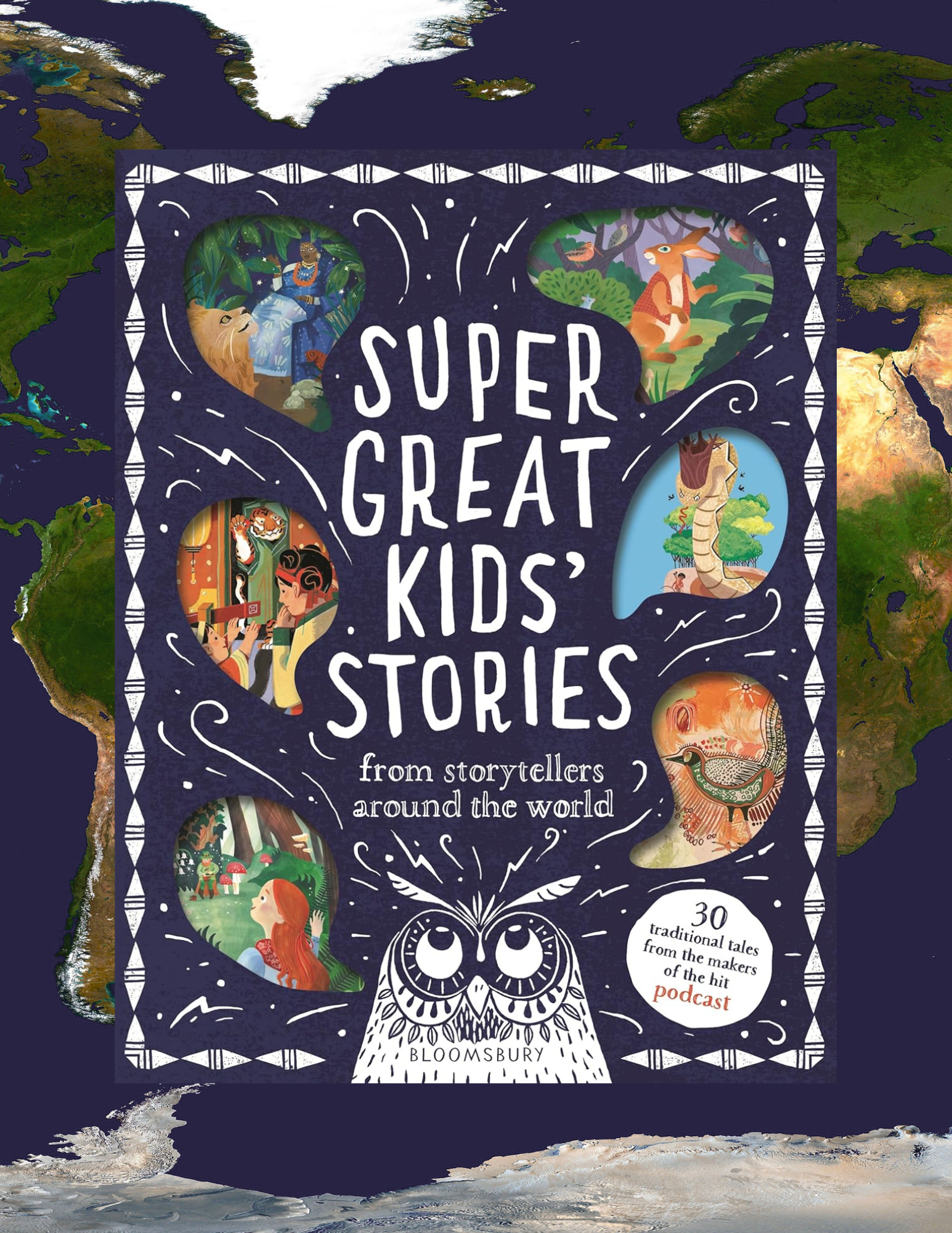
Super Great Kids’ Stories: From Storytellers Around the World

Stories curated by Kim Normanton


Would you like to take your kids on a global adventure this year? How about taking that trip without ever leaving home? You can do it with Super Great Kids’ Stories, a new companion book to the popular Super Great Kids’ Stories podcast. Through the thirty tales in this collection, families can travel through North America, South America, Africa, Europe, Asia, and Oceania while enjoying glimpses into the culture and traditions of a wide range of countries. 

Young readers will gain a sense of camaraderie with their peers around the world as they read or listen to stories with familiar characters and themes that just undergo a tweak here and a name change there. For example, kids who know the Cinderella story will be excited to recognize similar aspects in “Keeya and the Purple Fish,” an intriguing tale from Eswatini, a country in southern Africa.

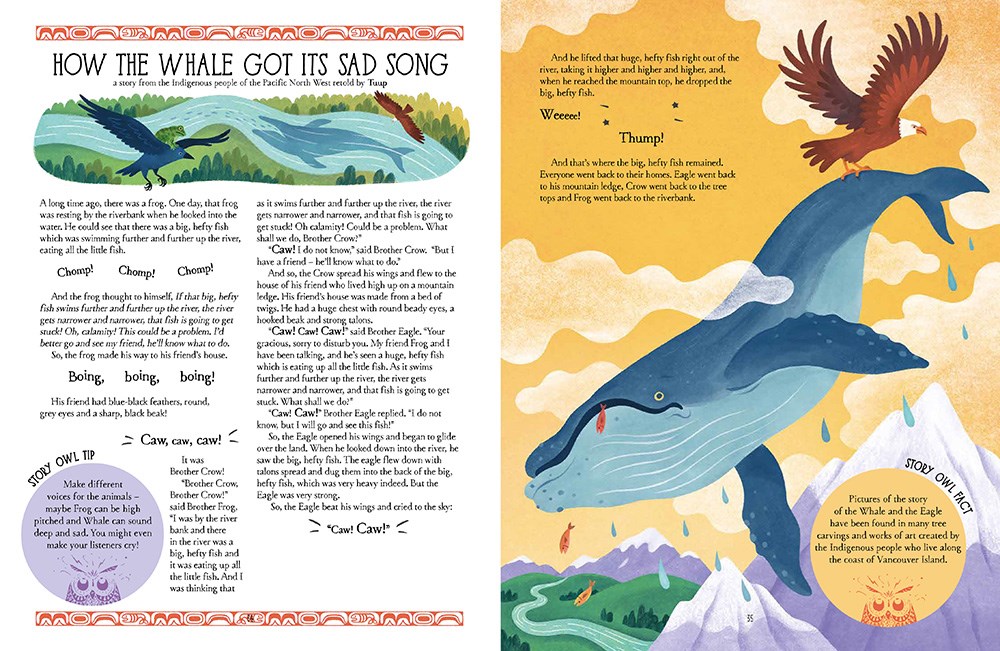
Illustration © 2025 by Kaley McKean, text © 2025 by Tuup. Courtesy of Bloomsbury Children’s Books.

For kids who can’t make up their mind between hearing a ghost story or a funny story, there’s “The Ghost of the Bloody Finger,” a tale from the United States retold by Tiernan Douieb, which if read with the spookiest and most dramatic voice, will have them shaking . . . with laughter! Children will also travel to South America to discover “How Snakes Got Their Poison,” a story of a sly trade from the Indigenous people of the Amazon rainforest retold by Tuup, and two other stories.  

Visiting Asia, readers find six stories, including “Inch Boy,” a story from Japan, retold by Masako Carey that offers a thrilling twist on a tale many may recognize as “Thumbelina.” They’ll also marvel at “The Boy Who Used His Head,” a story from South Korea retold by Pamela Marr. Wending their way to Europe, children will be engaged by “Molly and the Leprechaun,” an Irish story perfect for Saint Patrick’s Day retold by Kate Corkery. They’ll also love “Little Half Chick,” a story from Spain retold by Rebecca Lemaire that they’ll remember whenever the wind changes, plus four more delightful tales.

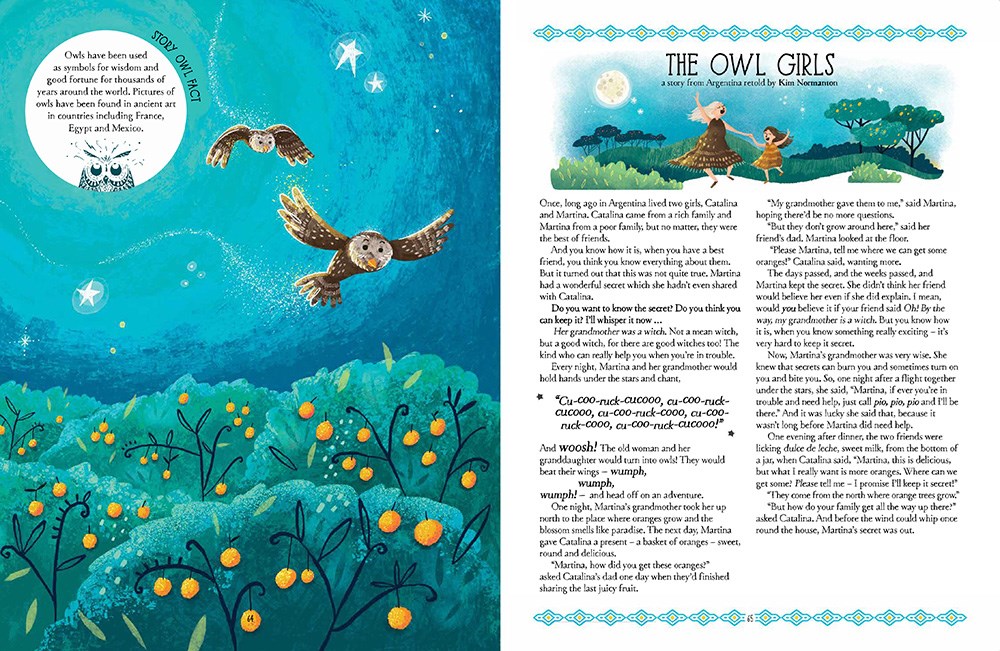
Illustration © 2025 by Camila Carrossine. Text © 2025 by Kim Normanton. Courtesy of Bloomsbury Children’s Books.

Leaving Europe kids land in Oceania, where they learn two First Nations stories from Australia retold by Warren Foster, one about Bungoo the flying fox who jumps from friend to friend, and the next about how the Lyrebird got its voice. Two Māori stories from New Zealand retold by Emmy Bidois follow—the first about the trickster demigod Māui, and the second a legend about how the kiwi lost its wings.

To enhance listeners’ experience each story is visited by the Story Owl, who offers interesting tips on how the story can be made interactive with sounds or motions and provides facts about an aspect of the story. Back matter includes short biographies of the book’s storytellers and illustrators as well as quotes from each storyteller about where they first heard the story they tell here.

Illustration © 2025 by Camila Carrossine. Courtesy of Bloomsbury Children’s Books.

You can’t help but be pulled into the intrigue, twists, and surprises of the tales curated by Kim Normanton in this beautiful book. Each story sings with the unique voice of the storyteller and stunning illustrations that bring the action and characters to life. Super Great Kids’ Stories provides a perfect way for families to spend rainy or snowy days together, send kids off to dreamland, or spark a child’s imagination. Teachers, homeschoolers, and other educators or group leaders will find the stories in this book to be a high-interest way to introduce world cultures to students or to inspire meaningful writing or presentation projects.

Ages 5 – 7

Bloomsbury Children’s Books, 2025 | ISBN 978-1547619283

Kim Normanton is the curator of this collection and presenter of the podcast Super Great Kids’ Stories. She has been telling traditional stories in schools and museums around the world for 20 years. Kim uses rhymes and singing and has a wide repertoire, from African fables to Indian fairytales. She also produces social documentaries for BBC Radio. To learn more visit www.supergreatkidsstories.com.

Stories retold by

Sheila Arnold, Emmy Bidois, Masako Carey, Kate Corkery, Peter Chand, Tiernan Douieb, Amy Douglas, Warren Foster, Wangari Grace, Emily Hennessey, Rebecca Lemaire, Juliana Marin, Pamela Marre, Daniel Morden, Kim Normanton, Winston Nzinga, Baden Prince Junior, Gayle Ross, Simone Shüemmelfeder, Wendy Shearer, and Tuup.

Stories illustrated by

Sally Agar, Camila Carrosine, Tinuke Fagborun, Melissa Greenwood, Kaley McKean, and Terri Po.

Global Family Day Activity

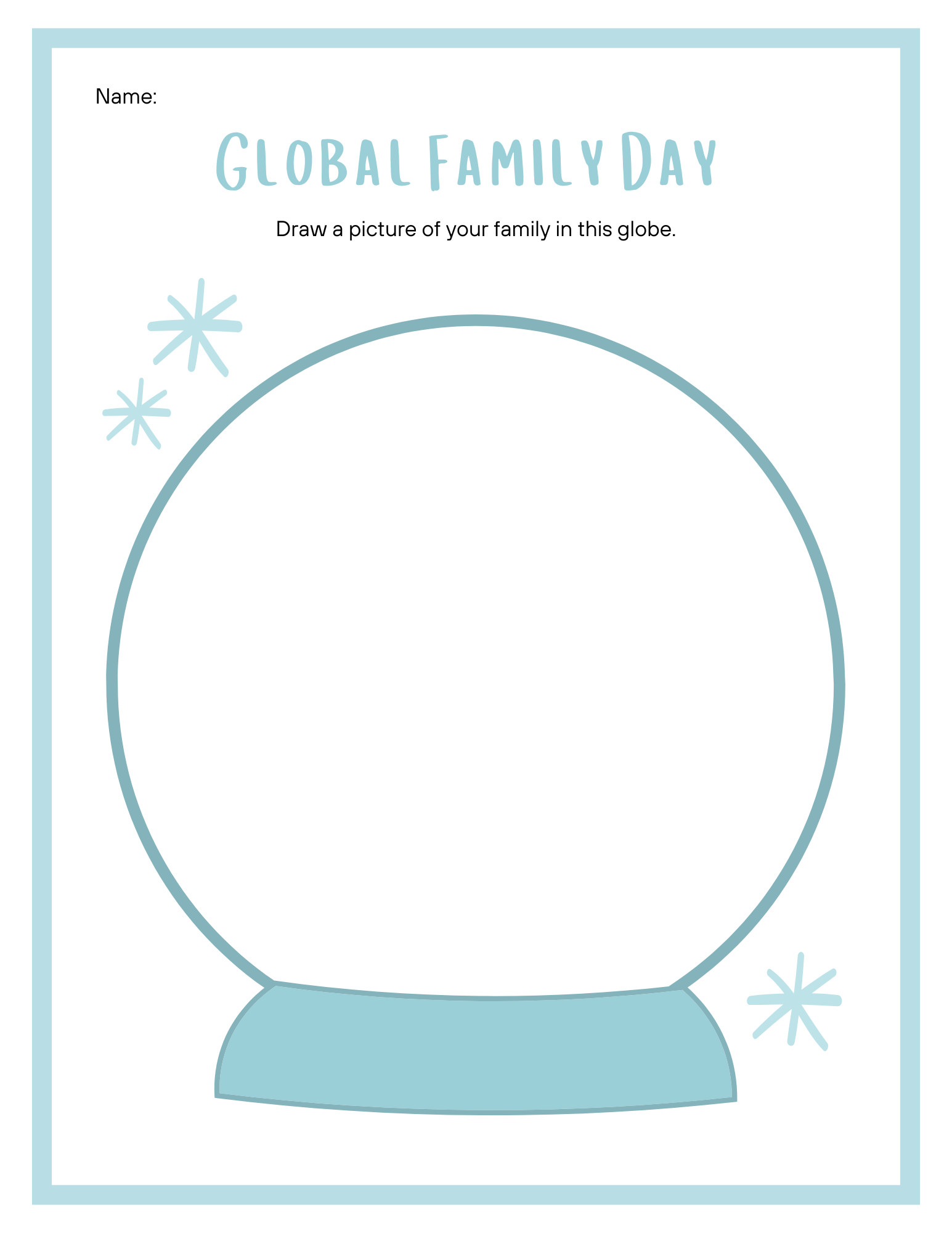
Draw Your Family Coloring Page


Kids can celebrate Global Family Day by drawing their family in this snow globe.

Global Family Day Coloring Page in Blue | Global Family Day Coloring Page in Black and White

You can purchase Super Great Kids’ Stories from these booksellers

Amazon | Barnes & Noble | Bookshop

Picture Book Review
December 3 – Get Ready for Dōngzhì

About the Holiday

The Dōngzhì Festival, or Winter Solstice is considered to be one of the most important Chinese festivals of the year and is a time for families to get together, worship their ancestors, and enjoy traditional delicacies. Celebrated for over 2,000 years, the festival sees families come together to make and eat tāng yuán, which symbolizes reunion and prosperity. While the celebration of the winter solstice is only one day (this year on December 21), the Dōngzhì Festival lasts 15 days.

This Winter Solstice festival originates from the Chinese concept of yin and yang, an ancient symbol of harmony and balance. In Chinese culture, there is a belief that when the days are short, there is insufficient Yang energy, thus people consume foods that are more yang (warm) in nature to counteract the yin (cold) of winter, such as tāng yuán, as seen in today’s book. To learn more about the holiday, visit mandarianmatrix.org

Thank you to Bloomsbury Children’s Books for sharing a copy of this book with me for review!

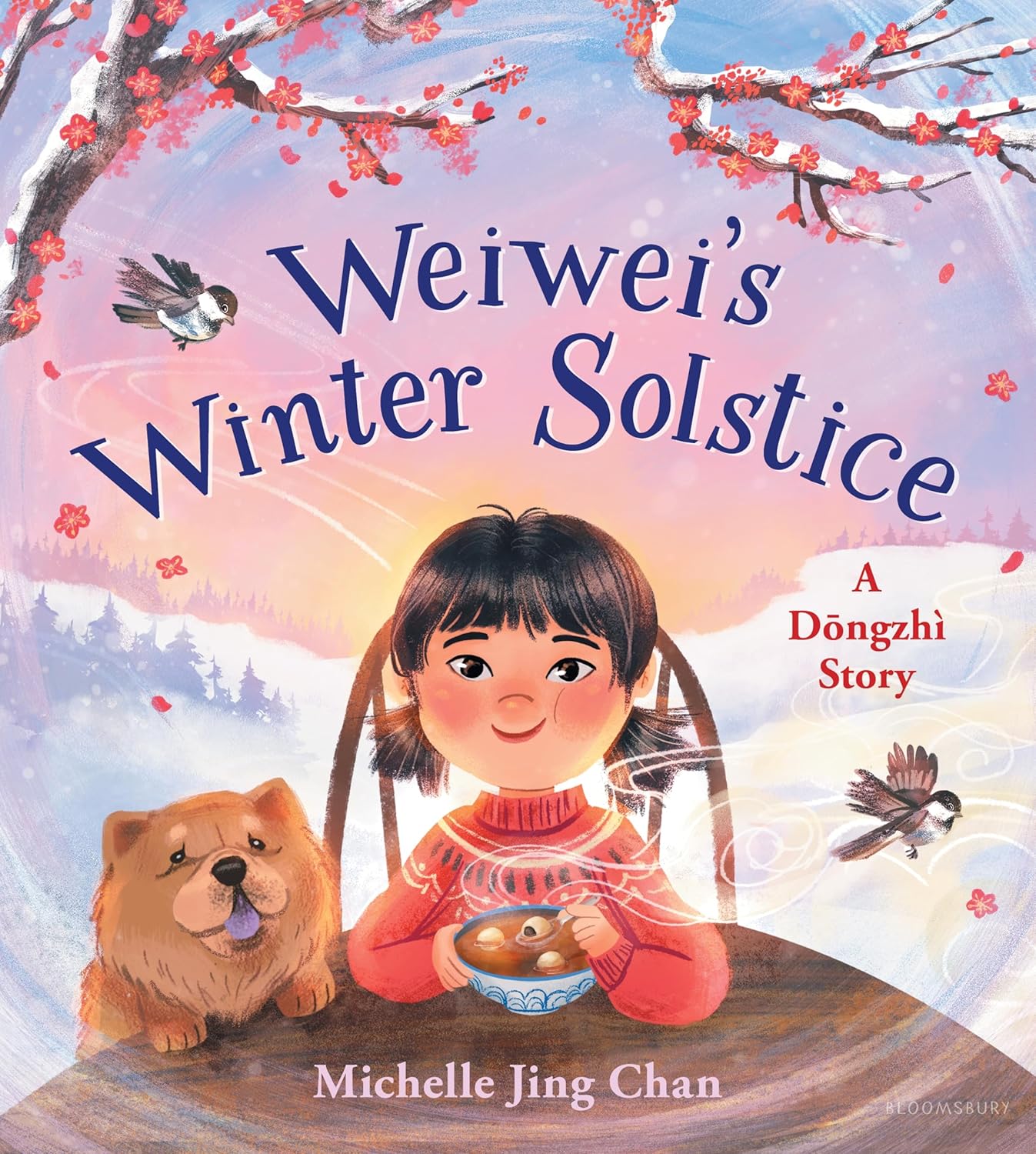
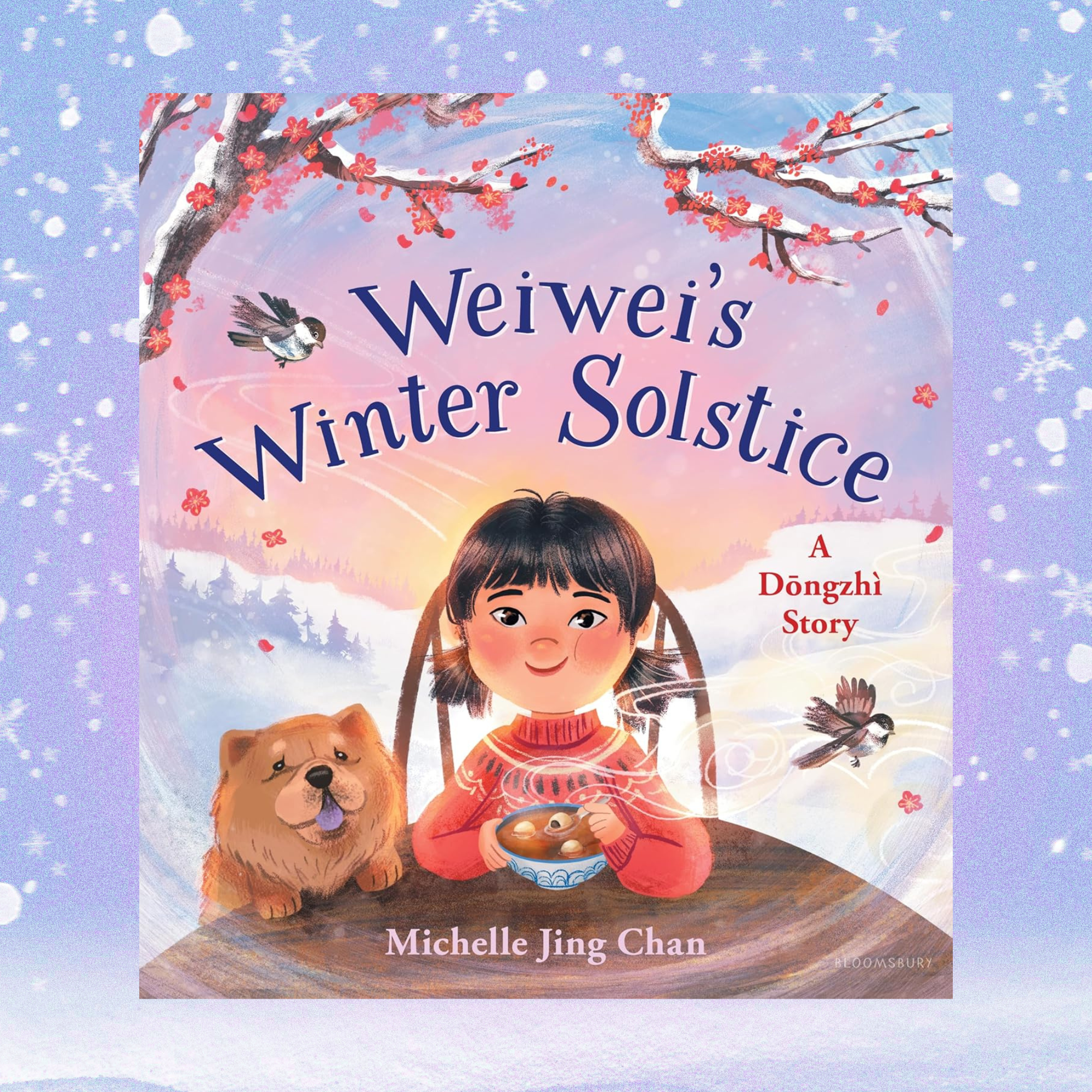
Weiwei’s Winter Solstice: A Dōngzhì Story

By Michelle Jing Chan


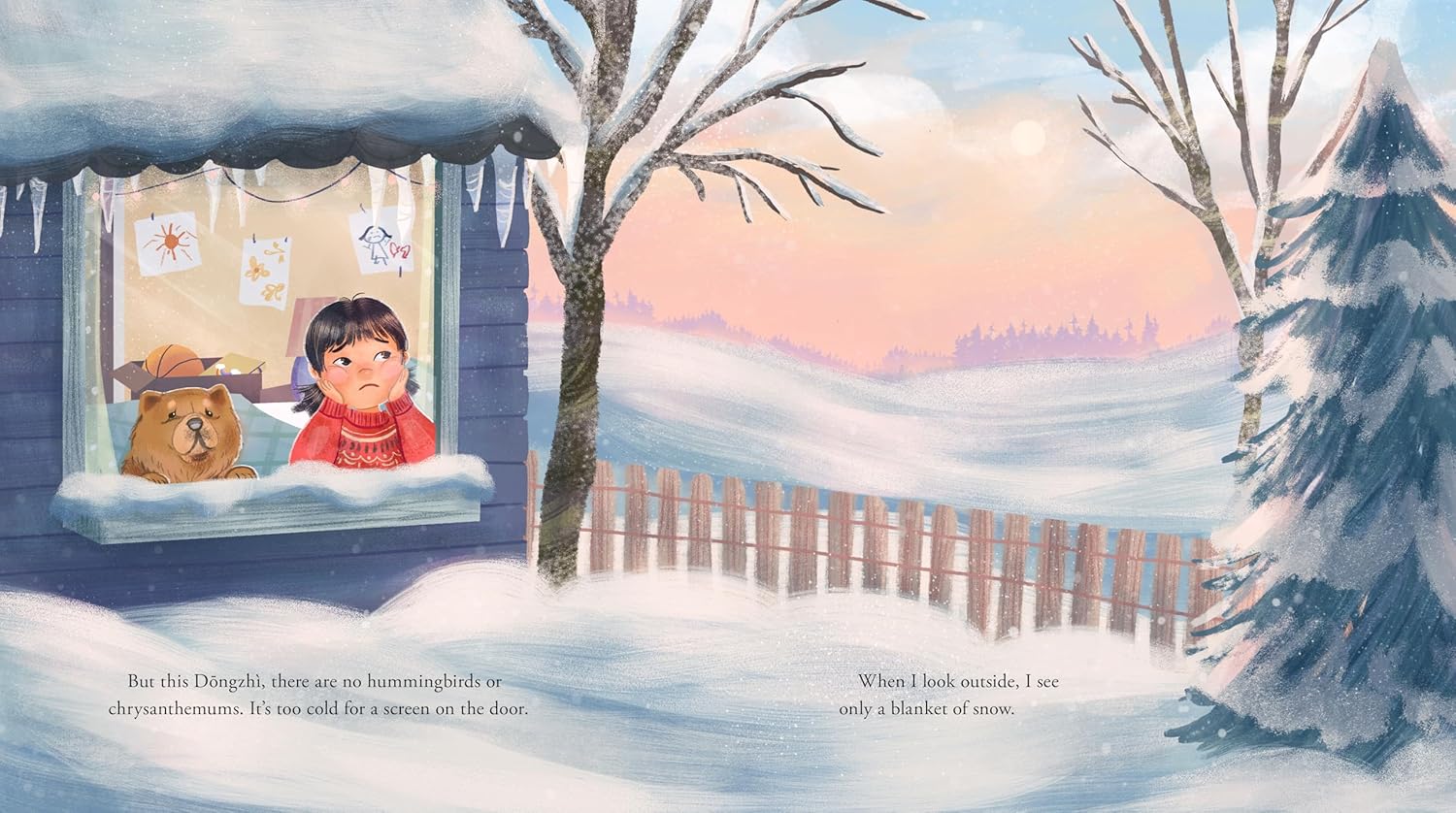
Today is Dōngzhì, the Chinese winter solstice—one of Weiwei’s favorite holidays. But instead of celebrating it by splashing in sprinklers amongst hummingbirds and palm trees at her former home, she’s bundled up in a sweater and blanket as snow covers the ground. For Weiwei Dōngzhì just doesn’t feel the same. Her family—Mama, Baba, her younger brother Didi, and Yeye, her grandfather—are ready for a walk and to play in the snow, but Weiwei can only scowl.

Text and image © 2025 by Michelle Jing Chan. Courtesy of Bloomsbury Children’s Books.

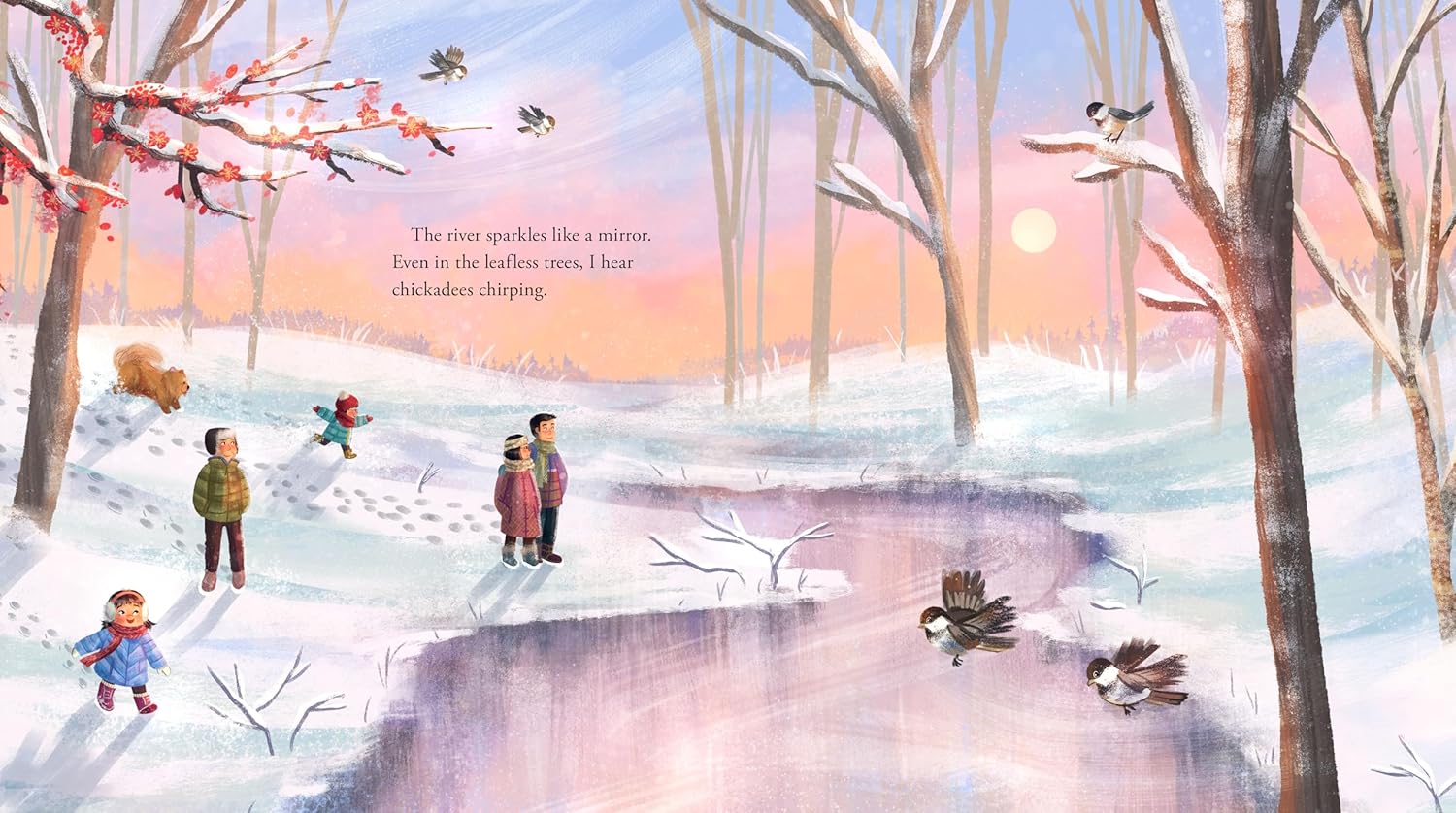
Yet once outside, Weiwei watches her breath cloud in the cold air, catches snowflakes on her tongue, and listens to the snow crunch as they walk. Then, suddenly, Weiwei gasps and points to a tree covered in red flowers. “‘Those are méihuā, plum blossoms!'” Yeye tells her. “. . . No matter how cold and dark it is, they still bloom.'” Weiwei begins to see other signs of life and beauty, but as the sun begins to set, it’s time for the family to go back home. Time for Weiwei’s favorite part of Dōngzhì.

Text and image © 2025 by Michelle Jing Chan. Courtesy of Bloomsbury Children’s Books.

Back home everyone chips in to make tāng yuán. Mama and Didi stir “ground black sesame, sugar, and softened butter into a paste” while Yeye and Weiwei make rice flour dough and Baba makes ginger broth. Then Didi and Weiwei pat the dough into small pancakes, add a bit of black sesame paste, and roll them into balls. The balls simmer in the ginger broth until they float to the top.

Text and image © 2025 by Michelle Jing Chan. Courtesy of Bloomsbury Children’s Books.

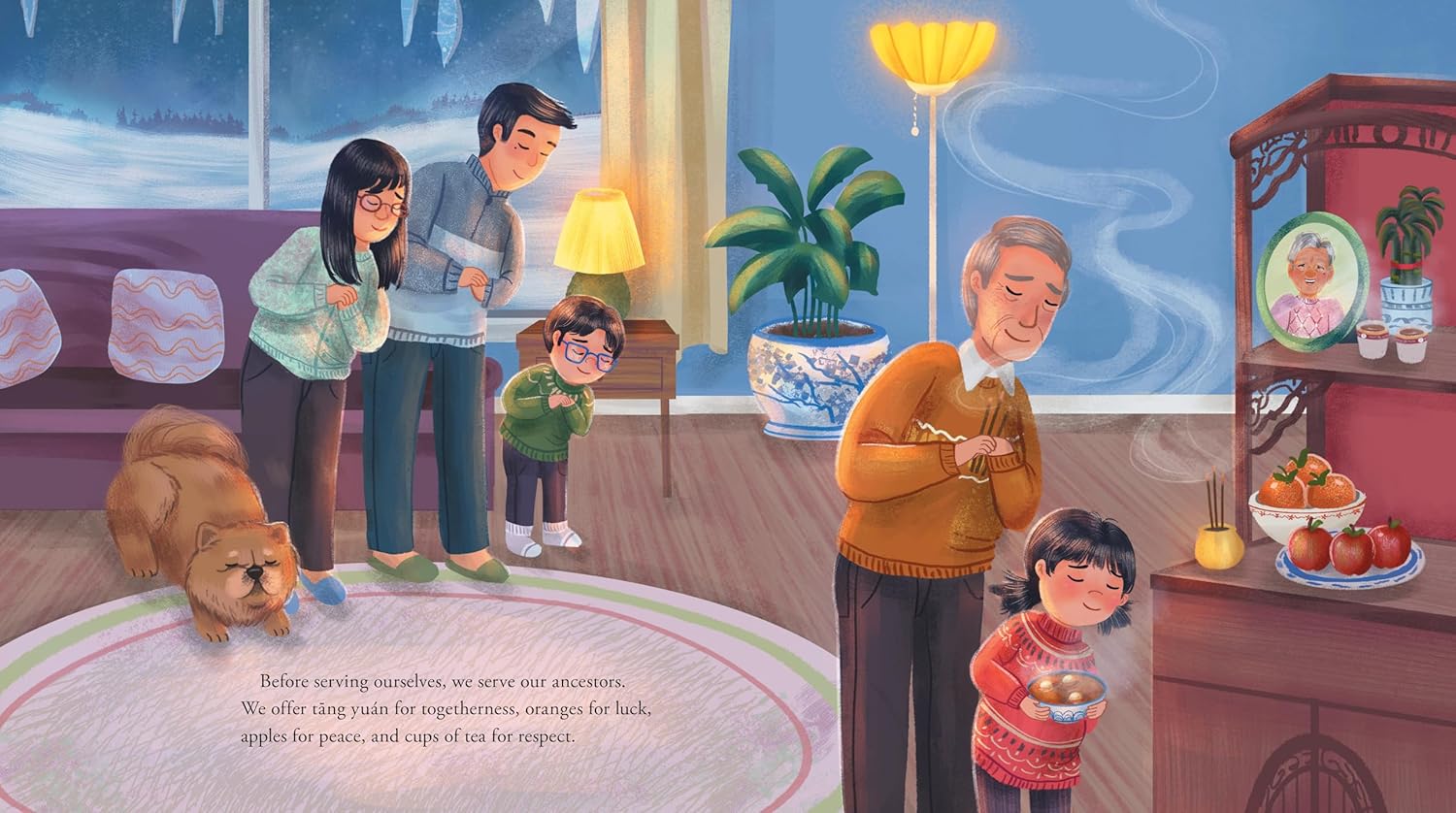
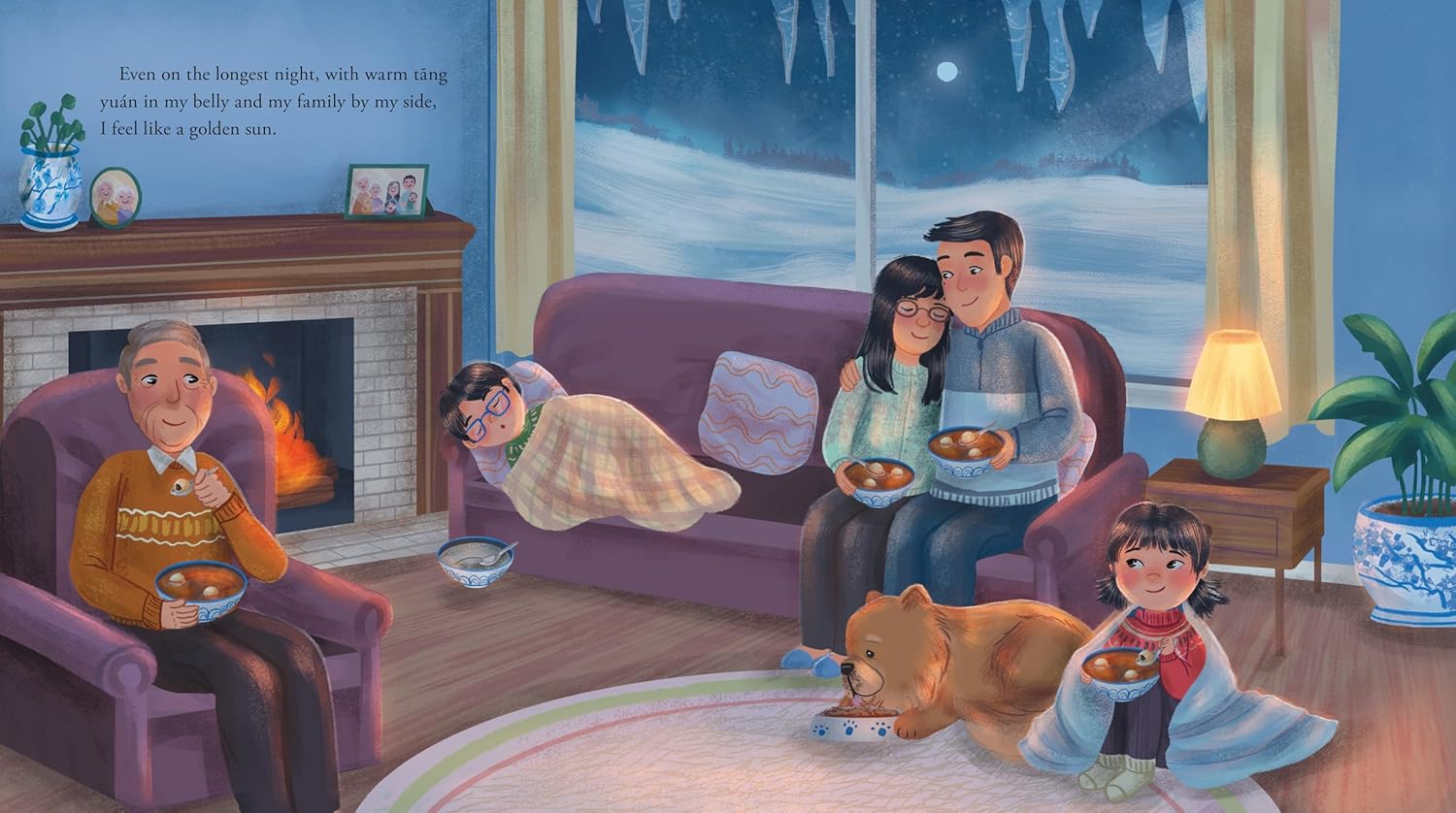
Before Weiwei and her family eat, they serve their ancestors. They “offer tāng yuán for togetherness, oranges for luck, apples for peace, and cups of tea for respect.” Then they eat! To Weiwei, the warm broth feels like a “sip of sunlight,” and Yeye reminds her that warmer days are coming. He tells her he knows it’s hard moving to a new home, “‘but anywhere can feel like home when we celebrate together.'” Weiwei listens to her grandfather and looks around at her cozy home and the people she loves. She knows spring is on its way with new memories to make, and decides that she will “bloom like the méihuā” and savor winter.

An Author’s Note describing the Dōngzhì holiday and how it is celebrated in various Asian countries as well as a recipe for Black Sesame Tāng Yuán follow the story.

Text and image © 2025 by Michelle Jing Chan. Courtesy of Bloomsbury Children’s Books.

Michelle Jing Chan’s warmhearted story of a young girl feeling adrift and disappointed when it comes time to celebrate Dōngzhì in a new home touches on feelings of loss, rediscovery, and the stabilizing comfort of traditions. As Weiwei and her family take a walk through snowy woods instead of the sunny backyard she’s known, she glimpses aspects of familiarity that are further strengthened as she helps prepare and enjoy their customary dish. She recognizes that the Dōngzhì celebration she cherishes as well as her family unit have not changed, allowing her to embrace her new home and look forward to the future.

Chan’s expressive illustrations glow with the togetherness that tāng yuán represents. Even her lovely snowy scenes are lit with peach and gold, as the sun breaks through the winter clouds. Inside, soothing colors highlight the family’s close ties and the comforting flavors of home.

Weiwei’s Winter Solstice: A Dōngzhì Story offers heartening inspiration for readers in the midst of change as well as the comfort of family love and traditions for all. Pair with making the included recipe as a group to create an eventful story time.

Ages 3 – 6

Bloomsbury Children’s Books, 2025 | ISBN 978-1547614844

Michelle Jing Chan is a queer Chinese American illustrator who grew up in Colorado and lives in the Pacific Northwest. Inspired by nature, cultural folklore, and fantasy, Michelle aspires to illustrate diverse, empowering stories her younger self would have loved. When she’s not drawing, she can be found attempting new recipes, reading, or watching spooky TV shows. You can visit her at michellejingchan.com.

Listen to Michelle Jing Chan talk about how her family traditions and a trip to Colorado inspired her to write Weiwei’s Winter Solstice: A Dōngzhì Story below!

You can purchase Weiwei’s Winter Solstice: A Dōngzhì Story from these booksellers

Amazon | Barnes & Noble | Bookshop (Discounted books and support for your local independent bookstore)

Picture Book Review

May 6 – Children’s Book Week

About the Holiday

Founded in 1919, Children’s Book Week is the longest-running literacy initiative in the United States. The 2025 theme is An Ocean of Stories, which celebrates “the vast, collective ocean populated by the stories we read, share, and tell.” The holiday attracts participation from authors, illustrators, publishers, librarians, teachers, and booksellers in schools, libraries, bookstores, and communities across the country. To learn more about the holiday and download bookmarks and posters, activities in English and Spanish, coloring pages in 15 different languages, and much more, visit Every Child a Reader. You can even sign up to continue to get fantastic ideas for connecting with books and reading all year around!

Thank you to Scholastic for sharing a copy of Ballet Brown with me!

Review by Dorothy Levine

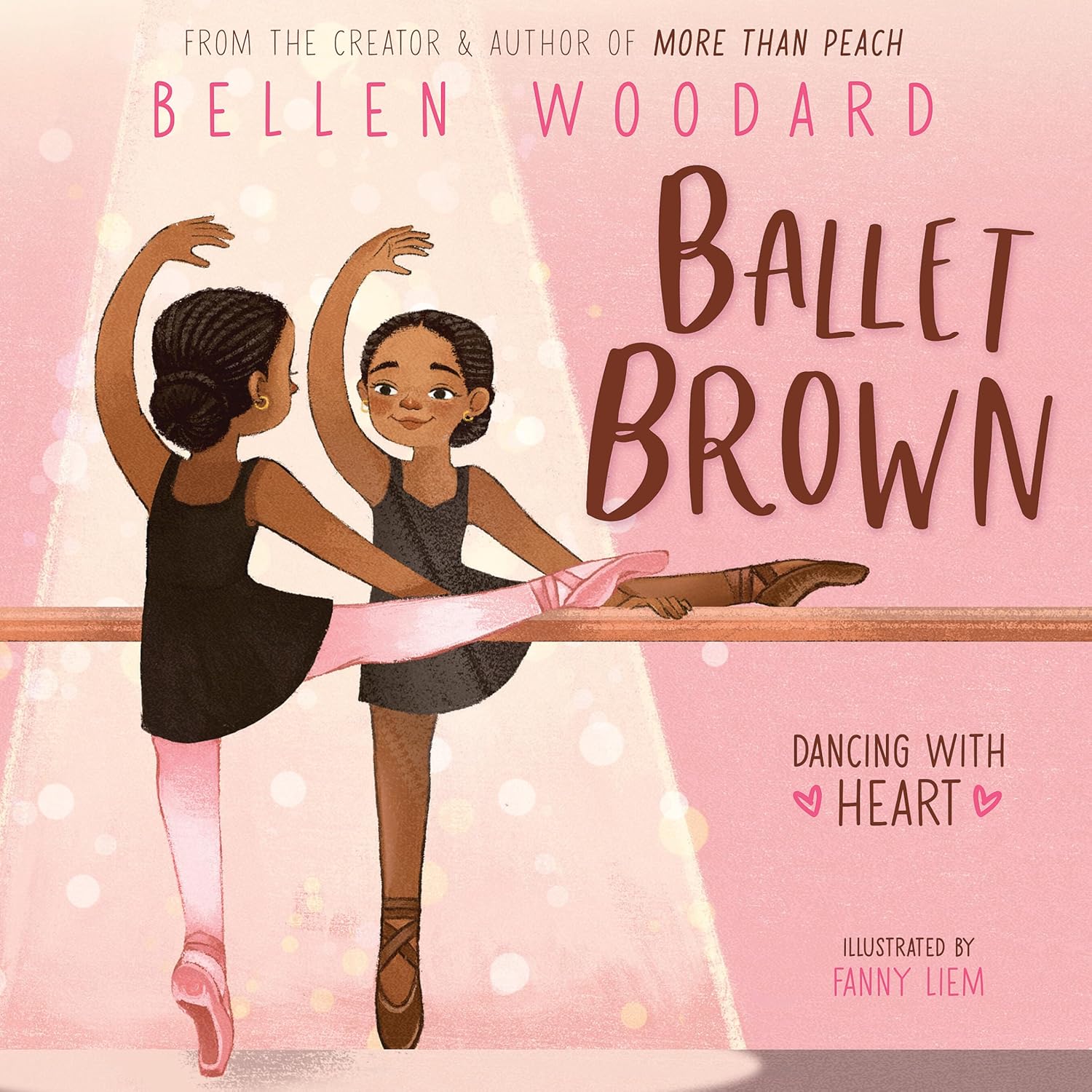
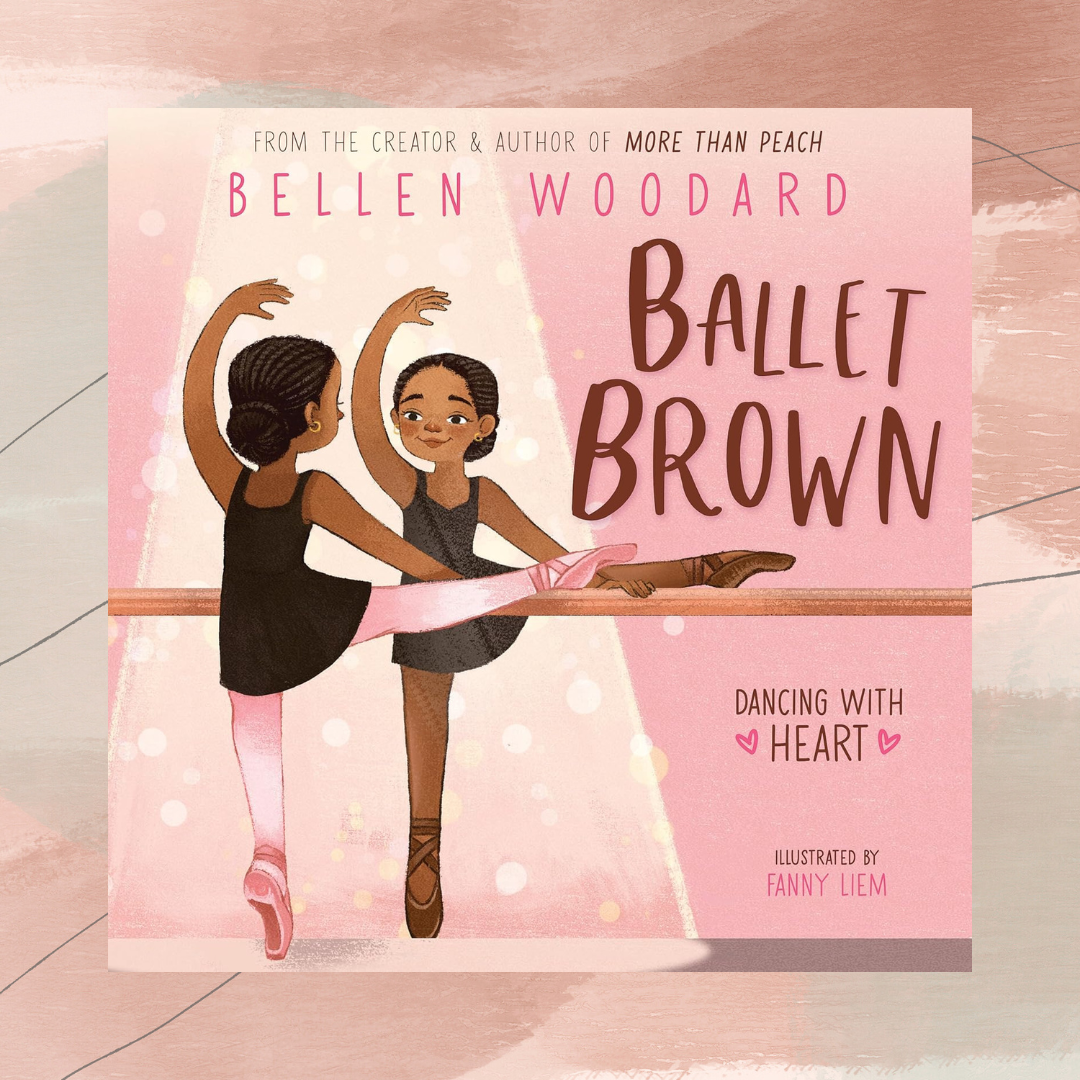
Ballet Brown

Written by Bellen Woodard | Illustrated by Fanny Liem


To Bellen, “dance is a conversation with the world,”—one she has been in love with since she was two years old. As a young ballet dancer, Bellen’s world was full of color. From brightly colored tutus to rainbow tights, Bellen fit in with the menagerie of outfits the ballerinas wore.

But as Bellen grew older, and dance became more serious, “the rainbow vanished. Pink became the priority. Pink leotard. Pink tights. Pink ballet shoes.” Bellen followed suit, narrowing her wardrobe and pinning back her afro to fit the dress code. But while dancing in class, she gazed in the mirror and reflected: “it looked like my legs didn’t belong with me.” Her legs, in the pink tights, didn’t match her natural skin tone. Delving deeper, Bellen read books about the history of ballet. She discovered that “’ballet pink’ was chosen to be an extension of the ballerina, to appear as beautiful skin gliding across the stage.”

“This tradition needs an upgrade,” Bellen declared. Her mother agreed, and together they shopped for new dance clothing. Bellen showed up at the studio the next day, adorned in her new ballet brown attire—brown tights and brown shoes. Her studio, however, wasn’t ready to make the leap. “‘Pink is tradition,’ the owner said. / ‘Traditions should grow just like we do,’” Bellen replied.

But as time twirled past and the studio stayed the same, Bellen realized they were just not willing to grow into new traditions with her. She knew it was time for a change. “And that’s when I learned sometimes the most powerful thing you can do is walk away.”

When Bellen and her mother walked into a new studio, they knew immediately this would be the right fit. Even the air felt different: “vibrant, warm, and welcoming.” At this new studio, Bellen’s ballet brown inspired other dancers to bring back the rainbow to ballet and show their true colors. Bellen says, “I had finally found a place that would join hands and duet with me. A place where self-expression, like the coolest crayons, colored the room.”

Bellen Woodard’s autobiographical story concludes with a brief overview of her activism and founding of the More than Peach Project, plus a further explanation of ballet brown versus ballet pink. Back matter also includes a conversation with studio owners, tips for dyeing pointe shoes, and heart-felt advice for young dancers and families.

A one-of-a-kind story about a one-of-a-kind dancer and writer. At just fourteen years old, Bellen Woodard has crafted a beautiful story of her journey to stretch the ballet standards and make room for inclusion. Ballet Brown showcases themes of resistance and persistence—that sticking up for yourself can make a difference, not only for you but for others too. In expanding the possibilities for ballet wear, Woodard opened the door for others to do the same. Through this lyrical story, more and more young dancers will feel inspired to do the same—to dance in their own style, however makes them feel seen.

Fanny Liem colors the elegant ballet scenes with rich shades of brown and pink. Liem cleverly plays with mirror reflections, showing “Ballet Pink Bellen” imagining her reflection in brown, and, later, her legs looking wobbly in pink, to show how she felt disconnected from their pale look. When Bellen describes her new studio as having a welcoming air, this is reflected in warmer yellow background tones, whereas her old studio is drawn in stark white. Fanny Liem animates the story with ballerinas of all backgrounds dancing across the pages—further driving the point that dancers shine in all different races, genders, and styles.

Ages 5 – 7

Scholastic, Inc., 2025 | ISBN 978-1546134077


Fanny Liem was born and raised in Indonesia. She’s loved drawing since she was a child. Her passion for storytelling and illustration started the first time she grabbed picture books, which were gifted to her by her uncle. When she is not drawing, she enjoys watching movies and listening to country music. You’ll find her on Instagram at wenfancy.

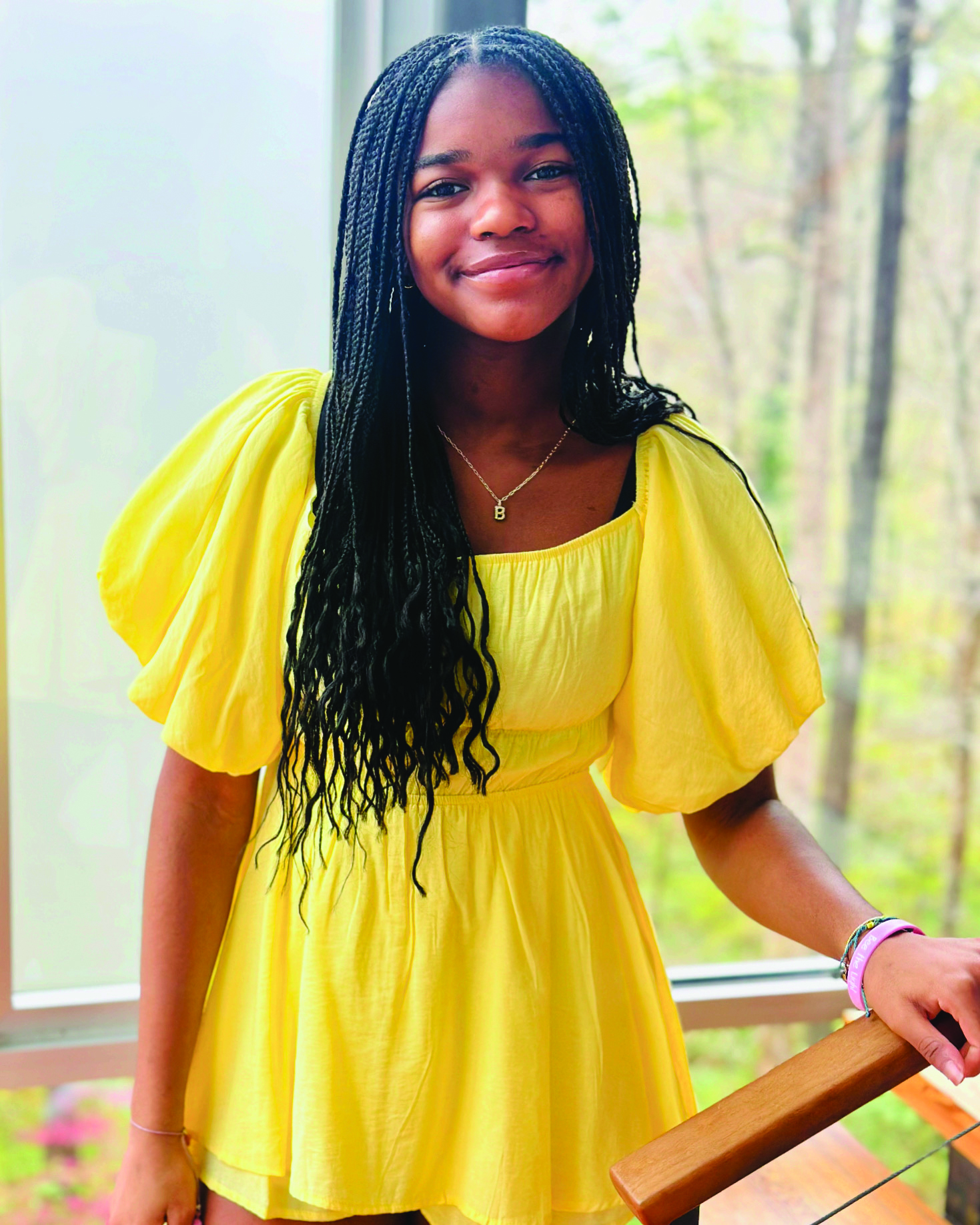
Meet Bellen Woodard

Photo © Tosha Woodard

Bellen Woodard is the young scholar, beloved trailblazer, and CEO of Bellen’s More than Peach Project. As the world’s first Crayon Activist, pioneer of “skin-color” crayons, and founder of the crayon/school supply brand for a new generation, Bellen has transformed an entire industry with a first-of-its-kind, innovative and inclusive project and brand that have become a global movement. She’s received many notable awards and has been featured by Scholastic, TIME, Nickelodeon, and many others. Now entering high school, Bellen embodies self-expression and discovery. She also enjoys world travel, dance, and spending time with family, friends, and her two dogs. And she’s just getting started! Visit Bellen’s More than Peach Project website to learn more.

Hi Bellen, I’m excited to be talking with you today about Ballet Brown and your More than Peach Project. 

In addition to being an author, you launched More than Peach, a global initiative, company, and brand, at just eight years old. Can you tell us about that?

I started Bellen’s More than Peach Project —“More than Peach”—only after successfully changing the language and perception around the “skin-color” crayon in my own school class and community. I wanted to bring that change for the benefit of every single kid around the world. I also had an amazing teacher, friends, and classmates and I loved school (I still do . . .), so I first imagined More than Peach and More than Peach crayons to “let kids be kids and give them their best options” and to celebrate youth leadership and many beautiful colors.

How did you come to write this book? And why did you pick to share this story in a children’s book format as opposed to other mediums?

Well, I’ve been dancing since I was two, and with the support of my parents and lots of advocacy along the way, it’s been a very rewarding dance journey overall. I also began wearing brown in ballet (ballet slippers and tights) almost from the very start and benefited from that in much the same way as another dancer does wearing pink. So, I wanted to be able to share my story and the advocacy in a picture book to connect with all kids and share tools too. I know that having a visual representation can be so important. Most of all, I want young dancers and their families to have built-in support from the dance community and to know that it’s okay to advocate for what’s essential. I also want Ballet Brown to be a conversation with dance studios and spaces that invite young dancers in.

Can you tell us more about the term “ballet brown”?

I coined the term “ballet brown” really to fill a void and capture more of the beauty of ballet and in dance as a whole. We commonly refer to “ballet pink” and not just in dance—so it really surprised me that we had yet to succinctly name and qualify “ballet brown.”  So, to create parity between the two partners, I began using the term “ballet brown” in my own language and saw firsthand how it helped to grow perceptions/a mindset in those around me. I wanted to share that with the whole world. My call to action is simply to apply ballet brown in much the same way as ballet pink to ensure each dancer gets what they need. And it goes way beyond brown tights and shoes. I think taking that step helps expand the world of dance in the most amazing, positive ways.

Can you tell me more about the process of getting this book published?

I was already in touch with Scholastic after being interviewed around More than Peach, and of course I already knew and loved their books. The Scholastic Book Fairs were also one of my favorite times during the school year!  When interviewed, we talked about all of the things I was up to at the time and writing a book was one. So, when they offered to become my publisher, it was a huge honor and a no-brainer.

What was the most unexpected or surprising part of writing and publishing a children’s book?

I think one of the most surprising things has been seeing my first book published in other world languages (English, Spanish, and French) and being able to literally see it change the world . . . one crayon at a time! Early on, I was also surprised at how long the process takes from start to finish.  For example, I began writing MORE THAN PEACH, my first children’s book, in early 2020 once Covid hit because suddenly I had way more time on my hands. (It was published in July 2022.) It’s also been at least 2 years since I began writing Ballet Brown so to see it finally arrive feels surreal! I also never expected to see my books in so many places across the globe, including classrooms, libraries, and museums—even the Library of Congress!

What was your favorite part? I think I have two favorite parts: One is having the creative license to share my story, and the other is being able to collaborate with such a great team throughout the entire process.

What advice would you give to young writers or dancers hoping to follow in your footsteps?

I would say to trust yourself and know that you are the absolute best person to tell and celebrate the story inside of you.

Do you have any new creative projects in the works that you’d like to share about?

There’s a bunch going on! I’ve been very excited about the growth of More than Peach and would have never dreamed I would see my crayons on shelves at Target and other places and my books everywhere! Also, I have such worthwhile partnerships with educators that are growing, which means a lot because my dad’s an educator too, and teachers have always been some of my favorite people! I have also been writing my next book which I’m very excited about and hope to share more about that soon!

Thanks so much for sharing so much about your inspiring work! I’m sure readers can’t wait to see your next book! 

Children’s Book Week Activity

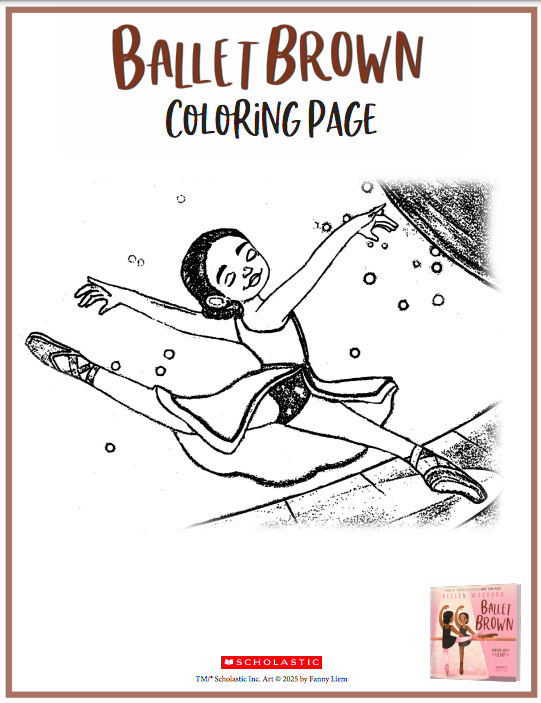
Ballet Brown Activity Pages


Be inspired to stand up for something you believe should be changed with these Ballet Brown Activity Pages!

You can purchase Ballet Brown from these booksellers

Amazon | Barnes & Noble | Bookshop

Picture Book Review
March 14 – It’s Expanding Girls’ Horizons in Science and Engineering Month

About the Holiday

Expanding Girls’ Horizons in Science and Engineering Month was established in 2020 by the Expanding Your Horizons (EYH) Network. Founded in 1974 as a series of conferences aimed at promoting STEM careers to middle and high school girls, EYH provides hands-on activities, mentoring, and contact with role models as well as information about science and engineering fields.

Women still make up only 28% of the science and engineering workforce. With this month-long observance, the EYH Network hopes to make a significant impact on girls’ perceptions and career choices, encouraging them to explore and embrace STEM subjects​.

Thank you to Heyday and Barbara Fisch at Blue Slip Media for sharing a copy of I Love Salmon and Lampreys: A Native Story of Resilience with me!

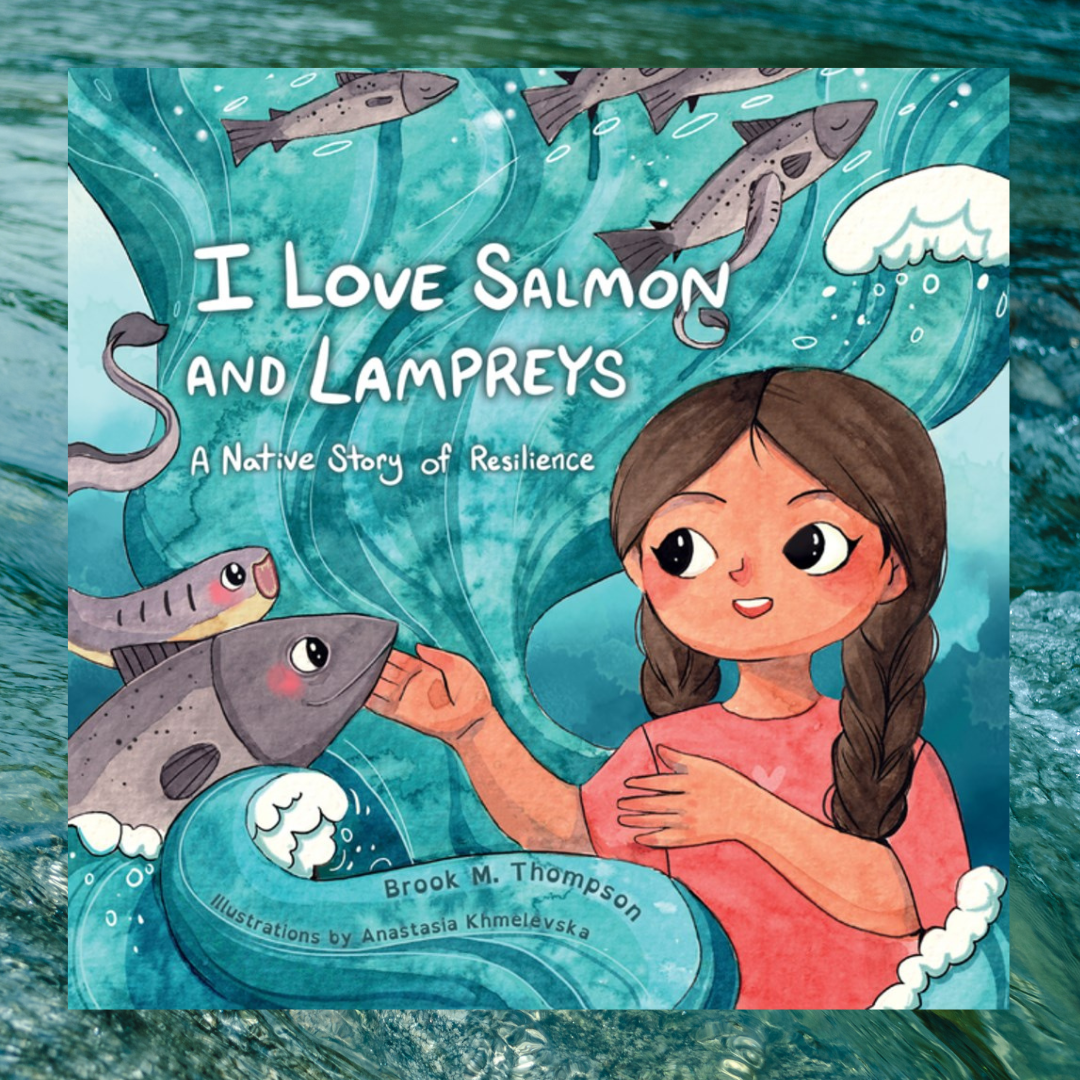
I Love Salmon and Lampreys: A Native Story of Resilience

Written by Brook M. Thompson | Illustrated by Anastasia Khmelevska


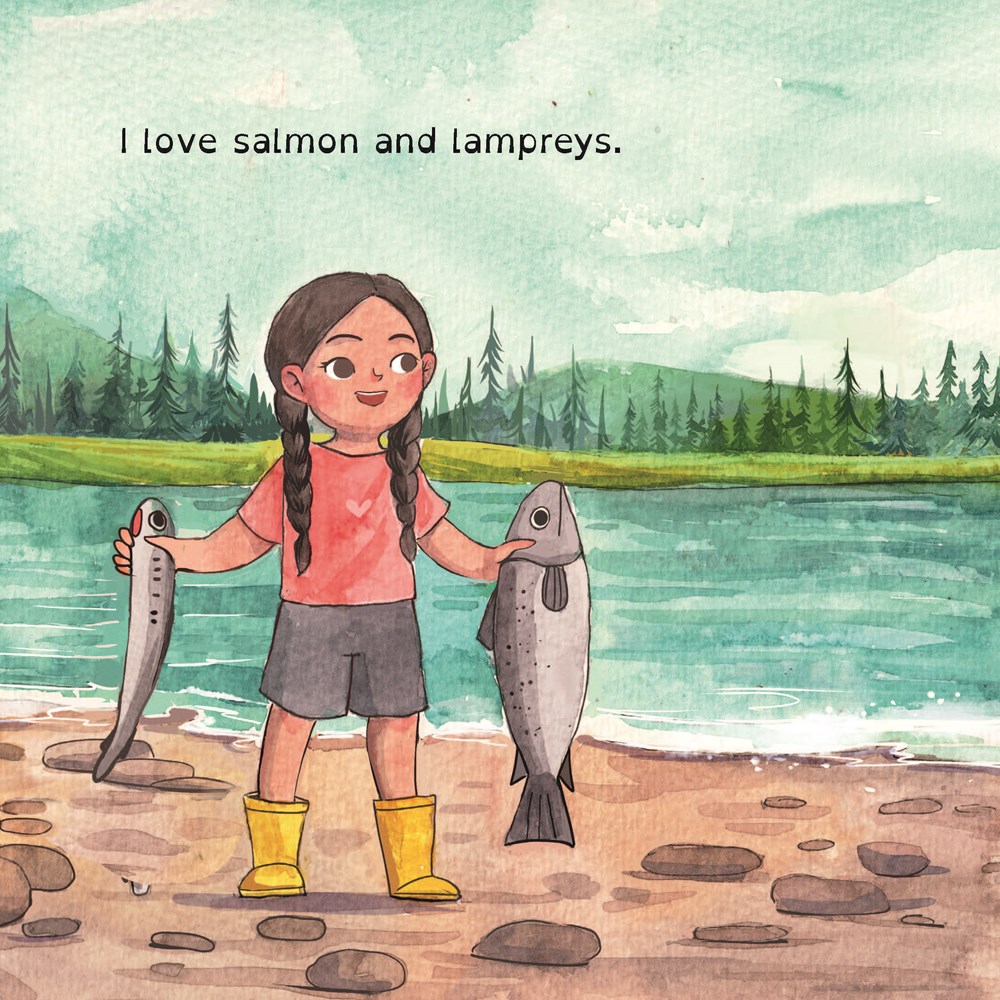
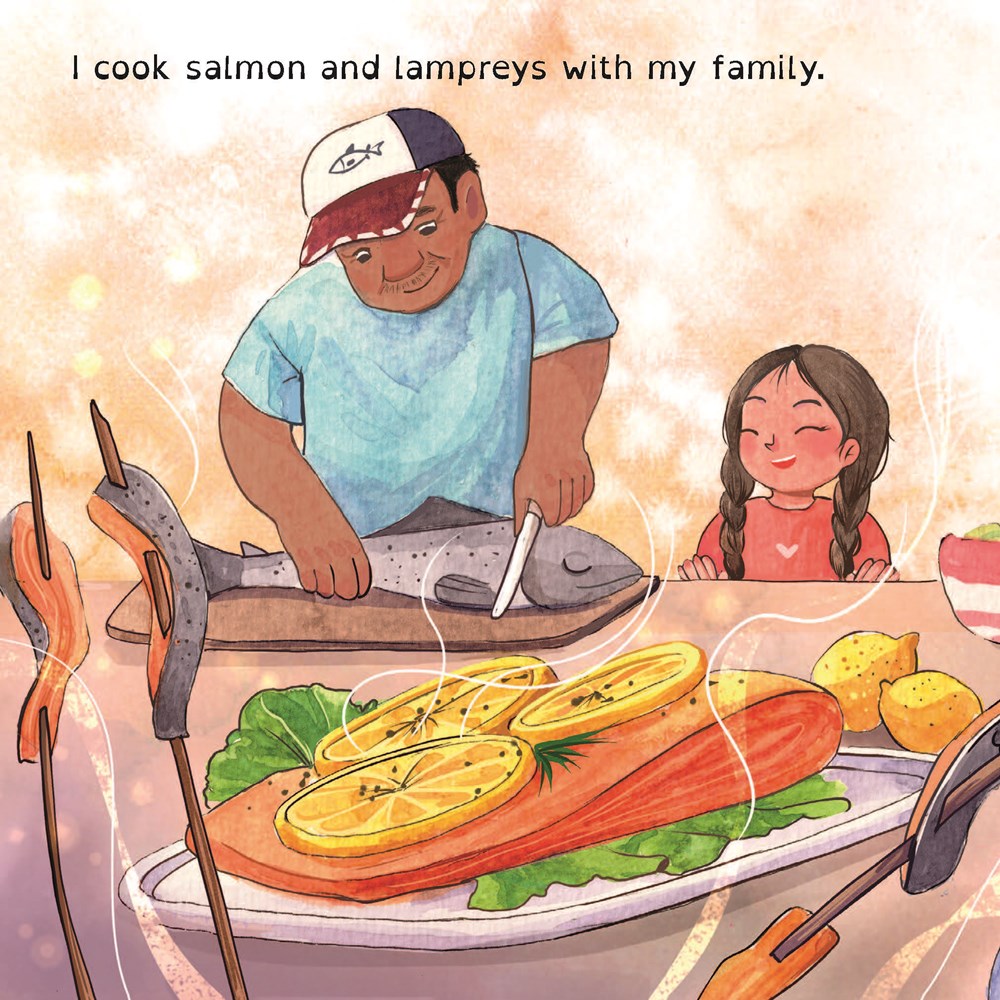
In her powerful autobiographical story, Brook Thompson, a member of the Yurok and Karuk Tribes, warmly invites readers to join her on her journey from childhood to the present day to experience her intense love for her tribes’ traditions and the fish that sustain them. Readers are first taken out on Brook’s family’s fishing boat, where her father and her grandfather tell stories of their own childhoods as they check the nets in their designated fishing spots along the Klamath River in Northern California. Then it’s back home to learn how Brook helps cook the fish (lampreys in the winter and salmon the rest of the year) in a wide variety of delicious ways.

Illustration © 2025 by Anastasia Khmelevska, text © 2025 by Brook M. Thompson. Courtesy of Heyday.

Salmon and lampreys are more than just food to Brook, however. They are creatures of the earth to be admired and honored. She tells readers about their life and spawning cycles, how they predate the dinosaurs, and even about their fascinating symbiotic relationship. For Brook, this love she feels is shared. She says, “I feel loved by salmon because years ago my ancestors took care of the salmon for their future family” and reveals that the fish in the river now “are the great-great-great-great-great-great-grandkids of the salmon who had a relationship with my great-grandparents.”

Illustration © 2025 by Anastasia Khmelevska, text © 2025 by Brook M. Thompson. Courtesy of Heyday.

In 2002, when Brook was still young, over 60,000 salmon perished from a parasite which spread when the water level of the river became too low and the temperature too hot due to the six dams erected on the river. She explains how dams “block the salmon’s way home” and how the warming water promotes the growth of toxic green algae, which affects the fishes’ breathing and spreads disease. 

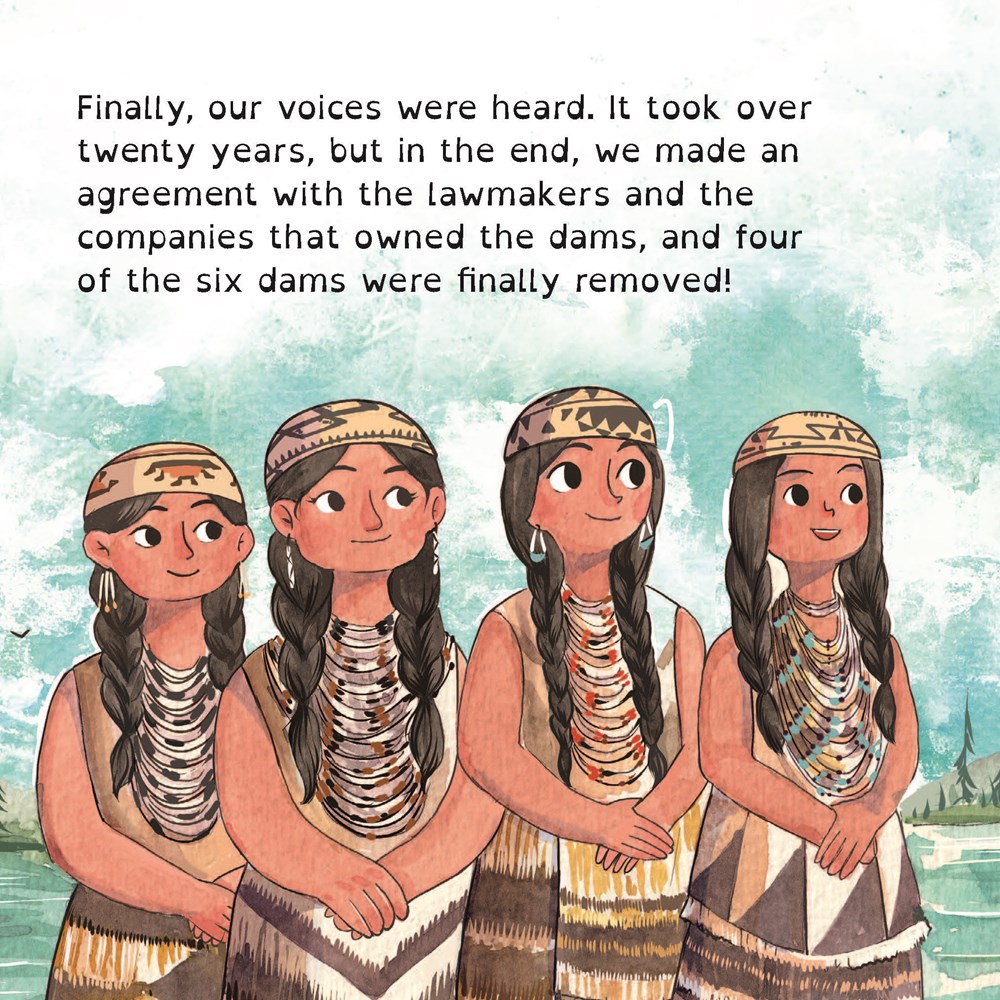
Brook joined protests by the tribal people and others, while scientists did research and local politicians lobbied for change. More than 20 years later agreements with the politicians and the companies that owned the dams were signed, and four of the six dams along the Klamath River were removed.

Illustration © 2025 by Anastasia Khmelevska, text © 2025 by Brook M. Thompson. Courtesy of Heyday.

As she grew into adulthood and inspired by her experiences, Brook set her eyes on higher education. She “went to college to learn about dams and about how to protect salmon in the future.” She became an engineer and a scientist who studies the interconnectedness of  “water, nature, people, animals, and buildings” and returned home to the Klamath River, where she continues the legacy of her ancestors in caring for the salmon, lampreys, and the environment.

Back matter includes Fun Facts about lampreys and salmon; photographs of Brook with salmon and at Iron Gate Dam, which was removed in 2024; a map of the Klamath River Watershed area; a note about the inspiration behind the book as well as the book’s font, OpenDyslexic, which makes it easier for those with dyslexia, like Brook, to read; and notes about the author and illustrator.

Illustration © 2025 by Anastasia Khmelevska, text © 2025 by Brook M. Thompson. Courtesy of Heyday.

Brook Thompson, in her compelling autobiographical story, will captivate children and touch their hearts. Thompson’s eloquent and straightforward storytelling immediately immerses readers in the Native relationship with nature and will inspire both young and adult readers to think deeply about how the earth sustains us and how we can show our appreciation in return. The theme of environmental justice and how citizens can and do make a difference is made personal through Thompson’s clear explanations of how the dams affected the salmon population and the long-term steps people took to reverse their damage. Thompson’s dedication—even from childhood—to her tribes, family, and future generations will impress readers. Children will also develop an understanding of how issues of interest to them now can inform their future endeavors.

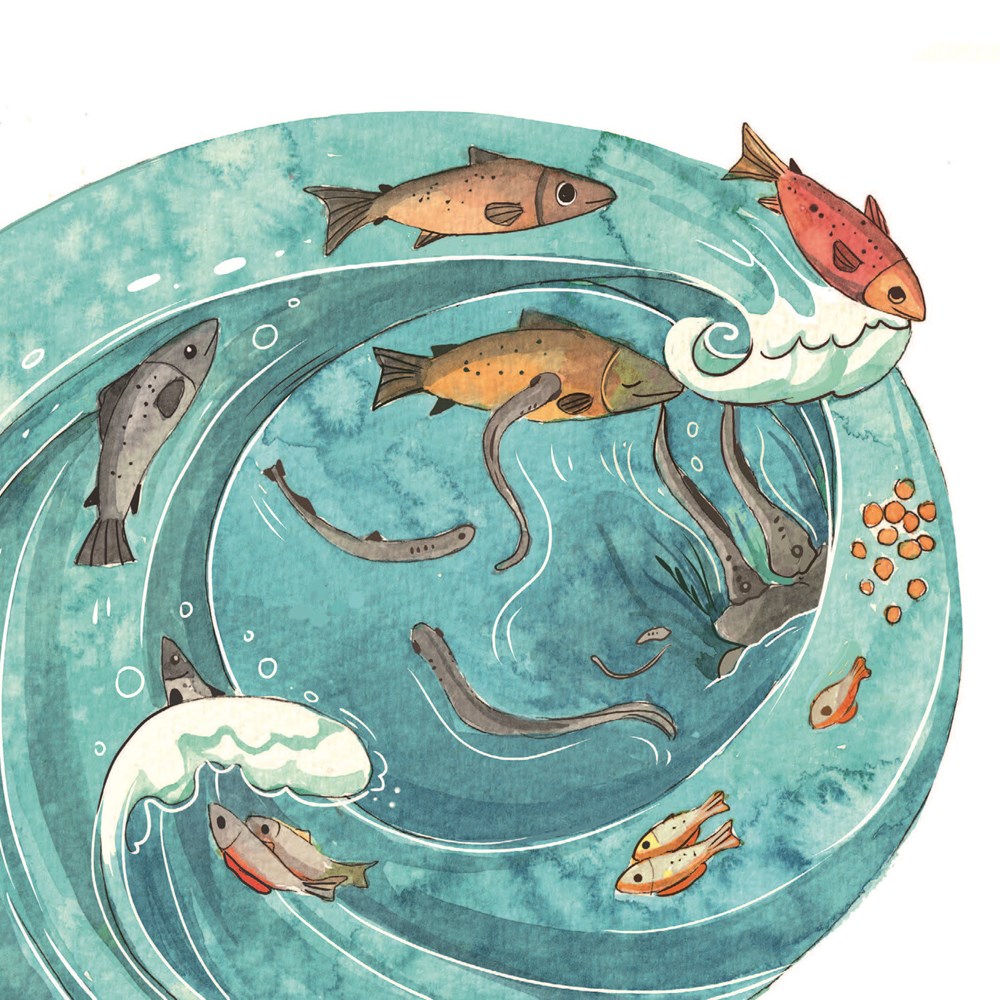
Anastasia Khmelevska’s vibrant earth tone illustrations endear Brook to children through her evident passion for family, fishing, and the salmon and lampreys that have been a constant in her tribes’ lives. Her pacing and realistic depictions of people and events help children clearly understand the importance of each element of Thompson’s story from how the cyclical lives of salmon and lampreys are demonstrated in a swirling wave to the stunning landscapes highlight of the Pacific Northwest. These images make her depiction of the salmon die-off all the more impactful. Her final portrait of Brook Thompson coming home after earning her university degrees links her life to the salmon she loves so well. 

The combination of Native culture and environmental awareness makes I Love Salmon and Lampreys: A Native Story of Resilience a must addition to school and public libraries. The book offers extensive value and research opportunities for science and social studies classes. For families who care about the environment, sustainability, activism, and the future of our planet, I Love Salmon and Lampreys would be a much-loved choice.

Ages 4 – 8

Heyday, 2025 | ISBN 978-1597146685

About the Author

Brook M. Thompson is a part of the Yurok and Karuk Tribes. She is a neurodivergent and Two-Spirit author with dyslexia. She has a BS in civil engineering from Portland State University and an MS in environmental engineering from Stanford University, and she will soon have a PhD in environmental studies from University of California, Santa Cruz, where she studies water, politics, restoration, and salmon. You can find out more about her at brookmthompson.com.

About the Illustrator

Anastasia Khmelevska is an illustrator based in Lviv, Ukraine. She has illustrated several children’s books, including My Invisible Zoo, Marella the Mermaid, and Anything Helps. Follow her on Instagram @cute_miuu.

Expanding Girls’ Horizons in Science and Engineering Month Activities

Illustration © 2025 by Anastasia Khmelevska, text © 2025 by Brook M. Thompson. Courtesy of Heyday.

I Love Salmon and Lampreys Activity Pages

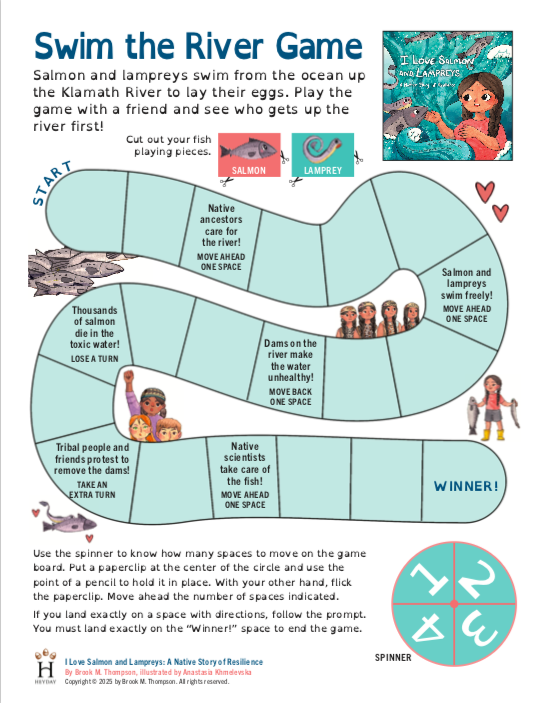
Play a printable board game, write about your dreams for the future, and learn fun facts about salmon and lampreys with these three I Love Salmon and Lampreys Activity Pages!

Chinook and Coho Salmon Coloring Pages

Coho and Chinook Salmon are vital to the Pacific Northwest. You can learn more about California salmon at caltrout.org. Enjoy these coloring pages of coho and chinook salmon. Colored images are included for your reference.

Chinook Salmon Coloring Page | Colored Image of Chinook Salmon

Coho Salmon Coloring Page | Colored Image of Coho Salmon

You can purchase I Love Salmon and Lampreys: A Native Story of Resilience at these bookstores

Amazon | Barnes & Noble | Bookshop

Picture Book Review
February 24 – It’s Bake for Family Fun Month

About the Holiday

This time of year is perfect for gathering with family and friends and spending those cold, indoor days making sweet treats and savory dishes! Baking together is a great way to teach valuable cooking skills and a little math. Talking with kids while baking is fun too! Tell old family stories, talk about favorite recipes, and share funny or memorable culinary experiences. Of course, the best part of baking together is eating the delicious meals or treats afterward!

10 Gulub Jamuns: Counting with an Indian Sweet Treat

Written by Sandhya Acharya | Illustrated by Vanessa Alexandre


Idu and his little brother Adu were excited to help their mom get ready for their friends Dia and Mia and their parents who would be coming later that evening for dinner. The delicious aroma of spices Mamma’s cooking already perfumed the house. At last it was time for Mamma to make the dessert: gulab jamuns! Idu and Adu tried to imagine what gulab jamuns were. “‘They are little round sweets that look like doughnuts,'” their mother explained. “‘They are soaked in sugary syrup so when you bite into one, they melt in your mouth.'” Idu and Adu thought they sounded yummy.

After the treats were finished, Idu counted them in the bowl. “‘1, 2, 3, 4, 5, 6, 7, 8, 9, 10. 10 gulab jamuns!'” Adu echoed his big brother: “’10 gulab jamuns!'” Mamma sent the boys off to play, but the bowl of sweets was too enticing. Adu climbed onto the table and ate one. Then he stuffed his cheeks with two more.

Illustration © 2022 Vanessa Alexandre, text © 2022 Sandhya Acharya.

Idu thought his brother was funny until Mamma caught them. She asked Idu to tell her how many gulab jamuns she had made and then count how many were left. “‘1, 2, 3, 4, 5, 6, 7. 7 gulab jamuns,'” he answered. “‘Swa gua amoons,’ Adu repeated” through his full mouth. When Mamma asked what had happened to the other three, Idu told her. Then she wanted to know how it had happened.

Idu obliged, exactly imitating Adu’s actions. Adu then turned and gave Mamma a big sweet-treat smile. Mamma laughed, then grabbed one gulab jamun for herself and handed one each to her sons. That left just one more for . . . Daddy, who was just coming home from work. But what would they serve their special guests for dessert now? Idu and Adu enthusiastically offered to help their mother make more. Later, after dinner, Idu and Adu helped pass out the gulab jamuns, but there were two left over. Why? Idu’s and Adu’s bellies were already full of their new favorite dessert!
A recipe for gulab jamuns follows the story.

Illustration © 2022 Vanessa Alexandre, text © 2022 Sandhya Acharya.

Sandhya Acharya’s humorous counting story is the recipe for an entertaining read aloud the whole family will enjoy. Adu and Idu’s sibling shenanigans will have young readers giggling, and the naturally occurring opportunities for kids to count the gulab jamuns offer a fun way for them to engage with math. The exercise can even be extended at home or in classrooms as children add or subtract treats or other foods from their own plates. A multilayered story, 10 Gulab Jamuns also contains gentle lessons in honesty, taking responsibility, and making amends for one’s behavior, 

Vanessa Alexandre’s vivid and expressive illustrations bring out all the comical fun as Adu and Idu sneak the sweet treats, get caught, and ultimately help their mother make more. Children will especially like images of the brothers’ playful mischief-making, the bright kitchen and table laden with delicious Indian foods, and the cheerful depictions of a traditional Indian home and clothing.

A heartwarming, dialogue-rich story you can count on to become a favorite, 10 Gulab Jamuns would be a delightful addition to home, classroom, and library collections.

Ages 2 – 7

Sandhya Acharya, 2022 | ISBN 979-8985609516

About the Author

Sandhya Acharya grew up in Mumbai, India and now lives in the Bay Area. She is a mother to two young boys from whom she often draws inspiration for her writing. She worked in corporate finance and is a dance enthusiast as well. She hopes her readers have as much fun as she did with this story.
Bake for Family Fun Month Activity

celebrate-pictureb-books-picture-book-review-Kids-Baking-Cake-in-Cooking-Show-Bakery-Coloring-Pages

Let’s Bake Together Coloring Page


It’s fun for friends or siblings to create new recipes or just cook up some favorite treats! Have fun with this sweet coloring page!

You can purchase 10 Gulab Jamuns at these booksellers

Amazon | Barnes & Noble | Bookshop (to support your local independent bookstore)

Picture Book Review