Dreamed up by a professor at Columbia University in 2012, today’s holiday is not for the sleepy but for those wide awake to all the possibilities in life. It’s a time for adults and kids to really think about their hopes and dreams and plan how to achieve them. So sit down with a group of friends or by yourself and let your imagination soar – don’t let the day or opportunities pass you by!
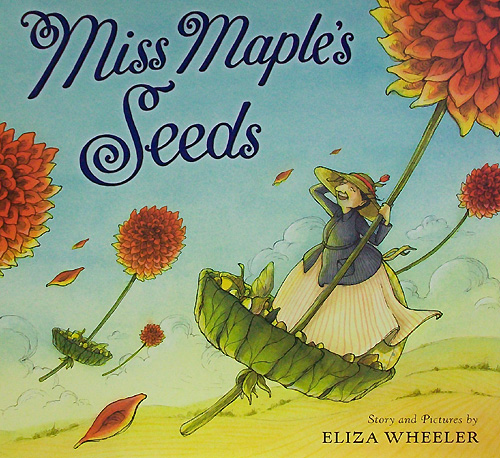
Miss Maple’s Seeds
By Eliza Wheeler
Late in the summer, Miss Maple hurries to prepare for some very special guests. She has searched all summer for “orphan seeds that got lost during the spring planting,” and now bluebirds are carrying baskets full of these little pods so full of potential to her home. Once they arrive she “learns each seed by heart.” There are poppy, wild rice, maple, water lily, pine, impatiens, apple raspberry, sunflower, acorn, pea, fern seeds, and as many more as make up our world.
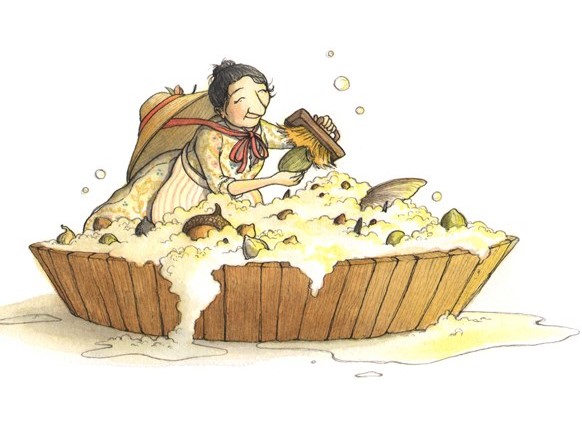
Image copyright Eliza Wheeler, courtesy of Nancy Paulson Books, Penguin Books
As she lovingly tends to each one, she whispers to them, “Take care, my little ones, for the world is big and you are small.” Miss Maple takes her little charges on field trips and shows them the world they will inhabit—muddy soil along riverbanks, grassy fields, and thickly populated forests. She cautions them about “weedy characters” who can show up even in a “bustling garden.”
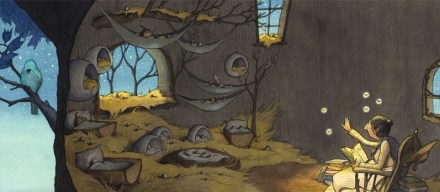
At night Miss Maple snuggles each seed into a comfortable bed and reads to them by the light of fireflies. During the winter Miss Maple entertains other guests—woodland creatures who gather in her maple tree home to share food, stories, and songs. With the spring come rains and new lessons that teach the seeds how to burrow into the ground.
Image copyright Eliza Wheeler, courtesy of Nancy Paulson Books, Penguin Books
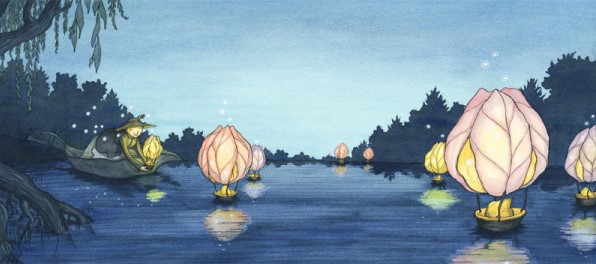
In May Miss Maple knows it’s time for her little ones to “find roots of their own.” She sends them out into the world, knowing that she has prepared them well for what they will become. Her seeds say goodbye and sail off to begin their futures, leaving Miss Maple alone. But soon another summer day comes, and Miss Maple sets off to gather more orphan seeds, because “the world is big and they are small.”
Eliza Wheeler’s Miss Maple’s Seeds is a lovely metaphor for the nurturing relationship between children and their parents or caregivers. At once comforting and liberating, Wheeler’s sweet tribute reveals the hopes and dreams adults have for each child they raise and finally let go to bloom into what they are meant to be.
Image copyright Eliza Wheeler, courtesy of Nancy Paulson Books, Penguin Books
Wheeler’s beautiful language floats as quietly and unhurried as a leaf on a gentle breeze, and her luminous artwork is breathtaking in its fully realized details of the greater world Miss Maple’s seeds and all of us inhabit. Each season is gorgeously rendered in soft blues, roses, browns, and yellows, and Wheeler imbues each little seed with personality without anthropomorphism. The reader may well wish they could be friends with these future beauties and with Miss Maple as well.
Miss Maple’s Seeds would be a wonderful gift for high school graduates, teachers, and anyone who loves taking care of children. It’s timeless message also makes it a perfect choice for quiet reading times or bedtime and a welcome addition to anyone’s bookshelf.
Ages 3 – 7, all ages
Nancy Paulsen Books, an imprint of Penguin Group, 2013 | ISBN 978-0399257926
Discover the world of Eliza Wheeler‘s books and art on her website! Download an activity sheet for Miss Maple’s Seedshere!
While I take a few personal days this month, I am reposting earlier reviews updated with new links and interior art.
World Dream Day Activity
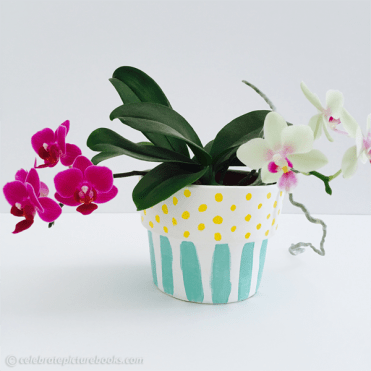
Hopes and Dreams Flower Pot
Ideas, hopes, and dreams are like seeds, sprouting and growing into fruition with a bit of attention and care. With today’s craft you can create a flower pot of your own design. Then fill it with “dream seeds” of your favorite flower or plant. As you tend to the plant and it grows, tend to your own dreams and watch them grow as you achieve your desires.
Initiated in the late 1990s, National Gymnastics Day encourages kids to explore this exciting sport. As part of this year’s National Gymnastics Day, gymnasts, families, friends, and enthusiasts from gymnastics clubs globally will participate in a variety of activities, including open houses, hand stand contests, carnivals, and fitness activities to build awareness of gymnastics and its benefits. Many clubs will use this as a way to provide opportunities for underprivileged children to participate in the sport. Why not find and attend a special event at a gym or gymnastics club today to celebrate!
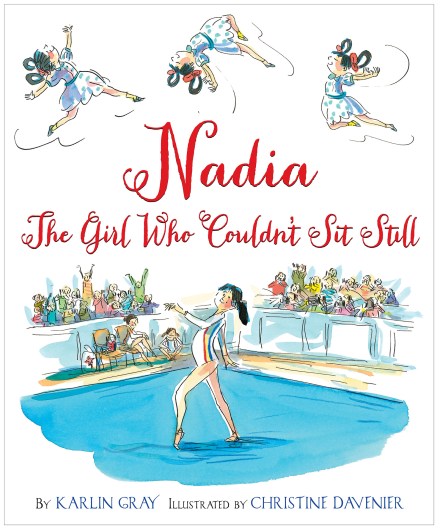
Nadia: The Girl Who Couldn’t Sit Still
Written by Karlin Gray | Illustrated by Christine Davenier
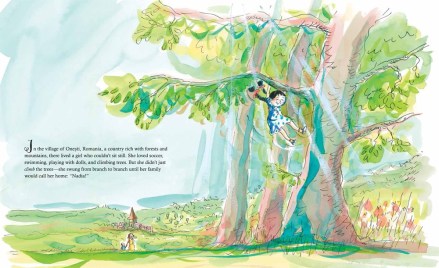
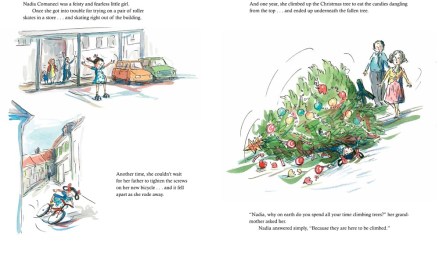
“In the village of Oneşti, Romania, a country rich with forests and mountains” Nadia Comaneci could often be seen swinging from tree branch to tree branch. She was a little girl who loved to play. She was “feisty and fearless,” attempting new things on a whim and always with a sense of adventure. Once while trying on a pair of roller skates, she skated right out of the store! Another time she was so impatient to ride her new bike that she pedaled off before her father could even tighten the screws. The bike “fell apart as she rode away.” And one year her love of climbing trees extended to the family Christmas tree, which toppled over on her, pinning her to the ground.
To channel all that energy, Nadia’s mother enrolled her in gymnastics lessons. Nadia’s eyes lit up when she saw the room full of ropes, ladders, bars, mats, and trampolines to discover, but she didn’t leave her new skills at the gym. Nadia and a friend cartwheeled around the school playground, capturing the attention of Bela and Marta Karolyi, who owned a gymnastics school. They invited the girls to join.
Image copyright Christine Davenier, courtesy of karlingray.com
Nadia was only 6 when she began studying with Bela and Marta. Immediately, she discovered that she liked gymnastics better than her school subjects. She progressed quickly from performing “a straight cartwheel on a line painted on the floor” to doing it on a low balance beam and finally to perfecting it on the high balance beam. She began learning harder and harder moves, “flying from bar to bar, from floor to vault, and high above the beam.”
At 9 years old, Nadia competed in her first National Junior Championship. Despite her skill and hard work, she fell from the high beam during a leap not once but three times. Nadia finished the competition in 13th place. Her disappointment only strengthened her resolve. She went back to the gym and continued to practice many hours every day. Her determination paid off, “and at the next National Junior Championship games, she won first place.”
The ultimate recognition of her skill came when she was chosen to be part of the 1976 Romanian Olympic team. The games were held in Montreal, Canada, and all eyes were on the returning gold medalists from Russia, Olga Korbut and Lyudmila Turischeva. But excitement soon filled the venue as Nadia performed on the beam, the floor, and the vault where she scored 9.9, 9.75, and 9.7 on a scale of 1 (the lowest score) to 10 (a perfect score). The next event was the uneven parallel bars on which Olga Korbut had just scored a 9.9. “Nadia mounted the bars. Now fourteen years old, she was a long way from the forests in Romania. But she swung around as easily as she had jumped from branch to branch as a little girl. The audience gasped as she twirled and whipped and flipped.”
Image copyright Christine Davenier, courtesy of karlingray.com
Nadia dismounted and landed perfectly on the mat below as the audience “exploded with applause.” Nadia returned to her team to wait for her score. And wait…and wait. Finally, the score appeared on the board—1.00. The worst score. How could that be? “‘What is Nadia’s score?’” Bela asked the judges. “One of the officials held up ten fingers as a voice announced over the loudspeaker: ‘Ladies and gentlemen, for the very first time in Olympic history, Nadia Comaneci has received the score of a perfect ten!’”
Because no one had ever achieved a 10 before, the scoreboards were programmed only for a high of 9.9. Nadia couldn’t bask in her accomplishment for long, however. She moved on to her next event—and her next perfect 10! “When the competition ended, she had earned seven perfect 10s.” At the medal ceremony both Olga and Lyudmila congratulated their competitor as the new Olympic champion. In all Nadia won five medals and became the youngest ever Olympic gold medalist in gymnastics.
Image copyright Christine Davenier, courtesy of karlingray.com
Nadia became a darling of the press. They surrounded her, asking “how it felt to have the world’s attention, if she had been confident she would win, and when she would retire.” She answered each reporter with enthusiasm and confidence, and promising that she was a long way from retiring. When she returned home, it seemed that all of Romania had come out to welcome her and her teammates—even the country’s president.
Now Nadia was famous all over the world. She returned to practicing and inventing new routines, preparing for other competitions and the 1980 Olympic Games. She had come far from swinging branch to branch in the trees of Oneşti, but she would always be that little girl who couldn’t sit still.
Karlin Gray’s compelling biography captures all the spunk and spirit of Nadia Comaneci that made the world fall in love with her at the 1976 Olympic Games. Adults of a certain age well remember watching her in astonishment as she seemed to effortlessly swirl, twirl, and flip through her routines, flashing her sweet smile as she waved to fans. In the first pages Gray reveals anecdotes of Nadia’s adventurous nature that will captivate readers even as they giggle at her predicaments.
Image copyright Christine Davenier, courtesy of karlingray.com
The straightforward narration of Nadia’s trajectory from playground cartwheeler to Olympic champion enhances both the gritty determination of her studies with her coaches as well as the suspense of her competitions. All children—no matter what their talent—will draw inspiration from Nadia’s story, which includes disappointments as well as unbounded accomplishments. Gray’s lyrical language flows as smoothly as Nadia flew through the air and will land in readers’ hearts as a perfect 10.
From the cover, which sports Nadia in her iconic floor exercise pose, to the last page, Christine Davenier depicts the world of gymnastics with beauty and the kind of realistic details that create a classic. The two-page spread of the gym where 6-year-old Nadia learns to love gymnastics portrays the enormity of the space and the equipment for a small girl—as well as the enormity of her achievement.
Kids will love the almost “play-by-play” illustrations of how Nadia learned to perform her feats, from starting with a line on the floor to perfecting the high beam and more. Nadia is shown leaping, somersaulting, doing handstands, and even wavering and falling as she practices and competes. The thrill of the Olympic Games, from the opening ceremonies to the rapt and cheering audiences to the awards ceremony are drawn with stirring action, color, and attention to the specifics of that very special 1976 summer in Montreal.
An Afterword expands on Nadia Comaneci’s courageous life choices and career post-gymnastics and includes a timeline, notes, a selected bibliography, and websites for further study.
Nadia: The Girl Who Couldn’t Sit Still will fascinate kids and would be a very welcome addition to school classroom—as well as home—libraries.
Ages 5 – 10
Houghton Mifflin Harcourt, 2016 | ISBN 978-0544319608
VisitKarlin Gray‘s website to learn more about her and to download fun activities!
The apple is one of the world’s most valuable foods, enjoyed by people all around the globe. Apples come in so many crispy, delectable types and flavors—from sweet to tangy. Whether you like red, green, or yellow apples they are delicious in pies, tarts, muffins, salads, or just by themselves. Today, why not buy a bushel or a peck of apples from your favorite store or farm stand—or for even more fun, visit an orchard to pick them right from the tree! What you do with them is all up to your imagination!
Toto’s Apples
By Mathieu Lavoie
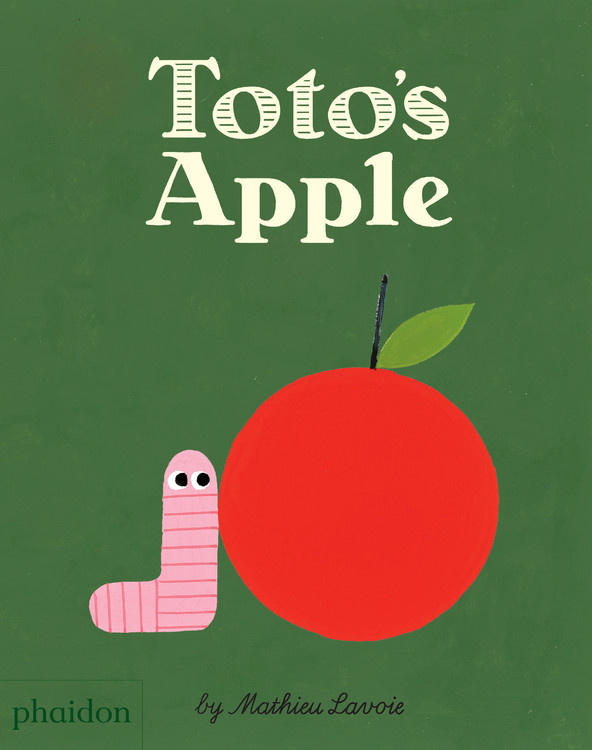
Like a more earthy Romeo, Toto the worm gazes at his beloved—a rosy red apple. He “is down low” and it “is up high”. He needs a plan because he is determined to win that apple. Just then a bird flies by and Toto has an idea. Using their natural enmity, “Toto gets busy” and paints a twig in his image. He displays it in a prominent place, and hides. When the bird zooms in to snatch the delicious snack, Toto catches a ride on the bird’s tail feathers. Up he soars…to be deposited in…the wrong tree.
Image copyright Matieu Lavoie, couresy of Phaidon Press, phaidon.com
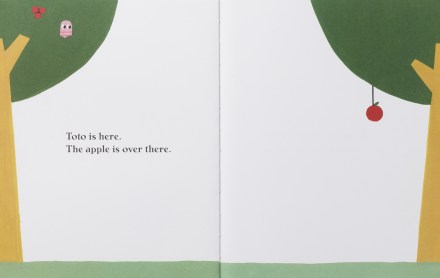
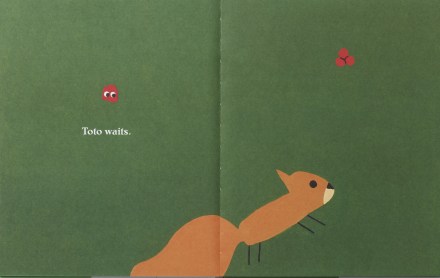
Now “Toto is here. The apple is over there.” As often happens “a squirrel approaches.” Watching it climb his tree, “Toto has an idea.” Once again “Toto gets busy.” He paints himself the red of the tree’s berries and when the squirrel passes him by, “Toto hangs on tight” to the squirrel’s bushy tail. Off Toto goes…into…the tree top. While the squirrel naps, Toto looks longingly at the apple of his eye so far below.
Image copyright Matieu Lavoie, couresy of Phaidon Press, phaidon.com
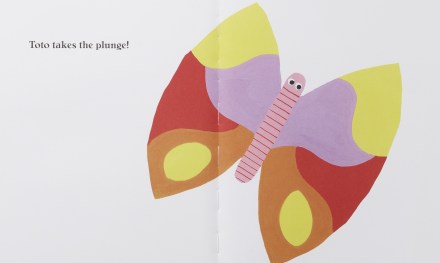
A falling leaf gives Toto another brainstorm. He paints a leaf with rainbow colors, and after a moment to bolster his courage…he “takes the plunge!” He flits and floats so close to…the ground. Landing gently on the grass, Toto is back to the beginning. Now what? Suddenly, he sees Didi and a friend arriving with a ladder. He hunkers down to scout out the situation. The ladder is placed against the tree trunk. The friend climbs the ladder. The apple lands in the hands of Didi, who…takes a big munch! “Toto is devastated.”
Just then Didi pivots to watch a passing airplane and drops the apple. Knowing “that it’s now or never,” Toto burrows in. As the plane disappears Didi again turns her attention to the apple…“and swallows Toto!” Poor Toto? No! “The apple is inside. So is Toto. Toto is happy.”
Image copyright Matieu Lavoie, couresy of Phaidon Press, phaidon.com
Mathieu Lavoie’s Toto’s Apple is part concept book, part tasty treat of absurdist fun that kids will eat up. As Toto’s predicament goes from bad to worse, his steadfast eye on his goal lends suspense and a growing comedic lilt to this very minimalist tale. Little Toto is an adorable hero, a tiny pink and red striped softie with one great love. His determination and clever solutions to his dilemma will not only make kids laugh but inspire them to muster their courage and think outside the box.
Lavoie’s simple but bold illustrations provide just the right amount of visual explanation of Toto’s changing fortunes (and facial expressions) for kids to enjoy the full, escalating, laugh-out-loud humor on every page. Readers will understand—as so many great literary works reveal—that wherever you and your beloved can be together is where true happiness is found.
At its core Toto’s Apple is a book that will be asked for again and again and should be “up high” or “down low” or anywhere in a child’s bookcase.
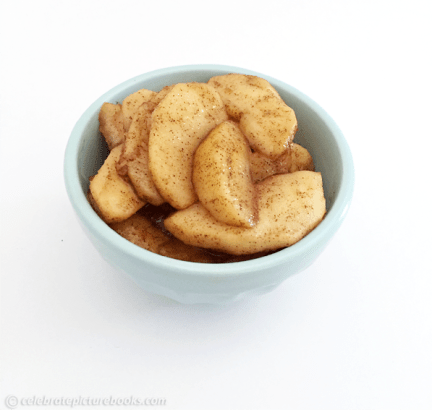
Warm apples sprinkled with cinnamon sugar is one of the most delectable treats of autumn. Here’s an easy recipe for making this delicious dessert or side dish.
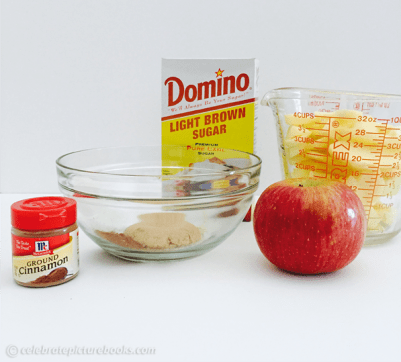
Ingredients
4 cups of apples, Macintosh or Granny Smith apples are good choices
2 tablespoons brown sugar
1 teaspoon cinnamon
1/4 teaspoon lemon juice
Directions
Mix brown sugar and cinnamon
Peel and core 2 large apples
Thinly slice apples
Combine apples and cinnamon sugar/brown sugar mixture
Stir until well combined
Drizzle with lemon juice and stir again
Cook apples on the stove at medium heat for 8 to 10 minutes or until desired texture
Today’s holiday allows anyone who just can’t resist picking up a particularly pretty or unusual stone to indulge their whims and fancies. Rock collecting can be a fun and educational hobby as each type of stone has its own fascinating history and science to learn about. Why not go on a hike today and discover the unique shapes, colors, and feel of the rocks below your feet.
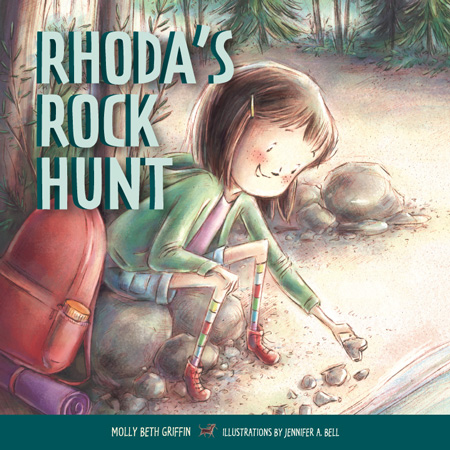
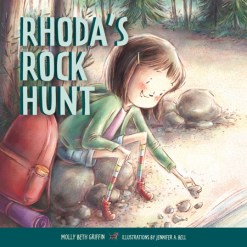
Rhoda’s Rock Hunt
Written by Molly Beth Griffin | Illustrated by Jennifer A. Bell
Rhoda has gone camping with her Auntie June and Uncle Jonah. On a days-long hike, her shower is a “bucket of cold lake water, dinner was salami and cheese, and her bed was a skinny little pad and ratty sleeping bag.” But Rhoda puts up with it all because along the way she finds rocks—and Rhoda loves rocks.
Auntie June doesn’t mind Rhoda’s collecting rocks—as long as she carries them in her own pack. Rhoda agrees. One day while hiking through a birch forest Rhoda spies “jagged rocks and bumpy rocks and one with tiny sparkly bits that glinted in the dappled sunlight. Ooo!” Rhoda puts them all in her pack and trudges on, sweating a bit with the effort.
Image copyright Jennifer A. Bell, courtesy of jenniferabell.com
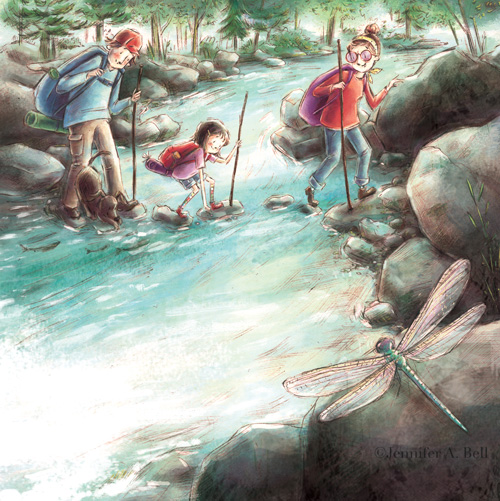
The next day while crossing a stream, Rhoda reaches into the cool, flowing water and comes up with a bunch of smooth stones. One has “a curve that fit into her palm just right. Ooo! Into the pack they all went—Yarg!” Rhoda is beginning to slump under the weight of her pack, but she continues on. After a sleepless night, Rhoda is tired, hungry, dirty, and a little bit crabby—until she sees the lake. “Waves crashed on the shore, and gulls called overhead. The water stretched out to the horizon, and the beach was covered with millions and billions of rocks!”
Rhoda lies on the “sun-warmed treasures,” studying the beauty of each stone. She finds red ones, blue ones, and stripy ones. “Then she discovered tiny banded ones that glowed the color of sunsets. Ooo!” She pours them all into her pack. When Auntie June and Uncle Jonah tell her it’s time to go, Rhoda grabs her pack, but it stays put. She pushes, pulls, and tugs, but the bag doesn’t budge. With no one to help carry her pack or any of the rocks, Rhoda has a hard decision to make. She doesn’t want to give up any of her stones, but she knows she must.
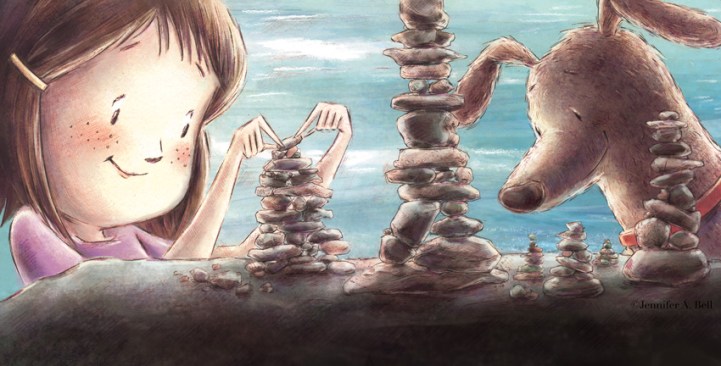
Then she has an idea. Carefully working “with the weight of each rock, with the curves and bumps and bulges of each rock,” she stacks them on a flat slab of stone near the water’s edge until they all “balanced in perfect towers.” Well, almost all. Into her pockets “went the one glinting forest rock, and the one palm-snuggling river rock, and a small handful of tiny glowing agates from the Big Lake.”
Image copyright Jennifer A. Bell, courtesy of jenniferabell.com
As she heads on her way she looks back at her rock cairns—her gift to others passing by—and continues on with Auntie June and Uncle Jonah to the cabin. There, on her windowsill, she builds her own cairns from her beloved treasures.
Collectors everywhere will relate to Rhoda and her enthusiastic gathering of treasures beyond price. Each on is unique and almost calls out to be taken along life’s road. As Rhoda discovers, however, the physical items can begin to weigh you down, impeding progress. Molly Beth Griffin, in her distinctive and quietly powerful book, remind readers that freedom and happiness come from sharing your talents and treasures—and yourself—with others. With evocative description of a camping trip (and well-placed expressions of “Ooo!”), Griffin captures with honesty, grace, and humor the vexations and thrills of childhood.
Jennifer A. Bell gorgeously depicts the forest with its birch stands, rushing streams, vast lake, and variety of stones in soft greens, reds, purples, and blues that blend to reflect the depth and beauty of nature. Adorable Rhoda expresses the range of emotions—from excitement in finding her beloved rocks to annoyance at the travails of camping—that readers will recognize and respond to. Detailed illustrations of the rocks Rhoda finds reveal their attraction to the young collector, and the final spread of the cairns Rhoda builds will have kids wanting to build their own.
A wonderful accompaniment to a hike or camping trip and a quietly inspirational read, Rhoda’s Rock Hunt makes a welcome addition to children’s bookshelves.
Ages 3 – 8
Minnesota Historical Society Press, 2014 | ISBN 978-0873519502
To see more books by Molly Beth Griffin for children and young adults, visit her website!
View Jennifer A. Bell’s illustration work for picture books, chapter books, and more on her website!
Collect Rocks Day Activity
Rock This Craft!
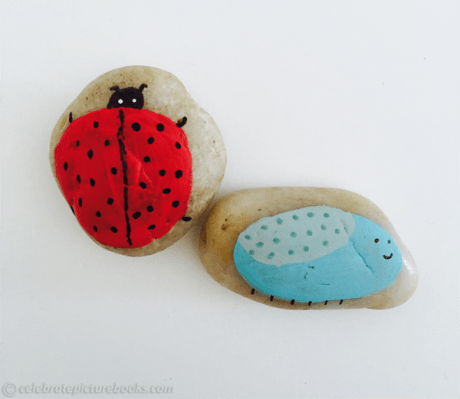
Smooth stones can give talented artists like yourself a natural canvas for your creativity! With a little bit of paint, pins or magnets, and some imagination, you can make refrigerator magnets, jewelry, paper weights, and more!
Supplies
Smooth stones in various sizes
Paint or markers
Small magnets, available at craft stores
Jewelry pins, available at craft stores
Paint brush
Strong glue
Directions
To make magnets
Design and paint an image on the stone
Attach a magnet to the back with strong glue, let dry
Use to hang pictures, notes, or other bits of important stuff on your refrigerator or magnetic board
To make jewelry
Using a smaller, flatter stone, design and paint an image on the stone
Attach a jewelry pin to the back with the strong glue, let dry
Wear your pin proudly
To make a paper weight
Using a large stone, design and paint an image on the stone
Let dry
Display and use on your desk to keep those papers in place
You can find Rhoda’s Rock Hunt at these booksellers
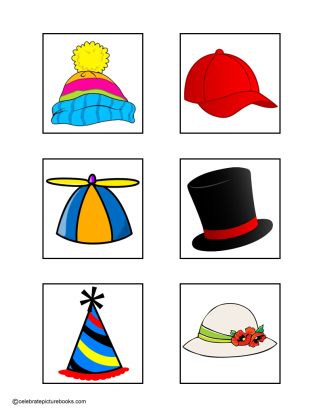
Hats are great for cold days, days when you want to dress up or express a certain fashion statement, or to cover up a bad do or bedhead. Today’s holiday may spur you to learn how to knit a hat or inspire you to invite your friends to a crazy hat-designing party! Make a Hat Day also shares the spotlight with Felt Hat Day, which exhorts people to rediscover an old and cherished fashion accessory.
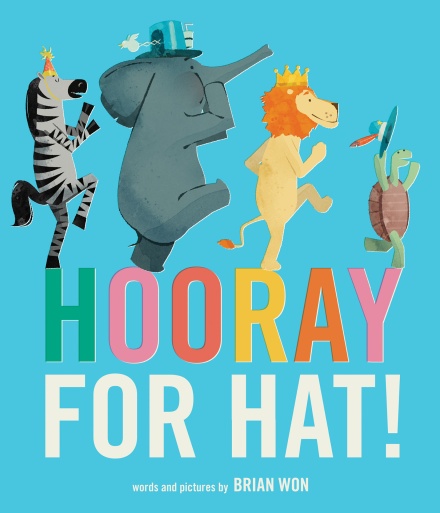
Hooray for Hat!
By Brian Won
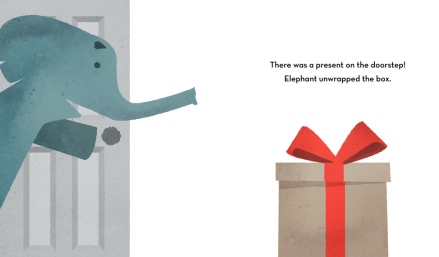
Elephant wakes up on the wrong side of the bed. He’s hardly had a chance to fully shake off sleep when the doorbell rings. He clomps down the stairs yelling, “‘Go away! I’m grumpy!’” But there’s no one at the door. Instead Elephant finds a prettily wrapped present on his doorstep. Unwrapping it Elephant finds the grandest hat he’s ever seen. It has everything – A pompom, a star, a feather, a mortar board with a tassel, a crown, a coo-coo clock bird, and even a cup holder! Elephant puts it on. How can he be grumpy with such a hat on his head? He can’t! “‘Hooray for Hat!’” he cheers and goes off to show Zebra.
Image copyright Brian Won, courtesy of brianwon.com
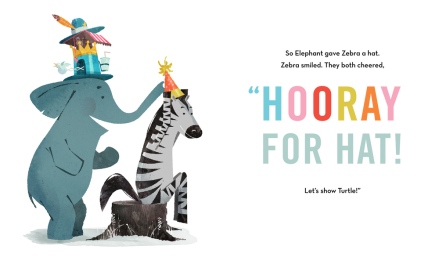
Elephant finds Zebra sitting alone on a tree stump. She doesn’t even turn around when her friend approaches. “‘Go away! I’m grumpy!’” she states. Elephant removes the top hat from his own new chapeau—a party hat with the pompom—and gently places it on Zebra’s head. Zebra can’t help but smile. “‘Hooray for Hat!’” they both cheer and head out for Turtle’s house.
Image copyright Brian Won, courtesy of brianwon.com
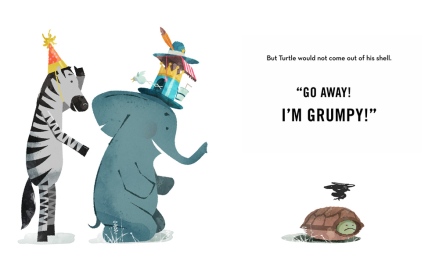
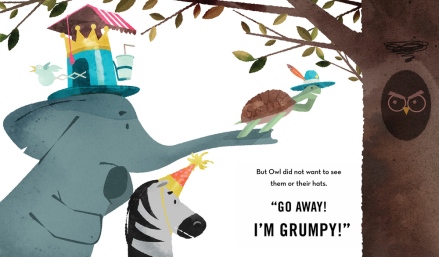
Oh, but Turtle is so grumpy that they won’t even come out of their shell. Elephant lifts down the cowboy hat with the star and feather from his own towering hat and gives it to his pal. Out pops Turtle who proudly joins the parade. “‘Hooray for Hat!’” they all cheer and march off to show Owl. “But Owl did not want to see them or their hats. “‘Go Away! I’m grumpy!’” she hoots from her tree trunk hole.
Image copyright Brian Won, courtesy of brianwon.com
But Elephant is as wise as Owl, and thinks the striped mortar board is just the thing to change her mood. “‘Hoo-Hoo-Hooray for Hat!’” Owl says, leading the way to find Lion. But Lion’s frowning face peers out at them from his den, and he shoos the group away with the familiar “‘Go Away! I’m Grumpy!’” Down comes the golden crown from Elephant’s hat and while Lion loves it, he’s more concerned with their friend Giraffe who isn’t feeling well. “‘What can we do?’” Lion asks the group.
They all know exactly what to do. They pack up the very special hat and take it to Giraffe, who is standing with her head hidden in a treetop. “Do Not Disturb” reads the sign hanging on the trunk. But as soon as Giraffe dons that hat, a toothy smile breaks out, and the six best buddies cheer, “‘Hooray for Friends!’”
Image copyright Brian Won, courtesy of brianwon.com
Brian Won’s joyful celebration of the power of surprise, friendship, and a great hat is a day brightener for anyone, whether they wake up grumpy or feeling fine. His adorable animal friends don’t mind a little grumpiness—they’ve experienced it themselves—but only want to make each other happier. The repeated phrasing throughout the story invites kids to read along, and the absence of pronouns offers open interpretation and inclusiveness. The confetti-colored hats will make kids smile and the tribute to friendship will have them cheering along with this fun picture book.
A cheer-ful book, Hooray for Hat! would make a happy addition to children’s libraries for those days when they need a little more encouragement or inspiration. Kids will want to get together with Elephant, Zebra, Turtle, Owl, Lion, and Giraffe again and again and will no doubt love to create a magnificent hat of their own!
Ages 3 – 7
Houghton Mifflin Harcourt Publishers, 2014 | ISBN 978-0544159037
Instituted in 2007 by the Encouragement Foundation at Harding University in Searcy, Arkansas, today’s holiday entreats us to cheer on our friends, coworkers, and even those we don’t know as they attempt to reach goals or start new endeavors. A pat on the back, a simple “you can do it!,” or a reassuring “great job!” boosts people’s self-confidence and makes the world a happier place.
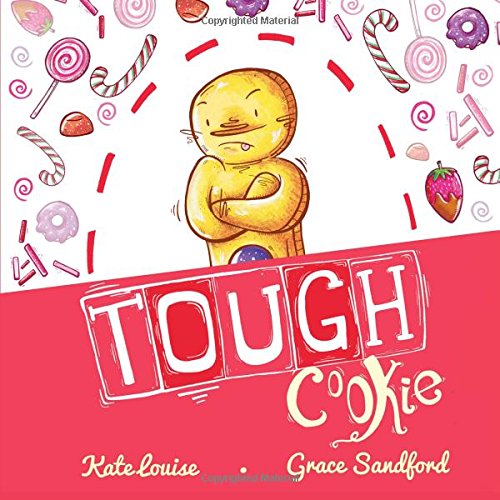
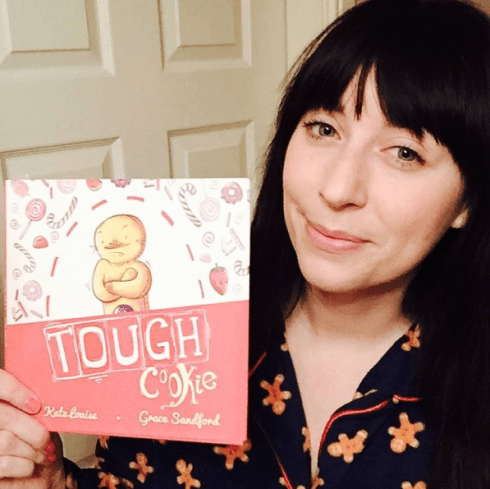
Tough Cookie
Written by Kate Louise | Illustrated by Grace Sandford
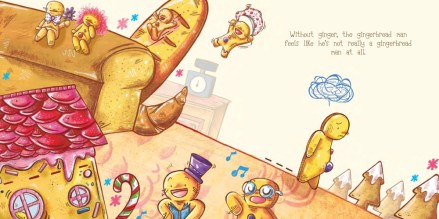
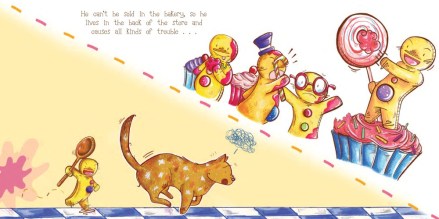
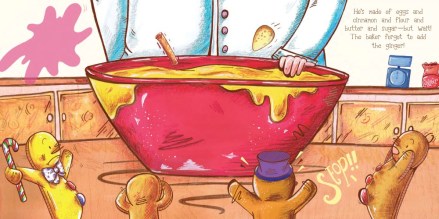
Although one gingerbread man in the bakery looks like all the others, there is one important difference. Yes, the batter had “eggs and cinnamon and flour and butter and sugar—but wait! The baker forgot to add the ginger!” Without this signature ingredient the gingerbread man just doesn’t feel like a gingerbread man at all. In fact his whole life has been turned upside down. He’s different from his friends, and what’s worse, he can’t be sold. Instead, he lives in the back of the bakery and in his sadness makes all kinds of mischief.
Image copyright Grace Sandford, text copyright Kate Louise, courtesy of Sky Pony Press
The gingerbread man chases the cat, splatters icing on other cookies, and squirts icing on the walls. “‘I need that for my cupcakes!’” the baker yells, but the gingerbread man just laughs. He moves on to the decorative candies, stuffing them in his mouth as fast as he can even though the baker needs them for his other treats and stands by tapping his foot. Next the gingerbread man scatters sprinkles all over the counter and slips and slides along on his belly—“‘woohoo!’” But the baker is not amused. “‘I need those for the donuts!’” he shouts.
Image copyright Grace Sandford, text copyright Kate Louise, courtesy of Sky Pony Press
Finally, the baker has had enough. Not only is the gingerbread man upsetting the other gingerbread men and women, he is ruining the business. The baker orders the gingerbread man to leave the store. But this is one gingerbread man that does not want to run away. “‘I don’t want to leave!’” he cries. The baker relents. He takes the little cookie in hand and teaches him that even though he is missing an ingredient he can still be kind. The baker shows him by being nice he can become one of the group.
Now, the little gingerbread man is happy. Instead of gobbling up all the candy, he helps create the other cookies. He no longer shoots icing on the walls or flings sprinkles around the kitchen. Rather, he helps the baker decorate the cupcakes and the donuts. He’s even learned how to sift flour and roll out dough, and he uses the cookie cutter to make new friends. And he never forgets to add the ginger!
Image copyright Grace Sandford, text copyright Kate Louise, courtesy of Sky Pony Press
In her sweet story, Kate Louise reminds readers that true happiness comes from within and that each person can decide for themselves how to perceive the world around them. While each of us is human, we all have different ingredients that make us unique. We can use those qualities to be kind and make positive changes in the world. Kids will recognize and giggle at the mischief the little gingerbread man makes with icing and sprinkles, but will also realize that friendships are built by using that same energy to help others. Sometimes tough cookies are actually softies at heart.
Grace Sandford’s bakery gleams with the golden hues of fresh-baked bread, the festive colors of sprinkles and icing, and the sparkle of sugar. Kids will love the vibrant pictures of cupcakes; lollypops; stacks of cakes, donuts, and candy; and decorated gingerbread houses surrounded by cookie forests. Her expressive gingerbread men and women register dismay at the wayward gingerbread man’s shenanigans and joy at his kindness. And the hero of the story? When he leaves behind his impish pranks he becomes a charming baker’s companion, sifting clouds of flour, running on the rolling pin to flatten dough, and passing out sugar-shiny gumdrop buttons to his new friends.
Young children will ask for this fun and funny read over and over. Tough Cookie makes an especially delicious accompaniment to an afternoon of baking or decorating gingerbread houses!
View the colorful world and signature style of Grace Sandford’s artwork on her website!
Gobble up this Tough Cookie book Trailer!
National Day of Encouragement Activity
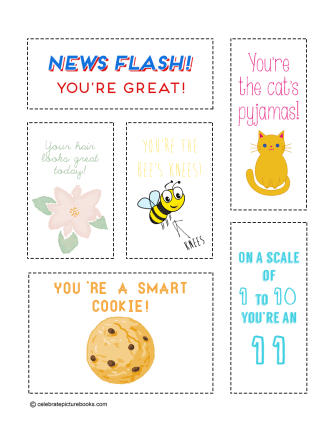
Kindness Cards
Encourage your friends – and even strangers with these printable Kindness Cards! You can hand them to people and tell them how much they mean to you or slip them into a lunch bag, locker, shelf, backpack or other place and let the person discover a secret day brightener!
Q&A with Author Kate Louise & Illustrator Grace Sandford
Today I am happy to include a double Q & A with both author Kate Louise and illustrator Grace Sandford in which they share their inspirations, their other work, and the joys of creating picture books as well as reveal a favorite place for tea and cake and a ghostly pastime!
Meet Kate Louise
What were some of the books you most enjoyed as a child?
I loved Funny Bones and Winnie the Witch! And I was a big fan of Roald Dahl (especially Matlida) – I still am!
What influenced you to write Tough Cookie?
I had the idea at Christmastime. I was measuring ingredients for a batch of gingerbread cookies and wondered what a cookie character without sugar would do because they’d be unable to fulfill their cookie purpose without an important ingredient! I later changed the missing sugar to missing ginger, which is the most important ingredient of all for a gingerbread man.
You write picture books as well as young adult novels. Which came first? What is the biggest challenge in writing each? What is the biggest joy?
When I started writing, I knew I wanted to write young-adult fiction. So that came first. Writing picture books kind of felt like starting over again. It was scary, but exciting, too. And I could learn a lot from both and apply new skills to different projects.
Both have their charms and their tough moments. Writing novels can be really hard going at times when I get the feeling that I’m never going to make it to the end, or if I get myself tangled up somewhere along the way. I don’t get that feeling quite as much with picture books, though I would say they’re harder to write! To tell a story with a much, much smaller word count and to get used to letting the illustrations tell it too.
The biggest joy for me is always seeing the finished work. After putting so much into each project, getting it back as something I can hold in my hands and feel proud of is a great feeling.
Can you describe your writing space a little?
I can answer with a photo! Though, it depends when you catch me and how busy I am. Sometimes it can be piled up with books or notepads or pieces of paper and mugs of tea! My screen desktop (as you can see) can get pretty hectic sometimes too.
Since Tough Cookie is set in a bakery, I’m wondering if you have a favorite bakery and if so what is special about it?
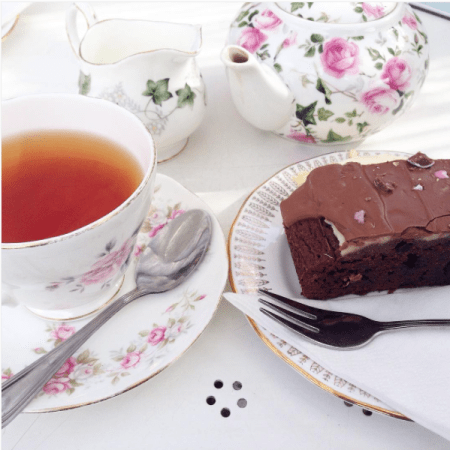
Oh, nice question! My fave place to visit for tea and cake is a little farm shop tea room, where the cake is made by my friend Bethany at Picture Frame Puds and is seriously delicious! It has a lovely vibe and I can take my dog!
What are you working on next?
I’m working on The Pack, which is the sequel to my YA shape-shifter circus novel The Wanderers that came out last year.
Since this is a holiday-themed blog, I can’t let you get away without asking you a few holiday-related questions, so…
What is your favorite holiday?
It would have to be Christmas. But Halloween is a very close second.
Do you have an anecdote from any holiday you’d like to share?
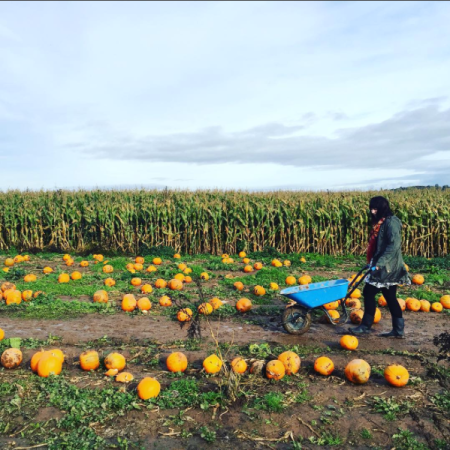
I like to make a big deal about Halloween with movies, decorating, pumpkin carving, and themed baking. We’ve just started going to a pumpkin farm to pick the pumpkins ourselves too. There’s a corn maze and little wheelbarrows and the field stretches on forever. It’s a new tradition and a fun extra activity for us at Halloween.
Meet Grace Sandford
What inspired you to become an illustrator and a picture book illustrator specifically?
Growing up, I loved drawing and creating characters from my imagination. I believe a lot of that stemmed from picture books and animated film and television. I love Disney and Pixar and as a teenager I was fascinated with the concept art from Pixar films. I always knew that I wanted a career in art of some form but it’s hard discovering what jobs are out there when you’re at school! I did some studying in Graphic Design and eventually went to university to study Illustration, which is where I got truly passionate about picture books. I always admired the art of picture books and they have been a huge part of my life but having a reason to dissect them and create your own really made me want to be a children’s illustrator.
What were some of the books and/or artists you liked most as a child?
The Very Hungry Caterpillar by Eric Carle, I am a Bunny illustrated by Richard Scarry and when I was 16 I stumbled across Catherine Rayner’s debut Augustus and his Smile. I think that book was a huge influence in wanting to be a children’s book illustrator, both the writing and illustrations are perfect!
Can you describe your process when illustrating a picture book?
It usually begins with the editor sending you the story/text. Then I start to do lots of sketches of the main character, the secondary characters and the environment around them. Pinterest is a godsend during this bit as you can flick through and look at photos of certain animals or buildings for reference to make sure you’re creating characters that will look believable (even if it is a walking, talking gingerbread man!)
Then I create roughs for each spread showing how the pages will look and which parts I have chosen to illustrate. This gives the editor a rough idea of how the final artwork is going to look and this is where most of the edits happen until it’s approved. Once all edits are approved I can create the final artwork which is my favourite part seeing all the hard work come together!
Can you describe your work space a little?
I now have a studio where I live, but when I worked on Tough Cookie I lived in a one bed apartment with my boyfriend straight after university and I had to work on the kitchen table! I’m so glad I have my own room to work in now (and I’m sure my boyfriend is too!)
My work space now involves a desk, my iMac, an A3 scanner, a windowsill with lots of pens and paints (and most importantly plants!) and I have a space that alternates between a lightbox and a graphics tablet. I also have a bad habit of putting all projects I’m working on into separate piles around the room until they are done!
You say in your bio that you like ghost hunting. How did you get involved in that? What is your favorite place to hunt ghosts?
Haha, this is the best question! I love Ghost Hunting although it’s been a while since I’ve been on a walk. It started off when I was a teenager living in a small village in England, being bored with friends and wandering around abandoned churches at night, hunting for things that go bump in the night, and it grew over time into a huge interest. When I went to University in Lincoln, a historical city, I got very interested in the social history of the place. Ghost stories are ultimately another fantastic way of storytelling. There are some very scary but interesting stories about Lincolnshire if you’re ever interested! Fun fact, Tom Hank’s bodyguard tripped over a phantom ghost head rolling down Steep Hill in Lincoln during a Professional Ghost Tour!
What are you working on next?
This year I’ve been working on a four book series based on Minecraft which has been a complete joy to be a part of! It’s been hard work as I knew very little about the franchise before this and knowing how loyal the fans are, I’ve wanted to draw everything right whilst staying faithful to my style! I just finished some more colouring books for a Spanish publisher and I have also been writing a picture book that I have a good feeling about (fingers crossed!)
What is your favorite holiday?
I personally love Christmas just because I get to spend time with my family and chill out but I love Mexico’s Day of the Dead holiday too. It is such a vibrant and beautiful celebration of something that we all sadly experience in life.
Do you have an anecdote from any holiday you’d like to share?
Every Christmas it’s become a tradition to be at home with my family playing Jigsaws, watching films and eating a little bit too much!
Thanks, Kate and Grace, for sharing about your work and your favorite places and pursuits! I wish you all the best with Tough Cookie and your other projects!
Today is a perfect day to get together with people you love, trust, and respect—and even some who challenge your thinking—to discuss matters large and small. Not only might you gain a different perspective on your pals, but you all may come up with the next Great Idea!
The King and the Magician
Written by Jorge Bucay | Illustrated by Gusti
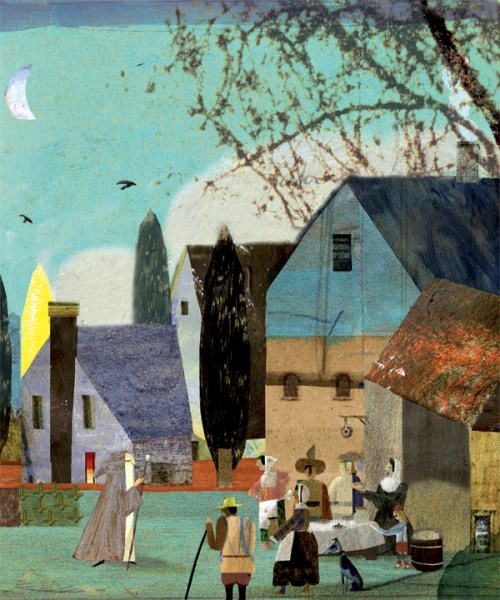
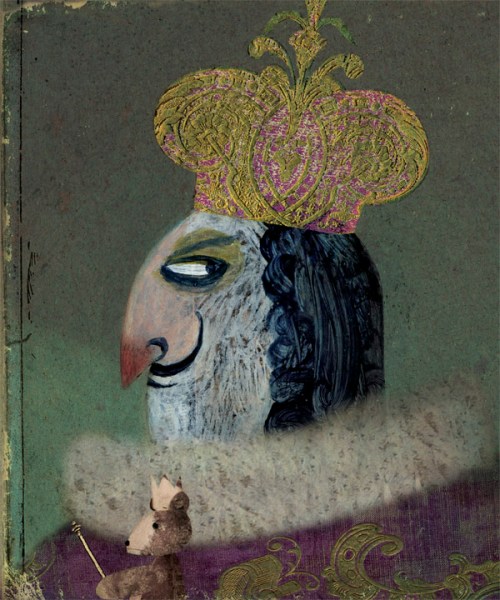
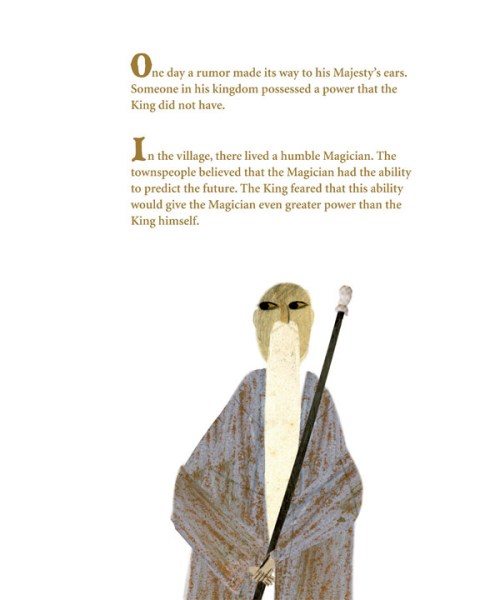
In a faraway land there once lived a King who was very powerful. Not only did he love power, he commanded that everyone in his kingdom obey and admire him. Tremblingly, his subjects reassure him every day that he is the most powerful man in the kingdom. One day, however, the King hears a rumor that down in the village lives a Magician who can predict the future. The King fears that this man will become more powerful than he, and he sends his spies to learn more. The spies return and reveal that not only can the Magician tell the future, he is loved and admired by everyone.
Image copyright Gusti, courtesy of Abbeville Press
The King becomes terribly jealous and plots to do away with his most hated enemy. He devises a plot to trick the Magician. He will host a party, and at the end he will ask the Magician if he can truly predict the future. If the Magician says “No,” he will be exposed as a fraud, and the king will kill him. If the Magician answers “Yes,” the King will ask him to predict the date of the Magician’s death and would then kill him. The King is pleased with his scheme because either way, he will be rid of his rival.
Image copyright Gusti, courtesy of Abbeville Press
On the night of the party, the King summons the Magician and asks him the fatal question. The Magician is more than just a seer or a sorcerer—he is wise. He looks at the King and states, “the Magician of this kingdom will die the exact same day as his King.”
Now the King is in a terrible quandary. He does not want to risk the possibility that this old man’s prediction is true. He must now protect the Magician in order to save his own life. He quickly concocts a ruse and asks the Magician to stay the night in the castle, saying he wants to consult with him about some royal matters. In fact, he just wants to keep an eye on him.
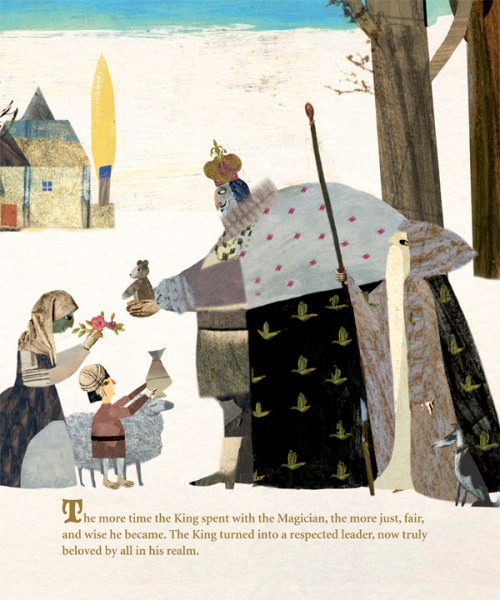
The Magician agrees. The next morning the King goes to the Magician and asks his advice on some kingly decisions. The Magician offers good suggestions, and the king accepts them. As the months go by, the King continues to rely on the Magician for guidance, and slowly the King learns to be fair and wise. He becomes the respected and admired ruler he always wanted to be.
The King realizes that not only is the Magician a trusted advisor, he is a loyal and beloved friend. One day, wracked with guilt over his one-time plot to kill the Magician, the King reveals the story. The Magician listens to the King’s secret, and shares one of his own.
On the night of the party, the Magician says, I saw you reach for the hilt of your sword when you questioned me, and I knew your intentions. He then divulges that he made up the prediction of their shared death date to teach the King a lesson—one the King has learned. He says, “It is our lives that have become entwined, not our deaths.”
For many more years the King and the Magician live as friends and confidants. The kingdom grows stronger and the King kinder and more loved by his people. One day the Magician dies. The King is sad, and realizes he is no longer afraid of his own death. The King has learned the Magician’s lesson well, and even though his advisor is gone, he continues to make wise and beneficial decisions.
Image copyright Gusti, text copyright Jorge Gusti, courtesy of Abbeville Press
Ten years later the King writes a letter to his son and heir. In his letter, the King cautions his son that at sometime in his life he may come across someone or something that “will arouse fear and jealousy in your soul.” He will want to destroy this person or thing to alleviate his fear, his father tells him. Instead, says his father, “open your heart or your home” because “what you thought was your most feared enemy, is really your most powerful friend.”
Jorge Bucay has written a classic tale of wisdom verses power wrapped around a clever trick. The story, full of intrigue and twists, initiates the kind of thought that leads to true enlightenment. The straightforward storytelling, beautifully paced over a lifetime of growth and change, builds suspense while lyrical descriptions create a beautiful flow that depicts both the quandary of the King and the kindness of the Magician.
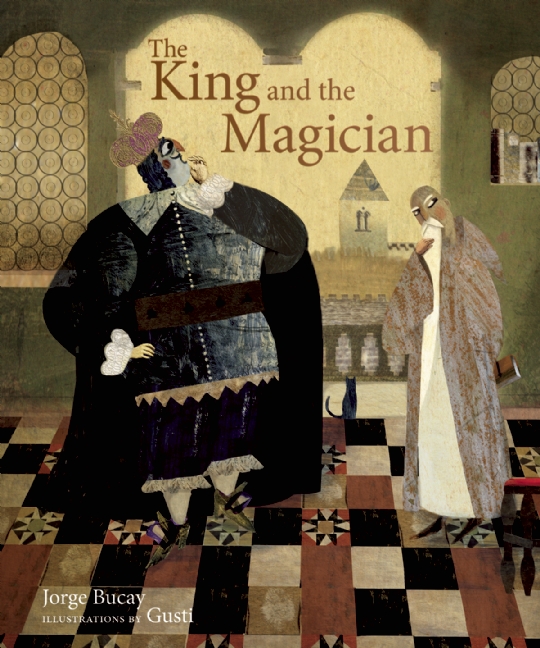
Gusti’s lavish illustrations, reminiscent of hieroglyphics and Medieval tapestries, are rendered in dark, rich brown, rust, black, olive and blue hues that gorgeously depict the splendor of the King and his castle, but also signal the somber weight in his soul. The regal tone even extends to the gilded text. The King is drawn as an imposing figure, towering over everyone else in his kingdom, but his feet and hands are tiny, lending him a bit of a comical yet vulnerable air. The King’s eyes narrow with cunning as he plots his evil deed but widen in doubt and dispair as the Magician works his special brand of magic.
This lovely book—in both message and art—would be a wonderful addition to any child’s or fable-lover’s library.
Ages 4 – 8
Abbeville Kids, 2014 | ISBN 978-0789212047
While I take some personal days over the next couple of weeks, I am re-blogging some earlier posts with updated interior art, activities, and links, when available.
Swap Ideas Day Activity
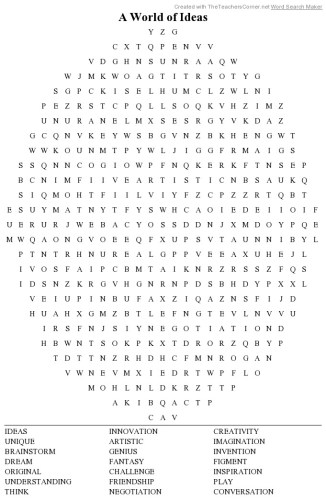
A World of Ideas Word Search
Creative ideas are a little like magic – sometimes seeming to come out of thin air – and can make the world a better place! Find the 21 words in this printable A World of Ideas Word Search about what swapping ideas can conjure up! Here’s the Solution!













 celebratepicturebooks.com