February 4 – Take Your Child to the Library Day

celebrate=picture-books-picture-book-review-the-librarian-of-basra-cover

About the Holiday

What better way to spend a Saturday than by stopping by your local library and picking up a few books to while away the hours on a cold winter day? While you’re there thank the librarians for all they do to keep libraries open and books accessible to all. Consider donating to your local library today!

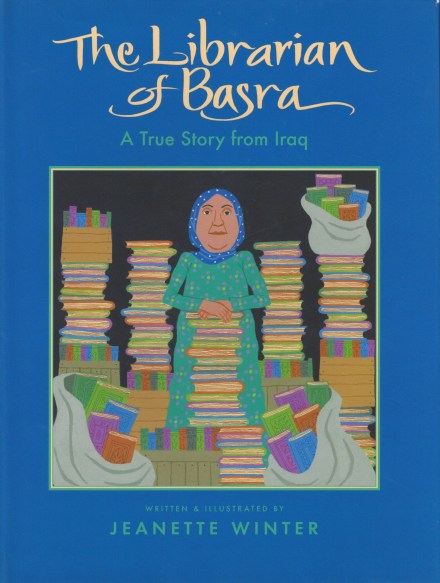
The Librarian of Basra: A True Story from Iraq

By Jeanette Winter


Alia Muhammad Baker, oversees the library of Basra in Iraq, where all those who love books and learning come to “discuss matters of the world and matters of the spirit.” Now, though, their talk is full of the war around them. Alia is afraid for her books, worried that the fires of war will destroy them, so she petitions the government for permission to move them to a safe place. Her request is denied, so Alia secretly fills her car each night with as many books as it can carry and takes them home.

celebrate=picture-books-picture-book-review-the-librarian-of-basra-war

Image copyright Jeanette Winter, courtesy of post-gazette.com

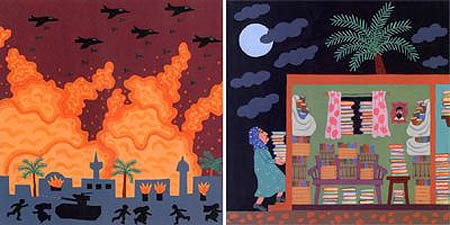
As rumors of war continue to swirl, the library becomes a shelter for government offices. When the battles reach Basra, “the city is lit with a firestorm of bombs and gunfire.” The government officials, soldiers, and library workers abandon the library, leaving Alia alone to protect the books. She summons help from Anis Muhammad, the restaurant owner on the other side of the library wall, and together they remove the rest of the books in crates and sacks and wrapped in curtains. Other shopkeepers and neighbors join in, removing the books and hiding them in Anis’s restaurant.

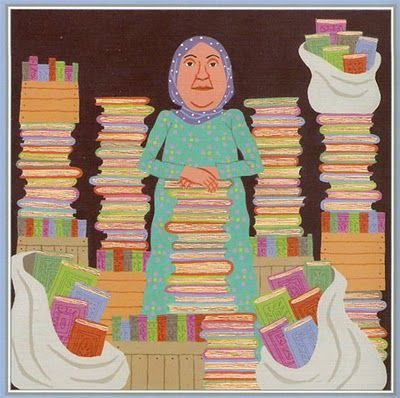
The war rages, but the books’ whereabouts remain a secret. “Then, nine days later, a fire burns the library to the ground.” “At last, the beast of war moves on,” but the books are still in danger. While the city is quiet, Alia “hires a truck to bring all thirty thousand books to her house and to the houses of friends.” Alia’s house is stacked floor to ceiling with the books she loves. They fill every cabinet, teeter on every shelf, and sit in piles under tables, chairs, and Alia’s bed. There’s hardly room for Alia herself.

But Alia is patient. She waits and “dreams of peace” and a time when a new library will be built to replace what has been lost.

celebrate=picture-books-picture-book-review-the-librarian-of-basra-alia

Image copyright Jeanette Winter, courtesy of Houghton Mifflin Harcourt Books for Young Readers

Jeanette Winter’s story of one woman who risked her own safety to protect the books she loved, including an ancient biography of Muhammad, reminds all readers of the importance of these storehouses of our collective history, culture, imagination, and knowledge. The gripping true-life story abounds with suspense as war grows closer but also with hope as friends and neighbors make Alia’s mission theirs too. In these days when so many libraries are threatened with closure, The Librarian of Basra, asks the question: what would we do to protect our books?

In square framed acrylic paintings on solid colored backgrounds, Winter reveals the day-to-day wartime events and the actions Alia takes to save the library’s collection. She is seen visiting a government official, sneaking books into her car by night, and watching as soldiers are stationed on the library roof. When the battle comes to Basra, silhouetted jets fly in a rust-colored sky as orange flames dwarf the buildings and people below. Under the threat of bombs, Alia and her neighbors are portrayed packing up the books and carrying them over the wall to safety. Readers will marvel at the image of Alia’s house stacked with books and may wonder how many their own homes could hold.

Ages 4 – 8

Houghton Mifflin Harcourt Books for Young Readers, 2005 | ISBN 978-0152054458

Take Your Child to the Library Day Activity

celebrate-picture-books-picture-book-review-library-coloring-page

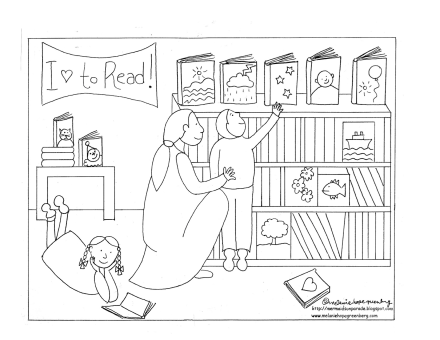
I Love the Library! Coloring Page


If the library is one of your favorite places, print out this I Love the Library! Coloring Page and enjoy!

Picture Book Review

February 1 – National Freedom Day

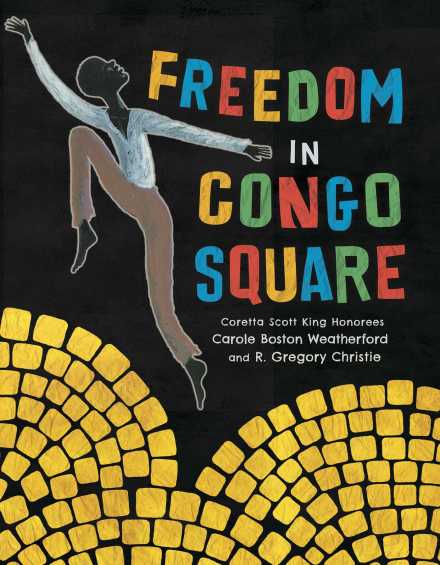
celebrate-picture-books-picture-book-review-freedom-in-congo-square-cover

About the Holiday

National Freedom Day commemorates the February 1, 1865 signing by President Abraham Lincoln of a joint United States House of Representatives and Senate resolution that outlawed slavery and later became the 13th Amendment to the Constitution. Major Richard Robert Wright Sr., a former slave, called on local and national leaders to meet in Philadelphia and formalize a national day of remembrance. In 1947, a year after Wright’s death, the U.S. Congress passed a bill marking February 1 as National Freedom Day. The proclamation was signed into law on June 30, 1948 by President Harry S Truman. The holiday led to Black History Day, which was later expanded to Black History Month.

Freedom in Congo Square

Written by Carole Boston Weatherford | Illustrated by R. Gregory Christie


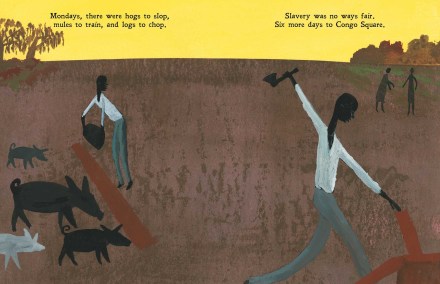
From sunup to sundown slaves brought to the state of Louisiana from their homelands in Africa and the West Indies toiled on plantations six days a week. The seventh day, Sunday, was set aside as a day of rest and worship, and in the afternoon people of African descent gathered in Congo Square in the heart of New Orleans to dance, play instruments, and talk. On Monday morning the long week began anew, but the rhythms of Congo Square sustained the men, women, and children through “hogs to slop, / mules to train, and logs to chop. / Slavery was no ways fair. / Six more days to Congo Square.

celebrate-picture-books-picture-book-review-freedom-in-congo-square-monday

Image copyright R. Gregory Christie, text Carole Boston Weatherford. Courtesy simonandschuster.com

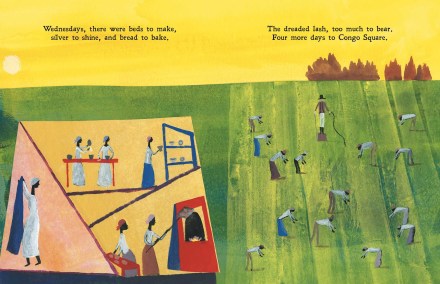
On Tuesdays, with “cows to feed, / fields to plow, and rows to seed,” five more days stretched out in endless labor. “Wednesdays, there were beds to make, / silver to shine, and bread to bake. / The dreaded lash, too much to bear. / Four more days to Congo Square.” Thursdays came with wash tubs and drying lines, scrub brushes, and brooms. “Spirituals rose from the despair. / Three more days to Congo Square.”

celebrate-picture-books-picture-book-review-freedom-in-congo-square-wednesday

Image copyright R. Gregory Christie, text Carole Boston Weatherford. Courtesy simonandschuster.com

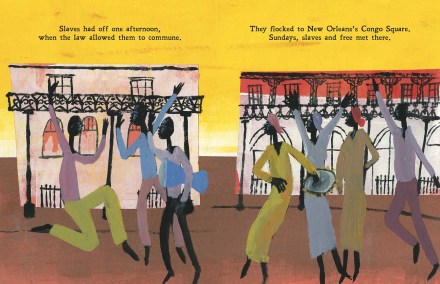
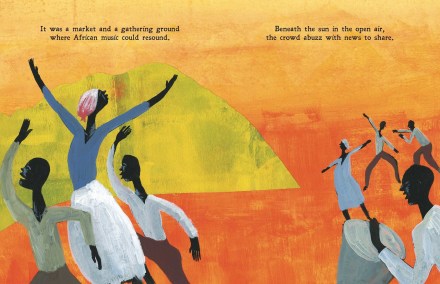
Fridays were spent in back-breaking work and though some brave souls dared to run, most were counting “Two more days to Congo Square.” Saturdays brought no more relief, but the days had whittled down to hours and “Freedom was slaves’ ardent prayer. / One more day to Congo Square.” At last came Sunday afternoon, and slaves and free rushed to Congo Square—“…a market and a gathering ground / where African music could resound.”

They met their kinsmen by nation, tribe, or language and revived their own stories and music played on drums, fiddles, shells, flutes, gourds, and bells that led to chants and dancing. “This piece of earth was a world apart. / Congo Square was freedom’s heart.”

celebrate-picture-books-picture-book-review-freedom-in-congo-square-sunday

Image copyright R. Gregory Christie, text Carole Boston Weatherford. Courtesy simonandschuster.com

Through powerful rhythmic couplets, as spare and austere as the work they describe yet ending in a focal point of hope, Carole Boston Weatherford recreates the steady thrum that resonated in the hearts of slave and free men and women as they anticipated each afternoon in Congo Square.  As the days remaining until Congo Square are counted off, Weatherford’s predominantly one-syllable words form a staccato beat, the pounding of hard, physical work. When Sunday comes and people find joy in their shared music and dance, Weatherford’s phrasing within the same structured couplets rises, employing multi-syllable words that give the verses a pulsing flow that echoes the freedom they find in Congo Square.

celebrate-picture-books-picture-book-review-freedom-in-congo-square-music-resounded

Image copyright R. Gregory Christie, text Carole Boston Weatherford. Courtesy simonandschuster.com

Gregory Christie’s vivid folk-art illustrations are a perfect complement to Weatherford’s verses. The elongated figures stand tall and proud amidst the fields and workrooms of the plantation. In some scenes the slaves’ angled bodies, leaning over to pick cotton, wash floors, or lift baskets may be bent, but they are not broken, and while two men work on building a wall, they seem to kneel prayerfully as they add another brick. In a moving two-page spread set at night, brown wood-grain houses superimposed with rows of sleeping slaves float on a blue-toned ground below a red sky, reminiscent of ships laden with Africans sailing the Middle Passage of the Atlantic slave trade. As the men and women congregate in Congo Square, Christie’s lithe figures raise their arms and kick their legs in dance. The fiery backgrounds swirl with color as the celebrants jump, stretch, play instruments and move with exultation.

A detailed Forward by historian and Congo Square scholar, Freddi Williams Evans and an Author’s Note following the text reveal more information on the history of Congo Square and its significance to Jazz music.

Freedom in Congo Square is both a heartrending and jubilant book that would make a wonderful and meaningful addition to any child’s home library.

Ages 4 – 8

little bee books, 2016 | ISBN 978-1499801033

Learn more about Carole Boston Weatherford and her books and discover book-related resources on her website!

If you’re lucky enough to live in Decatur, Illinois, you can visit R. Gregory Christie’s unique art studio, art school, and bookstore Gas-Art Gifts Autographed Children’s Bookstore. If you don’t live near Decatur, you can check out all the books, art, and items for sale on the website!

National Freedom Day Activity

celebrate-picture-books-picture-book-review-chalk-garden-st

Freedom Stone


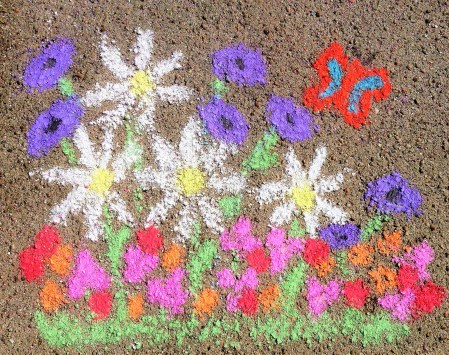
Freedom is a precious right—one that can be represented in different ways by each person. For today’s activity use a brick, paving stone, large stone, or molded plaster of Paris and decorate it with a picture or design that means freedom to you. Then put it in a special place—in a garden, near your front or back door, in your room, or in another spot—where it will remind you of freedom’s gifts.

Supplies

  • Brick, paving stone, large stone, plaster of Paris
  • Paint
  • Plastic gems, bead, or other small objects
  • Strong glue or other adhesive
  • Paint brush

Directions

  1. Create a design that shows what freedom means to you or an object that represents freedom to you
  2. Paint your stone with the design, let dry
  3. Add gems, beads, or other objects
  4. Display your Freedom Stone

Picture Book Review

January 4 – World Hypnotism Day

celebrate-picture-books-picture-book-reviews-mesmerized-cover

About the Holiday

Today’s holiday was established in 2006 to honor Dr. Jack Gibson, an Irish hypnotherapist who used hypnosis extensively in his practice. Its purpose is to dispel the myths surrounding hypnosis as “mind control,” which is a popular misconception perpetuated by movies and other types of entertainment. To celebrate, learn more about hypnotism and check out local special events, including free hypnotherapy sessions.

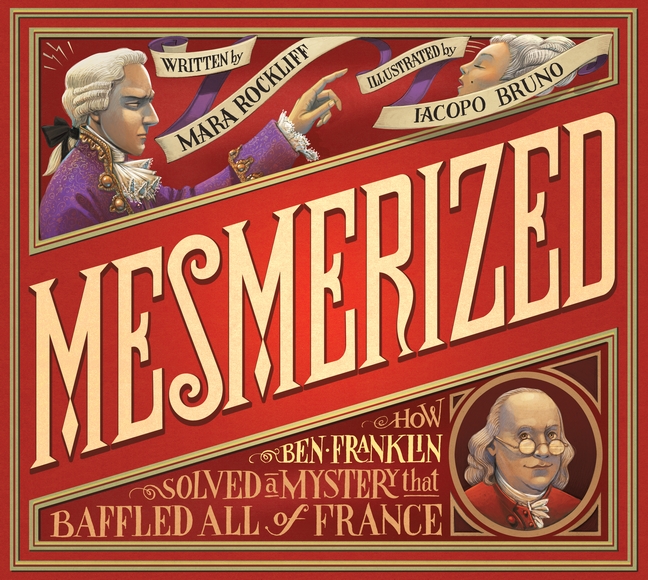
Mesmerized: How Ben Franklin Solved a Mystery that Baffled All of France

Written by Mara Rockliff | Illustrated by Iacopo Bruno


During the colonists’ war with England, the rag-tag American army needed France’s help. Who better to send than Benjamin Franklin, the charming and experienced statesman? Ben hoped to convince King Louis the Sixteenth and Queen Marie Antoinette to send money and soldiers to America, “but it turned out that they needed Ben’s help too….” At the time, Paris was enthralled by Science. This “new” discipline was introducing new materials, new inventions, and new ideas into society.

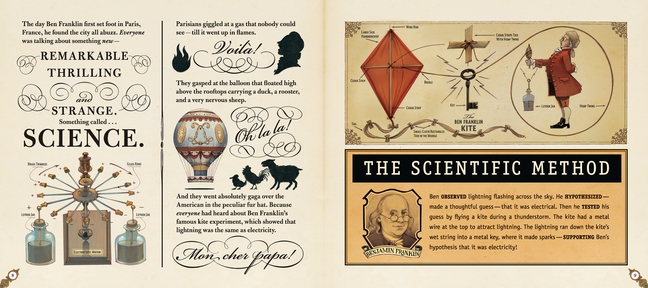
One of these notions was Ben Franklin’s own—and when the people of Paris saw him “they went absolutely gaga over the American in the peculiar fur hat. Because everyone had heard about Ben Franklin’s famous kite experiment, which showed that lightning was the same as electricity.” Soon, however, even Ben couldn’t hold a candle to Dr. Mesmer—the “elegant and mysterious” man who wielded “an astonishing new force.” “Dr. Mesmer said this force streamed from the stars and flowed into his wand. When he stared into his patients’ eyes and waved the wand, things happened. Women swooned. Men sobbed. Children fell down in fits.”

celebrate-picture-books-picture-book-reviews-mesmerized-science

Image copyright Iacopo Bruno, text copyright Mara Rockliff. Courtesy Candlewick Press

Dr. Mesmer seemed to do the impossible. He could make the same glass of water taste like strawberries or vinegar just by telling his patient what to taste. He said he could use this force to help people who were sick, and indeed, after a session with Dr. Mesmer “in a room hidden behind heavy drapes covered with signs and symbols” many people emerged saying they had been cured. Those rich enough paid 100 gold louis to learn his secrets, and everyone considered Dr. Mesmer’s force the “most remarkable thing that science had discovered yet!”

Everyone that is, except the city’s doctors, who “griped, and groused, and fussed, and fumed” because their patients only wanted to be treated by Dr. Mesmer. The doctors went to the King to complain. They even suggested that Dr. Mesmer’s force didn’t exist at all. Louis didn’t know what to think, but he did know who to consult—Ben Franklin! Ben wanted to observe this force in action for himself. As he watched, Dr. Mesmer’s helper, Charles, made a group of patients gasp, groan, twitch, and tremble. Some even fainted.

celebrate-picture-books-picture-book-reviews-mesmerized-ben-franklin

Image copyright Iacopo Bruno, text copyright Mara Rockliff. Courtesy Candlewick Press

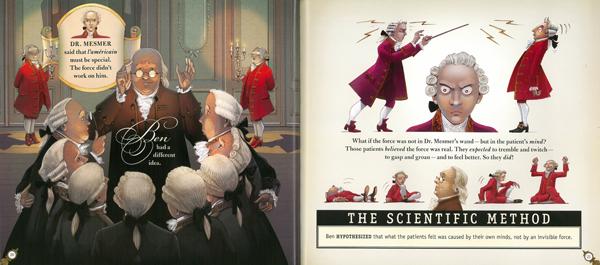
When it came time for Ben Franklin’s turn, “He didn’t gasp and groan or twitch and tremble. And he didn’t faint. In fact…he didn’t feel a thing.” Dr. Mesmer said that Ben must be “special” and that’s why the force didn’t work on him. Ben hypothesized a different reason. He said that instead of the force being “in Dr. Mesmer’s wand…it was in the patient’s mind.” They acted and felt the way they did because they expected to.

To test his theory, Ben had Charles wave his fingers near a woman’s face. She screamed and “said she felt a burning flame.” Next Ben told Charles to perform the same routine, but with the woman blindfolded. This time when Charles waved his fingers near her stomach, “she said she felt the heat—IN HER EAR. When he “moved behind her back, the woman shrieked that she felt burning—IN HER LEG!” Ben brought in another patient, blindfolded him, and told him he was being mesmerized. He said he could feel it—even though “Charles was not even in the room.” When Charles came back and waved his fingers and wand, the patient felt nothing.

“Ben tested patient after patient, but it was always the same. If the patient believed something would happen, something did—even without the force! If the patient did not expect anything to happen, nothing did—even with the force!” He revealed his observations to the king, and soon all of Paris was talking—and laughing. And Dr. Mesmer? He took his wand and ran. Ben Franklin soon returned to America—with the help from France he had sought and to his scientific work.

celebrate-picture-books-picture-book-reviews-mesmerized-blind-test

Image copyright Iacopo Bruno, text copyright Mara Rockliff. Courtesy Candlewick Press

The world benefited greatly from the meeting between Ben Franklin and Dr. Mesmer. Ben’s blind test is still used today when new medicines are being developed, and Dr. Mesmer’s force brought to light what we call the placebo effect and also the state of hypnosis, two powerful abilities of the brain that scientists are still studying.

Throughout Mesmerized Ben Franklin studies Dr. Mesmer and his force, using the scientific method. As Franklin observes, hypothesizes, tests, and finds his theory supported, each particular step of the scientific method applied appears highlighted and explained on the page. An extensive Author’s Note about the events of the story also follows the text

Mara Rockliff’s—dare I say it?—mesmerizing true tale of a meeting between two of the most fascinating figures of the late 1770s is the type of nonfiction that can get kids excited about science and history. Intrigue, mystery, charismatic personalities, wit, and a familiar topic are blended together to reveal the uses and steps of the scientific method and to highlight one event in time that still resonates today. Rockliff’s story crackles with fabulous vocbulary—doctors gripe, grouse, fume, are peeved; the king is in a quandary; patients twitch and tremble; plain Ben Franklin is an “apple pie” while elegant Dr. Mesmer a “layered torte.” Rockliff’s story flows at an enthralling pace, keeping readers riveted to discover Dr. Mesmer’s secret.

Iacopo Bruno’s sumptuous illustrations are nothing short of astounding. If the Oscars gave out awards to books, Bruno would certainly win for best costume and set. Every page is gilded with the opulence of the French court as gold buttons, collars, candle sticks, and drawing rooms glint with a polished sheen. Period dress is depicted in the women’s full flowing gowns of red, purple, and green, and in men’s top coats, breeches, lace cuffs, and high buckle shoes. Powdered wigs curl at men’s ears and climb high above women’s heads, festooned with flowers, ribbons, and pearls while Ben’s white, wavy locks fall naturally on his shoulders. In addition to setting the historical scene, Bruno depicts the effects of Dr. Mesmer’s force and the scientific methods Franklin used to debunk it with just the right amount of humor to entice kids and allow them to fully understand and appreciate Dr. Mesmer’s impact on society.

Ages 6 – 10

Candlewick, 2015 | ISBN 978-0763663513

To learn more about Mara Rockliff and her books, visit her website!

View a gallery of book jacket and other illustration work by Iacopo Bruno on his blog!

World Hypnotism Day Activity

celebrate-picture-books-picture-book-review-hypnosis-maze


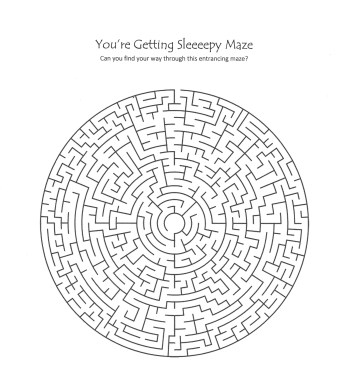
You Are Getting Sleeeepy Maze


The roundabout pattern of this printable You’re Getting Sleeeepy Maze may make you feel as if you’re in a trance, but don’t zone out before you solve it! Quick! Here’s the Solution!

celebrate-picture-books-picture-book-reviews-mesmerized-cover

You can find Mesmerized: How Ben Franklin Solved a Mystery that Baffled all of France at these booksellers

Amazon | Barnes & Noble | Books-a-Million | IndieBound

Picture Book Review

December 29 – Tick Tock Day

celebrate-picture-books-picture-book-review-ticktock-banneker's-clock-cover

About the Holiday

As the year winds down Tick Tock Day reminds us of the passage of time and encourages us to examine our life and find opportunities to accomplish the things we really want to. While the day only has 24 hours, a little creative scheduling, letting go of those tasks that aren’t so important, and even saying “no,” can help us achieve the things that matter.

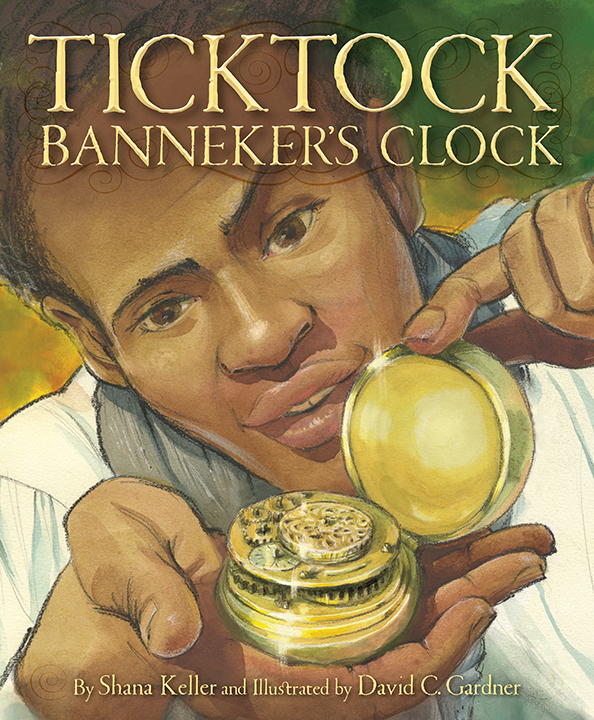
Ticktock Banneker’s Clock

Written by Shana Keller | Illustrated by David C. Gardner


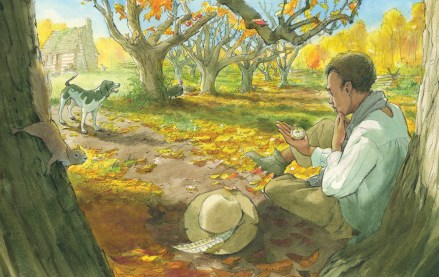
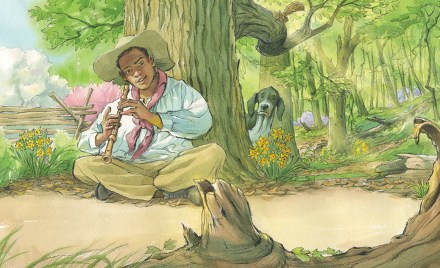
With winter approaching Benjamin Banneker has finished up his autumn chores and is looking forward to time to indulge his creative dreams. He finds his favorite spot under the chestnut tree—the place where during the summer he plays his violin and flute, “blending his soft music with the bird’s songs”—and pulls out a pocket watch he has borrowed from a gentleman. Benjamin is fascinated by the ticking and the movement of the small hands. He carefully opens the back of the watch and discovers “a world of wonderful whirls. There were gears of all shapes and sizes. Such a tiny maze!”

celebrate-picture-books-picture-book-review-ticktock-banneker's-clock-studying-pocket-watch

Image copyright David C. Gardner, courtesy of flyingdogstudio.com

The miniature timepiece is mesmerizing, but Benjamin’s mind holds a challenge—a big challenge. He envisions a large clock, one that chimes to tell the time. Remembering his math skills, Benjamin mulls over the scale needed to turn “something small into something big.” As the snow falls, Benjamin goes to work. First, he dismantles the pocket watch and draws careful diagrams of the gears and workings. Then he begins transposing these into larger drawings.

celebrate-picture-books-picture-book-review-ticktock-banneker's-clock-flute

Image copyright David C. Gardner, courtesy of flyingdogstudio.com

With the coming of spring and his drawings finished, Benjamin plans how he will build his clock. While the little pocket watch is made of metal, that material is much too expensive for a large version. As he ponders the problem under his favorite tree, Benjamin looks around him. Suddenly he knows! The answer is “right in front of him, even in his hands! The very instrument he played was made of wood!” There is a forest of trees on his farm, and this material is free.

During the summer between farm chores, Benjamin uses “every spare moment he had to find the perfect pieces of wood.” Once he has enough he begins to convert his drawings into carvings, whittling the gears and other pieces he will need. Soon, however, he becomes discouraged. The wood begins to split and come apart. Benjamin thinks about how his family cures tobacco leaves—drying them out until all the moisture evaporates. Perhaps, he thinks, he can do the same with wood to make it stronger. The process would take months, but Benjamin is patient.

celebrate-picture-books-picture-book-review-ticktock-banneker's-clock-carving

Image copyright David C. Gardner, courtesy of flyingdogstudio.com

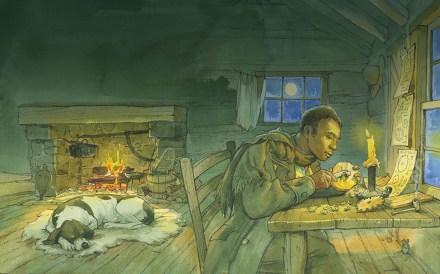
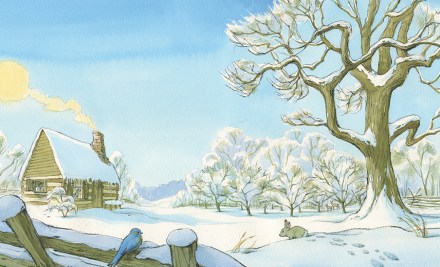
Winter has come around again, and the wood is finally ready. In his warm house Benjamin sets about carving again. During the day he carves near the sunny window, and at night he works by candlelight. At last he has all the parts he needs to build his clock. Gears, wheels, tiny pins, and the boards that will become the case are scattered across Benjamin’s work table. There is only one piece missing. A piece that cannot be made of wood—the bell!

Benjamin buys a bell from a metalsmith, and back home begins to build his clock. With his drawings to guide him, he fits the gears together and then sets the hands to “match up perfectly with the second, minute, and hour of each day. It took more than one try, but Benjamin had learned to be patient.” Using the sun to determine the correct time, Benjamin positions the hands and steps back. His clock works! “The little iron bell chimed every hour, on the dot, for the next forty years.” Benjamin becomes famous, and neighbors from near and far come “to see his amazing invention.”  

An Author’s Note expanding on Benjamin Banneker’s life and work follows the text.

celebrate-picture-books-picture-book-review-ticktock-banneker's-clock-winter

Image copyright David C. Gardner, courtesy of flyingdogstudio.com

With lyrical language that glides as smoothly as a well-oiled timepiece, Shana Keller reveals the remarkable story of Benjamin Banneker, born free during the time of slavery, who possessed exceptional math and scientific skills and used them to help his friends and neighbors and to make real his vision of a striking clock. Keller’s detailed and descriptive storytelling animates this life story, allowing readers to take the journey with Banneker as he experiences excitement, setbacks, and ultimately success. Banneker, embodying determination, persistence, and creativity, is an excellent role model for kids with big dreams of their own.

celebrate-picture-books-picture-book-review-ticktock-banneker's-clock-studying-fall-chores

Image copyright David C. Gardner, courtesy of flyingdogstudio.com

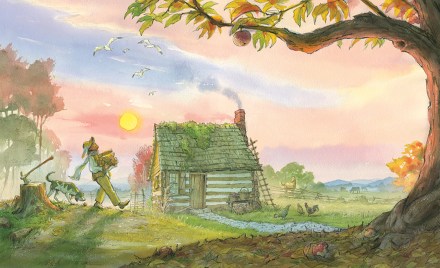
David C. Gardner’s lovely full-page and two-page-spread illustrations gloriously portray Benjamin Banneker’s farm and home as well as his dedicated commitment to building a striking clock despite—or perhaps spurred on by—the challenges he faced. Gardner’s detailed images set the biography firmly in its time period, letting children experience farm and home life in the 1750s. Banneker carries wooden buckets to feed the animals, tobacco leaves hang in a dry shed, a fire blazes in a large, open fireplace, and a candle flickers as Banneker whittles wheels and gears with his pocket knife. The realistic paintings that depict Banneker’s emotions as he imagines creating a large clock, overcomes obstacles, and studiously works on his drawings and carvings will inspire readers to attempt their own inventions—whatever they may be.

For any would-be inventors, history lovers, tinkerers, and science buffs, Ticktock Banneker’s Clock is a stirring biography that would make an inspirational addition to home, school and public libraries.

Ages 6 – 10

Sleeping Bear Press, 2016 | ISBN 978-1585369560

Learn more about Shana Keller and her work on her website!

Discover a portfolio of picture book art, fine art, animation, and videos by David C. Gardner on his website!

Tick Tock Day Activity

celebrate-picture-books-picture-book-review-cuckoo-clock-coloring-page

Cuckoo Clock Coloring Page


The chirp of a cuckoo clock keeps you on time—or at least aware of the passing of time! Here’s a printable Cuckoo Clock Coloring Page for you to enjoy!

Picture Book Review

December 18 – Bake Cookies Day

celebrate-picture-books-picture-book-review-the-way-the-cookie-crumbled-cover

About the Holiday

Winter and the holiday season just doesn’t seem right without cookies. Baking those traditional morsels passed down from generation to generation makes the house smell yummy, creates family bonds, and provides delicious gifts for parties, neighbors, friends, and even you! To celebrate, bake up a batch or two of your favorite cookies, and discover fascinating facts in today’s book!

The Way the Cookie Crumbled

Written by Jody Jenson Shaffer | Illustrated by Kelly Kennedy


You might love lemon cookies, chomp chocolate chip cookies, and munch macaroons, but do you know where cookies came from or their perhaps less-than-delicious beginnings? Well, one of our fav snacks most likely got its start on a hot rock around 10,000 years ago. Ingenious farmers created a paste of wheat and water and baked this concoction by the heat of the sun. Convenient? Sure! Tasty? Maybe not so much.

celebrate-picture-books-picture-book-review-the-way-the-cookie-crumbled-clay-oven

Image copyright Kelly Kennedy, text copyright Jody Jensen Shaffer. Courtesy of Simon Spotlight, Simon & Schuster.

Fast forward to the 600s and the Persians began making improvements to the recipe. “They added things like eggs, butter, cream, fruit, honey, and eventually sugar. By this time hot rocks had been replaced by clay ovens. But the temperature was hard to determine, so “bakers dropped a bit of batter in them as a test.” While the batter went on to be used for cakes, these “tiny test cakes became treats themselves—what we would now call cookies.”

As time went by and people began traveling more, new ingredients, such as ginger, cinnamon, nutmeg, and powdered deer horns were introduced. Wait!…What? That’s right…ground up deer horns were used like baking powder and baking soda are used today to make baked goods rise. It wasn’t until 1850 that those conveniences came around; and not until the early 1900s that ovens and refrigerators made baking and storing foods easier.

celebrate-picture-books-picture-book-review-the-way-the-cookie-crumbled-shopping

Image copyright Kelly Kennedy, text copyright Jody Jensen Shaffer. Courtesy of Simon Spotlight, Simon & Schuster.

English and Dutch immigrants brought these hand-held treats to America, and while everyone enjoyed them, during the Revolutionary War Americans didn’t want anything to do with British things. This might have been when we adopted the word “cookie” instead of the English “biscuit.” Whatever they were called, though, they were still mostly made in home kitchens. That changed when a New York company imported machines to make crackers in factories and cookie companies followed suit.

But why are cookies so popular at this time of year? It seems that long, long ago, fruit and nuts were considered party food. I know, right? As time went on people rethought their party platters, and cookies won out. Even Queen Elizabeth I got in on the fun, having “gingerbread men made in the shape of her favorite advisors. Sweet!” Of course, she’s not the only famous person to get special cookies—how about that jolly old elf in the red suit? You’ll have to read the book to see how that tradition got started. Let’s just say that around the same time, another tradition took off—that of putting chocolate chips in cookie batter.

Of course cookies kept evolving by adding different flavors, changing shapes, including filling and in other ways. Today, stores shelves and bakeries are loaded with a vast variety of cookies, and home bakers are inventing new recipes all the time. Cookies are favorites the world over, and lucky for us they have a very bright future!

celebrate-picture-books-picture-book-review-the-way-the-cookie-crumbled-vendors

Image copyright Kelly Kennedy, text copyright Jody Jensen Shaffer. Courtesy of Simon Spotlight, Simon & Schuster.

After becoming a “history of fun stuff expert on cookies,” readers can learn even more with pages dedicated to traditional cookies from around the world, the science behind baking cookies, and of course a recipe. There’s even a quiz so kids can test their newly acquired knowledge.

In her History of Fun Stuff: The Way the Cookie Crumbled early reader, Jody Jensen Shaffer introduces kids to the fascinating origins of one of their favorite snack foods. With tidbits sure to amaze and even raise giggles, Shaffer reveals not only the history of cookies, but facts on the development of cooking, the changes in baking methods, and the beginnings of automation. Her breezy, conversational style is perfectly aimed at her young audience, and the inclusion of facts on well-known favorites makes history relatable, relevant, and entertaining.

Kelly Kennedy infuses his cartoon-inspired illustrations with humor and realism to creatively depict the concepts in the text. His full and half-page vibrant and dynamic scenes of people baking in various types of ovens, shopping for ingredients, selling cookies, and more excellently bridge the transition from picture books to chapter books for developing readers. Images of clay ovens, Colonial homes, early-model refrigerators, factory assembly lines, and others bring the text to life is ways that kids respond to.

For developing independent readers or as a read-to for kids interested in history, baking, and the origins of one of their favorite snacks, The Way the Cookie Crumbled dishes up a winning gift or addition to a child’s library.

Ages 6 – 8

Simon Spotlight, Simon & Schuster, 2016 | ISBN 978-1481461801

To learn more about Jody Jensen Shaffer and her other books, visit her blog!

A gallery of illustration work for kids and adults as well as video awaits at Kelly Kennedy’s website!

Bake Cookies Day Activity

celebrate-picture-books-picture-book-review-boy-and-girl-baking-coloring-page

Bake up Fun! Coloring Pages


It’s fun to whip up a recipe together and then enjoy the results! With these two printable Bake up Fun! Coloring Pages, you can do both!

Boy and girl baking together | Delicious baked cookies

Picture Book Review

December 4 – It’s Universal Human Rights Month

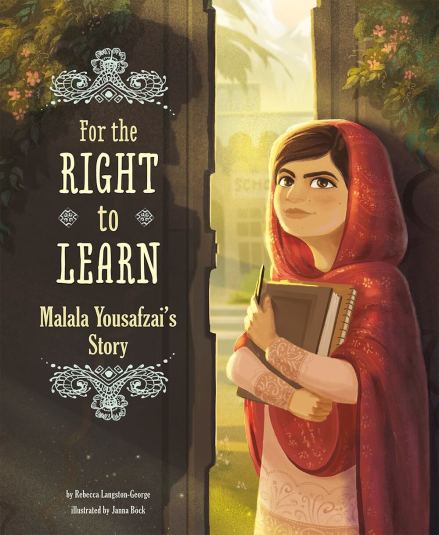
celebrate-picture-books-picture-book-review-for-the-right-to-learn-malala-yousafzai's-story-cover

About the Holiday

In the aftermath of World War II the Four Freedoms that had guided the Allies—Freedom of Speech, Freedom of Religion, Freedom from Want, and Freedom from Fear—did not go far enough in defining the areas that need to be covered. In December 1948 the United Nations General Assembly put forth 30 articles to further delineate the freedoms and rights of the world’s citizens, including the freedom of education, thought, health, opinion, and expression as well as the right to take part in government, have a free choice of employment, and more. To honor today’s observance, speak out when you see inequality and work to bring freedom in all it’s forms to everyone.

For the Right to Learn: Malala Yousafzai’s Story

Written by Rebecca Langston-George | Illustrated by Janna Bock


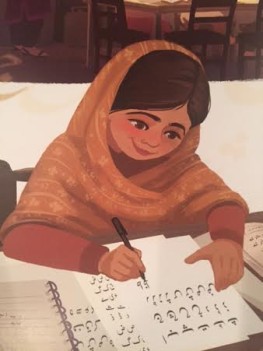
Malala Yousafzai lived in the Swat Valley of Pakistan, where her father, Ziauddin, ran a school in the town of Mingora. Malala loved school and even when she was tiny visited classes with her father often. Not all Pakistani children could go to school—some families couldn’t afford it and some believed girls should stay home to clean, cook, and keep house. But Malala’s father believed his daughter had the same right to an education as his sons. Malala thrived at school. She learned multiple languages and won many academic awards.

“But Taliban leaders who controlled the area were against letting girls go to school. They declared that females should be separated from males. They wanted to outlaw education for girls.” The Taliban leaders even tried to intimidate Malala’s father. “One ordered Ziauddin to close his school because girls and boys used the same entrance.” Ziauddin refused.
celebrate-picture-books-picture-book-review-for-the-right-to-learn-malala-yousafzai's-story-writing

Image copyright Janna Bock, courtesy of Capstone Press

While her father was worried, Malala’s determination grew stronger. She studied harder at school, and during the school holidays instead of covering her hands with henna flowers and vines as most Pakistani women did, Malala painted science formulas on hers. The Taliban continued to exert a tight grip on the Swat Valley, and instituted new rules: men could not shave, women had to cover their faces, movies were banned. And the radio “crackled with the sound of the Taliban preaching: No education for girls! Girls who attend school bring shame to their families!”

The Taliban frightened many, and empty seats in school classrooms began to be more frequent. Ziauddan and Malala appeared on TV to express the importance of education. In response the Taliban threatened Ziauddan and his school. Despite the threats Malala and her father continued to speak and write, “demanding equal education for girls.” The Taliban began patrolling the streets, perpetrating violence and destruction on anyone who didn’t obey their rules.

In December 2008, the Taliban announced that all girls’ schools would close by January 15. “Even before the deadline, bombs started to rain down on nearby schools as warnings.” The British Broadcasting Corporation wanted to reveal to the world what was happening. They wanted a girl to write a blog about her experience and “how it felt to be denied an education. Malala volunteered.
celebrate-picture-books-picture-book-review-for-the-right-to-learn-malala-yousafzai's-story-sneaking-to-school

Image copyright Janna Bock, courtesy of Capstone Press

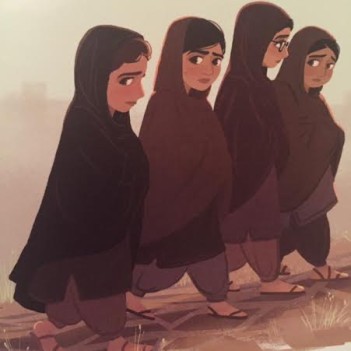
She took the pen name Gul Makai and related her blog by phone to a reporter who typed and published her words for two months. The first post appeared on January 3, 2009. On January 14 Malala wrote: “‘They can stop us from going to school, but they can’t stop us learning!’” Because activists were growing angry, the Taliban let girls ages 10 and younger go to school. Malala and her friends were 11. They began dressing to look younger and hid school books in their clothes. If they had been caught lying about their ages, they and their teachers could have been beaten or executed.

In May 2009 the Pakistani army began battling the Taliban and ordered everyone to evacuate. Malala and her family had to pack their belongings and leave. Malala wanted to take her books along, but there wasn’t room. She could only hope that they—and her home—would survive the fighting. Three months later, the people of Mingora were allowed to come home, but the town was not the same as they had left it. Shops and buildings were destroyed, burned frames of cars were strewn across the roads. The school’s walls were riddle with bullet holes. But the Taliban was gone. Ziauddin reopened his school for boys and girls.

While Malala returned to school, her life was not the same. Because of her blog, speeches, and interviews, she was internationally famous. Everyone wanted to hear what she had to say—everyone but the Taliban. “Talban leaders began to threaten her on the Internet. Saying she was working for the West, they announced Malala was on their hit list. The police warned the Yousafzai family to leave, but Malala refused to hide. She refused to be silenced.”

Because of the danger, Malala’s mother wanted her to ride the bus to school instead of walk. On October 9, 2012 as Malala and her classmates rode the bus home after school, the bus was stopped and a man boarded, demanding to know which girl was Malala. While no one spoke, the girls couldn’t stop their eyes from flashing quickly toward Malala. That was all the man needed. He “pointed a gun at Malala. Three shots shattered the silence.”

The bus driver rushed Malala and two of her friends to the hospital. Word spread quickly about the shooting through the town and around the world. Malala lay unconscious for days as the Taliban threatened her again should she live. As determinedly as Malala fought for equal education, she fought for survival. Finally, she was flown to a hospital in England for more surgery and to keep her safe. Gifts and wished poured in from all over the world. Malala stayed in the hospital for three months and underwent many procedures to correct the damage done by the Taliban’s bullets.

When she had recovered, Malala returned to her family and to her place on the world stage where she continues to speak out for the rights of all. On July 12, 2013 in a speech at the United Nations, Malala “declared, ‘One child, one teacher, one book, and one pen can change the world.’” On December 10, 2014 Malala became the youngest recipient of the Nobel Peace Prize for her “strength, power, and courage” to “lift her voice for children everywhere.”

celebrate-picture-books-picture-book-review-for-the-right-to-learn-malala-yousafzai's-story-speaking-to-the-UN

Image copyright Janna Bock, courtesy of Capstone Press

Malala. Those three syllables have become synonymous with bravery, freedom, and education. Rebecca Langston-George tells Malala’s remarkable story with the same unstinting vision that fuels Malala’s mission. Told sensitively, but candidly, this compelling biography reveals the harrowing evolution of the Taliban’s reach that, far from intimidating young Malala, only served to make her more determined. Langston-George’s excellent command over her well-chosen details and gripping pacing enhances the power of this important true story. Readers should come away inspired—not only by Malala’s life, but the fact that they too can make a difference.

Janna Bock depicts the changing landscape of Malala’s hometown both physically and philosophically with illustrations that help readers clearly envision and understand Malala’s life and environment. The faces of the townspeople and the Yousefzai family register distress and fear, but also determination, courage, and optimism as schools close, Mingora comes under fire, and the citizens become refugees. Malala’s shooting, and recovery are portrayed with thoughtful consideration of the readers, and the ending takes children inside the United Nations to witness Malala’s ultimate triumph.

An Author’s Note detailing more about Malala’s story then and now as well as a glossary and index follow the text.

For the Right to Learn: Malala Yousafzai’s Story is an important biography of current events and people shaping the world and our children’s future and is a must read for all.

Ages 8 – 12

Capstone Press, 2016 | ISBN 978-1623704261

Discover more fascinating books by Rebecca Langston-George on her website!

View a gallery of art by Janna Bock on Tumblr!

Universal Human Rights Month Activity

celebrate-picture-books-picture-book-review-friends-of-the-world-coloring-page

Friends of the World Coloring Page


Love and understanding for others makes the world a smaller—and better—place. Have fun coloring this Friends of the World Coloring Page!

Picture Book Review

November 27 – Pins And Needles Day

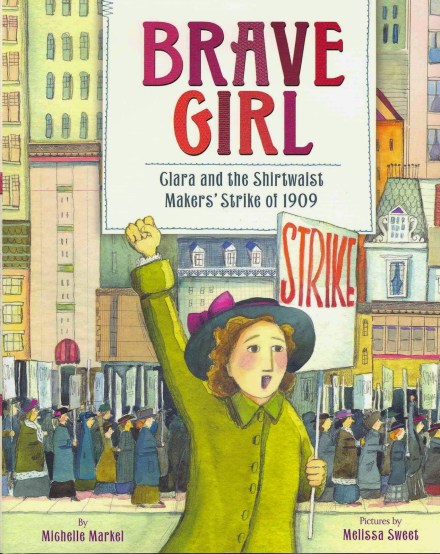
celebrate-picture-books-picture-book-review-brave-girl-clara-and-the-shirtwaist-makers'-strike-of-1909-cover

About the Holiday

It’s not often that a whole holiday is dedicated to a theatrical play. Pins and Needles Day dates back to 1937 and commemorates the Broadway musical of the same name that originally ran from 1937 to 1940. The play was produced by the International Ladies Garment Workers Union and cast sewing machine operators, cutters, and basters who were just looking for a creative outlet in their free time. The play ran for 1,108 performances and was so successful that the cast members were able to quit their jobs to fully partake in the performance schedule. The pro-Labor play saw a revival in 1978 and continues to be staged. This year the musical ran at the Provincetown Playhouse in New York City, featuring NYU students who were near the ages of the original cast members.
Brave Girl: Clara and the Shirtwaist Makers’ Strike of 1909

Written by Michelle Markel | Illustrated by Melissa Sweet


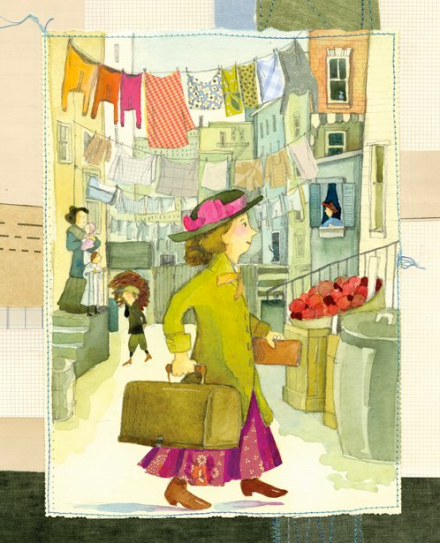
Among the immigrants sailing to New York stands five-foot-tall Clara Lemlich. She may not know it now, but she’s going to change her new city. While her father can’t find work, Clara gets a job in the garment industry, which hires school-age girls to make women’s clothing. Instead of going to school, Clara spends her days hunched over her sewing machine in a dark, smelly factory with many other girls, making clothes as fast as she can.
celebrate-picture-books-picture-book-review-brave-girl-clara-and-the-shirtwaist-makers'-strike-of-1909-clara-comes-to-town

Image copyright Melissa Sweet, courtesy of HarperCollins

The rules of the factory are severe. For minor mistakes workers can be fined or worse—fired, leaving their families without an income. The doors are locked so the girls can’t leave without being inspected to ensure they haven’t stolen anything. And the workers must toil long into the night. Despite it all Clara is determined to get an education even though it means walking to the library after work and missing sleep to read her lessons. 

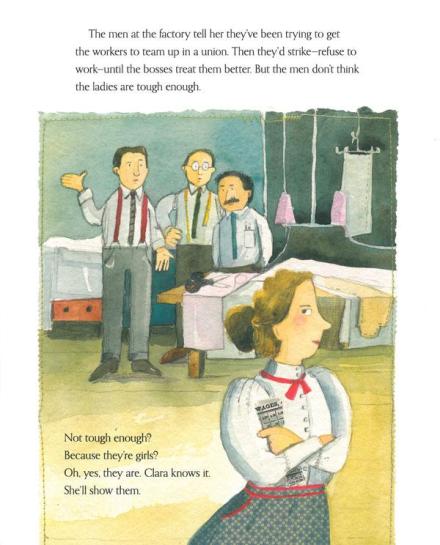
At the factory the girls become friends and reveal stories and secrets. The working conditions make Clara angry. She hears that the men at the factory want to form a union. If all the workers team up, they can hold a strike and force the management to treat them better the men say. But they don’t think the girls are tough enough.

celebrate-picture-books-picture-book-review-brave-girl-clara-and-the-shirtwaist-makers'-strike-of-1909-forming-a-union

Image copyright Melissa Sweet, text copyright Michelle Markel. Courtesy of HarperCollins

Clara knows what the girls are capable of. Every day she talks to her friends and the other women, urging them to fight for their rights—and they do! But it’s not as easy as the men predicted. The bosses don’t want to give in. In fact Clara’s life is in danger! She is beaten and arrested. Despite the intimidation she continues to picket. These small strikes make little difference, however—the bosses just hire new girls and the work continues.

Clara and other union leaders think only a huge strike by all workers in every garment factory in New York will cause the bosses to listen and make changes. At a union meeting workers pack the seats to listen to leaders from across the country. Not one of them recommends such a large strike. Clara can keep silent no more. She moves to the front of the hall and calls out. People lift her to the stage. Shouting “Unity is strength” she rallies the crowd and begins the largest strike of women workers ever in United States history.

celebrate-picture-books-picture-book-review-brave-girl-clara-and-the-shirtwaist-makers'-strike-of-1909-picket-line

Image copyright Melissa Sweet, text copyright Michelle Markel. Courtesy of HarperCollins

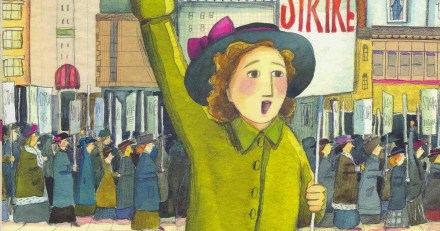
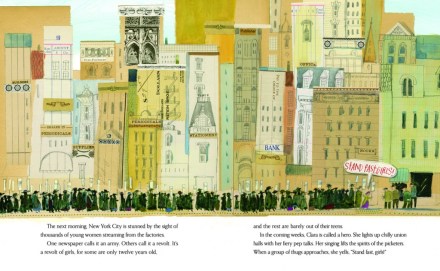
The next morning thousands of women take to the sidewalks, leaving their sewing machines empty and silent. New York is stunned! Newspapers call the strike a “revolt” and the girls an “army.” But this is really an army of children—the girls range in age from only 12 to 25 years old. Clara knows how to lead and motivate the girls. She gives rousing pep talks, sings, and stands up to thugs sent to harass them.

celebrate-picture-books-picture-book-review-brave-girl-clara-and-the-shirtwaist-makers'-strike-of-1909-clara-on-picket-line

Image copyright Melissa Sweet, courtesy of HarperCollins

All winter the girls join the men strikers. They are starving and cold and become the inspiration for newspaper articles and fundraising. Many wealthy women donate to their cause and join them on the picket lines. Finally the bosses relent. They agree to the formation of unions in their factories, to raise salaries, and to shorten the work week. Clara’s influence reaches far beyond New York. Factory workers in Philadelphia and Chicago take heart from her work and improve conditions in their cities. 

The final pages include more information about the garment industry in the early 1900s as well as a bibliography.

Brave Girl: Clara and the Shirtwaist Makers’ Strike of 1909 is a wonderful addition to any school, classroom, or home library not only for the biographical facts of Clara Lemlich’s life, but also because her story shows readers that no matter how young or small they are they can right wrongs and make a difference.

Michelle Markel’s Brave Girl is a spirited biography of Clara Lemlich, clearly outlining the life and working conditions of immigrants in the early 1900s—especially certain industries’ use of children to fill low-paying, oppressive jobs. This true-life story of a girl who wouldn’t give up or give in is told with pride and balance, touching on the dangers Clara faced in a sensitive manner appropriate for children. Overall, the idea that one person can make a difference no matter how big or how old shines through, making this not only a tale of the past, but an inspiration for today’s children and the future.

Melissa Sweet cleverly combines watercolor and gouache paintings with colorful fabric, ribbon, sewing pattern paper, and ledger pages to create illustrations fitting to the story. The pictures appear sewn onto the pages with straight, zigzag, and embroidery stitches, and the vibrant colors depict the fiery nature of Clara and all the workers who strove for better lives.

Ages 4 – 9 

Balzer + Bray, Harper Collins, 2013 | ISBN 978-0061804427

To find more books by Michelle Markel plus what’s coming next, visit her website!

Discover more books and fun activities for kids as well as resources for educators by Melissa Sweet on her website!

Vote “yes” to watch this Brave Girl book trailer!

Pins and Needles Day Activity

celebrate-picture-books-picture-book-review-sewing-word-search

Sewing Up Fun! Word Search


Sewing is a wonderful hobby and a fun way to make unique decorations for your room, accessories for your outfits, or gifts for friends and family. Like any great activity sewing has a vocabulary of its own. Find the 25 sewing-related words in this printable Sewing Up Fun! Word Search. Here’s the Solution!

Picture Book Review