May 2 – Baby Day + National Pet Month

About the Holidays

For today’s book, I’m celebrating two holidays—Baby Day and National Pet Month! Baby Day was established to showcase the importance of a child’s first three years of life and the special bond babies share with their parents, siblings, and the other people in their life. National Pet Month encourages pet owners to ensure that their pets have everything they need to live a long and healthy life. Whether a baby, a pet, or both have found a place in your heart, celebrate today by spending extra time with them and showing them how they make your life and family better.

Thanks to Jamie Michalak for sharing a copy of Hazel the Handful with me!

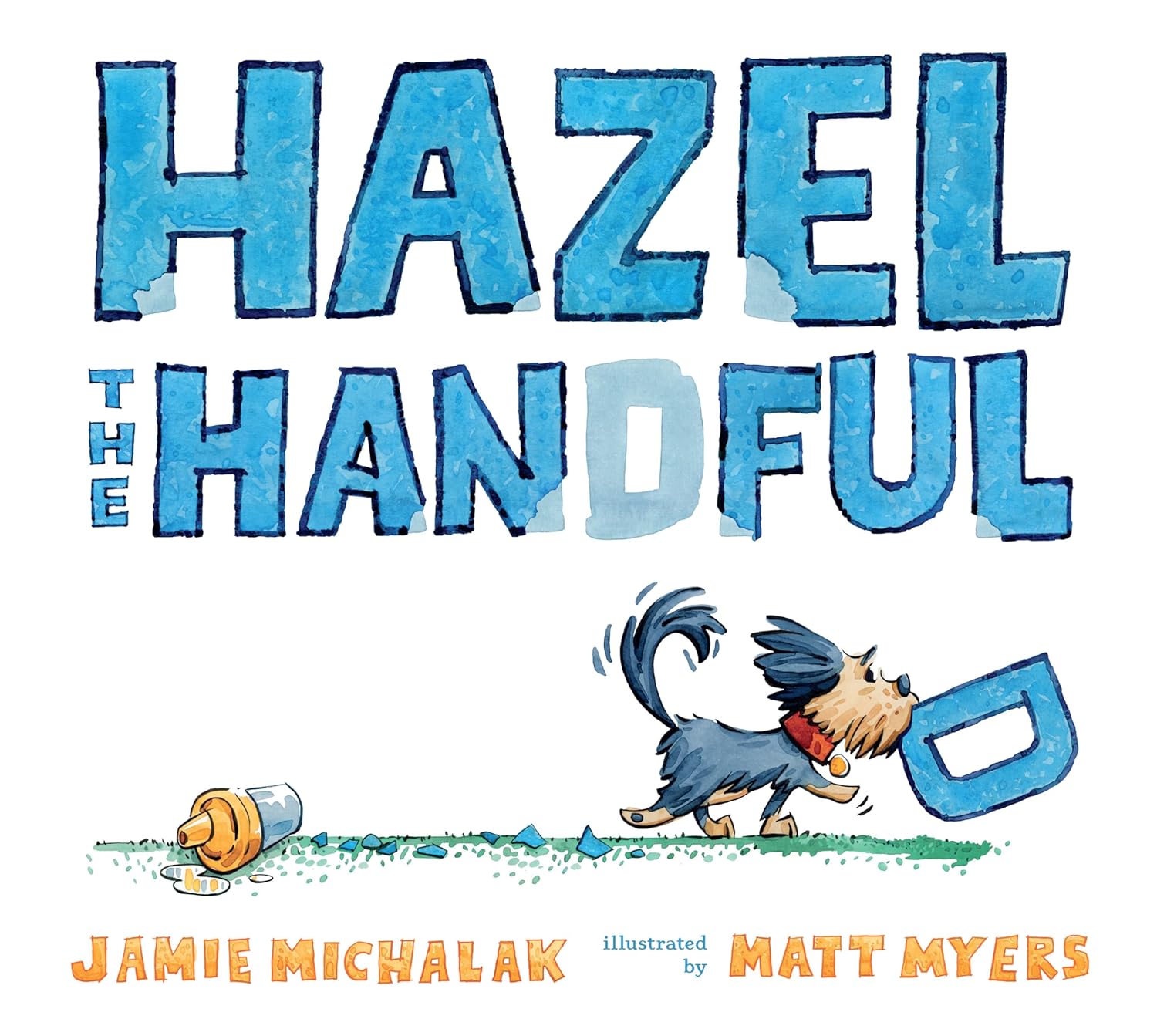
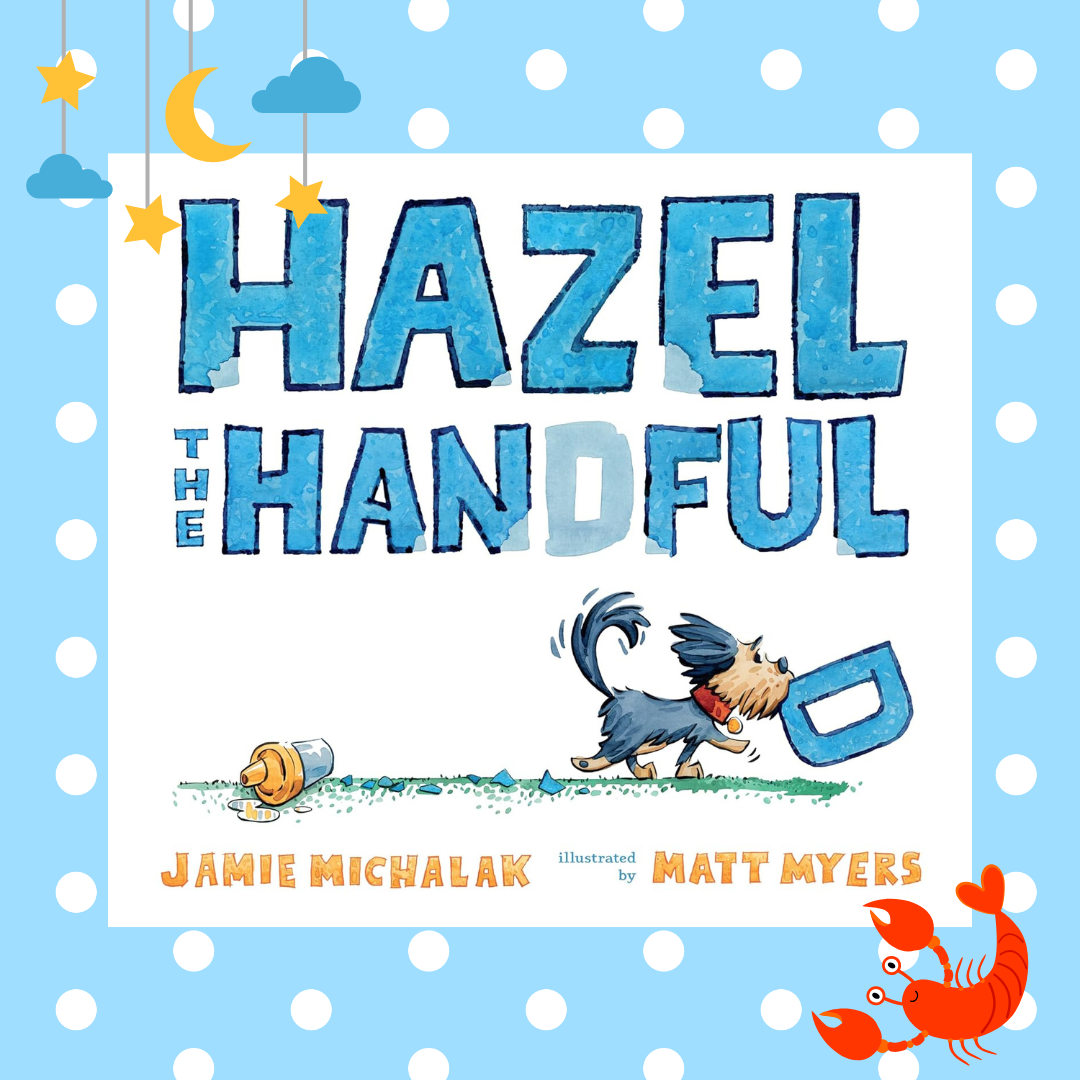
Hazel the Handful

Written by Jamie Michalak | Illustrated by Matt Myers


Right on the title page a seemingly tiny dog calls “Yoo-hooooo! Up here!” from a second story window, inviting readers to come inside and see her true stature. In the living room Hazel, tail thumping, and dwarfed by the sofa, the throw pillow, and even the chewed-on TV remote, proudly says, “In my home, I look big, no?” This pint-sized pup with a BIG personality is eager to show off her home. She points out her favorite toys, her stroller “ride,” and Bea, her “girl!!!”.
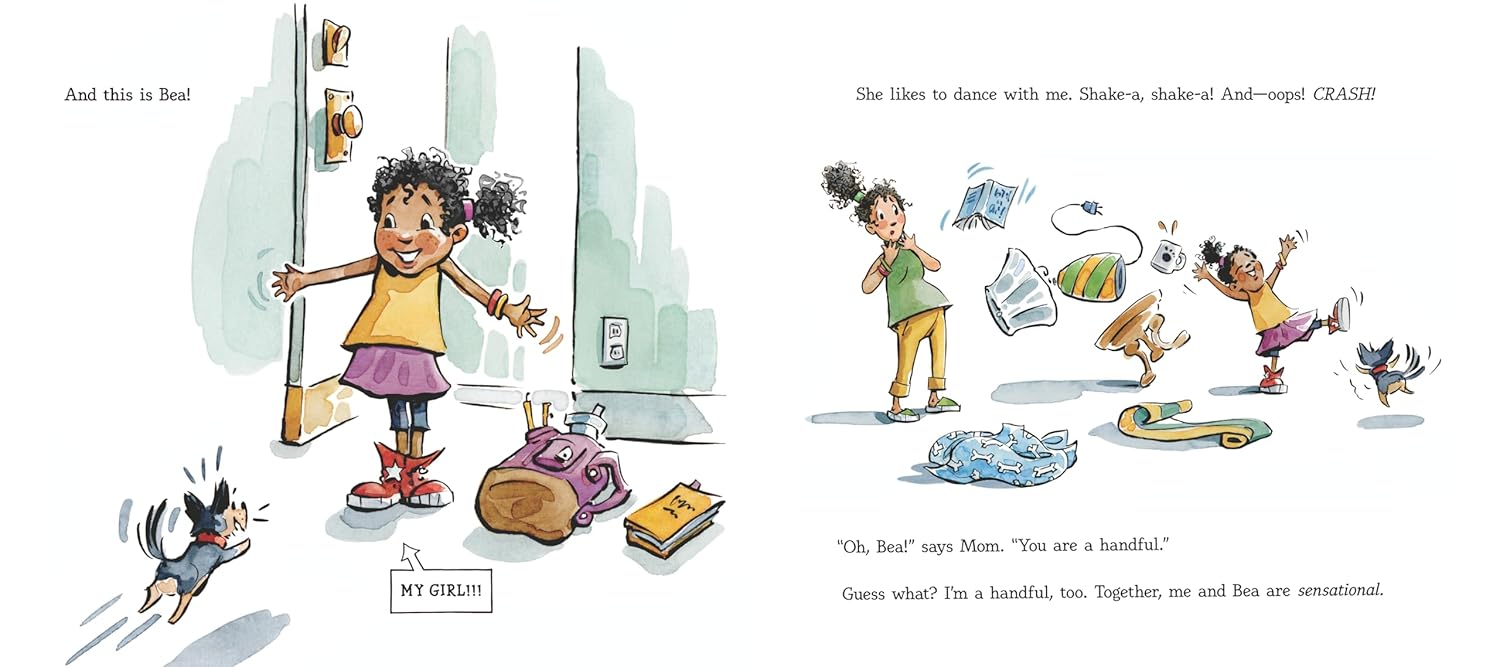
Illustration © 2025 by Matt Myers, text © 2025 by Jamie Michalak. Courtesy of Candlewick.

Hazel and Bea like to dance together, and when Bea’s mom declares her daughter “a handful” after crashing into an end table, sending the lamp and mug flying, Hazel adopts this cool moniker herself. Yes, “together, me and Bea are sensational,” she says. Next, Hazel outlines a “sensational day with Bea”—from outdoor adventures like going on a business trip (behind the fire hydrant) to scaring off the big dogs, to showing passersby that she is NOT a cutie patootie but a “Very Important Business Dog.” The rest of the day is spent napping . . . and doing fun things with Bea . . . and napping. Hazel loves Bea and can’t wait for each new day.
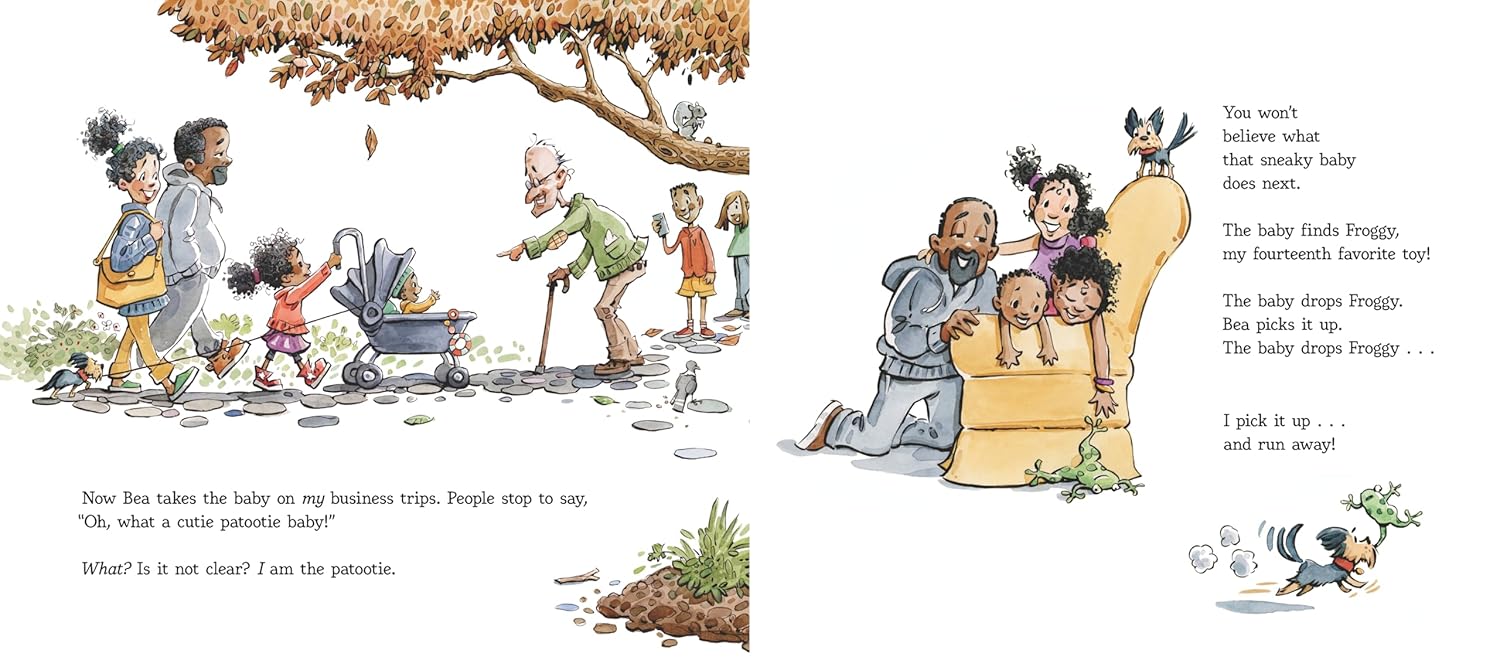
Illustration © 2025 by Matt Myers, text © 2025 by Jamie Michalak. Courtesy of Candlewick.

That was sensational day before “the baby moved in, with its “loud noises . . . and stinkity stink stinks.” Now there are no games, no stroller rides, and no “cutie patootie” compliments (those go to the baby), and sometimes Hazel even wonders if Bea still loves her. On a particularly non-sensational day, when Hazel inadvertently crashes into the end table, sending things airborne, and gets a scolding from Mom—”‘Oh, Hazel! You are a handful'”—she hides under her blanket in the one room no one checks. Miserable, Hazel falls asleep, but wakes to hear Bea shouting her name and crying.

Hazel runs to Bea, getting a tight hug. For the first time, Hazel recognizes how like a puppy the baby is and appreciates the pets he gives and the crumbs he leaves for Hazel to snack on later. Hazel’s thinking “maybe the baby isn’t so bad” after all.
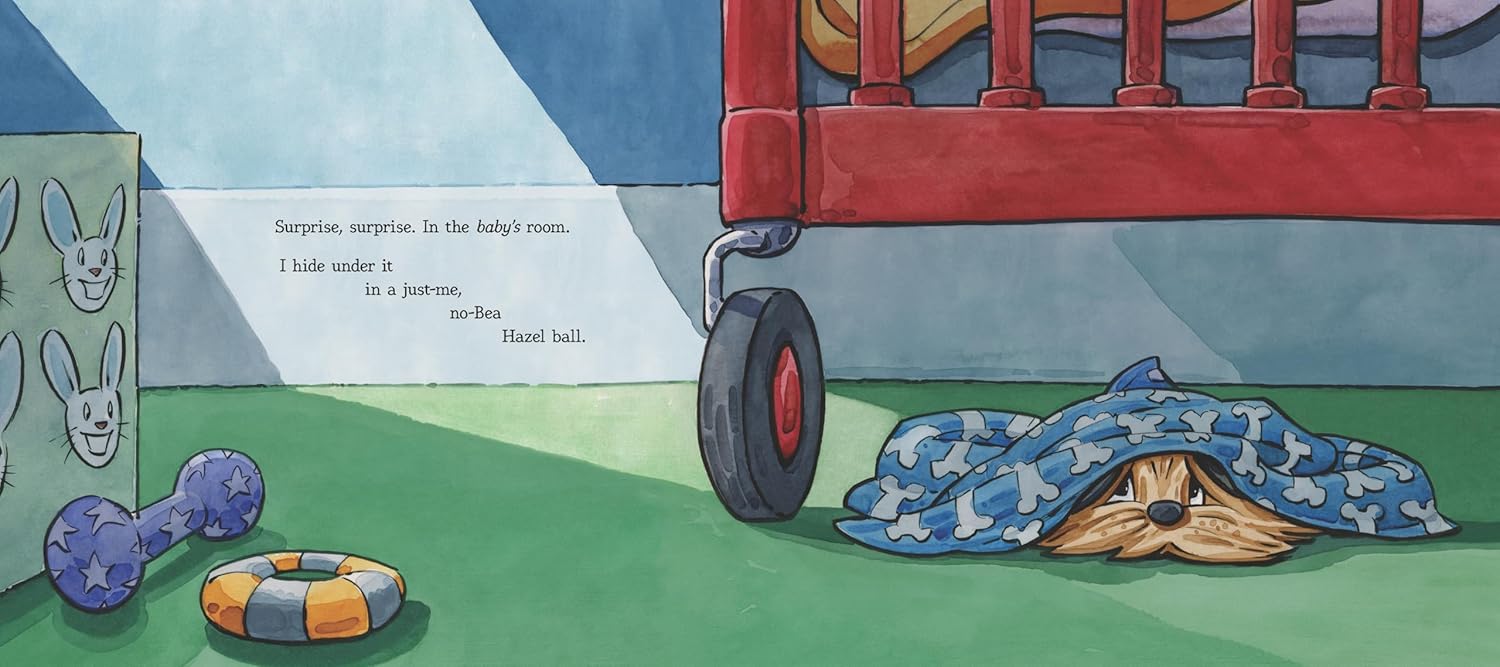
Illustration © 2025 by Matt Myers, text © 2025 by Jamie Michalak. Courtesy of Candlewick.

Jamie Michalak has packed her story of a spirited doggie wrestling with sibling rivalry, with humor, heart, and lots of laughs. Kids will instantly fall in love with teeny-tiny Hazel as she confidently introduces herself, suffers the incredulity of feeling second-best when the baby comes, and happily learns that she’s still loved by Bea. Hazel’s eventual embrace of the baby is comically true to her personality while showing a new perspective and generosity.

Matt Myers’ adorable and exuberant watercolor and ink illustrations capture all the sweetness and self-assurance of tiny Hazel’s larger-than-life personality. As Hazel takes readers on a tour of her home, kids will quickly catch onto the event that will soon change her life and be charmed by Hazel’s love for Bea and all that goes into their special bond. The two spreads showing before- and after-baby photos of Hazel are particularly humorous, as is her ice-skating-worthy slide into the table that sets up her realization that there’s room for both the new baby and her in this loving family.

A funny and endearing read aloud kids will want to share again and again, Hazel the Handful will enjoy continuous rotation at school and public libraries and be a quick favorite on home bookshelves. 

Ages 4 – 8

Candlewick, 2025 | ISBN 978-1536231199

Jamie Michalak is the author of the Dakota Crumb books, illustrated by Kelly Murphy; the Frank and Bean books, illustrated by Bob Kolar; the Joe and Sparky series, illustrated by Frank Remkiewicz; and many other acclaimed titles for young readers. She lives in Rhode Island. Visit Jamie at jamiemichalakbooks.com.

Matt Myers is the illustrator of the Infamous Ratsos chapter book series by Kara LaReau, Lily Leads the Way by Margi Preus, and E-I-E-I-O: How Old MacDonald Got His Farm (with a Little Help from a Hen) by Judy Sierra, as well as many other books for young readers. Matt Myers lives in Charlotte, North Carolina. Visit Matt at myerspaints.com.

Baby Day + National Pet Month Activity
celebrate-picture-books-picture-book-review-Peppy-Puppies-Match-Up-Puzzle

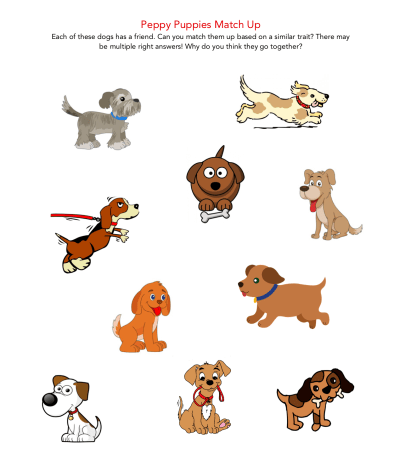
Peppy Puppies Match Up Puzzle


These puppies want to find a friend. Can you match the ones that go together in this printable puzzle? There may be more than one right answer! How many matches can you find?
Peppy Puppies Match Up Puzzle

You can purchase Hazel the Handful from these booksellers

Amazon | Barnes & Noble | Bookshop

Picture Book Review

April 30 – National Month of Hope

About the Holiday

Founded in 1991, National Month of Hope encourages people to bring hope to those in need both emotionally and physically. Reaching out to let a family member or friend know you’re there for them no matter what they need, volunteering to help out in the community or on a personal level, and simply sharing a smile with those around you are all ways to show others you care. 

Thanks to Harry N. Abrams for sharing a copy of this book with me!

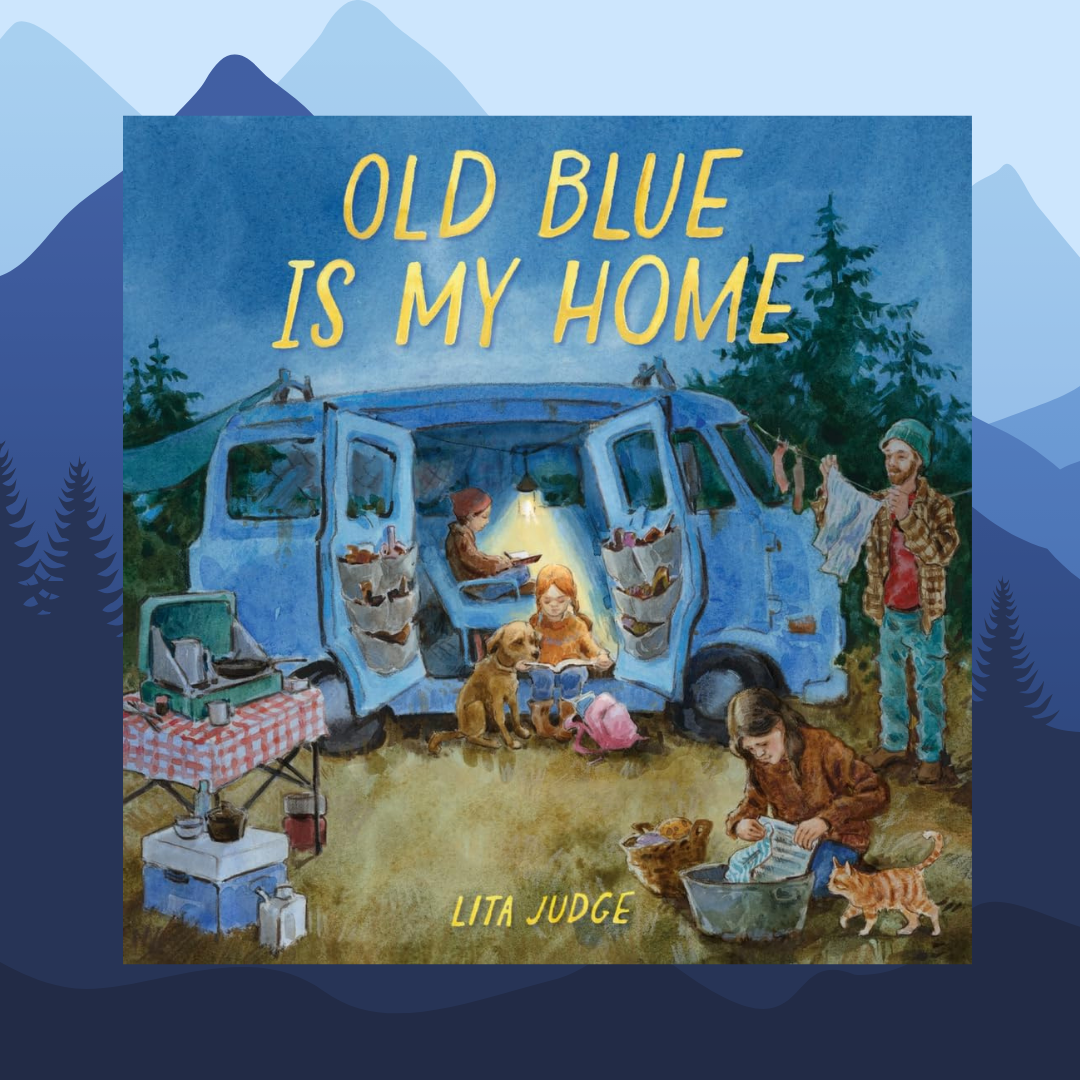
Old Blue Is My Home

By Lita Judge


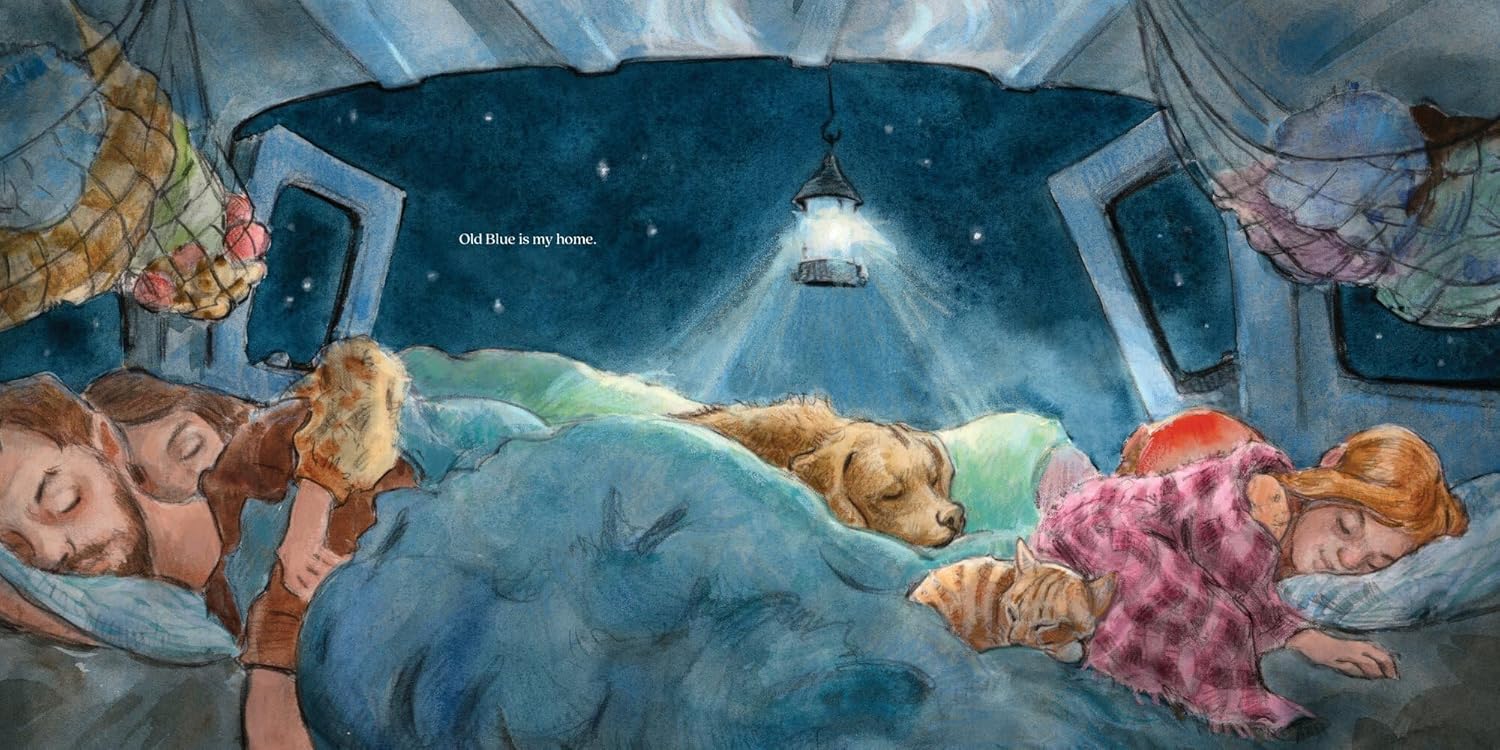
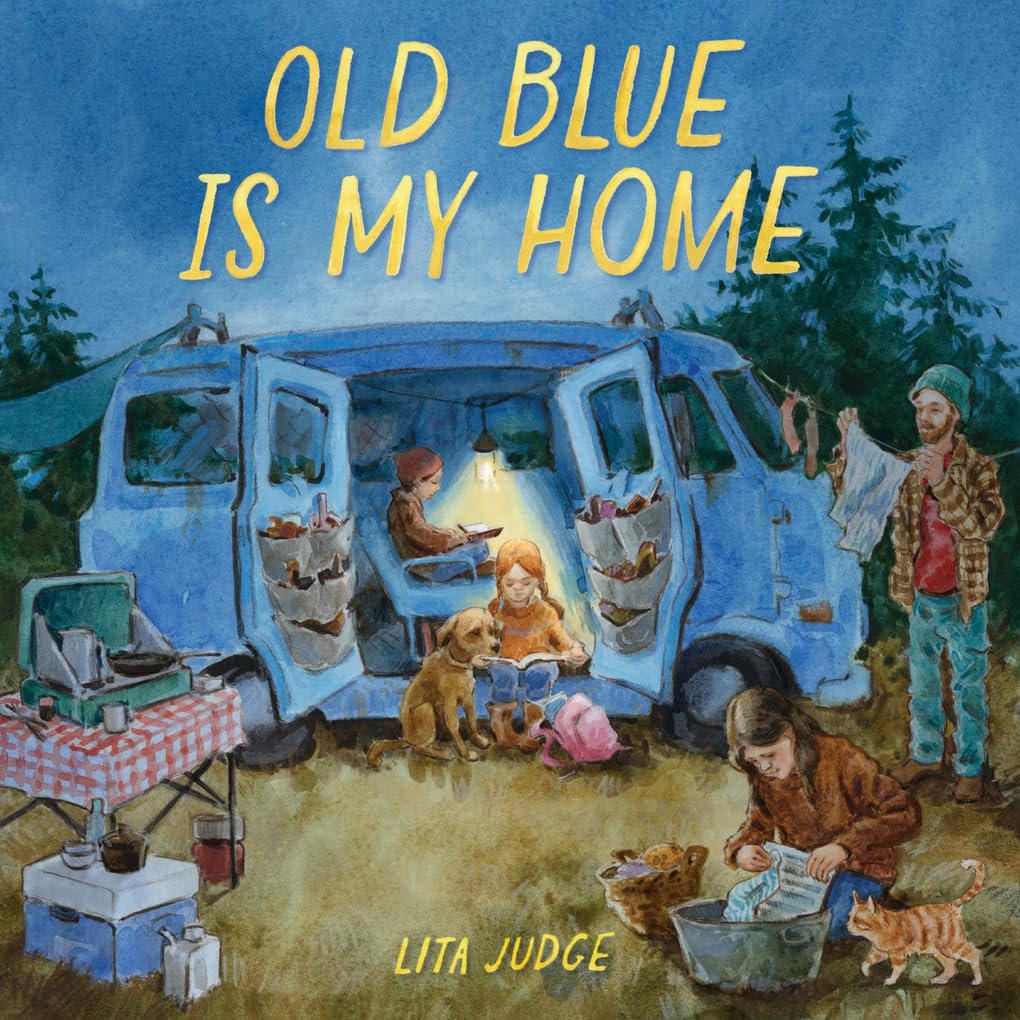
The young narrator introduces readers to Old Blue, her family’s faded and rusty-in-spots van, as they wait in traffic, stating that this beloved vehicle reliably transports them wherever they need to go, from town to the mountains and especially to out-of-the-way places where her family can “sit under the stars and eat warm soup before going to sleep.” Tucked in all together, the girl reveals, “Old Blue is my home.”

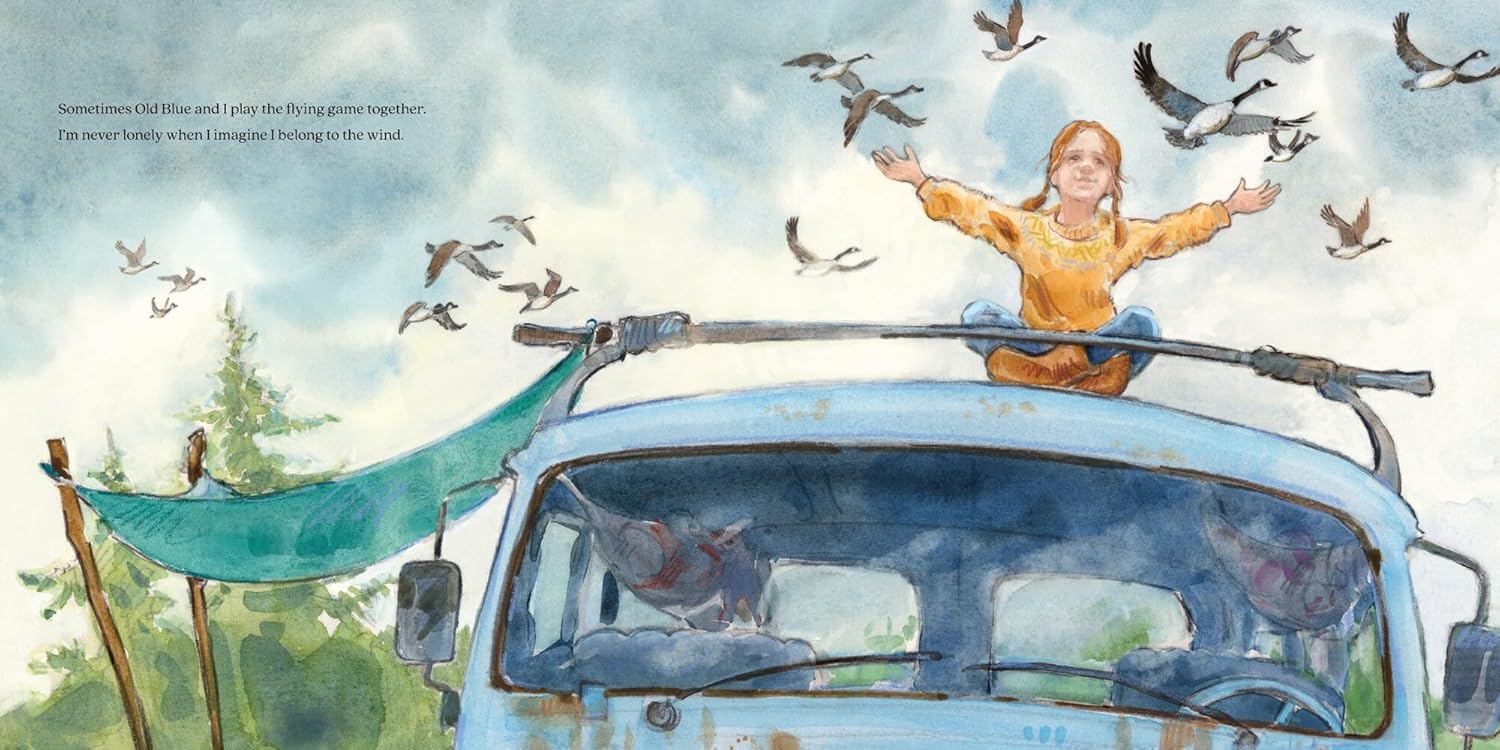
In the morning, Dad cooks breakfast on their camp stove, while she takes a shower courtesy of a plastic bag full of water hung from a tree. Inside Old Blue, there are nooks and crannies for all that they need, including a “cozy library” full of her “favorite books.” Rain or shine, she says, “Old Blue is my home.” Still, there are times when she yearns for permanence and community. “Sometimes,” she says, “living in Old Blue makes me feel like I’m from everywhere and belong nowhere.”

Text and illustration © 2025 by Lita Judge. Courtesy of Harry N. Abrams.

Going to school is especially difficult as kids shun her unconventional living conditions and don’t include her. When she feels this sadness, she finds comfort and assurance cuddling with her mom and peace in nature. While the family hopes for a “forever home,” the girl appreciates everything Old Blue provides. Old Blue is her home.

Following the story, Lita Judge talks about her own childhood experience living a “nomadic existence in Alaska, Nevada, Utah, Oregon, California, and Wisconsin” as her family moved frequently, following her “father’s work in remote areas” that “led to housing insecurity.” She also describes the “rich relationship with nature” her upbringing fostered as well as the toll it took on her feelings of security, serenity, and community. Judge finally reveals how her imagination helped her cope while also fueling her desire to connect through her creative talents. Judge includes a discussion adults can share with their children that defines various types of Housing Insecurity and its risks, and encourages readers to offer help through their local organizations.

Text and illustration © 2025 by Lita Judge. Courtesy of Harry N. Abrams.

While sharing her personal experience while growing up, Lita Judge’s moving tribute to her beloved non-traditional home connects all children through their common feelings, dreams, and close family ties. The narrator’s honest storytelling is compelling and heartfelt and will draw readers in, inspiring empathy and a better understanding of what many children face every day. Her repetition of “Old Blue is my home” can spark thoughtful consideration of what qualities actually make any dwelling a “home” rather than just a place to live in. 

Judge’s rich watercolor and colored pencil illustrations are infused with warmth, love, and togetherness. Children will relish the realistic portrayals of the family’s lifestyle and their facial expressions as well as the meticulous images of the van’s interior spaces that embrace the family’s necessary supplies, childhood comforts, and cherished pets.

Offering empathy and understanding for those experiencing housing insecurity as well as a touching look at family bonds, Old Blue Is My Home is a must addition to school and public libraries and home collections.

Ages 4 – 8

Harry N. Abrams, 2025 | ISBN 978-1419771521

About the Author/Illustrator

Lita Judge is the award-winning author-illustrator of many children’s books, including Dogs: A History of Our Best FriendsThe Wisdom of TreesBorn in the WildFlight SchoolRed Sled, and her illustrated young adult novel, Mary’s Monster, as well as the illustrator of Forty Winks: A Bedtime Adventure, written by Kelly DiPucchio. She lives with her husband, three cats, and a parrot in New Hampshire.

You can purchase Old Blue Is My Home from these booksellers

Amazon | Barnes & Noble | Bookshop

Picture Book Review
March 25 – National Reading Month

About the Holiday

No matter whether you live in a city, a small town, or a farm, in a house or an apartment, you can travel anywhere through books. The magic of reading lies in its ability to transport readers through history, to far-away places and long-ago times, or perhaps to the future, where all it takes is one’s imagination to make it so. National Reading Month invites readers of all ages to experience the world in new and unfamiliar ways through amazing books like today’s that celebrates the hands-on, individual learning of homeschooling.

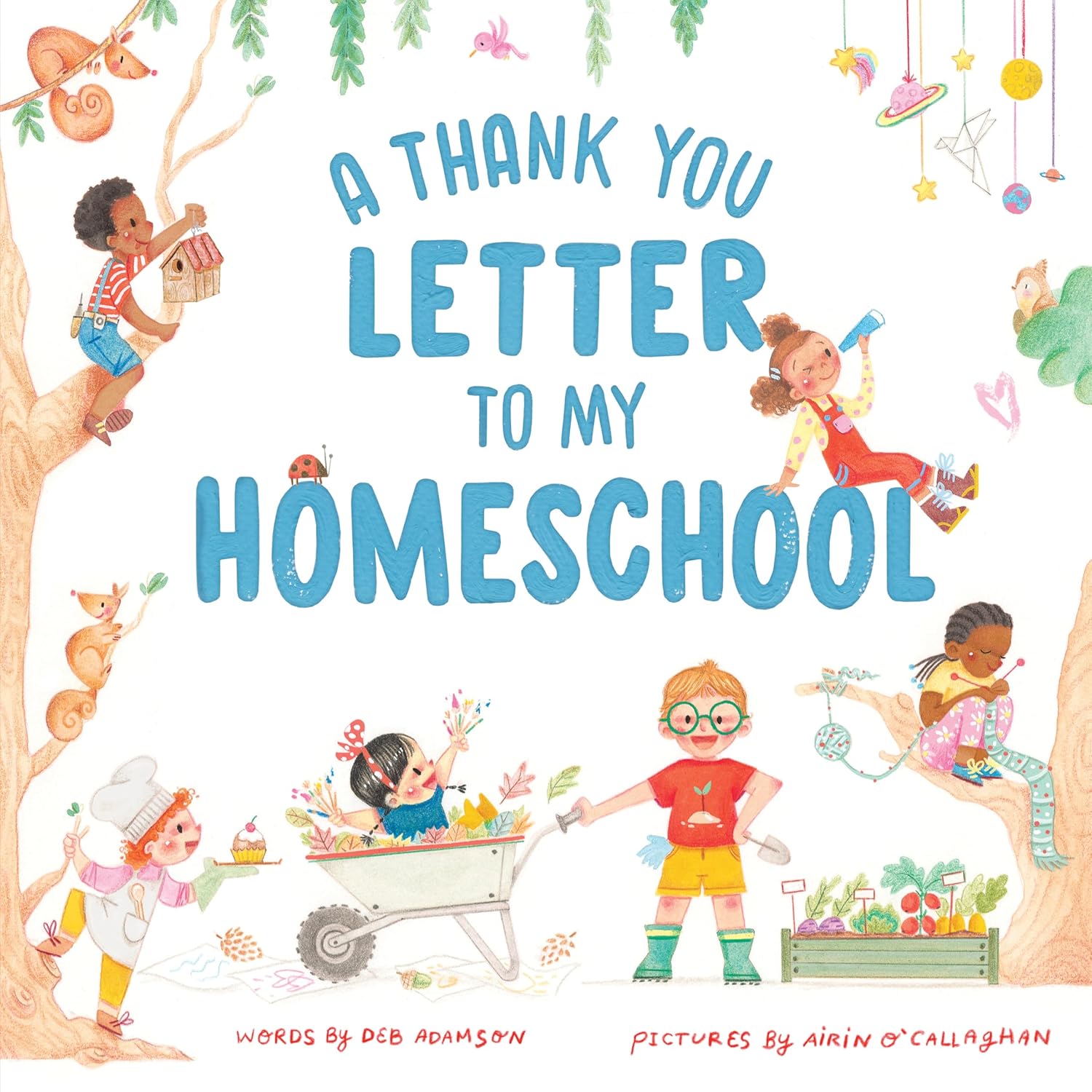
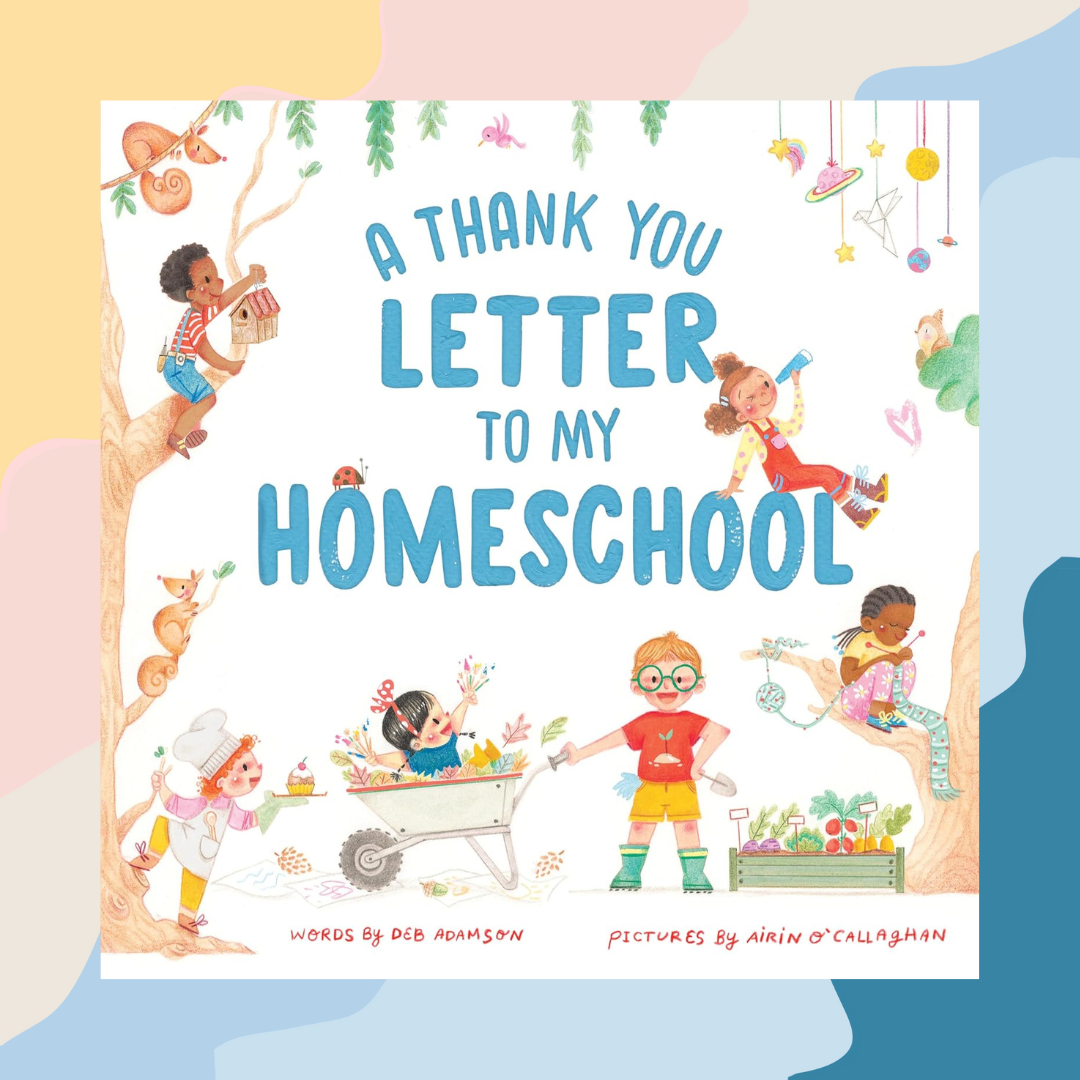
A Thank You Letter to My Homeschool

Written by Deb Adamson | Illustrated by Airin O’Callaghan


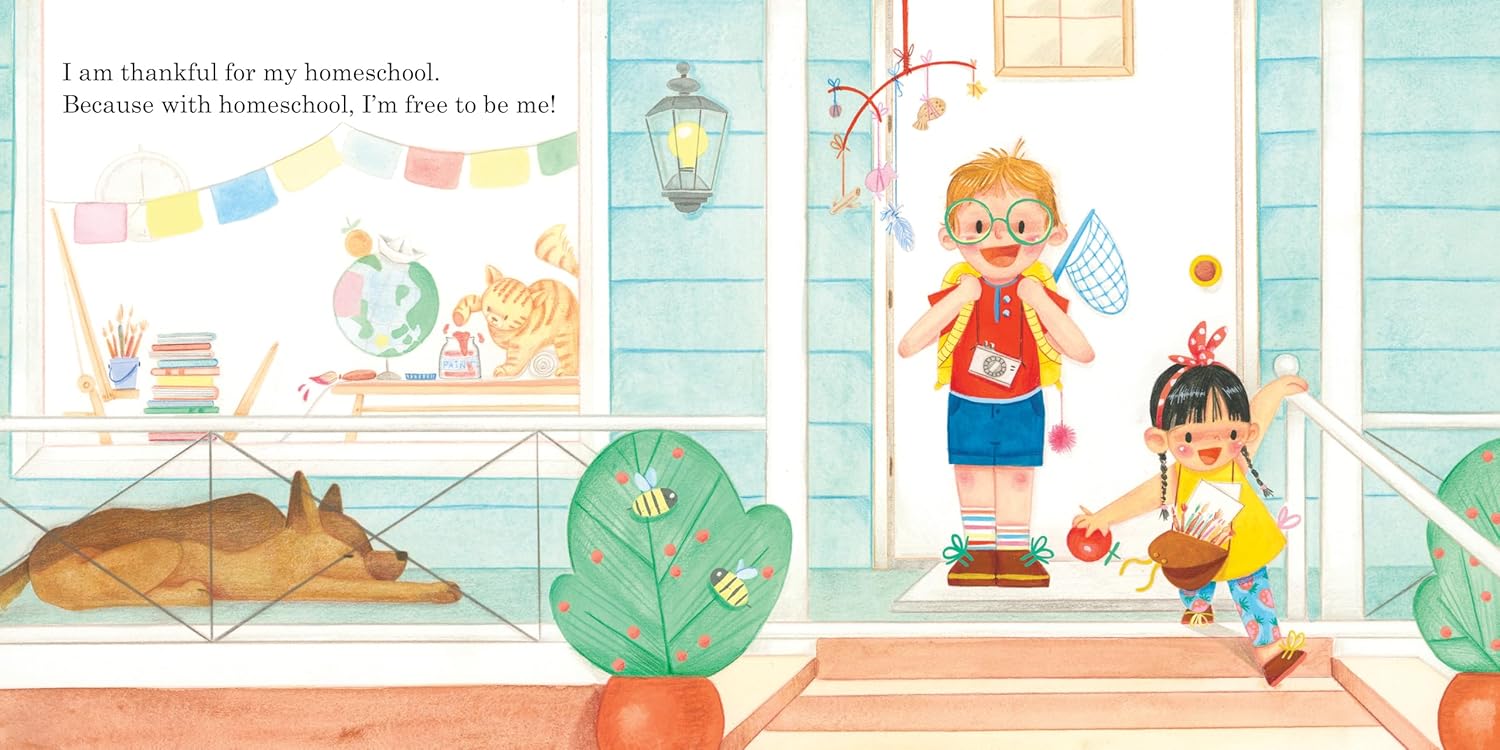
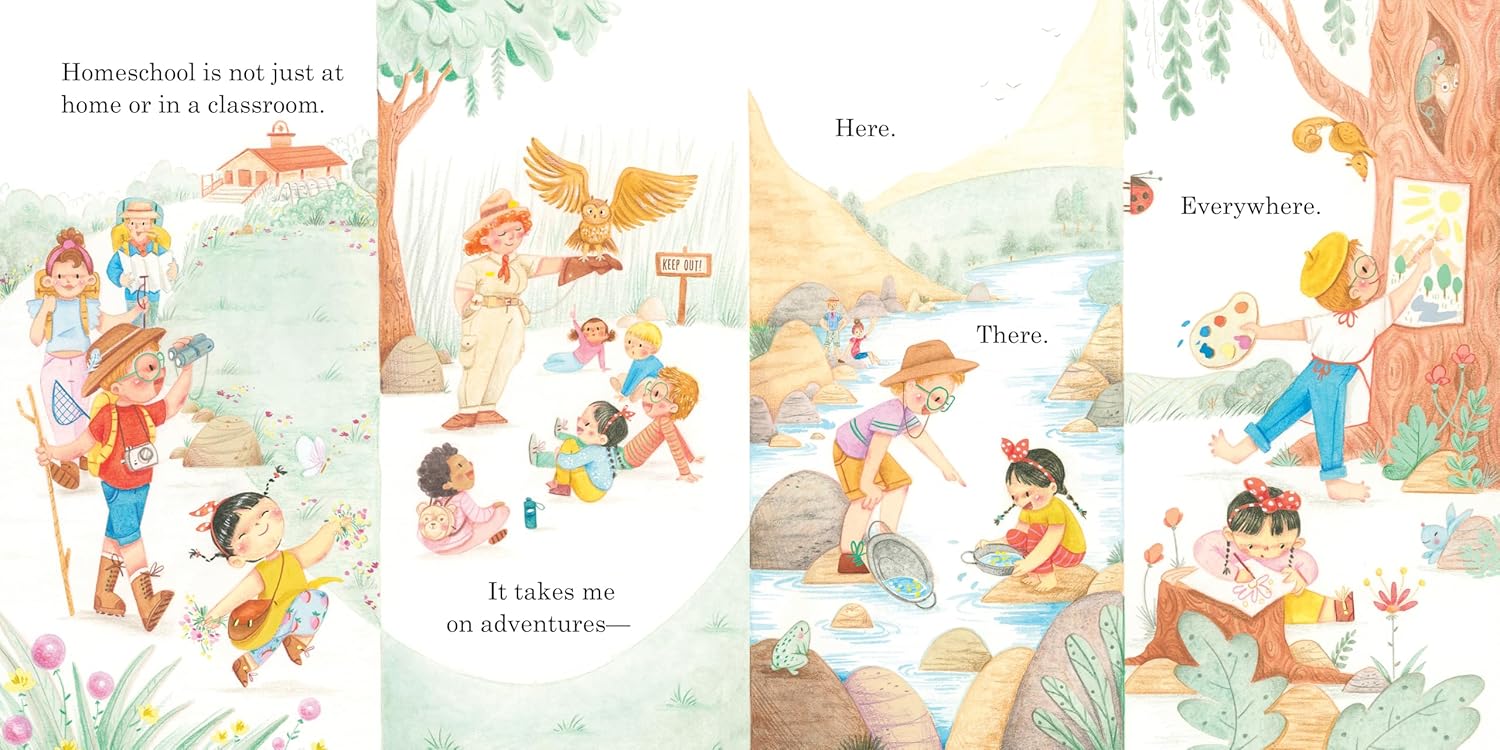
A boy and his little sister stand on their front porch, backpacks on, supplies at the ready, and big grins on their faces. “I’m thankful to my homeschool. Because with homeschool, I’m free to be me!” the boy says. He and his sister are off on an adventure with other kids to a nature preserve, where they learn about owls, pan in a river, and draw what they see.

Illustration © 2025, by Airin O’Callaghan, text © 2025 by Deb Adamson. Courtesy of Sourcebooks Explore.

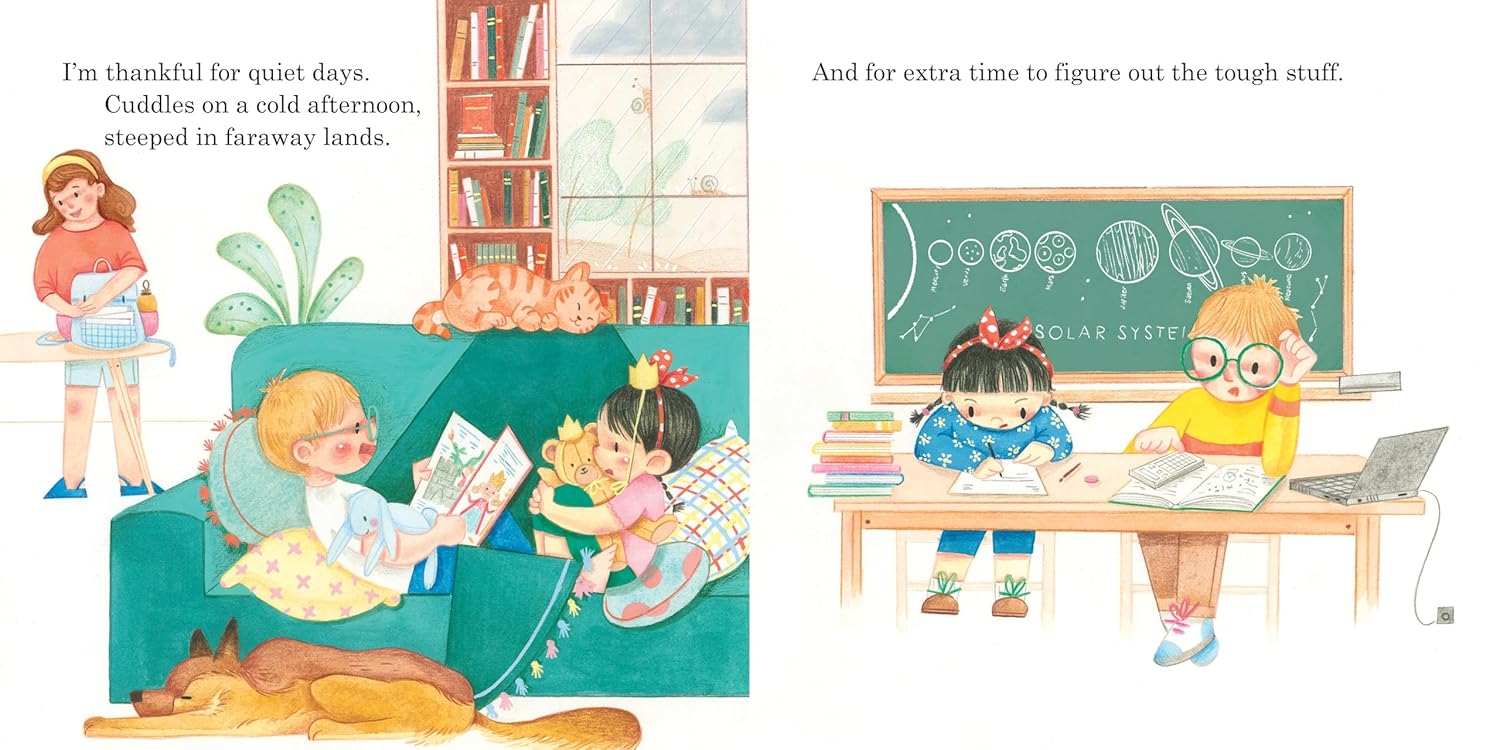
Other road trips have taken them into the city to visit museums, with hands-on experiences; to a farm, where they feed a cow, play with bunnies, and learn about chickens. Remembering other adventures, the boy says he’s “thankful for . . . gazing out from the tip-top of a lighthouse. For standing at the feet of a giant T. Rex.” As much as this student loves his field trips, he also welcomes the days at home when he can read to his sister and study in the way that’s right for him. These days provide “extra time to figure out the tough stuff” and let ideas percolate.

Illustration © 2025, by Airin O’Callaghan, text © 2025 by Deb Adamson. Courtesy of Sourcebooks Explore.

The siblings appreciate how their classroom isn’t just one room but the community garden, where they learn to watch and wonder and wait. They visit the beach, where they collect, count, and sort shells while exploring and learning by seeing living sea creatures; and spend time in a makerspace, where they invent, build, ask questions, and learn new skills. In fact, his classroom can be anywhere he and his sister go.

“I’m thankful that every homeschool day is as different as each snowflake,” he says. “And that I am always free to be me!”

Illustration © 2025, by Airin O’Callaghan, text © 2025 by Deb Adamson. Courtesy of Sourcebooks Explore.

Through the voice of her protagonist, Deb Adamson writes lovingly and enthusiastically about homeschool and all of the benefits this educational model provides for students. She emphasizes the individualized and exploratory nature of homeschooling that takes children into their communities and beyond to learn in a wide range of settings and from a variety of educators and professionals. Adamson also highlights the social aspects of homeschooling and making new friends, be these with others in a network or met along the way.

Airin O’Callaghan’s cheerful, action-packed illustrations buzz with the excitement kids feel when learning in hands-on environments and shine with smiles and curiosity. Every page has so many details for readers to explore and these are sure to spark ideas for projects, field trips, and collaborations for any homeschool family.

A Thank You Letter to My Homeschool is a welcome and vibrant portrait of homeschooling that homeschool families will happily embrace as a favorite read aloud. Those unfamiliar with homeschooling or who may be interested in it will find much to recommend this learning method. The book is a must for public library collections to round out back-to-school and classroom-based offerings.

Ages 4 – 8

Sourcebooks Explore, 2025 | ISBN 978-1464216183

About the Author

Deb Adamson is a former broadcast news journalist, freelance essayist, and syndicated columnist for Gatehouse News Service. Her column about homeschooling her son was read in over 250 print newspapers nationally and online, where it is still available as a resource to homeschool families. Deb writes picture books, board books, chapter books, and middle grade novels in both fiction and nonfiction, and she’s a member of SCBWI. In addition to authoring children’s books, Deb writes for adults and hosts workshops on memoirs, humor, and revision. Deb currently lives on the Connecticut shoreline with her husband. You can follow her on Twitter and Instagram at @DebAdamsonBooks. To learn more, visit debadamson.com.

About the Illustrator

Airin O’Callaghan is an illustrator, muralist and educator who mainly draws for children. Her work includes Some Bodies and The Mermaid With No Tail. She is the founder of Mural Wish, a nonprofit that donates murals for critically ill children. Airin lives in the Bay Area, California, where she finds inspiration in her son and in the beauty nature never fails to show. You can learn more about Airin and her work by visiting airinocallaghan.com.

National Reading Month Activity

A Thank You Letter to My Homeschool Activity Kit


You can show how much you love your homeschool—and go on a scavenger hunt with these A Thank You Letter to My Homeschool Activity Pages!

You can purchase A Thank You Letter to My Homeschool from these booksellers

Amazon | Barnes & Noble | Bookshop (discounted books and support for your local independent bookstore)

Picture Book Review

March 18 – National Awkward Moments Day

About the Holiday

If you have kids or have ever been a kid, you know that awkward moments abound, especially when you least expect—or want—them. Things like pratfalls, forgetting someone’s name, and falling for practical jokes may make us feel like sinking into the floor, but today’s holiday actually celebrates all of those moments. Why? Because cringe-worthy faux pas happen to everyone; they’re just part of being human. So today, celebrate and even share those small embarrassments—and enjoy a laugh. 

Thank you to Orchard Books for sharing a digital copy of this book with me!

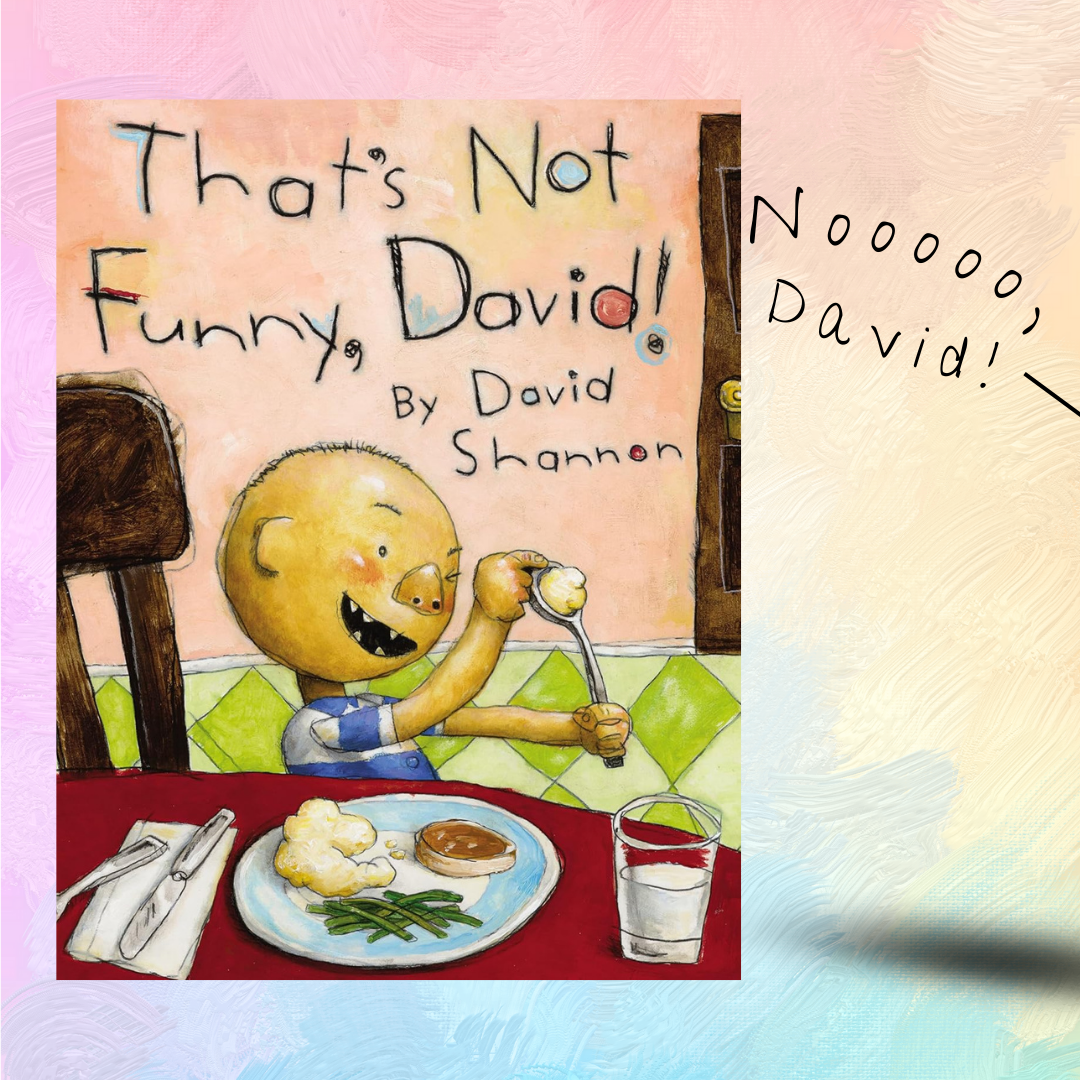
That’s Not Funny, David!

By David Shannon 


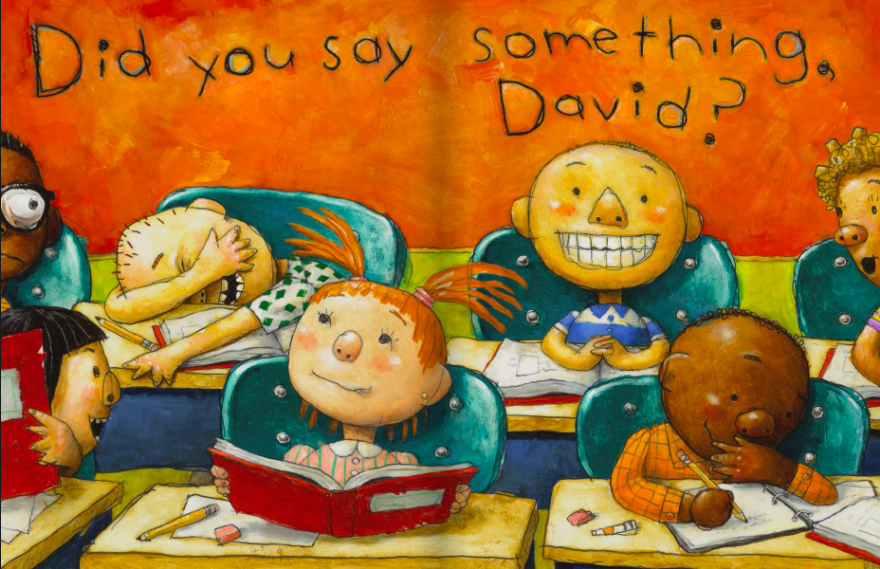
David (and without even looking at the cover above, I bet you know who I’m talking about) is back! He may be 5 books older, but the years have not mellowed his rambunctious nature. Whether he’s blowing a volcano of bubbles in his drink at a restaurant or grocery cart surfing into the mountainous fruit display, David just can’t quell his mischievous impulses.

Illustration and text © 2025 by David Shannon. Courtesy of Orchard Books/Scholastic.

The adults aren’t laughing. In fact, they’re telling him, “Not funny, David,” and in response to a drawing on the classroom whiteboard: “We are not amused, David.” But the kids? They’re very amused. And even though he ends up in the principal’s office, at home he’s still got enough . . . shall we call it . . .spunk? . . . to be tip-toe tempted by the fully decorated birthday cake on the counter and to need a peanut extracted from his nose (“How on earth did this happen?”).

As the day progresses, his parents have to stay on their guard. But when one last silly bedtime antic finally brings a laugh instead of a scolding, hearts soften, and there’s just one thing left to say: “What am I going to do with you?”

Illustration and text © 2025 by David Shannon. Courtesy of Orchard Books/Scholastic.

Fans of young David’s hijinks will find lots to giggle at in David Shannon’s latest foray into David’s madcap misadventures. In his bright, rollicking illustrations, Shannon’s monster-toothed hero (except when he’s trying to look innocent) sends pool water splashing, fruit airborne, and popcorn flying. David’s expressive face tells readers all they need to know about David’s feelings and the impact he wants to make, even if it’s not the reaction he gets.

A worthy addition to a series that’s a proven winner for silly story times, when relaxing and laughing together are just what’s needed, That’s Not Funny, David! is sure to tickle funny bones of all ages.

Ages 4 – 8

Orchard Books/Scholastic, 2025 | ISBN 978-1546123187

About the Author/Illustrator

David Shannon is the internationally acclaimed creator of more than 40 picture books, including No, David!, a Caldecott Honor Book, and his second New York Times Best Illustrated Book of the Year, and four more David picture books. Shannon’s bestsellers include A Bad Case of StripesDuck on a Bike, and Too Many Toys. He lives in Southern California with his family and Roy, their West Highland white terrier.

National Awkward Moments Day Activity

Illustration and text © 2025 by David Shannon. Courtesy of Orchard Books/Scholastic.

That’s Not Funny, David! Activities


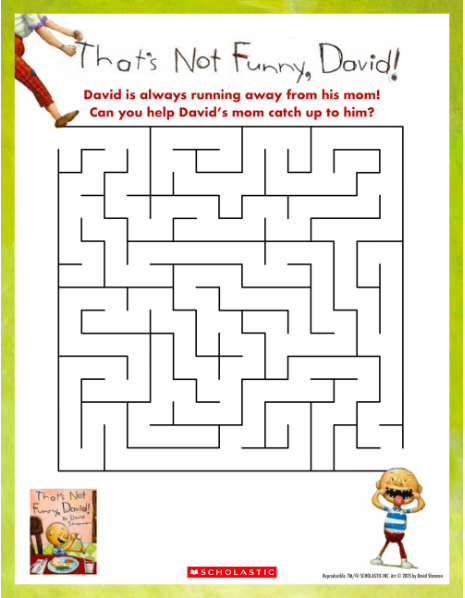
Go ahead and have some fun with David and these book-inspired That’s Not Funny David! Activities!

You can purchase That’s Not Funny, David! at these booksellers

Amazon | Barnes & Noble | Bookshop (to support your local independent bookstore)

Picture Book Review
February 25 – Get Ready for Passover

About the Holiday

Passover is the Jewish spring festival that celebrates the Jews’ liberation from slavery in Egypt. The holiday begins on the fourteenth day of the Hebrew month Nisan, which is the first ecclesiastical month and occurs in March or April. Passover is observed for seven days in Israel and for eight days for Jewish people living outside of Israel. The holiday begins with a seder meal, at which family and friends gather to remember their history, eat symbolic dishes, and celebrate the joy of freedom. This year Passover is celebrated from April 12 – 20.

Thank you to Kar-Ben Publishing for sharing a digital copy of Zayde Babysits before Passover with me.

Zayde Babysits before Passover

Written by Jane Sutton | Illustrated by Kate Chappell


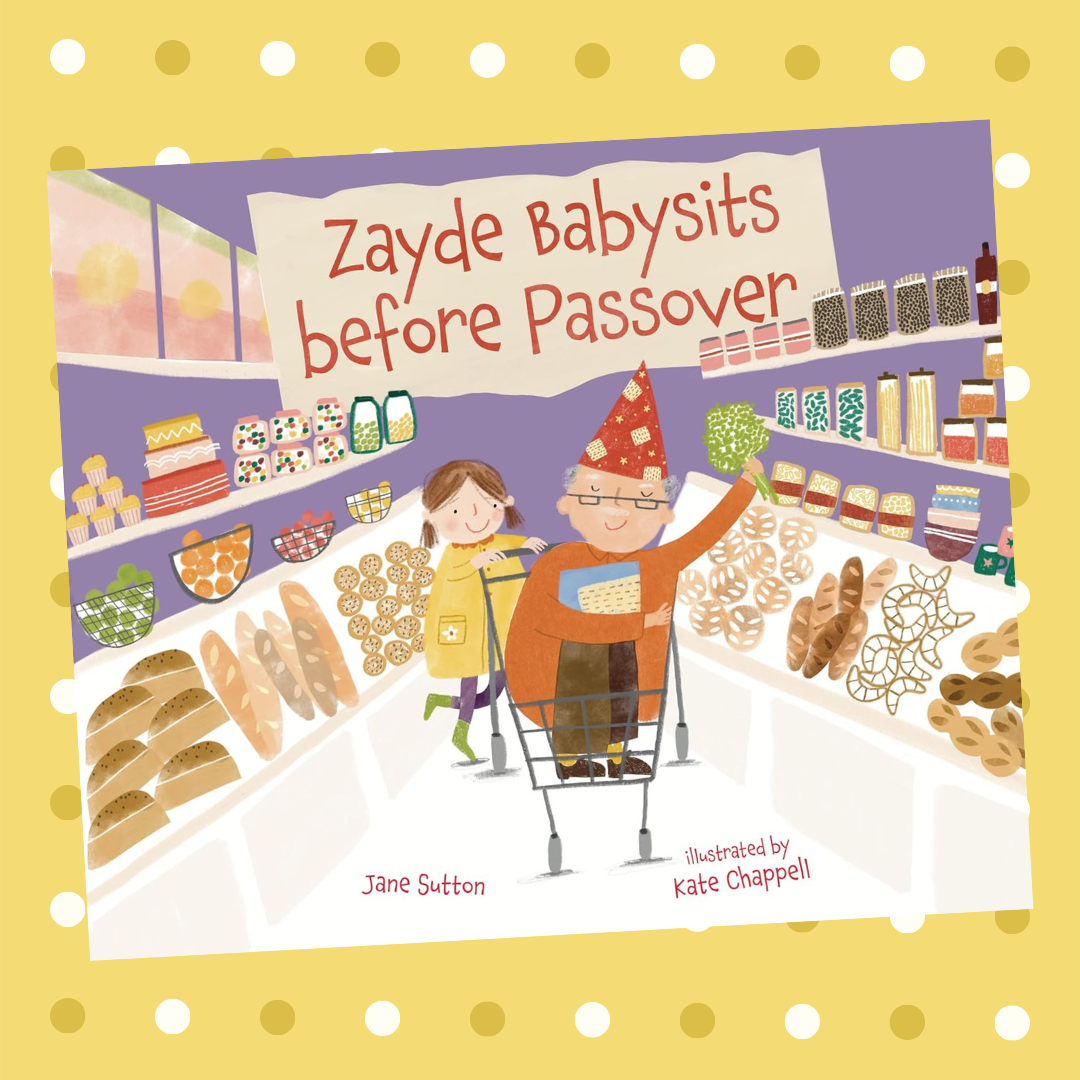
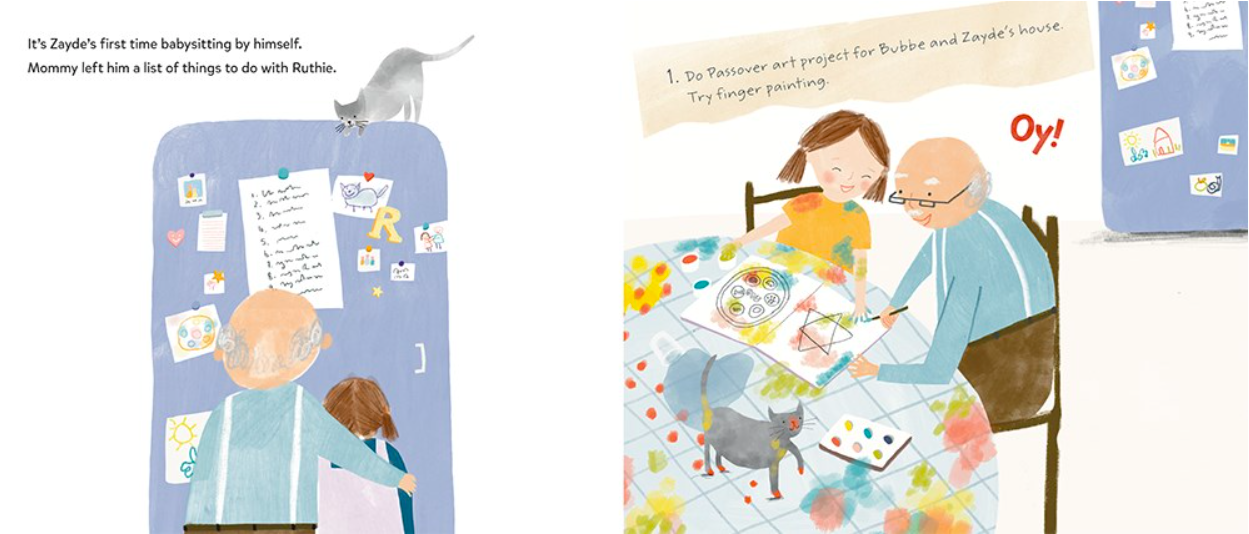
While Ruthie’s mommy and daddy go to Bubbe’s house to prepare for Passover, Zayde is staying with Ruthie at her house. It’s the first time Zayde has ever babysat Ruthie, but he doesn’t have to devise fun activities, or think up places to take her because there’s a long list of tasks to be accomplished stuck to the refrigerator.

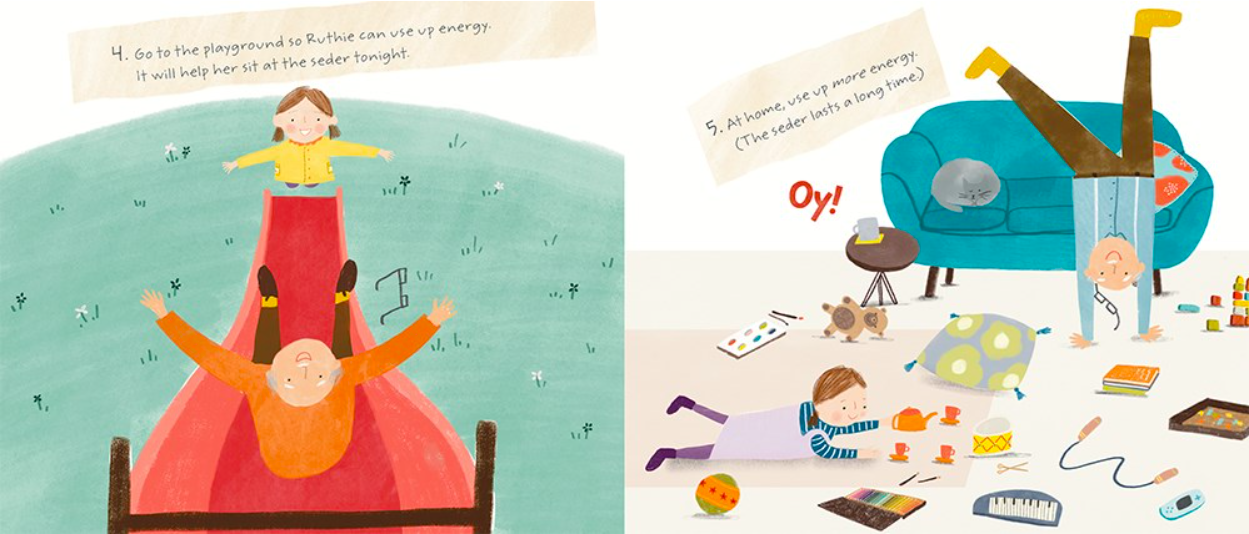
First on the list is to make a few Passover decorations for Zayde and Bubbe’s house. Ruthie’s mommy has suggested finger painting. “Oy!” exclaims Zayde, as the paint escapes the paper onto the tablecloth and Ruthie’s shirt, and even the cat, who joins the fun with some paw painting. The next chores on the list take Ruthie and Zayde into town—to the grocery store for parsley and to the playground “so Ruthie can use up energy” and sit still at the seder later that night. But who’s riding in the cart and who’s slipping down the slide?

Illustration © 2025 Kate Chappell, text © 2025 Jane Sutton. Courtesy of Kar-Ben Publishing.

Back home, Zayde’s been instructed to use up more of Ruthie’s energy, but here, too, who’s doing what is topsy-turvy. Even sweeping up any missed breadcrumbs in the kitchen finds Ruthie pulling Zayde out from under the cupboard. And when Mommy said they should eat a big lunch because dinner will be late, did she really mean that mountain of food? 

Following nap time and bath time, Ruthie and Zayde leave to meet up with the rest of the family. With Zayde leading the seder, it comes off without a hitch. “Ruthie asks the Four Questions. She sings ‘Dayenu’ and hums along with the other songs.” Bubbe’s matzah ball soup is yummy, and Ruthie even “finds the afikomen. Yay!” After everyone leaves, Ruthie tells Zayde she had fun that day and asks if he’ll babysit again. Of course Zayde’s answer is “‘I can’t wait!'”

Illustration © 2025 Kate Chappell, text © 2025 Jane Sutton. Courtesy of Kar-Ben Publishing.

Jane Sutton’s endearing, family Passover story is riotous fun as first-time babysitter Zayde goes all in while fulfilling his pre-Passover seder chores. Kids will enjoy chiming in with Zayde’s exclamations of “Oy!” as things go amiss and will love learning Passover traditions as they spend time with Ruthie and Zayde around town and at home. The burgeoning relationship between Zayde and Ruthie warms the heart.

Kate Chappell’s charming illustrations, juxtaposed with Sutton’s straightforward storytelling, bring to life Zayde and Ruthie’s playful antics and will have kids giggling from page to page. Images of the family’s Passover celebration are uplifting and tender.

A madcap and joyful story for families to share at Passover and whenever grandparents and grandkids get together, Zayde Babysits before Passover would make a wonderful gift and addition to home bookshelves as well as a delightful choice for school and public libraries.

Ages 4 – 9

Kar-Ben Publishing, 2025 | ISBN 979-8765619889

A Chat with Jane Sutton

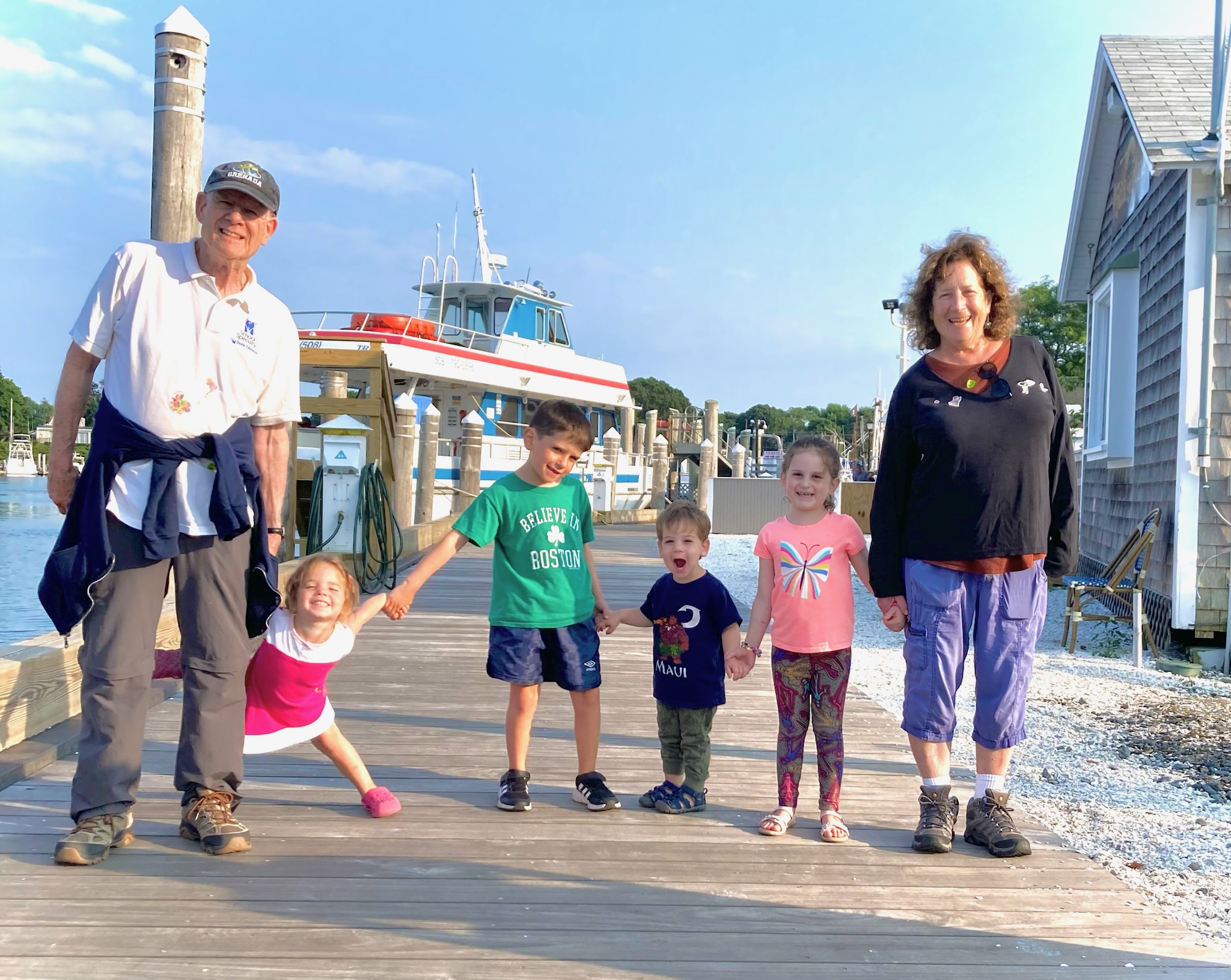
Jane Sutton is an award-winning author of picture books, including Gracie Brings Back Bubbe’s Smile, Paulie’s Passover Predicament, and Esther’s Hanukkah Disaster as well as novels for children. She grew up on Long Island and attended Brandeis University. Jane lives with her husband in the Boston area, as do their grown children and families. She is grateful to get lots of chances to babysit her grandchildren and hopes she makes fewer mistakes than Ruthie’s Zayde. You can visit Jane at jane-sutton.com.

I’m so excited to be chatting with you again about a new book, Jane! The last time we did an interview, it was for What’s Up with this Chicken? and you were a new grandmother to Caleb. So much has happened in the years since! You and your husband are grandparents to four grandchildren now who all live close to you. Has becoming a grandmother influenced the way you write or the subjects you write about?

Come to think of it, my last 2 books have been about a grandparent and a grandchild. And my next book was inspired by a grandchild. I guess it’s natural that I would write about my favorite subject, my grandchildren!

Kate Chappell’s illustrations are so whimsical and really highlight the humor in the story. Kate lives in London. Did you have much interaction with her during the publishing process? Do you have a favorite spread? Which one and what do you like best about it?

I agree. Her whimsical illustrations do just what you said! We didn’t interact directly. My suggestions for art went through the publisher. My favorite spread is also the cover, with Zayde sitting in the shopping cart as Ruthie pushes. It’s so silly and funny, and I love the details Kate includes. It’s my grandchildren’s favorite too!

The images on your blog from your family vacations and other fun times you have together are so infused with love and joy and really make me smile. They made me wonder—does it appear that any of your grandkids have inherited your sense of humor? If so can you share a story?

They’re all funny and witty in their individual ways. One joke that the oldest three grandchildren and I share started on a week-long family vacation. Each morning, we’d greet each other with big smiles while saying, “Not you again!”

How did you get started writing for children? When did you know that this is what you wanted to pursue?

In college I had an assignment in a sociology class to do something we’d always wanted to do and keep a journal about our experience as we did it. I chose to write a series of children’s stories and found that I enjoyed the writing immensely.

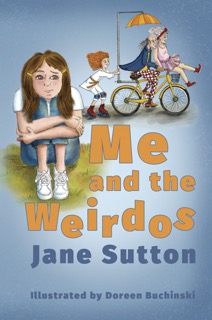
Not only do you write picture books, but you’ve written three middle-grade novels and a young-adult novel. You’ve recently revised and published a new edition of your popular middle grade novel, Me and the Weirdos, after it was turned into a musical by two high school seniors in Utah. I understand you attended the premiere of the play. Tell me more about this book and the experience of seeing it transformed into a musical.

In Me and the Weirdos, Cindy Krinkle feels like the only normal person in her family. She kind of has a point. Some examples: Her father rides a bike with an umbrella on it as he sings opera loudly and off-key. Her mother gargles with orange juice, and her sister has a pet sea urchin. Cindy’s plans to “un-weird” the rest of her family all backfire in amusing ways, and she eventually comes to appreciate them the way they are. Attending the musical was amazing. The lovely students who created it were so talented. They wrote the script and lyrics, composed the music, and directed the play with a middle school cast. The show was both entertaining and true to the book’s humor and message that it’s OK to be different.

It’s clear that you love sharing your love of writing and your books with kids through programs at schools and libraries. Can you give us a peek at what one of your presentations is like? Do you have an anecdote from any program that you’d like to share?

I share my writing process, including more or fewer details depending on the age group. I emphasize the importance of revision, something I strongly believe in and which makes teachers nod and smile. And lest writing seem like too much work, I make sure I express my joy in writing.

I believe young readers have another book to look forward to in 2026! Would you like to give them a little glimpse of what’s to come?

It will be my first board book, one I hope that will make people of all ages smile.

Thanks so much, Jane for this wonderful chat! It’s been terrific catching up! I wish you all the best with Zayde Babysits before Passover and can’t wait to see your board book. I’m sure it will bring a smile!

You can purchase Zayde Babysits before Passover at these booksellers

Amazon | Barnes & Noble | Bookshop (to support your local independent bookstore)

Picture Book Review
 

February 24 – It’s Bake for Family Fun Month

About the Holiday

This time of year is perfect for gathering with family and friends and spending those cold, indoor days making sweet treats and savory dishes! Baking together is a great way to teach valuable cooking skills and a little math. Talking with kids while baking is fun too! Tell old family stories, talk about favorite recipes, and share funny or memorable culinary experiences. Of course, the best part of baking together is eating the delicious meals or treats afterward!

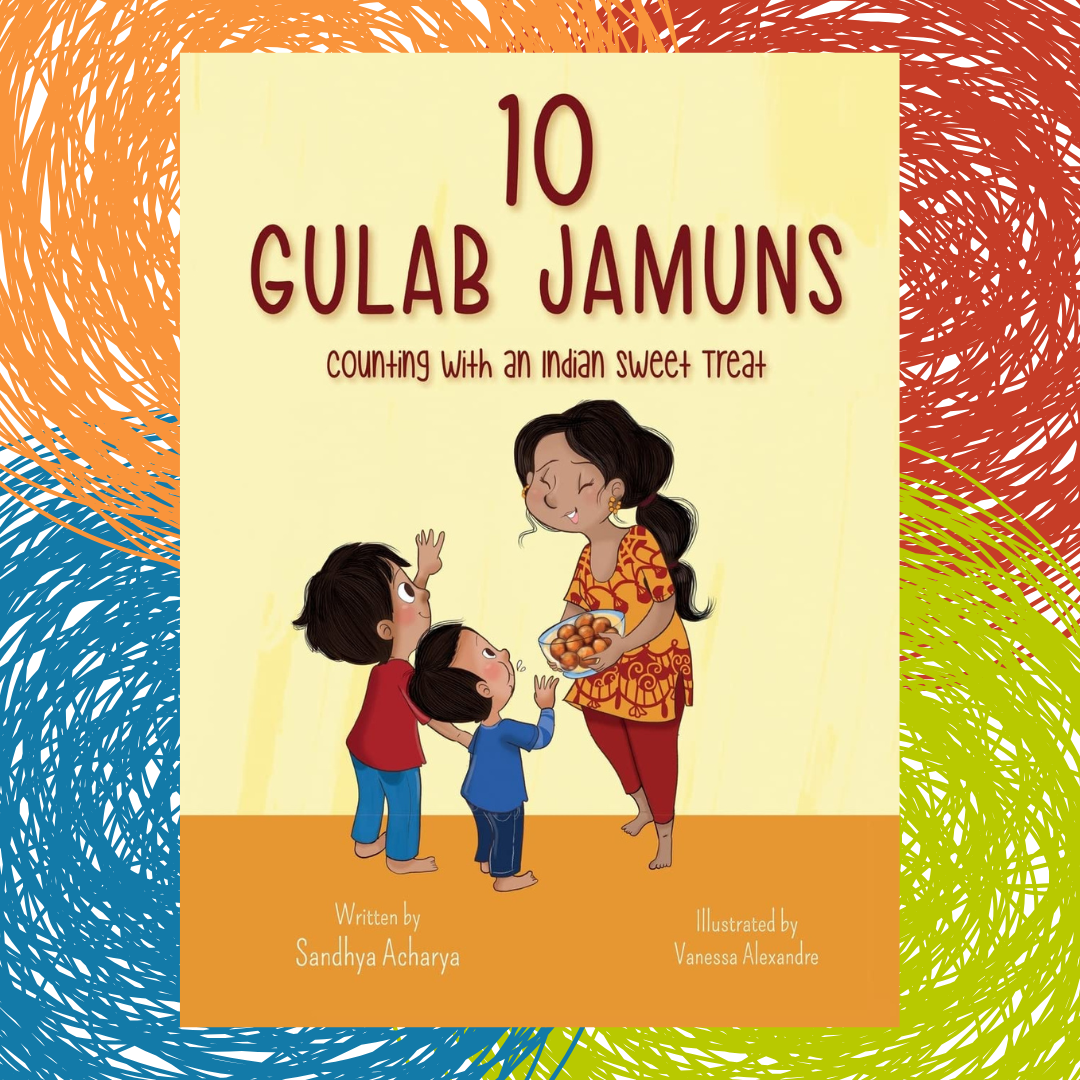
10 Gulub Jamuns: Counting with an Indian Sweet Treat

Written by Sandhya Acharya | Illustrated by Vanessa Alexandre


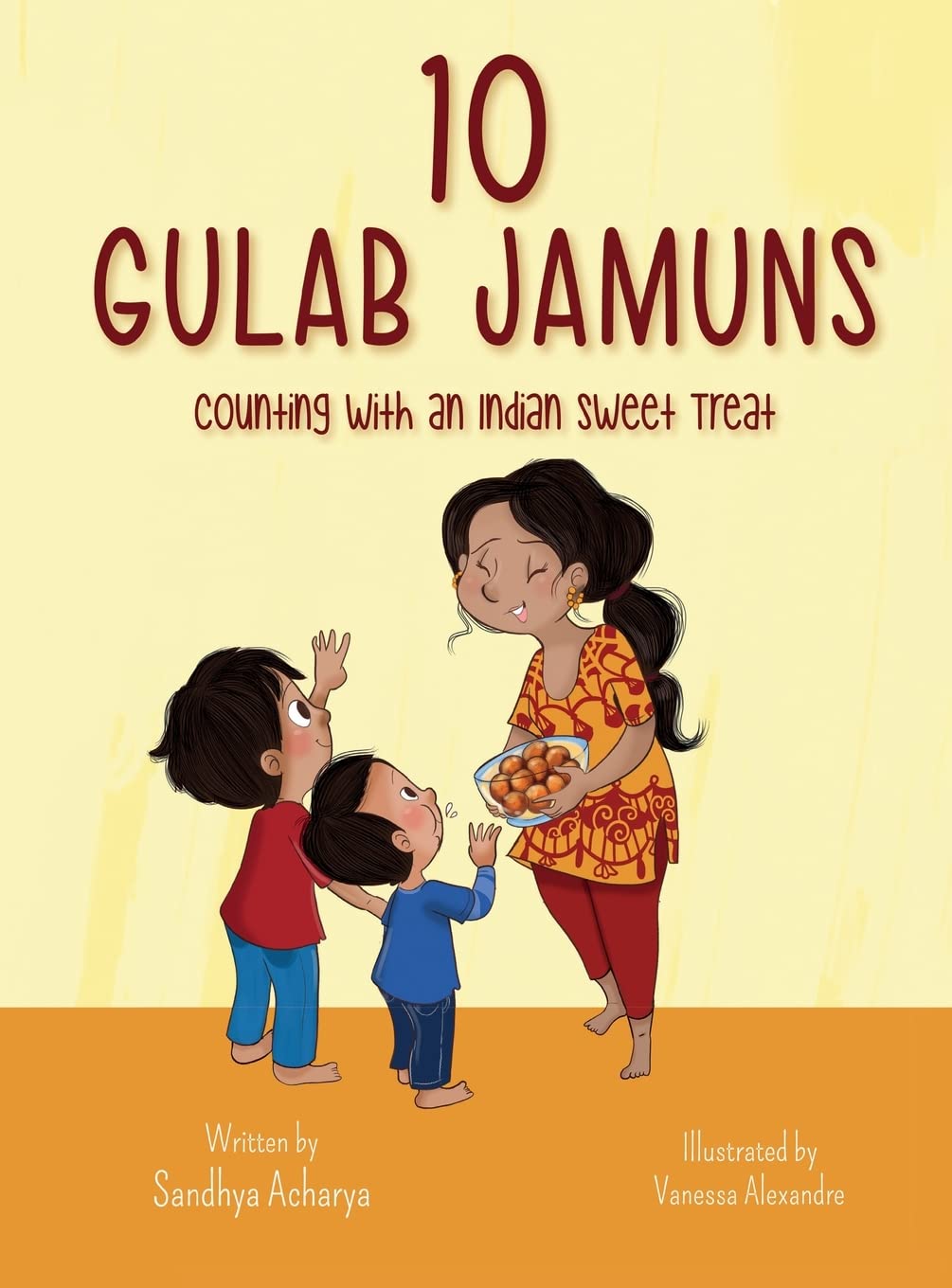
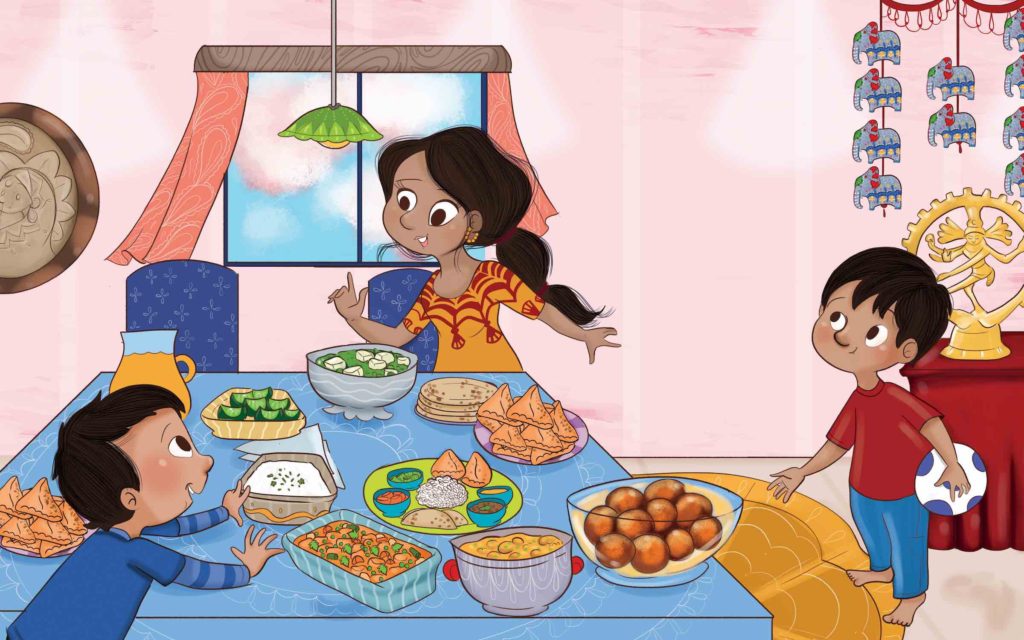
Idu and his little brother Adu were excited to help their mom get ready for their friends Dia and Mia and their parents who would be coming later that evening for dinner. The delicious aroma of spices Mamma’s cooking already perfumed the house. At last it was time for Mamma to make the dessert: gulab jamuns! Idu and Adu tried to imagine what gulab jamuns were. “‘They are little round sweets that look like doughnuts,'” their mother explained. “‘They are soaked in sugary syrup so when you bite into one, they melt in your mouth.'” Idu and Adu thought they sounded yummy.

After the treats were finished, Idu counted them in the bowl. “‘1, 2, 3, 4, 5, 6, 7, 8, 9, 10. 10 gulab jamuns!'” Adu echoed his big brother: “’10 gulab jamuns!'” Mamma sent the boys off to play, but the bowl of sweets was too enticing. Adu climbed onto the table and ate one. Then he stuffed his cheeks with two more.

Illustration © 2022 Vanessa Alexandre, text © 2022 Sandhya Acharya.

Idu thought his brother was funny until Mamma caught them. She asked Idu to tell her how many gulab jamuns she had made and then count how many were left. “‘1, 2, 3, 4, 5, 6, 7. 7 gulab jamuns,'” he answered. “‘Swa gua amoons,’ Adu repeated” through his full mouth. When Mamma asked what had happened to the other three, Idu told her. Then she wanted to know how it had happened.

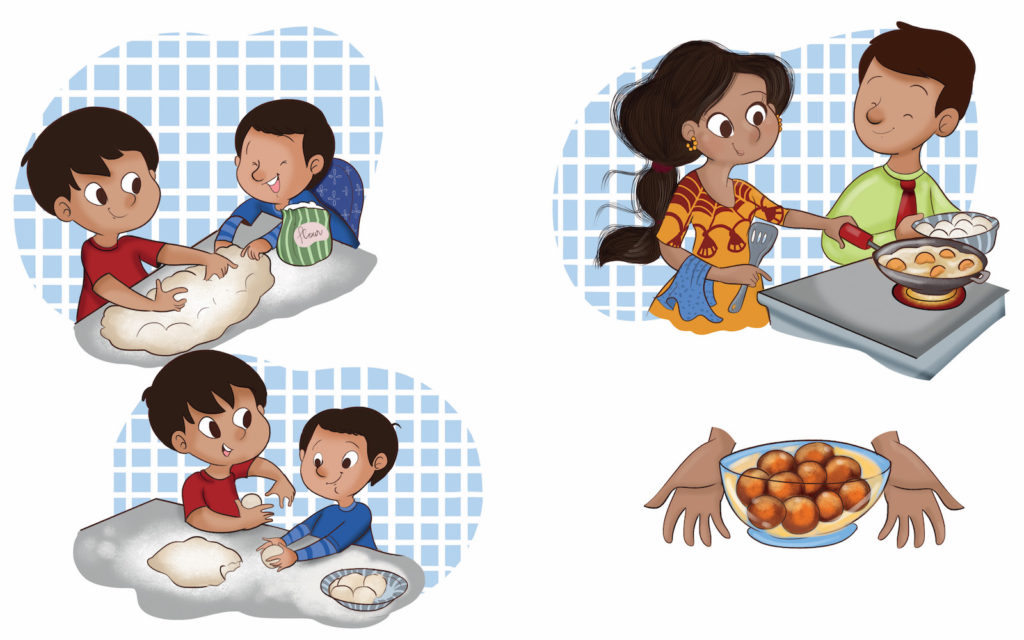
Idu obliged, exactly imitating Adu’s actions. Adu then turned and gave Mamma a big sweet-treat smile. Mamma laughed, then grabbed one gulab jamun for herself and handed one each to her sons. That left just one more for . . . Daddy, who was just coming home from work. But what would they serve their special guests for dessert now? Idu and Adu enthusiastically offered to help their mother make more. Later, after dinner, Idu and Adu helped pass out the gulab jamuns, but there were two left over. Why? Idu’s and Adu’s bellies were already full of their new favorite dessert!

A recipe for gulab jamuns follows the story.

Illustration © 2022 Vanessa Alexandre, text © 2022 Sandhya Acharya.

Sandhya Acharya’s humorous counting story is the recipe for an entertaining read aloud the whole family will enjoy. Adu and Idu’s sibling shenanigans will have young readers giggling, and the naturally occurring opportunities for kids to count the gulab jamuns offer a fun way for them to engage with math. The exercise can even be extended at home or in classrooms as children add or subtract treats or other foods from their own plates. A multilayered story, 10 Gulab Jamuns also contains gentle lessons in honesty, taking responsibility, and making amends for one’s behavior, 

Vanessa Alexandre’s vivid and expressive illustrations bring out all the comical fun as Adu and Idu sneak the sweet treats, get caught, and ultimately help their mother make more. Children will especially like images of the brothers’ playful mischief-making, the bright kitchen and table laden with delicious Indian foods, and the cheerful depictions of a traditional Indian home and clothing.

A heartwarming, dialogue-rich story you can count on to become a favorite, 10 Gulab Jamuns would be a delightful addition to home, classroom, and library collections.

Ages 2 – 7

Sandhya Acharya, 2022 | ISBN 979-8985609516

About the Author

Sandhya Acharya grew up in Mumbai, India and now lives in the Bay Area. She is a mother to two young boys from whom she often draws inspiration for her writing. She worked in corporate finance and is a dance enthusiast as well. She hopes her readers have as much fun as she did with this story.

Bake for Family Fun Month Activity

celebrate-pictureb-books-picture-book-review-Kids-Baking-Cake-in-Cooking-Show-Bakery-Coloring-Pages

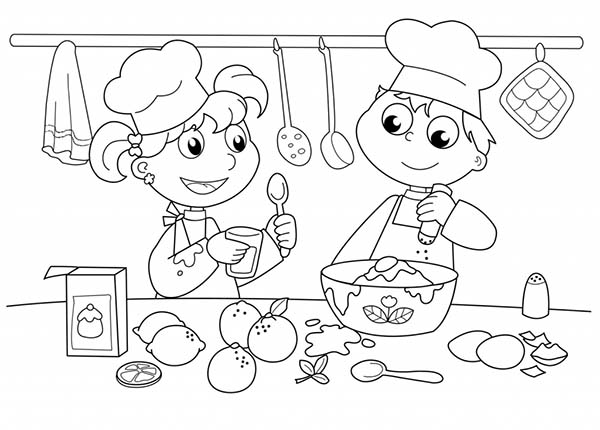
Let’s Bake Together Coloring Page


It’s fun for friends or siblings to create new recipes or just cook up some favorite treats! Have fun with this sweet coloring page!

You can purchase 10 Gulab Jamuns at these booksellers

Amazon | Barnes & Noble | Bookshop (to support your local independent bookstore)

Picture Book Review
February 21 – It’s National Nest Box Week

About the Holiday

National Nest Box Week was established in the United Kingdom in 1997 to highlight how birds are often displaced from their natural nesting places with the destruction of the woodlands and fields birds call home. The holiday encourages people to pay attention to their local nesting birds and put up nest boxes to support the conservation of breeding birds. No matter where you live, birds’ ecosystems are fragile. You can make a big difference in the survival of your local bird population by building and maintaining nesting boxes for the spring and summer months. To learn how more about the holiday and how you can help, visit nestboxweek.com.

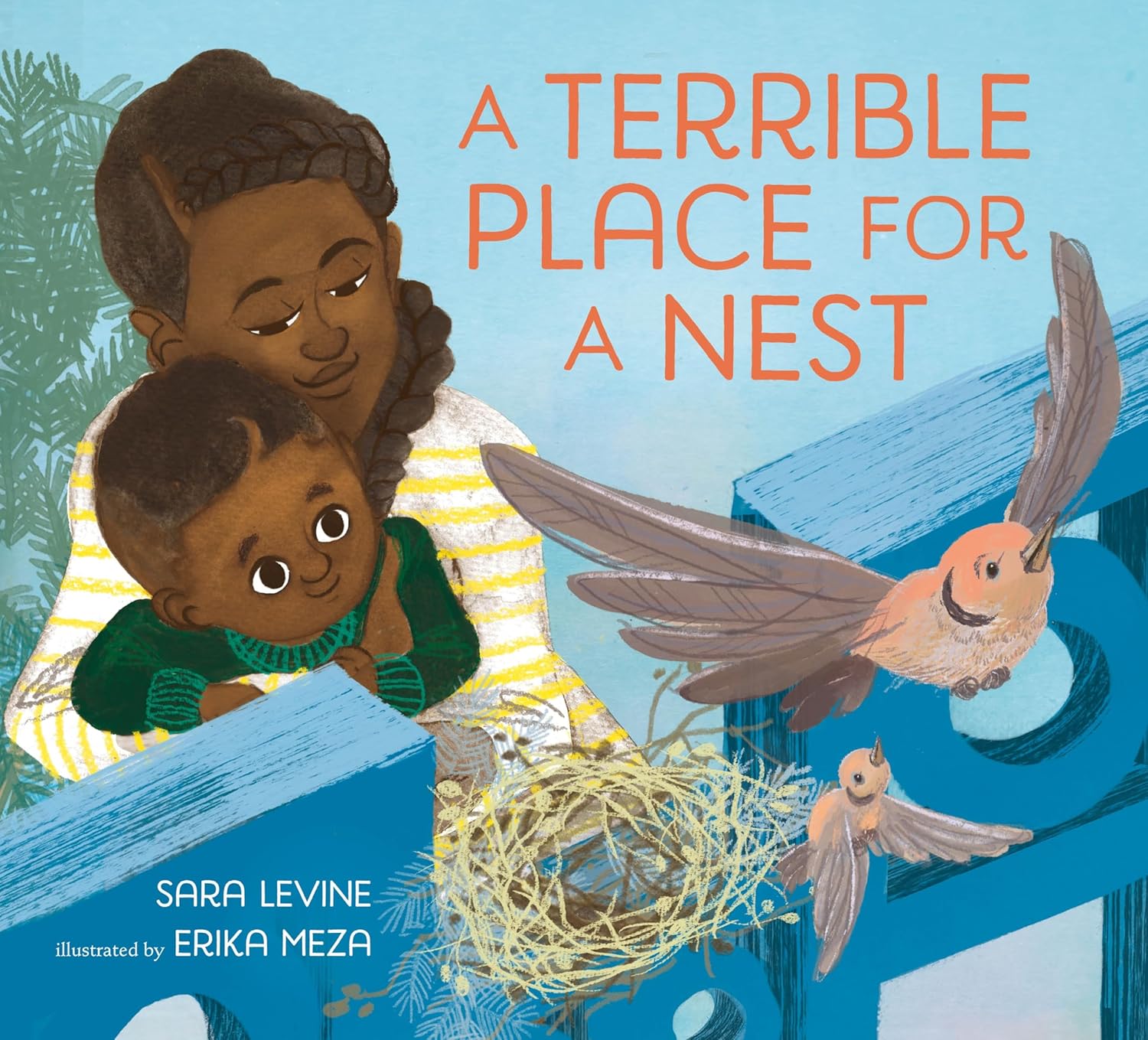
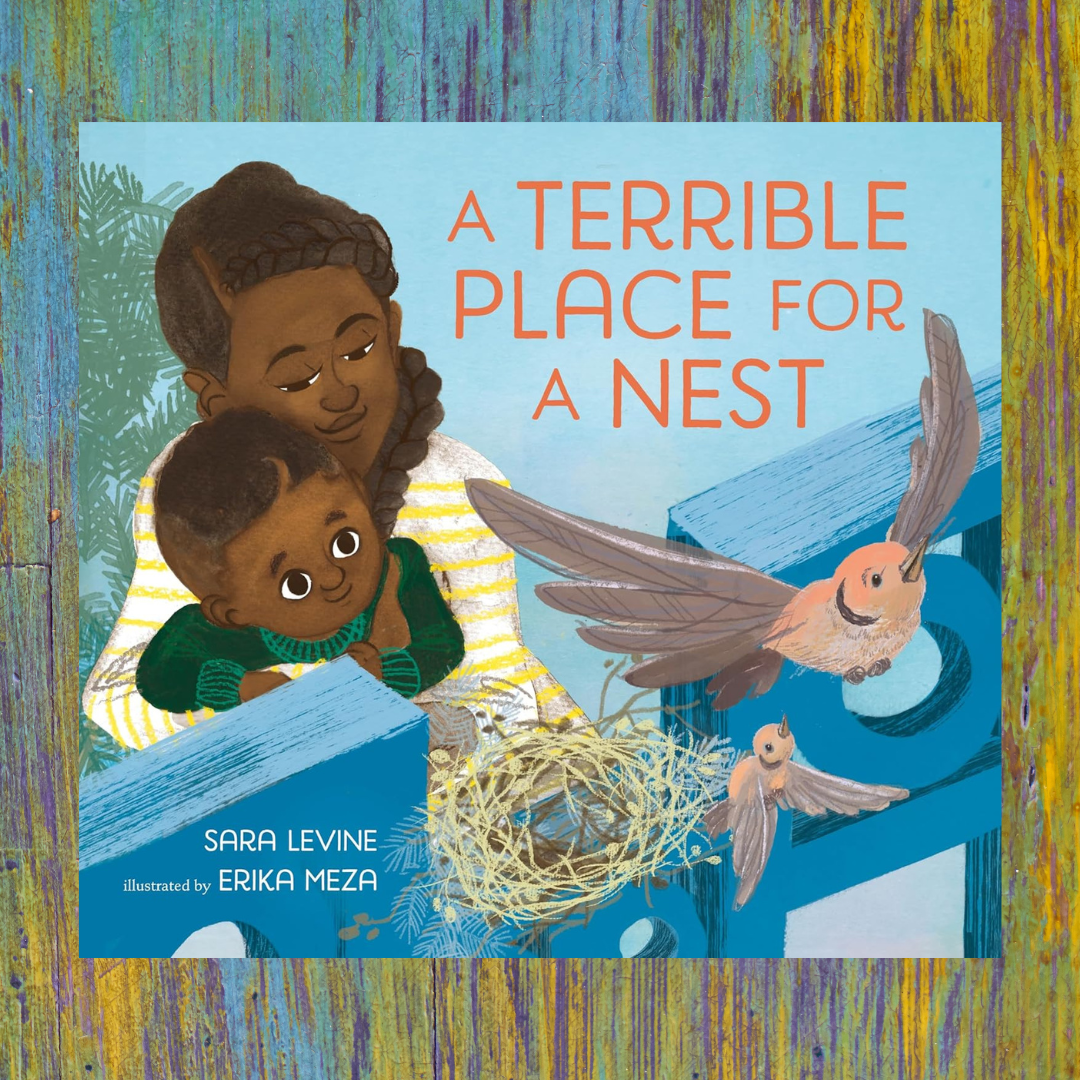
A Terrible Place for a Nest

Written by Sara Levine | Illustrated by Erika Meza


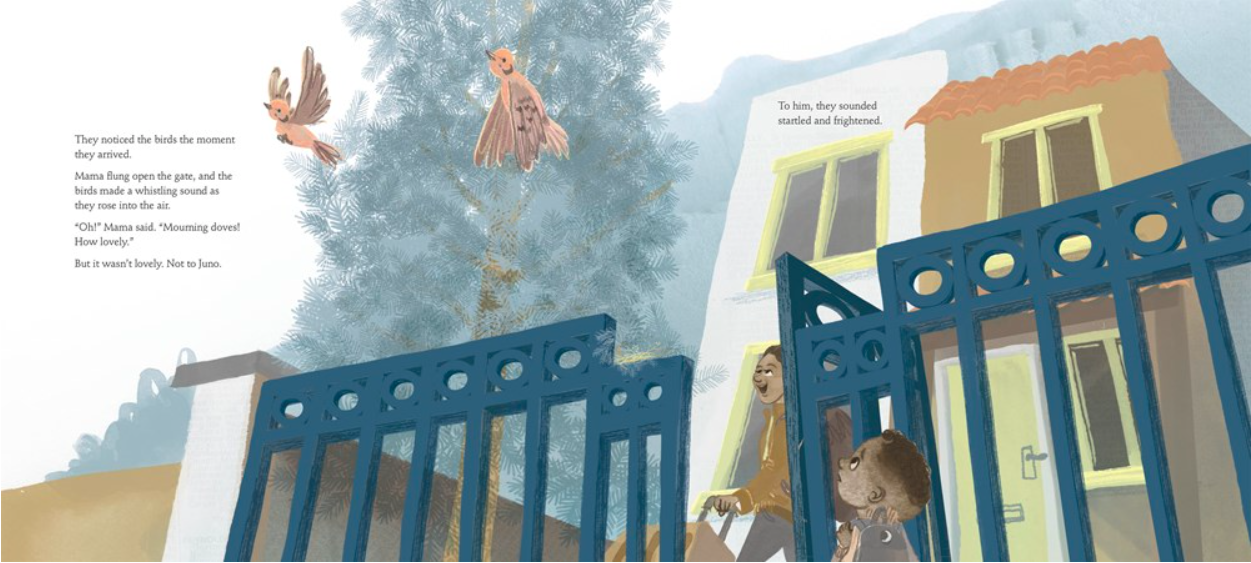
Displaced from their home, a mother and her son, Juno, move to a new place in a new neighborhood. Juno’s mother takes solace in the mourning doves that greet them, but Juno hears sadness and fear in their whistling coos. Nothing about the move feels right to Juno. He can’t get his favorite cereal at the grocery store, and he tells his mama that he’s “‘never going to fall asleep'” in his new room. 
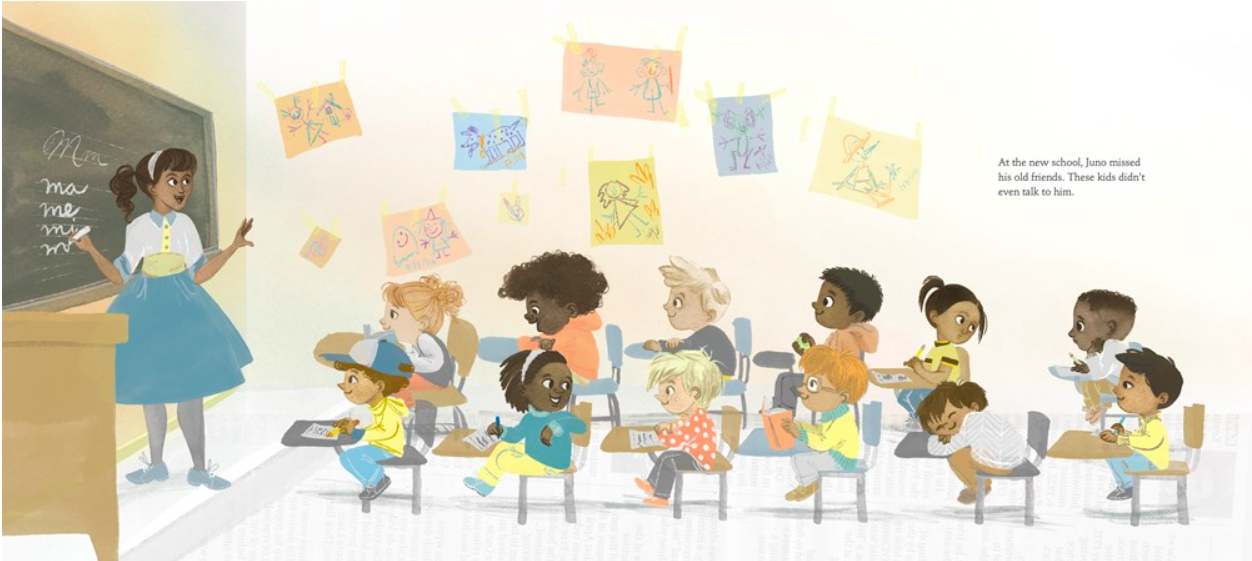
At school he sits alone with no one to talk to. When he gets home he yells, “‘This is a terrible place!,'” frightening the mourning doves from their nest on the gate. The next day, when the movers come, they knock the nest from its perch, breaking the eggs and confirming to Juno his feelings about their new home.

Illustration © 2024, Erika Meza; text © 2024 Sara Levine. Courtesy of Roaring Brook Press.

Later, Juno tries to rebuild the nest, and he and his mom buy millet seed to feed them. They’re happy to see the birds return to the yard—although the nest sits empty for days and weeks. Meanwhile, at school, Juno makes a friend of the girl who sits in front of him, talking and drawing and making paper birds together.

Still, no birds occupy the nest. At night in his unfamiliar room, where unpacked boxes of books and art supplies stand stacked against the wall, Juno thinks “maybe it didn’t feel safe to them.” But then one day, Juno notices with excitement that, just as he and his mom are settling into their new home, a dove is snugged into the nest. “Mama said this meant there were eggs.”

Illustration © 2024, Erika Meza; text © 2024 Sara Levine. Courtesy of Roaring Brook Press.

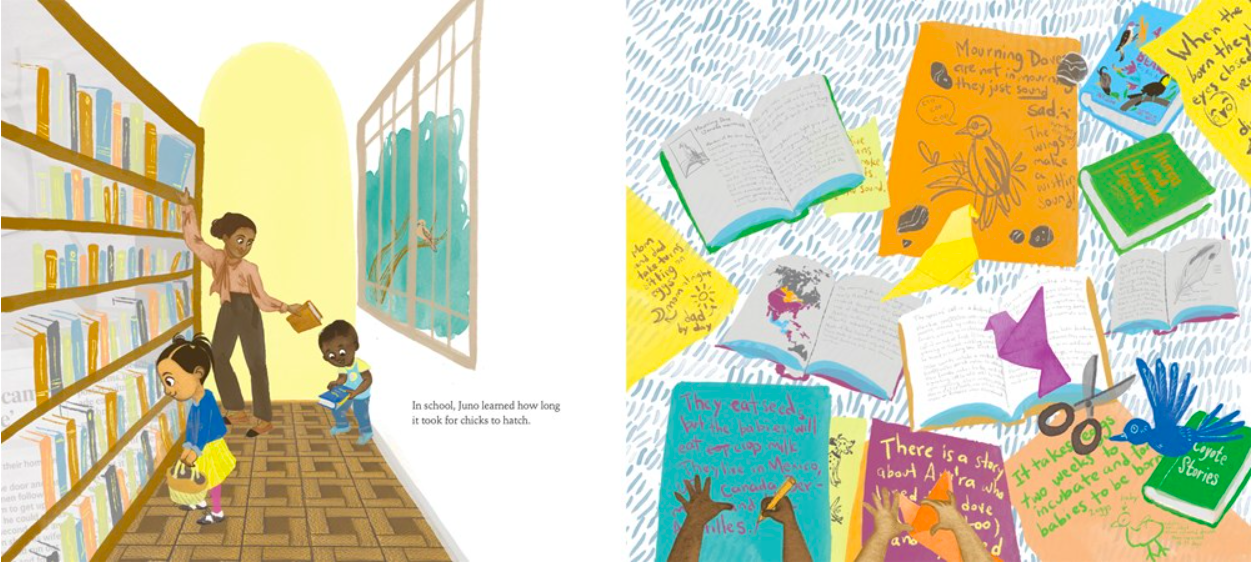
Juno and his new friend go to the school library to learn everything they can about mourning doves. On colored paper they write facts and draw pictures of adult and baby birds. And most importantly they make signs for the fence and gate, alerting people to the fragile nest and baby doves.

Then one bright, sunny morning, Juno looks out his window and sees babies! In their protected nest, the small mourning doves grow until one afternoon as Juno, his friend, and his mom enjoy a picnic in the yard, he watches as the fledglings fly from their nest. “‘I told them it wasn’t a great place for a nest,'” Juno says, but later that night, happily cuddled up with his mom, they agree, “But we made it work.”

Illustration © 2024, Erika Meza; text © 2024 Sara Levine. Courtesy of Roaring Brook Press.

In her honest and poignant story, Sara Levine allows her young protagonist to give vent to his true feelings. While he first reproaches the mourning doves for their poor choice of nesting place, his own deep disappointment, sorrow, and loneliness spill out when the eggs break. As weeks pass, however, Levine shows that just as Juno repairs the nest and makes his yard inviting for the doves again, he also makes a new friend, assimilates into school, and finds comfort in books and creating once more. Levine’s child-centered story is all the stronger for the quiet support Juno’s mother gives him, allowing him the space, time, and freedom to feel his emotions and work them out in his own way. Her final line, “‘But we made it work,'” offers optimism, camaraderie, and confidence in the face of change—the type of powerful spirit that can sustain us all.

In her affecting illustrations, Erika Meza uses color, facial expressions, and visual metaphors to compellingly show readers Juno’s transition as he navigates his way to acceptance of his new home. As the story begins, Meza uses darker and muted colors on the house and gate. As the doves accept Juno’s help, the colors brighten. Likewise, in the beginning, Juno and his mother appear sad and at a loss. Meza portrays Juno’s brown-painted room from above, as if readers are peering into a cardboard moving box. But as Juno makes friends, regains his love of learning, and the doves return, Meza’s color palette turns vivid, smiles return to Juno’s and Mama’s faces, and even the dark of night is dispelled by the dazzling light of the bedroom lamp as Juno and his mom snuggle together.

A candid story about moving away from home that is also applicable for other types of unexpected changes, A Terrible Place for a Nest validates the emotions children can experience when adjusting to new surroundings. For children struggling with change, especially, the story’s focus on taking time to adapt offers comfort and reassurance.

A Terrible Place for a Nest is highly recommended for families with a child or children who have difficulty with change and a must for school and public library collections.

Ages 4 – 8

Roaring Brook Press, 2024 | ISBN 978-1250861221

About the Author

Sara Levine is an award-winning picture book author, veterinarian and science educator. Her books, which include Bone by BoneTooth by ToothFlower TalkSensitive, and The Animals Would Not Sleep!, have received the AAAS/Subaru SB&F Prize, Bank Street College Best Book of the Year, Beehive Book Award, Cook Prize and the Mathical Book Prize. She loves doing school and library programs. Visit Sara at saralevinebooks.com.

About the Illustrator

Erika Meza grew up in Mexico and moved houses more often than she had birthdays. Having studied illustration in Paris, she now lives in London―her thirty-sixth address―where she paints, writes her own stories, and practices her uncanny ability to pack efficiently. Erika loves exploring, learning about many different places and cultures, and finding joy in the people who allow you to be yourself. Visit Erica at ericameza.com.

National Nest Box Week Activity

Watch a pair of mourning doves raise their nestlings from hatching to leaving the nest in this sweet video from Gary’s Backyard.

You can purchase A Terrible Place for a Nest at these booksellers

Amazon | Barnes & Noble | Bookshop (to support your local independent bookstore)