February 26 – Personal Chef Day

celebrate-picture-books-picture-book-review-mountain-chef-cover

About the Holiday

Today we honor those chefs who create delectable dinners for individual clients or for special occasions. With dedication and hard work, tasty ingredients and imagination, these artists make life better for foodies from coast to coast.

Mountain Chef: How One Man Lost His Groceries, Changed His Plans, and Helped Cook Up the National Park Service

Written by Annette Bay Pimentel | Illustrated by Rich Lo


Tie Sing, born in Virginia City, Nevada, grew up during a time when “America was a tough place to be Chinese.” Most worked in restaurants or laundries and were paid less than white employees. Tie Sing had big plans, though. “He got a job cooking for mapmakers as they tramped through the mountains, naming peaks. With sky for his ceiling and sequoias for his walls, he stirred silky sauces, broiled succulent steaks, and tossed crisp salads.” He quickly became known as the best trail cook in California.

celebrate-picture-books-picture-book-review-mountain-chef-Tie-Sing

Image copyright Rich Lo, text copyright Annette Bay Pimentel. Courtesy of Rich Lo at greatsketch.com

In 1915 Steven Mather was trying to convince politicians to create a national park system even though many business people were against it. Mather invited journalists, tycoons, congressmen, and others to go camping for ten days to show them the wonder of America. He knew that the trip had to be perfect, so he hired Tie Sing as his chef. Tie Sing planned gourmet menus for breakfast, lunch, and dinner that would satisfy the 30 campers. Each day he rose before dawn, cooked eggs and sizzling steaks, and packed box lunches.

As the group hiked across beautiful scenery to the next site, Tie Sing and his assistant washed the dishes, put out the fires, packed the mules, and started the dinner’s sourdough bread. By the time Tie Sing arrived at the new campsite, it was time to begin cooking dinner. “He assembled sardine hors d’oeuvres, sliced juicy cantaloupe, and squeezed lemons to make tart-sweet lemonade. He grilled steaks and venison, fried fish and chicken, and baked sourdough rolls” as good as any fine restaurant. One morning Tie Sing was able to pack the mule early before he served breakfast. When he went back to the mule, however, he discovered it had wandered away—taking all of the best food with it.

celebrate-picture-books-picture-book-review-mountain-elegant-table

Image copyright Rich Lo, text copyright Annette Bay Pimentel. Courtesy of Rich Lo at greatsketch.com

Steven Mather shrugged it off as he left for the day’s hike, but Tie Sing was upset. All of his planning was ruined. That night the dinner wasn’t as fancy, but it was delicious and topped off with “all-American apple pie.” The campers, happily satisfied, talked late into the night about the possibilities of a national park service. The next day, Tie Sing carefully led the mules along a narrow ridge. As the stones crumbled underneath their feet, one mule strayed too close to the edge. He tumbled backward and down the cliff. Bags, boxes, and food went flying. The mule got up and shook itself off, but much of the food, utensils, and equipment was lost.

Hours later Tie Sing limped into camp with “the battered boxes and bent knives and bruised apples he’d salvaged.” The men were ravenous; Tie Sing had to think quickly. He knew just how to use those apples, and under the glow of paper lanterns, the crew enjoyed the most delicious applesauce they’d ever had. Tie Sing knew his job was to fill the party with delicious meals, but “Steven Mather wasn’t the only one who loved the mountains; Tie Sing had the Sierra singing in his blood. He too planned to fill the campers with memories.”

celebrate-picture-books-picture-book-review-mountain-chef-mule-falls

Image copyright Rich Lo, text copyright Annette Bay Pimentel. Courtesy of Rich Lo at greatsketch.com

As the pots bubbled on the camp stove, Tie Sing “bent over tiny slips of paper and wrote in English and Chinese.” Following dinner he handed out fortune cookies, each one holding a handwritten message: “Long may you search the mountains.” “Long may you build the paths through the mountains.” “Where but in the mountains would such a man become a spirit with the mountains?”

In the months following the trip, the members of the group “wrote magazine articles, published books, and made movies about America’s national parks.” Steven Mather’s and Tie Sing’s efforts worked. On August 25, 1916 Congress created the National Park Service. “Today, if you visit Yosemite National Park, you can hike to Sing Peak. It was named for Tie Sing, a mountain-loving American who knew how to plan.”

Three pages of back matter, complete with photographs of Steven Mather’s and Tie Sing’s actual 1915 trip, answer readers’ questions about Tie Sing, how he kept food fresh in the mountains, details of the trip, and short bios on the members of the mountain party.

celebrate-picture-books-picture-book-review-mountain-chef-bent-silverware

Image copyright Rich Lo, text copyright Annette Bay Pimentel. Courtesy of Rich Lo at greatsketch.com

Annette Bay Pimentel’s fascinating and timely story of the establishment of the National Park Service highlights the contributions of a Chinese American dreamer who had big plans for himself and the country he loved. Her detailed storytelling enhanced by lyrical phrasing (a linen tablecloth is washed in an icy snowmelt stream and spread “brighter than white-water foam” over a table) reveals the marvel of Tie Sing’s art. Readers will be awed by the dedication and careful planning it took for the gourmet meals and elegant table settings to come together in such rough surroundings. As food and supplies are lost along the way, children will be held in suspense, wondering if Steven Mather’s and Tie Sing’s strategy worked.

Rich Lo’s beautiful detailed and realistic watercolors transport readers to the mountains and trails of early 1900s California. With vivid imagery Lo lets children see the day-to-day preparations that went into Sing’s meals as well as the dangerous conditions he faced. Lo captures the hazy purple majesty of the mountain peaks, the glow of the campfire in the dark of night, and the vastness of the California environment. Kids may well wonder how Sing managed to create a five-star restaurant atmosphere and menu in the wild, and Lo shows them how it was accomplished.

Mountain Chef gives a unique perspective on an important historical moment—one that still resonates today—and is a compelling book for any classroom as well as for kids interested in history, culinary arts, and the environment and for those who just love a good story.

Ages 6 – 9

Charlesbridge, 2016 | ISBN 978-1580897112

Discover more about Annette Bay Pimentel and her work as well as a Teacher’s Guide on her website!

Learn more about Rich Lo and view a portfolio of his artwork on his website!

Personal Chef Day Activity

celebrate-picture-books-picture-book-review-chef-kids-coloring-page

Cook Up Something Tasty Coloring Page


These kids are making a special treat! Enjoy this printable Cook Up Something Tasty Coloring Page while you have a little treat too!

Picture Book Review

February 22 – It’s International Boost Your Self-Esteem Month

celebrate-picture-books-picture-book-review-toby-and-Tutter-therapy-dogs-cover

About the Holiday

February, on the horizon of sunny spring, is a great time to reflect on your emotional health. A strong sense of self-esteem – what a person thinks of themselves inside – is important for leading a happy life. With all of the pressures of work, school, and other activities, it’s easy to feel overwhelmed and anxious. Finding the positive in every day as well as understanding and appreciating one’s strengths and weaknesses can lead to a more peaceful and fulfilling life. One way both kids and adults find acceptance and a boost in self-esteem is by playing with pets or spending time with therapy dogs, like the canine helpers in today’s book.

Toby and Tutter: Therapy Dogs

Written by Kirsten DeBear | Photographs by Laura Dwight


Ten years ago Toby, a mixed breed dog, was adopted from a shelter when he was only six months old and trained to be a therapy dog. He works with his mother, an occupational therapist, helping children learn and play. Like some of the kids themsselves, Toby has a little brother. His name is Tutter and he was adopted when he was four months old. Toby admits that it took awhile to get used to having Tutter around. Tutter is smaller and captures a lot of the children’s attention. He even wiggles in between Toby and the kids “stealing all the affection.”

celebrate-picture-books-picture-book-review-toby-and-Tutter-therapy-dogs-toby

Photography copyright Laura Dwight, text copyright Kirsten DeBears, courtesy of Toby and Tutter Publishing

Toby explains that when he was young, he “went to school…to study how to behave around children and how to follow directions.” He learned how to work with many different kids. Tutter wants to be a therapy dog too, but Toby is skeptical. He’s not sure that Tutter has the courage or patience it requires. Their mother, though, thinks that with enough training, he will be able to do it.

celebrate-picture-books-picture-book-review-toby-and-Tutter-therapy-dogs-swing

Photography copyright Laura Dwight, text copyright Kirsten DeBears, courtesy of Toby and Tutter Publishing

Tutter is an Italian greyhound, and while Toby may think he “looks goofy,” Tutter is proud that the kids call him “cute.” Tutter just wants to be like his big brother and help children even if he is small and often afraid. He follows Toby and tries to do what he does,but it’s hard  While Toby is good at lying down and letting the kids pet his fluffy fur, Tutter is just “learning to stay still. If the children sit quietly I will go to them and cuddle up on their laps. But if they’re wild I run away!” says Tutter. Toby likes to play ball with the kids. They throw it to him and Toby gives it back. Tutter doesn’t really like to share his toys. Toby likes to play on the equipment, such as the slide, balance beam, swing, and tunnel, but Tutter is afraid to use them. He prefers the hammock with its gentle motion.

celebrate-picture-books-picture-book-review-toby-and-Tutter-therapy-dogs-playing

Photography copyright Laura Dwight, text copyright Kirsten DeBears, courtesy of Toby and Tutter Publishing

While Tutter and Toby may seem very different, they are similar is some ways. Tutter likes to wear the necklaces the kids make, so he’s learning to sit still just like Toby while the children put them over his head. Tutter can also play peek-a-boo like Toby; and he tries to encourage the children by letting them know “that doing your best is all that you can do.”

Every day Tutter feels that he’s getting braver, and he knows that he has special talents that Toby doesn’t. Tutter is allowed in the ball pit with the kids, he can pretend to be in a greyhound race, and he can be carried in a bag. He’s also good at teaching the kids to be gentle and quiet and not to be afraid of dogs. Tutter is happy to be who he is and is proud of what he can do; Toby is proud of Tutter too for trying new things even if they are scary. Tutter and Toby are happy to be a team!

celebrate-picture-books-picture-book-review-toby-and-Tutter-therapy-dogs-playing

Photography copyright Laura Dwight, text copyright Kirsten DeBears, courtesy of Toby and Tutter Publishing

Children will love this story of two therapy dogs helping out at school. Kirsten DeBear’s engaging story of these brothers encompasses the emotions family members often feel, including the sibling rivalry and deep affection of brothers and sisters that readers will recognize. The alternating thoughts of the two dogs—one more mature and easy-going and for whom learning comes easily and the other younger and more hesitant who struggles with some tasks—echo the diversity of children found in any social situation. Toby and Tutter demonstrate that everyone can be proud of their abilities and accomplishments and have much to offer. DeBear’s honest and accessible language will resonate with kids who will be charmed by sweet Tutter and friendly Toby.

Laura Dwight captures the interactions of children playing and learning with Toby and Tutter in colorful photographs full of action and personality. Kids will love seeing how these two brothers perform their jobs by modeling actions, offering comfort, and being ready playmates. The obvious love the children show for their furry friends will make readers smile and wish they were part of the group.

Toby and Tutter: Therapy Dogs is a wonderful choice for opening discussions on empathy and social-emotional topics as well as the work of specially trained companion animals with children. 

Ages 4 – 8

Toby and Tutter Publishing, 2016; Paperback 978-0984781218 | Hardcover 978-0984781201 | Available on Amazon

To learn  more about Kirsten DeBear, her programs, and her work with disabled children and children with Down syndrome, visit her website.

Discover more about Laura Dwight and her photography for children’s books, textbooks, nonprofit agencies, and more on her website.

International Boost Self-Esteem Month Activity

celebrate-picture-boos-picture-books-review-I-love-dogs-word-search

I Love Dogs Word Search


Dogs of all types make great friends and companions and bring joy to life. Can you find the names of all the dogs in this printable I Love Dogs Word Search?

Picture Book Review

February 21 – It’s Love the Bus Month

celebrate-picture-books-picture-book-review-last-stop-on-market-street-cover

About the Holiday

Love the Bus Month, sponsored  by the American School Bus Council, promotes awareness of and offers appreciation to the thousands of school bus drivers across the country who safely transport students every day to and from school, to field trips and to sporting events. To join the celebration, write a note to your bus driver and thank them for all they do for you!

Last Stop on Market Street

Written by Matt de la Peña | Illustrated by Christian Robinson


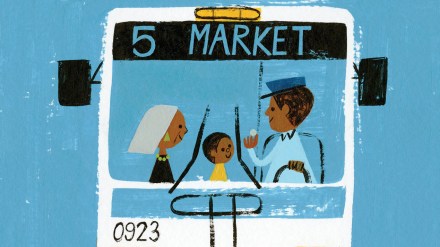
CJ, fresh from church, skips out into the sprinkling rain. He and his nana wait for the bus under her umbrella. From the bus stop CJ watches as his friend climbs into a warm, dry car and asks, “‘Nana, how come we don’t got a car?’” Nana was just telling CJ that they didn’t need a car when “the bus creaked to a stop in front of them. It sighed and sagged and the doors swung open.’”  As they stepped aboard, Mr. Dennis, the bus driver, pulled a quarter from behind CJ’s ear, making him giggle.

celebrate-picture-books-picture-book-review-last-stop-on-market-street-at-bus-stop

Image copyright Christian Robinson, text copyright Matt de da Peña, 2015. Courtesy of G. P. Putnam and Sons Books for Young Readers.

CJ and Nana found seats up front across from a man with a guitar and an old woman with a jar of butterflies on her lap. Nana said hello to everyone and “made sure CJ did the same.” As the bus pulled away from the curb, Nana began to knit and CJ looked out the window feeling sorry that he couldn’t just go home after church like his friends. Nana said she felt “‘sorry for those boys….They’ll never get a chance to meet Bobo or the Sunglass Man.’”

celebrate-picture-books-picture-book-review-last-stop-on-market-street-getting-on-bus

Image copyright Christian Robinson, text copyright Matt de da Peña, 2015. Courtesy of G. P. Putnam and Sons Books for Young Readers.

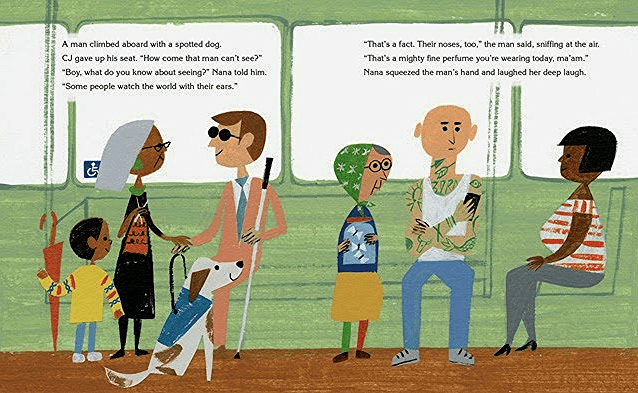
At the next stop a blind man and his dog got on. CJ gave him his seat, but asked Nana why he couldn’t see. “‘Some people watch the world with their ears.’” Nana told him. When the bus stopped again, two older boys stepped on. CJ wished he could listen to music on a phone like they were, but Nana pointed to the man with the guitar, who began to pluck the strings and sing. CJ closed his eyes and let the music transport him out of the city. In his mind he saw waves and colors, hawks and butterflies. “CJ’s chest grew full and he was lost in the sound and the sound gave him the feeling of magic.”

celebrate-picture-books-picture-book-review-last-stop-on-market-street-blind-man

Image copyright Christian Robinson, text copyright Matt de da Peña, 2015. Courtesy of G. P. Putnam and Sons Books for Young Readers.

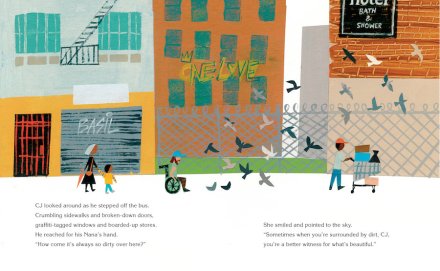
When the man finished his song everyone clapped, and CJ dropped his quarter into the man’s hat. Finally, the bus came to the last stop on Market Street. CJ and his nana stepped off into a neighborhood of “crumbling sidewalks and broken-down doors, graffiti-tagged windows and boarded-up stores.” CJ wondered why it was always so dirty there, but Nana pointed to the beauty of the sky above them. CJ looked up and saw a rainbow arching over the soup kitchen. Then CJ saw familiar faces at the window and felt glad they had come. “‘Me too,’” Nana agreed as she and CJ took up their posts and began ladling soup into bowls.

celebrate-picture-books-picture-book-review-last-stop-on-market-street-soup-kitchen

Image copyright Christian Robinson, text copyright Matt de da Peña, 2015. Courtesy of G. P. Putnam and Sons Books for Young Readers.

Matt de da Peña’s gentle nudging to look on the bright side and appreciate the beauty and wonder around you is made all the more poignant for readers by the story’s young protagonist. Through realistic dialogue and honestly expressed feelings, CJ and Nana engage in one of life’s most important lessons—connecting empathetically with others. CJ’s rich experiences on the bus and at the soup kitchen—microcosms of our larger world—broadens his view and enlivens his imagination. Last Stop on Market Street reminds readers that to truly enjoy a meaningful life they must be aware of and appreciate the diversity of people and events around them.

Christian Robinson’s acrylic and collage illustrations are smart, captivating snapshots of CJ’s day as he watches and interacts with a variety of people on the bus and at the soup kitchen. The visual camaraderie of the passengers—old and young, tattooed, talented, and disabled—as they talk together and smile at one another will cheer readers. The color scheme of bright and pastel colors shared from page to page enhances the book’s themes of interconnectedness and cohesion, and the clean, unadorned images reflect the idea that often the simple things in life really are the best.

Last Stop of Market Street, winner of the 2016 Newberry award and a Caldecott Honor book as well as the winner of many other awards, is a superb book to add to any child’s home library.

Ages 3 – 6

G. P. Putnam Suns Books for Young Readers, 2015 | ISBN 978-0399257742

Learn more about Matt De La Peña, his books, and more on his website!

Discover more about Christian Robinson and view a gallery of his work on his website!

Get on board this Last Stop on Market Street book trailer!

Love the Bus Month Activity

celebrate-picture-books-picture-book-review-school-bus-coloring-page

Where Are You Going? Coloring Page


Do you love riding the bus? It’s a great way to sightsee while getting where you want to go. Grab your colored pencils, markers, or crayons and enjoy this Where Are You Going? Coloring Page!

Picture Book Review
February 16 – International Month of Black Women in the Arts

celebrate-picture-books-picture-book-review-fancy-party-gowns-cover

About the Holiday

During this month we recognize the contributions of black women across the fields of literature, fine, performing, culinary, and healing arts. To celebrate, research black women artists and attend exhibits, readings, or other events that showcase these talented women.

Fancy Party Gowns: The Story of Fashion Designer Ann Cole Lowe

Written by Deborah Blumenthal | Illustrated by Laura Freeman


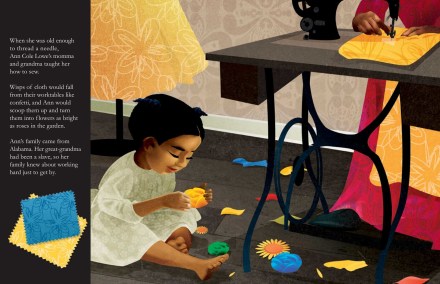
From the time that Ann Cole Lowe was old enough to thread a needle, she loved to sew. While her momma and grandma worked at their sewing machines, making dresses for the socialites of Alabama, Ann sat nearby turning “the wisps of cloth” that fell to the floor into “flowers as bright as roses in the garden.” Even at a young age Ann understood that “doing what you love could set your spirit soaring.”

celebrate-picture-books-picture-book-review-fancy-party-gowns-ann-as-child

Image copyright Laura Freeman, text copyright Deborah Blumenthal, courtesy of simonandschuster.com

When Ann was only sixteen years old, her momma died. Not only did her mother’s death leave Ann bereft, it left her in charge of the business, and many women were waiting for gowns, most importantly the Alabama governor’s wife. “Ann thought about what she could do, not what she couldn’t change.” She sat down and finished the dresses. “Then she stood up and ran the business.”

celebrate-picture-books-picture-book-review-fancy-party-gowns-design-school

Image copyright Laura Freeman, text copyright Deborah Blumenthal, courtesy of simonandschuster.com

In 1916 a woman in Florida hired her to sew dresses. She also sent Ann to design school in New York. Because she was African American, however, Ann was required to study in a separate classroom by herself. Ann was not deterred. She continued to make unique gowns and dresses, and her client list grew. Finally, Ann had saved enough money to open a salon of her own in Manhattan. Sometimes she didn’t have enough money to pay all the bills, but she persisted. Her life was about “what she could do, not what she couldn’t change.”

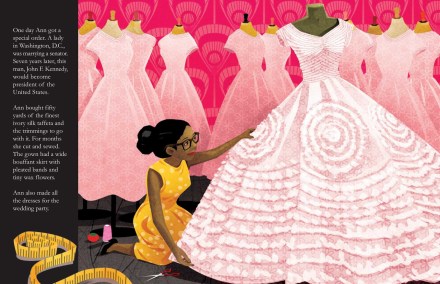
One day Ann received an order for a wedding dress from a woman who was marrying a United States senator. The woman’s name was Jacqueline Bouvier and the man was John F. Kennedy, a future president of the U.S. Ann bought 50 yards of ivory silk taffeta and designed a beautiful dress with a bouffant skirt and pleated bands decorated with tiny wax flowers. She also made the dresses for Jacqueline’s attendants.

celebrate-picture-books-picture-book-review-fancy-party-gowns-wedding-dress

Image copyright Laura Freeman, text copyright Deborah Blumenthal, courtesy of simonandschuster.com

Then ten days before the wedding, Ann walked into her workroom and discovered that a water pipe had burst, flooding the dresses, material, everything. Ten of the sixteen gowns Ann had sewn were destroyed. “Ann though about what she could do, not what she couldn’t change.” She ordered new fabric, hired more seamstresses, and went to work. On this job she lost money instead of making it, but none of that mattered. In eight days all of the dresses were ready.

When Ann delivered the gowns to the mansion in Newport, Rhode Island, the butler who answered the door told her workers needed to use the back entrance. Ann replied that “if she had to enter through the back door, the bride and bridesmaids wouldn’t be wearing her dresses for the wedding.” The front door swung open. On the day of the wedding—September 12, 1953—the whole world oohed and aahed over Jacqueline Bouvier Kennedy’s gorgeous gown and her bridesmaids’ dresses, but not many people thought about or knew the name of the woman who had created them. “Why? Because Ann Cole Lowe was African American. And life wasn’t fair.”

celebrate-picture-books-picture-book-review-fancy-party-gowns-sewing

Image copyright Laura Freeman, text copyright Deborah Blumenthal, courtesy of simonandschuster.com

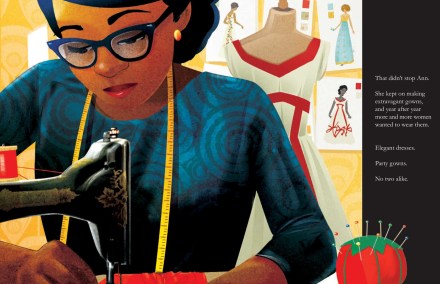
Ann continued to design and sew party dresses and evening gowns for the women of high society. She “didn’t make fine clothes to get rich or famous,” however, but, as she once said, “‘To prove that a Negro can become a major dress designer.’” In 1961 Ann finally gained public recognition for her work when she was named “Official Couturiere” in honor of the 33 ball gowns she created for an elegant ball in Omaha, Nebraska. She proudly accepted her award as the fashion world applauded.

An Author’s Note explaining more about Ann Cole Lowe’s life and work follows the text.

celebrate-picture-books-picture-book-review-fancy-party-gowns-recognized

Image copyright Laura Freeman, text copyright Deborah Blumenthal, courtesy of simonandschuster.com

With straightforward storytelling adorned with lyrical passages, Deborah Blumenthal reveals Ann Cole Lowe’s lifelong love of fashion design, her struggles, and her ultimate acclaim. Lowe’s natural talent, single focus, self-confidence, courage, and persistence come through as she overcomes obstacles and prejudice to become the first African American couture designer. Children interested in fashion and history will find much to spark their curiosity and desire to know more about the woman and her times. Blumenthal’s repetition of Lowe’s philosophy to think about what she could do instead of what she couldn’t change will inspire readers to push past difficulties and find solutions.

Laura Freeman’s full-bleed illustrations are as bold and vivacious as Ann Cole Lowe herself. Beginning with the endpapers, which are scattered with drawings of Lowe’s one-of-a-kind gowns, Freeman takes readers on a tour of the workrooms and salons stocked with the fabrics that gave form to Lowe’s creativity. While the backgrounds are typically brilliantly colored and patterned, twice Freeman places Lowe on a completely white page—after her mother has recently died and she is left alone to finish dresses and when she is segregated from the other students in design school. These pages make a moving and effective statement. Children fascinated by fashion will love seeing the beautifully depicted gowns, and may be stirred to create styles of their own.

Ages 4 – 8

little bee books, 2017 | ISBN 978-1499802399

To learn more about Deborah Blumenthal and her books for children, young adults, and adults, visit her website!

Discover a gallery of illustration work by Laura Freeman on her website!

International Month of Black Women in the Arts Activity

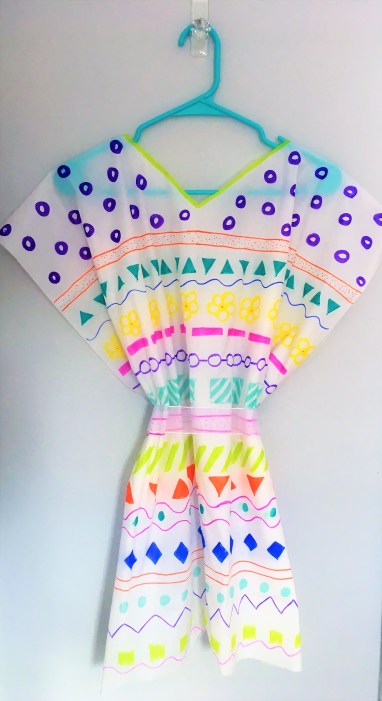
celebrate-picture-books-picture-book-review-tablecloth-dress


Create Your Own Party Dress 


With this easy craft you can make a  fun sheath dress for playing dress-up. It’s also a great party activity! All you need is a plastic or paper party table cloth, Sharpies, and your imagination!

Supplies

  • 1 plastic party tablecloth (1 cloth will most likely make 4 dresses)
  • Sharpies or other permanent markers
  • Ribbon, scarf, crepe paper garland, or other material for a belt
  • Scissor
  • Newspaper, old sheeting or other material to protect the floor

Directions

  1. With the table cloth folded along one edge, cut a rectangle the appropriate size for the child
  2. In the middle of the folded edge cut a V-shaped or rounded opening for the child’s head. Begin with a small opening and enlarge it as needed
  3. Lay the dress on newspaper or other material to protect the floor
  4. Draw and color shapes, lines, figures, or other designs on the dress
  5. Slip on over a shirt and pants or leggings
  6.  Add a belt with a ribbon, scarf, piece of crepe paper garland, or other material

Picture Book Review
February 13 – World Radio Day

celebrate-picture-books-picture-book-review-radio-man-arthur-dorros-cover

About the Holiday

The radio has provided entertainment, news, comfort, and information and has united people both near and far ever since Guglielmo Marconi invented  it in 1895. Today, radio continues to be an important part of people’s lives around the world. The United Nations Educational, Scientific, and Cultural Organization established February 13 as World Radio Day “to celebrate radio as a medium, to improve international cooperation among broadcasters, and to encourage both major networks and community radio to promote access to information, freedom of expression and gender equality across the airwaves.” This year’s UNESCO theme is “Radio is You” and focuses on ensuring that all radio stations from personal to commercial have the tools they need to provide the best service they can.

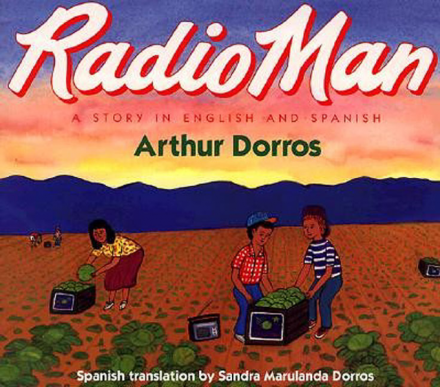
Radio Man/Don Radio

By Arthur Dorros | Translated by Sandra Marulanda Dorros


“Radio man” is Diego, a boy in a family of migrant workers who pick fruit and vegetables from the Southwest to as far north as Washington state. Although his family moves frequently, Diego has close relationships with his parents, sister, grandparents, cousins, and especially a friend named David.

As his family moves from town to town searching for work, Diego listens to the radio. Stations broadcasting in both English and Spanish keep the family company, and Diego measures the distance of upcoming towns along their route by the clarity of the DJs’ voices. The radio also provides entertainment for end-of-picking season parties among the workers and serves as a catalyst for the grandfather’s stories of growing up in Mexico.

celebrate-picture-books-picture-book-review-radio-man-arthur-dorros-cover

Image copyright Arthur Dorros, courtesy of Penguin Books

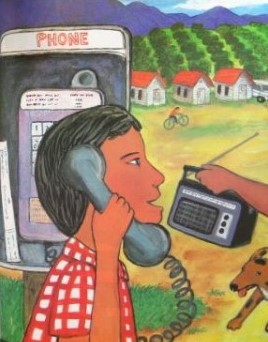
While Diego’s family is close-knit, their nomadic lifestyle separates Diego from his best friend, David, who is also the son of migrant workers. As the story begins Diego and David are leaving Texas and know they won’t see each other for a while. Traveling north, Diego’s family stops in different towns. In each Diego goes to school during the day and picks crops in the afternoon. He meets up with his cousins and other friends, along the way, but never finds David. When the family reaches Sunnyside, Washington, Diego discovers that radio station KMPO allows people to send messages to others. Diego calls the station and sends a message: “Hello, David! This is Diego. Are you here?”

David, missing Diego and listening to his own radio, is there! David smiles, happy to be reconnected with his best friend.

Arthur Dorros’s story reflects not only the life of migrant workers but also the universal feelings of children separated from friends. Through Dorros’s honest and moving descriptions, readers discover the importance of communication, whether it be through shared history and stories or through technology, in keeping relationships strong. When Diego and David finally find each other again, children will identify with their happiness.

Through vivid illustrations, Dorros depicts the landscape and farms of the American southwest, the festive celebrations held by workers at the end of picking seasons, the reality of driving from town to town, and the tight relationships among family members, giving children a glimpse into the life of migrant workers as well as the heart of friendship.

Each page of Radio Man is presented in English and Spanish, with translation by Sandra Marulanda Dorros. It has become a classic multicultural story, and one that is a wonderful read for all kids.

Ages 4 – 8

Trophy Picture Books, HarperCollins, 1997 | ISBN 978-0064434829

Discover more about Arthur Dorros and his books as well as fun activities on his website!

World Radio Day Activity

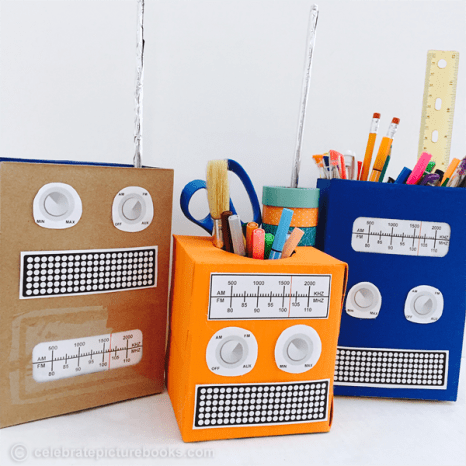
CPB - Radio Man box radios from side

Box Radio Desk OrganizerMau


With a recycled box and the provided printable templates  you can make a desk organizer that looks like a radio with this fun craft!

Supplies

  • Cardboard box – Use an empty cube-shaped tissue box, pasta box, or any small box
  • Wooden chopstick
  • Printable Radio Face Template
  • Aluminum foil
  • Glue – a hot-glue gun works well on the cardboard; regular glue for the buttons and tape for the station tuner window
  • Paint – any color you like
  • Paint brush
  • Scissors

Directions

1. Prepare the box:

  • Choose a box to be your radio. In the pictures I used a cube-shaped tissue box and a penne pasta box with a cellophane window in it.
  • If you are using a box without an opening in the top, cut the top or bottom flaps off of one end of the box, depending on where you want the station tuner window to go.

2. Paint the box:

  • You can paint the printed front, back and sides of the box.
  • OR if you want a plain box to use “as-is” or to paint: take the recycled box apart at the seams and turn it “inside out.”
  • If you are using a pasta box with a window in it, tape the stations tuner template to the cellophane window before gluing the seams
  • Glue the original seam and flaps (a hot-glue gun works well). Let the glue dry. Then paint.

3. Let the box dry

4. Cut out the radio dials, speaker, and stations tuner window

5. Glue the parts of the radio to the box 

6. To make the antenna, wrap the wooden chopstick in a strip of aluminum foil: lay the stick on the foil and fold a foil flap (about 1 inch long) over each end of the stick. Roll the foil around the stick and press gently to close seam.

7. Attach the antenna to your box:

  • For pasta boxes tape the antenna to the inside corner of the box
  • For cube tissue boxes, make a hole in the right hand corner and push antenna in

8. Use your Radio Desk Organizer to hold pencils, rulers, bookmarks, anything!

Picture Book Review

 

February 12 – It’s Black History Month

celebrate-picture-books-picture-book-review-words-set-me-free-cover

About the Holiday

Black History Month, also known as National African American History Month celebrates the achievements and contributions of African Americans in United States History. Originally a week-long observance commemorating the birthdays of Abraham Lincoln on February 12 and Frederick Douglass on February 14,  Black History Month was officially established in 1976 by then president Gerald Ford.

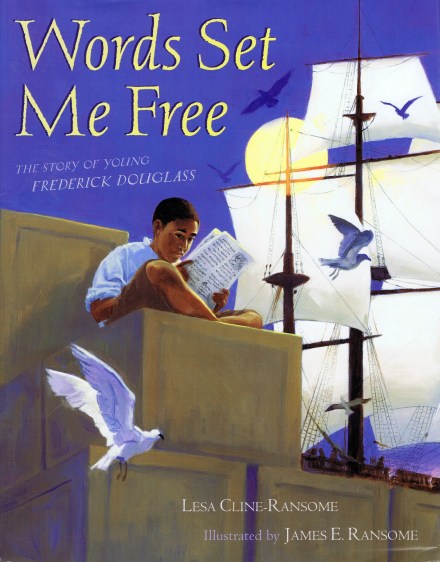
Words Set Me Free

Written by Lesa Cline-Ransome | Illustrated by James E. Ransome


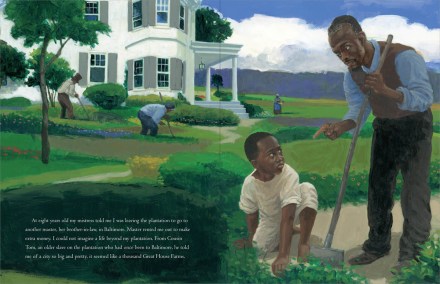
Born into slavery and separated from his mother in infancy, Frederick Bailey is raised by his Grandmama while his mother works on a separate plantation. When she is able Harriet Bailey walks the 12 miles between plantations to spend a few short hours with her son, watching him sleep before making the long journey back. While Frederick is still a very young child, his mother falls ill and dies. Douglass recalls never seeing his mother’s face in daylight.

celebrate-picture-books-picture-book-review-words-set-me-free-the-story-of-young-frederick-douglas-plantation

Image copyright James E. Ransome, text copyright Carole Boston Weatherford. Courtesy of Simon & Schuster.

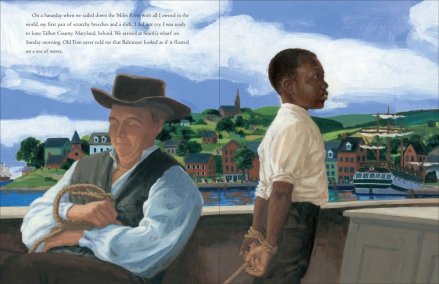
At the age of six, Frederick is moved from his Grandmama’s cabin to the plantation house. At eight, he is sent to the master’s brother in Baltimore, Maryland. Here, the master’s wife, Sophia Auld, treats Frederick more like a paid servant then as a slave. When Frederick says he wants to learn how to read and write, she immediately begins teaching him the alphabet. Frederick is always mindful, however, that he may be punished for these lessons, and he has only memorized the letters and a few words before his master puts an end to his education. Angrily, the master explains to his wife, “If you teach him how to read…it would forever unfit him to be a slave.”

celebrate-picture-books-picture-book-review-words-set-me-free-the-story-of-young-frederick-douglas-smith's-wharf

These words are perhaps Frederick’s greatest lesson. He never forgets them, and they fuel his resolve to pursue an education. He makes clever use of the few resources he has and slowly learns to read and write. From the newspapers he discovers that the North offers freedom, and Frederick decides to escape. It’s many long years, however, before he can fulfill his dreams. At last, he sees an opportunity to leave the South behind, and using his talent for writing makes his escape a reality.

celebrate-picture-books-picture-book-review-words-set-me-free-the-story-of-young-frederick-douglas-tall-ship

Image copyright James E. Ransome, courtesy of Simon & Schuster.

Lesa Cline-Ransome has written a compelling biography of Frederick Douglass for children in Words Set Me Free. In straightforward language and through first-person point of view, Cline-Ransome reveals the brutal truth of Douglass’s life as a slave and his fight against injustice. As the title suggests, the book focuses on Frederick’s desire to become educated and the obstacles he overcame to succeed. This universally important message continues the work Douglass engaged in long ago.

James Ransome’s stirring paintings realistically highlight pivotal scenes of Frederick’s life, beginning with the tender moments he spends with his mother as a very young child. With an unstinting eye Ransome reveals the hardship and cruelty Frederick endured as a slave. His moving illustrations also demonstrate hope as Frederick, with blossoming intellect, resolves to educate himself and find a means of escape.

Ages 5 and up                                                                                                            

Simon & Schuster, New York, 2012 | ISBN 978-1416959038

Learn more about Lesa Cline-Ransome and her books on her website!

Find a gallery of illustration, paintings, drawings, videos, and more on James E. Ransome‘s website!

Black History Month Activity

celebrate-picture-books-picture-book-review-frederick-douglass-word-search-puzzle


Frederick Douglass Word Search


Words were so important to Frederick Douglass that he risked everything to learn how to read and write. In this printable Frederick Douglass Word Search Puzzle you will find words about the subject of today’s book. Here’s the Solution

February 10 – It’s Children’s Authors & Illustrators Week

celebrate-picture-books-picture-book-review-anything-but-pink-cover

About the Holiday

Today I’m celebrating Children’s Authors and Illustrators Week with a humorous book by a debut author whose story embodies the universal themes of Multicultural Children’s Book Day. Her story is a bright reminder that life is better when we embrace the wonderful diversity all around us.

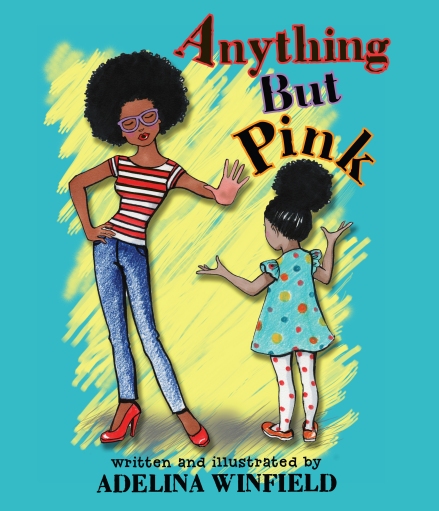
Anything But Pink

By Adelina Winfield


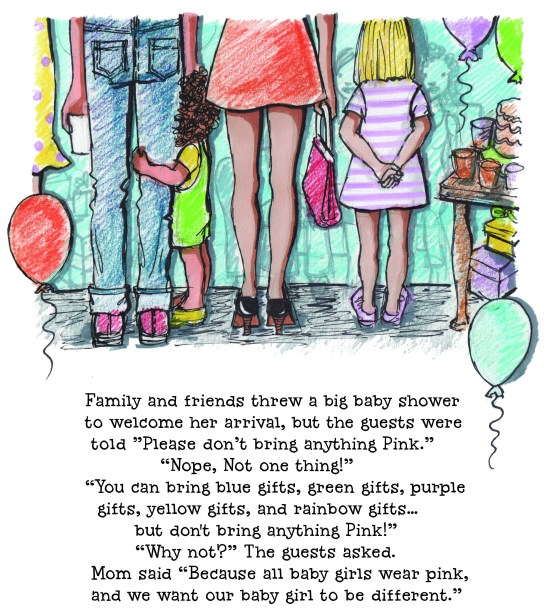
Not long ago in a nearby city—it might even have been yours—a couple was waiting for their little girl to be born. One night under a starlit sky, her mommy and daddy were inspired to call their precious one Starri. Starri’s “parents had big dreams about what she would be like,” but none of those things involved the color pink. In fact, when guests were invited to Starri’s baby shower they were told, “‘Please don’t bring anything Pink. Nope, Not one thing!’”  

celebrate-picture-books-picture-book-review-anything-but-pink-baby-shower

Image and text copyright Adelina Winfield, courtesy of Adelina Winfield

They were encouraged to bring “‘blue gifts, green gifts, purple gifts, yellow gifts, and rainbow gifts,’” but nothing pink. Why? Starri’s mom said, “‘all baby girls wear pink, and we want our baby girl to be different.’” So the decorations and cupcakes were “red, green, purple, and aqua, and friends and family brought a rainbow of blankets, bouncers, bassinets, toys, clothes, and diapers. But there was not one dot of pink. “Nope. No pink at all.”

Mommy and Daddy took all those presents home and decorated their baby girl’s nursery in “yellow, grey, aqua, and orange.” Pretty soon Starri was born, and she was “as bright as her name.” As an infant Starri was wrapped in green and yellow; she crawled in lavender onesies; she took her first steps in peach and blue; and she greeted the world in a bold red dress. But she never, ever wore anything pink. “Nope. Not one thing.”

celebrate-picture-books-picture-book-review-anything-but-pink-starri

Image and text copyright Adelina Winfield, courtesy of Adelina Winfield

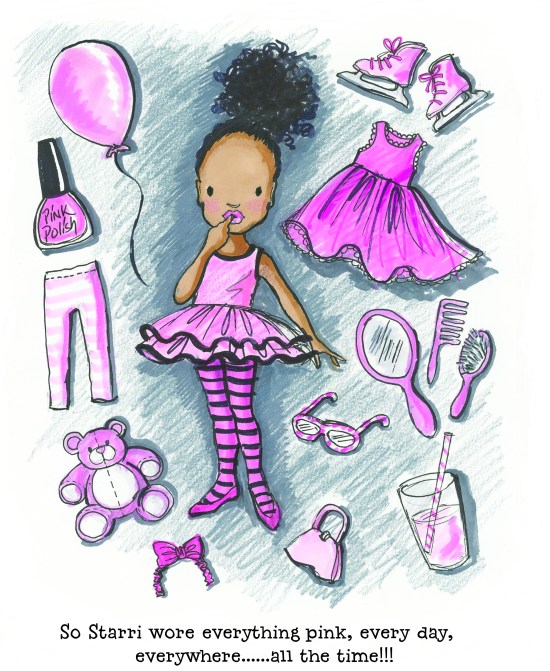
But one day Starri told her mom and dad that she wanted to wear a pink dress. Their astonished faces said it all. And Starri didn’t want just one pink dress, she wanted a pink tutu, “pink nail polish, pink shoes, pink ice cream, pink cake, pink leggings, and pink sunglasses. A pink room with pink walls, and a pink dresser with a pink lamp on a pink night table.” Yep, she wanted everything pink. And so it happened.

celebrate-picture-books-picture-book-review-anything-but-pink-starri's-pink-bedroom

Image and text copyright Adelina Winfield, courtesy of Adelina Winfield

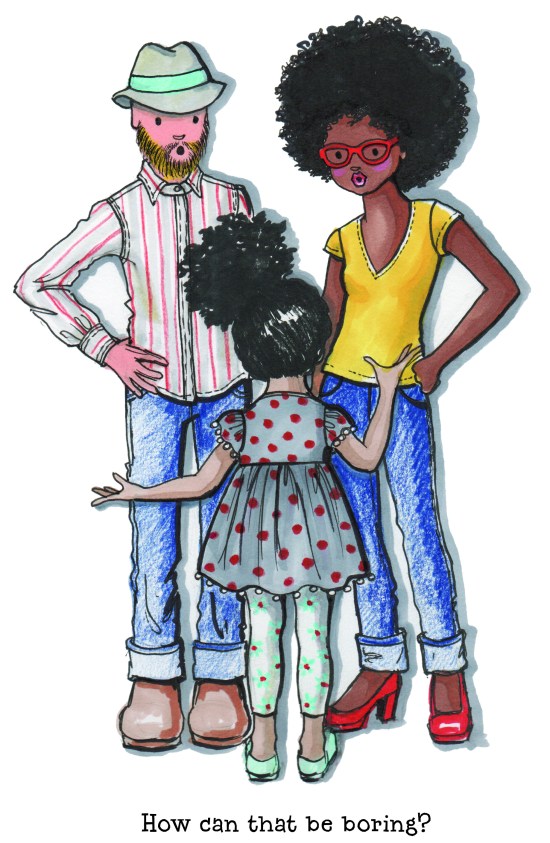
There was not one inch of Starri’s life that was not pink. She wore pink at playtime, somersaulted in pink, sat on the pink spot on the classroom reading rug, and “of course had a pink birthday party.” One day as Starri once again clothed herself head to toe in pink, her mom stopped her. “‘Wearing all pink is boring,’” she said. But Starri didn’t believe it. How could pink be boring when there was “bubble gum pink, candy pink, magenta, rose, fuchsia, flamingo pink, watermelon pink, and hot pink?” Pink was not boring. “Nope, not one bit!”

“‘But honey,’” her mom and dad said, “‘variety is the spice of life,’” and they showed her how all the beautiful colors of the rainbow could “live together with pink.” Starri loved this idea, and so now when you see her, she’s still wearing pink, but she’s welcomed other colors into her life as well!

celebrate-picture-books-picture-book-review-anything-but-pink-starri's parents

Image and text copyright Adelina Winfield, courtesy of Adelina Winfield

If you have ever been a little girl, had a little girl, or even just known a little girl, Adelina Winfield’s Anything But Pink will resonate and make you smile. Despite parent’s preferences, protestations, and prohibitions, pink creeps then gallops into girls’ lives in a million different ways. Winfield’s repetition of a rainbow of colors and the fervently hopeful “Nope, no pink at all. Not one thing” makes her story all the funnier as adults surely know what’s coming and young readers will cheer when Pink finally makes its appearance. I laughed out loud when I turned to the pages after Starri embraces pink as it took me back to when my own daughter, who having earlier rejected pink for green, suddenly wanted a pink room, pink lamp, pink clothes, and even wall stickers exactly like the colorful circles that dot Winfield’s endpapers.

There is a joyous quality to Winfield’s stylish illustrations as Starri’s parents prepare for their baby amid vibrant images that express the dreams they share for their child. When adorable, curly-haired Starri comes along, she happily wears what her parents give her until the moment when she asserts her independence and with personality and flair enters the monochromatic world of pink. The story is infused with a sweet tone shown in the loving relationship between Starri’s parents as they stand close together, walk with their arms around each other, and even have priceless matching expressions the first time the dreaded P word is uttered. Their relationship with Starri is likewise affectionate. When their daughter does discover pink, they support her, only later guiding her to consider a more global perspective.

Anything But Pink is a cute story for all lovers of the color pink and would make an appreciated baby shower or birthday gift and a much-asked-for story time or bedtime read.

Ages 3 – 8

CreateSpace Independent Publishing, 2016 | ISBN 978-1541103672

Anything But Pink is available on Amazon

You can follow Anything But Pink on Instagram

About Adelina Winfield

celebrate-picture-books-picture-book-review-Adelina-Winfield-picture

Adelina is an all around artist and an eternally creative spirit. She spent several years as a Fashion Designer in New York’s garment district, designing children’s clothing for labels such as Guess Jeans, JayZ’s Rocawear brand, and Tina Knowles’ Dereon line. This design experience allowed her to globe trot, where she spotted the latest trends throughout Europe and Asia. Her eclectic upbringing in Brooklyn, NY, worldwide travel, and many years in the fashion business has served as a canvas for her current creative expression: writing. Now living in another creative city, Austin, Texas, Adelina has married her artistic and writing talents in her first children’s book, Anything But Pink

Children’s Authors & Illustrators Week Activity

CPB - Rainbow Crayon Art 3

Crayon Rainbow Art


With this cool project you can create an art piece that’s as colorful as a rainbow and as unique as you are! Adult help is needed for children.

Supplies

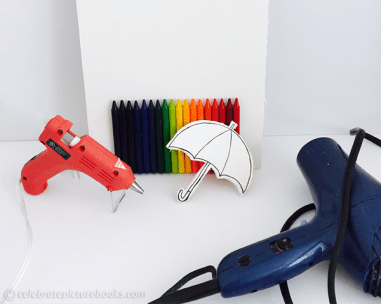
  • Box of 24 crayons
  • White foam board or thick poster board, 8 inches by 17 inches
  • A small piece of corrugated cardboard, about 5 inches by 5 inches (a piece of the foam board can also be used for this step)
  • A small piece of poster board, about 5 inches by 5 inches
  • Scissors
  • X-acto knife (optional)
  • Hot glue gun
  • Hair dryer
  • Old sheets or towels, newspapers, a large box, or a trifold display board

CPB - Rainbow Crayon Art 2

CPB - Rainbow Crayon Art 1 (2)

Directions

  1. Remove the various red, orange, yellow, blue, indigo, and violet hued crayons from the box of crayons
  2. Strip the paper from the crayons by slicing the paper with the x-acto knife, or removing it by hand
  3. Line them up in order at the top of the white foam board
  4. Glue the crayons with their tips facing down to the board with the hot glue gun
  5. Cut an umbrella or other shape of your choice from the poster board
  6. Trace the umbrella or other shape onto the corrugated cardboard or a piece of the foam board and cut out
  7. Glue the poster board shape onto the corrugated cardboard, let dry
  8. Glue the umbrella or other shape to the foam board, about 4 ½ inches below the crayons
  9. Set up a space to melt the crayons. The wax will fly, so protect the floor and walls by placing the art piece in a large box or hanging newspapers, old sheets or towels on the walls and placing newspapers on the floor. A trifold display board and newspapers works well.
  10. Stand the art piece upright with the crayons at the top
  11. With the hot setting of the hair dryer, blow air at the crayons until they start to melt
  12. Move the hair dryer gently back and forth across the line of crayons from a distance of about 6 to 12 inches away. The closer you are to the crayons, the more they will splatter
  13. The crayons will begin to melt and drip downward
  14. You can experiment with aiming the hair dryer straight on or at an angle to mix colors
  15. Wax that drips onto the umbrella or other shape can be chipped off after it dries or wiped off to create a “watercolor” effect on the shape
  16. Once the hair dryer is turned off, the wax cools and dries quickly
  17. Hang or display your art!

About Multicultural Children’s Book Day

Multicultural Children’s Book Day 2017 (1/27/17) is its fourth year and was founded by Valarie Budayr from Jump Into A Book and Mia Wenjen from PragmaticMom. Our mission is to raise awareness on the ongoing need to include kid’s books that celebrate diversity in home and school bookshelves while also working diligently to get more of these types of books into the hands of young readers, parents and educators. 

Despite census data that shows 37% of the US population consists of people of color, only 10% of children’s books published have diversity content. Using the Multicultural Children’s Book Day holiday, the MCBD Team are on a mission to change all of that.

Current Sponsors:  MCBD 2017 is honored to have some amazing Sponsors on board. Platinum Sponsors include ScholasticBarefoot Books and Broccoli. Other Medallion Level Sponsors include heavy-hitters like Author Carole P. RomanAudrey Press, Candlewick Press,  Fathers Incorporated, KidLitTVCapstone Young Readers, ChildsPlayUsa, Author Gayle SwiftWisdom Tales PressLee& Low BooksThe Pack-n-Go GirlsLive Oak MediaAuthor Charlotte Riggle, Chronicle Books and Pomelo Books

Author Sponsors include: Karen Leggett AbourayaVeronica AppletonSusan Bernardo, Kathleen BurkinshawDelores Connors, Maria DismondyD.G. DriverGeoff Griffin Savannah HendricksStephen HodgesCarmen Bernier-Grand,Vahid ImaniGwen Jackson,  Hena, Kahn, David Kelly, Mariana LlanosNatasha Moulton-LevyTeddy O’MalleyStacy McAnulty,  Cerece MurphyMiranda PaulAnnette PimentelGreg RansomSandra Richards, Elsa TakaokaGraciela Tiscareño-Sato,  Sarah Stevenson, Monica Mathis-Stowe SmartChoiceNation, Andrea Y. Wang

We’d like to also give a shout-out to MCBD’s impressive CoHost Team who not only hosts the book review link-up on celebration day, but who also work tirelessly to spread the word of this event. View our CoHosts HERE.

MCBD Links to remember:

MCBD site: http://multiculturalchildrensbookday.com/

Free Multicultural Books for Teachers: http://bit.ly/1kGZrta

Free Kindness Classroom Kit for Homeschoolers, Organizations, Librarians and Educators: http://multiculturalchildrensbookday.com/teachers-classroom-kindness-kit/

Free Diversity Book Lists and Activities for Teachers and Parents: http://bit.ly/1sZ5s8i

Picture Book Review