February 12 – It’s Black History Month

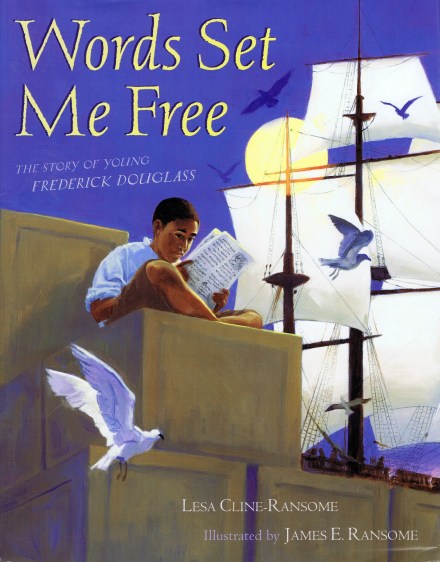
celebrate-picture-books-picture-book-review-words-set-me-free-cover

About the Holiday

Black History Month, also known as National African American History Month celebrates the achievements and contributions of African Americans in United States History. Originally a week-long observance commemorating the birthdays of Abraham Lincoln on February 12 and Frederick Douglass on February 14,  Black History Month was officially established in 1976 by then president Gerald Ford.

Words Set Me Free

Written by Lesa Cline-Ransome | Illustrated by James E. Ransome


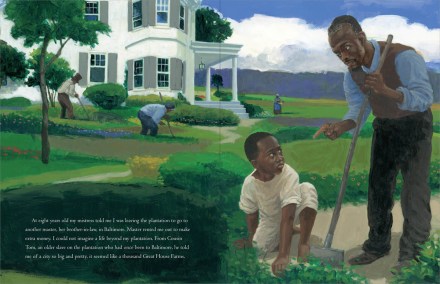
Born into slavery and separated from his mother in infancy, Frederick Bailey is raised by his Grandmama while his mother works on a separate plantation. When she is able Harriet Bailey walks the 12 miles between plantations to spend a few short hours with her son, watching him sleep before making the long journey back. While Frederick is still a very young child, his mother falls ill and dies. Douglass recalls never seeing his mother’s face in daylight.

celebrate-picture-books-picture-book-review-words-set-me-free-the-story-of-young-frederick-douglas-plantation

Image copyright James E. Ransome, text copyright Carole Boston Weatherford. Courtesy of Simon & Schuster.

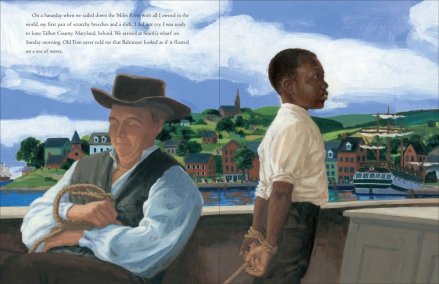
At the age of six, Frederick is moved from his Grandmama’s cabin to the plantation house. At eight, he is sent to the master’s brother in Baltimore, Maryland. Here, the master’s wife, Sophia Auld, treats Frederick more like a paid servant then as a slave. When Frederick says he wants to learn how to read and write, she immediately begins teaching him the alphabet. Frederick is always mindful, however, that he may be punished for these lessons, and he has only memorized the letters and a few words before his master puts an end to his education. Angrily, the master explains to his wife, “If you teach him how to read…it would forever unfit him to be a slave.”

celebrate-picture-books-picture-book-review-words-set-me-free-the-story-of-young-frederick-douglas-smith's-wharf

These words are perhaps Frederick’s greatest lesson. He never forgets them, and they fuel his resolve to pursue an education. He makes clever use of the few resources he has and slowly learns to read and write. From the newspapers he discovers that the North offers freedom, and Frederick decides to escape. It’s many long years, however, before he can fulfill his dreams. At last, he sees an opportunity to leave the South behind, and using his talent for writing makes his escape a reality.

celebrate-picture-books-picture-book-review-words-set-me-free-the-story-of-young-frederick-douglas-tall-ship

Image copyright James E. Ransome, courtesy of Simon & Schuster.

Lesa Cline-Ransome has written a compelling biography of Frederick Douglass for children in Words Set Me Free. In straightforward language and through first-person point of view, Cline-Ransome reveals the brutal truth of Douglass’s life as a slave and his fight against injustice. As the title suggests, the book focuses on Frederick’s desire to become educated and the obstacles he overcame to succeed. This universally important message continues the work Douglass engaged in long ago.

James Ransome’s stirring paintings realistically highlight pivotal scenes of Frederick’s life, beginning with the tender moments he spends with his mother as a very young child. With an unstinting eye Ransome reveals the hardship and cruelty Frederick endured as a slave. His moving illustrations also demonstrate hope as Frederick, with blossoming intellect, resolves to educate himself and find a means of escape.

Ages 5 and up                                                                                                            

Simon & Schuster, New York, 2012 | ISBN 978-1416959038

Learn more about Lesa Cline-Ransome and her books on her website!

Find a gallery of illustration, paintings, drawings, videos, and more on James E. Ransome‘s website!

Black History Month Activity

celebrate-picture-books-picture-book-review-frederick-douglass-word-search-puzzle


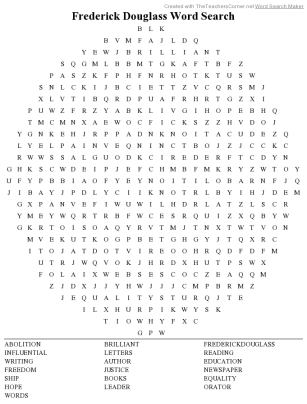
Frederick Douglass Word Search


Words were so important to Frederick Douglass that he risked everything to learn how to read and write. In this printable Frederick Douglass Word Search Puzzle you will find words about the subject of today’s book. Here’s the Solution

February 10 – It’s Children’s Authors & Illustrators Week

celebrate-picture-books-picture-book-review-anything-but-pink-cover

About the Holiday

Today I’m celebrating Children’s Authors and Illustrators Week with a humorous book by a debut author whose story embodies the universal themes of Multicultural Children’s Book Day. Her story is a bright reminder that life is better when we embrace the wonderful diversity all around us.

Anything But Pink

By Adelina Winfield


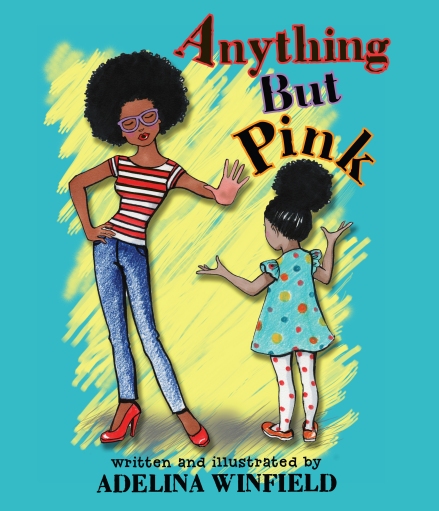
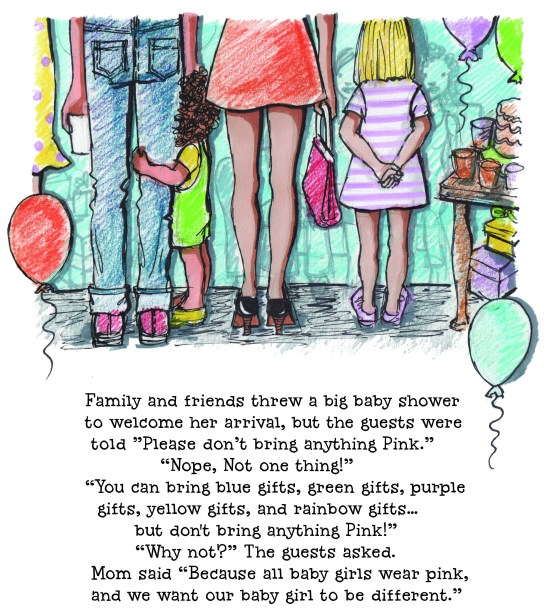
Not long ago in a nearby city—it might even have been yours—a couple was waiting for their little girl to be born. One night under a starlit sky, her mommy and daddy were inspired to call their precious one Starri. Starri’s “parents had big dreams about what she would be like,” but none of those things involved the color pink. In fact, when guests were invited to Starri’s baby shower they were told, “‘Please don’t bring anything Pink. Nope, Not one thing!’”  

celebrate-picture-books-picture-book-review-anything-but-pink-baby-shower

Image and text copyright Adelina Winfield, courtesy of Adelina Winfield

They were encouraged to bring “‘blue gifts, green gifts, purple gifts, yellow gifts, and rainbow gifts,’” but nothing pink. Why? Starri’s mom said, “‘all baby girls wear pink, and we want our baby girl to be different.’” So the decorations and cupcakes were “red, green, purple, and aqua, and friends and family brought a rainbow of blankets, bouncers, bassinets, toys, clothes, and diapers. But there was not one dot of pink. “Nope. No pink at all.”

Mommy and Daddy took all those presents home and decorated their baby girl’s nursery in “yellow, grey, aqua, and orange.” Pretty soon Starri was born, and she was “as bright as her name.” As an infant Starri was wrapped in green and yellow; she crawled in lavender onesies; she took her first steps in peach and blue; and she greeted the world in a bold red dress. But she never, ever wore anything pink. “Nope. Not one thing.”

celebrate-picture-books-picture-book-review-anything-but-pink-starri

Image and text copyright Adelina Winfield, courtesy of Adelina Winfield

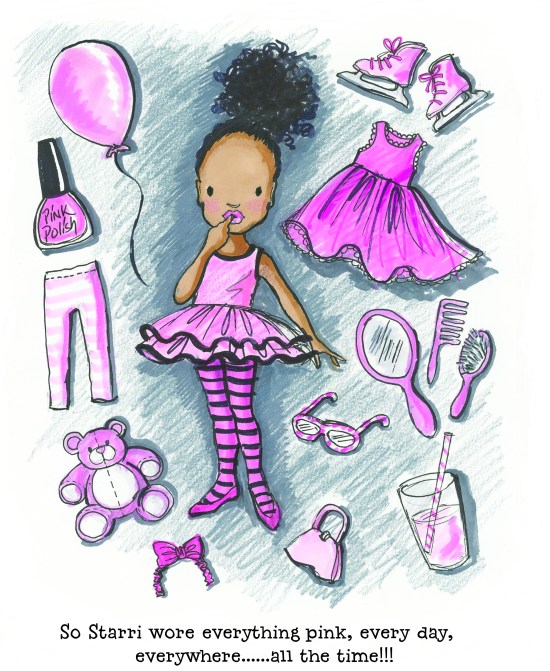
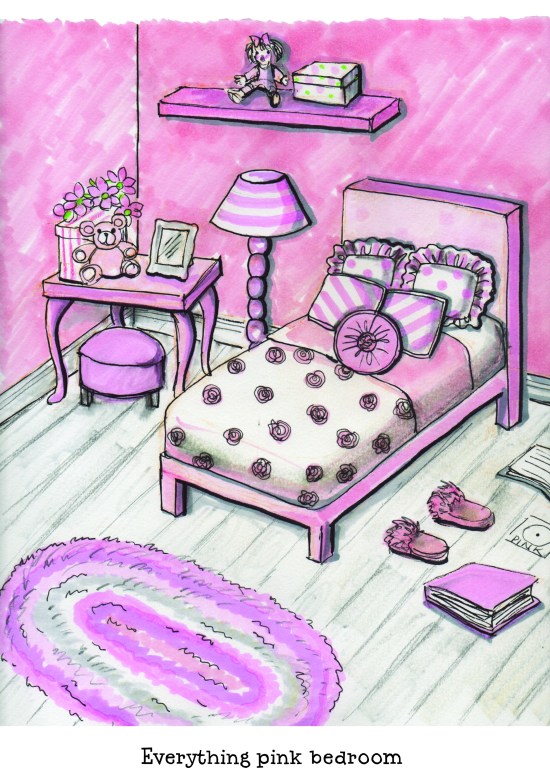
But one day Starri told her mom and dad that she wanted to wear a pink dress. Their astonished faces said it all. And Starri didn’t want just one pink dress, she wanted a pink tutu, “pink nail polish, pink shoes, pink ice cream, pink cake, pink leggings, and pink sunglasses. A pink room with pink walls, and a pink dresser with a pink lamp on a pink night table.” Yep, she wanted everything pink. And so it happened.

celebrate-picture-books-picture-book-review-anything-but-pink-starri's-pink-bedroom

Image and text copyright Adelina Winfield, courtesy of Adelina Winfield

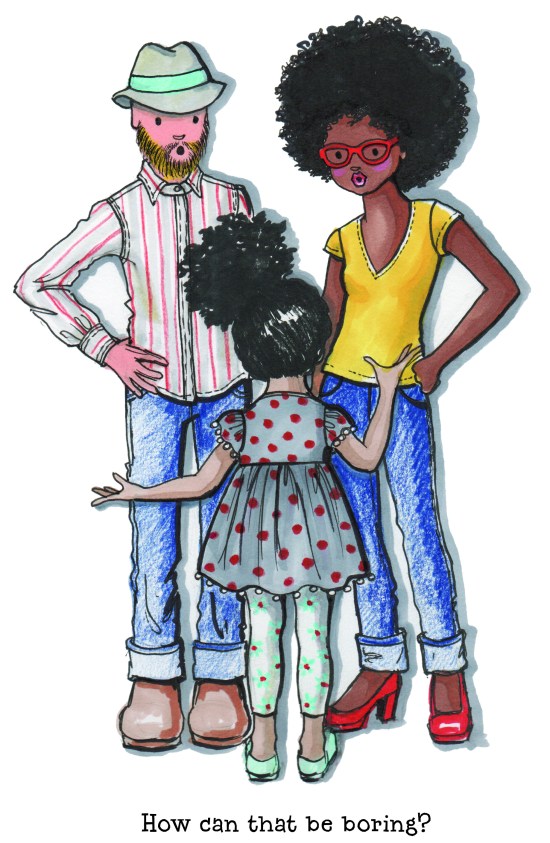
There was not one inch of Starri’s life that was not pink. She wore pink at playtime, somersaulted in pink, sat on the pink spot on the classroom reading rug, and “of course had a pink birthday party.” One day as Starri once again clothed herself head to toe in pink, her mom stopped her. “‘Wearing all pink is boring,’” she said. But Starri didn’t believe it. How could pink be boring when there was “bubble gum pink, candy pink, magenta, rose, fuchsia, flamingo pink, watermelon pink, and hot pink?” Pink was not boring. “Nope, not one bit!”

“‘But honey,’” her mom and dad said, “‘variety is the spice of life,’” and they showed her how all the beautiful colors of the rainbow could “live together with pink.” Starri loved this idea, and so now when you see her, she’s still wearing pink, but she’s welcomed other colors into her life as well!

celebrate-picture-books-picture-book-review-anything-but-pink-starri's parents

Image and text copyright Adelina Winfield, courtesy of Adelina Winfield

If you have ever been a little girl, had a little girl, or even just known a little girl, Adelina Winfield’s Anything But Pink will resonate and make you smile. Despite parent’s preferences, protestations, and prohibitions, pink creeps then gallops into girls’ lives in a million different ways. Winfield’s repetition of a rainbow of colors and the fervently hopeful “Nope, no pink at all. Not one thing” makes her story all the funnier as adults surely know what’s coming and young readers will cheer when Pink finally makes its appearance. I laughed out loud when I turned to the pages after Starri embraces pink as it took me back to when my own daughter, who having earlier rejected pink for green, suddenly wanted a pink room, pink lamp, pink clothes, and even wall stickers exactly like the colorful circles that dot Winfield’s endpapers.

There is a joyous quality to Winfield’s stylish illustrations as Starri’s parents prepare for their baby amid vibrant images that express the dreams they share for their child. When adorable, curly-haired Starri comes along, she happily wears what her parents give her until the moment when she asserts her independence and with personality and flair enters the monochromatic world of pink. The story is infused with a sweet tone shown in the loving relationship between Starri’s parents as they stand close together, walk with their arms around each other, and even have priceless matching expressions the first time the dreaded P word is uttered. Their relationship with Starri is likewise affectionate. When their daughter does discover pink, they support her, only later guiding her to consider a more global perspective.

Anything But Pink is a cute story for all lovers of the color pink and would make an appreciated baby shower or birthday gift and a much-asked-for story time or bedtime read.

Ages 3 – 8

CreateSpace Independent Publishing, 2016 | ISBN 978-1541103672

Anything But Pink is available on Amazon

You can follow Anything But Pink on Instagram

About Adelina Winfield

celebrate-picture-books-picture-book-review-Adelina-Winfield-picture

Adelina is an all around artist and an eternally creative spirit. She spent several years as a Fashion Designer in New York’s garment district, designing children’s clothing for labels such as Guess Jeans, JayZ’s Rocawear brand, and Tina Knowles’ Dereon line. This design experience allowed her to globe trot, where she spotted the latest trends throughout Europe and Asia. Her eclectic upbringing in Brooklyn, NY, worldwide travel, and many years in the fashion business has served as a canvas for her current creative expression: writing. Now living in another creative city, Austin, Texas, Adelina has married her artistic and writing talents in her first children’s book, Anything But Pink

Children’s Authors & Illustrators Week Activity

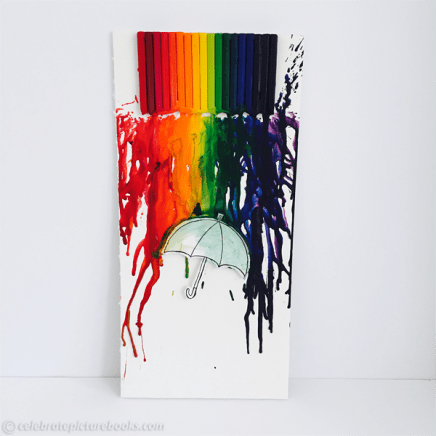
CPB - Rainbow Crayon Art 3

Crayon Rainbow Art


With this cool project you can create an art piece that’s as colorful as a rainbow and as unique as you are! Adult help is needed for children.

Supplies

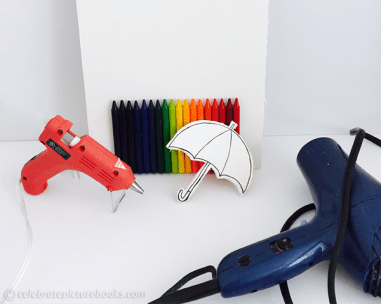
  • Box of 24 crayons
  • White foam board or thick poster board, 8 inches by 17 inches
  • A small piece of corrugated cardboard, about 5 inches by 5 inches (a piece of the foam board can also be used for this step)
  • A small piece of poster board, about 5 inches by 5 inches
  • Scissors
  • X-acto knife (optional)
  • Hot glue gun
  • Hair dryer
  • Old sheets or towels, newspapers, a large box, or a trifold display board

CPB - Rainbow Crayon Art 2

CPB - Rainbow Crayon Art 1 (2)

Directions

  1. Remove the various red, orange, yellow, blue, indigo, and violet hued crayons from the box of crayons
  2. Strip the paper from the crayons by slicing the paper with the x-acto knife, or removing it by hand
  3. Line them up in order at the top of the white foam board
  4. Glue the crayons with their tips facing down to the board with the hot glue gun
  5. Cut an umbrella or other shape of your choice from the poster board
  6. Trace the umbrella or other shape onto the corrugated cardboard or a piece of the foam board and cut out
  7. Glue the poster board shape onto the corrugated cardboard, let dry
  8. Glue the umbrella or other shape to the foam board, about 4 ½ inches below the crayons
  9. Set up a space to melt the crayons. The wax will fly, so protect the floor and walls by placing the art piece in a large box or hanging newspapers, old sheets or towels on the walls and placing newspapers on the floor. A trifold display board and newspapers works well.
  10. Stand the art piece upright with the crayons at the top
  11. With the hot setting of the hair dryer, blow air at the crayons until they start to melt
  12. Move the hair dryer gently back and forth across the line of crayons from a distance of about 6 to 12 inches away. The closer you are to the crayons, the more they will splatter
  13. The crayons will begin to melt and drip downward
  14. You can experiment with aiming the hair dryer straight on or at an angle to mix colors
  15. Wax that drips onto the umbrella or other shape can be chipped off after it dries or wiped off to create a “watercolor” effect on the shape
  16. Once the hair dryer is turned off, the wax cools and dries quickly
  17. Hang or display your art!

About Multicultural Children’s Book Day

Multicultural Children’s Book Day 2017 (1/27/17) is its fourth year and was founded by Valarie Budayr from Jump Into A Book and Mia Wenjen from PragmaticMom. Our mission is to raise awareness on the ongoing need to include kid’s books that celebrate diversity in home and school bookshelves while also working diligently to get more of these types of books into the hands of young readers, parents and educators. 

Despite census data that shows 37% of the US population consists of people of color, only 10% of children’s books published have diversity content. Using the Multicultural Children’s Book Day holiday, the MCBD Team are on a mission to change all of that.

Current Sponsors:  MCBD 2017 is honored to have some amazing Sponsors on board. Platinum Sponsors include ScholasticBarefoot Books and Broccoli. Other Medallion Level Sponsors include heavy-hitters like Author Carole P. RomanAudrey Press, Candlewick Press,  Fathers Incorporated, KidLitTVCapstone Young Readers, ChildsPlayUsa, Author Gayle SwiftWisdom Tales PressLee& Low BooksThe Pack-n-Go GirlsLive Oak MediaAuthor Charlotte Riggle, Chronicle Books and Pomelo Books

Author Sponsors include: Karen Leggett AbourayaVeronica AppletonSusan Bernardo, Kathleen BurkinshawDelores Connors, Maria DismondyD.G. DriverGeoff Griffin Savannah HendricksStephen HodgesCarmen Bernier-Grand,Vahid ImaniGwen Jackson,  Hena, Kahn, David Kelly, Mariana LlanosNatasha Moulton-LevyTeddy O’MalleyStacy McAnulty,  Cerece MurphyMiranda PaulAnnette PimentelGreg RansomSandra Richards, Elsa TakaokaGraciela Tiscareño-Sato,  Sarah Stevenson, Monica Mathis-Stowe SmartChoiceNation, Andrea Y. Wang

We’d like to also give a shout-out to MCBD’s impressive CoHost Team who not only hosts the book review link-up on celebration day, but who also work tirelessly to spread the word of this event. View our CoHosts HERE.

MCBD Links to remember:

MCBD site: http://multiculturalchildrensbookday.com/

Free Multicultural Books for Teachers: http://bit.ly/1kGZrta

Free Kindness Classroom Kit for Homeschoolers, Organizations, Librarians and Educators: http://multiculturalchildrensbookday.com/teachers-classroom-kindness-kit/

Free Diversity Book Lists and Activities for Teachers and Parents: http://bit.ly/1sZ5s8i

Picture Book Review
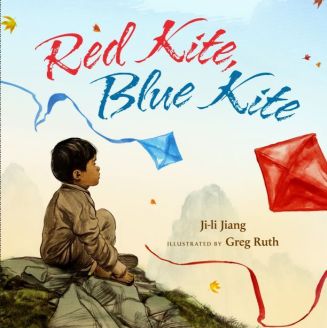
February 8 – Kite Flying Day

celebrate-picture-books-picture-book-review-red-kite-blue-kite-cover

About the Holiday

If you live in a cold climate and cabin fever has set in or if you live in a warm climate and want to get out and enjoy the day, why not take the opportunity of today’s holiday and go fly a kite? Whether you’re steering a simple diamond or a fancy dragon, watching a kite dip and soar through the sky is an exhilarating experience!

Red Kite, Blue Kite

Written by Ji-li Jiang | Illustrated by Greg Ruth


“I love to fly kites,” young Tai Shan relates, but not he’s while standing on the ground. Instead, because his city is so crowded, his Baba and he climb to the peak of their triangular roof where they are “above but still under, neither here nor there. We are free, like the kites.” While they fly their kites—red for Tai Shan and blue for Baba—Baba tells stories, and Tai Shan feels as if he is soaring through the clouds, “looking down at the dotted houses” and wanting to stay up there forever.

celebrate-picture-books-picture-book-review-red-kite-blue-kite-Tai-Shan-and-Baba-fly-kites

copyright Greg Ruth, courtesy of Disney-Hyperion

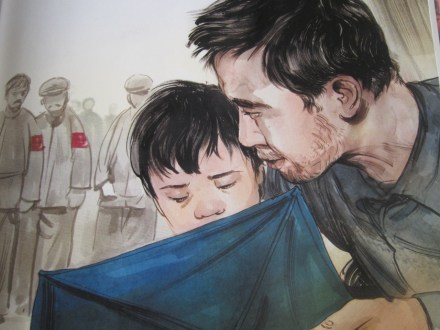
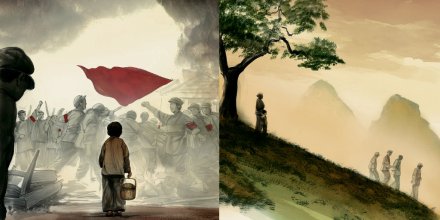
But one day dark times descend. Tai Shan’s school and many others are shuttered. Baba is taken away by men in red arm bands and sent to work in a labor camp. Tai Shan is sent to live with Granny Wang, a farmer who lives in a village next to the labor camp. A thick forest separates Tai Shan and Baba. During the day Granny Wang teaches Tai Shan how to make straw grasshoppers and spin cotton and lets him ride her buffalo. At night Tai Shan dreams of flying kites from the rooftop with his father.

On Sundays Baba walks for hours to visit Tai Shan. He spends time telling stories and playing with his son and his friends. Then they climb the hill and fly kites, Tai Shan’s red one following Baba’s blue. “The kites hop and giggle as they rise and dive, soaring and lunging together.” At the end of the day, Baba returns to the labor camp for another week. In the autumn Baba tells Tai Shan that he won’t be able to visit for a long time. But he has a clever plan—a way that he and Tai Shan can see each other.

Baba gives his son a new red kite and tells him to fly it from the hill each morning. He will see it from his camp. In the evening Baba will fly his blue kite so that Tai Shan can see it. Tai Shan likes the idea of this “secret signal.” The next morning Tai Shan runs to the hill and launches his kite, knowing that “Baba is smiling as he watches the red kite dancing.” In the evening he returns to the hill, and after a long wait “Baba’s blue kite sways into the white clouds.”

celebrate-picture-books-picture-book-review-red-kite-blue-kite-Baba-taken

copyright Greg Ruth, courtesy of Disney-Hyperion

Every day Tai Shan sends his father a silent message—“‘How are you, Baba? I miss you.’” and “Baba’s blue kite swirls and circles, replying, ‘I miss you, too, little Tai Shan.’” Autumn is coming to a close, but still Baba does not visit. One day no blue kite appears in the sky. The next day and the next no kite appears either. Tai Shan asks Granny Wang to take him to the camp to see Baba. If there is no kite on the fourth day they will go, Granny Wang promises.

That night Tai Shan dreams about the thick forest and hears Baba whisper, “‘Tai Shan, I saw your red kite fly so high.’” But these words are not in a dream, Baba is there. But Baba is not home to stay. Hurriedly, he gives Tai Shan his blue kite, telling him that he will not be able to fly it for a while. He asks Tai Shan to fly both kites and know that he is looking up and thinking about his son. Suddenly, men with red armbands rush in and take Baba away. Tai Shan tries to run after him, but Granny Wang holds him back.

Tai Shan cries and does not understand. Granny Wang explains that Baba is being sent to another labor camp far away because the authorities don’t agree with his ideas. During the three days when he didn’t fly his blue kite, Granny Wang says, Baba had been imprisoned. He had escaped and run all the way to see Tai Shan before he was taken away. Now Tai Shan flies the two kites every day and thinks of being together with Baba.

celebrate-picture-books-picture-book-review-red-kite-blue-kite-Baba-gives-kite

copyright Greg Ruth, courtesy of Disney-Hyperion

One summer afternoon, Tai Shan dozes while he allows his red kite to dip and soar in the clouds. When he opens his eyes, he sees dozens of red and blue kites in the sky. Tai Shan jumps up. He sees Baba smiling at him and “holding the string of a huge blue kite dancing in the sky.” Tai Shan’s friends are also smiling and flying their new kites. Tai Shan runs to Baba, and Baba runs toward Tai Shan. The sky “is filled with kites—red and blue. They hop and giggle and cheer as they rise and dive, soaring and lunging together. They are free, flying everywhere.”

An Author’s Note about the Chinese Cultural Revolution follows the text.

Inspired by the story of a family friend whose father was sent to a labor camp during the Chinese Cultural Revolution between 1966 and 1976, Ji-li Jiang wrote Red Kite, Blue Kite “for the many fathers and sons who suffered during that turmoil.” Jiang’s story is a universal and relevant reminder of the precious freedoms of thought and speech that need constant and vigilant protection. Through her sensitive storytelling and lyrical language, Jiang offers a story of understanding, hope, and infinite love that will fill readers’ hearts.

Greg Ruth’s stunning paintings show all the emotion of Jiang’s story through exquisite, realistic portraits of Tai Shan, Baba, and Granny Wang. The distinctive landscapes of China are rendered in colorful foregrounds set on gauzy backgrounds of rising hills. Smoky images of the followers of the Cultural Revolution mirrors the darkness and destruction of the time in a way that is understandable for the young audience. The final two-page spread of Tai Shan and Baba’s reunion amid dozens of red and blue kites is inspiring and full of the strength of the human spirit.

Red Kite, Blue Kite is a must for school and public libraries and makes an excellent addition to home libraries as well.

Ages 5 – 9

Disney-Hyperion, 2013 | ISBN 978-1423127536

For a downloadable Educator’s Guide click here.

Learn more about Ji-li Jiang and her books on her website!

Find galleries of books and illustration for children and adults plus lots more on Greg Ruth’s website!

Kite Flying Day Activity

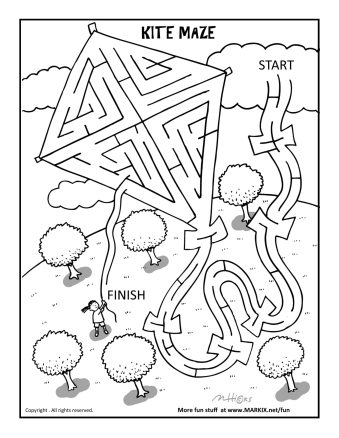
celebrate-picture-books-picture-book-review-kite-maze

Soaring Kite Maze


The dips and rises your pencil takes through this maze is a little like the way a kite flies through the sky! Print your Soaring Kite Maze and enjoy!

Picture Book Review

January 30 – Chinese New Year

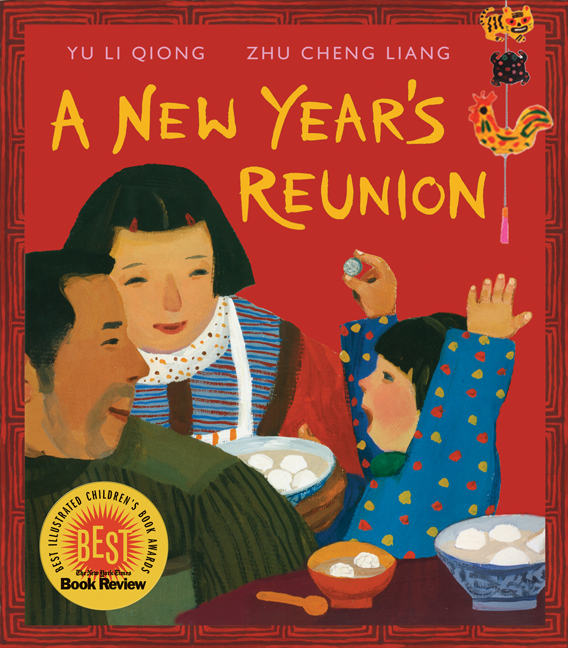
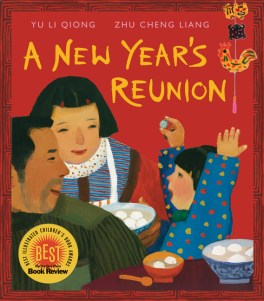
celebrate-picture-books-picture-book-review-a-new-year's-reunion-cover

About the Holiday

Chinese New Year celebrations began on the eve of January 28, ushering in the Year of the Rooster. Also known as the Spring Festival, the New Year is a time for festivities including lion and dragon dances, fireworks, visiting friends and relatives, family meals, and special decorations.The New Year is the busiest travel season of the year as family members return home to spend the holiday with loved ones. The Chinese New Year celebrations  end on the 15th day of the new year with the Lantern Festival.  People born in the Year of the Rooster are said to be honest, energetic, intelligent, flexible, and confident.

A New Year’s Reunion

Written by Yu Li-Qiong | Illustrated by Zhu Cheng-Liang


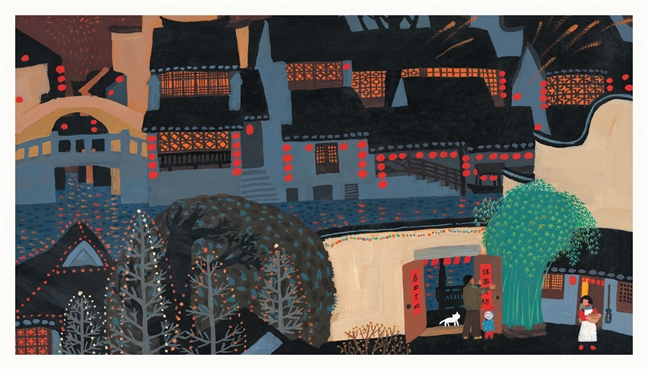
Maomao’s papa works far away as a house builder and can only return home once a year—during Chinese New Year. Today, Maomao and her mother wake up early and get ready because “Papa is coming home.” When Papa arrives, Maomao peers at her father from a distance. He seems unfamiliar, and when he picks her up in his arms she calls for her mama in alarm. But Papa has come with gifts—a hat for Maomao and a coat for Mama.

celebrate-picture-books-picture-book-review-a-new-year's-reunion-papa-decorating-house

Image copyright Yu Li-Qiong, 2011, courtesy of Candlewick Press

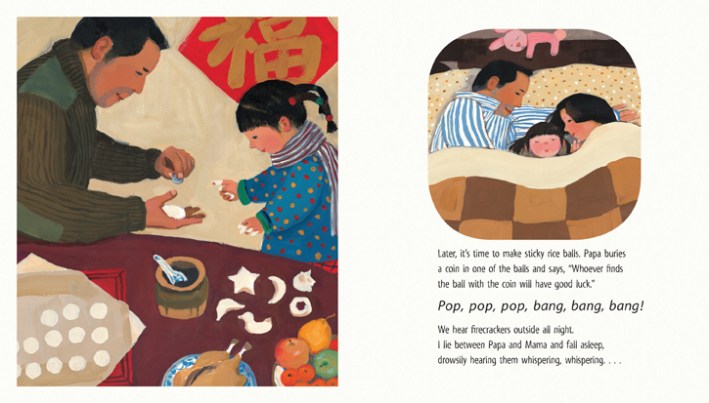
After catching up and eating lunch, Papa takes Maomao with him to the barber shop, where he gets a haircut and a shave. As Maomao watches, the Papa in the mirror is getting more like Papa the way he used to be.” Back home, Papa helps the family decorate their house and later they make sticky rice balls for the next day. “Papa buries a coin in one of the balls and says, ‘Whoever finds the ball with the coin will have good luck.’” As she falls asleep to the whispers of her parents, Maomao hears firecrackers snapping in the night air.

celebrate-picture-books-picture-book-review-a-new-year's-reunion-making-sticky-rice-balls

Image copyright Yu Li-Qiong, 2011, text copyright Zhu Cheng-Liang, 2013. Courtesy of Candlewick Press.

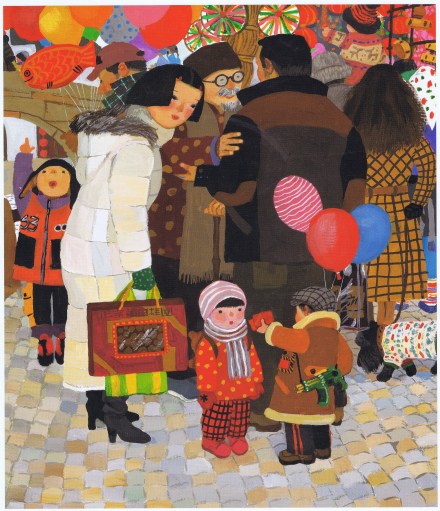
In the morning while eating the sticky rice balls, Maomao bites down on something hard. “‘The fortune coin! It’s the fortune coin!’” she exclaims. Her papa tells her to put it in her pocket so that the good luck will not escape. She places it in her coat pocket and then they all join the crowd in the square going on holiday visits. On the way she meets her friend Dachun, who shows her the red envelope he has gotten. Maomao proudly shows Dachun her lucky coin.

On the second day of New Year’s while Papa is doing chores around the house, he takes his little daughter to the roof. From here she can see Dachun’s house and hear the dragon dance over on Main Street. Maomao stands on tiptoe as tall as she can, but she can’t see the parade. Papa swings her onto his shoulders. “‘Now can you see it?’ he asks. ‘Yes, I can. They’re coming!’” she answers with excitement.

celebrate-picture-books-picture-book-review-a-new-year's-reunion-visiting-in-square

Image copyright Yu Li-Qiong, 2011, courtesy of Candlewick Press

The third day of New Year’s brings snow, and Maomao, Dachun, and the other neighborhood children build a tall snowman and have a snowball fight in the courtyard. When Maomao comes in at the end of the day, she reaches into her coat pocket, but her fortune coin is gone! She runs outside, but the courtyard is covered in snow, and she can’t find it anywhere. Papa tries to give her another coin, but it isn’t the same.

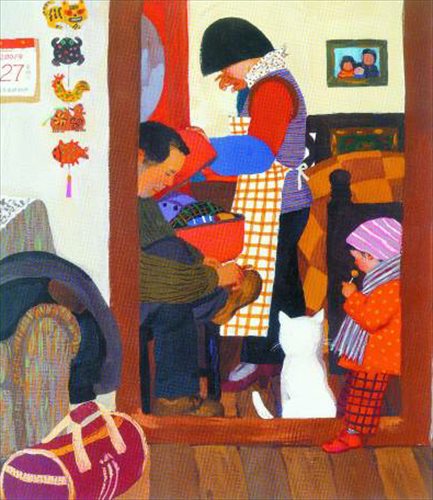
Later, feeling miserable, Maomao climbs into bed and takes off her jacket. Suddenly, she hears a clink as something falls to the floor. “‘It’s the coin! My fortune coin!’” she cries. ‘‘Papa come quick—come and see! I haven’t lost the fortune coin. It’s been with me all the time.’” Maomao falls asleep happy. The next morning, she wakes to see Mama packing Papa’s things. Soon, he will return to work. He crouches down and with a promise to bring Maomao a doll hugs her tight. But Maomao shakes her head. “‘I want to give you something…,’” she says. She puts the coin in Papa’s hand and tells him, “‘Here, take this. Next time you’re back, we can bury it in the sticky rice ball again!’” Papa is silent and gives Maomao another hug before they say goodbye for another year.

celebrate-picture-books-picture-book-review-a-new-year's-reunion-papa-packing

Image copyright Yu Li-Qiong, 2011, courtesy of Candlewick Press

Yu Li-Qiong’s touching story of a little girl’s reunion with the father she rarely sees is a heartfelt reminder that love continues over miles and days or months. Just as the fortune coin was with Maomao all the time, Maomao’s papa is always in her heart and she in his. Little ones, especially, will be captivated by the day-to-day activities of Maomao’s New Year festivities and appreciate the importance of her coin. Li-Qiong’s sweet story, filled with homey details of child and parent interactions, resonates beyond the holiday theme of the story and is a beautiful book for the many children who have parents who travel frequently with their jobs.

The quiet grace and wonder of Zhu Cheng-Liang’s gouache illustrations perfectly convey the loving relationship between father and daughter and the excitement of a family being together after a long absence. Although the Chinese New Year provides a frame for the story, Cheng-Liang’s paintings predominately focus on the day-to-day activities Maomao and her papa share—getting a haircut, fixing the house, cooking, meeting and playing with friends, and special hugs—emphasizing the universal scope of the story. The enchantment of the New Year’s festivities shines in a two-page spread where a fiery red-and-orange dragon puppet cavorts over the village bridge followed by a throng of people as others watch from homes and windows. Adorable Maomao may raise a lump in readers throats as she hugs her papa and gives him her treasured fortune coin.

A brief Author’s Note following the text pays tribute to the millions of migrant workers in China who often do not see their families except once each year.

A New Year’s Reunion would be a welcome book on any child’s bookshelf as a reminder that love overcomes any absence, long or short.

Ages 3 – 7

Candlewick Press, 2011 | ISBN 978-076366748

Chinese New Year Activity

celebrate-picture-books-picture-book-review-chinese-new-year-lantern-festival-coloring-page

Lantern Festival Coloring Page


Chinese New Year festivities end with a brilliant festival of lights. Enjoy this printable Lantern Festival Coloring Page to celebrate the Chinese New Year.

celebrate-picture-books-picture-book-review-a-new-year's-reunion-cover

You can find A New Year’s Reunion at these booksellers

Amazon | Barnes & Noble | Books-a-Million | IndieBound

Picture Book Review
 

January 27 – It’s Creativity Month

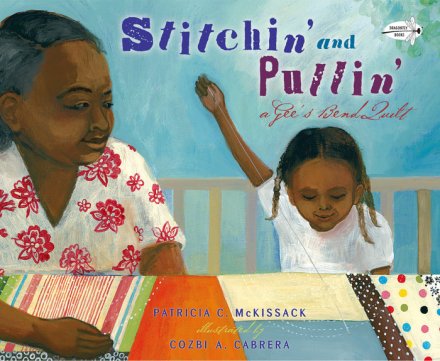
celebrate-picture-books-picture-book-review-stitchin'-and-pullin'-a-gee's-bend-quilt-cover

About the Holiday

January is a time for reflection and new beginnings. What better time to start thinking creatively and finding your inner artist, scientist, inventor, thinker? Go ahead and do the thing you’ve always wanted to do!

Stitchin’ and Pullin’: A Gee’s Bend Quilt

Written by Patricia C. McKissack | Illustrated by Cozbi A. Cabrera

In this story told through poems, a little girl begins telling of her life, starting with a recitation on Gee’s Bend Women: “Gee’s Bend women are / Mothers and Grandmothers / Wives / Sisters and Daughters / Widows.” They are every kind of woman you know, doing every type of work and activity. “Gee’s Bend women are / Talented and Creative / Capable / Makers of artful quilts / Unmatched. / Gee’s Bend women are / Relatives / Neighbors / Friends— / Same as me.”

In Who Would Have Thought, the girl muses on how perceptions change. “For as long as anyone can remember,” she says, the women of Gee’s Bend, Alabama have created quilts that were slept under, sat on, and wrapped around the sick or cold. But now those same quilts are “…hanging on museum walls, / their makers famous….”

When she was just a tot “Baby Girl” reveals in Beneath the Quilting Frame, she played under the quilting frame, listening to her “mama, grandma, and great-gran / as they sewed, talked, sang, and laughed / above my tented playground.” She remembers the “steady fingers  /[that] pieced together colorful scraps of familiar cloth / into something / more lovely / than anything they had been before” as her mother sang her a lullaby.

celebrate-picture-books-picture-book-review-stitchin'-and-pullin'-a-gee's-bend-quilt-puzzling-the-pieces

Image copyright Cozbi A. Cabrera, courtesy of Random House Books for Young Readers

In Something Else, “Baby Girl” is growing too big to play beneath the frame. Her legs becoming longer and her mind full of “recipes for eleven kinds of jelly…how to get rid of mold…and the words to a hundred hymns and gospel songs” while she waits her turn at the frame. Finally, in Where to Start? her time comes. The girl asks her mama how to begin and she answers, “‘Look for the heart. / When you find the heart, / your work will leap to life… / strong, beautiful, and… / independent.’”

In Remembering, the girl thinks about how her mama has told her that “cloth has a memory.” As she chooses the cloth that will become her quilt she sees the life and the history in each. 

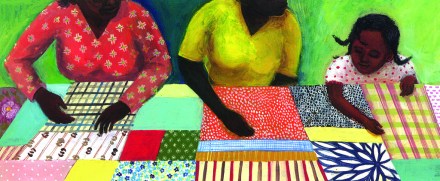
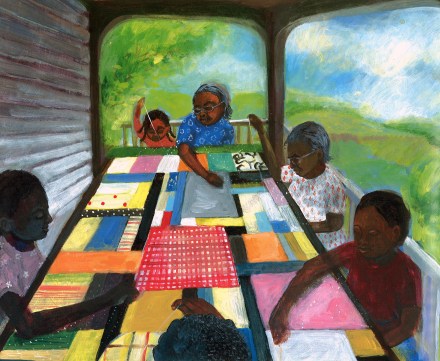
Nothing Wasted sees Grandma pulling apart a red-and-white gingham dress stitch by stitch to become a quilting square that the girl suddenly knows “will be the heart of my quilt.” In Puzzling the Pieces the girl and her grandma stand over the quilting frame fitting the squares together in the perfect way to tell the girl’s story. Her quilt comes together piece by piece to tell the history of Gee’s Bend in The River Island. The brown strips along three sides mirror the muddy waters surrounding her town. The fourth side is a green strip—“a symbol of the fields where my ancestors / worked cotton from can to can’t— / can see in the morning until / can’t see at night.” Lined up next to the green strip are six squares representing the small communities “where families with / the same name / are not kin by blood / but by plantation.”

Being Discovered is portrayed with “a large smoke-gray square”—the color of the Great Depression and the 15 minutes of fame Gee’s Bend garnered when discovered “by sociologists, historians, / educators, and journalists” who came and went, leaving Gee’s Bend “the way it had been / before being discovered.”

celebrate-picture-books-picture-book-review-stitchin'-and-pullin'-a-gee's-bend-quilt-understanding-comes-later

Image copyright Cozbi A. Cabrera, courtesy of Random House Books for Young Readers

In Colors, the girl’s grandma explains the meanings and feelings behind each colored cloth. “Blue cools. / Red is loud and hard to control, / like fire and a gossiping tongue.” Green, orange, yellow, white, pink, and all the others have their own personalities. “Grandma says, / ‘Colors show how you / feel deep down inside.’”

In Pinky, the harrowing facts of the march from Selma to Montgomery, Alabama frame the story of one marcher, Mr. Willie Quill who broke horses for the Alabama State Mounted Patrol and was saved from the Police attacks when one of the horses he’d trained knew his voice. In Dr. King Brings Hope, the little girl adds a “Patch of bright pink / to remember Pinky’s story. / Next to it I sew / a spotless white patch for the hope Dr. Martin Luther King / brought to the Bend” and goes on to tell how her grandma saw Dr. King at Pleasant Grove Baptist Church and what it meant to her.

By and By follows the girl as she adds “golden thank-yous, for James Reeb,” a “bright blue piece of velvet for Viola Liuzzo,” and a “big plaid people circle of white, black, brown, yellow, and red for Reverend Dr. King, all “killed for believing in justice.”

In the 1960s, The Sewing Bee tells, Gee’s Bend quilters were once again discovered. There were buyers for the handmade quilts, but stipulations. The girl asks her grandma if she was part of the Bee, to which she replies, “‘Yes, / more money. Less freedom. I chose to stay free.’”

At last all of the patches are laid out and the time comes to stitch the girl’s quilt. Five women stand at the frame “all stitchin’ and pullin.’” They work “in a slow and steady rhythm” relaxing and enjoying being together until the quilt is finished. In Finished, the last stitch is sewn, and the thread bitten and knotted. The girl has hundreds of ideas for future quilts. “Quilts that are about me, / the place where I live, / and the people / who have been here for generations.”

Further poems unite the history of “Baby Girl,” her family, and neighbors, and an Author’s Note about quilting and the women of Gee’s Bend follow the text.

Patricia McKessack’s free verse poems capture the close relationships and camaraderie of the generations of women who join around the quilting frame to share and pass down their art and their heart. McKessack’s conversational verses, on page after page like the patches of a quilt, reveal the complexity of this handmade art form in the way intimate talks between friends unveil a life. Readers learn not only about the little girl and her own thoughts, but the history and influence of her immediate family, world events, inspirational figures, and deeply held beliefs that make her who she is and ties her to the other Gee’s Bend women.

Cozbi A. Cabrera’s stunning acrylic paintings take readers inside the heart of the Gee’s Bend women, depicting the girl’s home, the table-sized quilting frame where the women collectively work, the plantations, the protests, and the changes that came but did not unravel the convictions, values, and love of the little girl’s family. Readers can almost hear the talking and singing of the Gee’s Bend women as they stitch their quilts, and the comforting, embracing environment is evident on every page. Cabrera’s portraits of the little girl, her mama, and her grandma are particularly moving. For What Changed, Cabrera depicts a yellow school bus appearing on the dirt road from the right hand corner of the page. In the side mirror a dot of a house comes into view, reminding readers that no matter how far these women are from home, Gee’s Bend is always with them.

Children—and adults—will find Stitchin’ and Pullin’: A Gee’s Bend Quilt inspirational and uplifting. This volume of poetry can be read at one sitting and delved into again and again, making it a wonderful choice for home libraries and a must for school, public, and other libraries.

Ages 5 – 12

Dragonfly Books, Random House, 2016 (paperback edition) | ISBN 978-0399549502

View a gallery  of fashion designs, dolls, and other handmade art work by Cozbi A. Cabrera on her website!

Creativity Month Activity

celebrate-picture-books-picture-book-review-stars-quilt-coloring-page

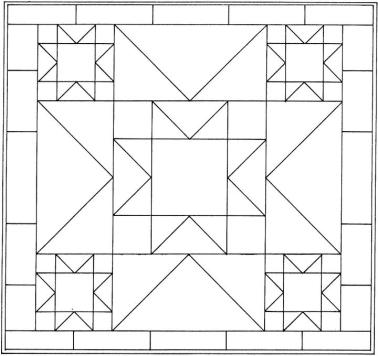
Design a Quilt Coloring Pages

Quilts are so much more than pieces of material sewn together—they’re life stories! Here are two quilt coloring pages for you to design and color. What does each piece mean to you? As you color each section, write a sentence about an event or thought that is important to you.

Quilt Template 1 | Quilt Template 2

Picture Book Review

January 25 – A Room of One’s Own Day

celebrate-picture-books-picture-book-review-my-very-own-room-cover

About the Holiday

Everyone needs a little space of their own—a place to think, read, write, or just say Ahhhh… after a long day. In today’s world of Man Caves and Women’s Sheds, designing a spot where you can get away and spend some rejuvenating alone time doing a particular hobby or just doing nothing is becoming easier and more accepted. Kids need their own spaces too—a personal place surrounded by the things they love.

My Very Own Room / Mi propio cuartito

Written by / Escrito por Amada Irma Pérez | Illustrated by / Ilustrado por Maya Christina Gonzalez


One morning a little girl woke up in a bed overrun with brothers. Victor’s elbow was poking her in the ribs, and Mario was curled up on the pillow with his leg across her face. In the next bed slept the girl’s three other brothers. The girl had had enough—after all she was nearly 9 years old. After years of sharing a room with her five brothers, “more than anything in the whole world [she] wanted a room of [her] own,” but space in her tiny house was hard to come by. What’s more, besides the eight immediate family members, sometimes friends and relatives from Mexico came to stay. It could be fun, but there was no privacy.

To get away she sometimes crept out early in the morning and climbed “the crooked ladder that leaned against the elm tree” in her backyard. It wasn’t that she didn’t love her brothers, she just needed a place of her own. She looked around the house for a space that would be just right. She peeked behind the flour-sack curtain that divided the living room from the storage closet. It seemed perfect! She imagined it with her “own bed, table, and lamp—a place where she could read the books she loved, write in her diary, and dream.”

celebrate-picture-books-picture-book-review-my-very-own-room-mixing-paint

Image copyright Maya Christina Gonzalez, courtesy of Lee & Low Books

While the storage nook seemed the solution, the girl’s mother shook her head. The space was already assigned to her aunt’s sewing machine, her uncle’s garden tools, furniture, and old clothes—the things needed for others to make a better life in America. But then her mother saw the tears in her daughter’s eyes and decided that perhaps the things in the storage space could find a new home on the back porch with blankets and a tarp to protect them from the weather.

With a hug and a kiss, the little girl thanked her mother, and they and the five boys began rearranging the house. Finally, all that was left behind the flour-sack curtain were a few cans of leftover paint. There was blue, white, and pink, but not enough of any one color to paint the room. Suddenly, the girl had an idea. She and her brothers mixed the three together and made…magenta! Tío Pancho offered a spare bed and after measuring the room and then the bed with a piece of yellow yarn, the little girl discovered that the bed would indeed fit. An upended wooden crate became a nightstand. But what about a lamp?

Mamá brought out her box of Blue Chip stamps that she’d been collecting for years. The stamps were awarded with gas and food purchases. When they were stuck into booklets and used at special stores, the stamps were as good as money. The girl and her brothers “licked and licked and pasted and pasted.” When they were finished, they all went to the stamp store. As soon as she stepped into the store, the girl spied the lamp she wanted. “It was as dainty as a beautiful ballerina, made of white ceramic glass with a shade that had ruffles around the top and bottom.”

celebrate-picture-books-picture-book-review-my-very-own-room-books

Image copyright Maya Christina Gonzalez, courtesy of Lee & Low Books

Back home she carefully set the lamp on her bedside table, but “something was still missing, the most important thing…Books!” The next day the little girl brought home six books from the library—six was her “lucky number because there were six children” in her family. That night, the little girl nestled into her new room, turned on the light and began to read. When her two youngest brothers peered in through the curtain, she invited them in, and as they snuggled on her bed, she read them a story. At the end they said goodnight, and her brothers returned to their own room. Lying back against her pillow, the girl felt “like the luckiest, happiest little girl in the whole world” because each person in her family had worked to make her wish come true. She drifted off into peaceful sleep under a “blanket of books” in her very own room.

Amada Irma Pérez’s touching story from her own childhood is a delightful reminder for readers of the strong bonds of family love that puts other’s needs ahead of one’s own. The family’s commitment to each other is found not only in their willingness to help rearrange the house to accommodate a maturing daughter and sibling, but in the collection and storage of goods that will contribute to a better life for friends and relatives. Children familiar with reward points will be fascinated to learn about their predecessor “blue chip stamps.” The straightforward storytelling is infused with the kinds of hopes and suspense that resonate with kids, and the tender, quiet ending leaves readers with a lingering feeling of comfort and happiness.

Maya Christina Gonzalez fills the pages of My Very Own Room with joyous vibrancy and empathy that emphasizes the family’s connection. Soft edges and swirling patterns create a comforting environment, while elements, such as the long piece of yellow yarn, underscore the familial ties. While the little girl finds solace in the backyard elm tree and hunts for a space to call her own, her mother looks on with understanding, which leads to depictions of mother and daughter that are particularly moving. With warmth and welcome, each page invites readers into the family home to share a transitional event in their life.

The text is presented in both English and Spanish on each page, and is followed by a brief biographical note, including photographs, by Amada Irma Pérez.

It’s heartening to read a story in which siblings are so immediately supportive of each other. The gentle pace and upbeat tenor of My Very Own Room makes it a wonderful choice for quiet family story times or group school or library readings.

Ages 5 – 10

Lee & Low Books, 2008 | ISBN 978-0892392230

Learn more about Amada Irma Pérez and her books on her website!

Discover a gallery of book illustration and fine art by Maya Christina Gonzalez plus resources for educators on her website!

A Room of One’s Own Day Activity

celebrate-picture-books-picture-book-review-bedroom-coloring-page

Decorate Your Room Coloring Page


If you had a room to fix up just the way you’d like, how would it look? Here’s a printable Decorate Your Room Coloring Page for you to enjoy. Put your own knick-knacks on the shelf and your things on the nightstand by the bed. Then give your room a color scheme – and move in!

Picture Book Review
January 24 – It’s National Hobby Month

celebrate-picture-books-picture-book-review-more-igami-cover

About the Holiday

The idea of hobbies—something useful, purposeful, and fun done in one’s spare time—has been around at least since 1676 when Sir Matthew Hale wrote in Contemplations Moral and Divine that “Almost everyone hath some hobby horse or other wherein he prides himself.” Later, in the mid-1800s when work ceased to consume every hour of the day, and people had more time for leisure pursuits, hobbies became more popular. Today, it may be interesting to consider that many of our current hobbies—knitting, sewing, woodworking, candle making, etc.—were once the work of our ancestors. To celebrate this month’s holiday, try a new activity—it may turn into a favorite!
More-igami

Written by Dori Kleber | Illustrated by G. Brian Karas


Joey was a little boy with a particular fascination. He was captivated by all things folded. At home he had a collection of “old road maps,” the bellows on an accordion made it his favorite instrument, and he even tucked himself into a foldaway bed at night. One day Joey witnessed the most amazing thing at school. Sarah Takimoto’s mother came to his class, and—right before the students’ eyes—folded, flipped, and pulled a plain white piece of paper “until it became…a crane.”

celebrate-picture-books-picture-book-review-more-igami-mrs-takimoto

Image copyright G. Brian Karas, text copyright Dori Kleber. Courtesy of Candlewick Press

“Joey’s eyes popped. His jaw dropped. Mrs. Takimoto called it origami.” Joey was smitten. “‘I want to make origami,’” Joey told Sarah’s mother. “‘Will you teach me?’” Mrs. Takimoto  answered that while she could teach him the right folds, it would take practice and patience to become an origami master. Joey raced home that afternoon and began folding. When he ran out of notebook paper and construction paper, he used his homework…the newspaper…his sister’s sheet music…gift wrap… even “Aunt Vivian’s pineapple surprise” recipe card. But when he folded up all thirty-eight dollars in his mom’s purse, she put her foot down.

“Joey drooped.” His cranes were still coming out wrinkled and crooked, and he’d never be able to become an origami master without practicing. To soothe his disappointment, he headed next door to Muy Mexicana for some fajitas. Right away Mr. Lopez noticed Joey’s disgruntlement. When Joey explained that everyone was losing patience with him, Mr. Lopez said, “‘Many artists are misunderstood, amigo.’ Especially when they are just learning.’” Mr. Lopez went into the kitchen, and when he came out with the sizzling fajitas, he was delighted to see a napkin pyramid sitting on the table.

celebrate-picture-books-picture-book-review-more-igami-folding-sheet-music

Image copyright G. Brian Karas, text copyright Dori Kleber. Courtesy of Candlewick Press

Joey apologized, but Mr. Lopez thought it made the table look fancy. In fact, he liked it so much that he had Joey fold every napkin on every table. After that, Joey went to Muy Mexicana each day following school and folded the napkins into decorative shapes. One day he made fans, the next candlesticks, and the day after that, crowns. He patiently worked until each one was perfect.

Finally, he felt ready to attempt his original challenge. “He took a crisp napkin. He folded. He flipped. He pulled.” When he was finished, a perfect crane sat in front of him. Just then a girl with a paper fan walked in. Her eyes widened as they zeroed in on Joey’s crane. Joey offered to show her how to make it, but warned, “‘It takes practice—and lots of patience!’”

celebrate-picture-books-picture-book-review-more-igami-crane

Image copyright G. Brian Karas, text copyright Dori Kleber. Courtesy of Candlewick Press

Dori Kleber’s unique multicultural story of a little boy who finds the perfect creative outlet for his singular interest will captivate kids who are just beginning to try their own hands at favorite hobbies, schoolwork, or other pursuits. With humor and honest depictions of Joey’s frustration and persistence, Kleber shows readers that practice and patience really do pay off. As Joey meets another folding enthusiast, kids will see that there are always others with whom to share favorite pastimes.

Opening More-igami to the first page where Joey sits gazing lovingly at a taco with a folded napkin next to his plate, readers will know they are in for something special. As always, G. Brian Karas’s characters are enthusiastic, encouraging, and adorable. Readers will empathize with Joey as they watch him folding and folding, and giggle at the many, many practice cranes that litter his home, even perching atop his sister’s music stand and appearing in his mom’s purse.

Karas makes full creative use of the origami theme in his clever page designs and illustrations, beginning with the square shape of the book itself and the origami paper-styled endpapers. Vivid, solid-color background pages are divided diagonally, vertically, or horizontally with subtle changes in hue or nearly invisible lines. In depictions of Joey’s school, home, and favorite restaurant, diagonals, angles, and sharp edges predominate: tables and floors create triangles on the page; windows, walls, and doors divide pages into shapes associated with the steps of origami’s folded creations; and floor tiles, the sidewalk, and even Joey’s shirt portray grid lines. The color schemes of each page, inspired by the patterns and shades of origami paper, are dazzling and unite the varied aspects of this special book.

For any child undertaking a new activity or venture, More-igami is a charming and encouraging companion on the way to proficiency—one that would make a wonderful home library addition.

Ages 4 – 8

Candlewick Press, 2016 | ISBN 978-0763668198

To learn more about Dori Kleber and her writing, visit her website!

G. Brian Karas has a whole gallery of illustrations, books, information, and “what nots” on his website!

National Hobby Month Activity

celebrate-picture-books-picture-book-review-origami-penguin-template

Origami Pets


Origami is a fun hobby that can grow in complexity as you gain skill. Here are two templates to get you started! All you need is a square piece of paper and—if you’d like to decorate your piece—some markers or colored pencils.

Puppy Template | Penguin Template

Picture Book Review