March 3 – World Wildlife Day

celebrate-picture-books-picture-book-review-lotus-and-feathers-cover

About the Holiday

In December of 2013 the United Nations General Assembly proclaimed March 3rd as World Wildlife Day to promote awareness of our environment and the dangers to it. This year’s theme is “Listen to the Young Voices.” Nearly one-quarter of the world’s population is between the ages of 10 and 24. With a crucial stake in the preservation of the world’s animals and plants and their habitats, more and more young people are getting involved in the preservation of the environment. Today, find a way to get involved in your community or donate to a wildlife cause. A clean, healthy, and protective environment benefits all.

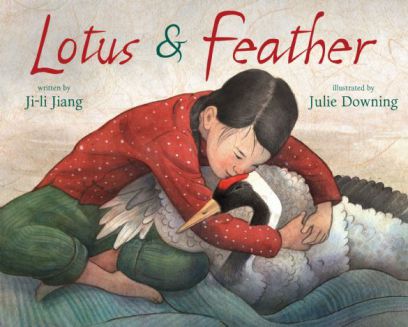
Lotus & Feather

Written by Ji-li Jiang | Illustrated by Julie Downing

Lotus was lonely since her winter illness had left her without a voice. The children at school “treated her like a strange creature,” and she was left without playmates or someone to keep her company on the walk home. She lived with her grandfather who made reed baskets and found solace when he took her to ride in his boat on the nearby lake. As he poled the boat through the still water, Lotus’ grandfather sadly pointed out how the lake had changed. No longer did the lotus flowers, fish, birds, or animals thrive. Instead, the landscape had “‘been ruined by greedy fishermen and hunters, and by ignorant people who took over the land where animals once lived.’”

celebrate-picture-books-picture-book-review-lotus-and-feather-lotus-meets-feathers

Image copyright Julie Downing, courtesy of Disney Hyperion

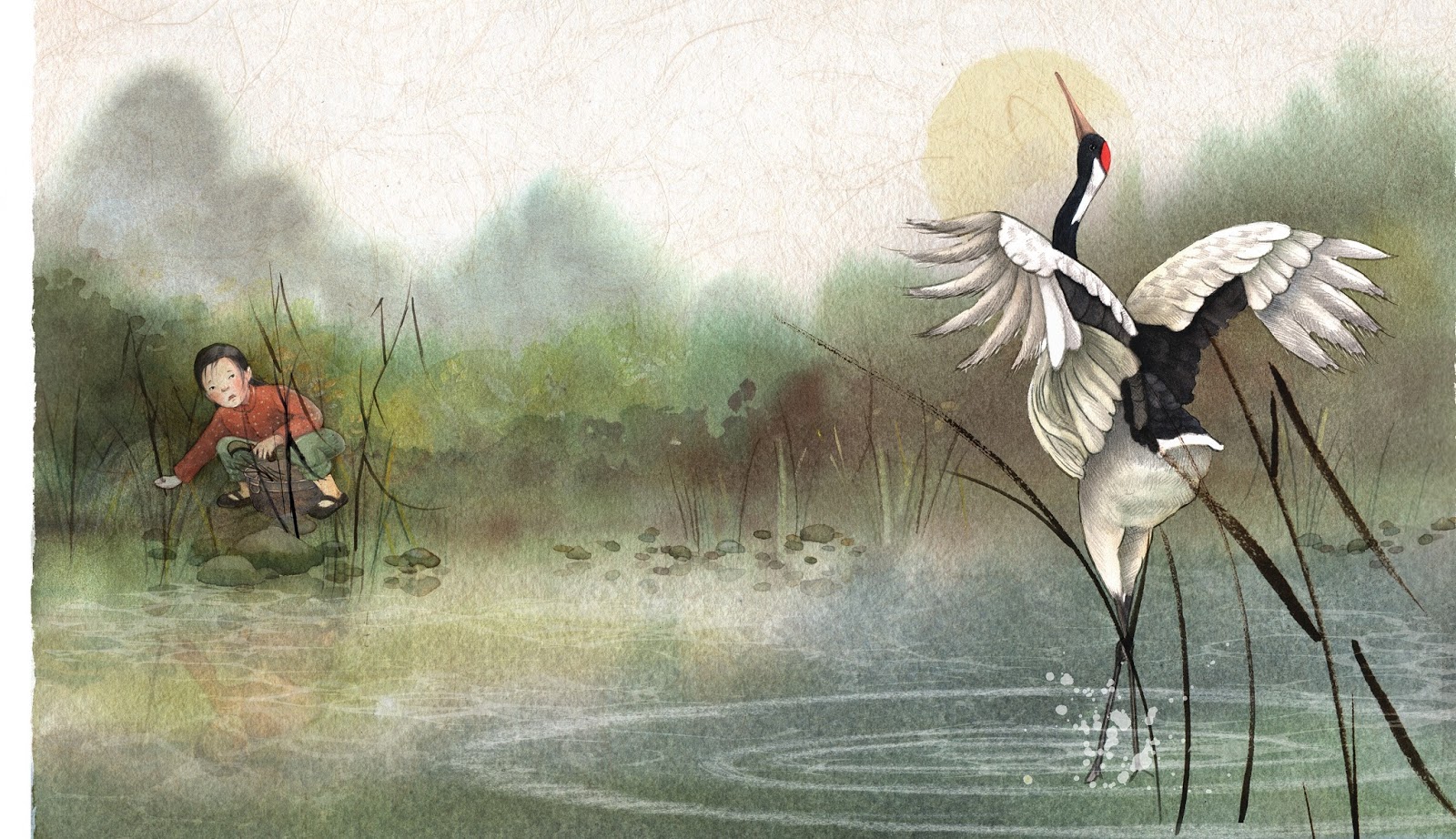
One morning while Lotus was out collecting reeds for her grandfather she spied a rare crane. It’s wide white “wings were edged with black feathers, like lace on a dress”…and “its head was crowned with a red top like a dazzling ruby.” As she watched a gunshot rang out. Unable to alert the hunter by shouting, Lotus banged on her bucket, frightening him away. Lotus rushed toward the wounded bird, picked it up and carefully brought it home to Grandpa.

Grandpa tended to the crane’s injury and fed him rice soup while Lotus stroked the soft head. For two days, Lotus hardly slept as she took care of the crane. On the third day she fell asleep next to the crane, waking when he stirred and nestled her cheek. “Lotus’s heart pounded, and tears sprang to her eyes.” Lotus named the crane Feather. As it grew stronger she gathered food for it, and on the day Feather took his first steps, “Lotus jumped and swirled and hugged Grandpa blissfully.”

celebrate-picture-books-picture-book-review-lotus-and-feather-lotus-comforts-feather

Image copyright Julie Downing, courtesy of Disney Hyperion

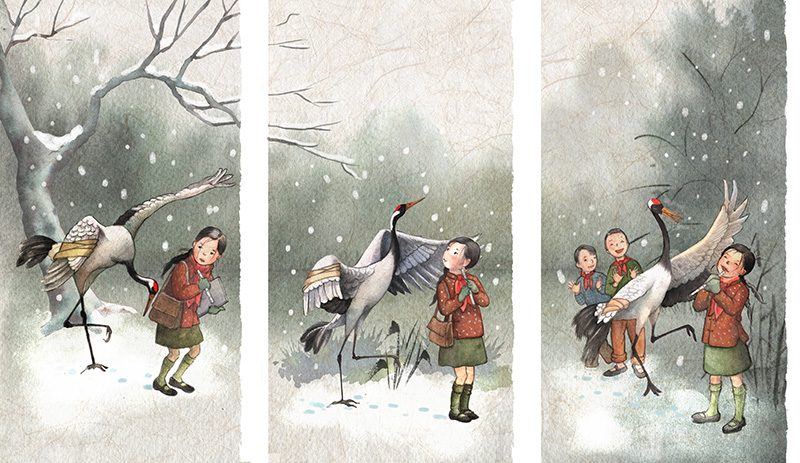
Soon Feather was following Lotus everywhere—even to school. After class Lotus would blow her whistle and Feather would come running and dance as Lotus played. The other children joined in, dancing and playing along every day. One night Lotus heard Feather crowing and woke to find that the village was flooded. Poling his boat through the streets, Grandpa shouted, Lotus banged her pail, and Feather crowed to alert the neighbors. “Over three hundred villagers were saved. Feather was the hero.” He became famous, and people wanted to hear his story again and again.

celebrate-picture-books-picture-book-review-lotus-and-feather-lotus-dancing

Image copyright Julie Downing, courtesy of Disney Hyperion

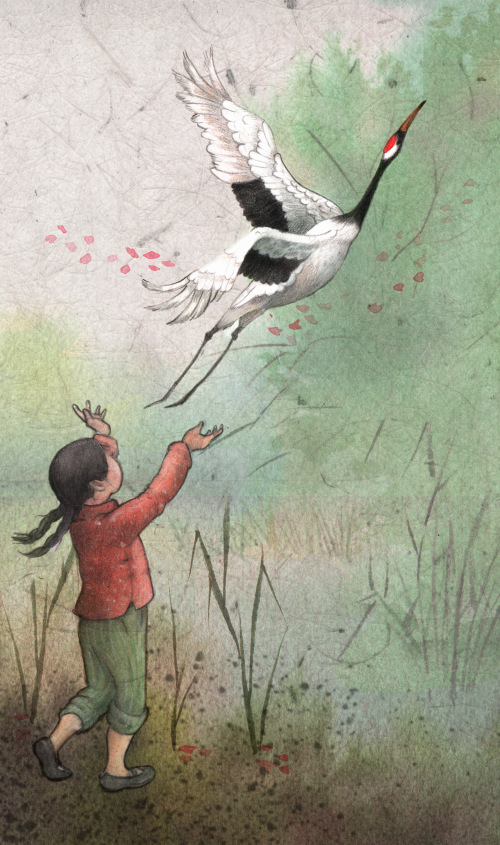
When Spring arrived Feather was still too weak to fly but he looked longingly at the birds migrating north. Lotus was frightened that her friend might want to leave them, but she “knew she would never separate him from his home and family.” One day Feather spread his wings and leaped into the air. Lotus realized that he had healed and knew it was time for him to leave. Grandpa and Lotus took Feather to the lake. Grandpa tossed Feather into the air, but he returned again and again. Grandpa gave Feather to Lotus. Lotus hugged Feather one more time and threw him into the sky.  

celebrate-picture-books-picture-book-review-lotus-and-feather-lotus-lets-feather-go

Image copyright Julie Downing, courtesy of Disney Hyperion

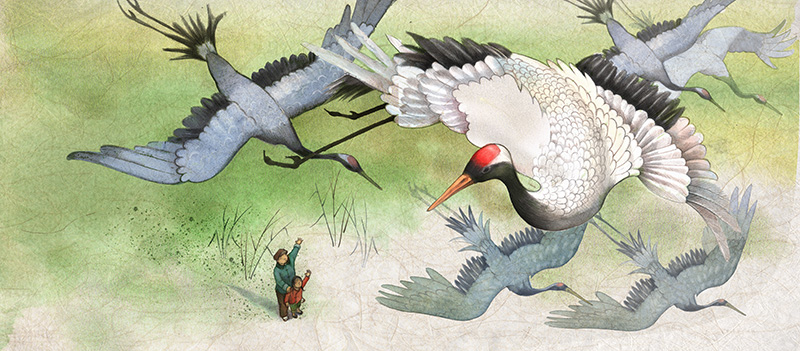
Holding back tears, Lotus watched as “Feather flapped his big wings and soared north, disappearing into the horizon.” Lotus and the other children missed Feather. They gathered together listening to Lotus play her whistle, imagining that Feather could hear them. One autumn morning, Lotus heard a familiar crow and rushed outside. There stood Feather with his family. Then Lotus gasped. The sky was filled with hundreds of cranes coming to the lake. Lotus blew her whistle, and the notes, “accompanied by the birds’ singing, echoed far, far away in the golden sky.”

celebrate-picture-books-picture-book-review-lotus-and-feather-lotus-waves-goodbye

Image copyright Julie Downing, courtesy of Disney Hyperion

Ji-li-Jiang’s tender story resonates on every page with love and friendship. The relationship revealed in Jiang’s tale exists not only between Lotus and Feather, but between readers and their environment. Beautifully interwoven throughout the plot, the idea of responsibility between friends, to the earth, and to ourselves makes Lotus & Feather a compelling book to read and discuss. Through lyrical passages and detailed storytelling, Jiang develops a deep, emotional bond between Lotus and Feather that readers will respond to. The heartwarming connection between Lotus and her grandfather brings comforting and another level of family commitment to the story.

Julie Downing’s stunning illustrations allow readers to walk, sit, worry, and cheer with Lotus as she finds and cares for Feather. Her sadness is palpable as she walks home from school past a group of classmates playing ball; in the corner of the dark lake, children will find bottles, cans, and other debris floating among the reeds; and Feather makes his debut with a graceful ballet. Readers will love watching the progression of Feather’s healing and Lotus’ reintegration into her circle of friends and will applaud when Feather and his family and friends return to the lake.

Lotus & Feather is a multi-layered story that will captivate readers. It is a must for public and school libraries and would make a beautiful addition to home libraries as well.

Ages 5 – 9

Disney Hyperion, 2016 | ISBN 978-1423127543

Discover more about Ji-li Jiang and her books on her website!

View a portfolio of artwork as well as other books by Julie Downing on her website!

World Wildlife Day Activity

celebrate-picture-books-picture-book-review-world-wildlife-day-word-scramble

Endangered Species Word Scramble

Can you find the names of 15 animals in this printable Endangered Species Word Scramble? Here’s the Solution.

Picture Book Review

February 27 – International Polar Bear Day

celebrate-picture-books-picture-book-review-little-polar-bear-cover

About the Holiday

Today we celebrate polar bears, the largest member of the bear family and a critical part of the Arctic ecosystem. These beautiful creatures spend much of their time at the edge of ice packs, from which they hunt for food. Their excellent sense of smell allows them to sense food up to a mile (1.6 km) away. Increasingly polar bears are under threat from changes in climate which are shrinking their habitat and affecting their quality of life. In honor of today’s holiday take time to research polar bears and consider donating to a cause for their protection.

Little Polar Bear

By Hans de Beer

At last little Lars is old enough to go hunting with his father, and they head out into the white, frozen expanse to find the perfect fishing spot. While Lars watched from the edge of an ice pack, his dad disappeared underwater for so long that Lars began to worry. When he finally surfaced, however, he brought with him a large fish for dinner. After dinner it was time to sleep. Lars’ father showed him how to build a wall of snow to lie behind that would protect him from the wind.

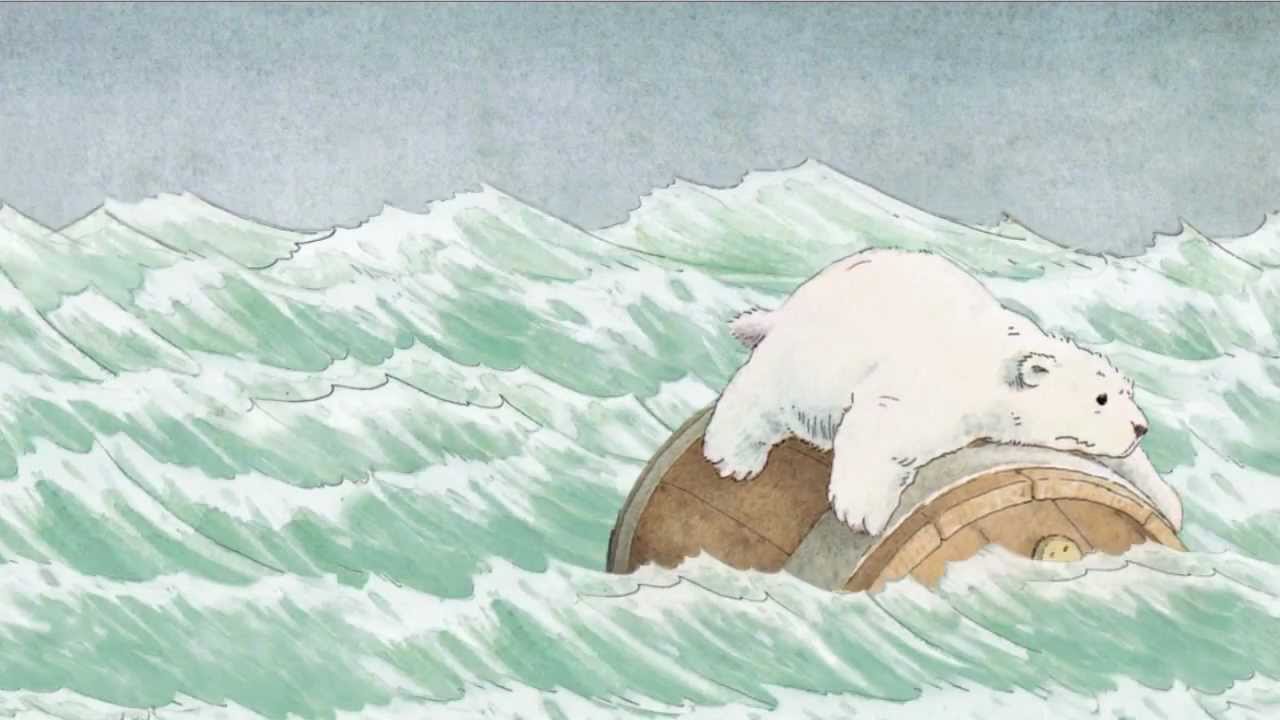
During the night as Lars and his father slept, the ice cracked between them, sending Lars floating away by himself. When Lars woke in the morning, he discovered that he was alone and that the warm sun was melting his ice floe little by little. Just as the ice threatened to disappear entirely, a barrel floated by and Lars crawled on top of it. “Then a storm began to rage. As Lars clung to his bobbing barrel he missed his father and his pile of snow more and more.”

celebrate-picture-books-picture-book-review-little-polar-bear-lars-and-father

Image copyright Hans de Beer, courtesy of NorthSouth Books

By the time the storm subsided Lars was far from home. He found himself in a place with no snow or ice; instead “almost everything was green and the sun was very warm.” Lars left the barrel and padded onto the sandy beach. The hot sand burned Lars’ paws, and he ran to the nearby river to cool them. “But just as he was about to plunge in, a very big, tan animal sprung out of the water.” Frightened, Lars ran away, but the hippopotamus followed him and introduced himself. Henry had never seen a white bear, and Lars had never seen a tan animal.

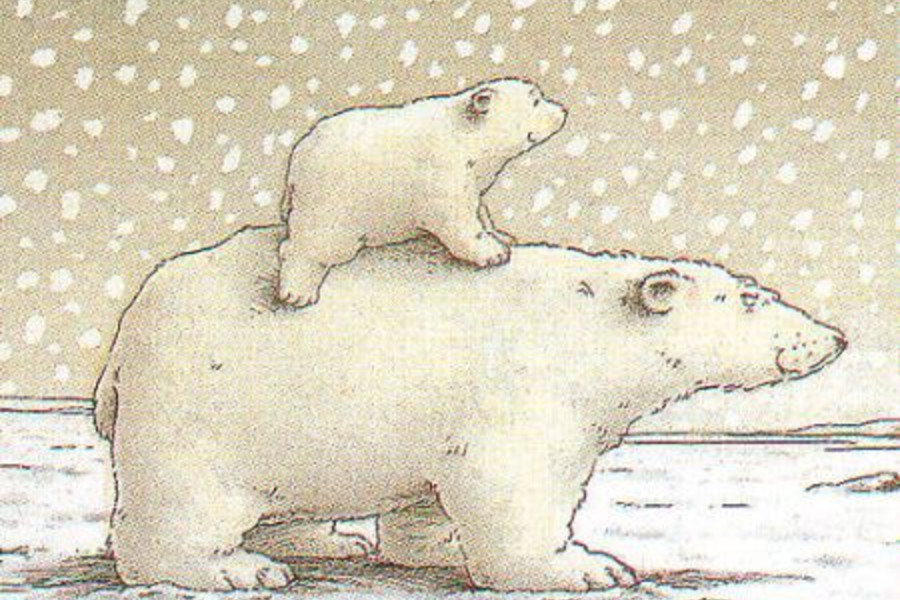
Lars told Henry about his trip and how he wanted to find father. Henry didn’t know how to help, but he figured that Marcus the eagle would know what to do. With Lars on his back Henry started the long journey across the river, through the jungle, and over the mountains. On the way, Lars loved seeing all the different colors, creatures, and vegetation. He climbed trees, met a chameleon, and sniffed at a butterfly. When they came to the mountains, Henry had trouble climbing, but Lars scampered ahead and showed him where to step.

celebrate-picture-books-picture-book-review-little-polar-bear-lars-on-barrel

Image copyright Hans de Beer, courtesy of NorthSouth Books

Finally, Henry couldn’t go any farther. He and Lars found a place to rest for the night. The view of the water made Lars homesick, but Henry reassured him. The next day, high on the mountain, Lars and Henry found Marcus. “The eagle looked at Lars and then said, ‘Well, well, a polar bear in the tropics! You’re a long way from home aren’t you, young man?’”

Marcus explained that he could indeed help Lars get home, but they would need the assistance of Samson. In the morning a gray whale swam near shore, and Lars climbed on his back. While Henry was happy that Lars could find his way home, he was also sad to see him go. He and Lars said goodbye to each other. As Henry looked on, Samson and Lars swam out into the open ocean with Marcus flying “along a bit to set them on their way.”

After Samson had swum a long distance, icy cliffs once again appeared on the horizon. As they drew closer, Lars spotted his father standing at the edge of the ice scanning the sea. Lars called out to him, and Lars’ father couldn’t believe his eyes. In thanks for bringing back his son, Lars’s father caught a big fish and gave it to Samson. Lars and his father started toward home, and as they walked “Lars talked about all of the amazing things he had seen.” His father was astonished. “‘You didn’t meet anyone who was white?’” he asked. “‘Nobody, except a chameleon,’ said Lars, ‘but that doesn’t count.’” Lars laughed, but his dad couldn’t understand the joke.

celebrate-picture-books-picture-book-review-little-polar-bear-lars-and-henry

Image copyright Hans de Beer, courtesy of NorthSouth Books

Hans de Beer’s sweet, adventurous little polar bear has been long beloved by young readers who have followed his journeys and escapades through many books. This favorite introduction to Lars, his father, and the North Pole was reissued in 2016 and is as timely now as when it was first published. De Beer’s straightforward story of a young bear suddenly taken away from home, surviving by instinct, and discovering new places, friends, and ideas, is at once exciting and comforting. As Lars finds himself in unfamiliar territory populated with animals and creatures he’s never seen before, he doesn’t shy away from the experience, but embraces the diversity of what he sees just as the tropical animals accept him. The kindness and camaraderie shared among the animals is a universal lesson for all.

Little ones love de Beer’s expressive animals and the caring interactions between them. Kids will laugh when Henry pops out of the river to say “boo!” and giggle to see Lars and the chameleon sticking out their tongues together. The soft pastel palette invites kids to linger over the pages and experience both the frozen tundra and lush jungle with the same awe as Lars. Readers will cheer when Lars is reunited with his father, but will also look forward to traveling with their new friend again in his other adventures.

Ages 3 – 8

NorthSouth Books, 2016 (Hardcover) | ISBN 978-0735842649

International Polar Bear Day Activity

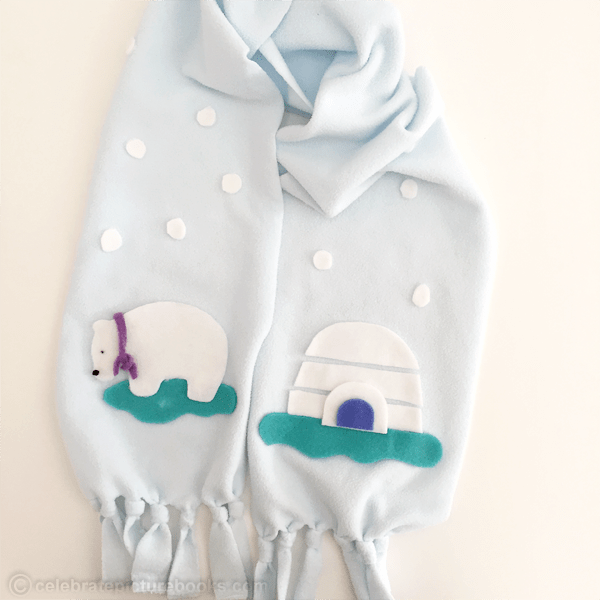
CPB - Polar Bear scarf

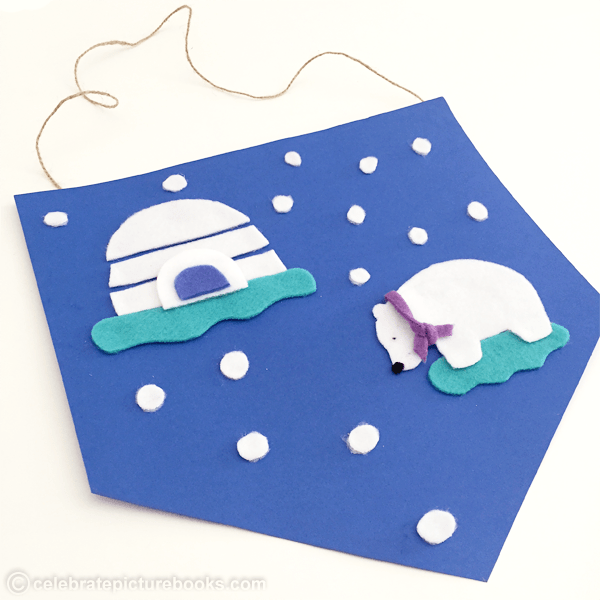
CPB - Polar Bear Banner

Polar Bear Scarf or Banner

Polar bears aren’t cold in the winter—and neither should you be! Here are directions and printable templates for making a cute scarf to keep you warm, or—if you’d rather—a banner to warm up your room.

Supplies

  • Printable Polar Bear and Igloo Template
  • 1 Strip of blue fleece 4 ½ feet long x 7 inches wide for the scarf
  • 1 Piece of blue scrapbooking paper for a banner
  • Pieces of white, black, blue, and purple fleece or scrapbooking paper to make the polar bear, igloo, snowflakes, and ice floes.
  • String or twine for banner
  • Scissors
  • Fabric or paper glue

Directions for Scarf

To make the fringe at each end of the scarf

  1. Make 7 cuts about 4 inches long
  2. Tie a knot at the top of each fringe section

To make the pieces for the scarf or banner

  1. Trace the polar bear and igloo sections from the Printable Template onto white fleece and cut out
  2. Trace the two ice floes onto blue fleece and cut out
  3. Trace the door of the igloo onto blue fleece and cut out
  4. Trace the polar bear’s scarf onto purple (or any color) fleece and cut out
  5. Cut out round snowflakes
  6. Cut out a small circle from black fleece for the Polar Bear’s nose

On one end of the scarf

  1. Glue the smaller ice floe on one end of the scarf
  2. Tie the bear’s scarf around its neck before gluing the bear to the scarf
  3. Glue the polar bear onto the scarf with its feet on the ice floe
  4. Glue on the polar bear’s nose
  5. Make a small dot for the polar bear’s eye with a marker
  6. Glue snowflakes above polar bear

On the other end of the scarf

  1. Glue the bigger ice floe to the scarf
  2. Glue the three pieces of the large igloo to the scarf, leaving a little space between sections
  3. Glue the small white door of the igloo on top of the last two igloo sections
  4. Glue the small blue door onto the white door
  5. Glue snowflakes above the igloo

Directions for Banner

  1. Cut a point at the bottom of your banner
  2. Follow the directions above to trace the pieces of the polar bear and igloo from the printable template onto scrapbooking paper
  3. Follow the directions above to glue the pieces of the polar bear and igloo to your banner
  4. Attach string or twine to back of banner to make a hanger

Picture Book Review
February 26 – Personal Chef Day

celebrate-picture-books-picture-book-review-mountain-chef-cover

About the Holiday

Today we honor those chefs who create delectable dinners for individual clients or for special occasions. With dedication and hard work, tasty ingredients and imagination, these artists make life better for foodies from coast to coast.

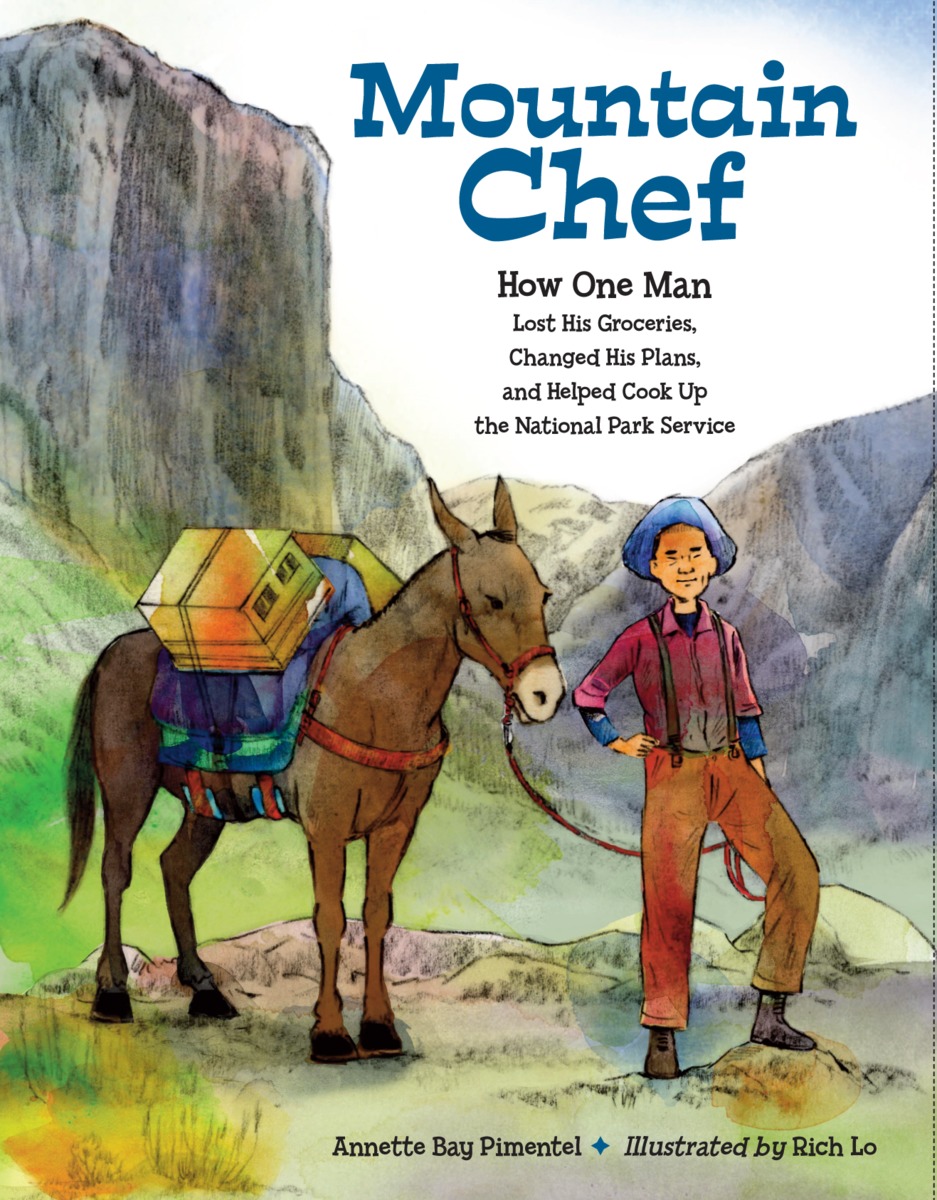
Mountain Chef: How One Man Lost His Groceries, Changed His Plans, and Helped Cook Up the National Park Service

Written by Annette Bay Pimentel | Illustrated by Rich Lo


Tie Sing, born in Virginia City, Nevada, grew up during a time when “America was a tough place to be Chinese.” Most worked in restaurants or laundries and were paid less than white employees. Tie Sing had big plans, though. “He got a job cooking for mapmakers as they tramped through the mountains, naming peaks. With sky for his ceiling and sequoias for his walls, he stirred silky sauces, broiled succulent steaks, and tossed crisp salads.” He quickly became known as the best trail cook in California.

celebrate-picture-books-picture-book-review-mountain-chef-Tie-Sing

Image copyright Rich Lo, text copyright Annette Bay Pimentel. Courtesy of Rich Lo at greatsketch.com

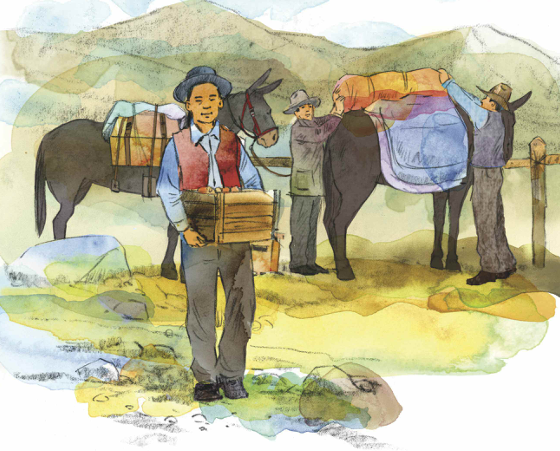
In 1915 Steven Mather was trying to convince politicians to create a national park system even though many business people were against it. Mather invited journalists, tycoons, congressmen, and others to go camping for ten days to show them the wonder of America. He knew that the trip had to be perfect, so he hired Tie Sing as his chef. Tie Sing planned gourmet menus for breakfast, lunch, and dinner that would satisfy the 30 campers. Each day he rose before dawn, cooked eggs and sizzling steaks, and packed box lunches.

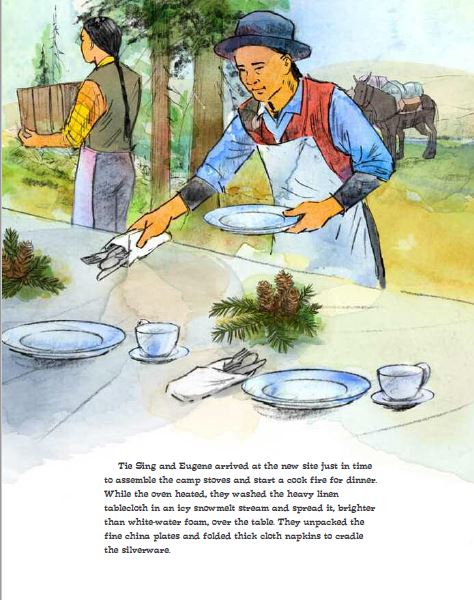
As the group hiked across beautiful scenery to the next site, Tie Sing and his assistant washed the dishes, put out the fires, packed the mules, and started the dinner’s sourdough bread. By the time Tie Sing arrived at the new campsite, it was time to begin cooking dinner. “He assembled sardine hors d’oeuvres, sliced juicy cantaloupe, and squeezed lemons to make tart-sweet lemonade. He grilled steaks and venison, fried fish and chicken, and baked sourdough rolls” as good as any fine restaurant. One morning Tie Sing was able to pack the mule early before he served breakfast. When he went back to the mule, however, he discovered it had wandered away—taking all of the best food with it.

celebrate-picture-books-picture-book-review-mountain-elegant-table

Image copyright Rich Lo, text copyright Annette Bay Pimentel. Courtesy of Rich Lo at greatsketch.com

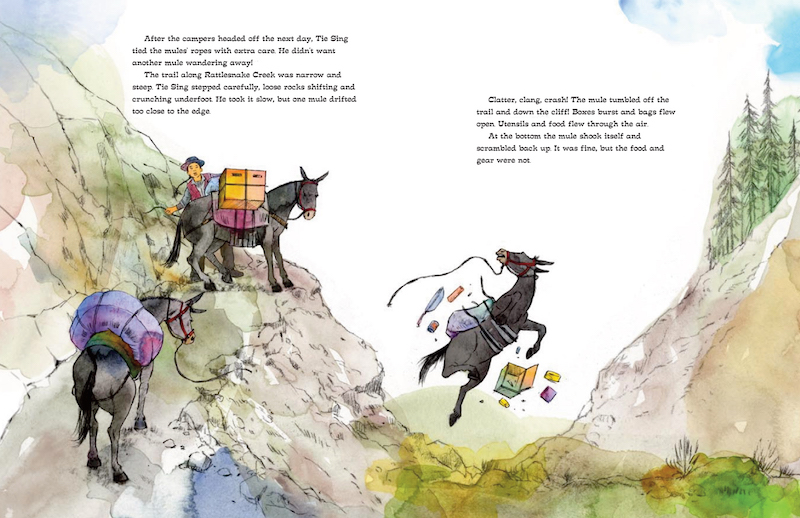
Steven Mather shrugged it off as he left for the day’s hike, but Tie Sing was upset. All of his planning was ruined. That night the dinner wasn’t as fancy, but it was delicious and topped off with “all-American apple pie.” The campers, happily satisfied, talked late into the night about the possibilities of a national park service. The next day, Tie Sing carefully led the mules along a narrow ridge. As the stones crumbled underneath their feet, one mule strayed too close to the edge. He tumbled backward and down the cliff. Bags, boxes, and food went flying. The mule got up and shook itself off, but much of the food, utensils, and equipment was lost.

Hours later Tie Sing limped into camp with “the battered boxes and bent knives and bruised apples he’d salvaged.” The men were ravenous; Tie Sing had to think quickly. He knew just how to use those apples, and under the glow of paper lanterns, the crew enjoyed the most delicious applesauce they’d ever had. Tie Sing knew his job was to fill the party with delicious meals, but “Steven Mather wasn’t the only one who loved the mountains; Tie Sing had the Sierra singing in his blood. He too planned to fill the campers with memories.”

celebrate-picture-books-picture-book-review-mountain-chef-mule-falls

Image copyright Rich Lo, text copyright Annette Bay Pimentel. Courtesy of Rich Lo at greatsketch.com

As the pots bubbled on the camp stove, Tie Sing “bent over tiny slips of paper and wrote in English and Chinese.” Following dinner he handed out fortune cookies, each one holding a handwritten message: “Long may you search the mountains.” “Long may you build the paths through the mountains.” “Where but in the mountains would such a man become a spirit with the mountains?”

In the months following the trip, the members of the group “wrote magazine articles, published books, and made movies about America’s national parks.” Steven Mather’s and Tie Sing’s efforts worked. On August 25, 1916 Congress created the National Park Service. “Today, if you visit Yosemite National Park, you can hike to Sing Peak. It was named for Tie Sing, a mountain-loving American who knew how to plan.”

Three pages of back matter, complete with photographs of Steven Mather’s and Tie Sing’s actual 1915 trip, answer readers’ questions about Tie Sing, how he kept food fresh in the mountains, details of the trip, and short bios on the members of the mountain party.

celebrate-picture-books-picture-book-review-mountain-chef-bent-silverware

Image copyright Rich Lo, text copyright Annette Bay Pimentel. Courtesy of Rich Lo at greatsketch.com

Annette Bay Pimentel’s fascinating and timely story of the establishment of the National Park Service highlights the contributions of a Chinese American dreamer who had big plans for himself and the country he loved. Her detailed storytelling enhanced by lyrical phrasing (a linen tablecloth is washed in an icy snowmelt stream and spread “brighter than white-water foam” over a table) reveals the marvel of Tie Sing’s art. Readers will be awed by the dedication and careful planning it took for the gourmet meals and elegant table settings to come together in such rough surroundings. As food and supplies are lost along the way, children will be held in suspense, wondering if Steven Mather’s and Tie Sing’s strategy worked.

Rich Lo’s beautiful detailed and realistic watercolors transport readers to the mountains and trails of early 1900s California. With vivid imagery Lo lets children see the day-to-day preparations that went into Sing’s meals as well as the dangerous conditions he faced. Lo captures the hazy purple majesty of the mountain peaks, the glow of the campfire in the dark of night, and the vastness of the California environment. Kids may well wonder how Sing managed to create a five-star restaurant atmosphere and menu in the wild, and Lo shows them how it was accomplished.

Mountain Chef gives a unique perspective on an important historical moment—one that still resonates today—and is a compelling book for any classroom as well as for kids interested in history, culinary arts, and the environment and for those who just love a good story.

Ages 6 – 9

Charlesbridge, 2016 | ISBN 978-1580897112

Discover more about Annette Bay Pimentel and her work as well as a Teacher’s Guide on her website!

Learn more about Rich Lo and view a portfolio of his artwork on his website!

Personal Chef Day Activity

celebrate-picture-books-picture-book-review-chef-kids-coloring-page

Cook Up Something Tasty Coloring Page


These kids are making a special treat! Enjoy this printable Cook Up Something Tasty Coloring Page while you have a little treat too!

Picture Book Review
February 22 – It’s International Boost Your Self-Esteem Month

celebrate-picture-books-picture-book-review-toby-and-Tutter-therapy-dogs-cover

About the Holiday

February, on the horizon of sunny spring, is a great time to reflect on your emotional health. A strong sense of self-esteem – what a person thinks of themselves inside – is important for leading a happy life. With all of the pressures of work, school, and other activities, it’s easy to feel overwhelmed and anxious. Finding the positive in every day as well as understanding and appreciating one’s strengths and weaknesses can lead to a more peaceful and fulfilling life. One way both kids and adults find acceptance and a boost in self-esteem is by playing with pets or spending time with therapy dogs, like the canine helpers in today’s book.

Toby and Tutter: Therapy Dogs

Written by Kirsten DeBear | Photographs by Laura Dwight


Ten years ago Toby, a mixed breed dog, was adopted from a shelter when he was only six months old and trained to be a therapy dog. He works with his mother, an occupational therapist, helping children learn and play. Like some of the kids themsselves, Toby has a little brother. His name is Tutter and he was adopted when he was four months old. Toby admits that it took awhile to get used to having Tutter around. Tutter is smaller and captures a lot of the children’s attention. He even wiggles in between Toby and the kids “stealing all the affection.”

celebrate-picture-books-picture-book-review-toby-and-Tutter-therapy-dogs-toby

Photography copyright Laura Dwight, text copyright Kirsten DeBears, courtesy of Toby and Tutter Publishing

Toby explains that when he was young, he “went to school…to study how to behave around children and how to follow directions.” He learned how to work with many different kids. Tutter wants to be a therapy dog too, but Toby is skeptical. He’s not sure that Tutter has the courage or patience it requires. Their mother, though, thinks that with enough training, he will be able to do it.

celebrate-picture-books-picture-book-review-toby-and-Tutter-therapy-dogs-swing

Photography copyright Laura Dwight, text copyright Kirsten DeBears, courtesy of Toby and Tutter Publishing

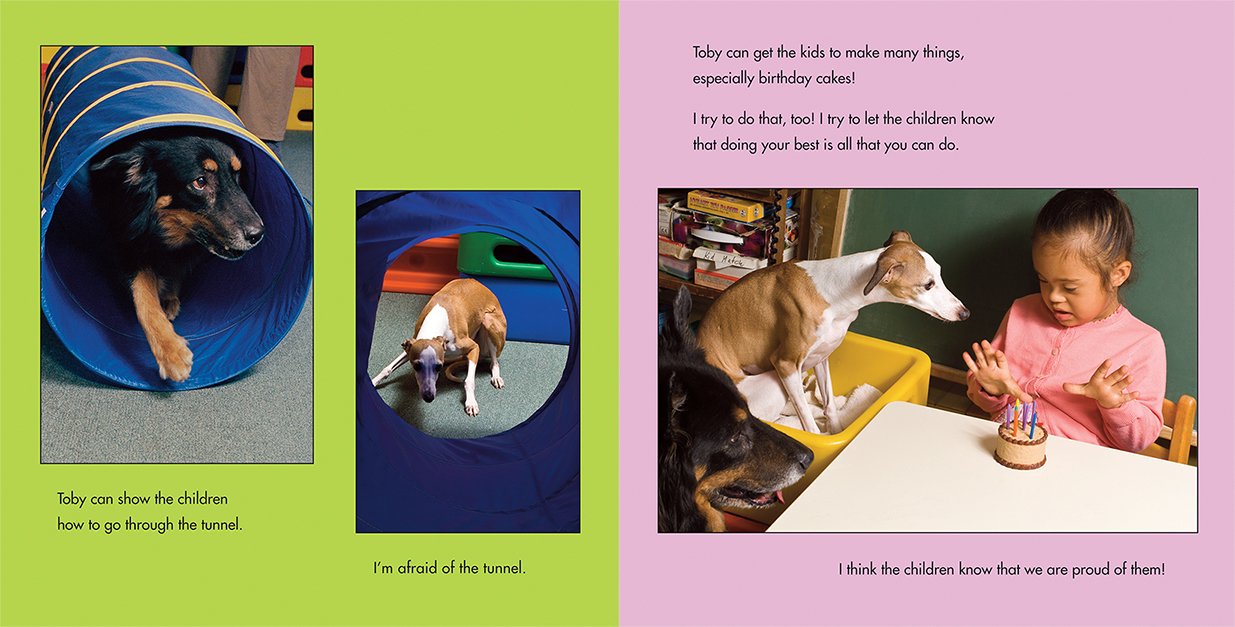
Tutter is an Italian greyhound, and while Toby may think he “looks goofy,” Tutter is proud that the kids call him “cute.” Tutter just wants to be like his big brother and help children even if he is small and often afraid. He follows Toby and tries to do what he does,but it’s hard  While Toby is good at lying down and letting the kids pet his fluffy fur, Tutter is just “learning to stay still. If the children sit quietly I will go to them and cuddle up on their laps. But if they’re wild I run away!” says Tutter. Toby likes to play ball with the kids. They throw it to him and Toby gives it back. Tutter doesn’t really like to share his toys. Toby likes to play on the equipment, such as the slide, balance beam, swing, and tunnel, but Tutter is afraid to use them. He prefers the hammock with its gentle motion.

celebrate-picture-books-picture-book-review-toby-and-Tutter-therapy-dogs-playing

Photography copyright Laura Dwight, text copyright Kirsten DeBears, courtesy of Toby and Tutter Publishing

While Tutter and Toby may seem very different, they are similar is some ways. Tutter likes to wear the necklaces the kids make, so he’s learning to sit still just like Toby while the children put them over his head. Tutter can also play peek-a-boo like Toby; and he tries to encourage the children by letting them know “that doing your best is all that you can do.”

Every day Tutter feels that he’s getting braver, and he knows that he has special talents that Toby doesn’t. Tutter is allowed in the ball pit with the kids, he can pretend to be in a greyhound race, and he can be carried in a bag. He’s also good at teaching the kids to be gentle and quiet and not to be afraid of dogs. Tutter is happy to be who he is and is proud of what he can do; Toby is proud of Tutter too for trying new things even if they are scary. Tutter and Toby are happy to be a team!

celebrate-picture-books-picture-book-review-toby-and-Tutter-therapy-dogs-playing

Photography copyright Laura Dwight, text copyright Kirsten DeBears, courtesy of Toby and Tutter Publishing

Children will love this story of two therapy dogs helping out at school. Kirsten DeBear’s engaging story of these brothers encompasses the emotions family members often feel, including the sibling rivalry and deep affection of brothers and sisters that readers will recognize. The alternating thoughts of the two dogs—one more mature and easy-going and for whom learning comes easily and the other younger and more hesitant who struggles with some tasks—echo the diversity of children found in any social situation. Toby and Tutter demonstrate that everyone can be proud of their abilities and accomplishments and have much to offer. DeBear’s honest and accessible language will resonate with kids who will be charmed by sweet Tutter and friendly Toby.

Laura Dwight captures the interactions of children playing and learning with Toby and Tutter in colorful photographs full of action and personality. Kids will love seeing how these two brothers perform their jobs by modeling actions, offering comfort, and being ready playmates. The obvious love the children show for their furry friends will make readers smile and wish they were part of the group.

Toby and Tutter: Therapy Dogs is a wonderful choice for opening discussions on empathy and social-emotional topics as well as the work of specially trained companion animals with children. 

Ages 4 – 8

Toby and Tutter Publishing, 2016; Paperback 978-0984781218 | Hardcover 978-0984781201 | Available on Amazon

To learn  more about Kirsten DeBear, her programs, and her work with disabled children and children with Down syndrome, visit her website.

Discover more about Laura Dwight and her photography for children’s books, textbooks, nonprofit agencies, and more on her website.

International Boost Self-Esteem Month Activity

celebrate-picture-boos-picture-books-review-I-love-dogs-word-search

I Love Dogs Word Search


Dogs of all types make great friends and companions and bring joy to life. Can you find the names of all the dogs in this printable I Love Dogs Word Search?

Picture Book Review

February 21 – It’s Love the Bus Month

celebrate-picture-books-picture-book-review-last-stop-on-market-street-cover

About the Holiday

Love the Bus Month, sponsored  by the American School Bus Council, promotes awareness of and offers appreciation to the thousands of school bus drivers across the country who safely transport students every day to and from school, to field trips and to sporting events. To join the celebration, write a note to your bus driver and thank them for all they do for you!

Last Stop on Market Street

Written by Matt de la Peña | Illustrated by Christian Robinson


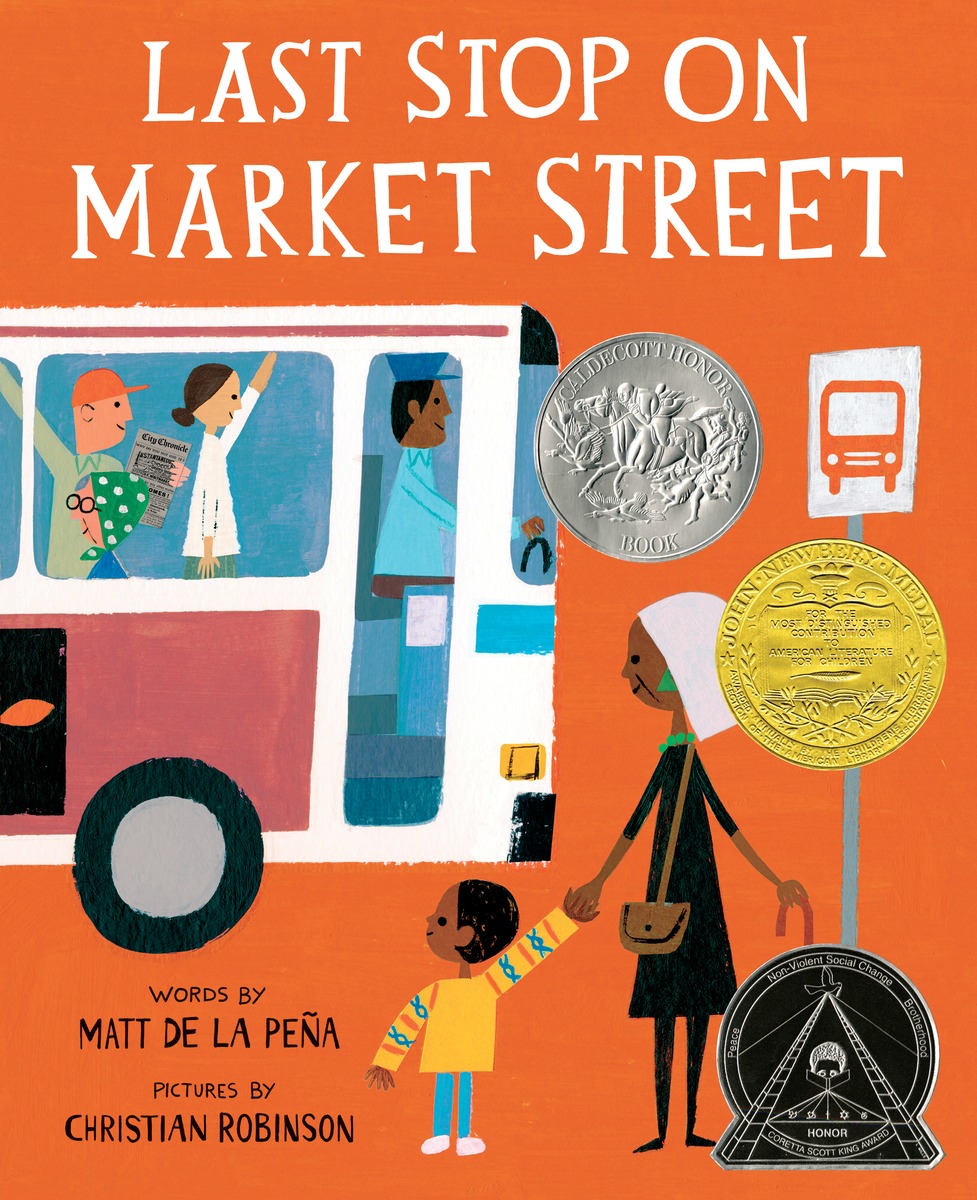
CJ, fresh from church, skips out into the sprinkling rain. He and his nana wait for the bus under her umbrella. From the bus stop CJ watches as his friend climbs into a warm, dry car and asks, “‘Nana, how come we don’t got a car?’” Nana was just telling CJ that they didn’t need a car when “the bus creaked to a stop in front of them. It sighed and sagged and the doors swung open.’”  As they stepped aboard, Mr. Dennis, the bus driver, pulled a quarter from behind CJ’s ear, making him giggle.

celebrate-picture-books-picture-book-review-last-stop-on-market-street-at-bus-stop

Image copyright Christian Robinson, text copyright Matt de da Peña, 2015. Courtesy of G. P. Putnam and Sons Books for Young Readers.

CJ and Nana found seats up front across from a man with a guitar and an old woman with a jar of butterflies on her lap. Nana said hello to everyone and “made sure CJ did the same.” As the bus pulled away from the curb, Nana began to knit and CJ looked out the window feeling sorry that he couldn’t just go home after church like his friends. Nana said she felt “‘sorry for those boys….They’ll never get a chance to meet Bobo or the Sunglass Man.’”

celebrate-picture-books-picture-book-review-last-stop-on-market-street-getting-on-bus

Image copyright Christian Robinson, text copyright Matt de da Peña, 2015. Courtesy of G. P. Putnam and Sons Books for Young Readers.

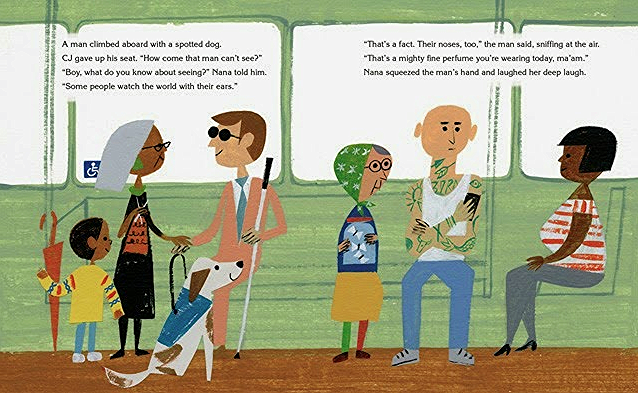
At the next stop a blind man and his dog got on. CJ gave him his seat, but asked Nana why he couldn’t see. “‘Some people watch the world with their ears.’” Nana told him. When the bus stopped again, two older boys stepped on. CJ wished he could listen to music on a phone like they were, but Nana pointed to the man with the guitar, who began to pluck the strings and sing. CJ closed his eyes and let the music transport him out of the city. In his mind he saw waves and colors, hawks and butterflies. “CJ’s chest grew full and he was lost in the sound and the sound gave him the feeling of magic.”

celebrate-picture-books-picture-book-review-last-stop-on-market-street-blind-man

Image copyright Christian Robinson, text copyright Matt de da Peña, 2015. Courtesy of G. P. Putnam and Sons Books for Young Readers.

When the man finished his song everyone clapped, and CJ dropped his quarter into the man’s hat. Finally, the bus came to the last stop on Market Street. CJ and his nana stepped off into a neighborhood of “crumbling sidewalks and broken-down doors, graffiti-tagged windows and boarded-up stores.” CJ wondered why it was always so dirty there, but Nana pointed to the beauty of the sky above them. CJ looked up and saw a rainbow arching over the soup kitchen. Then CJ saw familiar faces at the window and felt glad they had come. “‘Me too,’” Nana agreed as she and CJ took up their posts and began ladling soup into bowls.

celebrate-picture-books-picture-book-review-last-stop-on-market-street-soup-kitchen

Image copyright Christian Robinson, text copyright Matt de da Peña, 2015. Courtesy of G. P. Putnam and Sons Books for Young Readers.

Matt de da Peña’s gentle nudging to look on the bright side and appreciate the beauty and wonder around you is made all the more poignant for readers by the story’s young protagonist. Through realistic dialogue and honestly expressed feelings, CJ and Nana engage in one of life’s most important lessons—connecting empathetically with others. CJ’s rich experiences on the bus and at the soup kitchen—microcosms of our larger world—broadens his view and enlivens his imagination. Last Stop on Market Street reminds readers that to truly enjoy a meaningful life they must be aware of and appreciate the diversity of people and events around them.

Christian Robinson’s acrylic and collage illustrations are smart, captivating snapshots of CJ’s day as he watches and interacts with a variety of people on the bus and at the soup kitchen. The visual camaraderie of the passengers—old and young, tattooed, talented, and disabled—as they talk together and smile at one another will cheer readers. The color scheme of bright and pastel colors shared from page to page enhances the book’s themes of interconnectedness and cohesion, and the clean, unadorned images reflect the idea that often the simple things in life really are the best.

Last Stop of Market Street, winner of the 2016 Newberry award and a Caldecott Honor book as well as the winner of many other awards, is a superb book to add to any child’s home library.

Ages 3 – 6

G. P. Putnam Suns Books for Young Readers, 2015 | ISBN 978-0399257742

Learn more about Matt De La Peña, his books, and more on his website!

Discover more about Christian Robinson and view a gallery of his work on his website!

Get on board this Last Stop on Market Street book trailer!

Love the Bus Month Activity

celebrate-picture-books-picture-book-review-school-bus-coloring-page

Where Are You Going? Coloring Page


Do you love riding the bus? It’s a great way to sightsee while getting where you want to go. Grab your colored pencils, markers, or crayons and enjoy this Where Are You Going? Coloring Page!

Picture Book Review
February 16 – International Month of Black Women in the Arts

celebrate-picture-books-picture-book-review-fancy-party-gowns-cover

About the Holiday

During this month we recognize the contributions of black women across the fields of literature, fine, performing, culinary, and healing arts. To celebrate, research black women artists and attend exhibits, readings, or other events that showcase these talented women.

Fancy Party Gowns: The Story of Fashion Designer Ann Cole Lowe

Written by Deborah Blumenthal | Illustrated by Laura Freeman


From the time that Ann Cole Lowe was old enough to thread a needle, she loved to sew. While her momma and grandma worked at their sewing machines, making dresses for the socialites of Alabama, Ann sat nearby turning “the wisps of cloth” that fell to the floor into “flowers as bright as roses in the garden.” Even at a young age Ann understood that “doing what you love could set your spirit soaring.”

celebrate-picture-books-picture-book-review-fancy-party-gowns-ann-as-child

Image copyright Laura Freeman, text copyright Deborah Blumenthal, courtesy of simonandschuster.com

When Ann was only sixteen years old, her momma died. Not only did her mother’s death leave Ann bereft, it left her in charge of the business, and many women were waiting for gowns, most importantly the Alabama governor’s wife. “Ann thought about what she could do, not what she couldn’t change.” She sat down and finished the dresses. “Then she stood up and ran the business.”

celebrate-picture-books-picture-book-review-fancy-party-gowns-design-school

Image copyright Laura Freeman, text copyright Deborah Blumenthal, courtesy of simonandschuster.com

In 1916 a woman in Florida hired her to sew dresses. She also sent Ann to design school in New York. Because she was African American, however, Ann was required to study in a separate classroom by herself. Ann was not deterred. She continued to make unique gowns and dresses, and her client list grew. Finally, Ann had saved enough money to open a salon of her own in Manhattan. Sometimes she didn’t have enough money to pay all the bills, but she persisted. Her life was about “what she could do, not what she couldn’t change.”

One day Ann received an order for a wedding dress from a woman who was marrying a United States senator. The woman’s name was Jacqueline Bouvier and the man was John F. Kennedy, a future president of the U.S. Ann bought 50 yards of ivory silk taffeta and designed a beautiful dress with a bouffant skirt and pleated bands decorated with tiny wax flowers. She also made the dresses for Jacqueline’s attendants.

celebrate-picture-books-picture-book-review-fancy-party-gowns-wedding-dress

Image copyright Laura Freeman, text copyright Deborah Blumenthal, courtesy of simonandschuster.com

Then ten days before the wedding, Ann walked into her workroom and discovered that a water pipe had burst, flooding the dresses, material, everything. Ten of the sixteen gowns Ann had sewn were destroyed. “Ann though about what she could do, not what she couldn’t change.” She ordered new fabric, hired more seamstresses, and went to work. On this job she lost money instead of making it, but none of that mattered. In eight days all of the dresses were ready.

When Ann delivered the gowns to the mansion in Newport, Rhode Island, the butler who answered the door told her workers needed to use the back entrance. Ann replied that “if she had to enter through the back door, the bride and bridesmaids wouldn’t be wearing her dresses for the wedding.” The front door swung open. On the day of the wedding—September 12, 1953—the whole world oohed and aahed over Jacqueline Bouvier Kennedy’s gorgeous gown and her bridesmaids’ dresses, but not many people thought about or knew the name of the woman who had created them. “Why? Because Ann Cole Lowe was African American. And life wasn’t fair.”

celebrate-picture-books-picture-book-review-fancy-party-gowns-sewing

Image copyright Laura Freeman, text copyright Deborah Blumenthal, courtesy of simonandschuster.com

Ann continued to design and sew party dresses and evening gowns for the women of high society. She “didn’t make fine clothes to get rich or famous,” however, but, as she once said, “‘To prove that a Negro can become a major dress designer.’” In 1961 Ann finally gained public recognition for her work when she was named “Official Couturiere” in honor of the 33 ball gowns she created for an elegant ball in Omaha, Nebraska. She proudly accepted her award as the fashion world applauded.

An Author’s Note explaining more about Ann Cole Lowe’s life and work follows the text.

celebrate-picture-books-picture-book-review-fancy-party-gowns-recognized

Image copyright Laura Freeman, text copyright Deborah Blumenthal, courtesy of simonandschuster.com

With straightforward storytelling adorned with lyrical passages, Deborah Blumenthal reveals Ann Cole Lowe’s lifelong love of fashion design, her struggles, and her ultimate acclaim. Lowe’s natural talent, single focus, self-confidence, courage, and persistence come through as she overcomes obstacles and prejudice to become the first African American couture designer. Children interested in fashion and history will find much to spark their curiosity and desire to know more about the woman and her times. Blumenthal’s repetition of Lowe’s philosophy to think about what she could do instead of what she couldn’t change will inspire readers to push past difficulties and find solutions.

Laura Freeman’s full-bleed illustrations are as bold and vivacious as Ann Cole Lowe herself. Beginning with the endpapers, which are scattered with drawings of Lowe’s one-of-a-kind gowns, Freeman takes readers on a tour of the workrooms and salons stocked with the fabrics that gave form to Lowe’s creativity. While the backgrounds are typically brilliantly colored and patterned, twice Freeman places Lowe on a completely white page—after her mother has recently died and she is left alone to finish dresses and when she is segregated from the other students in design school. These pages make a moving and effective statement. Children fascinated by fashion will love seeing the beautifully depicted gowns, and may be stirred to create styles of their own.

Ages 4 – 8

little bee books, 2017 | ISBN 978-1499802399

To learn more about Deborah Blumenthal and her books for children, young adults, and adults, visit her website!

Discover a gallery of illustration work by Laura Freeman on her website!

International Month of Black Women in the Arts Activity

celebrate-picture-books-picture-book-review-tablecloth-dress


Create Your Own Party Dress 


With this easy craft you can make a  fun sheath dress for playing dress-up. It’s also a great party activity! All you need is a plastic or paper party table cloth, Sharpies, and your imagination!

Supplies

  • 1 plastic party tablecloth (1 cloth will most likely make 4 dresses)
  • Sharpies or other permanent markers
  • Ribbon, scarf, crepe paper garland, or other material for a belt
  • Scissor
  • Newspaper, old sheeting or other material to protect the floor

Directions

  1. With the table cloth folded along one edge, cut a rectangle the appropriate size for the child
  2. In the middle of the folded edge cut a V-shaped or rounded opening for the child’s head. Begin with a small opening and enlarge it as needed
  3. Lay the dress on newspaper or other material to protect the floor
  4. Draw and color shapes, lines, figures, or other designs on the dress
  5. Slip on over a shirt and pants or leggings
  6.  Add a belt with a ribbon, scarf, piece of crepe paper garland, or other material

Picture Book Review
February 13 – World Radio Day

celebrate-picture-books-picture-book-review-radio-man-arthur-dorros-cover

About the Holiday

The radio has provided entertainment, news, comfort, and information and has united people both near and far ever since Guglielmo Marconi invented  it in 1895. Today, radio continues to be an important part of people’s lives around the world. The United Nations Educational, Scientific, and Cultural Organization established February 13 as World Radio Day “to celebrate radio as a medium, to improve international cooperation among broadcasters, and to encourage both major networks and community radio to promote access to information, freedom of expression and gender equality across the airwaves.” This year’s UNESCO theme is “Radio is You” and focuses on ensuring that all radio stations from personal to commercial have the tools they need to provide the best service they can.

Radio Man/Don Radio

By Arthur Dorros | Translated by Sandra Marulanda Dorros


“Radio man” is Diego, a boy in a family of migrant workers who pick fruit and vegetables from the Southwest to as far north as Washington state. Although his family moves frequently, Diego has close relationships with his parents, sister, grandparents, cousins, and especially a friend named David.

As his family moves from town to town searching for work, Diego listens to the radio. Stations broadcasting in both English and Spanish keep the family company, and Diego measures the distance of upcoming towns along their route by the clarity of the DJs’ voices. The radio also provides entertainment for end-of-picking season parties among the workers and serves as a catalyst for the grandfather’s stories of growing up in Mexico.

celebrate-picture-books-picture-book-review-radio-man-arthur-dorros-cover

Image copyright Arthur Dorros, courtesy of Penguin Books

While Diego’s family is close-knit, their nomadic lifestyle separates Diego from his best friend, David, who is also the son of migrant workers. As the story begins Diego and David are leaving Texas and know they won’t see each other for a while. Traveling north, Diego’s family stops in different towns. In each Diego goes to school during the day and picks crops in the afternoon. He meets up with his cousins and other friends, along the way, but never finds David. When the family reaches Sunnyside, Washington, Diego discovers that radio station KMPO allows people to send messages to others. Diego calls the station and sends a message: “Hello, David! This is Diego. Are you here?”

David, missing Diego and listening to his own radio, is there! David smiles, happy to be reconnected with his best friend.

Arthur Dorros’s story reflects not only the life of migrant workers but also the universal feelings of children separated from friends. Through Dorros’s honest and moving descriptions, readers discover the importance of communication, whether it be through shared history and stories or through technology, in keeping relationships strong. When Diego and David finally find each other again, children will identify with their happiness.

Through vivid illustrations, Dorros depicts the landscape and farms of the American southwest, the festive celebrations held by workers at the end of picking seasons, the reality of driving from town to town, and the tight relationships among family members, giving children a glimpse into the life of migrant workers as well as the heart of friendship.

Each page of Radio Man is presented in English and Spanish, with translation by Sandra Marulanda Dorros. It has become a classic multicultural story, and one that is a wonderful read for all kids.

Ages 4 – 8

Trophy Picture Books, HarperCollins, 1997 | ISBN 978-0064434829

Discover more about Arthur Dorros and his books as well as fun activities on his website!

World Radio Day Activity

CPB - Radio Man box radios from side

Box Radio Desk OrganizerMau


With a recycled box and the provided printable templates  you can make a desk organizer that looks like a radio with this fun craft!

Supplies

  • Cardboard box – Use an empty cube-shaped tissue box, pasta box, or any small box
  • Wooden chopstick
  • Printable Radio Face Template
  • Aluminum foil
  • Glue – a hot-glue gun works well on the cardboard; regular glue for the buttons and tape for the station tuner window
  • Paint – any color you like
  • Paint brush
  • Scissors

Directions

1. Prepare the box:

  • Choose a box to be your radio. In the pictures I used a cube-shaped tissue box and a penne pasta box with a cellophane window in it.
  • If you are using a box without an opening in the top, cut the top or bottom flaps off of one end of the box, depending on where you want the station tuner window to go.

2. Paint the box:

  • You can paint the printed front, back and sides of the box.
  • OR if you want a plain box to use “as-is” or to paint: take the recycled box apart at the seams and turn it “inside out.”
  • If you are using a pasta box with a window in it, tape the stations tuner template to the cellophane window before gluing the seams
  • Glue the original seam and flaps (a hot-glue gun works well). Let the glue dry. Then paint.

3. Let the box dry

4. Cut out the radio dials, speaker, and stations tuner window

5. Glue the parts of the radio to the box 

6. To make the antenna, wrap the wooden chopstick in a strip of aluminum foil: lay the stick on the foil and fold a foil flap (about 1 inch long) over each end of the stick. Roll the foil around the stick and press gently to close seam.

7. Attach the antenna to your box:

  • For pasta boxes tape the antenna to the inside corner of the box
  • For cube tissue boxes, make a hole in the right hand corner and push antenna in

8. Use your Radio Desk Organizer to hold pencils, rulers, bookmarks, anything!

Picture Book Review