July 28 – National Day of the Cowboy

celebrate-picture-books-picture-book-review-real-cowboys-cover

About the Holiday

Observed annually on the fourth Saturday of July, the day commemorates the “contributions of the Cowboy and Cowgirl to America’s culture and heritage.” The heyday of the cowboy and cowgirl came after the Civil War when Texas experienced a booming wild cattle population. As the population of the United States grew, the demand for beef increased. Cowboys and cowgirls drove nearly 5 million head of cattle north to meet the demand, sparking tales, legends, and a rich history of the Great Plains in their boot and hoof steps. With no written laws on the books, cowboys even came up with their own code of conduct, which included living each day with honestly and courage, taking pride in your work, standing up for what’s right, and many more rules to live by. For more information visit The Day of the Cowboy website.

Real Cowboys

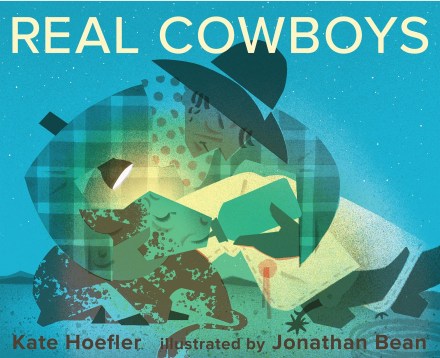
Written by Kate Hoefler | Illustrated by Jonathan Bean


Real cowboys wake with the dawn’s light and are careful not to make too much noise for the people still sleeping in the “little houses in the hollow, and up the mountains, and at the edge of fields in the distance.” It is natural for the cowboys to think of others. Their job is to care for the herd; to help a stranded calf and their dog who is trying to lure it to safety; to soothe the herd when thunder rumbles overhead.
celebrate-picture-books-picture-book-review-real-cowboys-dawn

Image copyright Jonathan Bean, courtesy of Houghton Mifflin Harcourt

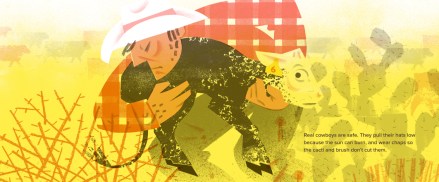
Real cowboys sing soft, slow songs to their cows to encourage them to continue moving when the path is narrow and dangerous and to sleep when coyotes howl in the night. Cowboys are good listeners—heeding the advice and warnings of the trail boss and other cowhands. “Sometimes they listen for trucks, and wolves, and rushing water. And sometimes they just listen to the big wide world and its grass song.” Along the way cowboys keep themselves safe with their wide-brimmed hats and leather chaps.
celebrate-picture-books-picture-book-review-real-cowboys-saving-calf

Image copyright Jonathan Bean, text copyright Kate Hoefler. Courtesy of Houghton Mifflin Harcourt

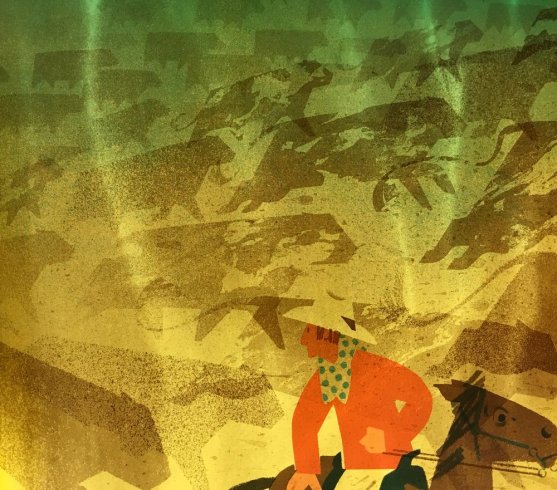
Because the cattle drive is long—lasting “for hours, or days, or weeks”—cowboys learn to be patient. “Even on a fast horse, they have to move with the slow rhythm of a herd….” When they need help, real cowboys don’t hesitate to ask, using hand and hat signals to alert other cowhands. “Real cowboys want peace. They don’t want stampedes, where all the cattle spook, and thunder over the earth, and scatter in dust storms.” Sometimes, however, this happens, and sometimes a few cattle and dogs are lost. Thinking of them when times are quiet, “real cowboys cry.”
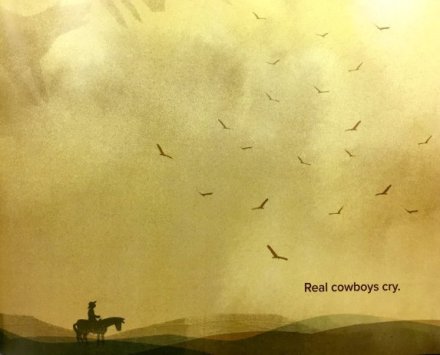
celebrate-picture-books-picture-book-review-real-cowboys-cowboys-cry

Image copyright Jonathan Bean, text copyright Kate Hoefler. Courtesy of Houghton Mifflin Harcourt

At night cowboys take turns eating and sleeping so there is always someone to watch over the herd. When they pack up camp and move on, real cowboys are mindful of the earth, and when they are far from home, inside themselves they can feel homesick, even if they look tough on the outside. “Real cowboys are as many different colors as the earth. Real cowboys are girls too.” In their hearts “real cowboys are artists,” creating stories that are bigger than the wide open prairie. “They wonder what’s past the horizon. And one day, when their work is done, real cowboys find out.”

Kate Hoefler’s moving tribute to cowboys and cowgirls demonstrates the qualities of kindness, thoughtfulness, and mindfulness that we want to share with our children. With lyrical language she follows cowboys on a cattle drive, where they experience the joys and sorrows that life entails for all. Hoefler’s pacing echoes the day-to-day movement of the herd as well as readers’ daily life. Delving into the responsibilities and characteristics of these men and women is a unique way to open the world to children and promote discussions about the traits of caring individuals.
celebrate-picture-books-picture-book-review-real-cowboys-stampede

Image copyright Jonathan Bean, courtesy of Houghton Mifflin Harcourt

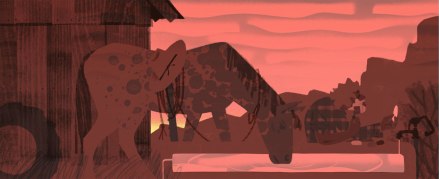
Jonathan Bean’s hand-stenciled illustrations printed in four Pantone colors are particularly effective in portraying the life of the cowboys and cowgirls entrusted with herds of cattle. Early morning dawns to rose skies that color even the horses and reflect in the drinking trough. Cattle, obscured by dust raised on the trail, form the backdrop to a cowboy worriedly watching his dog coax a calf from a cliff, and afternoon turns to night in a two-page spread where a cow nuzzles her calf as it sleeps. Depictions of the enormity of the herd traveling from one place to another amid sweltering days, rain storms, and blizzards are beautifully rendered, and the emotions of the cowboys are clearly discernable and touching.

Real Cowboys is stunning in both language and illustrations. For quiet story times, bedtime, or times for reflection and inspiration, this book would make an excellent addition to children’s bookshelves.

Ages 4 – 7

Houghton Mifflin Harcourt, 2016 | ISBN 978-0544148925

To view a gallery of illustration by Jonathan Bean, visit his website!

National Day of the Cowboy Activity
celebrate-picture-books-picture-book-review-rootin'-tootin'-round-up-maze

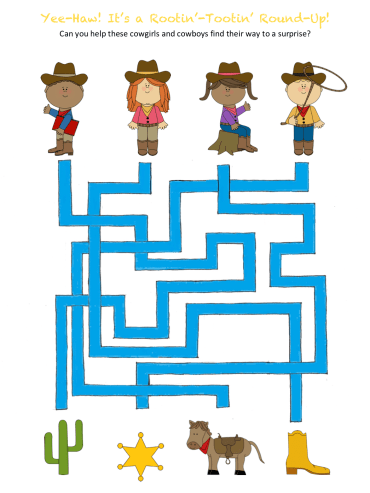
Rootin’-Tootin’ Round-Up Maze


These cowgirls and cowboys have a surprise waiting for them. Can you help them round it up in this printable Rootin’-Tootin’ Round-Up Maze?

celebrate-picture-books-picture-book-review-real-cowboys-cover

You can find Real Cowboys at these booksellers

Amazon | Barnes & Noble | Books-a-Million | IndieBound

Picture Book Review


July 22 – It’s National Blueberry Month

celebrate-picture-books-picture-book-review-the-honeybee-man-cover

About the Holiday

Why do we celebrate bees and honey during National Blueberry Month? Because—as Fred, the beekeeper in today’s book knows—the fragrant blossoms on blueberry bushes provide nectar that bees make into some of the most complex, sweet, and delicious honey around. If you’re lucky enough to find blueberry honey on your grocery store shelves—or even better, at your local farmers market—don’t hesitate to try it! While you’re at it, grab some plump, delectable blueberries and make blueberry pancakes to put that honey on!

The Honeybee Man

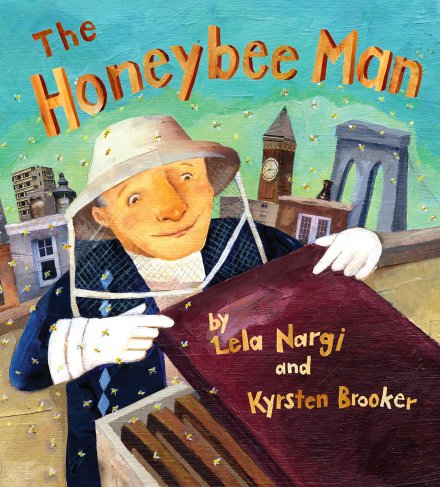
Written by Lela Nargi | Illustrated by Kyrsten Brooker


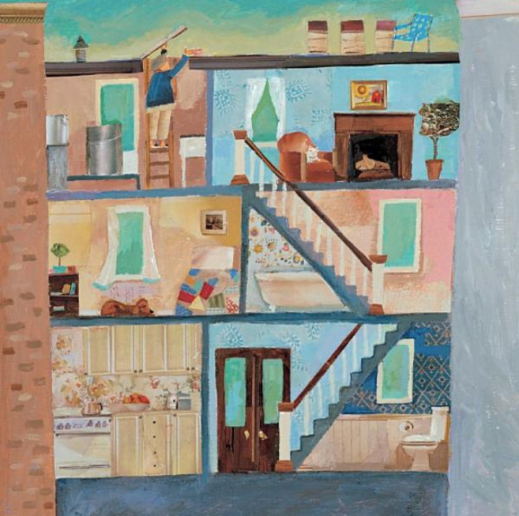
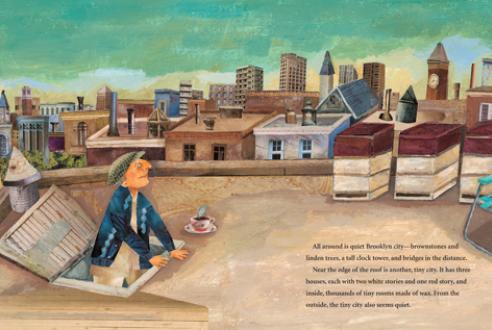
At dawn on a July morning, Fred awakens to begin his day with his “enormous” family. His morning routine consists of a cup of tea and a climb back upstairs and through a hatch in the ceiling that takes him to the roof. “All around is quiet Brooklyn city—brownstones and linden trees, a tall clock tower, and bridges in the distance.” But nearby is another, tiny city. It consists of only three houses, but inside are “thousands of tiny rooms made of wax.”

celebrate-picture-books-picture-book-review-the-honeybee-man-fred's-house

Image copyright Kyrsten Brooker, 2011, courtesy of Schwartz & Wade.

The summer morning smells of “maple leave and gasoline and the river and dust. He turns to the tiny city and inhales its smaller, sweeter smell—a little like caramel, a little like ripe peaches.” He bends down to the three houses to wake their residents. “‘Good morning, Queen Mab. Good morning, Queen Nefertiti. Good morning, Queen Boadicea,’” he calls before greeting the rest of his family: “‘Good morning, my bees, my darlings!’”

Inside the houses the bees are busy. The queens are laying eggs while the workers build wax rooms, nurse bees feed the babies, and others are getting ready to find fields of flowers for nectar. Fred dreams of the marvelous flowers the bees may find to flavor their honey. He imagines the bees flying low over the flowers moving among them and wishes he could soar with them too.

celebrate-picture-books-picture-book-review-the-honeybee-man-on-the-roof

Image copyright Kyrsten Brooker, 2011, courtesy of Schwartz & Wade

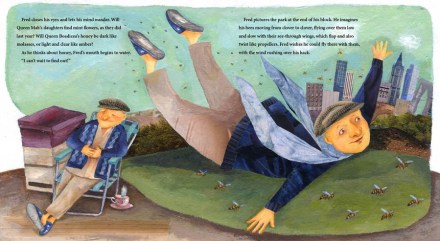
Fred watches the young bees uncertainly leave the hive and swirl off into the air. The older bees “zip out of the hives and throw themselves at the air, embracing it with their wings.” When a few land on Fred’s arm, he gently flicks them on their way. He spies on them from his rooftop as they disperse into his backyard garden, other neighborhood gardens, and perhaps, if Fred is lucky, to “blueberry bushes somewhere across town.” He sees the bees “dive into sweet pea and squash flowers. If he were closer, he could see them using their tubelike tongues to drink in flower nectar, which they store in honey sacs inside their bellies.”

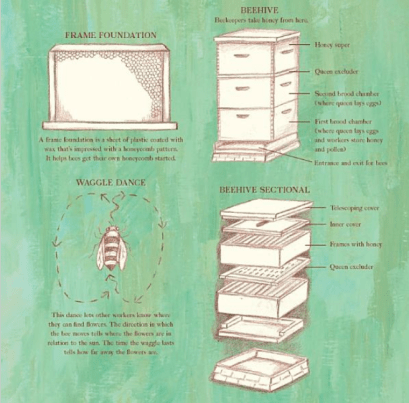
The bees fly slowly home weighted down with their treasure. Fred knows that inside the hive the bees will go to work, some will do the waggle dance that tells other bees where the flowers are, some will take the nectar and store it in the wax rooms, and others will fan “their wings to evaporate the water from the nectar so it will turn to honey.”

celebrate-picture-books-picture-book-review-the-honeybee-man-in-the-garden
Image copyright Kyrsten Brooker, 2011, text copyright Lela Nargi, 2011. Courtesy of Schwartz & Wade.

At the end of August Fred knows it’s time to collect the honey. He carefully enters the tiny houses, removing the honeycomb from the top. In his own home he cuts the wax caps of the comb and the honey begins to flow. A special spinning machine squeezes every drop from the honeycomb. He pours the honey into jars and labels them “Fred’s Brooklyn Honey, Made by Tireless Brooklyn Bees.” In the evening Fred sits on his stoop chatting with the neighbors. He gives each a jar of golden honey.

As night falls Fred opens a jar of honey as the bees huddle “back in their own city, waiting for the rays of tomorrow’s sun to call them up and away over Brooklyn.” Fred dips a finger into the honey and tastes. “It is sweet, like linden flowers. It is sharp, like rosemary. It is ever-so-slightly sour. “‘Ah,’ says Fred, absorbing these happy flavors. ‘Blueberries!’”

celebrate-picture-books-picture-book-review-the-honeybee-man-fred-flies

Image copyright Kyrsten Brooker, 2011, text copyright Lela Nargi, 2011. Courtesy of Schwartz & Wade.

Lela Nargi’s lovely city-based nature book brilliantly likens the tightly packed, exhilarating environs of Brooklyn to the stirring realm of the beehive. Through Fred’s love of his bee family, Nargi lyrically and with marvelous metaphors and verbs reveals the fascinating world of bees as well as the rich and satisfying life of one particular beekeeper. Readers organically learn fascinating facts about the ways bees collect nectar and transform it into delicious honey as well as why honey can have so many flavors.

In her gorgeous illustrations, Kyrsten Brooker uses the golden hues of honey to paint not only the beehive but Brooklyn as well, giving the two “cities” a sense of cohesiveness and equality. Fred, older, with his cup of tea and blue slippers is shown gently and lovingly taking care of his bees, even as he still has their spirit of adventure. Brooker’s combination of oils and collage fuse the dreamy quality of the text with the concreteness of its facts to create a unique book that would be perfect for quiet story times, rainy afternoons, or bedtime.

If there is such a thing as a child’s nature cozy, The Honeybee Man is it. The book would make a wonderful gift and a delightful addition to any child’s or classroom library.

celebrate-picture-books-picture-book-review-the-honeybee-man-bee-hive

Image copyright Kyrsten Brooker, 2011, text copyright Lela Nargi, 2011. Courtesy of Schwartz & Wade.

The endpapers provide detailed diagrams of the various types of bees, beehives, flowers, the waggle dance, and even a bee’s stinger. Nature lovers will relish the two pages of “amazing facts about honey, honeybees, and beekeepers” that follow the story.

Ages 5 – 10

Schwartz & Wade, 2011 | ISBN 978-0375849800

You can find books for children, articles for adults, and so much more on Lela Nargi’s website!

To learn more about Kyrsten Brooker, her books, and her art, visit her website.

National Blueberry Month Activity

CPB---Busy-Buzzy-Bee-Maze

Busy Buzzy Bee Maze


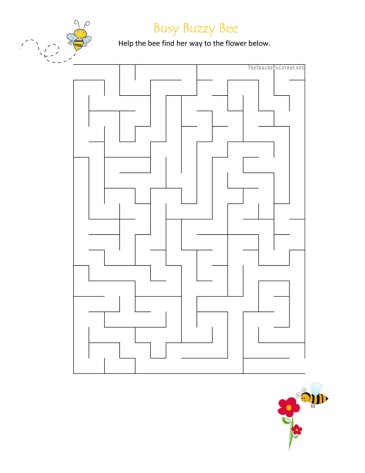
Can you help the little bee find her way through the maze to get to the flower and her friend?

Busy Buzzy Bee Maze | Busy Buzzy Bee Maze Solution!

celebrate-picture-books-picture-book-review-the-honeybee-man-cover

The Honeybee Man can be found at these booksellers

Amazon | Barnes & Noble | Books-a-Million | IndieBound

Picture Book Review
Picture Book Review

July 18 – National Hot Dog Day

celebrate-picture-books-picture-book-review-hot-dog-eleanor-roosevelt-throws-a-picnic-cover

About the Holiday

Although not all celebrated on the same date, Hot Dog Days are worldwide events. The United States, Great Britain, Canada, and Australia are just a few of the areas where the hot dog reigns supreme on at least one day a year. A favorite of kids and adults alike, hot dogs can be enjoyed plain or loaded with everything from mustard to chili. To celebrate today’s holiday, some venues are offering free hot dogs or special deals. Check them out or throw a hot dog picnic for your friends and family—just like the one in today’s book (well, almost!).

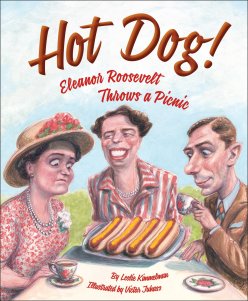
Hot Dog! Eleanor Roosevelt Throws a Picnic

Written by Leslie Kimmelman | Illustrated by Victor Juhasz


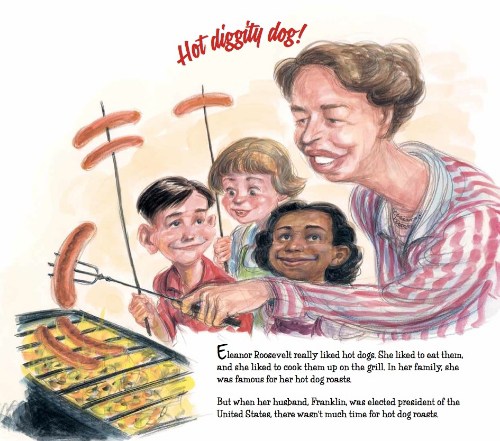
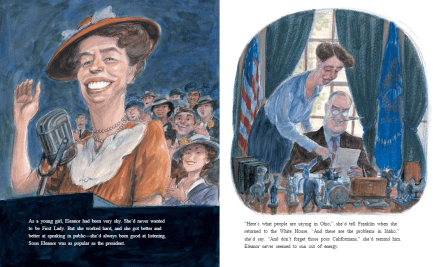
Before Eleanor Roosevelt became the first lady of the United States, she loved to grill up hot dog roasts for her family and friends. You see, Eleanor loved hot dogs! But after her husband Franklin became President, Eleanor had important duties. “Things were tough in the United States in the 1930s,” and since Franklin “couldn’t walk or move about easily, he counted on Eleanor to travel around the country for him” talking to people to see how the government could make things better. “Soon Eleanor was as popular as the president.”

celebrate-picture-books-picture-book-review-hot-dog-eleanor-roosevelt-throws-a-picnic-kids

Image copyright Victor Juhasz, 2014, text copyright Leslie Kimmelman, 2014. Courtesy of Sleeping Bear Press.

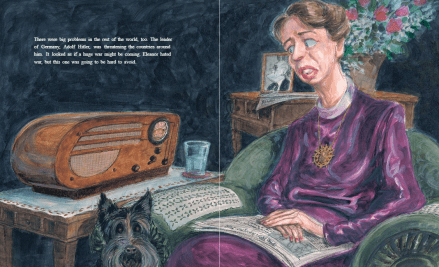
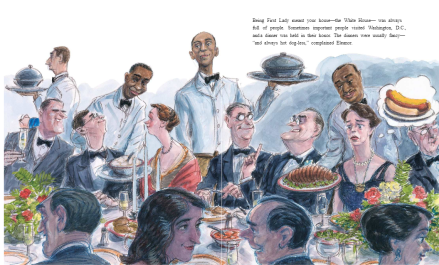
Not only was the United States suffering through a depression, it looked like the world would soon be at war. Eleanor presided over many fancy dinners in the White House given in honor of important people. These dinners, complained Eleanor, were “always hot dog-less.” Then, in 1939, the king and queen of England decided they would visit America to commemorate the 150th anniversary of our country’s independence from Britain. No English monarch had visited America in all that time.

celebrate-picture-books-picture-book-review-hot-dog-eleanor-roosevelt-throws-a-picnic-bad-news

Image copyright Victor Juhasz, 2014, text copyright Leslie Kimmelman, 2014. Courtesy of Sleeping Bear Press.

Eleanor did a little research and discovered that Queen Elizabeth was a distant cousin of George Washington. “‘She’s practically a member of the American family!’” Elizabeth exclaimed. “‘So to celebrate the first royal visit,’ Eleanor continued, ‘we need an all-American picnic.’” But first, came a fancy dinner. Following that, the Roosevelts and the king and queen drove to Hyde Park, New York, where the Roosevelts had an estate.

celebrate-picture-books-picture-book-review-hot-dog-eleanor-roosevelt-throws-a-picnic-fancy-dinners

Image copyright Victor Juhasz, 2014, text copyright Leslie Kimmelman, 2014. Courtesy of Sleeping Bear Press.

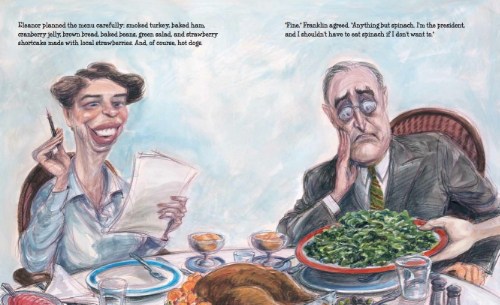
Eleanor planned her picnic to be held at a simple stone house on the property owned by the president, where the scenery was as pretty as it gets. Eleanor packed the menu full of traditional American favorites, including turkey, ham, cranberry jelly, baked beans, strawberry shortcake—and, of course, hot dogs. When the details of the menu were released, the White House was inundated with letters from all over the country protesting that hot dogs should not be offered to the queen.

celebrate-picture-books-picture-book-review-hot-dog-eleanor-roosevelt-throws-a-picnic-spinach

Image copyright Victor Juhasz, 2014, text copyright Leslie Kimmelman, 2014. Courtesy of Sleeping Bear Press.

Eleanor answered the protesters in her daily newspaper column. She reassured them that there would be “plenty of other food, and…the more important guests will be served with due formality.” On June 11, Eleanor finished her morning routine and rushed to the cottage to prepare for the picnic. As the king and queen arrived—driven by the president himself in a specially outfitted car—Eleanor could see from the expressions on the royal faces that Franklin hadn’t resisted the temptation to show off, “racing their majesties up bumpy roads, through the woods, and around steep, twisty turns to the picnic site.”

When it came to eat, King George picked up a hot dog and “ate it with gusto … and mustard!” He even had seconds. And the queen? She daintily cut hers up with a fork and knife. After dinner, King George and Queen Elizabeth began their trip back to England with a train ride. Townspeople flocked to the station and stood along the banks of the Hudson River to see them off.

celebrate-picture-books-picture-book-review-hot-dog-eleanor-roosevelt-throws-a-picnic-first-lady

Image copyright Victor Juhasz, 2014, text copyright Leslie Kimmelman, 2014. Courtesy of Sleeping Bear Press.

Three months later, World War II began. England and America fought side by side to defeat their enemies. The Roosevelts had promised to visit Queen Elizabeth and King George, but Franklin died before the war’s end. Eleanor later made the trip alone. On June 11, 1989 another picnic was held at Hyde Park in remembrance of that other picnic fifty years earlier. Some of the guests had been children at that first memorable party, and Queen Elizabeth “sent a special message: ‘The memory of the picnic was a source of strength and comfort to the king and me through the dark days of the Second World War….’” And what did the guests enjoy at that second picnic? The menu was “exactly the same—right down to the hot diggity dogs!”

An Author’s Note adding a bit more information about Franklin and Eleanor Roosevelt and King George IV and Queen Elizabeth follow the text.

celebrate-picture-books-picture-book-review-hot-dog-eleanor-roosevelt-throws-a-picnic-king-and-queen

Image copyright Victor Juhasz, 2014, text copyright Leslie Kimmelman, 2014. Courtesy of Sleeping Bear Press.

Leslie Kimmelman’s engaging and smoothly paced story captures Eleanor Roosevelt’s warm-hearted personality and down-home friendliness that made her one of American history’s most beloved first ladies. Details of Eleanor’s White House duties juxtaposed with humorous anecdotes about her love of hot dogs, reaction to her choice of menu, and Franklin’s penchant for driving create a well-rounded portrait of a particular time in history. Including 1989’s 50th anniversary picnic reminds readers of the ongoing friendship between America and Great Britain.

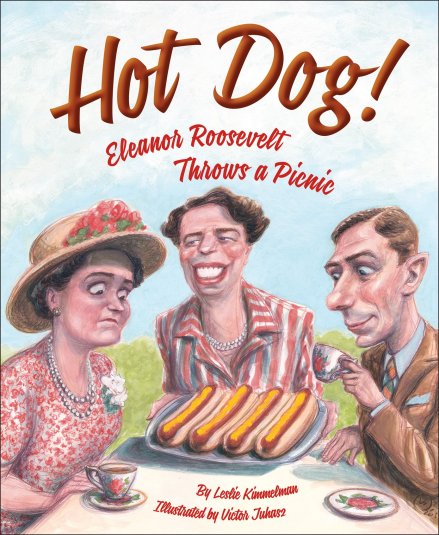
Victor Juhasz uses lush, caricature-style art to great effect in representing the 1930s to ‘40s time period, the lavish trappings of the White House, and Eleanor’s larger-than-life personality and influence. Her wide smile and can-do attitude as well as her self-confidence are on display for young readers to appreciate and emulate. Other character’s facial expressions clearly spotlight the humorous incidents but also the seriousness of the times. And, of course, those hot dogs that Eleanor loved so much look good enough to eat!

For young readers interested in history, culinary arts, and biographies, adding Hot Dog! Eleanor Roosevelt Throws a Picnic to their reading menu would be a treat. Teachers will also find the book an engaging inclusion to lessons on the historical time period, women in history in general, and Eleanor Roosevelt in particular.

Ages 8 – 11

Sleeping Bear Press, 2014 | ISBN 978-1585368303

Discover more about Leslie Kimmelman and her books on her website.

To learn more about Victor Juhasz, his books, and his art, visit his website.

National Hot Dog Day Activity

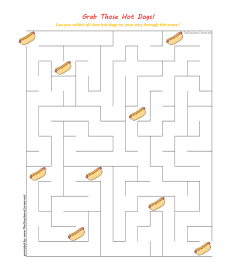
celebrate-picture-books-picture-book-review-hot-dog-maze

Grab Those Hot Dogs!


There are delicious hot dogs scattered throughout this maze! Can you collect all nine on the way from start to finish in this printable puzzle?

Grab Those Hot Dogs! Maze | Grab Those Hot Dogs! Maze Solution

celebrate-picture-books-picture-book-review-hot-dog-eleanor-roosevelt-throws-a-picnic-cover

Hot Dog! Eleanor Roosevelt Throws a Picnic can be found at these booksellers

Amazon | Barnes & Noble | Books-a-Million | IndieBound

July 17 – National Yellow Pig Day

The Boy Who Loved Math: The Improbable Life of Paul Erdős by Deborah Heiligman and LeUyen Pham picture book review

About the Holiday

Today’s holiday isn’t really about the color yellow or about pigs—it’s about math! Who knew? Well, plenty of people, actually! Mathematicians, college professors, and students spend the day celebrating the number 17 with special problems and yellow pig cakes, songs, parades, and more. The holiday was established in the 1960 when two Princeton University students, David Kelly and Michael Spivak began obsessing over the number 17. And the yellow pig? One story say it’s a reference to David Kelly’s collection of yellow pigs while another goes that the two concocted the idea of a yellow pig with 17 toes, teeth, eyelashes, etc. To celebrate, study up on the prime number 17 and have some more math fun!

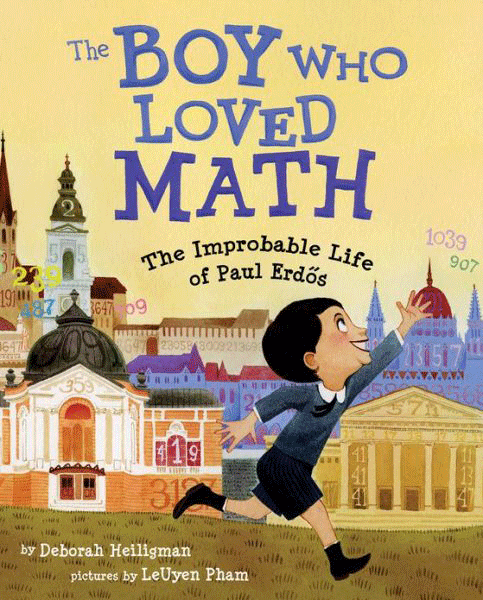
The Boy Who Loved Math: The Improbable Life of Paul Erdős

Written by Deborah Heiligman | Illustrated by LeUyen Pham


In Budapest, Hungary a boy is born who loves math. His name is Paul Erdős and he lives with his mother, who loves him “to infinity” just as Paul loves her. When she goes back to work as a math teacher, she leaves Paul with Fräulein, his nanny. Fräulein loves rules and tries to get Paul to sit still, eat all his lunch, take a nap—to obey. But Paul hates rules.

celebrate-picture-books-picture-book-review-the-boy-who-loved-math-the-improbable-life-of-paul-erdos-young-paul-calendar

Image copyright LeUyen Pham, 2013, text copyright Deborah Heiligman, 2013. Courtesy of usmacmillan.com.

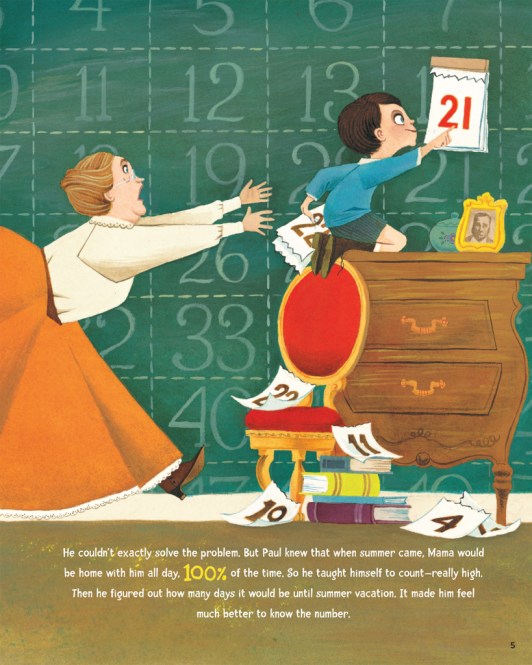
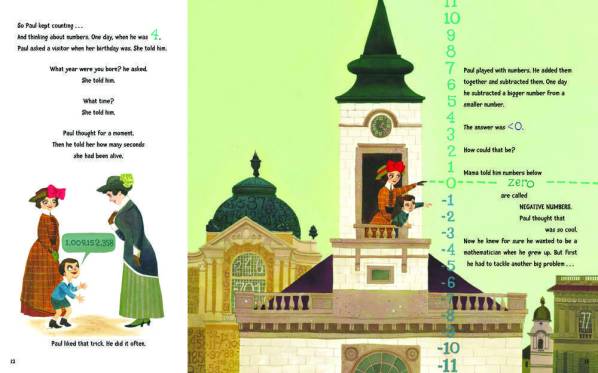
At three years of age he teaches himself to count the days until his mother will be home with him 100 percent of the time. Knowing the number makes Paul feel better as his head is constantly full of numbers and what they can do. One day when he is four years old, he meets a woman and asks her two questions—what year she was born and at what time. When the woman tells him, it only takes him a moment to reveal how many seconds she has been alive.

celebrate-picture-books-picture-book-review-the-boy-who-loved-math-the-improbable-life-of-paul-erdos-tower

Image copyright LeUyen Pham, 2013, text copyright Deborah Heiligman, 2013. Courtesy of usmacmillan.com.

He continues to play with numbers, learning more and more about the various types. He decides he will be a mathematician when he grows up. When Paul is old enough to go to school, he once again encounters rules he can’t abide. His mother decides he will be schooled at home, and even though this means more time with Fräulein, Paul considers it the better option.

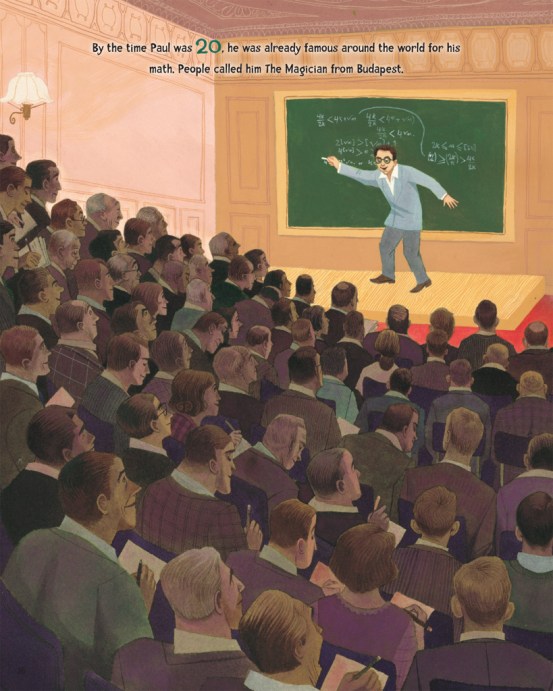
There’s just one thing – while Paul thinks about numbers, Fräulein and his mother do everything for him. At meals they cut his meat and butter his bread; they dress him, and tie his shoes. When he becomes a teenager, he goes to high school and meets other kids who love math. He and his friends spend all their time doing math and by the time Paul is 20 he is famous around the world for his math equations.

celebrate-picture-books-picture-book-review-the-boy-who-loved-math-the-improbable-life-of-paul-erdos-paul-around-the-world

Image copyright LeUyen Pham, 2013, text copyright Deborah Heiligman, 2013. Courtesy of usmacmillan.com.

There’s just one problem – even as an adult, Paul is so focused on numbers and math that he still doesn’t know how to do basic things for himself. When he is 21 he’s invited to go to England to work. At his first dinner there he stares at his bread and he stares at his meat. What is he supposed to do? With a little experimentation, he figures it out, but he also figures out that he sees the world in a different way.

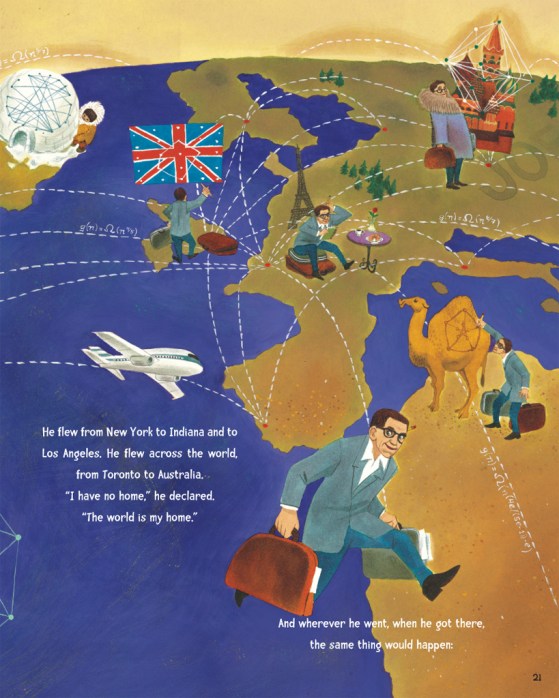
He doesn’t want a normal life with a family and a house and a regular job. He designs for himself a very unusual lifestyle. Everything he owns fits into two suitcases, and with a little money in his pocket he flies from city to city to do math. He knows so many mathematicians that wherever he goes they invite Paul to stay with them. These families take care of Paul just as his mother and Fräulein had! They do his laundry, cook his meals, and pay his bills.

celebrate-picture-books-picture-book-review-the-boy-who-loved-math-the-improbable-life-of-paul-erdos-teacher-paul

Image copyright LeUyen Pham, 2013, text copyright Deborah Heiligman, 2013. Courtesy of usmacmillan.com.

But even so, everyone loves “Uncle Paul!” He brings people together and shares his knowledge. His work in mathematics has given the world better computers, better search engines, and better codes for our spies to use. He was so admired that even now people represent their relationship with Paul by giving it a number – the “Erdős number.” Paul was a unique person who counted numbers and people as his best friends and experienced the world in a way that added up to a very special life.

celebrate-picture-books-picture-book-review-the-boy-who-loved-math-the-improbable-life-of-paul-erdos-older-paul

Image copyright LeUyen Pham, 2013, text copyright Deborah Heiligman, 2013. Courtesy of usmacmillan.com.

Reading Deborah Heiligman’s The Boy Who Loved Math is a liberating experience. Her biography reveals not just what Paul Erdős did, but the quirky genius he was. It also honors all the people around the world who embraced his personality, allowing Erdős to focus on the work he was born to do. Heiligman’s engaging patter, full of interesting anecdotes, humor, and personality, is storytelling at its best and provides an absorbing look at a very unique life.

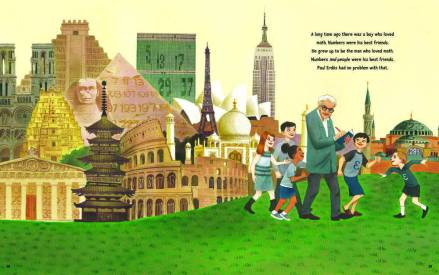
LeUyen Pham’s illustrations perfectly complement the text, exposing Erdős’s chafing under rules, his delight in math, and his development from youth to old age. Each fascinating page cleverly represents the way Erdős saw the world as numbers, equations, and geometric shapes appear on buildings, domes, and even in the very air! The text too is infused with numerals and mathematical symbols (“Paul loved Mama to ∞, too!), making this a prime book for any math lover!

Ages 5 – 9

Roaring Brook Press, 2013 | ISBN 978-1596433076

Discover more about Deborah Heiligman and her books on her website.

To learn more about LeUyen Pham, her books, and her art, visit her website.

Mathematics Awareness Month Activity

CPB - Math Mystery Phrase

Totally Cool Mystery Phrase! Puzzle


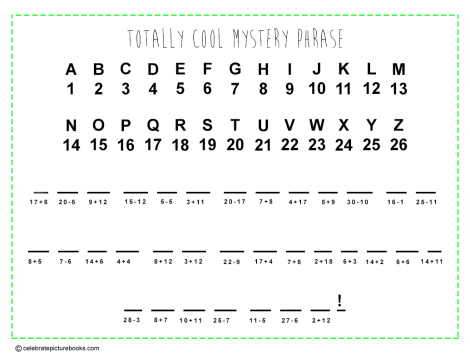
What plus what equals an equation that can’t be beat? You and numbers, of course! Complete this Printable Totally Cool Mystery Phrase! puzzle to discover a coded sentence! Here’s the Solution!

The Boy Who Loved Math: The Improbable Life of Paul Erdős by Deborah Heiligman and LeUyen Pham picture book review

You can find The Boy Who Loved Math at these booksellers

Amazon | Barnes & Noble | Books-a-Million | IndieBound

Picture Book Review
July 16 – World Snake Day

celebrate-picture-books-picture-book-review-wee-beasties-huggy-the-python-hugs-too-hard-cover

About the Holiday

Of all the creatures in the animal kingdom, none may inspire such fierce emotions as snakes. And while there are plenty of species that rightly strike fear into people’s hearts, there are also many snakes that are beautiful and mild-mannered. As predators, snakes play a vital role in providing balance in the ecosystem. More than 3, 458 species are found in every part of the world, including frozen tundras and deep oceans, but habitat destruction, pollution, and other dangers threaten their population. To celebrate today’s holiday, read up on snakes or watch a documentary about these fascinating creatures. You may find yourself embracing them – just maybe not as much as the star of today’s book!

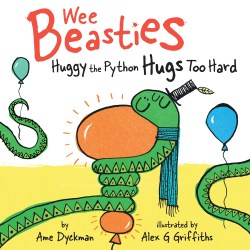
Huggy the Python Hugs Too Hard (Wee Beasties Series)

Written by Ame Dyckman | Illustrated by Alex G. Griffiths


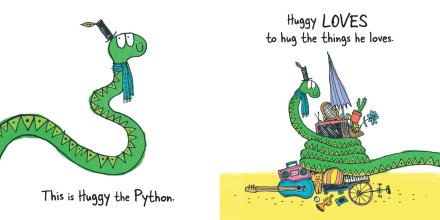
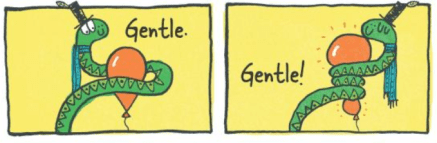
Huggy the Python LOVES a lot of things. And he “LOVES to hug the things he loves.” It’s just that Huggy is missing a bit of …well… hug control. When he sees something he loves—like a balloon—he rushes over and gently, gently wraps himself around it. But, really, one more little squeeze won’t hurt, right? Oh dear! “Pop! Oops! You hugged too hard, Huggy.”

celebrate-picture-books-picture-book-review-wee-beasties-huggy-the-python-hugs-too-hard-huggy

Image copyright Alex Griffiths, 2018, text copyright Ame Dyckman. Courtesy of Little Simon.

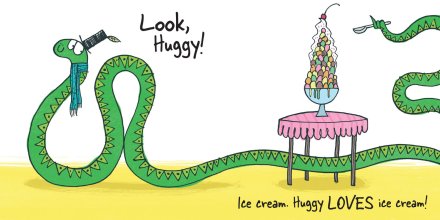
Maybe some ice cream will turn that frown upside down. Okay, spoon’s at the ready… so far so good. A little scoop… Yummm! That bowl needs just a leeetle hug. Oh no! What a mess! There’s even whipped cream and a cherry on top of Huggy’s very tall top hat! Perhaps a “fuzzy little dog” will cheer him up. Huggy’s all ready to give that puppy a hug when—“WAIT!” Maybe the reader can “show Huggy how to be gentle.” That’s right! So sweet!

Now it’s Huggy’s turn to show what he learned. Huggy looks a little uncertain as he stares down into those big puppy dog eyes. But he picks the puppy up and snuggles “just right.” But that tube of toothpaste in his tail? Well, you’ll see!

celebrate-picture-books-picture-book-review-wee-beasties-huggy-the-python-hugs-too-hard-ice-cream

Image copyright Alex Griffiths, 2018, text copyright Ame Dyckman. Courtesy of Little Simon.

Part of Ame Dyckman’s new Wee Beasties series of social skills board books—which includes Roary the Lion Roars Too Loud and Touchy the Octopus Touches Everything—Huggy the Python Hugs Too Hard addresses the penchant of little ones to show just how full of love their heart really is. Combining examples that will elicit giggles, wording that prompts fun dramatic readings that toddlers can easily join in on, and a page that allows kids to practice giving just the right squeeze, Huggy the Python Hugs Too Hard gently teaches restraint in a story little ones will want to read again and again.

celebrate-picture-books-picture-book-review-huggy-the-python-hugs-too-hard-gentle

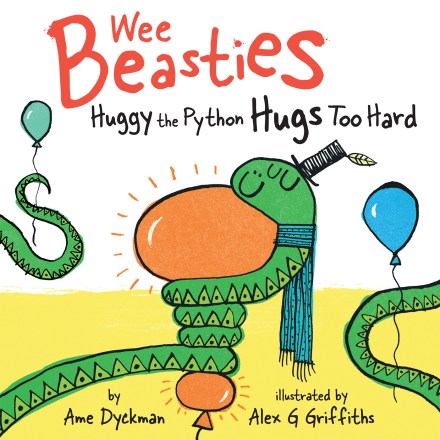
Alex G. Griffiths’ Huggy is a dapper cutie with his blue scarf, feathered top hat, and big, ready smile. As he whips over to show the balloon how much he loves it or cozies up to a tall dish of ice cream, his enthusiasm is infectious, but a POP! and a SQUISH! later that happy grin is a full-on frown. When Huggy wants to show some love to the little puppy, it’s up to readers to show him how it’s done. And no little one will be able to resist giving the book a snuggle when they see the sweet puppy’s outstretched arms! Griffiths’ cleverly uses nearly identical imagery when the balloon and the ice cream succumb to Huggy’s squeeze in order to show young readers the unwanted consequence of over-zealous hugs. The smiles all around when Huggy and the puppy connect just right will have little ones smiling too—and ready to give plenty of hugs.

Offering a peppy, playful way to teach young children how to hug pets, babies, friends, and even their toys as well an opportunity to discuss various emotions, Huggy the Python Hugs Too Hard would be a favorite addition to any toddler’s home bookshelf and a terrific choice for daycare, preschool, and kindergarten libraries.

Ages 2 – 5

Little Simon, 2018 | ISBN 978-1534410800    

Discover more about Ame Dyckman and her books on her website.

To learn more about Alex G. Griffiths, his books, and his art, visit his website.

World Snake Day Activity

celebrate-picture-books-picture-book-review-goodness-snakes-matching-puzzle

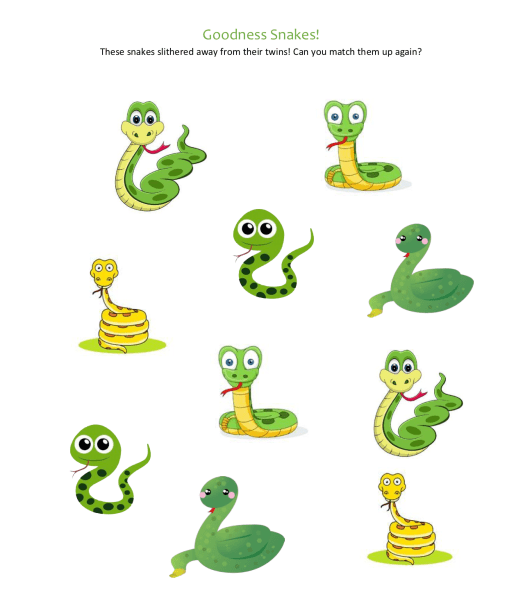
Goodness Snakes! Matching Puzzle


These twin snakes slithered away from each other! Can you match them up again in this printable Goodness Snakes! Matching Puzzle?

celebrate-picture-books-picture-book-review-wee-beasties-huggy-the-python-hugs-too-hard-cover

You can find Huggy the Python Hugs Too Hard  at these booksellers

Amazon | Barnes & Noble | Books-a-Million | IndieBound

Picture Book Review
July 6 – It’s National Umbrella Cover Day

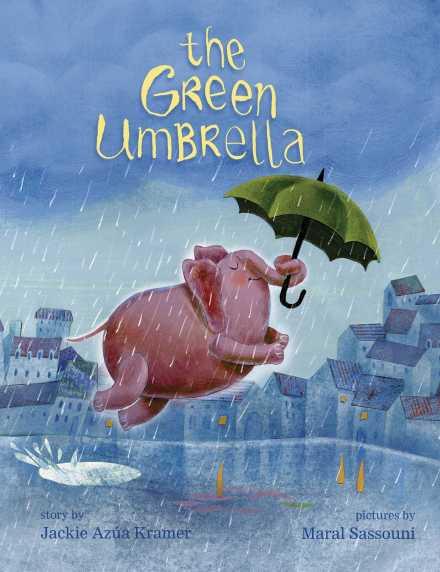
celebrate-picture-books-picture-book-review-the-green-umbrella-cover

About the Holiday

Okay, so this is one of those holidays that just make you say, “Hmmm….” But, really, you know…why not? Made of the same material as the umbrella, and either slippery enough to slide right off or maddeningly tight enough to require superhuman peeling abilities, the umbrella cover is apparently the subject of controversy: Is it useful or just a waste of material? One woman who is firmly on Team Useful is Nancy 3. (formerly Arlene) Hoffman, who–in 1996–founded the Umbrella Cover Museum. First displayed in Hoffman’s kitchen, her collection has grown from “seven or so” covers to more than 700–enough to warrant mention in The Guinness Book of World Records. The museum is now housed in  two rooms on Peaks Island, Maine. Today’s holiday was officially recognized in 2014. To learn more about Nancy Hoffman and her collection, visit the Umbrella Cover Museum’s website.

The Green Umbrella

Written by Jackie Azúa Kramer | Illustrated by Maral Sassouni


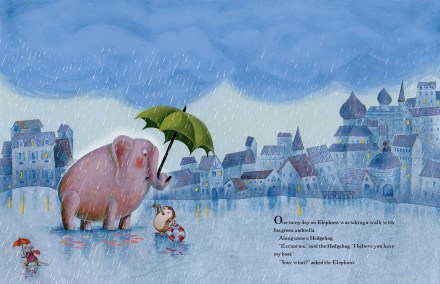
On a gray and rainy day, Elephant went out walking with his green umbrella. He met a hedgehog who hailed him and said, “‘Excuse me. I believe you have my boat.’” Elephant was perplexed, so Hedgehog expounded on his theory. “‘I crossed deep oceans on my boat and faced the crash of icy waves. I saw dolphins leap two by two and tasted the salty spray of whales. The stars were my guide and my boat a faithful friend.”

celebrate-picture-books-picture-book-review-the-green-umbrella-hedgehog

Copyright Maral Sassouni, 2017, text copyright Jackie Azúa Kramer, 2017. Courtesy of simonandschuster.com.

This poetic travelogue did not convince Elephant of the umbrella’s provenance, but he offered to let Hedgehog ride along and share in its protection. The two came upon a Cat, who took one look at the green umbrella and recognized it as her tent. Hmmm…said Elephant and Hedgehog. It was true replied Cat, and she related how when she visited the woods to study plants and flowers, she would rest in its shade and drink a cup of tea.

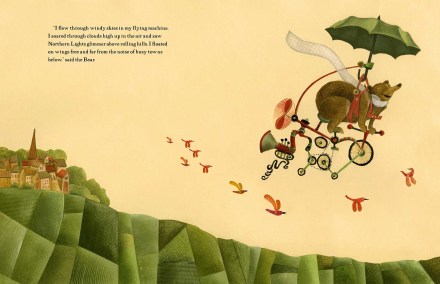
celebrate-picture-books-picture-book-review-the-green-umbrella-bear

Copyright Maral Sassouni, 2017, text copyright Jackie Azúa Kramer, 2017. Courtesy of simonandschuster.com.

This story seemed no more plausible than Hedgehog’s, but Elephant invited Cat to ride along and share in the umbrella’s protection. As they continued on, the Bear approached, sure that they had his flying machine. “‘Your what?’ asked the Elephant, the Hedgehog, and the Cat.” The Bear got a faraway look in his eyes as he said, “‘I soared through clouds high up in the air and saw Northern Lights glimmer above rolling hills. I floated on wings free and far from the noise of busy towns below.’”

Well, Elephant could play this game too. The umbrella was his and his alone. When he was a child, Elephant said, the umbrella was his pirate sword, his tightrope balance, and his baseball bat. By this time the rain had stopped. Elephant rolled up his umbrella and said good-bye to the Hedgehog, the Cat, and the Bear. The three couldn’t stand to see their boat/tent/flying machine taken away, so they clung to the Elephant.

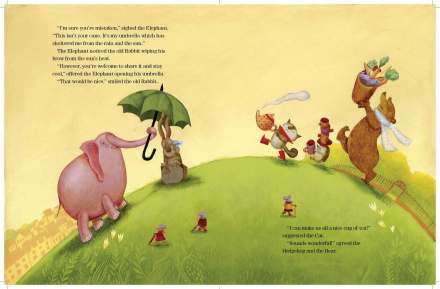
celebrate-picture-books-picture-book-review-the-green-umbrella-tea-party

Copyright Maral Sassouni, 2017, text copyright Jackie Azúa Kramer, 2017. Courtesy of simonandschuster.com.

A moment later they met an old Rabbit. “‘I believe you have my cane,’” he said. The others thought he was wrong. But this handy stick, the Rabbit explained, had helped him climb pyramids, hike mountains to ancient ruins, and navigate dark caves full of treasure. Again the Elephant objected, but seeing the old Rabbit mopping his forehead, he opened it and shaded the Rabbit from the sun. The Cat offered to make a pot of tea, and the Bear and the Hedgehog helped lay out a picnic lunch.

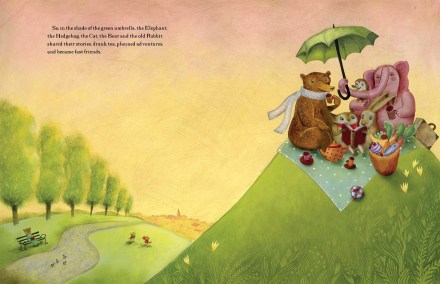
Under the cool umbrella, the five “shared their stories, drank tea, planned adventures, and became fast friends.” From then on when it was sunny, they went “Sailing, Camping, Flying, and Hiking” together. “And when it rained they stayed dry under the green umbrella.”

celebrate-picture-books-picture-book-review-the-green-umbrella-friends

Copyright Maral Sassouni, 2017, text copyright Jackie Azúa Kramer, 2017. Courtesy of simonandschuster.com.

Jackie Azúa Kramer’s multi-layered story delves into the large points and small nuances of relationships old and new. The Elephant’s green umbrella is both a subject of envy and a uniting object. It also serves to demonstrate Elephant’s ability to stick up for himself as well as his willingness to share. As each animal presents an imaginative and compelling reason why the green umbrella belongs to them, the Elephant rejects the story while accepting the friend. In each animal’s lushly described imagination, Kramer does a beautiful job of showing readers how each of these friends are similar. She reveals that while friends can have different opinions, they can still find common ground.

celebrate-picture-books-picture-book-review-the-green-umbrella-followers

Copyright Maral Sassouni, 2017, courtesy of simonandschuster.com

Maral Sassouni’s dream-like illustrations are both exotic and homey. Village houses give way to turreted and domed towers, and the imaginative stories the animals tell are accompanied by details as free, cozy, or eccentric as their tales. The Elephant’s account is cleverly rendered in sepia tones, showing the age of the memories and who the original owner of the coveted umbrella really is. The final images of the five new friends sharing adventures in the green umbrella are sure to delight little ones.

The Green Umbrella is a perfect book to share on rainy days or sunny days. With humor and creativity, the book provides an opportunity to talk about the nature of friendship and sharing with children. It would make an often-read addition to public, classroom, and home libraries.

Ages 4 – 8

NorthSouth Books, 2017 | ISBN 978-0735842182

Discover more about Jackie Azúa Kramer, her books, and a fun book-related activity on her website!

Learn more about Maral Sassouni and her artwork on her website!

Don’t wait for a rainy day to watch The Green Umbrella book trailer!

National Umbrella Cover Day Activity

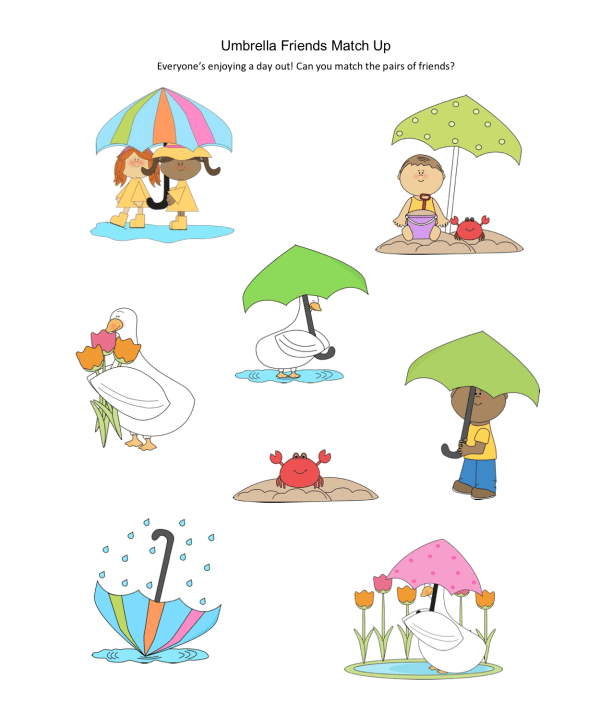
celebrate-picture-books-picture-book-review-umbrella -friends-match-upUmbrella Friends Match Up Puzzle


These friends are all enjoying a day out! Can you find the matching pairs in this printable Umbrella Friends Match Up Puzzle?

celebrate-picture-books-picture-book-review-the-green-umbrella-cover

You can find The Green Umbrella at these booksellers

Amazon | Barnes & Noble | Books-a-Million | IndieBound

Picture Book Review


July 3 – Compliment Your Mirror Day

celebrate-picture-books-picture-book-review-why'd-they-wear-that

About the Holiday

Take a peek in the mirror and who do you see? That’s right—a fantastic person with inner and outer beauty! Today is dedicated to recognizing and appreciating that person in the mirror! 

Why’d They Wear That? Fashion as the Mirror of History

By Sarah Albee


Whether you’re a fashionista or an “any ol’ thing will do” kind of person, there’s no denying that clothes make a statement. Sarah Albee’s fascinating look at human wraps spans history from 10,000 BC to the modern era. Along the way she exposes both historical facts as well as the often repugnant, laughable, and can’t-look-away fashion fads and disasters that have brought us to “wear” we are today.

In Chapter 1: That’s a Wrap, Albee reveals facts about the first needles and thread, silk production, the Mayan tradition of forced elongation of skulls (this was considered attractive, denoted social status, and was intimidating), the first pants, warrior wear, and much more.

Chapter 2: Keeping the Faith exposes the influence religion had on clothing in the Middle Ages. White or russet colored robes were worn by men traveling on pilgrimages while penitents could wear a hair shirt made of itchy, bristly horsehair as punishment. Medieval armor, Samurai dress, why modern men’s loafers are decorated with little holes, and more are also discussed here as is the job of Wool Fuller – in which the Fuller soaked wool in urine to degrease it and improve its texture.

celebrate-picture-books-picture-book-review-why'd-they-wear-that

Image courtesy of National Geographic, 2015

Chapter 3: Going Global covers the Age of Exploration, which changed fashion as explorers from Europe came in contact with Native peoples in the New World. Red dye, rubber shoes, and the leather Moccasins were all adopted by Europeans. And if you think the search for remedies for wrinkles and other vestiges of older age is a modern pursuit, you’ll learn about Ponce de Leon and his quest for the fountain of youth.
Chapter 4: Ruff & Ready takes a look at the Renaissance. You may have seen fur stoles with the head of the animal still attached and wondered, Why? This fashion statement goes back to “Flea Furs” which were dead, stuffed animals that people draped over their shoulders in the belief that the fleas that were munching on their skin would transfer to the animal instead. Unfortunately, people discovered that fleas prefer warm bodies. Another curious fad was the ruff collar. While people may have thought they looked swell, these collars hindered physical movement and even led to the invention of the long-handled spoon because people could not get food to their mouths any other way. One “benefit” perhaps: when the first American settlers ran out of all other food options, they ate their collars, which were stiffened with wheat paste. And there’s so much more!

In Chapter 5: Lighten Up! readers will discover facts about the dour dress of the Puritans and the ostentatious dress of the French court. The tradition of men’s wigs is explained, and today’s face-painting has nothing on the unusual solution for facial blemishes—black velvet, leather, or silk patches in various shapes.

celebrate-picture-books-picture-book-review-why'd-they-wear-that

Image courtesy of National Geographic, 2015

Revolutionary Times take center stage in Chapter 6: Hats (and Heads) Off. During this time clothes began to fit the task. There were clothing items to protect (walking canes became popular as a way to ward off marauding wild dogs), uniforms to highlight the good looks of running footmen, elaborate costumes for Venetian parties, and homespun clothes that became a sign of protest from the American colonists. And if you think “bumpits” and hair extensions are new, women trying to keep up with Marie-Antoinette wore their hair (real and artificial) “cemented upward over wire armatures into two-foot (0.6-m)-high coiffures that made the wearer stand 7 ½ feet tall!”

Chapters 7 through 9 bring readers into the modern age, taking them from a time when children were dressed as young adults and boys wore elaborate gowns until the age of 7 to the textile innovations of the Industrial Revolution and the popularity of bustles that put fanny packs to shame to the fads of the 1960s and today.

celebrate-picture-books-picture-book-review-why'd-they-wear-that

Image courtesy of National Geographic, 2015

Albee’s Why’d They Wear That? is much more than a book about fashion. It’s a humorous, fabulously entertaining way to learn about so many aspects of history, from social revolution to inventions to cultural differences. Enlightening side bars, especially the fascinating “Tough Job” entries, and full-color illustrations, paintings, and photographs depicting every concept make Why’d They Wear That? an essential book for school libraries as well as for home bookshelves. Readers of all ages will want to dip into it again and again…and will “Oh!” “Ah!” and “Ewww!” over every page.

Ages 7 and up (children on the younger end of the range will enjoy the facts and pictures during a read-along session)

National Geographic Children’s Books, 2015 | ISBN 978-1426319198

Learn more about Sarah Albee and her books on her website!

Watch the trailer for Why’d They Wear That? Fashion never looked so…good? unsettling? hilarious? You decide!

Compliment Your Mirror Day Activity

celebrate-picture-books-picture-book-review-mirror-word-search

Mirror, Mirror, What Shall I Wear?


In this magic mirror word search are 20 fashion-related terms from history. Find them all! Here’s the printable Mirror, Mirror, What Shall I Wear puzzle and the Solution.

celebrate-picture-books-picture-book-review-why'd-they-wear-that

Why’d They Wear That? Fashion as the Mirror of History can be found at these booksellers

Amazon | Barnes & Noble | Books-a-Million | IndieBound