May 19 – It’s National Pet Month and Interview with Sarah Kurpiel

celebrate-picture-books-picture-book-review-lone-wolf-cover

About the Holiday

Pets give us unconditional love, provide companionship, and add entertainment and fun to our lives. This month is set aside to focus on our pets. To celebrate spend extra time with your furry friend, make sure they have everything they need to stay healthy, and give them a little extra treat now and then. This year, our pets may be feeling stressed from stay-at-home restrictions. To help, try to keep your pet’s routines as normal as possible. Dogs may benefit from extra walks––just like Maple in today’s story!

I received a copy of Lone Wolf from Greenwillow Books for review consideration. All opinions are my own. 

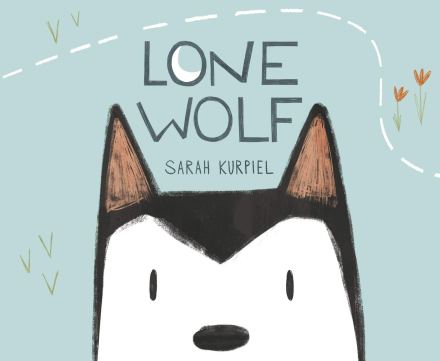
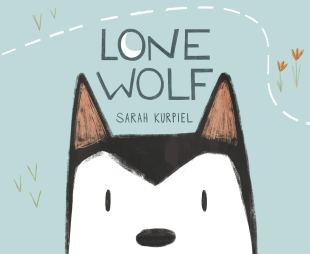
Lone Wolf

By Sarah Kurpiel


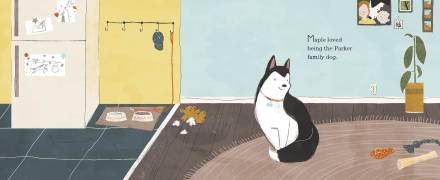
Maple, a Siberian husky, loved living with the Parkers. He loved playing tug-of-war with Jax, reading with Avery, extra treats from Mom, and especially long walks with everyone. “But on her walks, people would say… ‘Dude, that dog looks like a wolf.’” Some little kids clung to their mom’s leg when they saw her, some older people asked if maybe she wasn’t just a little bit wolf, and even babies shouted “‘WOLF! WOLF! WOLF!’”

The Parkers tried to explain the differences between Maple and a wolf, but eventually, “even Maple had her doubts.” After all, when she compared herself to other dogs, she saw that so many had floppy ears or lots of fluff or handsome spots. She wasn’t like them at all. Plus, she was good at digging, howling, and hunting just like a wolf.
celebrate-picture-books-picture-book-review-lone-wolf-Maple

Copyright Sarah Kurpiel, 2020, courtesy of Greenwillow Books.

She began to think that she belonged in the wild, and one day when the gate was left open, she bounded out into the woods. But here the ground was hard, not soft like the Parker’s garden; squirrels were faster and harder to catch than Avery’s shoes; and sticks were pretty boring without Jax. Being a wolf was not as much fun as it seemed. As nighttime came and the sky darkened, Maple decided to head home.

On the way, she saw a flashlight and behind it familiar faces. Someone was looking for her. It was the Parkers—her pack! Now when people call Maple a wolf, she doesn’t have doubts. She knows just who she is and exactly where she belongs.

Sarah Kurpiel’s multilayered story about a husky who is often mistaken for a wolf will delight dog and pet lovers as it gently introduces the ideas of identity, self-doubt, and self-discovery. Her charming storytelling provides an excellent opportunity for adults and kids to discuss these important topics of individual growth with the backdrop of a supportive family. Children, familiar with being peppered by questions about what they’re doing and who they want to be (as opposed to who they are) as well as by comparisons to others, will relate to Maple. Maple’s exploration of what she considers her wolf-like abilities is humorous and models a positive self-analysis that is honest and non-judgmental while also embracing one’s unique qualities.

Kurpiel’s lovely color palette and rounded shapes are fresh and welcoming while her use of directional lines allows readers to dash along with Maple from one enchanting detail to another. Her use of various perspectives puts kids in Maple’s point of view while providing depth to this enthusiastic pup’s experience. Maple is adorable, and his wondering nature is clearly visible in his expressive face. Kurpiel’s images of family love begin on the copyright page with sweet framed family pictures, many of which include Maple. Avery, who is shown using a power wheelchair, is a welcome portrayal of a child with a disability. The final snapshot of the Parker family and Maple snuggling together is heartwarming and reminds readers that individual attributes are what make each person so special.

Touching and uplifting, Lone Wolf will charm children and adults anew with every reading. The book would make a favorite addition to home, school, and public library collections.

Ages 4 – 8

Greenwillow Books, 2020 | ISBN 978-0062943828

Discover more about Sarah Kurpiel and her art on her website.

You can download a Lone Wolf Activity Kit from HarperCollins here.

Meet Sarah Kurpiel

celebrate-picture-books-picture-book-Sarah-Kurpiel

Sarah Kurpiel is a librarian and artist inspired by nature and animals. She grew up in the Midwest with a Siberian husky named Mikayla. Consequently, most of her childhood was spent removing dog fur from her clothes. Lone Wolf is her first book. Sarah Kurpiel lives with her family (which includes her wonderfully goofy dog, Roxie) in Downers Grove, Illinois.

I was really excited to have a chance to talk with Sarah Kurpiel about her debut picture book, how it came to be, her illustration work, and more! Jack and Steve, who are also dog lovers, are back with lots of questions for Sarah too.

After reading––and loving––Lone Wolf, they wondered:

Do you have a dog?

Yes! My family has a dog named Roxie. We adopted her from a local animal shelter. We think she’s part Border Collie and part Retriever. She loves herding us around and rolling in the grass.

We have a miniature poodle. What breed of dog is your favorite?

Miniature Poodles are adorable! My favorite breed of dog is giant by comparison: the Borzoi. Borzois look a bit like extra-large, extra-furry greyhounds.

 Have you ever seen or heard a wolf?

I’ve never seen or heard a wolf in the wild, but I have seen Mexican Gray Wolves in a zoo. The Mexican Gray Wolf is one of the most endangered wolf subspecies in the world. Thankfully, there are recovery programs working to change that.

We’ve been taking our dog on lots of walks (just like the Parker family!) during this quarantine. What have you’ve been doing to keep busy?

I’ve been hanging out with my family and our pets, reading, catching up on Star Trek, and drawing lots and lots of cats for my next picture book.

Hi Sarah! Jack and Steve had so many terrific questions! Maple, the star of Lone Wolf, really connects with readers on so many levels. Through your story you introduce a wonderful way for kids and adults to talk about identity and belonging. This issue is really important, especially as children are developing their self-confidence and self-esteem. What was the spark for this story? What do you hope readers will take away from your book?

The main character in Lone Wolf, Maple, is inspired by my childhood dog, Mikayla, a Siberian husky who had loads of personality. As anyone with a husky would probably attest, huskies often get compared to wolves. My dog was no exception. When translating this idea into a picture book, I asked myself, “What would a dog think about people comparing her to a wolf again and again?” I found I could relate to her feelings of self-doubt, as I think many people can. Lone Wolf is a cute, funny story, but like you mentioned, identity and belonging are at its heart. I hope readers will take away self-confidence to stay true to themselves despite assumptions others might make about them.
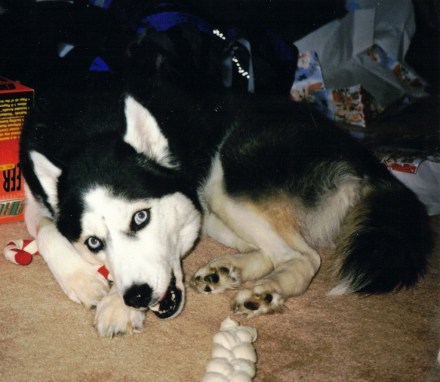
celebrate-picture-books-picture-book-review-lone-wolf-Mikayla

celebrate-picture-books-picture-book-review-lone-wolf-Mikayla

Lone Wolf is your debut picture book. Can you take readers on the book’s journey from idea to being published? Have you always wanted to illustrate and write children’s books?

When I was a kid, I loved to draw, but I don’t remember dreaming about becoming an illustrator. I don’t think I even knew it was a job! Throughout my life, drawing has always been a relaxing hobby. Years ago, I made a few comic strips about my family’s husky just for fun. Then, in 2018, while brainstorming picture book ideas, I reflected back on those comic strips. The one about wolf comparisons had potential for layers, but it wasn’t a story. So, over the course of a few weeks, I built out the idea, created a dummy, and sent it off to the agents who were considering representing me (and who later became my co-agents).

They sent me a few rounds of feedback, which pushed me to develop the story further. The point-of-view moved from first-person to third-person and the story arc evolved. I revised on and off for about three months. Then the story went out on submission, and I (very happily!) accepted Greenwillow’s publication offer. In the weeks that followed, I revised the dummy based on the editor’s helpful feedback before getting the go-ahead to start the final art. I learned a lot during this process that I expect will help me navigate future projects.

Just as you do, the little girl in this story uses a wheelchair. Can you discuss what it means to disabled children to see themselves in the books they read? Can you discuss the impact that having disabled characters in books for all ages has on society as a whole?
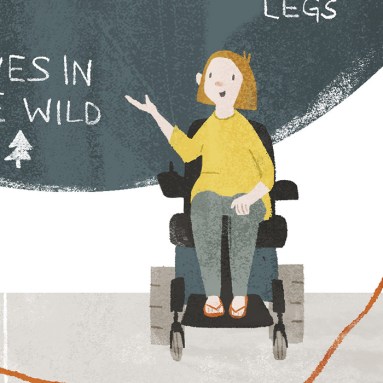
celebrate-picture-books-picture-book-review-lone-wolf-Avery

I’m glad you noticed this connection! When I was 11, I was diagnosed with Muscular Dystrophy, and by 18, I had transitioned to a power wheelchair. The character Avery in Lone Wolf also uses a power wheelchair. She isn’t the main character. She’s just a girl who’s part of a family that has an awesome dog. Her presence is only notable because we don’t usually see kids in power wheelchairs in picture books. In fact, I can’t think of a single fiction picture book that includes a kid who uses a power wheelchair. I’m not saying there aren’t any out there, but if there are, I haven’t come across them yet. Kids who use manual wheelchairs are represented more often, but they’re still few and far between. And despite good intentions, some representations of disability are problematic. I think it’s important for kids with mobility disabilities to see themselves in happy stories where they are neither problems to solve nor sources of inspiration. For society as a whole, it helps normalize disability.

I love your illustration style that often mixes lovely rounded shapes with equally lovely lines, as a self-taught illustrator how did you develop your style?

I learned to draw when I was younger by sketching everything around me and from books I checked out from my public library. In 2016, I started drawing digitally. It opened up so many new possibilities. I started drawing every day, following illustrators on Instagram, thinking consciously about what made me like one illustrator’s work more than another, and taking part in a few fun, informal art challenges on Instagram. In 2017, one such challenge (a Harry Potter 20th Anniversary challenge, to be precise!) led me to draw a hippogriff. I tried some digital brushes I hadn’t used before and very desaturated colors. In that moment, I had never liked something I drew as much as that simple, imperfect hippogriff. It felt right. So I continued in that direction, drawing animals using digital dry media brushes, desaturated colors, flowy shapes, weathered edges, and sketchy, wobbly lines until, after a while, it was my style—and still is, at least for now!

As I looked at the portfolio of your art, I was moved by how uplifting the scenes are. In so many of them, the animals are looking into the sky or tenderly interacting with another animal or a person. Can you talk a little about the themes of your art and the colors you choose? What about nature inspires you the most?

It’s true! I love drawing animals looking up at the sky. It’s my go-to subject these days! Like many people, I’m drawn to the vastness of nature: the night sky, the ocean, mountains, wide open fields. A few years ago, I visited the Grand Canyon and was not prepared for how awe-inspiring it was. The vastness of nature stirs up all kinds of emotions and memories, and also a sense of interconnectedness. I like placing people and animals in those environments. For those drawings, I tend to use quiet, desaturated colors, which I’m naturally drawn to. But there’s this other side to me that’s enamored with cute, funny, whimsical characters. Lately, I’ve been trying to use vibrant colors when I draw them. So I feel like there’s these two separate sides to my work. I like both, so do both.

When you’re not drawing or writing, you can also be found working as a librarian. What are your favorite parts of your job? How exciting will it be to see your own book on the shelf and share it with patrons?

I’m an academic librarian focused in digital services, so what I enjoy most is simplifying processes and improving access (which might sound pretty dull!). My first library job was a cataloger, so I was weirdly excited to see Lone Wolf’s Library of Congress MARC record and my Cutter number at the end of the call number for the first time. It’ll be gratifying to see my book on library shelves one day when the pandemic subsides. I’ll probably pull out my phone and snap a picture!

What are you most looking forward to in sharing your book with readers? Although you’re just getting started, what has been the best part of becoming a published children’s author?

I’d love to show kids how to draw the main character, Maple, themselves. When I was in 2nd grade, my teacher demonstrated on the chalkboard a simple way to draw a face. I still remember exactly how she did it. After that, I became obsessed with drawing stylized faces and that never really went away for me. I’d love to spark a little creativity like my teacher did for me.

So far, the best part of becoming a published author/illustrator is feeling empowered to talk more openly about my interests. Few people outside of my immediate family knew I draw. It’s also been wonderful to make connections with people I never would have met otherwise.

What’s up next for you?

My next picture book will be about another popular pet: cats! I’m busily working on the final art right now.

Thanks, Sarah, for sharing so much about your life and work! I wish you all the best with Lone Wolf and can’t wait to see your next book.

You can connect with Sarah Kurpiel on

Her website | Instagram | Twitter
celebrate-picture-books-picture-book-review-lone-wolf-cover

You can find Lone Wolf at these booksellers

Amazon | Barnes & Noble | Books-a-Million

To support your local independent bookstore, order from

Anderson’s Bookshop (Sarah’s local indie) | Bookshop | IndieBound

Picture Book Review


May 13 – It’s National Pet Month

celebrate-picture-books-picture-book-review-where'd-my-jo-go-cover

About the Holiday

Let’s give a shout-out to our best friends! Who are they? Our pets, of course! Small (or large) and fury (or feathered or scaled or finned), our pets give us unconditional love and loads of happiness. Just watching them navigate their day is entertaining and educational. National Pet Month was established to celebrate these in-home pals and remind pet owners to ensure that their pets have everything they need to live a long and healthy life. This month take extra time to have fun with your pet!

Where’d My Jo Go?

Written by Jill Esbaum | Illustrated by Scott Brundage

Jo and Big Al traveled everywhere together in her big rig. One day, though, as Jo was checking out the equipment at the truck stop, Big Al went exploring. While Jo got in the cab to “adjust a mirror, set the map. / Pull the belt across my lap. / Let another trucker pass. / Shift the gears, give ‘er gas,” Big Al had time at the park to “dodge a herd of stompy feet. / Sneak a lick of someone’s treat. / Chase a wrapper. Dig in dirt. / Give a tree a little squirt.”

celebrate-picture-books-picture-book-review-where'd-my-jo-go-hounds

Image copyright Scott Brundage, 2020, text copyright Jill Esbaum, 2020. Courtesy of Sleeping Bear Press.

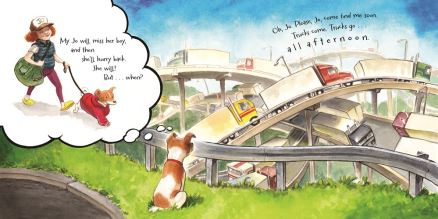
After all that fun, Big Al knew it was time to get back to Jo and the truck, but when he reached the truck stop, his truck was nowhere to be found. He pondered: should he try to find his Jo? But decided it would be better to wait. Besides, he knew she’d be back for the “little doggie pal… / who shares her lunch, who guards the truck, / whose head she rub-rub-rubs for luck.” Big Al was sure Jo would return. “But…when?” He sat patiently at the truck stop guard rail overlooking the highway and watched the trucks come and go—but none of them were his.

Meanwhile, Jo had reached her destination. She called to Big Al to wake him up. But then she looked…and looked again. Where was Big Al?! At that moment, Al was running away from a “too-loud kid” who wanted to kiss him and take him home with her. As the day grew long and the sun began to set, the parking lot emptied, and Big Al wondered where his Jo could be. “Oh, Jo. Please, Jo, remember me. / No trucks. No people. Spooky. Late. / Chase a june bug. / Shiver. Wait.”

celebrate-picture-books-picture-book-review-where'd-my-jo-go-highway

Image copyright Scott Brundage, 2020, text copyright Jill Esbaum, 2020. Courtesy of Sleeping Bear Press.

Just then a car pulled in and a boy, Zach, got out. He spotted Big Al and grabbed a stick. He threw it for Al, who “Can. Not. Resist.” Zach thinks Al is lost and begs his dad to let him keep him. Big Al thinks “I should not, cannot, will not go. / But ohhh, I like Zack. Hurry, Jo.” It looks as if Big Al and Zack will become a team when, just in the nick of time, a truck appears. Could it be? “Onk-onk!Onk onnnnnnnnk!” Big Al says, “Yip-yip! Bye, Zack! I have to go! / I knew she’d come! It’s her! My Jo!”

An Author’s Note reveals the real-life event that sparked Jill’s imagination and led to her story. She also invites readers to try a prompt and write their own story.

celebrate-picture-books-picture-book-review-where'd-my-jo-go-Zack

Image copyright Scott Brundage, 2020, text copyright Jill Esbaum, 2020. Courtesy of Sleeping Bear Press.

Children will fall in love with Big Al as soon as they meet him. Full of curiosity and with a personality befitting his name, Big Al is a busy pup as he gets into mischief at a park near the truck stop. But when he returns to find his Jo is gone, he patiently waits, certain that she’ll be back. Jill Esbaum’s jaunty rhymes are as playful as Big Al, and readers will be charmed to follow the story from his point of view. Kids with pets will recognize all the small, special moments that people and pets share and be as eager for Jo’s return as Big Al. Esbaum adds humor and suspense as two kids interact with Big Al, making the just-in-the-nick-of-time reunion all the sweeter and more satisfying.

With his expressive eyes and funny antics, Scott Brundage’s adorable Big Al will charm children and have them rooting for his reunion with Jo throughout the story. Snapshots of Big Al and Jo sharing fun on their trips show their special bond and will melt readers’ hearts, and they’ll commiserate with Jo when she realizes that Big Al is missing. Vehicle-loving kids will be fascinated by the realistic images of big rigs in the truck stop and traversing the crisscrossing highways. Brundage makes the story into a visual roller-coaster (in the best way), and the final spread of Jo and Big Al together again will have kids shouting, let’s do it again!

For pet lovers, vehicle lovers, and anyone who has a best friend, Where’d My Jo Go? Is must reading. It would make a heartwarming addition to home, school, and public library bookshelves.

Ages 5 – 7

Sleeping Bear Press, 2020 | ISBN 978-1534110441

Discover more about Jill Esbaum and her books on her website.

To learn more about Scott Brundage, his books, and his art, visit his website.

National Pet Month Activity

celebrate-picture-books-picture-book-review-Peppy-Puppies-Match-Up-Puzzle

Peppy Puppies Match Up Puzzle

These puppies want to find a friend. Can you match the ones that go together in this printable puzzle? There may be more than one right answer!

Peppy Puppies Match Up Puzzle

celebrate-picture-books-picture-book-review-where'd-my-jo-go-cover

You can find Where’d My Jo Go? at these booksellers

Amazon | Barnes & Noble | Books-a-Million

To support your local independent bookstore order from

Bookshop | IndieBound

Picture Book Review

May 9 – National Lost Sock Memorial Day

celebrate-picture-books-picture-book-review-red-socks-coverAbout the Holiday

Today we fondly remember all of those socks that for one reason or other go missing from the washing machine, the dryer, the drawer, or even somewhere in between. While matched socks may look neat and tidy and “go” with an outfit, mismatched socks offer an opportunity to jazz up an outfit, show your personality, and have a little fun. Searching for hidden socks can be a game little ones love to play with older siblings or adult.

Red Socks

Written by Ellen Mayer | Illustrated by Ying-Hwa Hu


It’s laundry day and the clothes are all dried and soft and ready to wear. “‘Here is your blue shirt, with the goldfish on it,’” Mama says, pulling the top out of the basket and bending down to eye level to show it to her baby. Next, Mama describes the “yellow and white striped pants” she puts on her child. “‘Let’s see what else is in the laundry basket,’” she says.

celebrate-picture-books-picture-book-review-red-socks-shirt

Image copyright Ying-Hwa Hu, text copyright Ellen Mayer. Courtesy of starbrightbooks.com

Mama pulls a tiny red sock from the basket, but—“UH-OH!—where is the other red sock?’” Now it’s the baby’s turn to help. With a look down, the toddler shows Mama where the sock is. “‘You found the other red sock. Yay!’” she says, giving words to the baby’s action. She continues explaining while pointing to the sock poking out of the baby’s pocket: “‘It was hiding in your pants pocket!” Once the laundry is folded, Mama tells her child exactly what they will do next while she playfully slips the other red sock on the baby’s wiggling feet. “‘Let’s put that other sock on your foot. Then we can go play outside.’” As the baby flies in the swing outside, the red socks are brilliant dots against the blue sky.

celebrate-picture-books-picture-book-review-red-socks-pants

Image copyright Ying-Hwa Hu, text copyright Ellen Mayer. Courtesy of starbrightbooks.com

Ellen Mayer’s simple and charming story of a particular moment in a mother and child’s day will immediately appeal to even the youngest reader. Familiar words coupled with clear, vivid illustrations will engage toddlers who are pre-talking and just learning language and concept development. The mother’s use of complete sentences as well as step-by-step descriptions of the activities the child sees and is involved in demonstrates how adults can converse with their babies and young children to encourage strong language and literacy skills.

The laundry-day setting also encourages adults to share a little early math with little ones as they go about this common chore. Matching socks, talking about and sorting clothes by size and/or color, and stacking folded clothes with kids are all ways to help little learners begin understanding math concepts. 

Ying-Hwa Hu’s illustrations show a mother and child interacting on a typical day while they complete common chores and go outside to play. The mother and child portray a range of emotions and gestures, giving further depth to the understanding of the ideas and conversation presented. Kids will giggle at the adorable puppy who causes a bit of mischief on each page.

Red Socks makes a wonderful baby shower or new baby gift as well as a terrific addition to any young reader’s home library. Free from gender-specific pronouns and with gender-neutral clothing and hair style, Red Socks is a universal story.

Ages Birth – 5

Star Bright Books, 2015 | ISBN 978-1595727060

Red Socks is also available in: Chinese/English, ISBN 978-1-59572-811-1 | Hmong/English, ISBN 978-1-59572-812-8 | Spanish/English, ISBN 978-159572-757-2

To learn more about Ellen Mayer and her Small Talk Books® (including other titles: Cake Day, Rosa’s Very Big Job, and Banana for Two) as well as to find accompanying activities, visit her website!

Discover more about Ying-Hwa Hu and view a portfolio of her illustration work on her website!

To find a Laundry Love Activity Sheet with more early math fun you can have with everyday activities, visit the Star Bright Books site.

About Small Talk Books®

Ellen Mayer’s Small Talk Books® feature young children and adults conversing (or adults speaking to children who are not talking yet) while they have fun, do chores, shop, and bake together. Their conversations demonstrate the kind of excitement and close relationships that encourage learning and language advancement. Each Small Talk Book® includes an accompanying note from Dr. Betty Bardige, an expert on young children’s language and literacy development and the author of Talk to Me, Baby! How You Can Support Young Children’s Language Development. The introduction discusses how children connect actions, words, and meaning as adults speak to them while doing particular jobs or actions.

Other titles in the Small Talk Books® series include Cake Day and Rosa’s Very Big Job. Each book makes a wonderful gift for baby showers, new parents, or anyone with young children in the family. They would be a welcome addition to any young child’s bookshelf as well as libraries and preschool classrooms.

National Lost Sock Memorial Day Activity

celebrate-picture-books-picture-book-review-sock-tumble-matching-game


Sock Tumble Matching Game


These socks were separated in the laundry. Can you find the matching pairs in this printable Sock Tumble Matching Game.

celebrate-picture-books-picture-book-review-red-socks-cover

You can find Red Socks at these booksellers

IndieBound | Star Bright Books


Picture Book Review

May 6 – It’s National Bike Month

celebrate-picture-books-picture-book-review-fast-enough-cover

About the Holiday

Established in 1956 and sponsored by the League of American Bicyclists, National Bike Month celebrates all the fun and benefits of cycling. Communities around the country usually celebrate with special events, tours, and safety lessons. This year the League of American Bicyclists is encouraging riders to ride solo or with family and share their experiences online with #BikesUnite. For a list of ideas on ideas for making this year’s Bike Month fun, meaningful, and special, visit the League of American Bicyclists website.

I received a copy of Fast Enough: Bessie Stringfield’s First Ride from Oni Press for review consideration. All opinions are my own.

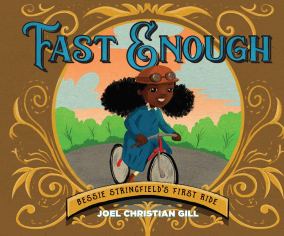
Fast Enough: Bessie Stringfield’s First Ride

By Joel Christian Gill


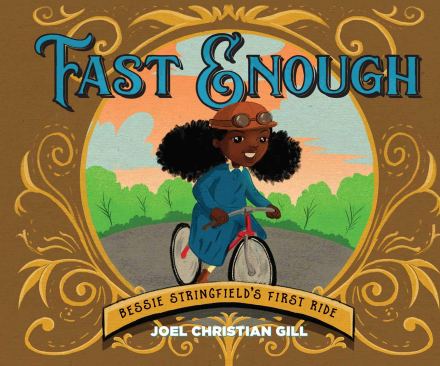
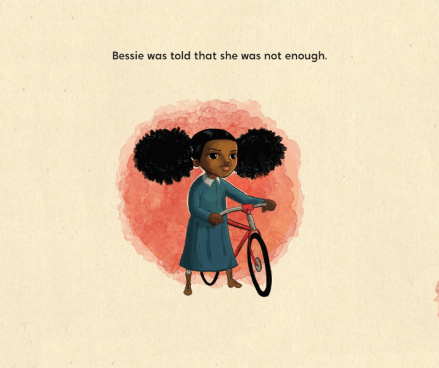
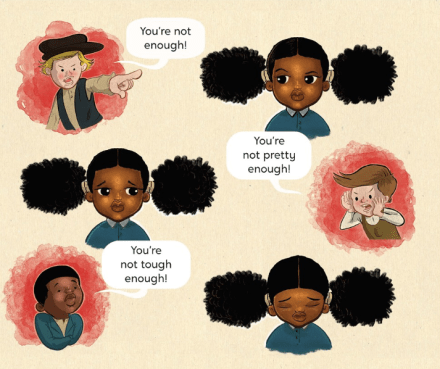
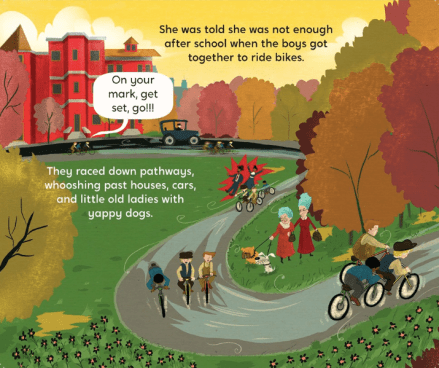
Maybe you’ve been criticized for your hair or your body shape; told that “you are not enough.” Bessie heard that over and over. When the boys gathered after school to race on their bikes, they rode past Bessie, laughing that she wasn’t fast enough. But Bessie wanted to join them. The boys just laughed harder and said, “Silly little Bessie! Girls can’t ride bikes!”

celebrate-picture-books-picture-book-review-fast-enough-Bessie

Copyright Joel Christian Gill, 2019, courtesy of Oni Press.

Bessie asked her mama if girls could ride bikes, and she suggested Bessie “ask the Man Upstairs.” That night Bessie said her usual prayers and then asked “if girls are supposed to ride bikes.” That night in her dreams she rode up and down hills, through cities, by the ocean, and even on top of the waves. She rode through cities and up into space.

In the morning, Bessie knew just what she was going to do that day. When the boys got together, she was there, hanging behind. As the leader of the group started the countdown to race, Bessie waited. And when he shouted “Go!” “Bessie zoomed past the boys. She sailed over the concrete like it was the ocean in her dream. She was fast enough.” She zipped past the ladies walking their dogs as if they were skyscrapers in the city and tore up the track with the speed of a comet.

celebrate-picture-books-picture-book-review-fast-enough-boys

Copyright Joel Christian Gill, 2019, courtesy of Oni Press.

When the boys saw that, they called for her to wait up, and when they reached her there were high-fives all around. From then on Bessie could be found speeding around town on her bike until the day she heard “ROOOAAAR VAAROOM!,” saw…a motorcycle, and “realized she could be even faster.”

Extensive back matter continues Bessie’s story as a pioneer for women in motorcycling in the early and mid-twentieth century. Also a nurse, Bessie traveled all over the United States, following the Negro Motorist Green Book to find safe accommodations, as well as the world. She was “the only woman on a team of civilian motorcycle couriers for the U.S. military” and became “the first woman to ride a motorcycle across America.” Children will be fascinated by her adventurous life and captivated by the various versions of her life and legend. 

celebrate-picture-books-picture-book-review-fast-enough-boys-racing

Copyright Joel Christian Gill, 2019, courtesy of Oni Press.

Joel Christian Gill introduces children to Bessie, a determined, brave, and pioneering woman at a formative time in her life. Told that girls don’t ride bikes and that she wasn’t good enough or fast enough anyway, Bessie Stringfield wrestled with self-doubt, but she took control of what she wanted and ultimately proved to herself and others that she was more than capable. Gill’s first pages set the stage for readers to contemplate ways in which they may doubt themselves, before encouraging them to find inspiration and confidence in Bessie’s story.

Gill’s vivid illustrations clearly show Bessie’s sadness as she internalizes the boy’s taunts, her tenacity, and finally her jubilation is besting them and achieving her goal. Images of Bessie’s dream and its resulting reality creatively play on the dual meaning of the word dream while a change in Bessie’s room décor while she sleeps is a clever touch.

A singular story about a trailblazing black woman, Fast Enough: Bessie Stringfield’s First Ride encourages children to embrace their own identity instead of letting others define them. The book would be a welcome addition to home, school, and public library collections.

Ages 5 – 9

Oni Press, 2019 | ISBN 978-1549303142

To learn more about Joel Christian Gill, his books, and his cartoons, visit his website.

National Bike Month Activity

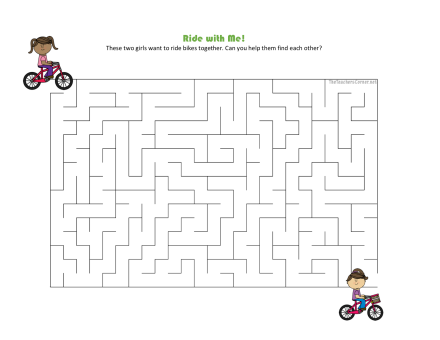
celebrate-picture-books-picture-book-review-bicycle-maze 2

Ride with Me! Maze


These two girls want to ride bikes together. Can you help them find each other in this printable maze?

Ride with Me! Puzzle | Ride with Me! Puzzle Solution

celebrate-picture-books-picture-book-review-fast-enough-cover

You can find Fast Enough: Bessie Stringfield’s First Ride at these booksellers

Amazon | Barnes & Noble | Books-a-Million | IndieBound

Picture Book Review

April 30 – International Jazz Day

celebrate-picture-books-picture-book-review-birth-of-the-cool-cover

About the Holiday

International Jazz Day was instituted in November 2011 by the United Nations Educational, Scientific and Cultural Organization (UNESCO) to spotlight jazz and it’s role in uniting people worldwide. The holiday is celebrated by communities, musicians, students, teachers, historians, and especially jazz enthusiasts as a way to learn about jazz, its roots, and its influence. Every year, jazz is recognized for its part in promoting a dialogue among cultures, diversity, freedom, and respect for human rights. 

While the celebration was originally planned to take place in Cape Town, South Africa and in other cities around the world, this year International Jazz Day 2020 will take place online and be hosted by Herbie Hancock. The day’s centerpiece will be a Virtual Global Concert featuring artists from across the globe, streamed live on jazzday.com. The concert will begin at 3:00 p.m. US eastern time. This spectacular musical event is a great opportunity to introduce kids to jazz and to enjoy the masters of the form with jazz lovers around the globe.

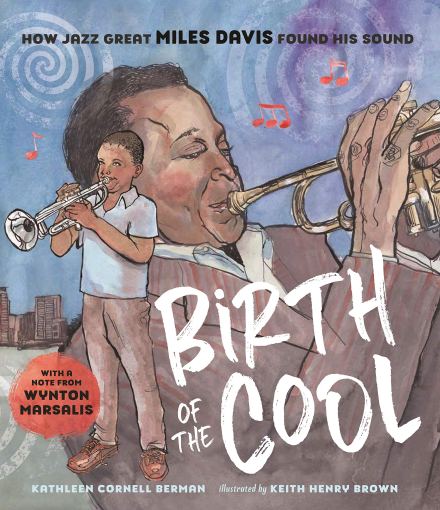
Birth of the Cool: How Jazz Great Miles Davis Found His Sound

Written by Kathleen Cornell Berman | Illustrated by Keith Henry Brown

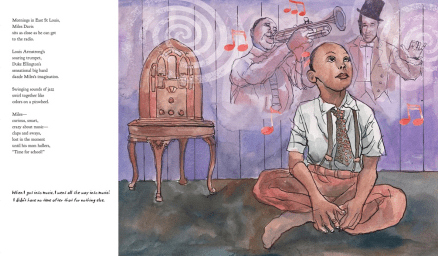
As a child, Miles Davis listens to the radio before school, clapping and swaying along to “Louis Armstrong’s soaring trumpet” and “Duke Ellington’s sensational big band.” The “swinging sounds of jazz / swirl together like / colors on a pinwheel.” When he’s older, Miles watches the riverboats on the Mississippi as they bring musicians from New Orleans to play in the East St. Louis clubs. At night he listens as “melodies drift down the street. / Some croon country, / some cry the blues. / Sassy saxophones wail / through the night.”

celebrate-picture-books-picture-book-review-birth-of-the-cool-growing-up

Image copyright Keith Henry Brown, 2019, text copyright Kathleen Cornell Berman, 2019. Courtesy of Page Street Books.

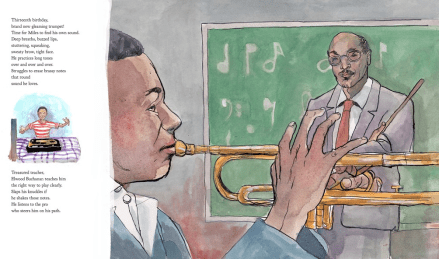
During the summer, Miles visits his grandfather’s farm in Arkansas. Here, he hears the music of horses’ hooves. On his walks through town, he listens to the sounds of guitars and singing, and at church he learns the notes of “soulful singing.” For his thirteenth birthday, Miles receives a trumpet. He takes lessons and practices again and again.

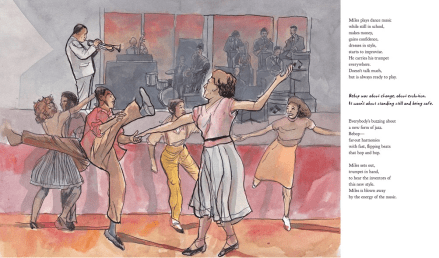
While he’s still in high school, Miles begins being paid to play at dance halls. His confidence grows and he begins to develop his own sound. A new form of jazz is attracting attention—Bebop: “far-out harmonies / with fast, flipping beats / that hop and bop.” He goes to clubs to listen to Charlie “Bird” Parker and Dizzy Gillespie play. He’s “blown away / by the energy of the music.”

celebrate-picture-books-picture-book-review-birth-of-the-cool-thirteen

Image copyright Keith Henry Brown, 2019, text copyright Kathleen Cornell Berman, 2019. Courtesy of Page Street Books.

Then one night, one of the band members doesn’t show up, and Miles—who always has his trumpet with him—is asked to fill the spot. In awe and a little intimidated in the presence of his idols, Miles’s playing “doesn’t shine.” But he knows that “jazz / is all he wants to play.” Miles moves to New York to go to school at Juilliard, but, really, to learn from Bird, Dizzy, and all of his idols. In the morning he goes to class, practicing between classes. At night he plays clubs throughout the city.

Soon, he leaves Juilliard to concentrate on playing and learning from the greats. His father advises him: “Don’t be like the mockingbird / that copies others. / Be your own man. / Be your own sound.” When Dizzy leaves Bird’s band, Miles takes his place. But he plays differently than Dizzy. “Some listeners put him down— / they want Dizzy’s rippling trumpet.” The criticism make Miles lose confidence and want to quit. But Bird encourages him.

celebrate-picture-books-picture-book-review-birth-of-the-cool-new-sound

Image copyright Keith Henry Brown, 2019, text copyright Kathleen Cornell Berman, 2019. Courtesy of Page Street Books.

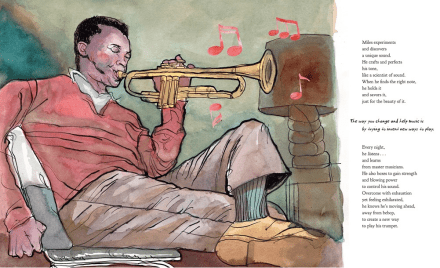
With practice and patience, he discovers his own sound, holding and savoring perfect notes “just for the beauty of it.” He forms his own group with talented musicians who want to create new sounds. The nine musicians play “slowly and mysteriously…. Cool— / relaxed, / with a lighter, / lyrical feel.” Miles’s solos enchant audiences.

But the endless work takes its toll. He begins to lose gigs; his health declines. Miles doesn’t give up. “He climbs out / of his dark days / by playing his horn again.” Then in 1955 he takes the stage at the Newport Jazz Festival and begins to play. “…His mystical voice hangs / like a cloud, / leaving space / for each listener’s / imagination to wander.” The crowd cheers and applauds. Miles is back with his unmistakable sound and new ideas for the future of the music he loves.

Notes about Miles Davis from Wynton Marsalis, Kathleen Cornell Berman, and Keith Henry Brown as well as a selected discography and bibliography follow the text.

celebrate-picture-books-picture-book-review-birth-of-the-cool-dancing

Image copyright Keith Henry Brown, 2019, text copyright Kathleen Cornell Berman, 2019. Courtesy of Page Street Books.

Kathleen Cornell Berman’s lyrical passages reveal a boy, a teenager, and a man who embodied music, listening to and absorbing the various sounds around him and incorporating them into his own unique sound. Her evocative vocabulary (swirl, rollicking, croon, rumbling, far-out, rippling, blizzard of notes, itching to play) and phrasing that blends short staccato lines with longer sentences echoes the rhythm of jazz and will keep readers riveted to the story. Berman emphasizes the listening, practice, and experimentation that informed Miles Davis’s original sound, showing children that innovation is built on hard work, dedication, and even history. Her inclusion of Davis’s setbacks also demonstrates that perseverance is part of the success of any endeavor.

Keith Henry Brown’s gorgeous, detailed pen-and-ink and watercolor illustrations take readers from Miles Davis’s living room, where he listens to the radio as images of Louis Armstrong and Duke Ellington swirl through his imagination to an overlook on the Mississippi River and its paddlewheel steam ships to the clubs and jam sessions of New York and, finally, to the Newport Jazz Festival. Brown’s color palette of cool blues, greens, purples, and browns, punctuated with Davis’s ever-present gleaming brass trumpet, brings Davis’s country and city experiences to life while mirroring the tone and feel of his unique sound. Quotes from Miles Davis are sprinkled throughout the story and set apart with type that looks handwritten, giving his words a personal touch.

Sure to inspire readers to learn more about Miles Davis and listen to his music, Birth of the Cool: How Jazz Great Miles Davis Found His Sound would be an excellent accompaniment to school music programs, an inspiring book for biography lovers and young musicians of all types, and a beautiful addition to home, school, and public library collections.

Ages 8 – 12

Page Street Kids, 2019 | ISBN 978-1624146909

Discover more about Kathleen Cornell Berman and her books on her website.

To learn more about Keith Henry Brown, his books, and his art, visit his website.

Meet Kathleen Cornell Berman

celebrate-picture-books-picture-book-review-kathleen-cornell-berman-headshot

In your author’s bio you say that you fell in love with Miles’s Davis’ music when you were 10 years old. Was there a particular spark that made you love his music?

As a kid I loved all kinds of music. When I first heard Miles’s trumpet sound, I fell in love. His trumpet sound was different. It wasn’t flashy, it was slow, haunting and very beautiful. I longed to hear it again.

Can you take readers on your journey of writing Birth of the Cool and having it published? What kind of research did you do? What was the most surprising thing you learned about Miles Davis?

I was thrilled when I got the email from Charlotte Wenger from Page Street. It’s beyond exciting when you find someone who loves your story as much as you do. And Charlotte was a dream editor to work with.

I read Miles’s autobiography and many other books about him, as well as journal and magazine articles. I listened to countless interviews and researched players in his band. And I listened to his music a lot. He went through many changes in his musical career. I realized I had to keep my focus on his early career. 

I was surprised to learn he had slave ancestors who played music in the main house on a plantation. It was interesting to discover that Miles loved rural life (from his visits to his relatives’ farms). When he first moved to NYC, he visited the stables and asked to ride their horses. He had fond memories of riding them on his grandfather’s farm.

Keith Henry Brown’s pen-and-ink and watercolor illustrations are gorgeous and full of expression. Can you talk about your reaction to seeing the illustrations for the first time. Do you have a favorite spread?  

celebrate-picture-books-picture-book-review-kathleen-cornell-berman-and-keith-henry-brown

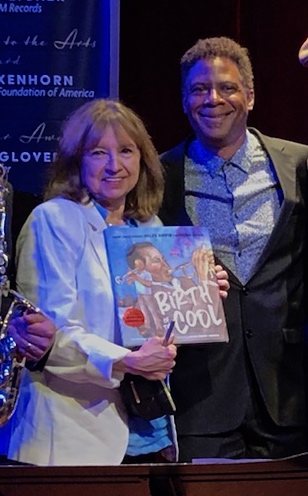
Kathleen Cornell Berman and Keith Henry Brown at the book launch for Birth of the Cool and the Jazz Gallery in New York City.

My first reaction to Keith’s illustrations was like an “out of the body” experience. To see my words come to life was a wonderful feeling. His art illuminated Miles’s journey in a jazz-inspired way. I was very happy when he accepted the job. I already knew he was a jazz fan, so he was a good choice.

Keith’s goal was to create drawings that weren’t too tight or realistic. He wanted to create a loose, abstract feeling. I think Keith achieved that beautifully. Kudos to his courage in creating illustrations in watercolor, a very unpredictable medium. It’s difficult for me to pick a favorite illustration, I really love them all.

Your inspirational biography highlights the ups—and downs—of Miles Davis’s early career. What message would you like readers to take away from the story?

Miles is a great example of how hard work pays off. Some kids today think it’s easy to play an instrument. For some it might be, but inventing your own sound, is extremely difficult. It takes perseverance and dedication to create your own voice on the instrument. That goes for anything you attempt, whether you become an architect, a visual artist, writer, or a singer. Unfortunately, many jobs don’t allow individuality, but finding something—anything—that you’re good at can boost happiness.

I hope this story inspires kids to reach for the stars, to find their own voice, and never give up. I also hope kids will take time to listen to jazz; it’s America’s classical music. Listening to music has so many benefits, intellectually as well as emotionally.

I saw on your website that you like to collect words. Can you tell me five of your favorites and what you love about them? Do you remember where they first caught your eye—or ear?

I’m usually attracted to words that tickle the tongue and have a unique sound, like mesmerizing, prickly, crumpled, nuzzle, etc. There are so many. I love alliteration. When words are paired with another, they sing and make the text come alive. I usually have my wordbook at my side as I read any kind of book. I also use my phone memo to jot words as I hear them in daily life.  

Besides writing, you paint, and create assemblages from found objects. Your sculptures are gorgeous and have so much personality! Which came first—writing or art? When creating an assemblage, do you start with one object or do you see how several of the materials you have can fit together?

Thank you very much. Creating found art sculptures is like therapy. I’ve always been into creating something out of ordinary things. The art and writing coincided with a strong desire to break out of the box of being a teacher.

I collect a lot of wood as well as words. When I find a piece that inspires me, I visualize what it might become and I begin the search for a complimentary piece. It’s kind of like doing puzzles.

Is there a similarity for you in constructing a sculpture and creating text for a picture book?

Yes, there is. I look for a seed of an idea that touches my senses or emotions. And in art I choose a piece of wood that inspires me visually. Then it all comes down to layering and adding details that make the story or art shine in a new way. Finally, adding the “just right” color or details can be compared to the continual revisions to discover perfect words that fit my story.

Birth of the Cool is your debut picture book. What are you looking forward to most as a picture book author?

Reading the book to children and getting them to reflect about their feelings. And, of course, introducing them to jazz.

I love writing picture book biographies. I also enjoy writing books that will amuse kids, as well challenge their thoughts about nature.

What’s up next for you?

I have a new picture book bio about another musician that I just started submitting. And I’ve started research on another interesting, relatively unknown musician that had a big impact on many.                   

What is your favorite holiday?

My favorite holiday is Thanksgiving. I love the traditions and the history. Holidays are so important in bringing busy families together. As a former teacher, Thanksgiving gave me the opportunity to discuss the importance of the Native American people. They taught us so much. At the Thanksgiving table, we as a family celebrate the Native American contributions to our country. I wish more people did the same.

You can connect with Kathleen Cornell Berman on

Her website | Facebook | Instagram | Twitter

Jazz Appreciation Month Activity

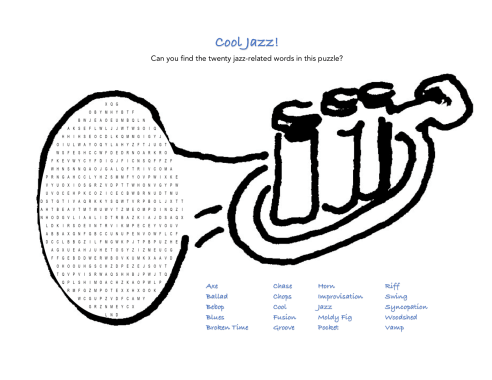
celebrate-picture-books-picture-book-review-jazz-trumpet-word-search-puzzle

Cool Jazz! Word Search Puzzle

Jazz has a sound and vocabulary all it’s own! Can you find the twenty jazz-related words in this printable puzzle? Then have fun coloring it!

Cool Jazz! Word Search Puzzle | Cool Jazz! Word Search Solution

celebrate-picture-books-picture-book-review-birth-of-the-cool-cover

You can find Birth of the Cool: How Jazz Great Miles Davis Found His Sound at these booksellers

Amazon | Barnes & Noble | Books-a-Million

To support your local independent bookstore, order from

Bookshop | IndieBound

Picture Book Review

April 29 – It’s National Month of Hope

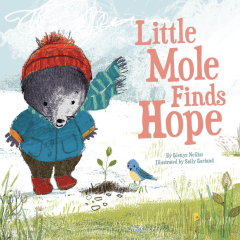
celebrate-picture-books-picture-book-review-little-mole-finds-hope-cover

About the Holiday
Founded in 1991, National Month of Hope encourages people to bring hope to those in need both emotionally and physically. Reaching out to let a friend know you’re there for them, volunteering to help out in the community or on a personal level, and simply sharing a smile with those around you are all ways to show others you care. These days, staying in touch online and checking up on family and friends spreads happiness and hope for when we can all be together again. 

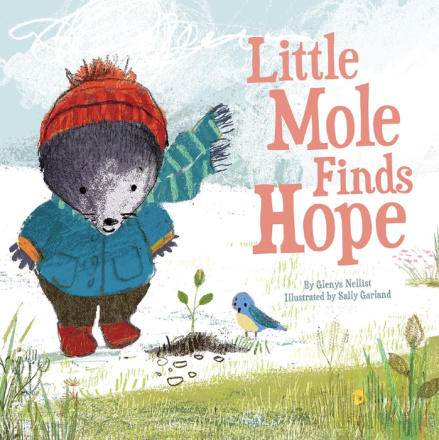
Little Mole Finds Hope

Written by Glenys Nellist | Illustrated by Sally Garland


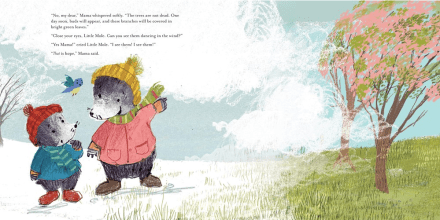
Little Mole felt sad. He didn’t know why he felt bad inside, he just did. His mama told him he needed to find hope. Little Mole wondered where. As she took his paw, Mama said, “‘Sometimes, hope is hiding in the darkness. Sometimes it’s hard to see. But it’s always there.'” Mama led her son out of the tunnel, but on the way she pointed out a “brown, wrinkled” bulb hanging from the ceiling. Little Mole thought it was dead.

But Mama explained that that bulb would someday soon become a lovely daffodil. She asked her son to picture it swaying with the breeze, and when he said he could see it, she told him “That is hope.'” When they crawled out of the burrow, Little Mole saw trees without leaves. “They stretched out like skeleton bones silhouetted against the sky.” Little Mole thought they were dead. But Mama explained that buds and then leaves would soon appear. She asked Little Mole to imagine it. With excitement he told her he could see it. Again, Mama said, “‘That is hope.'”

celebrate-picture-books-picture-book-review-little-mole-finds-hope-trees

Image copyright Sally Garland, 2020, text copyright Glenys Nellist, 2020. Courtesy of Beaming Books.

Mama and her little one continued on past Mr. Rabbit’s garden, where they saw another example of hope hiding in an unexpected place. When they got home, Little Mole was happy.He said he’d had a wonderful day and understood that “there was always hope, even in the darkest places.” Mama tucked her son into bed with a kiss, and Little Mole fell asleep dreaming of the colorful spring to come.

Back matter includes a Discussion Guide for Caretakers that gives them tools for talking about the story, tips on helping a child who feels sad, and how to share their own experiences and where hope can be found.

Glenys Nellist’s uplifting story could not have come at a better time. With children at home and their normal lives disrupted, many may be feeling sad and unusually stressed. While many things have changed, there are still those aspects of life that remain constant. A parent or caregiver’s love is one; signs of spring and summer are another. Nellist’s honest and straightforward storytelling, acknowledges feelings of sadness and the fact that they are often unattributable to any concrete cause. Mama’s gentle acceptance of her son’s emotions and her actions in showing him signs of renewal will resonate with children familiar with the cycles of winter and spring and give adults models for conversations with their own children. Perfectly paced, Nellist’s book provides opportunities for adults and kids to look for other constants in their lives and to reaffirm their love for one another––now and always.

Sally Garland’s textured illustrations, rendered in warm tones that reveal the coziness of the Mole’s home and vibrant, sunny colors as Little Mole imagines springtime, will delight children and draw them into the meaning of the story. As Mama clearly points out the bulb, the bare trees, and a sleepy chrysalis, children will enjoy guessing what each will become and how they represent hope. Readers will also like finding other symbols of hope and signs of Mama’s and Little Mole’s love throughout the story.

Lovely in every way and highly recommended for talking with children about their feelings, Little Mole Finds Hope is a book kids will enjoy for its storytelling and its heart again and again.

Ages 3 – 6

Beaming Books, 2020 | ISBN 978-1506448749

Discover more about Glenys Nellist and her books on her website.

You can learn more about Sally Garland, her books, and her art here.

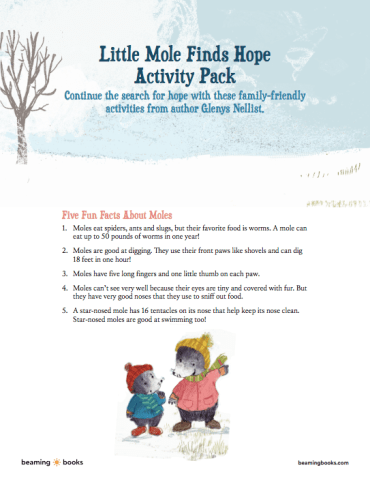
Month of Hope Activity

celebrate-picture-books-picture-book-review-little-mole-finds-hope-activity-kit-image

Little Mole Finds Hope Activity Pack


You can find lots of fun in this printable activity pack found on the Beaming Books website.

Little Mole Finds Hope Activity Pack

celebrate-picture-books-picture-book-review-little-mole-finds-hope-cover

You can find Little Mole Finds Hope at these booksellers

Amazon | Barnes & Noble | Books-a-Million | IndieBound


April 26 – National Tell a Story Day

celebrate-picture-books-picture-book-review-my-bison-cover

About the Holiday
Today’s holiday was established to celebrate the art of storytelling. Highlighting the tradition of oral storytelling, the day encourages families to get together and have fun remembering and sharing family tales. Reading together is another wonderful way to discover your own stories and those of others around the world.
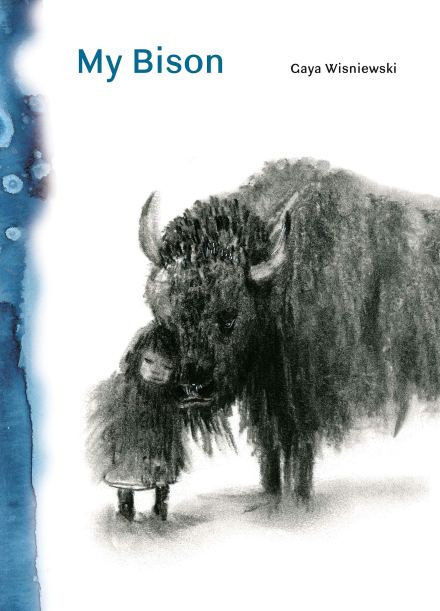
My Bison

By Gaya Wisniewski


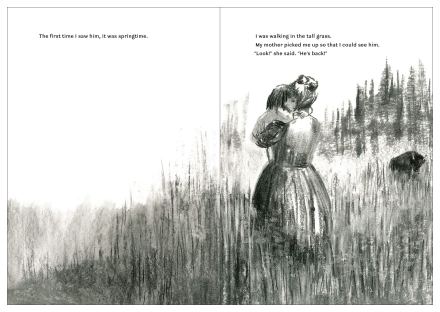
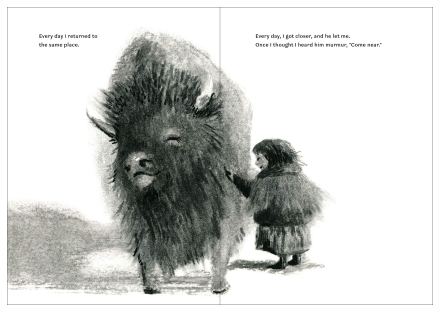
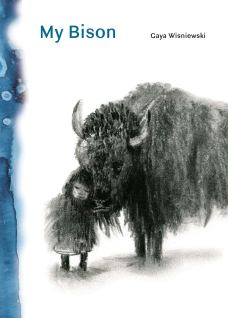
The first time a little girl meets the bison she was walking with her mother through a field of tall grass. “‘Look!’” her mother said. “‘He’s back!’” Every day after that the girl went out into the field to see the bison, coming a little closer each time until she was able to pet him. Once, she even thought she heard him whisper an invitation to come closer.

celebrate-picture-books-picture-book-review-my-bison-first-time

Image copyright Gaya Wisniewski, 2020, courtesy of Princeton Architectural Press.

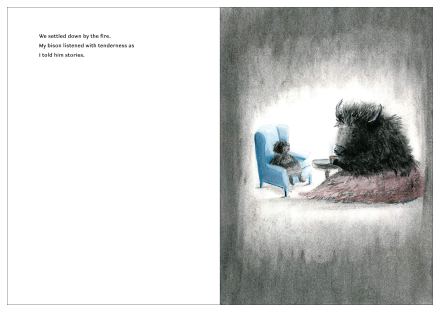
The little girl began to feed him food she’d made herself. Sometimes he didn’t like it, but he always tried it and that made her happy. One day it was time for him to move on with the rest of the herd. The girl walked with him as far as she could. When she said goodbye, the bison gave her a long look and she “knew he’d be back when snow covered the ground again.” The girl was lonely without him, but when winter returned she knew he had too without even seeing him. Now, seated together near the fire, the girl told him stories about the forest and what she’d done over the year while he, silent, “listened with tenderness.” She loved everything about him and loved him with her whole heart.

celebrate-picture-books-picture-book-review-my-bison-come-near

Image copyright Gaya Wisniewski, 2020, courtesy of Princeton Architectural Press.

The girl and the bison grew old together, winter to winter, never feeling the cold of the snow. Once, they talked all night about their mothers. The girl remembering the first time her mother had shown her the bison, how she had comforted her and taught her the lessons of nature. She missed her mother so much, she told him, and imagined he missed his mother too.

celebrate-picture-books-picture-book-review-my-bison-tea

Image copyright Gaya Wisniewski, 2020, courtesy of Princeton Architectural Press.

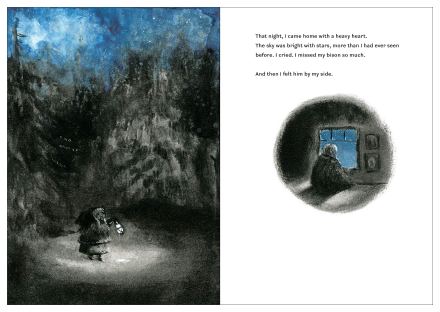
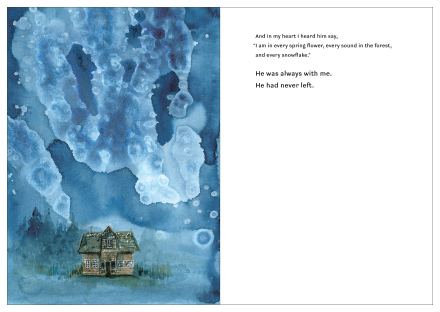
One winter the bison didn’t return and no amount of looking could find him. The girl, now an old woman, went home. She cried with missing him. And then just as in those winters so long ago when she felt his presence without seeing him, she knew he was with her. In her heart she “heard him say, ‘I am in every spring flower, every sound in the forest, and every snowflake.’” And she knew he was with her always.

celebrate-picture-books-picture-book-review-my-bison-night

Image copyright Gaya Wisniewski, 2020, courtesy of Princeton Architectural Press.

Gaya Wisniewski’s stunning and gorgeous story about a friendship between a little girl and a bison is deeply moving, it’s straightforward and metaphorical meanings blending in harmony to settle in a reader’s heart. The girl’s and bison’s relationship is one of mutual respect and trust, and they are in many ways alike. With her shaggy coat and tousled hair, the girl looks like a miniature bison, while the bison is perfectly comfortable sitting at the table near the fire sipping hot chocolate or snoozing in the cozy built-in bed  in the girl’s home. The girl loves the bison the way children love their pets, and the way she takes care of him replicates a mother’s tender affection and attention.

Here the text and images take on deeper meanings as the little girl offers the bison homemade food, holding her long-handled spoon to his mouth the way mothers the world over do for their babies. She walks with him to the edge of the clearing as he leaves in the spring, waving goodbye but with the promise of his return like a mother taking her child to the bus stop, seeing them off to college, or watching them move away.

celebrate-picture-books-picture-book-review-my-bison-sky

Image copyright Gaya Wisniewski, 2020, courtesy of Princeton Architectural Press.

At other times the bison seems to take on the role of the mother. In the endearing illustration of the bison and the girl talking over cups of hot chocolate, the girl relates how the bison would listen to her stories. Later, readers learn that her mother made her hot chocolate when she couldn’t sleep, letting them imagine how the little girl might have told her mother about her day, about the things keeping her awake. The china cup also holds the bison’s memory of cuddling with his mother, their fur smudged and merging with the steam rising from the hot drink. This blending of roles subtly demonstrates the cycles of life and the reciprocal nature of love.

Readers don’t know when the girl lost her mother; but a snapshot of the girl playing Ring around the Rosie with her and her teddy bear, in which only the mother’s arms are visible at the side of the page and the circle of light highlighting this scene is surrounded by darkness, hints at the loss. As the bison and the girl grow old together and there comes the winter when the bison does not return readers discover that any great love is always with them.

Wisniewski’s charcoal and ink illustrations, punctuated with blue create a mystical, dreamlike atmosphere where the forest and the mountains, the girl and the bison reach out to embrace the reader and invite them into this world of a love like no other.

A tender story to share all types of unending love with children, My Bison would be a poignant addition to home, school, and public library collections.

Ages 4 – 7

Princeton Architectural Press, 2020 | ISBN 978-1616898861

To learn more about Gaya Wisniewski, her books, and her art, visit her website.

National Tell a Story Day Activity

celebrate-picture-books-picture-book-review-tell-a-story-maze

Tell a Story Maze


This puzzle may look like a regular maze, but there’s a secret to it! Within this maze is any story you’d like to make up. Why do you go left instead of right? Are you avoiding a zombie or a rain shower? Why do you go up instead of down? Is it because you can you float? What lurks in that dead end you’ve entered? There are as many cool stories as you can imagine right in those little pathways. And when you find your way to The End, you’ll have written a story with this printable puzzle!

Tell a Story Maze | Tell a Story Maze Solution 

celebrate-picture-books-picture-book-review-my-bison-cover

You can find My Bison at these booksellers

Amazon | Barnes & Noble | Books-a-Million | IndieBound

Picture Book Review