May 3 – It’s Children’s Book Week

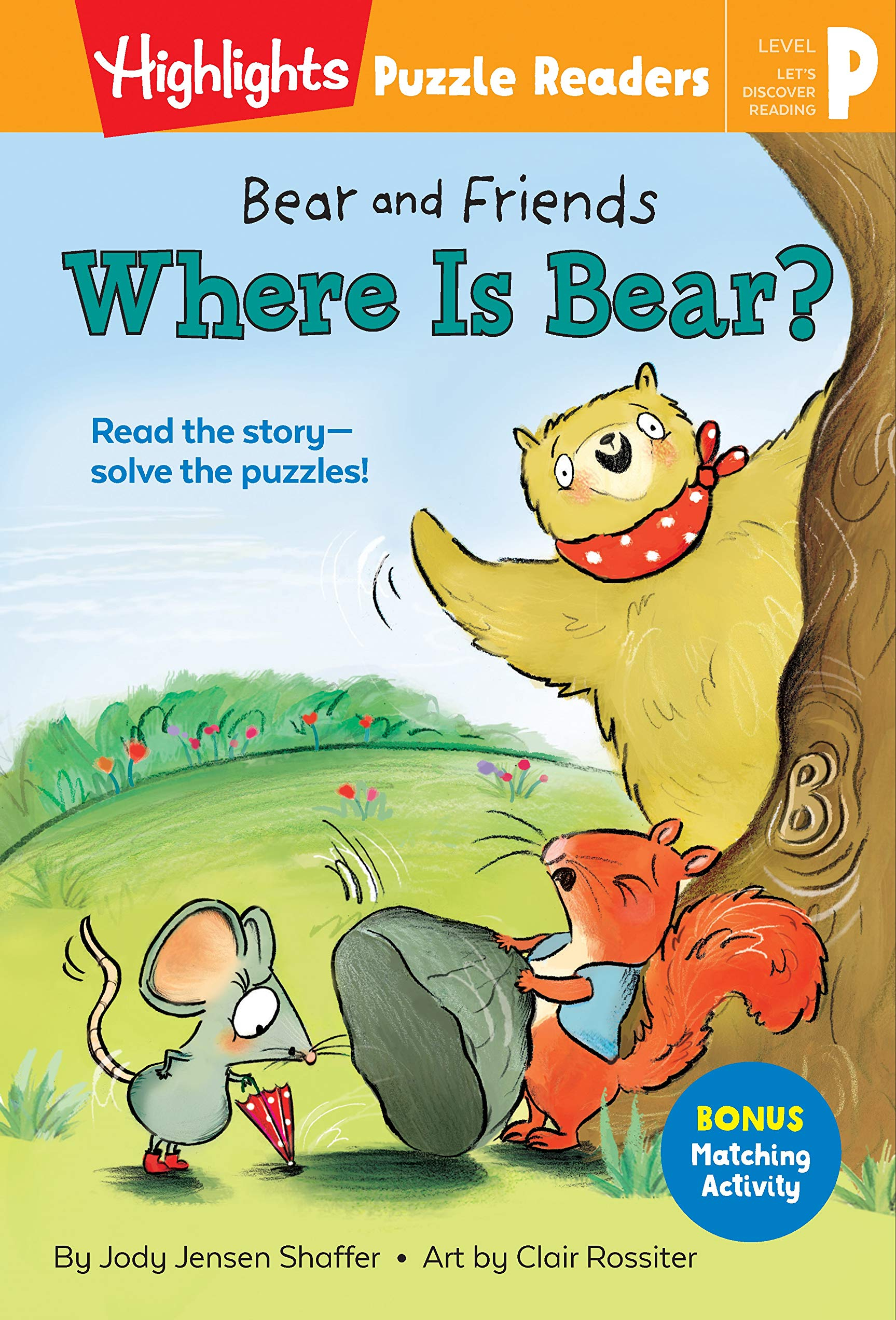
celebrate-picture-books-picture-book-review-where-is-bear-cover

About the Holiday

Children’s Book Week is the longest-running national literacy program in the United States. The history of the holiday goes back to 1913, when Franklin K. Matthiews, the librarian of the Boy Scouts of America, toured the country to promote a higher standard in children’s books and proposed a Children’s Book Week. He then enlisted the help of Frederic G. Melcher, editor of Publishers Weekly who believed that “a great nation is a reading nation,” and Anne Carroll Moore, the Superintendent of Children’s Works at the New York Public Library to help spread the word. This year Children’s Book Week will be held twice: May 3 – 9 and November 8 – 14. Each week with host different programs under the slogan “Reading is a Superpower.” You can find resources to help your child take part in the Superpower Challenge, a list of cross-curricular activities that allow kids to explore their passions in depth, here. To learn more about this special holiday for readers visit Every Child a Reader.

About the Bear and Friends Series

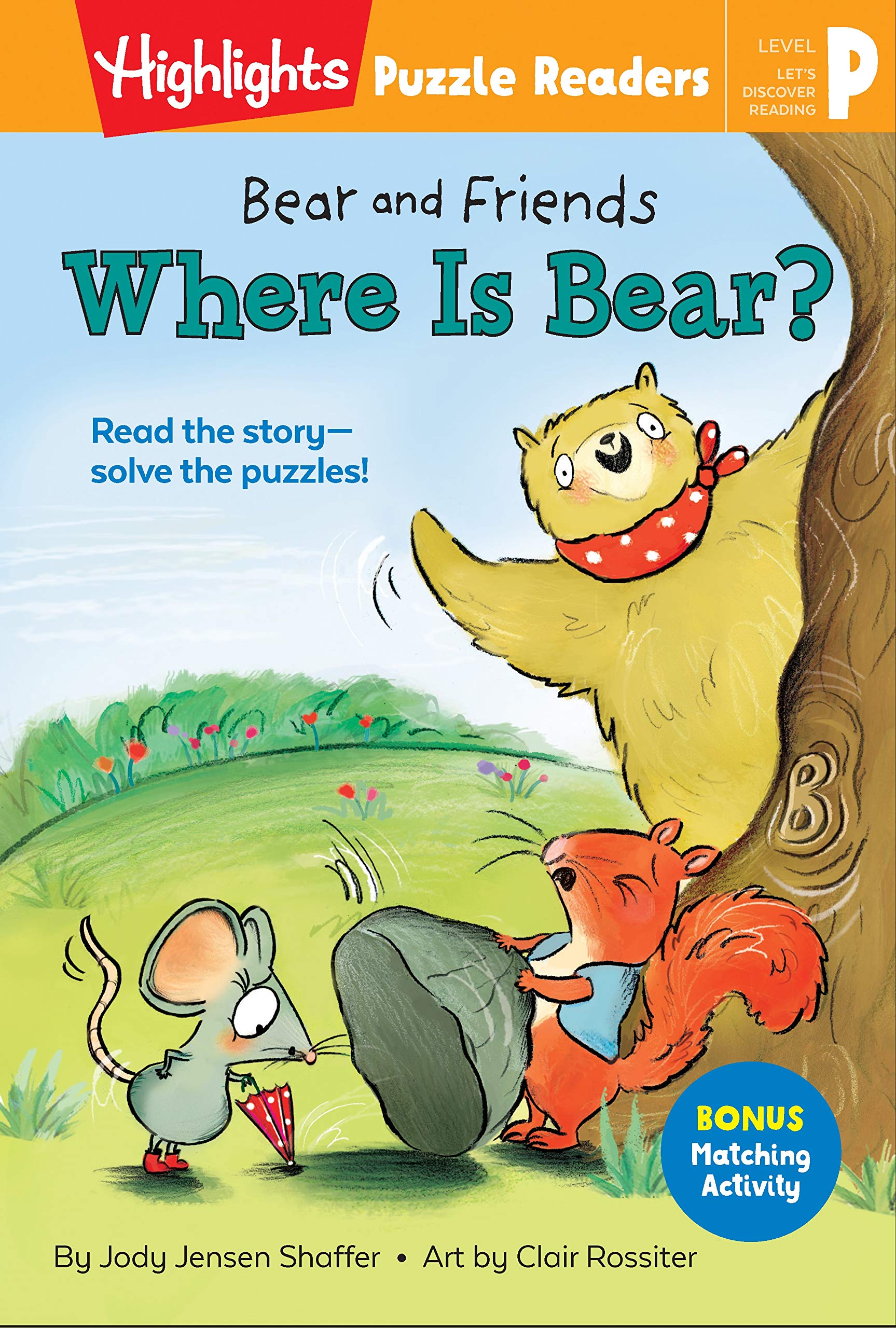
In the newest addition to the Highlights Puzzle Readers – books that use an innovative approach to engage emergent and new readers in strengthening their skills and fluency – Jody Jensen Shaffer and Clair Rossiter charm the youngest readers with a sweet group of friends: Bear, Mouse, and Squirrel. Released at the same time, Where Is Bear? and A House for Mouse get kids excited about learning to read on their own with a combination of a story and a search-and-find letter puzzle. A bonus matching and vocabulary puzzle follows the story and will entice children to turn to page 1 again and reread the story.

A note for parents and other caregivers tells more about this book series that has been developed in collaboration with reading experts, how the puzzle-and-story structure of the books improve learning, and the skills children learn, including shape and letter recognition, letter-sound relationships, logic, and flexible thinking, and more.

Bear and Friends: Where Is Bear? (Highlights Puzzle Mystery)

Written by Jody Jensen Shaffer | Illustrated by Clair Rossiter


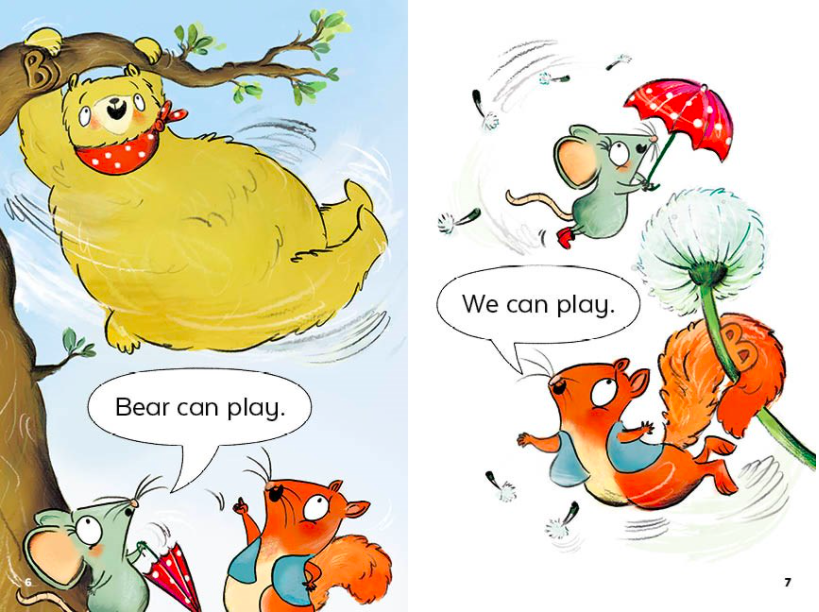
On a sunny day, Bear visits his friends, Mouse and Squirrel, in the woods. They are excited to see him. “Look! Look! It is Bear,” says Mouse. Squirrel lets readers in on two important facts about Bear: “Bear is big. Bear is fun.” They can’t wait to play together. Bear takes the lead, and whatever Bear can do, Squirrel and Mouse can do too. They swing and run and jump. 

But then Bear decides he’s going to play hide-and-seek. “Where is Bear?” Mouse asks the reader. “Is Bear here?” Squirrel and Mouse check behind trees, in a cave, and behind a big rock. They’re still looking for Bear as they cross over a stream on a fallen log. Mouse and Squirrel may not spot Bear or just miss him as he moves from place to place, but young readers will love finding him on each page and trying to guess why he’s picking flowers, acorns, and apples. Suddenly, Mouse points and exclaims. “Look! Look!” Then Squirrel says, “I see Bear.” But what is Bear doing? Kids will be as delighted as Mouse and Squirrel with Bear’s special surprise.
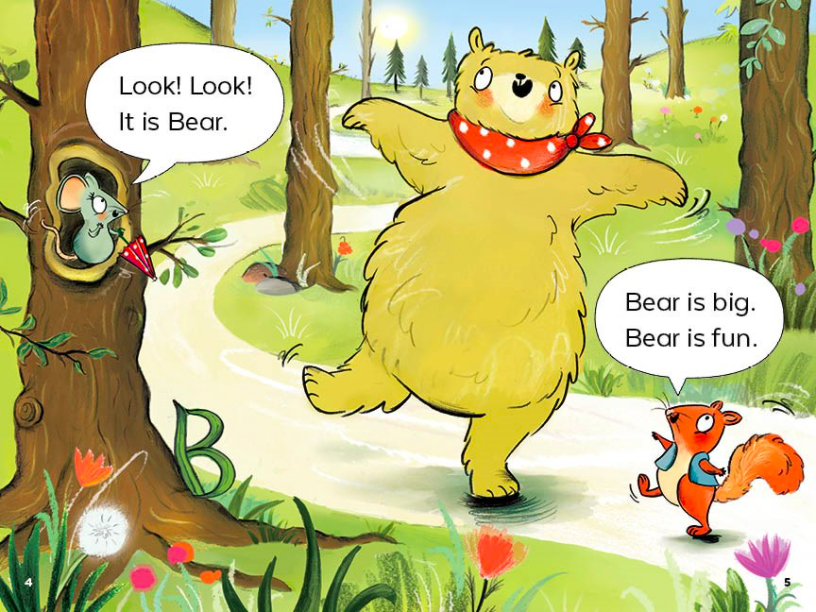
celebrate-picture-books-picture-book-review-where-is-bear-big

Image copyright Clair Rossiter, 2021, text copyright Jody Jensen Shaffer, 2021. Courtesy of Highlights Press.

Throughout Jody Jensen Shaffer’s sweet story, kids will also be on the lookout for the letter B, which is cleverly hidden in the texture of a tree trunk, made from blades of grass, constructed with rock, in the folds of mushrooms, incorporated into Bear’s picnic basket, and many other places. The puzzle presents an age-appropriate challenge that will encourage kids to search for the letters again and again. Many of these hiding places reoccur, prompting children to look for and recognize patterns in the illustrations, just as the story’s words and sentences have patterns.

The introduction of a ball and a bowl on the final page gives kids an opportunity to explore the B sound further and to return to the story to find more examples of words that begin with B (like Bear, branch, and boots as well as bandana, boulder, and bite for older readers) or include the letter b (as in the umbrella Mouse carries). Shaffer’s short, inviting sentences also introduce declarative, exclamatory, and interrogative sentences as well as their punctuation. Plenty of repeated words will build confidence and enthusiasm in even the most reluctant reader. 
celebrate-picture-books-picture-book-review-where-is-bear-play

Image copyright Clair Rossiter, 2021, text copyright Jody Jensen Shaffer, 2021. Courtesy of Highlights Press.

Clair Rossiter’s enchanting, upbeat illustrations masterfully combine learning and fun as she maintains a focus on what Bear, Mouse, and Squirrel are doing as well as their facial expressions to give new readers visual clues to the words and sentences they are learning. Rossiter’s vivid color palette allows kids to show their knowledge of colors, including red, blue, green, brown, white, pink, purple, and orange. The forest scenery provides even more high-interest images for kids to explore.

Loaded with personality, charm, and the kinds of learning opportunities kids love, Bear and Friends: Where Is Bear? and A House for Mouse will be favorite go-to books for young readers that can grow with them as they increase their reading and other concept skills. The Bear and Friends series is highly recommended for home, classroom, homeschool, and public libraries.

Ages 4 – 7

Highlights Press, 2021 | ISBN 978-1644723388 (Hardcover) | ISBN 978-1644723418 (Paperback)

Discover more about Jody Jensen Shaffer and her books on her website.

To learn more about Clair Rossiter, her books, and her art, visit her website.
celebrate-picture-books-picture-book-review-where-is-bear-cover

You can find Bear and Friends: Where Is Bear? at these booksellers

Amazon | Barnes & Noble | Books-a-Million

To support your local independent bookstore, order from

Bookshop | IndieBound

celebrate-picture-books-picture-book-review-a-house-for-mouse-cover

Bear and Friends: A House for Mouse (Highlights Puzzle Mystery)

Written by Jody Jensen Shaffer | Illustrated by Clair Rossiter


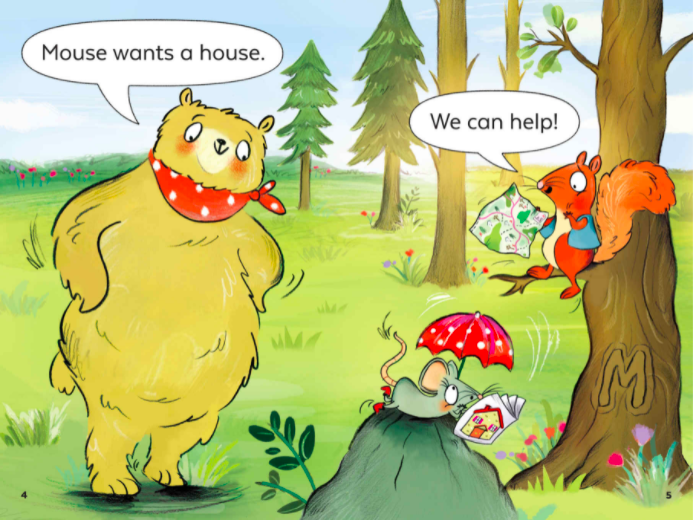
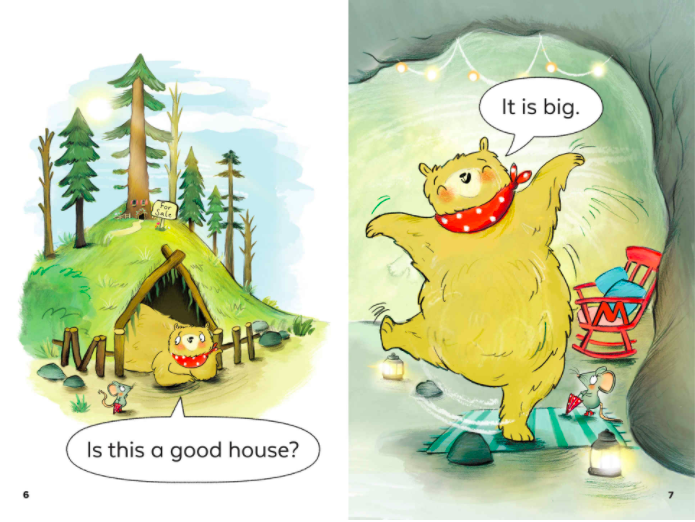
As the story opens, Mouse is looking through a house magazine. “Mouse wants a house,” Bear says. Squirrel tells readers, “Mouse wants a good house.” Bear finds a house for Mouse right away in a cave in a hill. It is so big that Bear can even fit inside. “You can live here,” Bear says. But Mouse says, “No, thank you. It is too big!” Squirrel thinks a leafy nest up in a tree would make the perfect house. But once up on the branch, Mouse says, “No, thank you. It is way up.”

The friends look up, down, under, and all around – even at some houses on the water – but none of them are quite right for Mouse. Hmmm…. Mouse and Squirrel lie on one end of a log that’s balanced on a rock to think, while Bear rests his foot on the other end. “Where is a house for Mouse?” Bear wonders as he steps down hard on the log, sending Mouse and Squirrel flying. They land right in front of the perfect house – and it’s for sale! “It is a good house,” Bear declares. Mouse packs up a wagon with boxes and in no time is moved into the cozy home at the base of a tree.
celebrate-picture-books-picture-book-review-a-house-for-mouse-map

Image copyright Clair Rossiter, 2021, text copyright Jody Jensen Shaffer, 2021. Courtesy of Highlights Press.

Kids will enjoy helping Bear, Mouse, and Squirrel find a new house for Mouse while they also look for the letter M hidden in some pretty creative places. Trees, furniture, fencing, home decor, and other natural homes all sport the letter M for eagle-eyed readers to find. As the friends search up, down, under, and in, children also learn these spatial relationships. They’re also introduced to the idea of “far away” and “near,” as the tree Mouse eventually moves into is seen with a “For Sale” sign from afar early in the story and increasingly close as the story goes on.

The matching puzzle at the end of the story invites kids to match mug, map, and mouse to their pictures, while enticing them to find these objects throughout the pages as well as others, such as magazine, mat, mushroom, and scuba mask.
celebrate-picture-books-picture-book-review-a-house-for-mouse-cave

Image copyright Clair Rossiter, 2021, text copyright Jody Jensen Shaffer, 2021. Courtesy of Highlights Press.

Just as in Where is Bear?, Jody Jensen Shaffer charms new readers with a question that will pique any child’s interest: Where will Mouse live? In this story Shaffer introduces slightly longer sentences while again incorporating a mix of statements, exclamations, and questions and repeated phrasing.

Children will look forward to spending more time with Bear, Mouse, and Squirrel in the familiar setting, enhanced with new sights that give kids and adults an opportunity to talk about the variety of animal homes found in nature. Clair Rossiter uses the same appealing color palette and decks out Bear, Squirrel, and Mouse in their favorite outfits that makes sharing another reading adventure as comforting as coming home.

Ages 4 – 7

Highlights Press, 2021 | ISBN 978-1644723425 (Hardcover) | ISBN 978-1644723418 (Paperback)

Children’s Book Week Activity
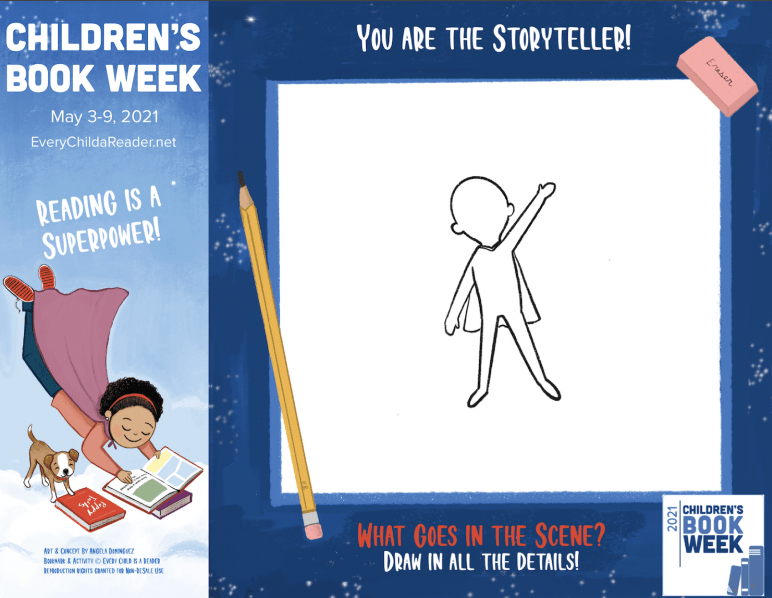
celebrate-picture-books-picture-book-review-children's-book-week-book-mark

Bookmarks and Activities


One of the highlights of Children’s Book Week are the bookmarks created by illustrators and author/illustrators. This year’s bookmarks and attached activities were designed by Angela Dominguez, Paola Escobar, Ebony Glenn, Oliver Jeffers, and Aram Kim. To download one or all five bookmarks as well as their accompanying activity sheet, visit the Every Child a Reader website.

celebrate-picture-books-picture-book-review-a-house-for-mouse-cover

You can find Bear and Friends: A House for Mouse at these booksellers

Amazon | Barnes & Noble | Books-a-Million

To support your local independent bookstore, order from

Bookshop | IndieBound

Picture Book Review
March 16 – National Panda Day

celebrate-picture-books-picture-book-review-when-I-draw-a-panda-cover

About the Holiday

National Panda Day was established to raise awareness of the dangers faced by these favorite, adorable animals. Destruction of the vast bamboo forests on which pandas rely for food, coupled with their low birth rate has resulted in their being placed on the endangered list. Conservation groups as well as zoos and other animal sanctuaries are working to breed and protect these gentle black-and-white beauties. If you’d like to get involved, consider donating to a local zoo program or other environmental group.

Thanks to Simon & Schuster for sharing a digital copy of When I Draw a Panda for review. All opinions of the book are my own.

When I Draw a Panda

By Amy June Bates


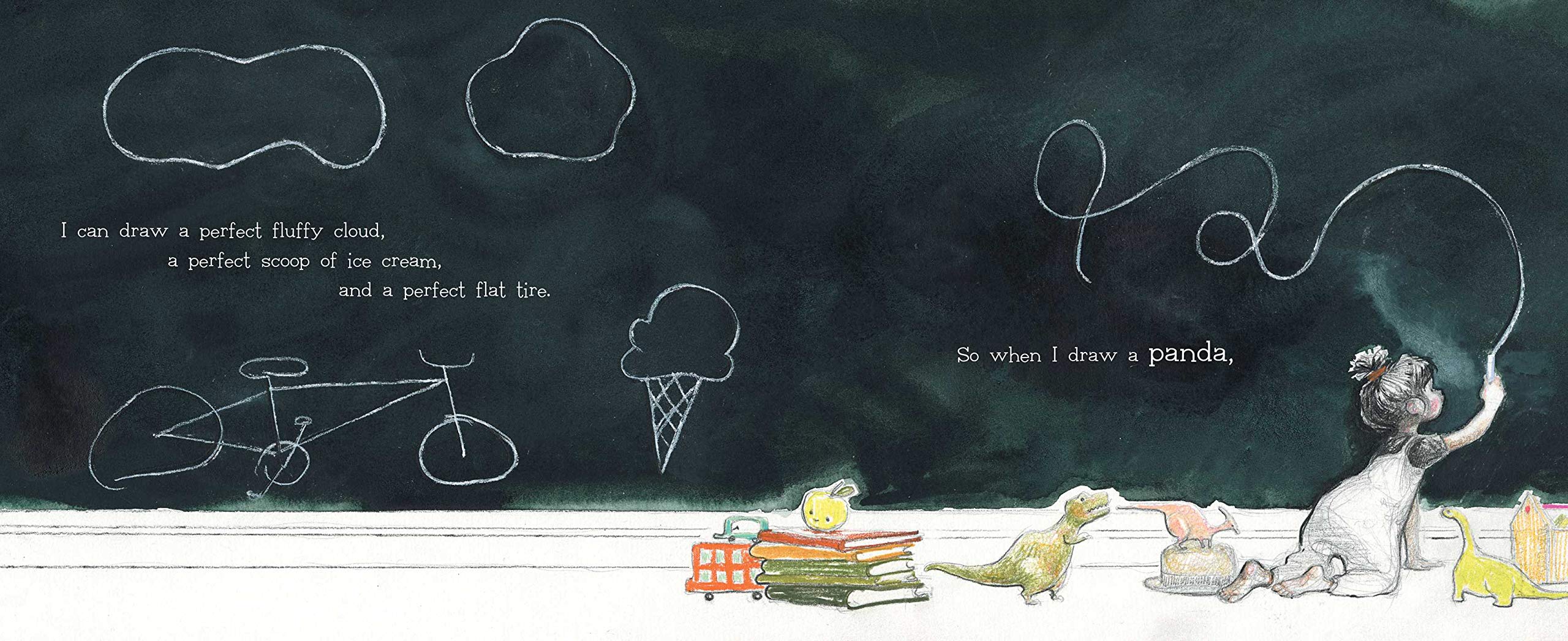
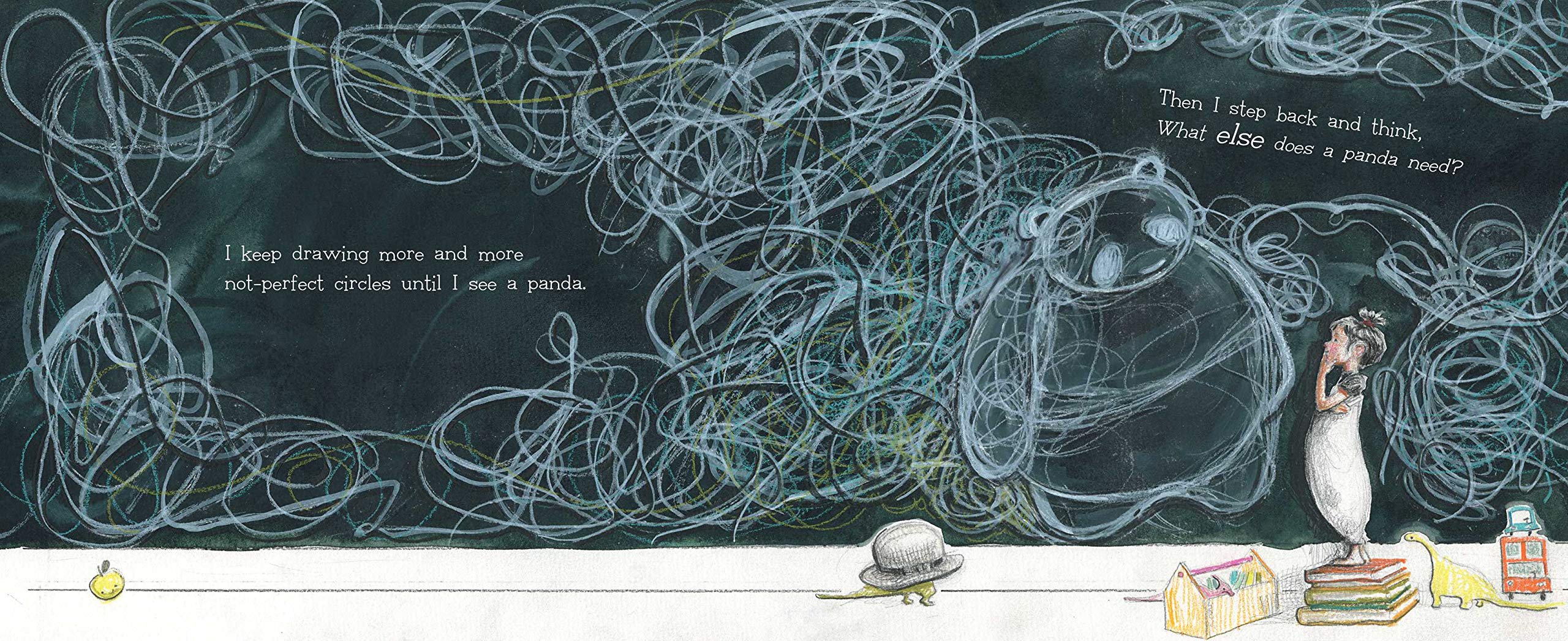
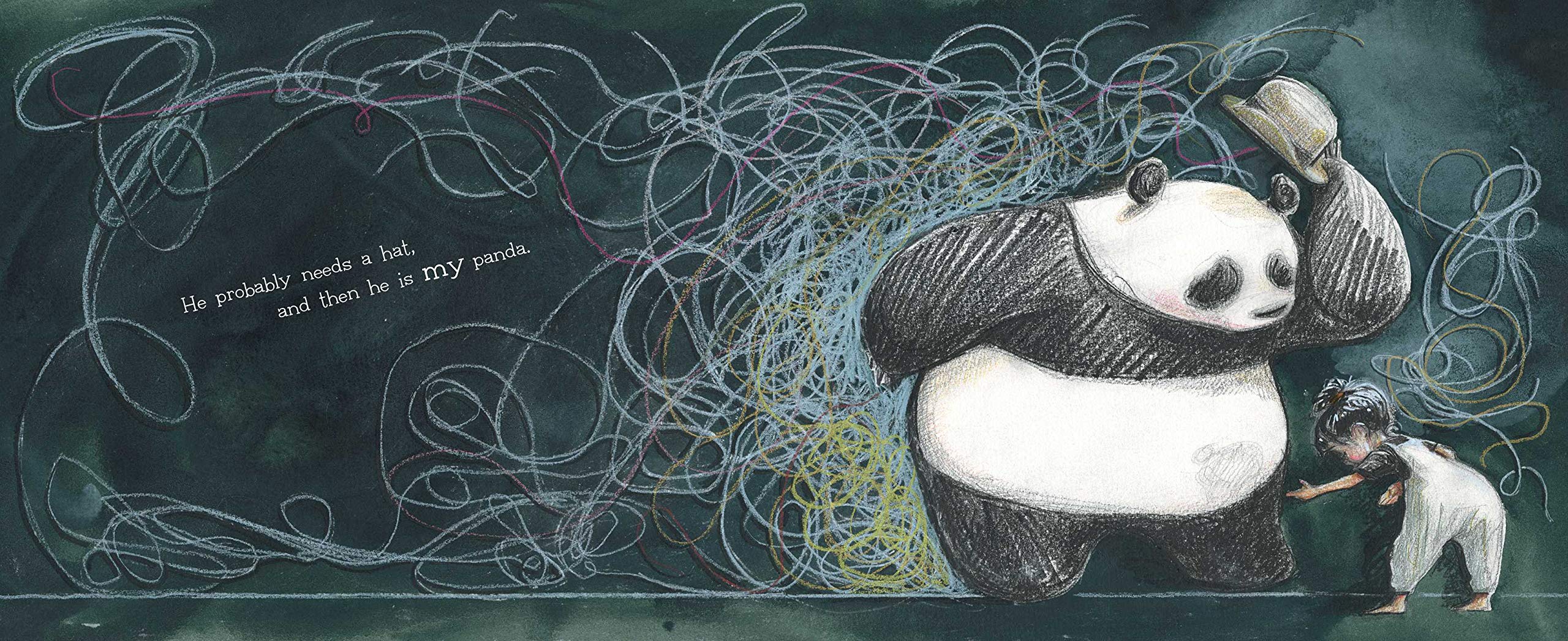
A little girl, art box in hand, gazes at her full-wall blackboard and tells readers “I love to draw.” She tells them, though, that “when they say to draw a perfect circle, [hers] turns out a little wonky.” There are things she can draw perfectly, like a cloud or a flat bicycle tire, and to draw a panda she just keeps drawing circles until one appears. Then she gives it a personal touch and makes it hers.

celebrate-picture-books-picture-book-review-when-I-draw-a-panda-cloud

Copyright Amy June Bates, 2020, courtesy of Simon & Schuster/Paula Wiseman Books.

The panda also has its own style of drawing, which includes drawing a castle the left way “when someone tells him to draw a castle the right way.” The panda has his own interpretations of pictures people tell him to draw, and sometimes he gets distracted by something better, begins to daydream, and forgets what he was told to draw. The panda shows the girl how to draw a dragon from a squiggle.

celebrate-picture-books-picture-book-review-when-I-draw-a-panda-panda

Copyright Amy June Bates, 2020, courtesy of Simon & Schuster/Paula Wiseman Books.

The girl says that she has her individual way of drawing too, and “when they say to draw it ‘this way,’” she asks, “‘Why?’” When she does draw a picture the way they want her to, she changes it later. Sometimes people tell the girl her drawing won’t work or remind her to stay in the lines, but the drawings turn out just fine. And when people can’t figure out what she and her panda have drawn, they let it remain a mystery. The girl and her panda can draw quietly, but there are times when their pencils like to ROAR! Then they go willy-nilly, the girl says, to “somewhere that makes us happy.”

celebrate-picture-books-picture-book-review-when-I-draw-a-panda-hat

Copyright Amy June Bates, 2020, courtesy of Simon & Schuster/Paula Wiseman Books.

Amy June Bates celebrates the imagination and creativity of kids who, when given paper and freedom, will draw a unique picture every time, a masterpiece. Her storytelling in which the young artist counters the instructions of all of the “theys” who tell her to draw a “perfect” circle, castle, or other shape, is reassuring and uplifting to children who are proud of the artwork they do—artwork that is just what they want it to be. The girl’s honesty will resonate with readers of all ages who engage in the creative process, whether its art, writing, music, dance, inventing, or other discipline.

Bates’ own distinctive art shines in her illustrations of a child’s room that any kid will envy. One wall is painted completely with chalkboard paint, allowing her to give full expression to her imagination. Kids will appreciate the second and third spreads in which the girl demonstrates her “wonky” circles and then reveals that these become “perfect” clouds, ice cream cones, and flat tires. As the panda emerges from a great storm of squiggles, the girl’s imagination comes to life, and readers will cheer her on as she turns “the right way,” “something pretty,” and a “perfect” character or animal on their heads with panache and humor.

The front endpapers depict a series of familiar step-by-step diagrams that show how to draw a perfect circle, panda, princess, pirate, and more. The final diagram includes a fancy frame in which “something perfect” should be drawn. In the endpapers, these same diagrams appear covered in crayon scribblings, and the final frame holds a drawing of the girl herself.

Encouraging, freeing, and a delightful celebration of the ingenuity of children, When I Draw a Panda is a book kids will ask for again and again. This one’s a must for home, classroom, and public library collections.

Ages 4 – 8

Simon & Schuster/Paula Wiseman Books, 2020 | ISBN 978-1481451482

Discover more about Amy June Bates, her books, and her art on her website.

National Panda Day Activity

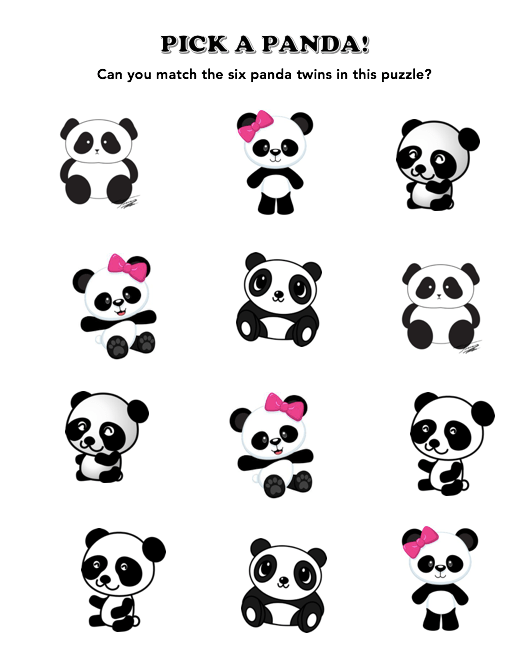
Screen Shot 2021-03-15 at 8.01.44 PM

Pick a Panda! Puzzle


Can you match the six twin pandas in this printable puzzle?

Pick a Panda! Puzzle

celebrate-picture-books-picture-book-review-when-I-draw-a-panda-cover

You can find When I Draw a Panda at these booksellers

Amazon | Barnes & Noble | Books-a-Million

To support your local independent bookstore, order from

Bookshop | IndieBound

Picture Book Review
February 9 – It’s Creative Romance Month

celebrate-picture-books-picture-book-review-bear-meets-bear-cover

About the Holiday

February, the month of love, is a perfect time to think up creative ways to surprise that special person in your life with a romantic gesture, exciting date night, or fun adventure that will add spice and fun to your relationship. With a little imagination you can find unique ways to show all the love that’s in your heart. 

I’d like to thank Bloomsbury Children’s Books for sharing Bear Meets Bear with me for review consideration. All opinions on the book are my own.

Bear Meets Bear

By Jacob Grant


Bear was waiting for the teapot he and Spider had ordered to arrive. It was exciting to think of getting something new delivered. At last the doorbell rang. When Bear opened the door, he found Panda, a delivery person he’d never seen before. She asked him to sign for his package, but Bear was smitten. “His heart beat fast…. He wanted to say something clever, or funny, or anything at all,” but he couldn’t.

celebrate-picture-books-picture-book-review-bear-meets-bear-delivery

Copyright Jacob Grant, 2020, courtesy of Bloomsbury Children’s Books.

The delivery woman asked for his signature again, and finally he was able to sign the sheet. He watched Panda peddle away on her delivery bike. Spider thought Bear’s predicament was quite funny. Bear rushed to his computer and ordered another teapot. Bear waited and waited. He watched out the window, hoping to see Panda’s delivery bike roll up.

celebrate-picture-books-picture-book-review-bear-meets-bear-waiting

Copyright Jacob Grant, 2020, courtesy of Bloomsbury Children’s Books.

Bear was just considering ordering another tea pot when he saw Panda coming up the walk. But when she handed him the box and asked him to sign, Bear just stood silently again. “Spider felt sorry for his friend.” Bear ordered another teapot and another and another. Never could he summon the courage to talk to Panda, even though Spider encouraged him. Standing among all of the boxes of teapots, Spider told him he should “invite her to tea” or “at least remember to breathe” when Panda came to the door.

Bear agreed. He would order one more teapot and talk to Panda when it arrived. Bear waited with anticipation. But when the doorbell rang, it wasn’t Panda standing there, but a “gruff raccoon.” “Bear’s heart hurt.” He bemoaned the missed opportunities and regretted all the teapots. Spider wanted to help. He wrote a note and headed out to find Panda. He went from door to door asking if anyone had seen her. Finally, he found her at Duck’s house.

celebrate-picture-books-picture-book-review-bear-meets-bear-sad

Copyright Jacob Grant, 2020, courtesy of Bloomsbury Children’s Books.

The next day Panda was excited to see Panda on his doorstep. She thanked him for his invitation to a tea party. Bear felt himself freeze, but then he told her he would be just a minute. He cleaned up the scattered teapots and welcomed her in. Soon Bear and Panda were chatting and laughing like old friends.

After Panda said goodbye, Bear thanked Spider and said that Panda was very nice but that they would “not be meeting for tea again.” It turned out that Panda didn’t like tea! Bear was nonplussed, but thought it was “all rather funny.” The next time he and Panda met, Bear served lemonade. And what about all those teapots? Bear held a yard sale!

celebrate-picture-books-picture-book-review-bear-meets-bear-tea-party

Copyright Jacob Grant, 2020, courtesy of Bloomsbury Children’s Books.

Fans of Jacob Grant’s Bear and Spider series know that Bear is often hesitant to put himself out there, to try something new, or even, sometimes, to leave the house. It might be because his feelings are so strong or he doubts himself  – or a little of both. Fortunately, Bear has his good friend Spider who supports him and gives him a nudge when he needs it. When Bear meets Panda and is smitten, he, like many people, can’t find the exact right words among all those feelings; a simple “hello” doesn’t seem like enough. Grant understands. Enter Spider, who offers a gentle dose of honesty and provides always-polite Bear with an opportunity to shine. When Bear discovers that Panda doesn’t like tea, Grant also shows readers that conditions don’t have to be perfect to make a new friend and that a little humor goes a long way toward smoothing things over.

Grant’s tranquil color palette and simple shapes make it easy for readers to immerse themselves in Bear’s feelings, empathizing with his all-too-human predicament while enjoying the comical collection of all those tea pots. When Bear watches out the window day after day, willing Panda to return only to be filled with fear and anxiety when she does, Grant perfectly captures that “oh no, now what?” emotion as Bear’s paws fly to his face and his eyes widen. Likewise, Bear’s regrets are palpable as, surrounded by boxes, he buries his head in the chair. Throughout, Spider is there, weaving his web, strumming his banjo, and watching out for Bear. Wordless images of Bear and Panda enjoying lemonade together and Bear’s yard sale let kids know it has all turned out all right.

A charming, poignant, and reassuring addition to the Bear and Spider series, Bear Meets Bear,  a story about overcoming emotions that hold us back, is highly recommended for home, school, and public library bookshelves.

Ages 3 – 6

Bloomsbury Children’s Books, 2020 | ISBN 978-1547604241

Discover more about Jacob Grant, his books, and his art on his website.

Creative Romance Month Activity

celebrate-picture-books-picture-book-review-ceramic-mug-craft

Create a Mug


If you’re kids are looking for a gift to make for a family member or a friend for Valentine’s Day or any time, a personalized mug makes a creative way to share a little love every time it’s used. 

Supplies

  • Plain ceramic mug
  • Bakeable markers or paint

Directions

  1. Design and color your mug
  2. Follow directions on the markers or paint to properly bake on your decoration and make it permanent.

celebrate-picture-books-picture-book-review-bear-meets-bear-cover

You can find Bear Meets Bear at these booksellers

Amazon | Barnes & Noble | Books-a-Million

To support your local independent bookstore, order from

Bookshop | IndieBound

Picture Book Review

December 22 – Get Ready for Winter

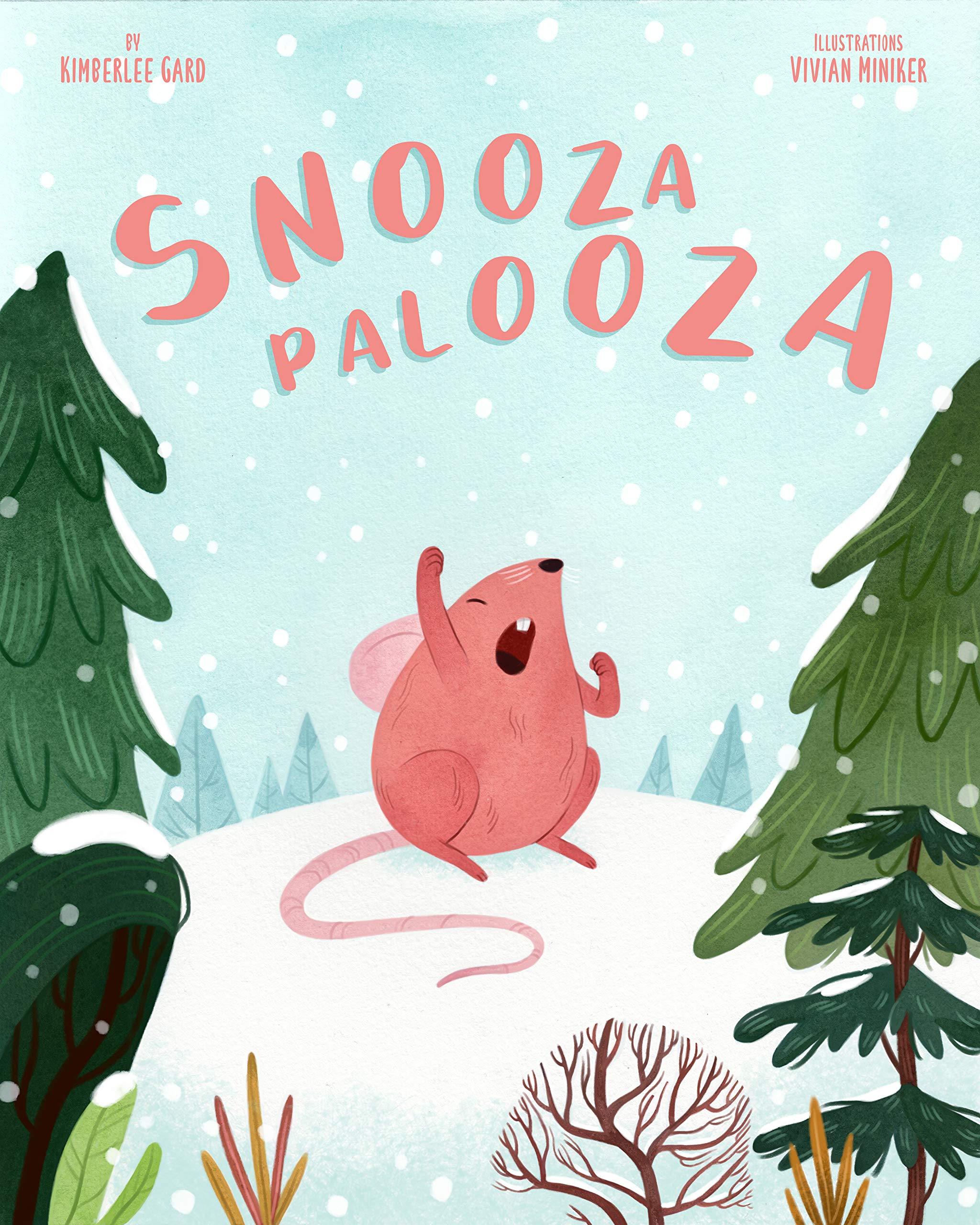
celebrate-picture-books-picture-book-review-snoozapalooza-cover

About the Holiday

As the weather turns colder and activities move indoors, reading becomes a cozy way to spend time together for all ages. Whether your kids like books that are funny, poignant, suspenseful, or meant to teach about a new or favorite subject, there are books, authors, and illustrators to be discovered or to love again. So settle in for a winter of wonder – starting with today’s book!

Thanks goes to Familius for sending me a copy of Snoozapalooza for review consideration. All opinions on the book are my own.

Snoozapalooza

Written by Kimberlee Gard | Illustrated by Vivian Mineker


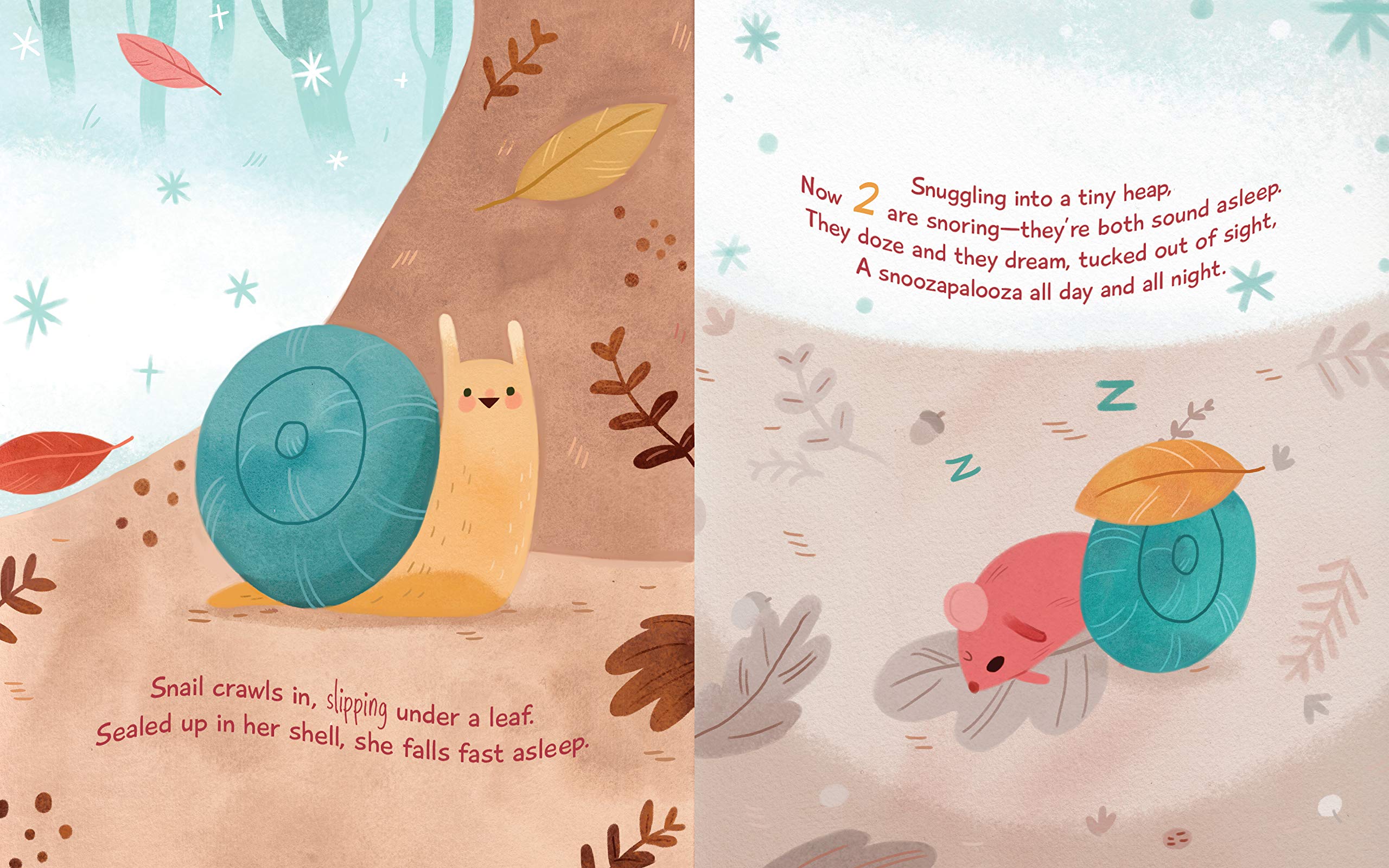
A snowfall has begun, ushering in a long nap for some woodland creatures. Mouse is the first to hide “in a den that’s cozy and small. / Snuggling into a wee-sized heap, / 1 begins snoring and drifts off to sleep.” Soon, little Mouse is joined by even smaller Snail. Pulled into her shell next to Mouse, “they doze and they dream, tucked out of sight, / A snoozapalooza all day and all night.”

celebrate-picture-books-picture-book-review-snoozapalooza-snail

Image copyright Vivian Mineker, 2020, text copyright Kimberlee Gard, 2020. Courtesy of Familius.

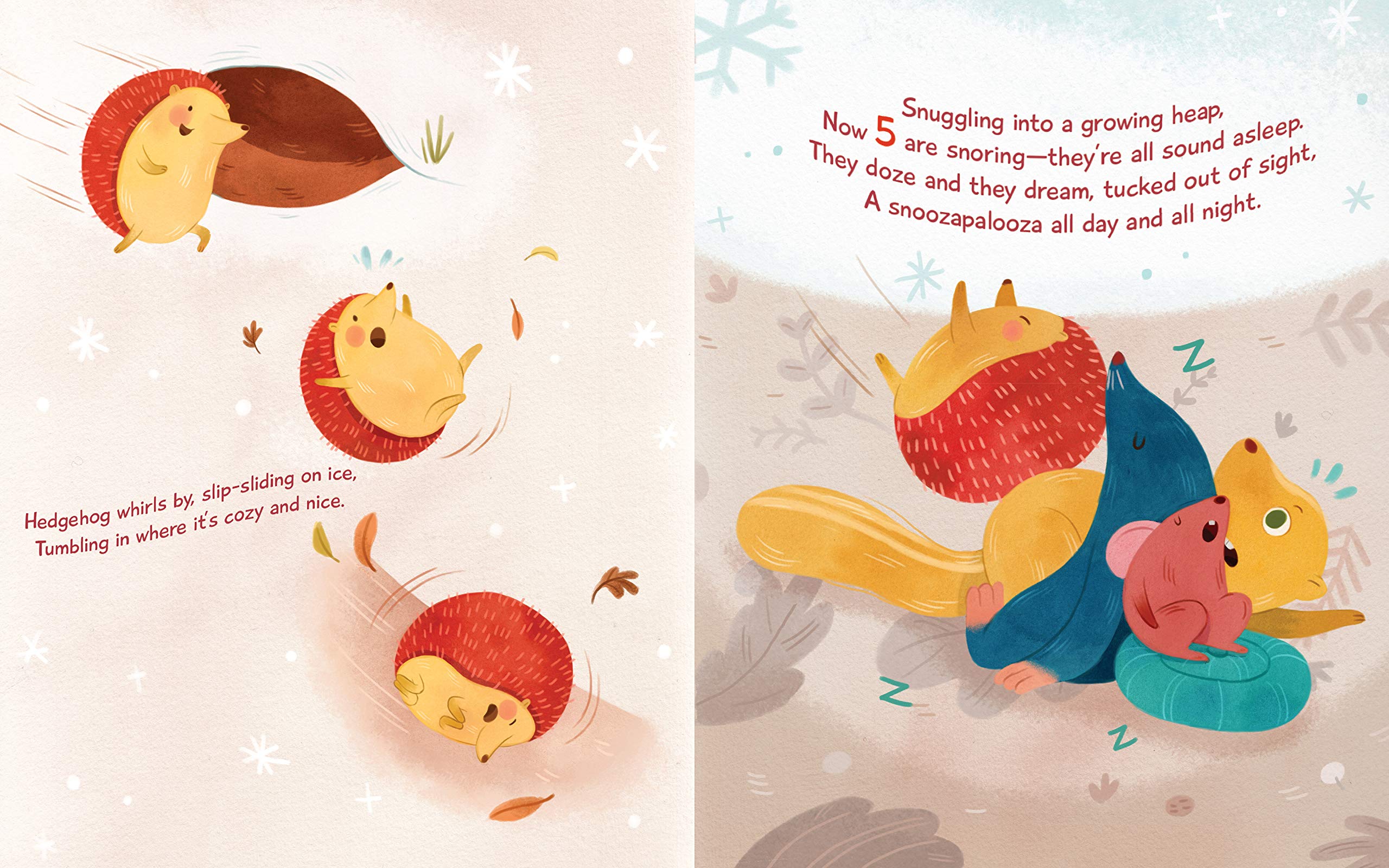
Also looking for a place to snuggle in for the winter, Mole tunnels under and right up into the cozy den and promptly finds a spot on the other side of Mouse. Next to discover this cuddly winter bed is chipmunk, and then hedgehog accidentally tumbles in head first when she “whirls by, slip-sliding on ice.” Who can pass by an enticing hole without looking in? Certainly not Rabbit! “Snuggling into a rising heap, / Now 6 are snoring—they’re all sound asleep.”

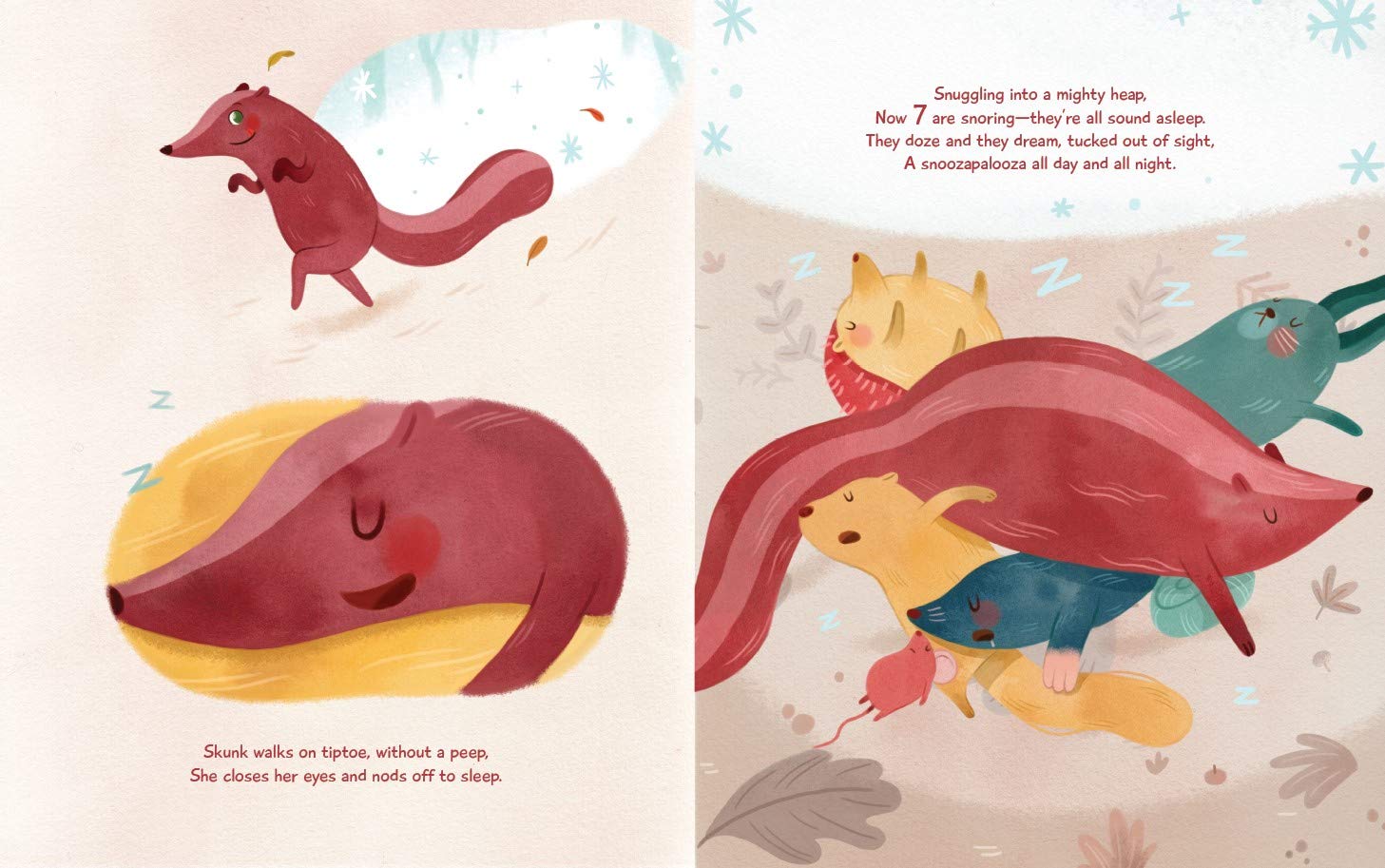
Skunk doesn’t announce herself, but tiptoes in and adds herself to the warm pile. All 7 “doze and they dream, tucked out of sight, / A snoozapalooza all day and all night.” Three more forest animals join in this seasonal sleepover and doze and dream until… there is a “Zzzz sounding ROAR…Rattling clear ‘cross the floor…Rumbling right out the door.”

celebrate-picture-books-picture-book-review-snoozapalooza-skunk

Image copyright Vivian Mineker, 2020, text copyright Kimberlee Gard, 2020. Courtesy of Familius.

As other woodland animals come out to greet the tender green buds and soft grass of spring, they quiver with fright at this horrible noise. Bravely, they go in search of its origin. When they find the den, they wonder how they can stop this “10-animal snore.” Little Wren has an idea and begins to tweet. Soon, the other animals—10 in all—join in singing “‘Wake up! Wake up! Wake up!’” Slowly, Mouse “stretches and yawns” and is joined by his other friends. They’re happy to see spring, but their long nap was so restful that they promise to all come back next year.

celebrate-picture-books-picture-book-review-snoozapalooza-hedgehog

Image copyright Vivian Mineker, 2020, text copyright Kimberlee Gard, 2020. Courtesy of Familius.

Kimberlee Gard’s soothing and humorous story is a dream of a counting book as one-by-one ten woodland animals pile up in a cozy den for their long winter’s sleep. Her lyrical repeating phrases are sweetly lulling while also infused with the giggly fun of a sleepover. As each new animal enters the den and promptly falls asleep, kids will love reading along with the now-familiar two last sentences, especially that word that tickles the tongue: “snoozapalooza.”

Kids will eagerly await who comes next, and Gard delights with the clever ways each animal joins in the growing heap (another tantalizing word not often heard). When spring comes, readers will enjoy counting up to ten again when birds and animals band together to wake the snoozers. The hibernator’s final vow to return next winter adds a warm theme of friendship to this original tale.

Vivian Mineker’s soft-hued illustrations are adorable, downy accompaniments to Gard’s storytelling. As each animal finds shelter in the den, Mineker plays with their sleeping positions as they all snuggle close for maximum warmth. Kids will laugh to find who’s being used as a pillow next and how all of these animals can stack up in such as small space. Each page invites children to count and count again to make sure they’re keeping up with all the new sleepers. Distinctive colors for each animal help younger readers find them all. A two-page spread lets kids see and count all the members of the wake-up crew, while the next page spread allows them to count all of the new friends made in this charming story.

A clever and enchanting book, Snoozapalooza will engage kids on many levels. Not only is it a fun and funny counting book, but it teaches the names of twenty woodland animals and would be a cuddly story to share at bedtime. Snoozapalooza would be an often-asked-for addition to home, school, and public library bookshelves.

Ages 4 – 8

Familius, 2020 | ISBN 978-1641702553

You can find more books from Familius that joyfully reflect the habits of happy families, including reading, talking, laughing, eating, working, loving, healing, learning, and playing together as well as the Familius blog The Habit Hub here.

Discover more about Kimberlee Gard and her books on her website.

To learn more about Vivian Mineker, her books, and her art, visit her website.

Get Ready for Winter Activity

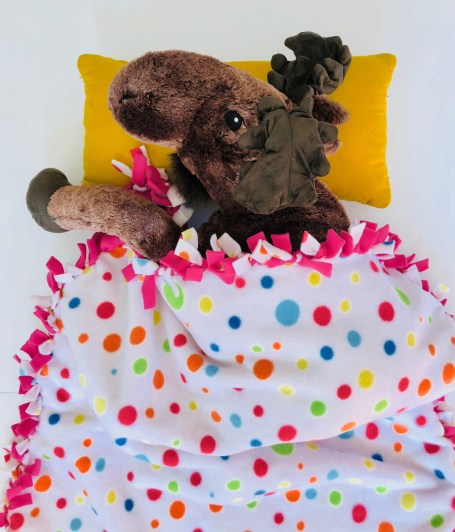
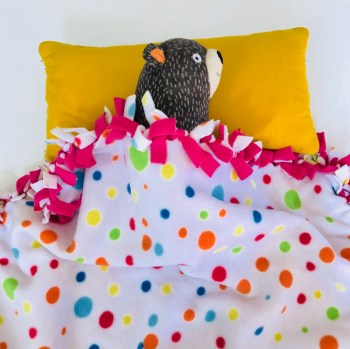
celebrate-picture-books-picture-book-review-sleep-buddy-craft

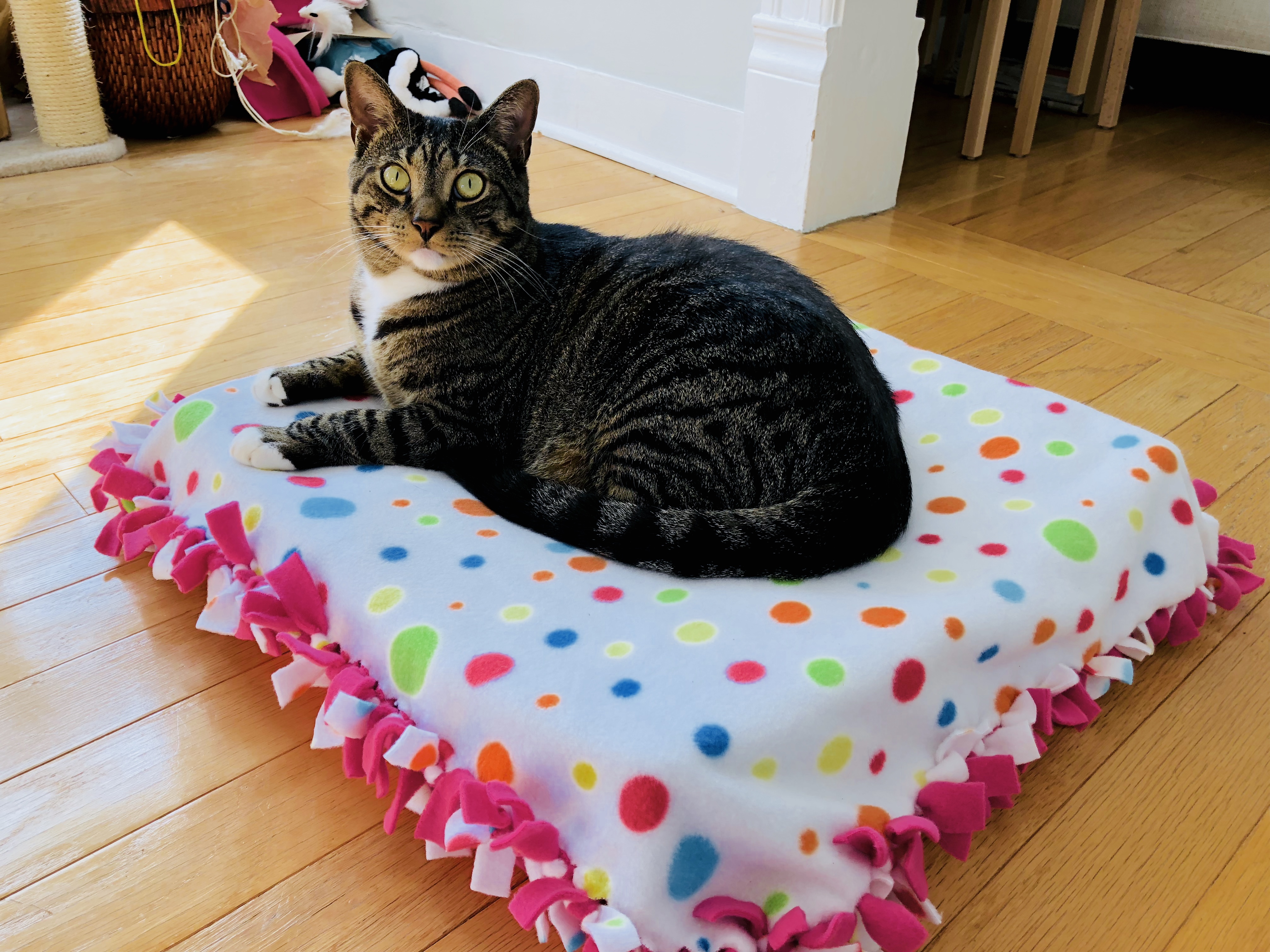
Everyone needs a blanket sometimes to feel cozy and warm! With this craft you can make a blanket for yourself, a stuffed animal, or even a fleecy bed for a pet! Children from ages 5 or 6 and up will enjoy helping to tie the tabs. For younger children, using fabric glue to attach the two pieces of fleece or cutting just one piece of fleece allows them to join in the craft fun.

Supplies

  • 2 pieces of fleece, solid, patterned, or a mix of both
  • Scissors
  • Measuring tape
  • Fluff or pillow (optional for pet bed)
  • Fabric glue (optional)

celebrate-picture-books-picture-book-review-sleep-buddy-craft

Directions

  1. Lay out one piece of fleece and measure a size that will make a comfortable blanket for a child or a stuffed animal or is large enough for a pet bed
  2. Add 3 inches to that measurement on each side for the tie tabs
  3. Cut the fleece
  4. Lay out the second piece of fleece and cut it to the same size as the first piece
  5. With both pieces of fleece together cut three-inch long by ½ – ¾-inch wide tabs all along each side. (If using fabric glue omit this step.)
  6. At the corners, four tabs will be cut off on each piece of fleece

To Make a Blanket

  • Tie the top and bottom tabs together on all sides

To Make a Pet Bed

celebrate-picture-books-picture-book-review-cat-bed-craft

  1. Tie the tabs together on three sides
  2. Add the fluff or pillow insert
  3. Tie the tabs on the final side

celebrate-picture-books-picture-book-review-snoozapalooza-cover

You can find Snoozapalooza at these booksellers

Familius | Amazon | Barnes & Noble | Books-a-Million

To support your local independent bookstore, order from

Bookshop | IndieBound

Picture Book Review
 

November 5 – It’s Polar Bear Week and Interview with Paul Schmid

celebrate-picture-books-picture-book-review-little-bear-dreams-cover

About the Holiday

November means colder weather, snow, and – most importantly – ice. Ice means the fall polar bear migration to Churchill, Manitoba. Here, polar bears gather to wait for the sea ice to form on Hudson Bay so they can return to hunting seals. Polar Bear Week, sponsored by Polar Bears International, focuses on sea ice, the effects of climate change, and what we can do to ensure the polar bears’ survival. This year, people are encouraged to get involved from home. To learn more about the week’s activities and how you can help, visit Polar Bears International.

Thank you to Phaidon Press for sending me a copy of Little Bear Dreams for review consideration. All opinions about the book are my own.

Little Bear Dreams

By Paul Schmid


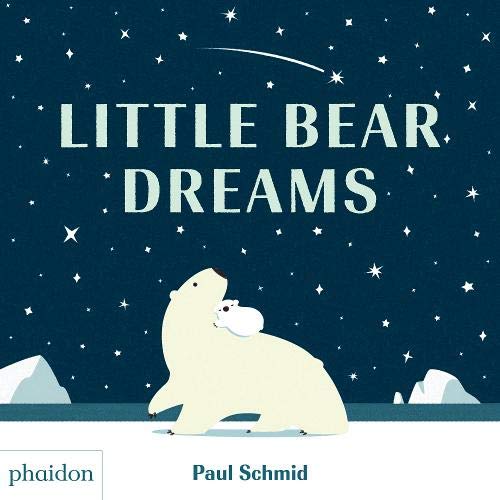
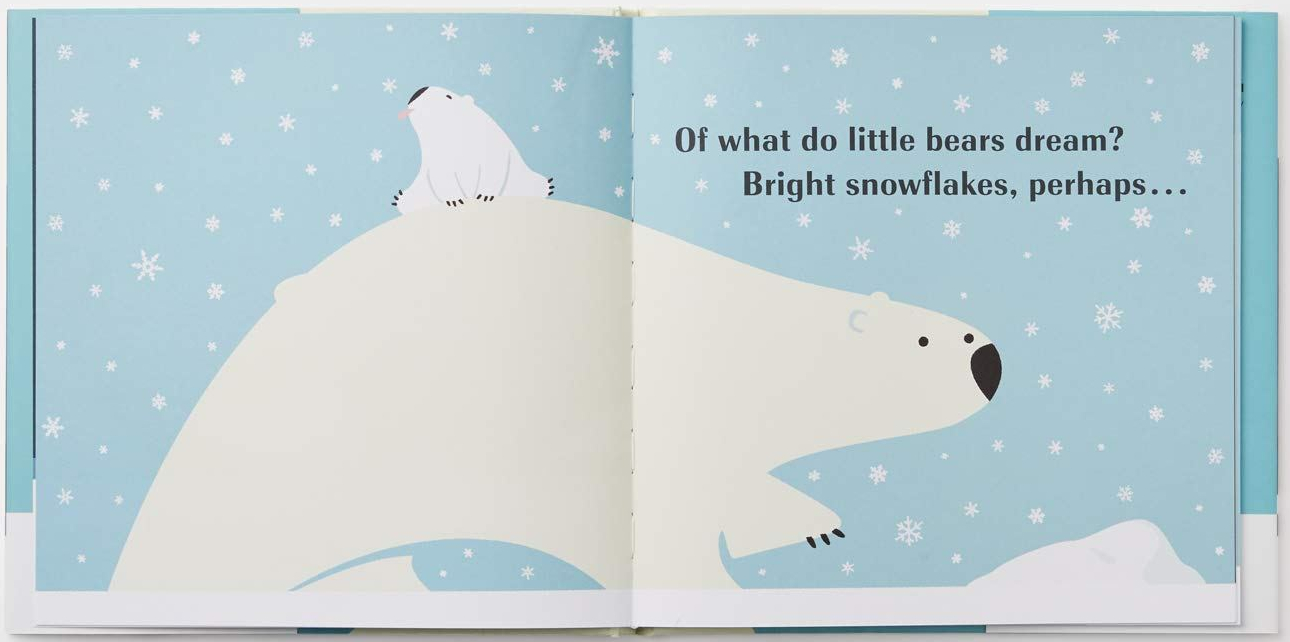
A baby polar bear rides atop Mom’s back, catching snowflakes on a little pink tongue. As the snowflakes change to twinkling stars in the dark night sky, a question hangs in the air—“Of what do little bears dream?” Perhaps it’s the frothy sweetness of “hot chocolate” or the delicious spiciness of “cold pizza.”

celebrate-picture-books-picture-book-review-little-bear-dreams-snowflakes

Copyright Paul Schmid, 2018, courtesy of Phaidon Press.

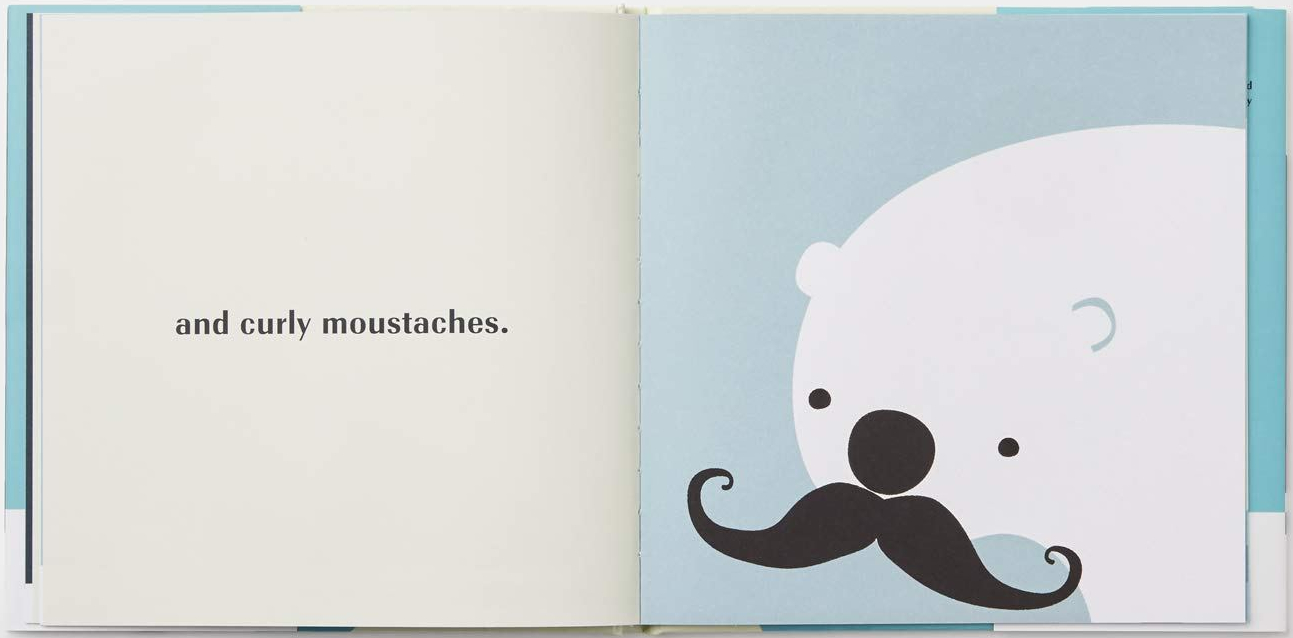
As the day brightens once more, maybe the baby imagines all kinds of things that lie beyond those “straight horizons” or giggles at wearing tickly, “curly moustaches.” There are so many things to discover, both big and small, short and tall, and blue—lots of blue in the frozen north. But night has come around again and it’s time for sleep. So, curl up with “soft, snowy beds. Warm fur…and frosty nights” and drift off to sleep.

celebrate-picture-books-picture-book-review-little-bear-dreams-moustaches

Copyright Paul Schmid, 2018, courtesy of Phaidon Press.

Paul Schmid’s snuggly story about an adorable polar bear pair rendered with soft curves, quiet blues, and sweet surprises is, simply, love in a book. The gentle text lulls little ones toward sleep while reminding them of the wonders of life. Images of opposites—hot and cold, straight and curly, big and small, and others—are full of charm and wit and give little readers lots to talk about or an invitation to fill in their own details.

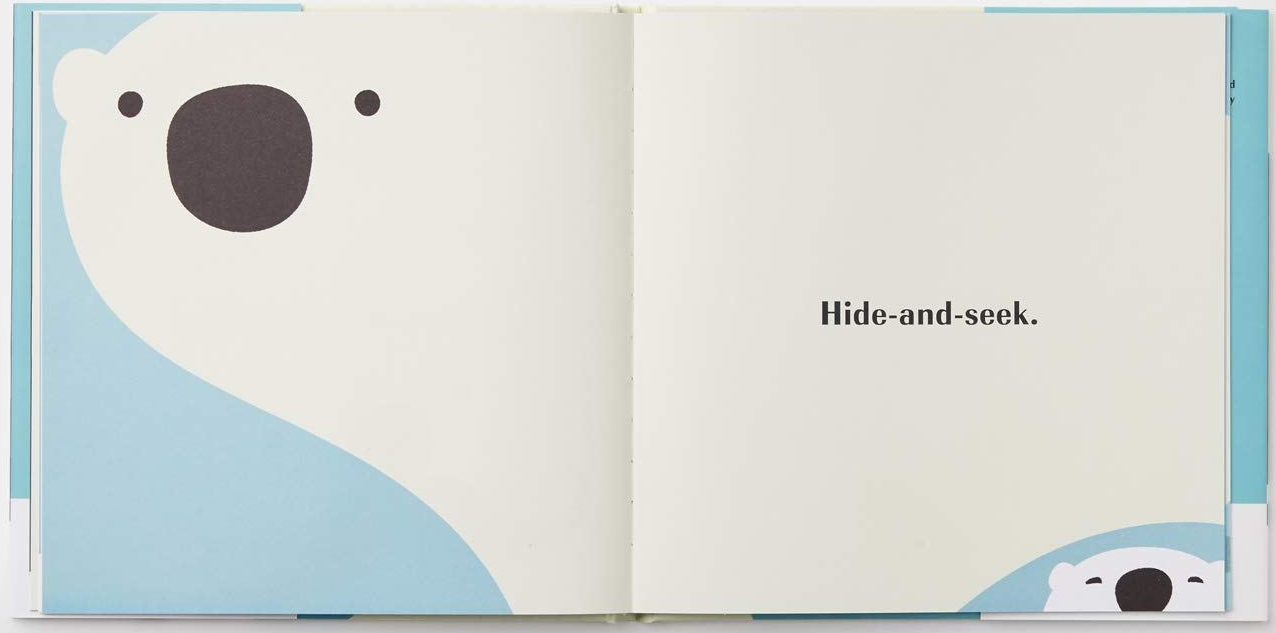
celebrate-picture-books-picture-book-review-little-bear-dreams-hide-and-seek

Copyright Paul Schmid, 2018, courtesy of Phaidon Press.

Schmid’s beautiful use of line, shape, and color expresses the loving relationship between baby and adult as the little one peeks from behind Mom, hides underneath her during a game of hide-and-seek, and nuzzles noses in a little bear kiss. Marshmallow-plump bunnies wait silently to play, and pudgy little polar bear twists to try and spy a stubby tail. Gorgeous perspectives show the magnitude of the night sky and the mother bear’s protective power. The moving image of the pair curled into a ball for sleep underneath a full moon and then risen to replace it as a little one’s shining light is the perfect ending to this story so rich in cuddles, caring, and comfort.

An excellent book for baby shower, birthday, and holiday gifts as well as an endearing addition to home libraries, Little Bear Dreams is a book you will find yourself reaching for again and again. It’s a sweet book for preschool classrooms and a must for public libraries.

Ages 2 – 5

Phaidon, 2018 | ISBN 978-0714877242

To learn more about Paul Schmid, his books, and his art, visit his website

Meet Paul Schmid

CPB - Paul Schmid Interview - head shot for Little Bear Dreams

I’m thrilled to be chatting with Paul Schmid today about his the inspirations of winter, following where ideas lead, and the role of that curly moustache in Little Bear Dreams.

Readers are always interested in the creative process that goes into a book. Can you talk us through how Little Bear Dreams came to be?

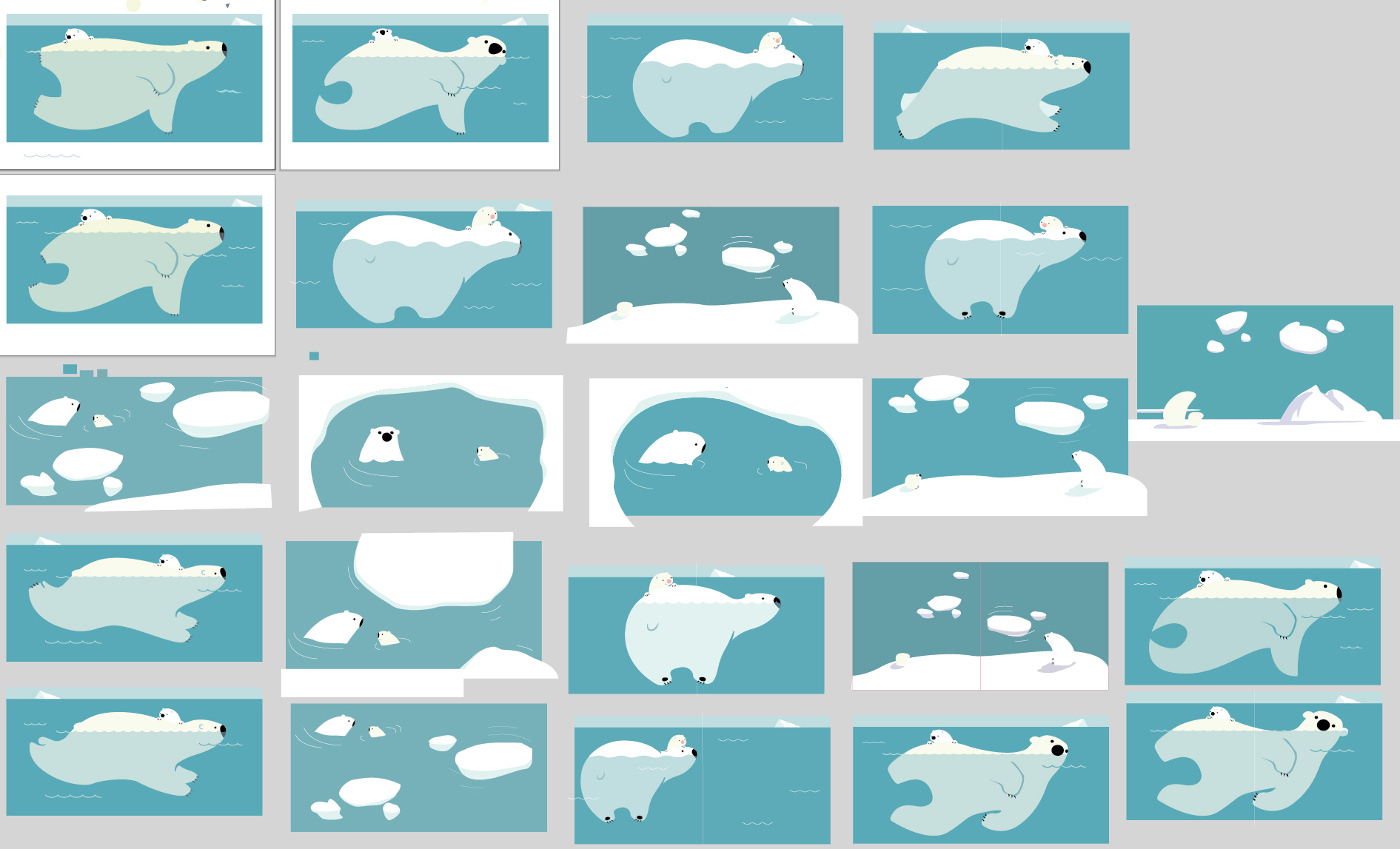
Little Bear Dreams started in a somewhat dreamlike way. I just began playing with the dramatic, graceful shapes of winter landscapes without knowing where I was going with it. I love winter, and since childhood have been fascinated by its stark simplicity and seeming contradiction of severity and softness.

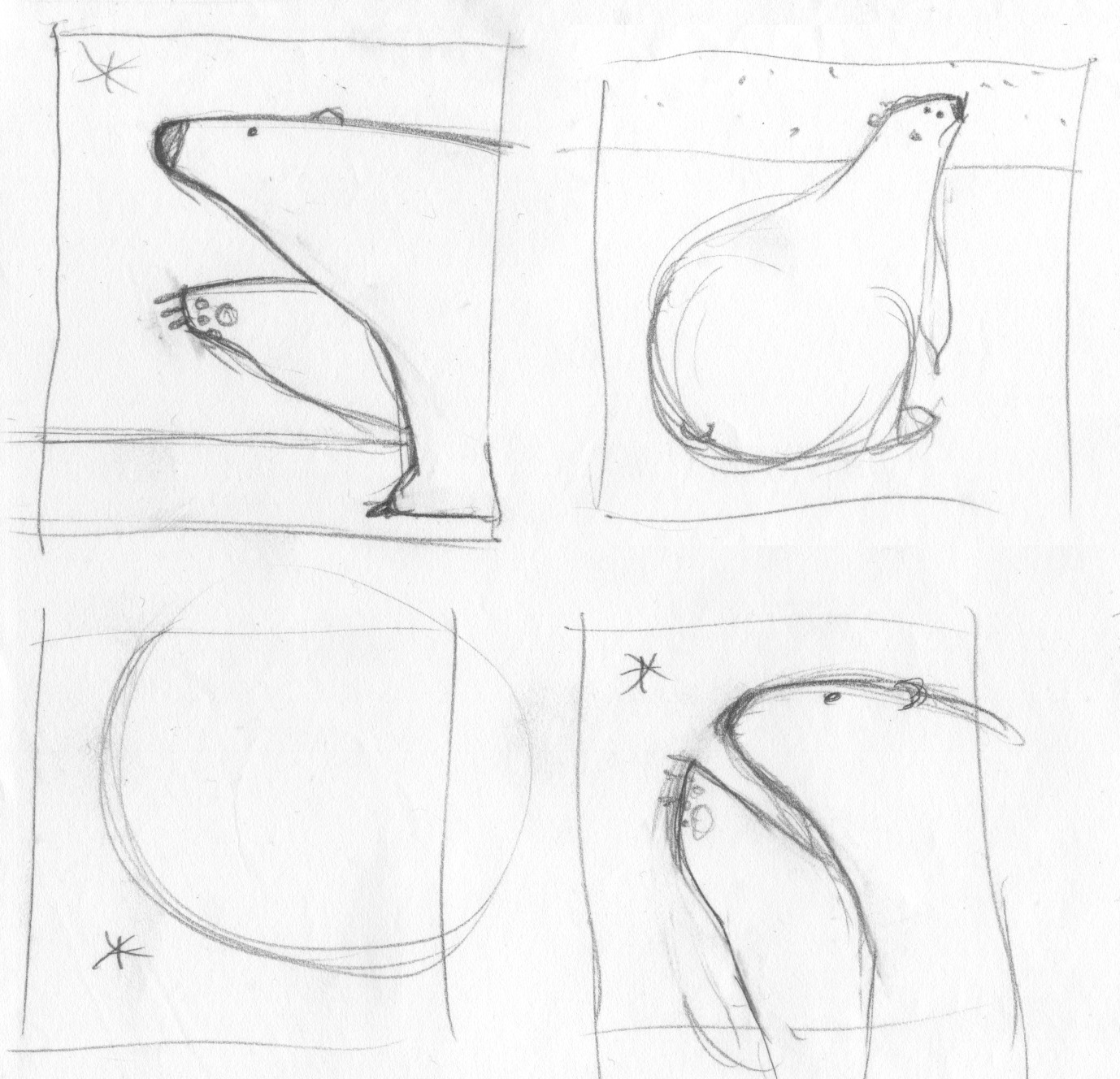
celebrate-picture-books-Paul-Schmid Interview-sketch-for-Little-Bear-Dreams

This was the start of it all. Roughly sketched musings on a bear in her environment.

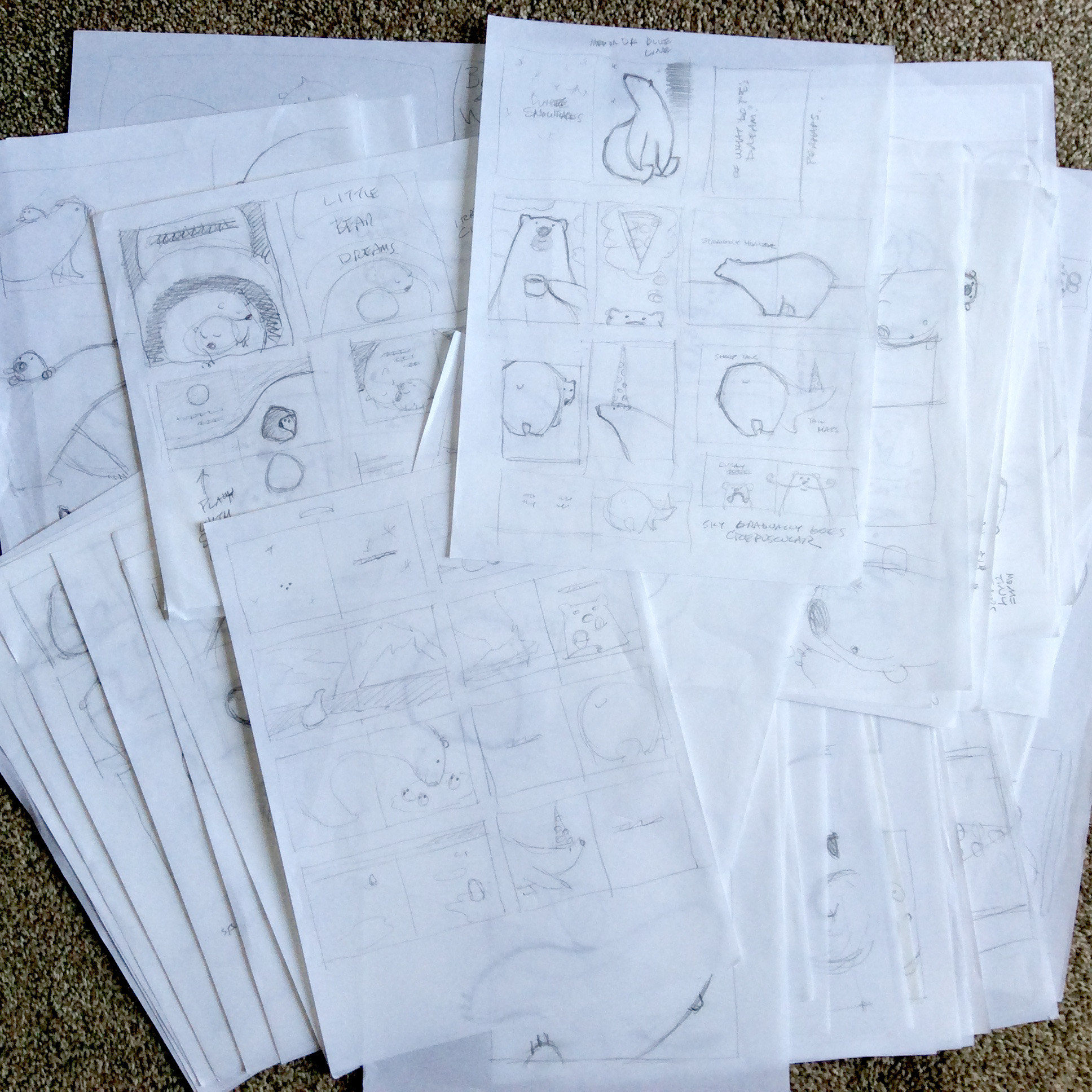
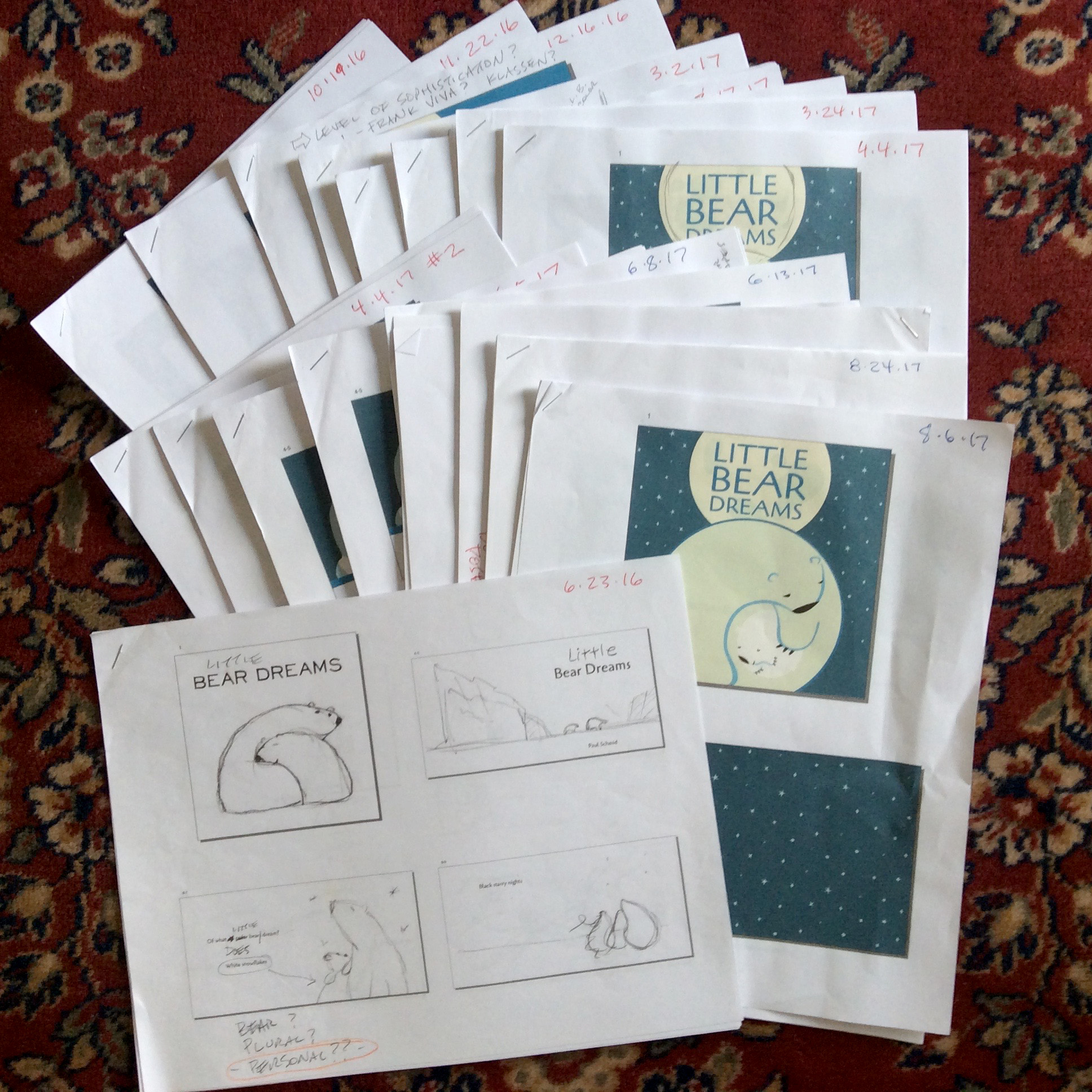
As dreams will do, the book evolved as it progressed. It took hundreds of sketches to bring this book to life. At one early point it was called “Black and White and Blue.” The more I sketched my characters, though, the more they began to assert their personality. We all eventually settled into a gentle, loving mother bear and her rather impish and imaginative little bear.

celebrate-picture-books-Paul-Schmid Interview-sketches-for-Little-Bear-Dreams

Sketches, sketches, sketches!

Ideas for stories can come from anywhere, but what for you makes an idea stick so that you develop it further?

DH Lawrence wrote: “If you try to nail anything down in the novel, either it kills the novel, or the novel gets up and walks away with the nail.”

I follow ideas perpetually. “Follow” being the operational word here. Many times I’ve tried to force an idea, and it generally ends up looking so. 

I follow until an idea becomes something or peters into nothing. Some ideas I’ve been following for years and haven’t arrived anywhere wonderful—yet. Some ideas drag me after them at a speed which shocks me. I guess the key is to always be receptive. Ideas will rudely wake me at 2 a.m., obliging me to creep into my studio and sketch or write.

celebrate-picture-books-Paul-Schmid Interview-blue-water-for-Little-Bear-Dreams

There are so many ways to convey an idea! I jokingly call the first few months of developing a book “The Period of Ten Thousand Decisions.” Here are explorations on just one spread from Little Bear Dreams: “Blue water.”

Little Bear Dreams began as an indulgence to play with simplicity in color and shape, visual and verbal rhythms and contrasts, but evolved also into a story of love and connection. Of gentleness and playfulness.

The idea is the boss. Not me. I just obey.

Your illustration style is very distinctive, and your adorable characters immediately inspire readers to feel empathy for them. Can you talk a little about the role of different shapes, line, white space, and even the use of small features in your illustrations?

I have a compulsion to express as much as possible in the simplest manner possible. It is a great pleasure to me to strip an illustration or sentence of all that gets in the way of advancing the story or mood or character of the book.

CPB - Paul Schmid Interview - more sketches for Little Bear Dreams

Although my illustrations seem simple, I’ve found simplicity a very complicated feat to achieve. With no busyness, what is there must be perfect. For me that requires a lot of drawing and redrawing.

But it must connect with a reader! Children live real, dramatic, joyous, painful, confused, confident, knowing, learning lives. I feel my job as a storyteller for children is to reflect and connect with the vitality of life they dwell in.

So when I draw a character in a situation or emotion I feel that emotion myself as I draw. The great illustrator Howard Pyle was quoted as saying: “Project your mind into your subject until you actually live in it.” 

In 2010 you were chosen as one of four illustrators to attend a fellowship with Maurice Sendak. What is the most memorable thing that he told you? What is your favorite memory from that experience?

Maurice was to me a shining example of emotional courage and depth and intelligence. I’ve never met anyone more brilliant and intuitive. He was unafraid of his feelings, of complexity, of embracing sadness and joy. 

For all he was a superstar, he was also amazingly generous and one of the most caring, attentive listeners I’ve ever known.

It is how he was as a person that has inspired me rather than any one thing he said.

My favorite memory of Maurice was a visit I paid to him about a year after the Fellowship. We took a walk and for hours discussed how elusive happiness is for an artist, the difficulty in waking our muses, the impossibility of not continuing to always create and express ourselves, the challenge and imperative of being truthful to kids, loss, death, life, beauty. The whole of our love for life and creating. 

As a speaker at  the 2015 Words, Writers, and West Seattle” series of the Southwest Seattle Historical Society, you talked about several of your books, including Oliver and His Alligator, which involves a surprising turn of events, and mention that kids love being shocked. In Little Bear Dreams, the baby polar dreams of things she would naturally see in her environment juxtaposed with things like cold pizza and curly mustaches. Can you discuss the benefits for young children of unexpected moments that cause surprise or giggles?

Kids are still putting the puzzle pieces together on their perceptions of “What is this thing called life?” Incongruities help reinforce our understanding of reality. As a little girl my own daughter enjoyed pointing out when something was not right. It is a source of humor for children and adults.

As I write I imagine a parent reading the book with their child and discussing it together. “Do polar bears eat pizza?” “No, that’s silly!” I endeavor to create those moments for a parent and child. My books such as A Pet for Petunia and Oliver and his Alligator are full of such opportunities. Surprise, along with the comfort of seeing true familiar things is the balance I sought for Little Bear Dreams.

Putting the child in the position of knowing something the book affects not to know is great fun for a young reader too.

As I watched the Word, Writers, and West Seattle event, I was thrilled to see you present The Story of Ferdinand as one of your childhood favorites. That book was also one of my favorites—the first one I remember truly loving. For me, as a quiet child, it was the story that was so validating, and for you, you said that even as a child you appreciated the perfection of the illustrations. Could you talk a bit about that relationship between a child and a book that is a beloved “first” in some way. Is that an idea you are aware of when creating a book?

One of the most gratifying results of creating books for kids is getting a note from a parent telling me it is their child’s favorite book; that they have to sleep with it under their pillow, or they’ve memorized the whole book. I love knowing I made something that touched a child so deeply.

I believe this profound connection is because a child reads so much more intensely than an adult. They seek in books information and affirmation of what they are feeling or thinking. They find adventure and discover possibility. Reading for kids is not just a distraction, it is an important part of their world.

Oh, and because of this I have a small personal conviction that the only reviewers of kid’s books should be kids. Ha!

What’s up next for you?

I am always working on new manuscripts! I’m having a great time this week with a particularly fun story I am sketching up. Not a bad way to spend my days.

A new endeavor I am also enjoying is designing images for greeting cards. One company, Great Arrow Graphics, has picked up about a dozen or so of my designs which are available in select stores or on line here: https://www.greatarrow.com/cards/cardlist/did/494

I have also set up a shop at society6, where you can buy quality prints of images from my books and some other fun stuff I’ve illustrated.

The shop lives here: https://society6.com/paulschmid

New designs are always on the way.

What’s your favorite holiday? Do you have an anecdote from any holiday that you’d like to share?

I find Winter Solstice particularly appealing, since for me it represents the paradox of life. Solstice marks the end of the shortening days, the return of light and warmth, of renewal. At the same time it also means the beginning of Winter, of coldness, hardship and patience. This is not a conflict to me but a lovely insight. Up cannot exist without down, it is its opposite that makes a thing itself be. 

celebrate-picture-books-Paul -Schmid-Interview-Little Bear Dreams-paul-at-mt-rainier

Paul hiking with Mount Rainier in the distance.

So at the moment of Winter Solstice we are able to feel simultaneously both joy and sadness, hope and fear. That is a concept I find strangely satisfying.

Thanks, Paul, for such an insightful talk! I wish you all the best with Little Bear Dreams and all of your books!

National Polar Bear Week Activity

CPB - Polar Bear scarf

CPB - Polar Bear Banner

Polar Bear Scarf or Banner


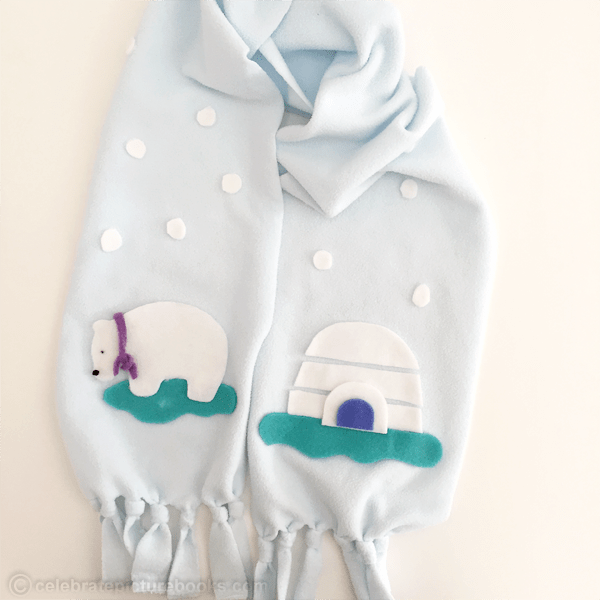
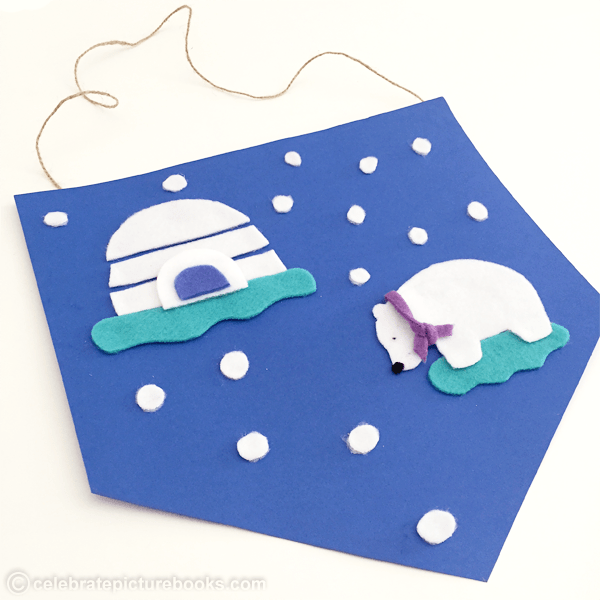
Polar bears aren’t cold in the winter—and neither should you be! Here are directions and printable templates for making a cute scarf to keep you warm, or—if you’d rather—a banner to warm up your room.

Supplies

  • Printable Polar Bear and Igloo Template
  • 1 Strip of blue fleece 4 ½ feet long x 7 inches wide for the scarf
  • 1 Piece of blue scrapbooking paper for a banner
  • Pieces of white, black, blue, and purple fleece or scrapbooking paper to make the polar bear, igloo, snowflakes, and ice floes.
  • String or twine for banner
  • Scissors
  • Fabric or paper glue

Directions for Scarf

To make the fringe at each end of the scarf:

  1. Make 7 cuts about 4 inches long
  2. Tie a knot at the top of each fringe section

To make the pieces for the scarf or banner:

  1. Trace the polar bear and igloo sections from the Printable Template onto white fleece and cut out
  2. Trace the two ice floes onto blue fleece and cut out
  3. Trace the door of the igloo onto blue fleece and cut out
  4. Trace the polar bear’s scarf onto purple (or any color) fleece and cut out
  5. Cut out round snowflakes
  6. Cut out a small circle from black fleece for the Polar Bear’s nose

On one end of the scarf:

  1. Glue the smaller ice floe on one end of the scarf
  2. Tie the bear’s scarf around its neck before gluing the bear to the scarf
  3. Glue the polar bear onto the scarf with its feet on the ice floe
  4. Glue on the polar bear’s nose
  5. Make a small dot for the polar bear’s eye with a marker
  6. Glue snowflakes above polar bear

On the other end of the scarf:

  1. Glue the bigger ice floe to the scarf
  2. Glue the three pieces of the large igloo to the scarf, leaving a little space between sections
  3. Glue the small white door of the igloo on top of the last two igloo sections
  4. Glue the small blue door onto the white door
  5. Glue snowflakes above the igloo

Directions for Banner

  1. Cut a point at the bottom of your banner
  2. Follow the directions above to trace the pieces of the polar bear and igloo from the printable template onto scrapbooking paper
  3. Follow the directions above to glue the pieces of the polar bear and igloo to your banner
  4. Attach string or twine to back of banner to make a hanger

celebrate-picture-books-picture-book-review-little-bear-dreams-cover

You can find Little Bear Dreams at these booksellers

Amazon | Barnes & Noble | Books-a-Million

To support your local independent bookstore, order from

Bookshop | IndieBound

Picture Book Review
September 19 – It’s Read a New Book Month

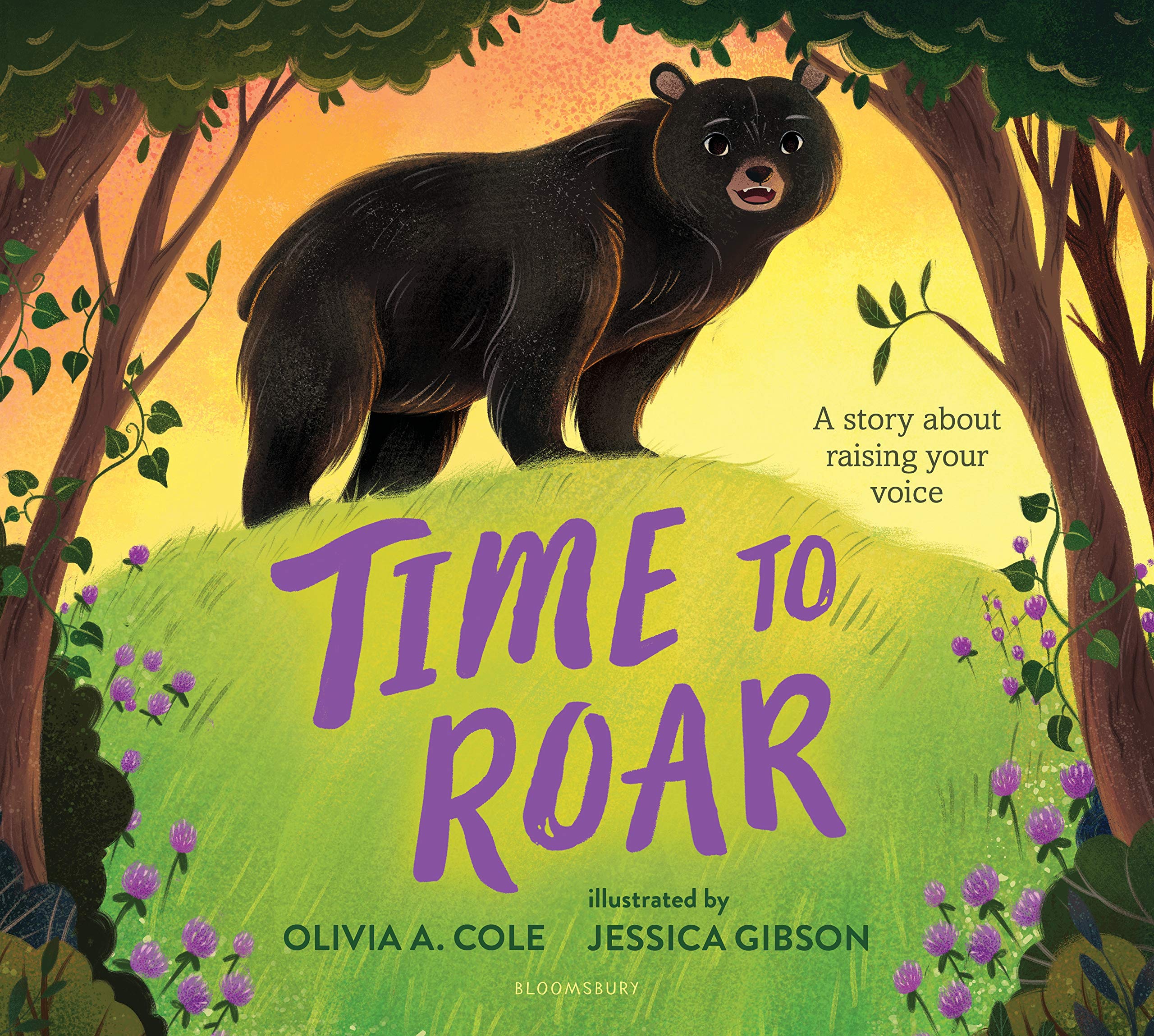
celebrate-picture-books-picture-book-review-time-to-roar-cover

About the Holiday

As September winds down, I’m happy to feature another new book for this month’s special holiday. Searching for and sharing new books—whether they are recently published or just new to you—is not only a fun way to spend a day together with kids, but an experience that pays big benefits now and in the future. Make a plan to add a few new books to your home library or visit your local library today!

Thanks go to Bloomsbury Children’s Book for sending me a copy of Time to Roar for review consideration. All opinion on the book are mine.

Time to Roar: A Story about Raising Your Voice

Written by Olivia A. Cole | Illustrated by Jessica Gibson

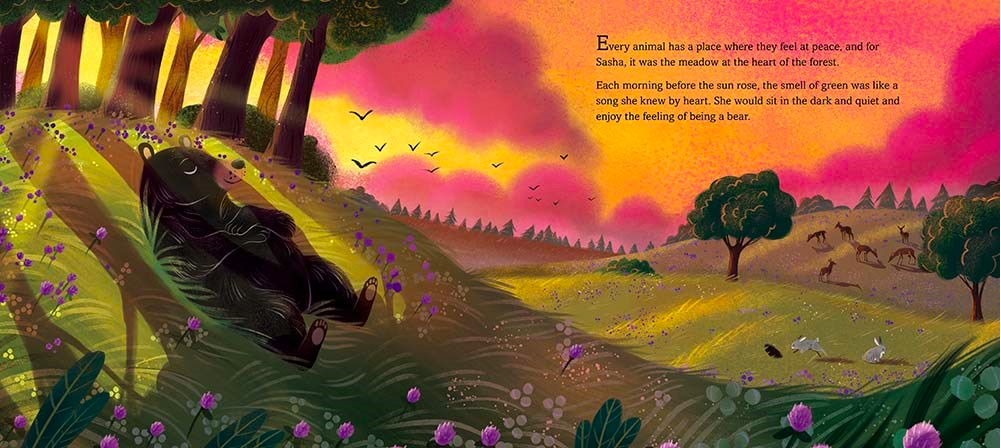
For Sasha, the meadow in the middle of the forest was where she felt most at peace, where she could “enjoy the feeling of being a bear.” Before dawn, she would lie in the meadow, where “…the smell of green was like a song she knew by heart.” But one morning, Sasha watched as noisy “yellow beasts” began tearing up the meadow with their silver teeth. A squirrel predicted that soon nothing would be left of their home.

celebrate-picture-books-picture-book-review-time-to-roar-morning

Image copyright Jessica Gibson, 2020, text copyright Olivia A. Cole, 2020. Courtesy of Bloomsbury Children’s Books.

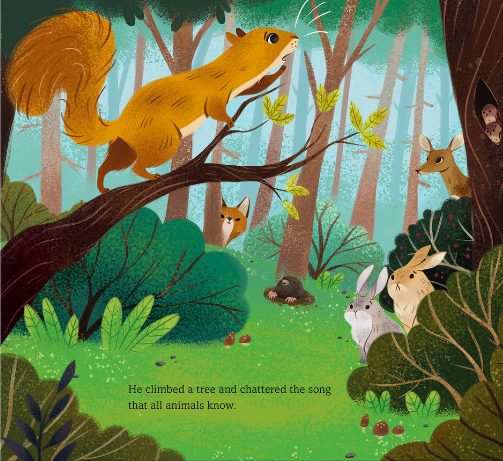
Sasha was ready to charge down the hill and confront the machines. But the squirrel advised caution and suggested all the animals have a meeting. Sasha relented. As the squirrel called the animals, they came out of hiding and listed to the squirrel talk about the danger that had come. Sasha was again ready to stop them with her mighty roar, but the bluebird thought she could persuade them with her song. As he flew over the machines, however their noise drowned out his song’s sweetness.

celebrate-picture-books-picture-book-review-time-to-roar-meeting

Image copyright Jessica Gibson, 2020, text copyright Olivia A. Cole, 2020. Courtesy of Bloomsbury Children’s Books.

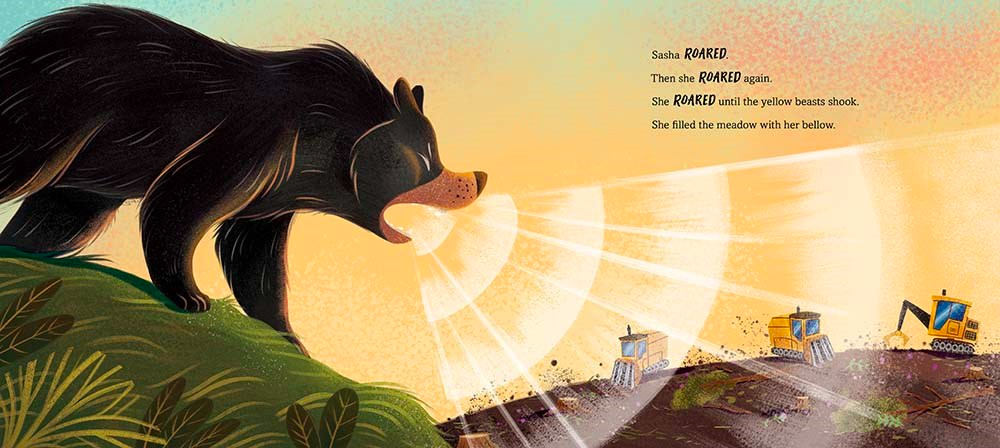
Rabbit had another idea of how he could distract them, but her attempt went unnoticed too. The deer thought he could lead the machines away from their home, but his appearance made no difference either. In fear, all the animals rushed to hide. “‘It’s the only way we will survive!’” they exclaimed. But Sasha did not hide. “Inside her, anger welled up, sparkling. Maybe it was stronger than yellow beasts.” She thought about all the tactics the other animals had taken. “She knew what had to be done…. Sometimes a bear had to raise her voice.” She ran to the edge of the meadow and ROARED until the echo of her roars shook the yellow machines. This time when the ground shook it was with the rumble of the machines fleeing the meadow.

When the meadow was quiet again, the other animals came out of hiding. They sadly acknowledged that their attempts had not worked, but Sasha consoled them, telling them that there were times when quieter approaches to a problem were needed. But there were also times that required a “ROAR.”

celebrate-picture-books-picture-book-review-time-to-roar-sasha

Image copyright Jessica Gibson, 2020, text copyright Olivia A. Cole, 2020. Courtesy of Bloomsbury Children’s Books.

Olivia A. Cole’s straightforward and powerful story about directly speaking up to oppose dangerous events or people is a very welcome book not only for this time, but for all times and all ages. In an age where young people and even children are leading the charge to procure a peaceful, fair, and unpolluted future, Time to Roar offers encouragement and support for those who courageously “see something and say something,” a lesson they have grown up hearing. A striking feature of Cole’s story is her inclusion of the alternate philosophies and tactics many people advocate to combat threats and her forthright depiction of how and why these approaches often don’t work. Children struggling with bullies or what to do about issues they disagree with at school or in other groups as well as those who want to make a difference in their town, their country, or for the world at large will find much to inspire and empower them in Cole’s well-paced and well-told story.

celebrate-picture-books-picture-book-review-time-to-roar-squirrel

Jessica Gibson’s compelling digital illustrations pack persuasive power as Sasha determines to rid the meadow of the bulldozers sent to destroy it. With the turn of one page, the soft colors of an idyllic dawn meadow give way to a harsh glare further spoiled with plumes of smoke and blinding headlights. Black silhouettes of squirrels, rabbits, birds, and dear dash out of the way, visual metaphors for the loss the construction will wreck on the forest. Sasha’s anger and the concern of the other animals shows clearly on their faces, and while the bluebird, rabbit, and deer are well-intentioned, Gibson’s depictions of their attempts to turn back the bulldozers shows the futility of these responses against the enormity of their foe. Gibson’s portrayal of Sasha roaring to shake the earth and the status quo will spur confidence and buoy readers’ hearts.

An empowering story to inspire children to raise their voice, Time to Roar would be an excellent addition to home libraries. The book would also pair well with social studies and history lessons about appeasement and the effects of protest—or the lack of it, making it a must for school and public library collections.

Ages 3 – 6

Bloomsbury Children’s Books, 2020 | ISBN 978-1547603701

Discover more about Olivia A. Cole and her books on her website.

To learn more about Jessica Gibson, her books, and her art, visit her website.

Read a New Book Month Activity

celebrate-picture-books-picture-book-review-wooden-spoon-microphone-craft

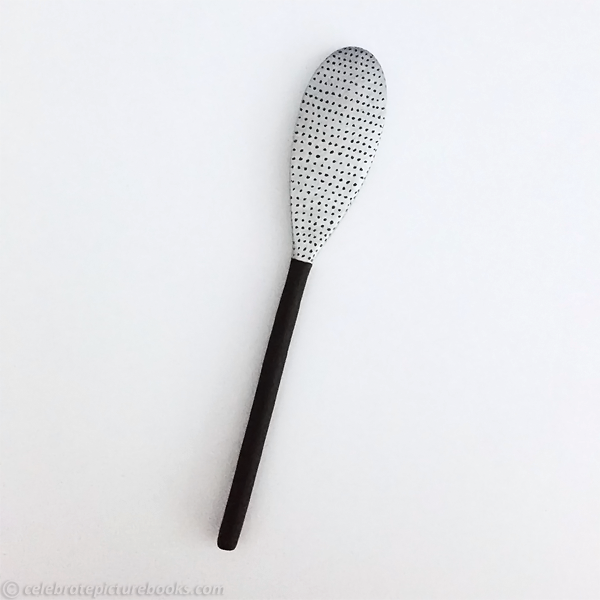
Wooden Spoon Microphone

A microphone can help anyone be heard. With this easy craft your child can turn a wooden cooking spoon into a fun microphone for all those times when they have something important to say.

Supplies

  • Long-handled wooden spoon
  • Black craft paint
  • Silver craft paint
  • Black permanent marker

Directions

  1. Paint the handle of the spoon black, let dry
  2. Paint the head of the spoon silver, let dry
  3. After the paint is dry, make rows of small dots on the head of the spoon

celebrate-picture-books-picture-book-review-time-to-roar-cover

You can find Time to Roar at these booksellers

Amazon | Barnes & Noble | Books-a-Million

To support your local bookstore, order from

Bookshop | IndieBound

Picture Book Review
July 23 – It’s Culinary Arts Month

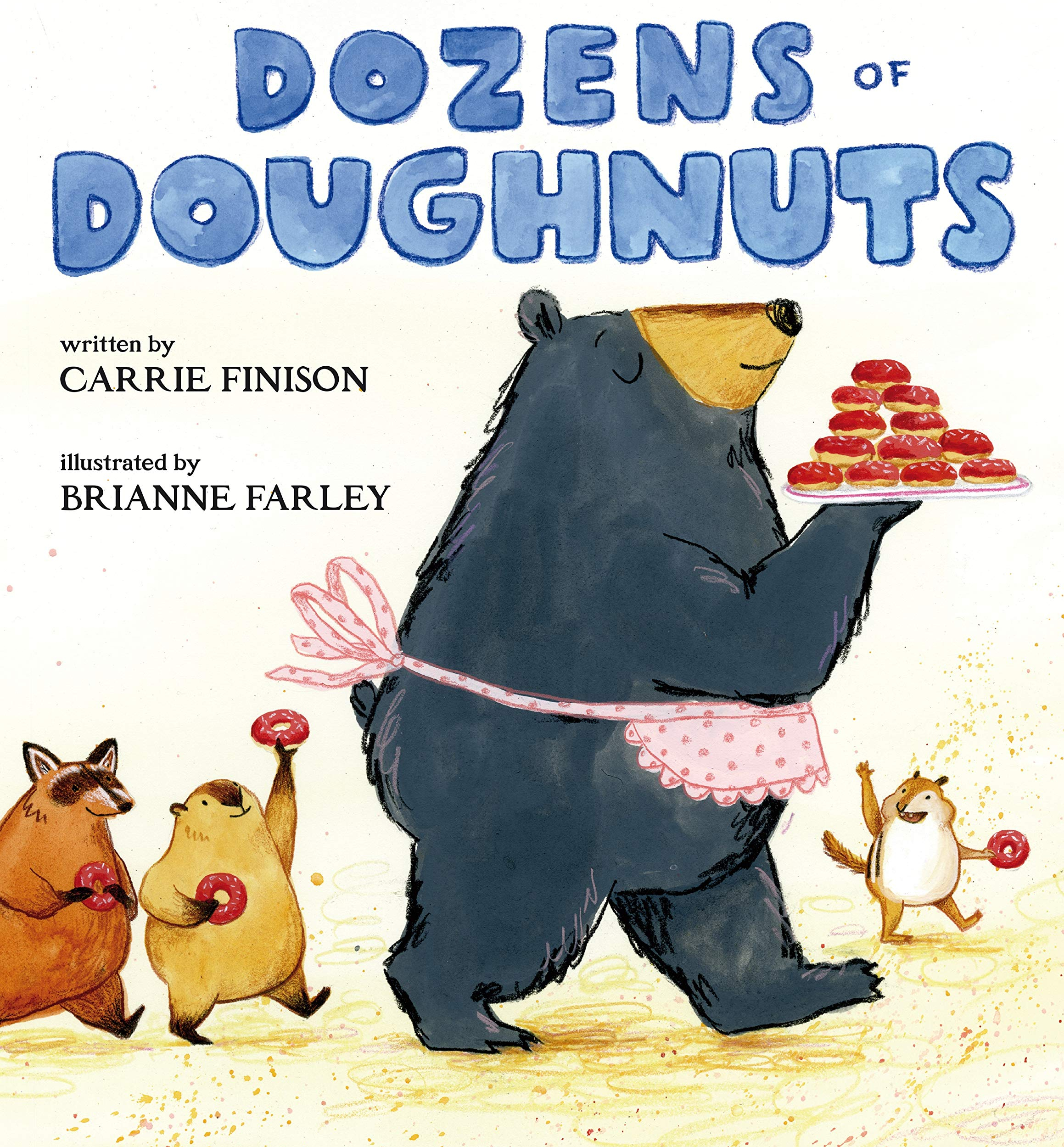
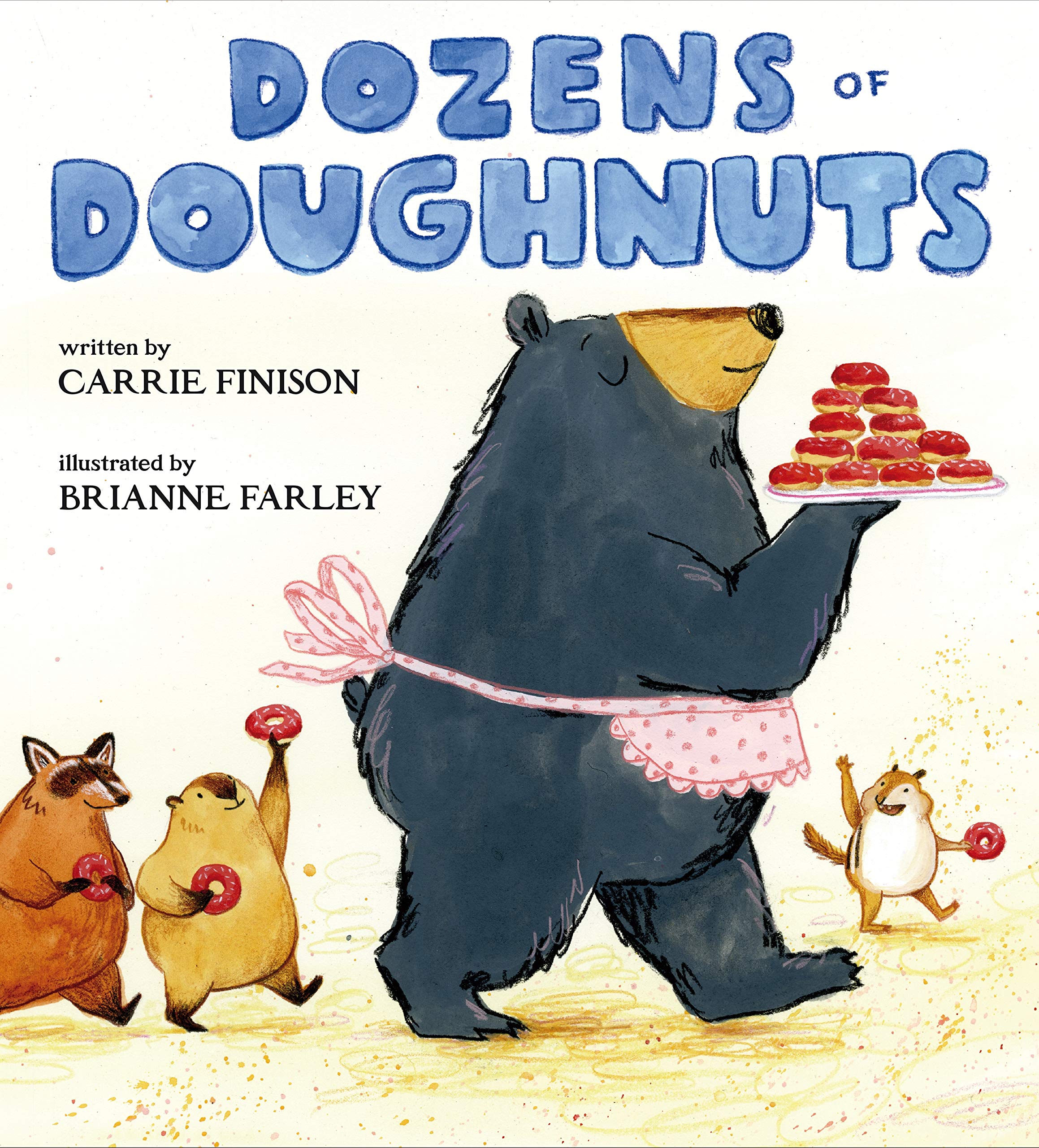
celebrate-picture-books-picture-book-review-dozens-of-doughnuts-cover

About the Holiday

There’s a true art in putting together a delicious meal from seemingly disparate parts, and this month’s holiday honors those with a talent for combining tastes, flavors, and textures. With fresh ingredients available at farm stores, farmers markets, grocery stores, and maybe even your own garden, July is a great month for celebrating the culinary arts. This month spend time with your kids in the kitchen. It’s a terrific way to learn new cooking skills and practice practical math while creating experimental or favorite recipes. And, of course, be sure to remember to make a few treats!
Dozens of Doughnuts

Written by Carrie Finison | Illutrated by Brianne Farley


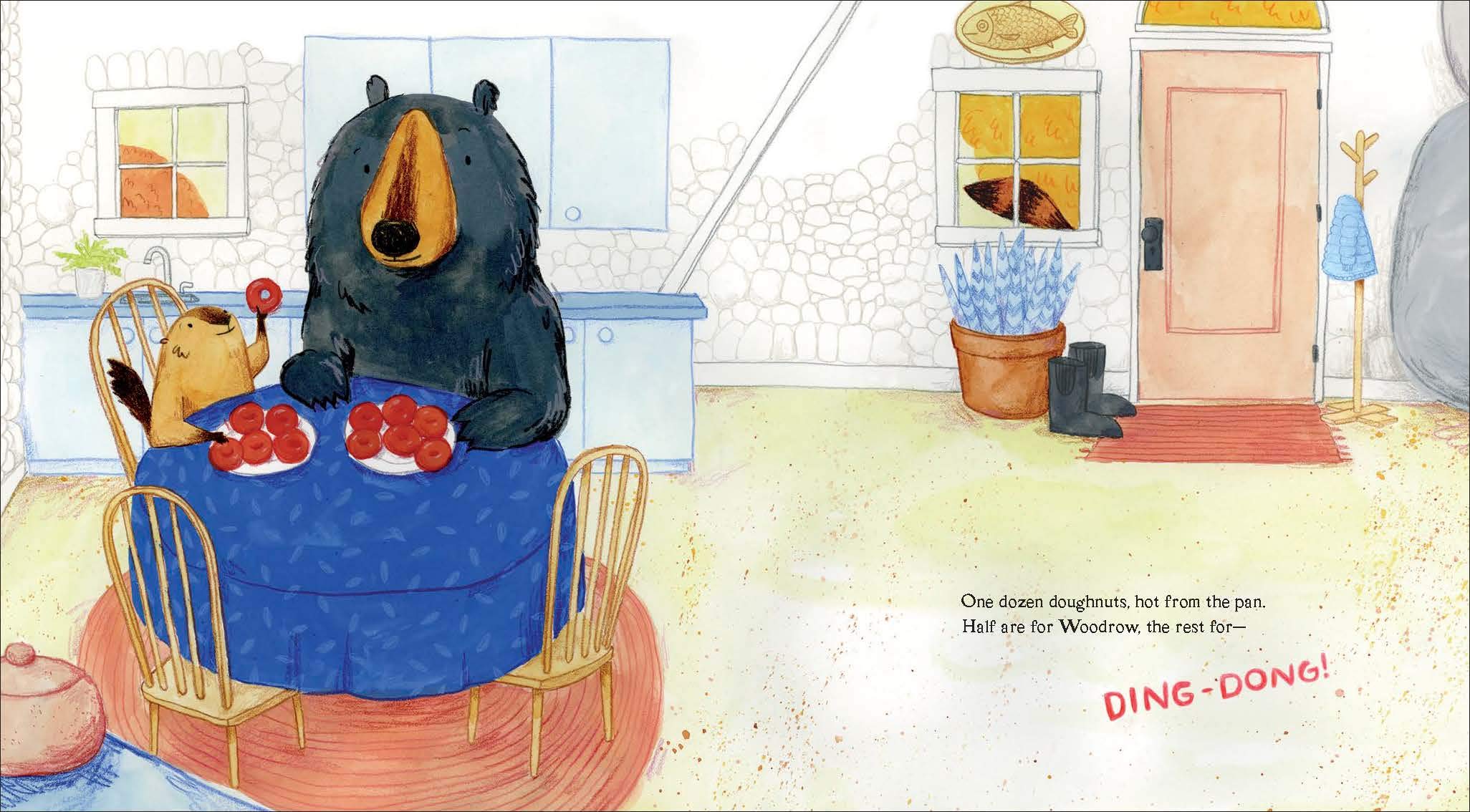
On a bright autumn morning, LouAnn is busy making a dozen doughnuts—her last treat before her long winter nap. “One dozen doughnuts, hot from the pan. / Toasty, and tasty, and ALL for— / DING-DONG! / ‘Woodrow?’” At the door stands a little beaver. LouAnn invites him in and seats him at the kitchen table. They’re just about to split the doughnuts when the doorbell chimes again.

celebrate-picture-books-picture-book-review-dozens-of-doughnuts-woodrow

Image copyright Brianne Farley, 2020, text copyright Carrie Finison, 2020. Courtesy of G.P. Putnam’s Sons Books for Young Readers.

This time it’s Clyde, the raccoon. LouAnn welcomes him in and offers him her plate of doughnuts while she whips up another batch. These doughnuts—four for each—are frosted in blue. They’re all about to take a bite when “DING-DONG!” Tospy the possum arrives. “‘Delicious!’ cries Topsy. / She gulps down a swallow. / LouAnn’s heart feels warm, / but her belly feels hollow.” She stirs and she fries and soon has “One dozen doughnuts, hot from the pan. / Some for each friend, and the rest for— / DING-DONG! / ‘Mouffette?’”

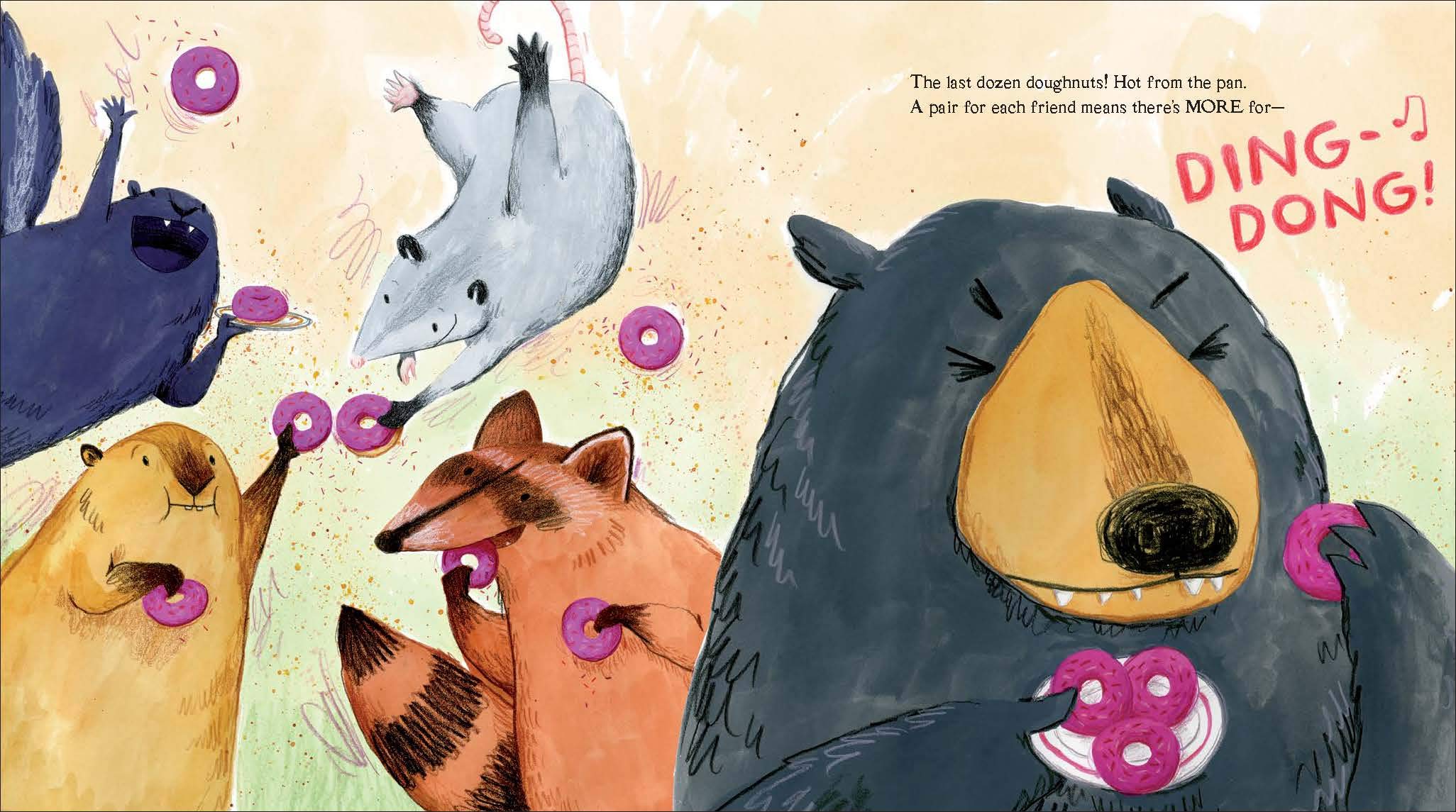
celebrate-picture-books-picture-book-review-dozens-of-doughnuts-last-dozen

Image copyright Brianne Farley, 2020, text copyright Carrie Finison, 2020. Courtesy of G.P. Putnam’s Sons Books for Young Readers.

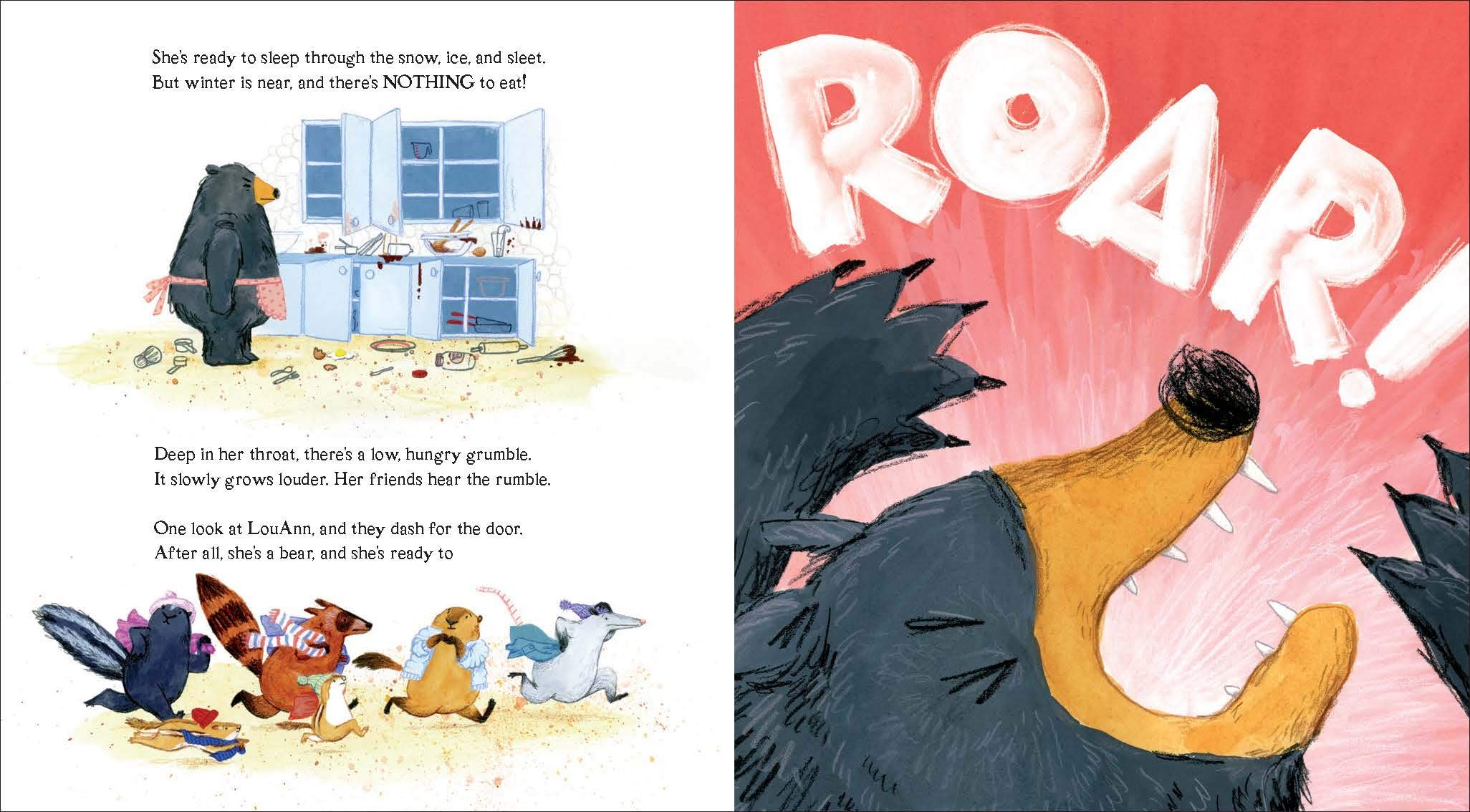
A skunk joins the group, nibbling and toasting with three doughnuts each as LouAnn uses her last egg to make more. This is it—the last dozen doughnuts. LouAnn is ready to munch when… you know! But there’s not a friend at the door—there are two! Two little chipmunks cram their cheeks full. And LouAnn? “She’s ready to sleep through the snow, ice, and sleet. / But winter is near and there’s NOTHING to eat!”

celebrate-picture-books-picture-book-review-dozens-of-doughnuts-roar

Image copyright Brianne Farley, 2020, text copyright Carrie Finison, 2020. Courtesy of G.P. Putnam’s Sons Books for Young Readers.

From deep down in her grumbling, rumbling belly there emerges a huge “ROAR!”  as all of the friends “dash for the door.” LouAnn cries it out and collapses on the floor. Then “DING-DONG!” Who could be left? Who is there now? It seems Woodrow and Clyde, Topsy and Mouffette, and even Chip and Chomp are more observant than they might have seemed. They’ve brought milk and flour, eggs and supplies. And after snugging LouAnn into her favorite chair, they go to work. Soon there are “dozens of doughnuts, / hot from the pan. / Stacked up in heaps, and they’re ALL for LouAnn!” But does she gobble them all down, or are there some left for—?

celebrate-picture-books-picture-book-review-dozens-of-doughnuts-surprise

Image copyright Brianne Farley, 2020, text copyright Carrie Finison, 2020. Courtesy of G.P. Putnam’s Sons Books for Young Readers.

I’ve been looking forward to reviewing Dozens of Doughnuts ever since I met Carrie Finison at a kidlit conference last year, and am excited to feature this charmer for Culinary Arts Month. Finison’s bright, bouncy rhythm and perfect rhymes set up brilliant suspenseful page turns that, while disappointing for LouAnn, will have readers in gales of giggles and chiming along after the first surprising twist. LouAnn’s ready willingness to share her dozens of doughnuts is kindness at its best and also provide an invitation for kids to do a little math as each friend shares in LouAnn’s generosity. When LouAnn, getting hungrier and sleepier, finally cracks, sending her friends running, the final “DING-DONG!” ushers in another sweet surprise. Just like readers, it seems LouAnn’s friends have been paying attention to the numbers, and they want to be sure that LouAnn gets her equal share too. Finison’s storytelling provides a baker’s dozen of delight and will become a favorite read aloud for any child.

Deliciously enchanting, Brianne Farley’s illustrations introduce some of the most adorable forest animals around as they come to visit LouAnn, lured by the aroma of her doughnuts. Farley has designed for LouAnn a little stone house that’s an ingenious update on a bear’s cave and has decorated it with from a fresh color palette. Likewise, her autumn foliage makes use of creative raspberry russets and glowing yellows. LouAnn’s facial expressions clearly depict her waning enthusiasm for all the interruptions, but also her gracious personality once she opens the door. Kids will love watching the window beside the front door and trying to guess who each new guest will be.

The detailed images of doughnuts on each animal’s plate makes it easy for children and adults to talk about math concepts, including counting, adding, subtracting, multiplying, dividing, and sorting. When hunger and weariness finally overtake LouAnn, kids and adults will recognize her meltdown and commiserate with her. The return of LouAnn’s friends with supplies and good cheer makes this pre-hibernation party one that all children will want to attend (with their own doughnuts, of course!).

Endearing to the max, Dozens of Doughnuts is a joy to share and is sure to stir up enthusiasm for repeat readings at home, in the classroom, or for public library collections.

Ages 3 – 8

G.P. Putnam’s Sons Books for Young Readers, 2020 | ISBN 978-0525518358

Discover more about Carrie Finison and her books on her website.

To learn more about Brianne Farley, her books, and her art, visit her website.

Culinary Arts Month Activity

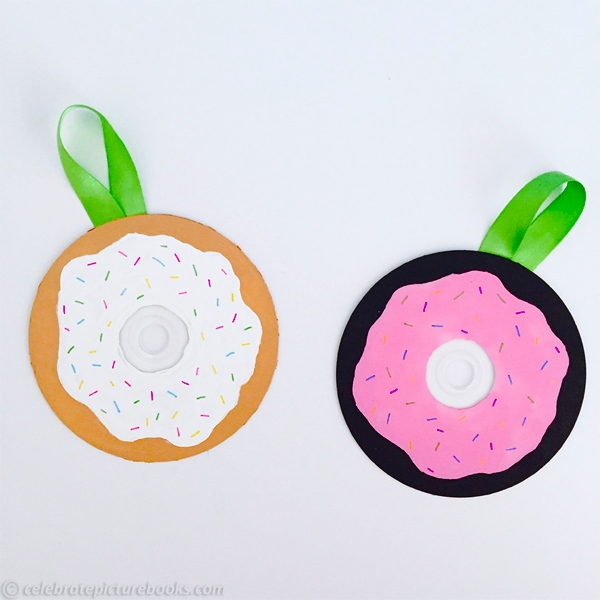
celebrate-picture-books-picture-book-review-cd-doughnut-craft

Are some of  your CDs a little passé? Not if you can turn them into cute décor like this doughnut – or bagel – hanging.

Supplies

  • Unused CDs or cut circles from cardboard or regular or thick poster board
  • Craft paint in tan, black, pink, yellow, white (or any colors you want for the doughnut and the icing)
  • Ribbon, any color and length you want
  • Fine-tip markers in bright colors
  • Glue
  • Glue dots (optional)
  • Paint brush

Directions

  1. Paint a wavy edge around the CD or other material and let dry
  2. Add “frosting” by painting from the wavy line inward to the clear center of the CD, leaving the clear circle unpainted. If using another material, draw and cut a center “hole” for your doughnut.
  3. When the “frosting” is dry, draw sprinkles on it with the markers
  4. With the ribbon make a loop hanger and attach it to the back of the CD with glue or glue dots
  5. Hang your decoration

celebrate-picture-books-picture-book-review-dozens-of-doughnuts-cover

You can find Dozens of Doughnuts at these booksellers

Amazon| Barnes & Noble | Books-a-Million

To support your local independent bookstore, order from

Bookshop | IndieBound

Picture Book Review