March 18 – It’s National Sleep Awareness Week

celebrate-picture-books-picture-book-review-sleepy-the-goodnight-buddy-cover

About the Holiday

Are you feeling sleepy? Studies show that most people do not get the sleep they need to stay healthy and function as well as they could. This might be due to work hours, insomnia, or other sleep disturbances. To raise awareness of this common problem and encourage people to think about their sleep patterns and habits, the National Sleep Foundation established National Sleep Awareness Week in 1998. Coinciding with the Daylight Saving Time change, this year Sleep Awareness Week runs from March 14 to March 20. The theme for 2021 is “Celebrate Sleep Health. For more information, visit the National Sleep Foundation website.

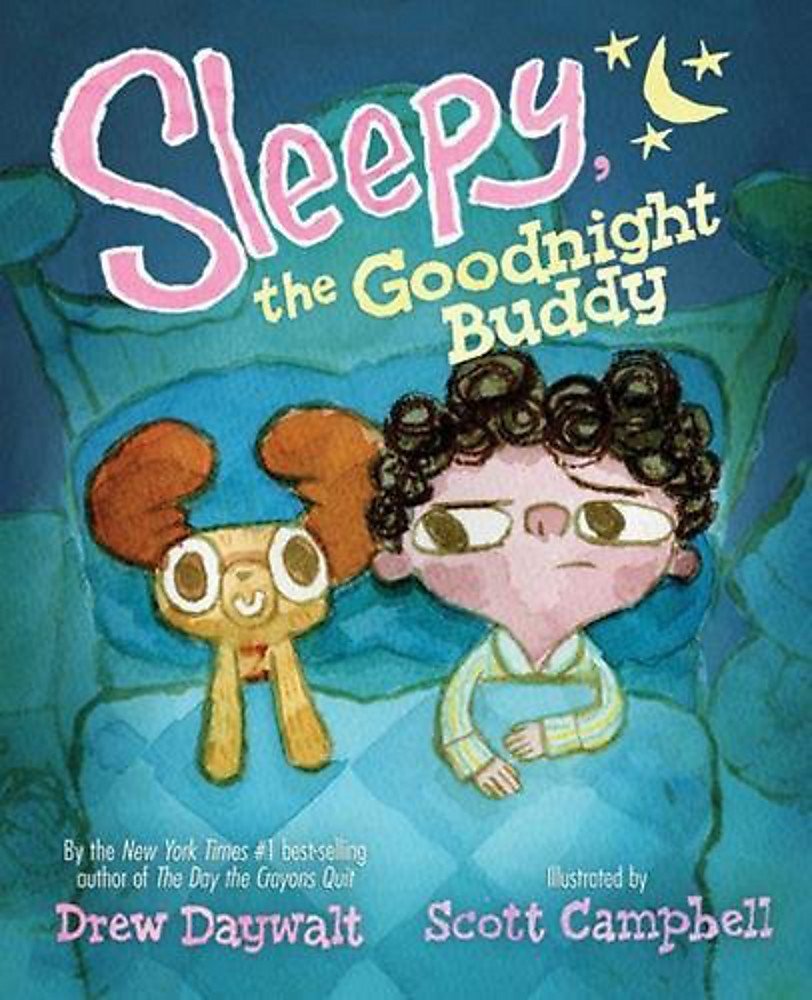
Sleepy, the Goodnight Buddy

Written by Drew Daywalt | Illustrated by Scott Campbell


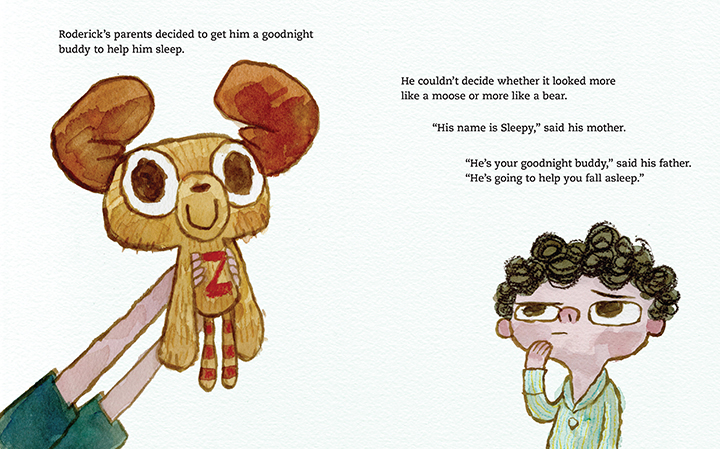
Roderick was a master at stalling bedtime. He knew all the tricks, from asking for a second, third, or even fourth story to asking for more water. “Sometimes he would ask for a pony…just to hear all the reasons why he couldn’t have a pony.” His parents had many, like: “Ponies watch the TV too loud, Ponies never do dishes, and Ponies borrow books and never return them.” At last Roderick’s parents got him “a goodnight buddy to help him sleep.” His name was Sleepy.
celebrate-picture-books-picture-book-review-sleepy-the-goodnight-buddy-meet-sleepy

Image copyright Scott Campbell, 2018, text copyright, 2018. Courtesy of scottc.com.

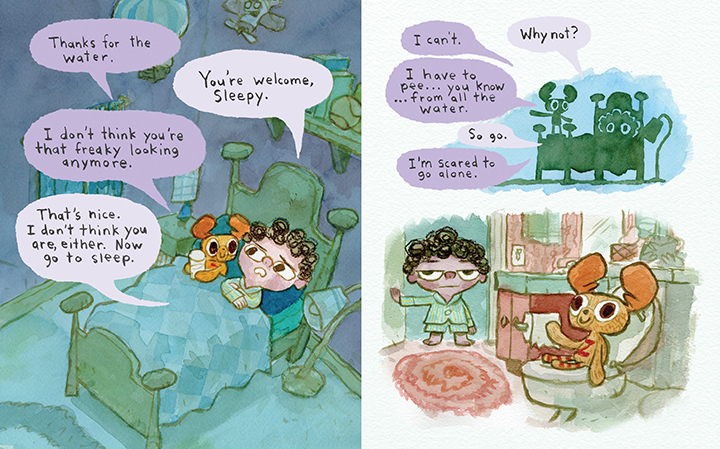
That night as Roderick lay in bed, Sleepy stared at him with his big, unblinking eyes. Roderick tried moving him around his room, but he could always “FEEL Sleepy looking at him.” Finally, Roderick threw him in the closet, but Sleepy didn’t stay there. He peeked out and told Roderick that he was scared. That’s right Sleepy was alive and could talk. And that’s when things got a little freaky—as in Roderick wanted to know why Sleepy hadn’t talked earlier, and Sleepy said he was too afraid of the freaky way Roderick stared at him. “That’s because you freak me out! I was only staring at you all freaky looking because you were staring at me all freaky looking,” Roderick explained. Freaky, huh?
celebrate-picture-books-picture-book-review-sleepy-the-goodnight-buddy-freaky

Image copyright Scott Campbell, 2018, text copyright, 2018. Courtesy of scottc.com.

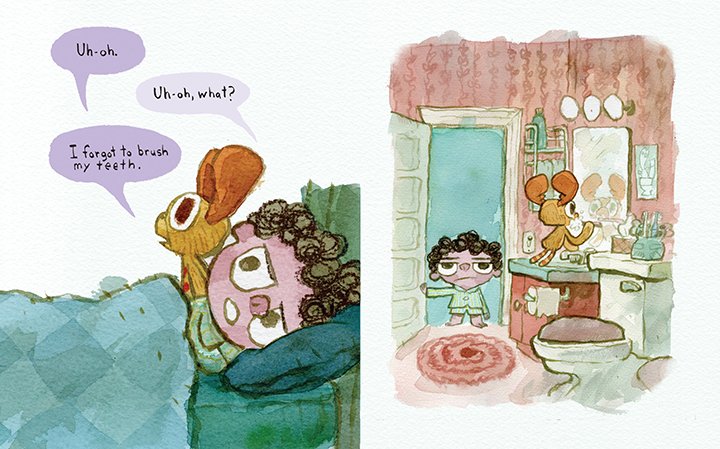
Well, it turned out that Sleepy didn’t realize he was supposed to help Roderick get to sleep, and now he needed a little help in the form of a glass of water, a trip to the bathroom (accompanied), another trip to the bathroom to brush his teeth (accompanied), a story, another story, a closet check for witches (of a very particular kind), a snack, another teeth brushing (accompanied), the light off, the light on, and reassurance that Roderick wasn’t mad about…well, about all of the above.
celebrate-picture-books-picture-book-review-sleepy-the-goodnight-buddy-mad

Image copyright Scott Campbell, 2018, text copyright, 2018. Courtesy of scottc.com.

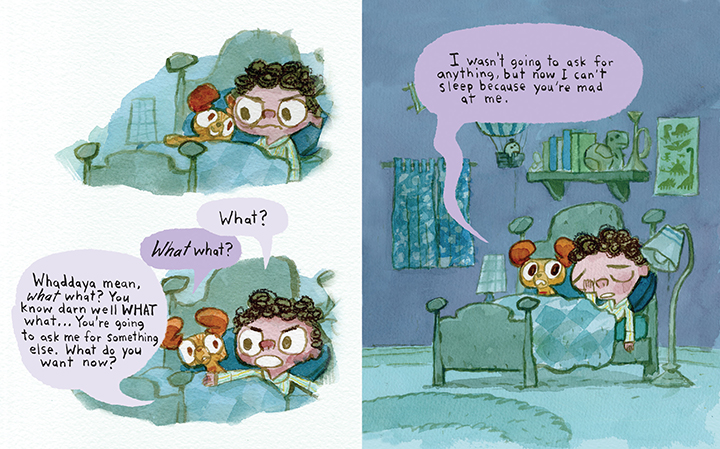
Through gritted teeth, Roderick said, “I’m not mad.” With wary eyes, Sleepy said, “You sound mad. That sounds like you’re mad.” And it went back and forth: “I’m not mad…just a little tired. Okay, I’m a little mad, but mostly I’m tired.” “Well, I can’t sleep even if you’re a little mad.”“THEN I’M NOT MAD!” “I dunno. That still sounds mad.” Ai! Ai! Ai!

Sleepy then needed a blankie, a softer pillow, and an existential conversation. That’s when poor, exhausted Roderick lost it. “SLEEPY!!! It’s time for bed! Now go to sleep!” He ranted and vented until… “Roderick? Hey, Roderick?” “Zzzzzzzzzzzz.” Sleepy smiled. “Good night, buddy.”
celebrate-picture-books-picture-book-review-sleepy-the-goodnight-buddy-brush-teeth

Image copyright Scott Campbell, 2018, text copyright, 2018. Courtesy of scottc.com.

Drew Daywalt’s hysterical turn-about-is-fair-play bedtime romp is the perfect antidote to all those delaying tactics adults know so well. As the story transitions into Roderick and Sleepy’s comical conversation, readers (both kids and adults) will laugh as the stakes escalate from a simple glass of water to a flood of frustration. Along the way, readers are treated to an eerily familiar litany of requests and retorts that will make them eager to turn the page to see what’s coming next.

Scott Campbell’s Roderick is a happy camper as he lounges comfortably with a glass of water well past bedtime while his parents rain down reasons he can’t have a pony. But his satisfied smile turns to skepticism when Sleepy arrives. Campbell hilariously captures the slightly unnerving gaze of stuffed animals before Sleepy “comes alive” and the “who me?” innocence of children afterward. Sleepy’s cheery obliviousness is a perfect foil for Roderick’s vexed, knowing look. The yin and yang of Roderick’s growing weariness and Sleepy’s antics will delight children and adults, and it’s safe to say that a happier sleep for both will ensue.

For a laugh-out-loud bedtime or story time read, don’t delay—add Sleepy, the Goodnight Buddy to your bookshelf!

Ages 4 – 8 

Little Brown Books for Young Readers, 2018 | ISBN 978-1484789698

Discover more about Drew Daywalt and his books on his website.

To learn more about Scott Campbell, his books, and his art visit his website.

National Sleep Awareness Week Activity
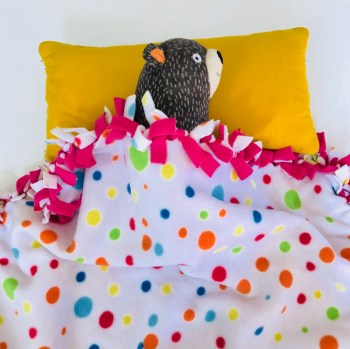
celebrate-picture-books-picture-book-review-sleep-buddy-craft

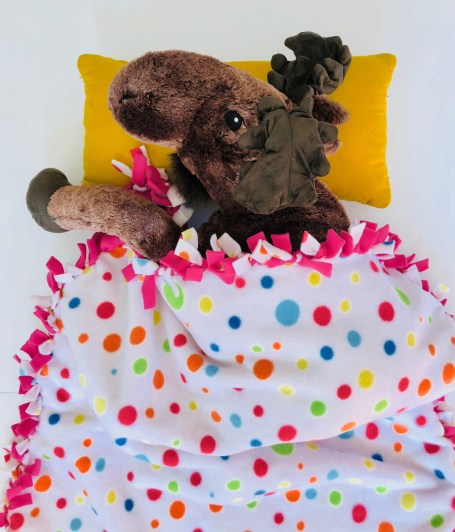
Sleep Buddy Blanket


Even little buddies need a blanket sometimes to feel cozy and warm! With this craft you can make a blanket for a stuffed animal or fleecy bed for a pet! Children from ages 5 or 6 and up will enjoy helping to tie the tabs. For younger children, using fabric glue to attach the two pieces of fleece or cutting just one piece of fleece allows them to join in the craft fun.

Supplies

  • 2 pieces of fleece, solid, patterned, or a mix of both
  • Scissors
  • Measuring tape
  • Fluff or pillow (optional for pet bed)
  • Fabric glue (optional)

celebrate-picture-books-picture-book-review-sleep-buddy-craft

Directions

  1. Lay out one piece of fleece and measure a size that will make a comfortable blanket for the stuffed animal or is large enough for your pet to lie on
  2. Add 3 inches to that measurement on each side for the tie tabs
  3. Cut the fleece
  4. Lay out the second piece of fleece and cut it to the same size as the first piece
  5. With both pieces of fleece together cut three-inch long by ½ – ¾ – inch wide tabs all along each side. (If using fabric glue omit this step.)
  6. At the corners, four tabs will be cut off on each side

To Make a Blanket

  • Tie the top and bottom tabs together on all sides

To Make a Pet Bed
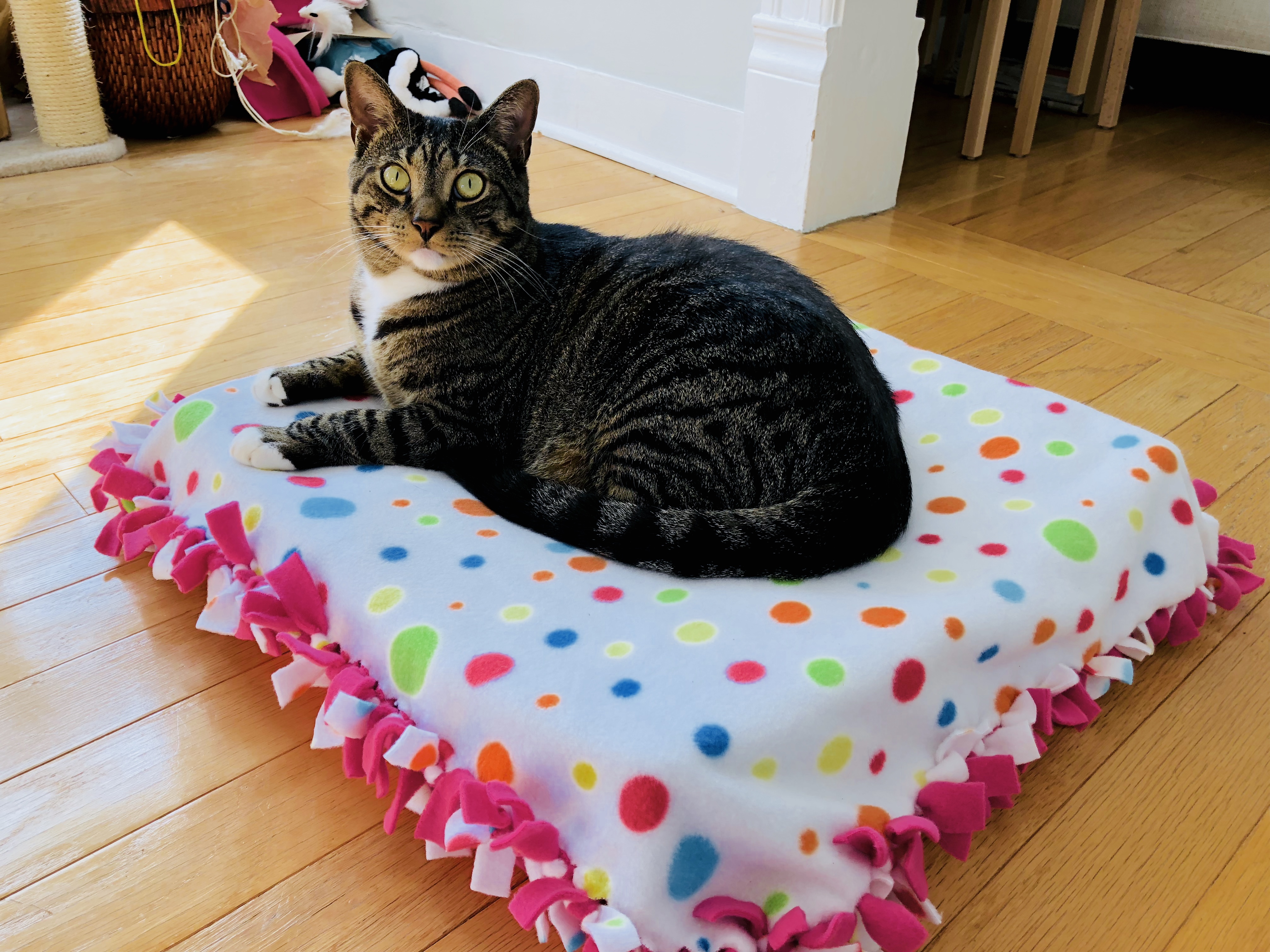
celebrate-picture-books-picture-book-review-cat-bed-craft

  1. Tie the tabs together on three sides
  2. Add the fluff or pillow insert
  3. Tie the tabs on the final side

celebrate-picture-books-picture-book-review-sleepy-the-goodnight-buddy-cover

You can find Sleepy, the Goodnight Buddy at these booksellers

Amazon | Barnes & Noble | Books-a-Million

To support your local independent bookstore, order from

Bookshop | IndieBound

Picture Book Review
March 17 – It’s National Introverts Week

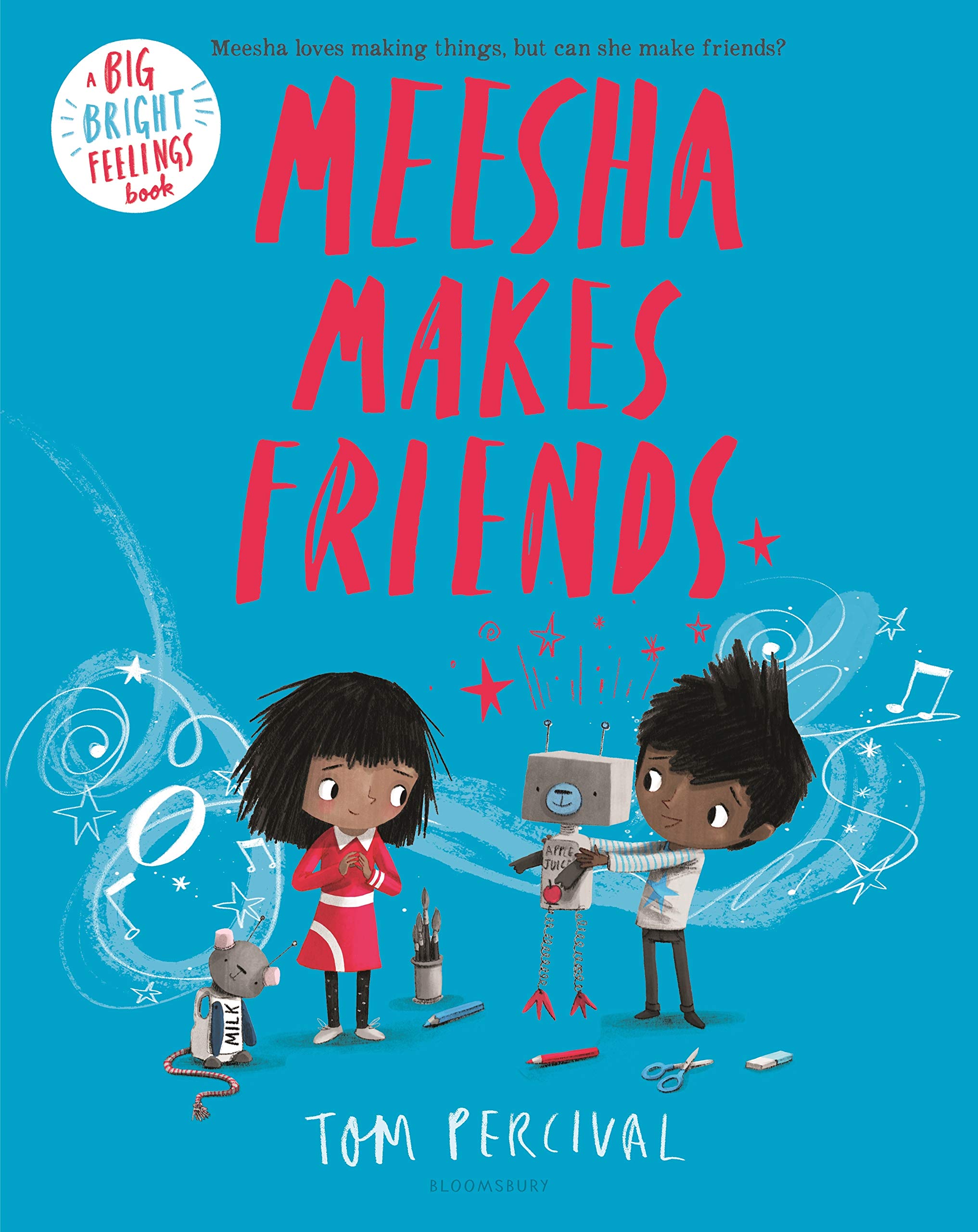
celebrate-picture-books-picture-book-review-meesha-makes-friends-cover

About the Holiday

Introverts, this is your week to shy-ne. National Introvert’s Week was founded by author Matthew Pollard to celebrate the achievements of introverts and combat the stigma and stereotypes associated with being on the shy side. Oftentimes extroverted people are considered more powerful, popular, and successful in society. Introvert’s Week is meant to offer a counternarrative to this belief. In actuality, introverts and extroverts alike can be perfect friends, role models and achievers. Celebrate National Introvert Week by recognizing the introverts in your life, learning about role models who identify as introverted, and reading lots of books. Meesha Makes Friends provides a sweet story of how an introvert makes friends in her own, unique style.

Thanks to Bloomsbury Children’s Books for sharing a copy of Meesha Makes Friends with us for review consideration. All opinions of the book are my own.

Review by Dorothy Levine

Meesha Makes Friends

By Tom Percival


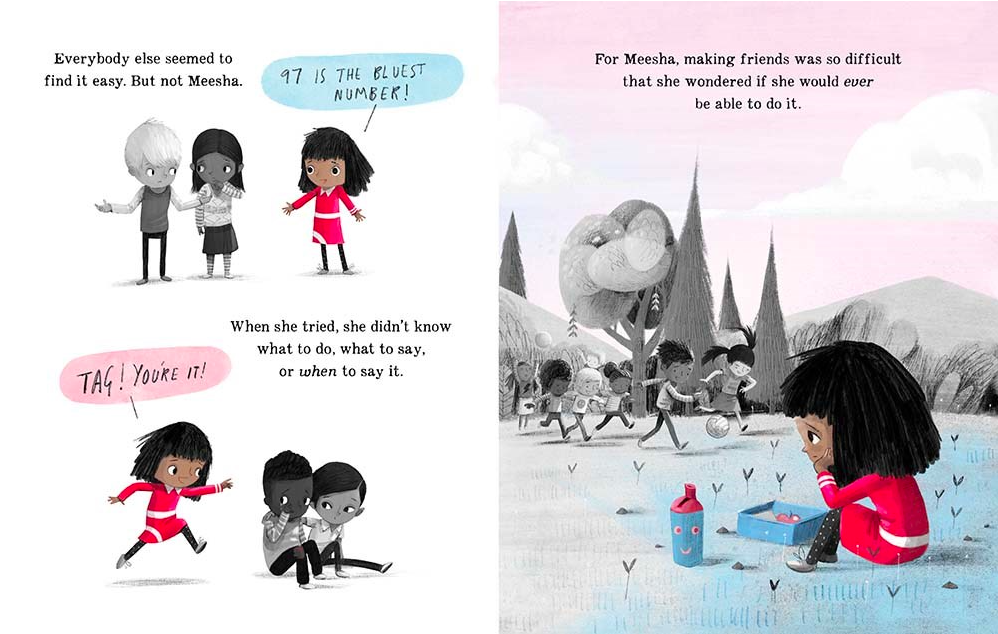
Meesha loves to make her own pictures, music and imaginary creatures. There is just one thing that she can’t figure out how to make—friends! She is a shy kid, and often has trouble connecting with other kids her age. “For Meesha, making friends was so difficult that she wondered if she would ever be able to do it.”

celebrate-picture-books-picture-book-review-meesha-makes-friends-difficult

Copyright Tom Percival, 2021, courtesy of Bloomsbury Children’s Books.

Luckily, Meesha has a solution. She gets out her creating materials and makes a whole crew of friends. Meesha happily totes her new pals around with her. She is pleased to find that they are easy to talk to and transport. However, her creations are not exactly perfect: “Admittedly, Meesha’s new friends weren’t very good at tennis…or soccer…or catch. / But Meesha felt comfortable with them, and that was what mattered.”

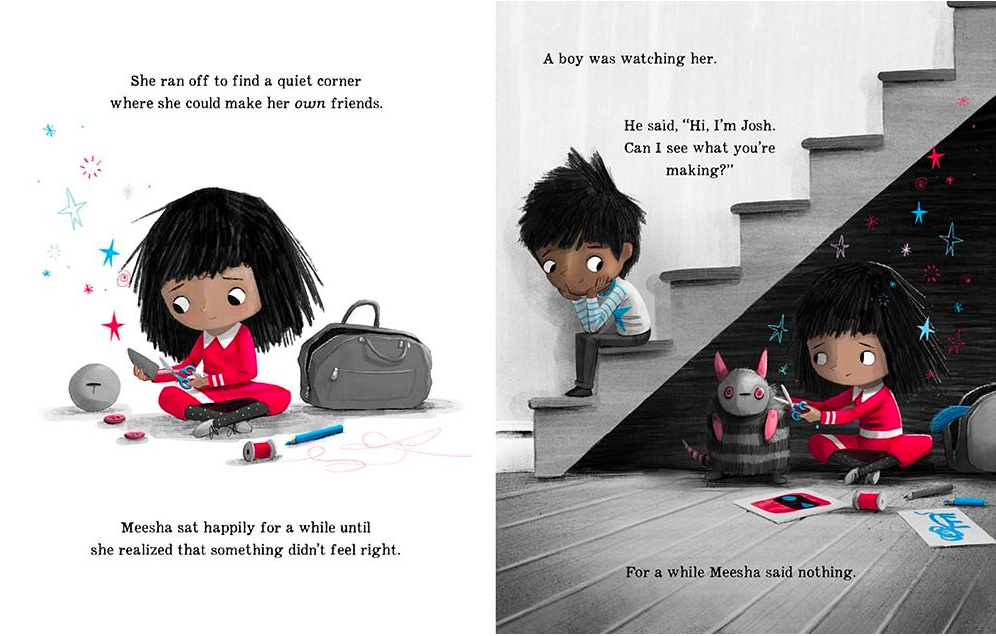
When Meesha attends a birthday party, she is nervous to join in with the other children. Overwhelmed, she finds a quiet spot to do what she likes best—creating creatures, her ownfriends. A boy named Josh comes to watch and asks if Meesha will teach him how to make them. At first this makes Meesha a little worried. She wonders if Josh will not be gentle enough with her friends. But she takes a deep breath and decides to give it a try.

celebrate-picture-books-picture-book-review-meesha-makes-friends-Josh

Copyright Tom Percival, 2021, courtesy of Bloomsbury Children’s Books.

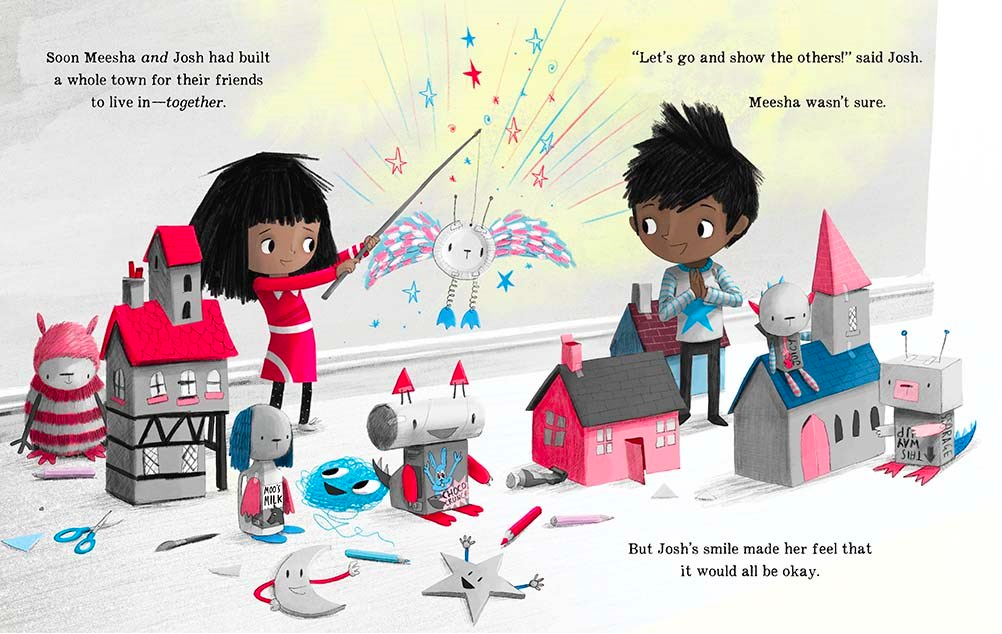
And, as a matter of fact, “Josh didn’t get it all wrong, and he didn’t ruin anything either.” Josh and Meesha soon build a whole town for all of their creatures to live in together. When Josh suggests that they show their new creations to the rest of the kids at the party, Meesha is once again hesitant. But, with some bravery and encouragement, Meesha and Josh share their creations with the rest of the group. And, to Meesha’s excitement, everyone loves them! “For the first time ever Meesha knew exactly what to say and what to do.” And with that, Meesha makes new friends.

celebrate-picture-books-picture-book-review-meesha-makes-friends-playing-together

Copyright Tom Percival, 2021, courtesy of Bloomsbury Children’s Books.

“Making friends is one of those things that looks really easy but can sometimes feel like the hardest thing in the world!” Tom Percival says it best in his kind note to readers at the end Meesha Makes Friends. Author and illustrator of the Big Bright Feelings picture book series, Percival produces yet another beautiful read for children to explore and engage in conversations about feelings. Meesha Makes Friends teaches young readers how to communicate, make friends and interact in their own unique ways. At the end of the story, Percival provides helpful tips on how to make friends for readers who may identify with Meesha’s struggles.

Tom Percival described himself in an interview as a quiet, creative and thoughtful child. Through his Big Bright Feelings series, he hopes to help kids explore different emotions and why we feel the way we do. Intricately drawn details and expressions allow readers to easily understand and empathize with the emotional states of the characters. Percival thoughtfully plays with the color pallet of his illustrations to perhaps allude to sensory sensitivities and provide a vibrant view of Meesha’s perception of the world. A diverse cast of characters of different races and abilities makes this book an accessible read for all. Truly a book driven by thoughtfulness, kindness, creativity, and compassion.  

For parents, teachers, and other caregivers who are looking for a sensitive, relatable, and truly helpful way to talk to kids about shyness, making friends, and socializing, Meesha Makes Friends is a must addition to home, school, and public library collections. Be sure to look for the other books in the Big Bright Feelings series: Perfectly Norman, Ruby Finds a Worry, and Ravi’s Roar.

Ages 3 – 6

Bloomsbury Children’s Books, 2021 | ISBN 978-1547605194

To learn more about Tom Percival, his books, and his art, visit his website.

National Introverts Week Activity

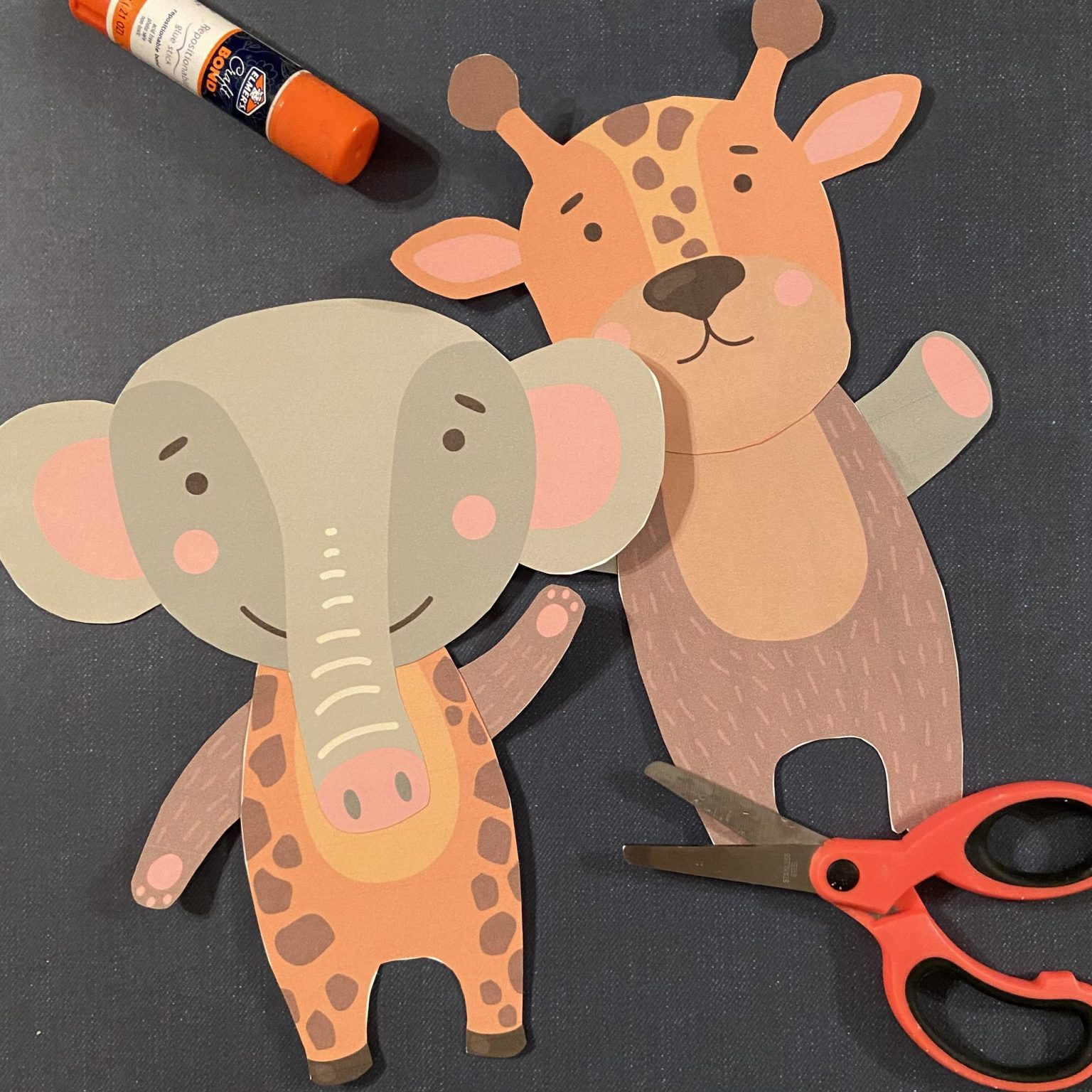
free-kids-crafts-animal-mixup-activity

Image courtesy of Free Kids Crafts

Mixed-up Creatures


You can make creations like Meesha’s with this Flower/Animal Mix-Up Activity! 

Materials

Instructions

Print these pages, cut up the parts, and glue or tape together pieces on a blank piece of paper to make the quirkiest creatures you can!
 
You’ll find many more craft and activity ideas at Free Kids Crafts and Making Friends!

celebrate-picture-books-picture-book-review-meesha-makes-friends-cover

You can find Meesha Makes Friends at these booksellers

Amazon | Barnes & Noble | Books-a-Million

To support your local independent bookstore, order from

Bookshop | IndieBound

Picture Book Review
March 16 – National Panda Day

celebrate-picture-books-picture-book-review-when-I-draw-a-panda-cover

About the Holiday

National Panda Day was established to raise awareness of the dangers faced by these favorite, adorable animals. Destruction of the vast bamboo forests on which pandas rely for food, coupled with their low birth rate has resulted in their being placed on the endangered list. Conservation groups as well as zoos and other animal sanctuaries are working to breed and protect these gentle black-and-white beauties. If you’d like to get involved, consider donating to a local zoo program or other environmental group.

Thanks to Simon & Schuster for sharing a digital copy of When I Draw a Panda for review. All opinions of the book are my own.

When I Draw a Panda

By Amy June Bates


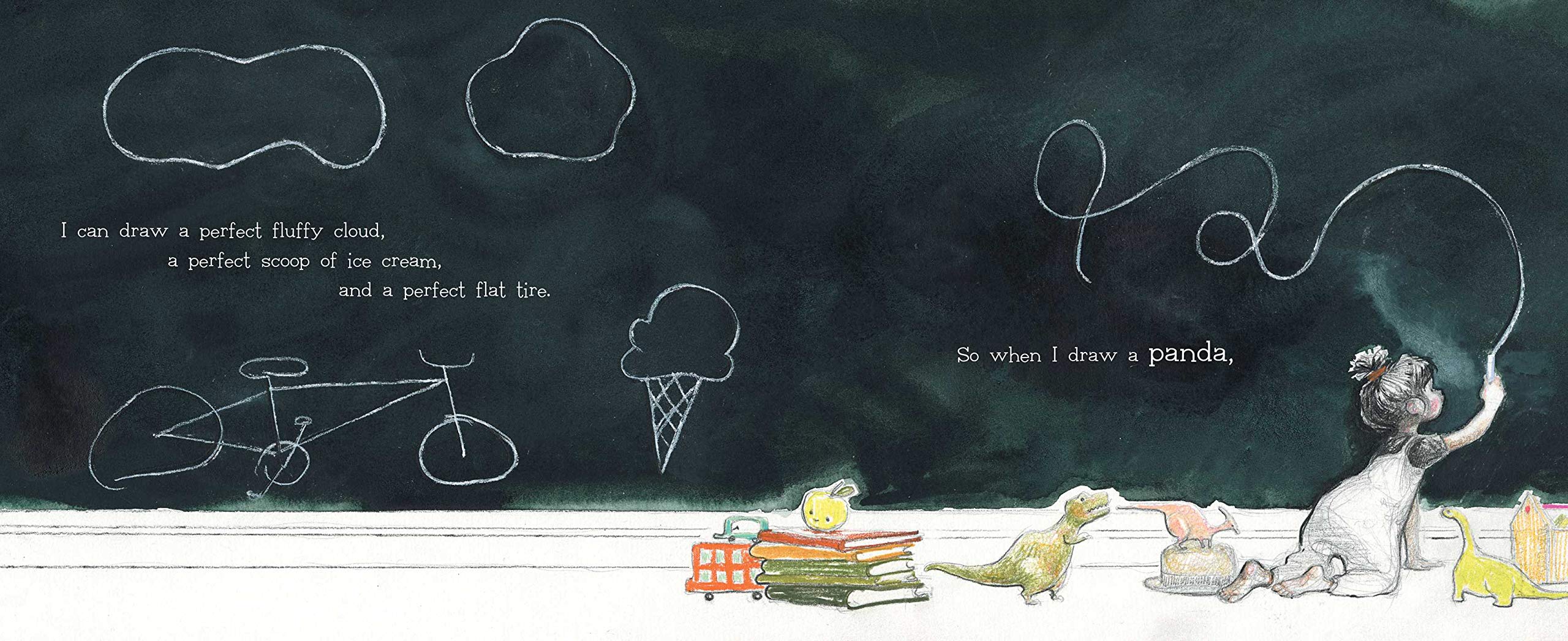
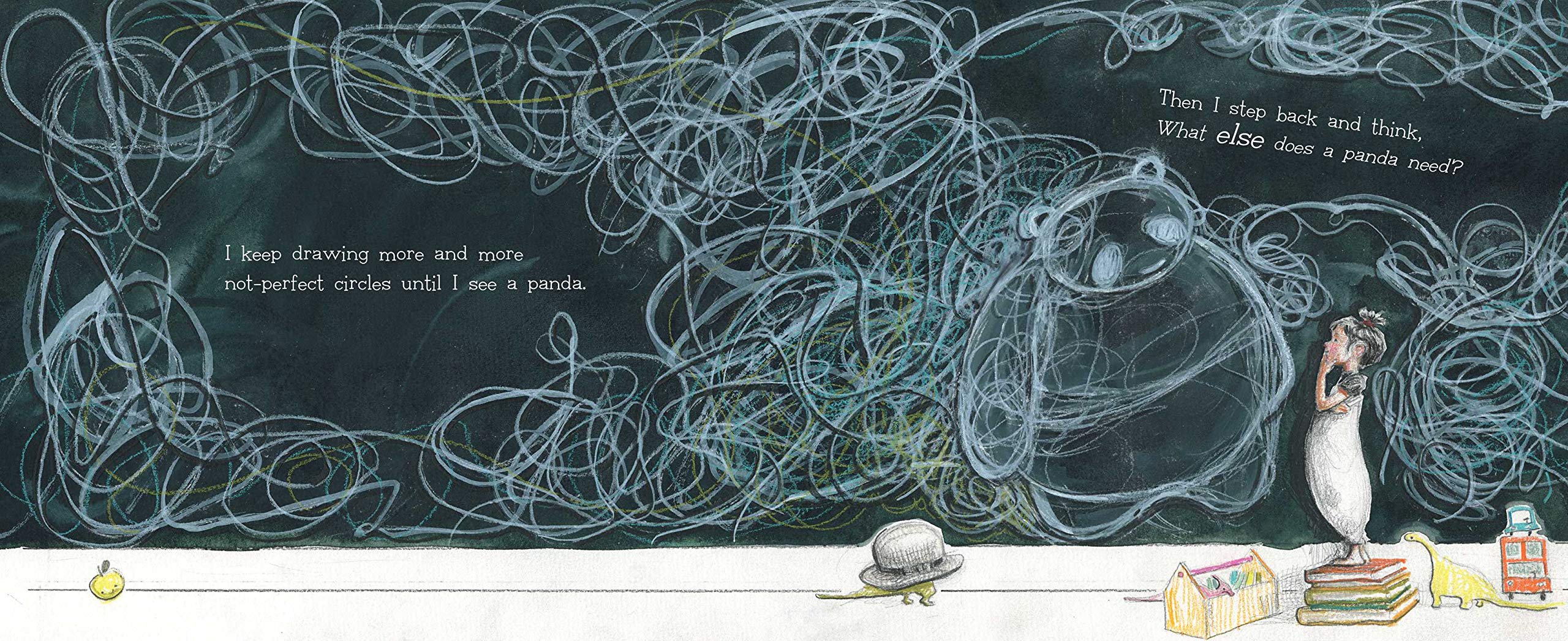
A little girl, art box in hand, gazes at her full-wall blackboard and tells readers “I love to draw.” She tells them, though, that “when they say to draw a perfect circle, [hers] turns out a little wonky.” There are things she can draw perfectly, like a cloud or a flat bicycle tire, and to draw a panda she just keeps drawing circles until one appears. Then she gives it a personal touch and makes it hers.

celebrate-picture-books-picture-book-review-when-I-draw-a-panda-cloud

Copyright Amy June Bates, 2020, courtesy of Simon & Schuster/Paula Wiseman Books.

The panda also has its own style of drawing, which includes drawing a castle the left way “when someone tells him to draw a castle the right way.” The panda has his own interpretations of pictures people tell him to draw, and sometimes he gets distracted by something better, begins to daydream, and forgets what he was told to draw. The panda shows the girl how to draw a dragon from a squiggle.

celebrate-picture-books-picture-book-review-when-I-draw-a-panda-panda

Copyright Amy June Bates, 2020, courtesy of Simon & Schuster/Paula Wiseman Books.

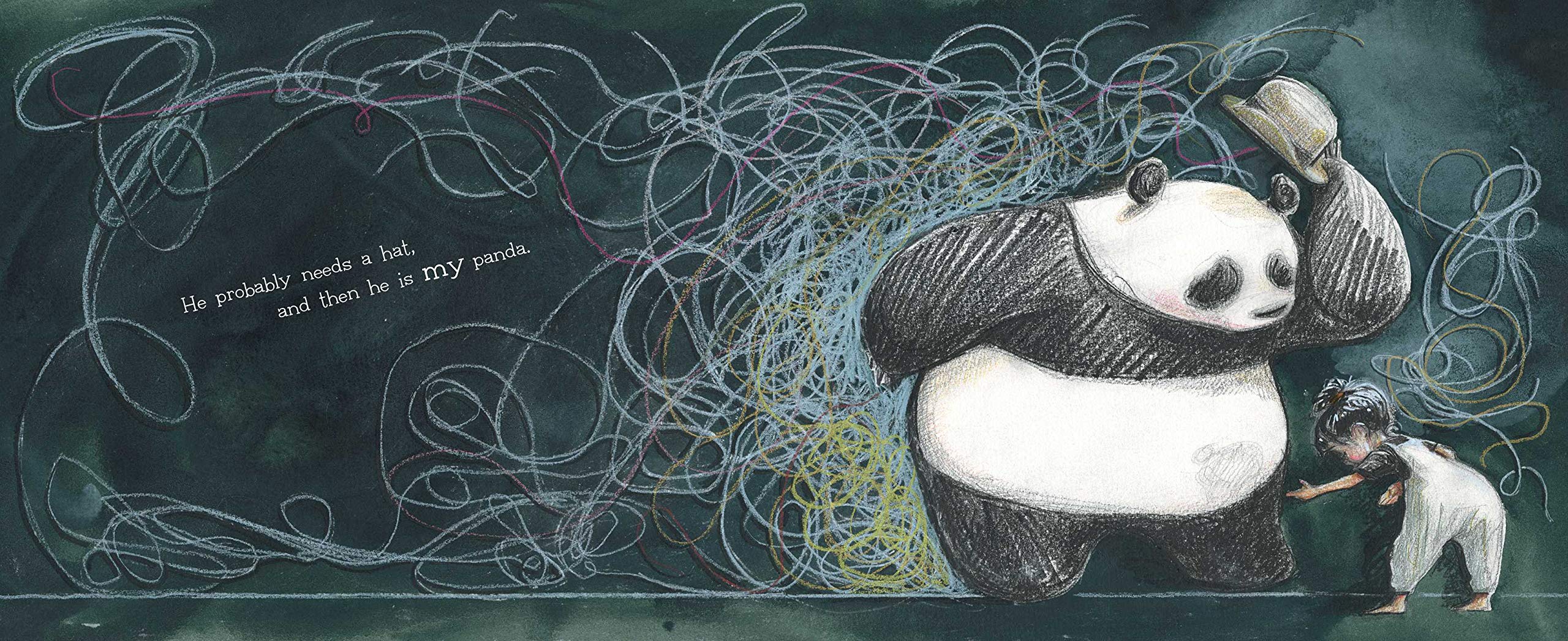
The girl says that she has her individual way of drawing too, and “when they say to draw it ‘this way,’” she asks, “‘Why?’” When she does draw a picture the way they want her to, she changes it later. Sometimes people tell the girl her drawing won’t work or remind her to stay in the lines, but the drawings turn out just fine. And when people can’t figure out what she and her panda have drawn, they let it remain a mystery. The girl and her panda can draw quietly, but there are times when their pencils like to ROAR! Then they go willy-nilly, the girl says, to “somewhere that makes us happy.”

celebrate-picture-books-picture-book-review-when-I-draw-a-panda-hat

Copyright Amy June Bates, 2020, courtesy of Simon & Schuster/Paula Wiseman Books.

Amy June Bates celebrates the imagination and creativity of kids who, when given paper and freedom, will draw a unique picture every time, a masterpiece. Her storytelling in which the young artist counters the instructions of all of the “theys” who tell her to draw a “perfect” circle, castle, or other shape, is reassuring and uplifting to children who are proud of the artwork they do—artwork that is just what they want it to be. The girl’s honesty will resonate with readers of all ages who engage in the creative process, whether its art, writing, music, dance, inventing, or other discipline.

Bates’ own distinctive art shines in her illustrations of a child’s room that any kid will envy. One wall is painted completely with chalkboard paint, allowing her to give full expression to her imagination. Kids will appreciate the second and third spreads in which the girl demonstrates her “wonky” circles and then reveals that these become “perfect” clouds, ice cream cones, and flat tires. As the panda emerges from a great storm of squiggles, the girl’s imagination comes to life, and readers will cheer her on as she turns “the right way,” “something pretty,” and a “perfect” character or animal on their heads with panache and humor.

The front endpapers depict a series of familiar step-by-step diagrams that show how to draw a perfect circle, panda, princess, pirate, and more. The final diagram includes a fancy frame in which “something perfect” should be drawn. In the endpapers, these same diagrams appear covered in crayon scribblings, and the final frame holds a drawing of the girl herself.

Encouraging, freeing, and a delightful celebration of the ingenuity of children, When I Draw a Panda is a book kids will ask for again and again. This one’s a must for home, classroom, and public library collections.

Ages 4 – 8

Simon & Schuster/Paula Wiseman Books, 2020 | ISBN 978-1481451482

Discover more about Amy June Bates, her books, and her art on her website.

National Panda Day Activity

Screen Shot 2021-03-15 at 8.01.44 PM

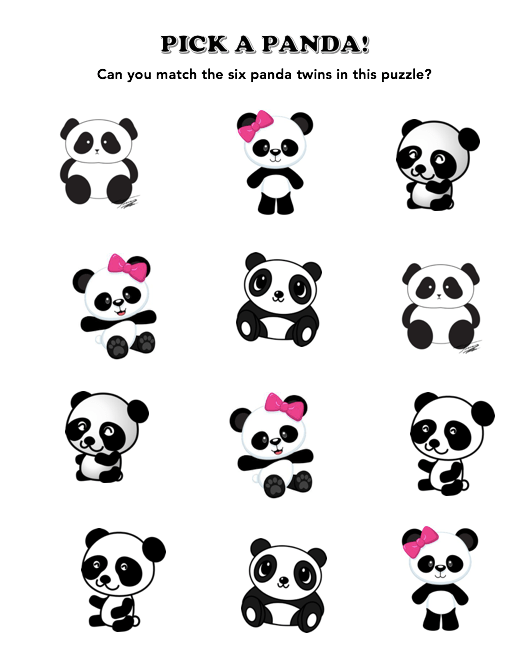
Pick a Panda! Puzzle


Can you match the six twin pandas in this printable puzzle?

Pick a Panda! Puzzle

celebrate-picture-books-picture-book-review-when-I-draw-a-panda-cover

You can find When I Draw a Panda at these booksellers

Amazon | Barnes & Noble | Books-a-Million

To support your local independent bookstore, order from

Bookshop | IndieBound

Picture Book Review
March 15 – Celebrating the Book Birthday of Let’s Pop Pop Popcorn!

celebrate-picture-books-picture-book-review-let's-pop-pop-popcorn-cover

About the Holiday

Today, I’m excited to be celebrating the Book Birthday of Let’s Pop Pop Popcorn!, a story that makes delicious fun of learning about nature, science, and one fantastic treat! 

Thanks to Sleeping Bear Press for sending me a copy of Let’s Pop Pop Popcorn! for review consideration. All opinions on the book are my own.

Let’s Pop Pop Popcorn!

Written by Cynthia Schumerth | Illustrated by Mary Reaves Uhles


A group of kids plants rows of seeds, which with rain and sun grow unseen until “Surprise! Like magic sprouts appear! / Green and tender, finally here.” The kids help their plants grow by pulling weeds and watching out for pests. The seeds grow and grow until they are taller—much taller—than the children. What are the kids growing? Corn, but not just any corn…. Can you guess?

celebrate-picture-books-picture-book-review-let's-pop-pop-popcorn-sprouts

Image copyright Mary Reaves Uhles, 2021, text copyright Cynthia Schumerth, 2021. Courtesy of Sleeping Bear Press.

When the ears are picked, shucked, and dried, the kernels are ready to be tossed “Plink, plunk, plink” into a pot and heated up. Do you know what kind of corn it is now, or do you need another hint? Okay… “Steam builds around each kernel’s germ, / puffs the starch called endosperm.” A bit of science brings about explosive results then “first one pop! Then pops galore!” You know now! The kids grew their own popcorn! When the pot is overflowing it’s time for “butter, salt, then give a swish. / Lick our fingers—Mmm! Delish!”

celebrate-picture-books-picture-book-review-let's-pop-pop-popcorn-stovetop

Image copyright Mary Reaves Uhles, 2021, text copyright Cynthia Schumerth, 2021. Courtesy of Sleeping Bear Press.

Fascinating backmatter reveals the science behind this favorite treat. Diagrams and photographs let kids see inside a popcorn kernel and view the progression of a kernel as it is heated. They also learn about the two different shapes of popcorn and how they are used. A science activity gives readers the steps for growing their own popcorn from seed to sprout and reveals what transformations take place inside the kernel as the little plant grows. A popcorn art project fills out this STEAM lesson that’s sure to be a favorite.

celebrate-picture-books-picture-book-review-let's-pop-pop-popcorn-party

Image copyright Mary Reaves Uhles, 2021, text copyright Cynthia Schumerth, 2021. Courtesy of Sleeping Bear Press.

There may be no more universally loved snack than popcorn, and Cynthia Schumerth makes learning about the science of growing the plants, preparing the ears for popping, and what happens when the kernels are heated lots of fun. Her bouncy rhyming storytelling will engage kids and get them excited about all the lessons these tiny kernels have to teach. Schumerth’s storytelling builds to its “kaboom” moment, mirroring the suspense popcorn lovers listening for that first Pop. Teachers and homeschoolers will love the resources following the story, which provide for a full lesson appropriate for science, nature, or cross-curricular lessons.

Mary Reaves Uhles’s action-packed illustrations will enthrall kids with their close-up perspectives and relatable details, like the little girl who’s wearing a cat’s ears headband as she digs up the ground for planting. Readers go underground to get a worm’s eye view of the kernels sprouting roots, get down in the dirt to pull weeds, and peek into the pot to make sure there’s going to be enough popcorn for the whole crowd. Images of the kernels pop, pop, popping show the process and will make kids plenty hungry. The final spread of all of the kids enjoying their harvest together is a celebration of popcorn and friendship.

An exuberant story that will spark enthusiasm for science learning and gardening, Let’s Pop Pop Popcorn! will be a quick favorite and is highly recommended for home, classroom, and public libraries.

Ages 5 – 8

Sleeping Bear Press, 2021 | ISBN 978-1534110427

To learn more about Mary Reaves Uhles, her books, and her art, visit her website.

Want to know more about Let’s Pop Pop Popcorn? You can read my interview with Cynthia Schumerth and Mary Reaves Uhles here!

Let’s Pop Pop Popcorn! Book Birthday Activity

celebrate-picture-books-picture-book-review-popcorn-toss-up-puzzle

Popcorn Toss Up! Matching Puzzle


The popcorn’s jumpin’! Can you match the six pairs of kernels so you can enjoy a tasty snack in this printable puzzle?

Popcorn Toss Up! Matching Puzzle

You can find Let’s Pop, Pop, Popcorn! at these booksellers

Amazon | Barnes & Noble | Books-a-Million

To support your local independent bookstore, order from

Bookshop | IndieBound

Picture Book Review
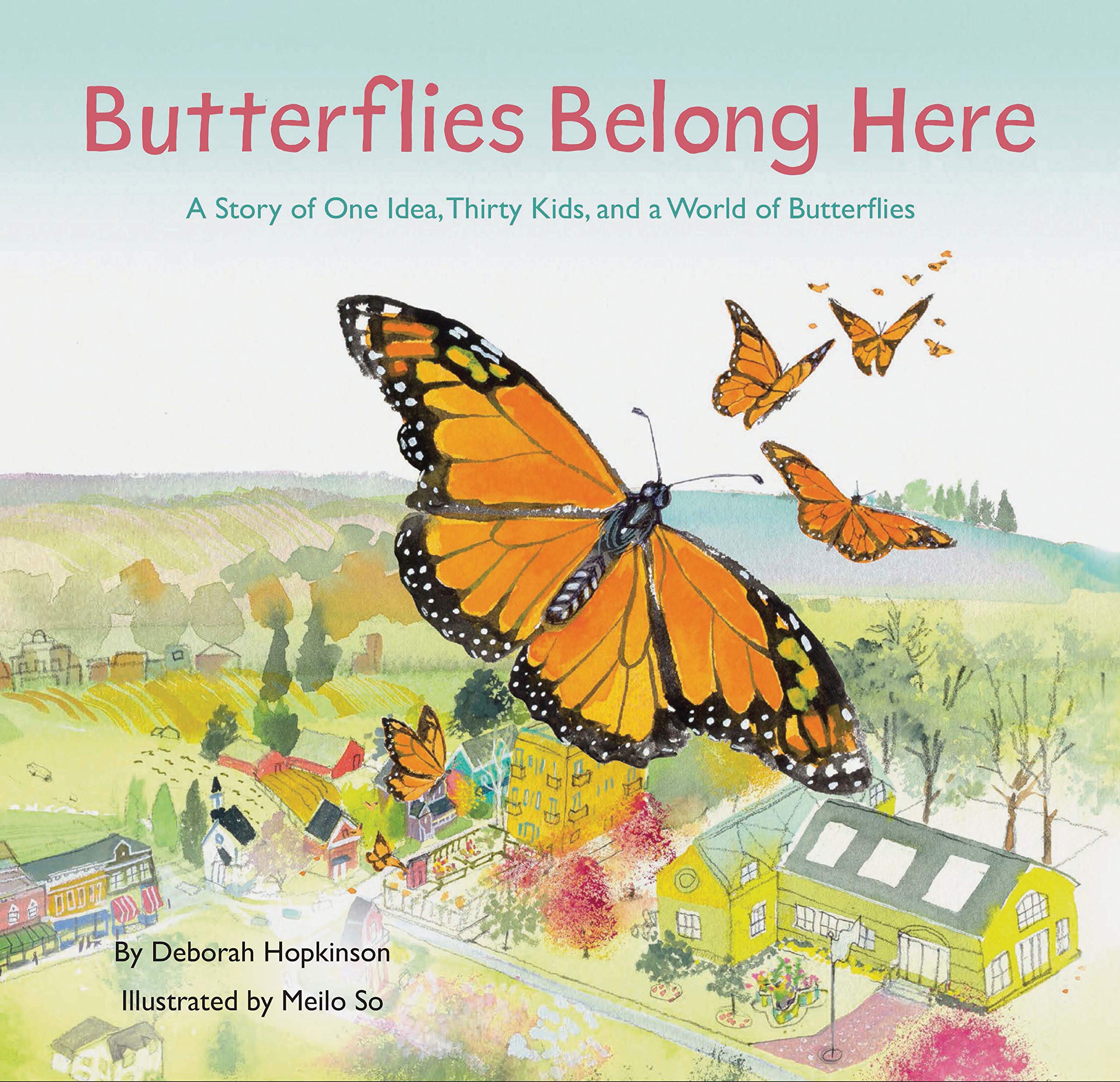
March 14 – National Learn about Butterflies Day

celebrate-picture-books-picture-book-review-butterflies-belong-here-cover

About the Holiday

Spring has sprung – or is right around the corner – so today’s holiday reminds us to watch out for the butterflies in your area. With more than 20,000 species of butterflies around the world, these delicate beauties are one of the most recognized and beloved natural wonders on earth. Butterflies are important to our ecosystem, too, but habitat destruction and climate change are decreasing their numbers by alarming amounts. You can help! By planting milkweed and other plants as well as nectar-producing flowers in your yard or community, you can create an area where butterflies can find shelter, food, and a place to lay their eggs. To learn more about saving monarch butterflies, visit Save Our Monarchs.

Butterflies Belong Here: A Story of One Idea, Thirty Kids, and a World of Butterflies

Written by Deborah Hopkinson | Illustrated by Meilo So


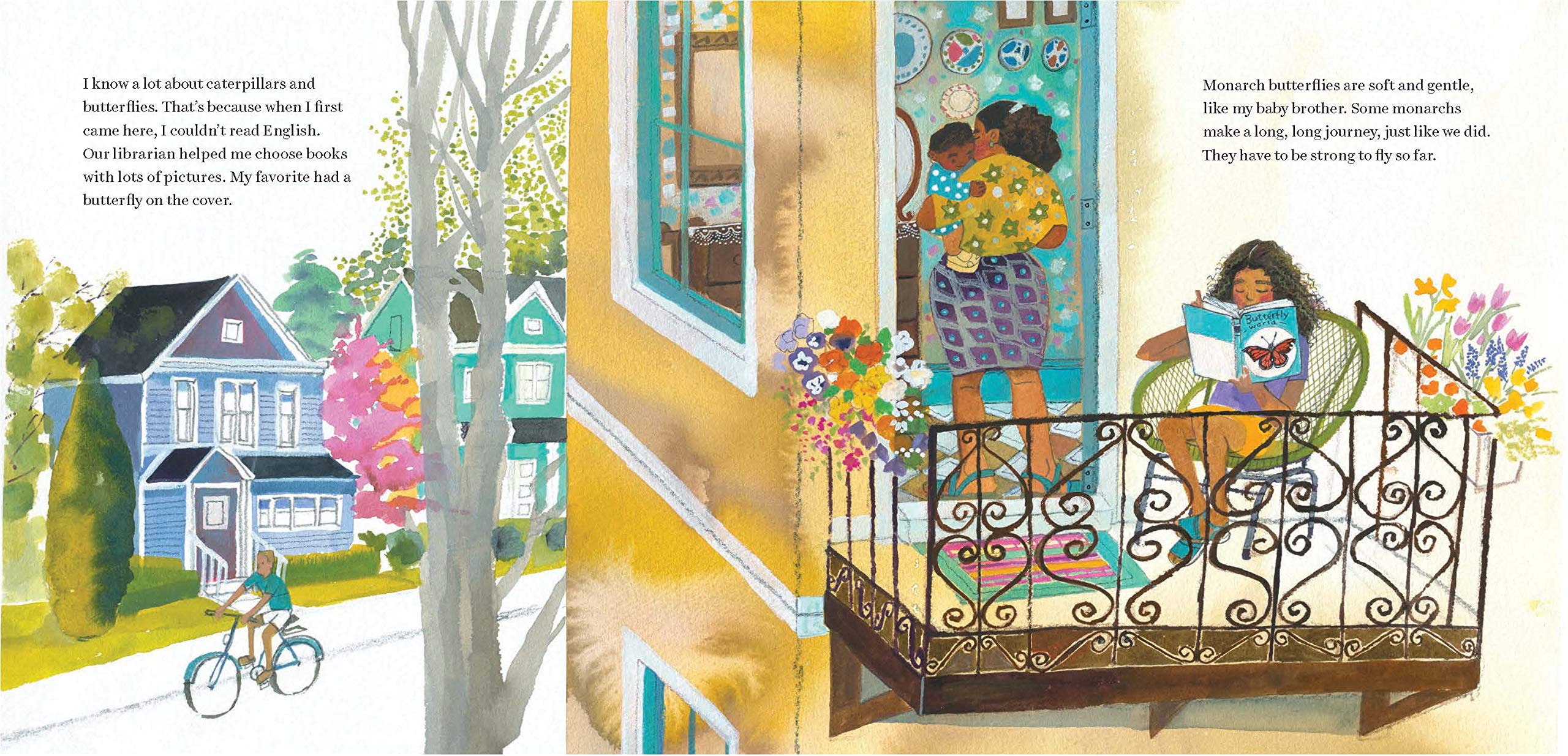
Last spring, the narrator of the story reveals, she was a “little like a caterpillar…quiet and almost invisible.” She had recently moved to the United States and couldn’t read English. The school librarian gave her books with a lot of pictures and her favorite was one about butterflies. Since then she has learned a lot about Monarch butterflies and how they “make a long, long journey” just like her family did. The frame of her story leads into a detailed discussion of the spring monarch migration and the life cycle of caterpillars.

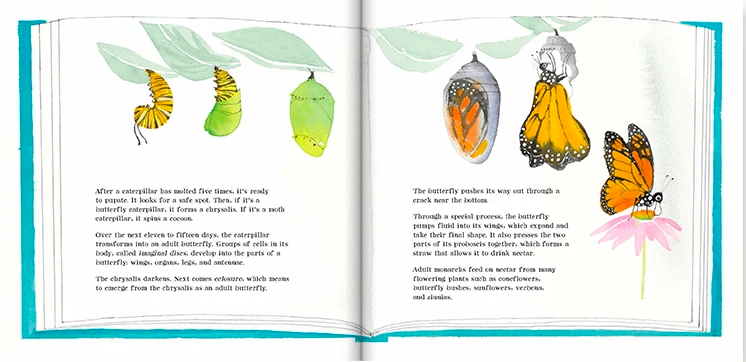
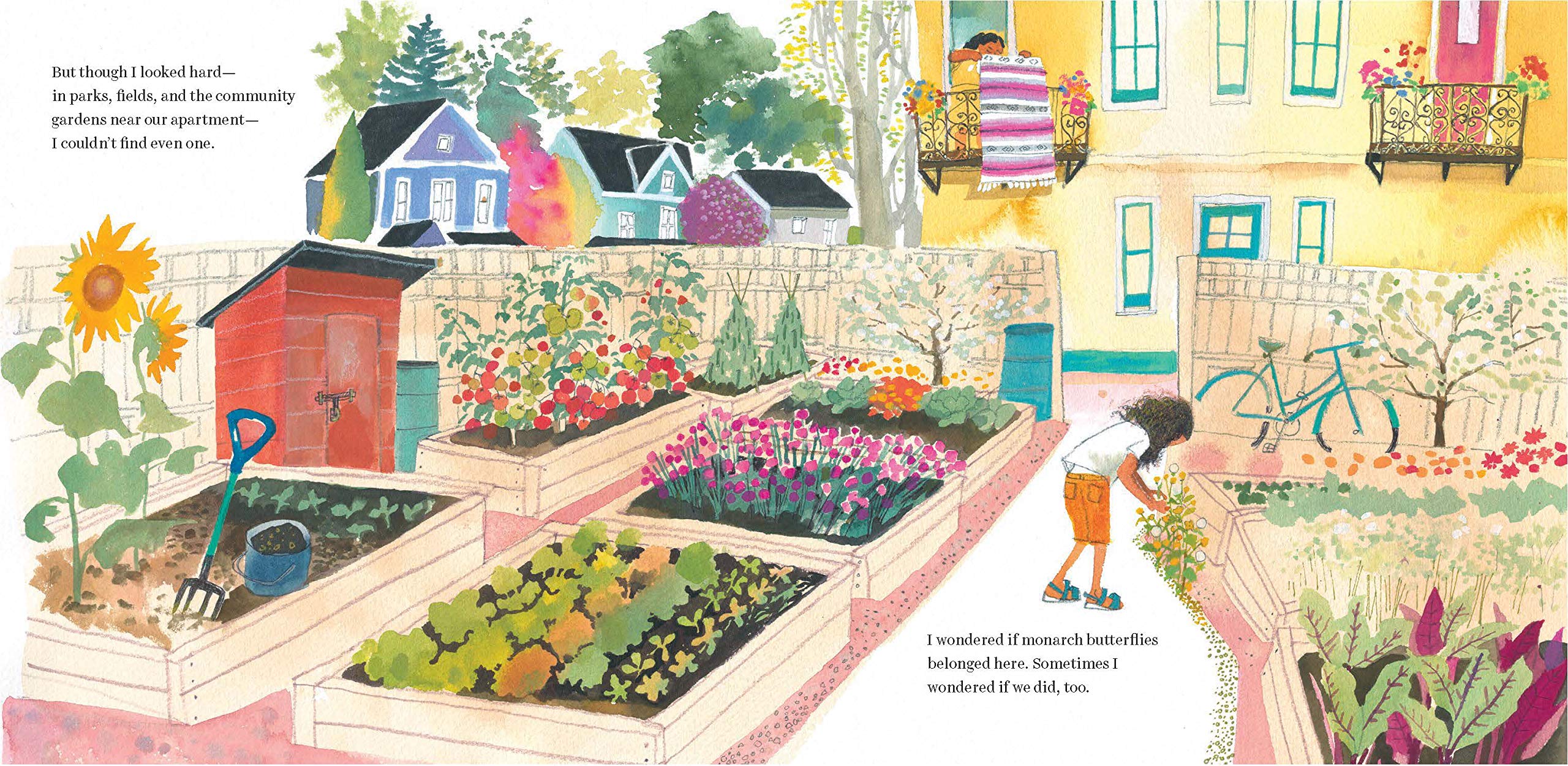
When summer came, the girl thought for sure she would see monarch butterflies. She “wanted to see them flit from flower to flower sipping nectar.” But no matter where she looked—the park, grassy fields, an even the community garden—she couldn’t find any. She began to wonder “if monarch butterflies belonged here.” Sometimes she wondered if her family did either. Turning the page, kids learn how a caterpillar transforms into a butterfly and how, once it emerges from its chrysalis, it “pumps fluid into its wings, which expand and take their final shape” and creates the “straw” it drinks nectar with.

celebrate-picture-books-picture-book-review-butterflies-belong-here-reading

Image copyright Meilo So, 2020, text copyright Deborah Hopkinson, 2020. Courtesy of Chronicle Books.

In the fall when school began, the girl rushed to find her favorite book. Now she could read it, and she discovered that butterflies need milkweed to multiply and thrive. She also learned that milkweed is sparse now, due to habitat destruction due to building, chemical use, and climate change. She also learned some shocking facts, such as “in 20 years, the number of monarchs has fallen by 90 percent.”

One day the librarian calls the girl over and tells her that she has ordered new butterfly books and offers them to her first. The librarian also explains that over the summer she created a monarch way station. The girl knows about these special butterfly gardens. She points out the library window at a place within the school yard that would make a perfect monarch way station. “‘It takes just one person to get things started,’” the librarian says. “‘I’m not that kind of person,’” the girl whispers. But the librarian is encouraging. She reminds the girl about the amazing trip monarchs take and says, “‘It’s surprising what such a tiny creature can do.’” Readers next learn about the generations of butterflies that are born during the summer and how the final generation is different from the rest.

celebrate-picture-books-picture-book-review-butterflies-belong-here-chrysalis

Image copyright Meilo So, 2020, text copyright Deborah Hopkinson, 2020. Courtesy of Chronicle Books.

During the winter, the girl remembers the monarchs who lived “high in the fir forests of Mexico, waiting out the cold to make their long journey north.” She thinks about what the librarian said, and wonders if she could “ever be brave enough to speak up, take charge, and be noticed.” But when she presents a research project on butterflies for her class, the kids loved it. At the end she tells the class how important butterflies are and that they need to help them.

She is surprised by how excited the class is to help and that they want to make a butterfly garden as the class project. The teacher turns to her and asks if she has any ideas on what they could do. The girl is prepared. She turns her poster around and shows them her “plan for a monarch way station, the beginning of a timeline, a list of supplies, and how much it might cost.” And so, they started on their garden. Over the next few weeks, the girl says “‘I could feel myself growing and changing, little by little.’”

celebrate-picture-books-picture-book-review-butterflies-belong-here-community-garden

Image copyright Meilo So, 2020, text copyright Deborah Hopkinson, 2020. Courtesy of Chronicle Books.

The class talked to the principal, made a presentation to parents, and invited gardeners and scientists to speak to the class. They also wrote letters to students in other places who were doing similar projects. Then they held an all-school assembly and asked for volunteers. Kids from all classes—even kindergarten—signed up. They even went to a town council meeting and explained how important milkweed was. They asked that it not be sprayed with poison but instead “be planted in every city park.” The mayor even shook the girl’s hand and told her the city needed citizens like her.

Finally, with a fence and garden plots built, it was planting day. When spring class picture time rolls around again, the girl can be found in the front row, right in the center and holding the class sign. The kids met students from another school who have been helping the butterflies for two years and now serve as monarch trackers, placing tags on their legs and following their migration routes. The class’s monarch way station is thriving, and while they don’t have monarchs yet, the girl is already thinking about how the class can become monarch trackers next year. Just like a caterpillar, the girl thinks again, she has grown and emerged “as something new, unexpected, surprising.”

Backmatter includes an Author’s Note about the story, a guide for making a school or home monarch way station, facts about monarchs, and books and internet resources for learning more about monarchs and how you can help.

celebrate-picture-books-picture-book-review-butterflies-belong-here-migration

Image copyright Meilo So, 2020, text copyright Deborah Hopkinson, 2020. Courtesy of Chronicle Books.

Deborah Hopkinson’s moving and educational story combines a fictional account of growing up with scientific information on butterflies. The structure is exceptionally effective in showing kids and adults that some children find their voice, discover a talent, or overcome hesitation or shyness when they become involved in a cause or activity they believe in. The school librarian and the teacher both model actions and words that can encourage children to express and extend themselves. The girl’s thoughts allow children to see that fears of speaking up or taking charge are not uncommon while also reassuring them that by taking even small actions one step at a time, their confidence will grow. The cyclical structure of the story enhances the idea that change is gradual—in nature and in people. Hopkinson’s text revolving around butterflies and making a butterfly garden way station will excite kids to do the same at their school, at home, or in their community.

Meilo So’s gorgeous and tender illustrations portray vibrant scenes of flower bedecked balconies, blooming community gardens, and a busy, colorful town. So cleverly depicts the library’s stacks of books in similar floral hues, connecting the nurturing of children and butterflies. The faces of all the children and the adults are thoughtful and enthusiastic. Readers can clearly see the protagonist’s physical growth throughout the seasons as well as her developing self-confidence and will want to watch for ways in which she mirrors a butterfly. The children in the classroom and the school are a diverse mix and demonstrate the enthusiasm and determination of kids who want to make a difference.

So is a master at illustrating butterflies, caterpillars, and other insects, and her realistic images will fascinate readers. Children get to see a caterpillar form a chrysalis, transform into a butterfly inside, and emerge. They also see the seeds inside a milkweed pod as well as the plants themselves, throngs of monarchs during migration, and maps of migration routes. 

Exhilarating, poignant, and inspirational on many levels, Butterflies Belong Here is highly recommended for home libraries and a must for school and public libraries.

Ages 5 – 8 and up

Chronicle Books, 2020 | ISBN 978-1452176802

Discover more about Deborah Hopkinson and her books on her website.

To learn more about Meilo So and view portfolios of her art, visit her website and heflinreps.

National Learn about Butterflies Day Activity

celebrate-picture-books-picture-book-review-beautiful-butterflies-maze

Beautiful Butterflies Maze


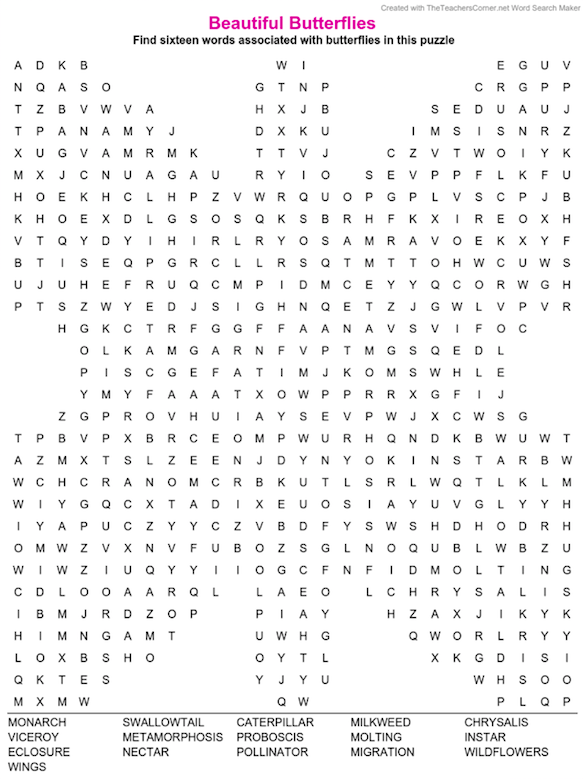
Can you find the sixteen words associated with butterflies in this printable puzzle?

Beautiful Butterflies Maze Puzzle | Beautiful Butterflies Maze Solution

celebrate-picture-books-picture-book-review-butterflies-belong-here-cover

You can find Butterflies Belong Here at these booksellers

Amazon | Barnes & Noble | Books-a-Million

To support your local independent bookstore, order from

Bookshop | IndieBound

Picture Book Review

March 13 – It’s Women’s History Month

celebrate-picture-books-picture-book-review-shaking-things-up-cover

About the Holiday

National Woman’s History Month was established by the United States Congress in 1987 to recognize and celebrate the achievements of American women in the past and today. This year’s theme is “Nevertheless She Persisted: Honoring Women Who Fight All Forms of Discrimination against Women” which provides an opportunity to recognize the tireless efforts of women in all walks of life who fight against discrimination to be heard and to achieve their goals. There’s no better time than now to get involved to ensure that all women have equal rights and standing in all areas of their lives.

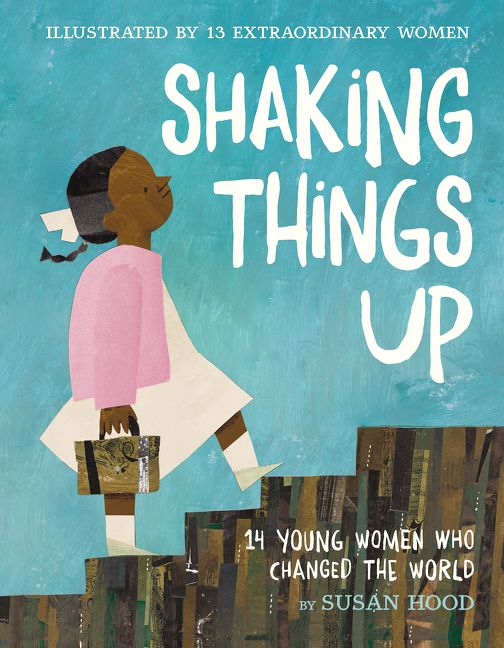
Shaking Things Up: 14 Young Women Who Changed the World

Written by Susan Hood 


Illustrated by Shadra Strickland, Hadley Hooper, Lisa Brown, Emily Winfield Martin, Sara Palacios, Erin K. Robinson, Sophie Blackall, Melissa Sweet, Oge Mora, Isabel Roxas, Julie Morstad, LeUyen Pham, and Selina Alko


This superb collection of biographies in verse highlights not only well-known pioneers but some delightfully fresh names and a few who are influencing the arts, science, and cause of human rights today. Each of the women profiled show the qualities of  bravery, persistence, intelligence, and ability over a vast spectrum of fields. Their success led the way for today’s women and will inspire tomorrow’s.

celebrate-picture-books-picture-book-review-shaking-things-up-Molly-Williams

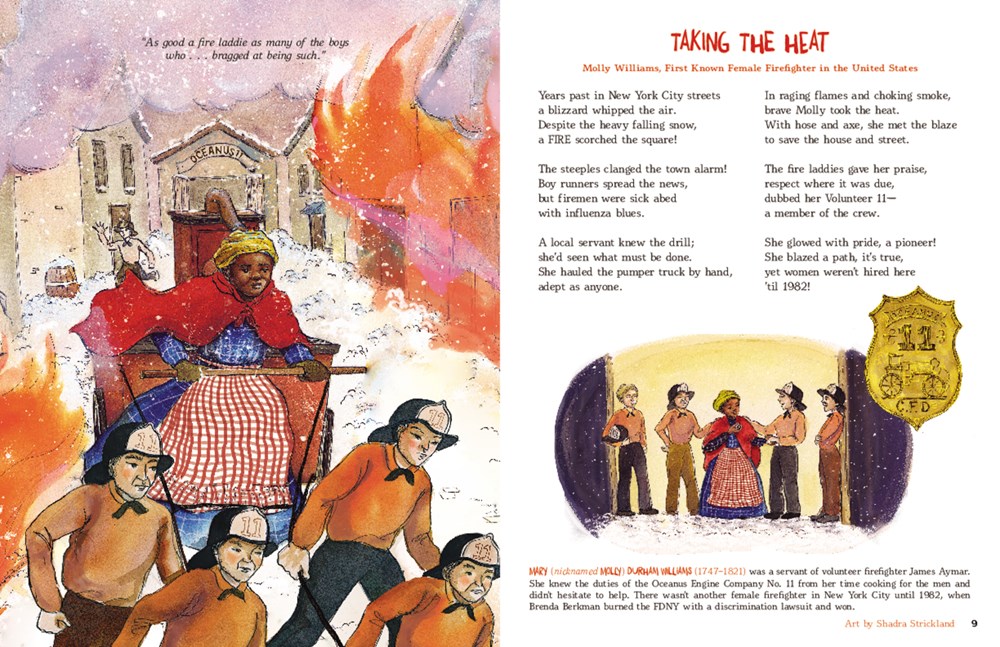
Image copyright Shadra Strickland, 2018, text copyright Susan Hood, 2018. Courtesy of HarperCollins.

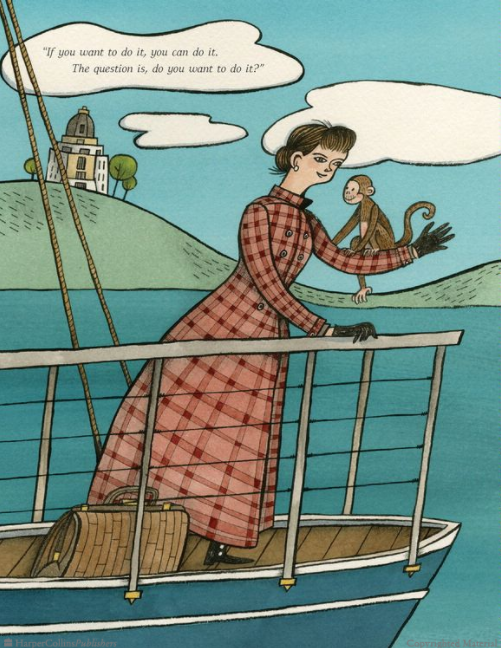
Organized on a timeline from the early 1780s to 2014, Shaking Things Up begins with Taking the Heat and Molly Williams, who was the first known female firefighter in America. When the flu knocked out all the members of the Oceanus Fire Department and a fire raged, Molly, the servant of James Aymar, a volunteer fireman, “… knew the drill; / she’d seen what must be done. / she hauled the pumper truck by hand, / adept as anyone.” For her work she was named Volunteer 11 and made part of the crew. It took about two-hundred years before another woman—Brenda Berkman—was added to the New York Fire Department.

celebrate-picture-books-picture-book-review-shaking-things-up-Mary-Anning

Copyright Hadley Hooper, 2018, courtesy of HarperCollins.

Young paleontologists-in-the-making will be amazed by the story of Mary Anning, who, while searching the British coast for fossils to sell to support her family, uncovered the skeleton of an ichthyosaur in 1812. In Buried Treasure, children learn how she went on to discover “the first two complete plesiosaurs and a pterosaur, laying the foundation for Charles Darwin’s theory of evolution.”

Children who love spies, news reporting, and uncovering the truth will want to know about Nellie Bly, who as an investigative journalist took on disguises to infiltrate institutions and write about “corruption and cruelty.” She was also widely admired for her around-the-world trip that beat Jules Verne’s “80 days” by eight days. As told in Woman of the World: “Bly hopped a ship and told her tale / of all she saw on Earth. / She wrote of camels, temples, jewels / with gutsy wit and mirth.” Nellie was only twenty-five when she undertook her travels in “a record-breaking race. / No soul on Earth had ever sped / the globe at such a pace!”

celebrate-picture-books-picture-book-review-shaking-things-up-Mary-Anning-poem

Image copyright Hadley Hooper, 2018, text copyright Susan Hood, 2018. Courtesy of HarperCollins.

If it weren’t for Annette Kellerman, women may never have made such a splash in swimming. Kellerman was a champion swimmer who began the sport to strengthen her legs after having rickets. Turning the Tide reveals that when she took to the water “without pantaloons—her swimsuit was deemed obscene!” After she was arrested she calmly stated, “who can swim fifty laps / wearing corsets and caps? / Her statement could not be contested,” and she went on to create the modern one-piece swimsuit, changing swimming for women forever.

In The Storyteller, a full alphabet of attributes describes Pura Belpré, a children’s librarian and the New York Public Library’s first Latina librarian. By offering—and often writing—Spanish books and creating programs for the Spanish-speaking community, Belpré revolutionized her library and touched many lives. 

celebrate-picture-books-picture-book-review-shaking-things-up-nellie-bly

Copyright Lisa Brown, 2018, courtesy of HarperCollins.

Children who reach for the stars will be transported by Lift-Off and the inspiration of Mae Jemison, the first female African-American astronaut. When young Mae gazes into the dark night sky, the “glittering stars, swirling galaxies / fill her, thrill her.” It doesn’t matter if she is afraid of the dark and afraid of heights, Mae looks and goes where she wants, where she needs to to learn and understand. And when she’s ready? “Ignition. / All systems are go. / Three / Two / One / Blast off!”

celebrate-picture-books-picture-book-review-shaking-things-up-secret-agents

Image copyright Sophie Blackall, 2018, text copyright Susan Hood, 2018. Courtesy of HarperCollins.

Break It Down reveals the way Angela Zhang attacks the questions she has about the way the world works, questions that lead her to answers and incredible achievements. From creating magic solutions with a Harry Potter potion kit at five years old to discovering answers to questions like why rainbows follow storms at seven years old to using a Stanford University lab at fifteen, Zhang has chipped away “at the ‘black boxes of life,’” including the “biggest black box of all– / a cure for cancer.” For Zhang science is “… both stone and chisel, / and I, your willing apprentice, / yearn to care away life’s mysteries / as a sculptor chisels marble / to find beauty inside.”

celebrate-picture-books-picture-book-review-shaking-things-up-Malala-Yousefzai

Image copyright Selina Alko, 2018, text copyright Susan Hood, 2018. Courtesy of HarperCollins.

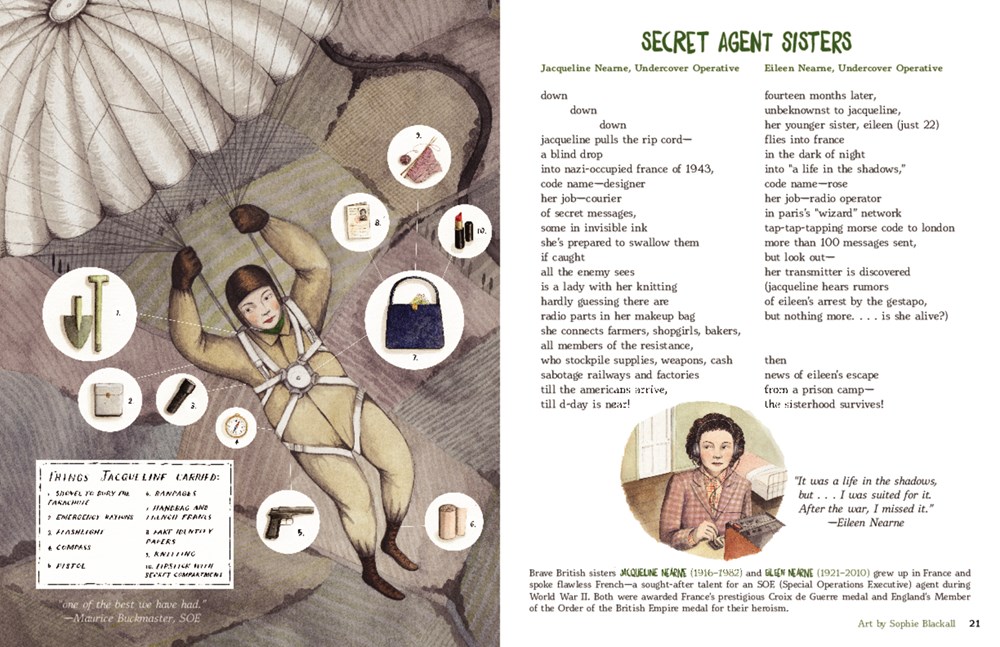
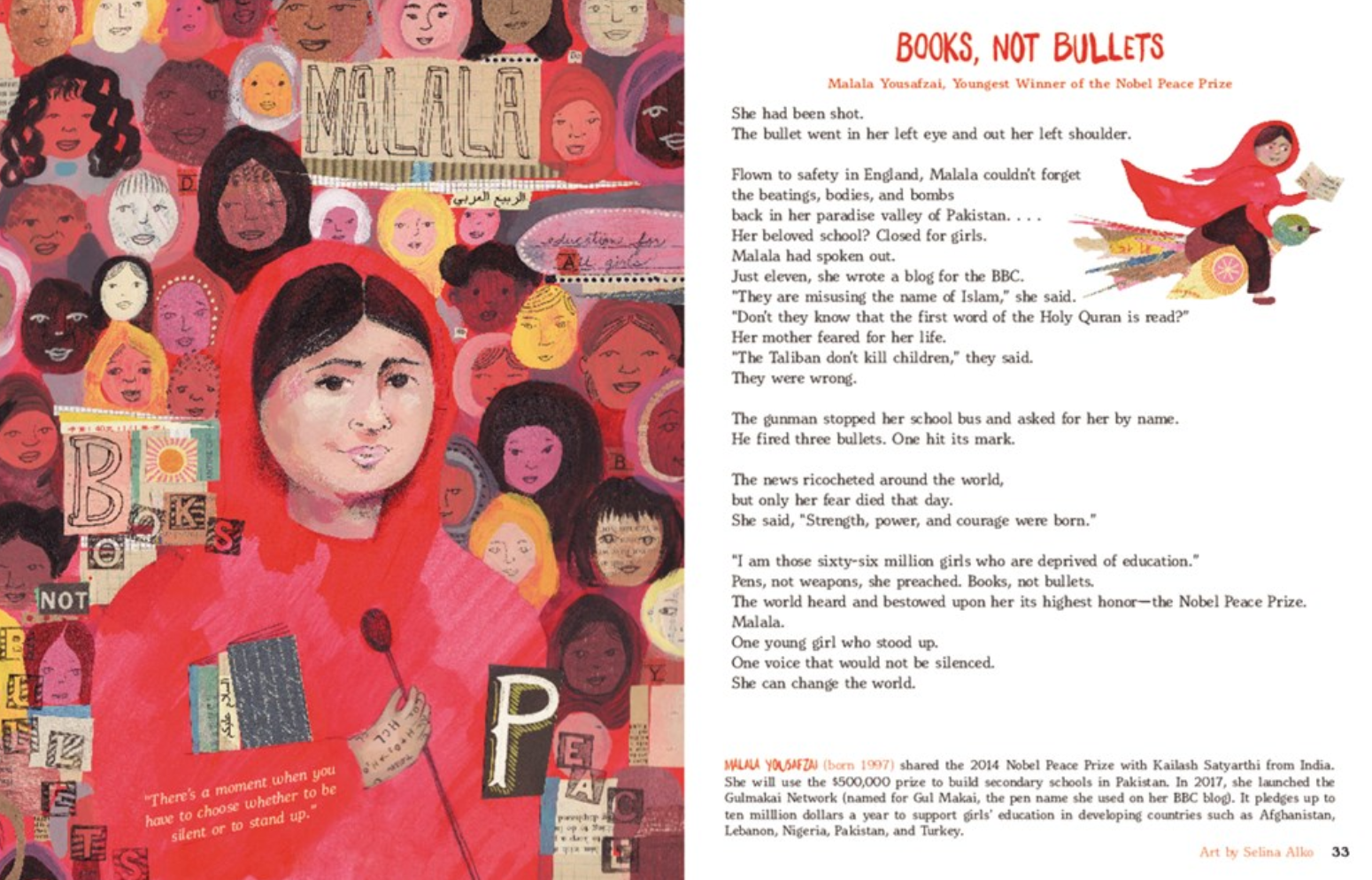
Also included are poems about artist Frida Kahlo, World War II secret agents Jacqueline and Eileen Nearne, anti-hunger activist Frances Moore Lappé, civil rights pioneer Ruby Bridges, architect Maya Lin, and Noble Peace Prize winner Malala Yousafzai.

An illustrated timeline precedes the text, and suggested resources for further study on each woman follows the text.

Susan Hood has created fourteen poems that are as unique as the woman they describe. Some rhyming and some free verse, the poems include facts, quotes, intriguing details and the rhythms, sounds, and dreams of these young women. A paragraph following each poem reveals more about the woman and her work. Readers will be awe-struck by the enticing stories that inform each lyrical biography and will long to learn more about the women and their lives.

The theme of individuality is carried through in the illustrations, which are each created by a different illustrator. Colorful, whimsical, and realistic, the illustrations let children see the faces of the women presented, surrounded by their work and set within their time period. Readers will want to linger over the images and discuss the details included. A quotation from each woman accompanies her illustration.

Shaking Things Up offers an inviting way to introduce children to these amazing women and is an excellent reminder that they too can dream of what could be and make it happen. A must for classroom and school libraries, the book would be an inspirational addition to home bookshelves as well.

Ages 4 – 10

HarperCollins, 2018 | ISBN 978-0062699459

Discover more about Susan Hood and her books on her website.

You can learn more about these illustrators on their websites:

Shadra Strickland | Hadley Hooper | Lisa Brown | Emily Winfield Martin | Sara Palacios | Erin K. Robinson | Sophie Blackall | Melissa Sweet | Oge Mora | Isabel Roxas | Julie Morstad | LeUyen Pham | Selina Alko

Check out the Shaking Things Up book trailer!

Women’s History Month Activity

celebrate-picture-books-picture-book-review-freda-kahlo-coloring-page

Amazing Women Coloring Pages


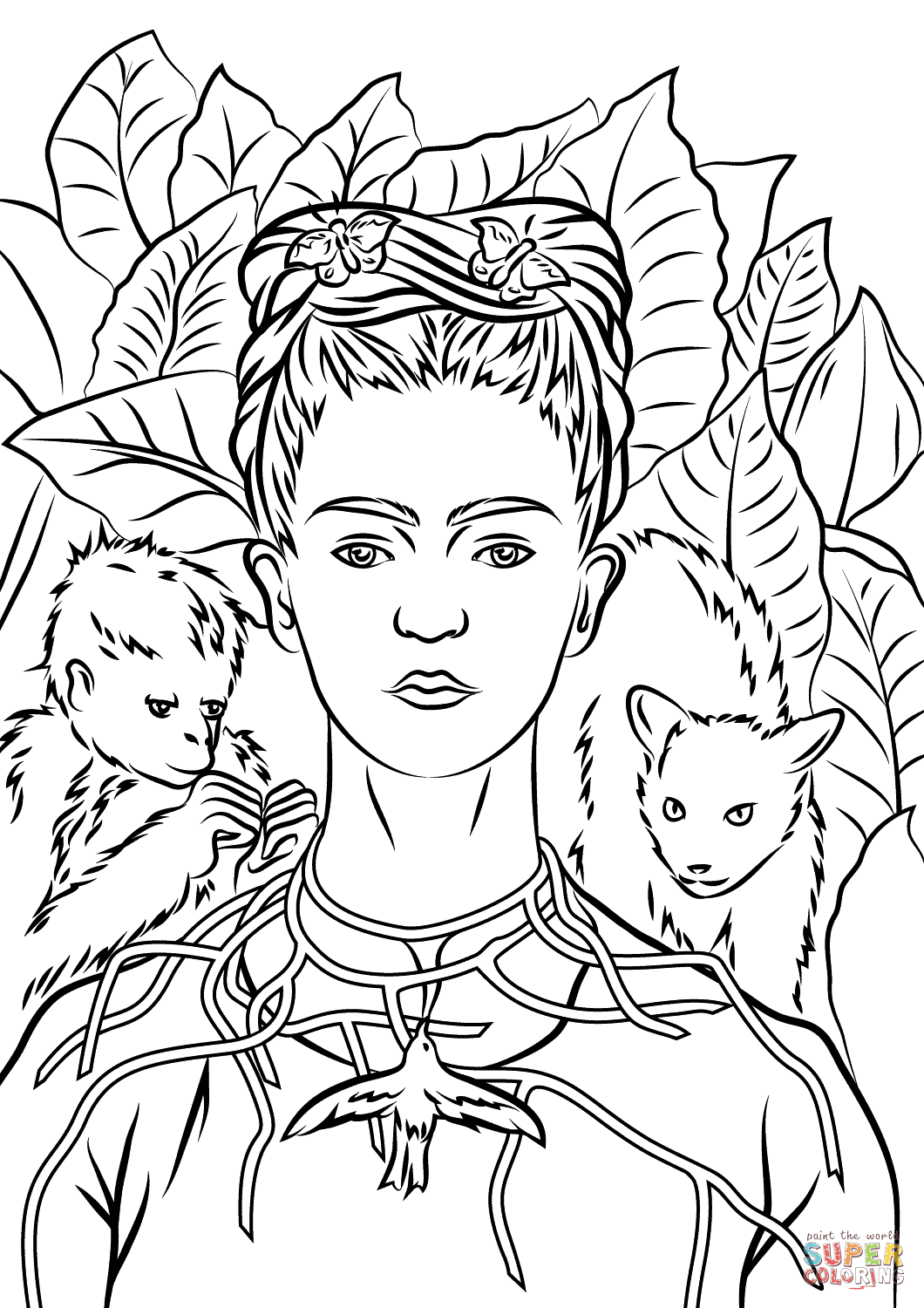
There are so many incredible women to learn about during this month. Today, enjoy these coloring pages of inspiring women.

Mary Anning | Mae Jemison | Freda Kahlo 

celebrate-picture-books-picture-book-review-shaking-things-up-cover

You can find Shaking Things Up: 15 Young Women Who Changed the World at these booksellers

Amazon | Barnes & Noble | Books-a-Million

To support your local independent bookstore, order from

Bookshop | IndieBound

Picture Book Review
March 12 – It’s International Ideas Month

celebrate-picture-books-picture-book-review-the-floating-field-cover

About the Holiday

This month we celebrate something that you can’t see or hold but which is real all the same. What is it? An idea! Ideas are amazing things. Sometimes seemingly conjured up out of thin air; sometimes borne out of necessity as in today’s book; and sometimes the “Eureka!” result of long, hard work, ideas fuel our arts, sciences, education, and home life. So today, write down those ideas you have while driving or commuting to work, while in the shower, when you’re daydreaming, or just as you turn off the light to go to sleep. You never know what they might become!

The Floating Field: How a Group of Thai Boys Built Their Own Soccer Field

Written by Scott Riley | Illustrated by Nguyen Quang and Kim Lien


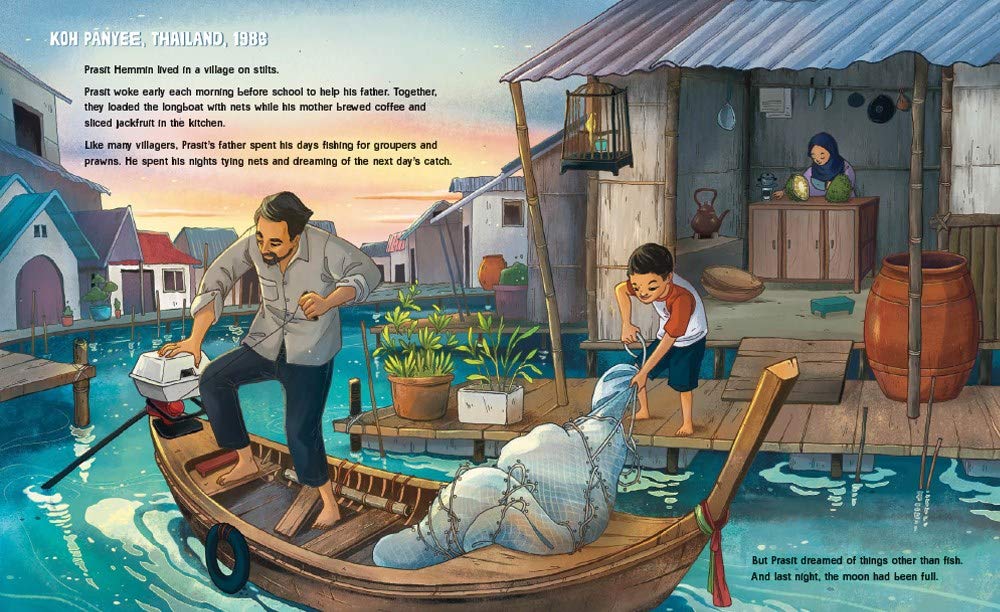
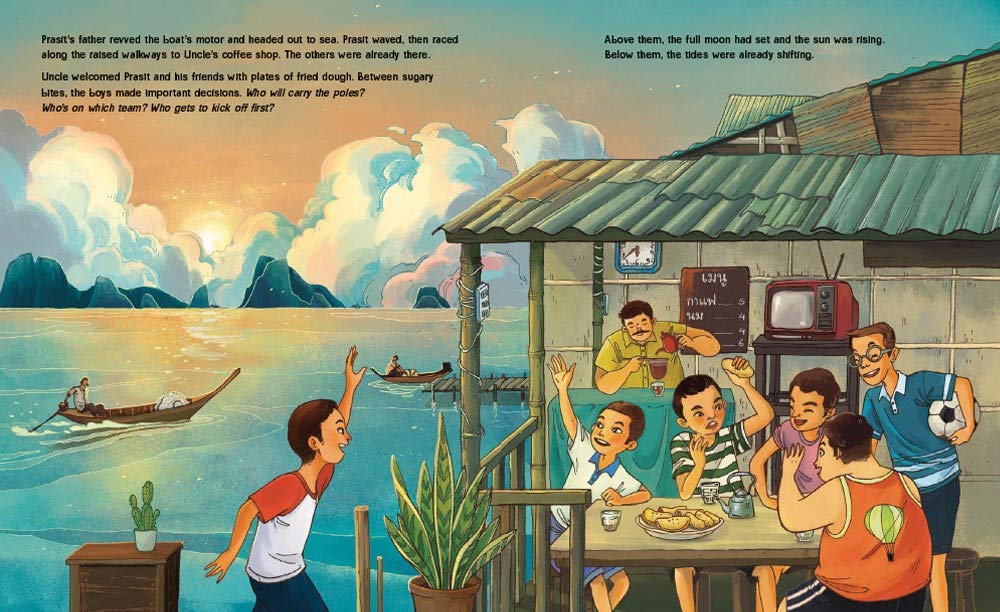
Like all of the villagers living on the small island of Koh Panyee, Prasit Hemmin’s home was built on stilts. His father was a fisherman, and every morning Prasit helped him load his boat before school. Today was an exciting day, and Prasit hurried to meet his friends at Uncle’s coffee shop. They had big decisions to make: “Who will carry the poles? Who’s on which team? Who gets to kick off first?” The full moon had come and later the tide would go out.

celebrate-picture-books-picture-book-review-the-floating-field-koh-panyee

Image copyright Nguyen Quang and Kim Lien, 2021, text copyright Scott Riley, 2021. Courtesy of Millbrook Press.

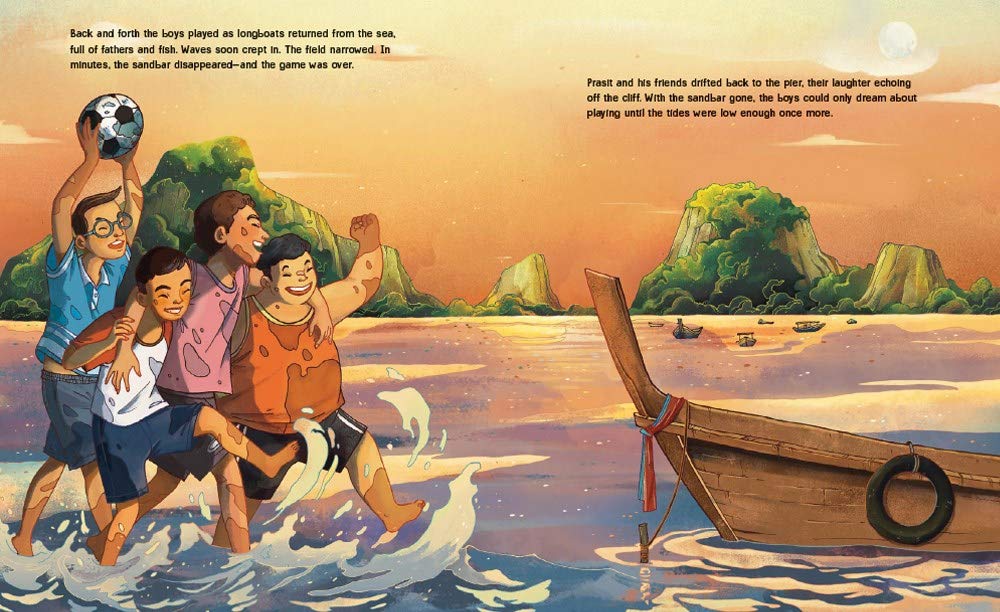
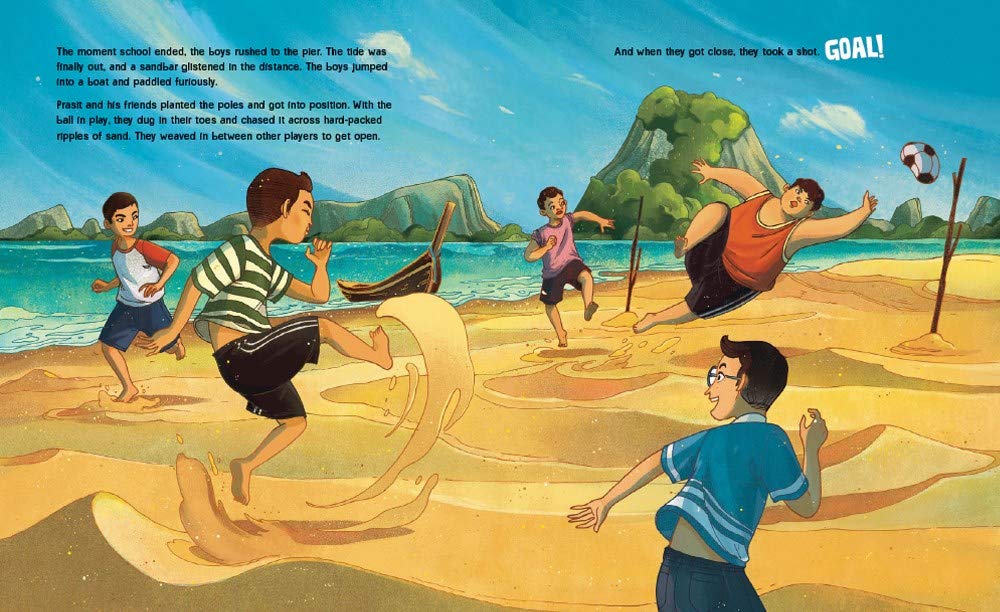
By the time school was over, the sandbar with its glittering sand was ready, beckoning to the boys to come play. They set up their goal and dropped the ball then “they dug in their toes and chased it across the hard-packed ripple of sand. They weaved in between other players to get open. And when they got close, they took a shot. GOAL!” The boys played until the sun went down and the fisherman’s longboats returned home. Then they “could only dream about playing until the tides were low enough once more.”

Fortunately, the World Cup was being held this month, and the boys watched the games on the small TV at Uncle’s coffee shop—“the only one on the island.” The boys decided that they needed a team of their own. But where would they play? Prasit looked around at their floating village and had an idea. They could build their own field. The next day, they collected materials and got to work. With planks and barrels, they built a platform. When it was ready, they tethered it in place, painted the lines, and put up goals.

celebrate-picture-books-picture-book-review-the-floating-field-coffee-shop

Image copyright Nguyen Quang and Kim Lien, 2021, text copyright Scott Riley, 2021. Courtesy of Millbrook Press.

Every day, Prasit and his friends played on their floating field, learning some fancy footwork to avoid rough spots on the boards. The villagers who once thought they were crazy for building the field now stopped to watch. One day the boys heard about a tournament being held on the mainland, and they signed up. On the morning of the tournament, just before they left for the mainland, the villagers surprised them with new uniforms and “the Panyee Football Club was born.”
The boys stood nervously on the field before their first game began, but once the ball was in play, they knew just what to do. “They passed it down the field. They weaved in between other players to get open. And when they got close, the took a shot. GOAL!” The Panyee Football Club won several games, but by the afternoon, the weather had turned and rain pelted the field. While their opponents knew how to play on the soggy field, the Panyee boys didn’t. At halftime they were down 2 – 0. Prasit had an idea.
celebrate-picture-books-picture-book-review-the-floating-field-beach

Image copyright Nguyen Quang and Kim Lien, 2021, text copyright Scott Riley, 2021. Courtesy of Millbrook Press.

Back on the field, the boys ran barefoot, just as they did at home. They were quicker and more agile, and they were able to tie the score. But with only minutes left in the game, the other team scored—and won. “But that day, in their very first tournament, the Panyee Football Club came in third place.” On the boat ride home, the boys celebrated, eager to get back on their floating field “where they could play the game they loved, whenever they wanted.”

Extensive backmatter includes an Author’s Note, complete with photographs, reveals some unusual places soccer is played and more about how this story came to be; a note from Prasit Hemmin about his childhood experiences and the future success of the football club he and his friends started; and a glossary of soccer vocabulary in English and Thai with pronunciation tips. There is also a list of resources for further reading.

celebrate-picture-books-picture-book-review-the-floating-field-sandbar

Image copyright Nguyen Quang and Kim Lien, 2021, text copyright Scott Riley, 2021. Courtesy of Millbrook Press.

Soccer fans and sports lovers of all kinds will find the story of Prasit Hemmin and the soccer field he and his friends designed enthralling. The idea that these boys could only play their favorite game twice a month will be eye-opening for kids used to daily or weekly practice, and their ingenious solution will inspire them to greater problem-solving. Through Scott Riley’s detailed storytelling, readers gain knowledge about life on the small island of Panyee as well as how the boys built their floating field. Riley also showcases the camaraderie between the boys and the pride of the villagers, making this a beautiful story of community.

Through various perspectives, Nguyen Quang and Kim Lien’s gorgeous and vibrant illustrations introduce readers to the island of Panyee with its dense collection of homes and businesses that left no room for a soccer field. The blue ocean water shimmers under the sun and ripples where longboats skim over the surface. Immersive images take kids into the Hemmin home and Uncle’s coffee shop, where Prasit’s mother makes breakfast while Prasit and his father ready the fishing boat for the day. Depictions of the boys playing soccer on the sandbar and later on the floating field they built are exciting and full of action. Soccer players may be fascinated by the proportions of the floating field and its goals and appreciate the precision with which Prasit and his friends scored. The contrast between the island and the mainland soccer field will also give readers an appreciation for the Panyee Football Club’s accomplishment in winning third place in their first tournament.

A stellar addition to any child’s library as well as to classroom and homeschool geography, STEM, and multicultural lessons, The Floating Field: How a Group of Thai Boys Built Their Own Soccer Field is highly recommended for home, school, and public library bookshelves.

Ages 7 – 11

Millbrook Press, 2021 | ISBN 978-1541579156

Discover more about Scott Riley and his book on his website.

To learn more about Nguyen Quang and Kim Lien, their books, and their art, visit their website, Kaa Illustration.

International Ideas Month Activities

celebrate-picture-books-picture-book-review-soccer-maze

Kick It In!


Use some fancy footwork to move the soccer ball down the field and score in this printable puzzle!

Kick It In Maze Puzzle | Kick It In Maze Solution

Visit Koh Panyee

Learn more about this unique village with this video about Koh Panyee!

celebrate-picture-books-picture-book-review-the-floating-field-cover

You can find The Floating Field: How a Group of Thai Boys Built Their Own Soccer Field at these booksellers

Amazon | Barnes & Noble | Books-a-Million

To support your local independent bookstore, order from

Bookshop | IndieBound

Picture Book Review