January 10 – It’s Book Blitz Month

celebrate-picture-books-picture-book-review-short-stories-for-little-monsters-cover

About the Holiday

Do you love to binge watch your favorite TV shows? Then why not binge on favorite books too?! It’s easy during Book Blitz Month! Just make a pile of new titles or old favorites and dig in! This month is also a great time to create a library for your child so that they have a shelf, a crate, or even a whole bookcase of stories they can enjoy again and again. If you’re looking to to get you started, today’s  book lets you blitz through a bunch of stories all at once!

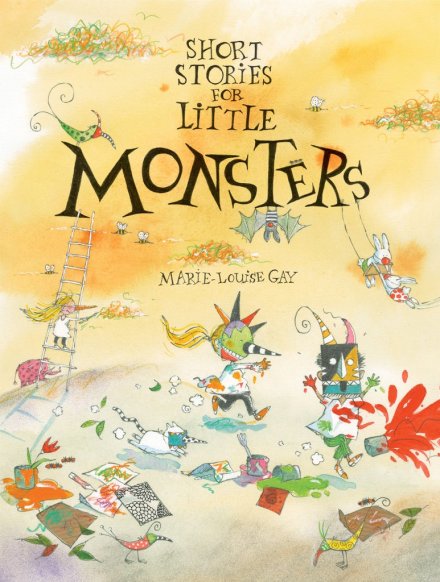
Short Stories for Little Monsters

By Marie-Louise Gay


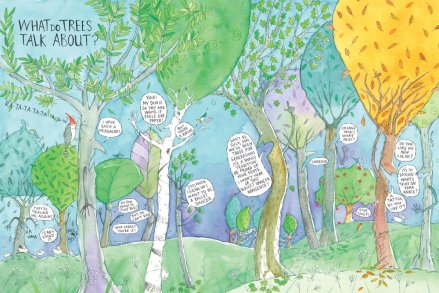
Open the cover of Short Stories for Little Monsters and you immediately enter the mind of a child with all of its imagination, dreams, fears, questions, and quirky philosophies. Nineteen two-page stories told in comics-style panels populated with rakish kids, pointy-nosed snails, talking trees, and lots and lots of color will have readers giggling from beginning to end.

The first story—When I Close My Eyes—gives a glimpse of the antics to come as a little girl walking with her older brother asks him to “guess what I see when I close my eyes?” Her brother just wants to move on faster and tells her she can’t see anything with her eyes shut. Finally given the “Ok! Ok! Sigh,” the little girl closes her eyes and with a wide grin reveals a bear thinking about a fish, pink polka dot and plaid elephants, kites, eyes, balloons, a stopwatch tree, and flowers to swing from. Her brother’s reaction? “That’s impossible.” Perhaps he’s just too old….
celebrate-picture-books-picture-book-review-short-stories-for-little-monsters-worms

Copyright Marie-Louise Gay, 2017. Courtesy of Groundwood Books

In The Incredible Invisible Boy, a pillowcase-covered boy joins a soccer game in progress, moving from position to position while exclaiming “I have superpowers!…I can become invisible!” But the other kids never take notice as they pass the ball over his head, scramble to kick it first, move the ball up field, and finally run off the page, leaving the covered figure to sigh, “The incredible invisible boy strikes again.”

Kids aren’t the only ones who have weird dreams. In Snail Nightmares, thee little shelled guys suffer night terrors too. One dreams of slithering too fast to stop at the end of the panel without hitting its head, another conjurs the embarrassments of losing its pants, and the third has its tail stretched waaaay out by a tricky bird.

Nobody Nose catches a girl tightrope waking on the clothesline, only to be told by a passing boy, “You’re going to fall. You’ll break your nose into a thousand pieces.” He wanders off but not before he instills a deep doubt in her mind: “I wonder what you’ll look like without a nose…or with a new nose?” She then imagines herself gazing in the mirror at her noseless face and trying on a series of fake noses, including a carrot, a pig snout, and an elephant trunk. She finally resorts to covering her head with a cardboard box. The little boy peeks around the last panel to say he likes the carrot nose the best because it goes with her shoes. And indeed it does.
celebrate-picture-books-picture-book-review-short-stories-for-little-monsters-what-do-trees-talk-about

Copyright Marie-Louise Gay, 2017. Courtesy of Groundwood Books

Remember when you could find dangerous adventure anywhere? The two girls in Monster! run shrieking from “a monster from outer space” who drools “poisonous slime,” sports “enormous fangs…and sharp pointy horns,” and is set on devouring the girls alive. As the two cower in safety behind a thick tree trunk, the object of this horror slides by with a sly nod to “snail power.”

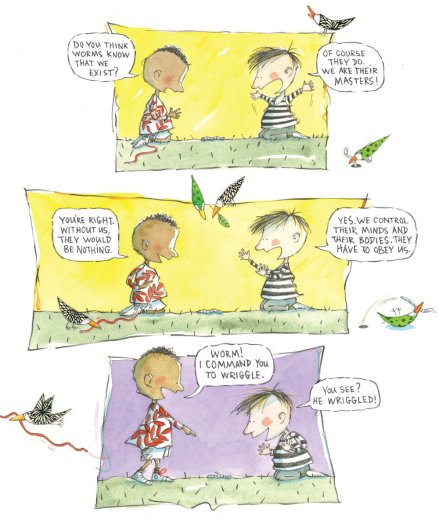
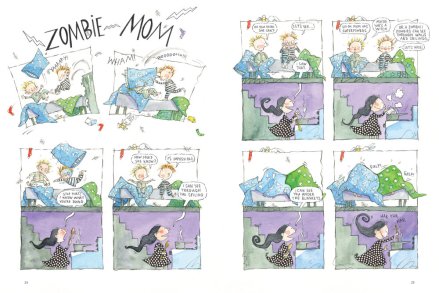
Other stories introduce lowly worms that “rule the world,” a zombie mom who can see through walls and ceilings, the “secret life of snails,” mispronounced words, artistic renderings, and faces ungainly stuck in place during a bad wind.  And as these stories wind down, readers will want to follow the bunny down its rabbit hole to uncover not only The Secret Life of Rabbits, but another world of whimsy, eccentricities, and fantasy that enhances life no matter how old you are.
celebrate-picture-books-picture-book-review-short-stories-for-little-monsters-zombie-mom

Copyright Marie-Louise Gay, 2017. Courtesy of Groundwood Books

Both kids and adults will love Marie-Louise Gay’s funny tribute to childhood. Her vivid pencil-and-watercolor drawings perfectly expose the moments of a day that bring joy, triumph, and, yes, maybe even a touch of consternation to life. Short Stories for Little Monsters would make a delightful gift and a book that would be opened again and again for home libraries.

Ages 5 – 8

Groundwood Books, 2017 | ISBN 978-1554988969

Check out more great books from Groundwood Books on their website.

Discover more about Marie-Louise Gay, her books, her art, and her TV show as well as printable materials on her website!

Book Blitz Month Activitycelebrate-picture-books-picture-book-review-book-bag-craft
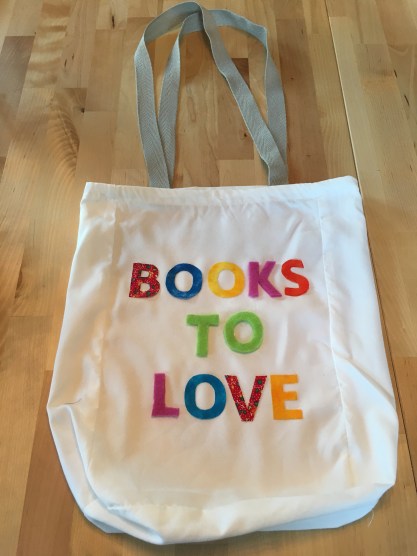
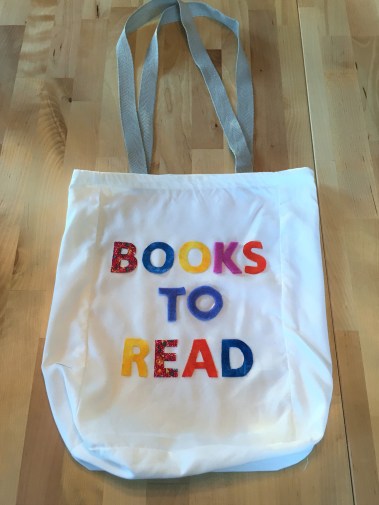
Books to Love, Books to Read Book Bag


This is the perfect week to fill up a bag with books you’d like to read! Here’s an easy craft for making your own unique bag!

Supplies

  • Printable Templates: Books to Read Template | Books to Love Template
  • Small cloth bag, available from craft or sewing stores—Recyclable Idea: I used the bag that sheet sets now come in
  • Cloth trim or strong ribbon, available from craft or sewing stores—Recyclable Idea: I used the cloth handles from shopping bags provided from some clothing stores
  • Scraps of different colored and patterned cloth. Or use quilting squares, available at craft and sewing stores
  • Pen or pencil for tracing letters onto cloth
  • Scissors
  • Small sharp scissors (or cuticle scissors) for cutting out the center of the letters
  • Fabric glue
  • Thread (optional)
  • Needle (optional)

celebrate-picture-books-picture-book-review-books-bag-craft

Directions

  1. Print the sayings and cut out the letters
  2. Trace letters onto different kinds of cloth
  3. Cut out cloth letters
  4. Iron cloth bag if necessary
  5. Attach words “Books to Read” to one side of bag with fabric glue
  6. Attach words “Books to Love” to other side of bag with fabric glue
  7. Cut cloth trim or ribbon to desired length to create handles
  8. Glue (or sew) handles onto the inside edge of bag

Picture Book Review

January 9 – Poetry at Work Day

celebrate-picture-books-picture-book-review-a-river-of-words-cover

About the Holiday

Today’s holiday encourages people to consider their jobs, their office environment, their coworkers, and maybe even that snack in the desk drawer through the lens of poetry. You may find inspiration in today’s book about William Carlos Williams, who wrote many of his famous and well-loved poems while working as a physician. Whether you find poignancy or humor in your workplace, take a moment to jot down a few thoughts in free verse or rhyme and share your poem with your friends!  

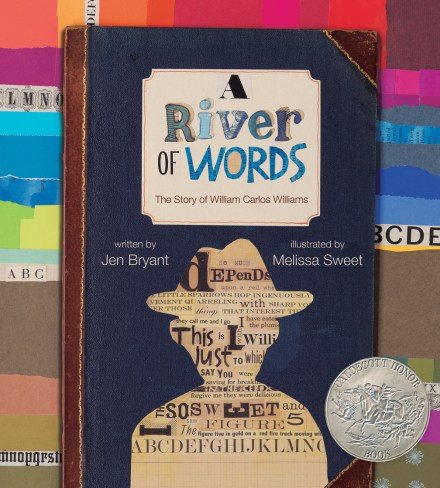
A River of Words: The Story of William Carlos Williams

Written by Jen Bryant | Illustrated by Melissa Sweet


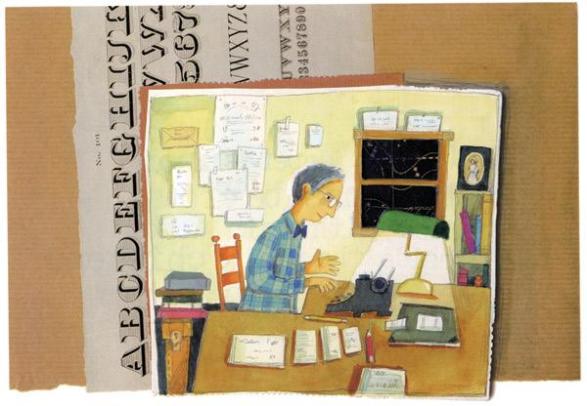
Willie Williams was just like the other boys in his neighborhood—well, almost. When the other boys went home after a day of playing, Willie took off for the woods and fields behind his house. “As he walked through the high grasses and along the soft dirt paths, Willie watched everything.” He liked to sit next to the Passaic River and listen to the rhythm of the water as it “went slipping and sliding over the smooth rocks, then poured in a torrent over the falls, then quieted again below.”

celebrate-picture-books-picture-book-review-a-river-of-words-high-school

Image copyright Melissa Sweet, 2008, courtesy of Eerdmans Books for Young Readers.

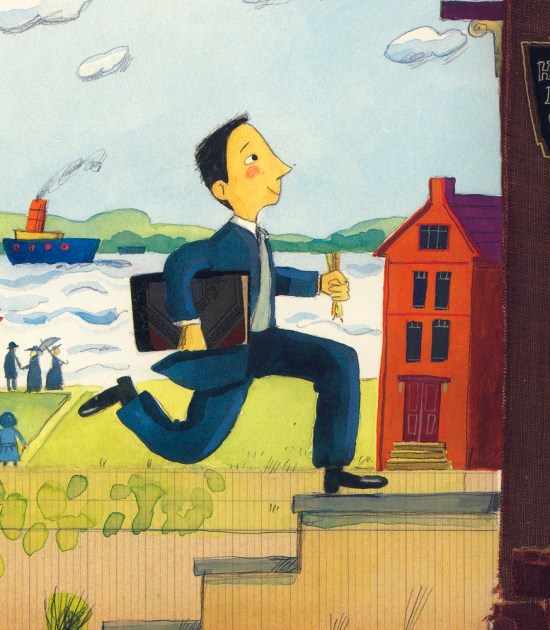
But as Willie grew older, he didn’t have time for these leisurely pursuits. In high school, he was on the track team, attended lots of classes, and had even more homework. His was a rushed and hurried life. Except for in English class. There, when his teacher read poetry, he was taken back to the flow of the river. Each line created pictures in Willie’s mind.

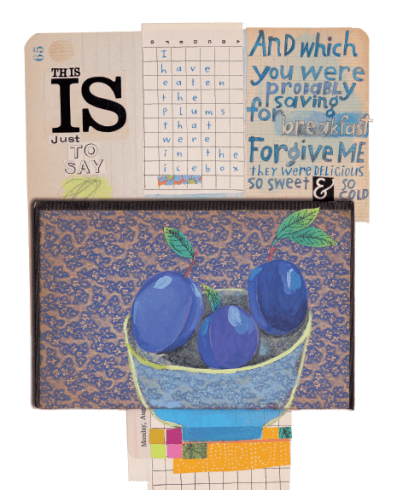
One night, Willie began writing his own poems. He copied the English poets he had learned about in school, using structured beats and rhyming endings. But soon these rules began to frustrate Willie; they didn’t give him the freedom to fully express his thoughts. He wanted to write about what he saw nearby, the things he was familiar with. Things, he said, like “plums, wheelbarrows, and weeds, / fire engines, children, and trees— / things I see when I walk down my street / or look out my window.”

celebrate-picture-books-picture-book-review-a-river-of-words-sparrows

Image copyright Melissa Sweet, 2008, courtesy of Eerdmans Books for Young Readers.

Willie began writing poems the way they came to him, with their own shape and sound. Writing this way made Willie feel free, and he filled notebook after notebook with poems. While Willie wished he could make a living as a poet, writing did not pay much, and he needed to be self-sufficient. Willie’s uncle had been a doctor, and Willie liked the idea of healing people. He wondered, though, if he could be a doctor and still write poetry.

When Willie graduated from high school, he went off to the university to study medicine. There he met the writers Ezra Pound and Hilda Doolittle and the artist Charles Demuth. Spending time with his new friends made his difficult studying easier. After college, Willie returned to his home town of Rutherford and opened his practice. He had so many patients that some people said he was “the busiest man in town.”

celebrate-picture-books-picture-book-review-a-river-of-words-attic-room

Image copyright Melissa Sweet, 2008, courtesy of Eerdmans Books for Young Readers.

No matter how busy he was, however, he found time to write. Sometimes he jotted lines and ideas on his prescription pads. Then, after his long days at work, Willie climbed to his attic room where he studied the notes he’d made and wrote poems late into the night.

A Timeline, Author’s Note, and Illustrators Note about William Carlos Williams follow the text. The endpapers present a selection of Williams’ poetry.

A River of Words: The Story of William Carlos Williams is an inspirational book for children who have creative ideas of their own and would make an excellent addition to classroom and home libraries.

From the title through to the end of her lyrical biography, Jen Bryant captures the flow of William Carlos Williams’ creative and scientific life, which was as purposeful and free as the river that inspired him. Young readers and would-be writers will find much encouragement and insight in Bryant’s story, which reveals that talent and day-to-day life not only can co-exist but can enrich each other. By showing how Williams broke free from the structures of the poetry he copied, Bryant also motivates children to find their own voice.

celebrate-picture-books-picture-book-review-a-river-of-words-plums

Image copyright Melissa Sweet, 2008, courtesy of Eerdmans Books for Young Readers.

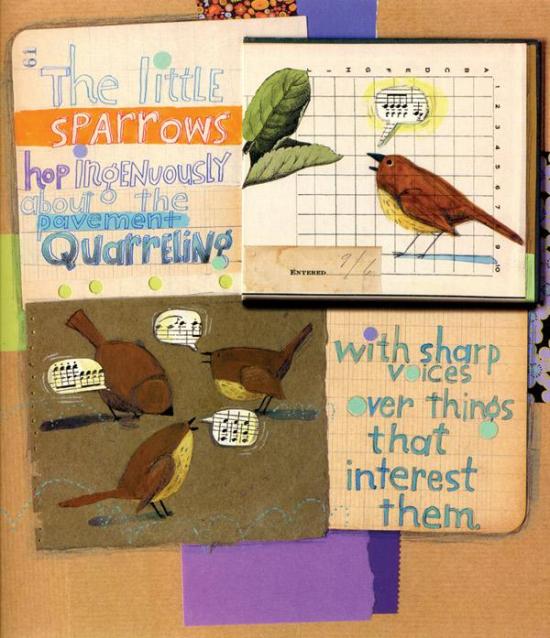
Melissa Sweet lends her distinctive collage style of illustration to this story, bringing to life the lines of and natural world reflected in Williams’ poetry. The busy-ness and business of Williams’ days are depicted in vibrant images of winding streets, classrooms, offices, and the outside world where he composed his uniquely revealing poems.

Ages 6 and up

Eerdmans Books for Young Readers, 2008 | ISBN 978-0802853028

Learn more about Jen Bryant and her books on her website!

Discover more about Melissa Sweet, her books, and her art on her website!

Poetry at Work Day Activity

celebrate-picture-books-picture-book-review-grow-a-poem-craft

Grow Your Own Poem


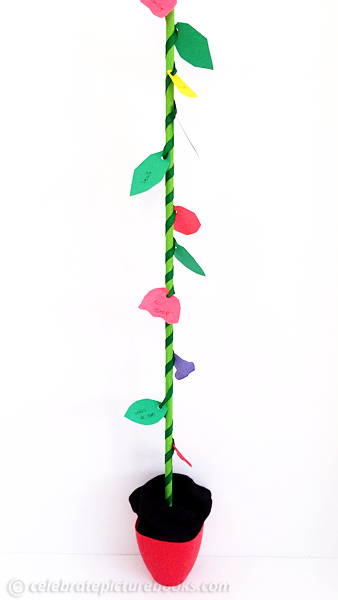
A poem often grows in your imagination like a beautiful plant—starting from the seed of an idea, breaking through your consciousness, and growing and blooming into full form. With this craft you can create a unique poem that is also a piece of art!

Supplies

  • Printable Leaves Template
  • Printable Flower Template
  • Wooden dowel, 36-inch-long, ½-inch diameter, available in craft or hardware stores
  • Green ribbon, 48 inches long
  • Green craft paint
  • Green paper for printing leaves (white paper if children would like to color the leaves)
  • Colored paper for printing flowers (white paper if children would like to color the flowers)
  • Flower pot or box
  • Oasis, clay, or dirt
  • Hole punch
  • Glue
  • Markers or pens for writing words
  • Crayons or colored pencils if children are to color leaves and flowers

Directions

  1. Paint the dowel green, let dry
  2. Print the leaves and flower templates
  3. Cut out the leaves and flowers
  4. Punch a hole in the bottom of the leaves or flowers
  5. Write words, phrases, or full sentences of your poem on the leaf and flower templates
  6. String the leaves and flowers onto the green ribbon (if you want the poem to read from top to bottom string the words onto the ribbon in order from first to last)
  7. Attach the ribbon to the bottom of the pole with glue or tape
  8. Wrap the ribbon around the pole, leaving spaces between the ribbon
  9. Move the leaves and flowers so they stick out from the pole or look the way you want them to.
  10. Put oasis or clay in the flower pot or box
  11. Stick your poem pole in the pot
  12. Display your poem!

celebrate-picture-books-picture-book-review-a-river-of-words-cover

You can find A River of Words at these booksellers

Amazon| Barnes & Noble | Books-a-Million | IndieBound

Picture Book Review

January 8 – National Argyle Day

celebrate-picture-books-picture-book-review-argyle-fox-cover

About the Holiday

The argyle pattern that is so familiar today comes from the tartan of Clan Campbell, which originated in Argyll in western Scotland. The pattern was used by Clan Campbell for kilts and plaids, but has distinguished socks of various clans in Scotland since the 17th century. The argyle pattern became popular in Britain and the United States following World War I when the Duke of Windsor adopted it for his golf clothing. Today, argyle can be found on clothing, furniture, fabrics, and decorated items of all kinds.

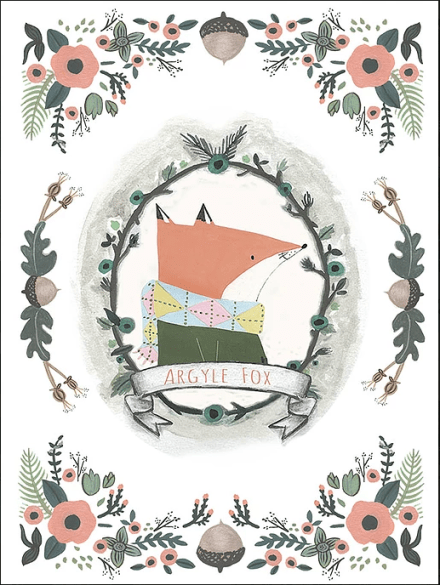
Argyle Fox

By Marie Letourneau  


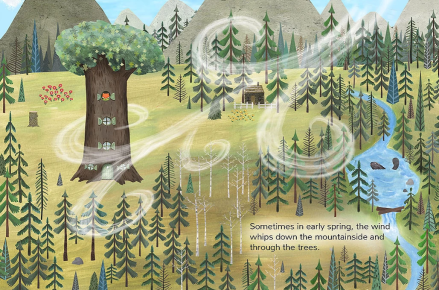
Argyle Fox lived in a tree in the middle of the forest. Badger, Beaver, and Groundhog lived nearby. One spring day when the wind whipped “down the mountainside and through the trees,” little Argyle told his mother that he was going out to play cards. His mother was skeptical, telling him his cards might blow away. Argyle found a spot on an old tree stump and, when the wind died down, he built a tall house of cards. Just as it had grown to be the “tallest tower in the whole world,” however, the wind came and sent it flying.

celebrate-picture-books-picture-book-review-argyle-fox-closet

Copyright Marie Letourneau, 2017, courtesy of marieletourneau.com.

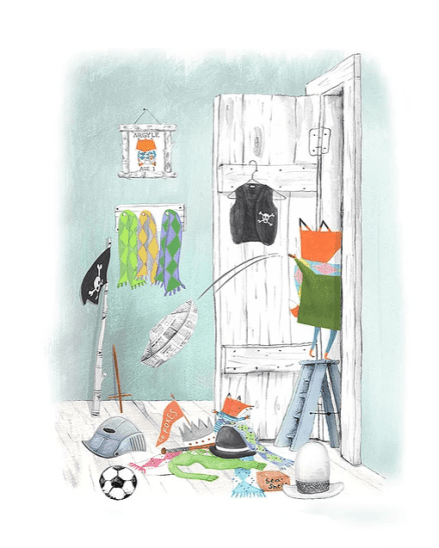
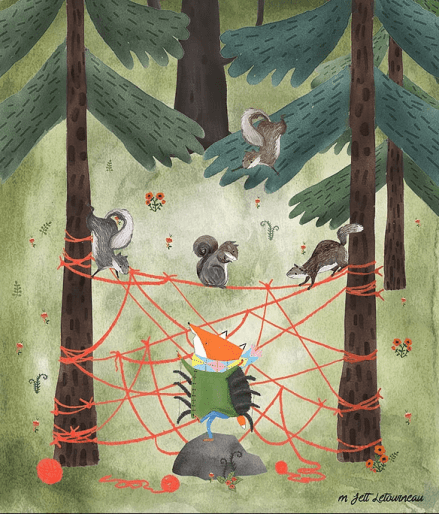
“No fair!,” cried Argyle, and he went home to search his closet for something else to do. Way back behind the soccer ball, boat, and hats, Argyle found his old spider costume. He tried it on and discovered it still fit. He returned to the forest and between two trees wove the elaborate web of “the world’s scariest spider.” The squirrels warned Argyle that playing spider in the wind could be dangerous, but Argyle laughed and continued to play. “‘Beware!’ Argyle replied with a hiss. ‘Beware, or I will capture you in my web!’”

celebrate-picture-books-picture-book-review-argyle-fox-spider-web

Copyright Marie Letourneau, 2017, courtesy of marieletourneau.com.

But the wind whooshed through the trees, and Argyle ended up tangled and upside down in his own web. Playing pirate by the creek sounded like a better idea anyway. Argyle planted his jolly roger on a stump spanning the river and “set sail,” but the beavers said, “‘You can’t play pirate in the wind, Argyle Fox.’” Argyle looked at the beavers. “‘Arrg,’” he said. “‘I’ll make you walk the plank.’” Just then the wind picked up his newspaper pirate hat and sailed away with it. “‘Argyle stomped off toward the meadow’” with his soccer ball.

celebrate-picture-books-picture-book-review-argyle-fox-pirate

Copyright Marie Letourneau, 2017, courtesy of marieletourneau.com.

There he met Badger. “‘I’m the star of the soccer team,’” Argyle told him. “‘I will now kick the winning goal.’” Badger didn’t think this was a good idea in the wind, but Argyle replied, “‘You’d better watch out or I will tackle you!’” Argyle kicked the ball as hard as he could. The wind caught it and threw it into the branches of a tall tree.

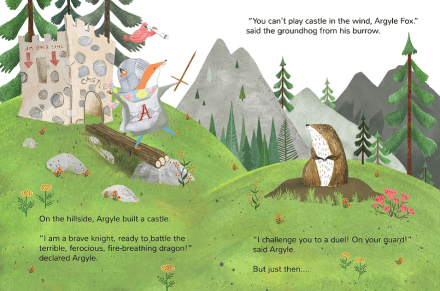
Argyle scampered off to the hill where he built a cardboard-box castle. Brandishing his sword, Argyle cried out to Groundhog, “‘I am a brave knight, ready to fight the terrible, ferocious, fire-breathing dragon!’” Groundhog cautioned Argyle about the wind, but Argyle only challenged Groundhog to a duel. Before the duel could begin, though, the wind picked up Argyle’s castle and carried it far away.

celebrate-picture-books-picture-book-review-argyle-fox-castle

Copyright Marie Letourneau, 2017, courtesy of marieletourneau.com.

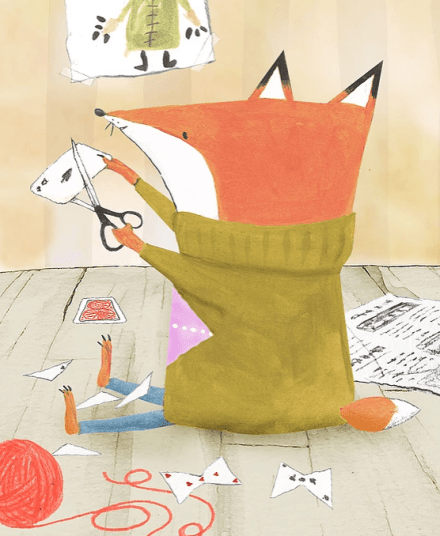
Argyle picked up all of his things and went home. He told his mother that he would never play in the wind again. Perhaps, said Mama Fox, you will think of something you can do in the wind. Argyle doubted it, but he thought and thought. He looked at all of his toys and suddenly had an idea. “He cut, tied, knitted, painted, and taped. Finally, it was finished!” Argyle went out to the meadow and waited. “His heart pounded with excitement Would it work? Would he FINALLY be able to play in the wind?”

celebrate-picture-books-picture-book-review-argyle-fox-cutting-cards

Copyright Marie Letourneau, 2017, courtesy of marieletourneau.com.

At last the wind came by and Argyle let go of his creation. “Huzzah!‘ cried Argyle. ‘A kite is the most prefect thing to play in the wind.’” Argyle’s mother was proud of him for thinking up a kite all on his own. Argyle was so happy with his kite, that he made one for each of his friends, and they all flew their kites in the meadow together.

celebrate-picture-books-picture-book-review-argyle-fox-wind

Copyright Marie Letourneau, 2017, courtesy of marieletourneau.com.

Marie Letourneau’s story of a little fox who just wants to play and is thwarted at every turn is a multi-layered tale of life’s ups and downs where big ideas sometimes get carried away on ill winds. Such times can bring disappointment or, as Argyle finds, an opportunity for discovery and accomplishment. As little Argyle tries game after game in the disruptive wind, disregarding the warnings and advice of his older neighbors, he learns through his own experience. His frustrations are vented in language appropriate to each character he plays and will make kids giggle. When Argyle goes home, listens to the gentle encouragement of his mother, and comes up with his own solution, he experiences the excitement and satisfaction of self-reliance and ingenuity.

celebrate-picture-books-picture-book-review-argyle-fox-little-fox

Copyright Marie Letourneau, 2017, courtesy of marieletourneau.com.

Letourneau’s delicately beautiful illustrations in soft blue, green, and orange hues will charm readers as adorable Argyle tries building a house of cards, building a web, playing pirate, kicking the soccer ball, and playing knight in lovely, detailed scenes that kids will like to explore. When Argyle goes back home, children will be intrigued to see how pieces of each of his toys become a part of his kite and may very well want to read the story again to find all the ingredients to that perfect windy-day plaything.

In addition to being a cute adventure to share with young readers at home or in the classroom, Argyle Fox is a terrific lead-in to discussions about self-reliance, self-confidence, creativity, and trial-and-error as well as the possible consequences of this important method of learning.

Ages 3 – 7

Tanglewood, 2017 | ISBN 978-1939100092

Learn more about Tanglewood Books on their website.

Discover more about Marie Letourneau, her books, and her art, and find fun activities to download on her website.

National Argyle Day Activity

celebrate-picture-books-picture-book-review-argyle-pattern-template

Argyle Pattern Template


Argyle patterns come in all colors and make whatever they decorate look festive! Design your own argyle pattern with this printable Argyle Pattern Template.

Picture Book Review

January 7 – Tempura Day

celebrate-picture-books-picture-book-review-my-first-book-of-japanese-words-cover

About the Holiday

Tempura is a delectable dish that originated in Japan when Portuguese Jesuits introduced the recipe in the 16th century. Traditionally, seafood and vegetables are breaded and fried, but other ingredients, including broccoli, zucchini, asparagus, chicken, and some cheeses, are also cooked tempura style around the world. The word tempura derives from the Latin word tempora, which means “times” and refers to Lenten times or Ember Days. To celebrate today’s holiday, enjoy a meal of tempura! You can also learn more about the Japanese culture with your child with today’s book!

My First Book of Japanese Words: An ABC Rhyming Book of Japanese Language and Culture

Written by Michelle Haney Brown | Illustrated by Aya Padron


Upon opening My First Book of Japanese Words, readers are immersed in the beauty of Japan—it’s homes, cities, natural environment, and cuisine. The first page introduces the alphabet with “A is for ari. / A teeny weeny / ant crawls / with teeny / weeny legs on / the bamboo plant.” Moving from the bamboo grove to the city, D takes children on a ride. A “densha—a train in Japan—goes choo choo down / the track as fast as it can.” They disembark at “E…for eki where trains come and go. / An eki in English is station, you know.”

celebrate-picture-books-picture-book-review-my-first-book-of-japanese-words-station

Image copyright Aya Padron, 2017, text copyright Michelle Haney Brown, 2017. Courtesy of tuttlepublising.com.

They may be on their way to G “for gakkō, / the word for school, / where we make lots of friends and / learning is cool.” At lunch time kids discover that “H is for hashi. / Chopsticks are nice / for picking up goodies / like veggies and rice.” After lunch there are games like Janken for J, “a game played in / Japan. It’s Rock, / Paper, Scissors / (make those with your hand.)”

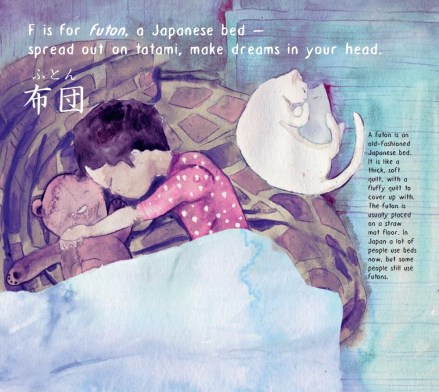
celebrate-picture-books-picture-book-review-my-first-book-of-japanese-words-futon

Image copyright Aya Padron, 2017, text copyright Michelle Haney Brown, 2017. Courtesy of tuttlepublising.com.

“N is for neko / a kitty so sweet. / She says ‘nyah’ / when she wants / a treat.” If kitty is having a snack, kids want one too! “O is for onigiri / a Japanse / treat— / a rice ball / that’s yummy / and fun to eat!” Good manners are found when “R is for rei. / We bow when we say / ‘Good morning’ and / ‘Thank you’ and / ‘Have a good day.’”

celebrate-picture-books-picture-book-review-my-first-book-of-japanese-words-kitten

Image copyright Aya Padron, 2017, text copyright Michelle Haney Brown, 2017. Courtesy of tuttlepublising.com.

A child’s learning begins with S for sensei, a teacher from whom students learn aboutT for tanuki…a raccoon dog / with a twinkly eye” and U for uma, “a beautiful horse.” Learning new things is exciting and makes you want to cheer. Learn how with “W is for Waa! / which is how we say Wow!” “Y is for Yatta! / ‘I did it!’ ‘Yay!’ / This is a word / I like to say.” The alphabet ends with “Z is for zō, / an elephant BIG— / but if he sees a mouse / he might dance a jig.”

celebrate-picture-books-picture-book-review-my-first-book-of-japanese-words-dog

Image copyright Aya Padron, 2017, text copyright Michelle Haney Brown, 2017. Courtesy of tuttlepublising.com.

With language that invites readers to discover the connections between cultures, Michelle Haney Brown’s charming rhymes entice children to learn these Japanese words and will spark an interest in learning more. The verses on each page are accompanied by paragraphs that expand a reader’s knowledge of the object or idea presented. In some cases, Brown discusses the absence of particular letters or sounds in the Japanese language.

Aya Padron’s paintings transport children to Japan where they can experience life at home, school, and in nature. Whimsical, tranquil, and lively scenes help young learners absorb the full meaning of the words presented while also teaching them about the culture, sights, sounds, and games of Japan. Each word is also written in Kanji (when applicable) and Kana. Padron’s illustrations glow with a love of this lyrical language and will enchant children. 

My First Book of Japanese Words is a superb book for young language learners and transcends its alphabet book roots to become a book of poetry that would be a fine addition to any child’s bookshelf or classroom library.

Ages 3 – 8

Tuttle Publishing, 2017 | ISBN 978-0804849531

Discover more books for children and adults about Japan and a host of other countries  on the Tuttle Publishing website.

Tempura Day Activity

celebrate-picture-books-picture-book-review-dining-in-japanese-word-search-puzzle

Dining in Japanese Word Search Puzzle


Learning the Japanese words for some of your favorite foods is fun! Can you find the names of twenty Japanese words you’d use while eating in this printable Dining in Japanese Word Search Puzzle?

Dining in Japanese Word Search Puzzle | Dining in Japanese Word Search Solution

Picture Book Review
January 6 – Cuddle Up Day

celebrate-picture-books-picture-book-review-kisses-and-cover

About the Holiday

Cuddling up is great any time of the year, but in the cold, snowy weather of winter it’s especially nice! Little ones love to cuddle! It makes them feel safe and warm and loved! To celebrate today’s holiday spend a little extra time cuddling with your child or children. Reading a sweet book together makes snuggle time even better!

Kisses and Cuddles

By little bee books


A little penguin sits at the table with a tall stack of pancakes watching Mom cook up some more on the pot-belly stove. “I love eating pancakes,” the little one says. “And playing with my toys.” After breakfast he loves drumming and making noise, even if Mama isn’t as keen on it. Later on, little penguin gets a steaming cup of hot chocolate, and is lucky enough to see a rainbow in the sky.

celebrate-picture-books-picture-book-review-kisses-and-cuddles-pancakes

Copyright little bee books, 2015

Back at home with soft pillows for landing and a green towel cape, little penguin loves “being a superhero. Come on—watch me fly!” After all that excitement, the penguin loves to snuggle in a comfy chair and read a book with lots of toys around. As nighttime comes, penguin settles into bed holding teddy tight. “But what I love the most,” says little penguin, “what ends the day just right…are kisses and cuddles from Mama when we say goodnight.”

celebrate-picture-books-picture-book-review-kisses-and-cuddles-drummer

Copyright little bee books, 2015

The tiniest readers will be delighted with the adorable little penguin and the busy day that ends in the best way possible—with kisses and cuddles. The baby penguin loves all the same things they do, making this little gem an instant favorite. The smoothly flowing rhymes are spirited and straightforward—perfect for capturing a tot’s attention at nap time, bedtime, or story time.

celebrate-picture-books-picture-book-review-kisses-and-cuddles-hot-chocolate

Copyright little bee books, 2015

The vivid illustrations have plenty of details for kids to look for and point out, and the joyful little penguin will make them smile and giggle. The final spread of Mama and chick cuddling as they say goodnight will inspire lots of real cuddles after the story ends. Written without pronouns, Kisses and Cuddles is just right for all children.

Ages 1 – 4

little bee books, 2015 | ISBN 978-1499801514

Cuddle Up Day Activity

celebrate-picture-books-picture-book-review-snuggle-buddy-craft

Cuddle Buddy


It’s easy to make a one-of-a-kind sleepy buddy for naptime or any time. With just a few materials and your own creativity, you’ll soon have a new friend to snuggle with!

Supplies

  • 1 8-inch by 11-inch piece of fleece in the color or your choice for the body (or scraps if you have some from an earlier project). A larger piece of fleece can be used to make a larger buddy
  • 1 5-inch by 8-inch piece of fleece in the color or your choice for the hair (or scraps if you have some from an earlier project)
  • 1 small piece of fleece or other material for a pocket, clothes, or blanket
  • Small scraps of fleece or other material for the face
  • Fiber Fill
  • Thread and sewing needle OR fabric glue
  • Scissors

Directions

To Make the Body

  1. Fold the large piece of fleece in half lengthwise and sew along the open side and along the bottom. Alternatively, if using a larger size piece of fleece, fold upward and sew or glue the two sides closed.
  2. Turn the form inside out

To Make the Hair

  1. Cut a piece of fleece as wide as your buddy and about 7 – 8 inches long
  2. Fold the fleece lengthwise
  3. Insert both ends of the fleece into the opening at the top of the body
  4. Sew or glue the opening shut, securing the hair
  5. Cut strips about ¼-inch wide from the top of the hair to close to where the hair is sown into the body

To Make a Pocket or Clothes

  1. Cut a piece of fleece in the shape of a pocket, shirt, pants, diaper, or blanket
  2. Sew or glue the pocket or clothes to the buddy

To Make the Face

  1. Cut eyes, a nose, and a mouth in whatever way you would like your buddy to look. (My buddy is sleeping.)
  2. Sew or glue the face to the buddy
  3. Snuggle up!

Picture Book Review


January 5 – National Bird Day

celebrate-picture-books-picture-book-review-lion-and-bird-cover

About the Holiday

Today’s holiday celebrates all our feathered friends from the birds in our backyards to the chickens and turkeys that provide us with food to the penguins of Antarctica. They include wild birds and those in captivity, either as pets or in zoos or other aviaries. National Bird Day was established to promote an awareness of issues concerning the safety, health, and protection of the world’s birds. To celebrate put out birdseed and suet for winter birds or learn a little more about the birds in your area.

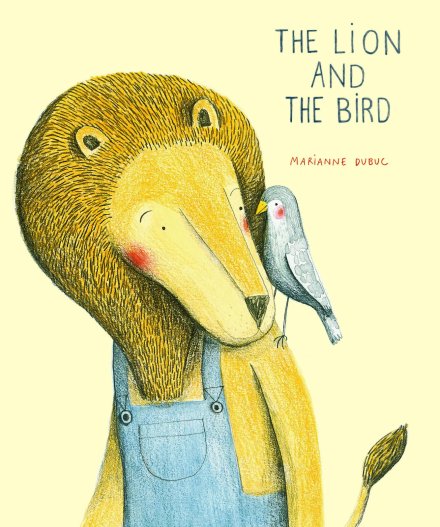
The Lion and the Bird

By Marianne Dubuc


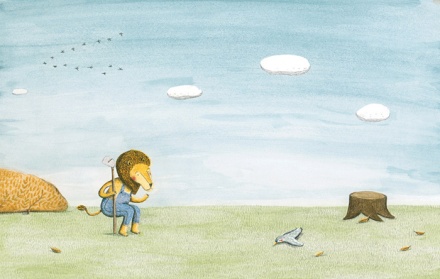
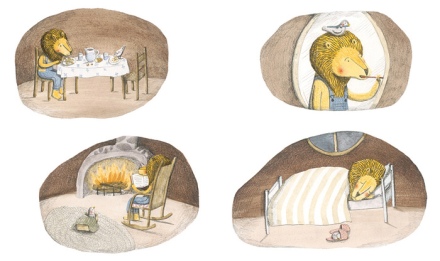
Lion was ready for a day in his garden and had just begun to hoe the rows when he spied a bird lying on the ground. “Oh, poor little thing,” Lion said. He felt he had to do something. He lifted Bird into his paws. Lion settled Bird on a tree stump and bandaged his wing.

celebrate-picture-books-picture-book-review-lion-and-bird-lion-finds-bird

Copyright Marianne Dubuc, 2014, courtesy of mariannedubuc.com.

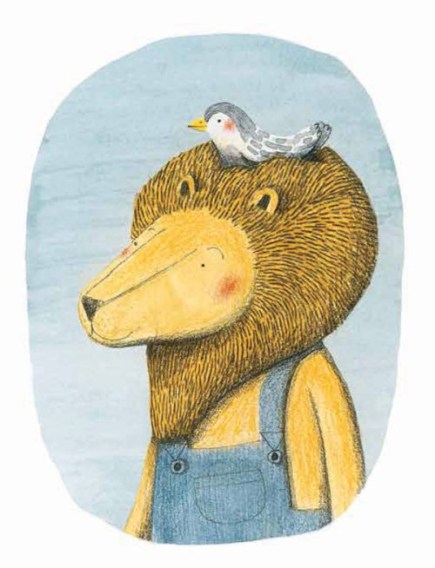
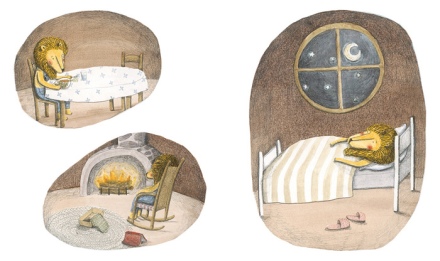
Just then Lion and Bird noticed that Bird’s flock was flying south for the winter. Without hesitation, Lion picked Bird up and placed him gently in his mane. ‘You won’t be cold here,” he told Bird. Then the two went inside Lion’s home, where there was a fire burning in the fireplace and a cozy atmosphere. Lion invited Bird to stay, saying there’s “plenty of room for both of us.”

celebrate-picture-books-picture-book-review-lion-and-bird-bird-in-mane

Copyright Marianne Dubuc, 2014, courtesy of mariannedubuc.com.

Lion and Bird ate dinner together, and Lion made a warm box for Bird to sit in next to his rocking chair in front of the fire. They sat side by side while Lion read. Then Lion brushed his teeth and Bird brushed his beak and they went to sleep. Bird found a comfortable bed in Lion’s slipper.

Autumn turned to winter with its snow and ice. But Bird was “snug and warm” nestled in Lion’s mane and under a special stocking hat Lion made. They went sledding and ice fishing and spent evenings reading by the fire. The snow piled high, but being with a friend made the winter feel less cold.

celebrate-picture-books-picture-book-review-lion-and-bird-lonely-lion

Copyright Marianne Dubuc, 2014, courtesy of mariannedubuc.com.

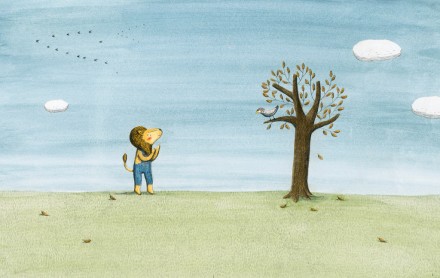
When spring returned the other birds did too. Bird pointed them out to Lion, and Lion told Bird he knew he had to join them. He watched his friend Bird fly off with his flock. “So it goes,” Lion thought. “Sometimes life is like that.” Still, Lion felt sad eating alone, with no one to read to, and without being able to say goodnight to Bird. In summer, Lion’s garden produced a good harvest of bright, red tomatoes, and he spent afternoons reading under his favorite tree.

celebrate-picture-books-picture-book-review-lion-and-bird-bird-stays

Copyright Marianne Dubuc, 2014, courtesy of mariannedubuc.com.

When autumn returned again, Lion wondered about Bird as he watched the flock flying south. Then he heard a familiar song. He looked and found Bird waiting on a branch of the tree. Once again Bird settled into Lion’s mane, and they went home to spend the winter together.

celebrate-picture-books-picture-book-review-lion-and-bird-bird-with-lion

Copyright Marianne Dubuc, 2014, courtesy of mariannedubuc.com.

Marianne Dubuc’s tender story of a deep and abiding friendship shows young readers that even distance and time cannot break bonds when love is shared between two people. Dubuc’s spare but profound text empathizes the warmth, attachment, and camaraderie felt between good friends. Her comforting words point to her poignant images in which Lion and Bird spend time together content in each other’s company. The idea that these two friends may not share the same language makes their devotion to each other all the more touching, and their consideration for each other’s feelings offers a moving lesson in kindness.

The Lion and the Bird is an enriching tale for quiet bedtimes and story times and provides a gentle way for parents, caregivers, and teachers to talk with children about friendship.

Ages 4 – 7

Enchanted Lion Books, 2014 | ISBN 978-1592701513

Discover a gallery of books and other illustration projects by Marianne Dubuc on her website.

National Bird Day Activity

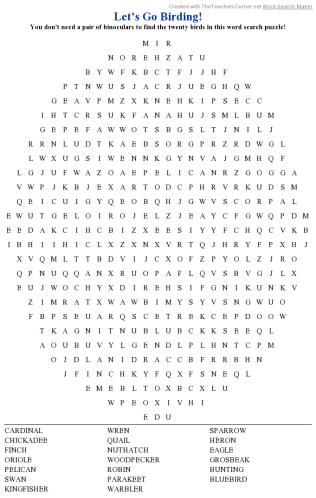
celebrate-picture-books-picture-book-review-let's-go-birding-word-search

Let’s Go Birding! Word Search Puzzle


There are so many beautiful birds to celebrate on National Birding Day! You can find twenty kinds of birds without even going outside in this printable Let’s Go Birding! Word Search

Let’s Go Birding! Word Search Puzzle | Let’s Go Birding! Word Search Solution

Picture Book Review


January 4 – It’s National Hot Tea Month

celebrate-picture-books-picture-book-review-tea-with-oliver-cover

About the Holiday

There’s nothing cozier during the month of January than enjoying a steaming cup of your favorite, flavorful tea as the temperature dips and the snow swirls. To celebrate this month’s holiday, why not try a new kind of tea or throw a tea party? Many teas have health benefits and can help you relax and get a good night’s sleep. This drink has been around for thousands of years and is enjoyed the world over. So boil up some water, grab the honey or sugar, add a splash of milk if you like, and enjoy!
Tea with Oliver

By Mika Song


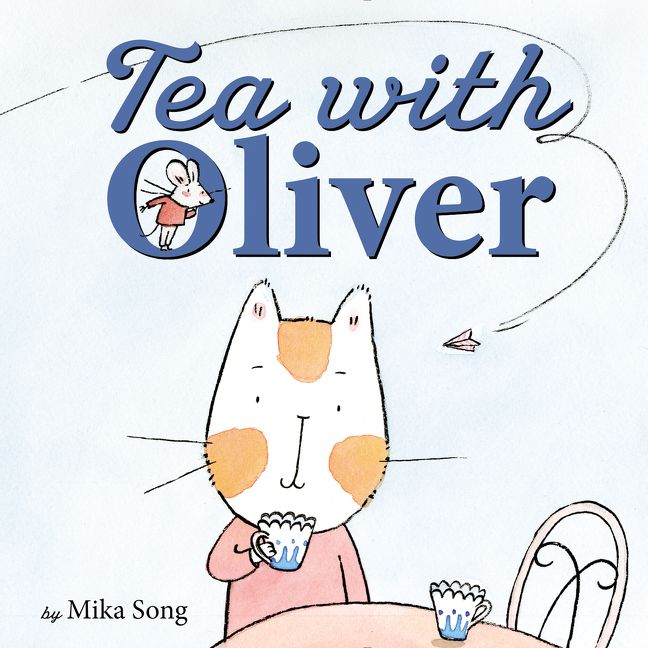
Oliver the cat sits at his kitchen table, holding a conversation with himself. It’s something he does “a lot.” He’d like to have a cup of tea, but wonders who will join him. Philbert, the little mouse under the couch calls up that he would be happy to drink tea with Oliver, but Oliver doesn’t hear him and Philbert is “too shy to come out.” Meanwhile, Oliver is having a tea party with his teddy bear.

celebrate-picture-books-picture-book-review-tea-with-paper-airplane

Copyright Mika Song, 2017, courtesy of mikasongdraws.com.

“Philbert decides to write Oliver a letter. ‘Dear Oliver, Let’s have tea,’” it reads. Philbert secretly hopes they have cookies too. Now, though, Oliver is cleaning the floor, and Philbert’s letter gets swept back under the couch. While he sweeps, Oliver sings about his lonesomeness, and Philbert tries another tactic. He folds his note into an airplane and shoots it into the air. Instead of floating into Oliver’s field of view, however, it hits him in the back. “Eek! A flea!” Oliver cries. He dances around, scratching and itching and completely misses the note.

celebrate-picture-books-picture-book-review-tea-with-oliver-cups-break

Copyright Mika Song, 2017, courtesy of mikasongdraws.com.

Philbert is just imagining what to do next when someone knocks on the door. When Oliver opens it, his wild cousin Lester leaps in playing his banjo. Oliver invites him for tea. “I’m throwing a party,” Lester says, “but I guess there could be tea.” Philbert’s ears perk up. He wants to go to this tea party. Feeling brave, Philbert decides to deliver his note to Oliver personally.

It seems Lester’s party is at Oliver’s house, and before Philbert can deliver his letter, the guests start arriving. The guests are too boisterous and bouncy to want tea, and Philbert, wanting to stay out of the way, flattens himself against the floor. “I don’t like this party one bit,” he tells himself. Oliver tries to serve tea to some other guests, but they’re dancing and too busy for tea. From far below, Philbert shouts, “Me! I want tea!” But Oliver doesn’t hear him. Then one guest bumps into Oliver, and his tray of teacups goes flying.

celebrate-picture-books-picture-book-review-tea-with-oliver-lying-on-floor

Copyright Mika Song, 2017, courtesy of mikasongdraws.com.

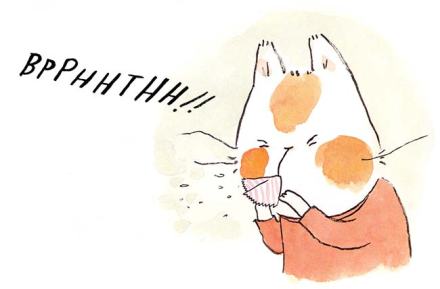
“The party ends as quickly as it began” as Lester and the other guests depart, leaving Oliver to clean up the shards of china. Oliver lays on the floor, despairing that he’ll “never have tea with anyone now.” He rolls over to see Philbert under the couch. Philbert introduces himself and hands Oliver his letter. Mistaking it for a tissue, Oliver blows his nose in Philbert’s note.

celebrate-picture-books-picture-book-review-tea-with-oliver-blowing-nose

Copyright Mika Song, 2017, courtesy of mikasongdraws.com.

Philbert alerts Oliver to his error, and contritely Oliver opens the note and reads it. He’s surprised and excited to find that Philbert wants to have tea with him, but then  remembers that he has no more cups. Now it’s Philbert’s turn to be excited – and surprising.”Yes you do!” He runs away and returns pulling a soft cushion holding two of Oliver’s tea cups. “I saved these for you!” Philbert exclaims. “Hooray!” Oliver cheers. “And the new friends sat down to a nice cup of tea.” With cookies.

celebrate-picture-books-picture-book-review-tea-with-oliver-tea-party

Copyright Mika Song, 2017, courtesy of mikasongdraws.com.

Mika Song’s sweet story will have little ones giggling as one thing after another goes just a little bit wrong. Many will empathize with Philbert’s predicament as he tries to attract Oliver’s attention and will cheer along with Oliver when he saves two of Oliver’s beloved tea cups and the day. Song’s straightforward tale offers gentle lessons on the true nature of friendship as Philbert watches out for Oliver when others don’t, and the two discover they have a lot in common despite the traditional differences between cats and mice.

Through her delicate ink and watercolor illustrations, Song brings out the adorable natures of Oliver and Philbert, the subtly humorous and slapstick events of the afternoon, the moments of disappointment, and Philbert’s happy surprise that lead to the friend’s cozy tea party. 

Tea with Oliver will charm young readers and would be a cute, often-asked-for addition to home libraries. 

Ages 4 – 8 

HarperCollins, 2017 | ISBN 978-0062429483

Discover more about Mika Song and her books on her website.

National Hot Tea Month Activity

celebrate-picture-books-picture-book-review-tea-bag-buddy

Tea Bag Buddy


It’s fun to have a tea party with a friend, and this little tea bag buddy is ready to hang out with you!

Supplies

  • Tea bags
  • Poly-fill
  • Permanent markers
  • Needle

Directions

  1. Gently open a tea bag, unfold it, and discard the tea
  2. Remove the string with the tag and set aside
  3. Fill the tea bag with a bit of poly-fill
  4. Thread the string of the tag through the needle
  5. Fold the tea bag back up
  6. Fold the ends of the bag under and sew them closed with the tag string, leaving the tag dangling
  7. With the permanent markers, draw a face on the front of the tea bag

Picture Book Review