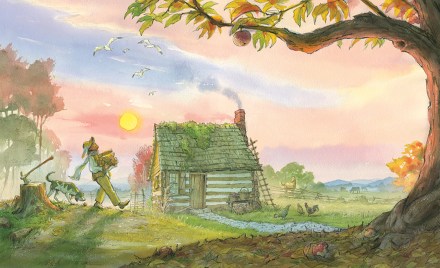
February 17 – Random Acts of Kindness Day & Interview with Author Marsha Diane Arnold

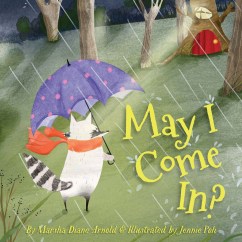
celebrate-picture-books-picture-book-review-may-i-come-in-cover

About the Holiday

Are you a RAKtivist? You know—a Random Acts of Kindness Activist! Sounds awesome, doesn’t it? It is! And all it takes to be a RAKtivist is to do nice things—kind things—for everyone and anyone. These things don’t have to be big, or hard, or expensive, either. In fact, the best kindness acts are free! If you see someone having a bad day, give them a smile. Is someone struggling with a box, a bag or keeping their stuff in their locker? Give them a hand. Does someone always eat lunch alone? Offer to sit with them and have a conversation. You’re also encouraged to give others a card to brighten their day. You’ll find some to print out at the end of this post!

There are as many ways to be a RAKtivist as there are people on the planet. Right now, there are 17,009 registered RAKtivists from ages 14 to 89 in 87 countries! You can join them and learn more about this uplifting holiday on the Random Acts of Kindness Website!

Sleeping Bear Press sent me a copy of May I Come In? to check out, and is partnering with me for a giveaway! Learn more below!

May I Come In?

Written by Marsha Diane Arnold | Illustrated by Jennie Poh


Outside, the rain poured down, and “Raccoon shivered. When “thunder roared, Raccoon quivered.” And the flashes of lightening were just too scary to watch. Raccoon did not like being alone on such a stormy night, so he “grabbed his umbrella and hurried out the door.” Raccoon made his way through muddy Thistle Hollow to his old friend Possum’s tree-trunk den.

celebrate-picture-books-picture-book-review-may-i-come-in-going-out

Image copyright Jennie Pho, 2018, text copyright Marsha Diane Arnold, 2018. Courtesy of Sleeping Bear Press.

There he found Possum nice and dry under his canopy. Raccoon asked, “‘Possum old friend, may I come in?’ / ‘What bad luck,’ Possum replied. ‘My den’s too small for one your size.’” Raccoon climbed down and with a “swish, plish” walked “all the way to Quail’s brambles.” As the wind whipped Raccoon’s scarf, he asked Quail if he could come in. But Quail said her brambles were formed too tight, and Raccoon was too wide to fit inside.

celebrate-picture-books-picture-book-review-may-i-come-in-quail

Image copyright Jennie Pho, 2018, text copyright Marsha Diane Arnold, 2018. Courtesy of Sleeping Bear Press.

Next, Raccoon swish, plished to Woodchuck’s hole. Dug into a hill near an old broken tree and lit by a small candle lamp, Woodchuck’s hole looked cozy. But when Raccoon asked his old friend if he could come in, Woodchuck said, “‘What bad luck. I’ve only room for one to hide.’” Raccoon went away sadly and “stood shaking in the rain. His umbrella blew inside out, His fur felt wet and spongy.” He really did not want to spend the night alone.

celebrate-picture-books-picture-book-review-may-i-come-in-umbrella-inside-out

Image copyright Jennie Pho, 2018, text copyright Marsha Diane Arnold, 2018. Courtesy of Sleeping Bear Press.

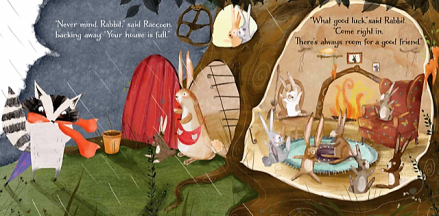
There was one more house to try. Raccoon saw a light glowing in the distance. He hurried nearer and nearer and nearer. He knocked at the door and when Rabbit answered, Raccoon could see all of her little rabbits behind her as they “hopped and bopped to the raindrops.” Raccoon hesitantly asked his question then almost immediately took it back. After all, her house was so full. But Rabbit swung the door open wider. “‘What good luck,’ said Rabbit. ‘Come right in. There’s always room for a good friend.’” Rabbit gave Raccoon a comfortable chair to sit in and brought him a cup of tea.

celebrate-picture-books-picture-book-review-may-i-come-in-cozy-chair

Image copyright Jennie Pho, 2018, text copyright Marsha Diane Arnold, 2018. Courtesy of Sleeping Bear Press.

As the storm raged on, Raccoon hummed and smiled happily, smelling the aroma of carrot stew that filled Rabbit’s home. Soon, there was another knock on Rabbit’s door and three voices rang out: “‘being alone on a night like tonight is scary.’” When Rabbit opened the door this time, there stood Possum, Quail, and Woodchuck. The ten little rabbits just kept hopping and bobbing.

Rabbit and Raccoon gazed at each other knowingly. “‘What good luck,’ they said. ‘Come right in. There’s always room for all our friends.’”

celebrate-picture-books-picture-book-review-may-i-come-in-everyone

Image copyright Jennie Pho, 2018, text copyright Marsha Diane Arnold, 2018. Courtesy of Sleeping Bear Press.

From the very first page, young readers will be engrossed in Marsha Diane Arnold’s sweet story of a raccoon who’s looking for company and comfort on a stormy night. As Raccoon swish, plishes through his neighborhood, knocking on door after door only to be met by excuses for why he can’t come in, children will empathize with him and be cheered when Rabbit joyfully invites him in. Readers will understand that they are sometimes like Raccoon, needing a bit of help or support. They will also see that they can always be like Rabbit, offering kindness and inclusion. Arnold’s lyrical language and repeated phrases invite children to read along, offering another sense of camaraderie during story time.

celebrate-picture-books-picture-book-review-may-i-come-in-small-inset

Jennie Poh’s Thistle Hollow is as cute as its name with cozy dens, brambles, and homes carved into hills and trees and adorable woodland neighbors. The lovely smoky blue-grays and dusky greens enhance the beautiful scenery as raindrops plink, plonk and the wind whips Raccoon’s scarf and umbrella. Alert readers may notice that a single owl watches Raccoon as he makes his way from Possum’s den to Quail’s brambles, but as he approaches Rabbit’s inviting home, a pair of birds snuggle against the wind in a hollow tree. Rabbit’s home is warm, snug, and relaxed as the ten bunnies hop and bop, enjoying some fun with their siblings and guests.

May I Come In? would be a welcome addition to home, classroom, and school libraries to open discussions of kindness, inclusion, and helpfulness for children. The story could easily be adaptable to acting out for a classroom or children’s program to highlight the lesson of inclusion and make it more personal.

Ages 4 – 8

Sleeping Bear Press, 2018 | ISBN 978-1585363940

You’re invited to download the May I Come In? Activity Pages here or from Sleeping Bear Press.

May I Come In? Coloring Page May I Come In?  | Matching PageMay I Come In? Rhyming Page

Discover more about Marsha Diane Arnold and her books on her website.

To learn more about Jennie Poh, her books, and her art work, visit her blog.

Meet Marsha Diane Arnold

celebrate-picture-books-picture-book-review-marsha-diane-arnold

Today, I’m excited to talk with Marsha Diane Arnold about why the theme of kindness is important in the books children read, her real-life May I Come In? moment, and what makes life magical.

Thank you, Celebrate Picture Books for inviting me to your blog. Random Acts of Kindness Day seems a perfect time to chat about my new book May I Come In? which demonstrates kindness in such a sweet way.

What inspired you to write May I Come In??

There really was nothing specific that inspired the story. If anything did influence it, it was the wildlife that lived around my home in California. During the time I wrote May I Come In? I was working on a number of stories with woodland animal characters. With these stories, my characters led the way for me. One of the stories was Waiting for Snow with Badger and Hedgehog as characters. Another is Badger’s Seeds, which is coming out from Sleeping Bear Press in 2019. And then there’s May I Come In? with sweet Raccoon searching for a friend to spend a scary night with.
CPB - Marsha Diane Arnold Quail pic

celebrate-pciture-books-picture-book-review-deer-for Marsha-Diane-Arnold-blog-tour-post-interview

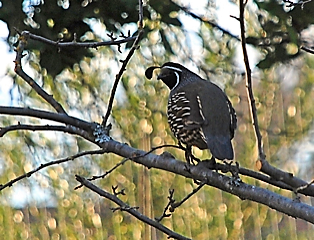
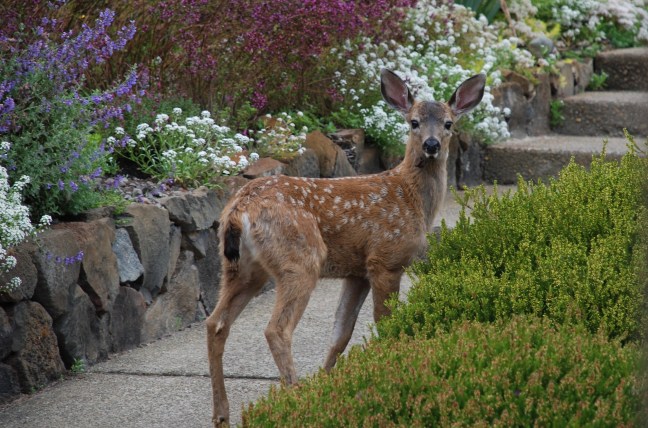
Here are two of the animals that shared my McGregor hill home in California. The first may have inspired my May I Come In? Quail character.

When Hurricane Irma hit Florida this fall, you experienced May I Come In? in a personal way. Can you talk about that a little?

At the last minute, Hurricane Irma decided to come almost directly over our little town of Alva! In the photo below, it looks as if I’m inviting everyone into my house, just the way Rabbit did, but this was actually taken after the hurricane, as I was celebrating our house still standing. You may notice on the left that not all our trees did as well.

Although our storm was indeed frightening, it was heart-warming to see all the people who opened their doors to friends, family, and strangers who had to be evacuated from their homes. My husband and I had fourteen people—family, acquaintances, strangers—and two dogs under our roof. We learned, like the characters in May I Come In?, that it was comforting to be with others during a frightening time and that including everyone added to the camaraderie.

celebrate-pciture-books-picture-book-review-house-for Marsha-Diane-Arnold-blog-tour-post-interview

As a child you were surrounded by animals on your farm, you went on to help care for sick animals, and many of your books are written with animal characters. Do animals and their behavior inspire your writing? What animal qualities do you think resonate most with children?

Animals have always inspired and fascinated me. I could spend hours watching them, just being with them. They calm me. They make me laugh. They make me cry. Animals must inspire my writing because I write about them so often in my books, from my first book Heart of a Tiger to my newest, May I Come In?

Many animals have family groups and care for each other in similar ways to humans. Children understand and relate to this. In my two board books Baby Animals Take a Nap and Baby Animals Take a Bath my goal was to show very young children the similarities between animals and humans. We all nap. We all take baths.

When I write using animal characters, I’m really writing about children with human qualities. It’s a type of metaphor. Using animals as characters often allows children to identify more easily with certain perspectives.

What is something you love to do on a rainy day?

When I was growing up in Kansas, I actually enjoyed the lightning and the thunder!

Reading is always a lovely way to spend a rainy day. If there’s a warm fire to sit by, as in May I Come In? it’s even better.

The theme of May I Come In? revolves around the idea of inclusion and kindness. Can you speak a little bit on why it’s important for children’s books to portray these ideals? What changes have you seen over the years in children’s receptivity to these qualities?

Being inclusive is such an important quality, a foundation to living a kind and caring life. Because we humans are molded by our experiences when we are young, reading books that show inclusion and empathy are extremely important.

Even with the changes in our culture and technology, I think children are as receptive to these qualities as ever. But it’s vital we model them to children from their birth, through the first seven “magical” years, and onward. Good books with good messages are one way to do this.

One of the many things I love about May I Come In? is how each of Jennie Poh’s illustrations are so inviting, seeming to welcome the reader in.
celebrate-pciture-books-picture-book-review-interview-with-Marsha-Diane-Arnold

Your readers love meeting you at their school, in libraries, in bookstores, and even through Skype. Do you have an anecdote from an event that you’d like to share?

I’ve had such fun over the years visiting schools. There are so many precious memories.

I’m quite an introvert, so I’m grateful when schools invite me to visit their students. It gets me out of my shell; meeting my readers inspires me to keep writing for them.

A wonderful memory is my being flown into a small town on the Kansas plains by the principal in his airplane! It was a long way from an airport. When I arrived at the school in the morning I was greeted by a huge tornado they’d constructed on top of their school, in honor of my book The Bravest of Us All. Inside the gymnasium was a smaller tornado, three students dressed as cows to celebrate Prancing, Dancing Lily, and so much more. A grand time.

A recent memory involves Walter Jackson Elementary School in Alabama. They’ve been celebrating The Pumpkin Runner for about five years now with their Pumpkin Run Day, which is filled with pumpkin-related activities and a one-mile run for the entire school community, in honor of my book and the surprising ultra-marathoner Cliff Young. Two years ago, I was honored to be invited to join in the festivities by their amazing librarian, Todd McDonald. I spent one day doing presentations and another day playing games and running three miles! Yes, three, as they divided the students into three class groupings. Great educators! Great school! Great fun!

celebrate-picture-books-picture-book-review-pumpkin-run-for Marsha-Diane-Arnold-blog-tour-post-interview

You offer students writing workshops that you call “Funshops,” in which you present images, activities, and brainstorming to spark their imaginations and stories. Could you give an example of an image or activity that you use to fire up kids’ creativity? How do the kids react?

Hmmm. Should I share my favorite? Since it’s Random Acts of Kindness Day, I will!

The Alliteration Game is always a big hit with the students. In the Alliteration game, we take someone’s name and use lots of words that start with the same sound to make a fun sentence.  First, we describe the person in a silly way.  Then we think of an action word, a verb – like hopped or jumped.  After that, depending on the age of students, we might use adverbs to describe how the person does the action – “joyfully jumped” or “happily hopped” – and choose a setting. What’s really fun is that students can then use these sentences as starting places for a funny fiction story. Here’s an example, using my name.

Marsha, the magnificent moose, munched marshmallows in a museum in Manchuria.

Your work has been called “magical” by reviewers, and you also use the word to describe your work, your home in California, and other experiences. What does “magical” mean to you? Where is magic found and what can it do?

I like this definition of “magic” from the Oxford dictionary: “Beautiful or delightful in a way that seems removed from everyday life.”

To me something “magical” is uplifting, something that takes us somewhere else for a moment. But magic can be found almost everywhere, if we open our eyes and ears.  It can sneak up on us and take us by surprise or it can sit beside us and spread its arms around us. I found lots of magic at my home in California where I lived for 35 years – forests, good neighbors, barn owls. Now I’m finding magic in Florida – sandhill cranes, sunsets, ponies down the road.

A journalist once called me “a magician of literary innovations.” I loved that. To me, the best stories have always been magical, taking us away from the house cleaning or the 9-5 job, for a bit of beauty and delight.  So, I took the phrase and ran with it. I used it as the name of my blog Storymagician (inactive at the moment), and I created a Storymagician chant that I share with students when I visit schools. I think all of us can create and use stories to bring a little magic into our lives.

What’s up next for you?

At the moment, I’m doing final editing on my fall 2018 book, Gálapagos Girl with Lee & Low. This is a story inspired by Valentina Cruz who grew up in the Gálapagos Islands.

Also in the fall Mine. Yours. will be out from Kids Can Press, a Canadian company. I’m so honored to be working with them as they usually only publish Canadian authors. Qin Leng is illustrating. I’ve seen some of the early sketches and am so looking forward to the final artwork. Her style is perfect for my story.

Both of these books will be 40 pages long, my first ever 40-page long picture books. As many of you know, most picture books are 32 pages long. It’s interesting to me because Gálapagos Girl is a 500-plus-word story with an author note and back matter and Mine. Yours. is only 25 words! Yet, both editors felt the stories deserved 40 pages.

Another first for me is that Gálapagos Girl is going to be a bilingual book. So much to look forward too!

Since Celebrate Picture Books is a holiday-themed blog, I can’t let you get away without asking a few questions about holidays, so…

What holiday do you enjoy most?

I can’t choose just one!

I love decorating the house for Christmas – all the lights!

I really enjoy Halloween and Easter too. We rarely had candy in our house when my children were young, so trick-or-treating was a big deal. They always made their own costumes, with whatever they could find around the house. There were some pretty interesting ones!

Easter was wondrous. When my children were small we would cut a small branch from one of the manzanita trees in our little forest and bring it into the house to decorate with Easter eggs and treasured objects. We always looked for the Easter bunny in the field behind our house, where many rabbits lived. We spotted him several times over the years.

Then there’s Valentine’s Day, the day we just celebrated. I love the red and pink! When my children were young, we always designed and made our own Valentine’s cards. It’s fitting I’m sharing about May I Come In? during Valentine’s week as both are about holding others close, including them in our hearts and our lives.

Has a holiday ever influenced your writing?

I’ve never really written a story about a holiday, but there’s a Halloween story I started over ten years ago that I never finished. Yet, it keeps tapping me on the shoulder. I plan to take another look at it next month. Writers often return to work that’s been collecting dust for years in the hope that this time new ideas will come to them and the story will be completed and ready for the world.

Where can readers find out more about you, your books, and your school visits?

My website is being updated, but you can find out about all those things at www.marshadianearnold.com. And if you want to learn how to follow your characters through a story, as I mentioned in the first question, you may check out my Writing Wonderful Character-Driven Picture Books at http://www.childrensbookacademy.com/writing-character-driven-stories.html.

Now, let’s all go out and do a random act of kindness!

Thanks, Marsha, for chatting with me today! I wish you all the best with May I Come In? and all of your books!

You can connect with Marsha Diane Arnold on:

Her Author Facebook | Personal Facebook (I welcome all) |Twitter | Her Website

Random Acts of Kindness Day Activity

celebrate-picture-books-picture-book-review-random-acts-of-kindness-cards-feb-2018

Random Acts of Kindness Cards


Here are some cheery cards that are sure to make the recipient’s day happier! Give them to a friend, a family member, your teacher, or your bus driver to show them that you care and that they mean a lot to you!

Random Acts of Kindness Cards Sheet 1Random Acts of Kindness Cards Sheet 2

celebrate-picture-books-picture-book-review-may-i-come-in-cover

You can find May I Come In? at these booksellers:

Amazon | Barnes & Noble | Books-a-Million | IndieBound | MacIntosh Books of Sanibel Island, FL

Picture Book Review


February 6 – It’s Children’s Authors and Illustrators Week

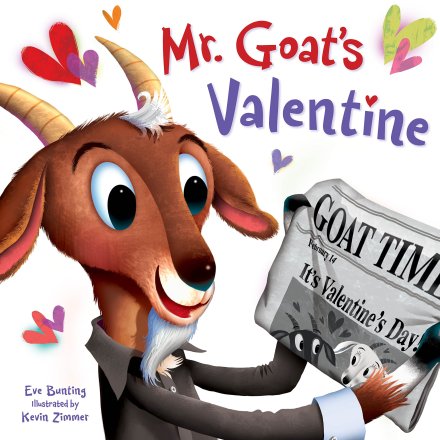
celebrate-picture-books-picture-book-review-mr-goat's-valentine-cover

About the Holiday

During this week we celebrate all of the authors and illustrators who create books for young readers. Through sophisticated, funny, poignant, mysterious, compelling, and sweet stories, authors and illustrators show children their world through fiction and nonfiction illustrated with paintings, digital art, photography, and more inventive mediums. During this week, children’s authors and illustrators visit classrooms, hold special events at bookstores and libraries, and, of course, keep writing and drawing! To celebrate, see if there are any events planned in your area and be sure to read plenty of books by your favorite authors and illustrators.

Mr. Goat’s Valentine

Written by Eve Bunting | Illustrated by Kevin Zimmer


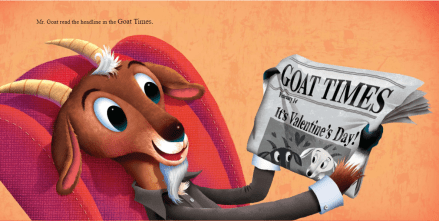
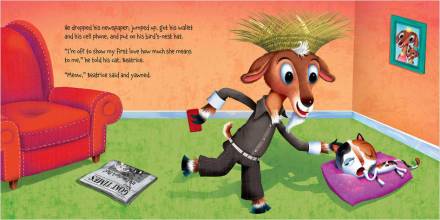
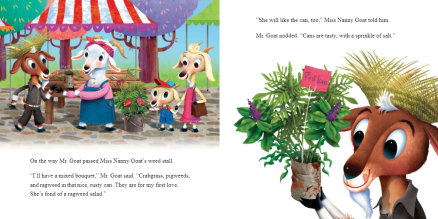
When Mr. Goat read in the newspaper that it was Valentine’s Day, he jumped up, grabbed his phone and favorite hat, and headed out, determined to show his first love how much she meant to him. On the way he stopped off at Miss Nanny Goat’s weed stall and bought a “mixed bouquet” of “crabgrass, pigweeds, and ragweed” beautifully arranged in a “nice, rusty can.” Mr. Goat knew his first love liked ragweed salad, and Miss Nanny Goat assured him that she would like the can too. Mr. Goat agreed. There was nothing like a rusty can with a pinch of salt.

celebrate-picture-books-picture-book-review-mr-goats-valentine-newspaper

Image copyright Kevin Zimmer, 2018, text copyright Eve Bunting, 2018. Courtesy of Sleeping Bear Press.

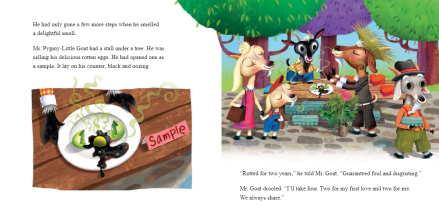
The aroma from Mr. Pygmy-Little Goat’s stand enticed Mr. Goat to stop and look over his treats. The sample rotten egg looked so yummy—black and oozing on the plate—that Mr. Goat bought four. They have been “rotted for two years” and are “guaranteed foul and disgusting,” Mr. Pygmy-Little Goat boasted as he placed the four eggs carefully into a red, heart-shaped box and tied it up with a red ribbon. Not only would the eggs make the perfect dinner, the red bow would be a delicious dessert.

celebrate-picture-books-picture-book-review-mr-goat's-valentine-head's-out

Image copyright Kevin Zimmer, 2018, text copyright Eve Bunting, 2018. Courtesy of Sleeping Bear Press.

Mr. Goat walked on, passing up the fruit and vegetable stand with its fresh oranges, apples, and pears, but made time to talk to Miss Skunk when she approached him with her Eau de Skunk perfume cart. As she spritzed Mr. Goat with a sample of her special perfume, she reminded him that a Valentine’s card would be just right for his first love.

celebrate-picture-books-picture-book-review-mr-goats-valentine-bouquet

Image copyright Kevin Zimmer, 2018, text copyright Eve Bunting, 2018. Courtesy of Sleeping Bear Press.

Mr. Goat continued on with just the faintest alluring reek and thought about what Miss Skunk had said. He didn’t have a card, but, he decided he could “‘compose and song and serenade her.’” It didn’t take long for Mr. Goat to write his ditty. He hurried on to his first love’s house. Standing at the door, he “burst into song. When I was a little kid / It didn’t matter what I did. / If I climbed too high and fell / You’d kiss the hurt and make it well. / You have loved me from the start / I love you with all my heart!”

Suddenly, the door opened, and Mr. Goat’s first love smiled at him. Mr. Goat handed her the bouquet and red box and exclaimed, “‘Happy Valentine’s Day, Mother!’”

celebrate-picture-books-picture-book-review-mr-goats-valentine-eggs

Image copyright Kevin Zimmer, 2018, text copyright Eve Bunting, 2018. Courtesy of Sleeping Bear Press.

Eve Bunting’s exceptional flair for engaging children is on full display in her funny, ewww-ful tribute to Valentine’s Day. The hearts of little ones swell with love around this holiday, and Bunting taps into their enthusiasm to get just the right gift for Mom. Readers will laugh at what might seem unusual gifts while also appreciating Mr. Goat’s thoughtfulness. Young children may wonder who Mr. Goat’s “first love” is as he shops from stall to stall, but as he makes up his song, most will figure it out and be happy to be in on the twist ending.

Kevin Zimmer’s cheery digital art showcases the sweet emotions that Mr. Goat has for his first love. His eyes grow wide at the delectable weed bouquet and rotten eggs, he contemplates the perfect words for his song, and smiles adorably when his mom opens the door. The less-than-fresh take on the idea of a Farmers Market will delight kids familiar with these types of stands. The other goats out shopping on this Valentine’s Day are equally as cute as Mr. Goat and provide camaraderie among this community that likes things a little bit rotten. As the door opens in the final spread, revealing Mr. Goat’s first love, children will be happy to know that the love between parent and child continues even when a “kid” is no longer a kid.

Mr. Goat’s Valentine is a sweet, original story for Valentine’s Day and throughout the year that is perfect for humorous home, classroom, and library story times.

Ages 5 – 7

Sleeping Bear Press, 2018 | ISBN 978-1585369447

Learn more about Kevin Zimmer and his art on his website.

Children’s Authors and Illustrators Week Activity

celebrate-picture-books-picture-book-review-I-love-to-read-bookmarks

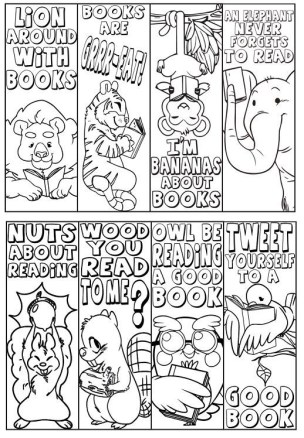
I Love to Read! Bookmarks


Is reading one of your first loves? Then grab some markers or crayons and celebrate by coloring and using these fun printable I Love to Read! Bookmarks!

Picture Book Review
April 27 – National Tell a Story Day

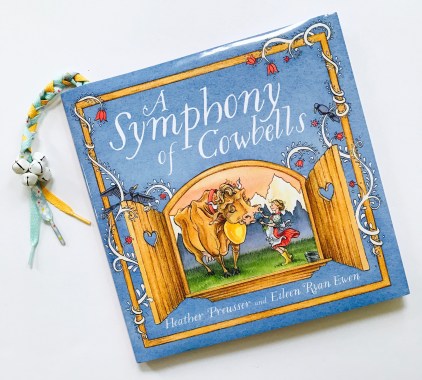
celebrate-picture-books-picture-book-review-a-symphony-of-cowbells-cover

About the Holiday

Today’s holiday was established to celebrate the art of storytelling. Highlighting the tradition of oral storytelling, the day encourages families to get together and have fun remembering and sharing family tales. Reading together is another wonderful way to discover your own stories and those of others around the world.

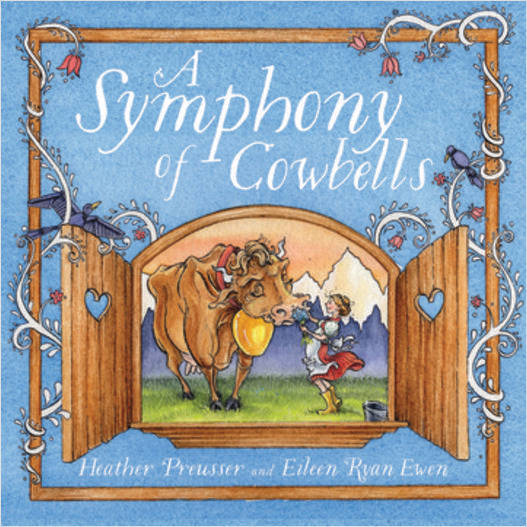
A Symphony of Cowbells

Written by Heather Preusser | Illustrated by Eileen Ryan Ewen


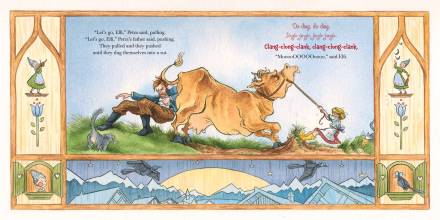
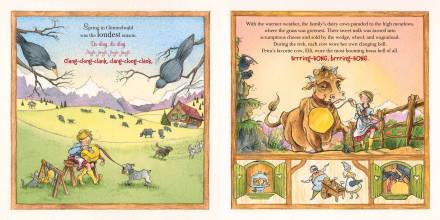
With the dawning of spring, Gimmelwald came alive with the “Da-ding, da-ding. Jingle-jangle, jingle-jangle. Clang-clong-clank, clang-clong-clank” of bells as the cows were led to the sweet, green grass in the high meadows. The cows’ milk would become “scrumptious cheese…sold by the wedge, wheel, and wagonload.” As Petra walked with her family’s herd, she led her favorite cow, Elfi, who “wore the most booming brass bell of all.”

celebrate-picture-books-picture-book-review-a-symphony-of-cowbells-no-bell

Image copyright Eileen Ryan Ewen, text copyright Heather Preusser. Courtesy of Sleeping Bear Press.

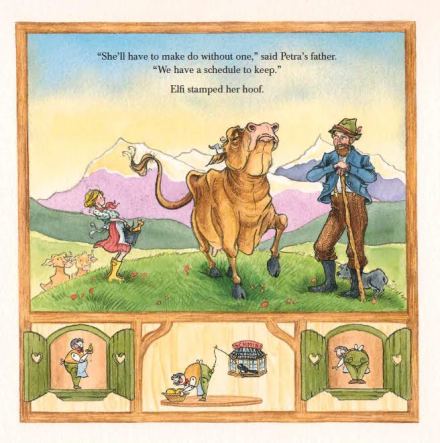
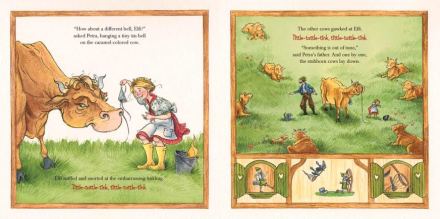
But one day Elfi’s bell was missing. Petra’s father told her they had a schedule to keep and that Elfi would have to go without her bell, but Elfi wouldn’t hear of it. She stomped her hoof and stood her ground. No amount of pushing, pulling or prodding could move Elfi from her spot. Petra ran and retrieved a tiny tin bell to hang around Elfi’s neck, but Elfi only “sniffed and snorted at the embarrassing tinkling. Tittle-tattle-tink, tittle-tattle, tink.”

celebrate-picture-books-picture-book-review-a-symphony-of-cowbells-stubborn-elfi

Image copyright Eileen Ryan Ewen, text copyright Heather Preusser. Courtesy of Sleeping Bear Press.

Without Elfi to lead them, Petra’s other cows lay down in the meadow and refused to move as well. “‘No milk? No cheese? What’ll we do?’ Petra gulped.” She begged Elfi to get up, but Elfi simply gazed at Petra with “eyes wide as milk saucers.” Petra knew she had to find Elfi’s bell. She searched the house, looked in the barn, and combed the field, but didn’t find the bell. The sun went down, and “the stubborn cows remained rooted among the bellflowers.”

celebrate-picture-books-picture-book-review-a-symphony-of-cowbells-tiny-bell

Image copyright Eileen Ryan Ewen, text copyright Heather Preusser. Courtesy of Sleeping Bear Press.

In the morning, Petra spied a crow with something shiny in its beak. She ran after it and discovered the bird’s huge nest high on a cliff. She was much too small to reach it, so she called her father, her mother, and a couple of neighbors. They piled on top of one another, and as Petra teetered on her mother’s shoulders, she reached into the nest and pulled out…Mr. Schmid’s pocket watch, Miss Baumann’s reading glasses, Farmer Felber’s wrench, Mother’s bracelet, Father’s keys, and…Elfi’s brass bell!

Petra skipped all the way to where Elfi and the other cows were keeping their protest, the brass bell announcing “Brrring-BONG, brrring-BONG. Brrring-BONG, brrring-BONG” all the way. When Elfi saw her bell, she danced with joy. Petra placed the bell over Elfi’s head and kissed her velvety nose. The other cows took notice. “On cue, they stood and moseyed up the mountainside….The symphony of cowbells was harmonious again—and LOUD. It was springtime in Gimmelwald after all.”

celebrate-picture-books-picture-book-review-a-symphony-of-cowbells-clanging-bells

Image copyright Eileen Ryan Ewen, text copyright Heather Preusser. Courtesy of Sleeping Bear Press.

Heather Preusser’s enchanting Swiss tale of tenderhearted but stubborn Elfi will delight readers with its musical mystery and gentle humor. Kids will love hearing and reading along with the melodic verses of jingling cowbells sprinkled throughout the text. Preusser’s lyrical phrasing is as fresh as the mountain air and will transport children to the beautiful Swiss countryside.

A Symphony of Cowbells is a perfect example of text and illustrations working together to present the story and add layered details that elevate the reading experience. Eileen Ryan Ewen’s gorgeously detailed and charming paintings take readers to the heart of Gimmelwald, with its glorious mountain backdrop, quaint village architecture, and cozy homes decorated with Alpen cuckoo clocks, dainty curtains, and window boxes overflowing with flowers.

Along the way Ewen frames a consecutive story along the bottom of most pages. Through these panels, eagle-eyed readers will notice a curious happenstance occurring in Gimmelwald which just may explain a few things…. It’s not until the end, however, that kids discover the answer to the story’s mystery.

A Symphony of Cowbells is a captivating and humorous look at country life with a little science sprinkled in. Readers may be enticed to do a little more research into the animal behaviors that influenced the story. The book would make a lovely addition to any child’s home library.

Ages 5 – 8

Sleeping Bear Press, 2017 | ISBN 978-1585369683

To learn more about Heather Preusser and her book as well as see a video about the real Gimmelwald, visit her website!

Discover more about Eileen Ryan Ewen and view a portfolio of her illustration work on her website!

National Tell a Story Day Activity

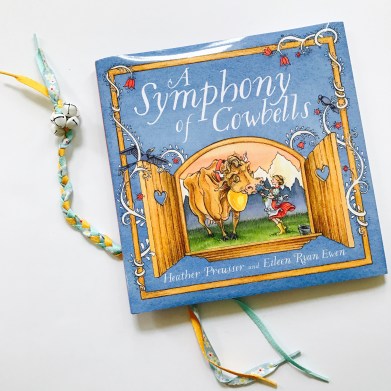
celebrate-picture-books-picture-book-review-bell-bookmark-a-symphony-of-cowbells

Ring a Bell for Reading Bookmark


It’s easy to make a stylish bookmark that can ring out your love of reading while marking your page!

Supplies

  • 3 shoelaces or ribbon of different designs
  • Small “sleigh” bells or other bellscelebrate-picture-books-picture-book-review-bell-bookmark-a-symphony-of-cowbells

Directions

  1. Hold three shoelaces together and knot them together at the top
  2. Braid the shoelaces together as long as you want your bookmark to be
  3. At the end, string three or more bells onto the ends of the shoelaces and knot the shoelaces together to hold the braid closed.
  4. Alternately, you can knot the braid at the end and tie a group of bells to the end.
  5. The end with the bells becomes the top of the bookmark.

Picture Book Review
April 7 – International Beaver Day

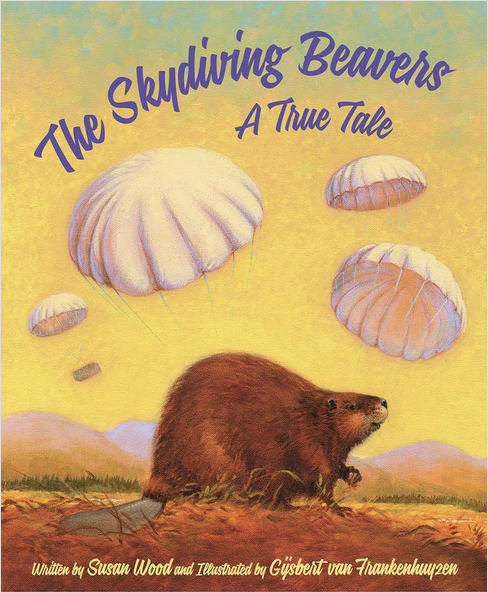
celebrate-picture-books-picture-book-review-the-skydiving-beavers-cover

About the Holiday

Two species of today’s honored animal are found across America, Canada, and Eurasia. Known primarily for building dams in rivers and streams, the beaver is a fascinating animal in many ways. Perhaps one of the greatest natural conservationists, beavers use all parts of the trees they fell. The buds, bark, and leaves are consumed as food, and the rest is gnawed into smaller bits to be used as building materials. The dams, themselves, are helpful in preventing droughts and floods, restoring wetlands, and keeping the water clean. The beaver population has seen a decline for several decades, and today’s holiday aims to promote awareness of this beneficial animal in order to protect it.

The Skydiving Beavers: A True Tale

Written by Susan Wood | Illustrated by Gijsbert van Frankenhuyzen


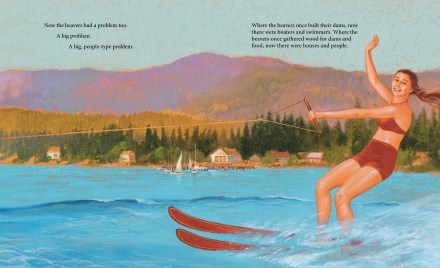
The time was post-World War II and families were eager to build homes and enjoy life again. In McCall, Idaho this meant that people moved to the shore of the beautiful lake, where they could fish, sail, waterski, and have fun. So roads were constructed, docks built, and land cleared. “Trouble was, that lakeside land had already been claimed. For decades—centuries, even—beavers had been the only ones doing the building there.”

Now, though, there was a turf war, of sorts. “Where the beavers once gathered wood for dams and food, now there were houses and people. And where the people tried to drive their cars, now water flooded the roads because of the dams.” Trees were also being “toppled left and right” by those busy beavers. Something needed to be done.

celebrate-picture-books-picture-book-review-the-skydiving-beavers-a-true-tale-water-skiing

Image copyright Gijsbert van Frankenhuyzen, text copyright Susan Wood. Courtesy of Sleeping Bear Press

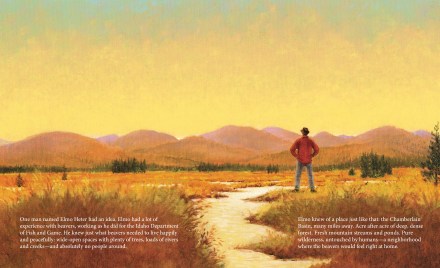
Elmo Heter had an idea. Elmo had experience with beavers from his job with the Idaho Department of Fish and Game. He knew that beavers needed open areas with lots of trees, rivers, and creeks—and no people. There was a place just like this many miles away. The Chamberlain Basin would be perfect for the beavers, but there was a problem—how could he move all those beavers “to a place with no roads, no railway, no airport, and no bus station?”

Elmo thought about loading them into boxes carried by horses or mules, but the rough trip would be too hard on both the beavers and the pack animals. Then Elmo remembered that there were piles of parachutes left over from the war going unused. “What if he dropped the beavers from a plane? Skydiving beavers? Well, why not?” Elmo decided.

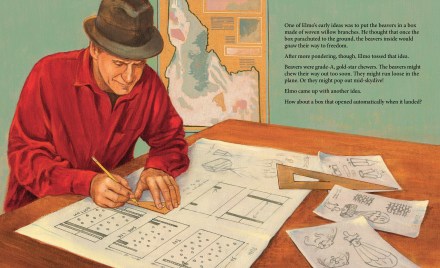
Elmo went to work to design a crate that could hold the beavers safely. His first idea was to build a box of woven willow branches. Once the boxes hit the ground, the beavers could gnaw their way out. But then Elmo feared that those champion chewers might escape before the box touched down. Next, he came up with the idea for a box that opened automatically when it hit the ground. After he created his box, Elmo found a beaver to test it.

celebrate-picture-books-picture-book-review-the-skydiving-beavers-a-true-tale-sunset

Image copyright Gijsbert van Frankenhuyzen, text copyright Susan Wood. Courtesy of Sleeping Bear Press

He found his daredevil and named him Geronimo. Geronimo, cozy in his box, was loaded onto a plane, and as the plane flew low over the test field the box was dropped. “The chute bloomed like a buttercup, then caught the breeze….The box fell as gently as a mountain snowflake, landing softly on the grass.” Just as it was designed to do, the box opened and Geronimo scrambled out.

Elmo wanted to make sure his invention would work every time, so he tested it again and again.  All this flying and skydiving seemed to agree with Geronimo. He soon began to treat it like a game, shuffling out of the box when the door opened and then crawling “right back in for another go.” Now that Elmo knew the plan would work, he gathered the beavers from McCall, put them in their special traveling crates, and headed for the Chamberlain Basin.

When they found the perfect spot, Elmo and his team prepared the chutes and let the beavers go. One by one the parachutes opened, and the beavers “wafted like falling leaves on the autumn wind to their new woodsy patch of paradise.” And who was the first pioneer? Why Geronimo, of course!

celebrate-picture-books-picture-book-review-the-skydiving-beavers-a-true-tale-plans

Image copyright Gijsbert van Frankenhuyzen, text copyright Susan Wood. Courtesy of Sleeping Bear Press

An Author’s Note following the text reveals more about this true story. It also discusses what scientists have since learned about the benefits of beavers to the environment and how communities now work with and around them. A list of interesting facts about beavers is also included.

Susan Wood’s story of a little-known event is a thought-provoking glimpse into early conservation efforts. Her conversational tone and lyrical phrasing enhance the tale, lending it suspense and personality that will draw readers in. Wood’s detailed descriptions allow children to understand the problems for the community as well as the concern for the animals that led to this historical event. 

Gorgeous paintings by Gijsbert van Frankenhuyzen uncover the beauty of Idaho’s backcountry with its sparkling lakes and tree-covered mountains. Glorious sunsets fill the two-page spreads, turning the rolling hills pink and gold as beavers scurry near the shore building their dams. Readers will be intrigued by the clear and close-up views of Elmo Heter as he works on his plans to relocate the beavers. A table strewn with publications and photographs from World War II, set children in the time period, and his schematics of the box he designs as well as his workshop are plainly displayed. Kids can ride along with Geronimo as he climbs into his crate, travels by plane over wide-open vistas, and floats into the Chamberlain Basin at the end of a parachute.

The Skydiving Beavers would be a fresh addition to classroom environmental units to spur discussions on past, present, and future conservation science and will delight young readers interested in the natural sciences.

Ages 6 – 9

Sleeping Bear Press, 2017 | ISBN 978-1585369942

Learn more about Susan Wood and her books on her website!

View a portfolio of artwork by Gijsbert van Frankenhuyzen on his website!

International Beaver Day Activity

CPB - Beaver craft picture (2)

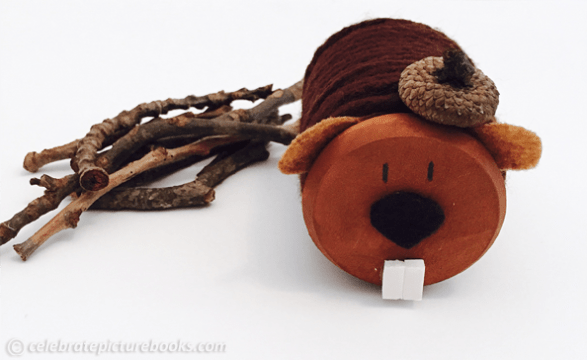
Make a Spool Beaver


Do you have a gnawing need to have a beaver of your own? Make one with this Spool Beaver craft!

Supplies

  • Printable Ears and Nose Template
  • 2-inch wooden spool, available at craft stores
  • 1 6-inch long x ¾ inch wide craft stick
  • Small piece of foam board
  • Brown “chunky” yarn
  • Brown felt, small piece for ears and tail
  • Black felt, small piece for nose
  • Acorn top for hat (optional)
  • Brown craft paint
  • Black craft paint
  • Black marker
  • Strong glue
  • Paint brush
  • Scissors

CPB - Beaver craft picture with tail

Directions

  1. Print the Ears and Nose template
  2. Paint the spool with the brown paint, let dry
  3. Cut the ears from the brown felt
  4. Cut the nose from the black felt
  5. Cut a piece from the end of the craft stick
  6. Paint the craft stick brown or black, let dry
  7. Cut two small pieces from the foam board, ½-inch long x 3/8 inch wide
  8. When the spool is dry, glue the ears to the spool, leaving the ears sticking up over the rim of the spool
  9. Glue one end of the yarn to the spool
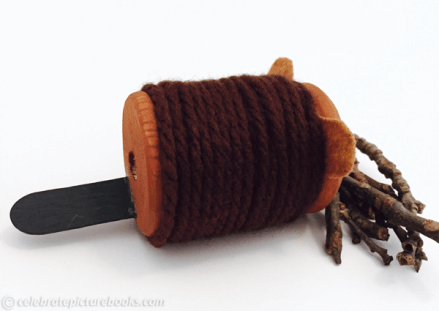
  10. Holding the spool horizontally, wind the rest of the yarn around the spool back and forth from front to back. Glue the end to the body of yarn. This will be the bottom of the beaver.
  11. Glue the nose over the hole in the spool
  12. Glue the teeth below the nose
  13. Glue the flat edge of the craft stick to the back of the spool to make the tail

Picture Book Review
February 17 – International Friendship Month

celebrate-picture-books-picture-book-review-here-to-there-and-me-to-you-cover

About the Holiday

Our love for friends near and far radiates across the month of February, bringing us closer. To celebrate International Friendship Month get together with old friends and reach out to others you’d like to get to know better. This month would also be a perfect time to find a penpal, write to a member of the military, or send a card to an old friend you haven’t seen lately. As today’s book shows, friendship is the world’s strongest bridge.

Here to There and Me to You

Written by Cheryl Keely | Illustrated by Celia Krampien


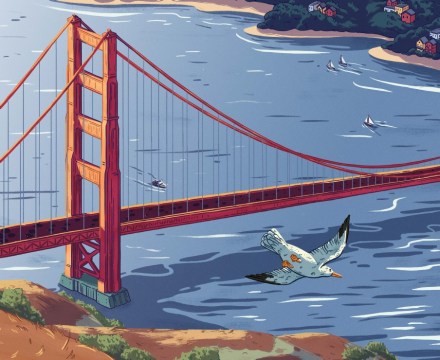
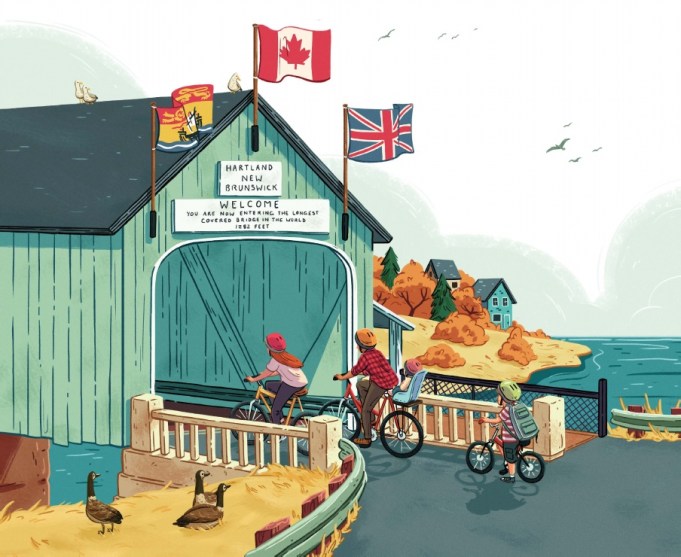
“Bridges do more than connect one place to another. They bring the whole world together.” There are so many types of bridges—each just right for their place or function. Some of the most charming bridges are wooden-covered, like Canada’s Hartland-to-Somerville span in New Brunswick, which is the longest covered bridge in the world at 1282 feet (as long as 32 school buses end to end). Some are colorful like the Golden Gate Bridge in San Francisco, California, which is distinctively orange, a beautiful beacon against the blue sky and sea.

celebrate-picture-books-picture-book-review-here-to-there-and-me-to-you-bridges-connect

Image copyright Celia Krampien, courtesy of sleepingbearpress.com

In London the bridge isn’t really falling down even though that makes for a fun game! The London Bridge, which crosses the River Thames, was the first stone multi-arch bridge built in Britain.” Over the years the bridge has been renovated many times, and it’s now made of concrete and steel. Drawbridges might be the coolest kind of bridge! It’s fun to watch them split in the middle and rise up, up, up before coming back down after a ship passes. These bridges “date to medieval times when knights in armor—and dragons?!—fought for their castles.”

celebrate-picture-books-picture-book-review-here-to-there-and-me-to-you-golden-gate-bridge

Image copyright Celia Krampien, courtesy of sleepingbearpress.com

Sometimes bridges don’t have to be fancy to work. Some “bridges can be as simple as a few stones placed across a shallow stream” that give crossers a place to step all along the way. This is known as a clapper bridge. People aren’t the only ones who use bridges either. Places that are home to roaming wildlife—like Banff National Park in Canada—build bridges so animals “such as bears, wolves, moose, and lynx” can cross roads and highways safely.

Trains can also “use bridges to clickity-clack along, carrying people to people. Family together again.” But what if you want to travel from country to country? There are even bridges for that, and they make “a big world seem smaller.” While these types of bridges are strong and sturdy, there are other spans made only of rope and boards that are “rickety, ratchety, swinging and swaying their way to beautiful hid away places.”

celebrate-picture-books-picture-book-review-here-to-there-and-me-to-you-covered-bridge

Image copyright Celia Krampien, courtesy of sleepingbearpress.com

People can become bridges too! Just try bending backward to touch the ground. Or if you don’t like feeling upside down, there is a simple way that “isn’t so grand. It connects me to you and you to me…through the simple holding of hands.”

Cheryl Keely’s enchanting tour of some of the world’s most beautiful and unusual bridges is sure to engage readers who love architecture, travel, and transportation—or who just have the wanderlust. Keely’s story, punctuated with facts and trivia about different types of bridges, is a lyrical frame for her theme of interconnectedness and friendship, making this a book that resonates on many levels and is a treat to dip into again and again.

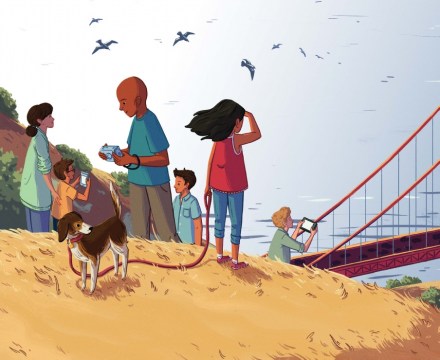
celebrate-picture-books-picture-book-review-here-to-there-and-me-to-you-edge-of-golden-gate-bridge

Image copyright Celia Krampien, courtesy of sleepingbearpress.com

Celia Krampien’s charming artwork takes readers to the towns and cities, the shores and cliffs that host the world’s bridges. Her realistic depictions show the grandeur of the majestic spans millions of people use every day as well as the rustic simplicity of rope and clapper bridges. Kids will love picking out details of the scenery surrounding each structure as well as recognizing familiar settings they have learned about or, perhaps, traveled to.

Here to There and Me to You is a fresh, uplifting story that will appeal to fiction as well as nonfiction lovers. In addition to being a great addition to any story time, the book has many cross-curricular applications for classrooms and libraries, and would be a welcome find on any bookshelf.

Ages 5 – 8

Sleeping Bear Press, 2017 | ISBN 978-1585369966

To learn more about Cheryl Keely and her work as well as to find a fun bridge game, visit her website!

Find a portfolio of illustration by Celia Krampien on her website!

International Friendship Month Activity

celebrate-picture-books-picture-book-review-holding-hands-puzzle

Holding Hands Interchangeable Puzzle


Reaching out to others is a wonderful way to bridge distances and make friends. In this printable puzzle,  all the animals are ready to connect with others—no matter how you put the pieces together! Here is a colored version of the puzzle and one you can color yourself!

Supplies

Directions

  1. Print the puzzle
  2. Cut the pieces apart
  3. Reassemble the pieces in any order to have the animals make new friends

Picture Book Review

February 15 -National Flag Day of Canada

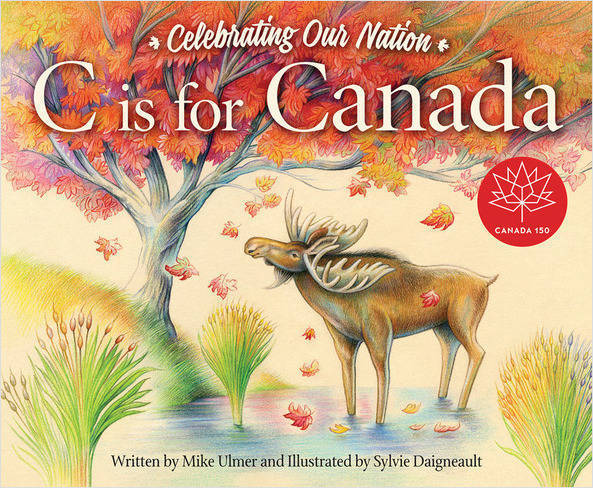
celebrate-picture-books-picture-book-review-c-is-for-canada-cover

About the Holiday

2017 is a big year for the nation of Canada! Not only are this country’s people celebrating the 150th anniversary of its confederation, but today marks the 52nd anniversary of the raising of the Canadian flag. On February 15, 1965, the familiar red-and-white Canadian flag, with its central maple leaf, flew over Parliament Hill for the first time. National Flag of Canada Day was officially proclaimed in 1996. The distinctive design of the flag is often cited by Vexillologists, or flag experts, as one of the world’s most beautiful.

C is for Canada

Written by Mike Ulmer | Illustrated by Sylvie Daigneault


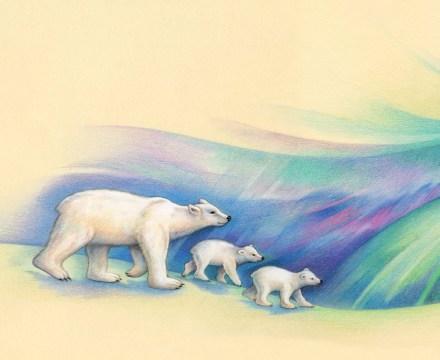
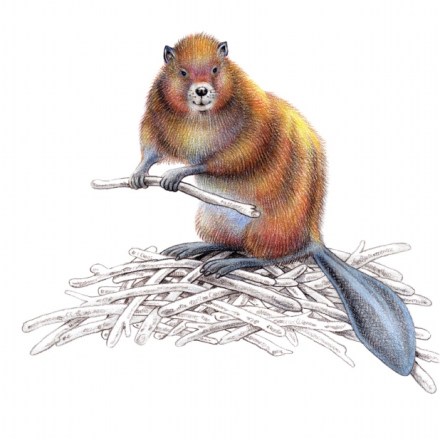
What would you see if you decided to take an alphabet-inspired trip across the vast expanse that is the gorgeous country of Canada? Dip into this special ABC travel guide and find out! A great place to start is with the letter A, which stands for Aurora Borealis: “Look up into the nighttime sky / and see the colours dance on by. / The show takes place on cloudless nights; / Aurora Borealis means Northern Lights.” B happens to be for Beaver, Canada’s national symbol. This little animal is a perfect match for the country’s people because “…his heart is big; he’s always eager— / Canada is like that busy beaver.”

celebrate-picture-books-picture-book-review-c-is-for-canada-aurora-borealis

Image copyright Sylvie Daigneault, courtesy of sleepingbearpress.com

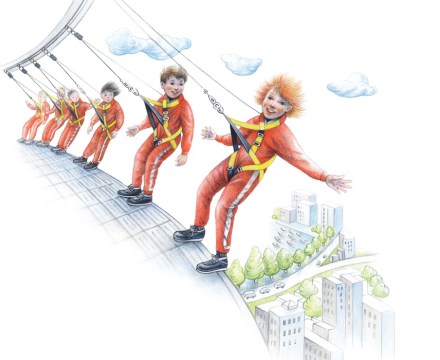
Dino lovers (and, really, who isn’t?) will want to head for the Badlands of Alberta, where the letter D awaits in Drumheller, the Dinosaur capital of the world and home to the biggest dinosaur skeleton. If those beasts are too tame for you, you might like to try the open-air thrill of E at Edgewalk at the CN Tower. Can’t get enough of the outside? Then take in K for Klondike Days, a 10-day festival commemorating Edmonton’s role in the Klondike Gold Rush with food, music, rides, and booths.

celebrate-picture-books-picture-book-review-c-is-for-canada-edgewalk

Image copyright Sylvie Daigneault, courtesy of sleepingbearpress.com

While you’re here, you’ll use Canada’s beautifully designed money engraved with polar bears and the loons that give the coins their L nickname, Loonies: “The sound of it gives me a smile / when I add a coin every once in a while. / A loonie makes a lovely ‘clank’ / when dropped inside my piggy bank.” Of course no Canadian excursion is complete without M for Maple Leaf: “Our country’s like a maple tree— / we know the strongest limbs / are those with roots that reach around / the world and back again.”

If winter sports are your thing, then you’ll love N, which is for the National Hockey League. As hockey players well know, “To play in the NHL would be a thrill / but first I have to learn one skill. / I can skate very fast, I’m off like a shot— / I just need to learn the best way to stop.” Maybe you like to spend more time outdoors than at the rink. If so you might just see R for Rock Rabbits on a hike: “When a rock rabbit lets out a squeak, / it means it’s playing hide-and-seek. / And when it gives another cry, / it means it’s safe to go outside.”

celebrate-picture-books-picture-book-review-c-is-for-canada-beaver

Image copyright Sylvie Daigneault, courtesy of sleepingbearpress.com

Two distinct areas are worth a peek at U and V. U is for Underwear—the special warm kind made in Truro: “We treasure pretty Truro, / I think we always will. / That’s where they make the long johns / that protect us from the chill.” V is for Victoria and all its grandeur: “There’s an ocean complete with oceanside / and carousels for kids to ride. / And a great hotel for weeklong stays / and bike trails you can ride for days.” And now we’ve come to the end of our alphabetic tour where Z is for Zero—or is it? “Zero isn’t zero; it tells you quite a lot. / Below is fairly chilly, above is really not. / Zero isn’t zero; it’s more vital than you think. / You need less than zero degrees to have yourself a rink.”

celebrate-picture-books-picture-book-review-c-is-for-canada-loon

Image copyright Sylvie Daigneault, courtesy of sleepingbearpress.com

These are just a few of the highlights among the 26 letters and bright spots C is for Canada has to offer. Mike Ulmer’s verses provide tantalizing tidbits of descriptive and action-packed information for readers who want to learn more about this fascinating northern country. A glossary following the text gives more intriguing details about each letter’s subject.

Sylvie Daigneault’s vibrant illustrations are lovely companions for Ulmer’s verses and give young readers clear, up-close views of the people, places, animals, and history of Canada. Huskies frolic in the snow, caribou trot along a rocky lakeside while majestic mountains rise behind them, two science centre visitors have a hair-raising experience, and an old prospector pans for gold in the Yukon. Each snapshot will engage little armchair travelers and make their imaginations roam far from home.

Ages 6 – 8

Sleeping Bear Press, 2017 | ISBN 978-1585369737

You can connect with Mike Ulmer on his blog!

View a gallery of illustration work by Sylvie Daigneault on her website!

National Flag of Canada Day Activity

celebrate-picture-books-picture-book-review-canada-coloring-page-canadian-flag

Canada Coloring Pages


From its vivid red-and-white flag to its purple mountains, Canada is a colorful country! Here are three printable Canada Coloring Pages for you to enjoy!

Canadian Flag | Canadian Animals Coloring Page | Beaver Carrying Canadian Flag

Picture Book Review

December 29 – Tick Tock Day

celebrate-picture-books-picture-book-review-ticktock-banneker's-clock-cover

About the Holiday

As the year winds down Tick Tock Day reminds us of the passage of time and encourages us to examine our life and find opportunities to accomplish the things we really want to. While the day only has 24 hours, a little creative scheduling, letting go of those tasks that aren’t so important, and even saying “no,” can help us achieve the things that matter.

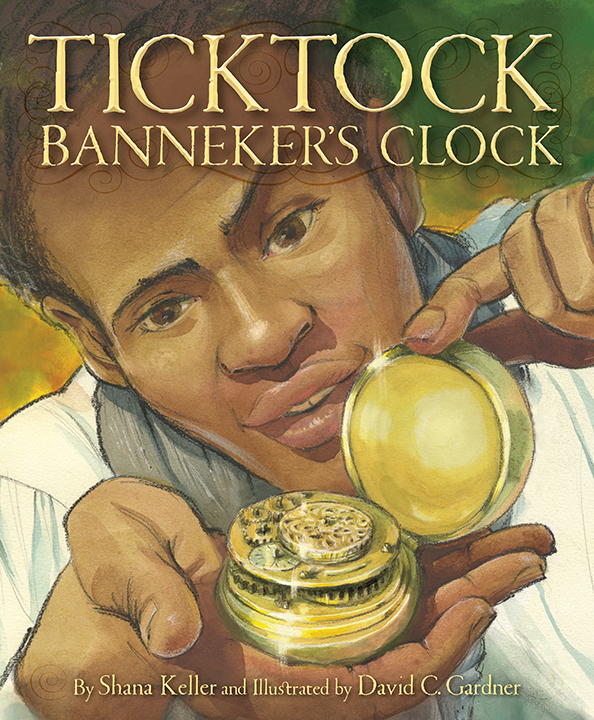
Ticktock Banneker’s Clock

Written by Shana Keller | Illustrated by David C. Gardner


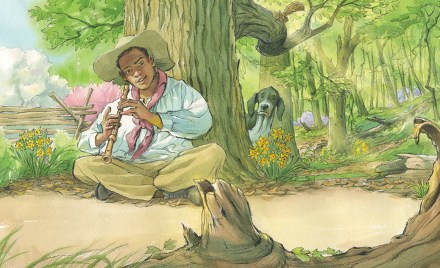
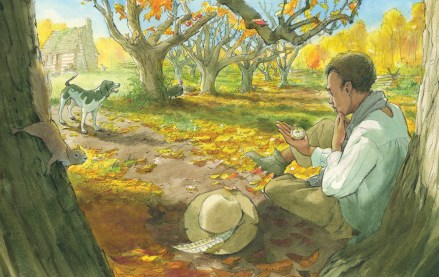
With winter approaching Benjamin Banneker has finished up his autumn chores and is looking forward to time to indulge his creative dreams. He finds his favorite spot under the chestnut tree—the place where during the summer he plays his violin and flute, “blending his soft music with the bird’s songs”—and pulls out a pocket watch he has borrowed from a gentleman. Benjamin is fascinated by the ticking and the movement of the small hands. He carefully opens the back of the watch and discovers “a world of wonderful whirls. There were gears of all shapes and sizes. Such a tiny maze!”

celebrate-picture-books-picture-book-review-ticktock-banneker's-clock-studying-pocket-watch

Image copyright David C. Gardner, courtesy of flyingdogstudio.com

The miniature timepiece is mesmerizing, but Benjamin’s mind holds a challenge—a big challenge. He envisions a large clock, one that chimes to tell the time. Remembering his math skills, Benjamin mulls over the scale needed to turn “something small into something big.” As the snow falls, Benjamin goes to work. First, he dismantles the pocket watch and draws careful diagrams of the gears and workings. Then he begins transposing these into larger drawings.
celebrate-picture-books-picture-book-review-ticktock-banneker's-clock-flute

Image copyright David C. Gardner, courtesy of flyingdogstudio.com

With the coming of spring and his drawings finished, Benjamin plans how he will build his clock. While the little pocket watch is made of metal, that material is much too expensive for a large version. As he ponders the problem under his favorite tree, Benjamin looks around him. Suddenly he knows! The answer is “right in front of him, even in his hands! The very instrument he played was made of wood!” There is a forest of trees on his farm, and this material is free.

During the summer between farm chores, Benjamin uses “every spare moment he had to find the perfect pieces of wood.” Once he has enough he begins to convert his drawings into carvings, whittling the gears and other pieces he will need. Soon, however, he becomes discouraged. The wood begins to split and come apart. Benjamin thinks about how his family cures tobacco leaves—drying them out until all the moisture evaporates. Perhaps, he thinks, he can do the same with wood to make it stronger. The process would take months, but Benjamin is patient.

celebrate-picture-books-picture-book-review-ticktock-banneker's-clock-carving

Image copyright David C. Gardner, courtesy of flyingdogstudio.com

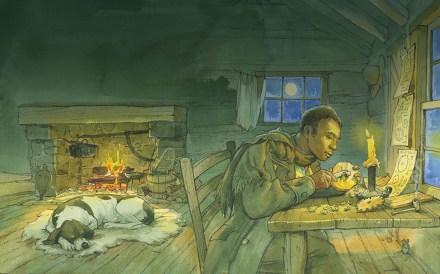
Winter has come around again, and the wood is finally ready. In his warm house Benjamin sets about carving again. During the day he carves near the sunny window, and at night he works by candlelight. At last he has all the parts he needs to build his clock. Gears, wheels, tiny pins, and the boards that will become the case are scattered across Benjamin’s work table. There is only one piece missing. A piece that cannot be made of wood—the bell!

Benjamin buys a bell from a metalsmith, and back home begins to build his clock. With his drawings to guide him, he fits the gears together and then sets the hands to “match up perfectly with the second, minute, and hour of each day. It took more than one try, but Benjamin had learned to be patient.” Using the sun to determine the correct time, Benjamin positions the hands and steps back. His clock works! “The little iron bell chimed every hour, on the dot, for the next forty years.” Benjamin becomes famous, and neighbors from near and far come “to see his amazing invention.”  

An Author’s Note expanding on Benjamin Banneker’s life and work follows the text.

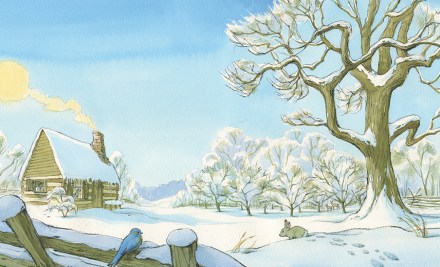
celebrate-picture-books-picture-book-review-ticktock-banneker's-clock-winter

Image copyright David C. Gardner, courtesy of flyingdogstudio.com

With lyrical language that glides as smoothly as a well-oiled timepiece, Shana Keller reveals the remarkable story of Benjamin Banneker, born free during the time of slavery, who possessed exceptional math and scientific skills and used them to help his friends and neighbors and to make real his vision of a striking clock. Keller’s detailed and descriptive storytelling animates this life story, allowing readers to take the journey with Banneker as he experiences excitement, setbacks, and ultimately success. Banneker, embodying determination, persistence, and creativity, is an excellent role model for kids with big dreams of their own.

celebrate-picture-books-picture-book-review-ticktock-banneker's-clock-studying-fall-chores

Image copyright David C. Gardner, courtesy of flyingdogstudio.com

David C. Gardner’s lovely full-page and two-page-spread illustrations gloriously portray Benjamin Banneker’s farm and home as well as his dedicated commitment to building a striking clock despite—or perhaps spurred on by—the challenges he faced. Gardner’s detailed images set the biography firmly in its time period, letting children experience farm and home life in the 1750s. Banneker carries wooden buckets to feed the animals, tobacco leaves hang in a dry shed, a fire blazes in a large, open fireplace, and a candle flickers as Banneker whittles wheels and gears with his pocket knife. The realistic paintings that depict Banneker’s emotions as he imagines creating a large clock, overcomes obstacles, and studiously works on his drawings and carvings will inspire readers to attempt their own inventions—whatever they may be.

For any would-be inventors, history lovers, tinkerers, and science buffs, Ticktock Banneker’s Clock is a stirring biography that would make an inspirational addition to home, school and public libraries.

Ages 6 – 10

Sleeping Bear Press, 2016 | ISBN 978-1585369560

Learn more about Shana Keller and her work on her website!

Discover a portfolio of picture book art, fine art, animation, and videos by David C. Gardner on his website!

Tick Tock Day Activity

celebrate-picture-books-picture-book-review-cuckoo-clock-coloring-page

Cuckoo Clock Coloring Page


The chirp of a cuckoo clock keeps you on time—or at least aware of the passing of time! Here’s a printable Cuckoo Clock Coloring Page for you to enjoy!

Picture Book Review