June 25 – National Rivers Month

celebrate-picture-books-picture-book-review-river-cover

About the Holiday

Rivers are beautiful, provide recreation, and are crucial to our water supply. Did you know that in the United States 65% of our drinking water comes from rivers and streams? This month environmentalists and others promote awareness of the importance of keeping the nation’s rivers pollution free to protect the fish and animals that call them home and increase enjoyment for all. To help the cause, find out how you can help an environmental organization in your area. This year might be the perfect time to get to know your local river system better and then plan a trip to fish, swim, boat, or just have a picnic on the bank.

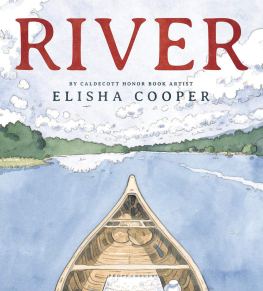
River

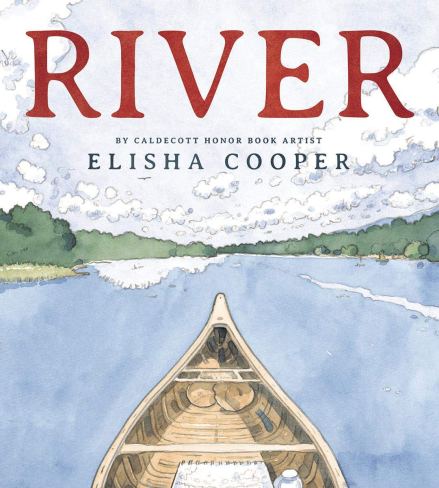
By Elisha Cooper


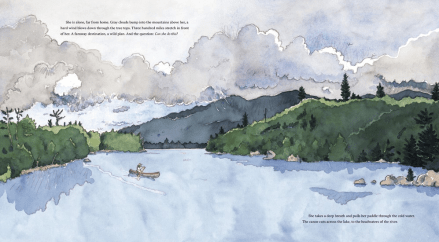
As a woman begins her solitary trip on a mountain lake, she turns and waves to her family. The familiar shore recedes, and she dips her oar into the blue water under gray skies and in the shadow of the tall mountains. “Three hundred miles stretch in front of her. A faraway destination, a wild plan. And the question: Can she do this?” As she enters the Hudson River, she plucks a pebble from the shallow water and places it beside her gear. Here, she must navigate the scattered rocks—and one that is not a rock at all, but a moose taking a dip.
celebrate-picture-books-picture-book-review-river-alone

Copyright Elisha Cooper, 2019, courtesy of Orchard Books, Scholastic, Inc.

Ahead, she rides rapids that steal her hat and threaten to flip her. But she hangs on and makes it out on the other side. Now it’s time to set up camp for the night. Huddled in her tent, “she is alone, but not. The river stays beside her, mumbling to her and to itself all through the night.” With the dawn, she is on the river again, along with “otters, ducks, dragonflies, a kingfisher.” When she stops to pick blackberries, a bear cub ambles by to watch. The woman backs away slowly and continues down the river.

When she comes to a dam, she must carry her canoe. She trips, falls, and bloodies her knee, but on the other side of the dam, she returns to her paddling. When she comes to a waterfall, she gets in line for her turn to go through the lock. Once on her way again, she moves on to “farms with faded barns, to villages with white clapboard houses, to chimneyed factories on the outskirts of a town. Here, she pulls her canoe onto a levee where two boys are fishing. They ask her where she’s going, and she tells them. “It feels funny to talk.” As she walks into town, her legs also feel funny beneath her. She buys supplies and replaces her hat. That night is spent on a small island.
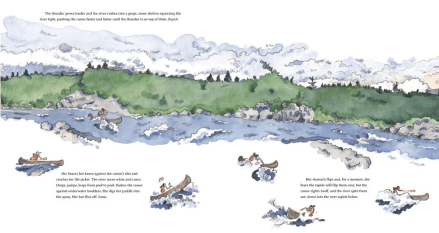
celebrate-picture-books-picture-book-review-river-rapids

Copyright Elisha Cooper, 2019, courtesy of Orchard Books, Scholastic, Inc.

When she wakes, the white fog has blanketed everything. She can’t see the river, but she watches an eagle high in a tree eating its breakfast. She takes out her sketchbook and draws. The fog lifts and she continues her journey. The days and nights are marked by her hardening callouses and darkening suntan, shortening pencils and waning sketchbook pages. She paddles past “craggy hills” and “around bell-ringing buoys, next to railway tracks and a clattering freight train.”

She dodges a tugboat oblivious to her presence and makes it to another village, where she mails postcards and buys a cookie. A rain drop falls just as she climbs back into her canoe. The raindrop turns into a drizzle and then “a single sheet blowing sideways. A squall.” Her canoe capsizes, “dumping her into the raging water.” When she is able, she drags her canoe and herself onto a rocky shore. “Shivering, she takes stock. Tent, gone, Clothes, soaked. Sketchbook, safe.”

celebrate-picture-books-picture-book-review-river-city

Copyright Elisha Cooper, 2019, courtesy of Orchard Books, Scholastic, Inc.

In the morning she starts again. As she rounds a bluff, the city spreads out in front of her. Far above her a gull watches as she makes her way past skyscrapers and boats large and small to the harbor and on to the boatyard, where “a bearded man in overalls—the builder of her canoe”—eagerly waits to hear about her trip and the sturdiness of her craft. After a cup of coffee, she launches her canoe for the last leg of her journey.

She is now in the open ocean with its wild waves. The horizon beckons, “but closer in she sees the lighthouse, and she knows it is time for her to be home.” She paddles harder and faster. “She can’t wait to be with them again. Can’t wait to tell them about moose and eagles, rapids and storms…to turn her sketches into paintings and her words into a story.” Her family is on shore waving, her dog running into the surf to greet her. She scuds into the shallows “…and brings the canoe to shore.”

An Author’s Note about the creation of River as well as a Note on the Hudson River and a list of sources and reading resources follows the text.
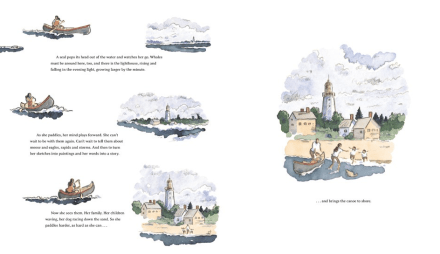
celebrate-picture-books-picture-book-review-river-home

Copyright Elisha Cooper, 2019, courtesy of Orchard Books, Scholastic, Inc.

Elisha Cooper’s loving and lyrical tribute to nature, courage, and self-reliance is nothing short of spectacular. His fluid storytelling plays out with the rhythm of an oar cutting and pushing a canoe along while transporting readers smoothly through this most evocative journey. With exquisite descriptions and compelling obstacles that will leave children wide-eyed and holding their breath, River is an expansive adventure story of one woman pitting herself against the power of the Hudson River and her own tenacity. The story is also one of love—respect for the environment, awe for community, and devotion to family and the support found there.

Cooper’s soft and sprawling watercolors envelop readers in the river setting, where the woman appears tiny against the rocky coastline, towering mountains, waterfalls, dams, and cityscapes. Double-page spreads swell the heart and invite wanderlust in even the most ardent homebodies. And there may be no better way to share this personal and universal journey than by gathering together and reading River in one sitting or—for younger children—breaking away at one of the many cliffhangers that will have everyone yearning to dip into the story again.

A must for school and public library collections, River is highly recommended for all home bookshelves as well for its inspiration for personal goals, it’s reflections on nature, and its encouragement that anything is possible.

Ages 4 – 8 and up

Orchard Books, 2019 | ISBN 978-1338312263

To learn more about Elisha Cooper, his books, and his art, visit his website.

National Rivers Month Activity

celebrate-picture-books-picture-book-review-rivers-word-search

World Rivers Word Search Puzzle


The world’s rivers provide homes for fish, animals, and birds; offer opportunities for recreation; and supply drinking water for millions. Can you find the names of twenty rivers of the world in this printable puzzle? Then learn where each river runs!

World Rivers Word Search | World Rivers Word Search Solution
celebrate-picture-books-picture-book-review-river-cover

You can find River at these booksellers

Amazon | Barnes & Noble | Books-a-Million

To support your local independent bookstore, order from

Bookshop | IndieBound

June 24 – Bubble Kisses Book Tour Stop

celebrate-picture-books-picture-book-review-bubble-kisses-cover

About the Holiday

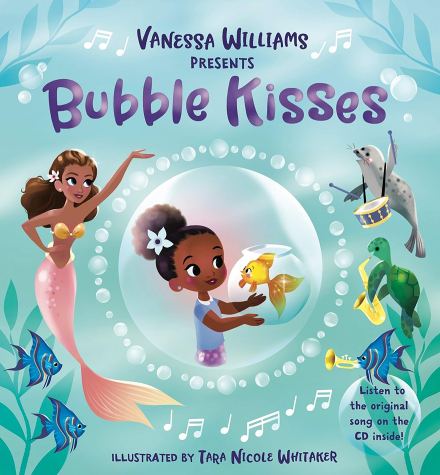
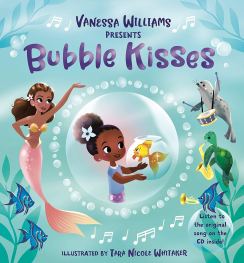
Bubble Kisses

Presented by Vanessa Williams | Illustrated by Tara Nicole Whitaker


A little girl is playing pirates in her room with her special pet goldfish, Sal. As she holds up Sal’s bowl during the classroom pet show, the little girl admits that Sal can’t “bark like a dog, scratch like a cat, or jump like a frog” the way the other kids’ pets can. And Sal can’t do things that wild animals can do either. But Sal does have one amazing talent that makes the girl love her so much. She explains that Sal “gives me bubble kisses, bubble kisses as she swims by in the water. She never misses with her bubble kisses. And I’m so glad I got her.”

What’s so special about these bubble kisses? They’re more than a little magical! In fact, they transform the little girl into a mermaid and her bedroom into an underwater world where other mermaids, fish, sea turtles, porpoises and other sea creatures greet her with excitement. Watching the mermaids swim and play together, the girl is so happy that she’s included because “from people’s lives such things are missing as bub-bub-bub-bub-bubble-kisses.”

A sign points the way to a concert, and the five mermaids lead the little girl and Sal to a pirate ship sitting atop a blue whale. Music floats on the waves, and as they grow closer they see mermaid couples and even some merkids dancing. The little girl holds Sal’s fins as they twirl around too before entering the pirate ship, where the concert is taking place. A beautiful mermaid is singing, backed up by two of the five mermaids as well as porpoises and sea turtles on saxophone, a seal on the drums, two angelfish on trumpets, and one cool porpoise playing the bass.

celebrate-picture-books-picture-book-review-bubble-kisses-kisses

Image copyright Tara Nicole Whitaker, 2020, text copyright Vanessa Williams, 2020. Courtesy of Sterling Children’s Books.

As the band plays on, the star, her backup singers, and the other mermaids hold the little girl’s hands and Sal’s fins and swim in a circle of friendship. But the little girl and Sal are growing tired. They drift off to sleep in a big bubble as the singer sits nearby watching over them. Then they’re back home. Sal snoozes in her pirate ship-decorated bowl, and the little girl takes one more peek at her friend before dozing off in her cozy bed, reminded once again how lucky she is because “from people’s lives such things are missing as bub-bub-bub-bubble-kisses. With the funny, lovely Sal.”

Bubble Kisses is both a story and a jazzy, toe-tapping song that will have little ones singing and dancing along with every reading. Included with the book is a CD of Vanessa Williams singing Bubble Kisses plus a link to a digital download of the song.

Vanessa Williams’ delightful story is full of enchantment, imagination, and the love children have for their pets. Little readers will be charmed as one bubble kiss magically transforms the little girl into a mermaid and she and Sal begin an adventure together. Repeated phrases make it easy for kids to join in during story times or while singing, and the effervescent “Bub-bub-bub-bub-bubble kisses” will have kids giggling and asking for more.

Tara Nicole Whitaker’s violet-and-blue-hued digital illustrations are as sweet as cotton candy and transport readers into a world of imagination based on the little girl’s favorite activity: playing pirates in her sea-themed bedroom. Kids will have fun matching the décor and toys in the girl’s room to her underwater escapade. The diverse group of mermaids who invite the little girl to the concert are enthusiastic and welcoming. Whitaker’s pirate ship makes a fun venue for the fanciful concert, and the singer’s tender attention as the little girl and Sal drift off to sleep will remind readers that they too are watched over with love.

Ages 3 – 8

Sterling Children’s Books, 2020 | ISBN 978-1454938347

Discover more about Vanessa Williams and her multifaceted career, visit her website.

To learn more about Tara Nicole Whitaker, her books, and her art, visit her website.

Dive into this Bubble Kisses book trailer!

Vanessa Willams presents Bubble Kisses (40 second trailer) from Sterling Publishing on Vimeo.

celebrate-picture-books-picture-book-review-bubble-kisses-cover

You can find Bubble Kisses at these booksellers

Amazon | Barnes & Noble | Books-a-Million
To support your local independent bookstore, order from

Bookshop | IndieBound


Picture Book Review


June 23 – It’s Great Outdoors Month

celebrate-picture-books-picture-book-review-saving-the-countryside-cover

About the Holiday

Established in 1998 to celebrate nature and encourage people to enjoy outside activities, Great Outdoors Month is a favorite summer event. With indoor activities curtailed this year, heading out to explore, hike, picnic, or have other adventures with your family is a great way to rediscover familiar places and to set your sights a little farther

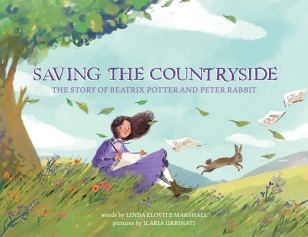
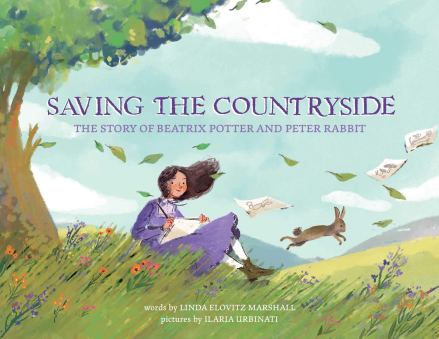
Saving the Countryside: The Story of Beatrix Potter and Peter Rabbit

Written by Linda Elovitz Marshall | Illustrated by Ilaria Urbinati


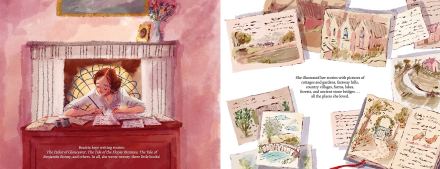
At home in London, young Beatrix Potter loved drawing and painting pictures of her pet rabbit, Benjamin Bouncer and other woodland creatures. Beatrix and her brother didn’t go to school but were taught at home under a strict daily timeline. “Then came summer and … freedom! During the summer, Beatrix’s whole household—pets included—moved to a country house where there were ducks, chickens, cows, and a garden.

celebrate-picture-books-picture-book-review-saving-the-countryside-summer

Image copyright Ilaria Urbinati, 2020, text copyright Linda Elovitz Marshall, 2020. Courtesy of little bee books.

When Beatrix’s brother grew a little older, however, he went away to a boarding school while Beatrix had to stay home. “But Beatrix wanted to do something important, something that mattered. She often helped her father with his hobby, photography.” She visited artists’ studios and museums. She learned about art and how to make her drawings better.

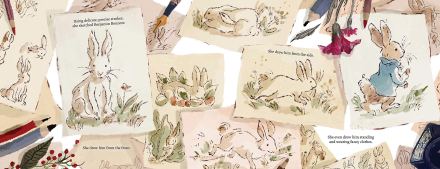
She made more pictures of Benjamin Bouncer and sent them to publishers. One publisher put her drawings on the front of greeting cards, and Beatrix began making money from her work. But Beatrix was also interested in the science of nature. She even wrote a paper about mushrooms and hoped to have it printed in a scientific journal, but it was rejected. Beatrix was disappointed but went back to drawing.

celebrate-picture-books-picture-book-review-saving-the-countryside-writing

Image copyright Ilaria Urbinati, 2020, text copyright Linda Elovitz Marshall, 2020. Courtesy of little bee books.

Then one day, to cheer up a sick child, Beatrix wrote and illustrated a story about Peter Rabbit. Later, she submitted it to publishers. When they told her they weren’t interested, she had books printed herself. She sold every copy—the second batch too. Finally, a publisher agreed to print her books. Beatrix went on to write more and more stories. At last she had fulfilled her dreams of creating something important. She was also an excellent marketer and self-promoter, and “soon people all over the world knew about Peter Rabbit, and they knew about Beatrix Potter too.”

celebrate-picture-books-picture-book-review-saving-the-countryside-toys

Image copyright Ilaria Urbinati, 2020, text copyright Linda Elovitz Marshall, 2020. Courtesy of little bee books.

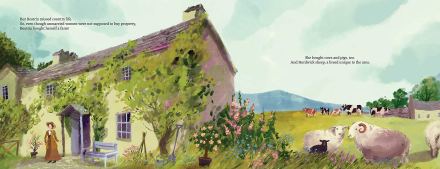
As Beatrix grew older, she couldn’t draw in the way she had, but that didn’t mean she left the countryside behind. She wanted to protect the farmland she loved. She helped farms and families, paying for needed veterinary care for animals when the farmers couldn’t afford it and for a nurse when the flu hit. Beatrix Potter’s life was made up of so many things that mattered. Not only did she give the world the beloved Peter Rabbit and his friends, but through donations of farms and acreage she “made sure the land would be cared for, protected, and cherished. Forever.”

An Author’s Note about how she came to write this book and more information on Beatrix Potter’s legacy follows the story.

celebrate-picture-books-picture-book-review-saving-the-countryside-farm

Image copyright Ilaria Urbinati, 2020, text copyright Linda Elovitz Marshall, 2020. Courtesy of little bee books.

Linda Elovitz Marshall’s delightful and surprising biography of Beatrix Potter delves into the depths of her desire to make a difference with her life. A woman far ahead of her time, Beatrix Potter remains an inspiration for each new generation of readers not only for her well-loved stories but for her community work and foresight. Marshall’s thorough and well-paced story will captivate today’s children, who have the same hopes as Beatrix to influence the world with their talents and opinions. Marshall’s descriptions of Beatrix’s later largesse swell the heart and readers’ admiration for this exceptional woman.

celebrate-picture-books-picture-book-review-saving-the-countryside-artwork

Image copyright Ilaria Urbinati, 2020, text copyright Linda Elovitz Marshall, 2020. Courtesy of little bee books.

Linda Marshall’s words are set among Ilaria Urbinati’s exquisite illustrations that take children inside Beatrix Potter’s world at home in London and out to the countryside she adored. Her delicate and detailed renderings of young Beatrix drawing with her pet Benjamin Bunny by her side, the farm where she spent summers, her scientific explorations, and her later successes immerse readers in the late 1800s to mid-1900s, allowing them to experience the environments that created one of the world’s most beloved authors. Urbinati’s glorious panoramas of the lake district farms that Beatrix saved are breathtaking and inspiring in their beauty.

For fans of Peter Rabbit and any lover of children’s literature, Saving the Countryside: The Story of Beatrix Potter and Peter Rabbit is a must. Stirring on so many levels, the book will inspire multiple readings as well as the discovery or rediscovery of Beatrix Potter’s tales. Perfect for home, school, and public library collections for story times and to enhance language arts lessons and even nature science studies.

Ages 4 – 8

little bee books, 2020 | ISBN 978-1499809602

Discover more about Linda Elovitz Marshall and her books on her website.

To learn more about Ilaria Urbinati, her books, and her art, visit her website.

Great Outdoors Month Activity

celebrate-picture-books-picture-book-review-garden-board-game-1

Grow a Vegetable Garden Board Game


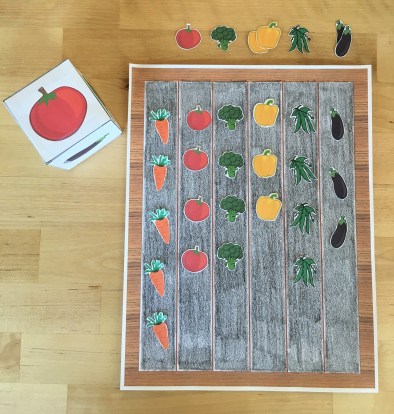
As all readers know, Peter Rabbit loved vegetable gardens. With this fun game you and your family can grow your own gardens inside! Roll the dice to see whose garden will fully ripen first!

Supplies

Directions

Object: The object of the game is for each player to fill their garden rows with vegetables. Depending on the ages of the players, the required winning number of rows to fill and the number of vegetables to “plant” in each row can be adjusted.

  1. Print one Game Board for each player
  2. Print one set of Playing Cards for each player (for sturdier playing items, print on card stock)
  3. Print one Vegetable Playing Die and assemble it (for a sturdier die, print on card stock)
  4. Cut the vegetables into their individual playing cards
  5. Color the “dirt” on the Garden Plot with the crayon (optional)
  6. Choose a player to go first
  7. The player rolls the die and then “plants” the facing vegetable in a row on the game board
  8. Play moves to the person on the right
  9. Players continue rolling the die and “planting” vegetables until each of the number of determined rows have been filled with the determined number of vegetables.
  10. The first person to “grow” all of their veggies wins!

celebrate-picture-books-picture-book-review-saving-the-countryside-cover

You can find Saving the Countryside: The Story of Beatrix Potter and Peter Rabbit at these booksellers

Amazon | Barnes & Noble | Books-a-Million

To support your local independent bookstore, order from 

Bookshop | IndieBound

Picture Book Review

June 22 – It’s National Insect Week

celebrate-picture-books-picture-book-review-moth-an-evolution-story-cover

About the Holiday

Insects are endlessly fascinating, and this week celebrates their diversity, purpose, and beauty. This week was established by the Royal Entomological Society to encourage people to learn more about insects, from those close to home to the exotic species around the world. This year the theme is Entomology at Home and people are invited to participate by learning about local species of insects and enjoying the resources on the National Insect Week website. There’s a photography contest, learning videos for all ages, access to Instar the Magazine for Young Entomologists, and so much more, including a mention of “the most bizarre use” of an insect ever imagined. To discover all of the resources and fun, visit the National Insect Week website.

I received a copy of Moth for review consideration. All opinions are my own.

Moth

Written by Isabel Thomas | Illustrated by Daniel Egnéus


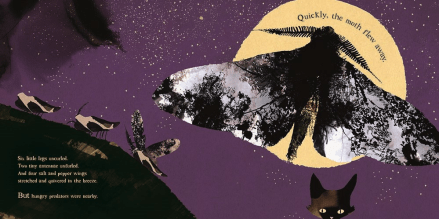
“This is a story of light and dark. Of change and adaptation, of survival and hope. It starts with a little moth.” Long ago a peppered moth wiggled out of its cocoon, unfurled its “salt and pepper” wings, its legs, and its antennae and took to the air to avoid predators. It met up with other peppered moths flitting and fluttering among the trees in the night sky. Most of these moths “had speckled, freckled wings,” but some had “wings as dark as charcoal.”

celebrate-picture-books-picture-book-review-moth-predators

Image copyright Daniel Egnéus, 2019, text copyright Isabel Thomas, 2019. Courtesy of Bloomsbury Children’s Books.

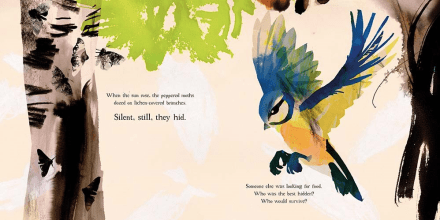
During the day, the peppered moths rested, flattening themselves against the speckled bark of the trees, camouflaged from birds and other animals. But the black-winged moths weren’t so lucky. Easy to spot against the light bark, they began to vanish as birds nipped them up for themselves and their chicks. As the speckled peppered moths had more and more babies, they also sported a mottled pattern.

celebrate-picture-books-picture-book-review-moth-bird

Image copyright Daniel Egnéus, 2019, text copyright Isabel Thomas, 2019. Courtesy of Bloomsbury Children’s Books.

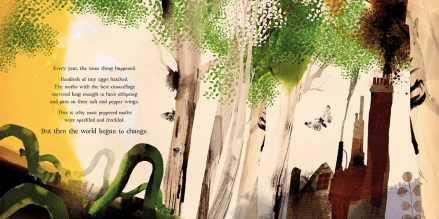
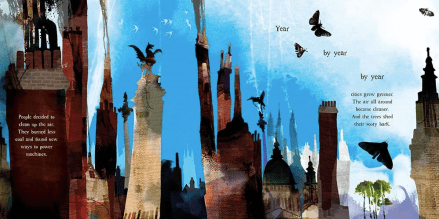
Over many years, the speckled moths became dominant while the dark-winged variety dwindled. But then, factories, trains, and other machines that burned coal were built. They spewed dark clouds of soot into the air. The soot settled everywhere, turning buildings and trees black. Now, the lighter-colored moths became the meals of birds and other predators, and the black-winged peppered moths had better camouflage. “Now they lived long enough to lay eggs of their own…and their wing color passed on to their offspring…and their offspring’s offspring.”

celebrate-picture-books-picture-book-review-moth-evolution

Image copyright Daniel Egnéus, 2019, text copyright Isabel Thomas, 2019. Courtesy of Bloomsbury Children’s Books.

After decades of pollution and adaptation, the peppered moth population was still strong, but now most of the moths were dark, while the lighter moths were rare. But then, people came together to clean up the pollution. Less coal was burned as new ways to fuel machines were found. In time, the air cleared, the sky was again blue and the clouds white. “The trees shed their sooty bark.” Modern life brought many changes to the landscape, providing places for both dark and speckled peppered moths to hide. Today, a mix of peppered moth can be found flittering and fluttering in the night sky, offering their “story…of survival…and hope.”

celebrate-picture-books-picture-book-review-moth-cleaner-air

Image copyright Daniel Egnéus, 2019, text copyright Isabel Thomas, 2019. Courtesy of Bloomsbury Children’s Books.

Isabel Thomas’s superlative nonfiction picture book masterfully combines lyricism with clear descriptions of the science of adaptation and natural selection to create a story that touches on natural history, human history, and the interactions of the two. Thomas’s conversational tone and direct address to the reader makes this a personal story and will captivate children sensitive to nature and the world around them. Her excellent pacing serves to show the passage of time involved in the evolutionary changes within the moth community. Thomas begins and ends her story with a note of hope that living things will adapt to today’s changing world. The underlying lesson may also encourage readers to find ways in which humans can adapt to promote the survival of all living things.

celebrate-picture-books-picture-book-review-moth-an-evolution-story-trains

Image copyright Daniel Egnéus, 2019, text copyright Isabel Thomas, 2019. Courtesy of Bloomsbury Children’s Books.

Exquisite mixed-media illustrations by Daniel Egnéus will immediately draw readers—both children and adults—into the nighttime forest where peppered moths take wing, silhouetted against the golden moon and the deep blues and purples of the midnight sky before finding a hiding place from hungry bats and birds. The story’s theme of light and dark in its variations is powerfully presented. In the early pages, images are set against bright, open backgrounds; foliage is vibrant green; and birds dazzle with color. As a bird brings a charcoal-winged moth back to her nest while speckled moths hide, children can easily see natural selection at work.

As the Industrial Revolution alters the skyline and the quality of the air, the images become denser and the hues of the sky, trees, and birds muted. For children who have not grown up with the air pollution of the past—even the near past—double spreads of smog-churning factories and trains will make a strong impression. The introduction of a child at the beginning and end of the story reminds readers of two things: that we owe it to our children to treat the world with kindness and that our children are the hope this story builds on.

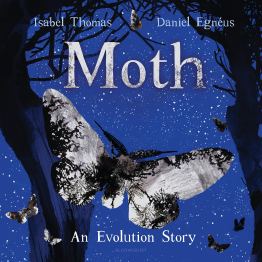
Special mention must be made of the magnificent and poignant illustrations of the speckled peppered moths. Looking closely at their outstretched wings, you will see nature—trees, water, dappled sunlight—reflected in them. The stunning cover—with its foil-embossed lettering, stars, and moth—reflects the importance of each reader to our world: touch or look into the shining silver and you will find yourself mirrored there.

A beautiful book to enhance nature and science studies and help children develop an understanding of the impact of change, Moth is a must for school, public library, and home collections.

Ages 6 – 10

Bloomsbury Children’s Books, 2019 | ISBN 978-1547600205

Discover more about Isabel Thomas and her books on her website.

To learn more about Daniel Egnéus and his work, visit his website.

Take a look inside Moth with this beautiful book trailer.

National Insect Week Activity

celebrate-picture-books-picture-book-review-tree-branch-with-white-cocoons

Beautiful Moths Game


Moths go through many stages of metamorphosis—from egg to caterpillar to cocoon— before they finally emerge as a moth. In this game, help six moths emerge from their cocoons to win!

Supplies

celebrate-picture-books-picture-book-review-moth-cards

Directions

  1. Print a Tree Branch Game Board and set of Moth Cards for each player
  2. Print one Moth Playing Die
  3. Choose a player to go first
  4. The first player rolls the die and places the matching moth card on one of the cocoons on the Tree Branch Game Board
  5. Play then moves to the player on the left
  6. Players continue to roll the die and place moths on each cocoon
  7. If a player rolls a moth that they already have placed on their game board, they pass the die to the next player and wait for their next turn.
  8. The player who fills their Tree Branch with moths first is the winner

celebrate-picture-books-picture-book-review-moth-an-evolution-story-cover

You can find Moth at these booksellers

Amazon | Barnes & Noble | Books-a-Million
To support your local independent bookstore, order from

Bookshop | IndieBound

Picture Book Review


June 21 – International Day of Yoga

celebrate-picture-books-picture-book-review-yoga-baby-cover

About the Holiday

The idea for an International Day of Yoga came from India’s Prime Minister Narendra Modi in 2014 during a speech to the United Nations General Assembly. The proposal was met with enthusiastic support, and June 21—the Summer Solstice—was chosen as the official date. On the first International Day of Yoga in 2015, nearly 36,000 people from around the world, including world leaders, gathered in New Delhi and performed twenty-one asanas for thirty-five minutes. Since then the day has been celebrated across the globe. In 2018 more than 100,000 people participated. This year, in response to the COVID-19 pandemic, the theme of the holiday is “Yoga for Health – Yoga at Home.” With its emphasis on connecting the mind, body, and spirit, yoga provides an excellent way to exercise while relieving the stress of the day – something we can all use this year. To watch or participate in this year’s virtual event, visit the United Nation’s International Day of Yoga page.

Yoga Baby

Written by Amanda Flinn | Illustrated by Shane Crampton


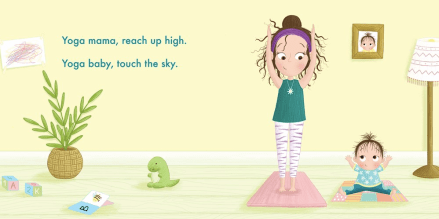
Mom, sporting a pretty wild bedhead hairdo, wakes her baby, whose own rakish ‘do is topped with a small fountain tuft. In the living room, Mama, rolls out her yoga mat as a water bottle sits nearby. Her baby, sitting on her own blanket and ready with a sippy cup, claps her hands eagerly. The baby watches her mom and from her sitting position follows along as best she can: “Yoga mama, reach up high. / Yoga baby, touch the sky.”

When Yoga mama poses in Steady Tree, Baby gets up “on one knee.” For this enthusiastic baby, though, her mom’s yoga routine turns into a time for play, tickles, and giggles. After a hair yank during Mama’s push up plank and a bit of tumbling during her downward dog, however, Baby finishes up strong: “Yoga mama, shoulder stand. / Yoga baby, feet in hand.” Cool down is as sweet it gets as Baby’s eyes grow tired and she and Mom enjoy a snuggly nap.

An Author’s Note giving simple tips for practicing yoga with little ones follows the story.

celebrate-picture-books-picture-book-review-yoga-baby-reach

Image copyright Shane Crampton, 2020, text copyright Amanda Flinn, 2020. Courtesy of Beaming Books.

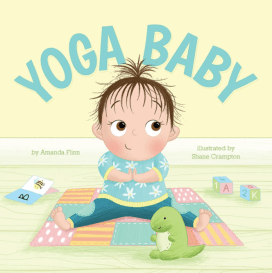
Moms, dads, and kids—whether they do yoga or not (yet!)—will fall in love with this awe-dorable, pitch-perfect board book. In her charming rhyming couplets, Amanda Flinn captures the “me too!” baby-and-mom dynamic that makes doing activities with little ones so fun and educational. The baby’s attempts to copy her mama’s poses are clever and will have kids and adults laughing—and trying them—together. The cuddly ending will make this book a favorite for loving story times, nap times, bedtimes, or anytime.

Happiness shines from every page in Shane Crampton’s bright illustrations that reflect the enthusiasm and love between Mom and child through their shared gazes, eager smiles, and breaks in the routine for playtime. Crampton clearly depicts Mom’s yoga poses and her baby’s interpretations of them, adding to the humor. Small, homey details, like toys, a guitar, a laundry basket, and proudly displayed drawings by Baby, create a realistic home environment that gives adults and kids more familiar items to name and talk about. Little readers will also giggle at the family cat, who stretches and rolls and wants to join in the fun too.

Sure to be an often-asked-for read, moms, dads, caregivers, and especially kids will want Yoga Baby on their home bookshelves. It also makes an enchanting and mindful read for daycare, preschool, classroom, and public libraries. 

Ages Birth – 5

Beaming Books, 2020 | ISBN 978-1506456997

Discover more about Amanda Flinn and her books on her website.

To learn more about Shane Crampton, her books, and her art, visit her website.

International Day of Yoga Activity

celebrate-picture-books-picture-book-review-yoga-coloring-page-w-waterfall

Yoga Alphabet Coloring Pages


It’s fun to match yoga poses with letters of the alphabet! Grab your crayons and enjoy these yoga-inspired coloring pages then do the poses!

D is for Dog | I is for Inhale | K is for Kite | O is for Otter | W is for Waterfall

celebrate-picture-books-picture-book-review-yoga-baby-cover

You can find Yoga Baby at these booksellers

Amazon | Barnes & Noble | Books-a-Million

To support your local independent bookstore, order from

Bookshop | IndieBound

Picture Book Review

June 19 – Juneteenth

celebrate-picture-books-picture-book-review-juneteenth-for-maize-cover

About the Holiday

This week Juneteenth became America’s eleventh federal holiday when President Joe Biden signed the Juneteenth National Independence Day Act into law on June 17. Juneteenth commemorates the end of slavery and celebrates the historical date of June 19, 1865, when Union army general Gordon Granger came to Galveston, Texas to read “General Order #3,” which proclaimed the emancipation of all those held as slaves in Texas. On the one-year anniversary of the proclamation, freedmen in Texas organized the first Jubilee Day, which became an annual event. Celebrations later spread across the south and then nationwide. The day includes parades, festivals, music, readings by prominent African-American writers, educational events and barbecues, complete with refreshing strawberry soda.

Juneteenth for Mazie

By Floyd Cooper

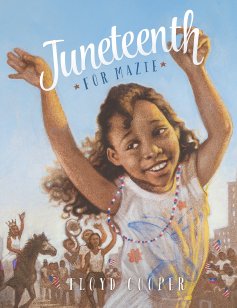
As nighttime falls, Mazie would like to go outside to play, but she’s told it’s too late. Later, she’d like a cookie, but when she asks the answer is “‘Not now, little one. It’s too close to bedtime.’” And when she wants to stay up late, she’s reminded of the bedtime rule. Mazie’s dad notices that she’s feeling a little grumpy and asks why. “‘I can’t go where I want, have what I want, or do what I want,’” Mazie says. To cheer her up, Mazie’s dad tells her that tomorrow she can celebrate.

celebrate-picture-books-picture-book-review-juneteenth-for-maize-dad

Copyright Floyd Cooper, 2016, courtesy of Picture Window Books.

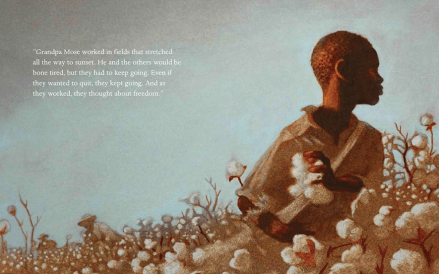
Mazie’s dad lifts her into a big hug and tells her that tomorrow they will celebrate the day when her “great-great-great grandpa Mose crossed into liberty.’” He tells Mazie about Grandpa Mose’s life as a slave working in the cotton fields from sunup to sundown, all the while thinking about freedom. Before they slept, they prayed and planned for a better future. And, finally, it came.

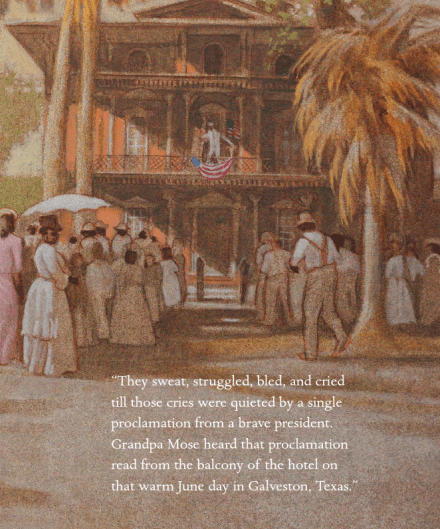
On June 19, 1865 in Galveston, Texas, Grandpa Mose heard President Abraham Lincoln’s proclamation that the Civil War was over and that slavery was abolished. Cheers rang out from the crowd gathered there. Then “‘the cheers became dancing. The dancing became celebrating. It went on and on into the night.’”

celebrate-picture-books-picture-book-review-juneteenth-for-maize-grandpa-mose

Copyright Floyd Cooper, 2016, courtesy of Picture Window Books.

Now when Grandpa Mose worked, he was paid for his labor. He saved and made that better future he had long prayed and prepared for. Life for Black people continued to be hard as they struggled for equality, lobbying for jobs, schools, voting rights, opportunity. “‘But they never gave up.’” Mazie’s Dad tells his daughter, “‘and every year on Juneteenth, they celebrated and remembered.’”

Black people moved forward, with higher education, talent, and perseverance woven with forgiveness. They became heroes and leaders—even the President of the United States. Now, Mazie’s dad says, it’s her time to celebrate where she’s come from and where she’s going.

A short note about the history of Juneteenth follows the story.

celebrate-picture-books-picture-book-review-juneteenth-for-mazie-galveston

Copyright Floyd Cooper, 2016, courtesy of Picture Window Books.

Floyd Cooper’s beautiful and soft-hued paintings accompany his straightforward storytelling with emotional resonance as Mazie snuggles close to her father in a big chair and listens as he tells her about her great-great-great grandpa Mose, who was among the first slaves to be emancipated on June 19th in 1865. Cooper focuses on the perseverance, faith, and optimism that filled the hearts of Mazie’s ancestors and the generations of Black families who followed. His paintings span the more-than-150 years since Lincoln’s proclamation, with powerful depictions of newly freed men and women standing proudly in their best clothes as if posing for a photograph; the types of jobs Black men were able to get in the mid 1900s; a freedom march of the 1960s; and another grandfather passing down the stories to a younger generation gathered at his feet.

Cooper’s image of a Black woman raising her hand in university classroom of all-white students and his simple mention of those who have become leaders—with an illustration of Barack Obama taking the presidential oath of office, provide opportunities for further discussion and research. Mazie’s father’s exhortation for his daughter to celebrate now is paired with images of today’s kids laughing and smiling while they enjoy a cookout, cheer, dance, and parade, while always holding their past close to their hearts.

A gorgeous book to celebrate not only Juneteenth but the accomplishments and history of Black Americans, Juneteenth for Mazie is highly recommended for all readers and should be included in school and public library collections.

Ages 6 – 9

Picture Window Books, 2016 | ISBN 978-1479558209

To learn more about Floyd Cooper, his books, and his art, visit his website.

Juneteenth Activity

celebrate-picture-books-picture-book-review-celebrate-juneteenth-word-search

Celebrate Juneteenth Word Search

Can you find the fifteen words related to Juneteenth in this printable puzzle?

Celebrate Juneteenth Word Search Puzzle | Celebrate Juneteenth Word Search Solution

celebrate-picture-books-picture-book-review-juneteenth-for-maize-cover

You can find Juneteenth for Mazie at these booksellers

Amazon | Books-a-Million

To support your local independent bookstore, visit

Bookshop | IndieBound

June 18 – National Splurge Day

celebrate-picture-books-picture-book-review-you-dont-want-a-dragon-cover

About the Holiday

Today’s holiday was instituted in 1994 by Adrienne Sioux Koopersmith, a self-proclaimed “eventologist” who has created more than 1,900 of these quirky holidays we celebrate, as a way to encourage people to spend a little extra and help the economy. While this year splurging monetarily may not be possible, there are lots of other ways to enjoy an extra treat or experience a larger-than-life moment. And if your child’s wishes run to wild, mythical pets, then today is the day to indulge them—with today’s book, of course!

By Jakki Licare

You Don’t Want a Dragon!

Written by Ame Dyckman | Illustrated by Liz Climo


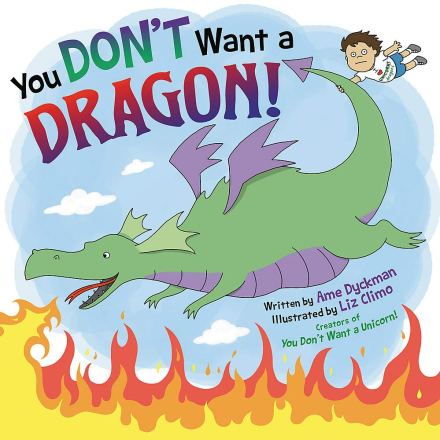
“NOW you’ve done it! I TOLD YOU not to wish for a dragon!” warns the narrator to the little boy who has just wished for a pet dragon at a fountain. The little boy can’t imagine anything better, but the narrator chides him. Doesn’t he remember what happened when he wished for unicorns last time?

celebrate-picture-books-picture-book-review-you-dont-want-a-dragon-awesome

Image copyright Liz Climo, 2020, text copyright Ame Dyckman, 2020. Courtesy of Little Brown Books for Young Readers.

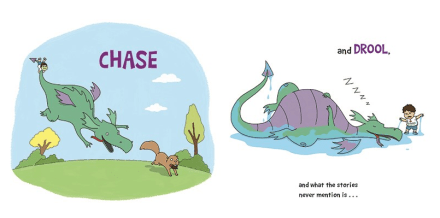
The unicorn had been destructive and even held a crazy unicorn party. Plus, the unicorn left a lot of smelly cupcake surprises around the house. The narrator continues to warn him, but the boy is having too much fun flying on his dragon. The narrator concedes that it might be fun at first, but cautions him that it won’t be worth it in the end because dragons love to chase things and never stop drooling!

The dragon smiles sneakily next to a lit grill holding a roll of toilet paper while the narrator informs us “and what the stories never mention is . . .WHERE charcoal comes from. Don’t mention this at your next barbecue. Trust me.” The little boy works endlessly to keep the dragon under control and to clean up after it. The narrator tells the boy he’s doing a good job, but he’s in for some big trouble. Dragons grow and grow and grow and  become enormous! 

celebrate-picture-books-picture-book-review-you-dont-want-a-dragon-chase

Image copyright Liz Climo, 2020, text copyright Ame Dyckman, 2020. Courtesy of Little Brown Books for Young Readers.

“You just don’t have the space for a dragon. In your heart, yes. But in your house . . . no.” The narrator advises the little boy to go back to the water fountain and wish the dragon away. The boy does as he’s told with a bit of regret. As he’s returning home, he discovers a Pet Adoption Day event going on and finds an adorable hamster. The narrator and the boy both agree that the hamster will be the perfect pet.

The little boy brings his hamster home and places him into a cage. He’s cleaning up the mess left from the dragon and unicorns, when the narrator points out that the lid isn’t on the cage! The hamster escapes and comes across a smelly cupcake surprise left by the unicorn. The narrator warns the hamster not to eat it, but it is too late. The hamster turns into a large unicorn-hamster and wishes for a unicorn-hamster party! 

celebrate-picture-books-picture-book-review-you-dont-want-a-dragon-wagging

Image copyright Liz Climo, 2020, text copyright Ame Dyckman, 2020. Courtesy of Little Brown Books for Young Readers.

In this laugh-out-loud sequel, Ame Dyckman’s narrator is trying once again to convince our young protagonist to wish away another mythical pet. Dyckman does recap the first book, but I do recommend that readers check out You Don’t Want a Unicorn first so you can really enjoy the jokes.  Dyckman’s conversational style of narration brings the story to a new level of hilarity. The narrator not only admits that flying a dragon is fun, but dramatically concedes “FINE! It’s AWESOME, too, okay?!”  If your young readers are like my children they will appreciate the potty humor that the ending joke is hinged around. Yep, the cupcakes in this book are not for eating! The best part about the book, however, is the nice message of the importance of adopting animals. Dyckman’s main character has finally realized that while unicorns and dragons may be amazing creatures, they are not ideal pets. There are many animals needing homes who are tamable and loveable!

Liz Climo’s soft-colored illustrations of the boy’s adventures really highlight the fun. When Climo’s characters’ reactions are paired with Dyckman’s on-point narrations, the result is a hilarious adventure. The boy’s surprised expression at the charcoal on the barbecue and the dragon’s sneaky smile while holding the toilet paper will ensure giggles from readers of all ages. Climo is a champion at using the white space to the story’s advantage. The white space surrounding the dragon’s drool, for example, emphasizes the fact the boy is physically stuck in the drool! When the dragon grows to an enormous size, Climo cleverly uses the entire page to show that even the book can barely contain this dragon. 

A fun adventure that both kids and adults will enjoy reading over and over, You Don’t Want a Dragon! is a great choice for enchanted or mythical story times as well as for placing on a non-magical bookshelf.

Ages 4 – 8 

Little Brown Books for Young Readers, 2020 | ISBN 978-0316535809

Discover more about Ame Dyckman and her books on her website.

To learn more about Liz Climo, her books, and her art, visit her website.

National Splurge Day Activity

celebrate-picture-books-picture-book-review-fiery-dragon-craft

Fiery Dragon Craft

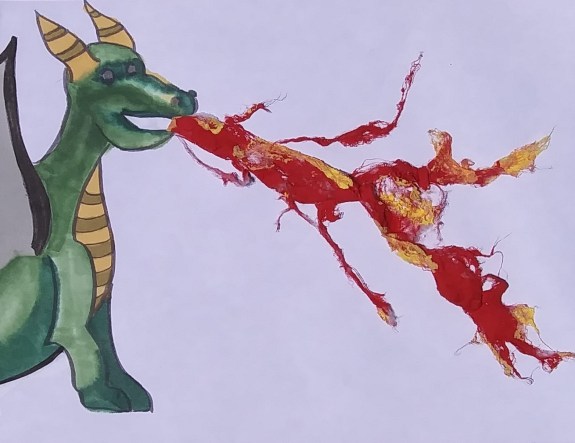
Watch out this project is hot! Create realistic looking fire to add to your own personalized dragon with the printable template and some simple supplies!

Supplies

  • Printable Dragon Coloring Sheet
  • Markers/colored pencils/ crayons
  • Cotton Balls
  • Red and Yellow Paint (I used craft acrylic paint)
  • Paintbrush
  • Glue

Directions

  1. Take your cotton balls and pull them apart. 

  2. Paint your stringy cotton balls red. The cotton ball will stick to your paint brush if you use strokes so use a dabbing a motion.  Younger children will need an adult to hold the cotton balls down.

  3. Let the red paint dry and then add in some yellow. Dont forget to dab. Let them dry

  4. Print out and color in your dragon

  5. When your paint is dried, glue down the stringy cotton balls so it is coming out of the dragon’s mouth.

celebrate-picture-books-picture-book-review-you-dont-want-a-dragon-cover

You can find You Don’t Want a Dragon! at these booksellers

Amazon | Barnes & Noble | Books-a-Million
To support your local independent bookstore, order from

Bookshop | IndieBound

Picture Book Review