October 7 – It’s Hispanic Heritage Month

celebrate-picture-books-picture-book-review-feliz-new-year-ava-gabriela-cover

About the Holiday

Beginning on September 15th  and running through October 15th, National Hispanic Heritage Month celebrates the contributions of those who come from or whose ancestors immigrated from Spain, Mexico, the Caribbean, Central America, and South America. Each year the holiday adopts a particular theme. This year’s theme is Hispanics: Be Proud of Your Past, Embrace the Future. From business and industry to culture, sports, and entertainment, Hispanic Americans have made an important and indelible imprint on our country. First observed in 1968 as a week-long holiday, the holiday was expanded to a month in 1988 under President Ronald Reagan. learn more about the holiday, find resources for classrooms and homeschooling, videos, and more to use not only this month but throughout the year, visit the official Hispanic Heritage Month website.

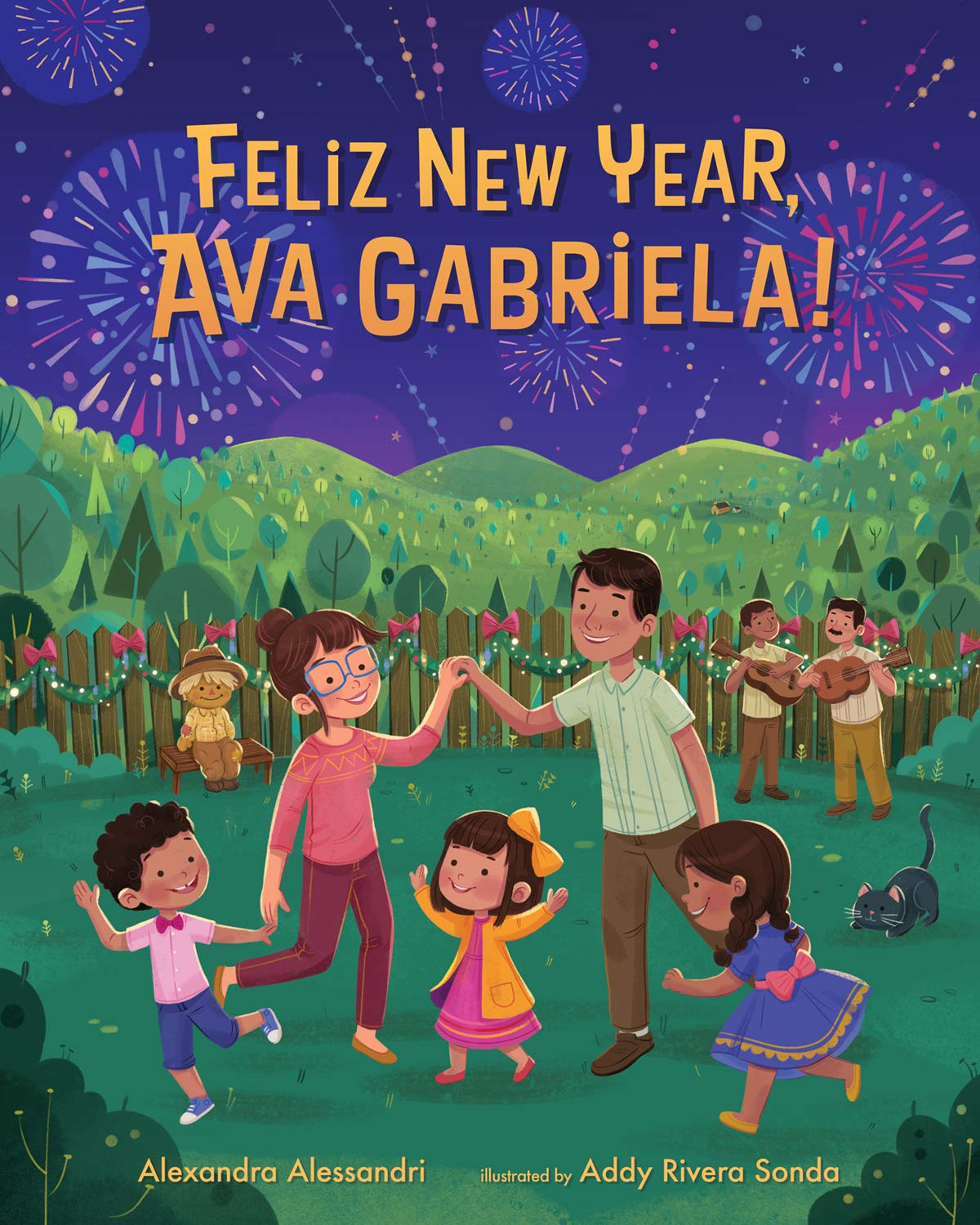
Feliz New Year, Ava Gabriela!

Written by Alexandra Alessandri | Illustrated by Addy Rivera Sonda


Ava Gabriela and her mamá and papa were visiting her grandmother’s farm for the New Years holiday. Her aunts, uncles and cousins were there too, but she had never met her tías and tíos or primas and primos before, and they “didn’t feel like familia yet.” When her mother prompted her to say hola, Ava Gabriela nervously opened her mouth, but no words came out. And when Abuelita asked if a mouse had nibbled her tongue, Ava hid behind Mamá. But then Tía Nena approached with her hand extended and asked, “‘Want to help us make buñuelos?’ Ava hesitated. But the fried cheesy fritters were her favorite.” Ava took Tía Nena’s hand and went into the kitchen.

celebrate-picture-books-picture-book-review-feliz-new-year-ava-gabriela-abuelita

Image copyright Addy Rivera Sondo, 2020, text copyright Alexandra Alessandri, 2020. Courtesy of Albert Whitman & Company.

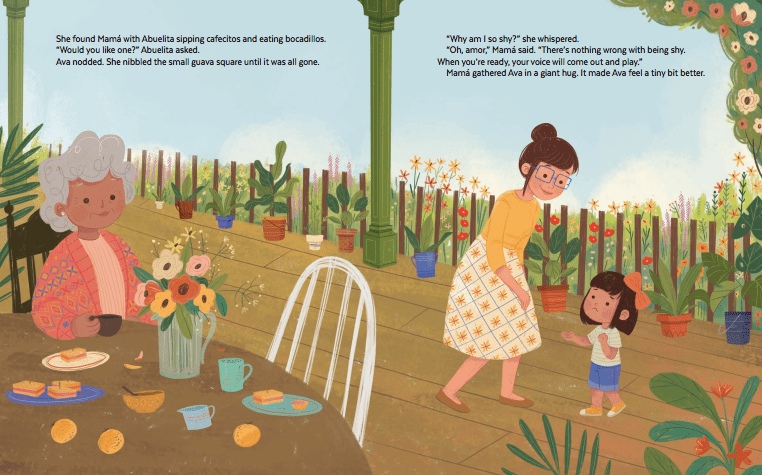
There she found her cousins Sarita and Javier. Together they made the dough. As Tía Nena rolled it out, Sarita and Javier laughed and talked, but Ava watched silently. Even when Tía Nena sprinkled flour in her hair, Ava couldn’t call for a food fight like she wanted to but only giggled. After the buñuelos were finished, Ava’s cousins ran outside. Ava wanted to call after them to wait, “but her voice hid like a mouse in its hole” so Ava explored the farm by herself. When she found her mamá talking with Abuelita, she quietly asked her why she was so shy. Mamá reassured her that when she was ready, her voice would “come out and play.” After a hug, Ava felt a little better.

In another part of the house, Ava found her primo Pedro blowing up balloons for “el Año Viejo,” the balloon doll they would pop when the old year turned into a new year. When Pedro asked if she’d like to help, her words stuck in her throat again, but Pedro invited her to build the Año Viejo while he blew up balloons. When the doll’s clothes were all stuffed, Pedro handed Ava the marker to add the face. In her heart she was saying thank you, and then she realized that “she could say thank you. ‘Gracias,’” she said. “The word was whispery soft but tasted sweet like dulce de leche.”

celebrate-picture-books-picture-book-review-feliz-new-year-ava-gabriela-kitchen

Image copyright Addy Rivera Sondo, 2020, text copyright Alexandra Alessandri, 2020. Courtesy of Albert Whitman & Company.

The next morning, when Ava saw Mamá and Abuelita filling cups with twelve grapes that would bring good luck in the new year, Ava “plucked one and said a silent wish: Please let me not be shy today.” Then she ran outside. This time when her tía and Pedro talked to her, she answered back, but when Tío Mario called out, her voice disappeared again. Soon it was time to change for the celebration. Outside, lanterns twinkled and the table was spread with delicious food. While everyone else talked and played, Ava sat next to the Año Viejo. “Don’t you want to play? It seemed to ask.”
celebrate-picture-books-picture-book-review-feliz-new-year-ava-gabriela-mamá

Image copyright Addy Rivera Sondo, 2020, text copyright Alexandra Alessandri, 2020. Courtesy of Albert Whitman & Company.

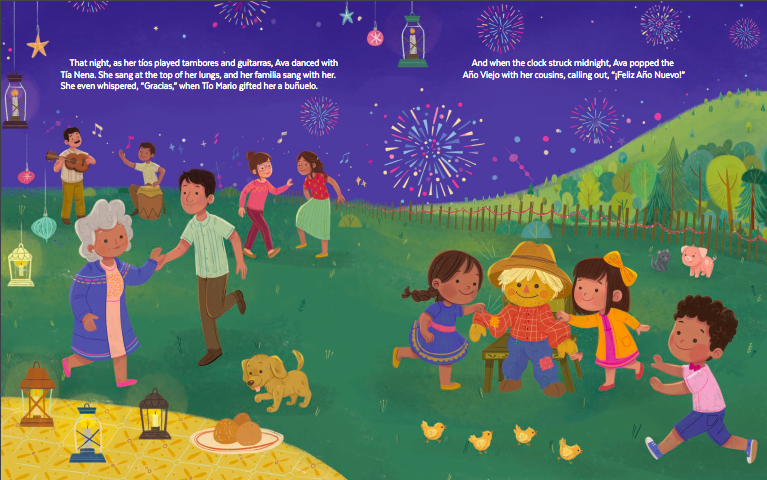
Just then fireworks burst across the sky. Ava ran out into the yard. Her cousins came out too and asked if she’d like to play tag. Once again she knew she could and would say yes. “With her heart galloping, Ava blurted, ‘Sí.’ Her cousins cheered.” As she ran off with her primos, Ava felt feliz. When midnight came, Ava helped pop the Ańo Viejo and joined in as they all called out “‘¡Feliz Año Nuevo!’”

In an Author’s Note, Alexandra Alessandri reveals more about the Christmas season, which is celebrated from December 7 through January 6, in her native Columbia and across Latin America and the Caribbean. She describes the food, music, traditions, and superstitions associated with New Year’s Eve and talks about the significance of the Año Viejo. A glossary of words and phrases used in the story is also provided in the back matter.
celebrate-picture-books-picture-book-review-feliz-new-year-ava-gabriela-new-years-eve

Image copyright Addy Rivera Sondo, 2020, text copyright Alexandra Alessandri, 2020. Courtesy of Albert Whitman & Company.

Alexandra Alessandri’s lovely story organically combines Spanish and English to create a smoothly flowing story that brings to life the Columbian traditions of New Years and el Año Viejo while acknowledging how big gatherings of family and friends can be intimidating for some children. Through beautiful, lyrical language that incorporates imagery from Spanish idioms, food, animals, and musical instruments, Alessandri portrays a realistic picture of the emotions shyness can cause in children – and adults. Readers will be charmed by sweet and thoughtful Ava Gabriela and empathize with her feelings as she has small successes as well as setbacks on her way to feeling comfortable and finding her voice with her family. Hesitant and shy children will recognize themselves in Ava and welcome Alessandri’s sensitive depiction of her inner conflict. The understanding Ava’s mamá gives her is full of heartfelt love and models the kind of support that helps shy children thrive.

Addy Rivera Sonda’s fresh, cheerful illustrations will captivate readers with details that paint an enchanting portrait of this loving family and Abuelita’s tidy farmhouse from the opening scene, in which Ava’s family is welcomed home, to the tiled accents, chickens in the yard, and preparations for the New Year’s celebration. Sonda does an excellent job of portraying Ava’s fluctuating emotions—giggling at silly things but then too hesitant to say the words on the tip of her tongue and wandering the farm alone when she’d like to be playing with her cousins. Children who celebrate el Año Viejo will be excited to see their fun and meaningful tradition depicted here and kids who are not familiar with it will be intrigued to learn more. As Ava’s family gets ready for New Year’s Eve, children will also enjoy seeing other parts of the celebration that are aimed at bringing good luck for the next year.

A beautiful and superbly composed book rich in Columbian and Latin American culture that can also ease discussions about shyness, Feliz New Year, Ava Gabriela! will be a favorite on home bookshelves for all kids. The book would also spark fun and educational cross-curricular activities, making it a must for school and public library collections.

Ages 4 – 8

Albert Whitman & Company, 2020 | ISBN 978-0807504505

Discover more about Alexandra Alessandri and her books on her website.

To learn more about Addy Rivera Sonda and view a portfolio of her work, visit her website.

Hispanic Heritage Month Activity

celebrate-picture-books-picture-book-review-we-are-all-family-word-search

We Are All Family English/Spanish Word Search


Find the names of family members in both English and Spanish in this printable heart- shaped word search puzzle.

We Are All Family Word Search PuzzleWe Are All Family Word Search Solution!

celebrate-picture-books-picture-book-review-feliz-new-year-ava-gabriela-cover

You can find Feliz New Year, Ava Gabriela! at these booksellers

Amazon | Barnes & Noble | Books-a-Million

To support your local independent bookstore, order from

Bookshop | IndieBound

Picture Book Review


October 6 – National Coaches Day

celebrate-picture-books-picture-book-review-kid-coach-cover

About the Holiday

Today’s holiday was established in 1972 by President Richard Nixon to honor the men and women who inspire us to work harder and do our best in many of life’s pursuits. Coaches help us develop a good work ethic, learn how to work as a team, and learn how to focus and achieve goals. Sometimes our most influential coaches can be surprising—as you’ll see in today’s book.

Thanks to Page Street Kids for sending me a copy of Kid Coach for review consideration. All opinions about the book are my own.

Kid Coach

By Rob Justus


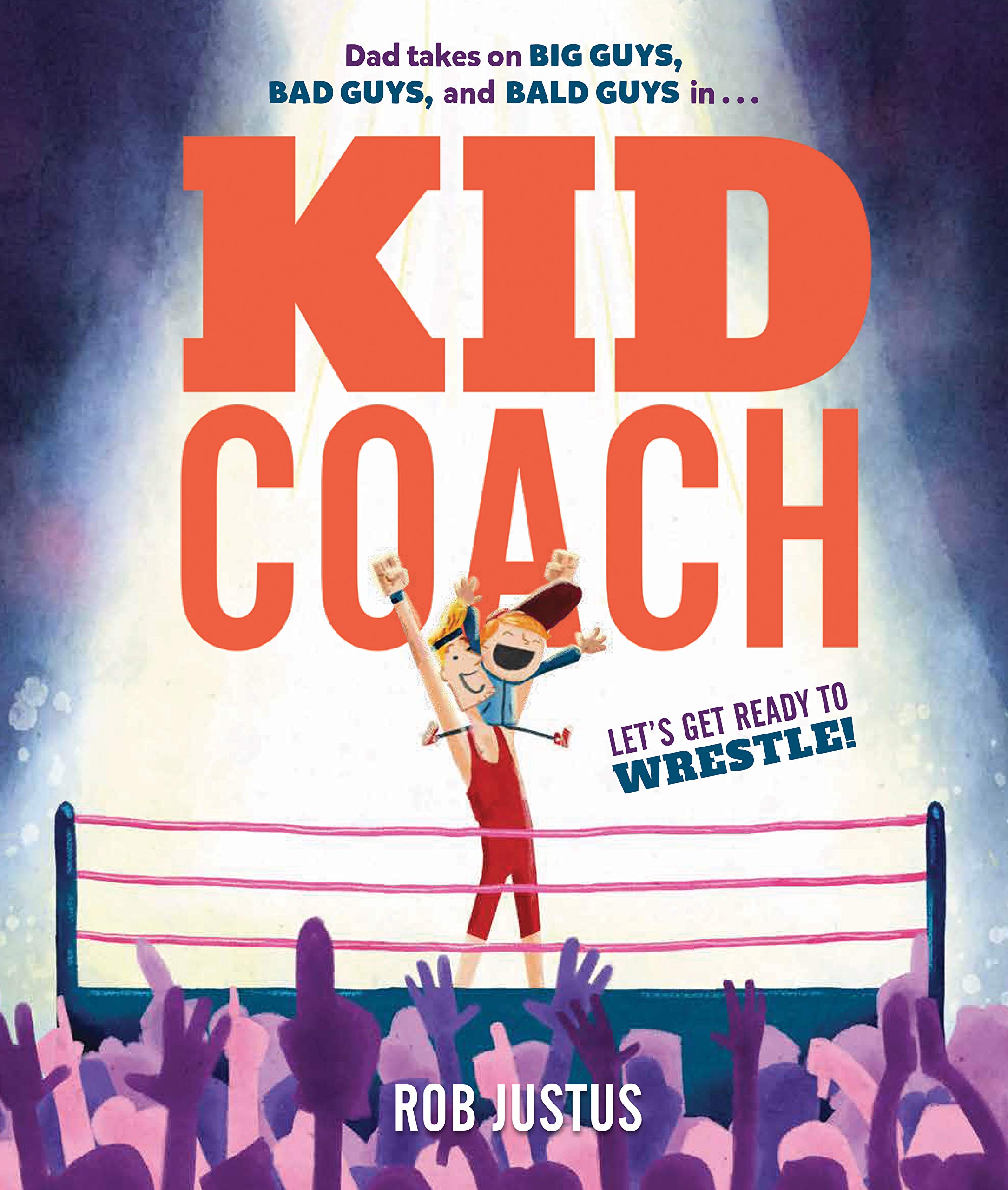
Kid Coach knew a challenge when he saw it. And he saw a couch-potato sized challenge lying in his own living room with soda in one hand and a computer, a tablet, and a phone all streaming a different wrestling match in the other. And…yeah…there was a bowl of peanuts there too. Was Kid Coach up to the task of turning this marshmallow into a champion? He thought yes and dragged his dad away from all the distractions.

celebrate-picture-books-picture-book-review-kid-coach-challenges

Copyright Rob Justus, 2020, courtesy of Page Street Kids.

Kid Coach started his dad’s strength training with simple push-ups and an itty-bitty bar bell. But soon those “small wins” led to “bigger challenges and major wins” until Kid Coach and Dad were ready to “wrangle big guys, bad guys, bald guys, (and a scary guy with tattoos of big, bad, bald guys!) in the grandest arena of them all”—the “Wrestle-Rumble Mania Kingdom Tournament of Champions.”

celebrate-picture-books-picture-book-review-kid-coach-wrestling

Copyright Rob Justus, 2020, courtesy of Page Street Kids.

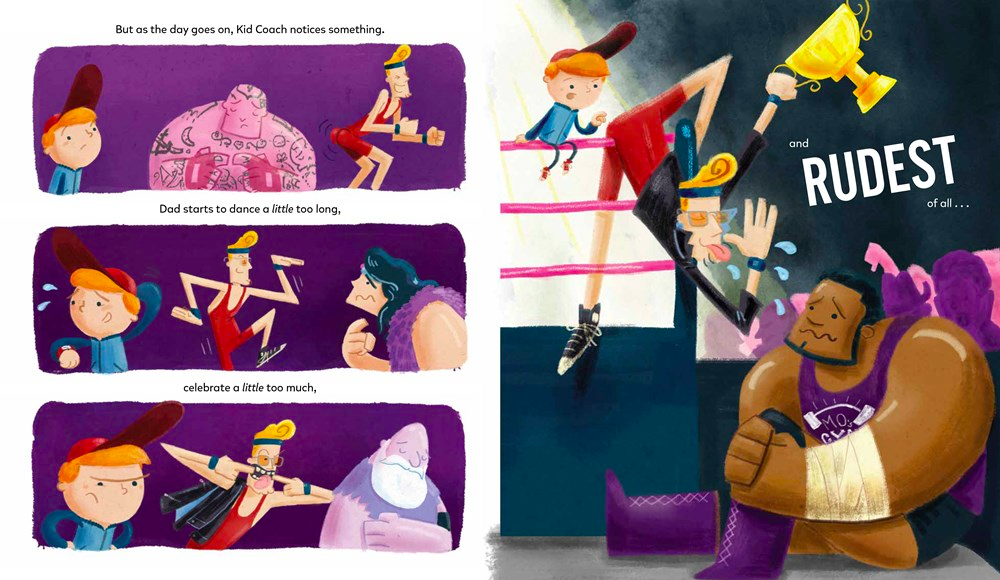
At the match the competition is fierce, but Dad “snaps into action” and soon those big, bad, and bald guys in their fancy costumes are being flipped, chopped, and tied into knots. Kid Coach cheers him on, whistling and clapping, until he begins to notice something. “Dad starts to dance a little too long, celebrate a little too much, and rudest of all…he won’t even shake hands! Instead of making friends, Dad’s leaving the other wrestlers sad and mad.

celebrate-picture-books-picture-book-review-kid-coach-celebrating

Copyright Rob Justus, 2020, courtesy of Page Street Kids.

That’s when Kid Coach does some soul-searching and realizes he didn’t teach his dad everything about being a true champion. A real champion, he knows, is a leader, someone who inspires others, and “most of all, they make everyone feel like a winner.” By now, Dad was feeling kind of bad himself for being so insensitive. Kid Coach gave him a hug, and the two of them tried to make amends. But the other wrestlers didn’t want flowers, and they weren’t interested in high-fives. So, Dad dug deep and came up with…a “sincere apology” and…a jumbo bag of chips! Now all those frowns have turned into smiles and everyone’s having a blast in the ring.

celebrate-picture-books-picture-book-review-kid-coach-chips

Copyright Rob Justus, 2020, courtesy of Page Street Kids.

Rob Justus reminds children about good sportsmanship and the qualities that make for a true champion in his visually exhilarating story. Kids will be all in with the couch-potato twist in which a child physically drags his dad—who holds on for dear life—from his leisurely pursuits.

Images of this noodle-thin dad in his flashy robe going up against some real heavyweights will have kids giggling, and his over-the-top celebrations will elicit plenty of laughs. But Justus doesn’t let this behavior go without showing its effects on the other wrestlers—and ultimately on Dad too. As Kid Coach and his dad try to mend fences with the other competitors, kids will see that gifts and token gestures aren’t as meaningful as a straightforward apology. The loving relationship between the boy and his dad is a highlight of the story, and will have readers—kids and adults—engaging in some rough-and-tumble play and plenty of snuggles.

For rambunctious story times with an inspirational life lesson, Kid Coach will be an often-asked-for addition to home, school, and public library collections.

Ages 4 – 8

Page Street Kids, 2020 | ISBN 978-1624148866

To learn more about Rob Justus and see a portfolio of his work, visit his website.

National Coaches Day Activity

celebrate-picture-books-picture-book-review-best-father-trophy-coloring-page

Best Dad Coloring Page


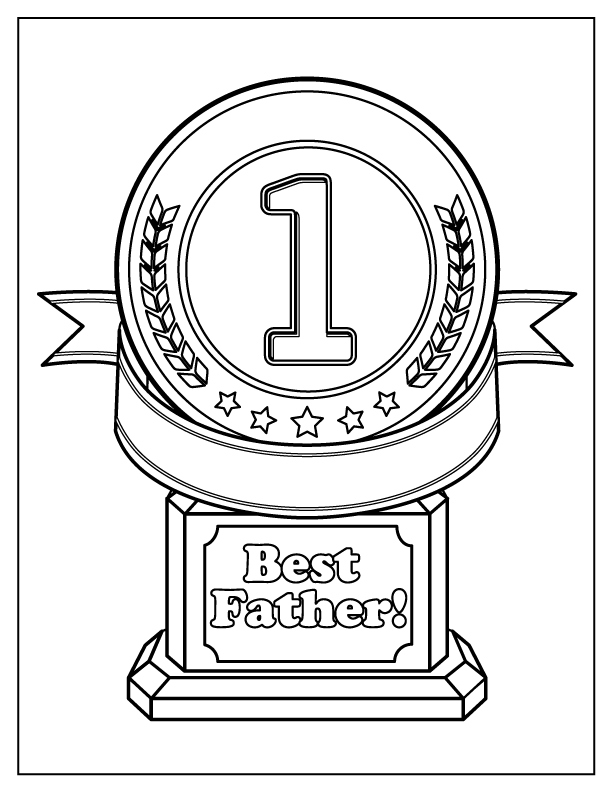
Good coaches win lots of trophies, and there’s no better coach than Dad! Let your dad know what a great coach he is with this printable coloring page!

Best Dad Coloring Page

celebrate-picture-books-picture-book-review-kid-coach-cover

You can find Kid Coach at these booksellers

Amazon | Barnes & Noble | Books-a-Million

To support your local independent bookstore, order from

Bookshop | IndieBound

Picture Book Review

October 5 – It’s Positive Attitude Month

celebrate-picture-books-picture-book-review-mootilda's-bad-mood-cover

About the Holiday

With all that’s going on this year, it’s hard to always stay positive. But trying to stay relaxed during times like these can be beneficial in many ways. Being upbeat can improve your health, lower chances of depression, make you more motivated, and lead to better relationships with family and friends. Yoga and relaxation exercises can help. For kids, reading funny books together can lighten the mood and lead to some much-needed laughter. Today’s book is a perfect place to start!

Thanks to little bee books for sending me a copy of Mootilda’s Bad Mood for review consideration. All opinions are my own. 

Mootilda’s Bad Mood

Written by Corey Rosen Schwartz and Kirsti Call | Illustrated by Claudia Ranucci


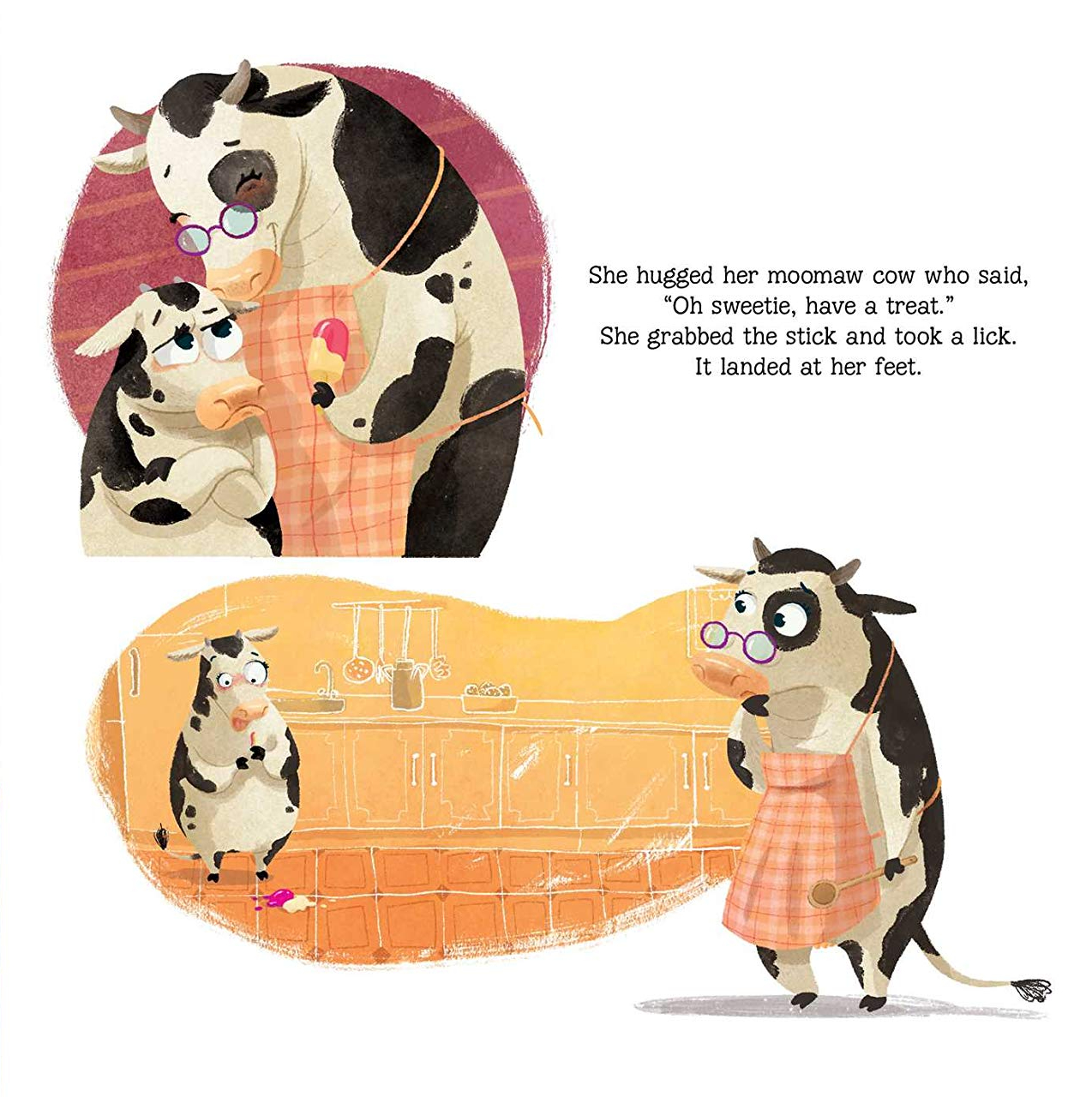
Mootilda woke up from her nap with hay in her hair, her pillow tossed to the side, and her favorite lovey lying on the floor. To make her feel better, her moomaw gave her an ice pop, but when “she grabbed the stick and took a lick, it landed at her feet.” Mootilda scowled. “‘I’m in a bad MOOD!’” she shouted. Her moomaw tried to put things right. “‘That’s terri-bull,’” she said. “She smoothed her cowlick, smooched her cheek, and said, ‘Go jump some rope.’”

celebrate-picture-books-picture-book-review-mootilda's-bad-mood-kitchen

Image copyright Claudia Ranucci, 2020, text copyright Corey Rosen Schwartz and Kirstie Call, 2020. Courtesy of little bee books.

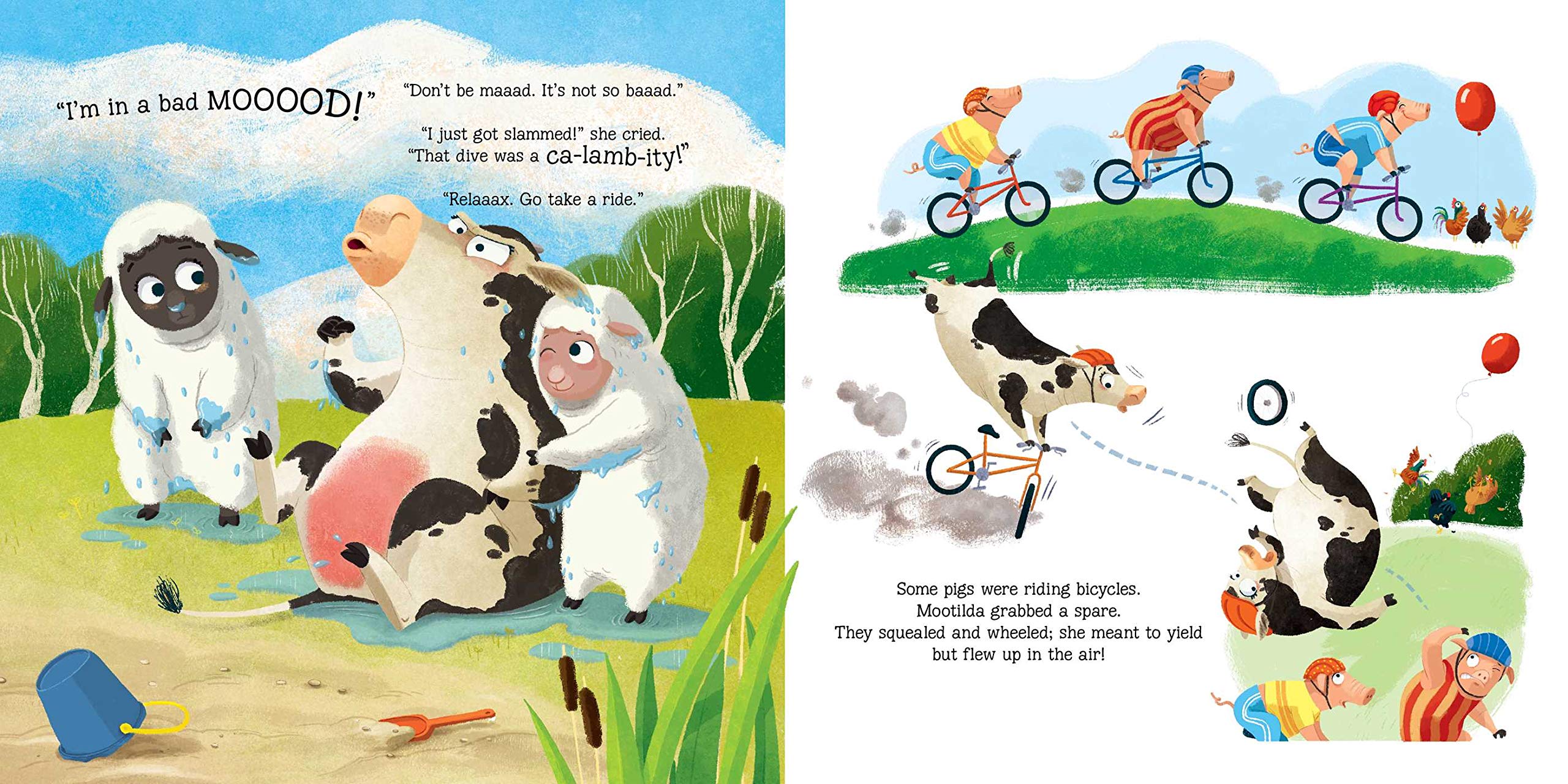
Mootilda found some friends and started off just fine, but a trip-up sent them all in a heap. “‘I’m in a bad MOOOD!’” Mootilda bellowed.  Next, to soothe her exasperation, she tried swimming in the pond with the sheep. But while the lambs easily went “kerplop,” Mootilda did a painful “bovine belly flop.” The sheep agreed that Mootilda’s dive had been a “‘ca-lamb-ity,’” but suggested she take a bike ride. But her ride was not relaxing, and her game of H-O-R-S-E went astray. Mootilda stomped and yelled and thought she had been cursed.

celebrate-picture-books-picture-book-review-mootilda's-bad-mood-jump-rope

Image copyright Claudia Ranucci, 2020, text copyright Corey Rosen Schwartz and Kirstie Call, 2020. Courtesy of little bee books.

But then the chickens who’d been playing in the bushes nearby told Mootilda their story of woe: a basketball had crashed their block building, their balloon had flown away, and their art projects had all been ruined. Mootilda thought it was quite a “cow-incidence” that they were “in a bad mood too.” That was just the word for what they were feeling, and the chickens scratched and clucked and crowed along with Mootilda. “‘We’re in a bad MOOOOOOOOOOOOOOD!’” But then, like her moomaw, Mootilda offered each chicken an ice cream dessert. She was just about to take her first lick of hers when… a crow flying by “knocked hers in the dirt.” Mootilda stared at her dropped cone… “and then she laughed. / her laughs rang on and on. / then suddenly, to her surprise, / her gloomy mood was…gone!”

celebrate-picture-books-picture-book-review-mootilda's-bad-mood-biking

Image copyright Claudia Ranucci, 2020, text copyright Corey Rosen Schwartz and Kirstie Call, 2020. Courtesy of little bee books.

No child will be able to stay unhappy long once they hear Corey Rosen Schwartz and Kirsti Call’s hilarious moood-boosting story. Rosen Schwartz and Call really milk the farmyard puns for maximum fun while providing a rollicking read aloud with giggle-inducing rhymes and rhythm. Mootilda’s move to cheer up the chickens mirrors her moomaw’s comfort and will remind readers of their own parents’ or caregivers’ reassurances. Mootilda’s reaction to losing her ice cream cone is pitch perfect and the final funny scene brings the story full circle. Kids will love chiming in on the repeated “I’m in a bad mooood” phrases, and as Mootilda proclaims that she’s “over the moooooooon,” you can be sure they’ll ask to hear the story one moooooore time.

celebrate-picture-books-picture-book-review-mootilda's-bad-mood-nap

Image copyright Claudia Ranucci, 2020, text copyright Corey Rosen Schwartz and Kirstie Call, 2020. Courtesy of little bee books.

Claudia Ranucci’s Mootilda is having the worst day ever, but the deep pout on her pink snout is more endearing than angry. As Mootilda tries activity after activity to have some fun and improve her mood, only to see disaster strike again and again, alert readers will be drawn to the background of each spread, where the chickens are experiencing their own fiascoes, caused by Mootilda’s mishaps. Flapping wings, flying art supplies, a buried sandcastle, a wayward balloon, and an explosion of blocks will keep kids laughing. Bold typography invites kids to read along on the puns, and Ranucci’s vibrant color palette will always brighten readers’ day.

To make any bad day better and any good day exceptional, Mootilda’s Bad Mood would be a fast favorite on home, school, and public library bookshelves.

Ages 4 – 8

little bee books, 2020 | ISBN 978-1499810868

Discover more about Corey Rosen Schwartz and her books on her website.

To learn more about Kirstie Call and her books and to sing along with Mootilda’s Song, visit her website.

You can learn more about Claudia Ranucci and view a portfolio of her work on her website.

Positive Attitude Month Activity

celebrate-picture-books-picture-book-review-cow-mug-craft

Mooood Brightening Cow Mug


It’s hard to be in a bad mood with a cup of hot cocoa served in this cute cow mug that you’ve made yourself! 

Supplies

  • White ceramic mug, available at craft stores
  • Black permanent marker or paint for ceramics
  • Pink permanent marker or paint for ceramics
  • Brown permanent marker or paint for ceramics

celebrate-picture-books-picture-book-review-cow-mug-craft-back

Directions

  1. With the pink marker or paint, draw an oval shape for the nose near the bottom of the mug. Let dry.
  2. With the brown marker or paint, draw two angled nostrils inside the pink oval and color them in. Let dry.
  3. Color in the nose with the pink marker or paint.
  4. With the black marker, color the top tip of the handle where it meets the mug to make the tail.
  5. With the black marker or paint, draw two wavy lines on either side of the face starting at the top, angling toward the middle and returning to the bottom of the mug. Leave white space between the lines.
  6. Draw circles for eyes within the black lines. Add black pupils at the bottom of the eyes.
  7. Color inside the black lines and around the eyes to make the face markings.
  8. With the black marker or paint, make two or three splotches on the back of the mug.
  9. Let the mug dry and follow the directions for the markers or paint to set the color.
  10. Pour yourself a mug of milk and enjoy!

celebrate-picture-books-picture-book-review-mootilda's-bad-mood-cover

You can find Mootilda’s Bad Day at these booksellers

Amazon | Barnes & Noble | Books-a-Million

To support your local independent bookstore, order from

Bookshop | IndieBound

Picture Book Review


October 2 – Name Your Car Day

celebrate-picture-books-picture-book-review-all-except-axel-cover

About the Holiday

We love our cars! Sometimes it seems we spend more time with them than with our own family – and maybe some of us do! What do you call such a reliable partner? A friend, of course! Our friends have names, so why shouldn’t our cars? That’s the idea behind today’s whimsical holiday. To celebrate, give your car the perfect moniker. All names are open, well… 

Thanks to Blue Slip Media and Aladdin for sending me a copy of All Except Axle for review consideration. All opinions about the book are my own. I’m revved up to be offering a giveaway of the book as well! See details below.

All Except Axle

Written by Sue Lowell Gallion | Illustrated by Lisa Manuzak Wiley


At the car assembly plant, all the new cars were happily getting buffed before they rolled off the conveyor belt and raced into their slot on the lot. That is… “all except one. Axle.” From the parking lot, the cars drove up the ramps and onto the big transport trucks for the next part of their adventure. But one car lagged behind, watching from a distance – Axle.

celebrate-picture-books-picture-book-review-all-except-axel-factory

Image copyright Lisa Manuzak Wiley, 2020, text copyright Sue Lowell Gallion, 2020. Courtesy of Aladdin.

The transport trucks vroomed onto the highway, but…. They were one short. “Earlene, and her passengers…were waiting for Axle.” Axle idled nearby. “‘I think I’m out of alignment,'” he told Earlene. “‘I think you’re stalling,'” Earlene said. The other cars were encouraging, but Earlene got Axle moving with a loud HONNKK!

Finally zooming down the highway, the other cars loved feeling the wind and “[leaning] into the twists and turns.” But Axle felt carsick. When the reached the dealership, the other cars eagerly explored the lot and showroom. All except Axle, who “hurried back up Earlene’s ramp and pleaded with her to go back to the plant. 

celebrate-picture-books-picture-book-review-all-except-axel-afraid

Image copyright Lisa Manuzak Wiley, 2020, text copyright Sue Lowell Gallion, 2020. Courtesy of Aladdin.

With a Vroom they were off – but not to the plant. Soon, Earlene veered into a truck stop, where, she said, Axle could practice. Axle made right turns, left turns, and U-turns around the cement columns and followed Earlene around and around the lot. Then they left the truck stop and headed out to the flatlands, the foothills, where “the slope grew steeper and steeper,” and even into the mountains. From high on the top of a mountain, Axle stopped to enjoy the view.

celebrate-picture-books-picture-book-review-all-except-axel-truck

Image copyright Lisa Manuzak Wiley, 2020, text copyright Sue Lowell Gallion, 2020. Courtesy of Aladdin.

Earlene was zipping back down the curvy mountain road with Axle far behind. Then Axle smelled something burning and watches as Earlene “rockets up a runaway truck ramp.” When Earlene finally stopped, they saw the flat tire. Earlene needed a tow truck and Axle was her only hope. He turned around and climbed the mountain road again. It was a strain on his engine, but when he reached the top, Axle kept on going all the way back to the truck stop.

There he found a tow truck and led it straight back to Earlene. “‘Nice job, kid,’ the tow truck said” then offered Axle a ride back into town. But Axle replied, “‘No thanks, I can drive!'” and he zoomed ahead to lead Earlene and the tow truck back to the city. 

celebrate-picture-books-picture-book-review-all-except-axel-city

Image copyright Lisa Manuzak Wiley, 2020, text copyright Sue Lowell Gallion, 2020. Courtesy of Aladdin.

Car, truck, and vehicle fans will love Sue Lowell Gallion’s story that boosts little ones’ self-confidence with reassurance and a sweet hero who just needs a little more practice to discover the courage under his hood. With plenty of puns to tickle readers, Gallion’s story reflects the feelings of kids hesitant to make changes or leave their comfort zone. Axle’s reactions mirror many behaviors anxious or hesitant children display, allowing adults and kids an opportunity to talk about emotions. Her well-paced story also lets readers to ride along with Axle as he tries out and improves his skills. When Earlene needs help, Axle may feel a moment of nervousness, but with his new-found belief in himself, he takes to those once-scary roads and saves the day.

Lisa Manuzak Wiley’s bold and vibrant illustrations will appeal to kids – and especially vehicle-lovers – with detailed images of cars on a factory line, loaded into transport trucks, and heading out on the open road. Her vehicles are both realistic and whimsical, and their expressive headlight eyes clearly reflect Axle’s trepidation and the other cars’ excitement for their adventure. Children will enjoy pointing out and counting the different cars from page to page.

For children who need a little encouragement on the road of life, All Except Axle is an engaging and reassuring story that’s sure to capture their imagination.

Ages 4 – 8

Aladdin, 2020 | ISBN 978-1534440227

Discover more about Sue Lowell Gallion and her books on her website.

celebrate-picture-books-picture-book-review-all-except-axle-storytime-kit

You can find an All about Axle Storytime Kit with a puzzle, puppets, a coloring page, discussion questions, and a coping strategies worksheet on Sue’s website here.

To learn more about Lisa Manuzak Wiley, her books, and her art, visit her website.

Name Your Car Day Activity

celebrate-picture-books-picture-book-review-truck-racing-game-wood

Racing for Friendship Game

Here’s a racing game that kids will love! With poster board, paper, and chalk or other art supplies, kids can place their track in a city, the country, the desert, or even in outer space! Once the scene is ready, get out your own toy cars or trucks to play with or use the printable truck game pieces included below. Use a traditional playing die or the included printable 8-sided playing die. The first player to the finish line wins—or shake it up a bit and make the last person to the line the winner.

The track can be laid out on the floor and taped in place or created on poster board or paper with the supplies below:

Supplies

  • Poster board or tri-fold display board. I used a 12-inch by 4-foot section of a tri-fold board in my example. This allows you to fold up the board for easier storing.
  • White paper
  • Chalk, crayons, or colored pencils
  • Glue or tape
  • Scissors
  • Toy trucks or cars
  • Printable Truck Game Pieces (optional)
  • Printable 8-sided Playing Die

Directions

  1. Cut 30 4- or 5-inch by 1½-inch strips from the white paper
  2. Have kids lay out a track on the board using the white paper strips (each strip is one space) leaving room in between the rows for scenery
  3. Glue or tape the strips in place
  4. Draw scenery around the track OR cut trees, buildings, landmarks, or other scenery from paper and color. Glue or tape to board. 
  5. Print and assemble 8-sided playing die with tape (optional)
  6. Give each player a toy truck or car. Alternately, print and cut out included Truck Game Pieces. (To make them sturdier, print on heavy paper or glue them to cardboard)
  7. Choose a player to go first
  8. Players take turns rolling the die and moving the appropriate number of spaces
  9. The first (or last) player to the finish line is the winner

celebrate-picture-books-picture-book-review-all-except-axel-cover

You can find All Except Axle at these booksellers

Amazon | Barnes & Noble | Books-a-Million 

To support your local independent bookstore, order from

Bookshop | IndieBound

Picture Book Review

October 1 – International Music Day and Interview with Author Gary Golio

celebrate-picture-books-picture-book-review-dark-was-the-night-cover

About the Holiday

International Music Day was established in 1975 by Lord Yehudi Menuhin, an American-born violinist and conductor  – widely considered to be one of the great violinists of the 20th century – to promote the art of music across all segments of society and to apply the UNESCO ideals of peace and friendship among all people, with an exchange of experiences and mutual appreciation of all cultures and their aesthetic values. To celebrate today’s holiday, listen to your favorite music and take some time to discover a new style – it might just become a favorite too!

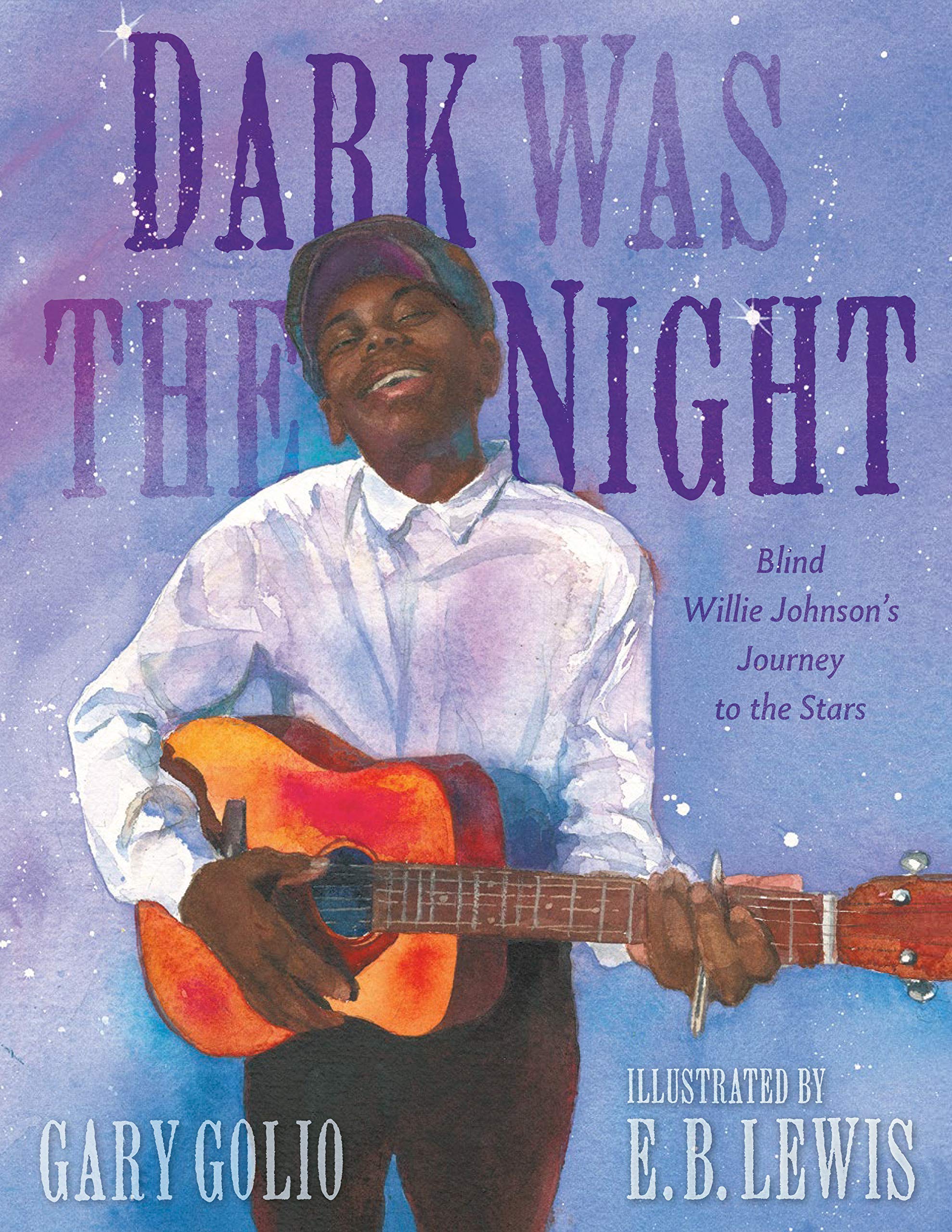
Dark Was the Night: Blind Willie Johnson’s Journey to the Stars

Written by Gary Golio | Illustrated by E.B. Lewis


As readers open the cover to Dark Was the Night, they discover a date: 1977. In this year Voyager I was shot into space carrying “a precious Golden Record, a message to the Universe from Planet Earth.” The record contained pictures of the people and things that make up our life, sounds we hear every day, music from Navajo chants and West African drumming to Beethoven and Chuck Berry. There was also one “ghostly song, about loneliness and the night….a tune of light and hope” from a blind man named Willie Johnson.

celebrate-picture-books-picture-book-review-dark-was-the-night-baby

Image copyright E.B. Lewis, 2020, text copyright Gary Golio, 2020. Courtesy of Nancy Paulsen Books.

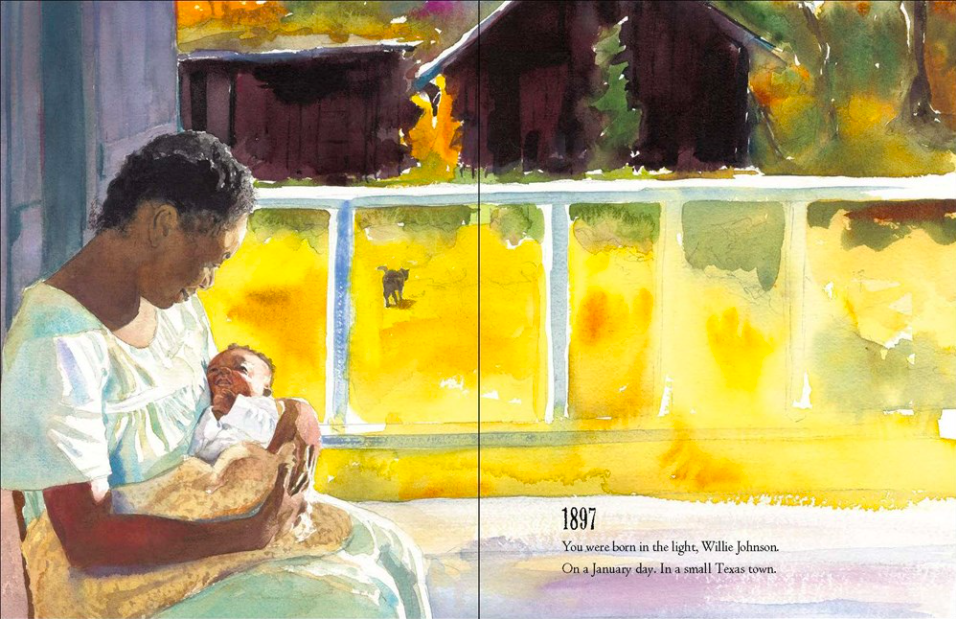
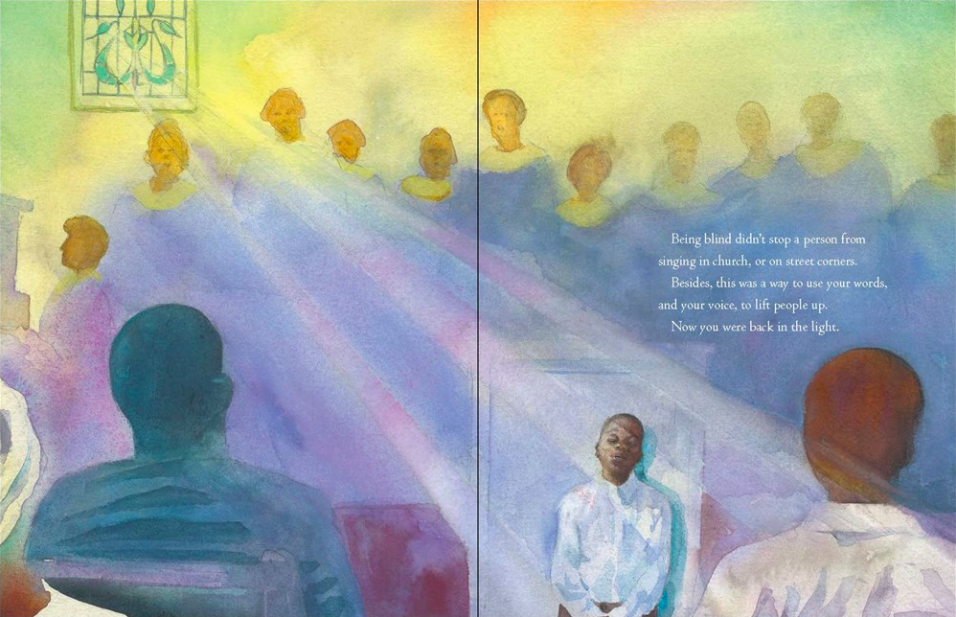
Who was Willie Johnson? In 1897, he was a newborn baby in a small Texas town wrapped in his mother’s love. narrator picks up the thread of Willie’s story when he’s become a small boy who “loved to sing” and play the cigar box guitar his father made him. But that joy was interrupted when “your mama died, and some light went out of your life.” Then at seven or eight, Willie became blind, “and that’s when things got darker still.” But Willie rose above these hurdles. His blindness didn’t keep him “from singing in church, or on street corners.” Using his voice to uplift people brought him “back in the light.”

celebrate-picture-books-picture-book-review-dark-was-the-night-choir

Image copyright E.B. Lewis, 2020, text copyright Gary Golio, 2020. Courtesy of Nancy Paulsen Books.

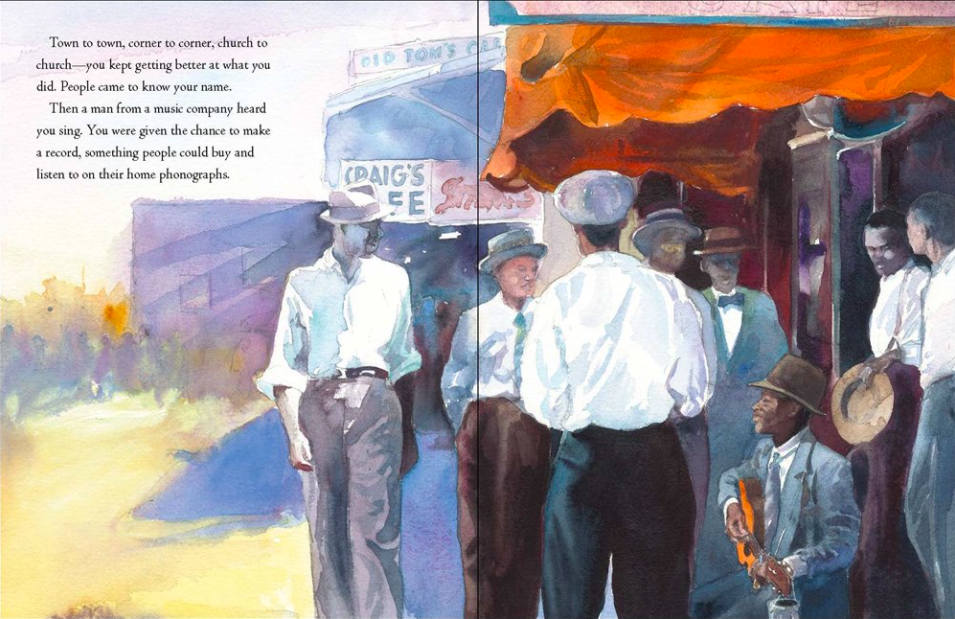
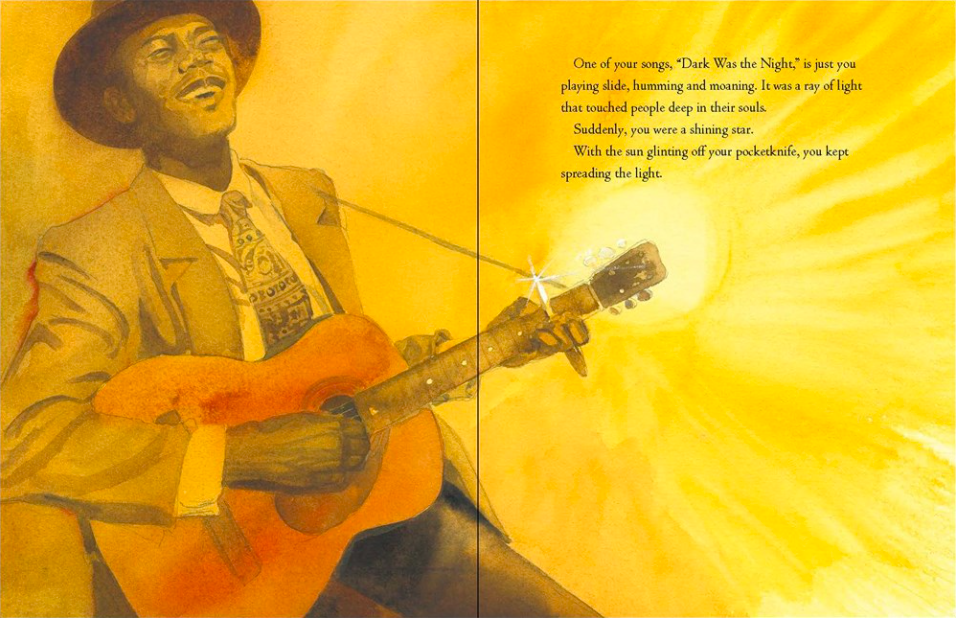
He sang blues and learned how to play a slide by running the edge of a pocketknife along the steel strings of his guitar. “This made a sound like someone laughing or crying, as if the guitar had a voice of its own.” He traveled from town to town in Texas, wherever farmers came to socialize and shop, setting up on street corners and collecting the coins people tossed into his tin cup. Little by little, people grew to know his name. “Then a man from a music company heard you sing. You were given the chance to make a record….”

celebrate-picture-books-picture-book-review-dark-was-the-night-street-corner

Image copyright E.B. Lewis, 2020, text copyright Gary Golio, 2020. Courtesy of Nancy Paulsen Books.

On that record listeners heard “the sound of one human being reaching out to all the others, telling them not to be afraid of the dark.” That first record was a hit, lauded for its unique sound. One song in particular, “Dark Was the Night,” “touched people deep in their souls” and made Willie “a shining star.” The light Willie brought to people has never dimmed; in fact it continues to shine through the darkness on Earth and through Space.

Back matter includes a discussion on what is known about Blind Willie Johnson and what still remains a mystery as well more information about Voyager I and why Johnson’s song Dark Was the Night was chosen for inclusion on the Golden Record. A link to NASA’s Jet Propulsion Laboratory website, where readers can access Voyager I—The Golden Record is also included.

celebrate-picture-books-picture-book-review-dark-was-the-night-song

Image copyright E.B. Lewis, 2020, text copyright Gary Golio, 2020. Courtesy of Nancy Paulsen Books.

Gary Golio’s ethereal tale of the life of Blind Willie Johnson and his song, which has touched and continues to move so many people, is a stirring tribute to a unique artist and the power of music to change lives. Golio’s use of the second person creates a poignant personal bond between the story and reader, which allows children to put themselves in Willie’s shoes and believe that they, too, can inspire others with their talent and life. Golio’s lyrical storytelling flows with the cadence of the blues, and his evocative vocabulary brings Willie Johnson’s voice and times fully to life for young readers.

E.B. Lewis transports readers to early 1900s Texas in his stunning watercolor paintings rendered in soft washes of grays, blues, and greens punctuated with yellows that reflect the hope and light that spurred Willie on and flowed from his music. As his mother holds him in her arms as a baby, the landscape outside the window blazes with gold that reflects on Willie’s and his mother’s face. As children learn about Willie’s blindness, the page turns dark, except for a swatch of light across Willie’s eyes, representational, perhaps, of his inner sight that sustained him.

Among the realistic depictions of his farm home, the outskirts of a Texas town seen from a train, and a bustling city, where Johnson plays on a street corner to an appreciative audience, his tin cup hanging from a tuner on his guitar, are transcendent images of Willie performing, his face always lifted to the light. As people gather around a radio listening to Blind Willie Johnson, light once again streams into the shop, and as Golio describes how “Dark Was the Night” becomes a hit, Willie is bathed in a golden glow, his face euphoric with the joy of singing.

At once sensitive, rousing, and inspirational, Dark Was the Night is a beautiful book about one man’s talent and dream that will resonate with all readers. The book is highly recommended for home libraries and is a must for school and public library collections.

Ages 5 – 8

Nancy Paulsen Books, 2020 | ISBN 978-1524738884

Discover more about Gary Golio and his books on his website.

To learn more about E.B. Lewis, his books, and his art, visit his website.

Listen to Blind Willie Johnson’s “Dark Was the Night.”

Meet Gary Golio

celebrate-picture-books-picture-book-review-gary-golio-headshot

Gary Golio is the author of the New York Times bestseller JIMI: Sounds Like a Rainbow – A Story of the Young Jimi Hendrixwinner of a Coretta Scott King Illustrator Award; Bird & Diz and Strange Fruit – Billie Holiday and the Power of a Protest Song, both ALA Notables; and other books about legendary artists. A writer and musician, Golio has been featured on NPR’s “Weekend Edition”, CBS-TV’s “Sunday Morning News,” and on radio stations nationwide. He lives in the Hudson Valley with his wife, children’s book author Susanna Reich.

Today, I’m thrilled to talk with the multi-talented Gary Golio about Dark Was the Night, his love for writing and art, his father’s influence in his life, and the power of music.

Welcome, Gary! To start off, can you tell readers about your journey with this Dark Was the Night from idea to publication?

A few years back I was listening to some early blues songs, and came upon Willie Johnson’s “Dark Was the Night.” The song stunned me—and gave me the chills. I knew of Willie’s connection with the Voyager I space probe, but had no idea that blues aficionados and amateur music sleuths were devotedly digging for details of his life through the decades. So much mystery surrounded this man—revered by Jimmy Paige, Eric Clapton, and Lucinda Williams—but what intrigued me the most was that, after dying in poverty and being forgotten, Willie and his work enjoyed a revival of interest during the 1960s Folk Movement. Then, in 1978, “Dark Was the Night” ended up on Voyager‘s Golden Record, hurtling through space. And what that said to me is, you never know how a life, and its effect on others, will play out. It’s a hopeful message that inspired me to write the book.

Your father was an artist and you have worked as a fine-artist since you were a teenager. Can you talk about what inspired you to begin writing picture books? Did you always like to write?

My father is an ongoing inspiration in my life. He was a talented amateur artist who provided me with a real-life example of the Art Spirit by how he thought and created. Most importantly, he was a skilled improviser, and didn’t allow himself to be limited by what he didn’t have, something that’s always meant a lot to me. As for writing picture books, I mostly read comics as a boy, and I think it was that combination of pictures and text that really struck a chord. For me, the picture book is a modern descendant of cave painting, Egyptian wall art (images + hieoroglyphs), and Etruscan/Pompeian murals: using words and pictures to tell a story.

In your Author’s Note you talk about the dearth of knowledge about Willie Johnson’s life. Can you share one thing you learned about Willie that didn’t make it into the book?

Willie has a unique voice that somehow manages to balance the rough and the tender. There’s raw power there, but also delicacy, which is very rare. So Willie was in New Orleans at one point—during a recording session there in 1928—and the story goes that he began singing “If I Had My Way I’d Tear this Building Down” in front of the Customs House. A crowd had gathered, listening to him, and a police officer reportedly became so worried—thinking Willie was instigating a riot—that he considered arresting the man. That’s the power of music—to rouse, protest, and stir up human souls—and it’s easy to see why it threatens authority and institutions.

Dark Was the Night is your eighth biography of a musician or entertainer for children. Could you discuss what drew you to write about these musicians?

While there are no actual musicians in my family-of-origin, my parents, grandmother, and maternal aunt all had strong musical interests. Each exposed me to very specific genres and musical tastes—from Frank Sinatra and Bing Crosby to Count Basie, Louis Armstrong, Ella Fitzgerald, Nat King Cole (whom I adore), Willie Nelson, and Elvis Presley. Many of these people were Black, and many were strongly influenced by blues and jazz, and I have vivid memories of watching them on TV with my beloved grandmother, even at five and six years old. That openness to all kinds of music really shaped me, and growing up I looked for clues, in the lives of artists, that would help me find my own path and direction. So my books often focus on the early years of an artist’s/musician’s life, highlighting the roots of their artistry—what inspired and shaped them—to provide young readers with roadmaps, of sorts, to a life in the arts.

In addition to being an artist and writer, you also admit to being “a pretty good musician” – something you share with kids on school visits that sound awesome. Which instruments do you play and how do you incorporate music into your book events?

I play acoustic and electric guitar, mandolin, banjo, and very simple piano, but love above all to improvise. Since my first book on Jimi Hendrix came out, I’ve used the guitar (both electric and acoustic) to demonstrate a wide range of effects and possibilities (Hendrix and Santana), but also to accompany singalongs I did for my Bob Dylan/Woody Guthrie book. At one school visit, the entire fifth grade and I sang “This Land is Your Land” in Spanish, which was both meaningful and fun.

Each of your books has such distinctive illustrations from incredible illustrators. Can you talk a little about E.B. Lewis’s gorgeous illustrations in Dark Was the Night and how he captured your story and Willie’s personality?

E.B. is truly a master of illustration, and specifically of the watercolor medium. His real superpower, however, lies in his ability to convey human feeling, to mysteriously imbue a person or setting with mood and life. That’s remarkable—reminiscent of watching my father draw an American Indian on horseback, straight out of his head—and it’s what lends E.B.’s work both its power and subtlety. Not surprisingly, he has a real love for human beings, a quality fed by his passion for traveling and teaching all over the world. Though we only met at a bookstore panel five years ago, Earl and I have become close friends, and spend a lot of time on the phone collaborating about the joining of text and image. He’s a pleasure to work with, and his art for Dark Was the Night is truly sublime. This book also gave him the chance to bring his use of color (in his own words) to another level, something that will be obvious to anyone who knows his artwork and sees the new images.

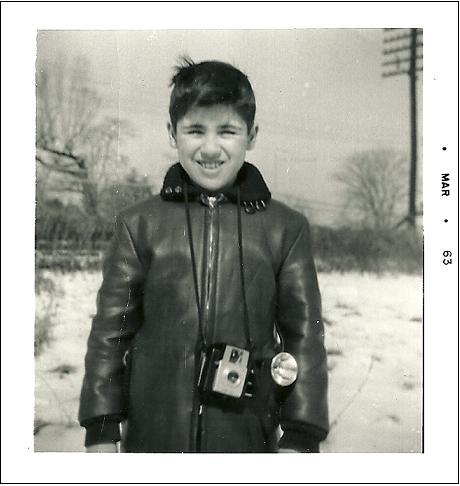
From your bio on your website, you sound as if you were a pretty inventive kid – creating all sorts of cool electronic devices. And I love your story about being “shocked” to find books with Van Gogh’s paintings in them as a child and how formative that was. Could you discuss the importance of nonfiction, and biographies in particular, to children?

celebrate-picture-books-picture-book-review-gary-golio-childhood-photo

My father could fix most anything, and it was that spirit of improvisation and inventiveness that led me to create little electronic gadgets a la James Bond and The Man from Uncle. For a time, I wanted to be an inventor or electrical engineer, but Art won out. As for van Gogh, watching Lust for Life with my dad had a HUGE impact on me, and seeing a book in the middle school library with all those paintings reproduced made it clear to me—even at 10 years old—that there was gold in reading about the lives of artists.

While I love fantasy, myth, and good stories, the thing about nonfiction is that you’re reading about real people—with all their talents and troubles—and so it’s easier to believe that if someone else muddled through to achieve something, you can also. That’s why I don’t shy away from talking about a person’s “faults” and failures (particularly in my books about John Coltrane and Billie Holiday), because I want kids to see that great people and artists are just as human as everyone else.

What’s up next for you?

Author-wise, I’ve a book coming out next year on the revered jazz saxophonist Sonny Rollins (based on many phone conversations we’ve shared), to be illustrated by the great James Ransome. I’ve also sold, just this year, two new picture book texts: one on Roy DeCarava—a gifted artist who photographed the people of Harlem in all their humanity—and another on Walt Whitman, focused on his remarkable and moving nursing experience during the Civil War. After that, who knows where Destiny will lead me?

International Music Day Activity

celebrate-picture-books-picture-book-review-musical-instruments-word-search

I Love Music! Word Search Puzzle


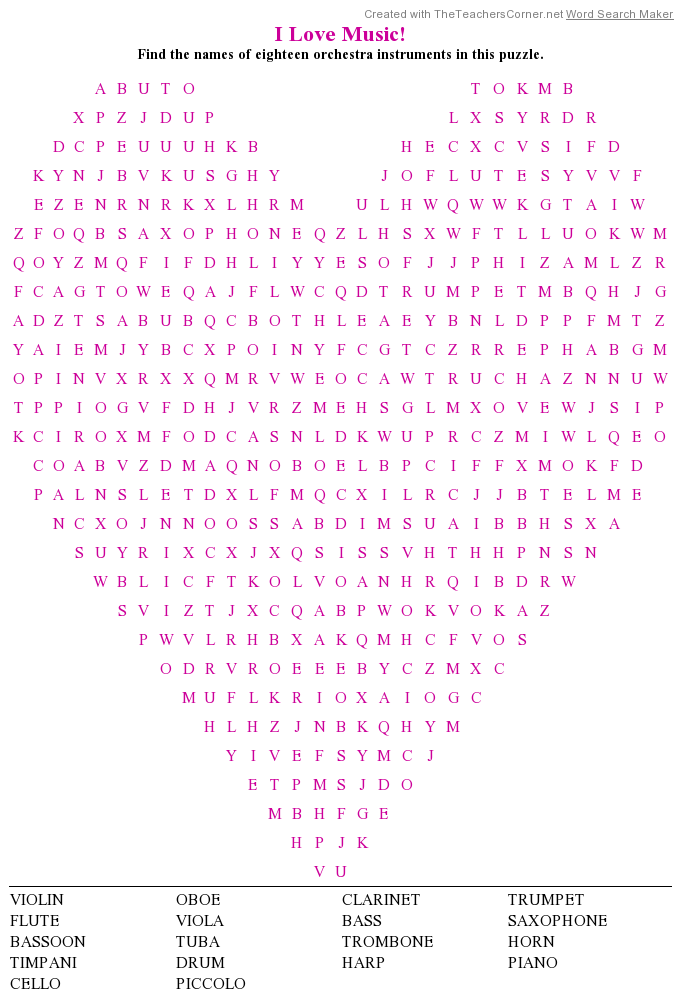
International Music Day celebrates all types of music and instruments. Can you find the eighteen different instruments in this printable word search puzzle?

I Love Music! Word Search Puzzle | I Love Music! Word Search Solution!

celebrate-picture-books-picture-book-review-dark-was-the-night-cover

You can find Dark Was the Night: Blind Willie Johnson’s Journey to the Stars at these booksellers

The Village Bookstore, Pleasantville, NY | Amazon | Barnes & Noble | Books-a-Million

To support your local independent bookstore, order from

Bookshop | IndieBound

Picture Book Review


September 19 – It’s Read a New Book Month

celebrate-picture-books-picture-book-review-time-to-roar-cover

About the Holiday

As September winds down, I’m happy to feature another new book for this month’s special holiday. Searching for and sharing new books—whether they are recently published or just new to you—is not only a fun way to spend a day together with kids, but an experience that pays big benefits now and in the future. Make a plan to add a few new books to your home library or visit your local library today!

Thanks go to Bloomsbury Children’s Book for sending me a copy of Time to Roar for review consideration. All opinion on the book are mine.

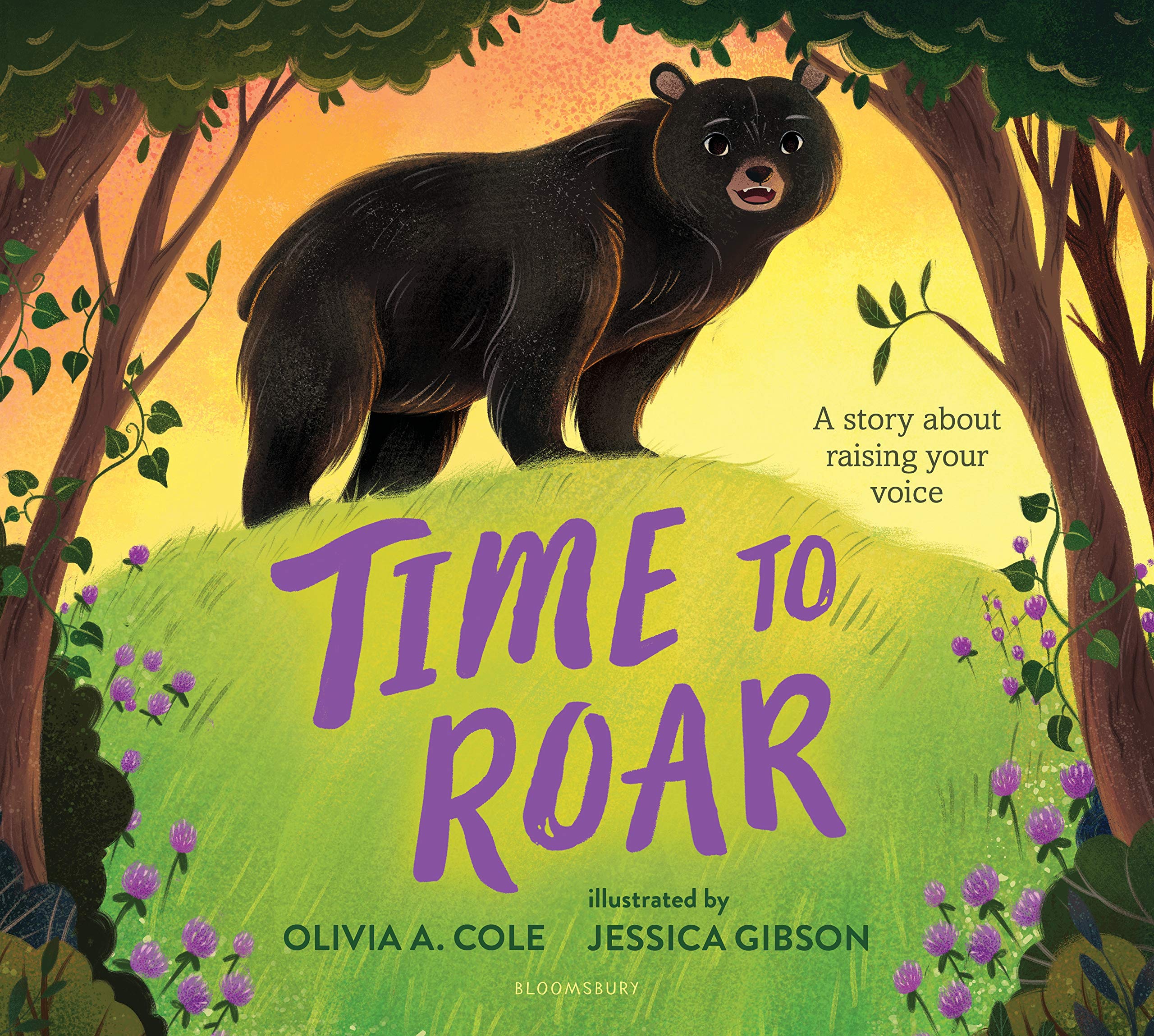
Time to Roar: A Story about Raising Your Voice

Written by Olivia A. Cole | Illustrated by Jessica Gibson

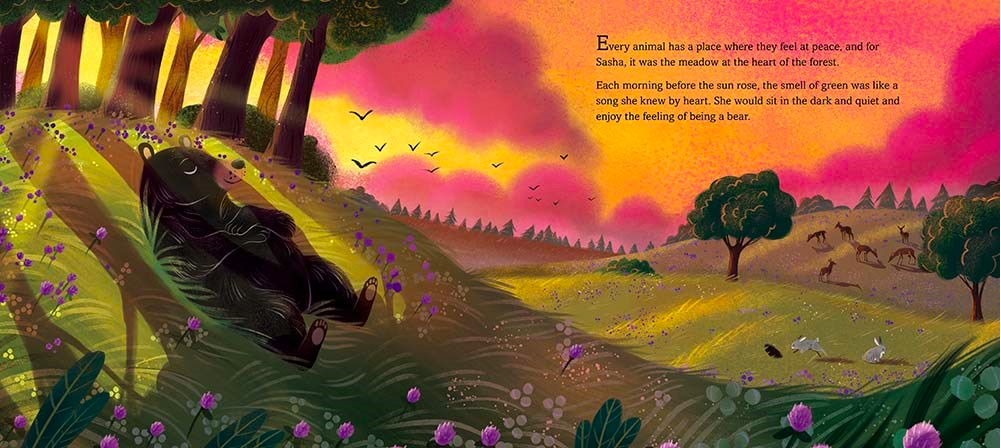
For Sasha, the meadow in the middle of the forest was where she felt most at peace, where she could “enjoy the feeling of being a bear.” Before dawn, she would lie in the meadow, where “…the smell of green was like a song she knew by heart.” But one morning, Sasha watched as noisy “yellow beasts” began tearing up the meadow with their silver teeth. A squirrel predicted that soon nothing would be left of their home.

celebrate-picture-books-picture-book-review-time-to-roar-morning

Image copyright Jessica Gibson, 2020, text copyright Olivia A. Cole, 2020. Courtesy of Bloomsbury Children’s Books.

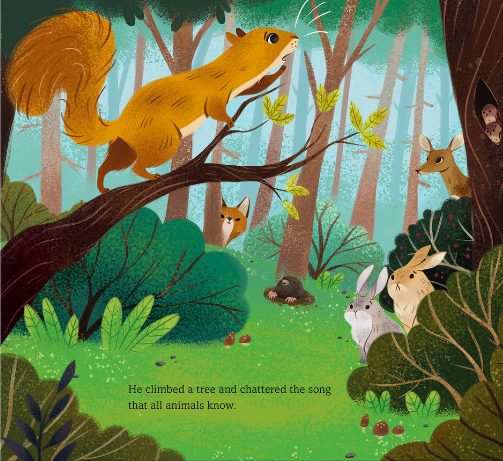
Sasha was ready to charge down the hill and confront the machines. But the squirrel advised caution and suggested all the animals have a meeting. Sasha relented. As the squirrel called the animals, they came out of hiding and listed to the squirrel talk about the danger that had come. Sasha was again ready to stop them with her mighty roar, but the bluebird thought she could persuade them with her song. As he flew over the machines, however their noise drowned out his song’s sweetness.

celebrate-picture-books-picture-book-review-time-to-roar-meeting

Image copyright Jessica Gibson, 2020, text copyright Olivia A. Cole, 2020. Courtesy of Bloomsbury Children’s Books.

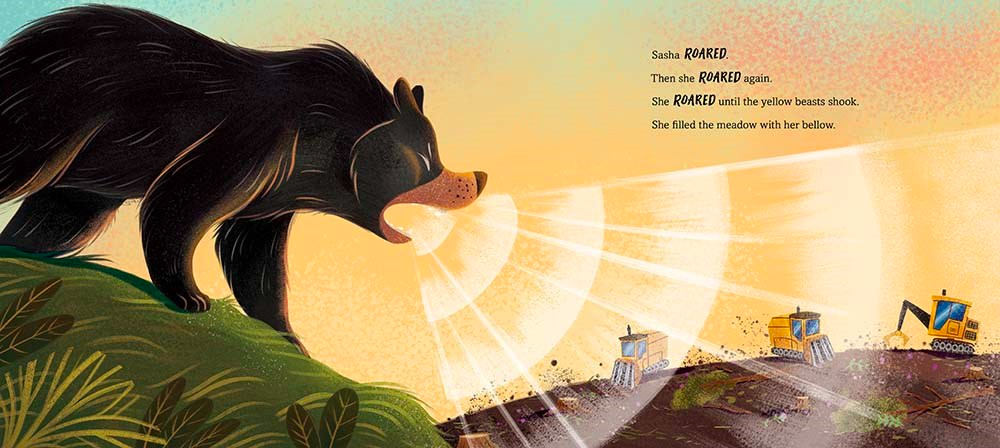
Rabbit had another idea of how he could distract them, but her attempt went unnoticed too. The deer thought he could lead the machines away from their home, but his appearance made no difference either. In fear, all the animals rushed to hide. “‘It’s the only way we will survive!’” they exclaimed. But Sasha did not hide. “Inside her, anger welled up, sparkling. Maybe it was stronger than yellow beasts.” She thought about all the tactics the other animals had taken. “She knew what had to be done…. Sometimes a bear had to raise her voice.” She ran to the edge of the meadow and ROARED until the echo of her roars shook the yellow machines. This time when the ground shook it was with the rumble of the machines fleeing the meadow.

When the meadow was quiet again, the other animals came out of hiding. They sadly acknowledged that their attempts had not worked, but Sasha consoled them, telling them that there were times when quieter approaches to a problem were needed. But there were also times that required a “ROAR.”

celebrate-picture-books-picture-book-review-time-to-roar-sasha

Image copyright Jessica Gibson, 2020, text copyright Olivia A. Cole, 2020. Courtesy of Bloomsbury Children’s Books.

Olivia A. Cole’s straightforward and powerful story about directly speaking up to oppose dangerous events or people is a very welcome book not only for this time, but for all times and all ages. In an age where young people and even children are leading the charge to procure a peaceful, fair, and unpolluted future, Time to Roar offers encouragement and support for those who courageously “see something and say something,” a lesson they have grown up hearing. A striking feature of Cole’s story is her inclusion of the alternate philosophies and tactics many people advocate to combat threats and her forthright depiction of how and why these approaches often don’t work. Children struggling with bullies or what to do about issues they disagree with at school or in other groups as well as those who want to make a difference in their town, their country, or for the world at large will find much to inspire and empower them in Cole’s well-paced and well-told story.

celebrate-picture-books-picture-book-review-time-to-roar-squirrel

Jessica Gibson’s compelling digital illustrations pack persuasive power as Sasha determines to rid the meadow of the bulldozers sent to destroy it. With the turn of one page, the soft colors of an idyllic dawn meadow give way to a harsh glare further spoiled with plumes of smoke and blinding headlights. Black silhouettes of squirrels, rabbits, birds, and dear dash out of the way, visual metaphors for the loss the construction will wreck on the forest. Sasha’s anger and the concern of the other animals shows clearly on their faces, and while the bluebird, rabbit, and deer are well-intentioned, Gibson’s depictions of their attempts to turn back the bulldozers shows the futility of these responses against the enormity of their foe. Gibson’s portrayal of Sasha roaring to shake the earth and the status quo will spur confidence and buoy readers’ hearts.

An empowering story to inspire children to raise their voice, Time to Roar would be an excellent addition to home libraries. The book would also pair well with social studies and history lessons about appeasement and the effects of protest—or the lack of it, making it a must for school and public library collections.

Ages 3 – 6

Bloomsbury Children’s Books, 2020 | ISBN 978-1547603701

Discover more about Olivia A. Cole and her books on her website.

To learn more about Jessica Gibson, her books, and her art, visit her website.

Read a New Book Month Activity

celebrate-picture-books-picture-book-review-wooden-spoon-microphone-craft

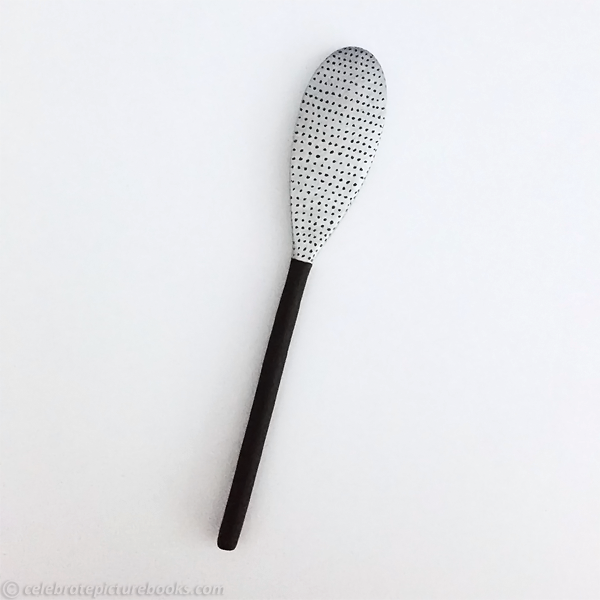
Wooden Spoon Microphone

A microphone can help anyone be heard. With this easy craft your child can turn a wooden cooking spoon into a fun microphone for all those times when they have something important to say.

Supplies

  • Long-handled wooden spoon
  • Black craft paint
  • Silver craft paint
  • Black permanent marker

Directions

  1. Paint the handle of the spoon black, let dry
  2. Paint the head of the spoon silver, let dry
  3. After the paint is dry, make rows of small dots on the head of the spoon

celebrate-picture-books-picture-book-review-time-to-roar-cover

You can find Time to Roar at these booksellers

Amazon | Barnes & Noble | Books-a-Million

To support your local bookstore, order from

Bookshop | IndieBound

Picture Book Review
September 25 – It’s Adopt a Less-Adoptable Pet Week

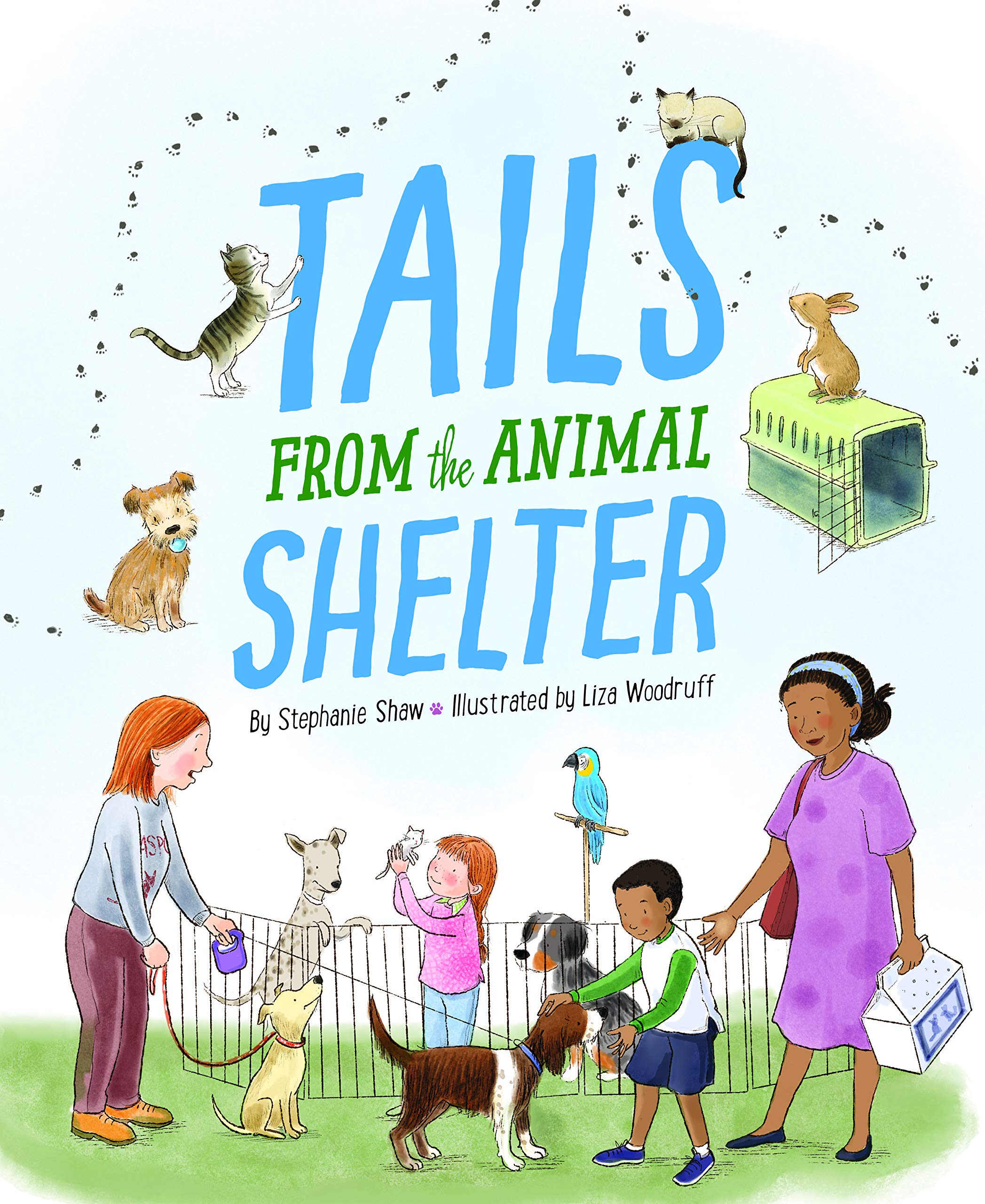
celebrate-picture-books-picture-book-review-tails-from-the-animal-shelter-cover

About the Holiday

Established by Petfinder, this week-long holiday aims to raise awareness of all those animals in shelters who, because of age, health, size, or even color, are overlooked for adoption. But these animals have a lot of love to give, and the bonds you can form with a special-needs or unusual pet can change your life. To learn more about the Adopt a Less-Adoptable Pet Week and how you can help deserving animals find a forever home throughout the year, visit Petfinder Pro. 

Thanks to Sleeping Bear Press for sending me a copy of Tails from the Animal Shelter for review consideration. All opinions about the book are my own.
Tails from the Animal Shelter

Written by Stephanie Shaw | Illustrated by Liza Woodruff


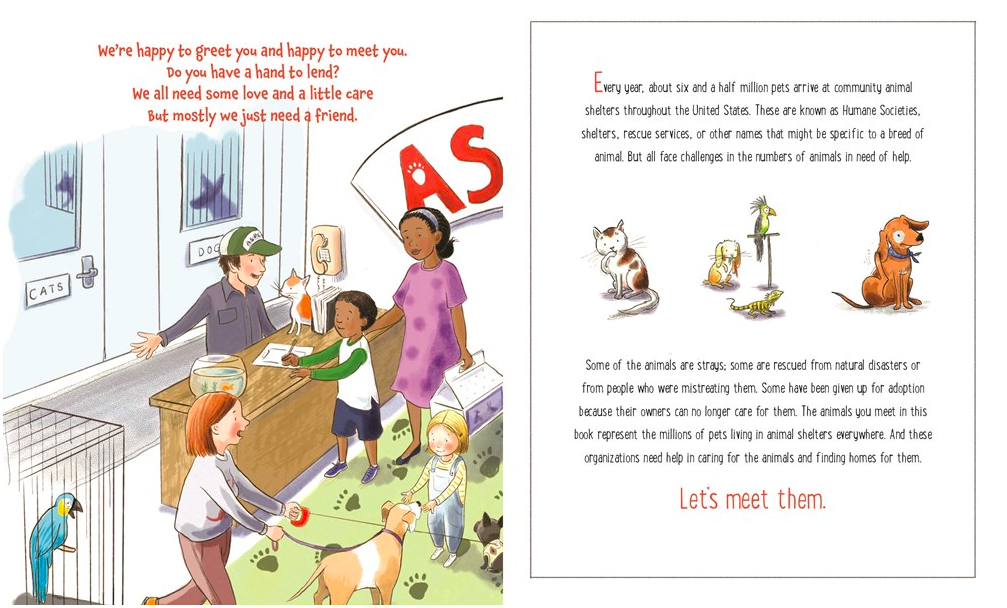
Welcome to the Humane Society Animal Shelter! The animals are waiting to meet you, and the staff are happy to introduce you to the wonderful animals who are available for adoption. While most animals who arrive at shelters across the country are dogs or cats, there are lots of other pets looking for a new home. Why do some animals come to live in a shelter? The book reveals many reasons. Among them are that “some of the animals are strays; some are rescued from natural disasters” and “some have been given up for adoption because their owners can no longer care for them.”
celebrate-picture-books-picture-book-review-tails-from-the-animal-shelter-shelter

Image copyright Liza Woodruff, 2020, text copyright Stephanie Shaw, 2020. Courtesy of Sleeping Bear Press.

Are you ready to find a new friend? If it’s a puppy you’re looking for, you’ll love Tinkle, who’s so excited to see you that he “cannot help but piddle.” But it’s okay. “Happy puppies always dribble….As time passes and pups grow, / This little guy won’t pee ‘hello.’” If you don’t know what type of dog is best for your family, the staff at the shelter can help match you to the perfect one.
Cats also make wonderful pets for many reasons. Whether you like long-haired or short-haired, large or small cats, you’ll find just the right fit for your family at the shelter. Not ready for a long-term commitment? You can look into fostering a newborn kitten to get them ready for adoption. What kinds of kittens will you find? All sorts, like Ariel, who says: “I’m an acrobat cat! / I can climb anywhere! / I’ll roll in a ball and then / leap to a chair!”

celebrate-picture-books-picture-book-review-tails-from-the-animal-shelter-skunks

Image copyright Liza Woodruff, 2020, text copyright Stephanie Shaw, 2020. Courtesy of Sleeping Bear Press.

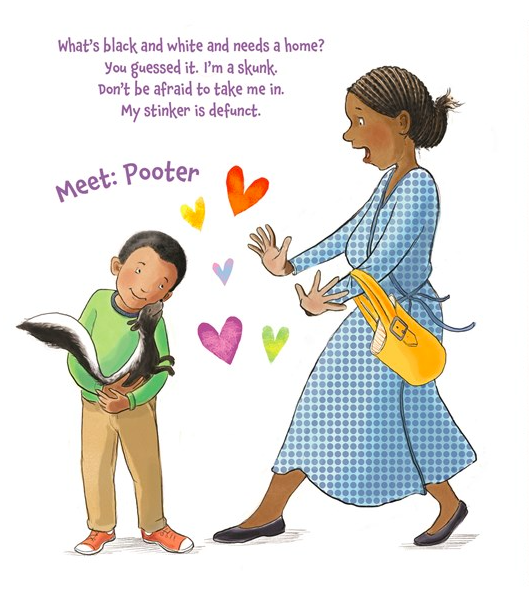
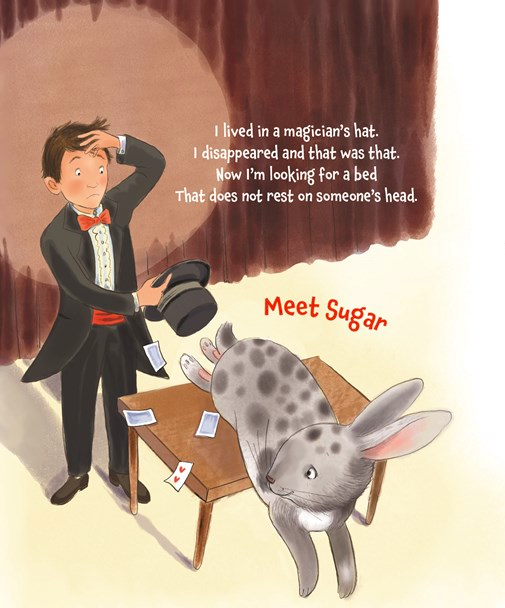
These dogs and puppies, cats and kittens are only a few of the animals that turn up needing a new home. Take Pooter, for example. Pooter is black and white and, despite the recognizable stripe down its back, does not stink. Skunks that make their way to shelters “have never lived in the wild” and have had surgery so they cannot make their “smelly spray.”

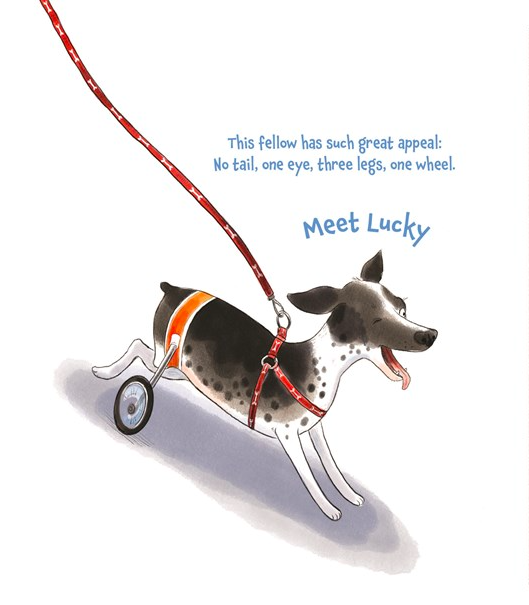
Veterinary advances have improved the lives of injured animals or animals with health problems. Animals with special needs can now be fitted with “rear-support leashes or wheelchairs” and “can live happily for many years.” If you can adopt “an animal with special needs [you] will bring a grateful and loyal pet into your family.” A popular pet that has some surprising talents, a rabbit can also be a top choice for people who live in a smaller home. Trained to use a litter box, rabbits “can live indoors just like cats do.” 

celebrate-picture-books-picture-book-review-tails-from-the-animal-shelter-special-needs-pets

Image copyright Liza Woodruff, 2020, text copyright Stephanie Shaw, 2020. Courtesy of Sleeping Bear Press.

If you live on a farm or have a lot of land in an area that allows for farm animals, you may be interested in Hamlet, who tells readers, “I am a sweet potbellied pig. / I started small but I grew BIG….I know some tricks. I’m neat and clean. / I’m many things. I’m just not… / lean.” Around the nation there are many “pigs, goats, sheep, and chickens [that] need new homes. There are over two hundred thousand horses alone rescued or surrendered to shelter care every year.” 

Along with detailed descriptions of the birds, reptiles, and senior animals that also make loving pets, the book is packed with information about how and why certain animals come to shelters and programs that sponsor a variety of animals and help get them ready for adoption. Back matter reveals how animal shelters were established, gives extensive tips on and issues to consider when adopting a shelter animal, lists ways people can help shelter animals even if they can’t adopt, and provides online resources for learning more and finding shelters in your area.

celebrate-picture-books-picture-book-review-tails-from-the-animal-shelter-rabbits

Image copyright Liza Woodruff, 2020, text copyright Stephanie Shaw, 2020. Courtesy of Sleeping Bear Press.

In her fascinating and accessible text, Stephanie Shaw combines poetry with facts and interesting tidbits about each type of animal to discuss why they make excellent pets for the right person or living condition. Her humorous, whimsical verses that accompany each category and introduce a particular animal will charm kids with a snapshot of the animal’s personality. Kids will also enjoy talking about how each name fits the animal.

Liza Woodruff’s cheery illustrations will enchant animal lovers with adorable images of funny, loving, and endearing animals happy to find a forever home. The joy that pets bring to a family is evident as kids hug, play with, and react to their pets.

An excellent introduction to shelter animals and pet ownership, Tails from the Animal Shelter is highly recommended for any family thinking about adopting a pet as well as for young animal lovers and kids interested in veterinary medicine or volunteering to help animals. The book would also make a favorite addition to school and public library collections.

Ages 5 – 8

Sleeping Bear Press, 2020 | ISBN 978-1534110489

Discover more about Stephanie Shaw and her books on her website.

To learn more about Liza Woodruff, her books, and her art, visit her website.

Adopt a Less-Adoptable Pet Week Activity

CPB - Pig Day pigs

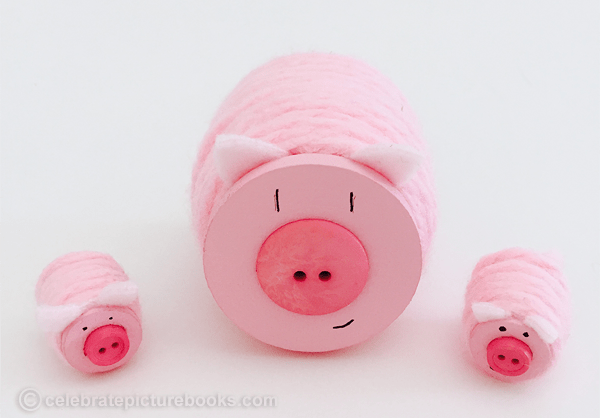
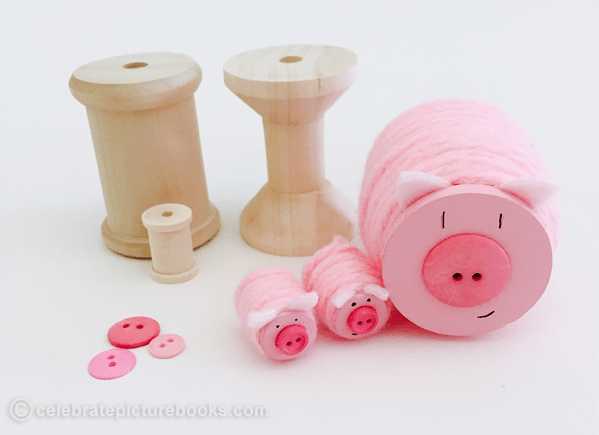
Roly Poly Spool Potbellied Pig and Piglets


Get ready to have fun making this cute and easy craft! Ham it up with your own pig and piglets who can keep you company on your desk, near your bed or anywhere it’s fun to play!

Supplies

  • Printable Pigs Ears Template
  • 2 ½-inch wooden spoon, available from craft stores
  • 1-inch wooden spool, available from craft stores
  • Pink yarn, I used a wide-strand yarn
  • Pink fleece or felt
  • Pink craft paint
  • Pink 5/8-inch or 1-inch flat button with two holes
  • Pink 3/8-inch flat button with two holes
  • Paint brush
  • Scissors
  • Glue
  • Black marker

CPB - Pig Day with spools (2)

Directions

  1. Print Pigs Ears Template
  2. Trace the ears onto the fleece or felt and cut them out.
  3. Paint the spool with the pink paint
  4. Let spool dry
  5. When the spool is dry, glue the ears to the spool, letting the ears stick up over the rim of the spool.
  6. Wrap yarn in straight layers around spool until the body of the pig is a little bigger than the end of the spool, which will be the face
  7. Cut yarn off skein and glue the end to the body
  8. To make the nose, glue the button over the hole in the middle of the spool
  9. Mark the eyes and mouth with a marker
  10. To make the tail for the large pig, cut a 4-inch long piece of yarn. Tie a triple knot in the yarn (or a knot big enough to fill the hole in the spool). Then tie a single knot near the other end of the yarn. Insert the large knot into the spool’s hole at the back of the pig. Trim the yarn in front of the second knot as needed.
  11. To make the tail for the piglets, tie a single knot in the yarn and another single knot below the first. Insert one of the single knots into the hole. Trim yarn as needed.

celebrate-picture-books-picture-book-review-tails-from-the-animal-shelter-cover

You can find Tails from the Animal Shelter at these booksellers

Amazon | Barnes & Noble | Books-a-Million

To support your local independent bookstore, order from

Bookshop | IndieBound


Picture Book Review