May 5 – It’s Children’s Book Week

celebrate-picture-books-picture-book-review-little-cheetah's-shadow-cover

About the Holiday

Children’s Book Week, a celebration of reading and books, was founded in 1919 and is the longest-running literacy initiative in the United States. This year’s theme is Read. Dream. Share. While the holiday is usually celebrated by authors, illustrators, publishers, librarians, teachers, and booksellers in schools, libraries, bookstores, and communities across the country, this year’s events will take place online. You can follow #BookWeek2020atHome and visit Every Child a Reader to find out more about the week, how to join online, and lots of bookmarks and activities to download.

Little Cheetah’s Shadow

By Marianne Dubuc


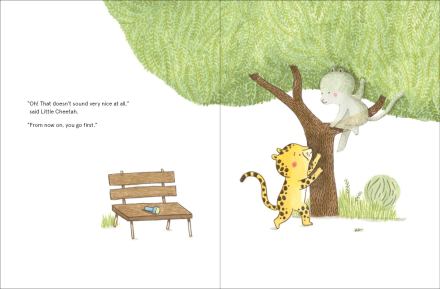
Little Cheetah had looked everywhere but he couldn’t find his shadow. He sat down on a bench under a big tree to think. Bea the firefly saw Little Cheetah looking dejected and flew down to see what the matter was. Much to Little Cheetah’s delight, Bea told him that his shadow was sitting in the tree. Little Cheetah climbed to the very top, where he found his shadow looking just as glum as he had been. He asked his shadow what was wrong.

celebrate-picture-books-picture-book-review-little-cheetah's-shadow-tree

Copyright Marianne Dubuc, 2020, courtesy of Princeton Architectural Press.

“‘You always get to go first. You always get to choose where we go,’” he said. And it seemed that Little Cheetah never held the door for shadow, whose tail invariably got caught as it closed. Little Cheetah was empathetic. “‘Oh! That doesn’t sound very nice at all,’” he agreed. And he offered to let his shadow go first from now on. The new arrangement was working out just fine.

celebrate-picture-books-picture-book-review-little-cheetah's-shadow-town

Copyright Marianne Dubuc, 2020, courtesy of Princeton Architectural Press.

Along the way, Little Cheetah got a hankering for bread from Mr. Boubou’s bakery, so they headed over and bought a nice loaf. On the way out, Little Shadow forgot about holding the door, and Little Cheetah’s tail was nipped when it closed. “‘Ouch!’” Now Little Cheetah understood Little Shadow’s complaint, and Little Shadow understood how it happened. They decided that it might be best “to walk next to each other.” When they came to a tunnel, Little Shadow stopped, afraid to go in. “‘In the dark, I disappear!’” he explained. Fortunately, Little Cheetah still had his flashlight from his earlier search. He turned it on and entered the tunnel, telling Little Shadow to stay close.  Little Shadow clung to Little Cheetah, and “together, they faced the dark.”

celebrate-picture-books-picture-book-review-little-cheetah's-shadow-tunnel

Copyright Marianne Dubuc, 2020, courtesy of Princeton Architectural Press.

They made it through, and when they got home Little Cheetah held the door for Little Shadow and let him enter first. They shared bread and jam and played cards, and when they went to bed “Little Cheetah made sure a night-light was turned on for Little Shadow” so they’d both sleep soundly.

celebrate-picture-books-picture-book-review-little-cheetah's-shadow-home

Copyright Marianne Dubuc, 2020, courtesy of Princeton Architectural Press.

Marianne Dubuc is a master of the quiet, poignant tale that deepens readers’ connection with others. In Cheetah’s Little Shadow, she uses the configuration of a body in front, the shadow behind to encourage children to think about issues such as leadership, equality, being considerate, and what being a true friend really means. Little Cheetah’s immediate recognition and acknowledgment of Little Shadow’s feelings is a touching and welcome moment. When Cheetah’s tail is caught in a door a short time later, both characters have a chance to understand the problem from both sides. This kind of experience is so valuable in developing empathy, and Dubuc’s story will encourage children to be mindful of how their actions affect others.

Dubuc’s watercolor and colored pencil illustrations are lovely and invite readers to notice an intriguing detail. As Little Shadow relates his experience and, later, as he and Little Cheetah walk through town and then enjoy time at home, children will see that Little Shadow is not merely a copy of Little Cheetah, but that he is his own person too. Charming homes and shops make up the small downtown, and the double-page spreads of Little Cheetah and Little Shadow’s home are cozy.

Like Little Cheetah’s flashlight and nightlight, this book shines the way to stronger empathy and friendships. Little Cheetah’s Shadow would be a superlative addition to home, school, and public library bookshelves.

Ages 3 – 7

Princeton Architectural Press, 2020 | ISBN 978-1616898403

Discover more about Marianne Dubuc, her books, and her art on her website.

Children’s Book Week Activity

celebrate-picture-books-picture-book-review-bookworm-bookmark

Bookworm Bookmark


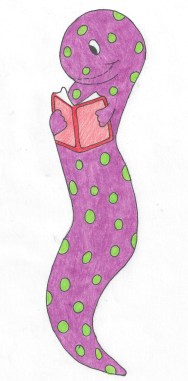
Are you a bookworm? If so, then this bookmark is for you! Just print, color, and cut along the dotted line. This little worm will happily save your page for you!

Bookworm Bookmark Template

celebrate-picture-books-picture-book-review-little-cheetah's-shadow-cover

You can find Little Cheetah’s Shadow at these booksellers

Amazon | Barnes & Noble | Books-a-Million | IndieBound

Picture Book Review

May 4 – It Is (Not) Perfect Book Tour Launch

celebrate-picture-books-picture-book-review-it-is-not-perfect-cover

About the Holiday

A new book in a favorite series is always something for readers to celebrate. Today, I’m thrilled to be launching the book tour for the fifth installment in Anna Kang’s and Christopher Weyant’s beloved You Are (Not) Small series, starring two fuzzy friends who take on life’s lessons with humor and friendship. We’re also beginning Get Caught Reading Month, which promotes the fun of reading for all ages and encourages people to set aside a special time each day to read. To join in the fun, you can take a picture of yourself reading and share it using #GetCaughtReading. Why not get started with today’s book?

I received a copy of It Is (Not) Perfect from Two Lions for review consideration. All opinions are my own. I’m happy to be teaming with Blue Slip Media and Two Lions ina giveaway of the book. See details below.

It Is (Not) Perfect

Written by Anna Kang | Illustrated by Christopher Weyant


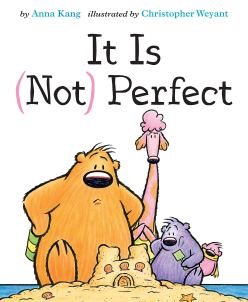
Two fuzzy friends are at the beach, building a sandcastle. It has two bucket-shaped turrets, a trio of shell decorations, and a low wall around it. The orange friend happily declares, “It is perfect!” But his purple companion looks at the castle askance and says, “It is not perfect.” If only it had flags then it would be perfect. But for the orange fuzzy creature, the flags only emphasize how short the castle is.

With a little extra sand patted into a cone on top of each turret, the castle is now perfect. Until…. Two beachgoers passing by think the castle could use some improvement. The blue fuzzy one gives it a good examination and decides the wall “is too small.” Orange fuzzy and purple fuzzy look on with disappointment and distress. They bring in more sand and dig furiously until the blue fuzzy judge finds it to be “perfect!”

But not so fast. Other beachcombers have more suggestions. Lots of suggestions. Purple fuzzy and orange fuzzy go to work. They dig, they sculp, they decorate. And when the flag is finally ploinked down on the tallest tower, everyone shouts in jubilation, “IT IS PERFECT!” Everyone gathers around the castle to take a picture just as… “SPLASH! CLICK!”… the castle is reduced to little more than a mound. But it’s nothing that a little patting, a couple of shells, a seaweed flag, and two delicious rainbow snow cones can’t make “Perfect. Truly.”

The latest book in Anna Kang’s and Christopher Weyant’s best-selling series examines a difficult conundrum: when is a work of art perfect? As the orange and purple fuzzy friends put the finishing touches on their sandcastle, happy in its perfection, niggling doubts come to the fore, causing them to reconsider if their creation couldn’t be just a little more…perfect. When others begin chiming in with their suggestions to make the castle bigger and “better,” these two friends go to work to improve it. While the result is a sensational, award-worthy spectacle, when a wave wipes it out, the two friends are just as happy with their original effort. For kids who may struggle with their inner critic or yielding to others’ opinions, this story humorously encourages them to stay true to their vision.

Anna Kang’s sparse text, conveyed entirely through short sentences of realistic dialogue, is funny and relatable as the crowd grows bigger and each person has their own suggestion for improvement. Readers may want to jump in themselves and talk about how they would build their own sandcastle. Kang’s superb storytelling is paired with Christopher Weyant’s expressive characters to create a fast-paced and entertaining page-turner.

As each iteration of the sandcastle brings smiles and then furrowed brows of doubt to the two fuzzy characters, readers will recognize feelings they may have about things they create or do. Add in the beachgoers, and the issue gets even more muddied. One enormous voice in the crowd will have kids giggling and wanting to hear it again and again. Weyant’s images of the purple and orange fuzzy friends furiously digging and patting, planning and decorating under the watchful eye of the group ramps up the suspense for the final reveal.

The rogue wave is sure to bring cringes and cries of “Oh no!,” but the resulting photo will elicit laughs. As the people disperse after the castle is destroyed, kids will understand that their interest was only fleeting while the orange and purple fuzzy characters’ friendship is forever. The final pages provide a sweet sense of satisfaction. While the final castle was a thing of beauty, it’s momentary perfection is nothing compared to the perfect day the two fuzzy characters spend together.

A delightful book for emergent and beginning readers to enjoy on their own as well as for dramatic read-alouds, It Is (Not) Perfect is a must for home, classroom, and public library collections.

Ages 3 – 7 

Two Lions, 2020 | ISBN 978-1542016629

Anna Kang and Christopher Weyant are the creators of Theodor Seuss Geisel Award winner You Are (Not) Small as well as series titles That’s (Not) Mine, I Am (Not) Scared, and We Are (Not) Friends. They also wrote and illustrated Eraser, Can I Tell You a Secret?, and Will You Help Me Fall Asleep? Christopher’s work can also be seen in The New Yorker, and his cartoons are syndicated worldwide. This husband-and-wife team lives in New Jersey with their two daughters and their rescue dog.

You can connect with Anna Kang on 

Her website | Facebook | Instagram | Twitter

You can connect with Christopher Weyant on

His website | Facebook | Instagram | Twitter

It Is (Not) Perfect Book Tour Activity

celebrate-picture-books-picture-book-review-bringing-the-outside-in-painted-pails-craft

Personalized Painted Pail


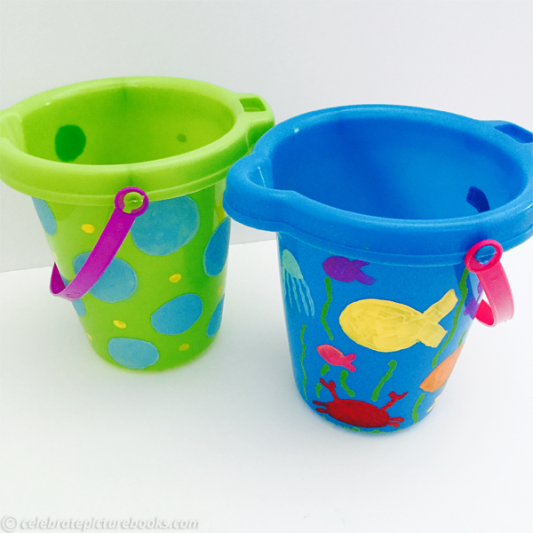
A trip to the beach isn’t complete without a pail to make a sandcastle with or to collect shells, seaweed, sea glass, or other things in. But why should all the cool stuff be on the inside? With this craft you can decorate your pail to show your unique personality!

Supplies

  • Plastic or metal pail
  • Craft paint in various colors
  • Crystal Clear Acrylic Coating, for multi-surface use
  • Paint brush

Directions

  1. Paint designs on the pail
  2. When paint is dry spray with acrylic coating to set paint
  3. Let dry

celebrate-picture-books-picture-book-review-it-is-not-perfect-cover

You can find It Is (Not) Perfect at these booksellers. The book will be released on May 12. It is available for preorder.

Amazon | Barnes & Noble | Books-a-Million | IndieBound

Picture Book Review

May 1 – May Day and Interview with Author Denise Brennan-Nelson

celebrate-picture-books-picture-book-review-mae-the-mayfly-cover

About the Holiday

May Day has for centuries celebrated the coming of spring. In ancient calendars May 1 heralded the first day of summer. Often celebrated with flowers and dancing, May Day has ushered in many traditions, such as dancing around a Maypole and May Day baskets, which are cone-shaped baskets filled with flowers. A May Day basket is usually given in secret as the giver hangs it on a friend’s doorknob and then rings the doorbell and runs away. (Which sounds like a perfect way to celebrate the holiday in these days of social distancing.) Whether nature is blooming in full or just starting to bud where you live, May Day offers the promise of brighter days ahead. Today’s book—and its adorable character Mae—shows us how to celebrate that feeling every day.

I received a copy of Mae the Mayfly from Sleeping Bear Press for review consideration. All opinions of the book are my own.

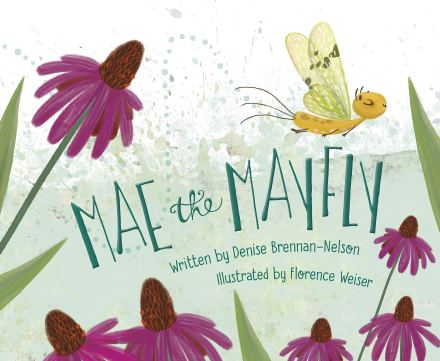
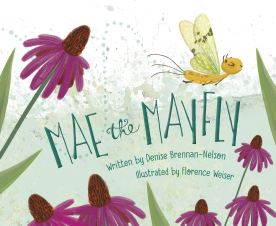
Mae the Mayfly

Written by Denise Brennan-Nelson | Illustrated by Florence Weiser


“Near the bank of the river one warm spring day / a new life began, and her name was Mae.” Before her mama said goodbye, she hugged her daughter and told her that she had her “whole life—a day, perhaps more” to explore her world. As Mae flitted along the river, a large, hungry trout waited for just the right moment to lure her in. It smiled deceitfully and beckoned to her, and, even though her inner voice told her not to, Mae flew down closer to take a look.
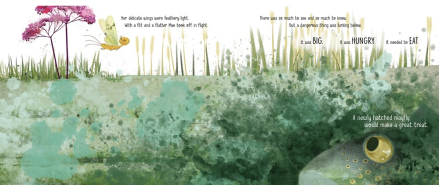
celebrate-picture-books-picture-book-review-mae-the-mayfly-fish

Image by Florence Weiser, 2020, text copyright Denise Brennan-Nelson, 2020. Courtesy of Sleeping Bear Press.

That’s when the trout leapt from the water to snatch Mae from the air. But she darted and dodged and got away. Shaking with fear, Mae found a hole in a hollow tree and flew in. “I’ll stay here forever! I’m not coming out!” she told herself.  But once her heart stopped beating so loud, she heard a happy tweet and peeked out of the tree. She saw a mother robin feeding her chicks and a spider web glittered in the sun. “The mist on the river was a fine, pink cloak. / A bullfrog bellowed his morning croak.” 

Mae remembered what her Mama had said and “launched herself from the dark, hollow place.” She followed the river, where she saw flowers and birds, a deer and a bear and one “stubby toad.” Then, she came to a clearing where she found “a singing, dancing jamboree… a wild mayfly jubilee! / Joining in, Mae danced with glee!”

celebrate-picture-books-picture-book-review-mae-the-mayfly-bird

Image by Florence Weiser, 2020, text copyright Denise Brennan-Nelson, 2020. Courtesy of Sleeping Bear Press.

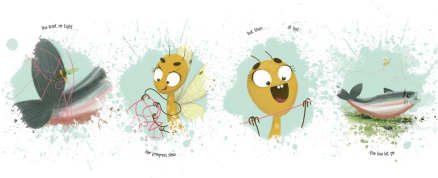
As morning turned to afternoon, Mae was floating on the breeze when she heard a call for help. She went in search of who it was and found Trout lying motionless and barely breathing. Fearful that he might leap at her again, she carefully went closer to inspect. “But Trout was weak, no flip or flail. / Tangled line had caught his tail.” Then Mae noticed something else—his shimmering “rainbow stripes in every hue, silver, pink, and shades of blue.” And in his eyes she saw his fear and realized that she and Trout were alike.

Mae went to work to try to free him. The knot was tight, but Mae worked patiently until the line slipped free and Trout swam away with the current. Mae hoped that he would be okay. Just then she saw a flash as Trout returned and with a flip of his tail said, “Thank you.” As nighttime settled over the river and the moon rose high, Mae settled on a cattail leaf. She listened to the bullfrogs and watched the fireflies glow. “The stars came out early for  sweet, little Mae. / She counted each one… then called it a day.”

Back matter includes a message about mindfulness, an exercise to try and facts about mayflies.
celebrate-picture-books-picture-book-review-mae-the-mayfly-fishing-line

Image by Florence Weiser, 2020, text copyright Denise Brennan-Nelson, 2020. Courtesy of Sleeping Bear Press.

Soaring and uplifting, Denise Brennan-Nelson’s unique story reminds children and adults alike to live each day to the fullest and reveals where the treasures that make life so fulfilling can be found. The short lifespan of a mayfly gives Brennan-Nelson a perfect canvas for compressing the lessons of a lifetime into one day, and her superlative storytelling incorporates parental love, fear, appreciation for our surroundings, courage, selflessness, and friendship. Her language is triumphant, carried breezily on rhyming couplets that are a joy to read aloud. The pitch-perfect ending may bring a tear to the eye but spur readers to find the beauty in every day.

Through Florence Weiser’s lovely textured illustrations, readers can almost feel the breeze ruffling the tall grasses, the spray of river water, and the warmth of the sun as they follow Mae on her adventure. Mae is a cutie with lacy wings and a sweet, expressive face. A powerful image of empathy comes in a close-up, two-page spread in which Mae, looking into Trout’s frightened eye, sees her own reflection. Whereas up to now Mae has been an observer of life, she now becomes an active participant by helping a fellow creature. Working in perfect tandem with Brennan-Nelson’s text, Weiser’s pages take readers on a journey of growth and discovery they’ll take to heart. Calming shades of green dotted with subtle pinks, purples blues, and browns reflect Mae’s mindful approach to life, making this a delightful book to share for quiet story times.

Beautiful and resonant, Mae the Mayfly is highly recommended and would be an often-asked-for addition to home, school, and public library collections.

Ages 5 – 8

Sleeping Bear Press, 2020 | ISBN 978-1534110519

Discover more about Denise Brennan-Nelson and her books on her website.

To learn more about Florence Weiser, her books, and her art, visit her website.

Meet Denise Brennan-Nelson

celebrate-picture-books-picture-book-review-Denise-Brennan-Nelson-headshot

Denise Brennan-Nelson has written a number of books for children, including Tallulah: Mermaid of the Great Lakes, Leopold the Lion, Someday Is Not a Day of the Week, My Momma Likes to Say, Santa’s Secret, and the popular Willow series. As a national speaker, Denise encourages adults and children to tap into their imaginations to create richer, fuller lives. She travels the country, sharing her reading and writing enthusiasm with schoolchildren and teachers. Denise lives in Howell, Michigan with her husband, Bob. She strives to spend each day teaching and learning with a creative spirit. Find out more about Denise at www.denisebrennannelson.com.

Today, I’m really thrilled to be talking with Denise Brennan-Nelson about her inspiring story, her journey in writing it, and how we can all appreciate the life around us. My blog partner Jakki’s sons, Jack and Steve, also loves Mae the Mayfly and had a few questions of their own. 

Jack wonders: What inspired you to write about a mayfly? 

The inspiration to write about a mayfly came when I discovered that they live, on an average, only one day. I started digging and discovered that while mayflies have many interesting qualities, it was their life cycle that reeled me in and set the basis for the story: a mayfly begins as an egg, then hatches into a nymph. It then lives as a nymph for one to three years before emerging from the water as an adult. Once they have molted––the only insect known to molt twice!––they only have about a day to live. ONE DAY? How do you live your entire life in ONE day? Where would you go? What would you do? I had so many questions. And so, the journey began!

Steve would like to know: Where is your favorite place to go and enjoy nature?

Our backyard has many trees and a few paths to meander on. One of those paths leads to a playhouse that my husband built years ago for our children, Rebecca and Rachel. I love to sit on the steps and take it all in––especially the forever-changing trees and the way the light filters through them. It’s quiet and I watch the birds and the chipmunks, squirrels, and occasionally deer show up. It’s far enough away from our house that I can forget about my “to-do” list and relax.

There are also a couple of parks nearby that have trails and lakes and offer a beautiful place to enjoy nature.

Jack and Steve asked if you spent a lot of time at a pond while creating the story.

No, I didn’t spend a lot of time at a pond, but I did a lot of research to help me visualize the setting.

In early drafts, I pictured Mae’s life beginning on a pond but as the story emerged it turned into a river. Unlike a pond, a river “flows.” It seemed to fit with the ebb and flow of Mae’s life.

The river became integral to the story; Mae’s life began there, she experiences a harrowing ordeal with Trout, which causes her to flee the river out of fear, but ultimately, Mae returns “home” to the river and completes her life. (This was in keeping with a mayfly’s lifecycle.)  

Hi Denise! I love your answers to Jack and Steve’s questions! What an amazing character a mayfly makes. You’ve published many, many books for kids. What inspired you to become a children’s writer? What’s the best part about your job?

I had been happily writing for myself – journals and poetry mostly – when inspiration came knocking at my door in the form of a documented study about bumblebees. According to scientists, bumblebees are not “equipped” to fly. Aeronautically, their wings are too small for their bodies. Upon hearing that, I was compelled to write what was in my head and my heart. I wanted to answer the questions I had: What would happen if bumblebees found out about their small wings? Would fear and doubt stop them from doing what they love to do? Once it was written, I felt I had written something that I wanted to share with others. Four years and many rejection letters later, my first book, Buzzy the Bumblebee was published.

The best part about my job is creating something – taking an idea and turning it into something new that entertains and inspires children and adults. I also love the freedom to work when and where I want to, often in my pajamas in the wee hours of the morning.

Mae the Mayfly is a gorgeous, poignant reminder for both kids and adults to look around and appreciate the beauty all around us. Not only the mayfly, but all of the sights that Mae sees are ephemeral parts of nature. How did you choose each of these?

I felt they had to be simple, yet remarkable acts of nature that would draw Mae out from the hollow of a tree. You know that awe-inspiring feeling you get when you discover a bird’s nest or a spider’s web? That was the basis for the sights and sounds Mae encountered.

I also drew from a trip to Yellowstone where the vivid images of rivers, flowers, bear cubs, and other magnificent acts of nature are forever embedded in my mind.

The rhymes of Mae the Mayfly are as light as she is, and your rhythm is as jaunty as a mayfly’s flight. Could you describe your journey in writing this story?

After learning of a mayfly’s short lifespan, the mulling-over period ensued. A lot of thinking and dialogue in my head takes place before taking pen to paper. Often, I share my initial thoughts with family and friends which helps the pieces come together.

I did more research, too. I watched a video showing how some mayfly nymphs resist the pull to come to the surface when it is time to shed their outer covering and expose their wings. After spending years at the bottom of the dark river, why would they resist? I wondered. Why would they want to stay at the bottom of the river when they could break through the surface into the light, and fly––if only for a day?

Ah, fear.

It was starting to come together – I would write about a mayfly and how beautiful and meaningful one day could be, if she can overcome her fears.

Initially, the story was written in prose and then I wrote it in verse. At one point, I even wrote a funny version for my kids about Mae being stubborn and not listening to her mama. That version didn’t end well for Mae, because, well, she didn’t listen to her mama! My kids got a kick out of it.

Before she was Mae, she was Martha. From Martha to Marvin. Then I changed it to May. And then May became Mae.

My first submission was declined. So, I gave it a rest. The idea was there but I needed to start over. I believed in this story with my whole being and I wasn’t giving up. In June 2018, I resubmitted it and in August I learned that Sleeping Bear Press wanted to move forward with it. I signed the contract in September and it was released in March of 2020 amid a pandemic. It wasn’t the launch I envisioned, but the story is about appreciating the simple things and living life to the fullest. It is also about empathy, fear, and gratitude. Perhaps the timing was just right.

Florence Weiser’s illustrations are adorable while truly highlighting the beauty of what Mae sees. Do you have a favorite spread? Why do you love it?

I love the cover and the end sheets, and the illustration of Mama saying good-bye to Mae tugs at my heart. But my favorite is the spread where Mae encounters Trout tangled in fishing line and Mae sees herself – literally and figuratively – in Trout’s eyes. Mae is confronted with a difficult decision between fear, or courage and compassion. This was a pivotal part of the story and Florence did a remarkable job capturing the emotion of both Mae and Trout.

You encourage people to be aware of and open to inspiration and those small moments in life that make them the best version of themselves they can be. How can kids and adults practice this kind of mindfulness while at home during this time of self-isolating and social distancing?

In a robust and enthusiastic voice my dad often proclaims, “This is living!” He says it with such conviction that you might think he won the lottery. On the contrary, he says it to express his delight over life’s simple/small pleasures; a sunset, eating a fresh-picked tomato from the vine, watching the birds, the daffodils sprouting, a delectable meal, a rainstorm . . .

I am by no means an expert on mindfulness, but I have learned a few things that help me enjoy life a little bit more:

  • Be aware/pay attention – the list of things to delight over is endless when we notice what is going on around us
  • Make room for quiet time and stillness every day
  • Focus on one thing at a time and do it with intention and purpose
  • Write down 3-5 things daily that you are grateful for. Do it as a family with a “family journal” or get a notebook for every member and make it a nightly ritual

Lately I’ve been asking people, “What do you like most about the shelter-in-place order that we are being asked to follow?” Over and over, I’ve heard, “It feels good to slow down . . . less hectic . . .” I hope we emerge from this unique experience with the realization that life is not a race, it’s a gift.

What’s up next for you?

My publisher is currently reviewing two stories that I have submitted. Fingers crossed that they accept both of them!

What inspires you each time you start a new story?

When I have an idea that interests me I feel invigorated and purposeful. What can I do with it? Where will it take me? What can I learn from it?

In Bird by Bird, Anne Lamott writes, “If you are writing the clearest, truest words you can find and doing the best you can to understand and communicate, this will shine on paper like its only little lighthouse.”

Each time I begin a story I am hopeful that what I write “will shine on paper like its own little lighthouse.”

Thanks so much, Denise! This has been such a wonderful talk! I wish you all the best with Mae, the Mayfly and can’t wait to see more from you in the future.

You can connect with Denise Brennan-Nelson on 

Her website | Facebook | Twitter

May Day Activity
celebrate-picture-books-picture-book-review-mae-the-mayfly-activity-page

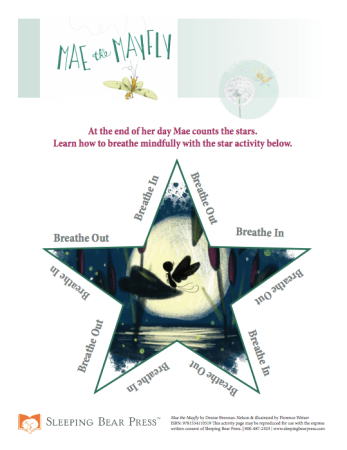
Mae the Mayfly Mindfulness Activity


Like Mae, you can calm your mind and be present in the moment as you enjoy your surroundings. Use this printable activity to get into that peaceful state of mind. Just look at the picture inside the star and follow the breathing directions as you trace each arm. You can download it from the Sleeping Bear Press Website under Teachers Guides here:

Mae the Mayfly Mindfulness Activity
celebrate-picture-books-picture-book-review-mae-the-mayfly-cover

You can find Mae the Mayfly at these booksellers

Amazon | Barnes & Noble | Books-a-Million | IndieBound | Sleeping Bear Press

Picture Book Review

April 29 – It’s National Month of Hope

celebrate-picture-books-picture-book-review-little-mole-finds-hope-cover

About the Holiday

Founded in 1991, National Month of Hope encourages people to bring hope to those in need both emotionally and physically. Reaching out to let a friend know you’re there for them, volunteering to help out in the community or on a personal level, and simply sharing a smile with those around you are all ways to show others you care. These days, staying in touch online and checking up on family and friends spreads happiness and hope for when we can all be together again. 

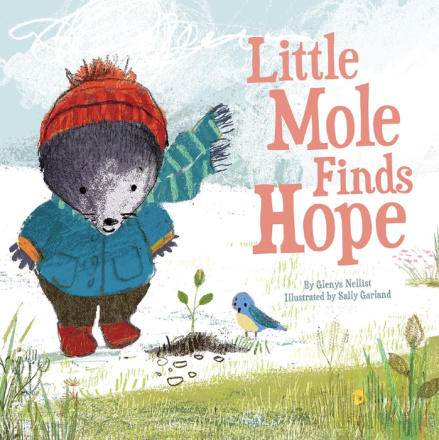
Little Mole Finds Hope

Written by Glenys Nellist | Illustrated by Sally Garland


Little Mole felt sad. He didn’t know why he felt bad inside, he just did. His mama told him he needed to find hope. Little Mole wondered where. As she took his paw, Mama said, “‘Sometimes, hope is hiding in the darkness. Sometimes it’s hard to see. But it’s always there.'” Mama led her son out of the tunnel, but on the way she pointed out a “brown, wrinkled” bulb hanging from the ceiling. Little Mole thought it was dead.

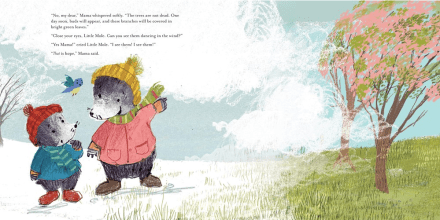
But Mama explained that that bulb would someday soon become a lovely daffodil. She asked her son to picture it swaying with the breeze, and when he said he could see it, she told him “That is hope.'” When they crawled out of the burrow, Little Mole saw trees without leaves. “They stretched out like skeleton bones silhouetted against the sky.” Little Mole thought they were dead. But Mama explained that buds and then leaves would soon appear. She asked Little Mole to imagine it. With excitement he told her he could see it. Again, Mama said, “‘That is hope.'”

celebrate-picture-books-picture-book-review-little-mole-finds-hope-trees

Image copyright Sally Garland, 2020, text copyright Glenys Nellist, 2020. Courtesy of Beaming Books.

Mama and her little one continued on past Mr. Rabbit’s garden, where they saw another example of hope hiding in an unexpected place. When they got home, Little Mole was happy.He said he’d had a wonderful day and understood that “there was always hope, even in the darkest places.” Mama tucked her son into bed with a kiss, and Little Mole fell asleep dreaming of the colorful spring to come.

Back matter includes a Discussion Guide for Caretakers that gives them tools for talking about the story, tips on helping a child who feels sad, and how to share their own experiences and where hope can be found.

Glenys Nellist’s uplifting story could not have come at a better time. With children at home and their normal lives disrupted, many may be feeling sad and unusually stressed. While many things have changed, there are still those aspects of life that remain constant. A parent or caregiver’s love is one; signs of spring and summer are another. Nellist’s honest and straightforward storytelling, acknowledges feelings of sadness and the fact that they are often unattributable to any concrete cause. Mama’s gentle acceptance of her son’s emotions and her actions in showing him signs of renewal will resonate with children familiar with the cycles of winter and spring and give adults models for conversations with their own children. Perfectly paced, Nellist’s book provides opportunities for adults and kids to look for other constants in their lives and to reaffirm their love for one another––now and always.

Sally Garland’s textured illustrations, rendered in warm tones that reveal the coziness of the Mole’s home and vibrant, sunny colors as Little Mole imagines springtime, will delight children and draw them into the meaning of the story. As Mama clearly points out the bulb, the bare trees, and a sleepy chrysalis, children will enjoy guessing what each will become and how they represent hope. Readers will also like finding other symbols of hope and signs of Mama’s and Little Mole’s love throughout the story.

Lovely in every way and highly recommended for talking with children about their feelings, Little Mole Finds Hope is a book kids will enjoy for its storytelling and its heart again and again.

Ages 3 – 6

Beaming Books, 2020 | ISBN 978-1506448749

Discover more about Glenys Nellist and her books on her website.

You can learn more about Sally Garland, her books, and her art here.

Month of Hope Activity

celebrate-picture-books-picture-book-review-little-mole-finds-hope-activity-kit-image

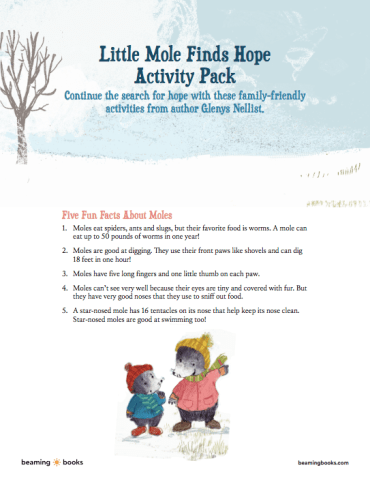
Little Mole Finds Hope Activity Pack


You can find lots of fun in this printable activity pack found on the Beaming Books website.

Little Mole Finds Hope Activity Pack

celebrate-picture-books-picture-book-review-little-mole-finds-hope-cover

You can find Little Mole Finds Hope at these booksellers

Amazon | Barnes & Noble | Books-a-Million | IndieBound


February 3 – It’s Children’s Authors and Illustrators Week

celebrate-picture-books-picture-book-review-what's-up-maloo-cover

About the Holiday

This week was established to raise awareness and promote literacy and the joys and benefits of reading. During the week, children’s authors and illustrators attend special events at schools, bookstores, libraries, and other community centers to share their books and get kids excited about reading. To learn more about how you can instill a lifelong love of learning in your children, visit ChildrensAuthorsNetwork!

I received a copy of What’s Up, Maloo? from Tundra Books for review consideration. All opinions are my own. I’m excited to partner with Tundra in a giveaway of the book. See details below.

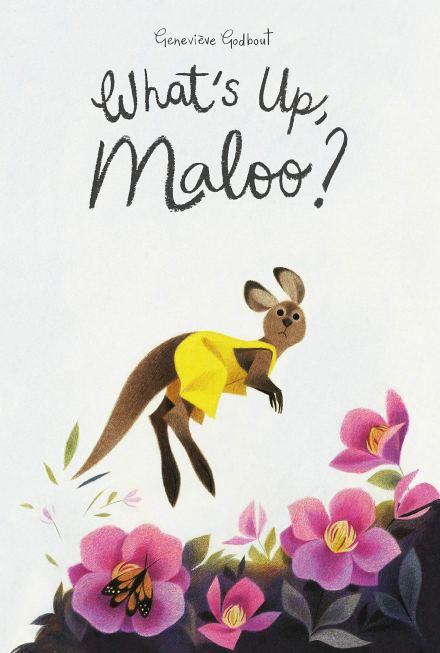
What’s Up, Maloo?

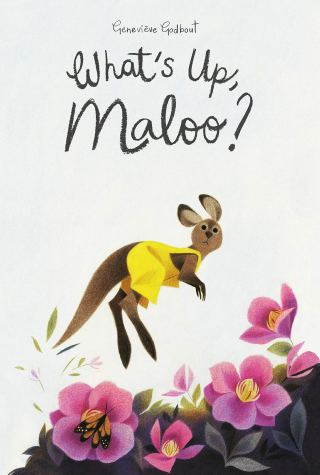
By Geneviève Godbout


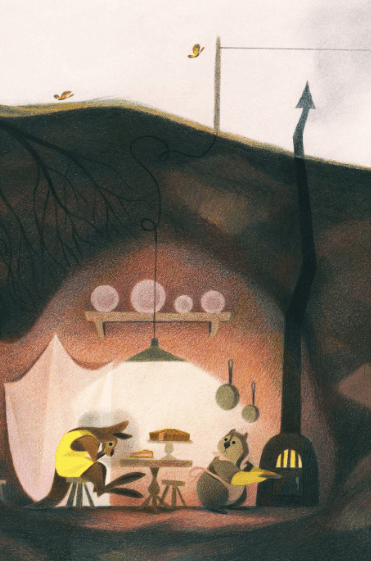
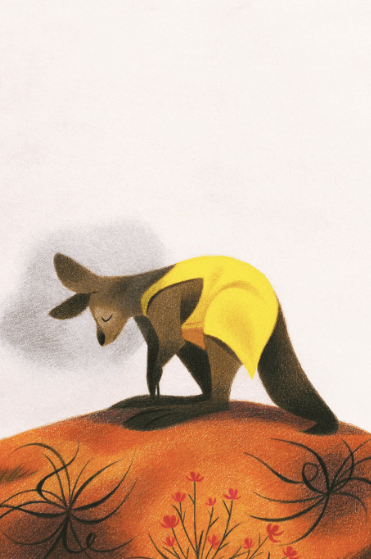
Maloo is a little kangaroo with an especially hoppy spring in his step. But one day he feels grounded. Instead of hop, hop, hopping to see his friend, he takes “One step. Two steps, Three steps.” Wombat immediately notices that something’s amiss and asks, “What’s up, Maloo?” She brings him inside her cozy den and gives him a slice of pie. While she slides another treat into the oven, Maloo sits forlornly at the table, not touching his pie.

celebrate-picture-books-picture-book-review-what's-up-maloo-one-sad

Copyright by Geneviève Godbout, 2020, courtesy of Tundra Books.

They go down to the river—“Four steps. Five steps. Six steps”—where Crocodile sees it too and asks Maloo what’s wrong. Perhaps a swim will cheer Maloo up, but he sits dejectedly atop his ball and floats with the current. The three go to see Koala. They all want to help Maloo feel better. They try giving him a lift with an electric fan, but the wind just knocks Maloo head over heels.

celebrate-picture-books-picture-book-review-what's-up-maloo-den

Copyright by Geneviève Godbout, 2020, courtesy of Tundra Books.

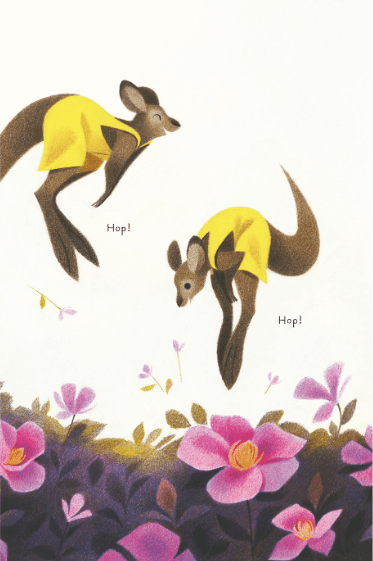
Maloo’s friends stay with him, though––“ten steps…one hundred steps…one thousand steps.” They stretch out a blanket and fling Maloo into the air, giving him encouragement. Can he hop? Maloo falls…but springs up again. “Hop!” He floats down, but this time instead of feeling dejected, he’s looking up. Back into the air he goes. He descends, but something is rising up in him. Maloo jumps with a gigantic “Hop!” He smiles. Koala climbs on Maloo’s back while Wombat and Crocodile balance on pogo sticks, and they all “hop like Maloo!’”

celebrate-picture-books-picture-book-review-what's-up-maloo-one-hop

Copyright by Geneviève Godbout, 2020, courtesy of Tundra Books.

With her powerfully emotional images and spare text, Geneviève Godbout allows readers to identify with Maloo as he experiences a time of sadness and recovers happiness with the help of his friends. In her soft, earth-toned illustrations, Godbout provides many perspectives and good examples for children and adults to discuss. Having lost his hop, Maloo seeks out one friend, who engages another friend and yet another, showing children the reassurance and help available by reaching out and having a supportive network. Maloo’s friends are also sensitive to Maloo’s mood, encouraging readers to pay attention to and acknowledge changes they may see in their friends and family. As readers count Maloo’s steps, they’ll see that sometimes the road back to feeling happy can be long, but that good friends stick with you no matter what or how long it takes. They also learn that asking for help starts with one step.

A moving and accessible resource for parents and caregivers to talk with their children about the ups and downs of life and the emotions of sadness and depression, What’s Up, Maloo? is a valuable addition to home, school, and public library collections.

Ages 3 – 7

Tundra Books, 2020 | ISBN 978-0735266643

To learn more about Geneviève Godbout, her books, and her art, visit her website.

Meet Geneviève Godbout

Born and raised in Quebec, Geneviève Godbout studied traditional animation in Montreal and at the prestigious Gobelins school in Paris. She is the illustrator of a number of books for children, including The Pink Umbrella, When Santa Was a Baby, Kindergarten Luck (Chronicle), and Joseph Fipps (Enchanted Lion). Some of her clients include The Walt Disney Company, Chronicle, HMH, Flammarion, Bayard, Les éditions Milan and La Pastèque. She also works for clothing designers like Nadinoo and Mrs. Pomeranz, creating illustrations and prints for their collections. Connect with Geneviève on her website.

Congratulations on What’s Up, Maloo, your debut picture book as both author and illustrator! Can you talk a little about the journey you’ve taken with this book?

Thank you! I never expected to be an author, but one day I woke up with the feeling I should write my own story about depression. I pictured this little kangaroo that lost his hop and told my French publisher (La Pastèque) about it. The whole creative process was natural, yet I felt incredibly insecure about my own capacities. But once published, we had such a fantastic response that I’m now working on a sequel with the little crocodile! 

What was your inspiration for this story and why this subject is important to you? What do you hope children will take away from your story?

I was inspired by my own experience of depression. I wanted to say that it’s ok to go through tough times and emphasize the importance of being surrounded without judgement. We should feel safe to confess our feelings to a friend. We don’t have to go through this alone. 

Your illustrations of Maloo feeling sad and losing the spring in his step are touching and instantly recognizable for children. How can adults use the book to talk with their children about the strong feelings of sadness and depression from multiple viewpoints, including the sufferer themselves and their friends?

I chose not to mention why Maloo lost his hop so that kids and adults can fill the gap in the text with their own experience. Maloo’s friends are sweet and full of empathy. I pictured this book as a comforter rather than a sad story. 

You’ve brought iconic characters Anne of Green Gables and Mary Poppins to books for the youngest readers. What are the challenges and joys of working with these beloved characters?
It was quite an intimidating challenge. These characters are so loved by readers (and myself!) that everyone has their own expectations of what they should look like. For instance, Mary Poppins is dramatically different in the original books by P.L. Travers from the Disney movie. But when we think about Mary Poppins, most people picture Julie Andrews, not a severe looking lady with very tall feet. With that in mind, I tried to find my own way of drawing both Mary Poppins and Anne Shirley. It was such an exciting opportunity, I reminded myself to have fun during the creative process without anticipating the public response too much. 

From characters’ round, expressive eyes, rosy cheeks, and sweet grins to animated action punctuated with humor to your gorgeous colors, your picture book illustrations are truly distinctive. How did you develop your signature style?

A style is the expression of one’s sensitivity and creativity. Mine evolved throughout the years as I gained experience and technique. And for some reason, I chose the most time-consuming medium: color pencils! I have always loved them. They’re delicate and precise. My background in traditional animation also has a huge part in the way I draw today. Everything is about movement and expressive posing. 

What do you love best about creating books for children?

I love the idea of touching people and offering them a safe bubble where they can smile and relax. There is nothing better than hearing a child or an adult say they love to curl up in bed with one of my books. 

You went to school in Paris, you’ve worked in London, and now you live in Montreal. Could you name one of your favorite places in each city and tell why you love it?

I was lucky to live in such fabulous and inspiring cities. I loved to get lost in Paris and walk by the Thames river near Hammersmith in London. Each time I go back, it feels a bit like home. As for Montreal, I think it’s the best place in terms of quality of life and I love the contrast between the seasons!

What’s up next for you?

I’m working on a couple of exciting projects including a sequel for What’s up, Maloo? and a third book in the Anne series. I’m kind of booked for the next year or so with Harper Collins, Random House, Comme des Géants, and perhaps Houghton Mifflin Harcourt, but I’m not sure what I’m allowed to say at this stage! 

Thanks, Geneviève! It was wonderful chatting with you. I’m really looking forward to seeing the sequel to What’s Up, Maloo? and all of your upcoming books!

celebrate-picture-books-picture-book-review-what's-up-maloo-cover

You can find What’s Up, Maloo? at these booksellers

Amazon | Barnes & Noble | Books-a-Million | IndieBound

Picture Book Review


January 10 – Houseplant Appreciation Day

celebrate-picture-books-picture-book-review-nobody-hugs-a-cactus-cover

About the Holiday

Missing the green leaves and colorful flowers of spring and summer? Maybe it’s time to recreate the sights of warmer days inside with houseplants! Placed in a sunny window, some plants will continue blooming all winter long, making you feel happier. Houseplants also provide health benefits as they produce oxygen, release moisture into that dry winter air, and improve air quality. Add a few herb plants and even cooking will take on new life. Whether you add just one plant or create an indoor garden, today’s the perfect day to get started.

Nobody Hugs a Cactus

By Carter Goodrich


Hank, a little cactus, sat in his window and looked out with pleasure on the “empty…hot, dry, peaceful, and quiet” desert. Sometimes, though, visitors came by—like Rosie the Tumbleweed, who cheerfully greeted Hank and commented on the beautiful day. “Hank ignored her. He just wanted to be left alone.” Hank was happy when Rosie passed by without stopping.

celebrate-picture-books-picture-book-review-nobody-hugs-a-cactus-window

Copyright Carter Goodrich, 2019, courtesy of Simon & Schuster Books for Young Readers.

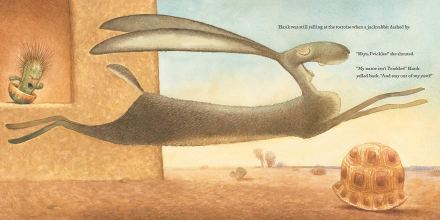
But then a tortoise ambled by to say hello. Hank shouted for him to get off his property. As he was yelling a jackrabbit bounded by. “‘Hiya, Prickles,’ she shouted,” and Hank turned his fury on her. It wasn’t long before a coyote appeared. Hank shooed him away, but not before the coyote commented, “‘You are as prickly on the inside as you are on the outside.’”

celebrate-picture-books-picture-book-review-nobody-hugs-a-cactus-rosie

Copyright Carter Goodrich, 2019, courtesy of Simon & Schuster Books for Young Readers.

When a passing cowboy was told to get off the grass, he countered that there was no grass and added that it seemed “‘somebody needed a hug. Too bad nobody hugs a cactus,’” he added. A lizard on the wall was quickly dispatched with a warning that Hank did not want a hug. That was just fine with the lizard, who didn’t want to give him one anyway.

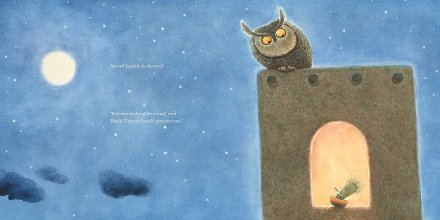
By now, nighttime had fallen, and an owl landed on the roof of Hank’s house. Hank gazed at the owl, and the owl gazed back. Begrudgingly, Hank offered to give the owl a hug. But the owl flew off, and “for the first time, Hank began feeling a little lonely.” The next morning, Hank felt a little sad and had begun reconsidering that hug.

celebrate-picture-books-picture-book-review-nobody-hugs-a-cactus-jackrabbit

Copyright Carter Goodrich, 2019, courtesy of Simon & Schuster Books for Young Readers.

Just then the wind picked up, and a Styrofoam cup flying by stuck to Hank’s face. Rosie tumbled by and knocked it off before rolling on. Hank thought about Rosie’s kindness and felt bad about all the times he’d been mean to her. He decided he wanted to make amends. Over several days he grew a beautiful flower, and when Rosie passed by again, he called out and offered it to her with a big smile. “Rosie was so surprised, she jumped up and gave Hank a big hug. It felt so nice Hank didn’t want to let go.” Which was a good thing, because they were stuck together. But they don’t mind; they like being stuck together better than being alone.

celebrate-picture-books-picture-book-review-nobody-hugs-a-cactus-owl

Copyright Carter Goodrich, 2019, courtesy of Simon & Schuster Books for Young Readers.

Well-known for his talent for creating charming characters who steal your heart, Carter Goodrich takes on the cantankerous among us—or those cranky days—and shows that kindness does soften even the prickliest of shields. Carter’s diminutive grouch may be discourteous but he’s also adorable, hinting at the softie that lies below the prickles and turning those dissuasive phrases hurled at his neighbors into lines that will elicit giggles from kids and adults. Carter’s thin-limbed and elongated jackrabbit and cowboy are also stylishly humorous. The tortoise that sits in front of Hank’s house hiding in his shell throughout the story serves dual purposes, showing how rejection makes others feel while also demonstrating what it looks like to be truly isolated and alone. Hank’s slow change of heart rings true and the act of selflessness that brings him and Rosie together makes for another funny scene and a satisfying ending.

A story that is sure to be embraced for crabby days and cheerful days, Nobody Hugs a Cactus would be a favorite on home, classroom, and public library bookshelves.

Ages 4 – 8

Simon & Schuster Books for Young Readers | ISBN 978-1534400900

To learn more about Carter Goodrich and his books, film work, and art, visit his website.

Houseplant Appreciation Day Activity

celebrate-picture-books-picture-book-review-flip-flop-craft

Flip-Flop Plant Holder


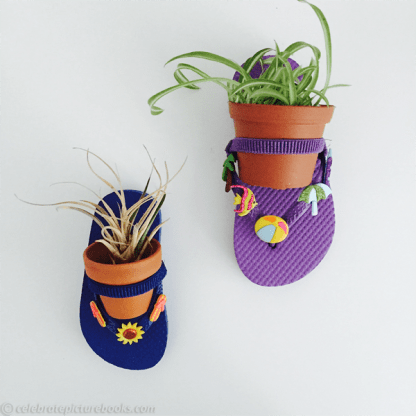
Flip-flops aren’t only for your feet—or for summer! With this easy craft you can make a whimsical way to hang succulents and other light plants on walls or even windows!

Supplies

  • Child’s flip-flops with elastic heel straps
  • Buttons or charms
  • Small plastic solid-bottom pot
  • Small plant
  • Dirt
  • Hot glue gun
  • Heavy duty mounting strips
  • Small shovel or spoon

Directions

  1. Place the flip-flop toe down on your work surface. With the hot glue gun, attach the buttons to the plastic toe straps of the flip-flops.
  2. Add dirt to the pot
  3. Add plant to the pot
  4. Slip the pot into the elastic strap and gently push down so it is also supported by the plastic toe straps
  5. To hang, use appropriate-weight mountable strips.
  6. To make an interesting and attractive arrangement, use various sizes of flip-flops

Amazon | Barnes & Noble | Books-a-Million | IndieBound

Picture Book Review
December 21 – It’s Read a New Book Month
celebrate-picture-books-picture-book-review-odd-dog-out-cover

About the Holiday

There’s nothing better than spending the chilly days of winter snuggled up with a new or favorite book. If you’re still looking for gifts to give, it’s not too late to head to your local bookstore to find stories that will make kids (and adults) eyes light up. And if you’re a post-holiday shopper (and who isn’t?), make sure to check out those bookstores again. After all, it’s a loooong winter!
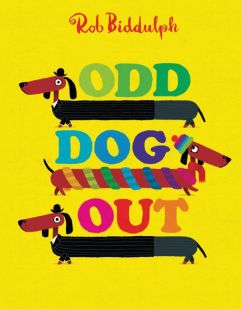
Odd Dog Out

By Rob Biddulph


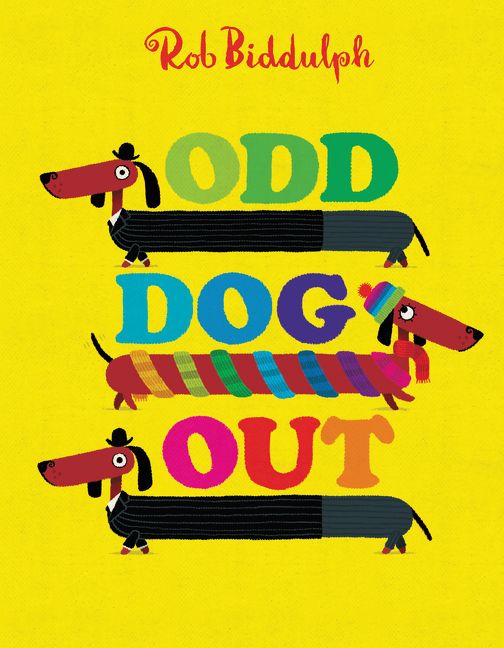
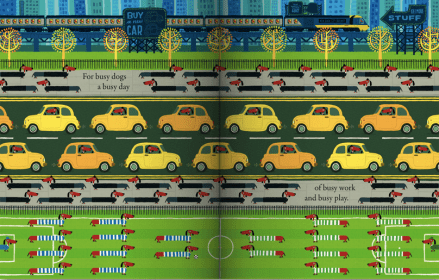
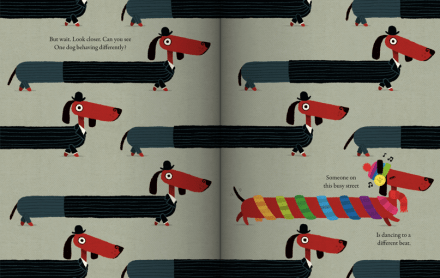
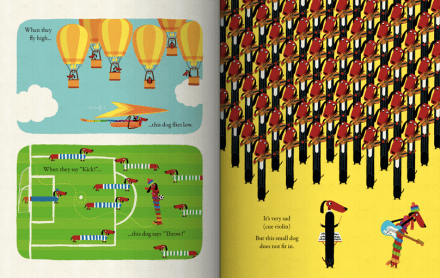
Busy dogs all dressed in black and white make their way to work while dogs at play in identical stripes take to the soccer field. At the pool, swimmer dogs don yellow caps and yellow tubes while sailor dogs in their uniform uniforms pilot their yellow boats. In fact, “soldier…scout…. They all blend in. / No dog stands out. / But wait.” On a certain street, you’ll see “someone…is dancing to a different beat.”

celebrate-picture-books-picture-book-review-odd-dog-out-busy-day

Copyright Rob Biddulph, 2016, courtesy of HarperCollins.

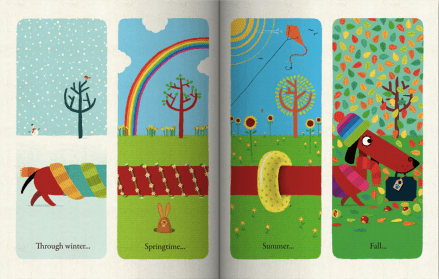
Wrapped in a rainbow-colored scarf, “this dog flies low” when others fly high, and “when they say ‘Kick!’…this dog ways ‘Throw!’” It’s plain to see that this dog just “does not fit in.” Having tried her best to be like the others, this unique pup packs her bag and leaves town. As she walks, the seasons change from winter to spring to summer to fall. She traverses the sea and climbs mountains until she comes to Doggywood and wonders if this is the place for her.

celebrate-picture-books-picture-book-review-odd-dog-out-dancing

Copyright Rob Biddulph, 2016, courtesy of HarperCollins.

She takes a look and her eyes light up. “‘Well, bless my bow-wow, can it be? / A hundred others just like me!’” There are dogs playing guitar and riding bikes, gliding on the wind, and playing basketball. And coming and going on the street, dogs in rainbow-colored scarves stream by. “But wait.” Are they really all alike? Do you see? “Somebody this afternoon / is whistling a different tune.”

The newcomer thinks that she can help. She approaches this dog with his black cap and sweater to commiserate and tell him she knows how he feels being the “‘Odd Dog Out.’” But it turns out that this dog is proud of being unique and standing out. And he tells her that she should feel that way too. After a bit of thought, she has to agree “‘…there’s nothing wrong with being me.’”

celebrate-picture-books-picture-book-review-odd-dog-out-fly-high

Copyright Rob Biddulph, 2016, courtesy of HarperCollins.

Then she knows just what to do. She grabs her bag and takes a flight. And when she lands in her old hometown, all those busy dogs and playing dogs turn to look. “‘They cheer! They clap! They whoop! They shout! / ‘We’ve really missed our Odd Dog Out!’” It seems that while she was away, some of these “identical” dogs did some thinking. Now what do you see? “Each one a doggy superstar… So blaze a trail. / Be who you are.”

celebrate-picture-books-picture-book-review-odd-dog-out-seasons

Copyright Rob Biddulph, 2016, courtesy of HarperCollins.

Through his charming rhymes and bouncy rhythm, Rob Biddulph creates a surprising tale that highlights that well-known advice: “bloom where you are planted.” When a dog who does her own thing amidst a sea of uniformity leaves home and finds a place where she fits in, readers will notice that she just replaces one homogenous place for another. The dog may feel more “at home” surrounded by other dogs who wear colorful scarves, soar on wind gliders, play guitar, and ride bikes, but is she really stretching herself and building her self-esteem? It can be difficult for kids (and people of all ages) to display their full personality, but when that happens they can’t display their full potential either. Biddulph encourages kids to be proud to let their uniqueness show while demonstrating that differences are recognized and appreciated more than they might think.

Kids will love Biddulph’s enchanting dachshunds and especially the sweet “Odd Dog Out.” His vibrant digital illustrations are superb at showing the cookie-cutter sameness of all the other dogs in humorous two-page spreads and smaller snapshots that remind one of the patterns of wrapping paper. When our colorful heroine appears among a cadre of black-suited business dogs, her satisfied smile and dancing feet stand in stark contrast to the other, serious dogs that have their feet firmly planted on the ground. Many clever spreads that readers will want to linger over bring them to the final pages where they’ll have fun pointing out and talking about the dogs who have decided to embrace their true natures.

Under the book jacket, a delightful cityscape and a “Where’s Waldo?” type of challenge awaits.

A terrific book offering lots of opportunities to talk about self-acceptance, accepting others, and the value of being different (and showing it), Odd Dog Out is highly recommended for home, classroom, and public library collections.         

Ages 4 – 8

HarperCollins, 2019 | ISBN 978-0062367266

To learn more about Rob Biddulph, his books, and his art, visit his website.

celebrate-picture-books-picture-book-review-odd-dog-out-cover

You can find Odd Dog Out at these booksellers

Amazon | Barnes & Noble | Books-a-Million | IndieBound

Picture Book Review