August 18 – Serendipity Day

About the Holiday

The word “serendipitous” was first coined in 1754 by Horace Walpole in a letter to a friend as he described a Persian fairy tale known in English as The Three Princes of Serendip. In the story three young men, having been banished from the kingdom of Serendip (commonly known as Sri Lanka) to prove their worth, travel the world continuously enjoying surprising good luck—or serendipity—along the way. In 2001 author Madeleine Kay founded Serendipity Day to encourage people “to live your life . . . with the belief that at any moment, something wonderful is about to happen.” Let today’s holiday inspire you to pay closer attention to those moments of serendipitous magic that occur each day. They’re all around us as long as we recognize and embrace them!

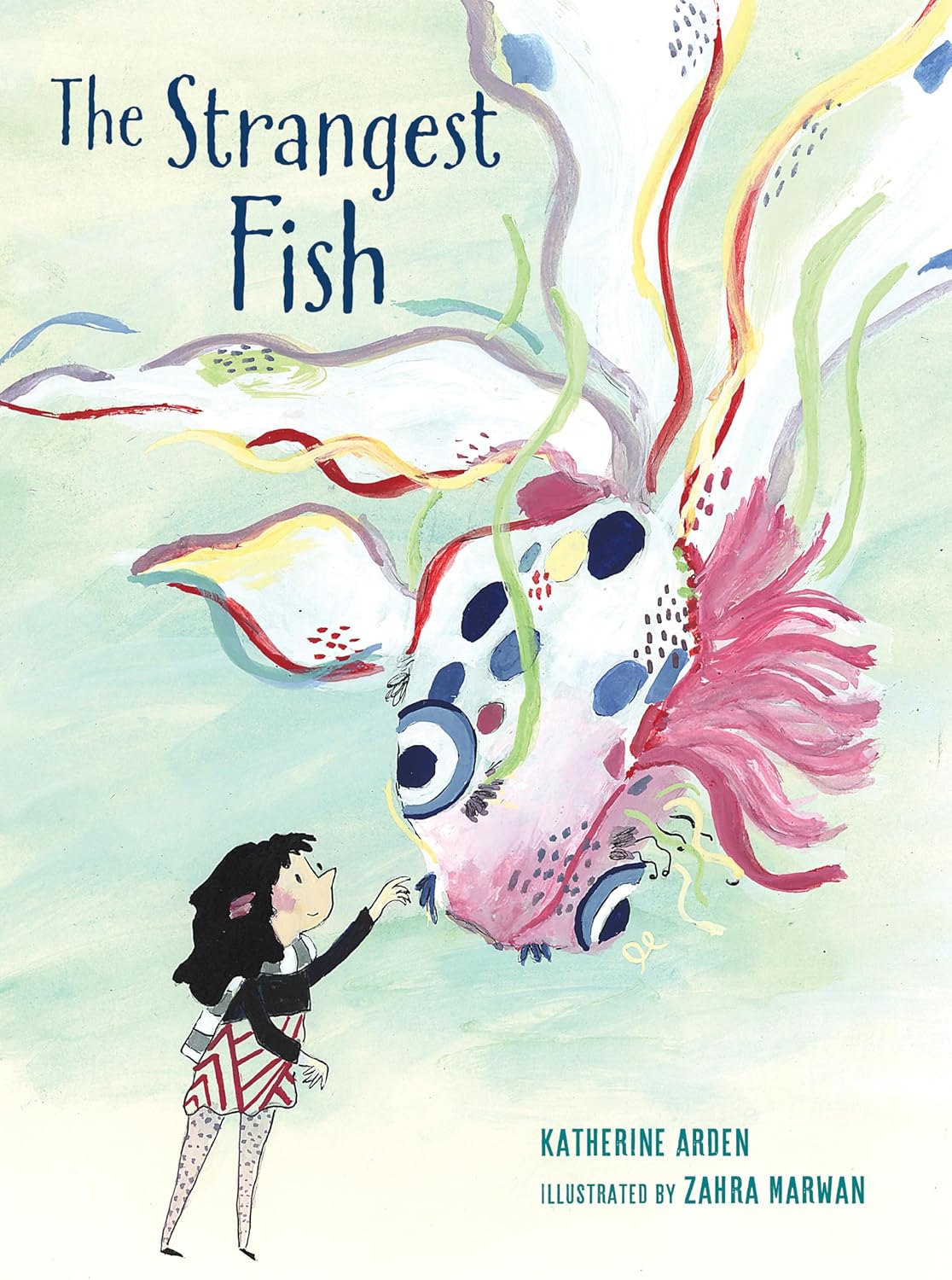
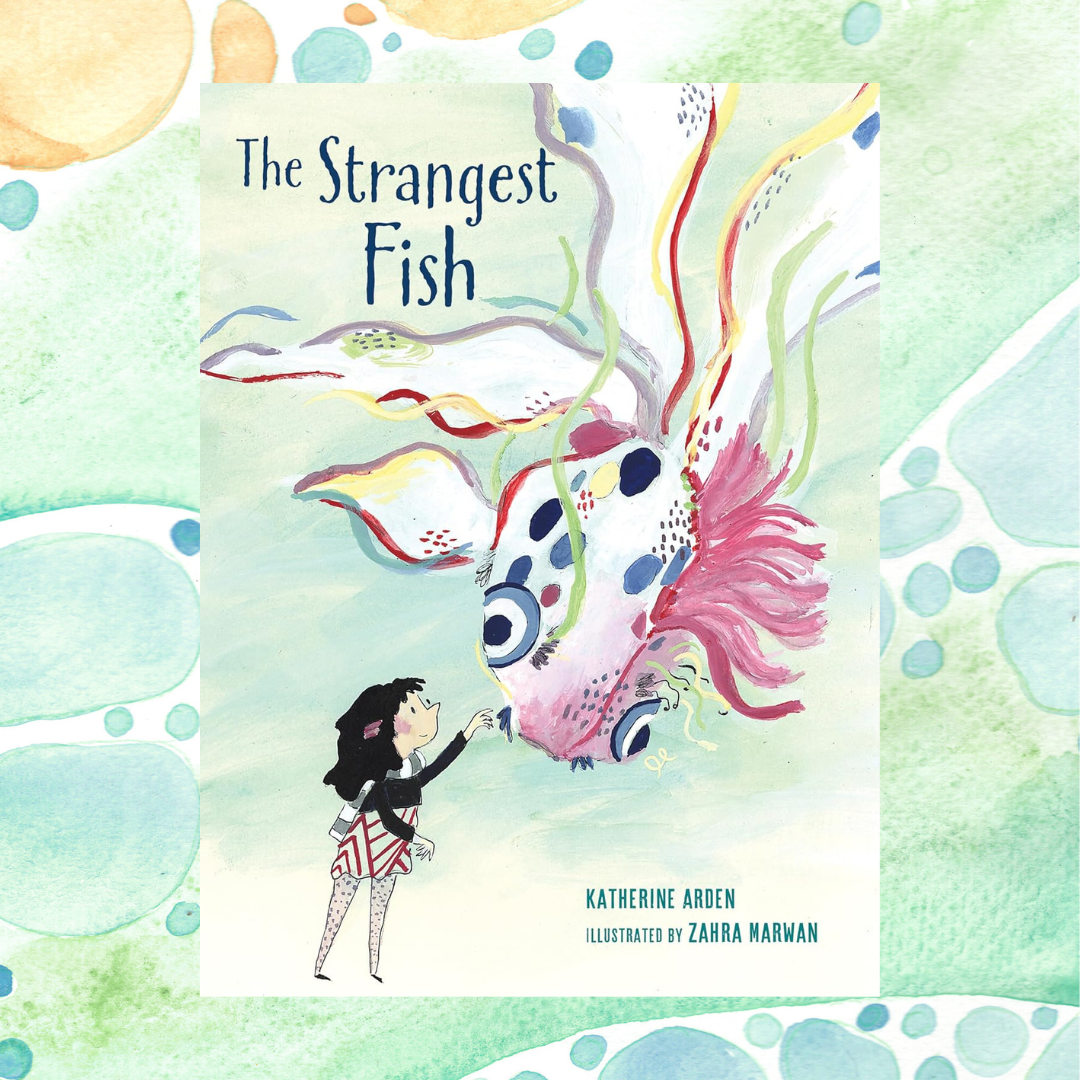
The Strangest Fish

Written by Katherine Arden | Illustrated by Zahra Marwan


Daisy lives in a colorful house on the edge of a lake with water like “blue glass.” She loves the month of October for its golden trees, pumpkins, cider, and, especially, the county fair. After riding the teacups and munching popcorn, Daisy “fished for prizes from the go-fish booth.” She came away with her own, real, strange fish. Despite the fish’s extra fins, leaf-like scales, and big head, Daisy loved him and vowed to take care of him. At home she placed him in the nicest bowl and named him October.
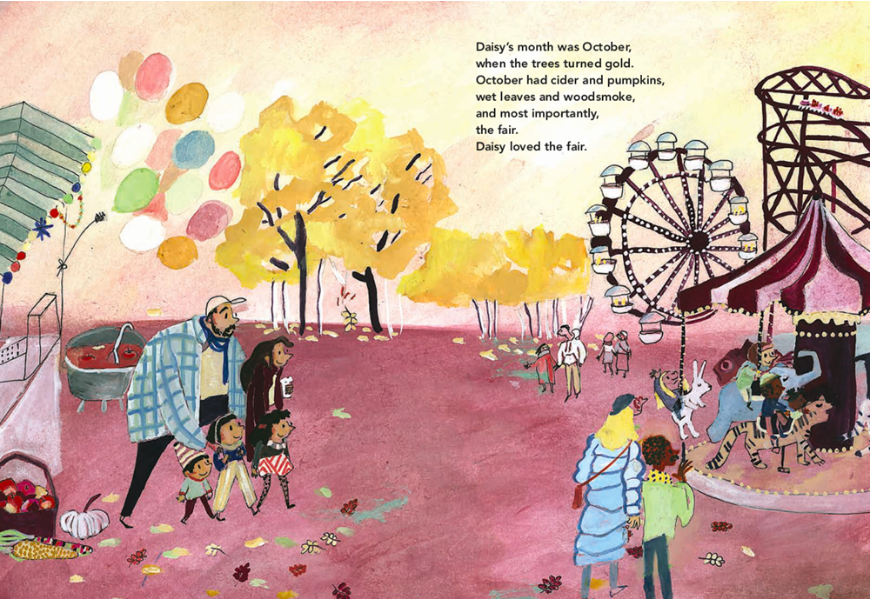
Illustration ©2024 by Zahra Marwan, text ©2024 by Katherine Arden. Courtesy of Astra Young Readers.

In the morning, October had outgrown his bowl, so Daisy gave him a bigger one. The same thing happened the next morning, and the next, even though Daisy had transferred him to the bathtub. October looked like a pile of leaves. Daisy’s brother proclaimed him “so weird.” Daisy, though, thought “October was the best fish,” and when “she petted his scales, she was sure his blue eye winked at her.”
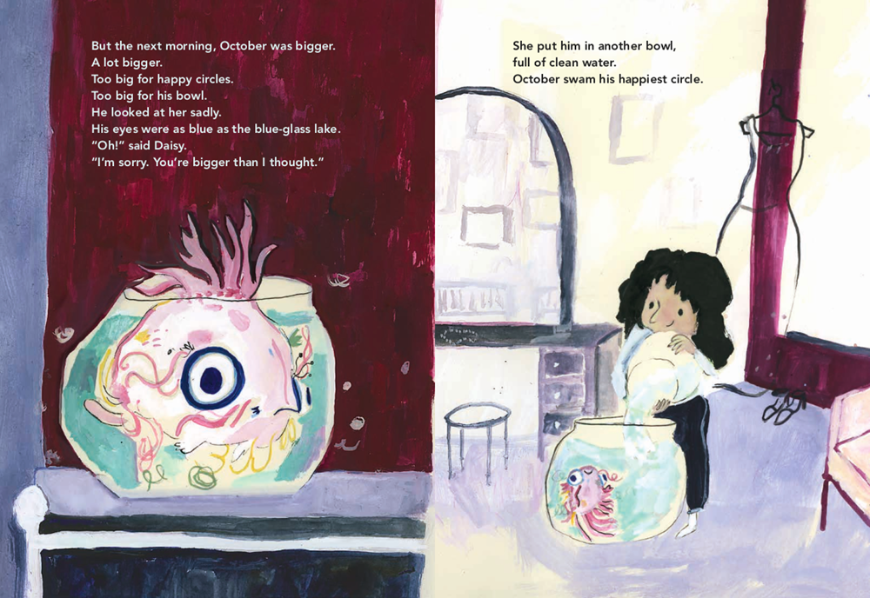
Illustration ©2024 by Zahra Marwan, text ©2024 by Katherine Arden. Courtesy of Astra Young Readers.

The next morning Daisy knew she had to move October again. But where? He “blinked his lake-blue eyes,” and she knew. She rolled October to the lake in her wagon then worried and worried about him all night. In the morning she ran to the lake but saw only a small ripple. Then a snout and a head broke the surface of the water, and Daisy was gazing into the lake-blue eyes of a water dragon. She cried “‘I knew you weren’t a fish!’” and happily climbed on his back for a magical trip around the lake.
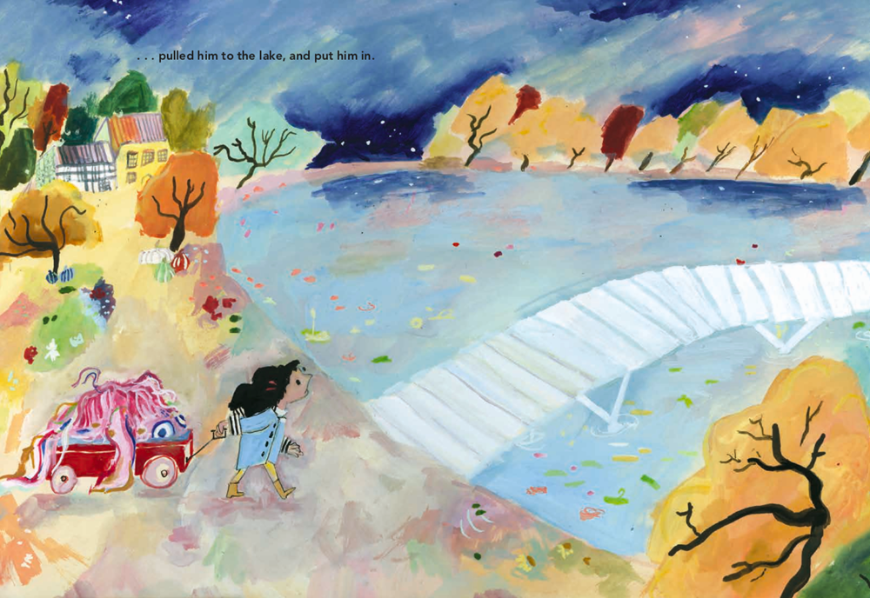
Illustration ©2024 by Zahra Marwan, text ©2024 by Katherine Arden. Courtesy of Astra Young Readers.

Katherine Arden’s The Strangest Fish radiates charm and the type of serendipity children make happen every day with their open hearts. Daisy is a dear, and in one masterful scene that is both touching and candid, Arden reveals the depths of Daisy’s kindness: While carrying her unusual new pet from the car to the house, Daisy feels a pang of jealousy for the cute and more conventional stuffed koala bear her sister has won, but, not wanting to hurt the fish’s feelings, she keeps it to herself. “Friends didn’t hurt friends’ feelings,” she knows. Instead, Daisy tells her fish that she will give him “the nicest bowl.” Arden extends such perception to each family member, as well, through lyrical descriptions and dialog peppered with honest sibling and parental banter and Daisy’s loving reassurances to October that make her story a read aloud with poignancy for all ages.

Fanciful and shimmering with breathtaking color, Zahra Marwan’s watercolor and pen-and-ink illustrations invite readers to enjoy a nostalgic autumn fair before welcoming them into Daisy’s close-knit family life. The siblings’ love for each other shows up in heart-patterned clothing and the way Daisy and her sister and brother huddle under one blanket as they worry about October together. Marwan’s singular fish is part punk aesthetic, part balloon, and completely adorable, stealing readers’ hearts from their first glimpse of him. The details Marwan sprinkles throughout her pages are both evocative and quirky, and she even adds a bit of foreshadowing (but I won’t tell you where). October’s final incarnation will delight kids and adults alike.

Enchanting, unforgettable, and with an ending that fulfills all of a child’s heartfelt wishes, The Strangest Fish is a story that kids will want to hear again and again and is a must addition to home, classroom, and all library collections. 

Ages 4 – 8

Astra Young Readers, 2024 | ISBN 978-1662620782

About the Author

Katherine Arden is the NYT-bestselling author of the Winternight Trilogy and the middle-grade series Small Spaces. She won the 2020 Vermont Golden Dome Book Award and was a finalist for the 2020 Hugo Award for Best Series. She graduated from Middlebury College in 2011, where she obtained her degree in Russian and French.

About the Illustrator

Zahra Marwan is a children’s book author-illustrator and the 2022 recipient of the Dilys Evans Founder’s Award. Her first picture book, Where Butterflies Fill the Sky, was named one of NPR’s Best Books of 2022 and a NYT Best Illustrated Children’s Book. Originally from Kuwait, Zahra now lives in New Mexico.

Serendipity Day Activity

celebrate-picture-books-picture-book-review-go-fishing-game-4

Go Fishing Game


Kids can engage in their own serendipitous adventure with this Go Fishing Game! With a paper plate pond, some printable fish, and a few other supplies, kids will be catching a whole lot of fun in no time!

Supplies

celebrate-picture-books-picture-book-review-go-fishing-game-1

Directions

  1. Color the paper plate blue
  2. Print the Go Fishing! Game Playing Die (optional)

To Make the Fish

  1. Print the fish templates or have kids draw and color their own fish and cut out
  2. Tape a paper clip to the back of the fish or slip a paperclip on the nose of the fish
  3. If using back-to-back templates, cut fish out, put a paper clip between the sides and glue or tape the two sides together

To Make the Fishing Pole

  1. Tie a length of string to the straw, pencil, or dowel
  2. Sandwich the other end of the string between the two circular magnets
  3. Lay the fish on the plate
  4. Go fishing!

Optional Game: Kids can roll the die to determine which fish to catch.
You can purchase The Strangest Fish from these booksellers

Amazon | Barnes & Noble | Bookshop (discounted books and support for your local independent bookstore)

Picture Book Review

July 30 – International Day of Friendship

About the Holiday

Established in 2011 by the United Nations General Assembly, the International Day of Friendship asserts the idea that friendship between peoples, countries, cultures, and individuals can inspire peace efforts and build bridges between communities. “In this year’s observance of the International Day of Friendship,” the UN General Assembly eloquently states, “we’re reminded that real peace is forged not only in negotiation halls or by writing into treaties — it’s built, thread by thread, in the trust we extend to one another in daily life. Friendship, especially among young people, holds a special kind of power. It can cross languages, faiths, and histories that might otherwise divide us. It invites us to listen before we judge, to stay when it’s easier to walk away. And when nurtured across cultures and communities, friendship becomes more than a bond—it becomes a blueprint for reconciliation. It teaches us that understanding isn’t a grand achievement; it’s a habit, a practice, a way of moving through the world that says ‘your well-being matters to me too’.”

Celebrate the International Day of Friendship all year long with today’s story for that can help young children build strong and trusting friendships from the earliest ages. For more information about the International Day of Friendship and a list of actions we can all take, visit the United Nations website

Thank you to Laura Sassi and Paraclete Press for sharing a copy of this book with me for review!

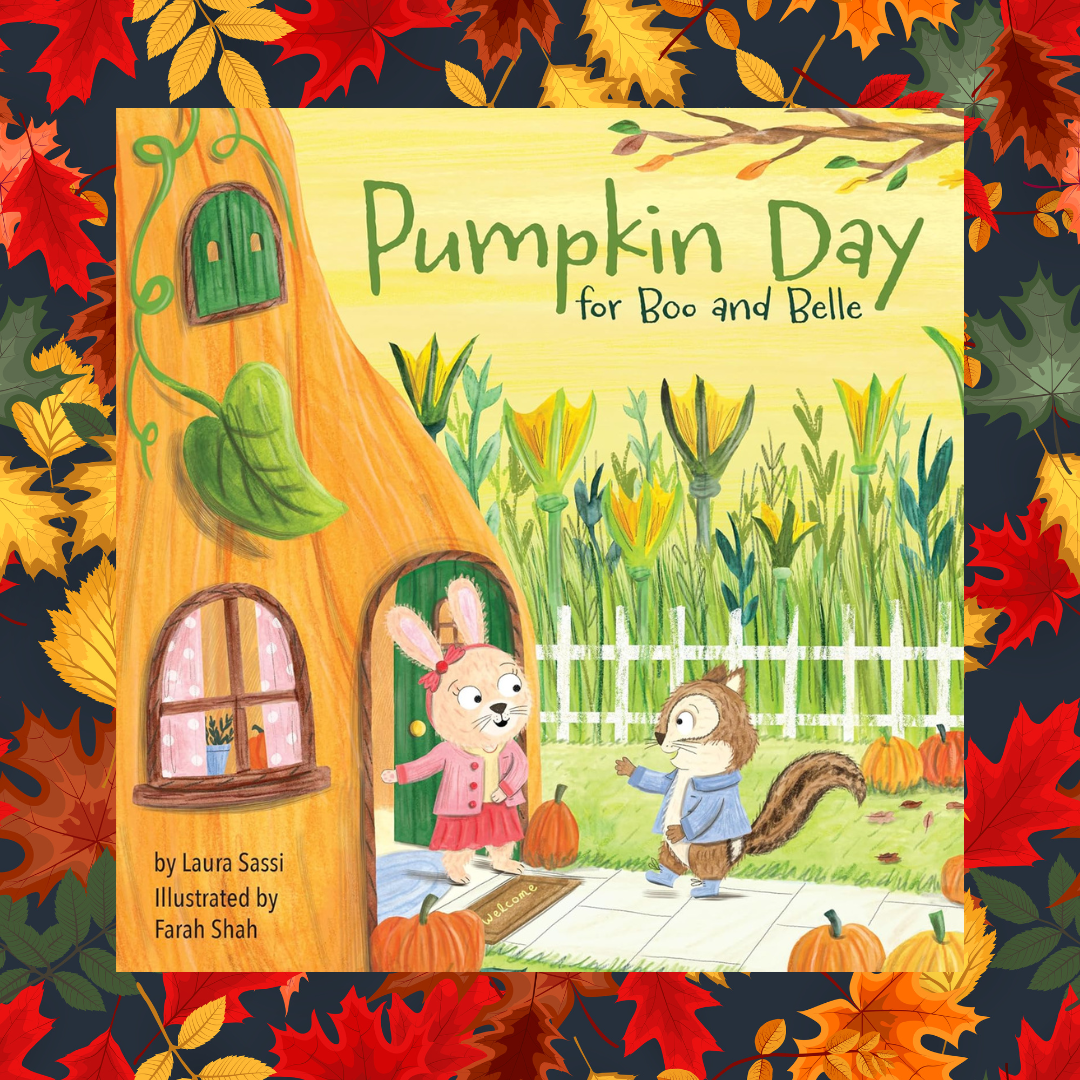
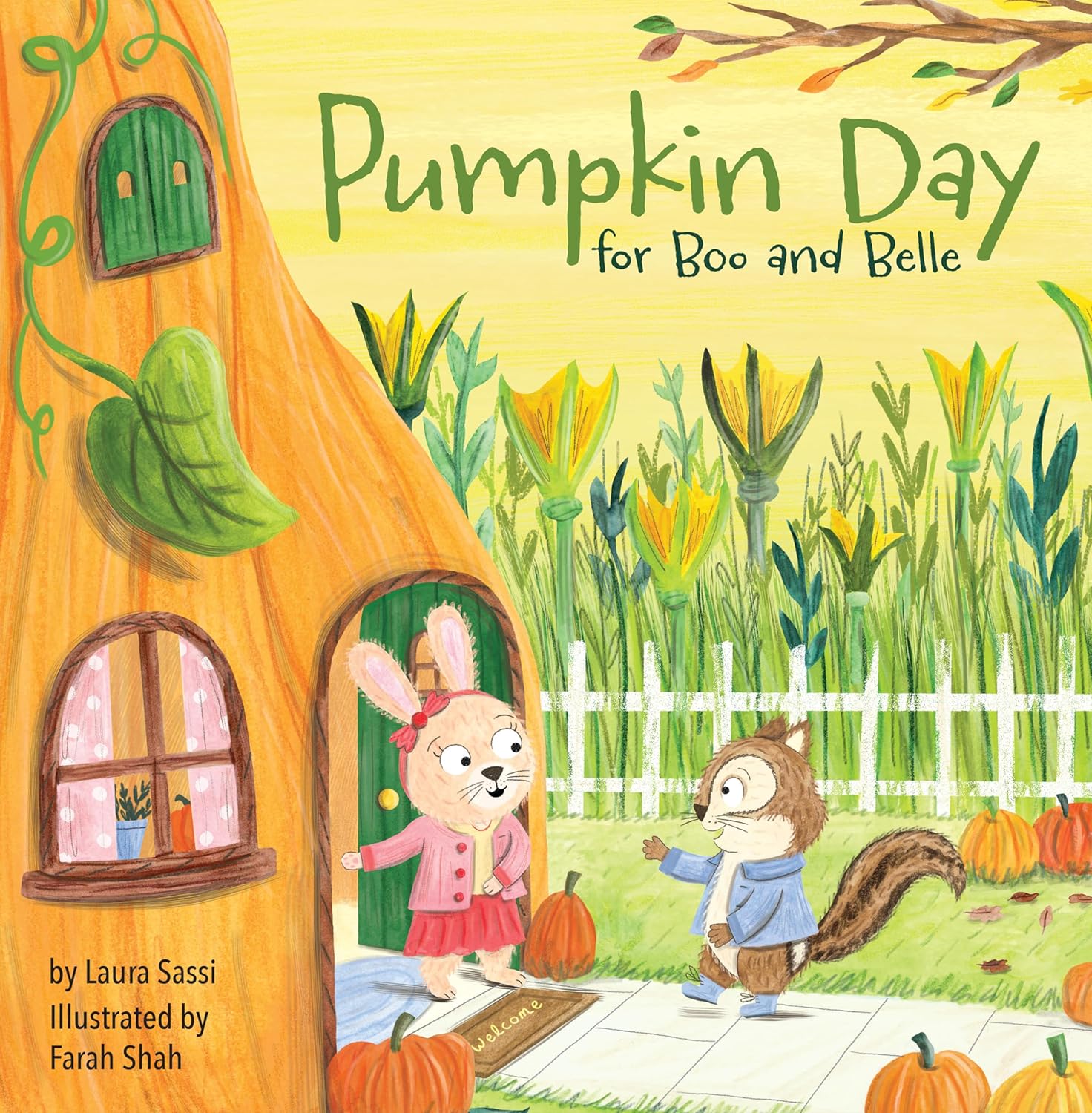
Pumpkin Day for Boo and Belle

Written by Laura Sassi | Illustrated by Farah Shah


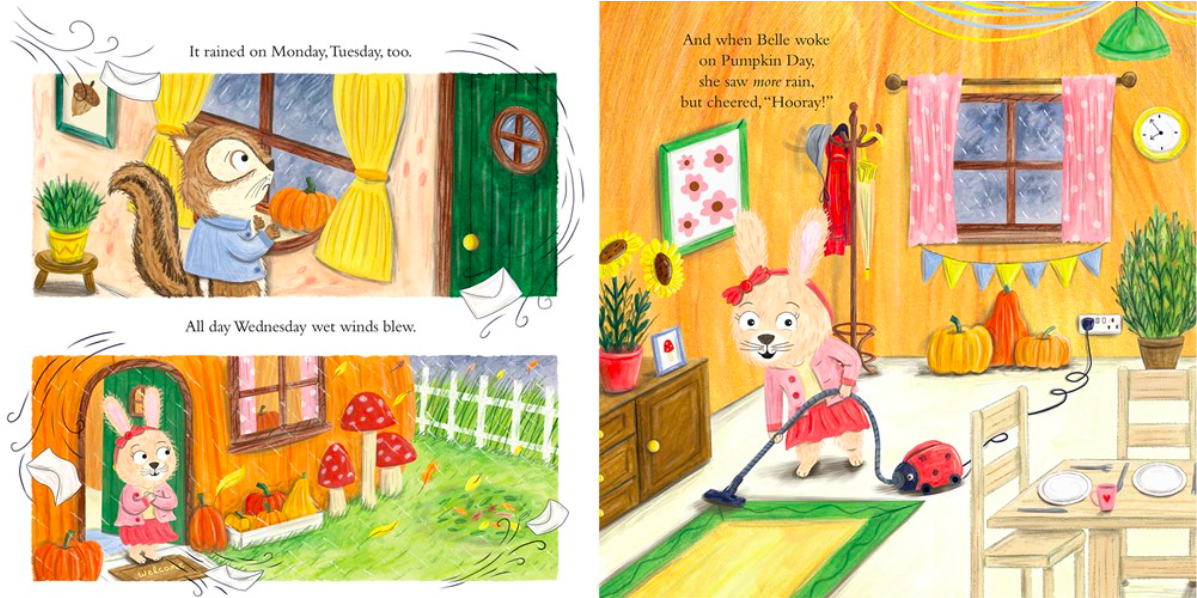
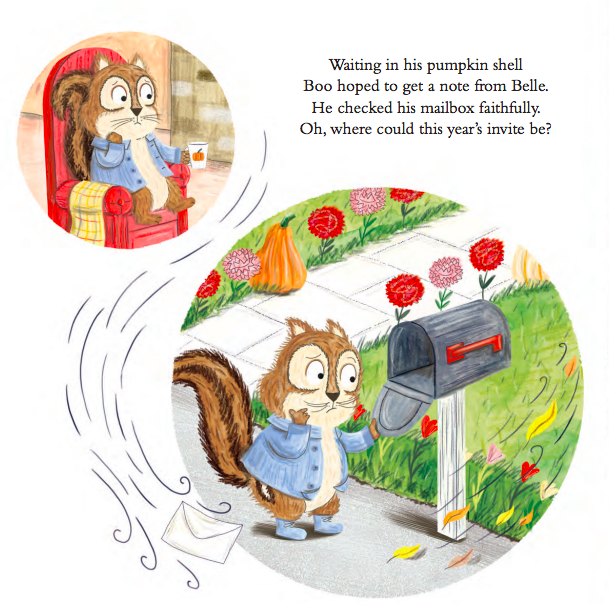
Belle Bunny, who lives in a tall, tidy pumpkin on Leaf Lane, is best friends with Boo Chipmunk, whose cozy home is a squat pumpkin shell. Despite the rain that’s been pouring down all week, both Belle and Boo are looking forward to getting together for their annual Pumpkin Day Tea that day. There’s just one hitch: while Belle is finishing her final preparations, Boo is still waiting for his invitation. Where could it be?

When the clock chimes three and with a warm fire crackling in the wood stove, Belle, “. . . grateful for a friend like Boo, . . . set out heaps of treats for two.” But Boo was taking his clues from the drab day, his dank den, and his smoking wet wood in his fireplace. “‘So much for friends like Belle!’ huffed Boo.”

Illustration © 2025 by Farah Shah, text © 2025 by Laura Sassi. Courtesy of Paraclete Press.

A hour went by and Belle was growing miffed because the tea was cold and the frosting melting. ‘”My tea is ruined! Did Boo forget? / Why hasn’t he arrived here yet?” Meanwhile, Boo was wondering if Belle’s kindness was “just pretend.” They both grabbed their umbrellas and headed outside. Unexpectedly, they bumped into each other on the bridge between their homes.

Illustration © 2025 by Farah Shah, text © 2025 by Laura Sassi. Courtesy of Paraclete Press.

Instead of hemming and hawing or ignoring each other, Belle asks Boo if he forgot their Pumpkin Tea, to which Boo replies that he never received an invitation. A moment passes between them—could each be telling the truth? Belle breaks the silence with an apology for not double-checking with Boo, and Boo says he could have done the same. With their friendship patched up and the sun beginning to shine, Belle and Boo head back to Belle’s house. There, Belle made new goodies while Boo steeped a new pot of tea, and they both pondered over the missing invitation. A sudden knock on the door answers the mystery with a surprising twist and a new reason to be thankful at their Pumpkin Day Tea!

The story was inspired by the sentiments of joy and gratitude found in Psalm 118:24, which appears on the final page.

Illustration © 2025 by Farah Shah, text © 2025 by Laura Sassi. Courtesy of Paraclete Press.

Laura Sassi’s breezy and heartening rhyming story for little ones is layered with depth and insight about the nature of friendship, expectations between friends, and generosity of spirit. Belle’s and Boo’s changing emotions are depicted honestly and in language that young children will understand, and when Boo and Belle meet on the bridge and a moment of doubt passes between them, adults and children have an opportunity to discuss how they think the characters feel, how they would feel in the same circumstance, and how they would resolve the issue with their own friends. Metaphors found in the weather and how each character responds to it as well as in the bridge where Belle and Boo meet and reconcile also offerareas for discussion. Bitsy’s entry into Boo and Belle’s long-standing tea for two also brings cheer and open-heartedness to the story. 

Farah Shah’s cozy pumpkin homes are washed in warm tones and full of charming details that children will adore. The crackling fire in Belle’s wood stove reflects her sunny personality while Boo’s smoking logs reflect his unhappy mood. The stormy weather outside foretells the coming clash between Boo and Belle. Both character’s facial expressions are easy to read and provide talking points for adults and kids. Just as Belle and Boo clear up the misunderstanding, the weather lightens and shines brightly with the inclusion of a new friend.

Pumpkin Day for Boo and Belle is a charming and meaningful read aloud that’s perfect for friendship building at the beginning of the school year, Thanksgiving celebrations, and any time that empathy and understanding are needed. The book is highly recommended for home and library collections.

Ages Preschool – 3

Paraclete Press, 2025 | ISBN 979-8893480191

About the Author

Laura Sassi has been a teacher, homeschool mom, children’s ministry director, and more. She is the author of multiple books for young children including the best-selling Goodnight, Ark (Zonderkidz), which was a 2015 Christian Book Award Finalist, the My Tender Heart series (Paraclete Press), Happy Birthday Christmas Child (Paraclete Press), Love is Kind (Zonderkidz), Faithful Feet (WorthyKids) and more. She writes daily from her home in New Jersey and finds special joy in sharing messages of kindness, comfort, and hope at school visits, church gatherings, and other events.

About the Illustrator

Farah Shah is a children’s book illustrator who was born in West Yorkshire and is now based in the South of England. If she is not drawing characters at the kitchen table, then you can often find her traveling around the UK in search of sun, sea and a bit of inspiration.

International Day of Friendship Activity

Pumpkin Village Craft © 2025 by Laura Sassi

Pom-Pom Pumpkin Village – by Laura Sassi


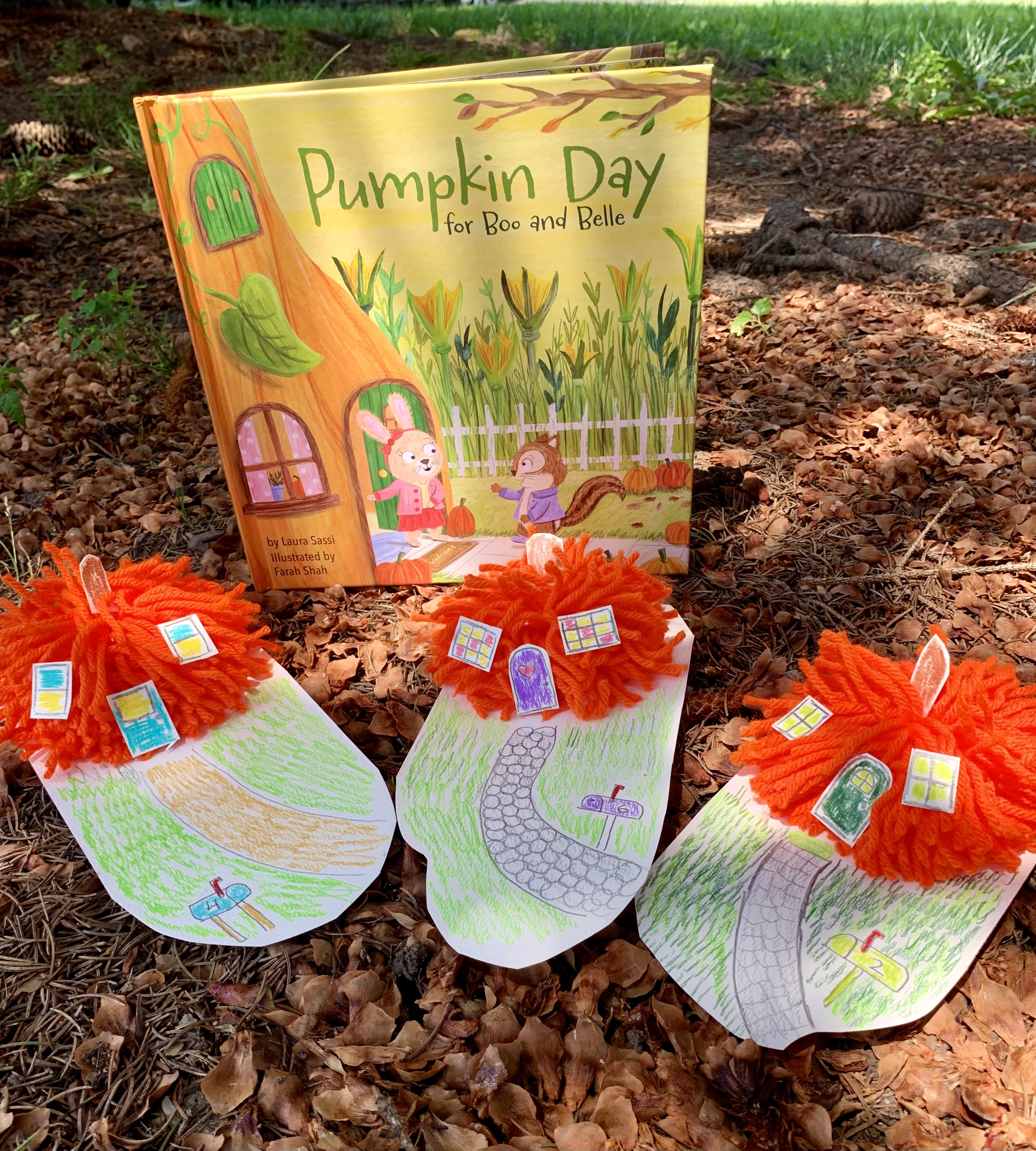
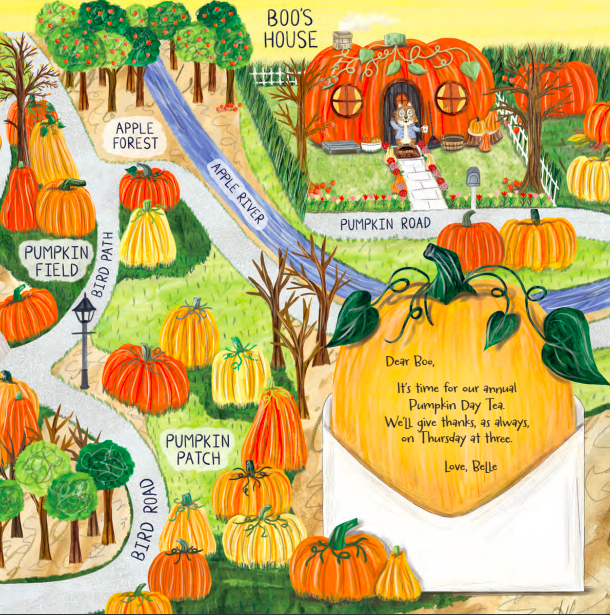
Read Pumpkin Day for Boo and Belle, then, inspired by a spirit of friendship and the adorable map on the opening spread, make your own pumpkin patch village out of pom-poms! Arrange the village in a cozy spot, then use your imagination to retell the story or create your own story of friendship and community. 

To make a pom-pom pumpkin village you will need:

  • orange yarn
  • stiff drawing paper 
  • scissors
  • tacky glue
  • colored pencils, markers, or crayons

Pumpkin Village Craft © 2025 by Laura Sassi

Directions: 

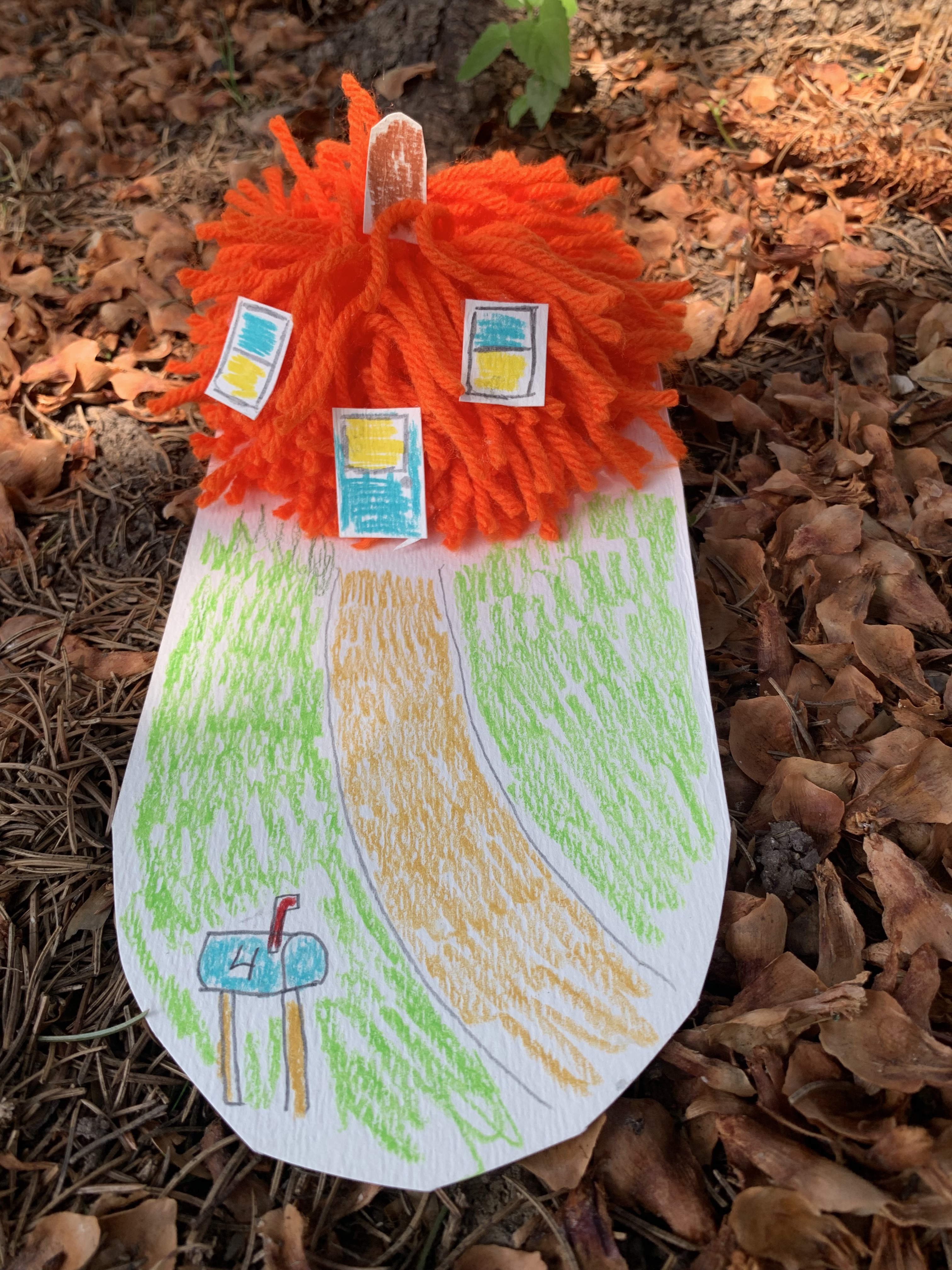
  1. For each pumpkin pom-pom, loosely wrap a single strand of orange yarn 60-80 times around four fingers or a similarly sized sturdy household item (such as a coaster). Next, gently slide the loopy bundle off your hand (or coaster). Cinch the looped yarn in the middle and tie securely in a knot with a separate piece of yarn. Snip the loops to make a ball. Then fluff and snip the uneven bits as desired.  These will be your pumpkins. Repeat to make as many as you want. The more you have, the bigger your village will be.
  2. Transform each pom-pom pumpkin into a house by cutting sturdy white paper to create a base. Glue the pom-pom to the base, then decorate each front yard using colored pencils, markers, or crayons. Cut doors, windows, and stems from the scraps, coloring them with whatever details you want. Finally, using ample tacky glue, affix the doors, windows and stems onto the pom-pom pumpkins, as shown above. 
  3. When everything is dry, set up your pumpkin village in a cozy spot. Retell the story or imagine new adventures you and a friend (or several) might have in a pumpkin patch village. Have fun!

You can purchase Pumpkin Day for Boo and Belle from these booksellers

Amazon | Barnes & Noble | Bookshop

Picture Book Review

February 19 – Random Acts of Kindness Week

About the Holiday

Random Acts of Kindness Week may be ending, but that only means it’s time to extend the spirit of the holiday day after day until it rolls around again next February! Today, I’m celebrating with one of my favorite stories about a little girl who sees someone in need of help or kindness and generously offers the comforts of tea and treats with a smile. Children are particularly good at offering such caring gestures that can have far-reaching effects. Adults can foster a child’s natural kindness by supporting their ideas and actions for helping their community.

Thanks to Sleeping Bear Press for sharing a copy of The Princess and the Café on the Moat with me!

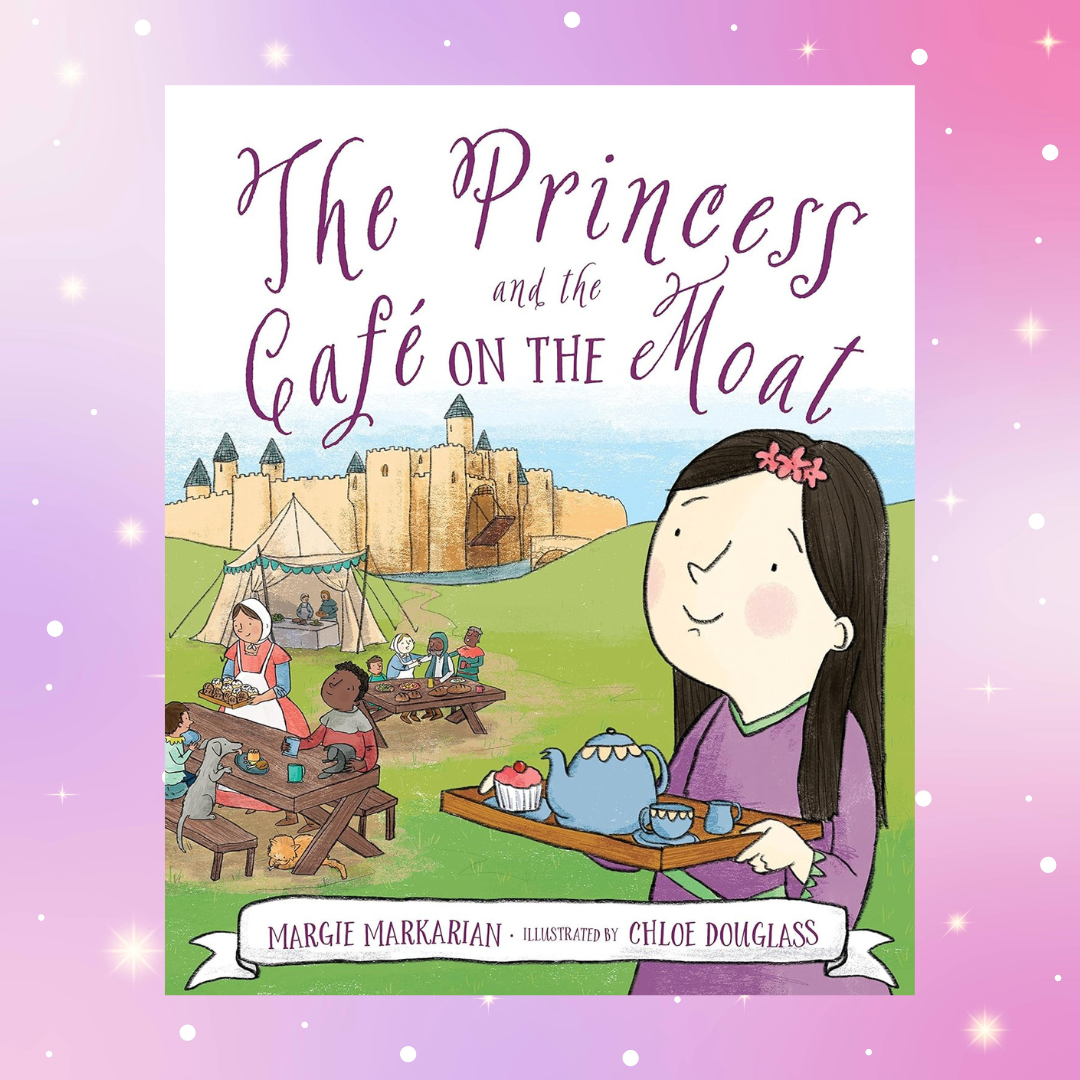
The Princess and the Café on the Moat

Written by Margie Markarian | Illustrated by Chloe Douglass


There once was a little princess who lived in a very busy castle. Every morning knights brought news of “enemies defeated, dragons seized, and citizens rescued.” Upstairs, ladies-in-waiting were given their duties for “silks to sew, invitations to ink, and chandeliers to shine.” The princess wanted a special job too, but her voice was never heard above the din, so she went in search of something to occupy her time.

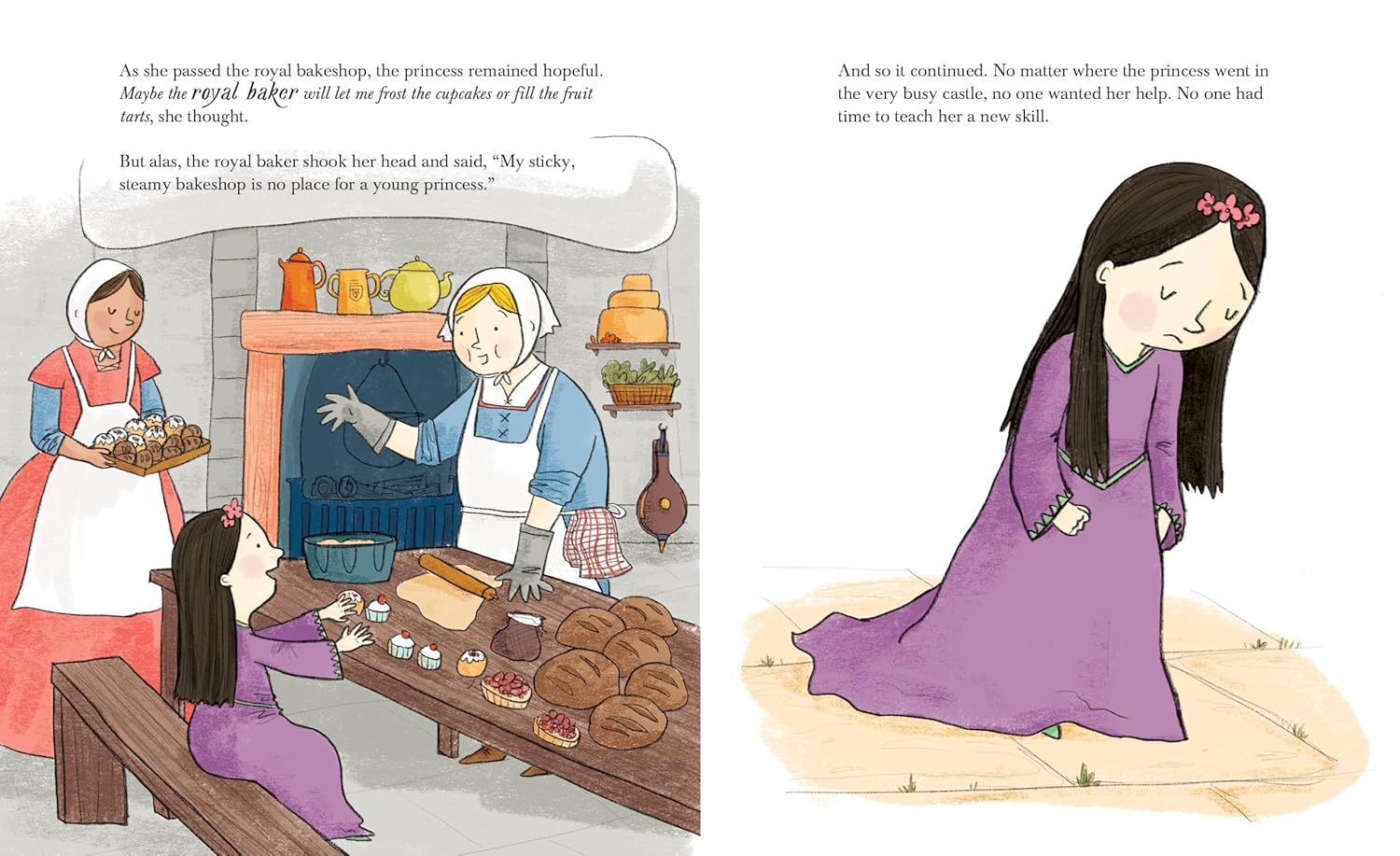
The court jester was too busy to teach her how to juggle. The wandering minstrel said her fingers were too delicate to pluck the wiry strings of a mandolin, and the wizard banished her from the tower, saying his potions were too dangerous. Even the royal baker thought her kitchen was no place for a princess. “The princess’s kind heart and eager spirit were not easily discouraged.” She wondered if there were people beyond the castle who could use her help. Just then the drawbridge descended, and the princess crept by the guard and ran outside.

Illustration © 2018, Chloe Douglass; text © 2018 Margie Markarian. Courtesy of Sleeping Bear Press.

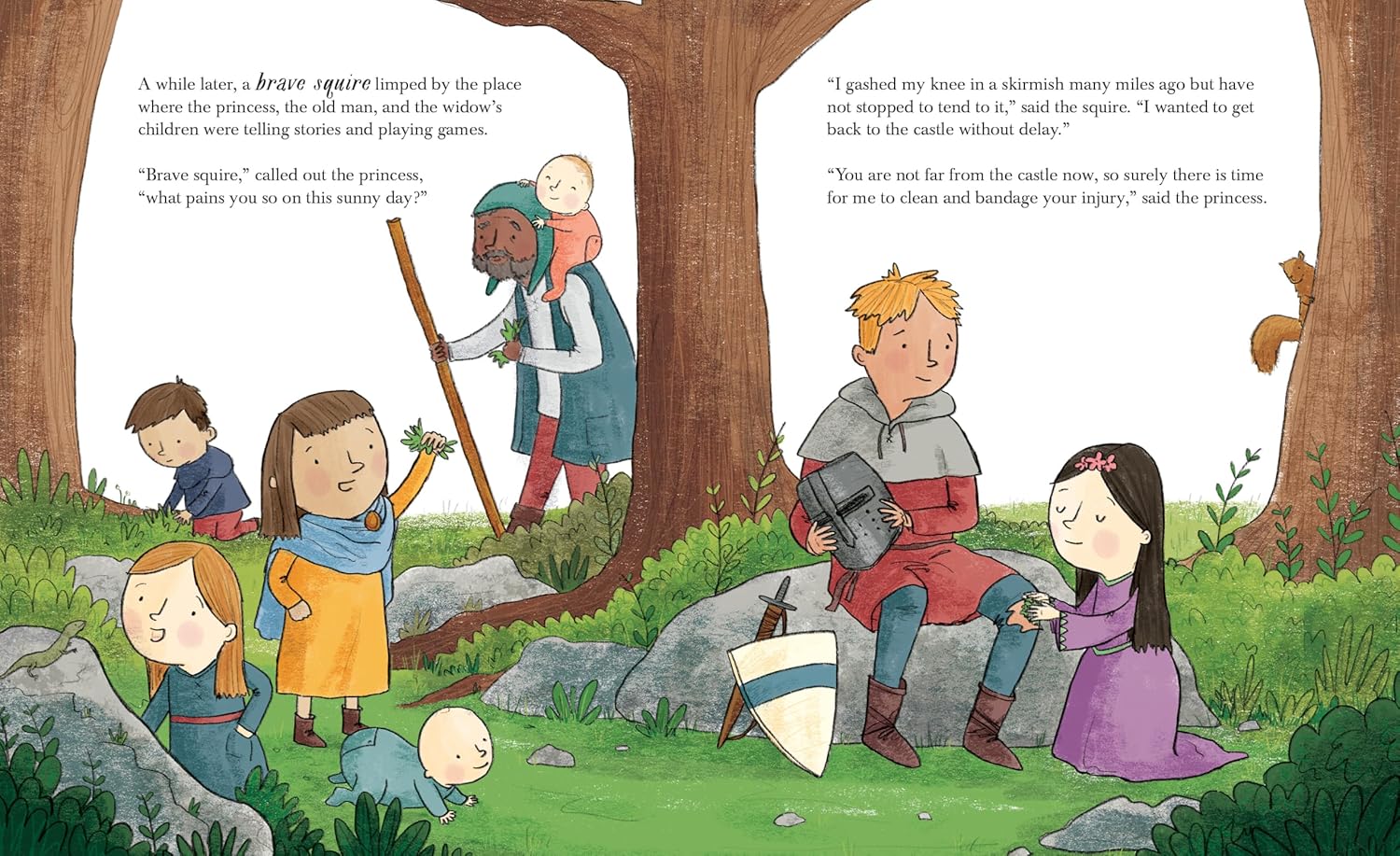
Right outside the castle, she met a sad old man who had gotten a letter from his far-away son, but because of his weak eyesight couldn’t read it. “‘I have time to read your letter and sit awhile,’ said the princess, happy to have found a task so quickly.” Next, she met a worried widow who had no one to watch her children as she traveled to the village market. The princess happily offered to watch them. And when a brave squire came limping by with an injured knee, she quickly bandaged.

Back at the castle, though, everything was in an uproar as everyone was hunting everywhere for the princess. When the king suddenly heard laughter and singing and saw through the window that it was the princess, everyone paraded out through the drawbridge to join her and her new friends.

Illustration © 2018, Chloe Douglass; text © 2018 Margie Markarian. Courtesy of Sleeping Bear Press.

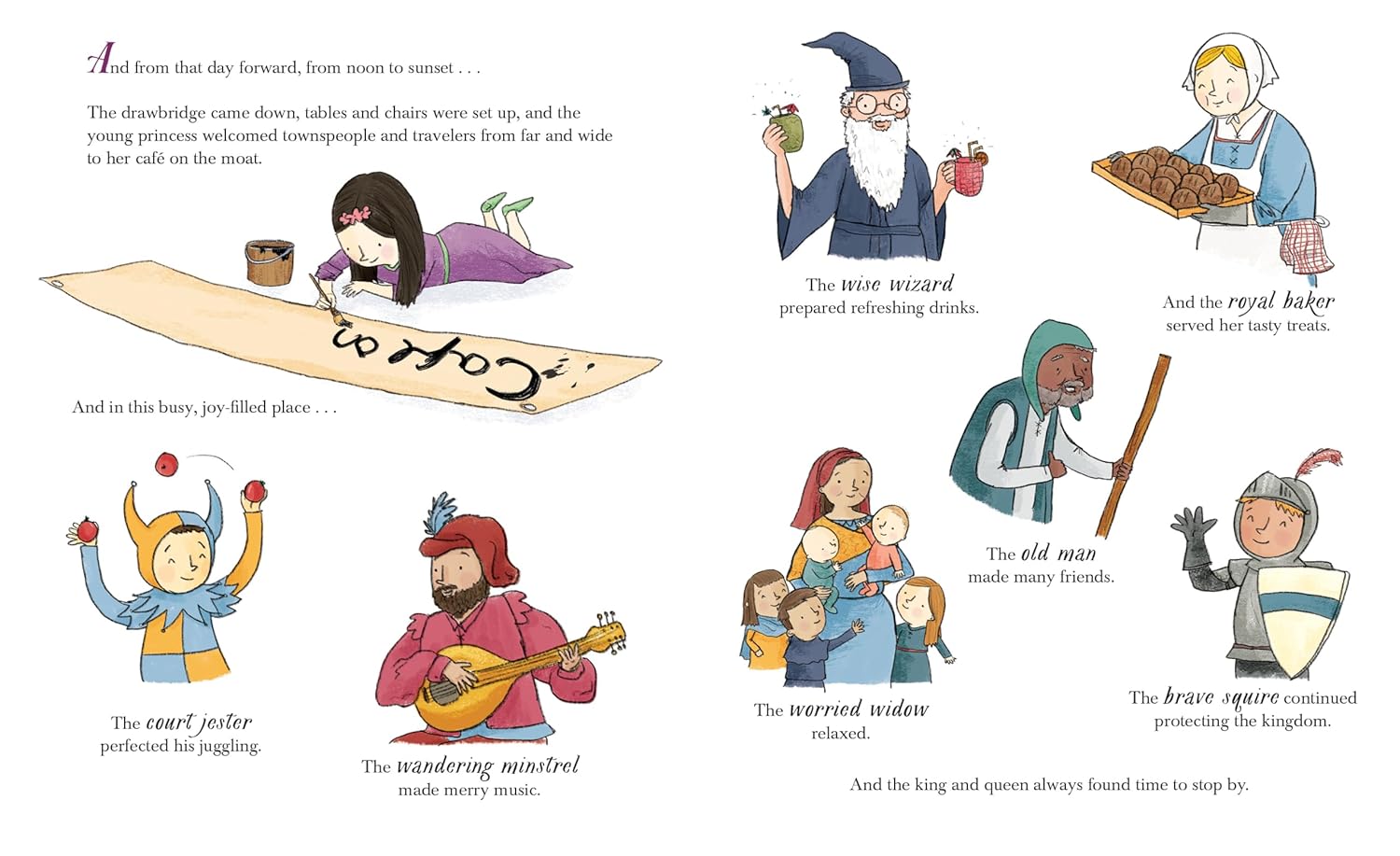
The princess ran to her mother and father and told them about all the things she had done for the old man, the widow, and the squire. The king and queen “were proud to have such a kindhearted daughter.” The king suggested that they “all celebrate together with treats and refreshments.” From that day on in the afternoon, the drawbridge was dropped and tables and chairs set up. Then the “princess welcomed townspeople and travelers from far and wide to her café on the moat.” The café welcomed everyone, and “indeed, they all lived happily and busily ever after.”

An Afterword about fairy tales and a kindness activity for children follow the story.

Illustration © 2018, Chloe Douglass; text © 2018 Margie Markarian. Courtesy of Sleeping Bear Press.

Margie Markarian’s sweet story is an enchanting fairy tale for today’s socially conscious and active kids. Instead of needing rescue, this princess looks for opportunities to help others. When she’s turned away from helping inside the castle, she leaves the comfort of home and reaches out to her community, an idea that children will embrace. Through her cheerful storytelling, Markarian also shows readers that in their talents and kind hearts they already have what it takes to make a difference to others. As the princess opens her café on the moat, both children and adult readers will be inspired to find ways to support each other in planned—or random—acts of kindness. Markarian’s language is charmingly “medieval,” making the story a fun read aloud. The story would also lend itself well to dramatic play for classrooms, child-centered organizations, or enterprising groups of friends and families.

Chloe Douglass’s adorable princess is a terrific role model for young readers. Her eagerness to help and positive spirit are evident in her smiles and persistent requests for a job to do. When she ventures out of the castle, she displays obvious empathy for the people she meets, and children will recognize her joy at being able to brighten the townspeople’s day. Despite their busy days, the king and queen are happy and supportive of their daughter. Children will love the bright and detailed images of the castle and town, where the crest of love rules.

The Princess and the Café on the Moat is a charming flip on the traditional fairy tale—one that children will want to hear again and again. It would make an inspiring spring gift and an enriching addition to home, classroom, and library collections.

Ages 5 – 8

Sleeping Bear Press, 2018 | ISBN 978-1585363971

To discover more about Margie Markarian and her picture book and to find fun activities, visit her website. 

Learn more about Chloe Douglass, her books, and her art on her website.

Random Acts of Kindness Week Activity

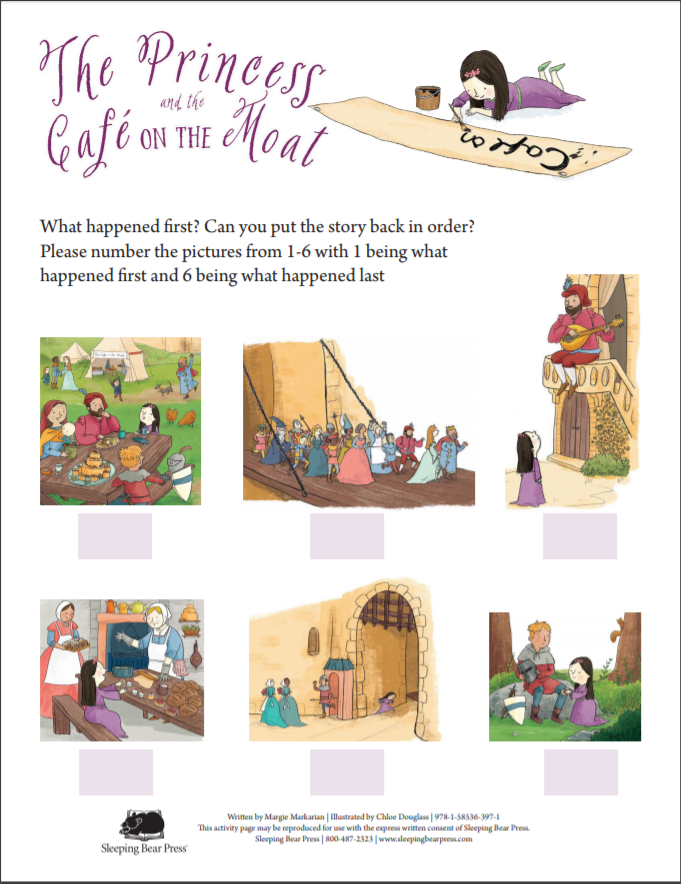
celebrate-picture-books-picture-book-review-the-princess-and-the-cafe-on-the-moat-number sequence-page

The Princess and the Café on the Moat Activities


The Princess likes to help people relax and have fun together! You can help her too with these four The Princess and the Café Activity Pages!

You can purchase The Princess and the Café on the Moat at these booksellers

Amazon | Barnes & Noble | Bookshop (to support your local independent bookstore)

Picture Book Review
February 6 – Children’s Mental Health Week

About the Holiday


February 3rd-9th marks the United Kingdom’s 11th National Children’s Mental Health week, sponsored by the children’s mental health charity Place2Be. While the US has its own Children’s Mental Health Awareness week in May, it’s always good to share resources and support around mental health for children. This February’s theme is Know Yourself Grow Yourself, with an emphasis on building resilience and coping skills through self-understanding. To honor Children’s Mental Health week, adults and kids alike can engage in mood journaling, verbal processing of emotions, and reading books that explore just what to do to get through hard times.

Review by Dorothy Levine

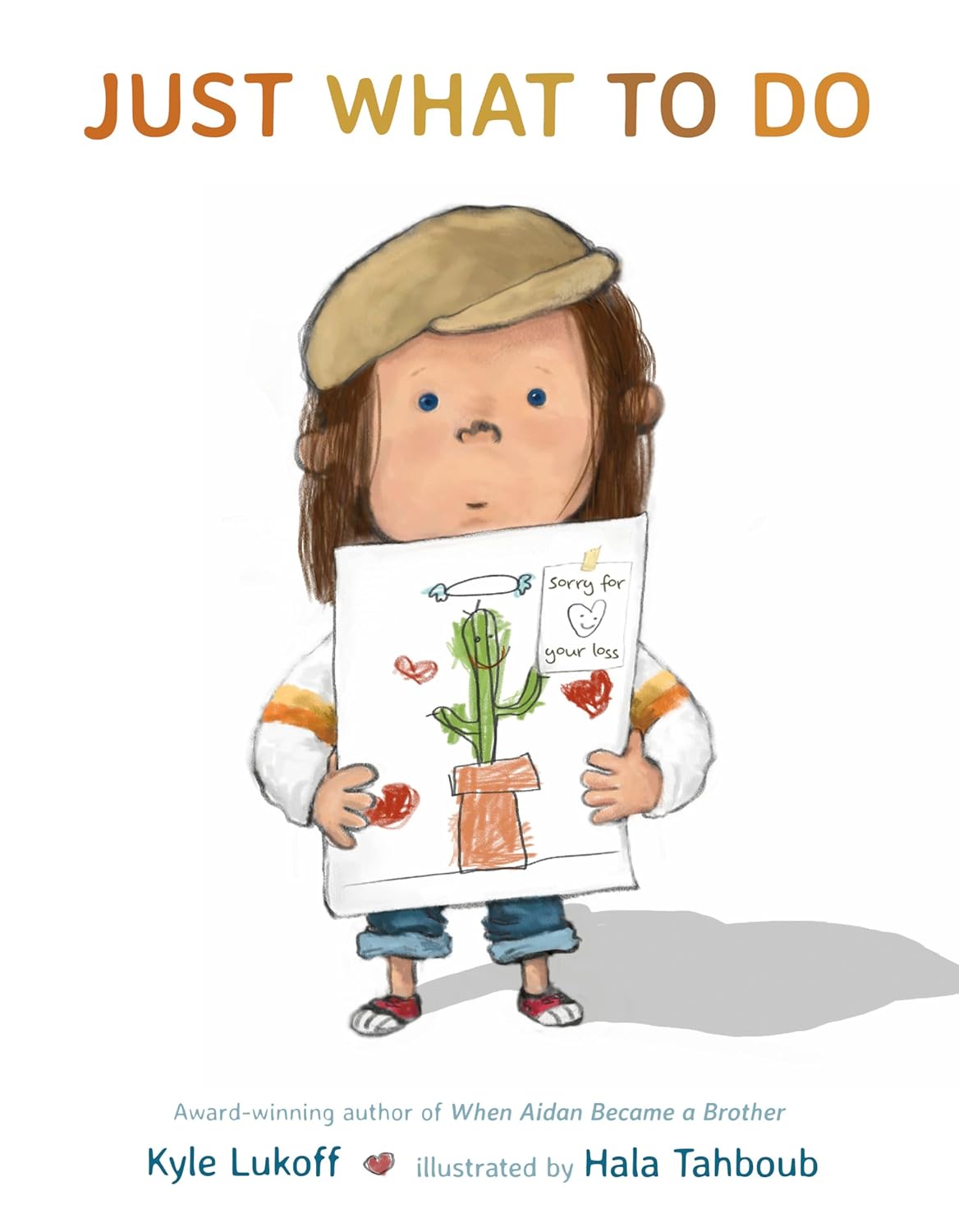
Just What to Do

By Kyle Lukoff | Illustrated by Hala Tahboub


When a loved one is experiencing a loss, it can be hard to know how best to help. Just What to Do is a gentle story that walks readers through exactly that—just what to do. The key? Figuring out how each person best likes to be comforted.

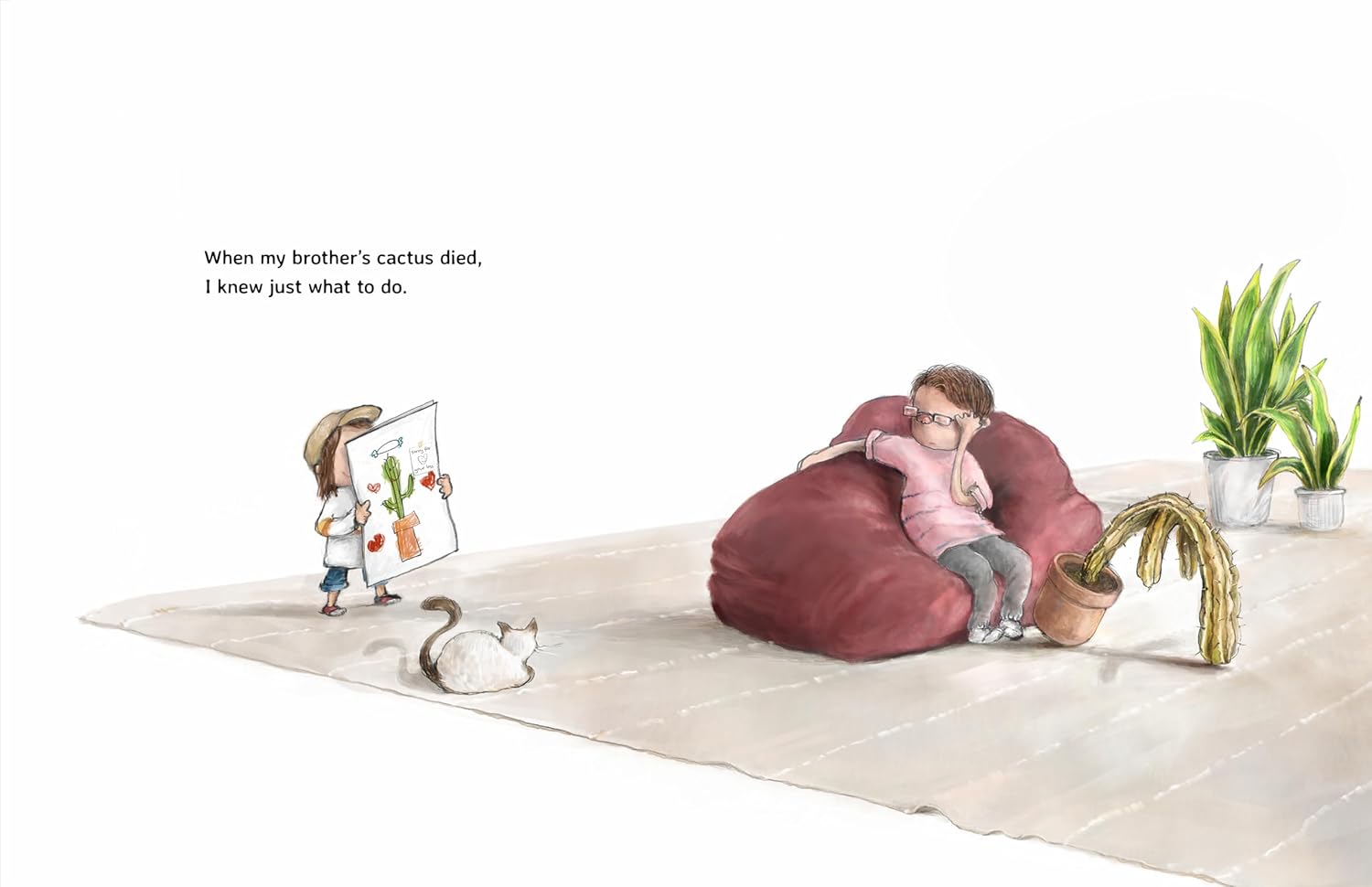
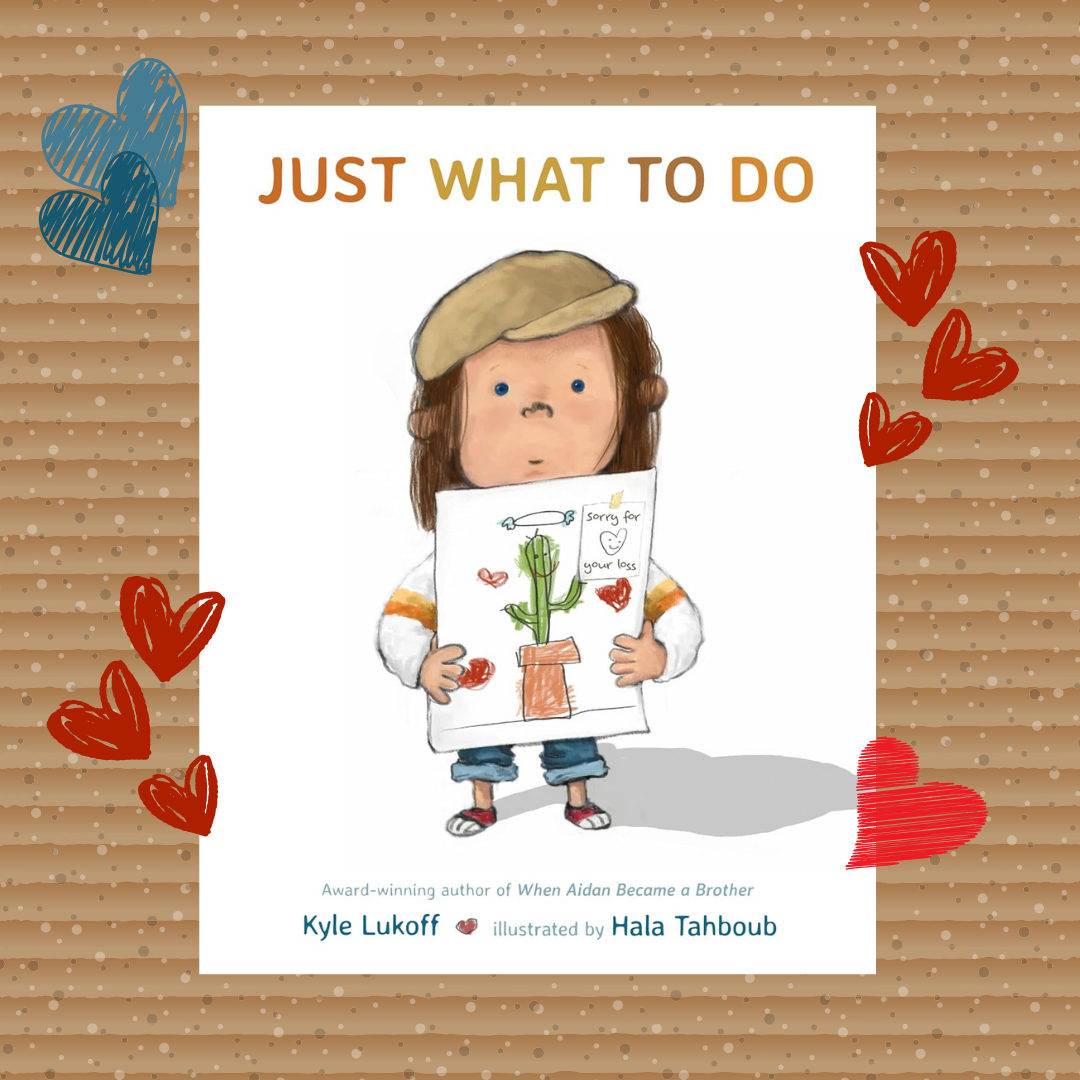
The book begins with a narrator confidently clutching a handmade condolence card with a smiling cactus angel featured on the front. “When my brother’s cactus died,” they say, “I knew just what to do.” As the narrator discovers, however, a card is not how the brother would like to receive support. “Could you tell me a joke instead? I really want to laugh.” he says.

Image copyright Hala Tahboub, 2024, text copyright Kyle Lukoff, 2024. Courtesy of Dial Books.

So, naturally, when the protagonist’s cousin’s goldfish dies, they know exactly what to do; at the library they nab a book of jokes in preparation for a visit. But instead, the cousin asks for a hug.

The pattern continues with the narrator learning a new method of supporting a loved one with each instance of grief. And learning that the same technique does not feel good to the next person in need of their comfort.

Image copyright Hala Tahboub, 2024, text copyright Kyle Lukoff, 2024. Courtesy of Dial Books.

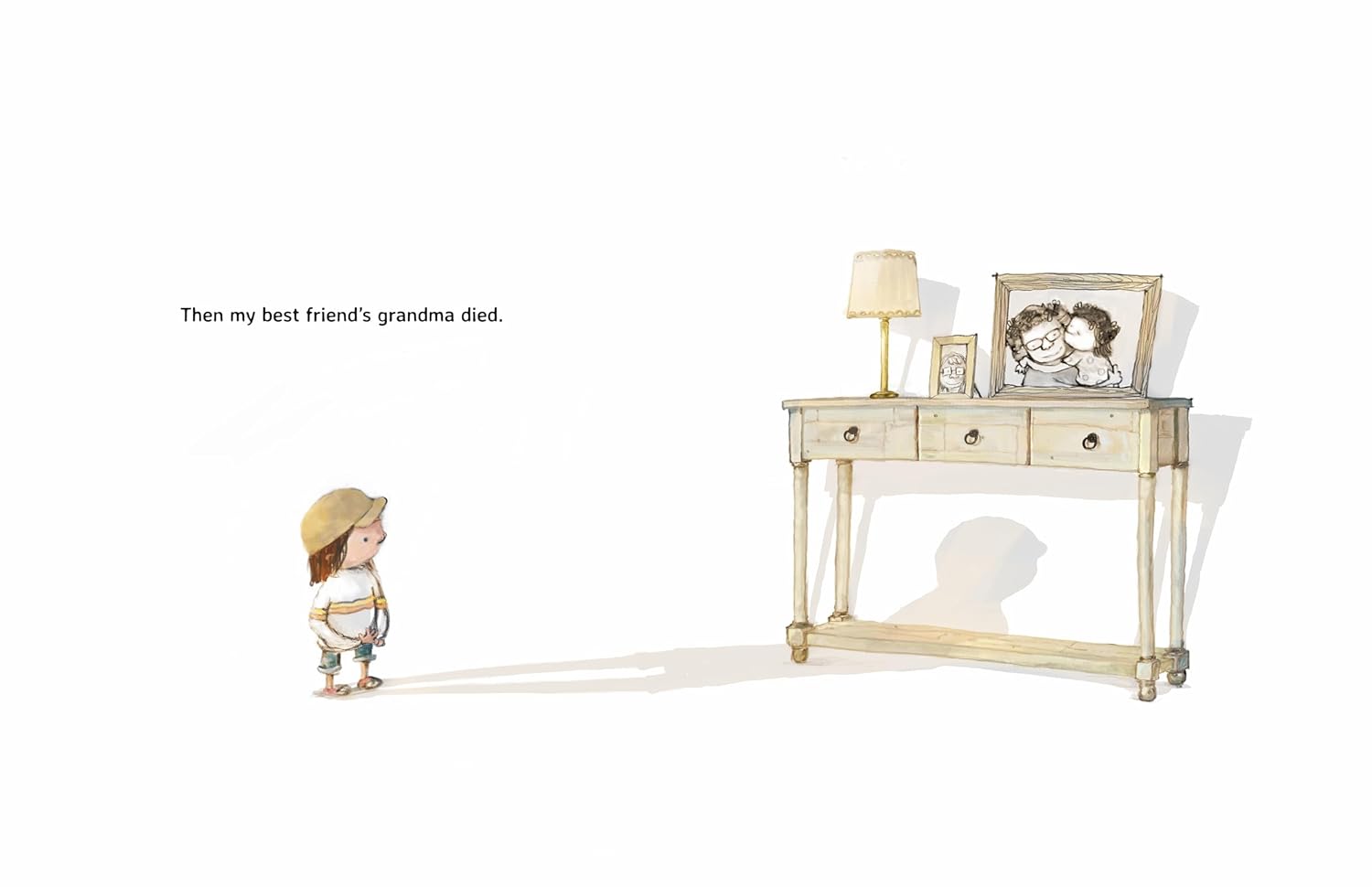
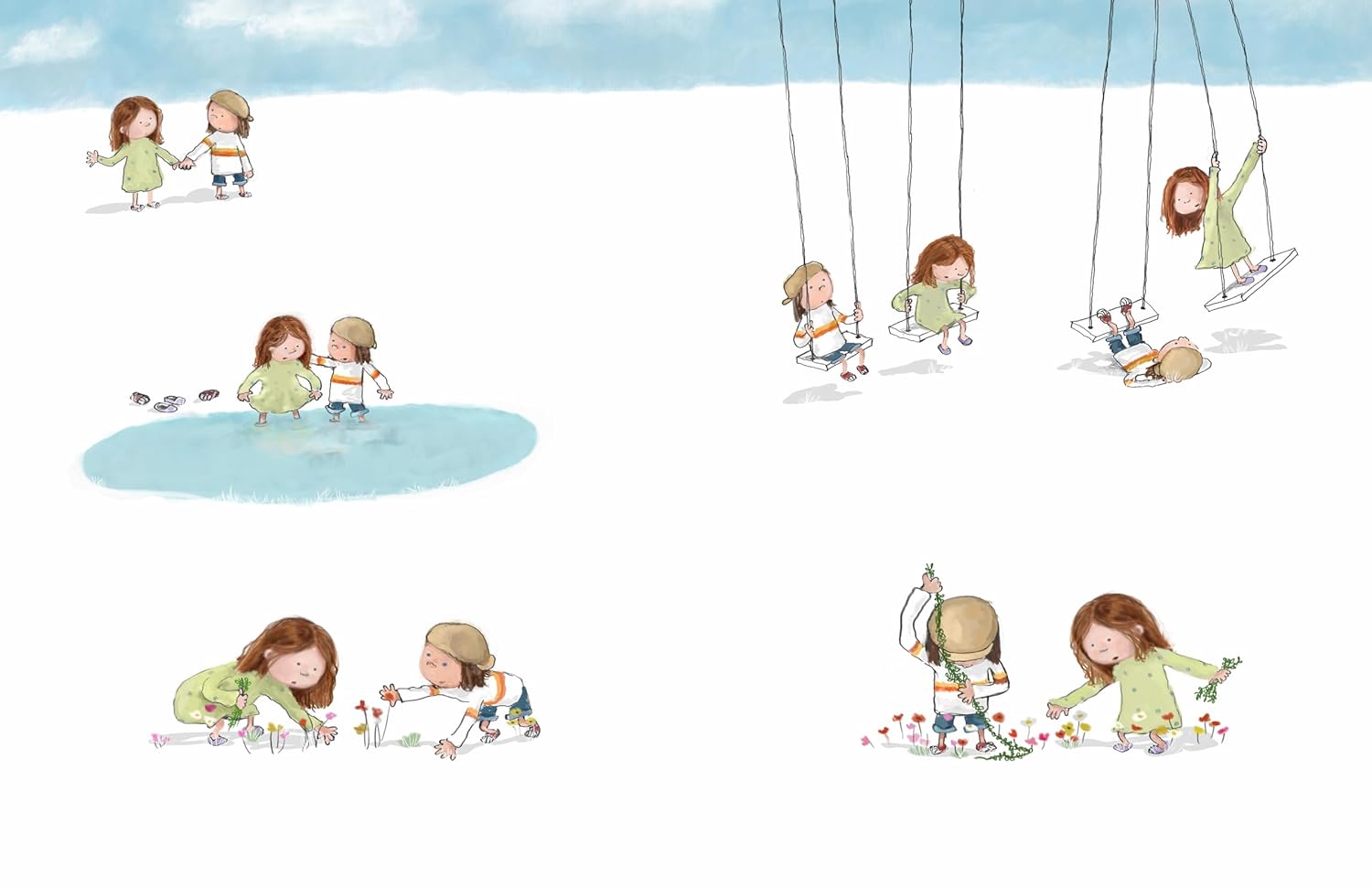
When the narrator’s best friend’s grandmother dies, they are unsure what to do. Would she want a card, a snack, a hug? How could they know? Finally, they decide the best way to find out is simply to ask: “Can you tell me what to do? I don’t know how to help.” While the friend is at first unsure how to answer this question, the narrator and friend find ways to seek out comfort and connection by spending time together. The story ends with a wordless spread of them swinging, talking, picking flowers and a spread with the word “together” in which they share a flower crown.

Image copyright Hala Tahboub, 2024, text copyright Kyle Lukoff, 2024. Courtesy of Dial Books.

Just What to Do tackles a tough but topical topic for children, what to do with grief and how to support others through it, something that even adults struggle with. Oftentimes, people make the mistake of thinking there is a cookie cutter “one size fits all” fix for working through grief, but, as Lukoff poignantly shows, this simply is not the case. Readers will learn and grow with the protagonist as they explore new ways of helping and providing care for a diverse cast of family and friends.

Hala Tahboub creates simple sketches featuring an androgynous-appearing elementary-school-aged narrator. Wordless spreads of characters connecting are interspersed in the story and are contrasted with more bare pages focused solely on the narrator when they reach emotionally salient moments. There is a clarity in the images and an intricacy in the facial expressions that allows the audience to focus on the main character’s internal struggles. The words of the story are expanded on in the images, with different characters expressing their grief in unique ways (a babysitter commemorating her dog with dog toys, the cousin holding her goldfish’s tank under a large shady tree with a bouquet of flowers, etc.)

Just What to Do is an essential addition to library and home collections, as well as counseling centers. The book lovingly guides readers through a difficult subject with an appropriate amount of levity and learning to make for a perfect read aloud.

Ages 3 – 7

Dial Books for Young Readers, 2024 | ISBN 978-0593462942

About the Author

Kyle Lukoff is the author of many books for young readers. His debut middle-grade novel, Too Bright To See, received a Newbery honor, the Stonewall award, and was a National Book Award finalist. His picture book When Aidan Became A Brother also won the Stonewall. He has forthcoming books about mermaids, babies, apologies, and lots of other topics. While becoming a writer he worked as a bookseller for ten years, and then nine more years as a school librarian. Visit him at kylelukoff.com.

About the Illustrator

Hala Tahboub is a children’s book writer and illustrator. She started her creative journey as an architect and interior designer. She won the SCBWI Canada East chapter’s Storyteller Award for Illustration in 2019, and she was the SCBWI’s December Featured Illustrator in 2020. Hala believes in kindness, coffee, chocolate, and in the immense power of stories. She lives in Montreal. Visit her at halatahboub.com.

National Children’s Mental Health Week Activities

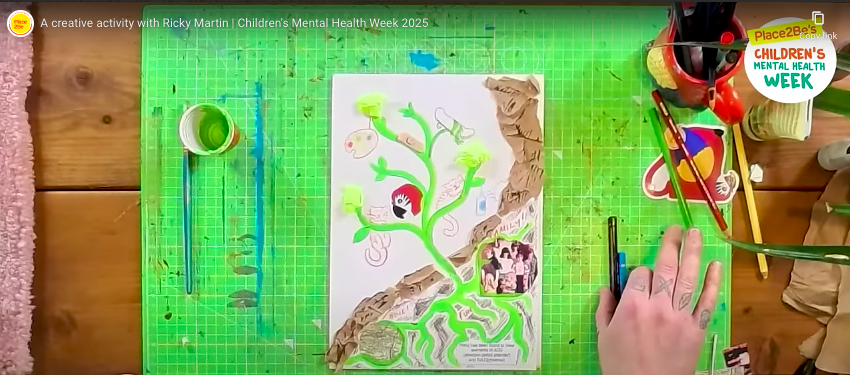
Place2be Activity with Ricky Martin


Art Room Activity

Watch the Art Room’s video on this self-awareness art activity and create your own identity plant.

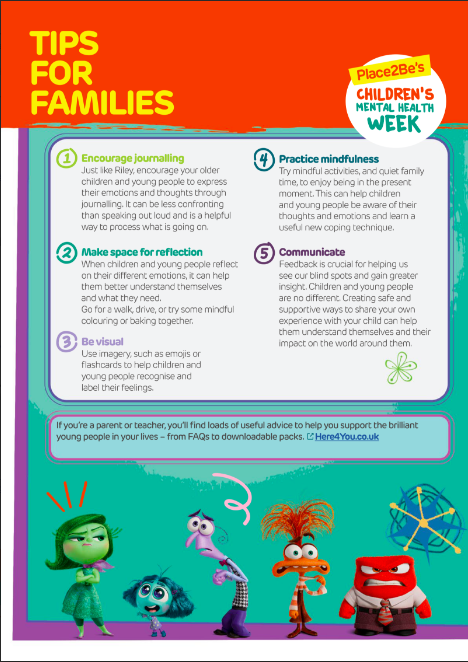
Exploring Emotions Tip Sheet for Families

Download this Exploring Emotions Tip Sheet for families on how to encourage children to explore and express their emotions.

You can purchase Just What to Do at these booksellers

Amazon | Barnes & Noble | Bookshop (to support your local independent bookstore)

Picture Book Review
November 3 – It’s Picture Book Month

celebrate-picture-books-picture-book-review-a-head-full-of-birds-cover

About the Holiday

November is all about picture books thanks to Picture Book Month founder author and storyteller Dianne de Las Casas and co-founders author/illustrators Katie Davis, Elizabeth O. Dulemba, Wendy Martin, and author Tara Lazar. This month-long international literacy initiative celebrates print picture books and all that they offer to young (and even older) readers. With gorgeous artwork and compelling stories, picture books open the world to children in surprising ways as they entertain, explain, excite, and help children learn empathy and understanding.

I’d like to thank Eerdman’s Books for Young Readers for sending me a copy of A Head Full of Birds for review consideration. All opinions on the book are my own.

A Head Full of Birds

Written by Alexandra Garibal | Illustrated by Sibylle Delacroix | Translated from the French by Vineet Lal


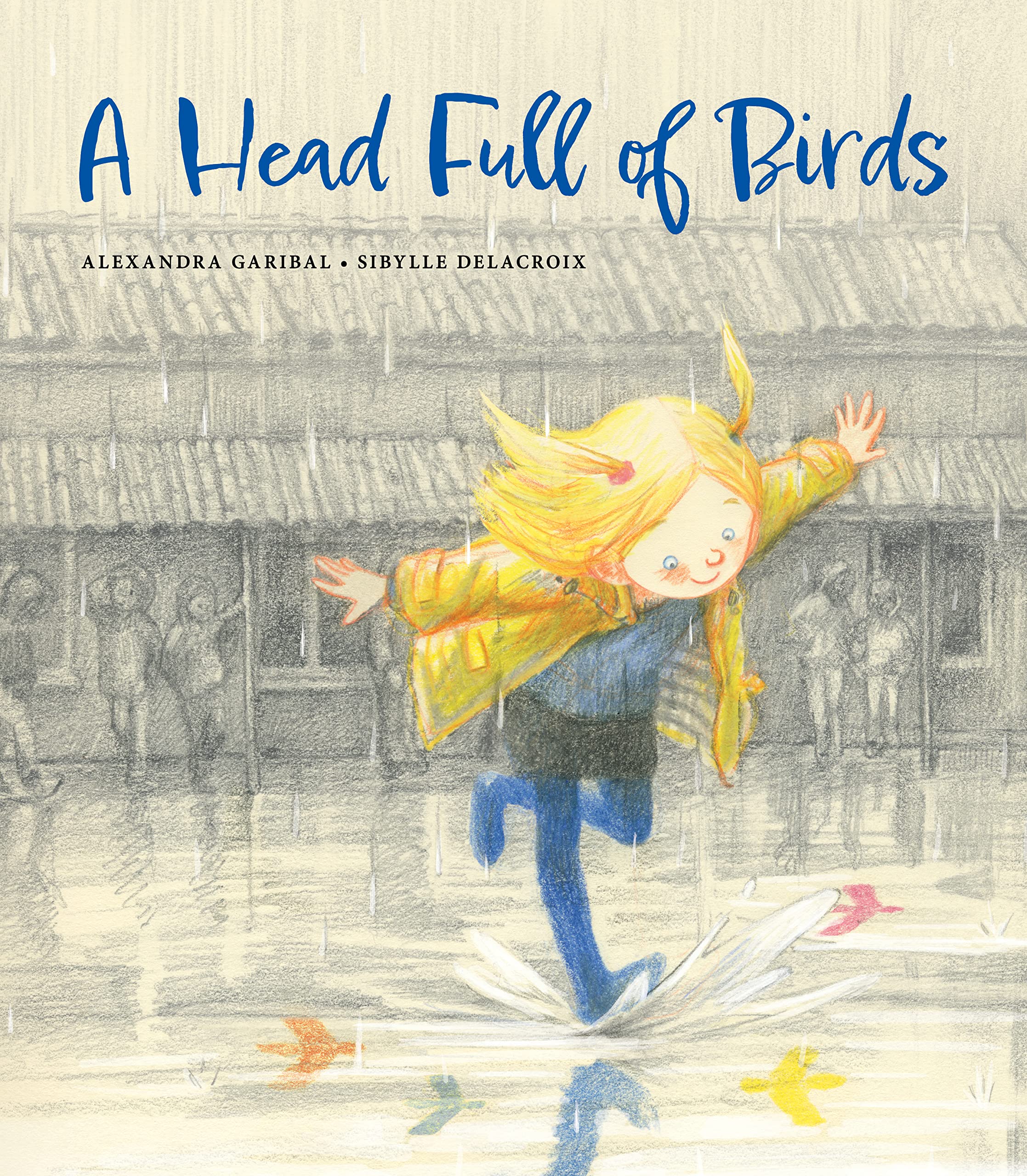
Nanette is a little girl with “a head full of birds.” She mixed strange foods together, can spend hours looking at an empty spider’s web and “rocks back and forth, to and fro, fluttering her fingers like butterflies.” The kids at school taunt her, calling her “stupid” and treating her meanly. But Nanette doesn’t pay attention to them. One boy in her class, Noah, joins in. But one day while tossing paper airplanes during class, the teacher catches him and makes him sit up front.

celebrate-picture-books-picture-book-review-a-head-full-of-birds-butterflies

Image copyright Sibylle Delacroix, 2022, text copyright Alexandra Garibal, 2022. Courtesy of Eerdmans Books for Young Readers.

This means sharing a table with Nanette, which makes him angry. While pulling out his chair, “he pushes her out of irritation,” which causes her pencil to slide across her drawing of a bird. Nanette is disappointed, whispering “Oh. He won’t fly anymore.” Noah finds this ridiculous and tells her that drawings of birds can’t fly, but Nanette already knows. “‘The drawing doesn’t fly, the bird does,'” she answers.

That day after school, Noah watches as Nanette sets colorful little origami boats to sail down the rain-washed curb. He thinks it looks “so pretty.” The next day, it’s still raining, and during recess Noah sees Nanette standing in the middle of the school yard without her boots catching raindrops. His friends are calling him stupid, but he grabs her shoes and rushes out to bring her back in. But Nanette is happy. She takes her boots and fills them with water running off the roof. They both hide a boot in their coats and run back inside for class.

celebrate-picture-books-picture-book-review-a-head-full-of-birds-boats-on-curb

Image copyright Sibylle Delacroix, 2022, text copyright Alexandra Garibal, 2022. Courtesy of Eerdmans Books for Young Readers.

On the stairs, someone bumps into Noah, spilling his boot. Noah is angry that their plan is ruined, but Nanette tells him it’s okay, that one is enough. She passes him a tiny origami boat, and he drops it into her boot. “The boat twists and twirls, dancing merrily across the water. And it’s so pretty.” Now Noah and Nanette are friends, and “together, they look after the birds that nest in their heads.”

celebrate-picture-books-picture-book-review-a-head-full-of-birds-boot

Image copyright Sibylle Delacroix, 2022, text copyright Alexandra Garibal, 2022. Courtesy of Eerdmans Books for Young Readers.

While quietly straightforward, Alexandra Garibal’s story affects poignancy on multiple levels. Readers are first introduced to Nanette, a girl with neurodiversity who is happy in her observations and interactions with the world while also self-confident enough to ignore the comments of her classmates. Readers see Noah participating in the ridicule, but when he is moved to sit next to Nanette, readers begin to understand that it is he who needs to see the world differently, not Nanette. Children may feel that Noah already embodies this empathy as it doesn’t take long before he appreciates the beauty Nanette brings to their world. 

While he at first feels he must protect her, running out with her boots and aiming to take her back inside from the rain, he again learns that her actions have meaning, and when the boot he’s carrying spills on the way back to class, he now feels the same disappointment of a project ruined that Nanette felt with her bird drawing. With Nanette and Noah’s conspiratorial goofing off in class (and, bravely, in the front row!), Garibal brings the story full circle while infusing it with growth and joy for both characters as they go forward as friends.

celebrate-picture-books-picture-book-review-a-head-full-of-birds-filling-boot

Image copyright Sibylle Delacroix, 2022, text copyright Alexandra Garibal, 2022. Courtesy of Eerdmans Books for Young Readers.

Sibylle Delacroix’s lovely colored-pencil illustrations reveal Nanette as a shining light in the world and in her classroom. She is first shown gazing upward as if the sun is on her face, next with colorful butterflies, and then at school in a bright yellow raincoat, while the background is drawn in gray and the other kids in a single shade of red, all except Noah, who has brown hair and blue glasses, signifying to readers that perhaps he is a bit different as well. 

The two children’s growing friendship takes place against a gray-scale background, putting the focus on both their separation from their environment as well as their similarity to each other. Other visual clues in clothing and other elements also point to Nanette and Noah’s similarity, which can invite kids to find and talk about them. A particularly moving spread comes as the two children watch the little boat float in the boot, their two smiling faces reflected in the water. Turning the page, readers see the imagination Nanette and Noah share as they ride in an origami boat pointing out paper bird above.

This beautiful friendship story speaks not only to the acceptance and understanding of neurodiversity but of all the creative and different ways in which people see the world. A Head Full of Birds will fill your heart and resonate long after the story is over. The book invites multiple re-readings and will generate much thought and discussion. It is a must for all home, classroom, school, and public libraries.

Ages 4 – 8

Eerdmans Books for Young Readers, 2022 | ISBN 978-0802855961

About the Author

Alexandra Garibal is a French children’s author and editor. She has written over sixty picture books, novels, and magazine articles, and her titles have been translated for Chinese and Spanish readers. A Head Full of Birds is Alexandra’s English-language debut. Follow her on Instagram @alexandragaribal.

About the Illustrator

Sibylle Delacroix is the illustrator of Tears, Prickly Jenny, Grains of Sand, and Blanche Hates the Night (all Owlkids). She graduated from the ERG Saint-Luc School of Graphic Research in Brussels and worked for many years as a graphic designer before becoming a full-time illustrator. Sibylle lives in France. Follow Sibylle on Instagram @sibylledelacroix.

About the Translator

Vineet Lal is a literary translator of books from French to English, including A Perfect Spot (Eerdmans) and The Secret Life of Writers (Weidenfeld & Nicholson). He studied French at Princeton University and the University of Edinburgh. Vineet lives in Scotland. Follow him on Twitter @vineet_uk.

celebrate-picture-books-picture-book-review-a-head-full-of-birds-cover

You can find A Head Full of Birds at these booksellers

Amazon | Barnes & Noble | Books-a-Million

To support your local independent bookstore, order from

Bookshop | IndieBound

Picture Book Review
September 6 – It’s Friendship Month

celebrate-picture-books-picture-book-review-big-bear-and-little-fish-cover

About the Holiday

Friendship Month was established by the Oddfellows (shortened from The Grand United Order of Oddfellows Friendly Society (GUOOFS)), an international fraternity that dates back to 1730s England with the hope of encouraging people to make friends. Now dedicated to philanthropy and charity, the Oddfellows still promote Friendship Month each September to urge people to spend more time with their friends, get in touch with those they haven’t seen or talked to in a while, and, especially, to reach out to others who are alone or need a friend. As school gets underway, there are plenty of opportunities for kids to meet new people and form friendships – some of which may last a lifetime.

I’d like to thank Carolrhoda Books and Blue Slip Media for sharing a copy of Big Bear and Little Fish with me for review consideration. All opinions on the book are my own.

Big Bear and Little Fish

Written by Sandra Nickel | Illustrated by Il Sung Na


At the fair, Bear approached the basketball game booth, where the grand prize was a huge teddy bear. It was almost as big as Bear, herself. But Bear took away the consolation prize: a goldfish. “It was small. It was very small. It was so small it lived in a bowl.” Bear peered into the bowl, but when Fish woke up and said “‘Hello, Bear. Is this my new home?'”, Bear only nodded, afraid her big voice would scare little Fish.

celebrate-picture-books-picture-book-review-big-bear-and-little-fish-teddy-bear

Image copyright Il Sung Na, 2022, text copyright Sandra Nickel, 2022. Courtesy of Carolrhoda Books.

When lunchtime came, Bear made herself a sandwich with syrup that was as gold as she was. Bear didn’t know what to feed Fish, who was orange and probably liked “carrot muffins … or tangerines and pumpkins.” After lunch, Bear always measured herself. Today, she was over nine feet big! Bear didn’t know how she could measure Fish, so she left home for her regular afternoon walk, wishing – and not for the first time – that Fish was a teddy bear.”

While walking, Bear contemplated how inconvenient Fish might find the outdoors. Things could fall into her bowl and get caught in her tail. If she had a teddy bear Bear thought again, she wouldn’t have to worry about such things as tails. Bear began to regret ever bring Fish home from the fair. When Bear got home again, Fish greeted her with a “‘Hello” and a comment on how much she liked their porch.

celebrate-picture-books-picture-book-review-big-bear-and-little-fish-bowl

Image copyright Il Sung Na, 2022, text copyright Sandra Nickel, 2022. Courtesy of Carolrhoda Books.

In response, Bear gave Fish the bad news that she couldn’t stay. When Fish asked why, Bear laid out her reasons: Fish was orange and ate orange foods; Fish had a tail that made it impossible for her to go on walks with Bear; and finally that Fish was too small. Fish was undaunted. She pointed out that Bear was orange too, and when Bear inspected her belly, she agreed that it “was an orangey sort of gold” kind of “like a carrot muffin.” Fish then added that Bear had a tail, and when Bear looked over her shoulder, she saw a tiny tuft. As to the assertion that she is “small,” Fish was surprised. 

celebrate-picture-books-picture-book-review-big-bear-and-little-fish-hello

Image copyright Il Sung Na, 2022, text copyright Sandra Nickel, 2022. Courtesy of Carolrhoda Books.

“Am I?” she asked then welcomed being measured. She stretched herself out, and Bear measured her: three inches long. Fish was happy with this result; she wasn’t so small after all. “‘I am not one inch. I am not two inches. I am three inches,'” she said proudly. Still, Bear couldn’t get over the idea that Fish was so tiny she had to live in a bowl. 

But Fish was philosophical. “‘Don’t you live in a bowl too?'” she asked. Bear had never thought of it that way before, and as she looked around at the big, blue sky, she suddenly felt small too. Fish reassured her and offered another perspective on physical size compared to how big one could feel inside. Bear considered this and then decided she’d like to take another walk – this time accompanied by Fish. And so they set off in search of a very big carrot muffin.

celebrate-picture-books-picture-book-review-big-bear-and-little-fish-sandwich

Image copyright Il Sung Na, 2022, text copyright Sandra Nickel, 2022. Courtesy of Carolrhoda Books.

In her seemingly odd “fellows” friendship story, Sandra Nickel presents a multi-layered look at what it means to be a true friend. She cleverly offers readers a variety of lenses for them to engage in perspective, from the character’s viewpoints to their own. Bear, alone at home and on her walks, focuses only on herself. At the fair, she wants to win a teddy bear that is a twin to herself but for which she would not need to be responsible in any real sense.

Fish, however, immediately wants to interact with Bear. She talks to him and asks questions. At first, it may seem that Bear will simply ignore Fish, but the idea of her has begun to make Bear think and even worry (here, Nickel creates a complex mix of emotions that invites discussion). Equally thought-provoking are Fish’s counter arguments when Bear tells her she can’t stay. While promoting how similar they are, Fish prompts Bear to reevaluate her view of herself and the world she lives in. Once Bear realizes that she, too, can be considered small and that the full measure of a person (or Fish or Bear) is found inside oneself, she embraces Fish – responsibilities, friendship, muffins, and all.

Il Sung Na plays with perspective and color to subtly guide readers through the stages of this endearing friendship. As Bear walks home from the fair, dejectedly carrying Fish in her bowl, the hilly landscape is washed in shades of blue and the twiggy, leafy, mushroomy vegetation replicates an ocean bottom. This evocative effect continues throughout the book, prompting kids to find other similarities between Bear and Fish and their environments. Readers will also enjoy pointing out examples and comparisons of big and small.

An endearing and thought-provoking story that boosts self-confidence while promoting friendship, empathy, and new perspectives, Big Bear and Little Fish will become a quick favorite on home bookshelves, a go-to book for classrooms, and a must for school and public library collections.

Ages 4 – 8

Carolrhoda Books, 2022 | ISBN 978-1728417172

Discover more about Sandra Nickel and her books on her website.

To learn more about Il Sung Na, her books, and her art on her website.

Dive in to this book trailer for Big Bear and Little Fish!

Friendship Month Activity

celebrate-picture-books-picture-book-review-beanstalk-craft-with-top


Measuring Stick Craft


Bear and Fish loved getting measured. If you’re looking for a unique way to measure how big you are, here’s a craft for you! This nature-inspired measuring stick can keep track of your big and small growth spurts whenever you sprout up. You can even add leaves to record thoughts, favorite things, and other ideas as you age! 

Supplies

  • 50-inch wooden stake, available at craft stores
  • Dark and light green foam sheets or 45 – 50 small wooden leaves, available at craft stores
  • Green paint, light and dark
  • Black marker
  • Paint brush
  • Strong glue
  • Flower pot
  • Oasis or clay
  • Ruler
  • Pencil

celebrate-picture-books-picture-book-review-beanstalk-craft-closeup

Directions

  1. Paint the wooden stake with the green paint, let dry
  2. With the ruler mark the stake in 1-inch increments along the edge of the stake

How to Make the Leaves

  1. If using wooden leaves, paint half light green and half dark green
  2. If using foam, cut 1 3/4-inch-long tear-drop shaped leaves (half from light green foam, half from dark green foam), 45 – 50 or as needed
  3. Cut two larger leaves, one from each color to decorate the top of the stake
  4. Draw a line down the center of each leaf

For Measuring Growth: Write the inch 1 through 45 or higher on each leaf with the black marker, alternating colors

For Recording Ideas: You can write favorite ideas, hobbies, or hopes on the leaves too and measure your growth that way!

How to Attach the Leaves

  1. Glue the leaves to the stake, attaching the odd-numbered inch leaves to the left side of the stake and the even-numbered leaves to the right side of the stake.
  2. Attach half of the leaf to the stake, letting the tip stick out from the side
  3. Glue the two larger leaves to the top of the stake

How to Store Your Yardstick

  1. Put the oasis or clay in the flower pot
  2. Stick the stake into the flower pot to keep it handy

celebrate-picture-books-picture-book-review-big-bear-and-little-fish-cover

To get a copy of Big Bear and Little Fish personalized by Sandra Nickel

Visit Watermark Books to request a signed and personalized copy. When ordering, simply note your desired dedication in the Comments section. Sandra will sign on September 24, 2022, so be sure to order in plenty of time.

You can also find Big Bear and Little Fish at these booksellers

Amazon | Barnes & Noble | Books-a-Million

To support your local independent bookstore, order from

Bookshop | IndieBound

Picture Book Review
January 3 – It’s International Quality of Life Month

celebrate-picture-books-picture-book-review-nobody-owns-the-moon-cover

About the Holiday

How one achieves their definition of a good quality of life may differ for every person, but in general it encompasses being happy and satisfied with one’s relationships, work, living conditions, and self. Whether you find happiness and quality of life in outdoor or indoor pursuits, with others or alone, at work or at home, this month’s holiday gives you time to get in touch with your inner quiet place and reflect on changes or improvements to bring you more peace and happiness in life.

I’d like to thank Berbay Publishing for sharing a copy of Nobody Owns the Moon with me for review consideration. All opinions on the book are my own.

Special Note: As I have been asked to take on extra shifts as a staff member at my local public library due to personnel shortages, I will be taking a break from posting daily reviews over the next coming months. In between new reviews, I invite you to explore all of the holidays, author and illustrator interviews, activities, and, of course, the wonderful books featured on Celebrate Picture Books.

Nobody Owns the Moon

By Tohby Riddle


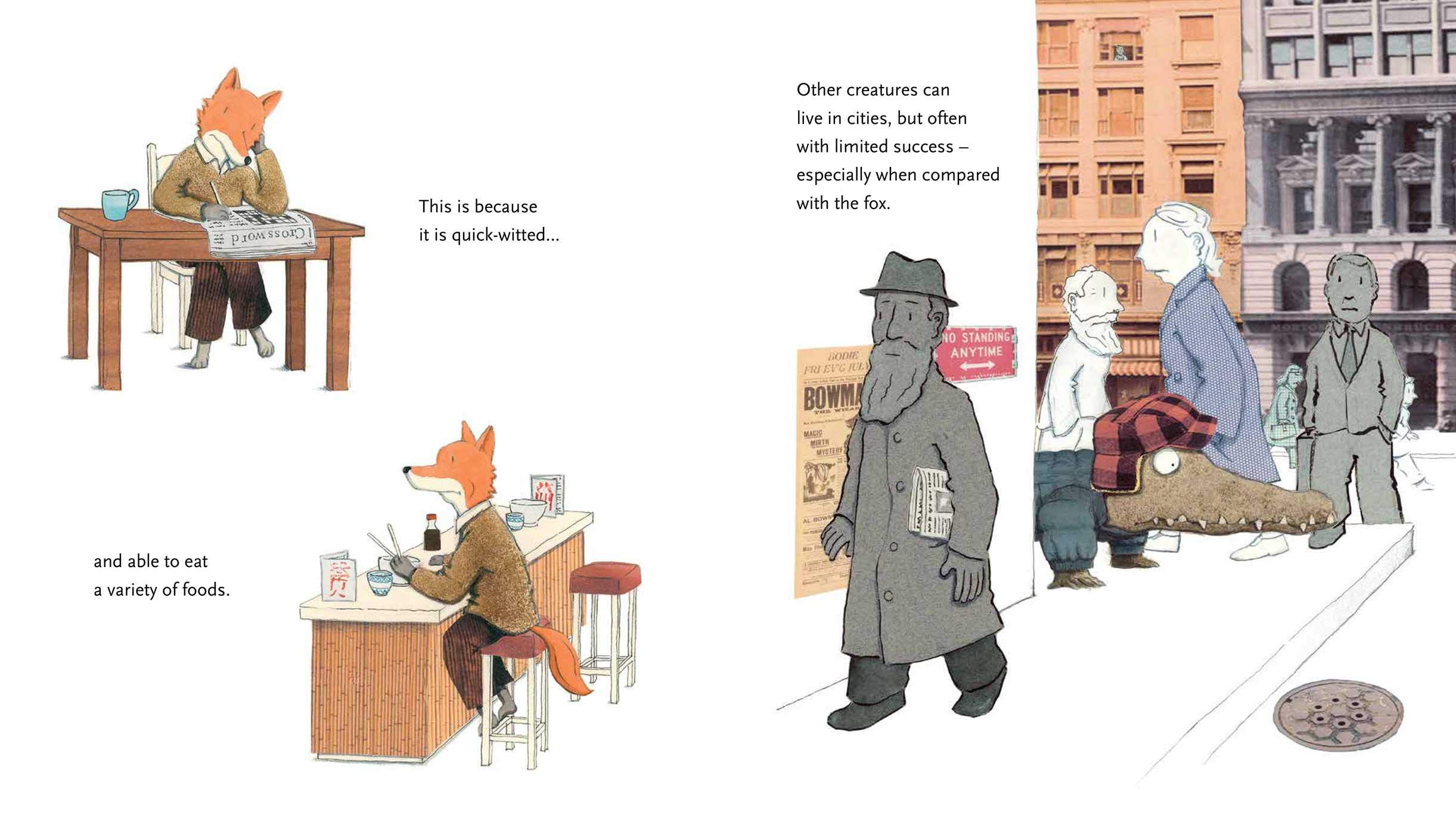
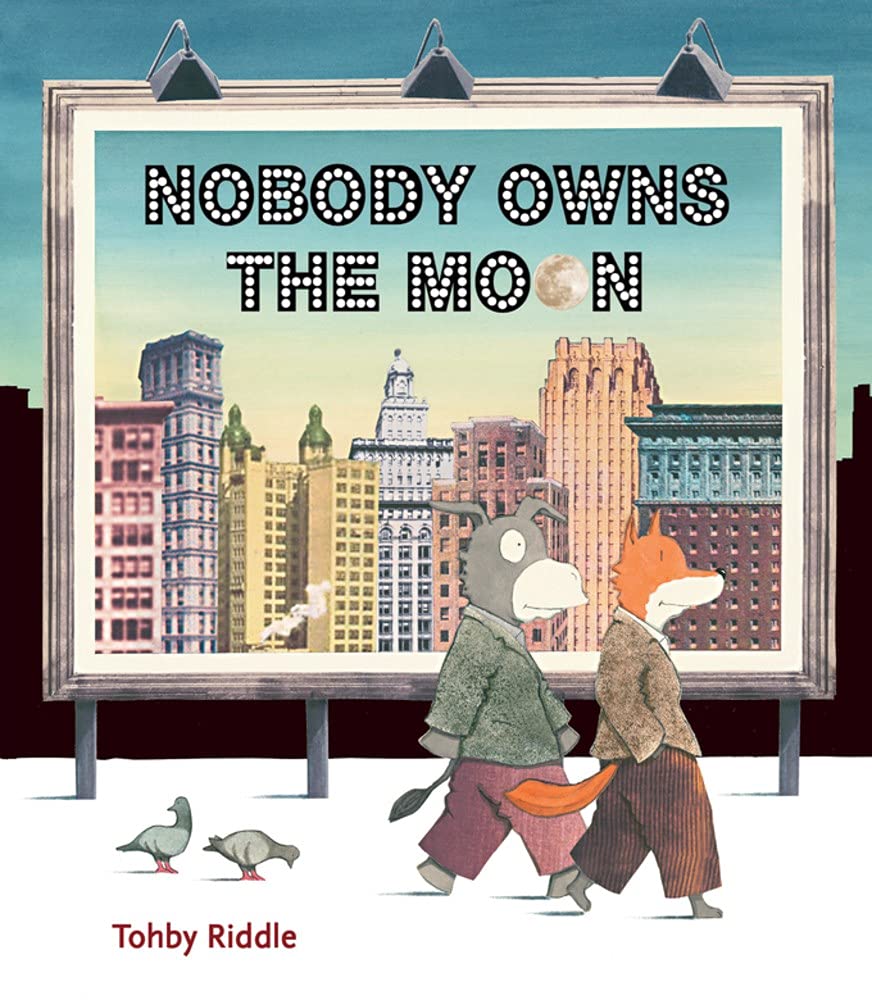
Upon the opening pages readers are treated to an engaging treatise on the success (or not so) of certain animals trying to “make a life for itself in cities.” The fox, we learn, is especially adept because it is “quick-witted and able to eat a variety of foods.” We are then introduced to one such city-dweller, Clive Prendergast – a self-named fox because his real name “can only be pronounced by foxes.”

celebrate-picture-books-picture-book-review-nobody-owns-the-moon-fox

Copyright Tohby Riddle, 2021, courtesy of Berbay Publishing.

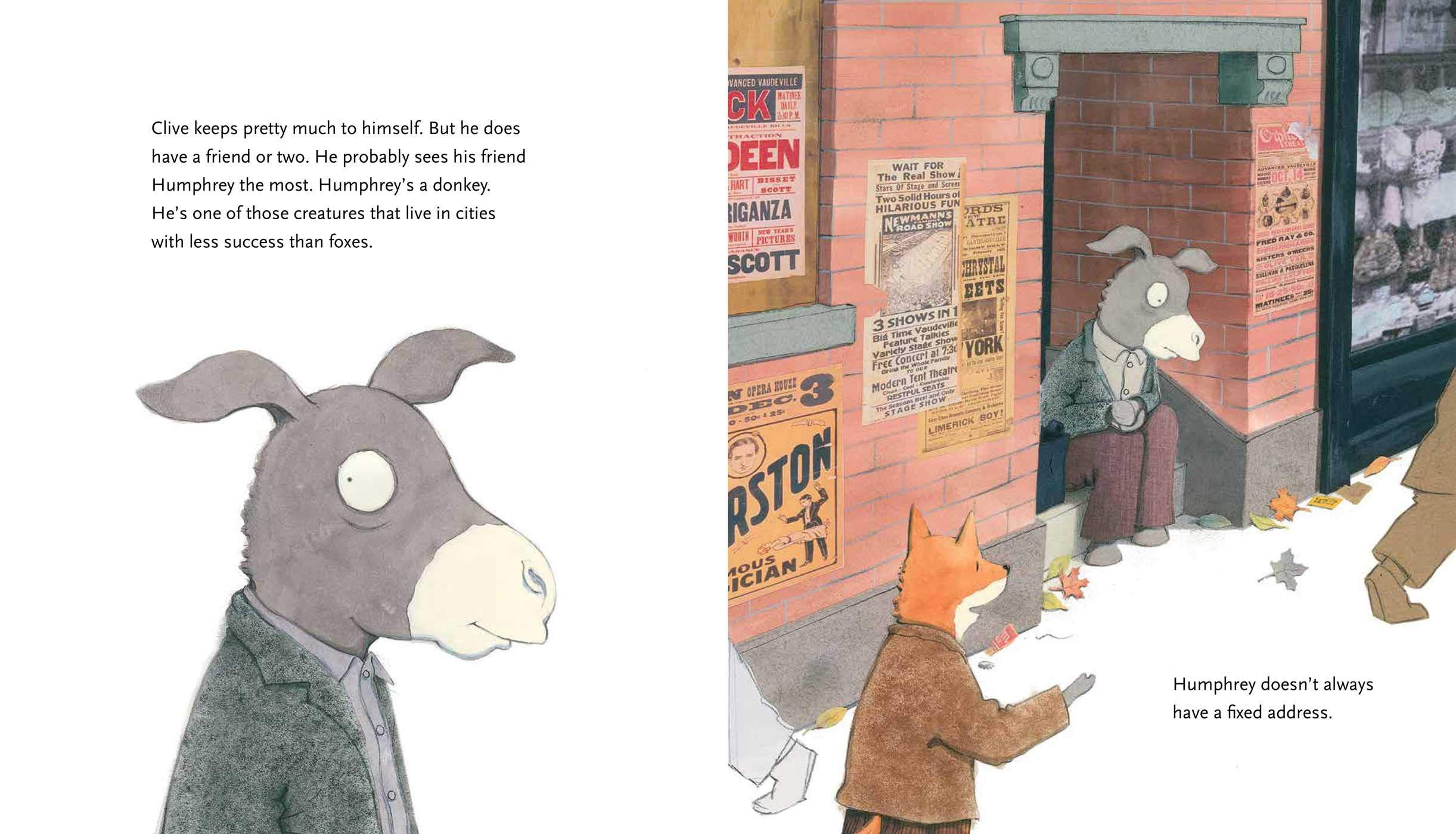
Clive lives in a small apartment and works on a factory production line. At night he takes to the streets, visiting food stalls and watching the interesting goings-on. Clive has a few friends, but the one he sees the most is Humphrey, a donkey who is “one of those creatures that live in cities with less success than foxes” and “doesn’t always have a fixed address.” While Humphrey has had jobs, he has trouble keeping them. Right now he’s working as a piano removalist.

One day Clive saw Humphrey sitting on the stone steps of “a statue of a great conqueror.” Clive thought he looked tired and underfed. Then he noticed a blue envelop sticking out of Humphrey’s tote bag. It turned out that Humphrey had found it in the street and planned on eating it, but thinking Clive was also hungry he offered it to him without a second thought. When Clive opened the envelope, he found two tickets to that night’s performance at the theatre. They should go, he said.

celebrate-picture-books-picture-book-review-nobody-owns-the-moon-humphrey

Copyright Tohby Riddle, 2021, courtesy of Berbay Publishing.

“That night Humphrey and Clive attended the premier of Nobody Owns the Moon – the latest play by the city’s most celebrated playwright. Before the show, ticket-holders were treated to hors d’ oeuvres and punch. Then they were shown to their front-row balcony seats. The play was wonderful, full of humor and poignancy. Tears filled Humphrey’s eyes at the show’s “bittersweet ending” and again as they enjoyed a beverage and “large slice of cake in the theatre’s elegant restaurant.”

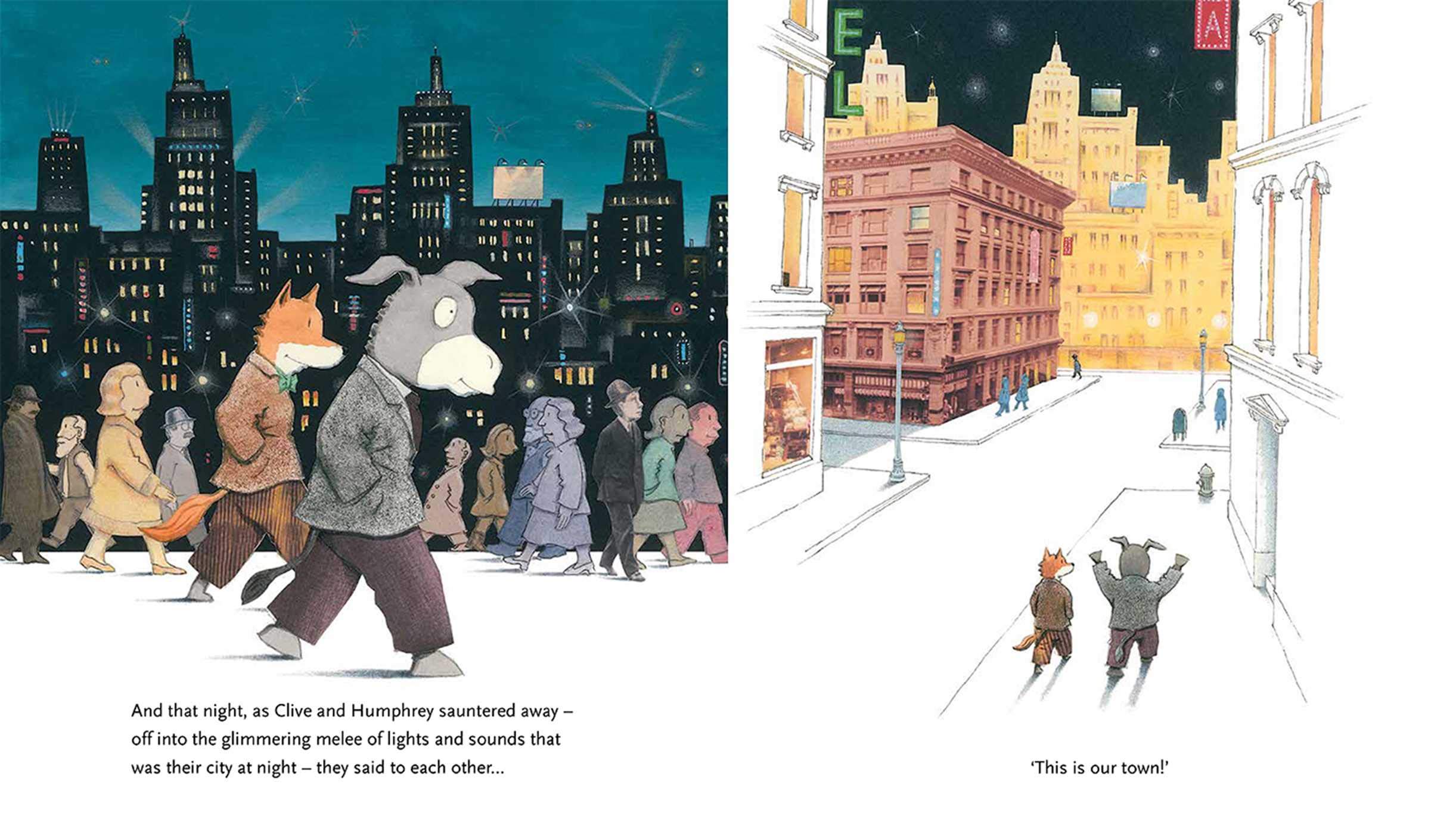
Filled with the wonder of the evening, Clive and Humphrey headed out into the “glimmering melee of lights and sounds that was their city at night. “‘This is our town!'” they exclaimed to each other, and before they went “their separate ways, Humphrey gave Clive a big hug goodnight.”

celebrate-picture-books-picture-book-review-nobody-owns-the-moon-city

Copyright Tohby Riddle, 2021, courtesy of Berbay Publishing.

Immersive and openhearted, Tohby Riddle’s poignant friendship tale is as surprising and inclusive as the invitation Humphrey finds. Opening with lines that could come straight from a nature documentary, the story quickly becomes interwoven with an air of mystery and anticipation as Clive Prendergast and Humphrey are introduced. Riddle’s inclusion of smart details, such as Clive’s fox name being unpronounceable to humans and Humphrey’s job that takes advantage of a donkey’s strong back, adds a verisimilitude that will delight readers. The emotional core of the story comes with Clive’s and Humphrey’s friendship, which is equitable and caring and full of generosity. The discovery and use of the theater invitation ushers in sumptuous scenes of a glittering theater, delicious food, and a life-affirming performance while also touching on the importance of satisfying the body and the soul, however one defines this.

Equally captivating are Riddle’s collage-style illustrations, which incorporate sly humor and thought-provoking perspectives. The book opens with an illustration of Clive Prendergast lounging in a comfortable armchair between Vincent van Gogh’s painting “A Wheatfield, with Cypresses” and a window which frames a view of the city that cleverly mirrors the famous artwork. Clive’s position suggests his comfort in both environments. Humphrey’s difficulties fitting in, on the other hand, are depicted in an Italian restaurant where, distracted for a moment, the plates of spaghetti and meatballs he’s carrying tip precariously over a customer sitting under a photograph of the Leaning Tower of Pisa. Other images that contribute to the depth and atmosphere of this book are theater posters advertising Vaudeville and magic acts, Russian nesting dolls and fresh foods for sale in Clive’s multicultural neighborhood, and the copy of Walt Whitman’s Leaves of Grass next to a view-master in Humphrey’s tote bag.

The city’s human inhabitants are all depicted in flat grays and browns while the animals – pigeons, a crocodile, a dancing bear – are portrayed in textured full color. This dichotomy begins to fade at the theater, where a waiter in formal dress offers Humphrey hors d’ oeuvres, in the balcony row where Clive and Humphrey sit, and in the restaurant after the show, a change that offers opportunities for readers to talk about acceptance and how we look at others. The moving ending is eloquent in it’s simple embrace of individuality and acceptance.
A touching, multi-level story that will enchant and impact readers, Nobody Owns the Moon will become a favorite and is a must for home, classroom, school, and public library collections.

Ages 4 – 8

Berbay Publishing, 2021 | ISBN 978-0994384195

Discover more about Tohby Riddle, his books, and his art on his website.

International Quality of Life Activity

celebrate-picture-books-picture-book-review-smile-cards-craft

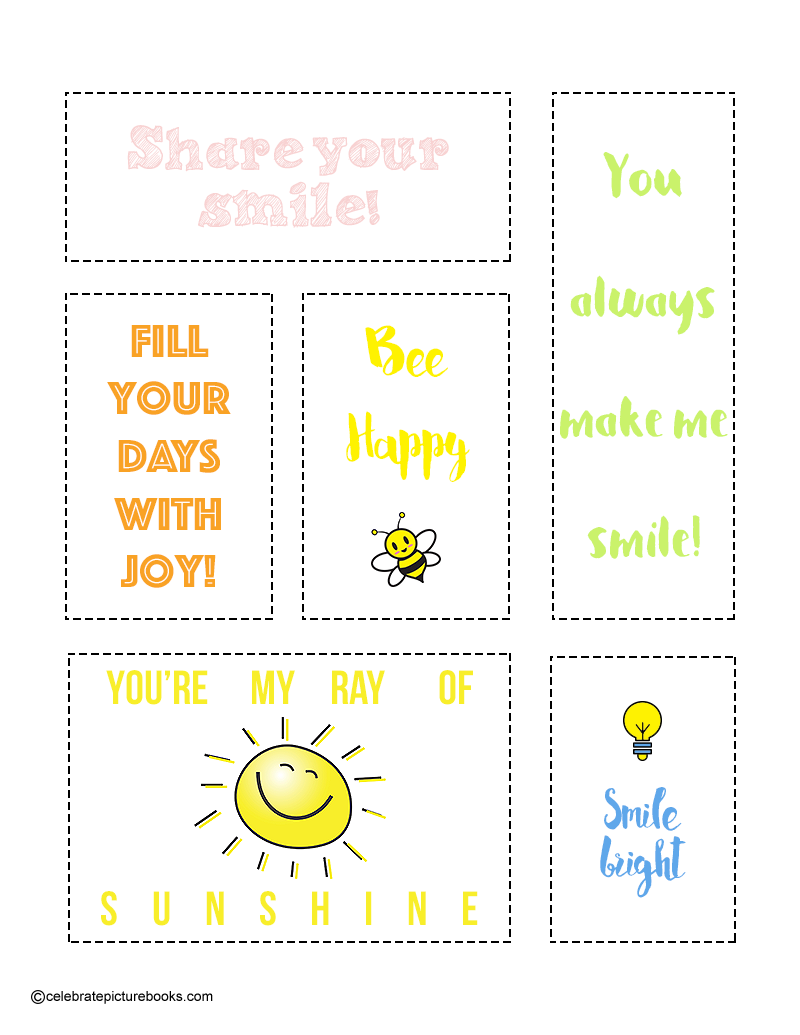
Share a Smile Cards


Life is better when you share smiles with those you know—and those you don’t! Try it! When you’re out today at school or other places, give someone a smile. You can be sure that you will have made their day and your day better! These cards are another way you can share a smile. Why not slip one into your dad’s pocket or your mom’s purse, put one in your friend’s backpack, or sneak one onto your teacher’s desk? You can even leave one somewhere for a stranger to find! Have fun sharing your smiles, and see how much better you and the others around you feel!

Click here to print your Share a Smile Cards.

celebrate-picture-books-picture-book-review-nobody-owns-the-moon-cover

You can find Nobody Owns the Moon at these booksellers

Amazon | Barnes & Noble | Books-a-Million

To support your local independent bookstore, order from

Bookshop | IndieBound

Picture Book Review