September 30 – National Pet Tricks Day

About the Holiday

National Pet Tricks Day was established in 2020 by professional dog trainer Joe Nutkins of Ardleigh, Essex, in the UK. Nutkins loves connecting with dogs and other animals by spending time with them teaching them tricks. Nutkins has enjoyed success and and even a bit of celebrity—appearing on Britain’s Got Talent in 2029 and 2023—with her expertly trained pets, including dogs, cats, hamsters, parrots, and even ducks and chickens. To celebrate today, why not begin spending some encouraging and fun one-on-one time each day to teach your pet a special art. And, of course, don’t forget the treats!

Thank you to Flamingo Books for sending me a copy of this book for review!

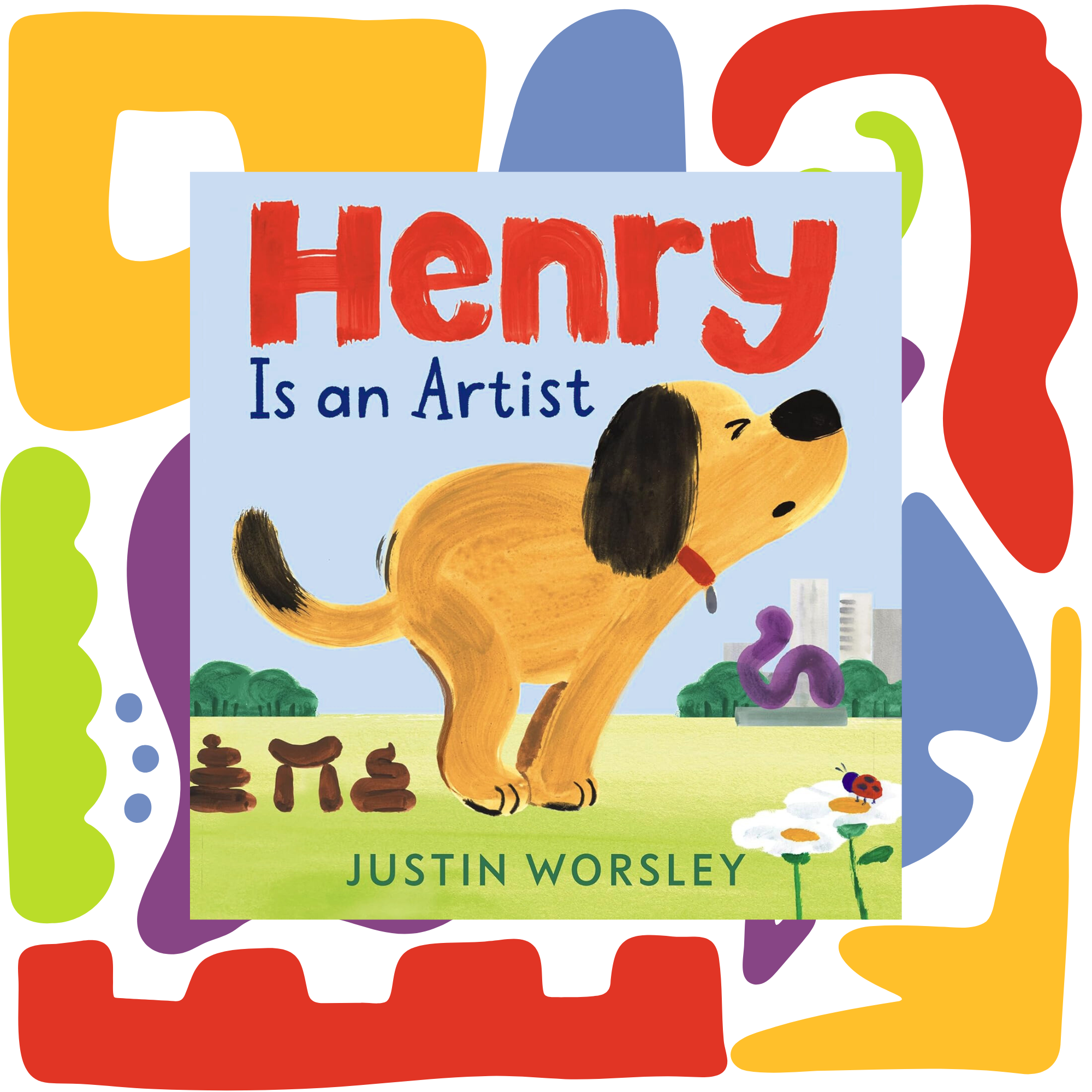
Henry Is an Artist

By Justin Worsley


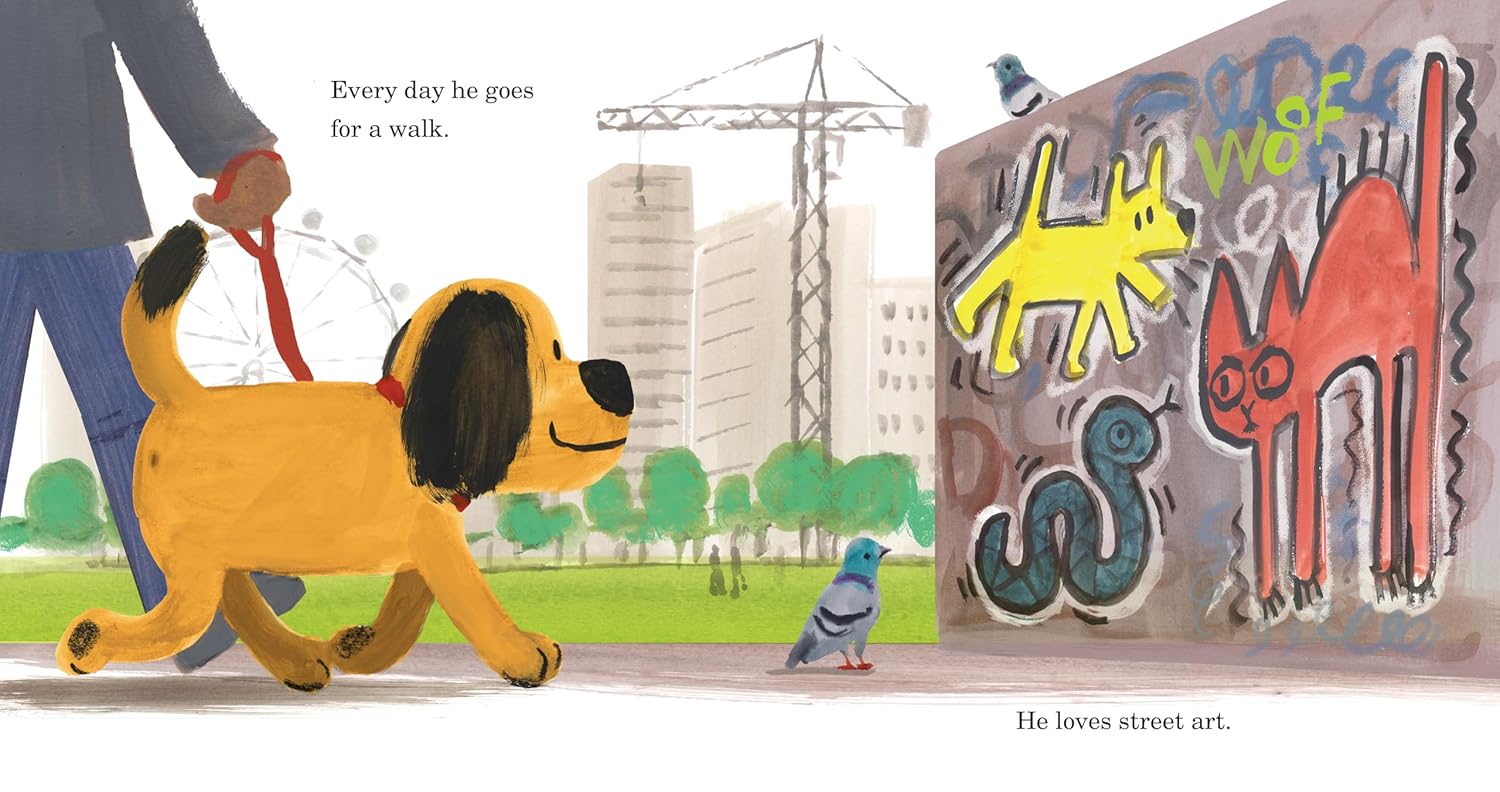
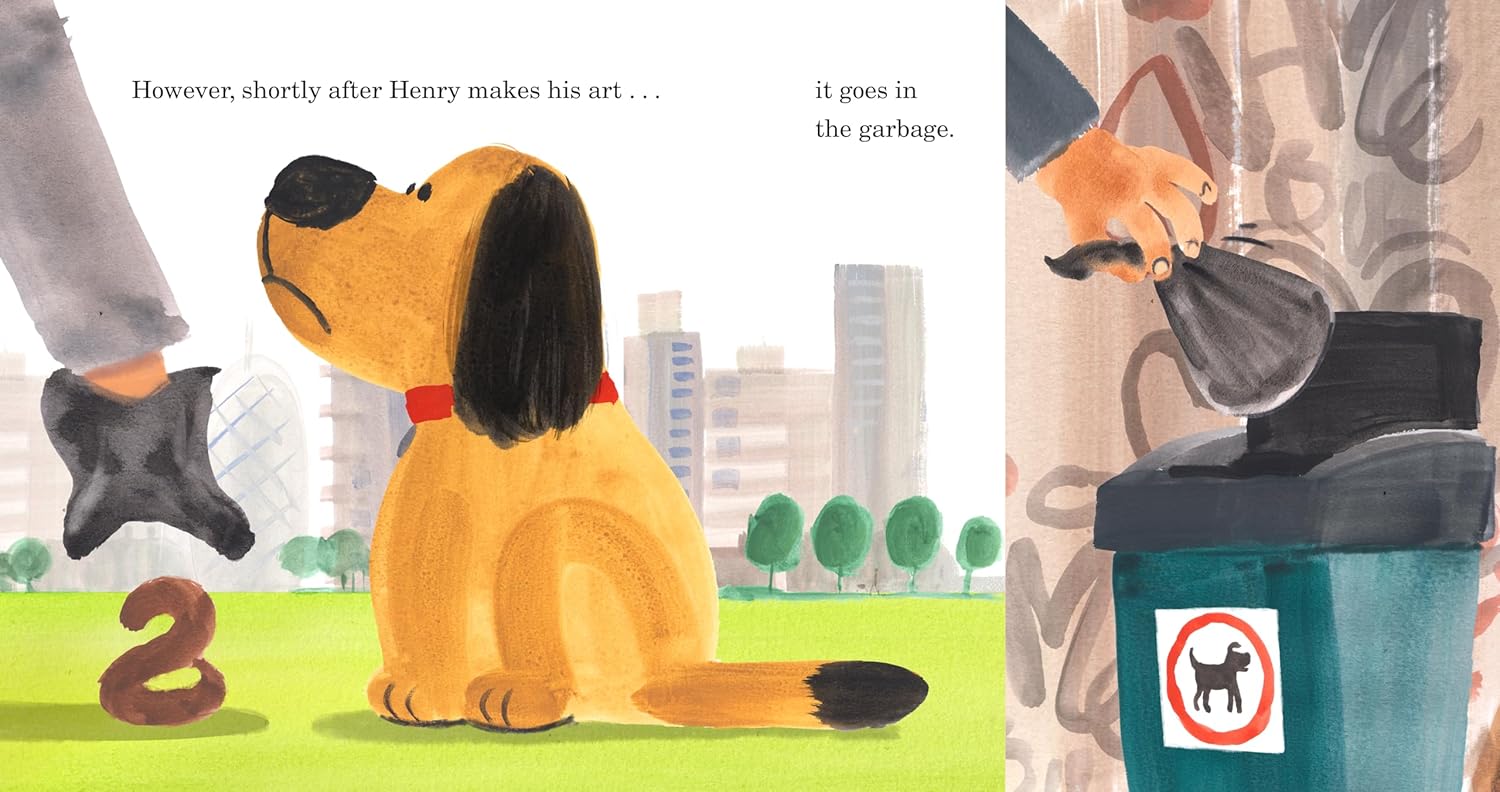
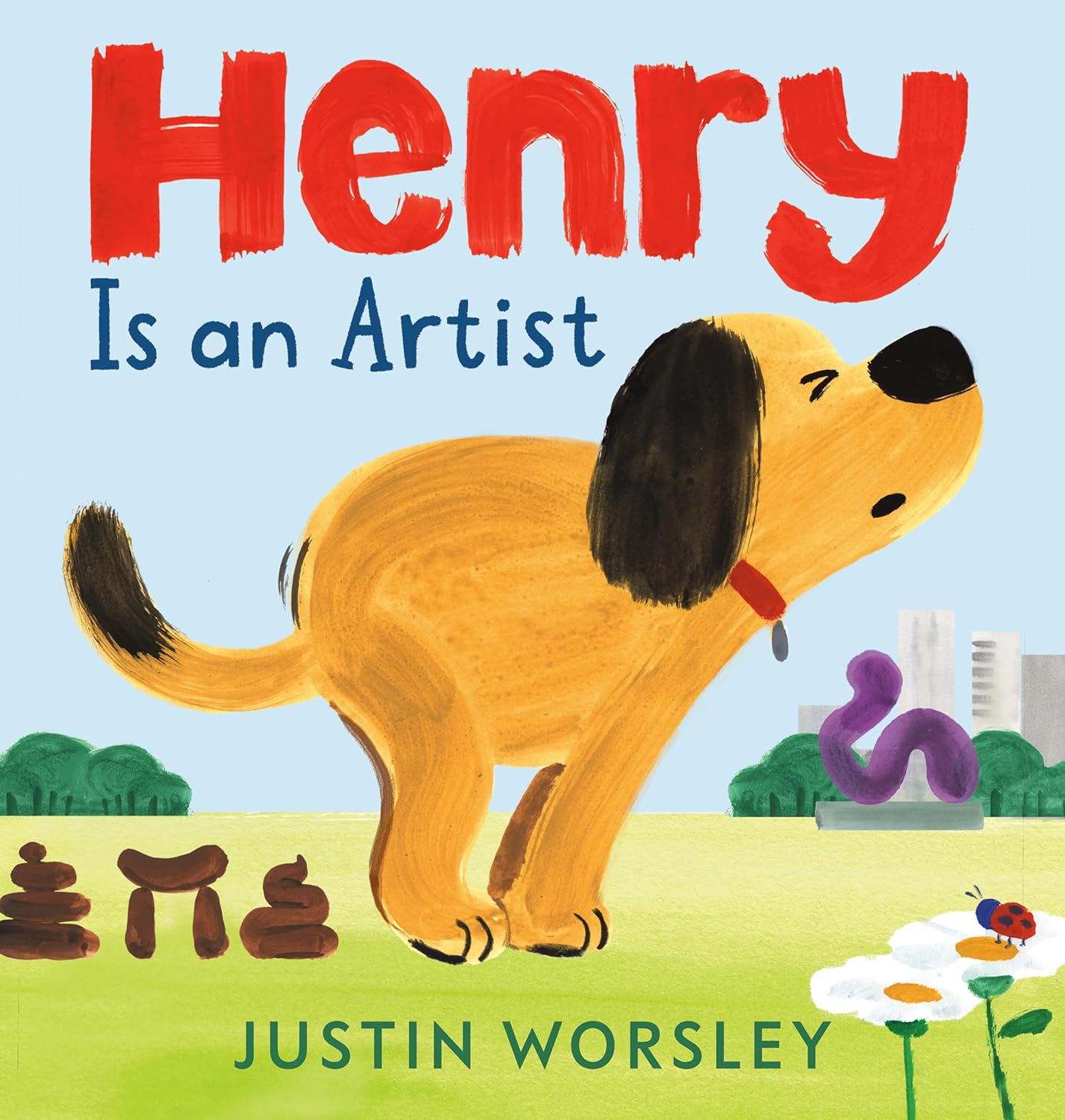
Many dogs know tricks, but Henry has a calling. “Henry is an artist.” Each day when he goes for a walk, Henry admires the street art he passes, “but sculpture is his real passion.” Henry is no stranger to the creative impulse, every day producing a new, unique sculpture of his own. Even though Henry “is proud of his work,” it is not universally embraced. In fact, its public impact is fleeting and usually trashed.

Text and Illustration © 2025 by Justin Worsley. Courtesy of Flamingo Books.

One day, however, in a moment of distraction, Henry’s creation is left behind. Left behind, but not disregarded. “Someone has fallen in love with his artwork.” The tiny bug flies off to “tell all their friends.” The news travels fast, and soon “Henry’s sculpture is a sensation!”

Henry’s sculpture is so valued, in fact, that the bugs carefully transport it to a place of honor. Henry is invited to view its new home: “the grand lobby of the Bug Hotel!” He’s hailed as a celebrity, and returns home a very happy pup, indeed.

Text and Illustration © 2025 by Justin Worsley. Courtesy of Flamingo Books.

Funny, thought-provoking, and an ode to all the unsung creatives among us, Justin Worsley’s story makes readers laugh while encouraging them to find inspiration in the most unlikely places.

Worsley’s delightfully smart and inventive illustrations endear Henry to kids as he walks through the park admiring the public sculptures and trying to install his own. Henry’s facial expressions as he interacts with his owner, the reactions of other dogs, and the appreciative reception of an observant toddler and bug community all add depth to the story.

Henry Is an Artist would be a fun and often-requested addition to home, classroom, and public libraries. Its short sentences make it a perfect choice for new and beginning readers to read or grow with on their own.

Ages 4 – 8

Flamingo Books, 2025 | ISBN 978-0593695043

About the Author/Illustrator

Justin Worsley is an illustrator, author, and toy designer. After nearly thirty years of designing toys, he decided it was time for a change and followed his long-held dream of becoming a children’s book illustrator and graduated from Cambridge School of Art in 2023. When he’s not working, he’s usually riding his bike or walking his dog, Percy.

National Pet Tricks Day Activity

celebrate-picture-books-picture-book-review-paw-print-magnet-smaller

Paw Print Magnet


Your pet’s paw print makes a cute magnet for your fridge or locker to give you a paw…I mean hand… holding those important messages and pictures. Here’s how to do this easy craft with your dog or cat.

Supplies

  • 1/2 cup flour
  • 1/2 cup salt
  • 1/4 cup water
  • Cookie cutter (optional)
  • Bowl
  • Wax paper
  • Strong multi-surface glue or hot glue gun
  • Strong magnet, available at craft stores
  • Paint (optional)

Directions

  1. Mix the flour and salt in the bowl
  2. Slowly add the water and mix the dough, kneading it until it is smooth and soft. Add more water if necessary.
  3. Roll out the dough until it is about 1/4 – 1/2 inch thick
  4. Place the dough on the wax paper
  5. Carefully press your pet’s paw into the dough. 
  6. Place the cookie cutter over the print and cut out 
  7. Bake the paw print at 250 degrees for 1 to 2 hours depending on thickness of dough
  8. If desired, paint the print, the background, or both
  9. Attach the magnet with the glue
  10. Display your magnet

You can purchase Henry Is an Artist from these booksellers

Amazon | Barnes & Noble | Bookshop (discounted books and support for your local independent bookstore)

Picture Book Review

August 29 – Happiness Happens Month

About the Holiday

Happiness Happens Month reminds us that happiness doesn’t have to be something we plan for or spend money on. In fact paying attention to those little moments during each day, going on spontaneous outings with friends or family, or taking time to do a favorite activity may be all you need to feel happier every day! With summer coming to a close and school starting again, it’s a great time to reflect on the fun you’ve had over the past months and all the memories that are about to be made as another year of activities, education, new friendships, and excitement unfolds. Happiness really does come to you if you look for it and let it happen!

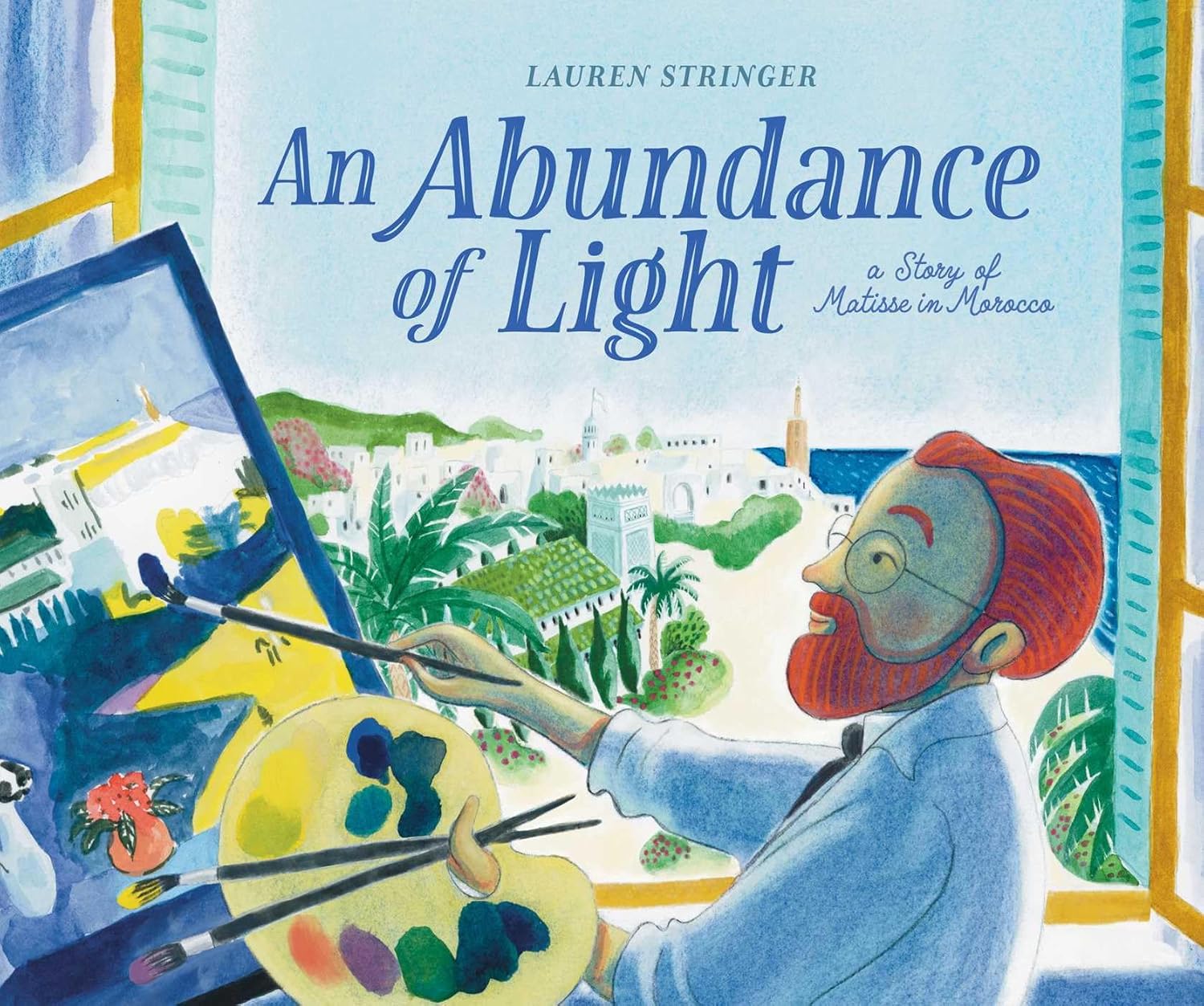
An Abundance of Light: a Story of Matisse in Morocco

By Lauren Stringer


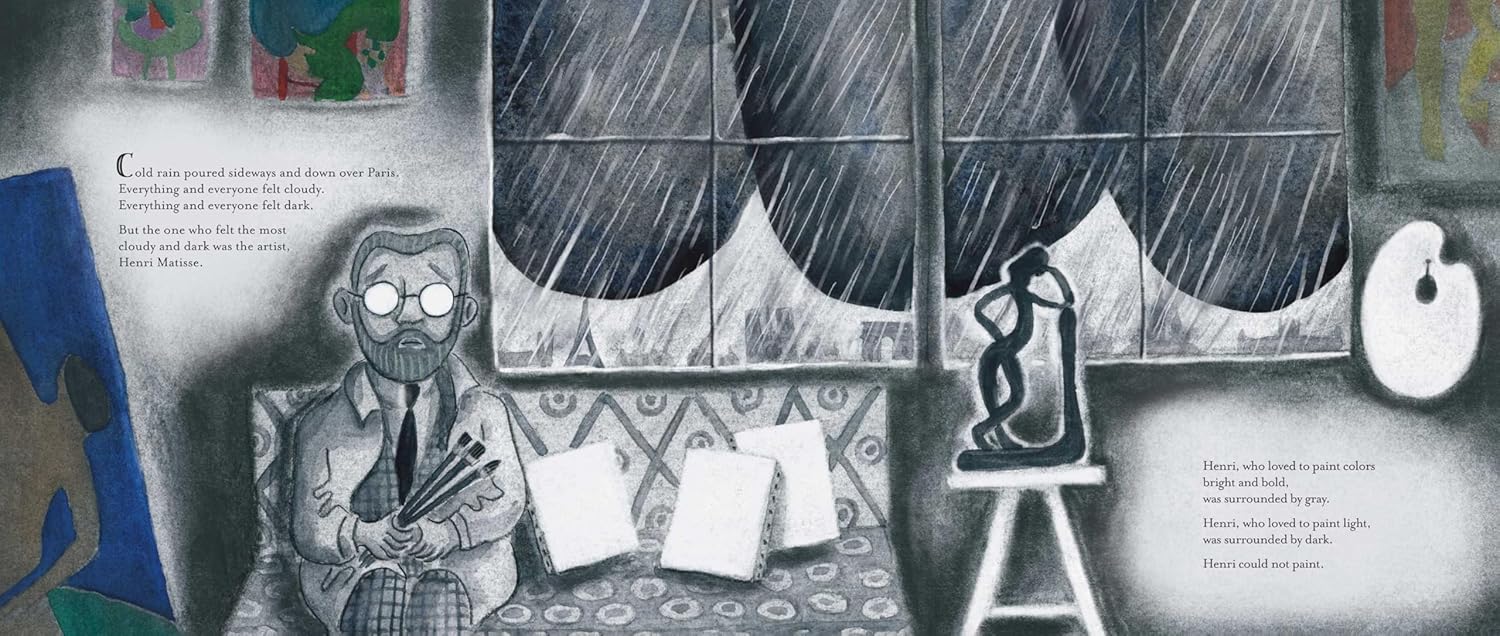
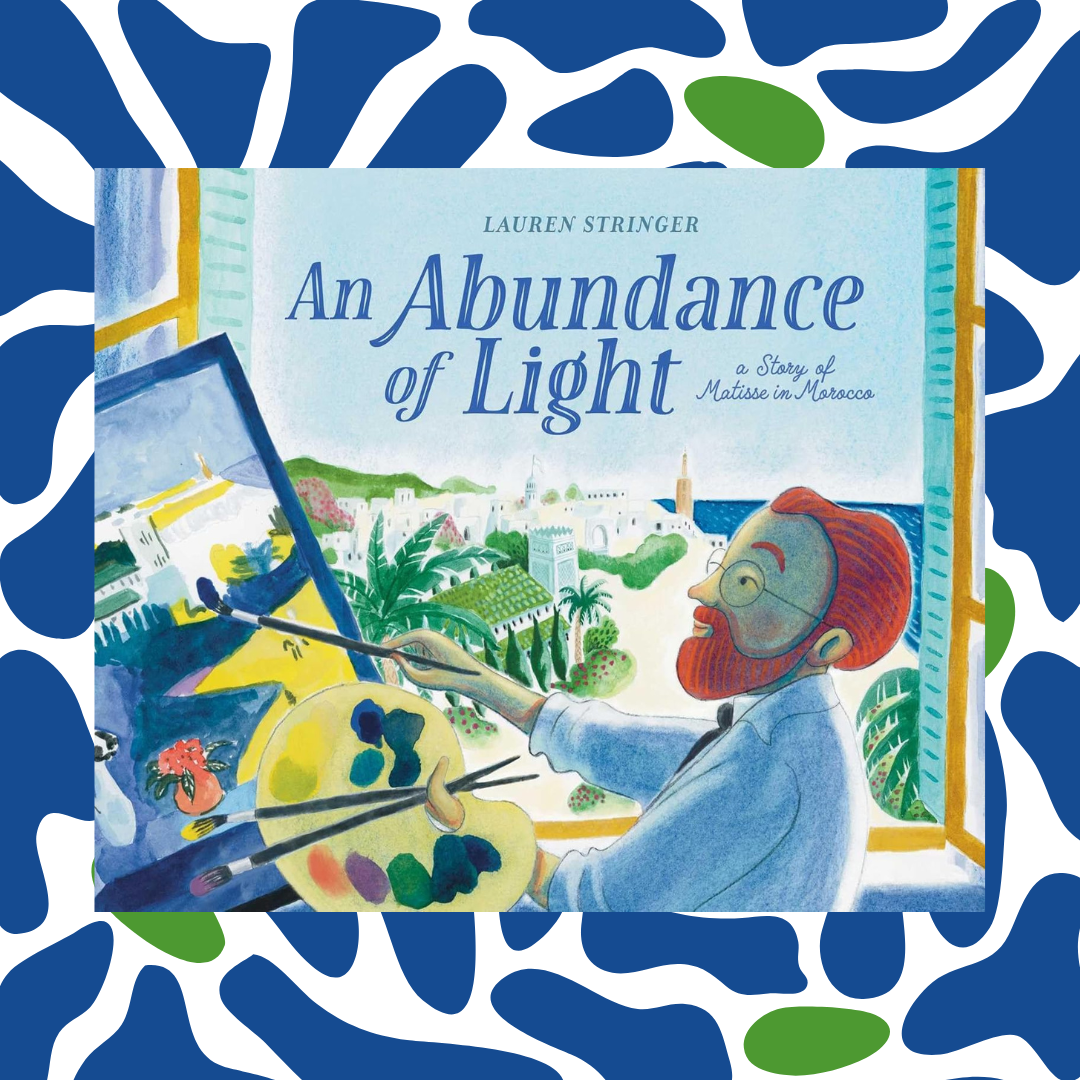
As Paris endured a cold and rainy season, Henri Matisse suffered. How could he paint light and colors when he was surrounded by gray? His friend Albert Marquet suggested he visit Tangier, Morocco, “where the Atlantic Ocean meets the Mediterranean Sea.” There, he said, “the sunlight was abundant!” Henri packed up all of his supplies and made the trip. But it seemed Henri had brought the rainy weather with him. He tried to paint colorful irises and a basket of oranges and lemons, but he still felt gloomy and trapped.

Text and illustration © 2025 by Lauren Stringer. Courtesy of Beach Lane Books.

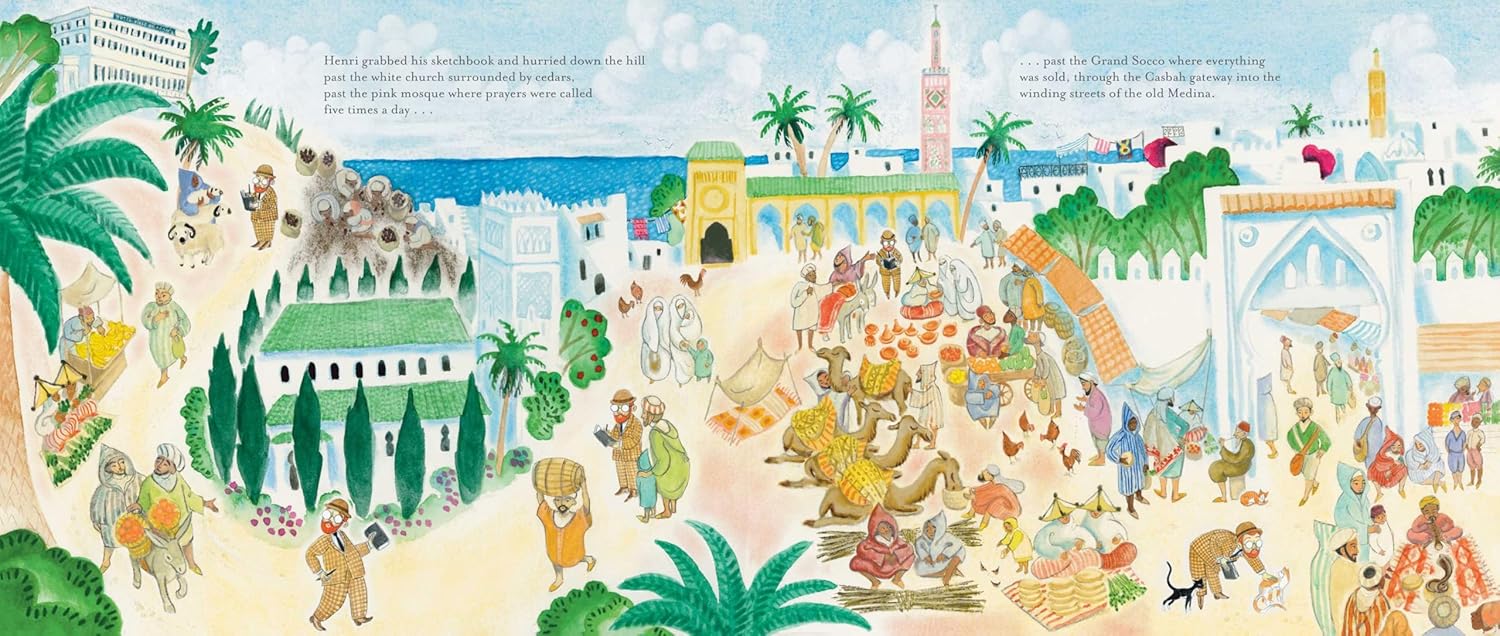
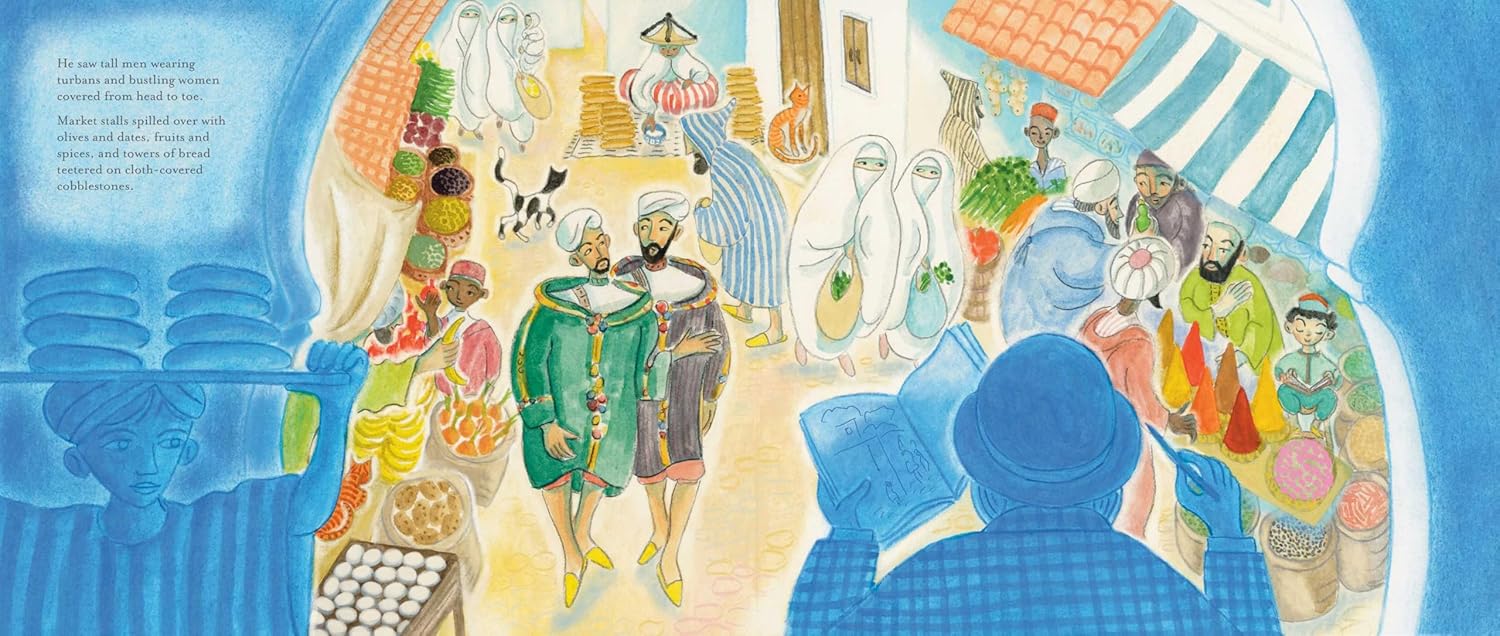
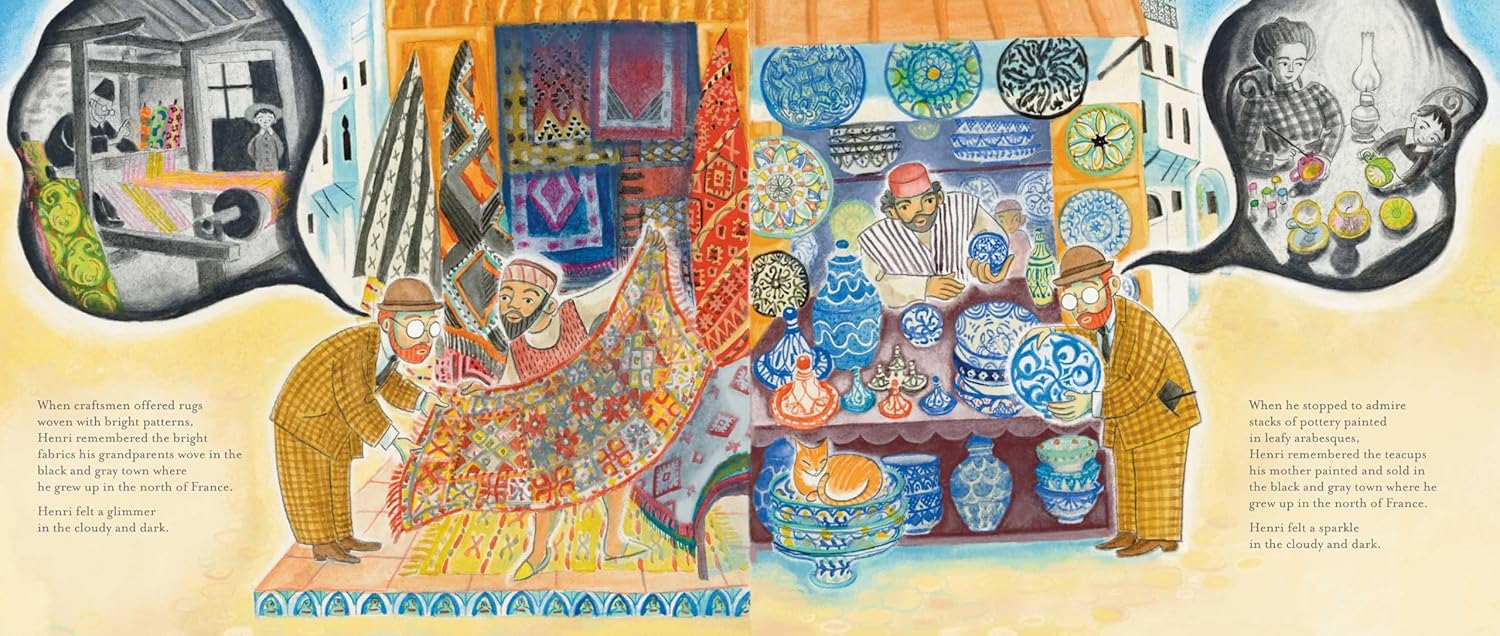
Then one night while Henri slept, the rain stopped. In the morning he woke to ” . . . an abundance of light. A luminous light. A dazzling light.” Henri took his sketchbook and hurried into town, where color shimmered from the pink mosque to the vibrant Grand Socco market to the Casbah gateway to old Medina. Everywhere he looked he saw the vividness of life. Brightly patterned rugs and painted pottery reminded him of the art his grandparents and mother created in their drab town. “Henri felt a glimmer in the cloudy and dark.”

Text and illustration © 2025 by Lauren Stringer. Courtesy of Beach Lane Books.

Henri found a large garden to paint in and began painting the lavender branches, green acanthus, blue periwinkles and “pink-tomato sky” he saw. Despite his “bright and bold” colors, he still felt something cloudy and dark. Then one day, following the music of fiddles, flutes, and drums that filled the air. Henri found a cafe, “where men in long robes gazed at goldfish in round bowls.” Henri was mesmerized by the reds and golds of the fish as well.

Text and illustration © 2025 by Lauren Stringer. Courtesy of Beach Lane Books.

When Henri left the cafe, “he saw an abundance of shadows.” In fact, the dark shadows accentuated the light. Finally, he understood that light and color and dark could work together. In his new paintings he surrounded his colorful subjects with colorful shadows. He interpreted light itself into brilliant color. And in a painting completed from his hotel window, Henri painted shadows of such a dark blue that he realized “he could paint light and color, even in the dark.” At home when Henri displayed his paintings in a gallery in Paris, they were a sensation. Now, whenever the skies turned gloomy and rainy, Henri remembered the abundance of light in Morocco and painted.

Back matter includes a short biography about Henri Matisse’s childhood, a discussion of Matisse and his time in Tangier, and a note from the Lauren Stringer about her trip to Tangier that inspired her story. She also includes an illustrated glossary of terms found in the book.

Text and illustration © 2025 by Lauren Stringer. Courtesy of Beach Lane Books.

Celebrated author, picture book illustrator, and painter Lauren Stringer immerses young children in a particular time in Henri Matisse’s life and reveals how he overcame obstacles to create some of this best-known paintings. His struggles and search for enlightenment are simply and honestly portrayed, lending to his eureka moment deep joy and surprise. The enthusiastic reception for these paintings, Matisse’s newly discovered ability to find light and color even during dark days, and the lessons his artistic parents demonstrated are all reminders that light shines from within.

Stringer’s striking pastel, charcoal, gouache, and digital media illustrations entice readers to join Henri Matisse on his journeys both internal and artistic. Her realistic depictions of Matisse’s circle of famous friends, and the sights of Tangier will entice readers to learn more. As Henri breaks out of his artist’s block, Stringer portrays him with a sprightliness of step, a perceptive eye, and a deft touch with the brush. Readers will be especially fascinated by the side-by-side models and paintings that reveal how Matisse transposed reality to canvas.

An Abundance of Light is a must addition to school and public libraries collections and is highly recommended for art-loving and artistic children. The book would also make an impactful resource for art classrooms and creative projects.

Ages 4 – 8 

Beach Lane Books, 2025 | ISBN 978-1534493629 

About the Author/Illustrator

Lauren Stringer has illustrated many celebrated picture books, including Deer Dancer by Mary Lyn Ray; The Princess and Her Panther by Wendy Orr; Scarecrow and Snow, both written by Cynthia Rylant; as well as her own Winter Is the Warmest Season, When Stravinsky Met NijinskyThe Dark Was Done, and An Abundance of Light. She lives with her family in Minneapolis, Minnesota. Visit her at LaurenStringer.com.

Happiness Happens Month Activity

CPB - Happiness typography

Happiness Is… Game


Happiness is all around you! Grab one or more friends to play a game that reveals what things make you happy. 

  1. Like the “Geography” game: the first player names something that makes them happy, the next player must think of something that starts with the last letter of the word the previous player said. The game continues with each player continuing the pattern. Players drop out as they cannot think of a word. The last player left is the winner.

You can purchase An Abundance of Light from these booksellers

Amazon | Barnes & Noble | Bookshop (discounted books and support for your local independent bookstore)

Picture Book Review

July 1 – National Watercolor Month

About the Holiday

Today, I’m celebrating World Watercolor Month with a biography of a woman artist born in 1861 who not only worked in watercolors but brought the delicately blended beauty of the art form to the solid medium of glass as the creator of iconic Tiffany designs. World Watercolor Month was begun in 2016 by Charlie O’Shields, the creator of Doodlewash®, host of the Sketching Stuff podcast, and founder of a social artist movement dedicated to promoting and connecting watercolor artists from all over the world. The holiday also raises awareness of the global importance of art and creativity. Everyone from amateurs to professionals are welcome to participate—and if you’ve never painted with watercolors before, now’s a great time to try! If you’d like prompts to inspire your work and other ways to enjoy the month and take your love of watercolor painting into next month and beyond, visit Doodlewash.

Thank you to Peachtree and Barbara Fisch of Blue Slip Media for sending me a copy of this book for review!

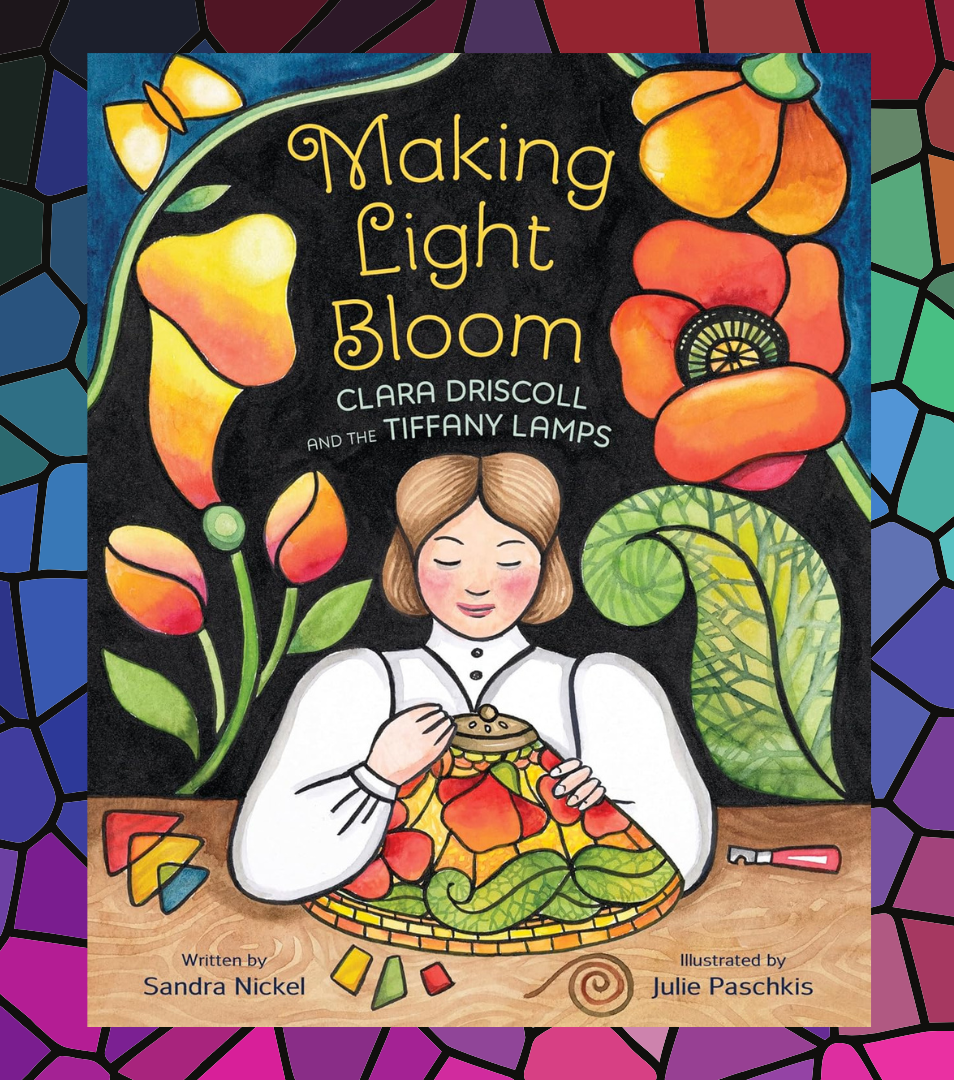
Making Light Bloom: Clara Driscoll and the Tiffany Lamps

Written by Sandra Nickel | Illustrated by Julie Paschkis


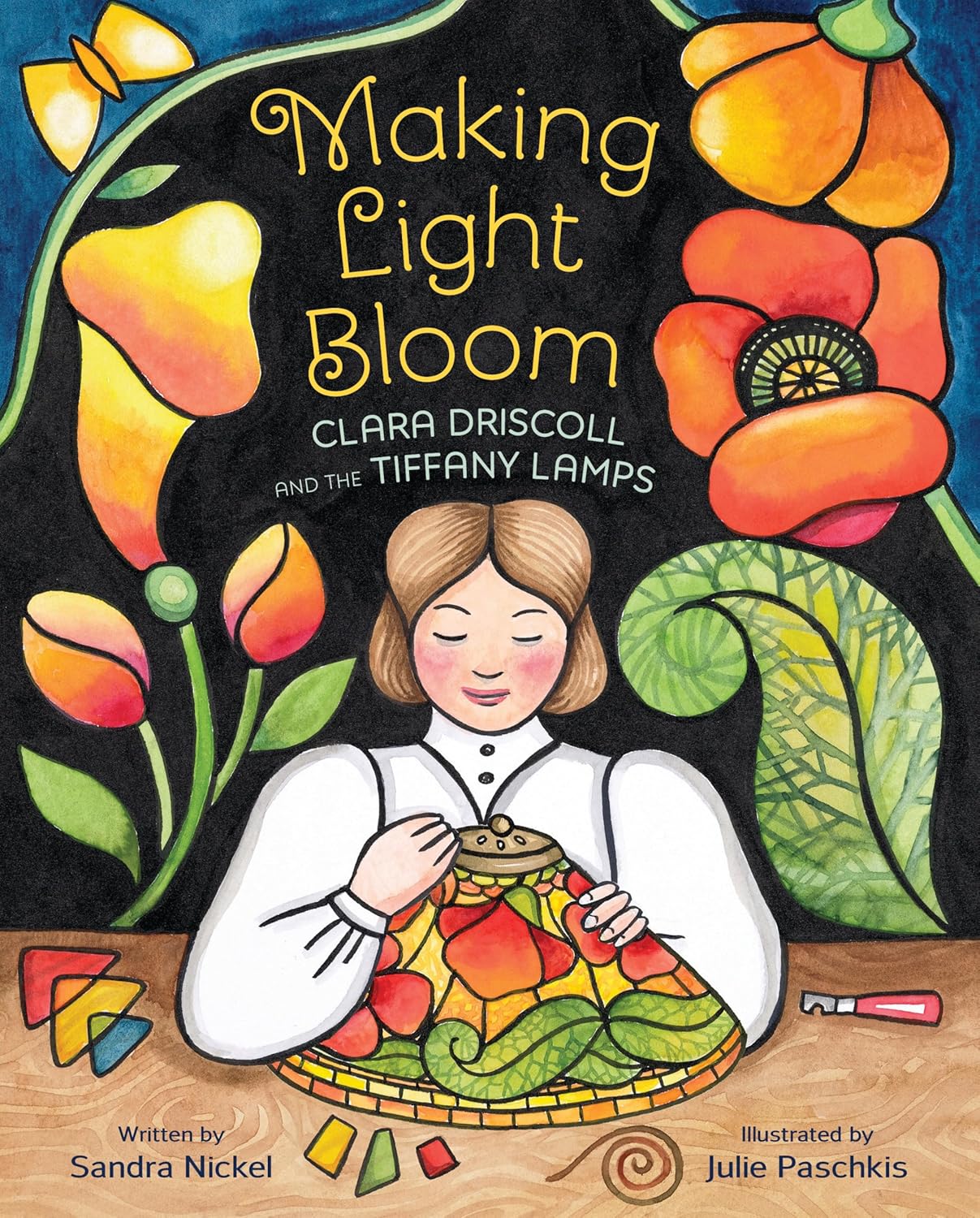
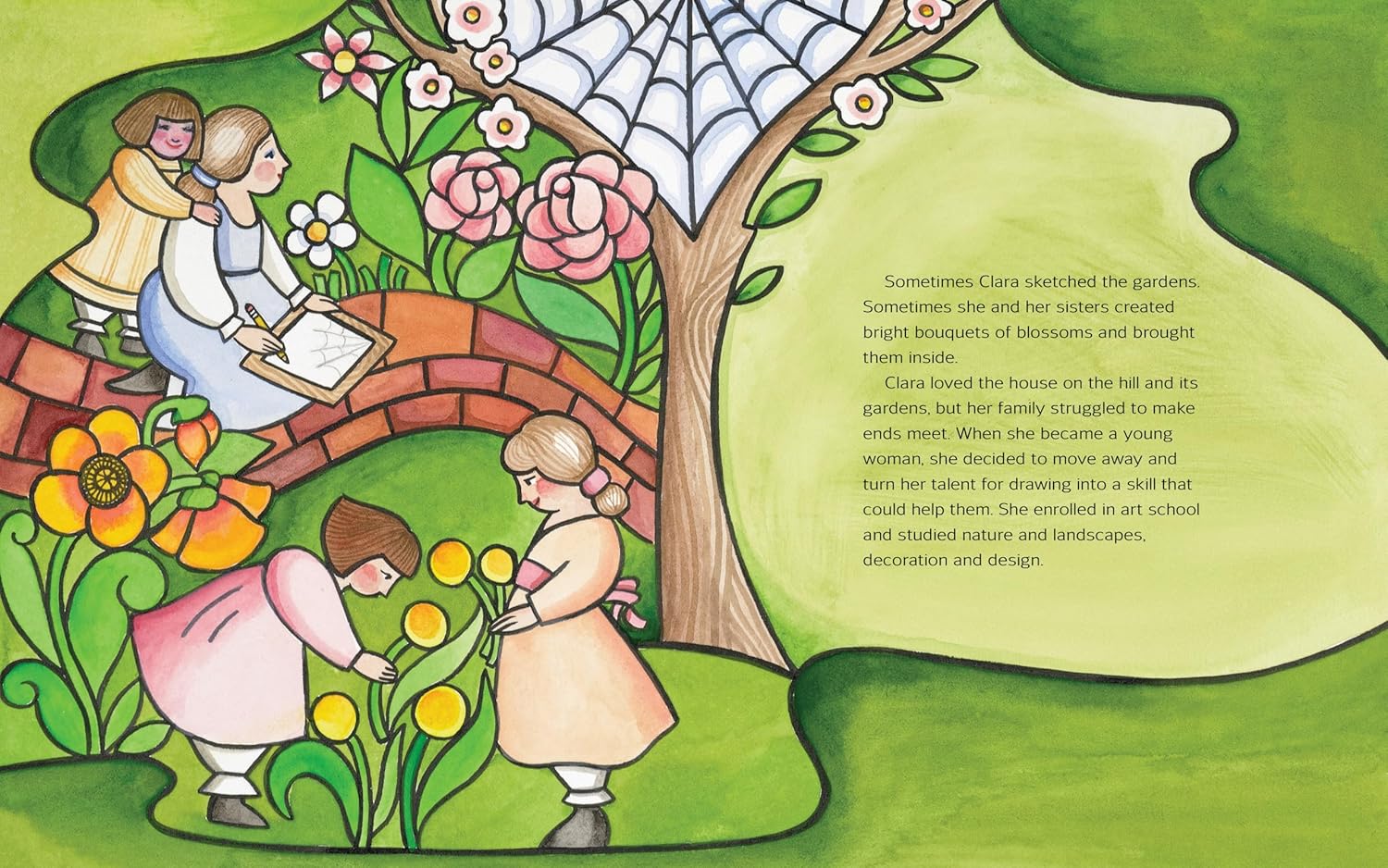
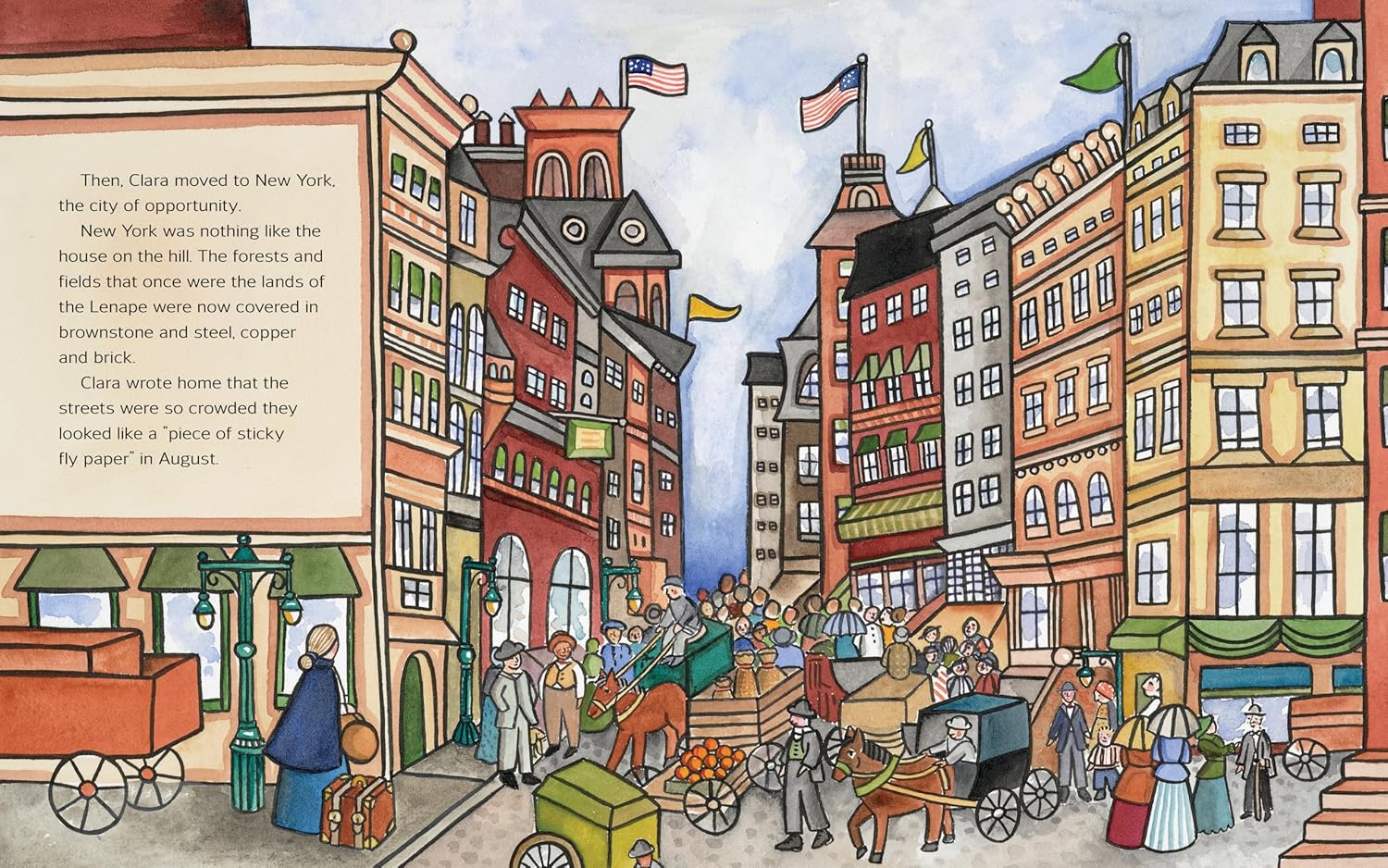
As a young girl, Clara Driscoll grew up surrounded by glorious gardens blooming with morning glories, apple blossoms, and wildflowers and shimmering with the dragon flies they attracted. Clara often sketched the gardens, and when she grew older, she enrolled in art school, hoping to turn her talent for drawing into a job that could help her financially struggling family. After graduation, Clara moved to New York City and took a job working for glassmaker Louis C. Tiffany.

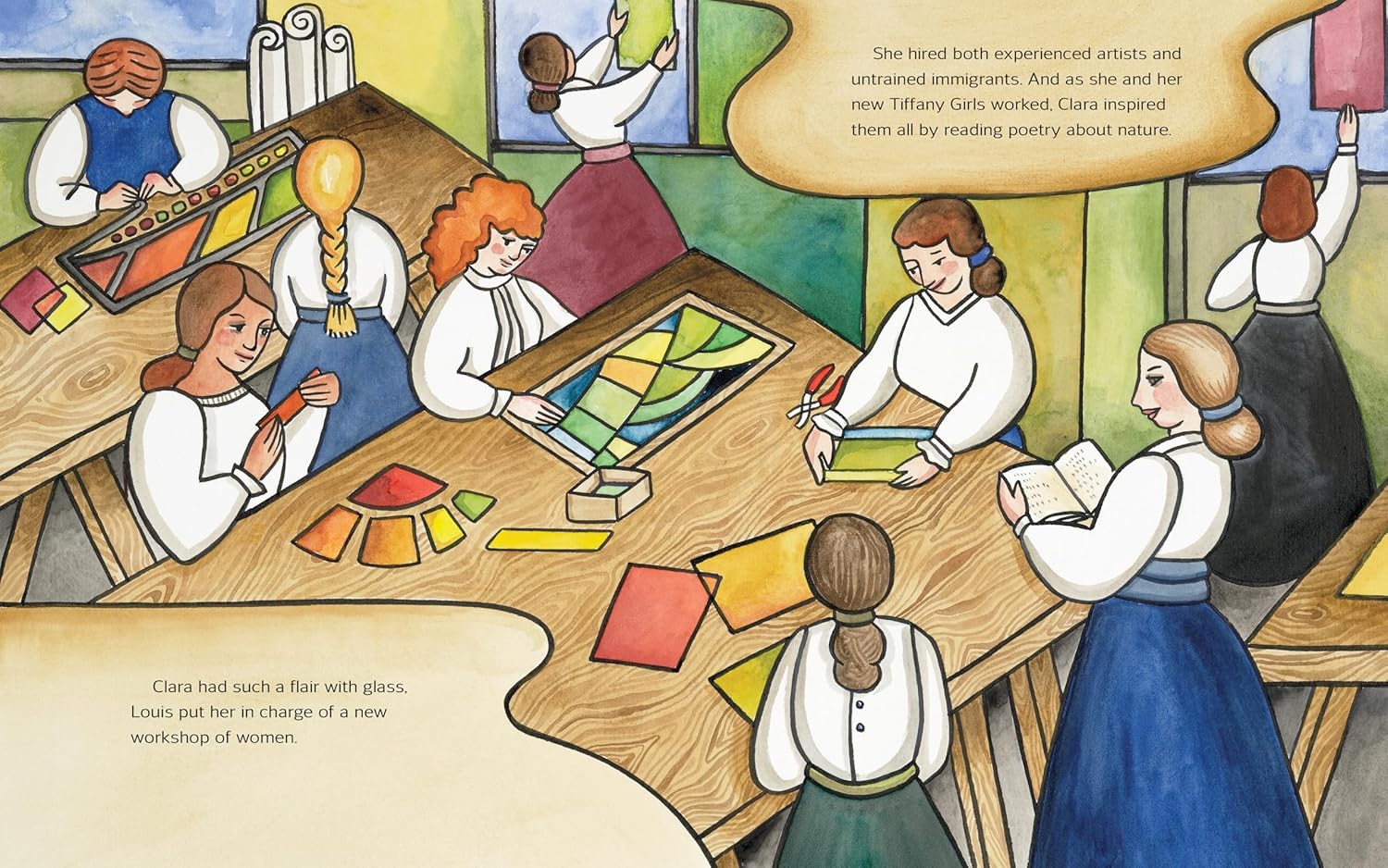
Clara’s task was to choose and cut pieces of glass for the craftsmen to join together with metal ridges to make beautiful stained glass windows. She used her creative eye to “‘paint’ robes, halos, and great wings of angels” with “dappled and streaked, shaded and shimmering” glass. It didn’t take long for Louis to recognize Clara’s talent, and soon she was overseeing her own group of women known as Tiffany Girls. Missing her gardens back home, Clara had the idea to make a lamp from the delicate glass that would bring the beauty of a garden inside.

Illustration © 2025 by Julie Paschkis, text © 2025 by Sandra Nickel. Courtesy of Peachtree.

She and the Tiffany Girls cut small pieces of glass to make butterfly wings, and then “together with the craftsmen, she formed the butterfly wings into a lampshade.” Once the kerosene wick was lit, “light bloomed as never before.” Next, Clara wanted to bring the brilliance of dragonflies to her new creation. But cutting and forming the glass into the intricate wings of a dragonfly was time consuming, and one of the managers said that “she could never make another.”

That, however, was before Louis Tiffany saw the lamp and asked Clara “to make another to display at the World’s Fair in Paris.” At the fair, Clara’s lamp won the bronze medal. The lamp’s success “astounded” Louis. He put Clara and the Tiffany Girls in charge of making lamps and windows representing the beauty of natural landscapes.

Feeling shut out, the craftsmen announced a strike unless Louis fired the women. But Louis knew the value of Clara’s imagination and work, so he compromised with the men: Clara’s workshop would not get bigger, but “Clara would be in charge of lamp-making from that day forward.”

Illustration © 2025 by Julie Paschkis, text © 2025 by Sandra Nickel. Courtesy of Peachtree.

Elated, Clara began creating new designs inspired by the gardens she’d sketched at home as well as  nature she found within the city, all informed by her meticulous research. In the basement storage room, she searched for pieces of glass that were just the right hues to bring to life each petal, flower, leaf, and stem. In one astonishing design, she recreated wisteria with 2,000 tiny petals.

While Clara’s work was recognized inside the studio, because her lamps were only known as “Tiffany lamps,” no one else knew they were Clara’s creation. It was only after both Louis and Clara passed away and Clara’s letters to her sisters were discovered that people learned the truth about how Clara made light bloom “throughout the world.”

Back matter includes an Author’s Note that goes into more detail about Clara’s letters home, Louis C. Tiffany’s reaction to her initial idea, and Clara’s long, intricate process for designing each lamp; a list of museums where you can see Tiffany Lamps; and the names of two archives where Clara’s letters can be read; a bibliography; and dates and quotes for references found in the book.

Illustration © 2025 by Julie Paschkis, text © 2025 by Sandra Nickel. Courtesy of Peachtree.

Sandra Nickel’s fascinating and eye-opening story about Clara Driscoll, one of the world’s most innovative artists, is both inspirational and uplifting. Nickel’s heartfelt, straightforward storytelling about Clara’s early years allows readers to see how youthful experiences and interests can influence their later endeavors—creative and otherwise. Nickel also emphasizes Clara’s remarkable vision for ways to expand the use of stained glass in the 1890s as well as her advocacy for herself and her ideas, making her an excellent role model for all children. And while Clara was not recognized for her work during her lifetime, art lovers can be grateful that Louis C. Tiffany knew brilliance when he saw it and valued her contributions—another aspect of Clara’s story to celebrate. 

Julie Paschkis’s dazzling, folk-style illustrations bring the intricate and delicate beauty of stained glass to the page, telling Clara’s story visually in a way similar to the windows she often worked on. Taking kids into the Tiffany studio, Paschkis demonstrates how Clara, the Tiffany Girls, and the craftsmen chose, cut, and pieced together to create complex scenes that glow with life still today. Paschkis faithfully recreates Clara’s iconic dragonfly lamp, an image that will wow kids. 

A vibrant biography of a visionary artist, Making Light Bloom: Clara Driscoll and the Tiffany Lamps is an inspiring book to share with creatives of all types at home, in the classroom, and for art and crafts programs. The book is a must addition to any library collection.

Ages 7 – 10

Peachtree, 2025 | ISBN 978-1682636091

About the Author

Sandra Nickel is an award-winning author of picture books and has two new books out this Spring: Seven, A Most Remarkable Pigeon, an uplifting tale that celebrates differences, and Making Light Bloom, Clara Driscoll and the Tiffany Lamps, in which Sandra continues her mission to celebrate extraordinary individuals who have been nearly forgotten by history. She is honored to be the winner of a Christopher Award, the winner of the Society of Children’s Book Writers & Illustrators Crystal Kite Award, a finalist for the Golden Kite Award for Nonfiction for Younger Readers, a Junior Library Guild Gold Selection honoree, and a Charlotte Huck Award Recommended author. She holds a Master of Fine Arts in Writing for Children and Young Adults and has presented workshops on writing for children and young adults throughout the United States and Europe. Visit her at sandranickel.com. You’ll also find her on Bluesky, Facebook, Instagram, and Twitter/X

About the Illustrator

Julie Paschkis is an award-winning illustrator of more than 25 books for children. A graduate of Cornell University and the School for American Craftsmen at Rochester Institute of Technology, she taught art to grade school children for a number of years before turning her full attention to painting, textile design, and creating illustrations for her books. Visit her at juliepaschkis.com to see more of her work and download whimsical and nature-inspired coloring pages for kids and adults. You’ll also find her on Facebook.

World Watercolor Month Activity

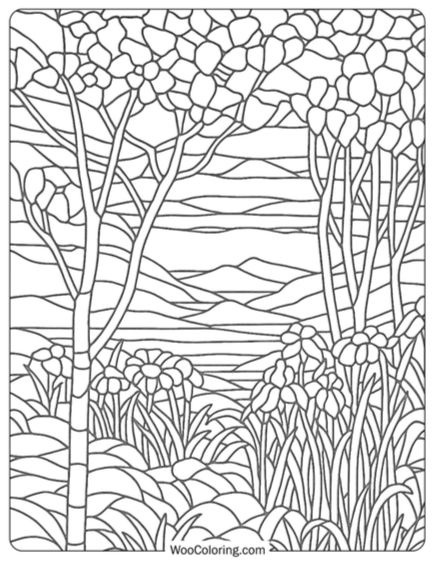
Tiffany Window Coloring Page


Create your own brilliant vision with this Tiffany Window Coloring Page!

You can purchase Making Light Bloom: Clara Driscoll and the Tiffany Lamps from these booksellers.

Amazon | Barnes & Noble | Bookshop

Picture Book Review

September 1 – It’s Read a New Book Month

celebrate-picture-books-picture-book-review-the-boy-and-the-mountain-cover

About the Holiday

The beginning of a new school year is a terrific time to celebrate Read a New Book Month—especially for kids. Whether their reading tastes have broadened, their reading level has changed, or they’ve discovered new and fascinating topics to explore over the summer months, there are new books just waiting for them! The books may be recently published—like today’s book—or just new to your child, there are countless fictional stories and nonfiction books ready to inspire learning, to laugh or cry with, and to share with friends. This month visit your local bookstore and library and stock up on books for your kids and everyone in the family! 

The Boy and the Mountain

Written by Mario Bellini | Illustrated by Marianna Coppo


“There once was a boy who always looked at a mountain.” It was the first thing he looked at in the morning and the last thing he said good night to before going to bed. The boy loved to draw, and one day he “decided to draw the mountain.” His first attempt didn’t look anything like the mountain he saw out his window. When he looked closer, he realized “the mountain was covered with trees,” so he added trees. 

celebrate-picture-books-picture-book-review-the-boy-and-the-mountain-drawing

Image copyright Marianna Coppo, 2022, text copyright Mario Bellini, 2022. Courtesy of Tundra Books.

Still, his picture wasn’t quite right. Next, he noticed the sky and clouds around the mountain and drew those, but his picture “still didn’t look the same as the real thing.” He tried drawing the mountain at different times of day and in different weather, but “he was never happy with what he had drawn.” 

One day, the boy decided to get a closer look. He took his dog and headed out. One the way, he met a goat and drew a picture of it in his sketchbook. The goat decided to come along. When a flock of birds flew by, the boy drew those too. One bird left the flock to follow the boy and his dog and the goat. When they stopped at a stream for a drink of water, the boy drew that too.

celebrate-picture-books-picture-book-review-the-boy-and-the-mountain-trees

Image copyright Marianna Coppo, 2022, text copyright Mario Bellini, 2022. Courtesy of Tundra Books.

It was fall, and the ground was covered in leaves. The boy “wanted to draw them all,” but even though he drew many of them, there was no way they would all fit on the page. He continued on up and up into the forest and beyond. Along the way, he picked up other followers, including a frog, a bear, and a beaver. When he had left the trees behind, there was very little to draw “until he looked more closely” and saw a tiny white flower poking up between some rocks. He drew it.

celebrate-picture-books-picture-book-review-the-boy-and-the-mountain-hike

Image copyright Marianna Coppo, 2022, text copyright Mario Bellini, 2022. Courtesy of Tundra Books.

At last he came to the mountain’s peak. He sat down and flipped through his sketchbook, but he still wasn’t satisfied with his drawings. It was then that he became aware of the goat, the bear, the frog, the bird, the beaver, and a snail who had joined him. “‘Ohhh … hello!'” he said. They played until it was time to go home. The bear gave the boy a ride home on his shoulders. Once home, the boy promised that he would see them all again soon. That night before going to sleep, the boy drew the mountain again with his new perspective. This time his drawing was complete—and the boy was completely satisfied with it.

celebrate-picture-books-picture-book-review-the-boy-and-the-mountain-goat

Image copyright Marianna Coppo, 2022, text copyright Mario Bellini, 2022. Courtesy of Tundra Books.

Mario Bellini’s thoughtful and well-paced adventure gently guides readers to consider not only their perspective on big and small topics of life but where and how they fit into the wider world. Just as children observe the world from their vantage points of home, school, and activities, the boy in the story looks at the mountain and tries to make sense of it by drawing it. Then, like kids slowly adding bits of what the world has to offer to their lives, the boy includes trees, clouds, and different times of day to his drawing. But he thinks there must be something more, and, now braver and more knowledgeable, he ventures out to get a better look. 

Along the way he sees more of the world and interacts with what he encounters in the way that means the most to him. Some of these experiences turn out well, and others don’t, but he persists. When it appears that he’s finally come to the end of his journey, he sits down (alone, or so he thinks) and ponders his single-subject, disjointed pictures. When he finally notices all of the animals who have joined him on his trek and embraces them as friends, the boy discovers an interconnectedness that has been missing for him all along. At last, with his final drawing, the boy is able to be satisfied with his knowledge, understanding, and place in his world.

Marianna Coppo’s delightful rounded illustrations lend a quiet elegance to the story while allowing readers to view the boy’s drawings for themselves and then join him on his journey to see the mountain up close. Kids will enjoy noticing the animals that begin to populate the boy’s sphere, even while he is unaware that they are following him. The boy’s drawings of the river, the leaf-strewn forest floor, and the hidden mountain peak give kids and adults an opportunity to talk about times when things go wrong, when life seems overcrowded or overwhelming, and when goals seem elusive. Coppo also helps kids see that surprises can be found in the most unlikely of places as well as when you least expect them. 

A multi-layered story that invites thought, observation, conversation, and discovery (of both the self and the world), The Boy and the Mountain would be a favorite read for quiet story times or as a prelude to any new experience at home or in school. The book is highly recommended for home bookshelves as well as classroom, school, and public libraries.

Ages 3 – 7

Tundra Books, 2022 | ISBN 978-0735270251

You can connect with Marianna Coppo on Instagram and Twitter.

Read a New Book Month Activity

celebrate-picture-books-picture-book-review-take-a-bookworm-trek-maze

Take a Bookworm Trek! Maze


These two friends love reading! Can you help them through the maze to meet the bookworm? 

Take a Bookworm Trek! Maze Puzzle | Take a Bookworm Trek! Maze Solution

celebrate-picture-books-picture-book-review-the-boy-and-the-mountain-cover

You can find The Boy and the Mountain at these booksellers

Amazon | Barnes & Noble | Books-a-Million

To support your local independent bookstore, order from 

Bookshop | IndieBound

Picture Book Review

May 18 – International Museum Day

celebrate-picture-books-picture-book-review-the-ultimate-art-museum-cover

About the Holiday

International Museum day was created in 1977 by the International Council of Museums to raise awareness that “museums are an important means of cultural exchange, enrichment of cultures and development of mutual understanding, cooperation and peace among peoples.” The theme for this year is “The Power of Museums.” Museums are not just repositories of the past. They are vital and active members of the communities they serve and as such can be leaders in tackling some of society’s biggest issues. This year the International Council of Museums aimsto “explore the potential of museums to bring about positive change in their communities through three lenses: the power of achieving sustainability, the power of innovating digitalization and accessibility, and the power of community building through education. To learn more about these initiatives, visit the ICOM website. Celebrate International Museum Day by visiting a museum near you – or visit many world-famous museums through today’s book.

The Ultimate Art Museum

By Ferren Gipson

A blurb on the cover of this astounding book sums up the lofty goals it achieves: “40,000 years of the world’s most amazing art in one dream museum!” Indeed, once readers open the cover and accept the “ticket” offered, they can peruse the museum map that lays out the three wings, 18 galleries, and 128 rooms, plus a cafe and garden, that await them. An note from author Ferren Gipson introduces readers to the range of ways art can influence and reflect their times and the people who lived during different eras.

Gipson’s conversational style follows visitors to this unique museum from page to page, prompting them to look, consider, understand, and make connections. On some pages, a question or comment marked by an eye sends readers to another gallery or room to compare artworks, subjects, or themes across time and cultures. Some of these give a page number to consult, while others allow readers to study a room or gallery to find the artwork referred to.

celebrate-picture-books-picture-book-review-the-ultimate-art-museum-galleries

Copyright Ferren Gipson, 2021, courtesy of Phaidon.

Wing 1, appropriately, presents “treasures from the world’s earliest civilizations and the earliest art ever made.” Here, children and adults will find cave art; figurines carved from ivory, bone, and stone; treasures from ancient empires, carved reliefs, the painted, sculpted, and gilded wonders of ancient Egypt, Greece, and Rome. The intricate art of the Byzantine, early Islamic, and Medieval worlds demonstrate important aspects of these cultures as do works from ancient East Asia well as South and Southeast Asia. Readers then cross the Atlantic Ocean to discover the pottery, sculptures, and fabrics created by Native societies of North and South America. Each artwork is accompanied by a paragraph that will draw children in with clear, concise, and fascinating descriptions of the artwork, what it means, and, sometimes, even secrets that it holds.

Time for a break? Turn the page and enter the Café, where the “menu,” consisting of “Snacks, Mains, and Dessert” offers delectable choices depicted in paintings and sculpture. Refreshed, readers can step into Wing 2, where the galleries hold treasures from the 1200s to the 1800s created in Asia, including book illustrations, a palepai cloth, a puppet, scholar paintings, porceline, folding screens, carpets, and even the Taj Mahal.

The Renaissance comes to Europe with an impressive display of curiosity and learning that resulted in many changes to society and art. “Artists came up with better ways to mix oil paints and began to paint on canvas for the first time. And what scientists learned about the human body helped them paint and sculpt people who looked very real.” The subjects of artworks expanded too to include “portraits, mythology, and everyday life.” Dragon lovers can take up the challenge to compare two dragons – one created by an Italian master and the other found on a Chinese vase from the Yuan Dynasty.
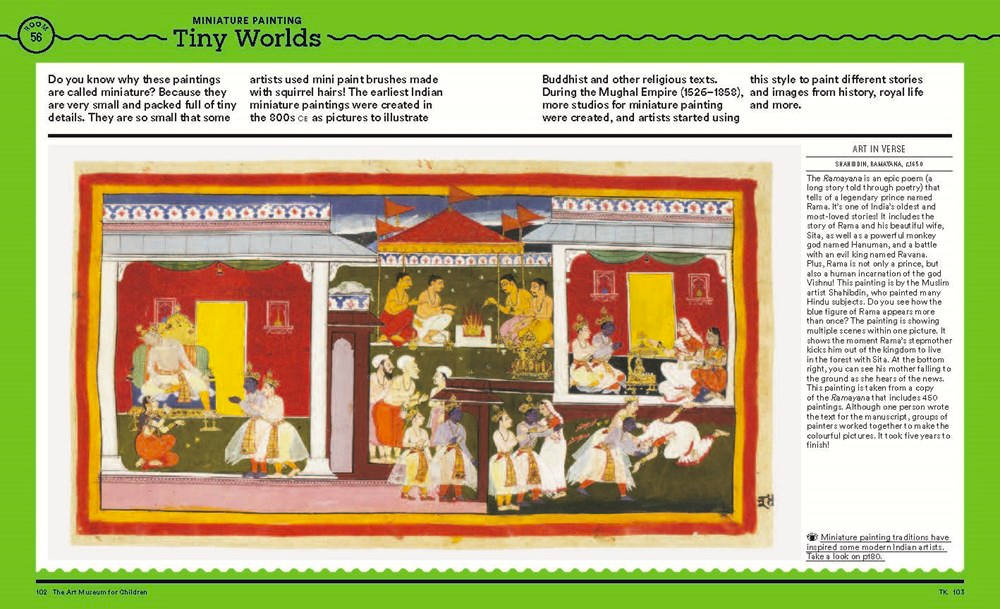
celebrate-picture-books-picture-book-review-the-ultimate-art-museum-miniatures

Copyright Ferren Gipson, 2021, courtesy of Phaidon.

From 1600 – 1850, dramatic and lifelike paintings became popular. Dark shadows and highlighted areas gave paintings an atmospheric feel that invited viewers to look closely. In one of Diego Velázquez’s famous Las Meninas painting, all of the people portrayed seem to be looking out from the canvas at you. But who are they really looking at? The answer can be found reflected in a mirror on the back wall. In addition to realistic family and town life, landscapes also became popular during this time.

Moving to another room, readers will find that the art of the Pacific Islands is distinctively different in its depictions of “images of gods, spirits, and ancestors of the people who lived there.” Those works created from stone and wood have survived through the ages while “others, such as objects made from delicate spider webs or flowers, have disappeared.” Art from the continent of Africa is up next. With its many unique kingdoms and communities, Africa has produced unique artworks that “celebrate leaders and tell the stories of Africa’s great empires and civilizations.” Clay, wood, metal, ivory, and cloth have been used to “create art with spiritual and practical purposes.”

Ah! Time for a walk through the garden. Which path will you take? The one past Georgia O’Keefe’s “Red Poppy” or one where you can see a moth and a caterpillar on the branch of a citrus tree? Perhaps you’d like to stroll through a hurricane with a tiger on your trail with Henri Rousseau’s “Tiger in a Tropical Storm (Surprised)” or maybe you’d like a fragrant walk through Gustav Klimt’s “Flower Garden.”
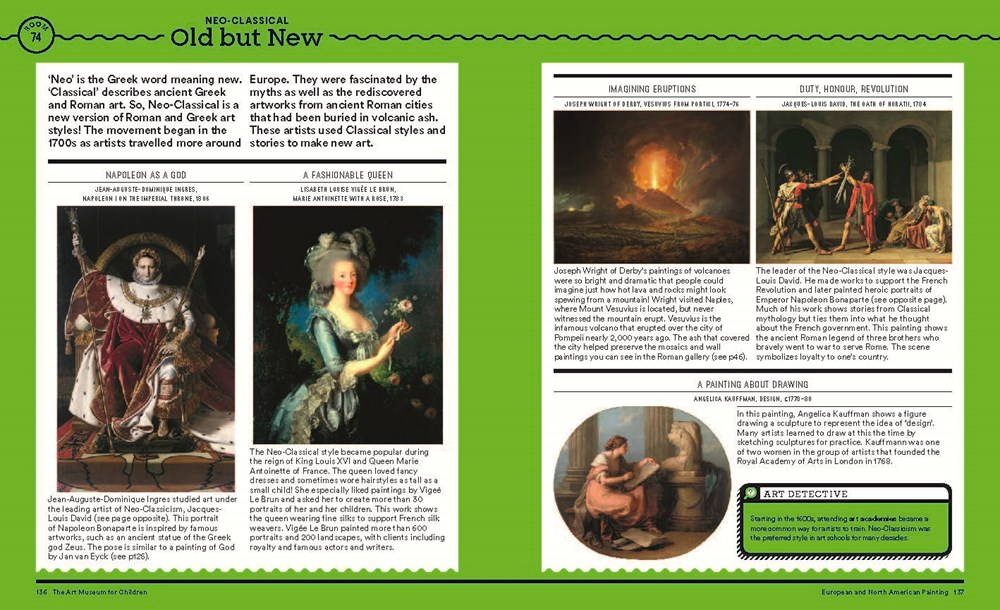
 
celebrate-picture-books-picture-book-review-the-ultimate-art-museum-neo-classical

Copyright Ferren Gipson, 2021, courtesy of Phaidon.

Wing 3 takes readers to modern times, when “almost anything is possible in art!” In this wing, visitors will see “art that does not have a set purpose.” Instead, the artists represented here “created works that were experimental and personal. They used unusual materials and tried exciting techniques.” In these rooms, readers will encounter the Impressionists, who were interested in capturing a moment in time,  and Post-Impressionists, who experimented with color, techniques, and subject matter. Readers will no doubt recognize paintings by Mary Cassatt, Vincent Van Gogh, and Georges Seurat.

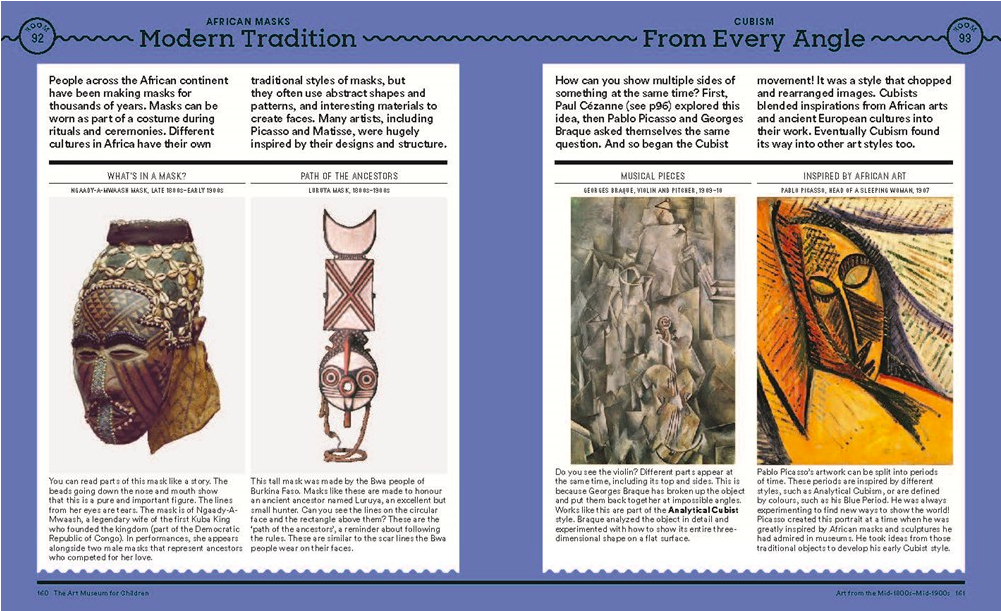
American realist painters took city scenes, sports events, tender moments between family members, and many other topics. The Cubist period began when some artists experimented in showing their subject from a variety of angles at one time. Paul Cézanne, Pablo Picasso, and Georges Braque are just a few of the famous artists who “chopped up and rearranged images” to make a new style of art.
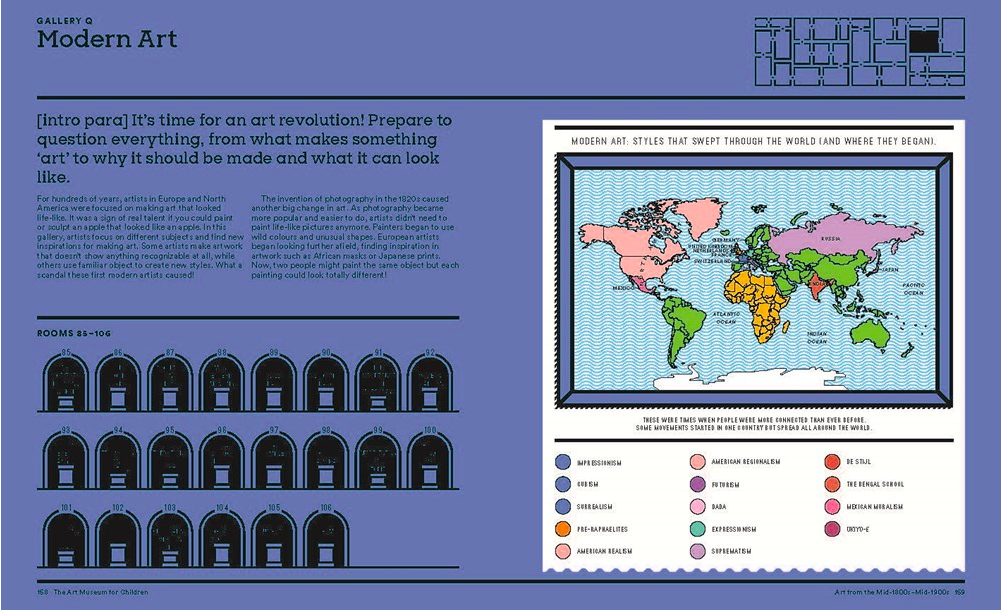
celebrate-picture-books-picture-book-review-the-ultimate-art-museum-map

Copyright Ferren Gipson, 2021, courtesy of Phaidon.

Visitors will also learn about the Dada movement, Expressionism, and American Regionalism. Photography took center stage as cameras became lighter and easier to use. The art of the Harlem Renaissance by Black Americans is reflected in a painting of Harriet Tubman by William H. Johnson, a bronze bust of a boy by Augusta Savage, and a quilt by Harriet Powers – one of only two that still exist.

After visiting a room of modern works from India and Mexico, readers enter the dizzying world of the Surrealists. Surrealism “shows real objects but in a completely fantastical way. It explores how dreams, imaginations, and the inner workings of the mind can be shown in art.” A train emerging from the “tunnel” of a fireplace, a fur teacup, saucer, and spoon, and Salvador Dali’s “drooping” clocks are a few of the works you’ll find here.
celebrate-picture-books-picture-book-review-the-ultimate-art-museum-cubism

Copyright Ferren Gipson, 2021, courtesy of Phaidon.

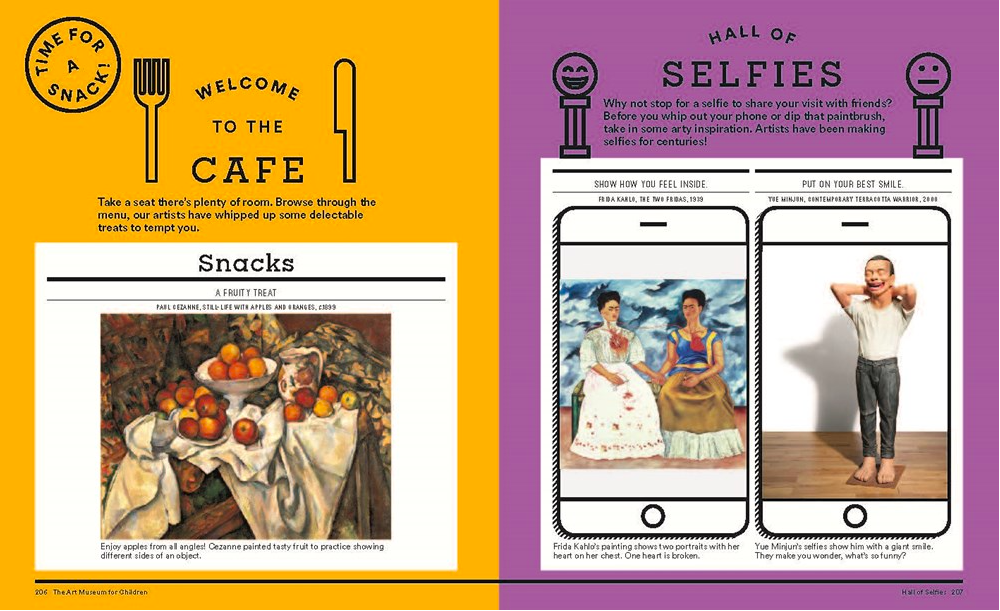
In Wing 3, readers will also learn about Collages, Abstract Expressionism, Minimalism, Conceptual art, and Op art that boggle the eyes and mind with their optical illusions. Pop art, Installations, contemporary sculptures large and small as well as Alexander Calder’s mobiles and artwork created from light stand side-by-side with Christo and Jeanne-Claude’s outdoor wrapping installations, Aboriginal Australian art, Feminist art, Chicanx art, performance art, video art, contemporary art, and so much more. If you’re a fan of selfies, you’ll want to stop at the Hall of Selfies and see how four artists anticipated and/or reflect this very modern art form.

Helpful maps accompany each wing and gallery change to show readers where the art in that gallery comes from or its influence. A smaller map inset often orients readers to where the region represented is situated in the world at large.

Back matter includes an Author’s Note, a map of 54 major museums around the world, a glossary of terms found in the text, and an index.
celebrate-picture-books-picture-book-review-the-ultimate-art-museum-selfies

Copyright Ferren Gipson, 2021, courtesy of Phaidon.

Ferren Gipson is the “cool” docent every visitor wants as their tour leader on a trip to a museum. Full of enthusiasm for art and its impact, gifted with a wealth of knowledge, and quick with a fun fact, a humorous aside, or an intriguing nugget of perspective, Gipson will wow kids and adults alike with her love of all kinds of art. Open The Ultimate Art Museum to any page and readers will immediately be absorbed by whatever style of art or time in history they’ve hit upon and will eagerly wander from gallery to gallery, room to room, page to page to learn more.

The Ultimate Art Museum has applications for strong cross-curricular study for teachers and homeschoolers, expertly connecting history, art, changing societies, and more visually and textually. Gipson’s entertaining and thorough treatment of her topic will get kids excited about visiting museums of all kinds, and arm-chair travelers will wile away many happy hours wandering its pages. 

The Ultimate Art Museum is a must for classrooms and school and public libraries and would be a much-loved addition to home bookshelves or coffee tables.  

Ages 8 and up

Phaidon, 2021 | ISBN 978-1838663780

Discover more about Ferren Gipson, her books, work, and podcast “Art Matters” on her website.

International Museum Day Activity
CPB - Cookie Jar Museum (2)

Create a Museum Exhibit

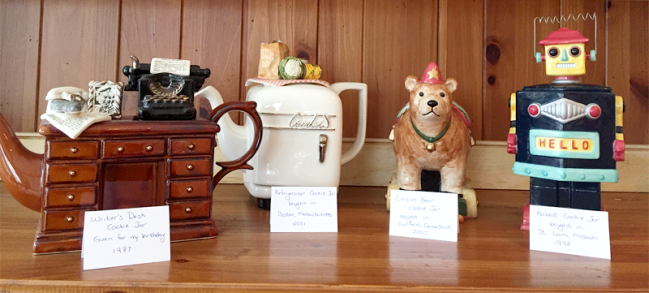
Every item has a story. Maybe there’s a funny anecdote behind that knick-knack on your shelf. Perhaps your favorite serving dish holds sentimental value. How about your child’s best-loved toy or a drawing or craft they’ve made? A fun and educational way for kids to learn family stories and interact with their own history is to create a museum exhibit of objects in your home.

For teachers this can be a fun classroom activity that incorporates writing, art, and speaking as well as categorizing skills. Students can use objects in the classroom or bring items from home to set up museum exhibits. This activity can be done as a whole-class project or by smaller groups, who then present their exhibit to the rest of the class.

Supplies

  • A number of household or classroom items
  • Paper or index cards
  • Markers
  • A table, shelf, or other area for display

Directions

  1. To get started help children gather a number of items from around the house to be the subjects of their exhibit. An exhibit can have a theme, such as Grandma’s China or Travel Souvenirs, or it can contain random items of your child’s choice, such as toys, plants, tools, even the furniture they see and use every day.
  2. Using the paper or cards and markers, children can create labels for their exhibit items. Older children will be able to write the labels themselves; younger children may need adult help.
  3. Spend a little time relating the story behind each object: where it came from, how long you’ve had it, when and how it was used in the past, and include any funny or touching memories attached to the item. Or let your child’s imagination run free, and let them create histories for the objects.
  4. When the labels are finished, arrange the items on a table, shelf, or in a room, and let your child lead family members or classmates on a tour. You can even share the exhibit with family and friends on social media.
  5. If extended family members live in your area, this is a wonderful way for your child to interact with them and learn about their heritage.

celebrate-picture-books-picture-book-review-the-ultimate-art-museum-cover

You can find The Ultimate Art Museum at these booksellers

Amazon | Barnes & Noble | Books-a-Million

To support your local independent bookstore, order from

Bookshop | IndieBound

Picture Book Review

September 15 – International Dot Day

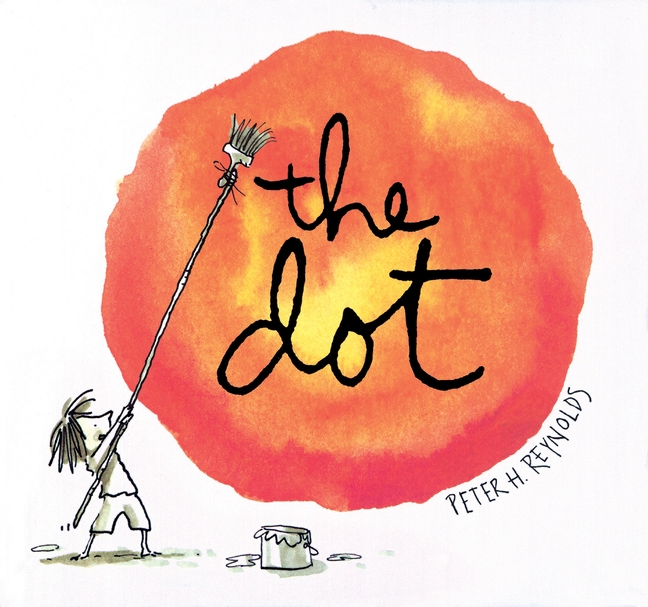
celebrate-picture-books-picture-book-review-the-dot-cover

About the Holiday

Usually, I match books to existing holidays. Today, though, I have the pleasure of posting a review of a book that established a holiday. On September 15, 2009 teacher Terry Shay introduced his class to Peter H. Reynold’s The Dot. From that one event grew a national and then an international celebration of creativity and the freedom to make art with your heart. All around the world, school children and adults are inspired on this day to make their mark and celebrate creativity, courage, and collaboration. For more information, to download posters, coloring pages, postcards, badges, and other resources and to join in on a live event starting at 10:00 a.m. PT, visit the International Dot Day website.

The Dot

By Peter H. Reynolds


At the end of art class, Vashti looked at her paper. It was still as blank as it was at the beginning of art class. Her teacher came over and took a peek. She saw right away that Vashti had drawn “‘a polar bear in a snowstorm.’” Vashti wasn’t fooled by the joke. “‘I just CAN’T draw,’” she said. But her teacher had a suggestion. “‘Just make a mark and see where it takes you.’”

celebrate-picture-books-picture-book-review-the-dot-vashti-jabs-paper

Copyright Peter H. Reynolds, 2003, courtesy of Candlewick Press.

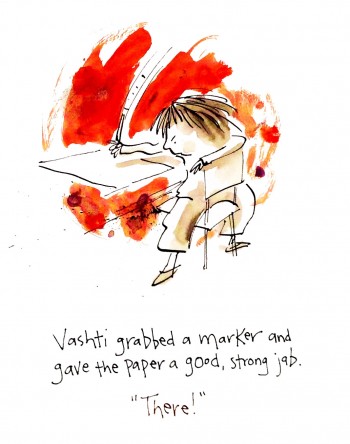
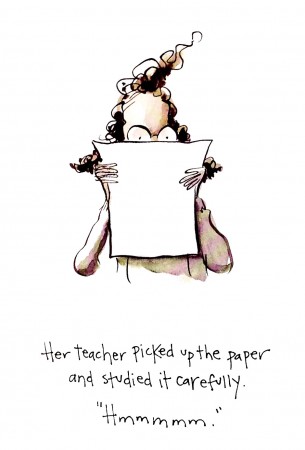
Vashti jabbed at the paper with a marker, making a dot right in the center. Her teacher studied her drawing carefully then told Vashti to sign it. That, at least, was something Vashti could do. She signed her name and gave the paper to her teacher. At the next week’s art class, Vashti was stunned to see her dot framed and hanging above the teacher’s desk. She looked at the tiny mark and decided that she could do better than that.

celebrate-picture-books-picture-book-review-the-dot-teacher

Copyright Peter H. Reynolds, 2003, courtesy of Candlewick Press.

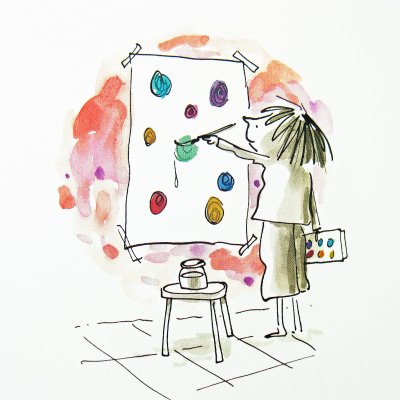
Vashti opened her watercolor set and began. She “painted and painted. A red dot. A purple dot. A yellow dot. A blue dot.” Then she discovered that blue mixed with yellow made a green dot. Vashti went to the easel and began painting lots of little dots in all sorts of colors. She realized if she could make little dots, she could make big dots. She knelt down on the floor with a big piece of paper and a big brush and created a huge dot.

celebrate-picture-books-picture-book-review-the-dot-experimenting-with-dots

Copyright Peter H. Reynolds, 2003, courtesy of Candlewick Press.

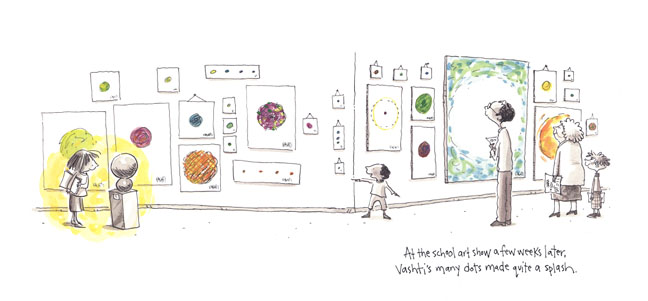
Then on an enormous canvas Vashti “made a dot by not making a dot.” At the school art show, Vashti’s dot paintings covered two walls and were quite a hit. Coming around the corner a little boy spied Vashti. He came close and told her, “‘You’re a really great artist. I wish I could draw.’” Vashti was encouraging, but the little boy said he couldn’t even “‘draw a straight line with a ruler.’”

Vashti wanted to see. She handed the boy a blank sheet of paper. With a quivering pencil, he drew a line and handed the paper back to her. Vashti studied the wavy line for a minute, and then gave the paper back. “‘Please…sign it,’” she said.

celebrate-picture-books-picture-book-review-the-dot-art-show-II

Copyright Peter H. Reynolds, 2003, courtesy of Candlewick Press.

Peter H. Reynold’s classic story of a little girl who believes she can’t draw is inspirational for anyone at any age who listens too closely to that voice in their head that stops them from letting go and doing. Whether it’s painting, writing, changing the décor of one’s house, updating a wardrobe, getting healthy, or even taking a class, the project often seems insurmountable. But what if you could start with a YouTube video, one step, a pair of earrings, a pillow, a word, or…a dot? Reynolds says you can! With his straightforward storytelling, Reynolds gives readers permission to play, experiment, and feel free.

celebrate-picture-books-picture-book-review-the-dot-little-boy

Copyright Peter H. Reynolds, 2003, courtesy of Candlewick Press.

Reynold’s familiar line drawings that sketch out adorable Vashti and her wise teacher are punctuated by the colorful dots that Vashti draws in profusion. Even Vashti, herself, is surrounded by circular auras of color throughout the story, reflecting her talent and creative spirit. The final scene of the art show gallery is a revelation, showing readers that one’s work or life work adds up to an impressive display of the self.

Through and through The Dot is charming, moving, and encouraging. It is a must addition to home libraries, public libraries, and classrooms.

Ages 5 and up

Candlewick Press, 2003 | 978-0763619619

To learn more about International Dot Day and find ideas and resources for classrooms, libraries, and booksellers, a variety of coloring pages to download, and a gallery of projects, visit the International Dot Day website

You’ll learn more about Peter H, Reynolds, his books, and his art as well as find lots of inspiration and creative tips on his website!

International Dot Day Activity

celebrate-picture-books-picture-book-review-dot-day-mini-poster

Make Your Mark! Mini-Poster Coloring Page


Grab your favorite paints, markers, crayons and Make Your Mark with this printable mini-poster from Peter Reynolds!

Make Your Mark! Mini-Poster

celebrate-picture-books-picture-book-review-the-dot-cover

You can find The Dot at these booksellers

Amazon | Barnes & Noble | Books-a-Million

To support your local independent bookstore, order from

Bookshop | IndieBound

Picture Book Review
August 3 – It’s Family Fun Month and Interview with Jamie Michalak

celebrate-picture-books-picture-book-review-dakota-crumb-cover

About the Holiday

August is a perfect time to have fun with the family! The days are long and warm, and there are so many activities to discover. Get away from the heat at a pool, the beach, or on the cool shade of a forest path. Explore your adventurous side while camping or traveling to an unfamiliar town, or increase your knowledge by visiting a science, art, history, or other museum. As today’s book shows, a museum might just be the most adventurous place on your list! So, before school starts up for another year, get out there and have fun!

Dakota Crumb: Tiny Treasure Hunter

Written by Jamie Michalak | Illustrated by Kelly Murphy


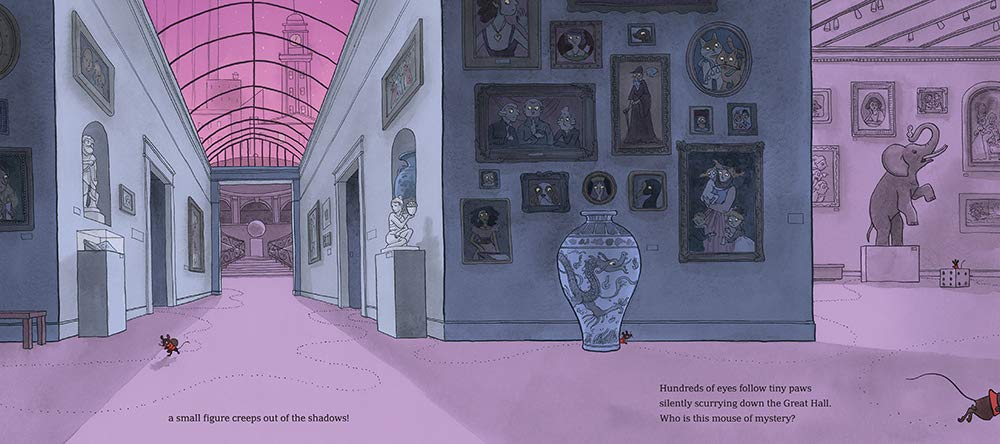
“In the great, big city, in the great, big museum, a clock tick-tocks past midnight.” The guards are on the watch, but they don’t see the tiny mouse that “creeps out of the shadows” and zig-zags her way through the galleries under the peering eyes of the art hung on the walls. Who is this explorer that carries a sack over one shoulder and has her eyes riveted on a map? It’s Dakota Crumb, and “for endless nights, Dakota has searched for a famous priceless treasure.

celebrate-picture-books-picture-book-review-dakota-crumb-great-hall

Image copyright Kelly Murphy, 2021, text copyright Jamie Michalak, 2021. Courtesy of Candlewick Press.

The map reveals that it is in “the Deepest, Darkest Cave. But perils lie ahead. Scurrying past knights in armor, Dakota spies a tiny masterpiece across the room. Using her rope, she swings and picks it up. She places it into her sack and continues on. Into the hall of giants she roams. The only movement is the maintenance worker cleaning the floor. Dakota scans the room and—“aha!”—discovers a forgotten statue. Trying to collect it, she’s nearly swept away with the day’s refuse.

Dakota consults the map again and crawls away. Her journey takes her “to the land of Egypt,” where Dakota is on the hunt for “the famous Purple Jewel of Egypt.” Dakota summons all her courage when she comes eye to claw with “A GIANT… EVIL EYED… MOUSE-EATING… CAT!” She hurries past and into the deep, dark cave. She climbs up, up and “Pull. Pry. Oh, my!”  grabs the treasure she’s been seeking—the Purple Jewel of Egypt. “Oh! how it sparkles!” As dawn colors the glassed rotunda, Dakota tiptoes home, her sack full.

celebrate-picture-books-picture-book-review-dakota-crumb-map

Image copyright Kelly Murphy, 2021, text copyright Jamie Michalak, 2021. Courtesy of Candlewick Press.

The museum opens, but not only for people. Around the corner, a “teeny-tiny door” welcomes visitors of another sort. These city dwellers—insects and mice, raccoons and squirrels, worms and pigeons await the opening of a new museum—the Mousehole Museum, where Dakota Crumb proudly presides over her carefully curated exhibits. The visitors enter and roam the galleries, marveling over all of the wonderful treasures they see. You’re welcome to join them too!

Following the story, Dakota Crumb invites readers to return to the museums—both big and small—to scour their rooms for forty-five items that are cleverly concealed.

celebrate-picture-books-picture-book-review-dakota-crumb-mousehole-museum

Image copyright Kelly Murphy, 2021, text copyright Jamie Michalak, 2021. Courtesy of Candlewick Press.

Charming from beginning to (ingeniously extended) end, Jamie Michalak’s Dakota Crumb: Tiny Treasure Hunter is sure to become a favorite of any child. Michalak’s crafty uses of the types of exhibits seen in major museums not only add intrigue to the story but will thrill those kids who are already museum lovers and entice others to visit their local museums. The hushed sense of suspense that infuses the pages as Dakota Crumb creeps from room to room gathering items in her bag will have kids eagerly turning the pages to discover the provenance of the Purple Jewel of Egypt. What is she doing with all of the things she finds? Michalak’s perfect answer will enchant every collector, artist, scientist, history buff, and explorer.

Kelly Murphy’s wizardry begins on the title page, where the museum is just about to close and they city dwellers are heading home in the purple twilight. Taking in the lush urban landscape, alert readers may pick up on details that tell them the fun is just beginning. As kids follow Dakota through the quiet museum, finding themselves searching for treasure just as she does, they see paintings, ceramics, sculptures, animal exhibits, and finally the regal Egypt room.

Murphy ingeniously incorporates items from the scavenger hunt list kids find at the end of the story into each page spread while adding humorous hints, realistic portrayals of famous exhibits, and even a comical nod to a common cleaning occurrence. But like many museum goers, readers may find themselves catch their breath when they enter the Mousehole Museum. Murphy’s well-imagined exhibits turn everyday items into masterpieces—and who’s to say they’re not? From toys to fasteners to snacks, containers, and trinkets and even an overdeveloped polaroid photograph, the displays in Dakota Crumb’s museum invites readers to look at their surroundings in a brand-new way.

A smart, witty, fun, and thought-provoking book, Dakota Crumb: Tiny Treasure Hunter is a superb book for introducing the excitement of museums to children and engaging them in observation as well as ideas on art, historical value, community inclusion, and collecting. All this and an imaginative scavenger hunt that challenges readers to be as intrepid a treasure hunter as Dakota Crumb. Sure to spark plenty of ideas for teachers, homeschoolers, museum educators, and libraries, Dakota Crumb: Tiny Treasure Hunter is a must for home, school, and library bookshelves as well as for museum gift shops.

Ages 3 – 8 and up

Candlewick Press, 2021 | ISBN 978-1536203943

Discover more about Jamie Michalak and her books on her website.

To learn more about Kelly Murphy, her books, and her art, visit her website.

celebrate-picture-books-picture-book-review-dakota-crumb-activity-kit

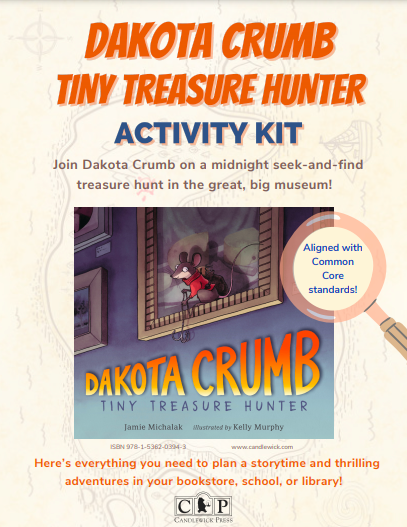
You can download a Dakota Crumb: Tiny Treasure Hunter Activity Kit for teachers, families, librarians, or any book lover here or on the Candlewick Press website.

A Chat with Jamie Michalak

celebrate-picture-books-picture-book-review-dakota-crumb-author-jamie-michalak-headshot

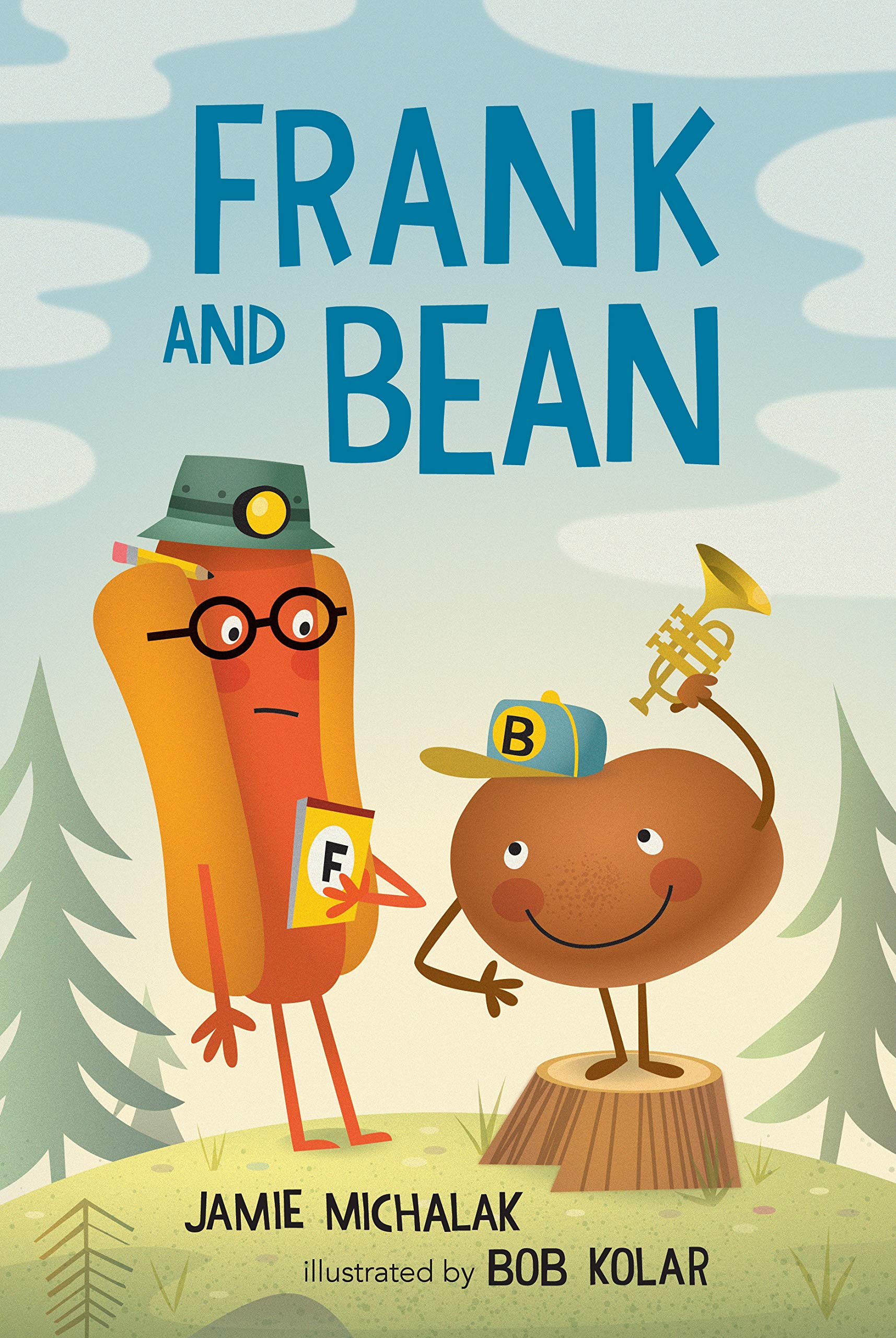
Jamie Michalak is the author of many children’s books, including Dakota Crumb: Tiny Treasure Hunter, illustrated by Kelly Murphy; Frank and Bean, illustrated by Bob Kolar; the highly praised Joe and Sparky early readers series, illustrated by Frank Remkiewicz; as well as the forthcoming picture book Niki Nakayama: A Chef’s Tale in 13 Bites, co-written with Debbi Michiko Florence and illustrated by Yuko Jones, and many more.

When not writing, she can often be found singing off-key, drinking too much coffee, or hanging out with her two sons. Jamie lives with her family in Barrington, Rhode Island.

You can connect with Jamie on her website | Instagram | Twitter

Welcome, Jamie! I’m so happy to be part of your book tour for Dakota Crumb: Tiny Treasure Hunter! Visiting museums is one of my and my family’s favorite activities, especially when we travel. They always provide us with wonderful memories. Do you have a favorite memory from a trip you took to research one of your books?

When I was writing Dakota Crumb: Tiny Treasure Hunter, in which a mouse searches for tiny objects in a museum, I wanted to scout out the best places to hide them. So I decided to visit an art museum in Manhattan, and I asked my eight-year-old son to come along as my research assistant.

Within fifteen minutes of our visit, he tugged on my sleeve. He was looking up at me with an expression of shock and horror.

“What’s the matter?” I asked.

“Mom,” he whispered, looking around. “They’re not wearing ANY PANTS!”

I had no idea he hadn’t seen nude Greek or Roman statues before.

In any case, he learned a lot about art, found some perfect hiding spots for mice treasures, and went home with lots to tell his friends.

That’s fabulous! Kids’ reactions to new experiences are such treasures in themselves.

In your school and library programs you share your writing process and give lots of advice for kids and teachers on how to create characters and stories as well as talking about your books. They sound like a blast! This past year, you probably held more virtual programs than usual. What was one funny thing that happened during one of these events this year?

I ended all of my virtual visits with a sing-along of the “Jelly Donut Hole Song” from my early reader Frank and Bean, illustrated by Bob Kolar. I’d play the audio and share the lyrics on my screen, so the class could join in. (Keep in mind I couldn’t see the faces of any of the kids.) During one visit, I’m playing the song, kind of half singing along because I can’t carry a tune AT ALL. Also, I’m clapping every now and then. Aaaand at the very end, the teacher says, “Um, Jamie? We couldn’t hear the audio on our end.” So basically the kids only saw my big head and heard me humming one note or mumbling every other three words. This went on for at least two minutes! Awkward.

Well, that sounds like a story Frank and Bean would love! Perhaps this funny oops! will find its way into one of your books. Thanks for sharing these two humorous events that show just what a varied tapestry being a picture book author is!

 Here’a a little more about Frank and Bean

celebrate-picture-books-picture-book-review-frank-and-bean-cover

Written by Jamie Michalak; Illustrated by Bob Kolar

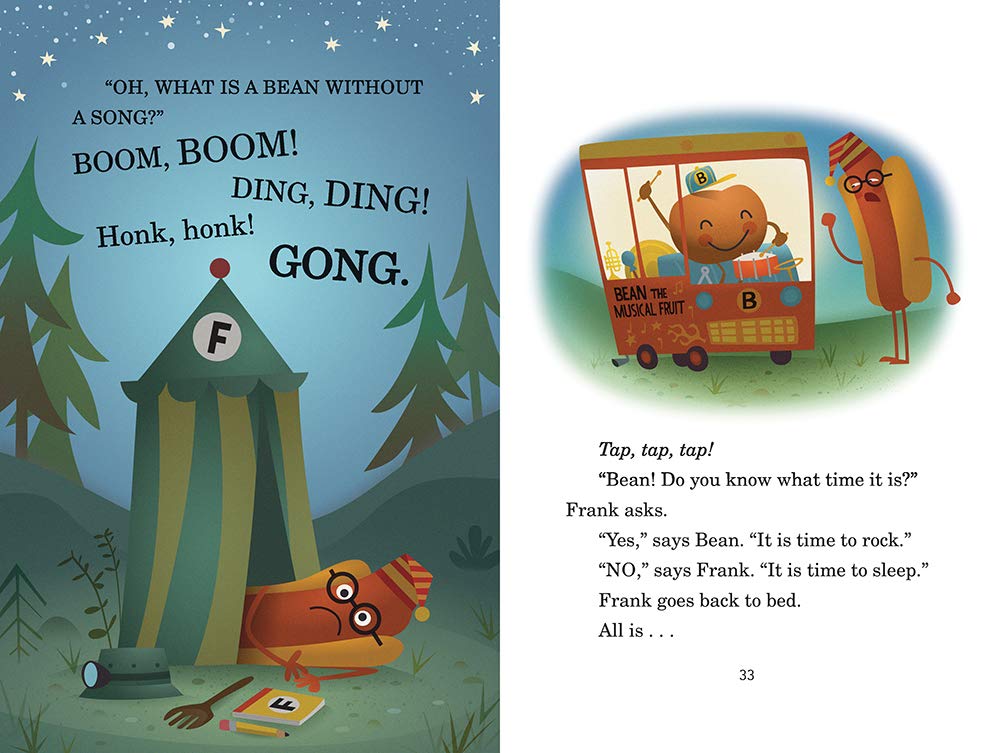
When the introspective Frank meets the gregarious Bean, can they find a way to make beautiful music together? Dry wit and hilarious illustrations introduce a new unlikely pair.

celebrate-picture-books-picture-book-review-frank-and-bean-tent

Image copyright Bob Kolar, 2019, text copyright Jamie Machalak, 2019. Courtesy of Candlewick.

Candlewick Press, 2019 | ISBN 978-0763695590

Early Reader; Ages 3-7

A 2019 Amazon Best Book of the Year

2019 Junior Library Guild Selection

Florida 2020-2021 SSYRA JR Award Nominee

Cybils Award finalist

Family Fun Month Activity

celebrate-picture-books-picture-book-review-dakota-crumb-tiny-treasure-hunt-game

Tiny Treasure Hunt

This treasure hunt from Jamie Machalak is just like Dakota Crumb’s, but with a twist! And it’s perfect for families to do together! Print and cut out this tiny treasure hunt checklist for your child, so they can gather the objects listed. Then ask them to share what they found, using three adjectives to describe each treasure. What does a button feel like? What does the tiny toy look like? (Magnifying glasses are optional!)

Tiny Treasure Hunt List

celebrate-picture-books-picture-book-review-dakota-crumb-cover

You can find Dakota Crumb: Tiny Treasure Hunter at these booksellers

Amazon | Barnes & Noble | Books-a-MillionBookshop 

Picture Book Review