October 11 – Ada Lovelace Day

celebrate-picture-books-picture-book-review-ada-byron-lovelace-and-the-thinking-machine-cover

About the Holiday

Today we remember the woman who is regarded as “the first computer programmer.” A mathematician, inventor, and scientific pioneer, Ada Lovelace wrote and was the first to publish an algorithm to generate Bernoulli numbers. Her notes published in Taylor’s Scientific Memoirs in 1842 inspired Alan Turing to design the first modern computers 100 years later. Today’s holiday celebrates all women in the science, technology, mathematics, and engineering fields. To learn more about Ada Lovelace Day visit findingada.com.

Ada Byron Lovelace and the Thinking Machine

Written by Laurie Wallmark | Illustrated by April Chu


Ada was the daughter of two very distinguished—and distinct—parents. Her mother loved geometry and was known as “‘The Princess of Parallelograms.’” Her father was a world-renowned poet, “beloved for his Romanic poems.” When Ada was still a baby, however, her mother left Lord Byron and his “scandalous behavior” behind, and “Ada never saw her father again.”
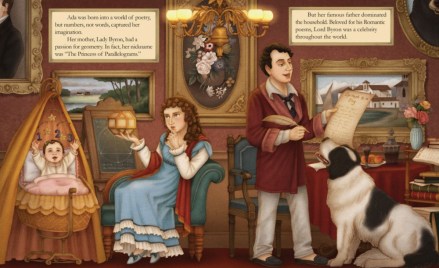
celebrate-picture-books-picture-book-review-ada-byron-lovelace-and-the-thinking-machine-ada's-parents

Image copyright April Chu, text copyright Laurie Wallmark. Courtesy of crestonbooks.com

As was common in Ada’s time she was often left on her own while her mother traveled. Ada filled the hours and days writing, sketching, and inventing in her journal. When she was still a little girl, she built a set of wings for a flying machine she had imagined. To discover if her wings could actually fly, “Ada needed to compute the wings’ power. She broke the problem into steps—surface area and weight, wind speed and angles.” She had to multiply and divide again and again, and while she loved calculating numbers, Ada wondered if there wasn’t an easier way to find the answers.

As she sat at her desk one day a storm blew up, sending the curtains around her open window flapping. They reminded Ada of sails and she suddenly realized that sails were like wings. She grabbed her toy sailboat and headed out to a nearby pond to test her theories. She launched her boat over and over, and “each time she adjusted the sails and studied the effect on the little boat’s speed. A storm of numbers and calculations whirled in her mind and spilled onto her pages.” She stayed by the pond until dark, and “returned home muddy, dripping wet, and triumphant.” Her nanny was not pleased. She didn’t agree with Ada’s mother, instead believing that girls “should not waste their time with math and science and experiments and other such nonsense.”
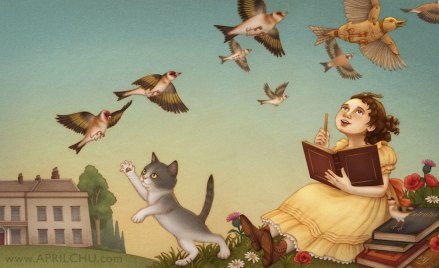
celebrate-picture-books-picture-book-review-ada-byron-lovelace-and-the-thinking-machine-imagining-a-flying-machine

Image copyright April Chu, courtesy of aprilchu.com

Overnight, Ada developed a high fever, and the doctor diagnosed measles. Ada’s mother was sent for. She hurried home and spent the days and nights at Ada’s bedside reading to her. Ada’s “fever finally broke, but the measles left her paralyzed and blind. To keep Ada’s mind sharp, Mama quizzed her on math problems,” asking her harder and harder questions. The numbers kept her company, and in her imagination Ada used her flying machine to travel to London.

While Ada regained her sight in a few weeks, it was three years before she could walk again. During this time Ada’s mother hired tutors to teach her higher and higher level math. One of her tutors was Mary Fairfax Somerville, a famous scientist and mathematician. Somerville invited Ada and her mother to a gathering of other influential scientists, mathematicians, and inventors. There Ada met Charles Babbage. Babbage, a mathematician and inventor, was impressed by 17-year-old Ada’s knowledge and understanding and invited her to visit his laboratory.
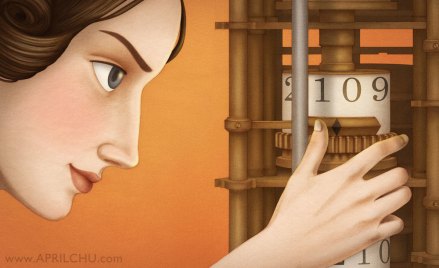
celebrate-picture-books-picture-book-review-ada-byron-lovelace-and-the-thinking-machine-difference-engine

Image copyright April Chu, courtesy of aprilchu.com

Ada brought her journal and shared with Charles Babbage her own work. He didn’t treat Ada as a child but as a fellow scientist and engineer. Babbage showed Ada a mechanical calculator he had designed. With the turn of a handle cylinders of numbers on the three columns of his Difference Engine spun toward the answer to a math problem Ada posed: what is 15 x 12? The machine gave the right answer: 180!

Babbage also had an idea for a mechanical computer—and Analytical Engine—that “would solve harder problems by working through them step by step.” It was an amazing concept, but Babbage hadn’t built it yet. He gave Ada his notebooks and she studied Babbage’s descriptions of how the machine might work. She realized that the Analytical Engine could work if numbers told it how.
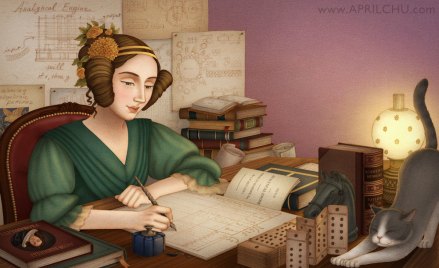
celebrate-picture-books-picture-book-review-ada-byron-lovelace-and-the-thinking-machine-calculating

Image copyright April Chu, courtesy of aprilchu.com

Over several months Ada created an algorithm—a set of mathematical instructions. Her journal was filled with lines and lines of numbers and symbols. At last she checked her work for errors and found none. Ada had developed the world’s first computer program! With her creative imagination she could see that someday computers would “design powerful flying machines and majestic sailing ships. They would draw pictures and compose music. And they would play games and help with schoolwork.”

Unfortunately, Charles Babbage never finished building his Analytical Machine, and Ada never saw her program in action. But future generations remembered her and her contributions to computer programming. There is even a computer program named for her. We can imagine that the little girl who wanted to fly would be very pleased to know that Ada helps guide modern flying machines.

An extensive Author’s Note, a timeline of Ada’s life as well as a partial bibliography and resources follow the text.
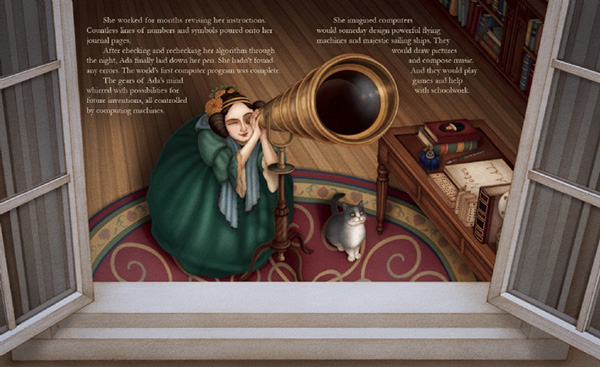
celebrate-picture-books-picture-book-review-ada-byron-lovelace-and-the-thinking-machine-looking-at-stars

Image copyright April Chu, text copyright Laurie Wallmark. Courtesy of crestonbooks.com

Laurie Wallmark’s compelling biography of Ada Lovelace is perfectly aimed at her young audience, highlighting Ada’s childhood dreams, obstacles, and events that led her to become an influential mathematician and inventor. Wallmark’s fast-paced text, which beautifully merges lyrical and technical language to tell Ada’s story, is uplifting in its revelation that from even a young age, Ada was respected and acknowledged for her intelligence and mathematical gifts. Illuminating Ada’s predictions for future uses of the computer forms a bridge between her foresight and the experience of today’s children, bringing history alive for readers.

Gorgeous, detailed illustrations set Ada Byron Lovelace and the Thinking Machine firmly in its 19th-century time period. Lush greens, reds, and golds welcome readers into Ada’s home, where her wooden and paper wings lay among blueprints for other inventions as Ada sits at her desk jotting notes in her journal. A mural in her home cleverly depicts Ada’s imaginings while she recovered from the measles, and the gathering that Ada and her mother attend is a stimulating portrait of the scientists and new inventions of the day. Kids will be amazed to see one of the first “calculators” as built by Charles Babbage. Included on the pages are images of an early loom and punch cards that influenced the development of our computers. It is fitting that the last page shows how far we have come—and how forward thinking Ada was—with an illustration of Space technology in action.

Ada Byron Lovelace and the Thinking Machine is an important biography that should be included in every public and school library. For children interested in history, biographies, and the science and math fields, Laurie Wallmark’s and April Chu’s book would make a beautiful gift and addition to home bookshelves as well.

Ages 5 – 10

Creston Books, LLC, 2015 | ISBN 978-1939547200

Discover more about Laurie Wallmark and download curriculum and activity guides on her website!

View a portfolio of artwork and learn more about April Chu’s books on her website

This is one book trailer that really computes!

Ada Lovelace Day Activity

celebrate-picture-books-picture-book-review-computer-coloring-page

Love Your Computer! Coloring Page


What would we do without our computers? Here’s a fun printable Love Your Computer! coloring page for you to enjoy!

Picture Book Review

October 8 – World Octopus Day

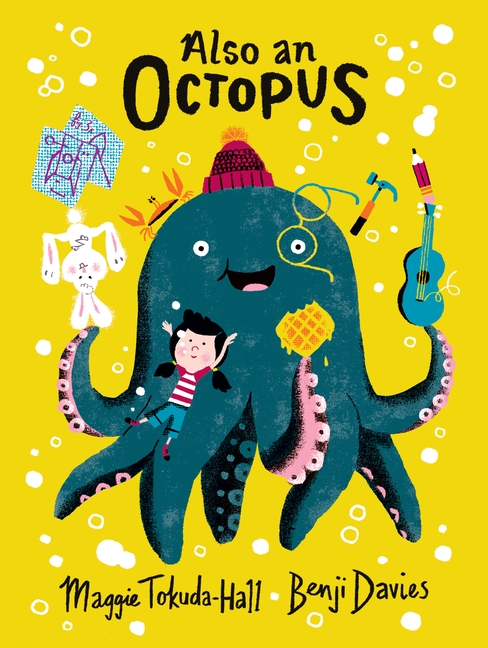
celebrate-picture-books-picture-book-review-also-an-octopus-cover

About the Holiday

With fossils dating back 300 million years, the octopus is one of the world’s oldest and most fascinating creatures. It’s also one of the smartest as more than 500 million neurons fire information through an octopus’s brain and arms, allowing them to learn from experience and solve problems. Octopuses are versatile and are found in all the world’s oceans. While most prefer warmer waters and living along the ocean floor, some species swim in shallower, cooler waters. Octopuses have an excellent sense of touch and sense of vision—some even see in color. They fool predators by hiding or camouflaging themselves but can defend themselves by shooting an inky substance at their pursuers. To celebrate today’s holiday, plan a visit to an aquarium or other sea life center!

Also an Octopus

Written by Maggie Tokuda-Hall | Illustrated by Benji Davies


“Every story starts with nothing.” But as you think about your story, you imagine a character. This character can be anyone or anything—maybe a little girl, or a bunny, or an octopus. Maybe even an octopus that plays the ukulele. Yes! Now, by itself that seems kind of boring, so the octopus has to want something like a sandwich or a friend. Hey! Didn’t you think of a little girl? Maybe she could be the friend. But wait! How about if the octopus wants a “totally awesome shining purple spaceship capable of intergalactic travel?”

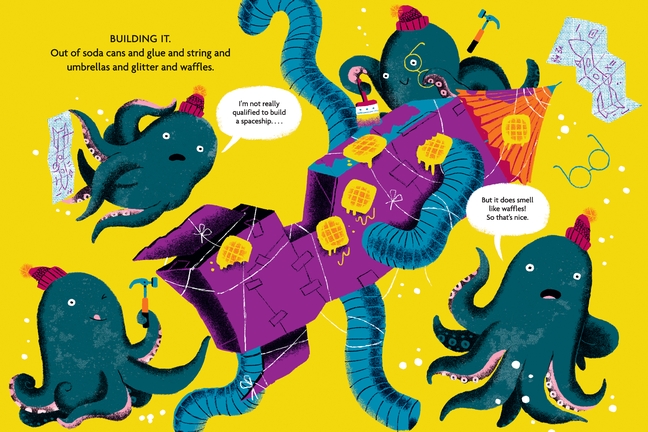
Now there’s a story! It’s not? Oh…too short? Too ehh? What if the octopus builds the rocket ship from stuff around the house? Easy-peasy! Oh dear, it doesn’t work. It can’t even get off the ground. Maybe that bunny from your earlier imagination can help. I’m sure that rabbit is great at building rockets—carroty ones anyway. Not exactly what the octopus had in mind though, huh? What’s an octopus to do beside feel “heartbroken”…beside feel “despondent?”

celebrate-picture-books-picture-book-review-also-an-octopus-homemade-rocket-ship

Image copyright Benji Davies, text copyright Maggie Takuda-Hall. Courtesy of candlewick.com

Maybe the octopus’s sorrows can be drowned in music. A few strums on the ukulele might be soothing. Not a bad idea! Doing this changes things completely! “People come to listen to the ukulele-playing octopus.” What a turn of events! Some of the people are rocket scientists who can help construct a spaceship and who “also play the saxophone, tambourine, trumpet, and lute!” Now this is getting interesting! “So what happens next?” Well, that is up to you!

But you say “I’ve got nothing”? That’s all you need—“because every story starts with the same thing: just a little bit of nothing.”

In Also an Octopus Maggie Tokuda-Hall encourages budding writers and other creative kids to trust their imaginations and let the ideas fly. With humor Tokuda-Hall demonstrates how characters, needs or wants, setting, plot, conflict, and resolution come together to make a whole story. Readers will see how one randomly chosen element can spark an entire work of art—one that is unique to its creator. Tokuda-Hall’s Octopus is a sweet, appealing character who just wants a spaceship (and a story) to take them wherever their heart desires.

Benji Davies’s adorable Octopus, sporting a red knit cap, immediately forms a bond with readers with sweet smiles, a determined work ethic, and a sad, dejected ukulele performance on a lonely curb. Davies’ vibrant purple, yellow, and orange palette highlights the gray octopus, making this would-be astronaut the star of each page. The rocket scientists who come to listen to, jam with, and help Octopus are a welcome diverse group of adults, and the final spreads show kids that with any object or idea, the sky’s the limit.

Ages 3 – 8

Candlewick Press, 2016 | ISBN 978-0763670849

Learn more about Maggie Tokuda-Hall and her work on her website!

You’ll discover a colorful world of illustration and kids books on Benji Davies’ website!

World Octopus Day Activity

celebrate-picture-books-picture-book-review-sock-octopus-craft

Cute Sock Octopus Craft


Who wouldn’t like to have a cute octopus for a pet? With this fast and easy craft you can make your own little cephalopod to hang out on your bed, your shelves, or on your desk!

Supplies

  • Child’s medium or large size sock, white or colored
  • Polyfiber fill, available at craft and sewing stores
  • Ribbon
  • 2 Small buttons
  • Scissors
  • Hot glue or strong glue

Directions

  1. Fill the toe of the sock with a handful of polyfiber fill
  2. Tie the ribbon tightly around the sock underneath the fiber fill to separate the head from the legs
  3. Tie the ribbon into a bow tie
  4. With the scissor cut up both sides of the sock almost to the ribbon
  5. Cut these two sections in half almost to the ribbon
  6. Cut the four sections in half almost to the ribbon
  7. Glue the eyes to the lower part of the head
  8. To display, set the octopus down and arrange the legs in a circle around the head

celebrate-picture-books-picture-book-review-also-an-octopus-cover

You can find Also an Octopus at these booksellers

Amazon | Barnes & Noble | Books-a-Million | IndieBound

Picture Book Review
October 5 – World Teachers Day

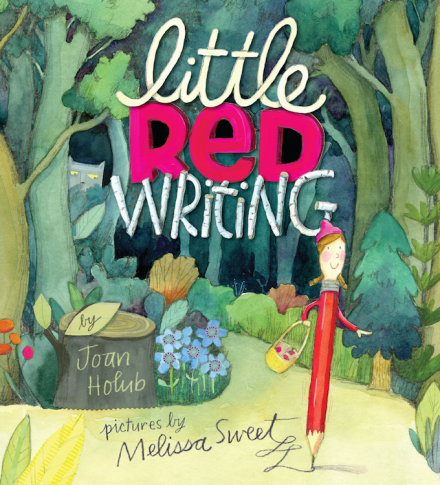
celebrate-picture-books-picture-book-review-little-red-writing-cover

About the Holiday

Teachers are amazing! They dedicate their lives to connecting students to the wider world and opening doors to opportunities for a bright future. Today’s holiday celebrates all the work, thought, and planning that teachers put into every day’s lessons as well as the care and concern they have for every one of their students. Wherever you are, thank your teacher or teachers for everything they do to help you write your own story and ultimately your own ticket—like the sharp heroine of today’s book!

Little Red Writing

Written by Joan Holub | Illustrated by Melissa Sweet

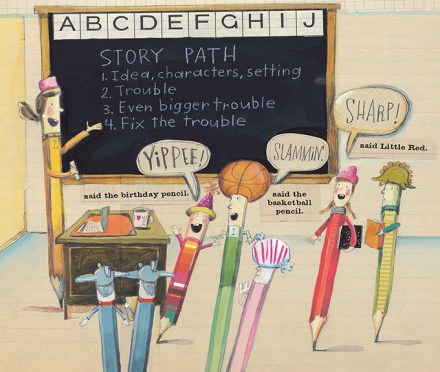
One day in pencil school Ms. 2, the teacher, tells her class that they are going to write a story. Her students are excited, and each one has an idea of what to write. The birthday pencil, wearing a bright pink cone-shaped hat, yells “‘Yippee! I want to write a happy story!’” The state pencil, sporting a map of Pencilvania on its eraser end, wants to tell a nonfiction tale about its state, and the basketball pencil with a small replica basketball topper imagines writing a sports story.

celebrate-picture-books-picture-book-review-little-red-writing-classroom

Image copyright Melissa Sweet, text copyright Joan Holub, courtesy of chroniclebooks.com

Little Red, looking sharp in her shiny scarlet coat of paint chooses to “write a story about bravery because red is the color of courage. But what would a brave pencil do?” she wonders. She decides to go in search of unusual characters that will give her a chance to fight evil and save the day. Ms. 2 gives “Little Red a basket of 15 red words to use in case she ran into trouble” and reminds her that “it’s ok to wander a little, but stick to your basic story path so you don’t get lost.”

Little Red takes her basket full of nouns and sets off. In her notebook she begins to describe her journey. “As she walked along…” she writes and then stops. “Walking is boring,” she decides. To discover some action she heads for the gym, where other pencils are twisting, throwing, catching, swinging, and jumping. Little Red bounces and boogies and cartwheels “right off the page into a deep, dark, descriptive forest.”

celebrate-picture-books-picture-book-review-little-red-writing-descriptive-forest

Image copyright Melissa Sweet, text copyright Joan Holub, courtesy of chroniclebooks.com

The adjectives lay thick on the gnarled, flowery, shadowy path. The towering trees smell piney and their verdant, russet leaves hide squirrelly creatures. The forest is beautiful, but suddenly Little Red feels “bogged down, hindered, lost!” Remembering her basket, she reaches in and pulls out scissors. They help her “cut through all this description and stick to the story path.” Back on the straight and narrower, Little Red encounters a bottle of “conjunction glue” with just the right kinds of words to help her. She gives the bottle a squeeze, but now finds that her sentences go on and on without saying anything important. All seems lost until “Suddenly” arrives.

“Suddenly,” she hears a throaty roar that begins to chase her. Little Red runs without stopping, throwing out any word she can grab from her basket until she can escape to the next page. Here, however, she discovers a “long, tangly tail” and decides to investigate. The tail winds all along the school corridors, passing the cafeteria, the music room, the art room, and the auditorium. It even meanders by the math room and the after school clubs room into the principal’s office.

celebrate-picture-books-picture-book-review-little-red-writing-wolf-3000-chases-little-red

Image copyright Melissa Sweet, text copyright Joan Holub, courtesy of chroniclebooks.com

Little Red knocks on the door. Inside, Principal Granny, her long tail tangled behind her, roars her greetings. Little Red is suspicious, but she continues to explain the growly voice she heard. In fact, she says, “It sounded kind of like yours.” “The betterrr to be hearrrd on the school interrrcom,” the principal states. Little Red also reports the tangly tail, to which the principal answers, “the betterrr to get charrrged up for my school duties when my batteries are rrrunning low. All at once Red notices the principal’s big sharp teeth. “The betterrr to chomp little pencils like you and grrrind them up!”

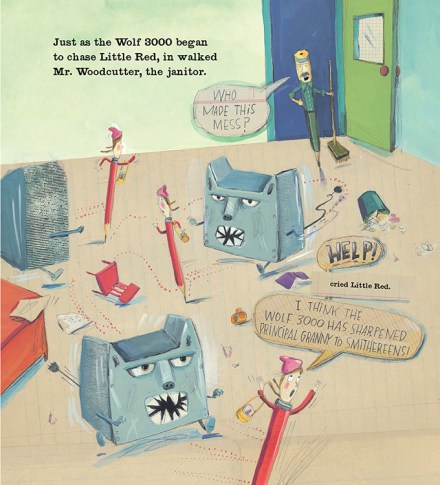
With that Little Red realizes that this isn’t Principal Granny but the “Wolf 3000: the grumpiest, growliest, grindingest pencil sharpener ever made!” The Wolf 3000 begins to chase Little Red around the office, and just when there seems no hope, in walks Mr. Woodcutter, the janitor—who immediately faints. There is only one thing left to do. Little Red grabs her last word and hurls it at the Wolf 3000. “KABLOOEY” goes the dynamite, reducing the Wolf 3000 to a pile of parts.

Principal Granny emerges from the rubble shortened but okay and declares Little Red a hero. Little Red rushes back to her classroom in time to hear the other pencils’ stories and to share her own brave adventure.

celebrate-picture-books-picture-book-review-little-red-writing-dynamite

Image copyright Melissa Sweet, text copyright Joan Holub, courtesy of chroniclebooks.com

Joan Holub’s delightfully clever tribute to writing draws on the Little Red Riding Hood story to get kids excited about using the various parts of speech that make writing so fun and reading so enjoyable. The metaphorical “story path” that Little Red traverses brings her into contact with characters that provide immediate understanding of the concepts. When Little Red squeezes the bottle of conjunction glue, out squirt the words so, but, and, although, yet, and or, which are incorporated into the illustrations on the page. Readers’ familiarity with the original fairy tale increases suspense in this fractured version. The Wolf 3000 electric pencil sharpener makes a perfect nemesis, and the fainting janitor leaves Little Red to sharpen her wits and defeat the beast. Dynamite—at least the word itself—truly is mightier than the sword.

Holub’s nimble talent with puns and wordplay elevates Little Red Writing from simply a book about the subject of grammar and writing to a captivating story kids will love to hear again and again.

Grammar has never looked as enticing as in Melissa Sweet’s vivacious illustrations of adorable Little Red on the story path to prove her bravery. Sweet’s pages, combining pencil drawings, watercolor, and collage, burst with animated typography, scraps of vivid red nouns, and expressive characters in a detailed and fully realized pencil school. Little Red’s final battle with the Wolf 3000 gives full range to Sweet’s rousing visual humor in a highly satisfying climax to the story.

For kids who love reading, writing, and a really good story, Little Red Writing would be a welcome addition to their bookshelves. Teachers will find the story enhances any unit on writing, grammar, and literature.

Ages 5 – 9

Chronicle Books, 2013 | ISBN 978-1452152097

You will find children’s books for all ages as well as fun videos, activities, and teachers’ resources on Joan Holub‘s website!

Discover books, things to make, and lots of fun on Melissa Sweet‘s website!

World Teachers Day Activity

CPB - Pencil Maze

Pencil It In Maze

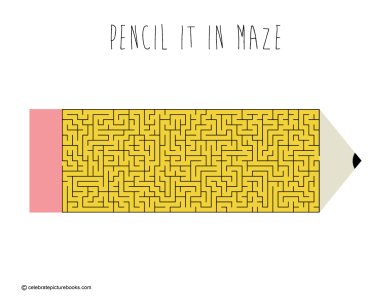
Writing a story is like completing a maze – you must stay on the right path from the beginning to the end to write a satisfying tale. Find your way through intricacies of this printable Pencil It In Maze

Picture Book Review
October 4 – World Animal Day and Q&A with Author Jess Keating

celebrate-picture-books-picture-book-review-pink-is-for-blobfish-cover

About the Holiday

We love animals, but do we take care of them the way we should? Today’s holiday was established in 1931 to promote global awareness of animals and the issues surrounding their welfare. From pets to domesticated animals to wild creatures, humans must protect and advocate for their companions and fellow travelers on this earth. Issues such as pollution, habitat destruction, and poaching threaten the world’s wide variety of species, while closer to home spaying and neutering controls the population of feral animals that often suffer from a lack of resources.

The wildlife kingdom is majestic and awe-inspiring. Today celebrate the world’s animals by taking a trip to a zoo, aquarium, or animal preserve, consider adopting a shelter animal, or donating your time or talents to your favorite animal cause.

Pink is for Blob Fish: Discovering the World’s Perfectly Pink Animals

Written by Jess Keating | Illustrated by David DeGrand


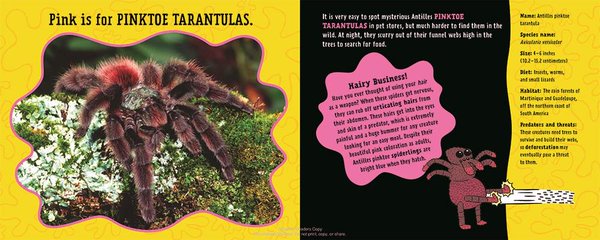
Pink is sweet like cotton candy, right? Pink is pretty like a rose, isn’t it? Pink is quiet like twightlight, don’t cha think? Well…yes, and…maybe not so much. You’d be pardoned for squirming in the presence of a pinktoe tarantula which is found in the rain forests of Matinique and Guadeloupe and can defeat predators with their spiky hairs, and if you can’t make heads or tails of the Pink Fairy Armadillo, which looks like a cross between a lobster tail and a shag rug, no one will blame you.

celebrate-picture-books-picture-book-review-pink-is-for-blobfish-pinktoe-tarantula

Text copyright Jess Keating, illustration copyright David DeGrand, courtesy of Penguin Random House

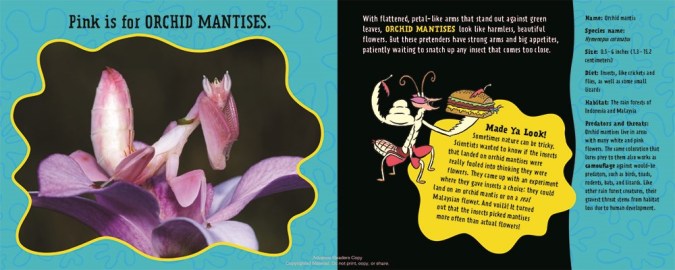
But the world is full of pink, and for each of these grimace-inducing bubble-gum-hued creatures there are plenty who simply take your breath away with their beauty. Imagine watching a duo-toned light-and-dark-pink Roseate Spoonbill take off and soar over marshland along America’s Gulf Coast or a river in South America or the West Indies like a valentine on the wind. You will likewise marvel when you see the delicate form of the Orchid Mantis. This variety of praying mantis found in the rain forests of Indonesia and Malaysia is so identical to real orchids that other insects can’t tell the difference and often land in the grasp of their tricky predator.

celebrate-picture-books-picture-book-review-pink-is-for-blobfish-orchid-mantis

Text copyright Jess Keating, illustration copyright David DeGrand, courtesy of Penguin Random House

Seas and rivers also teem with pink wildlife. Pygmy Seahorses swimming in the waters of the South Pacific blend in to their coral surroundings like a spiky ball among hedgehogs. With white-and-pinkish bodies dotted with strawberry-colored knobs, these seahorses are perfectly camouflaged against predators. The rose-colored Amazon River Dolphin hunts for piranhas, crustaceans and bottom dwelling fish with its long snout in the freshwater rivers of South America. The rivers, lakes, and swamps of sub-Sahara Africa are home to Hippopotamuses, which “ooze thick pink oil all over their skin. This pink ‘sweat’ acts like an antibiotic sunscreen, so hippos can stay out in the sun all day without getting burned.” Imagine if you could do that!

Of course, there is also the Blobfish, recently voted as the world’s ugliest animal. But isn’t this little glob of gelatinous goo really so ugly it’s cute? Found in deep waters off the coasts of Australia and New Zealand, this fish survives where others cannot by simply opening its mouth and gobbling down whatever floats by.

With many more examples of pink wildlife in this captivating book, it’s guaranteed that after flipping through the pages of Pink is for Blobfish you will never look at pink the same way again! 

celebrate-picture-books-picture-book-review-pink-is-for-blobfish-blobfish

Text copyright Jess Keating, illustration copyright David DeGrand, courtesy of Penguin Random House

Jess Keating highlights a host of fascinating pink animals in this volume that is sure to delight kids and get them excited about the world less seen. The first in the World of Weird Animals series, Pink is for Blobfish is loaded with scientific facts, remarkable trivia, and humorous asides to pique the interest of readers’ inner zoologist. Each two-page spread provides a spectacular up-close photograph of the animal, insect, or fish described as well as its common name, species name, size, diet, habitat, and predators or threats. Keating also taps into her audience’s love of the unique and even the bizarre with conversational paragraphs that reveal unusual habits, traits, survival mechanisms, and more for each creature featured.

David DeGrand lends his unique illustration style to the pages with funny cartoon portrayals of the creatures and one of their signature traits. These humorous depictions will not only make kids and adults laugh but will promote better understanding of each unique animal.

Pink is for Blobfish is a perfect addition to personal libraries for budding environmental scientists or anyone interested in the wider, wilder animal world and is an exciting title for school libraries and classrooms, where it could inspire scientific study.

Ages 5 – 10

Knopf Books for Young Readers, Penguin/Random House, 2016 | ISBN 978-0553512274

You’ll discover books, videos, creature features, resources, and lots more on Jess Keating’s website!

You will find the world of David DeGrand‘s art and comics on his website!

Pink is for book trailers—at least this one!

World Animal Day Activity

celebrate-picture-books-picture-book-review-wonderful-wildlife-board-game

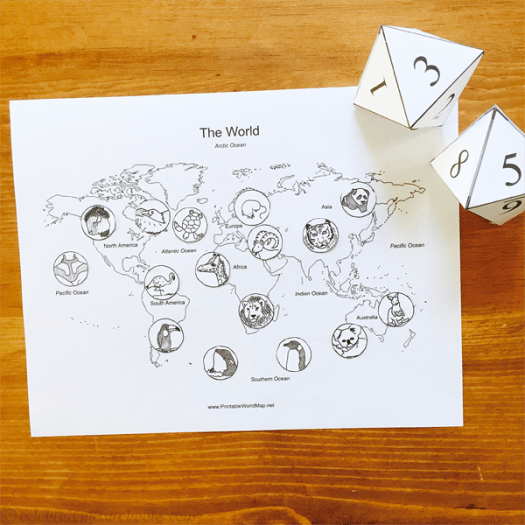
Play the Wonderful Wildlife Board Game! Animal tokens images copyright Conor Carroll

Wonderful Wildlife Board Game


Fascinating animals are found in every part of the world. Play this fun printable Wonderful Wildlife Board Game to match each animal to the area where it lives.

Supplies

Directions

  1. Print a World Map for each player
  2. Print one set of 16 Wildlife Tokens for each player
  3. Print two copies of the 8-sided die, fold, and tape together
  4. If you would like, color the map and tokens
  5. Choose a player to go first
  6. Each player rolls both dice and places an animal on their map according to these corresponding sums of the dice below
  7. The first player to fill their map is the winner!
  • 1 = Flamingo – South America
  • 2 = Emperor Penguin – Antarctica (Southern Ocean)
  • 3 = Giraffe – Africa
  • 4 = Bald Eagle – North America
  • 5 = Ibex – Europe
  • 6 = Kangaroo – Australia
  • 7 = Panda – Asia
  • 8 = Orca – Antarctica (Southern Ocean)
  • 9 = Toucan – South America
  • 10 = Buffalo – North America
  • 11 = Koala – Australia
  • 12 = Lion – Africa
  • 13 = Etruscan Shrew – Europe
  • 14 = Manta Ray – Pacific Ocean
  • 15 = Sea Turtle – Atlantic Ocean
  • 16 = Tiger – Asia

Q&A with Author Jess Keating

celebrate-picture-books-picture-book-review-interview-with-jess-keating

Today I’m tickled pink to talk to Jess Keating about her work as a zoologist and an author, her favorite animals, and a very cool holiday tradition.

In your work, your books, and your online presence, you bring kids and adults closer to the animal kingdom. What in your early years inspired you to become a zoologist?

I wish there was one poignant answer to this question! The truth is, all my life I’ve been enamored with animals. A physicist I admire once said this: The world is beautiful to look at, but it’s even more beautiful to understand. To me, that sums it all up perfectly.

As a kid, animals sparked my curiosity, my imagination, and even my creativity. The diversity they represent is so amazing to me—they all live their lives so differently, with different senses, abilities, and environments, yet it works perfectly for them. I instantly felt a kinship with them, and as a kid, I wanted to know everything about them.

As I got older and was able to really get into zoology, my goal shifted. The world of animals is so endlessly fascinating, and I now I want to take every opportunity to share it with others, especially young readers.  

All animals are amazing, but do you have a soft spot for one particular animal or species? If so, why?

Now this is such a hard question! My favorite animal has always been the wolf. I was lucky enough to see one in the wild once, and it’s pretty hard to come away from that experience without believing in magic!

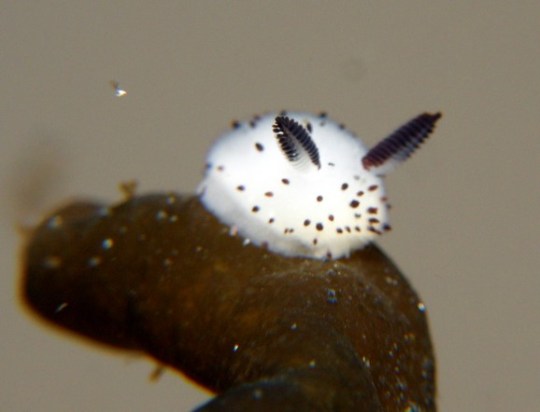
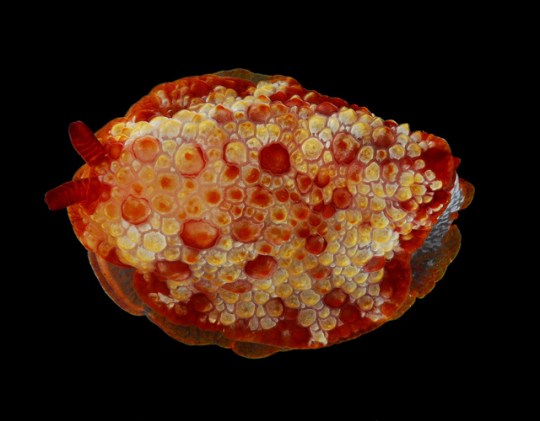
Lately, I also have a soft spot for nudibranchs! I included one (the Hopkins’ rose nudibranch) in my last book, but there are so many other species that we know so little about! As I mentioned above, it’s the diversity that takes my breath away. Some of them look like bunnies:

celebrate-picture-books-review-interview-with-jess-keating-nudibranch

Image courtesy of crawl_ray on flickr.com

Some even look like pizzas!

celebrate-picture-books-picture-book-review-jess-keeting-interview-nudibranch

Image courtesy of Arthur Anker on flickr.com

You do such a great job of reaching out to kids through videos, KeatingCreature on Twitter, your YouTube Channel: Animals for Smart People, personal appearances, and Skype visits. Can you describe a funny or favorite anecdote from one of your events?

Thank you for the Youtube shout out! I really hope teachers find my videos useful! As for a favorite event, when you mix animals and kids, the results are often hilarious. Usually, my visits involve a lot of dead things. I bring a collection of skulls, animal bones, and animal track castings with me. Every so often, we get lucky with some live specimens.

One of my favorite events was a library visit that involved a 10+ foot python. I had her resting on my shoulders (as you do), and I remember laughing because almost all of the adults in the room were skittish, backing off toward the door.

When I asked who else wanted to hold this lovely python, every adult shook their head. There was no way they were going near it! But then, a tiny six year old girl rushed up to the front, with a massive smile on her face. She wasn’t afraid at all as she held that snake—and I’m pretty sure that her big moment meant as much to me as it did to her!   

What inspired you to write Pink is for Blobfish?

 Pink is for Blobfish is a book so close to my heart! I know that sounds strange, because it’s essentially a book filled with weirdos!

As you can probably guess, I’ve been reading animal books my whole life. I loved them all, but what I really wanted was to write something that says as much about us as it does about the wild animals on each page. A book that not only shares amazing animals with kids, but also gets them thinking critically about how they view the world, especially regarding their assumptions and judgments. Pink is for Blobfish is my way of getting readers to look at gender expectations, while (hopefully) instilling them with a little wonder about the natural world.

There’s so much humor in your writing and videos. How does your love of comedy help you connect to readers?

The short answer is, I’m just a big ham and love making people laugh. There’s also the added bonus with nonfiction: we’re much more likely to remember something if we connect with it emotionally. My way of accomplishing that is to be funny and get kids laughing. Fiction or nonfiction, one of the easiest ways for me to reach readers is through a well-timed joke.

But, you can also get a little deeper with it. I once heard that Jim Carrey doesn’t think of his job as “making people laugh.” Instead, he views it as “freeing people from concern.” The minute I heard that, it resonated with me. For those few moments, when you’ve got a reader laughing, they’re free from any concern in their lives. It’s a reprieve, a bright moment. It’s true for us as adults too—it’s pretty much impossible to be stressed out when you’re reading about a pigeon that wants to drive a bus!

Now, when I approach my writing, I look for those moments. If I can make myself laugh, that’s half the battle.

What’s the best part about writing books for kids?

For both fiction and nonfiction, my favorite part is seeing the look on a kid’s face when you open a door for them into a whole new world. Sometimes, it’s the ridiculously colorful world of nudibranchs. And sometimes, it’s helping them to the realization that they aren’t alone, no matter how weird they feel.

What’s up next for you?

I’m so glad you asked! I just received F&Gs of the second book in the World of Weird Animals series! I can’t give away the title just yet, but I can say we are going to look at MONSTERS. This isn’t just going to be a book of creepy creatures. We’re going to dig into why we see certain animals as monsters, and how those judgments and assumptions affect how we think of them. I was blown away with the discussions that Pink is for Blobfish prompted with kids, and I can’t wait to see how they respond to this book!

I also have my first picture book biography, SHARK LADY, coming out next year! I’ve always been a fan of sharks, and I was thrilled to tell the story of Eugenie Clark, one of the world’s first female shark scientists. Eugenie is one of those incredible women that changed the world just by being her fearless self, and I am so eager to share this book with everyone. Look for it around June!

I can’t let you get away without asking you a few holiday-themed questions, so…

You told me that World Animal Day is one of your favorite holidays. Can you talk a little about that?

What could be better than a day devoted to animals!? World Animal Day is a day to chat about animals all over the world, and how we can best protect them and their futures. A funny thing happens when you start talking about animals in the global sense—you can’t help them without also helping us. Education and awareness can accomplish so much!

Do you have an anecdote from any holiday that you’d like to share?

I have one that ties in really well here! When I was a teen, I had a really cool Christmas tradition that I highly recommend to parents of animal lovers. On Christmas morning (or any special holiday morning for you!) I would go to my local humane society, bring treats, and walk the dogs. Usually, these centers have lots of volunteers, but busy holidays are often pretty slow for them and there’s not a lot of help. I guarantee the dogs will love the company, and you’ll get to spend an hour surrounded by wagging tails! You can’t lose.

Has a holiday ever influenced your work?

Yes! A very savvy bookstore (DDG Books!) organized a “Valentine for Blobfish” event when Pink is for Blobfish came out. So many young readers felt bad that the blobfish was voted the world’s “Ugliest Animal” (true story!) and they wanted to send him valentine cards to make him feel better!

You can see more about it here in this video:


And read some blobfish poetry here. Or, you can see some of the adorable cards on my blog.

Thank you so much for chatting with me today!

Thank you, Jess! It’s been so much fun! I wish you all the best with all of your books and your other ventures!

Learn more about Jess Keating!

As a zoologist turned middle grade and picture book author, Jess Keating has been sprayed by skunks, bitten by crocodiles, and been a victim to the dreaded paper cut. Her MY LIFE IS A ZOO series earned two Kirkus stars, a Red Maple nomination, a Rocky Mountain Book Award nomination, and a spot on the LA Times Summer Book Pick List. 

Her quirky nonfiction picture book series kicked off with PINK IS FOR BLOBFISH, with a sequel to follow in 2017. Her first picture book biography, SHARK LADY, will also be published in 2017. 

Jess is also the creator, writer and host of Animals for Smart People, a Youtube series about animals, science, and nature. Subscribe today and bring Jess into your classroom!

Connect with Jess Keating:

You can  find Jess on Twitter @Jess_Keating and on Facebook @JessKeatingBooks!

Pink is for Blobfish can be found at these booksellers

Amazon | Barnes & Noble | Books-a-Million | IndigoIndieBound | PenguinRandom House

Picture Book Review


September 6 – Read a Book Day

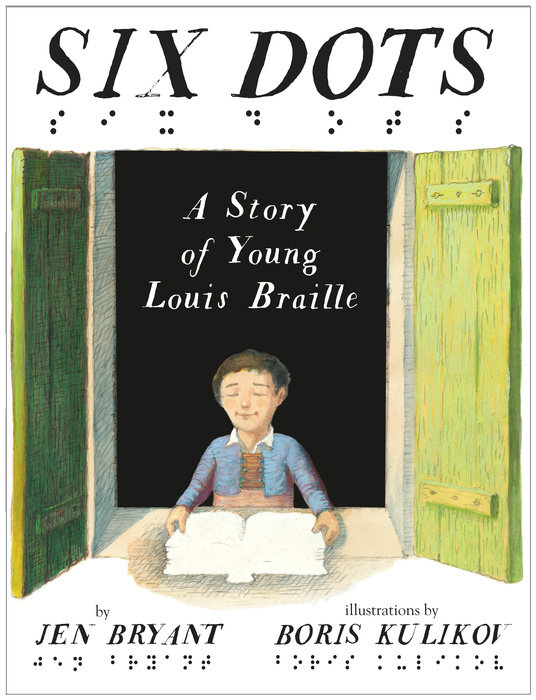
celebrate-picture-books-picture-book-review-six-dots-a-story-of-young-louis-braille-cover

About the Holiday

Avid readers, rejoice! Today is your day – a whole 24 hours dedicated to the fine pursuit of perusing an old favorite or a newly discovered book! To celebrate visit a local bookstore or library then find a cozy nook or shady spot and settle in for a good, long read.

Six Dots: A Story of Young Louis Braille

Written by Jen Bryant | Illustrated by Boris Kulikov


When Louis Braille was born he was so small that no one in town expected him to live. But he did! Louis thrived and with his curious eyes took in everything around him. Louis was smart, too, with a prodigious memory for names and stories. His father worked with leather, making harnesses and bridles. Louis wanted to be just like him and often reached for the sharp tools on the workbench, but his father always warned him away.

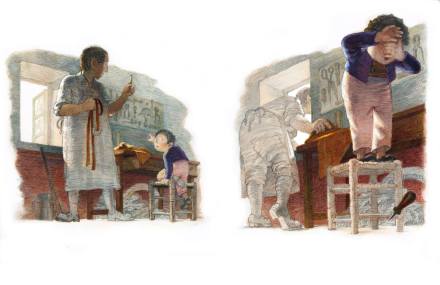
One terrible day, however, when Louis’ father glanced away, Louis grabbed an awl and tried to work it into the smooth leather, but it slipped. Louis’ damaged eye was bandaged and he was told not to touch it. But when the bandage began to itch, young Louis couldn’t help himself and spread the infection to his other eye. By the age of five, Louis was left in darkness, unable to see the faces of those he loved or the attractions of home.

celebrate-picture-books-picture-book-review-six-dots-a-story-of-young-louis-braille-accident

Image copyright Boris Kulikov, courtesy Alfred A. Knopf

Louis learned the sounds of the world. He discovered the number of steps around his house, to the outbuildings, and eventually to the shops and businesses in town. His brother taught him how to whistle and use the reverberations to avoid obstacles. He also learned to feel the shapes of letters made of straw, leather, or nailed replicas made by his family. He played dominoes by feeling the dots with his fingers.

While Louis listened to others read to him, he longed to be able to read on his own. Whenever he asked if there were books for blind people, however, the answer was always, “No.” A noblewoman who lived nearby heard of Louis and invited him to study at the Royal School for the Blind in Paris. At the age of 10 he moved to the boarding school.

The Royal School was anything but sumptuous. Louis’ room was crowded, damp, and dark. His uniform itched, and meals were meager and cold. He so wanted to return home, but the promise of books for the blind kept him there. Those books were reserved for the best students, and Louis vowed to be one. Finally, Louis was led to the library. A book thudded onto the table in front of him. “‘Voila! There it is,’” the guide said.

Louis opened the book. To read it he had to feel the raised letters, but the letters were huge and a page only held a few sentences. To make matters worse, the book consisted of only a few pages. “‘Is that all?’” Louis asked. The guide told him there were others but that they were all the same. More than ever Louis wanted to go home.

celebrate-picture-books-picture-book-review-six-dots-a-story-of-young-louis-braille-dreams

Image copyright Boris Kulikov, courtesy Alfred A. Knopf

In the morning Louis was shaken awake; the headmaster had an important announcement.  It seemed that a French army captain had devised a secret code read by touch instead of sight. This code could be used at the school, the headmaster said. The code consisted of raised dots set in patterns that represented various sounds. The boys learned the new code then learned how to write it, using an awl-like implement that punched dots into paper.

While the code was a breakthrough, it was hard to learn and all the other boys in the school had given up—but not Louis. Still, reading the code was not like reading a book with letters, words, and sentences. Louis asked the headmaster if the army captain would work with him to improve the code, but when the headmaster asked, the answer was “No.”

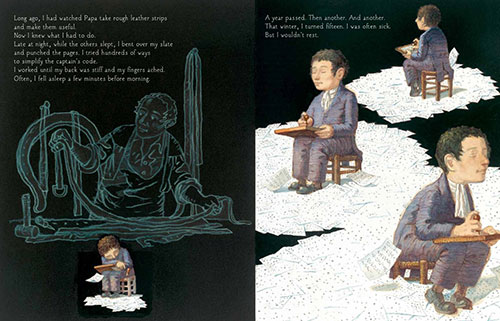
Louis knew what he had to do. Night after night he punched dots into paper with the awl-like tool—just as he had watched his father do with leather. He tried “hundreds of ways to simplify the captain’s code.” Three years passed, and Louis turned 15. Finally, he had a workable solution. He asked the headmaster to read to him a book he had never heard. As the headmaster read, Louis copied his words, punching letters onto paper. Louis’ “new code used just six dots, arranged in two columns, like dominoes. Each dot pattern stood for a letter of the alphabet.”

celebrate-picture-books-picture-book-review-six-dots-a-story-of-young-louis-braille-inventing

Image copyright Boris Kulikov, courtesy Alfred A. Knopf

When the headmaster finished reading chapter 1, Louis turned his pages over and “reading by touch, recited the entire chapter.” After that “word spread quickly. The other students rushed to try it. Si facile! ‘So easy!’ Et si vite! ‘And so fast!’ ‘We can read words and write letters like everyone else,’” the other boys exclaimed.

As Louis watched his friends read he remembered watching his “Papa in his shop, bent over rough strips of leather, making them useful. I had become like him, after all,” Louis thought.

An Author’s Note, more fascinating biographical information about Louis Braille’s life and other inventions, resources, and the Braille alphabet follow the text.

In her Author’s Note Jen Bryant says she wanted to express what it felt like to be Louis Braille. In Six Dots she succeeds in bringing the story of this very young inventor and genius to life with details of his accidental blindness, family support, school experiences, and ultimate victory. Told from Louis Braille’s point of view, the story has an immediacy that presents Braille’s frustrations, challenges, and achievements sensitively and honestly. His perseverance against all odds will inspire readers and give them a new perspective on the unique person Braille was, the importance of books for all, and what children not much older than the readers of Six Dots can accomplish.

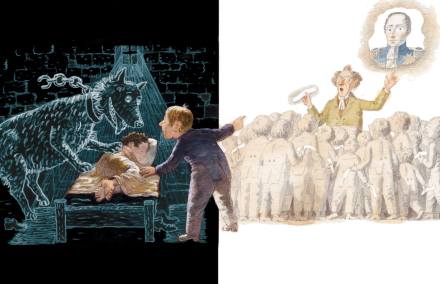
Boris Kulikov’s mixed media illustrations take readers back to the France of the early 1800s, depicting with soft colors and period details the town, people, and influences in Louis Braille’s life. Braille’s initial accident is treated with thoughtful consideration of the book’s audience, and his blindness and dreams are portrayed with transparent outlines on a black background. Readers will be interested to see how Louis’s family and friends supported and helped him (an unusual occurrence of the time). As Louis grows, readers discover his other talents for music and sewing, and the tools Louis used to produce his Braille pages are clearly shown.

Ages 4 – 9

Alfred A. Knopf, 2016 | ISBN 978-0449813379

View Jen Bryant’s website for activities, videos, and links related to Six Dots—you’ll also discover more of her books too!

To see a gallery of images by Boris Kulikov for books and other illustration work, visit his website!

Read a Book Day Activity

celebrate-picture-books-picture-book-review-library-coloring-page

I Love the Library! Coloring Page


Today is a perfect day to visit your library and check out some awesome books! Here’s a printable I Love the Library! Coloring Page for you to enjoy too!

September 3 – International Vulture Awareness Day

celebrate-picture-books-picture-book-review-vulture-view-cover

About the Holiday

With their bald pink heads and dusty brown feathers vultures and turkey vultures may not be the peacocks of the bird kingdom, but they play a crucial role in the environmental cycle. These scavengers live on carrion, clearing away and “recycling” the carcasses of dead animals. Because of the vulture’s appearance and stereotypical depictions, their plight as an endangered species goes largely unnoticed. Environmental groups in South Africa and England established today’s holiday (also known as International Turkey Vulture Day) to promote awareness f the declining number of vultures, a cause that has been picked up by zoos and other conservation groups around the world.

Vulture View

Written by April Pulley Sayre | Illustrated by Steve Jenkins


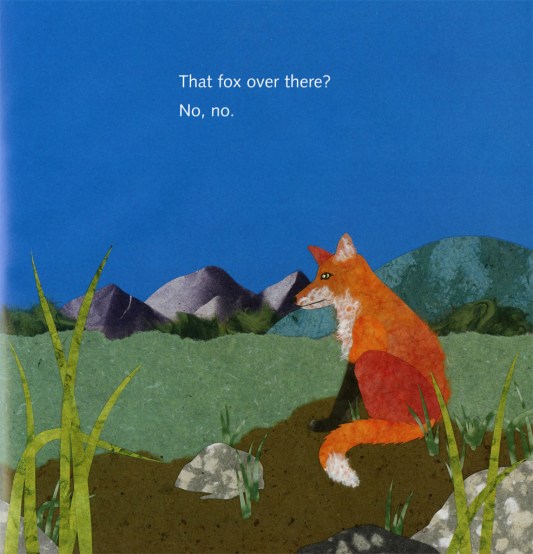
In the clear blue morning sky the vultures soar. “Wings stretch wide / to catch a ride / on warming air / Going where?” One turkey vulture scans the ground, dipping and tilting as it searches for its breakfast. A snake rattles and hisses in the rocks. The vulture passes it by. A golden fox gazes silently into the distance, but the vulture flies away. A bear half-way up a tree would be easy prey, but the vulture lets him continue his climb.

celebrate-picture-books-picture-book-review-vulture-view-fox

Image copyright Steve Jenkins, courtesy of us.macmillan.com

The turkey vultures are searching for a particular meal. They “smell the air. / They sniff, search, seek / for foods that… / REEK! The aromas of the landscape rise to the vultures. Are they attracted by the “fragrant flowers? / No, no.” “That spicy smoke? No, no.” Maybe “that stinky dead deer? Yes, yes!”

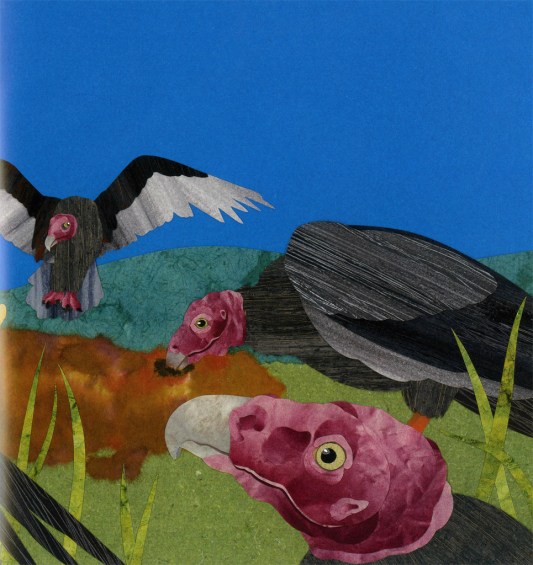
The vultures descend to dine on their “rotten” meal. Afterward they clean themselves in the nearby water and preen their feathers. Still hungry, “they hop, flap, soar / to look for more.” As the sun sets the vultures’ “wings glide, wings ride / through cooling air.” They come from all over to vulture trees—beautiful, bare silhouettes on the sky—to “settle and sleep, like families.”

celebrate-picture-books-picture-book-review-vulture-view-vultures-eating

Image copyright Steve Jenkins, courtesy of us.macmillan.com

With the rising sun and the warmer air, the vultures take to the sky again in search of their singular meal.

Intriguing facts about how vultures fly, the seven species of vultures, why and how vultures feed on carrion, nesting behaviors, and vulture festivals around the United States follow the text.

In this Theodor Seuss Geisel Honor Book, April Pulley Sayre brings a poet’s sensibility to the misunderstood vulture. In her lyrical lines the sights and smells of the vulture’s terrain and the vulture’s flight patterns are elevated to educate young readers of the actual beauty of this distinctive species. The benefits vultures provide to the environment as well as their familial attachments make these birds some of the most fascinating animals in the wild kingdom. Who among us doesn’t look up at the circling majesty of birds of prey? Sayre’s text gives readers the bird’s eye Vulture View.

celebrate-picture-books-picture-book-review-vulture-view-soaring-vulture

Image copyright Steve Jenkins, courtesy of us.macmillan.com

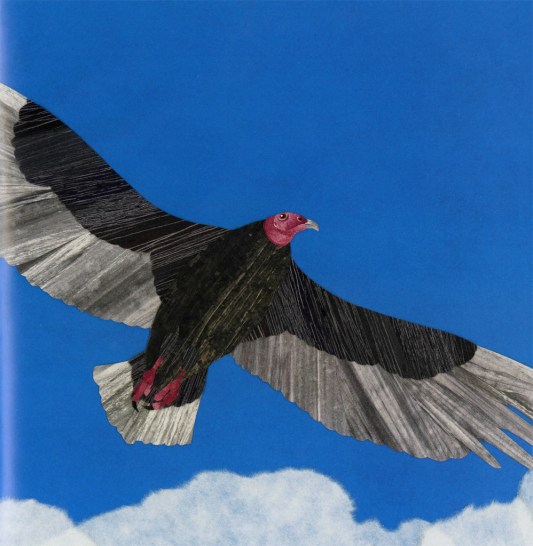
With his signature cut-paper collage illustrations, Steve Jenkins gives shape to the vulture’s world. The mottled dark body and the wings and tail fringed with white meet layers of pink that form the vulture’s wrinkled head. The rattlesnake is a smooth combination of greens and browns while the fox is brilliantly orange and soft. Hills and mountains jut from the bottom of pages, and a bony carcass lays amid tall grass, decaying and attracting a vulture. As the birds streak through wispy fiber clouds to descend upon the vulture tree in the shadowy evening, readers will come to appreciate the life and role of the vulture.

Ages 4 – 8

Henry Holt and Company, 2007 | ISBN 978-0805075571

Wow! You will find a wealth of information on April Pulley Sayre‘s website which includes her many books, educators’ resources, and much more information on natural history topics.

Even just hovering over the icon links on Steve Jenkins‘ website is fun—and there’s so much more to discover once you click on them!

International Vulture Awareness Day Activity

celebrate-picture-books-picture-book-review-vultures-coloring-page

Valuable Vultures Coloring Page


Vultures are a valuable part of our ecosystem. Here’s a printable Valuable Vultures Coloring Page for you to enjoy. Why not try your hand at using cut or torn paper like Steve Jenkins does in Vulture View to fill in the design?

Picture Book Review
August 29 – Get Ready for Kindergarten Month

celebrate-picture-books-picture-book-review-be-quiet-marina-cover

About the Holiday

Children of kindergarten age are looking forward to starting school like “the big kids,” and teachers all over the country are preparing to welcome their new students on the first day. All the desks or tables have the same supplies laid out, the same chairs pushed in, and the same promise of learning. Are all the kids the same? Yes…and no. Yes: They are all about the same age, wonder what the future holds, and want to make friends. No: they all come with different personalities, different histories, and different talents and abilities. And it is these differences that give each child their unique perspective on the world and will determine their unique contribution to it. Today celebrate each child’s distinct skills and gifts.

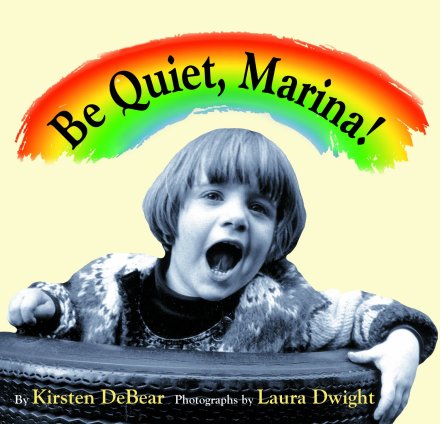
Be Quiet, Marina!

Written by Kirsten DeBear | Illustrated by Laura Dwight


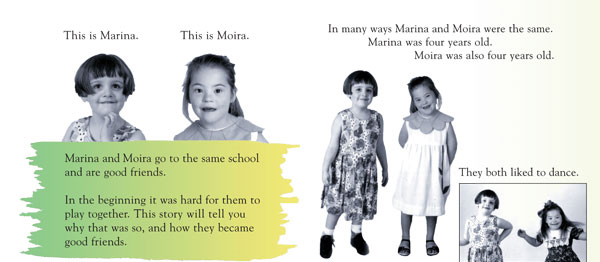
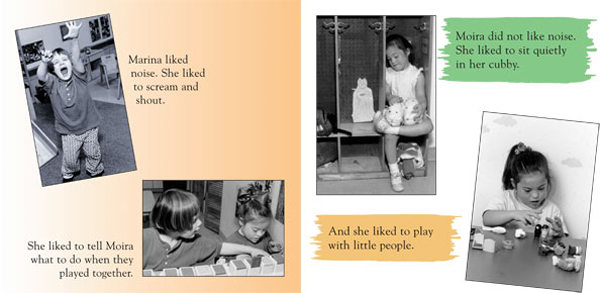
Marina and Moira are four years old and in the same class at school. Marina was born with cerebral palsy; Moira has Down’s Syndrome. They like many of the same things. Both girls like to dance, play ball, dress up, and play with dolls. But when it comes to noises or rushing around, Marina and Moira are different. Marina likes loud noises. She often screams and shouts, and when she and Moira play together, Marina likes to tell Moira what to do.

celebrate-picture-books-picture-book-review-be-quiet-marina-girl's-similarities

Photography by Laura Dwight, courtesy of starbrightbooks.org

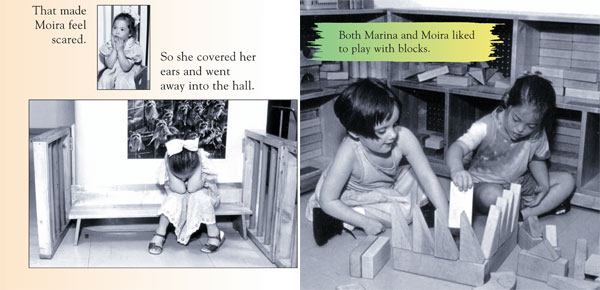
Moira, on the other hand, likes to sit quietly, and she can often be found taking a break in her cubby. She also likes to play alone with the little people figures. While both girls like to take walks outside, Moira stays with the teachers and the other students while Marina runs ahead. One of Moira and Marina’s favorite activities is when the teachers swing the kids in a big blanket. Then each student has to wait their turn. Moira can wait patiently, but for Marina waiting is hard; she gets angry and screams or cries. When Moira hears Marina scream, she feels scared. She covers her ears and leaves the room.

While Moira and Marina like to build towers and castles with blocks together, they have different feelings about cleaning up afterward. Marina doesn’t want to help and shows it by yelling. Moira runs from the room with her hands over her ears. “One day on the playground Moira was on the see-saw. Marina wanted to get on too, but she couldn’t…So she started to scream. She screamed so loudly that Moira covered her ears and walked away. Now Marina could get on the see-saw, but it was no fun alone.”

celebrate-picture-books-picture-book-review-be-quiet-marina-playing-with-blocks

Photography by Laura Dwight, courtesy of starbrightbooks.org

Another day Marina started to get upset while the girls were playing with the telephone. This time Moira didn’t run away. Instead she looked at Marina and said, “Please don’t scream!” Marina listened. She became quiet and the two continued to play together. Later in the week when Marina asked Moira to play, Moira told her she would, but only if Marina didn’t scream. Marina said, “Okay, I won’t.”

The two girls came to an understanding. Instead of being afraid of Marina, Moira now knows she is trying to be friends, and Marina realizes that if she wants Moira to play with her, she can’t scream. And they both know that if they need help they can ask their teachers. Now Marina and Moira are best friends, which means they can have fun playing dolls and building with blocks, dancing and dressing up and even going up and down on the see-saw. And when Marina screams, “‘It’s fun!’” Moira makes a little noise herself and shouts “Be Quiet, Marina!”

celebrate-picture-books-picture-book-review-be-quiet-marina-girl's-differences

Photography by Laura Dwight, courtesy of starbrightbooks.org

With simple, straightforward language, Kirsten DeBear reveals the story of how two little girls with what might be considered opposing personalities overcame their differences to become friends. While drawn to each other, these differently abled girls had trouble playing together. Through perseverance and communication, however, they came to understand each other. DeBear brings honesty and humor to this true story that applies to all children who need to accommodate other’s preferences while staying true to themselves when playing or working in a group. The happy resolution shows that there is room for all in our friendships and our hearts.

Laura Dwight’s black and white photos take a storyteller’s approach to chronicling the evolving friendship between Marina and Moira as they participated in schoolroom activities. The smiling girls are shown dancing, dressing in fancy hats, playing with dolls and a ball, building with blocks, and doing other fun things together. The photographs also depict moments of friction between the girls when Maura becomes upset and screams and Moira covers her ears and runs away. At the end of the book Dwight’s lens captures the experiences that led to better understanding between the two girls and their strengthening friendship.

Readers may recognize themselves as a “Maura” who likes loud noise and exploring on her own ahead of the group, or a “Moira” who prefers quiet and staying close to the group. Through the story of these two very smart little girls, all kids may learn to understand and appreciate themselves and alternate viewpoints.

Ages 4 – 7

Star Bright Books, 2014 | ISBN 978-1595726650

Visit Star Bright Books for a vast array of inclusive titles for children that embrace diverse ethnicities and abilities, promote literacy, and are widely available in 24 languages.

View a gallery of photography work by Laura Dwight on her website!
Get Ready for Kindergarten Month Activity

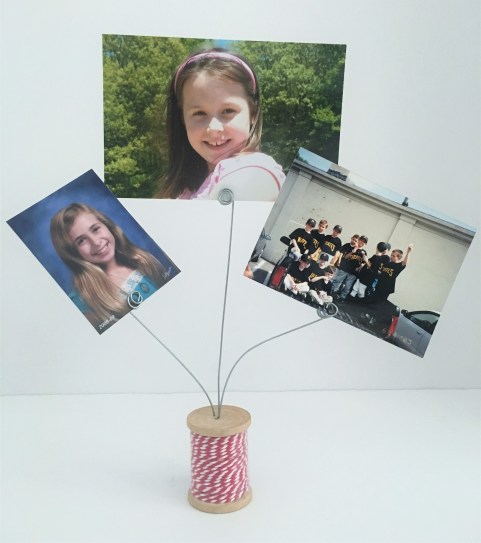
celebrate-picture-books-picture-book-review-threads-of-friendship-photo-holder

Threads of Friendship Photograph Holder


In the same way that thread holds clothes, blankets, and other material goods together, friendship holds people together. Make this easy Threads of Friendship Photograph Holder to keep pictures of your friends close by!

Supplies

  • Wooden Spool of twine, available at craft stores and some discount retailers
  • Thin-gauge wire, no heavier than 18 gauge
  • Small gauge nail
  • Hammer
  • Needle-nose pliers
  • Pencil
  • Photographs

Directions

To make the photograph holders:

  1. Holding one end of a wire with the needle-nose pliers, wrap it around the pencil four or five times
  2. Remove the wire from the pencil
  3. Squeeze the coils of wire together with the needle-nose pliers
  4. Cut the wires to different lengths so the pictures stand at various heights

To make the stand:

  1. Make two or three holes in the center of the wooden spool of twine with the nail and hammer, holes should be about ½-inch deep to steady wire.
  2. Place the coiled wires in the holes
  3. Put photos in the coils

Note:

Even young children can help hammer the nail, place the wire in the holes, and choose photographs. Adults should coil the wire, cut the wire, and help with hammering.

Picture Book Review