January 17 – It’s Hobby Month

celebrate-picture-books-pciture-book-review-prudence-the-part-time-cow-cover

About the Holiday

Hobbies are great! They give us the chance to explore our creative side, form friendships, travel, and get away from the stresses of daily life. Sometimes hobbies can even lead to better and more satisfying careers. This month celebrate your hobby! Throw a party for others who share your passion, consider signing up with an online site to sell your wares, or join a group of like-minded people. It’s also a wonderful time to share your talents with others—like the protagonist of today’s story! 

Prudence the Part-Time Cow

Written by Jody Jensen Shaffer | Illustrated by Stephanie Laberis


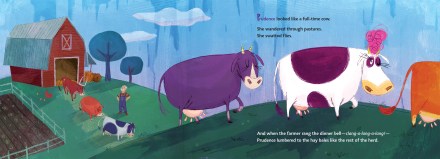
Out in the pasture swatting flies with her tail and lumbering along with the rest of the herd, “Prudence looked like a full-time cow.” But when she had a little time off from her bovine duties, Prudence “was a part-time cow.” While being milked she was a scientist, reading a book on the milking process that she found “udderly amazing.” The salt licks were perfect blocks for architect Prudence’s wondrous structures. And engineer Prudence experimented with automatic lighting, even if the results in the water trough were a bit electrifying.

celebrate-picture-books-pciture-book-review-prudence-the-part-time-cow-farm

Image copyright Stephanie Laberis, 2017, text copyright Jody Jensen Shaffer, 2017. Courtesy of Henry Holt & Co,

The other cows didn’t like it. They wanted Prudence to be more like them. She would never fit into the herd, they whispered to each other. Prudence fretted. She wanted to have friends and fit in, so “she decided to try to be like the others.” Dutifully, she went down to the pond with the rest of the herd for a little refreshment and was doing fine until… “she calculated the water temperature and wind speed. ‘Sixty-eight degrees and four miles per hour.’”

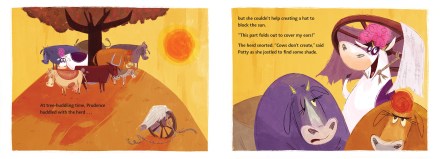
celebrate-picture-books-pciture-book-review-prudence-the-part-time-cow-tree-huddling

Image copyright Stephanie Laberis, 2017, text copyright Jody Jensen Shaffer, 2017. Courtesy of Henry Holt & Co,

The other cows were miffed, especially Bessie, who said “‘Cows don’t calculate,’” while carefully counting her calves as she called them from the pond. Another day as the herd lazed under a tree, Prudence joined them, leaving only once to create a hat from an old wagon wheel, scrap of cloth, and piece of rope she found nearby. The other cows snorted. “‘Cows don’t create,’ said Patty as she jostled to find some shade.”

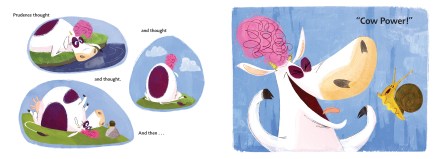
Even sleeping the same way as the others was difficult for Prudence. When she had a brainstorm in the middle of the night she just had to explore it—no matter how noise she made. The herd had given up. Alone and sad, Prudence thought and thought of ways to make the others like her. Then it hit her! “‘Cow Power!’” That night the barn rang with the sounds of her idea. But it wasn’t only one idea! When the herd woke and saw yet another contraption, they rolled their eyes and said “‘Not again, Prudence! What is this mess?’” Until…

celebrate-picture-books-pciture-book-review-prudence-the-part-time-cow-cow-power

Image copyright Stephanie Laberis, 2017, text copyright Jody Jensen Shaffer, 2017. Courtesy of Henry Holt & Co,

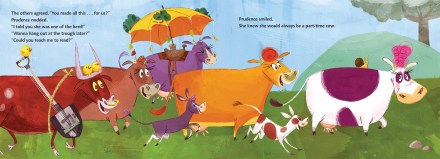
Bessie saw the “cow-culator” Prudence had made to help her keep track of her calves. Patty was thrilled with the “portable shade tree” made from an umbrella, a saddle, and some dangly adornments. And Spotz thought his new guitar made from a shovel and fishing line was “gnarly.” Prudence was suddenly pretty popular! Even though “she knew she would always be a part-time cow,” she was happy to feel like a “full-time member of the herd.”

celebrate-picture-books-pciture-book-review-prudence-the-part-time-cow-happy-animals

Image copyright Stephanie Laberis, 2017, text copyright Jody Jensen Shaffer, 2017. Courtesy of Henry Holt & Co,

Jody Jensen Shaffer’s moooving and funny story of a cow with a scientific bent will delight kids. Little ones who think differently will empathize with Prudence’s wish to be herself while also fitting in with the herd. As the cows stand around in a pond and huddle under a tree, Shaffer offers a wink to the crowd mentality and peer pressure that can foster inaction and clone-like behavior. Prudence makes a gentle, but determined role model as a thinker who won’t be cowed by others’ opinions.

Stephanie Laberis’s cartoon-inspired illustrations of a herd of very distinct cows are a perfect accompaniment to this humorous story with a meaningful message. Prudence, with her fluff of pink hair, is happiest when fulfilling her creative visions. As the other cows disparage her efforts and isolate her from the herd, Prudence’s sad eyes and droopy tail and ears make the effect of their words obvious. Each page offers an opportunity for readers to discuss diversity, individuality, and what it means to be a friend.

Prudence the Part-Time Cow would be a wonderful addition to school and classroom libraries as well as to home bookshelves.

Ages 4 – 8

Henry Holt and Co, 2017 | ISBN 978-1627796156

Find out all about Jody Jensen Shaffer and her books and magazine writing for children on her website!

Discover a gallery of illustration and craft work by Stephanie Laberis on her website!

Hobby Month Activity

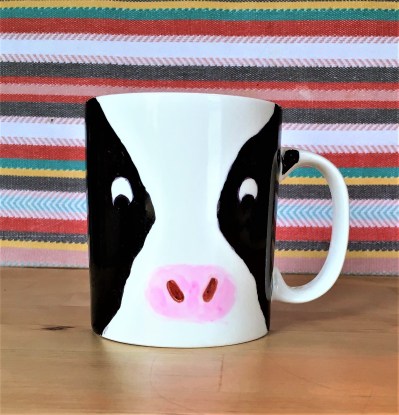
celebrate-picture-books-picture-book-review-cow-mug-craftMooo Mug


Milk—regular or chocolate!—will taste so much better in a Mooo Mug  you make yourself! 

Supplies

  • White ceramic mug, available at craft stores
  • Black permanent marker or paint for ceramics
  • Pink permanent marker or paint for ceramics
  • Brown permanent marker or paint for ceramics

celebrate-picture-books-picture-book-review-cow-mug-craft-back

Directions

  1. With the pink marker or paint, draw an oval shape for the nose near the bottom of the mug. Let dry.
  2. With the brown marker or paint, draw two angled nostrils inside the pink oval and color them in. Let dry.
  3. Color in the nose with the pink marker or paint.
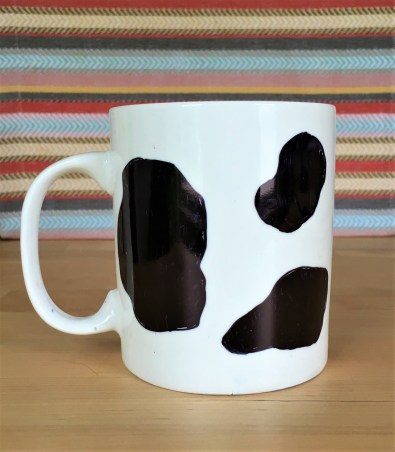
  4. With the black marker, color the top tip of the handle where it meets the mug to make the tail.
  5. With the black marker or paint, draw two wavy lines on either side of the face starting at the top, angling toward the middle and returning to the bottom of the mug. Leave white space between the lines.
  6. Draw circles for eyes within the black lines. Add black pupils at the bottom of the eyes.
  7. Color inside the black lines and around the eyes to make the face markings.
  8. With the black marker or paint, make two or three splotches on the back of the mug.
  9. Let the mug dry and follow the directions for the markers or paint to set the color.
  10. Pour yourself a mooo mug of milk and enjoy!

Picture Book Review

January 13 – Make Your Dream Come True Day

celebrate-picture-books-picture-book-review-happy-dreamer-cover

About the Holiday

Children are asked about their hopes and dreams as soon as they enter school. In kindergarten kids draw about them, and as they grow older, they write about them and begin working to make those dreams a reality. Adults also have goals they want to achieve at work, at home, or just for themselves. Today’s holiday encourages people to define their dream, make a plan, and take the road toward fulfilling it. That spark of inspiration can burn brightly and long and guide you to the future you always wanted!

Happy Dreamer

By Peter H. Reynolds


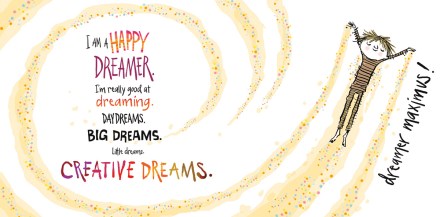
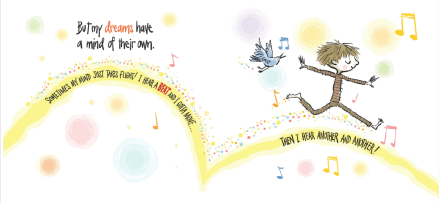
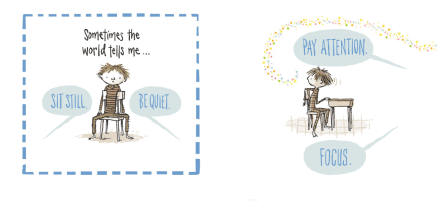
A child floats on a golden, sparkling swirl of their own creation. “I am a happy dreamer,” they say. “I’m really good at dreaming. Daydreams, big dreams, little dreams, creative dreams.” In fact, this child is a “dreamer maximus!” There are times when they’re told to ignore that voice inside…to “sit still” and pay attention. But the music inside is persistent and persuasive, inviting the child to move, to play along and let it out.

celebrate-picture-books-picture-book-review-happy-dreamer-dreamer-maximus

Copyright Peter H. Reynolds, 2017, courtesy of Orchard Books.

Sometimes dreams require quiet. Then the child says, “I make time to stay still and hear myself think—to let go and see what takes shape.” Can you see it too? There are dreams so big, the child reveals, that sometimes “I’m a shout-at-the-top-of-my-lungs dreamer (even if I’m just a loud-inside-my-head dreamer!)”

celebrate-picture-books-picture-book-review-happy-dreamer-musical-beat

Copyright Peter H. Reynolds, 2017, courtesy of Orchard Books.

There are times when dreams come in colors that paint a surprising path, and sometimes there are so many dreams firing at once that they cause “creative chaos.” When you ask make me clean up, the child says, I will, but “cleaning up hides my treasures” and “there is less of ME to show.” When that happens, the child explains, “…I feel alone. BOXED IN.” But there is always an escape, a way to recover the “happy dreams.”

celebrate-picture-books-picture-book-review-happy-dreamer-focus

Copyright Peter H. Reynolds, 2017, courtesy of Orchard Books.

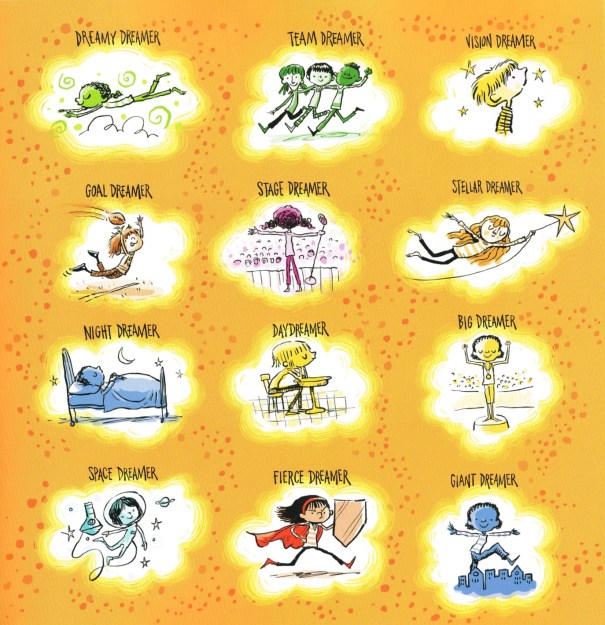
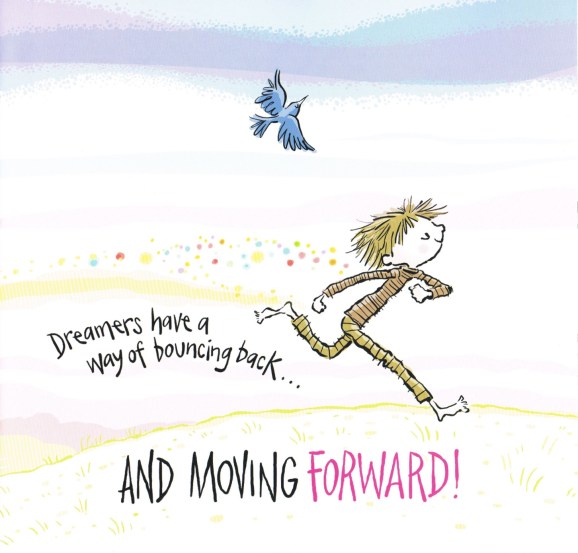
You know what? the child says, “I’m really good at being me. A dreamer—surprising, caring, funny, gentle, smart.” Falling or failing don’t hurt because dreamers always bounce back and keep going. Do you know what kind of dreamer you are? There are so many kinds! What makes you happy? Exploring, working hard, being with family or friends, being alone? Maybe laughing, acting, being wild, being strong. Are you civic-minded, peaceful, thoughtful?

What’s “the best way to be a happy dreamer? Just be YOU.”

celebrate-picture-books-picture-book-review-happy-dreamer-all-kinds-of-dreamers

Copyright Peter H. Reynolds, 2017, courtesy of Orchard Books.

Peter H. Reynolds is always inspirational, finding just the right words to include all readers while speaking directly and intimately to each reader individually. In Happy Dreamer, Reynolds taps into the ways ideas and talents come knocking, whispering, or shouting to be heard and set free. His lyrical language is engaging for even the youngest readers and meaningful for adults as well—on both a personal level and for those who are parents, caregivers, or teachers.

celebrate-picture-books-picture-book-review-happy-dreamer-bouncing-back

Copyright Peter H. Reynolds, 2017, courtesy of Orchard Books.

From the first image in which the child floats on the glowing swirl of dreams, readers will follow the child as they play music, discover shapes in the clouds, swing to lofty heights, shout to the world, paint a rainbow path, create fireworks and treasures, and break free from the restraints of the world that sometimes tamp down dreams. A double gate-fold filled with dreamers will delight readers as they search for just the type of dreamer they are. Written in the first-person and with gender neutral clothing and hairstyle, Happy Dreamer is a universal story.

Empowering, encouraging, and accepting, Happy Dreamer is a superb choice for home and classroom libraries.

Ages 4 – 8 and up

Orchard Books, an imprint of Scholastic, 2017 | ISBN 978-0545865012

Discover more about Peter Reynolds, his books, and his art on his website.

Make Your Dream Come True Day Activity

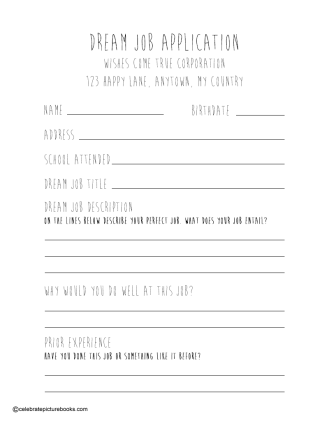
celebrate-picture-books-picture-book-review-dream-job-application-activity

Dream Job Application


Imagine you are applying for your dream job. What would it be? Why are you the right candidate? Have fun with this printable Dream Job Application and start on the road to your happy future!

Picture Book Review

January 8 – National Argyle Day

celebrate-picture-books-picture-book-review-argyle-fox-cover

About the Holiday

The argyle pattern that is so familiar today comes from the tartan of Clan Campbell, which originated in Argyll in western Scotland. The pattern was used by Clan Campbell for kilts and plaids, but has distinguished socks of various clans in Scotland since the 17th century. The argyle pattern became popular in Britain and the United States following World War I when the Duke of Windsor adopted it for his golf clothing. Today, argyle can be found on clothing, furniture, fabrics, and decorated items of all kinds.

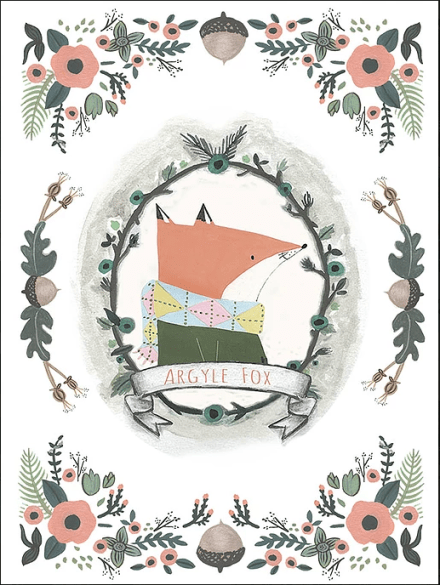
Argyle Fox

By Marie Letourneau  


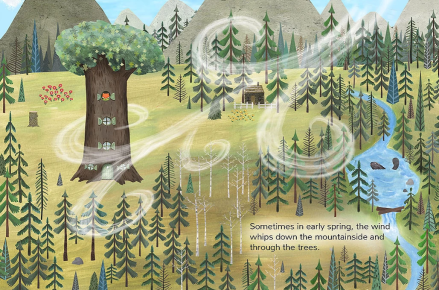
Argyle Fox lived in a tree in the middle of the forest. Badger, Beaver, and Groundhog lived nearby. One spring day when the wind whipped “down the mountainside and through the trees,” little Argyle told his mother that he was going out to play cards. His mother was skeptical, telling him his cards might blow away. Argyle found a spot on an old tree stump and, when the wind died down, he built a tall house of cards. Just as it had grown to be the “tallest tower in the whole world,” however, the wind came and sent it flying.

celebrate-picture-books-picture-book-review-argyle-fox-closet

Copyright Marie Letourneau, 2017, courtesy of marieletourneau.com.

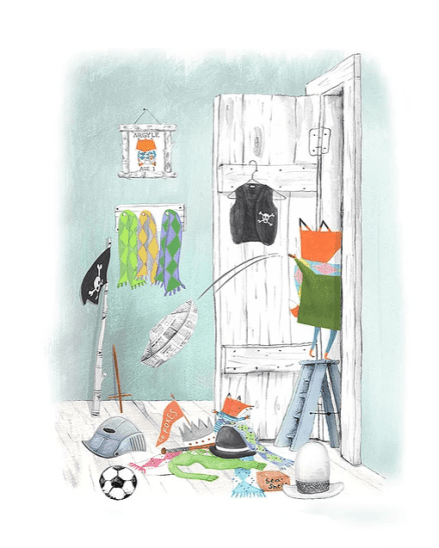
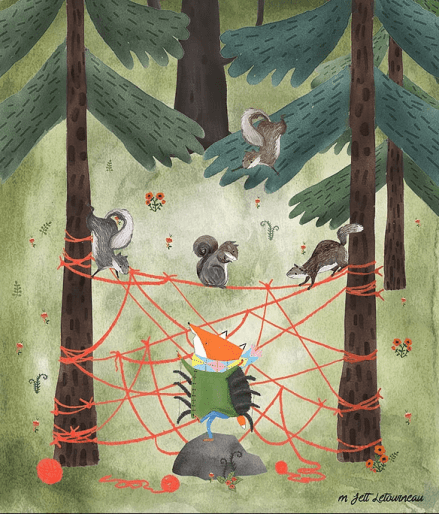
“No fair!,” cried Argyle, and he went home to search his closet for something else to do. Way back behind the soccer ball, boat, and hats, Argyle found his old spider costume. He tried it on and discovered it still fit. He returned to the forest and between two trees wove the elaborate web of “the world’s scariest spider.” The squirrels warned Argyle that playing spider in the wind could be dangerous, but Argyle laughed and continued to play. “‘Beware!’ Argyle replied with a hiss. ‘Beware, or I will capture you in my web!’”

celebrate-picture-books-picture-book-review-argyle-fox-spider-web

Copyright Marie Letourneau, 2017, courtesy of marieletourneau.com.

But the wind whooshed through the trees, and Argyle ended up tangled and upside down in his own web. Playing pirate by the creek sounded like a better idea anyway. Argyle planted his jolly roger on a stump spanning the river and “set sail,” but the beavers said, “‘You can’t play pirate in the wind, Argyle Fox.’” Argyle looked at the beavers. “‘Arrg,’” he said. “‘I’ll make you walk the plank.’” Just then the wind picked up his newspaper pirate hat and sailed away with it. “‘Argyle stomped off toward the meadow’” with his soccer ball.

celebrate-picture-books-picture-book-review-argyle-fox-pirate

Copyright Marie Letourneau, 2017, courtesy of marieletourneau.com.

There he met Badger. “‘I’m the star of the soccer team,’” Argyle told him. “‘I will now kick the winning goal.’” Badger didn’t think this was a good idea in the wind, but Argyle replied, “‘You’d better watch out or I will tackle you!’” Argyle kicked the ball as hard as he could. The wind caught it and threw it into the branches of a tall tree.

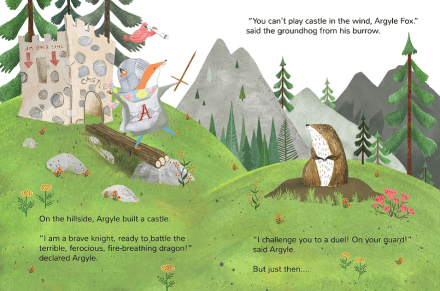
Argyle scampered off to the hill where he built a cardboard-box castle. Brandishing his sword, Argyle cried out to Groundhog, “‘I am a brave knight, ready to fight the terrible, ferocious, fire-breathing dragon!’” Groundhog cautioned Argyle about the wind, but Argyle only challenged Groundhog to a duel. Before the duel could begin, though, the wind picked up Argyle’s castle and carried it far away.

celebrate-picture-books-picture-book-review-argyle-fox-castle

Copyright Marie Letourneau, 2017, courtesy of marieletourneau.com.

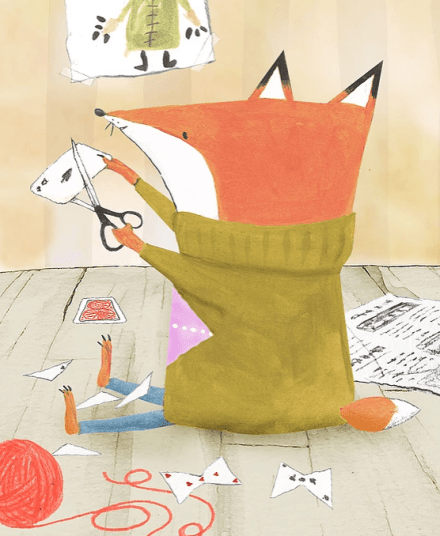
Argyle picked up all of his things and went home. He told his mother that he would never play in the wind again. Perhaps, said Mama Fox, you will think of something you can do in the wind. Argyle doubted it, but he thought and thought. He looked at all of his toys and suddenly had an idea. “He cut, tied, knitted, painted, and taped. Finally, it was finished!” Argyle went out to the meadow and waited. “His heart pounded with excitement Would it work? Would he FINALLY be able to play in the wind?”

celebrate-picture-books-picture-book-review-argyle-fox-cutting-cards

Copyright Marie Letourneau, 2017, courtesy of marieletourneau.com.

At last the wind came by and Argyle let go of his creation. “Huzzah!‘ cried Argyle. ‘A kite is the most prefect thing to play in the wind.’” Argyle’s mother was proud of him for thinking up a kite all on his own. Argyle was so happy with his kite, that he made one for each of his friends, and they all flew their kites in the meadow together.

celebrate-picture-books-picture-book-review-argyle-fox-wind

Copyright Marie Letourneau, 2017, courtesy of marieletourneau.com.

Marie Letourneau’s story of a little fox who just wants to play and is thwarted at every turn is a multi-layered tale of life’s ups and downs where big ideas sometimes get carried away on ill winds. Such times can bring disappointment or, as Argyle finds, an opportunity for discovery and accomplishment. As little Argyle tries game after game in the disruptive wind, disregarding the warnings and advice of his older neighbors, he learns through his own experience. His frustrations are vented in language appropriate to each character he plays and will make kids giggle. When Argyle goes home, listens to the gentle encouragement of his mother, and comes up with his own solution, he experiences the excitement and satisfaction of self-reliance and ingenuity.

celebrate-picture-books-picture-book-review-argyle-fox-little-fox

Copyright Marie Letourneau, 2017, courtesy of marieletourneau.com.

Letourneau’s delicately beautiful illustrations in soft blue, green, and orange hues will charm readers as adorable Argyle tries building a house of cards, building a web, playing pirate, kicking the soccer ball, and playing knight in lovely, detailed scenes that kids will like to explore. When Argyle goes back home, children will be intrigued to see how pieces of each of his toys become a part of his kite and may very well want to read the story again to find all the ingredients to that perfect windy-day plaything.

In addition to being a cute adventure to share with young readers at home or in the classroom, Argyle Fox is a terrific lead-in to discussions about self-reliance, self-confidence, creativity, and trial-and-error as well as the possible consequences of this important method of learning.

Ages 3 – 7

Tanglewood, 2017 | ISBN 978-1939100092

Learn more about Tanglewood Books on their website.

Discover more about Marie Letourneau, her books, and her art, and find fun activities to download on her website.

National Argyle Day Activity

celebrate-picture-books-picture-book-review-argyle-pattern-template

Argyle Pattern Template


Argyle patterns come in all colors and make whatever they decorate look festive! Design your own argyle pattern with this printable Argyle Pattern Template.

Picture Book Review

January 1 – Commitment Day and Interview with Author/Illustrator Lindsay Ward

celebrate-picture-books-picture-book-review-don't-forget-dexter-cover

About the Holiday

The beginning of the year is a perfect time to think about your relationships and let all of the special people in your life know how much they mean to you. It’s easy to let time go by without telling friends, coworkers, and family members that they are important to you and that you appreciate everything they do for you and with you. Little ones are  committed not only to family and friends but—often with the same fervor—to their favorite toys as well. And vice versa? Perhaps—as today’s book shows!

Don’t Forget Dexter!

By Lindsay Ward


In an empty pediatrician’s waiting room, a little dinosaur calls out “Hello? Is anyone there?” Then he sees you! Yes, you, and he needs your help. It seems Dexter (that’s the dino’s name) has lost his best friend, Jack. Jack was just there a minute ago coloring with Dexter, but now he’s gone. Dexter’s been waiting “a really long time. Like forever.” He thinks that “maybe you’ve seen him?” Oh, right! You don’t know what Jack looks like! Dexter draws a quick picture of a kid with curly hair, stick arms, stick legs, and a smile. Have you seen Jack?

celebrate-picture-books-picture-book-review-don't-forget-dexter-drawing

Copyright Lindsay Ward, 2018, courtesy of Two Lions Publishing.

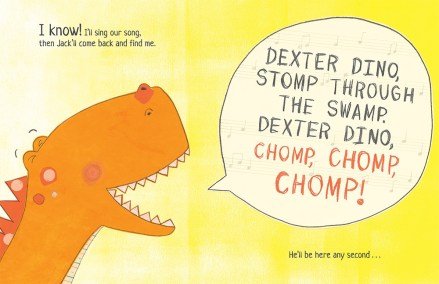
Maybe you and Dexter need a little more help. Suddenly, Dexter has an idea of who to ask. “Excuse me. Hello? Mr. Fish? Have you seen my best friend, Jack?” Or maybe the lady behind the window knows where Jack is. But she’s on the phone and doesn’t even seem to hear or see Dexter. Wait! Dexter knows what to do—he’ll sing his and Jack’s favorite song! “Dexter Dino, stomp through the swamp. Dexter Dino, Chomp, Chomp, Chomp!”

No Jack? Dexter sings louder, but still no Jack. Poor Dexter! He just doesn’t understand. Could it be…”Oh no! What if he left me here ON PURPOSE?” Dexter thinks, as his eyes with tears. But then denial kicks in. That can’t be…after all Dexter says, “I’m Dexter T. Rexter. The toughest, strongest, coolest dinosaur there has ever been. EVER!” And he’s pretty much right! He’s got a swishy tail, chompy teeth, pretty sharp claws, and feet that “make this really cool sound.”
celebrate-picture-books-picture-book-review-don't-forget-dexter-song

Copyright Lindsay Ward, 2018, courtesy of Two Lions Publishing.

But oh, dear…did you really just suggest the unthinkable? That maybe Jack “likes something more? Like another toy?” You know what kinds of great toys are out there—all sorts of cars, trucks, trains, and planes that have fancy moving parts, blinking lights, and swell sounds. “Wait, what did you say? You think dinosaurs ARE awesome?” Just that thought has given Dexter more oomph and confidence. So much, in fact, that he’s going to escape from this waiting room through the window and find Jack.

Dexter builds a pile of books to reach the supply closet handle, grabs some sturdy bandages to make a climbing rope, and—under the watchful gaze of the swimmy “unhelpful spectator,” swings into action and…into the fish tank! Oh no! As Dexter sinks to the bottom, he sees all of his favorite moments sinking with him. “No more playtime. No more bath time. No more bedtime snuggles. No more Jack.” Dexter’s tears mix with the aquarium water.

But what’s this? What is that sound? “DEXTEEERRR!” Dexter recognizes that voice. It’s Jack! See? “And you were so worried.”  But Dexter knew all along he’d never be forgotten. And now as Jack pushes him around the waiting room in a cool sports car, he and Jack even have a new song to sing!

celebrate-picture-books-picture-book-review-don't-forget-dexter-dexter-t-rexter

Copyright Lindsay Ward, 2018, courtesy of Two Lions Publishing.

What child can resist the roar of a dinosaur who needs help? The opportunity to be bigger, braver, and fiercer, than T-rex is irresistible, and in Lindsay Ward’s hilarious direct-address friendship story, it’s irresistible fun. As Dexter takes readers along on his roller coaster of emotions, asking readers for help and reassurance, kids will empathize with this lost toy who’s feeling small and alone. There will be plenty of giggles when Dexter draws his stick-figure portrait, rappels into the fish tank, and melts into a puddle of dinosaur tears. A spirited reading (and singing) will bring the story fully to life.

Ward’s bright, bold illustrations set Dexter center stage as his emotions play out on his very sweet face. From page to page, Dexter’s expressive eyes register uncertainty, hope, worry, bravado, angst, bravery, despair, and finally joy. Orange Dexter is a cutie with his scattered polka dots and kindergarten-style, writing-paper belly. Kids will recognize the doctor’s office with its universal fish tank; the “better” toys Dexter compares himself to are appropriately menacing; and Dexter’s memories of fun times spent with Jack show readers just how strong the bond between these two friends is. As Jack, wearing a Dexter t-shirt and also with tears in his eyes, searches for Dexter, readers will see that the love between toy and child goes both ways. Children will cheer when Jack reunites with Dexter with a huge hug.

Don’t Forget Dexter! is a funny and heartfelt choice for dinosaur lovers and for introducing discussions of various emotions and the nature of love for home, classroom, and public libraries.

Ages 3 – 7

Two Lions, 2018 |ISBN  978-1542047272

Two Lions sent me this book to check out. All opinions are my own.

Discover more about Lindsay Ward, her books, and her art on her website.

Commitment Day Activity
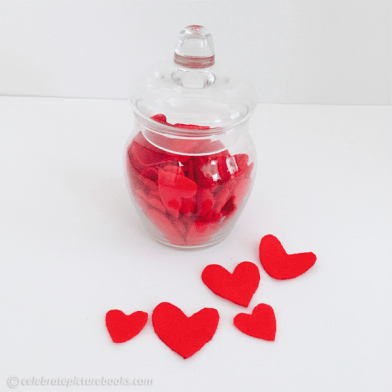
celebrate-picture-books-picture-book-review-heart-jar-craft

I Love You Jar


You can show the people you love how much they mean to you by giving them your heart! Make this I Love You Jar so you always have a little love on hand to share!

Supplies

  • A decorative clear glass jar, mason jar, or other kind of jar
  • Red felt (or other desired color or colors)
  • Heart stencils or cookie cutter (optional)
  • Scissors

Directions

  1. Cut 10 to 20 heart shapes from the red felt 
  2. Place the hearts in the jar for safe keeping
  3. When you want to tell someone that they are special to you, give them a heart!

Meet Lindsay Ward

celebrate-picture-books-picture-book-review-don't-forget-dexter-lindsay-ward-headshot

Today I’m excited to talk with Lindsay Ward about the text that inspired Dexter, the best part of meeting with students, and what makes Ohio home.

What inspired you to write Don’t Forget Dexter!?

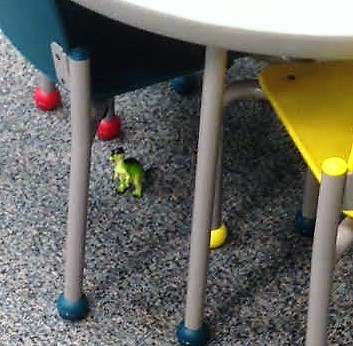
My husband and I were pregnant with our first child and my husband was required to get a T-DAP booster shot prior to our son’s birth. He went to get the shot and while he was waiting to be seen he texted me a photo with of a toy dinosaur lying underneath a chair with the line “well, they left me here.” I laughed out loud when I read the text and immediately sat down to write Dexter’s story. To this day it’s still the fastest idea-to-story moments I’ve ever had. I ended up writing the first draft within an hour and the rest is history.
celebrate-picture-books-picture-book-review-dino-photo-lindsay-ward

When did you know you wanted to write books for children? Has becoming a mom changed the way you work or the themes of your work? If so, in what way?

I always knew I wanted to be an artist of some kind, but I never thought about writing. That actually happened by accident years later once I was already published as an illustrator. When I was 15 I got my first job working in a children’s book store. After meeting authors and illustrators who would come do signings at Hicklebee’s (where I worked), I realized I wanted to illustrate children’s books. I loved the idea of working from a narrative. After I graduated high school I went on to study illustration in college and began trying to get published.

My books have always been connected in some way or another to personal experiences. Now that I have two boys, I definitely get inspired by them. I’m also a lot more critical of books as a mom than I was before. Prior to having kids, I would really only care about the quality of the art when I purchased a book for my home library. Now I expect a book to have the full package— great writing and illustrations. Seeing first hand which books my kids respond to has been really interesting too.

When you’re working on a project, does the story come first or the art?

With the exception of Dont Forget Dexter! and Henry Finds His Word, the story has always come first. Those two titles are the only books where I had a character in my head before the story was written. Generally, I come up with a concept first and then I consider all the directions I can take the story in before I settle on one. Writing is a very instinctual experience for me, I trust my gut to tell me when I’m heading in the right direction.

You hold many readings and events at schools, libraries, and book festivals. Do you have an anecdote from any event you’d like to share?

I love meeting with students and visiting schools and libraries. It’s one of my favorite parts of my job. So often I’m in my own head working on an idea, so when I get the chance to meet my readers, it’s such a wonderful experience. I don’t necessarily have a particular anecdote, but I have experienced more than once going into a school where the students have never met an author or illustrator before. I love being able to show them that they can do something creative with their lives and nothing is impossible. I think that’s a very important lesson for kids to learn. I was lucky enough to have a mom that always supported my dreams, and I can’t imagine what it would have been like to pursue this career if she hadn’t been so supportive.

What’s the best part of writing and illustrating children’s books?

I think that moment where you know you’ve tapped into something great creatively and the idea begins to really come together— that’s a wonderful feeling. I love getting to meet my readers too, that’s the best!

Your book Please Bring Balloons, a mystical story about a little girl who rides a carousel polar bear into a magical arctic dreamscape, has been made into a play and had a recent run at the New York Children’s Theater. Can you talk a bit about that and how it came to be?

I didn’t really have much to do with the process of Please Bring Balloons becoming a play. My agent called one day to let me know they were interested in adapting my book and next thing I know it was a production in New York. I remember my husband brought home a dozen roses for me the day we found out—it was incredibly sweet, saying “this is what they give actors on stage.” Months later, my husband and I had the opportunity to go to New York and see the play—which is one of the best moments of my career as a children’s book author/illustrator. I was so proud of what I had created, and so impressed with the writer, director, and actors who put it all together. Seeing my story come to life was an amazing experience that I’ll never forget.

Can you describe your studio a little? What’s your favorite thing in it? Why?

Currently, my studio is in a small bedroom in my house. It’s very cozy and has a beautiful view of the woods and river behind my house. I’m very type-A so I like to keep it organized, the only time it’s usually messy is if I’m working in cut paper on a book—then it looks like a bomb has gone off.  My favorite thing in it is my blue scissors that I’ve used on every book I’ve ever published. I’m a bit superstitious about them.

You grew up in California, lived in New York and Boston, and now live Ohio. What would you say are the three biggest differences in the West Coast, East Coast, and Midwest?

I get this question a lot, mostly from Clevelanders, who are fascinated by the fact that I grew up in California but choose to live in Ohio (sometimes I don’t think they realize how good they have it here). For me, the West Coast is laid back and goes with the flow, the East Coast is always moving, and the Midwest feels like home. I think the reason I fell in love with Cleveland is because the odds are always against it, a lot of people make fun of it or look down on it, but it’s got a lot of heart. Midwesterners are warm and passionate people. I’ve had the opportunity to live in many places and they’ve all given me wonderful experiences and shaped me into who I am today.

What’s up next for you?

I just wrapped up the sequel to Dont Forget Dexter!, titled Its Show-and-Tell, Dexter!, which will come out July 17th, 2018. I’ll be working on a new picture book about the relationship of colors, as told by the color Gray, titled This Book Is Gray, with Two Lions starting in January. And I’m thrilled to be starting a new original board book series, I Go, with HarperCollins next year.

What is your favorite holiday?

Hands down, Thanksgiving! Cooking for my family on a day filled with turkey, pie, and football…it doesn’t get better than that!

Thanks, Lindsay! It’s been fun getting to know more about you and your work! I wish you all the best with Don’t Forget Dexter! and all of your books!

celebrate-picture-books-picture-book-review-don't-forget-dexter-cover

You can find Don’t Forget Dexter! at these booksellers:

Amazon | Barnes & Noble | Books-a-Million | IndieBound

You can connect with Lindsay Ward on:

Her Website | Facebook | InstagramTwitter

Picture Book Review

December 16 – It’s Read a New Book Month

celebrate-picture-books-picture-book-review-the glassmaker's-daughter-cover

About the Holiday

With so many gift-giving opportunities this month, December is the perfect time to discover new books for any age! The delight, wonder, and shared experiences of great books is one of the best presents you can give. This month visit your local bookstore and pick out a special book for the loved ones on your list. (And don’t forget to treat yourself!)
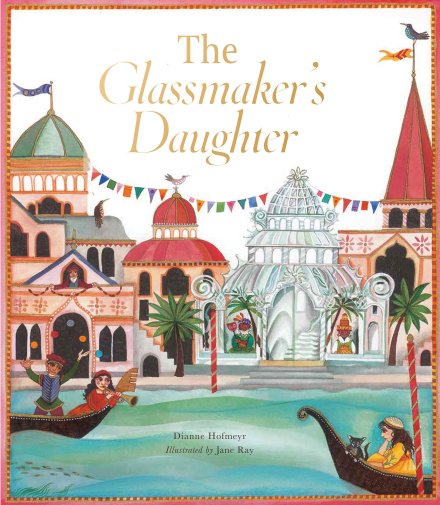
The Glassmaker’s Daughter

Written by Dianne Hofmeyr | Illustrated by Jane Ray


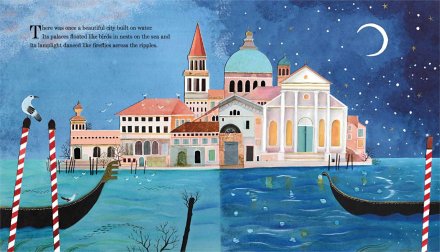
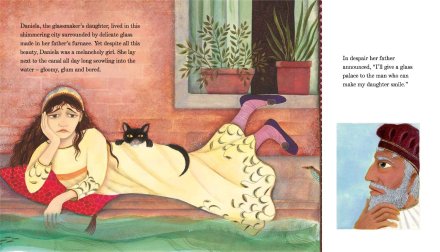
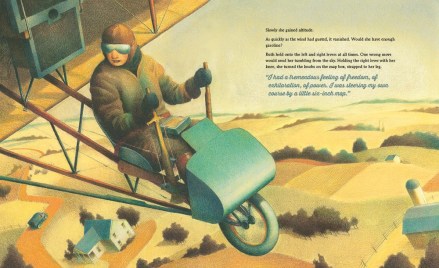
Have you heard about the wondrous city built on water? “Its palaces floated like birds in nests on the the sea and its lamplight danced like fireflies across the ripples.” In one of these beautiful buildings lived Daniela, the glassmaker’s daughter. You might think that Daniela would be happy to be surrounded by so much loveliness, but instead she spent her days staring glumly into the canal. Her father, wanting his daughter to be happy, offered a glass palace to the person who could make his daughter smile.”

celebrate-picture-books-picture-book-review-the glassmaker's-daughter-venice

Image copyright Jane Ray, 2017, text copyright Dianne Hofmeyr. Courtesy of Frances Lincoln Children’s Books.

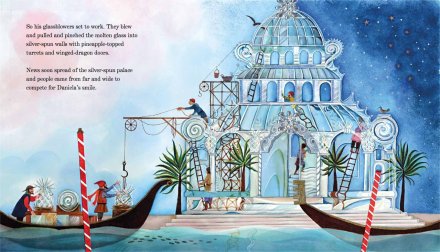
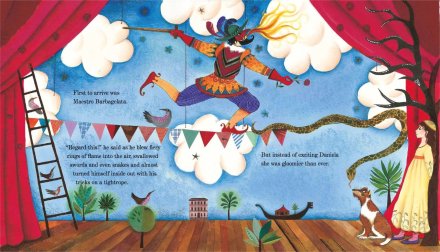
Right away he had his glassmakers begin construction. “They blew and pulled and pinched the molten glass into sliver-spun walls with pineapple-topped turrets and winged-dragon doors.” Soon people where coming from all over to try to make Daniela smile. First was Maestro Barbagelata, who could breathe fire, swallow swords and snakes, and do tricks on a tightrope. But his performance just made Daniela “gloomier than ever.”

celebrate-picture-books-picture-book-review-the glassmaker's-daughter-glum

Image copyright Jane Ray, 2017, text copyright Dianne Hofmeyr. Courtesy of Frances Lincoln Children’s Books.

Next the mask maker Donna Violetta Rufina Zangara arrived with a carriage full of masks made with jewels, birds’ eggs, shells and pearls, and peacock feathers. But Daniela was not enticed by these masks; in fact, they made her “glummer than ever.” Leonardo Leonino Grandi brought his fierce lion, which instead of amazing Daniela caused Leonardo to topple from his gondola into the water. “But even this didn’t bring a smile to Daniela’s lips.”

So many tradespeople, performers, tricksters, and adventurers were sure that they could make Daniella smile, but none of them succeeded. Daniela’s father was at a loss. But down in a corner of the glassmaker’s workshop Angelo thought he knew just what to do. He “longed more than anyone to make Daniela smile.” As he removed the hot glass from the furnace and began blowing it, he whispered, “‘Flux and fire.’” As he laid the glass flat and spread slivers of silver mercury on the surface, he chanted, “‘Mercury and tin,’” As he smoothed the slivers, he said, “‘Foiled and finished. And polished thin,’” When he finished “he sang his secret song again.”

celebrate-picture-books-picture-book-review-the glassmaker's-daughter-glass-palace

Image copyright Jane Ray, 2017, text copyright Dianne Hofmeyr. Courtesy of Frances Lincoln Children’s Books.

The other glassmakers scoffed when Angelo told them he was making something that would make Daniela smile. But with his gift carefully wrapped, Angelo went in search of Daniela. When he found her and she saw the glass in his hand, she rejected his gift. But Angelo told her to “‘Look again, Principessa. This is no ordinary piece of glass. It’s different. Look into it.”

Daniela did as she was told, and when Angelo asked her what she saw, Daniela described “a creature with a mouth like an upside-down slice of lemon and the eyes of a cross dragon.” She thought it was the funniest face she had ever seen. And right before her eyes, the face changed. The lips turned up and the eyes began to shine. “Daniela burst out laughing.” As she laughed, the newly made glass palace began to splinter and crack until the “entire palace fell to smithereens.”

celebrate-picture-books-picture-book-review-the glassmaker's-daughter-sword-swallower

Image copyright Jane Ray, 2017, text copyright Dianne Hofmeyr. Courtesy of Frances Lincoln Children’s Books.

Daniela’s father promised to build Angelo another palace if he would only tell him how his “magic glass” had made his daughter smile. But Angelo told him that Daniela had changed herself. “‘My glass only reflects what’s already there,’” he said. “‘Happiness is inside all of us. You only have to discover it.’” Daniela agreed, and laughed once more as she peered into the glass. The sound of her laughter set every bell in the city ringing. Men, women, and children began to laugh with her. They danced and played. Even the Grand Doge emerged from his palace to join in the celebration.

So if you hear the bells of Venice ringing, you know that Daniela is laughing, and if you “peep into a looking glass,” you will most likely see a smile on your face too.

A brief and fascinating history of glassmaking and mirror making precedes the story.

celebrate-picture-books-picture-book-review-the glassmaker's-daughter-mask-maker

celebrate-picture-books-picture-book-review-the glassmaker’s-daughter-sword-swallower

Written in the style of classic fairy tales, Dianne Hofmeyr’s story has a very contemporary message—one that is a timely reminder and allows young readers to embrace their power to determine their own happiness. Children may smile at the various attempts to please Daniela, but they—like Angelo—will also appreciate and understand that Daniela was searching not for outward but inward happiness all along.  

Jane Ray’s lush illustrations mirror the colors and atmosphere of Venice, as the performers don carnival masks and costumes, gondolas are poled along the canals, and the dark glassmaker’s workshop glows with molten glass. The delicate and lovely glass palace depicted at the beginning of the story shatters into shimmering shards in a two-page spread which makes dazzling use of iridescent paper accents. This stunning image is a beautiful metaphor for Daniela’s warmth breaking through her seemingly cold and fragile exterior when she finally smiles and laughs.

Ages 4 – 8

Frances Lincoln Children’s Books, 2017 | ISBN 978-1847806765

Discover more about Dianne Hofmeyr and her books on her website

Learn more about Jane Ray, her books, and her art on her website.

Read a New Book Activity

celebrate-picture-books-picture-book-review-I-love-to-read-coloring-page

I Love to Read Coloring Page


If you love books as much as this little bookworm, you’ll like coloring this printable I Love to Read Coloring Page!

Picture Book Review

December 13 – National Day of the Horse

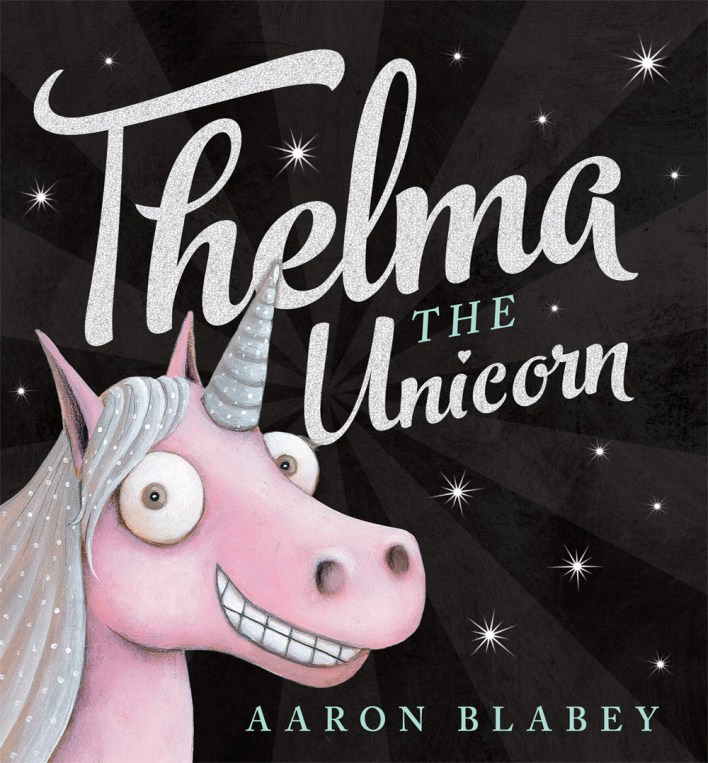
celebrate-picture-books-picture-book-review-thelma-the-unicorn-cover

About the Holiday

Today’s holiday encourages people to commemorate the importance of the horse to the history, culture, and economy of the United States. The domesticated horse that we know today was first introduced by Spanish Explorers. As the country grew, horses became indispensable for transportation, farm and ranch work, and communications. The more than nine million horses that now reside in America depend on people for adequate food, water, shelter, and protection. On this holiday, consider donating to a horse rescue shelter near you.

Thelma the Unicorn

By Aaron Blabey


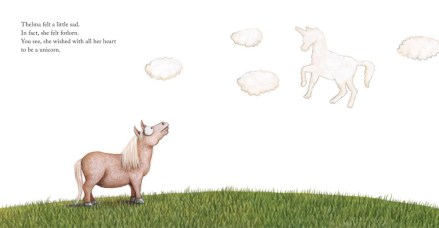
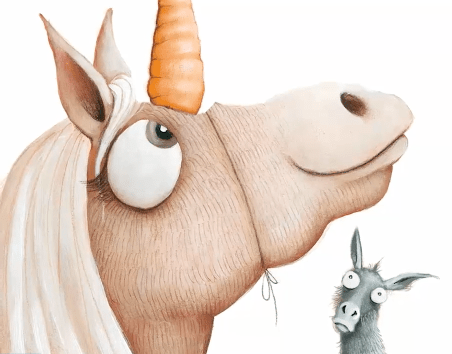
“Thelma felt a little sad. / In fact, she felt forlorn. / You see, she wished with all her heart / to be a unicorn.” Thelma was a little pony—brown and short and overlooked. Her best friend Otis told her, “‘You’re perfect as you are,’” but when Thelma compared herself to the sleek white mare on the farm, she said, “‘I’m not.’” Suddenly, she saw a carrot left over from dinner and had an idea.

celebrate-picture-books-picture-book-review-thelma-the-unicorn-wishing

Copyright Aaron Babey, 2017, courtesy of Scholastic Press.

She tied the carrot to her nose and told Otis, “‘I’ll say that I’m a unicorn! / It might just work… / who knows?’” At this very moment a truck driver passing by caught sight of this spectacle and careened off the side of the road. “As Thelma watched the swerving truck, / it very nearly hit her. / Would you believe that truck was filled / with nice pink paint and glitter?”

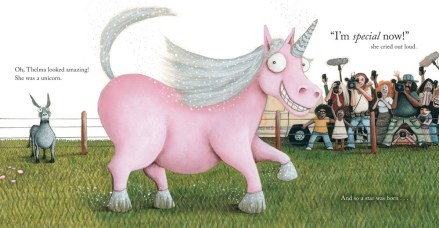
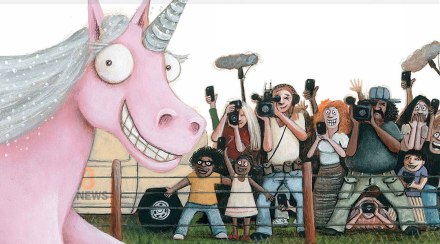
In the blink of an eye Thelma was doused in sparkles and had become what she always dreamed of. She was a unicorn and “special now!” Crowds lined up at the farm gate to see the pink unicorn. The media descended with their cameras and video recorders, and Thelma quickly became a world-wide phenomenon. Everywhere she went fans screamed her name, took pictures, waved signs, and wanted to be near her. She even got her hoofprint on the Walk of Fame.

celebrate-picture-books-picture-book-review-thelma-the-unicorn-becomes-unicorn

Copyright Aaron Babey, 2017, courtesy of Scholastic Press.

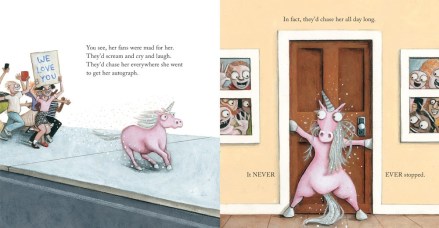
Thelma sailed to foreign ports on a ship named The Fairy Princess, attended by stewards who fulfilled her every wish. “But soon she found that so much fame / was kind of tricky, too….” Her fans mobbed her with crushing zeal, chased after her wherever she went, screamed, cried, laughed, and pointed whenever they saw her, and hounded her day and night for her autograph. “It NEVER EVER stopped.”

When Thelma asked “the screaming crowd” not to chase her anymore, they said “‘We’ll chase you all we want….We’re fans, so it’s allowed.’” Then there were there were the people who “were not her fans at all. / No, some were really mean. / And some just did the meanest things / she’d really ever seen.” Some threw eggs while she roller skated for charity and others held up signs reading “I don’t like unicorns” where she was sure to see them.

celebrate-picture-books-picture-book-review-thelma-the-unicorn-adoring-crowds

Copyright Aaron Babey, 2017, courtesy of Scholastic Press.

Back in her fancy hotel room, all alone and bedraggled, soaked in egg, and with her “horn” losing its luster, Thelma looked at a photo of Otis. “…she felt quite sad, / this famous little pony. / She said, ‘I thought that I’d feel great… / but all I feel is lonely.’” She decided to make a change. She washed off all the pink paint and sparkles and “ditched her magic horn.”

She left and “walked right past the crowd. / They didn’t even notice / She thought how nice that it would be…to see her lovely Otis.” As Thelma stood underneath a tree with Otis, “he asked about her trip.” “‘Oh, it was fun,’” she answered him, “‘But I’d rather be just me.’”

celebrate-picture-books-picture-book-review-thelma-the-unicorn-being-chased

Copyright Aaron Babey, 2017, courtesy of Scholastic Press.

Aaron Blabey’s cautionary tale of a pony who is granted her wish to be “more” than she is, deftly reveals the pitfalls of abandoning your true nature for what appears to be the perks of celebrity with a splash of humor and some no-nonsense honesty. Through Blabey’s smoothly flowing rhymes, readers see that being special is not based on a sparkly appearance that pleases false friends. Instead, each person is remarkable for their unique personalities and talents that true friends will appreciate.

Today’s social media-savvy children will recognize Blabey’s screaming crowds and overzealous fans and will come to understand, with Thelma, that being “in the pink” can be short-lived and glitter soon fades.

celebrate-picture-books-picture-book-review-thelma-the-unicorn-carrot-horn

Copyright Aaron Babey, 2017, courtesy of Scholastic Press.

Blabey’s distinctive illustrations portray Thelma’s transformation from “regular pony” to celebrity unicorn and back again with flair and all the bling that goes along with superstardom. The crowds are giddy, awed, obsessive, and adoring until the backlash starts, which Blabey portrays with candid examples. His final spreads in which Thelma goes unrecognized by her fans and is then lovingly welcomed back by Otis beautifully sum up the theme of the story.

Thelma the Unicorn provides readers and adults a wonderful opportunity to discuss the allure of changing oneself in order to fit in as well as the social media atmosphere that can be so influential in a child’s life. Blabey’s light touch coupled with his honesty makes Thelma the Unicorn a great choice for  home and classroom libraries.

Ages  3 – 7

Scholastic Press, 2017 | ISBN 978-1338158427

Scholastic Press sent me a free copy of Thelma the Unicorn to check out. All opinions are my own.

Discover more about Aaron Blabey, his books, and his art on his website

National Day of the Horse Activity

celebrate-picture-books-picture-book-review-horse-candy-stick-cover

Whoa! Candy Stick Cover


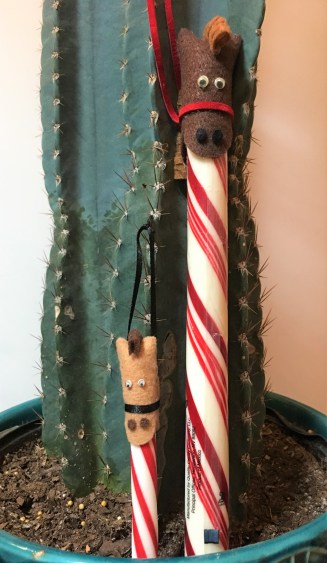
There’s no neigh-saying that this isn’t a cute way to give your favorite candy stick a bit of flair!  With a bit of felt and a few other supplies you can make this horse craft. Alternately, this craft can be used with a cardboard tube or wooden dowel.

Supplies

  • Large or small candy stick, cardboard tube or wooden dowel
  • Felt in whatever color you’d like for your horse
  • Felt in a another color for the mane
  • Black felt for the nostrils
  • Thin ribbon or leather lacing
  • Small googly eyes
  • Fabric glue or hot glue gun
  • Scissors
  • Tweezers

Directions

  1. Cut a piece of felt wide enough to wrap around the stick overlapping a little to glue together. It should be long enough to cover about 1 ½ inches of a small candy stick, about 2 ½ inches of a large candy stick, or about 3 to 4 inches of a cardboard tube or wooden dowel.
  2. Wrap the felt around the stick overlapping the edge about ¼ inch and leaving about ½ inch above the top of the stick.
  3. Glue the felt together along the overlapping edge to make a tube that fits the stick tightly

To make the ears

  1. Push down on the center of the back side of the felt that rises above the top of the stick
  2. Apply a drop of glue
  3. Push the center of the front edge of the felt into the glue
  4. The ears will stick up on the sides of the head

To make the horse’s nose and mouth

  1. Remove the felt head from the stick
  2. Pinch the end together
  3. Starting about ½ inch from the bottom, round the corners of the felt tube with the scissors

To make the nostrils

  1. Cut small circles from the black felt
  2. Glue them to the bottom of the horse’s nose
  3. Glue the googly eyes on the horse’s face

To make the mane

  1. Cut a strip of felt as long as the face by 1 inch wide for a large candy stick; about ¾ inch wide for a small candy stick
  2. Fold the felt in half lengthwise
  3. Glue the edges of the felt together, leaving the top unglued
  4. Snip fringe along the length of the felt
  5. Cut a small curve in the bottom of one end of the length of felt so it will fit over the top of the horse’s head
  6. Glue the rest of the length of felt down the back of the horse’s head

To add the reins

  1. Cut a length of narrow ribbon or leather lacing about 6 inches long
  2. Glue the center of the ribbon or lacing to the horse’s face above the nostrils at the level of the trimmed mouth around to the mane
  3. Tie the ends of the ribbon or lacing together

Picture Book Review

November 9 – It’s National Aviation History Month

celebrate-picture-books-picture-book-review-fearless-flyer-cover

About the Holiday

National Aviation History Month and is dedicated to exploring, recognizing and celebrating America’s great contributions and achievements in the development of aviation. Human-powered flight has come a long way from its earliest roots in kites and gliders. Hot-air balloons and biplanes gave way long ago to more and more sophisticated airplanes, jets, and rockets that blast into space. To celebrate the month, visit a local museum or read up on some of the pioneers of early flight—like the courageous woman in today’s book.

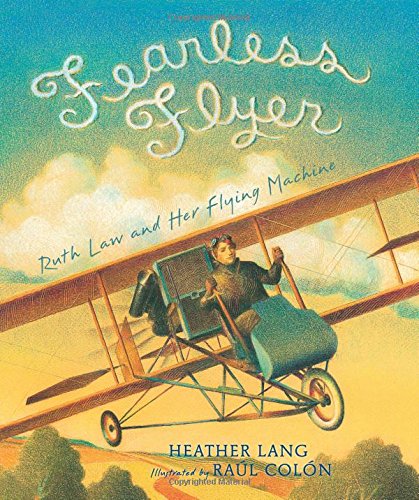
Fearless Flyer: Ruth Law and Her Flying Machine

Written by Heather Lang | Illustrated by Raúl Colón


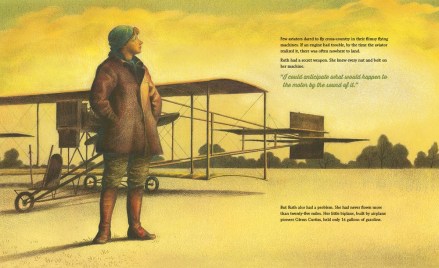
Entertained crowds knew Ruth Law for the loops, the spiral dives, and even the dip of death that she performed in her airshow. But for Ruth these stunts were like standing still. She “longed to fly to get somewhere…somewhere far away.” She decided to make a trip from Chicago to New York City. There weren’t too many aviators brave enough to attempt such a long flight in the type of biplane Ruth flew. They feared that if something went wrong with the engine, they’d never realize it in time to land. But Ruth knew her plane inside and out and figured she “could anticipate what would happen to the motor by the sound of it.”

A trip like the one Ruth envisioned posed another problem, though. Her small biplane held only 16 gallons of gasoline—not enough to make the journey. She asked Glenn Curtis, who built her plane, if she could buy his latest model. This much bigger plane held 205 gallons of gas and had already proven itself for long-distance flight. But Curtis refused. He didn’t believe Ruth could handle the “powerful machine on such a long flight.”

celebrate-picture-books-picture-book-review-fearless-flyer-ruth's-plane

Image copyright Raúl Colón, text copyright Heather Lang. Courtesy of Calkins Creek.

Ruth was not to be deterred. She added three more gas tanks to her plane so that it could hold 53 gallons, installed a cover to protect her legs, and created a scrolling map of the route. Aviation experts said she would fail, but Ruth disagreed. “‘What those men can do a woman can do. I can do,’” she said. On a windy November 19, 1916, Ruth took to the cockpit to begin her nonstop flight. Although she was a little afraid of what lay ahead, she took off, believing that “the scare is part of the thrill” of any experience.

Ruth had counted on the strong wind to help push her farther faster, but just as quickly as it had blown up, the wind stopped. Ruth wondered if she would have enough gasoline after all. Flying over one landmark after another, Ruth felt exhilarated. As she passed over Cleveland, Ohio, though, “the oil gauge registered zero pressure. Something was wrong!” The sounds of her plane’s motors told Ruth a different story. She kept flying.

Soon she was passing over Erie, Pennsylvania—the site of the record-breaking flight by Victor Carlstrom. Even the icy stings of the frigid air couldn’t diminish her excitement. In a moment she was east of Erie and had broken Carlstrom’s record. The thrill of her achievement was tempered, however, by the sputtering of her engine. While there was still a little gas in the plane, it was “too low to feed into the engine.” Ruth tipped the plane forward to give it more gas. Two miles from Hornell, New York, the nearest landing spot, “the engine grumbled its last roar, leaving her with nothing but the silence of the wind.”

celebrate-picture-books-picture-book-review-fearless-flyer-arial-view

Image copyright Raúl Colón, text copyright Heather Lang. Courtesy of Calkins Creek.

Ruth steered the plane as it glided into Hornell—512 miles from Chicago. She was the new American nonstop flight record holder. Ruth’s original plan had been to fly to New York City, so after refueling and grabbing a bite to eat, she took off once again. Weighed down by the full gas tank, the plane barely made it over a hill and tall trees in her path. This was as close to crashing as Ruth ever came—or ever wanted to be.

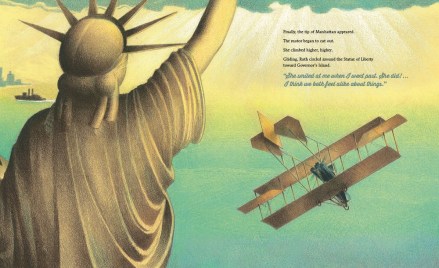
People along the route had already heard about Ruth Law, and they came out to watch and wave. With darkness closing in, Ruth decided that she would have to land short of New York City. She touched down in Binghamton, New York and took up the rest of the flight the next morning. As a thick blanket of fog obscured her view, Ruth flew lower and lower to get her bearings. When she finally spied the tip of Manhattan, she glided in and “circled around the Statue of Liberty toward Governor’s Island.” Of Lady Liberty, Ruth said, “‘She smiled at me when I went past. She did!…I think we both feel alike about things.’”

celebrate-picture-books-picture-book-review-fearless-flyer-statue-of-liberty

Image copyright Raúl Colón, text copyright Heather Lang. Courtesy of Calkins Creek.

Cheered by a celebratory crowd and brass band, Ruth landed on the welcoming earth. Despite the icicles that hung from her hair and the numbing cold, Ruth smiled and waved. She realized then that not only had she broken an aviation record, she had made a point for all women. She later put her thoughts into words: “The sky was my limit and the horizon my sphere. It’s any woman’s sphere if she has nerve and courage and faith in herself.”

An Author’s Note about Ruth Law and her life, complete with photographs, follows the text.

Heather Lang’s thrilling account of Ruth Law’s record-breaking flight from Chicago to New York will have young aviators on the edge of their seat. Law’s flight was filled with suspense from its inception as an idea in a young woman’s mind to its final touchdown, and Lang deftly incorporates the facts as well as Law’s feelings into her well-rounded story. Along the way, readers learn about Ruth and also about early aviation. Ruth Law’s own words, included throughout the story, will inspire children as they see that even though she lived long ago, her thoughts and ideas still ring true today.

Young readers will be fascinated by Raúl Colón’s glowing illustrations of Ruth Law and her flying machine. His detailed drawings of Law’s biplane give children an excellent view of the open-air craft, fostering a true understanding of the courage it took for her to undertake such a flight. Images from Law’s viewpoint in the cockpit allow readers to vicariously travel her path to self-realization and a record-breaking flight.

Ages 5 – 8

Calkins Creek, 2016 | ISBN 978-1620916506

Check out Heather Lang’s website for more about her and her books. You’ll also find links to a video and photos about Ruth Law, a map of her route, and information about her plane as well as a Teacher’s Guide.

Fly along with Ruth in this Fearless Flyer book trailer!

National Aviation History Month Activity

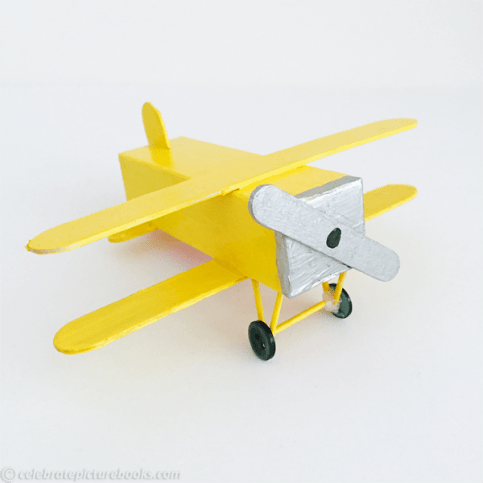
celebrate-picture-books-picture-book-review-biplane-craft

Head in the Clouds Biplane


If you love airplanes and flying, you’ll have fun making your own plane from recycled materials! Use your creativity to decorate your plane while you imagine yourself flying through the clouds on a beautiful day. Younger children will have fun sharing this activity with an adult or older sibling too!

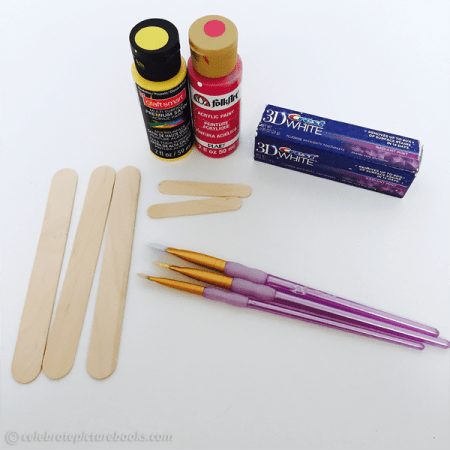
Supplies

  • Travel-size toothpaste box
  • 3 6-inch x 1/2-inch craft sticks
  • 2  2 1/2-inch x 7/8-inch mini craft sticks
  • 5 Round toothpicks, with points cut off
  • Paint in whatever colors you like for your design
  • 4 small buttons
  • 2 mini buttons
  • Paint brushes
  • Strong glue or glue gun

Directions

  1. Empty toothpaste box
  2. Paint toothpaste box and decorate it
  3. Paint the craft sticks and 5 toothpicks
  4. Paint one small craft stick to be the propeller
  5. Let all objects dry

To assemble the biplane

  1. For the Bottom Wing – Glue one 6-inch-long craft stick to the bottom of the plane about 1 inch from the end of the box that is the front of the plane
  2. For the Top Wing – Glue the other 6-inch-long craft stick to the top of the plane about 1 inch from the front of the plane
  3. For the Tail – Glue one mini craft stick to the bottom of the box about ¾ inches from the end that is the back of the plane
  4. For the Vertical Rudder – Cut the end from one of the painted 6-inch-long craft sticks, glue this to the back of the box, placing it perpendicular against the edge and half-way between each side

To assemble the front wheels

  1. Cut 4 painted toothpicks to a length of ¾-inches long
  2. Cut one painted toothpick to a length of 1-inch long
  3. Glue 2 of the 3/4-inch toothpicks to the back of 1 button, the ends of the toothpicks on the button should be touching and the other end apart so the toothpicks form a V
  4. Repeat the above step for the other wheel
  5. Let the glue dry
  6. Glue the 1-inch long toothpick between the wheels at the center of each wheel to keep them together and give them stability. Let dry

To make the back wheel

  1. Cut two ¼-inch lengths of painted toothpick and glue them together. Let dry
  2. Glue two mini buttons together to form the back wheel. Let dry
  3. Glue the ¼-inch toothpicks to the mini buttons. Let dry
  4. Glue these to the bottom of the plane in the center of the box directly in front of and touching the tail

Display your biplane!

Picture Book Review