May 13 – It’s National Pet Month

celebrate-picture-books-picture-book-review-where'd-my-jo-go-cover

About the Holiday

Let’s give a shout-out to our best friends! Who are they? Our pets, of course! Small (or large) and fury (or feathered or scaled or finned), our pets give us unconditional love and loads of happiness. Just watching them navigate their day is entertaining and educational. National Pet Month was established to celebrate these in-home pals and remind pet owners to ensure that their pets have everything they need to live a long and healthy life. This month take extra time to have fun with your pet!

Where’d My Jo Go?

Written by Jill Esbaum | Illustrated by Scott Brundage

Jo and Big Al traveled everywhere together in her big rig. One day, though, as Jo was checking out the equipment at the truck stop, Big Al went exploring. While Jo got in the cab to “adjust a mirror, set the map. / Pull the belt across my lap. / Let another trucker pass. / Shift the gears, give ‘er gas,” Big Al had time at the park to “dodge a herd of stompy feet. / Sneak a lick of someone’s treat. / Chase a wrapper. Dig in dirt. / Give a tree a little squirt.”

celebrate-picture-books-picture-book-review-where'd-my-jo-go-hounds

Image copyright Scott Brundage, 2020, text copyright Jill Esbaum, 2020. Courtesy of Sleeping Bear Press.

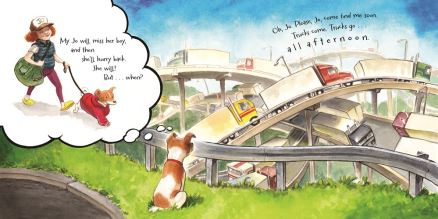
After all that fun, Big Al knew it was time to get back to Jo and the truck, but when he reached the truck stop, his truck was nowhere to be found. He pondered: should he try to find his Jo? But decided it would be better to wait. Besides, he knew she’d be back for the “little doggie pal… / who shares her lunch, who guards the truck, / whose head she rub-rub-rubs for luck.” Big Al was sure Jo would return. “But…when?” He sat patiently at the truck stop guard rail overlooking the highway and watched the trucks come and go—but none of them were his.

Meanwhile, Jo had reached her destination. She called to Big Al to wake him up. But then she looked…and looked again. Where was Big Al?! At that moment, Al was running away from a “too-loud kid” who wanted to kiss him and take him home with her. As the day grew long and the sun began to set, the parking lot emptied, and Big Al wondered where his Jo could be. “Oh, Jo. Please, Jo, remember me. / No trucks. No people. Spooky. Late. / Chase a june bug. / Shiver. Wait.”

celebrate-picture-books-picture-book-review-where'd-my-jo-go-highway

Image copyright Scott Brundage, 2020, text copyright Jill Esbaum, 2020. Courtesy of Sleeping Bear Press.

Just then a car pulled in and a boy, Zach, got out. He spotted Big Al and grabbed a stick. He threw it for Al, who “Can. Not. Resist.” Zach thinks Al is lost and begs his dad to let him keep him. Big Al thinks “I should not, cannot, will not go. / But ohhh, I like Zack. Hurry, Jo.” It looks as if Big Al and Zack will become a team when, just in the nick of time, a truck appears. Could it be? “Onk-onk!Onk onnnnnnnnk!” Big Al says, “Yip-yip! Bye, Zack! I have to go! / I knew she’d come! It’s her! My Jo!”

An Author’s Note reveals the real-life event that sparked Jill’s imagination and led to her story. She also invites readers to try a prompt and write their own story.

celebrate-picture-books-picture-book-review-where'd-my-jo-go-Zack

Image copyright Scott Brundage, 2020, text copyright Jill Esbaum, 2020. Courtesy of Sleeping Bear Press.

Children will fall in love with Big Al as soon as they meet him. Full of curiosity and with a personality befitting his name, Big Al is a busy pup as he gets into mischief at a park near the truck stop. But when he returns to find his Jo is gone, he patiently waits, certain that she’ll be back. Jill Esbaum’s jaunty rhymes are as playful as Big Al, and readers will be charmed to follow the story from his point of view. Kids with pets will recognize all the small, special moments that people and pets share and be as eager for Jo’s return as Big Al. Esbaum adds humor and suspense as two kids interact with Big Al, making the just-in-the-nick-of-time reunion all the sweeter and more satisfying.

With his expressive eyes and funny antics, Scott Brundage’s adorable Big Al will charm children and have them rooting for his reunion with Jo throughout the story. Snapshots of Big Al and Jo sharing fun on their trips show their special bond and will melt readers’ hearts, and they’ll commiserate with Jo when she realizes that Big Al is missing. Vehicle-loving kids will be fascinated by the realistic images of big rigs in the truck stop and traversing the crisscrossing highways. Brundage makes the story into a visual roller-coaster (in the best way), and the final spread of Jo and Big Al together again will have kids shouting, let’s do it again!

For pet lovers, vehicle lovers, and anyone who has a best friend, Where’d My Jo Go? Is must reading. It would make a heartwarming addition to home, school, and public library bookshelves.

Ages 5 – 7

Sleeping Bear Press, 2020 | ISBN 978-1534110441

Discover more about Jill Esbaum and her books on her website.

To learn more about Scott Brundage, his books, and his art, visit his website.

National Pet Month Activity

celebrate-picture-books-picture-book-review-Peppy-Puppies-Match-Up-Puzzle

Peppy Puppies Match Up Puzzle

These puppies want to find a friend. Can you match the ones that go together in this printable puzzle? There may be more than one right answer!

Peppy Puppies Match Up Puzzle

celebrate-picture-books-picture-book-review-where'd-my-jo-go-cover

You can find Where’d My Jo Go? at these booksellers

Amazon | Barnes & Noble | Books-a-Million

To support your local independent bookstore order from

Bookshop | IndieBound

Picture Book Review

May 12 – It’s Gifts from the Garden Month

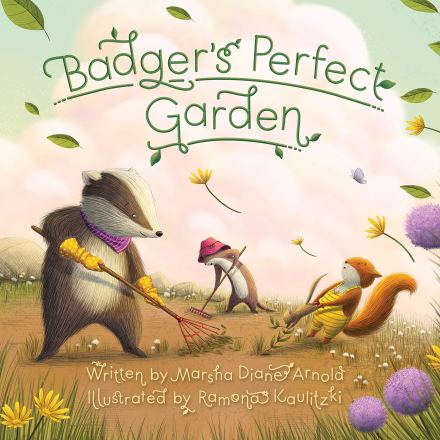
celebrate-picture-books-picture-book-review-badger's-perfect-garden-cover

About the Holiday

If you’re into gardening then you know what a joy it is to harvest your vegetables and fruit or cut a beautiful bouquet of flowers. But gardens provide so many more gifts than these. Digging the dirt, planting the seeds, and even keeping the weeds at bay can be a mindful, relaxing experience as well as good exercise. Watching plants sprout and grow gives an appreciation for the wonder of nature. And a garden beautifies the view whether it’s a large plot or a window box. So, celebrate this month by enjoying all the gifts of your garden.

I received a copy of Badger’s Perfect Garden from Sleeping Bear Press for review consideration. All opinions are my own. 

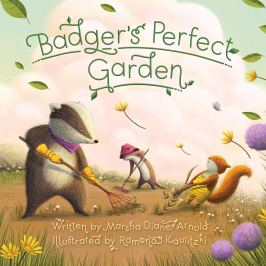
Badger’s Perfect Garden

Written by Marsha Diane Arnold | Illustrated by Ramona Kaulitzki


On a spring morning, Red Squirrel watched as Badger brought out all of his jars of the seeds he had collected and kept safe all winter. He was planning on planting a perfect garden. Red Squirrel noticed that all the seeds looked different. Badger explained that they were “‘all kinds. Green and brown. Flat and round, Bumpy and smooth. Whirly-curly and straight as my whiskers.’”
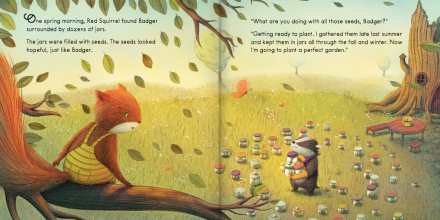
celebrate-picture-books-picture-book-review-badgers-perfect-garden-seeds

Image copyright Ramona Kaulitzki, 2019, text copyright Marsha Diane Arnold, 2019. Courtesy of Sleeping Bear Press.

Red Squirrel wanted to help plant them. As Badger carefully studied his garden plan, Weasel showed up with his rake and Dormouse gathered string. Everyone helped Badger weed and rake his garden plot until it was smooth. Then they set up stakes on each side and ran string between them to make perfect rows. After that Weasel poked holes in the dirt for the seeds. Badger directed where each seed should go so that each type stayed together. That evening the friends had a party with muffins and mulberry juice, and Badger “imagined the plants that would grow in perfect rows in his perfect garden.”

The next morning, just in time, it began to rain. But the next day the rain turned heavy, and the day after that it became a deluge. Badger ran out into the storm to try to save his garden, but the strings collapsed and the soil washed away. Badger sniffled as he thought of his ruined garden. His friends tried to cheer him up by telling him they’d help gather new seeds in the summer, but Badger despaired of not having his perfect garden this year.
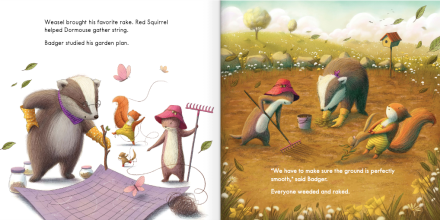
celebrate-picture-books-picture-book-review-badgers-perfect-garden-plan

Image copyright Ramona Kaulitzki, 2019, text copyright Marsha Diane Arnold, 2019. Courtesy of Sleeping Bear Press.

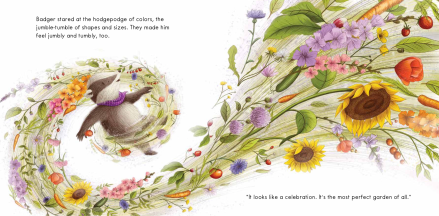
To ward off the sadness, Badger kept busy reading, cleaning, exercising, and sleeping. One summer day, he heard a knock on his door. It was Red Squirrel, Weasel, and Dormouse. They grabbed Badger’s hand and pulled him outside to a glorious field of wildflowers. Badger gazed at it in wonder. “‘Those can’t be my seeds,’ said Badger, rubbing his eyes. They’re all mixed up.’” But they were! The wild garden  was a “jumble-tumble of shapes and sizes. They made him feel jumbly and tumbly, too.” Badger thought it was “the most perfect garden of all,” and the friends raced into it for a perfect summer celebration.
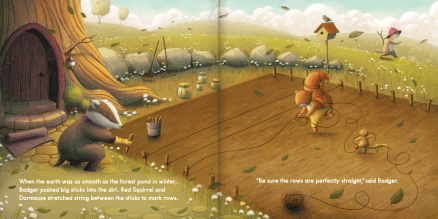
celebrate-picture-books-picture-book-review-badgers-perfect-garden-planting

Image copyright Ramona Kaulitzki, 2019, text copyright Marsha Diane Arnold, 2019. Courtesy of Sleeping Bear Press.

Marsha Diane Arnold fills Badger’s Perfect Garden with sprightly, lyrical language that makes the story a delight to read. Little gardeners will relish the descriptions of Badger’s seeds and enjoy the precision of planting day. As the rains come, kids will empathize with Badger’s disappointment, knowing how it feels when plans don’t work out quite right. But the riotous results will spark their own happy, “jumbly-tumbly” excitement for Badger, his friends, and even their own endeavors. in the beauty of the wild, carefree, mixed-up garden can see the joy that can be found in new experiences outside one’s comfort zone.

Ramona Kaulitzki’s charming illustrations are a perfect mix of the whimsical and the realistic and will captivate readers. With soft colors and flowing textures, Kaulitzki depicts early spring with its light green grasses and mellow, cloud-filled skies. When stormy days come, the sky turns purple and rain whips through Badger’s garden, leaving things topsy-turvy and Badger’s plans uprooted. Late summer brings a series of show-stopping two-page spreads, where flowers of all kinds and colors mix with vegetable plants to attract bees and butterflies and, of course, provide the perfect spot for a summer party.

Beautiful through and through, Badger’s Perfect Garden plants the seeds of gentle encouragement, heartening friendship, and cheerful celebration. The book would be a favorite addition to home, classroom, and public library collections.

Ages 5 – 8

Sleeping Bear Press, 2019 | ISBN 978-1534110007

Discover more about Marsha Diane Arnold and her books on her website.

To learn more about Ramona Kaulitzki, her books, and her art, visit her website.

Q & A with Marsha Diane Arnold
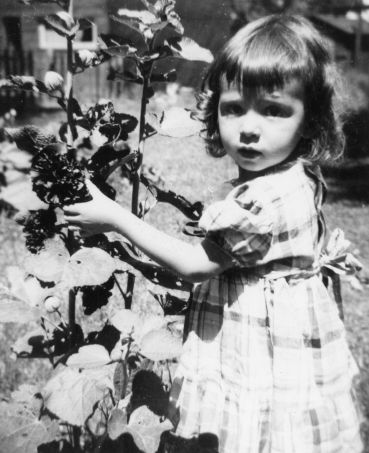
celebrate-picture-books-picture-book-review-marsha-diane-arnold-childhood-photo

Called a “born storyteller” by the media, Marsha Diane Arnold’s award-winning picture books have sold over one million copies and been called, “whimsical,” “inspiring,” and “uplifting.” Marsha was raised on a Kansas farm, lived most of her life in Sonoma County, California, a place Luther Burbank called “the chosen spot of all this earth as far as Nature is concerned,” and now lives with her husband, near her family, in Alva, Florida. Nothing makes her happier than standing in her backyard in the midst of dragonflies, listening to cardinals sing.

I’m so glad to be chatting with you, Marsha, about her newest book, Badger’s Perfect Garden! This story seems to have a close personal connection for you. Can you talk a little bit about what inspired you to write this book?

Having a father who was a farmer and gardener and a mother who was a perfectionist, must have had something to do with it! I grew up surrounded by nature, animals, and gardens. Growing up with so many animals around me, I talked with them all the time and I felt they talked back, so anthropomorphism comes easily to me. Illustrations of animal characters are so often enchanting, drawing young children into a book. They can create a strong emotional connection for children to learn from and remember.

Can you tell me more about what it was like growing up on a farm? What kind of farming did your family do?

My father was most proud of being a dairy farmer, but he, his father before him, and his five brothers also grew wheat and corn. I often stayed with my grandmother during the day; I loved being on the farm. Grandmother had to feed 8 children, Grandpa Henry, and herself, so she had a huge vegetable garden and did home canning. But her heart was with her flower gardens. There was spirea, yards and yards of bearded iris, a line of lilacs from the house to the outhouse, petunias, Bachelor buttons, hollyhocks, and more. Badger and Grandmother would have been fast friends.

As a child, what was your favorite part of farming or the farm? What do you appreciate more now as an adult?

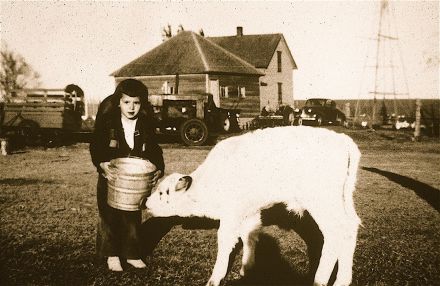
I most loved being around the farm animals, although I was a bit frightened of those protective hens when I had to collect the eggs, and I enjoyed helping my father with the calves. One of our neighbors had a pet raccoon that I have fond memories of “hanging out” with, often in my friend’s tree house. (Remember, it was a long time ago and there were no wild animal rehabilitation centers near us.)
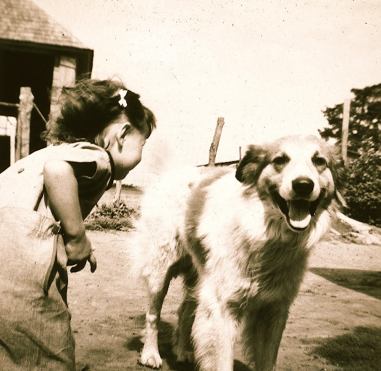
celebrate-picture-books-picture-book-review-Marsha-Diane-Arnold-and-dog

Marsha having fun with her dog.

celebrate-picture-books-picture-book-review-Marsha-Diane-Arnold-and-calf

Marsha hanging out with a calf on her family’s farm.

I think I always appreciated the freedom of big spaces and gardens to play in and trees and barns (don’t tell) to climb on, but now I realize even more how very lucky I was.

Have you continued the family farming tradition?

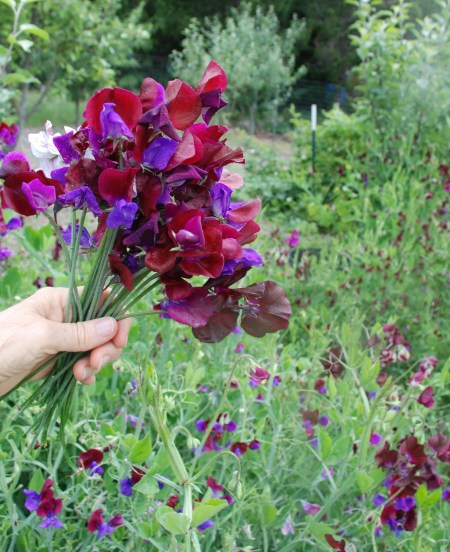
I had a spectacular garden in Sonoma County, California. Mostly I grew flowers and a small plot of fruit trees. My favorite part of creating the gardens was designing them, using the land as my canvas. I collected over 50 heirloom roses, selecting plants for their fragrance and color. I loved the stories that came with them, like, “This one was collected from an old farm house in Windsor.” I had over 30 sweet pea varieties. There’s nothing better than a home filled with the fragrance of sweet peas. Most of my fruits were “antique” varieties. There was a Spitzenburg, reputed to have been Thomas Jefferson’s favorite apple, and a Calville Blanc, traced back to 1598 France. The fruit from my trees was unique and absolutely delicious. The stories behind them were delicious too.
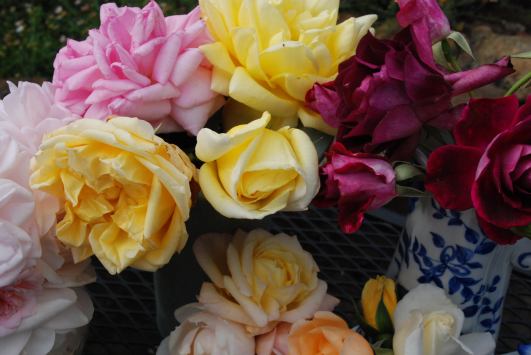
celebrate-picture-books-picture-book-review-flowers

Roses from Marsha’s flower garden.

celebrate-picture-books-picture-book-review-sweetpeas

A beautiful bouquet of sweet peas.

How have your experiences with nature influenced your writing for children?

When a child grows up surrounded by nature, he or she grows to understand it and respect it. I learned to see the small things in nature, like my father before me. His neighbors said he knew the name of every wildflower or “weed” in the county. When you pay attention to something in that way, you come to love it and it becomes part of you. So, nature is what I write about, from my first book Heart of a Tiger, about a small kitten who had a dream to give himself a name like that of the Magnificent Bengal Tiger, to Galápagos Girl, about the unique animals of the Galápagos Islands, to the jumble tumble beauty of Badger’s Perfect Garden.
celebrate-picture-books-picture-book-review-badgers-perfect-garden-swirl

Image copyright Ramona Kaulitzki, 2019, text copyright Marsha Diane Arnold, 2019. Courtesy of Sleeping Bear Press.

What is your favorite wildflower and why?

Wild rose! At our California home, there was a wild rose growing in our gully. Every spring I would walk down the hill to see if it was still blooming. When I was diagnosed with breast cancer, I looked carefully for it each year, telling myself that if it was still in bloom, in the shade of our oak forest, alone and straggly, I would still be well. I’m sure it’s blooming still.

Thank you for sharing so much about your passion for nature and what joy living fully within it can bring. I wish you all the best with Badger’s Perfect Garden and all of your wonderful books!

You can connect with Marsha Diane Arnold on

Her website | Facebook | Twitter | Instagram

Spring Equinox Activity

celebrate-picture-books-picture-book-review-flower-garden-game

Plant a Flower Garden Game


With this fun game you and your family and friends can grow gardens inside! Roll the dice to see whose garden will fully blossom first!

Supplies

Directions

Object: The object of the game is for each player to fill their garden or garden rows with flowers. Depending on the ages of the players, the game can be adjusted to fill all of the rows, some or all rows, or just one.           

  1. Print one Game Board for each player
  2. Print one or more sets of Flower Playing Cards for each player, depending on how  (for sturdier playing items, print on card stock)
  3. Cut the flowers into their individual playing cards
  4. Print one Flower Playing Die and assemble it (for a sturdier die, print on card stock)
  5. Color the “dirt” on the Garden Plot with the crayon (optional)
  6. Choose a player to go first
  7. The player rolls the die and then “plants” the flower rolled in a row on the game board
  8. Play moves to the person on the right
  9. Players continue rolling the die and “planting” flowers until each of the number of determined rows have been filled with flowers or one row has been filled with all six flowers.
  10. The first person to “grow” all of their flowers wins!
celebrate-picture-books-picture-book-review-badger's-perfect-garden-cover

You can find Badger’s Perfect Garden at these booksellers

Amazon | Barnes & Noble | Books-a-Million | Sleeping Bear Press

Support your local independent bookstore with these book sellers

Bookshop | IndieBound 

Picture Book Review


March 25 – National Little Red Wagon Day

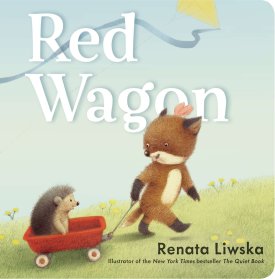
celebrate-picture-books-picture-book-review-red-wagon-cover

About the Holiday

In 2016 Radio Flyer established today’s holiday in anticipation of its 100th anniversary in 2017. That’s one hundred years of children enjoying the imaginative outdoor play a little red wagon provides! Whether kids are transporting their siblings, giving their pets or toys a ride, helping out in the garden, or participating in a community parade, the red wagon has been at the center of the action and a plaything that gets passed down from parent to child as a family grows. If you have little ones in your family, celebrate today by taking a little red wagon – or any wagon – for a spin.

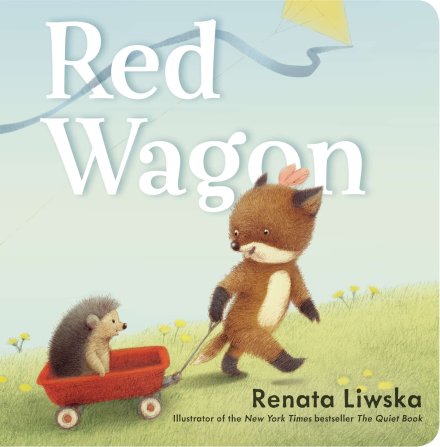
Red Wagon

By Renata Liwska


When Lucy got a new red wagon, “she wanted to play with it immediately.” Her mother thought she could take her wagon to the market. That didn’t sound like much fun to Lucy, but she headed to the market with a list anyway.

When she came to the big hill, her friends Hedgehog and Squirrel jumped in. That made the wagon “pretty heavy.” Fortunately, Rabbit came along to help push. At the top of the hill, they stopped for a snack with Bird and Raccoon, but “it started to rain! Oh, brother.” Lucy pushed the wagon to the bottom of the hill, but by now the rain was a torrent. That was okay, though, as the wagon had transformed into a ship, and Raccoon, in his umbrella, had become a pirate captain.

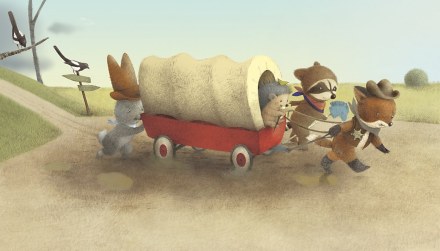
celebrate-picture-books-picture-book-review-red-wagon-conestoga-wagon

Copyright Renata Liwska, 2013, courtesy of Philomel Books.com.

When the rain stopped, the friends went on their way in their red Conestoga wagon. Bunny, in his ten gallon hat, pushed while Sheriff Lucy pulled. Hedgehog held the reins, and Raccoon road her horse alongside. “At last Lucy arrived at the market.” As Hedgehog rolled their circus wagon into the center, Bunny toddled tall on stilts, Lucy juggled rings, and Raccoon blew a horn.

Lucy gathered all the vegetables on her mother’s list and started toward home. The train engine chugged, pulling the vegetable car up the steep hill. They were almost home “when the wagon hit a rock” and rocketed into space amid vegetable planets. When they landed, Lucy “gathered the vegetables and put them back into her wagon.

Lucy’s mom was happy to see her when she got home and thanked her happily for helping. “Finally, Lucy was free to play with her wagon,” which now made a perfect spot for a nap.

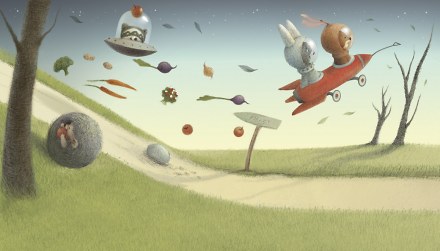
celebrate-picture-books-picture-book-review-red-wagon-rocket-ship

Copyright Renata Liwska, 2013, courtesy of Philomel Books.com.

Snuggling up with your little one and Renata Liwska’s Red Wagon is such a sweet way to spend story time. As young children so often do, adorable Lucy turns a chore into imaginative playtime as she and her friends rapidly use mishaps, bumps, and their changing surroundings as springboards for their supple creativity.  Liwska’s simple story is the perfect frame for her beautiful, soft-hued, and detailed art as this group of cute friends become cowboys and cowgirls, sailors, pioneers, circus performers, and mom’s helpers.

A rich story for the youngest readers, Red Wagon would be a perfect baby gift and a much-loved addition to any toddler’s bookshelf.

Ages 1 – 3

Philomel Books, 2013 | ISBN 978-0399162398 (Board Book)

To view a portfolio of books by Renata Liwska, visit her website.

National Little Red Wagon Day Activity

celebrate-picture-books-picture-book-review-little-red-wagon-maze

Take a Ride in the Little Red Wagon Maze


Everyone wants to ride in the wagon. Can you help these friends find their way in this printable maze?

Take a Ride in the Little Red Wagon Maze | Take a Ride in the Little Red Wagon Maze Solution

celebrate-picture-books-picture-book-review-red-wagon-cover

You can find Red Wagon at these booksellers

Amazon | Barnes & Noble | Books-a-Million | IndieBound

Picture Book Review

March 14 – National Children’s Craft Day

celebrate-picture-books-picture-book-review-easter-egg-day-cover

About the Holiday

March is National Craft Month and today is set aside especially for children to engage in this fun and diverse activity. Crafting has many benefits for kids, including using their creativity, honing fine motor skills, following directions, and learning to work independently. Doing crafts is also a great way to spend time away from the computer or TV and often results in an item that kids can be proud of. Using recyclable materials makes crafting inexpensive and gives the recycled items new life.

I received a copy of Easter Egg Day from Tara Knudson for review consideration. All opinions are my own. I’m happy to be teaming with Tara to offer a signed copy of the book. See details below.

Easter Egg Day

Written by Tara Knudson | Illustrated by Pauline Siewert

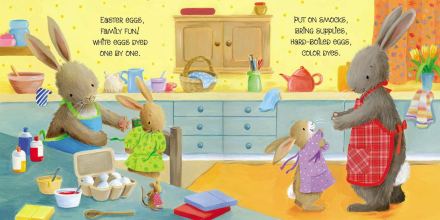
It’s Easter egg-dyeing day for the rabbit family. The little bunnies put on their smocks and gather the hard-boiled eggs and other supplies on the table. To make each egg special, the bunnies “use a crayon, / draw designs— / circles, shapes, / zigzag lines. / Rabbit, lamb, / butterflies, / ready, set— / time for dyes!”

Carefully, they dip them into the cups of blue, green, yellow, and red dye. These colors are fun, but then they get creative, mixing red and blue and double-dipping. The bunnies set their eggs out to dry, and just in time they’re ready for the big Easter egg hunt.

celebrate-picture-books-picture-book-review-easter-egg-day-smocks

Image copyright Pauline Stewert, 2020, text copyright Tara Knudson, 2020. Courtesy of Zonderkidz.

“Neighbors, friends, / at the door. / Baskets held, / eggs galore!” The little bunnies, moles, and mice race out into the yard and hide their eyes as the adults hide the eggs in the tall grass, near trees, and under flowers. When all the eggs are hidden, the kids spread out, hoping to fill their empty baskets.

They find all of the eggs except seven—can you help the kids look around? Along with the real eggs, there are plastic eggs that pop open to reveal treats—”stickers, toys, / Easter sweets!” Then it’s time for games and races, smiles and cheers. Come and join the Easter fun!

Easter egg decorating tips are included after the story.

celebrate-picture-books-picture-book-review-easter-egg-day-dying-eggs

Image copyright Pauline Stewert, 2020, text copyright Tara Knudson, 2020. Courtesy of Zonderkidz.

Little ones love the magic of dyeing Easter eggs, and Tara Knudson’s bright, bouncy rhymes perfectly convey the giggly excitement kids feel during this once-a-year tradition. Readers will eagerly anticipate each step and page turn along the way as the bunnies turn their carton of white eggs into a basket full of creative, colorful treasures. Of course, Easter eggs are made for hiding and finding, and Knudson invites kids to join the bunnies and little moles and mice as they scamper through the yard on this most joyful of all hunts.

celebrate-picture-books-picture-book-review-easter-egg-day-friends

Image copyright Pauline Stewert, 2020, text copyright Tara Knudson, 2020. Courtesy of Zonderkidz.

With sunny yellows, tender-grass greens, and vibrant oranges, purples, and reds, Pauline Siewert drops kids as gently as an egg into dye into spring and the enchantment of Easter egg fun. White eggs marked with creative crayon designs will give readers a few ideas for their own eggs while the sweet smiles and enthusiasm of the bunny siblings and their parents mirror their own feelings. As the bunnies and their friends dash off to find the eggs, little ones will be just as excited for their own Easter egg traditions.

Adorable and endearing, Easter Egg Day will be a favorite spring read for adults and kids to share before Easter and to remember family fun.

Ages 2 – 4

Zonderkidz, 2020 | ISBN 978-0310767527

Discover more about Tara Knudson and her books as well as printable coloring pages on her website.

You can connect with Pauline Siewert on Instagram.

National Children’s Craft Day Activity

CPB - Chick single

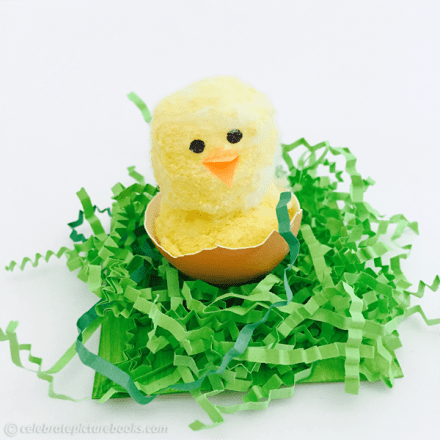
Hatch a Chick! Craft

Chicks are so cute and fluffy—you just wish you could have one of your very own! Now you can! Hatch your own chick with this craft.

Supplies

  • Cotton balls, or use large pom-poms
  • Yellow chalk
  • Orange paper
  • Black paper
  • Egg shell
  • Paper grass
  • Cardboard or poster board
  • Cheese grater
  • Green paint, marker, or crayon
  • Glue
  • Scissors

Directions

To make the shell

  1. Crack an egg and save the two halves
  2. Soak the eggshells in soapy water or wash gently with soap
  3. Dry eggshell

To make the chick

  1. Use the cheese grater to grate the chalk into a bowl
  2. Roll the cotton balls in the chalk dust until they are covered
  3. Make the beak from the orange paper by folding the paper and cutting a small triangle
  4. Cut two small eyes from the black paper
  5. Glue the beak and eyes to one of the cotton balls
  6. Glue the head to the second cotton ball
  7. Set the chick into one of the eggshells, glue if desired

To make the stand

  1. Cut a 3-inch by 3-inch square from the cardboard or poster board
  2. If you wish, paint or color the square green
  3. Glue green paper grass to the square
  4. Glue the eggshell to the stand.

celebrate-picture-books-picture-book-review-easter-egg-day-cover

You can find Easter Egg Day at these booksellers

Amazon | Barnes & Noble | Books-a-Million | IndieBound

Picture Book Review

March 6 – It’s National Reading Month

celebrate-picture-books-picture-book-review-you-are-mine-porcupine-cover

About the Holiday

The month of March is a reading lover’s favorite! Why? Because from the 1st to the 31st, every day is dedicated to reading. Special events for adults and children take place at libraries, bookstores, community centers, and schools, bringing authors, illustrators, educators, and readers together to get them excited about this favorite past time. A love of reading is a life-long pleasure with so many benefits. 

You Are Mine, Porcupine

Written by Helen Wilbur | Illustrated by Stephanie Fizer Coleman


A mother porcupine is teaching her little pup the ways of their world. Because porcupines move rather slowly, her first lesson is to beware of the dangers, like bears and wolves, that lurk in the forest. She reminds her little one: “So don’t forget those long, sharp spines / Protect all wandering porcupines.” The baby sleeps the day away in a hollow log, coming out at night for “porcu-play.”

celebrate-picture-books-picture-book-review-you-are-mine-porcupine-pup

Image copyright Stephanie Fizer Coleman, 2020, text copyright Helen L. Wilbur, 2020. Courtesy of Sleeping Bear Press.

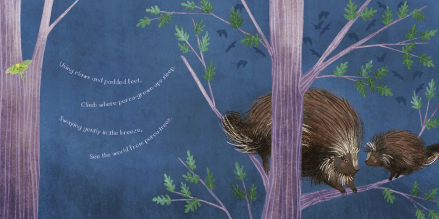
After dinner, mama porcupine shows her porcupup how they use their “claws and padded feet” to “climb where porcu-grown-ups sleep.” After a swim, the little pup is lured away from his mother’s side by the promise of sweet clover and dandelions. But after nibbling his fill, porcupette discovers he is lost. Unseen by the pup, “a wolf creeps softly through the night, / His eyes aglow, his teeth shine white.”

celebrate-picture-books-picture-book-review-you-are-mine-porcupine-tree

Image copyright Stephanie Fizer Coleman, 2020, text copyright Helen L. Wilbur, 2020. Courtesy of Sleeping Bear Press.

But he smells the wolf coming close and knows just what to do. He doesn’t back away or flee but instead starts to chatter. The wolf moves closer, his teeth are near, but the porcupup raises his quills. “A growl, a howl––the wolf backs out, / A pack of prickles in his snout!” Hearing the ruckus, Mama hurries over and is proud to see that her little one has sent the wolf running. Now, it’s time to have some fun. They find tasty berries for a snack then curl up in their tree trunk den. As Mama sings “porcu-lullabies” she reassures her porcupette, “‘You’ll grow and grow; you’ll be just fine. / You are mine, porcupine.’”

Back matter reveals interesting facts about porcupines, their quills, teeth, diet, and habits.

celebrate-picture-books-picture-book-review-you-are-mine-porcupine-back-matter

Image copyright Stephanie Fizer Coleman, 2020, text copyright Helen L. Wilbur, 2020. Courtesy of Sleeping Bear Press.

With charming rhymes, lovely language, and clever endearments, Helen L. Wilbur teaches readers about the life of a porcupine through her sweet mother-and-child story. Sprinkled with suspense, the story will captivate kids as they explore the forest with a porcu-peer and cheer as he outwits an adversary. and Wilbur’s heartening tale also shows children how much they are loved and reassures them that they too will grow up to be brave, smart, resourceful, and just fine.

Stephanie Fizer Coleman’s striking illustrations of a forest at twilight invites readers into the porcupines’ world where they slumber in a hollow log, nibble clover, and climb a tree. Her mottled greens and violets, accented with vibrant foliage, create a peaceful and tender setting for the mama porcupine’s important lessons. The silhouette of the wolf gives way on the next page to obvious danger, but is little porcupine paying attention? Readers need not worry as the porcupette knows just what he’s doing—an instinct clearly shown in the following spread. Along the way, children will enjoy finding other forest creatures behind trees, in tall grasses, and among branches. The final pages, dotted with cheerful flowers and depicting the porcupines’ delightful mother/child relationship, make this an engaging daytime or bedtime book.

Lyrical, comforting, and informative, You Are Mine, Porcupine makes a sweet, multilayered addition to home, school, and public library collections.

Ages 5 – 7

Sleeping Bear Press, 2020 | ISBN 978-1534110038

Discover more about Helen L. Wilbur and her books on her website.

To learn more about Stephanie Fizer Coleman, her books, and her art, visit her website.

National Reading Month Activity

celebrate-picture-books-picture-book-review-porcupine-coloring-page

Cute Porcupine Coloring Page


This little porcupine is just waiting for you to come and play, so print this coloring page, grab your crayons, and have fun!

Cute Porcupine Coloring Page

celebrate-picture-books-picture-book-review-you-are-mine-porcupine-cover

You can find You Are Mine, Porcupine at these booksellers

Amazon | Barnes & Noble | Books-a-Million | IndieBound

Picture Book Review

March 5 – It’s International Ideas Month

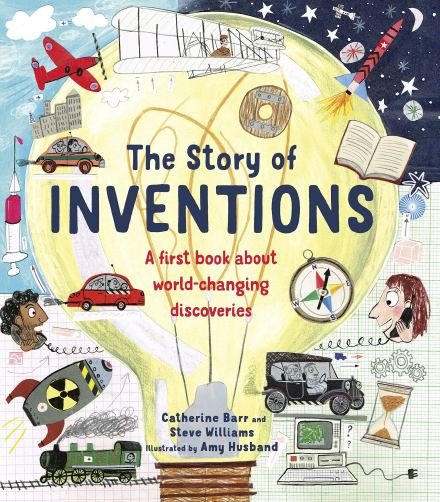
celebrate-picture-books-picture-book-review-the-story-of-inventions-cover

About the Holiday

The onset of spring with its  wide-open sunny days seems to beckon to us to open our minds to all sorts of new possibilities. Perhaps that’s why International Ideas Month is celebrated in March. This creative holiday invites would-be inventors and clever folk of all stripes to think differently and pay attention to your brainstorms. You never know––there may be a book, a work of art, a new invention, or a solution to a need inside you just waiting to be let out!

I received a copy of The Story of Inventions from Frances Lincoln Books for review consideration. All opinions on the book are my own.

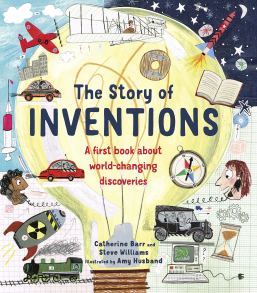
The Story of Inventions: A First Book about World-Changing Discoveries

Written by Catherine Barr and Steve Williams | Illustrated by Amy Husband


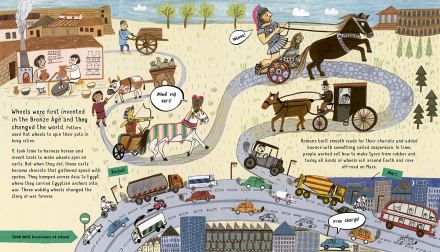
It might be said that inventions have been around as long as there was a need. But which invention really got things rolling? That would be the wheel, and that’s where The Story of Inventions begins. The wheel dates back to the Bronze Age––3500 BCE. Laid flat, stone wheels helped potters make pots faster and in different shapes. Wheels for vehicles took longer to be developed.

Once horse-drawn chariots came into being, though, what was one of the first things they were used for? “They bumped across Asia to Egypt, where they carried Egyptian archers into war.” The Romans built roads and suspension and smoothed out the ride. Eventually, rubber tires were invented, highways were built, and tires thick, thin, threaded, large, and small “roll around Earth and rove off-road on Mars.”

celebrate-picture-books-picture-book-review-the-story-of-inventions-wheels

Image copyright Amy Husband, 2020, text copyright Catherine Barr and Steve Williams, 2020. Courtesy of Frances Lincoln Children’s Books.

Today’s GPS can be traced back to 270 BCE with the invention of the lodestone compass in China. China was also the place where paper had its beginning under a mulberry tree. This first paper, invented in 105 AD, was a messy concoction of mulberry bark mashed up and combined with rags and water. Pressed flat and dried, this early paper was used for wrapping and for writing. Today, of course, paper is used for our newspapers, artwork, and even this book.

Telling time by sundial used to rely on the weather, but as bigger and better clocks were invented—beginning in 725 CE and using some pretty amazing technology—it became easier and easier to make it to school, to the office, to meet friends…. Now there are atomic clocks that, in space, are so accurate they lose “only a second every 15 billion years.” In 850 CE, gunpowder was invented by mistake, but it changed the face of war forever.

Jumping ahead to 1712, “water, wind, and horse power” were replaced when the invention of the coal-powered steam engine revolutionized transportation and how and where people worked. “Today coal and oil still power most electricity on Earth. But these fossil fuels are polluting our skies, so sun, water, and wind are once again being used to help us survive this threatening climate change.”

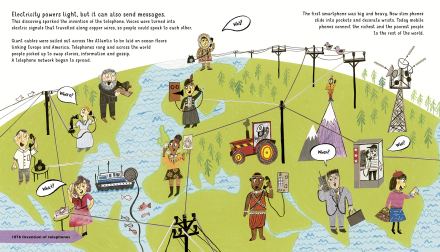
celebrate-picture-books-picture-book-review-the-story-of-inventions-electricity

Image copyright Amy Husband, 2020, text copyright Catherine Barr and Steve Williams, 2020. Courtesy of Frances Lincoln Children’s Books.

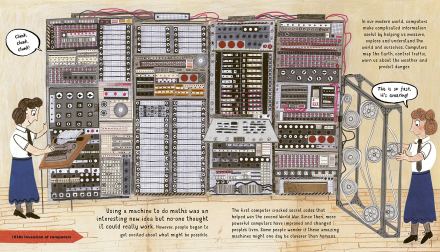
The invention of vaccinations in 1798, computers in the 1830s, electricity in 1832, the telephone in 1876, the automobile in 1886, and the airplane in 1903, bring us to 1907 and the invention of plastic. With its many traits and uses, plastic “quickly became one of the most useful materials people had ever seen.” But now plastic is “piling up, polluting and poisoning the planet. By recycling and other measures, “we can help wildlife and protect the environment too.”

As World War II raged in 1945, scientists discovered how to split the atom, leading to the development of the nuclear bomb. “Just two nuclear bombs killed hundreds of thousands of people in Japan at the end of World War II. These explosions shocked the world and people everywhere marched for peace to ban the bomb.” Today efforts to keep the world safe from nuclear weapons continues. The relatively recent invention of the internet and today’s focus on nanotechnology are changing the world every day. How will we use them “to care for each other and the planet Earth? One day you may decide.”

A glossary of words used throughout the book follows the text.

celebrate-picture-books-picture-book-review-the-story-of-inventions-computer

Image copyright Amy Husband, 2020, text copyright Catherine Barr and Steve Williams, 2020. Courtesy of Frances Lincoln Children’s Books.

Focusing on revolutionary inventions, how they work, and what effect they have had on the earth instead of particular inventors, Catherine Barr and Steve Williams weave together a fast-paced survey of life-changing technologies throughout history. Brief descriptions of each invention follow its trajectory from its development date through improvements over time to today’s version. Fascinating nuggets of information are found within each account and will entice readers to learn more. But this book contains more than just a list of inventions. The thread of a cautionary tale also runs through the text, engaging readers to think not only about how inventions can positively change the world but also to consider their deleterious effects. Highlighting new innovation, Barr and Williams offer the promise of new innovation and invite readers to lend their creativity and voice to finding solutions. 

Through her charming cartoon illustrations Amy Husband takes readers from Bronze Age brick buildings to the surface of Mars, with tours past the Roman Colosseum, down dusty hoof-trodden lanes, along four-lane highways, and even with a pitstop at an electric car charging station. Her ship captains from various eras navigate by the stars, a lodestone, a compass, and GPS. Husband’s detailed images help readers envision early versions of inventions and how they have changed over time as well as the problems that precipitated some inventions. In the case of pollution, plastics, war, and climate change, Husband depicts examples of both the causes and how people are trying to make things better.

Offering a dual way for readers at home and in the classroom to learn about and from inventions of the past and today, The Story of Inventions will spark discussions on and further research into the innovations that have influenced and made modern times.

Ages 5 – 8

Frances Lincoln Children’s Books, 2020 | ISBN 978-0711245365

Discover more about Catherine Barr and her books on her website.

To learn more about Amy Husband, her books, and her art, visit her website.

International Ideas Month Activity

celebrate-picture-books-picture-book-review-share-your-bright-idea-activity

Share Your Bright Idea! Page


Do you sometimes have a lightbulb moment when an idea seems just right? Use this printable Share Your Bright Idea! Page to write about or draw your idea!

celebrate-picture-books-picture-book-review-the-story-of-inventions-cover

You can find The Story of Inventions at these booksellers

Amazon | Barnes & Noble | Books-a-Million | IndieBound

Picture Book Review
March 2 – Read Across America Day

celebrate-picture-books-picture-book-review-nerp!-cover

About the Holiday

Today’s holiday, established by the National Education Association in 1997, encourages children all across the country to celebrate reading and all of its joys and benefits. To commemorate the day, authors, illustrators, politicians, athletes, librarians, and families hold special reading events in schools, libraries, bookstores, and community centers. A love of reading is one of life’s greatest pleasures and begun early can be a powerful force for future success. Celebrate today by reading with a child or on your own. There are fabulous worlds and stories waiting to be discovered.

Nerp!

By Sarah Lynne Reul


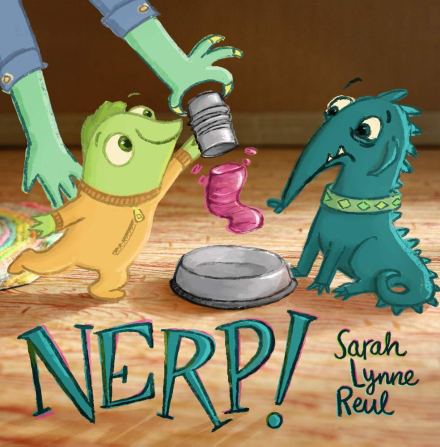
If you want to serve up a giggle-feast for your kids, you only need to open Nerp! To have them gobbling up the big slice of silliness Sarah Lynne Reul has whipped up. Part reptile, part fish, and completely adorable, the family conjured up by Reul—a mom, a dad, a baby, and their pet—are just getting ready to enjoy dinner.

celebrate-picture-books-picture-book-review-nerp!-mushy

Copyright Sarah Lynne Reul, 2020, courtesy of Sterling Children’s Books

The baby has just helped Mom plop out their pet’s food into its dish and is pointing out how delicious that pink wiggly blob it. But the little family friend looks aghast and lets out a very decided “NERP.” Just then, though, all attention turns to Dad who proudly holds aloft the bowl of jelly-bean colored “Frizzle frazzle hotchy potch!” The baby gazes at his dad pleadingly while pointing at the bowl. “Hotchy-potch?” he asks. Then, giving the bowl the side-eye as if it might jump up and bite him, the tyke pushes it away with a decided “NERP.”
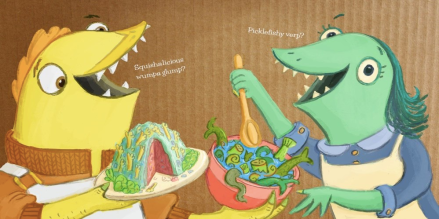
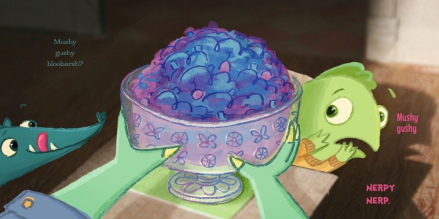
Another bowl appears, this one full of “Mushy gushy bloobarsh.” This bowl is even more ominous than the first, and the baby gasps. Their long-snouted pup, however, is licking its lips. Mom and Dad were apparently ready for these first rejections and have two more dishes on hand, but now Baby—his eyes closed—cannot even stand to sit at the table. “NERPITY NERPITY NERPITY NERP!” he says.

celebrate-picture-books-picture-book-review-nerp!-picklefishy

Copyright Sarah Lynne Reul, 2020, courtesy of Sterling Children’s Books

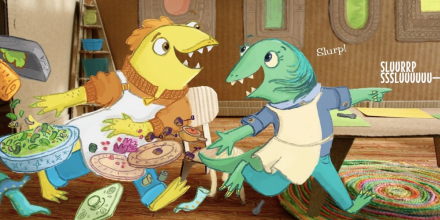
Perhaps Mom and Dad have a personal chef stashed away somewhere because six more scrumptious meals—one even holding its own fork—emerge from the kitchen to entice the little one to eat. But where is Baby? His chair’s empty and his bib discarded. And yet there is a very welcome “ssluuurrrrrrrpppppp” sound coming from somewhere. Mom and Dad are so delighted, happy, thrilled to hear this sound of happy scarfing that they drop all of those carefully prepared and plated meals and rush to find out where it’s coming from.

But Whhhaaaaatttt!!!?? do they see? Their precious tot is down on all fours guzzling…pet food. Oh, well, shrugs Mom as Baby burps, but Dad is none too happy as he scrapes all of their hard work onto an enormous plate for a very happy pup who lets out a decided “YERP!” And with full bellies these two lay back with a “Yerpetty yerpetty yerpy yerp.”

celebrate-picture-books-picture-book-review-nerp!-slurp

Copyright Sarah Lynne Reul, 2020, courtesy of Sterling Children’s Books

Clever mashups of foodie words, tasty adjectives, and nonsense words that are fun to say make reading Nerp! aloud––and with verve––a joy.  Combining this entertaining dialogue with charming mixed-media illustrations set in a diorama made of cardboard, Sarah Lynne Reul creates a wholly original story that will keep children and adults laughing all the way through. Reul addresses that age-old food fight between finicky kids and frantic caregivers with hilarious dishes and facial expressions that perfectly reflect the emotions on both sides. Her pitch-perfect ending will delight kids and have adults nodding in appreciation.

Perfect for both reluctant and adventurous eaters as well as for all book lovers, Nerp! belongs on the reading menu at home, school, and public libraries.

Ages 3 – 7

Sterling Children’s Books, 2020 | ISBN 978-1454934028

To learn more about Sarah Lynne Reul, her books, and her art, visit her website.

Read Across America Day Activity

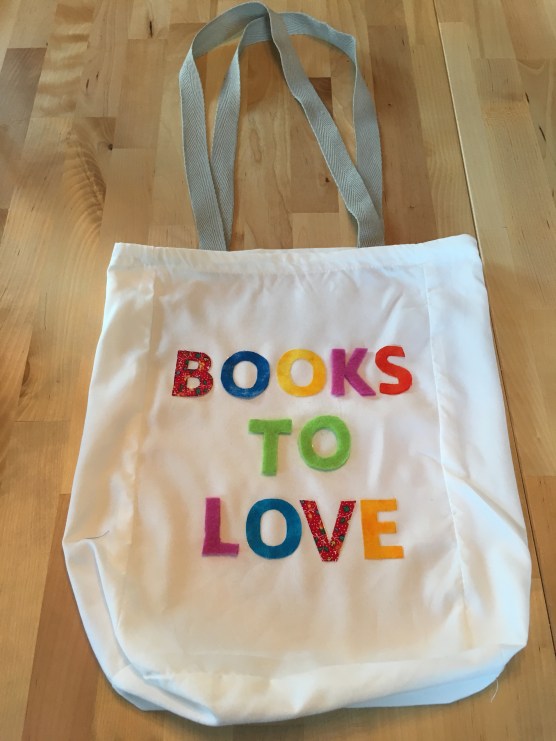
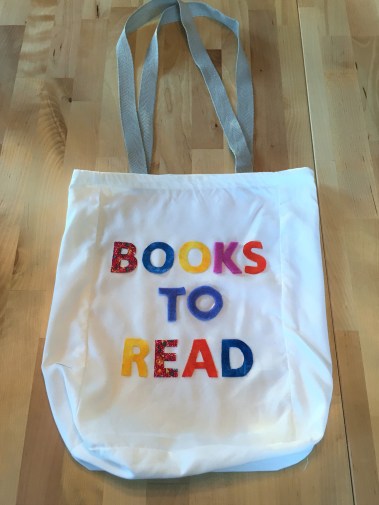
celebrate-picture-books-picture-book-review-book-bag-craft

Books to Love, Books to Read Book Bag


True book lovers can’t go anywhere without a book (or two or three) to read along the way. With this easy craft you can turn a cloth bag into a kid-size book bag!

Supplies

  • Printable Templates: Books to Read Template | Books to Love Template or iron-on letters found at craft stores
  • Small cloth bag, available from craft or sewing stores—Recyclable Idea: I used the bag that sheet sets now come in
  • Cloth trim or strong ribbon, available from craft or sewing stores—Recyclable Idea: I used the cloth handles from shopping bags provided from some clothing stores
  • Scraps of different colored and patterned cloth. Or use quilting squares, available at craft and sewing stores
  • Pen or pencil for tracing letters onto cloth
  • Scissors
  • Fabric glue
  • Thread (optional)
  • Needle (optional)

celebrate-picture-books-picture-book-review-books-bag-craft

Directions

  1. Print the sayings and cut out the letters
  2. Trace letters onto different kinds of cloth
  3. Cut out cloth letters
  4. Iron cloth bag if necessary
  5. Attach words “Books to Read” to one side of bag with fabric glue
  6. Attach words “Books to Love” to other side of bag with fabric glue
  7. Cut cloth trim or ribbon to desired length to create handles
  8. Glue (or sew) handles onto the inside edge of bag

celebrate-picture-books-picture-book-review-nerp!-cover

You can find Nerp! at these booksellers

Amazon | Barnes & Noble | Books-a-Million | IndieBound

Picture Book Review