March 30 – It’s Music in Our Schools Month

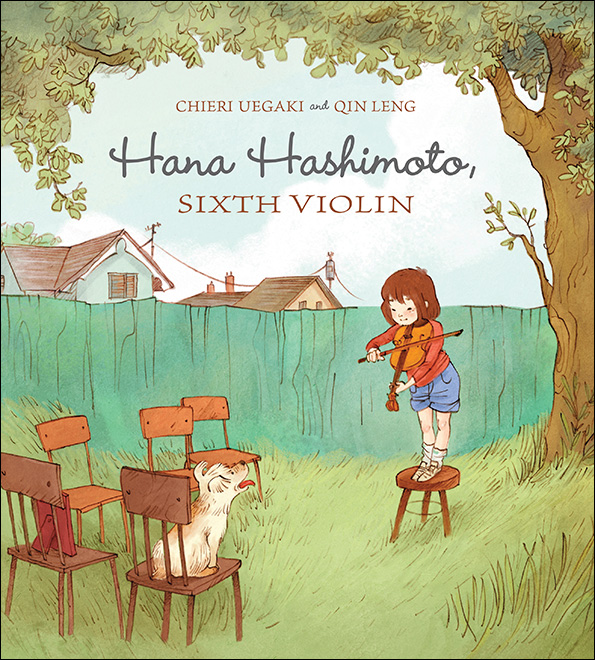
celebrate-picture-books-picture-book-review-hana-hashimoto-sixth-violin-cover

About the Holiday

This annual holiday celebrates the benefits of music education in schools. With budget cuts looming in nearly every school district, the arts are often the first to go. But music inspires creativity and critical thinking and contributes to a better understanding of math and other subjects. School music programs also offer opportunities to children who may otherwise not be able to take lessons and explore their talent. To help out, contact your local school and see what you can do!

Hana Hashimoto, Sixth Violin

Written by Chieri Uegaki | Illustrated by Qin Leng


When Hana Hashimoto told her brothers that she had signed up to play her violin in the talent show, they laughed.  “‘That’s just loopy,’” Kenji said, and Koji added ‘‘You can barely play a note.’” They reminded her that it was a talent show and that she was just a beginner. But Hana didn’t listen. “It was true that she was still a beginner. She had only been to three lessons.” But playing the violin was in her blood. Her grandfather, Ojiichan, had once been Second Violin in a symphony orchestra in Kyoto, Japan and had even played for the Imperial Family.
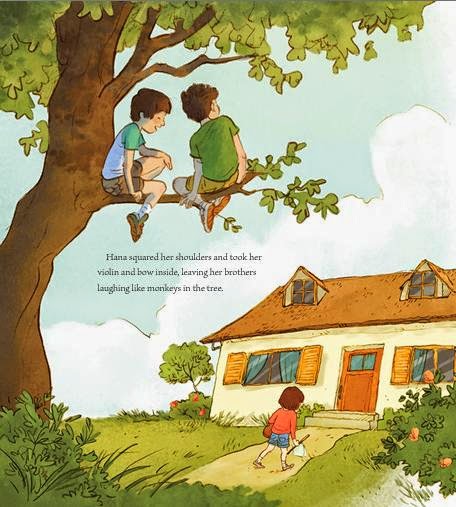
celebrate-picture-books-picture-book-review-hana-hashimoto-sixth-violin-brothers-in-tree

Image copyright Qin Leng, text copyright Chieri Uegaki. Courtesy of Kids Can Press.

Hana had visited her grandfather that summer, and the sweet notes of his playing had coaxed “her awake as gently as sunshine” every morning. In the evenings her grandfather would take requests from Hana and her brothers. “Hana always asked for a song about a crow cawing for her seven chicks. Whenever Ojiichan played it, Hana would feel a shiver of happy-sadness ripple through her.”
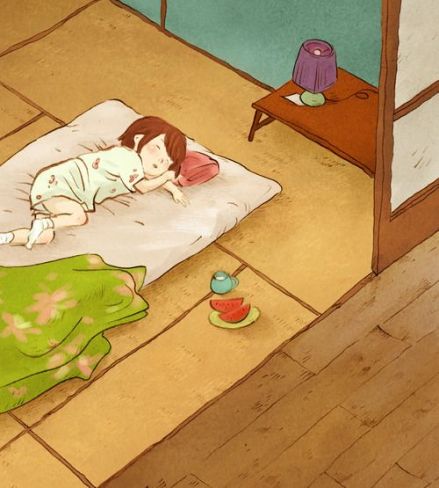
celebrate-picture-books-picture-book-review-hana-hashimoto-sixth-violin-hana-sleeping

Image copyright Qin Leng, text copyright Chieri Uegaki. Courtesy of Kids Can Press.

Ojiichan’s playing was like magic. He could make the violin chirp like crickets, plink like falling raindrops, and send fireflies dancing. At the end of the summer, Hana had decided she also wanted to play the violin and her parents agreed. Hana practiced every day even though her brothers ran away with their hands over their ears. She played for her parents, for her dog, JoJo, and for a photograph of Ojiichan. Sometimes she pretended to play for “an audience so appreciative they called for encore after encore.”

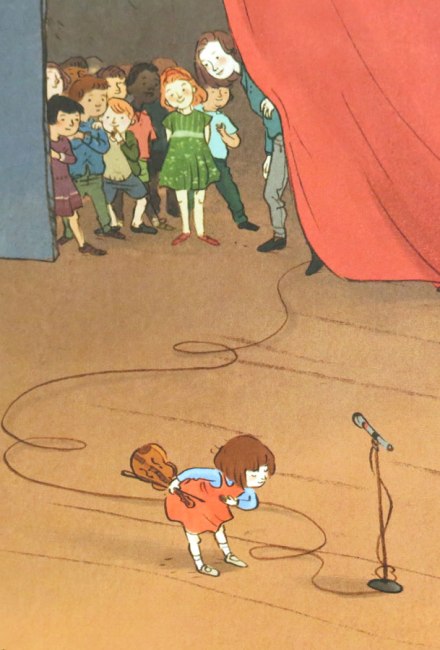
On the night of the talent show, Hana waited backstage for her turn “with a walloping heart.” Five other violinists had already gone before her. Finally, she heard her name. As she strode across the stage as wide as a desert, she had a fleeting feeling that her brothers had been right—that her performance was going to be a disaster. But when she reached her spot near the microphone and gazed out at the audience, she saw her best friend and her parents smiling at her.
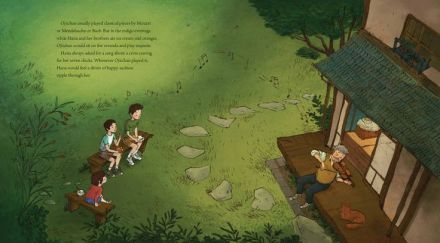
celebrate-picture-books-picture-book-review-hana-hashimoto-sixth-violin-listening-to-grandfather

Image copyright Qin Leng, text copyright Chieri Uegaki. Courtesy of Kids Can Press.

Hana took a deep breath and let it out. Suddenly, “everyone seemed to disappear beyond the light shining down on her like a moonbeam” and she remembered her grandfather’s words: “‘Gambarunoyo, Hana-chan.’ Do your best.” Hana told the audience, “‘This is the sound of a mother crow calling her chicks.’” She “played three raw, squawky notes.” Then she played the yowl of her neighbor’s cat at night and the plucky droplets of rain on a paper umbrella. Hana played a world of special sounds, from buzzing bees to squeaking mice to croaking frogs. When she had finished, she said, “‘And that is how I play the violin.’” Then she took a bow.

Later that night Kenji asked Hana for an encore, and she happily played her piece again. Next year, Hana thought, she might be able to play one of her grandfather’s melodies. Before she went to sleep, Hana played another piece she had been practicing. “She imagined that the notes would drift out through the window, past the bright rabbit moon and beyond, and Ojiichan would hear them and smile.”
celebrate-picture-books-picture-book-review-hana-hashimoto-sixth-violin-hana-bows

Image copyright Qin Leng, text copyright Chieri Uegaki. Courtesy of Kids Can Press.

Chieri Uegaki’s gorgeously told story of a little girl’s first performance with her new violin rings true on every page, from her being inspired by her grandfather to her own inspirational performance. Uegaki’s descriptions of the melodies that capture Hana’s heart are as beautiful as the music itself and are a joy to read. Hana’s continued self-confidence in the face of her brothers’ teasing and her own fear is a wonderful lesson for all children. The brothers’ support of Hana after the talent show is a welcome show of familial love, and the touching ending offers encouragement and happiness.

Young readers will love Qin Leng’s evocative illustrations that follow Hana on her musical journey. Notes from the violin pieces Hana admires float from page to page—from her grandfather’s home in Japan to her own room—tying together not only Hana’s fondness for the violin, but her love for her grandfather. Beautiful touches, such as an image of Hana reflected in a pastel blue rain puddle and a night sky twinkling with fireflies, mirror the wonder of childhood, when everything is new and possible.

Hana Hashimoto, Sixth Violin is refreshing encouragement for any child engaging in new experiences or activities. The book’s warmth and inventiveness make it a wonderful gift or addition to home libraries.

Ages 4 – 8

Kids Can Press, 2014 | ISBN 978-1894786331

Enjoy this Hana Hashimoto, Sixth Violin book trailer!

Music in Our Schools Month Activity
celebrate-picture-books-picture-book-review-kids-playing-music-find-the-differences

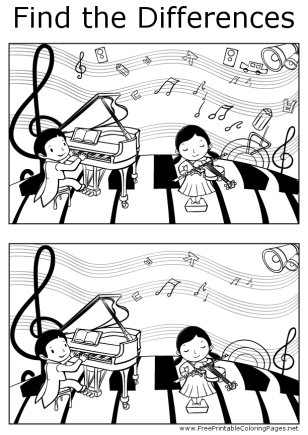
Musical Kids Find the Differences


These two kids are performing a duet! Can you find all of the differences in the second picture on this printable Musical Kids Find the Differences?

Picture Book Review

March 27 – Quirky Country Music Song Titles Day

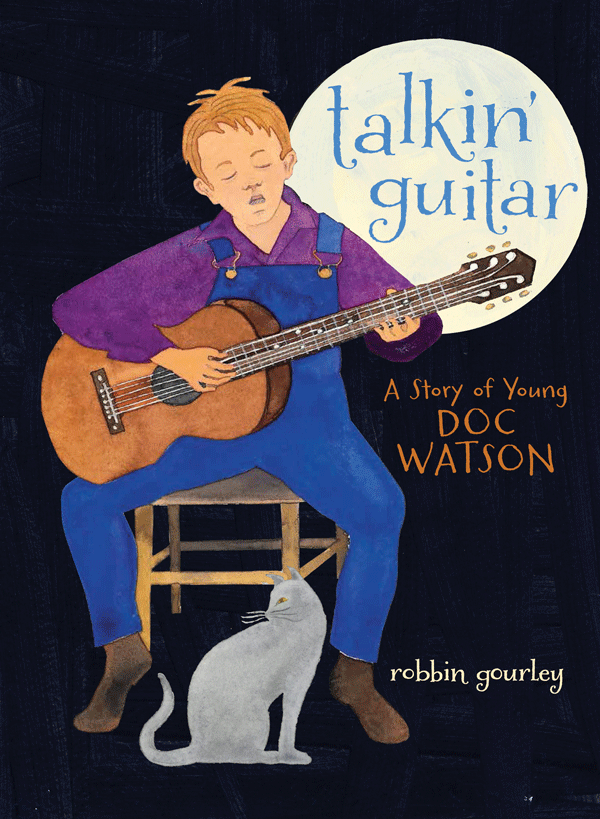
celebrate-picture-books-picture-book-review-talkin-guitar-cover

About the Holiday

Song titles can be evocative of so many emotions, and country song titles seem to take this fact to a whole nuther level. Sure, the travails of heartbreak may cause misery and despair, but I bet you can’t help smiling—just a little—when you read titles like this: I Would Have Writ You A Letter, But I Couldn’t Spell Yuck!, You Were Only A Splinter As I Slid Down The Bannister Of Life, and Did I Shave My Legs for This? So, today, celebrate by finding and listening to some quirky country songs that tickle your fancy.

Talkin’ Guitar: A Story of Young Doc Watson

By Robin Gourley

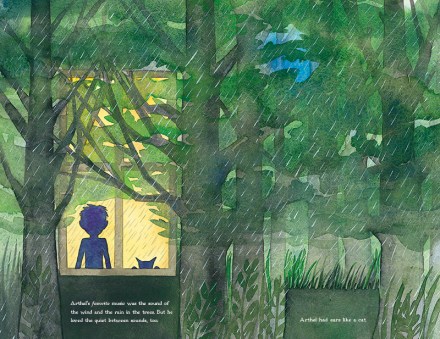
“Yonder, where blue mountains meet the sky, Arthel Watson was born into a world of music.” Music, for Arthel, was much more than his mama’s singing at the end of the day. It was the calls of animals and birds, the burbling river, the whistles of trains, and the clatter of farm machinery. He loved to listen to the rain and the wind and the silence between sounds too. “Arthel had ears like a cat. Maybe it was because he was blind.”

celebrate-picture-books-picture-book-review-talkin-guitar-rain

Image and text copyright Robbin Gourley, courtesy of robbingourley.com

Arthel just couldn’t help but make music whenever and wherever he could. Pots became drums, and cowbells rang like cymbals. Arthel even strung a steel wire across the barn door to strum. When Pappy gave him a harmonica, Arthel practiced until the screechy notes settled into a purr. When Pappy made him a banjo, he practiced until the “rusty door hinge” creak was replaced by spritely melody. One day when Arthel plinked out a few notes on his cousin’s guitar, his father made him a promise. “‘Son, if you can play a song by the time I git home from work, we’ll go into town and buy you your own guitar.’”

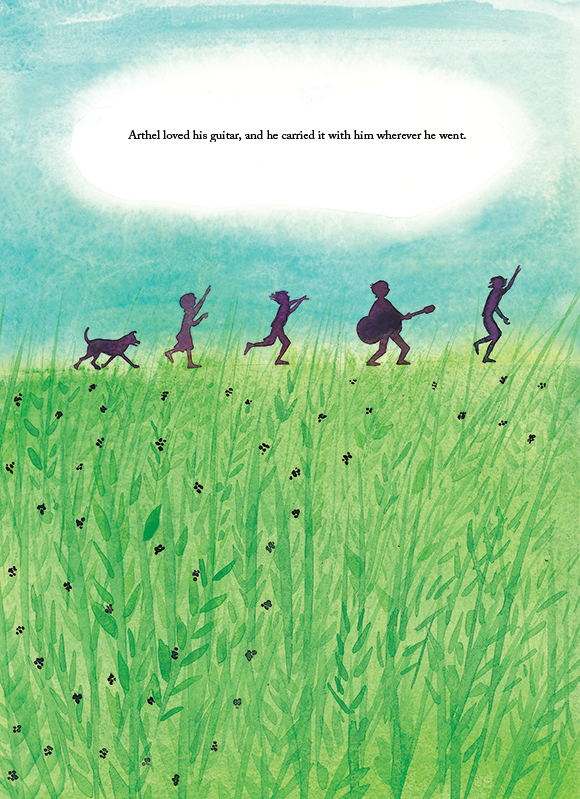
celebrate-picture-books-picture-book-review-talkin-guitar-played-guitar-everywhere

Image and text copyright Robbin Gourley, courtesy of robbingourley.com

By the end of the day, Arthel had composed a “sweet, simple song” from the few chords he had learned. With a “belly full of butterflies,” he played it for his family and earned himself a guitar. From then on Arthel carried his guitar everywhere, learning from records at home and from songs on the radio. He memorized the rhythms of farm work and the songs of various animals, and between chores he practiced, practiced, practiced. “All those chores and all that practice made him sharp as a whittling knife and tough as a hickory.”

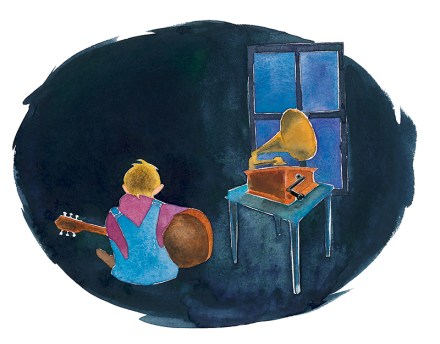
celebrate-picture-books-picture-book-review-talkin-guitar-listening-to-victrola

Image and text copyright Robbin Gourley, courtesy of robbingourley.com

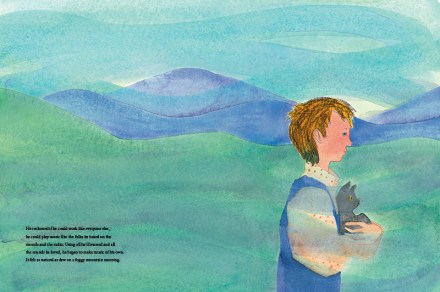
Arthel decided that if he could work just like everyone else, he could probably play music as well as the artists he listened to on records and on the radio. He began to compose his own music. “It felt as natural as dew on a foggy mountain morning.” Arthel played “what he couldn’t see. He could make his guitar sound like a muskrat or a groundhog or a ‘wooly boogie bee’” and sing the stories of the countryside he loved.

An Author’s Note following the text reveals more about Arthel’s life, the influences on his music, and how he earned the nickname “Doc.”

celebrate-picture-books-picture-book-review-talkin-guitar-inspired

Image and text copyright Robbin Gourley, courtesy of robbingourley.com

Robin Gourley’s heartening biography of Doc Watson is perfectly attuned to her young audience. Readers are introduced to Arthel as he soaks in the sounds of life around him and only learn several pages into the story that he was blind. His blindness is not mentioned again except for the subtle acknowledgement that “he reckoned if he could work like everyone else, he could play music like the folks he heard on the records and the radio”—which becomes universal inspiration for all. The emphasis that practice develops natural talent and pays off is also a great lesson for readers who may just be discovering their own talents.

Gourley’s soothing watercolors are suffused with the beautiful pastels of Appalachia, which was both home and muse to Anthel. Vignettes take readers inside Anthel’s home to discover the Victrola and the old radio that were his early teachers and introduce his family, who surrounded him with encouragement as he grew from a child to a young man—always with a guitar in his hands.

Ages 4 – 7

Clarion Books, 2015 | ISBN 978-0544129887

To discover more about Robbin Gourley, her books, and her art, visit her website!

Quirky Country Music Song Titles Day

celebrate-picture-books-picture-book-review-guitar-dot-to-dot

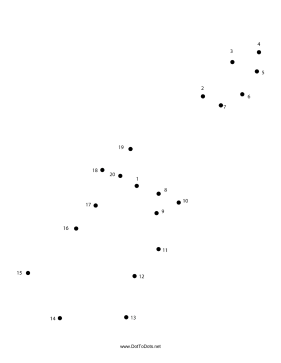
Musical Dot-to-Dot

When a musician follows notes, they create a song. What will you find when you follow the numbers on this printable Musical Dot-to-Dot?

Picture Book Review

March 2 – Read Across America Day

celebrate-picture-books-picture-book-review-the-unexpected-love-story-of-alfred-fiddleducling-cover

About the Holiday

Today marks the 20th anniversary of Read Across America Day, which is sponsored by the National Education Association and promotes the joy and discovery that reading provides. Not only is reading fun, studies show that reading to a child from birth improves literacy and language development and leads to a lifelong love for books. Today, visit your local bookstore or library and find some new books to share—or grab some favorites off your shelf and enjoy them again!

The Unexpected Love Story of Alfred Fiddleduckling

By Timothy Basil Ering


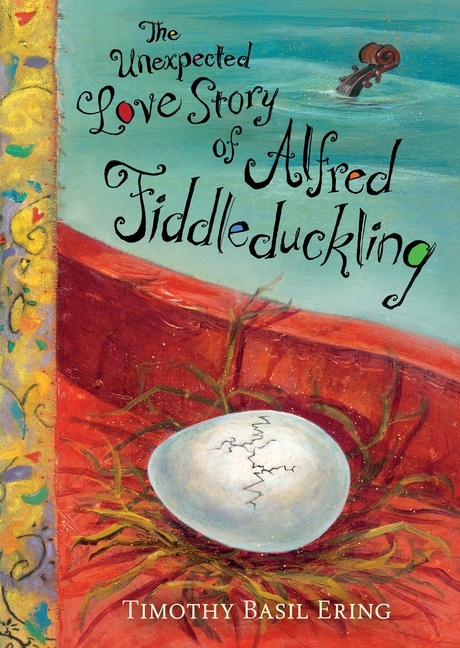
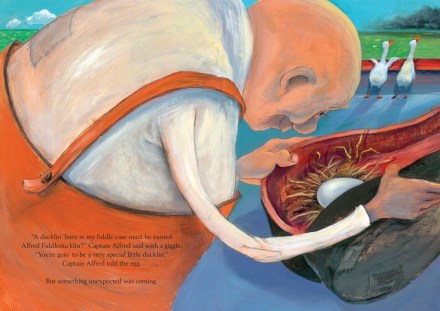
Captain Alfred was sailing home with his boat filled with ducks for his farm. “Nestled safe inside his fiddle case” was one nearly ready-to-hatch egg—a surprise present for his wife. Captain Alfred already had a name picked out for the little one—Alfred Fiddleduckling—and he knew this baby would be very special. But suddenly a “mighty gale whipped the seas into a raging fury” and tossed the little boat and its occupants to and fro. When the storm had blown itself out, a thick, impenetrable fog descended over the ocean.

celebrate-picture-books-picture-book-review-the-unexpected-love-story-of-alfred-fiddleducling-egg

Image and text copyright Timothy Basil Ering, courtesy of Candlewick Press

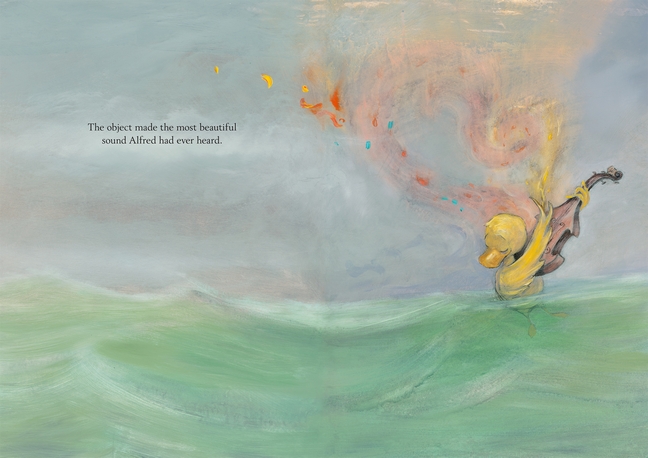
From the porch of a small cottage on the shore’s edge, a woman looked out to sea as “tears of worry dropped from her cheeks, into the mist.” Baby Alfred, however, unaware of these events and hidden by the fog, hatched as the fiddle case floated on the now-calm water. The little duckling looked around and saw something in the water nearby. He paddled out to it and even though it took no notice of him, Alfred “embraced the object with all of his heart.” He “caressed it so that it would not feel as lonely as he did ” and was surprised to hear a most beautiful and unexpected sound.

Alfred immediately fell in love—and imagined that his love was reciprocated. The two drifted along, buoyed by the waves until Alfred’s feet touched ground in a spooky swamp. In a moment, however, the comforting music began again. The sounds, so unexpected in this mist-shrouded swamp, reached the ears of “a beast that was lurking in the tall grasses.” The Beast bounded in the direction of the sound and found Alfred and his love. With drool dripping from its jaws, the beast came closer. Alfred shook, and in his fear “his music became fast and wild!”

celebrate-picture-books-picture-book-review-the-unexpected-love-story-of-alfred-fiddleducling-finds-fiddle

Image and text copyright Timothy Basil Ering, courtesy of Candlewick Press

The beast stood on his hind two legs, rising high and menacing above tiny Alfred and…began to dance. The dog had missed his master’s fiddle playing and he now found a best friend in Alfred. The two trekked through the swamp, searching for home and becoming cold, wet, and helpless as the hours stretched on. The fiddle quivered with music that was as sad and helpless as the two wanderers.

But someone heard those quiet strains—the woman on the porch of the little cottage. “She ran through the fog, straight toward the sound of Alfred’s fiddle. She wrapped her arms around her dog and marveled at the special duckling and his music. “‘Don’t ever stop playing your wonderful music,’” she told Alfred. Alfred played with abandon, pouring out all the happiness in his heart. Out on the sea a raft of ducks and one very surprised captain heard the music…and you can guess what happened next!

celebrate-picture-books-picture-book-review-the-unexpected-love-story-of-alfred-fiddleducling-captain-plays-fiddle

Image copyright Timothy Basil Ering, courtesy of Candlewick Press

Timothy Basil Ering’s wonderfully unique tale of a ship-wrecked duckling and a fiddle who together make beautiful music that reunites a family is captivating. The story holds just the right amount of surprise, suspense, and heart to keep young children riveted to what happens next. Ering’s lyrical phrasing is music to readers’ ears and conveys the various melodies—sweet, quivering, poignant, tempestuous, and finally joyful—that carry the story from one event to another.

Ering’s full-bleed illustrations begin with bright vibrancy that gives way to gauzy grays as the fog rolls in. Despite the weather or ominous surroundings, Alfred remains a bright spot, his yellow fuzz and the multi-colored notes a glowing beacon in the dark. Little readers will love following the confetti notes of Alfred’s playing and guessing the next twist in the plot. The star of the story, plucky little Alfred, is a cutie as  with empathy he embraces the fiddle and bravely ventures through sea and swamp to find home.

The Unexpected Love Story of Alfred Fiddleduckling is joyful, mysterious, and humorous tribute to friendship, love, and the unexpected that would make a great gift and an often-read addition to children’s home libraries.

Ages 2 – 6

Candlewick Press, 2017 | ISBN 978-0763664329

Read Across America Day Activity

celebrate-picture-books-picture-book-review-mug-cookie

Snuggle-in Mug Cookie Treat


Snuggling up and reading is made even better with a quick and tasty treat! Make this warm mug cookie that takes only minutes to put together and then settle in for some favorite or new stories! Here’s a delicious recipe from Food.com for you to try!

Ingredients

  • 2 Tablespoons butter
  • 2 Tablespoons milk
  • ½ Teaspoon vanilla extract
  • 3 Tablespoons brown sugar
  • 4 Tablespoons flour
  • 2 Tablespoons dark or milk chocolate chips
  • 1 Pinch salt

Directions

  1. Place butter and milk in a microwavable mug. Microwave for 30 seconds to melt the butter and warm the milk.
  2. Stir in the brown sugar and vanilla extract.
  3. Mix in flour, chocolate chips, and salt.
  4. Microwave for about 1 minute on High. (Cooking time is based on the texture of cookie you like)
  5. Cool for 5 minutes before serving
  6. Add toppings such as ice cream, whipped cream, or hot fudge or chocolate sauce

Picture Book Review

December 12 – Gingerbread House Day

celebrate-picture-books-picture-book-review-gingerbread-christmas

About the Holiday

Yummy, warm gingerbread and winter just go together. And one of the best ways to enjoy gingerbread is by making a gingerbread house decorated with icing and candy. Gingerbread houses can be elaborate—like those made by professional bakers for competitions—or simple, but they all have one thing in common—they are so tempting to nibble on! To celebrate today’s holiday, grab the mixing bowl, flour and spices, bag of gumdrops, peppermints, and hard candies and get creative!

Gingerbread Christmas

By Jan Brett


Matti and the Gingerbread Baby are excited about the coming Christmas Festival. Gingerbread Baby even has plans to sing with his Gingerbread Band. There’s just one problem—there is no Gingerbread Band. But then Matti has an idea. As he rushes off to find the cookbook, he tells Gingerbread Baby to start practicing his song. “In no time Matti had mixed the ingredients, rolled out the dough, and popped the Gingerbread into the oven.”

celebrate-picture-books-picture-book-review-gingerbread-christmas-matti-baking

Copyright Jan Brett, 2016, courtesy of G. P. Putnam’s Sons Books for Young Readers

Even though the recipe specifically says not to open the oven for a full eight minutes, after six minutes Matti can’t wait another second. He opens the oven door ever so slightly to peek, and out pop the musical instruments made of gingerbread. The instruments hop onto the table and begin playing immediately. But Matti knows they need a bit of icing before they’re ready to make an appearance in the village.

celebrate-picture-books-picture-book-review-gingerbread-christmas-decorated-cookies

Copyright Jan Brett, 2016, courtesy of G. P. Putnam’s Sons Books for Young Readers

After they are decorated in their party best, the Gingerbread Baby leads the procession of instruments—“a violin, cello, double bass, French horn, clarinet, and trumpet, tooting and zumming to the beat of the big bass drum”—to the village. The band jumps on stage, tunes up, and begins playing. People hurry from all over tocome and listen; even the woodland animals stop to watch from behind the trees. The villagers can’t help but tap their toes and dance to the band’s sweet music.

celebrate-picture-books-picture-book-review-gingerbread-christmas-band-playing

Copyright Jan Brett, 2016, courtesy of G. P. Putnam’s Sons Books for Young Readers

When the animals join the crowd, the Gingerbread Baby conducts the band in ‘The Wild Animal’s Waltz.’ No one is left on the sidelines as the band plays faster and faster and everyone joins in the dance. Suddenly, young Ann-Sophie calls out, “‘I think those instruments are really cookies. And I so want one!’” Everyone else takes a closer look, and they all so want a cookie too. The Gingerbread Baby notices the hungry looks on the villagers’ faces, and begins singing an entrancing melody. While the people stand listening, the instruments quietly tiptoe offstage.

Matti meets each one and cleverly disguises them—covering them in snowballs and decorating them as snowmen. As soon as all of the instruments are safe, the Gingerbread Baby somersaults off the stage with a playful taunt for the villagers to try to catch him but also teases, “‘you’ll never guess where I’ll be.’” The chase is on. Zigging and zagging the Gingerbread Baby dashes toward the enormous decorated Christmas tree—where he suddenly vanishes.

celebrate-picture-books-picture-book-review-gingerbread-christmas-dancing

Copyright Jan Brett, 2016, courtesy of G. P. Putnam’s Sons Books for Young Readers

Although the villagers search everywhere, they can find neither the band nor the Gingerbread Baby. While Matti waves goodbye and takes off with his sled full of snowmen, the Gingerbread Baby is being as still and quiet as possible, hidden in the boughs of the Christmas tree. Finally, all the villagers give up the game and go home—all except Ann-Sophie, who may or may not hear “a tiny voice singing” in the now silent air.

Jan Brett’s mischievously loveable Gingerbread Baby is back, wanting to participate in the Village Festival. With her signature storytelling that includes danger, mystery, and clever shenanigans surrounding Matti and his special gingerbread creations, Brett creates a holiday adventure that kids will love. Her well-known intricate illustrations, in a rich palette, offer vivid action as the Gingerbread Baby and instruments play onstage while the villagers dance below. Brett’s beautiful details and cozy settings make Gingerbread Christmas a feast for the eyes, and readers will also like to linger over the musical instruments in the margins of each page that reveal more snapshots of the story line. A dazzling fold-out Christmas tree, decorated from top to bottom will occupy and delight kids as they search for where the Gingerbread Baby is hiding.

For winter fun and especially those days when the house fills with the delicious aroma of baking cookies, Gingerbread Christmas is great book to have on hand.

Ages 4 – 7

G. P. Putnam’s Sons Books for Young Readers, 2016 | ISBN 978-0399170713

Discover more about Jan Brett and her books as well find activities, coloring pages, contests, and more on her website!

Gingerbread House Day Activity

celebrate-picture-books-picture-book-review-gingerbread-house-coloring-page

Gingerbread House Coloring Page


You may not be able to nibble on this printable Gingerbread House Coloring Page, but you can still have fun decorating it!

Picture Book Review

December 11 – International Mountain Day

celebrate-picture-books-picture-book-review-she'll-be-coming-up-the-mountain-cover

About the Holiday

Mountains are majestic! Towering over the landscape, they leave us awestruck with their beauty and mystery. Supporting unique wildlife, providing challenging personal achievement, and inspiring countless works of art, the mountains of the world received their own United Nations-sponsored holiday in 2003. Established so that we remember and honor the importance of mountains to the environment and cultures in which they’re found and to the world at large, International Mountain Day is a celebration we can all support.

She’ll Be Coming UP the Mountain

Written by Kim Norman | Illustrated by Liza Woodruff


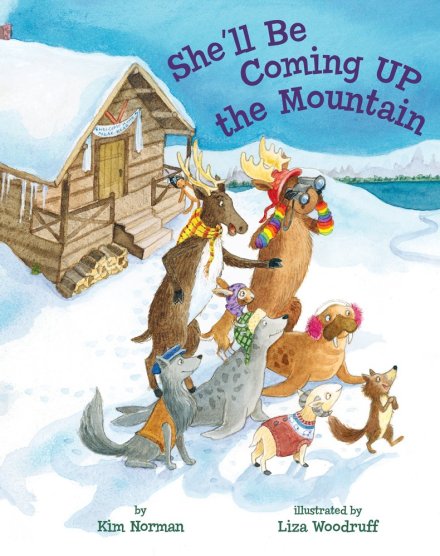
Moose and her pals are sprucing up the place in anticipation of Polar Bear’s return home. They know that “she’ll be coming up the mountain when she comes,” and are sure “She’ll enjoy our frozen fountain when she comes.” In addition to sweeping and dusting, the crew are planning a special welcome, and can’t wait for her arrival because “when she gets here she’ll discover / just how much we really love her / in a banner strung along the cabin wall.”

It seems that even though Polar Bear was away for a long time, no one forgot her. During her absence her friends sent her poems and hand-knitted sweaters, and now that she is coming back even the narwhals and gulls will come to cheer. Even if their “teeth begin to chatter / not a bit of it will matter when she comes.” Then they’ll throw “an arctic party when she comes. / We’ll play music, tapping icicles and drums. / Everybody will be clapping / while the caribou is rapping. / Not a creature will be napping when she comes.”

And, boy, do these guys know how to plan a homecoming! Out in the bay the kayakers will be paddling in formation, the whales will be spouting, and everyone else will be shouting when they see Polar Bear. There will be gifts galore, “high ones, twos, and fives,” a daring ski-slope salute, and plenty of “cheesy” pictures to document it all. As the moment arrives the anxious friends send out a message to which Polar Bear instantly sends an intriguing reply that they that they won’t believe their eyes. Before the waiting group can decide whether to “send our fastest skier, / who will be the first to see her, / and can tell us what will be her big surprise?,” they hear snuffling in the snow. Then suddenly over a snowbank they see her! They cheer and run to meet her and then they all tumble into the house—Polar Bear and her cubs!

Kim Norman has taken the buoyant song “She’ll Be Coming ‘round the Mountain When She Comes” and turned it into a joyful tribute to friendship that will have kids tapping their toes and bouncing along. The sweet story, strict rhythm, and well-known rhyme scheme allow for a mountain of laughs as the welcome-home party grows for the return of a favorite friend. Norman infuses her story with so many details and such enthusiasm that readers can’t help but get excited too. The final revelation that Polar Bear is bringing a surprise will have kids cheering along when they discover Polar Bear has new cubs.

Liza Woodruff’s vibrant illustrations exuberantly depict the preparations and plans the friends have for Polar Bear’s return. Kids will love lingering over Woodruff’s brightly colored and action-packed pages to catch all the details of the coming party. The animals’ camaraderie as they clean together, help deer knit a sweater, practice their welcome activities and especially imagine being together again is heartfelt and infectious. Readers will be glad they too are standing on the front porch looking for the first sight of Polar Bear and are invited inside the cozy cabin for the surprise party.

She’ll Be Coming UP the Mountain is a book full of fun that you’ll probably find yourself singing instead of reading—much to everyone’s delight! For boisterous story times, as a take-along on vacations, or for any time when happiness is the order of the day, this book is a perfect addition to kids’ bookshelves.

Ages 3 – 8

Sterling Children’s Books, 2016 | ISBN 978-1454916109

To learn more about Kim Norman and her other books as well as find fun activities, visit her website!

Discover a portfolio of artwork by Liza Woodruff on her website!

International Mountain Day Activity

celebrate-picture-books-picture-book-review-mountain-landscape-coloring-page

Mountain Landscape Coloring Page


Grab your pencils and crayons and create a beautiful scene with this printable Mountain Landscape Coloring Page.

November 20 – National Absurdity Day

celebrate-picture-books-picture-book-review-strange-mr-satie-cover

About the Holiday

Absurdity is all around us. It can make us laugh, make us mad, and make us see people and events with a new perspective. Today’s holiday gives us the opportunity to embrace absurdity in all its forms. You can spend the day doing something ridiculous, reading absurdist literature, or maybe listening to the music composed by the subject of today’s book!

Strange Mr. Satie: Composer of the Absurd

Written by M. T. Anderson | Illustrated by Petra Mathers


Born in 1866 in France, Erik Satie was a man of contradictions. “‘I was born very young in a very old world,’” he once remarked, and some thought that he never really grew up but always remained “a child with an old man’s smile.” This dichotomy even influenced the kind of music he liked to compose. Even as a child Satie loved music, and as he grew older he wanted to create music that was “both very young and very old, very bold and very shy, that followed no rules but its own.”

Satie liked to combine dissonant styles, such as chants and chorus line tunes. His listeners, with their fancy clothes, impeccable manners, and preconceived notions didn’t understand or like Satie’s “strange” music. On his part Satie found most people frightening and confusing. As a young man he moved to Paris where he made friends. One of his friends took him to a café called Le Chat Noir or The Black Cat. The café, with its resident cat, upstairs theater, and hidden poet’s skeleton attracted poets, artists, dancers, “wizards, and wisecrackers,” who would gather to share their work. Some had invented “luminous hats” while others had “schemes to cover the oceans with cork so they could travel from New York to France.”

celebrate-picture-books-picture-book-review-strange-mr-satie-listeners

Image copyright Petra Mathers, text copyright M. T. Anderson. Courtesy of Candlewick Press

Satie liked Le Chat Noir. He played the piano and people listened—without laughing, without even moving, just allowing themselves to feel happy or sad or as if they were in a dream. Feeling accepted in this atmosphere, Satie wrote his most famous pieces for the piano—the Gymnopédies. His unusual songs for parties, puppet shows, and other occasions had equally unusual titles: one was called “The Dreamy Fish,” another “In a Horse Costume,” and still another “Real Flabby Preludes (for a Dog).” Instead of the usual instructions composers wrote for musicians, Satie included instructions like “‘On yellowing velvet’ and ‘I want a hat of solid mahogany.’”

One day at Le Chat Noir, Erik Satie “met an artist and model Suzanne Valadon and fell in love with her.” The only problem was that she already had a boyfriend—a wealthy lawyer. Satie simply invited himself along on their dates. Satie made friends, but he also lost them easily due to his terrible temper. He yelled at his friends when they didn’t like his music, when they did like his music, and for many small perceived grievances in between. He and Suzanne fought frequently until she left him forever.

Erik Satie seemed more “like a visitor” on Earth than one of its citizens. His wardrobe consisted of “seven identical grey velvet suits and that was all.” Instead of washing with soap, he used a stone, and his room was so small he had to climb on the bed just to get in the door. By this time Satie was in his late 30s and had never learned the rules of music. He realized that he needed to go back to school. After graduating he took to wearing suits and carrying an umbrella. He looked “normal” on the outside, but his eyes still gleamed with the unique creativity inside him.

celebrate-picture-books-picture-book-review-strange-mr-satie-parade-ballet

Image copyright Petra Mathers, text copyright M. T. Anderson. Courtesy of Candlewick Press

In 1917 Satie and his friends wrote and performed a ballet called Parade with sets designed by Pablo Picasso. The story of the ballet was dramatic and the music was peculiar—played on xylophones, typewriters, and sirens. The audiences and critics disliked it intensely; it caused fights and insults. Satie even came close to going to jail over his rude response to a critic.

In 1924 Satie wrote another ballet called Cancelled, which featured a movie and a real camel, and became a self-fulfilling prophesy when on opening night the lead dancer actually worried himself sick and the ballet was cancelled. When the ballet opened a few nights later, however, the audience loved it and, finally, Satie heard long-sought applause. Soon afterward Satie became sick and was taken to the hospital. He died on July 1.

Poets, artists, and musicians came from all over to attend Erik Satie’s funeral. They wanted to honor this most unique man who lived life on his own terms and whose music influenced famous composers in the future.

T. Anderson’s honest and entertaining biography of Erik Satie depicts the quirkiness of the composer’s life through well-chosen anecdotes that will have readers laughing, shaking their heads, and empathizing with this man of extraordinary brilliance. While Satie’s personality and creativity made for a topsy-turvy existence, Anderson combines lyrical passages with those of straight narration sprinkled with expressive adjectives and verbs to clearly paint a portrait of this most unusual and influential composer.

Petra Mathers brings to life late 1800s and early 1900s France as well as the unusual music Erik Satie composes. In vivid illustrations Satie is seen mingling with the patrons of Le Chat Noir, joining Suzanne Valadon on her dates, sitting in his small room and classroom, and giving vent to his argumentative nature. As Satie cannot be separated from his music, his pieces are depicted here. Disparate objects—candles, balls, bells, dice, question marks, dominoes, and more—burst out of a piano and into and out of listeners’ ears; a performer in the ballet Parade cross the stage wearing a costume of skyscrapers; and the ballet Cancelled with its smoking canon and live camel results in flower-strewn acclaim.

Ages 6 – 10

Candlewick Press, 2016 (reprint edition) | ISNB 978-0763687755

Visit M. T. Anderson‘s website to learn more about his books for children, teens, and adults. Plus you’ll find videos, interviews, wallpapers, and more gimmicks!

National Absurdity Day Activity

celebrate-picture-books-picture-book-review-dancing-alligator-coloring-page

Really Ridiculous Coloring Pages


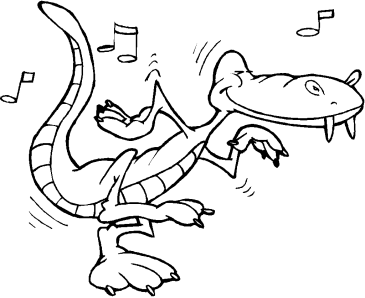
Have you every seen a frog in a suit or a dancing alligator? Absurd, right? Have fun with these printable Really Ridiculous Coloring Pages!

Frog Coloring Page | Alligator Coloring Page

October 20 – International Sloth Day

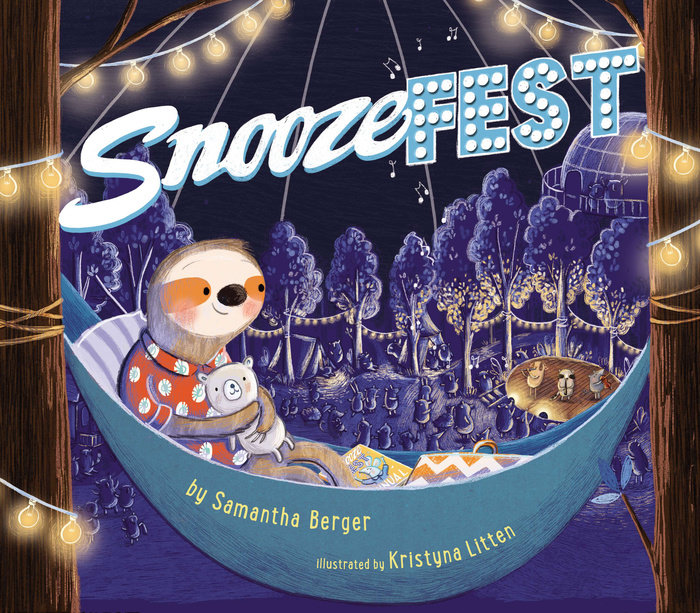
celebrate-picture-books-picture-book-review-snoozefest-cover-image

About the Holiday

The AIUNAU, a non-profit dedicated to protecting all wildlife, established International Sloth Day in 2010 to raise awareness of the dangers facing these seemingly always smiling, gentle animals. With three species already extinct, sloths need protection from power lines, cars, and those who would capture them as pets as well as from other environmental issues that decrease their habitats. While sloths may not be found in your neck of the woods, concern for all wildlife is an important part of being a global citizen.

SnoozeFest

Written by Samantha Berger | Illustrated by Kristyna Litten


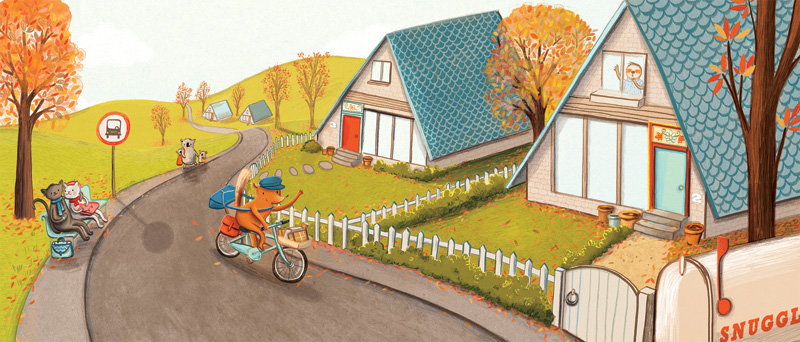
Snuggleford Cuddlebun is the sleepiest sloth in Snoozeville. “Now that sloth can sleep, for a month at a go. / The few time she rises, she moves in slo-mo.” But there is one annual event that sets her heart—and her feet—racing enough to leave her cozy bed—SnoozeFest. “This is the place where the best sleepers go to snore their way through this naptacular show.” So Snuggleford packs up her her jammies and teddy, her pillow and book and joins the other great sleepers on the bus that will take them to the NuzzleDome.

celebrate-picture-books-picture-book-review-snoozefest-snoozeville

Image copyright Kristyna Litten. courtesy of Dial Books for Young Readers, Penguin

As Snuggleford looks for the best place to camp, she sees that she’s in good company. The wildcats, wombats, koala bears, brown bats, squirrels, and armadillos are also setting up tents, laying down sleeping bags, and lounging in hammocks—which is Snuggleford’s favorite too. After finding her spot “she strolls through the stands / for posters and T-shirts / and swag from the bands.” Soon it’s time for the show to begin with the P.J. Parade, where sleepwear from such designers as Diane von FirstInBed and Louis Futon are on full display.

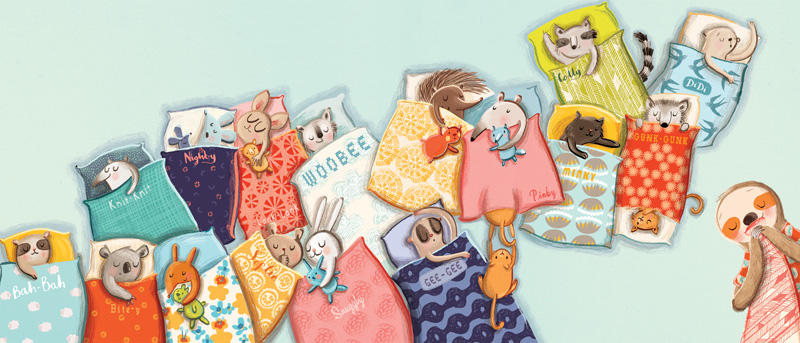
celebrate-picture-books-picture-book-review-snoozefest-sleeping-bags

Image copyright Kristyna Litten. courtesy of Dial Books for Young Readers, Penguin

“Then all the big spotlights dim down in the Dome, / and everyone turns on their night-light from home.” The first band to perform is the “Chamomile Rage” and although the crowd is half asleep by the middle of the first song, “the snoozers yawn deeply, yet still clap for more. / The second act’s also a guaranteed snore.” Then “a poet named Burrows recites a haiku / and imitates rain with his didgeridoo.”  More acts take the stage—the Nocturnal Nesters and the Quiet Quartet, Tranquility Trio and the Drowsy Duet. Yes, “These are the best bands for deep relaxation, / followed by Sweet Dreams and Deep Hiber-Nation.”

For Snuggleford Cuddlebun the concert is all she could want. In fact, “Several days later the SnoozeFest is done. / And who’s still asleep? Why it’s Miss Cuddlebun.” She folds up her things, tosses away her trash, and rides the bus back home. There she climbs into bed and shuts her eyes and dreams of next year’s SnoozeFest.

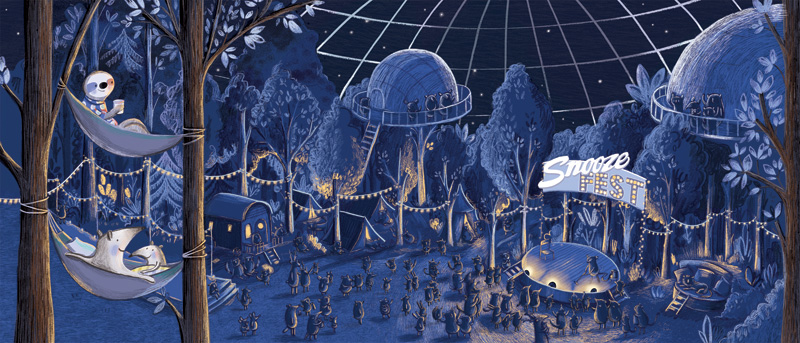
celebrate-picture-books-picture-book-review-snoozefest-nighttime

Image copyright Kristyna Litten. courtesy of Dial Books for Young Readers, Penguin

Samantha Berger’s SnoozeFest is one of the cutest, most original bedtime books around. With wit and charm Berger makes full use of the festival setting and experience. Her inspired rhymes, adorable band names, and atmosphere that combines just the right amount of excitement and slumber-inducing lilt, will delight kids of all ages and adults as well. From Snoozeville to the NuzzleDome to a full verse of blanket nicknames, Berger has come up with the “wumphiest, coziest, comfiest” words to send little ones off to dreamland.

celebrate-picture-books-picture-book-review-snoozefest-sleeping-suggleford

Image copyright Kristyna Litten. courtesy of Dial Books for Young Readers, Penguin

Krisyna Litten’s illustrations, designed with a vintage-yet-modern air and color palette, are the perfect accompaniment to Berger’s story. Anyone would love to join Litten’s sweet Snuggleford and the other “great sleepers” at SnoozeFest. Snuggleford’s endearing slothy smile as well as the joyful camaraderie of the other festival goers invite kids to explore every page. The crowd consists of loveable moles, koalas, raccoons, bears, foxes, porcupines, and more adult and baby animals enjoying the show.  Two-page spreads of the darkened festival grounds lit by nightlights and starlight are gorgeous, peaceful landscapes of blues and gold that set a sleepy tone for little readers.

SnoozeFest would be a very welcome addition to any child’s bookshelf for story times and bed times, and would make a perfect gift.

Ages 3 – 7

Dial Books for Young Readers, Penguin, 2015 | ISBN 978-0803740464

You’ll have plenty of fun discovering lots of books, videos, and more creative stuff by Samantha Berger on her website!

You can catch up with Krisyna Litten on her blog!

You won’t want to snooze through this book trailer!

International Sloth Day Activity

celebrate-picture-books-picture-book-review-sloth-coloring-page

Sweet Sloth Coloring Page


Sloths are sweet, gentle animals who love to hang out. Give the little one in this printable Sweet Sloth Activity Page a colorful world and put it up in your room!

You can find Snoozefest at these booksellers

Amazon | Barnes & Noble | IndieBound

Picture Book Review